The Last Night Of Judy Garland

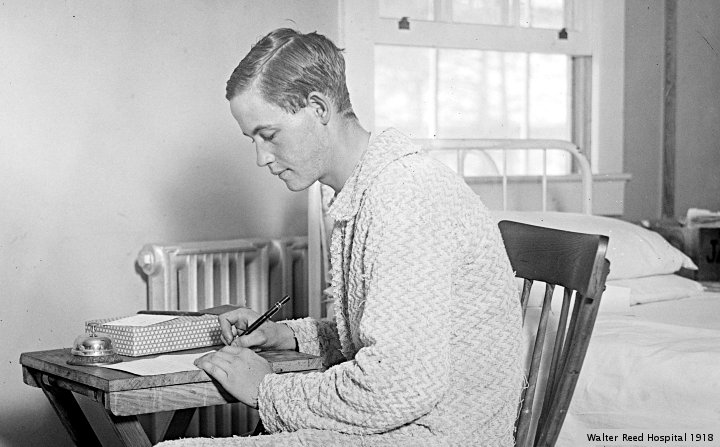


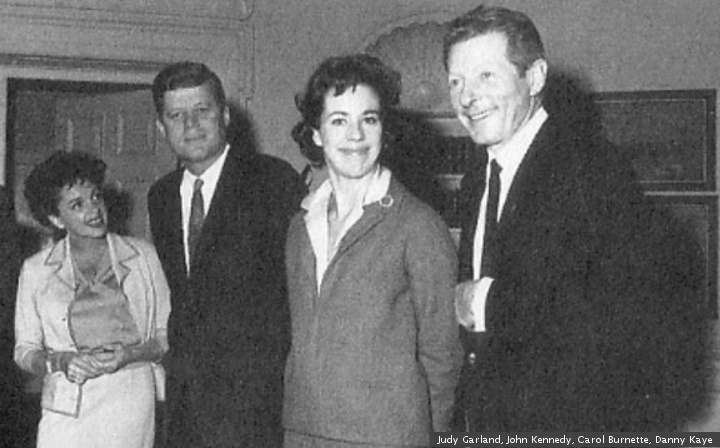
In march of 1969, Judy married her fifth husband, Mickey Devinko, better known as Mickey Deans, a gay night-club promoter. Judy had an unfortunate habit of marrying gay men. They lived together in a tiny mews house in Chelsea, London. The evening of Saturday June 21 1969, Judy and Mickey were watching a documentary, The Royal Family, on television, when they had an argument. Judy ran out the door screaming into the street, waking the neighbors.
Several versions of what happened next exist, but the fact remains that a phone call for Judy woke him at 10:40 the next morning, and she was not sleeping in the bed. He searched for her, only to find the bathroom door locked. After no response, he climbed outside to the bathroom window and entered to find Judy, sitting on the toilet. Rigor Mortis had set in. Judy Garland, 47, was dead.
The press was already aware of the news before the body could be removed. In an effort to prevent pictures being taken of the corpse, she was apparently draped over someone’s arm like a folded coat, covered with a blanket, and removed from the house with the photographers left none the wiser.
The day Judy died there was a tornado in Kansas…. in Saline County,KS, a rather large F3 tornado (injuring 60, but causing no deaths) did hit at 10:40 pm on June 21st, that would be 4:40 am, June 22nd, London time, the morning she died. I know the time of death has never been firmly established, but since Rigor Mortis had already set in, I think this tornado may very much be in the ballpark in terms of coinciding with time of death…. Other news articles suggest the tornado struck Salina “late at night” which could certainly also mean after midnight on June 22, or roughly 6:00 am London time.
The Toledo Blade for June 24th, also in an article located right next to a picture of Garland, in a write-up on the Salina tornado noted that “Late Saturday [June 21] and early Sunday [June 22, another batch of tornadoes struck in central Kansas.” So it seems the legend seems confirmed.
The text for this story comes from Findadeath. You can spend hours at this site. Pictures are from The Library of Congress. This is a repost.




November 17, 1963, Liza Minnelli was on “The Judy Garland Show”. The former Frances Gumm was looking rusty from years of hard living. Five days later, President Kennedy made a trip to Dallas. Six years later, Judy Garland left the building. Liza Minelli is still with us, fifty years later. She has been every bit as wild as her mother, but lived to see another day. Pictures are from The Library of Congress. This is a rerun of two previously posted items.




Is Sarah Silverman Funny? Part Two


There was a “promoted” tweet yesterday. @Scribd New on our blog! Laugh So Hard You’ll Pee, The 15 Funniest Lines From Sarah Silverman’s Book http://ow.ly/xGwYG. Usually annoucements like this include the word new. The book, The Bedwetter: Stories of Courage, Redemption, and Pee, was published April 20, 2010. That fact may be the funnier than the 15 lines.
Most of the lines were embedded in pictures, which means a blogger would have to retype them. This is too much work. The few in text form were not very funny. But then, neither is Sarah Silverman.
At this point life interrupts. A facility called yeah write had a contest. They wanted 42 words answering the question “What’s that sound?” The chamblee54 answer was Is Sarah Silverman Funny? The contest opened for entries at midnight sunday. PG was dealing with food poisoning, and in no shape to enter a writing contest. By the time he was better, the contest was full of entries.
Miss Silverman gave a TED talk. The big dog at TT said it was “G-d awful,” and did not allow it to be officially released. As part of his research for this project, PG saw the video. The last seven words of the poem: “don’t make me listen to it again.”
The publisher has a survey “to see if this is the book for you.” The only way PG gets books is at yard sales and the library. It will be interesting to see if the survey mentions those venues.
“1. Which of the following do you appreciate? (a) Women with somewhat horse-ish facial features. (b) Women who, while not super Jew-y, are more identifiably Jewish than, say, Natalie Portman. (c) Frequent discussion of unwanted body hair.
2. Are you offended by the following behavior? (a) Instructing one’s grandmother to place baked goods in her rectal cavity. (b) Stripping naked in public—eleven times in a row. (c) Stabbing one’s boss in the head with a writing implement.
3. The best way to treat an emotionally fragile young girl is: (a) Murder the main course of her Thanksgiving dinner before her very eyes. (b) Tell her that her older sister is prettier than she, and then immediately die. (c) Prevent her suicide by recommending she stay away from open windows.
If you read the above questions without getting nauseous or forming a hate Web site, you are ready to buy this book! Please proceed to the cashier.”
The survey did not indicate whether the book would be at the library, or a yard sale, soon. After four years, it is probably available in discount bins. Pictures today are from “The Special Collections and Archives, Georgia State University Library”.


Marcus A. Wellons And India Roberts




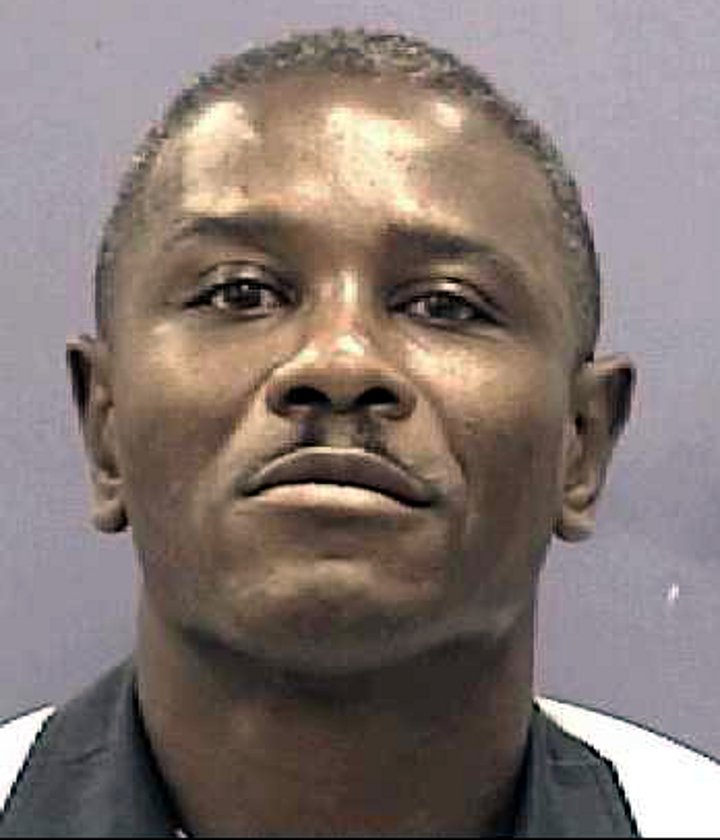
June 17 is the date for the exection of Marcus A. Wellons. He was convicted of killing India Roberts, and did not deny committing the crime. His defense was insanity. Here is the story of the crime.
“Marcus A. Wellons was convicted of the malice murder and rape of 15-year-old India Roberts. The jury found as statutory aggravating circumstances that the murder was committed in the course of two other capital felonies, rape and kidnapping with bodily injury, and that the murder was want only vile and horrible in that it involved torture to the victim before death and depravity of mind. The jury sentenced Wellons to death for the murder. He received a life sentence for the rape. Wellons appeals from the judgments entered by the trial court. …
Throughout the summer of 1989, Wellons lived with his girl friend, Gail Saunders, in her townhouse apartment in Cobb County. Early that summer, Saunders’ 14-year-old son Tony also lived in the apartment. Tony and the victim, who lived in a neighboring apartment with her mother, were friends. The victim occasionally visited Tony inside Saunders’ apartment, where the two youths would watch television or play Nintendo.
Wellons encouraged Tony to date the victim, remarking several times that she was a good-looking girl. At some point during the summer, Tony moved to Chattanooga to live with his grandparents. The victim continued to spend time with Saunders occasionally. Saunders described herself as the victim’s “play mommy” with whom the victim shared confidences.
Wellons and Saunders had become acquainted at the hospital where both worked, Wellons as a counselor in the psychiatric ward. Wellons moved in with Saunders on the pretense that he owned a home but was unable to occupy it, because an ex-girl friend had moved there with her two young daughters, and he could not in good conscience turn them out.
Over the summer Wellons proposed marriage to Saunders. However, by then Saunders had become wary of Wellons, who was increasingly hostile and abusive. She verbally accepted his proposal out of fear, all the while seeking an escape from her predicament.
On the evening of August 30, 1989, Saunders told Wellons that their relationship was over and that he must move out of her apartment. Wellons, who had recently been fired from his job, purchased a one-way ticket to Miami for a flight departing on the evening of August 31. Fearing to be alone with Wellons the night before his departure, Saunders told Wellons that she was going to Chattanooga to spend the night with her parents and enroll Tony in school. Instead, Saunders went to the home of a female friend.
That evening, Wellons began making desperate attempts to reach Saunders by telephone. He called her mother in Chattanooga repeatedly, only to be told that Saunders had not arrived. Wellons then called Saunders’ friends, but no one knew or revealed her whereabouts. He called his mother and told her he suspected that Saunders was with another man. Wellons became increasingly angry and began drinking. He ransacked Saunders’ apartment. He overturned potted plants and furniture, threw flour onto the floor, and poured bleach over all of Saunders’ clothes, carefully sparing his and Tony’s belongings in the process.
After the apartment was demolished, Wellons began attempts to cover up his deed. He broke a window, from the inside out, cutting his hand in the process and smearing blood around the apartment. He stacked electronic equipment by the door. He then called 911 at approximately 3:00 a.m. on August 31 to report a burglary.
When a police officer arrived, Wellons told the officer that he had come home to find the apartment ransacked, although no items were missing. Wellons explained to the officer that he cut his hand while struggling to uncover a stash of money to determine if it had been taken. Sometime after the officer left, Wellons wrote a racial slur across the wall in Saunders’ bedroom.
Several hours later, at approximately 8:00 a.m., the victim said goodbye to her mother and walked from her apartment, past Saunders’ door, toward the school bus stop. Shortly thereafter, Saunders’ next door neighbor heard muffled screams from inside Saunders’ apartment.
The apartment building was close to a wooded area, beyond which was a grocery store. At approximately 2:00 p.m., Wellons approached an acquaintance who was employed at the grocery store and asked to borrow a car. The acquaintance refused. Wellons told the acquaintance that when he (Wellons) returned home the previous night, he encountered two white men who were burglarizing the apartment. Wellons said that he successfully fought off the intruders but explained that he had in the process sustained the injuries to his hand.
About half an hour later, Theodore Cole, a retired military police officer, was driving near the wooded area behind the apartment complex. He spotted in the distance a person carrying what appeared to be a body wrapped in a sheet. He distinctly saw feet dangling from the bottom of the sheet. Cole drove on but then returned for a second look.
He drove around in the parking lot of the apartment complex and saw nothing. As he was driving away, however, he saw a man in his rear view mirror walk along the road and throw a sheet into the woods. Cole drove directly to the grocery store, where he called 911. Police officers arrived quickly and began a search of the woods.
The police first discovered sheets, clothing and notebooks bearing Tony’s name. Then, upon close inspection of a pile of tree branches near where had seen the man carrying the sheet, Cole spotted the body of India Roberts. When the branches were removed, the officers discovered that the victim completely unclothed, with cuts on one side of her face and ear and bruises on her neck.
During the search of the woods, Cole spotted a black man with a bundle under his arm near the apartment building and identified him as the man Cole had seen carrying the sheet. Cole and an officer chased the man, but as they approached the building, the man turned the corner and Cole and the officer heard a door shut. The officer learned from a passerby which apartment was occupied by a man fitting the description given by Cole. He knocked on Saunders’ door and announced his presence, but there was no answer. He returned to join the other officers, who were investigating the scene in full force, with helicopters overhead.
Wellons, now trapped inside Saunders’ apartment with residual evidence of his crime, gave up his attempt to dispose of the evidence in the woods. He first tried to clean the apartment and his clothes. He then abandoned that project, changed into swim wear, grabbed an old, yellowed newspaper and a cup of wine, partially barricaded and locked the door, and headed for the pool.
On his way, Wellons caught sight of a police officer and stopped abruptly. The officer began questioning him. Initially evasive, Wellons did ultimately tell officers that the injuries to his hand, and new scratches to his face, were sustained during a scuffle with two men whom he had caught burglarizing Saunder’s apartment.
While investigating the scene, officers had asked Cole whether either of two black males was the man Cole had seen carrying the sheet. Cole immediately ruled out each of the men. Then, while officers were questioning Wellons, one officer standing at a distance from the questioning asked Cole whether Wellons was the man he had seen. Cole said that although Wellons was wearing different clothing from the man he had seen carrying the sheet, and whom he had again seen near the complex, Cole was 75 to 80 percent certain that Wellons was the same man.
Later that day, officers searched Saunders’ apartment. Inside, they found numerous items of evidence including the victim’s notebooks and earrings. In Tony’s room, they discovered the victim’s panties. They also found blood on Tony’s mattress and box springs. The mattress had been flipped so that the bloody portion was facing downward, and the bed had been remade.
The autopsy revealed that the victim died from manual strangulation, which in itself would have taken several minutes. The autopsy also showed that Wellons had attempted to strangle the victim with a ligature, possibly a telephone cord, and that he had bruised her and cut her face and ear with a sharp object. The evidence suggested that Wellons had dragged or otherwise forcibly moved the victim from the kitchen up the stairs to Tony’s bedroom. Finally, the autopsy revealed a vaginal tear and copious amounts of what appeared to be seminal fluid within the victim’s vagina. She had defensive wounds to her hands, and her blouse was stained with her own blood.
A not guilty plea was entered for Wellons. He did not dispute his participation in the crimes. He urged the jury to return a verdict of not guilty by reason of insanity or guilty but mentally ill.”
The state of Georgia is planning to poison Mr. Wellons. By state law, the substances will be from a secret source. There have been legal challenges to this law, and the courts have upheld it.
The execution of Mr. Wellons is scheduled for June 17, 2014. On June 17, 1939, France had it’s last public execution. Eugen Weidmann was beheaded, using the guillotine.
There is a bizarre aspect to this case. The original trial was grueling, with explicit crime scene accounts. For some reason, some of the jurors gave Cobb County Superior Court Judge Mary Staley a white chocolat penis. The Bailiff, Loretta Perry, recieved a white chocolate item shaped like breasts.
UPDATE By 11:00 pm, the last minute legal wherewithal was over.@ellywyu Warden read the order and left the room at 11:32. Time of death 11:56 pm, says Rhonda Cook of AJC @ellywyu Only incident was an officer fainting 4 min before death, says Rhonda Cook of AJC.
Pictures are from “The Special Collections and Archives, Georgia State University Library”.

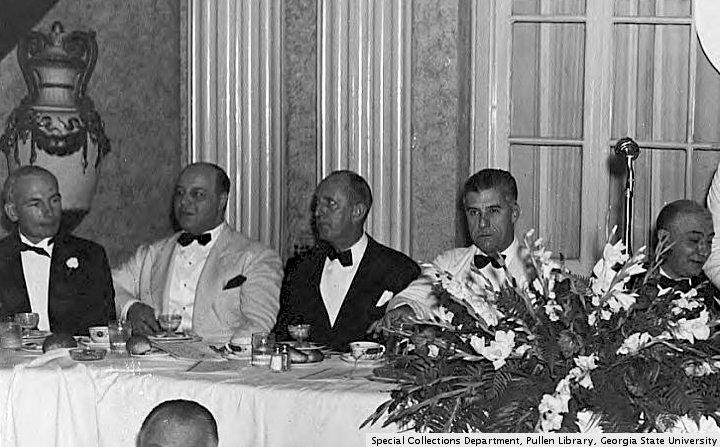





Luther C. McKinnon
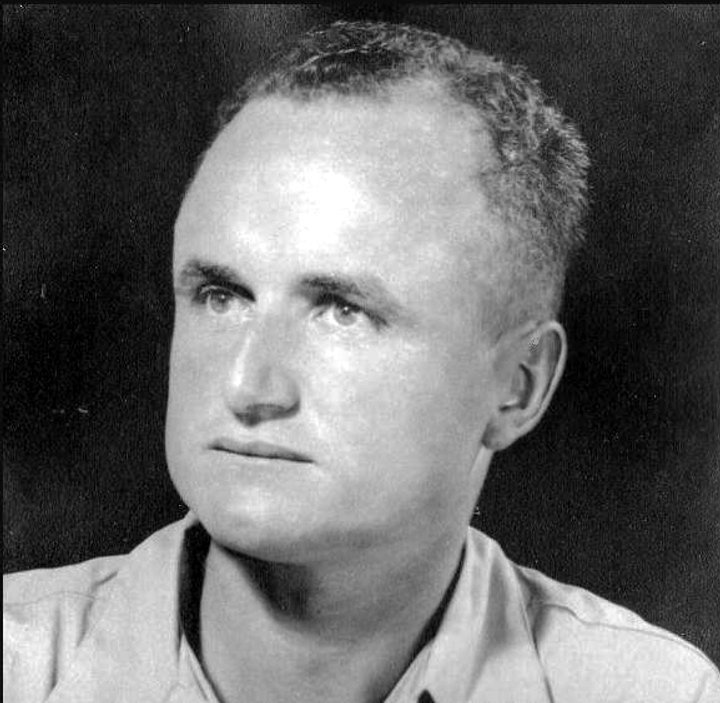

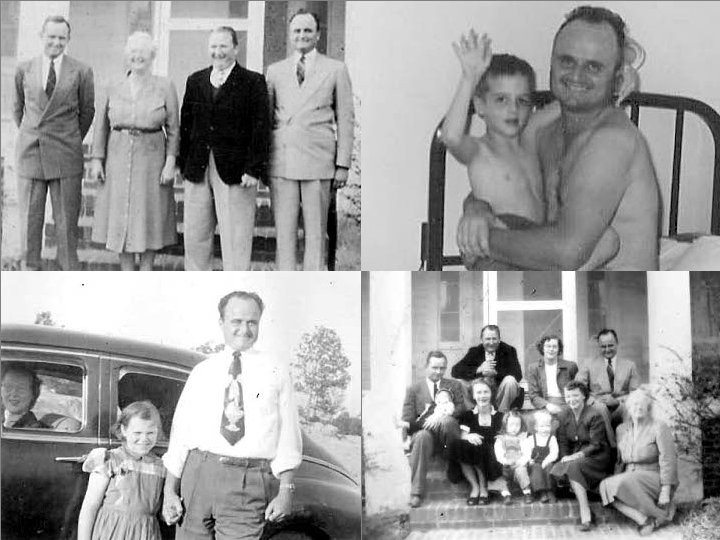
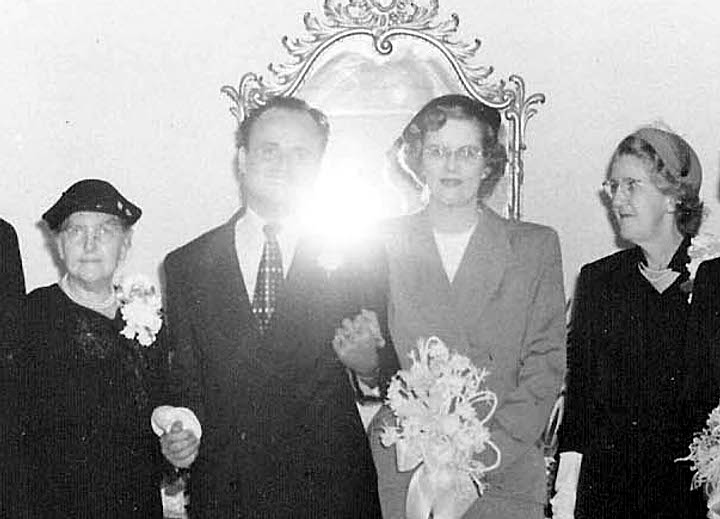
Luther Campbell McKinnon Sr. was born February 22, 1916, on a farm in Rowland, North Carolina. Europe was stuck in a war that would change the world, and not until The United States got involved. This didn’t happen for another year.
Luke was the youngest of four children. After life as a farm boy, he went to Wake Forest University, and then came back when his Daddy died. He ran a family dairy for a few years, and went to live in New Jersey. He lived near a prison, and saw the lights dim when the electric chair was used.
In the early fifties, he came to Atlanta to live. This was where his sister Sarah stayed, with her husband and two daughters. One day he went into the C&S bank on 10th street, and took notice of one of the tellers. On October 6, 1951, he married Jean Dunaway. She was with him the rest of his life.
At some point in this era he started selling shoes. He would go to warehouses, gas stations, and wherever barefoot men needed shoes. He was “The Shoe Man” .
Before long there were two boys, and he bought a house, then another. The second house is the current residence of my brother and myself, and is probably worth 15 times what he paid for it. He had the good fortune to not buy in an area that was “blockbusted,’ as many neighborhoods were.
And this was his life. He tended a garden, went to the gym, and was in the Lions Club for many years. When he met Mom, she let him know that going to church with her was part of the deal. They found a church that was good for their needs, and made many friends there. The Pastor at Briarcliff Baptist, Glen Waldrop, was his friend.
When I think of the character of this man, there is one night, which stands out. My brother was away at the time. The day before, Mom had discovered she had a detached retina, and was in the hospital awaiting surgery. Her job had arranged a “leaf tour” by train in North Georgia, and she got one of her friends at work to take me. There was some mechanical trouble on the train, and it did not get back into town until 3am Monday morning. And yet, Daddy stayed at home, did not panic, and had faith that all of us would be back soon, which we were.
Through all the struggles of his life, Dad was cheerful, laughed a lot, and was good company. He left me with a rich repertoire of country sayings, and had many stories to tell. He was surprising mellow about black people, if a bit old fashioned. (In the south when I grew up, this was highly unusual).
Dad was always in good, vigorous health, and I thought he would be with us for a long time. Well, that is not how things work. A cancer developed in his liver, and spread to his lungs (he did not smoke). After a mercifully brief illness, we lost him on February 7, 1992. This is a repost.


Inspiration Porn








There is a lovely TED talk in the weekly email. The title is “I’m not your inspiration, thank you very much.” The speaker, Stella Young, delivers the message while sitting in a wheelchair.
The concept here is that *disabled* people are people. They are not here to inspire you. They are not intended to show you how bad your life could be, so you should appreciate what you have.
Ms. Young has a talent for words. She says some things much better than this slack blogger. TED talks include a transcript, aka the lazy bloggers friend. Laziness is not considered a disability.
…these images, there are lots of them out there, they are what we call inspiration porn. And I use the term porn deliberately, because they objectify one group of people for the benefit of another group of people. So in this case, we’re objectifying disabled people for the benefit of nondisabled people. … I’ve lost count of the number of times that I’ve been approached by strangers wanting to tell me that they think I’m brave or inspirational, and this was long before my work had any kind of public profile. They were just kind of congratulating me for managing to get up in the morning and remember my own name. And it is objectifying. These images, those images objectify disabled people for the benefit of nondisabled people. They are there so that you can look at them and think that things aren’t so bad for you, to put your worries into perspective. …
I really think that this lie that we’ve been sold about disability is the greatest injustice. It makes life hard for us. And that quote, “The only disability in life is a bad attitude,” the reason that that’s bullshit is because it’s just not true, because of the social model of disability. No amount of smiling at a flight of stairs has ever made it turn into a ramp. Never. (Laughter) (Applause) Smiling at a television screen isn’t going to make closed captions appear for people who are deaf. No amount of standing in the middle of a bookshop and radiating a positive attitude is going to turn all those books into braille. It’s just not going to happen.”
EMIT (Educate Motivate Inspire Tripe) is in your inbox everyday. Yesterday, this tweet sent PG down the rabbit hole. @chescaleigh “There’s a nasty rumor about racism, and it needs to die. Thankfully @the1janitor is here to help (via @Upworthy)” There was a link to Here’s What Morgan Freeman Had To Say About Racism, And Here’s A Guy Explaining What He Got Wrong.
The intro to the video said, among other things, “Every black person is going to have a different opinion/experience/perspective when it comes to racism.” This sentence got PG in a twitter exchange.
@chamblee54 @chescaleigh @the1janitor @Upworthy the intro said every black person has a different take on racism. so does every white person
@chescaleigh @chamblee54 didn’t deny that. but a white person’s perspective on racism lacks experiencing racism. so that’s a very different convo
@chamblee54 @chescaleigh i agree and disagree ~ white ppl experience prejudice ~ the semantics get in the way of understanding other people
@chescaleigh @chamblee54 white ppl experience prejudice not racism. They’re both shitty but not the same. Sounds like u need to read the link I posted
@chamblee54 @chescaleigh have glanced over article ~ re:#2, have been the only pwoc ~ i could go point by point, and might later on blog ~ thx 4 reply
PG saw the Upworthy video. A young man said that people need to talk about racism. He said nothing about listening. A poster for the University of Alabama football team was in the background. The exploitation of young black men, by college athletics, was not mentioned.
The article @chescaleigh linked to was 18 Things White People Should Know/Do Before Discussing Racism. It is poorly written, and full of logical fallacies. Here is item 3. “3. Oprah’s success does not mean the end of racism. The singular success of a Black man or woman (i.e. Oprah, or Tiger Woods, or President Obama) is never a valid argument against the existence of racism. By this logic, the success of Frederick Douglas or Amanda America Dickson during the 19th century would be grounds for disproving slavery.”
There was one last tweet. It was deleted a little while after being sent. Sometimes, it is best to use discretion. @chamblee54 @chescaleigh I read “18 things…” it was not very helpful.
Pictures are from “The Special Collections and Archives, Georgia State University Library”. UPDATE: Here is the reply post, The Problem with 18 things. UPDATE: Stella Young died December 7, 2014.





Eagerness To Label



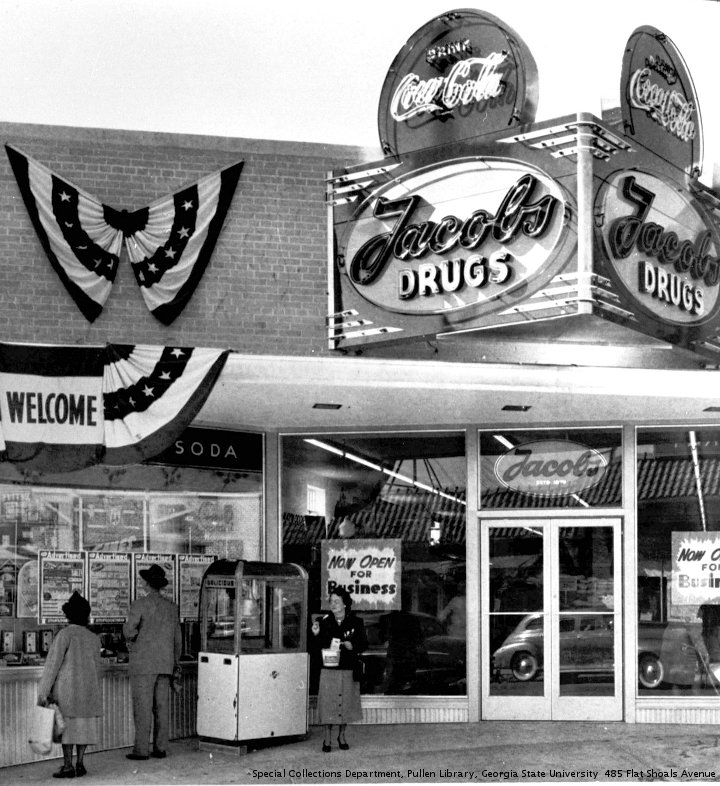


During the Booknotes chat with Howard Zinn, someone compares Mr. Zinn to Noah Chomsky and Michael Parenti. PG had never heard of Dr. Parenti. There was a Booknotes chat, to promote The Assassination of Julius Caesar: A People’s History of Ancient Rome.
There is a lot about Roman history that PG does not know. It seems as though the death of Julius Caesar marks the end of an ara. Arguably, it was downhill from then on. There were many people who were not happy with Mr. Caesar, and had reasons to kill him.
Mr. Parenti was critical of the American government being focused on communism during the cold war. This leads to the best quote of the show.
LAMB (Brian Lamb, host of Booknotes) : I was on a Web site … they defined you as a Marxist. Is that fair? PARENTI: Well, what I don`t like about the term is, I write about all sorts of things that Marx — you know, that`s what somebody said about “Inventing Reality.” Is this a Marxist analysis of the media? The eagerness to label something puts a closure on thought. And I said, Well, you know, I don`t know what Karl Marx had to say about U.S. corporate media in the 20th century. In fact, he didn`t have a word to say about it. He`s been dead for 100 years. So I came to these things on my own. So I don`t use — I don`t use labels of that sort.
There are two more dandy quotes. If you have an hour to spare, the entire show is worthwhile.
PARENTI: Could I read a quote by Joseph Schumpeter? LAMB: Sure. Who was? PARENTI: Joseph Schumpeter was a conservative economist who was read widely in the first half of the last century. … and he said, “Rome was governed by that policy which pretends to aspire to peace but unerringly generates war, the policy of continual preparation for war, the policy of meddlesome interventionism. There was no corner of the known world where some interest was not alleged to be in danger or under actual attack. If the interests were not Roman, they were those of Rome`s allies. And if Rome had no allies, then allies would be invented. The fight was always invested with an aura of legality. Rome was always being attacked by evil-minded neighbors, always fighting for breathing space. The whole world was pervaded by a host of enemies, and it was manifestly Rome`s duty to guard against their indubitably aggressive designs.” ….
LAMB: So where does that phrase, “as pure as Caesar`s wife,” come from PARENTI: It`s — it`s — that`s true. It`s only half the phrase. It really should be “One must be.” If you`re Caesar`s wife, you must be pure, in other words. And his statement was, I`m divorcing her. He maintained, No, no, she had no affair with Claudius. But Caesar`s wife must be above suspicion, so Caesar`s wife must be pure. Doesn`t mean Caesar`s wife was pure. You know, it`s a misphrasing, in a way.
Pictures are from “The Special Collections and Archives, Georgia State University Library”.








A Summer Memory







It is 3:15 am in a midtown office building. PG is spending his dinner break in an unused cubicle, almost out of speaker range for the break room tv. A flourescent light fixture is hard at work, playing an essential role in the drama to follow.
Thirty seven years ago, Truman Capote spoke in Athens GA. Before taking questions, he read “A Christmas Memory.” There was a line, with the words oh, and carnage, that got a big laugh.
Wednesday afternoon had been the first time to turn on the window AC unit. Outside, it was over ninety, with the Georgia humidity doubling the effect. The next two months will be miserable.
During this early morning dinner, after the first day of summer megaheat, PG is reading “A Christmas Memory”. An old lady, and the seven year old cousin she calls Buddy, are going to make fruitcakes. They need to buy supplies.
The previous summer, someone gave Buddy a penny for every 25 flies he killed. “Oh, the carnage of August: the flies that flew to heaven”. It is now 3:28. In two minutes, it will be time to go back to work. Pictures today are from The Library of Congress. The fruitcake lady was the aunt of Truman Capote. This is a repost.




Rebellion Against G-d

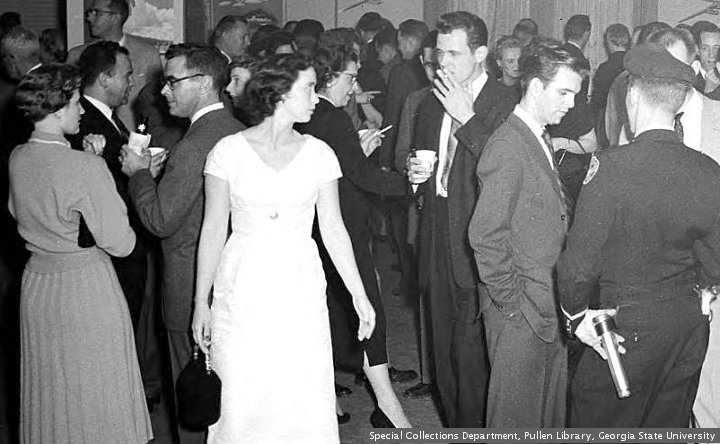




A popular blogger put up a post yesterday, We can’t end ‘rape culture’ if we don’t end hook-up culture. Now, RC/HUC are dodgy concepts. Just last week, PG saw a post about RC, that started “If you are a man, you are part of rape culture.”
On the other hand, the “blogger, writer, and professional sayer of truths” has a wide audience. Any trickle down to this slack blog would be appreciated. The BWPST also answers comments, using a psuedonym. He is easily provoked. If you don’t want trolls to start trouble, then you should not answer them. Some people are easily amused.
The fun started when BWPST said “Just like every other problem in the culture, it’s ALL about rebellion against God.” When a Jesus worshiper talks about G-d, he means something very different from PG. One of the few things that PG believes is G-d does not write books. PG made a comment, and the fun began. Entertainment is not what it used to be.
chamblee54 “Just like every other problem in the culture, it’s ALL about rebellion against God.” The first commandment says to hold no other G-d before you. This does not mean a book. When you declare a book, compiled by a Catholic committee, to be the word of G-d, then you are violating this common sense rule. Violating this rule causes problems. Mo, are you Matt?
Mo @ chamblee54 “The first commandment says to hold no other G-d before you. This does not mean a book.”What on EARTH are you talking about? “When you declare a book, compiled by a Catholic committee, to be the word of G-d, then you are violating this common sense rule.” I haven’t declared anything, especially anything regarding Catholicism, as I am not Catholic. Show me where I mentioned anything about Catholicism? Nor did Catholics compile the Word of God. Take your nonsense elsewhere. I have zero time or patience for it.
chamblee54 Mo, are you Matt?
Mo @ chamblee54 “Mo, are you Matt?” How about addressing the POINTS I made to you and the questions I asked? Another troll, capable of nothing but repeating the same nonsense over and over.
chamblee54 Ok, I don’t know where, or if, you said anything about the Roman Catholic Church. My point was about the Bible. The canon of the Christian church was compiled by a group of men. I might be mistaken on this point, but I believe they were Catholics. Whether of not the compilers of the bible were, or were not, Catholic is beside the point I want to make. That point is that the bible is not the word of G-d. G-d does not write books. When you confuse a book for G-d, you violate the first commandment. “How about addressing the POINTS I made to you and the questions I asked?” “Take your nonsense elsewhere. I have zero time or patience for it.” This is a contradiction.
Mo @ chamblee54 “Ok, I don’t know where, or if, you said anything about the Roman Catholic Church.” Okay, then your comment has no point since that’s what’s your crabbing about. Go troll someone else. Do not waste my time.
That is the end of the dialog. There is not much more to say. If you want to skip ahead, and look at the pictures (from “The Special Collections and Archives, Georgia State University Library”,) you probably won’t miss much.
It is about the idea of “rebellion against G-d.” When you assume that a book contains the “word of G-d,” and use that assumption as a weapon to attack other people, that would seem to be “rebellion against G-d.” When you believe that a soveriegn deity is interested in your petty quarells, that might be “rebellion against G-d.” When you spend your time arguing with “trolls,” that might not be “rebellion against G-d,” but it looks foolish to those who don’t share your beliefs. Maybe it is time for both “Mo” and chamblee54 to find a better use of the talent that somebody gave them.



Howard Zinn







Howard Zinn, author of A People’s History of the United States: 1492 to Present, spent an hour talking on Booknotes. This is a C-SPAN show, with author interviews. The show aired March 12, 2000. Later that night was a show about the 2000 election, featuring Green Party candidate Ralph Nader. The role Mr. Nader would play in the November election was unimaginable in March. Life is bad fiction.
The first serious job Mr. Zinn had was World War II. He served in the Air Force. Towards the end of the war, “we bombed a little French town on the Atlantic coast called Royon… `We’re not going to use regular demolition bombs. We have something new. We w–you’re going–instead of dropping our usual 12 500-pound demolition bombs, you’re going to drop 30 100-pound canisters of jel—jellied gasoline.’ It was napalm–the first use of napalm in the European theater.”
Later, Mr. Zinn thought about it all. “And it didn’t s–the–the thing is you’d bomb from 30,000 feet. You don’t see what’s happening down there. You don’t see people suffering. You don’t see people burning. You don’t see limbs falling. You–you just see little flashes in the–in the d–in the dark, you know. And—and you go back, and you’re debriefed and you don’t think about it. And it’s horrifying.
Later–only later did I begin to think about it, and I was horrified by what I had done, and I’m still horrified by what I did. But I think that had an effect on my thinking about war, because here I was in the best of wars. And I believed it was the best of wars because I volunteered for it. A war against fascism? I mean, how could you find a more bestial enemy? And yet it’s a–it complicated the war for me. It complicated the morality of the war, and it made me begin to think that war itself is evil. Even when it starts with good cause, even when the enemy is horrible, that there’s something about war, especially in our time when war inevitably involves indiscriminate killing–and I came to the conclusion that war simply cannot be accepted morally as a solution for whatever problems are in the world.
Whatever tyranny, whatever borders are crossed, whatever problems there are, somehow human ingenuity has to find a way to deal with that without the indiscriminate killing that war involves.”
Brian Lamb is the host of Booknotes. He speaks non theatrically, often with questions that are very different from the narrative presented by the author. After this talk about war, the question was “LAMB: What would you have done had you been president and those bombs were dropped on Pearl Harbor? Mr. ZINN: That’s the toughest question I’ve ever faced. I … And–and I confess, I–I–I haven’t worked out an alternative scenario.
PHOTUS is known for taking a non-heroic view of our history. Regarding the US Constitution, “When they set up the new government, when they set up the new Constitution, I mean, they set up a strong, central government which will be able to legislate on behalf of bondholders and slaveholders and manufacturers and Western land speculators.”
Mr. Zinn does not discuss The War Between The States on this show. (PG has not read PHOTUS, and does not know how WBTS is treated.) This was a case where the central government was favoring the industrial interests, at the expense of the agricultural interests. How much of that conflict was economic, with abolition serving as a moral fig leaf?
After the war, Mr. Zinn went back to school. A job appeared at Spelman College, and he worked there seven years. After that, he taught at Boston University for 24 years. His next door neighbor was five year old Matt Damon, who later read the audiobook version of PHOTUS.
There is one more bit of amusement from the transcript. Mr. ZINN:`For the United States to step forward as a defender of helpless countries matched its image in American high school history books but not its record in world affairs. It had opposed the Haitian revolution for independence from France at the start of the 19th century. It had instituted a war with Mexico and taken half the country. It had pretended to help Cuba win freedom from Spain and then planted itself in Cuba with a military base, investments and rights of intervention. It had seized Hawaii, Puerto Rico, Guam and fought a brutal war to subjugate the Filipinos. It had opened Japan to its trade with gunboats and threats. It had declared an open-door policy in China as a means of assuring the United States would have opportunities equal to other imperial powers in exploiting China. It had sent troops to Peking with other nations to assert Western supremacy in China and kept them from–kept them for over 30 years.’ LAMB: There’s a lot more in here about Colombia and Haiti and Nicaragua. Is this country at–this sounds like I’m–I’m arguing here, but has this country done anything right?
Pictures today are from The Library of Congress





1 comment