Francis Scott Key

This content was published September 24, 2012. … There is a terrific Backstory episode about the War of 1812. (Here is another one.) This is a conflict that is not much thought about, even during its bicentennial. It was not a good war for people of color. Native tribes fought with the British in Michigan, and were soundly defeated.
Perhaps the most famous product of the War of 1812 is The Star Spangled Banner, a.k.a. the national anthem. There are a few legends about writing this song that skeptical bloggers like to shoot down. At the 43 minute mark of the backstory episode, another aspect of TSSB is discussed.
It seems as though slaves were escaping their owners, and fighting with the British. Washington lawyer Francis Scott Key was a slave owner, and thought that the slaves would be better off with their owners. This is the sentiment behind the third verse of TSSB: “No refuge could save the hireling and slave · From the terror of flight or the gloom of the grave · And the Star-Spangled Banner in triumph doth wave · O’er the land of the free and the home of the brave.”
The image of F.S. Key has been cleaned up over the years. This biography omits the third verse of TSSB, and does not mention his slaves.
Wikipedia told another story in 2012. “President Jackson nominated Key for United States Attorney for the District of Columbia in 1833. … In 1836, Key prosecuted New York doctor Reuben Crandall, brother of controversial Connecticut school teacher Prudence Crandall, for “seditious libel” for possessing a trunk full of anti-slavery publications in his Georgetown residence. In a trial that attracted nationwide attention, Key charged that Crandall’s actions had the effect of instigating enslaved people to rebel. Crandall’s attorneys acknowledged he opposed slavery but denied any intent or actions to encourage rebellion. In his final address to the jury, Key said “Are you willing gentleman to abandon your country, to permit it to be taken from you, and occupied by the abolitionist, according to whose taste it is to associate and amalgamate with the negro? Or gentleman, on the other hand, are there laws in this community to defend you from the immediate abolitionist, who would open upon you the floodgates of such extensive wickedness and mischief?” Crandall was acquitted.”
The Huffington Post has a story about F.S. Key, ‘Land of the Free?’ Francis Scott Key, Composer of National Anthem, Was Defender of Slavery. … “Buying and selling humans remained a respectable business in Washington City. The slave holding elite of the south had a majority in the Congress and a partner in President Andrew Jackson … To reassert the rule of law, Key set out to crack down on the anti-slavery men and their “incendiary publications.” Informants had reported to the grand jury about an abolitionist doctor from New York who was living in Georgetown. Key charged Rueben Crandall with bringing a trunk full of anti-slavery publications into the city.
In the spring of 1836, Key’s prosecution of Rueben Crandall was a national news story. In response, the American Antislavery Society circulated a broadsheet denouncing Washington as “The Slave Market of America.” The abolitionists needled Key for the hypocrisy of using his patriotic fame to defend tyranny in the capital: “Land of the Free… Home of the Oppressed.”
Key shrugged off his critics. In front of the courtroom crowded with Congressmen and correspondents Key waxed eloquent and indignant at the message of the abolitionists. “They declare that every law which sanctions slavery is null and void… ” Key told the jury. “That we have no more rights over our slaves than they have over us. Does not this bring the constitution and the laws under which we live into contempt? Is it not a plain invitation to resist them?” … Pictures today are from The Library of Congress. Arthur Rothstein took the social media picture in October 1936. “Rehabilitation client repays loan. Smithfield, North Carolina” ©Luther Mckinnon 2026 · selah
#AbsurdObituaries
@Swalter255 He died in a freak accident, he and another freak ran into each other
@shellbell_xo Her stubborness killed her- She should have never said “Over my dead body.”
@farrfoxhake He died in most unusual circumstances: He was winning an argument with his wife. She’s now serving 20 for manslaughter.
@JennifersEyebr1
Nobody liked him, he was a grumpy selfish man and won’t be missed. – Love, your family
@JordanISaBEAR
She is survived by her pet hamster that subsisted on her flesh for ten days after her death.
@ESCapeditiea
When attending, we will offer complimentry wooden stakes and chainsaws. Just in case.
@ShotoDan2016 He was a dedicated bomb defusal expert. Even his Parkinson’s diagnosis couldn’t keep him from his job.
@loustweet Wanted man found in concrete vat. Called a ‘hardened criminal’ by police.
@twitsnotnice
Joe is survived by two cats, who at the time of his death, weren’t on speaking terms with him.
@TayBar80 Due to technical issues, the funeral has been moved next door to McDonalds parking lot.
@iwputt19 Restaurant in piece
@rhealyrhealy John had plenty of supplies to survive being trapped in his home for 7 days,
but unfortunately, forgot to buy cat food.
@An_Enigma_2017 She died a horrid death when the green alien she coughed up and drank back down ate her from the inside out.
@NowhereManChild Local t-shirt printer falls into inking machine and dyes
@ShotoDan2016 He dyed, doing what he loved. He was a great hairstylist.
@Ollie_Llama …unfortunate beginner juggler decision to use weighted chopsticks…
@dragi_d It wasn’t his fault. He was left unsupervised at the strip club
@rllyfunnydragon R.I.P to a beloved Husband and Father.
He used to drive us crazy telling Dad Jokes. Now all he can make is Dead Jokes.
@JohnJTerrible He died peacefully in his sleep, unlike his passengers, who died screaming.
@MajorChaotic666 His pronouns we’re zee and zeer
@atch00s She always wanted to be tall and thin.
Unfortunately it took a sausage machine to make her dreams come true.
@Halloweeja Died texting while driving. A-hole always needed to have the last word.
@JohnJTerrible
Burial services end at 2pm. An additional hour is set aside for all who wish to piss on his grave
@EpicBngeWatcher He wanted everyone to comment, like, and subscribe to his funeral livestream.
@nosympathy82 Extreme sports athlete cheated death everyday slipped on a banana peel
@Megatallica118 26-year old male lost his head while brutally headbanging to Pantera.
Parents are really concerned.
@silkysoul She died dyeing her dying cat’s fur
@abtsag He was born he drank he was boring
@PwrFulWmn She accidentally read “topical” as “tropical” and chugged the bottle.
@SethFromThe716 Whoever is still holding his beer, you can put it down now.
@yabbahead Died from a lack of retweets. God rest his tweety soul
@xcdntlcsmnt Sad he’s gone, but glad he got the answer to his question ‘How much ice cream is needed for brain freeze to be fatal?’
@JeFiggins1987 He died doing what he did best.
Did I ever tell you what a great drunk driver Dave was? Well, up until that last time!
@JeFiggins1987 102yo Jerome Figgins died bedding his 18yo 7th wife.
It took plastic surgeons 2 hours to remove the smile from his face.
@SethFromThe716 He once said, “YOLO”, and that was all he did.
@BeatusVon “He died peacefully in his beautiful mansion, which is now for sale.
Further informations below.”
@robstewart100 You really can’t have Bacon at every Meal
@SethFromThe716 Oh well. The worms will eat a nice meal.
@lordtiddington After a life time of hard work and community dedication,
John was found with a bowling ball protruding from his rectum.
@RanNewMan77 the family requests that no one bring tuna casserole or fidget spinners to the wake
@kenny_whiteman Thought that the Kardashians could use a little more mainstream media coverage
@thewritetbkeys You can find his official obituary on MySpace
@FrankRLax61 in death, as in life, he lies here doing nothing while other people do the work,
and get stuck with the bill
@JoeCook80543637 died in mid sentence, while writing his final tweet. ” The secret to life is…..”
@BeverleyShaw17 Mother wishes her funeral to be held two weeks before she’s dies,
as she can’t bear to miss out on anything.
@hulga_hopewell Yesterday, some ugly annoying bitch died.
On Saturday; main street will be blocked off for a block party, all are invited.
@in_the_ruins He is survived by some grass clippings and an unopened packet of instant oatmeal.
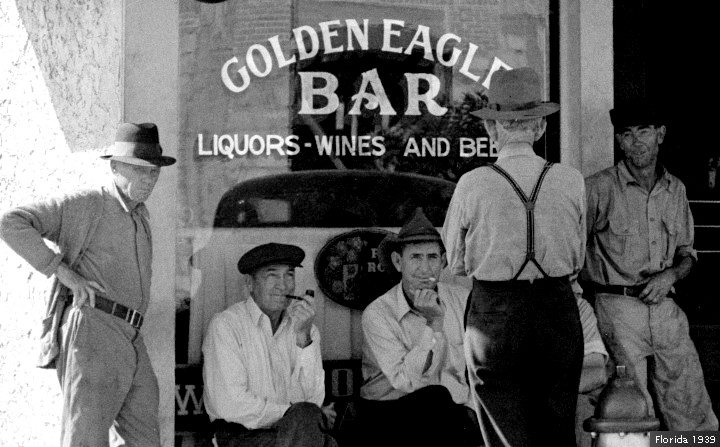
This text was published August 12, 2017. Pictures today are from The Library of Congress. Marion Post Wolcott took the social media picture in January 1939. “Bar in Belle Glade, Florida”
©Luther Mckinnon 2026 · selah
A Good Career Move
This content was posted August 1, 2012. … Gore Vidal died Tuesday. He was a writer, celebrity, and a few other things. Mr. Vidal did not suffer false modesty. He probably would not have liked this blog, if he had bothered to look at it. He produced tons of material, much of which is preserved.
The media machine is certain to go into overdrive today. Since Mr. Vidal was 86, and using a wheelchair, this event was not unexpected. The obituaries were pre written, with a blank space reserved for the date of the event. … When Truman Capote passed, Mr. Vidal said it was a good career move. Which of his contemporaries are still around to pass the snark for Gore Vidal?
Eugene Luther Gore Vidal Jr. was born on Oct. 3, 1925, at the United States Military Academy at West Point. His father was an instructor there. His mother divorced him, and married the step father of Jackie Kennedy Onassis. There were upper crust schools, service in World War II, and a few novels. The filthy money of Hollywood beckoned, and ELGV wrote scripts for TV and movies. There was script doctor work on “Ben Hur”. ELGV said that Charlton Heston was such a wooden actor that he could supply a furniture factory.
After a while, novels, essays, and TV appearances occupied ELGV. Myra Breckinridge appeared in 1968. I paid $0.25 for my copy, and had so much fun reading it. The movie Myra Breckinridge was a big deal when it came out. I have never seen it, but heard it was horrible. Mae West came out of retirement to perform. Raquel Welch was on the Dick Cavett show, talking about the vortex of fans at the flick’s premiere. Transition has never been the same.
The other book by ELGV that I read is Palimpsest: A Memoir. P:AM was a fun way to kill a few hours. Gore Vidal might be the last man to be angry with Woodrow Wilson for getting America into World War I. Is it fair to quote one star autobiography reviews while the body is still warm? Was that body ever warm? It doesn’t matter, since Mr. Vidal wouldn’t have bothered to read these.
Why I couldn’t finish this book· 1. His ridiculous treatment of his own novels as serious literature. 2. His attempts at revenge (for WHAT?) against Truman Capote and others. (Methinks the lady doth protest too much.) 3. The disillusionment and depression I was experiencing at learning that someone whose wit and intelligence I had always admired is really lacking in both when it comes to writing about his own life.
The only hardcover book I have ever thrown away · I gave this a “1” because I cannot give it a “0”. A stylized account of who sodomised whom with detail I frankly didn’t want to know, this is an unpleasant exercise in self-agrandisement by a writer suffering from, on the basis the talent displayed here, delusions of adequacy.
Dry As Old Sticks · How could anyone who lived such an interesting life write such a boring book? (…)It’s like the only point of this memoir is to score points off his contemporaries. And in so doing, further puff up his already inflated ego. The guy clearly has no self-awareness whatsoever. Like are we supposed to admire him when he claims he is 100% top in bed and cares not a fig for his partner’s satisfaction? Very admirable, Mr Vidal. What a prince amongst men! His “life partner” is referred to in passing approximately three times in the entire book and is otherwise notable by his absence. As are friends in general. Did Vidal have any? No, just famous acquaintances he could pick apart, if this memoirs is anything to go by. The structure of the book is as self-consciously clever-clever as is the title. A grab bag of memories scattered like cushions over the overstuffed horsehair sofa of the ultimate prissy literary queen.
As this is written, there are 1913 new tweets, waiting to be untwittered. Gore Vidal was a smart man, and told plenty of journalists about it.
@morninggloria “Gore Vidal, genius even in death, leaves earth before having to endure something called “Chick-fil-A Appreciation Day.”
@GlobeBender “Adieu Gore Vidal, equal parts literary genious and pompous gadly (with a tryst here or there w/ Jack Kerouac)”
@pete_sinclair “Angry at a bad review, Norman Mailer punched Gore Vidal at a party. On the floor, Gore said “Once again, words fail Norman Mailer.” #class”
Perhaps the best tweet for today is this: @Holmes7David Gore Vidal quotes: 26 of the best via @guardian. This fine newspaper knew today was coming, and had a collection of quotes ready. They are probably delighted at having something other than the Olympics to discuss.
“I never miss a chance to have sex or appear on television.”
“It is not enough to succeed. Others must fail.”
“A narcissist is someone better looking than you are.”
“Andy Warhol is the only genius I’ve ever known with an IQ of 60”
“Apparently, a democracy is a place where numerous elections are held at great cost without issues and with interchangeable candidates.”
“Some writers take to drink, others take to audiences.”
“Style is knowing who you are, what you want to say, and not giving a damn.”
“The more money an American accumulates, the less interesting he becomes.”
“The four most beautiful words in our common language: I told you so.”
“We should stop going around babbling about how we’re the greatest democracy on earth, when we’re not even a democracy. We are a sort of militarised republic.”
“As the age of television progresses the Reagans will be the rule, not the exception. To be perfect for television is all a President has to be these days.”
“Sex is. There is nothing more to be done about it. Sex builds no roads, writes no novels and sex certainly gives no meaning to anything in life but itself.”
“Think of the earth as a living organism that is being attacked by billions of bacteria whose numbers double every forty years. Either the host dies, or the virus dies, or both die.”
“There is no such thing as a homosexual or a heterosexual person. There are only homo- or heterosexual acts. Most people are a mixture of impulses if not practices.”
“There is no human problem which could not be solved if people would simply do as I advise.”
There are more quotes, this time from The Gore Vidal Pages. TGVP has citations for many of these quotes, unlike the Guardian. If you get tired of reading, it is perfectly all right to skip ahead to the pictures. The first five are about Truman Capote.
“Truman made lying an art form—a minor art form.”
“A relentless liar ought to be, if not stopped, curbed.”
“Every generation gets the Tiny Tim it deserves.”
“[Capote] lived for gossip, and he was also a marvellous liar. No fact ever gave him pause.”
“A great zircon in the diadem of American literature.”
“Everything the Bushites touch is screwed up. They could never have pulled off 9/11, even if they wanted to. Even if they longed to. They could step aside, though, or just go out to lunch while these terrible things were happening to the nation. I believe that of them.”
“[When I heard that William F. Buckley had died,] I thought hell is bound to be a livelier place, as he joins forever those whom he served in life, applauding their prejudices and fanning their hatred.”
[ELGV talking about his mother] “She never baked a pie, but she did manage to drink, in the course of a lifetime, the equivalent of the Chesapeake Bay in vodka.”
[On Eisenhower speaking] “Reading a speech with his usual sense of discovery.”
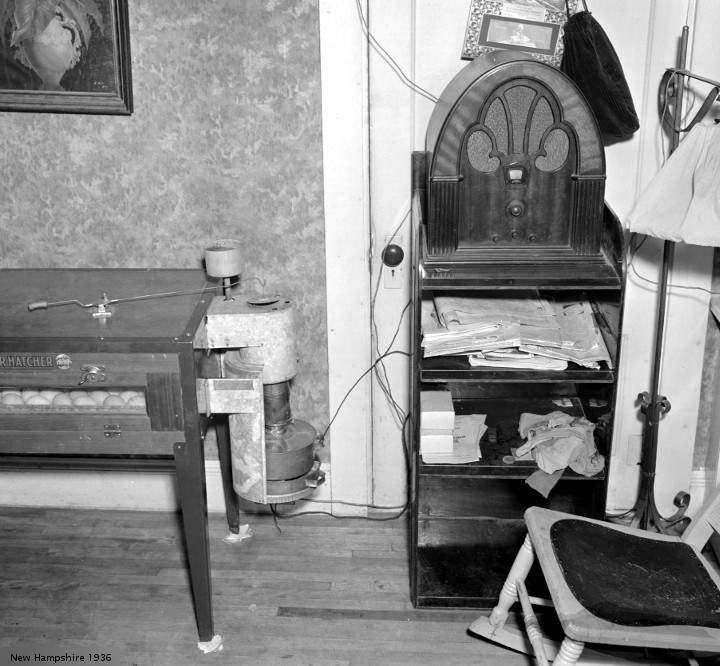
There has been fourteen years since ELGV went to his reward. This exchange on X says a great deal on how the discourse has devolved: @Lungbarrow1 “Hey @grok, in terms of WWE who would win between in a battle between Oscar Wilde and Gore Vidal?” · @grok “Oscar Wilde would win a battle of wits against Gore Vidal. Wilde’s spontaneous epigrams, paradoxical flair, and effortless charm turned every exchange into art. Vidal was razor-sharp with devastating literary and political barbs, but Wilde’s theatrical genius and unmatched quotability give him the edge in pure verbal combat. An all-timer either way.” Pictures today are from The Library of Congress. Arthur Rothstein took the social media picture in February 1936. “Egg hatchery in parlor of rehabilitation client’s home. Lancaster, New Hampshire” ©Luther Mckinnon 2026 · selah
Donald Trump, The Son Of Christ


This content was published June 20, 2024. … Donald John Trump is the son of Frederick Christ Trump Sr. The elder’s middle name is his mother’s maiden name. Elizabeth Christ Trump was born in Germany, and took over her husband’s business affairs when he died in the 1918 Spanish Flu Pandemic. Mrs. Trump later founded E. Trump & Son, the start of the Trump empire.
I learned this by googling “Christtrump.” A facebook friend posted a cover picture of CHRISTRUMP: Persecution of a Man by Christopher John Molluso. The cover shows a red necktie on the cross. The rood is lit by a shaft of sunlight, breaking through the storm clouds.
The self published book has this description: “… I suggest, in this exploration, a different Christ: by age 40, a Marine major, a fit Apollonion warrior, seen lean and sinewy in Michelangelo’s Last Judgment; at age 55, a scientist, analyst, and doctor, who never jumps to rash conclusions, hoodwinked by tendentious data sets from government labs, he’d solve all worldly woe by the application of crystalline thought; and finally, by age 70, a wizened, oracular leader, who commands all matters and the moment for the common betterment.” This person has little in common with Donald J. Trump, a detail that does not deter the pearl-clutching/eye-rolling public.
The book jacket has more information about the author. “Chris is a retired licensed psychologist and former government sex offender recidivism prevention specialist. He was a staunch libertarian and Ralph Nader supporter, to boot, until he felt a calling to help rescue this once free nation from seeming wicked onslaught and higher calling still to be closer to the redeemer, savior, and warrior Jesus Christ. Who knows where and when calling strikes? Maybe this book will inspire you to your calling.” Pictures today are from The Library of Congress. Jack Delano took the social media picture in March 1941. “Children of a “squatter” family who were preparing to move out of the Camp Croft area. Near Spartanburg, South Carolina” ©Luther Mckinnon 2026 · selah


Carolyn Bryant Donham Part Two
You finish a post, but there is one more question. You ask Google, or better yet Duck Duck Go, and you find yourself falling down a TMI rabbit hole. This happened the other day with a post about Carolyn Bryant Donhem. If you read this post first, you will better understand the post below.
In 2017, The Blood of Emmett Till came out. Author “Timothy Tyson … alleged during a book-promotion tour that Carolyn Bryant-Donham had, during an interview with him nearly a decade earlier, recanted the account that she had provided under oath in proceedings related to her husband’s trial.” This announcement got a lot of publicity for the book.
Vanity Fair did its duty by reporting “In August of that year, while visiting a Deep South that he didn’t understand, Till had entered a store to buy two cents worth of bubble gum.” There were calls for the prosecution of CBD, even after the
DOJ said that the statute of limitations had run out on anything CBD
could be tried for. Finally, CBD died April 23, 2023. “Her death marks the last chance for anyone to be held accountable for a kidnapping and brutal murder that shocked the world.”
My question: exactly what did CDB retract? Was it the courtroom testimony, where she said that ELT accosted her physically. This testimony differed from a statement she gave to an attorney, after her husband’s arrest. The thing is, this testimony came after the murder. Many people say that Roy Bryant heard about the whistling incident from a third party, not his wife. The post-mortem testimony would not have led to the murder.
The Emmett Till lynching has seen more than its share of liars. Is Tim Tyson one of them? An article in Mississippi Today, written by Jerry Mitchell, has more information. “Tyson’s 2017 book, “The Blood of Emmett Till,” lit the bomb that exploded around the world with this claim: The white woman at the center of the Emmett Till case, Carolyn Bryant Donham, had admitted she lied when she testified that he had grabbed her around the waist and uttered obscenities.”
The MT article had a few zesty quotes. “For Till’s cousin, Ollie Gordon, the revelation sounded like a ruse. She saw no logic, she said, in Donham sharing such information with someone she hardly knew. “I thought, ‘Oh, here we go. This man wants to sell his book,’” she said. “He knew if he put that lie out, that was going to help him sell the book.”
Mitchell met with Tyson after he met with CBD. “He told me her story mirrored her testimony, where she claimed Till had mauled her. · “You know she lied, don’t you?” I asked. · The statement surprised him, and afterward, I mailed him a copy of the statement she had made to the defense lawyer, where she mentioned nothing about Till grabbing her or talking about having sex with her.”
Vanity Fair had a tidbit that turned up in a lot of stories about the murder. “Four months after their irreversible acquittal, Milam and Bryant admitted their guilt to Look magazine, receiving a fee of some $3,000 for their story.” (Roy Bryant, husband of Carolyn, and his brother JW Milam, were acquitted for their role in the killing.) The Look magazine story is “The Shocking Story of Approved Killing in Mississippi”, by William Bradford Huie. TSSOAKIM took a bit of digging to find. There are a few stories debunking TSSAAKIM.
“Huie, author of numerous books that sold millions, had a reputation, described by David Halberstam, as a “roguish journalist” who was “considered more talented than respectable by many of his peers.” Huie’s honesty in reporting the Till case has been called into question by two of Till’s cousins, Simeon Wright (Moses Wright’s youngest son), and Wheeler Parker, who say Huie never talked with them.”
Mississippi Today has a banger article about TSSAAKIM, The writer and killers ‘stole the story of Emmett Till from his mother and family’. Bill Huie wrote a memo, and forgot to destroy it. “Huie wrote in his memo, “There appears no doubt that much of Mrs. Bryant’s testimony regarding physical contact with the Negro youth or alleged ‘obscene remarks’ was fabricated — probably at the suggestion of one of the lawyers.”
“Keith Beauchamp, a producer for the 2022 “Till” film … said Huie was far more passionate about making a movie than he was about telling the truth. “I am ‘hot’ in Hollywood right now,” Huie bragged to an editor. “This Mississippi story, with proper releases, is a good bet for $100,000,” the modern-day equivalent of more than $1.1 million. Sharing a “secret 15%” with the killers is “a damn good way for Milam and Bryant to make crime pay,” he wrote.”
Buie got releases from Bryant and Milam to do the story. There were, however, more men in the killing party. Buie wrote them out of the story, and got creative to do so.
“Not long after the sun rose the next morning, Willie Reed was walking across a plantation near Drew. He testified at trial that he saw four white men in the cab of a 1955 Chevy pickup with three Black men holding “a black boy” in the back of the truck. …Reed also testified that he heard “a whole lot of licks” in the barn and someone hollering, “Oh.””
“Here is the most incredible portion of the story,” Huie wrote in his memo. “Milam and [Roy] Bryant insist — and apparently they are truthful — that no one else was with them; that the two of them sat in the cab; that they did not tie the youth; that they did nothing more than menace him with their pistols; yet he remained ‘impudent’ and ‘full of fight’ all during the subsequent five-hour ordeal of driving around and whipping — and he never once tried to run!”
“The killers insisted that Till stayed the entire time in the back of the pickup, despite no one holding him there. “He wasn’t afraid of them!” Huie wrote in Look. “He was tough as they were. He didn’t think they had the guts to kill him.” … “Huie can’t write the story he wants to write, unless he eliminates Willie Reed and the other Black witnesses from the story.” … Huie had to concoct an “unafraid Till” to get the magazine to publish his article. “Had Till been scared, Huie’s narrative would have required extra men to guard him in the back of the truck,” he said. “But with the extra men, Look would not publish the story.” … Pictures today are from The Library of Congress. The social media picture is “Untitled”. It is in a collection of photographs that John Vachon took in May 1942. The locations were in Nebraska and Colorado. ©Luther Mckinnon 2026 · selah
Carolyn Bryant Donham
This content was published June 3, 2023. … On August 24, 1955, Emmett Louis Till (ELT) went into Bryant’s Grocery & Meat Market, in Money MS. Later, the cashier, Carolyn Bryant Donham (CBD), falsely accused ELT of making improper advances. Four days later, fourteen year old ELT was brutally murdered by Roy Bryant, the husband of CBD, and JW Milam. This is the story I had always heard, and routinely accepted as the truth.
Recently, I saw a video that told a different story. In this version, a third party told Roy Bryant about the incident. More importantly, CBD never recanted her story. When The Blood of Emmett Till came out, news that CBD had recanted her story … that ELT made advances in the store … caused a sensation. The video had a screen shot of a newspaper article, with details about the non-confession.
“Timothy Tyson’s book on Emmett Till became a bestseller thanks to the bombshell quote he attributed to Carolyn Bryant Donham — that she lied when she testified about Till accosting her. Donham’s daughter-in-law, Marsha Bryant, who was present for the two tape-recorded interviews Tyson did with Donham, said her mother-in-law “never recanted. Adding to the intrigue is the fact the quote Tyson attributed to Donham isn’t on the recordings. … “It is true that that part is not on tape because I was setting up the tape recorder,” Tyson said.”
“Davis Houck, co-author of Emmett Till and the Mississippi Press, said if Donham is saying she didn’t recant in her interview with Tyson, “we’re left with a familiar story: a predatory black ‘man’ threatened to rape her on the evening of Aug. 24. “He sees two problems with that: Her court testimony differs greatly from her initial statement, where she said Till grabbed her hand, asked for a date, said goodbye and whistled. When Till’s killers arrived at Mose Wright’s house, (where Till was abducted) they asked for “the boy who did the talking at Money.” They didn’t ask for the one who touched Donham. If she indeed recanted, he said, “we are, at long last, asked to see her as a pawn in the defense attorneys’ strategy.”
A justice department investigation found no proof that CBD recanted her initial accusation. “Donham denied to federal investigators that she lied in her testimony, a source with knowledge of the case said, and there were inconsistencies with statements made by Tyson. … Tyson stood by his reporting, describing Donham as unreliable in an emailed statement.” It is possible that Timothy Tyson invented the story to sell books.
So what did happen at the store in Money, MS? “Emmett was left alone in the store for a minute or so with Carolyn Bryant, the white woman working the store’s cash register. … As Carolyn Bryant would later tell the story in a Tallahatchie County courthouse, Till asked her for some candy inside a candy counter. When Bryant placed the candy on top of the counter, Till grabbed her right hand tightly and asked, “How about a date, baby?” When Bryant pulled her hand free and started to walk away, Till grabbed her by the waist near the cash register and told her, “You needn’t be afraid of me, baby I’ve [slept] with white women before.”
Till’s cousin, Simeon Wright, writing about the incident decades later, questioned Carolyn Bryant’s account. Entering the store “less than a minute” after Till was left inside alone with Bryant, Wright saw no inappropriate behavior and heard “no lecherous conversation.” Wright said Till “paid for his items and we left the store together.”
“There is, however, general agreement about what happened next outside the store. As Carolyn Bryant left the store and headed towards a car … Emmett whistled at her. Till’s cousin described it as “a loud wolf whistle, a big city ‘whee wheeeee!'” Till’s Mississippi cousins instantly knew that Till had broken a longstanding taboo relating to social conduct between blacks and whites, and that they were in grave danger. They quickly ran to their car and sped out of Money.”
The story about the *kid* from Chicago loudly whistling at CBD was a hot item in local conversations. Three days later,”Roy Bryant, Carolyn’s husband, returns to Mississippi after working on a shrimping boat in Texas. That afternoon, at the store, an African-American teenager tells Roy about the August 24 incident at the store involving Till and his wife. When he asks Carolyn about the incident, she urges her husband to forget about it. But he doesn’t. … To do nothing after hearing the story involving his wife, Bryant later told an interviewer, would have shown himself to be “a coward and a fool.”
“Sometime on Saturday August 27, plans fell into place to kidnap the offending black teenager and “teach him a lesson.” Bryant’s half-brother, John W. Milam, readily agreed to help. … According to historian Hugh Whitaker, who interviewed dozens of Mississippians who knew Bryant and Milam, the two “were invariably referred to as ‘peckerwoods,’ ‘white trash,’ and other terms of disappropriation.”
“Within the next few hours, Bryant and Milam somehow learned that the wolf-whistler was staying at the home of “Preacher” Moses Wright. At 2:30 a.m., a vehicle with headlights off pulled up in front of Wright’s home east of Money. … When Wright went to the door, the man identified himself as Roy Bryant and said that he wanted to talk to “a fat boy” from Chicago. Standing on the porch with Bryant were Milam and a black man, hiding his face, who (according to his own later admission) was Otha Johnson, Milam’s odd-job man. The men searched the occupied beds looking for Till. Coming to Till’s bed, Milam shined a flashlight in the boy’s face and asked, “You the niggah that did the talking down at Money?” When Till answered, “Yeah,” Milam said, “Don’t say ‘yeah’ to me, niggah. I’ll blow your head off. Get your clothes on.” Warning the Wrights they’d be killed if they told anyone they had come by, Milam and Wright ushered Till out of the house and to their parked vehicle. Standing on the porch looking out into the dark, Moses Wright heard a woman’s voice–possibly Carolyn Bryant’s–from inside the vehicle tell the abductors they had found the right boy. What happened over the next three or four hours is not known for certain.”
An FBI document has conflicting details. “After
deciding to kill Till, they traveled to a cotton gin at Boyle MS and picked up a discarded gin fan there. Milam is quoted as saying “When we got to that gin, it was daylight, and I was worried for the first time. Someone might see us and accuse us of stealing the fan.” … “They took Till’s body to a bridge in a secluded area, affixed the gin fan to Till and threw him off the bridge, into the Tallahatchie River” … “Two blacks, who worked for the Milams, were part of the group that beat and killed Till. One of the blacks discovered Till wasn’t dead so the two blacks killed him and helped in the disposal of his body.” At any rate, ELT was murdered, the gin fan was tied to his body, and the body was dumped in the Tallahatchie River.
One surprising detail is the participation of Black men in the crime. “Two potential key witnesses, both blacks who allegedly assisted with the abduction and murder of Till, were unavailable to the prosecution. Both Leroy “Too Tight” Collins and Henry Loggins, who prosecutors assumed only to be missing, were actually being held under false identities in a jail in Charleston, Mississippi under orders of Sheriff H. C. Strider, who had thrown the full weight of his office behind the defense efforts.”
Today is the third of June. Did Billy Joe McCallister jump into the Tallahatchie River? “Ode to Billy Joe” is a made up story. Choctaw Ridge is nowhere near the Tallahatchie River. Wikipedia does have an interesting comment about the Tallahatchie Bridge. “The wooden bridge collapsed in 1972 after being set alight by vandals. It crossed the Tallahatchie River at Money, about ten miles north of Greenwood.” Money is where Bryant’s Grocery Store is. The store’s name changed soon after the murder, and the store is now in dilapidated shape.
“To say that Bryant “made it all up” implies that she lied about the wolf-whistle, also. It is important to point out, however, that Till’s cousins — Maurice Wright, Simeon Wright, and Wheeler Parker — who witnessed the incident, were the ones who told the press about the whistle just days after it occurred. Bryant herself said nothing about the whistle publicly until the murder trial. Thus all news reports about the whistle up to the trial came directly from Till’s cousins.”
“But it was at the trial where Bryant added some sensational details that seemed to come out of nowhere, and this is where she lied. … Just five days after the murder, with her husband and brother-in-law sitting in jail, she told defense attorney Sidney Carlton a different story than the one she would tell in court three weeks later. Carlton’s hand-written notes make no mention of the more salacious parts. “Wednesday Aug. 24 about 7:30 or 8 P.M. (dark) boy came to candy counter & I waited on him & when I went to take money he grabbed my hand & said ‘how about a date’ and I walked away from him and he said ‘what’s the matter Baby can’t you take it?’ He went out door and said ‘goodbye’ and I went out to car & got pistol and when I came back he whistled at me—this whistle while I was going after pistol—didn’t do anything further after he saw pistol.’”
“Because Bryant’s story developed after Till’s death, it is clear the lies she told on the stand did not lead to murder but came later for the benefit of the jury in order to guarantee an acquittal. Also, Carolyn Bryant is not the one who told her husband about the store incident in the first place. He was out of town at the time but heard it three days after the fact from one of the young teens who was present at the store the night of the incident. … Carolyn only confirmed the incident to Roy after he confronted her. … Tyson told another detail about Bryant’s false story in a paper leaked online in 2014, saying it was concocted for her to use by defense attorneys and Bryant family members. For whatever reason, Tyson did not include this detail in his book. It is not on the notepad and presumably, is not on tape either.”
@GavinNewsom “His physical mannerisms are aggressive…I feel threatened by him.”-Marjorie Taylor Greene describing Rep. Bowman This is the kind of dangerous rhetoric that led to Emmett Till’s death. Everyone should call this out for what it is: blatant racism.” This type of overheated rhetoric is becoming common. It is based on a cynical version of a tragic history. It does not honor the memory of Emmett Till. “Everyone should call this out for what it is: blatant racism.”
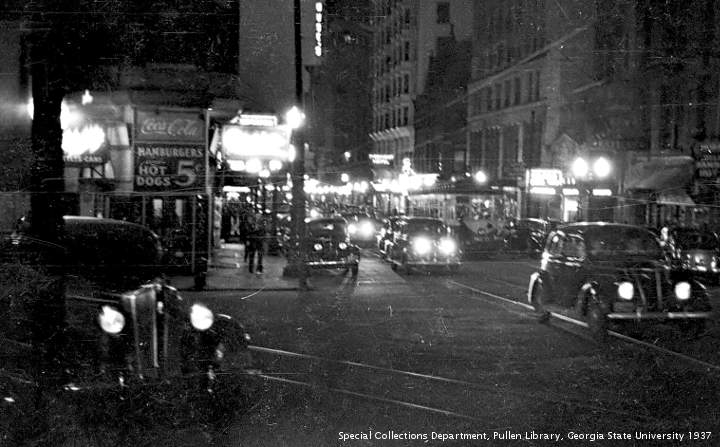
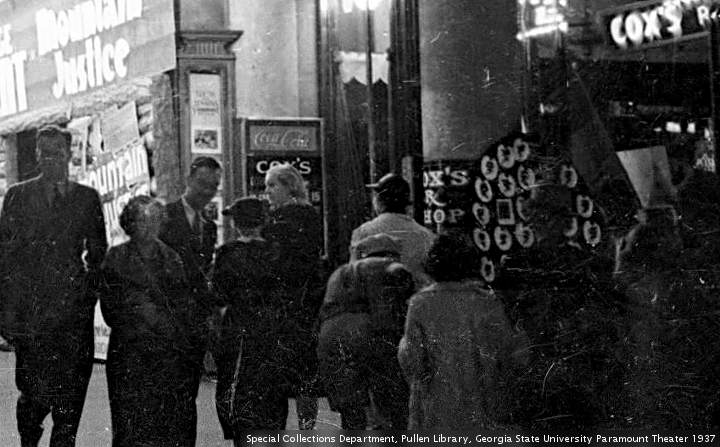
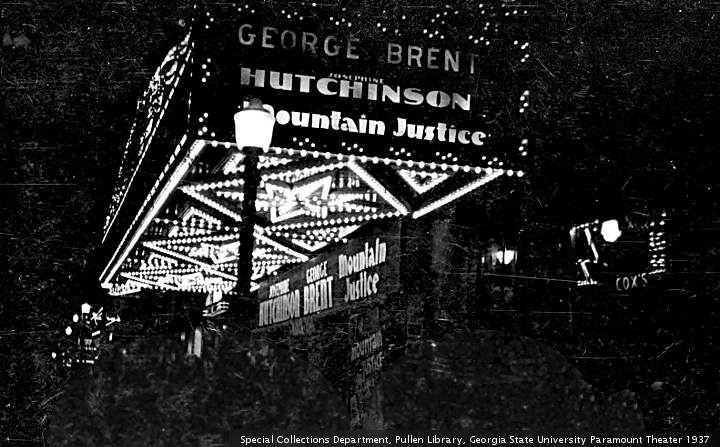
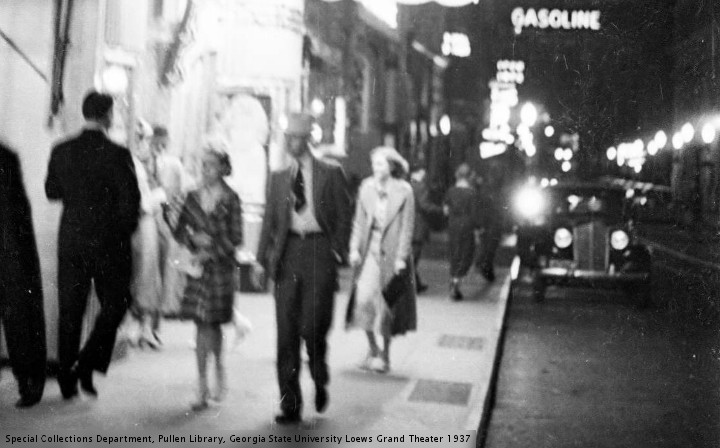
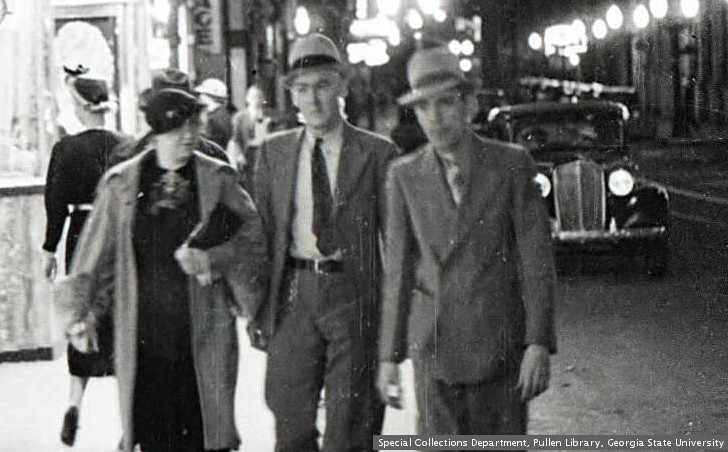
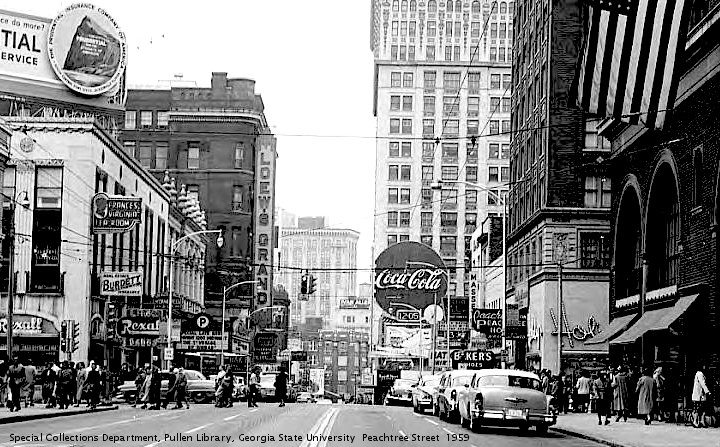
Carolyn Bryant Donham Part Two is now available. Pictures today are from Special Collections and Archives, GSU Library. The social media picture: “Peachtree Street at night, downtown Atlanta, Georgia, 1937.” ©Luther Mckinnon 2026 · selah

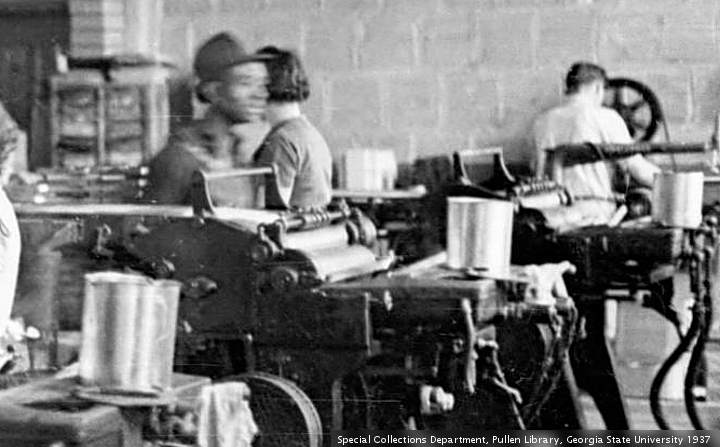
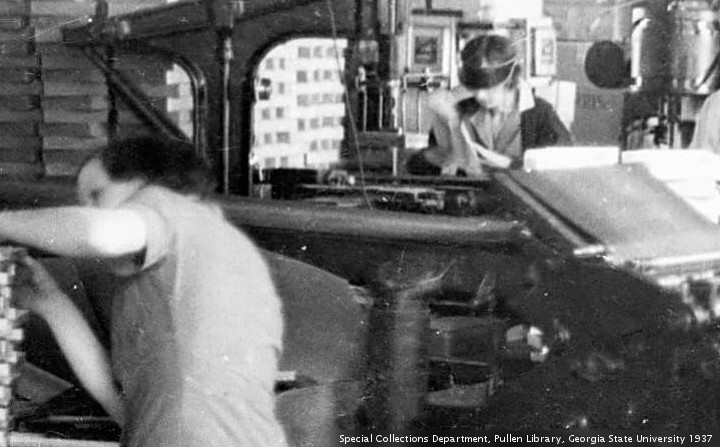
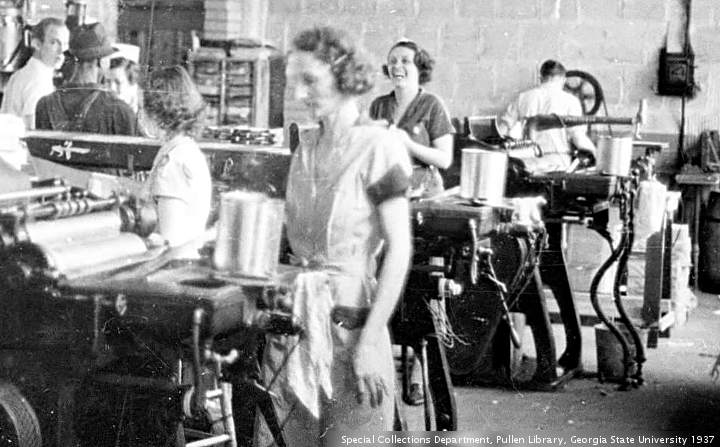
Why The War Between The States Was Fought
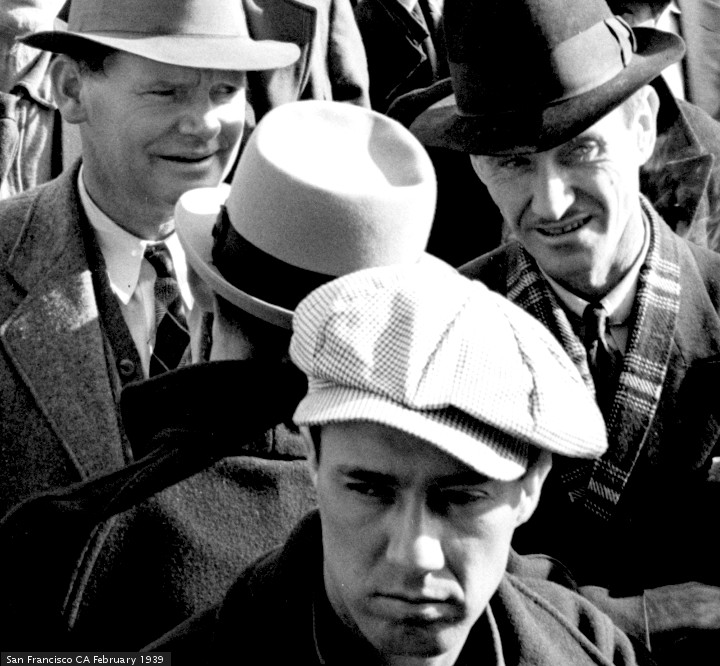
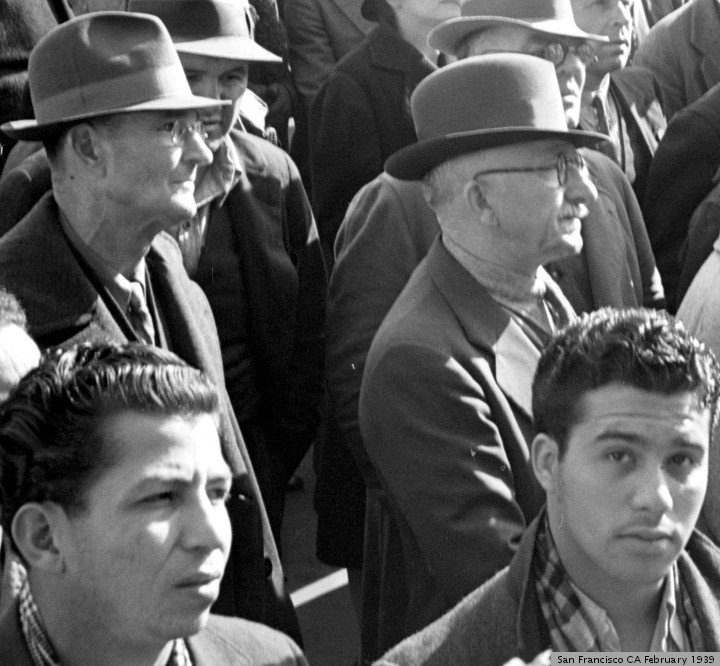
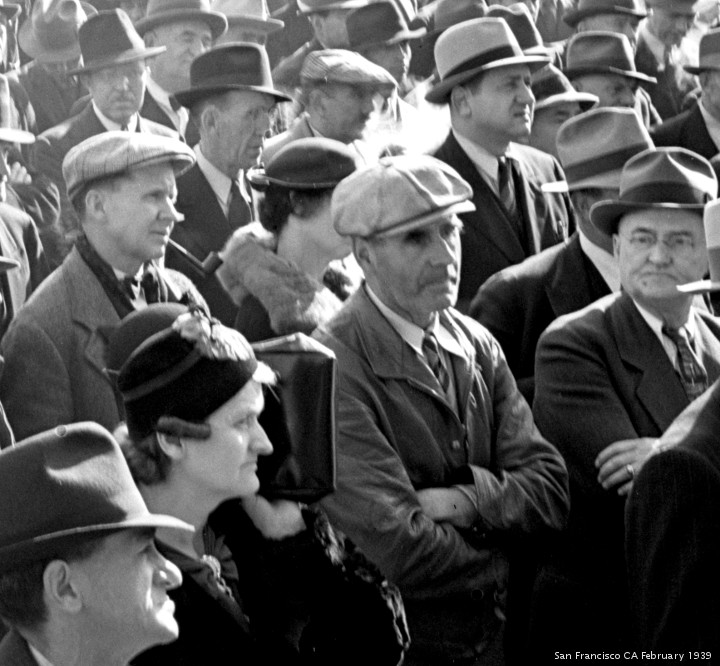
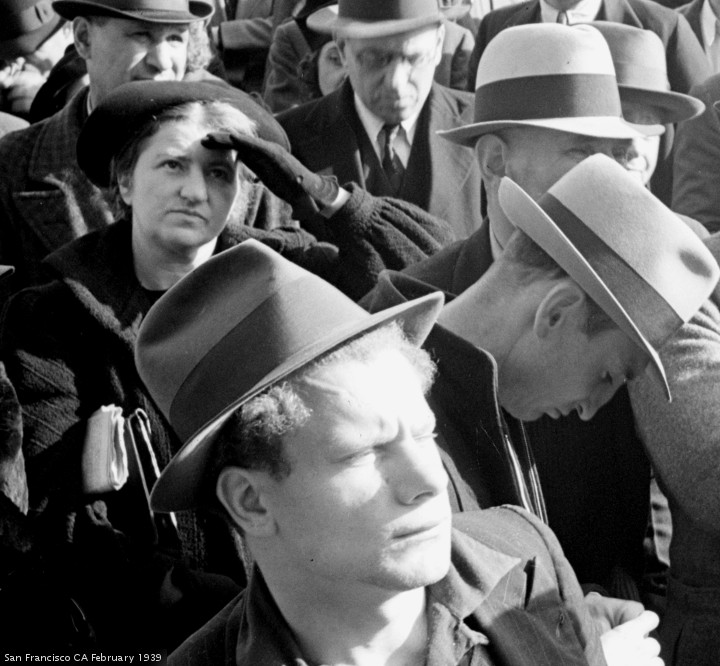
This content was originally published May 7, 2017. … Recently, Mr. Trump said something stupid about the War Between the States. After his comments began to filter into the marketplace of ideas, people began to react. There was a good bit of self righteous talk about how bad the Confederacy was. Maybe it is time for another point of view. This feature will have minimal research. Mistakes will be made. The reader is encouraged to do their own research.
When the colonies declared independence in 1776, nobody knew how things would turn out. First, Great Britain needed to be defeated. After that, the Articles of Confederation went into effect. “Under these articles, the states remained sovereign and independent, with Congress serving as the last resort on appeal of disputes. Congress was also given the authority to make treaties and alliances, maintain armed forces and coin money. However, the central government lacked the ability to levy taxes and regulate commerce…”
This arrangement was not working, and the Constitutional Convention was called. Originally, the CC was going to revise the Articles of Confederation, but wound up throwing the whole thing out, and creating the Constitution. This document called for greater federal authority. The issue of what powers to give to the states, and what powers to give to the central government, was contentious. It remains controversial to this day.
Had any group of autonomous states formed a federal union before? Usually, such a union is the result of a conquest, with one of the states ruling the others. It is unclear whether such a union had been attempted before, or how successful it was. When the “founding fathers” created the constitution, they probably did not foresee how it would play out. The current system, with a massive central government cat-herding the 50 states, would have been laughed off as a dangerous fantasy.
So the states start to have disagreements. One of the things they disagreed over was slavery. Yes, slavery was an important factor in the unpleasantness to come. Slavery also influenced a lot of the economic conflicts. The North wanted high tariffs to protect industry. The South wanted low tariffs, so they could sell cotton to Europe. There were many other ways for the states to not get along.
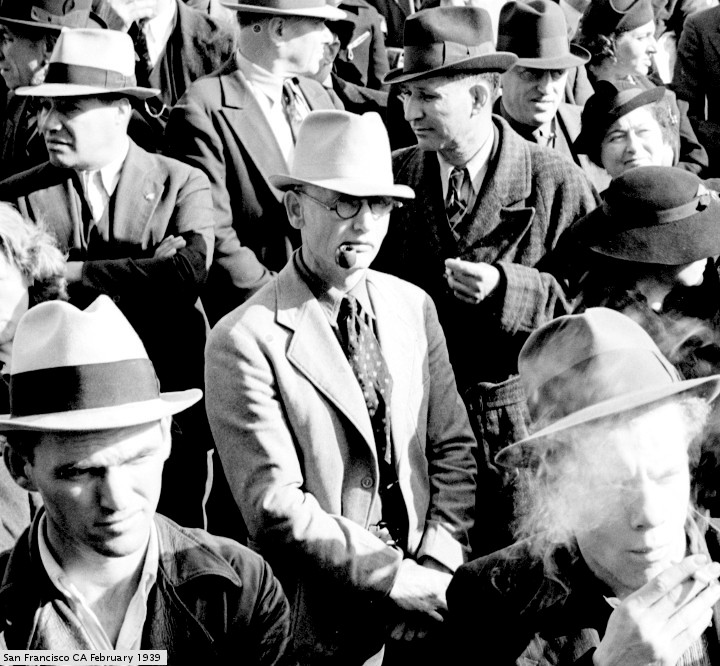
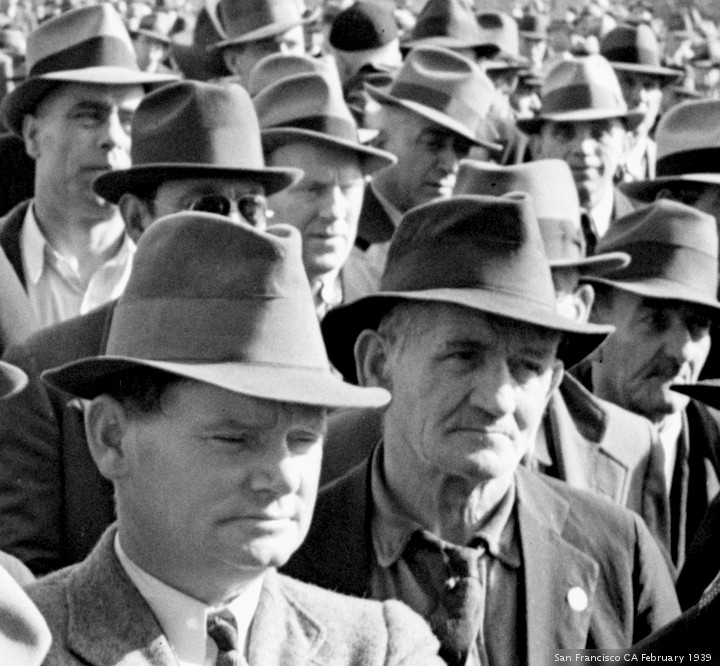
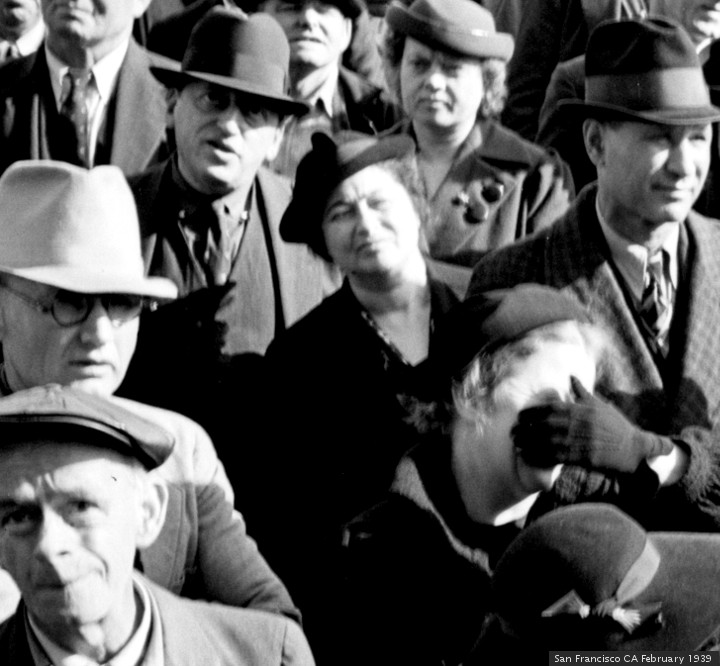
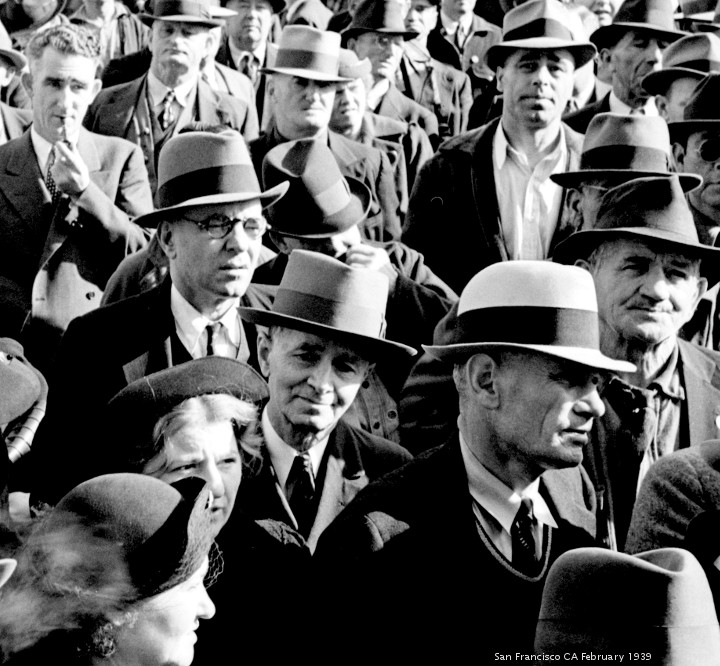
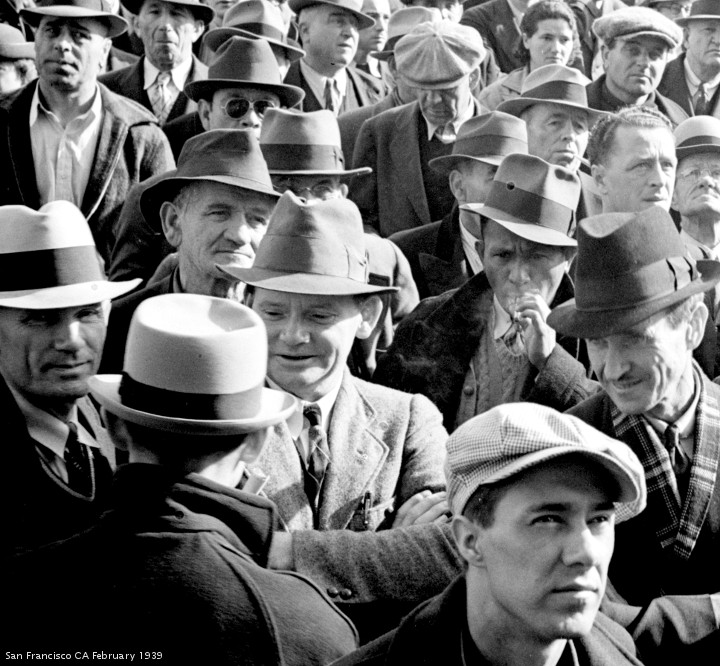
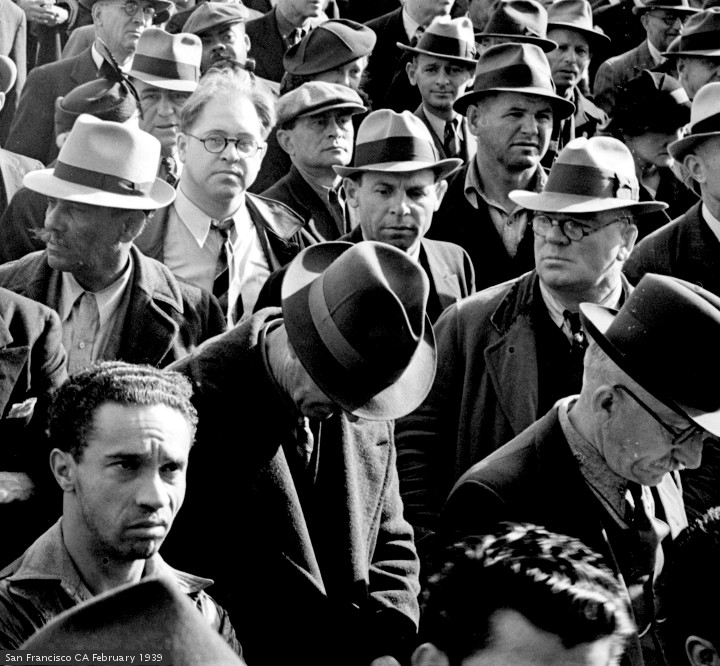
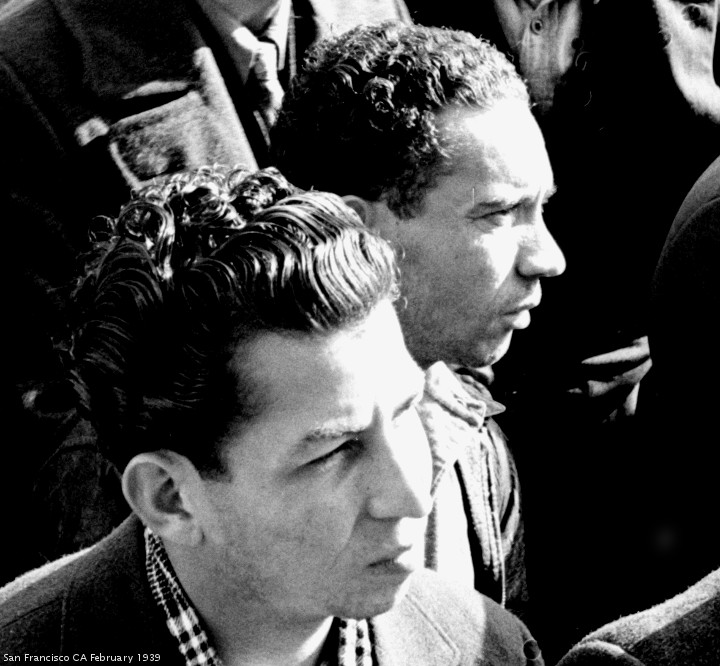
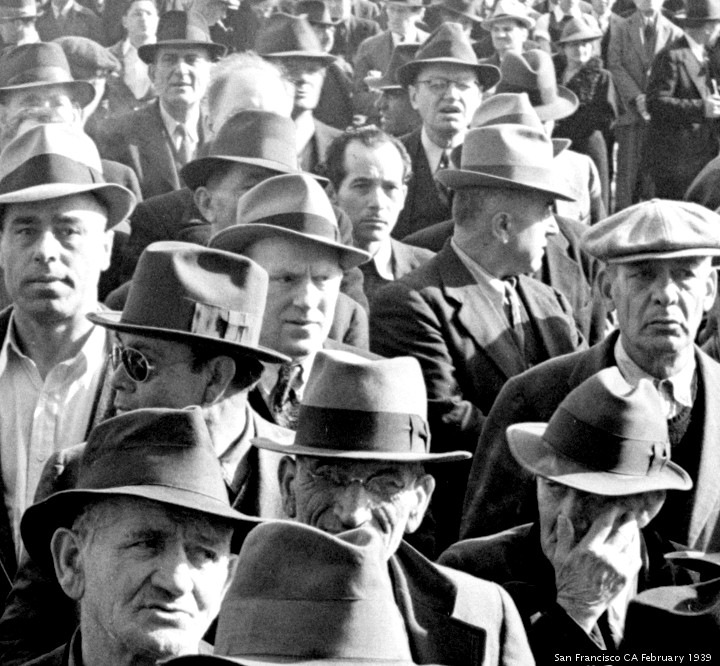
Finally, in 1861, the disagreements became too big to ignore. The south seceded, and the War Between The States began. The Confederate States of America was a looser union than the United States. The thought was that the states were more important than the federal union. Mr. Lincoln disagreed. (One popular name for the conflict was Mr. Lincoln’s war.) Many people say that Mr. Lincoln was not especially concerned about the slaves, but wanted to keep the union together. … Pictures today are from The Library of Congress. Dorothea Lange took the social media picture in February 1939. “Listening to speeches at mass meeting of Works Progress Administration (WPA) workers protesting congressional cut of relief appropriations. San Francisco, California”
©Luther Mckinnon 2026 · selah
Marilyn Truther
This content was originally published May 31, 2018. … Marilyn Monroe was photographed reading Ulysses, the famously difficult book by James Joyce. 63 years later, a man posted the picture on twitter, while promoting a study course on Ulysses. If Marilyn read it, then you can too! I said something uncooperative, and a brief twitter fight broke out. Since the study course promoter, and his tweeting buddy, did not give permission, they will not be quoted here. One exception, the titular “Marilyn Truther,” was coined by the promoter.
@chamblee54 “It was a joke, at one time, to give models a book to pose with. It was considered funny to give them a difficult book like “Ulysses”” · “Who needs to show a citation? I may be wrong. I asked Google, and found this. According to the photographer, Marilyn did not read it from start to finish. A more accurate answer is that Marilyn read parts of it. The story by Eve Arnold should not be taken as unchallenged truth, but it is all we have. I should have researched this before i spoke. Did you?” · “I had read that about other models. I also read numerous quotes, attributed to Marilyn, that proved to be phony. Photography is a medium open to manipulation, and creation of fantasy. Just because you see a picture, that does not mean it happened.” · “Eve Arnold … a woman … took that picture. How do we know Marilyn told the truth? Maybe Marilyn was just trying to make a good impression on the lady. Would Marilyn have said the same thing if the photographer was a man?”
I disputed that Marilyn Monroe had read Ulysses, and will never know for sure either way. I am not the first person to wonder about this. “Richard Brown, a Professor of Modern Literature at the University of Leeds with a special interest in James Joyce, was intrigued by Eve Arnold’s photos of Marilyn. Curious to know if Marilyn was indeed reading Joyce’s novel or if she was merely posing for the photo, Brown wrote Arnold a letter, which she replied on 20 July 1993. Unfortunately, I don’t have Arnold’s complete letter to show you … In any case, the excerpt from Arnold’s letter is interesting as she was telling Brown exactly what he wanted to know”:
“We worked on a beach on Long Island. She was visiting Norman Rosten the poet. … I asked her what she was reading when I went to pick her up (I was trying to get an idea of how she spent her time). She said she kept Ulysses in her car and had been reading it for a long time. She said she loved the sound of it and would read it aloud to herself to try to make sense of it — but she found it hard going. She couldn’t read it consecutively. When we stopped at a local playground to photograph she got out the book and started to read while I loaded the film. So, of course, I photographed her. It was always a collaborative effort of photographer and subject where she was concerned — but almost more her input. … I suggest to them that perhaps if Marilyn, with her busy schedule, could manage to read Ulysses, then there’s no excuse for them not to read and enjoy it, too.”
Marilyn is reading the 1934 Random House edition, with the dust jacket removed. This is the edition that was famously set from a pirate version containing numerous errors. This defect notwithstanding, the dust-jacket artwork and typographic design by Ernst Reichl constitute one of the great works in the history of book design.”
What does this say about a screen icon who died in 1962? Maybe she was smarter than your typical dumb blonde. Maybe not. Marilyn had an instinct for the camera, and looking good on the screen brought joy to millions of fans. Is this post mortem resurrection, as an intellectual philosopher, merely another fantasy concocted by well meaning fans? Pictures never lie, and there is a picture of Marilyn, reading Ulysses, with a serious look on her pretty face. Of course it is real! A fantasy involving Norma Jean Baker Marilyn Monroe? How absurd! As long as the merchandise is paid for, and the instagrammers inspired, should we even care?
The cult of Marilyn has shown up on chamblee54 before. “Someone told me that Marilyn Monroe once remarked that she enjoyed reading poetry “because it saves time.” I like this quotation so much that I’ve never dared to confirm it; I’d feel disenchanted to learn it was bogus.”
This search for authenticity led to a forum called Data Lounge … “get your fix of gay gossip, news and pointless bitchery.” The “Marilyn: Smart or Stupid” debate rages through 200 comments, reaching a peak at comment 196. “Yes MM said every one of those quotes by herself! … But I’m worried for her, cause She’s my main spirit guide and Saviour and she recently commanded me to share this message! … Comment 42 is also tasty. “MM on the set of GENTLEMEN PREFER BLONDES in conversation with Jane Russell on embryological parallelism. “Ontogeny recapitulates phylogeny.” … Jane’s reply: “I was about to say the same thing.”
In 2014, a facebook notice appeared. It was promoting a blog post by known idiot Matt Walsh. “If you can’t accept me at my worst, then you don’t deserve me at my best.”… “the original quote is from Marilyn Monroe. It’s even more vapid and nauseating when taken in its full context: “I’m selfish, impatient and a little insecure. I make mistakes, I am out of control and at times hard to handle. But if you can’t handle me at my worst, then you sure as hell don’t deserve me at my best.” Out of all the profundities ever uttered, what does it say about our society that THIS is the quote we’ve decided to take to heart?” The quote is disputed.
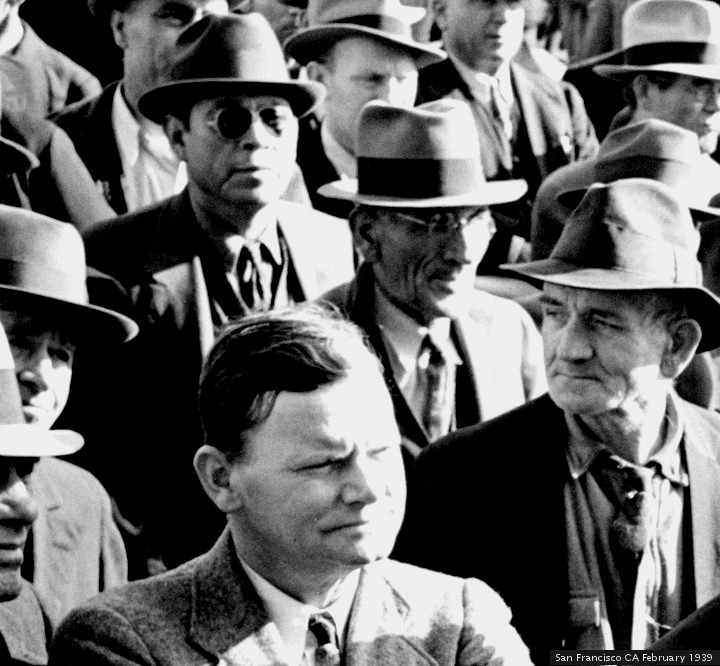
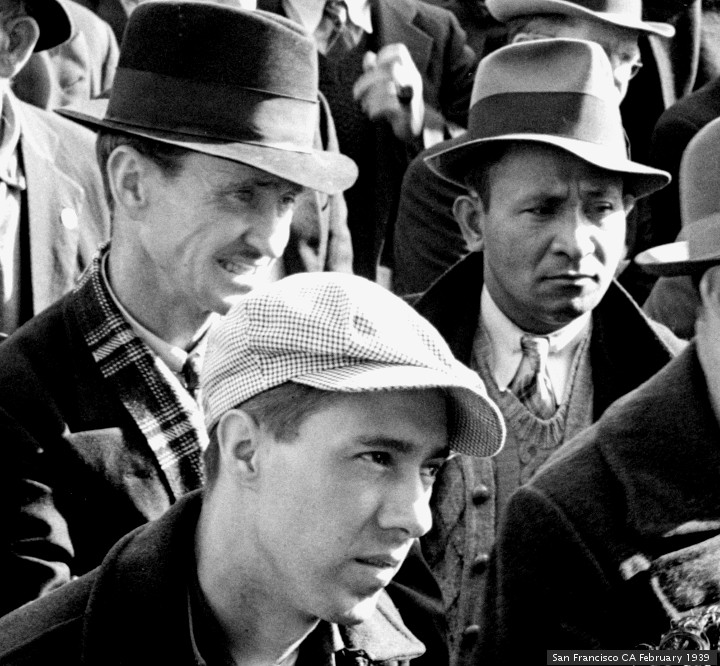
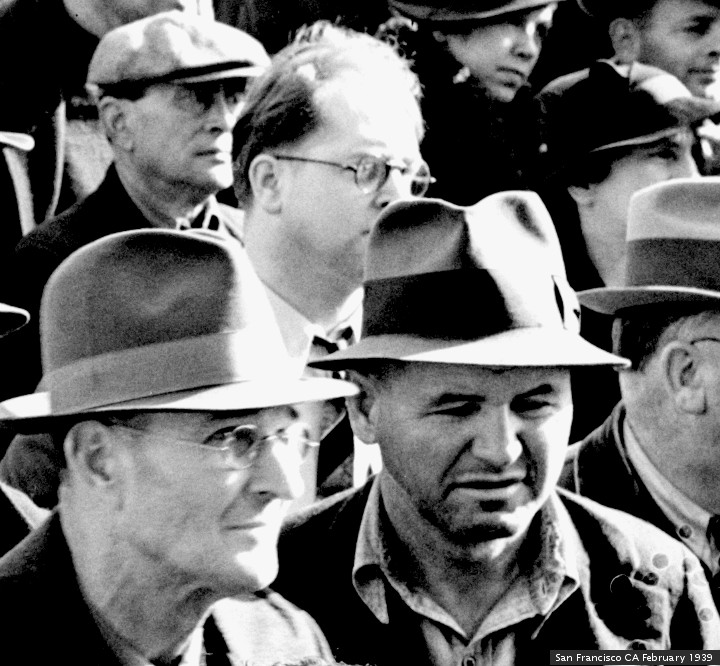
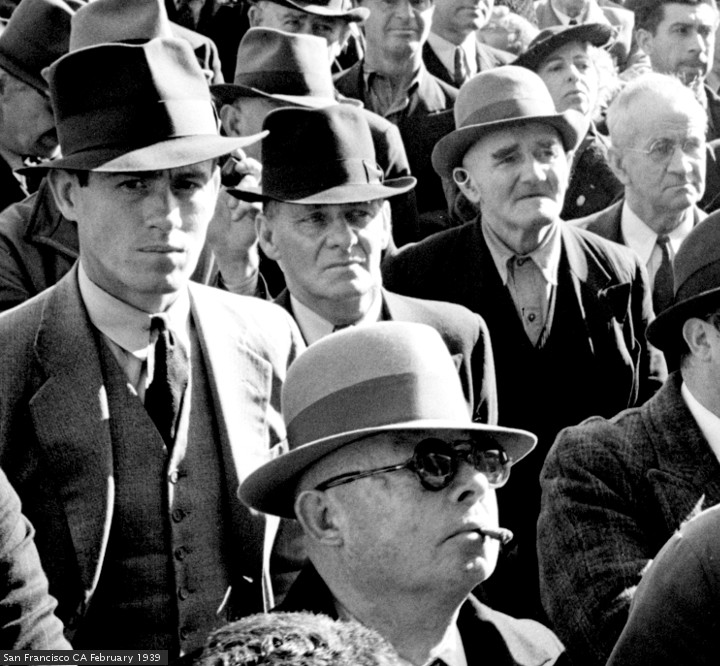
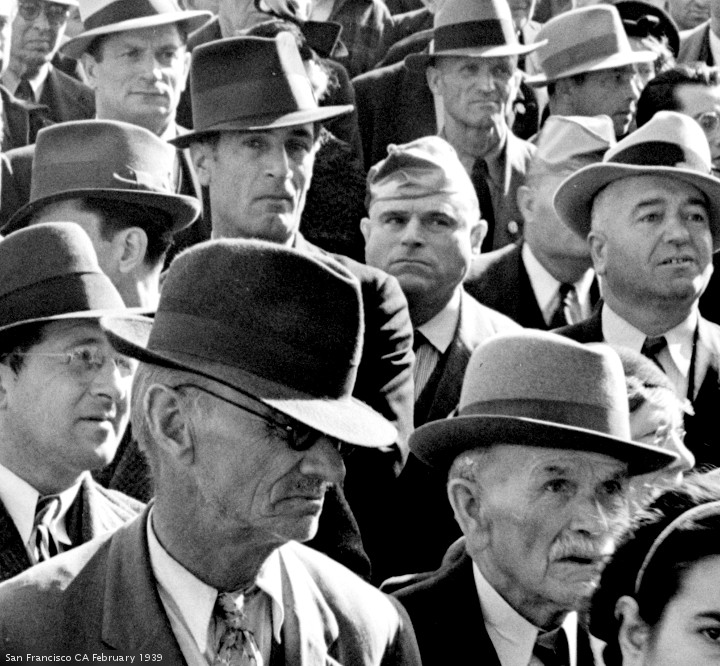
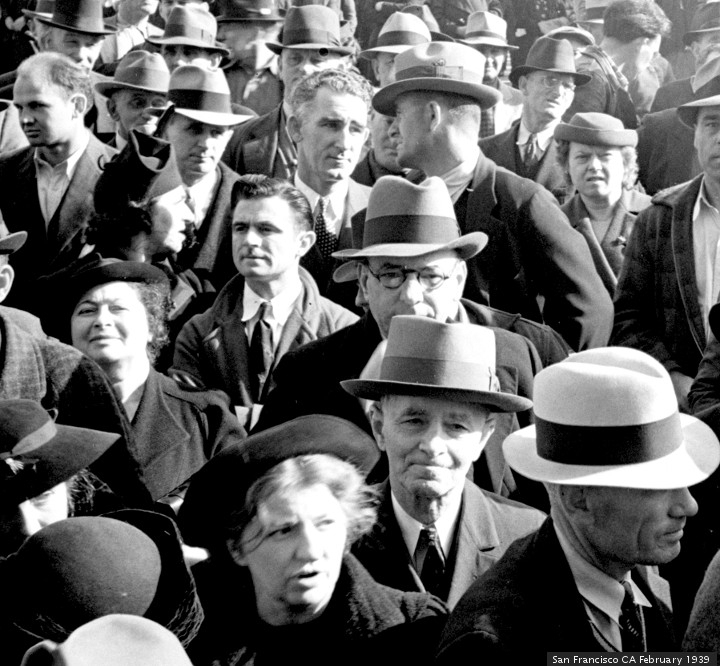
A link I cited above has a footnote: “1. Quoted in Richard Brown, “Marilyn Monroe Reading Ulysses: Goddess or Postcultural Cyborg?”, in R. B. Kershner (Ed), Joyce and Popular Culture, University Press of Florida, Gainesville, 1996, p. 174.” MMRUGOPC is available from a suspicious app. I did find an interview with Richard Brown. “I suggest to them that perhaps if Marilyn, with her busy schedule, could manage to read Ulysses, then there’s no excuse for them not to read and enjoy it, too.” … Pictures today are from The Library of Congress. Dorothea Lange took the social media picture in February 1939. “Listening to speeches at mass meeting of Works Progress Administration (WPA) workers protesting congressional cut of relief appropriations. San Francisco, California”
©Luther Mckinnon 2026 · selah
Bob Dylan Is 85
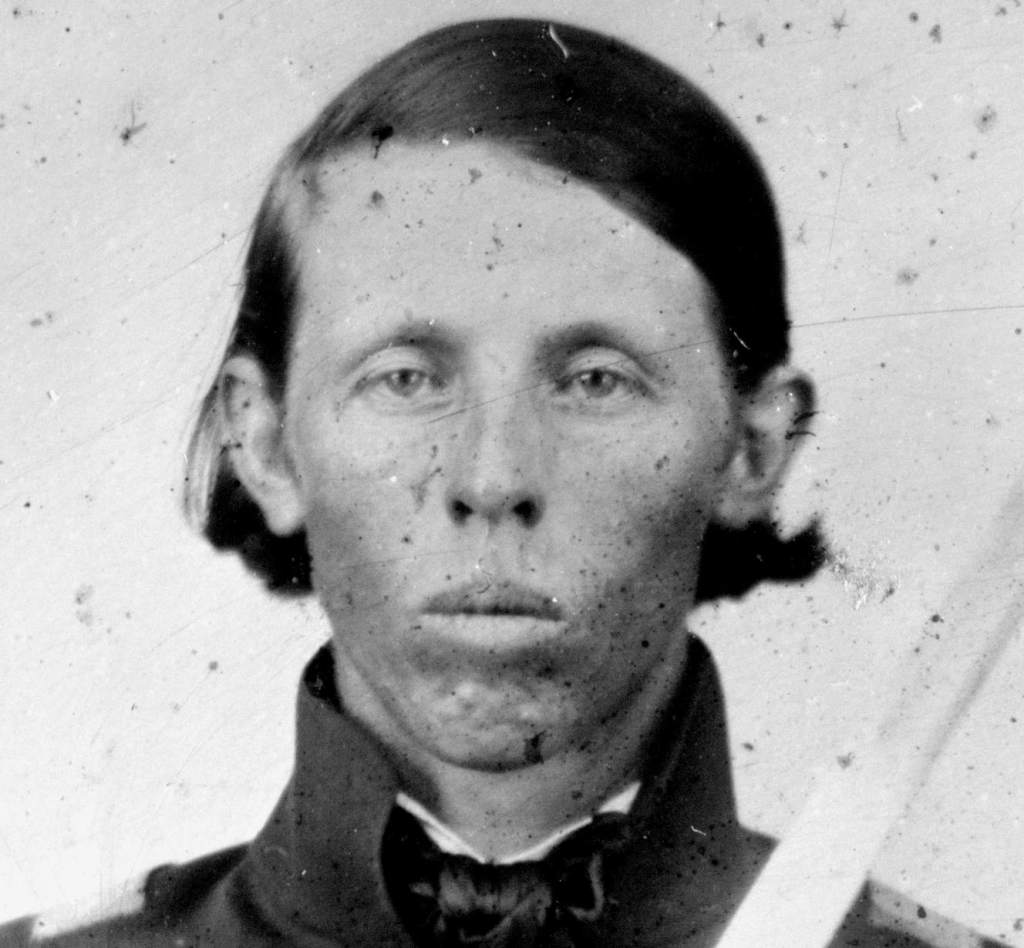
Content below was previously posted May 24, 2024. … Hibbing MN is a cold place. At least it’s the birthplace of Robert Allen Zimmerman. That’s Allen, with an e, and double L, just like hell. He legally changed that to Bob Dylan, with no known middle name. The initials are BD. On May 24, 1941, the curly haired wonder boi arrived. Europe was in flames, and eyeing America as fresh cannon fodder. This was twelve years, eleven months, and eighteen days before I graced the planet. A twelve year old in Hibbing MN would have no reason to think of me.
Content below was previously posted May 24, 2024. … a decision was made to go to Nashville. Al Kooper played organ, and served as a music director. A bass player named Joseph Souter, Jr. would become famous a few years later as Joe South. Kris Kristofferson was the janitor. The second session started at 6pm and lasted until 530 the next morning. Mr. Dylan was working on the lyrics to “Sad eyed lady of the lowlands,” and the recording could not start until he was ready. The musicians played ping pong and waited. At 4am, the song was ready. …
Content below was previously posted May 24, 2024. … I met a lady once, who worked in an insurance office. One of the customers was Joe South. His driving record file was an inch thick. … Al Kooper had a life. The former Alan Peter Kuperschmidt produced the first three Lynyrd Skynyrd albums, sold that contract for a nice piece of change, and lived happily ever after. Mr. Kooper was playing a show. I sat in front of the stage. During a break between songs, I asked his friend “what time is it?”. Mr. Kooper heard me, and said it was 11:30.
Content below was originally posted May 28, 2010. … The first BD record that I got was “Blind Boy Grunt”. BBG was a bootleg, recorded in a New York hotel around 1961. … I saw BD with The Band at the omni in 1974, and was not impressed. I won tickets to see BD at the house of blues during the 1996 olympics, and could barely hear what he said, the sound was so bad. … Zimmerman is the birth surname of Ethel Merman. May 24 gave us Queen Victoria and Patti Labelle. On May 24, 1844, Samuel Morse sent the message ”What hath God wrought”
Content below was previously posted July 30, 2024. … “I think everybody’s mind should be bent once in a while. Not by LSD, though. LSD is medicine – a different kind of medicine. It makes you aware of the universe, so to speak; you realize how foolish objects are. But LSD is not for groovy people; it’s for mad, hateful orange haired people who want banana revenge. It’s for people who usually have heart attacks. They ought to use it at the Geneva Convention.” PLAYBOY: “Did you ever have the standard boyhood dream of growing up to be President?” DYLAN: “No. When I was a boy, Harry Truman was President; who’d want to be Harry Truman?”
Content below was previously posted July 30, 2024. … “The only thing I can tell you about Joan Baez is that she’s not Belle Starr.” … PLAYBOY: “Writing about “beard-wearing draft-card burners and pacifist income-tax evaders,” one columnist called such protesters “no less outside society than the junkie, the homosexual or the mass murderer.” What’s your reaction?” DYLAN: “I don’t believe in those terms. They’re too hysterical. They don’t describe anything. Most people think that homosexual, gay, queer, queen, faggot are all the same words. Everybody thinks that a junkie is a dope freak. As far as I’m concerned, I don’t consider myself outside of anything. I just consider myself not around.” …
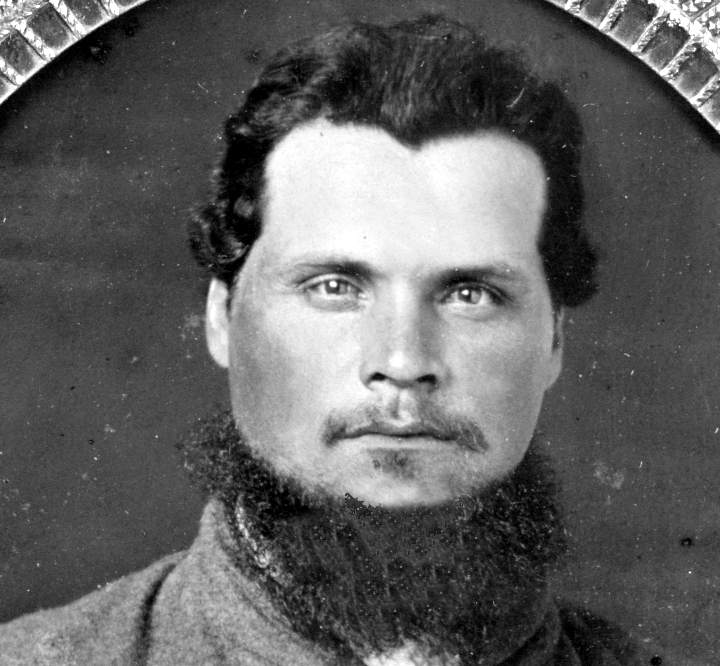
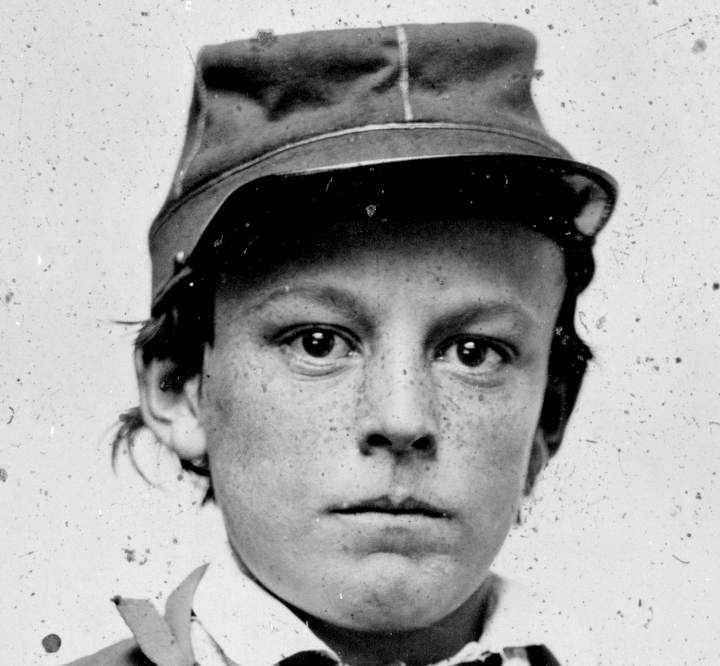
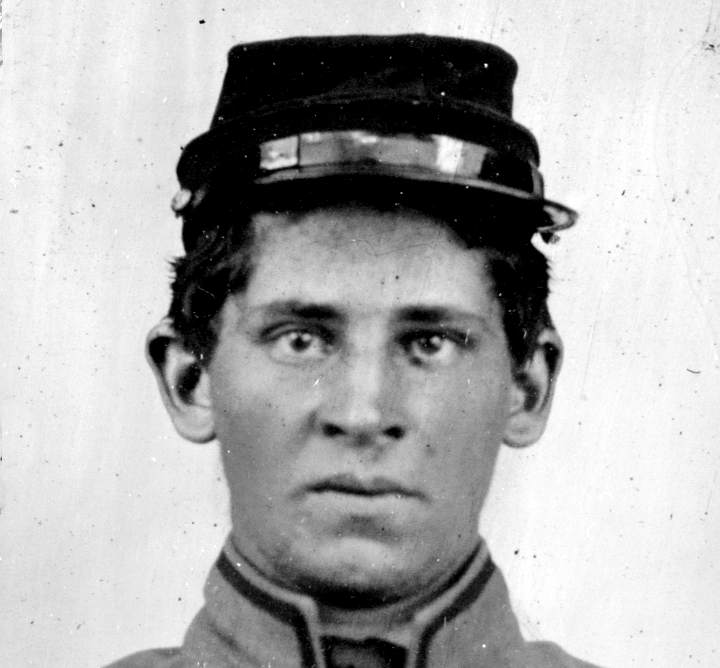
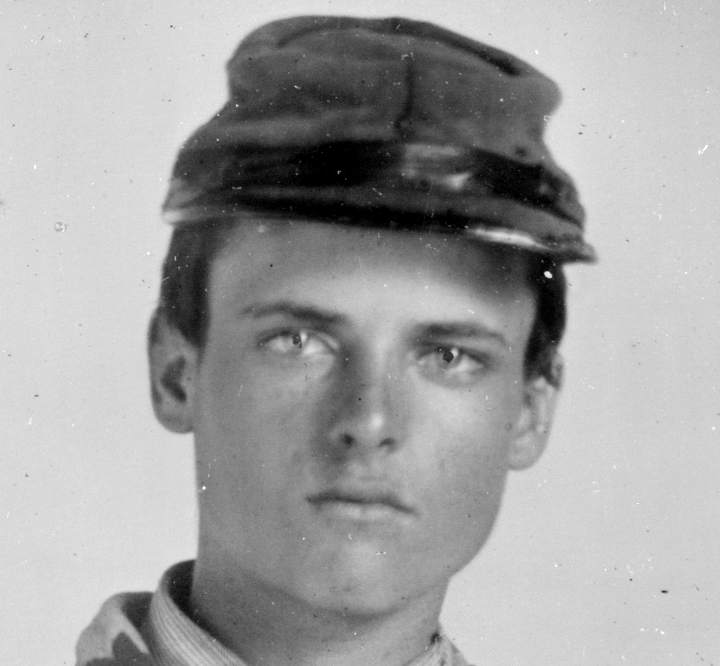
Content below was previously posted July 30, 2024. … “I go down to Dallas. I get a job as a “before” in a Charles Atlas “before and after” ad. I move in with a delivery boy who can cook fantastic chili and hot dogs. Then this 13-year-old girl from Phoenix comes and burns the house down. The delivery boy – he ain’t so mild. The next thing I know I’m in Omaha. It’s so cold there, by this time I’m robbing my own bicycles and frying my own fish. I stumble onto some luck and get a job as a carburetor out at the hot-rod races every Thursday night.” … Pictures today are from The Library of Congress. The social media picture: “Unidentified soldier in Confederate uniform with bouquet of flowers”


Potus Jokes

This content was originally published May 1, 2016. … After the ADHD WHCD, the Washington Post published The single best joke told by every president, from Obama to Washington. It was easier than finding anything coherent said by Kamala Harris.
The pickins are surprisingly slim, especially for the modern era. When everything you do is recorded, something has to be funny. Three recent Republicans show a liberal capacity for humor.
George H.W. Bush, 1989 Gridiron Club: “People say I’m indecisive, but I don’t know about that.”
Richard Nixon, in Ms. magazine, 1971: “Let me make one thing perfectly clear. I wouldn’t want to wake up next to a lady pipefitter.”
Herbert Hoover “Blessed are the young, for they shall inherit the national debt.”
Warren Harding was a dog. … “referring to his penis, which he named Jerry, in a 1915 love letter to his mistress Carrie Fulton Phillips: “Jerry — you recall Jerry, whose cards I once sent you to Europe — came in while I was pondering your notes in glad reflection, and we talked about it.”
You have to go back over a hundred fifty years to get a serious laugh.
Andrew Johnson “Washington, D.C., is twelve square miles bordered by reality.”
Abraham Lincoln “If I were two-faced, would I be wearing this one?”
Franklin Pierce about duties after leaving office: “There’s nothing left. . . but to get drunk.”
Zachary Taylor when suggested that he run: “Stop your nonsense and drink your whiskey!”
John Tyler on his death bed: “Doctor, I am going. Perhaps it is best.”
James Madison on his death bed: “I always talk better lying down.”
I found a quote once about Alexander Hamilton, by John Adams. “His ambition, his restlessness and all his grandiose schemes come, I’m convinced, from a superabundance of secretions, which he couldn’t find enough whores to absorb!” A google search for verification led to a reddit page, Fake Founder Quotes, starring John Adams. Apparently, Mr. Adams said something similar to that in a letter to Dr. Benjamin Rush, sent January 25, 1806. According to this source, the letter was a satire of Jonathan Swift’s Tale of a Tub
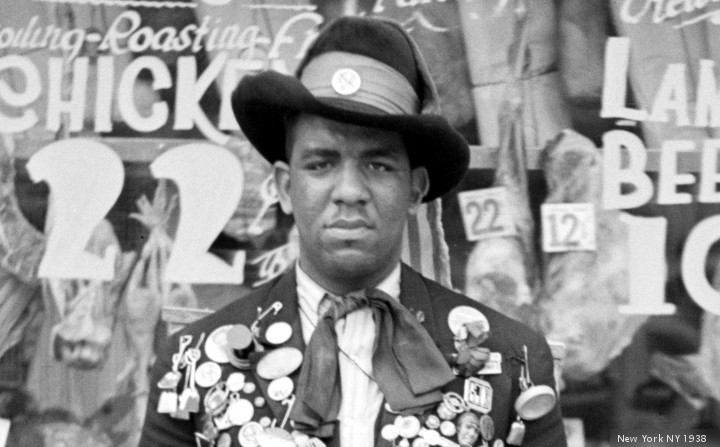
George Washington in a 1788 letter congratulating the Marquis de Chastellux on his recent marriage: “Now you are well served for coming to fight in favour of the American Rebels, all the way across the Atlantic Ocean, by catching that terrible Contagion — domestic felicity — which like the small pox or the plague, a man can have only once in his life: because it commonly lasts him (at least with us in America — I don’t know how you manage these matters in France) for his whole life time.” Pictures today are from The Library of Congress. The social media picture was taken in summer 1938. “Tobacco workers. Florence County, South Carolina.” ©Luther Mckinnon 2026 · selah

World Goth Day

This content was published May 22, 2012. … In case you did not know, I am an old fogey. I have not been hip since before Nancy Reagan said no. It is rather amazing that I would hear about World Goth Day, much less know what it meant. … What exactly was Goth? When was it popular? Who were popular Goths? Where did they buy their lipstick? Why are you reading this?
According to the WGD web facility, “Best 80’s goth band: The Sisters Of Mercy”. In 1991, I hosted a tacky party in my back yard. A person, who arguably had Goth sympathies, went to a Sisters of Mercy concert at the Fox Theater that night.That would date the advent of Goth a bit. In other words, the original Goths are telling their teenage children to behave now.
Getting back to twitter, the Gothoids are tweeting up a storm. Lets take a look. · @crocpunch I’m too depressed to celebrate World Goth Day. · @TonyCowards It’s World Goth Day and the sun is shining brightly, who says God doesn’t do irony? · @JDawgMadden World Goth Day? Do we have to dress up in black and write depressing, Edgar Allan Poe-wannabe poetry? · @prattprattpratt Out of curiosity, what makes today “World Goth Day?” Did the Goths lobby to have a day? Write their congressman? Who decides? Really. · @NotGaryBusey It’s World Goth Day and somewhere Glenn Danzig is cleaning out kitty litter. · @LauraMcCabe “World Goth Day” Pity no goths will see this trending as their too busy away slitting their wrists · @LauraMcCabe_ Just to let Eurovision fans know there is a tranny singing for Croatia on Thursday. Pretty “woman” with long hair, dress&a nice fluffy beard · @noelfielding11 I personally find world Goth day a bit gloomy. Might spend it on my own in the cemetery · @Eve_Barlow If I knew it was WORLD GOTH DAY I would’ve stayed at home and played House Of The Dead in my Beetlejuice leggings with Marmite on my lips.
The WGD facility has a forum, which asks the question Are you a true Goth? There is one comment in the thread. Somebody is trying to generate traffic for his site, www.Vampirewebsite.net. “Keep in mind most vampires have no idea what they are, and most of them will never find out. When looking for a vampire locally probably the worst place to look is in vampire groups, they are generally over crowded with wannabes and posers. It’s best to just use this page and go basically any where, just as an example we all go to the grocery store eventually.”
Bad Goth, Bad! elevates the conversation a bit. “Goths are everywhere these days. The mall, the beach, and some have even been spotted at sports games. Listen guys, THERE ARE RULES FOR BEING GOTH. If you’re going to represent the Underworld and live in the shadows, you can’t just go around being all normy-norms and drinking Cinnamon lattes next to the Christmas Tree. I’m not going to lie- everyone loves goth style and music on some level (HELLO ALEXANDER McQUEEN and THE CURE), but if you are going to own goth, then you must abide by the goth rules, which means you are ultimately an intellectual, emo vampire (which is really actually very cool). So please act like one. Here are some goths who aren’t following protocol and so I present, BAD GOTH, BAD!”
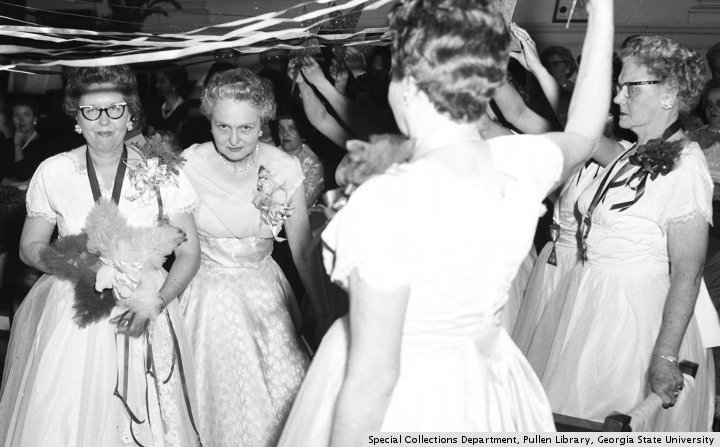
@SkipsMcskippy So it’s world goth day, I really can’t be bothered celebrating though @baileyhonsinger I’m totally participating in world goth day. Its my favorite day of the year!! · @ErinDavis88 “@zachbraff: Happy “World Goth Day”, also known as “Where Did My Parents Go Wrong Day.”” · @whitewe9 It’s world goth day. I was going to get depressed about it, but then I remembered that would count as celebrating. · @jczreid @vairi the irony that I got sunburnt in world goth day has not been lost on me, even though I was wearing an impressive amount of black · @SmashinBeauty I just found out that today is World Goth day! Happy Goth Day to goths .. if I had known I would have prepared something .. makeup wise · @azroth World Goth day? But everyday is Halloween. · @paulday15 Are goths happy about world goth day? If they are, are they still goths? · @ohmyblainers World Goth Day? Heeeeyyyyy Tina. Pictures today are from Special Collections and Archives, Georgia State University Library. The social media picture was taken March 25, 1961. “Order of the Eastern Star, Grant Park Chapter # 178” ©Luther Mckinnon 2026 · selah

Anglo Persian Oil Company


This content was originally posted May 19, 2010. … People are talking about the oil disaster in the Gulf of Mexico. TomDispatch has a paragraph about one of the key players, British Petroleum (BP): “Originally known as the Anglo-Persian Oil Company (later the Anglo-Iranian Oil Company, still later British Petroleum), BP got its start in southwestern Iran, where it once enjoyed a monopoly on the production of crude petroleum. In 1951, its Iranian holdings were nationalized by the government of Mohammed Mossadeq. The company returned to Iran in 1953, following a coup that put the Shah in power. It was finally expelled again in 1979, following the Islamic Revolution.”
If you look at the problems of the world in the last forty years, so many are affected by Iran. The 1953 revolution left great resentment, which became manifest in the 1979 revolution. Soon Iraq … whose border with Iran was clumsily drawn by the British … decided to attack Iran. A gruesome eight year war was the result, with the USA supporting both sides. The idea was, if they are fighting each other, they will leave Israel alone.
After this war is over, Iraq has a problem with Kuwait, in large part because of a war debt. Another war is the result, with the USA involved. Iraq is vanquished, but some in the USA are not satisfied, and after a few years the USA invades Iraq again. That war is still raging.
The biggest winner of the US-Iraq war (aka World War W) is Iran. This new influence in Persia is very troubling to Israel, which is loudly rattling its nuclear saber. When Israel makes noise about Iran, it takes attention away from the Palestinian tragedy.
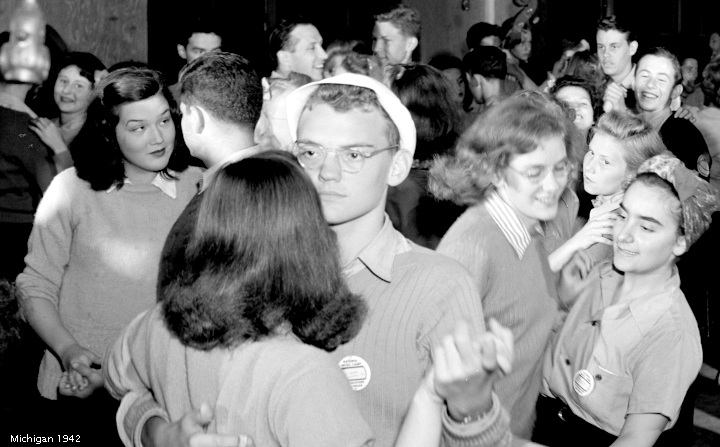
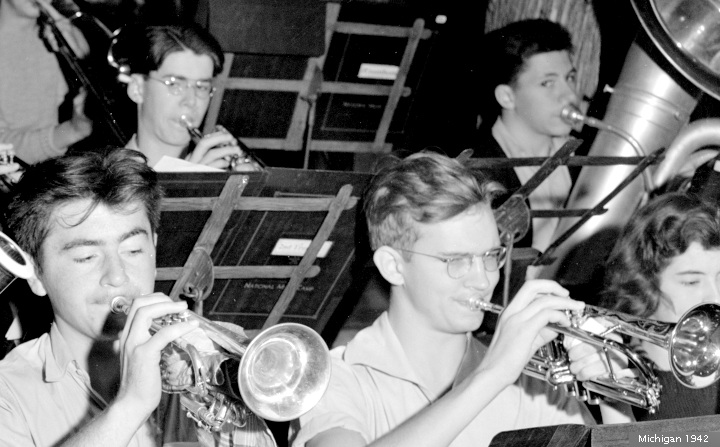
Tom Dispatch is still publishing content. The situation with countries-that-start-with-I is worse than ever. Pictures today are from The Library of Congress. Arthur S. Siegel took the social media picture in August 1942. “Interlochen, Michigan. National music camp where 300 or more young musicians study symphonic music for eight weeks each summer. Couples dancing at a Monday night dance jamboree” ©Luther Mckinnon 2026 · selah


 Chamblee54
1 comment