







Sedevacantism






@LearningthePath “Not enough of you are concerned about the Charismatic Roman Catholic Sedevacantist Dispensationalism of William Tapley, and it shows.” @chamblee54 “too many big words” @LearningthePath “This time, that was intended to help make the joke. Charismatic – Believes in continuing Apostolic Gifts (prophecy, healing, tongues, etc.) Sedevacantist – Believes that the office of the Papacy is Empty.” This is a repost.
Sedevacantism (SV) is weird business, even by Catholic standards. The word literally means the seat is vacant. SV believe that the post-Vatican II has strayed away from the correct faith. The Pope is not Catholic enough to be the Pope. The last legitimate Pope was Pius XII. He died in 1958, after looking the other way during the Holocaust.
This video uses fancier language, to say the same thing. “satyakant ism/said of account ism (you tube transcripts are not inerrant) is the position of those Catholics who refuse to recognize for gay bergoglio (Jorge Mario Bergoglio, aka Pope Francis) as a true Pope. The seed of a canister(?) found that the Copt is vacant on account of the apostasy from the faith on the part of the official hierarchy since the promulgation in 1965 of the documents of the Second Vatican Council.”
If you search for SV on google and youtube, you will find lots of material. Dealing with a Sedevacantist Priest is a video of a radio show. The caller is concerned about some of the things a priest is saying to the flock. Bible verses are trotted out, and used to justify opinions. This is true of all the SV videos. The tone is heavy, heavy Catholic. If you come from a Protestant background, you might think you’re watching science fiction.
Sedevacantism Is Modern Luciferianism is a rather lurid discussion. Alas, there is a bait and switch here. “With the crisis in the Church since Vatican II, many comparisons have been drawn with the Arian crisis of the 4th century, when the majority of the Church’s bishops fell into the heresy of Arianism. … There is the remarkable similarity between today’s sedevacantists and a group of schismatics who were spawned during the Arian crisis: the Luciferians. The Luciferians were less nefarious than their name implies. Rather than being devil-worshipers, they were simply followers of the schismatic Bishop Lucifer of Cagliari.”
There are memes, both SV and anti SV. There is a twitter account: @animesedevacant Anime Sedevacantist ☩ Lover of Pius XII and Anime! SV Singles is another manifestation. Brian-sede is “Seeking Sedevacantist Catholic Woman”. Alas, even here, man just can’t seem to get it right. “Sedevacantist Singles” Employees Not Sure Whether To Recognize Authority. Pictures today are from The Library of Congress. The spell check suggestion for Sedevacantism is Antisemitism.





The Healey Building

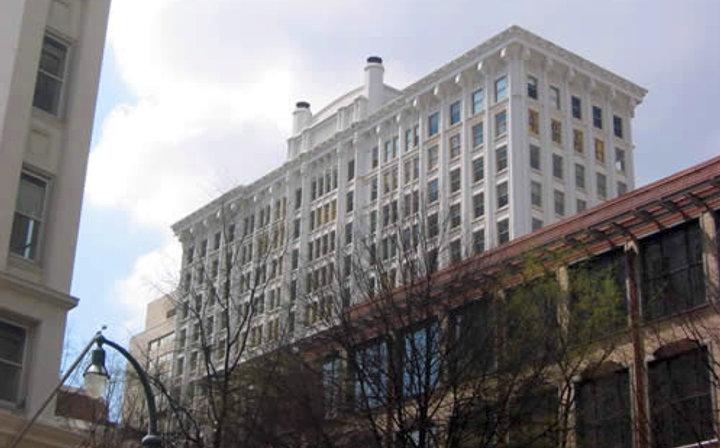
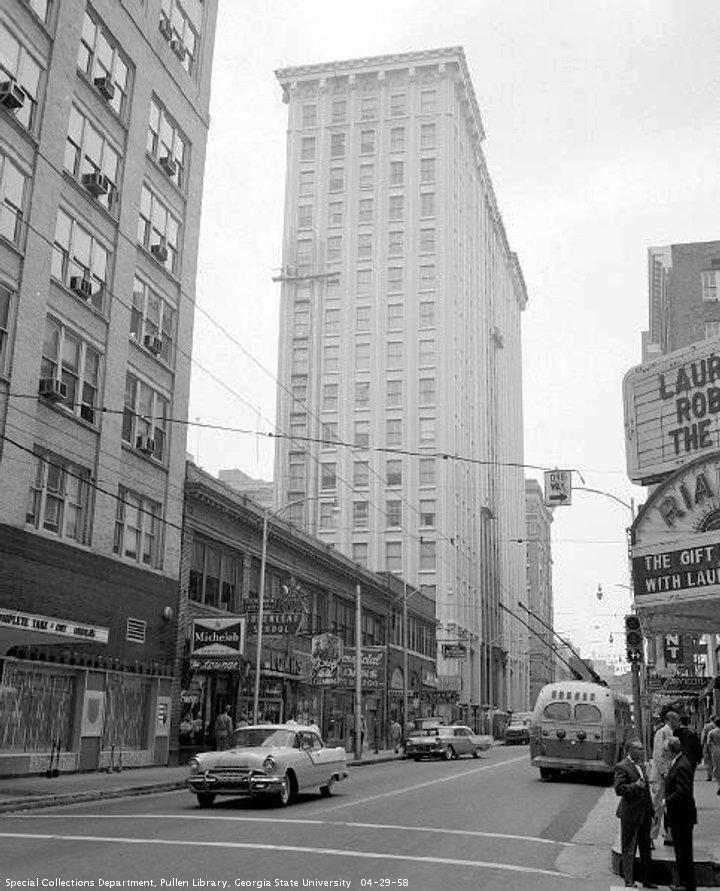
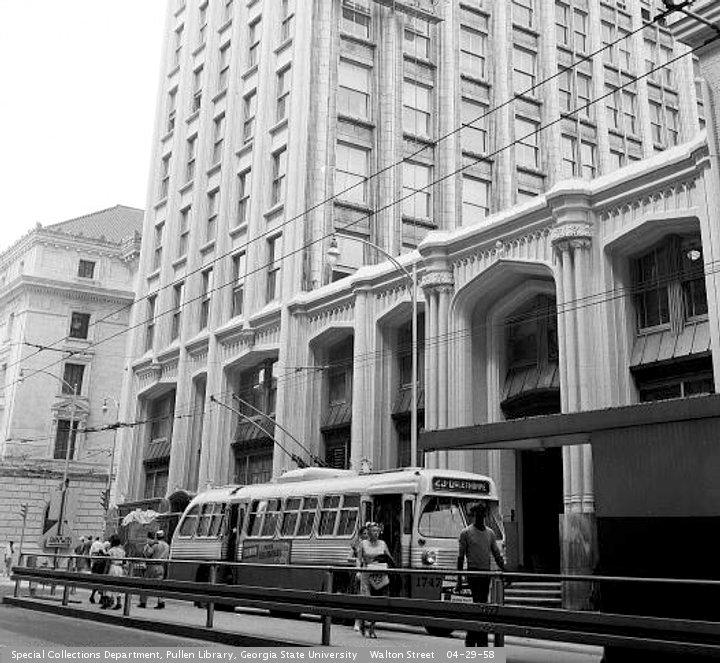
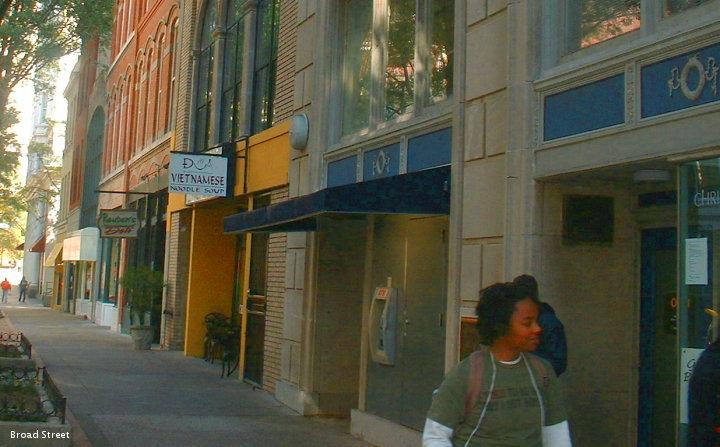
A local blog recently had a feature about the Healey Building PG worked at 57 Forsyth Street for five years, between 1991 and 1995. This is a good excuse to write some text, and upload some pictures.
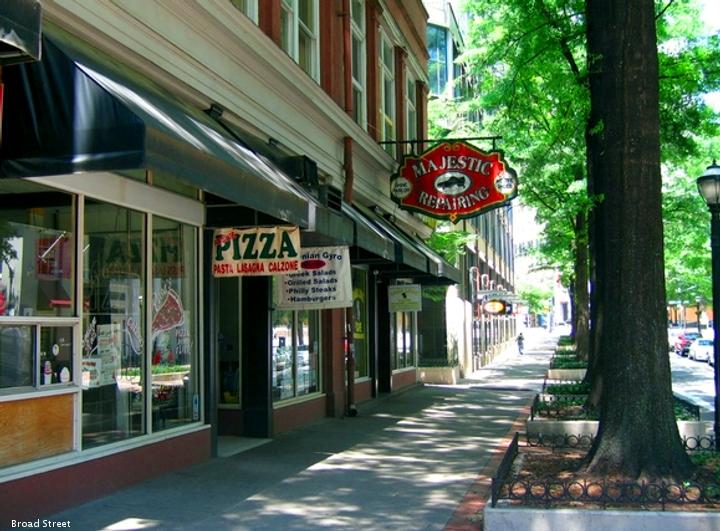
PG represented Redo Blue in an architect’s office on the fourteenth floor. His printroom was the third window from the north end, on the third floor from the top. There was a large window, on the west side overlooking Woodruff Park. A surprising amount of attention was captured by the gold dome of the State Capitol. At street level was Broad Street, home to a constantly changing array of merchants.
There were some sights coming in that window. On the coldest winter day in 1993, a music video was filmed on top of the Church’s Fried Chicken on Broad Street. On the week before the Super Bowl, The Dallas Cowboy cheerleaders, and Martin Mull, kicked field goals in the park. When PG left town that Friday, a large, inflated rendering of Izzy, the Olympic mascot, was resting in the park.
It was not completely happy times. In April of 1992, a jury in California delivered an unpopular verdict. The next day, April 30, the streets downtown erupted. People in Rosa’s Pizza got a broken window, to go with their calzones. The next day, a notions shop on the Forsyth Street side had a sign in the window, “Black owned business”.
William T. Healey opened his office building in 1914. There were sixteen stories, taking the entire block between Broad, Walton, Forsyth and Poplar Streets. The firm of Morgan and Dillon designed the building. The original plan was to have twin towers, with the rotunda, and arcade, in the middle. World War One, and the death of Mr. Healey, put a stop to those plans.
The tower stood on the edge of the Fairlie-Poplar district. In photos of downtown, the Healey building, and the Candler building, serve as easily recognized landmarks. For many years, many bus lines ended on Walton Street, at the south end of the building. Hundreds of people waited there to change buses.That custom ended with Marta trains.
The Healey Building has many features that are no longer seen. The terra cotta details are too fancy for today’s buildings. The stairwells had a garbage chute. You could go to the garbage hole on any floor, and throw your trash to a receptacle down below. The building does not have a loading dock. A freight elevator pops up from behind a steel plate on the Forsyth Street sidewalk. This takes deliveries into the sub basement, where they are transferred onto the freight elevator.
Since 2001, the building has been Healey Building Condos
Pictures today are from Wendy Darling, The Healey Building, “The Special Collections and Archives, Georgia State University Library”, and Chamblee54. This is a repost.




Unbeschreiblich Weiblich




The display of a link on this page does not indicate approval of content.
“‘streaming is evil’ narrative is doing more harm than good, particularly for …
Chevy Chase says he doesn’t care his old … SNL cast mates thought he was a “jerk”
Georgia educators push back against bill restricting how race is taught in classrooms
Nina Hagen Band VÖ: 11. Februar 1978 Unbeschreiblich weiblich – das Referenzwerk …
To slow an epidemic, focus on handwashing – Improving rate of handwashing at …
Did Andy Warhol really say “In the future, everyone will be famous for fifteen minutes”?
‘I trust my drug dealer more than I trust this vaccine’ By Nicholaus Christian
COVID-19 risk and outcomes in patients with substance use disorders: analyses from …
“we’ve been very clear that we are not providing funding for crack pipes”
OK Physicians Are Not Prohibited From Prescribing Off-Label Medicines
New Homes at a Former Castro Diner Site Should be More ‘Queer Affirming,’
‘I didn’t understand’: Response to NJ mall scuffle ignites critique of policing
pastor baptized people for decades using one wrong word those are considered invalid
An Analysis of the Root Causes for Opioid-Related Overdose Deaths in the United States
Immunizing Strategies and Epistemic Defense Mechanisms
Chapter 7 of David Stove, The Plato Cult and Other Philosophical Follies
Sophia Loren Finally Explains That Infamous Pic With Jayne Mansfield
“i truly believe that god presented the adult film industry to me”
Make Protection of Children and Families from Health Coverage Loss a Priority
Georgia Gov Candidate Roasted for ‘Jesus, Guns, Babies’ Campaign Bus’
Geena Davis Remembers Brad Pitt’s Audition for Thelma & Louise Role
How and why the U.S. Government Perpetrated the 2014 Coup in Ukraine
Here’s what we know about Georgia basketball assistant Wade Mason’s suspension
1 dead, 5 injured in shooting near Normandale Park in Northeast Portland
Not a Tolkien quote: “A single dream is more powerful than a thousand realities.”
Pro Gamer Fired After Saying Short Men ‘Don’t Have Human Rights’
Sheriff Blasts Dept of Corrections Over Convicted Killer’s Transfer, Use of Contraband
until gen z takes over, wipes out all of us i encourage that they couldn’t possibly do worse
The Disinformation Campaign Against Ivermectin – JAMA’s “Diversion”
Children in Syrian ISIL prison Hundreds of kids held in the Hassakeh jail
Hundreds of children held by IS in besieged prison in Syria
Maajid Nawaz on the Misguided Nature of the War on Terror
Michigan driver deliberately struck, killed retiree so he could have sex with her body
Psaki Tells Rob Lowe His West Wing Character Inspired Her to Return to White House
Listen to your skin, a monthly erotic reading with Thank you, Janet & Hannah!
lincoln memorial ~ bo winegard ~ jre1780 ~ brian fish ~ marilyn mosby
botox ~ jre 1779 osterholm ~ yoko ono ~ synchronicity ~ warren buffet
kandis taylor ~ harvest ~ levis ~ rivian ~ chancellor perdue
faye dunaway ~ tender greens ~ noir ambient ~ sophia loren ~ motte and bailey
warranty ~ mcmichaels ~ right to farm ~ woody show ~ pedro ramiriz
bnr102 ~ doreen/fox ~ doreen ford ~ r/antiwork ~ archie leach
tom robbins ~ Motte-and-Bailey ~ tibet house ~ medicine ~ semantle
hope quest ~ Omerettà The Great ~ omeretta ~ lou reed ~ zevon
jemele hill ~ rollins ~ rollins 090721 ~ jean-luc brunel ~ tony 0219
do re mi ~ nikki sixx ~ demonym ~ readers magnet scam ~ pjo’rourke ~ hollywood park
bill kristol ~ out there ~ nyc crime ~ hamburgers ~ nope ~ creek walk connector
“Where are my eyes? I’m staring at her nipples because I am afraid they are about to come onto my plate. … In my face you can see the fear. I’m so frightened that everything in her dress is going to blow—BOOM!—and spill all over the table. ” ~ @EPoe187 My favorite part of any modern academic article that’s even slightly controversial is the “I do renounce satan and all of his works” preamble that is now required before saying anything that might contradict sacred dogmas. ~ @OttawaBylaw Attention animal owners at demonstration If you are unable to care for your animal as a result of enforcement actions, your animal will placed into protective care for 8 days, at your cost. After 8 days, if arrangements are not made, your animal will be considered relinquished. ~ @helenlewis I’ve spent a week watching American TV and I will mildly note that it’s slightly bizarre to watch news programmes discussing Joe Rogan and “medical misinformation” and then throw to a commercial break full of ads for completely ineffective cold remedies and quack diet pills. ~ @EPoe187 Hyperbole causes verbal inflation as words such as “fascism” and “racism” become degraded by overuse. The result is even more overheated rhetoric, as people chase emotional reactions with words and phrases that have been thoroughly debased. ~ this quote is frequently memed out by people who do not consider the implications @SonofBaldwin We can disagree and still love each other unless your disagreement is rooted in my oppression and denial of my humanity and right to exist. ~ @chamblee54 bob comes out in support of euthanasia until gen z takes over and wipes out all of us i encourage that they couldn’t possibly do worse ~ @TylerMahanCoe Warren Zevon was more of a piece of shit than Lou Reed but Lou was more of an asshole than Zevon ~ @chamblee54 @MarkJEngleson @TylerMahanCoe a man, who might be Harlan Ellison, walked up to Sophia Loren. “I want to fuck you” “If you do, and I find out about it, I am going to be very angry.” ~ Ezekiel 23:20 For she doted upon their paramours, whose flesh is as the flesh of asses, and whose issue is like the issue of horses. ~ Urban legend claims that if you play Pink Floyd’s “Dark Side of the Moon” while watching “The Wizard of Oz,” there’s an synchronicity that could only come about had the band planned the album around the movie. Pink Floyd has denied the rumor outright for years. Floyd drummer Nick Mason: “It’s absolute nonsense. It has nothing to do with ‘The Wizard of Oz.’ It was all based on ‘The Sound of Music.’” ~ pictures today are from The Library of Congress. ~ selah








The Cynic’s Word Book J – L

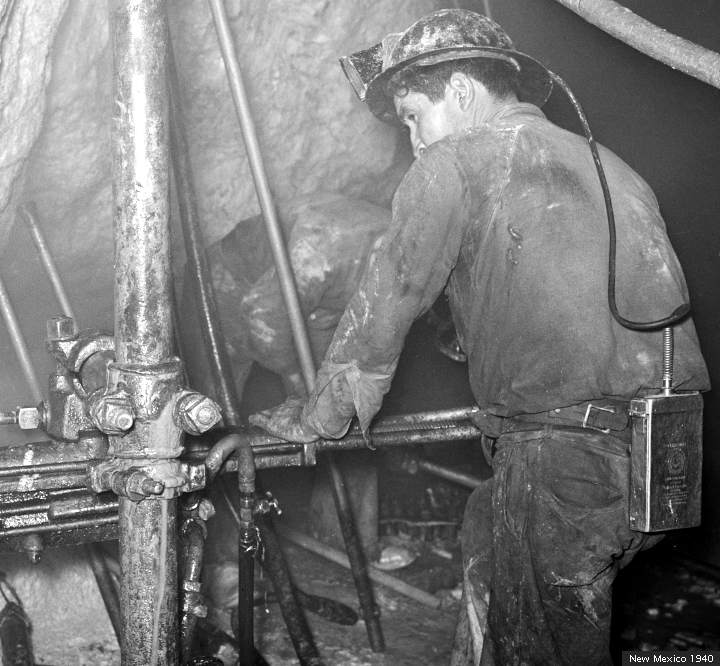

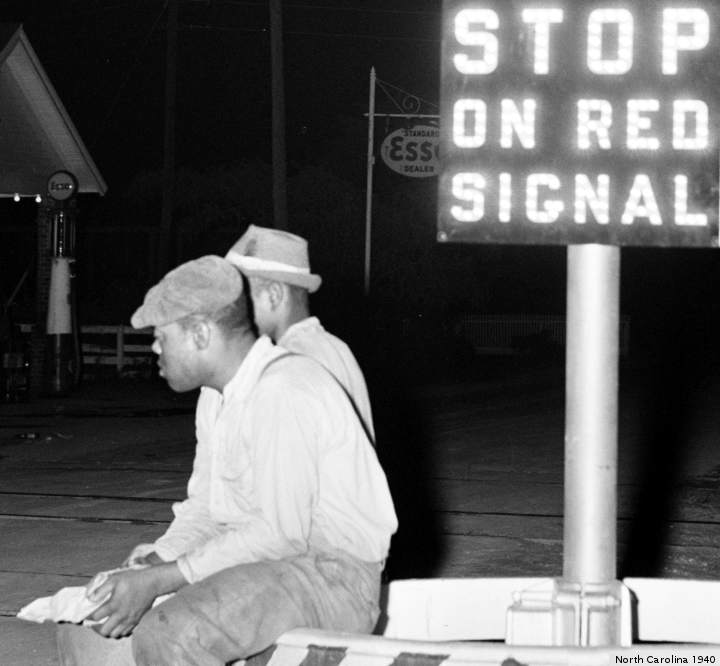
What follows are selections from The Devil’s Dictionary, by Ambrose Bierce. TDD began as a newspaper column, and was later published as The Cynic’s Word Book. TDD is in the public domain. TDD is a dictionary, going from A to Z. Today’s selection covers J to L. More selections are available. (A – D E – G H – I) Pictures today are from The Library of Congress.
JEALOUS Unduly concerned about preservation of what can be lost only if not worth keeping.
JUSTICE A commodity which is a more or less adulterated condition the State sells to the citizen as a reward for his allegiance, taxes and personal service.
KEEP He willed away his whole estate, And then in death he fell asleep,
Murmuring:”Well, at any rate, My name unblemished I shall keep.”
But when upon the tomb ’twas wrought Whose was it?—for the dead keep naught.
KILL To create a vacancy without nominating a successor.
KILT A costume sometimes worn by Scotchmen in America and Americans in Scotland.
KING A male person commonly known in America as a “crowned head,”
although he never wears a crown and has usually no head to speak of.
KLEPTOMANIAC A rich thief.
KORAN A book Mohammedans foolishly believe to have been written by divine inspiration,
but which Christians know to be a wicked imposture, contradictory to the Holy Scriptures.
LABOR One of the processes by which A acquires property for B.
LANGUAGE The music with which we charm the serpents guarding another’s treasure.
LAP One of the most important organs of the female system—an admirable provision of nature for the repose of infancy, but chiefly useful in rural festivities to support plates of cold chicken and heads of adult males. The male of our species has a rudimentary lap, imperfectly developed and in no way contributing to the animal’s substantial welfare.
LAW Once Law was sitting on the bench, And Mercy knelt a-weeping.
“Clear out!” he cried, “disordered wench! Nor come before me creeping.
Upon your knees if you appear, ‘Tis plain your have no standing here.”
Then Justice came.His Honor cried: “Your status?—devil seize you!”
“Amica curiae,” she replied— “Friend of the court, so please you.”
“Begone!” he shouted—”there’s the door— I never saw your face before!”
LAWFUL Compatible with the will of a judge having jurisdiction.
LAWYER One skilled in circumvention of the law.
LAZINESS Unwarranted repose of manner in a person of low degree.
LEAD A heavy blue-gray metal much used in giving stability to light lovers—particularly to those who love not wisely but other men’s wives. Lead is also of great service as a counterpoise to an argument of such weight that it turns the scale of debate the wrong way. An fact in the chemistry of international controversy is that at the point of contact of two patriotisms lead is precipitated in great quantities.
LECTURER One with hand in your pocket, tongue in your ear and faith in your patience.
LIAR A lawyer with a roving commission.
LIBERTY One of Imagination’s most precious possessions.
The rising People, hot and out of breath,
Roared around the palace:”Liberty or death!”
“If death will do,” the King said, “let me reign;
You’ll have, I’m sure, no reason to complain.”
LIFE “Life’s not worth living, and that’s the truth,” Carelessly caroled the golden youth.
In manhood still he maintained that view And held it more strongly the older he grew.
When kicked by a jackass at eighty-three, “Go fetch me a surgeon at once!” cried he.
LITIGANT A person about to give up his skin for the hope of retaining his bones.
LITIGATION A machine which you go into as a pig and come out of as a sausage.
LOGIC The art of thinking and reasoning in strict accordance with the limitations and incapacities of the human misunderstanding. The basic of logic is the syllogism, consisting of a major and a minor premise and a conclusion—thus:
Major Premise: Sixty men can do a piece of work sixty times as quickly as one man.
Minor Premise: One man can dig a posthole in sixty seconds; therefore—
Conclusion: Sixty men can dig a posthole in one second.
This may be called the syllogism arithmetical, in which, by combining logic and mathematics, we obtain a double certainty and are twice blessed.
LOGOMACHY ‘Tis said by divers of scholar-men, Poor Salmasius died of Milton’s pen.
Alas! we cannot know if this is true, For reading Milton’s wit we perish too.
LOQUACITY Disorder which renders sufferer unable to curb his tongue when you wish to talk.
LORD In American society, an English tourist above the state of a costermonger, as, lord ‘Aberdasher, Lord Hartisan and so forth. The traveling Briton of lesser degree is addressed as “Sir,” as, Sir ‘Arry Donkiboi, or ‘Amstead ‘Eath. The word “Lord” is sometimes used, also, as a title of the Supreme Being; but this is thought to be rather flattery than true reverence.
LOSS Here Huntington’s ashes long have lain, Whose loss is our eternal gain,
For while he exercised all his powers, Whatever he gained, the loss was ours.


Hollywood Part Four



What follows is part four in the chamblee54 celebration of Hollywood, by Charles Bukowski/Hank Chinaski. The book details making the movie Barfly. Other installments of this series are available. one two three five Pictures today are from The Library of Congress.
29 – The movie is shooting. Press people are starting to descend, in search of interesting copy. People have this notion that Hank is gonna be interesting. “The phone rang every day. People wanted to interview the writer. I never realized that there were so many movie magazines, or magazines interested in the movies. It was a sickness, this great interest in a medium that relentlessly and consistently failed, time after time after time, to produce anything at all. People became so used to seeing **** on film that they no longer realized it was ****.”
Hank Chinaski has to have a pro-active editor. This book is too smooth, and too easy to read. There is no way that a broken broken down urinal-feeder like pink China’s key can write a page turner like this. (Sometimes it is best to not correct the robo secretary.) Easy riding makes hard reading. Stream of consciousness is more fun to write, than it is to read.
Barbet Schroeder/Jon Pinchot did a series of interviews with Hank for French TV. I’m gonna find them on YouTube, and listen to as much as I can stand. (I did not make it through two minutes.) I thought I could use them as background noise for a graphic poem. The text was written by Ambrose Bierce, yet another drunken journalist. I’m gonna to use pictures of dogs for the background. This is gonna be the first time that I’ve married images to text in a while.
30 – Hank and Sarah go to a party. They meet a lawyer representing somebody. The client owes Hank money. The lawyer says the check is in the mail. Hank, Sarah, and the lawyer, continue to drink heavily. The lawyer’s wife, Helga, is a retired drunk. Hank says that there is absolutely nothing worse then being sober around drunks.
I was brought up in a Southern Baptist house. Father would drink a beer or two, but mom was a teetotaler. As a result, I really never learned how to drink. A social outcast in high school, I didn’t learn there either. I may be the only person alive that never drank, before he was legal. By this time, I was a dedicated pothead. It went from enjoying an occaisonal beer, to the point where the drinking was more than I was comfortable with. I never got a DUI, and I never progressed to hard liquor dependency. When I was 34, I quit, and never looked back.
I quit drinking on December 31st 1988 … The windows robo-secretary quit, for the last time. I am moving over to google docs, which is much better. … I’m not as willing to put up with alcoholic nonsense as I was before. I try not to be obnoxious about it. Alcohol serves as a social lubricant, that helps you get to know people. I spend a lot more time by myself now. It got even worse when I quit smoking pot. Now I’m an anti-social mess. It would be best if I could figure out *moderation,* but that is not happening for me.
31 – The checks did arrive. They promptly bounced. … I’ve always liked the phrase, returned for insufficient funds. The last time I got a reality check, it was returned for insufficient funds.
There’s a campaign ad, from a lady named Kay Ivey. She’s some sort of politician in Alabama, and she has nothing good to say about President Brandon. I’ve condensed this video down to the best 5 seconds. This lady looks at the camera all sweet and squishy and says “poor Joe bless his heart.”
32 – So they’re shooting the scene in a bathtub. Francine is concerned that her tits are going to show. Mickey is not loosening up. They’re on their 19th to take. The camera man wants a drink … he’s a brilliant camera man, and a drunk. They don’t want him to drink. However, people do want Francine to have a drink, so she can loosen up. Finally, Sarah comes out of the kitchen, with of coffeecup of whiskey, gin, and cat piss. Francine drinks the concoction, and the scene is shot.
Being a retired drunk is nothing to be proud of. If I was really doing it right, I would have learned the gift of … what’s that word, not sobriety, not temperance … anyways that that word that means that you can drink enough to enjoy yourself, or to loosen up when you need to, but not become a basket case. Now I can’t remember the word. I never could do it when I was drinking, and now I can’t remember the word for it. I’m sure I’ll remember it later.
33 – They’re shooting a scene. The building they’re using used to be a ballroom. It was full on Saturday night. The drunks outside hated the bougie dancing people. Now the building is a rehabilitation center for alcoholics, full of “reformed drunks who read the Bible, smoke too many cigarettes, and play bingo.”
This German lady, and this Italian lady, want to interview Mr. Chinaski. Italian lady goes first, all she wants to do is talk about drinking. Hank wants to talk about being pickling up the ass of death. By the time he got to German lady, Hank ran out of things to say. … There’s an old joke, about this Polish starlet. She thought she could get a part by fucking the screenwriter.
I am happy with the google robo secretary. It is time to take this further, and try editing in gd. as this program is affectionately initialized. I have to have background music. This would be The fastest guitar in the world. A man named Lloyd Ellis created the album in 1958. A bunch of studio musicians record instrumentals, destined for the $1.98 bin at K-mart. Meanwhile, the timer on the phone goes off. Breakfast is ready. Life is good.
34 – Jon Pinchot calls Hank. The movie has been cancelled, again. That seems to happen a lot. Hank is sympathetic, and invites Jon over for a few drinks. Pinchot says no thank you, I have a date with two lesbians. Hank was going to go to the racetrack anyway.
The racetrack system is all based on the concept that the public must lose. You decide what the public is going to do, and bet against it. Hank has a good system, but doesn’t always follow it. One of the problems that you have to defeat is human weakness.
Cary Grant was a star of LA racing. He would go to Hollywood Park, place a $2 bet, and go into hysterics when losting. The former Archie Leach was so well known at the track, they named a race The Cary Grant Stakes. Randolph Scott was a drink served in the clubhouse.
Hollywood Park eventually became obsolete. It was torn down, and SoFi stadium was built on the site. The Super Bowl is playing in this venue as we speak. I have a digital converter powering a huge tv that weighs 66.6 pounds. It was given to me. The game is on Channel 11, where over-the-air broadcasting is not a priority. The picture is on for a while, then breaks down into pixelated goulash.
35 – Hank and Sarah go to see a scene shot. They go to the bar. It is somehow connected to a flop house hotel. They go in, and a famous film critic there. .. Siskel and Ebert or Airhead or one of those guys .. Soon, Francine Bowers/Faye Dunaway comes in with her little notebook.
She is playing Jane, Hank’s gf, and wants to know about her. The Barfly cheat sheet says that Jane is “real,” but I suspect that her name is really Betty. In one of his books, Hank talks about his shack job Betty. Neither one was a member of the Junior League.
This man, Illiantovitch, comes in, and orders a double vodka. I had that I had to Google that name because it’s not in the Wikipedia summary. I found this Bukowski Forum. They had a text document, with every character in Hollywood, and the real life counterpart. There is no information about Illiantovitch, which is too bad. He is a sloppy drunk, but a neat character. Illiantovitch keeps drinking double vodkas, cussing out everybody when they go to watch the movie.
Francine is a great name. On dead Saturday, 1973, I went to a Stadium concert in Charlotte NC. One of the bands was ZZ Top. This was back when their beards were only about three fingers long. ZZ Top was the only band that to play an encore. One of their star songs was Francine.
36 – They need to shoot the bar fight. They’ve got doubles, to do the real fighting. Mickey Rourke is just going to pretend, in a couple of close-ups. Let the doubles do all the dirty work. Hank is nostalgic for his days as a barroom drunk. Later, Francine asks Hank how Jane died. She was the maid in this hotel, and everybody gave her a bottle of wine for Christmas. Hank went over to see her, and saw all these bottles in her room. “Babe you can’t drink all of that you’re going to die.” He came back a few days later, all the bottles were empty, and she was laying on the bed unconscious. Jane came to long enough to say “I knew it was you going to be you.” She died an hour later.









Dog Walking On Highway 400


I avoid going to Roswell, because it usually means getting on the dreaded Highway 400. Because of the reconstruction chaos at 285, I decided to get on the highway at Abernathy.
The soundtrack was the “punch and judy” podcast, blocked and reported. Today’s story was a subreddit called Auntie work r/antiwork. The mod, Doreen Ford, was interviewed by Fox news, with disastrous results. The mod is a dog-walker by trade, who someday wants to be a philosophy professor. Ms. Ford is a non-passing trans woman.
I get on 400 at Abernathy Road. There is a construction festival going on. You go through the intersection, and drive onto this two mile long driveway. One lane, one way, no other cars. I was convinced I was about to come to a dead end.
Meanwhile, the B&R story has gone from comedy to psycho-farce. The mod has offended people, who returned the favor. “Years before /r/antiwork rose to prominence, Doreen Ford, facing accusations of serial rape from a prior sexual partner, confessed to inebriated sex that the partner later stated was non-consensual. Soon after, Ford confessed to masturbating while lying next to “a person with whom [she] had an ongoing sexual relationship and living arrangement,” against the individual’s will, placing their hand over her boxers nonconsensually while in bed, and shutting off alarms the individual had set to avoid falling asleep together.”
The cis/trans nature of the players was not specified. “placing their hand over her boxers nonconsensually.” Were the pronouns they/their, or was the author just playing it safe? This was all very disorienting to absorb while driving down a two mile long driveway, on a freeway in progress. Maybe this was all a simulation. Pictures today are from The Library of Congress.


Fifteen Minutes
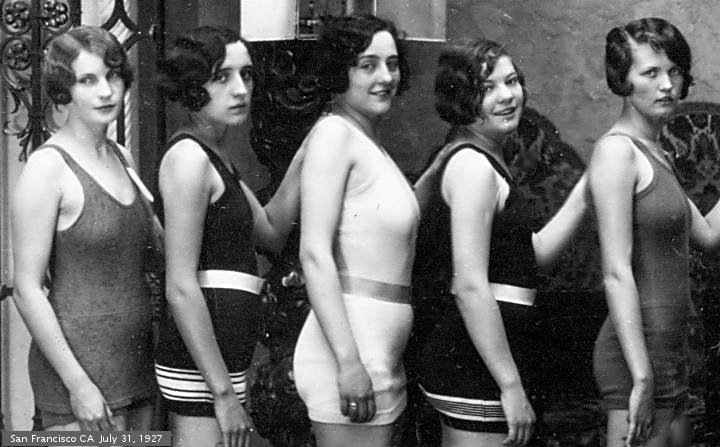


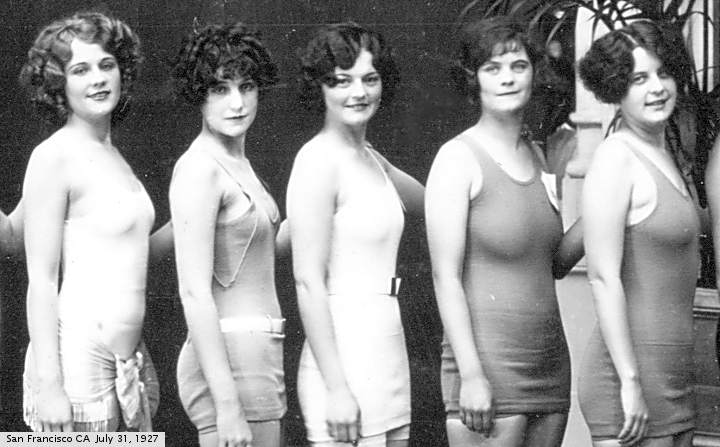

Andy Warhol is quoted as saying that “in the future, everyone will be famous for fifteen minutes.” This has become a popular saying. If a celebrity is getting tiresome, people will wonder when their fifteen minutes will be up. After hearing about fifteen minutes his entire life, PG began to wonder if Drella really said that. If you can’t be cynical about Andy Warhol… This is a repost.
Wikipedia is a good place to start. “In the future, everyone will be world-famous for 15 minutes” … appeared in the program for a 1968 exhibition of his work at the Moderna Museet in Stockholm, Sweden. Photographer Nat Finkelstein claimed credit for the expression, stating that he was photographing Warhol in 1966 for a proposed book. A crowd gathered trying to get into the pictures and Warhol supposedly remarked that everyone wants to be famous, to which Finkelstein replied, “Yeah, for about fifteen minutes, Andy.” Nat Finkelstein was a sketchy character, in the Warhol tradition. His version is suspect. The Swedish museum part is real.
“Andy Warhol’s first European museum solo show took place at the Moderna Museet in Stockholm from February through March 1968. Pontus Hultén curated the exhibition together with Olle Granath. The exhibition came with a catalogue that was, like the show, named ‘Andy Warhol’. Kasper König, who worked for the Moderna Museet as an intern of sorts in New York, developed a basic concept for the book. … After Warhol had given his approval to this first proposal, König proceeded to create a dummy. … When König returned his dummy to the Factory, Warhol scrutinized it carefully but made only a small number of changes. Contrary to what Warhol wanted to be popular belief, those who produced input at the Factory were carefully monitored. … The final edits on the dummy were made in Stockholm by Olle Granath. He compiled a small selection of Warhol quotes and aphorisms from a stack of books and clippings collected by Hultén and placed them in the book as an introduction before the image sections.”
“Sometime in the autumn of 1967, Pontus Hultén called and asked me if I (Olle Granath) could help him and the Moderna Museet to organize an Andy Warhol exhibition that was due to open in February…. An important part of the exhibition was the production of a book. It was not supposed to be an analytical catalog of Warhol’s work, but a book that conveyed his aesthetics without heavy texts. … One day, Pontus brought me a box, almost the size of a Brillo box, and told me that it contained everything written by and about Andy Warhol (today the equivalent would probably be two truck loads). My job was to read it all and present a proposal for a manuscript with Swedish translations. After a couple of nights of reading and taking notes I delivered a script to Pontus and awaited his reaction with great anticipation. ‘Excellent,’ Pontus said when he called me, ‘but there is a quotation missing.’ ‘Which one?’ I said. ‘In the future, everyone will be world-famous for 15 minutes,’ Pontus replied. ‘If it is in the material I would have spotted it,’ I told him. The line went quiet for a moment, and then I heard Pontus say, ‘If he didn’t say it, he could very well have said it. Let’s put it in.’ So we did, and thus Warhol’s perhaps most famous quotation became a fact.”
“The exhibition in Stockholm attracted a relatively small number of visitors, due to the extremely cold winter, but also to the fact that leftist radicalization increasingly drove the Museets public to mistrust anything American or consumerist. There was no space yet for a more complex reading of Warhol’s relation to consumption. The book, however, became very popular: its enormous edition allowed it to be distributed in nightclubs and record stores, not only museums. A timeless update on the latest from New York, it first became a cult object, then a collectors item.”
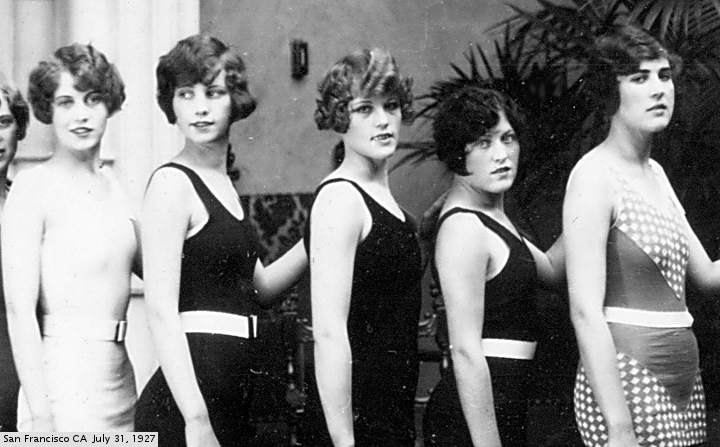
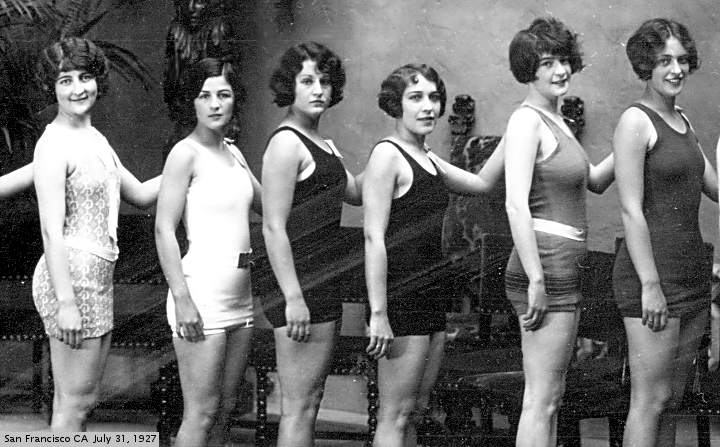
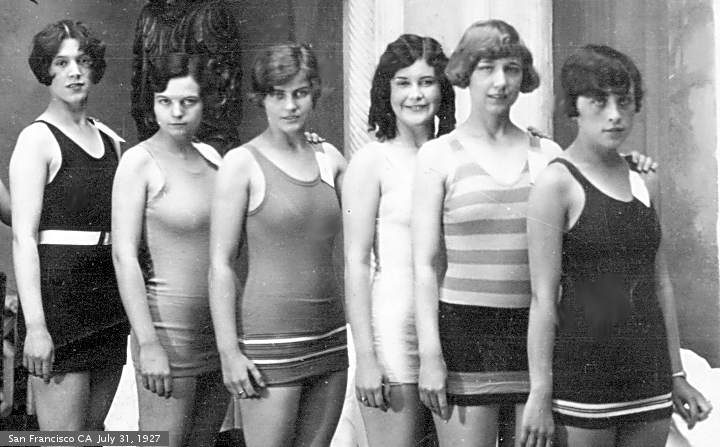
Did Andy say that? Probably, but not definitely. Andy was shot by Valerie Jean Solanas on June 3, 1968, a few months after the show in Sweden. Andy survived, and had fifteen more minutes. Pictures today are from Pictures are from The Library of Congress. The 1927 pictures were taken at “California Beauty Week, Mark Hopkins Hotel, July 28 to Aug. 2, auspices of San Francisco Chronicle.”


Georgia State Laws



The display of a link on this page does not indicate approval of content.
Our Nation Cannot Censor Its Way Back to Cultural Health David French
If you publish Georgia’s state laws, you’ll get sued for copyright and lose
five week long writing group where we will dive deep into craft of writing dirty stories.
Dispute Between Publix Shoppers Takes Deadly Turn February 7, 2022 at 5:37 am
В конце февраля Украина на несколько дней отключится от энергосистемы …
Home Depot Mismanaged 401(k) to the Tune of $140M, Class Action Says
Whoever willfully and unlawfully conceals, removes, mutilates, obliterates, or destroys …
The Kept and the Killed Erica X Eisen Of 270k photographs commissioned by the FSA to …
Winnipeg police ID driver accused in hit and run involving protesters against …
‘The Portrait of Mr W.H.’ by Oscar Wilde, 1889 … finding the identity of ‘Mr W. H.’
Drug ODs spiked in Norway during Covid, and they did something about it!
Most deaths in Pa. jails went unreported despite rules: ‘It is appalling’
National Review Is Trying to Rewrite Its Own Racist History
Promising free college and delivering free crack pipes is the perfect …
My Grandfather Overdubbed the Beatles on ‘Ed Sullivan’ many of us have Beatles …
Trevor Noah jumps on Rogan, after Rogan defended Noah’s unearthed comments
Which skin color emoji should you use? answer can be more complex than you think
The racist ‘crack pipe’ panic and the White House’s shameful capitulation | Opinion
Глава СВР Сергей Нарышкин: «Разведка работает на мир»
Will Wordle remain free after its buyout by the New York Times? Will it get locked …
Between The World And Men Truckers, Rogan, Peterson and revolt of masculinity.
Race, Representation, and the Supreme Court | Glenn Loury & John McWhorter
50 wise and wonderful proverbs from around the world
New study: 133x risk of myocarditis after COVID vaccination
Myocarditis Cases Reported After mRNA-Based COVID-19 Vaccination in the US …
AITA for asking my boyfriend to stop emulating Winnie the Pooh?
This is the World in Which We Live – harassment, being nice, trying to get me to kill myself
James Grauerholz – Last Words: The Final Journals of William S. Burroughs
DNA barcoding brought botanist Steven Newmaster scientific fame and …
everything’s gonna be all white (2022) Official Trailer | SHOWTIME Documentary Series
What happens when a 32-bit program runs on a 64-bit machine?
‘Let’s Go Brandon’ merchandise at Alaska exchange crossed AAFES’ line on vulgarity
is it doublespeak when a book that is available on amazon is called a banned book?
Number One Reason White Men Give For Not Getting Involved With DEI
the other favorites ~ bless his heart ~ poor joe ~ dorothy bolden ~ burroughs
lenovo vantage ~ cricut ~ desister ~ nato ~ 285/400
cdc ~ free crack pipes ~ amnesty int’l ~ josh turner ~ meat
necrophilia ~ free crack pipes ~ vaers ~ myocarditis ~ burliuk
deboer/rogan ~ god’s squad ~ anti racism ~ flagler ave ~ brice marden
wokeness ~ #1775 Dave Smith ~ yemen ~ raven wolfdancer ~ meidas touch
patriot takes ~ tnw ~ another post ~ wikipedia ~ listserve
btp ~ cnn/rogan ~ hyperia ~ speech to text ~ trevor noah
crack ~ principle trial ~ ivm oxford study ~ Erich Schwartzel ~ Hollywood
franklin st yoga ~ richard sohl ~ mr. w.h. ~ harvard ~ richard sohl
hate crimes ~ buckhead ~ peacemonger ~ kay ivey ~ hilarious misinformation
0204 post ~ terry riley ~ gp ~ puzzle ~ n dekalb mall
tomochichi ~ Part two ~ christina pushaw ~ social rules ~ jre stats ~ spotify big data
Cassius Clay ~ 1946 letter ~ bmj vs facebook ~ lead stories ~ maddow
bmj vs facebook ~ bmj factcheck ~ wilde sonnet 01 ~ wilde sonnet 02 ~ ndga ~ china hot pot
nick noble ~ angus young ~ dirty stories ~ britannica einstein ~ 1946 letter
@surgeonshall A bougie may be used to widen a passageway, guide another instrument into a passageway or dislodge an object. Joseph Lister designed this type which curves & has an olive shaped end. The curve was suggested by James Syme & the olive shape helped in the dilation of sinuses. ~ @chamblee54 Whatever you think of Mr. Trump, his twitter account was extremely entertaining I took one last look at twitter one night, and saw the covefe tweet. ~ Yet when Paine died, only six people showed up at his funeral. The paltry obit that was published at the time summed up his life in this line: “He had lived long, did some good and much harm.” ~ @chamblee54 Joni is in very poor health. We don’t know what her care-givers have told her, and what power of attorney documents are involved. This may not be her decision. ~ OK we’re gonna try this robo secretary again we’re gonna do this in the notepad format see if it works better than the wordpad because wordpad just simply does not work and that is a major problem here break one problem that I see is that the notepad does not have wrap around text wrap and this is going to be a problem ~ Does the robo secretary work in Microsoft Word we will see I’ve got my dad’s I’ve never liked Microsoft Word I probably shouldn’t say that out loud because it’ll probably make the machine crash right now Well maybe it’s not gonna work but there’s always tomorrow maybe I can just go back to typing manually like I’ve been doing the robo secretary feature is good for transcribing quotes from books and I’m probably gonna use it for that but who knows I’m just I’m just over this thing ~ What do you know this works in open office who’d a thunk you just need you just never know what’s gonna happen until you try ~ John Adams about Thomas Paine: “I am willing you should call this the Age of Frivolity as you do [he wrote at an unmellowed seventy-one to a friend], and would not object if you had named it the Age of Folly, Vice, Frenzy, Brutality, Daemons, Buonaparte, Tom Paine, or the Age of the Burning Brand from the Bottomless Pit, or anything but the Age of Reason. I know not whether any man in the world has had more influence on its inhabitants or affairs for the last thirty years than Thomas Paine. There can be no severer satyr on the age. For such a mongrel between pig and puppy, begotten by a wild boar on a bitch wolf, never before in any age of the world was suffered by the poltroonery of mankind, to run through such a career of mischief. Call it then the Age of Paine.” ~ Episodes like this are the reason people want to silence #JoeRogan The United States is supporting Saudi Arabia in an incredibly nasty was against Yemen. What I heard in this segment makes me ashamed of our country. Part of the “misinformation” noise makes me doubt what I heard here. I could google it … if google will let me … and find out something, but even that is subject to doubt. Meanwhile, “influencers” are going crazy because someone referred to a bad word twelve years ago. ~ @abgutman By excluding pipes from its harm-reduction grants, Biden admin piled on the stigmatization of crack & Black people who use it. It confirmed the racist image Republicans tried to evoke — among all the harm-reduction tools, crack pipes are a step too far. ~ @chamblee54 Replying to @abgutman This article may have the opposite effect than you intend People are horrified by crack. The optics of giving out free crack pipes is hideous. To call people racist because they are horrified by crack is insulting, and likely to be counter-productive. ~ @nhannahjones This is an important read. The faux outrage over Biden addiction policy focused on “crack pipes” for a reason: It’s a racist dog whistle. ~ @chamblee54 Replying to @abgutman i did read the crack pipe piece when you get the white people and black people fighting with each other, the government screws everyone this type of race reasoning is one reason we have the insane war of drugs the “crack is no worse than alcohol” argument… please ~ dyslexia anagrams as laid sexy, sex lady i ~ @conor64 Offense archaeologists often live this contradiction: they treat forgotten old media as so harmful as to warrant dredging up and punishing it years later… but in doing so, they cause many more people to be exposed to the content they believe to harm those who see/hear it.. ~ Later this year the Democrats are going to be on the receiving end of a political bloodletting of incredible scale, as Republicans make hay out of broken promises, tone-deaf messaging, and the Democratic party’s takeover by a deluded activist class. ~ @amateuradam A quick thread on in the importance of being careful what data you share – even if you’re the Queen. Today, Her Maj tweeted this lovely picture, gor bless er, etc. You might think that the contents of the red box would be official business. And you’d be right. 1/6 ~ honk honk the sound a bicycle horn makes when squeezed by a small magical cat girl named Chen. ~ Honk Honk means to squeeze your titties while screaming out: “Honk Honk!” Many women and trans people do this to indicate they are ready for mating season. ~ @JohnHMcWhorter “i frankly have very little interest in this olympics of figuring out whether something is racist or not” ~ “we are not talking about the use of the word as a slur … we’re not approving of the use of the word in that way” ~ Part of the struggle of working, while standing up, is finding a good keyboard. The device on the laptop sucks, but if i put the plug in keyboard on the 50″ tabletop, that is too high. So, I am trying to find a happy medium. The keyboard is currently 43″ high, which might work. ~ @chamblee54 .@GlennLoury .@JohnHMcWhorter @bloggingheads @NikitaSPetrov I search the transcript, and make my n-word clips before I listen to the show. one two ~ pictures today are from The Library of Congress. ~ selah


Hollywood Part Three




What follows is Part Three of a book report series. The topical text is Hollywood, by Charles Bukowski/Hank Chinaski. The book is a semi-fictional account of making Barfly. Other parts of this series are available. one two four five Pictures are from The Library of Congress.
22 – I finally broke down, and cheated. The Hollywood (Bukowski novel) wikipedia page is the decoder ring, to see who the fictional names are. The technical name is Roman-à-Clef, even when nom de guerre is more accurate. It turns out that the producers are not Harvey Weinstein/Orion. BF was produced by the Cannon Group. Cannon/Firepower seems to be as crooked and devious as Orion … an occupational hazard of show business.
23 – Hank and Sarah go back to the ghetto, to visit Jon and François. Life is lots of fun. People sneak into the crawl space. They will knock on the floor, and let the residents know they’re there. After a live demonstration for Hank and Sarah, François started cussing out the crawlers. François is a French actor named Steve Baës. He’s one of the best characters in the story, yet does not have a Wikipedia page. At the end of chapter 23, Jon Pinchot gets a phone call from the crooks. The picture has been cancelled again. All’s fair in hate and Hollywood.
24 – Pinchot decided on a plan. He’s gonna go see the producers. He will threaten to cut off his little finger if he doesn’t get his way. Hank doesn’t think this is a very good plan. You need your little finger for typing a. Pinchot says that he never types a. He may be a type a, but he never types a.
This reminds me of a story. Paul was on the payroll, allegedly as a salesman. Most of the time he was in the office, looking at the accountants. One day, our store manager wrote a message on the white board. “Clean the head, Jim.” Jim was a driver. I went to the white board, erased Jim, and wrote in Paul. When he saw this, Paul got mad. “I shouldn’t have to clean the bathroom, I never use it.”
I am moving this production into the living room. There’s a nice comfy chair here. Take the mouse, book, and pink glasses to the living room. Since cataract surgery, I’ve been dependent on reading glasses. Every time I go to the dollar store, I pick up another pair. Every pair that I get is a little bit tackier than the one before. The latest one is flamingo pink. It is going to be tough to get something tackier than flamingo pink. All things are possible in a world without God.
There was a twitter notification. I made a comment about the instability of calling human ivermectin “horse dewormer.” There was a reply. This is what you expect from the kool aid drinkers who believe everything that Rachel Maddow says. @chamblee54 What about corporate media labeling a safe drug like ivermectin as horse dewormer? ~ “safe drug” 1) with a common side effect of causing you to shed your intestines? 2) that is known to cause kidney failure? 3) that available data does not show is effective against COVID-19? They’re labeling it horse dewormer because that’s what too many idiots are ingesting ~ “context needed” ~ Context: If someone eats a product sold to deworm horses, calling it horse dewormer is accurate. If someone refuses to take a proven safe/effective vaccine, but willingly shits their intestines out after eating horse dewormer, they are in fact an idiot. Context supplied.
25 – Hank and Pinchot have a meeting with a lawyer named Zach Nick. Pinchot brought his Black and Decker saw, and he repeatedly threatens to cut his little finger off. The lawyer gives him the contract, then deletes one of the chapters. Pinchot says it has too many ambiguities. Hank asks Zach Nick if he’s read anything of his. His daughter read Cesspool Dreams. Surely that’s a fake name, even if Cesspool Dreams is tasteful by Hank Chinaski standards. The meeting finally ends. Zach Nick says the practice of law gets stranger all the time.
26 – Hank is in movie production hell, again. He’s going to work on “the poem” now. There isn’t much money in the poem, but it sure was a big playground to flounder around in. It seems like Hank signed a contract years ago. It gives somebody else the rights to the character of Hank Chinaski. Now, they can’t make this movie. Hank gets on the phone with his old buddy, who’s somehow connected to the guy that owns the rights to Hank. He gives Hank a release, and the movie is on again
27 – The movie is back with the Canon Group. Now they’re having problems with actors. Francine Bowers got sick, and it’s gonna have to be out for a couple of weeks. Mickey Rourke has to have a Rolls Royce limousine. Some of his buddies are gonna get up on the hood of the Rolls, and do shots, and pound all kinds of insecurities into the hood. They’re gonna be moving into a hotel, with a bunch of real barflies … is barf short for barflies? I always thought that barf was short for bar food, especially after eating some. Of course, some of the barflies are nasty to eat, so maybe barf does mean barflies. The Bay Area Radical Faeries should be ashamed.
I really do need to see this movie. I did a multi-part book report for Catch 22 a while back. I had seen the movie Catch 22, when it first came out. C22, a so-so flick, did not turn out to be a hit. I saw C22 in this old theater that smelled like a popcorn machine. Margaret Mitchell was trying to cross Peachtree Street, to get to this theater, when she was run over by a taxicab.
A facebook friend posted an item. ‘Let’s Go Brandon’ merchandise at Alaska exchange crossed AAFES’ line on vulgarity “In the days leading up to Christmas, a temporary vendor at the exchange … sold wooden bear figurines fashioned to resemble former President Donald Trump and holding signs reading, “Let’s Go Brandon.” … The foot-tall bears sported long red ties and slicked-back blond hair in Trump fashion. … “Let’s Go Brandon” serves as code for some who oppose Joe Biden’s presidency. Pro-Trump crowds routinely chant the phrase during rallies, and it now adorns T-shirts, hats, coffee mugs and a host of other merchandise popular with conservatives.”
28 – They’re starting on the movie. Filming is in this old beat up hotel in Los Angeles. One of the rooms they’re using, in the movie, is a room that Hank lived in. They’ve hired some of the degenerates living in the hotel, to work as extras on the movie. The hotel is gonna be torn down for some commercial venture. The residents don’t know where they will go.




leave a comment