Donald Trump, The Son Of Christ

Donald John Trump is the son of Frederick Christ Trump Sr. The elder’s middle name is his mother’s maiden name. Elizabeth Christ Trump was born in Germany, and took over her husband’s business affairs when he died in the 1918 Spanish Flu Pandemic. Mrs. Trump later founded E. Trump & Son, the start of the Trump empire.
I learned this by googling “Christtrump.” A facebook friend posted a cover picture of CHRISTRUMP: Persecution of a Man by Christopher John Molluso. The cover shows a red necktie on the cross. The rood is lit by a shaft of sunlight, breaking through the storm clouds.
The self published book has this description: “… I suggest, in this exploration, a different Christ: by age 40, a Marine major, a fit Apollonion warrior, seen lean and sinewy in Michelangelo’s Last Judgment; at age 55, a scientist, analyst, and doctor, who never jumps to rash conclusions, hoodwinked by tendentious data sets from government labs, he’d solve all worldly woe by the application of crystalline thought; and finally, by age 70, a wizened, oracular leader, who commands all matters and the moment for the common betterment.” This person has little in common with Donald J. Trump, a detail that does not deter the pearl-clutching/eye-rolling public.
The book jacket has more information about the author. “Chris is a retired licensed psychologist and former government sex offender recidivism prevention specialist. He was a staunch libertarian and Ralph Nader supporter, to boot, until he felt a calling to help rescue this once free nation from seeming wicked onslaught and higher calling still to be closer to the redeemer, savior, and warrior Jesus Christ. Who knows where and when calling strikes? Maybe this book will inspire you to your calling.” Pictures today are from The Library of Congress


Luther C Mckinnon
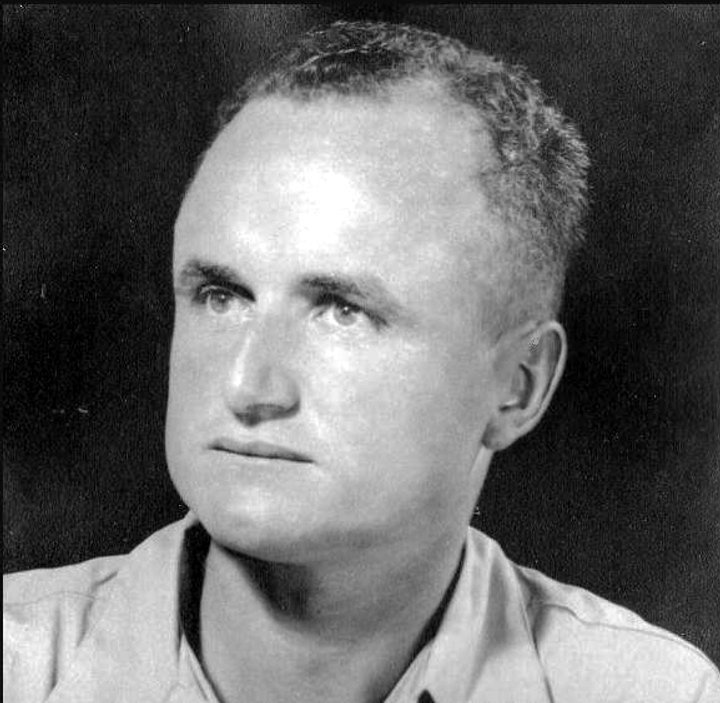

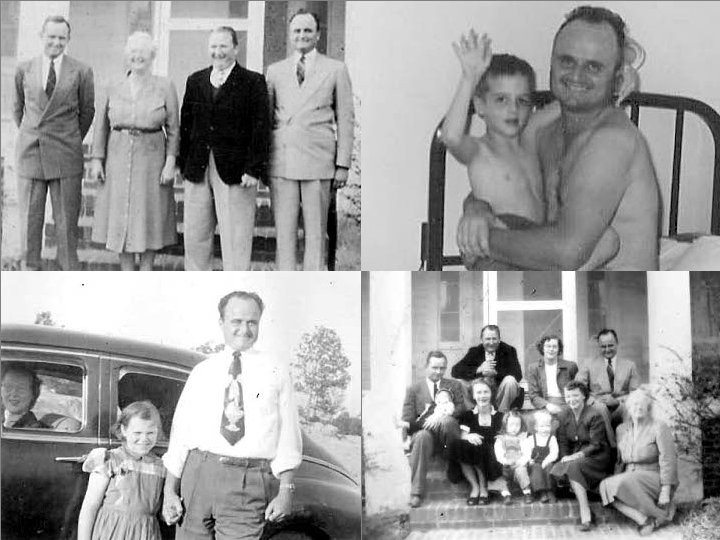
Luther Campbell McKinnon Sr. was born February 22, 1916, on a farm in Rowland, North Carolina. Europe was stuck in a war that would change the world, and not until The United States got involved. This didn’t happen for another year.
Luke was the youngest of four children. After life as a farm boy, he went to Wake Forest University, and then came back when his Daddy died. He ran a family dairy for a few years, and went to live in New Jersey. He lived near a prison, and saw the lights dim when the electric chair was used.
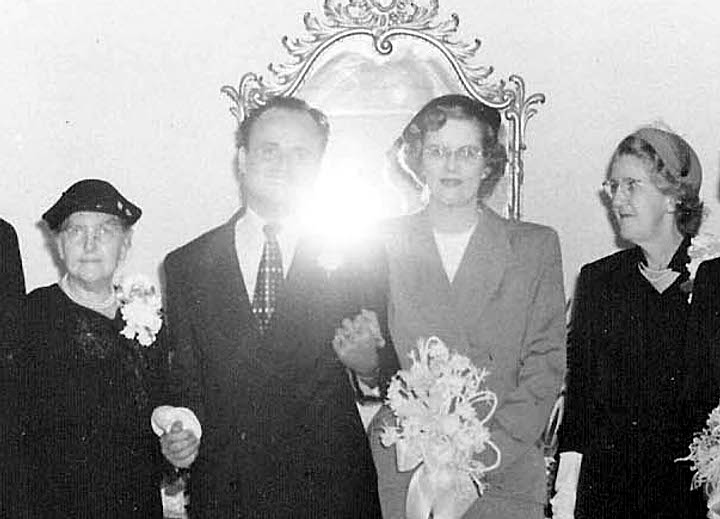
In the early fifties, he came to Atlanta to live. This was where his sister Sarah stayed, with her husband and two daughters. One day he went into the C&S bank on 10th street, and took notice of one of the tellers. On October 6, 1951, he married Jean Dunaway. She was with him the rest of his life.
At some point in this era he started selling shoes. He would go to warehouses, gas stations, and wherever barefoot men needed shoes. He was “The Shoe Man” .
Before long there were two boys, and he bought a house, then another. The second house is the current residence of my brother and myself, and is probably worth 15 times what he paid for it. He had the good fortune to not buy in an area that was “blockbusted,’ as many neighborhoods were.
And this was his life. He tended a garden, went to the gym, and was in the Lions Club for many years. When he met Mom, she let him know that going to church with her was part of the deal. They found a church that was good for their needs, and made many friends there. The Pastor at Briarcliff Baptist, Glen Waldrop, was his friend.
When I think of the character of this man, there is one night, which stands out. My brother was away at the time. The day before, Mom had discovered she had a detached retina, and was in the hospital awaiting surgery. Her job had arranged a “leaf tour” by train in North Georgia, and she got one of her friends at work to take me. There was some mechanical trouble on the train, and it did not get back into town until 3am Monday morning. And yet, Daddy stayed at home, did not panic, and had faith that all of us would be back soon, which we were.
Through all the struggles of his life, Dad was cheerful, laughed a lot, and was good company. He left me with a rich repertoire of country sayings, and had many stories to tell. He was surprising mellow about black people, if a bit old fashioned. (In the south when I grew up, this was highly unusual).
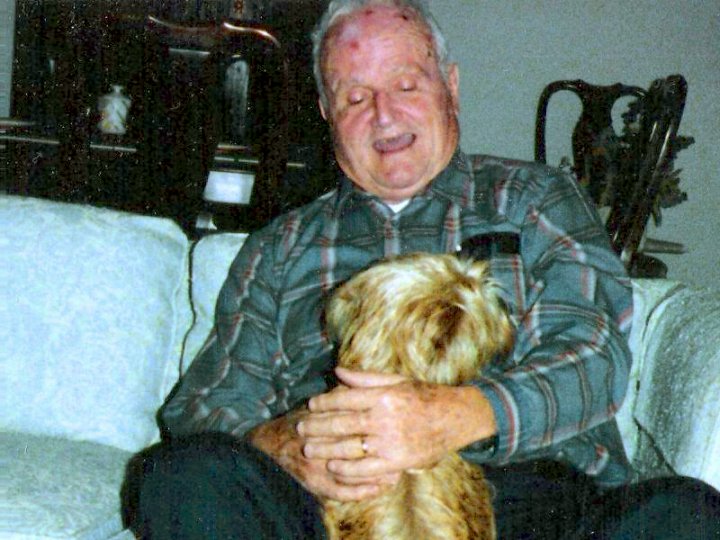
Dad was always in good, vigorous health, and I thought he would be with us for a long time. Well, that is not how things work. A cancer developed in his liver, and spread to his lungs (he did not smoke). After a mercifully brief illness, we lost him on February 7, 1992. This is a repost.


Bob Dylan Is 83

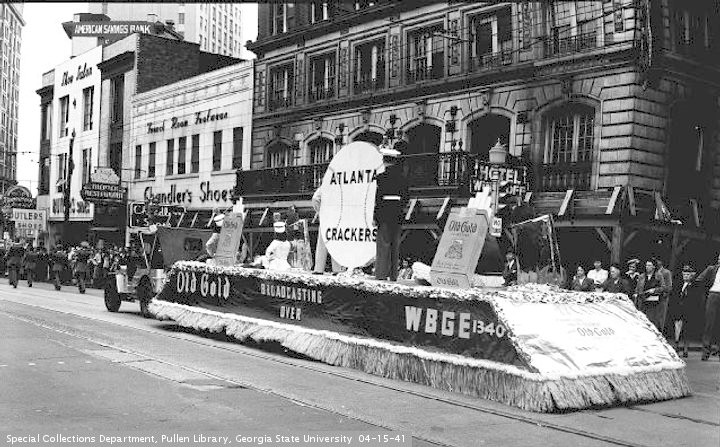

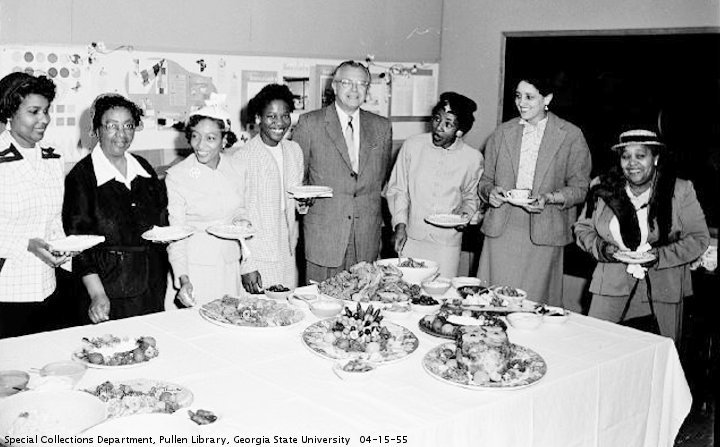


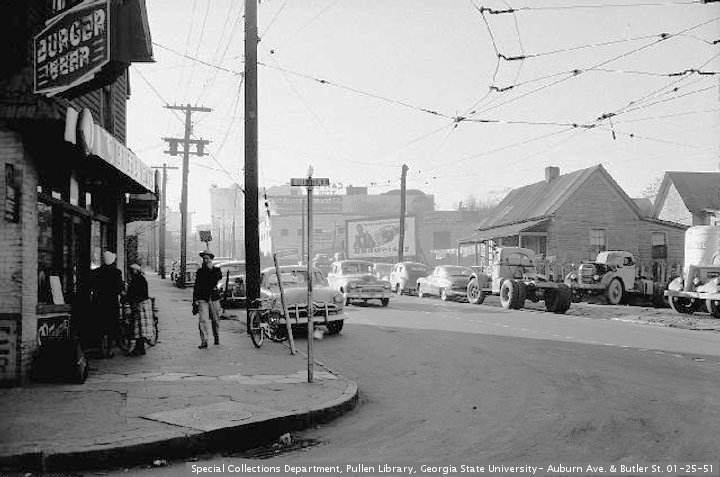
Today is Bob Dylan’s eighty third birthday. This tribute is composed primarily of two previously published pieces of work. Some people think Bob Dylan is a piece of work. Pictures are from Special Collections and Archives, Georgia State University Library
Hibbing MN is a cold place. At least it can claim to be the birthplace of Robert Allen Zimmerman. That’s Allen, with an e, and double L, just like hell. The original initials were RAZ, which might be a good trivia question, or, with a silent W in front, radio station call letters. The problem is, he legally changed his name to Bob Dylan, with no known middle name. Those initial are BD.
On May 24, 1941, the curly haired wonder boi arrived. The world was a different place. Europe was in flames, and eyeing the young men of America as fresh cannon fodder. This was twelve years, eleven months, and eighteen days before I graced the planet. A twelve year old in Hibbing MN would have no reason to think of a newborn baby in Atlanta GA.
The first time I heard of Bob Dylan was probably at the record rack of Zippy’s dime store in Cherokee Plaza. There was an album of his greatest hits, and it came with a poster. The poster had a drawing of the man, with psychedelic waves of hair cascading in multi colored glory to the edges.
As I got older and stupider, I heard more and more Bob Dylan music. At the start of 1974, a tour was announced. The Band was to be the backing group. The circus came to the Omni, and was nothing special. Bob Dylan excels at writing, is ok in the studio, and blah on stage. Georgia Governor Jimmy Carter was at the show, and was said to look bored. Mr. Dylan was invited to the Governor’s mansion after the show, and talked to the Governor. A lot of people in Georgia were surprised that Jimmy would want to run for President.
As the Seventies went me-me-me-ing into sex and drugs oblivion, Bob Dylan regained both his writing touch, and love of the spotlight. The Rolling Thunder tour happened, he got back together with Joan Baez, divorced his wife, became born again, became more Jewish, counted money, and generally lived the life. I did my version of all that, without Joan Baez.
In the winter of 1991, America was consumed by war fever. Saddam Hussein had been elevated to next Hitler status, and had to be taught a lesson. One night, Bob Dylan played on a music awards show, and performed “Masters of War”. He played a discordant version of that ditty, with the result that few understood what he had said. By this time, Mr. Dylan had assembled a band, and gone out on the “Never Ending Tour”. A Bob Dylan concert had gone from being a special event, to being another name on the festival roster. Overexposure will do that.
On the last night of the Olympics in 1996, Bob Dylan played the House of Blues downtown. I won a pair of tickets in a radio station contest. The show was competent…they impressed me as being like a bar band that did a lot of Dylan songs, with a strangely authentic lead vocalist. The only song I recognized was “All along the Watchtower”, the Jimi Hendrix classic. Mr. Dylan got a cheer when he put his harmonica appliance on.





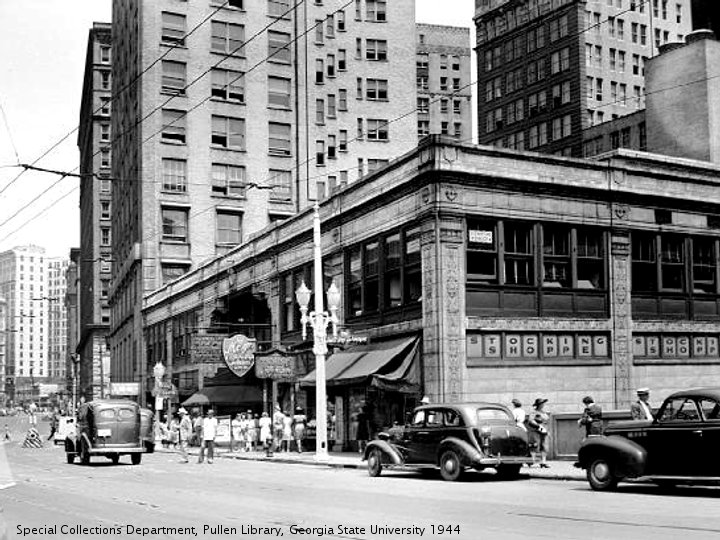


The aptly named dangerousminds has a link to a story about the recording of Blonde on Blonde. Bob Dylan was 24 years old, newly married, and had “sold out” i.e. started to play electric guitar. A bunch of Canadians known as The Hawks (later The Band) was touring with him. Barely a month after the release of “Highway 61 Revisited”, sessions started at a New York studio.
The New York sessions did not work, so a decision was made to go to Nashville. Al Kooper played organ, and served as a music director. A crew of Nashville players was recruited. A bass player named Joseph Souter, Jr. would become famous a few years later using the name Joe South. Kris Kristofferson was the janitor at the studio.
Most studios have bafflers, or sound proof room dividers, splitting the studio into cubicles. For these sessions, the bafflers were taken down, and the band played together as a unit.
The second session in Nashville started at 6pm and lasted until 530 the next morning. Mr. Dylan was working on the lyrics to “Sad eyed lady of the lowlands”, and the recording could not start until he was ready. The musicians played ping pong and waited. At 4am, the song was ready, and the record was finished in two takes.
I had marginal encounters with two of the players on this album. He met a lady once, who worked in an insurance office. One of the customers was Joe South. His driving record file was an inch thick.
Al Kooper had a prosperous career after his association with Bob Dylan. The former Alan Peter Kuperschmidt produced the first three Lynyrd Skynyrd albums, sold that contract for a nice piece of change, and lived happily ever after.
One night, Mr. Kooper was playing a show at the Great Southeast Music Hall, and PG sat in front of the stage. During a break between songs, PG asked his friend “what time is it?”. Mr. Kooper heard him on stage, and said it was 11:30.


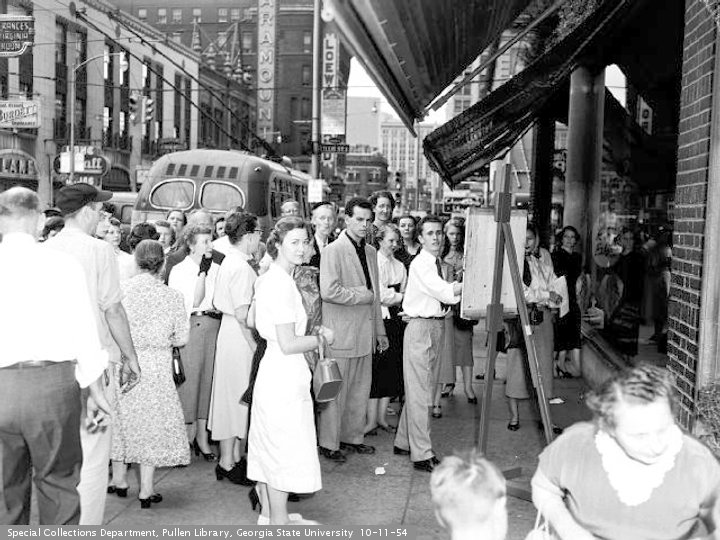
Why The War Between The States Was Fought
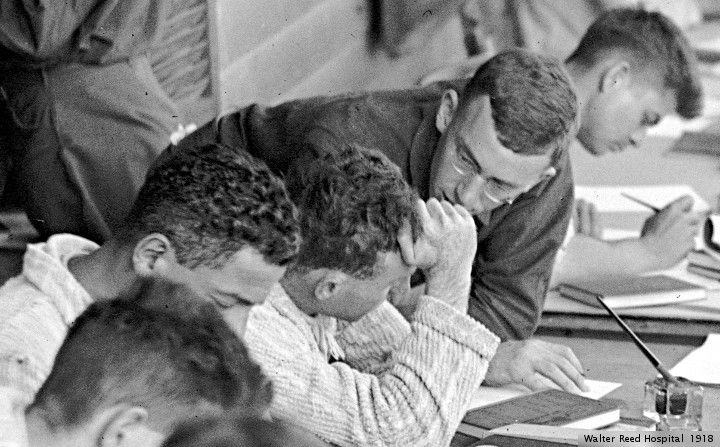
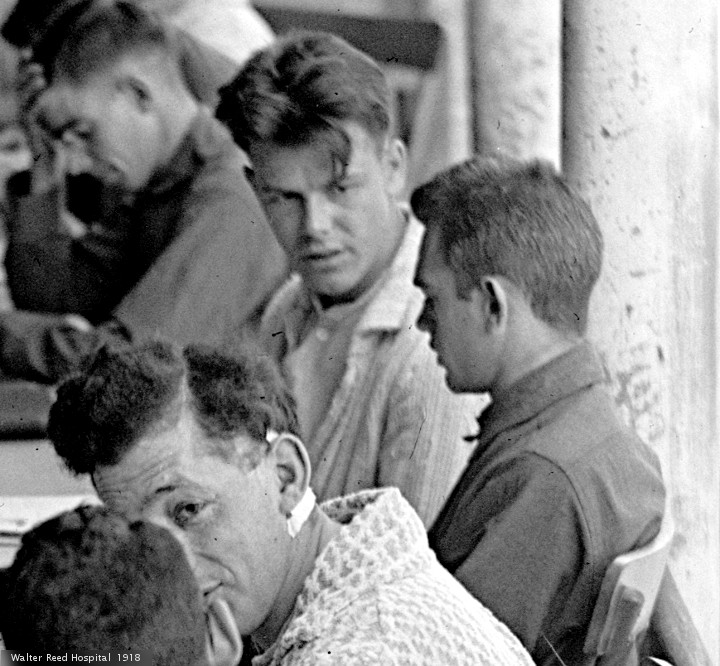

This was a repost from 2017. … Recently, Mr. Trump said something stupid about the War Between the States. After his comments began to filter into the marketplace of ideas, people began to react. There was a good bit of self righteous talk about how bad the Confederacy was. Maybe it is time for another point of view. This feature will have minimal research. Mistakes will be made. The reader is encouraged to do their own research.
When the colonies declared independence in 1776, nobody knew how things would turn out. First, Great Britain needed to be defeated. After that, the Articles of Confederation went into effect. “Under these articles, the states remained sovereign and independent, with Congress serving as the last resort on appeal of disputes. Congress was also given the authority to make treaties and alliances, maintain armed forces and coin money. However, the central government lacked the ability to levy taxes and regulate commerce…”
This arrangement was not working, and the Constitutional Convention was called. Originally, the CC was going to revise the Articles of Confederation, but wound up throwing the whole thing out, and creating the Constitution. This document called for greater federal authority. The issue of what powers to give to the states, and what powers to give to the central government, was contentious. It remains controversial to this day.
Had any group of autonomous states formed a federal union before? Usually, such a union is the result of a conquest, with one of the states ruling the others. It is unclear whether such a union had been attempted before, or how successful it was. When the “founding fathers” created the constitution, they probably did not foresee how it would play out. The current system, with a massive central government cat-herding the 50 states, would have been laughed off as a dangerous fantasy.
So the states start to have disagreements. One of the things they disagreed over was slavery. Yes, this was an important factor in the unpleasantness to come. Slavery also influenced a lot of the economic conflicts. The North wanted high tariffs to protect industry. The South wanted low tariffs, so they could sell cotton to Europe. There were many other ways for the states to not get along.
Finally, in 1861, the disagreements became too big to ignore. The south seceded, and the War Between The States began. The Confederate States of America was a looser union than the United States. The thought was that the states were more important than the federal union. Mr. Lincoln disagreed. (One popular name for the conflict was Mr. Lincoln’s war.) Many people say that Mr. Lincoln was not especially concerned about the slaves, but wanted to keep the union together.
How does slavery enter into this? Imagine the conflict over states rights vs federalism to be an open tank of gasoline. The lit match that was thrown into that tank was slavery. When the winners wrote the war history, it sounded better to say that the war was fought to free the slaves. Pictures today are from The Library of Congress.


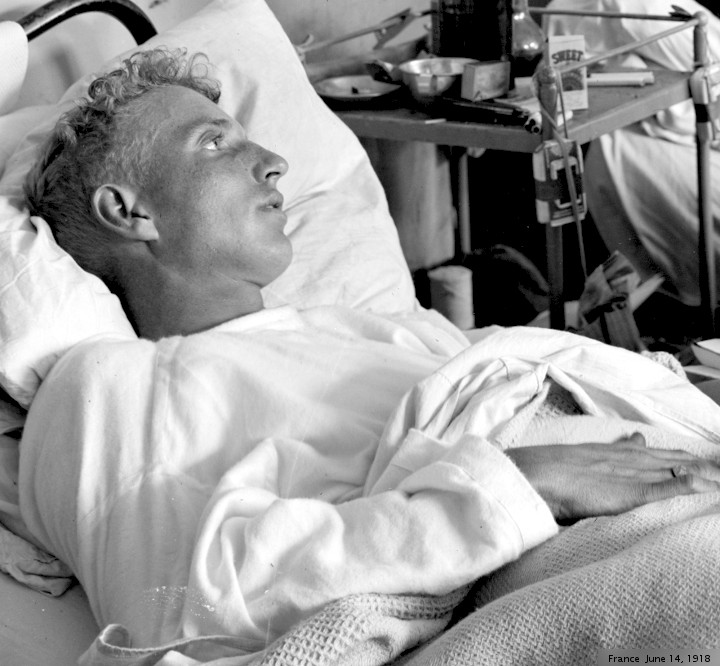

Mark Twain Double Feature


One hundred and twenty five years ago, the United States was involved in a war, that did not want to end. This conflict was in the Philippines. Although there had been an official end to the war, guerrillas continued to fight the Americans. The war was a nasty affair, with many atrocities.
The War against the Philippine people was a souvenir of the Spanish American War. There had been a rebellion against Spanish rule in the islands. After the American forces routed the Spanish, the rebellion shifted to the American occupiers. It was a war stumbled into, and difficult to end.
Mark Twain was horrified. He wrote a story, The War Prayer. As Lew Rockwell tells the tale: “Twain wrote The War Prayer during the US war on the Philippines. It was submitted for publication, but on March 22, 1905, Harper’s Bazaar rejected it as “not quite suited to a woman’s magazine.” Eight days later, Twain wrote to his friend Dan Beard, to whom he had read the story, “I don’t think the prayer will be published in my time. None but the dead are permitted to tell the truth.” Because he had an exclusive contract with Harper & Brothers, Mark Twain could not publish “The War Prayer” elsewhere and it remained unpublished until 1923.”
The story starts in a church. A war has started, and is popular. The troops leave for glory the next day. The preacher has an emotional prayer to send them on their way. Unknown to the minister, there is a visitor. “An aged stranger entered and moved with slow and noiseless step up the main aisle, his eyes fixed upon the minister, his long body clothed in a robe that reached to his feet, his head bare, his white hair descending in a frothy cataract to his shoulders, his seamy face unnaturally pale, pale even to ghastliness. With all eyes following him and wondering, he made his silent way; without pausing, he ascended to the preacher’s side and stood there, waiting.
With shut lids the preacher, unconscious of his presence, continued his moving prayer, and at last finished it with the words, uttered in fervent appeal,” Bless our arms, grant us the victory, O Lord our God, Father and Protector of our land and flag!”
The stranger motioned to the preacher to step aside. The stranger stepped into the pulpit, and claimed to have a message for the worshipers, sent directly from God. The preacher’s message was for support in time of war, and implied that God and the preacher support the same side in this conflict. There is an unspoken part to a prayer like this. This unspoken part was what the stranger was going to put into words.
“”O Lord our Father, our young patriots, idols of our hearts, go forth to battle – be Thou near them! With them, in spirit, we also go forth from the sweet peace of our beloved firesides to smite the foe.
O Lord our God, help us to tear their soldiers to bloody shreds with our shells; help us to cover their smiling fields with the pale forms of their patriot dead; help us to drown the thunder of the guns with the shrieks of their wounded, writhing in pain; help us to lay waste their humble homes with a hurricane of fire; help us to wring the hearts of their unoffending widows with unavailing grief; help us to turn them out roofless with their little children to wander unfriended the wastes of their desolated land in rags and hunger and thirst, sports of the sun flames of summer and the icy winds of winter, broken in spirit, worn with travail, imploring Thee for the refuge of the grave and denied it-
for our sakes who adore Thee, Lord, blast their hopes, blight their lives, protract their bitter pilgrimage, make heavy their steps, water their way with their tears, stain the white snow with the blood of their wounded feet!
We ask it, in the spirit of love, of Him Who is the Source of Love, and Who is ever-faithful refuge and friend of all that are sore beset and seek His aid with humble and contrite hearts. Amen.”
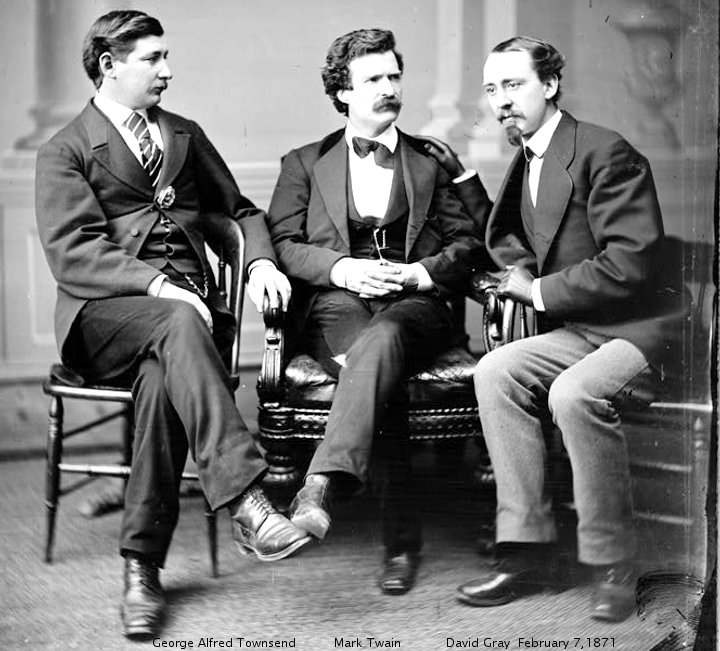
This is a double repost. Pictures are from The Library of Congress.

Mark Twain wrote a lot during the American Genocide in the Philippines. Many of his words could apply today. War has gotten more high tech…for our side…, but the bottom line is the same. No matter how fancy the weapons get, the casualties are just as dead. And the investors make money.
Mine eyes have seen the orgy of the launching of the Sword;
He is searching out the hoardings where the stranger’s wealth is stored;
He hath loosed his fateful lightnings, and with woe and death has scored;
His lust is marching on.
I have seen him in the watch-fires of a hundred circling camps;
They have builded him an altar in the Eastern dews and damps;
I have read his doomful mission by the dim and flaring lamps —
His night is marching on.
I have read his bandit gospel writ in burnished rows of steel:
“As ye deal with my pretensions, so with you my wrath shall deal;
Let the faithless son of Freedom crush the patriot with his heel;
Lo, Greed is marching on!”
We have legalized the strumpet and are guarding her retreat;
Greed is seeking out commercial souls before his judgement seat;
O, be swift, ye clods, to answer him! be jubilant my feet!
Our g-d is marching on!
In a sordid slime harmonious Greed was born in yonder ditch,
With a longing in his bosom — and for others’ goods an itch.
As Christ died to make men holy, let men die to make us rich —
Our g-d is marching on.

POTUS Jokes
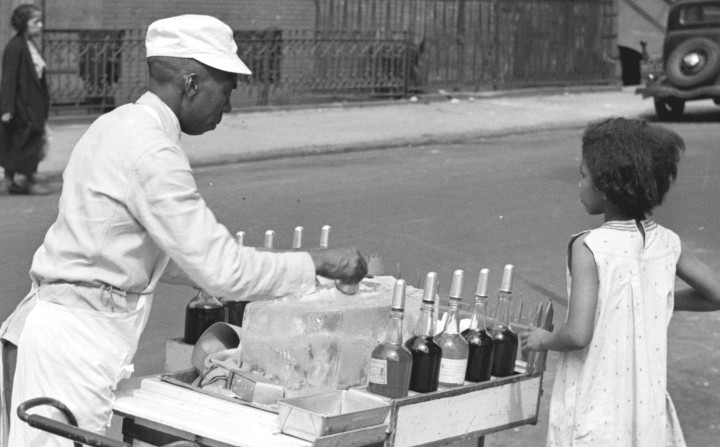
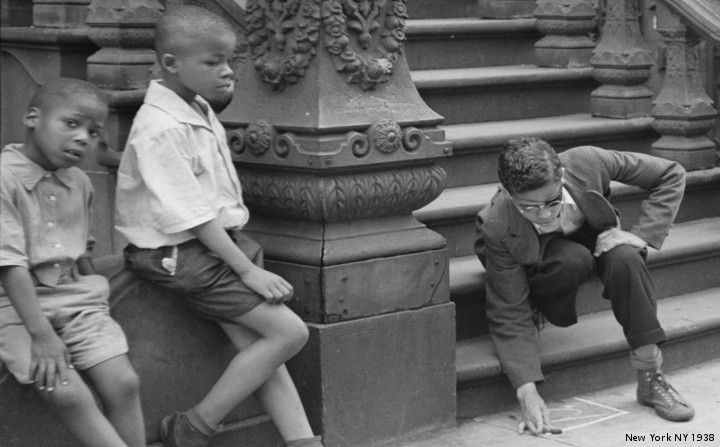
After a ADHD WHCD, the Washington Post published The single best joke told by every president, from Obama to Washington. It was easier than finding anything funny said by Larry Wilmore Michelle Wolf. Pictures today are from The Library of Congress. This is a repost.
The pickins are surprisingly slim, especially for the modern era. When everything you do is recorded, something has to be funny. Three recent Republicans show a liberal capacity for humor.
George H.W. Bush, 1989 Gridiron Club: “People say I’m indecisive, but I don’t know about that.”
Richard Nixon, in Ms. magazine, 1971: “Let me make one thing perfectly clear. I wouldn’t want to wake up next to a lady pipefitter.”
Herbert Hoover “Blessed are the young, for they shall inherit the national debt.”
Warren Harding was a dog. … “referring to his penis, which he named Jerry, in a 1915 love letter to his mistress Carrie Fulton Phillips: “Jerry — you recall Jerry, whose cards I once sent you to Europe — came in while I was pondering your notes in glad reflection, and we talked about it.”
You have to go back over a hundred fifty years to get a serious laugh.
Andrew Johnson “Washington, D.C., is twelve square miles bordered by reality.”
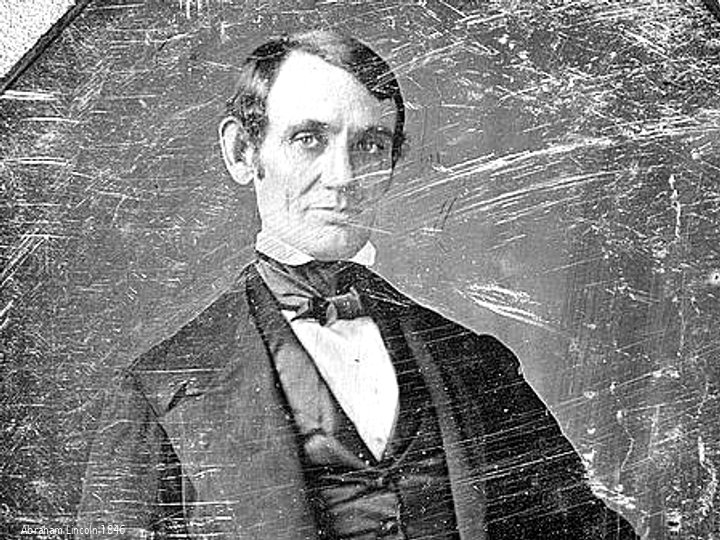
Abraham Lincoln “If I were two-faced, would I be wearing this one?”
Franklin Pierce about duties after leaving office: “There’s nothing left. . . but to get drunk.”
Zachary Taylor when suggested that he run: “Stop your nonsense and drink your whiskey!”
John Tyler on his death bed: “Doctor, I am going. Perhaps it is best.”
James Madison on his death bed: “I always talk better lying down.”
PG found a quote once about Alexander Hamilton, by John Adams. “His ambition, his restlessness and all his grandiose schemes come, I’m convinced, from a superabundance of secretions, which he couldn’t find enough whores to absorb!” A google search for verification led to a reddit page, Fake Founder Quotes, starring John Adams. Apparently, Mr. Adams said something similar to that in a letter to Dr. Benjamin Rush, sent January 25, 1806. According to this source, the letter was a satire of Jonathan Swift’s Tale of a Tub
George Washington in a 1788 letter congratulating the Marquis de Chastellux on his recent marriage: “Now you are well served for coming to fight in favour of the American Rebels, all the way across the Atlantic Ocean, by catching that terrible Contagion — domestic felicity — which like the small pox or the plague, a man can have only once in his life: because it commonly lasts him (at least with us in America — I don’t know how you manage these matters in France) for his whole life time.”
Anglo Persian Oil Company


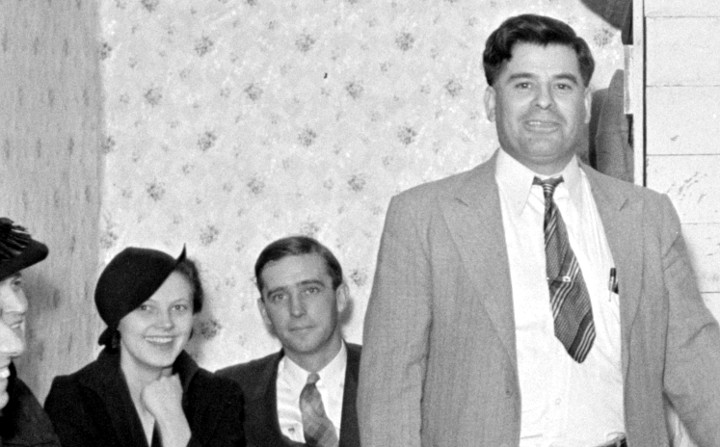
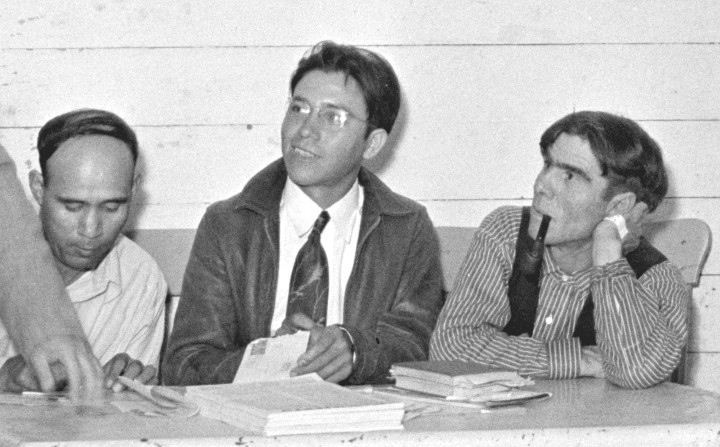
This is a repost from 2010. People are saying more and more about the oil disaster in the Gulf of Mexico. TomDispatch has a fascinating paragraph about one of the key players, British Petroleum (BP): “Originally known as the Anglo-Persian Oil Company (later the Anglo-Iranian Oil Company, still later British Petroleum), BP got its start in southwestern Iran, where it once enjoyed a monopoly on the production of crude petroleum. In 1951, its Iranian holdings were nationalized by the government of Mohammed Mossadeq. The company returned to Iran in 1953, following a coup that put the Shah in power. It was finally expelled again in 1979, following the Islamic Revolution.”
If you look at the problems of the world in the last forty years, so many are affected by Iran. The 1953 revolution left great resentment, which became manifest in the 1979 revolution. Soon Iraq…whose border with Iran was clumsily drawn by the British…decides to attack Iran. A gruesome eight year war is the result, with the USA supporting both sides (as well as possibly encouraging Iraq to attack Iran). The idea was, if they are fighting each other, they will leave Israel alone.
After this war is over, Iraq has a problem with Kuwait over it’s war debt. Another war is the result, with the USA involved. Iraq is vanquished, but some in the USA are not satisfied, and after a few years the USA invades Iraq again. That war is still raging.
The biggest winner of the US-Iraq war (aka World War W) is Iran. This new influence in Persia is very troubling to Israel, which is loudly rattling it’s nuclear saber. When Israel makes noise about Iran, it takes attention away from the Palestinian tragedy.
Pictures are from The Library of Congress. Remarkably, Tom Dispatch is still publishing content. The situation with the countries-that-start-with-I is worse than ever.


Destroy The Village To Save It




“It became necessary to destroy the town to save it.” This is one of the most familiar lines about the Vietnam War. It is often cited today, when discussing the response to COVID-19. Who said this?
It was “originally reported by Peter Arnett of the Associated Press, who quoted an unidentified American officer on why the village of Ben Tre was leveled during the Tet Offensive in early 1968. … A two-paragraph version of the AP dispatch was buried on page 14 of The New York Times, with no byline,” on Feb. 8, 1968. … “BENTRE, Feb. 7 (AP) It became necessary to destroy the town to save it,” a United States major said today. He was talking about the decision by allied commanders to bomb and shell the town regardless of civilian casualties, to rout the Vietcong.”
“Almost instantly, however, the line was being misquoted everywhere. On Feb. 10, an Oregon newspaper rendered it “We had to destroy the village in order to save it.” Two weeks later the St. Louis Post-Dispatch reported on a group of protesters carrying a banner that read, “It Was Necessary to Destroy the Village in Order to Save It.” In whatever form, the words had become a mantra of the anti-war movement, a … summary of what was wrong with the entire Vietnam adventure.”
“The day before Arnett’s story ran, the Times’s James Reston had asked in his column, “How do we win by military force without destroying what we are trying to save?” … Associated Press itself had used a similar phrase almost exactly a year before Arnett’s dispatch. In late Jan. 1967, the AP distributed a wire photo of a different village with a caption that read in part: “The Americans meantime had started to destroy the village to deny it to the Viet Cong.” The photograph was published across the country. One wonders whether the officer Arnett was quoting had come across the caption the previous year.”
“But the actual father of the metaphor — the man who put it into roughly the form we know today — seems to have been Justice Edward White of the U.S. Supreme Court. In a 1908 decision known as the Employers’ Liability Cases, the justices were asked to give a narrow reading to a congressional enactment concerning common carriers in the District of Columbia. The court refused. The requested reading, according to White’s opinion for the majority, would in effect add a new clause to the statute. He then explained why doing so would be wrong: “To write into the act the qualifying words therefore would be but adding to its provisions in order to save it in one aspect, and thereby to destroy it in another — that is, to destroy in order to save, and to save in order to destroy.””
The fighting in Ben Tre took place during the Tet Offensive. This is widely seen as a turning point in America’s involvement in that conflict. “On January 30 1968 … the North Vietnamese and the Vietcong launched a massive military offensive that proved the battle raging in Southeast Asia was far from over, and that President Lyndon B. Johnson’s administration had grossly oversold American progress to the public. Although U.S. troops ultimately ended the offensive successfully, and the North Vietnamese and the Vietcong suffered brutal loses, these bloody weeks triggered a series of events that continue to undermine Americans’ confidence in their government.”
“Cronkite was so shocked at the devastation of the communists’ Tet offensive that he went over to see for himself what was really going on.” On February 27, 1968, “he concluded the war was a stalemate, probably unwinnable. … Lyndon Johnson was said to have watched the broadcast and exclaimed to his press secretary, George Christian, “If I have lost Walter Cronkite, I’ve lost Middle America.” Pictures today are from The Library of Congress. This is a repost.




Sixty Nine Years Thirteen Presidents
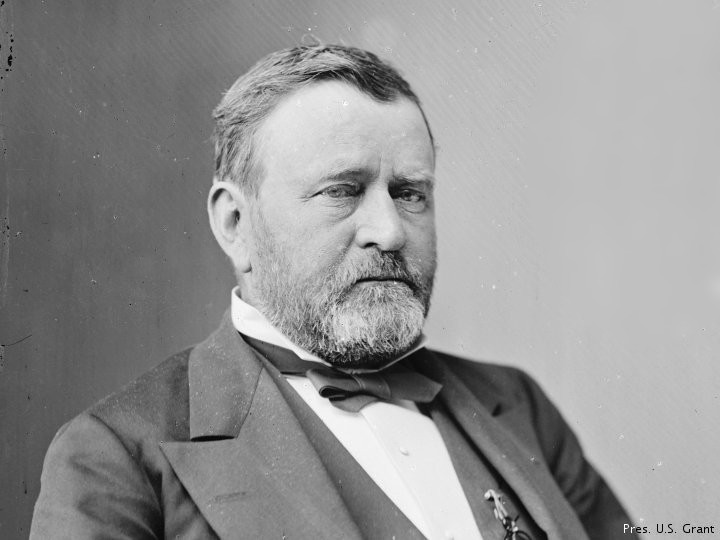

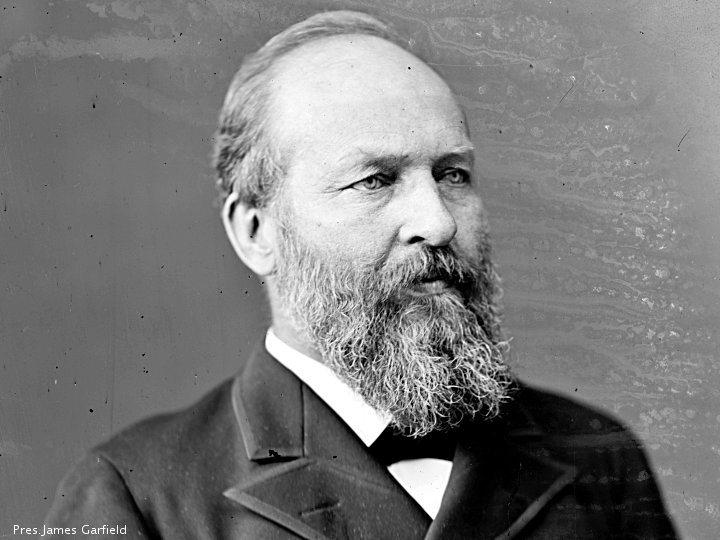
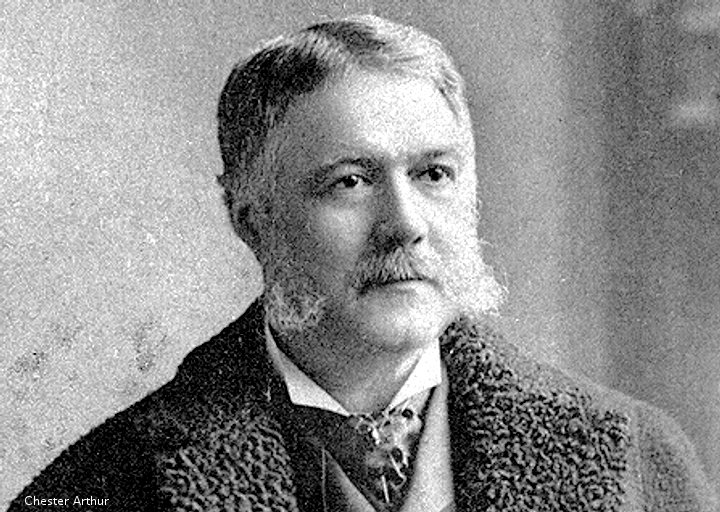
This is a repost from 2021. … Every four years, someone will say this is the worst choice ever. Every four years, someone will say this is the most important election ever. They are always correct. The choice in 2024 was between Donald John Trump and Joseph Robinette Biden Jr. Choosing between those two idiots will be challenging. The good news is that most people live in states where the electoral votes are conceded to one of the duopoly parties. These voters can focus on local elections. Unfortunately, Georgia is now a “swing” state.
Listening to the news shows that came on before the cartoons, PG heard the phrase “President Eisenhower”. As a friend explained to him, G-d made everything, but the President is Eisenhower.
When he was six, PG moved to a new house, and started first grade. There was an election that fall, and someone named Kennedy became President. PG wasn’t old enough to pay attention to the news yet, except when it looked like the Russians were going to kill us all in 1962.
The first news story that PG clearly remembers was the day when his fourth grade teacher, Miss McKenzie, told the class that President Kennedy had been shot. One of the worst moments that weekend was the moment when a plane landed in Washington, and the new President spoke on television. THAT was the new President? Yuck.
Lyndon Johnson was a larger than life figure, and was hated by millions of Amuricuns. While there was some good done by LBJ, it was overshadowed by the War in Vietnam. When he left office in 1968, the voters had a horrible choice …Hubert Humphrey, Richard Nixon, or George Wallace.
Tricky Dick Nixon is another larger than life figure, with millions of Americans screaming for his impeachment. For some reason, there were others who passionately admired the man.
In 1973, the oil companies tried to say there was an oil shortage. Later that year, Egypt, Syria, and Jordan attacked Israel, and the Arab oil producers cut oil to the USA. After this embargo, OPEC was in charge of the oil supply, and the price of gasoline increased 200%. The era of big money oil was on. What a convenient war.
After the ethical shortcomings of Mr. Nixon became too obnoxious to ignore, Gerald Ford became President. On a policy level, Mr. Ford was like all the other Presidents…some things he got right, some things he got wrong. On a personality level…the show business part … Mr. Ford excelled. His family provided harmless fodder for the gossipmongers. He was a likable man, a welcome break from the meanness of Richard Nixon and Lyndon Johnson.
When PG was a kid, there had never been a President from Georgia. It seemed impossible. When Georgia Governor Jimmy Carter announced he was running, it seemed like another ego tripper running for President. The funny thing is, Jimmy won. It still seems a bit unreal.
Jimmy was a Democrat, with attack Republicans fighting him every step of the way. This is a problem later Democrats in the Oval Office will have. On the policy level, Jimmy did better than many realize. Many of his achievements only bore fruit after he left office. On the show biz front, his down home Georgia routine did not appeal to many Yankees. In 1980, Jimmy was defeated by an actor.
PG was worried when Ronald Reagan took office. With America’s nuclear arsenal, and the Soviet Union wheezing it’s threat, many thought that Ronnie would start the war to kill us all. The good news is, this war never happened. Whatever tough talk came out of Washington was not matched by military adventurism abroad.
Mr. Reagan was the master of show business. He was an actor, playing the greatest role of his career. It was said that if America had a figure head monarch, Mr. Reagan would have been terrific. On the policy front, taxes were cut, and the budget increased. The national debt went over a trillion dollars. This was seen as a historic moment.
When Mr. Reagan’s two terms were over, George H.W. Bush took over. This was an era where the Democrats could not do anything right on a national level. Mr. Bush presided over a war, and brought the troops home when the mission was over. His image never appealed, and the whiners were not pleased. A computer salesman named Ross Perot decided to run as a third party candidate.
In the winter of 1992, PG had a little job downtown. One day, there was a rally at the CNN center for a little known Presidential candidate. PG went, and said to a friend, If this guy gets elected, you are going to regret not going to see him. At the time, War Winner Bush seemed unbeatable, and PG said that with high sarcasm.
When he got to CNN center, it was obvious that a big money event was unfolding. The place was packed, with school children bused in to fill all the seats. Finally, the speakers blared “Twist and Shout” at top volume, and Bill Clinton walked on the stage. PG was not especially impressed.
Mr. Clinton inspired toxic hatred, but managed to keep the boat floating. He won reelection, with the Republicans seeming to self destruct. The economy was going good, the budget was balanced, and the haters went wild. After a entertaining sex scandal, the Clinton years were over.
A couple of weeks before the 2000 election, PG liked neither candidate, and did not think it made much difference. (With Georgia’s electoral votes certain to go Republican, PG did not have a vote.) He listened to someone talking, who thought that it was important that Mr. Gore won. PG remembered that conversation often during the next eight years.
George W. Bush was a disaster. It is possible that 911 was a personal vendetta against the Bush family, and would not have happened if Mr. Gore was President. The reaction of Mr. Bush to this tragedy was to start two wars that we have not been able to finish. In 2021, we are still in Afghanistan.
Barack Obama was next, the first dark skinned President. He continued the war happy ways of the Bush regime. BHO was reelected in 2012, and given four more years to wage war. He managed to avoid the second term scandals that crippled Mr. Nixon and Mr. Clinton.
In the next election, the democrats decided that calling people racist was a good campaign strategy. As a result, Donald J. Trump was elected. America is more racially divided than ever, something the election of Mr. Obama was supposed to remedy. With the nation distracted by screaming racism, the congress has cut taxes, and produced a multi-trillion dollar budget deficit.
Joe Biden is now in the oval orifice. Mr. Trump, while not as bad as anticipated, was awful. Covid-19 hit, and Mr. Trump did not stop it. The national debt went through the roof. OTOH, Mr. Trump did not start any new major wars. Mr. Biden will struggle to keep his cognitive decline within Presidential levels. America might survive. Pictures for this feature are from the The Library of Congress.


#MeToo Charles Bukowski







r/bukowski had a tasteful video, Wrestling with Bukowski’s Problematic Treatment of Women. Some well meaning person really wondered if Hank’s chauvinism was a problem. If you think Hank Chinaski is a role model, then you have more problems than the Fulton County DA office.
As if that is not bad enough, about 163 seconds in, gageaa4 says that Hank is the “Walt Whitman of neat whiskey.” (I thought he said deep whiskey, but was corrected.) Now, while you are handing out virtue signifiers, you might call Hank a homophobe. In Tales of Ordinary Madness, a homo hitting on Hank gets cut up. This is marginally harsher than the way Hank treats women. In Factotum, Hank says he is turning fag when he cleans his apartment.
Uncle Walt lived in a pre-prohibition America, and probably drank his share of whiskey. This was in 19th century America, before commodified fire water, refrigeration, easy access to ice, and many other features of modern dipsomania. The Walt Whitman of neat whiskey was probably Walt Whitman. I rather doubt that Walt would enjoy being compared to Hank Chinaski.
This business of giving Hank the #metoo treatment brings to mind other instances of standards being retroactively applied. … “Fordham University hosted a symposium on (Flannery) O’Connor and race, supported with a grant from the author’s estate.” (The panel discussion included Karin Coonrod.) “The organizer, Angela Alaimo O’Donnell” … (who wrote) “Radical Ambivalence: Race in Flannery O’Connor.” … takes up Flannery and That Issue. Proposing that O’Connor’s work is “race-haunted,” she applies techniques from whiteness studies and critical race theory …” In other words, The Flannery O’Connor Trust is financing a university to examine MFO, using “techniques from whiteness studies and critical race theory.” There is something deeply rotten about this.
Forget what Hank Chinaski would think about #metoo. He probably would want to slug 90% of his current admirers. This is a common problem for dead poets. Someone even wrote a poem about this.
henry charles chinaski bukowski, would hate my sonnet if he had a chance
at coffee drinking open mic poetry, dickhater georgia gothic romance
hank thinks poems that rhyme are a bore, like baseball nuns or men who cry
some people think he died in ninety four, california dirt will tell you don’t try
hank still has a racetrack episode, bets on number nine horse to kill
with a twenty fished out of the commode, after taking a dump on top of the bill
forever spitting out poems like hot turds, on the morning after beer drunk words



Did Ben Franklin Say “Question Authority”?


“It is the first responsibility of every citizen to question authority.” Benjamin Franklin This nugget appeared on facebook recently, and the bs detector was buzzing. I never heard the phrase “Question Authority” before 1981. QA sounds awfully modern for 18th Century America.
I quickly googled the phrase, and found indications that it was in not found in the Franklin Papers at Yale University. A search of the Mr. Franklin’s wikiquote did not turn up QA.
Unfortunately, I chose to include a link to Snopes in my facebook reply. The meme-poster saw Snopes, and said that was not a valid source. We went back and forth on the issue. I did say that Snopes was questionable, but had other sources that fueled my skepticism.
A google search credits Timothy Leary with saying “Think for yourself and question authority.” … “Timothy Leary’s track on Sound Bites from the Counter Culture (1989.)” 1989 is a few years after I saw my first QA bumper sticker. Maybe Mr. Leary heard someone else say QA, and claimed it for himself. Timmy Leary was an authority that required enhanced interrogation.
A Christian oriented forum says that Mr. Leary got QA from Ben Franklin. At any rate, QA is counter-culture phrasing, of the type that Ben Franklin probably did not use. According to Google n-gram, QA does not appear in print before 1885. 1976 and 1987 saw QA spiking, with QA usage peaking in 2005.
Let’s examine the concept of questioning authority. In this case, the authority was a facebook meme. When I presented Snopes as a dissenting authority, it was rejected. When I presented Wikiquotes as an authority/source, I was satisfied, and my facebook opponent dismissive. I should note that in my initial facebook reply, I said that it was unlikely that Mr. Franklin said QA. We cannot claim to have heard every conversation Ben Franklin had, or if he said something similar.
Did Mr. Franklin question authority? Lets take a look at a famous quote: “They who can give up essential liberty to obtain a little temporary safety deserve neither liberty nor safety.” “The words appear originally in a 1755 letter that Franklin is presumed to have written on behalf of the Pennsylvania Assembly to the colonial governor during the French and Indian War. … the Assembly wished to tax the lands of the Penn family … to raise money for defense against French and Indian attacks. … In other words, the “essential liberty” to which Franklin referred was thus not what we would think of today as civil liberties but, rather, the right of self-governance of a legislature in the interests of collective security.” The “essential liberty” Mr. Franklin referred to was the ability of the government to tax citizens. It’s all about the Benjamins.
One type of questionable authority invoving Mr. Franklin was slavery. Benjamin Franklin owned slaves. Pennsylvania tax records of 1769 and 1774 show “1 Negro” as being in his possesion. “Franklin owned slaves from as early as 1735 until 1781. The Franklin household had six slaves; Peter, his wife Jemima and their son Othello, George, John and King.”
Mr. Franklin ran advertising for the slave trade in his publications. “To be SOLD A very likely breeding Negroe Woman, and a Boy about two years old. The woman is fit for any Business Either in Town or Country. Enquire of William Bafdon, over against the Coffee House in Front Street.” … “Advertisement for an enslaved woman and an enslaved child from Benjamin Franklin’s Pennsylvania Gazette (December 9-16, 1736).”
Mr. Franklin later changed his tune. “In 1787 Franklin became the President of the Philadelphia Society for the Relief of Free Negroes Unlawfully Held in Bondage, often referred as the Abolition Society. … The Abolition Society was the first in America and served as inspiration for the formation of abolitionist societies in other colonies. The group focused not only in abolishing slavery but also in education, moral instruction and employment. In a letter dated November 9th, 1789, Franklin wrote wholeheartedly against the institution of slavery. He argued that slaves have long been treated as brute animals beneath the standard of human species. Franklin asked for resources and donations to help freed slaves adjust to society by giving them education, moral instruction and suitable employment. … On February 3rd, 1790, less than three months before his death, Franklin petitioned Congress to provide the means to bring slavery to an end. When the petition was introduced to the House and the Senate it was immediately rejected by pro-slavery congressmen mostly from the southern states.” Pictures today are from The Library of Congress. This is a repost.


Was Mohandas Gandhi A Racist?


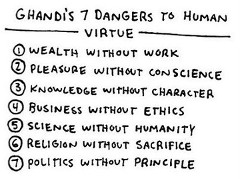
A meme appeared on facebook, “GHANDI’S 7 DANGERS TO HUMAN VIRTUE.” Below the misspelled name were seven concepts, written in all caps. This got PG thinking.
Mohandas Karamchand Gandhi (M.K. Gandhi) “was born was born on October 2, 1869, at Porbandar, a small town on the western coast of India.” At some point the title Mahatma was applied, and is often used as though it was his name. Exact transliterations between languages using different alphabets is tricky. What is the “correct” spelling of this man’s last name? Most sources today use Gandhi.
Another term, Gandhiji, turns up in the research. “‘Ji’ in Hindi or Urdu is a suffix used after the names of respectable persons and elders like father and mother. It is used every day by millions of Indians to address their elders. Hence Gandhiji is but Mahatma Gandhi, father of our nation, addressed reverently and respectfully. We call mother mataji. Mata means mother.”
The quote in the meme is real. It is found on page 135 of Collected Works of Mahatma Gandhi Vol. 33. It was in an article found in Young India on October 22, 1925.
“SEVEN SOCIAL SIN The same fair friend wants readers of Young India to know, if they do not already, the following seven social sins: Politics without principles, Wealth without work, Pleasure without conscience, Knowledge without character, Commerce without morality, Science without humanity, Worship without sacrifice. Naturally, the friend does not want the readers to know these things merely through the intellect but to know them through the heart so as to avoid them.”
The next entry in the collected works is interesting. “79. THAT ETERNAL QUESTION However much I may wish to avoid it, the Hindu-Muslim question will not avoid me. Muslim friends insist upon my intervention to solve it. The Hindu friends would have me discuss it with them and some of them say I have sown the wind and must reap the whirlwind.”
The meme had comments. Lloyd Lachow Gandhi was intensely racist. Joanne Gibson Gandhi was not intensely racist. Fighting racism was his first cause. John Janiga Gandhi racist??? John Taylor Lloyd, were you born an idiot, or did you have to work at it?
This looks like a job for Mr. Google. When you type the phrase “Is Gandhi,” suggested searches include “sill alive” and “on netflix.” This does not help if you want to know if someone is racist.
Mr. Gandhi lived in South Africa from 1893-1915. During this time he was offended at the treatment of Indian nationals, which led to a decision to fight for Indian rights. Unfortunately, these rights were not to be extended to the native South Africans.
 … “there’s no doubting that Gandhi had little time for black people. During his 21 years in South Africa, he repeatedly expressed contempt for the native population, claiming they were no better than the “untouchables” of Indian society. One speech in particular stands out. In 1896, he was quoted as referring to black South Africans as the “raw kaffir, whose occupation is hunting and whose sole ambition is to collect a certain number of cattle to buy a wife with, and then pass his life in indolence and nakedness.” For those of you who aren’t up on your South African slang, “kaffir” is a direct equivalent of our N-word. Another time, he complained about finding himself in a “kaffir” prison, claiming Indians were “above” natives, who “are troublesome, very dirty and live like animals.”
There is the story of the Durban Post Office. “The first major accomplishment of the Natal Indian Congress was to further entrench racial segregation into South African society during a time of massive racial strife. At the time, the Durban, South Africa post office had two doors. One was for whites and the other for Indians and black natives. Gandhi was so disgusted at having to share a door with blacks that he initiated a campaign for the creation of a third door. … A year later, after the issue had already been resolved, Gandhi chose to expound upon his reasons for raising it in the first place. In his August 14, 1896 letter, “The Grievances of the British Indians in South Africa: An Appeal to the Indian Public,” he called being “put on the same level with the native” a “disability.”
This is a repost. Many of the links no longer work. Pictures are from The Library of Congress.




leave a comment