The Sausage Vat Murder
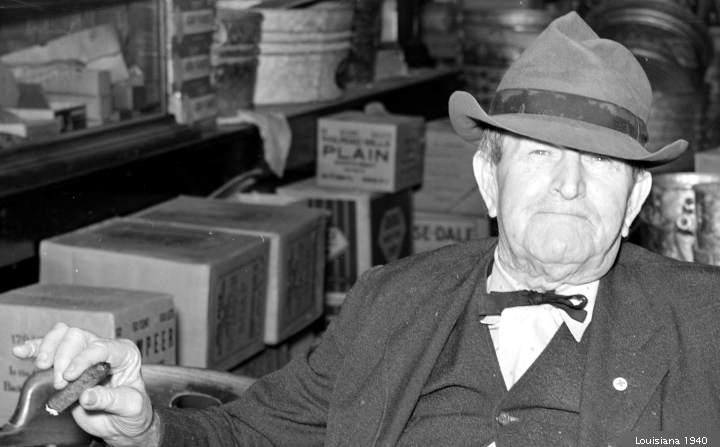

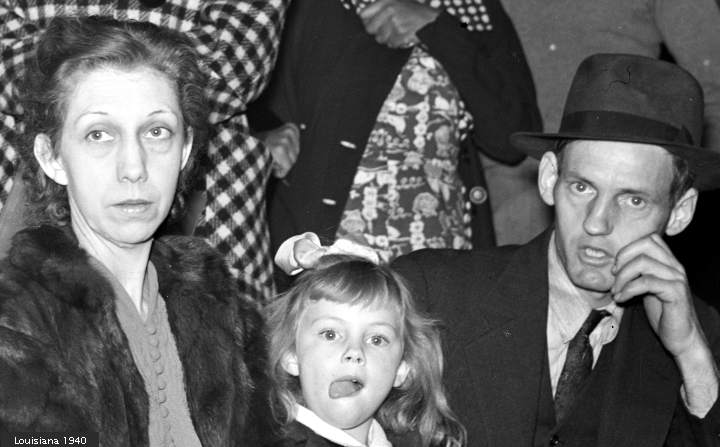
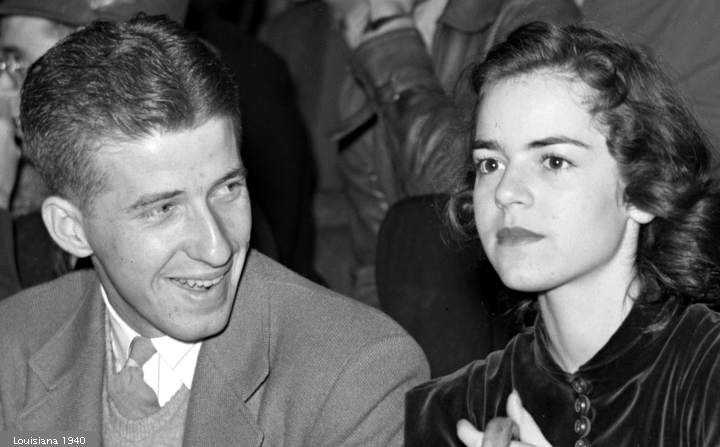
The case of Adolph Luetgert is mostly forgotten today. In its day, the story was a sensation. “Adolph Louis Luetgert (December 27, 1845-July 7, 1899) was a German-American charged with murdering his wife and dissolving her body in acid in one of his sausage vats at the A.L. Luetgert Sausage & Packing Company in 1897. … After the news of the trial became public, rumors spread that Luetgert had actually turned his wife into sausage and sold the “sausage” to unknowing consumers.”
Is it possible to explain what is in sausages without making it erotic? A twitter thread got PG thinking about a sausage story he read in 1989. The Fairy was in Gaily, Gaily, by Ben Hecht. The story originally appeared in Playboy. “In a 1962 article for Playboy collected in his rollicking 1963 memoir Gaily, Gaily — the legendary Chicago reporter Ben Hecht recalls a murder case that sounds suspiciously similar to the Adolph Luetgert case. Hecht describes an story that apparently occurred sometime during the five years after he began working as a reporter in Chicago in 1910. He writes: “Fred Ludwig, a popular North Shore butcher, went on trial before Judge Sabath for the murder of his wife. The wedding band with its romantic inscription had turned up in one of the sausages manufactured by Ludwig and sold to one of his customers, Claude Charlus, a well-known financier and epicure.” In the Hecht story, Mr. Charlus was the bf of Mr. Ludwig. When it was time to execute Mr. Ludwig, young Mr. Hecht went to a whorehouse, to borrow a makeup kit. Mr. Ludwig painted his face before he went to the gallows.
“Adolph Luetgert (originally Adolph Ludwig Lütgert) came to New York in around 1865 or 1866 when he was about twenty years old.” … “He married his first wife, Caroline Roepke, sometime between 1870 and 1872. She died on November 17, 1877. He married his second wife Louise Bicknese, two months after Caroline’s death, on January 18, 1878. Luetgert had six children—two with Caroline and four with Louise. Only three of his children survived past the age of 2.”
“Louisa Bicknese was an attractive young woman who was ten years younger than her husband. She was a former servant from the Fox River Valley who met her new husband by chance. He was immediately taken with her, entranced by her diminutive stature and tiny frame. She was less than five feet tall and looked almost child-like next to her burly husband. … As a wedding gift, he gave her a unique, heavy gold ring. Inside of it, he had gotten her new initials inscribed, reading “L.L.”. Little did he know at the time that this ring would prove to be his undoing.”
After a while, the couple started to bicker. “Despite his coarse appearance (one writer vividly describes him as a “Falstaffian” figure with “a face of suet, pig eyes, and a large untidy moustache that was a perfect host for beer foam”), Adolph was something of an womanizer. … Claiming that he needed to keep a round-the-clock eye on his factory, he had taken to spending his nights in a little room beside his office, equipped with a bed that he frequently shared with his twenty-two-year-old housemaid, Mary Siemering, Louisa’s own cousin. … He was also conducting a surreptitious courtship of a wealthy widow, Mrs. Christina Feld, sending her amorous letters in which he rhapsodized about their rosy future.” (During the murder trial, “Mrs. Christina Feldt, … testified that Luetgert often expressed his hatred for his wife and intimated that he would get rid of her.”)
“At around 10:15 on the evening of Saturday, May 1, Louisa was seated in the kitchen, chatting with her twelve-year-old son Louis, who had attended the circus that evening. The boy was excitedly describing some of the wonders he had seen—a giant named “Monsieur Goliath” and a strongman who juggled cannon balls—when Luetgert appeared and told his son to go bed. Precisely what happened between the two adults after Louis retired to his room is unclear. Only one fact is beyond dispute. After the boy bid goodnight to his mother at about 10:30 P.M., she was left alone in the company of her husband.” … “Mrs. Luetgert wore only a light house wrapper and slippers, although the night was cold and rainy. It never was shown that she had taken with her any of her belongings.”
“When questioned by his sons, Luetgert told them that their mother had gone out the previous evening to visit her sister. After several days though, she did not come back. Finally, Diedrich Bicknese, Louisa’s brother, went to the police. The investigation fell on Captain Herman Schuettler, … “an honest but occasionally brutal detective”.
“Frank Bialk, a night watchman at the plant … saw both Luetgert and Louisa at the plant together. Apparently, Luetgert sent him out on an errand that evening and gave him the rest of the night off.” There is another version of the Bialk story. “Frank Bialk … testified … Luetgert instructed him to bring down two barrels of caustic potash and place them in the boiler room, and that Luetgert then poured the contents of both barrels in one of the vats. The watchman was instructed to keep up steam all night and at 10 p. m. he was sent by Luetgert to the drug store after some nerve medicine.”
“The police also made a shocking discovery; they came across bills that stated that Luetgert bought arsenic and potash the day before the murder. … the detective was convinced that Luetgert had killed his wife, boiled her in acid and then disposed of her in a factory furnace.”
“… Luetgert’s night watchman, Frank Bialk, approached the police and told them that, on the night Mrs. Luetgert disappeared, his boss had been acting suspiciously, busying himself with one of the large steam-vats down in the factory basement. Following up on this tip, investigators checked out the vat, which—despite having been cleaned two weeks earlier—still contained a residue of a thick, greasy fluid, reddish-brown in color and giving off a nauseous stink. When the fetid slime was drained from the vat, the detectives discovered tiny pieces of bone along with two gold rings, one of them a wedding band engraved with the initials “L. L.” More bone fragments, as well as a false tooth, a hairpin, a charred corset stay, and various scraps of cloth turned up in a nearby ash heap.”
Luetgert was arrested, and charged with the crime. “On October 18, the case was submitted to the jury and after deliberating for sixty-six hours they failed to agree, nine favoring a conviction and three voting in favor of an acquittal. On November 29, 1897, the second trial began. … The trial resulted in a conviction and on May 5 Luetgert was sent to the Joliet State prison for life.”
“July 27, 1899, Luetgert left his cell and returned shortly afterward with his breakfast in a pail, but just as he was about to eat it, he dropped dead from heart disease.”
“… Frank Pratt … asked Luetgert if he wanted his “hand read.” The latter consented and Pratt told Luetgert that he possessed a violent temper and at times was not responsible for his actions. Pratt stated that Luetgert then virtually admitted that he killed his wife when he was possessed of the devil. … It is said that Luetgert also made similar admissions to a fellow prisoner.” Pictures for this true crime story are from The Library of Congress. This is a repost.


I’ll Furnish The War


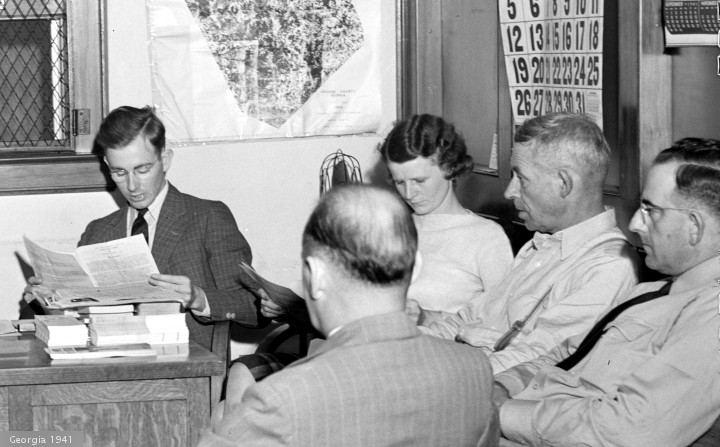
This is a repost. The telegram incident was included in Citizen Kane … “You furnish the pictures and I’ll furnish the war.” – WR Hearst, January 25, 1898 It is part of the Hearst legend. “Frederic Sackrider Remington, the famous artist who brought to life American images of the west, was hired by newspaper magnate William Randolph Hearst to illustrate the revolution erupting in Cuba. He wrote back to Hearst one day in January 1897: “Everything is quiet. There is no trouble. There will be no war. I wish to return.” Hearst sent back a note: “Please remain. You furnish the pictures and I’ll furnish the war.” Chamblee54 readers should know where this is going to go.
Mr. Remington was sent to Cuba, along with correspondent Richard Harding Davis, to cover the rebellion against the Spanish colonial government. At the time of this purported exchange, the conflict between Spain, and the Cuban rebels, was rather lively. This is at odds with the initial comment by Mr. Remington. One item which modern observers will find odd is the fact that Mr. Remington drew pictures. He was not a photographer. Apparently, in 1897 journalism, a hand drawing was acceptable evidence of a conflict.
Not likely sent: The Remington-Hearst “telegrams” is a thorough debunking of this legend. The source of the legend is “James Creelman, On the Great Highway: The Wanderings and Adventures of a Special Correspondent. (Boston: Lothrop Publishing, 1901), 177-178.” “Creelman does not … describe how or when he learned about the supposed Remington-Hearst exchange. In any case, it had to have been second-hand because Creelman was in Europe in early 1897, as the Journal’s “special commissioner” on the Continent.”
“It is improbable that such an exchange of telegrams would have been cleared by Spanish censors in Havana. So strict were the censors that dispatches from American correspondents reporting the war in Cuba often were taken by ship to Florida and transmitted from there.”
… correspondence of Richard Harding Davis — the war correspondent with whom Remington traveled on the assignment to Cuba — contains no reference to Remington’s wanting to leave because “there will be no war.” Rather, Davis in his letters gave several other reasons for Remington’s departure, including the artist’s reluctance to travel through Spanish lines to reach the Cuban insurgents. … Davis’ letters show that he had little regard for the rotund, slow-moving Remington, whom he called “a large blundering bear.”
The purported Remington-Hearst exchange, moreover, appears not to have been particularly important or newsworthy at the time … the anecdote seems to have provoked almost no discussion or controversy until a correspondent for the Times of London mentioned it in a dispatch from New York in 1907. He wrote: “Is the Press of the United States going insane? . . . A letter from William Randolph Hearst is in existence and was printed in a magazine not long ago. It was to an artist he had sent to Cuba, and who reported no likelihood of war. —You provide the pictures, I’ll provide the war.'”
“Hearst, indignant about the report, replied in a letter to the Times. He described as “frankly false” and “ingeniously idiotic” the claim “that there was a letter in existence from Mr. W. R. Hearst in which Mr. Hearst said to a correspondent in Cuba: —You provide the pictures and I will provide the war,’ and the intimation that Mr. Hearst was chiefly responsible for the Spanish war. … “This kind of clotted nonsense could only be generally circulated and generally believed in England, where newspapers claiming to be conservative and reliable are the most utterly untrustworthy of any on earth. In apology for these newspapers it may be said that their untrustworthiness is not always to intention but more frequently to ignorance and prejudice.”
Pictures today are from The Library of Congress.



Harry Hay And Joe Pyne



Joe Pyne was a notoriously abrasive TV personality. He pioneered many of the things that today’s shock jock hosts do, before his death in 1970. One of his guests was Georgia Governor Lester Maddox. While writing a blog post about Lester, PG did a bit of research on Joe Pyne.
Wikipedia had an intriguing comment. “Gay activists Harry Hay and John Burnside—who were a couple from 1962 until Hay’s death in 2002—appeared on Pyne’s show in 1967.[citation needed]” Harry Hay is a seminal figure in certain “radical” communities. Mr. Hay had a sharp tongue, and might have given the combative Pyne a bit of pushback. PG decided to look for the video.
[citation needed] is the key phrase. Youtube has a few dozen videos of the Joe Pyne Show (links below.) None of the ones here include Harry Hay. The internet archive has a collection of Pyne tapes, but no Harry Hay. A google search provides many mentions of this interview, but no more details. Many of the references were apparently copied, verbatim, from Wikipedia.
There is a possibility that Harry Hay was never on the Joe Pyne show. There are other urban legends about Joe Pyne. The most famous involves Frank Zappa. It is helpful to know that Joe Pyne had a rare form of cancer in 1955, and part of his left leg was amputated. In the story, Mr. Pyne asks Mr. Zappa if his long hair makes him a girl. Mr. Zappa replied, does your wooden leg make you a table? No record of this exchange is available.
TV Party might have a reason for the missing video. “Most, if not all, of the syndicated Joe Pyne programs still exist on videotape in the archives of Hartwest Productions, Inc. Here’s what Hartwest tells us: “The tapes are 2″ Quads, meaning that they are so ancient that you only get one pass before the oxides flake off. That one pass is fine to make a new digital master, but the cost (including two digital clones) comes to about $600 a show. So far, we have only transferred three shows, with the cost being paid for by people who were either in the show, or who were making a documentary, or who now seem to worship one of the guests (and I mean the last literally).”
The research turned up another story. It is from “Remembering Harry and John” by Mark Thompson, on the occasion of Harry’s 100th anniversary. “I remember the night we were socializing at the San Francisco Art Institute at a gala tribute for James Broughton. Harry (Hay) and James had sparked briefly as Stanford University undergraduates, but didn’t meet again until fifty years later at a faerie gathering. Few people knew that James had fathered a daughter with esteemed film critic Pauline Kael during their bohemian Berkeley days, but Harry was alert to the fact. Kael and Broughton were having their own reunion at the moment when, with typical impudence, Harry interrupted the conversation by loudly asking, “So, who was the mother and who was the father?” The stunned silence was punctured only by the whoosh of Kael’s furious departure.”
Pictures today are from The Library of Congress. This is a repost. Youtube has several videos from the Joe Pyne Show. There is a series, LOST JOE PYNE TALK SHOW PART 1 – PART 7 “This is from a 1967 kinescoped “demo reel”, used to sell “THE JOE PYNE SHOW” in syndication to local stations at the time.” 1 2 3 Helen Gurley Brown 4 5 7 Here are some other guests:
Amy White Fixler Christine Jorgensen Anton LaVey F. Lee Bailty
Godfrey Cambridge Lester Maddox Paul Krassner Jerry Rubin
Lewis Marvin Jack Anderson James Meredith Joel Fort M.D. Iceberg Slim


War Between The States




Last week, this slack blogger found a tweet. The tweet said that Abraham Lincoln and John Kennedy fought the Federal Reserve, and both were killed. I did a little research, and found something that questions the conventional wisdom about the War Between the States. This is a repost from 2017.
Before getting to the quote, a disclaimer is in order. 100777.com is a sketchy website. What is says cannot be taken as literal truth. However, the statement about WBTS does raise some questions.
“One point should be made here: The Rothschild bank financed the North and the Paris branch of the same bank financed the South, which is the real reason the Civil War was ignited and allowed to follow its long, and bloody course.”
Maybe it was not the Rothschild Bank that financed WBTS. Somebody did. War is a profitable enterprise. People are going to egg on the combatants, knowing that there is money to be made. Someone encouraged the southern states to secede. Others encouraged the north to take a hard line on slavery, knowing that it would lead to a profitable war. Was slavery the reason for this war, or the excuse? Follow the money.
Rhett Butler was a central character in Gone With The Wind. He was a blockade runner, bringing in supplies to the south. He said this: “I told you once before that there were two times for making big money, one in the up-building of a country and the other in its destruction. Slow money on the up-building, fast money in the crack-up. Remember my words.”
It should be noted that slavery was a big money operation. “But I think we think of it differently when we realize that the value of slave property, some $4 billion, enormous amount of money in 1861, represented actually more money than the value of all of the industry and all of the railroads in the entire United States combined. So for Southern planters to simply one day liberate all of that property would have been like asking people today to simply overnight give up their stock portfolios.”
When the thirteen colonies declared independence, they were not creating a union. The idea was to kick out the British. The concept of a federal union, made up of more-or-less independent states, was fairly new. States had conquered other states, and formed empires, for a long time. A federal union of states was a new, and controversial, idea. Many European states wanted to see this federal union fail. These states encouraged the south to secede. Some people say the War Between the States began the day the British left.
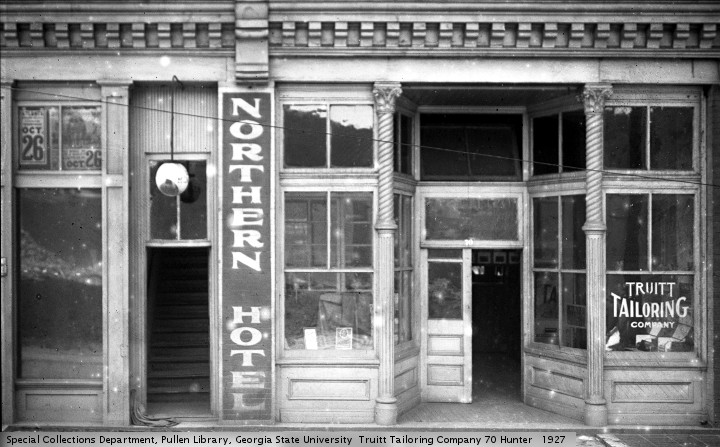
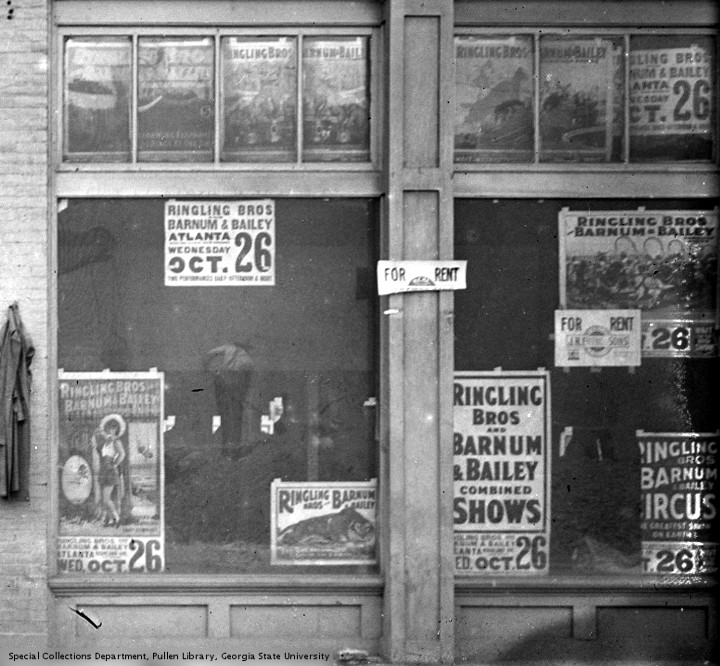
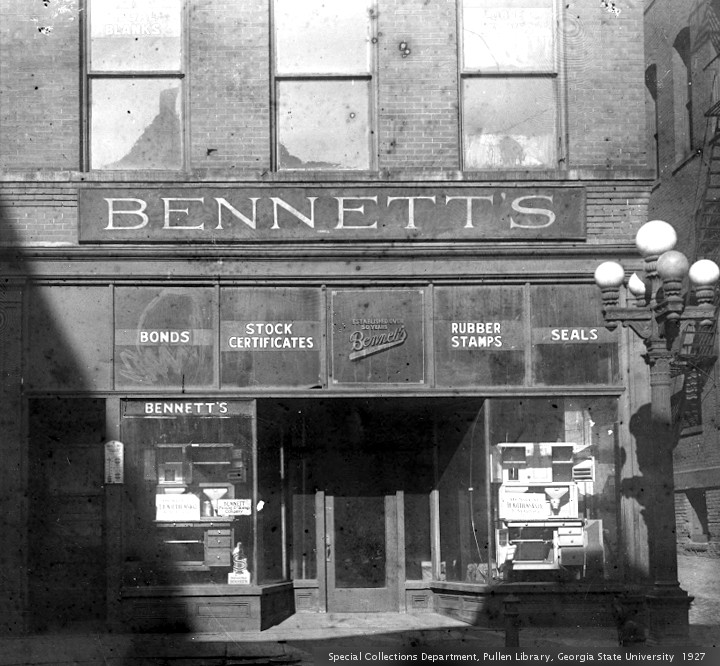
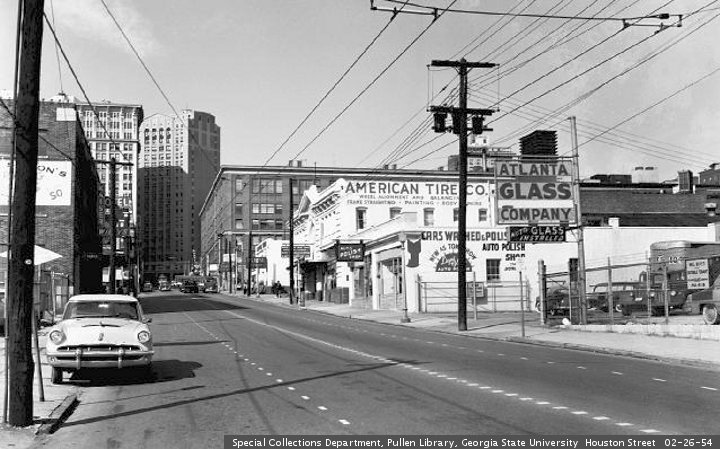
Pictures from “The Special Collections and Archives, Georgia State University Library “… a collection of images of downtown Atlanta streets that were taken before the viaduct construction of 1927 – 1929. Later, some of the covered streets became part of Underground Atlanta.”



Hollywood Babylon


PG recently read Hollywood Babylon: The Legendary Underground Classic of Hollywood’s Darkest and Best Kept Secrets. A yard sale last summer had a deluxe edition on sale. The man asked PG how much he thought it should cost. “If you are going by the amount of truth in it, the price should be a nickel.” In a fit of synchronicity, PG was on his way to a party, “A Midsummer Night’s Dream”. This is a repost. Pictures are from The Library of Congress.
HB is highly entertaining, despite those troubling concerns about the facts. The cover has an NSFW picture of Jayne Mansfield, where the top of her dress serves as a display case for her boobies. HB goes all TMI about the death of Miss Mansfield, but it is a model of good taste compared to Find a death. The *bottom line* is that Jayne Mansfield was not decapitated in that auto accident.
While asking Mr. Google whose jugs adorned the cover of HB, this article came up: Satan and Mummified Psychics: A Kenneth Anger Marathon at Sweat Records Tonight. Someone with too much free time was promoting an evening of the short films of Kenneth Anger. Mr. Anger, born Kenneth Wilbur Anglemyer, has the copyright credit for HB. PG suspects that other scribes helped out. In some parts, the prose is purpler than in others. Of course, when writing about Hollywood, it is fitting that a committee produced a book filled with lies. Kenneth Anger croaked May 11, 2023.
The Miami story disputes the notion that Kenneth Anger was a child star. “… a little boy named Anger was born in Santa Monica CA. He attended a school for child stars, did dance steps with Shirley Temple, and minced about as the changeling prince in the 1935 Warner Bros. movie version of A Midsummer Night’s Dream. But all that might be bullshit. There’s not much documentation of Anger’s alleged child star days. The one legit source that seems to corroborate the claim is Mickey Rooney. He played Puck in A Midsummer Night’s Dream and he says Anger’s mommy dressed him up as the girl named “Sheila Brown” who officially played the Changeling Prince.”
A website called Vice.com managed to snag an interview with Kenneth Anger. The introduction has this story. “He went on to recount the time Kenneth showed up at fellow director and mutual friend Curtis Harrington’s funeral at the Hollywood Forever Cemetery wearing a black raincoat, eyeliner, and fingernail polish. His shirt was opened to his navel, revealing the giant lucifer tattoo emblazoned across his chest, and he was accompanied by a boyish photographer who took pictures as Kenneth kissed Curtis’s corpse before its cremation. Before he was ejected from the premises, Kenneth handed John a small plastic vampire figurine that contained mint candies inside, clarifying its original use by saying, “It’s actually a dispenser for tickle-ribbed rubbers.”
The interview had a few high moments. VICE But it did attract the attention of sexologist Alfred Kinsey, whom you befriended. Did he encourage your work?
KA Yes. Kinsey was doing interviews for his book Sexual Behavior in the Human Male, and I don’t know… What if you are not human? The title is kind of awkward, but that was what he called his research book. He was basically a biologist, an expert on wasps, of all things. When he came to LA to do interviews, I met him. He came to see Fireworks at the Coronet Theatre at a midnight showing, and he wanted to buy a print for his collection at Indiana University. I agreed, and that was the first copy I ever sold. But I remained good friends with him until the end of his life.
VICE Do you have a favorite star from this era?
KA I love the career of Rudolph Valentino, who died at 31 and had an amazing trajectory in that short time. His life continues to fascinate me.
VICE Do you continue to find new information?
KA I have plenty of information on him. There are facts, and then there is gossip. I go for the facts, but I will listen to the gossip. [smiles]
VICE Your willingness to sift through the gossip was a point of contention with some people when Hollywood Babylon was published, especially after its second printing. Some have accused you of muckraking, and others have even gone further and claim that it contains factual inaccuracies.
KA Well, I’ve never been sued…
VICE In other words, your detractors can’t prove it.
KA No one ever came up to me and said, “Well, you made the whole thing up.” Because I didn’t.
HB is a fun book, with great pictures. The stories are mostly lies, but this is Hollywood we are talking about. With its continued popularity, there will be plenty of copies at yard sales and used book stores. .


Judy Roasting On An Open Fire


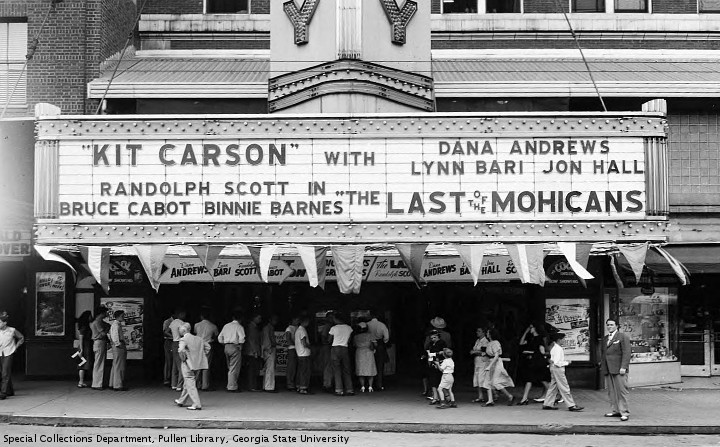

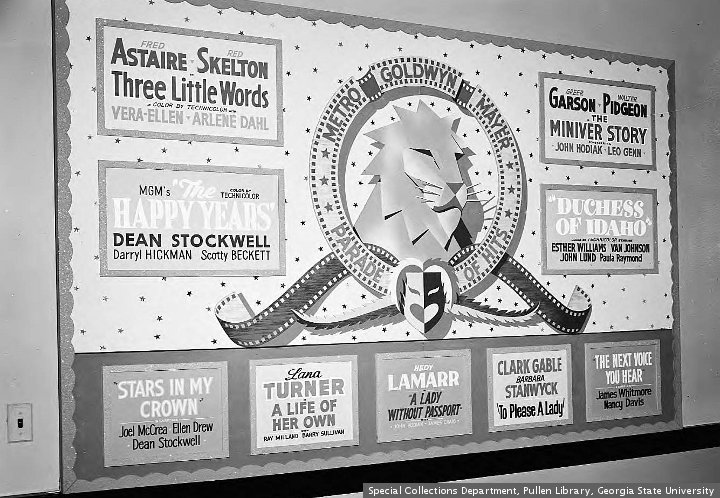
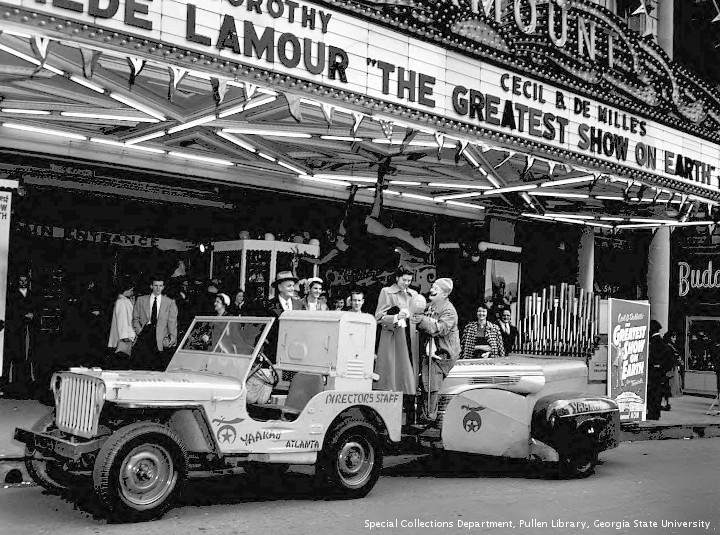
SFFILK (Not his real name) passes along a story about Mel Tormé. It seems like Mr.Tormé was eating a leisurely breakfast at a food court in Los Angeles, and a quartet appeared singing Christmas songs. They wound up performing “The Christmas Song” for co- author Tormé … and the singers had no idea who he was. It is a good story, better told in the link.
According to the inerrant Wikipedia, Mr. Tormé collaborated with Robert Wells, until they had a falling out. One afternoon, on the hottest day of July in 1945, Mr.Tormé went to visit Mr.Wells, and saw the first four lines of “The Christmas Song” (including “Chestnuts roasting on an open fire, Jack Frost nipping at your nose”). The lines were on a note pad, and the two agreed to beat the heat of summer by completing the song. Supposedly, Mr. Tormé did not like the song very much. After three divorces, he probably didn’t see many of the royalties.
Mel Tormé was the music director of the ill fated “Judy Garland Show” in the early sixties. He wrote a book about it… The Other Side of the Rainbow: With Judy Garland on the Dawn Patrol . The story is that Miss Garland would get blasted, call Mr.Tormé in the middle of the night, and pour out her troubles. (This review is much less sympathetic towards Mr. Tormé.) While the show did not last longer, there are some great youtube clips left over. Barbra Streisand Mel Tormé Liza Minnelli
This is a repost, with pictures from Special Collections and Archives, Georgia State University Library. SFFILK, aka Michael Liebmann, passed away on July 26, 2016, due to complications from surgery. On June 5, 1999, Mel Tormé went to the chestnut roast in the sky. Frances Ethel Gumm met her maker June 22, 1969, and started a revolution.


Mithras
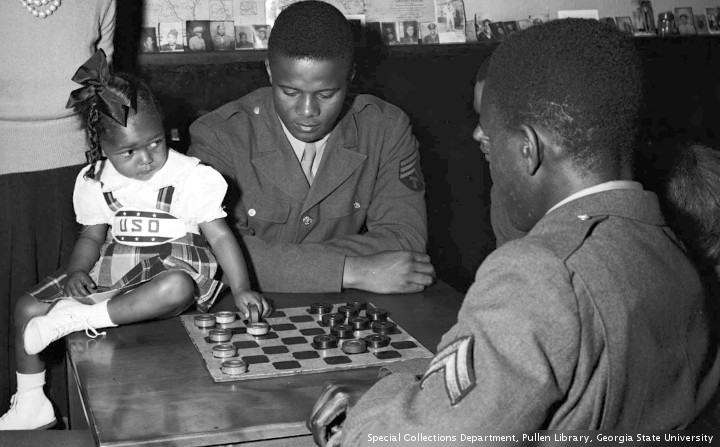


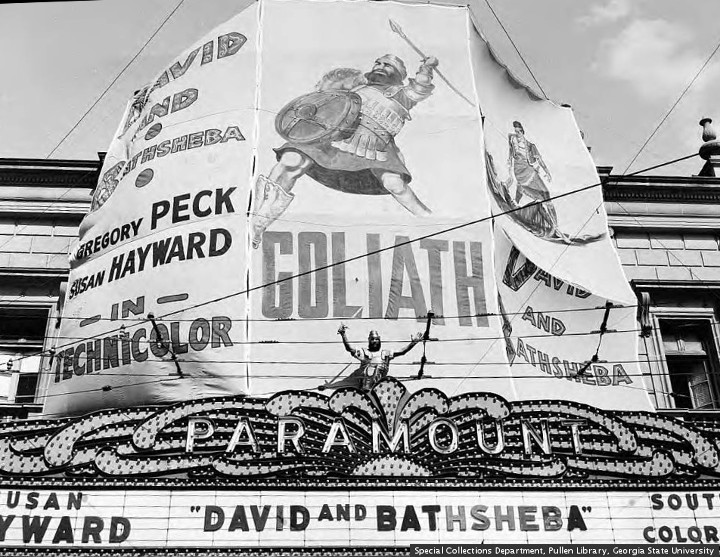
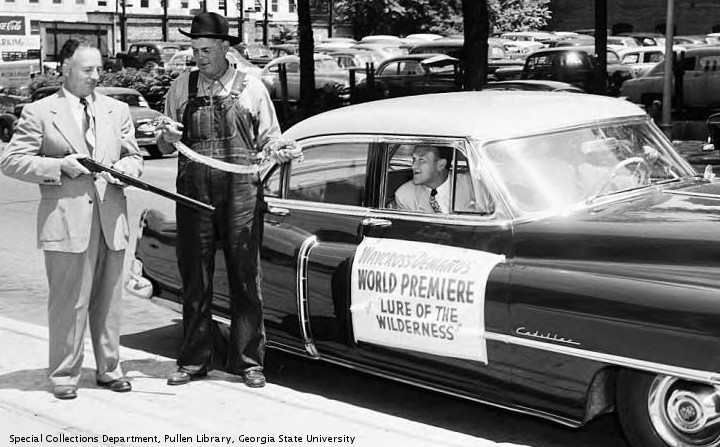


Mithras is a Persian deity, from the Zoroaster tradition.(That is pronounced Zor uh THRUS ta.) Not much is known about Mithras … did he really exist, or was he a legend? There was a cult of Mithras in the first century Roman empire.
There are supposed to be between Mithras and Jesus. These include the virgin birth, the birth on December 25, and rising from the dead after three days. Some spoilsports say the early Christians grafted Jesus onto the legend of Mithras.
One indication that this might be true is The Catholic Encyclopedia. “Some apparent similarities exist; but … it is quite probable that Mithraism was the borrower from Christianity.” This repost has pictures from “The Special Collections and Archives, Georgia State University Library”. (more…)
The Fall Of Minneapolis





The Fall of Minneapolis, a documentary about the death of George Perry Floyd, Jr. I have followed this case, along with the rest of America. Until recently I believed the conventional wisdom. Minneapolis police officer Derek Michael Chauvin put his knee on GPF’s neck for 8:46, and caused GPF to die. We are learning that the truth might be different.
I decided to watch TFOM, and write about it. I was also putting it off. Part of this process was finding things to include in my report. There was a report that said TFOM was conservatives pushing an agenda. Other people people have opinions on the matter. Finally, I heard The Truth about George Floyd’s Death with Glenn Loury and John Mcwhorter.
One thing I wanted was a copy of the autopsy report. Recently, parts of it have been released. The report shows high levels of Fentanyl and Methamphetamine in GPF’s system. I googled “George Floyd Autopsy,” and found a lot of commentary. Next, I did the same search on duckduckgo. The top result was the HENNEPIN COUNTY AUTOPSY REPORT ME NO.: 20-3700. The document clearly states “No life-threatening injuries identified.”
Finally, I ran out of excuses, and turned the show on. The first few minutes was body cam videos. It was downright fascinating. GPF was BOMBED. The store clerk commented on this in his 911 call, after GPF allegedly tried to pass a counterfeit twenty. The clerk then pointed to a parked car across the street, where GPF was sitting in the driver’s seat.
The parked car was not part of the overall narrative. Why did GPF sit there in the vehicle, instead of leaving? As high as GPF appears to be, was it a good idea for him to drive? An officer … not DMC … approached the vehicle. GPF opened the car door, instead of rolling down the window. Is this important in what happened later?
GPF is acting like a jerk, and resisting. GPF’s behavior is similar to the performance of Rayshard Brooks in his interrogation. GPF is taken outside the vehicle and handcuffed. GPF starts saying “I can’t breathe” at this point, which might be an indication that he could. Before long, DMC arrives, and GPF is on the ground.
Next, TFOM gets into the riots after GPF died. The Minneapolis government made some questionable decisions. The next part is the trial of DMC. It seems as though the judge made questionable calls about what evidence to admit. Many people say DMC did not receive a fair trial.
One especially controversial element here is the use of Maximal Restraint Technique, or MRT. Some people testified that MRT is not taught by Minneapolis police trainers. Others show pages from training manuals, and pictures of models demonstrating MRT. In bodycam pictures, DMC’s knee appears to be an the shoulder, and the side of the neck. This is not the story that inflamed America.
TFOM does appear to have a “conservative” approach to the story. It is tough to draw conclusions based on watching a documentary. If you want to learn more about GPF and DMC, google is ready when you are. Duckduckgo might be more helpful.
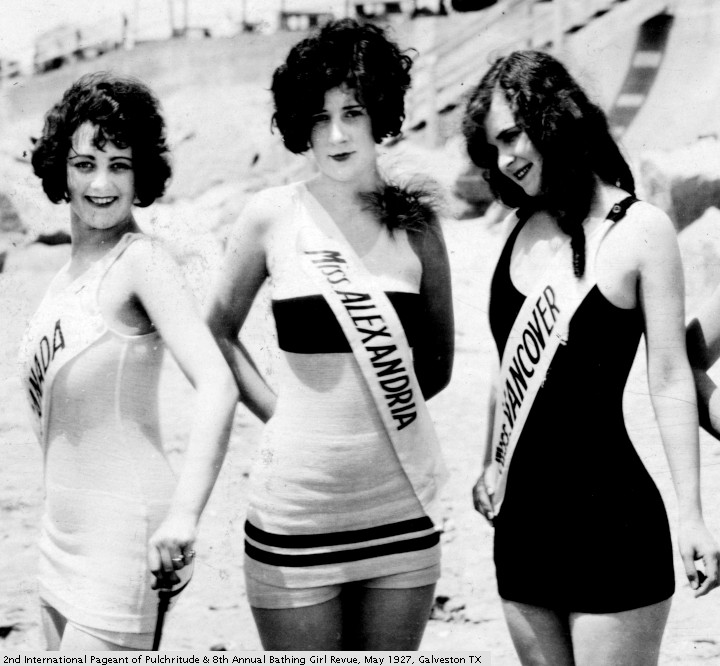
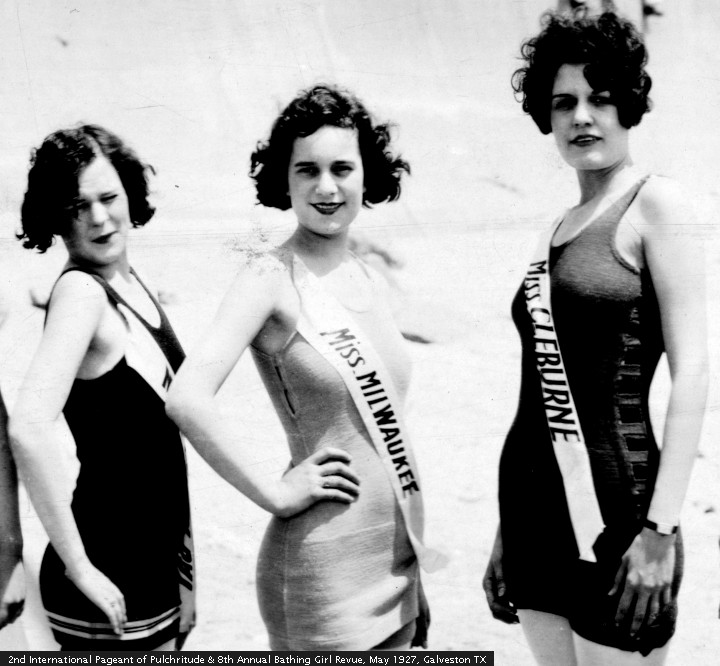
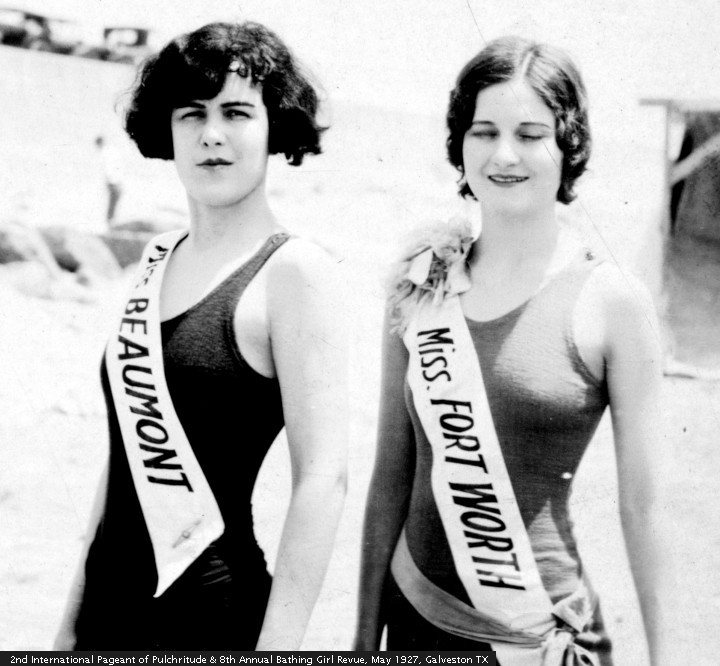
Pictures are from Second International Pageant of Pulchritude and Eighth Annual Bathing Girl Revue, May 21-23 1927, Galveston TX. They are from The Library of Congress.





Georgia On My Mind






“Georgia On My Mind” turned up of facebook this morning. Pictures today are from “The Special Collections and Archives, Georgia State University Library”. This is a repost from 2020.
Youtube turned up the original “© Written in 1930 by Hoagy Carmichael (music) and Stuart Gorrell (lyrics) © Gorrell wrote the lyrics for Hoagy’s sister, Georgia Carmichael. However, the lyrics of the song are ambiguous enough to refer either to the state or to a woman named “Georgia”. Carmichael’s 1965 autobiography, “Sometimes I Wonder”, records the origin: a friend, saxophonist and bandleader Frankie Trumbauer, suggested: “Why don’t you write a song called ‘Georgia’? Nobody lost much writing about the South.” Thus, the song is universally believed to have been written about the state.”
National Anthems has a story about GOOM. “STUART GRAHAM STEVEN GORRELL (1901-1963) and HOAGLAND HOWARD CARMICHAEL (1899-1981), wrote the song in 1930 almost as a lark … Hoagy Carmichael went to Indiana University, and one of his best college chums was Stuart Gorrell. Hoagy Carmichael was going to be a lawyer and Stuart Gorrell, when not hanging around the local “jazz joint” (called The Book Nook!) had promised someone that he would eventually be a success in the world of business.” The link no longer works.
“The two of them were together at a party in New York and Hoagy Carmichael played what he had of the “Georgia” music line for Stuart Gorrell and some friends. After the party broke up, the two of them went back to a friend’s apartment and worked on the tune throughout the night. Stuart Gorrell wrote what he thought would be a good lyric line on the back of a post card, (now displayed in the Carmichael Room at Indiana University) and showed it to Hoagy Carmichael. One can still plainly see the few, but important, changes that Hoagy Carmichael made on that small piece of cardboard to Stuart Gorrell’s lyrical scratchings. The song was improved upon, and the lyrics written, in that boozy early morning, and recorded in September 1930 by a band that included Hoagy Carmichael’s great friend, Bix Beiderbecke – a recording session that proved to be Bix’s last.”
“Hoagy Carmichael went on to write many more songs, some of them hits, and Stuart Gorrell kept his promise and became a Vice President at Chase Bank. Stuart Gorrell never tried to write another song lyric, but ‘Georgia on my Mind’ became a hit after World War II and Hoagy Carmichael, true to his word – although Stuart Gorrell was not legally credited as the lyricist by the music publisher – always sent Stuart Gorrell a cheque for what would have been his share of royalty. The royalty income from that song is substantial and, after Stuart Gorrell died, the income put his daughter through college.”
Mr. Gorrell wrote a letter to the Bremen (Indiana) Enquirer, August 3, 1961. “This accompanied his response to his home town’s Teen Hop patrons choosing the song as their theme song. … “Georgia on my mind” was composed more than a quarter of a century ago on a cold and stormy evening in 1930 in New York City. Hoagy Carmichael and I, in a third floor apartment overlooking 52nd street, with cold feet and warm hearts, looked out the window and, not liking what we saw, turned our thoughts to the pleasant southland. Thus was born a hauntingly sweet song. My mother, who died in Bremen in 1942, once asked a very penetrating question about the song. I had sent her a copy of the sheet music and, after reading the words over several times, she wondered aloud: “What is Georgia? A girl—or state? What do you think? Hoagy and I just love every one of you Bremen Teen Hoppers for honoring out tune by making it your theme song. Sincerely, Stuart Gorrell”









More Tales Of The City



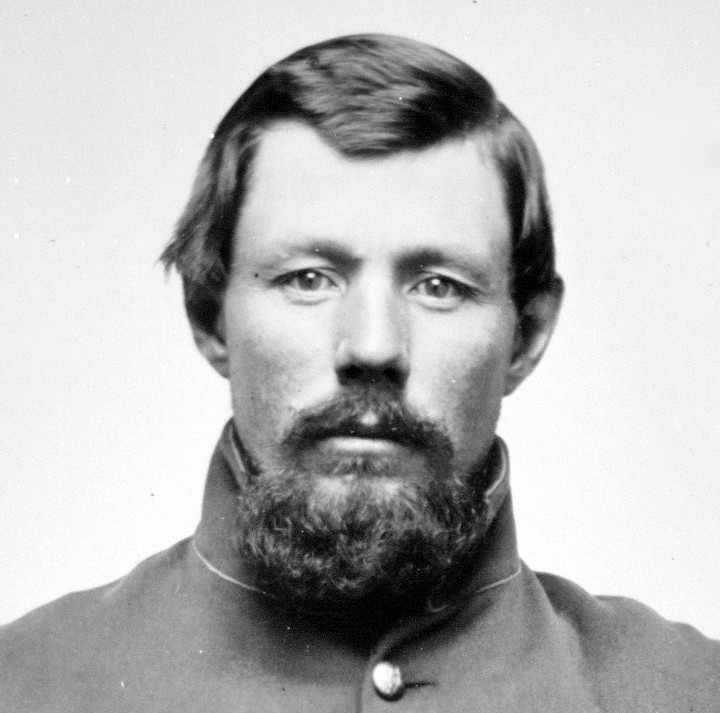
This is a repost from 2017. It was a simpler time. Looking back six years, we had it pretty good in 2017. Our biggest problem was an orange haired idiot in the White House. In three years we would melt down over Covid. In five years Russia would invade Ukraine. In six years, Israel would crank up the lawn mower. In these six years, the national debt has gone from $20t to $34t. That is a $14t increase in six years. By comparison, the total debt in 2011 was $14t. America has borrowed more in the last six years, than it did in 235 years previously. … So much for today’s fantasy. This repost is a book report of More Tales Of The City, another fantasy from a more innocent time. MTOTC took place in the San Francisco of 1977. Talk about not knowing when you had it good. … Whales of the city is about books four and six of the Tales of the City series. In this report, your humble scribe realizes that he has yard sale copies of books two and three, but does not know if he read them. He soon learns that he had not read those two books.
More Tales Of The City, book two of TOTC, is the subject of today’s book report. It begins with Micheal Tolliver’s Valentines Day Resolutions for 1977. “3. I will stop expecting to meet Jan-Michael Vincent at the tubs. 4. I will inhale poppers only through the mouth.” Cruise ship people wonder why Michael wore a T shirt advertising Crisco.
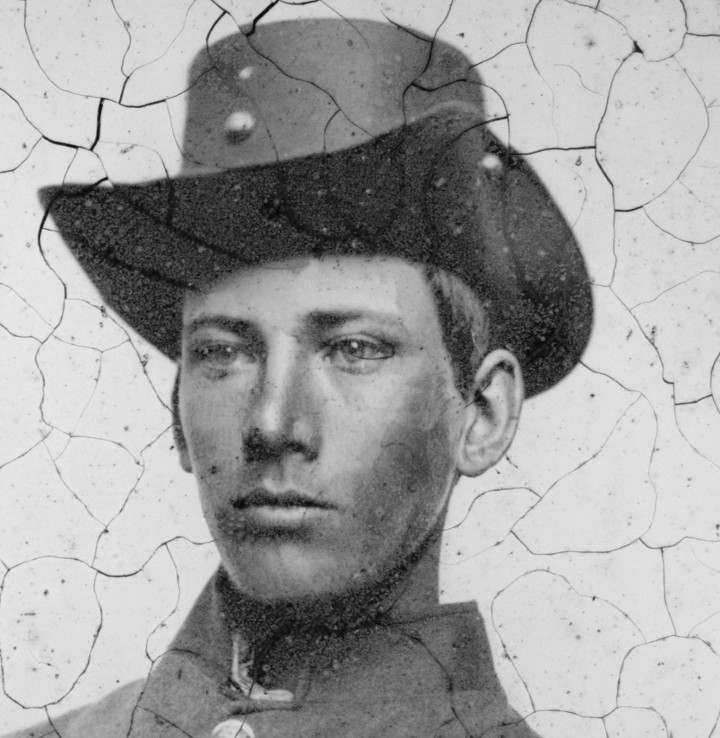
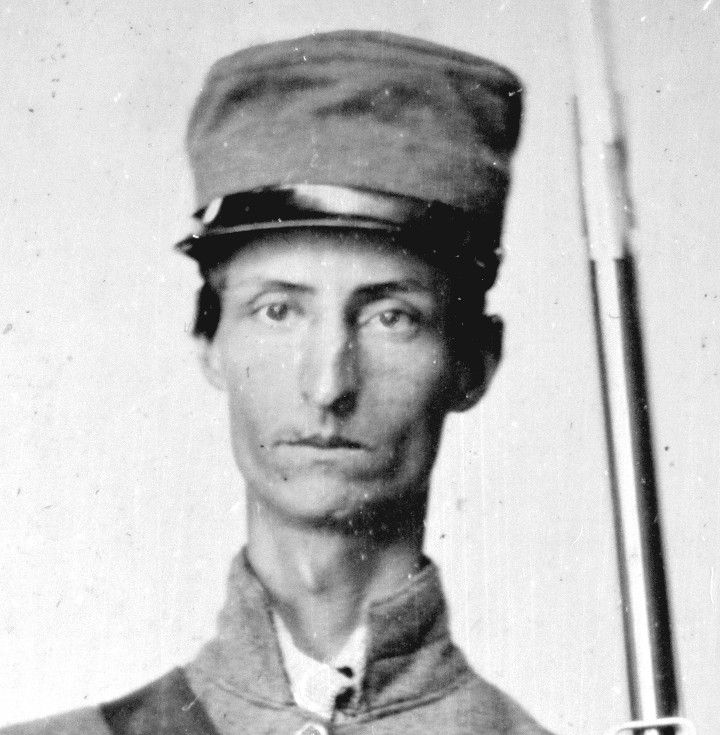
MTOTC occupies a totally different world from the 1988 scenery of Sure of You, book six. Consuming these stories out of sequence can lead to some head scratching. Either Armistead Maupin could see the future, and had a perverted sense of humor, or synchronicity is real. SPOILER ALERT Things in various parts of TOTC will be discussed below. If you are spoiler sensitive, you can just skip over the text, and look at the pictures. These images are courtesy of The Library of Congress.
The end of MTOTC shows Michael Tolliver and Mary Ann Singleton bemoaning the departure of Burke Andrew. Mary Ann met Burke on a cruise ship. They had their moment, and Burke got a job in New York. Micheal goes back to his southern queen roots, and quotes Scarlett O’Hara… tomorrow is another day. Fast forward four books/eleven years. Burke is a married New York hotshot. He gets Mary Ann to leave San Francisco, finally, and move on to national stardom in the Big Apple.
86 is an expression meaning get out of here. On page 86 of MTOTC, we see this 1977 comment: “There are – and this is conservatively speaking – one hundred and twenty thousand practicing homosexuals within the city limits of San Francisco. … Those one hundred and twenty thousand homosexuals are going to grow old together, Arch. ….Think of it! The first gay nursing home in the history of the world!” The Arch mentioned in this sales pitch is Archibald Anson Gidde. He will die in book six. The obituary will use a euphemism.
A lot of those 120K P.H. were going to die between book two and book six. One of them is Dr. Jon Fielding, an on-and-off bf of Michael Tolliver. The two re-connect on the same cruise ship that facilitated Mary Ann’s romance. On page 109, Michael is fantasizing about having a decadent funeral. Jon listens appreciatively, then says “Don’t die, O.K.? Not until I’m through with you.” In less than five years, Jon will be through with Micheal, and everything else.
MTOTC is a fun book. It is not a documentary. A few of the plot twists will stretch your credibility. It is escapism, and is set in a more innocent era… back when things were still fun. Before we go, we need a couple of one star comments. Robert S. Marrinon “While Tales of the City had redeeming love and touching stories, “More Tales of the City” was simply filthy. I can see why it sold for one cent.” Rozanne “I can’t believe I read another book by this guy. He’s pretty awful.”


The Durand Line


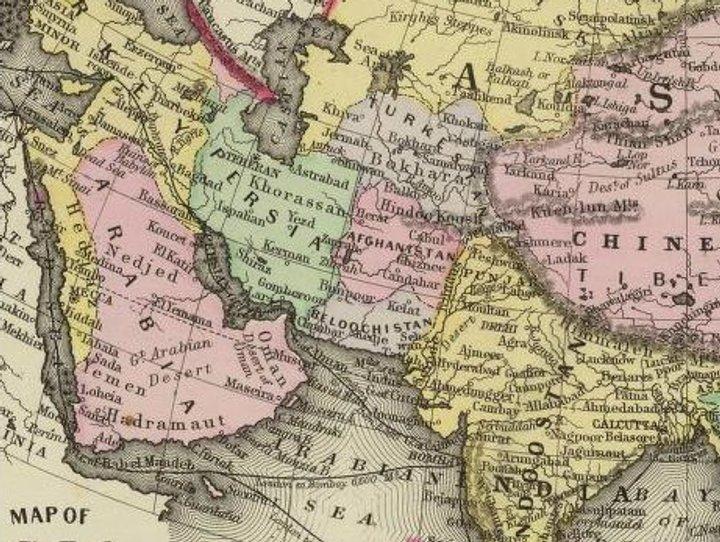
The United States is spoiled by the acceptance of our international frontiers. The Rio Grande, and the oceans, are obvious. While the Canadian border was a matter of contention at one time, it has been accepted for many years. In many parts of the world, where one country ends and another begins is casus belli, or reason to start a war.
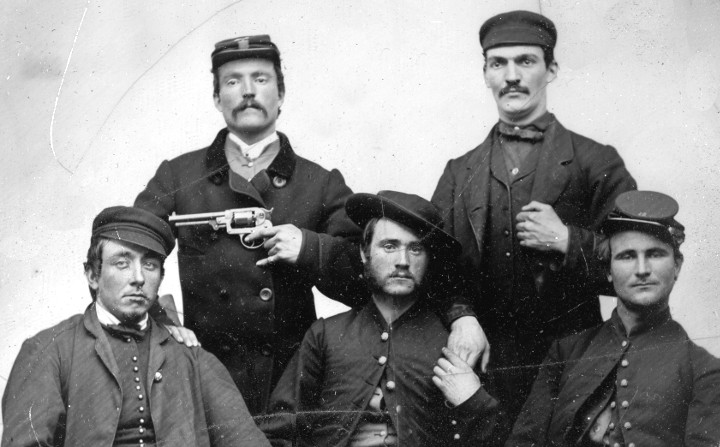
In 1893, what is now Pakistan was known as India, a part of the British empire. The Foreign Secretary of this government was a gentleman named Mortimer Durand. In 1893 a border was drawn between Afghanistan and India, which became known as the Durand Line. There are stories of British dirty deeds. Much of what is today Pakistan arguably belongs to Afghanistan, or an independent Balochistan. This is a repost, with photographs from The Library of Congress.



German Pastry Christmas




“Merry Christmas! As the wars about the public celebration of Christmas become filled with pettiness and hostility on all sides, be not dismayed. Your celebration of Christmas depends solely on you and nobody else. I heard the story of Oswald Goulter years ago and it reminds me of that simple fact. I am responsible for how I embrace the gift of Christmas.
Oswald Goulter served as an agri-missionary to China. On his way back to the USA for furlough during World War II. His sponsor mission agency gave him a ticket to get home by boat. When Oswald arrived in the port of India, New Delhi, he found boats filled with Jews, housed there to protect their lives from Nazi Germany. The Jewish boats couldn’t land anywhere. They were not accepted or welcome anywhere at the time.
Oswald went to see them and said, “Merry Christmas!” “We’re Jewish,” they responded. “I know, I know. But what would you like for Christmas. Merry Christmas!” “Don’t you understand? We are JEWISH.” “Merry Christmas. What do you want?” To get rid of this nuisance, they said, “How about some German pastry? That sure would be grand.” Oswald scoured the city until he found a bakery that made German pastry. Oswald sold his ticket for home to get money to purchase some pastry. He went back to the boat and shared it with them. As he spoke about this experience later in one of his supporting churches, a very prim member of the congregation stood and asked, “Why did you do that? They were Jewish. They don’t even believe in Jesus.””I know,” Oswald replied, “but I do.”
Allen Hunt sent an email, which featured the pastry story. Dr. Hunt was a “megachurch pastor,” with a radio show. I sent a reply: “Allen do you have any proof that Oswald Goulter existed? This story seems a bit far fetched. I googled Oswald Goulter, and all I see is the same story told over and over. … There are hundreds of real, verifiable Christmas stories out there. This one seems a bit fishy.”
“Oswald John Goulter was born in 1890. One of a family of eight, he grew up in the small village of Irrewillipe some fourteen kilometres from Colac in south-‐western Victoria (Australia.) Nominally Baptist, the family attended a small Wesleyan church some five kilometres away at Barongarook.” His nickname was OJ. He died in March, 1985, in Santa Clara, California. He was interviewed in 1971 as part of a project involving missionaries to China. “Mr. Goulter portrays the disruption in Chinese life in the area of Lu-chou (Hofei) in Anhwei province during the years 1922 to 1951. He tells how the Communists were able to take advantage of the disorder caused by warlords and bandits and the Japanese invasion to drive the nationalists from power.”
There is another story about Mr. Goulter. After the communist takeover, Mr. Goulter and his wife, Irene, were taken into custody. Mr. Goulter was beaten repeatedly, but refused to renounce his faith. Finally he was released (or, in some versions, escaped). This imprisonment is generally agreed to for three years. If he left in 1951, that would be consistent with the time line of the communist takeover. In the Hunt version of the story, Oswald Goulter left during World War 2.
This does not answer the question of why Mr. Goulter would go to India, before America. It also does not account for the appearance of the Jews in India, six years after the end of World War 2. It should also be noted that India was in chaos, with the independence and the partition. Would they have Jews hiding in the city? There is a book, Scattered Seed: The Story of the Oswald Goulters, Missionaries in China 1922-51. I do not know if it discusses German pastries.
UPDATE This story is a repost, with pictures from Special Collections and Archives, Georgia State University Library. Allen Hunt left the megachurch, and became a Catholic. The radio show, which had live broadcasts from Chick-fil-a restaurants, is long gone. Dr. Hunt has a book, Confessions of a Mega-Church Pastor, about his experience as a Catholic. Mr. Hunt is currently making $175k annually as a “senior consultant” at Dynamic Catholic Institute.
Another story about OJ Goulter has this:”Back in Shanghai, Goulter sought to gain a permit to return to Hofei and to figure out how he could transport the numerous bales of clothing (which had arrived on the freighter) to the mission station. In the meantime he was aware of local groups that were desperately in need of clothing. Shanghai was full of refugees. Among them were some Jews fleeing from the horrors of Nazi Germany. They had only the summer clothes they were dressed in. Gaining access to his bales of clothing, Goulter was able to fit them out with warm clothes. This incident is possible the basis for unusual story told about Goulter (see following).” After this paragraph, the pastry story is shown, under the headline “True or False?”


After receiving the original email, I received a snide email from Allen Hunt, which was lost in a hard drive crash. The good news: some people in OJ Goulter’s family saw my story, and made some lovely comments. These comments are shown below.
Lindsay goulter said, on February 26, 2010 at 3:26 am
Hi oswald goulter was my great uncle.Born in Auss. If you would like to know more about him please reply to my e/mail. lindsay g
Teena Anderson said, on October 30, 2010 at 10:02 pm
Oswald Goulter is my grandfather. He was a missionary to China for 30 years. His story is told in the book Scattered Seed by Wilfred Powell. Oswald and Irene had 3 daughters, Lovena, Doris (who is still living!) and Jean. Doris and Jean were born in China. Jean was my mother-she spoke excellent chinese with a Hefei accent. I am the eldest grandchild. They lost a baby boy born in China and buried him in the mountains of Kuling, where the missionaries would go for the summer. My husband, Hugh Anderson (Presbyterian minister) and I have taught in China with the Amity Foundation. Our first summer of teaching we traveled to Hefei and met Rev. Zhu who helped Oswald after he had been confined in the internment camps. They were great friends. Rev. Zhu’s son is now a Disciple of Christ minister here in the United States. Teena Anderson, Medford, Oregon.
Miaohua Jiang said, on January 19, 2011 at 11:06 pm
The book by Wilfred E. Powell titled Scattered Seed came in mail yesterday. I searched in the book for any evidence that this story might actually happened. Unfortunately, the story as it is stated never happened. At least it did not happen in India. The sabbatical year was between 1936 and 1937. The family did take the western route going through Europe to return to US. They arrived in US in September 1936. Christmas of 1936 was their first Christmas in US in many many years. They were not able to return to China because of Japenese invasion until late 1937. Mr. Goulter did help refugees in Shanghai around Christmas time 1937. The book did mention that Shanghai also had ships with Jewish refugees. So, the story could have happened in Shanghai, China, instead of India. It did not involve boat tickets. Mr. Goulter had clothings shipped from Los Angeles to Shanghai. Also Mr. Goulter was interned by Japenese for many years, not communists.
Miaohua Jiang said, on January 1, 2011 at 10:13 pm
Doris is visting us this new year’s day of 2011!
Miaohua Jiang said, on January 4, 2011 at 2:23 pm
This is what I got from my conversation with Doris, O.J.’s second daughter. According to Doris, Mr. Goulter did not like his first name. Chinese people would simply call him Gou Shee-Sang (Mr. Gou). Doris was born in Hefei in 1924. Her mother homeschooled the girls. By the time she was 10, they felt it was time for girls to have a more formal education in Shanghai. Before they left for Shanghai, they travelled for a year to Europe, going through possibly the Hongkong – India route. So, it was around 1934 – a time Jews were forced to escape Germany. So, the story is credible. The girls stayed in Shanghai until 3 month before Pearl Harbor was attacked when American government ordered evacuation of women and children. Mr. Goulter stayed behind and was imprisoned by invading Japenese because of his British citizenship. I am ordering this book and hopefully when Doris visits again next time I will have a chance to verify a few more details with her. Amazingly, after leaving Hefei for more than 75 years, she can still speak the local dialect and sing local children songs forgotten even by the local people.
Teena Anderson said, on October 30, 2010 at 10:09 pm
Oswald Goulter was my grandfather. He was born in Australia. He heard about the Boxer rebellion and felt called to go to China. He came to the U. S. to get more education. He married Irene Goucher (my grandmother) in Oklahoma and they spent 30 years together in China. They had 3 daughters, 2 of whom were born in China. My mother was born in Tsingtao but spent 10 years in Hefei (Lu Chow Fu). She had a great Hefei accent. They also had a baby boy that died and was buried in the Kuling mountains. (Lu Shan) Oswald Goulters life was written by Wildfred Powell in the book Scattered Seed. Our family still have ties to Chinese that were ministered by my grandfather. There are many more accounts of what my grandfather accomplished in China. He loved the Chinese and they loved him. Teena Anderson of Medford, Or.
Lauri Penry said, on March 25, 2012 at 8:27 am
My grandparents (Dr. and Mrs. Paul R. Slater) served as medical missionaries in China with the Goulters. I have heard the story many times of how my grandfather met up with Mr. Goulter, and he wasn’t wearing shoes. So my grandfather gave him his. The next time they crossed each other’s paths, Mr. Goulter was again without shoes. He told my grandfather that he found someone who needed them more than he did. I was just going through some pictures at my parents’ house this weekend, and found one with Mr. Goulter in it. I am in the process of reading Scattered Seed now. My parents were attending Phillips University when Mr. Goulter was a member of the faculty. From what I have always heard about this man, he was exceptional, and a true servant!
John McBride said, on May 10, 2012 at 10:10 am
Oswald Goulter is my grand uncle and he was born in Australia. I had the pleasure of meeting him and Irene in in either 1973/4 when they visited Australia and later in San Jose in 1981. He was quite some bloke who’s achievements were quite incrediable. My grand father was a potato farmer at a place called Irrewillipe, about 100 miles west of Melbourne. One year my brother and I spent our Easter weekend (4 days in Australia) helping dig up the crop. At night, my grandfather read Oswald’s letters to us by kerosene lamp beside the wood stove in the kitchen. As a ten year old, those letters were more exciting to listen to than reading my Superman comics.





1 comment