Insanity


@RuPaul Insanity: Doing the same thing over and over again, and expecting different results~Einstein @chamblee54 @RuPaul Everything I have seen on the internet is a lie, but maybe this one is the truth
It is a favorite of English speaking rhetoric mongers. The “definition of insanity” is usually blamed on Albert Einstein. There never seems to be a source, or context. Another possibility is the literature of Alcoholics Anonymous.
DOI is one of those sayings that sound good, until you think about it. Thinking is not a problem for the pontificating masses who trot the phrase out at every opportunity. The fact that Bill and Hillary Clinton quote DOI should tell you something. America is about to elect a Clinton President, and is expecting different results.
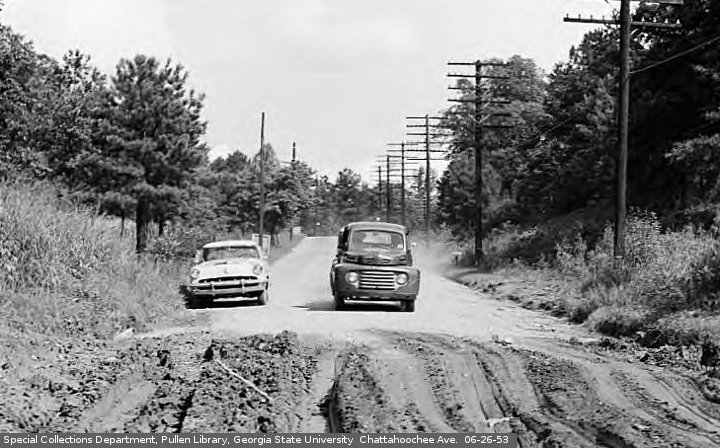
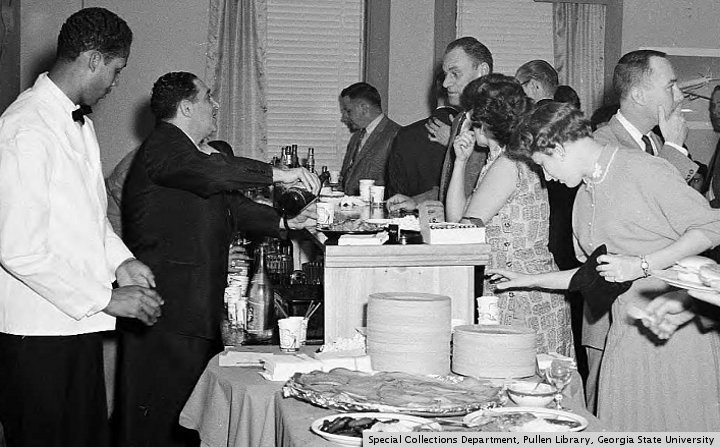
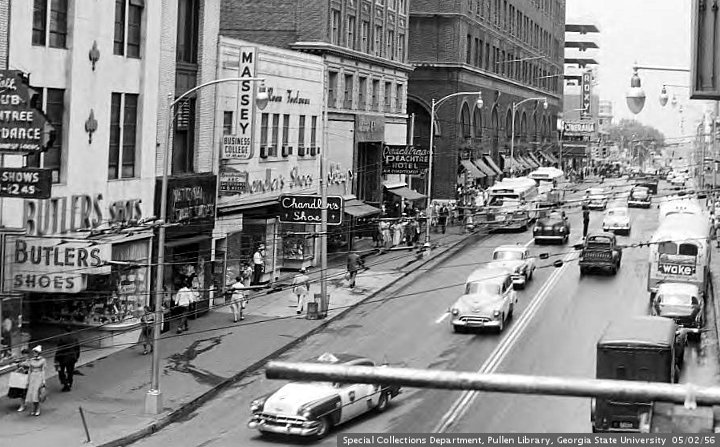
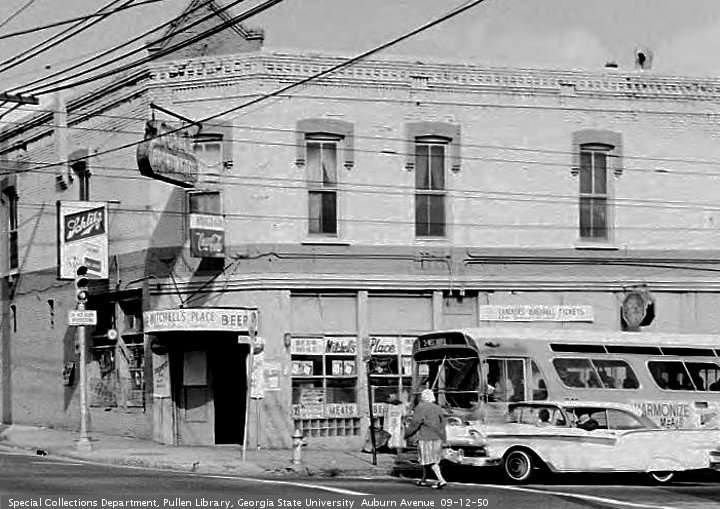
Perhaps the best place to look is the comments. alberto-a-stone: The definition of ignorance is quoting the same thing over and over even though it is not factual. Dollarhide: the definition of insanity is quoting Einstein over and over and expecting to be thought to be clever each time Pictures are from “The Special Collections and Archives, Georgia State University Library”.








Mrs. Dora Stainers



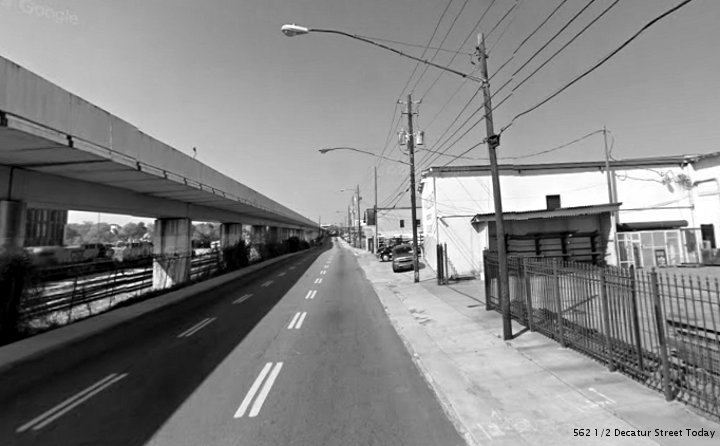
Some pictures have longer captions than others. Shorpy published one with a mouthful.
Mrs. Dora Stainers, 562 1/2 Decatur St. 39 years old. Began spinning in an Atlanta mill at 7 years, and is in this mill work for 32 years. Only 4 days of schooling in her life. Began at 20 cents a day. The most she ever made was $1.75 a day & now she is earning $1 a day when she works. She is looking for a job. Her little girl Lilie is the same age she was when she started work, but the mother says, “I ain’t goin to put her to work if I can help it. I’m goin’ to give her as much education as I can so she can do better than I did.” Mrs. Stainers is a woman of exceptional ability considering her training. In contrast to her is another woman (this name was withheld) who has been working in Atlanta mills for 10 yrs. She began at 10 yrs. of age, married at 12, broke down, and may never be able to work again. Her mother went to work in the cotton mill very young. Location: Atlanta, Georgia.
The photographs of Mrs. Stainers were made in March, 1915. The photographer was Lewis Wickes Hine. “Working as an investigative photographer for the National Child Labor Committee (NCLC), Lewis Hine (1874-1940) documented working and living conditions of children in the United States between 1908 and 1924.” “In 1954 the Library received the records of the National Child Labor Committee, including approximately 5,000 photographs and 350 negatives by Lewis Hine. In giving the collection to the Library, the NCLC stipulated that “There will be no restrictions of any kind on your use of the Hine photographic material.”
The house that Mrs. Stainer lived in is long gone. 562 1/2 Decatur Street is across the railroad tracks from the Fulton Cotton Mill. With real estate agents demanding names for all neighborhoods, the area is known as the Old Fourth Ward. The building at 552 Decatur Street is A & R Welding.
Pictures are from The Library of Congress. This is a repost.





The Last Night Of Judy Garland




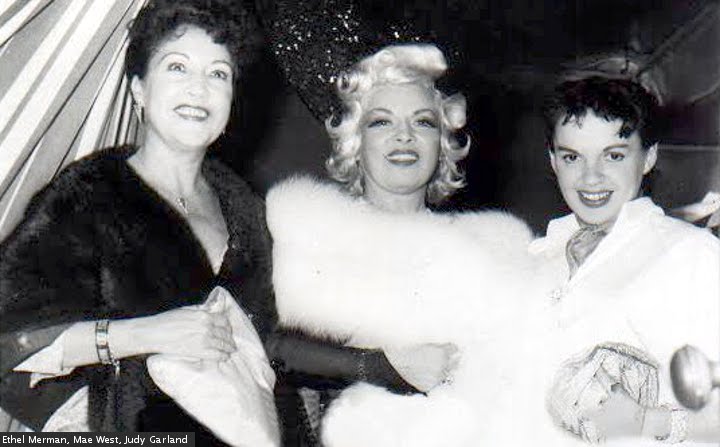
“In march of 1969, Judy married her fifth husband, Mickey Devinko, better known as Mickey Deans, a gay night-club promoter. Judy had an unfortunate habit of marrying gay men. They lived together in a tiny mews house in Chelsea, London. The evening of Saturday June 21 1969, Judy and Mickey were watching a documentary, The Royal Family, on television, when they had an argument. Judy ran out the door screaming into the street, waking the neighbors.
Several versions of what happened next exist, but the fact remains that a phone call for Judy woke him at 10:40 the next morning, and she was not sleeping in the bed. He searched for her, only to find the bathroom door locked. After no response, he climbed outside to the bathroom window and entered to find Judy, sitting on the toilet. Rigor Mortis had set in. Judy Garland, 47, was dead.
The press was already aware of the news before the body could be removed. In an effort to prevent pictures being taken of the corpse, she was apparently draped over someone’s arm like a folded coat, covered with a blanket, and removed from the house with the photographers left none the wiser.
The day Judy died there was a tornado in Kansas…. in Saline County,KS, a rather large F3 tornado (injuring 60, but causing no deaths) did hit at 10:40 pm on June 21st, that would be 4:40 am, June 22nd, London time, the morning she died. I know the time of death has never been firmly established, but since Rigor Mortis had already set in, I think this tornado may very much be in the ballpark in terms of coinciding with time of death…. Other news articles suggest the tornado struck Salina “late at night” which could certainly also mean after midnight on June 22, or roughly 6:00 am London time…
The Toledo Blade for June 24th, also in an article located right next to a picture of Garland, in a write-up on the Salina tornado noted that “Late Saturday [June 21] and early Sunday [June 22, another batch of tornadoes struck in central Kansas.” So it seems the legend seems confirmed.”
The text for this story comes from Findadeath. You can spend hours at this site. This is a repost. Pictures are from The Library of Congress.




Mountain Of Red Flags


i googled 99pi the result: 311.017672705 ~ what if 50 people with aids, in the same town, had died on the same night …. it might have happened in NYC or SF ~ @iowahawkblog I doubt the FBI “ignored red flags” as much as they were simply buried underneath a mountain of red flags. ~ @WernerTwertzog A Mars colony could be populated easily if jobs were offered for humanities doctorates. ~ development of trinitarian theology movement suboordination ontology pronicene theologians century humanity distinctive hypostasis generation introduce authority distinguishing confusing ~ Repubs think it is sign of honor, but others recognize it as a bulls eye on the top of their shoes ~ What if 50 gay men with aids, in the same city, had died the same night? ~ Maybe it goes deeper than Abrahamic religion. Maybe it is the idea that beliefs are more important than the people who hold them. ~ Years ago, some people grew marijuana in the middle of a corn field. When the authorities came to discuss the situation, they found a still for the corn. ~ magazines don’t read millennials ~@chamblee54 @michaelbd @AryehCW “What did you do to stop violence? I said it was terrorism. ~ @TheBillyProcida If you need an assault rifle to kill a deer, maybe you’re a shitty hunter. ~ Maybe this year Lucy will let Charlie Brown kick the football ~ If the preacher was attacking you with a bible, would you give everyone in the church a bible? ~ The moment when you see the headline… “Trump’s performance raises hard question: Who’d want to be his VP? “I can’t imagine a truly credible person agreeing to be his running mate.’ …. And you realize they are talking about Sarah Palin. ~ @Chronotope these days it feels like politics is less a spectrum and more a spiral corkscrewing into a septic tank. ~ #retiretheterm could be a new hashtag i would nominate #liberal #conservative #racist #terrorist #progressive ~ Google’s response: “Did you mean: gentrification, indemnification, esterification, nitrification” ~ @robyndwoskin My Lola puppy #My3WordLoveAffair ~ Killer Omar Mateen visited Pulse club a dozen times before shooting, witnesses say ~ DON’T PIVOT AWAY FROM RACE TALK, HILLARY CLINTON ~ FBI Told Orlando Shooter’s Wife Not to Tell US Media He Was Gay ~ Gun control’s racist reality: The liberal argument against giving police more power ~ ISIS Suicide Bomber Kills 41 at Soccer Game in Iraq ~ useless twitter skirmish ~ The Story of the Stanford Rape Is Also the Story of a Drug Overdose ~ Collection of 11 articles from 4 authors who are leading plenary sessions at SS21 ~ Mindfulness vs. Political Correctness ~ Philip K. Dick On Fine-Tuning Your B.S.-Meter To Spot “Pseudo-Realities” ~ pictures from The Library of Congress. Most were taken in a Washington DC Woolworths, in December 1941. ~ selah


Luther C. Mckinnon
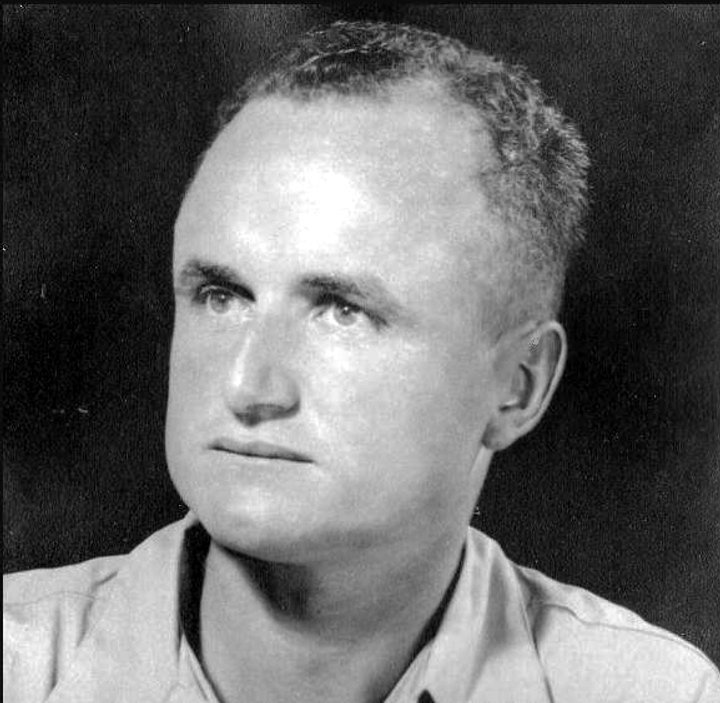

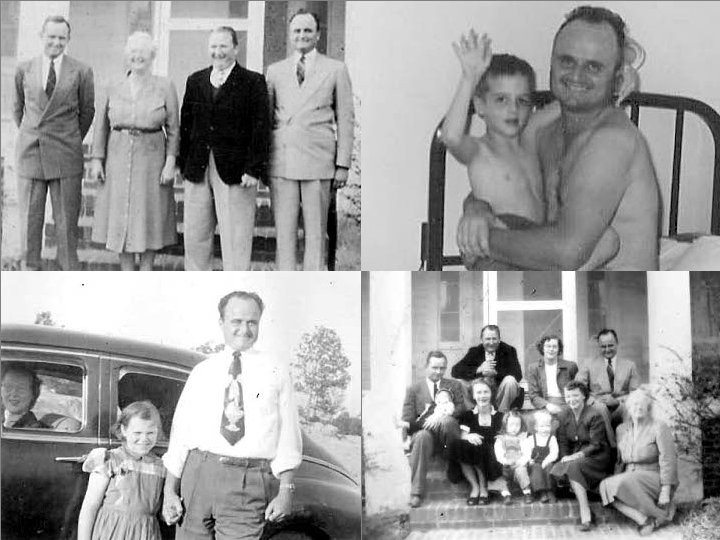
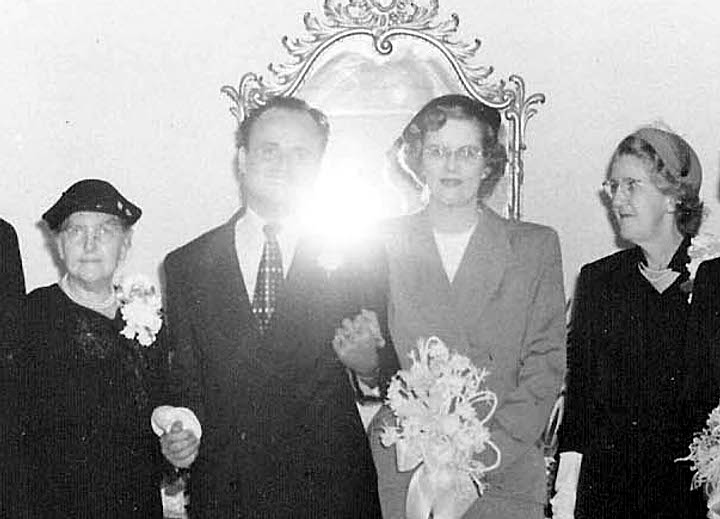
Luther Campbell McKinnon Sr. was born February 22, 1916, on a farm in Rowland, North Carolina. Europe was stuck in a war that would change the world, and not until The United States got involved. This didn’t happen for another year.
Luke was the youngest of four children. After life as a farm boy, he went to Wake Forest University, and then came back when his Daddy died. He ran a family dairy for a few years, and went to live in New Jersey. He lived near a prison, and saw the lights dim when the electric chair was used.
In the early fifties, he came to Atlanta to live. This was where his sister Sarah stayed, with her husband and two daughters. One day he went into the C&S bank on 10th street, and took notice of one of the tellers. On October 6, 1951, he married Jean Dunaway. She was with him the rest of his life.
At some point in this era he started selling shoes. He would go to warehouses, gas stations, and wherever barefoot men needed shoes. He was “The Shoe Man” .
Before long there were two boys, and he bought a house, then another. The second house is the current residence of my brother and myself, and is probably worth 15 times what he paid for it. He had the good fortune to not buy in an area that was “blockbusted,’ as many neighborhoods were.
And this was his life. He tended a garden, went to the gym, and was in the Lions Club for many years. When he met Mom, she let him know that going to church with her was part of the deal. They found a church that was good for their needs, and made many friends there. The Pastor at Briarcliff Baptist, Glen Waldrop, was his friend.
When I think of the character of this man, there is one night, which stands out. My brother was away at the time. The day before, Mom had discovered she had a detached retina, and was in the hospital awaiting surgery. Her job had arranged a “leaf tour” by train in North Georgia, and she got one of her friends at work to take me. There was some mechanical trouble on the train, and it did not get back into town until 3am Monday morning. And yet, Daddy stayed at home, did not panic, and had faith that all of us would be back soon, which we were.
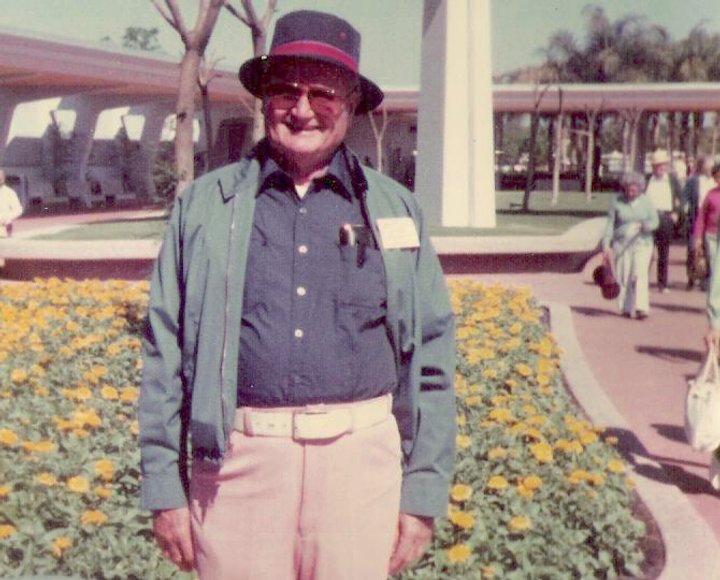
Through all the struggles of his life, Dad was cheerful, laughed a lot, and was good company. He left me with a rich repertoire of country sayings, and had many stories to tell. He was surprising mellow about black people, if a bit old fashioned. (In the south when I grew up, this was highly unusual).
Dad was always in good, vigorous health, and I thought he would be with us for a long time. Well, that is not how things work. A cancer developed in his liver, and spread to his lungs (he did not smoke). After a mercifully brief illness, we lost him on February 7, 1992. This is a repost.





35 Broad Street
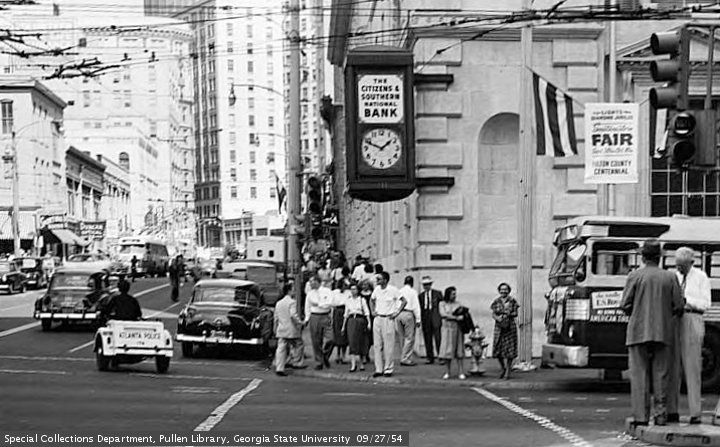
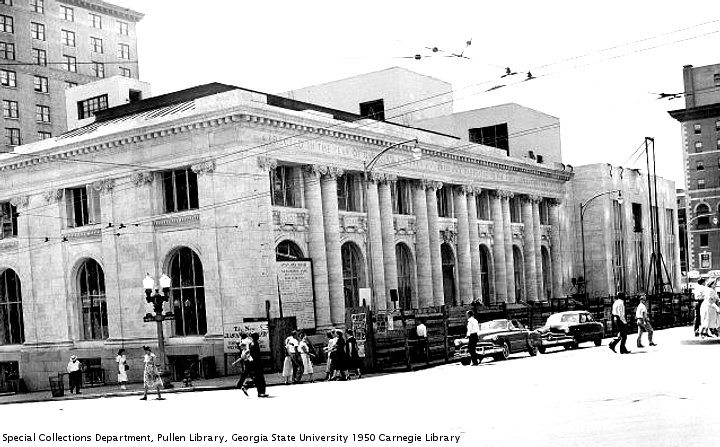
PG was having a delightfully slack afternoon, The one productive activity was editing pictures from “The Special Collections and Archives, Georgia State University Library”. In box seventy two of “corporate bodies”, in the Lane Brothers archive, there was a picture commissioned by King Road Marker Company. It displayed a brand new crosswalk, over Marietta Street at the intersection of Broad Street. The picture was taken at 1:51 p.m. September 27, 1954. This is a repost.
The time caught PG’s eye. 1:51 is one of the times used to display clocks and watches in advertising. Most ads use 10:09. This arrangement of the hour and minute hands makes a welcoming gesture. This allows the logo of the watch to be visible, and is thought to encourage the viewer to purchase the timepiece. The shadows on the buildings indicate that the picture was shot in early afternoon.
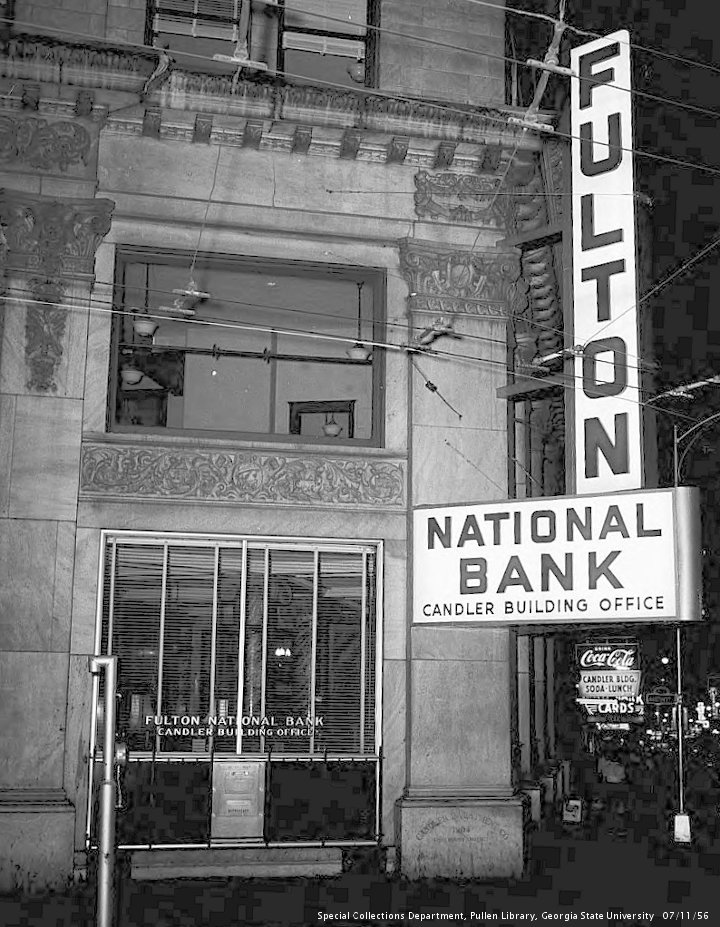
The clock with the magic time advertised the C&S national bank. The building behind the clock was the headquarters of that bank. In 1954, Citizens and Southern bank was a prime player in the Atlanta market. (PG’s dad said that C&S stood for choke’m and squeez’m.) At some point, C&S merged with NCNB to become Nationsbank, which was later absorbed by Bank Of America.
C&S kept it’s headquarters at 35 Broad Street for many years after competitors built trophy buildings. Their were constant rumors about where the C&S highrise was going to go. Finally, C&S Plaza was built at Peachtree and North Avenue, a mile north of five points. The building was to become the tallest building in America outside of New York and Chicago. During the construction of this building, C&S became part of Nationsbank.
The picture is featured in Atlanta Time Machine. The building is now owned by Georgia State University, with a BOA branch on the first floor. The banking hall is spectacular. It was designed by Philip Shutze, before the great depression. Here is more information.
Nations Bank Building (Citizens and Southern National Bank Building, Empire Building)
35 Broad Street, NW 1901: Bruce and Morgan, Architects, NR.
Remodeling of Lower Floors and Interiors 1929:
Hentz, Adler and Shutze, Architects; Philip Shutze, Designer
Fourteen stories high, the Nations Bank Building was the first steel-frame structure to be built in Atlanta. Its clear-cut silhouette, simple fenestration, and heavily decorated terra-cotta top bear the influence of the Chicago School. In 1929 the building became the headquarters of the Citizens and Southern National Bank, which asked Philip Shutze to redesign its three lower floors. Because the impression of load-bearing masonry was regarded as better suited for a banking establishment than large glass panes were, the original display windows were replaces by classical motifs apparently “carved out” of Indiana limestone.
Philip Shutze was inspired by Italian Mannerism, and especially by the city gates of Verona by Michele Sanmichelo (1484-1559) … Reached from Marietta and Walton streets through lofty arcaded entryways and a more intimate elevator lobby in the early Renaissance style on Broad Street, the banking hall is a long nave articulated by colossal Corinthian pilasters. While its walls and floors feature several kinds of Georgia, Tennessee, and European marbles in a warm gold-brown color scheme, the ceiling, from which hang gigantic chandeliers, is left bare. The Pantheon, which Shutze had measured during his internship at the American Academy in Rome, served as direct source for the pedimented niches, and for the floors with alternate square and circular patterns. Also, of Roman inspiration are the bronze desks and the eagle motif found throughout the design.


Two Hundred Yards Behind
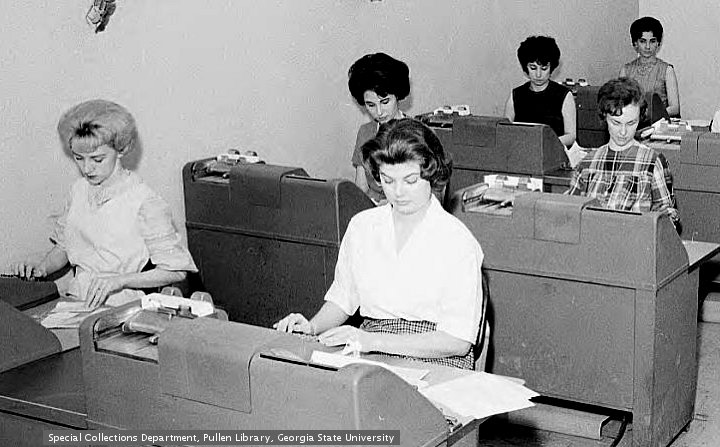
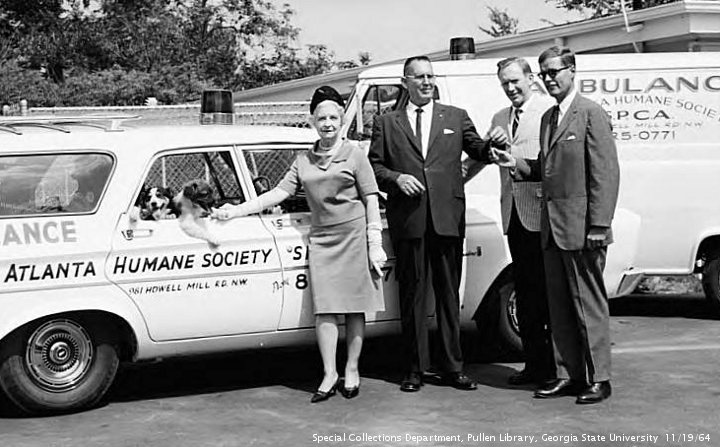
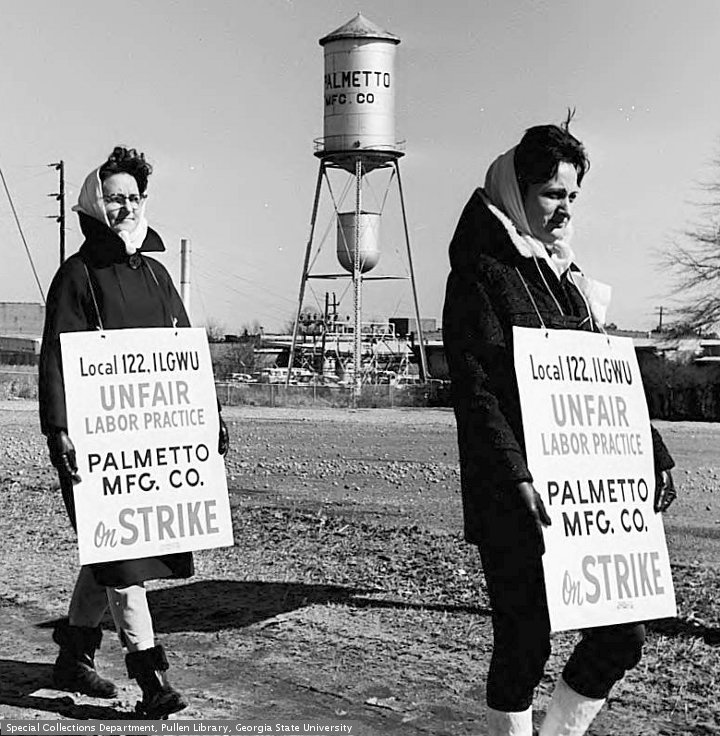


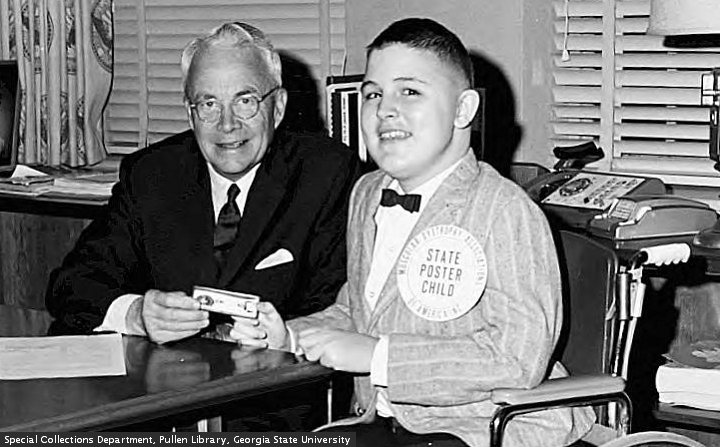
In 1985, PG went to work for Shaky Blueprints. The real name was a Japanese word that nobody knew how to spell. Two of the previous hires were an athletic young lady, and a fat man. Until better nicknames arrive, we will call them AYL and FM for this story.
AYL was trying to get FM to go jogging with her after work. This was an ongoing conversation, with FM always turning her down. One afternoon, PG wore an old pair of jogging shoes to work, and said that he would go running with AYL.
Shaky was just off highway 400, in what is now part of Sandy Springs. There was a road leading away from it. The road went over the highway, and went in a wooded semi circle for a couple of miles. The plan was to go on this loop, and take sidewalks on Roswell Road back to Shaky.
At one time, PG went running every day. He was out of the habit by this time, and always a slow runner. When the work day was over, PG tied his glasses on with a rubber band, did a few stretches, and was ready to take on the course.
AYL and PG left the parking lot, and started up the road. PG trudged along with his head down. When he got to the bridge over the highway, PG looked up. AYL had taken off like greased lightning, and was already two hundred yards ahead. PG hollered for her to slow down, and finished the course.
Pictures for this repost are from Special Collections and Archives, Georgia State University Library.


1 comment