The Ta-Nehisi Coates Video
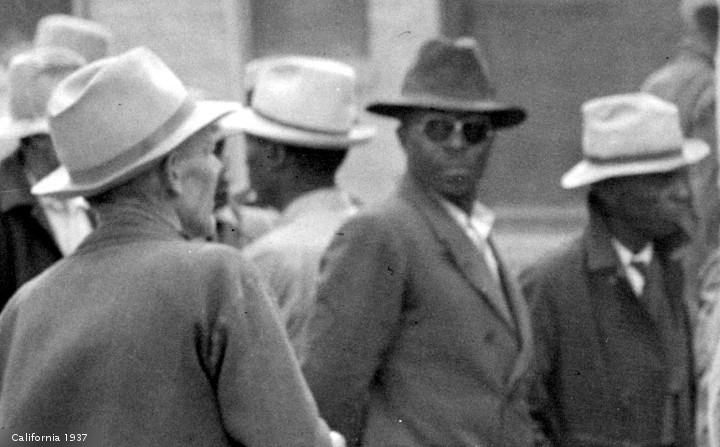

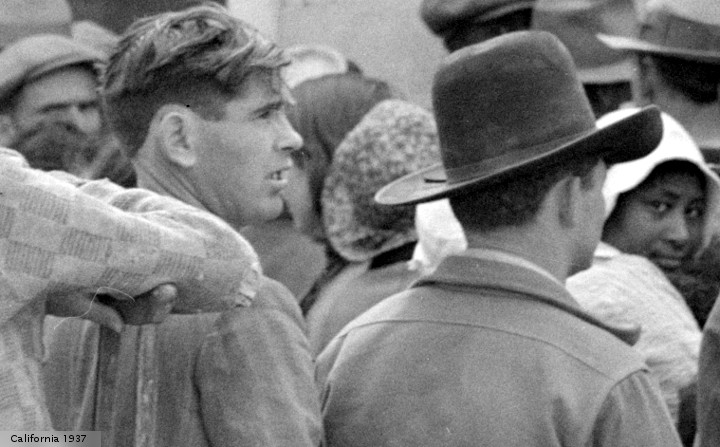


There is a video, Ta-Nehisi Coates on words that don’t belong to everyone It is being praised to high heaven. PG has some issues with this entertainment. The transcript is from vox, Ta-Nehisi Coates has an incredibly clear explanation for why white people shouldn’t use the n-word. This is a repost, with pictures from The Library of Congress.
Ta-Nehisi Paul Coates gave an interview once, The Playboy Interview with Ta-Nehisi Coates. “The n$$$$$ thing? I understand if you’re black and you say, “Man, I had white people call me this shit all my life. … But that ain’t everybody’s experience. I’ve never had a white person call me a n$$$$$. I had somebody call me le négre here in France, but I was 38 years old and I couldn’t have cared less. It didn’t mean anything. So not all of us come out of that experience.”
The monolog starts off with a discussion about how some words are appropriate for some people to use, but others should not say them. “My wife, with her girl friend, will use the word bitch. I do not join in. You know what I’m saying? I don’t do that. I don’t do that. And perhaps more importantly, I don’t have a desire to do it.” The question arises: is his wife a four legged dog? Unless she is, then the b-word does not apply to her.
“Coates pointed to another example — of a white friend who used to have a cabin in upstate New York that he called “the white trash cabin.” “I would never refer to that cabin” in that way. I would never tell him, ‘I’m coming to your white trash cabin.’” Of course, a person with an upstate cabin is likely to be far removed from the trailer park. He is using *white trash* with irony, and would not be the least offended if TPC called it “the white trash cabin.”
“The question one must ask is why so many white people have difficulty extending things that are basic laws of how human beings interact to black people.” (Is TPC saying that black people are not human beings?) … “When you’re white in this country, you’re taught that everything belongs to you. You think you have a right to everything. … You’re conditioned this way. … the laws and the culture tell you this. You have a right to go where you want to go, do what you want to do, be however — and people just got to accommodate themselves to you.”
At this point, PG turned off the video in anger. He has never been taught that everything belongs to him. Nobody that PG knows has been taught that. PG does not know anyone who teaches that message. This is a lie. It makes PG not want to believe anything else that TPC says. Maybe there is some privilege/culture mumbo-jumbo that explains this concept.
Lets go back a minute to the white trash cabin. TPC does not want to use this phrase. And yet, he feels entitled to make a sweeping generalization like “When you’re white in this country, you’re taught that everything belongs to you.” It is wrong to say white trash, but ok to slander white people.
“So here comes this word that you feel like you invented, And now somebody will tell you how to use the word that you invented. ‘Why can’t I use it? Everyone else gets to use it. You know what? That’s racism that I don’t get to use it. You know, that’s racist against me. You know, I have to inconvenience myself and hear this song and I can’t sing along. How come I can’t sing along?’”
“The experience of being a hip-hop fan and not being able to use the word ‘n$$$$$’ is actually very, very insightful.” To begin with, why do you assume that PG is a hip hop fan? Many people think hip hop is garbage. If you are forced to listen to music that you do not enjoy, why would that make you want to use a forbidden word? The logic of TPC is falling apart, faster than the Falcons pass defense in the Super Bowl.
“It will give you just a little peek into the world of what it means to be black. Because to be black is to walk through the world and watch people doing things that you cannot do, that you can’t join in and do. So I think there’s actually a lot to be learned from refraining.”
If you are in the mood to get yelled at for a half hour, you can ask someone about “things that you cannot do, that you can’t join in and do.” There might be some. If you go along with the rhetoric so far, you will probably believe what you hear. You might even understand why not using a nasty word will give you “a little peek into the world of what it means to be black.” As for PG, he seriously doubts this. He is not someone who says that this video is “an incredibly clear explanation for why white people shouldn’t use the n-word.”





Once upon a time, cigarettes were advertised on television. One new brand was a cigarette for women, Virginia Slims. The ability to kill yourself with tobacco was presented as being a privilege. Some wondered why women would want to take up this filthy habit. Today, African Americans have the privilege of using the n-word. What a deal. A nasty word, which degrades both the speaker, and the spoken of. Why would anyone want to use that word?
If you don’t have anything good to say, you can talk about the n-word. This *trigger* word is an aphrodisiac for the american body politic. Recently Ta-Nehisi Coates performed in a video, Ta-Nehisi Coates on words that don’t belong to everyone There is much praise for this entertainment, like this: @SneakerWonk “#TaNehisiCoates has an incredibly clear #explanation for why #whitepeople shouldnt use the #nword.” PG has a few paragraphs, about this video, in the text above.
PG has written about racism, anti-racism, and racial attitudes on many occasions. People get angry, and call PG rude names. He must be doing something right. Later, there was a double feature about James Baldwin. In the first half, Mr. Baldwin expresses a few opinions about that word. In the second half, PG substituted racist for the magic word, with interesting results.
One item that keeps coming up is speculation about who invented the n-word. Negro means black in Spanish, and is derived from a latin word. The Oxford English Dictionary has some usages going back to 1577. “1577 E. Hellowes tr. A. de Guevara Familiar Epist. (new ed.) 389 The Massagetes bordering vpon the Indians, and the Nigers of Aethiop [Sp. los negros en Ethiopia], bearing witnesse. ~ 1584 R. Scot Discouerie Witchcraft vii. xv. 153 A skin like a Niger. ~ 1608 A. Marlowe Let. 22 June in E. India Co. Factory Rec. (1896) I. 10 The King and People [of ‘Serro Leona’] N$$$$$$, simple and harmless.
The TPC video is based on the concept that white people want to use the magic word, but should not. This assumes a great deal. Chamblee54 published a piece about the n-word, that spelled out why he does not like to use this noun/verb/adjective/adverb/interjection. Here are four reasons for a white person to refrain from saying america’s favorite dirty word.
1- The n-word hurts people’s feelings. PG has known many fine Black people. He does not want to say anything that will hurt these people.
2- Being heard saying the n-word can cause all sorts of problems. This can include physical retribution, loss of employment, lawsuits, and having to listen to enough loud angry words to make you wish you had never learned how to talk.
3- It is not a fair fight. There is no equivalent phrase for a Black Person to say to a White person. Why give that power to another group of people … to turn you into a mass of incoherent rage, just for hearing a six letter word. The closest thing is “Cracker”, which PG only recently found out was an insult. There used to be a minor league baseball team, the Atlanta Crackers.
4- The use of the n-word demeans the user. When you say an insulting word about another human being, you make yourself look bad. For a Black person, using the n-word degrades them as the object, as well as the speaker. Why would a person would want to do that?




Quoting James Baldwin


James Arthur Baldwin has become a star on facebook, thirty five years after his death. People love to quote him, and post artsy pictures of his face. Over the past year I have seen three Baldwin memes that required action. Once you start to research, there is no telling what you are going to find.
“I can’t believe what you say because I see what you do.” This item is from a 1966 article that Mr. Baldwin wrote for The Nation. “One is in the impossible position of being unable to believe a word one’s countrymen say. “I can’t believe what you say,” the song goes, “because I see what you do”—and one is also under the necessity of escaping the jungle …”
“The song goes” is what the memes leave out. Ike Turner wrote the song. The Ikettes sing “I can’t believe…”, while Tina goes “agh, agh, agh, agh, agh, agh, agh, agh, agh.” Ike knew about being a no-good man. Tina looks a lot better in a short skirt than Mr. Baldwin did.
“I’d like to leave you with one more short quote from James Baldwin, “Whoever debases others is debasing himself.” This is from a June, 2020 video about racism. This quote is from Letter from a Region in My Mind, a 1962 essay in The New Yorker. “Letter…” clocks in at 22,114 words. Mr. Baldwin could crank out the word count.
“Letter…” covers a lot of ground. The “debase” quote comes in after Mr. Baldwin describes a visit to Elijah Muhammad, leader of the Nation of Islam. Soon, Mr. Baldwin starts talking about race in the United States. One quote stood out: “But white Americans do not believe in death, and this is why the darkness of my skin so intimidates them.”
“By this time, I was in a high school that was predominantly Jewish. This meant that I was surrounded by people who were, by definition, beyond any hope of salvation, who laughed at the tracts and leaflets I brought to school, and who pointed out that the Gospels had been written long after the death of Christ. … My best friend in high school was a Jew. He came to our house once, and afterward my father asked, as he asked about everyone, “Is he a Christian?”—by which he meant “Is he saved?” I really do not know whether my answer came out of innocence or venom, but I said, coldly, “No. He’s Jewish.” My father slammed me across the face with his great palm, and in that moment everything flooded back—all the hatred and all the fear, and the depth of a merciless resolve to kill my father rather than allow my father to kill me—and I knew that all those sermons and tears and all that repentance and rejoicing had changed nothing.”
“The place in which I’ll fit will not exist until I make it.” This quote proved more difficult to chase down. It does not appear in any of Mr. Baldwin’s work. The earliest mention appears to be behind The New Yorker paywall. “During his wanderings, Baldwin warned a friend who had urged him to settle down that “the place in which I’ll fit will not exist until I make it.” There is no link to a source.
The New Yorker article is cited by Lithub, which is then cited by New Transcendentalist. “These Timely James Baldwin Quotes … ,” from Bustle, credits the quote to “a 1957 letter to Sol Stein.”
Sol Stein “attended DeWitt Clinton High School, where he served on the Magpie literary magazine with Richard Avedon and James Baldwin.” We don’t know if Mr. Stein was the one who made David Baldwin slap his step-son. A paywalled article, about the correspondence between Mr. Stein and “Jimmy,” does not mention the “place in which I’ll fit” quote.
The WaPo article did have a mind-blowing quote. “In the introduction to the book, Baldwin would ponder his influences: “When one begins looking for influences, one finds them by the score. … the King James Bible, the rhetoric of the store-front church, something ironic and violent and perpetually understated in Negro speech…” I saw this quote in 1976, in a college textbook. At the time, I thought this was an amazing quote. It stayed in my mind until the next life changing detail came along, not to be thought of again for forty six years.
Chamblee54 has written about Mr. Baldwin before. Pictures today are from “The Special Collections and Archives, Georgia State University Library.” UPDATE: @QuoteResearch Replying to @chamblee54 @HilalIsler @lithub It appeared in a 1957 letter from James Baldwin and Sol Stein reprinted in “Native Sons” (2004) edited by Sol Stein. I am planning to create a QI article on this topic @QuoteResearch “Please get over the notion, Sol, that there’s some place I’ll fit when I’ve made some ‘real peace’ with myself : the place in which I’ll fit will not exist until I make it. You know and I know that the ‘peace’ of most people is nothing but torpor” … James Baldwin to Sol Stein UPDATE: I was writing a story about Flannery O’Connor. I wanted to quote this post, but could not find the link. Neither google nor duckduckgo would show me this post. I had to go to the chamblee54 archive, and scroll through October 2022 until I found the post.




#NationalTellAJokeDay


What bird doesn’t build a nest ? A cuckoo cause it lives in a clock.
A penguin walks in to a bar and says to the barman, have you seen my brother?
Batman says I don’t know, what’s he look like?
I saw this wino; he was eating grapes. It’s like ‘Dude! You have to wait!’
What do u call a girl who lives on top of a house? RUTH
Helium walks into a bar Bartender asks, “What will you have?” Helium did not react.
A Hasidic Jew with a frog on his shoulder walks into a bar.
Bartender: “where’d you get that?” Frog: “Brooklyn. There’s hundreds of them.”
We were up all night wondering where the Sun had gone, then it dawned on us
Do you know what a pink birds favorite game is?? FlaBINGO
An upset cannibal threw up his arms….
Knock! Knock! Who’s there? Control Freak. Con—Okay, now you say, “Control Freak who?”
Why do cows wear bells? Because their horns dont work
Knock, knock, Who’s there? Spitamish Spitamish who?
*Proceeds to spit on other persons shoe*
Q: Why couldn’t the leopard play hide and seek? A: Because he was always spotted.
How many abstract artists does it take to change a lightbulb? Fish
What’s the difference between a hooker and a drug dealer?
A hooker can wash her crack and resell it
What did the baby corn say to its mom? Where’s my pop corn?
What does a panda use to fry eggs? A pan. Duh.
What did Charles Dickens keep in his spice rack? The best of thymes, the worst of thymes…
Teacher: “Kids, what does the chicken give you?” Student: “Meat!”
“What does the pig give you?” “Bacon!” “What does the fat cow give you?” “Homework!”
My ex-wife still misses me…but her aim is gettin’ better!
What’s worse than finding a worm in your apple?… 1/2 a worm!
The kitten was having trouble watching her Blu-Ray. Turns out she just had the movie on paws.
There were 2 cats looking into a bird cage.
First cat: “That’s not a canary. It’s green!” Second cat: “I don’t know, maybe it’s not ripe yet”
I never wanted to believe my Dad was stealing from his job as a road worker …
But when I got home, all the signs were there
A man went into an auto parts store. “Can I get a new gas cap for a Yugo?”
The clerk thought for a second and said, “That seems like a fair trade.
Did you hear about the guy who got fired from his job at the door factory?
Yep, he just couldn’t get a handle on it.
Pictures today are from The Library of Congress. This is a repost.


Never Doubt


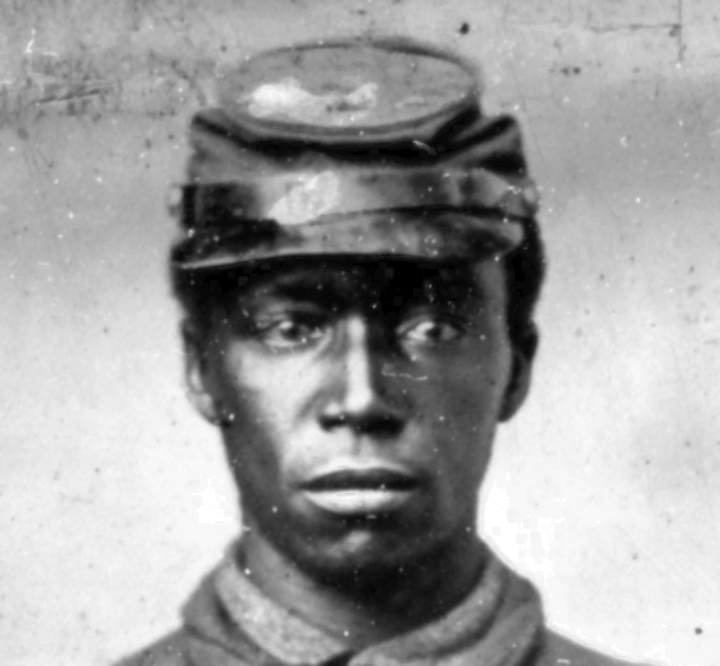
“Never doubt that a small group of thoughtful, committed citizens can change the world; indeed, it’s the only thing that ever has.” This chestnut appeared in an email, promoting an event. PG heard a podcast last year, about another Margaret Mead story. Readers of this blog know where this is going.
@anthroreviewed “Did Margaret Mead really say that thing about broken femurs and civilization that is (once again) making the rounds online? Also, are healed femurs a marker of civilization? No. And no. As explore in the second half of this episode… “ A blog post, That Margaret Mead quote, goes into more detail about both stories.
“It’s interesting the quotes that are attributed to Margaret Mead – another is “Never doubt that a small group of people can change the world – indeed, it is the only thing that ever has.” … Both are things she could have said, given her personality, but neither is fully attributed – the first instance of the story above is in Dr. Ira Byock’s 2012 book on palliative care, and the above quote only attributed to her, four years after her death, by the author of a fairly hippie-ish book on paths to world peace.”
“This quote (about the femur) has been going around Facebook since mid-March, probably encouraged by this Twitter thread, this FB post, and this article in Forbes, none of which are by archaeologists/anthropologists.”
When the bs detector started dinging, results are just a few clicks away. Highlight the suspicious quote. Right click, choose “Search Google for …,” and wait 0.51 seconds. When one of the results is a story at Quote Investigator®, you have a winner.
When people get caught peddling bogus quotes, they often say that even if the attribution is false, the words are true. What about the featured quote today? It sounds good, and is great for promoting attendance at an event. But is it the truth?
Look at the 9/11 attacks. They did change the world. While it is true that nineteen men pulled off the caper, they had a lot of help. Somebody financed the operation. Other people built the airliners, and the airports where they took off. Somebody dug an oil well, pumped the crude oil, shipped the crude oil to a refinery, and produced the explosive jet fuel that propelled the attacks. In fact, it was the profits from pumping that oil that financed the attacks. “A small group of thoughtful, committed citizens” flew a plane, that someone else built, into the World Trade Center. They were not “the only thing that ever has.” This is a repost. Pictures today are from The Library of Congress.
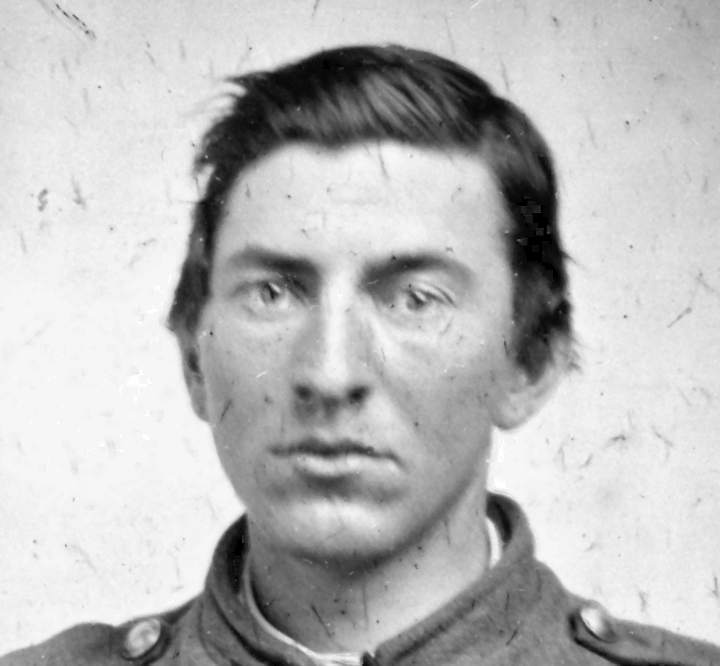
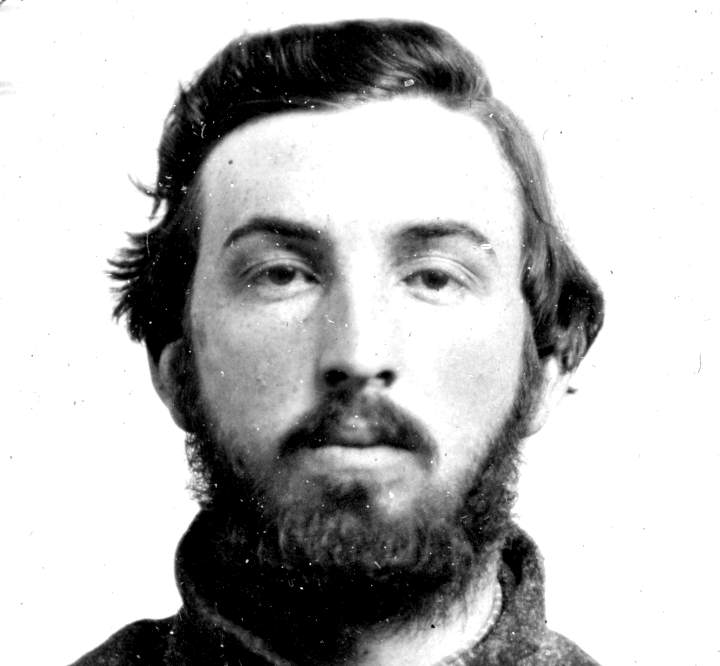


We Can Forgive The Arabs


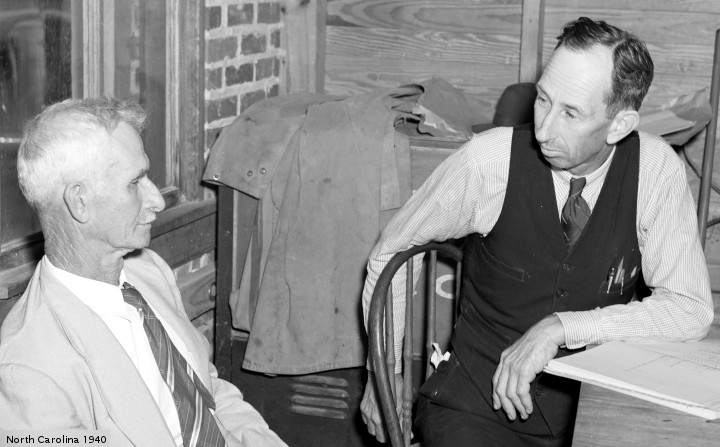



The facebook meme showed a quote about American deaths in a mid-east war, and how Israel is willing to make the *scarifice.* PG remembered a quote from long ago. Something about how the thing Israel hates most is being forced to kill Arab children. Who said it, and when? Veteran readers of this blog should know where this is going. This is a repost.
Golda Meir is a matriarch of the State of Israel. Her wikiquote page has this: “Peace will come when the Arabs will love their children more than they hate us.” The attribution says this: “as quoted in A Land of Our Own : An Oral Autobiography (1973) edited by Marie Syrkin, p. 242.” There is a remarkable second attribution. “Harvey Rachlin was unable to find a primary source for this quote and the one below. The Mystery Of Golda’s Golden Gems”
” The one below” is wiki-listed as a “variant” of the first quote. “We can forgive [them] for killing our children. We cannot forgive them from forcing us to kill their children. We will only have peace with [them] when they love their children more than they hate us.” “As attributed in an Anti-Defamation League advertisement Ad that ran in the Hollywood Reporter.” The source: “Golda Meir (1957.)
The ADL Ad was reported on August 19, 2014. This was during an Israeli visit to Gaza. It was preceded by Bob Schieffer, on a CBS broadcast in July 2014. “Last week, I found a quote of many years ago by Golda Meir, one of Israel’s early leaders, which might have been said yesterday. “We can forgive the Arabs …” Mr. Schieffer did not give a source for the quote.
When dealing with a quote, you should ask questions. Did they really say it? When and where did they say it? What was the context? What was the original language, and can we trust the translation? Many, many famous quotes fail these simple tests. Brainy Quote is not a valid source.
The Mystery Of Golda’s Golden Gems takes a critical look. It turns out that the Schieffer/ADL team was using a combination of two quotes. These were the quotes investigated by Harvey Rachlin. “Peace will come when the Arabs will love their children more than they hate us.” “When peace comes we will perhaps in time be able to forgive the Arabs for killing our sons, but it will be harder for us to forgive them for having forced us to kill their sons.”
“… many of these cite as their source A Land of Our Own: An Oral Autobiography. … The quote appears, along with several others, on the last page of the book’s text (before the index) under the heading “On Peace.” Its source is given as: National Press Club, Washington, 1957. I wrote to the National Press Club in an effort to obtain a copy of Meir’s 1957 speech. The response I received was that Meir, who at the time was Israel’s foreign minister, did not speak there in 1957….”
“…Curiously, most of the books I looked at, as well as Meir’s own autobiography, My Life, contained no mention of these two most famous Meir quotes. Nor was either of them included in The New York Times’s 4,883-word December 9, 1978 obituary of Meir – although Times reporter Israel Shenker found room for more than three dozen other quotes from Meir.”
“My investigation took a turn when I found a 1970 collection of Meir quotes titled As Good As Golda: The Warmth and Wisdom of Israel’s Prime Minister. In this book there are two quotes that bear close resemblance to the pair in question: “Peace will come when Nasser loves his own children more than he hates the Israelis” and “What we hold against Nasser is not only the killing of our sons but forcing them for the sake of Israel’s survival to kill others.”
“Strangely, there are no citations for any of the quotes in the book, and while I found these two exact quotes in other books (all published in or after 1970) none of the citations were from original sources. Even more bizarre is that As Good As Golda was compiled and edited by Israel and Mary Shenker – yes, the same Israel Shenker who several years later would write the massive New York Times obituary that contained dozens of Meir quotes but, notably, not her two most famous ones. …”
“… In August 2014, in the wake of Israel’s Operation Protective Edge against Hamas in Gaza, the ADL placed an ad … The ad had both Meir quotes strung together with the singular attribution “Golda Meir (1957).” The ADL did not respond to repeated requests from The Jewish Press for a statement as to whether the organization possessed any verification of the quotes and why they ran together, as though they were part of the same statement.”
Harvey Rachlin comes to the conclusion that there is no way to verify these quotes from Golda Meir. Pictures today are from The Library of Congress.




I’m Here To Help
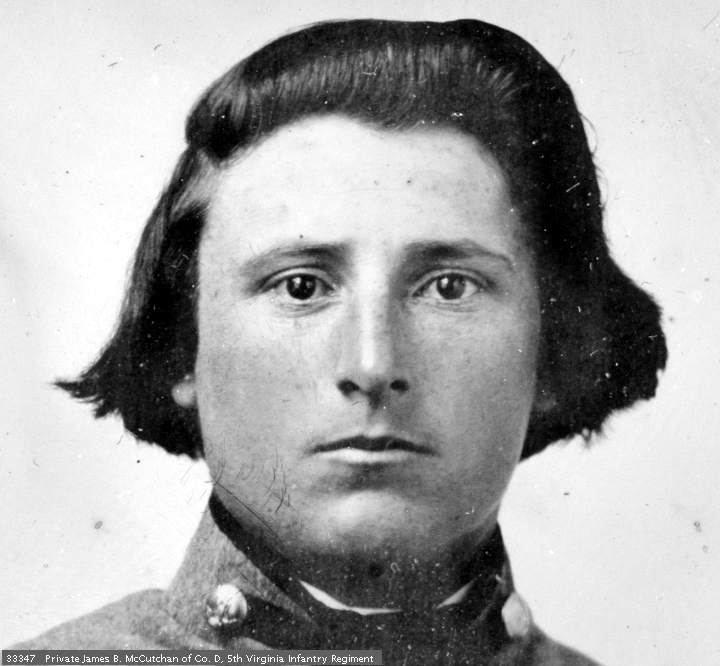
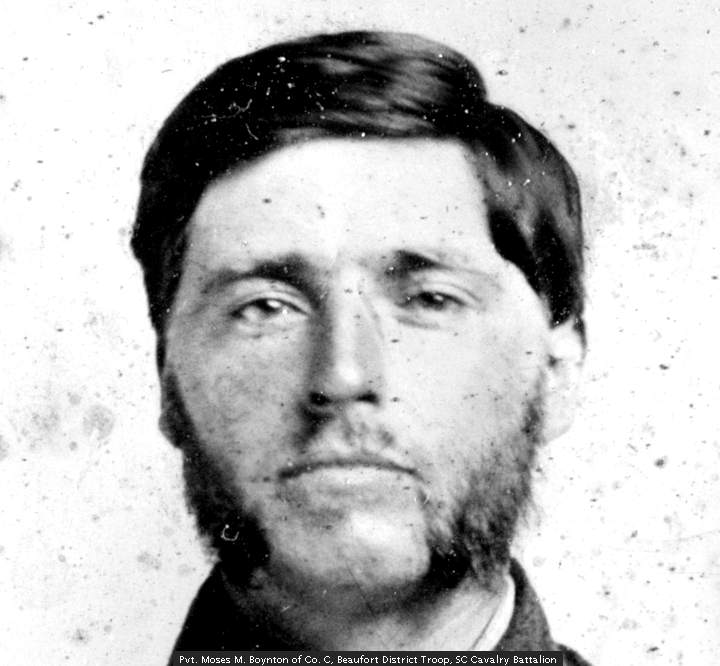
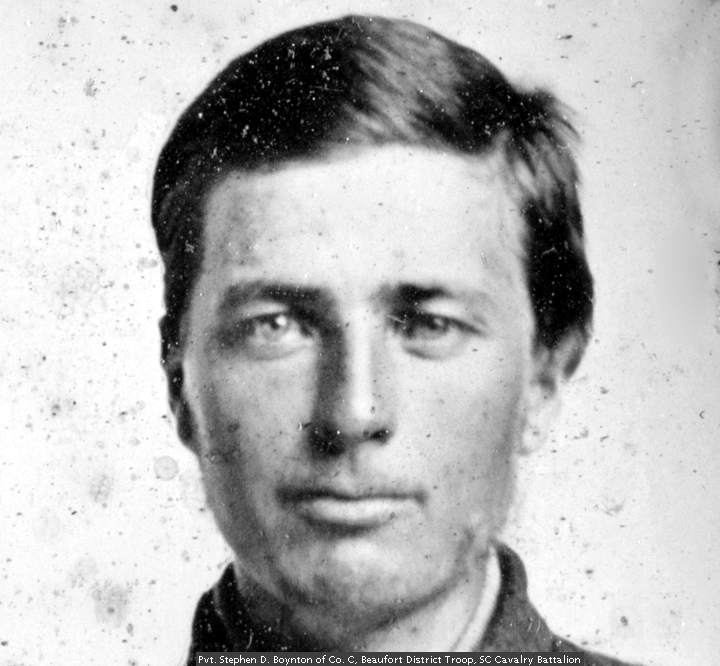
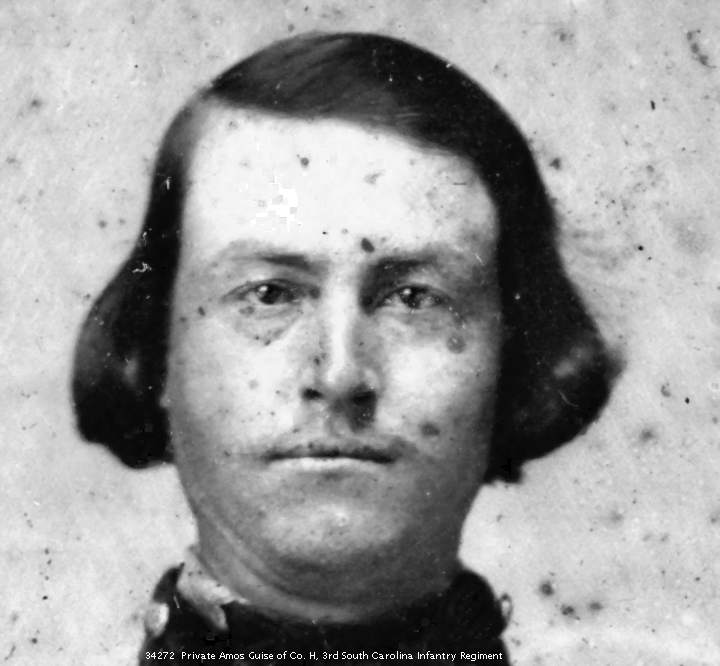
Two popular quotes have surprising back stories. One is by President Ronald W. Reagan: “The nine most terrifying words in the English language are: I’m from the government and I’m here to help.” The other is from Supreme Court Justice Oliver Wendell Holmes Jr.: “The most stringent protection of free speech would not protect a man in falsely shouting fire in a theatre and causing a panic.”
@HayesBrown “the funny thing about this quote: Reagan said it during a press conference where he was calling for more federal funding to help out struggling farmers” @HayesBrown “Reagan giving that quote was literally him going “okay, yeah, i’m for smaller govt, but until we get my ideas passed, we are gonna spend SO MUCH MONEY helping out farmers” and now it gets trotted out… to argue against federal aid, period”
“Some sectors of our farm economy are hurting … Our ultimate goal, of course, is economic independence for agriculture and, through steps like the tax-reform bill, we seek to return farming to real farmers. But until we make that transition, the government must act compassionately and responsibly. … In order to see farmers through these tough times, our administration has committed record amounts of assistance, spending more in this year alone than any previous administration spent during its entire tenure. … The message in all this is very simple: America’s farmers should know that our commitment to helping them is unshakable. As long as I’m in Washington, their concerns are going to be heard and acted upon.”
The rest of the prepared statement features a fun quote. “One other brief point: tomorrow, the Senate will cast a crucial vote. The question is that of assistance to the freedom fighters, who are trying to bring democracy to Nicaragua where a communist regime, a client state of the Soviet Union, has taken over. The question before the Senate is: Will it vote for democracy in Central America and the security of our own borders, or will it vote to passively sit by while the Soviets make permanent their military beachhead on the mainland of North America?”
The press conference took place August 12, 1986, in Chicago IL. On November 3, 1986, “the Lebanese magazine Ash-Shiraa … reported that the United States had been secretly selling arms to Iran … in a bid to secure the release of seven American hostages being held by pro-Iranian groups in Lebanon.” On November 25, 1986, “Attorney General Edwin Meese revealed that, on White House orders, the proceeds of secret arms sales to Iran were illegally diverted to fund the Contras — Nicaraguan rebels waging a guerrilla war to overthrow that country’s elected leftist regime.” The resulting Iran-Contra scandal dominated the Reagan administration for the next few months.
@ggreenwald The pro-censorship cliché “can’t yell fire in a crowded theater” comes from a now-discredited 1919 SupCt case upholding Woodrow Wilson prosecution of socialists under *The Espionage Act* for the “crime” of opposing a US role WW1. Why would you want to attach yourself to that? @ggreenwald The set of cases from which that cliché emerged is one of the most shameful in US Supreme Court history, designed to criminalize dissent. For that reason, it’s embarrassing but revealing when censors invoke it because that’s their real mentality.
SCHENCK v. UNITED STATES was the case. “During World War I, socialists Charles Schenck and Elizabeth Baer distributed leaflets declaring that the draft violated the Thirteenth Amendment prohibition against involuntary servitude. The leaflets urged the public to disobey the draft, but advised only peaceful action. Schenck was charged with conspiracy to violate the Espionage Act of 1917 by attempting to cause insubordination in the military and to obstruct recruitment. Schenck and Baer were convicted of violating this law and appealed …
The Court held that the Espionage Act did not violate the First Amendment and was an appropriate exercise of Congress’ wartime authority. Writing for a unanimous Court, Justice Oliver Wendell Holmes concluded that courts owed greater deference to the government during wartime, even when constitutional rights were at stake. … Holmes reasoned that the widespread dissemination of the leaflets was sufficiently likely to disrupt the conscription process. Famously, he compared the leaflets to falsely shouting “Fire!” in a crowded theatre, which is not permitted under the First Amendment.”
There were a couple of other cases. If you have a lot of free time, you can read about it here. Included is one charming quote: “Famed socialist Eugene V. Debs was sentenced to ten years in prison for a speech that Holmes summarized at length (are there any short socialist speeches?) in support of the basis for Debs’ conviction.”
Pictures, of soldiers in the War Between the States, are from The Library of Congress. On April 2, 2021, Radiolab presented What Up Holmes, about free speech opinions written by Justice Holmes. The show did not mention “falsely shouting fire in a theatre.” This is a repost.
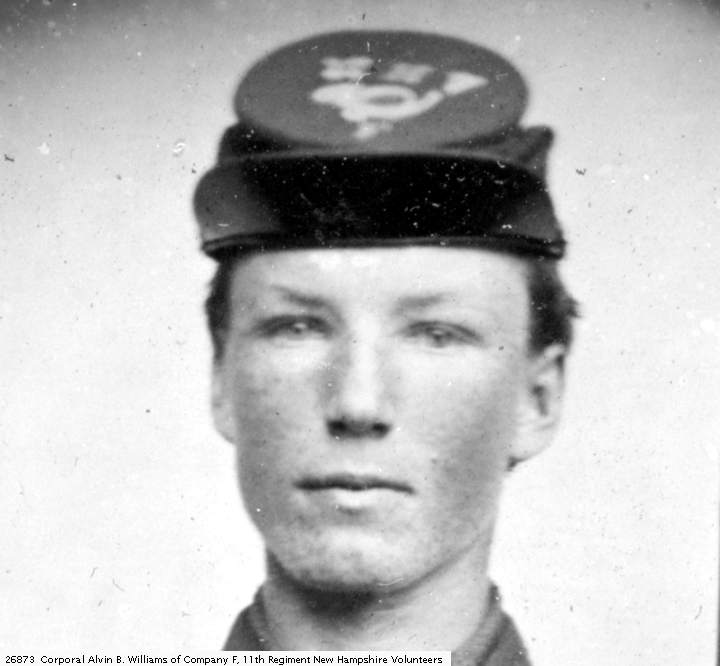



Facts


@Atheist_Bot “Facts do not cease to exist because they are ignored. – Aldous Huxley.” I was stumbling through my morning, when I saw this. Other than reading The Doors of Perception many years ago, I don’t know Aldous Leonard Huxley. The quote is plausible.
Atheist Quote Bot 💉💉💉 is part of the problem. “@Atheist_Bot Challenging beliefs, while respecting the believer. It’s difficult sometimes. Numbered tweets are automatic, replies are from my programmer. I don’t feed trolls” A robot, in a server, dispensing commodity wisdom on schedule. This is what passes for learning in Post-Obama America.
The Huxley wikiquote shows 14 results for “facts.” The money quote appears to be legitimate. It is from a book, published in 1927, ”Proper Studies.” “The proper study of mankind is man” The text appears to be academic and difficult. This researcher will make no effort to identify the context.
Time Must Have a Stop (1944) has another ALH fact-quote. This one may be more true than the coffee mug. “Facts are ventriloquists’ dummies. Sitting on a wise man’s knee they may be made to utter words of wisdom; elsewhere, they say nothing, or talk nonsense, or indulge in sheer diabolism.”
Time Must Have a Stop “Sebastian Barnack, a handsome English schoolboy, goes to Italy for the summer, and there his real education begins. His teachers are two quite different men: Bruno Rontini, the saintly bookseller, who teaches him about things spiritual; and Uncle Eustace, who introduces him to life’s profane pleasures.”
”The novel that Aldous Huxley himself thought was his most successful at “fusing idea with story,” Time Must Have A Stop is part of Huxley’s lifelong attempt to explore the dilemmas of twentieth-century man and to create characters who, though ill-equipped to solve the dilemmas, all go stumbling on in their painfully serious comedies (in this novel we have the dead atheist who returns in a seance to reveal what he has learned after death but is stuck with a second-rate medium who garbles his messages).” Is TMHAS about facts, or about dummies?
Bruno Rontini is the character who said the comment about facts. We do not know the context. Is this how Huxley feels, or is a foolish character speaking nonsense? The only way to know is to read Time Must Have a Stop. This sort of scholarship is too much to expect of chamblee54, or Atheist Quote Bot. Pictures today are from “The Special Collections and Archives, Georgia State University Library.”


Thomas Jefferson Said What?
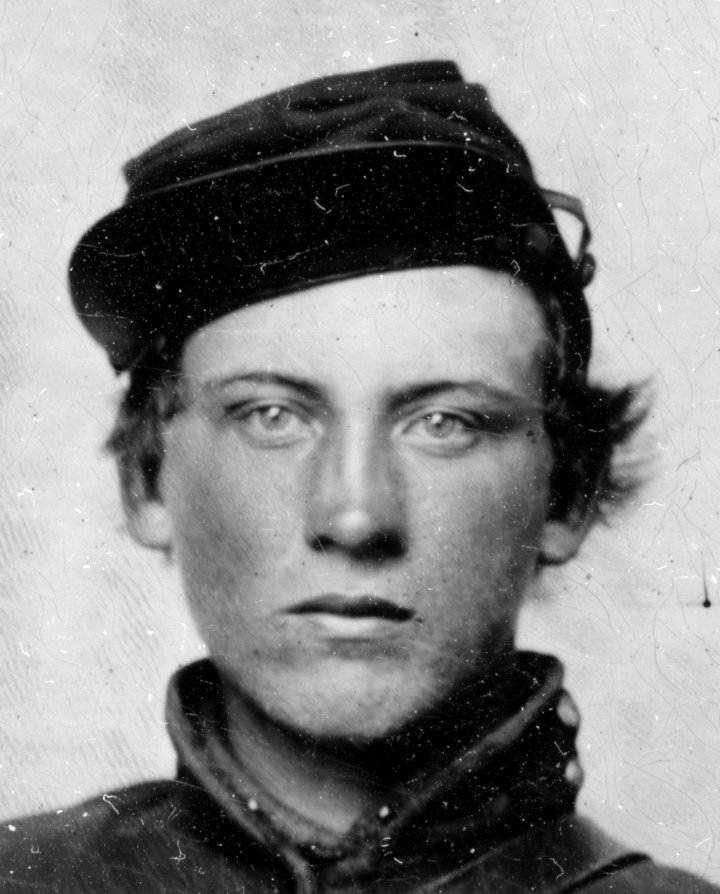


“If you are neutral in situations of injustice, you have chosen the side of the oppressor.” Desmond Tutu. Some lines sound good, but don’t hold up to a bit of thinking. Desmond Tutu may very well have said it. (or maybe one of his rivals said it, and Mr. Tutu copied it.) The quote has been attributed to Thomas Jefferson, Edmund Burke, Patrick Henry, and probably others. Almost no one has a source, for the quote, from the dead white guys.
A post called MISQUOTING THE FOUNDERS did not mince words. “The only problem … is that Thomas Jefferson never said that, never wrote that, and quite possibly never thought it. … Right now if I Google “All tyranny needs to gain a foothold is for people of good conscience to remain silent” the entire first page of results wrongly attribute it to Thomas Jefferson. The quote and its many variants have been attributed in the past to Thomas Paine and Edmund Burke, but no record exists of the quote in any of their writings or contemporary accounts.”
On November 13, 1787, Mr. Jefferson wrote a letter to William Smith. The letter is full of zesty quotes. “The tree of liberty must be refreshed from time to time with the blood of patriots & tyrants. It is it’s natural manure.”
A few lines above that, Mr. Jefferson said “God forbid we should ever be 20 years without such a rebellion.” Twenty years after he wrote this, Mr. Jefferson was President. He probably did not want to deal with a revolution when he was President.
Getting back to the quote about tyranny, Martin Porter wrote an entertaining essay, A study of a Web quotation. He gives credit, or blame, to Edmund Burke. First, a list of different versions is presented. This is a clue that something is awry. The conclusion: “There is no original. The quote is bogus, and Burke never said it. It is a pseudo-quote, and corresponds to real quotes in the same way that urban legends about … alligators in the sewers correspond to true news stories.”
Mr. Porter wrote a follow up essay, Four Principles of Quotation. These principles are: Principle 1 (for readers) Whenever you see a quotation given with an author but no source assume that it is probably bogus. Principle 2 (for readers) Whenever you see a quotation given with a full source assume that it is probably being misused, unless you find good evidence that the quoter has read it in the source. Principle 3 (for quoters) Whenever you make a quotation, give the exact source. Principle 4 (for quoters) Only quote from works that you have read.
If these principles were to be used, then there would be a lot less hotheaded talking on the intercom. Pictures for this feature are from The Library of Congress. These pictures are Union soldiers, from the War Between the States. When war is discussed, all inspiring quotes are in doubt.
This is a repost. It is written like James Joyce. In the past year, doing due diligence on alleged quotes has become a hobby. Many people don’t care who said it, if they agree with the thoughts expressed. The prevailing thought is that an idea becomes more true with a famous name at the end. If the famous person is deceased, and cannot defend his/her reputation, that is not a problem. People do not like being told that Santa Claus does not exist.
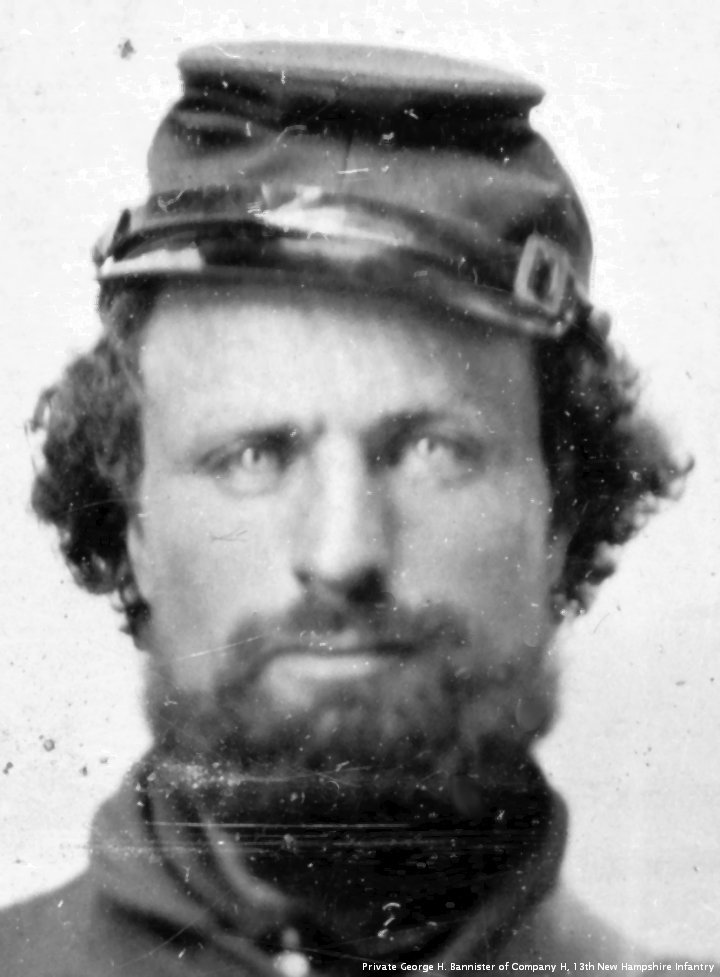
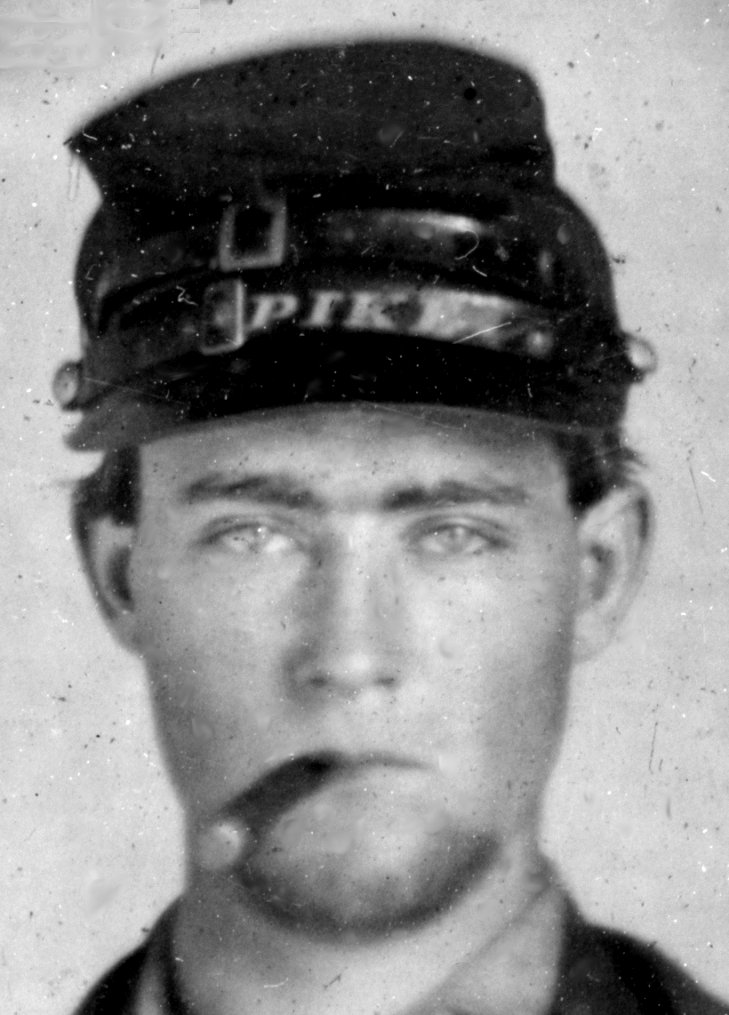
The Portrait Of Mr. W. H.


“A thing is not necessarily true because a man dies for it.” The gem, blamed on Oscar Wide, turned up on a data mining site. A quick search indicates that the quote in genuine, and is found in The Portrait of Mr. W. H. (1889.) Searching for context in a Wilde story can yield more than you bargained for.
PMWH is a tacky short story, with an eyeroll-inducing ending. SPOILER ALERT: This ending will be discussed today. PMWH is the story of an unnamed correspondent (UC), who is having a conversation with Erkskine. The players are Englishmen of a certain class, who all seem to have servants. The conversation gets onto forgery in the arts. UC felt that “to censure an artist for a forgery was to confuse an ethical with an aesthetical problem.” To which Erkskine replied, ‘What would you say about a young man who had a strange theory about a certain work of art, believed in his theory, and committed a forgery in order to prove it?’
Erkskine’s friend was Cyril Graham. “He was very fascinating, and very foolish, and very heartless.” Cyril developed some theories about the identity of Mr. W.H. … “A person known only by his initials, to whom the first edition of William Shakespeare’s sonnets (1609) was dedicated”… “To the onlie begetter of, These insuing sonnets, Mr. W.H. all happinesse … ” Cyril thought that W.H. was Willie Hughes, an androgynous young man of great beauty. “He felt, as indeed I think we all must feel, that the Sonnets are addressed to an individual, – to a particular young man whose personality for some reason seems to have filled the soul of Shakespeare with terrible joy and no less terrible despair.”
Erkskine thought that these ideas were foolish, and said so to Cyril. Soon after, Cyril produced a painting, that he found under strange circumstances. Allegedly, it was a portrait of Willie Hughes. Erkskine thought this a bit odd, but played along … until he stumbled onto evidence that the painting was a forgery. “I went off at once to Cyril’s chambers, waited there for three hours before he came in, with that horrid lie staring me in the face, and told him I had discovered his forgery. He grew very pale and said – “I did it purely for your sake. You would not be convinced in any other way. It does not affect the truth of the theory.
“The truth of the theory!” I exclaimed; “the less we talk about that the better. You never even believed in it yourself. If you had, you would not have committed a forgery to prove it.” High words passed between us; we had a fearful quarrel. I daresay I was unjust. The next morning he was dead.'”
“… he shot himself with a revolver. … By the time I arrived – his servant lad sent for me at once – the police were already there. He had left a letter for me, evidently written in the greatest agitation and distress of mind. … he believed absolutely in Willie Hughes; that the forgery of the picture had been done simply as a concession to me, and did not in the slightest degree invalidate the truth of the theory; and that in order to show me how firm and flawless his faith in the whole thing was, he was going to offer his life as a sacrifice to the secret of the Sonnets. It was a foolish, mad letter. I remember he ended by saying that he entrusted to me the Willie Hughes theory, and that it was for me to present it to the world, and to unlock the secret of Shakespeare’s heart.’ “
UC is convinced that the Willie Hughes story is real. “Erskine looked at me in amazement. ‘You are carried away by the sentiment of the whole story,’ he said. ‘You forget that a thing is not necessarily true because a man dies for it. ” UC leaves, and tries to prove the Willie Hughes hypothesis to be true. This goes on for a while, until UC talks himself out of it. By this time, however, Erkskine has changed his mind, and is a Willie Hughes true believer. If this is getting complicated and confusing, you can read the story. Oscar’s prose is entertaining, if a bit archaic to the modern reader.
Erkskine is dismayed by UC’s lack of belief. He sent UC a letter. “The concluding words of the letter were these: ‘I still believe in Willie Hughes; and by the time you receive this, I shall have died by my own hand for Willie Hughes’s sake: for his sake, and for the sake of Cyril Graham, whom I drove to his death by my shallow skepticism and ignorant lack of faith. The truth was once revealed to you, and you rejected it. It comes to you now stained with the blood of two lives, – do not turn away from it.'”
“It was a horrible moment. I felt sick with misery. … To die for one’s theological beliefs is the worst use a man can make of his life, but to die for a literary theory! It seemed impossible.”
SPOILER ALERT: Fret not, gentle reader. When UC caught up with the Erkskine’s family, he heard a different story. “I turned to the doctor and said, ‘What a dreadful shock it must have been to Lady Erskine! I wonder that she bears it as well as she does.’ ‘Oh, she knew for months past that it was coming,’ … if a mother knows that her son is going to commit suicide’ … ‘Suicide! Poor Erskine did not commit suicide. He died of consumption. He came here to die. The moment I saw him I knew that there was no hope. … At that moment Lady Erskine entered the room with the fatal picture of Willie Hughes in her hand. ‘When George was dying he begged me to give you this,’ she said. As I took it from her, her tears fell on my hand.”


“It is always a silly thing to give advice, but to give good advice is absolutely fatal.” The Portrait of Mr. W. H., by Oscar Wilde, has many zesty quotes not included above. The one about advice stands out. It is similar to well known Oscarism. “A little sincerity is a dangerous thing, and a great deal of it is absolutely fatal. ” The line about sincerity is found in The Critic as Artist. In this episode, Gilbert and Ernest are exchanging clever thoughts.
Gilbert: Ernest, you are quite delightful, but your views are terribly unsound. I am afraid that you have been listening to the conversation of some one older than yourself. That is always a dangerous thing to do, and if you allow it to degenerate into a habit you will find it absolutely fatal to any intellectual development. As for modern journalism, it is not my business to defend it. It justifies its own existence by the great Darwinian principle of the survival of the vulgarest. …
Ernest: But what is the difference between literature and journalism?
Gilbert: Oh! journalism is unreadable, and literature is not read. … How appalling is that ignorance which is the inevitable result of the fatal habit of imparting opinions! …
Ernest: The true critic will be rational, at any rate, will he not?
Gilbert: There are two ways of disliking art. One is to dislike it. The other, to like it rationally. …
Ernest: Well, at least, the critic will be sincere.
Gilbert: A little sincerity is a dangerous thing, and a great deal of it is absolutely fatal.
Gilbert also says “Anybody can make history. Only a great man can write it.” This is a rather sexist counterpoint to that bumper sticker classic, “Well behaved women rarely make history.” The latter was penned by Laurel Thatcher Ulrich, in a scholarly article. “1976 Spring, American Quarterly, Volume 28, Number 1, “Vertuous Women Found: New England Ministerial Literature, 1668-1735” by Laurel Thatcher Ulrich, The Johns Hopkins University Press” The seminal quote said seldom, rather than rarely. Pictures today are from The Library of Congress.
Such A Society


The writing workshop announcement appeared before the event. I went to the signup, and was checked in at 7:27. Tonight’s prompt is to write a “golden shovel.” The gs poem is going to be 25 lines long. Every word in the original piece will appear at the end of a line. The seminal poem is by Dr. Doris Derby. … Pale green husks, Of corn grow, Tall and proud, As the young kernels, Of each one, Emerge from darkness, With bright faces, Bathed in Sunlight. … I finish the first draft at 7:55. I will now edit, until the workshop says to stop.
Seeking the beauty beyond the Pale, blue shimmering waves of green, another shucker looking for husks, recovering from the harvest Of, telepathic aromatic corn, after the earth is done with grow, yesterday’s yellow Tall, and wide and frangrant and, retro rainbow standing proud, wearing polyester of the nines As, whimsical overtures of the, quasi legal sticky ripe young, wallowing in the southern kernels, escaping from the yankee sludge Of, teach one reach one each, five four three two one, fighting and kicking to Emerge, out of the twilight from, the placebo darkness, driving out the donald With, fibonaccian synchronistic bright, well scrubbed faces, dark golden moonlight Bathed, over toes and behind ears in, radiant convulsive Sunlight, just, a suggestion she tells me now.
The day started with breakfast, and medications. I looked on Twitter and I saw this: @robstiles1 “All tyrannies rule through fraud and force. Once the fraud is exposed they must then rely solely on force.” – George Orwell” There are a lot of flaky Orwell quotes. The Orwell wikiquote does have a similar quote, and a source. I did a search of the TLDR document, and found the quote that uses “fraud.”
“Totalitarianism, however, does not so much promise an age of faith as an age of schizophrenia. A society becomes totalitarian when its structure becomes flagrantly artificial: that is, when its ruling class has lost its function but succeeds in clinging to power by force or fraud. Such a society, no matter how long it persists, can never afford to become either tolerant or intellectually stable. … The mere prevalence of certain ideas can spread a kind of poison that makes one subject after another impossible for literary purposes. Wherever there is an enforced orthodoxy … good writing stops. …”
The second quotable is more relevant today. “The mere prevalence of certain ideas can spread a kind of poison that makes one subject after another impossible for literary purposes. Wherever there is an enforced orthodoxy … good writing stops.” The free flow of information, and entertainment, is currently under fire from many sources. The government, working in tandem with big data, has one agenda. Social Justice Jihad has a powerful ideology, upon which one trespasses at one’s own peril. With all these regulators of information, it is a miracle we hear anything other than football scores.
A poem was well on its way to completion. The soundtrack was a new episode of the Bret Easton Ellis podcast. The poem is a series of nine images, with text added at the bottom. When you finish a picture, the first reaction is to go look at facebook and twitter.
Grab the book nearest to you, turn to page 18, and find line 4. The book is the Holy Bible, with Jean D. Mckinnon in gold letters. Page 18/line 4: Genesis 18:15 “Then Sarah denied, saying, I laughed not; for she was afraid. And he said, Nay; but thou didst laugh.” Line 4 is underlined.
18:15 is just another verse from Genesis, and did not do much for me. What made me cry was the presentation page. “Presented to Jean, by Luke, 7-23-56” This was in my father’s challenging handwriting, on my mother’s birthday. 7-23-56 was a few weeks after my brother was born.
The guest on the BEE podcast was another writer, Jarett Kobek. The desperate state of modern publishing was lamented. The chat picked up when Mr. Kobek asked BEE if he heard about the amateur American Psycho porn. The video features two women having fun, while reading, out loud, a murder scene from American Psycho. It is moments like this, when you want to see the BEE reaction, that podcasting shows a weakness. Bret recovered fast enough, and said “I hope they were hot.” Soon another image was finished, and it was back to twitter.
Kyle Rittenhouse Reveals He Intends On Suing LeBron James. Announcing intention to sue online might not be a good legal strategy. Of course, we are talking deep pockets, and a deep throat. After the televised testimony of Mr. Rittenhouse, this tweet appeared: @KingJames What tears????? I didn’t see one. Man knock it off! That boy ate some lemon heads before walking into court. 🤣🤣
Mr. James likes to express his opinions. “James also made waves back in April for suggesting … that an officer was racially motivated for fatally shooting 16-year-old Ma’Khia Bryant, who was, at the time, attempting to stab another girl. … I am so desperate for more ACCOUNTABILITY.” You should be careful what you wish for. Pictures today are from The Library of Congress.



Fifteen Minutes





Andy Warhol is quoted as saying that “in the future, everyone will be famous for fifteen minutes.” This has become a popular saying. If a celebrity is getting tiresome, people will wonder when their fifteen minutes will be up. After hearing about fifteen minutes his entire life, PG began to wonder if Drella really said that. If you can’t be cynical about Andy Warhol… This is a repost.
Wikipedia is a good place to start. “In the future, everyone will be world-famous for 15 minutes” … appeared in the program for a 1968 exhibition of his work at the Moderna Museet in Stockholm, Sweden. Photographer Nat Finkelstein claimed credit for the expression, stating that he was photographing Warhol in 1966 for a proposed book. A crowd gathered trying to get into the pictures and Warhol supposedly remarked that everyone wants to be famous, to which Finkelstein replied, “Yeah, for about fifteen minutes, Andy.” Nat Finkelstein was a sketchy character, in the Warhol tradition. His version is suspect. The Swedish museum part is real.
“Andy Warhol’s first European museum solo show took place at the Moderna Museet in Stockholm from February through March 1968. Pontus Hultén curated the exhibition together with Olle Granath. The exhibition came with a catalogue that was, like the show, named ‘Andy Warhol’. Kasper König, who worked for the Moderna Museet as an intern of sorts in New York, developed a basic concept for the book. … After Warhol had given his approval to this first proposal, König proceeded to create a dummy. … When König returned his dummy to the Factory, Warhol scrutinized it carefully but made only a small number of changes. Contrary to what Warhol wanted to be popular belief, those who produced input at the Factory were carefully monitored. … The final edits on the dummy were made in Stockholm by Olle Granath. He compiled a small selection of Warhol quotes and aphorisms from a stack of books and clippings collected by Hultén and placed them in the book as an introduction before the image sections.”
“Sometime in the autumn of 1967, Pontus Hultén called and asked me if I (Olle Granath) could help him and the Moderna Museet to organize an Andy Warhol exhibition that was due to open in February…. An important part of the exhibition was the production of a book. It was not supposed to be an analytical catalog of Warhol’s work, but a book that conveyed his aesthetics without heavy texts. … One day, Pontus brought me a box, almost the size of a Brillo box, and told me that it contained everything written by and about Andy Warhol (today the equivalent would probably be two truck loads). My job was to read it all and present a proposal for a manuscript with Swedish translations. After a couple of nights of reading and taking notes I delivered a script to Pontus and awaited his reaction with great anticipation. ‘Excellent,’ Pontus said when he called me, ‘but there is a quotation missing.’ ‘Which one?’ I said. ‘In the future, everyone will be world-famous for 15 minutes,’ Pontus replied. ‘If it is in the material I would have spotted it,’ I told him. The line went quiet for a moment, and then I heard Pontus say, ‘If he didn’t say it, he could very well have said it. Let’s put it in.’ So we did, and thus Warhol’s perhaps most famous quotation became a fact.”
“The exhibition in Stockholm attracted a relatively small number of visitors, due to the extremely cold winter, but also to the fact that leftist radicalization increasingly drove the Museets public to mistrust anything American or consumerist. There was no space yet for a more complex reading of Warhol’s relation to consumption. The book, however, became very popular: its enormous edition allowed it to be distributed in nightclubs and record stores, not only museums. A timeless update on the latest from New York, it first became a cult object, then a collectors item.”
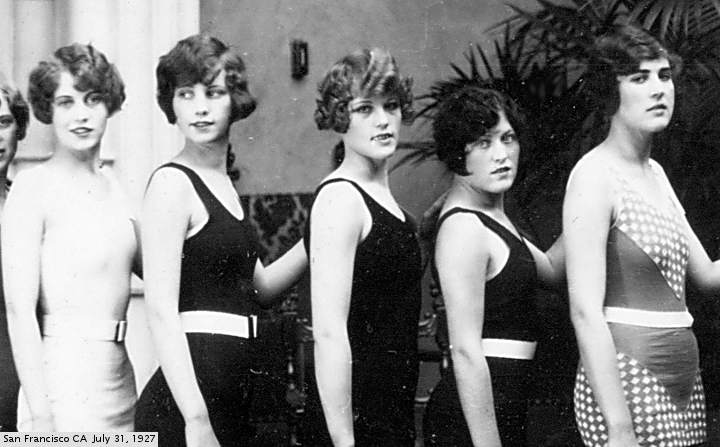
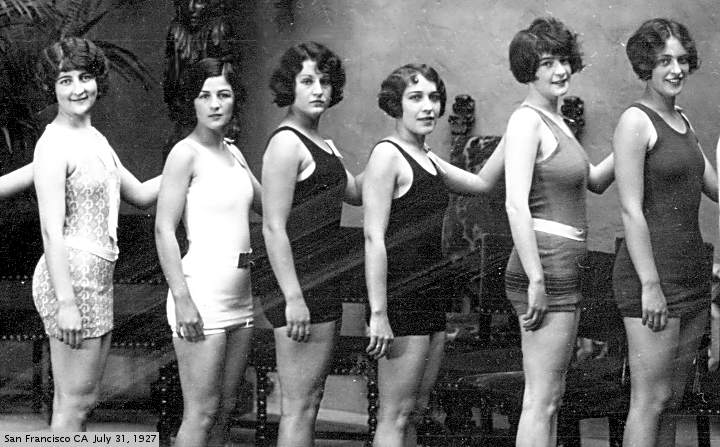
Did Andy say that? Probably, but not definitely. Andy was shot by Valerie Jean Solanas on June 3, 1968, a few months after the show in Sweden. Andy survived, and had fifteen more minutes. Pictures today are from Pictures are from The Library of Congress. The 1927 pictures were taken at “California Beauty Week, Mark Hopkins Hotel, July 28 to Aug. 2, auspices of San Francisco Chronicle.”



News Of The Weird


Today’s news of the weird began last night. This tweet had a picture of a swastika. The symbol came from an article, Swastikas displayed at Canadian ‘Freedom Convoy’ protests against mandates There is a photo credit for the picture. “A Nazi armband with a swastika displayed in the Deutsches Historisches Museum, Berlin, Germany (photo credit: Wikimedia Commons)”
There is a meme going around. “When an ox enters a palace, it does not become a king. Instead the palace turns into a barn.” (Bir öküz saraya girdiğinde kral olmaz. Bunun yerine saray bir ahıra dönüşür.) A journalist in Turkey was arrested for saying this.
Turkish journalist arrested for insulting President Erdogan “Fahrettin Altun, head of Turkey’s communications department, denounced the statement. “The honour of the presidency’s office is the honour of our country… I condemn the vulgar insults made against our president and his office,” Altun tweeted. Abdulhamit Gul, Turkey’s justice minister, also said on Twitter that Kabas will “get what she deserves” for her “unlawful” words.”
#JoeRogan “no hard feelings toward #JoniMitchell i love her music, “Chuck E’s In Love” is a great song” As you may have heard, Mr. Rogan is taking some heat for his shows about Covid. Most of the chatter is worthless. However, Bob Wright took an article out from behind the paywall.
Is Robert Malone crazy? deals with the Ivermectin issue. There is one passage that stands out. “There’s an interesting recent twist to the ivermectin story … One longstanding puzzle had been why studies of ivermectin’s efficacy in fighting Covid showed such wildly varying results. Well, it turns out that the studies that find ivermectin effective tend to be done in areas infested by parasitic worms. Apparently ivermectin’s anti-parasitic properties (the properties for which it was originally developed) help keep people from becoming so weakened by parasites as to be easy prey for Covid. … since some parts of India have lots of parasitic worms, this new finding could mean he’s right about ivermectin having helped fight Covid in Uttar Pradesh. … since America isn’t beset by parasitic worms, embracing this finding would mean letting go … “
This is highly inconvenient for a lot of people. To admit this is to admit that Ivermectin DOES have some benefits, for some people. If you are in the mood for medical data brain damage, this document has details. Do a ctrl+f search for “worms”. Otherwise, you will drown in numbers.
IVM deep dive has another festive quote. “… people even have a specific theory for why elites are covering up ivermectin, like that pharma companies want you to use more expensive patented drugs instead. This theory is extremely plausible.” Pictures today are from The Library of Congress.


leave a comment