Anita Aretha and Elton




In the early nineties, PG had too much free time. On March 25 of one year, he looked in the fishwrapper, and found a list of famous people with birthdays.
There was an unlikely trio celebrating that day. This would be (in order of appearance) Anita Bryant (1940), Aretha Franklin (1942), and Elton John (1947). All three have been paid for singing. The three have a total of five husbands, with Miss Bryant and Mr. John currently attached (Not to each other). Miss Franklin has good taste in hats.
Several other people have arrived on planet earth on March 25. They include , in 1911, Jack Ruby, the killer of Lee Harvey Oswald (d. 1967) (They don’t say alleged when it was on live TV). 1918 produced Howard Cosell, American sports reporter (d. 1995). Flannery O’Connor (d. 1964) arrived in 1925. 1934 gave us Gloria Steinem. To make room for all this talent, Buck Owens died March 25, 2006. On August 16, 2018, Aretha Franklin was heaven bound.
March 25 is after the spring equinox, and has been Easter. A few noteworthy events have gone down on this day. In 1894, Coxey’s Army departed Massillon, Ohio for Washington D.C. In 1911, the Triangle Shirtwaist Factory fire killed 146 garment workers in New York City. In 1939 Cardinal Eugenio Pacelli becomes Pope Pius XII, to the delight of Adolph Hitler. 1955 saw the United States Customs seizes copies of Allen Ginsberg’s poem “Howl” as obscene. In 1969, John Lennon and Yoko Ono began their first Bed-In for Peace at the Amsterdam Hilton Hotel.
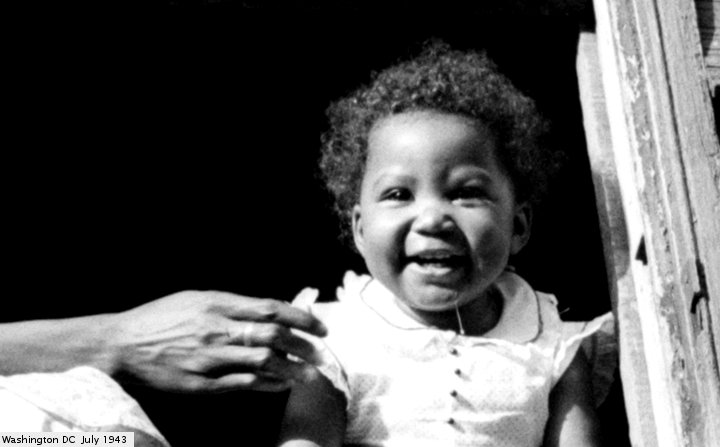
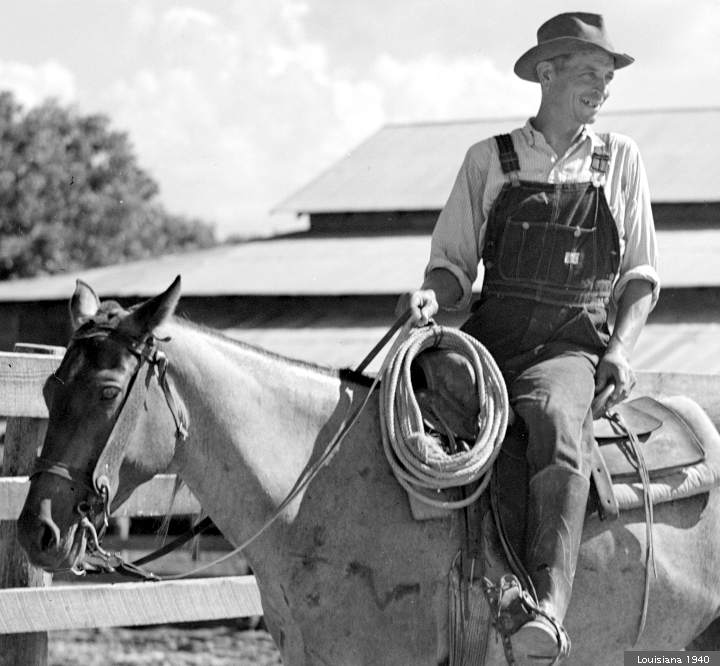
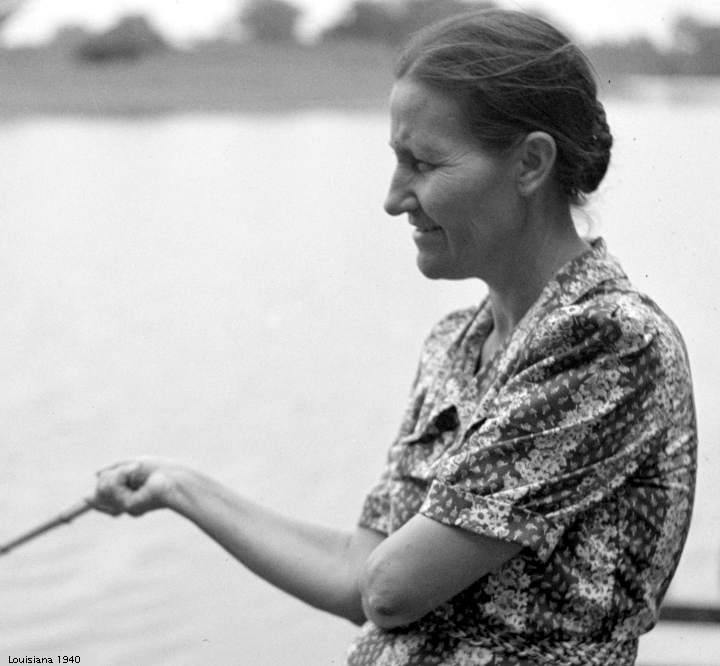
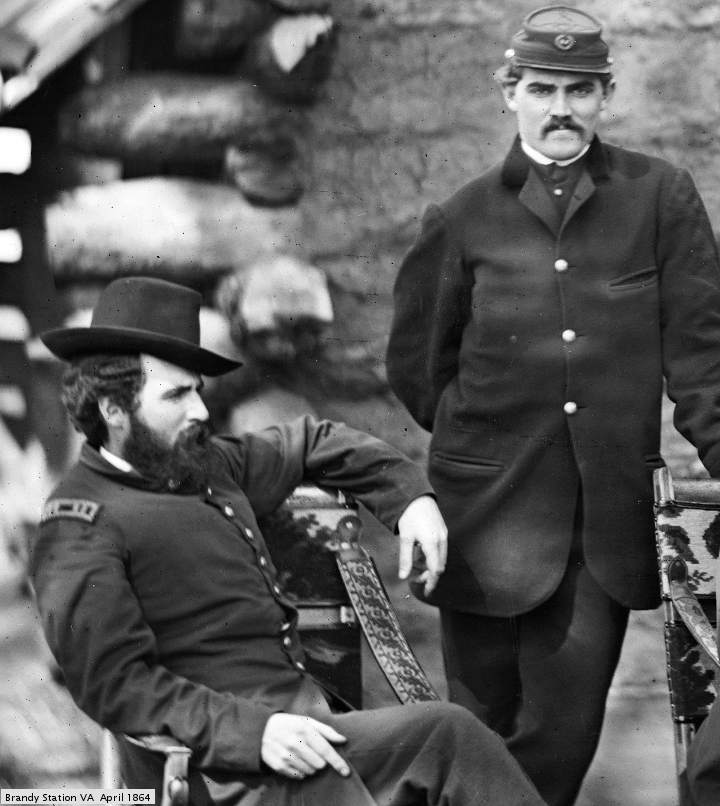
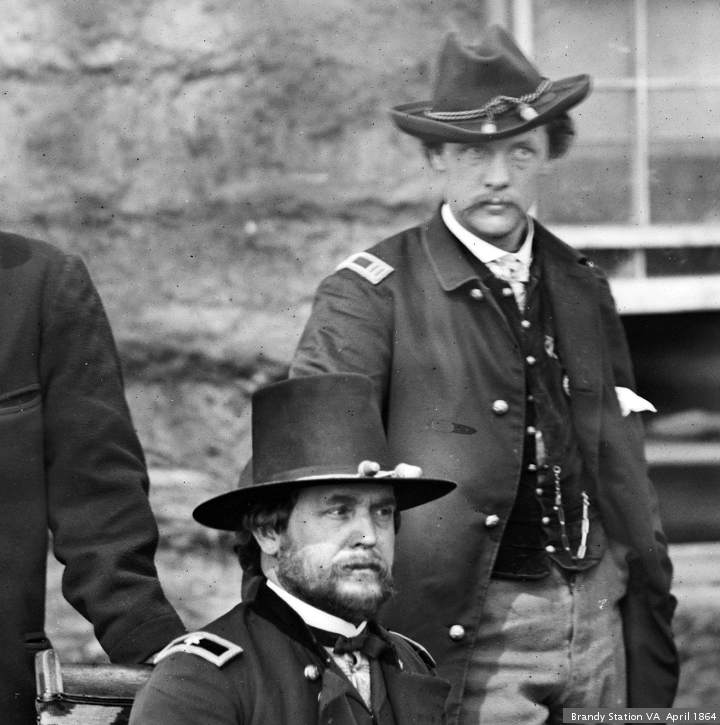
HT and applause to wikipedia. This is a repost. Pictures are from The Library of Congress.




Anthony Stephen Fauci






@maggieNYT “White House officials say they’ve given Fauci a lot of room to do interviews amid concerns he was being muted. But they question some of the interviews he’s given and how he has so much time for them.” Anthony Fauci has been in the hot seat before. In the eighties, he was blamed for not stopping AIDS. Now, Dr. Fauci is seen as a voice of reason. This is a repost.
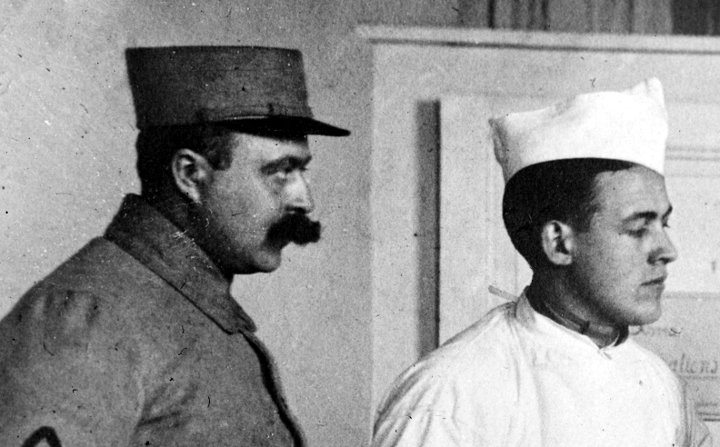
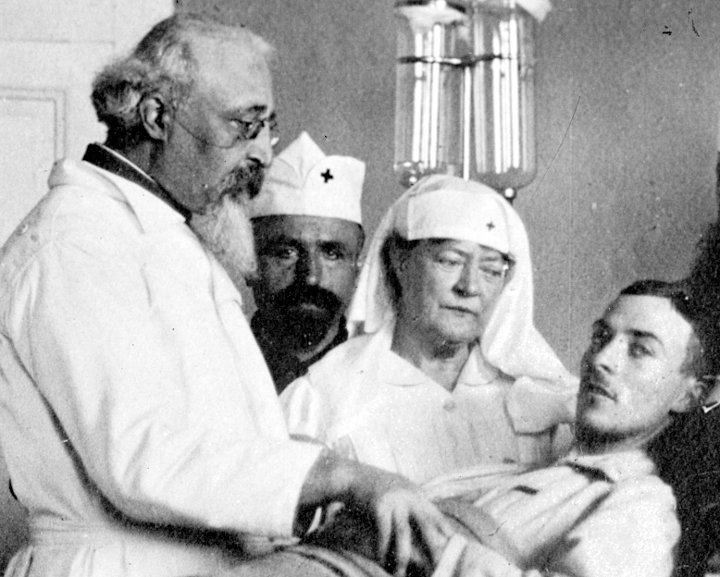
“Anthony Stephen Fauci was born in New York City on Christmas Eve 1940, the second of Stephen and Eugenia Fauci’s two children. … Fauci has spent his entire professional career at the National Institutes of Health. He started as a clinical associate in the Laboratory of Clinical Investigation at the National Institute of Allergy and Infectious Diseases (NIAID) in 1968, after a two-year residency at The New York Hospital-Cornell Medical Center. By 1974, he was head of the clinical physiology section of the lab. In 1980, he became chief of the Laboratory of Immunoregulation (a position he still holds) and since 1984, he has been the director of NIAID.”
Things began to change in 1981. The “aha” moment was- it was the early summer of 1981. The CDC … puts out the Morbidity and Mortality Weekly Report … reported on their June 5, 1981 MMWR five men from Los Angeles who presented with a very unusual kind of pneumonia that you only see in people who have dramatically-suppressed immune systems. And I looked at it and said, “Wow, five gay men.” Why all gay men, and why this strange disease that you almost never see in healthy people? And they were supposedly completely healthy other than that. I thought it was a fluke.”
“And then one month later, on the July 4th of 1981, the next MMWR appeared … “Now 26 men, not only from L.A., but from San Francisco and New York, with not only this strange pneumonia, but this strange kind of cancer that you only see in people who are immunosuppressed.” And the thing that blew me away is that all of them were gay men. And I said, “Whoa. Something is going on here that’s really bad, and this is likely a new disease.””
“And I made what I consider the transforming decision in my own career: I decided I was going to stop what I had been doing-rather successfully-for the previous nine or ten years and devote myself completely to studying what I felt would be an enormously difficult disease, and it, unfortunately, turned out that that was the case.”
Seven years later, after staggering amounts of deaths and suffering, Dr. Fauci was scheduled to appear at a conference in San Francisco. ACT-UP was there to greet him. “An Open Letter to Dr. Anthony Fauci” San Francisco Examiner, June 26, 1988 “Anthony Fauci, you are a murderer and should not be the guest of honor at any event that reflects on the past decade of the AIDS crisis. Your refusal to hear the screams of AIDS activists early in the crisis resulted in the deaths of thousands of Queers. … You can’t hide the fact that you are nothing but a despicable Reagan-era holdover and drug company mouthpiece. With 270,000 dead from AIDS and millions more infected with HIV, you should not be honored at a dinner. You should be put before a firing squad. … You are a pill-pushing pimp that cooperates with drug companies in forcing dangerous concoctions down the throats of a desperate community that is brainwashed into believing that taking a pill, any pill, will help them. … Ten years of hope? Fuck that. Try a decade of death and greed. Go back to Washington you bastard.”
“Carol Brown Moskowitz … recalls running into a group of leather-clad men, many of them body pierced and draped in chains, in Washington’s Omni Hotel, in the fall of 1988. … When she asked one of them who they were, he told her that they were members of “Act Up,” and that they were going out to make some noise at the FDA about the AIDS epidemic and the lack of funding for research. … Fauci asked the police and the FBI on the NIH campus not to make arrests. He also asked that a handful of the demonstration’s leaders be brought to his office.”
“That began a relationship over many years that allowed me to walk amongst them,” Fauci says. “It was really interesting; they let me into their camp. I went to the gay bath houses and spoke to them. I went to San Francisco, to the Castro District, and I discussed the problems they were having, the degree of suffering that was going on in the community, the need for them to get involved in clinical trials, since there were no other possibilities for them to get access to drugs.”
In 2005, Fauci appeared on C-SPAN. “The toughest decision you’ve ever had to make?””Well, one of the toughest decision-I had a few-was when I made a decision during the middle of the early years of the AIDS pandemic to bring the activist community into our deliberations, because most of the scientific community, including my own staff, were totally against that. They said the activists would be disruptive, that they would get in the way of what the scientific approach would be.”
One of those activists was the infamous Larry Kramer, who wrote the open letter seen above. This 1993 chat with Kramer gives you a small taste.
“Natalie Angier wrote in The New York Times in February of 1994: “And through it all, Dr. Fauci accepts the criticisms, and he accepts that someone must absorb the anger and terror that AIDS has spawned, so why not somebody of strong vertebrae who was raised on the streets of Bensonhurst? “I was on a C-SPAN program a couple of months ago with Tony, and I attacked him for the entire hour,” said Mr. Kramer. “He called me up afterwards and said he thought the program went very well. I said, ‘How can you say that? I did nothing but yell at you.’ He said, ‘You don’t realize that you can say things I can’t. It doesn’t mean I don’t agree with you.” … “Dr. Fauci claims he does not take the intermittent blasts personally. “That’s the activist mode,” he said. “When there’s a disagreement their tendency is to trash somebody. But I know that when Larry Kramer says the reason we’re all in so much trouble is because of Tony Fauci, he’s too smart to believe that.”
A few years later, the outlook started to improve. “We have drugs right now … In the early ’80s, if someone came in to my clinic with AIDS … half of them would be dead in eight months. Now, if …someone comes into a clinic who is 20-plus years old who is relatively recently infected, and I put them on the combination of three drugs … if you take your medicine regularly, you could live an additional 50-five zero-years.”
“Fauci is married to Christine Grady … “I met him (Fauci) here over the bed of a patient who happened to be from Brazil. I was called in as a translator … And so they said, ‘Could you come translate for Dr. Fauci?’ whom I had not met—the inimitable Dr. Fauci— everybody was afraid of. When he came in, I thought, ‘What are they so afraid of him for? He is not so scary.’”
As Fauci tells the story on C-SPAN: “She was just this very attractive young nurse, and I said, “Very interesting.” … I was single. So I went back to my office. About a few days later, I told the head nurse, “Could you tell that nurse, Ms. Grady, to come to my office. I want to talk to her.” … So she walked into my office completely petrified that she was in trouble, and she sat there looking very nervous. I couldn’t figure out why she was nervous. So I looked at her and said, “Well, you know, I didn’t realize you had come here until just last week.” I said, “Would you like to go out for dinner sometime?” She just fell right through the chair, and she said, “Of course, I will.” And we got married a year later.”
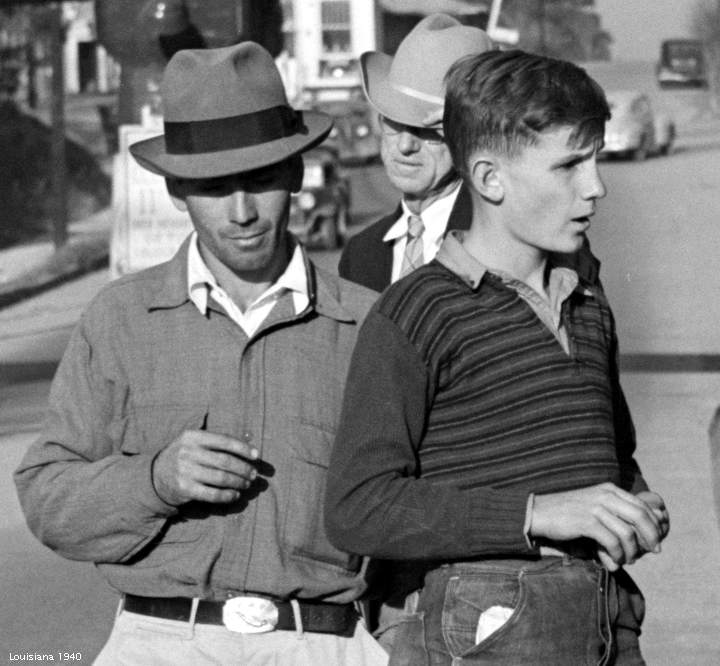
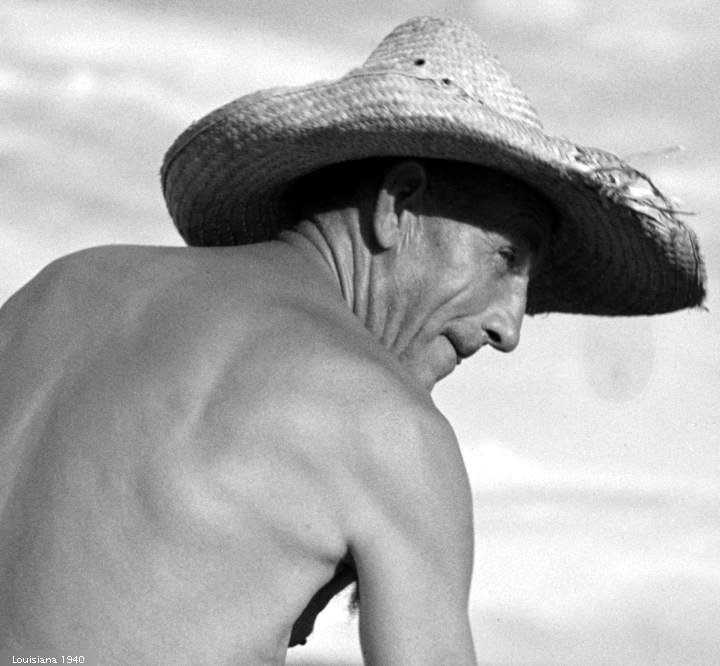
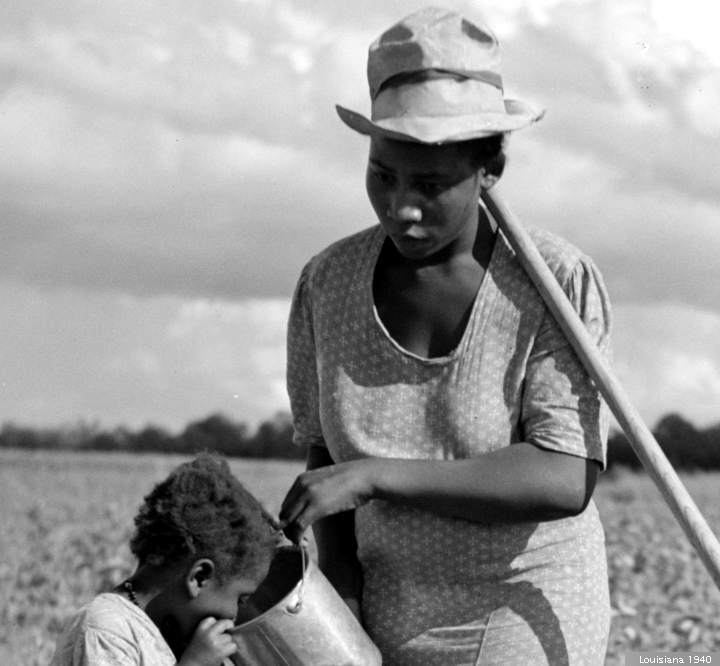
In today’s #metoo atmosphere, the director romancing a young nurse might not work as well. Pictures today are from The Library of Congress. Thanks to Holy Cross Magazine and C-SPAN



Shock And Awe Day

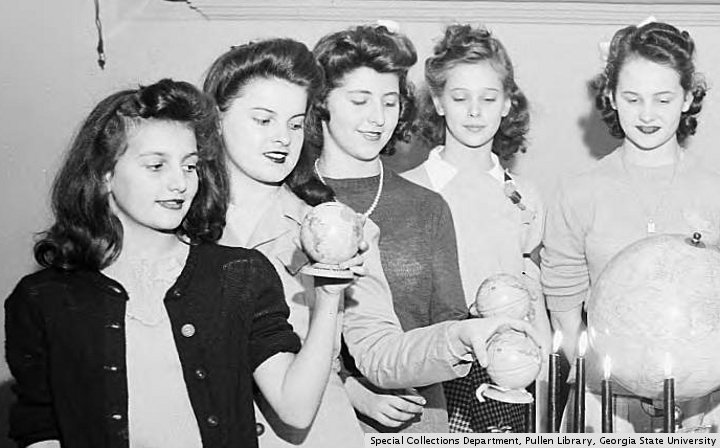
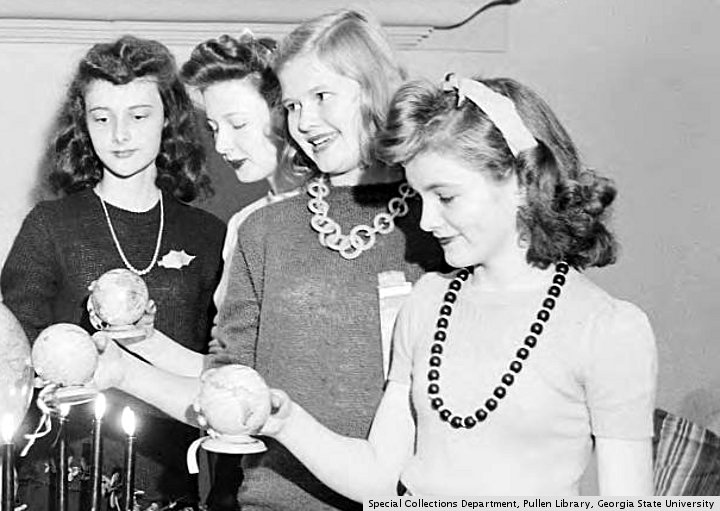
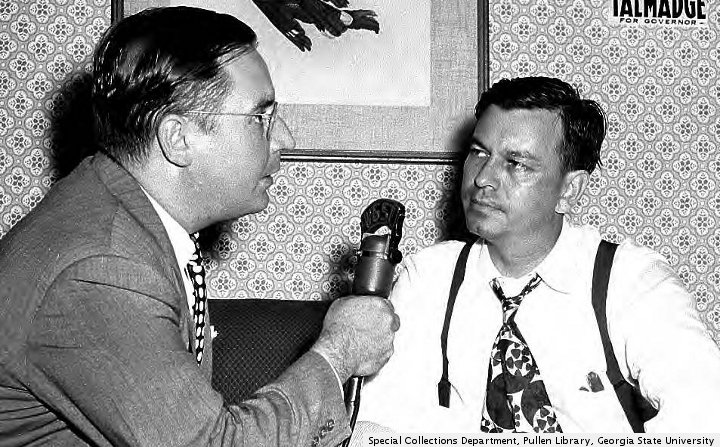
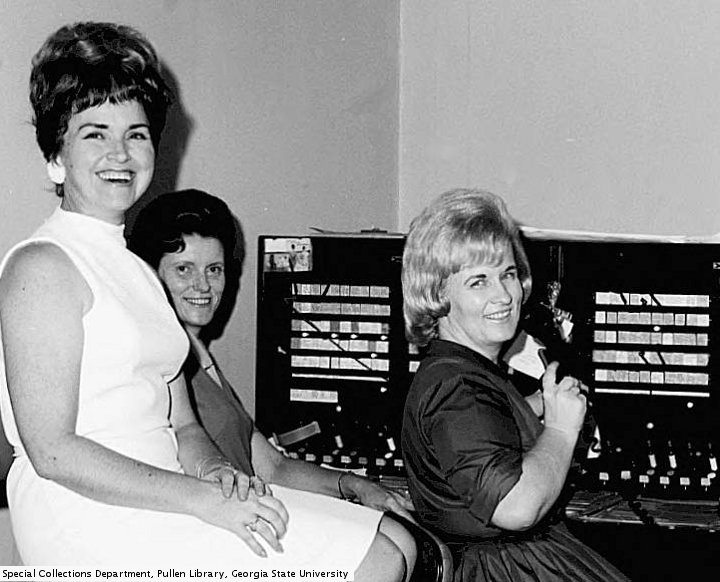
Eighteen years ago, Iraq teetered on the edge of regime change. It was obvious what was going to happen, at least at first. America was going to storm in, kill a bunch of people, and take over.
In post 911 America, the military industrial complex saw an opportunity for plunder, unrivaled since the fall of the Soviet Union. The stories of WMD would infect the body politic with fear of a mesopotamian madman. Saddam Hussein wanted Iran to think he has wonder weapons, and did not think America was serious about regime change. We all make mistakes.
In the eighteen years since the time of shock and awe, trillions of dollars have gone down the drain, dragging the mighty American economy along into the sewers of bankruptcy. One of the oldest civilizations of mankind was reduced to hiding, from neighbors, behind concrete barricades. They fought the conquerors with bombs triggered by garage door openers. Thousands of women and children have been murdered. The WMD were never found. This is a repost.
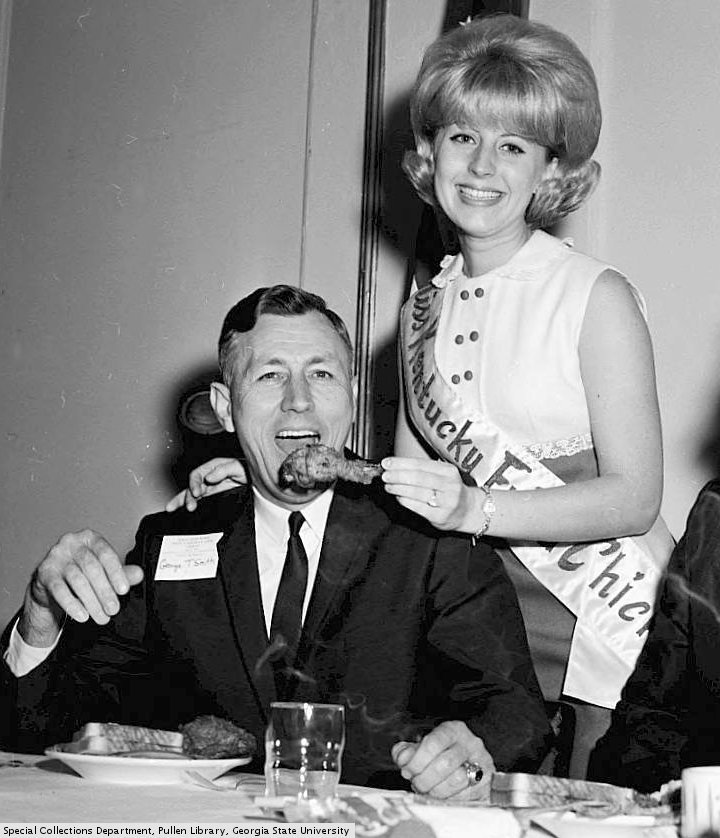
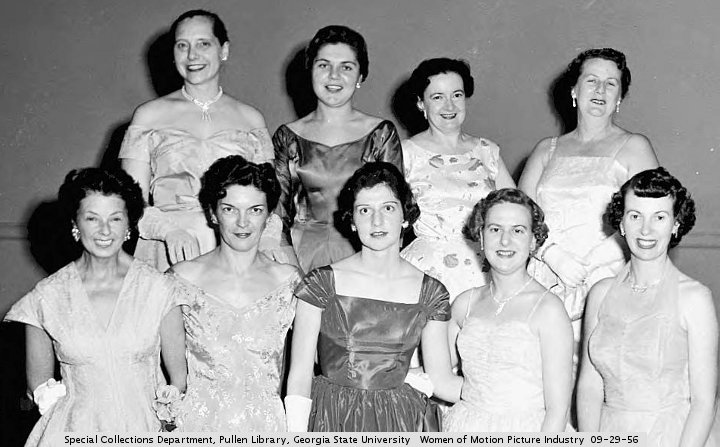
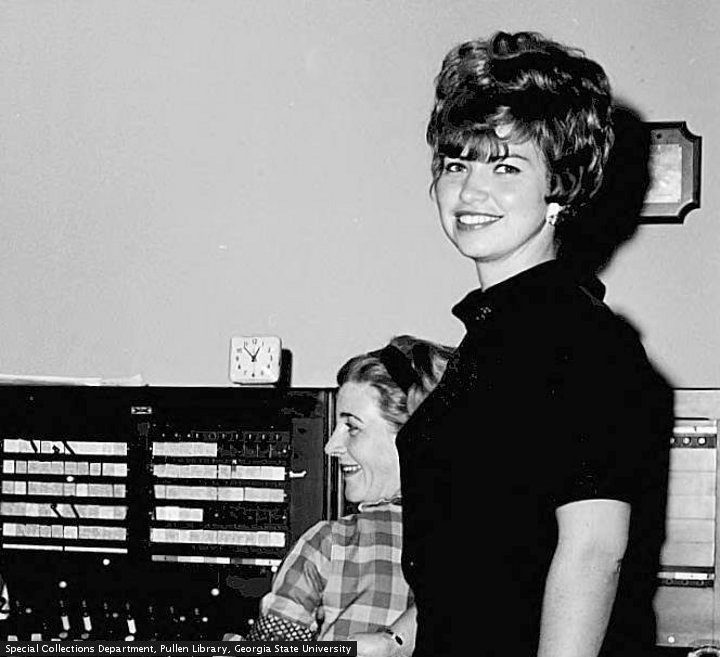
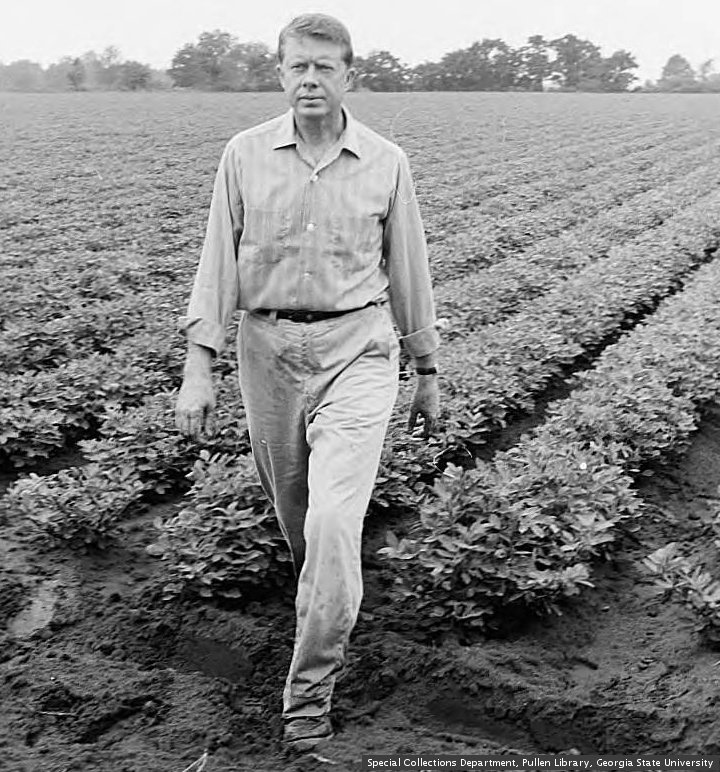
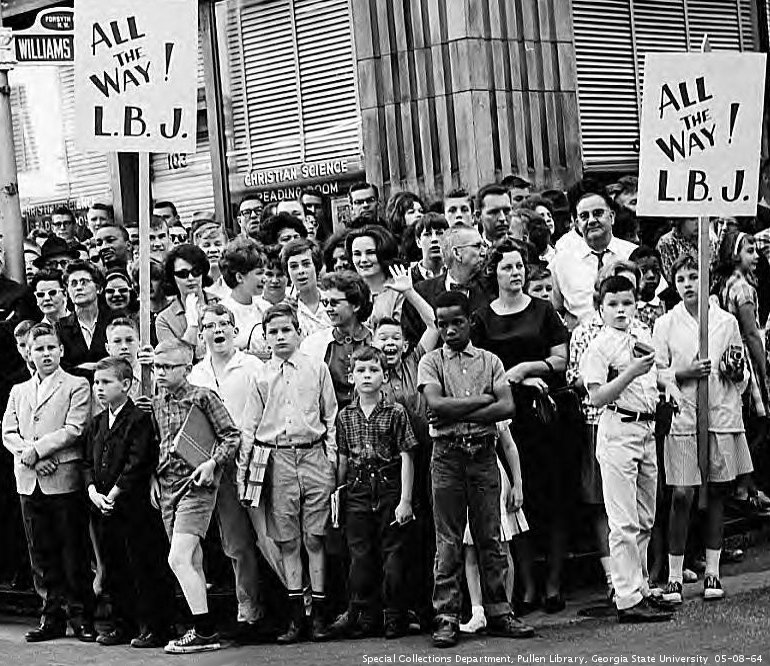
Pictures are from “The Special Collections and Archives, Georgia State University Library”.




Did Joseph Think It Was His Kid?


NOTE: This feature was originally published in March 26, 2013. This is the day after March 25, nine months before Christmas. IOW, a crucial day in the most famous unconsummated marriage in history. PG began to ponder the traditional marriage of Joseph and Mary. The question of the day is “when did Joseph and Mary get married?” Facilities such as Liberty Gospel Tracts and Fish Eaters Traditional Catholic Forum have answers.
LGT (the B got kicked out for some reason) contributes a bible passage, Matthew 1:18-19. 18 Now the birth of Jesus Christ was on this wise: When as his mother Mary was espoused to Joseph, before they came together, she was found with child of the Holy Ghost. 19 Then Joseph her husband, being a just man, and not willing to make her a public example, was minded to put her away privily.
Put her away in the privy? That is some kinky business there. Maybe the Christians and Jews have it all wrong. The thirds Abrahamic religion, Islam, might have the answer. A site, TurnToIslam, has another point of view about the traditional definition of marriage.
What about Mary, Jesus’ Mother peace be upon both of them? How old was she when she got pregnant? Not only was it a custom in the Arab society to Engage/Marry a young girl it was also common in the Jewish society. The case of Mary the mother of Jesus comes to mind, in non biblical sources she was between 11-14 years old when she conceived Jesus. Mary had already been “BETROTHED” to Joseph before conceiving Jesus. Joseph was a much older man. therefore Mary was younger than 11-14 years of age when she was “BETHROED” to Joseph. We Muslims would never call Joseph a Child Molester, nor would we refer to the “Holy Ghost” of the Bible, that “Impregnated” Mary as a “Rapist” or “Adulterer”.
“….it is possible that Mary gave birth to her Son when she was about thirteen or fourteen years of age….”Mary was approximately 14 years old when she got pregnant with Jesus. Joseph, Mary’s Husband is believed to be around 36. Mary was only 13 when she married Joseph. When she first was arranged with Joseph she was between 7 to 9 years old.”
According to the “Oxford Dictionary Bible” commentary, Mary (peace be upon her) was was 12 years old when she became impregnated. So if I want to be as silly and ridiculous as many of the Christians, I would respond to them by saying that Mary was psychologically and emotionally devastated for getting pregnant at a very young age. And speaking of “child molesting”, since most Christians believe that Jesus is the Creator of this universe, then why did G-D allow himself to enter life through a 12-year old young girl’s vagina? Please note that we Muslims love and respect Allah Almighty, Mary, Jesus and Allah’s Message to the People of the Book (The Jews and Christians). In other words, we Muslims would never make fun of Christianity through such childish topic like this one as many ridiculous Christians do make fun of Islam through our Prophet’s (peace be upon him) marriage.
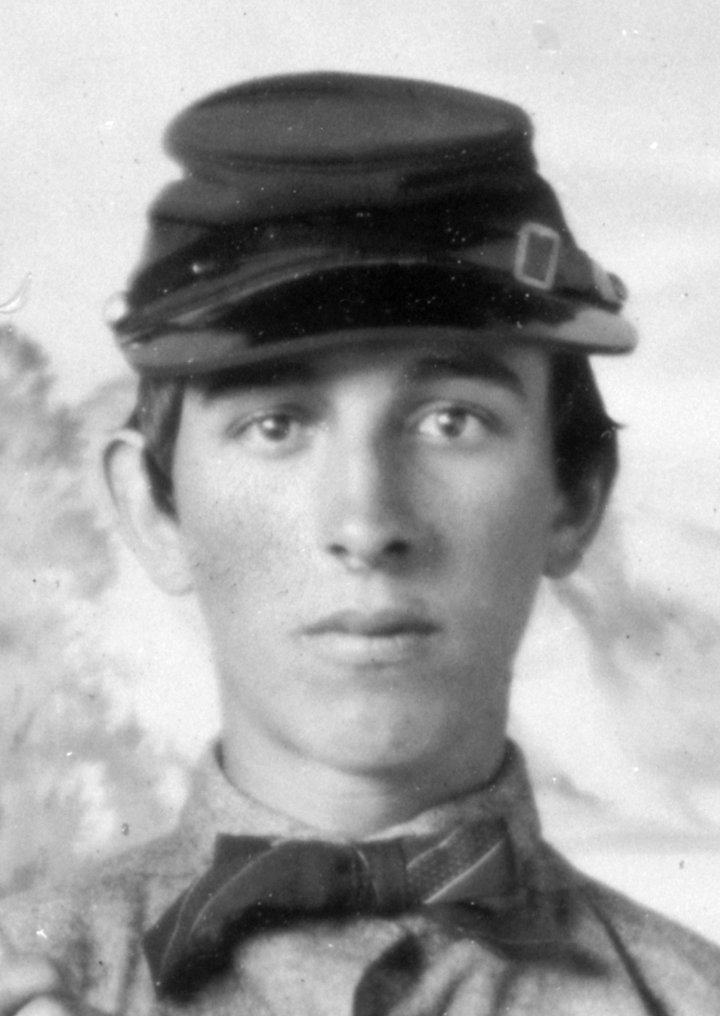
Pictures are from The Library of Congress.


Slavery And Global Warming

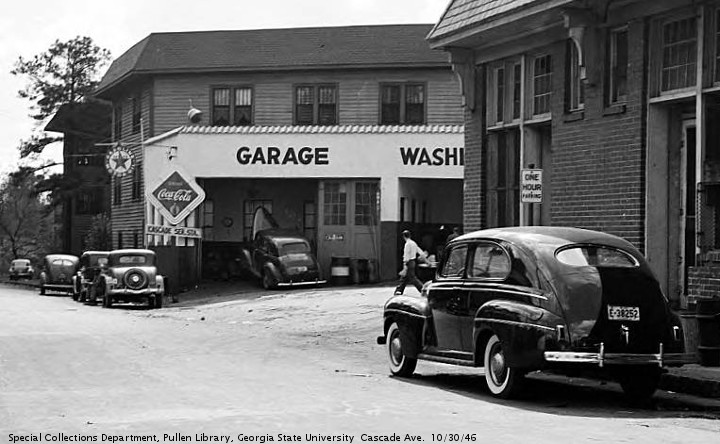


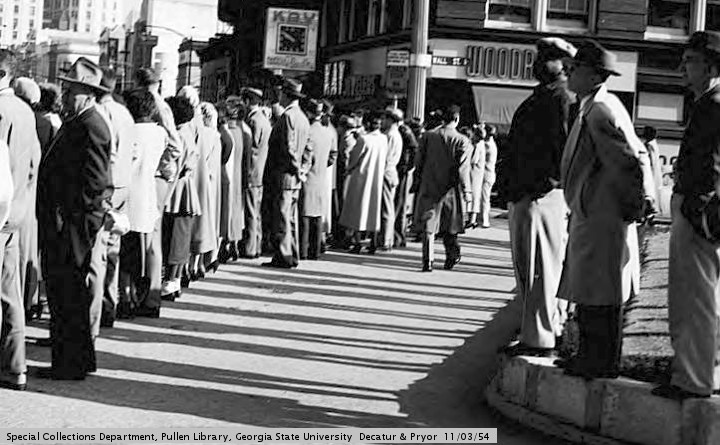
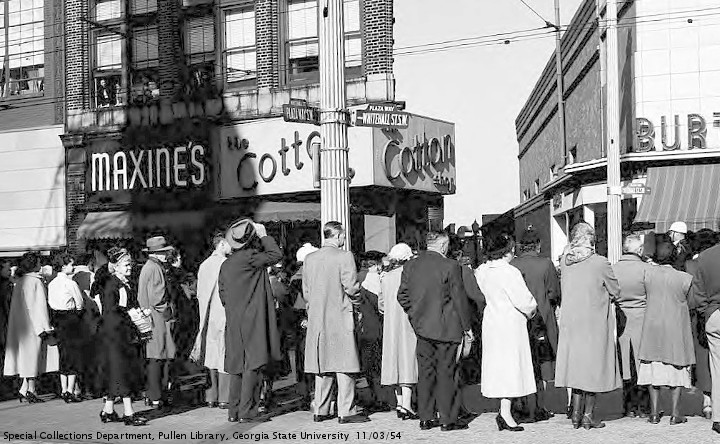
Have you ever wondered why your ancestors owned other human beings? How can you justify something this cruel? In an NPR interview to promote a new book, 1861: The Civil War Awakening, Adam Goodheart has an answer. This is a repost.
It was economics. “But I think we think of it differently when we realize that the value of slave property, some $4 billion, enormous amount of money in 1861, represented actually more money than the value of all of the industry and all of the railroads in the entire United States combined. So for Southern planters to simply one day liberate all of that property would have been like asking people today to simply overnight give up their stock portfolios, give up their IRAs.”
Mr. Goodheart compares it to the situation today with fossil fuels. “many of us recognize that in burning fossil fuels we’re doing something terrible for the planet, we’re doing something terrible for future generations. And yet in order to give this up would mean sort of unraveling so much of the fabric of our daily lives, sacrificing so much, becoming these sort of radical eccentrics riding bicycles everywhere, that we continue somewhat guiltily to participate in the system. And that’s something that I use as a comparison to slavery, that many Americans in the North, and even I believe sort of secretly in the South, felt a sense of guilt, felt a sense of shame, that knew that the slave system was wrong but were simply addicted to slavery and couldn’t give it up. “
When the economic pressure is there, people will find a way to justify their actions. Slavery was justified in a number of ways. Today, there are people who deny the ill effects of using fossil fuels, and they have an eager audience. The payback for the environmental horror is in the future. This is similar to the way people today are paying … with racial turmoil … for slavery.
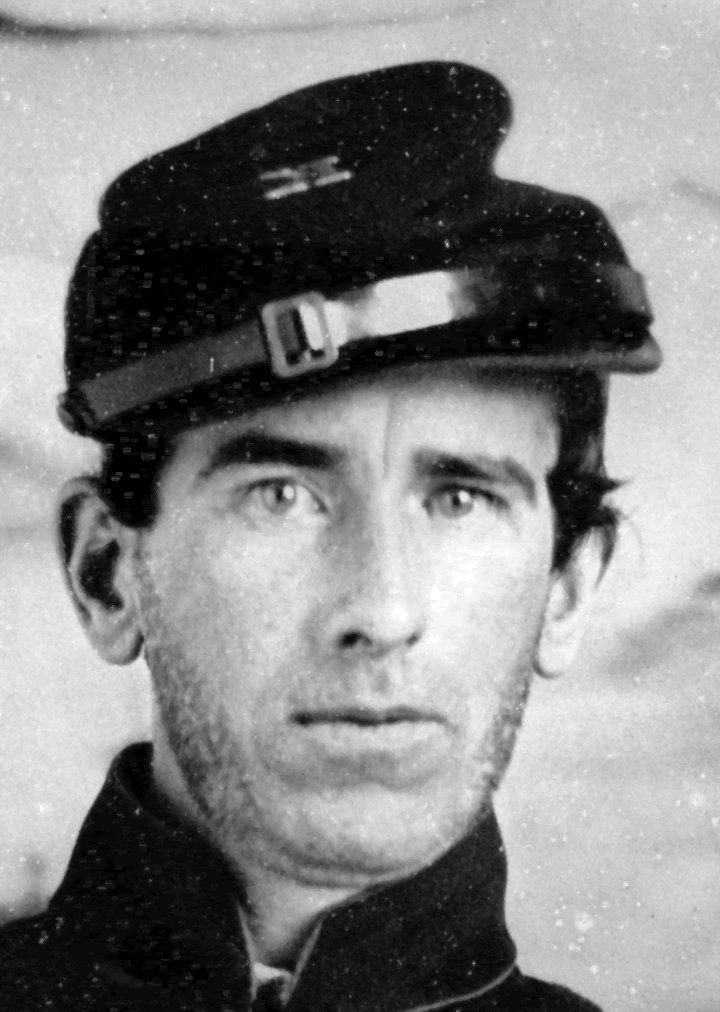
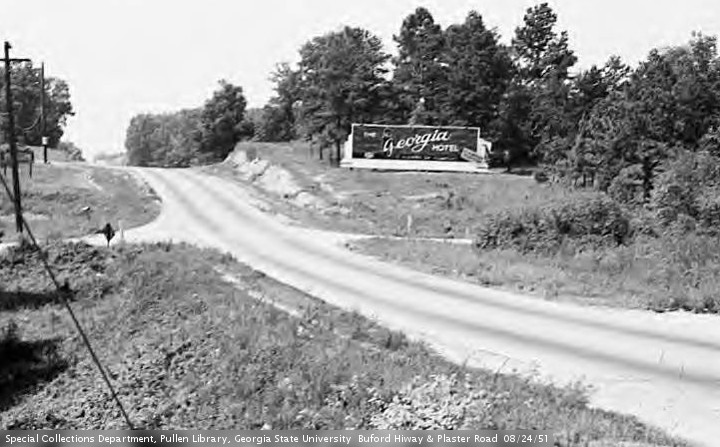
Pictures today are from “The Special Collections and Archives, Georgia State University Library”.


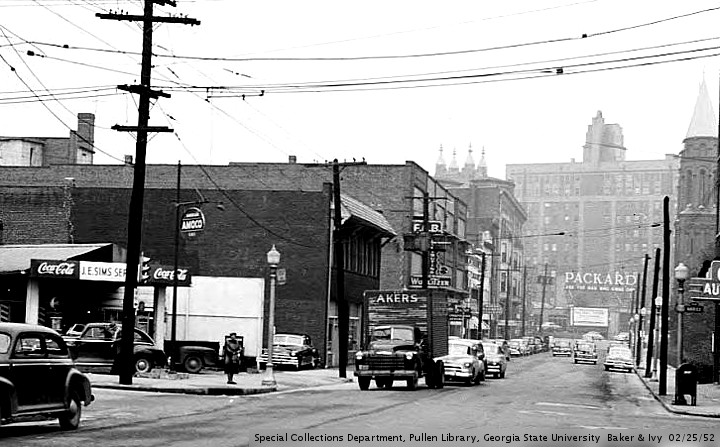
Who Invented The Word Racism? Part Two

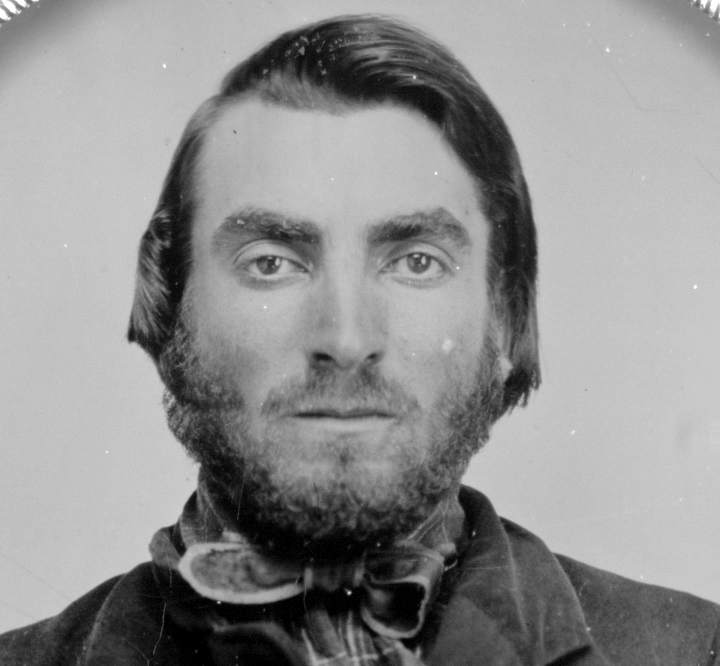
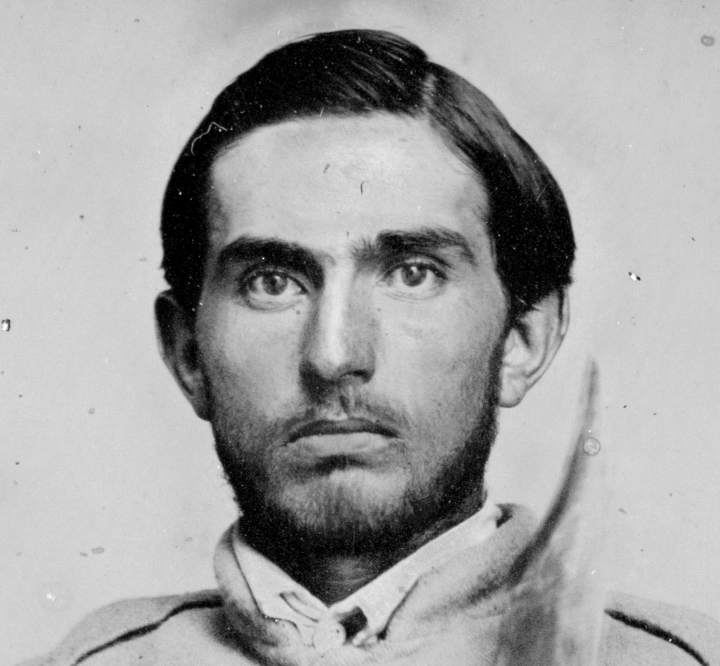
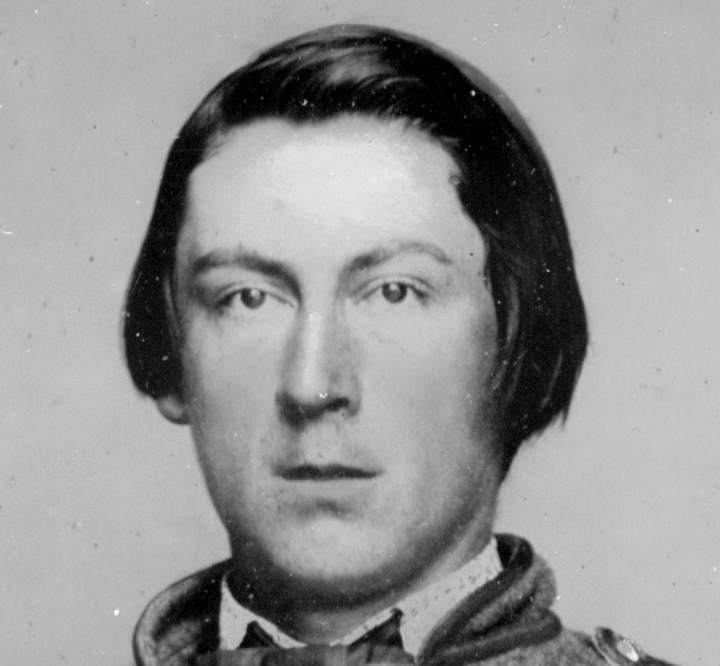
Last week this blog ran a story about the word racism. The story stated that the earliest use of the r-word was 1932. A comment led to The Ugly, Fascinating History Of The Word ‘Racism.’ Apparently, Col. Richard Henry Pratt used the word in 1902.
“The Oxford English Dictionary’s first recorded utterance of the word racism was by a man named Richard Henry Pratt in 1902. “Segregating any class or race of people apart from the rest of the people kills the progress of the segregated people or makes their growth very slow. Association of races and classes is necessary to destroy racism and classism.” Col. Pratt was speaking at the Lake Mohonk Conference of Friends of the American Indian.
It is always good to check out the context. Col. Pratt spoke at the Fourth session, Thursday Night, October 23, 1902. The event was well documented. There are some other noteworthy quotes.
“We have brought into our national life nearly forty times as many negroes as there are Indians in the United States. They are not all together citizen and equal yet, but they are with us and of us; distributed among us, coming in contact with us constantly, they have lost their many languages and their old life, and have accepted our language and our life and become a valuable part of our industrial forces.” The text capitalizes Indian, and presents Negro in lower case.
“It is the greatest possible wrong to prolong their Indianism, whether we do it for humanitarian or so-called scientific reasons. … The ethnologists prefer the Indian kept in his original paint and feathers, and as part and parcel of every exposition on that line. … It will be a happy day for the Indians when their ethnological value is of no greater importance than that of the negro and other races which go to make up our population.”
Col. Pratt “is best known as the founder and longtime superintendent of the Carlisle Indian Industrial School at Carlisle, PA.” While progressive for the times, many of the school’s policies were harsh.
“He pushed for the total erasure of Native cultures among his students. … The students’ native tongues were strictly forbidden — a rule that was enforced through beating. Since they were rounded up from different tribes, the only way they could communicate with each other at the schools was in English. … “In Indian civilization I am a Baptist,” Pratt once told a convention of Baptist ministers, “because I believe in immersing the Indians in our civilization and when we get them under, holding them there until they are thoroughly soaked.” … Pratt also saw to it that his charges were Christianized. Carlisle students had to attend church each Sunday, although he allowed each student to choose the denomination to which she would belong.” Carlisle closed in 1918.
“In 1875, Captain Richard Pratt escorted 72 Indian warriors suspected of murdering white settlers to Fort Marion in St. Augustine, FL. Once there, Pratt began an ambitious experiment which involved teaching the Indians to read and write English, putting them in uniforms and drilling them like soldiers. … News of Pratt’s experiment spread. With the blessing of Congress, Pratt expanded his program by establishing the Carlisle School for Indian Students to continue his “civilizing” mission. Although liberal policy for the times, Pratt’s school was a form of cultural genocide. The schools continued into the ’30s until administrators saw that the promised opportunities for Indian students would not materialize, theat they would not become “imitation white men.”
“Beginning in 1887, the federal government attempted to “Americanize” Native Americans, largely through the education of Native youth. By 1900 thousands of Native Americans were studying at almost 150 boarding schools around the United States. The U.S. Training and Industrial School, founded in 1879 at Carlisle Barracks, was the model for most of these schools. Boarding schools like Carlisle provided vocational and manual training and sought to systematically strip away tribal culture. They insisted that students drop their Indian names, forbade the speaking of native languages, and cut off their long hair.” As Col. Pratt said at the LMCFAI, “I also endorse the Commissioner’s short hair order. It is good because it disturbs old savage conditions.”
Col. Pratt was known for saying “Kill the Indian, and Save the Man” He probably meant that you should destroy the native culture, so the man inside could flourish. It is easy to misunderstand this type of rhetoric. The source of this phrase: “Official Report of the Nineteenth Annual Conference of Charities and Correction (1892), 46–59. Reprinted in Richard H. Pratt, “The Advantages of Mingling Indians with Whites,” Americanizing the American Indians: Writings by the “Friends of the Indian” 1880–1900 (Harvard University Press, 1973), 260–271.” There are some tasteful quotes.
“Inscrutable are the ways of Providence. Horrible as were the experiences of its introduction, and of slavery itself, there was concealed in them the greatest blessing that ever came to the Negro race—seven millions of blacks from cannibalism in darkest Africa to citizenship in free and enlightened America; not full, not complete citizenship, but possible—probable—citizenship.” Col. Pratt used African Americans as an example of how to assimilate Native Americans.
“The five civilized tribes of the Indian Territory—Cherokees, Choctaws, Chickasaws, Creeks, and Seminoles—have had tribal schools until it is asserted that they are civilized; yet they have no notion of joining us and becoming a part of the United States. Their whole disposition is to prey upon and hatch up claims against the government, and have the same lands purchased and repurchased and purchased again, to meet the recurring wants growing out of their neglect and inability to make use of their large and rich estate.”
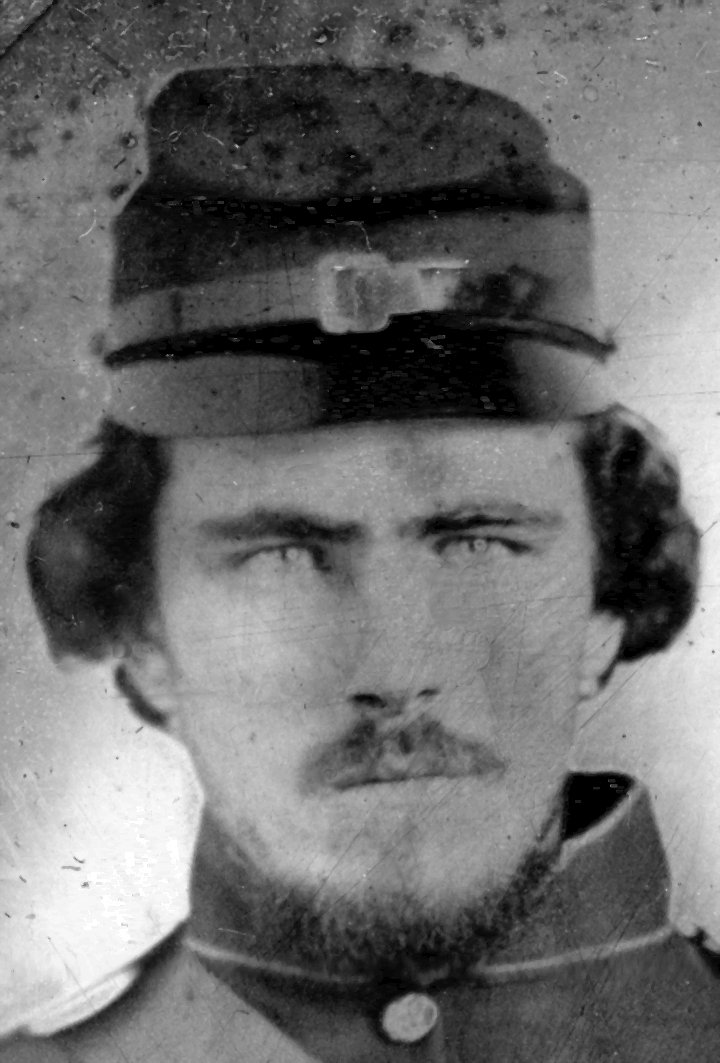
The best known student at the Carlisle School was Jim Thorpe, coached by Pop Warner. Wa-thohuck was born May 28, 1888, near Prague OK, into the Sauk and Fox Nation. He won gold medals in the pentathlon, and decathlon, at the 1912 Olympic Games in Stockholm, Sweden. It later came out that he had been paid to play semi-pro baseball, and was not an amateur. The gold medals had to be forfeited. Pictures today are from The Library of Congress.
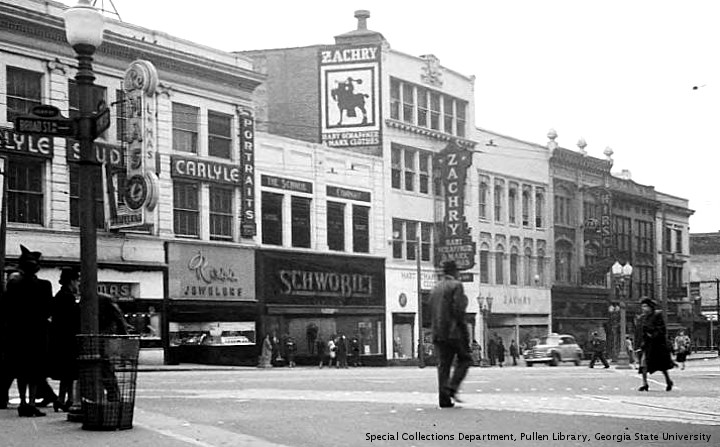
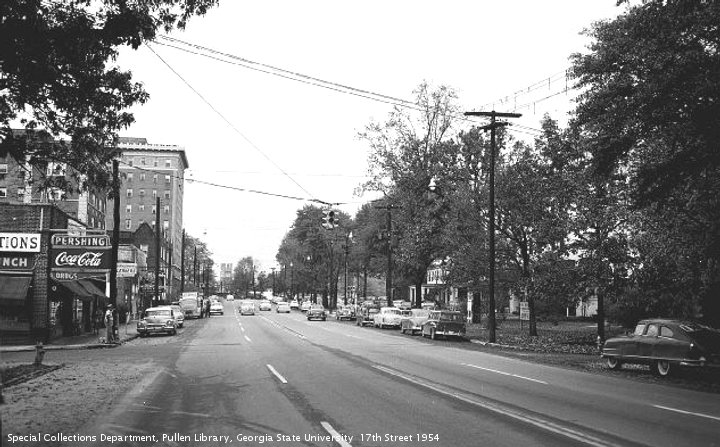
Peachtree Street


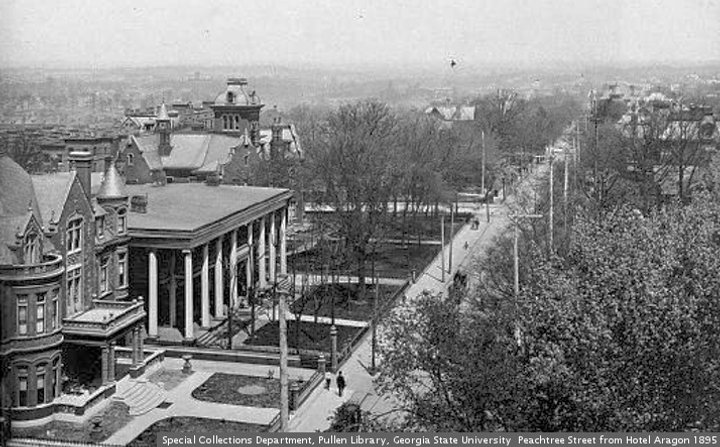

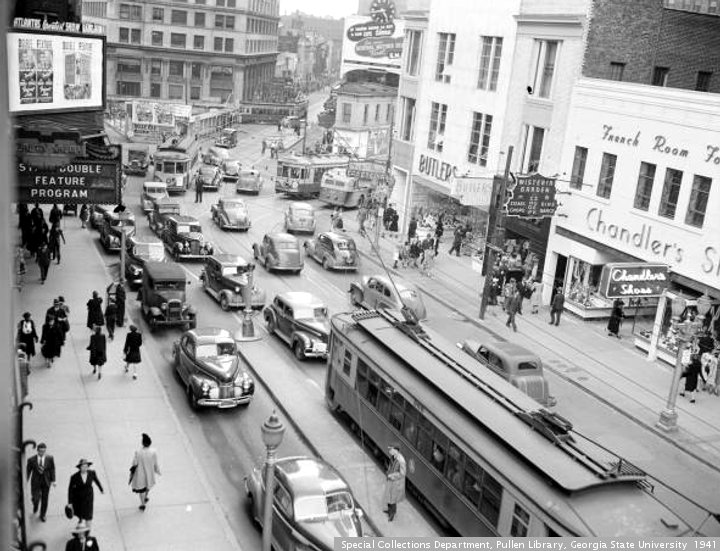
PG finished a book, Peachtree Street-Atlanta. The author is William Bailey Williford, and it was published by the University of Georgia Press in 1962. PG found this at the Chamblee library, and this is probably the best way to find this book today. (Reissued by UGA Press.)
How this road got the name Peachtree is a good question. Most peaches grow south of the fall line. The story goes that there was a Creek Indian village called Standing Peachtree, located where Peachtree Creek runs into the Chattahoochee. During the war of 1812 Fort Peachtree stood there.
There was a trail that ran from Buckhead to an intersection with the Sandtown Trail, at what is now Five Points. A short distance south of this intersection was a settlement known as White Hall. For many years, Peachtree Street south of Five Points was known as Whitehall Road. At some point in the last thirty years, a decision was made to change Whitehall to Peachtree. It did not help the rundown condition of Whitehall Street.
In 1835 Governor Wilson Lumpkin decided that a railroad that would be centered near the junction of Peachtree Trail and Sandtown Trail. The new town was named “Marthasville”, after the daughter of the Governor. Martha Lumpkin resides in Oakland Cemetery today.
The village was soon renamed Atlanta, which was a feminine form of Atlantic. Houses, churches, and businesses were soon built on Peachtree Road. In 1856, Richard Peters built a flour mill. To insure a steady supply of firewood, he bought four hundred acres of land, for five dollars an acre. The land was between Eighth Street, North Avenue, Argonne Avenue, and Atlantic Drive.
Another pioneer citizen with a large landholding was George Washington (Wash) Collier. Mr. Collier bought 202 acres for $150 in 1847. The land was between West Peachtree, Fourteenth Street, Piedmont Road, Montgomery Ferry Road, and the Rhodes Center. Much of the land was used for the development of Ansley Park.
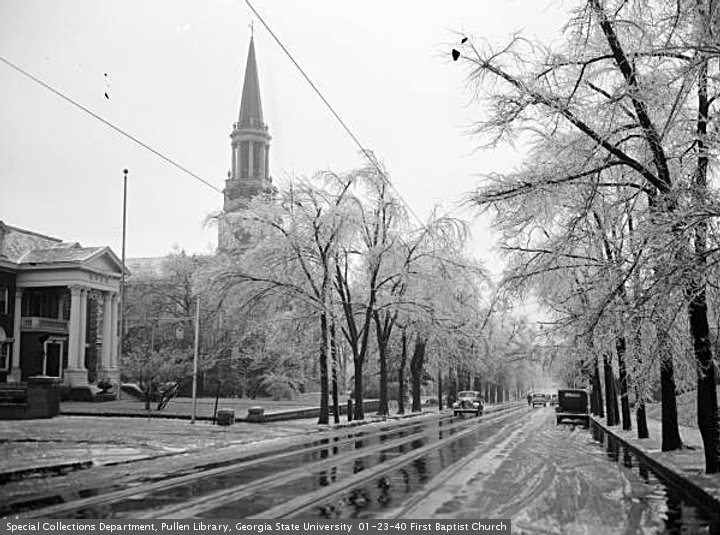

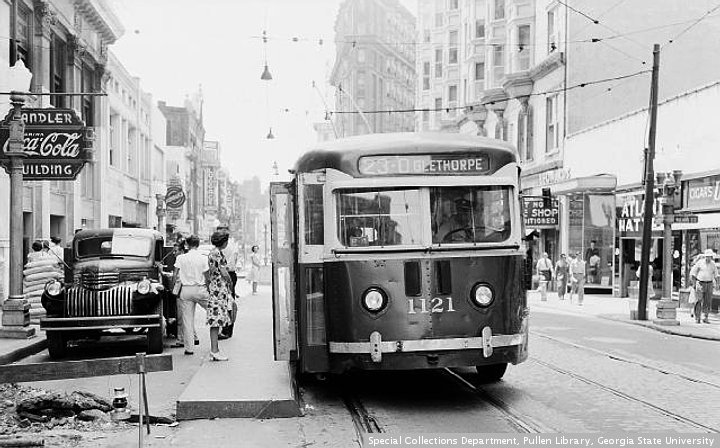
In 1854, Atlanta entertained, for the first time, a man who had been President. On May 2, Millard Fillmore arrived from Augusta on a private rail car.
There was some unpleasantness in 1864, which we will not concern ourselves with.
In 1866, there was a shocking murder. John Plaster was found dead, in an area known as “tight squeeze”. This was an area of shanties, at the present location of Crescent Avenue and Tenth Street. A hundred years later, this was near “the strip”, Atlanta’s hippie district, also called “Tight Squeeze”.
As the nineteenth century rolled along, many mansions were built on Peachtree Street. The road was paved, and streetcars ran up and down. Automobiles came, and came, and came. An expressway was built in the 1950’s, and quickly became obsolete. One by one, the mansions were torn down and replaced with businesses and churches.
The book was written in 1962, when the party was just getting started. The High Museum was known then as the Atlanta Art Association. In June of 1962, a plane full of prominent Atlanta residents crashed in Paris, killing all on board. As a memorial to those people, the Memorial Arts Center on Peachtree, at Fifteenth Street, was built.
Another phenomenon which is not explained by the book is the custom of naming everything here Peachtree. There are countless streets and institutions named for a fruit tree that likes warmer climates. Atlanta has a one street skyline, that stretches from Five Points to Peachtree Dunwoody Road, almost at the city limits. PG lives a quarter mile off Peachtree, in Dekalb County, and has no idea why Peachtree is a magic word.
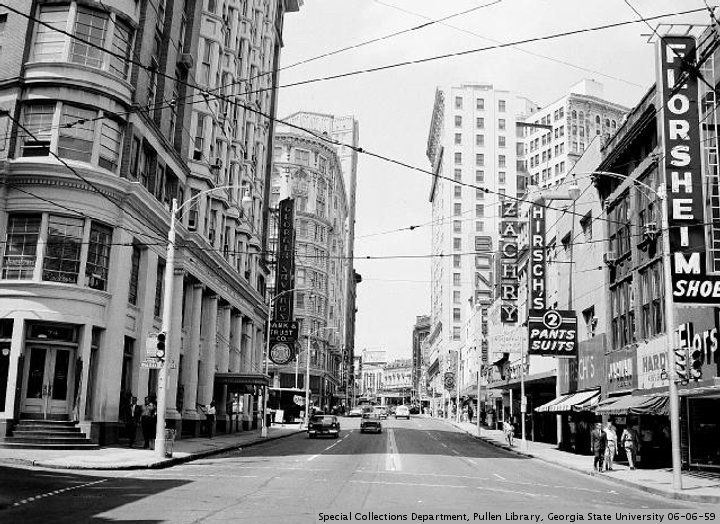
Pictures are from “The Special Collections and Archives, Georgia State University Library”. and The Library of Congress. This is the annual repost.



Billie Holiday Stories


How ‘Strange Fruit’ Killed Billie Holiday turned up in a facebook feed yesterday. The article states that Harry Jacob Anslinger “the first commissioner of the U.S. Treasury Department’s Federal Bureau of Narcotics,” ordered Billie Holiday to quit performing “Strange Fruit.” When the chanteuse declined, Mr. Anslinger had her arrested for heroin possession. Later, Mr. Anslinger was allegedly responsible for busting Miss Holiday on her deathbed.
The Hunting of Billie Holiday was the source given for the claim about Mr. Anslinger and “Strange Fruit.” The Politico article does not say that Mr. Anslinger ordered Miss Holiday to quit singing “Strange Fruit.” It does say that Louis McKay, one of the many no-good men in Miss Holiday’s life, narked her out. The bust was in 1947, after she had been performing “Strange Fruit” for several years. (Lady Sings The Blues says that Louis McKay was not in Miss Holiday’s life in 1947.)
Politico had one comment that set off the bs detector. “One day, Harry Anslinger was told that there were also white women, just as famous as Billie, who had drug problems—but he responded to them rather differently. He called Judy Garland, another heroin addict, in to see him.” Frances Gumm was well known for having substance abuse issues. The heroin business was news to a lot of people.
Johann Hari was the author of the politico article. At the time, he was promoting a book, Chasing the Scream, about the war on drugs. Johann Hari has a spotted reputation. “The author used to be the Independent’s star columnist, a prolific polemicist and darling of the left, until his career imploded in disgrace when it emerged in 2011 that many of his articles contained quotes apparently said to him but in fact lifted from his interviewees’ books, or from previous interviews by other journalists.”
The final bust, as Miss Holiday lay dying in the hospital, is part of the legend. A google search does not show what agency was responsible. Harry Anslinger may have been involved, and it may have been someone else. By this time, Elanora Fagan was in bad, bad shape. Years of drinking, and hard drugs, had worn her out. While the hospital bust may have hastened her demise, it is a bit of a stretch to say the Harry Anslinger killed Billie Holiday, because she sang “Strange Fruit.”
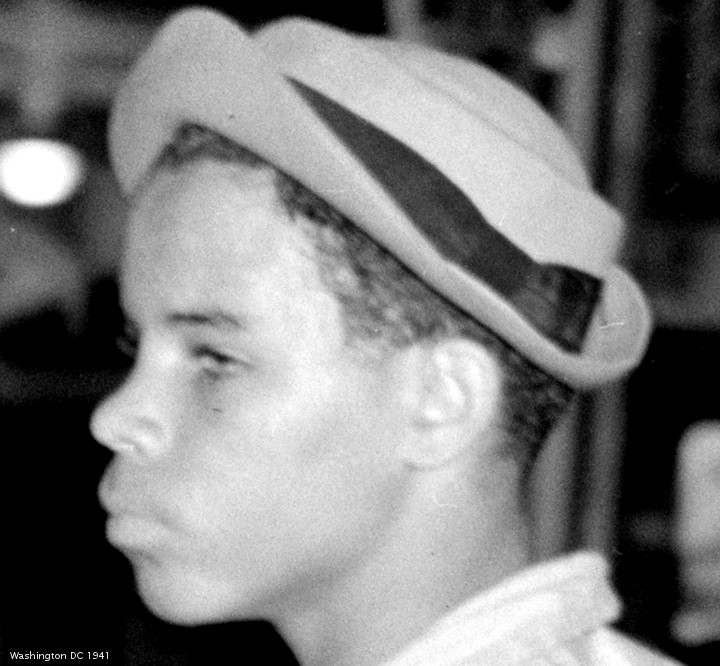
This is a repost. Pictures today are from The Library of Congress.

Lady Sings The Blues is the autobiography of Billie Holiday. PG read it in 1978, and pulled it off the shelf recently. The copy he has is was a 1972 paperback, issued in conjunction with the movie. A picture of Diana Ross is on the cover, as well as a price sticker from Woolco. The book sold for $1.25. Pictures today are from The Library of Congress. The spell check suggestion for Woolco is Cool.
William Dufty was the ghost writer. His prose is easy to read, with the story flowing out like a Lester Young solo. The 1956 copyright is assigned to “Eleanora Fagan and William Dufty,” using the birth name of the singer. Mr. Dufty was a newspaper writer. “Dufty had one son, Bevan Dufty, with first wife Maely Bartholomew, who had arrived in New York City during World War II after losing most of her family in the Nazi concentration camps. She settled near Harlem where she met her best friend and Bevan’s godmother, Billie Holiday.”
“Bevan Dufty would agree. He’s one of the childless singer’s two godchildren. … “Holiday said motherf — all the time, in her gravelly elegant way,” recalled Dufty, sitting in his City Hall office. His mother, Maely, a Czech Jewish immigrant who loved jazz, was close to many musicians and even managed the unmanageable Charlie Parker for a spell, learned to curse from Holiday. But with a European accent. Much of what Dufty knows of Holiday comes from his late mother, who was married to actor Freddie Bartholomew before her brief marriage to William Dufty, one of her seven husbands. Maely, who took her infant son by train to Philadelphia every day to attend yet another of Holiday’s drug trials, was so distraught by the singer’s death that she dedicated herself to helping recovering addicts. A number of musicians lived at the Duftys’ place while kicking the habit (William and Maely Dufty divorced not long after Holiday’s death, and he later married actress Gloria Swanson, who inspired him to write the book “Sugar Blues” about the dangers of processed sugar).”
Billie Holiday’s bio, ‘Lady Sings the Blues,’ may be full of lies, but it gets at jazz great’s core Autobiographies are, by their nature, self serving. This one has a great opening line… ” “Mom and Pop were just a couple of kids when they got married. He was eighteen, she was sixteen, and I was three.” (“Her parents were never married. When she was born, her mother was 19, her father was 17 and they never lived under the same roof.”) Another source adds: “Some of the material in the book, however, must be taken with a grain of salt. Holiday was in rough shape when she worked with Dufty on the project, and she claimed to have never read the book after it was finished. Around this time, Holiday became involved with Louis McKay. The two were arrested for narcotics in 1956, and they married in Mexico the following year. (March 28, 1957) Like many other men in her life, McKay used Holiday’s name and money to advance himself.”
Louis McKay is at the center of another misunderstanding of facts. The Hunting of Billie Holiday claimed that Mr. McKay narked out Miss Holiday in 1947, and set up her first drug bust. LSTB tells a different story. Here, Miss Holiday meets Mr. McKay very briefly in 1931. Someone was trying to rob Mr. McKay. Miss Holiday said “He’s my old man,” and chased off the robber.
Fast forward twenty five years, and Miss Holiday connects with Mr. McKay. “I hadn’t seen him since I was sixteen and he wasn’t much older and I was singing at the Hotcha in Harlem.” The two were married in 1957. They got busted as LSTB ends. Either Politico is wrong about the 1947 bust, or Miss Holiday did not tell the whole story. Either way, Harry Anslinger is not mentioned in LSTB.
Tallulah Bankhead is another missing piece of the puzzle. Reportedly, Miss Bankhead and Miss Holiday were close friends, and possibly lovers. That was over by the time LSTB was written. “When “Lady Sings the Blues” was being prepared, Miss Bankhead got an advance copy, and was horrified by what she saw. A fierce note was sent to the book’s publisher, and scenes were edited out. Miss Holiday was outraged. The letter that resulted is a poison pen classic. “My maid who was with me at the Strand isn’t dead either. There are plenty of others around who remember how you carried on so you almost got me fired out of the place. And if you want to get shitty, we can make it a big shitty party. We can all get funky together!”
Miss Bankhead does make an appearance in LSTB. On page 117, Miss Holiday is describing playing a maid, in a movie. She was not pleased at the typecasting. “Don’t get me wrong. I’ve got nothing against maids – or whores – whether they’re black or white. My mother was a maid, a good one, one of the greatest. My stepmother is Tallulah Bankhead’s maid right now, and that’s a part I’d even consider when they do her life story.” (Miss Bankhead had her own domestic help problems. In 1951, Evyleen Cronin, Tallulah’s maid and secretary, was accused of stealing $10,000-30,000 from Tallulah during her employment. … The case went to trial (much to Tallulah’s embarrassment) and Cronin was convicted.” Many embarrassing details about Miss Bankhead’s life came to light during this trial. Fanny Holiday, the stepmother, is probably a different person than Evyleen Cronin.)
Whatever it’s factual challenges, Lady Sings the Blues is a powerful book. Miss Holiday had a tough life, to say the least. As the singer for Artie Shaw’s big band, Miss Holiday was an integration pioneer, and every two bit cracker wanted to make trouble. Later, she was addicted to heroin, got busted, served time in prison, only to get out and suffer some more.
Three years after LSTB came out, things went from bad to horrible. “In early 1959 she found out that she had cirrhosis of the liver. The doctor told her to stop drinking, which she did for a short time, but soon returned to heavy drinking. … On May 31, 1959, Holiday was taken to Metropolitan Hospital in New York suffering from liver and heart disease. She was arrested for drug possession as she lay dying, and her hospital room was raided by authorities. Police officers were stationed at the door to her room. Holiday remained under police guard at the hospital until she died from pulmonary edema and heart failure caused by cirrhosis of the liver on July 17, 1959.” This is a repost.


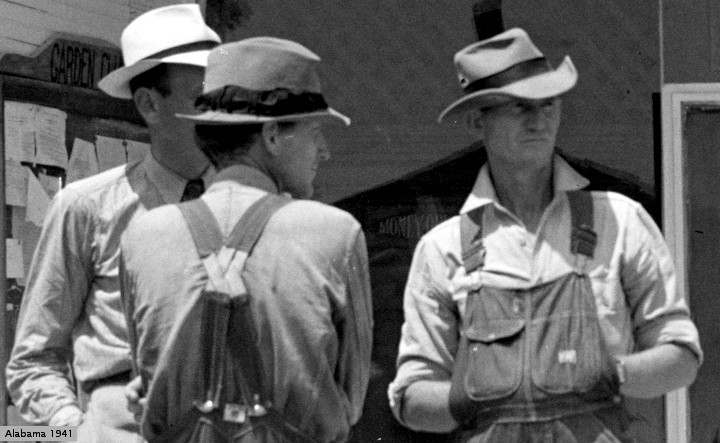
Gloomy Sunday
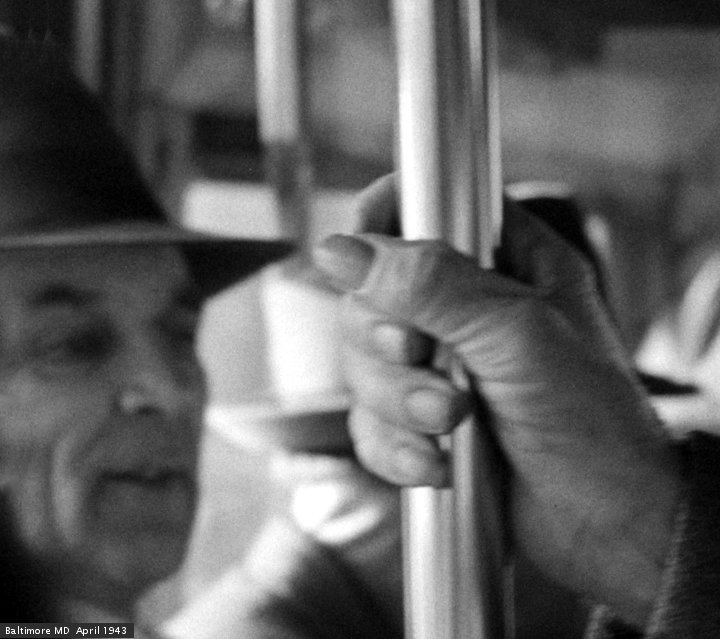
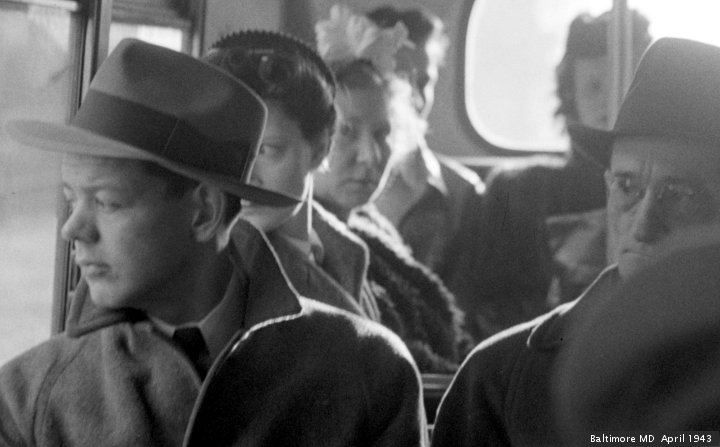

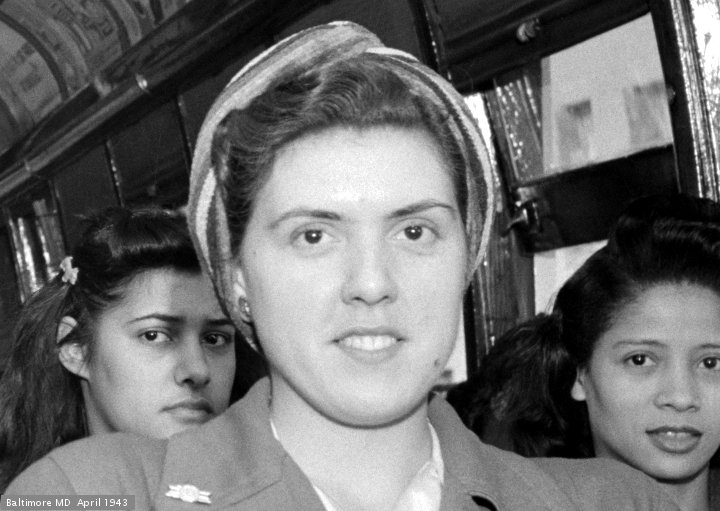

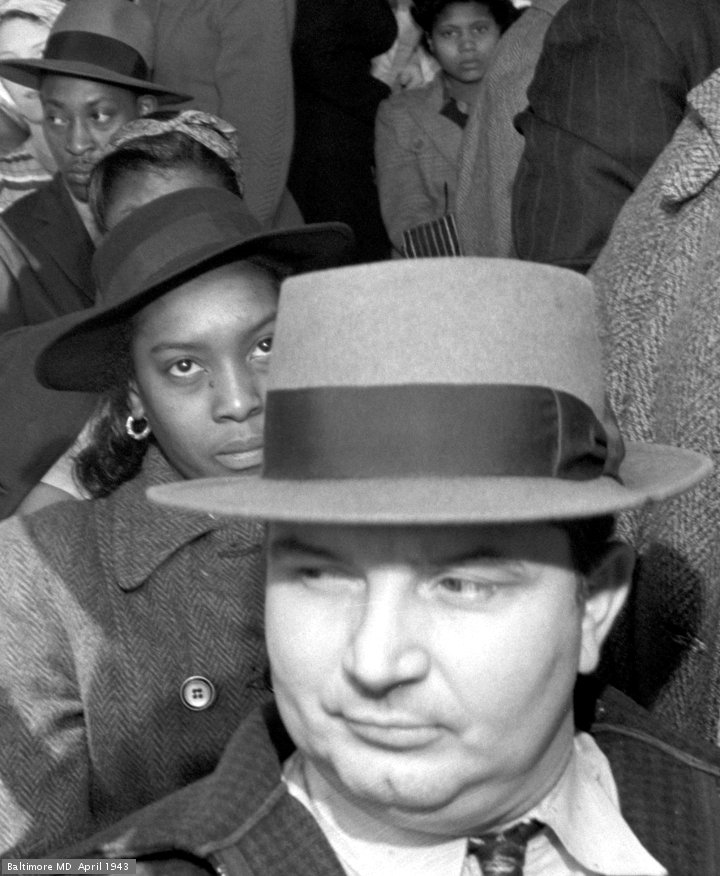
Billie Holiday had a hit with Gloomy Sunday in 1941. The legend is that people would listen to the song, and kill themselves. As a result, the song was banned from the radio. Or was it?
Gloomy Sunday was written in 1933 by Rezső Seress. Additional lyrics were later written by László Jávor. It became known as the “Hungarian Suicide Song”, and was reportedly banned in Hungary. An english translation (which is said to not do justice to the original Hungarian) was rendered.
Gloomy Sunday has a melancholy sound, even as an instrumental. The story is about a person…it is not gender specific…who decides to join a loved one who has died. A third verse was added, to the english version, where the singer says it was all a dream.
Gloomy Sunday became popular in the United States. And the suicide stories started to spread, along with rumors that the song had been banned from the radio. (It was indeed banned by the BBC.) There are indications that these rumors were part of a publicity campaign.
The urban legend busters snopes. calls the story “undetermined”. Legends like this get a life of their own. A grieving person hearing this song on a dreary Sunday is not going to be uplifted. One thing is known for sure…the original composer did take his own life. Rezső Seress jumped off a tall building in Budapest in 1968. The legend is he had never had another hit song after writing “Gloomy Sunday”. This repost has pictures from The Library of Congress.

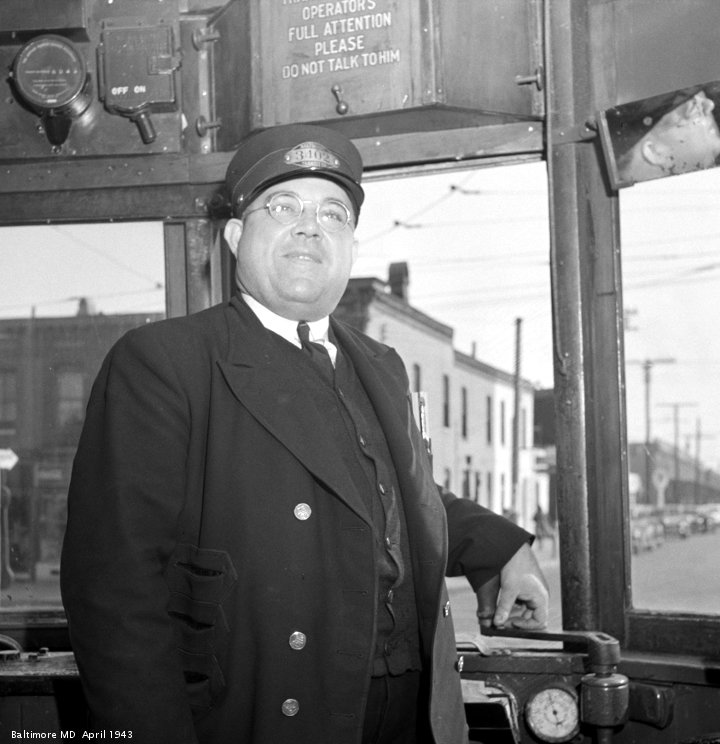


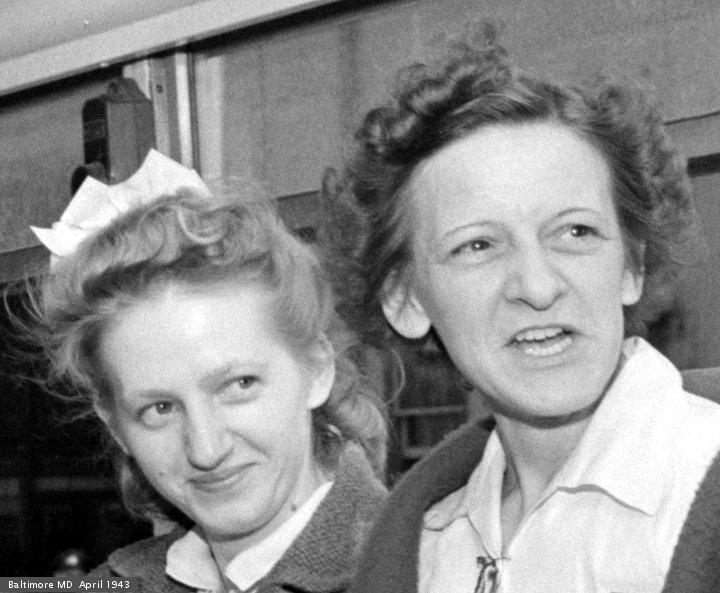

Abraham Lincoln and Charles Darwin
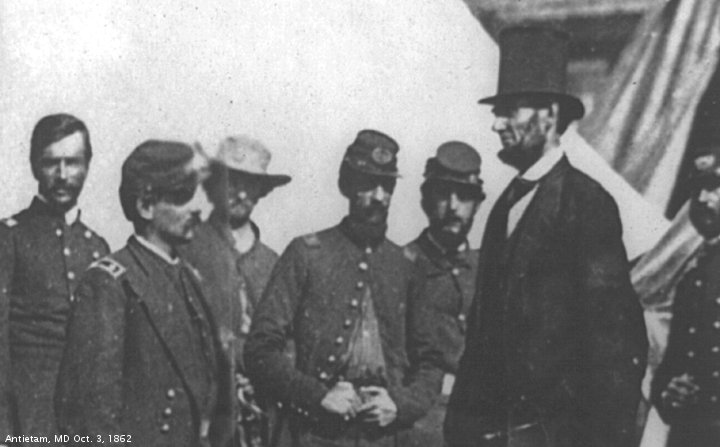

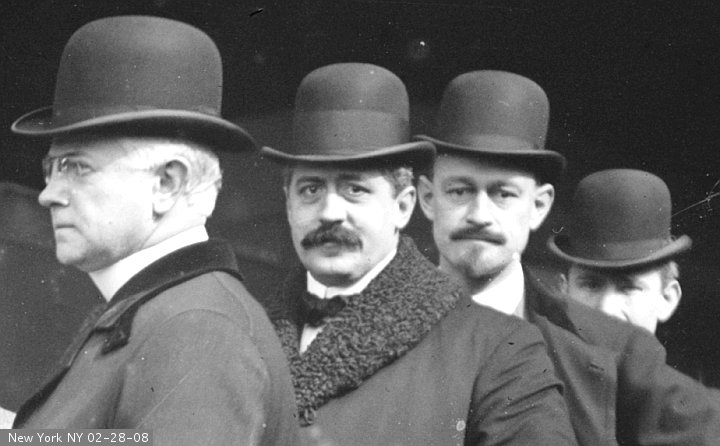

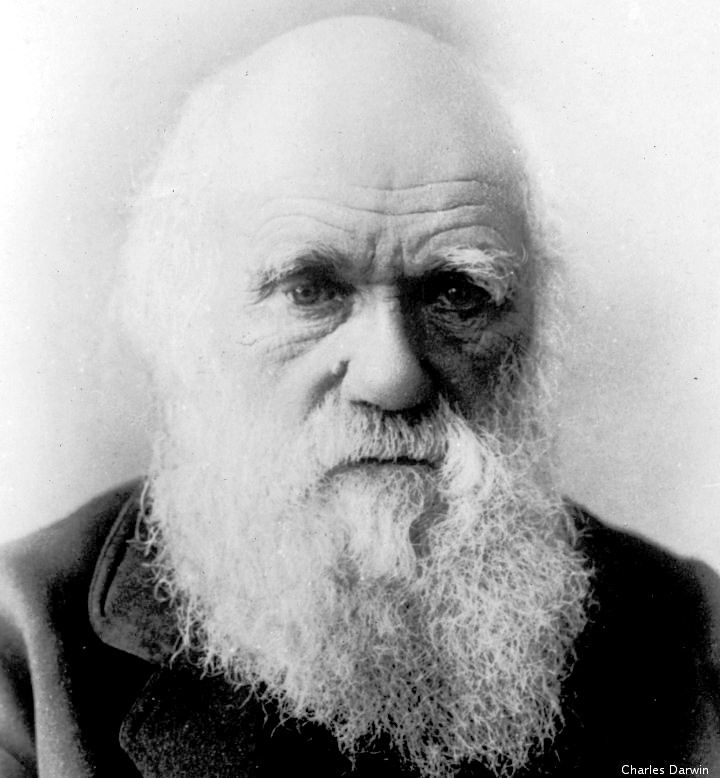
Today is the 212th birthday of Abraham Lincoln and Charles Darwin. This used to be a holiday in the US, along with Washington’s BD on February 22. The two were combined into President’s Day.
It is unlikely that the two met, or knew much about the other. “On the origin of species” was published in 1859, as the United States teetered on the brink of catastrophe. There is a certain “Darwinism” in the way the unpleasantness of the eighteen sixties went down. The northeast quadrant of the United States gained dominance over a large chunk of North America, at a horrible cost. The concept that a human being could literally own another human being was banished.
There are two other anniversaries of note today. On February 12, 1733, James Oglethorpe landed a boatload of debtors on the future site of Savannah. This was the start of the Colony/State of Georgia.
There is another that continues the symmetry of Darwin/Lincoln, and was exactly 100 years later. On February 12, 1909, the NAACP was founded. On February 12 1904, Ted Mack, host of the Original Amateur Hour, was born. To make room for all this talent, on February 12, 1942, Grant Wood (painter of “American Gothic”) went to that village in the sky. He left the pitchfork behind.
This is a repost. Pictures are from The Library of Congress
What Is Dirty About Louie Louie?


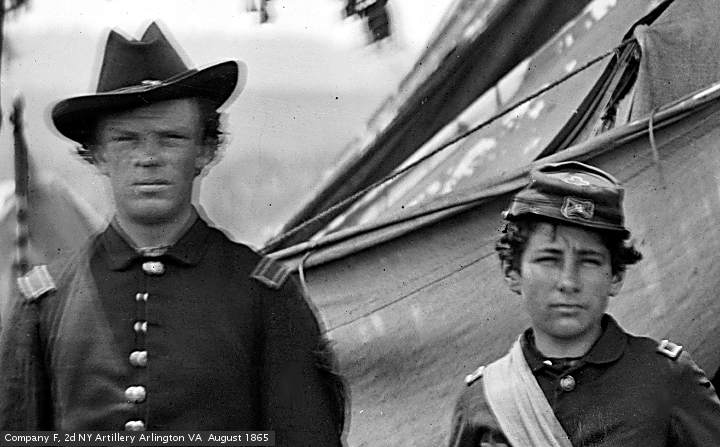
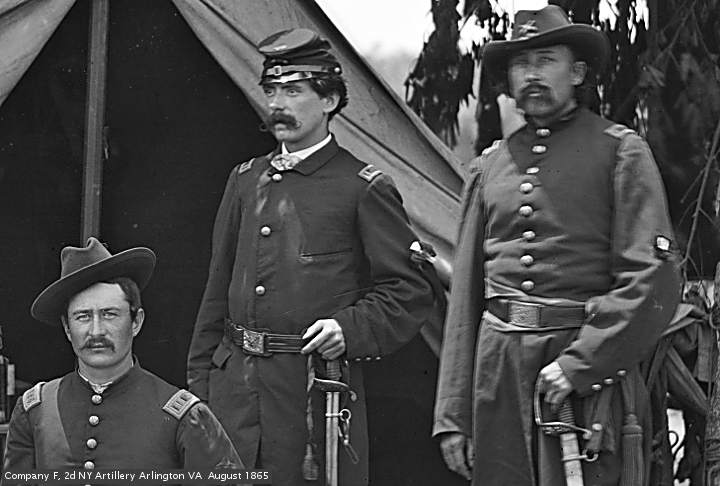
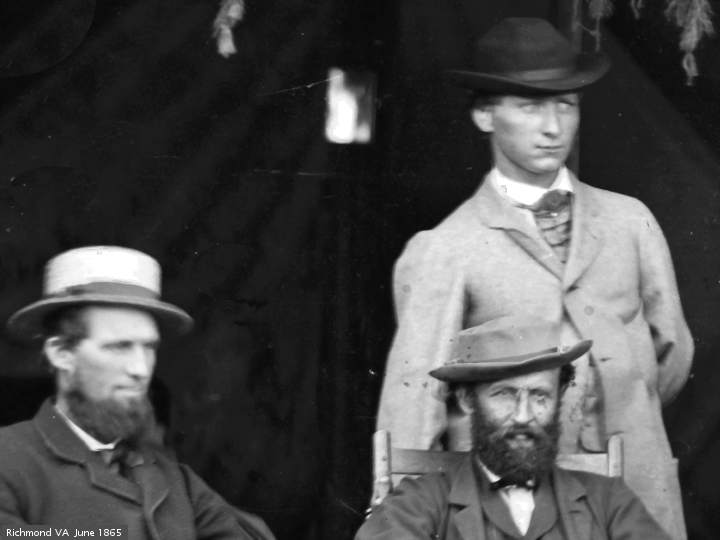
The sixties were a great time to be a kid. As long as you were too young for a Vietnam Vacation, there were kicks to be had.
One of the more enduring legends was the dirty lyrics to “Louie Louie”. Recorded by an obscure band called the Kingsmen, the song was a massive hit in 1963 (It never was Number One). When WQXI put out lists of the greatest songs of all time, “Louie Louie” was at the top of the list. This is despite, or because of, the raucous sound. The song was recorded in one take, when the band thought they were playing a rehearsal. The vocals are difficult to make sense of, and rumored to be obscene. No one was ever quite sure why. With the garbled sound on the record, the listener could hear almost anything they wanted to.
The Governor of Indiana, Matthew Welsh, banned radio stations from playing the song in that state. On February 7, 1964, Attorney General Robert Kennedy got a letter from an outraged parent about the lyrics to “Louie Louie”. An F.B.I. investigation followed. After thirty months of investigation, the Bureau concluded that they could not make sense of the lyrics.
PG had a neighbor named Carol. A tomboy who could whip most of the boys, she had a pet skunk named Napoleon. Carol claimed to have heard a band at Lenox Square play “Louie Louie”. “He said the words real slow so you could understand them. I can’t repeat what he said, but it was dirty”.
Louie, Louie Oh no, me gotta go.
Yeah, yeah, yeah, yeah, yeah, said, ah
Louie, Louie Oh, baby, me gotta go
A fine little girl she waits for me Me
catch a ship for cross the sea.
Me sail that ship all alone Me never think how I make it home.
Ah, Louie, Louie No, no, no, no, me gotta go.
Oh, no. Said, Louie, Louie Oh, baby, said we gotta go.
Three nights and days I sail the sea Think of girl, oh, constantly.
Ah, on that ship I dream she there
I smell the rose, ah, in her hair.
Ah, Louie, Louie Oh, no, sayin’ we gotta go.
Yeah, yeah, yeah, yeah, yeah,
but, ah, Louie, Louie Oh, baby, said, we gotta go.
[Yelled] Okay, let’s give it to ‘em right now! [instrumental]
Me see Jamaica, ah, moon above.
It won’t be long, me see me love.
Take her in my arms again, I got her; I’ll never leave again.
Ah, Louie, Louie Oh, no, sayin’ me gotta go.
Yeah, yeah, yeah, yeah, yeah
But, ah, Louie, Louie Oh, baby, said, ah, we gotta go.
I said we gotta go now, Let’s get on outta here.
[Yelled] Let’s go.
Transcribed by David Spector Sept. 2000 Public Domain. If anyone reading this can explain what was so dirty about this song, please leave a comment. Thank you Wikipedia for your help in assembling this. This is a repost. Pictures by The Library of Congress



Tallulah Bankhead And Billie Holiday

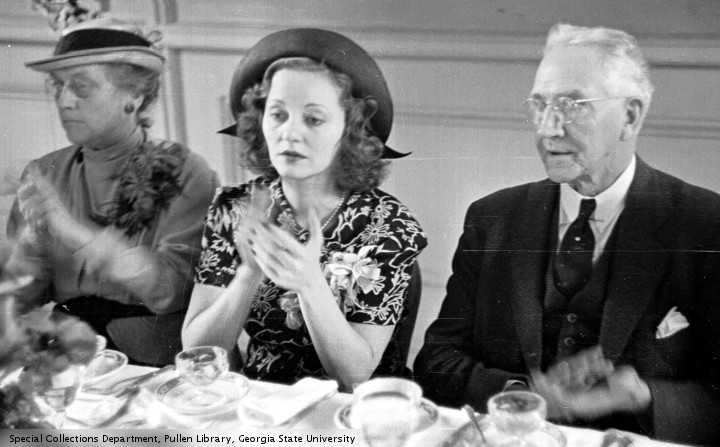
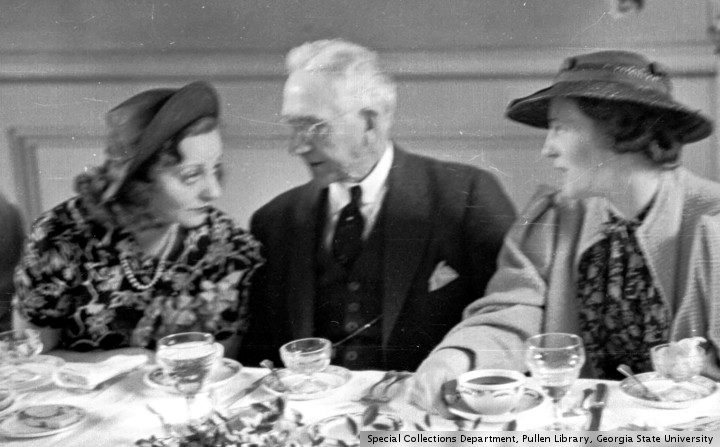
Tallulah Brockman Bankhead was born January 31, 1902 in Huntsville AL. She had a year-older sister, Eugenia. Their mother died February 23, 1902. Legend has it her last words were “Take care of baby Eugenia. Tallulah can take care of herself.” This is a repost.
The father of the actress was Will Bankhead. He was a prominent politician, who served as Speaker of the House of Representatives in Washington. Mr. Bankhead was on the short list of Vice Presidential candidates for Franklin Roosevelt, but was passed over. The Bankhead national forest, and the Bankhead Highway, are both named for Will Bankhead.
Tallulah Bankhead was an actress, radio show hostess, and personality. She went to London in the early twenties and became a stage sensation. Returning home, she became a Broadway star with “The Little Foxes.” She made movies, but saved her best public performances for the stage.
Miss Bankhead was known for being sexually active, with both men and women. Hattie McDaniel, who played Mammie in Gone With The Wind, was rumored to be one of her “friends”. Her introduction to Chico Marx went like this: “Miss Bankhead.” “Mr. Marx.” “You know, I really want to fuck you.”. “And so you shall, you old-fashioned boy.”
One legend has Miss Bankhead at a dinner party with Dorothy Parker and Montgomery Clift. As might have been expected, the cocktail hour went on most of the evening. At one point, Mister Clift had his head in Miss Parker’s lap. “oh you sweet man, it’s too bad that you’re a cocksucker. He is a cocksucker, isn’t he?” Miss Bankhead replied “I don’t know, he never sucked my cock.”
Her most famous movie role was in “Lifeboat”, directed by Alfred Hitchcock. Her co stars complained that she was not wearing panties under her dress. Mr. Hitchcock posed the question, is this a matter for wardrobe, or for hairdressing?
In the fading days of radio, Tallulah was the host of “The Big Show”. She became known for her deep voice, and for saying “Dah-ling”. More than one guest got big laughs by calling her Mister Bankhead. After “The Big Show” ended, Miss Bankhead remained active on stage and television. She died December 12, 1968.
Miss Bankhead was a staunch Democrat, as is fitting for the political family she was raised in. During the McCarthy era, an actress friend of hers was accused of being a communist. Miss Bankhead made a statement of support for the actress on the radio, and then asked her, are you a communist? The actress said that her daddy was a republican, and so she guessed that was what she was. Miss Bankhead was horrified. “A republican! That’s worse than being a goddamn communist.”
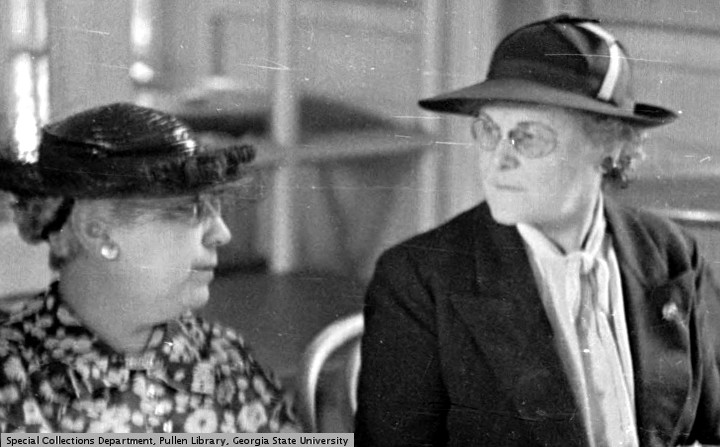
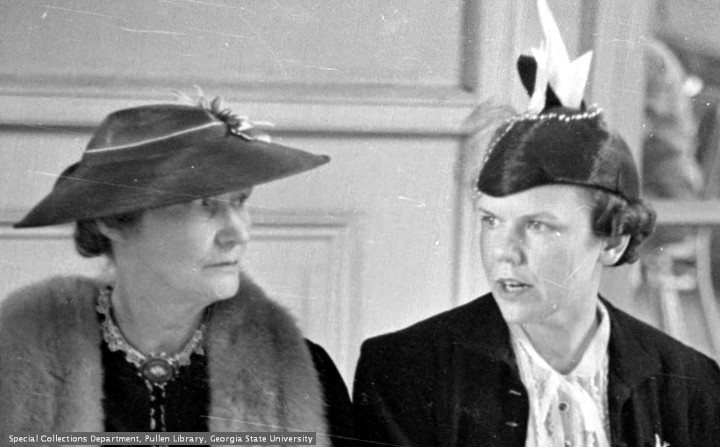

One of Miss Bankhead’s more explosive friendships was with Billie Holliday. “The truth of the matter suggests they probably first met in the early 1930’s, well before Holiday ever became famous. What is known is that by 1948 they were bosom buddies. A year earlier, Holiday entered the Alderson Federal Reformatory for Women to serve her famous “one day and a year” sentence, after being found guilty on dope charges. Four months after her release in 1948, Holiday was appearing at New York’s Strand Theater with Count Basie on the first leg of a cross-country tour. At the same time, Tallulah Bankhead was nearby on Broadway starring in her hit play, Private Lives. Bankhead caused quite a commotion every night thundering late down the aisle during Billie’s show to sit in her special seat to stare in amazement at the gifted & stunningly beautiful Lady Day. Because Holiday’s license to perform in nightclubs had been revoked, and she was forced to earn her living in grueling tours on the road. For months after the Strand performance, Bankhead traveled with her whenever she could. Also on the tour was dancer/comedian James “Stump Daddy” Cross – nicknamed after his wooden leg, who joined the two famous ladies to make a treacherous threesome.”
“…it appears that during the late 1940s she and Holiday were also lovers. Perhaps they had been all along. Holiday later told William Dufty, who ghostwrote her autobiography, that when Tallulah visited backstage at the Strand Theatre, the thrill she took in exhibitionistic sex made her insist on keeping Holiday’s dressing room door open. Holiday later claimed that Tallulah’s brazen show of affection almost cost her her job at the Strand.”
Before long, Miss Holiday got busted again. Apparently, Miss Bankhead made a phone call to FBI director J. Edgar Hoover, asking for leniency. There is a remarkable thank you – you’re welcome correspondence between Miss Bankhead and Mr. Hoover. “As my Negro Mammy used to say ‘When you pray, you pray to God don’t you……I had only met Billie Holiday twice in my life….and feel the most profound compassion for her…she is essentially a child at heart whose troubles have made her psychologically unable to cope with the world in which she finds herself…poor thing, you know I did everything within the law to lighten her burden”. “A giddy and twitterpated Hoover wrote back , “Your comments are greatly appreciated, and I trust that you will no hesitate to call on me at any time you think I might be of assistance to you.”
At some point, the two became less intimate. Miss Bankhead had her own legal headaches, and put some distance between her and Miss Holiday. When “Lady Sings the Blues” was being prepared, Miss Bankhead got an advance copy, and was horrified by what she saw. A fierce note was sent to the book’s publisher, and scenes were edited out. Miss Holiday was outraged. The letter that resulted is a poison pen classic. “My maid who was with me at the Strand isn’t dead either. There are plenty of others around who remember how you carried on so you almost got me fired out of the place. And if you want to get shitty, we can make it a big shitty party. We can all get funky together!”
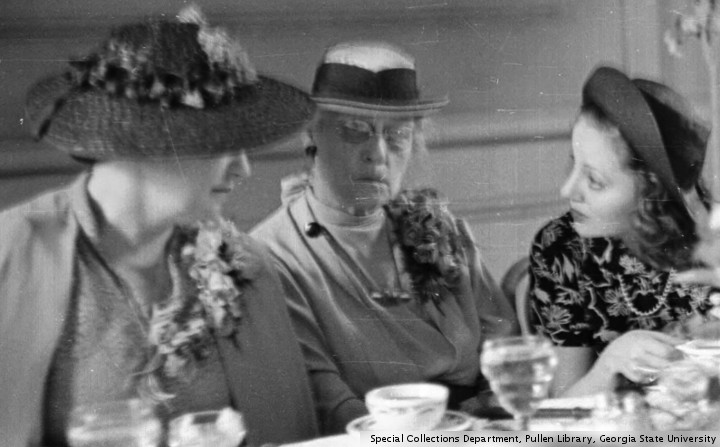
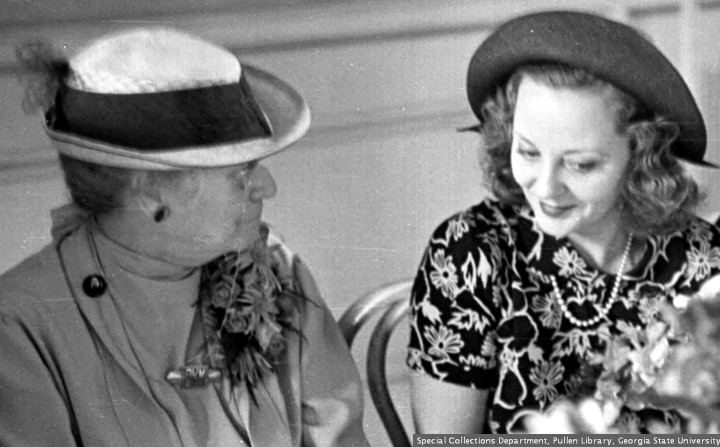
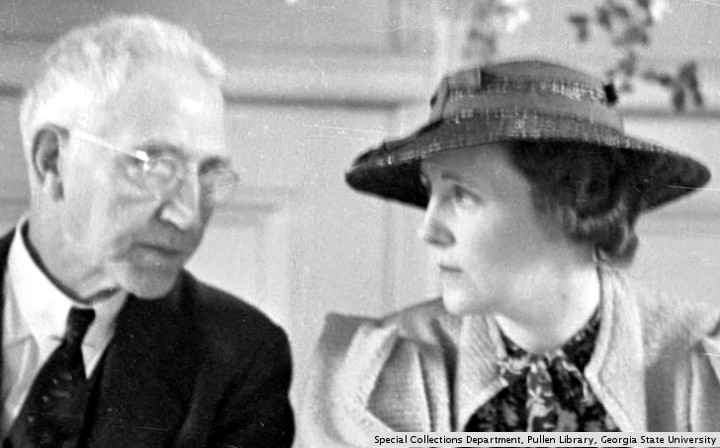
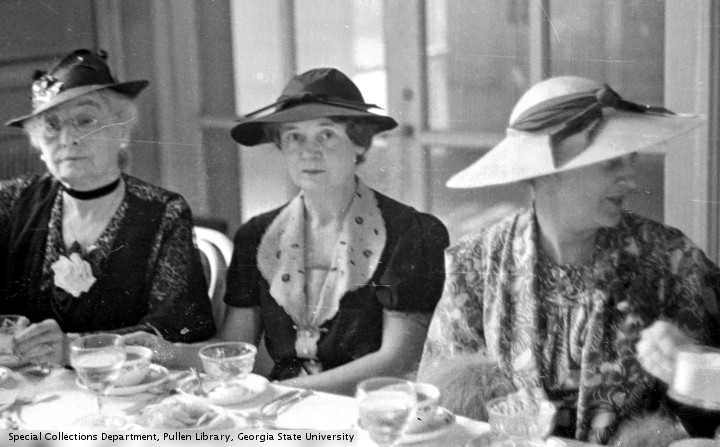
This is a repost. Pictures today are from “The Special Collections and Archives, Georgia State University Library”. “Members of the Atlanta Woman’s Club, during a luncheon for retiring president W.F. Milton, in the AWC banquet hall, in Atlanta, Georgia, March 5, 1937.” Picture of Billie Holiday from The Library of Congress.




1 comment