Quoting James Baldwin


James Arthur Baldwin has become a star on facebook, thirty five years after his death. People love to quote him, and post artsy pictures of his face. Over the past year I have seen three Baldwin memes that required action. Once you start to research, there is no telling what you are going to find.
“I can’t believe what you say because I see what you do.” This item is from a 1966 article that Mr. Baldwin wrote for The Nation. “One is in the impossible position of being unable to believe a word one’s countrymen say. “I can’t believe what you say,” the song goes, “because I see what you do”—and one is also under the necessity of escaping the jungle …”
“The song goes” is what the memes leave out. Ike Turner wrote the song. The Ikettes sing “I can’t believe…”, while Tina goes “agh, agh, agh, agh, agh, agh, agh, agh, agh.” Ike knew about being a no-good man. Tina looks a lot better in a short skirt than Mr. Baldwin did.
“I’d like to leave you with one more short quote from James Baldwin, “Whoever debases others is debasing himself.” This is from a June, 2020 video about racism. This quote is from Letter from a Region in My Mind, a 1962 essay in The New Yorker. “Letter…” clocks in at 22,114 words. Mr. Baldwin could crank out the word count.
“Letter…” covers a lot of ground. The “debase” quote comes in after Mr. Baldwin describes a visit to Elijah Muhammad, leader of the Nation of Islam. Soon, Mr. Baldwin starts talking about race in the United States. One quote stood out: “But white Americans do not believe in death, and this is why the darkness of my skin so intimidates them.”
“By this time, I was in a high school that was predominantly Jewish. This meant that I was surrounded by people who were, by definition, beyond any hope of salvation, who laughed at the tracts and leaflets I brought to school, and who pointed out that the Gospels had been written long after the death of Christ. … My best friend in high school was a Jew. He came to our house once, and afterward my father asked, as he asked about everyone, “Is he a Christian?”—by which he meant “Is he saved?” I really do not know whether my answer came out of innocence or venom, but I said, coldly, “No. He’s Jewish.” My father slammed me across the face with his great palm, and in that moment everything flooded back—all the hatred and all the fear, and the depth of a merciless resolve to kill my father rather than allow my father to kill me—and I knew that all those sermons and tears and all that repentance and rejoicing had changed nothing.”
“The place in which I’ll fit will not exist until I make it.” This quote proved more difficult to chase down. It does not appear in any of Mr. Baldwin’s work. The earliest mention appears to be behind The New Yorker paywall. “During his wanderings, Baldwin warned a friend who had urged him to settle down that “the place in which I’ll fit will not exist until I make it.” There is no link to a source.
The New Yorker article is cited by Lithub, which is then cited by New Transcendentalist. “These Timely James Baldwin Quotes … ,” from Bustle, credits the quote to “a 1957 letter to Sol Stein.”
Sol Stein “attended DeWitt Clinton High School, where he served on the Magpie literary magazine with Richard Avedon and James Baldwin.” We don’t know if Mr. Stein was the one who made David Baldwin slap his step-son. A paywalled article, about the correspondence between Mr. Stein and “Jimmy,” does not mention the “place in which I’ll fit” quote.
The WaPo article did have a mind-blowing quote. “In the introduction to the book, Baldwin would ponder his influences: “When one begins looking for influences, one finds them by the score. … the King James Bible, the rhetoric of the store-front church, something ironic and violent and perpetually understated in Negro speech…” I saw this quote in 1976, in a college textbook. At the time, I thought this was an amazing quote. It stayed in my mind until the next life changing detail came along, not to be thought of again for forty six years.
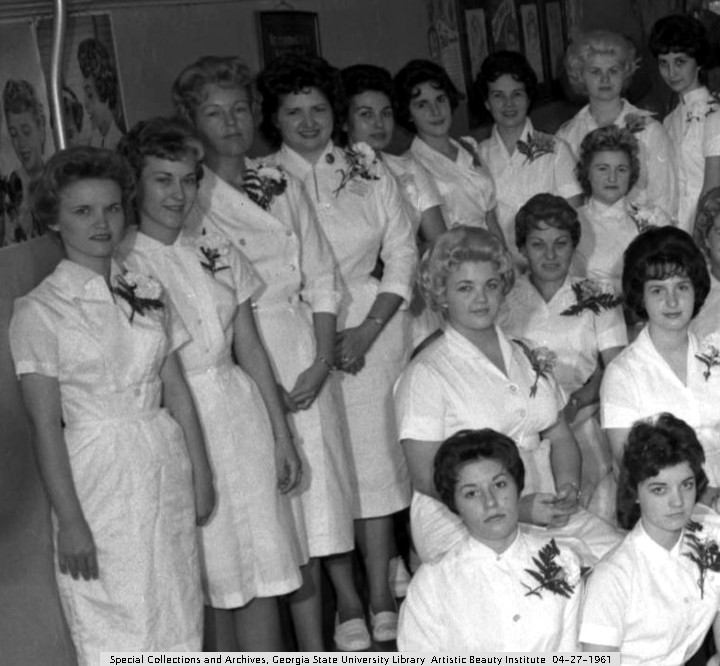
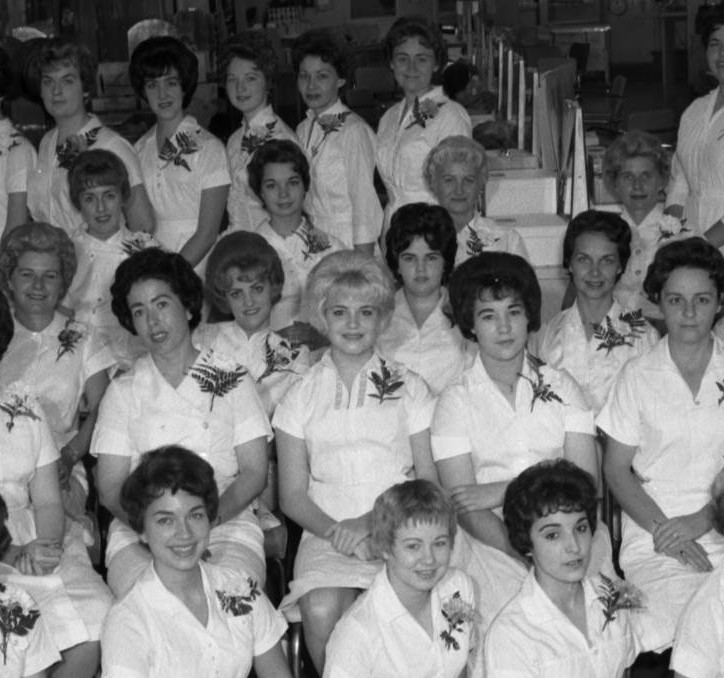
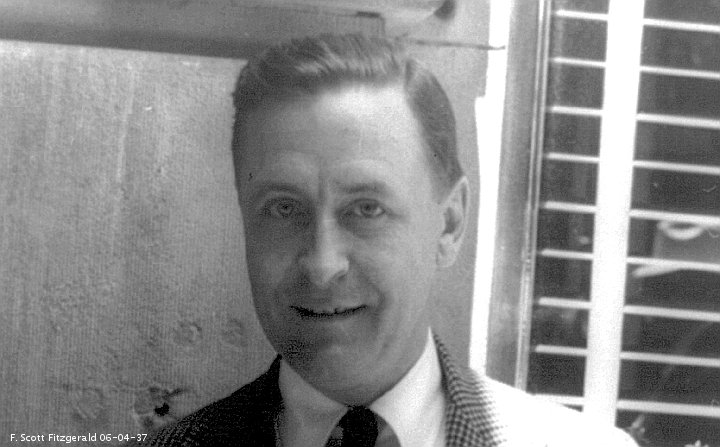
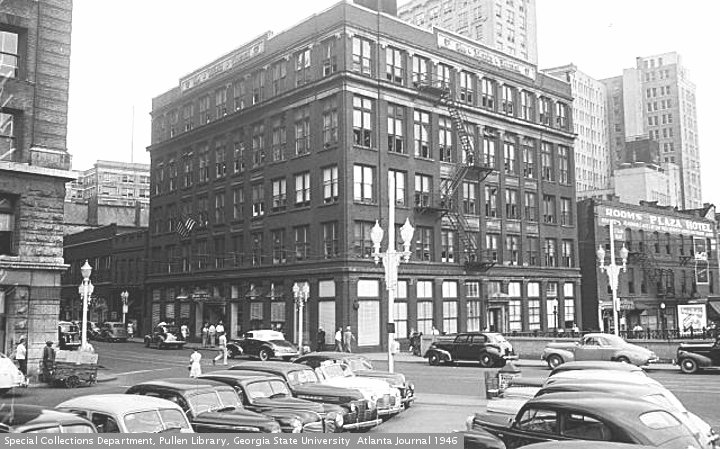
Chamblee54 has written about Mr. Baldwin before. Pictures today are from “The Special Collections and Archives, Georgia State University Library.” UPDATE: @QuoteResearch Replying to @chamblee54 @HilalIsler @lithub “It appeared in a 1957 letter from James Baldwin and Sol Stein reprinted in “Native Sons” (2004) edited by Sol Stein. I am planning to create a QI article on this topic” @QuoteResearch “Please get over the notion, Sol, that there’s some place I’ll fit when I’ve made some ‘real peace’ with myself : the place in which I’ll fit will not exist until I make it. You know and I know that the ‘peace’ of most people is nothing but torpor” … James Baldwin to Sol Stein UPDATE: I was writing a story about Flannery O’Connor. I wanted to quote this post, but could not find the link. Neither google nor duckduckgo would show me this post. I had to go to the chamblee54 archive, and scroll through October 2022 until I found the post. This is a repost from 2022.


Community Standards


This is a repost from 2021. … A facebook friend posted a meme. It had a drawing of James Madison, and a quote. “The purpose of separation of church and state is to keep forever from these shores the ceaseless strife that has soaked the soil of Europe in blood for centuries.”
The quote is generally said to be from a letter written in 1803. However, no one seems to know who the letter was sent to, or the context of the quote. A website, Positive Atheism’s Big List of James Madison Quotations, notes: “A diligent search for the source of this quotation is underway among Madison scholars and our correspondent, James Haught. No source has, at this time, been found; thus, we have deleted it from the regular section of our Madison page and moved it here (November 26, 2004). Until such time as this quotation can be verified as genuine, we strongly recommend discontinuing the use of this quip. … “
PG is fond of debunking quotes, but did not think to investigate this one. What he did do was remember a photograph of Dolley Madison, the wife of Mr. Madison. PG posted a link to the picture, along with a comment about Mrs. Madison being the first White House resident to be photographed. John Quincy Adams was the first President to be photographed.
This should not be controversial. Pedantic maybe, but not fighting words. Facebook had another opinion. “Your comment goes against our Community Standards on spam. No one else can see your comment. We have these standards to prevent things like false advertising, fraud and security breaches. Repeatedly violating our Community Standards can cause further account restrictions.”
The photograph of Mrs. Madison was taken by Matthew Brady in 1848. Mrs. Madison died in 1849. There were three First Ladies before her. Martha Washington died in 1802. Abigail Adams died in 1818. Martha “Patsy” Jefferson Randolph, daughter of Thomas Jefferson, died in 1836. There are no photographs of Sally Hemings.
“Louis-Jacques-Mandé Daguerre invented the daguerreotype process in France. The invention was announced to the public on August 19, 1839 at a meeting of the French Academy of Sciences in Paris.” Dolley Madison is the earliest First Lady to have lived after the invention of photography. Apparently, facebook does not want you to know this.
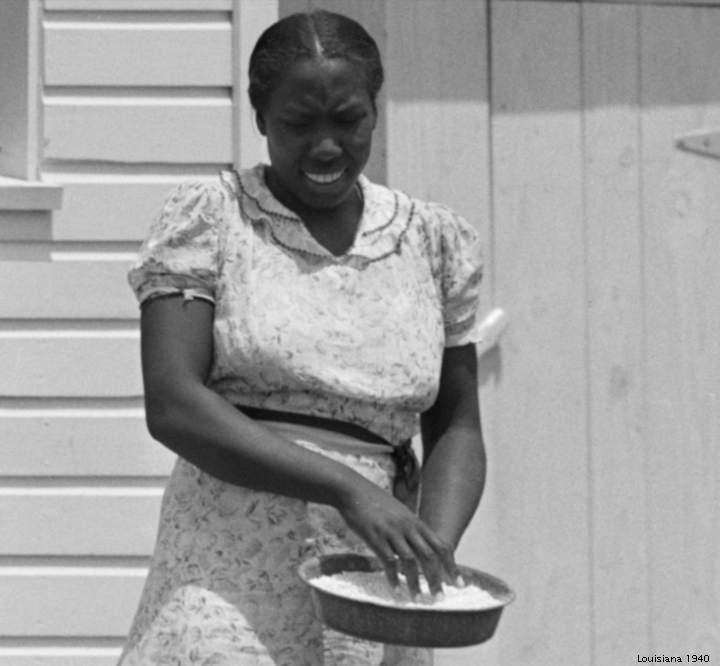
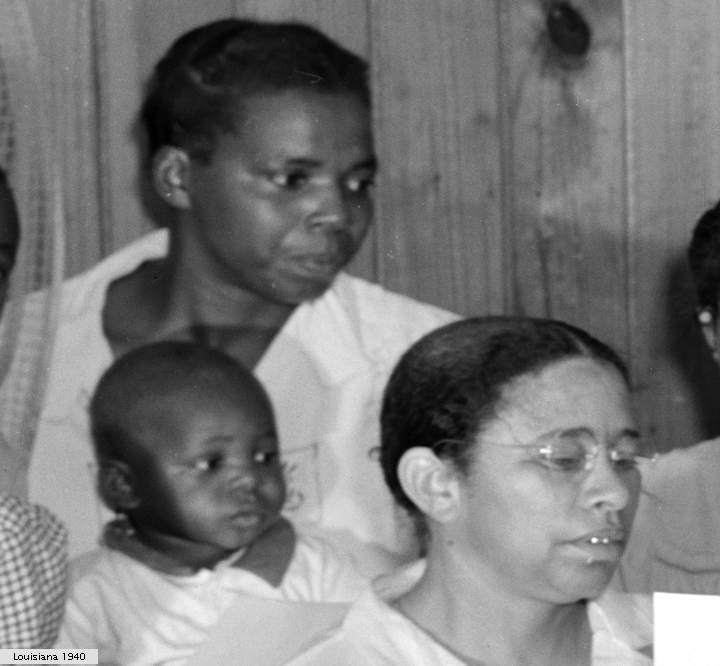
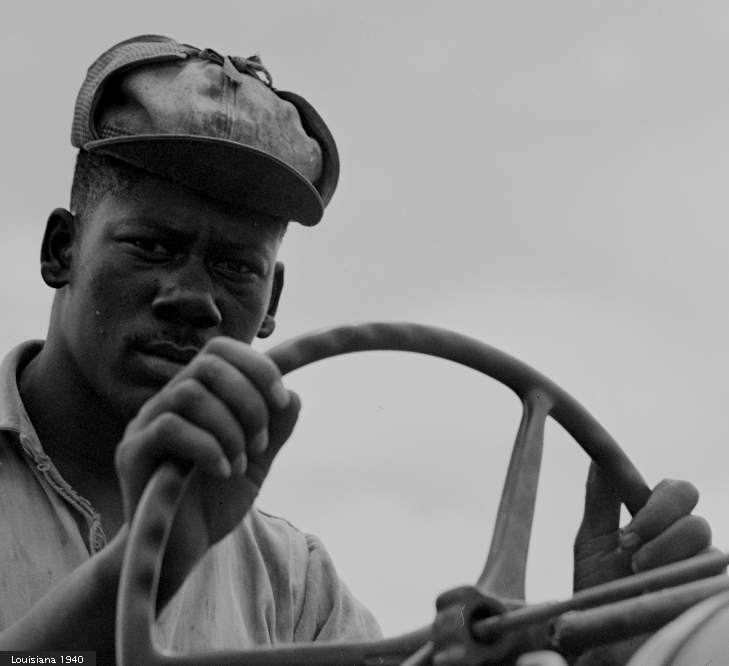
Pictures today are from the Library of Congress. Marion Post Wolcott took these pictures in June, 1940. “Home demonstration club meeting has games and refreshments after discussion. La Delta Project, ” Thomastown, Louisiana.


<
Julian Carr And Silent Sam
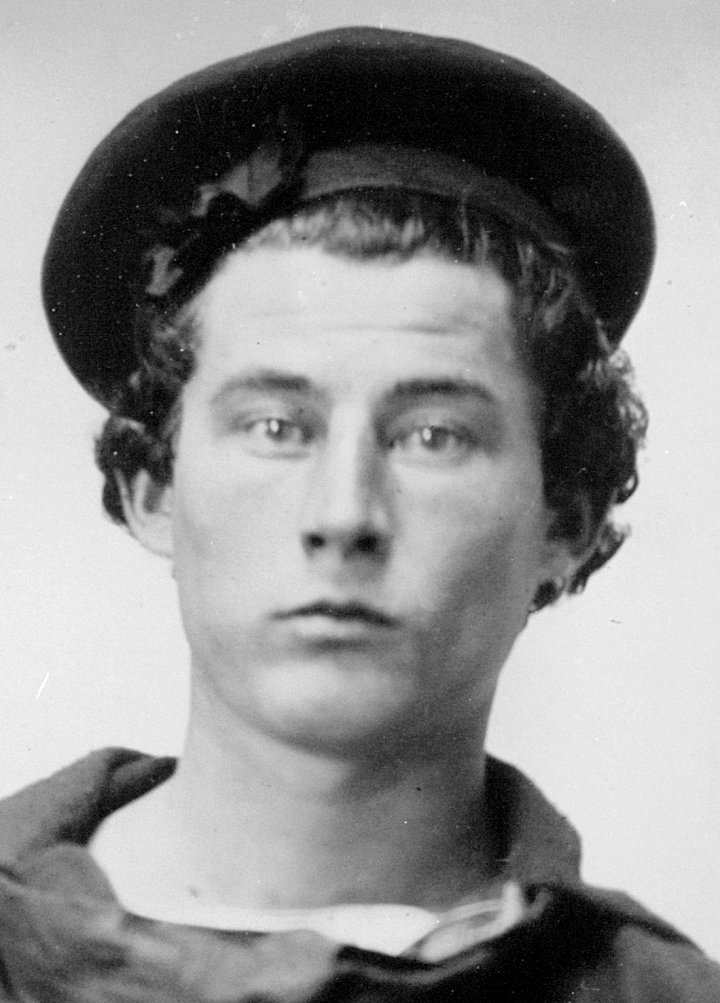

This is a repost from 2018. … A Confederate monument was torn down last night in Chapel Hill NC. The statue, known as “Silent Sam,” was intended as a monument to students who left school to fight in the War Between the States. “In 1913, the Daughters of Confederacy, after four years of fundraising, paid sculptor John Wilson, a Canadian, $7500 for the statue. Wilson used a Boston-man, Harold Langlois, as the model. It’s unclear, however, if those attending Silent Sam’s dedication knew they were celebrating a Yankee’s profile. Silent Sam was among many “Silent Sentinels,” – statues of soldiers without cartridge box, soldiers who could no longer fire a shot – that were manufactured and bronzed in the North and then sent down south for public display. Many of these statues look remarkably similar. Like Silent Sam, they also face north, toward the Union.”
Many of the comments today quote a speech made at the 1913 unveiling. The speech was by Julian Carr, a prominent businessman and philanthropist. Mr. Carr is considered, with some justification, to have been a white supremacist. A Confederate veteran, Mr. Carr appears to have been a complex man, who did both good and harm.
This tweet is typical of today’s discourse. @jjones9 “From white supremacist Julian Carr’s speech at the dedication of Silent Sam in 1913.” The tweet features a screen shot, of a quote from the 1913 speech. “I trust I may be pardoned for one allusion, howbeit it is rather personal. One hundred yards from where we stand, less than ninety days perhaps after my return from Appomattox, I horse-whipped a negro wench until her skirts hung in shreds, because upon the streets of this quiet village she had publicly insulted and maligned a Southern lady, and then rushed for protection to these University buildings where was stationed a garrison of 100 Federal soldiers. I performed the pleasing duty in the immediate presence of the entire garrison, and for thirty nights afterwards slept with a double-barrel shot gun under my head.”
What was the rest of the speech? A bit of research turned up a transcript, Julian S. Carr, “Unveiling of Confederate Monument at University. June 2, 1913.” The rest of the speech has little in common with the “one allusion.” The speech sounded like the memorials to fallen soldiers in many other wars. “They served, they suffered, they endured, they fought, [and died – crossed out] for their childhood homes, their firesides, the honor of their ancestors, their loved ones, their own native land.”
Mr. Carr’s theme is defense of a the homeland. When the War broke out, the concept of a United States, ruled by a strong federal government, was less accepted than it is today. Many people in the South saw it as a failed experiment. Slavery was an important issue in the decision to secede, along with economic matters that do not get twenty first century people worked up. Slavery is not mentioned in the 1913 speech.
“Of the students and alumni of the University of North Carolina, about 1800 entered the Confederate army … . The University had in the service 1 lieutenant-general, 4 major-generals, 13 brigadier-[page break 8] generals, 71 colonels, 30 lieutenant-colonels, 65 majors, 46 adjutants, 71 surgeons, 254 captains, 161 lieutenants, 38 non-commissioned officers and about 1000 privates. I regard it as eminently appropriate to refer briefly at his point to the magnificent showing made by our state in the military service of the Confederacy. … The entire Confederate loss on the battlefield was 74,524, of which North Carolina’s share was 19,673, or more than one-fourth; 59, 297 died of disease, and of these, 20,602 were North Carolinians.”
“And I dare to affirm this day, that if every State of the South had done what North Carolina did without a murmer [sic], always faithful to its duty whatever the groans of the victims, there never would have been an Appomatox[sic]; Grant would have followed Meade and Pope; Burnside, Hooker, McDowell and McClellan, and the political geography of America would have been re-written.”
There are three other noteworthy quotes in the speech. “Even the great Northern universities – Harvard, Yale and Princeton – furnished quotas of soldiers for the Confederate ranks. From Harvard came 257, of whom 58 were killed in battle and 12 died in the service, and in this large list appear 8 brigadier-generals and 5 major-generals. Of the graduates and students of Yale, 48 entered the Confederate service, and of these 8 were killed in battle or succumbed to disease. At Princeton 55 men left the University, early in 1861, to enter the Confederate service, and from the somewhat incomplete records of that University it appears that a considerable percentage of these young men were killed in battle, or died from disease.”
“Permit me to refer at this point to a pleasing incident in which that distinguished son of the South, Woodrow Wilson, President of the United States, had the leading part. A year or two ago diplomas were given by our University to all the students who had interrupted their studies to enter the military service of the Confederacy. Mr. Wilson, then President of Princeton University delivered these diplomas. One man only of the Class [handwritten – that Matriculated in 1862] wearing the Confederate uniform, came forward to receive that highly prized token. It was the humble individual who now addresses you. At the dinner, later in the day, Professor Wilson greeted me with the remark that in many years nothing had so much touched and warmed his heart as the sight of that Confederate uniform.”
The speech went on and on, and sounded much like any other memorial. Once again, it should be noted that defense of the homeland received much more notice than a defense of slavery. The speech ended with these words: “In the knowledge of subsequent developments, the progress, peace and prosperity of our united, common country, victor and vanquished now alike believe that in the Providence of God it was right and well that the issue was determined as it was. And the people of all sections of our great Republic, moved by the impulse of sincere and zealous loyalty, of fervent and exalted patriotism may say: “All is well that ends well.”
“Again, dear Daughters of the Confederacy, I thank you in the name of the eighteen hundred brave, loyal, patriotic, home-loving young student soldiers who went out from this grand old University to battle for our Southern rights and Southern liberties, five hundred of whom never came back. God bless every one of you, and every Daughter of the Confederacy in our dear Southland.”
Pictures today are from The Library of Congress.


The Revenge Of Puff




This is a repost from 2010. In the past fourteen years, same sex marriage has become legal, and profitable. Pictures are from The Library of Congress, a branch of federal big government. … The national organization for marriage (NOM) wants to keep marriage as a man and woman type of thing. They have a right to say that, and to have rallies where they say that. This is America. You are entitled to your opinion, no matter how stupid it is.
What you are NOT entitled to is the unfettered use of copyrighted material. Someone heard a recording of Peter, Paul, and Mary singing “This land is your land” at a NOM sponsored homonomo happening. They sent a letter to Peter Yarrow, who sent a cease and desist letter to NOM. It was co-signed by Paul Stookey. Mary Travers passed away September 16, 2009.
Mr. Stookey wrote “The Wedding Song”, which is as common at weddings as inedible cake. The song…written years before same sex marriage became an issue…does talk about a woman and a man. It also says “Whenever two or more of you are gathered in his name, there is love”. With royalty revenue from that song, Mr. Stookey has a selfish interest in the institution of marriage remaining healthy. Or perhaps, an increase in those revenues from gay marriages.
As it turns out, author Woody Guthrie never renewed the copyright to TLIYL, and the song is public domain. However, the recorded version by PPM is copyrighted, and belongs to the artists. If they don’t like the way it is being used, they have every right to object.
Mr. Guthrie was not a Republican. He wrote TLIYL as a response to “G-d Bless America” a radio hit of the early forties. The original title was “G-d blessed America for me”. There are lines about private property, that are not included in the popular versions. Somehow, this song is considered a patriotic standard. Grammar school chorus class would not be the same without it.





The Heroin Diaries


This is a repost from 2021. The Nikki Sixx circus continues to make money. … The Heroin Diaries: A Year in the Life of a Shattered Rock Star turned up on the used book table at the Chamblee library. A hardback copy was $2. THD is a visual overload. Every page has comic-book drawings, in a horror show theme. The text/background switches back and forth between red, black, and white. If you are in a spot with low lighting, red on black text is almost impossible to read.
THD is about the life, and near death, of Nikki Sixx. He is the bass player/creative force for Mötley Crüe. THD starts Christmas 1986. The main portion ends at the end of 1987. There are a few pages, telling the short version from 1988, until the book’s publication in 2007. The copyright is assigned to Nikki Sixx, with Ian Gihins the editorial miracle worker. Mr. Sixx kept a diary throughout 1987, and added comments in 2007. A cast of characters adds further commentary.
Nikki Sixx did a lot of drugs in 1987. Heroin, cocaine, and Jack Daniels were the big three. Crüe went on tour in June, and were on the road the rest of the year. The “Girls, Girls, Girls” tour may have been the high water mark for rockstar bad behavior. One story has Nikki, and Tommy Lee (Crüe’s drummer/Nikki’s co-conspirator) set a hotel room on fire. Nikki thought it was someone in their entourage, and was surprised when it was a Chinese tourist. There are many more stories.
Frank Carlton Serafino Feranna Jr. was born December 11, 1958. THD starts two weeks after his 28th birthday, ending his chance to join the 27 club. At some point, and ex-girlfriend took a boyfriend named “Nikki Syxx.” Frank Feranna had a tough childhood. After his father left, Frank was bounced around between his mother, and his grandparents. Somewhere in there, his mother is said to have dated Richard Pryor. Frank got older, with a lot of issues. AHD goes into great detail about his childhood, and the self-medicating that followed.
The GGG tour came to the Omni, in Atlanta, November 20, 1987. By this time Guns and Roses were the opening act. (Slash on the same tour as Nikki Sixx, what could possibly go wrong?) “Axl Rose was onstage in Atlanta when he saw one of the security guards, who turned out to be an off-duty cop, pushing their fans around. Axl jumped off the stage and started fighting the guard, so security grabbed him and took him backstage. So Slash sang a few songs, and Guns’ drum technician sang “Honky Tonk Woman”—four times, not terribly well.”
“As concert promoter Charlie Brusco walked through the back door of the arena shortly after the concert started, he knew something was wrong. “I heard this horrible sound,” Brusco says. “I look up, and one of the guys in the road crew was singing.” A roadie for the band named Big Ron was on lead vocals, because, earlier, Rose had jumped offstage, punched a cop, and been carried away. The Omni’s head of security told Brusco, … “Third strike, he hit a black female Atlanta police officer. He’s going to jail.” Brusco begged for Rose to be allowed to finish the show. Finally the security chief said, “If he apologizes to the police officer in writing, we’ll let him go.” Brusco agreed. He was led to Rose, who was sitting at a makeshift booking table wearing his trademark bandanna. Rose dutifully signed his apology, and security brought in the female officer. Then Rose looked up and said, “Fuck you, you fucking jag-off cop.” He was hauled to jail, and the show was canceled.”
An amazon one-star review: “I don’t know how you read this and aren’t questioning how Nikki Sixx isn’t in prison for rape; “Nikki. He asked me if I was serious about her, and when I replied that we were just getting to know each other, Nikki started telling her how hot she was. As he bent her over what was a locker-room bench she complained that she was in the middle of her period. Nikki told her he wasn’t scared by a little bit of blood and proceeded to have intercourse with her right there on the spot, in front of anybody who happened to be there.”
THD is ever-so-slightly misogynistic. The phrase “CHICKS=TROUBLE” appears throughout the book, beside the tittie bars and groupies. The ladies are definitely not as important to Nikki as the drugs. “My dick didn’t seem to be aware that she was there. She kept asking me what was wrong, and I was so out of it that I thought she meant what was wrong with the world, so I started talking about global poverty and shit. I’m not surprised she left. I suspect she won’t be coming back.”
“We paint the outside of our bodies beautiful but the inside is like dead men’s bones. … We mistake lust for love and pop more pills, slam more drugs, drink ourselves silly or end us, as I did, scraping the inside of a pipe just to hit the resin and flush life down a toilet.” Evangelist Denise Matthews, aka Vanity, was Nikki’s girlfriend for much of 1987. A former gf of Prince, Miss Matthews had a volatile personality. Being a serious crackhead did not help. Evangelist Denise Matthews passed away February 15, 2016. Her kidney failure is almost certainly the result of her crack addiction.
Near the end of 1987, Nikki shot too much heroin. Many people thought he died. He managed to pull through. The next few years saw Nikki get sober, only to relapse, only to get sober again, only to relapse. Rinse and repeat, unlike the appalling approach to personal hygiene. Hong Kong, December 19, 1987: “P.S. I smell so bad, I haven’t showered since LA I can see people actually look repulsed when they get a whiff of me. I stand next to people just to fuck with them. I didn’t bring any clothes with me, just cash. Fuck, what else do I need.”
After 1987, the narrative becomes much less detailed. Nikki gets married and divorced a few times, with a few children born along the way. At one point, he abandoned his wife and kids, which made him feel horrible, but did not stop him. Finally, Nikki detoxed for good, and was clean when THD was written in 2007. According to his instagram, Nikki Sixx has been sober 20 years on July 2, 2021. Pictures are from The Library of Congress.


Hiroshima 78 Years Later





At 8:15 am, August 6, 1945, Hiroshima got nuked. It was the start of a new era. Since Japan is 13 hours ahead of Georgia, and standard time was used, the literal anniversary is 8:15 pm, August 5.
Tsutomu Yamaguchi was working in Hiroshima when the bomb hit. He survived, and found a train to take hime to his home town, Nagasaki.
The device dropped on Hiroshima, the Little Boy, had an estimated force of 13 kilotons of Trinitrotoluene, or TNT. A kiloton of TNT is roughly a cube whose sides are ten meters. This device is fairly tiny compared to many of the warheads developed since. Many of the modern appliances are measured in megatons, or millions of tons of TNT. The Soviet Union had a bomb with a capacity of 50 megatons, or 4,000 times the size of the Little Boy.
The largest weapon tested by The United States is the Castle Bravo. This device destroyed Bikini Atoll in the Pacific. The two piece swimsuit was named for this island. The Castle Bravo device had a yield of 15 megatons of TNT. This is roughly 1,000 times the power of the Little Boy.
The decision to drop the bomb has long been controversial. There are a lot of factors and gray areas, and the issue does not lend itself to sound bite solutions. The conventional wisdom is that Japan surrendered because of the nuclear attack. This meant the war was shortened by at least a year, there was no invasion of Japan, and many lives were saved. PG is scared by the moral calculus involved in a decision like this….do 100,000 civilian deaths prevent the deaths of 500,000 soldiers? PG suspects that even G-d herself would lose sleep over that one.
There is also evidence that the bomb was not needed. Japan was whipped in August 1945. The air raids were conducted in daylight with little resistance. A debate was going on in the Japanese government on whether to continue the fight.
An event happened the day between Hiroshima, and Nagasaki, which influenced the Japanese decision to surrender. The Soviet Union had agreed to help the United States with the war against Japan. On August 8, The Soviet Union invaded Japanese occupied Manchuria. There are indications that Japan knew the fight was hopeless at this point, and would rather surrender to The United States than The Soviet Union. This is one of the gray areas that never seems to be mentioned.
The United States wanted the war to end quickly for obvious reasons, and a few subtle ones. America did not want to share the spoils of Japanese war with The Soviet Union. There were already tensions between the two allies, and the cold war was not far off. Many felt The United States used the Little Boy as a warning to The Soviet Union.
When you get your moral software out, you might want to figure in the effect of opening the nuclear Pandora’s box. Would the nuclear bomb have been developed by other countries if America had not led the way? The science is not that complicated…after all, America hit paydirt with the Manhattan Project fairly quickly. Nonetheless, there is karma involved in using a terrible new device on a civilian population. The United States started the wind of the arms race, and has yet to feel the whirlwind.
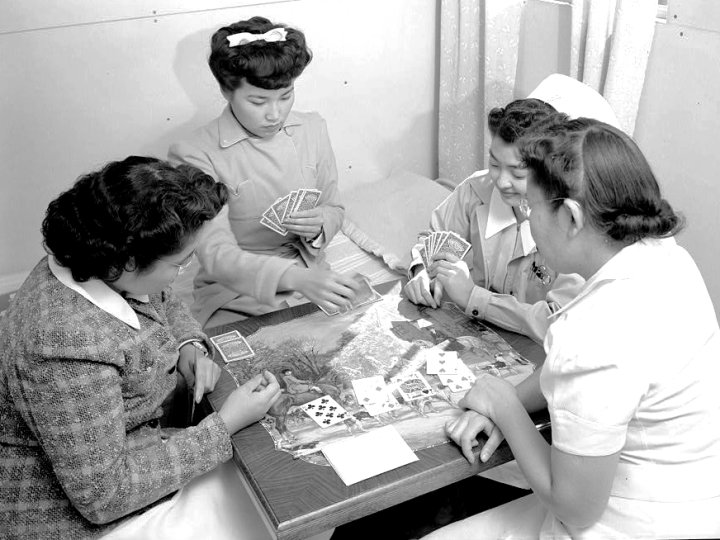
This is a repost. The pictures are from The Library of Congress. Ansel Adams took pictures of Japanese Americans, in a World War Two internment camp. The ladies in the bridge game are Aiko Hamaguchi, Chiye Yamanaki, Catherine Yamaguchi, and Kazoko Nagahama.


Middle Names


This is a double repost, about the custom of middle names. It was published in this format in 2011. Today, a middle name is like a body part or an excuse.. everyone has one. It has not always been that way. The part about Presidential middle names was written during the 2008 campaign. Pictures are from The Library of Congress .
With the commentary about the middle name of Barack Hussein Obama, perhaps it is time for a look at the lessons of history. George Washington did not have a middle name. Nor the rest of the early Presidents. The first one to have a middle name (or initial) is John Quincy Adams. J.Q. Adams is the first son of a president to hold the office. The second one proved to be unfortunate.
The next POTUS to show a middle initial was William Henry Harrison. He was the first victim of the Zero Factor, in which Presidents elected in years ending in zero died in office. This tradition was ended by Ronald Wilson Reagan.
Another Zero Factor President, Abraham Lincoln, did not have a middle name. Ulysses S. Grant was born Hiram Ulysses Grant. One legend has a mistake on a school application giving him the middle name Simpson, after his mother’s maiden name. Moving into the twentieth century, William Howard Taft was referred to by all three names.
In many ways, Franklin Delano Roosevelt was the first president of the modern age. For some reason, his middle name was frequently used, and the initials FDR became popular. Presidential initials did not become popular again until JFK and LBJ. After FDR went to the fireside chat in the sky, Harry S. Truman became president. The S stood for nothing.
The next president whose middle name was frequently used was John Fitzgerald Kennedy. Could this be a subtle dig at his Irish background, much as the current noise about Barack Hussein Obama? As for Baines and Milhous, those middle names both seemed to fit the personality of the man.
After Lightbulb Lyndon, the use of Presidential middle names went into decline. Gerald Rudolph Ford would be a good trivia question. George Herbert Walker Bush downplayed his quadruple initials, perhaps knowing that many people don’t trust a man with two middle names. George Walker Bush is frequently referred to by his middle initial.
In the 2008 election, we had a dark skinned man with a Muslim middle name. We had a white haired republican with the middle name of Sidney. And we had a married woman, who uses her maiden name as a middle name. Her original middle name is Diane. 2012 saw Willard Mitt Romney try to get elected. In 2016, Bernard Sanders was a Democratic challenger. Mr. Sanders does not have a middle name, leading to an unflattering set of initials. The less said about Donald John Trump versus Joseph Robinette Biden Jr, the better.




While researching this feature, PG noticed that many of the early presidents did not have middle names . Apparently, before the American Revolution, middle names were seldom given. For some reason the custom caught on during the 19th century. When America started to draft men for World War I, the draft papers included a space for the middle name.
One possible reason for middle names was population density and increased family size. Many people began to have the same first name (or Christian name) and last name (Surname). Middle names were a way to distinguish between Jimmy Bob Jones and Jimmy Joe Jones. There was possibly a bit of status involved in having more than one name.
Women have long used the maiden name as a middle name after marriage. Girls were often not given middle names for this reason. The hyphenated Maiden-Married name is a fairly recent custom (Which this author hopes is a fad that will go away).
While middle names were originally a decoration, many are now used as a primary identification. PG is referred to as a diminutive of his middle name, which can be confusing when authorities insist on using his first name. The middle name is also a handy alternative for someone who gets tired of the name they are called by. There is also this thought …”I think parents give kids middle names so the kids will know when they are really p****d at them.”




Gaza Suffering


This is a repost from 2010. Little significant change has taken place in 13 years. … British prime minister David Cameron is on a visit to Turkey. He made a few comments about Gaza. “Let me also be clear that the situation in Gaza has to change. Humanitarian goods and people must flow in both directions. Gaza cannot and must not be allowed to remain a prison camp.” Israel’s ambassador to Great Britain, Ron Prosor, replied “The people of Gaza are the prisoners of the terrorist organization Hamas. The situation in Gaza is the direct result of Hamas’ rule and priorities.”
As per wikipedia, Hamas was founded in 1987. This was just after the Iran contra affair, when Israel was helping Iran buy weapons. 1987 is 39 years after the creation of the state of Many Arabs living in what became Israel left during this time, and many settled in the Gaza Strip.
The creation of Hamas was 20 years after the six day war, when Israel took control of the Gaza Strip. The Israeli soldiers were not greeted as liberators. What followed was an Israeli occupation of the territory. It was by, most accounts, a brutal affair, with Gaza resistance met by Israeli force.
During this occupation, the prime “terrorist organization” was the P.L.O. They were the object of attacks by Israel, both propaganda and military. They were connected to the party Fatah, which became the primary agent of governance in Palestine. There was an election, and Hamas won.
There are reports that Hamas was secretly founded by Israel, to fight Fatah/PLO. Whether or not this is true, the fact is that Israel maintained a brutal occupation of Gaza. It should be no surprise that a “terrorist organization” would be popular, and win an election over yesterday’s boogieman.
Both sides in this conflict have talking points, and have suffered losses. The commentary above is greatly oversimplified. However, to say the suffering of the Gazans “is the direct result of Hamas” constitutes an obscene piece of propaganda.
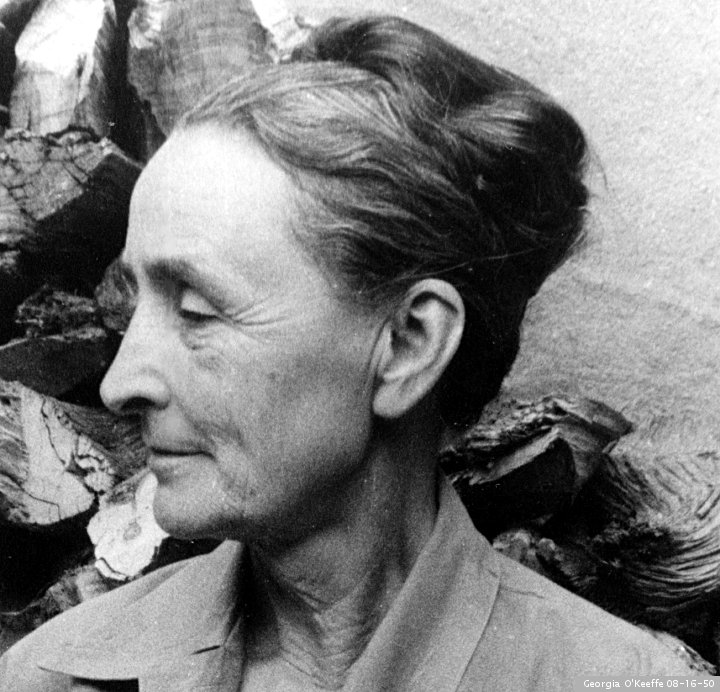
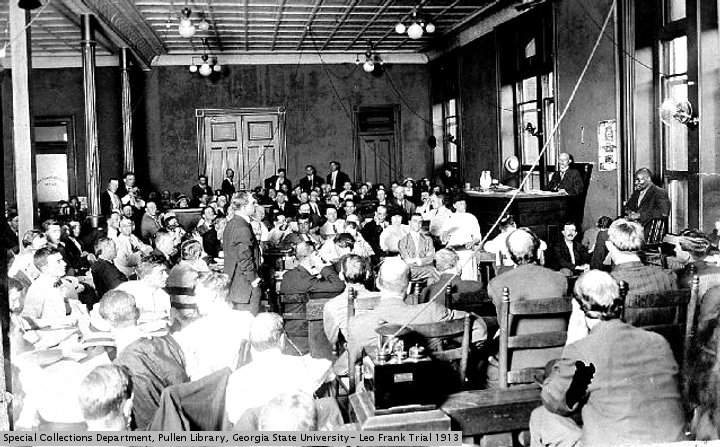
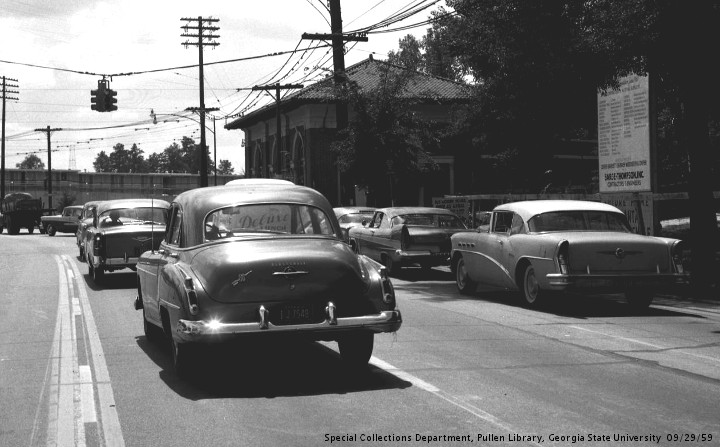
Pictures for this feature are from the Special Collections and Archives, Georgia State University Library. HT to Juan Cole , an excellent source for news on the middle east.


July 3, 1981





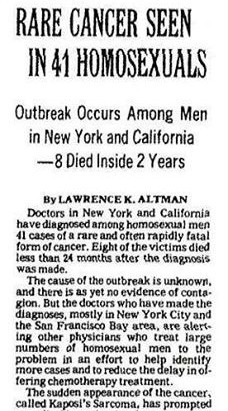
July 3, 1981, was another day before a holiday. The new President, Ronald Reagan, was recovering from gunshot wounds. There was talk of an era of conservatism, with possibly severe repression.
There was an article in the New York Times. RARE CANCER SEEN IN 41 HOMOSEXUALS. “Doctors in New York and California have diagnosed among homosexual men 41 cases of a rare and often rapidly fatal form of cancer. Eight of the victims died less than 24 months after the diagnosis…”
This was the media debut of AIDS. It would not have that name for a while. Almost nobody thought, on that summer day, just how bad AIDS would be. In five years it was obvious how serious AIDS was.
 PG was on another trip to the west coast. It was becoming obvious that this would be a vacation, rather than a relocation. He was riding a bicycle, with a milk carton overloaded with camping gear. Some kids told him to get saddle bags, and carry the weight lower. If you have the weight on top, you would lose control coming down a big hill. PG did not listen to the kids.
On July 4, PG left Patrick’s Point state park, about 300 miles north of San Francisco. Coming down the first hill on highway 101, the bike shook, shook harder, and flipped on its side. PG was thrown off. The front wheel was bent beyond repair. PG gathered his gear, left the bike behind, and got a ride into the nearest town.
PG got a bus ticket to Seattle. That city was in an economic downturn, with less than half a page of help wanted ads. PG found a auto delivery service, and got a VW bug going to Oak Ridge, TN. In a few days he was in Atlanta. A few days later, a temp agency came up with a job as a driver for a blueprint company. PG worked for that company, in one form or another, for the next 24 years.
As for the gay men with Kaposi’s Sarcoma … in all probability, the patients mentioned in that article were all dead within a year. AIDS has become a dominating story in our time. At its worst, it was claiming 50,000 lives a year. With the advent of wonder drugs, the death toll has been greatly reduced. The impact of AIDS on American life cannot be adequately described. This is a repost.
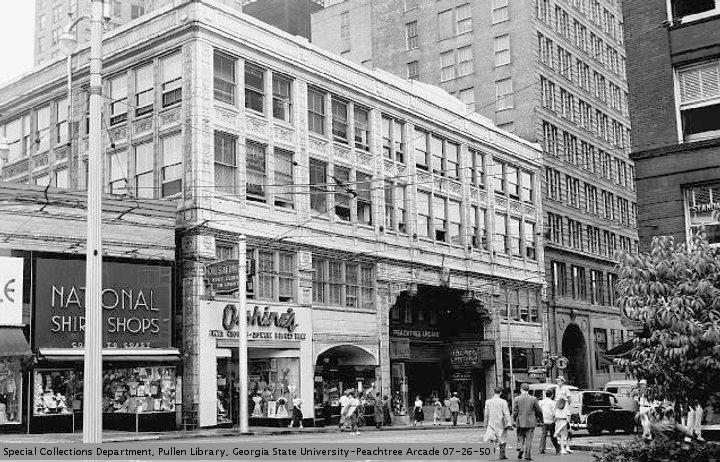
Pictures today are from “The Special Collections and Archives, Georgia State University Library”. Lawrence K. Altman, M.D. is still writing articles for the New York Times.


The Last Night Of Judy Garland



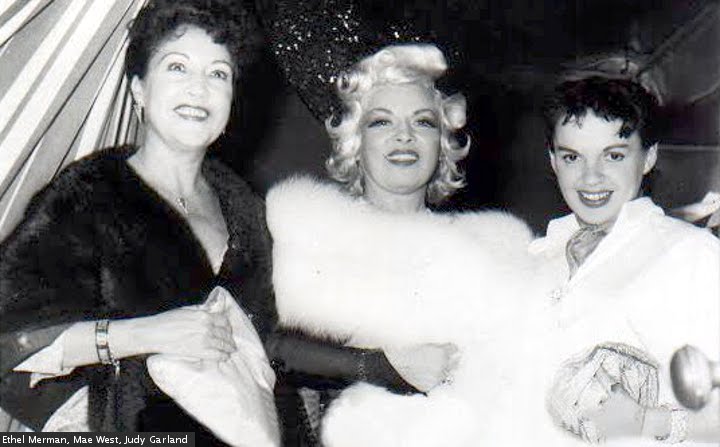
“In march of 1969, Judy married her fifth husband, Mickey Devinko, better known as Mickey Deans, a gay night-club promoter. Judy had an unfortunate habit of marrying gay men. They lived together in a tiny mews house in Chelsea, London. The evening of Saturday June 21 1969, Judy and Mickey were watching a documentary, The Royal Family, on television, when they had an argument. Judy ran out the door screaming into the street, waking the neighbors.
Several versions of what happened next exist, but the fact remains that a phone call for Judy woke him at 10:40 the next morning, and she was not sleeping in the bed. He searched for her, only to find the bathroom door locked. After no response, he climbed outside to the bathroom window and entered to find Judy, sitting on the toilet. Rigor Mortis had set in. Judy Garland, 47, was dead.
The press was already aware of the news before the body could be removed. In an effort to prevent pictures being taken of the corpse, she was apparently draped over someone’s arm like a folded coat, covered with a blanket, and removed from the house with the photographers left none the wiser.
The day Judy died there was a tornado in Kansas…. in Saline County,KS, a rather large F3 tornado (injuring 60, but causing no deaths) did hit at 10:40 pm on June 21st, that would be 4:40 am, June 22nd, London time, the morning she died. I know the time of death has never been firmly established, but since Rigor Mortis had already set in, I think this tornado may very much be in the ballpark in terms of coinciding with time of death…. Other news articles suggest the tornado struck Salina “late at night” which could certainly also mean after midnight on June 22, or roughly 6:00 am London time…
The Toledo Blade for June 24th, also in an article located right next to a picture of Garland, in a write-up on the Salina tornado noted that “Late Saturday [June 21] and early Sunday [June 22, another batch of tornadoes struck in central Kansas.” So it seems the legend seems confirmed.”
The text for this story comes from Findadeath. You can spend hours at this site. This is a repost. Pictures are from The Library of Congress.


Lose The Ability To Remember


PG heard a nifty quote once. “When we begin to write, we will lost the ability to remember.” It was credited to Homer, the Greek poet. The only problem is, PG could never find a source.
But Thamus replied, “Most ingenious Theuth, one man has the ability to beget arts, but the ability to judge of their usefulness or harmfulness to their users belongs to another; and now you, who are the father of letters, have been led by your affection to ascribe to them a power the opposite of that which they really possess. For this invention will produce forgetfulness in the minds of those who learn to use it, because they will not practice their memory. Their trust in writing, produced by external characters which are no part of themselves, will discourage the use of their own memory within them. You have invented an elixir not of memory, but of reminding; and you offer your pupils the appearance of wisdom, not true wisdom, for they will read many things without instruction and will therefore seem to know many things, when they are for the most part ignorant and hard to get along with, since they are not wise, but only appear wise.”
We don’t know how widespread writing was in Plato’s time. Presumably, many of the old tales were transmitted by word of mouth, from one generation to the next. This involves memory. “For this invention will produce forgetfulness in the minds of those who learn to use it, because they will not practice their memory.”
There is one more quote worth musing over. Since the invention of the first mediums, new methods have been denounced by traditionalists. Today, we live in an era of constant change. This feature will appear in a blog… state of the art in 2004, and considered obsolete in 2018. Every new medium is greeted with hand wringing over the bad effects it will have on society. Some of these misgivings have been proven false. This *text* goes into more detail about this.
Homer may, or may not, have existed. Since this was 2800 years ago, we may never know. The stories of “The Iliad” and “The Odyssey” may have been told from one generation, to the next. Maybe Homer really did say that, and was merely afraid of competition.
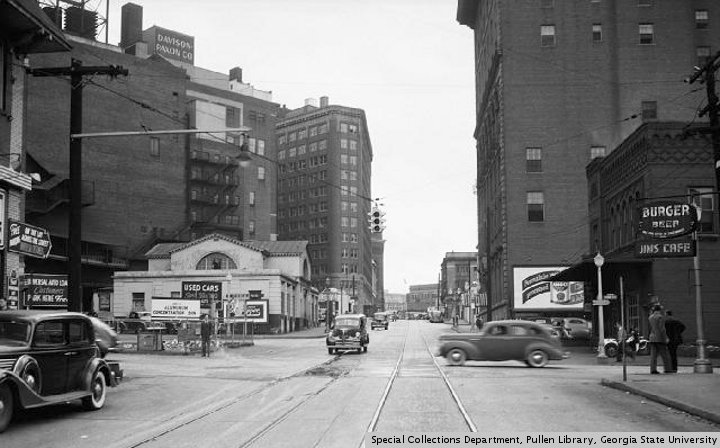
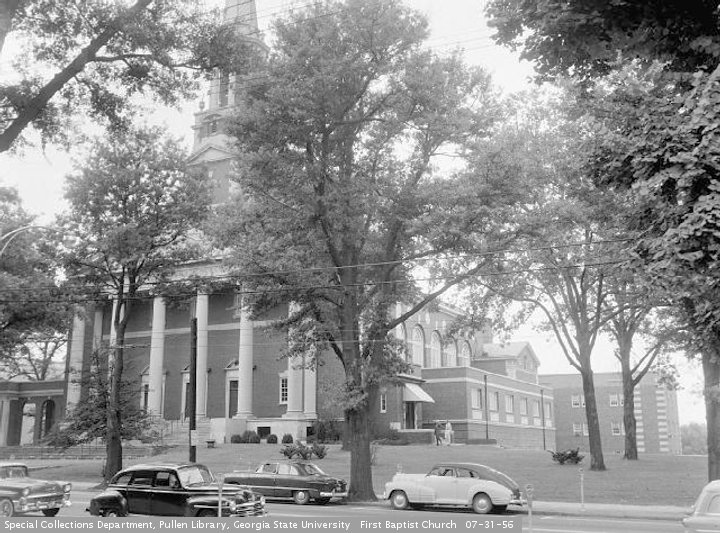
“You have invented an elixir not of memory, but of reminding; and you offer your pupils the appearance of wisdom, not true wisdom, for they will read many things without instruction and will therefore seem to know many things, when they are for the most part ignorant and hard to get along with, since they are not wise, but only appear wise.” . In todays culture, the display of apparent wisdom is more impressive than actual knowledge. These things too shall pass away. Pictures are from Special Collections and Archives, Georgia State University Library. This is a repost.



Be Not Curious About God


Beautiful that war, and all its deeds of carnage, must in time be utterly lost;
That the hands of the sisters Death and Night,
incessantly softly wash again, and ever again, this soil’d world:
…For my enemy is dead—a man divine as myself is dead;
I look where he lies, white-faced and still, in the coffin—I draw near;
I bend down and touch lightly with my lips the white face in the coffin.
Reconciliation was written by Walt Whitman. During the War Between the States, Mr. Whitman served as a volunteer nurse in Washington DC hospitals. That hospital was full of the human cost of war. Mr. Whitman looked past the so-called causes … slavery, states rights, banker profits … and saw the price paid, by the men who fought.
“In 1862, Whitman received word that his brother George had been wounded at the Battle of Fredericksburg. During the worst, he traveled down to the Virginia battle site. Much to Whitman’s relief, he found that his brother had sustained only minor injuries. While he was there, Whitman was moved by an especially brutal scene. … He records a dramatic moment where he’s standing in front of this field hospital and sees at the foot of two trees a pile of amputated limbs. He says, “A full load for a one horse cart.” And these are limbs that had been thrown out the windows of the surgery in the haste of the battle and the emergencies.”
Walt Whitman emerges as a type of Jesus figure. His words are analyzed 150 years later, looking to find a meaning that pleases 2023 America. At least Mr. Whitman left a written record, in English. This does not prevent him from being misrepresented.
“Song of Ourselves? Walt Whitman and the American Imagination” talks about Mr. Whitman living in Brooklyn before the War, and how he came to be involved in that conflict. At some point, the hosts talk about … a framed quote, “Be curious, not judgmental.” I was curious about the context, and did a little digging. There are plenty of meme-mongers selling this quote. This does not answer the question … how did Walt Whitman come to say this?
Wikiquotes lists “Be curious not judgemental” as Disputed. “While consistently attributed to Whitman, this popular motivational quote has no source. It is occasionally listed as occurring in Leaves of Grass, but the closest phrase found in that collection is “Be not curious about God.”
And I say to mankind, Be not curious about God,
For I who am curious about each am not curious about God,
(No array of terms can say how much I am at peace about God and about death.)
I hear and behold God in every object, yet understand God not in the least,
Nor do I understand who there can be more wonderful than myself.
Why should I wish to see God better than this day?
I see something of God each hour of the twenty-four, and each moment then,
In the faces of men and women I see God, and in my own face in the glass,
I find letters from God dropt in the street, and every one is sign’d by God’s name,
And I leave them where they are, for I know that wheresoe’er I go,
Others will punctually come for ever and ever.” … Song of Myself, Part 48.
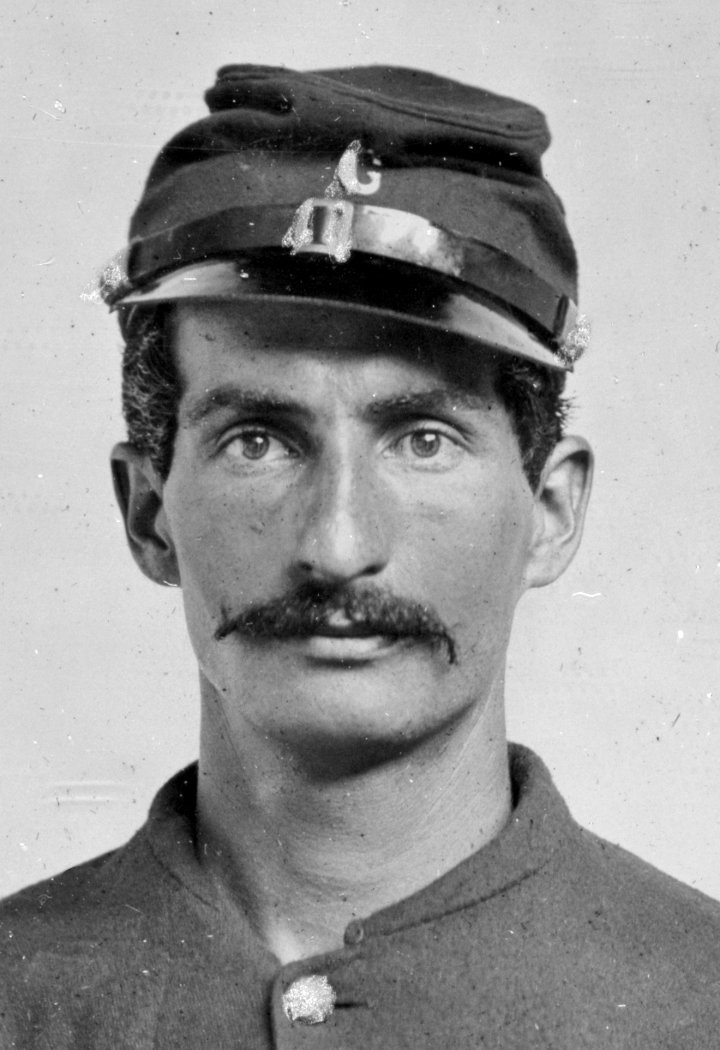
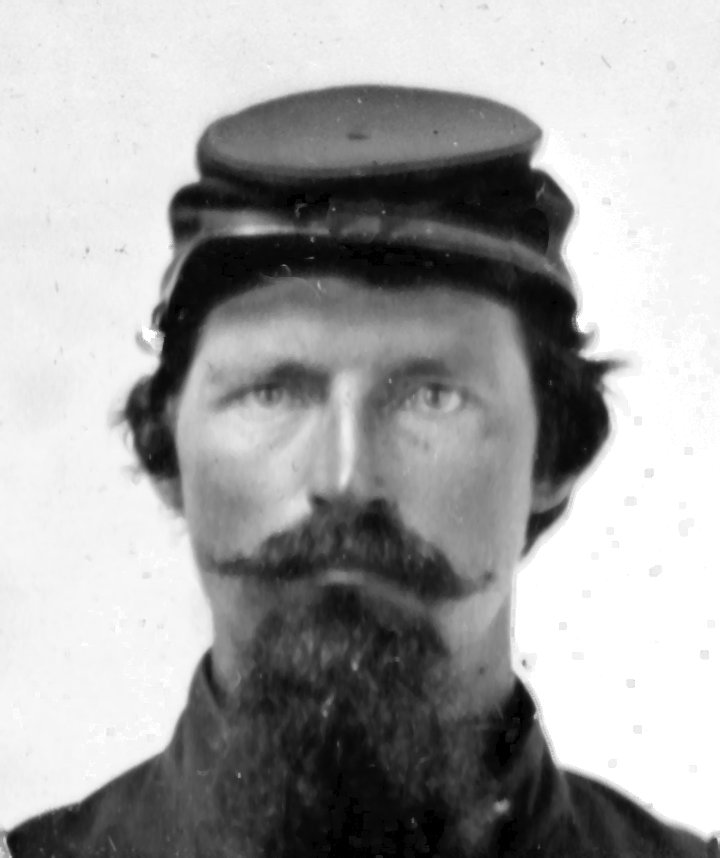
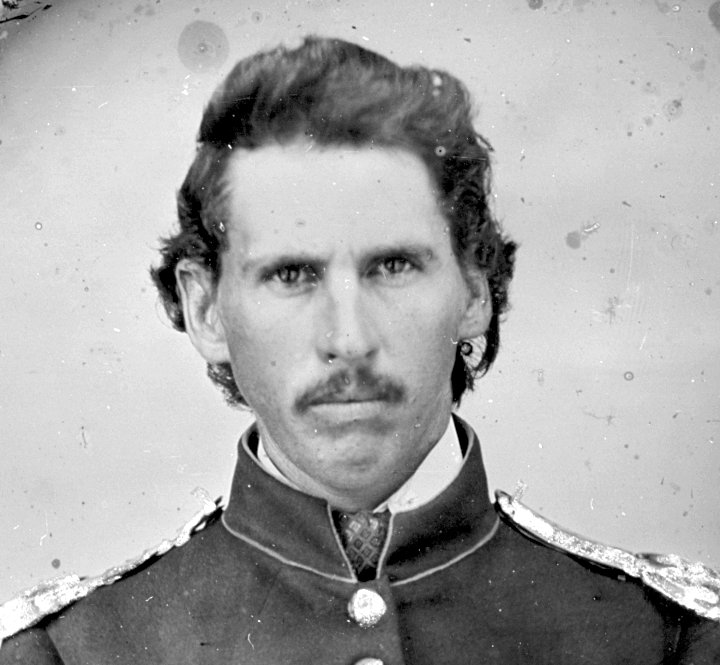
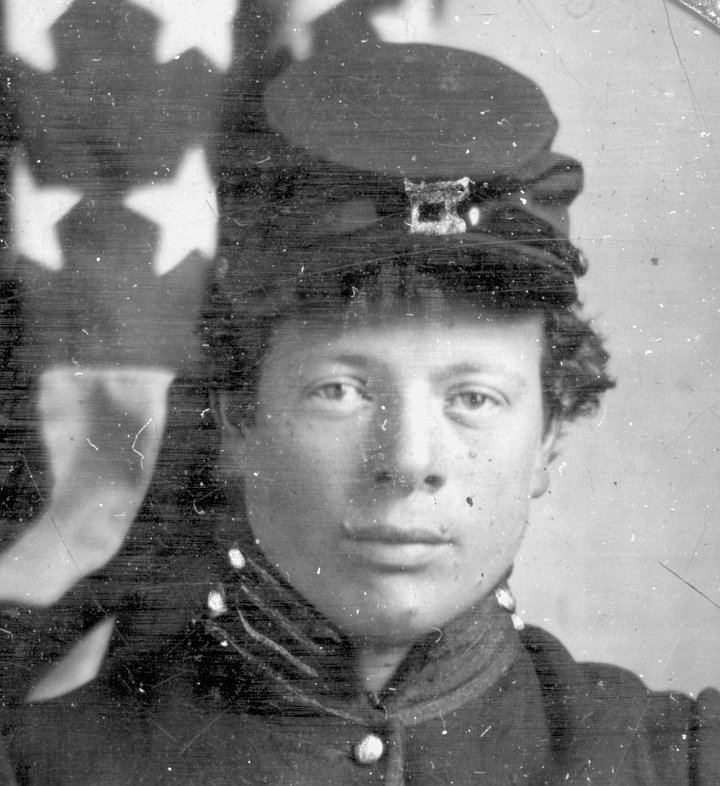
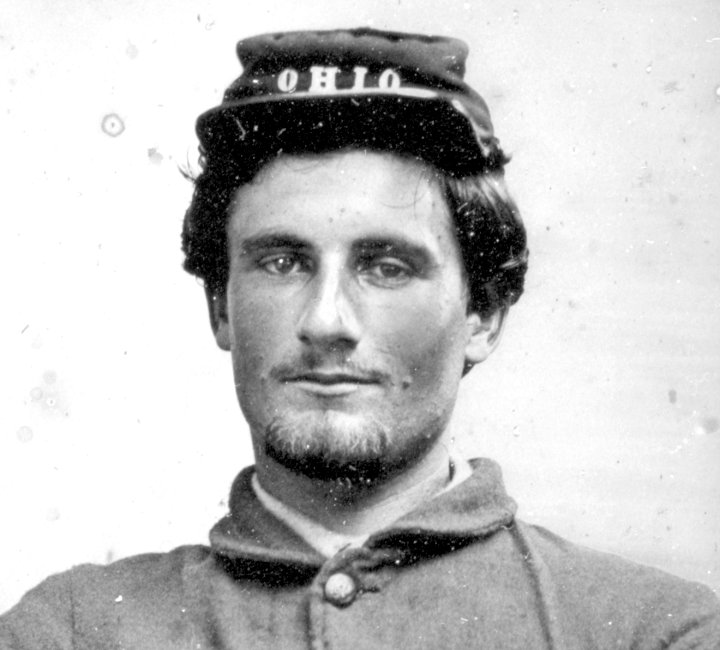
Pictures today are from The Library of Congress. These men were soldiers, in the War Between the States. This is a repost from 2019.


 Chamblee54
leave a comment