Slaughterhouse-Five Part Five



This is part five of the chamblee54 modification and reconstruction of Slaughterhouse-Five, by Kurt Vonnegut. Parts one, two, three, and four have already been published. Pictures are from “The Special Collections and Archives, Georgia State University Library”.
Chapter six begins with Paul Lazzaro making a spectacle of himself. He is mad about something, as usual. The English POW, known here as the Blue Fairy Godmother, says something. Mr. Lazzaro says to go fuck yourself. The English POW says that he has tried. Being in captivity four years has it’s downside. Mr. Lazzaro goes into detail about the revenge awaiting the English POW. This inspires KV to say “so it goes.” SIG 057. There is no connection to Heinz 57 steak sauce.
Paul Lazzaro made friends with Roland Weary on the POW train. Mr.Weary and Mr. Lazzaro had a similar approach to etiquette, before Mr. Weary died. SIG058. Roland Weary is not related to Roland Kirk, aka Rahsaan, aka the modern miracle of the tenor saxophone. PG saw Roland Kirk the night Richard Nixon resigned. Roland Kirk played three saxophones at the same time, and talked a lot. Roland Kirk was blind, and said the audience was too ugly to look at. Roland Kirk said Stevie Wonder wanted to make a lot of money, so he could have an operation and see.
Billy Pilgrim, the protagonist of SF, is also on the Paul Lazarro’s hit list. BP can time travel, and has memories of the future. BP knows how BP is going to die. It will be February 13, 1976. BP will be a celebrity, and give a speech, in Chicago, before a large crowd. The USA will have been divided into 20 smaller nations. Chicago has been nuked by “angry Chinamen,” to use a phrase considered politically incorrect in 2015. SIG059.
As some of you may know, this was not an accurate prediction of life in 1976. This was the bi-centennial year. On February 13, people were just starting to take Jimmy Carter seriously as a Presidential candidate. It is probably just as well that Amerika was not divided into 20 countries. We once had the United States, and a Confederation of 11 states that did not get along very well. That did not work out very well, at least for the Confederate states.
After BP is finished with his speech, a crazy person shoots him with a high powered laser gun. SIG060. BP is dead for a little while, and then timewarps back to 1945. Even Jesus, when he made his much ballyhooed emergence from the cave, returned to 33A.D. Billy goes back to wartime Germany. The food was better than what was available on Tralfamadore, except for Montana Wildhack.
In 1945, the Amerikans are about to be shipped out of the intermediate POW care facility. The British are overjoyed at their departure. Paul Lazzaro is running his foul mouth, like a dog that will not quit barking. If Mr. Lazzaro was a dog, a policeman would kill him, and check for rabies. SIG061.
Maybe it was the British officer. Not the Blue Fairy Godmother, but the one who gave the POW a lecture on hygiene while in captivity. It is said that men, who lose pride in their appearance, soon die. SIG062. The British officer says that the men are going to Dresden, which will never be bombed. We will hear those famous last words a few more times.
The Amerikans go to the train. The dead hobo is beside the tracks, unmoved. SIG063. The trip to Dresden takes two hours. When they get there, the narrator says it is “Oz.” Another comment is made about the safety Dresden enjoys. SIG064. The POW are paraded through the town, to the amusement of the residents. These residents will be dead soon. SIG065.
The men are taken to Schlachthöf-funf. The english version of that should be obvious. The cattle killing place was mostly empty. Most of the livestock had been eaten, digested, and excreted by this time. SIG066. The umlaut was copied into this text from the online .pdf. Accuracy in media is not just for wingnuts and moonbats. Spell check accepts wingnuts as being a real word.
This is the last SIG of chapter six. It is SIG066, which contains 2, out of 3, of the digits in 666. It appears on page 144 in the dead tree SF used for this report. The number 144 also means gross, as a unit of measure. 144 is 12 times 12, or 6+6×6+6. If you add 1+4+4, you get 9, so 6 does turn out to be 9. Jimi Hendrix don’t mind.
OK. There are only 11 paragraphs here. If we are going to do the rainbow text thing, we need to have at least 12. If there are 13 or 14, that is even better. We can throw in the turquoise layer between the green and blue, which is pretty groovy. Originally, this filler was going to be from another blog. However, the blogger said “I’d appreciate it if you take out your reference to my blog since it’s a bit negative.” It its place we will have one star reviews from Amazon.
This was a book club selection, but always had thought of this as a classic anti-war book that I’ve heard throughout my adult life. I kept reading this hoping there would be some sort of plot line or hidden message, but didn’t seem to uncover it after reading the entire book. The end of the book was slightly easier to understand, however there didn’t seem to be a coherent paragraph in the book.
First off, in order not to offend anyone who loves this book and will rave about it at gallery openings and trendy wine book clubs, I do understand its place with readers as a literary classic. As an avid reader who cares more about quality writing, themes, plot, character development, etc this book was awful. Everything that can be complained about is why this book is acclaimed, but if you hate an incomplete story with no beginning or end, or just comprehensive storytelling, this book will make you wonder about the sanity and sobriety of its fans.



Slaughterhouse-Five Part Four







This is part four of a Vonnegutian appreciation of Slaughterhouse-Five. Parts one, two, and three are already available for your amusement. This segment will deal exclusively with Chapter five. It is 45 pages long. KV says “so it goes” 19 times, which will be inventoried in this chapter. Pictures are from “The Special Collections and Archives, Georgia State University Library”.
This chapter is going to be a new adventure. PG bought a laptop, which is currently on the work table in the middle bedroom. Since PG sits down too much these days, the idea is to have a stand up work station. This is a work in progress. Today is the first time that PG has operated this machine without having in plugged in. Portable work capability is essential to the useful operation of a laptop.
At the start of chapter five, Billy Pilgrim is on Tralfamadore. This is a new experience for him. BP notices that, instead of stars, the Trallie sky is full of luminous spaghetti. Some speculate that this is the origin of the Flying Spaghetti Monster.
BP asks for something to read. The only thing available was Valley of the Dolls, by Jacqueline Susann. This is a trashy book that was popular when SF was being written. 11 pages later, BP is a POW camp hospital. There, the only book for him is The Red Badge of Courage, by Stephen Crane. It is about the horrors of war. TRBOC is loved by the same high school english teachers who sneer at VOTD. The soldiers in TRBOC would have enjoyed the drugs available in VOTD.
The neat thing about time travel is you keep moving around. Soon, young BP is with his parents. They are on a ledge in the Grand Canyon. Someone asks the guide if anyone ever kills them self by jumping into the canyon. The guide says they have about three jumpers a year. SIG037.
Soon, BP is back in the war. His uniform was been deloused, and all the little critters in it are dead. SIG038. After the uniform is put on, BP goes to a German official, he writes the name “Billy Pilgrim” in a ledger book. At this point, BP is no longer MIA, but is elevated to POW status. SIG039.
The next step in the process is giving BP a dog tag. It was made by a Polish laborer, who was dead now. SIG040. The dog tag has a split in the middle. When the POW dies, the tag is split in two. One half will identify the grave. This is what happened to Edgar Derby. SIG041.
The Amerikan POW were ushered into a shed with British POW. The Yanks were enthusiastically greeted by British POW. The limeys had been captive since Dunkirk, and were having a fine time during the war. The Amerikans were greeted with rodomontades, a form of jollyoldchap speech, and given soap. Nobody officially knew what the soap was made of. SIG042.
At some point BP began to spazz out. He was taken to the six bed hospital, shot up with morphine, and given “The Red Badge of Courage.” Edgar Derby came in to look over him. SIG043.
Before long, BP was on the road again, or whatever thoroughfare you use when time traveling. The scene was the mental ward of a VA hospital. It was 1948. BP thought he was losing his mind. The mental state of BP may, or may not, have been improved by his nuthouse roommate, Eliot Rosewater, the star of a later KV novel, God Bless You, Mr. Rosewater.
Mr. Rosewater is another curious character. He is a science fiction fan, and introduces BP to Kilgore Trout. This is another recurring character in KV stories. Mr. Trout is a resident of Ilium NY, and might be a member of the Iliumnati.
Both BP and Mr. Rosewater enjoyed negative attitudes. They came by them honestly. Mr. Rosewater shot a 14 year old, thinking he was a German soldier. SIG044. A Trallie would say not to worry, that the young man would have been a soldier if he had lived. As for BP, he was in an underground building when Dresden was eliminated. SIG045. In a couple of paragraphs, PG sees a dead glass of water on a table. SIG046
The dead glass of water was next to a living cigarette belonging to BP’s noname mother. Eliot Rosewater talks to her, while BP hides under the covers. We learn that Mr. Rosewater’s mother is dead, SIG047, and that BP’s father is dead, SIG048. KV says it is a chat between a “dumb, praying lady and the big, hollow man so full of loving echoes.”
Before long, BP is back in the POW hospital. Somebody comes in, and talks to Edgar Derby, who tells the story of his capture. Germans were tossing shells around, and lots of people got killed. SIG049. Soon, BP is back in the nuthouse. His mother is gone, and is replaced by his fiancee, Valencia Merble. The young lady is rich and fat. It will be a good, practical, move for BP to marry her. This is not the same thing as wanting to do it.
Before much longer, Edgar Rosewater talks about a book. It is an alternative version of the Jesus story, where the murder of Jesus is a bad thing because the son of G-d is well connected. SIG050. SIG051. The reaction of Valencia Merble is not recorded.
Before you can say Tralfamadore, BP is in a geodesic dome 446 quintillion miles from earth. The atmosphere outside the dome is cyanide. BP is on display, a source of amusement for the Trallies. There is a non functioning TV in the dome. Taped to the picture tube is a picture of Cowboys and Indians killing each other. SIG052. The book was written in an innocent age. Even the most enlightened author thought little about referring to Native Americans as Indians.
The dome had a refrigerator. On the door of the device was a picture of a “gay nineties” couple riding a bicycle built for two. This is another expression you don’t hear much anymore. PG did a little math, and realized that the time from 1898 to 1968 was the same amount of time as between 1945 and 2015. Seventy years just doesn’t last as long as it used to.
BP has some conversations with a Trally, which are frustrating to both parties. There is talk about reproduction, and talk about killing. This is the historic yin yang, life death, egg and sword duality.
The Trally tells BP how the universe will end. Some careless Trally has an accident. There is an experiment for flying saucer fuel, and the universe is blown up. SIG053. This is the middle point for the 106 SIG in SF. If PG misses any, he is not going to go back and look for it.
The time travel unsticks again, and BP is in the middle of his wedding night. It is the night his son, Robert, is conceived. Robert is a troubled youth. In the movie he expresses regret for his misdeeds, when BP is recovering from the plane crash. Robert goes on to be a Green Beret.
At least Robert was not in a German POW facility. BP wakes up in the hospital, and needs to piss. He finds an improvised latrine, which is in shoddy condition. Another Amerikan says that he *excreted* his brains out, without the critical detail, number one or number two. This excretionary Amerikan is KV, the author of this chronicle.
The conduct of Amerikans concerned the British and the Germans. An officer produced a document about this shoddy behavior, written by Howard Campbell. He was an Amerikan, who was working for the Germans. Mr. Campbell will hang himself, while awaiting trial after the war. SIG054. Mr. Campbell had the highest IQ of any war criminal put to death by hanging. SIG055.
Howard Campbell is the primary character in another book by KV, Mother Night. In this story the Schenectady NY native makes radio speeches for Germany, which are coded messages to the allies. He lives after the war. While Howard Campbell is notorious, he is never tried for treason. Amazon one star reviewer Roy E Pratt said “This was pointless. No real plot to it. Just a bunch of ramblings. I do not recommend it to anyone”
Some have speculated that “Mother Night” is similar to the journey of Jane Fonda. The story goes that the trip to Hanoi was made on behalf of the American government. Miss Fonda was rewarded with two Oscars, marriage to Ted Turner, and the hatred of chicken hawk patriots.
Meanwhile, back on Tralfamadore, Montana Wildhack has been installed in the dome. The idea is to create live action pornography for the entertainment, and education, of the Trallies. We soon learn why BP was chosen for this adventure. The dude has a porn star penis. Why did we learn this with Montana Wildhack, and not with Valencia Merble Pilgrim? Does BP really stand for Big Penis, with Billy Pilgrim conveniently grafted on later to appease the censors?
In the movie, Montana Wildhack was played by Valerie Perrine. Her birth name is Valerie Ritchie Perrine. If you google the name, the suggested searches include photos, measurement, imdb, and net worth. Other prominent roles for Miss Perrine include Honey, the wife of Lenny Bruce, Eve Teschmacher in Superman, and Delores Pierce in As the World Turns.
BP had a 1968 wet dream about Montana Wildhack. When he woke up, he dressed and went to work at the Ilium Optometry shop. A lady came in, with her 12 year old son. The ladies husband had been killed in Vietnam, in a fight over hill 875. SIG056. This is the end of chapter five.




Slaughterhouse-Five Part Three


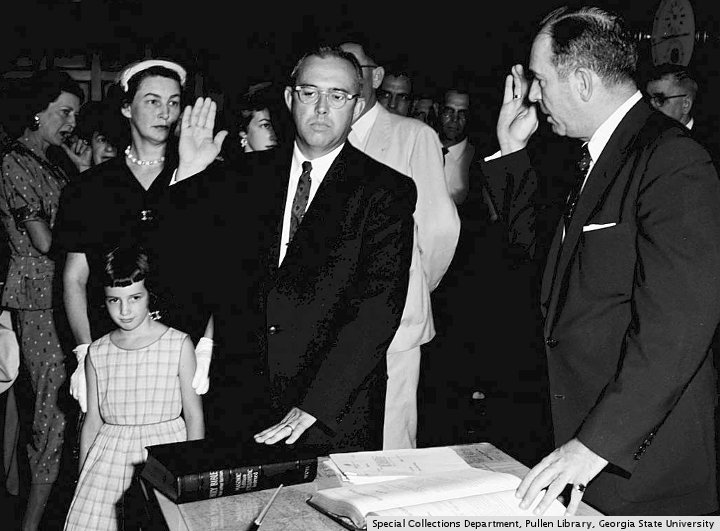
Welcome to part three of the Vonnegutian excavation of Slaughterhouse-Five, by Kurt Vonnegut. Parts one and two have already been published. Pictures are from “The Special Collections and Archives, Georgia State University Library”. It is written like J. R. R. Tolkien.
It is a lovely last day of July in Georgia. This chapter will be include chapters three and four. This project is at a lovely interlude. The rythyms and methods have been established. It is still fun to write, without the dreary duty involved in the final chapters. Hopefully it will be fun to read. It is early enough in the day that the window can be left open. Joggers and dog walkers are in the road, accompanied by baby strollers and cell phones. It is a great day in post racial Amerika.
Billy Pilgrim (BP) has been captured by the Germans. It was the tail end of the war, and most of the elite soldiers were pushing up Russian daisies. The Germans who captured BP were teenage boys and toothless old men. Their uniforms were taken off of dead soldiers. This ghoulish bit of recycling was marked by the phrase “so it goes.” It is noted in this text as SIG020.
The commander of the unit, that captured BP, was a corporal. He had been wounded four times, and sent back into action. The corporal wore golden cavalry boots, stolen off a dead Hungarian colonel. SIG021. This theme of stealing footwear from prisoners will be played out soon.
Roland Weary is well equipped. He has a spectacular hunting knife, scarves, boots, and a bullet proof Bible. When he is captured, the Germans take all his pretties away. His combat boots are taken off his feet, and given to one of the teenage boys. The boy had wooden clogs, which were given to Roland Weary. It did not work out well for the captured Amerikan.
While admiring the manly footwear of the colonel, BP hears three shots in the distance. Two Amerikan scouts were killed. SIG022. These scouts had been with BP, and Roland Weary, and had left them. Roland Weary thought thet him, and the scouts, were the Three Musketeers. The scouts thought Roland Weary was an obnoxious jerk. As KV said in another book, some people are just no damn good. Some people say that KV had a negative attitude.
While the Germans were dealing with him, BP began to time travel. He wound up in Ilium NY, 1967, when BP was 44 years old. His apparent date of birth varies throughout the text, which is not a big deal on Tralfamadore. BP, a wealthy optometrist, drives a Cadillac El Dorado Coupe de Ville. It has a bumber sticker that says “Impeach Earl Warren.”
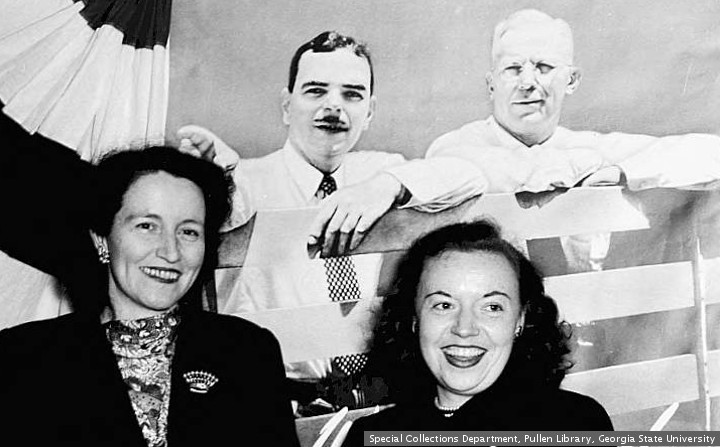
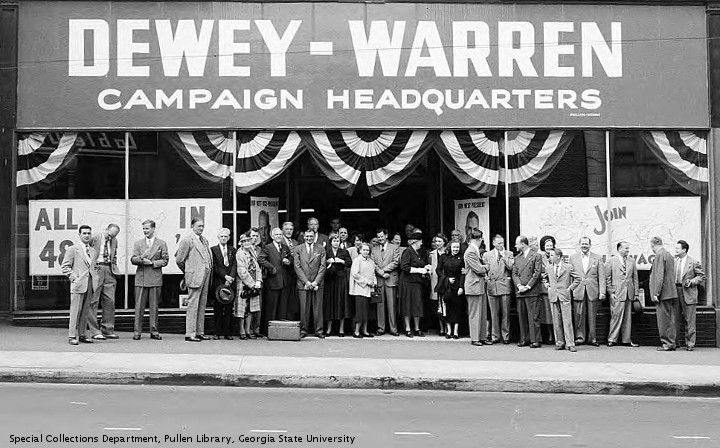
PG was 13 yo in part of 1967, and can remember Earl Warren. The man was Chief Justice of the Supreme Court. This version of SCOTUS handed down decisions about school desegregation, and Miranda rights, that upset conservatives. Before that, Mr. Warren was Governor of California, and the Republican Vice Presidential candidate in 1948. This was an election the Republicans had no business losing, but Harry Truman got the electoral votes. Earl Warren is little remembered today. The fact that PG recognizes the name, and the bumper sticker, makes him feel old in 2015.
BP had a good life in 1967. He drove a Cadillac, and made lots of money. BP went to Lions Club meetings, where the speaker said to bomb North Vietnam back into the stone age. His daughter was about to be married. One problem is the death of a beloved dog, Spot. SIG023.
1967 was much more appealing than the 1944 reality of capture by Germans. BP, however, was an optimist, and eventually an optometrist. It was all about how you see things. BP saw soldiers with piano teeth, and corpses with blue and ivory feet. SIG024. Soon, the captured Amerikans were paraded in front of a movie camera. There was no film in the camera, but the POW did not know that. On the horizon was a puff of smoke. A battle was being fought, and soldiers were dying. SIG025.
Eventually, the POW were loaded into train cars. The cars were marked with orange and black stripes, as a signal to the allied bombers. Later, when Barbara Pilgrim was married, the tents at the reception had orange and black stripes. The reception was in no danger of enemy bombers, even though it was hosted by a time traveling former POW.
While on the train car, BP had to endure a conversation with a geriatric Colonel, whose lungs rattled like greasy paper bags. The Colonel invited everyone to a barbeque in Cody WY. After a while, PG was ushered into a different train car from the Colonel, who outranked him. Soon, word arrived that a man had died in another car. SIG026. The deceased combatant was Wild Bob. SIG027. BP was chatting with a hobo, who said he had seen much worse than this. Little did he know what awaited him. Or maybe he did know. This is the end of chapter three.
At the start of chapter four, we learn that BP’s wife is named Valencia. Her daughter has just been married, before having a reception in an orange and black tent. BP is having trouble sleeping, and goes downstairs. There is a half empty bottle of champagne. Yes, the bottle is half empty, not half full, as if that is an important distinction on Tralfamadore. BP pulls the cork out of the bottle, and there is no fizz. The champagne is dead. SIG028.
Soon, the spaceshop … no mister clumsy typist, it is a space ship, not a space shop. … the spaceship from Tralfamadore lands in the back yard. Trallies do not speak. However, they have a voice synthesizer which imitates earthling sounds. This tactic is employed for comic effect in the movie. While BP is screwing Montana Wildhack, the voice machine asks if they are mating.
Nobody dies during the Tralfamadorian abduction, and there is no occasion for an SIG. This is made up for when BP returns to the POW train. First, the hobo says “You think this is bad? This ain’t bad.” SIG 029. Then, there is a death in the car ahead of BP. Roland Weary succumbs to gangrene, brought about by marching, in wooden clogs. SIG030. Roland Weary blames BP for his death.
This is one of the moments when PG feels a bond with BP, who, it should be remembered, is a fictional character. You meet someone, under bad circumstances, who is an asshole. Something bad happens to the asshole, who follows the asshole tradition of looking for someone to blame his misfortune on. The lucky person is you. It is not always pleasant. This thought may, or may not, be with BP as he finally gets off the POW wagon. BP is the next to last person off the train. The last person off is the dead hobo. SIG031.
When the POW arrive, they are led to a pile of clothing. It was overcoats, taken from other POW, who are now taking the German dirt nap. SIG032. BP gets a civilian coat, with a fur collar. It is way too small for him, and looks like a three cornered hat. SIG033.
BP meets Edgar Derby, who will play an important role in this story. We already know this. KV does not like suspense. Mr. Derby cradled the head of Roland Weary as the asshole left the planet. SIG034. KV cannot resist the temptation to tell us what will happen to Mr. Derby in sixty eight days. SIG035.
By now, BP is naked. This is part of the introduction to POW life. By coincidence, when BP went to Tralfamadore, the first thing they said to do was take off the clothes. BP is being deloused, which is an underrated function in wartime. The clothing of BP goes through a chemical process that kills lice, bacteria, and cooties. SIG036. This is the last SIG in this installment.
Before long, BP time travels back to Tralfamadore. The trallie is explaining a few basic things to BP. At this point we get the most important quote in SF. PG read this in 1978, and never forgot it. PG looked for this quote on the internet, and nobody thought it was important enough to share. It is amazing that this should be so esoteric, as this quote is at the end of chapter four.
“If I hadn’t spent so much time studying Earthlings,’ said the Tralfamadorian, ‘I wouldn’t have any idea what was meant by “free will.” I’ve visited thirty-one inhabited planets in the universe, and I have studied reports on one hundred more. Only on Earth is there any talk of free will.”



Slaughterhouse-Five Part Two




This is part two of an excavation of Slaughterhouse-Five, a story by Kurt Vonnegut. Part one has already been published. Pictures are from “The Special Collections and Archives, Georgia State University Library”. It is ok to skip over the text and look at the pictures.
The second chapter is the beginning of the story. The first eight words sum up the plot nicely. LISTEN: Billy Pilgrim has come unstuck in time. The first word is the most important, and the most likely to be ignored. People love to talk, but do not like to listen. If they do quit talking, and allow the other person to speak, then they are thinking of what clever comeback they can say. If only people were as proud of the ability to listen, as they are of the clever things they say.
Billy Pilgrim, or BP, is the main character of this story. By trade, he was an optometrist in Ilium, NY. BP led a reasonably pleasant life, in spite of, or perhaps because of, being shaped like a Coca Cola bottle. His father was a barber, also in the mythical town of Ilium, NY, until he died in a hunting accident. This incident motivates KV to write “So it goes.” This will be abbreviated as SIG006.
BP … which under no circumstances should be confused with British Petroleum … survives infantry duty in World War II and a plane crash in 1968. This crash killed everyone except BP and the co-pilot. SIG007. The plane crash is an important moment in the movie version of SF. PG saw the SF movie, while a UGA student, at the PJ auditorium. That is enough initials for one paragraph.
While recovering from the plane crash, BP’s wife dies of carbon monoxide poisoning. SIG008. (In the note taking that preceded this text, PG missed SIG008. If this was a scholarly dissertation, this would be a big deal. To a slack blogger, it is not. While PG will try to chronicle all 106 SIG in SF, he is not making any promises.) After the plane crash, BP comes out of the time travel closet. BP tells earth people about the wonders of Tralfamadore. These folks are two feet tall, green, and shaped like plungers. Tralfamadorians feel sorry for earth people.
PG has long suspected that he is a Zorlac, from the planet Thrunombulax. PG is quiet about this, as prejudice against Zorlacs is acceptable by polite people. Many white people are trying so, so, hard not to appear prejudiced against anyone. When they see an approved target for their tribal rage, white people lose it. Just look at the way people with deviant attitudes about race relations are portrayed. With this in mind, PG has learned to keep quiet about his Thrunombulaxian origin. The relationship of Thrunombulax to Tralfamadore is unknown.
A letter was written to the Ilium News Leader by BP. He tells about the lessons he learned on Tralfamadore. This was in 1967, on the eve of BP’s daughter’s wedding. Trallies see a person who is dead, and say that he/she is having a bad day. It is a Trally custom to say, about death, so it goes. SIG009. Number nine, number nine, number nine. Turn me on dead man. The Beatles white album was recorded at approximately the same time as BP going to Tralfamadore.
A wonderful tool is now available for the production of this SF commentary, and SIG inventory. The text of SF … not to be confused with science fiction or San Francisco … is available electronically in the sf_pdf. Alas, it is an imperfect tool. You can download a copy to your machine. On this copy you can highlight certain words in yellow magic marker, but you cannot copy text. You can copy text from the online version, but it comes out funny and you have to do so much editing that it might be easier to just manually copy the text.
While working on the letter about Trallies, BP is visited by his daughter, Barbara. At a young age, she had to manage her mother’s funeral, and take care of her senile father. KV, who has a way with words, describes the young lady as a “a bitchy flibbertigibbet … legs like an Edwardian grand piano.” Barbara … we might know her married name later … asks her dad why he waited until 1968 to talk about time travel. He did not think the time was ripe.
The tale segues into the first experiences with time travel. This was in World War II. BP was a chaplain’s assistant, which is not a well thought of position. One day on maneuvers, BP was playing A Mighty Fortress Is Our G-d on the organ. (KV made a mistake here. AMFIOG was written by Martin Luther, without any assistance from Johann Sebastian Bach.) A war game umpire showed up, and told everyone that they were dead. Before long, BP got word that his father had been killed while hunting deer. SIG010. The offending shot was fired by his human friend, and not by a deer.
When BP returns from the funeral, there are orders for him to go to Europe. A chaplain’s assistant has been killed in action. SIG011. Soon, BP participates in the Battle of the Bulge. BP has no weapon, helmet, or boots. BP looks alternately like a box of kitchen matches, and a filthy flamingo. BP meets foulmouthed Pittsburgh refugee Roland Weary, so saves BP numerous times before trying to kill him. Roland Weary was the only member of a gun crew to survive a 88mm German tank gun. SIG011.
The name Roland means many things to PG. Rowland NC, with an ornamental w, is the hometown of PG’s father. Roland Cofer is a former co-worker. Roland Cofer was the cheerful son of Willie Simpson, the store manager. The fact that Roland is black, and Willie is white, which should not concern the reader. It did not concern Roland or Willie.
The father of Roland Weary was a plumber. He collected guns, knives, and torture devices. The noname dad gave his wife a model of an iron maiden, which was a torture device before it was a heavy metal band. The device was a small chamber, with doors on hinges. The doors were lined with spikes, which impale the guest when the doors are closed. There is a drain in the bottom, for elimination of blood. SIG012. No mention is made of who cleans the iron maiden, or if it was cleaned. Eventually the smell would make the spikes redundant.
Roland Weary was a bully. He saw BP as a good target for his tough talk. Once, he described a torture where someone was tied down, with his eyes facing the sky. The eyelids are cut off, so there is no stopping the sun. SIG013.
BP is showing signs of common sense. He lets the motor mouth ramble without protest or argument. It turns out that BP is no stranger to gore. (This is blood and guts, not slick Willie’s VPOTUS.) BP had an explicit crucifix in his bedroom. Though nominally nondenominational, the Pilgrim family made sure young Billy knew all about the terrible things that happened to Jesus. SIG014.
Roland Weary had a pornographic picture, which BP saw numerous times. The legend was that André Le Fèvre an assistant to Louis J. M. Daguerre, was busted for selling a print of this photgraph. Mr. Le Fèvre died in prison. SIG015. A killjoy website, mental floss, says this never happened. Roland Weary later fantacizes being the only survivor of a German attack. SIG016.
It was about this time that BP starts to time travel. The first visit is to the YMCA, where his father is teaching him how to swim. The second adventure is to 1965, when BP is 41 years old. His mother is in an old peoples home. (PG once used the phrase “old folks home” at an estate sale, and was quickly told that OFH was considered rude.) While BP was at the OPH, a former marathon runner crossed the mortal finish line, and was wheeled out on a gurney. SIG017.
While sitting in a chair at the OPH, BP noticed a lump in the cushion. It was a book, The Execution of Private Slovik. Eddie Slovik was an American soldier, who was executed for desertion in 1945. SIG018. An excerpt from the court opinion in the case is quoted. It seems as though Pvt. Slovik was executed as a morale building exercise. SIG019.
The next time travel episode was a party in 1958. BP gets drunk, and screws a woman he is not married to. This is putting the tryst back in optometrist. When BP comes back to real time 1945, Roland Weary is about to kick him in the lower back. This effort at self expression is interrupted by the Germans, who take BP prisoner. This is the end of chapter two.




Slaughterhouse-Five Part One





In the first part of Slaughterhouse-Five, Kurt Vonnegut goes to Dresden, East Germany. He rides in a taxi. The mother of the taxi driver died in the Allied bombing raid on Dresden, Germany. KV says “so it goes” on page 2, as a reaction to this information. The eight letters were a stand alone sentence .
This is the beginning of a chamblee54 reaction to Slaughterhouse-Five, hereafter known as SF. When PG reads a book by KV, the style of writing takes over. PG begins to think like KV writes, which is not necessarily a bad thing. This series should be easy to write, and hopefully not too tough to read. The idea is to stop reading, and start writing, every time KV says “So it goes.” This will be abbreviated as SIG. That is four abbreviations, and should be enough.
Soon after the taxi ride, KV is talking to a man. The subject is a book KV is writing about Dresden. “Is it an anti-war book?” “Yes, I guess” “Why don’t you write an anti-glacier book instead?” This conversation took place around 1967, or 48 years ago. With the Vietnam conflict escalating, anti-war stuff was popular. What few could have foreseen was the 2015 reality. War is just as painful, profitable, and prevalent as ever. Glaciers, on the other hand, are starting to melt. The pen may be mightier than the sword, but 350 ppm carbon dioxide has them both whipped.
SIG002 is on page 6. A rabid American has a quart of jewels, stolen off the dead of Dresden. SIG003 is on page 9. A man gets his wedding ring caught in an elevator, and is crushed to death by an automobile. It didn’t make much sense.
Years ago, a couple of years after the first reading of SF, PG worked at a department store called Davisons. They had these fabulous freight elevators, which you controlled by turning a brass knob. If wanted to go up, you turned left. If you wanted it to go down, you turned right. One of these elevators used to have a wooden gate in front of it. One day, a man stuck his head in the shaft to see if the elevator was coming. The elevator car cut his head off. The blood stains remained, between the third and fourth floors of the number 10 elevator.
PG first read SF a few years before working at Davisons. It was a tacky paperback. The current version is a deluxe, hard back, 25th anniversary edition. It has a new introduction, where KV calls George Will an owlish nitwit. PG remembers a conversation KV had with someone who was not pleased about another war book, thinking it would make killing seem glamorous.
Not to worry, the conversation is in chapter 1. KV promises that there would be no role for Frank Sinatra, or John Wayne, in the movie based on his book. This is ironic. For all of their tough guy posturing, neither Mr. Wayne nor Mr. Sinatra served in World War II.
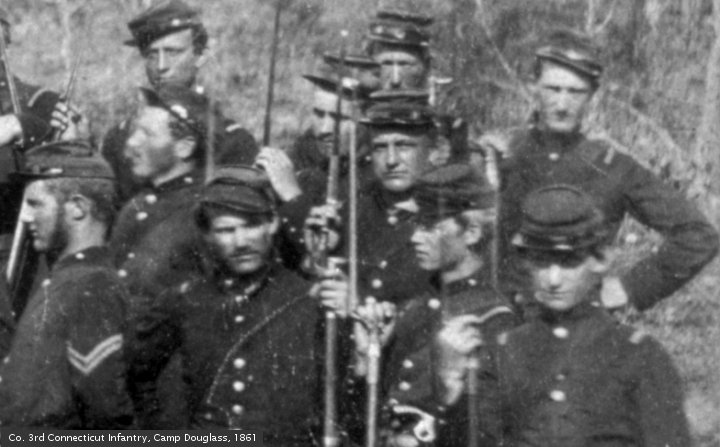
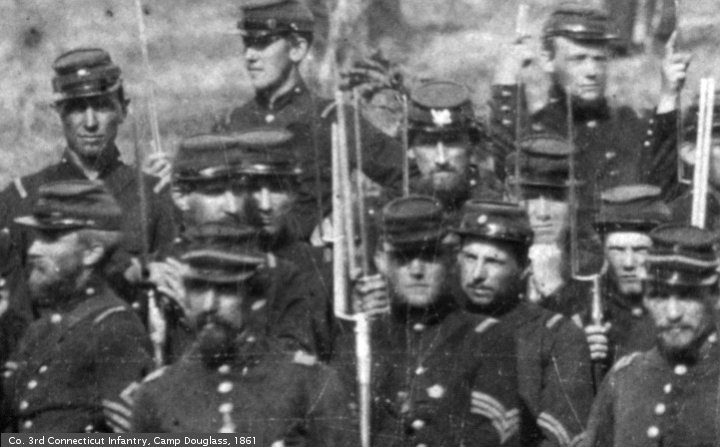
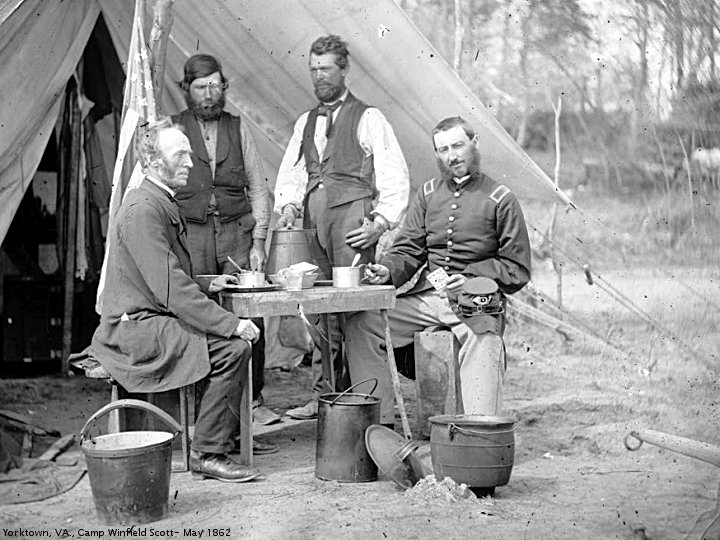
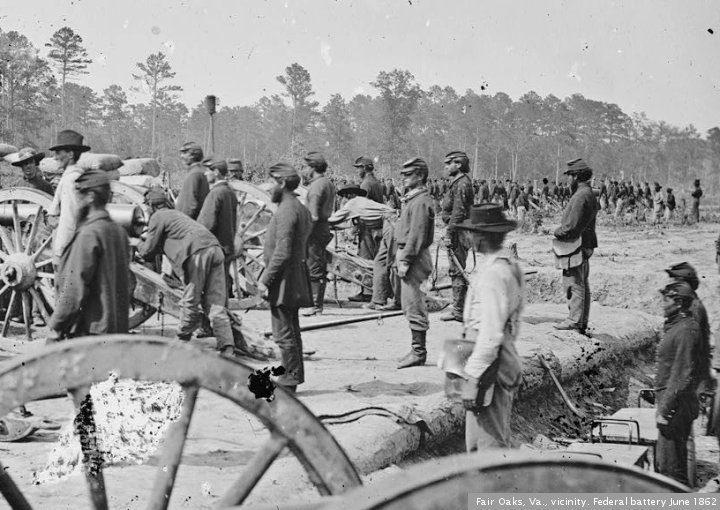
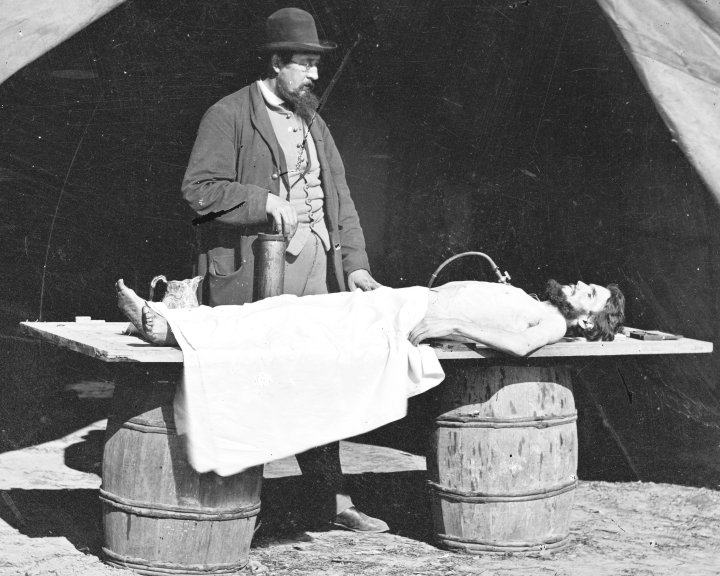
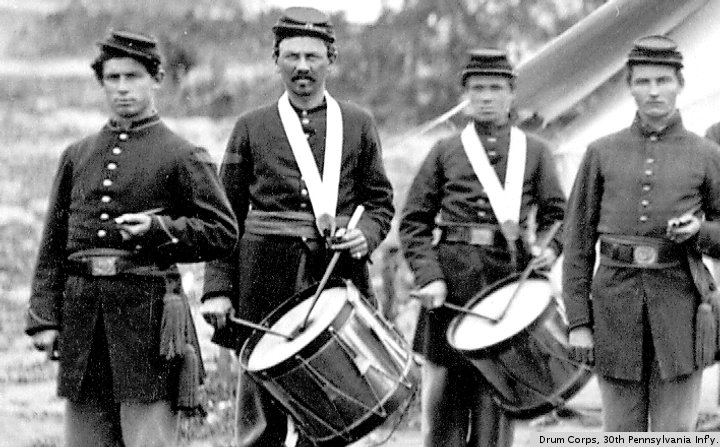
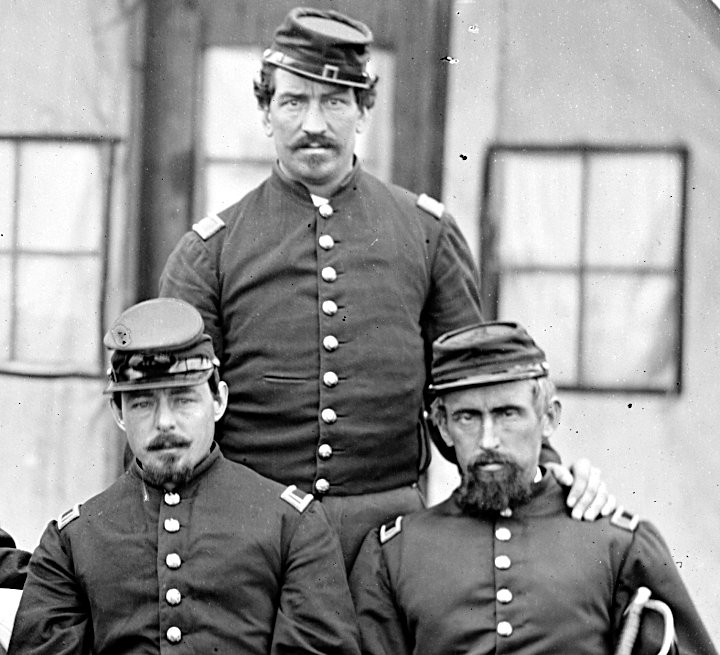
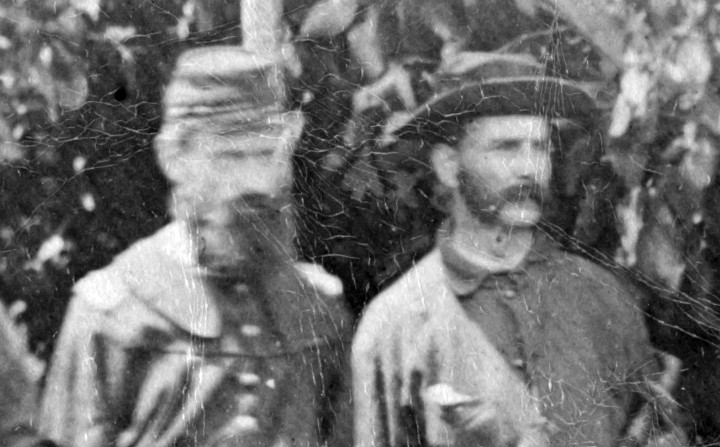
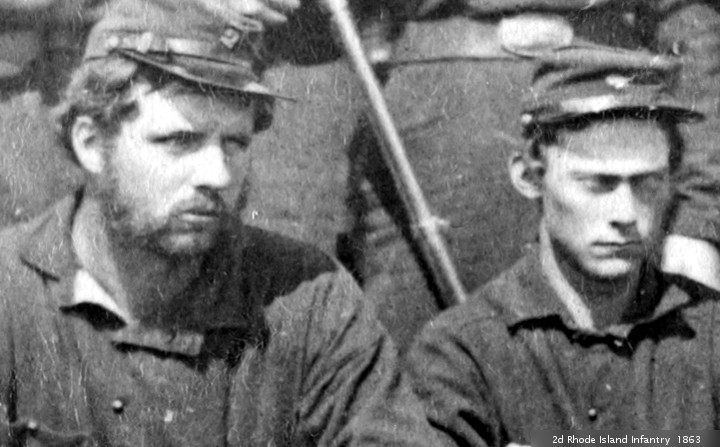
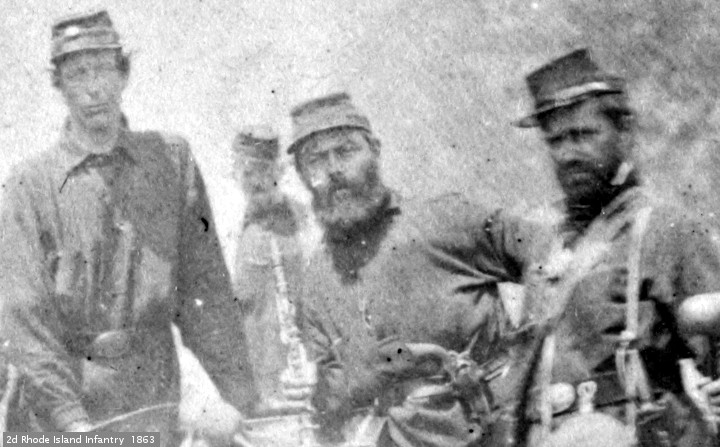
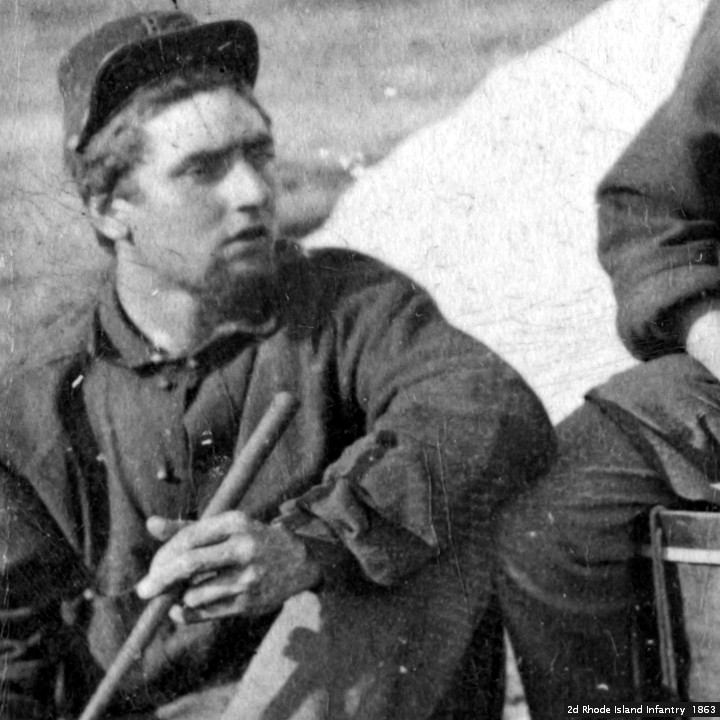
After the conversation we have SIG004 on page 20. It has something to do with Sodom and Gomorrah. A few sentences later, Lot’s wife, who evidently had a job description but no name, was turned into a pillar of salt, thus begetting SIG005. This is more or less the end of chapter 1. The story of SF, such as it is, begins with the first line of chapter 2. Pictures today are from The Library of Congress. The men shown were Union Soldiers, in the War Between the States.



The Harder They Come
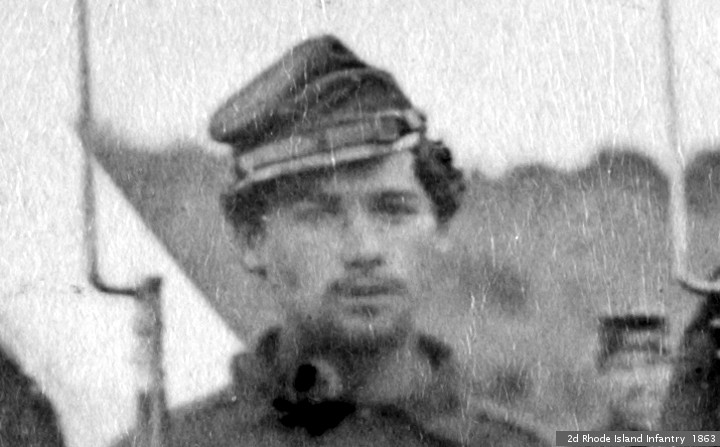
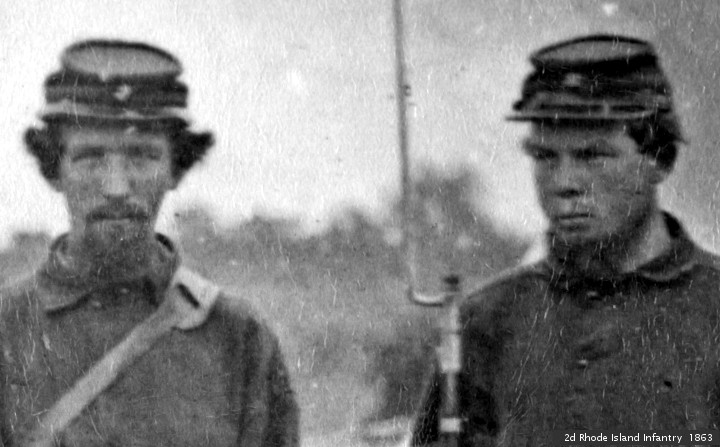



T.C. Boyle wrote The Harder They Come. It is based on the story of Aaron Bassler. A young man takes the wrong drugs, is inspired by the wrong stories, kills two men, and is killed by the police.
In one book tour interview, Mr. Boyle talks about the violence in America. There usually is a recent event to refer to. With more guns, and more anger, people are getting hurt. Rather than deliver a lecture, Mr. Boyle tells a story.
Adam is a troubled young man. He prefers to be called Colter, in honor of a frontier hero. He spends most of his time in the woods of Northern California. Adam shacks up with Sara, another lost soul. Things go relatively smoothly until the house Adam lives in is sold.
While all this is going on, Adam’s father, Sten, tries to enjoy his retirement. One of Sten’s neighbors is fired up about the Mexicans growing dope in the forests, and wants to do something. The man goes hiking in the forests, looking for drug activity. He stumbles onto Adam, who is living in the woods. After a verbal confrontation, Adam shoots the hiker dead. Before long there is another killing in the forest, and a massive manhunt ensues. After coltering his way out of danger for a month, the police find Adam, with fatal consequences.
The story is well written and entertaining, as is all T.C. Boyle product. At times the plot takes twists that are tough to believe. Sara sees a police car in a parking lot, and wants revenge. People in this tale are always getting even for something. Sara goes into the police car, opens the cover to the gas tank, and pours a container of sugar water into the fuel. This does not seem likely.
There are no easy answers. Weapons are easily available to drug addled young men. Everyone who lives in a coastal paradise is angry. Eventually it all boil over, people get hurt, and PG has a story to read. Pictures today are from The Library of Congress.




So You’ve Been Publicly Shamed






When an author has book product, the author gets interviewed. This is how PG first heard of So You’ve Been Publicly Shamed, by Jon Ronson. The act of using “the media” to promote book product is a curious analog to shaming. To have the exhibitionism on the wtf podcast, starring the shame-proof Marc Maron, is another item on an overloaded irony buffet.
SYBPS is a work of non fiction. In other words, we take the author’s word that these events really happened. In fiction, you know from the get go that it is a made up story. There are a few sayings about this. A: to tell the truth you need to write fiction. B: life is bad fiction. As a celebrity tweeter said, @mattyglesias One man’s cheap shot is another man’s shaming.
Several of the stories involve people getting caught in lies. There is the story of three academigeeks who created a faux Jon Ronson for twitter. Some of their justifications sounded like this: @Johann_MG The Infomorph isn’t taking your identity. It is repurposing social media data into an infomorphic identity. It did not end well for the young men. They were exposed. People on twitter said rude things about them. Currently, another digital infomorph is on twitter. @jon_ronson A Weavr made from wikipedia In response to this video by the real Jon Ronson.
The next story involves a man who invented quotes from Bob Dylan. This is another level of irony … with the wealth of material available about Robert A. Zimmerman, this guy felt the need to make stuff up. The story is by turns amusing and pathetic. The author was paid $20k to give an apology speech, with a giant screen behind him for the unkind twitter comments. Maybe throwing rotten tomatoes would have been kinder.
Justine Sacco made an unwise tweet about AIDS and white privilege. She landed in South Africa to discover herself notorious, and unemployed. The tabloid press said Max Mosley was at a Nazi themed sex party. He sued the paper about the Nazi part, won a settlement, and boasted of being a player. The tabloid newspaper got caught in another scandal, and was shut down.
This being non fiction, Mr. Ronson goes all over the place. There is a $500 a seat weekend seminar on “radical honesty.” There are academics, of various levels of intelligence, who write about shaming, prison techniques, and other trivia. There is a company who floods the internet with flattering stories about you, so that the trash goes to page three of google. There are also more people whose lives were ruined by public shaming. One example is the rape victim who committed suicide after her cross examination.
The star shaming saga is donglegate. (spell check suggestion: congregate) Two young men at a tech conference made a tacky joke. A lady, Adria Richards, took a picture of the young men. Immediately, the picture was on twitter. @adrisrichards Not cool Jokes about forking repo’s in a sexual way and “big” dongles Right behind me.
One of the young men lost his job, only to get another one. Ms. Richards, who publicly fired the first shot from her twitter account, lost her job, and was subjected to a massive amount of abuse on the internet. The 4chan crowd had a good time with Adria Richards.
In her interview with Mr. Ronson, Ms. Richards said she felt that the dongle joke jeopardized her safety. “Have you ever heard that thing, Men are afraid that women will laugh at them and women are afraid that men will kill them?” “People might consider that an overblown thing to say”… She had, after all, been in the middle of a tech conference with eight hundred bystanders” “Sure And those people would probably be white and they would probably be male.”
While researching donglegate, Mr. Ronson talked to some people at 4chan. There was a comment made. It went into the preview copies of the book, but not the final edition. This is part of the the publicity process. Someone took offense at this comment, and made an issue out of it. For more details see this story, File under ‘inevitable’: “So You’ve Been Publicly Shamed” author Jon Ronson slammed by Twitter-shamers.
In all of these tales, Mr. Ronson’s name was spelled correctly. Some say there is no bad publicity. Whatever is said creates awareness of your product. There is a lot of awareness for SYBPS, and Mr. Ronson, right now. @jonronson Feeling incredibly sorry for #RachelDolezal and hope she’s okay. The world knows very little about her, her motives.
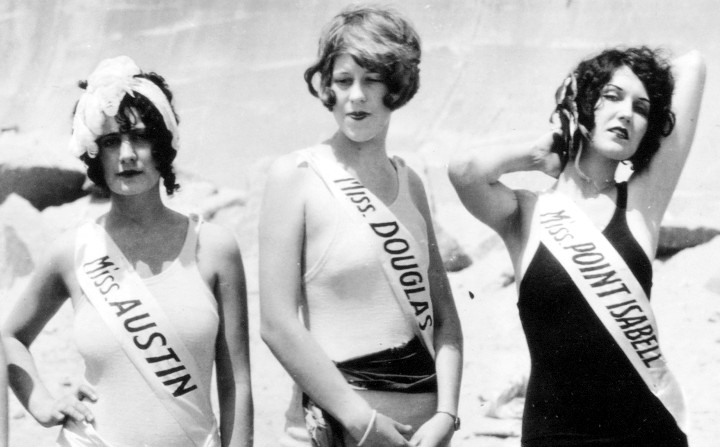
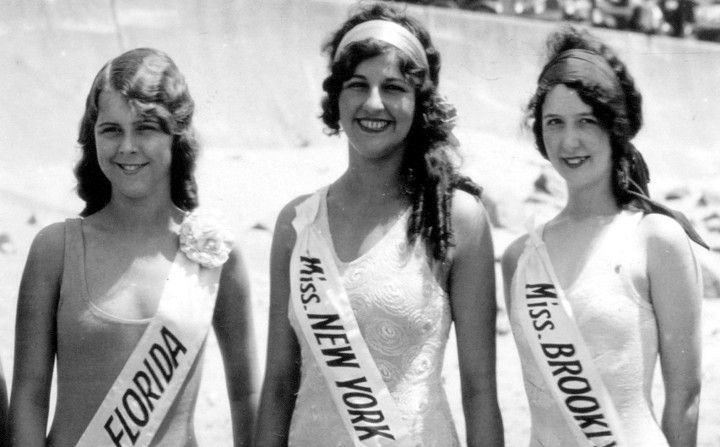
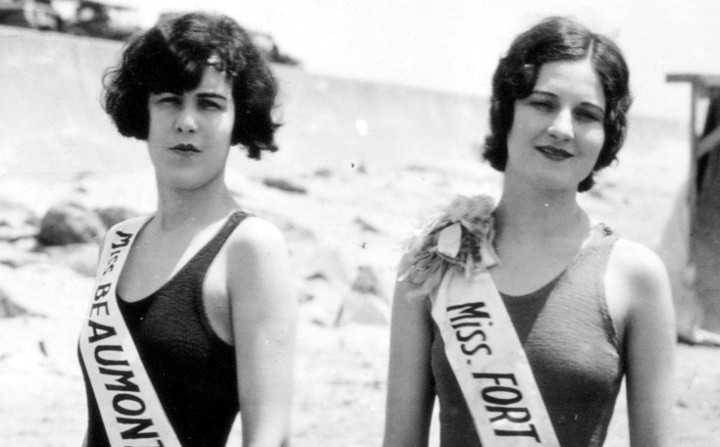
Pictures today are from The Library of Congress. Picture #06662 is from “Second International Pageant of Pulchritude and Eighth Annual Bathing Girl Revue, May 21, 22, 23, 1927, Galveston TX.”



Howard Zinn






Howard Zinn, author of A People’s History of the United States: 1492 to Present, spent an hour talking on Booknotes. This is a C-SPAN show, with author interviews. The show aired March 12, 2000. Later that night was a show about the 2000 election, featuring Green Party candidate Ralph Nader. The role Mr. Nader would play in the November election was unimaginable in March.
The first serious job Mr. Zinn had was World War II. He served in the Air Force. Towards the end of the war, “we bombed a little French town on the Atlantic coast called Royon… `We’re not going to use regular demolition bombs. We have something new. We w–you’re going–instead of dropping our usual 12 500-pound demolition bombs, you’re going to drop 30 100-pound canisters of jel—jellied gasoline.’ It was napalm–the first use of napalm in the European theater.”
Later, Mr. Zinn thought about it all. “And it didn’t s–the–the thing is you’d bomb from 30,000 feet. You don’t see what’s happening down there. You don’t see people suffering. You don’t see people burning. You don’t see limbs falling. You–you just see little flashes in the–in the d–in the dark, you know. And—and you go back, and you’re debriefed and you don’t think about it. And it’s horrifying.
Later–only later did I begin to think about it, and I was horrified by what I had done, and I’m still horrified by what I did. But I think that had an effect on my thinking about war, because here I was in the best of wars. And I believed it was the best of wars because I volunteered for it. A war against fascism? I mean, how could you find a more bestial enemy? And yet it’s a–it complicated the war for me. It complicated the morality of the war, and it made me begin to think that war itself is evil. Even when it starts with good cause, even when the enemy is horrible, that there’s something about war, especially in our time when war inevitably involves indiscriminate killing … war simply cannot be accepted morally as a solution for whatever problems are in the world.
Whatever tyranny, whatever borders are crossed, whatever problems there are, somehow human ingenuity has to find a way to deal with that without the indiscriminate killing that war involves.”
Brian Lamb is the host of Booknotes. He speaks non theatrically, often with questions that are very different from the narrative presented by the author. After this talk about war, the question was “LAMB: What would you have done had you been president and those bombs were dropped on Pearl Harbor? Mr. ZINN: That’s the toughest question I’ve ever faced. I … And–and I confess, I–I–I haven’t worked out an alternative scenario.
PHOTUS is known for taking a non-heroic view of our history. Regarding the US Constitution, “When they set up the new government, when they set up the new Constitution, I mean, they set up a strong, central government which will be able to legislate on behalf of bondholders and slaveholders and manufacturers and Western land speculators.”
Mr. Zinn does not discuss The War Between The States on this show. (PG has not read PHOTUS, and does not know how WBTS is treated.) This was a case where the central government was favoring the industrial interests, at the expense of the agricultural interests. How much of that conflict was economic, with abolition serving as a moral fig leaf?
After the war, Mr. Zinn went back to school. A job appeared at Spelman College, and he worked there seven years. After that, he taught at Boston University for 24 years. His next door neighbor was five year old Matt Damon, who later read the audiobook version of PHOTUS.
There is one more bit of amusement from the transcript. Mr. ZINN:`For the United States to step forward as a defender of helpless countries matched its image in American high school history books but not its record in world affairs. It had opposed the Haitian revolution for independence from France at the start of the 19th century. It had instituted a war with Mexico and taken half the country. It had pretended to help Cuba win freedom from Spain and then planted itself in Cuba with a military base, investments and rights of intervention. It had seized Hawaii, Puerto Rico, Guam and fought a brutal war to subjugate the Filipinos. It had opened Japan to its trade with gunboats and threats. It had declared an open-door policy in China as a means of assuring the United States would have opportunities equal to other imperial powers in exploiting China. It had sent troops to Peking with other nations to assert Western supremacy in China and kept them from–kept them for over 30 years.’ LAMB: There’s a lot more in here about Colombia and Haiti and Nicaragua. Is this country at–this sounds like I’m–I’m arguing here, but has this country done anything right?
This is a repost. Pictures today are from The Library of Congress





Author Insults





These author insults were borrowed from flavorwire. HT to Andrew Sullivan The pictures are from The Library of Congress This is a repost.
25. Gertrude Stein on Ezra Pound “A village explainer. Excellent if you were a village, but if you were not, not.”
24. Virginia Woolf on Aldous Huxley “All raw, uncooked, protesting.”
23. H. G. Wells on George Bernard Shaw “An idiot child screaming in a hospital.”
22. Joseph Conrad on D.H. Lawrence “Filth. Nothing but obscenities.”
21. Lord Byron on John Keats (1820) “Here are Johnny Keats’ piss-a-bed poetry, and three novels by God knows whom… No more Keats, I entreat: flay him alive; if some of you don’t I must skin him myself: there is no bearing the drivelling idiotism of the Mankin.”
20. Vladimir Nabokov on Joseph Conrad “I cannot abide Conrad’s souvenir shop style and bottled ships and shell necklaces of romanticist cliches.”
19. Dylan Thomas on Rudyard Kipling “Mr Kipling … stands for everything in this cankered world which I would wish were otherwise.”
18. Ralph Waldo Emerson on Jane Austen “Miss Austen’s novels . . . seem to me vulgar in tone, sterile in artistic invention, imprisoned in the wretched conventions of English society, without genius, wit, or knowledge of the world. Never was life so pinched and narrow. The one problem in the mind of the writer . . . is marriageableness.”
17. Martin Amis on Miguel Cervantes “Reading Don Quixote can be compared to an indefinite visit from your most impossible senior relative, with all his pranks, dirty habits, unstoppable reminiscences, and terrible cronies. When the experience is over, and the old boy checks out at last (on page 846 — the prose wedged tight, with no breaks for dialogue), you will shed tears all right; not tears of relief or regret but tears of pride. You made it, despite all that ‘Don Quixote’ could do.”
16. Charles Baudelaire on Voltaire (1864) “I grow bored in France — and the main reason is that everybody here resembles Voltaire…the king of nincompoops, the prince of the superficial, the anti-artist, the spokesman of janitresses, the Father Gigone of the editors of Siecle.”
15. William Faulkner on Ernest Hemingway “He has never been known to use a word that might send a reader to the dictionary.”
14. Ernest Hemingway on William Faulkner “Poor Faulkner. Does he really think big emotions come from big words?”
13. Gore Vidal on Truman Capote “He’s a full-fledged housewife from Kansas with all the prejudices.”
12. Oscar Wilde on Alexander Pope “There are two ways of disliking poetry; one way is to dislike it, the other is to read Pope.”
11. Vladimir Nabokov on Ernest Hemingway (1972) “As to Hemingway, I read him for the first time in the early ‘forties, something about bells, balls and bulls, and loathed it.”
10. Henry James on Edgar Allan Poe (1876) “An enthusiasm for Poe is the mark of a decidedly primitive stage of reflection.”
09. Truman Capote on Jack Kerouac “That’s not writing, that’s typing.”
08. Elizabeth Bishop on J.D. Salinger “I HATED [Catcher in the Rye]. It took me days to go through it, gingerly, a page at a time, and blushing with embarrassment for him every ridiculous sentence of the way. How can they let him do it?”
07. D.H. Lawrence on Herman Melville (1923) “Nobody can be more clownish, more clumsy and sententiously in bad taste, than Herman Melville, even in a great book like ‘Moby Dick’…. One wearies of the grand serieux. There’s something false about it. And that’s Melville. Oh dear, when the solemn ass brays! brays! brays!”
06. W. H. Auden on Robert Browning “I don’t think Robert Browning was very good in bed. His wife probably didn’t care for him very much. He snored and had fantasies about twelve-year-old girls.”
05. Evelyn Waugh on Marcel Proust (1948) “I am reading Proust for the first time. Very poor stuff. I think he was mentally defective.”
04. Mark Twain on Jane Austen (1898) “I haven’t any right to criticize books, and I don’t do it except when I hate them. I often want to criticize Jane Austen, but her books madden me so that I can’t conceal my frenzy from the reader; and therefore I have to stop every time I begin. Every time I read ‘Pride and Prejudice,’ I want to dig her up and hit her over the skull with her own shin-bone.”
03. Virginia Woolf on James Joyce “the work of a queasy undergraduate scratching his pimples.”
02. William Faulkner on Mark Twain (1922) “A hack writer who would not have been considered fourth rate in Europe, who tricked out a few of the old proven sure fire literary skeletons with sufficient local color to intrigue the superficial and the lazy.”
01. D.H. Lawrence on James Joyce (1928) “My God, what a clumsy olla putrida James Joyce is! Nothing but old fags and cabbage stumps of quotations from the Bible and the rest stewed in the juice of deliberate, journalistic dirty-mindedness.”
Bonus. Mary McCarthy on Lillian Hellman “Every word she writes is a lie, including and and the.”
Bonus two, a comment to the original post.: RomanHans Re “The Cardinal’s Mistress” by Benito Mussolini, Dorothy Parker wrote one of my favorite bon mots: “This is not a book to be tossed aside lightly. It should be thrown with great force.”
Bonus Three, from Flannery O’Connor “I hope you don’t have friends who recommend Ayn Rand to you. The fiction of Ayn Rand is as low as you can get re fiction. I hope you picked it up off the floor of the subway and threw it in the nearest garbage pail. She makes Mickey Spillane look like Dostoevsky.”





A Season in Purgatory





Some books you need a closet to read in. They are so much fun, and yet so trashy. The one star reviewer says this about A Season in Purgatory. “I would sum up this potboiler as readable trash … I hated myself for reading it and yet couldn’t put it down !”
The Bradleys are a wealthy New England family that is supposed to really be the Kennedys. The patriarch, Gerald, got his money through, um, investments. Gangland activities are often mentioned, but never really specified.
The central character is Harrison Burns. He is a writer, who makes enough money after a while to stop work, and point a finger at a long ago crime. The book goes back and forth from being told from the viewpoint of Mr. Burns, to a hazy, all knowing, third person. Maybe the walls really do have ears, and know how to dictate.
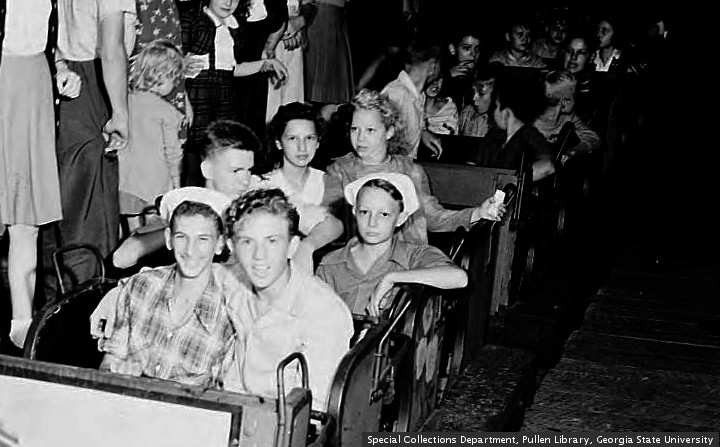
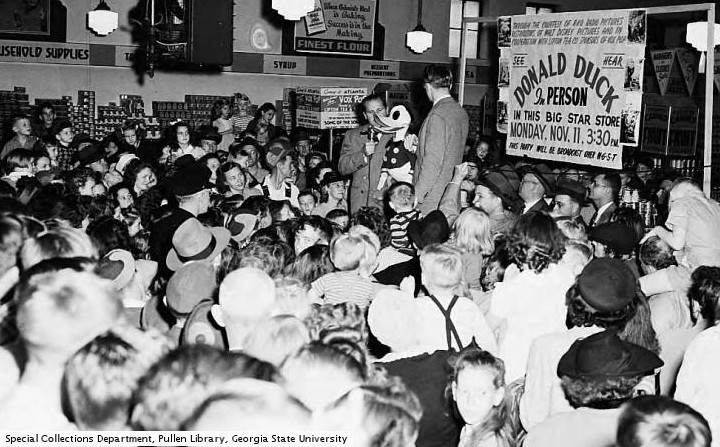
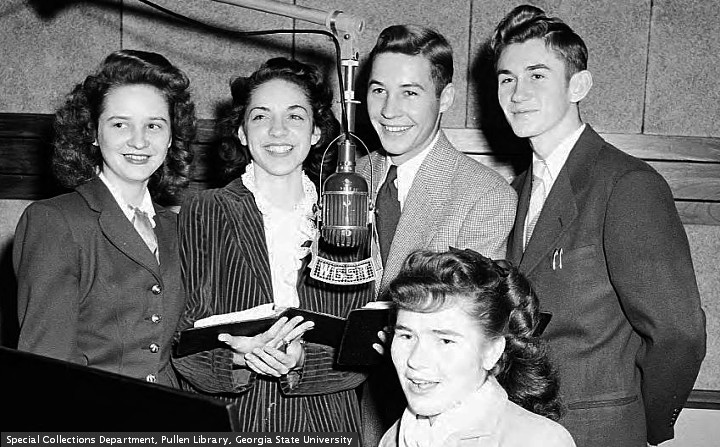
The story rolls along, with plenty of sex, dirty dealing, alcohol and highly questionable coincidences. Many of the players are thinly veiled famous people. You are ashamed for enjoying it so much. Pictures today are from “The Special Collections and Archives, Georgia State University Library”.


When The Killings Done


A few weeks ago, PG found a book by T. C. Boyle, When the Killing’s Done: A Novel. Mr. Boyle tells stories, which is what PG wants in a book. If PG becomes wiser, kinder, or wealthier as a result, this is fine. The first objective is entertainment. If the book does not tell a story, it is not worth your time. WTKD is a story. The commentary on serious issues is a bonus. Mr. Boyle is good at this sort of thing.
A handful of islands off the California coast have problems. They are mostly uninhabited. A few species managed to get aboard, and upset the balance. The government wants to eradicate the invaders, and restore the original inhabitants. A crew of noisy animal lovers stands in the way.
The primary bad guy is a millionaire animal lover. He is a bit of a cartoon character. In one scene, he has a date. The lady becomes his nemesis, in the environmental wars. They go to a restaurant, he orders the most expensive wine available, and declares it rotgut. The lady decides he is a jerk, and leaves. Later they are on opposite sides of a picket line.
The government lady has her own issues. She gets pregnant, and the daddy runs away. The lady goes looking for the abortion clinic, and gets lost. The baby appears in the last scene of the book.
WTVD is a page turner. Mr. Boyle is the master manipulator of the language. The story ends before you want it to. The contradictions of the millionaire animal lover show up several times. At one point, racoons are tearing up his carefully sodded, extravagantly watered yard. What to do with the eye shadow wearing rats? Dave (the animal lover) puts traps in his yard, and transports the critters to the embattled islands. This might not be in the best interests of the overall environment, but animals have a right to live. Later, government peeeps wonder how they got on the island.
Mr. Boyle drops in a reference for his fans. A Japanese merchant vessel is moving through the foggy channel waters, en route to a smashing WTKD finale. The vessel had a man go overboard off the Georgia coast once. Pictures today are from “The Special Collections and Archives, Georgia State University Library”. These images have nothing to do with WTKD.

Lewis Grizzard



In the time between 1980 and 1994, if you lived in Atlanta you heard about Lewis Grizzard. Some people loved him. Some did not. He told good old boy stories about growing up in rural Georgia. Many of them were enjoyable. He also made social and political commentaries, which upset a few people. This is a repost.
PG had mixed feelings about Lewis. The stories about Kathy Sue Loudermilk and Catfish were funny. His opinions about gays, feminists, and anything non redneck could get on your nerves. His column for the fishwrapper upset PG at least twice a week.
In 1982, Lewis (he reached the level of celebrity where he was known by his first name only) wrote a column about John Lennon. Lewis did not understand why Mr. Ono was such a big deal. PG cut the column out of the fishwrapper, and put it in a box. Every few years, PG would be looking for something, find that column, and get mad all over again.
The New Georgia Encyclopedia has a page about Lewis, which expresses some of these contradictions. If Grizzard’s humor revealed the ambivalence amid affluence of the Sunbelt South, it reflected its conservative and increasingly angry politics as well. He was fond of reminding fault-finding Yankee immigrants that “Delta is ready when you are,” and, tired of assaults on the Confederate flag, he suggested sarcastically that white southerners should destroy every relic and reminder of the Civil War (1861-65), swear off molasses and grits, drop all references to the South, and begin instead to refer to their region as the “Lower East.” Grizzard also wore his homophobia and hatred for feminists on his sleeve, and one of the last of his books summed up his reaction to contemporary trends in its title, Haven’t Understood Anything since 1962 and Other Nekkid Truths (1992).
In the end, which came in 1994, when he was only forty-seven, the lonely, insecure, oft-divorced, hard-drinking Grizzard proved to be the archetypal comic who could make everyone laugh but himself. He chronicled this decline and his various heart surgeries in I Took a Lickin’ and Kept on Tickin’, and Now I Believe in Miracles (1993), published just before his final, fatal heart failure.
As you may have discerned, Lewis McDonald Grizzard Jr. met his maker on March 20, 1994. He was 47. There was a valve in his heart that wasn’t right. The good news is that he stayed out of the army. At the time, Vietnam was the destination for most enlistees. The bad news is that his heart problems got worse and worse, until it finally killed him.
Sixteen years later, PG found a website, Wired for Books. It is a collection of author interviews by Don Swaim, who ran many of them on a CBS radio show called Book Beat. There are two interviews with Lewis Grizzard. The first one was done to promote My Daddy Was a Pistol and I’m a Son of A Gun. This was the story of Lewis Grizzard Senior, who was another mixed bag.
PG found himself listening to this chat, and wondered what he had been missing all those years. The stories and one liners came flowing out like the Chattahoochee going under the perimeter highway. Daddy Grizzard was a soldier, who went to war in Europe and Korea. The second one did something to his mind, and he took to drinking. He was never quite right the rest of his life. His son from adored him anyway. When you put yourself in those loafers for a while, you began to taste the ingredients in that stew we called Lewis Grizzard.
PG still remembers the anger that those columns caused … he has his own story, and knows when his toes are stepped on. The thing is, after listening to this show, PG has an idea of why Lewis Grizzard wrote the things that he did. Maybe PG and Lewis aren’t all that different after all.
The pictures for this feature are from The Library of Congress. While picking out the pictures, PG listened to the other Lewis Grizzard show with Don Swaim. They both have last names that are often mispronounced. When Lewis wondered where Klansmen get those pointy hats… at the KKK mart, perhaps… PG had to stop the broadcast and write a postscript. This is a repost.




 Chamblee54
4 comments