Call Out Culture




Some people just like to argue. The topic of discussion is irrelevant…they just enjoy the thrill of verbal combat. There is little to be gained by engaging these people. You should never argue with an idiot. They will drag you down to their level, and win by experience. If you wrestle with a hog, you get dirty, and the pig enjoys it. This is a repost
The idea that you should speak up, and call out, is popular these days. A popular quote, credited by some to Thomas Jefferson, says ” “If you are neutral in situations of injustice, you have chosen the side of the oppressor.” Unfortunately, many people take sides without understanding the conflict. When you are goaded into foolish action, by irresponsible rhetoric, you choose the side of the oppressor. Often, the one claiming to be the victim is, in fact, the oppressor.
There are a lot of logical fallacies today. Two wrongs making a right. False equivalence. Whining about media coverage. Opinions are like elbows… everyone has two. Don’t talk about religion or politics. Don’t talk with your mouth full. If you can’t say anything good, don’t say anything at all. If everybody shouts, then nobody is heard.
Are you trying to create change, or are you like a dog that wants to bark? If you are going to influence a person, you have to earn that person’s trust. If this person hears you repeating things that are not true, then they are not going to trust you. Once lost, trust is very difficult to regain.
You should think about things like cognitive dissonance, confirmation bias, and mythos over logos. People are hit over the head with a lot of rhetoric and polemic these days. Sorting out the conflicting claims can be tough. You can get into narcotizing dysfunction. This is where you hear so much about something that you tune out new information. When you call out someone, are you pouring water into a barrel that is already overflowing?
This text between the pictures (“The Special Collections and Archives, Georgia State University Library”) has focused on foolish talk. The word listen has not been used. We don’t need to talk more. We need to listen more. You have two ears, and one mouth, for a reason.




Nevada Death Drugs




Scott Raymond Dozier was convicted of two nasty murders. “In 2005, Dozier was sentenced to 22 years in prison for shooting 26-year-old Jasen Greene, whose body was found in 2002 in a shallow grave outside Phoenix. A witness testified that Dozier used a sledgehammer to break Greene’s limbs so the corpse would fit in a plastic tote that Dozier used to transport meth, equipment and chemicals. Dozier was sentenced to die for robbing, killing and dismembering 22-year-old Jeremiah Miller at a Las Vegas motel in 2002. Miller had come to Nevada to buy ingredients to make meth. His decapitated torso was found in a suitcase in an apartment building trash bin, also missing lower legs and hands. He was identified by tattoos on the shoulders. His head was never found.”
Life in prison did not agree with Mr. Dozier, and he grew weary of the appeals process. “… on October 31 (2016) he sent a handwritten letter to Clark County District Judge Jennifer Togliatti: “I, Scott Raymond Dozier…of sound mind, do hereby request that my death sentence be enacted and I be put to death.” … Last July, Togliatti summoned him to court. By then, it was clear that the state would struggle to find execution drugs and that such problems had been tied to painful, botched executions in other states. “That has not dissuaded you from asking me to sign this warrant?” she asked. “Quite frankly, your honor, all those people ended up dead,” Dozier said, “and that’s my goal here.”
“Just Bang Me Up, Man” was how Mr. Dozier put it in a later interview. A handsome, articulate man, Mr. Dozier is a movie waiting to be made. That interview, and another one here, are full of zesty quotes. “The public is ambivalent and apathetic, and maybe there will be 10 minutes of entertainment on the news. Maybe a few sick people will spend too much time with it on social media.”
There was only one problem. Nevada, like many other states, likes giving death sentences more than carrying them out. “It also creates a dilemma for states that want the harshness of death sentences without the messiness of carrying them out. The legal scholars (and siblings) Jordan Steiker and Carol Steiker have written that states like Nevada are “symbolic,” sentencing many people to death — in 2017, Clark County, which includes Las Vegas, obtained the second-most death sentences of any county in the country — but rarely executing anyone. California, Tennessee, and Pennsylvania together house nearly 1,000 death row prisoners; all told, they have executed just 22 people in the last four decades. … “We don’t kill them in Nevada unless they agree to it,” said Clark County public defender Scott Coffee. “What you’ve got with Dozier is state-assisted suicide.”
“The last execution (in Nevada) had taken place in 2006, years before pharmaceutical companies had tried to stop states from using their drugs to kill prisoners. In September 2016, Nevada corrections department director James Dzurenda sought drugs from 247 different suppliers; none were interested. Dozier’s decision added pressure to the search, and in August of last year, Dzurenda sent a letter to the Association of State Correctional Administrators, asking if other states had extra drugs they might send to Nevada. Dzurenda’s search was evidently unfruitful. Later that month, prison officials announced a solution: They would settle for drugs they could get. That included fentanyl (the opioid known for causing thousands of overdose deaths around the country), diazepam (the anti-anxiety drug better known as Valium), and cisatracurium (a paralytic first discovered on the tips of poisoned arrows in South America).”
“Much is still unknown. Brooke Keast, a department spokeswoman, said in an email the full protocol — which may include the order of the drugs, who will administer them, and who will witness the execution — will be released in the coming weeks, and that the drugs were “suggested” by the state’s Chief Medical Officer John DiMuro.” “Dr. DiMuro said he created the untried execution protocol “based it on procedures common in open-heart surgery.””
“Several medical professionals say there is no obvious explanation for why these drugs were selected. “It doesn’t make much sense; you don’t need Valium if you have fentanyl,” said Susi Vassallo, a NYU professor … Valium “makes you sleepy,” and can kill in large doses, but fentanyl also brings about unconsciousness without pain, and the drug’s deadliness is well-known, having caused thousands of overdose deaths around the country in recent years.”
“The potential problems will come with cisatracurium, which is related to curare, a paralyzing agent first discovered in South America, where indigenous people used it to poison the tips of their hunting arrows. Fentanyl can stop the heart, but it is short acting and will need to be given in a massive ongoing dose, because otherwise the prisoner may wake up. If he does, the cisatracurium will mask his consciousness while also potentially giving him the sensation — unobservable by witnesses — of being unable to breathe. “People who have recovered from it have said that they couldn’t breathe, and they knew they were suffocating,” Vassallo said. “The paralytic is only going to disguise whether the fentanyl is being administered properly.” It is for this reason, she said, that the American College of Veterinarians forbids the use of paralytics when animals are euthanized.”
“The fentanyl and diazepam “may be trying to block the experience of suffocation,” said Joel B. Zivot, an Emory University anesthesiologist … “The fentanyl takes away pain, and the Valium takes away anxiety. Both drugs are limited in their ability to do that, and of course neither is designed to block the pain or anxiety of death. So that’s just a show. This is not actually science, It’s not actually medicine. It is a grotesque impersonation of those things.”
“Mark Heath, a professor of anesthesiology at Columbia University” said “if the fentanyl or the sedative Valium … —“don’t work as planned, or if they are administered incorrectly,” then the prisoner would be awake and conscious during the execution. “It would be an agonizing way to die, but the people witnessing wouldn’t know anything had gone wrong because you wouldn’t be able to move” because of the paralytic drug, he said. …. Joel Zivot said the protocol is the latest in a series of attempts by states to “obtain certain drugs, try them out on prisoners, and see if and how they die.” The states, he said, have “no medical or scientific basis” for selecting the execution drugs. Fordham University law professor Deborah Denno … criticized the states for continuing to adopt experimental drug protocols. The reason for the change in protocols, she said, is “not really for the prisoner. It’s for the people who have to watch it happen. We don’t want to feel squeamish or uncomfortable. We don’t want executions to look like what they really are: killing someone.”
“The Supreme Court ruled in 2014 that some pain does not make an execution cruel and unusual punishment. “While most humans wish to die a painless death, many do not have that good fortune,” Justice Samuel Alito wrote in Glossip v. Gross. “Holding that the Eighth Amendment demands the elimination of essentially all risk of pain would effectively outlaw the death penalty altogether.”
The pending execution became news when “Clark County District Judge Elizabeth Gonzalez ruled in favor of the company that makes midazolam, which sued the state, saying Nevada had illegitimately acquired the product for the execution. It wants the state to return its stock of the drug to the company. Gonzalez granted a temporary restraining order….The drug maker, Alvogen, and the state are scheduled to return to court September 10 for another hearing in the case.”
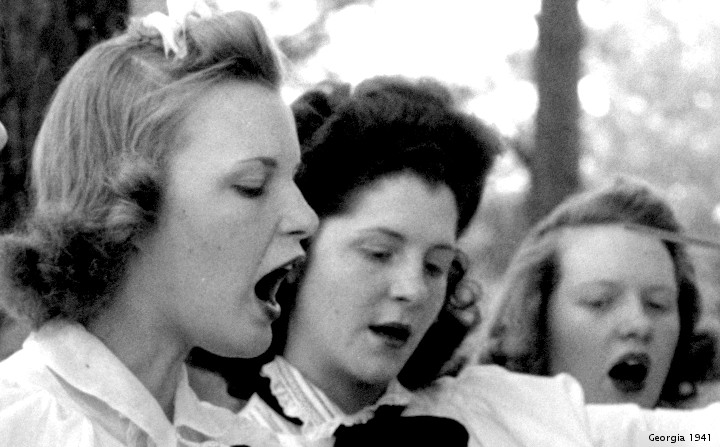
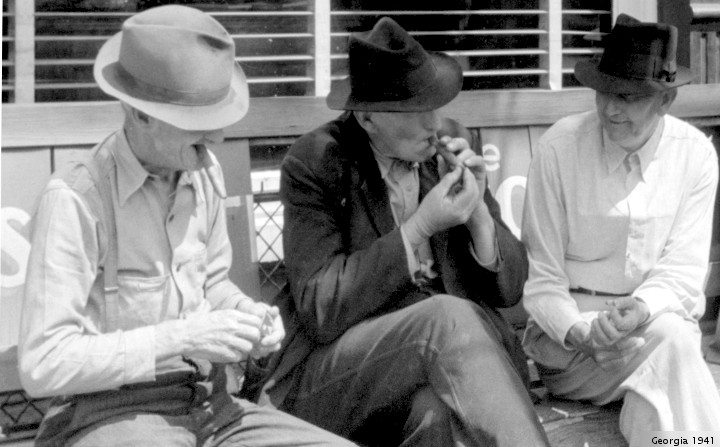
Chamblee54 has written about the death penalty drug problem several times. (one two three four) Pictures today are from The Library of Congress. The photographer was Jack Delano, working in Greene County, Georgia, in May, 1941. The Marshall Project was a valuable source for this report. This is a repost. Scott Raymond Dozier took his life January 5, 2019.



The G-d Of Word


The facebook comment started with “Christ had so little regard for … ” I gave into the temptation to comment. “Are you talking about Jesus? Not everyone agrees that he was the Christ.” The internet showed mercy, and only one stranger replied. “I think the bigger picture is being overlooked for semantics here… ” Talking, in or out of vain, is a big deal here. This is a repost.
People like to express opinions about the teaching of Jesus. The source of 99% of these thoughts is the bible. It is a fundamental belief that “the bible is the word of G-d.” PG has disagreed with this notion for a long time. This is not the same as not believing in the existence of G-d.
PG started to type a facebook reply, and then thought better of it. Sunday afternoons are a gift, even if they are uncomfortably hot. It is too fine a day to argue religion on the internet. Before he stopped, one thought did occur to him. If the bible is the word of G-d, then maybe Jehovah is the G-d of word. If you saw a mushroom cloud rising over Brookhaven …
Christianism is a religion of beliefs, rather than practices. The idea of getting people to agree with these beliefs is key to the Jesus experience. Many of these beliefs are noted in the bible. It is as if people make a G-d out of a book. When these high powered thoughts are expressed, then the semantics can get overwhelming.
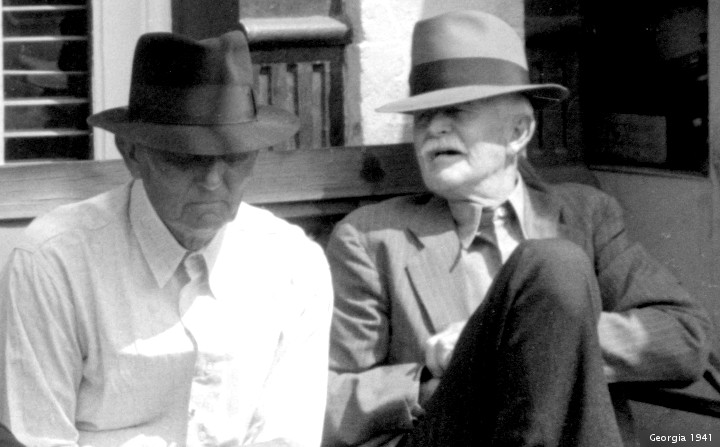
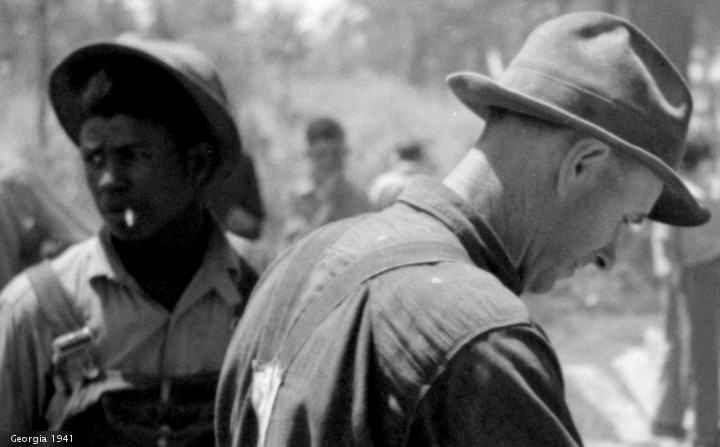
As for the teaching of Jesus, all we know is what the Council of Nicea chose to tell us. We don’t have very much. What we do have is conveniently selected to fit the agenda of the speaker. What someone says about Jesus tells us more about that person than it does about Jesus. Pictures today are from “The Special Collections and Archives, Georgia State University Library”.



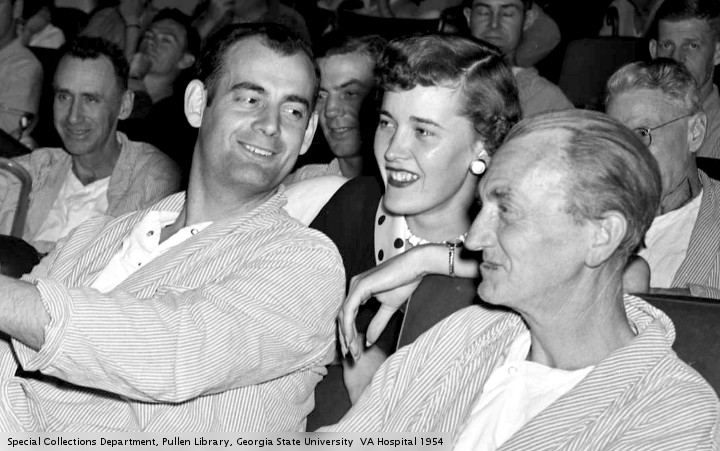
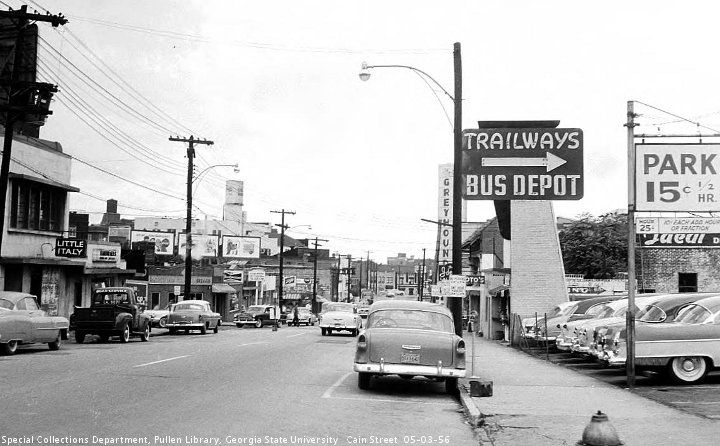
Monroe Drive Or Boulevard


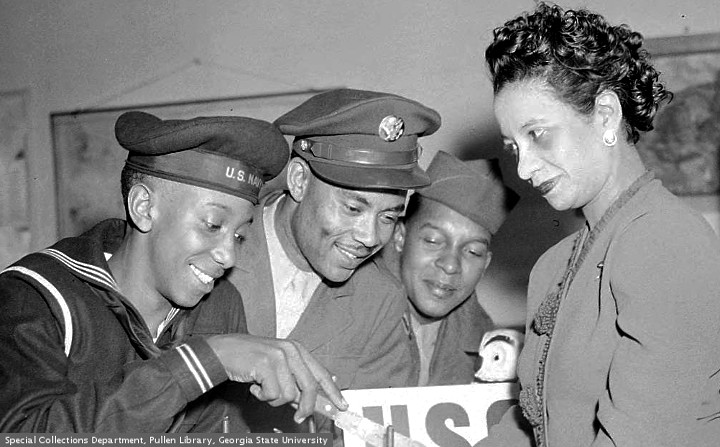
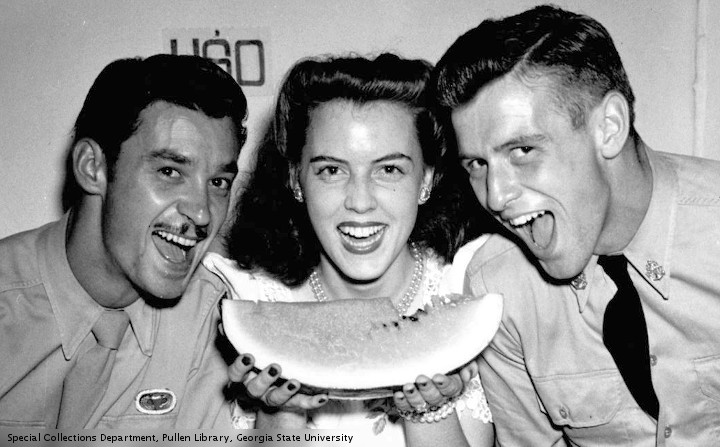
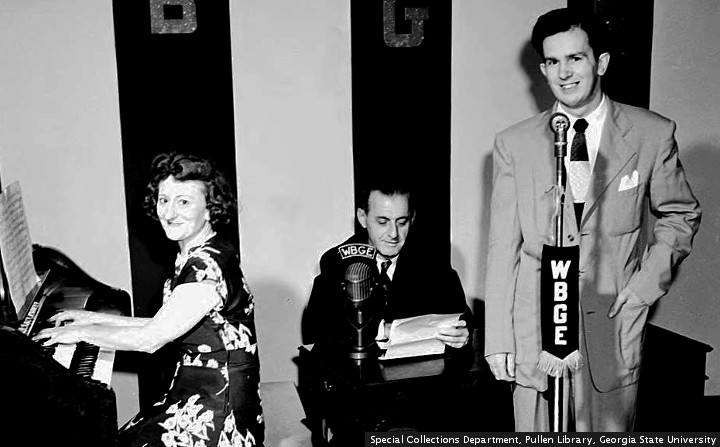


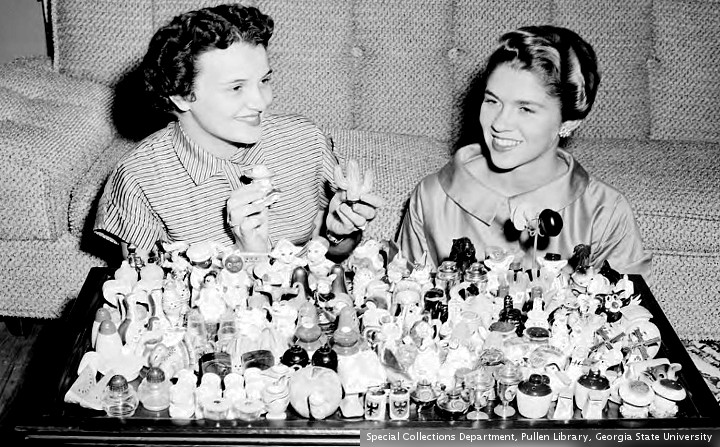
It is an Atlanta cliche. Boulevard turns into Monroe Drive because one was black, and the other white. The white people did not want to live on a street with the same name as the black neighborhood. You hear this all the time, with very little explanation. It is plausible. At one time, Ponce de Leon Avenue was a dividing line between the white, and black, neighborhoods. There are, however, a few questions about this name change business. This is a repost.
In the space between I-85 and Dekalb County, there are four streets that change names when they cross Ponce De Leon Avenue. These are Juniper/Courtland, Charles Allen/Parkway, Monroe/Boulevard, and Briarcliff/Moreland. Several streets cross Ponce without changing names, including Spring Street, Peachtree Street, Piedmont Avenue, and North Highland Avenue.
Four thoroughfares are affected by the Ponce rebranding. Juniper/Courtland is mostly commercial, at least south of Ponce. Briarcliff/Moreland is mostly white until you get to the railroad tracks south of Little Five Points. When Moreland Avenue goes under the MARTA line, the neighborhood is Reynoldstown….which was not named for Burt Reynolds.
Charles Allen/Parkway does change from white to black at Ponce. The street name then changes to Jackson Street, the original name, at Highland Avenue. Monroe/Boulevard, one block east of Charles Allen/Parkway, also goes from white to black at Ponce. However, when you cross the railroad tracks, Boulevard goes through Cabbagetown, a white neighborhood. Boulevard residents change color several times before the road dead ends at the Federal Prison. Oakland Cemetery, and Zoo Atlanta, do not play a role in this drama.
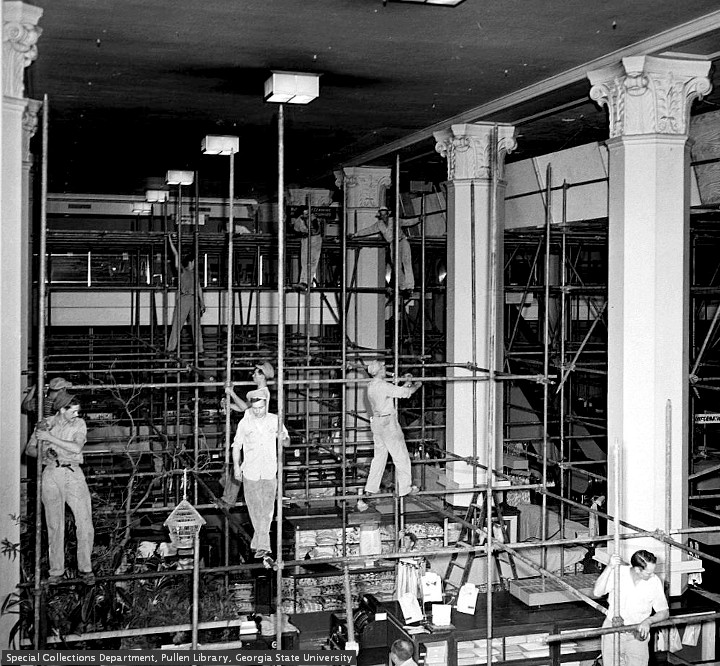
If this litany of street names is boring, it is all right to skip over the text. The pictures today are from “The Special Collections and Archives, Georgia State University Library”.
Roads change names all over the metro area, for a variety of reasons. In the area between Ponce De Leon Avenue and I 20, there are roads that change at railroad tracks (North Highland/Highland, Krog/Estoria.) Others change at Highland Avenue (Parkway/Jackson, Glen Iris/Randolph) or Decatur Street (Hilliard/Grant, Bell/Hill.) Some of these changes are racially motivated, while others are not. Some make sense, while most do not.
No one seems to know when this Monroe/Boulevard thing happened. An 1892 “Bird’s eye view” shows Boulevard sailing off into the horizon, past a racetrack in today’s Piedmont Park. A 1911 map shows Boulevard starting near “L.P. Grant Park,” and sailing past Ponce up to Piedmont Park. 1940 and 1952 maps show Boulevard going past Park Drive, only to turn into Monroe Drive at Montgomery Ferry Road. Finally, a 1969 map of “Negro Residential Areas” shows Monroe Drive changing into Boulevard at Ponce De Leon Avenue. Boulevard is a stand alone street name at all times.
If anyone knows about this name change business, please leave a comment. It would be interesting to know when these changes were made, and what government agency made them. Google has not been helpful, except for pointing the way to several map collections. UPDATE After the last publication of this post, a comment was made about the namesake of Monroe Drive. A post inspired by this comment is reposted below. UPDATE 99% Invisible produced a story about Collier Heights, a pioneering suburb built for Black people. Included in the documentation was a “residential security map” from 1938. The map color-coded the city’s neighborhoods: A, green,”The Best,” B, blue,”Still Desirable,” C, yellow,”Definitely Declining,” D, red, “Hazardous.” The implication was that the D neighborhoods were where Black people lived. If you look at Boulevard on this map, you see that it is still called Boulevard north of Ponce De Leon Avenue. The neighborhood is C. Boulevard does not become a D neighborhood until Wabash Av., a few blocks south of Ponce De Leon.


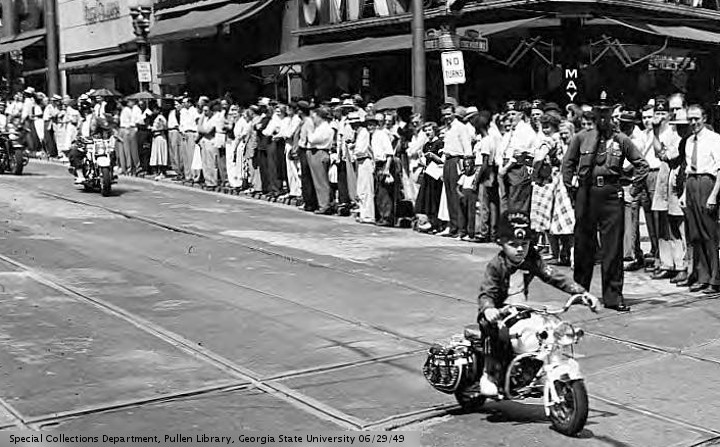
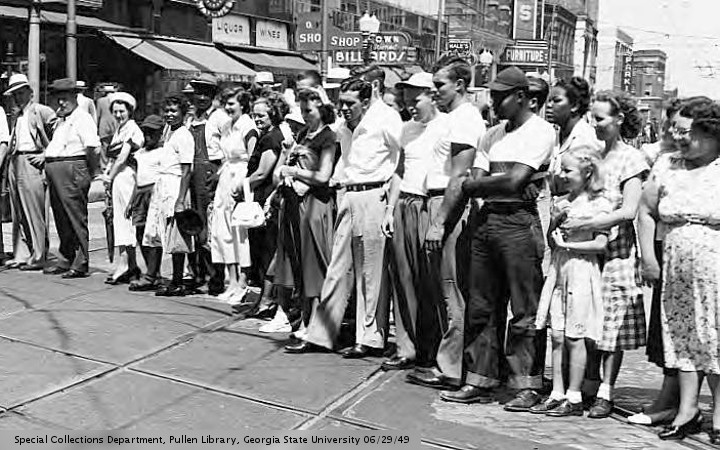
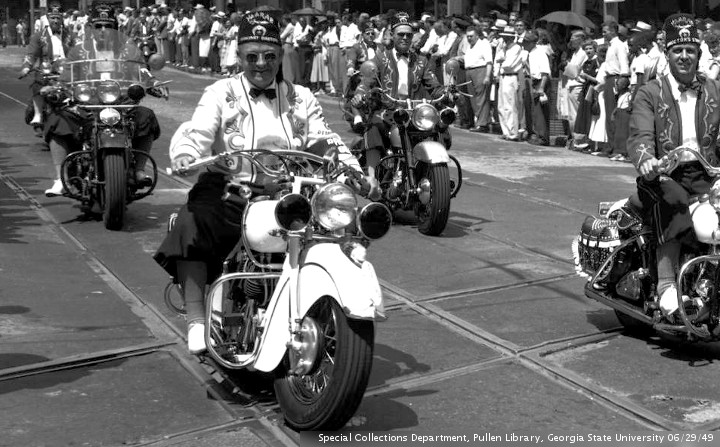


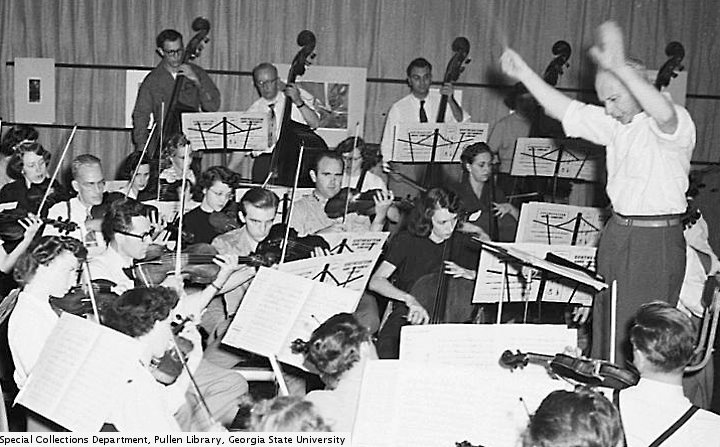
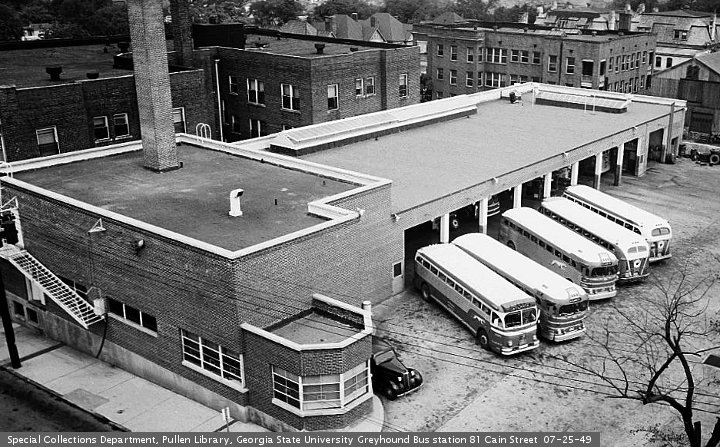

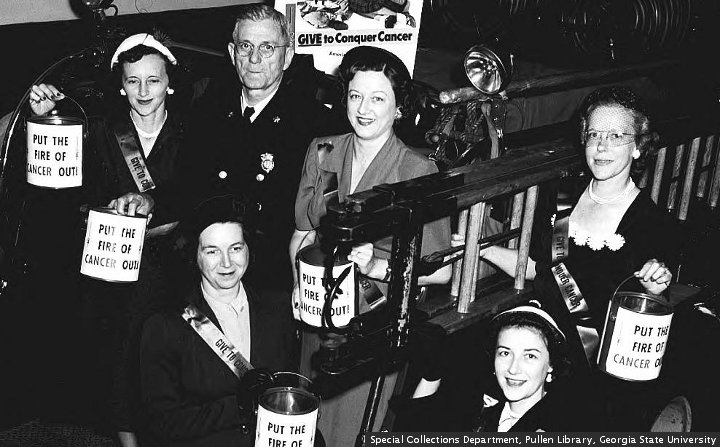

“North Boulevard was renamed Monroe Drive in 1937 to honor noted Landscape Architect W.L. Monroe who built his house and a plant nursery on the road and was noted for his many landscape projects and public parks in Atlanta.” Faset (Bill) Seay, February 4, 2020, 3:48 pm This comment was made to Monroe Drive or Boulevard. MDOB looks at Atlanta roads that change names, and the reputed racial motivations for these changes. The Monroe story takes place in Piedmont Heights.
“In 1823 Benjamin Plaster was granted 3,000 acres of land along Peachtree Creek and Clear Creek in recognition of his military service during the War of 1812. This was two years before Archibald Holland acquired a similar tract several miles to the east where another village called Terminus was founded in 1837, later renamed Marthasville and eventually Atlanta. … Plaster built a bridge across Peachtree Creek and the trail to it became known as Plaster’s Bridge Road. The bridge’s stone abutments still remain on the creek banks and a short section of the old road, running along the northern boundary of today’s Piedmont Heights, is now called Plasters Avenue. As other settlers followed a township called Easton grew up around Walker’s Grist Mill on Clear Creek near the site of today’s Ansley Mall at Piedmont Road and Monroe Drive.”
“Around 1850 Captain Hezekiah Cheshire arrived from South Carolina. His sons, Napoleon and Jerome, settled on opposite sides of the south fork of Peachtree Creek. They built a bridge across the creek near to connect their farms and the road to it became Cheshire Bridge Road. … In 1864 General Sherman’s Union soldiers swept through Atlanta. General T. J. Wood’s troops built entrenchments along the eastern edge of Easton on the property of Benjamin Plaster’s son Edwin, putting the little community in the battle of Atlanta. These entrenchments remained until the 1950s when they were destroyed by the construction of a Holiday Inn. Today a few crumbling stone steps and historic marker on the site honor the Edwin Cheshire family’s handyman “Gold Tooth John” whose ghost is rumored to still wander the halls of the old hotel at night.
“In 1871 the Atlanta and Richmond Air Line Railway opened a line between Atlanta and Toccoa, Georgia with a depot at Easton. Its “Air Line Belle” train, said to be the finest on the line, allowed Easton residents to commute to Atlanta without having to ford Clear Creek which still had no bridge. Train service spurred growth of the township to 100 residents by 1888 but the surrounding area remained rural and mostly devoted to farming and dairying. The rail line serving Easton was called the “Southern Railway Belt Line” and in 1883 the “Georgia Pacific Belt Line Railroad” connected with it just north of Easton at Belt Junction, an area which later became known as … Armour/Ottley. … In 1895 North Boulevard was built, running through Easton parallel to the railroad, as a main route into Atlanta. … In 1912 Fulton County annexed Easton and renamed it Piedmont Heights. Plaster’s Bridge Road was paved in 1917 and its name changed to Piedmont Road.” (According to this narrative, the Boulevard-Monroe thoroughfare was originally called North Boulevard. This is not the same road as North Avenue. Confusing road names is not limited to multiple Peachtrees.)
“In 1925 Landscape Architect W. L. Monroe bought 15 acres on North Boulevard at Wimbledon Road where he operated a popular nursery and landscaping business for many years, … Remnants of two small stone structures that Monroe built … remain on the grounds of today’s Ansley-Monroe Villas Condominiums. In 1927 a portion of North Boulevard was renamed Monroe Drive in honor of Monroe’s many landscape projects in the city.” … “In 1928 the City of Atlanta began annexing Piedmont Heights by taking in the lots along North Boulevard. In the 1930s a new home could be bought for $4,700 on North Boulevard or Wimbledon Road.”
There is a bit of confusion here. One source says the Monroe renaming was in 1927, while another source says 1937. Then there is the story told by maps, found in the original post.
An 1892 “Bird’s eye view” shows Boulevard sailing off into the horizon, past a racetrack in today’s Piedmont Park. A 1911 map shows Boulevard starting near “L.P. Grant Park,” and sailing past Ponce up to Piedmont Park. A 1940 map shows Boulevard going past Park Drive, only to turn into Monroe Drive at Montgomery Ferry Road. Finally, a 1969 map of “Negro Residential Areas” shows Monroe Drive changing into Boulevard at Ponce De Leon Avenue, like it is today.
Two things are worth noting. None of these maps have a “North Boulevard.” The street name is a stand-alone Boulevard. Second, the 1940 map shows the street as Boulevard at Eighth Street, and Elmwood Drive. The first mention of Monroe is at Montgomery Ferry, near the Monroe Nursery. This might contradict the racial narrative.
The information about Mr. Monroe neither proves, nor disproves, the story that black Boulevard was changed to white Monroe. City on the Verge: Atlanta and the Fight for America’s Urban Future states “In 1925 landscape architect W. L. Monroe bought fifteen acres on what was then called North Boulevard, establishing a plant nursery that thrived for many years. In 1937, the street north of Ponce de Leon was renamed Monroe Drive in his honor (and to distinguish it as a white area as opposed to Boulevard to the south of Ponce).” The book offers no evidence for this, and its “woke” tone is cause for skepticism. While there is circumstantial evidence to support the legend, verifiable facts are hard to come by. A similar story might be the 1956 change of the state flag.
“William Lott Monroe, Sr. (1891-1965), landscape designer and nurseryman, is recognized in newspaper articles as the “landscape artist” during the development of North Fulton Park (later renamed Chastain Memorial Park) in the late 1930s and early 1940s. This work was financed partially through WPA (Works Progress Administration) funds and supported with local prison labor. … There are three main areas in Chastain Park with Monroe’s signature style as a landscape designer: (1) the master grill area; (2) the picnic grounds area; and (3) the amphitheater. … Monroe’s Landscape & Nursery Co. is removed from Fulton County’s payroll: “… Drawn more than $17,000 from the county in the last year and one-half… The company was drawing $500 a month for supervising landscaping of county parks, which was in addition to flowers, shrubs and blueprints sold by it to the county.” (“Nursery Company Is Cut Off Pay Roll.” Atlanta Constitution, Jan. 25, 1941)” … “1941 Amphitheater still under construction, originally planned as an outdoor venue for the Atlanta Symphony Orchestra.” … “It is unknown if Monroe oversaw the completion of construction at the amphitheater.” … “October 22, 1965 William Lott Monroe, Sr. dies in Atlanta.” Pictures are from “The Special Collections and Archives, Georgia State University Library”.
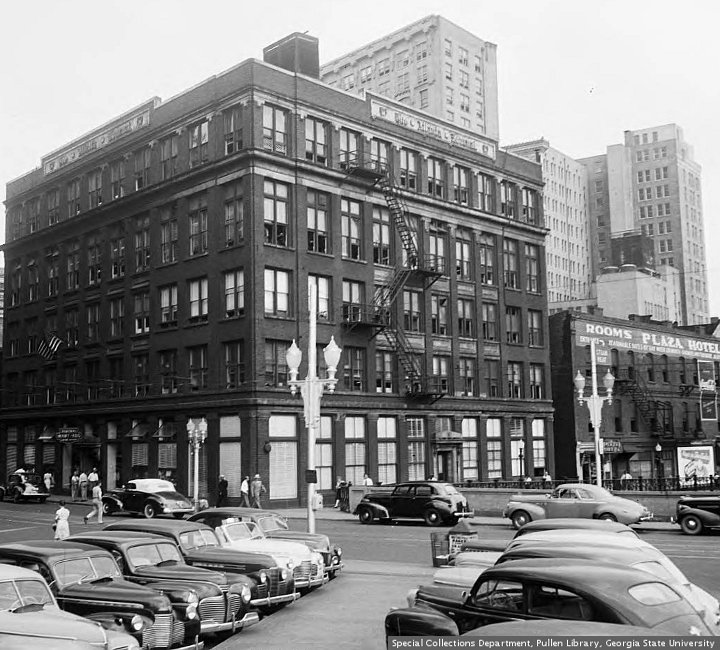




Fentanyl-Laced Cocaine


The display of a link on this page does not indicate approval of content.
“What to the Slave Is the Fourth of July?” Frederick Douglass | July 5, 1852
Neighborhoods – “I’ve got gangbangers walking around with AK-47s”
Eric Trump: He literally saved Christianity. There’s a full-out war on faith …
REGIONAL – US State Department links Jamaican cops to human trafficking
20 years after 9/11, lawsuit against Saudis hits key moment
Honda “Check Engine” Light: What Could Be the Problem?
Stop Telling Critical Race Theory’s Critics We Don’t Know What It Is
Brené Brown on the Hidden Damage of Gossip | SuperSoul Sessions
Standing up to the Social-Justice Mobs Within the Jewish Community
Bret Easton Ellis : une maison d’édition, pour “rendre le monde plus littéraire”
A Critical Review of Abigail Shrier’s book Irreversible Damage (Part One)
Kennesaw golf club was ‘thriving’ under slain pro in triple homicide case
The truth behind America’s most famous gay-hate murder
Nikole Hannah-Jones will not join UNC-Chapel Hill faculty without tenure
Nikole Hannah-Jones Finally Has Been Granted Tenure. But Damage Is Already Done.
Guskiewicz, Board of Trustees Comment on Nikole Hannah-Jones Contract
A Materialist Alternative to “Antiracism” returning to reality in fighting racial inequality
Judge rejects attempt to stop parts of Georgia voting law
What New York City Taught Us About Ranked Choice Voting
WeChat terminates LGBT+ accounts of Chinese college students
Where is Land of Opportunity? Geography of Intergenerational Mobility in USA
The Hardball Way to Push Republicans to Vote for Infrastructure
Holyoke man arrested for attempted murder in stabbing of social worker
Tyler Mahan Coe: I am hilariously unqualified to have a conversation ….
Breakfast with J.D. Vance, Anti-Trump Author Turned Pro-Trump Candidate
22 Entitled Single People Who, Um, May Want To Lower Their Standards
Paul Thomas Anderson interviews Quentin Tarantino The Director’s Cut (Ep. 215)
Parks are for the People: Piedmont Park Riot and Politics of Late 1960s Atlanta
Not My Idea: A Book About Whiteness by Anastasia Higginbotham
13 important points in the campus & K-12 ‘critical race theory’ debate
Amusing and Confusing Texts Between Landlords and Tenants
Adventures Underground to host book launch for local author, artist, July 17
Off-duty Knoxville officer knocked unconscious after racist remarks
Who is Bryan Rhoden, suspect accused in triple murder at Cobb County country club?
The 185-year-old Battle That Still Dominates Texas Politics
Sullivan County school board approves teacher termination charges
Plagiarism/schmagiarism, how about the whole religious/church industrial complex?
Driver sentenced to 16 years in prison for DUI crash in 2018
Michael Phelps did not test positive for marijuana before competing in the Olympics
Will The Reckoning Over Racist Names Include These Prisons?
Another side effect of Utah’s drought: A terrible allergy season
Woman faces a year in prison for stomping ‘Back the Blue’ sign, smirking …
TRUMP: ‘I’m writing like crazy’to release a book on my time in white house
If You’re Partying Again In NYC, Be Wary Of Fentanyl-Laced Cocaine
Former Yankees 1B Joe Pepitone suing National Baseball Hall of Fame
4 arrested at Maven Hotel, police feared ‘Las Vegas style shooting’ during All-Star game
Mötley Crüe Singer Vince Neil’s Car Crash That Caused Death Of Nicholas Razzle Dingley
The Transition from Franklin D. Roosevelt to Harry S. Truman
The Best Lack All Conviction While the Worst Are Full of Passionate Intensity
XTube is shutting down on September 5 beginning of the end for illegal pornography
Benjamin Franklin’s Anti-Slavery Petitions to Congress
The White Lotus pokes at romanticized allure of Hawaii in its acidic premiere
dfw1996 ~ dfw 2004 ~ slavery insurance ~ johnnie ray cry ~ data lounge
dorothy kilgallen ~ chairman mao ~ ben franklin ~ signs ~ Harry Truman WWI
mao zabot ~ b rod ~ georgie fame ~ goddexx ~ 99 mantras
sophistry ~ richie west ~ rick laird ~ just the beginning ~ norman finkelstein
skankfest ~ dwight lyman ~ sucker ideology ~ cat person ~ not my idea
hippies ~ eugenics reparations ~ tyler mahan coe gq ~ bbq tofu
crt ~ jd vance ~ friske disco ~ sonya halpern ~ tell me
athletes foot ~ kahn science ~ trip city ~ waffle house index ~ richer than blood
@chamblee54 What happens to the contract that @nhannahjones signed with @UNCHussman? Is she is breach of contract now? She agreed to the fixed term employment, then changed her mind. It would be the Streisand effect on steroids if #UNC were to sue, but they might have a case. ~ Readout of Under Secretary of Defense for Policy Dr. Colin Kahl’s Meeting With Saudi Vice Minister of Defense His Royal Highness Prince Khalid bin Salman ~ “You have to break eggs to make an omelet.” When I hear that saying, I feel like an egg. ~ @chamblee54 People denouncing “whiteness” don’t think through their rhetoric. “if whites form an identity movement, they’re judged on the color of their skin that’s it that’s game over, and it would be a horrible destructive development” ~ This poem was written during a writing workshop: we are not broken, down the middle, we may be pieces, we are like a fiddle, strung tightly together, fly lite as a feather, england hurts tonight their woes, penalty kicker had the slows, but here in the pub, goes glubbidy glub glub glub, two morepints paid for, not broken but broke ~ pictures today are from The Library of Congress. ~ selah





James Baldwin And The Word


In the spring of 1963, KQED filmed a show, “Take this hammer”, about James Baldwin. The snippet in the video above seems to have been the last three minutes of the show. Here is a transcript. Mr. Baldwin discusses a six letter insult. The n-word is more about the speaker, than the spoken of. A 2010 blogger had this to say.
“I’ve often felt that people’s projections of me are oftentimes just that – their projections. However, Baldwin’s ending sums up a solution to this perfectly: “But you still think, I gather, that the n****r is necessary. Well he’s unnecessary to me – he must be necessary to you. Well, I’m going to give your problem back to you…you’re the n****r, baby…not me.”
It is now 2021. (All discussions of race must mention the year.) The TV show was fifty eight years ago. A few things have changed. To many white people, overt expressions of racism are seen as bad manners. The n-word is taboo in polite company. The overall attitudes may not have changed, but most white people are careful how they say things.
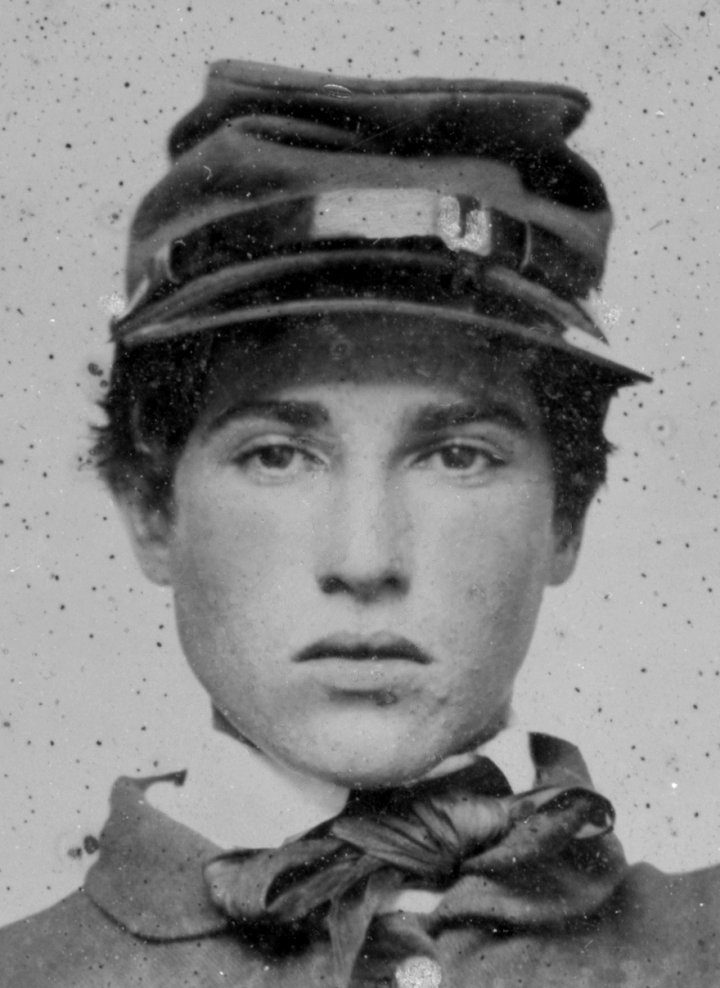
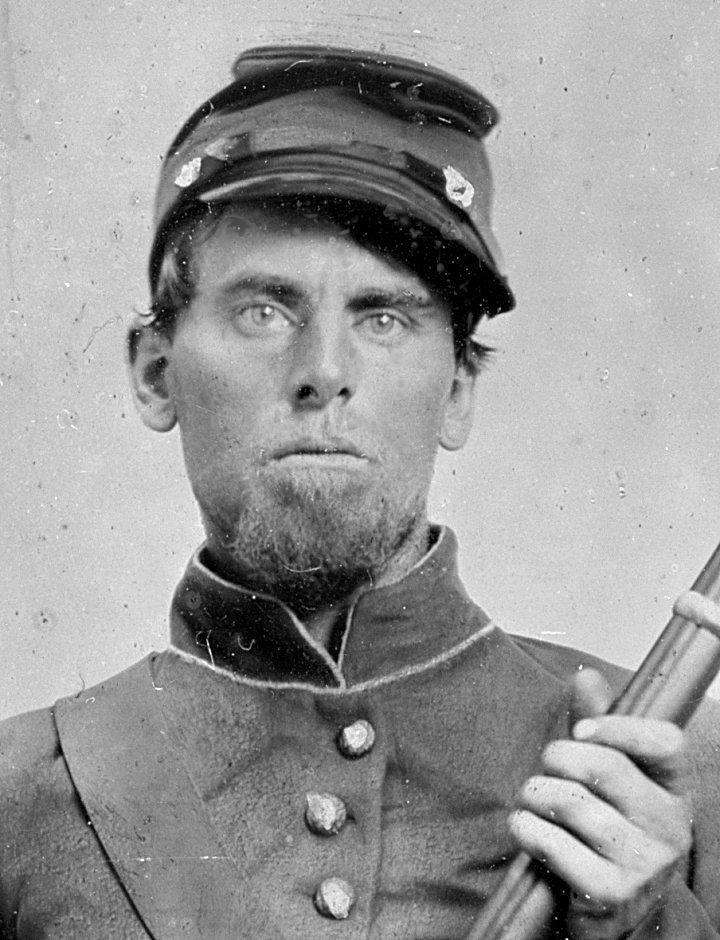
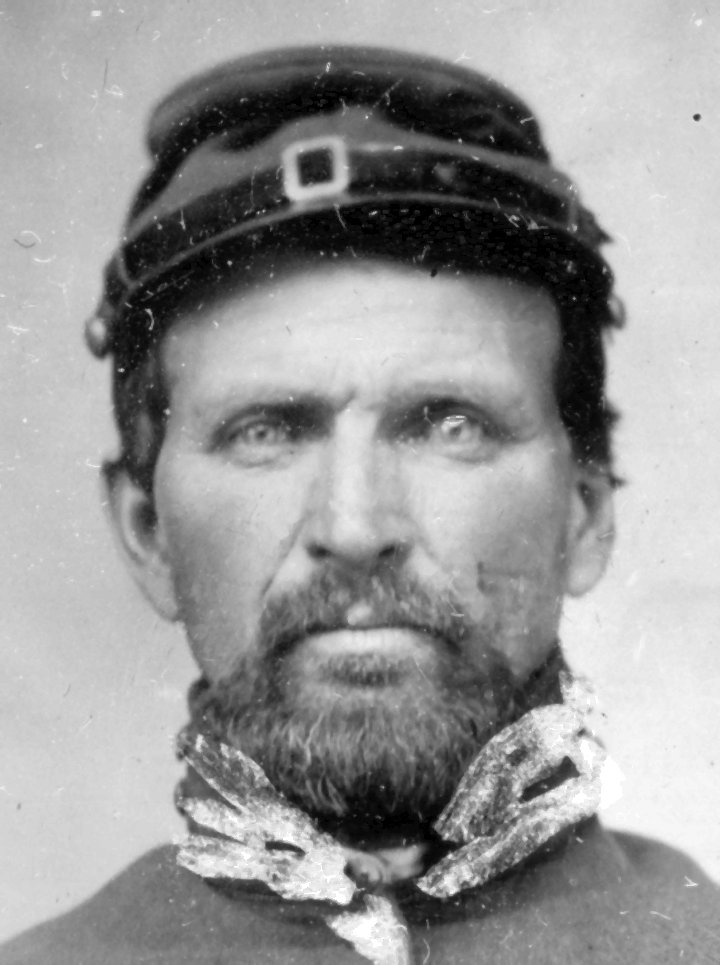
This is a repost. Pictures are from The Library of Congress. These men are Union soldiers, from the War Between the States.



A few weeks ago, this blog published a feature, James Baldwin And The Six Letter Word. At the center was selection of James Baldwin talking about the n word. There was a transcript available, which makes today’s exercise a lot easier.
Mr. Baldwin was discussing this nasty word, and offered an insight into who the user of this nasty word was really talking about. Now, there is another nasty word being casually tossed about these days. This other nasty word is racist. What would happen if you took Mr. Baldwin’s talk, and substituted racist for nasty? It is an interesting way to look at things. What follows is not a perfect fit, and may be offensive to some. A few times, it is very close to the truth.
Who is the racist? Well i know this…and anybody who has tried to live knows this. What you say about somebody else (you know) anybody else, reveals you. What I think of you as being is dictated by my own necessities, my own psychology, my own uhm fears…and desires. I’m not describing you when I talk about you…I’m describing me.
Now, here in this country we got somebody called a racist. It doesn’t in such terms, I beg you to remark, exist in any other country in the world. We have invented the racist. I didn’t invent him, white people invented him. I’ve always known, I had to know by the time I was seventeen years old, what you were describing was not me and what you were afraid of was not me. It had to be something else. You had invented it so it had to be something you were afraid of and you invested me with it.
Now if that’s so, no matter what you’ve done to me I can say to you this, and I mean it…I know you can’t do any more and I’ve got nothing to lose…and I know and I have always known you know and really always..…I have always known that I am not a racist…but if I am not the racist…and if it is true that your invention reveals you…then who is the racist?
I am not the victim here. I know one thing from another. I know that I was born, am gonna suffer and gonna die. And the only way that you can get through life is to know the worst things about it. I know that a person is more important than anything else. Anything else.
I’ve learned this because I’ve had to learn it. But you still think, I gather, that the racist is necessary. Well he’s not necessary to me, so he must be necessary to you. So I give you your problem back. You’re the racist baby, it isn’t me.





Diane Linkletter Part Three




On Halloween, 1948, a fifth child was born to radio personality Art Linkletter and his wife Lois. The couple named the baby Diane. Her godfather was Walt Disney. … Diane’s life was untroubled until her teenage years. Like most teens, she struggled to find herself. Diane’s path to adulthood was complicated when she eloped at age 17 with Grant Conroy (seven years her senior). Diane thought she was pregnant, and Grant offered to “do the right thing.” When she discovered she was not pregnant, her parents had the marriage annulled. Diane and Grant never even lived together.”
“Diane moved into Shoreham Towers, a luxury building in West Hollywood. The building’s residents were older than Diane, so she made friends closer to her age in the neighborhood. One of Diane’s new friends was Ed Durston, who lived with a roommate in a building across from hers. On Friday evening, October 3, 1969, Diane went out with a friend, Robert Reitman, to a show at the Griffith Observatory. Robert dropped Diane off at her apartment about midnight.”
Bob Jameson says “Ed Durston was a shady dude to say the least.” Ed Durston, aka David E. Durston, was with Diane when she took her final step. In the seventies Mr. Durston became the director of gay porn movies, with Manhole and Boy ‘Napped.
In 1985, Mr. Durston went to Manzanillo, Colima, Mexico, with Carol Wayne. She was an actress, best known as the “Matinee Lady” with Johnny Carson. Miss Wayne drowned on January 13, 1985. IMDB says it was “extremely suspicious circumstances.” Ed Durston died May 6, 2010.
SECOND HOMICIDE INVESTIGATION PROGRESS REPORT covers the incident at 10050 Cielo Drive, August 9, 1969 … the murder of Sharon Tate, and four companions. “On Saturday, 10-4-69, Dianna Linkletter committed suicide at her residence by jumping from the 6th floor kitchen window at her apartment. At the time she jumped, Edward Durston (LA 978 312D) was in the apartment. … As result of previous information from an unreliable informant, Durston had come up as a possible suspect in this case. With Sheriff’s homicide investigators cooperating completely (supervised by Lt. Norman Hamilton), Durston was given polygraph examinations … Included in the examinations were some keys in the Tate homicides. The polygraph operator … , and the investigators are convinced Durston was not involved in the Linkletter death or the Tate case.”
“Also connected with Durston in the original information received were three other hippies, all users of drugs and car thieves: Harvey F. Dareff (LA 978 313D), is the boy friend of Dianna Linkletter, and had lived with her for several months and was substantially supported by her. He is presently in New York as of approximately 9-25-69. He has not been eliminated as a suspect. …. Robert Parker MacDonald, aka Bobby Jamison (LA 684-737J), and James Steven Williams (LA 978-318W); these two subjects are presently in the Sunset Strip area and dealing in narcotics. Narcotics Division, LAPD is attempting to build a case on both subjects at this time. Neither has been eliminated positively as suspects. Investigators feel Dareff is a good suspect as some information has been received indicating he may have gone to the Cielo residence on the evening of 8-8-69, to possibly buy or sell narcotics. This information has not been verified–investigation is continuing.”
The Cielo Drive killings were unsolved on October 4. There are other indications that “Linkletter was a friend of Abigail Folger and probably knew Sharon Tate. … Durston was a “speaking acquaintance” of Voityck Frokowski.” You cannot discuss these cases without wild eyed speculation. Some of it involves the players in the Linkletter drama. It can be neither proved, nor disproved.
“Diane Linkletter-Harvey Dareff’s live in girlfriend, supposedly committed suicide in the presence of Ed Durston … (Durston was an early LAPD suspect in the Tate murders.) … Dareff was at the Cielo Drive residence the afternoon of the murders as part of a drug deal. (recall that a large MDA shipment was due to be delivered to Cielo the evening of the murders). … Dareff and Durston’s friend Bobby Jameson are very strongly believed to be two of the hippies in the van who famously drove caretaker William Garretson home from Sunset the evening of the murders … “
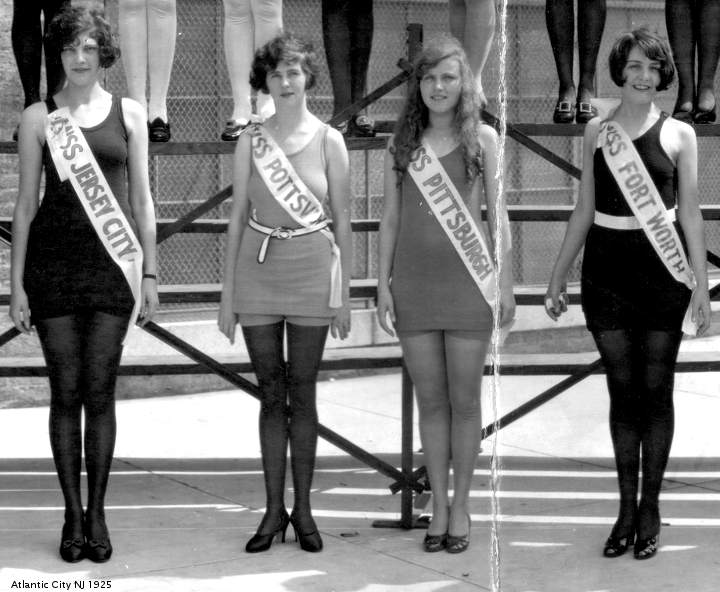
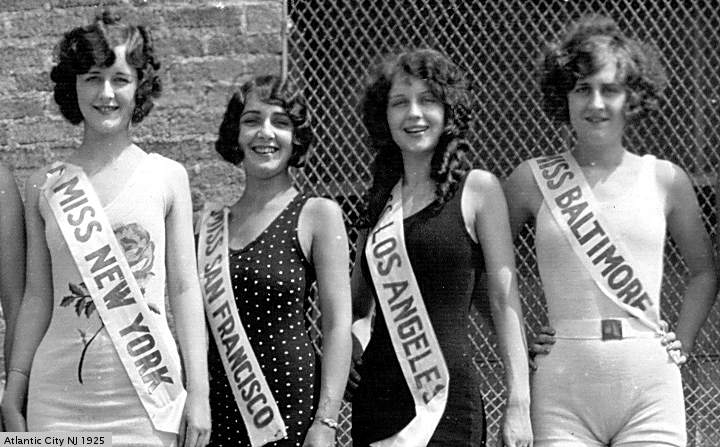
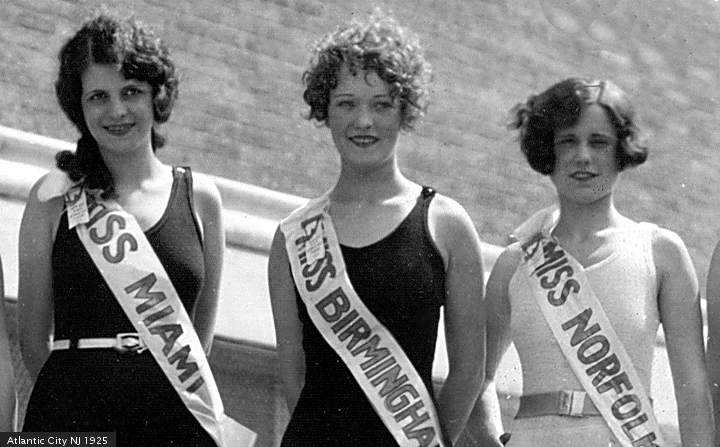
This concludes a three part series. (one two three ) For more accurate information, you can see a John Waters movie The Diane Linkletter Story. There is a book, Diane Linkletter: A Princess Wrongly Accused. At all times, you should be skeptical of everything you hear. “Inter city beauties, Atlantic City Pageant, 1925” illustrate this feature. These images are from The Library of Congress.



Diane Linkletter Part Two


WFMU Beware of the Blog had a tribute to Art Linkletter, after his death, at 98, on May 26, 2010. The story had a link to We Love You, Call Collect, the spoken word entertainment recorded by Art, and Diane, a few months before she self-defenestrated. One of the comments sent PG down a google rabbit hole. “Recently, I was poking around for info on Bobby Jameson/Chris Lucey, who put out the enigmatic Songs of Protest and Anti-Protest, in ’65. Turns out Jameson was pals with Diane Linkletter right up until the time of her death. The liner notes to Rev-Ola’s reissue of “Songs of Protest…” (released, apparently, without Jameson’s permission) repeated the falsehood that Jameson had supplied Linkletter with the LSD that killed her.” This story is about to get weird.
Bobby Jameson aka Chris Lucey was a piece of work. He was recently honored by Ariel Pink with Dedicated To Bobby Jameson Mr. Jameson was a neighbor of Diane Linkletter, and roommate of Ed Durston. Mr. Durston was with Diane Linkletter when she took her final step. There is a blog, with many stories. What follows is just one version of October 4, 1969. It is not verified, and will differ from other accounts. Selections from four posts are used. Bobby Jameson died May 12, 2015.
The Rev-Ola Records story appears to be real. “In my hands is the paper fold out from Rev-Ola Records reissue of the Chris Lucey album-cd “Songs Of Protest” from 2002 … distributed by Rev-Ola Records …, without my permission or knowledge … “Art Linkletter had a television program entitled “Kids Do The Damndest Things” and he couldn’t have been more right about that on the night of October 5th 1969. On this date, his own daughter, Diane Linkletter (originally turned on to LSD by none other than Bobby Jameson) apparently took her own drug-induced leap into infinity.”
“Nancy Harwood and I ended up subletting an apartment from Timmy Rooney, one of Mickey Rooney’s sons. It was located across the street from the Shoreham Towers, where Diane Linkletter lived on the 6th floor. … We ended up with a roommate in the new place, because he already lived in the apartment. His named was Ed Durston. I didn’t want another roommate, but it was the only way Nancy and I could afford to live there. …”
“The apartment was on the second floor of the building. Below us lived another musician named Jimmy George. … Ed Durston was a shady dude to say the least, but he was highly intelligent and quick witted, so if nothing else, he was fun to spar with mentally and verbally. I had to keep an eye on him though, because his interest in Nancy was obvious. Along with just about everybody else during those times, Ed was a loady, and to some extent that was more of a convenience than a problem. Ed always knew where to get drugs, so he did serve a purpose … Both Timmy Rooney, and his brother Mickey Jr, were always dropping by the apartment to see how we were doing. They were well acquainted with Diane Linkletter. … Nancy and I would get to know Diane as well.”
Here is Bobby Jameson’s October 4 story. “I went up … to talk to Ed Durston after Timmy Rooney told me Ed was in the apartment when Diane jumped from her 6th floor kitchen window. I also wanted to see Jimmy George, who lived below the apartment where Nancy and I had lived with Ed. From what I’d learned, Jimmy had actually been outside his apartment, and seen Diane falling to the pavement below. At first he’d thought someone was playing a practical joke and had thrown something out the window, but then realized it was a person. He didn’t know at first it was Diane, and he’d seen her hit the ground. He was in shock, but ran over to where the person hit the pavement, and that is when he realized it was Diane. He told me he could not do anything for her, and it made him feel like an asshole. He said she was still alive when he reached her, and that she looked up at him but couldn’t speak. He said she was bleeding a lot from her head, and he wanted to help her, but didn’t know what to do. …”
“When I got to Ed, he was doing better than Jimmy, but he still looked like he’d been through the ringer. I asked him, “What the fuck happened Ed, what the fuck was going on?” He looked up at me from where he was sitting and said, ” I don’t know man, I really don’t know. We were just there, the two of us,” he said, “talking a long time about life. You know, like half the night …”
“Then she just started acting crazy.” “Whatta ya mean Ed, crazy how?” I asked. “Well, we were sitting on the couch, and she got up and went out on the balcony, and just started climbing up on the railing like she was gonna jump off. I ran out there and drug her off, and pulled her back into the living room, and pinned her down on the floor and said “What the fuck are you doing Diane? What the fuck is wrong with you?”
“Ed was ringing his hands as he told me the story. He was having a lot of trouble going over that night. “So did she tell you what was wrong?” I pleaded. “No,” said Ed, “She told me she was just screwing around and everything was OK and to let her up because it was just a joke.” Ed kept rubbing his hands together like he couldn’t get them clean. He just kept rubbing them together. He continued on, “I made her promise me that if I let her up she wasn’t gonna do anything crazy, and she said, “I promise.” “I let her up, and she said she was going to go in the kitchen and get a glass of water, and I said OK.” Ed looked like he might start crying at any second, and I didn’t blame him, because it was too awful to comprehend.”
“She walked into the kitchen and I turned around to watch her and she just climbed up on the countertop by the window over the sink. I ran in the kitchen and tried to grab her, but she just went out the window before I could get there.” He paused for a moment, as if to get his courage up and said, “I had a hold of her ankle man, I had her by the ankle, but I couldn’t hold her, I just couldn’t hold her man.” I stood there in front of Ed with this crystal clear picture of Diane’s kitchen in my head, with her going out the window, and Ed trying to hold her by the ankle. I just broke down and cried like a little boy. I just couldn’t believe that it had happened. I stood there in front of Ed crying, for I don’t know how long. I just sobbed, because there wasn’t anything I could do about it either.”
Art Linkletter Control Freak is the last Bob Jameson post to be excerpted today. It is a doozy. In this post, we will be introduced to Harvey Dareff. We will hear more about him later.
“This is a picture of the Shoreham Towers, the building where Diane Linkletter lived. To the left is Horn Ave. where Nancy and I lived with Ed Durston. As I mentioned earlier, Diane had a major problem with her dad, Art Linkletter, who was a control freak and attempted, successfully, to intervene in every single attempt by Diane to have a boyfriend. When I got to know Diane, she had met and was extremely happy about it, a guy name Harvey Dareff. …”
“When her dad found out about Harvey he pulled his usual bullshit and appeared on the scene to carry out his dirty work. Art Linkletter showed up to meet Harvey one day and shoved a $10,000 check in Harvey’s face and told him to take the money and stay away from Diane. Harvey took the check and tore it into little pieces and threw it in Art’s face and said “No” thus canceling out Art’s theory that all any guy wanted from Diane was her money. …”
“Art liked CONTROL, he would go to any length to get his way, period. More than anything else in Diane Linkletter’s life, this incident proved to be the final straw and catalyst that pushed Diane over the edge. In conversations with me she complained that her life was not worth living in, unless she could get her father to stop fucking up every relationship she attempted to have. She told me she had even started having relationships with other women, because she was so goddamned lonely …”
“The trouble with people like Art Linkletter, is that they have constructed a false image of goodness about themselves, and use it to manipulate the world around them to their own satisfaction. Prior to Diane’s death, Linkletter’s oldest daughter’s husband also committed suicide by shooting himself. Maybe someone ought to ask what the fuck was going on in that family that caused 2 young people to end their lives in rapid succession. Art Linkletter used his daughter’s death to blame all things on drugs and thus removing himself as any possible cause for the tragedy. My experience in 1969 with Diane, was that her father Art had more to do with her death than any other single factor there was. ”
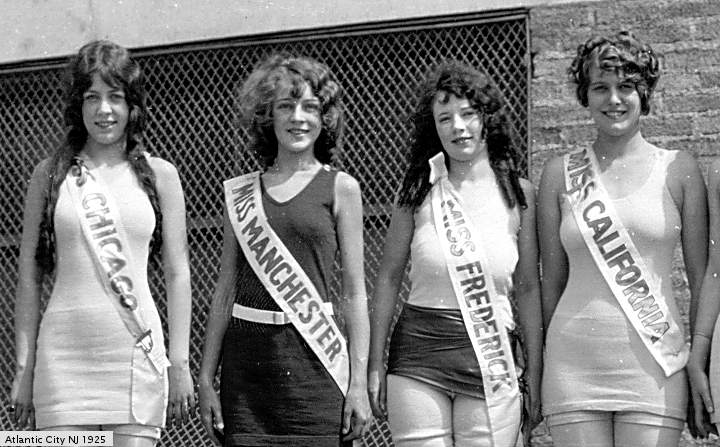
This is part two of a three part series. (one three ) Pictures are from The Library of Congress. Image #06663: “Fifth International Pageant of Pulchritude and Eleventh Annual Bathing Girl Revue, Galveston, Texas, August 2, 3, 4, 5, 6, 1930”


#1619Gate Part Three


When we last checked in on @nhannahjones, she was at the center of a national hissy fit about tenure. This is not usually a hot button issue, but people enjoy controversy. In the few weeks since then, there have been some developments.
Nikole Hannah-Jones will not join UNC-Chapel Hill faculty without tenure This was the day before the chamblee54 piece. “In their letter, Hannah-Jones’s legal team argues information was withheld from her when she signed her fixed-term contract with the school.”
Deadline set for lawsuit in Nikole Hannah-Jones tenure controversy “On Thursday, attorneys … sent a letter to Charles Marshall, the school’s vice chancellor and general counsel. The letter laid out Hannah-Jones’ case and demanded UNC-Chapel Hill make good on what they said was its initial offer of a tenured position for Hannah-Jones … “We intend to bring litigation to vindicate Ms. Hannah-Jones’ rights under federal and state law. This letter is to demand that UNC take immediate action to remedy its conduct to avoid suit by making an unconditional offer to Ms. Hannah-Jones of a tenured appointment as full professor no later than June 4, 2021.”
If you want to make a bad situation worse, have your attorney give an ultimatum. This correspondent is not a lawyer, and was not privy to the negotiations. Is mentioning tenure during contract negotiations a valid reason to break the contract? The dispute went back and forth for a few weeks, and was the occasion for much recreational outrage.
UNC trustees grant tenure to Nikole Hannah-Jones, creator of The 1619 Project, after weeks of criticism The journalist celebrated on twitter. There were some hints she would not take the job.
Nikole Hannah-Jones chooses to teach at Howard over UNC-Chapel Hill Ms. Hannah-Jones went on “CBS This Morning” to announce her decision. She said, regarding the initial offer, “I accepted it.” As for why she was denied tenure: “It’s pretty clear that my tenure was not taken up because of political opposition, because of discriminatory views against my viewpoint, and, I believe, my race and my gender.” Ms. Hannah-Jones’s hair was less orange than it was in the graduation gown picture.
This feature will not discuss whether she should have received tenure, or the reasons for this denial. These issues have been discussed, at obnoxious length, elsewhere. Nor will it discuss the shady behavior of the Slanderous & nasty-minded mulattress. (When researching this post, a copy was made of the NHJ twitter profile. It included “Knight Chair @unchussman.” The profile has since been updated. NHJ is known for “revising” her twitter account.)
The issue today is fulfilling your contractual obligations. Her legal team admits “Since signing the fixed-term contract, Ms. Hannah-Jones has …” The time to DEMAND tenure is before you sign a five year contract. Given the ethical issues with The 1619 Project, this should not be surprising. Pictures are from The Library of Congress. More #1619Gate episodes are available. One Two Four Five


Diane Linkletter Part One


Did Art Linkletter’s daughter, Diane, jump out a window while high on LSD? This was one of those indications that the sixties would soon be over. But what really happened? The more one looks, the stranger it gets. Let’s look at the basic story. This is a three part series.(one two three)
“At 9 a.m. on the morning of 4 October 1969, Diane Linkletter lept from the kitchen window of her West Hollywood apartment, plunging six floors to the sidewalk below. She died at County USC Medical Center at 10:30 a.m. The preliminary cause of death was given as “multiple traumatic injuries” according to a coroner’s statement. An autopsy was conducted that afternoon.”
Soon the rumors started to “fly.” Diane was tripping on LSD, thought she was a bird, and jumped out the window. When her father, beloved TV personality Art Linkletter, heard the news, he went into attack mode. He blamed her death on LSD, and those who advocate for its use. Art was still raging eleven years later when he confronted Timothy Leary.
Part of the weirdness was Art Linkletter, who some called the squarest person in America. He hosted an afternoon TV show. Every afternoon, a group of kids would be on. Kids Say the Darndest Things. Art would mug for the camera after every one. This video, hosted by Bill Cosby, showcases the talent. Art was also a popular pitch man for commercials. Two of these commercials featured Diane. (Kellogg’s Corn Flakes, Circus Nuts)
Here is the snopes synopsis of October 4. Many things in this account are contradicted elsewhere. “Edward Durston was in Diane’s apartment at the time of the fall. … He arrived at 3 a.m., after Diane telephoned him sounding “very upset” and asked him to come over. She baked cookies shortly after his arrival, and they sat up all night talking.”
“About 9 a.m. … Diane Linkletter went into her kitchen and didn’t return. Durston went looking for her but failed to “reach her as she approached the window … She went over to a window. I tried to grab her and she went out.” She was found lying on the sidewalk immediately below her kitchen window. After interviewing Durston, LA homicide detective Lt. Norman Hamilton was convinced the girl had been in a “despondent, depressed, emotional state,” that she was “concerned with her identity, her career.” She had complained she “could not be her own person.” …
“According to Art Linkletter, Diane had called her brother, Robert, just shortly before 9 a.m. on the morning she died, and he was hurrying to her side at the time she jumped. Art Linkletter asserted … that Diane had taken LSD the night before her death, with her panic over its effects leading to the fatal plunge. (Art spoke for the family on the subject of Diane’s death. It appears, however, he was relying upon Robert’s account of his phone call with Diane for that tidbit of information. By all accounts, Art Linkletter hadn’t had direct contact with his daughter during the last twenty-four hours of her life.)”
Edward Durston … made no mention of Diane telephoning her brother. According to Robert Linkletter, however, after he spoke with Diane, he then spoke with Durston, asking Durston if he could handle things until Robert got there. …
“Whatever the truth of the phone call, Robert’s account of it appears to be the source of all claims that Diane’s death was related to LSD, both the original claims that she had taken drugs the night before and died while on an out-of-control trip, and the later claims that she had experienced flashbacks from a bad trip taken six months earlier and was panicked into taking her own life.” (There are unverified stories about Robert Linkletter.)
Was Diane tripping that morning? We honestly do not know. The toxicology report shows no sign of drugs in her system Of course, the dosages used for LSD are very small. They might not show up in a post-mortem blood test. This source says “LSD was detectable in blood samples taken 16 hours after participants had been given 200mcg of LSD.” This report was written in 2019. The test used might not have been available in 1969. Pictures are from The Library of Congress.


leave a comment