Jock Protest


This is a repost from 2016 … In 2014, the St. Louis Rams ran onto the field with their hands over their heads. For an official, it means touchdown. With the Rams, it meant “hands up don’t shoot.”
When Mike Brown was killed in Ferguson MO, witnesses said he had his hands up. Later investigations indicate that “Brown never surrendered with his hands up.” While controversy over Mr. Brown’s death continues, very few people maintain that he had his hands up when he died.
A little over a year later, the St. Louis Rams announced a move to Los Angeles. There are various reasons for the move. It basically comes down to money. The NFL wants a team in Los Angeles. The Rams want to make more money. The hands up gesture became a hands out.
Athletes have traditionally been role models. Their opinions are solicited on a wide range of subjects. Some people question whether the ability to play a game qualifies someone to render these judgements. While football players are entitled to have opinions, the question remains: why should we care? Social justice is not a product endorsement.
Recently Cam Newton gave an interview to GQ magazine. Mr. Newton modeled some clothes, with apparent enthusiasm. Mr. Newton said “I don’t want this to be about race, because it’s not. It’s not. Like, we’re beyond that. As a nation.” It was the social media sensation of the day.
As you may have guessed, this brings us to Colin Kaepernick. He is certainly entitled to his opinion. @Kaepernick7 is a second string quarterback, who has asked to be traded. With his nine figure salary, there is a chance he will be cut from the team. Why is Colin Kaepernick suddenly taken seriously as an authority on race relations?
Most reports on Mr. Kaepernick have a 59 word summary of the comments to NFL media. You have to do a bit of digging to see the full transcript. Google is not a perfect tool. Perhaps someone does not want people to see the complete interview.
Number seven makes a few interesting comments. There are few specific solutions offered. The problem of citizen on citizen killing is not mentioned. Mr. Kaepernick does not come across as a deep thinker. When he is asked how teammates feel about his protest, number seven replies “I hope they stand with me.” Is he sitting down, or standing up?
NFL Media “In your mind have you been pulled over unjustly or had bad experiences?” CK: “Yes, multiple times. I’ve had times where one of my roommates was moving out of the house in college and because we were the only black people in that neighborhood the cops got called and we had guns drawn on us. Came in the house, without knocking, guns drawn on my teammates and roommates. So I have experienced this. People close to me have experienced this. This isn’t something that’s a one-off case here or a one-off case there. This has become habitual. This has become a habit. So this is something that needs to be addressed.”…
NM: “Does the election year have anything to do with timing? CK: It wasn’t a timing thing, it wasn’t something that was planned. But I think the two presidential candidates that we currently have also represent the issues that we have in this country right now.
NM:Do you want to expand on that? CK: You have Hillary who has called black teens or black kids super predators, you have Donald Trump who’s openly racist. We have a presidential candidate who has deleted emails and done things illegally … That doesn’t make sense to me because if that was any other person you’d be in prison. So, what is this country really standing for?
NM: It is a country that has elected a black president twice CK: It has elected a black president but there are also a lot of things that haven’t changed. There are a lot of issues that still haven’t been addressed and that’s something over an eight-year term there’s a lot of those things are hard to change and there’s a lot of those things that he doesn’t necessarily have complete control over.
NM: What would be a success? CK: That’s a tough question because there’s a lot of things that need to change, a lot of different issues that need to be addressed. That’s something that it’s really hard to lock down one specific thing that needs to change currently.”




The Gender Oracles



The display of a link on this page does not indicate approval of content.
Red Lobster / Olive Garden Founder’s Defiance of Segregation Laws in 1930’s Georgia
MARTA to provide update on Streetcar East Extension project
Heaven for the Climate, and Hell for the Company Mark Twain? Ben Wade? JM Barrie?
The radical legal theory that could upend the 2024 election Judd Legum
Falling Out with Allen Ginsberg, Lillian Hellman, Hannah Arendt, and Norman Mailer
Wrecked semi shoots load of dildos and lube all over I-40…
Statement by President Joe Biden on Tentative Railway Labor Agreement
Rosie O’Donnell was never on Ellen DeGeneres’ talk show because she hurt her feelings
The Gender Oracles and Their Holy Children … see a potential holy child in every crib.
BYU dallied. Then public shame forced them to act. Candace Buckner
Migrants lured onto Massachusetts flights with false promises of housing and jobs
373 “Notes on White Privilege” w/ Adam Davidson and Thomas Chatterton Williams
Parents Celebrate Kid’s First Drag Show Hodgetwins • 47 minutes ago
1974 Groucho Marx & Chuck McCann Right Guard TV commercial
Chuck McCann on Bursting Out As The Devil On The Street | The Dick Cavett Show
Eat/Kiss Music For The Films Of Andy Warhol John Cale
2022’s Most & Least Diverse States in America Adam McCann, September 14, 2022
You’re blocked You can’t follow or see @BrentNYT’s Tweets. Learn more
What Will Become of ‘America’s Blackest City’? In South Fulton two radically different …
king charles iii ~ repost ~ moynihan ~ zestos ~ byu media
bill gates money ~ wapo duke ~ jon peters ~ lillian hellman ~ aguirre
herrera ~ grand jury ~ ivm ~ breathing ~ breathing
dr benzo ~ custom filter ~ radio ~ peter grant ~ nominal/actual size
Bier aus Berlin ~ michael irvin ~ texas a&m ~ Rashômon ~ @The_Homocracy
cumulus ~ ben shapiro ~ incumbent ~ habanera ~ aita
twilio ~ ourdailyphredd ~ hi guy ~ chuck mccann ~ hi guy
andy ngo ~ krupa bust ~ krupa bust ~ gene krupa ~ kyle ~ granta7
UPDATE: This is a repost. A former facebook friend posted a comment about Rachel Maddow. I replied with a link to this post. The FFF took offense at the inclusion of the “L-word” in the first paragraph of this feature. The conversation devolved into an argument about ivermectin. The last thing the FFF said: “I trust the FDA, and I don’t care how they do things in India and Africa.” No word on whether, or not, the last comment was racist. ~ “i knew that activists student activists that i saw around me were very passionate i also knew that a lot of their engagement was shallow and counterproductive” ~ pictures today are from The Library of Congress. ~ selah










Tomorrow Is Another Day


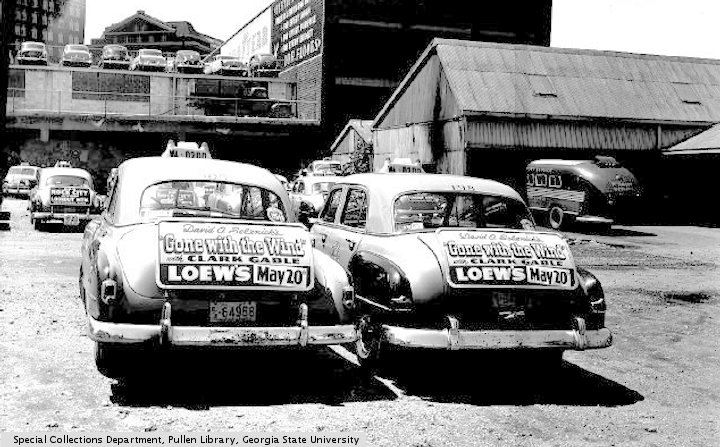

PG managed to miss the Decatur Book Festival this year. One friend made it. This is a repost.
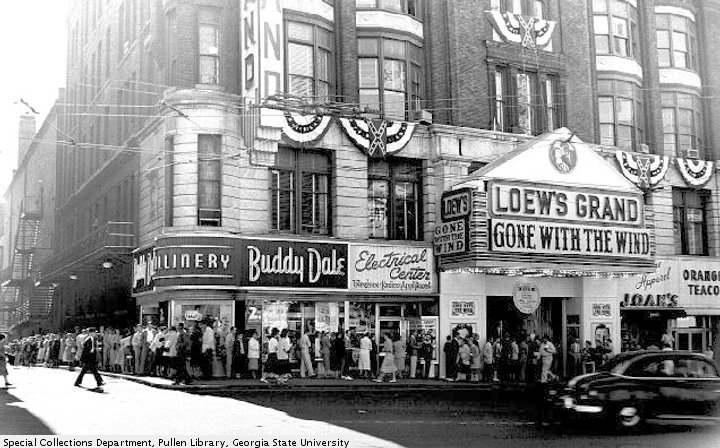
“This program was followed, after another walk through the vendor area back to the public library’s auditorium, by a staged reading of a short play, Tommorrow Is Another Day. The setting: the apartment of Atlanta novelist Margaret Mitchell and her husband John Marsh, on a morning in December 1939, two days before the movie version of Mitchell’s famous book premiers in Atlanta’s Lowe’s Theater. Mitchell’s African-American housekeeper of many years has almost finished reading Mitchell’s book, and Mitchell asks for her housekeeper’s opinion of it. What the Mitchell’s housekeeper tells Mitchell and her husband made for compelling theater!”
The play is fiction. From what this slack blogger has read about Peggy Marsh, she probably did not give books to her household help. It is possible that the cleaning lady did not know how to read. The playwrite, Addae Moon, had to use dramatic license to tell his side of the story.
“…the 43-year-old black writer found he liked some things about the 79-year-old novel. Not everything, of course. “I got frustrated with it. I had to put it down because I got angry.” But he’d pick it up later and keep going. “I totally understand Margaret’s desire to tell your point of view and your truth, but I also can understand what it feels like to be the victim of someone else’s truth…. It’s easy to be critical of the movie, which is more cartoonish, but, to me, the book is so much more complex.”
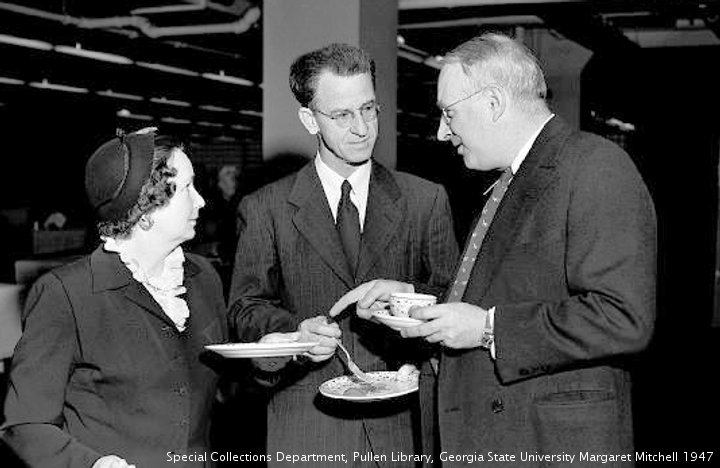
It has been a long time since PG read GWTW. It is tough to imagine it from the perspective of a contemporary Black man. GWTW was written by a White woman, of a byegone era. There are many sides to the story. This post will try to tell a few. The rest of it is a double repost from a few years ago. If that does not satisfy your lust for trivia, you can check out the Margaret Mitchell page at find-a-death.com. (It is full of errors, like calling her “Maggie”.) Pictures are from “The Special Collections and Archives, Georgia State University Library”.
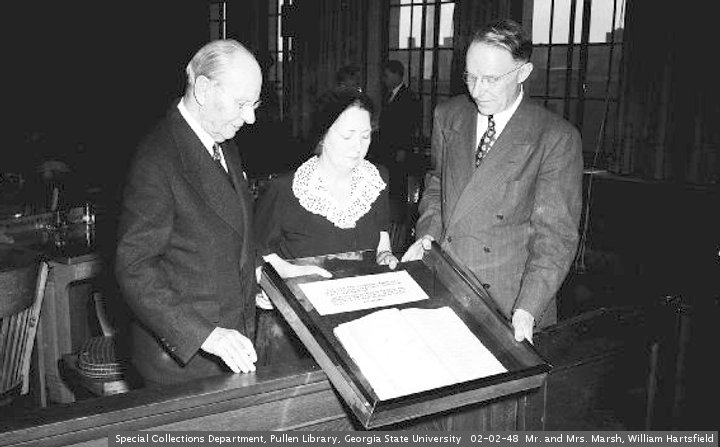
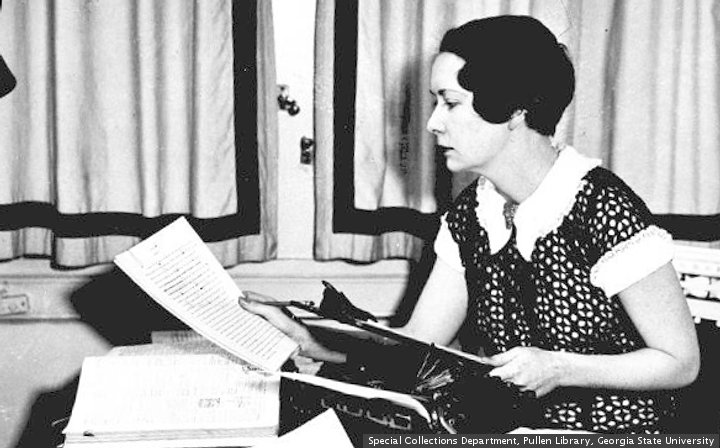

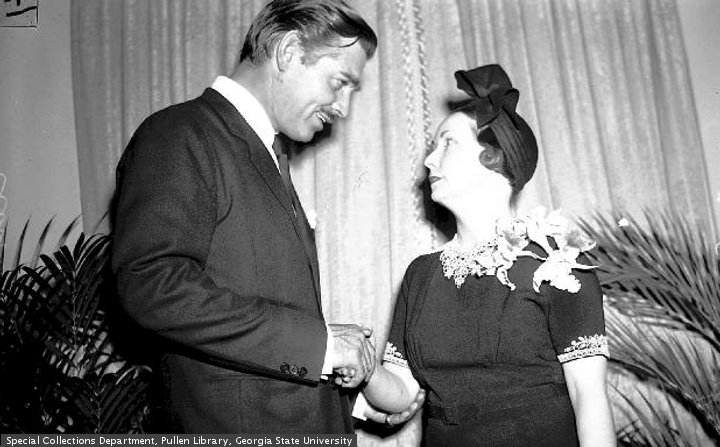

As we started to discuss the other day, PG is reading I Remember Margaret Mitchell by Yolande Gwin. It starts with August 11, 1949. Margaret Mitchell, known to her friends as Peggy Marsh, went to to see “A Canterbury Tale” at the Peachtree Art Theater. She left her apartment on Piedmont Avenue, accompanied by her husband John. They parked across the street, and Mrs. Marsh was struck by a taxi, driven by Hugh D. Gravitt. She died August 16, 1949.
This story contradicts what PG heard about the accident. The other story is that Mrs. Marsh had been at the Atlanta Women’s Club, having cocktails, where her husband met her. In this account, Mrs. Marsh was bombed, and never knew what hit her. (One mile south west, and fifty five years later, PG had an encounter with a speeding taxi.)
On page 23, another myth is challenged. The traditional story is that if you asked Margaret Mitchell if she based Scarlet O’Hara on herself, she would look horrified. “Scarlet O’Hara was a hussy”. This view is challenged by an Atlanta native, who went to a party, and saw that Margaret Mitchell was the life of the party. “Scarlet O’Hara is certainly the personification of Margaret Mitchell”.
Margaret Mitchell was a reporter for the Atlanta Journal. She married John Marsh on July 4, 1925, and injured her ankle in 1926. Every day Mr. Marsh brought home books to his bedridden wife. One day, he brought home a writing pad, and said “You have read everything I’ve brought you so now you write a book.”
The couple lived in a small apartment on Crescent Avenue, across from a mural of a southern colonel. (I would even go north for Southern Bread) They moved out of “the dump”, in 1932, to an apartment at 4 17th Street. When Peggy sold a few books, and John’s career at Georgia Power prospered, they moved to the Della Manta. This was at the corner of Piedmont and South Prado, across from her beloved Piedmont Driving Club.
Mrs. Marsh wrote and wrote, preferring a typewriter to a writing pad. Each chapter was kept in a manila envelope, which were piled up all over the place. Some chapters were re written sixty times. In 1935, Harold Latham, of MacMillan Publishers, was in the south looking for talent. He persuaded Mrs. Marsh to let him look at her book, and would not give it back to her.
The title of her book was borrowed from a poem by Ernest Dawson, Non Sum Qualis Eram Bonae Sub Regno Cynarae . The line of the poem was “I have been faithful to thee, Cynara, (spell check suggestion: Canary) in my fashion; I forgot much Cynara, Gone With The Wind!”
The book became a runaway best seller. Macy’s of New York helped by ordering 50,000 copies. The idea was to offer GWTW as a loss leader, as Gimbels was doing. Federal price controls ruled this to be illegal, and Macy’s returned 35,000 copies to the publisher.
The first printing of GWTW has a mistake on the back page. The book was published June 30, 1936. The first edition says, on back of the title page, “Published May 1939”.
David Selznick bought the rights to GWTW, and you probably know the rest of that story. Shortly before the premiere of GWTW, someone at the Piedmont Driving Club pulled a chair out from under Mrs. Marsh. She had not started to stand up. Mrs. Marsh crashed hard on the floor, and hurt her back. This would require two rounds of back surgery.
Celestine Sibley tells a story about the Atlanta Women’s Press Club. Miss Sibley moved to Atlanta in 1941, and went to her first AWPC meeting, at the Henry Grady Hotel. “A plump little woman in a funny Carmen Miranda style hat” noticed the newcomer, and started to talk to her. In the early days of the war, there were blackouts, to save the city from German bombers. The plump little woman was an air raid warden in the area around Piedmont Park. Finally, Miss Sibley said she had to go catch the Piedmont-Morningside bus. Peggy Marsh said she had a car, and could take her home.

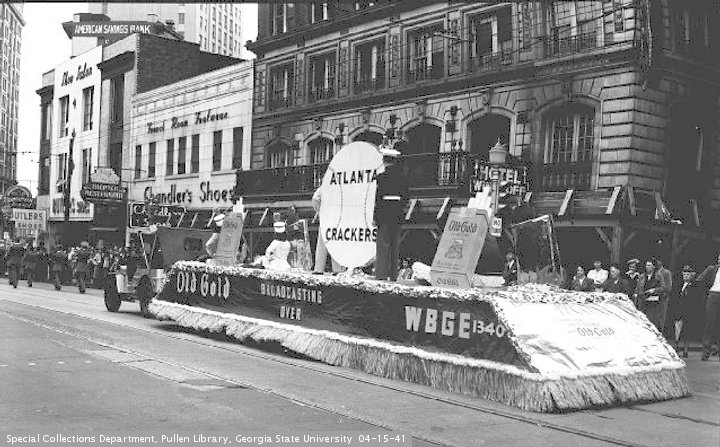

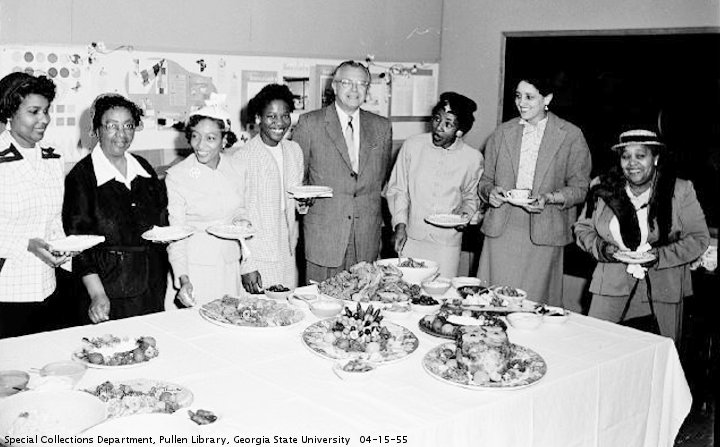


PG is reading I Remember Margaret Mitchell by Yolande Gwin. It is a collection of memories of Peggy Marsh, who wrote “Gone with the Wind”. ( If you didn’t know that, just close this window, and go look for your “friends” on facebook.)
Yolande Gwin was for many years the society editor of the Atlanta Constitution. She wrote a review of GWTW in 1936, before it’s publication. Mrs. Marsh sent her a letter of appreciation… “I never dreamed you were going to give me so much space. I thought, as the resume of the story was so long. that you’d just give an introductory paragraph and let me ride. And I’d have ridden, just as happy as a n—-r at a hog killing. But all that space, so long a story. so completely flattering a story – well. I’m still blushing about the ankles, as Jurgen once remarked … And oh, Yolande. how nice of you to refer to me as a “young author!” Me, who have passed the broiling stage and the frying stage and am rapidly approaching the roasting and baking stage. “
There is probably going to be a second post about I Remember Margaret Mitchell. Chamblee54 is not responsible for GWTW junkies who overdose on Margaret Mitchell trivia. This post is about fact checking, google, and how a couple of simple questions can turn into an all afternoon goose chase.
There are two basic questions: Was Yolande Gwin married, and did she work for the Journal or the Constitution? As for the first, the expression Ms. sounds like a mosquito with a speech impediment, and is not appropriate for use with an society page writer. The trouble is, Miss or Mrs. depends on the marital status of the woman. After an hour or so of looking up google results, PG cannot find out whether or not Yolande Gwin was married. Sometimes, the correct answer is “I don’t know”.
As for the second, an obituary for the lady says that she wrote for the Journal-Constitution for fifty years. The fact is, the Journal and Constitution were separate papers until they were combined in 1982. (Cox Enterprises bought the Constitution in 1950. This made the Journal and the Constitution sister papers, rather than competitors.) As for who Yolande Gwin wrote for, there are contradictory stories on the internet. A google book about rural electrification says that Yolande Gwin wrote for the Constitution. The Atlanta History Center says the Yolande Gwin wrote for the Journal. They have a picture of the lady, with a ghastly AHC watermark across her face.
Another google book, The last linotype: the story of Georgia and its newspapers since World War II By Millard B. Grimes confirms that Yolande Gwin worked for the Constitution. “”One day I was sitting there looking at a blank sheet of paper; I didn’t have any news. And that’s when I happened to remember kidding Peggy (Margaret Mitchell) about writing the “Great American Novel.” so I called her up and said, ‘How about that Great American Novel. have you ever finished it? I need some news.’ She said, ‘You won’t believe it, but Macmillan has taken it.’ And I said, ‘Goody, goody. Grand.’ And I put a piece in the column (written under the name Sally Forth) about it, never expecting it to be what it was, you know.” The dale was February 9, 1936.”





The Soho Press Book Of 80s Short Fiction




The Soho Press Book of 80s Short Fiction turned up in the Dekalb Library system, and has provided some cheap thrills. One negative review catalogs a few of the charms.”Beware. Raw, graphic sexual content. I had intended this as a reading group choice. It was a pre-order so I had no forewarning or list of titles (“Sodomy” would have given me pause). Cover listed Raymond Carver, Mary Gaitskill, Amy Hempel, Jamaica Kincaid. Book arrived with cover detached.”
Weird Fucks Lynne Tillman is the first story. A young lady has an eventful summer. She takes up with a married man, whose wife dries her hair in the oven. Is this what happened to Sylvia Plath?
So Much Water So Close To Home Raymond Carver was a delight. I had listened to several of Mr. Carver’s stories read on youtube, but never read the text. SMWCTH is a tasteful story. Just-plain-folks go camping, and see too much.
Sodomy Gary Indiana jerks us off back into a New York state of mind. A man is talking about two of his late seventies boyfriends. One is a terrific fuck, but not much else. The other is a confused, off-and-on emotional connection. Mr. Indiana talks about 1978 as being “before the war.”
The Angel Patrick McGrath is the story of Harry Talboys, an eccentric old man who estivated in lower Manhattan. The old man lived his days in a gin fueled haze, while telling tales of his former glory. Eventually, the young man who wrote the story couldn’t take anymore of the old geezer.
River Of Names Dorothy Allison is tough to read. It’s about a lifestyle that I am blessedly unfamiliar with. A hyper productive South Carolina family gets through life, sometimes. RON opens up with one of the sisters taking a pail of soiled rags out to the fire. This scene involves the sense of smell.
Secretary Mary Gaitskill “A young woman, recently released from a mental hospital, gets a job as a secretary to a demanding lawyer, where their employer-employee relationship turns into a sexual, sadomasochistic one.” This is where the tales get funky. There is a connection to a movie and the description of the movie sounds different from the story … there’s no mental hospital discharge in the story. The young lady seems to be just a helpless young lady, who lives with her helpful parents. She gets a job in a law firm. The lawyer turns out to be a terrible person, who likes to beat her. She has a curious relationship with the whole thing … it’s a disturbing tale.
Wrong Dennis Cooper If Secretary wasn’t fucked up enough, the next story is by Dennis Cooper. Some guy lives in lower Manhattan during the seventies, and goes around killing people. Until he gets killed himself, and then goes on a deceased person monolog.
Debbie’s Barium Swallow Laurie Weeks makes william burroughs look like dick, jane, and sally. “There’s a guy named Benny lymphoma tracking … God or whatever Satan daddy lifts my skirt like he does at the slightest whim … what words can Debbie use for this secret procedure … she crawls and shakes with fever in the toxic dirt crawling one knee before the other … bitching from 34th Street to 35th a node shaped lip traveling from … your job in the … Hospital’s authoritative smoothing fekade” Pictures today are from “The Special Collections and Archives, Georgia State University Library.”




Rachel Maddow
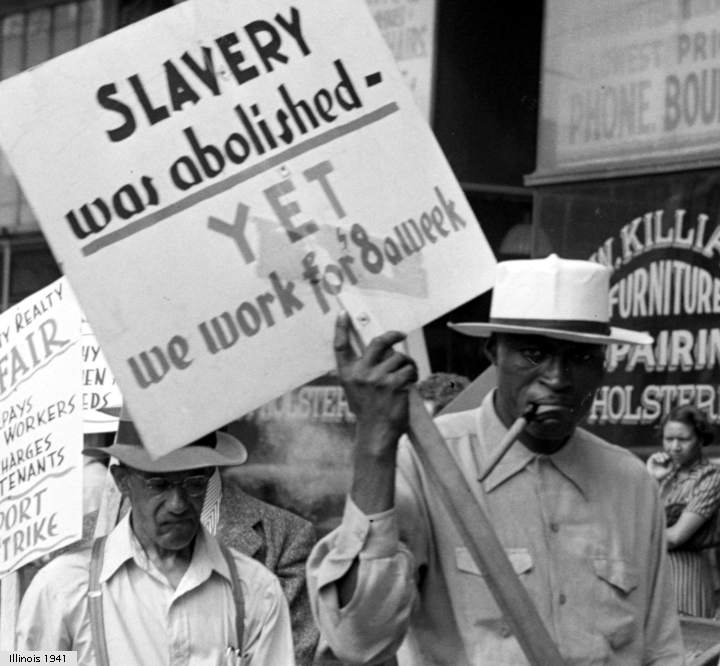


Rachel Maddow is a great concept. The hard hitting lesbian overcame a blonde childhood to become the MSNBC news lady. Unfortunately, the reality does not always live up to the image.
@maddow “Patients overdosing on ivermectin backing up rural Oklahoma hospitals, ambulances” “‘The scariest one I’ve heard of and seen is people coming in with vision loss,’ he said.” The tweet links to a story: “A rural Oklahoma doctor said patients who are taking the horse de-wormer medication, ivermectin, to fight COVID-19 are causing emergency room and ambulance back ups.“There’s a reason you have to have a doctor to get a prescription for this stuff,” said Dr. Jason McElyea.”
… Dr. Jason McElyea is not an employee of NHS Sequoyah … Dr. McElyea has not worked at our Sallisaw location in over 2 months. NHS Sequoyah has not treated any patients due to complications related to taking ivermectin. This includes not treating any patients for ivermectin overdose….” The story is a lie. Rolling Stone, who first broke the story, has issued corrections. @maddow has not.
A month before the 2016 election, a story began to spread: The KKK endorsed Donald Trump. When I began to research a blog post about this tall tale, an article at the Washington Post appeared to be the origin. An enthusiastic co-promoter was Rachel Maddow.
By this time, it was obvious that Ms. Maddow saw her job as helping Hillary Clinton get elected. Unfortunately, by November 2016, this meant piling on as much negativity as possible. It is possible that public revulsion at this overkill helped Mr. Trump win the Electoral College. This tendency towards overkill is on full display in her campaign against IVM.
August 27 saw Ms. Madcow Ms. Maddow goes full blue anon against IVM. It should be noted that, despite the fire breathing polemic by Ms. Maddow, the side effects of IVM are not serious. There is evidence of IVM being an effective treatment for covid. (one two)
“… several outlets are reporting what the America’s Frontline Doctors fiasco appears to have morphed into now is a scam to market horse paste, to market livestock deworming and anti-lice medicine to people who believe, that for some reason, they shouldn’t take the COVID vaccine. To people who believe there is a cure for COVID. There must be a cure for COVID but the man is trying to keep it secret but you can find it at a veterinary clinic. And, OK, maybe we said it was hydroxychloroquine before, that was the cure. But we’re not talking about that anyone now we say it’s ivermectin.”
“So, they moved on, from warning you about the reptile people and the threat of the demon spawn, careful who you have sex within your sleep, because you never know. They moved on from that, to promoting hydroxychloroquine as the secret cure to COVID. And when that petered out, they kept up the scam, telling people definitely do not take the vaccine, because the vaccine will kill you, and don’t wear a mask. And now they are telling people to pay them a considerable amount of money to take this potentially dangerous and also worthless drug.”
“It has been promoted inexplicably by the popular podcaster Joe Rogan, for some reason. Okay? It has also been promoted by the snake oil online sales folks who brought you the threat of demon sperm and alien DNA, with the endorsement of then President Donald Trump.”
“NBC reporter Ben Collins has plunged into that slimy underworld of how this stuff is being promoted and sold and weaponized against the ill. He joins us next. Stay with us.”
“One of the big groups pushing disinformation about this drug is a pro-Trump anti-vax group called America’s Frontline Doctors . Their founder was arrested after allegedly participating in an attack on the capital on January 6th. And while promoting ivermectin as a cure for COVID is something of a standard Fox News primetime segment these days, the misinformation and promotion of it turns out to be a lot bigger online, particularly in gigantic Facebook groups I had no idea existed. But they have created a whole ecosystem to push this stuff and to support people’s decision to use it, instead of, say, getting vaccinated.” Pictures today are from The Library of Congress.
UPDATE: This is a repost. A former facebook friend posted a comment about Rachel Maddow. I replied with a link to this post. The FFF took offense at the inclusion of the “L-word” in the first paragraph of this feature. The conversation devolved into an argument about ivermectin. The last thing the FFF said: “I trust the FDA, and I don’t care how they do things in India and Africa.”












Thank Satan It’s Friday





3.14% of sailors are pi-rates.
A man tried to sell me a coffin today… I told him that’s the last thing I need.
Comedians who tell one too many lightbulb jokes soon burn out.
Did you hear about the crazy Mexican train thief? He had loco motives
Did you hear about the runner who was criticized? He just took it in stride
Don’t kiss your wife with a runny nose. You might think it’s funny, but it’s snot.
Feeling Cold? Go stand in a corner for a bit. They are usually around 90 degrees.
How do you count cows? With a cowculator!
How does a penguin build it’s house? Igloos it together.
I burnt my Hawaiian pizza last night… I should’ve put it on aloha setting.
I don’t trust stairs. They’re always up to something.
I hate perforated lines, they’re tearable
I just read a book about Stockholm syndrome. It was pretty bad at first, but by the end I liked it.
I was looking at my ceiling. Not sure if it’s the best ceiling in the world, but it’s up there.
If you want a job in the moisturiser industry, the best advice I can give is to apply daily.
Past, present, and future walked into a bar…. It was tense.
RIP boiled water. You will be mist.
Steak puns… They’re a rare medium, well done
Tell ya my chimney joke? Got stacks of em! First one’s on the house
The sign said “Television for Sale – $10 – Volume Stuck On Full”. I can’t turn that down.
There are 10 types of people: Those who understand binary, and those who don’t.
To the man in the wheelchair that stole my camouflage jacket… You can hide but you can’t run.
Today’s top fact: 50% of Canada is A
Want to hear a joke about construction? Nah, I’m still working on it.
Want to hear my pizza joke? Never mind, it’s too cheesy.
What days are the strongest? Saturday and Sunday, the rest are week days.
What did the Buddhist ask the hot dog vendor? “Make me one with everything.”
What do you call a fat psychic? A four-chin teller.
What do you get if you stand between two llamas? Llamanated.
What happened to the cow that jumped over the barbed wire fence? Udder destruction.
When my wife told me to stop impersonating a flamingo I had to put my foot down.
Why can’t you hear a pterodactyl using the bathroom? Because the P is silent
Why did the blind man fall into the well? Because he couldn’t see that well.
Why do trees seem suspicious on sunny days? Dunno, they’re just a bit shady.
You can’t run through a camp site. You can only ran, because it’s past tents.
You heard the rumor going around about butter? Nevermind, I shouldn’t spread it.
Pictures today are from The Library of Congress. Similar material may be found at @baddadjokes.





National Rorschach Test

The display of a link on this page does not indicate approval of content.
Staley: Worried about possible slurs toward players vs. BYU
로동당의 전사들 하나로 뭉쳤다 빛나는 새 승리 우리를 부른다 어서가자 빨리가자 천리마 타
ContraPoints Talks Internet Fascism and Cancel Culture | Offline Podcast
“you should always challenge the things that you intuitively want to believe”
John Vervaeke: Meaning Crisis, Atheism, Religion & the Search for Wisdom
Conversation so Intense It Might as Well Be Psychedelic John Vervaeke JBP Podcast |
How Small, Conservative Campus Paper Did A Better Job Covering BYU Volleyball …
pearl necklace A sex act whereby semen is ejaculated onto a partner’s neck.
Can Democrats Hold Georgia? did everything right to win state in 2020—Republicans …
Right-wing conspiracy theory involving Duke volleyball player is absurd | Opinion
Perspective: The BYU-Duke volleyball story became a national Rorschach test
Puzzling Duke-BYU volleyball story is not undergoing the national scrutiny it deserves
B.Y.U. Is Still Investigating Racial Slurs at Women’s Volleyball Match
“The more you know, the more you know you don’t know.”
BYU on trial in the court of public opinion …where do we go from here?
How Corporate Media Sold The BYU Race Narrative With Zero Corroborating Evidence
Outrage Industrial Complex in Overdrive Over ‘Racist’ Taunts at College Volleyball Game
What Stephen A. Smith is saying now about the Duke-BYU racism allegations
listen to your skin: erotic reading & open-mic series
Server Divides People With Viral Rant Begging People To Tip More
Production of Whiteness in Education: Asian Students in a College Classroom
“TWO STEPS FORWARD-THREE STEPS BACK,” Poetry Games with Michael Sindler
Does My Son Know You? Fatherhood, cancer, and what matters most
BYU says it found no corroborating evidence of racial heckling toward Duke women’s …
A statement from BYU Athletics regarding investigation of Aug. 26 volleyball match
Stephen A Smith Reacts to Made up Story Rachel Richardson Duke Volleyball!
Maintaining Standards in Standardized Testing | Glenn Loury & John McWhorter
Trump’s China Tariffs Helping Pakistani Garments Exports to America
Dad Of Duke Black Volleyball Player ACCOSTED By Racial Slurs At BYU Game Speaks Out
Martial, the twelve books of Epigrams, translated by J.A. Pott and F.A. Wright
Зикр в Алды посёлке 4 сентября 2022 г.
norman vincent peale ~ martial ~ eagle ~ beep
decandence ~ ga senate ~ cnn ~ duke ~ jay bilas
chaplaincy ~ mollena ~ anarchy ~ renitta shannon ~ duke hoax
chicago stadium ~ lessa pamplin ~ edgar winter ~ hank johnson ~ dennis cooper
parable ~ nick challies ~ baseball fields ~ simon owens ~ debbies barium swallow
soho press ~ lesa pamplin ~ fake hate crimes ~ tom selleck ~ black menaces
@BatchlorIV ~ @DrIbram ~ duke ~ byu ~ gimp circle
10 evil books ~ duke thread ~ ozzy ~ sam quinones ~ pure flic ~ sober podcast
Anaïs Nin Henry Miller ~ La Guerre des mondes ~ sam quiones ~ open mike
so it was an amazing day at LAF. as i was coming in, there was a young man ahead of me. spaghetti skinny, long hair, pale legs with a tasteful touch of fuzz … looked to be about 19 … when i was working on the weight machine, he started at a station across the aisle from me. he would do a set of something, then spend five minutes looking at his phone … finally, i was up in the mezzanine, riding the stationary bike listening to a podcast about the sex pistols. my new bf was on some machine in front of me downstairs, still working the weights about 10 percent as much as he looked at his phone. … it was charming ~ My best guess: the original quote has become so corrupted over time that searches for a source will produce everyone and no one. ~ I want to also address a percolating narrative that BYU (and even Duke) did not do anything to address the situation. When the complaint first surfaced, BYU head coach Heather Olmstead immediately took action. Four staff and a uniformed police officer were placed in the student section. They were later joined by an athletic administrator from Duke. Coach Olmstead’s reaction in alerting event management staff was immediate and decisive. The crowd was large and boisterous but there were no observations of racist behavior. ~ @lumpen_princess kyle rittenhouse’s sorority blonde girlfriend making cloyingly cutesy tiktoks with him is the closest thing there is to a true fascist cinema in the 21st century. she is this generation’s leni riefenstahl ~ Look, I tried the cat experiment. On the third trial, the cat was dead. On each of the subsequent 413 trials, it remained dead. Am I doing something wrong? ~ White Man who shouted the N-Word at Women’s Volleyball Match Captured ~ I was in the cove. It was a former business of some kind, off Monroe Drive in back of the park. The cove is no longer standing. When the city built a sewer plant on the site, they had to decontaminate the ground that the cove stood on. Today, it is an empty lot, next to the driveway to a parking garage in the park. One night, I was in there with Jim, this man I was hanging out with. He was intoxicated, as usual. I was much less drunk. In those days, Jim would order a glass of vodka, and a beer. He would mix half the beer with the vodka, and give me the rest of the beer. In those days, that was enough for me. The dj played a song, “rock the boat” by the Hues Corporation. Jim grabbed me by the wrist, and dragged me out onto the floor. Within 30 seconds, I realized that I was having a whole lot of fun. I haven’t stopped since, even if my deteriorating body might wish otherwise. I don’t remember if it was raining that night, and i wasn’t dance addicted … yet … to dance in the parking lot. so there was no dancing in the rain that night. ~ pictures today are from The Library of Congress. ~ selah



091122





This is my 911 story. I repeat it every year at this time. Every year I say this will be the last time. This year is a mess. We are destroying the village to save it. The action part of 091101 was over by 11 am. This quagmire drags on and on. Nobody knows how things will turn out.
I was at work, and someone called out that someone had run a plane into the World Trade Center. I didn’t think much of it, until I heard that the second tower had been hit, then the Pentagon, then the towers collapsed, then a plane crashed in Pennsylvania.
I focused on my job most of the day. There was always drama at that facility, and concentrating on my production duties helped to keep me saner. This was roughly the halfway point of my seven year tenure at this place.
One of the other workers was a bully for Jesus. He was a hateful loudmouth. After the extent of the damage became known, he shouted “They are doing this for Allah,” and prayed at his desk. The spectacle of the BFJ praying made me want to puke.
I became alienated from Jesus during these years. Once, I had once been tolerant of Christians and Jesus, as one would be with an eccentric relative. I began to loath the entire affair. I hear of others who found comfort in religion during this difficult time. That option simply was not available for me.
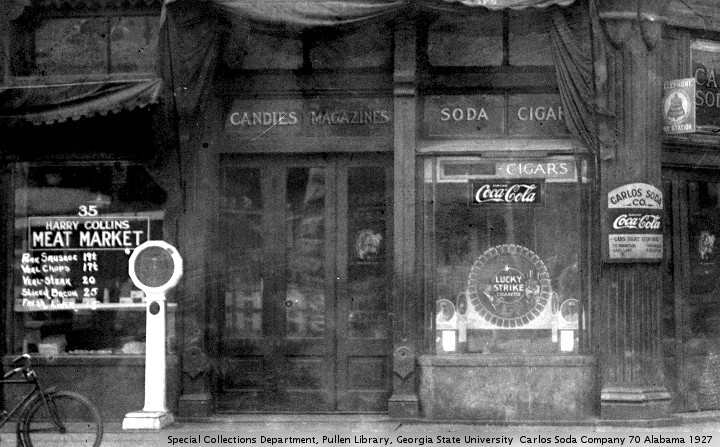
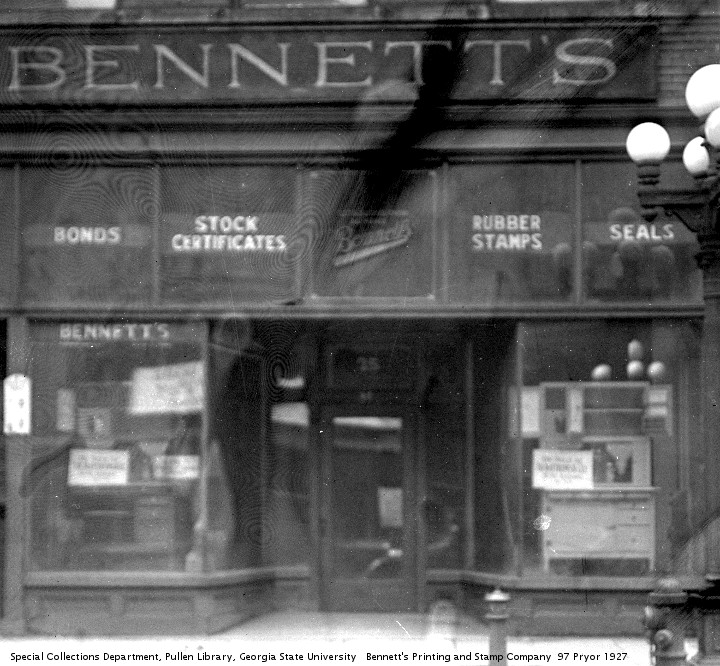
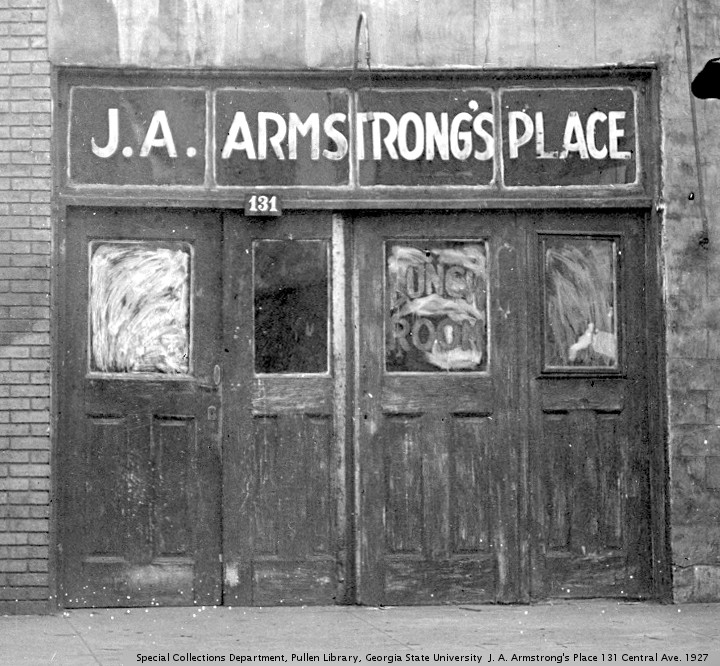
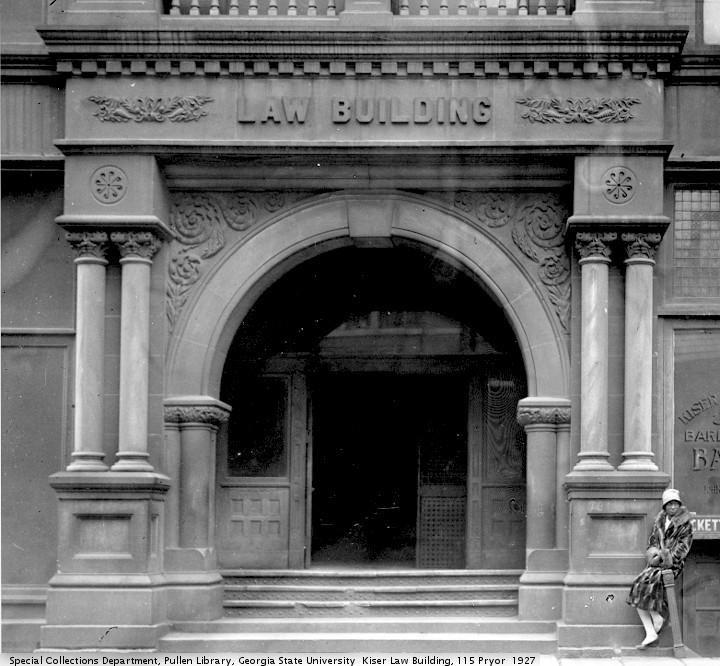
Pictures from “The Special Collections and Archives, Georgia State University Library”. “This item is part of a collection of images of downtown Atlanta streets that were taken before the viaduct construction of 1927 – 1929. Some of the covered streets became part of Underground Atlanta.”














A Volleyball Controversy


I didn’t pay attention to the latest n-word controversy. Somebody screaming the magic word, at a women’s volleyball match in Utah, did not strike me as important. Why would a North Carolina school send a non-revenue producing team to Utah? Duke spent some major bucks on this match, at a time of rising college costs. That money could be better spent elsewhere.
A few days later, YouTube directed me to a video by Brandon Tatum. Officer Tatum posited the thought that Rachel Richardson … the star of this latest drama … was a liar. This sent me down a rabbit hole, which I am slowly emerging from.
The narrative is well known by now. Andre’ Hutchens put together a thread, which details/documents many of the scenes in this drama. The short version: Rachel Richardson says that she heard someone shouting the magic word. BYU, the home team, sent four ushers into the student section, and had a policeman stand in front of the crowd. None of these people heard the magic word.
After the match, a young man went up to the Duke players, and said something. The Duke team said this was the person who was shouting the magic word. The accused n-word shouter was escorted off the premises, and banned from attending BYU events in the future.
At some point after the match, Miss Richardson made some phone calls. She called her father, who has told his story many times. Somebody … we don’t know if it is father or daughter … called Lesa Pamplin, Miss Richardson’s godmother. In this story, we will call her the devilmother.
“My Goddaughter is the only Black starter for Dukes volleyball team, While playing yesterday, she was called a n****r every time she served. She was threatened by a white male that told her to watch her back going to the team bus. A police officer had to be put by their bench.”
The tweet by devilmother got a lot of national attention. Why did a tweet from a Texas politician get this much attention? Who knows. What is certain is that devilmother does not like white people … she thinks it is clever to say “whypipoe.”
Why did this need to be a national scandal anyway? Lets say it was true. You find the culprit, punish him, and finish playing your match. It does not need to be a toxic sensation. A Utah volleyball fan shouting the magic word is not going to affect economic security, police brutality, or equitable access to housing and education. All it is going to do is get people upset.
“She was threatened by a white male that told her to watch her back going to the team bus.” This part of the drama which has received little scrutiny. The “white male” claimed that he knew some BYU players, and confused the Duke team for the BYU team. Who did he approach? Was it she white or black? What exactly did he say? How did “the Duke team” identify the “white male” as the person shouting the magic word? This part of the story does not add up.
Deseret News obtained a copy of the police report. “BYU Police Det. Sgt. Richard Laursen stood throughout the fourth set next to the man now indefinitely banned from BYU events after Duke players said he used racist language, according to a police report Laursen filed that night. … The officer said the man did not use any negative language toward the Duke players during the fourth set. Laursen also said he didn’t hear any racist language used by any fan during that set, when Duke player Rachel Richardson said the racist slurs intensified. … That’s when he met the young man … the man asked why the officer was there and if there was a problem. … “I told him I was there listening for inappropriate comments toward the Duke players and the fan told me that he hadn’t heard any inappropriate comments. He said he told the players that they shouldn’t hit the ball into the net, but that was the only comment he made to the Duke players.” … The fan, who Laursen said was wearing a dark yellow or almost tan shirt and jeans, said he was friends with four of the BYU players. “He seemed to be more interested in talking to me than cheering for BYU. It was evident based on the individual’s comments, stuttered speech and mannerisms that he has special needs. … he may have (A)sperger syndrome or could have autism. The individual was articulate, but socially awkward. The individual kept scrolling through his phone and didn’t seem too involved in the game.” … “I was told the Duke players and coaches were very upset with what happened during the game and that the racial comments toward the Duke players was still happening during the fourth set that that (sic) I didn’t do anything about the comments being made,” … “I told the (BYU) Athletic staff that I never heard one racial comment being made.”
So the story goes. It is already fading from view. Soon, there will be another “teaching moment.” If you google Rachet Rachel Richardson, you see @mikefreemanNFL doubling down, in an ad hominem spectacular. Corporate media players, eager to report the original accusation, have been silent during the “Jussie phase” of this story. While it is easy to criticize right wing media on most issues, they are getting this story right. Pictures today are from The Library of Congress.




leave a comment