Inventing The Word Racism




Writers tackle was rampaging through Brookhaven. PG looked in a list of old product, and found a feature built on the output of Teju Cole. He has a dandy article, at the New Yorker, about what is antiseptically called drone warfare. It is the twitter feed that gets attention. This is a repost.
@tejucole “George Carlin’s original seven dirty words can all be said freely now. The one word you can’t say, and must never print, is “racist.”
The quote marks lend mystery to the tweet. Does he mean the dreaded “n word”? Or does he mean that other six letter slur? There is no shortage of people screaming racist in Georgia, often at the slightest provocation. There is an attitude that racism is the worst thing you can be accused of. Once accused, you are guilty until proven innocent. If you do a bit of research into racism, the word, you will see some interesting things.
The concept of populations not getting along is as old as mankind. The word racism apparently did not exist before 1933 (merriam webster), or 1936 (dictionary dot com). (In 2020, both of these sources have updated their notes, on the original use of the word “racism.”)
Something called the Vanguard News Network had a forum once, What is the true origin of the term racism? This forum is problematic, as VNN seems to be a white supremacist affair. One of the reputed coiners of the R word was Leon Trotsky, also referred to as Jew Communist. Another Non English speaker who is given “credit” for originating the phrase is Magnus Hirschfeld. As for English, the word here is: “American author Lawrence Dennis was the first to use the word, in English, in his 1936 book “The coming American fascism”.”
The terms racist and racism seem to be used interchangeably in these discussions. This is in keeping with the modern discussion. As Jesus worshipers like to say, hate the sin, love the sinner.
The Online Etymology Dictionary has this to add: “racist 1932 as a noun, 1938 as an adjective, from race (n.2); racism is first attested 1936 (from French racisme, 1935), originally in the context of Nazi theories. But they replaced earlier words, racialism (1871) and racialist (1917), both often used early 20c. in a British or South African context. In the U.S., race hatred, race prejudice had been used, and, especially in 19c. political contexts, negrophobia.”
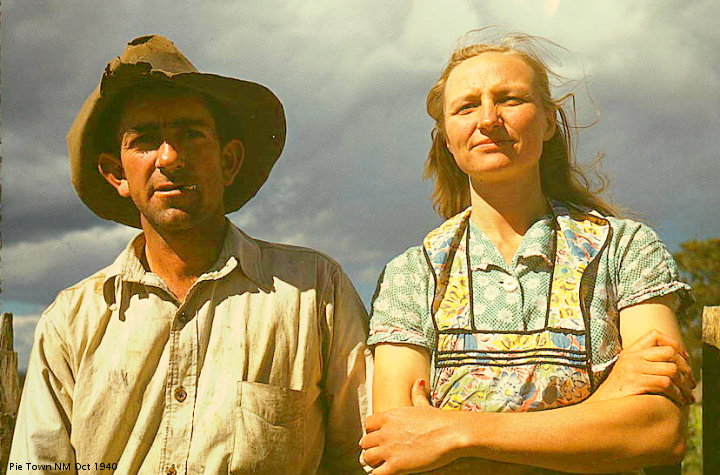
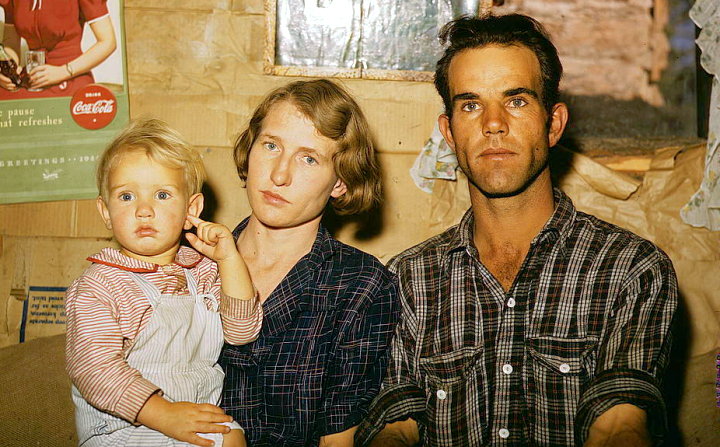
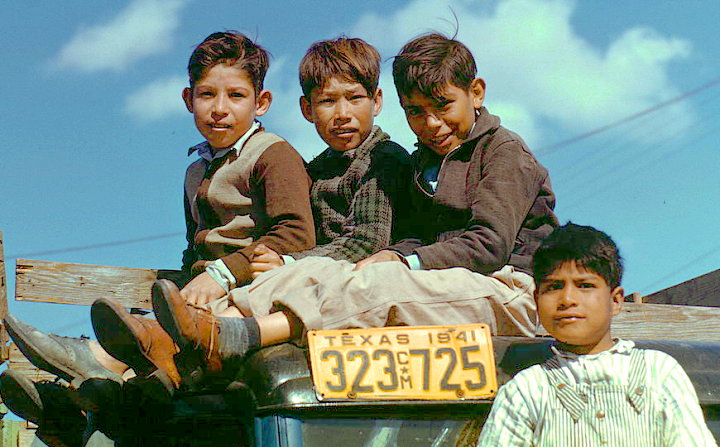
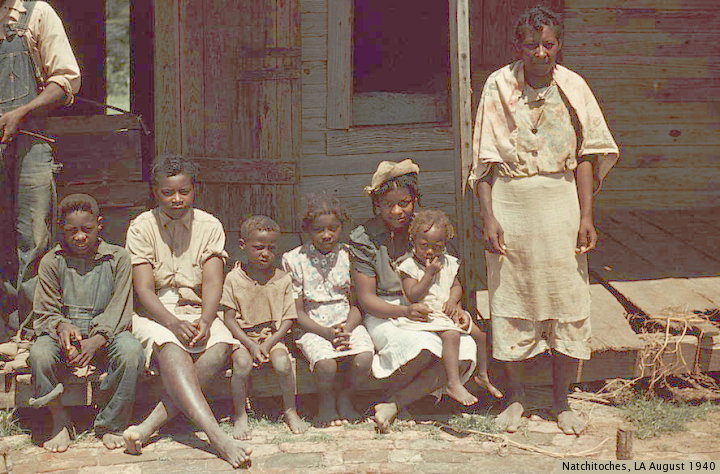
Pictures are from The Library of Congress. Part two is now available.



Last week this blog ran a story about the word racism. The story stated that the earliest use of the r-word was 1932. A comment led to The Ugly, Fascinating History Of The Word ‘Racism.’ Apparently, Col. Richard Henry Pratt used the word in 1902.
“The Oxford English Dictionary’s first recorded utterance of the word racism was by a man named Richard Henry Pratt in 1902. “Segregating any class or race of people apart from the rest of the people kills the progress of the segregated people or makes their growth very slow. Association of races and classes is necessary to destroy racism and classism.” Col. Pratt was speaking at the Lake Mohonk Conference of Friends of the American Indian.
It is always good to check out the context. Col. Pratt spoke at the Fourth session, Thursday Night, October 23, 1902. The event was well documented. There are some other noteworthy quotes.
“We have brought into our national life nearly forty times as many negroes as there are Indians in the United States. They are not all together citizen and equal yet, but they are with us and of us; distributed among us, coming in contact with us constantly, they have lost their many languages and their old life, and have accepted our language and our life and become a valuable part of our industrial forces.” The text capitalizes Indian, and presents Negro in lower case.
“It is the greatest possible wrong to prolong their Indianism, whether we do it for humanitarian or so-called scientific reasons. … The ethnologists prefer the Indian kept in his original paint and feathers, and as part and parcel of every exposition on that line. … It will be a happy day for the Indians when their ethnological value is of no greater importance than that of the negro and other races which go to make up our population.”
Col. Pratt “is best known as the founder and longtime superintendent of the Carlisle Indian Industrial School at Carlisle, PA.” While progressive for the times, many of the school’s policies were harsh.
“He pushed for the total erasure of Native cultures among his students. … The students’ native tongues were strictly forbidden — a rule that was enforced through beating. Since they were rounded up from different tribes, the only way they could communicate with each other at the schools was in English. … “In Indian civilization I am a Baptist,” Pratt once told a convention of Baptist ministers, “because I believe in immersing the Indians in our civilization and when we get them under, holding them there until they are thoroughly soaked.” … Pratt also saw to it that his charges were Christianized. Carlisle students had to attend church each Sunday, although he allowed each student to choose the denomination to which she would belong.” Carlisle closed in 1918.
“In 1875, Captain Richard Pratt escorted 72 Indian warriors suspected of murdering white settlers to Fort Marion in St. Augustine, FL. Once there, Pratt began an ambitious experiment which involved teaching the Indians to read and write English, putting them in uniforms and drilling them like soldiers. … News of Pratt’s experiment spread. With the blessing of Congress, Pratt expanded his program by establishing the Carlisle School for Indian Students to continue his “civilizing” mission. Although liberal policy for the times, Pratt’s school was a form of cultural genocide. The schools continued into the ’30s until administrators saw that the promised opportunities for Indian students would not materialize, theat they would not become “imitation white men.”
“Beginning in 1887, the federal government attempted to “Americanize” Native Americans, largely through the education of Native youth. By 1900 thousands of Native Americans were studying at almost 150 boarding schools around the United States. The U.S. Training and Industrial School, founded in 1879 at Carlisle Barracks, was the model for most of these schools. Boarding schools like Carlisle provided vocational and manual training and sought to systematically strip away tribal culture. They insisted that students drop their Indian names, forbade the speaking of native languages, and cut off their long hair.” As Col. Pratt said at the LMCFAI, “I also endorse the Commissioner’s short hair order. It is good because it disturbs old savage conditions.”
Col. Pratt was known for saying “Kill the Indian, and Save the Man” He probably meant that you should destroy the native culture, so the man inside could flourish. It is easy to misunderstand this type of rhetoric. The source of this phrase: “Official Report of the Nineteenth Annual Conference of Charities and Correction (1892), 46–59. Reprinted in Richard H. Pratt, “The Advantages of Mingling Indians with Whites,” Americanizing the American Indians: Writings by the “Friends of the Indian” 1880–1900 (Harvard University Press, 1973), 260–271.” There are some tasteful quotes.
“Inscrutable are the ways of Providence. Horrible as were the experiences of its introduction, and of slavery itself, there was concealed in them the greatest blessing that ever came to the Negro race—seven millions of blacks from cannibalism in darkest Africa to citizenship in free and enlightened America; not full, not complete citizenship, but possible—probable—citizenship.” Col. Pratt used African Americans as an example of how to assimilate Native Americans.
“The five civilized tribes of the Indian Territory—Cherokees, Choctaws, Chickasaws, Creeks, and Seminoles—have had tribal schools until it is asserted that they are civilized; yet they have no notion of joining us and becoming a part of the United States. Their whole disposition is to prey upon and hatch up claims against the government, and have the same lands purchased and repurchased and purchased again, to meet the recurring wants growing out of their neglect and inability to make use of their large and rich estate.”
The best known student at the Carlisle School was Jim Thorpe, coached by Pop Warner. Wa-thohuck was born May 28, 1888, near Prague OK, into the Sauk and Fox Nation. He won gold medals in the pentathlon, and decathlon, at the 1912 Olympic Games in Stockholm, Sweden. It later came out that he had been paid to play semi-pro baseball, and was not an amateur. The gold medals had to be forfeited. Pictures today are from The Library of Congress.


Mr. Eno And Mr. Isherwood
I was listening to a conversation between Brian Eno and Rick Rubin. Mr. Eno made a comment that sent me down a google rabbit hole, looking for a digital holy grail. When I did not find what I was looking for, I returned to the conversation. Before long, Mr. Eno said something very similar.
“I’d heard something on NPR. It was a poet, a black poet from somewhere in America, reading this poem called Cadillac. I spent years trying to find this thing. I never found it. I wrote to NPR, and I phoned them up, and everything. It was called Pink Cadillac … this amazing, very rhythmic poem, about how he wanted a Pink Cadillac.” This quote got me thinking about another detail.
There are bits of knowledge that want to remain hidden. One is from Christopher Isherwood. It was in a magazine, sometime before 1994. The author died in 1986. The comment was about when you choose a religion. It is not the doctrine that attracts you to a religion, it is the people who introduce you to this observance. If the right person had told Mr. Isherwood about Catholicism, he would have become a Catholic. Instead, in 1938, Aldous Huxley and Gerald Heard introduced Mr. Isherwood to Swami Prabhavananda, and the Vedanta Society of Southern California.
“He (Isherwood) published an account of his spiritual journey at the end of his life, called My Guru and His Disciple.… It’s interesting because it’s so frank and unromantic about the spiritual life. Where Alan Watts basically bullshitted his way to guru status while secretly being an alcoholic and treating his wives like crap, Isherwood is totally upfront about his boredom, his frustration, his vanity, his sexual escapades … he gave us a wonderfully unvarnished account of spiritual mediocrity. As Pema Chodron says, we spend most of our spiritual lives in the middle – not completely lost, yet not completely saved. Just muddling through.”
I did not find the quote I was looking for, but I did find another piece to the puzzle. I went back to Mr. Eno and Mr. Rubin. Then, out of nowhere, came this: “I think that’s the that’s the power of religion as well. The power of religion is not the connection with God, but the connection with the rest of the congregation. The connection with all of the people who also believe in that particular story. I’m not really religious myself but i really respond to that idea.”
“I don’t want to be a believer. I want to be somebody who, as far as possible, understands and knows things. Believing things leaves me a little bit unsatisfied. If I find myself believing something, I want to test the belief. I want to say how do I find out how valid this is.”
“I always used to say that artists are either cowboys or farmers really and they’re both both ways of being an artist are fine you know the farmer wants to find a piece of territory and fully explore it and exploit it … the other kind of artist is the one who just wants to find somewhere new he just wants to find the neck the next frontier the next piece of territory and that’s what he gets turned on by so i i think i’m more in the second category though people listening to my work would say but it all sounds exactly the same brian.”
If you want more, you can listen to the complete interview, or other episodes of Broken Record. Pictures are from The Library of Congress. This is a repost.


The Fruitcake Lady




I wasn’t really doing anything, and was in the mood for a google wild goose chase. This led to an amazing article, Sweet as Sugar, Rude as Hell, My Lost Interview with Truman Capote’s Aunt. A writer for the fishwrapper went to a mobile home in Hudson, FL. He talked to Marie Rudisill, who was best known as Truman Capote’s “Aunt Tiny.” The meeting took place in 1997, and was not what the writer expected. A family friendly version of the meeting was published The journalist received a slice of fruitcake in the mail. Everyone concerned went on with their lives.
Marie Rudisill died November 3, 2006, after becoming famous as the Fruitcake Lady. As for the journalist: “When I left The Atlanta Journal-Constitution in 2009, I stashed 27 years of old newspapers, tapes and ephemera in my garage. Nothing is more depressing to me than those boxes of old newspapers. It’s my own private morgue — replete with the sickening scent of dust and roach pills…. When I finally mustered the courage to dig around, I found the Lewis interviews — as well as a cache of other recordings. Three of the tapes had Rudisill’s name scribbled on them. I was not quite ready to listen, though. I put them in a box and labeled it.”
In 1924, Truman Streckfus Persons was born in New Orleans LA. His mother, Lillie Mae (Aunt Tiny’s older sister) left her husband behind, and took the boy to Monroeville AL. They lived in a wild household. A neighbor was Harper Lee, who wrote “To Kill A Mockingbird.” Miss Lee was a close friend, as was Sook. This is Truman’s cousin, the fruitcake chef herone of “A Christmas Memory.”
After a while, Lillie Mae married Joe Capote, who adopted the boy. They moved to New York, where Aunt Tiny joined them. Truman was sent to military school. Everyone, except Lillie Mae, thought this was a terrible idea. The effort to butch up young Truman did not work.
Aunt Tiny wrote a book, Truman Capote: The Story of His Bizarre and Exotic Boyhood by an Aunt Who Helped Raise Him. It was published in 1983, a year before Truman died. “The book scandalized Monroeville — and Capote. He told The Washington Post: “If there are 20 words of truth in it, I will go up on a cross to save humanity.” Said Harper Lee: “I have never seen so many misstatements of fact per sentence as in that book.”
There is one story that sticks out…. “Rudisill breaks down just once during our interview. It’s when she recalls “the first time Truman ever had a sexual encounter with a priest.” She was living in Greenwich Village, having followed Lillie Mae and Truman to New York. “He was sitting on my doorstep when I came home from work, and he had blood all in his pants, and then he told me about this priest. And nobody, I don’t think anybody in the world ever knew that but me.”
There is more to the story. If you have the time, you might enjoy reading the full article. Pictures today are from The Library of Congress.





Why Did The Cow Cross The Road?



Why did the cow cross the road? The chicken was on vacation.
Knock knock. who’s there? boo. boo who?. Don’t cry it’s only a joke…
It’s six of one, half a dozen of the other.
A man walks up to a horse and says, “Why the long face?”
Two pretzels were walking down the street. one was a salted.
“He who laughs last thinks slowest.”
“Raise your hand if you’re here.”
Two nuns walk into a bar; the third one ducks.
Q: What did the radio say when it was dropped? A: “Ow. That hertz.”
What did the ranch say to the refrigerator door? “Close the door, I’m dressing”
Why don’t blind people skydive? It scares the heck out of their dogs…
What did the fish say when it ran into a wall? dam.
“I see.” said the blind man as he peed into the wind… “It’s all coming back to me now.”
What’s the last thing to go through a bug’s mind when it hits the windshield? Its butt.
You can tuna guitar, but you can’t tuna fish.
What do a duck and a bicycle have in common? They both have wheels… except the duck.
What’s brown and sounds like a bell? DUNGGGGG.
What’s brown and sticky? A stick
When people ask the mortician what he does for a living, he says he is a “boxer”.
What did the shy pebble say?… I wish I was a little boulder! .
What do you call an arrogant criminal falling out of a tower? Condescending.
Two guys walk into a bar… you would think the second guy woulda ducked.
A woman walks into a bar holding a duck. Bartender says, “What’s with the pig?”
Woman says, “It’s a duck.” Bartender says, “I was talking to the duck.”
Why do flamingos always lift one leg when they’re standing?
Cause if they lifted both, they’d fall over!
Q: How many Surrealists does it take to change a lightbulb? A: To get to the other side.
Did you get a haircut? Actually, I got them all cut.
One mushroom said to another mushroom, “Hey – you’re one Fungi!”
What do you call an arrogant criminal falling out of a tower? Condescending.
A dyslexic man walked into a bra …
Q: What do you call a midget, psychic, prison escapee? A: A small medium at-large.
A mule walks into a bar. The bartender says, “Hey, buddy, why the long face?”
“Because my dad is a jackass.”
I have one about the roof but its over your head.
Shall I tell you the one about the skunk? Never mind, it stinks!
There’s nothing like a good joke… and that was nothing like a good joke.
A rabbi, nun, lawyer, mime, and horse all walk into a bar.
The bartender says, “What is this, some kind of joke?”
When’s the best time to eat reindeer meat? …. When you’re hungry.
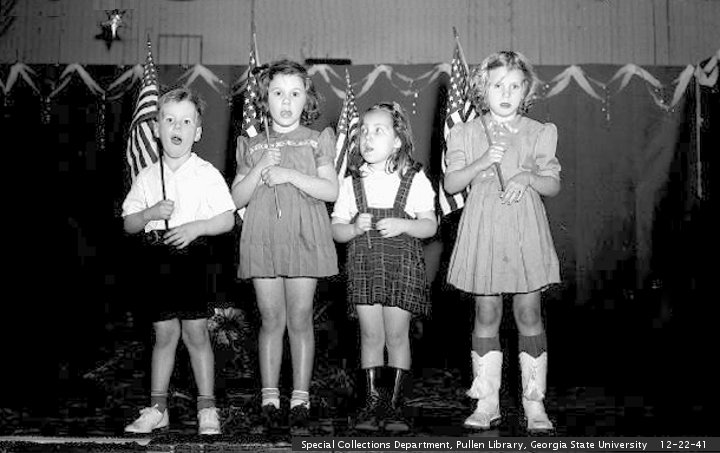
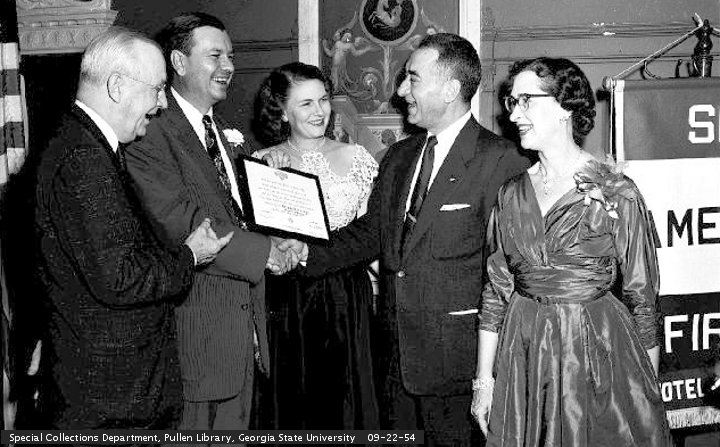
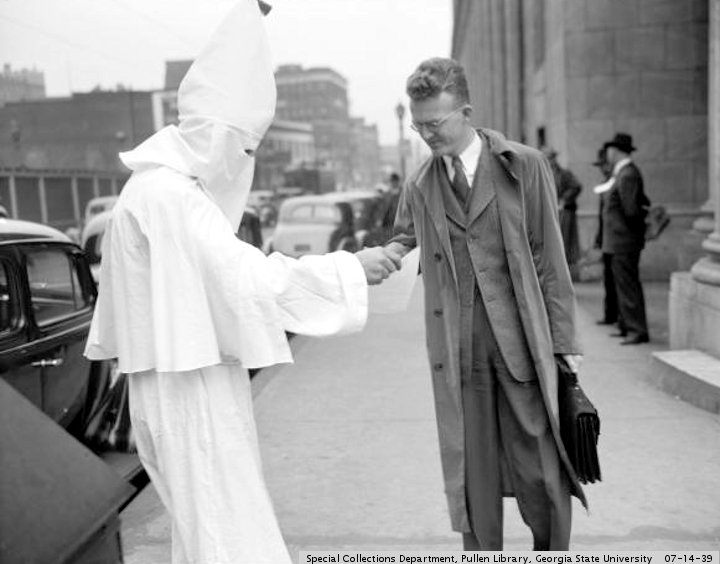
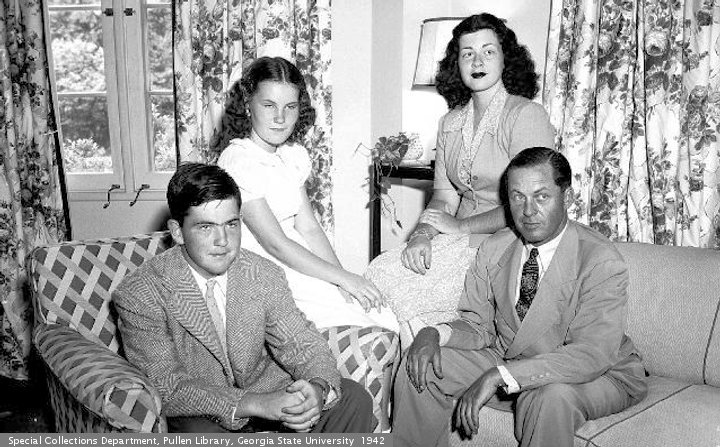
These stories are borrowed from 22 words. Pictures are from Special Collections and Archives, Georgia State University Library. This is a repost.

Patient No. 31





This is a repost from March 2020, at the start of the lockdown. … @JohnFPfaff Holy crap. One person, who refused to be tested and instead went to church and a buffet lunch, is the source of over 1,000 (!!) infections in S Korea. One person, who refused social distancing.
“For the first four weeks of the outbreak, South Korea marshaled high-tech resources to respond aggressively…. The government tracked the movements of travelers arriving from China, for example by tracking the use of credit cards, checking CCTV footage, or mandating they download an app to report their health status every day. For those infected, the government published an extremely detailed list of their whereabouts, down to which seat they sat in at a movie theater.”
“The info was also presented (with names removed) in an interactive website that allows the public to trace the movement of every single individual with coronavirus. To be sure, there were real privacy concerns—as when one unfortunate patient in Daejeon had news of their visit to a risqué lingerie store blasted to every smartphone in their city. Yet on balance, these disclosures did much to calm the nerves and prevent unnecessary panic in the population. By Feb. 17, South Korea’s tally of COVID-19 patients stood at 30, with zero deaths. Ten patients were fully cured and discharged, with some of the discharged patients declaring the disease was “not something as serious as one might think.” The government seemed ready to declare victory.”
“It’s not clear where Patient 31 became infected with the virus, but in the days before her diagnosis, she travelled to crowded spots in Daegu, as well as in the capital Seoul. On February 6 she was in a minor traffic accident in Daegu, and checked herself into an Oriental medicine hospital. While at that hospital, she attended services at the Daegu branch of the Shincheonji (SHIN jun jee) Church of Jesus, on February 9 and again on February 16.”
“In between those visits, on February 15, doctors at the hospital said they first suggested she be tested for the coronavirus, as she had a high fever. Instead, the woman went to a buffet lunch with a friend at a hotel. In an interview with local newspaper JoongAng Ilbo, the woman denied that doctors had advised her to be tested. As her symptoms worsened, however, doctors say they once again advised her to be tested. On February 17, she finally went to another hospital for the test. The next day, health authorities announced she was the country’s 31st confirmed case. … those numbers soared as hundreds of people at the Shincheonji Church and surrounding areas tested positive.”
“The Korea Centers for Disease Control & Prevention (KCDC) said on Saturday they had obtained a list of 9,300 people who had attended those two Shincheonji church services, around 1,200 of whom had complained of flu-like symptoms. Hundreds of cases have now been confirmed there.”
@JohnFPfaff “So, as I’ve leaned from the comments, Patient 31 wasn’t just a random vector (wasn’t clear in the Reuter’s piece). She belonged to a religious group w virus-spreading practices. Barhopping may not yield 1000 cases, but still: this spreads fast.”
“That all came to a crashing halt last week thanks to the 31st case. Patient No. 31, discovered on Feb. 18, was a member of a quasi-Christian cult called Shincheonji, one of the many new religious movements in the country. Founded in 1984, Shincheonji (whose official name is Shincheonji, Church of Jesus, the Temple of the Tabernacle of the Testimony) means “new heaven and earth,” a reference to the Book of Revelation. Its founder Lee Man-hee claims to be the second coming of Jesus who is to establish the “new spiritual Israel” at the end of days. … “
“Shincheonji’s bad theology makes for worse public health. Shincheonji teaches illness is a sin, encouraging its followers to suffer through diseases to attend services in which they sit closely together, breathing in spittle as they repeatedly amen in unison. If they were off on their own, that might be one thing—but according to Shin Hyeon-uk, a pastor who formerly belonged to the cult, Shincheonji believes in “deceptive proselytizing,” approaching potential converts without disclosing their denomination. Shincheonji convinces its members to cover their tracks, providing a prearranged set of answers to give when anyone asks if they belong to the cult. Often, even family members are in the dark about whether someone is a Shincheonji follower. The net effect is that Shincheonji followers infect each other easily, then go onto infect the community at large. …”
“Since the discovery of Patient No. 31, the number of COVID-19 cases in South Korea jumped from 30 to 977 in eight days. Nearly all of the new cases are Shincheonji followers, or traceable to them. Particularly tragic is the case of Cheongdo Daenam Hospital … This hospital alone saw 114 cases, most of whom were long-term psychiatric patients. Because these patients never left the hospital, much less traveled abroad, they were not tested early for coronavirus, nor were they properly quarantined. This led to an advanced stage of the disease among many of the psychiatric patients, resulting in seven out of the 12 coronavirus deaths thus far.”
The source article about Shincheonji is dated FEBRUARY 27, 2020, 10:45 AM. On March 2, this video appeared: Shincheonji leader apologises over COVID-19 outbreak as South Korea postpones opening of schools. This chamblee54 feature quotes extensively from two articles: Cults and Conservatives Spread Coronavirus in South Korea – How coronavirus cases exploded in South Korean churches and hospitals Both articles have charts, links, and more information. A big thank you goes to @JohnFPfaff for his initial tweet. Pictures today are from The Library of Congress.




I Used To Be Charming Part Four

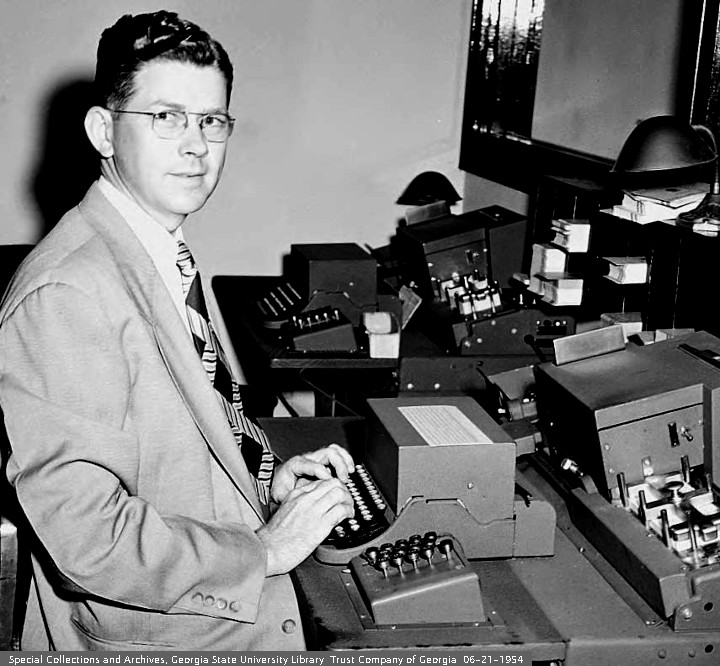

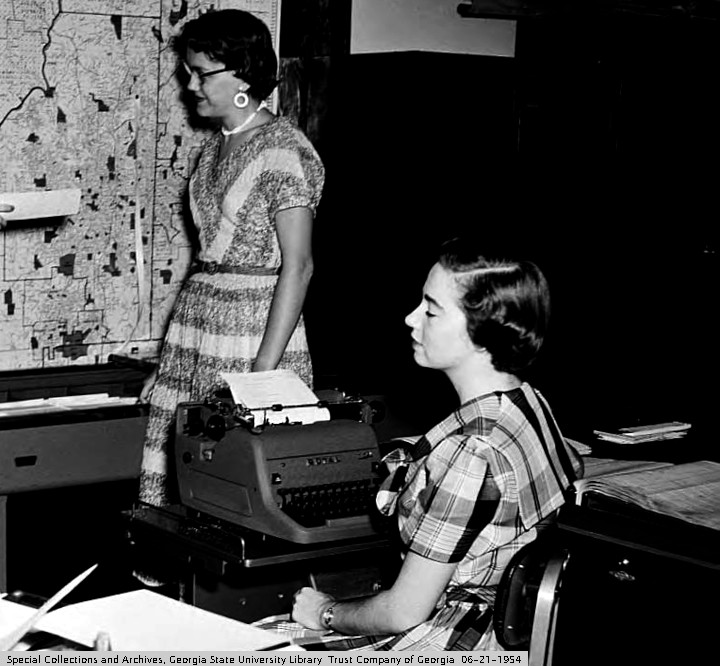

What follows is the fourth installment of the chamblee54 deconstruction of I Used to Be Charming, by Eve Babitz. IUTBC is a collection of magazine articles that Miss Babitz wrote. Pictures today are by “The Special Collections and Archives, Georgia State University Library.” Other features in this cycle are available. one two three five This is a repost.
Sober Virgins of the Eighties (Smart Fall 1988) was published in late 1988, at about the time I quit drinking. IUTBC is in chronological order. The pieces covered today are from Eve’s overboogie recovery days. Many are written for Esquire. “Every product was carefully curated by an Esquire editor. We may earn a commission from these links.” Eve may be counterculture, but by 1990 she was writing for the emperors tailor.
By 1988, aids was hitting like a ton of bricks. While some still partied, many started to clean up their act. SVOTE is about this. “Of course, now that it’s the eighties, most desirable members of the opposite sex give rise to dark wanderings like “If they’re so cute, why aren’t they dead?”—which for me really put a damper on sex and made me actually take up chastity for almost two years. … The great thing about the eighties is that if you’re still alive, there’s hope. That, anyway, has changed.”
SVOTE was in the first edition of Smart, in the “Love and Science” column. “One smart reader is worth a thousand boneheads” HL Mencken “Terry McDonell, the now legendary magazine editor, was starting his own magazine, Smart, in 1989. When he said he wanted to evoke The Smart Set, the stylish, literary monthly edited by H. L. Mencken and George Jean Nathan in the Roaring Twenties, I thought of Lucian Bernhard’s Bauer typeface from 1929, Lucian. That resulted in another early Font Bureau digitzation of a vintage foundry type, Belucian. At that point David Berlow was thinking of a adding a “Be-” to the names of all his revivals (cf. Belizio), but we talked him out of that later.”
Ronstadt For President (Smart May-June 1989) returns to Eve’s friendship with Linda Ronstadt. Eve is sometimes credited with designing the album ocver for “Heart Like a Wheel.” Other sources say that Eve was the photographer on the inner sleeve. Very little is said about Eve as a photographer. Mostly, artist Eve paints, and assembles collages.
RFP is about Linda’s struggles to make it as a singer. Her looks got in the way. “… men like Hugh Hefner would be propositioning her with “Let’s just shoot you with no clothes on, why don’t we?” and casting directors were trying to interest her in movies. “That’s not what I am, Eve,” she said, laughing and laughing. “Me with no clothes, imagine!” …
“I mean, Linda is just your normal good-time overeater type of person, whereas Jane Fonda, as she mentions in her book, was a bulimic—one of those sneaky people who eat and eat and then throw up. And bulimia is not what I want in a politician at all. I want things to stay down. And I want Linda to sing a slow, sexy double-entendre version of “You’re Just Too Marvelous” to Gorbachev.”
Rapture of the Shallows (Smart July-August 1989) was about Walter Hopps. He created an art gallery called Ferus, despite the NY notion that LA was a wasteland for art. Mr. Hopps was also Eve’s extramarital bf, and the motivation for the chess photograph with Marcel Duchamp.
“Ephemera mattered at Ferus. Founded by curator Walter Hopps and artist Ed Kienholz in March 1957, the “Ferus” honorific was designed to commemorate an unknown artist named James Farris who shot himself; the peculiar variant spelling of the gallery’s name got transposed, however, when Robert Alexander (a.k.a. “Baza”), the collage artist and poet who executed the gallery’s earliest typography, proposed “F-e-r-u-s” instead. Why? “Because it has more strength typographically,” Hopps remembers. Hopps’ response? “Let’s do it.” And thus, the gallery’s founding identity was composed with an ephemeral sensibility and by a typographic twist of fate.”
Eve: “I’m going to write a piece about John Goode and maybe Ed Ruscha and Laddie Dill and …” I told my friend Aaron, a New York collector who lives here but hates it. “Those phony-baloney bulshit artists … they all suck. They’re just for restaurant openings, tea at Trumps.”
In the Bret-Lili podcast, Trumps came up. It seems to have been quite the trendy place. In The Shards, Bret meets at Trumps with this semi-closeted producer, (and father of Bret’s gf.) He pretends to be interested in Bret’s script, but is really after Bret. If you like, you can buy a matchbook, and a small plate, from Trumps.
The Sexual Politics of Fashion (The Washington Post Book World July 30, 1989) is about books, (one two) that people wrote about fashion. Eve was not impressed with either. “But the Luscious photographs and illustrations are given a continuous cold shower by the prose: Every time you get a romance or fantasy going in your head … you are smacked into rectitude by phrases like “gender-specific” or just the very word “gender” itself which is enough to keep me from wanting to hear more, no matter how cute the people in the pictures are.” Eve had an eye, however badly focused, on the future. In 1989, gender meant boy and girl. Today, gender is the new civils rights movement, more third-railish than even race or football.
Gotta Dance (Playboy October 1989) was written for Playboy magazine. It’s mind blowing to think of Eve working in concert with Hugh Hefner. Apparently, when sex/drugs/rock/roll not longer did it, Eve started to dance.
“My only recommendation to a man who is even remotely thinking about ballroom dancing is to be careful. Unless you have a very large trust fund or a very strong character, don’t begin at Arthur Murray. Once they hook you, they have you for life. … “Me?” you say. “Hooked? On ballroom dancing? Come on!” … “I know. The only reason you’d take ballroom dancing at all would be as a joke. So that’s why I’m telling you: Don’t. Like a newborn duck, you’ll get imprinted on your teacher and your classmates, and then they’ll sign you up for lifetime lessons. Later, when you ask around, you’ll discover that you could get the same lessons for less from someone who used to teach at Arthur Murray and now gives lessons himself.”
I got a email before writing this. A young lady we knew, back in the day, passed away. For purposes of this story, we are going to call her Aspen. She drank the kool aid, and signed a mega-bucks contract with Fred Astaire dance studio. One time Aspen got me to go to a party, with “champagne ladies” trying to sell you dance lessons. I declined the kool aid.
The Soup Can as Big as the Ritz (Movieline November 1989) is about Andy Warhol. Walter Hopps brought the soup can paintings to California in 1962. Andy made it to the infamous Duchamp opening in 1963, which promted the photo of a naked Eve playing chess with Mr. Duchamp.
Walter Hopps: “… we may have also seen, in Warhol’s studio, work in progress that included one of his first Campbell’s Soup cans. … I said to Warhol, ‘Absolutely, I want to take some of this work for a show in Los Angeles.’ Warhol, who had never been to California, answered with some excitement, ‘Oh, that’s where Hollywood is!’ In the sea of magazines and fanzines scattered on the floor, so deep it was hard to walk around, were all those Photoplay and old-fashioned glamour magazines out of the Hollywood publicity mill. So a show in L.A. sounded great to Warhol. He agreed, and thus the multiple-image soup can show came to Ferus in 1962. Warhol missed that first exhibition of his Pop images, but he finally made it to California in September 1963 for the opening of the Marcel Duchamp retrospective at the Pasadena Art Museum and his own second Ferus show.”
Andy Warhol: “Marcel Duchamp was having a retrospective at the Pasadena Museum and we were invited to that opening … They served pink champagne at the party, which tasted so good that I made the mistake of drinking a lot of it, and on the way home we had to pull over to the side of the road so I could throw up on the flora and fauna. In California, in the cool night air, you even felt healthy when you puked – it was so different from New York.”
Eve gets talking about Edie Sedgwick here. “The next time I saw Edie she was sitting at the bar at Max’s Kansas City with Bob Neuwirth, the famous hippest coolest art type guy of his generation, and again she was crying this time into a gin and tonic. … Suddenly my ambition was to look gorgeous and miserable, but I’m always so thrilled to be anything and do anything in those days. … If you weren’t on speed you weren’t in New York City in the sixties. I was certainly on it. In fact, if you took the speed out of New York in the sixties, it would have been Des Moines. …”
“The world’s most fabulous people were dancing everywhere, and on stage was Nico, the girl lead singer of the Velvets looking down at the audience with eyes that’s all nothing but apolcalyptic collapse and the voice that did nothing but omit a bagpipe like drone.”
“On October 23, 1967, in New York, singer Nico sang with The Velvet Underground. … Nico’s delivery of her material was very flat, deadpan, and expressionless, and she played as though all of her songs were dirges. She seemed as though she was trying to resurrect the ennui and decadence of Weimar, pre-Hitler Germany. Her icy, Nordic image also added to the detachment of her delivery. … In between sets, Frank Zappa got up from his seat and walked up on the stage and sat behind the keyboard of Nico’s B-3 organ. He proceeded to place his hands indiscriminately on the keyboard in a total, atonal fashion and screamed at the top of his lungs, doing a caricature of Nico’s set, the one he had just seen. The words to his impromptu song were the names of vegetables like broccolli, cabbage, asparagus… This “song” kept going for about a minute or so and then suddenly stopped. He walked off the stage and the show moved on.”
Blame it on the VCRs (Smart June 1990) “In the meantime, the gay men and the feminists were in the background, girding their loins against the Farrah Fawcett spun-gold hair of the seventies, trying to ruin everything. And they succeeded. Yes, men were pigs, women were exploited—yet gay men were, well, out of the closet and staying out and up till three in the morning, having more fun than anyone else ever did in the history of mankind. They made straight people jealous.”
Jim Morrison is Dead and Living in Hollywood (Esquire March 1991) Part of the Eve Legend was that she was Jim Morrison’s girlfriend for a while. Nobody is sure how much of that is real. Eve doesn’t really seem to be too terribly impressed with Mr Morrison, who she calls the Bing Crosby from hell. Jimbo was basically a fat drunken asshole. Pamela, the heroin Juliet to Jimbo’s whiskey Romeo, does not seem to be a very nice person.
No matter how chummy Eve was to Jimbo, she did not design any of the Door’s album covers. Eve did do the cover for the Elektra reissue, The Best of Lord Buckley, who may have been the strangest neo-celebrity that ever lived.
I was a Naked Pawn for Art (Esquire September 1991) returns to the infamous picture of naked Eve playing chess with Henri-Robert-Marcel Duchamp. “The trouble was, I had been taking birth control pills for the first and only time in my life, and not only had I puffed up like a blimp but my breasts had swollen to look like two pink footballs. Plus they hurt. On the other hand it would be a great contrast — this large too-LA surfer girl with an extremely tiny old man in a French suit. Playing chess.”
On page 243, there is a typo. This is something that you see in hard copy. I treasure the moments when I catch a typo. and there he was it was just that they were changing suddenly the had eyes to see.
Life at Chateau Marmont (Esquire January 1992) Then she has a story about Chateau Marmont. of which many stories could be told and hopefully they spray Down the Walls of that hotel and they were doing a renovation of it. “In L.A., the impulse to tear down anything good but old and rebuild it crummy and different is so rampant that the only things anyone tries to restore are women’s faces.”
They Might be Giants Esquire May 1992 (Esquire May 1992) features a photo shoot of four hot, photogenic young actors. Thirty years later, none is a superstar. Being called the next James Dean is somewhat of a curse.
“James Dean was rock and roll before anyone knew it wasn’t a fad, and he was rock and roll before it was Disneyized and turned into role-model material. He was the role model for people who hated role models, and what we still want is more James Dean’s and no one will ever be James Dean enough.”
The trouble with James Byron Dean was that he lived the image, and it f****** killed him. When I was a kid, the one person that “they” held up as a bad example was Joe Namath. When you’re a kid growing up in Georgia, you need bad examples. Today, Broadway Joe is on cable tv, on commercials for medicare insurance. The kids he was a bad example to are buying medicare insurance.


Woke


This is a repost from 2023. Rising is more focused on the tragedy in Gaza now. The last tweet from @bethanyshondark announces “Extra credit to attend a pro-Hamas rally. Shocker.” … @vanguard_pod “LOL: Briahna Joy Gray BREAKS the brain of Rising guest Bethany Mandel by asking her to define “wokeness”” Bethany Shondark Mandel (née Bethany Ann Horowitz) is promoting a book, Stolen Youth. “This book rides the wave of the “culture wars” to promote radical anti American ideals and facist propaganda. It is a sad commentary on the state of our civil discourse. Rather than reason the book uses fear to sell its nonsense. Just another right wing grift.”
Homeschool-six-kid-moms promote books on skype. Recently, this virtual book tour took BSM to Rising, a youtube show at The Hill tv. The full episode is tough to find. The bacterial clip starts with BSM saying “percent of Americans consider themselves very liberal probably fewer of them consider themselves to be woke.” (What is the source of “___ percent of Americans”?) At this point, host Briahna Joy Gray interrupts BSM, and asks her to define woke. BSM appears to be caught off guard, and stammers “this is going to be one of those moments that goes viral.” After a few moments, BSM says that woke is the effort to “redo society to create hierarchies of oppression.” We don’t know what happened after that, or who distributed the clip.
Was this an author melting down, or was it book publicity? It is tough to tell. What is clear is that people LOVE to talk about racism, at least more than they like to listen. The w-word is our current hot button expression, like CRT last year. “Woke” is an evolving term, which the user can define any way they like. Some take a pious view, and say that the w-word is a dog-whistle stand-in for the n-word. Others say that woke/wokeness is the negative aspects of anti-racism.
Social justice jihad clearly has a lot of issues. Rudeness, like Briahna Joy Gray interrupting her guest. Name calling. Flaky logic. The lack of concern for collateral damage. Eagerness to rant. Using “viral moments” to promote merchandise. Social justice advocates dismiss these concerns as racism. Other people disagree. Pictures today are from The Library of Congress



Douche



Backstory recently presented a feature, Rinse and Repeat: Cleanliness in America. As the title might suggest, it is about cleanliness. The location of this concept with regard to Godliness was not discussed. While researching this story, a listener named Micheal Gambil sent a letter to the studio. This letter was read as part of the broadcast. This feature is a repost from 2013.
“This one is going to be great! My comment/suggestion may sound a little strange, but I was having a talk with my 70 year old aunt regarding female hygiene recently. She is still a believer in what is known as doucheing. YUCK! It got awkward…but it really made me think about the history of “lady products”. Flower scented sprays etc…I think there has been change on this issue. Or not…maybe it is just me and my quasi-hippy friends!”
Douching became popular in the nineteenth century. It was originally thought to be useful as contraception. As other methods of controlling fertility became available, douching became more of a cosmetic item. The corporate marketers are good at creating demand for a product.
More recently, the dangers of using this product have come to light. This awareness came into public consciousness at roughly the same time that douche started to be used as an insult. No one knows if the two developments are connected. Pictures are from The Library of Congress.


#MeToo Charles Bukowski







r/bukowski had a tasteful video, Wrestling with Bukowski’s Problematic Treatment of Women. Some well meaning person really wondered if Hank’s chauvinism was a problem. If you think Hank Chinaski is a role model, then you have more problems than the Fulton County DA office.
As if that is not bad enough, about 163 seconds in, gageaa4 says that Hank is the “Walt Whitman of neat whiskey.” (I thought he said deep whiskey, but was corrected.) Now, while you are handing out virtue signifiers, you might call Hank a homophobe. In Tales of Ordinary Madness, a homo hitting on Hank gets cut up. This is marginally harsher than the way Hank treats women. In Factotum, Hank says he is turning fag when he cleans his apartment.
Uncle Walt lived in a pre-prohibition America, and probably drank his share of whiskey. This was in 19th century America, before commodified fire water, refrigeration, easy access to ice, and many other features of modern dipsomania. The Walt Whitman of neat whiskey was probably Walt Whitman. I rather doubt that Walt would enjoy being compared to Hank Chinaski.
This business of giving Hank the #metoo treatment brings to mind other instances of standards being retroactively applied. … “Fordham University hosted a symposium on (Flannery) O’Connor and race, supported with a grant from the author’s estate.” (The panel discussion included Karin Coonrod.) “The organizer, Angela Alaimo O’Donnell” … (who wrote) “Radical Ambivalence: Race in Flannery O’Connor.” … takes up Flannery and That Issue. Proposing that O’Connor’s work is “race-haunted,” she applies techniques from whiteness studies and critical race theory …” In other words, The Flannery O’Connor Trust is financing a university to examine MFO, using “techniques from whiteness studies and critical race theory.” There is something deeply rotten about this.
Forget what Hank Chinaski would think about #metoo. He probably would want to slug 90% of his current admirers. This is a common problem for dead poets. Someone even wrote a poem about this.
henry charles chinaski bukowski, would hate my sonnet if he had a chance
at coffee drinking open mic poetry, dickhater georgia gothic romance
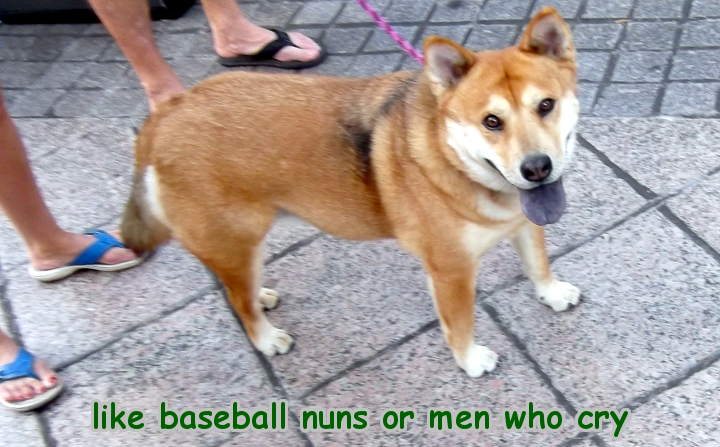
hank thinks poems that rhyme are a bore, like baseball nuns or men who cry
some people think he died in ninety four, california dirt will tell you don’t try
hank still has a racetrack episode, bets on number nine horse to kill
with a twenty fished out of the commode, after taking a dump on top of the bill
forever spitting out poems like hot turds, on the morning after beer drunk words



Egress Over Logos


This story starts with a break. When listening to a podcast, there usually comes a time to pause the show. Do you go back and finish, or do you let it slide? The show today is Negative Space: Logo Design with Michael Bierut from 99 Percent Invisible. This is a repost.
The graphic designer interviewed has a delightful way of talking. He avoids cheap obscenity, but gets the point across. An example is the first Trump-Pence logo, which many observers saw as depicting a naughty activity. “For many, the T/P ligature in particular called unsavory associations to mind, quickly resulting in animated versions (and ultimately the disuse of the logo itself).” In talking about implied sex, and in drawing logos, less is more.
It turns out there was not much of the interview after the break. The designer, Michael Bierut, used the exit sign to discuss the cosmetic nature of graphic design. “if you can read the exit sign then you can find your way out of the building, whatever typeface it happens to employ. But if the exit door is nailed shut, you may have a serious egress problem.”
Show notes for this episode linked to a related episode, Good Egress. This episode dealt with the issue of getting out of a burning building. A prominent incident, in the evolution of fire evacuation, was the fire at the Triangle Shirtwaist Company. This tragedy took place March 25, 1911.
While stumbling in the breaktime wilderness, PG found this week’s five minute writing challenge. The photo prompts this week start with a children’s party, seemingly set in Eisenhower America. The other picture has a travel bag, lying in the middle of a dirt road. Just set the five minute timer, and go.
Why did I loan the bag to Alphonse for his photo shoot? He is off somewhere, on a dirt road, taking pictures of my bag for a client. What I should have told him was that there was a birthday present in that bag. The party is going on right now, and I can only stall for so long. Maybe a costume jewelry ring is not a good idea for a little girl. It wasn’t my idea, nor was it my idea to put it in a vintage makeup kit bag. The birthday girl … why can’t I remember her name, they all sound alike anyway … is not going to appreciate how cool that bag is. Maybe it should stay in the dirt road, and let somebody run over it with a tractor. Which does not solve the problem of this birthday party. Maybe if they blow on those party favors long enough they won’t notice.
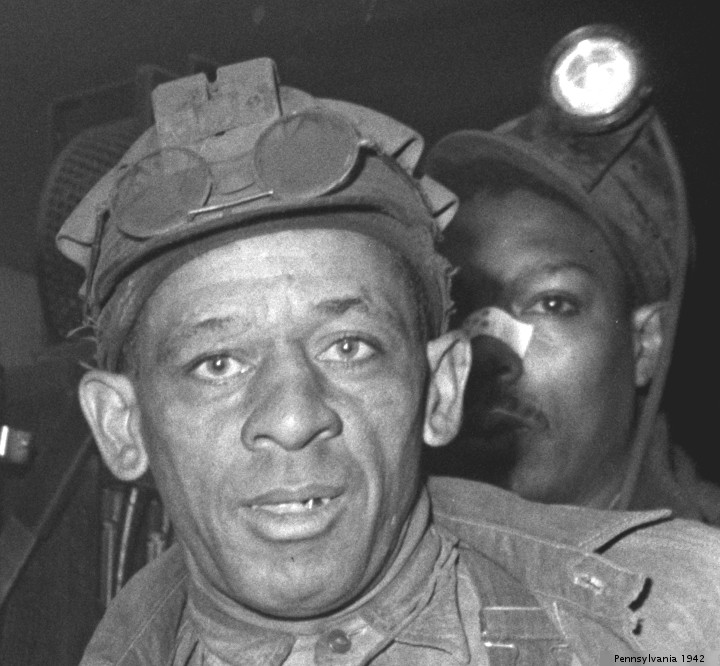
Pictures today are from The Library of Congress. John Collier took the pictures in November, 1942. “Pittsburgh, Pennsylvania (vicinity). Montour no. 4 mine of the Pittsburgh Coal Company. Coal miner at end of the day’s work” This is picture #8d23666.


The Fall Of Minneapolis Part Two


The Fall Of Minneapolis is a documentary about the death of George Floyd. It makes some claims that disputed the conventional wisdom. TFOM was enthusiastically recieved by some people, including youtuber “Black Guys” Glenn Loury and John McWhorter. A few weeks later, @radleybalko wrote a three part substack series, debunking the debunkers. one two three A lot of people, myself included, are just shaking their heads about it all.
Chamblee54 posted a commentary, The Fall Of Minneapolis. This piece was reasonably skeptical, with readers encouraged to “do their own research.” One paragraph is repeated below. Clearly, “the establishment” had details they did not want me to know. When this story was posted on reddit, there was a curious reply. u/Chamblee54 is permanently banned from r/JoeRogan.
One thing I wanted was a copy of the autopsy report. Recently, parts of it have been released. The report shows high levels of Fentanyl and Methamphetamine in GPF’s system. I googled “George Floyd Autopsy,” and found a lot of commentary. Next, I did the same search on duckduckgo. The top result was the HENNEPIN COUNTY AUTOPSY REPORT ME NO.: 20-3700. The document clearly states “No life-threatening injuries identified.”
The main takeaway I got out of the Glenn&John video was that Derek Chauvin’s knee was on George Floyd’s shoulder, rather than his neck. This changes the narrative 100%. Supposedly, the body cam videos from the officers show this. OTOH, in the documentary, only a few seconds of these videos were shown. It was not conclusive.
Glenn&John posted a video about TFOM, which piqued my interest. John said “once again, we’ve been lied to.” A couple of weeks later, Liz Collin and JC Chaix, the documentary producers, were guests of The Glenn Show. JC Chaix said “I would encourage anyone to look for the empirical evidence go back and find these body cam videos for yourself and look at several versions of them to dispel any of these myths or the idea of mythmaking here.”
Mr. Chaix did not supply links to these body-cam videos. Nor does the audience have the time to go through hours and hours of videos, to see the important portions. This is the job of the people making the documentary. At the same time, @radleybalko claims the body-cam videos have been available all along. One wonders why the inflammatory cellphone video was shown thousands of times, and the more nuanced body-cam videos are seldom seen.
To me, the key issue was: is the knee on the neck, or the shoulder? When the autopsy report said “No life-threatening injuries identified,” that threw a monkey wrench into the popular narrative. At this point, Radley Balko enters the conversation. After a few thousand words of polemic, Mr. Balko makes the point that the knee was not on the neck or the shoulder, but on the back. Mr. Floyd was in a prone position, and the knee on his back did not allow him to breathe properly. Positional asphyxia is the possible killer of George Floyd. This detail was not mentioned during the “George Floyd summer.”
I came to the conclusion that we simply do not know. The death of George Floyd is old news. The racial reckoning took place. While there may be appeals to Derek Chauvin’s conviction, the case is essentially over. The dirty dealings of police have come to light, as if anyone really had any doubt. There is also a backlash to the high octane rhetoric, and violence, of 2020. Meanwhile, Israel is trying to drive Palestine into the sea, with American assistance.
Mr. Balko was especially critical of Coleman Hughes. Mr. Hughes, a “black conservative,” is somewhat of a protege to Glenn&John. Mr. Balko makes a snide comment. “… his column promoting TFOM typifies how such self-declared heterodox thinkers have latched onto the conspiracies about Floyd’s death that true skeptics should have seen through with even the slightest bit of research.”
While all this was going on, @aaronjmate got into a tweetspat with @coldxman about Screams Without Words. This is the widely criticized NYT story about sexual violence on October 7. Mr. Hughes is an enthusiastic supporter of Israel’s ethnic cleansing campaign.
@coldxman “These is not an Israeli gov claim, Aaron. I knew you would dismiss it if it were. These are claims made by The NY Times—which, for all its flaws—tends not to invent photographs out of whole cloth. I’ll let you parse the difference between rape and driving nails into a woman’s groin. I see no meaningful difference in the context of 10/7. In other words: Whatever it would say about Hamas that they did the former, it would say the same about them that they did the latter. And you seem equally tempted to deny it in either case.” To paraphrase Mr. Balko, “… typifies how such self-declared heterodox thinkers have latched onto the conspiracies about _____ that true skeptics should have seen through with even the slightest bit of research.”
Pictures today are from The Library of Congress.


Unfollow



This is a repost from 2019. Facebook now has three dots next to the offender’s name. You can left click there, and choose to “snooze” or “unfollow” the person who upset you. … For now, facebook is a part of my routine. It is a handy way to know about events, and keep up with people. Unfortunately, many of those people are generous with their opinions. Sometimes, if you want to keep your sanity, you need to limit exposure to these opinions.
You have several options. The one I prefer is unfollow. You go into the inner workings, and click “unfollow Whatshisname.” You will no longer see this person’s opinions. This is preferred to unfriend. The person you unfriend will know that you have kicked them out of your life.
Some people like to unfriend, and block, to punish people. You say something they don’t like, and they get even with you by unfriending you. This is pathetic.
The problem with unfriending is the permanence. Long after the original slight has been forgotten, the person will see that you have kicked them out. There are people I once respected, who have decided to throw me to the curb. No matter how nice they are to me, I will always know they unfriended me. Life is tough enough without this distraction.
Several of the people I unfollowed continue to be a worthwhile part of my life. The last three words I saw from one such person was “your racist family.” My peace of mind will not allow me to have such poison in my life. A couple of months later, I was a guest in his apartment. Should I let his prejudice get in the way? Or should I unfollow him, and move on?
This meme is a recent reason to unfollow. It is a cartoon, with the title “MANY WHITE AMERICANS FAIL TO ASSIMILATE.” It is a gratuitous commentary on racial values. In the top right panel, a man is driving a truck. The Confederate battle flag is flying. The radio plays “And this bird you cannot change,” helpfully labeled “TRADITIONAL FOLK MUSIC.”
I am not a big Lynyrd Skynyrd fan, but I enjoy “Free Bird.” Given the elastic definition of the slur, some people probably think “Free Bird” is racist. Rock and roll started out as “race music.” White people learned how to rock, and made numerous improvements. It is essential americana … the not always comfortable blending of black and white. If you want to see another example, check out this song. The spell check suggestion for Lynyrd Skynyrd is Lyndon Skyward.
This cartoon will not affect police brutality, or enable economic equity. What it does is make fun of lower class white americans. It is not worthy of the person who posted this meme. While I do not wish to publicly distance myself from this person, I cannot subject myself to this poison. When you make fun of Lynyrd Skynyrd, you make fun of me.
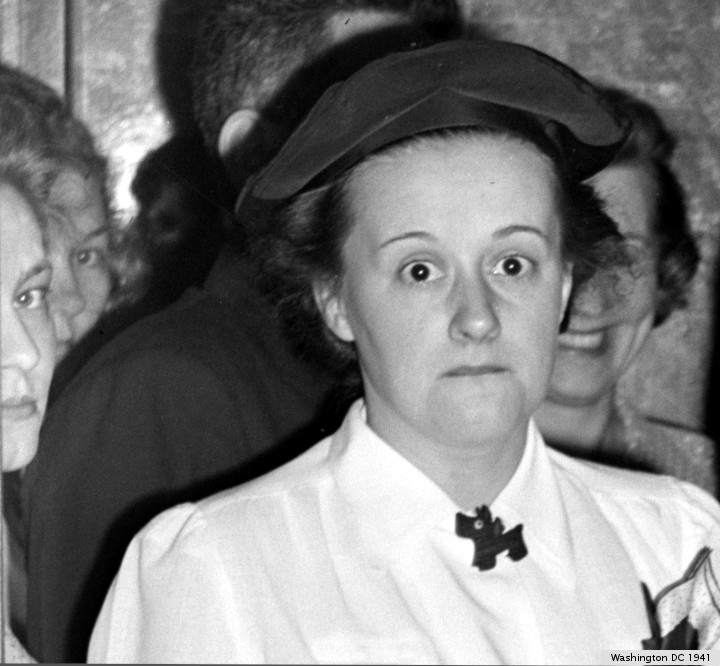
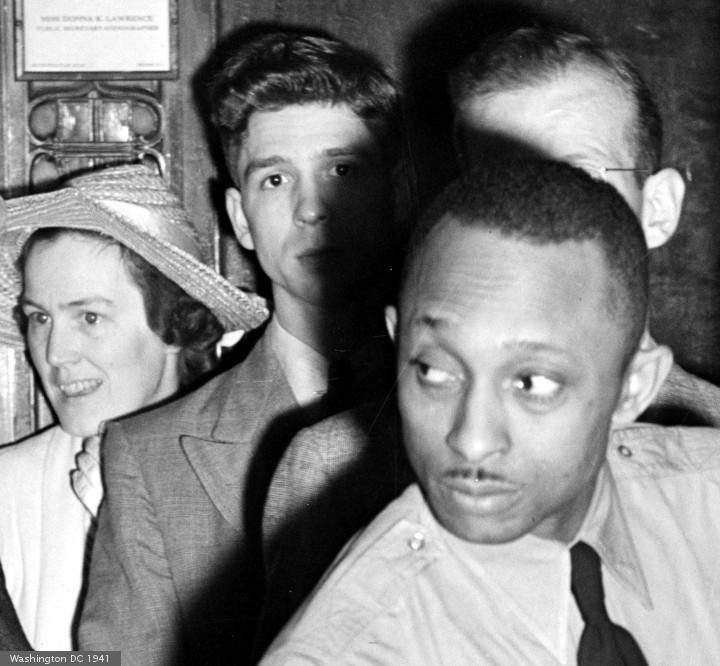
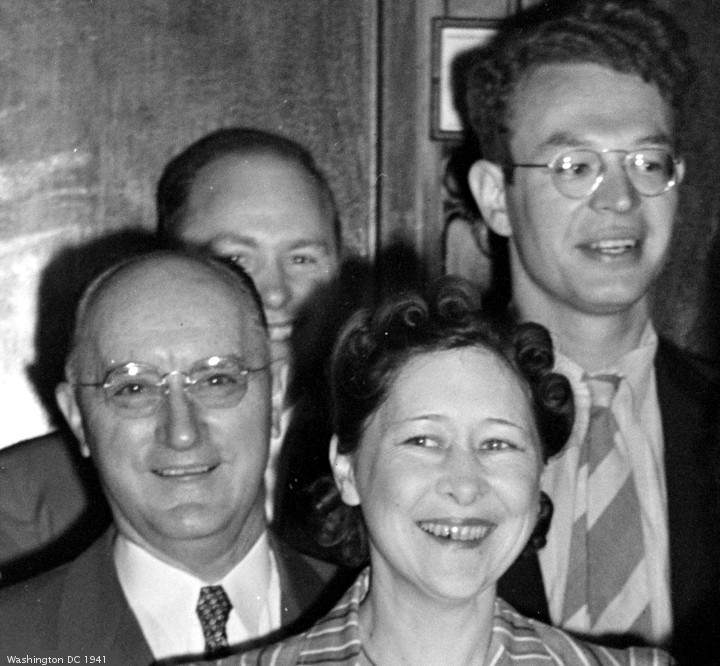
Pictures today are from The Library of Congress. They were taken in July 1941, by Jack Delano. “Untitled photo, possibly related to: Elevator operator in the Barr Building. Washington DC”


 Chamblee54
leave a comment