Revolution



REVOLUTION, n. “In politics, an abrupt change in the form of misgovernment. Specifically, in American history, the substitution of the rule of an Administration for that of a Ministry, whereby the welfare and happiness of the people were advanced a full half-inch. Revolutions are usually accompanied by a considerable effusion of blood, but are accounted worth it—this appraisement being made by beneficiaries whose blood had not the mischance to be shed. The French revolution is of incalculable value to the Socialist of to-day; when he pulls the string actuating its bones its gestures are inexpressibly terrifying to gory tyrants suspected of fomenting law and order.”
Ambrose Gwinnett Bierce published The Devil’s Dictionary in 1906, when revolutions were evolving into what can only be termed good, clean fun. AGB served in the Union Army during the War Between the States. The Confederacy, among other things, was a revolution that did not work out very well. As with all conflicts, vast sums of money changed hands. The men who collected these sums are usually far away from the bloodshed.
Walt Whitman once said “That whole damned war business is about 999 parts diarrhea to one part glory.” The same mathematics can be applied to revolutions as well. Maybe we should just stop with this revolting discourse, and move on to other R-words in TDD. The next four … RHADOMANCER, RIBALDRY, RIBROASTER, RICE-WATER … hold little interest for today’s conversation.
RICH, adj. “Holding in trust and subject to an accounting the property of the indolent, the incompetent, the unthrifty, the envious and the luckless. That is the view that prevails in the underworld, where the Brotherhood of Man finds its most logical development and candid advocacy. To denizens of the midworld the word means good and wise.”
RICHES, n. “A gift from Heaven signifying, “This is my beloved son, in whom I am well pleased.” John D. Rockefeller · “The reward of toil and virtue.” J.P. Morgan · “The savings of many in the hands of one.” Eugene Debs · To these excellent definitions the inspired lexicographer feels that he can add nothing of value.” Pictures today are from The Library of Congress · selah



Wonder Drug



“everyone Demand front hole sex NOT generic single the last time” The well intended sign was designed to help queers avoid getting HIV through butt sex. The idea is to take prophylactic drugs 2-24 hours before you drop your drawers. Then, for the next 48 hours, you dose out on the wonder drug. The message was cheerfully illustrated with pill pictures, and included the delightful phrase front hole, which most people call vagina. A haiku was hidden in the burning bush. The reduction was posted to x, and not facebook. Some fbf are not ready to hear about butt sex.
The Ten Commandments Of Donald J. Trump: Thou Shalt not have any other President before thee. Thou shalt not pay the graven image makers. Thou shalt not use the name of the Donald in vain. Remember the sabbath day, to keep it bigly. Honor thy father, and thy mother, and thy money. Thou shalt kill. Thou shalt steal. Thou shalt commit adultery. Thou shalt bear false witness. Thou shalt foreclose on thy neighbor’s house. … This idea for a poem had been floating around for a while. At this point, it is just more words, about a boring person. Sad.
The tweet had an image, consisting of several people meeting celebrities under bad circumstances. The phrase “Shane MacGowan vomited” jumped out at me, along with “book launch typo queue.” Those five beats were not in the image, but rather a first haiku line condensation. I saw an opportunity for haiku reduction. Unfortunately, the snippets were pasted into the collection at peculiar angles. Selecting the parts I need would be a gigantic pain in the butt. The next problem was bits of the text in the upper line encroaching upon the lower line. The whole enterprise degenerated into too much work. Pictures today are from The Library of Congress.


Wash Your Hands

Lately, I have been walking. I try to go for a couple of miles, in the morning before the heat becomes obnoxious. Today, I went out New Peachtree, until the MARTA line goes overhead, and I can walk under to another Peachtree. … The spell check suggestion for Peachtree is Peacekeeper.
This is the last remnants of Peachtree Road, before it collides with Peachtree Boulevard. Many oldtimers still say Peachtree Industrial, which has a fifties retro feel to it.
When you cross the road, you find a sidewalk in front of Peachtree Country Club. During the MARTA construction era, my mother was fond of saying that the golf course was willed to the Catholic Church in perpetuity. Of course, a few feet were shaved off to accomodate another lane on Peachtree.
A few hundred yards down the sidewalk, I came to a half eaten bagel, a fork, a plastic box lined with old food, and a lid for a box. I carry plastic bags in my pack, and I got one for this detritous. There is not a trash can between here and the school dumpster. The bag will be full when I get there.
There is a law in Georgia. Whenever you hear someone say “wish” in a sentence, you are required to say a bit of commodity wisdom. “You can shit in one hand, and wish in the other, and see which hand gets full faster.” You should wash your hands no matter whether you hope or defecate.
There is a more useful version. You can wish in a plastic bag. Or, you can pick up trash, and put it in the plastic bag. One bag will get full before the other. Washing your hands is still a good idea. Pictures today are from The Library of Congress.


Super Size Me 2: Holy Chicken!



This is a repost from 2021. Morgan Spurlock passed away May 23, 2024. … Super Size Me 2: Holy Chicken! was recently the featured presentation at a documentary discussion group. Morgan Spurlock, is the auteur. In Super Size Me, Mr. Spurlock lived on a McDonald’s diet, and survived. SSM was successful enough to justify a sequel.
SSM2HC is not as much a documentary, as it is a “reality” show. Mr. Spurlock wants to open his own restaurant, with healthy food. A consultant sells him a bite of reality. “You know, consumers crave this food. They’re not willing to sacrifice the taste. But there’s this interesting shifting definition of health, so it’s not necessarily 100% healthy for you. It may be bad for you, it’s fried, but it’s got some vegetables in it, so you feel better about it. -So it’s a perception.” Another consultant tells him about the “health halo.” A pinch of lettuce, under the bun, makes the burger taste healthy.
Mr. Spurlock decides to go with chicken, and raise the birds himself. Mr. Spurlock will take the poultry that he raised, and feature them at his own restaurant: Holy Chicken. Nobody knows where he gets the capital, not to mention the time to make it all happen. Mr. Spurlock even has time to call the FDA, on camera, and ask about the rules are for labeling chickens “free range.”
The practices of “Big Chicken” get worked over. (An eye-rolling shot of Marietta’s Big Chicken was cut from the finished film.) It is tough to get real facts here. The giant poultry suppliers have some shady practices. It is in their best interest to keep the story from getting out. A warning letter is sent out by Thomas Super, “Senior Vice President Communications the National Chicken Council.”
The story rolls on. Mr. Spurlock finds an old Wendy’s, in Columbus OH, to house Holy Chicken. The place is decorated, employees are hired, and the media is alerted. Starting a new restaurant is another capital intensive, 25-hour-a-day job. Except for Morgan Spurlock. He takes time out, from his chicken farm, and his restaurant start up, to go to Washington DC. Mr. Spurlock goes, without an appointment, to the National Chicken Council. The plan is to invite Thomas Super to the Holy Chicken grand opening. Mr. Super declined the invitation.
SSM2HC is a joke. The consultants used are real. One wonders why they would participate in something like this … it must be true, there is no bad publicity. CCD Innovation, in $an Francisco, is a real company. Their story took a sad turn. “Kimberly Egan, CCD Innovation Partner, loses battle with breast cancer.” Ms. Egan is the other lady at the table in this clip.
No discussion of Morgan Spurlock is complete without his Me Too story. In December 2017, with the release of SSM2HC eminent, Mr. Spurlock released a statement about his problem. It is uncertain why he chose to do this, but it had consequences. It puts a different spin, on SSM2HC, to know about Morgan Spurlock. Pictures today are from The Library of Congress.




The Uterus Collector Part Two


Judge says Maddow, other MSNBC hosts made ‘verifiably false’ statements about doctor suing for defamation. This is how one outlet covered the latest Maddow-pants-on-fire story. At first glance, this is not newsworthy. However, curiosity got the best of me, and I looked into the story. I soon realized that I had written a blog post about the story.
When I hear that something I wrote four years ago might be relevant, my instinct is to look for it. Unfortunately, Google advanced search was not helpful. Even a post titled The Uterus Collector is missed by the algorithm, when searching for “uterus” at chamblee54.wordpress. It is almost as if someone did not want me to find it. Fortunately, I have other methods for finding old posts. Here is what the chamblee54 post found.
“The story broke with a report from Project South. The whistle blower was Dawn Wooten. video video Ms. Wooten, a single mother of five, worked at ICDC (Irwin County Detention Center) until her hours were cut, after a dispute about Covid-19 infection. As is the case with many workplace stories, there are conflicting accounts.” …
“The focus of the complaint is inadequate safety measures, taken with regard to Covid-19. “Priyanka Bhatt, staff attorney at … Project South, told The Washington Post that she included the hysterectomy allegations because she wanted to trigger an investigation. …”
“If ICDC did not have the resources to provide adequate safeguards against Covid-19 infection, how are they going to have the resources to provide hysterectomies? … a hysterectomy can cost thousands of dollars and both ICE and the private companies that contract with the agency to oversee its detention centers notoriously provide dangerous and substandard medical care to cut costs and maximize profits.”
There are more problems with TUC narrative, which you can see at the post. This post was thrown together by an old white guy with too much free time. Why was he able to see this better than a major news organization? Pictures today are from The Library of Congress.


Is Facial Recognition Technology Racist?








Wrongfully Arrested Because Face Recognition Can’t Tell Black People Apart This headline. posted on facebook, led to a discussion of Facial Recognition Technology (FRT). The headline pushed a lot of my buttons. People are aroused, to the breaking point, about racism. The person who posted the story disagrees. Pictures today are from The Library of Congress. This is a repost.
The reply posted by person #1 featured some other links. One was for a video, Wrongfully Arrested Because of Flawed Face Recognition Technology. To me, this is more reasonable, and less inflammatory, than “… Can’t Tell Black People Apart.” It is also easier to believe. I can accept that FRT has more problems with POC, than with PWOC. To make a blanket claim like “… Can’t Tell Black People Apart” seems like an dangerous exaggeration.
The conversation sat still for the rest of the day. Person #1 is an attorney, who used to live in Atlanta. This is where I met him. Person #1 is an intelligent, thoughtful person, someone you should listen to. I might disagree with person #1 on this issue, while still having respect for him.
Then person #2 entered the conversation. I have never met person #2. All he knows is what he sees on her facebook page. It shows pictures of a vacation in Havana. Person #2 is clearly white. The fact that she took a vacation in Havana indicates that person #2 enjoys a certain amount of privilege. Here is what person #2 added to the conversation:
“”…flawed face recognition technology” sounds like there was a glitch, not like the entire technology was designed in a way that supports white, male normativity (aka white supremacy). Your suggestion that this is the same message is false and suggests we should avoid being more upset by avoiding the actual issue here—because we should frame matters in ways that obfuscate the real problem. We can’t begin to solve these problems if we are afraid to actually say what they are. Yeah, people are going to be upset. THEY SHOULD BE.” … “If you are following the protests and the recent changes that have happened, you know exactly what the anger has led to. If Black anger makes you uncomfortable, address your white fragility. Try to let go of your tone policing and actually engage with the issues. That’s work you have to do on your own.”
University Avenue cleared of barricades near property where Rayshard Brooks was killed. This was the story I posted in response to “you know exactly what the anger has led to.” In the aftermath of the Rayshard Brooks killing, an armed gang took over the burned out Wendy’s on University Avenue, where the incident occurred. “Residents of the south Atlanta neighborhood in the area had grown frustrated by the blockade that formed – guarded by what they described as armed citizens who they said were not protesting but using the space for their own gain. Residents said that the people would block the street and sometimes not allow them to get in or out of their neighborhood.”
This is one of many examples of where the anger caused by current events has spilled over to harm people. Often, the “collateral damage” did nothing to deserve the abuse they are getting. In many cases, it is POC who are suffering the brunt of the damage. When a privileged white person, like #2, rabble rouses people into action, this is what can happen. University Avenue is the first exit on i75/i85 south of downtown, and is an important access point for many neighborhoods. Many of the people affected by the turmoil on University Avenue are white.
After hearing talk about “white fragility” and “tone policing,” I am inclined to dismiss person #2 as a cliche spouting idiot. Unfortunately, that seems to be the approach many people have to complex issues. The idea that FRT is designed to reinforce white supremacy would be very amusing to the Chinese government. They are major players in FRT, using it to enable Asian hegenomy.
Lets examine the notion that FRT is racist by design. If this were the case, the developers would go the extra mile to make fewer mistakes with POC. If the goal of FRT is to keep the lawless POC masses under control, then it would help if the system actually worked on POC.
One of the articles cited by person #1 mentioned announcements by some major tech industry players that they were not going to sell FRT services to police. The article linked above mentions concerns about race/gender bias. However, the greater focus here is the overall privacy concerns about FRT.
Is it really a good idea to focus on the racial problems with FRT? There have long been overall privacy concerns about Big Brother. Unfortunately, many people will see an headline about racism and either tune it out, or think that it does not affect them. (“If you are tired of talking about racism, how would you like to live with it”) The human rights concerns about FRT affect everyone. To dismiss these concerns as “white fragility” is counterproductive, insulting, and insane.
This feature is approaching the attention limit of many readers. The facebook thread, and the identity of persons #1 and #2, were hidden out of respect for the privacy of the people involved. Even a cliche-spouting SJW deserves privacy.
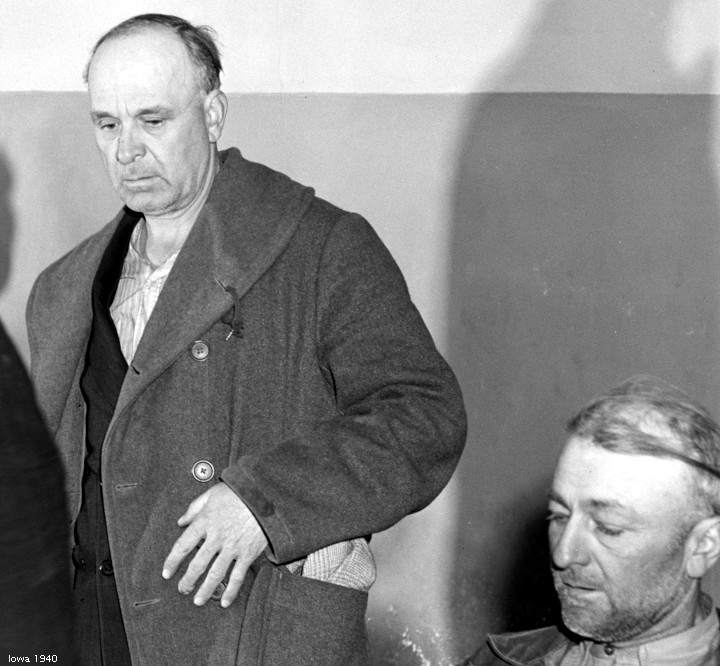

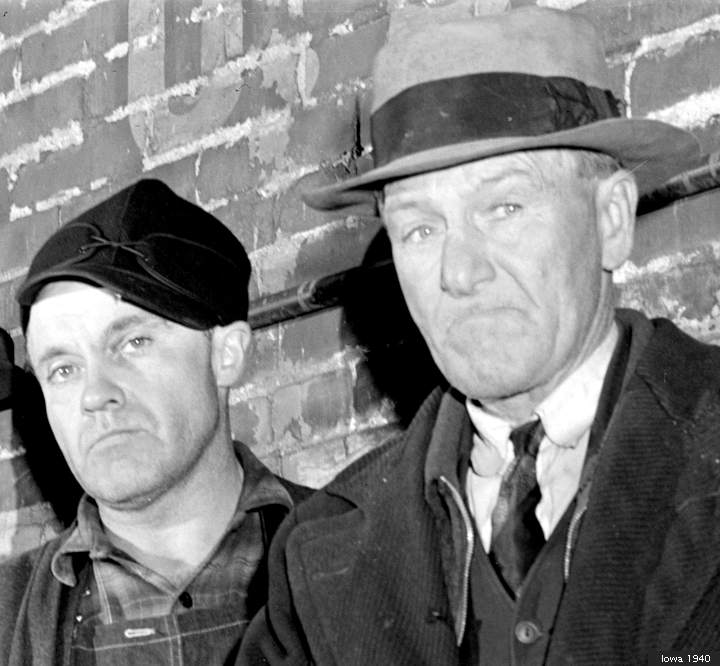

Fiction Issue
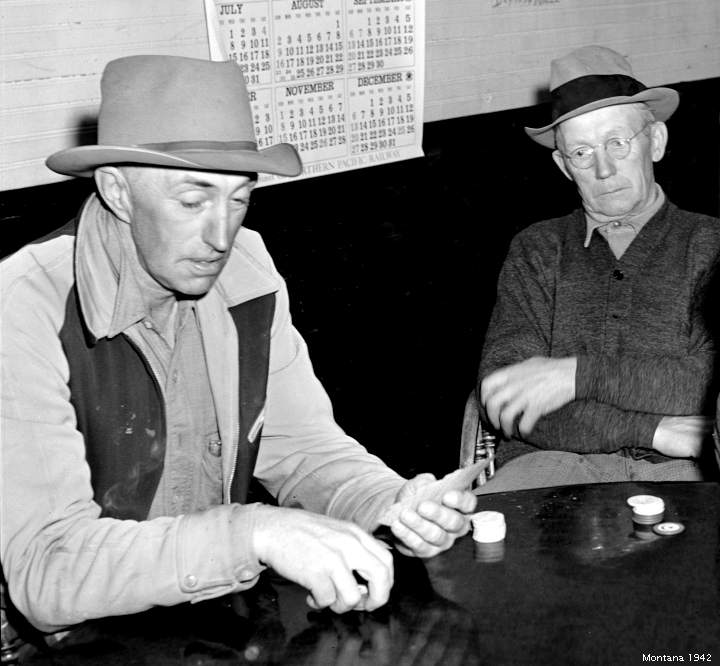



@NYerFiction “New fiction by Sally Rooney, in The New Yorker’s annual Fiction Issue.” Back in the corner newsstand days, the AFI was a lot of fun. I miss dead tree magazines, and decided to go out and get a copy. Pictures today are from The Library of Congress.
Barnes & Noble is still open on Perimeter Center W. The bookstore aroma that greets you is the same. The price is going to be ridiculous, but it is time for a foolish extravagance.
The periodicals were against the western wall. I looked carefully in every section, but did not see TNY. A second examination of the magazine rack yielded the same result.
A lady said that some magazines were in a rack by the front. In the second rack we perused, TNY was for sale. The cost was $8.99, before tax. It was not the annual Fiction issue.
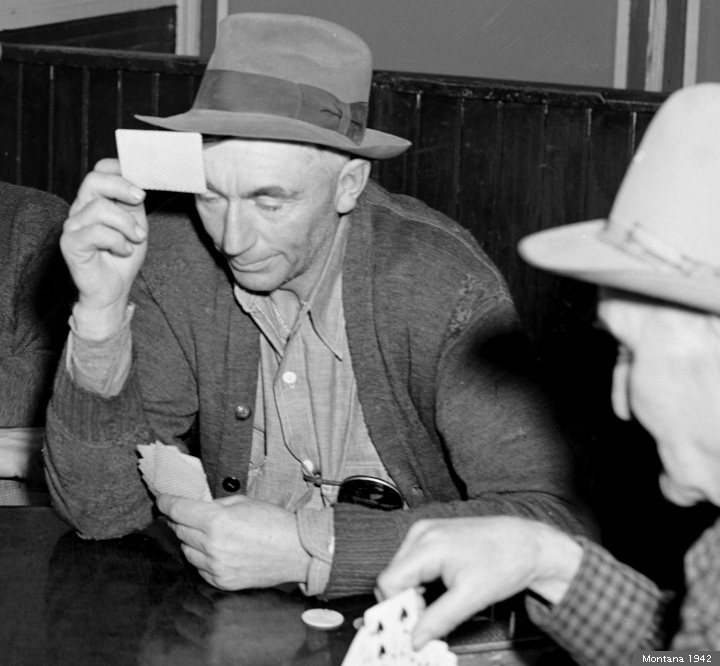

Broken Pencils Are Pointless



I tried to catch some Fog. I mist.
When chemists die, they barium.
Jokes about German sausage are the wurst.
Venison for dinner? Oh deer!
A soldier who survived mustard gas and pepper spray is now a seasoned veteran.
I know a guy who’s addicted to brake fluid. He says he can stop any time.
How does Moses make his tea? Hebrews it.
I stayed up all night to see where the sun went. Then it dawned on me.
This girl said she recognized me from the vegetarian club, but I’d never met herbivore.
I’m reading a book about anti-gravity. I can’t put it down.
I did a theatrical performance about puns . It was a play on words.
They told me I had type A blood, but it was a Type-O.
Earthquake in Washington obviously government’s fault.
Why were the Indians here first? They had reservations.
Be kind to your dentist. He has fillings, too.
Class trip to the Coca-Cola factory. I hope there’s no pop quiz.
Energizer bunny arrested. Charged with battery.
I didn’t like my beard at first. Then it grew on me.
Did you hear about the cross eyed teacher who lost her job because she couldn’t control her pupils?
What does a clock do when it’s hungry? It goes back four seconds.
I wondered why the baseball was getting bigger. Then it hit me!
Broken pencils are pointless.
What do you call a dinosaur with a extensive vocabulary? A thesaurus.
Velcro – what a rip off!
England has no kidney bank, but it does have a Liverpool.
I used to be a banker, but then I lost interest.
I dropped out of communism class because of lousy Marx.
All the toilets in New York’s police stations have been stolen. Police have nothing to go on.
I got a job at a bakery because I kneaded dough.
Haunted French pancakes give me the crepes.
I used to think I was indecisive, but now I’m not so sure.
Cartoonist found dead in home. Details are sketchy.




Gatorade Baptism



Manley Pointer was looking at X, trying to stay out of trouble. He found this item from @catholiccom. “What, you thought we weren’t gonna talk about baptizing with Gatorade?” A praying man was about to be hit with an onslaught of brightly colored liquid, coming out of a Gatorade cooler in the sky.
To a Catholic, baptize means to sprinkle a few drops of sacred fluid on the forehead. To a Baptist, baptize means filling a tub with water, and dunking the recently-saved sinner. To fill that tub with Gatorade would require at least 100 gallons. You can’t drink Baptismal fluid after it has been dunked in. All that lovely Gatorade would have to be poured down the drain. Baptists know that baptizing with Gatorade is a dumb idea, even by Catholic standards.
@catholiccom has a link to a story, Gatorade: A Sin-Quencher? You can’t baptize with Gatorade! Right? It might not be so simple. After you click through the request for donations, you get to the story. It seems like the Church built an AI priest, Father Justin. Someone asked FJ if it was ok to Baptize an infant with Gatorade. People have serious discussions about this. You will be forgiven if you do not participate.




Repair Challenged Roidroids



It was a typical thursday night in McMansion City. Manley Pointer took his brother, Laser, to Walmart. While sitting in the parking lot, MP listened to Rusty Sue, a drabblecast episode about killerbots. The story’s mcguffin had the cyborgs talking like characters in a b-movie western. MP listened with his eyes fixed on the mirrors, alert to any nefarious characters approaching his vehicle. Finally, the whole scene grew tiresome, and MP decided to go in the store.
Carefully walking through the obstacle course of abandoned shopping carts, MP made his way to the retail facility. The human debris that one encounters at the Chamblee WM is only slightly less menacing than the repair challenged roidroids in the drabblecast. MP turned to look at the parking lot, and saw the sign turning on at the hemp store. But then the sign turned red, then purple, then blue, then green. The hemp store has a sign that changes colors every few seconds. Generations of mankind’s progress led to this moment.
Walmart is always a consumer wonderland. The loaves of bread were marked down to thirty six cents. MP was Laser heading to the checkout line. It was time to go back to the vehicle and wait. Pictures today are from The Library of Congress selah




Donald Trump, The Son Of Christ



Donald John Trump is the son of Frederick Christ Trump Sr. The elder’s middle name is his mother’s maiden name. Elizabeth Christ Trump was born in Germany, and took over her husband’s business affairs when he died in the 1918 Spanish Flu Pandemic. Mrs. Trump later founded E. Trump & Son, the start of the Trump empire.
I learned this by googling “Christtrump.” A facebook friend posted a cover picture of CHRISTRUMP: Persecution of a Man by Christopher John Molluso. The cover shows a red necktie on the cross. The rood is lit by a shaft of sunlight, breaking through the storm clouds.
The self published book has this description: “… I suggest, in this exploration, a different Christ: by age 40, a Marine major, a fit Apollonion warrior, seen lean and sinewy in Michelangelo’s Last Judgment; at age 55, a scientist, analyst, and doctor, who never jumps to rash conclusions, hoodwinked by tendentious data sets from government labs, he’d solve all worldly woe by the application of crystalline thought; and finally, by age 70, a wizened, oracular leader, who commands all matters and the moment for the common betterment.” This person has little in common with Donald J. Trump, a detail that does not deter the pearl-clutching/eye-rolling public.
The book jacket has more information about the author. “Chris is a retired licensed psychologist and former government sex offender recidivism prevention specialist. He was a staunch libertarian and Ralph Nader supporter, to boot, until he felt a calling to help rescue this once free nation from seeming wicked onslaught and higher calling still to be closer to the redeemer, savior, and warrior Jesus Christ. Who knows where and when calling strikes? Maybe this book will inspire you to your calling.” Pictures today are from The Library of Congress




Grace



I was listening to Disgraceland while sitting in the sauna. DGL is a podcast, about musicians who behave badly. Host Jake Brennan is fond of working the word “disgrace” into the last line of the script.
Today’s show was about the late Jeff Buckley. He had a mystical streak in his craft, and titled his album Grace. Jake talks about Jeff’s music, in the last line of the show: “Listening to it now can lead to a trance like state. A state of ecstasy. A state of eternal life. A state of grace.”
I heard Jake say that, and turned my head to the side. The young man next to me was shaking his head, and pounding his thighs, in response to the sounds going through his ear buds. I saw this, and my first thought was “this is grace.”
I got the young man’s attention, and told him the story. He enjoyed hearing what I said. Some would say “And your point is?” Others would have told me what their pastor says about grace. Instead, the young man smiled, and gave me a fist bump.
I will not have a quote today about what grace means, either from the dictionary or the Bible. Grace is something Christians talk about, when they are not nabbering about life after death. It is telling that Jake said eternal life, between ecstasy and grace.
Eternal life … I am dictating this with a voice typewriter. When I said “eternal life” the microphone kicked off. I had to turn it off and restart. It was a glitch in the system, or a metaphor … for the way talk about “salvation” can get in the way of grace.
There is a Sunday School story. A man dies, and goes to the pearly gates. Saint Peter says that we have a test. You need one hundred points to get into heaven. The man begins: I was a loving husband to my wife of many years. We raised our children to be fine people. St. Peter said you get one point.
The man said, I was a born again Christian, saved by faith in Jesus Christ. St. Peter said that’s one more point. The man said, I was a businessman, and was respected by my employees and customers. St. Peter said you get a point for that.
The man starts to get flustered, and says it is only by the grace of God that I am here. St. Peter said that’s ninety seven points. Welcome to heaven.
Pictures today are from The Library of Congress.




 Chamblee54
leave a comment