The Great Southeast Music Hall


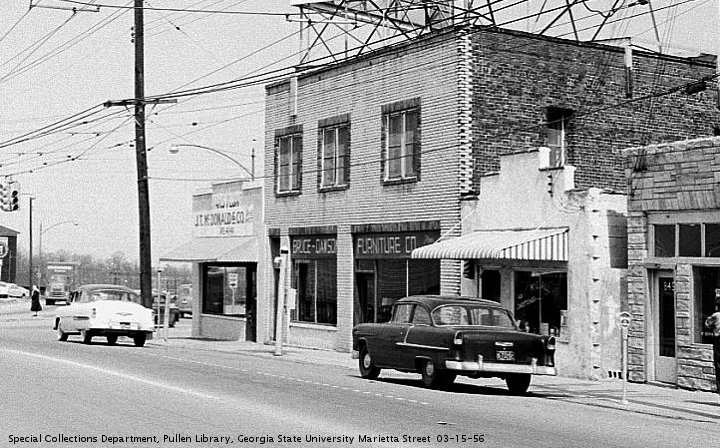
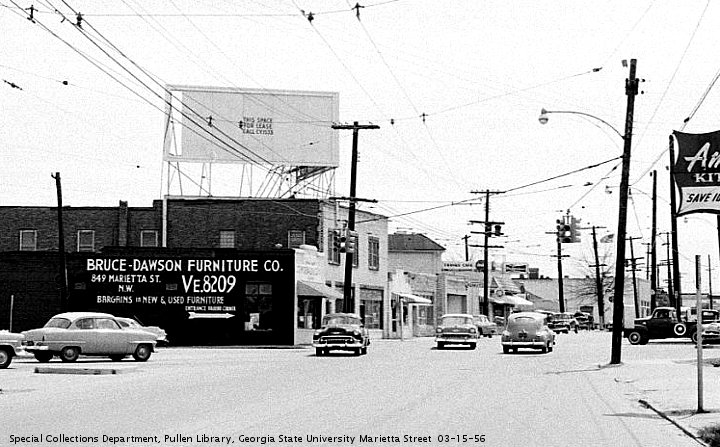
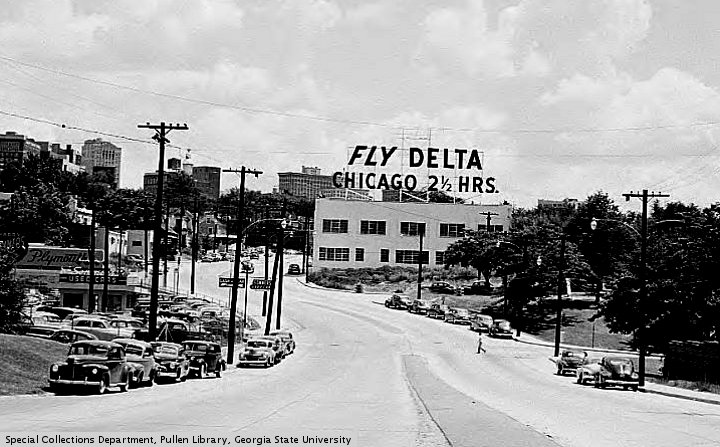
The Great Southeast Music Hall was an important part of life in Atlanta during the seventies. It was located in the elbow of a shopping center, Broadview Plaza. A bowling alley was downstairs, a two level K mart next door, and Atlanta’s first hispanic neighborhood across the street. Like almost everything else here, Broadview Plaza was torn down, and replaced by a more uppity set of stores.
When you went into the lobby of the Music Hall, you noticed the walls. Performers were given a magic marker, and encouraged to leave a message. John Mayall found the ladies room, and said he likes to be near the ladies. The late Phil Ochs said “Impeach Nixon and Agnew”. What happened to those boards is a good question.
The auditorium held about 500 people. The stage was only three feet or so above the floor. There was an empty space in front of the stage, and a few rows of bench backs behind that. When the place opened, there were lots of pillows on this floor, with the Music Hall logo. The carpet in this front area was fresh when the place opened, and got progressively grosser as the years went by. Beer was served in aluminum buckets, and inevitably some wound up on the carpet.
The show the Music Hall is most famous for is the US debut of the Sex Pistols. PG didn’t make it that night, but has heard from a few who did. The performance was said to be horrible. There are stories of Sid Vicious wandering through the apartments around Broadview trying to find heroin. Years later, PG was reading about that night in Please Kill Me, when the train he was riding pulled into the Lindberg Marta station. This is across the street from the Broadview Plaza, still standing at the time.
These days, the intersection of Lindbergh Drive and Piedmont Road (about a mile north of the park) is next to Hiway 400. When the Music Hall was in it’s prime, the land for the Highway was owned by the State of Georgia, which was fighting legal battles over the highway. The land had a network of dirt roads, one of which connected Buford Hiway to Lindbergh Drive. When you went from Chamblee to the Music Hall, the most direct route was over this dirt road. This dirt road is where Sidney Marcus Boulevard is today.
Eventually, the business model for the Music Hall did not work, and the facility moved to Cherokee Plaza. This Music Hall was in a movie theater. The Cherokee Plaza Theater was the scene for the world premiere of Son of Dracula . This move did not work, for a number of reasons. The parking lot was too small, and people who wanted a loaf of bread from the A&P were blocked out during shows. Cherokee Plaza is just outside the city limits, on Peachtree Road. In the late seventies, DeKalb county was aggressively fighting drunk driving, and had roadblocks. Many of these roadblocks were outside the Music Hall, which kept many people from attending. Before long, this Music Hall closed.
Many years later, PG bought a second hand typewriter, and needed a ribbon. (Younger readers should ask an older person about this.) He went into an office supply store in Broadview Plaza, and soon realized that he was standing on the site of the Music Hall. He asked the clerk if he could have a bucket of beer, and got a very strange look in return.
 One industrious afternoon during this era, PG made a list of shows he saw at the Music Hall. The memory cells are already protesting, but we are going to try and remember as much as possible about these shows. A big thank you to Wikipedia for help with spelling and names.
New York Rock Ensemble – PG walked into the auditorium during the last part of the first show, as the band played “A whiter shade of pale”. The bass player wore lace up boots, with the pants legs tucked into them. Before long, the second show came on stage. Keyboard player Michael Kamen was the central focus, acting out the lyrics to “Anaconda”.
Silverman Deborah McColl fronted this drummerless band
Al Kooper PG has written about an unfortunate incident involving Al Kooper during this show. This would have never happened in “The Catcher in the Rye”…the kids always knew what time it was in that story. Mr. Kooper did a solo show, including “Sam Stone” by John Prine.
Ellen McIlwaine/ James Cotton Blues Band Ms. McIlwaine was pregnant, and played slide guitar. Mr. Cotton played harmonica. One of his players started to fan him with a towel, because he was hot.
Breakfast Special/ Doc and Merle Watson Breakfast Special was a local bluegrass crew, who did “The coming down song”. The Watsons did ” Deep River Blues” and “Thats All”, among other things. PG had a copy of their latest LP, and asked Merle to autograph it. He wrote his name on one side, turned it over, and signed Doc’s name on the other side.
Mason/Atlanta Rythym Section This show was the night Led Zeppelin played Atlanta Stadium.
New Riders of the Purple Sage When the Music Hall opened, a performer would typically play from Tuesday to Sunday. NRPS was a one night show. They worked well in the packed hall, and shined on “Glenville Train”. The next year, they did a tour with Commander Cody and The Lost Planet Airmen. Commander Cody opened, and raised hell. NRPS followed with a mellow rock show, and before long people were getting bored and leaving.
David Buskin / Loudon Wainwright III Chamblee 54 has written about this show before. Mr. Buskin talked about doing a show at Max’s Kansas City, the person sitting next to PG said “Gross”.
Steve Martin / Nitty Gritty Dirt Band Chamblee54 has written about the show by Mr. Martin . This was his last tour as an opening act. Nitty Gritty was a sight to behold. John McEuen played fiddle, and recited a poem about life.
Martin Mull / Melissa Manchester PG went to see Mr. Mull, who opened the show with a three piece band. (After the show, Mr. Mull said the name of the band was the (your name) (draws a blank with his fingers) orchestra.) The headliner was Ms. Manchester, little known at the time. She was a knockout. While standup comedy has it’s place, for emotional impact there is nothing like a singer.
Texas Gary Bennett / Weather Report Mr. Bennett played acoustic guitar, and sang, as an opener for a packed house of jazz rockers. It did not go well. At one point, trying to get some rapport with the crowd, he said ” has anyone here been busted at the Omni?” ( The authorities had begun arresting people for smoking pot at the major concerts.)
Weather Report was amazing. Josef Zawinul had the loud keyboard sound, Wayne Shorter played his leads on soprano sax, and there was a drummer and percussion player. There was tons of rythym, to go with the electronic jazz sounds. When it was over, PG went up to Mr. Zawinul, shook his hand and, and said thank you. He was pouring a glass of beer from a pitcher, and looked a bit startled.
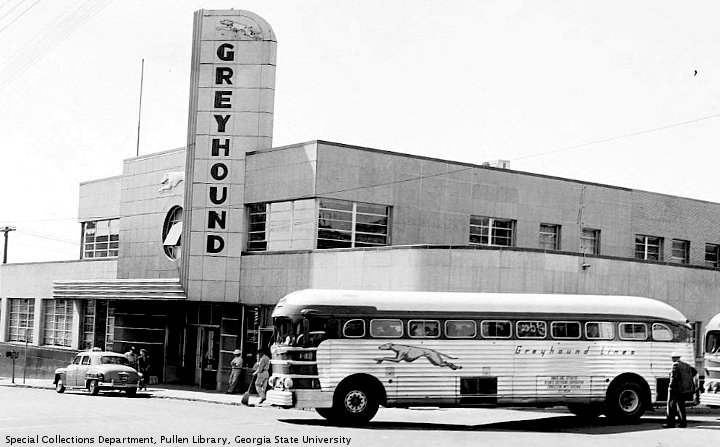
David Pomerance / Rahsaan Roland Kirk Chamblee54 has written about this show before. Mr. Kirk was a force of nature, the modern miracle of the tenor saxophone. He did not suffer from false modesty. This was the night Richard Nixon resigned, which pleased Mr. Kirk no end. The blind Rahsaan said that he did not want to see his audience, because we were too ugly. At one point, his band had been jamming for about ten minutes, when PG realized that Mr. Kirk had been holding a single note the entire time. The three saxophones at one time thing was a visual shocker, but he got sounds that way that you cannot get from a single instrument. At one point, Mr. Kirk pulled his sunglasses off, and made a face at the crowd. It was an amazing evening.
Chic Corea / Return to Forever This was a disappointment. Tickets were $4.50, which may be the most PG ever paid at the Music Hall. The band only played about an hour. It was all electric, ignoring the acoustic instruments set up on stage. RTF was a four piece, all star band. They had Chic Corea on keyboards, Stanley Clarke on bass, Al Demeola on guitar, and Lenny White on drums. That sounds like a great show, but it turned out to be four solo artists jamming. There was no cohesion, and the overall sound was less than the sum of the individual parts. Corea leaned over his keyboard, twisted knobs, and made faces, as if to say “look at how intense this is”. It wasn’t.
Mccoy Tyner The former Coltrane sideman played a very nice show. He had a percussion man, with several tables covered in exotic instruments. PG took a break after to first show to hang out at a neighborhood disco. When he got back, there was no doorman checking tickets, and anyone could walk in for free. PG took advantage of this discovery many times over the next few years.
Bill Crystal / Jean Luc Ponty Former Frank Zappa player Jean Luc Ponty played at the Music Hall, with a bass player who was a fellow Zappa alumni. The surprise of the evening was then-unknown Bill Crystal. A few weeks after this show, “Soap” would premiere, and make him a star. Mr. Crystal did a killer impersonation of a gila monster.
Between shows, Mr. Crystal had been entertained by a local musician. During the second show, he held his finger to his nose, made a snorting sound, and said thank you. PG heard this, and yelled “Locker Room”, the name of a “deooderizer” that some liked to get a buzz sniffing. Mr. Crystal said “Locker room. Jeez, I need to get the hecklers rosetta stone to know what he means”. Good times.
Keith Jarrett This is another show that might have been better than PG’s enjoyment. At one point early in the show, PG moved over to the front of the stage, to look at Mr. Jarrett’s hands. After the show, people told PG that the player had been giving him dirty looks when he did that. PG asked Mr. Jarrett about it, and he said that PG had interfered with his concentration.
This show featured a quartet, instead of a solo piano. The bass player was Charley Haden, who seemed a bit puffy faced. PG later learned that he had been addicted to heroin at the time.
Melissa Manchester Ms. Manchester came back for another week at the Music Hall, about a year after her first appearance. At one point, she asked the band if they were ready to do a new song, and then performed “I got eyes” for the first time in public. This was later the b side to “Midnight Blue”. One of the players in her band was a man named James Newton Howard. Part of the deal for touring with her was that he could play a solo number on piano, called “Newton’s Ego”. He later played with Elton John, and became wealthy writing film scores.
Flora Purim /Airto Moreira On PG’s 23rd birthday, Flora Purim played at the Music Hall. At the time, PG had a profound appreciation of her albums. The band had a nice sound, and was the equal of her records. The Chic Corea tune “Light as a Feather” was a standout. Her husband, Airto Moreira ( eye, ear, toe) fronted the band on some of the numbers, and had some funny routines. Ms. Purim held two microphones throughout the show, with one connected to some audio filters. PG found holding two microphones to be visually distracting. PG had known of the Jewish ancestry of Ms. Purim, but had not thought much about it. Then he saw her live, and realized that she does, indeed, look Jewish.
Hot Tuna Hot Tuna is a dependable, though not spectacular, band. On a previous show in Atlanta, they went on stage at 10:55, and played without a break until 2:50. This night, a fried of a friend was working at the Music Hall, and PG got in before the crowds, to get a prime spot, in the first row of benchbacks. At one point, PG was rocking back and forth against the benchback, and a neighbor asked him to quit. Those buckets of beer were influential.
Shakti This was an acoustic, Hindu oriented band fronted by guitar superman John McLaughlin. The numbers seemed to go on forever.
David Manion / Mark Almond This was a long awaited Atlanta performance by Mark Almond. (This is a jazz/blues band, totally different from the Soft Cell vocalist with a similar name.) They played two sets, which were only an hour or so long. This was disappointing to the people who could not wait for the second show. In the second show, they “took the shackles off” saxophone player Johnny Almond, and he played a wild solo during “The city”.
The incident we are about to describe may or may not have involved David Manion. What happened was, a small portable radio was playing on the edge of the stage. The spotlight was on the radio, which sounded like gibberish to most of the audience. Gradually, the chattering audience got quiet, and tried to listen to the radio. After a few minutes, a man came out, and stood in darkness behind the radio. The PA speaker announced “The new force of rock in Atlanta”. The man then dropped a large piece of granite on the radio, smashing it into bits.
Laurie Chapman / Stomu Yamashta Laurie Chapman was a singer/piano player, with some good stories. She told of a trucker, driving beside her and talking to her on a cb radio. ” You better get that drink out from between your legs before it gets too hot to handle”.
Stomu Yamashta is somewhat of a star in Japan. The show here was filmed for showing on TV there. His band, Go, was an all star collection, including Ava Cherry. She was a backup vocalist, and girlfriend, with David Bowie. After the show, PG was introduced to Spencer Davis in the lobby.
The next few shows were at Cherokee Plaza.
Martin Mull Mr. Mull was a solo star this time. He did a song about doing nothing, adding that dead people can do it too. The parking lot was packed, which was a major problem at the new location.
The week before the Super Bowl in 1994, Mr. Mull filmed a Comedy Central show in Woodruff Park. The Dallas Cowboys cheerleaders were kicking field goals. After the filming PG stood a few feet away from Mr. Mull, but could not think of anything to say.
Sun Ra PG went to a wedding, and a bunch of people from there to see Sun Ra. This was an entertaining spectacle, with a big band and dancers. After the show, PG asked Sun Ra how he could afford to take a band like that on the road. He said he was doing it for beauty.
David Bromberg This was another big band production. PG showed within a few minutes of the gateman leaving his post, and saw about 45 minutes without buying a ticket.
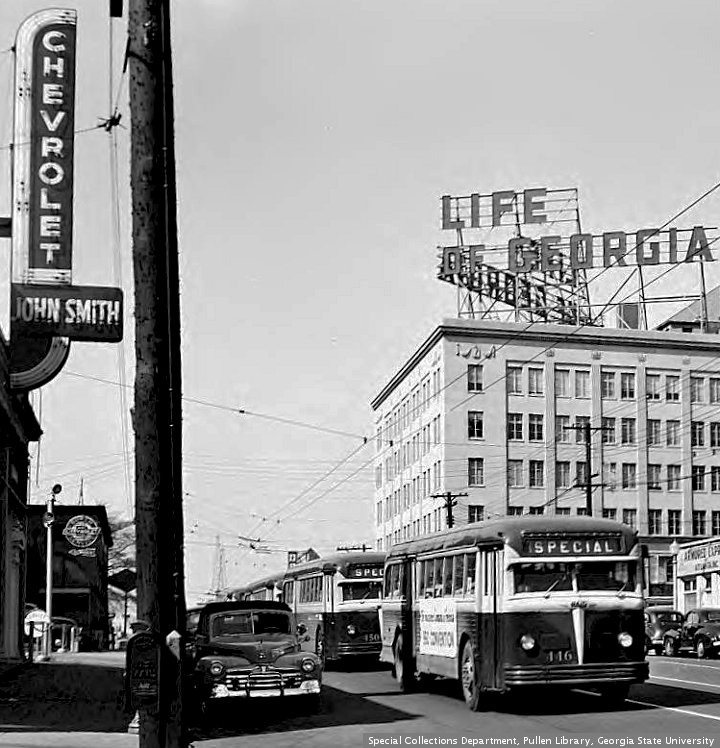
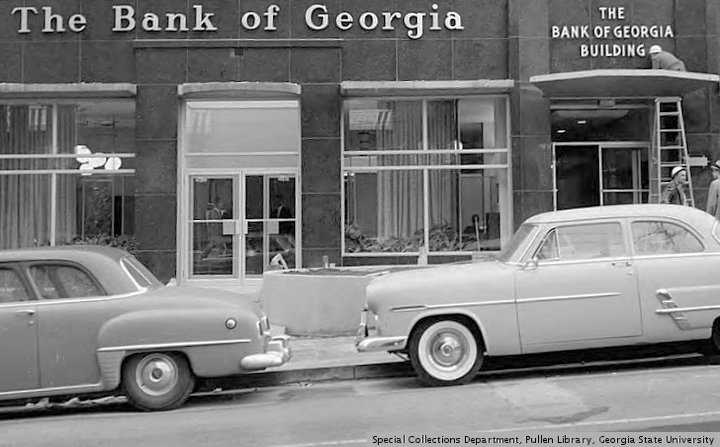
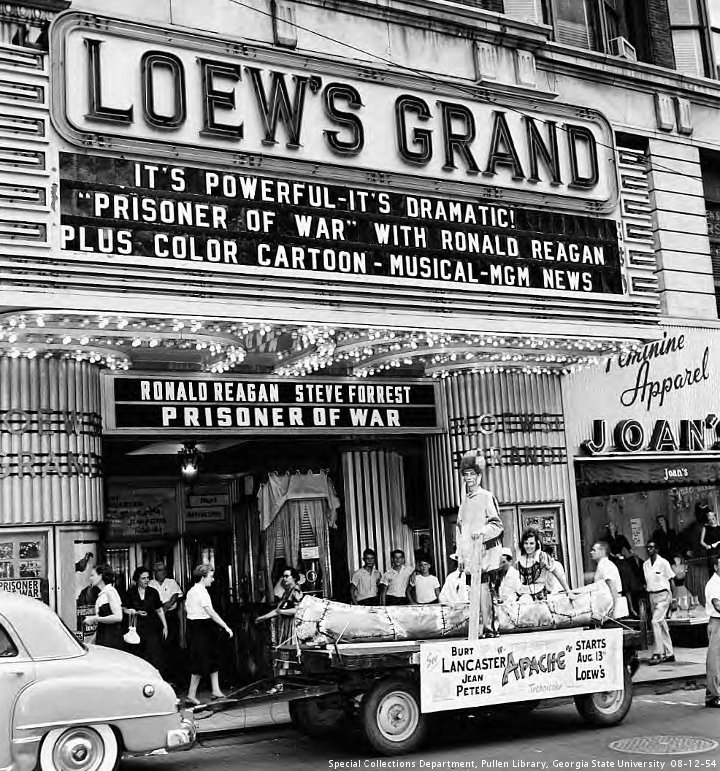
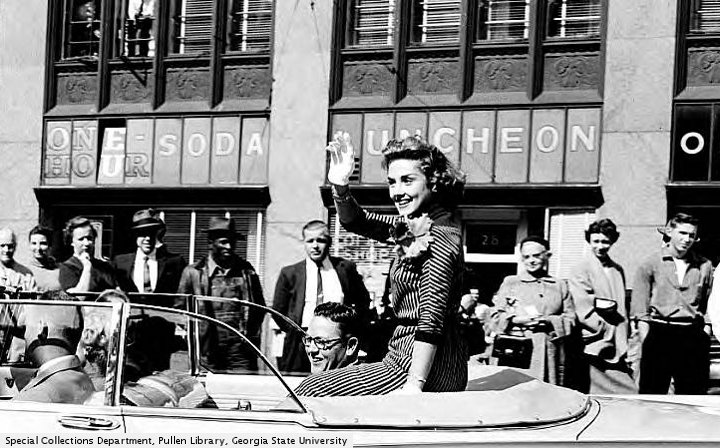
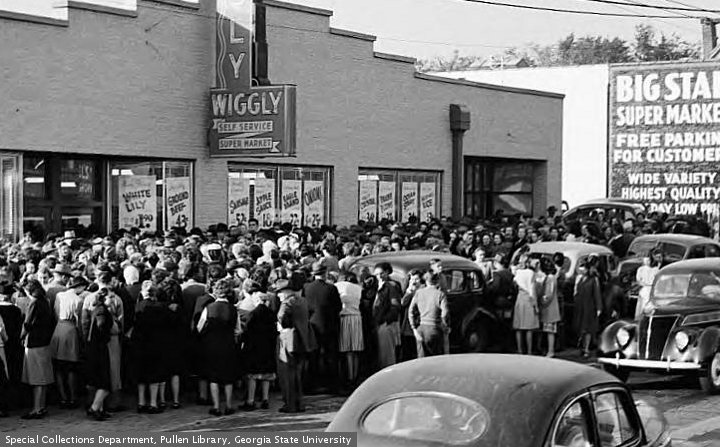
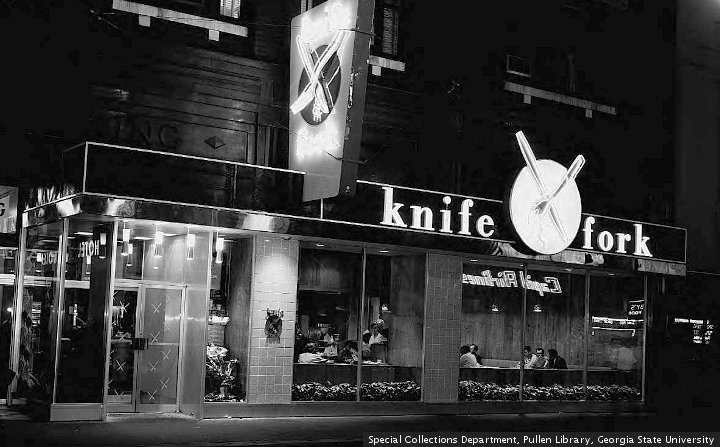
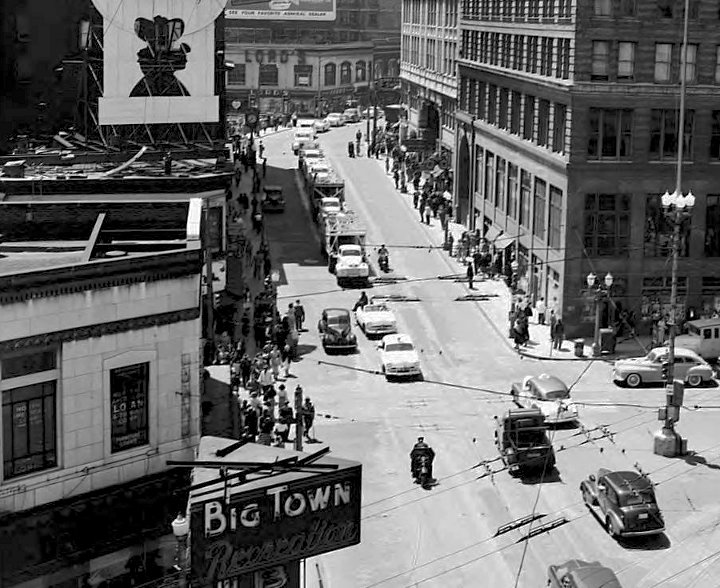
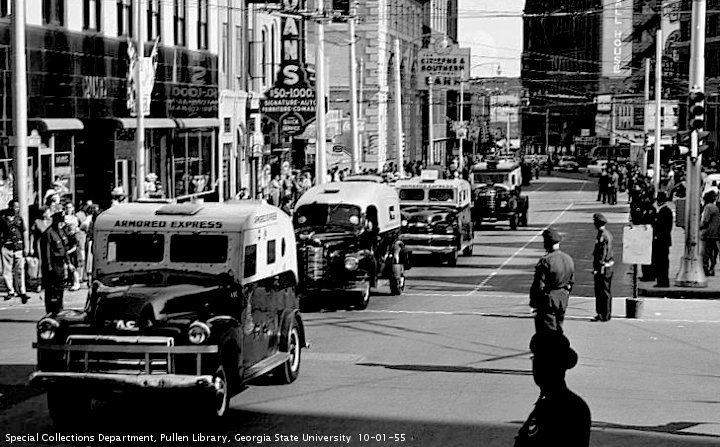
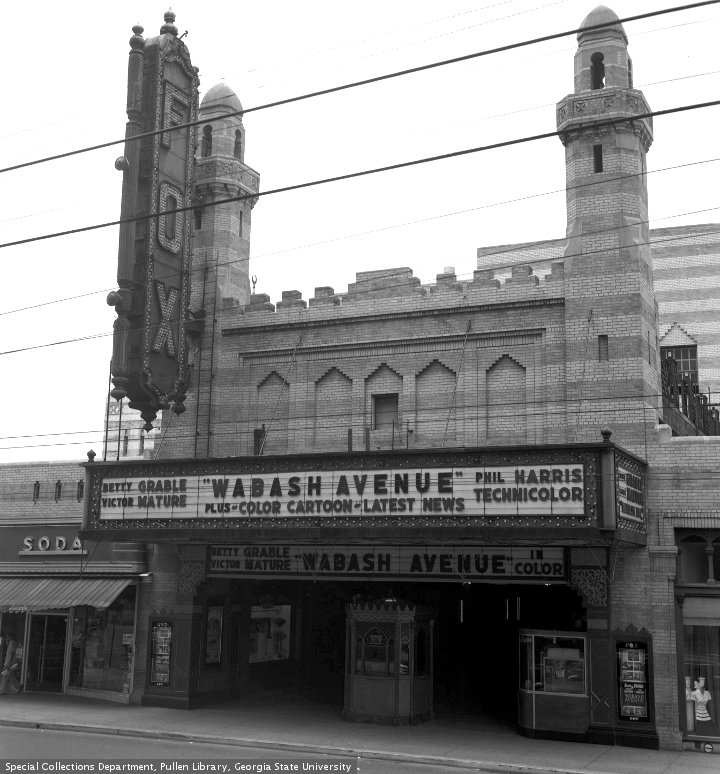
Lester Flatt/John Hartford One boring Saturday night, PG walked up to the Music Hall, and saw the two fiddle players jamming. A few weeks later, Lester Flatt passed away. This is a repost. Pictures today are from “The Special Collections and Archives, Georgia State University Library”.

The Iggy Pop Story



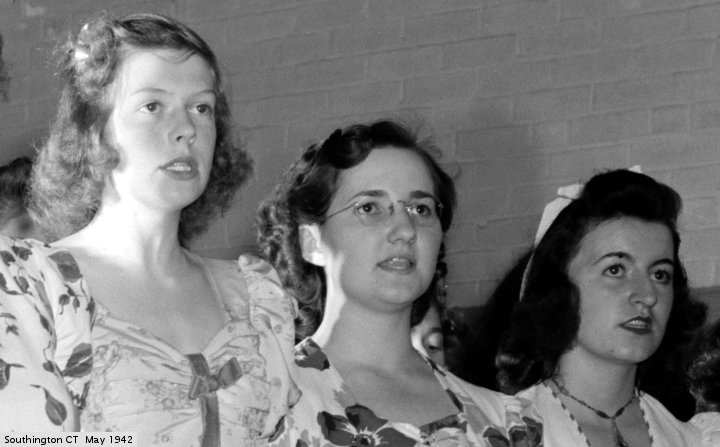
The appropriately named dangerousminds has a video up about Iggy Stooge, who still has a full set of teeth at 62. The video is worth watching, even if it is mostly people like Henry Rollins telling how Raw Power changed his life. I guess the jokes on Henry, he thought they were talking about The Eagles, and the video folks cleverly edited in the references to Mr. Osterberg.
Getting back to Iggy , and music merchandising, he has a new collection of music coming out. Included in this package is a show he did at Richards, across the street from Grady Stadium. One night Iggy was singing at Richards, when Elton John appeared onstage wearing a gorilla suit.
The greatest achievement of Mr. Pop is living so long. ( He was born April 21, 1947). He has done heroin by the kilo, jumps off stage into crowds of punk rock fans, and is a general mess. As the video shows, he still has a great smile, although it is not known how many of those teeth are his own.
One night in 1980, PG saw a performance by Iggy Pop. The site was the 688 club, a storefront on Spring Street across the expressway from Georgia Tech. 688 Spring Street had been the site of Roses Cantina, where PG had seen George Thorogood, The Fans, and some blues band that did Amphetamine Annie with the original lyrics…instead of speed kills, they said love gun.
Roses was a cool place, a long narrow space with the performers in the middle, and a pool table behind the stage. Nightclubs are a tough business for capitalists, and Roses shut down.
At any rate, by the time PG got back from Seattle, some brave investors decided to have a punk rock club at 688 Spring Street. Soon, Iggy Pop would be playing a week there. In the seventies, the bands would play for five days at the great southeast music hall or the electric ballroom, two shows a night, and if you were really cool you would go on a weeknight before it got too crowded. Soon after that, it was one night in town only, and you either saw it or you didn’t.
PG had a friend at the Martinique apartments on Buford Hiway. There was someone living in the complex known as ZenDen, who sold acid. You would go to his place, wade through the living room full of grown men listening to Suzi Quatro, and purchase the commodity.
On to the the 23 Oglethorpe bus, and downtown to 688 Spring Street. Before anyone knew it, the band was on the stage. A veteran of the Patti Smith Group, named Ivan Kral, was playing bass. Mr. Kral sneezed, and a huge cocaine booger fell across his face. He was not playing when the show ended.
There was a white wall next to the stage, and someone wrote the song list on that wall. That list of songs stayed on the wall as long as 688 was open. “I want to be your dog” was on the list, as well as the number where Iggy pulled his pants off and performed in his underwear. Supposedly, in New York the drawers came off, but the TMI police were off duty that night.
The show was loud and long, and had the feel of an endurance event…either you go or the band does. Finally, the show was over, and PG got on the 23 Oglethorpe bus to go home. You got the northbound bus on West Peachtree Street. You could look down the street and see the Coca Cola sign downtown.
Thirty years later,PG, like Iggy Pop, has a full head of teeth, which, in PG’s case are his own. PG has a full head of white care, as apparently does Mr. Pop, although he does appear to touch up his hair. Maybe he really is a blond. This post should be over, but if there are 37 more words then we will have 688. The space on Spring Street is still standing, which is pretty good for Atlanta. It is now an emergency room, or something.
This is a repost. The original was posted four years ago. Iggy is still alive. So is PG. 688 Spring Street stands. 23 Oglethorpe is the answer to a trivia question. Pictures are from The Library of Congress.




Ru Paul




Years ago, PG worked with someone who liked to say “and a ru hu hu.” This was shortened to ru, and was usually said very loud. Ru became a greeting.
About this time, Ru Paul was living in Atlanta. Many people remember her (“RuPaul Andre Charles, best known mononymously as RuPaul”) as a spectacular self promoter. Ru Paul would sit in an apartment balcony, and wave at cars passing by. Posters for her band, Wee Wee Pole, were on telephone poles up and down Ponce de Leon Avenue.
One night, Ru Paul was working as a gogo dancer in a club called Weekends. During a break, PG went over to talk to her. The use of ru as a greeting was mentioned. Soon, some people came over, and PG started to leave. Before PG could get away, Ru Paul turned to PG, lifted her index finger, and said “Keep on saying my name.”
Ru Paul went on to become famous. Weekends was torn down, and is the site of the Federal Reserve Bank. PG is PG, with occasional excursions into R and NC17. PG does not watch much TV, and has never seen an episode of “Ru Paul’s Drag Race.” This is a TV show about a TV.
There is a recent controversy about RPDR. It seems that the phrase shemale has been used. Some people are offended by this. The expression is no longer used on the show.
PG has only one trans person friend. Sashia is the first person that PG heard use the expression shemale. PG does not know if Sashia still uses this expression. It has been a while since PG learned this expression, and ideas about language do change. Spell check suggestion for Sashia: Hashish.
The use of offensive language is to be avoided. If you know something is going to hurt people, then you should avoid saying it. There is a good possibility that Ru Paul knew what she was doing, and just didn’t care. The problem comes when you haven’t received the latest update from the language authorities. Keeping up with with is cool to say can be a full time job. Is it still ok to say ru?
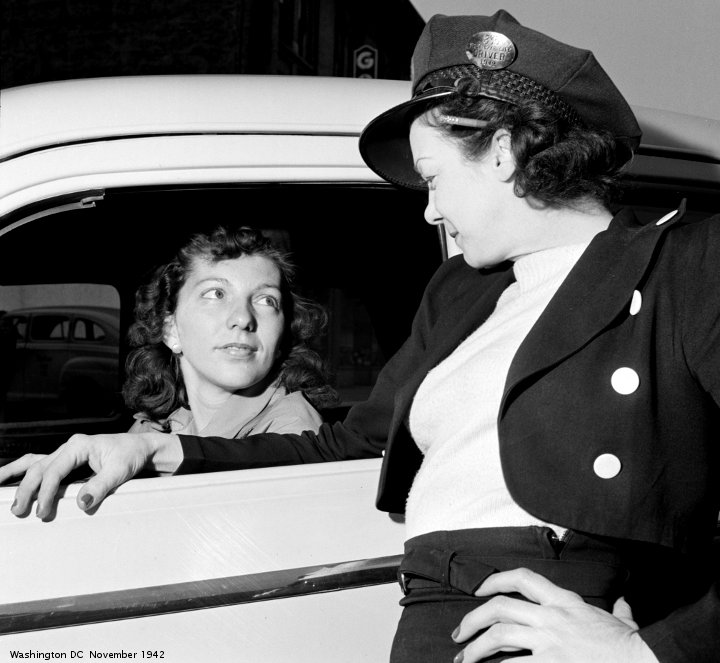
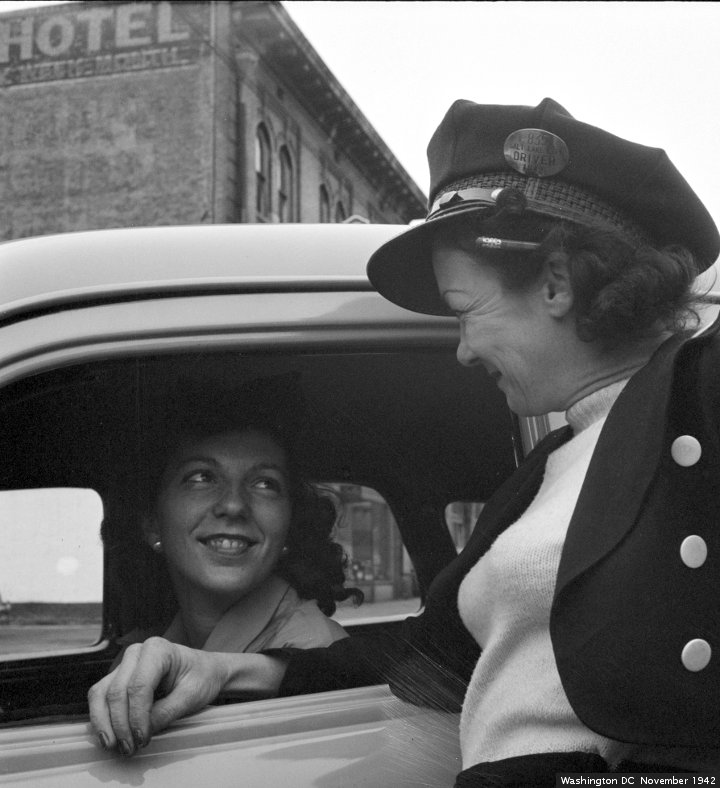
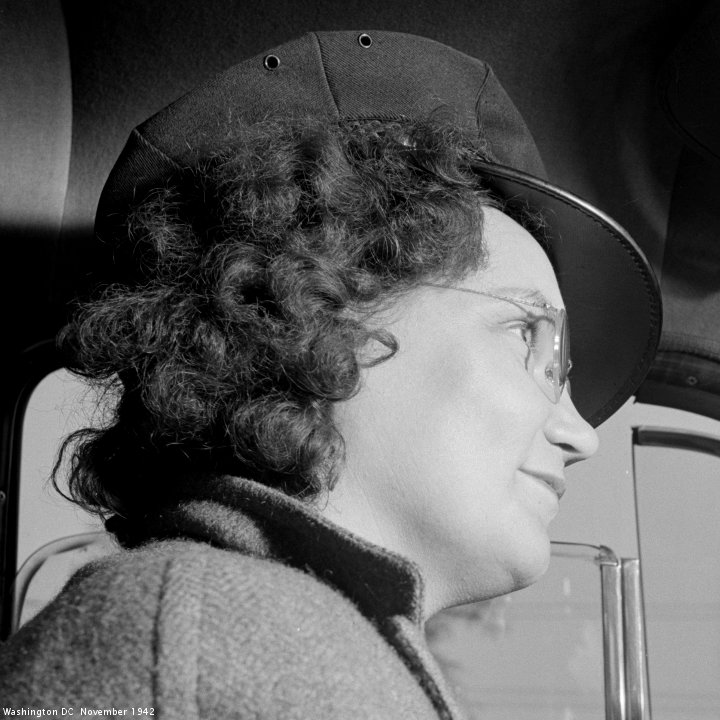
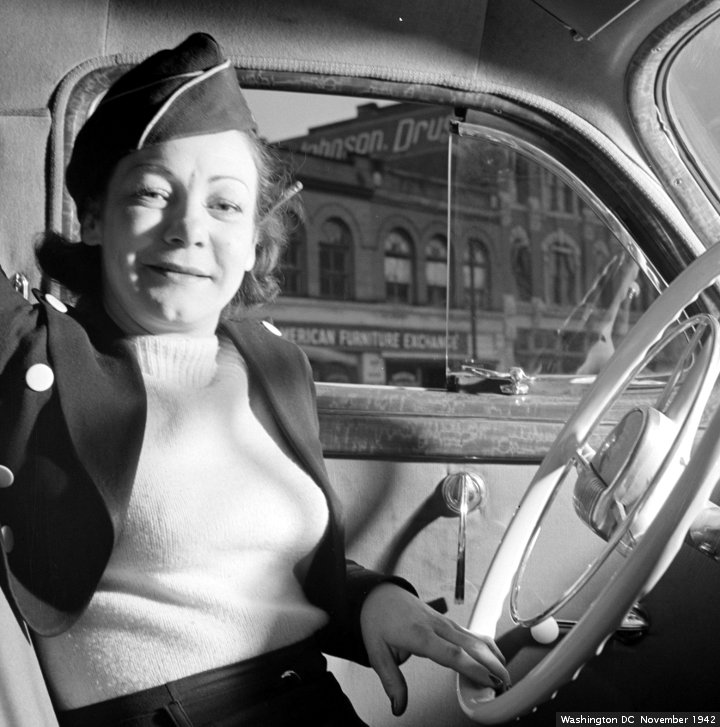
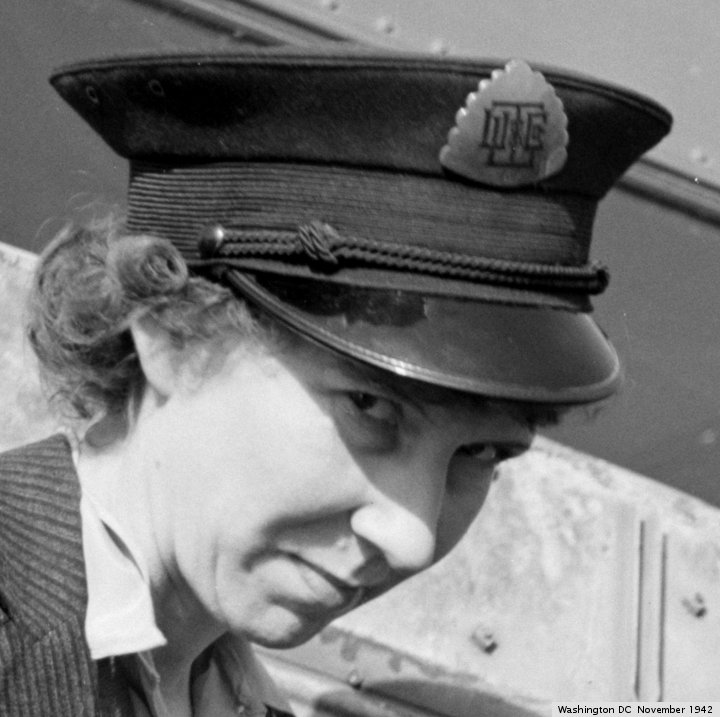
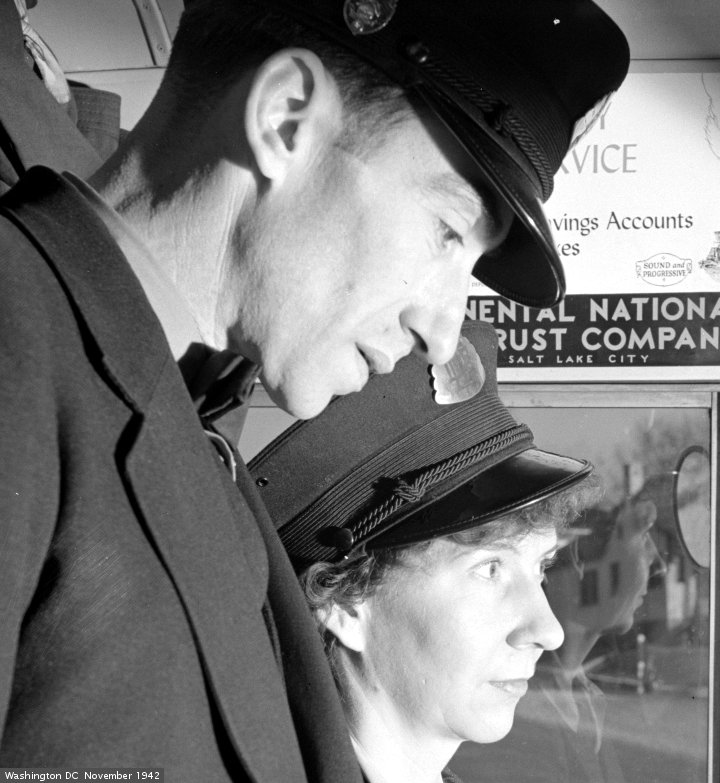
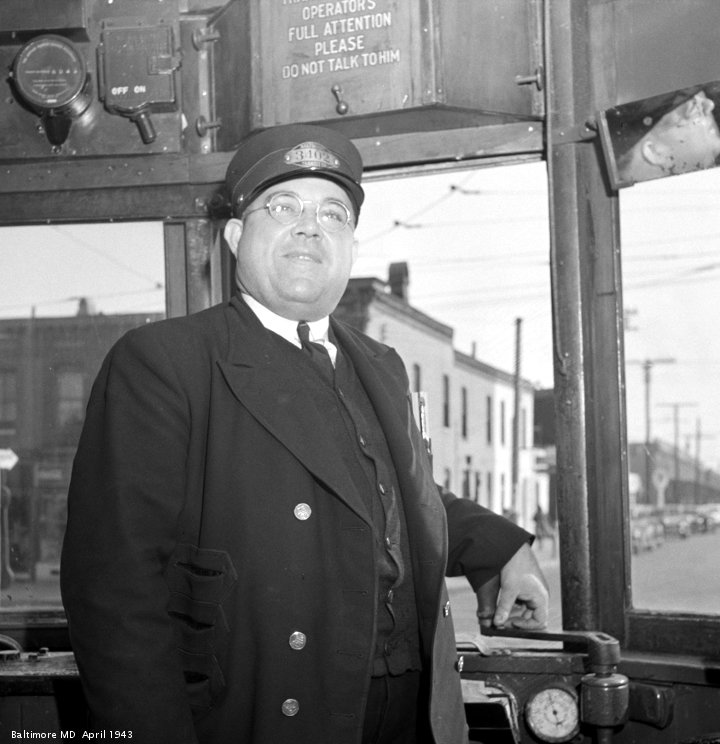
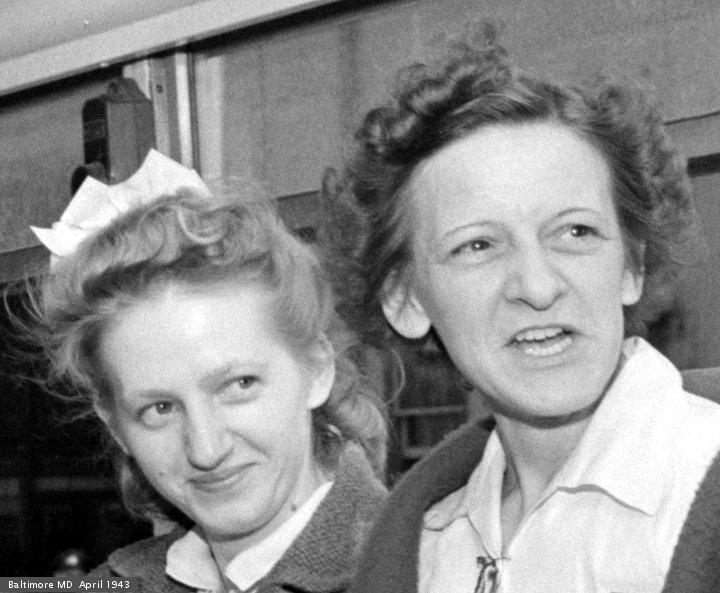
Pictures from The Library of Congress. The images are of women, training to be bus drivers and taxi drivers. This was in Washington DC, November 1942. The photographer was Andreas Feininger, working for the Office of War Information. The picture of a dipstick demonstration is #8d36666.





Dead Saturday 1973


It was dead saturday 1973, the day between good friday and easter. PG and his friend Gibson have traveled from Athens GA to Charlotte NC to see a rock concert. The plan was eight bands in a crowded football stadium.
PG had never been to an outdoor concert, and had some ideas about how it would be. They were in the house early, and set up a blanket about thirty feet in front of the stage. For the first part of the day, the crowd stayed off their turf.
The first electric act was Brownsville Station. The first thing they did was encourage the audience to crowd in front of the stage, resulting in a mob scene for the rest of the day. BS played loud heavy metal, with a guitar/vocals guy painted like a clown. They were a three piece band that day, as their bass player had gotten a job selling furniture in Kansas. “Smokin in the Boys Room” was a hit for this ensemble later that year.
The concept of multiple stages had not hit North Carolina, and there was a long wait between acts. The next band was Mason Profit. “you are talking about boogie, you don’t know shit about boogie.
By this time, the crowd was getting off on their downers, the sun was shining, and PG was out of water. It only got better as the day went on. The scheduled next act was Captain Beyond, but they canceled. The replacement was Marshall Tucker. They were good, but not really memorable.
The afternoon went on and on. Goose Creek Symphony came and went, followed by Wet Willie. WW had a routine where this pretty girl was walking down ___ street, which in Charlotte was Independence Boulevard. Eventually, the sun went down, and ZZ Top came on stage.
ZZ Top was the high point of the day. The beards were only about four inches long. They introduced one song, saying ” this is something you might know about, song called beer drinkers and hell raisers”. They were the only band to do an encore, with “Francine”.
The next act was Mahavishnu Orchestra, which PG was convinced was the greatest band that ever lived. The stadium crowd was not conducive to their style, but they delivered a good show. John McLaughlin played a twin necked guitar, which PG found a bit disconcerting. The electric violin player, Jerry Goodman, was a stand out.
By the time MO finished, PG wanted to get away from the front of the stage. He took to wandering around the back of the stadium while the Allman Brothers played. The back of the house was full, although there was room to walk around. Before long, it was time to hit the road back to Georgia.
Pictures for this repost are from The Library of Congress.


Florence Foster Jenkins





Useless Information had a show, The Patron Saint of the Vocally Challenged. It tells the story of Florence Foster Jenkins. She had a wealthy father, and hired vocal coaches to try and produce a good singer. She became somewhat of a concert attraction, and sold out Carnegie Hall. Accompianist Cosme McMoon did what he could to help. Mrs Jenkins was, by all accounts, very, very bad.
Here is more information about the talent. “Florence Foster Jenkins (1868–26 November 1944) was an American soprano who became famous for her complete lack of singing ability. From her recordings, it is apparent that Jenkins had little sense of pitch and rhythm and was barely capable of sustaining a note. Her accompanist can be heard making adjustments to compensate for her tempo variations and rhythmic mistakes. Nonetheless, she became tremendously popular in her unconventional way. Her audiences apparently loved her for the amusement she provided rather than her musical ability. Critics often described her work in a backhanded way that may have served to pique public curiosity. Despite her patent lack of ability, Jenkins was firmly convinced of her greatness. She compared herself favourably to the renowned sopranos Frieda Hempel and Luisa Tetrazzini, and dismissed the laughter which often came from the audience during her performances as coming from her rivals consumed by “professional jealousy.””
A cd of her product, The Glory (????) of the Human Voice, is available. Amazonians were not kind. “This is a recording that every serious musician should own, for a variety of (ahem) reasons. But by all means, buy the cheap one. If the sound is better on the remastered version, it could only be more painful.” “she gets points for effort” ” I appreciate camp as much as anyone, but my wife was ready to divorce me if I played another song from the album” “The whole matter stinks of making fun of a person afflicted by illness. What a cruel species we were – and still are.”
The legend is that she said “People may say I can’t sing, but no one can ever say I didn’t sing.” A quick google search does not reveal the source, or context, so this quote cannot be verified. Quote Factory has this available in eleven tasteful designs.
The Carnegie Hall show took place a month before her death. Here is the story.
“In order for a singer to succeed, they need to have a combination of talent, charisma, and interpretive quality. And, by definition, they need to be able to sing. Florence Foster Jenkins had none of these attributes. In fact, she was considered one of the worst singers of all time. She was independently wealthy and performed at the Waldorf and other places around town. It became a thing to do. You had to go and listen to Florence Foster screw up every song she attempted to sing.
She was having a great time and the audience was having a great time, so they kept telling her, “You need to make your Carnegie Hall debut.” So on October 25, 1944, she did, and it was sold out in just two hours. They came from everywhere. She walked onstage in these ridiculous costumes that she’d made herself. She’d throw roses out into the audience, her assistants would go out and collect them, and she’d throw them out into the audience again. The audience would not let her go home. They cheered her and clapped, and one month and one day later she died at the age of 76.”
The program for this performance had a note from the Fire Commissioner, Patrick Walsh.
“FIRE NOTICE – Look around now and choose the nearest exit to your seat. In case of fire walk (not run) to that Exit. Do not try to beat your neighbor to the street.”
The last.fm page with the information on F. F. Jenkins lists “similar artists”. The only two we will have videos from are Wing and Mrs. Miller. Slim Whitman and Tiny Tim, being males, were not considered.
This is a repost. Pictures are from The Library of Congress.







Gloomy Sunday
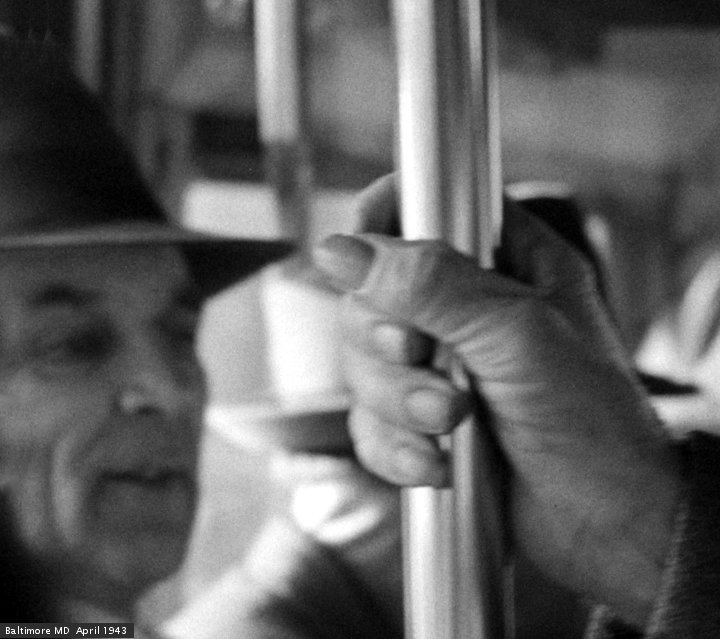
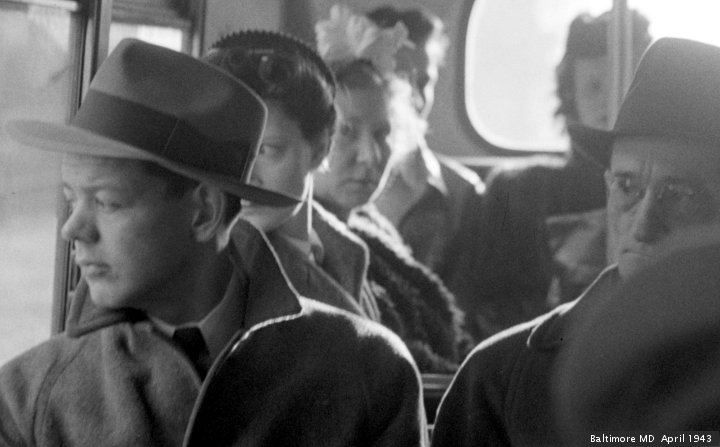

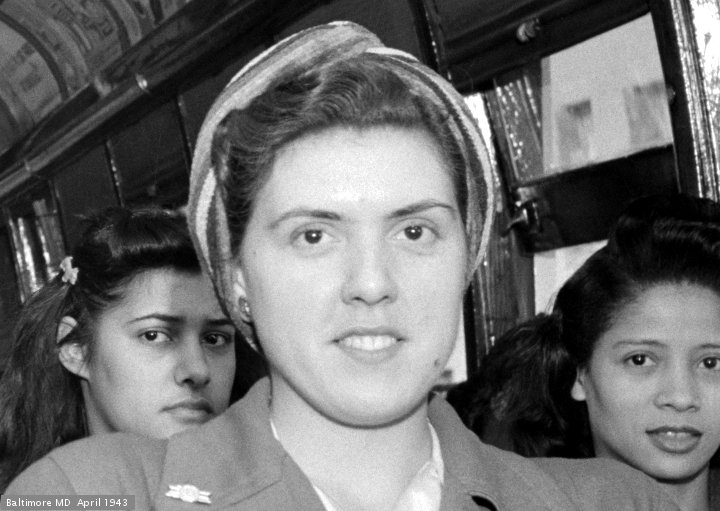

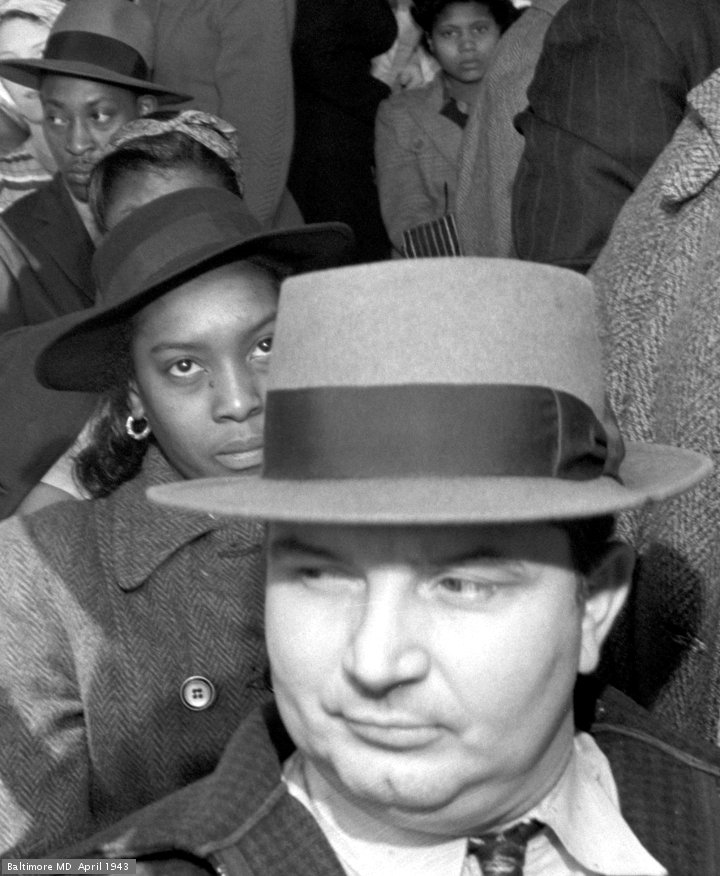
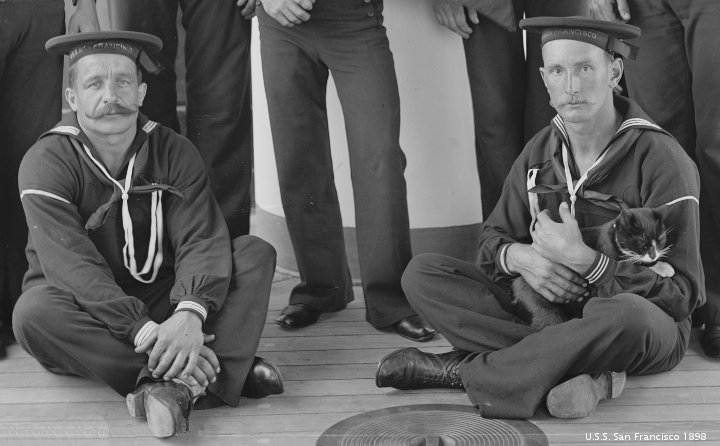
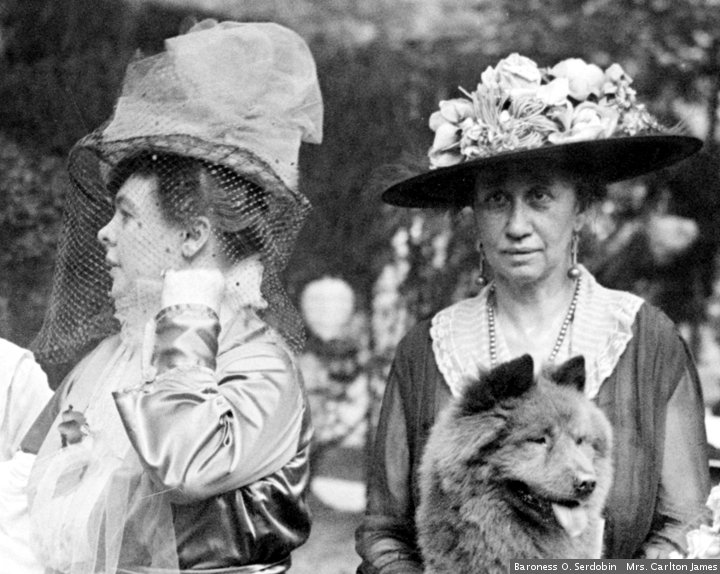
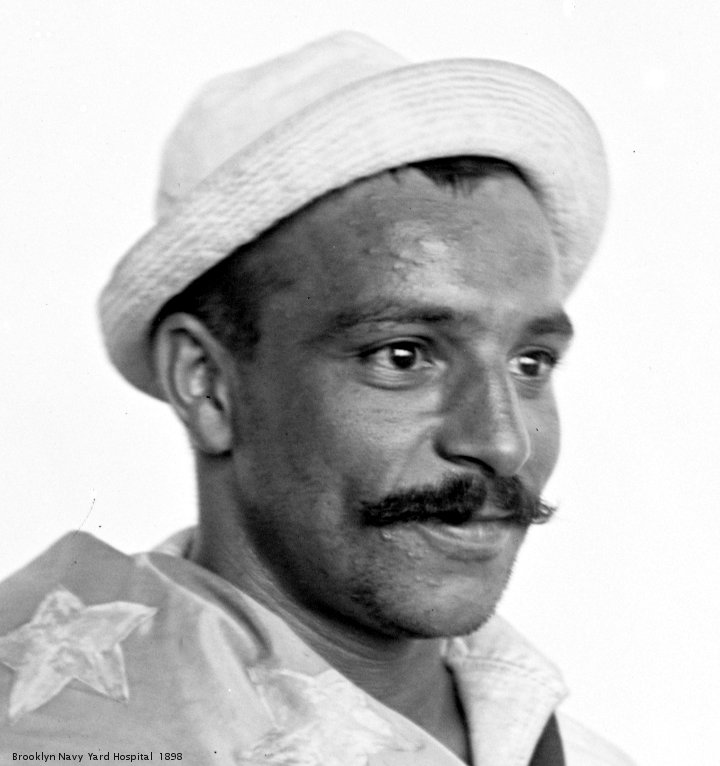
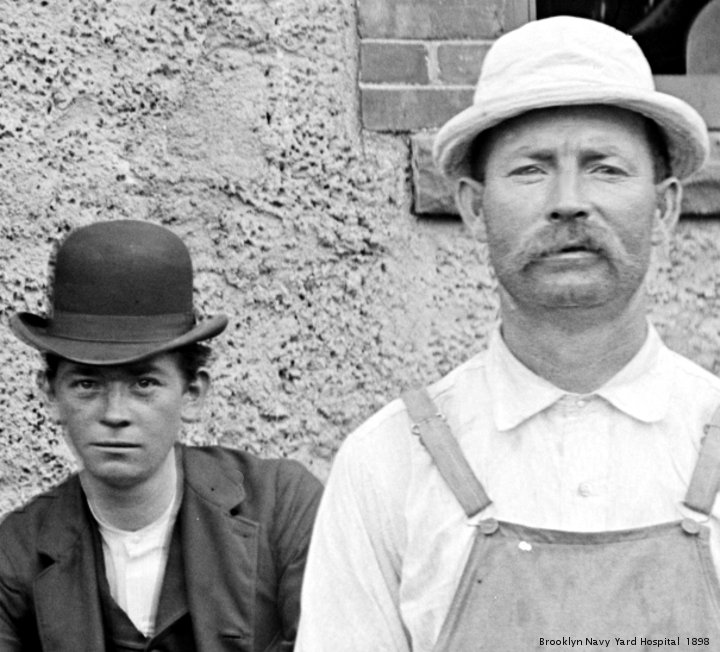
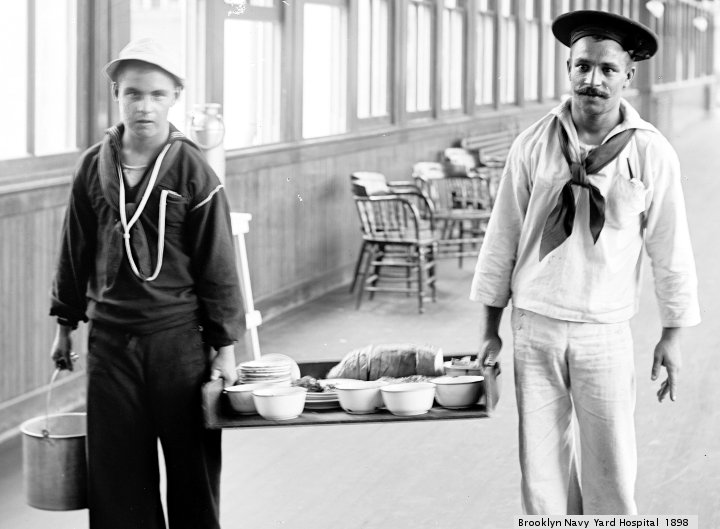
PG stared out at the gray sky. He thought that the third sunday in march might be the most depressing day of the year. The ever cheerful blogger had an idea for a repost. Pictures today are from The Library of Congress. The people on a Baltimore streetcar seem to be happy.
Billie Holiday had a hit with”Gloomy Sunday”in 1941. The legend is that people would listen to the song, and kill themselves. As a result, the song was banned from the radio. Or was it?
“Gloomy Sunday” was written in 1933 by Rezső Seress. Additional lyrics were later written by László Jávor. It became known as the ” Hungarian Suicide Song”, and was reportedly banned in Hungary. An English translation (which is said to not do justice to the original Hungarian) was rendered.
The song has a melancholy sound, even as an instrumental. The story is about a person…it is not gender specific…who decides to join a loved one who has died. A third verse was added, to the english version, where the singer says it was all a dream.
The song became popular in the United States. And the suicide stories started to spread, along with rumors that the song had been banned from the radio. (It was indeed banned by the BBC.) There are indications that these rumors were part of a publicity campaign.
The urban legend busters snopes. calls the story “undetermined”. Legends like this get a life of their own. A grieving person hearing this song on a dreary Sunday is not going to be uplifted. One thing is known for sure…the original composer did take his own life. Rezső Seress jumped off a tall building in Budapest in 1968. The legend is he had never had another hit song after writing “Gloomy Sunday”.




Just Kids

If even half the stories in Just Kids are true, then Patti Smith is a punk rock Forrest Gump. Maybe the title should be Just Kidding. There is a lot of name dropping here. Allen Ginsberg tries to pick her up in an auto mat, only to learn that Patti is inconveniently female. Jimi Hendrix says he is really shy. Grace Slick says hello to you too. The Chelsea Hotel says the rent is due.
For those who are new here, Patti Smith had a series of albums in the seventies. Some liked them, some did not. Meanwhile, onetime bf Robert Mapplethorpe was taking raunchy pictures, and becoming infamous. Eventually, Ms. Smith got married to Mr. Smith, and had two babies. Mr. Mapplethorpe was cut down by the plague.
All kidding aside, JK is a powerful book. Ms. Smith … who once said that Ms. sounds like a sick bumblebee … is a good writer. If you can find it at the library, it is worth your time. There is a double p in Mapplethorpe. It is pronouced maple thorpe, like maple syrup.
Loud Music

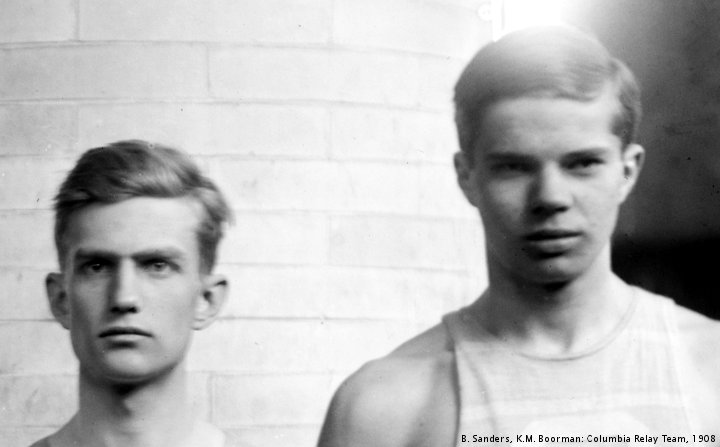


By now, the fuss about the Michael Dunn trial has mostly faded away. This is where the man shot some people, after a dispute over loud music. The piece that follows will not try to justify this act, it will not discuss the second amendment, nor will it consider the verdict of a Florida jury. This bit of text is about the way people act about their music.
There are problems about loud music every day. People are way too quick to take the matter personally. It becomes a matter of duelling egos. Anger is expressed, people talk louder and louder, and threats are made. People are showing their neighbors how bad they are. With the wide availability of firearms, and alcohol, it should not be surprising that people get killed.
Between April 1998, and January 1999, PG had two run-ins with co-workers about radios. In the first one, a store manager played a music station at low volume. PG could barely hear it over the noise of the machines. The radio became one more source of unpleasant sound. It was like listening to rice crispies going snap crackle pop, all day, every day.
One morning, PG told the store manager “I do not enjoy your radio.” The lady went into hysterics. A week later, PG was given the choice of going to another store, or being laid off.
A few months later, PG came out of the bathroom one day. A radio was playing on a table beside the entrance. A religious radio station was playing. A lady was praying for entertainment. “The blood of the lambs has cleansed my heart.” PG was grossed out by this confrontation with bleeding lambs. The owner of the radio was listening to something else, using an earplug.
Three weeks later, the radio was still being played. The owner of the radio was still listening to his earplug. PG asked him to turn down the speaker radio. The person went into hysterics. A lawsuit was threatened. The dispute continued, off and on, for the next six years.
In the Florida incident, one party was black, and the other party was white. In the two work related incidents described above, one radio fan was white, the other black.
What happened in the Florida parking lot seems to depend on who you talked to. If four young men had a hysterical reaction to a radio volume request, then Mr. Dunn might have felt threatened. When you are armed, and possibly intoxicated, it is a formula for trouble.
Once again, this feature does not try to justify what Mr. Dunn did. You just don’t shooting people over loud music. What we would like to suggest is that people show some consideration for their neighbors. Not everyone enjoys your music. If someone does not like your music box, turn the damn thing down. You never know when that person is armed and drunk. You do know that they are your fellow human beings, and deserve respect.
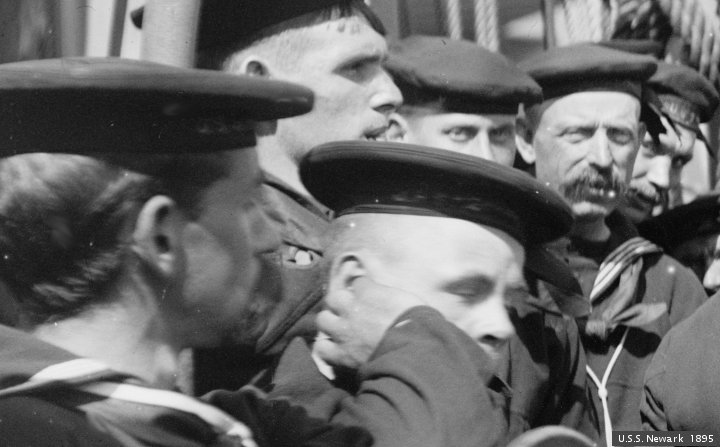
Pictures are from The Library of Congress.





Profanity Free Post




The culture monk starts his caffeinated tour in midtown Atlanta today. Good luck finding a parking spot in that area. The wandering continues on La Vista road this afternoon, which is just a few miles away from Brookhaven. Will PG make it there? Only time will tell.
CM likes to put up material every morning, which is good. Today’s offering is Atlanta, Big Bibles, and Cussing…REALLY??? He got acquainted with the Atlanta custom of sitting in traffic for hours on end, and sought refuge at a mermaid enabled caffeine dispensary. A young lady, equipped with an artillery bible, said she had dropped out of the theater after being christianized. It seems as though the parts she played had too much bad language.
Many Jesus worshipers seem to have a thing about cusswords. Certain words are taboo. Many Jesus worshipers are rather smug about this prohibition.
The person who taught PG the most about Jesus was a former coworker, known here as the bully for Jesus. The man has anger management issues. Often, when he lost his temper, words like G-d, Jesus, and holy ghost would fire out of his mouth.
The third commandment is a very underrated suggestion. It is much more than G-d’s last name. PG decided long ago that using sacred names out of anger was a violation of the third commandment. Maybe, when the need for strong language presents itself, a person would do less harm by talking about reproduction and excretion, rather than father and son.
PG learned about CM in the comments at the thirty million hit dude, Matt Walsh. His latest offering relates to this issue. The title is Dear America, you’re too smart to listen to Beyonce’.
The subject of this discussion is Mr. Walsh’s dislike of popular music. The words could have been borrowed from any rant about music kids listen to today. This product has cusswords, promotes icky behavior, and is dumb, dumb, dumb.
To a certain point, PG agrees. The autotuned product of today is not that great. Unfortunately, Mr. Walsh does not have many suggestions for an alternative. The religion he touts is little more than a scheme for life after death.
The political POV Mr. Walsh offers is little more than endless Obama bashing. The post about Beyonce’ has the Obama reference in paragraph seven. (This counts five standalone words as a full paragraph.) What is the alternative here? Maybe Sarah Palin will put out an album of contemporary christian music. It would probably be an improvement.

How Do You Take Your Coffee?





It was a saturday. They are different when you work the rest of the week. Between laundry, buying stuff, unclogging pipes, and writing bad poetry, PG found time to take two internet quizzes.
The first one, The How Gay Are You Test, was an artificial joke. “Put your fabulousness on test and find out just how gay you are by answering those few questions! We dare you! Cher is… Who? ~ Goddess of Pop ~ Meh!” (Spell check suggestion: fabulousness – nebulousness, fatuousness)
The designers of this test might have been on drugs. When you click on the possible answer, it dances around, and blinks off and on. You have to click it several times to select, and then half the time it doesn’t take. When you try to get your results, the test makes you fill in the missing questions. You click on it a few more times, and eventually it is selected.
The gayness test can be copied in it’s entirety, unlike the other test, Which Punk Icon Are You? Punk icon is a buzzfeed thing. It has snappy graphics, and is mostly uncopiable. You do have the thrilling option of selecting buzzfeed as an answer to the question, “What’s the least punk thing you can think of?” The questions are in all caps, which PG finds vaguely immoral.
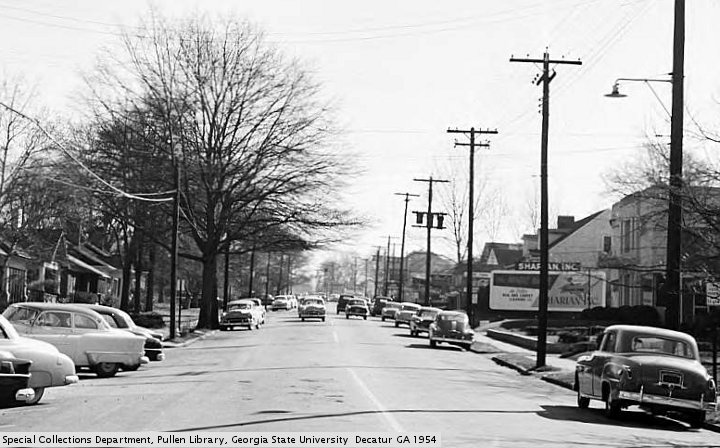
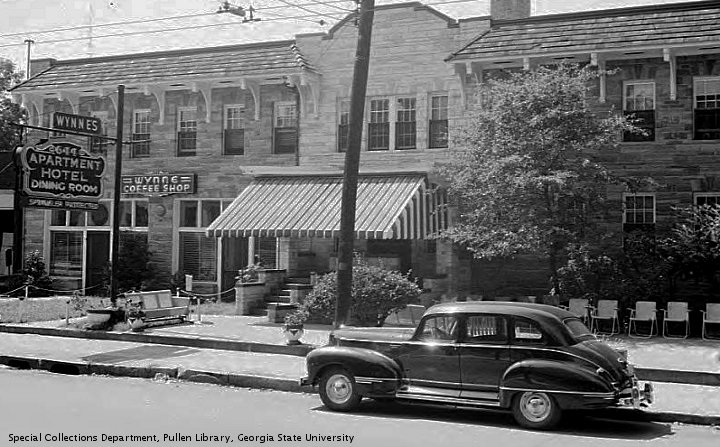
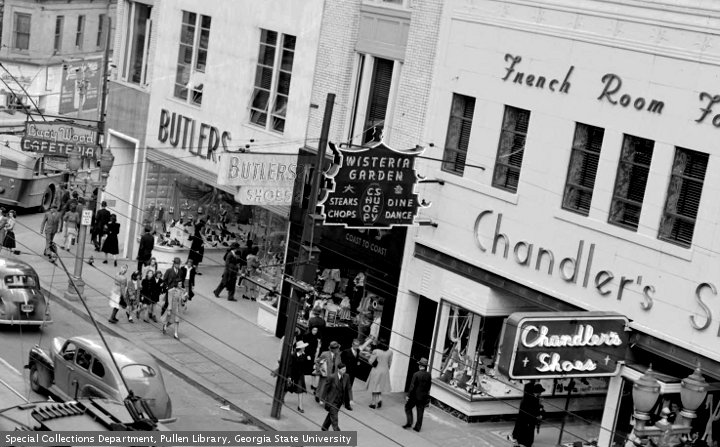
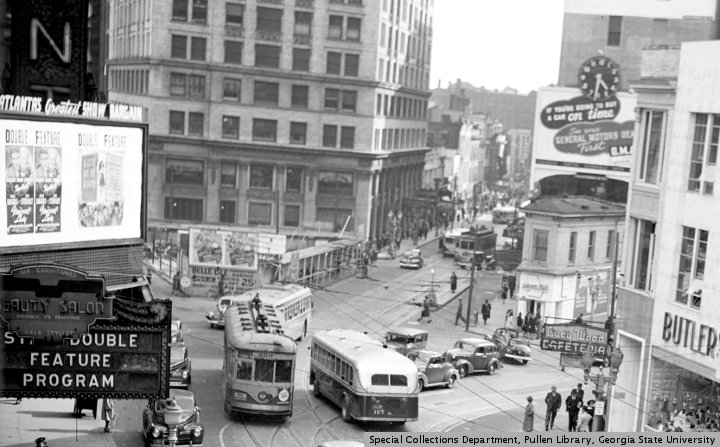
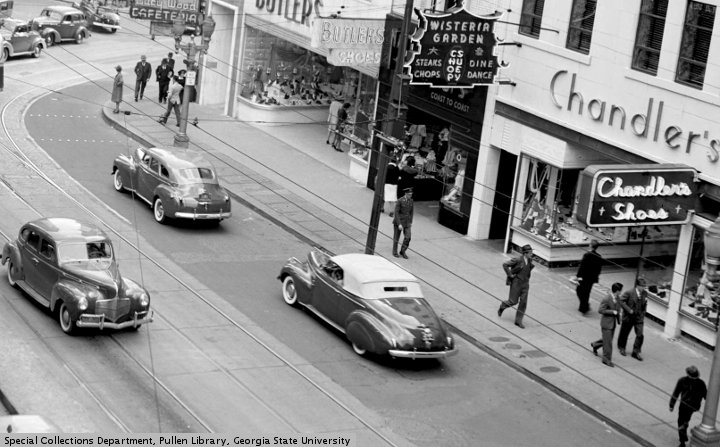
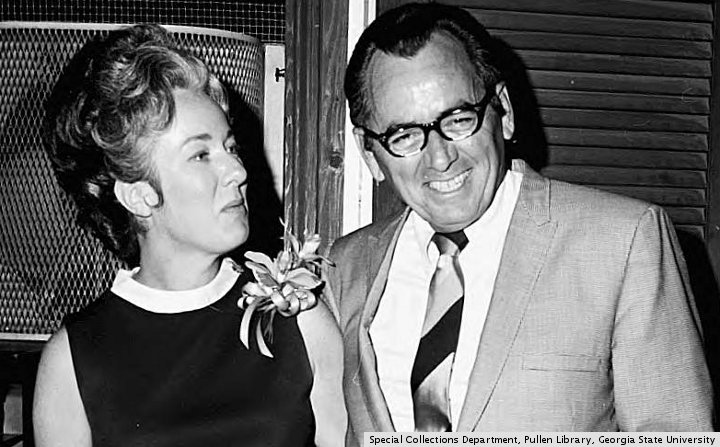
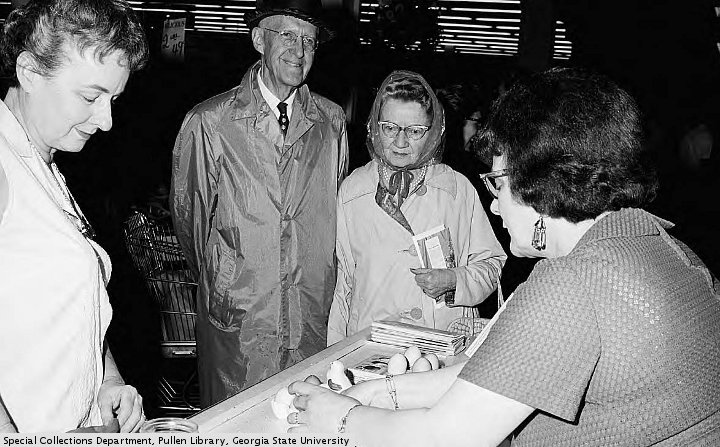
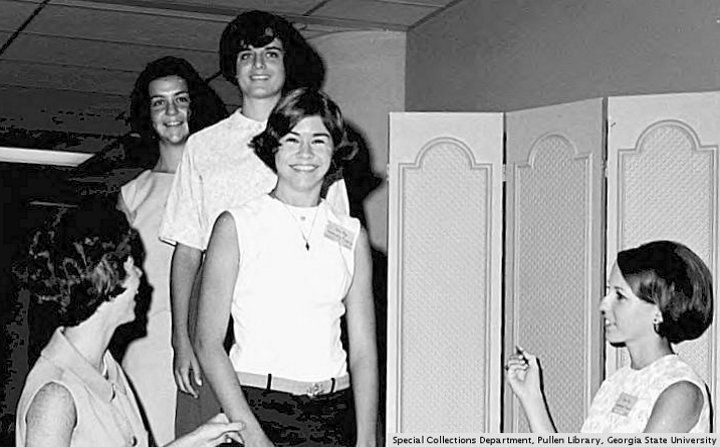
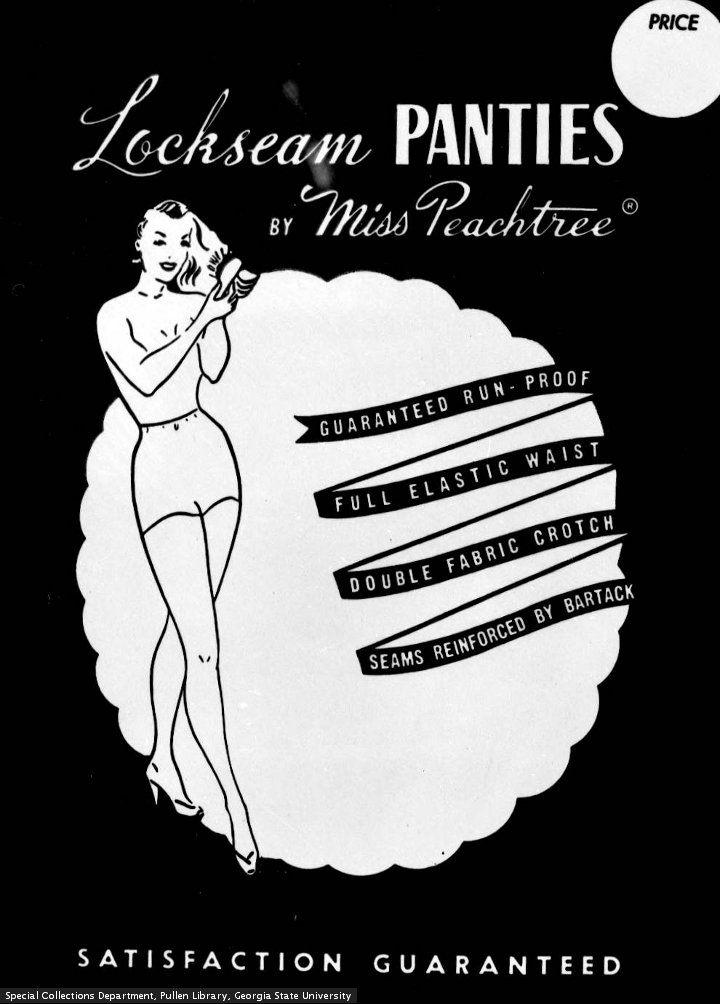
This is going to be a short post. The text averse can go ahead and skip to the pictures from “The Special Collections and Archives, Georgia State University Library”. One result was “13% gay! This makes you not really gay. We’re sorry… In any case, you can get yourself a Gay Pack and develop your gayness further! ” The other was Patti Smith.



 Chamblee54
4 comments