Gloomy Sunday


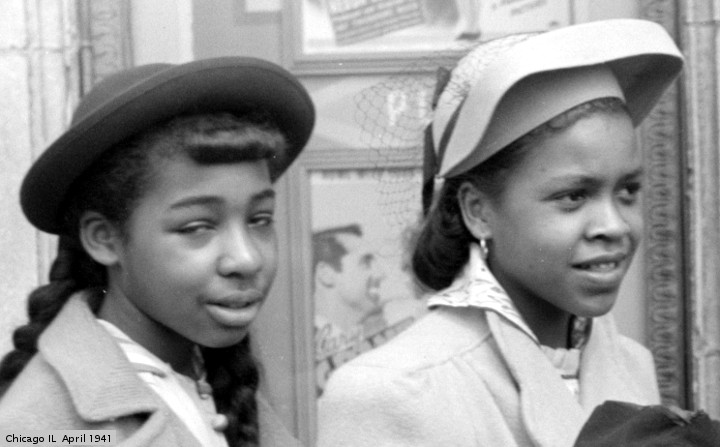
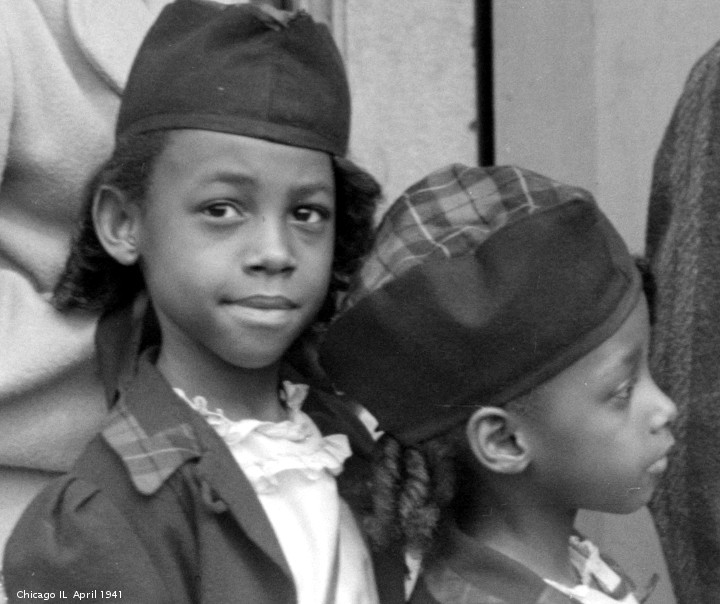
Billie Holiday had a hit with Gloomy Sunday in 1941. The legend is that people would listen to the song, and kill themselves. As a result, the song was banned from the radio. Or was it?
Gloomy Sunday was written in 1933 by Rezső Seress. Additional lyrics were later written by László Jávor. It became known as the “Hungarian Suicide Song”, and was reportedly banned in Hungary. An English translation (which is said to not do justice to the original Hungarian) was rendered.
Gloomy Sunday has a melancholy sound, even as an instrumental. The story is about a person…it is not gender specific…who decides to join a loved one who has died. A third verse was added, to the english version, where the singer says it was all a dream.
Gloomy Sunday became popular in the United States. And the suicide stories started to spread, along with rumors that the song had been banned from the radio. (It was indeed banned by the BBC.) There are indications that these rumors were part of a publicity campaign.
The urban legend busters snopes. calls the story “undetermined”. Legends like this get a life of their own. A grieving person hearing this song on a dreary Sunday is not going to be uplifted. One thing is known for sure…the original composer did take his own life.Rezső Seress jumped off a tall building in Budapest in 1968. The legend is he had never had another hit song after writing “Gloomy Sunday”. This repost has pictures from The Library of Congress.




The Georgian Terrace Ballroom
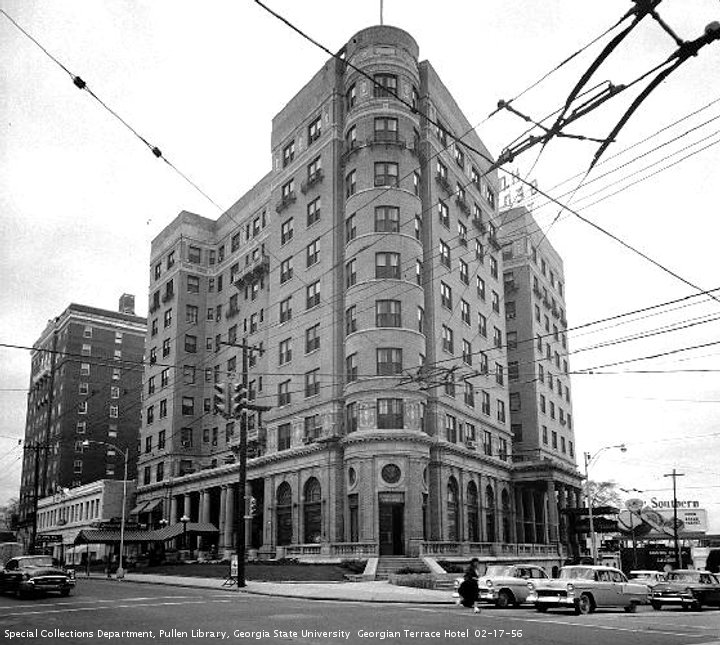



The Georgian Terrace hotel used to have an adjacent ballroom. The building opened as the “Lucky Strike”, featuring “Duck Pin” bowling. At some time, it became a 1300 seat ballroom. It was not the grand ballroom, where events for the premiere of “Gone With The Wind” were held. As time moved on, the ballroom became a music performance hall. PG saw shows there under four different business names. After the Agora Ballroom closed, the building was vacant, until a fire August 30, 1987. The site of the ballroom is now occupied by an annex of the Georgian Terrace Hotel.
The first show PG saw at this facility was in 1972. The name of the business is forgotten, as is the act that performed. A band, comprised of people PG went to high school with, played before he got there.
In 1974, “Big Time” promoter Alex Cooley opened “Alex Cooley’s Electric Ballroom”. (Alex Cooley died December 1, 2015.) The first show that PG saw was Dr. John The Night Tripper. A few months later, Capricorn artists Cowboy played, with a vulgar New York band named Mercury opening. Gato Barbieri played at the Ballroom, with PG wondering how people could dance to that type of music.
Several major acts appeared at the Ballroom, mostly without PG in the audience. KISS played there in 1974, and photographs from backstage are in the embedded video. In April of 1974, Steely Dan was across from the Fox. In the summer of 1974, The Tubes played a week at the ballroom, with another heavily hyped show. On January 23, 1976, The Patti Smith Group played at the ballroom.
In 1975, Bruce Springsteen was on the covers of Time and Newsweek, and was recieving a promotional push unlike anything seen before. He played a show at the ballroom that summer, with a generous press party in the balcony. (At one unforgettable show Alex was caught off guard by a Bruce Springsteen request. “He asked if we could shut down the cash registers because they were making too much noise!… That’s the only time I ever did that.” Alex admits.)
PG attended two shows in 1975. Mckendree Spring opened for Fanny, while PG drank too many bourbon and cokes. In November of 1975, Juice Newton opened for Hot Tuna. Miss Newton seemed to be a bit pale, and performed “Get drunk and screw”. Hot Tuna was amazing. They went on stage at 10:55, and played, without a break, until 2:50. The drummer wore a shirt, mother fucking hot tuna. Few would argue that night.
In autumn of 1977, some brave soul opened a place called “The Ballroom” in the space on Peachtree Street. One night, PG went with some friends to see an act, Happy the Man. There seemed to be a bit of chaos in the management of the facility. The Great Southeast Music Hall loaned a few microphones for the show. When the show was over, PG walked out to a car, whose motor was running, with the driver asleep inside.
In the summer of 1978, the ballroom opened as The Agora Ballroom. Apparently, there is a music hall in Cleveland with that name, and they opened branch facilities around the country. There were some shows that PG did not attend. Todd Rundgren opened the facility August 19, 1978. On October 2, 1979, The Clash played. Pictures from the crowd appeared on an album by the band. On December 2, 1981, U2 made their Atlanta debut.
A few weeks after the opening, PG won tickets to an all Texas show. Marcia Ball opened, and a bored PG went to a neighborhood bar to drink beer. PG returned later, and stayed long enough for the singer with Asleep at the Wheel to ask the crowd, Are you stoned?
In November of 1978, PG called a radio station, and asked to be put on the guest list for Talking Heads . (For Talking Heads, and three links in the following paragraphs, the link is for a previous Chamblee 54 post about the show.) The first six people he called were busy, but the last one agreed to go. On the bus going home, a group of black men started to make unfriendly comments. At the next stop, a black friend of PG got on the bus, and went to talk to him.
A few weeks later, Tim Curry made his United States debut. Some record company invested a lot of money in him, and supplied him with an outstanding band. PG was wandering around the balcony after the first show, and saw Tom Waits sitting at a table. The bodyguard said no, that’s not Tom Waits, it is just someone that looks like him. At a bar, after the show, PG was raving about what he had seen, when a lady came up to him. What color are your eyes? They are brown, because you are full of shit. Soon, the 23 Oglethorpe was taking him home.
Somewhere in the haze of 78 and 79, Ultravox brought their synthetics to the Agora. A local band, First Blood, was more entertaining as the opener. PG drank a very large can of Foster’s beer, and floated through the proceedings. After the show, PG was invited to a party in Candler Park. On the way there, there was a horrific car crash on Ponce de Leon. At the party, friends of First Blood dissected their performance, between lines of coke.
One night, PG was enjoying drink specials at a neighborhood bar. He took a break, walked over to the Agora, and saw a few minutes of a show by Freddie Hubbard.
In early 1979, the B 52s were on the verge of stardom. (Here is a nifty feature about the Atlanta local music scene in those days.) The opener for the 52s was The Brains , yet another talented band that never made it big. At the table next to PG, a lady wore a dynamite World War Two army uniform.
Later in 1979, Ted Turner had an idea for a TV show, “Live at the Agora”. The first show was filmed in Atlanta, and featured Graham Parker and the Rumor. If they ever show that film again, and you see a crowd shot, that is PG wearing a white T shirt, with a white Agora iron on logo. Parker was a great musician, who had the misfortune to look like Big Bird’s nerdy little brother. If Graham Parker had looked like Bruce Springsteen, he would have been a superstar.
In March of 1980, Lene Lovich came to the Agora. About a year later, Spirit played on Peachtree Street. The show was sponsored by a radio station, and tickets were $2.96. Despite the low price, and high musical quality, the balcony was closed, and only about a hundred people were at the show. PG thought this was odd, but little surprised him by this time.
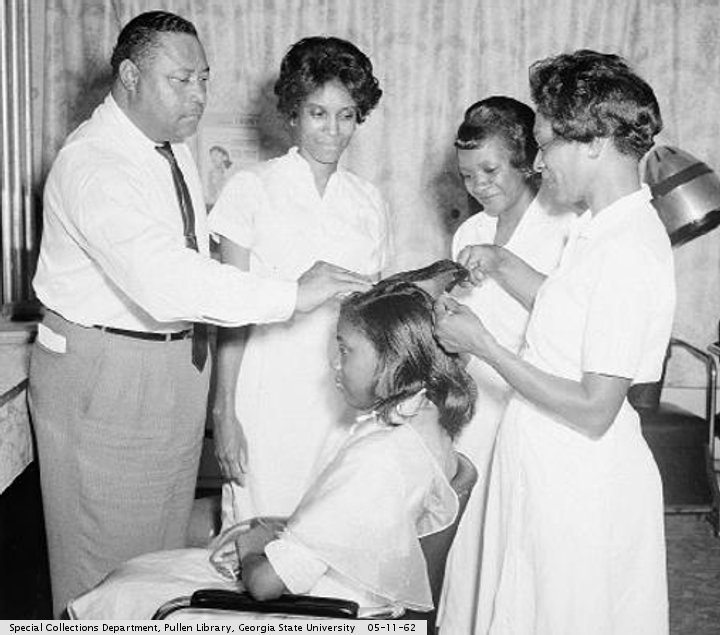
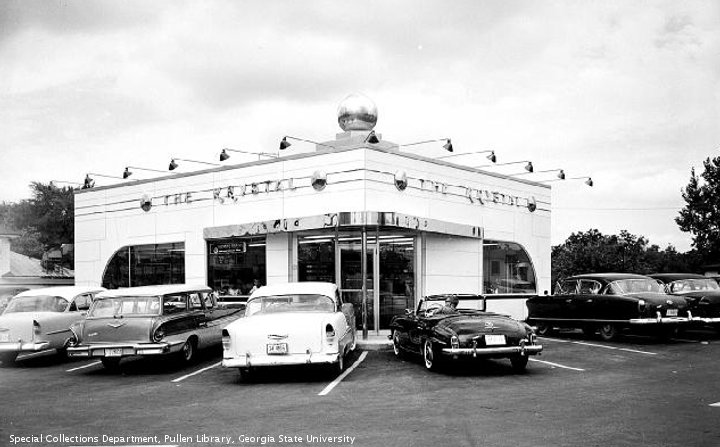
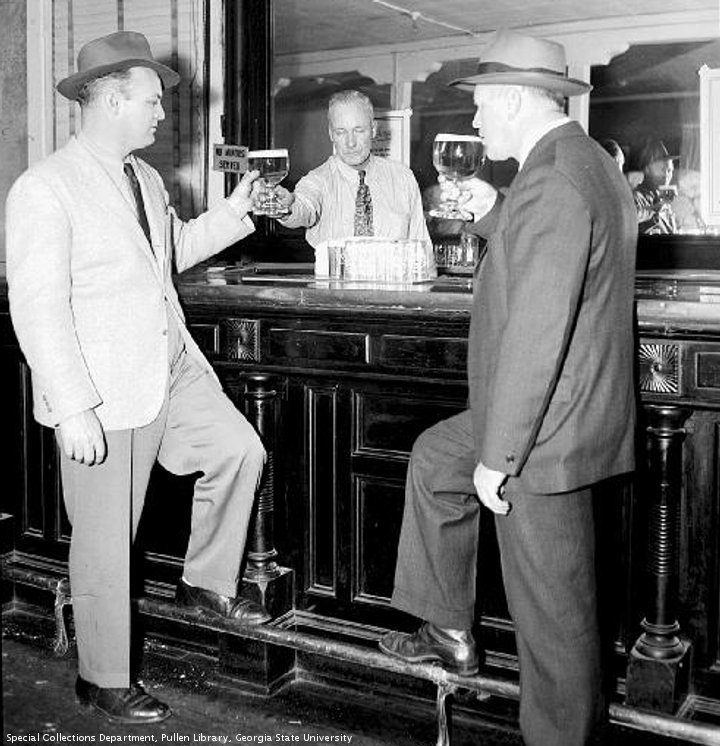
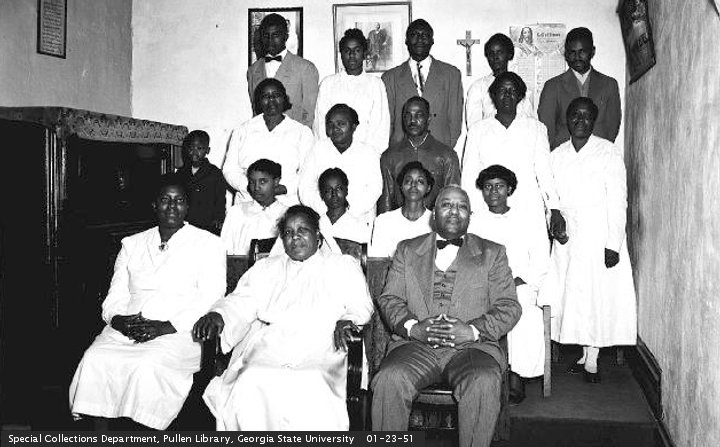
The last show that PG caught at the Agora was The Ramones. Joey and the pinheads were past their prime, with only two original members playing. It was an all ages show, with alcohol served in the balcony. Downstairs was a festive party, with costumes and enthusiastic high school kids. The balcony was the same rock and roll drunks you had seen for years. The Ramones would have made a great oldies band, if they could have quit dying. This is a repost, with pictures from “The Special Collections and Archives, Georgia State University Library”.


Bernienomics



@BernieSanders “I got into politics not to figure out how to become President. I got into politics because I give a damn.” The old tweeter sent this message December 11, 2015, at 4:42 pm Sanders Standard Time. At last glance, it was retweeted 25,901 times, and liked 44,263 times.
What exactly is a damn? When you give one, do you gift wrap it? The dictionary says that damn is a verb, meaning “condemn to a punishment or fate; especially : to condemn to hell.” Giving a verb is not good grammar. Damn is considered a mild profanity, which adds polemic punch.
History gives us a second opinion. “In 1665, Aurangzeb, or Abul Muzaffar Muhi-ud-Din Mohammad Aurangzeb. (A real mouthful of a name!) was the emperor of the Mughal empire. He ruled from 1658 until his death in 1707. Aurangzeb had coins minted in precious metals as well as copper. The copper denominations were one Dam and one half Dam.”
At some point after the invention of the copper dam, Great Britain conquered the Mughal empire. By this time, the dam was not worth twice as much as a half dam, but not much otherwise. According to some unverified sources, British soldiers would say that something was not worth a dam. Or maybe, they said they would not give a dam. Somehow, the profaning n was added, and a saying for apathy entered the english language.
How much is a dam/damn worth? To people living downhill from the lake, a dam is valuable. As for the numismatic value of an ancient copper coin:“By looking at both catalog values for copper Dams minted in the Mughal calendar year of 1075 (Western date 1665) … we can provide the following very approximate values for copper half-Dams and Dams minted in the name of Aurangzeb: worn: $4, average circulated: $7, well preserved: $30.”
Getting back to BS, he probably used the conventional meaning of GAD, which is that he cares. Or maybe, he meant that he gives a dollar. If current economic trends hold up, the dollar might not be worth a dam. The welfare state proposals of BS, according to the admittedly biased Wall Street Journal, would cost $18 Trillion. This would effectively double the national debt. If we get mixed up in another war, or if a nuclear power plant blows up, another few trillion might go down the tubes.
Only the most deluded Bernoids expect college tuition to be free in 2018. BS is talking a good game, but most people know his pants are on fire. One person who is offended because BS won’t step up the lies is Ta-Nehisi Coates. If reparations are added onto free college tuition, then the value of the dollar might go below a half dam. Pictures for snowstorm Saturday are from “The Special Collections and Archives, Georgia State University Library”.


One Diamond Two Believers Four Monkees



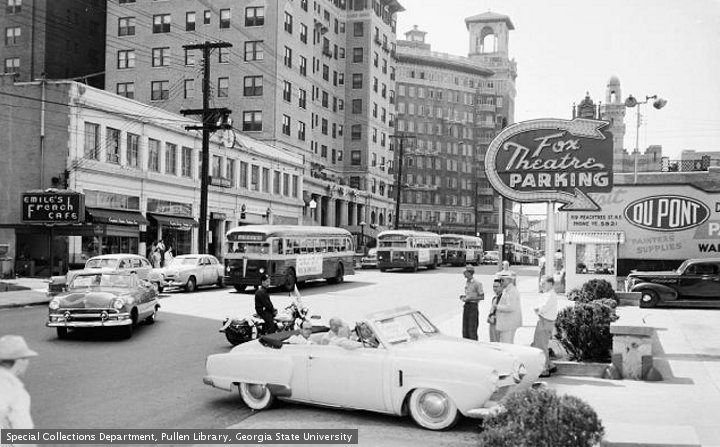
JoemyG-d has been running videos of number one hits lately. Today, the numero uno is from 1966. It is by the Monkees, called “I’m a Believer”.
PG always liked the Monkees. They were the twelve year old’s band when he was twelve years old. There was an article in the Saturday Evening Post about the “Pre Fab Four”, and a classmate of PG said that he was disillusioned. Certainly no one was confused about the made for tv nature of the band. The rumors…which turned out to be true…said that the Monkees did not play the instruments on their debut album. Still, a seventh grader is easily amused, and the show was fun to watch.
“I’m a Believer” was written by Neil Diamond, aka the Jewish Elvis. Mr. Diamond played guitar on the Monkees version of IAB. (Michael Nesmith does a convincing imitation in the video. It is not known if he was wearing the green hat.)
IAB is part of the rock tradition of misunderstood lyrics. PG thought that Mickey said he “needed sunshine on my brain”. PG did not learn the truth for many years. One afternoon, he heard a band on the radio do IAB, and the lyrics were understood. What the song really said was, “when I needed sunshine I got rain. “
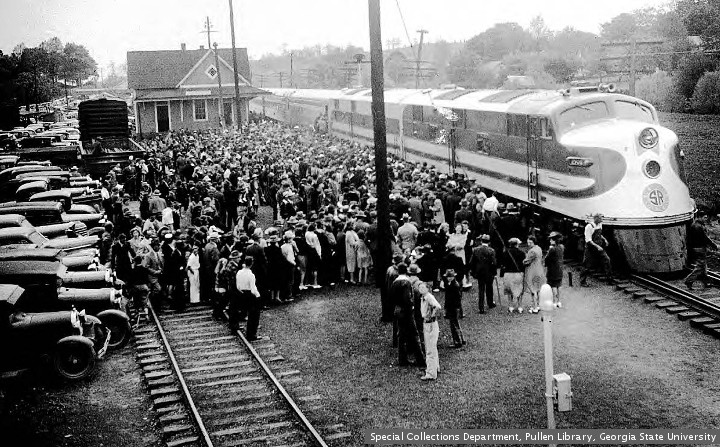
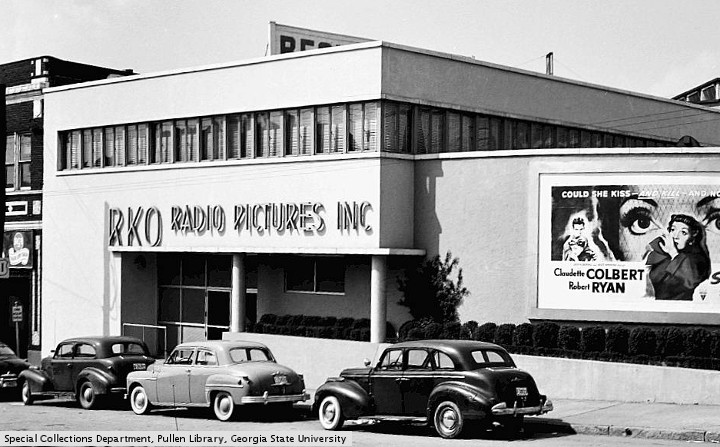
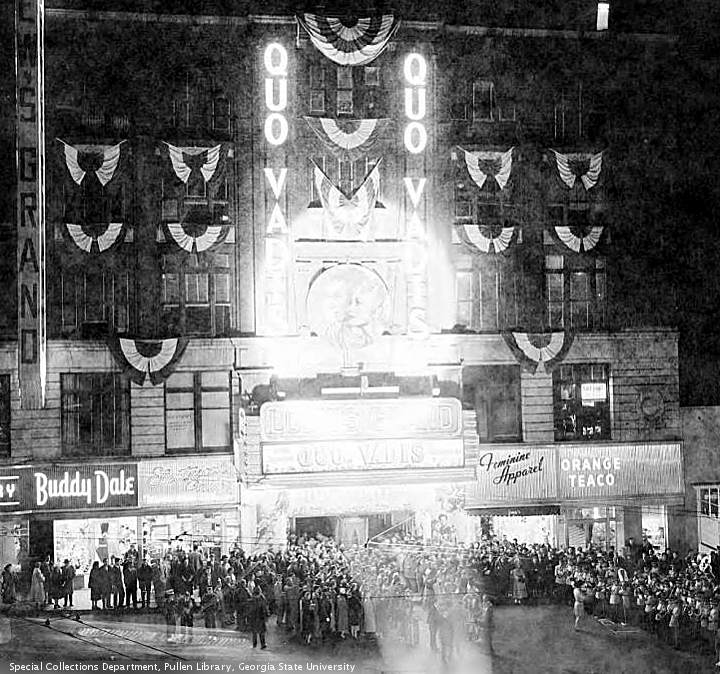
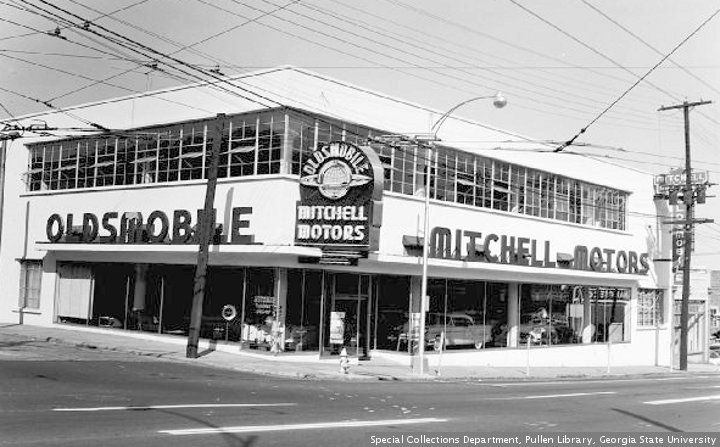
This is a repost, with pictures from “The Special Collections and Archives, Georgia State University Library”. The video in the original post is no longer on youtube, but there was no shortage of replacements. The video used today is one PG remembers from the TV show.
The other video, with unfortunate sound, is from the second year of “The Monkees”. PG did not like Mickey Dolenz with frizzy hair, and quit watching the show. 13 is a year older than 12. The fall of 1967 found PG as an eighth grader, or “subbie”, at a grungy high school. This was the first year after Lynwood Park High School closed. A few people were not happy about integration.
The other video has the word believer in the title. (The middle of the word believer is LIE.) One afternoon, the disc jockey at WQXI said he was tired of playing that stupid song by the Monkees. Before long, the Monkees were replaced by the Partridge Family.


The Last David Bowie Show
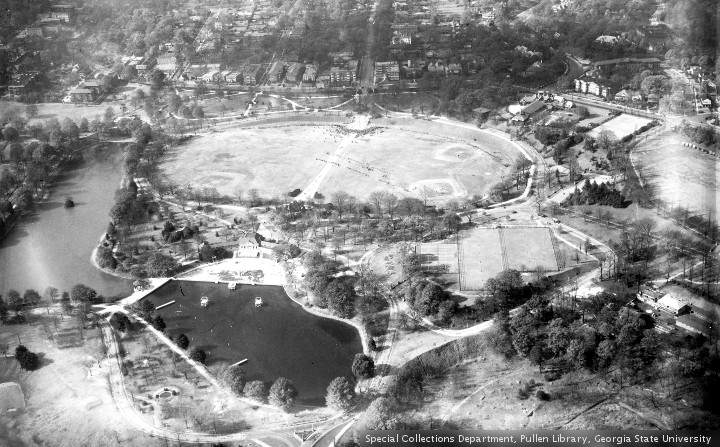
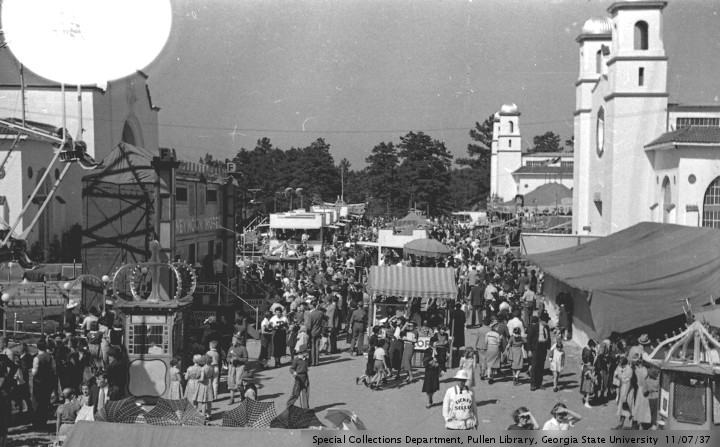

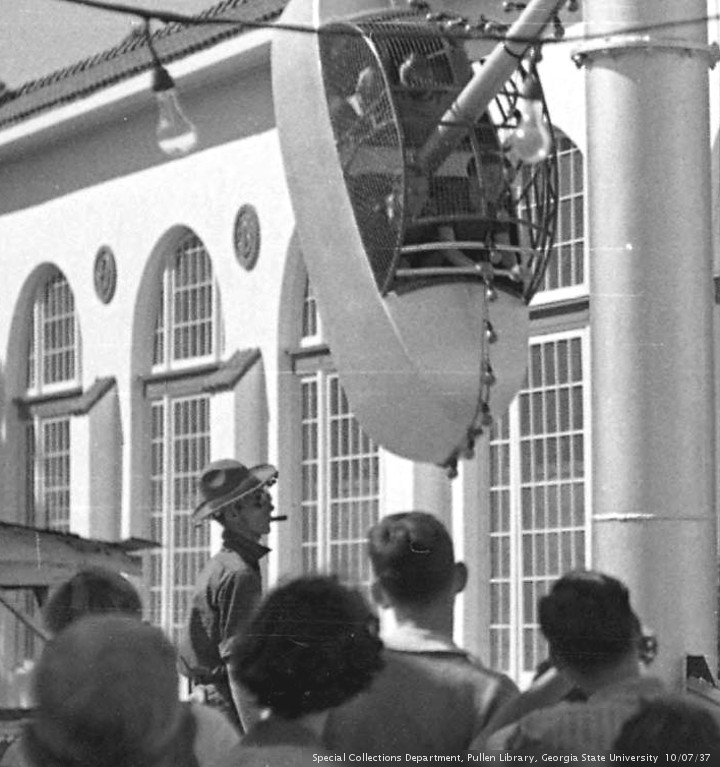
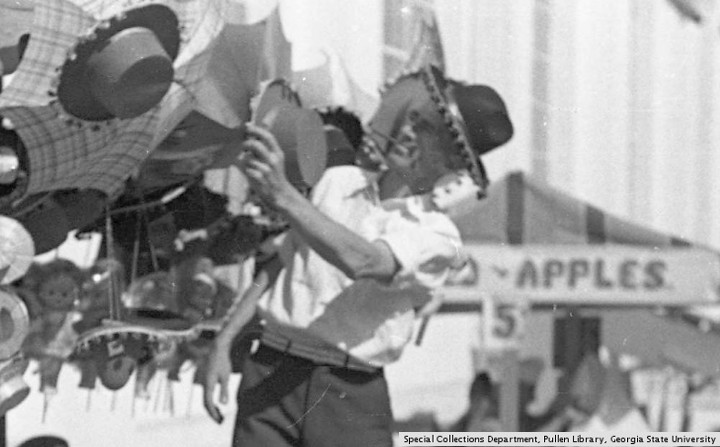
It has been a strange week for a David Bowie fan. On Friday, I was looking for a rerun to post, and was reminded that January 8 was his birthday. (Along with Elvis and Shirley Bassey) I put up a piece about Mr. Bowie, and fashioned a poem out of his song titles. Aquarian Drunkard reissued a collection of the “best and most interesting Bowie oddities”. A new album was released, with a lot of comments about how strange it was. Strange is something Bowie fans turn to face.
On Monday, I woke up. Go on the internet. MSN news says that David Bowie has died. This is surprising. I know what people are going to talk about for a few days.
I typically download the new wtf podcast on Monday. The show is “supported” by Columbia records, presenting David Bowie’s new album “Blackstar.” Marc Maron gushes on about how ” DAVID BOWIE I LOVE DAVID BOWIE. ARE YOU KIDDING ME?” The single is called “Lazarus.”
The timing of the whole thing is bizarre. Was this planned? To release a puzzling new work on your sixty ninth birthday, and then die two days later. With the master media manipulator involved, prior planning cannot be ruled out. Or was it just a parting shot of synchronicity? We will never know.
In what might be a new move for celebrity deaths, sex scandal rumors emerged. A lady named Lori Maddox claims that Mr. Bowie “devirginized” her. Miss Maddox was underage at the time. Some people think that this incident makes Mr. Bowie a terrible person, whose artistic output should be ignored. One made the inevitable comment “As someone who sees White stars get a pass for things that celebrities of color get crucified for.”
I learned a long time ago to separate the performer from the performance. I also apply this rule to David Robert Jones. (David Bowie was a stage name. The legal name was never changed.) In 1976, there was an interview, where the artist said “Don’t believe anything you hear me say.” While the creative/marketing genius can be enjoyed, there was always a bit of coldness behind the mask. Some press reports say that this softened as the years went by. In the end David Bowie was human. Ziggy Stardust was a character played by an actor. Does it matter that they were a Cracked Actor?
It is ironic that David Bowie played Andy Warhol in Basquiat. Both combined creation of art, and the marketing of art product, into a seamless unit. The two did not have a good first meeting. “Remember, David Bowie was not a big star. He was just some guy off the street as far as Andy Warhol was concerned. They found a common ground in David’s shoes. David was wearing yellow Mary Janes and Andy had been a shoe illustrator, which David knew so they began talking about shoes.”
This would have been in 1971. Mr. Bowie discusses his adventures in between songs of this show. There is another story from that first tour: “I think that must’ve been part of the Mercury Records publicity tour in early 1971, Gus. Ted Vigodsky, if I remember correctly, brought Bowie by The Great Speckled Bird’s offices on North Avenue where Moe Slotin and I met him. Bowie was dressed in an ill-fitting gingham dress and looked something like a gaunt, poverty-stricken woman in one of those Walker Evans photos from the Depression. He informed Moe and me that he was gonna be the next big star in rock-n-roll. It took all of our will power not to laugh in his face. This was before anyone in America had heard of him and he had no records out yet (“Space Oddity,” a hit in England in 1969, was not released in the USA until 1973). Six months later Moe and I realised we had completely underestimated him. I had forgotten Charlie had called you about interviewing him.” Pictures today are from “The Special Collections and Archives, Georgia State University Library”.



David Bowie




David Bowie is 69 today. Elvis is ageless, and Sarah Palin is obsolete. This Bowie tribute is a repost. Pictures are from The Library of Congress.
A webpage called CaptainsDead had a download of a David Bowie concert. (It is here on “A Portrait In Flesh” (Full show L.A. Sept. 5th 1974)) Most Bowie live recordings are pretty dull. While the Thin White Duke is renowned for his concerts, they tend to be live events, that depend on staging and costumes as much as music. This show, from 1974, is different. Focusing on material from “Diamond Dogs”, the sound he produces comes close to matching the studio sound.
The next move for Bowie in 1974 was the “white soul” sound of “Young Americans”. He is moving in that direction in this show, even while he lingers in the glitter apocalypse. This tour included a stop at the Fox Theater, the first Atlanta show for Mr.Bowie. On the way to Florida for the next show, the truck with the sets and costumes crashed into a swamp full of rattlesnakes. The show in Tampa was performed in street clothes.
Maybe it is time for a Chamblee54 tribute to David Bowie. It is six am, and PG has stumbled into a job. The time and energy required to write new material is not always available.
The first album by David Bowie that PG heard about was “Hunky Dory”. At the time, Mr. Bowie had generated some buzz by admitting that he fancies blokes, or some uber british expression for being queer. In time, this would be seen as more publicity stunt than brave confession. The RCA debut got some good reviews, but not much else.
The next year produced “Ziggy Stardust”, a concept album. At about this time he did a tour of the United States, with costumes and onstage antics that generated even more publicity. More and more people started listening, some in spite of his outrageous image, and quite a few more because of it. He broke up his band, the spiders from mars, and announced his retirement. The band learned about this while standing on stage behind him. Mr. Bowie, for all his genius, is not always a nice man.
In 1974 there was an album, “Diamond Dogs”, about the decadent urban life in the scifi future. A stage show based on this album…the source of the download mentioned above…marked a return to the concert stage. The next year gave us “Young Americans”, and the year after that “Station to Station”. Every year was a different sound and vision.
Meanwhile, the artist was not doing so good as a human being. According to all reports, he was doing mountains of cocaine. (There is a story of going to meet the parents of Ava Cherry, one of his girlfriends. He shows up at 3am, and does coke on the dining room table.) There was an interview in Playboy (or maybe it was Rolling Stone ) where the first thing he says is, don’t believe anything I say. He went on to say that he admired Adolf Hitler. Have we mentioned the physical appearance of David Bowie in 1975? He looked like he was dead, and nobody bothered to tell him. (By contrast, in recent photo collections of rock stars, Mr. Bowie looks pretty good for a man who is 69 yo.)
This was the era of Rocky Horror show. At one point, Riff Raff sings (Tim O’Brien wrote the show, and gave himself some darn good lines) Frank n furter, it’s all over, your mission is a failure, your lifestyle’s too extreme.I’m your new commander you now are my prisoner we return to transylvania prepare the transit beam While this may not have been directed at David Bowie, he took the hint.
We interrupt this David Bowie tribute with an emergency announcement. A person, reputed to be an entertainer, was seen using the n word on facebook. The screen shots have disappeared, and all we have is the word of the accuser. More details will be available as soon as anyone is interested.
David Bowie saw himself at a dead end, and possibly a dead life. He moved into a little apartment in West Berlin, on top of a garage. Brian Eno offered his assistance, and a series of electronic albums was the result. The next few years saw rock and roll, dance music, and finally, crap. PG bought a Bowie album in 1984, the first time he saw it on sale, and was immensely disappointed. The last David Bowie album that PG got was a free cd that was given to people buying a magazine.
Around 1981, MTV was born, and radio was suddenly obsolete. A visual artiste like David Bowie was a natural for video. Unfortunately, many of these videos are not available for embedding in blogs. Ashes to Ashes was a staple of early MTV. Boys Keep Swinging , off the “Lodger” album, is a return to the gender bender Bowie of younger days.
David Bowie continued to do tours, and PG got to see two of the shows. In 1987, something called the “Glass Spider Tour” came to the Omni. (In a later interview, it turns out Mr. Bowie was extremely unhappy during this tour, and close to suicide at some points.) The Glass Spider was this mass of lighting effects that hovered over the stage, and was used to best advantage during “Scary Monsters”. The show featured Peter Frampton on guitar, and had a pack of dancers. (One apparent female took her drag off during the finale.) A good time was had by all.
In 1990, another retirement tour came to the Omni. This one had movies projected on a screen behind the stage, and featured guitar hero Adrian Bellew. The night had the feel of a contractual obligation. David Bowie is too professional to give a bad show, but this one did not have the fire of “Glass Spider”. PG had a new set of contact lenses, and his eyes were painfully dry most of the night.



Using only song names from ONE ARTIST, cleverly answer these questions. Tag some others who might enjoy this. You can’t use the band I used. Try not to repeat a song title. It’s a lot harder than you think! Re-post as “my life according to (band name)”Pick your Artist: David Bowie
Are you a male or female: The Bewley Brothers
Describe yourself: Quicksand
How do you feel:Always crashing in the same car
Describe where you currently live: Life on Mars
If you could go anywhere, where would you go: Width of a circle
Your favorite form of transportation: Queen Bitch
Your best friend is: Young Americans
You and your best friends are: Kooks
What’s the weather like: Changes
Favorite time of day: Eight Line Poem
If your life was a TV show, what would it be called: Scary Monsters
What is life to you: Panic in Detroit
Your relationship: Fame
Your fear: Sound and Vision
What is the best advice you have to give:Somebody up there likes me
Thought for the Day: Hang onto yourself
How I would like to die: Ashes to Ashes
My soul’s present condition: Moonage Daydream
My motto: Andy Warhol




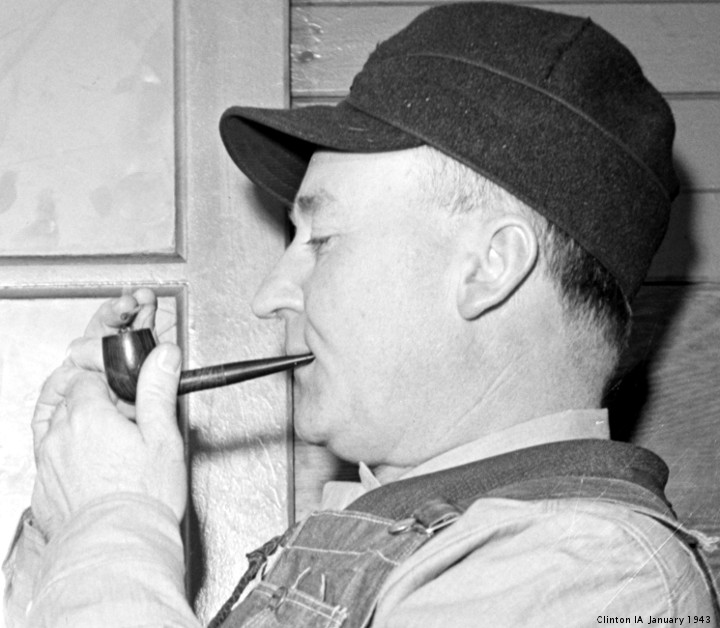
Millard Fillmore’s Birthday

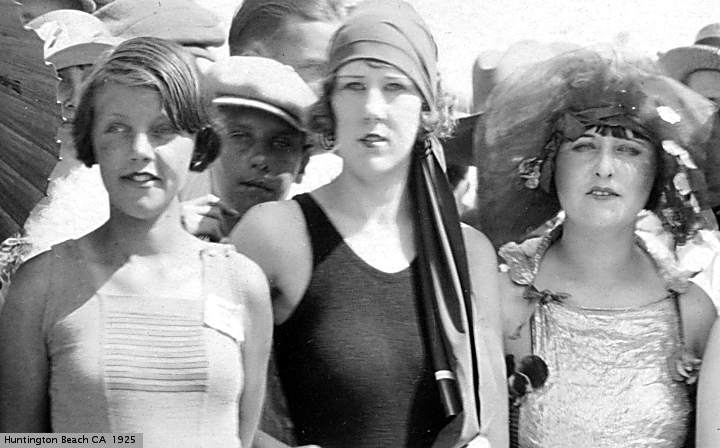


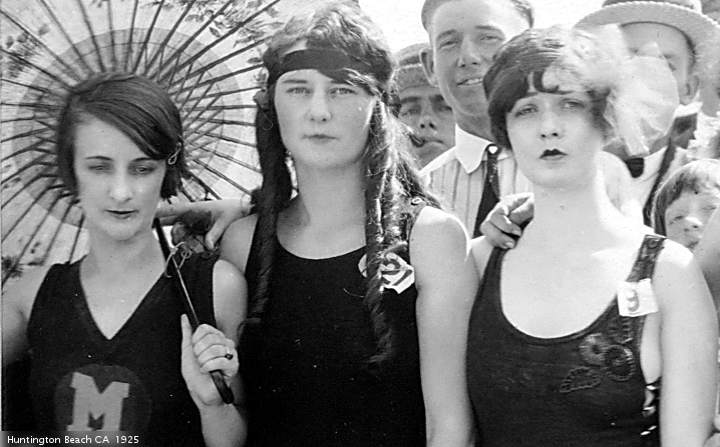
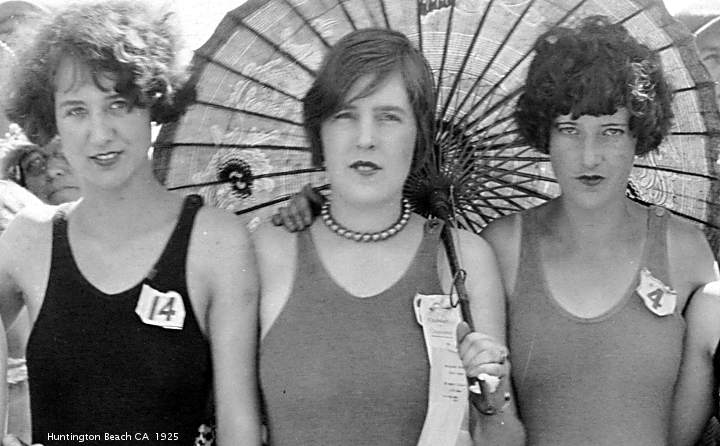
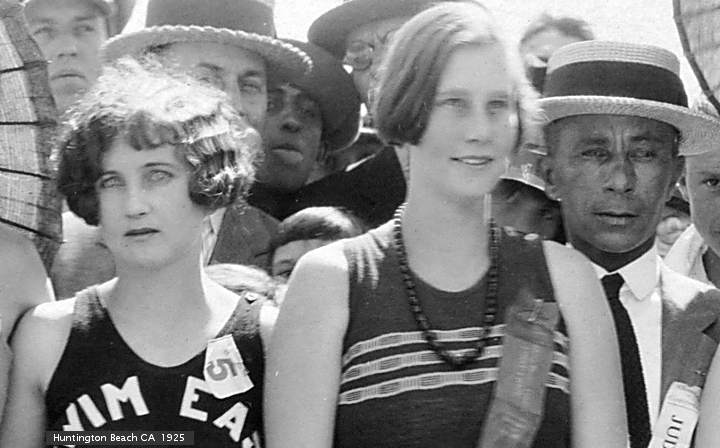

On January 7, 1800, Millard Fillmore was born. He had no middle name, so his initials were MF. He was POTUS number thirteen, serving July 9, 1850 – March 4, 1853. A member of the Whig party, Mr. Fillmore became President after the death of Zachary Taylor. This is the only death of a serving President not connected to the zero factor.
Whenever a President dies in office, there are conspiracty theries. In the case of Zachary Taylor, the body was exhumed in 1991. The investigation found that Mr. Taylor “had no more arsenic in him than you or I walking around in the environment today.”
“The details about how and why President Taylor died are still in dispute today. The president attended a ceremony at the site of the Washington Monument on July 4th on a reportedly hot summer day. He fell ill soon after with a stomach ailment after drinking iced drinks and eating a bowl of cherries. His doctors gave him relief medication that included opium and later bled the president. Taylor died five days later at the age of 65.
Officially, he died from cholera morbus, and today, the prevalent theory is that Taylor suffered from gastroenteritis, an illness exacerbated by poor sanitary conditions in Washington. There are other theories, including one where Taylor was poisoned by people who supported the South’s pro-slavery position. (In recent years, Taylor’s body was exhumed and a small, non-lethal amount of arsenic was found in samples taken from his corpse.) It was Taylor’s unexpected opposition to the expansion of slavery (he was from the South and was the last president to own slaves) that had caused an immediate crisis in 1850.”
Some naysayers claim that Millard Fillmore was the one to poison the President, but they are not taken seriously. Millard Fillmore served what was left of Mr. Taylor’s term. He is little known today, which makes one wonder why he was included in the history series American Douchebag. Which is not to say that Mr. Fillmore is completely forgotten.
@EdDarrell Happy Birthday Millard Fillmore! Born January 7, 1800. Fillmore as a young man? @fillmoremillard Thank you Ed! I was a handsome devil, wasn’t I? #Fillmore2016 @EdDarrell One story holds that when Fillmore toured England and Europe Queen Victoria said said was the handsomest man she ever met. @MonroeNumber5 Prince Albert must have loved that… Perhaps he wasn’t vain enough to let it bother him. @EdDarrell Or, more likely, Albert knew Victoria’s astounding love and devotion to him. Albert died 6 years later.
At one time, Johnny Carson thought jokes about Millard Fillmore were funny. A youtube search does not reveal any of these jokes. During a writers guild strike, Mr. Carson wrote his own monolog. “… astrology would no longer be used at 1600 Pennsylvania Ave. Employed instead, he said, would be “a channeler speaking through the spirit of Millard Fillmore.”
The rest of this holiday post is recycled. It was inspired by Millard Fillmore’s Bathtub, a fine blog. MFB is published today, six years after the original post. As you may have guessed, it is named for Millard Fillmore. MF was POTUS (and many POTUS are MF) between 1850 and 1853. The last whig to serve as POTUS (history does not record whether he wore one), Mr. Fillmore helped delay the War Between the States for ten years.
After he left office, Mr. Fillmore visited Atlanta GA in 1854, becoming the first POTUS to do so. A road in San Francisco was named Fillmore Street, and loaned the name to a famous concert hall. Johnny Carson made him a punch line to many jokes. And, there is the bathtub.
In 1917, with America mixed up in a European war, H.L. Mencken published a column in the New York Evening Mail. He claimed that the bathtub had been invented in 1842, and was a controversial device. (The first model was made of mahogany lined with lead.) President Millard Fillmore installed a bathtub in the White House in 1850, and greatly increased the acceptance of the invention. The story was a lie, but was believed without question by the (unwashed) public.
Recently someone found a letter, written by Alexander Stephens, the Vice President of the Confederate States of America. In 1860, the election of Abraham Lincoln was seen by many as a disaster. Mr. Stephens disagreed: “I know the man [Lincoln] well, he is not a bad man. He will make as good a President as Fillmore did and better too in my opinion.”
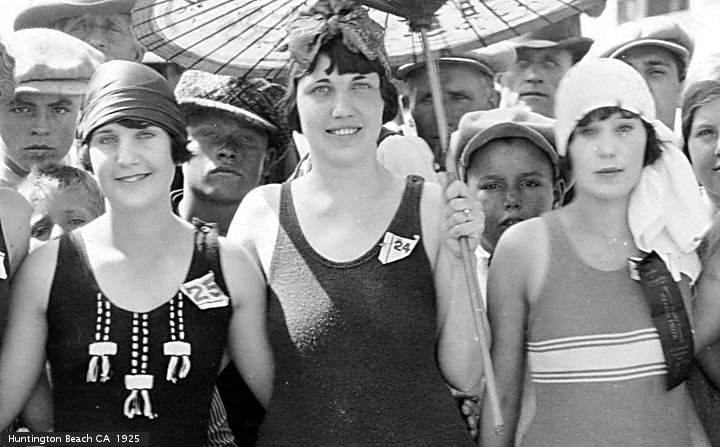
Pictures are from The Library of Congress. These details are from picture #06665, “Bathing Beauty Pageant, 1925, Huntington Beach CA”



Georgia Statehood Day

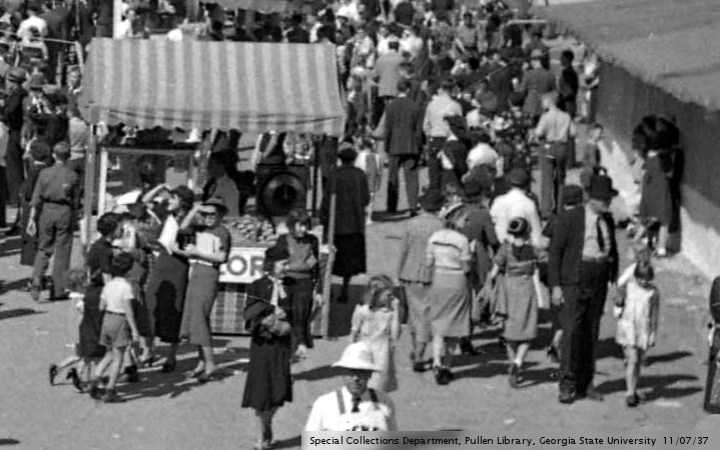
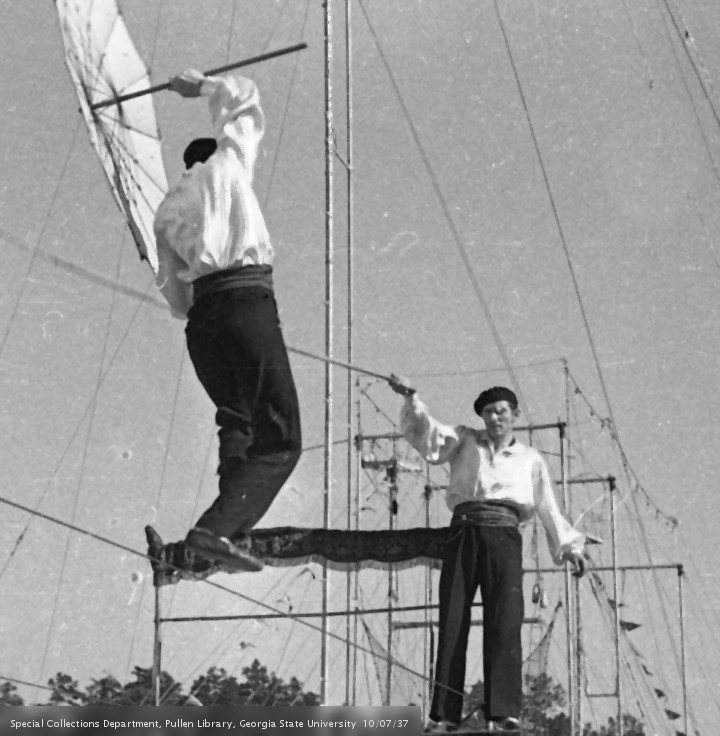



@EdDarrell “Hey, Georgia! Fly your flags on January 2, 2016 , to honor Georgia Statehood Day!” PG has lived in Georgia all his life, and never knew that this was statehood day. Today in Georgia History has this to say: “Georgia elected six delegates to the Constitutional Convention in Philadelphia in the summer of 1787. Only four went. And only two—Abraham Baldwin and William Few—signed the final document. … Georgia called a special convention in Augusta to consider the proposed charter. The delegates voted unanimously to ratify the new U.S. Constitution, on January 2, 1788.”
The Constitutional Convention was called to revise the Articles of Confederation. They wound up scrapping the old document, and creating the Constitution from scratch. The “Founding Fathers” created the system of Government that we use today, along with a way to amend the Constitution. (PG has served on bylaw revision committees. The one thing you must have is a way to amend the bylaws.) The new document would not take effect until nine of the thirteen colonies ratified it.
Delaware was the first state to approve the Constitution, on December 7, 1787. It’s neighbors Pennsylvania (December 12) and New Jersey (December 18) soon followed. Georgia was the fourth state, and the first southern state.
Slavery was still legal in Delaware, Pennsylvania, and New Jersey in 1787. One famous citizen of Pennsylvania, Ben Franklin, owned two slaves, named King and George. Franklin’s newspaper, the Pennsylvania Gazette, routinely ran ads for sale or purchase of slaves.
The concept of flying the state flag has an ironic twist in Georgia. The design of the flag has changed twice in the last fifteen years. In 1956, the legislature voted to incorporate the St. Andrews cross, aka the Confederate flag, into the Georgia state flag. (If you want to debate their motive for doing so, please go somewhere else.) After much controversy, the flag was changed in 2001, and again in 2003. It probably will not be changed again.
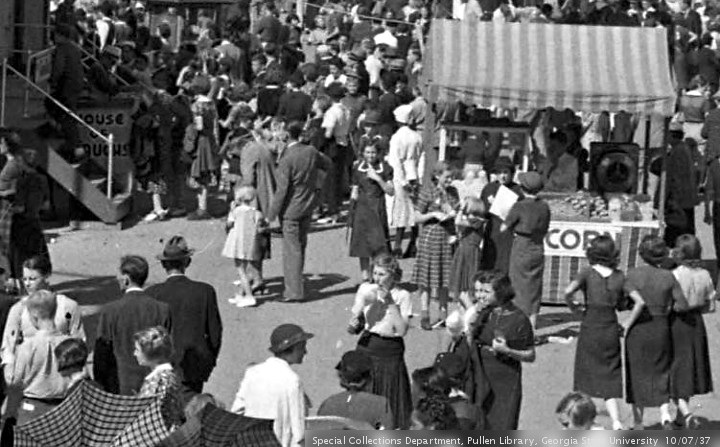
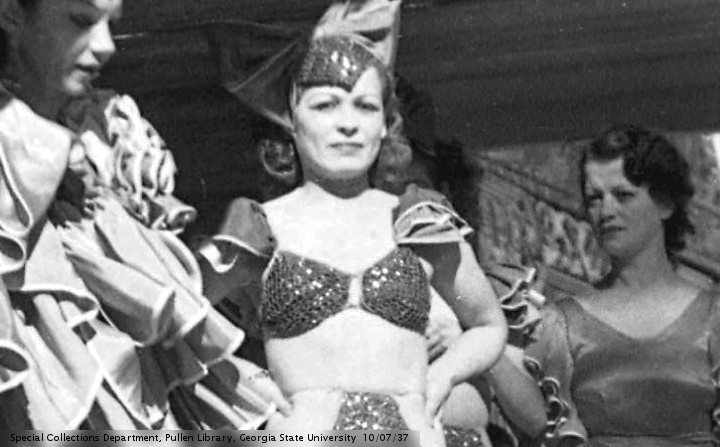
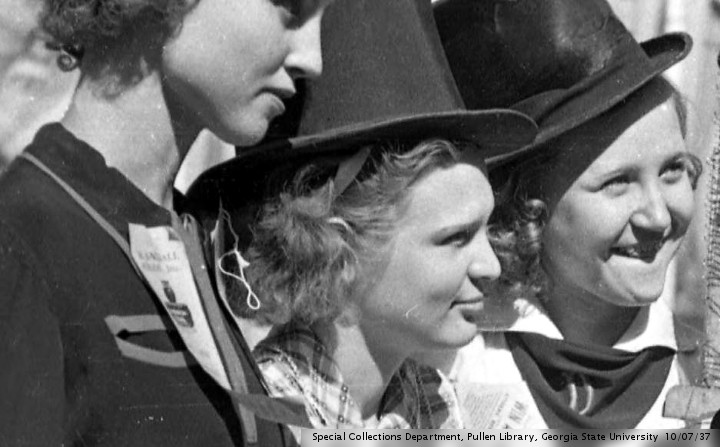
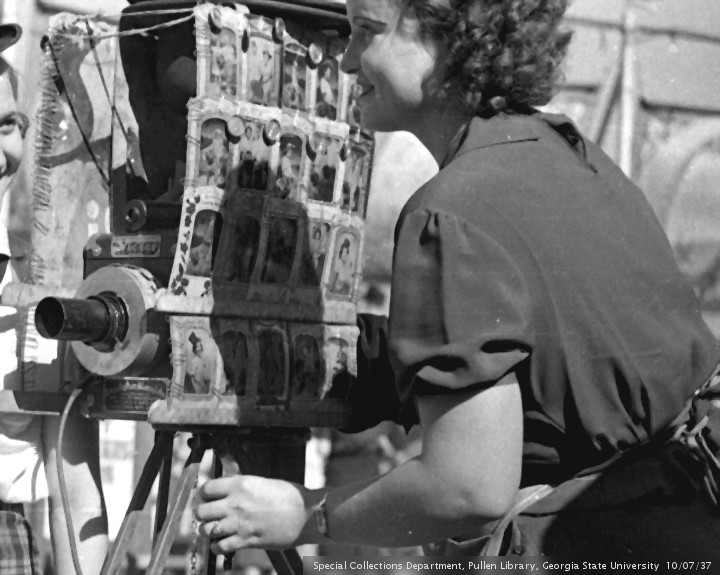
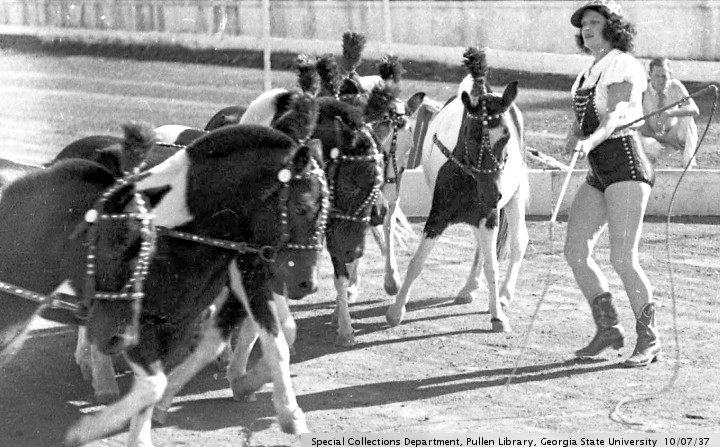
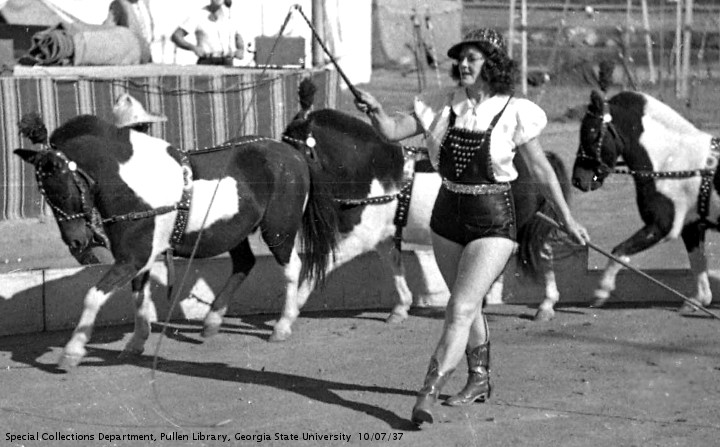
Pictures are from “The Special Collections and Archives, Georgia State University Library”.

New Years Day




One thing that is accepted without question is the year starting at midnight on December 31. That is, in some cultures. Jews have a new year in September, China celebrates some time in January, and the fiscal year is whenever the bean counters say. If you ask google “why does the year start january first”, you get 436m options.
The earth runs on a cycle, based on it’s annual trip around the sun. The winter solstice is the longest night of the year, and in many ways the logical end of the year. The celebration of Christmas, a few days after the solstice, is not a coincidence. The question today is, why do we start a new year a week after Christmas, or ten days after the solstice?
The top ranked answer at google is from catalogs.com. They talk about Julius Caesar and Pope Gregory XIII(13), but never quite say why January first is the big day. It does end on a helpful note: “Calendars are a way that grownups organize time, but clearly not all grownups do it the same way. Happy New Year, therefore, whenever it happens for you.”
Lifeslittlemysteries continues with the talk about Caesar and the Pope. It is noted that January 1 was the day that Roman officials started their term of office. In England and her colonies, the new year was celebrated in March until 1752.
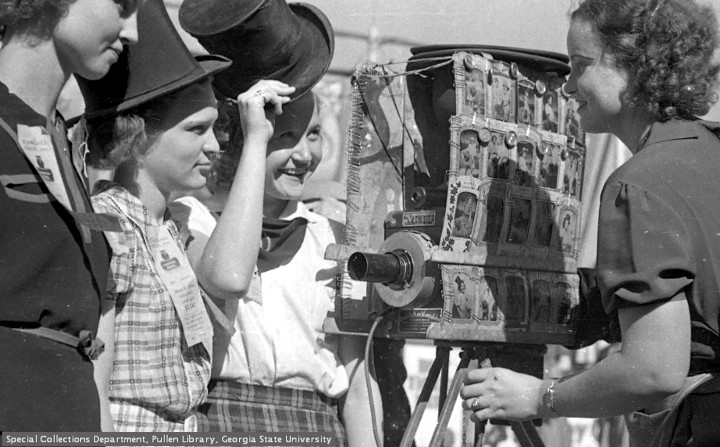
The rest of the google results do not look promising. PG does not know the answer to this. Maybe the best answer is that the New Year starts January 1st is because the calender says so. This is a repost, with pictures from “The Special Collections and Archives, Georgia State University Library”.




War Between The States
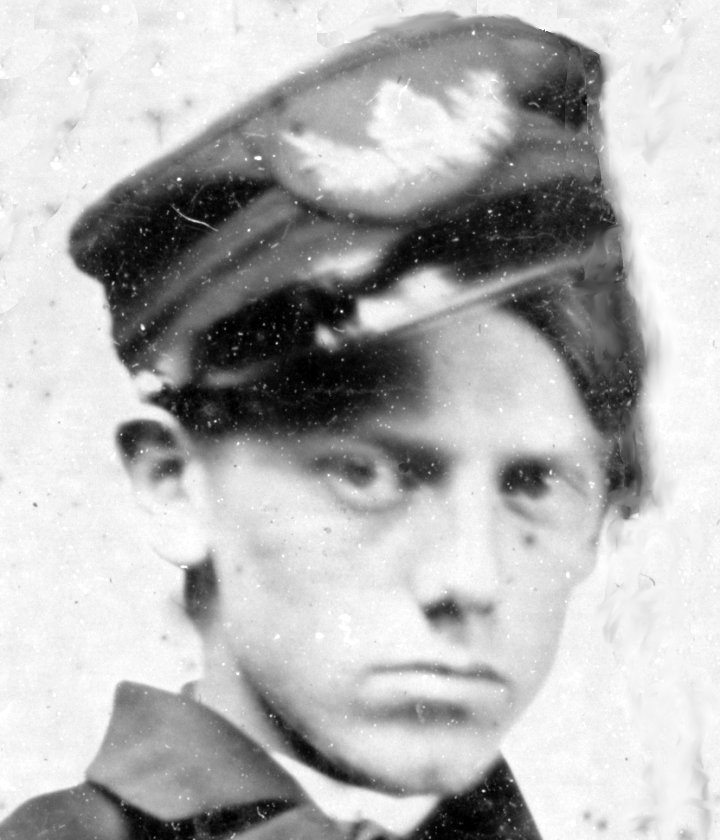
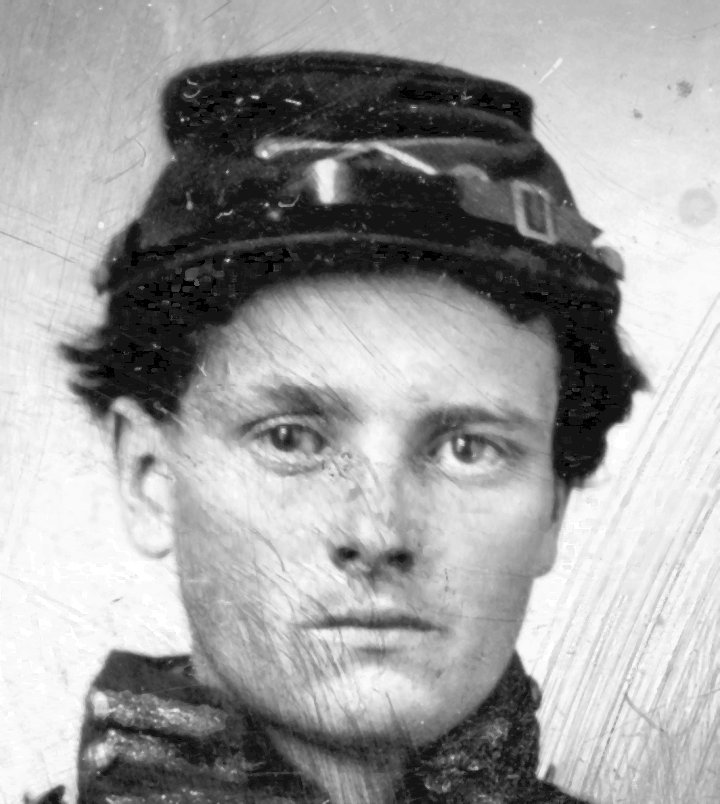
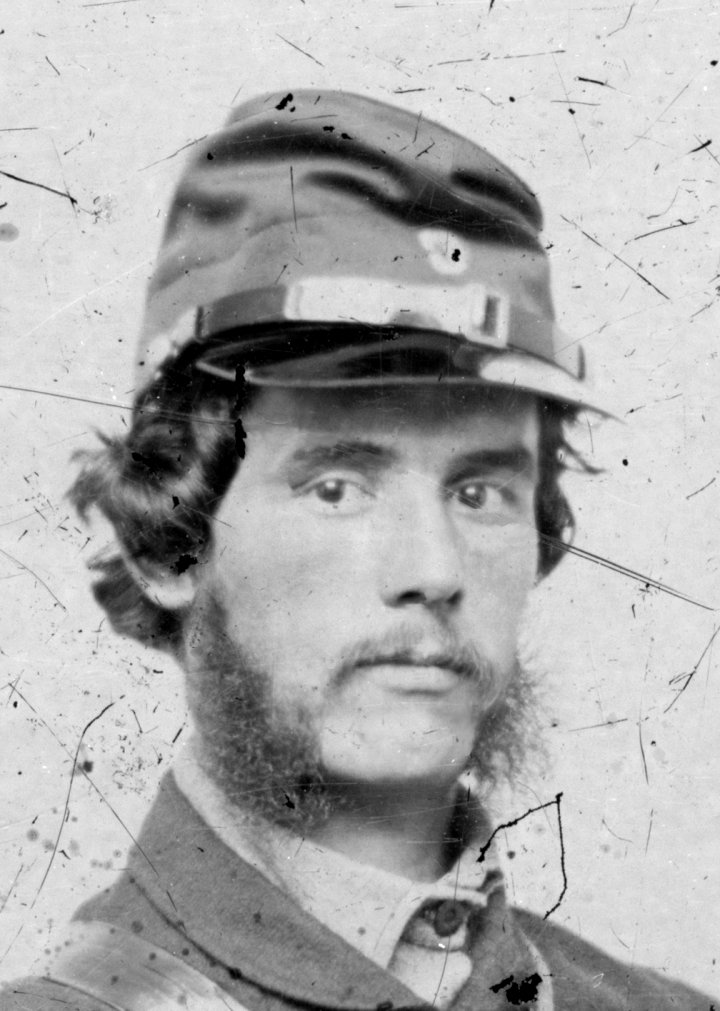


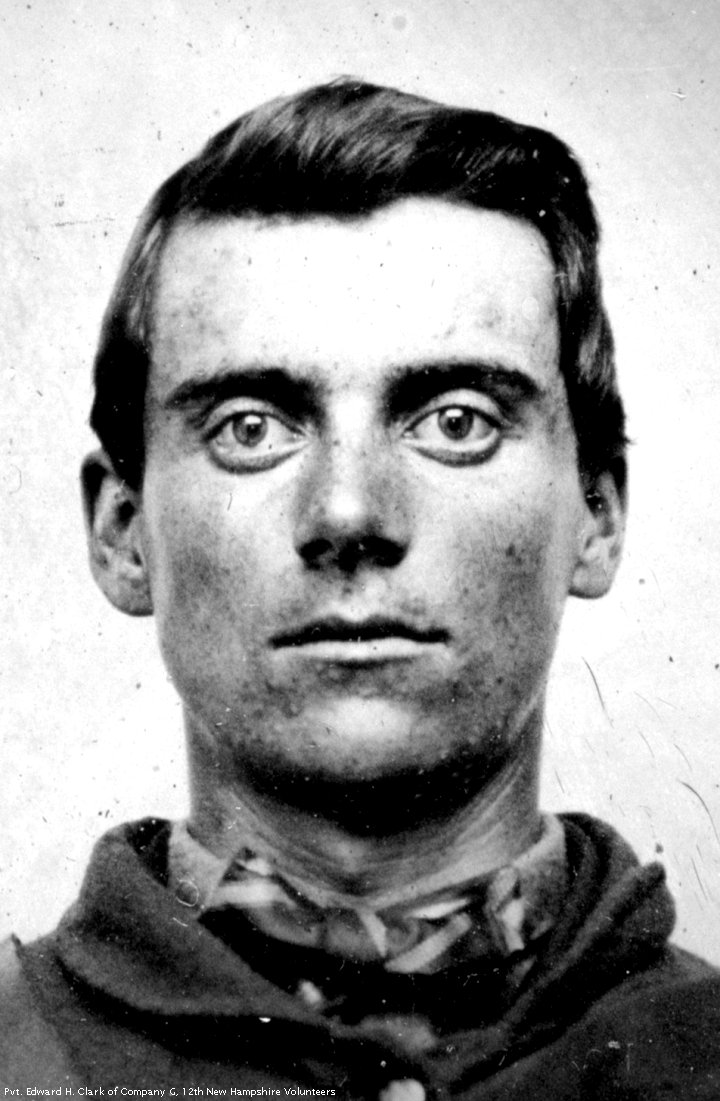


It is a truism that history is written by the winner of the war. This seems to apply to the naming of a horrific armed struggle in North America between 1861 and 1865. The most common name is Civil War. To many in the South, it is the War Between The States. To PG, WBTS is a better name.
In fifth grade, PG had to write an essay about the Battle of Atlanta. The essay was a device for teaching grammar. The contest was sponsored by the Daughters of the Confederacy . The phrase “Civil War” was not permitted. The acceepted name for this conflict was War Between the States.
The conflict started as soon as the colonies became independent from Great Britain. The South was an agrarian society, with slaves to work the fields. The north was becoming an industrial society, with a need for an independent work force. The north wanted high tariffs to protect her industries, while the south wanted to sell it’s cotton to Europe. Many were suprised that the Union lasted as long as it did.
Slavery was an important issue. The south wanted to keep “the peculiar institution,” while many in the north were horrified. There were economic reasons to keep slavery. Numerous compromises over the years kept the Union intact. This ties in with a central dilemma of the american experience … how much power to give to the states, and how much power to give to the federal government.
In 1861, eleven states left the United States of America. These eleven states formed a Confederacy, of more or less independent states. Between 1861 and 1865, the Confederate States of America fought a brutal war with the the United States of America. Very little about the conflict was civil.
PART TWO There was an armed conflict in North America between 1861 and 1865. The most popular name today is Civil War. According to the always helpful wikipedia Civil War was used during the conflict, but was not the only name. Other names include the War of the Rebellion, the War for the Union, the War for Southern Independence, and Mr. Lincoln’s War.
Evidently, the phrase War Between the States became popular after the conflict. This article from the North Carolina War Between the States Sesquicentennial Commission makes a case for WBTS. This phrase is more dignified than other southern oriented expressions like “War of Northern Aggression” or “The recent unpleasantness,” although not as much fun.
There was a debate in the US Senate, in 1907, over what should be the “official” name of the conflict. In a commentary on this debate, it is noted: ” I am struck by the reconciliationist tone of both excerpts. Compared with the intensity of the debate in certain camps today (2005) it is interesting to note that the senators who took part in this discussion back in 1907 did not see this question as decisive. Given that many were veterans they seemed content to concentrate on their shared experiences … In the background of the debate was the lingering issue of how to understand the relationship between the states and the federal government at the time of secession and at the beginning of Reconstruction. Our tendency today to refer to the war as the ‘Civil War’ is a reflection of the widespread belief that secession is illegal or at least not worth serious consideration.”
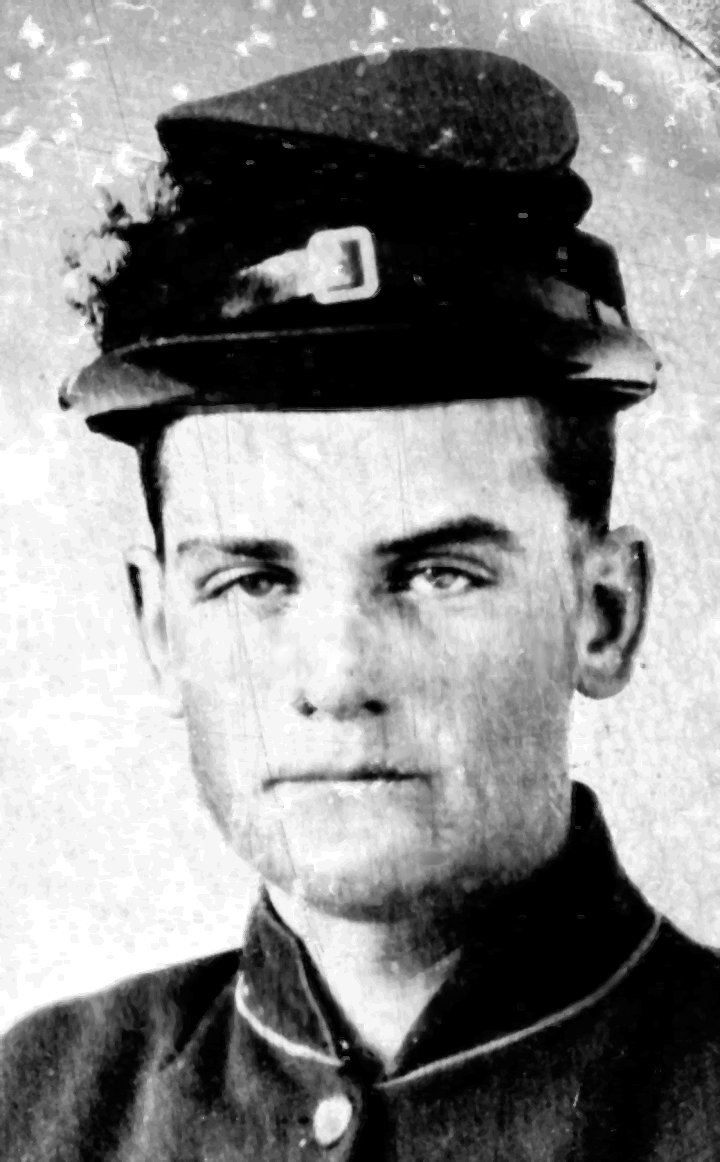
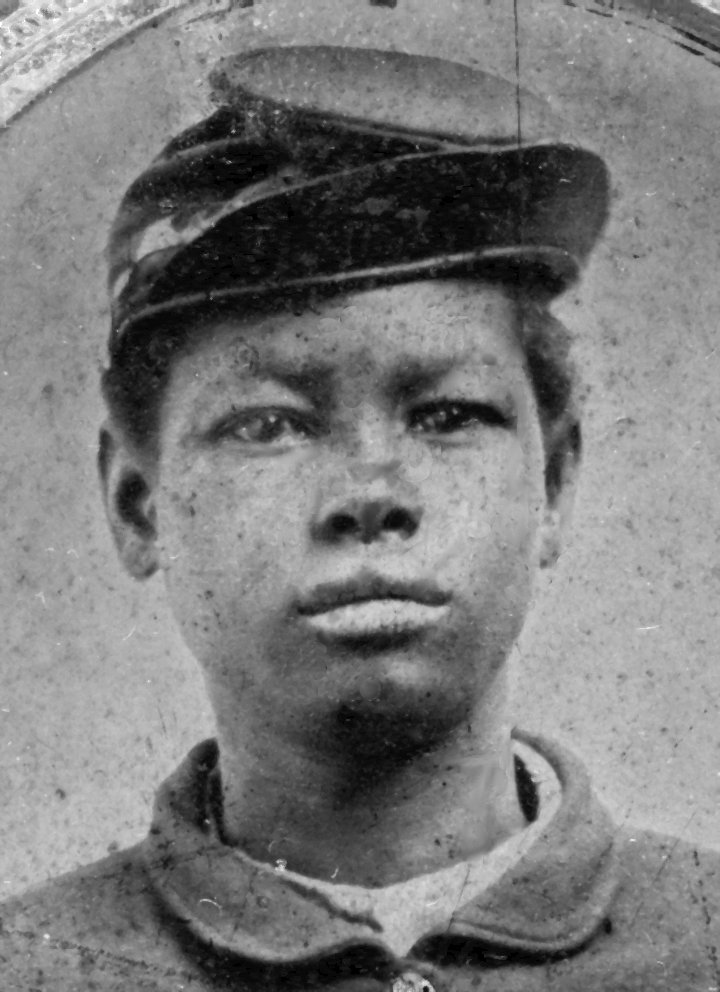
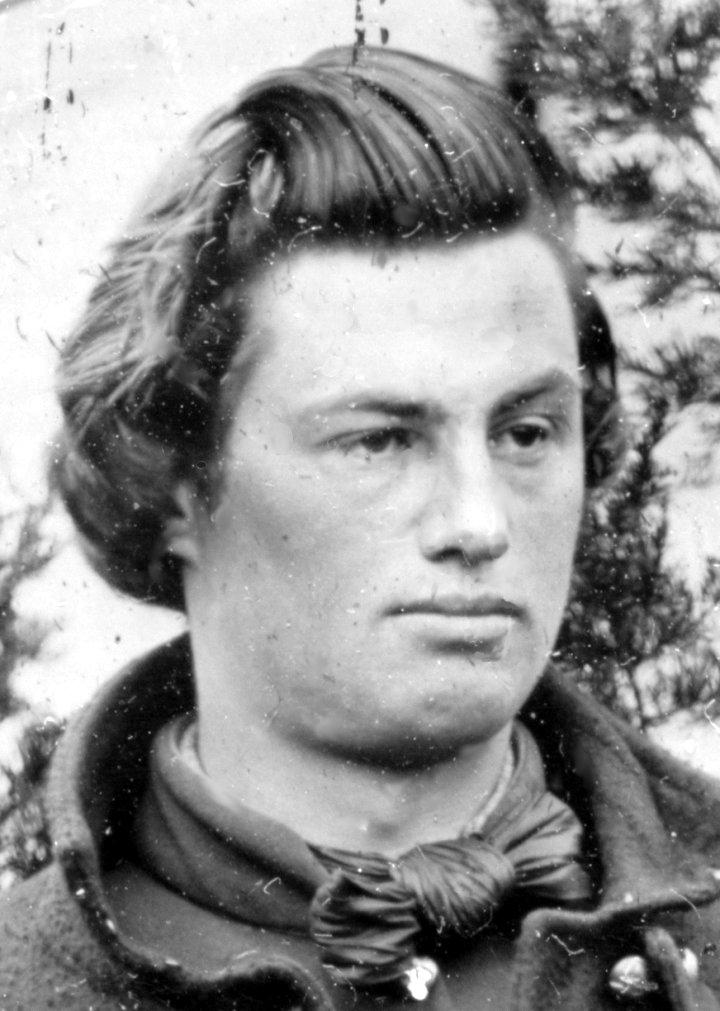
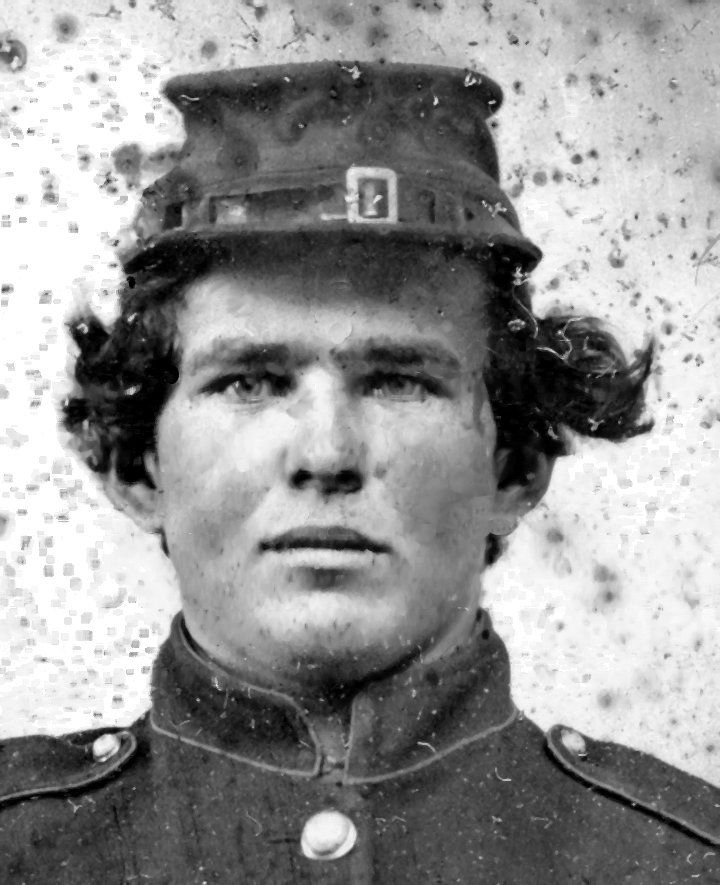
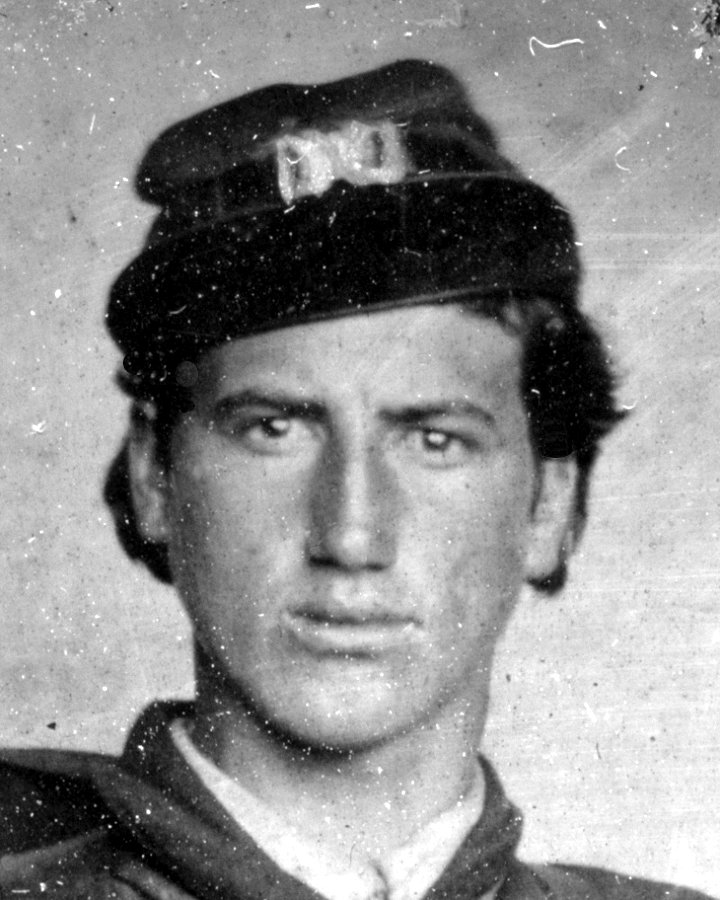
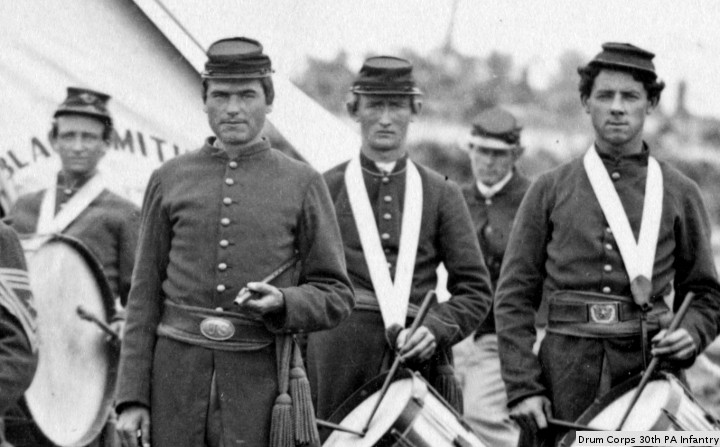
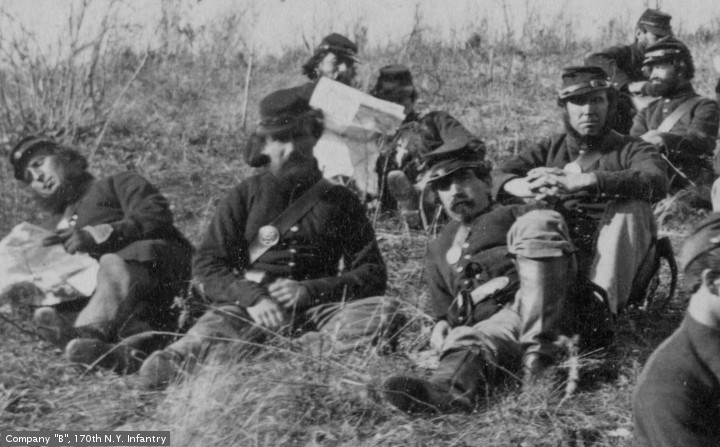
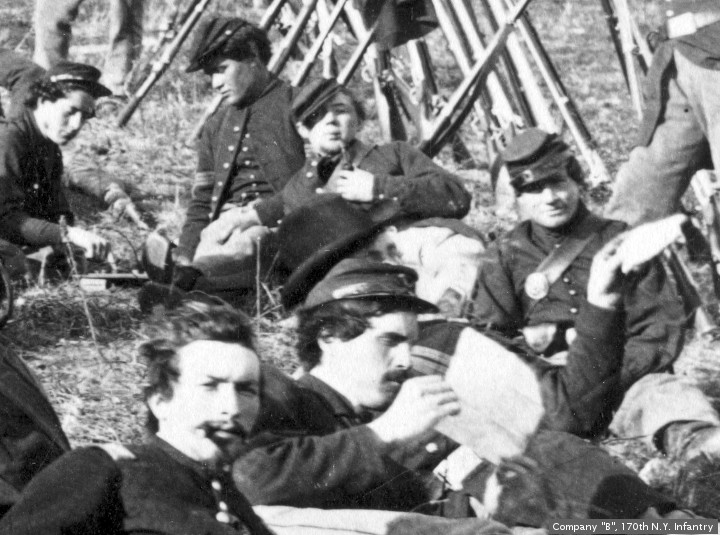
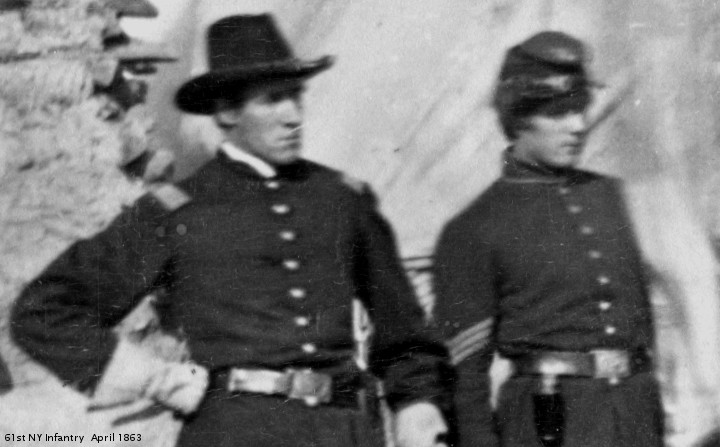
Pictures, of Union soldiers, are from The Library of Congress. This is a repost.



Aunt Tiny




There was a political comment on facebook. The last sentence was “No wonder Georgia turned Republican after the Clintons sold poor people out.” The person making this comment was born in 1980, the same year Georgia elected a Republican to the US Senate. This person also was born and raised in Florida. PG thought of a smart comeback.
There was a famous video by the Fruitcake Lady. In the first part, a young lady asks who to vote for in an upcoming election. FL makes a face, and said “you’re gonna ask someone who lives in FLORIDA how to vote?” This is along the lines of a Floridian transplant explaining the Republicanization of Georgia. Unfortunately, the video with the Fruitcake Lady had been taken down for copyright infringement. The spell check suggestions for Republicanization: Recapitalization, Cannibalization.
PG wasn’t really doing anything, and was in the mood for a google wild goose chase. This led to an amazing article, Sweet as Sugar, Rude as Hell, My Lost Interview with Truman Capote’s Aunt. A writer for the fishwrapper went to a mobile home in Hudson, FL. He talked to Marie Rudisill, who was best known as Truman Capote’s “Aunt Tiny.” The meeting took place in 1997, and was not what the writer expected. A family friendly version of the meeting was published The journalist received a slice of fruitcake in the mail. Everyone concerned went on with their lives.
Marie Rudisill died November 3, 2006, after becoming famous as the Fruitcake Lady. As for the journalist: “When I left The Atlanta Journal-Constitution in 2009, I stashed 27 years of old newspapers, tapes and ephemera in my garage. Nothing is more depressing to me than those boxes of old newspapers. It’s my own private morgue — replete with the sickening scent of dust and roach pills…. When I finally mustered the courage to dig around, I found the Lewis interviews — as well as a cache of other recordings. Three of the tapes had Rudisill’s name scribbled on them. I was not quite ready to listen, though. I put them in a box and labeled it.”
In 1924, Truman Streckfus Persons was born in New Orleans LA. His mother, Lillie Mae (Aunt Tiny’s older sister) left here husband behind, and took the boy to Monroeville AL. They lived in a wild household. A neighbor was Harper Lee, who wrote “To Kill A Mockingbird.” Miss Lee was a close friend, as was Sook. This is Truman’s cousin, the fruitcake chef herone of “A Christmas Memory.”
After a while, Lillie Mae married Joe Capote, who adopted the boy. They moved to New York, where Aunt Tiny joined them. Truman was sent to military school. Everyone, except Lillie Mae, thought this was a terrible idea. The effort to butch up young Truman did not work.
Aunt Tiny wrote a book, Truman Capote: The Story of His Bizarre and Exotic Boyhood by an Aunt Who Helped Raise Him. It was published in 1983, a year before Truman died. “The book scandalized Monroeville — and Capote. He told The Washington Post: “If there are 20 words of truth in it, I will go up on a cross to save humanity.” Said Harper Lee: “I have never seen so many misstatements of fact per sentence as in that book.”
There is one story that sticks out…. “Rudisill breaks down just once during our interview. It’s when she recalls “the first time Truman ever had a sexual encounter with a priest.” She was living in Greenwich Village, having followed Lillie Mae and Truman to New York. “He was sitting on my doorstep when I came home from work, and he had blood all in his pants, and then he told me about this priest. And nobody, I don’t think anybody in the world ever knew that but me.”
There is more to the story. If you have the time, you might enjoy reading the full article. Pictures today are from The Library of Congress.




From The Heart Of Atlanta To Tyler Perry
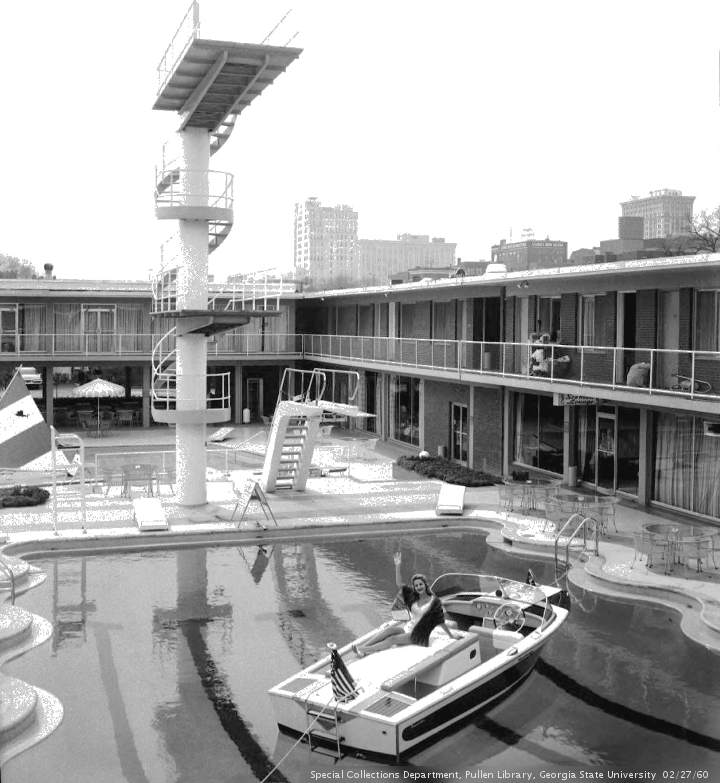

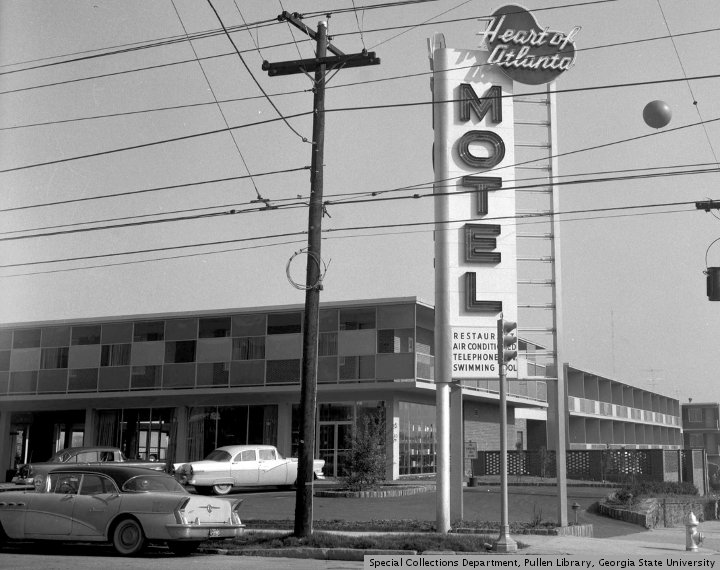


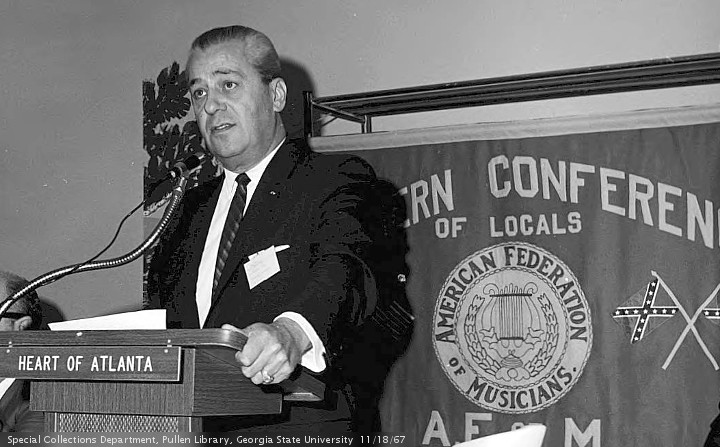
There is an old saying, what goes around comes around. When you sow the wind, you reap the whirlwind. The thing is, it is not always obvious what is payback for what. Moreton Rolleston Jr. filed a lawsuit to have the Civil Rights Act declared unconstitutional. Forty years later, a Black man, built a mansion on the site of Mr. Rolleston’s home. The fact that this Black man earned his money by playing Black women, in movies, is icing on the cake.
When the Civil Rights Act was passed in 1964, Moreton Rolleston, Jr. owned the Heart of Atlanta Motel. He filed a lawsuit, trying to have the law overturned by the courts. The case went to the Supreme Court, which upheld the law.
The legal justification of the Civil Rights Act was a law giving the U.S. Government the right to regulate interstate commerce. Mr. Rolleston argued that this use of the commerce clause went too far. “‘The argument that this law was passed to relieve a burden on interstate commerce is so much hogwash. It was intended to regulate the acts of individuals.’ If the commerce clause can be stretched that far, declared Rolleston, ‘Congress can regulate every facet of life.'” (PG supports all citizens having the right to housing, education, etc. He also wonders if we are on a slippery slope. The government keeps taking more and more freedom away.) (The link for the quote no longer works.)
In 1969, Tyler Perry was born. From humble beginnings, he has been incredibly successful. His signature character is a woman named Madea.
In 1985, Mr. Rolleston was involved in a real estate deal that went sour. He was sued. In 2003, Mr. Rolleston was evicted from his Buckhead home. In 2005, the property was sold to Tyler Perry. Mr. Rolleston sued Mr. Perry, claiming that 2035 Garraux Road was still his property.
Mr. Rolleston , was disbarred in 2007. The Veteran’s History Project shows his race as “Unspecified.” Moreton Mountford Rolleston, Jr., born December 30, 1917, died August 29, 2013.
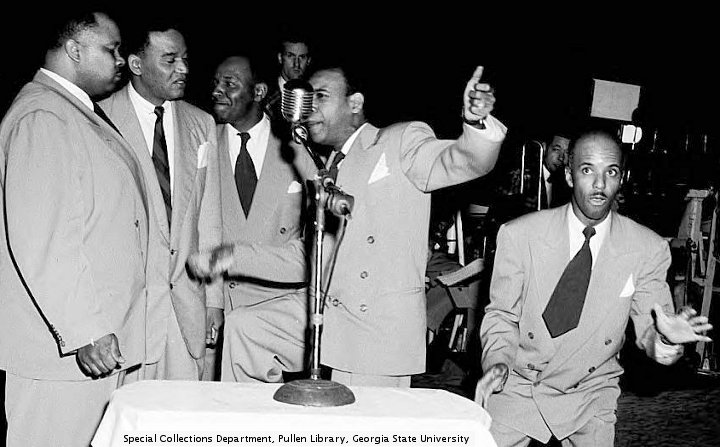
HT Millard Fillmore’s Bathtub.. This is a repost, with pictures from “The Special Collections and Archives, Georgia State University Library”.




leave a comment