Pauline Kael, Gina James, And James Broughton



Pauline Kael was the rockstar film critic. James Broughton was the radical faerie poet laureate. They were lovers, and had a daughter, Gina James. Pauline and James were not married, contrary to what some naysayers would tell you. This is a repost.
Much of the information in this feature is taken from online reviews of Pauline Kael: A Life in the Dark, a 2012 biography written by Brian Kellow. Gina James, also known as Gina Broughton, was not interviewed for the book. Neither did she participate in the making of Big Joy, a movie about James Broughton. (A wig store, Gina Beauty Supply is located at 25 W Broughton St, Savannah, GA 31401.)
Pauline Kael was born June 19, 1919, Petaluma, CA, died September 3, 2001, Great Barrington, MA, and stood 4 feet 9 inches tall. James Broughton was born November 10, 1913, Modesto, CA, and died May 17, 1999, Port Townsend, WA. Neither one had a middle name. Both used their birth name throughout life. Both had lives, before meeting in the late forties.
When she met James Broughton, Miss Kael was living what would later be called the bohemian life. After moving to New York, and being dumped for composer Samuel Barber, Miss Kael moved back to California. “Returning to the Bay Area with her tail between her legs in 1945, Pauline became involved with the incredibly effeminate avant-garde filmmaker James Broughton. He managed to impregnate Pauline but threw her out as soon as she told him, whereupon she moved to Santa Barbara to give birth to her daughter, Gina, in 1948″
“Like her early career, Kael’s personal life was also fraught with failures. Kellow says “she had a habit of falling for gay men” earlier in her life because “they tended to share her passions and enthusiasms.” She had a daughter … with one of them, experimental filmmaker James Broughton.”
“For a time, during the 1940s, he lived with future film critic Pauline Kael. She encouraged his filmmaking endeavors but their relationship ended after she got pregnant. … Pauline Kael thought that Broughton made the biggest mistake of his life when he turned down a studio film after winning the prize at Cannes.” (Apparently Mr. Broughton was from a wealthy family, and could afford this attitude. Regarding his movie The Bed, Mr. Broughton said “It was the only film I created that ever made any money.”)
“Which brings us to the strange tale of Pauline’s only child, Gina James. … In 1948, at age 29, Kael got pregnant after she “talked her way into moving in” with James Broughton, a bisexual poet living in Sausalito. By Kellow’s account, Broughton was furious at the news of Kael’s pregnancy; he felt trapped and tricked by her. One of Broughton’s friends reported that he kicked Kael out of his house. She moved to Santa Barbara to have the baby. The birth certificate listed the father as “Lionel James, a writer”. It is one of the disappointments of the book that Kellow shines little light on Kael’s passion — or whatever it was — for Broughton, on how she processed that cruel rejection and on whether Broughton ever recognized Gina as his daughter.”
James Broughton moved on with his life. He made experimental films, got married, and fathered two more children. At some point he met Joel Singer, and began the romance that would last the rest of his life. It is tough to say whether he was genuinely bisexual, or whether he was playing the role society expected of him.
This review of Big Joy continues: “But interviews with Singer, waxing poetic about his years with the artist, are balanced by reminiscences from Broughton’s ex-wife and his abandoned son. Rather than only celebrating silliness, I found it admirable that the directors didn’t gloss over the pain he caused his wife and children. After all, when you think about it, he spent all of his life unable to decide if he was gay or straight; leaving a lot of broken hearts in his wake.
We learn from Kael that he flirted with everyone he met. “He rode off into the sunset with some guy,” his wife, Suzanna Hart tells us. “That was very sad for me, but not for him, which was…very irritating.” In her segments, Hart keeps her emotions in check but you can clearly read the sadness and anger in her face. The son doesn’t have much good to say about his absent father and the two daughters (the first by Kael and the second by Hart) both refused to be interviewed for the film. Singer has a lot to say about their blissful decades together, but he also comes off a bit heartless when he shows no guilt over breaking up what he calls Broughton’s “loveless” marriage.”
The baby daddy leaves, and the struggling writer becomes a single mom. “… Kael’s relationship with her actual daughter was something out of a Tennessee Williams play, and not in a good way. Kael home-schooled Gina and, as the girl grew up, kept her close, as a typist, projectionist, driver and right-hand man, and she banished any friend who actively encouraged the young woman to break out on her own. Though she was in many ways a loving and committed mother, helping to raise Gina’s son and always living nearby, one senses a Gothic selfishness in her mothering.”
Gina James declined to talk with Kellow for his book, but the author says Kael and her daughter had a sort of symbiotic relationship. “Pauline did not type, Pauline did not drive — Gina performed both those functions for her. And Gina was a very good critic of Pauline. She got to see Pauline’s copy before anyone else did and she often had very, very important and influential things to say. But Pauline really wasn’t wild about the idea of Gina breaking away and having her own life apart from her, and she didn’t do anything really to encourage her in that direction as far as I can see.”
Amazon one star comment: And her poor daughter – what a fate – TYPING all that. Poor Gina, — I can see her – Kellow described sitting silently in some coffee shop while her mother raved on and ON with her pet directors.
An affair with the experimental filmmaker James Broughton produced a child, Gina, whom Kael raised by herself, Mildred Pierce–like, heroically supporting them with a number of odd jobs, including running a laundry. Gina’s heart condition required expensive surgery, and Kael ended up enticing Edward Landberg, the owner of a local art-house theater, Berkeley Cinema Guild. They had begun as co-programmers. As Landberg tells it: “One day, when I was over at her place, I happened to graze her breast with my hand, and she kind of looked up and said, ‘What have you got to lose?’” Their marriage proved a fiasco, but Landberg agreed to pay for Gina’s operation, which Kellow suspects had been Kael’s motive all along…. Kellow shows more independence in assessing Kael’s treatment of her daughter Gina, whose ambitions to become a dancer or a painter she did little to encourage, preferring to keep her on “a silver cord . . . she had also grown accustomed to the steady, dependable role that Gina played—as secretary, driver, reader, sounding board—and she was loath to give her up.” Gina, for her part, was mistrustful of the dynamic she witnessed between Kael and her acolytes.“
“The closest and longest-lasting partnership of her life was with her daughter, Gina James … James considered speaking to Kellow, but finally declined, leaving a blank space at the center of this otherwise vividly detailed biography. Gina lived with her mother till she was over 30, typed up her reviews after Pauline stayed up all night writing them in longhand, and gave up both college and a shot at a dance career to serve as her mother’s caretaker, companion, and driver….
Kellow cites the text of the breathtakingly passive-aggressive eulogy that Gina delivered at her mother’s funeral in 2001: “My mother had tremendous empathy and compassion, though how to comfort, soothe or console was a mystery that eluded her … . Pauline’s greatest weakness, her failure as a person, became her great strength, her liberation as a writer and critic . … she turned her lack of self-awareness into a triumph.”
One more chapter remains. “Gina lived with Kael well into her thirties … That she married and had a child, Will, seemed to catch Kael by surprise, though she ended up adoring her only grandchild, someone with whom she could watch action movies with.
Kael died in 2001, when Will was about 19. Unfortunately, and Kellow made no mention of this in his book whatsoever, there’s a horrible postscript, one that may well have been the reason for why Gina declined to be interviewed for the book. On October 6, 2007, Will, then 25, went hiking in the East Mountain State Forest in the Berkshires. He was an avid hiker, not to mention a devoted martial artist. He had a girlfriend. He never came back. Gina reported him missing, but his body wasn’t found for more than week, on October 15. … “authorities found camping equipment nearby and while cause of death has not been determined, foul play is not suspected.”
Pictures today are from The Library of Congress. UPDATE These two comments were made to the original post. Anonymous said, on June 16, 2017 at 9:18 pm Your piece on Kael and Broughton is rife with misinformation and judgements galore and unbelievably badly written. Get a life and stop spreading falsehoods. And next time you put your fingers to a keyboard do your due diligence! James’ son was NOT ABANDONED! He lived happily with the two of us after the divorce. You fail to recognize that James’ ex-wife was a classic fag hag who had been married to another gay man before her relationship with James. She had been in psychotherapy for years before they got together and for many years after they split up. James certainly did not spend the rest of his life uncertain about his sexuality. Read his autobiography COMING UNBUTTONED and you’ll discover how misinformed your take on him is. You have done a great disservice to your readers by publishing such homophobic nonsense. Joel Singer ~ Sterling Wilson said, on August 19, 2017 at 1:40 pm Curious about this autobiography, I found the following from a Publishers Weekly review “Broughton forsakes introspection for literary gossip and name-dropping: Kenneth Rexroth, Pauline Kael, Dylan Thomas, Anais Nin. The birth of a daughter is dispensed with in two sentences. Broughton’s insistence on making himself the center of attention increasingly intrudes.”





Tom Paine




There is a meme floating through the innertubes. “To argue with a person who has renounced the use of reason is like administering medicine to the dead.” Thomas Paine English-American political activist, writer and revolutionary. A drawing of Mr. Paine lurks to the left of the text.
The quote is from the first paragraph of a pamphlet written by Mr. Paine, The American Crisis: LANCASTER, March 21, 1778, TO GENERAL SIR WILLIAM HOWE. It was part five of a series, The American Crisis. The tract was intended to inspire the war effort against the British. The full sentence: “To argue with a man who has renounced the use and authority of reason, and whose philosophy consists in holding humanity in contempt, is like administering medicine to the dead, or endeavoring to convert an atheist by scripture.”
Four Principles of Quotation was written in 2002, before the rise of meme culture. The salient principle for today is number four, “Only quote from works that you have read.” The tract by Mr. Paine is 6956 words of revolutionary era purple prose. Today’s facebook expressionist does not want to go to that much trouble.
The American Crisis V has some interesting passages. It would be considered politically incorrect today. The British labelled is “the encourager of Indian cruelties,” and accused of “the unchangeable name of meanness.”… “The particular act of meanness which I allude to in this description, is forgery. You, sir, have abetted and patronized the forging and uttering counterfeit continental bills. … shows an inbred wretchedness of heart made up between the venomous malignity of a serpent and the spiteful imbecility of an inferior reptile.”
The text is directed at General William Howe. The war was not going well for the British… “They resemble the labors of a puppy pursuing his tail; the end is still at the same distance, and all the turnings round must be done over again.” General Howe resigned April 4, 1778, fifteen days after The American Crisis V was written. The purple prose might have been a factor.
“Your master’s speech at the opening of Parliament, is like a soliloquy on ill luck. It shows him to be coming a little to his reason, for sense of pain is the first symptom of recovery, in profound stupefaction…. who is daily decaying into the grave with constitutional rottenness. There is not in the compass of language a sufficiency of words to express the baseness of your king, his ministry and his army. They have refined upon villany till it wants a name. To the fiercer vices of former ages they have added the dregs and scummings of the most finished rascality, and are so completely sunk in serpentine deceit, that there is not left among them one generous enemy. … She is the only power who could practise the prodigal barbarity of tying men to mouths of loaded cannon and blowing them away. … If there is a sin superior to every other, it is that of wilful and offensive war. … We leave it to England and Indians to boast of these honors; …”
Mr. Paine has a good reputation today. This was not unversal during the revolution. “In 1777, Congress named Paine secretary to the Committee for Foreign Affairs. The following year, however, Paine accused a member of the Continental Congress of trying to profit personally from French aid given to the United States. In revealing the scandal, Paine quoted from secret documents that he had accessed through his position at Foreign Affairs. Also around this time, in his pamphlets, Paine alluded to secret negotiations with France that were not fit for public consumption. These missteps eventually led to Paine’s expulsion from the committee in 1779.”
After the war, Mr. Paine went back to England. He soon got involved in the French Revolution, and was imprisoned. He continued to write, and get in trouble. Mr. Paine was invited back to the United States by Thomas Jefferson. He “died in June 1809, and to drive home the point of his tarnished image, the New York Citizen printed the following line in Paine’s obituary: “He had lived long, did some good and much harm.” Pictures are from The Library of Congress. This is a repost.



Was Mae West A Real Girl?



August 17 is birthday 124 for Mary Jane “Mae” West. Of course, she died in 1980, so the party is off. PG saw a note on facebook, and made the comment “She was rumored to be a man.” One right click google search later, this post started to take shape. This is a repost.
There is a blogspot site, maewest.blogspot.com. It is still published, with a birthday post today. Five years ago there was a post, Mae West: Penis Rumors. It seems as though Miss West liked to say, to the press, “When I die, you are going to be very surprised!”
A hollywood gossipmonger had a story, Was Mae West…A Man?! Much of her information comes from the tasteful findadeath site. The story here is that Mae West died in 1950, and the death was kept quiet. Her brother made appearances in her place, until the final death in 1980. This would have been quite a feat, considering that John Edwin West died in 1964. That doesn’t stop people from talking.
“…the real Mae West died somewhere around 1950, give or take a couple years, and rather than let the show stop, it was announced that not Mae, but her brother, died. Of course, the brother then became Mae West and carried on until November 1980. If you look carefully at photos from around 1950 on it definitely looks like a different person not to mention the big hands and masculine features, bone structure, etc. I may not have all the details 100% correct but I would almost put money on the fact that the ‘Mae West’ ‘who died in 1980 had a weenie!!”
The hands were mentioned by Raquel Welch. The two were in Myra Breckinridge, the first movie Miss West had made in 27 years. (Miss West appeared on Mr. Ed in 1964.) Miss Welch appeared at a film festival in 2012, and had stories to tell.
“When I went over to say hello to her (one day) I said, ‘Hi, it’s Raquel, remember?’ She sort of extended her hand to me and I went to kiss the ring and one false fingernail painted silver fell to the floor. I looked at the hand and I thought, ‘Oh, I’m getting a vibe.’ I really think she’s a man! At this point in her life all bets are off and you’re not going to be able to doll it up that much. I would say it’s pretty accurate that she resembled a dock worker in drag.” …
“I had this beautiful dress and it was black with a big white ruffle around the neck and a black velvet hat … Apparently Mae got wind of the fact that I was wearing this exquisite dress and I went to the studio that day for our scene together. I got coiffed, got my hair done and went to the closet to get the dress and it wasn’t there. I asked my dresser what happened to the dress and she said, ‘It’s been confiscated. Mae does not want you to wear that dress. You can wear the red dress that you wore in the last scene!’ … Welch was so outraged that she stormed off the set and refused to return until the dress was back in her closet. … “For the scene, we never appeared in a two-shot together. She left after she did her lines and I had someone off-camera reading her lines and I had to pretend she was there.”
Pictures are from The Library of Congress.



Seven Brilliant Quotes





There is a little graphic floating around, Seven Brilliant Quotes. Some find these sayings to be inspirational. PG smells a rat. Here are the seven quotes:
William Shakespeare – Never play with the feelings of others because you may win the game but the risk is that you will surely lose the person for a life time.
Napoleon Bonaparte – The world suffers a lot. Not because of the violence of bad people, but because of the silence of good people.
Albert Einstein – I am thankful to all those who said NO to me. Its because of them I did it myself.
Abraham Lincoln – If friendship is your weakest point then you are the strongest person in the world.
Martin Luther King Jr. – We must learn to live together as brothers or we will perish together as fools.
Mahatma Gandhi – The weak can never forgive. Forgiveness is the attribute of the strong.
Abdul Kalaam – It is very easy to defeat someone, but it is very hard to win someone.
If nothing else, research into the veracity of these quotes should provide some amusing text to go between the pictures. When you go looking in the land of google, there is no telling what you will find. During this expedition, the first page rule will be in effect. Only results on the first google page will be considered. The NB quote has 1.7 million results, which is too much work.
Lets begin with Willie the shake. Did he really say “Never play with the feelings of others because you may win the game but the risk is that you will surely lose the person for a life time.”? Or, as they say in the Yahoo village, Does anyone know where this Shakespeare quote comes from?
hugeshantz Does anyone know where this Shakespeare quote comes from? I’ve seen this quote all over the internet, always attributed to Shakespeare, but I can’t find a legitimate source of where it comes from (i.e. a specific sonnet, play, speech, etc.): “Never play….” Can anyone help me out here?
Dude the Obscure This is 20th/21st century psychobabble. Shakespeare never wrote anything remotely resembling that. Please never trust any of these idiotic “internet quote sites.” They are all, all, all crap. I can’t believe that any intelligent person could think for a minute that this was written by Shakespeare. Really. Get some critical-thinking skills, child.
The next quote is by Napoleon Bonaparte, not Napoleon Dynamite. “The world suffers a lot. Not because of the violence of bad people, but because of the silence of good people.”
Before we consider the veracity of this quote, lets consider two things. NB did not speak english, so there is likely to be translation confusion. Second, the wars NB started caused widepread suffering. Little of this suffering was caused by the silence of good people.
The sources on page one do little except show the quote, usually with the credit going to NB. No one shows when or where he said it, or in what context. Brainyquotes doea not show it on the NB pages.
Number three is from Albert Einstein.” I am thankful to all those who said NO to me. Its because of them I did it myself.” According to Shelly Winters, Marilyn Monroe did not say no to Dr. Einstein. Google has a doozy of a forum, Misquoting Einstein?.
Jimmy Snyder says the quote has been attributed to Dorothy Parker, Yogi Berra, William Shakespeare, The Bible, Benjamin Franklin, and Groucho Marx. This is a clue that the quote is bogus.
zoobyshoe’s I just found this an another wiki page discussing the quote page: “I am thankful …” This is being attributed to Einstein on the Internet, but it appears to come from Wayne W. Dyer’s book You’ll See It When You Believe It, page 54, according to Google Books. Dyer does not attribute it to Einstein, but mentions Einstein in the same paragraph. “In my office I have two framed posters. One is a picture of Albert Einstein, beneath which are the words “Great spirits have always encountered violent opposition from mediocre minds.” The other poster is made up solely of words: “I am grateful to all those people who said no. It is because of them I did it myself.” Great thoughts!”
Ryan_m_b’s “Never believe quotes you read on the internet” – Winston Churchill zoobyshoe’s His actual words were: “The internet has nothing to offer, but blood, tears, toil, and misquotes.”
It should not be surprising that Winston Churchill finds his way into this discussion. He has a taste for the spotlight, even 47 years after his demise. He is an example of how truthiness is sometimes all you need. His most famous speech was a radio address during a bad part of World War Two. The speech was read by an actor. England was inspired, and went on to win the war. Why should anyone worry if an actor gave his speech for him?
This is enough fun for one day. There will be a part two soon, and it will probably be full of number two. Pictures today are from The Library of Congress.



Welcome to part two of the Chamblee54 due diligence report on the Seven Brilliant Quotes. In part one, we checked out the first three. At no time was a source for the quote found. All three are suspect, with “misunderstanding” indicated in the Albert Einstein quote. It is amazing how quickly accepted these sayings are by the inspiration hungry public.
Getting back to business, did Abraham Lincoln say “If friendship is your weakest point then you are the strongest person in the world.” There are lots of links to this quote, in a variety of fonts and colors. Some have spectacular photography in the background. However, none of these links has a source for this quote, or any indication of the context.
Wikiquotes has 43,444 words about Abraham Lincoln. PG copied these words, and did a search for the word “friendship”. The quote from the poster was not found. The meme is missing. This wikiquotes test has been very useful for checking out quotes. It is not authoritative, but is a good place to start.
This type of research can be frustrating. Being inspired by beautiful words can give you strength and purpose. It can also make you feel foolish, when the lovely words are revealed to be lies. Being a cynic gets lonely. Children of all ages don’t like to be told that there is no Santa Claus.
The good news is that number five is for real. Martin Luther King gave a speech at Western Michigan University in 1963. There is a probably his standard speech, given many times. The second section of the speech is “Call for action.”
“The world in which we live is geographically one. Now we are challenged to make it one in terms of brotherhood. Now through our ethical and moral commitment, we must make of it a brotherhood. We must all learn to live together as brothers or we will perish together as fools. This is the great challenge of the hour. This is true of individuals. It is true of nations. No individual can live alone. No nation can live alone.”
“I can never be what I ought to be until you are what you ought to be. You can never be what you ought to be until I am what I ought to be. This is the interrelated structure of reality. [W]e’re challenged after working in the realm of ideas, to move out into the arena of social action and to work passionately and unrelentingly to make racial justice a reality.”
“[W]e must never substitute a doctrine of Black supremacy for white supremacy. For the doctrine of Black supremacy is as dangerous as white supremacy. God is not interested merely in the freedom of black men and brown men and yellow men but God is interested in the freedom of the whole human race, the creation of a society where all men will live together as brothers.”
PG has written about the problem of quoting Mohandas Gandhi before. Supposedly he said “I love your Christ, but I dislike your Christianity.” PG thinks this is a fabrication.
The quote on the poster is “The weak can never forgive. Forgiveness is the attribute of the strong.” Wikiquotes has a link to Collected Works of Mahatma Gandhi Online. The next stop is page 302 of this section. Mr. Gandhi gave an “Interview to the press” in Karachi, on March 26, 1931. A freedom fighter named Bhagat Singh had been executed by the British three days earlier.
Do you not think it impolitic to forgive a government which has been guilty of a thousand murders?
I do not know a single instance where forgiveness has been found so wanting as to be impolitic.
But no country has ever shown such forgiveness as India is showing to Britain?
That does not affect my reply. What is true of individuals is true of nations. One cannot forgive too much. The weak can never forgive. Forgiveness is the attribute of the strong.
The bottom line is from Dr. Abdul Kalam. (The name is misspelled on the poster.) The phrase is “It is very easy to defeat someone, but it is very hard to win someone.” Many viewers have no idea who this person is. Once again, Wikiquotes comes to the rescue. “Dr. Avul Pakir Jainulabdeen Abdul Kalam (born 15 October 1931) Indian scientist and engineer; 11th President of India; generally referred to as Dr. A.P.J. Abdul Kalam.” The quotes are from Wings of Fire: An Autobiography of APJ Abdul Kalam.
A search for the word “defeat” did not show results. A search for “win” shows a few, but not the poster child. The phrase on the poster is also credited to John Keats. There is also the story of the student who argues with an atheist professor, and ultimately wins. The student is sometimes said to be Albert Einstein. In this version, Argumnent : What, Who is GOD?, the coda is “This seems to be a true story, and the student was none other than APJ Abdul Kalam, the former President of India “.
The research for part one consisted of entering the quote into a search engine. It was not until the Lincoln investigation that the method of copying wikiquote, and searching for a key word, was discovered. Out of a sense of fairness, the first three quotes will be investigated using this method.
For William Shakespeare, the search word was risk. There were no results. For Napoleon Bonaparte, the search word was violence. There was one result. “There is no such thing as an absolute despotism; it is only relative. A man cannot wholly free himself from obligation to his fellows, and not the one on the poster. For Albert Einstein, the search word was thankful. There were no results.
So, there are seven quotes in the motivational poster. Only two of the seven have a apparent source. Pictures today are from The Library of Congress. This is a repost. This version is edited, out of concern for the attention span of the audience.


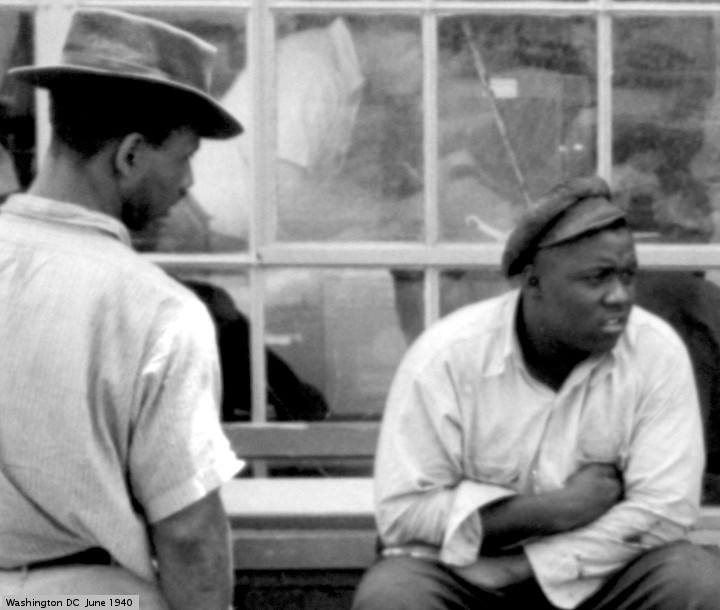

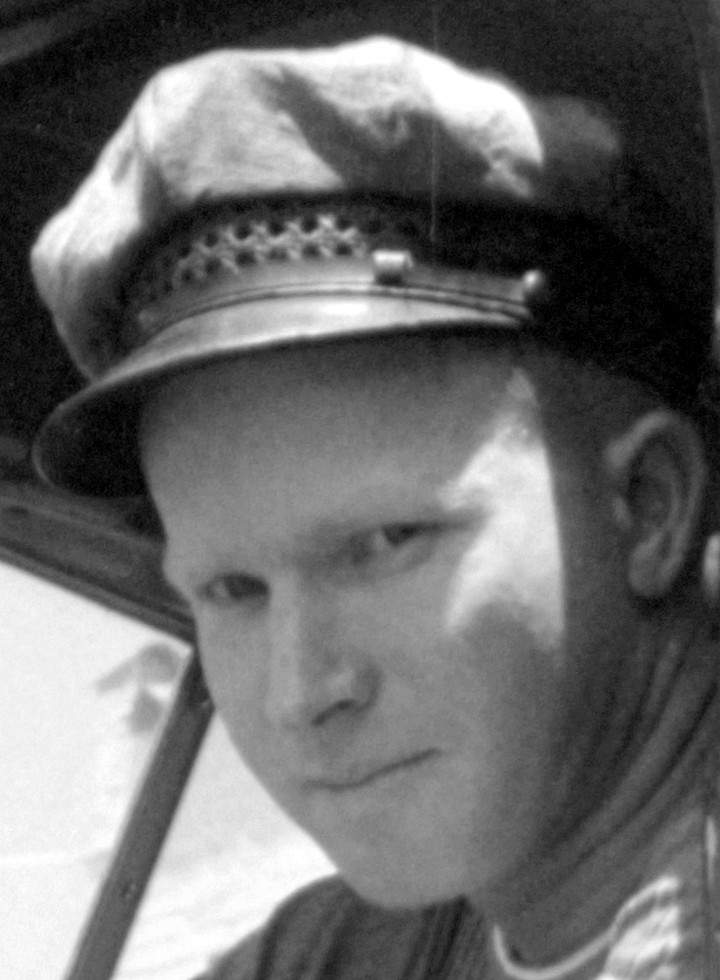


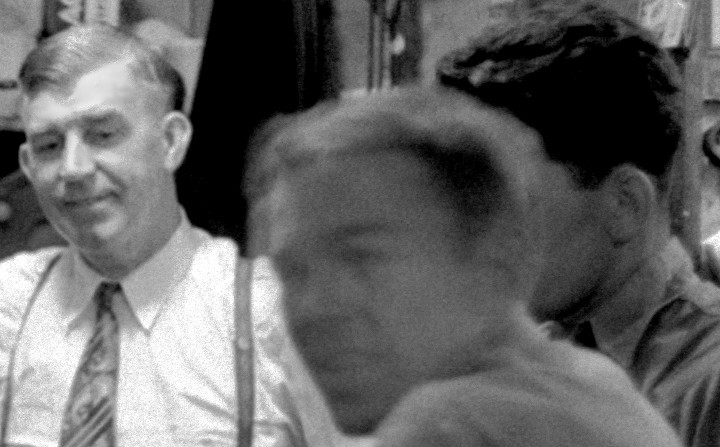

091119

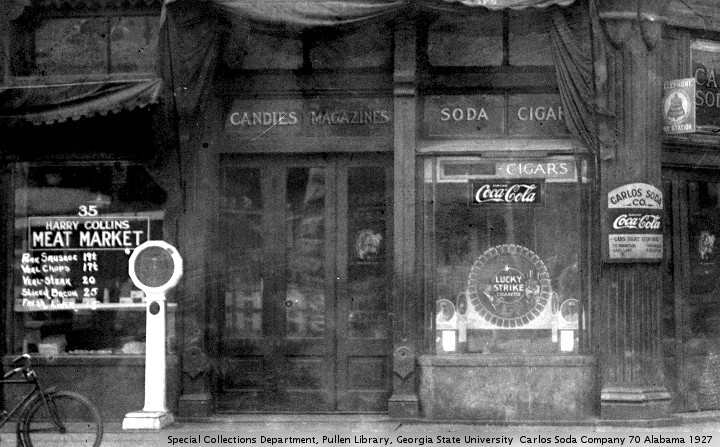




This is my 911 story. I repeat it every year at this time. If you saw it last year, it has not changed. Every year I say this will be the last time. The wars started after 911 are still going on. This year, 91119 is a palindrome. Sarah Palin is getting a divorce. Few knew who she was in 2001.
I was at work, and someone called out that someone had run a plane into the World Trade Center. I didn’t think much of it, until I heard that the second tower had been hit, then the Pentagon, then the towers collapsed, then a plane crashed in Pennsylvania.
I focused on my job most of the day. There was always drama at that facility, and concentrating on my production duties helped to keep me saner. This was roughly the halfway point of my seven year tenure at this place.
One of the other workers was a bully for Jesus. He was a hateful loudmouth. After the extent of the damage became known, he shouted “They are doing this for Allah,” and prayed at his desk. The spectacle of the BFJ praying made me want to puke.
I became alienated from Jesus during these years. Once, I had once been tolerant of Christians and Jesus, as one would be with an eccentric relative. I began to loath the entire affair. I hear of others who found comfort in religion during this difficult time. That option simply was not available for me.
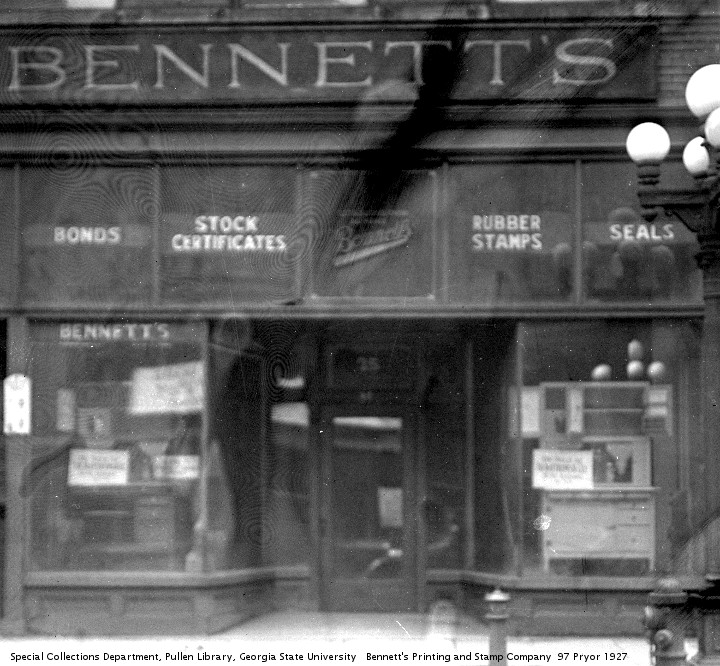
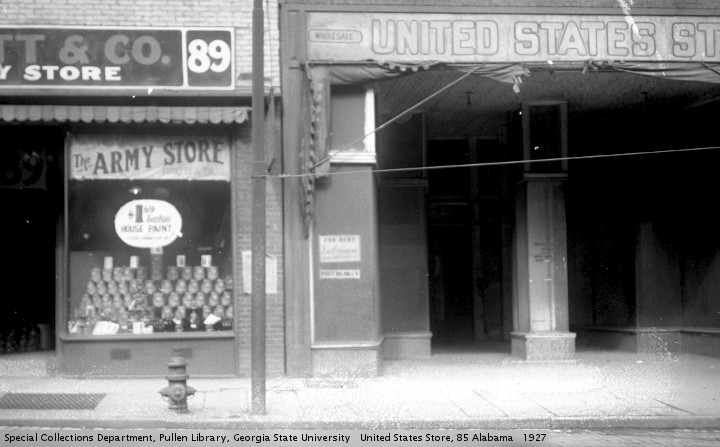
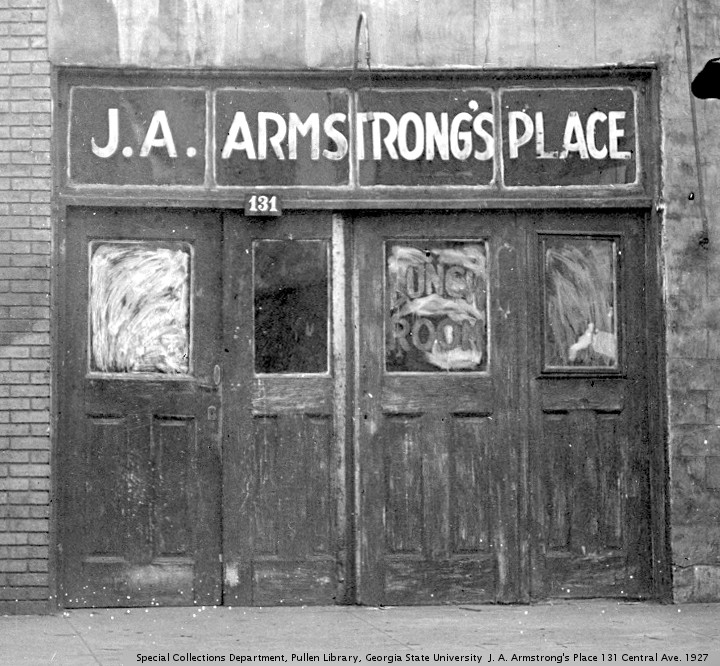
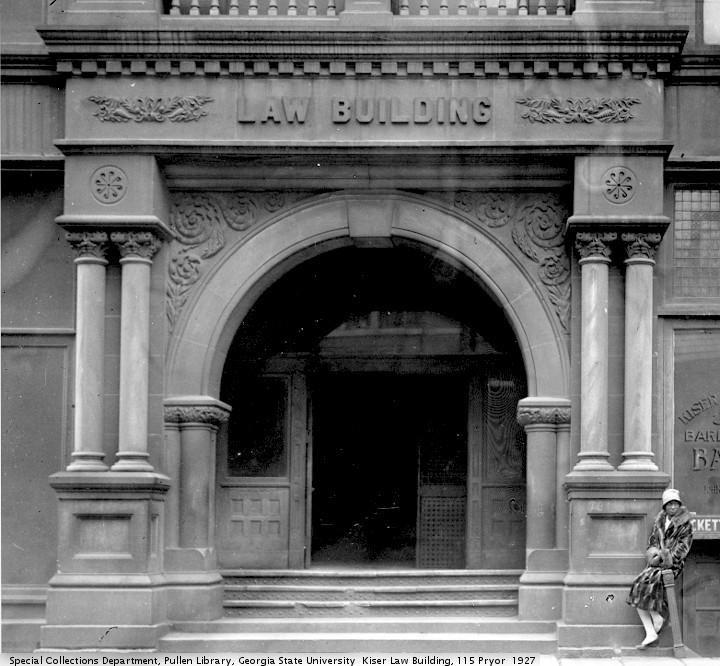
Pictures from “The Special Collections and Archives, Georgia State University Library”. “This item is part of a collection of images of downtown Atlanta streets that were taken before the viaduct construction of 1927 – 1929. Some of the covered streets became part of Underground Atlanta.”





Governors Of Death





This is a repost from 2011. Some of the links no longer work. In the last eight years, Governor Big Hair has tried to run for President, and failed with distinction. He is currently the Secretary of Energy.
Rick Perry, known by The Field Negro as Governor Big Hair, wants to be the next POTUS. Some people say he enjoys executions. As one popular story shows, this might be an asset. “Veterans of Sen. Kay Bailey Hutchison’s unsuccessful 2010 primary challenge to Perry recalled being stunned at the way attacks bounced off the governor in a strongly conservative state gripped by tea party fever. Multiple former Hutchison advisers recalled asking a focus group about the charge that Perry may have presided over the execution of an innocent man — Cameron Todd Willingham — and got this response from a primary voter: “It takes balls to execute an innocent man.” (One person thinks people are making too big a deal out of this quote. “Besides, it’s not like Texas is lacking for other perfectly good things to mock!”)
The case of Mr.Willingham is mighty controversial. Some say the Governor of Texas has little to do with who does or does not get executed, (There is a school of thought that the Governor of Texas is weak, with little ability to do much. If this is the case, the much touted economic miracle in Texas has little to do with the Governor.) Governor Big Hair did replace the chair of the Forensic Science Commission two days before a hearing about the Willingham execution.
Playing politics with executions seems to be a recent tradition for state Governors who want to be POTUS. In 1992, Bill Clinton went home to Arkansas to make sure that Ricky Ray Rector was executed. Mr. Rector had severe brain damage, and did not know what was going on. During his last meal, he put a slice of pecan pie to the side, and said he wanted to save it for later.
In 1999, George W. Bush was the Governor of lethal injection happy Texas. A lady named Karla Faye Tucker was scheduled to be poisoned. The Governor gave an interview. In the week before [Karla Faye Tucker’s] execution, Bush says, Bianca Jagger and a number of other protesters came to Austin to demand clemency for Tucker. “Did you meet with any of them?” I ask. Bush whips around and stares at me. “No, I didn’t meet with any of them,” he snaps, as though I’ve just asked the dumbest, most offensive question ever posed. “I didn’t meet with Larry King either when he came down for it. I watched his interview with [Tucker], though. He asked her real difficult questions, like ‘What would you say to Governor Bush?’ ” “What was her answer?” I wonder.“Please,” Bush whimpers, his lips pursed in mock desperation, “don’t kill me.”
Mr. Bush got lots of blood on his compassionate conservative hands during eight years as POTUS. BHO (who never ordered an execution) wasted Osama Bin Ladin, and a few women and children in Stanland. Governor Big Hair will probably get a few more Texecutions before next years election.
Pictures today are from “The Special Collections and Archives, Georgia State University Library”. Here is one more quote: “Here in Texas we believe that juries are wise as Solomon when it comes to deciding who needs to die but dumb as posts when it comes to figuring out damage awards.”






The Revenge Of Puff




The national organization for marriage (NOM) wants to keep marriage as a man and woman type of thing. They have a right to say that, and to have rallies where they say that. This is America. You are entitled to your opinion, no matter how stupid it is.
What you are NOT entitled to is the unfettered use of copyrighted material. Someone heard a recording of Peter, Paul, and Mary singing “This land is your land” at a NOM sponsored homonomo happening. They sent a letter to Peter Yarrow, who sent a cease and desist letter to NOM. It was co-signed by Paul Stookey. Mary Travers passed away last year.
Mr. Stookey wrote “The Wedding Song”, which is as common at weddings as inedible cake. The song…written years before same sex marriage became an issue…does talk about a woman and a man. It also says “Whenever two or more of you are gathered in his name, there is love”. With royalty revenue from that song, Mr. Stookey has a selfish interest in the institution of marriage remaining healthy. Or perhaps, an increase in those revenues from gay marriages.
As it turns out, author Woody Guthrie never renewed the copyright to TLIYL, and the song is public domain. However, the recorded version by PPM is copyrighted, and belongs to the artists. If they don’t like the way it is being used, they have every right to object.
Mr. Guthrie was not a Republican. He wrote TLIYL as a response to “G-d Bless America” a radio hit of the early forties. The original title was “G-d blessed America for me”. There are lines about private property, that are not included in the popular versions. Somehow, this song is considered a patriotic standard. Grammar school chorus class would not be the same without it.
This is a repost from 2010. In the past nine years, same sex marriage has become legal, and profitable. Pictures are from The Library of Congress, a branch of federal big government.





Michael Donald







PG was looking at facebook, minding his own business. Then he saw something he could not unsee.(TRIGGER WARNING) The NSFW image showed a dead black man hanging in a tree. You can see his face. The caption: “Fox News commentator and Trump sycophant Tucker Carlson said yesterday that “white supremacy is a hoax.” I wonder if this poor man would agree? (I apologize if the image offends but sometimes right-wing idiots have to have reality stare them in the face.)”
The gut level reaction was that of being violated. What gives a facebook “friend” the right to shove a gruesome image in the viewers face? A lot more than “right-wing idiots” will see this picture. We understand that a Fox-boi said something you don’t like. That does not give you the right to disturb the community peace of mind.
There are plenty of arguments you can make. You can post your two-wrongs-make-a-right all day long. No doubt _______ did something terrible last week. That does not give you the right to post an obscene picture on facebook. UPDATE: The image has been *hidden* by facebook.
White Supremacy® is an expression that grows by leaps and bounds. It used to mean the kkk, and other hard-core racists. Now, it means whatever you want it to mean. The definition of WS has expanded to the point where the term is meaningless. It is tough to say what, if anything, Tarlson Cucker meant. We would be better off using the phrase White Supremacy® a lot less frequently.
When you are collateral damage on facebook, you have a few options. You can unfriend the perp, and say rude things about them behind their back. This has always seemed petty and childish. Another thing you can do is research the picture. PG did a google images search of the picture. It turns out to be a powerful story. Is it proper to appropriate this image to shame Tarlson Cucker? As if he would know it happened, or care.
Michael Donald is the man hanging in the tree. Here is the story of how he got there. “That week, a jury had been struggling to reach a verdict in the case of a black man accused of murdering a white policeman. The killing had occurred in Birmingham, but the trial had been moved to Mobile. To (Bennie) Hays — the second-highest Klan official in Alabama — and his fellow members of Unit 900 of the United Klans, the presence of blacks on the jury meant that a guilty man would go free. … Hays had said that Wednesday, ”If a black man can get away with killing a white man, we ought to be able to get away with killing a black man.””
“On Friday night, after the jurors announced they couldn’t reach a verdict, the Klansmen got together in a house Bennie Hays owned on Herndon Avenue. According to later testimony from James (Tiger) Knowles, then 17 years old, Tiger produced a borrowed pistol. Henry Francis Hays, Bennie’s 26-year-old son, took out a rope. Then the two got in Henry’s car and went hunting for a black man.”
“Michael Donald was alone, walking home, when Knowles and Hays spotted him. They pulled over, asked him for directions to a nightclub, then pointed the gun at him and ordered him to get in. They drove to the next county. When they stopped, Michael begged them not to kill him, then tried to escape. Henry Hays and Knowles chased him, caught him, hit him with a tree limb more than a hundred times, and, when he was no longer moving, wrapped the rope around his neck. Henry Hays shoved his boot in Michael’s face and pulled on the rope. For good measure, they cut his throat. … Henry Hays and Knowles returned to the party at Bennie Hays’s house, where they showed off their handiwork, and, looping the rope over a camphor tree, raised Michael’s body just high enough so it would swing.” For a while, it looked like the case would go unsolved.
Some people kept looking. “After hearing a lot of lies and following many unproductive leads, (Thomas H.) Figures and (James) Bodman uncovered one key fact: On the night of the murder, Tiger Knowles had returned to Bennie Hays’s house with blood on his shirt. With this new evidence, the Justice Department convened an investigative grand jury in Mobile. Incredibly, the Klansmen called to testify did not bring lawyers with them. In short order, one witness told the grand jury that young Henry Hays had admitted everything to him. This got back to Tiger Knowles, who began to worry that Henry Hays would confess — and, by trading testimony against Knowles for a reduced sentence, leave him bearing the greater burden of guilt.”
“In June of 1983, Knowles confessed to F.B.I. agent Bodman. After pleading guilty to violating Michael Donald’s civil rights, he was placed in the Federal witness protection program — a fairly standard accommodation for Klan informers — and sentenced to life in prison. In December, when Henry Hays was tried for capital murder, Knowles appeared as a prosecution witness.”
Henry Hays was found guilty. “Hays was executed in Alabama electric chair Yellow Mama after Governor Fob James refused to commute his sentence. He was the first white person executed for murder of a black in Alabama since 1913.” Mr. Hays died June 6, 1997.
“Donald’s mother, Beulah Mae Donald, in assistance of SPLC, sued United Klans of America in a civil suit. An all White jury found the Klan responsible for the lynching of Michael Donald and ordered it to pay 7 million dollars. This resulted in the Klan having to hand over all its assets including its national headquarters in Tuscaloosa.”
Pictures today are from The Library of Congress.





Hiroshima 74 Years Later





At 8:15 am, August 6, 1945, Hiroshima got nuked. It was the start of a new era. Since Japan is 13 hours ahead of Georgia, and standard time was used, the literal anniversary is 8:15 pm, August 5.
Tsutomu Yamaguchi was working in Hiroshima when the bomb hit. He survived, and found a train to take hime to his home town, Nagasaki.
The device dropped on Hiroshima, the Little Boy, had an estimated force of 13 kilotons of Trinitrotoluene, or TNT. A kiloton of TNT is roughly a cube whose sides are ten meters. This device is fairly tiny compared to many of the warheads developed since. Many of the modern appliances are measured in megatons, or millions of tons of TNT. The Soviet Union had a bomb with a capacity of 50 megatons, or 4,000 times the size of the Little Boy.
The largest weapon tested by The United States is the Castle Bravo. This device destroyed Bikini Atoll in the Pacific. The two piece swimsuit was named for this island. The Castle Bravo device had a yield of 15 megatons of TNT. This is roughly 1,000 times the power of the Little Boy.
The decision to drop the bomb has long been controversial. There are a lot of factors and gray areas, and the issue does not lend itself to sound bite solutions. The conventional wisdom is that Japan surrendered because of the nuclear attack. This meant the war was shortened by at least a year, there was no invasion of Japan, and many lives were saved. PG is scared by the moral calculus involved in a decision like this….do 100,000 civilian deaths prevent the deaths of 500,000 soldiers? PG suspects that even G-d herself would lose sleep over that one.
There is also evidence that the bomb was not needed. Japan was whipped in August 1945. The air raids were conducted in daylight with little resistance. A debate was going on in the Japanese government on whether to continue the fight.
An event happened the day between Hiroshima, and Nagasaki, which influenced the Japanese decision to surrender. The Soviet Union had agreed to help the United States with the war against Japan. On August 8, The Soviet Union invaded Japanese occupied Manchuria. There are indications that Japan knew the fight was hopeless at this point, and would rather surrender to The United States than The Soviet Union. This is one of the gray areas that never seems to be mentioned.
The United States wanted the war to end quickly for obvious reasons, and a few subtle ones. America did not want to share the spoils of Japanese war with The Soviet Union. There were already tensions between the two allies, and the cold war was not far off. Many felt The United States used the Little Boy as a warning to The Soviet Union.
When you get your moral software out, you might want to figure in the effect of opening the nuclear Pandora’s box. Would the nuclear bomb have been developed by other countries if America had not led the way? The science is not that complicated…after all, America hit paydirt with the Manhattan Project fairly quickly. Nonetheless, there is karma involved in using a terrible new device on a civilian population. The United States started the wind of the arms race, and has yet to feel the whirlwind.
This is a repost. The pictures are from The Library of Congress. Ansel Adams took pictures of Japanese Americans, in a World War Two internment camp. The ladies in the bridge game are Aiko Hamaguchi, Chiye Yamanaki, Catherine Yamaguchi, and Kazoko Nagahama.



August 4
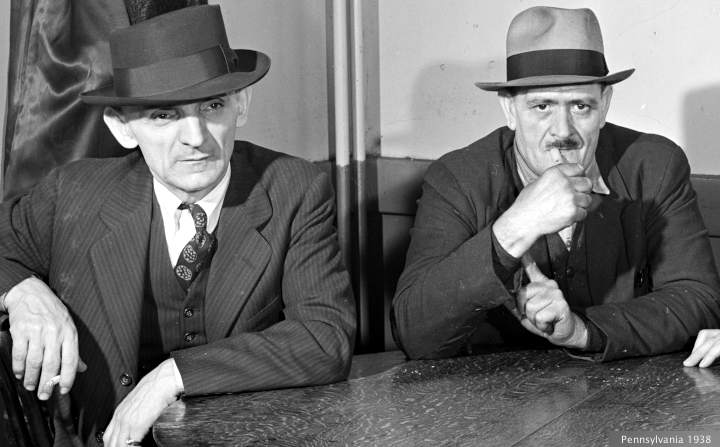

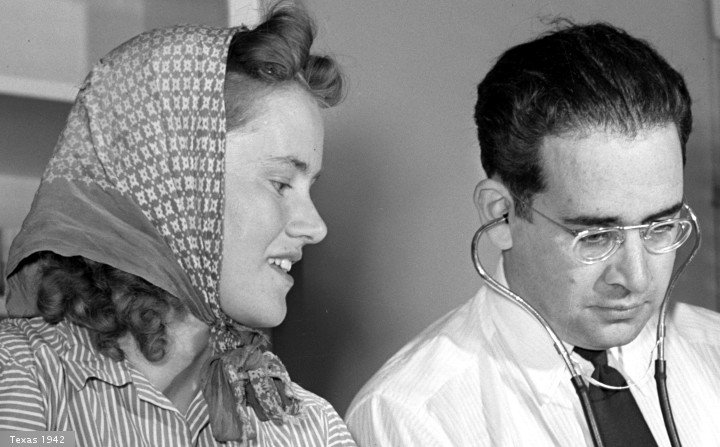

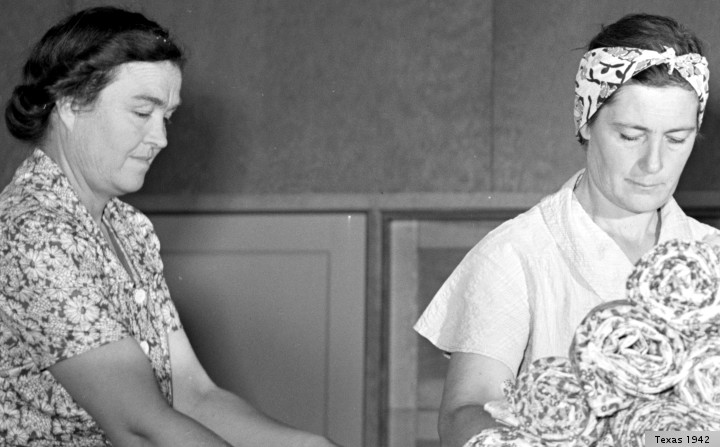
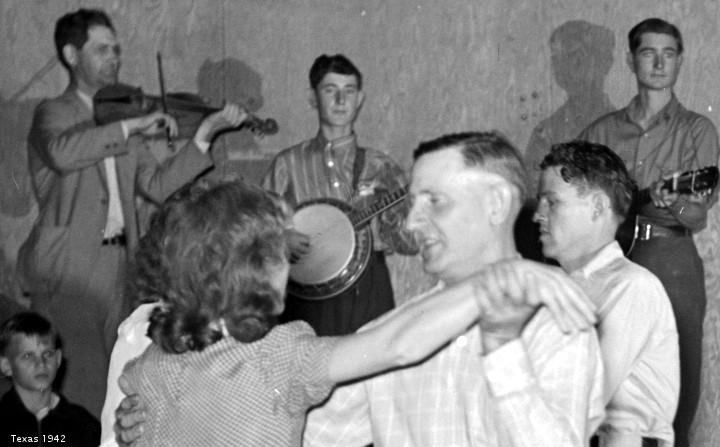


August 4 is just another day. Summer is roughly halfway over, if you talk about the time between the solstice and the equinox. Schools are starting, and football teams are tackling, so autumn is not far away. One advertising medium says August 4 is National Friendship Day, National Sisters Day, National Chocolate Chip Cookie Day, National Family Day, and National Coast Guard Day.
A few interesting people were born on August 4. 1792 – Percy Bysshe Shelley, 1821 – Louis Vuitton, 1901 – Louis Armstrong, 1961 – Barack Obama, 1971 – Jeff Gordon.
Important events took place on August 4. Wikipedia will be quoted, with a few tasteful edits. 1693 – “Date traditionally ascribed to Dom Perignon’s invention of champagne.” 1892 – “The father and stepmother of Lizzie Borden are found murdered in their Fall River, MA, home.” 1914 – “In response to the German invasion of Belgium, the British Empire declares war on Germany.” 1944 – “A tip from a Dutch informer leads the Gestapo to an area in Amsterdam, where they arrest Anne Frank.” 1964 – “Civil rights workers Michael Schwerner, Andrew Goodman and James Chaney are found dead in Mississippi after disappearing on June 21.” 1964 – “U.S. destroyers USS Maddox and USS Turner Joy report coming under attack in the Gulf of Tonkin.”
On August 4, 1964, I spent the day with my Grandmother. Her favorite soap opera, “As The World Turns,” was interrupted by a news bulletin announcing the Gulf of Tonkin incident. Later that day, we walked to the clubhouse of the Piedmont Park golf course. A friend of Gran’s worked there. The golf course lady could not wait to tell me that she did not like the Beatles. “If the Beatles were playing, for free, across the street, I would not waste the energy to walk over there and see them.”
Pictures today are from The Library of Congress.



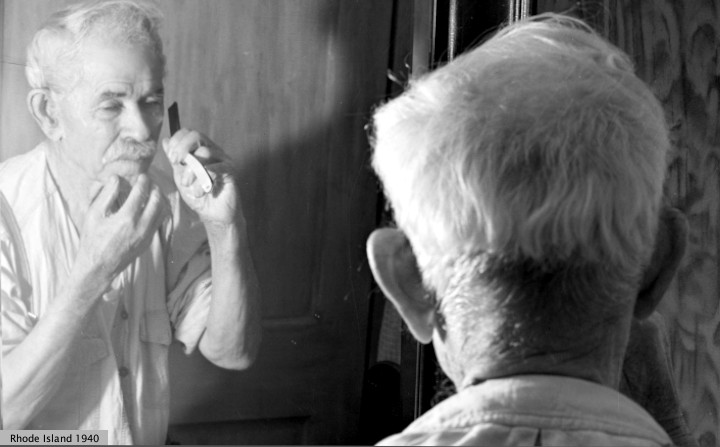
The Whitman To Ginsberg Express


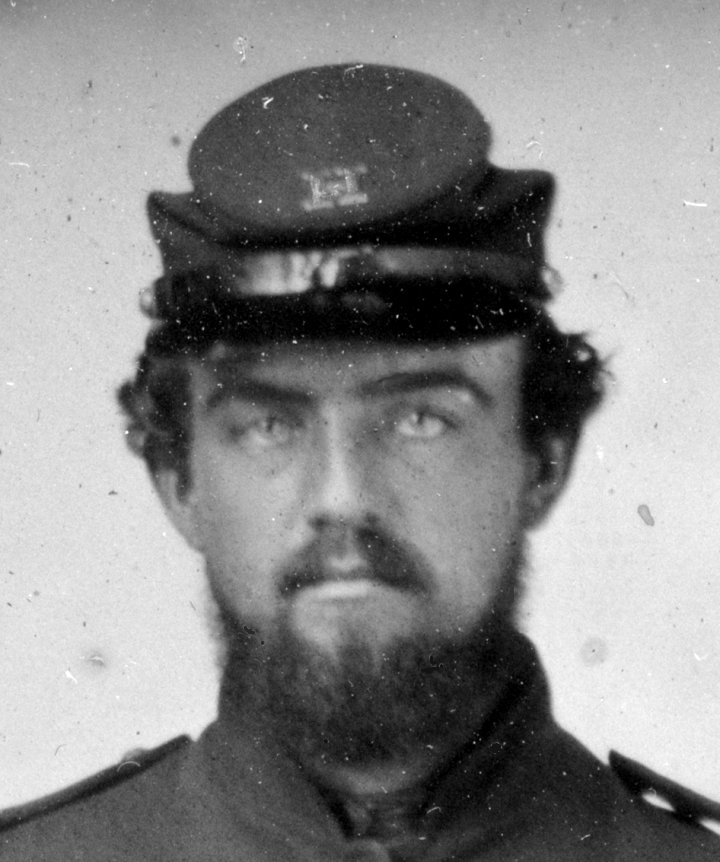
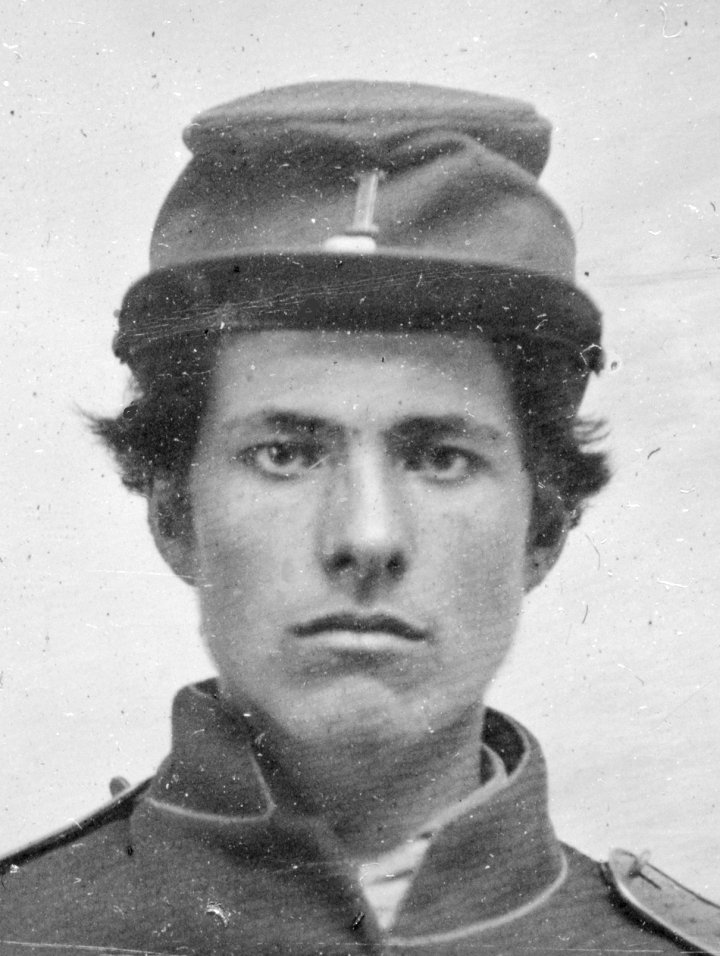

“… I’ve slept with Neal Cassady who slept with Gavin Arthur who slept with Edward Carpenter who described sleeping with Whitman to Gavin Arthur. [The “Gay Succession”]” Allen Ginsberg was fond of his place in a line of gay succession.
A 1974 interview makes the same point about Whitman-Carpenter-Arthur, but does not mention Cassady-Ginsberg. Could anyone be telling stories? The Carpenter-Arthur connection happened in 1924, but is described in wonderful detail by Mr. Arthur in 1967. There are few details about the Arthur-Cassady link in the chain. As a BBC interviewer said to Mr. Ginsberg in 1994 “Both Bob Dylan and Jack Kerouac, I think, described you as a “con-man extraordinaire”. What did they mean?” AG: “Oh, maybe they were projecting their own goofiness on me.”
“Edward Carpenter (1844-1929) was a writer and gay mystic and lived in England all his life. Although ordained an Anglican priest in 1869 he soon renounced religion and became a Fabian socialist. Among his works on social reform is Towards Democracy (1883-1902), a long, un- rhymed poem revealing the influence of his friend Walt Whitman. He edited the first gay literary collection, Iolaus: An Anthology of Friendship”
Mr. Carpenter exchanged letters with Mr. Whitman. “Although Whitman was not a socialist, his writing had a profound effect on Carpenter, who made the long trip to America primarily as a pilgrimage to his literary and spiritual inspiration. He visited the poet for several weeks in 1877 and again in 1884. In 1906 he published an account of his visits to America, Days with Walt Whitman, writing a respectful, even somewhat glorified, portrait of his idol.”
“It was not until the 1966 publication of a memoir by Gavin Arthur entitled The Circle Of Sex that the intimate details of Carpenter’s visits were revealed. Arthur slept in bed with Carpenter … leaving us with our only description of Whitman’s sexual behavior, an area otherwise shrouded in mystery and controversy.” In later years, we learned that Mr. Whitman possibly spent a happy afternoon with Oscar Wilde. Mr. Whitman was also fond of cruising the Brooklyn Waterfront.
Gavin Arthur (born Chester Alan Arthur III; March 21, 1901 – April 28, 1972) is a key link in this chain. As often noted, he was the grandson of Chester Arthur. The elder Mr. Arthur was elected Vice President in 1880, and promoted after the death of James Garfield.
The younger Mr. Arthur was a piece of work. In the early 1920’s, Mr. Arthur dropped out of Columbia, got married, and moved to Ireland. Mr. Arthur somehow got to meet his idol, Edward Carpenter. At the time of this meeting, Mr. Arthur was 23, and Mr. Carpenter was 80.
THE GAY SUCCESSION “… is a document given me by Gavin Arthur in 1967.” The story goes into extravagant detail about the meeting between Mr. Arthur and Mr. Carpenter. One wonders how the elderly Mr. Arthur remembers all this 43 years later.
EC – “No, Walt was ambigenic,” he said. “His contact with women was far less than his contact with men. But he did engender several children and his greatest female contact was that Creole in New Orleans. I don’t think he ever loved any of them as much as he loved Peter Doyle.”
GA – “I suppose you slept with him?” I blurted out half scared to ask.”
EC – “Oh yes–once in a while–he regarded it as the best way to get together with another man. He thought that people should ‘know’ each other on the physical and emotional plane as well as the mental. … the best part of comrade love was that there was no limit to the number of comrades”
GA – “How did he make love?” I forced myself to ask.”
EC – “I will show you,” he smiled. “Let us go to bed.”
Mr. Arthur spares few details in what happens next.
Chester III renamed himself Gavin. After losing the financial support of his family, Mr. Arthur moved to San Francisco. For a while, he sold newspapers on the street. “And he delved deep into both astrology and sexology. Gavin took his star charts very seriously: When one self-administered reading told him he was heading to prison soon, he immediately drove to San Quentin and took a job as a teacher, the better to prevent going in as an inmate.”
“By the 1960s, Gavin Arthur had become a well-known and respected astrologer. In 1966, some Bay Area activists, cultural and political, began to plan a transformative event. They wanted to unite the cultural radicals of the Haight, and the political radicals of Berkeley. Those plans led to the Human Be-In. In order to have maximum astrological impact, its organizers asked Arthur to determine the most auspicious date. Arthur determined that January 14, 1967, would have the greatest impact.”
“I had a flashback to the time I spent with Ginsberg in Cambridge, MA, in 1982, when he told me that I was part of an erotic lineage that connected me to Whitman … a quick Google search identifies Arthur as ”a certain astrologer and San Francisco character, Gavin Arthur … gave lectures at San Quentin while Neal was a prisoner.” Another entry reports that he studied astrology with Ronald Reagan before Reagan started his political career.”
“In 1958, he (Neal Cassady) was arrested after being caught using marijuana at a San Francisco nightclub. He was sentenced for two years at San Quentin State Prison.” This was when Mr. Arthur was teaching at San Quentin. Mr. Cassady mentions him in two letters to his wife Carolyn. (For those who just got here, Neal Cassady was the model for Dean Moriarty in On The Road. Mr. Cassady also drove the bus “Further,” for the Merry Pranksters.)
August 13, 1959 from San Quentin to Carolyn Cassady “Last Saturday, “Uncle Gavin” Arthur, grandson of our twenty-first President who, Republican though he was, could hardly have been more conservative than is Gain underneath all his Occult Astrology, failed to show (again, for the third time in six weeks) to teach our class in Comparative Religion and Philosophy, about three dozen regularly in attendance, on account of a death in his group at the Global House, which he bought by selling papers on Market Street for ten years; so again it was my pleasurable duty to instruct the boys in Cayce-hood [Edgar Cayce]”
Septetmber 22 1959 from San Quentin to Carolyn Cassady “Uncle” worry-wart [Gavin Arthur] missed showing up for the class again last week and I hear, probably unfounded, rumors that it is to be discontinued, too bad if true, because it was fun to hear the old geezer expound, without at all remembering he had, on the very same things week after week. I mean his examples, and their wording were always so alike one could not only anticipate, but, with any memory at all, give in advance the exact sentence he would be about to pronounce: it was sort of a game.” Eight years later, the “old geezer” described a 1924 tryst in clinical detail.
San Quentin broke Neal Cassady. The railroad would not take him back, and Carolyn divorced him. “He, however, felt now he had utterly failed in his mission, and he knew he could never go back. He died inside; only his body survived. This he did his best to destroy. He no longer believed in suicide, but he did all he could to be killed. … He told me he swallowed handfuls of pills anyone offered, even not knowing what they were. Is this not an obvious death-wish? He admitted it was.”
During this down and out time of his life, Neal Cassady apparently connected with Gavin Arthur. In a 1974 radio interview, Allen Ginsberg recalls “That was already the ’60’s, but there was that atmosphere back in San Francisco, around Gavin Arthur, particularly. Arthur was a great friend of Neal Cassady, slept with him all the time, or whenever Neal had nowhere to go he’d wind up in Gavin’s house, sort of falling asleep, exhausted, in his bed.”
The Neal Cassady to Allen Ginsberg connection is well documented.
“A second, serendipitous event further spurred (Joey) Cain’s interest in researching Gavin Arthur. Cain found a used copy of Carpenter’s “Towards Democracy” in a used bookstore for $3.00. It had a lot of writing in it. Cain noticed the following lament among the notes in the book, “This is one of my Bibles, please return. This volume is the third I have had to buy, people being so dishonest about books.” Then he looked below and saw Gavin Arthur’s signature and address. The writing belonged to Arthur. The book in his hand had once belonged to Gavin Arthur. He went up to the cashier who said, “It’s a shame about all this writing in it.” Cain replied, “Let me pay for it first, and then I’ll tell you about this writing.” Pictures today are from The Library of Congress.




Paul Krassner






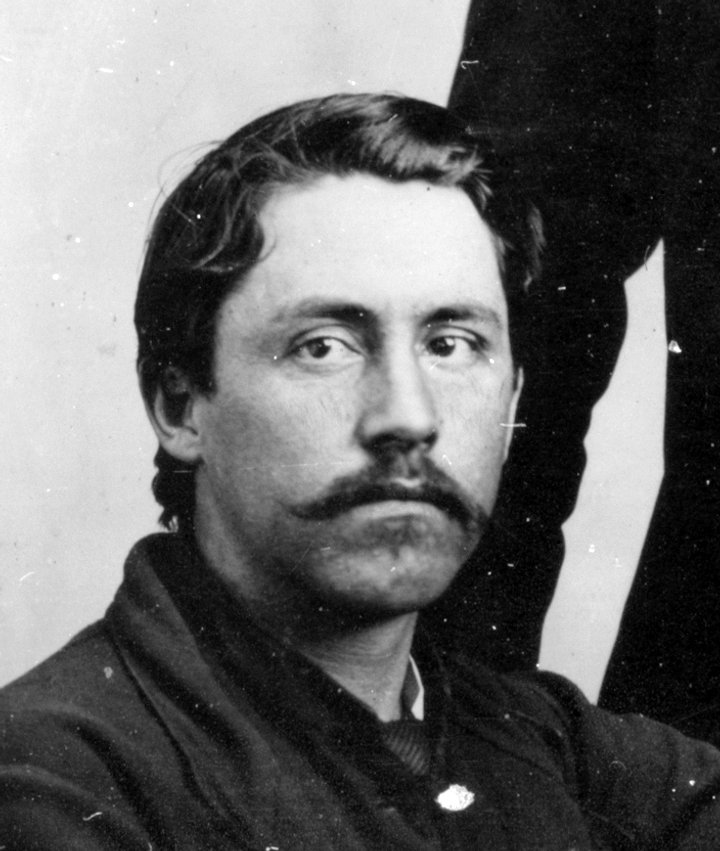
Paul Krassner died July 21, 2019. He outlived Lenny Bruce, Abbie Hoffman, Groucho Marx, and Lyndon Johnson. His magazine, The The Realist, is now available as an online archive.
PG was recently looking for background noise to compliment his photomongering. Somewhere along the way, he found episodes of WTF podcast to be available on Youtube. He made a list of shows he wanted to see, including Paul Krassner. When Mr. Google was recruited to find the show, other things floated to the surface. This is how Mr. Google operates.
An onion is more than an internet namesake. It lends a lively flavor, both cooked and raw. The onion consists of many layers of thin skin. These can be peeled off, as you get deeper and deeper into the root. A thin skinned root that gives you bad breath…. an aromatic symbol for the sixties.
When you go looking for WTF/Krassner, you are directed to issue 74 of The Realist. The feature story is the missing segments of a John Kennedy biography. On page 18, Jackie Kennedy saw more of Lyndon Johnson than she needed to see.
“That man was crouching over the corpse, no longer chuckling but breathing hard and moving his body rhythmically. … And then I realized – there is only one way to say this – he was literally fucking my husband in the throat. In the bullet wound in front of the throat. He reached a climax, and dismounted. I froze. The next thing I remember, he was being sworn in as the new President.”
Page two of issue 74 is the letters to the editor. The featured scribe is John L. Timmons, Secretary, Mattachine Society of N.Y. He wrote “Letter From A Homosexual,” in response to a cartoon page in issue 69, fag battalion. Using KY to lubricate a rifle is not a good idea.
At the time, America was fighting a war in Vietnam. Young men were given the choice of go in the army, or go to prison. It was ugly. There was a group, “The committee to fight the exclusion of homosexuals from the armed forces.”
The Mattachine Society was neutral. Some members supported the war, and some were opposed. It distracted from the overall agenda to take sides in other disputes. The editors at The Realist agreed. “… homosexuals who don’t want to be drafted will no longer be able to exploit their deviation rather than face the consequences of conscientious objection.”
When issue 74 was published, Walt Disney was still alive. This may account for the action on page 12. Maybe Uncle Walt did not want his animated actors to be drafted for active duty. The activities on page 12 might not be sufficient to have the players excused from active duty, however. By this stage of the war, the local draft boards were not accepting excuses.
Getting back to Paul Krassner… he founded the YIPPIES with Abbie Hoffman, took LSD with Groucho Marx, and published a satiric magazine without advertising. Only the last part can be confirmed. After the description of Lyndon Johnson’s post mortem dentistry, who knows what is real, and what is fake. Pictures today are from “The Special Collections and Archives, Georgia State University Library”. The opinions expressed in this repost are in no way, shape, or form connected to that fine institution.





 Chamblee54
2 comments