David Bowie




It has been a strange week for a David Bowie fan. On Friday, I was looking for a rerun to post, and was reminded that January 8 was his birthday. (Along with Elvis and Shirley Bassey) I put up a piece about Mr. Bowie, and fashioned a poem out of his song titles. Aquarian Drunkard reissued a collection of the “best and most interesting Bowie oddities”. A new album was released, with a lot of comments about how strange it was. Strange is something Bowie fans turn to face.
On Monday, I woke up. Go on the internet. MSN news says that David Bowie has died. This is surprising. I know what people are going to talk about for a few days.
I typically download the new wtf podcast on Monday. The show is “supported” by Columbia records, presenting David Bowie’s new album “Blackstar.” Marc Maron gushes on about how ” DAVID BOWIE I LOVE DAVID BOWIE. ARE YOU KIDDING ME?” The single is called “Lazarus.”
The timing of the whole thing is bizarre. Was this planned? To release a puzzling new work on your sixty ninth birthday, and then die two days later. With the master media manipulator involved, prior planning cannot be ruled out. Or was it just a parting shot of synchronicity? We will never know.
In what might be a new move for celebrity deaths, sex scandal rumors emerged. A lady named Lori Maddox claims that Mr. Bowie “devirginized” her. Miss Maddox was underage at the time. Some people think that this incident makes Mr. Bowie a terrible person, whose artistic output should be ignored. One made the inevitable comment “As someone who sees White stars get a pass for things that celebrities of color get crucified for.”
I learned a long time ago to separate the performer from the performance. I also apply this rule to David Robert Jones. (David Bowie was a stage name. The legal name was never changed.) In 1976, there was an interview, where the artist said “Don’t believe anything you hear me say.” While the creative/marketing genius can be enjoyed, there was always a bit of coldness behind the mask. Some press reports say that this softened as the years went by. In the end David Bowie was human. Ziggy Stardust was a character played by an actor. Does it matter that they were a Cracked Actor?
It is ironic that David Bowie played Andy Warhol in Basquiat. Both combined creation of art, and the marketing of art product, into a seamless unit. The two did not have a good first meeting. “Remember, David Bowie was not a big star. He was just some guy off the street as far as Andy Warhol was concerned. They found a common ground in David’s shoes. David was wearing yellow Mary Janes and Andy had been a shoe illustrator, which David knew so they began talking about shoes.”
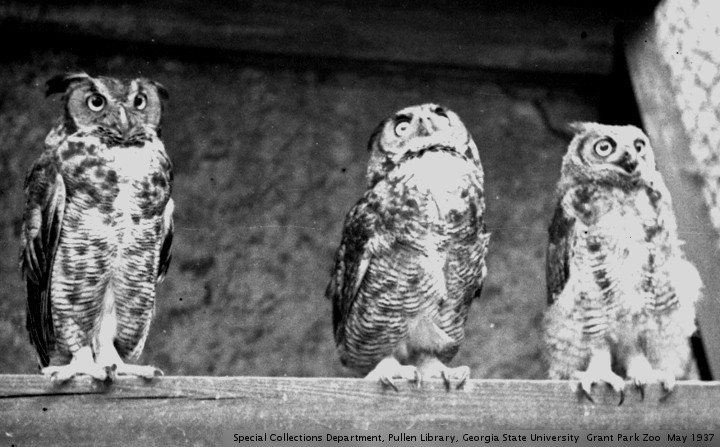
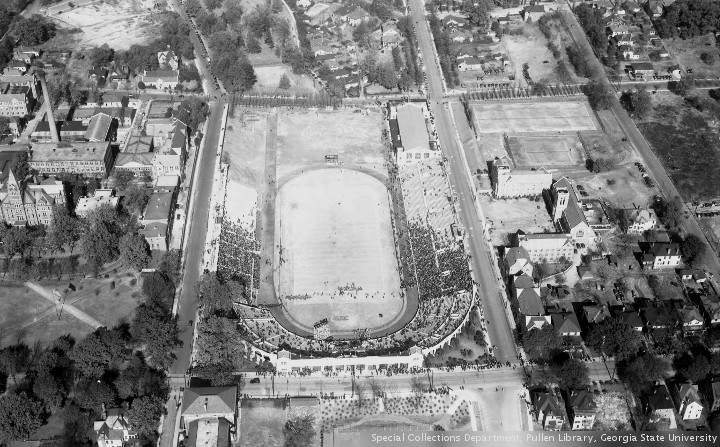
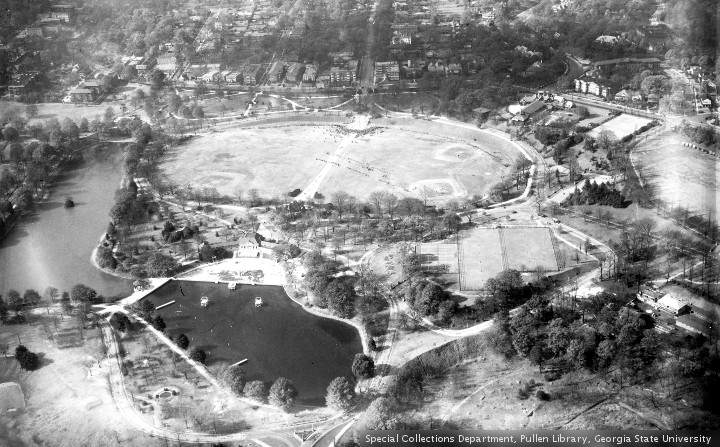
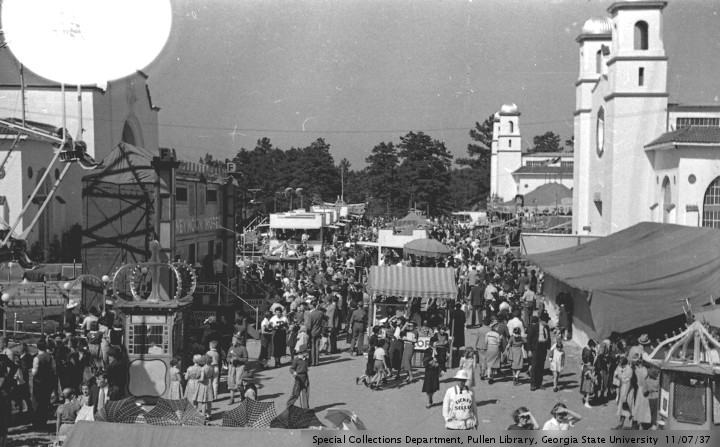
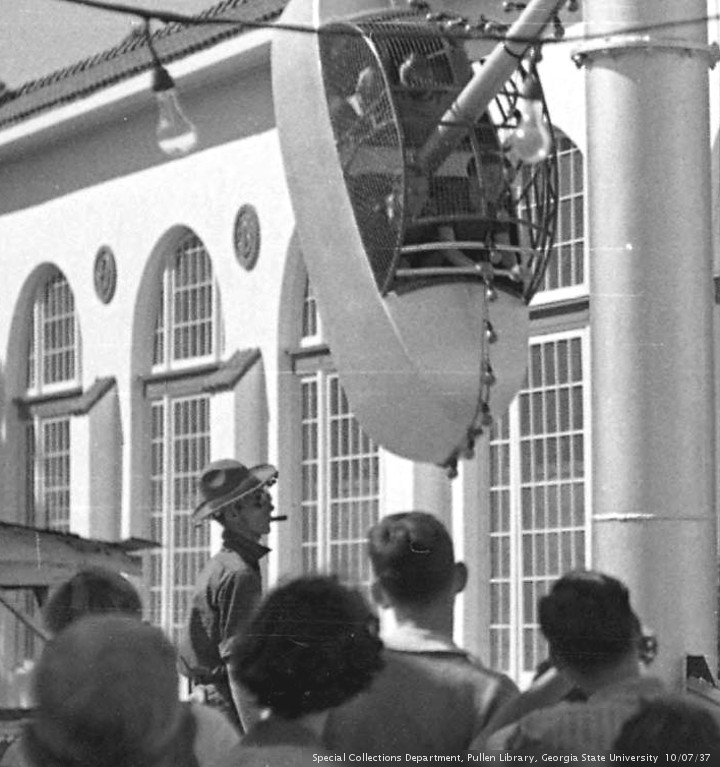
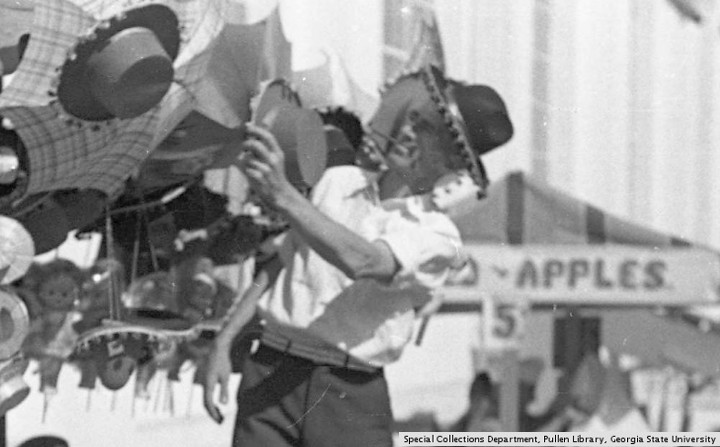
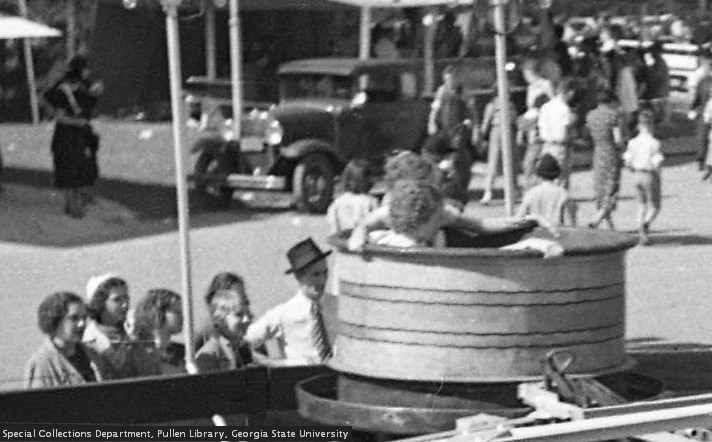
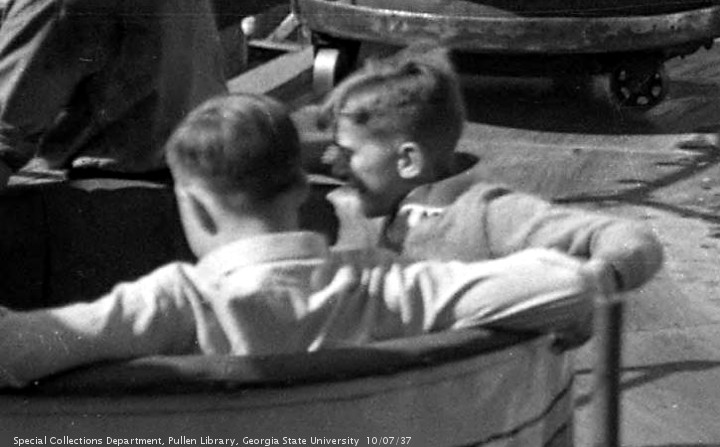
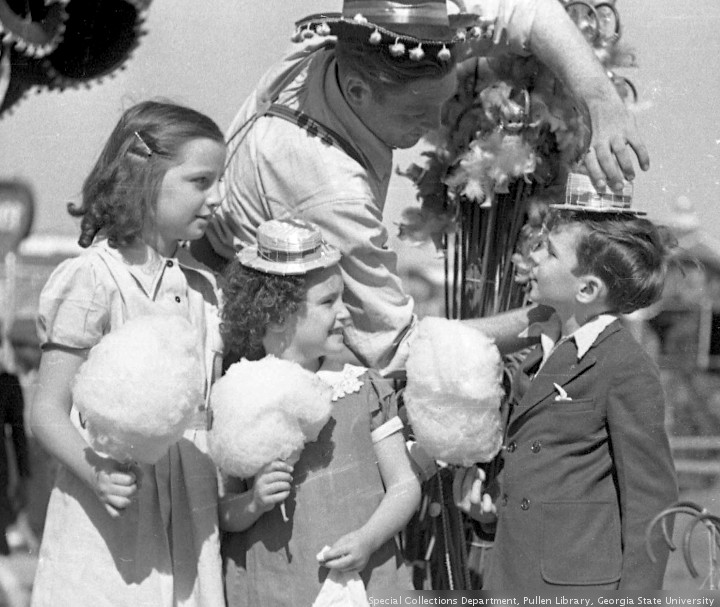
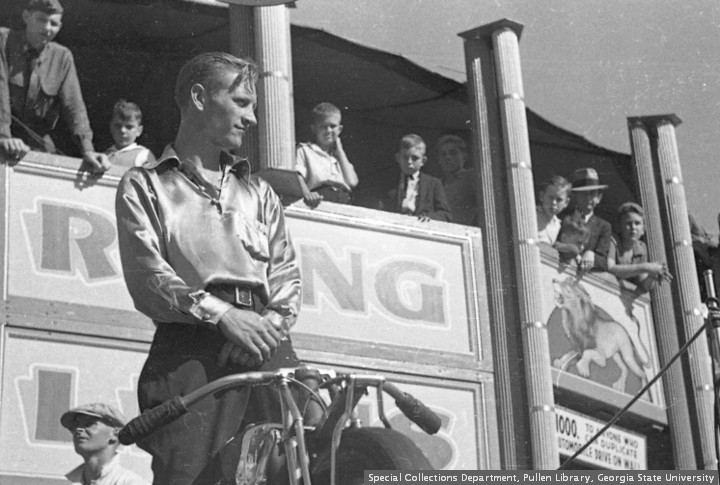
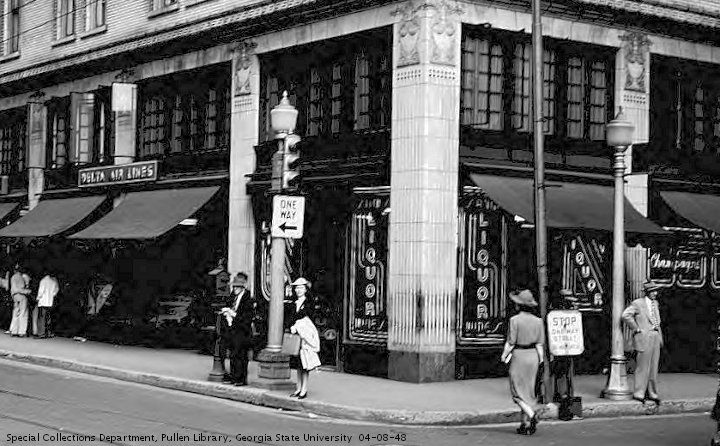
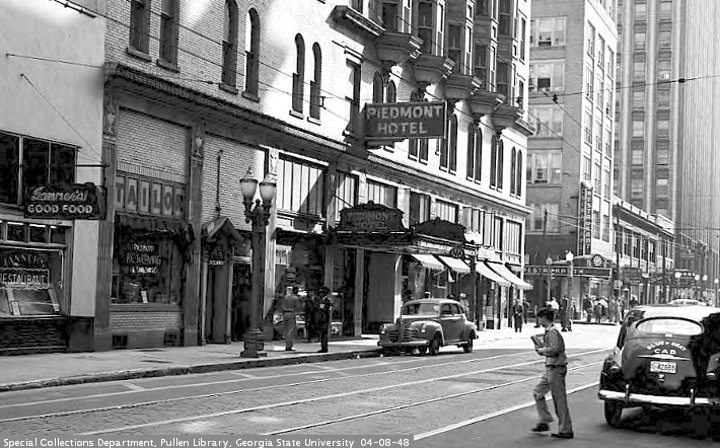
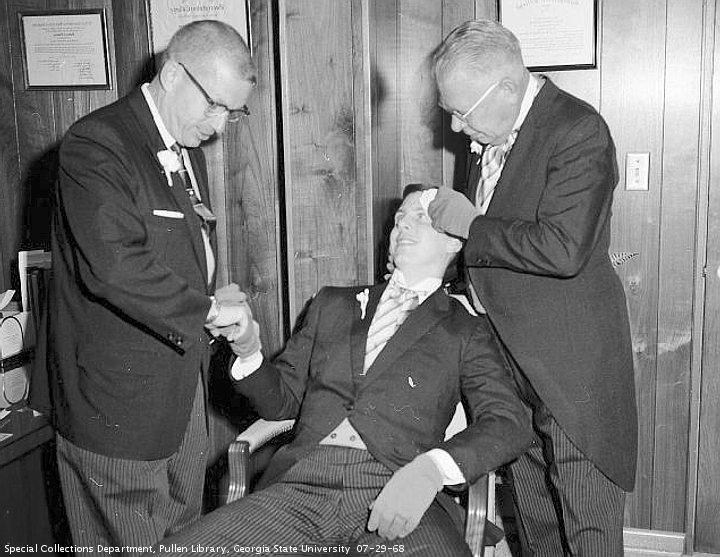
This would have been in 1971. Mr. Bowie discusses his adventures in between songs of this show. There is another story from that first tour: “I think that must’ve been part of the Mercury Records publicity tour in early 1971, Gus. Ted Vigodsky, if I remember correctly, brought Bowie by The Great Speckled Bird’s offices on North Avenue where Moe Slotin and I met him. Bowie was dressed in an ill-fitting gingham dress and looked something like a gaunt, poverty-stricken woman in one of those Walker Evans photos from the Depression. He informed Moe and me that he was gonna be the next big star in rock-n-roll. It took all of our will power not to laugh in his face. This was before anyone in America had heard of him and he had no records out yet (“Space Oddity,” a hit in England in 1969, was not released in the USA until 1973). Six months later Moe and I realised we had completely underestimated him. I had forgotten Charlie had called you about interviewing him.” Pictures today are from “The Special Collections and Archives, Georgia State University Library”.

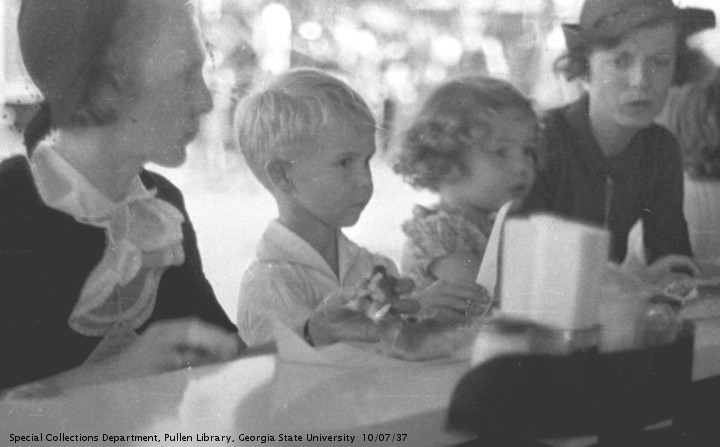






David Bowie is 73 today. Elvis is ageless, and Sarah Palin is obsolete. This Bowie tribute is a repost. Pictures are from The Library of Congress.
A webpage called CaptainsDead had a download of a David Bowie concert. (Here is another edition.) Most Bowie live recordings are pretty dull. While the Thin White Duke is renowned for his concerts, they tend to be live events, that depend on staging and costumes as much as music. This show, from 1974, is different. Focusing on material from “Diamond Dogs”, the sound he produces comes close to matching the studio sound.
The next move for Bowie in 1974 was the “white soul” sound of “Young Americans”. He is moving in that direction in this show, even while he lingers in the glitter apocalypse. This tour included a stop at the Fox Theater, the first Atlanta show for Mr.Bowie. On the way to Florida for the next show, the truck with the sets and costumes crashed into a swamp full of rattlesnakes. The show in Tampa was performed in street clothes.
Maybe it is time for a Chamblee54 tribute to David Bowie. It is six am, and PG has stumbled into a job. The time and energy required to write new material is not always available.
The first album by David Bowie that PG heard about was “Hunky Dory”. At the time, Mr. Bowie had generated some buzz by admitting that he fancies blokes, or some uber british expression for being queer. In time, this would be seen as more publicity stunt than brave confession. The RCA debut got some good reviews, but not much else.
The next year produced “Ziggy Stardust”, a concept album. At about this time he did a tour of the United States, with costumes and onstage antics that generated even more publicity. More and more people started listening, some in spite of his outrageous image, and quite a few more because of it. He broke up his band, the spiders from mars, and announced his retirement. The band, according to reports, learned about this while standing on stage behind him. Mr. Bowie, for all his genius, is not always a nice man.
In 1974 there was an album, “Diamond Dogs”, about the decadent urban life in the scifi future. A stage show based on this album…the source of the download mentioned above…marked a return to the concert stage. The next year gave us “Young Americans”, and the year after that “Station to Station”. Every year was a different sound and vision.
Meanwhile, the artist was not doing so good as a human being. According to all reports, he was doing mountains of cocaine. (There is a story of going to meet the parents of Ava Cherry, one of his girlfriends. He shows up at 3am, and does coke on the dining room table.) There was an interview in Playboy (or maybe it was Rolling Stone ) where the first thing he says is, don’t believe anything I say. He went on to say that he admired Adolf Hitler. Have we mentioned the physical appearance of David Bowie in 1975? He looked like he was dead, and nobody bothered to tell him. (By contrast, in recent photo collections of rock stars, Mr. Bowie looks pretty good for a man who is 69 yo.)
This was the era of Rocky Horror show. At one point, Riff Raff sings (Tim O’Brien wrote the show, and gave himself some darn good lines) Frank n furter, it’s all over, your mission is a failure, your lifestyle’s too extreme.I’m your new commander you now are my prisoner we return to transylvania prepare the transit beam While this may not have been directed at David Bowie, he took the hint.
We interrupt this David Bowie tribute with an emergency announcement. A person, reputed to be an entertainer, was seen using the n word on facebook. The screen shots have disappeared, and all we have is the word of the accuser. More details will be available as soon as anyone is interested.
David Bowie saw himself at a dead end, and possibly a dead life. He moved into a little apartment in West Berlin, on top of a garage. Brian Eno offered his assistance, and a series of electronic albums was the result. The next few years saw rock and roll, dance music, and finally, crap. PG bought a Bowie album in 1984, the first time he saw it on sale, and was immensely disappointed. The last David Bowie album that PG got was a free cd that was given to people buying a magazine.
Around 1981, MTV was born, and radio was suddenly obsolete. A visual artiste like David Bowie was a natural for video. Unfortunately, many of these videos are not available for embedding in blogs. Ashes to Ashes was a staple of early MTV. Boys Keep Swinging , off the “Lodger” album, is a return to the gender bender Bowie of younger days.
David Bowie continued to do tours, and PG got to see two of the shows. In 1987, something called the “Glass Spider Tour” came to the Omni. (In a later interview, it turns out Mr. Bowie was extremely unhappy during this tour, and close to suicide at some points.) The Glass Spider was this mass of lighting effects that hovered over the stage, and was used to best advantage during “Scary Monsters”. The show featured Peter Frampton on guitar, and had a pack of dancers. (One apparent female took her drag off during the finale.) A good time was had by all.
In 1990, another retirement tour came to the Omni. This one had movies projected on a screen behind the stage, and featured guitar hero Adrian Bellew. The night had the feel of a contractual obligation. David Bowie is too professional to give a bad show, but this one did not have the fire of “Glass Spider”. PG had a new set of contact lenses, and his eyes were painfully dry most of the night.
This David Bowie Death Day tribute is a triple repost.



Using only song names from ONE ARTIST, cleverly answer these questions. Tag some others who might enjoy this. You can’t use the band I used. Try not to repeat a song title. It’s a lot harder than you think! Re-post as “my life according to (band name)”Pick your Artist: David Bowie
Are you a male or female: The Bewley Brothers
Describe yourself: Quicksand
How do you feel:Always crashing in the same car
Describe where you currently live: Life on Mars
If you could go anywhere, where would you go: Width of a circle
Your favorite form of transportation: Queen Bitch
Your best friend is: Young Americans
You and your best friends are: Kooks
What’s the weather like: Changes
Favorite time of day: Eight Line Poem
If your life was a TV show, what would it be called: Scary Monsters
What is life to you: Panic in Detroit
Your relationship: Fame
Your fear: Sound and Vision
What is the best advice you have to give:Somebody up there likes me
Thought for the Day: Hang onto yourself
How I would like to die: Ashes to Ashes
My soul’s present condition: Moonage Daydream
My motto: Andy Warhol







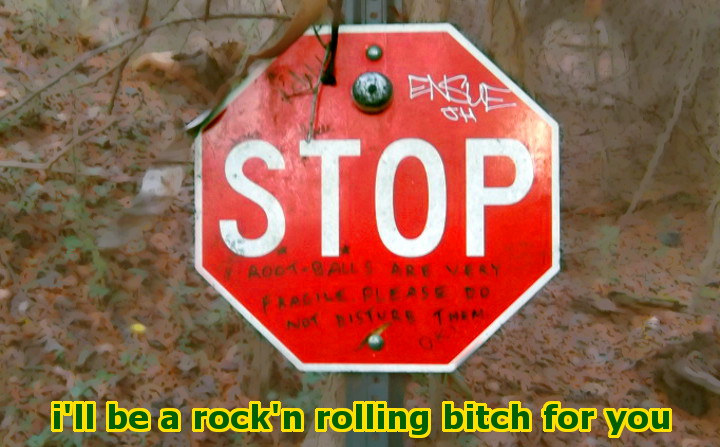
Happy New Year
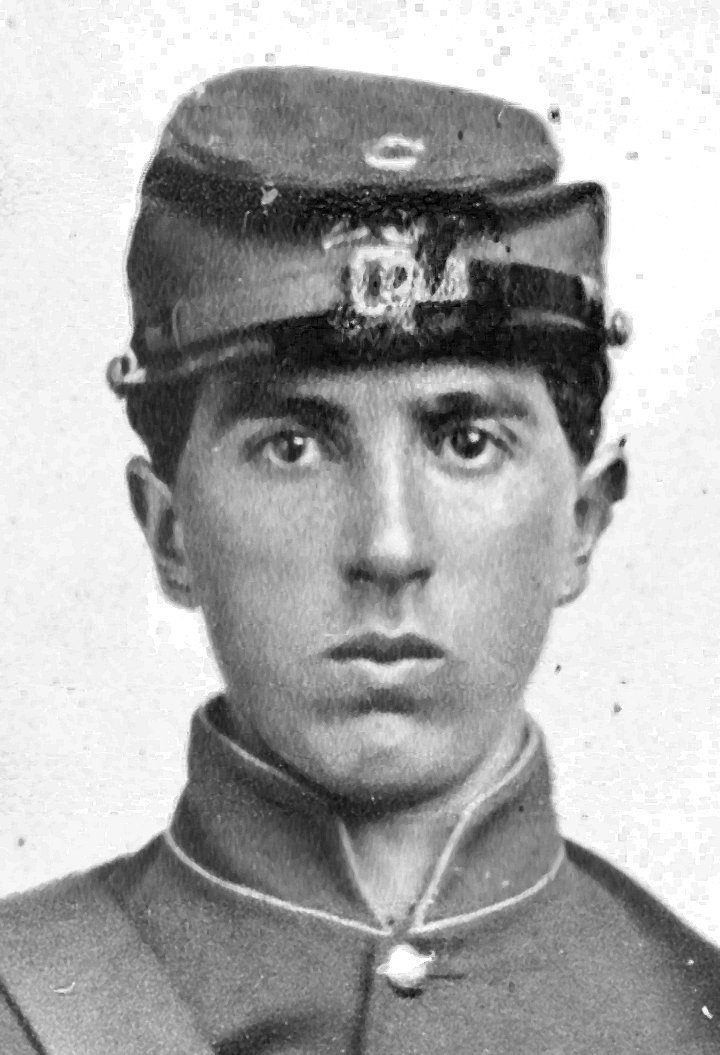
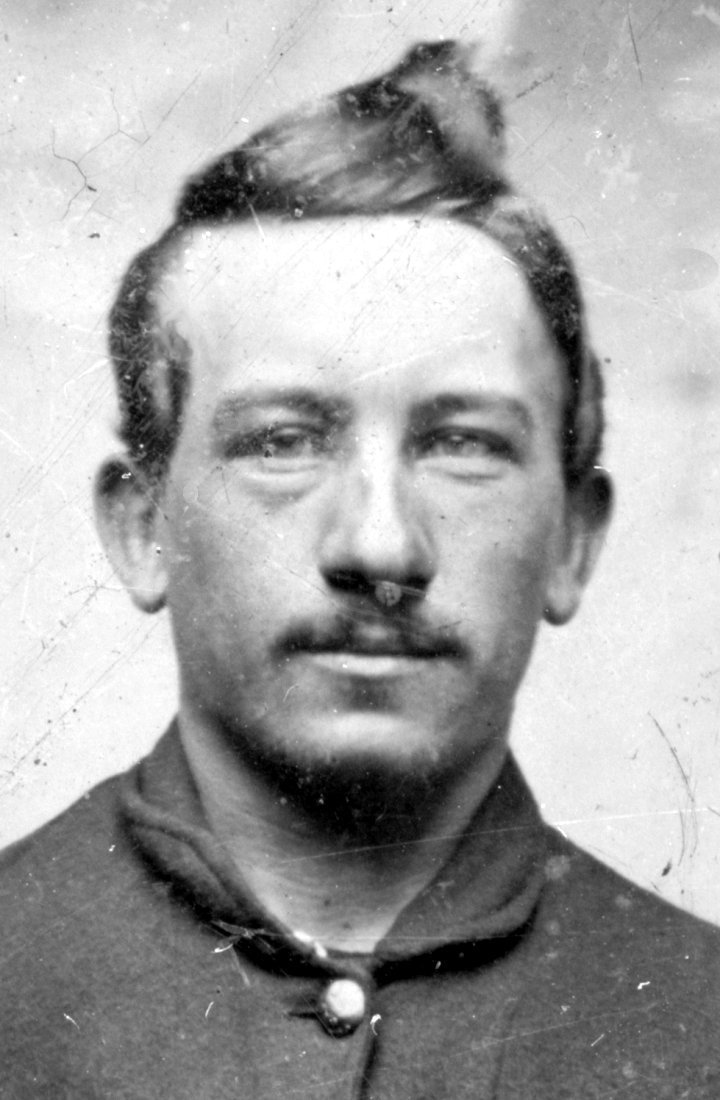
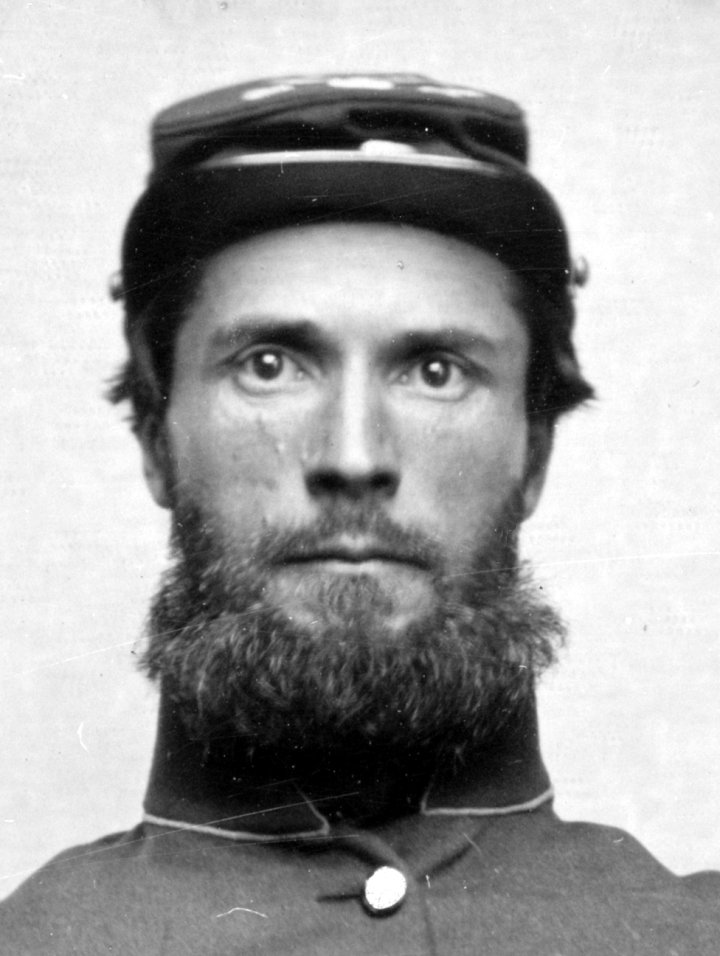

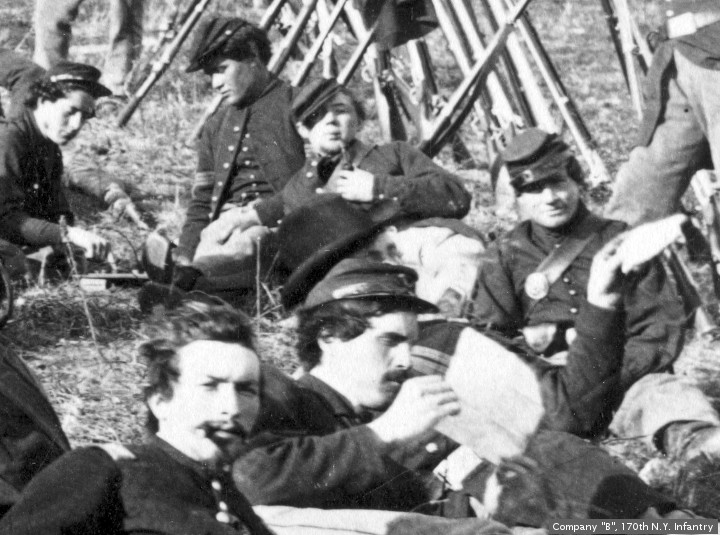
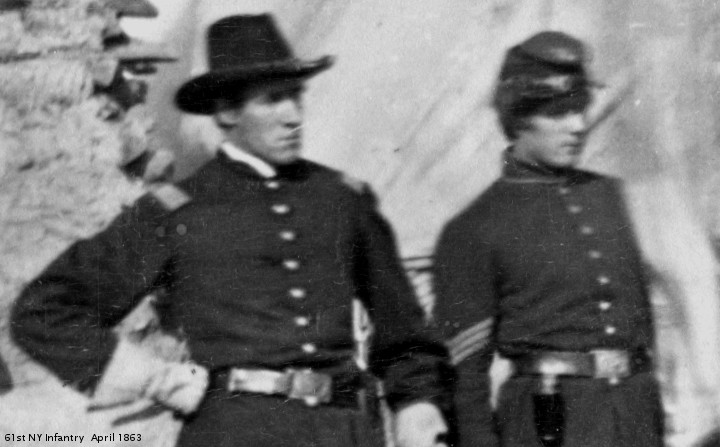
This is a repost. Part two is a recycled email. Thank you Ed. The pictures are Union soldiers, from the War Between the States. They are courtesy of The Library of Congress
One thing that is accepted without question is the year starting at midnight on December 31. That is, in some cultures. Jews have a new year in September, China celebrates some time in January, and the fiscal year is whenever the bean counters say. If you ask google “why does the year start january first”, you get 436m options.
The earth runs on a cycle, based on it’s annual trip around the sun. The winter solstice is the longest night of the year, and in many ways the logical end of the year. The celebration of Christmas, a few days after the solstice, is not a coincidence. The question today is, why do we start a new year a week after Christmas, or ten days after the solstice?
The top ranked answer at google is from catalogs.com. They talk about Julius Caesar and Pope Gregory XIII(13), but never quite say why January first is the big day. It does end on a helpful note: “Calendars are a way that grownups organize time, but clearly not all grownups do it the same way. Happy New Year, therefore, whenever it happens for you.”
Lifeslittlemysteries continues with the talk about Caesar and the Pope. It is noted that January 1 was the day that Roman officials started their term of office. In England and her colonies, the new year was celebrated in March until 1752.
The rest of the google results do not look promising. PG does not know the answer to this.




How long have people celebrated the turn of the year? Celebrating the New Year is a tradition that dates back nearly 4000 years. If you had lived in Mesopotamia and Babylon 4,000 years ago (c. 2000 B.C.), you probably would have celebrated the new year in mid-March, at the time of the Vernal (Spring) Equinox. If, however, you were an Egyptian, your new year began with the Autumnal Equinox and the flooding of the Nile. If you were Greek, the Winter Solstice began your new year.
Who set January 1st as the beginning of the year? Julius Caesar was the first to set January 1st as the New Year. Caesar did so when he established the Julian calendar. The Julian calendar, named for Julius Caesar, decreed that the new year would occur on January 1st. Caesar wanted the year to begin in January since it celebrated the beginning of the civil year and the festival of the god of gates and, eventually, the god of all beginnings, Janus, after whom January was named. (It was said, many years later, that the only thing the Julian calender is good for is writing checks.)
Where would you celebrate Hogmanay on December 31st? Scotland is the home of Hogmanay (hog-mah-NAY), the rousing Scottish New Year’s celebration (the origins of the name are obscure). One of the traditions is “first-footing.” Shortly after midnight on New Year’s eve, neighbors pay visits to each other and impart New Year’s wishes. Traditionally, First foots used to bring along a gift of coal for the fire, or shortbread. It is considered especially lucky if a tall, dark, and handsome man is the first to enter your house after the new year is rung in. The Edinburgh Hogmanay celebration is the largest in the country, and consists of an all-night street party.
How is the New Year rung in by the Japanese? The new year is the most important holiday in Japan, and is a symbol of renewal. In December, various Bonenkai or “forget-the-year parties” are held to bid farewell to the problems and concerns of the past year and prepare for a new beginning. Misunderstandings and grudges are forgiven and houses are scrubbed. At midnight on Dec. 31, Buddhist temples strike their gongs 108 times, in a effort to expel 108 types of human weakness. New Year’s day itself is a day of joy and no work is to be done. Children receive otoshidamas, small gifts with money inside. Sending New Year’s cards is a popular tradition—if postmarked by a certain date, the Japanese post office guarantees delivery of all New Year’s cards on Jan. 1.
Who were the first with New Year’s resolutions? It is believed that the Babylonians were the first to make New Year’s resolutions, and people all over the world have been breaking them ever since. The early Christians believed the first day of the new year should be spent reflecting on past mistakes and resolving to improve oneself in the new year.
You can appreciate the Buddhist tradition when you see the timber slung on ropes used to strike their huge temple bell/gong. Some have a huge bronze bell as we are used to seeing, and others have a large round heavy symbol/gong. Smaller temples have, as you might imagine, smaller gongs and will have one or two strikers for the gong. They swing hammer like (as in sledge hammer) items to strike the gong. I’m sure this is what started the heavy drinking associated with their New Year. If you have ever lived close enough to hear these things with their long reverberations you’ll understand after the first few you ‘re ready for a belt. May you all have a health filled and prosperous New Year, Ed


Happy Solstice


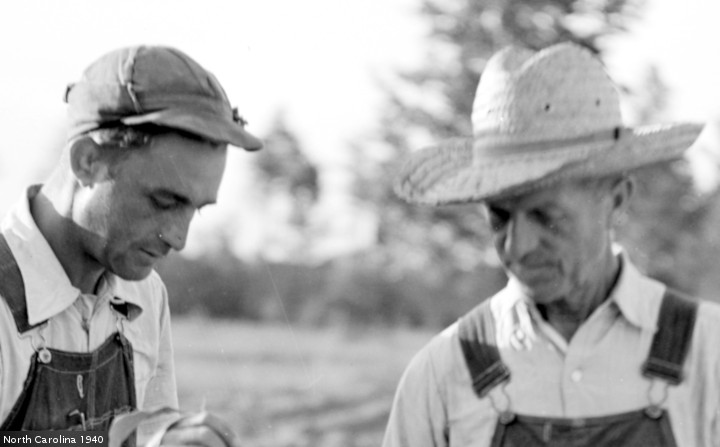

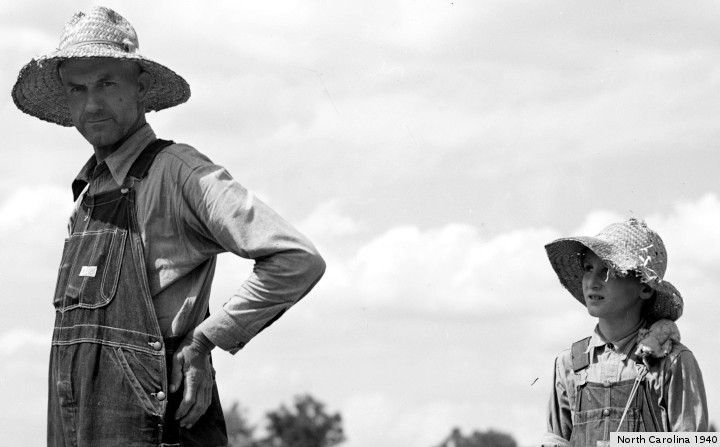
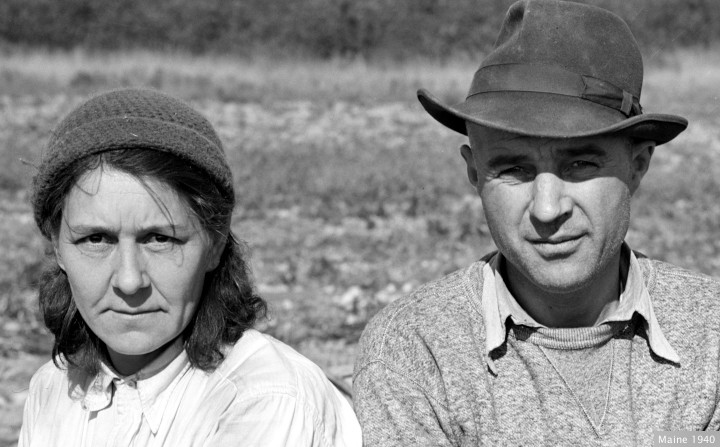


Happy Solstice. This is the true end of the year. In four days it is Christmas, and in eleven days it is 2020. I got a calendar, and a historic Christmas card. I am going to repeat my xmas letter from last year, and comment on your calendar. I will write my commentary as I look at the pages for the first time. I have not cut open the plastic around the calendar yet, although I have taken it out of the shipping package. One thing at a time.
The knife I use to cut open the plastic is a Barlow Camco 551. I found this knife while helping my dad take a carpet out of his room, and claimed it as my fee for helping out. A few years later, I went out of town with a friend, and the Barlow wound up under a seat in his vehicle, where it stayed until the next summer, and I found it. I cleaned up the Barlow, and lubricated the hinge with wd40, so that it opens easily. The Barlow was immortalized in the song “Send me to the ‘lectric chair.” “I cut him with my Barlow, I kicked him in the side, I stood there laughing over him, while he wallowed round and died.”
The cover shows the moon, with a whispery collection of clouds in front. The top row is Trump Hair orange, with the lower clouds quickly settling into a blue black funk. The moon serves as a contrast to the sea grass on the other side. The two highlighted days in January are New Years day, and the birth of Elvis. The King is enjoying retirement in Bug Tussel AR.
February is a collection of Sea Gulls. Two of them are looking at the photographer. There is no indication of what they were thinking about at that moment, or if they were capable of thought, beyond wondering where their next meal was coming from. Valentine’s Day is below National Kite Flying Day. VD is noted by the image of a Buddhist looking dude, saying Love all, all the time.
The last three years, I have been going to a meditation group. Earlier this year, I took a robe-wearing Buddhist monk with me. Arnold was an activist in Georgia in his youth. Then he went to law school, but practicing law proved stressful, so he became a monk. He is back in Atlanta now, after living in India. I connected with him on facebook, and got him to ge meditate with us once. My group is very non authoritarian … the only guideline is to be quiet until the timer goes off. Arnold was a pleasant counterpoint to this, and has not been back since.
March shows a staircase, with the edge of the step painted festive colors. Atlanta has many stairways to nowhere. A house is built on a hill, stone stairs provide access, the house is torn down, and the steps remain. There is something karmatic/dogmatic about that.
April is marked with an impressive photograph. I have tried taking pictures of butterflies. They don’t stand still. You have to be ready to catch them. I don’t know what camera/lens used for that image, but it is impressive. And, unlike the April fool’s theme, I really mean that.
May seems to be elephant month. I don’t know how well elephants are doing in the real world, with their size, and need for large amounts of food. I met an elephant handler once. He was staying in a train car, parked in a field behind Piedmont Park. After the show, he would walk down the street to a nearby bar. Those train tracks are now part of the Beltline. Someone had the idea to take a series of abandoned rail lines, and make a trail out of it. Parts of it are now paved, and wildly popular with pedestrians, bike riders, and dog walkers. Expensive apartments are springing up nearby. There is talk about putting a light rail line through there, but that is years and years in the future.
June was the beach, always changing, and yet always the same. July was an art object inspired by the American flag. It only has nine stars, and five stripes. The paint is strategically flaking off here and there. The flag is endlessly adaptable. Sometimes it is respectful, and respectable. Sometimes it is unspeakably tacky, and commercially exploitative. America is all of these things.
The boomerang counter top of August implies that some of the meals will be coming back. OK boomer-ang. The sunset is a good match for September, and national flapjack day. Labor Day weekend has evolved into a big deal here. A massive sci-fi convention, Dragon Con, takes over downtown. They have a costume parade saturday morning that is a gridlocked warning of what will happen when uncontrolled population growth runs into the reduced living areas of climate change. This year was a weird September. After a brutal July and August, many were hoping for cooler weather. Instead, summer continued to burn up the city until October, which fish in Michigan were blissfully unaware of, at least until they got caught.
November has some lights from the State fair. Lights are notoriously difficult to photograph. A few weeks ago, they had a lantern parade on the beltline. I tried to take pictures, and wound up with masses of wavy colors that made no sense whatsoever. I used to go out at christmas with a tripod, and take pictures of lights. It was a fun way to spend an evening, but the pictures were not that great. Photography is sometimes like that…. taking the pictures is lots of fun, but looking at them, or using them in graphic poems later, is not as great. Currently, I am using daylight pictures of graffiti and wall murals. Some neighborhoods in Atlanta are swarming with public arts. Many of these areas, like East Atlanta and Hapeville, were ghettos just a few years ago, and still have their rough edges.
And what does a pink flamingo have to be thankful for? Back in 1973 in Athens, somebody had a showing of the movie Pink Flamingos. I missed it, not knowing why it was a big deal. I finally got around to seeing PF on youtube a few months ago. A crucial hole in my education was filled. Just like the moonlit waves bring December into actuarial awareness, and project post-lateral promise for the new year. At the 2020 solstice we will be a year older, and grateful that the election is over. Whatever will be, will be Aunt Bee. Pictures from The Library of Congress.


From The Heart Of Atlanta To Tyler Perry

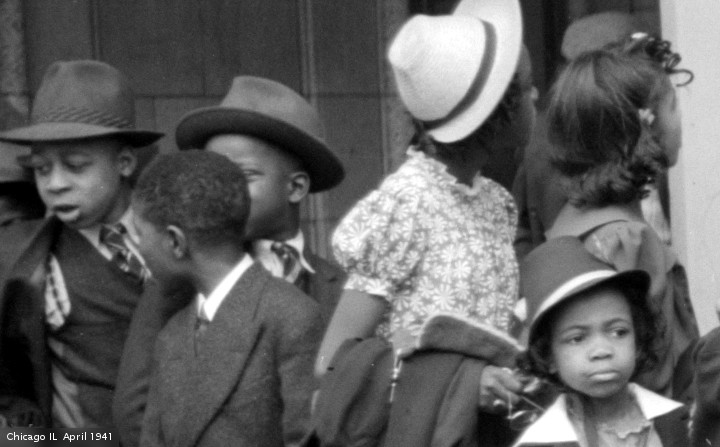


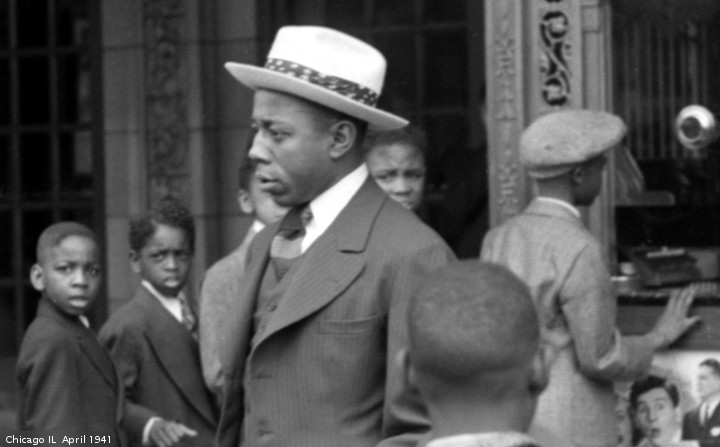

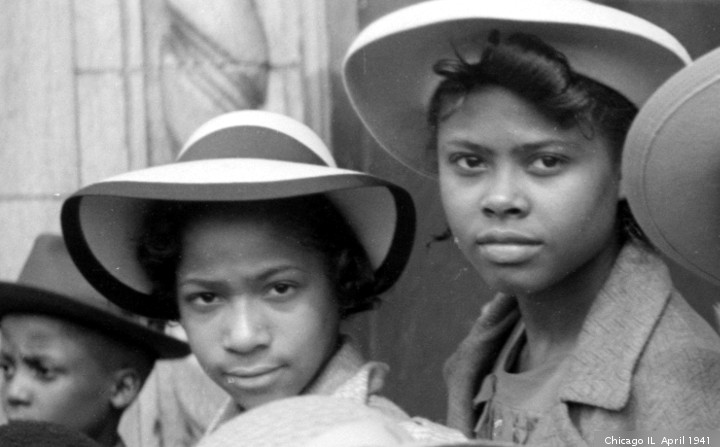


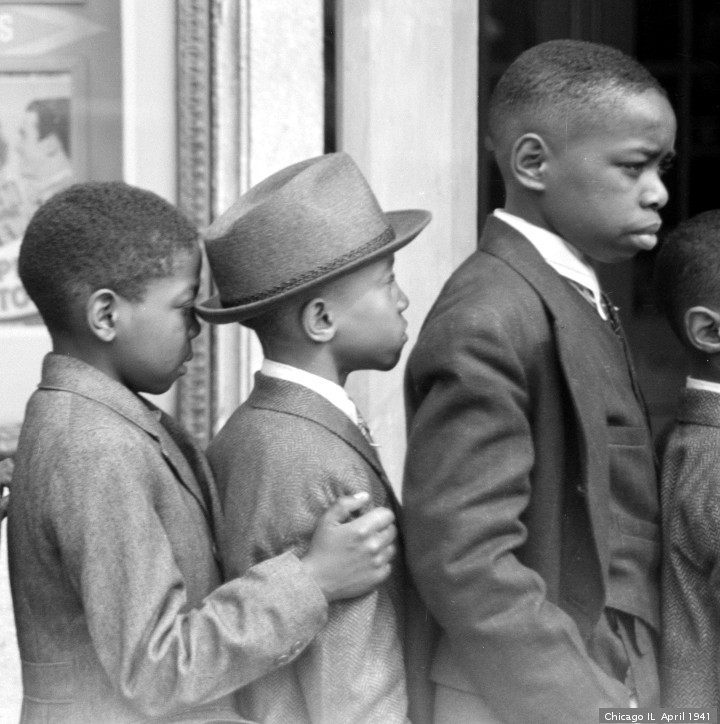

There is an old saying, what goes around comes around. When you sow the wind, you reap the whirlwind. The thing is, it is not always obvious what is payback for what. Moreton Rolleston Jr. filed a lawsuit to have the Civil Rights Act declared unconstitutional. Forty years later, a Black man, built a mansion on the site of Mr. Rolleston’s home. The fact that this Black man earned his money by playing Black women, in movies, is icing on the cake.
When the Civil Rights Act was passed in 1964, Moreton Rolleston, Jr. owned the Heart of Atlanta Motel. He filed a lawsuit, trying to have the law overturned by the courts. The case went to the Supreme Court, which upheld the law.
The legal justification of the Civil Rights Act was a law giving the U.S. Government the right to regulate interstate commerce. Mr. Rolleston argued that this use of the commerce clause went too far. “‘The argument that this law was passed to relieve a burden on interstate commerce is so much hogwash. It was intended to regulate the acts of individuals.’ If the commerce clause can be stretched that far, declared Rolleston, ‘Congress can regulate every facet of life.'” (PG supports all citizens having the right to housing, education, etc. He also wonders if we are on a slippery slope. The government keeps taking more and more freedom away.) (The link for the quote no longer works.)
In 1969, Tyler Perry was born. From humble beginnings, he has been incredibly successful. His signature character is a woman named Madea.
In 1985, Mr. Rolleston was involved in a real estate deal that went sour. He was sued. In 2003, Mr. Rolleston was evicted from his Buckhead home. In 2005, the property was sold to Tyler Perry. Mr. Rolleston sued Mr. Perry, claiming that 2035 Garraux Road was still his property.
Mr. Rolleston , was disbarred in 2007. The Veteran’s History Project shows his race as “Unspecified.” Moreton Mountford Rolleston, Jr., born December 30, 1917, died August 29, 2013.
HT Millard Fillmore’s Bathtub.. This is a repost, with pictures from The Library of Congress.






When You Can’t Say Anything Good


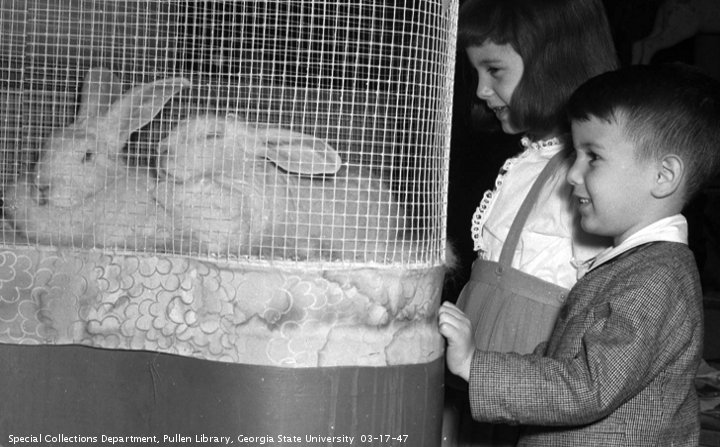
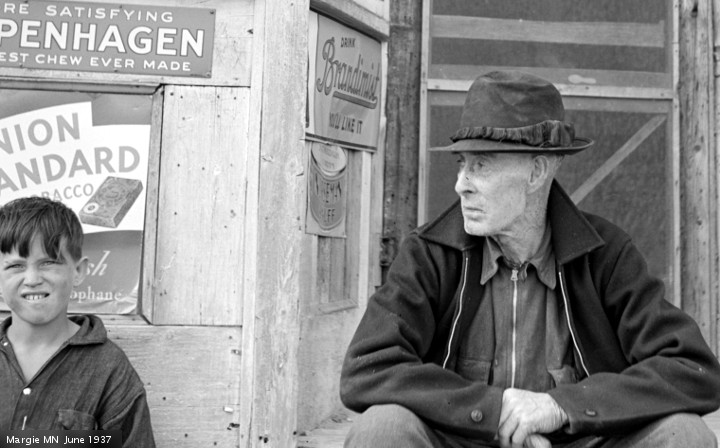
Dangerousminds , which is seldom at a loss for words, posted the video of Bob Dylan seen above. The young Mr. Zimmerman is in angry young man mode, and discusses the concept of an all picture Time magazine. All pictures, no words. This may be where this blog is headed.
Writers block is real. You have all of modern media at your beck and call, and yet you don’t have a message. TwentyTwoWords posts the story of a medical study into writers block. The study wastes no words in it a pithy treatment of this issue. It is an unspoken masterpiece, the treatment that dare not speak it’s name. The research was financed by a block grant.
The findings of this study were replicated in 2007. The report is included here, in it’s entirety. The editor noted “I did not change one word, and this is a first in my tenure as editor.” There is no word on whether the report was submitted before the deadline.
Ben Hecht tells a story in his autobiography “Child of the Century”. As a young, underpaid newspaper writer in Chicago, Mr. Hecht was hired to participate in literary debates. In the era before movies and radio, these were considered after dinner entertainment. One night, Mr. Hecht got together with his opponent, and hatched a plan. The topic of the debate was “People who attend literary debates are idiots”. The first speaker did not say a word, but gestured towards the crowd. The second speaker said, “you win.”
“Child of the Century” is now out of print. In 1994, PG thought he was going to have to move, and the first step was to throw away things. His copy of “Child of the Century” was one thing he pitched.
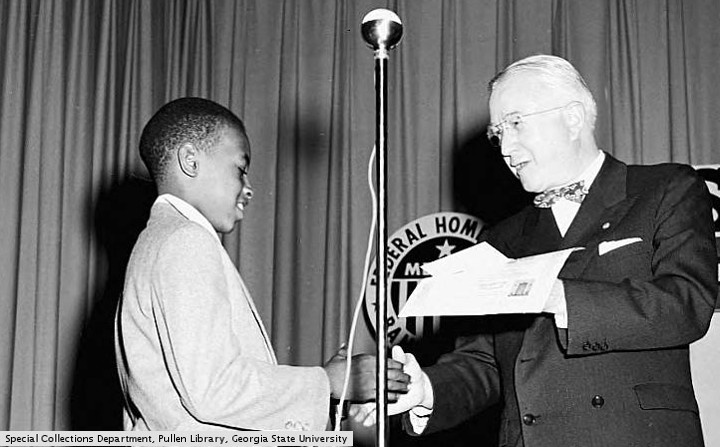
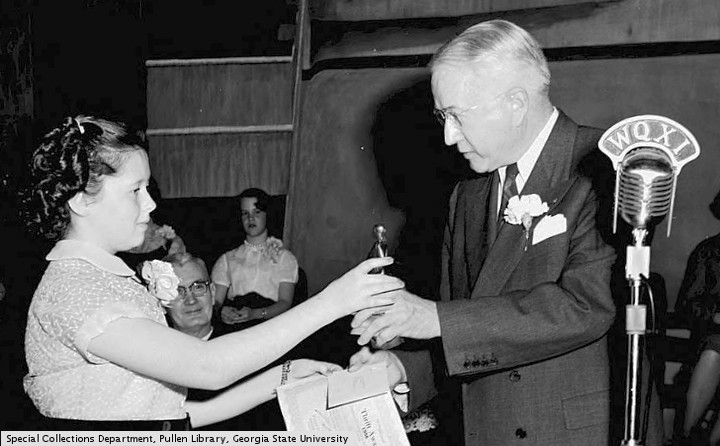
The sound that you hear is one hand clapping. Those reading with one hand can join in with the other one. Appreciation is always welcome. Vintage pictures are from “The Special Collections and Archives, Georgia State University Library”.
This is a repost. PG thinks writer’s block should be called writer’s tackle, but few agree.



Ansel Adams And Dorothea Lange
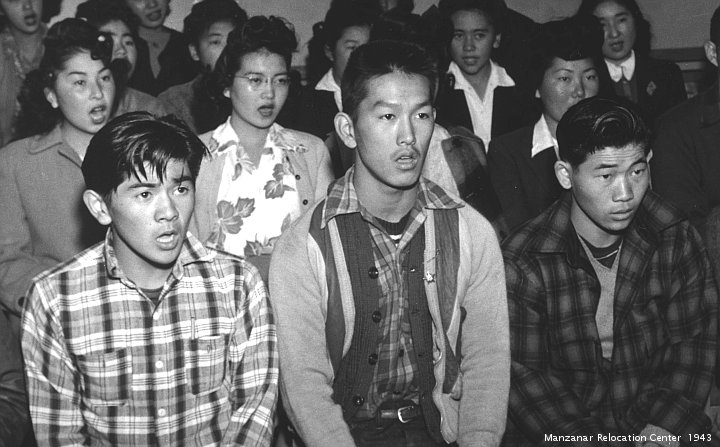


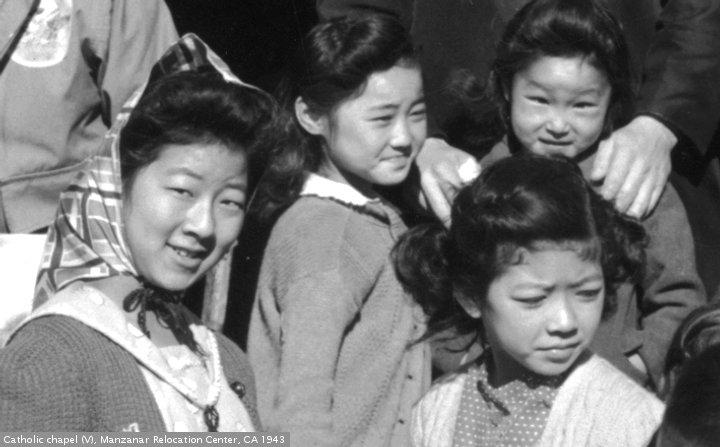
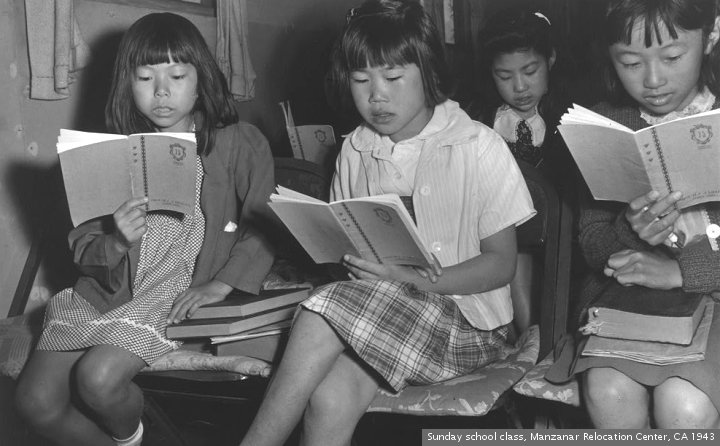

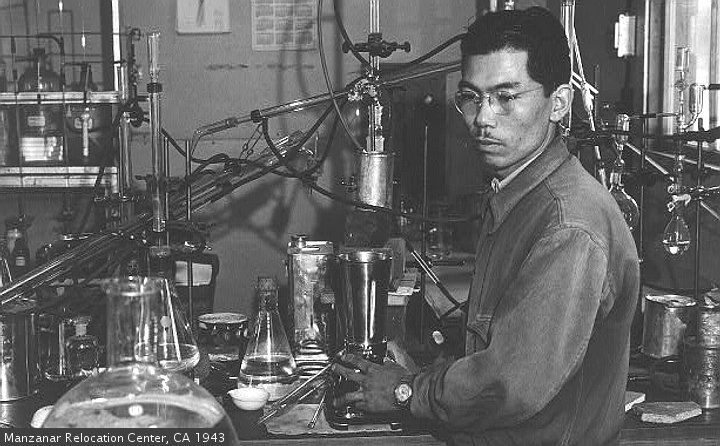

The facebook feed has recently had links to a story, Dorothea Lange’s Censored Photographs of FDR’s Japanese Concentration Camps. Miss Lange was the photographer of the iconic Migrant Mother. After Pearl Harbor, Miss Lange took a job with the War Relocation Authority, documenting the “relocation” of Japanese-Americans to interment camps. The photographs did not please the authorities. They were censored, and only appeared recently. This is a repost.
Ansel Adams also took photographs at the Manzanar, California, camp. In the current stories, he is literally a footnote: quotes were used from a book about his photography. Why is Dorothea Lange receiving attention, while Ansel Adams is ignored?
One answer is that Miss Lange was hired early on, and shows the harsh reality of relocation. “On July 30, 1942, the WRA laid her off “without prejudice,” adding that the cause was “completion of work…. the WRA impounded the majority of her photographs of Manzanar and the forced detentions, and later deposited 800 image from the series in the National Archives without announcement.”
“After Lange’s departure, Manzanar’s director Ralph Merritt visited renowned environmentalist and landscape photographer Ansel Adams and suggested he document the camp — Merritt and Adams were friends from the Sierra Club. Lange, also friends with Adams, encouraged him to take the job. (Coincidentally Adams printed “Migrant Mother” for her ) …Ansel Adams made several trips to Manzanar between October 1943 and July 1944 for this new personal project, and, as Alinder writes, he was primed to try the kind of documentary photography regularly practiced by Dorothea Lange and the Farm Security Administration that he had earlier shunned. Unlike Lange, a white woman who had been viewed with suspicion by her subjects, Adams was welcomed by the incarcerees, even greeted as a celebrity in a cultural community that had a deep appreciation of nature — many incarcerees at Manzanar literally opened their doors to him dressed in their finest clothes. … By 1943, Manzanar’s incarcarees had had time to settle in and enjoy the fruits of their collective work. In less than ideal surroundings, they had collectively built their own post office, town hall, library, auditorium, co-op store system, police station, jail, cemetery with memorial, published their own newspaper (the ironically named the Manzanar Free Press, which was regularly censored by the military), and even their own YMCA.”
“As for Lange, looking at the historical record, it appears that she was treated differently from the other WRA photographers. She was discouraged from talking to the incarcerees, was constantly followed by a censor, and faced harassment. She was refused access to areas after being given clearance, and she was often hounded over phone charges and receipts. … After being discharged, Lange expressed in letters her dismay that her work was ineffective in helping the people she documented. Her assistant Christina Clausen later noted the ferocity of this body of work also marked the beginning of the photographer’s bleeding gastric ulcers. Lange was unable to work for a number of years after her harrowing experience at Manzanar. She died from esophageal cancer in 1965.”
“In 1944, Adams’s photographs were published as a book, “Born Free and Equal: The Story of Loyal Japanese Americans,” and shown at New York’s Museum of Modern Art. Nativists took offense. They saw Adams’s work as a slur on the war effort. He was a “Jap lover.” This quote is from a 2016 article, Let’s be honest, Ansel Adams’s images of a WWII internment camp are propaganda
“Adams visited Manzanar to take photos in 1943 at the request of camp director Ralph Merritt, who was a personal friend. “They don’t look quite as dusty and quite as forbidding as Dorothea Lange’s photos … Indeed, the place that looks barren and depressing in Lange’s pictures manages to look beautiful in Adams’. You get little sense that it was even a detention center, in part because Adams, like other photographers, was not allowed to shoot the guard towers or barbed wire…
There are scenes from a baseball game, kids walking to school, a gathering outside a chapel. Lots of smiles, too, and portraits of camp residents cropped so close, you can see every blemish and stray hair. In Adams’ vision, Manzanar comes off as a place where Japanese-Americans, dignified, resilient and optimistic in spite of their circumstances, built a temporary community in the desert.
(Skirball Cultural Center director Robert) Kirschner said that if Adams’ photos appear to sugarcoat the indignities of life in an internment camp, it is because he did not see himself as a social activist the way Lange did. Still, Kirscher says, Adams was challenging internment in his own way, by depicting its victims as patriotic, law-abiding Americans. Unlike Lange, Adams was given permission to publish his photos. Before the war ended, he did so in a book called “Born Free and Equal: The Story of Loyal Japanese Americans,” in which he warned about the dangers of letting wartime hysteria justify depriving U.S. citizens of their freedom.”
The NPR article mentions a third Manzanar photographer. “Before World War II, Toyo Miyatake had a photo studio in Los Angeles’ Little Tokyo. When he learned he would be interned at Manzanar, he asked a carpenter to build him a wooden box with a hole carved out at one end to accommodate a lens. He turned this box into a makeshift camera that he snuck around the camp, as his grandson Alan Miyatake explains in the video below, which is featured in the exhibit.
Fearful of being discovered, Miyatake at first only took pictures at dusk or dawn, usually without people in them. Camp director Merritt eventually caught Miyatake, but instead of punishing him, allowed him to take pictures openly. Miyatake later became the camp’s official photographer.”
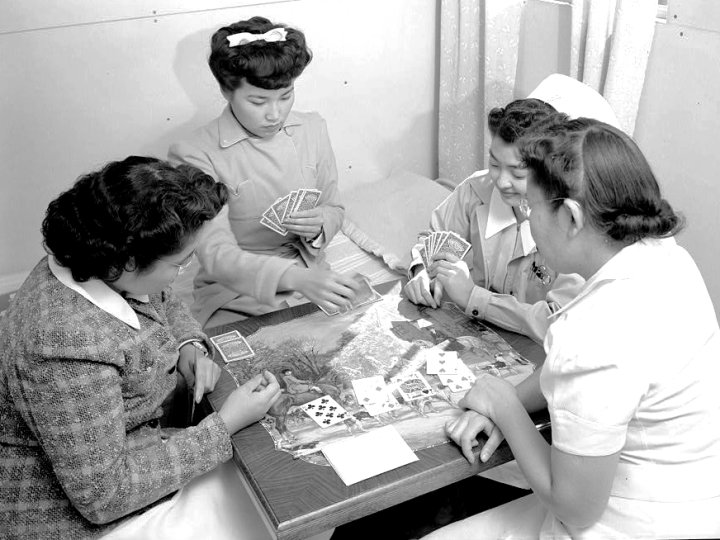
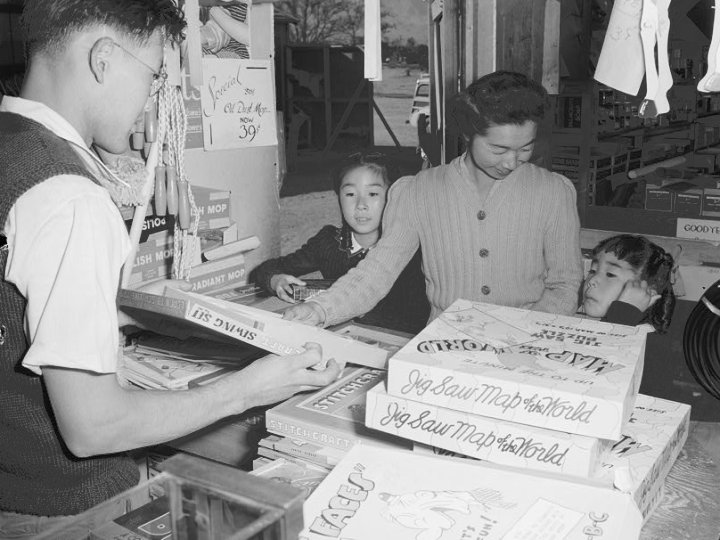
Pictures for today’s feature are from The Library of Congress. These are pictures that Ansel Adams took at Manzanar. They have been posted at chamblee54 before. The ladies in the bridge game are Aiko Hamaguchi, Chiye Yamanaki, Catherine Yamaguchi, and Kazoko Nagahama.






Fruitcake




December 27 is National Fruitcake Day PG sees a chance for some text to put between pictures. He would be nutty as a fruitcake to turn down this chance. This is a repost. Part two of this recycled holiday blog party is a tribute to The Fruitcake Lady.
Fruitcakes were buried with the dead in Ancient Egypt. It’s true. Ancient Egyptians used to fill the tombs of the dead with all the supplies that they would need to enjoy the afterlife, including food and water. Fruitcake was often put into the tomb of a deceased person because a fruitcake soaked in a natural preservative like alcohol or fruit juice would last a long time. It was thought that the preserved fruitcake would not spoil on the journey to the afterlife. Fruitcake was a staple food of other ancient Middle Eastern, Southeast Asian and Mediterranean cultures as well
Candied fruits are used in fruitcake because using sugar was the only way to preserve the fruit long enough to get it back to Europe from the Middle East. When the Crusaders began carrying exotic fruits back to their European home the fresh fruit would spoil long before they were able to get it home. Ingenious traders began drying the fruits by candying them with sugar which made them an even more delicious treat and preserved them indefinitely. Once the candied fruits were sent to Europe and to other parts of the world they were baked into cakes so that they could be shared with family and friends on special occasions.
Fruitcakes will last for years without spoiling. It’s true. A fruitcake that is properly preserved with an alcohol soaked cheesecloth that is then wrapped in plastic wrap or foil can be kept unrefrigerated for years without spoiling. In the past, before refrigerators came along, families would make fruitcake for holidays and special occasions months in advance of the actual event and then let the covered fruitcakes sit wrapped in an alcohol soaked cloth until the event happened. As long as the cloth was remoistened with alcohol occasionally the cakes not only didn’t spoil, they actually tasted richer and sweeter because they had been soaking in brandy and rum for a couple of months.
To millions of fruitcake consumers, the town of Claxton GA is very special. This south Georgia town, just down the road from Reidsville, is home to Claxton Fruit Cake . The story of the Claxton Fruit Cake company is a sweet one. Savino Tos founded the Claxton Bakery in 1910. He hired Albert Parker in 1927, and sold him the business in 1945. Mr. Parker decided to sell Fruit Cake to America.
No story about fruitcake is complete without mentioning the “Fruitcake Lady.” Marie Rudisill , an aunt of Truman Capote, wrote a book of fruitcake recipes. She became a tv celebrity, before going to the bakery in the sky November 3, 2006.
The urban dictionary has nine listings for fruit cake. The ones for homosexuals and crazy people are there. UD gets creative with this selection: “The act of releasing green chunky diarrhea onto your partners face then, ejaculating on it, then punching him/her in the nose causing the colors to mix together to form a fruit cake like color.”
If you tire of jokes about fruitcake, you can go to The society for the protection and preservation of fruitcake . (If you click on the “new URL”, you will be invited to join in the green card lottery.) There used to be a link on the society page that enables you to buy Fruitcake Mints. “Keep your breath fruitcake fresh with these festive mints!”
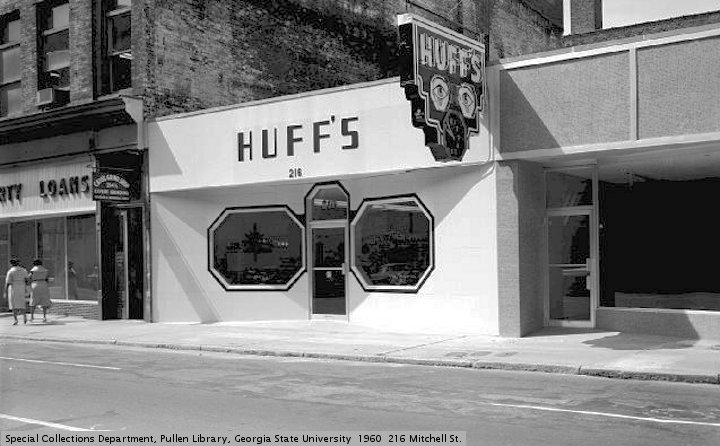
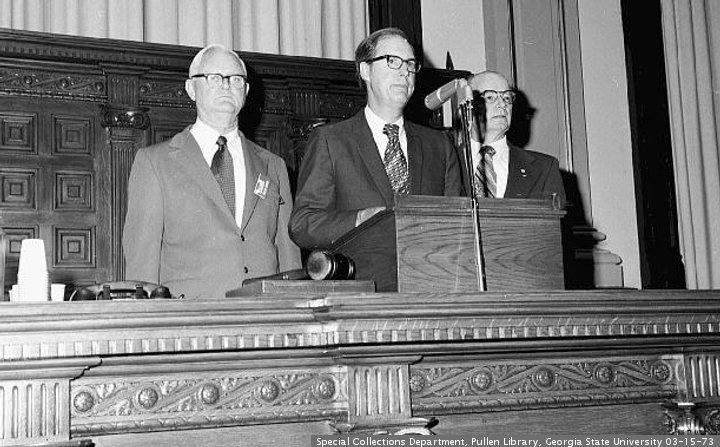
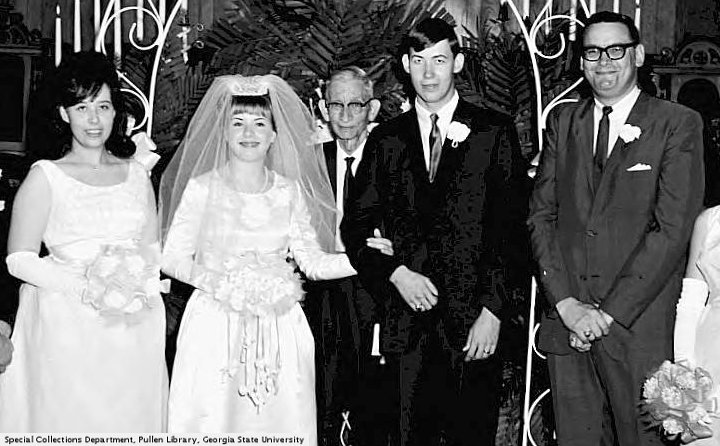
Pictures are from “The Special Collections and Archives, Georgia State University Library”.







There was a political comment on facebook. The last sentence was “No wonder Georgia turned Republican after the Clintons sold poor people out.” The person making this comment was born in 1980, the same year Georgia elected a Republican to the US Senate. This person also was born and raised in Florida. PG thought of a smart comeback. This is a repost.
There was a famous video by the Fruitcake Lady. In the first part, a young lady asks who to vote for in an upcoming election. FL makes a face, and said “you’re gonna ask someone who lives in FLORIDA how to vote?” This is along the lines of a Floridian transplant explaining the Republicanization of Georgia. Unfortunately, the video with the Fruitcake Lady had been taken down for copyright infringement. The spell check suggestions for Republicanization: Recapitalization, Cannibalization.
PG wasn’t really doing anything, and was in the mood for a google wild goose chase. This led to an amazing article, Sweet as Sugar, Rude as Hell, My Lost Interview with Truman Capote’s Aunt. A writer for the fishwrapper went to a mobile home in Hudson, FL. He talked to Marie Rudisill, who was best known as Truman Capote’s “Aunt Tiny.” The meeting took place in 1997, and was not what the writer expected. A family friendly version of the meeting was published The journalist received a slice of fruitcake in the mail. Everyone concerned went on with their lives.
Marie Rudisill died November 3, 2006, after becoming famous as the Fruitcake Lady. As for the journalist: “When I left The Atlanta Journal-Constitution in 2009, I stashed 27 years of old newspapers, tapes and ephemera in my garage. Nothing is more depressing to me than those boxes of old newspapers. It’s my own private morgue — replete with the sickening scent of dust and roach pills…. When I finally mustered the courage to dig around, I found the Lewis interviews — as well as a cache of other recordings. Three of the tapes had Rudisill’s name scribbled on them. I was not quite ready to listen, though. I put them in a box and labeled it.”
In 1924, Truman Streckfus Persons was born in New Orleans LA. His mother, Lillie Mae (Aunt Tiny’s older sister) left her husband behind, and took the boy to Monroeville AL. They lived in a wild household. A neighbor was Harper Lee, who wrote “To Kill A Mockingbird.” Miss Lee was a close friend, as was Sook. This is Truman’s cousin, the fruitcake chef herone of “A Christmas Memory.”
After a while, Lillie Mae married Joe Capote, who adopted the boy. They moved to New York, where Aunt Tiny joined them. Truman was sent to military school. Everyone, except Lillie Mae, thought this was a terrible idea. The effort to butch up young Truman did not work.
Aunt Tiny wrote a book, Truman Capote: The Story of His Bizarre and Exotic Boyhood by an Aunt Who Helped Raise Him. It was published in 1983, a year before Truman died. “The book scandalized Monroeville — and Capote. He told The Washington Post: “If there are 20 words of truth in it, I will go up on a cross to save humanity.” Said Harper Lee: “I have never seen so many misstatements of fact per sentence as in that book.”
There is one story that sticks out…. “Rudisill breaks down just once during our interview. It’s when she recalls “the first time Truman ever had a sexual encounter with a priest.” She was living in Greenwich Village, having followed Lillie Mae and Truman to New York. “He was sitting on my doorstep when I came home from work, and he had blood all in his pants, and then he told me about this priest. And nobody, I don’t think anybody in the world ever knew that but me.”
There is more to the story. If you have the time, you might enjoy reading the full article. Pictures today are from The Library of Congress.




Rudolph


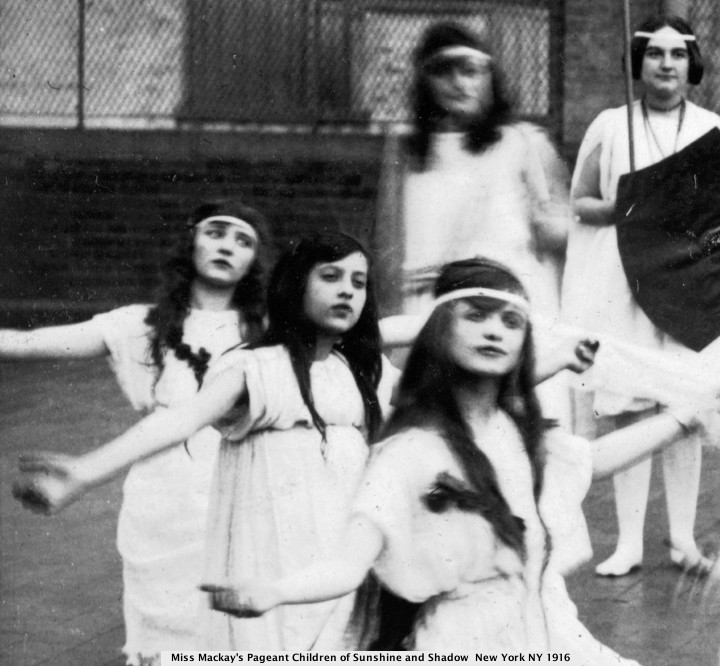


Someone posted a bit of revisionism about a holiday classic. As he sees it, “Rudolph the Red Nosed Reindeer” is about racism.
In a bit of yuletime synchronicity, the urban mythbusters at Snopes posted a piece about Rudolph the same day. It seems as though the Rudolph story was originally written for the Montgomery Ward Stores. The idea was to print a Christmas booklet to give to customers. A staff writer named Robert L. May was picked for the job.
Originally, there were concerns about the red nose, and the connection to heavy drinking. At the time, the original meaning of “merry christmas” had been forgotten. Merry meant intoxicated, and a merry christmas was a drunken one. The booklet was released. It was a big hit with shoppers.
Mr. May had a brother in law named Johnny Marks, who was musically gifted. Mr. Marks wrote the song, and somehow or another Gene Autry came to sing it. A story (which PG heard once, but cannot find a source for) had Mr. Autry doing a recording session. The session went very smoothly, and the sides scheduled to be recorded were finished early. There was a half hour of studio time paid for. Someone produced copies of “Rudolph”, gave them to the musicians, and the recording was knocked out. It became a very big hit.
“Rudolph the Red Nosed Reindeer” has become a beloved standard, without the troubling religious implications of many holiday songs. It is the second biggest selling record of all time. The only song to sell more is “White Christmas”.
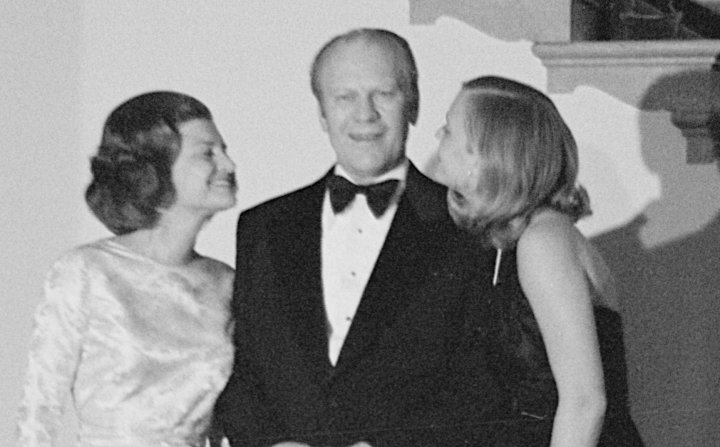
The story above is a repost. Pictures are from The Library of Congress. There is an appearance by Gerald Rudolph Ford, and his women. Betty was a merry soul.



What Is A Cynic?



“A cynic is a man who knows the price of everything, and the value of nothing.” ― Oscar Wilde. This quote is one of Oscar’s greatest hits. If you think about it for a minute, it is not totally accurate. You are not supposed to think. Quoting Oscar Fingal O’Flahertie Wills Wilde is about sounding clever, not making sense. Did he really create that definition of a cynic?
Oscar Wilde is a quote magnet. This is more than something you put on your refrigerator. When people hear something clever, odds are good that Oscar will get the blame. As Dorothy Parker wrote: “If, with the literate, I am, Impelled to try an epigram, I never seek to take the credit; We all assume that Oscar said it. [Life Magazine, June 2, 1927]”
Wikiquote says this line is from Act III of Lady Windermere’s Fan. It was spoken by Lord Darlington. Did the play write intend for the line to be taken seriously, or was he making the character look foolish by saying it? With Oscar Wilde, it could be both of these things at the same time.
Principle Four, of the four principles of quotations, reads “Only quote from works that you have read.” In the case of Lady Windemere’s Fan, this would mean a youtube video of the play. There is a posh BBC production available. You don’t have to watch the cell phone recording of high school players.
Lady Windemere’s Fan is a production where upper class Brits say clever things in glorious costumes. Nobody ever goes to the bathroom, or looks less than perfect. Lady Windemere’s six month old child is neither seen, nor heard. Lady Windemere finds out her husband, Lord Windemere, is having an affair with a Mrs. Erlynne. The Lord proceeds to invite the floozy to Lady Windemere’s birthday party.
After the party, the men go to their club, then to Lord Darlington’s room. There are five men in the conversation, beginning with Lord Windemere. Lord Darlington has just told Lady Windemere that he loves her, and wants her to run off with him. Lady Windemere said no. Lord Augustus is a suitor of Mrs. Erlynne, and is begging her to marry him. Cecil Graham, and Mr. Dumby, wear their splendid costumes with conviction.
The scene starts with the men saying clever things, most of them insulting to someone. Lord Augustus, or Tuppy, is the butt of many jokes. Before long, we get this exchange:
Dumby. I don’t think we are bad. I think we are all good, except Tuppy.
Lord Darlington. No, we are all in the gutter, but some of us are looking at the stars.
Dumby. We are all in the gutter, but some of us are looking at the stars? Upon my word, you are very romantic to-night, Darlington.
Cecil Graham. Too romantic! You must be in love. Who is the girl?
Lord Darlington. The woman I love is not free, or thinks she isn’t. [Glances instinctively at Lord Windermere while he speaks.]
A few minutes later, we hear another famous Oscarism.
Lord Darlington. What cynics you fellows are!
Cecil Graham. What is a cynic? [Sitting on the back of the sofa.]
Lord Darlington. A man who knows the price of everything and the value of nothing.
Cecil Graham. And a sentimentalist, my dear Darlington, is a man who sees an absurd value in everything, and doesn’t know the market price of any single thing.
Pictures today are from The Library of Congress.




Judy Roasting On An Open Fire


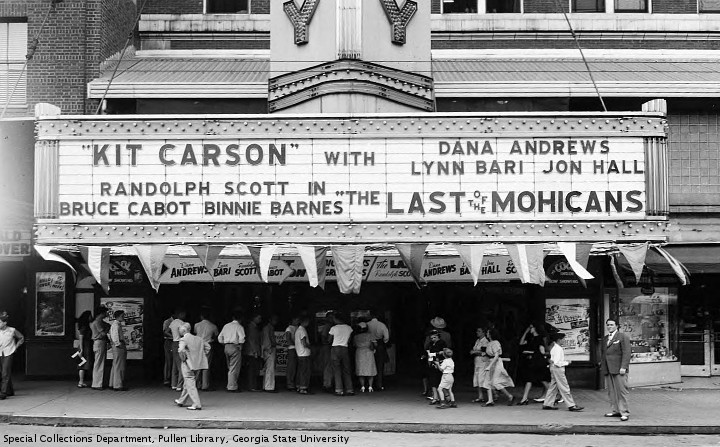
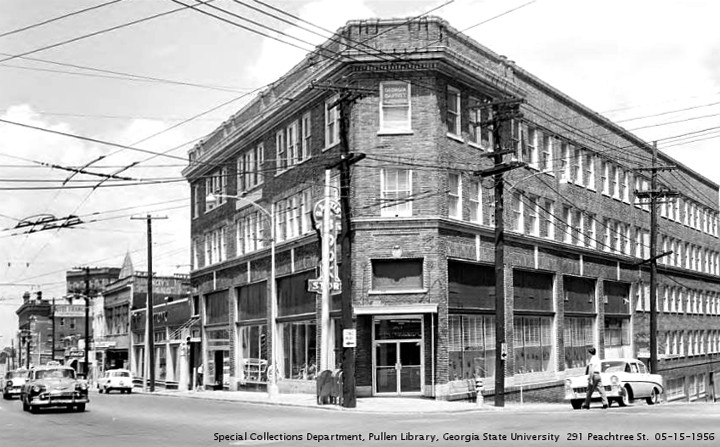
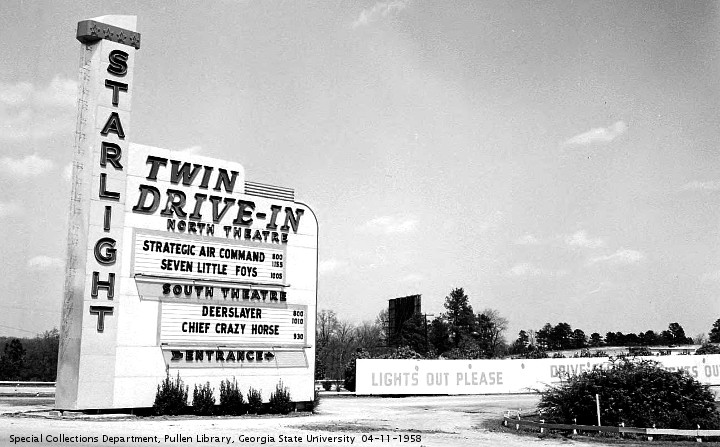
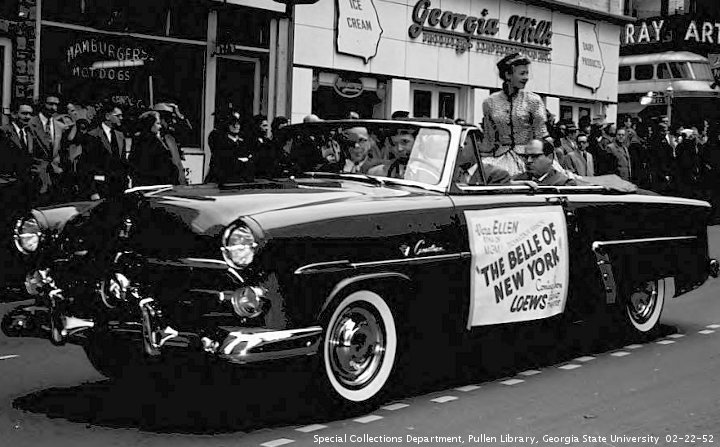
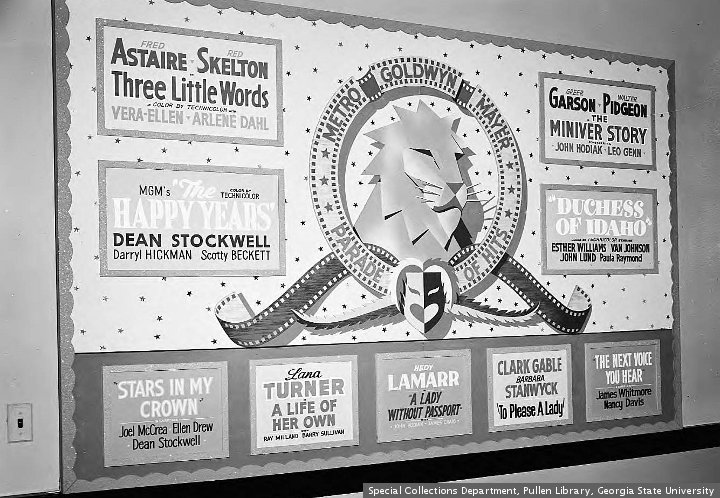
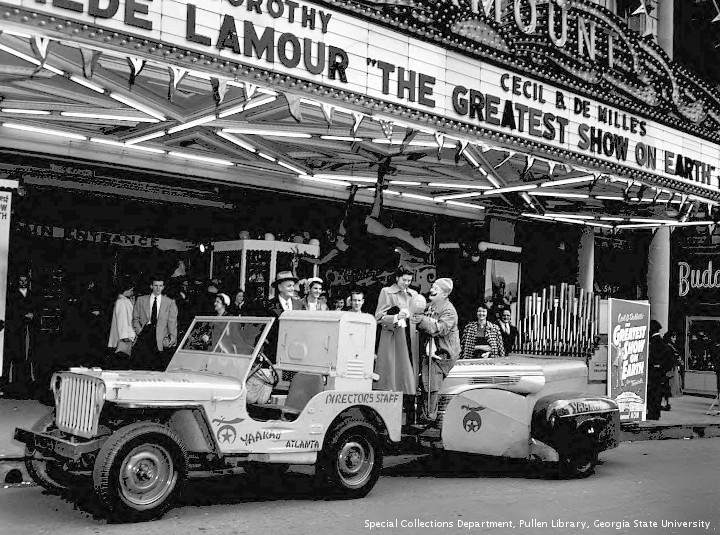
SFFILK (Not his real name) passes along a story about Mel Tormé. It seems like Mr.Tormé was eating a leisurely breakfast at a food court in Los Angeles, and a quartet appeared singing Christmas songs. They wound up performing “The Christmas Song” for co- author Tormé … and the singers had no idea who he was. It is a good story, better told in the link. This is a repost, with pictures from “The Special Collections and Archives, Georgia State University Library”.
According to the inerrant Wikipedia, Mr. Tormé collaborated with Robert Wells, until they had a falling out. One afternoon, on the hottest day of July in 1945, Mr.Tormé went to visit Mr.Wells, and saw the first four lines of “The Christmas Song” (including “Chestnuts roasting on an open fire, Jack Frost nipping at your nose”). The lines were on a note pad, and the two agreed to beat the heat of summer by completing the song. Supposedly, Mr. Tormé did not like the song very much. After three divorces, he probably didn’t see many of the royalties.
Mel Tormé was the music director of the ill fated “Judy Garland Show” in the early sixties. He wrote a book about it… The Other Side of the Rainbow: With Judy Garland on the Dawn Patrol . The story is that Miss Garland would get blasted, call Mr.Tormé in the middle of the night, and pour out her troubles. (This review is much less sympathetic towards Mr. Tormé.) While the show did not last longer, there are some great youtube clips left over.


War Between The States

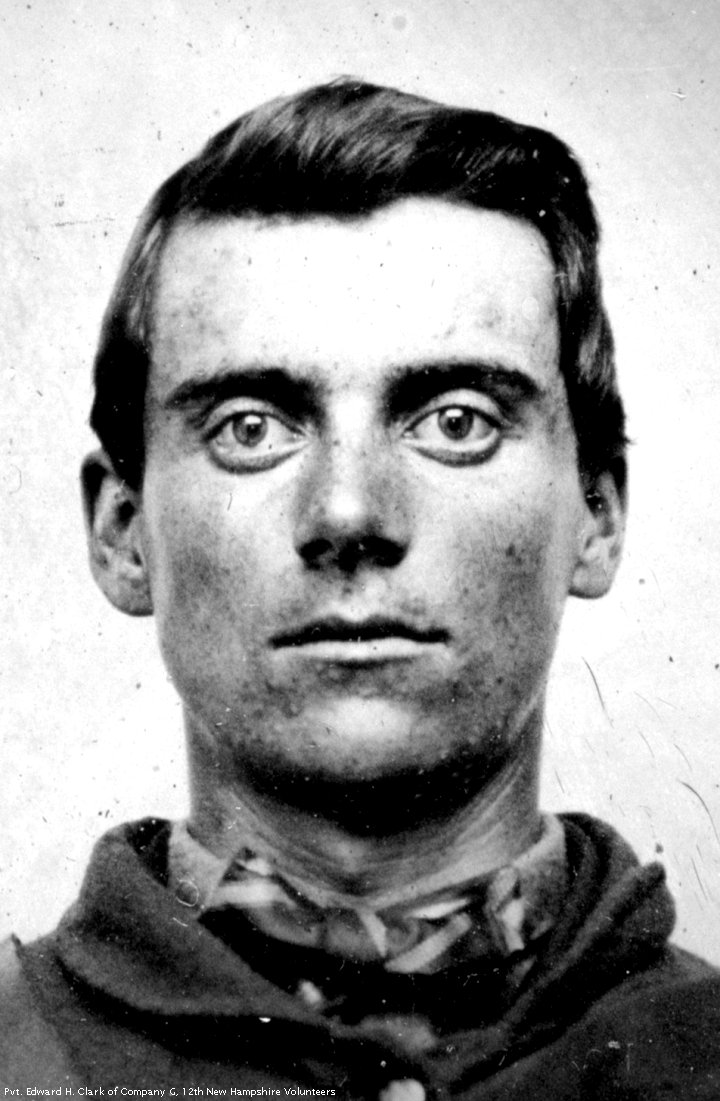


It is a truism that history is written by the winner of the war. This seems to apply to the naming of the conflict. There was a horrific armed struggle in North America between 1861 and 1865. The name used most often is Civil War. To many in the South, it is the War Between The States. In PG’s humble opinion, WBTS is a better name.
In fifth grade, PG had to write an essay about the Battle of Atlanta. The essay was a device for teaching grammar, utilized by the english teacher, Miss McKenzie. The contest was sponsored by the Daughters of the Confederacy . The expression “Civil War” was not permitted. The proper name for this conflict was War Between the States.
In many ways, this conflict started as soon as the United States became independent from Great Britain. The South was an agrarian society, with slaves to work the fields. The north was becoming an industrial society, with a need for an independent work force. The north wanted high tariffs to protect her industries, while the south wanted to sell it’s cotton to Europe. There were plenty of ways for this conflict to manifest.
Slavery was a very important factor. The south wanted to keep “the peculiar institution” intact, while many in the north were horrified. There were numerous compromises over the years, as Congress struggled to keep the Union intact. This ties in with a central dilemma of the american experience … how much power to give to the states, and how much power to give to the federal government.
The phrase civil war is defined as “A war fought between factions of the inhabitants of a single country, or the citizens of a single republic”. By the time the shooting started, the southern states had left the union. They formed a confederacy of independent states, rather than one monolithic union. It was, indeed, a war between the states.
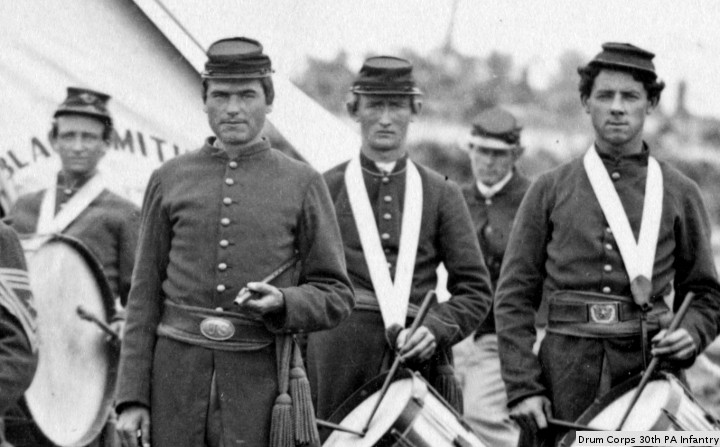
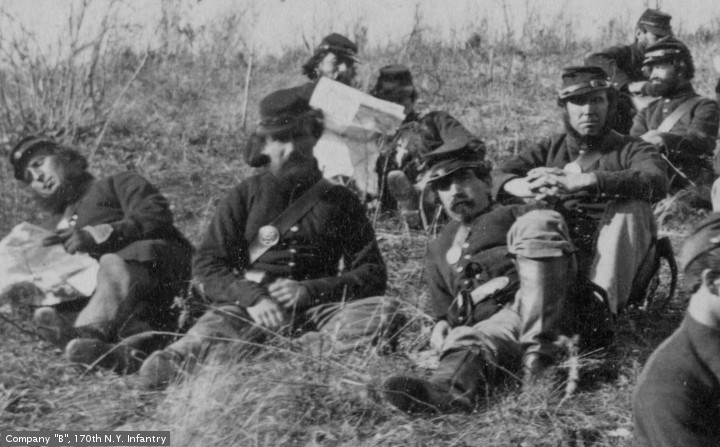
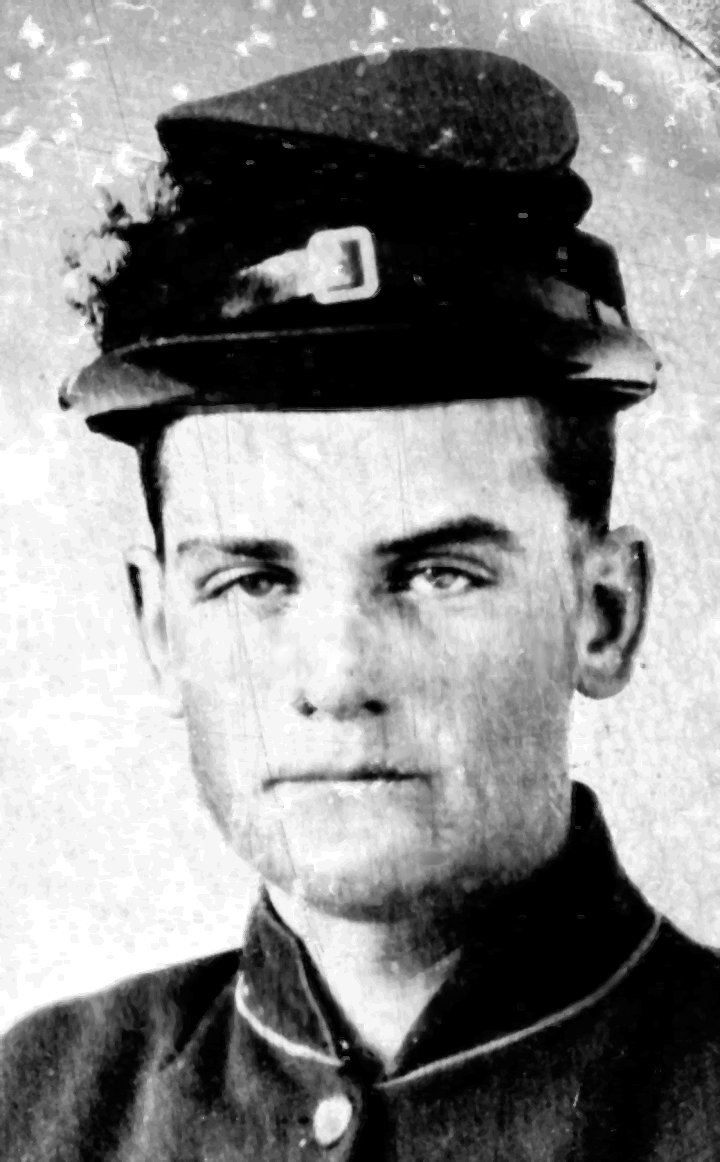
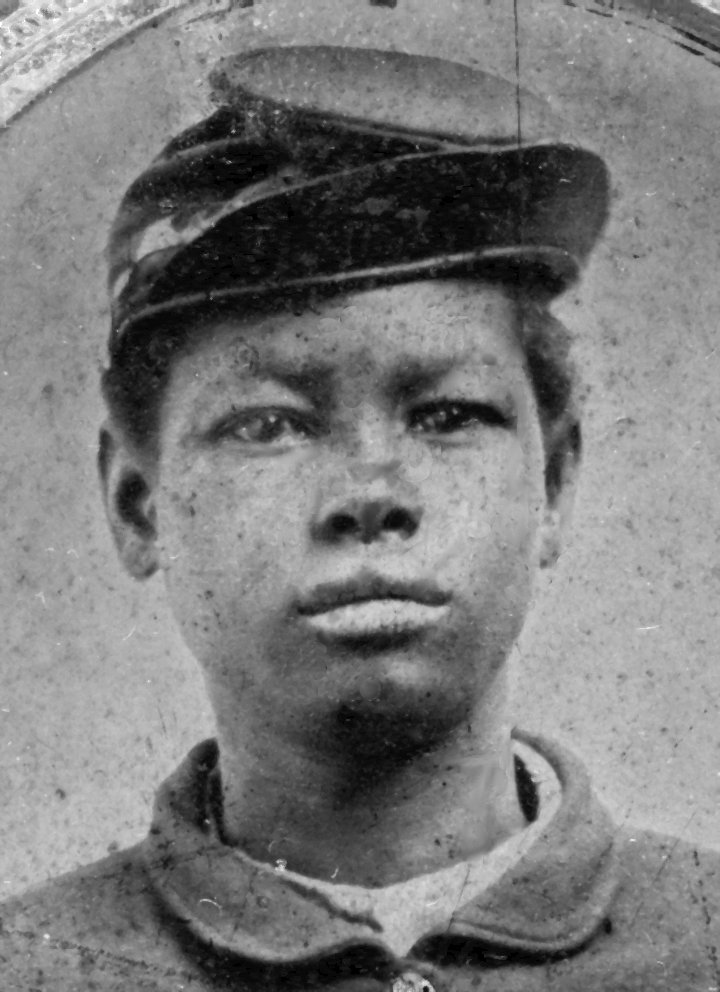
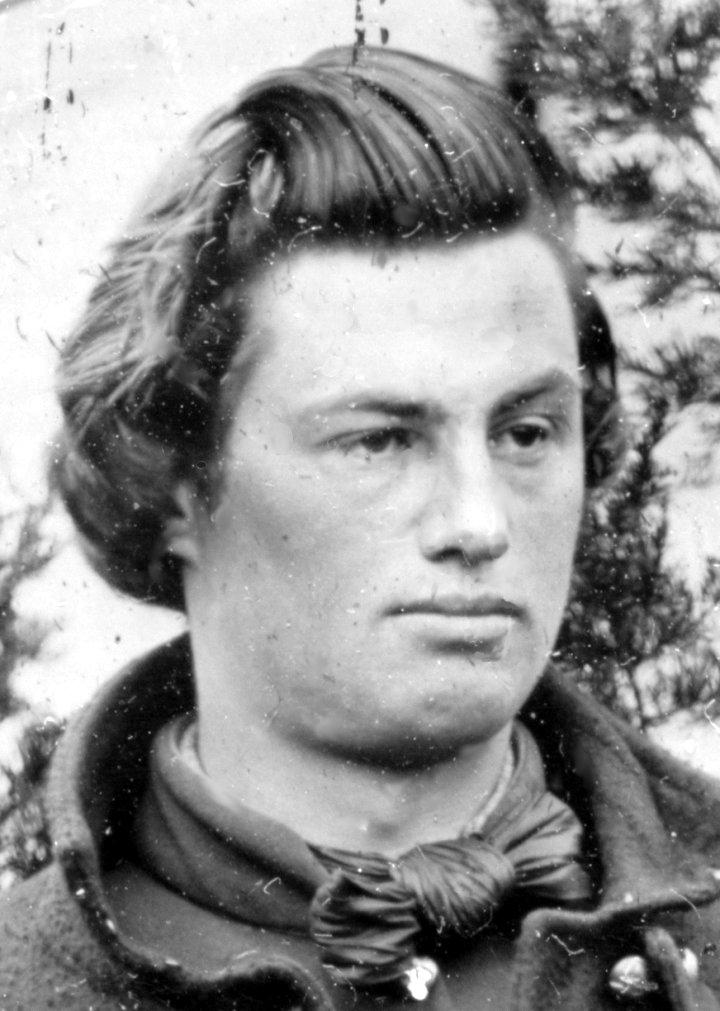
This is a repost. Pictures, of Union soldiers, are from The Library of Congress.







The recent destruction of #SilentSam, was defended by a quote from the 1913 dedication speech. Here is something else that Julian Carr said that day: “In the knowledge of subsequent developments, the progress, peace and prosperity of our united, common country, victor and vanquished now alike believe that in the Providence of God it was right and well that the issue was determined as it was. And the people of all sections of our great Republic, moved by the impulse of sincere and zealous loyalty, of fervent and exalted patriotism may say: “All is well that ends well.”
The demonization of the Confederacy has intensified lately. Yes, slavery was a wretched institution. However, much of the rhetoric today does not take into account many of the other causes of that war. And it forgets that *the war is over.* The early twentieth century was a time of reconciliation between the north and the south. Yes, there was Jim Crow, and white supremacy. People of color (both black and non black, both north and south) were treated horribly. Creating a more perfect union is a slow, and uneven, process.
Part two of today’s feature is a double repost. Part one is based on an interview with Shelby Foote, where he goes into some of the points made above. If you get a chance to listen to the link, you can hear Mr. Foote talk for an hour in a luxurious Mississippi accent. The second part of today’s feature goes into some of the financial causes of the War Between The States. It is an old truism that all wars are about money. The causes people are told about, both at the time of the conflict and historically, are not always the real reason for the war. Look at how WMD was used to justify “Operation Iraqi Freedom.” WMD was the excuse for the conflict, not the reason.
PG spent a pleasant Saturday afternoon editing pictures from The Library of Congress (which illustrate this post) and listening to a 1994 interview with Shelby Foote. There was a book to be sold, and Mr. Foote made the necessary appearances to sell the product. The gentleman has a handsome Mississippi accent, and is a delight to listen to. There is a transcript, aka the lazy bloggers friend.
A few of the things he said are timely. When this show was taped in 1994, Mr. Foote spoke of healing from the War Between the States. Today, we seem to be regressing. Trash talk about the Confederacy is back in fashion. It is a good time to revisit these comments. Shelby Foote died in 2005, and can no longer comment.
“Slavery is a huge stain on us. We all carry it. I carry it deep in my bones, the consequences of slavery. But emancipation comes pretty close to being as heavy a sin. They told — what is its million or 7 million people, “You’re now free. Hit the road,” and there was a Freedman’s Bureau, which was a sort of joke. There were people down here exploiting them. Three-quarters of them couldn’t read or write, had no job, no hope of a job, no way to learn a new job even, and they drifted back into this peon age system under sharecropping, which was about all they could do.
To this day, we are paying and they are paying for this kind of treatment. I don’t mean there should have been a gradual emancipation. I mean there should have been true preparation to get this people ready for living a kind of life. They were free and should have been free all along, but they were not prepared for living in the world. They’d been living under conditions of slavery, which kept them from living in the world…..”
“The Civil War, there’s a great compromise, as it’s called. It consists of Southerners admitting freely that it’s probably best that the Union wasn’t divided, and the North admits rather freely that the South fought bravely for a cause in which it believed. That is a great compromise and we live with that and that works for us. We are now able to look at the war with some coolness, which we couldn’t do before now, and, incidentally, I very much doubt whether a history such as mine could have been written much before 100 years had elapsed. It took all that time for things to cool down….”
(Booknotes host Brian) LAMB: “Was the Civil War inevitable? FOOTE: I think that it was necessary. I do not believe that those differences could have been settled without bloodshed. The question is the horrendous amount of bloodshed. That was not necessary. That could have been stopped at some point. God knows. But there apparently were differences so profound between the abolitionists in New England and the fire-eaters of South Carolina that dragged the rest of the country into this conflict that I’m inclined to agree with Seward, who called it an irrepressible conflict….” (Chamblee54 recently published a post, Why Was The War Fought?. about the financial aspects of the War. Follow the money, and find the truth. The post is seen below.)
LAMB: “From what you know now and your own political philosophy, if you had a voice and you lived back there, which side would you have been on? FOOTE: There’s absolutely no doubt. I’m from Mississippi. I would have been on the Confederate side. Right or wrong, I would have fought with my people. LAMB: Why? FOOTE: Because they’re my people. It would have meant the end of my life as I had known it if I fought on the other side. It would have been a falsification of everything I’d lived by, even if I opposed it. No matter how much I was opposed to slavery, I still would have fought for the Confederacy — not for slavery, but for other things, such as freedom to secede from the Union.”






Last week, this slack blogger found a tweet. The tweet said that Abraham Lincoln and John Kennedy fought the Federal Reserve, and both were killed. I did a little research, and found something that questions the conventional wisdom about the War Between the States.
Before getting to the quote, a disclaimer is in order. 100777.com is a sketchy website. What is says cannot be taken as literal truth. However, the statement about WBTS does raise some questions.
“One point should be made here: The Rothschild bank financed the North and the Paris branch of the same bank financed the South, which is the real reason the Civil War was ignited and allowed to follow its long, and bloody course.”
Maybe it was not the Rothschild Bank that financed WBTS. Somebody did. War is a profitable enterprise. People are going to egg on the combatants, knowing that there is money to be made. Someone encouraged the southern states to secede. Others encouraged the north to take a hard line on slavery, knowing that it would lead to a profitable war. Was slavery the reason for this war, or the excuse? Follow the money.
Rhett Butler was a central character in Gone With The Wind. He was a blockade runner, bringing in supplies to the south. He said this: “I told you once before that there were two times for making big money, one in the up-building of a country and the other in its destruction. Slow money on the up-building, fast money in the crack-up. Remember my words.”
It should be noted that slavery was a big money operation. “But I think we think of it differently when we realize that the value of slave property, some $4 billion, enormous amount of money in 1861, represented actually more money than the value of all of the industry and all of the railroads in the entire United States combined. So for Southern planters to simply one day liberate all of that property would have been like asking people today to simply overnight give up their stock portfolios.”
When the thirteen colonies declared independence, they were not creating a union. The idea was to kick out the British. The concept of a federal union, made up of more-or-less independent states, was fairly new. States had conquered other states, and formed empires, for a long time. A federal union of states was a new, and controversial, idea. Many European states wanted to see this federal union fail. These states encouraged the south to secede. Some people say the War Between the States began the day the British left.
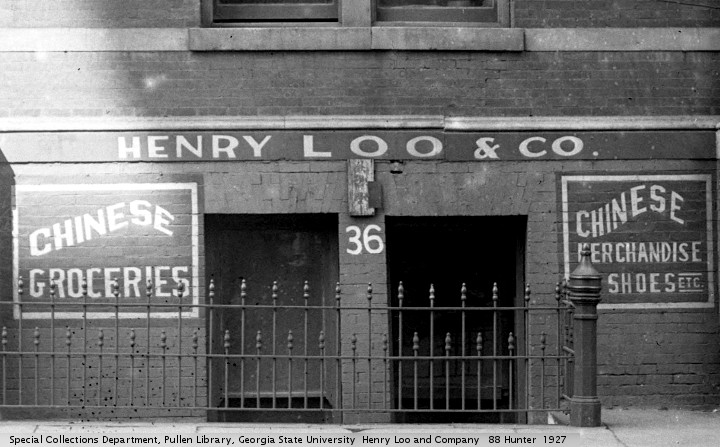
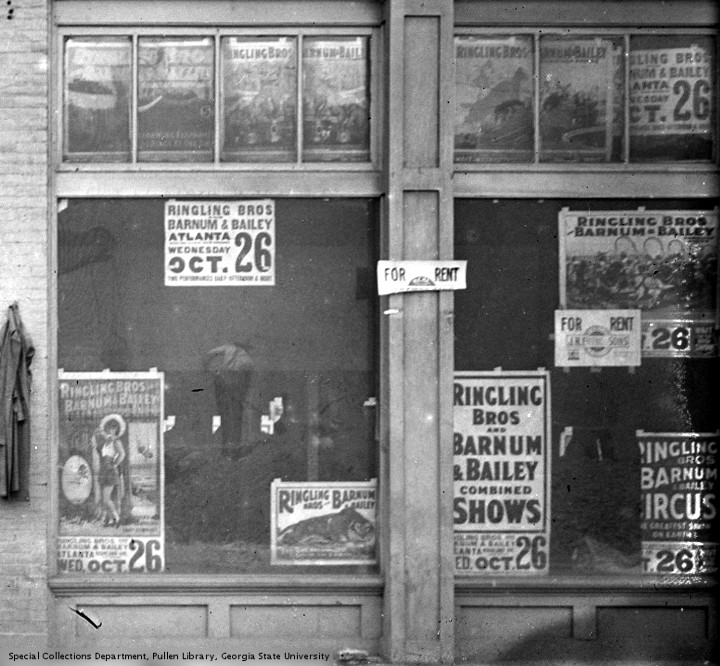
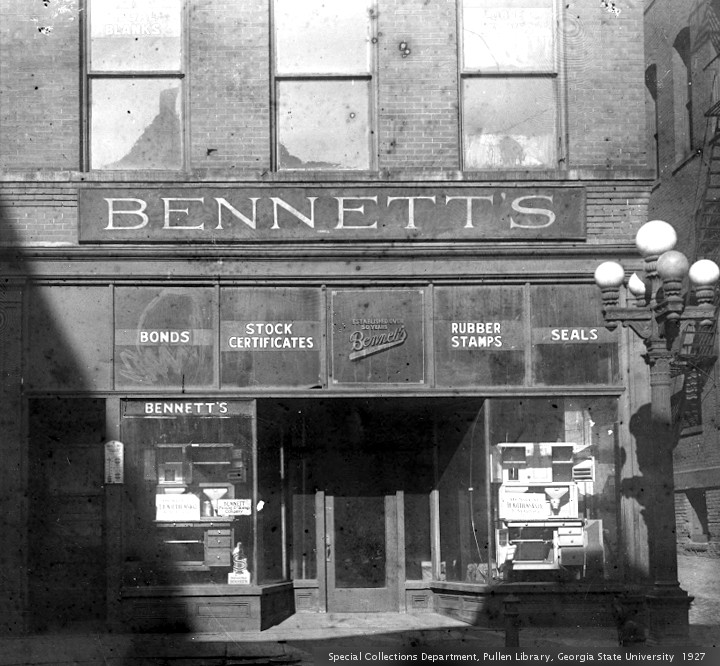
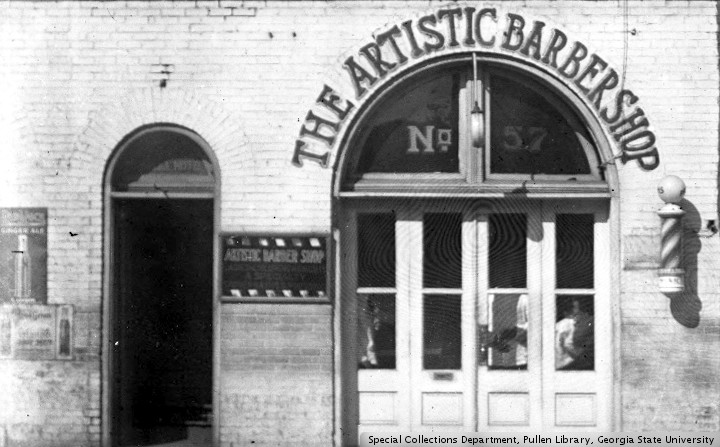
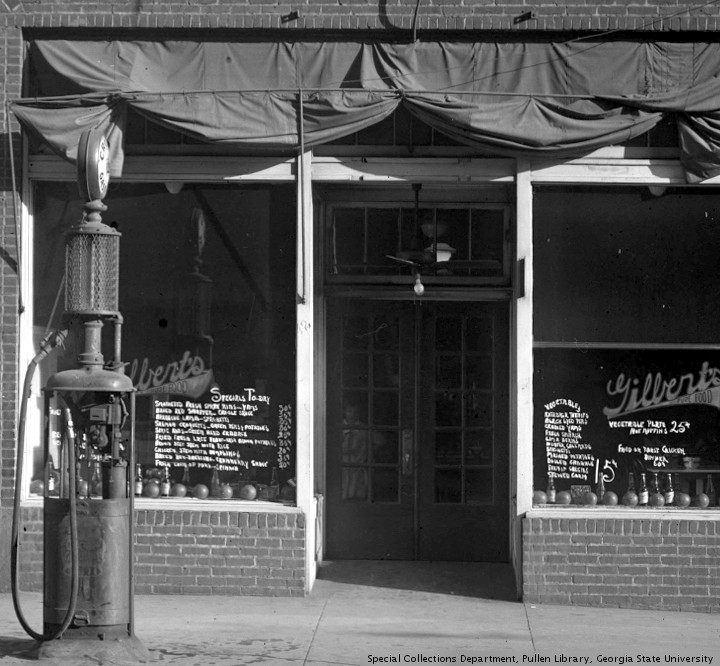
Pictures from “The Special Collections and Archives, Georgia State University Library “… a collection of images of downtown Atlanta streets that were taken before the viaduct construction of 1927 – 1929. Later, some of the covered streets became part of Underground Atlanta.”



Henry Woodfin Grady



Before yesterday, PG did not know much about Henry Woodfin Grady. He saw the statue downtown, and visited people in the namesake hospital. PG knew Mr. Grady was a newspaper man, and a pioneer salesman of Atlanta, Inc. There was something called The New South Address.
That all changed Wednesday morning. Editorial: Mayor Bottoms, tear down this statue! was the headline at the Signal, Georgia State University’s student newspaper. Someone at the University of Massachusetts read the New South Address, and found some amusing quotes.
“What of the negro? This of him. I want no better friend than the black boy who was raised by my side, and who is now trudging patiently with downcast eyes and shambling figure through his lowly way in life. I want no sweeter music than the crooning of my old “mammy,” now dead and gone to rest, as I heard it when she held me in her loving arms, and bending her old black face above me stole the cares from my brain, and led me smiling into sleep. I want no truer soul than that which moved the trusty slave, who for four years while my father fought with the armies that barred his freedom, slept every night at my mother’s chamber door, holding her and her children as safe as if her husband stood guard, and ready to lay down his humble life on her threshold. History has no parallel to the faith kept by the negro in the South during the war.”
This is one of the nicer parts. About half the speech is about the Negro, and what the White man should do about him. When PG finally read the speech itself, he was amazed. The rhetoric was much worse than PG expected. If you want to get your woke knickers thoroughly twisted, read between page 23 and page 33. (The speech starts on page 21.)
The well meaning GSU students printed a dose of contemporary rhetoric, about a speech given October 26, 1887. PG summarized this on Facebook. Editorial: Mayor Bottoms, tear down this statue! The GSU Signal cranked up the purple prose machine for an attack on Henry W. Grady. “A monument to Henry Grady and his accomplishments on Marietta and Forsyth streets — also named Henry Grady Square — still stands today. Etched into his plaque are three celebratory words: “Journalist, Orator, Patriot.” Let us be clear in recognizing that Grady, as a journalist, promoted racism. Grady, as an orator, promoted racism. And Grady was certainly no patriot — he was simply a racist.”
A facebook friend, who we will call Macon, asked “What part of it do you disagree with?” 28 comments later, PG got on his digital horse, and rode into the sunset.
The initial response was about the the comment “Grady was certainly no patriot — he was simply a racist.” The New South Address was in 1887, 22 years after the War ended. Before that hideous conflict, the states were seen as separate entities, with helpful guidance from the Federal government. When the Confederate states left this union, a ghastly was ensued.
After the south was conquered by the north, there was little doubt. The states were governing districts, under the control of the mighty federal government. Most people today take this arrangement for granted. The truth is, it has been controversial over the years. In his landmark address, Henry W. Grady was calling for an economic union of the south and north, to go along with a militarily-enforced political union. 22 years after a horrific war over secession, a southerner was calling for a stronger union with the north. To PG, this is patriotism. The fact that Mr. Grady said impolite things does not change this.
Macon responded “… but he was a racist …” A few comments were exchanged. Macon said what Macon wanted to say. PG said what PG wanted to say. PG was ready to walk away, and go to the gym. Before leaving, PG said: “I note that you have not addressed the patriotism issue. You asked me what I disagree with, in this assessment of Henry Grady. I replied that working for a strong Federal Union, less than a generation after the War Between the States, was an act of patriotism. You have not responded to this.”
When PG got back, he saw where Macon had posted a series of lurid quotes from the NSA. What PG missed, at first, was the comment “I agree it was patriotic.” Since PG had missed this comment, he continued to hammer away at the patriotism issue. Finally, Macon said “Yes, was Sen. Joe McCarthy a patriot? Was Hitler? … ” Godwin’s Law is now in effect. Adult conversation has left the building.
What to make of all this? It is apparent that Mr. Grady said some unfortunate things. Does this negate all the good that he did? Looking back, it seems that the main contribution made by Henry W. Grady was as a salesman for the south. In Atlanta, a town built on marketing, this makes him a publicity patron saint. Now we are learning about exactly what Henry W. Grady said. G-d is in the details. Pictures today are from The Library of Congress.


 Chamblee54
1 comment