The Funeral Of Elvis


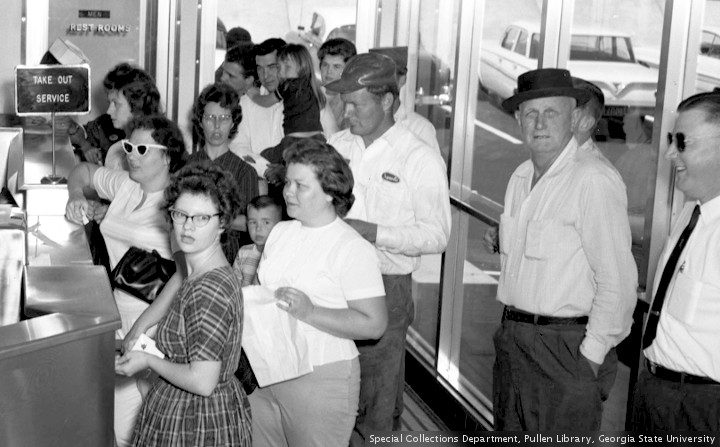
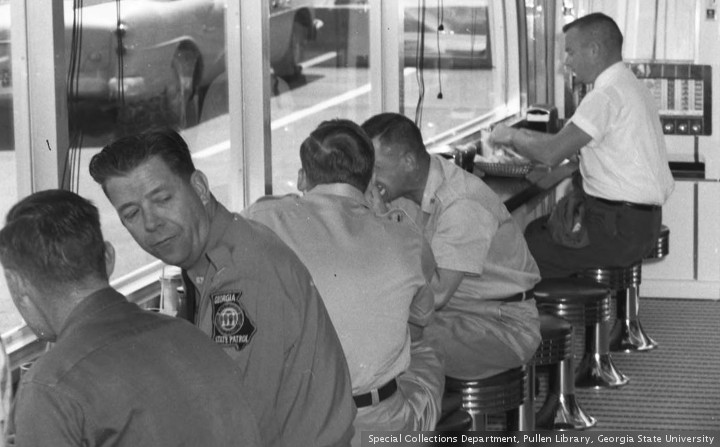
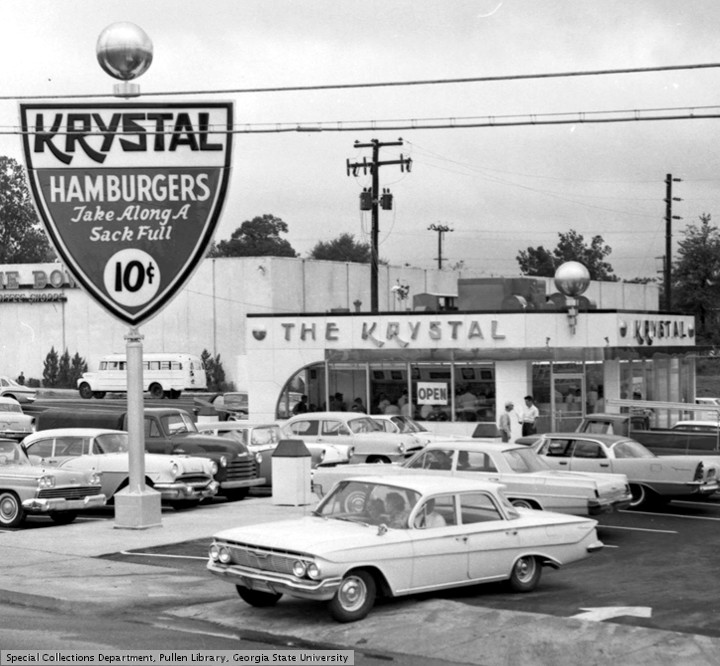
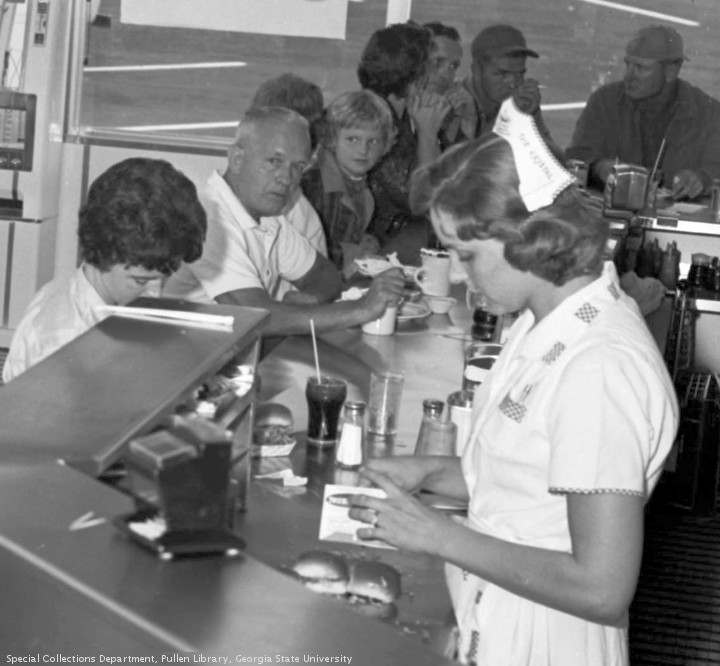
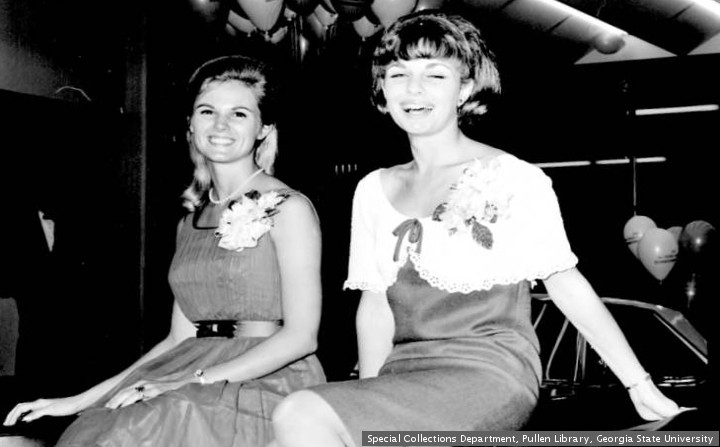
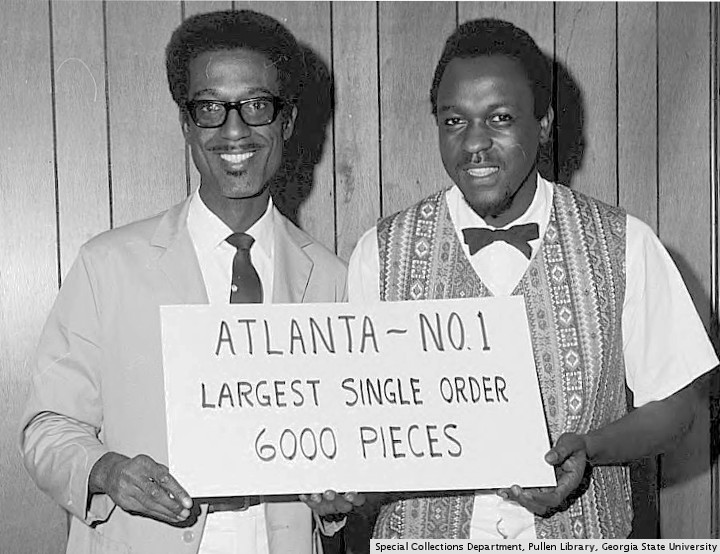
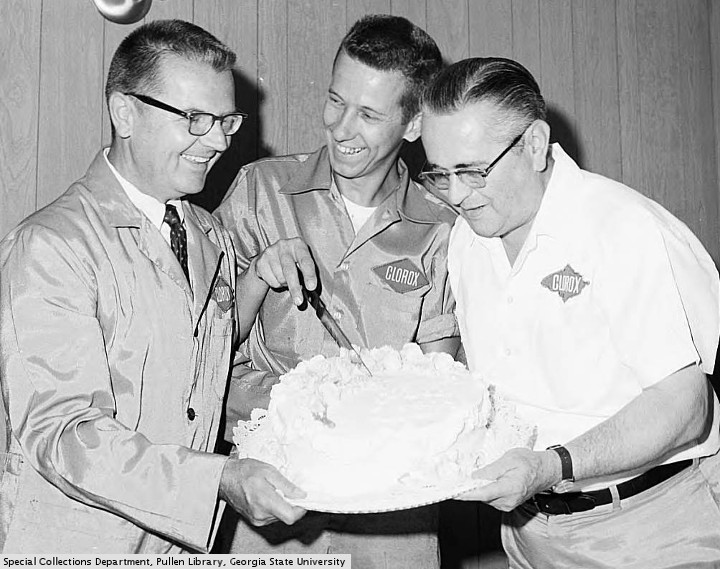
This is a repost. PG was going to write about some depressing subject. People that are not kind to each other. People in Israel and people in Gaza just don’t seem to get along. Somebody driving a “faded red F-150 pickup truck” in Livonia MI was mean to a little girl. (HT to Neo Prodigy.) Pictures are from “The Special Collections and Archives, Georgia State University Library”.
There is a saying, “if a story seems too bad to be true, it probably isn’t”. PG tried to google that phrase, and got confused. Then he seemed to remember reading it in a column by Molly Ivins. Another google adventure, and there was this video. Miss Ivins, who met her maker January 31, 2007, was promoting a book. She sat down with a bald headed man to talk about it. PG could only listen to 24:30 of this video before being seized with the urge to write a story. There is a transcript, which makes “borrowing” so much easier. This film has 34 minutes to go, which just might yield another story.
Molly Ivins was a Texas woman. These days there is a lot of talk about Texas, with Governor Big Hair aiming to be the next POTUS under indictment. Mr. Perry claims that his record as Texas Governor qualifies him to have his finger on the nuclear trigger. Miss Ivins repeats something that PG has heard before… “in our state we have the weak governor system, so that really not a great deal is required of the governor, not necessarily to know much or do much. And we’ve had a lot of governors who did neither. “ It makes you wonder how much of that “economic miracle” is because of hair spray.
Texas politics makes about as much sense as Georgia politics. For a lady, with a way with words, it is a gold mine. “the need you have for descriptive terms for stupid when you write about Texas politics is practically infinite. Now I’m not claiming that our state Legislature is dumber than the average state Legislature, but it tends to be dumb in such an outstanding way. It’s, again, that Texas quality of exaggeration and being slightly larger than life. And there are a fair number of people in the Texas Legislature of whom it could fairly be said, `If dumb was dirt, they would cover about an acre.’ And I’m not necessarily opposed to that. I’m–agree with an old state senator who always said that, `If you took all the fools out of the Legislature, it would not be a representative body anymore.'”
We could go through this conversation for a long time, but you probably want to skip ahead and look at pictures. There is one story in this transcript that is too good not to borrow. For some reason, Molly Ivins went to work for The New York Times, aka the gray lady. In August of 1977, she was in the right place at the right time.
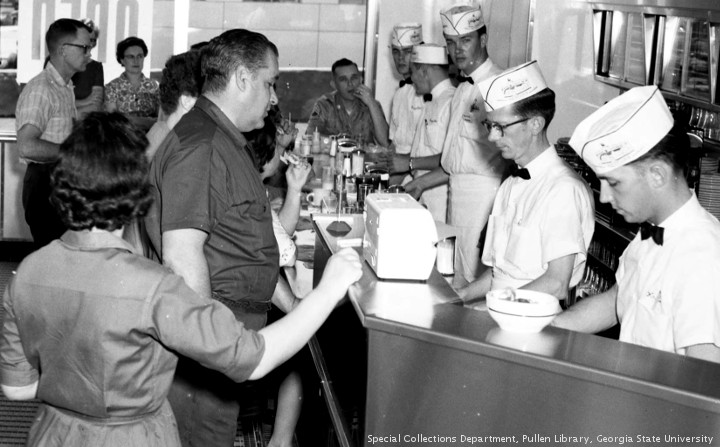

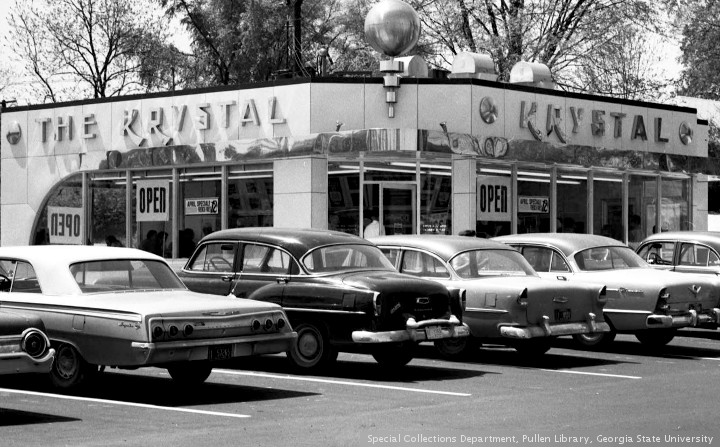


Mr. LAMB: And how long did you spend with The New York Times as a reporter?
Ms. IVINS: Six years with The New York Times. Some of it in New York as a political reporter at City Hall in Albany and then later as bureau chief out in the Rocky Mountains.
Mr. LAMB: Would you take a little time and tell us about reporting on the funeral of Elvis Presley?
Ms. IVINS: Oh, now there is something that when I’ve been standing in the checkout line at the grocery store and if I really need to impress people, I just let fall that I covered Elvis’ funeral. And, boy, people just practically draw back with awe. It may yet turn out to be my greatest claim to fame.
I was sitting in The New York City Times one day when I noticed a whole no–knot of editors up around the desk having a–a great scrum of concern, you could tell. It looked sort of like an anthill that had just been stepped on. And it turns out–The New York Times has a large obituary desk, and they prepare obituaries for anybody of prominence who might croak. But it turns out–you may recall that Elvis Presley died untimely and they were completely unprepared.
Now this is an enormous news organization. They have rock music critics and classical music critics and opera critics, but they didn’t have anybody who knew about Elvis Presley’s kind of music. So they’re lookin’ across a whole acre of reporters, and you could see them decide, `Ah-ha, Ivins. She talks funny. She’ll know about Mr. Presley.’
So I wound up writing Elvis’ obituary for The New York Times. I had to refer to him throughout as Mr. Presley. It was agonizing. That’s the style at The New York Times–Mr. Presley. Give me a break. And the next day they sold more newspapers than they did after John Kennedy was assassinated, so that even the editors of The New York Times, who had not quite, you know, been culturally aton–tuned to Elvis, decided that we should send someone to report on the funeral. And I drew that assignment. What a scene it was.
Mr. LAMB: You–you say in the book that you got in the cab and you said, `Take me to Graceland.’ The cabbie peels out of the airport doing 80 and then turns full around to the backseat and drawls, `Ain’t it a shame Elvis had to die while the Shriners are in town?’
Ms. IVINS: That’s exactly what he said. `Shame Elvis had to die while the Shriners are in town.’ And I kind of raised by eyebrows. And sure enough, I realized what he–what he meant after I had been there for awhile because, you know, Shriners in convention–I don’t know if you’ve ever seen a whole lot of Shriners in convention, but they were having a huge national convention that very week in Memphis. And they tend to wear their little red fezzes, and sometimes they drink too much and they march around the hotel hallways tooting on New Year’s Eve horns and riding those funny little tricycles and generally cutting up and having a good time. That’s your Shriners in convention, always something very edifying and enjoyable to watch. But they–every–every hotel room in Memphis was occupied with celebrating Shriners, and then Elvis dies and all these tens of thousands of grieving, hysterical Elvis Presley fans descend on the town.
So you got a whole bunch of sobbing, hysterical Elvis fans, you got a whole bunch of cavorting Shriners. And on top of that they were holding a cheerleading camp. And the cheerleading camp–I don’t know if your memory–with the ethos of the cheerleading camp, but the deal is that every school sends its team–team of cheerleaders to cheerleading camp.
And your effort there at the camp is to win the spirit stick, which looks, to the uninitiated eye, a whole lot like a broom handle painted red, white and blue. But it is the spirit stick. And should your team win it for three days running, you get to keep it. But that has never happened. And the way you earn the spirit stick is you show most spirit. You cheer for breakfast, lunch and dinner. You cheer when the pizza man brings the pizza. You do handsprings end over end down the hallway to the bathroom. I tell you, those young people will throw–show an amount of spirit that would just astonish you in an effort to win that stick.
So here I was for an entire week, dealing with these three groups of people: the young cheerleaders trying to win the spirit stick, the cavorting Shriners and the grieving, hysterical Elvis fans. And I want to assure you that The New York Times is not the kind of newspaper that will let you write about that kind of rich human comedy.
Mr. LAMB: Why?
Ms. IVINS: Because The New York Times, at least in my day, was a very stuffy, pompous newspaper.
Mr. LAMB: What about today?
Ms. IVINS: A little bit better, little bit better than it was.
Mr. LAMB: And…
Ms. IVINS: Has–has–it has a tendency, recidivist tendencies, though. You–you will notice if you read The Times, it–it collapses into pomposity and stuffiness with some regularity.
Mr. LAMB: Why did you leave it?
Ms. IVINS: Well, I–I actually got into trouble at The New York City Times for describing a community chu–chicken killing out West as a gang pluck. Abe Rosenthal was then the editor of the Times and he was not amused.
Mr. LAMB: Did–but did they let it go? Did they let it…
Ms. IVINS: Oh, no. It never made it in the paper. Good heavens, no. Such a thing would never get in The Times in my day.
POSTSCRIPT PG found some pictures, marked up the text, and was ready to post the story. He decided to listen to a bit more of the discussion between Molly Ivins and the bald headed man. When he got to this point, it became apparent that he could listen to Molly Ivins talk, or he could post his story, but he could not do both at the same time.
Ms. IVINS: Oh, well, of course, I’m gonna make fun of it. I mean, Berkeley, California, if you are from Texas, is just hilarious.
Mr. LAMB: Why?
Ms. IVINS: Well, of course, it is just the absolute center of liberalism and political correctness. And it is a veritable hotbed of people, of–bless their hearts, who all think alike, in a liberal way. And, of course, I’m sometimes called a liberal myself, and you would think I would have felt right at home there. But I just am so used to–I’m so used to Texas that I found the culture at Berkeley hysterical.


Hiroshima 75 Years Later




At 8:15 am, August 6, 1945, Hiroshima got nuked. It was the start of a new era. Since Japan is 13 hours ahead of Georgia, and standard time was used, the literal anniversary is 8:15 pm, August 5.
Tsutomu Yamaguchi was working in Hiroshima when the bomb hit. He survived, and found a train to take hime to his home town, Nagasaki.
The device dropped on Hiroshima, the Little Boy, had an estimated force of 13 kilotons of Trinitrotoluene, or TNT. A kiloton of TNT is roughly a cube whose sides are ten meters. This device is fairly tiny compared to many of the warheads developed since. Many of the modern appliances are measured in megatons, or millions of tons of TNT. The Soviet Union had a bomb with a capacity of 50 megatons, or 4,000 times the size of the Little Boy.
The largest weapon tested by The United States is the Castle Bravo. This device destroyed Bikini Atoll in the Pacific. The two piece swimsuit was named for this island. The Castle Bravo device had a yield of 15 megatons of TNT. This is roughly 1,000 times the power of the Little Boy.
The decision to drop the bomb has long been controversial. There are a lot of factors and gray areas, and the issue does not lend itself to sound bite solutions. The conventional wisdom is that Japan surrendered because of the nuclear attack. This meant the war was shortened by at least a year, there was no invasion of Japan, and many lives were saved. PG is scared by the moral calculus involved in a decision like this….do 100,000 civilian deaths prevent the deaths of 500,000 soldiers? PG suspects that even G-d herself would lose sleep over that one.
There is also evidence that the bomb was not needed. Japan was whipped in August 1945. The air raids were conducted in daylight with little resistance. A debate was going on in the Japanese government on whether to continue the fight.
An event happened the day between Hiroshima, and Nagasaki, which influenced the Japanese decision to surrender. The Soviet Union had agreed to help the United States with the war against Japan. On August 8, The Soviet Union invaded Japanese occupied Manchuria. There are indications that Japan knew the fight was hopeless at this point, and would rather surrender to The United States than The Soviet Union. This is one of the gray areas that never seems to be mentioned.
The United States wanted the war to end quickly for obvious reasons, and a few subtle ones. America did not want to share the spoils of Japanese war with The Soviet Union. There were already tensions between the two allies, and the cold war was not far off. Many felt The United States used the Little Boy as a warning to The Soviet Union.
When you get your moral software out, you might want to figure in the effect of opening the nuclear Pandora’s box. Would the nuclear bomb have been developed by other countries if America had not led the way? The science is not that complicated…after all, America hit paydirt with the Manhattan Project fairly quickly. Nonetheless, there is karma involved in using a terrible new device on a civilian population. The United States started the wind of the arms race, and has yet to feel the whirlwind.
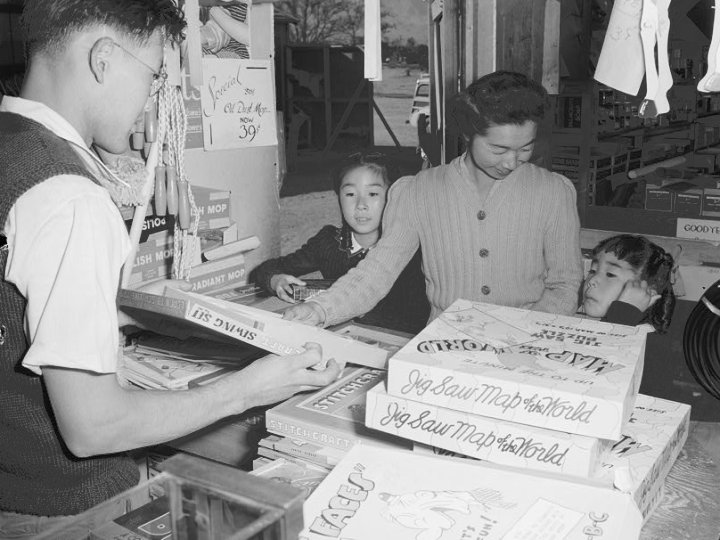
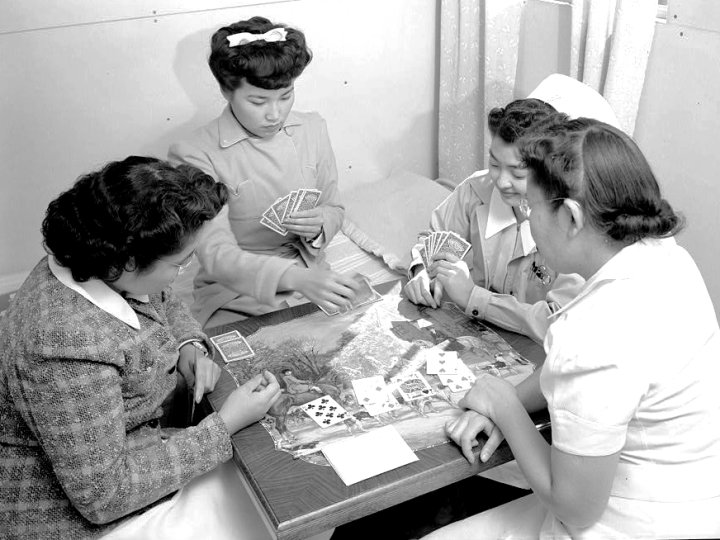
This is a repost. The pictures are from The Library of Congress. Ansel Adams took pictures of Japanese Americans, in a World War Two internment camp. The ladies in the bridge game are Aiko Hamaguchi, Chiye Yamanaki, Catherine Yamaguchi, and Kazoko Nagahama.


Tiny Tim



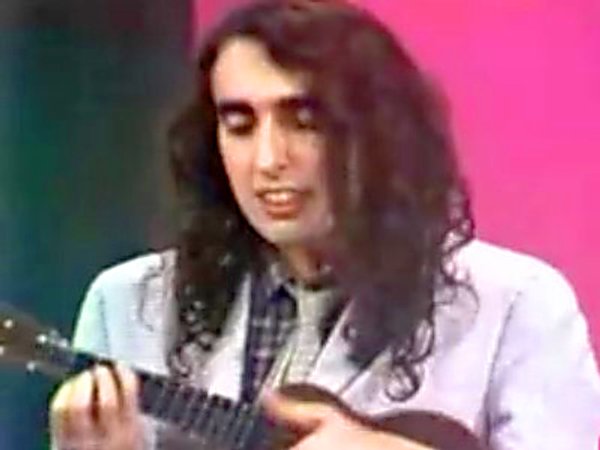

There has never been a performer quite like Tiny Tim.
Herbert Khaury was born April 12 1932, to a Lebanese father and a Polish Jew mother. At an early age, he developed a love of vaudeville style music. He learned to play a ukelele, and began performing in his natural baritone voice.
One night, Mr. Khaury discovered falsetto singing. After trying numerous stage names, he settled on Tiny Tim. He got the attention of Rowan and Martin’s Laugh In, and appeared on that show. Laugh In made Tiny Tim an overnight sensation. He performed “Tip Toe Through The Tulips”.
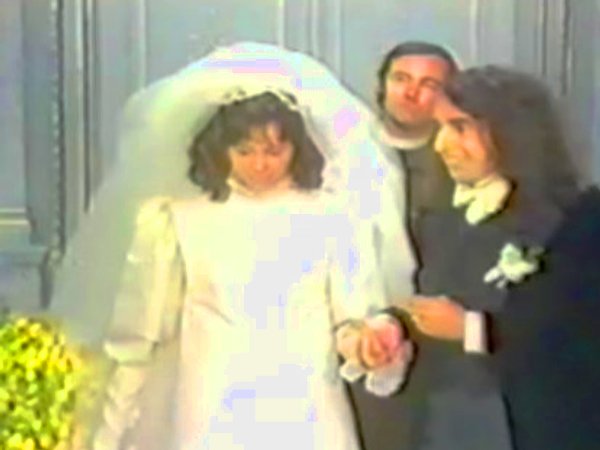
On December 17, 1969, Tiny Tim married Miss Vickie (Victoria Mae Budinger) on The Tonight Show starring Johnny Carson. The show attracted an estimated 40 million viewers. Ed McMahon laughed. The couple had a daughter, Tulip Victoria, and divorced after 8 years of marriage.
Tiny Tim continued to perform up until his death November 30, 1996. He had diabetes, and heart problems. As wikipedia tells the tale: “He continued to play concerts despite the warnings that, due to the fragile state of his heart, he could die at any moment. While playing “Tiptoe Through the Tulips” at a Gala Benefit at The Woman’s Club of Minneapolis on 30 November of that year, he suffered another heart attack on stage. He was led out by his third wife, Susan Marie Gardner (“Miss Sue”, whom he had married on 18 August 1995), who asked him if he was okay. Tim responded, “No, I’m not!”, his final words…He is interred in the mausoleum of Lakewood Cemetery in Minneapolis.
There is a live website, Remembering Tiny Tim. Under Tiny Trivia, the following items are listed.: 01. Tiny Tim was a devout Christian. 02. Tiny Tim had diabetes. 03. Tiny Tim was 6′ 1′ tall!! 04. One time, when Tiny Tim was staying at Ceasar’s Palace, he decided to have a little fun and order ONE OF EVERYTHING on the menu! 05. Tiny Tim used Eterna 27 by Revlon.06. He also used Jergen’s Body Shampoo.07 He used Vaseline Intensive Care: the yellow bottle for his upper torso and the green bottle for his lower half. 08. Tiny Tim also used Oil of Olay – eight times a day.09. Tiny Tim never ate cheese or meat. 10. Tiny Tim liked to use Viva papertowels after showering in hotels because he didn’t trust the cleanliness of hotel towels. .11. Tiny constantly washed his hands and “creamed” his hands with lotion afterwards. 12. Tiny Tim loved, in this order, #1 pizza, #2 chinese food, #3 popcorn.
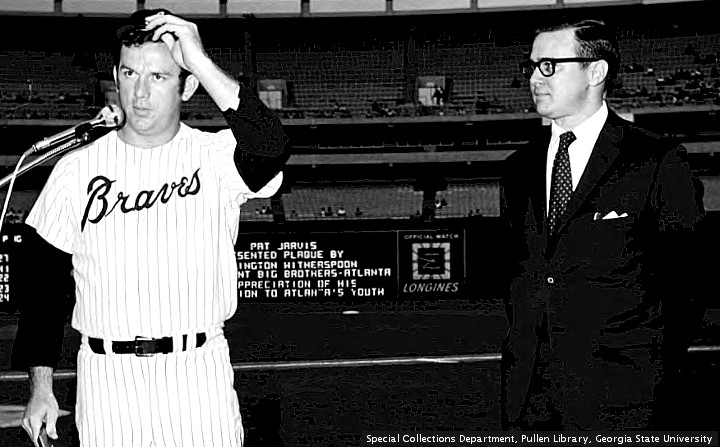
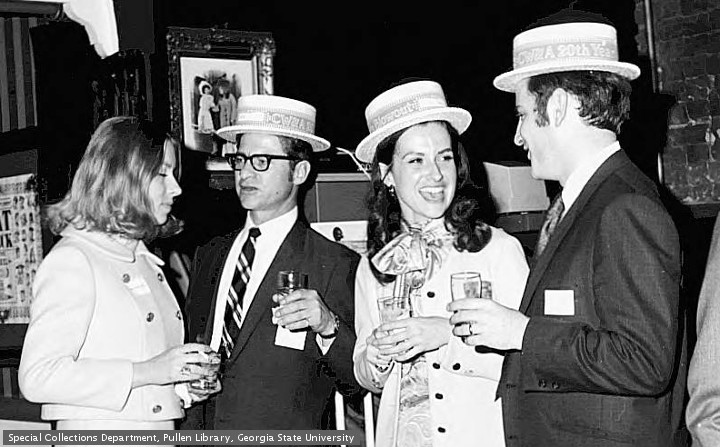
This is a repost. Some of the websites quoted in this piece are now “frozen.” Some of the details quoted cannot be verified. Maybe popcorn was number one. Historic pictures for today’s event are from “The Special Collections and Archives, Georgia State University Library”.


The Worst Vice Presidents Of The United States


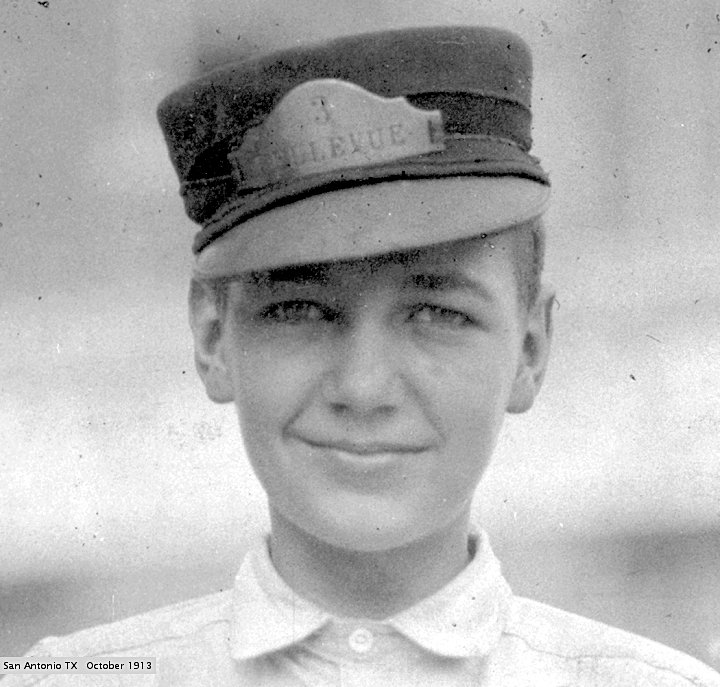
PG wrote a post yesterday. One of the topics was the “Siamese Twins”, James Buchanan and William Rufus King. (The article is reposted below.) While researching the feature, PG googled his way to a Time magazine article about the Worst Vice Presidents in American History. PG is well known for his negative attitude, and writing about the worst things in life always appeals to him. This is a repost, with pictures from The Library of Congress
The first name on the list is Aaron Burr. He had a problem with Alexander Hamilton, and shot him dead in a duel. Elbridge Gerry (the namesake of Gerrymandering) served under James Madison for twenty months, and died. John C. Calhoun served under John Quincy Adams and Andrew Jackson, and managed to get Mr. Jackson so upset that Mr. Calhoun was fired.
Richard M. Johnson served under Martin Van Buren, and was bad at PR. “Johnson scandalized his colleagues by taking one of his slaves as his common-law wife; as a result, he barely garnered enough support to serve in Martin van Buren’s administration. While in office, he proposed an expedition to the North Pole so Americans could drill to the center of the Earth, believing the planet was hollow (his resolution was defeated). Evidently van Buren’s experience with Johnson soured him on vice presidents altogether — when he ran for re-election he dropped Johnson from his ticket and didn’t bother replacing him. Instead, he ran alone.”
William Rufus King was VP under Franklin Pierce a mere six weeks before he died. There is no word on the status of his relationship with James Buchanan at the time. The Time magazine article has a picture of Fernando Wood , which was mistakenly thought to be of Mr. King. (Wikipedia uses the same picture to illustrate an article about Mr. King.)
The VP under James Buchanan (there is no word on who was top or bottom in the Buchanan-King household) was John Breckinridge. During the War Between the States, he left the Union to fight for the Confederacy. Mr. Breckinridge was charged with treason after the war. “The town of Breckenridge, Colorado is named in his honor — although it altered the spelling of its name after the Civil War, so as not to be associated with a traitor.”
Andrew Johnson did not make the list, but maybe should have. He was drunk at his inauguration, and made a fool of himself. Mr. Lincoln had nothing to do with him, until a meeting on April 14. This was Good Friday. Mr. Lincoln went to the theater that night.
Johnson had been marked for death by the conspiracy, but Wilkes Booth had little confidence in the man assigned to kill Mr. Johnson. The afternoon of the assassination, Mr. Booth was at the Kirkwood House, where Mr. Johnson stayed. Mr. Booth left a note for Mr. Johnson at the desk of the hotel… “Don’t wish to disturb you. Are you at home. J. Wilkes Booth”. The idea was for the police to find the note, and implicate Mr. Johnson in the killing of Mr. Lincoln. This mini plot was spoiled by the secretary for the Vice President, who collected the mail that afternoon. He took the card with him. The secretary had met Mr. Booth a few years earlier, and thought the note was for him.
The other three Vice Presidents who took office after the boss was murdered… Chester Arthur, Theodore Roosevelt, and Lyndon Johnson… were not mentioned in the Time article. All three are mentioned in conspiracy theories about the killings that promoted them into office.
When Theodore Roosevelt was elected to a full term as President, his VP was Charles Fairbanks. “Teddy once ordered a noisy and distracting crystal chandelier removed from his office because it disturbed him. He ordered it to be installed in the office of the Vice President to keep him awake.”
Getting back to Time’s honor roll, Hannibal Hamlin was Lincoln’s first VP. Thomas A. Hendricks survived nine months under Grover Cleveland, before passing away. Thomas Marshall served two terms with Woodrow Wilson, and refused to take over the office when Mr. Wilson had a stroke. Calvin Coolidge did little while waiting for Warren Harding to die. Henry Wallace was, and will be, the only third term VP in our history. He acquired a few enemies, and was replaced by Harry Truman.
Richard Nixon was ok once he got elected, but almost managed to blow that. There were charges of financial shenanigans, and some thought he should be kicked off the ticket. After the Checkers Speech he was on his way to stardom. (After Mr. Nixon died, PG saw a large flag flying at half staff. The flag belonged to a hamburger chain called Checkers.) When Mr. Nixon became President, his VP was Spiro Agnew. Once again, there were charges of financial shenanigans, and much, much more. While the nation wallowed in Watergate, Mr. Nixon needed a diversion. It was suddenly discovered that Mr. Agnew had taken bribes. He was pressured into resigning.
Dan Quayle was VP for George H.W. Bush. He was widely regarded as an idiot, although his damage as VP was minimal. The last VPOTUS on the list is Dick Chaney. For some reason, he was regarded as having more power than the President, George W. Bush. Mr. Chaney was said to be one of the major promoters of the wars which have damaged America so much during the last ten years.
2020 UPDATE: Joe Biden said the F word at a press conference. He is currently running for President. The jury is still out on Mike Pence.




Fun loving Dick Yarbrough is up to his old tricks. The neighbor newspaper nabbler penned a post about California education. It seems there is a new law, in the falling into the ocean state, “that will require schools to teach at all grade levels about the historical contributions of gay, lesbian, bisexual and transgender people.” Our buddy does not think this is a good idea.
The story goes on to say “Our children will find out that President James Buchanan and Vice President William R. King were more than, shall we say, good friends,” she said coyly. I didn’t want to tell Gay that the first thing the teachers need to do is tell the students who James Buchanan is before they talk about what he did. Not many people have ever heard of him. That is because he didn’t do anything while president.” Holy historic revisionism.
To start off, The Vice Prez under Mr. Buchanan was John C. Breckinridge. Mr. King was elected to back up Franklin Pierce. Mr. King died after six weeks in office. If a President has ever bumped gooberheads with his Vice President, the walls of the White House have kept quiet about it. Those rumors about John Kennedy and Lyndon Johnson are too gruesome to contemplate.
Mr. King and Mr. Buchanan lived together for a number of years. Neither was married to a female, although Mr. Buchanan had been engaged. (There is speculation that his fiance’, Ann Caroline Coleman, died of an overdose of laudanum.) There are numerous indications that Mr. King and Mr. Buchanan were *good buddies*.
Mr. Buchanan was the last President before the War Between the States. It is possible that he could not have done much to prevent that unpleasantness. Historians are not kind when talking about the man, and rank him as one of the worst Presidents. Perhaps Mr. King could have helped.
The newspaper that Mr. Yarbrough opines for is delivered, free of charge, on Wednesday. (This weeks edition has not arrived. Any connection between this late delivery and the opinions of Mr. Yarbrough, is uncertain.) Some of these free papers are not taken inside by the resident. Often, a driveway will have several weeks of free adrags left behind. Soon, the rain soaks these newsprint droppings. Some are washed into the street and run over. The result is an ugly mess.
Chamblee54 had a previous discussion with Dick Yarbrough. Mr. Yarbrough is still publishing columns in 2020. Pictures are from The Library of Congress.




Blue Tail Fly




Q: What does “Jimmy crack corn” mean, and why does he not care?—Matt, Columbus, Ohio
PG was trolling stupidquestion.net when there was a convergence of stupidity. (The site does not exist in 2012.) All his life he had heard “Blue Tail Fly”, and been embarrassed. And there, in (pardon the expression) black and white, was someone who wondered the same thing.
It seems as though “Blue Tail Fly” started out as a minstrel song. For those who don’t know, minstrel shows were white people putting on black makeup, and imitating African Americans. Minstrel shows are not well thought of these days.
The story of BTF involves a man named Jimmy. A fly bit the pony the old massa was riding, the pony was offended, and threw the old massa off. He was hurt landing, and died. Jimmy still has to crack corn, but he doesn’t care, because old massa has gone away.
Dave Barry took a poll once to find out the stupidest song of all time. The overwhelming winner/loser was “MacArthur Park”. The combination of over the top show stopping, while singing about a cake left out in the rain, makes this ditty a duh classic.
In the spirit of corny convergence, the video is a karaoke version featuring Donna Summer. Miss Summer is a talented singer, who happened to connect with Giorgio Moroder. Lots of singers could have hit the big time by fronting those records. Donna Summer hit the jackpot.
For a proper post, there needs to be a third stupid song. This is not about stupid bands, singing about being D U M B. Even though they totally don’t belong, there is a video of the Ramones included. PG saw the Ramones at the Agora Ballroom in 1983. This was after their prime, and before a homeless man caught the Ballroom on fire.
We still need a third stupid song, and PG wants to get this posted with as little research as possible. Just like some writer was once given twenty minutes to write a song, and he decided to do the worst song he could think of. The result was “Wild Thing”. PG used to have a 45 of someone who sounded like Bobby Kennedy singing “Wild Thing”. Let the good times roll.
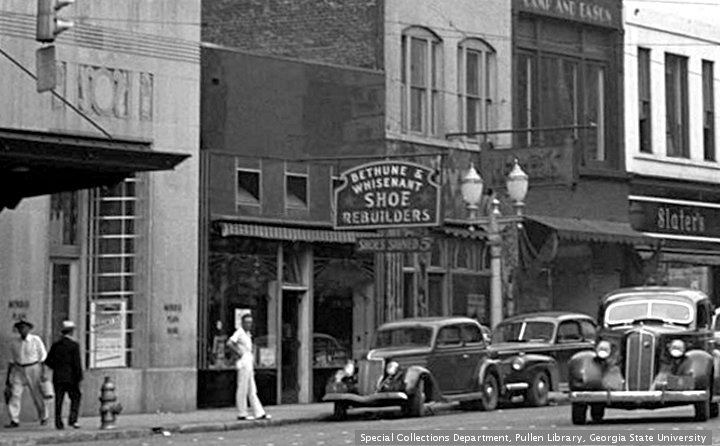
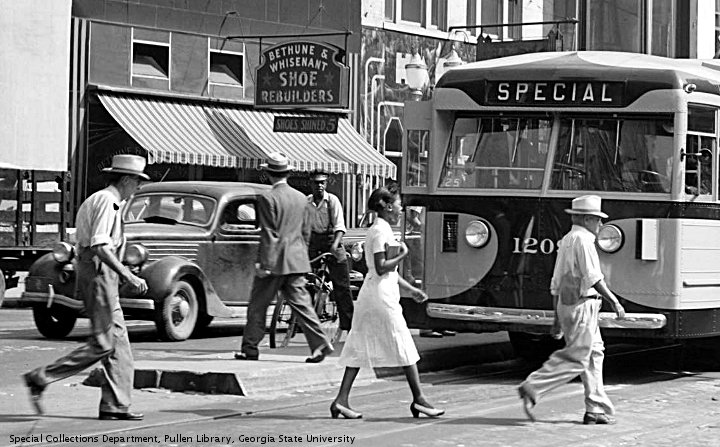
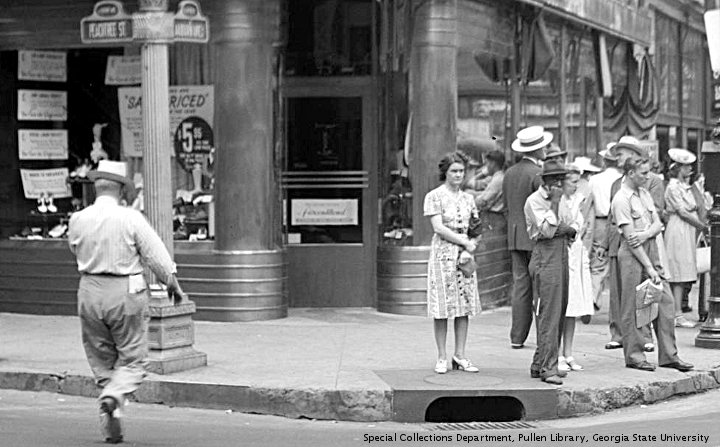
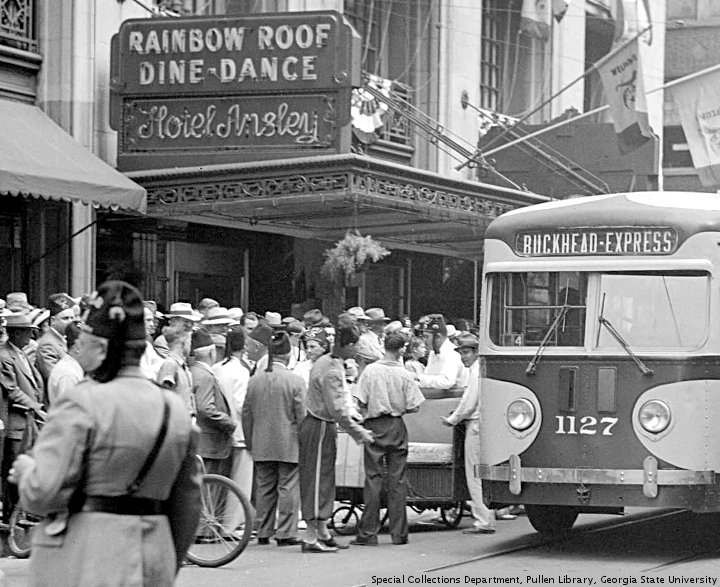
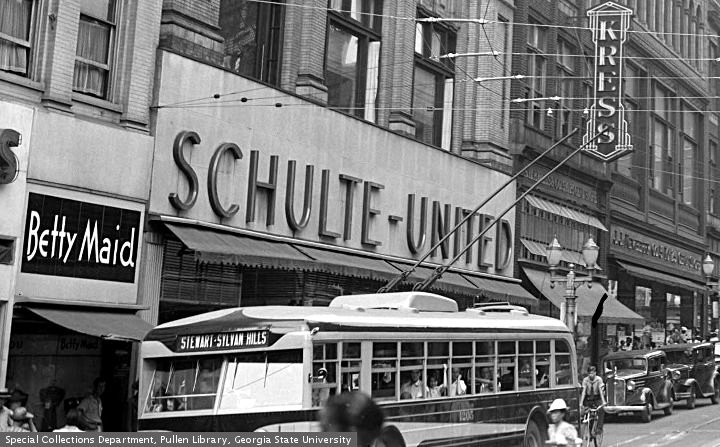
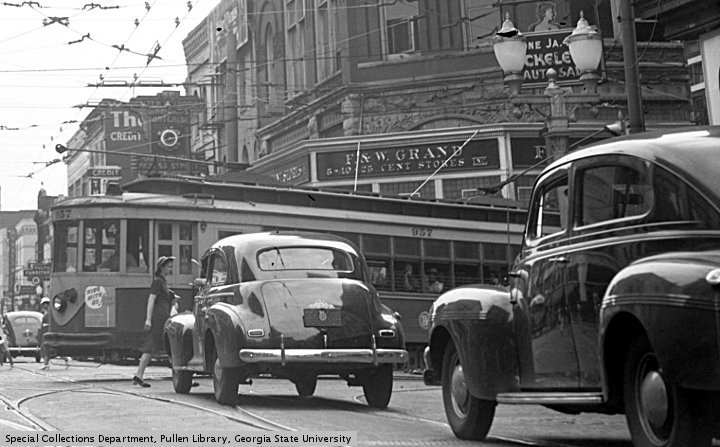
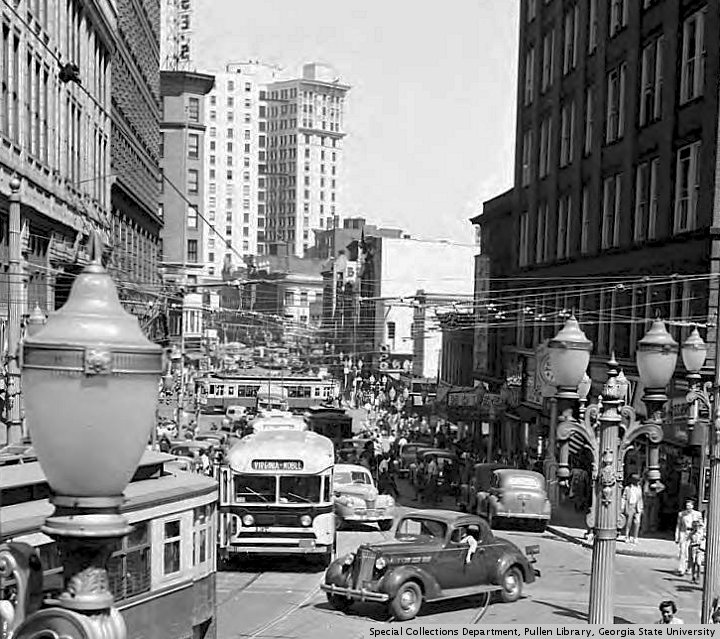
These four hundred and twenty hastily chosen words are a repost. Pictures are from “The Special Collections and Archives, Georgia State University Library”. This was downtown Atlanta in 1941.



The Whitman To Ginsberg Express


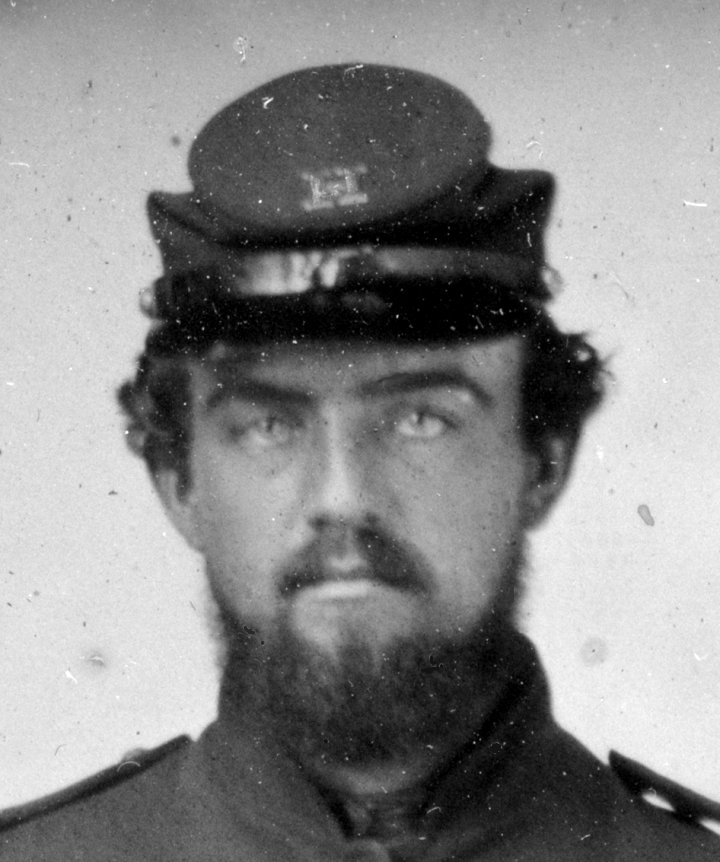
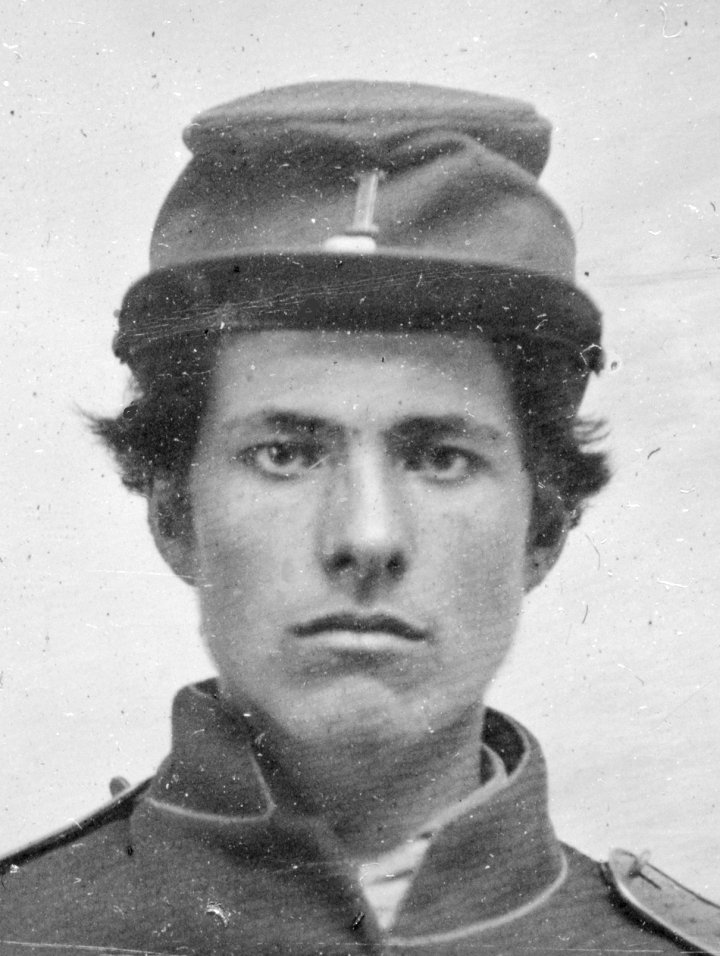

“… I’ve slept with Neal Cassady who slept with Gavin Arthur who slept with Edward Carpenter who described sleeping with Whitman to Gavin Arthur. [The “Gay Succession”]” Allen Ginsberg was fond of his place in a line of gay succession. This is a repost.
A 1974 interview makes the same point about Whitman-Carpenter-Arthur, but does not mention Cassady-Ginsberg. Could anyone be telling stories? The Carpenter-Arthur connection happened in 1924, but is described in wonderful detail by Mr. Arthur in 1967. There are few details about the Arthur-Cassady link in the chain. As a BBC interviewer said to Mr. Ginsberg in 1994 “Both Bob Dylan and Jack Kerouac, I think, described you as a “con-man extraordinaire”. What did they mean?” AG: “Oh, maybe they were projecting their own goofiness on me.”
“Edward Carpenter (1844-1929) was a writer and gay mystic and lived in England all his life. Although ordained an Anglican priest in 1869 he soon renounced religion and became a Fabian socialist. Among his works on social reform is Towards Democracy (1883-1902), a long, un- rhymed poem revealing the influence of his friend Walt Whitman. He edited the first gay literary collection, Iolaus: An Anthology of Friendship”
Mr. Carpenter exchanged letters with Mr. Whitman. “Although Whitman was not a socialist, his writing had a profound effect on Carpenter, who made the long trip to America primarily as a pilgrimage to his literary and spiritual inspiration. He visited the poet for several weeks in 1877 and again in 1884. In 1906 he published an account of his visits to America, Days with Walt Whitman, writing a respectful, even somewhat glorified, portrait of his idol.”
“It was not until the 1966 publication of a memoir by Gavin Arthur entitled The Circle Of Sex that the intimate details of Carpenter’s visits were revealed. Arthur slept in bed with Carpenter … leaving us with our only description of Whitman’s sexual behavior, an area otherwise shrouded in mystery and controversy.” In later years, we learned that Mr. Whitman possibly spent a happy afternoon with Oscar Wilde. Mr. Whitman was also fond of cruising the Brooklyn Waterfront.
Gavin Arthur (born Chester Alan Arthur III; March 21, 1901 – April 28, 1972) is a key link in this chain. As often noted, he was the grandson of Chester Arthur. The elder Mr. Arthur was elected Vice President in 1880, and promoted after the death of James Garfield.
The younger Mr. Arthur was a piece of work. In the early 1920’s, Mr. Arthur dropped out of Columbia, got married, and moved to Ireland. Mr. Arthur somehow got to meet his idol, Edward Carpenter. At the time of this meeting, Mr. Arthur was 23, and Mr. Carpenter was 80.
THE GAY SUCCESSION “… is a document given me by Gavin Arthur in 1967.” The story goes into extravagant detail about the meeting between Mr. Arthur and Mr. Carpenter. One wonders how the elderly Mr. Arthur remembers all this 43 years later.
EC – “No, Walt was ambigenic,” he said. “His contact with women was far less than his contact with men. But he did engender several children and his greatest female contact was that Creole in New Orleans. I don’t think he ever loved any of them as much as he loved Peter Doyle.”
GA – “I suppose you slept with him?” I blurted out half scared to ask.”
EC – “Oh yes–once in a while–he regarded it as the best way to get together with another man. He thought that people should ‘know’ each other on the physical and emotional plane as well as the mental. … the best part of comrade love was that there was no limit to the number of comrades”
GA – “How did he make love?” I forced myself to ask.”
EC – “I will show you,” he smiled. “Let us go to bed.”
Mr. Arthur spares few details in what happens next.
Chester III renamed himself Gavin. After losing the financial support of his family, Mr. Arthur moved to San Francisco. For a while, he sold newspapers on the street. “And he delved deep into both astrology and sexology. Gavin took his star charts very seriously: When one self-administered reading told him he was heading to prison soon, he immediately drove to San Quentin and took a job as a teacher, the better to prevent going in as an inmate.”
“By the 1960s, Gavin Arthur had become a well-known and respected astrologer. In 1966, some Bay Area activists, cultural and political, began to plan a transformative event. They wanted to unite the cultural radicals of the Haight, and the political radicals of Berkeley. Those plans led to the Human Be-In. In order to have maximum astrological impact, its organizers asked Arthur to determine the most auspicious date. Arthur determined that January 14, 1967, would have the greatest impact.”
“I had a flashback to the time I spent with Ginsberg in Cambridge, MA, in 1982, when he told me that I was part of an erotic lineage that connected me to Whitman … a quick Google search identifies Arthur as ”a certain astrologer and San Francisco character, Gavin Arthur … gave lectures at San Quentin while Neal was a prisoner.” Another entry reports that he studied astrology with Ronald Reagan before Reagan started his political career.”
“In 1958, he (Neal Cassady) was arrested after being caught using marijuana at a San Francisco nightclub. He was sentenced for two years at San Quentin State Prison.” This was when Mr. Arthur was teaching at San Quentin. Mr. Cassady mentions him in two letters to his wife Carolyn. (For those who just got here, Neal Cassady was the model for Dean Moriarty in On The Road. Mr. Cassady also drove the bus “Further,” for the Merry Pranksters.)
August 13, 1959 from San Quentin to Carolyn Cassady “Last Saturday, “Uncle Gavin” Arthur, grandson of our twenty-first President who, Republican though he was, could hardly have been more conservative than is Gain underneath all his Occult Astrology, failed to show (again, for the third time in six weeks) to teach our class in Comparative Religion and Philosophy, about three dozen regularly in attendance, on account of a death in his group at the Global House, which he bought by selling papers on Market Street for ten years; so again it was my pleasurable duty to instruct the boys in Cayce-hood [Edgar Cayce]”
Septetmber 22 1959 from San Quentin to Carolyn Cassady “Uncle” worry-wart [Gavin Arthur] missed showing up for the class again last week and I hear, probably unfounded, rumors that it is to be discontinued, too bad if true, because it was fun to hear the old geezer expound, without at all remembering he had, on the very same things week after week. I mean his examples, and their wording were always so alike one could not only anticipate, but, with any memory at all, give in advance the exact sentence he would be about to pronounce: it was sort of a game.” Eight years later, the “old geezer” described a 1924 tryst in clinical detail.
San Quentin broke Neal Cassady. The railroad would not take him back, and Carolyn divorced him. “He, however, felt now he had utterly failed in his mission, and he knew he could never go back. He died inside; only his body survived. This he did his best to destroy. He no longer believed in suicide, but he did all he could to be killed. … He told me he swallowed handfuls of pills anyone offered, even not knowing what they were. Is this not an obvious death-wish? He admitted it was.”
During this down and out time of his life, Neal Cassady apparently connected with Gavin Arthur. In a 1974 radio interview, Allen Ginsberg recalls “That was already the ’60’s, but there was that atmosphere back in San Francisco, around Gavin Arthur, particularly. Arthur was a great friend of Neal Cassady, slept with him all the time, or whenever Neal had nowhere to go he’d wind up in Gavin’s house, sort of falling asleep, exhausted, in his bed.”
The Neal Cassady to Allen Ginsberg connection is well documented.
“A second, serendipitous event further spurred (Joey) Cain’s interest in researching Gavin Arthur. Cain found a used copy of Carpenter’s “Towards Democracy” in a used bookstore for $3.00. It had a lot of writing in it. Cain noticed the following lament among the notes in the book, “This is one of my Bibles, please return. This volume is the third I have had to buy, people being so dishonest about books.” Then he looked below and saw Gavin Arthur’s signature and address. The writing belonged to Arthur. The book in his hand had once belonged to Gavin Arthur. He went up to the cashier who said, “It’s a shame about all this writing in it.” Cain replied, “Let me pay for it first, and then I’ll tell you about this writing.” Pictures today are from The Library of Congress.




July 3, 1981


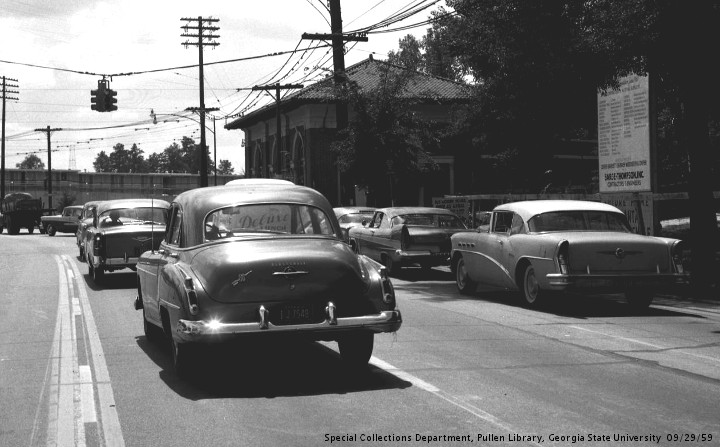

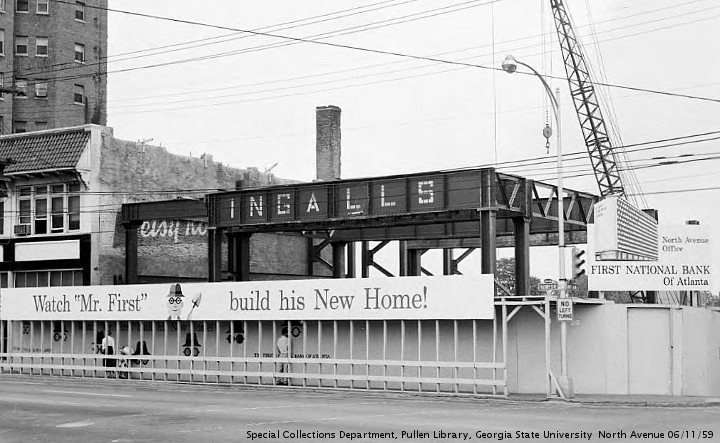

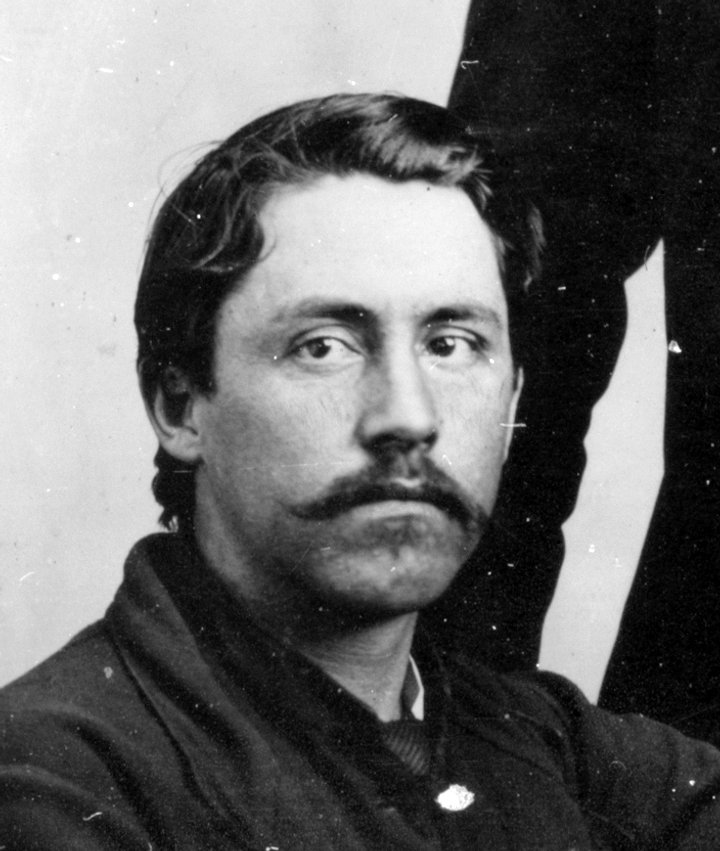
July 3, 1981, was another day before a holiday. The new President, Ronald Reagan, was recovering from gunshot wounds. There was talk of an era of conservatism, with possibly severe repression.
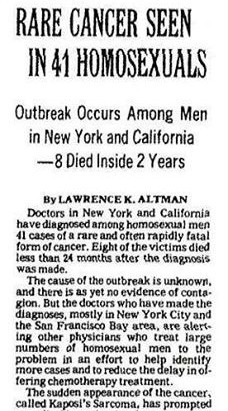
There was an article in the New York Times. RARE CANCER SEEN IN 41 HOMOSEXUALS. “Doctors in New York and California have diagnosed among homosexual men 41 cases of a rare and often rapidly fatal form of cancer. Eight of the victims died less than 24 months after the diagnosis…”
This was the media debut of AIDS. It would not have that name for a while. Almost nobody thought, on that summer day, just how bad AIDS would be. In five years it was obvious how serious AIDS was.
 PG was on another trip to the west coast. It was becoming obvious that this would be a vacation, rather than a relocation. He was riding a bicycle, with a milk carton overloaded with camping gear. Some kids told him to get saddle bags, and carry the weight lower. If you have the weight on top, you would lose control coming down a big hill. PG did not listen to the kids.
On July 4, PG left Patrick’s Point state park, about 300 miles north of San Francisco. Coming down the first hill on highway 101, the bike shook, shook harder, and flipped on its side. PG was thrown off. The front wheel was bent beyond repair. PG gathered his gear, left the bike behind, and got a ride into the nearest town.
PG got a bus ticket to Seattle. That city was in an economic downturn, with less than half a page of help wanted ads. PG found a auto delivery service, and got a VW bug going to Oak Ridge, TN. In a few days he was in Atlanta. A few days later, a temp agency came up with a job as a driver for a blueprint company. PG worked for that company, in one form or another, for the next 24 years.
As for the gay men with Kaposi’s Sarcoma … in all probability, the patients mentioned in that article were all dead within a year. AIDS has become a dominating story in our time. At its worst, it was claiming 50,000 lives a year. With the advent of wonder drugs, the death toll has been greatly reduced. The impact of AIDS on American life cannot be adequately described. This is a repost.
Pictures today are from “The Special Collections and Archives, Georgia State University Library”. Lawrence K. Altman is still writing articles for the New York Times.


The Night Muhammad Ali Fought In Atlanta




Many have noted that Muhammad Ali lit the Olympic torch in 1996. Few seem to remember another Atlanta appearance from the former Cassius Clay. It happened October 26, 1970, at the Municipal Auditorium. To get to this point, lets borrow a few lines from a Courier-Journal Ali Timeline.
1960 – “Clay defeats Zbigniew Pietrzykowski of Poland on Sept. 5 to win the light-heavyweight boxing gold medal at the Olympics in Rome…”
1962 – “Clay hears Elijah Muhammad speak for the first time. He meets another Nation of Islam leader, Malcolm X, who becomes a friend and adviser. – On March 9, the military draft board classifies Clay 1-A, meaning he is fit and available to be called into the Army…”
1964 -” Because of a low score on the Army intelligence test, Clay is reclassified 1-Y, not qualified for military service, in January. “I said I was The Greatest,” he explains. “I never said I was the smartest.” – Clay scores a stunning seventh-round technical knockout over 7-1 favorite Sonny Liston on Feb. 25 at the Miami Convention Center, winning the world heavyweight championship at age 22. – In response to a reporter’s question the day after the fight, Clay confirms he is a member of the Nation of Islam, saying: “I believe in Allah and in peace. … I’m not a Christian anymore. … Followers of Allah are the sweetest people in the world. They don’t tote weapons. They pray five times a day.” – A rift grows between Elijah Muhammad and Malcolm X. Ali sides with Elijah, causing grief for Malcolm. – Casting off his “slave name,” Clay adopts the temporary name Cassius X. Later he announces that Elijah has bestowed on him the name Muhammad Ali. The name means “Praiseworthy One.”…”
1965 – “Ali knocks out Liston in the first round of their rematch, before only 4,280 fans in Lewiston, Maine, on May 25. Liston falls under a “phantom” punch that apparently few people see, giving rise to suspicions that he threw the fight. Former champion Joe Louis eventually declares Ali “unfit” to hold the title. – In October, former champion Floyd Patterson says: “Cassius Clay is disgracing himself and the Negro race.” On Nov. 22, Ali delivers a punishing defeat to Patterson, in part, he says, because Patterson refuses to call him Ali….”
1966 – “With the Vietnam War heating up, the Army lowers test-score standards, reclassifying Ali 1-A — fit for service. – “Man, I ain’t got no quarrel with them Viet Cong,” he says to reporters who call him at home in Miami. He later explains that “no Viet Cong ever called me nigger.” – Ali asks to be reclassified a conscientious objector to military service. A hearing officer sides with him, but the draft board keeps him 1-A, armed with a U.S. Justice Department opinion that Ali’s objections to military service are political not religious….”
1967 – “On April 28, Ali refuses induction into the Army in Houston.” “It is the light of my consciousness as a Muslim minister and my own personal convictions that I take my stand in rejecting the call to be inducted in the armed services,” Ali stated after refusing induction on April 28, 1967. “I have searched my conscience and I find I cannot be true to my belief in my religion by accepting such a call.” He was convicted of draft evasion on June 20, 1967. Ali was sentenced to five years in prison and fined $10,000, the maximum penalty for the offense. He remained free on a $5,000 bond while he appealed his conviction. Ali was also stripped of the World Heavyweight Championship by the New York State Athletic Commission and the World Boxing Association, systematically denied a boxing license in every state and stripped of his passport. “
For three and a half years, Mr. Ali was unable to fight in the ring. The WBA had a tournament, and installed their own champion. People tried to set up a fight for Mr. Ali, but were blocked by politicians, and state boxing authorities. California Governor Ronald Reagan said “That draft dodger will never fight in my state, period.” Then someone had the idea to have the fight in Atlanta.
Atlanta has never been a boxing town. There was no boxing commission. The Municipal Auditorium, the only venue that could host, was a dump. As Ring magazine tells the story: “So it was the height of irony that it was Atlanta, a city that occupied the heart of the Deep South, that provided the breakthrough. State Senator Leroy Johnson and Governor Lester Maddox helped pave the way for a most improbable return by persuading the City of Atlanta Athletic Commission to grant Ali a boxing license on Aug. 12, 1970. Shortly thereafter, it was announced Ali would fight Jerry Quarry on Oct. 26 at the City Auditorium in Atlanta. The bout was scheduled for 15 rounds, probably in recognition of Ali’s status as lineal heavyweight champion.” (Other sources say that Governor Maddox was opposed to hosting the fight, but was powerless to stop it.)
The opponent was Jerry Quarry, whose white skin was apparent that night. His obituary notes: :His most famous night was in Atlanta, Georgia, in October 1970, when he was the “fall-guy” for Ali’s comeback from his three- year exile. Quarry was stopped because of a badly cut eye in the third round. It brought him his biggest payday, $338,000. … By 1995 he was in the care of his brother James, and was suffering from severe pugilistic dementia.” Jerry Quarry died January 3, 1999.
The fight was not much of a contest. It lasted three rounds, before the referee stopped the match. Mr. Ali fought for ten more years, and regained the Heavyweight Championship twice. “On June 28, 1971, the Supreme Court unanimously overturns Ali’s 4-year-old draft conviction, saying that his claims as a conscientious objector were based on religion and were sincere.”
The fight was the occasion for a display of black pride, and black money. The New Yorker essayist George Plimpton remembered that invasion of the Harlem peacocks in their enormous purple Cadillacs: “I’d never seen crowds as fancy, especially the men – felt hatbands and feathered capes, and the stilted shoes, the heels like polished ebony, and many smoking stuff in odd meerschaum pipes.”
“The times reported that the bout was like “a page out of the roaring twenties. … The ladies had beads down to the hem of their maxi-skirts. One man wore an ankle length mink coat, with a high hat of mink to match. … Diana Ross sat in the forth row, ringside, with a bouffant, Afro-American hair-do that stretched out 10 inches on each side.” Many of those in attendance were invited to a party.
“Engraved invitations to one party in particular had been passed around to the hustlers in New York a week earlier and in Atlanta in the days leading up to the fight. The invitations announced that “Fireball” was throwing a party at 2819 Handy Drive, in Collier Heights.
The Handy Drive house happened to be one of several properties that “Chicken Man” Williams owned. He’d given a friend, an Atlantan-turned-New-Yorker known as “Fireball,” permission to use the house. He’d even helped build a craps table the week before so all the big-time gamblers who were sure to show up could “roll the bones.”
Williams’ girlfriend, Barbara Smith, skipped the fight to help prepare for the party. She and two girlfriends were busy in the kitchen when they heard the front door open. The fight was still going on, so Smith went to the front, expecting to meet an early bird. She was greeted by three men in ski masks standing in the hallway. All were armed; one was pointing a shotgun at her face. …
An estimated 80 to 200 people had arrived at the house expecting to party, only to be fleeced by masked men with shotguns. According to news accounts, the victims were led to the basement, then ordered to strip to their underwear, throw all their valuables in a pile and lay on the floor…
As more victims arrived, floor space in the basement became scarce, so the gunmen ordered the victims to lie on top of each other. Cash and jewelry was swept into pillowcases. That went on for hours as more and more people kept showing up. By 3 a.m., the half-naked victims were stacked like cordwood on top of each other.
Not one shot was fired. But as they left, the gunmen took Smith and one of her friends hostage and told everyone else to stay put. Three hours later, they dropped the women off on the other side of town and gave them $10 each for cab fare. By that time, the investigation was underway.
Creative Loafing has a terrific story about the party at Chicken Man’s house. If you have a few minutes, it is worth your time. Ditto for this newspaper story, in the sucky google books format.
A key person in the story is J.D. Hudson. One of the first eight black Atlanta policemen, Lt. Hudson was Mr. Ali’s bodyguard the night of the fight. Lt. Hudson wound up conducting the investigation of the party at Chicken Man’s house. Lt. Hudson met Gordon “Chicken Man” Williams, under rather unpleasant circumstances, in 1949.
Lt. Hudson never suspected Chicken Man of being part of the robbery. “From the time he took over the case, Hudson says, he knew Williams wasn’t responsible — even though other investigators already had pinned the crime on him. For one thing, Hudson could place Williams at the fight at the time the gunmen were at the house setting up the crime.
For another, Hudson says, “I knew [Williams] wasn’t dumb enough to pull a stunt like that. This was a man who ran [a] million-dollar operation from a pay phone on a street corner. He was smart. He could’ve run IBM or Coke. There’s no way he would’ve risked all that to pay somebody off. This was pulled off by a bunch of young thugs who were trying to knock over a party, and when they got there and saw how big it was, they improvised.”
Chicken Man went to prison in the seventies, and became a minister. He served as the Pastor of the Salem Baptist Church. Gordon Williams died December 6, 2014. J.D.Hudson died June 4, 2009. The men who robbed the party goers were killed a few months after the fight.
Pictures today are from The Library of Congress. This is a repost.



Mrs. Dora Stainers
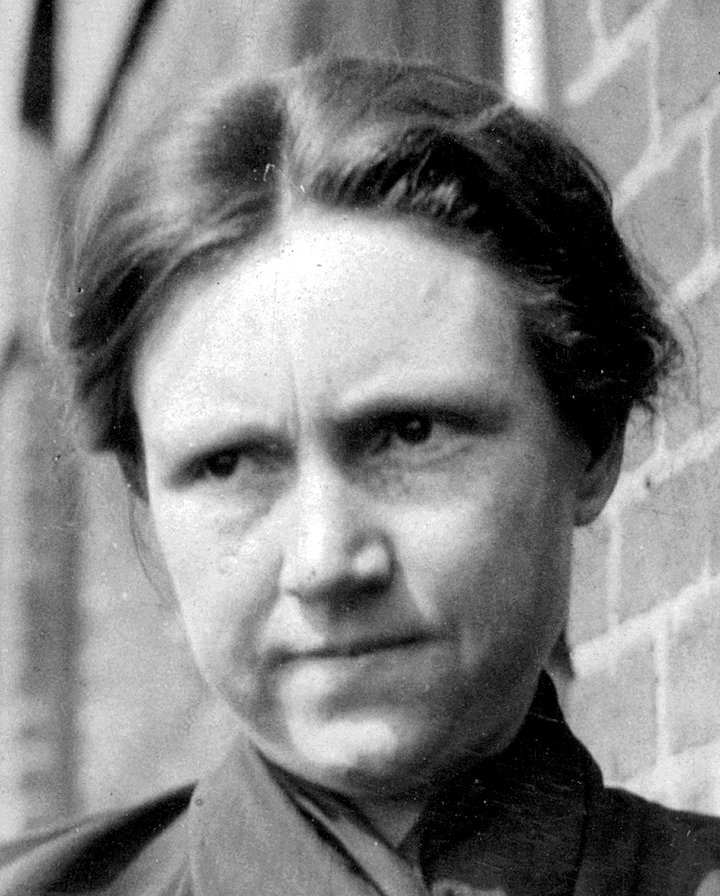

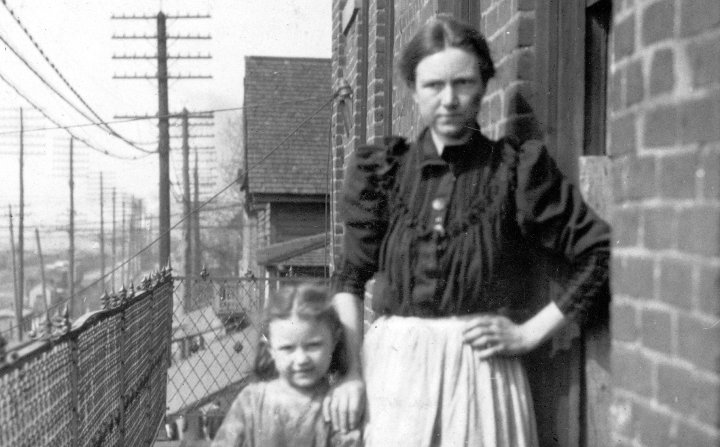
Some pictures have longer captions than others. Shorpy published one with a mouthful.
Mrs. Dora Stainers, 562 1/2 Decatur St. 39 years old. Began spinning in an Atlanta mill at 7 years, and is in this mill work for 32 years. Only 4 days of schooling in her life. Began at 20 cents a day. The most she ever made was $1.75 a day & now she is earning $1 a day when she works. She is looking for a job. Her little girl Lilie is the same age she was when she started work, but the mother says, “I ain’t goin to put her to work if I can help it. I’m goin’ to give her as much education as I can so she can do better than I did.” Mrs. Stainers is a woman of exceptional ability considering her training. In contrast to her is another woman (this name was withheld) who has been working in Atlanta mills for 10 yrs. She began at 10 yrs. of age, married at 12, broke down, and may never be able to work again. Her mother went to work in the cotton mill very young. Location: Atlanta, Georgia.
The photographs of Mrs. Stainers were made in March, 1915. The photographer was Lewis Wickes Hine. “Working as an investigative photographer for the National Child Labor Committee (NCLC), Lewis Hine (1874-1940) documented working and living conditions of children in the United States between 1908 and 1924.” “In 1954 the Library received the records of the National Child Labor Committee, including approximately 5,000 photographs and 350 negatives by Lewis Hine. In giving the collection to the Library, the NCLC stipulated that “There will be no restrictions of any kind on your use of the Hine photographic material.”
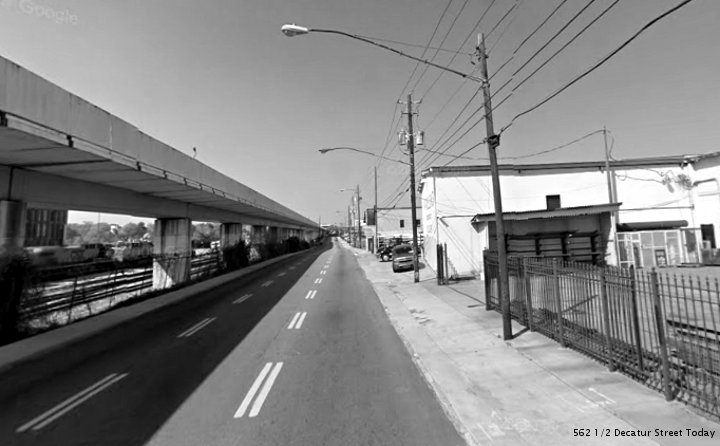
The house that Mrs. Stainer lived in is long gone. 562 1/2 Decatur Street is across the railroad tracks from the Fulton Cotton Mill. With real estate agents demanding names for all neighborhoods, the area is known as the Old Fourth Ward. The building at 552 Decatur Street is A & R Welding.
Pictures are from The Library of Congress. This is a repost.




Luther C. Mckinnon
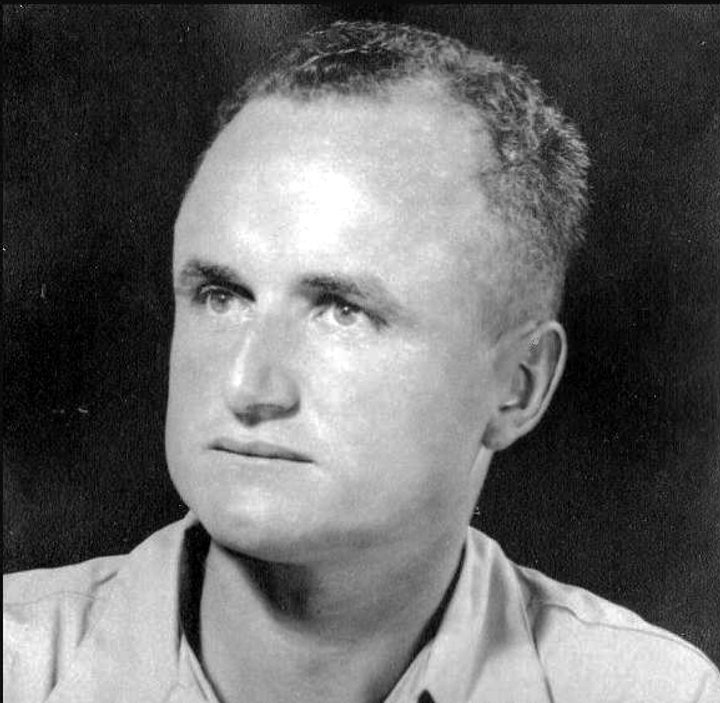

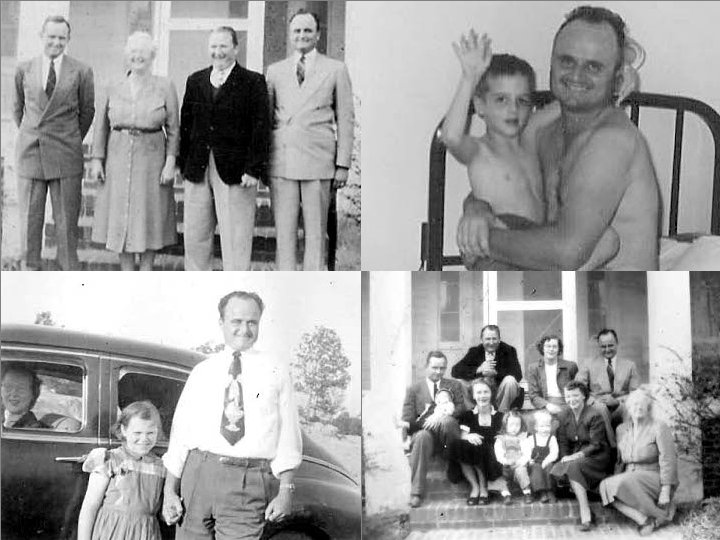
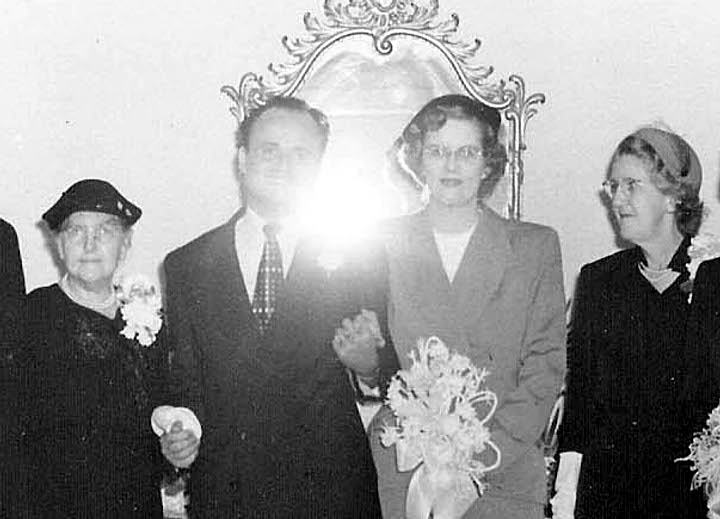
Luther Campbell McKinnon Sr. was born February 22, 1916, on a farm in Rowland, North Carolina. Europe was stuck in a war that would change the world, and not until The United States got involved. This didn’t happen for another year.
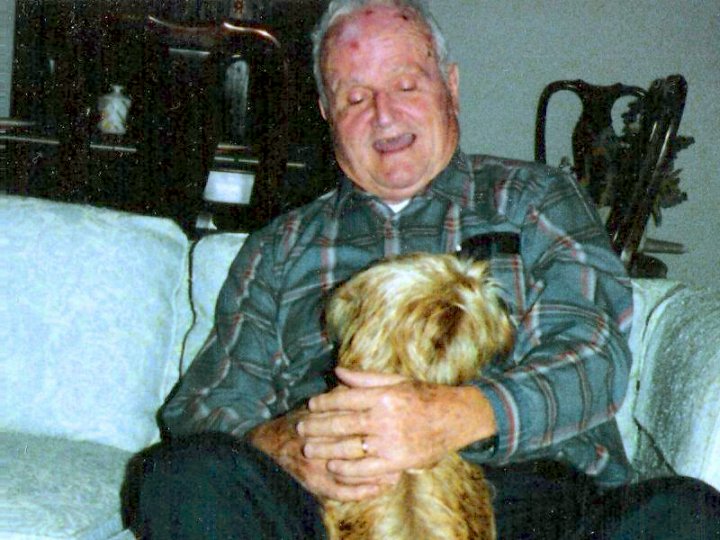
Luke was the youngest of four children. After life as a farm boy, he went to Wake Forest University, and then came back when his Daddy died. He ran a family dairy for a few years, and went to live in New Jersey. He lived near a prison, and saw the lights dim when the electric chair was used.
In the early fifties, he came to Atlanta to live. This was where his sister Sarah stayed, with her husband and two daughters. One day he went into the C&S bank on 10th street, and took notice of one of the tellers. On October 6, 1951, he married Jean Dunaway. She was with him the rest of his life.
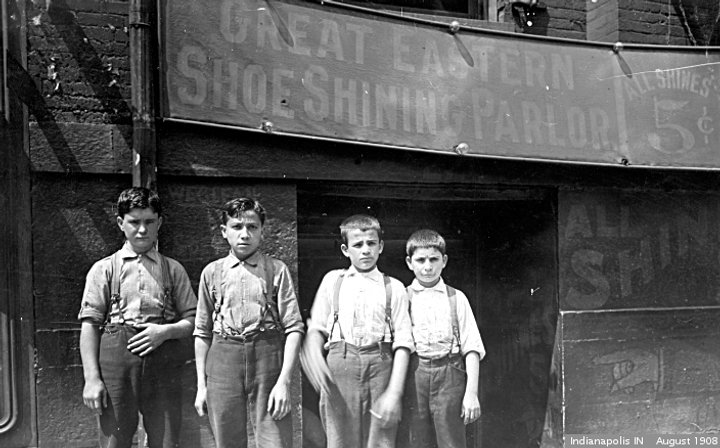
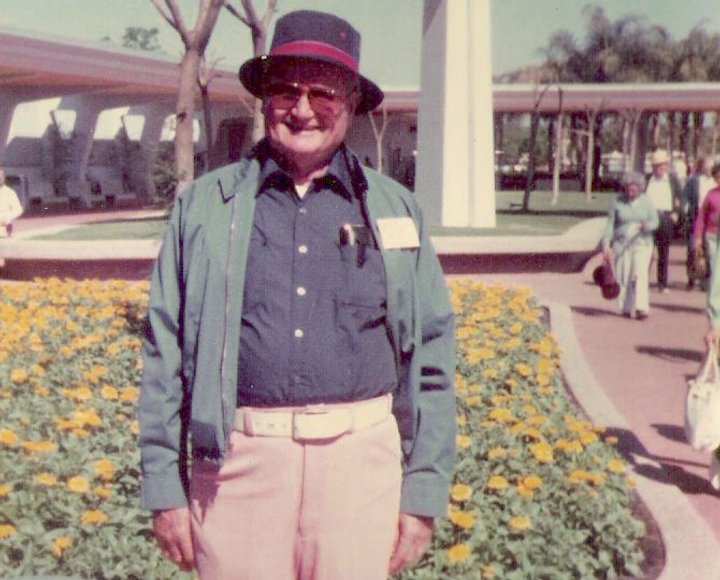
At some point in this era he started selling shoes. He would go to warehouses, gas stations, and wherever barefoot men needed shoes. He was “The Shoe Man” .
Before long there were two boys, and he bought a house, then another. The second house is the current residence of my brother and myself, and is probably worth 15 times what he paid for it. He had the good fortune to not buy in an area that was “blockbusted,’ as many neighborhoods were.
And this was his life. He tended a garden, went to the gym, and was in the Lions Club for many years. When he met Mom, she let him know that going to church with her was part of the deal. They found a church that was good for their needs, and made many friends there. The Pastor at Briarcliff Baptist, Glen Waldrop, was his friend.
When I think of the character of this man, there is one night, which stands out. My brother was away at the time. The day before, Mom had discovered she had a detached retina, and was in the hospital awaiting surgery. Her job had arranged a “leaf tour” by train in North Georgia, and she got one of her friends at work to take me. There was some mechanical trouble on the train, and it did not get back into town until 3am Monday morning. And yet, Daddy stayed at home, did not panic, and had faith that all of us would be back soon, which we were.
Through all the struggles of his life, Dad was cheerful, laughed a lot, and was good company. He left me with a rich repertoire of country sayings, and had many stories to tell. He was surprising mellow about black people, if a bit old fashioned. (In the south when I grew up, this was highly unusual).
Dad was always in good, vigorous health, and I thought he would be with us for a long time. Well, that is not how things work. A cancer developed in his liver, and spread to his lungs (he did not smoke). After a mercifully brief illness, we lost him on February 7, 1992. This is a repost.


The Last Night Of Judy Garland
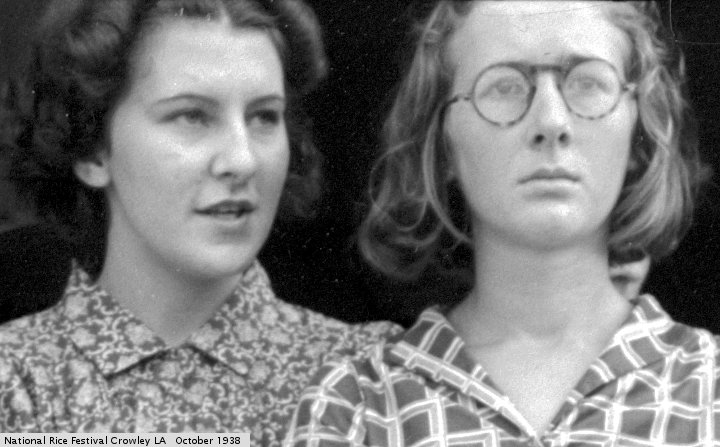



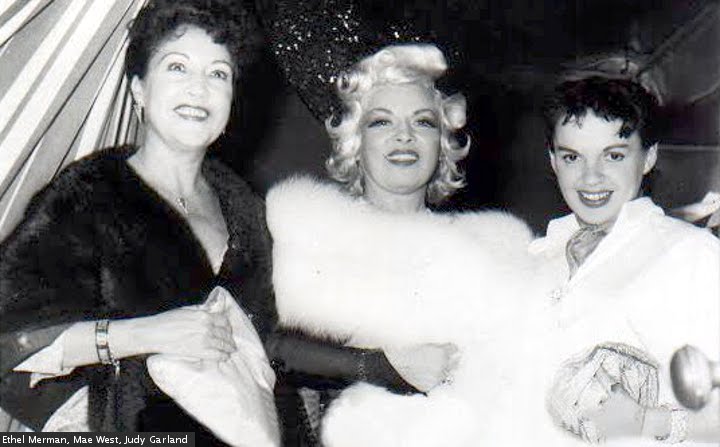
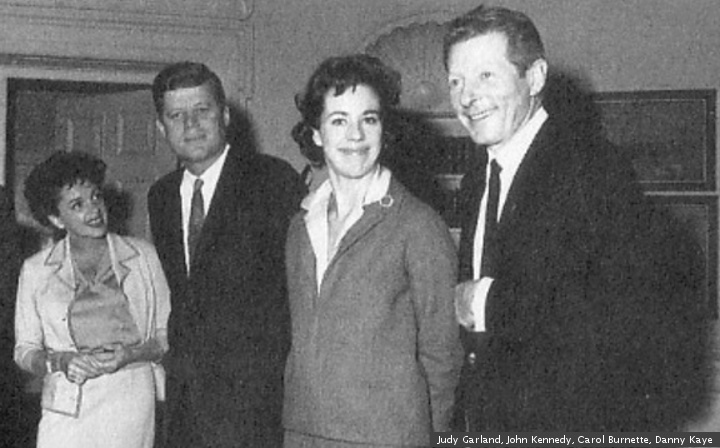
“In march of 1969, Judy married her fifth husband, Mickey Devinko, better known as Mickey Deans, a gay night-club promoter. Judy had an unfortunate habit of marrying gay men. They lived together in a tiny mews house in Chelsea, London. The evening of Saturday June 21 1969, Judy and Mickey were watching a documentary, The Royal Family, on television, when they had an argument. Judy ran out the door screaming into the street, waking the neighbors.
Several versions of what happened next exist, but the fact remains that a phone call for Judy woke him at 10:40 the next morning, and she was not sleeping in the bed. He searched for her, only to find the bathroom door locked. After no response, he climbed outside to the bathroom window and entered to find Judy, sitting on the toilet. Rigor Mortis had set in. Judy Garland, 47, was dead.
The press was already aware of the news before the body could be removed. In an effort to prevent pictures being taken of the corpse, she was apparently draped over someone’s arm like a folded coat, covered with a blanket, and removed from the house with the photographers left none the wiser.
The day Judy died there was a tornado in Kansas…. in Saline County,KS, a rather large F3 tornado (injuring 60, but causing no deaths) did hit at 10:40 pm on June 21st, that would be 4:40 am, June 22nd, London time, the morning she died. I know the time of death has never been firmly established, but since Rigor Mortis had already set in, I think this tornado may very much be in the ballpark in terms of coinciding with time of death…. Other news articles suggest the tornado struck Salina “late at night” which could certainly also mean after midnight on June 22, or roughly 6:00 am London time…
The Toledo Blade for June 24th, also in an article located right next to a picture of Garland, in a write-up on the Salina tornado noted that “Late Saturday [June 21] and early Sunday [June 22, another batch of tornadoes struck in central Kansas.” So it seems the legend seems confirmed.”
The text for this story comes from Findadeath. You can spend hours at this site. This is a repost. Pictures are from The Library of Congress.


Lose The Ability To Remember


PG heard a nifty quote once. “When we begin to write, we will lost the ability to remember.” It was credited to Homer, the Greek poet. The only problem is, PG could never find a source.
Katherine Mangu-Ward is a lady writer. She appeared on a podcast recently, and talked about the symbiotic relationship between conservative trolling, and liberal smugness. PG stumbled onto her twitter account, @kmanguward, and found this: 370 BC: Is Writing Making Us Stupid?
Plato, Phaedrus was the link attached to the tweet. Here is what it said: “Now the king of all Egypt at that time was the god Thamus, who lived in the great city of the upper region, which the Greeks call the Egyptian Thebes, and they call the god himself Ammon. To him came Theuth to show his inventions, saying that they ought to be imparted to the other Egyptians. But Thamus asked what use there was in each, and as Theuth enumerated their uses, expressed praise or blame, according as he approved or disapproved. The story goes that Thamus said many things to Theuth in praise or blame of the various arts, which it would take too long to repeat; but when they came to the letters, “This invention, O king,” said Theuth, “will make the Egyptians wiser and will improve their memories; for it is an elixir of memory and wisdom that I have discovered.”
But Thamus replied, “Most ingenious Theuth, one man has the ability to beget arts, but the ability to judge of their usefulness or harmfulness to their users belongs to another; and now you, who are the father of letters, have been led by your affection to ascribe to them a power the opposite of that which they really possess. For this invention will produce forgetfulness in the minds of those who learn to use it, because they will not practice their memory. Their trust in writing, produced by external characters which are no part of themselves, will discourage the use of their own memory within them. You have invented an elixir not of memory, but of reminding; and you offer your pupils the appearance of wisdom, not true wisdom, for they will read many things without instruction and will therefore seem to know many things, when they are for the most part ignorant and hard to get along with, since they are not wise, but only appear wise.”
Don’t be afraid of a block of text. We will break this down in a minute. The text is from Phaedrus, by Plato. As the ierrant wikipedia says, “The Phaedrus (/ˈfiːdrəs/; Ancient Greek: Φαῖδρος, lit. ‘Phaidros’), written by Plato, is a dialogue between Plato’s protagonist, Socrates, and Phaedrus, an interlocutor in several dialogues. The Phaedrus was presumably composed around 370 BC. “According to this timeline, 370 B.C. is 3200 years after man started to write, and 400 years after the invention of the Greek alphabet. So much for Homer’s word of caution.
We don’t know how widespread writing was in Plato’s time. Presumably, many of the old tales were transmitted by word of mouth, from one generation to the next. This involves memory. “For this invention will produce forgetfulness in the minds of those who learn to use it, because they will not practice their memory.”
There is one more quote worth musing over. Since the invention of the first mediums, new methods have been denounced by traditionalists. Today, we live in an era of constant change. This feature will appear in a blog… state of the art in 2004, and considered obsolete in 2018. Every new medium is greeted with hand wringing over the bad effects it will have on society. Some of these misgivings have been proven false. This *text* goes into more detail about this.
Homer may, or may not, have existed. Since this was 2800 years ago, we may never know. The stories of “The Iliad” and “The Odyssey” may have been told from one generation, to the next. Maybe Homer really did say that, and was merely afraid of competition.
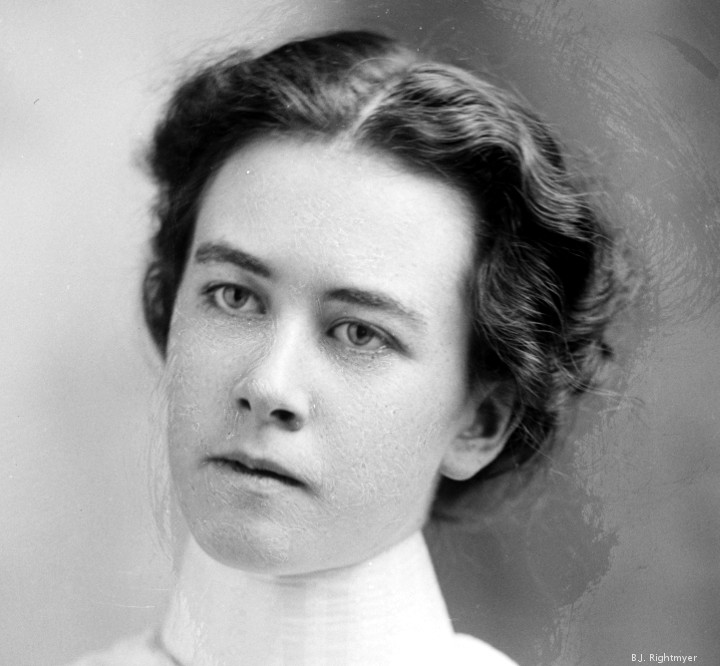
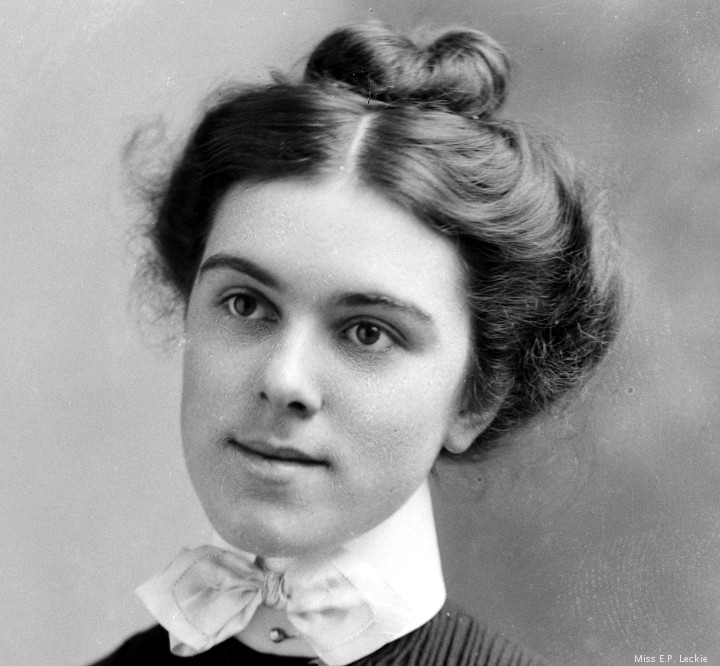
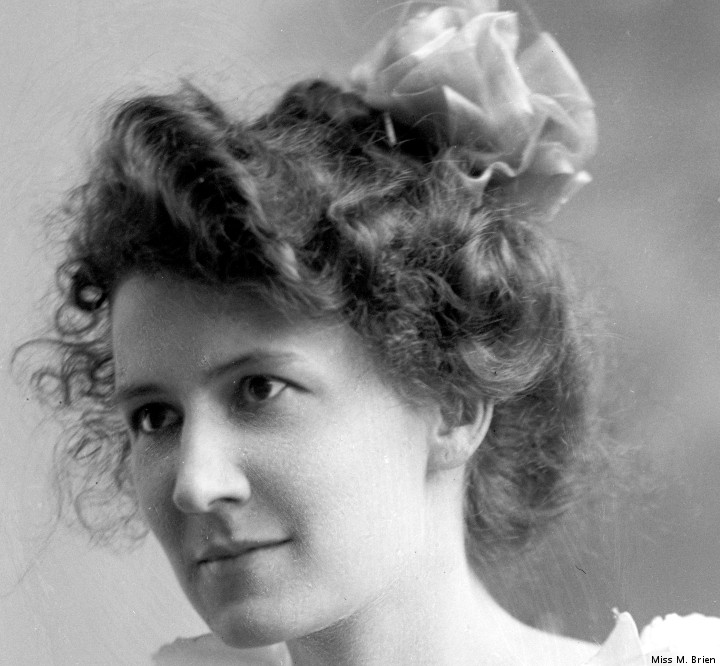
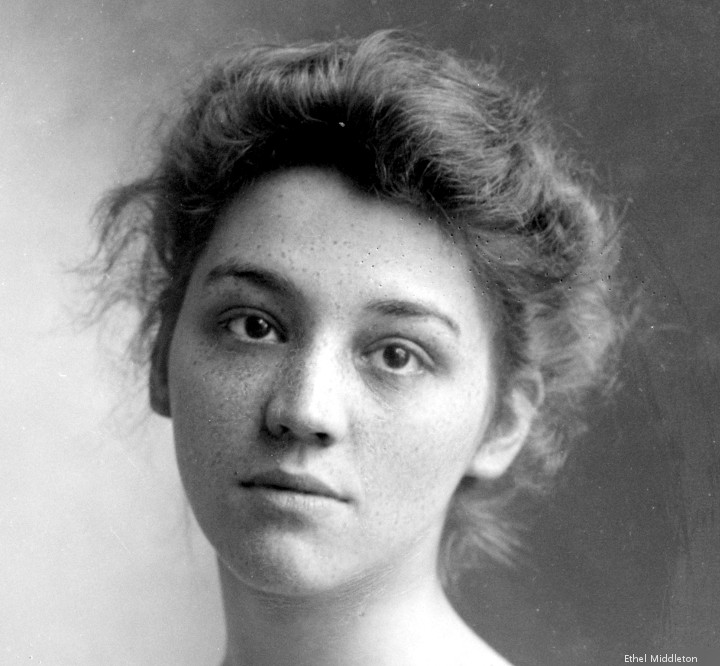
“You have invented an elixir not of memory, but of reminding; and you offer your pupils the appearance of wisdom, not true wisdom, for they will read many things without instruction and will therefore seem to know many things, when they are for the most part ignorant and hard to get along with, since they are not wise, but only appear wise.” . In todays culture, the display of apparent wisdom is more impressive than actual knowledge. These things too shall pass away. Pictures are from The Library of Congress. This is a repost.




leave a comment