Thanksgiving Story


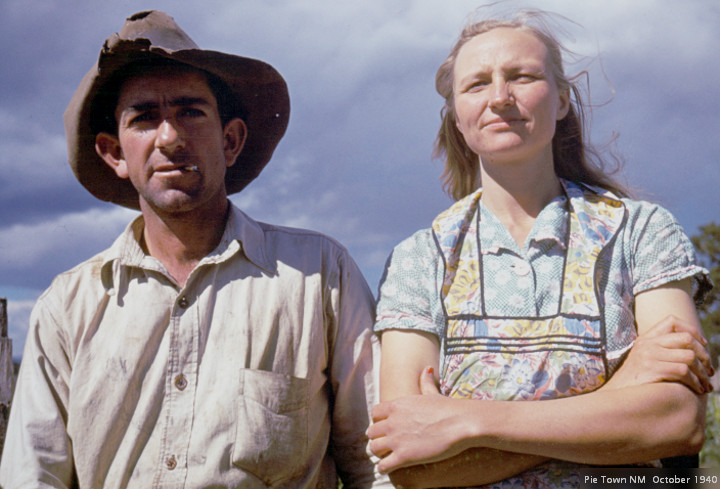
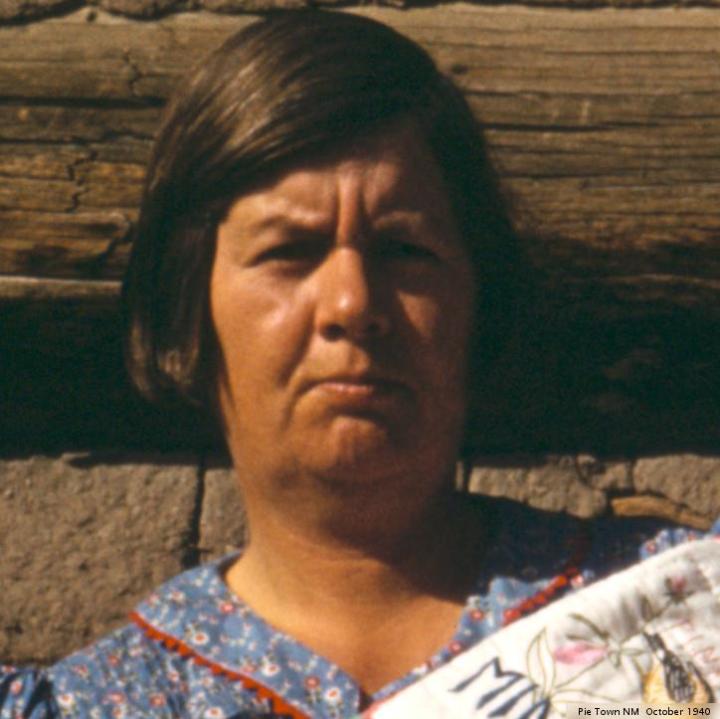
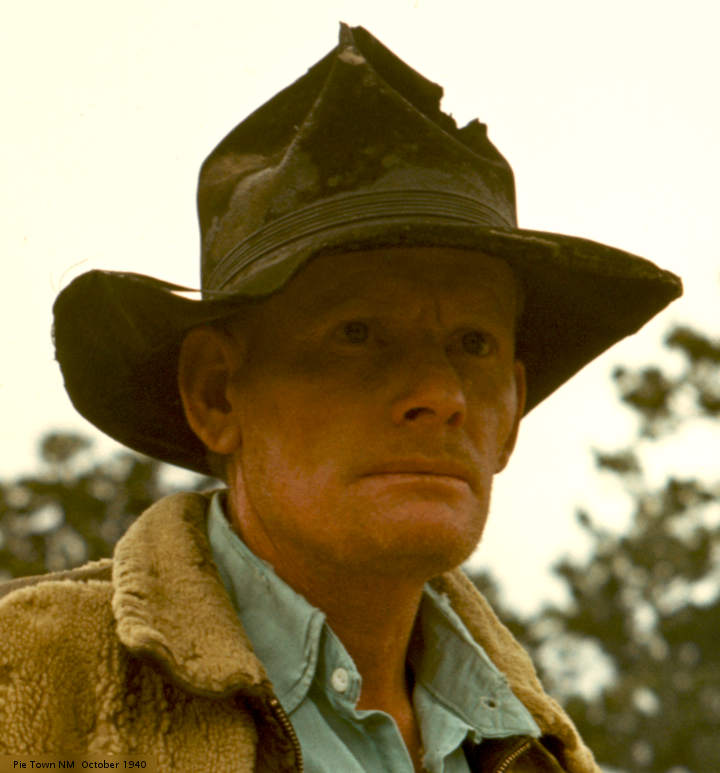
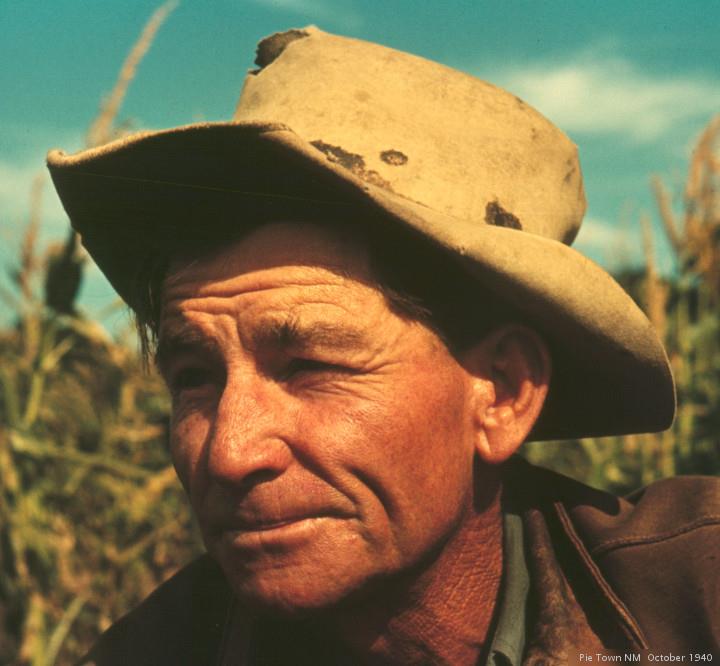

Thanksgiving was a time our family cherished. It was the only time all of us got together under one roof and mingled. Except for me. ~ I was the the family embarrassment. They were Catholic, and disliked my way of life. I played guitar, loved Heavy Metal, and worshiped Satan. ~ All this explains why my family shunned me. In their eyes, I was the flaw of a nearly perfect gem, but in mine, I was the cream of the crop.
I should’ve known they had something awful in mind when they asked me to join them somewhere. They drove me to the very corner of the ranch. ~ “What the fuck are we doing back here,” I asked. My only reply was, “Shut up you blaspheming fool.”
At last we got to the destination. My father, mother, and sister were standing around, wearing funeral clothes. ~ In the middle was a shallow grave. “What’s that hole for?” I asked dumbly. “Take a guess you satanic fucker!” Was the reply from my father.
I felt a thud on my head. I hit the ground with a loud thlap. I turned in spite of excruciating pain to see my uncle wielding a shovel. ~ I touched the back of my head to find my fingers coated in blood. I suddenly grew light headed and passed out. When I woke up I inhaled dirt. ~ Luckily, my family didn’t know how to properly bury someone so I was able to dig myself out. I sat there and puked for about fifteen minutes.
When I got back, it was Thanksgiving night. through the window I could see my family, sitting there, saying grace like the sheeple they were. ~ Seeing them praying made my hate for them and all Catholics grow. It went from a smouldering, muddled anger, to a flaming, outrageous hatred
I ran into the garage and found my uncle’s shotgun, sitting there, waiting for me, beckoning, saying, “Go ahead, make these fuckers pay.” ~ “Hi Mom!” I shouted as I pulled the trigger, I started laughing uncontrollably as I continued firing at my family until I was empty.
“WHAT THE FUCK IS WRONG WITH YOU?!” My father asked, wounded, shot in the gut. “Wrong with me?” I asked calmly. “What’s wrong with you?” ~ With that I threw the gun away and dined. Not on Turkey, but on raw human flesh. It was the best Thanksgiving ever. ~ Twitter serialization by @creepypasta_txt. Pictures are from The Library of Congress. This is a repost.





Fifty Seven Years



Fifty seven years ago, John Kennedy went to the oval office in the sky. The bullets hit Mr.Kennedy at 12:30 pm, CST. He arrived at the hospital at 12:37. He had a faint heartbeat on arrival, but quickly succumbed to his wounds.
In Georgia, PG was nine years old. He was in Miss Mckenzie’s fourth grade class. There was going to be an assembly soon, and the class was going to perform. There was a rehearsal in the cafetorium, and some of the kids were acting up. They went back to the class, and PG thought they were going to be chewed out about the misbehavior in the cafetorium. Instead, Miss Mckenzie came into the room, and told the kids that President Kennedy had been shot during a parade in Dallas Texas. She did not say anything about his condition. One kid cheered the news.
School let out at the regular time, and PG walked home. His mother and brother were crying. He was told that the president had died. The cub scouts meeting that afternoon was canceled.
Later that night, a plane arrived in Washington. The tv cameras showed a gruesome looking man walk up to a microphone. He was introduced as President Lyndon Johnson. This may have been the worst moment of that day. Photographs for this repost today are from “Special Collections and Archives, Georgia State University Library”.





Seven Score And Seventeen Years Ago


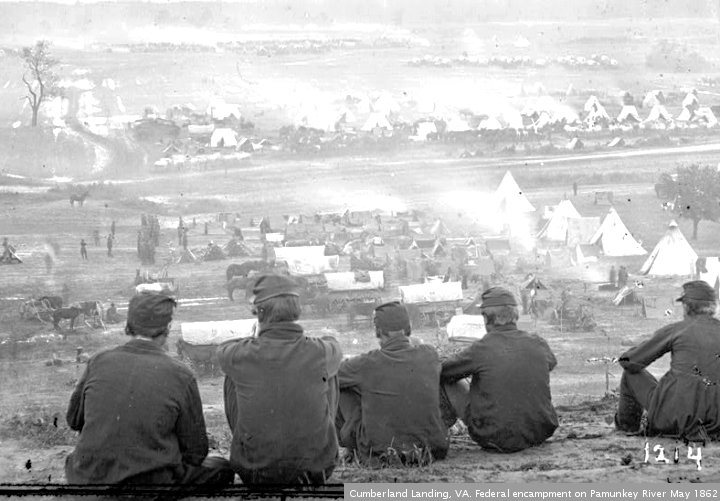
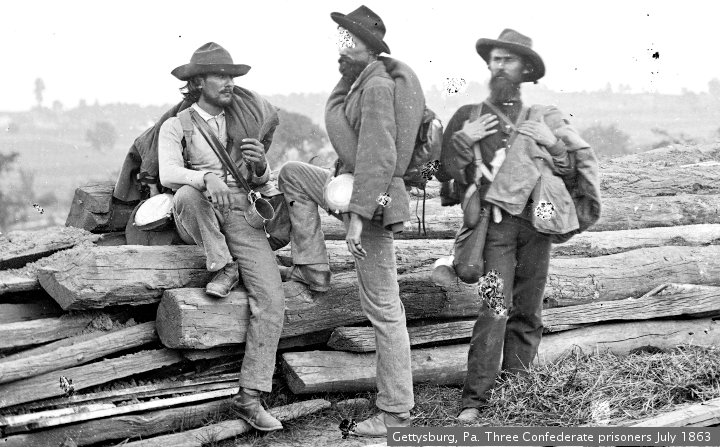


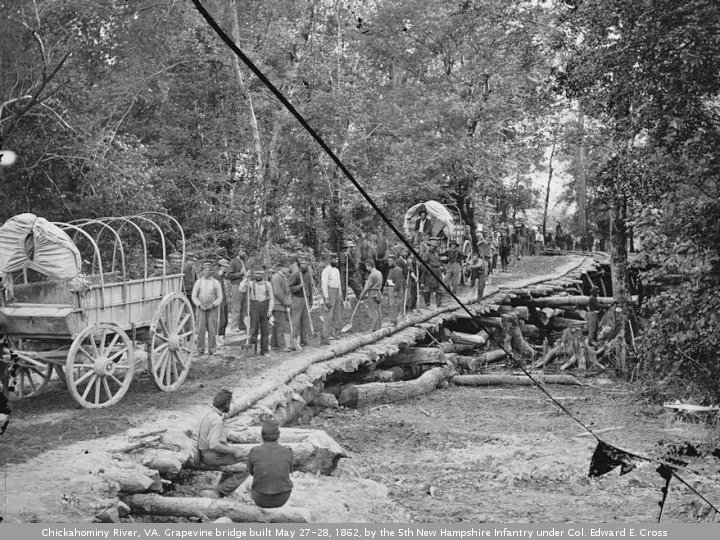

A vicious battle had been fought near Gettysburg, PA. It is widely considered the turning point of “Mr. Lincoln”s War,” the moment when the Union took the upper hand. It came at a horrible price, and a cemetery was built to hold this price.
The ceremony to dedicate the cemetery was held November 19, 1863. The headline speaker was Senator Edward Everett. The President was an afterthought. After it was over, Mr. Everett reportedly told the President that he said more in two minutes than he did in two hours.
The speech by Mr. Lincoln is an American classic. Schoolchildren are forced to memorize it. There are a few legends, many of which are not true. According to The Lincoln Museum , the speech was written on White House stationary, not the back of an envelope. The train ride would have been too bumpy to write. There is also confusion about what happened to the original text that the President read from.
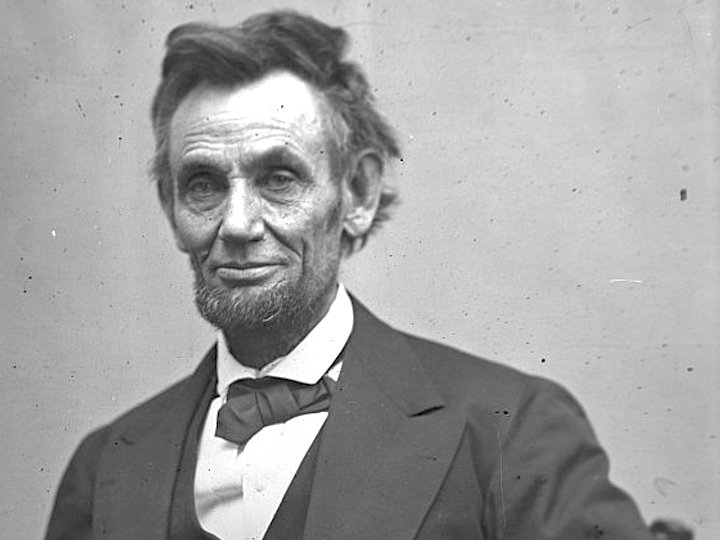
HT to Millard Fillmore’s Bathtub. Pictures are from The Library of Congress. Measured in pixels, the picture of George Custer is 720×666. This is a repost.
Four score and seven years ago our fathers brought forth on this continent a new nation, conceived in liberty, and dedicated to the proposition that all men are created equal.Now we are engaged in a great civil war, testing whether that nation, or any nation, so conceived and so dedicated, can long endure. We are met on a great battle-field of that war. We have come to dedicate a portion of that field, as a final resting place for those who here gave their lives that that nation might live. It is altogether fitting and proper that we should do this. But, in a larger sense, we can not dedicate, we can not consecrate, we can not hallow this ground. The brave men, living and dead, who struggled here, have consecrated it, far above our poor power to add or detract. The world will little note, nor long remember what we say here, but it can never forget what they did here. It is for us the living, rather, to be dedicated here to the unfinished work which they who fought here have thus far so nobly advanced. It is rather for us to be here dedicated to the great task remaining before us—that from these honored dead we take increased devotion to that cause for which they gave the last full measure of devotion—that we here highly resolve that these dead shall not have died in vain—that this nation, under God, shall have a new birth of freedom—and that government of the people, by the people, for the people, shall not perish from the earth.


The Burning Of Atlanta


Around this time 156 years ago, Atlanta was on fire. General Sherman was preparing for his March to the sea, and wanted to destroy anything of value in the city. The fire is reported as being on 11-15 of November, depending on what source you use.
The November fire was the second great fire in Atlanta that year. On September 2, the city was conquered by the Union Army. The fleeing Confederates blew up a munitions depot, and set a large part of the city on fire. This is the fire Scarlet O’Hara flees, in “Gone With The Wind”.
After a series of bloody battles, the city was shelled by Yankee forces for forty days. There were many civilian casualties. General Sherman was tired of the war, angry at Atlanta, and ready for action. This is despite the fact that many in Atlanta were opposed to secession.
Click here to hear a lecture by Marc Wortman at the Atlanta History Center. Mr Wortman is the author of “The Bonfire: The Siege and Burning of Atlanta”. The hour of talk is fascinating. This is a repost. The pictures are from The Library of Congress


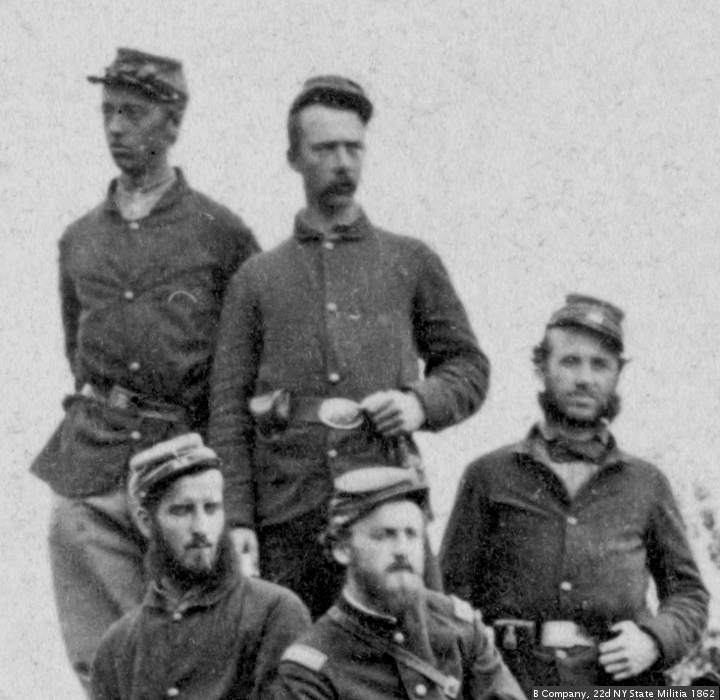
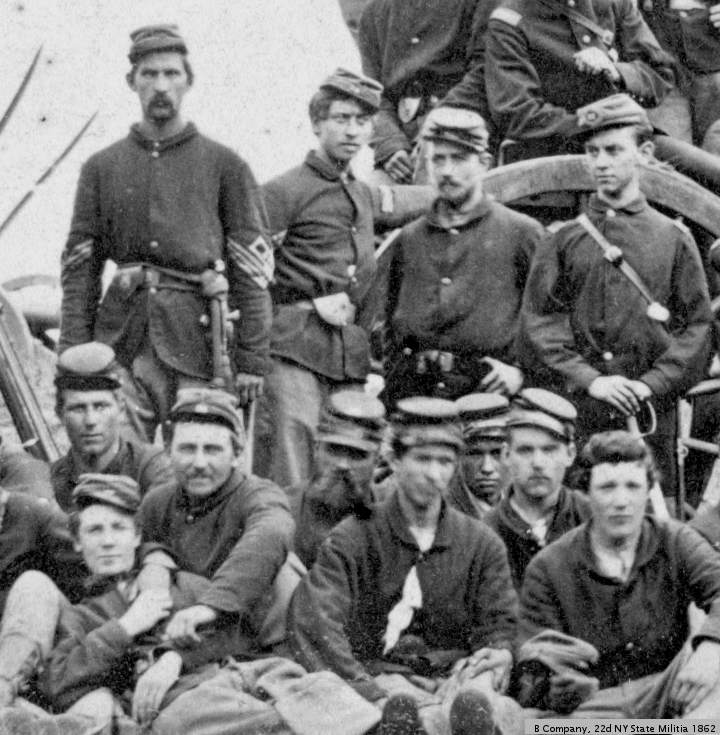


About this time every year, there is a post about the burning of Atlanta. One of the sources is a lecture by Marc Wortman. If you have an hour to spare, this talk is worth your time. One of the stories told is the tale of Mr. Luckie.
“According to folklore, two stories abound as to how Luckie Street was named. The first is that its moniker came from one of Atlanta’s oldest families. The other, probably closer to the truth, regales the life of Solomon “Sam” Luckie. Luckie, as it turns out, wasn’t so lucky after all. When General William Tecumseh Sherman first came marching through Atlanta in 1864, Luckie, a free Black man who made his living as a barber, was leaning against a gas lamp post in downtown talking to a group of businessmen. A burst from a cannon shell wounded him; he survived, but later died from his injuries. Folklore suggests that he may have been one of the first casualties of the assault on Atlanta. Luckie Street, an extension of Auburn Avenue, was later named in his memory.”
Marc Wortman wrote a book, The Bonfire: The Siege and Burning of Atlanta. The one star review, and comments to that review, are unusually detailed. Here is a selection.
“…People forget – or were never taught in school – that most Confederate soldiers descended from Revolutionary War patriots or were up-country poor sons of farmers. Many Confederate soldiers were relatively recent new arrivals to the U.S., semi-literate dirt poor immigrants from Ireland and Scotland who’d never had the chance to own even an acre of their own land in Europe. In the mix were well-educated, elite merchant business owning French Huguenot refugees of the Catholic Bourbon genocide of Protestants. These immigrants had nowhere else to go, 9 times out of 10 never owned a slave, and fought for the CSA to keep what little they’d hardscrabble carved out over a decade of arrival into the U.S.”
The War Between The States continues to be a source of controversy. After the Charleston church killings, many comments were made about the Confederate battle flag. (If you can’t talk about gun control or mental health, you talk about a symbol.) This led to discussions about the war itself. There were ritual denunciations of slavery, assumed to be the sole cause of the conflict.
The notion of autonomous states in a federal union was novel when the United States Constitution was written. The debate over federalism versus states rights continues to this day. States that want to legalize marijuana may be the next battleground. (Few are expecting secession over bong rights.) Many in the CSA saw the Union as being a conquering army, and fought to defend their homes. While slavery was certainly a factor in the creation of the CSA, it was not the only Casus belli. Pictures today are from The Library of Congress.

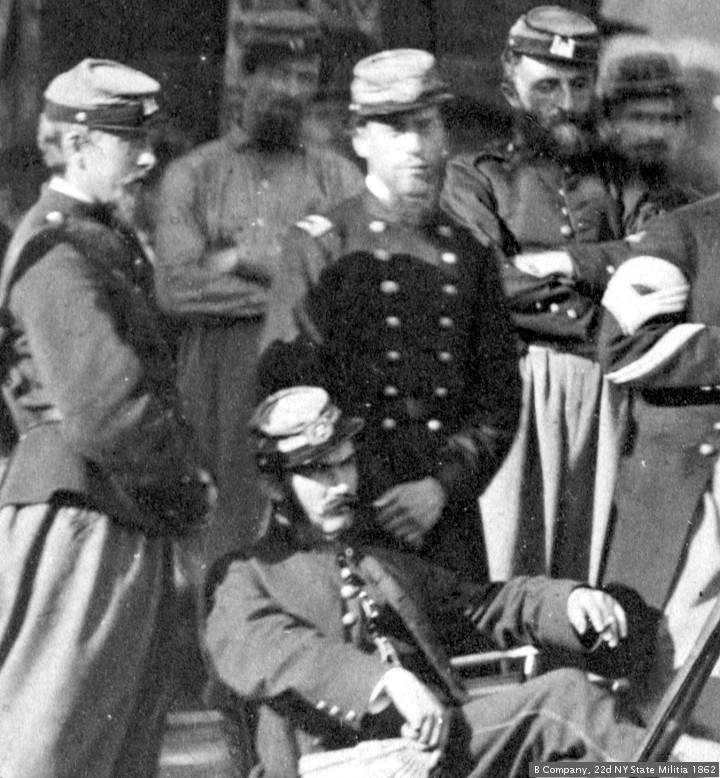


November 11
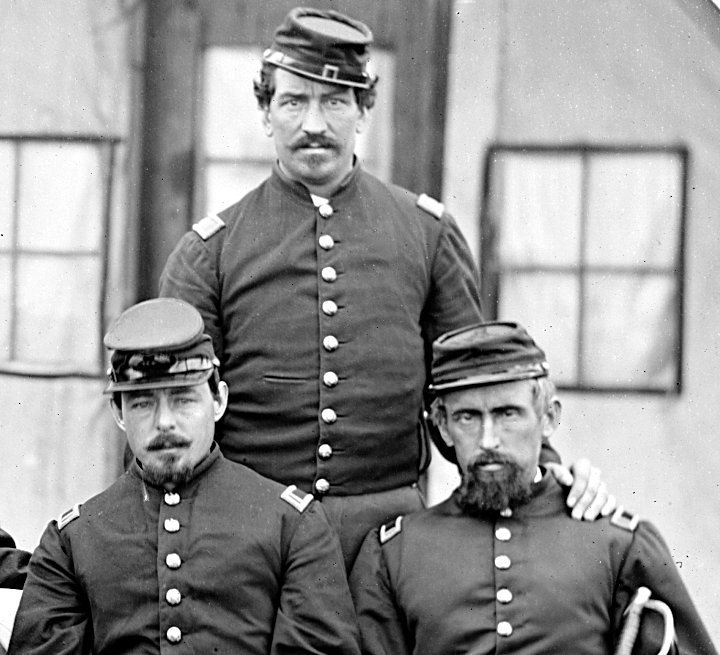


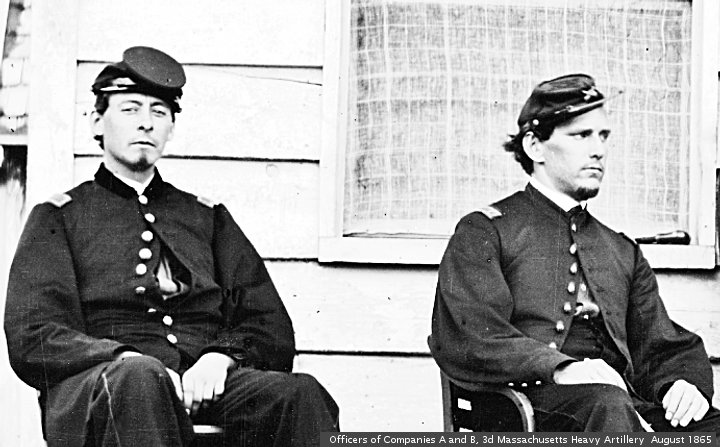
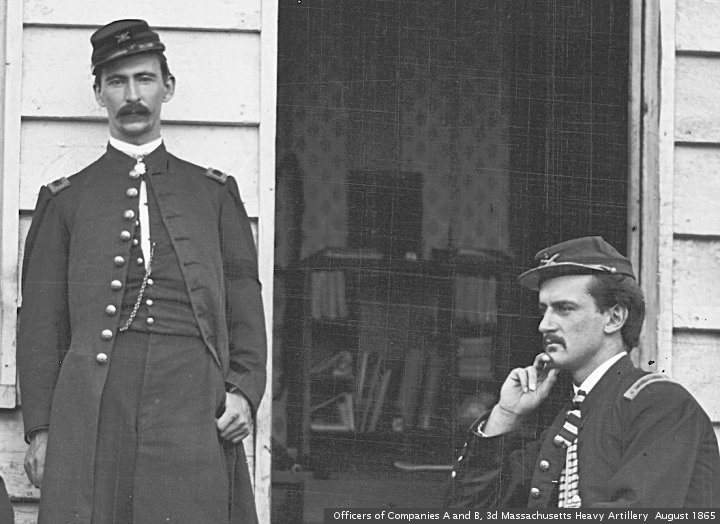
Veterans day was originally Armistice Day. On November 11, 1918, at 11 am, Paris time (the eleventh hour of the eleventh day of the eleventh month) a cease fire went into effect for “The great war”. Officials of the major armies agreed to the ceasefire at 5 am (European time). There were an estimated 11,000 casualties in the last six hours of the war.
At 11:59 am, U.S. army private Henry Gunther became the last soldier to die in World War I. “According to the Globe and Mail this is the story of the last soldier killed in WW1: On Nov.11, 1918, U.S. army private Henry Gunther stood up during a lull in the machine gun fire and charged the enemy. “The Germans stared in disbelief,” says the Daily Express. “They had been told that morning that the fighting was about to stop; in a few minutes they would stop firing and go home. So why was this American charging at them with his bayonet drawn? They shouted at him to stop and frantically tried to wave him back but… he hadn’t heard anything of the ceasefire.” A German gunner released a five-round burst and the soldier lay dead, at 10:59 a.m. In his recently published Eleventh Month, Eleventh Day, Eleventh Hour, U.S. Military Historian Joseph Persico notes that Private Gunther had previously been a sergeant but was demoted after an Army censor read his letter to a friend back home, urging him to steer clear of the war at all costs. Gunther, who was in no-man’s land when the ceasefire news arrived, had been trying to prove himself worthy of his original rank.”
This is a repost. Pictures are from The Library of Congress.
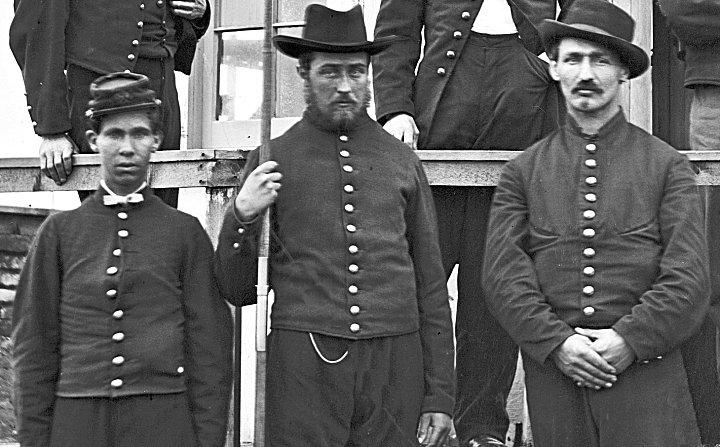

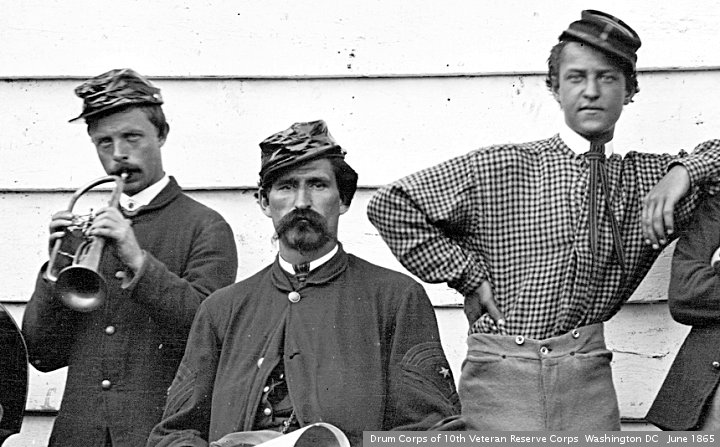
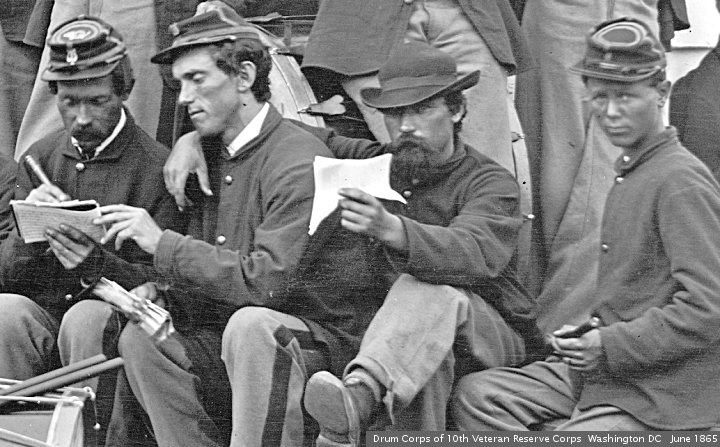
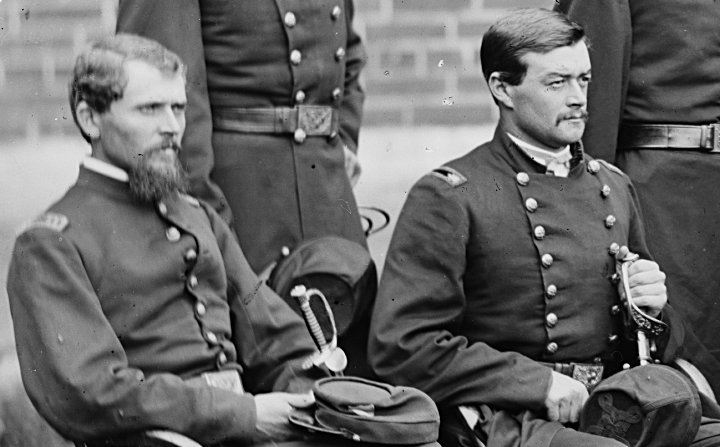
Veteran’s Day is a bad day for a cynic. I appreciate living in The United States. Even with all of her flaws, I have a good life here. The role that Veterans have played should be honored. On the other hand, those who profit from war often exploit Veterans, for political mojo. Many of these people did not serve. Those who profit from war, without serving, deserve our scorn.
Veterans are often not treated well after their service. It is estimated that a quarter of the homeless are veterans. The services offered to wounded veterans are shamefully lacking.
Hugh Pharr Quin CSA was my great grandfather. He served with the Georgia State Troops, in the War Between the States. I prefer the USA to the CSA, or whatever would have followed a Confederate victory. The Union army had to prevail, over the various Confederate Armies, for this to happen. Do I dishonor my great grandfather by saying, we are better off that the other side won?
Veterans Day was originally Armistice Day. This was the day, 101 years ago, when the War to End All Wars ended. World War I was a ghastly bloodbath, in which millions died. It affected many of the problems that plague us today. I would be willing to bet that not one person, in ten thousand, knows what World War I was about. And yet, the men who fought in that conflict (I don’t think they had women soldiers then) deserve the same gratitude as those who fought in any other conflict.
The soldier…many of whom are drafted…doesn’t get to choose which war to fight in. The sacrifice of the World War II soldier was just as great as the Vietnam fighter, but the appreciation given was much greater. I grew up during Vietnam, and saw the national mood go from patriotic fight, to dismayed resistance. By the time I was old enough to get drafted, the Paris accords had been signed. For better or worse, there went my chance.
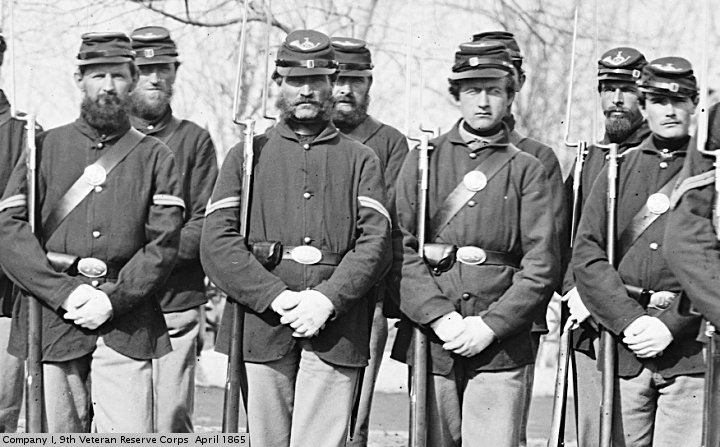


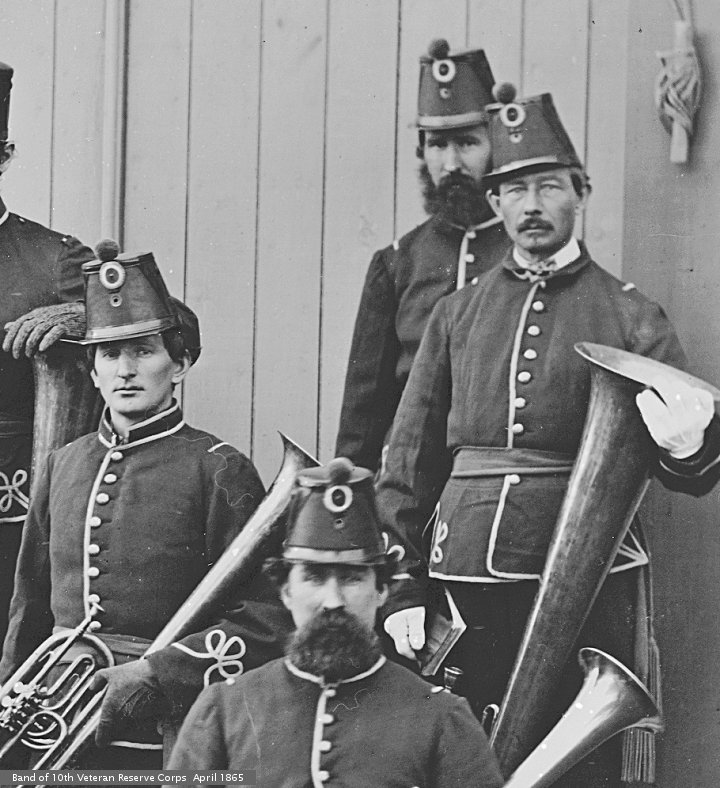

Happy Birthday Joni Mitchell
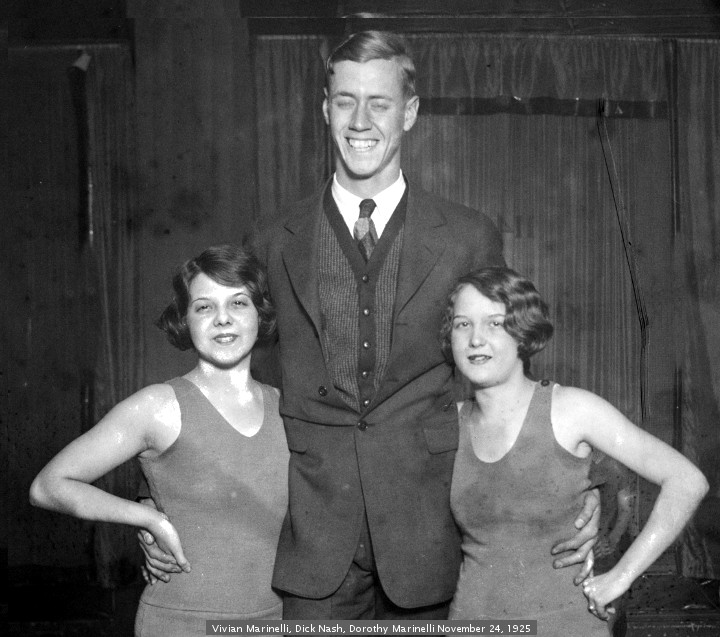


Yesterday was Joni Mitchell’s 77th birthday. Roberta Joan Anderson was born November 7, 1943, in Fort Macleod, Alberta. For this birthday tribute we will revisit four previous posts. one two three four Pictures are from The Library of Congress. … A facebook friend went on a Joni Mitchell kick. First it was a link to an interview. Then it was a quote from The Last Time I Saw Richard. A lady said Blue was her favorite album all all time, and a man enthusiastically agreed.
Given the apples and oranges quality of her catalog, it would be tough to pick one album as a favorite. PG then realized that fbf was going to be thirty soon. PG is sixty. These are two different perspectives on the craft of Joni Mitchell. One has driven through the storm, not knowing what was next. The other is presented with an almost complete body of recorded work.
PG has known about Joni since high school, and been a devoted fan since 1976. Joni’s most popular album, Court And Spark, came out in 1974, eleven years before fbf was born. Who would be the equivalent female musical force from 1943, when PG was minus eleven? The answer is nobody. (Coincidentally Roberta Joan Anderson was born on November 7, 1943.)
 After the comment about Blue, PG listened to For The Roses. Joni’s craft is like a cluster bomb… there are lines that you never fully felt, bomblets waiting to explode in your gut. Let The Wind Carry Me has one of those hidden threats. Mama thinks she spoilt me, Papa knows somehow he set me free, Mama thinks she spoilt me rotten, She blames herself, But papa he blesses me.
The first thing PG heard by Joni was Big Yellow Taxi. It was on The Big Ball, a 1970 mail order sampler from Warner Brothers. This was when Joni shacked up with Graham Nash. The next year saw Blue, followed by For The Roses, and Court And Spark. PG always thought Joni was someone he should like, but somehow didn’t. It wasn’t until 1976 that PG broke through the barrier, and became a Joni Mitchell fan. Seeing her in concert did not hurt.
On February 3, 1976, PG took a study break. (He scored 100 on the test the next day) Joni Mitchell was playing at the UGA coliseum a few blocks away, and the door was not watched after the show started. PG found a place to stand, on the first level of the stands. The LA express was her band that night, and created a tight, jazzy sound, even in the UGA coliseum. Tom Scott pointed at Joni, said she was crazy, and drew circles around his left ear. The one line PG remembers is “chicken scratching my way to immortality” from Hejira.
The Hissing of Summer Lawns might not be her best album, but it is certainly her bravest. Court And Spark was a commercial success. Instead of producing a bestselling followup, Joni took a ninety degree turn. Summer Lawns, for all its eccentric sparkle, confused the record buying public. The gravy train took off in another direction.
In those days, 96rock played a new album at midnight, which people were known to tape. On the night of the Lynyrd Skynyrd plane crash, the album was Hejira. This was followed by Mingus, another curve ball. Finally, Don Juan’s Reckless Daughter appeared, and did not make a good impression.
The eighties, nineties, and aughts appeared. PG, and Joni, lived their lives. 1996 saw a frightening interview in Details magazine. It was startling to see that for all her granola glory, Joni Mitchell might not be a very nice person. In a pot and kettle moment, David Crosby said “Joni’s about as humble as Mussolini.” Music is a tough way to make easy money.
More recently, there was a long interview on Canadian television. She is not mellowing with age. The cigarettes have not killed her, even if her voice is not what it once was. The recent albums that PG heard are strong. There seem to be more on the way. Maybe the facebook friend will have have the “what is she going to do next” experience after all.



A few weeks ago, PG was at the library. He had a story to take home, before going over to the biography section. There he found Reckless Daughter: A Portrait of Joni Mitchell. At least with fiction, you know you are dealing with a made up story. With biography, you have to use judgment.
It is a familiar story. Joni was born in the frozen north, was a rebellious girl, and got pregnant. She gave up the daughter for adoption, only to be reunited many years later. Joan Anderson gets married to, and divorces, Chuck Mitchell. Joni sings, writes, tunes her guitar funny, becomes a star, gets too weird to be popular, makes and loses money, smokes millions of cigarettes, and becomes an angry old lady. There is a bit more to the story than that. Reckless Daughter fills in a few of the blank spots.
Millions of cigarettes might be an exaggeration. Joni started smoking when she was nine. When she was a star, she was almost as well known for her constant puffing as her pretty songs. When Joni was in a Reagan era slump, she was going through four packs a day. Just for the sake of statistics, lets call it two packs, or forty fags, a day. Multiply forty by 365 and you get 14,600. If she started at 9, and had her aneurysm at 72, that gives you 63 years of nicotine abuse. If you assume that there were forty fags a day for 63 years, that gives you 919,800 smokes. IOW, while seven figures is not out of reach, it is rather unlikely that Joni smoked more than 2,000,000 cancer sticks.
The author of Reckless Daughter, David Yaffe, is a problem. He talks about the mood of America in 1969, four years before he was born. Mr. Yaffe goes to great lengths to show us that he knows about making music. Some readers will be impressed. There are mini-essays on Joni songs from her golden years, the time between “Ladies of the Canyon” and “Hejira.” And gossip, gossip, and more gossip. Joni is well known for her celebrity lovers.
We should make the point that PG enjoyed Reckless Daughter. The inside stories are fun, and pages turn over without too much head scratching. Maybe this is a statement about the career of Joni Mitchell. You enjoy the music for many years, and then complain about the details. Reckless Daughter follows the trajectory of other celebrity biographies. The star is born, takes up a craft, gets a break, becomes successful, goes over the mountaintop into a long decline. With Joni, nothing after “Mingus” was well received. The chanteuse was broker, and angrier, by the minute.
On page 13, Joni hears Rhapsody on a Theme of Paganini by Sergei Rachmaninoff. This is the piece that makes her want to be a musician. One page 129, we learn the story of A&M studios in Hollywood. At one time, The Carpenters were in studio A, while Carole King was recording “Tapestry” in studio B. Joni was recording “Blue” in studio C, which had a magic piano. One time, Carole King learned of a break in the studio C booking, and ran in. Three hours later, “I feel the earth move” was recorded.
A few years later, Joni was on the Rolling Thunder tour with Bob Dylan. One of the concepts was support for Rubin “Hurricane” Carter, whose story can be found elsewhere. Joni became disillusioned with Mr. Carter. When Joan Baez asked Joni to speak at a benefit concert, Joni said she would say that Mr. Carter was a jive ass N-person, who never would have been champion of the world. Joni later got in SJW trouble for posing in blackface, for the cover to “Don Juan’s Reckless Daughter.”
On page 251, we learn that Bob Dylan does not dance. Other items include “Free man in Paris” being written about David Geffen, and Jackson Browne writing “Fountain of Sorrow” about Joni. Mr. Brown is a not-well-thought-of ex of Joni. As for Mr. Geffen…. Joni stayed at his house for a while, at a time when Mr. Geffen was in, and out, of the closet. Did they make sweet music together?
So this book report comes to an end. Joni is recovering from a brain aneurysm, and will probably not produce anything else. The book is going back to the library, and PG will move on.
Joni Mitchell has product to promote. She gave an interview to New York magazine, where she smoked a few cigarettes and expressed a few opinions. There were enough attention getting comments to make the news.
“When I see black men sitting, I have a tendency to go — like I nod like I’m a brother. I really feel an affinity because I have experienced being a black guy on several occasions.” She proceeds to tell a story about dressing like a down and out black man as a way of dealing with an obnoxious photographer. “I just stood there till they noticed me. I walked really showily, going, Heh heh heh. It was a great revenge. That was all to get his ass. To freak him out. I had to keep him on the defensive.”
Gay-mafia-made-man David Geffen was a target. “I ask her about a painting, visible in a vestibule, on the way to her laundry room, of a curly-haired man with a banana lodged vertically in his mouth; turns out it’s Geffen, and she painted it. “Before he came out. He’s never seen it,” she says, before explaining: “He was using me as a beard. We were living together, and he’d go cruising at night. He was very ambitious to be big and powerful, and he didn’t think he would be [if he was openly gay].” By 1994, the two had fallen out over her insistence that he didn’t pay her enough in royalties.”
The product is a four cd boxed set, Love Has Many Faces: A Quartet, A Ballet, Waiting To Be Danced. There was a single one star comment about the joniproduct. Al Norman Seems like a collection of Joni’s forgettable tunes February 3, 2015 ~ “My wife loves Joni Mitchell, and never listens to this set. Seems like a collection of Joni’s forgettable tunes.” This comment was sponsored by Head and Shoulders. “100% flake free hair & A GREAT SCENT”
You just can’t get away from capitalism. Ms. Mitchell heard “… on the radio, a record executive “saying quite confidently, ‘We’re no longer looking for talent. We’re looking for a look and a willingness to cooperate.” As interviewer Carl Swanson notes, “For now, she’s hoping that people buy her boxed set, with her self-portrait on the cover. To that end, she gives me a Joni Mitchell tote bag with one of her paintings on it to carry my things home in. Get the word out.”


Joni Mitchell gave am interview recently to a Canadian Broadcaster. She is famously Canadian. The chat was in her California living room, which is littered with her paintings. Many of the paintings are things like Saskatchewan at forty below. Mrs. Mitchell alternates between painting and music, which tend to balance her cigarette fueled mind.
The CBC interview is paired with a more formal chat in Toronto. She could not smoke during the Toronto interview. The Toronto interviewer is just a bit smarter than Jian Ghomeshi, who endured the second hand smoke in California. Mr. Ghomeshi said things like “The song “Woodstock” defined a generation.” Mrs. Mitchell was in a New York City hotel room that famous weekend.(Spell check suggestion for Jian Ghomeshi: Joan Shoeshine)
There are some juicy quotes. Art is short for artificial. When listening to Joni songs, you should look at yourself, and not at her. Free love was just a gimmick for the men to get laid. False modesty is pointless. Sylvia Plath was a liar, or maybe it was Anne Sexton. (James Dickey said that Sylvia Plath was the Judy Garland of American letters.)
A fearsome foursome gets in the game. Someone screamed, on a live album. “Joni, you have more flash than Mick Jagger, Richard Nixon, or Gomer Pyle combined!.” Years later, the fan introduced himself to Mrs. Mitchell.
The conversation mentioned Bob Dylan. He is from Northern Minnesota, and not quite Canadian. Apparently, Mrs. Mitchell kicked up a fuss with some comments in 2010. ” Bob is not authentic at all. He’s a plagiarist, and his name and voice are fake. Everything about Bob is a deception. We are like night and day, he and I. … Grace [Slick] and Janis Joplin were [sleeping with] their whole bands and falling down drunk, and nobody came after them!”
Did Bob Dylan and Joni Mitchell ever tune up together? Joan Baez, a similarly named contemporary, is well known for dating Mr. Zimmerman. Ms. Baez did sing at Woodstock.
Mrs. Mitchell doesn’t exactly take back her comments about Bob Dylan. ““I like a lot of Bob’s songs, though musically he’s not very gifted. He’s borrowed his voice from old hillbillies. He’s got a lot of borrowed things. He’s not a great guitar player. He’s invented a character to deliver his songs. Sometimes I wish that I could have that character — because you can do things with that character. It’s a mask of sorts.”
In a kill the messenger moment, Mrs. Mitchell lashed out at the interviewer from the 2010 piece. It is odd, since he didn’t ask any trick questions. Black and white transcripts are tough to deny. “The interviewer was an asshole.” (The body part is bleeped.) “I hate doing interviews with stupid people, and this guy’s a moron” “His IQ is somewhere between his shoe size and (unintelligible)”.
The troublesome 2010 interview was conducted with John Kelly, a Joni Mitchell tribute artist. “JK: Drag does have a power, though — that netherworld of a thing you can’t quite know, which makes people nervous. JM: Drag wasn’t always counterculture. In his memoirs, Nixon talked about the Harvard and Yale men in power who would put on these plays where they dress like women, and Milton Berle did a kind of “hairy drag.” Becoming a gay thing made drag go underground.” Did Mick Jagger and Gomer Pyle ever do drag with Richard Nixon?
Andy Warhol And Frank Zappa



Andy Warhol Hosts Frank Zappa on His Cable TV Show, and Later Recalls, “I Hated Him More Than Ever” After the Show” Andy had a public access cable tv show in New York. One of his guests was Frank Zappa. FZ talked a lot, while Andy was silently uncomfortable. A friend of Andy’s, Richard Berlin, did the interview. Mr. Berlin is possibly the brother of Warhol film actress Brigid Berlin.
The Andy Warhol Diaries has a few comments about the show. “… I hated Zappa even more than when it started. I remember when he was so mean to us when the Mothers of Invention played with the Velvet Underground—I think both at the trip, in L.A., and at the Fillmore in San Francisco. I hated him then and I still don’t like him.”
Jimmy Carl Black (The “Indian of the group” for the Mothers of Invention): “I don’t remember Zappa actually putting them down on stage, but he might have. He really disliked the band. For what reasons I really don’t know, except that they were junkies and Frank just couldn’t tolerate any kind of drugs. I know that I didn’t feel that way and neither did the rest of the Mothers. I thought that they were very good, especially Nico (whom I secretly fell in love with or was it lust?). I especially thought that Moe was a very good drummer, because in those days I don’t recall there being any other female drummers on the scene. The thinking of the audiences was completely different than those from New York City. They were lukewarmly received.”
“In 1965 The Trip opened at 8572 Sunset Boulevard right next to the towering Playboy Club building. The Trip was located in the former popular 60s jazz club called the Crescendo. There was a comedy club upstairs called the Interlude. … The Velvet Underground and Nico are the musical guests at a series of shows at The Trip nightclub on Sunset Strip in 1966, but it is their manager, Andy Warhol, who is the headliner with his outrageous, multi-media Exploding Plastic Inevitable Show.” …
“On May 3, 1966 I was serving drinks in the celebrity section at The Trip. Jane Fonda is seated and she orders a drink and I asked her for ID. She removes her sunglasses and says, Do you know who I am? … Frank Zappa and The Mothers of Invention are the opening act the first night. At the end of the set they receive a standing ovation and cheers from the audience.”
“The Exploding Plastic Inevitable Show started after The Velvet Underground played a couple of songs. … When your eyes adjusted to the manipulation of the light what you saw was an interaction between Nico and two men, one who carried a whip, the other chains. It was an illusion, I think, of sadism, not at all acceptable to peace loving hippies. … The EPI featured a mixed media orgy that included film loops, music by the Velvets, sadomasochistic dancing and an epileptic lightshow.”
“Before the first set was over people stared to walk out of the club. Cher said “It depressed me. It will replace nothing – except maybe suicide.” People were standing up at their tables, booing as they waited their turn to leave the club. The line for the second show circled the block but the customers leaving started warning people not to go in. They said the show was vulgar and violent. The line got smaller and smaller until only a handful of people remained.”
“The Buffalo Springfield is playing the Whisky A Go Go as the opening act and is free to leave at 12:45 am. They walk to The Trip in time to see the feature act. … The musicians are equally offended by the appearance of sexual violence and what they assumed was part of the Velvet Underground’s act. It was later that we realized that Andy is the creator of the act of violence. … There is more then one story about why on the third day of the New Yorker’s show, L.A. Sheriff’s officers closed The Trip.”
“The show was cancelled before the advertised end date of its run. According to Callie Angell “On May 12, the club was temporarily closed when Virgina Greenhouse, wife of one of the operators, sued to collect a $21,000 over-due promissory note, and a representative of the sheriff’s office delivered a writ of attachment to the club. Warhol and the Velvet Underground filed a claim for their fee with the local musicians’ union, and were forced to wait in Los Angeles for payment to arrive.” According to Bockris, the club was “closed down by the Sheriff’s office on their third day. The troupe stay in LA, hoping the club would re-open, and the musicians’ union said if they stayed in town for the (union rules) duration of their engagement they would have to be paid the complete fee. They used the time to continue recording the first album.”
The Trip, engagement was supposed to be May 3 -18, 1966 , at least for EPI. The Mothers (not yet of Invention) headed north after the show. … “May 6-26, 1966 Frenchy’s House of BBQ, Hayward, CA (on the 21st they backed Neil Diamond who played a one night stand) … May 27-29, 1966 Fillmore Auditorium , San Francisco, CA (The Exploding Plastic Inevitable, Supporting Velvet Underground & Nico) … June 3-4, 1966 Fillmore Auditorium, San Francisco, CA (supporting Quicksilver Messenger Service & The Grateful Dead) … June 24-25, 1966 Fillmore Auditorium, San Francisco, CA (supporting Lenny Bruce).” Lenny Bruce died August 3, 1966.
“The Exploding Plastic Inevitable arrived in San Francisco to play for two nights at BILL GRAHAM’s Fillmore Ball Room with the MOTHERS OF INVENTION and the early JEFFERSON AIRPLANE. The Warhol crowd hated the hippie culture of San Francisco. Bill Graham pulled the plug on the Velvets the second night when the band left the stage after leaning their instruments against the amplifiers creating a “barrage of sonic feedback”.
“John Cale: “In San Francisco, we played the Fillmore and no one liked us much. We put the guitars against the amps, turned up, played percussion and then split. Bill Graham came into the dressing room and said, “You owe me 20 more minutes.” I’d dropped a cymbal on Lou’s head and he was bleeding. “Is he hurt?” Graham said. “We’re not insured.””
“After the second night in San Francisco Gerard Malanga was arrested in an all night cafeteria in North Beach for carrying an offensive weapon (his whip) and spent the night in jail. … While In San Francisco, Lou Reed shot up some bad speed causing his joints to seize up and he was incorrectly diagnosed as having a terminal case of lupus. Upon their return to New York, Lou Reed checked into Beth Israel hospital with a serious case of hepatitis and had a six week course of treatment. Nico left for Ibiza while the rest of the Velvets started rehearsing for an upcoming June booking in Chicago – a one week stint at Poor Richard’s. ANGUS MACLISE returned as drummer and MAUREEN TUCKER switched to playing bass.”
The VU and The Mothers of Invention both recorded on the MGM/Verve label. According to some, this caused problems. “The band believed that Zappa used his clout to hold back their release in favor of his own album with the Mothers of Invention, Freak Out. “The problem [was] Frank Zappa and his manager, Herb Cohen,” said (Sterling) Morrison. “They sabotaged us in a number of ways, because they wanted to be the first with a freak release. And we were totally naive. We didn’t have a manager who would go to the record company every day and just drag the whole thing through production.” (John) Cale claimed that the band’s wealthy patron affected the label’s judgment. “Verve’s promotional department [took] the attitude, ‘Zero bucks for VU, because they’ve got Andy Warhol; let’s give all the bucks to Zappa.’”
“On October 23, 1967, in New York, singer Nico sang with The Velvet Underground. (This list of VU performances does not mention a show on that date) … Nico’s delivery of her material was very flat, deadpan, and expressionless, and she played as though all of her songs were dirges. She seemed as though she was trying to resurrect the ennui and decadence of Weimar, pre-Hitler Germany. Her icy, Nordic image also added to the detachment of her delivery. … In between sets, Frank Zappa got up from his seat and walked up on the stage and sat behind the keyboard of Nico’s B-3 organ. He proceeded to place his hands indiscriminately on the keyboard in a total, atonal fashion and screamed at the top of his lungs, doing a caricature of Nico’s set, the one he had just seen. The words to his impromptu song were the names of vegetables like broccolli, cabbage, asparagus… This “song” kept going for about a minute or so and then suddenly stopped. He walked off the stage and the show moved on. It was one of the greatest pieces of rock ‘n roll theater that I have ever seen.”
The Library of Congress furnished the pictures for this feature.




Did Socrates Read And Write?


This story starts with a facebook meme. A fbf posted a picture of a thoughtful statue. The text read ‘When the debate is lost, slander becomes the tool of the loser.’ -Socrates. PG thought that Socrates never wrote anything that survived. All of what we attribute to Socrates was written by Plato. People reading this blog should know what happened next. This is a repost
Did Socrates Say Slander Is ‘The Tool of the Losers”? is one of several results. They all said the same thing … the quote is bogus. A tweet from Eric Trump is not evidence of authenticity.
PG began to think, which is never a good sign. Was Socrates able to read and write? was on the screen a few minutes later. The speculation is mixed. Some say that that Socrates was stone illiterate.
Thomas Musselman “Socrates served in the government on juries. Historians now know that legal proceedings were common over business matters of great sophistication and the the juries were well-educated concerning such matters. General literacy existed by the late 400s BC for the general pubic in primary school. Upper class males even in Socrates’ day would have been literate and there was an active book-seller market. To function in the world that Socrates functioned in required literacy.”
Google turned up a curious document. It is a passage written by Plato,“Phaedrus.” Pp. 551-552 in Compete Works. An Egyptian G-d is talking to a King, about an invention … writing.
“In fact, it (writing) will introduce forgetfulness into the soul of those who learn it: they will not practice using their memory because they will put their trust in writing, which is external and depends on signs that belong to others, instead of trying to remember from the inside, completely on their own. You have not discovered a potion for remembering, but for reminding; you provide your students with the appearance of wisdom, not with its reality. Your invention will enable them to hear many things without being properly taught, and they will imagine that they have come to know much while for the most part they will know nothing. And they will be difficult to get along with, since they will merely appear to be wise instead of really being so.”
SOCRATES: “But, my friend, the priests of the temple of Zeus at Dodona say that the first prophecies were the words of an oak. Everyone who lived at that time, not being as wise as you young ones are today, found it rewarding enough in their simplicity to listen to an oak or even a stone, so long as it was telling the truth, while it seems to make a difference to you, Phaedrus, who is speaking and where he comes from. Why, though, don’t you just consider whether what he says is right or wrong?”
Pictures today are from The Library of Congress. Part two is after the break.



A facebook friend posted a meme. It had an picture of Bertrand Russell, quoted as saying “If fifty million people say a foolish thing, it is still a foolish thing.” PG consulted with Mr. Google, and had his answer in seconds.
“From the wikiquotes page of Anatole France “Si 50 millions de personnes disent une bêtise, c’est quand même une bêtise. If fifty million people say a foolish thing, it is still a foolish thing. As quoted in Listening and Speaking : A Guide to Effective Oral Communication (1954) by Ralph G. Nichols and Thomas R. Lewis, p. 74. Misattributed to Bertrand Russell, by Laurence J. Peter, in The Peter Prescription : How To Make Things Go Right (1976), but he subsequently attributed to France in Peter’s Quotations: Ideas for Our Time (1977).”
“As I’ve said on many occasions, I don’t care who a quote is (mis)attributed to. I share a meme because its message resonates for me.” PG “If a million facebook users post a misattributed quote, it is still a misattributed quote … I have this vague sense that it does make a difference, but I can’t find the words to say why. Maybe google will have a snappy quote, preferably in English, that will give me a reason why correct attribution matters.”
“With google available, it is so, so easy to verify a quote before you post it. Often, the context of the quote puts a different shade on the meaning. Like the quote above. I have no idea why Mr. France said that, or what he meant. Sometimes, the words come from a foolish character in a story, and the author is making fun of them. Since I do not read French, I do not know how accurate the translation is.” (Google translate says “If 50 million people say stupidity, it’s still a stupidity.”)
“There is a famous quote from Ben Franklin about security and liberty. The quote is totally legitimate. It is taken from an Editorial Mr. Franklin was paid to write. The editorial supported the colonial government, in their efforts to levy a tax on farmers.”
The Ben Franklin post linked above has a useful link. “‘Contextomy’ refers to the selective excerpting of words from their original linguistic context in a way that distorts the source’s intended meaning, also known as ‘quoting out of context’. Contextomy is employed in contemporary mass media to promote products, defame public figures and misappropriate rhetoric. A contextomized quotation not only prompts audiences to form a false impression of the source’s intentions, but can contaminate subsequent interpretation of the quote when it is restored to its original context.”
Another chamblee54 post, about a dubious quote, refers to the Four Principles of Quotation. Principle 1 Whenever you see a quotation given with an author but no source assume that it is probably bogus. Principle 2 Whenever you see a quotation given with a full source assume that it is probably being misused, unless you find good evidence that the quoter has read it in the source. Principle 3 Whenever you make a quotation, give the exact source. Principle 4 Only quote from works that you have read.
This does not answer the question… is it WRONG to put the incorrect name at the bottom of a quote? Sharing a meme on facebook is not the same as putting a goofy quote in a term paper. While this is something that PG is loath to do, is it really that bad for someone else? Certainly there are concerns about context. Memes often do not use the quote as the author would have intended.
After a few frustrating search terms, PG decided to google “I don’t care who a quote is (mis)attributed to. I share a meme because its message resonates for me.” Google replied “Did you mean: I don’t care who a quote is (mis)attributed to. I share a meme because it’s message resonates for me” Apparently, Google does not know that the possesive form of its does not have an apostrophe. It’s is short for it is.
There were some lively results, though few answered the key question. “Furthermore, and this does bear mentioning, Andy Rooney did not write this. He died in 2011 so the words in the post, “let’s make 2019/2020 the year the silent majority is heard,” is ridiculous.” “Ever since the quote’s real author emerged, there’s been a lively discussion on Facebook about whether it even matters who said it – as long as someone said it.”
One result typifies the entire commodity wisdom catalog. Best Inspirational Quotes For Killer Social Media Posts There is a pop-up ad that will not go away. “149 Inspirational Quotes: Free PDF! Want to inspire your friends and followers with uplifting words? Grab my collection of 149 short quotes that are just the right length for social media posts, PLUS tips on how to make and post them! Sign up now and you’ll have the free PDF in a flash” Pictures today are from The Library of Congress.

Arlo Guthrie



This is a rerun post, with pictures from “The Special Collections and Archives, Georgia State University Library”. The original post was half about Arlo Guthrie, and half about Ralph Reed. Today, only the part about Arlo Guthrie will be shown. If you absolutely must read about Ralph Reed, you can follow the link above, or read Lisa Baron And Ralph Reed TMI.
The entertainment today is about Arlo Guthrie . Thanksgiving is intimately connected to Mr. Guthrie. Unlike the turkey, Mr. Guthrie has gone on to have a flourishing career. He probably will not come down with Huntington’s Disease, which killed his father Woody Guthrie.
The video that goes with this text was the first time PG saw Arlo Guthrie. This was broadcast January 21, 1970. PG was an unhip fifteen year old, who had not heard Alice’s Restaurant, seen the movie, or been to Woodstock. He did see the Johnny Cash show this night, or at least the part where Arlo Guthrie did the motorcycle song.
To quote the digital facility PG is borrowing from: ” Born Arlo Davy Guthrie on July 10, 1947, in New York, NY; son of Woody (a folksinger) and Marjorie Mazia (a dancer; maiden name, Greenblatt) Guthrie; married Jacklyn Hyde, October 9, 1969; children: Abraham, Cathyalicia, Annie Hays, Sarah Lee.” Abraham and Sarah Lee play in Arlo’s touring band.
The Alice’s Restaurant Masacree is a part of Americana now. There are two bits of knowledge, that are as true as anything told to a Persian king. When trying to dispose of some garbage, and finding the city dump closed, Arlo found some litter by the roadside, and made a value judgment…One big pile of garbage is better than two little piles.
The second is about the draft, and the business of choosing people to fight our wars. There is a regulation today that says that Gays and Lesbians are not supposed to be soldiers and sailors. In the tale of the thanksgiving dinner, it was litterbugs. (There was also a draft, and a different war. Lots of Americans were coming home in boxes.) The bottom line: Mr. Guthrie is confused about not being considered moral enough to kill people, because he was a litterbug.
A few years into his career, Arlo Guthrie had a hit record called “City of New Orleans”. It was about a train, and said “Good Morning America”. “City of New Orleans” was written by Steve Goodman, who is no longer with us. Mr. Goodman also wrote the perfect country and western song .
PG heard a story about Steve Goodman. “The songwriter is Steve Goodman. He gave a show at the Last Resort in Athens GA, that a friend of PG attended. Mr. Goodman tells a story about performing on a train, during a series of concerts supporting Hubert Humphrey. It seems like Mr. Goodman had to use the restroom on the train. Now, in those days, the trains did not use holding tanks, but just ejected the matter by the tracks as they rode by. Mr. Goodman was told, do not flush the commode while the train is in the station. Mr. Goodman forgot the instructions. Mr. Humphrey said ”I am going to give the people of this country what they deserve”, Mr. Goodman flushed the commode, and sprayed the crowd. PG is not sure if he believes this, but it is a good story.” ( A biographer of Mr. Goodman said said that the candidate was Edmund Muskie. He also says that David Allen Coe had nothing to do with the last verse of the perfect country and western song.)
As previously noted, this is a repost from a few years ago. In that time, the policy against gay people serving in the military has been dismantled. The Ralph Reeds of the world are more upset about the concept of gay marriage, than by gay people killing Muslims. Vietnam is a peaceful country, and is enjoying economic good times. The draft is something old fogies remember. The current fashion is to support war by demanding a tax cut.
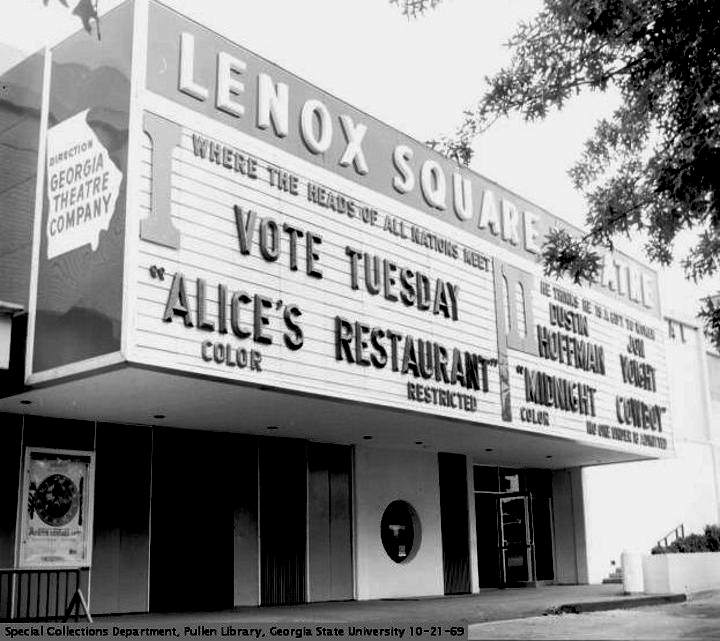
Arlo Guthrie continues to make music. USA Today had a feature recently, Arlo Guthrie celebrates 50 years at ‘Alice’s Restaurant’. Arlo Davy Guthrie has a twitter account, @folkslinger, and a full head of white hair. His wife of 43 years, Jackie Guthrie, died Oct. 14, 2012. The Lenox Square theater was torn down to make way for a food court many years ago.


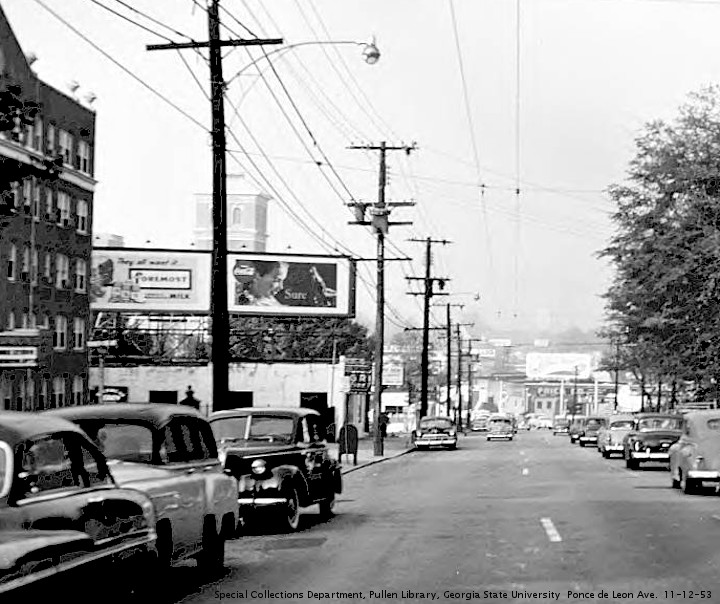



Oscar And Milo

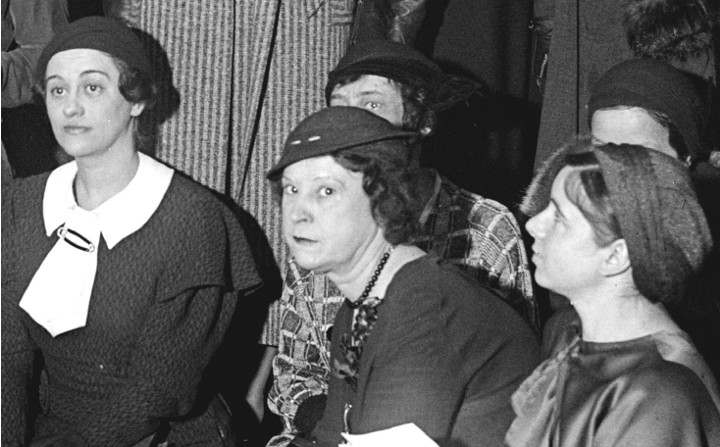


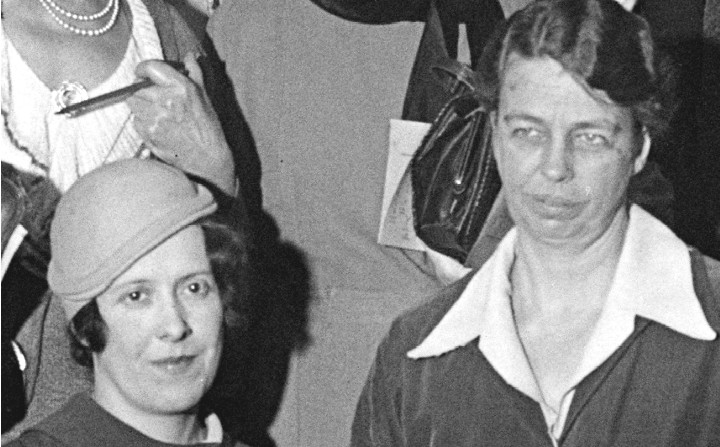

Oscar Wilde was being cross examined by Edward Carson, the attorney for the Marquess of Queensberry. Mr. Wilde had filed a libel suit, because the Marquess said Mr. Wilde was a somodite. The Marquess was the father of Lord Alfred Douglas, the boyfriend of Mr. Wilde. The cross examination saw many witty comments by Mr. Wilde. It was going well, until it wasn’t.
C– Do you know Walter Grainger? W–Yes. C– How old is he? W– He was about sixteen when I knew him. He was a servant at a certain house in High Street, Oxford, where Lord Alfred Douglas had rooms. I have stayed there several times. Grainger waited at table. I never dined with him. If it is one’s duty to serve, it is one’s duty to serve; and if it is one’s pleasure to dine, it is one’s pleasure to dine. C– Did you ever kiss him? W– Oh, dear no. He was a peculiarly plain boy. He was, unfortunately, extremely ugly. I pitied him for it. C– Was that the reason why you did not kiss him? W– Oh, Mr. Carson, you are pertinently insolent.
Milo Yiannopoulos is no Oscar Wilde. There was no gasp in the courtroom when he made his comments about “Father Michael.” The interview went on youtube September 30, 2015, and has been waiting for its time. In an ironic touch, one of the ads preceding the three hour video starred Leslie Jones, or someone who looked like her.
Bill Maher said, before introducing Mr. Yiannopoulos, “Stop looking at the distractions and the clown show and look at what matters.” There was a panel discussion, with Milo and four other men. The distraction, and the clown show, made comments that seem ironic a few days later.
The discussion began with an audience question about a trans Berkley student. Mr. Maher said she, and Mr. Yiannopoulos said he, with the intention of misgendering the individual. “I make no apology from protecting women and children from men who are confused about their sexual identity.” Maybe Father Michael was confused. “I think that women, and girls, should be protected from having men who are confused about their sexual identities in their bathrooms.” Mr. Maher looked down at the desk, and said “that’s not unreasonable.” Less than a minute of the video had elapsed.
Larry Wilmore said “I think its sad, because the same arguments that we use against gay people, treating them like aliens who want to fuck anything that moves, and that we should avoid them at all costs.” Mr. Yiannopoulos tried to say something, and Mr. Wilmore asked to be allowed to finish his thought. …..”You can always find the extreme person that becomes the object of your attack, that you assign that to everybody.” Given the prevalence of people using paedophilia as an all purpose argument against gays, it seems like Mr. Yiannopoulos went sashaying into a trap. Just let the idiot speak long enough, and he will hang himself. Whether this will have any negative effect on the overall LGBT population is not known.
At 2:33, Mr. Yiannopoulos starts to talk fast, and amateur transcribers (cis-scriber?) might make mistakes. “Your saying that (unintelligible) the victim is some sort of discrimination… this is a psychiatric disorder.” Some might say that a 14 year old. fooling around with a priest, is a victim, and a psychiatric disorder. Mr. Yiannopoulos is an entertainer, and likes to make flippant comments.
In his libel suit, “Wilde did his best to turn the proceedings into a joke with flippant answers. Always the artist, he seemed to be reaching for creative, witty answers, even if they contradicted earlier ones.” One sees the same pattern of behavior in Milo Yiannopoulos.
At 5:39: Mr. Maher said to Mr. Yiannopoulos “This is the beginning of your career, people are just starting to hate you.” “I’ve got so many more years.” This was less than a week before a fox news headline, JUST IN: Milo Yiannopoulos Resigns From Breitbart News.
“You have the potential to morph. You remind me of a young, gay, alive Christopher Hitchens.” Or maybe just young and alive. As an obituary of Mr. Hitchens notes, ” He was almost expelled from school for homosexuality and later boasted that at Oxford he slept with two future (male) Tory cabinet ministers. … he eventually became a dedicated heterosexual because, he said, his looks deteriorated to the point where no man would have him.”
Malcolm Nance got into the act, with the comment “You’ll take Russian spies over Saudis. OK.” Our knowledge of the role of Russians played in the 2016 election is evolving. Much better known is the fact that of the 19 hijackers on 911, 15 were Saudi.
At 10:50, Mr. Nance, a former Intelligence officer, said “Wikileaks… is a laundromat for Russian Intelligence.” The troubles of Mr. Yiannopoulos were noted in a tweet from @JulianAssange “US ‘liberals’ today celebrate the censorship of right-wing UK provocateur Milo Yiannopoulos over teen sex quote.” Pictures today are from The Library of Congress. This is a repost.







Four Way Rules

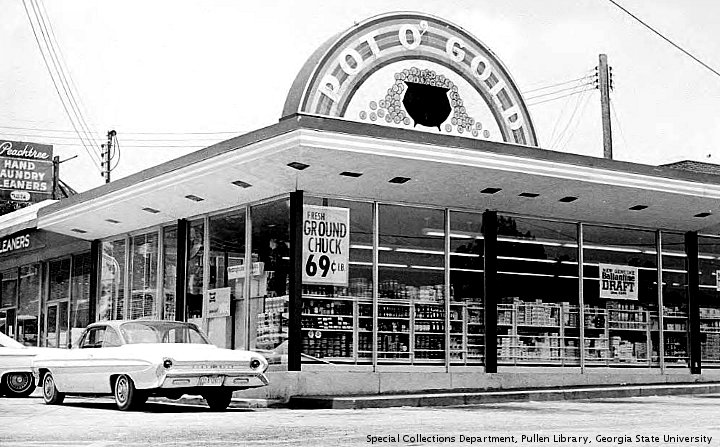
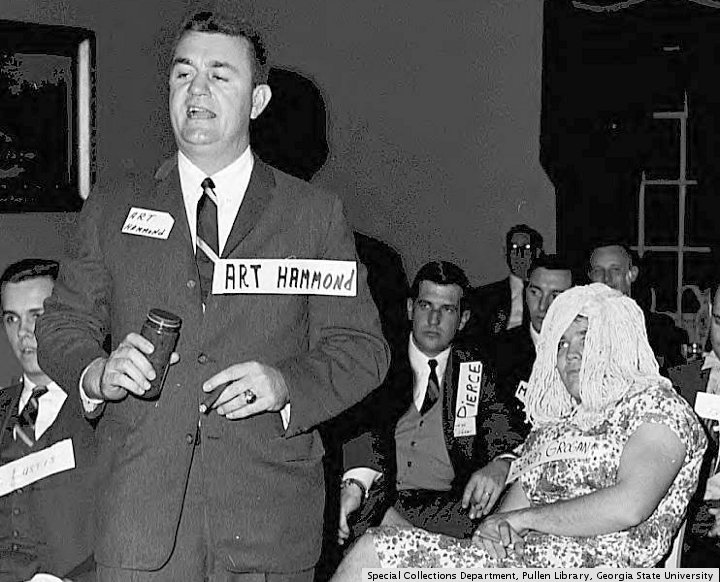

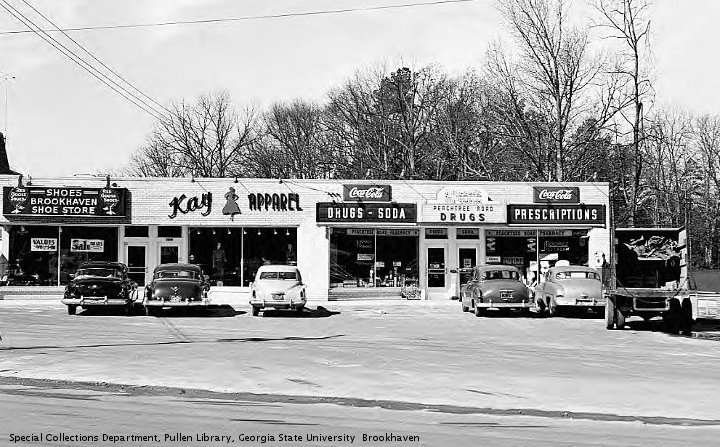
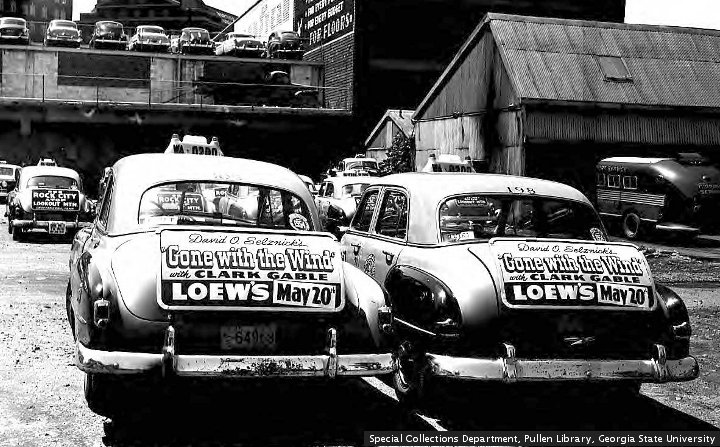
This is a double repost. Historic pictures today are from “The Special Collections and Archives, Georgia State University Library”. This was written like David Foster Wallace
When PG was a kid, his grandmother lived in a side apartment, in a house on Virginia Avenue. The owner of the house was Mrs. Stuckey. (PG never learned her “real” name, and assumed that checks were made out to Mrs.) There was a framed piece of paper in Mrs. Stuckey’s hall. The top said “The Four-Way Test of the things we think, say or do” , and featured the logo of the Rotary Club. The four rules were simple, on the surface. Is it the TRUTH? Is it FAIR to all Concerned? Will it build GOODWILL and BETTER FRIENDSHIPS? Will it be BENEFICIAL to all concerned?
The Four Way Test was written by Herbert J. Taylor. In 1932, Mr.Taylor took over the bankrupt Club Aluminum Company of Chicago. Trying to revive the company during the depression, Mr. Taylor wrote a code of ethics, that would be the basis for the company’s actions.
Many said that the four way test was not practical for the business world. The balancing of integrity and ambition can be daunting. It was said that “This emphasis on truth, fairness and consideration provide a moral diet so rich that it gives some people “ethical indigestion.”
PG maintains that fair is a baseball hit between first and third base. Sometimes, the umpire makes the wrong call. In the “real world”, the different points of view in a dispute make rendering a fair judgment a difficult task, if not an impossible one.
There is a story about the revival of Club Aluminum. ” One day, the sales manager announced a possible order for 50,000 utensils. Sales were low and the company was still struggling at the bankruptcy level. The senior managers certainly needed and wanted that sale, but there was a hitch. The sales manager learned that the potential customer intended to sell the products at cut-rate prices. “That wouldn’t be fair to our regular dealers who have been advertising and promoting our product consistently,” he said. In one of the toughest decisions the company made that year, the order was turned down. There was no question this transaction would have made a mockery out of The Four-Way Test the company professed to live by.”
How did the sales manager learn of the intentions of this buyer? Was he tipped off by one of the “regular customers” who feared competition? Was this “regular customer” lying? Many inspirational stories leave out crucial details.
As it turns out, Club Aluminum did sell enough product to emerge from bankruptcy. “By 1937, Club Aluminum’s indebtedness was paid off and during the next 15 years, the firm distributed more than $1 million in dividends to its stockholders. Its net worth climbed to more than $2 million.”
Club Aluminum cookware was cast, not spun. It is heavy, and is a prized collectors item today. As for the Club Aluminum company “Standard International Corporation bought it in 1968. Regalware made and marketed Club Aluminum for a while, but went out of business in the mid-1980s. The brand name was eventually obtained by the Mirro Company.”
This is a repost. Philosophy and rules for living is always a crowd pleaser. Whether or not you practice what you preach is beside the point.
There is a story above. A company, facing bankruptcy, turned down a huge order because of concerns about how the product would be resold. Today, this seems quaint. Today, the moral thing to do would be to take the order, keep your factory busy, and not worry how it was going to be resold. While some pretend that moral rules are unchanging, the truth is that they do change with the times.
This reminds PG of a story from his days as a blueprinter. With ammonia developed prints, every print is fed by hand, and you have the option to adjust the speed of the machine. Slower prints mean less background, which to some is a higher quality print. (This is not an issue with digital printing. Some change is indeed progress.)
The company PG worked for was affiliated with a small, family run company in a neighboring city. This company was run by an old fashioned lady, who insisted on adjusting every print to get the perfect background. This was different from the company PG worked for, which ran large jobs for the big city market. To his customers, quality meant getting an acceptable print, DELIVERED ON TIME. Who had the higher standards? Maybe that is a question for the customer to judge.



These thoughts are for you to use. They were articulated by a man named Don Miguel Ruiz. They are called the The Four Agreements .
PG does not claim to live up to these ideals. Number two is especially tough for him. The main thing is to try, and to always do your best. This is not about what you believe or think, it is about what you do. This is about you. If you fall short in some way, work on improving yourself, instead of looking at someone else. This is about you.
agreement 1–Be impeccable with your word – Speak with integrity. Say only what you mean. Avoid using the word to speak against yourself or to gossip about others. Use the power of your word in the direction of truth and love.
agreement 2–Don’t take anything personally – Nothing others do is because of you. What others say and do is a projection of their own reality, their own dream. When you are immune to the opinions and actions of others, you won’t be the victim of needless suffering.
agreement 3–Don’t make assumptions – Find the courage to ask questions and to express what you really want. Communicate with others as clearly as you can to avoid misunderstandings, sadness and drama. With just this one agreement, you can completely transform your life.
agreement 4–Always do your best – Your best is going to change from moment to moment; it will be different when you are healthy as opposed to sick. Under any circumstance, simply do your best, and you will avoid self-judgment, self-abuse and regret.

Why Did The 1956 Legislature Change The Flag?



What Stacey Abrams said about burning the Georgia flag in 1992 The New York Times decided to show a picture of a younger, slimmer Stacey Abrams burning the Georgia state flag. The year was 1992. The state flag had the Confederate battle flag embedded. People were asking the legislature to change that. Miss Abrams was a student activist. This is a repost.
The NYT article sparked a twitter dogpile, about the motives of the Georgia legislature in 1956. PG remembers 1993, when the initial proposal to change the flag was made. Changing The Flag is an account of those years. If you have a minute, you should read that post before going any further. The people who wanted to change the flag introduced an argument. They said that the legislature changed the flag, in 1956, as a protest against integration. PG never believed that. One afternoon in 1994, PG found a newspaper article that supported his point of view. After that, PG did not think much about the issue. The flag was changed in 2000 and 2003.
The issue has a few shades of gray. The reason given in 1956 was honoring the Confederacy. In 1993, the 1956 legislature was said to be protesting integration. The emotions of honoring the Confederacy, and denouncing integration, are not entirely separate. Many of the same people, who are proud of the Confederacy, are white supremacists. To an outsider, they can seem like the same thing. PG can understand how someone not familiar with Georgia could mistake the two.
The debate, over the motive of the 1956 legislature, was never necessary. The flag, featuring the Confederate battle flag, was seen as a symbol of racism. Many people were offended by this flag. Why not just say we should change the flag for this reason, and not worry what the legislature was thinking? However, this was not good enough. People needed some more ammunition for their fight. The notion that the flag was changed as a protest against desegregation was born. PG never heard, before 1993, that the flag was changed as a protest against integration. People believed this notion without any evidence, just because somebody said so. 1994 was 38 years after 1956. Very few people in 1994 were active in 1956. The argument in favor of the changed-to-protest-integration notion had two parts: (1) Because I said so, (2) if you disagree you are a racist idiot.
@KevinMKruse No, she burned the old *Georgia* flag, which had been designed specifically by white supremacists as a show of defiance to desegregation in 1956. Let’s dig in. @chamblee54 The Flag was not changed as a protest against desegregation. Changing The Flag @KevinMKruse I literally wrote a book on this, but congratulations on finding a blog post. @chamblee54 I wrote the blog post. If you read the post, you will see I did research. Did anyone say at the time that the new flag was a protest? Do you have a link to this?
@jdtitan Luther, would you say you’re a racist idiot, or more of a stupid racist? @whoopityscoot Hahahahahahah. I just read your blog post. Sir, you are a moron. @ashleystollar That’s like saying the Civil War wasn’t fought over slavery. @Duranti “emotional pride for the traitors to America” @The_SquidProQuo You found one old newspaper article and felt compelled to argue the point huh? Stupid is a hell of a drug. @theDiff_Kenneth I read your blog post and I would like that 10 minutes of my life back. Your “evidence” was an announcement article that supported the flag change and omitted any overtly racist comments. Your writing style is close to unreadable and your investigative skills do not exist. @kingbuzz0 If you ever find yourself in the position of arguing of (insert subject) in the South had nothing to do with (insert stand in for outright racism), you have a bad argument. It’s all racism, always, every time.
@JoshCStephenso You found a single article? Maybe you would trust a paper written by the Deputy Director of the Georgia Senate Research Office – a chamber that is majority R? This tweet was helpful. The report was written in 2000, before the a new flag was driven through the legislature. If you have the time to read the complete report, it is worth your time. If not, a few quotes will be posted here, along with a few helpful comments.
The first Confederate flag looked a great deal like the Union flag. In early battles of the war, the two flags were often confused. “The commanding Confederate officer at the Battle of Bull Run, General P.T.G. Beauregard, determined that a single distinct battle flag was needed for the entire Confederate army. Confederate Congressman William Porcher Miles recommended a design incorporating St. Andrew’s Cross.”… “The St. Andrew’s Cross – the flag’s distinctive feature – had its origin in the flag of Scotland, which King James I of England combined with St. George’s Cross to form the Union Flag of Great Britain. It is believed that St. Andrew, the patron saint of Scotland since A.D. 750. and brother of the apostle Peter, was crucified by his persecutors upon a cross in the shape of an “X” in A.D. 60. White southerners, many of whom traced their ancestry to Scotland, very easily related to this Christian symbol.” “Other flags such as State regimental colors were used by the Confederacy on the battlefield, but the battle flag, although it was never officially recognized by the Confederate government, came to represent the Confederate army.”
At first, use of the battle flag was restricted to historic events. It wasn’t until the fifties that the flag began to be used by those who fought integration. In 1954, Brown vs. Board of Education was handed down by the Supreme Court, ordering the integration of schools. The Georgia legislature went into resistance mode, and spent a lot of time denouncing integration. The senate research office devotes page after page to these efforts. Finally, “In early 1955, John Sammons Bell, chairman of the State Democratic Party … suggested a new state flag for Georgia that would incorporate the Confederate Battle Flag. At the 1956 session of the General Assembly, state senators Jefferson Lee Davis and Willis Harden introduced Senate Bill 98 to change the state flag. Signed into law on February 13, 1956, the bill became effective the following July 1.”
“Little information exists as to why the flag was changed, there is no written record of what was said on the Senate and House floors or in committee and Georgia does not include a statement of legislative intent when a bill is introduced – SB 98 simply makes reference to the “Battle Flag of the Confederacy.” … “Many defenders of the flag, including former governor Ernest Vandiver, who served as the Lieutenant Governor in 1956, have attempted to refute the belief that the battle flag was added in defiance of the Supreme Court rulings. Vandiver, in a letter to the Atlanta Constitution, insisted that the discussion on the bill centered around the coming centennial of the Civil War and that the flag was meant to be a memorial to the bravery, fortitude and courage of the men who fought and died on the battlefield for the Confederacy.”
This is where it gets murky. It is apparent that the legislature was obsessed with integration. The circumstantial evidence, of the flag being changed as a protest of integration, is there. However, there is no smoking gun. There are no apparent statements, from 1956, saying that this change was made to protest integration. This detail seems to have sprung up in 1993, without having been widely mentioned in the 37 years since 1956. The newspaper article PG found does not mention a protest against integration, and does mention a desire to honor the Confederacy.
“The argument that the flag was changed in 1956 in preparation for the approaching Civil War centennial appears to be a retrospective or after-the-fact argument. In other words, no one in 1956, including the flag’s sponsors, claimed that the change was in anticipation of the coming anniversary. Those who subscribe to this argument have adopted it long after the flag had been changed.” This is contradicted by the newspaper article, and statements by “Governor Griffin’s floor leader, Representative Denmark Groover … “anything we in Georgia can do to preserve the memory of the Confederacy is a step forward.” As for the after-the-fact argument, you could say the same thing about the notion that the flag was changed as a protest against integration.
“There was also some opposition to the change from the state’s many newspapers. The North Georgia Tribune argued that: “….There is little wisdom in a state taking an official action which would incite its people to lose patriotism in the U.S.A. or cast a doubt on that part of the Pledge of Allegiance which says ‘one nation, unto God, indivisible…’ So far as we are concerned, the old flag is good enough. We dislike the spirit which hatched out the new flag, and we don’t believe Robert E. Lee…would like it either” “The Atlanta Constitution also thought that the flag change was unnecessary for the simple fact that “there has been no recorded dissatisfaction with the present flag.” The newspaper article PG found in 1994 was from the Constitution. Even though they were opposed to the change, they did not attribute this change to a desire to protest integration.
“When the flag change was first proposed, it received resistance from groups that one would think would have highly favored the change – various Confederate organizations including the United Daughters of the Confederacy (UDC). “They made the change strictly against the wishes of UDC chapters from all the states that form our organization,” said Ms. Forrest E. Kibler, legislative chairwoman of the Georgia UDC. … The Executive Board of the Georgia Division of UDC had passed a resolution on January 11, 1956 opposing the proposed changes to the flag, citing that the Confederate battle flag belonged to all the Confederate States – not merely to Georgia – and placing it on the Georgia flag would cause strife. … Also opposing the new flag was the John B. Gordon Camp of the Sons of Confederate Veterans. This group protested against all uses of the battle flag except in commemoration of the Confederacy, or by the official use of the Daughters of the Confederacy, the Sons of the Confederacy, and the Children of the Confederacy.” This opposition was touched on in the newspaper article. This is one of the more confusing aspects of this affair.
“While many questioned the political and philosophical motives of the flag change, there were others who considered the change to be an unnecessary expense that would burden taxpayers, since Georgia law required every public school, and all public institutions to fly the state flag. In voting “no,” Representative Mackay said that the present flag was “a symbol of sacred memory” and that “the change puts every flag owner in Georgia to unnecessary expense.” Alleviating the financial concerns of many, sponsors of the bill pointed out that those institutions required to fly the new flag will replace the old flag with the new one only as present flags wear out. Questions were also raised on whether anyone had a copyright on the flag design which would entitle them to royalties – a charge denied by John Sammons Bell and Representative Groover.”
John Sammons Bell is a name that keeps coming up. From 1954 to 1960, Mr. Bell was Chairman of the State’s Democratic Party. He was, by all accounts, an enthusiastic segregationist. One of the jaw dropping moments in the senate report was this: “Bell, a one-time supporter of Governor Ellis Arnall, once had the reputation of being a “liberal” on race issues.”
When the state senate report was issued, in 2000 (6 years after PG found the newspaper article, and dropped out of the argument,) Mr. Bell had a few comments. “He wanted to forever perpetuate the memory of the Confederate soldier who fought and died for his state and that the purpose of the change was “to honor our ancestors who fought and died and who have been so much maligned.” He has also argued that the flag was not redesigned in reaction to and in defiance of the 1954 Brown decision… “Absolutely nothing could be further from the truth … every bit of it is untrue. ”
“On March 9, 1993, (Denmark) Groover moved many Georgians when he stood in the House well to address his colleagues on the subject of the state flag. In an emotional speech, he acknowledged that the flag is offensive to some and conceded that, “I cannot say to you that I personally was in no way motivated by a desire to defy. I can say in all honesty that my willingness was in large part because … that flag symbolized a willingness of a people to sacrifice their all for their beliefs.” Mr. Groover offered a compromise, which included a smaller version of the battle flag. A flag similar to that was adopted in 2000, only to be changed again in 2003.
To sum up, the Georgia state flag was changed in 1956. The new flag contained the Confederate battle flag. Many people were offended by the 1956 flag. PG thought it was ugly. Many others saw it, with some justification, as a symbol of racism. For some reason, speculation about the motives of the 1956 legislature. 18 years after the passage of a new flag, people are still arguing over the motives of the 1956 legislature. Pictures for this gratuitous waste of bandwidth are from “The Special Collections and Archives, Georgia State University Library”. .




 Chamblee54
leave a comment