35 Broad Street
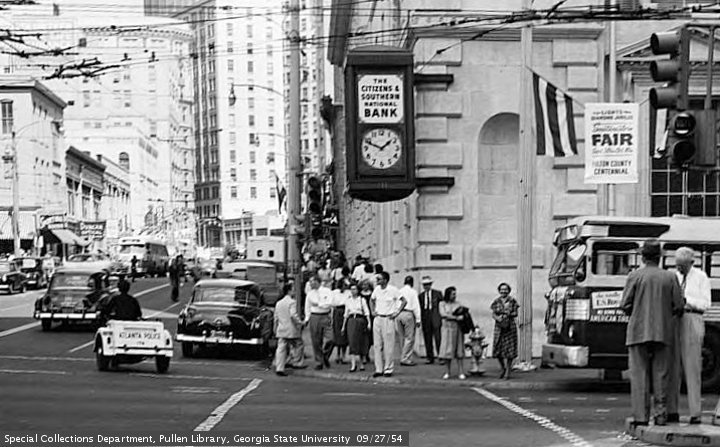
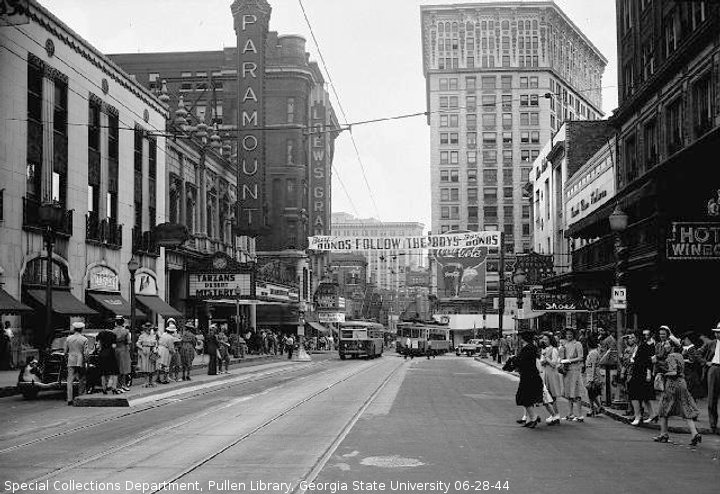
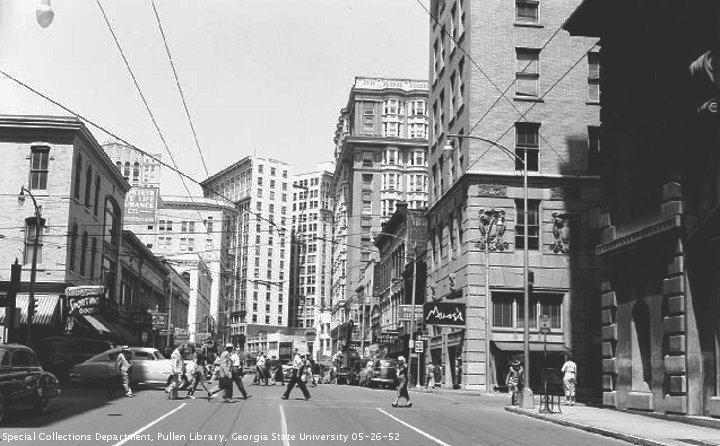
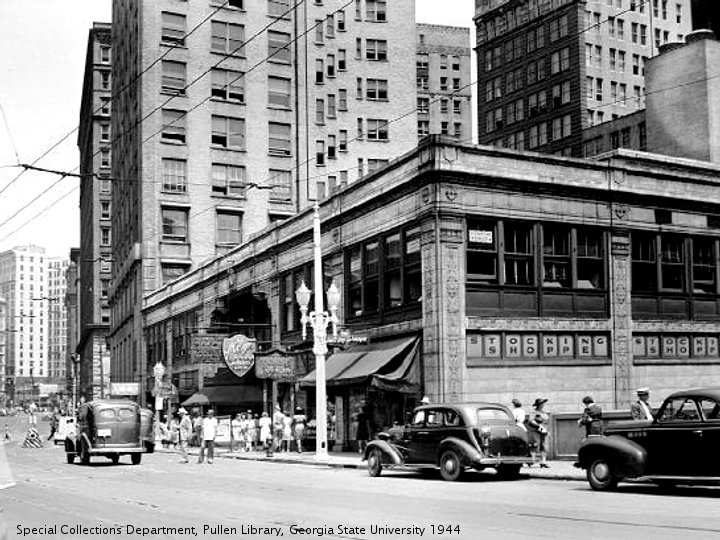
PG was having a delightfully slack afternoon, The one productive activity was editing pictures from “The Special Collections and Archives, Georgia State University Library”. In box seventy two of “corporate bodies”, in the Lane Brothers archive, there was a picture commissioned by King Road Marker Company. It displayed a brand new crosswalk, over Marietta Street at the intersection of Broad Street. The picture was taken at 1:51 p.m. September 27, 1954. This is a repost.
The time caught PG’s eye. 1:51 is one of the times used to display clocks and watches in advertising. Most ads use 10:09. This arrangement of the hour and minute hands makes a welcoming gesture. This allows the logo of the watch to be visible, and is thought to encourage the viewer to purchase the timepiece. The shadows on the buildings indicate that the picture was shot in early afternoon.
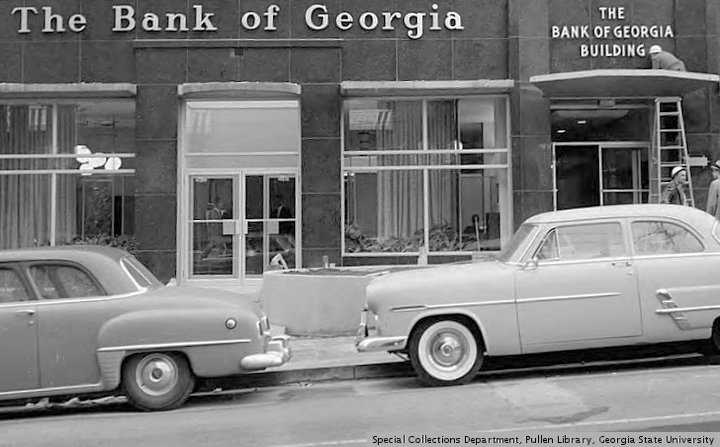
The clock with the magic time advertised the C&S national bank. The building behind the clock was the headquarters of that bank. In 1954, Citizens and Southern bank was a prime player in the Atlanta market. (PG’s dad said that C&S stood for choke’m and squeez’m.) At some point, C&S merged with NCNB to become Nationsbank, which was later absorbed by Bank Of America.
C&S kept it’s headquarters at 35 Broad Street for many years after competitors built trophy buildings. Their were constant rumors about where the C&S highrise was going to go. Finally, C&S Plaza was built at Peachtree and North Avenue, a mile north of five points. The building was to become the tallest building in America outside of New York and Chicago. During the construction of this building, C&S became part of Nationsbank.
The picture is featured in Atlanta Time Machine. The building is now owned by Georgia State University, with a BOA branch on the first floor. The banking hall is spectacular. It was designed by Philip Shutze, before the great depression. Here is more information.
Nations Bank Building (Citizens and Southern National Bank Building, Empire Building)
35 Broad Street, NW 1901: Bruce and Morgan, Architects, NR.
Remodeling of Lower Floors and Interiors 1929:
Hentz, Adler and Shutze, Architects; Philip Shutze, Designer
Fourteen stories high, the Nations Bank Building was the first steel-frame structure to be built in Atlanta. Its clear-cut silhouette, simple fenestration, and heavily decorated terra-cotta top bear the influence of the Chicago School. In 1929 the building became the headquarters of the Citizens and Southern National Bank, which asked Philip Shutze to redesign its three lower floors. Because the impression of load-bearing masonry was regarded as better suited for a banking establishment than large glass panes were, the original display windows were replaces by classical motifs apparently “carved out” of Indiana limestone.
Philip Shutze was inspired by Italian Mannerism, and especially by the city gates of Verona by Michele Sanmichelo (1484-1559) … Reached from Marietta and Walton streets through lofty arcaded entryways and a more intimate elevator lobby in the early Renaissance style on Broad Street, the banking hall is a long nave articulated by colossal Corinthian pilasters. While its walls and floors feature several kinds of Georgia, Tennessee, and European marbles in a warm gold-brown color scheme, the ceiling, from which hang gigantic chandeliers, is left bare. The Pantheon, which Shutze had measured during his internship at the American Academy in Rome, served as direct source for the pedimented niches, and for the floors with alternate square and circular patterns. Also, of Roman inspiration are the bronze desks and the eagle motif found throughout the design.


Two Hundred Yards Behind


In 1985, PG went to work for Shaky Blueprints. The real name was a Japanese word that nobody knew how to spell. Two of the previous hires were an athletic young lady, and a fat man. Until better nicknames arrive, we will call them AYL and FM for this story.
AYL was trying to get FM to go jogging with her after work. This was an ongoing conversation, with FM always turning her down. One afternoon, PG wore an old pair of jogging shoes to work, and said that he would go running with AYL.
Shaky was just off highway 400, in what is now part of Sandy Springs. There was a road leading away from it. The road went over the highway, and went in a wooded semi circle for a couple of miles. The plan was to go on this loop, and take sidewalks on Roswell Road back to Shaky.
At one time, PG went running every day. He was out of the habit by this time, and always a slow runner. When the work day was over, PG tied his glasses on with a rubber band, did a few stretches, and was ready to take on the course.
AYL and PG left the parking lot, and started up the road. PG trudged along with his head down. When he got to the bridge over the highway, PG looked up. AYL had taken off like greased lightning, and was already two hundred yards ahead. PG hollered for her to slow down, and finished the course.
Pictures for this repost are from Special Collections and Archives, Georgia State University Library.


Midtown

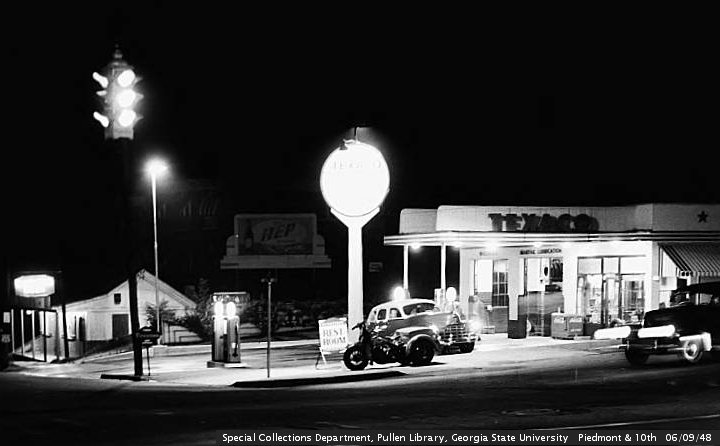


The neighborhood along Peachtree Road has always been a great place to be a freak. For a long time it didn’t have a name. It is north of downtown, between Piedmont Park and Georgia Tech. Sometime in the early eighties, people started to call it Midtown, and the name stuck.
In the time after the War Between the States, this area was a shantytown called “Tight Squeeze”. It evolved into a pleasant middle class area. In the sixties, hippies took over. The area was known as the strip, or tight squeeze. Many stories could be told.
After the flower children moved on, the area went into decline. Gays started to move in, with the battle cry “Give us our rights or we will remodel your house.” Developers, worshiping the triune G-d of location, location, location, began to smell money. The neighborhood became trendy, then expensive, then more expensive. The freaks with money remain. This is a repost. Pictures are from “The Special Collections and Archives, Georgia State University Library”.



Jane Fonda And J. Edgar Hoover

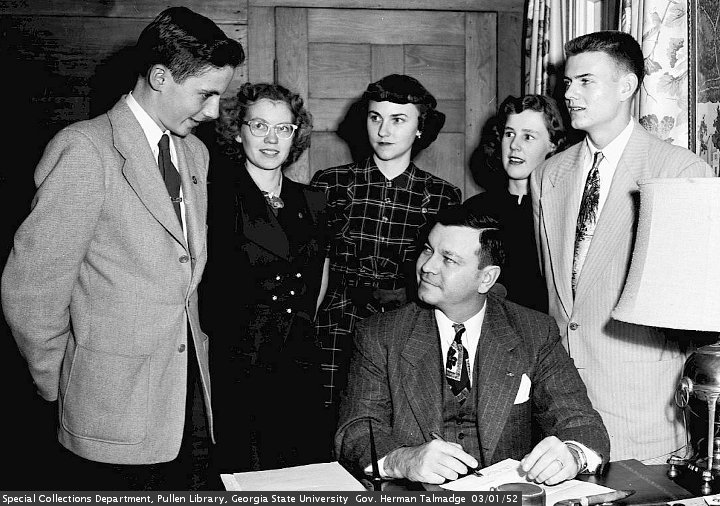
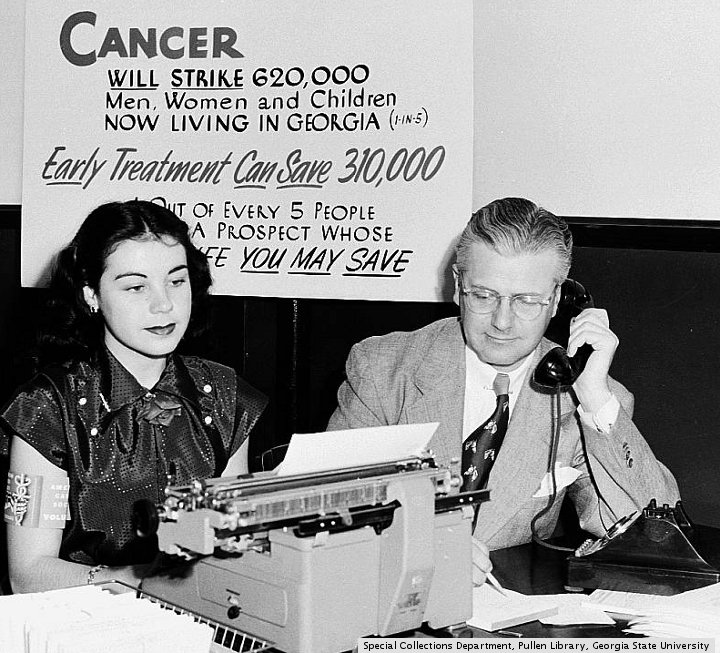

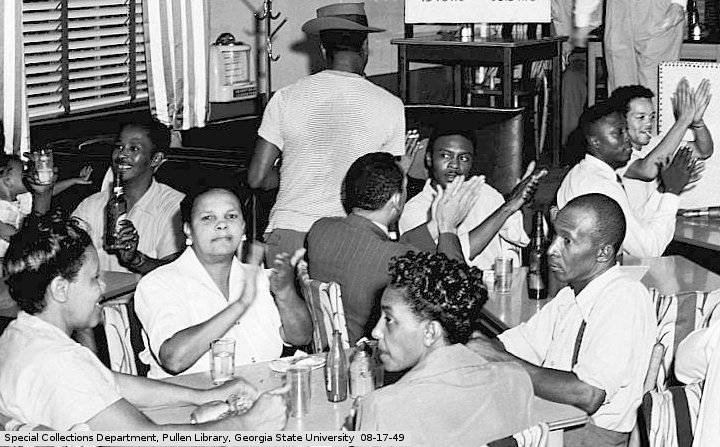

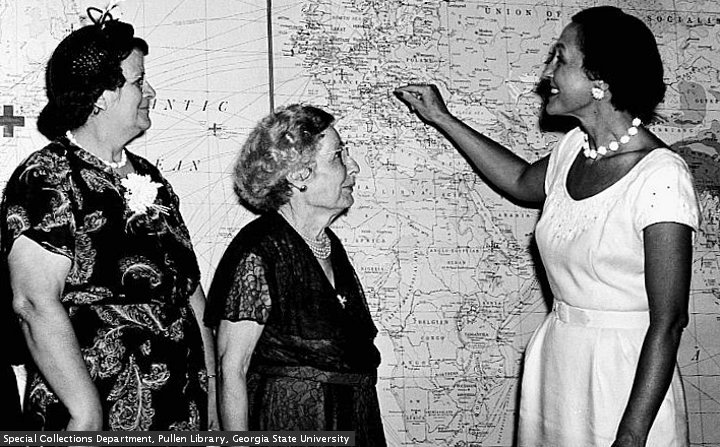
This repost is a work of speculation, and has no basis in proven fact.The thesis cannot be proved nor disproved. Pictures are from “The Special Collections and Archives, Georgia State University Library”.
Listening to talk radio while you drive is a dangerous activity. You might start to think, and look at the man behind the screen. Neal Boortz was on a rant today about Jane Fonda. It it the same story you have heard many times…she gave aid and comfort to the enemy, she is a traitor, American troops died because of her,she should have been executed.
Sometimes when you hear something too many times, you begin to have doubts about what you heard. A light bulb went off in PG’s head when he heard the Fonda Rant again.. .What if Jane Fonda was working for the US government when she went to Hanoi?
What was in it for the government? This trip gave our government a discredited leader of the antiwar movement to denounce. When the government was trashing Jane Fonda, they did not have to defend the disastrous policies of that war.
Miss Fonda has been an icon of right wing hatred ever since, as well as of military training. One story has Miss Fonda giving the North Vietnamese information about activities by American forces. How would she get this information?
The infamous trip to Hanoi took place in the Summer of 1972. American troops were being withdrawn, and anti war protests lost most of their passion. (It was also soon after the death of F.B.I. Director J. Edgar Hoover, and the Watergate burglary) The war in Vietnam was essentially over for America. We were no longer trying to win, but to negotiate a face saving treaty. President Nixon called it “Peace with Honor”. Miss Fonda’s actions had little impact on these negotiations.
Miss Fonda made some radio broadcasts from Hanoi. Is it possible that coded messages to our troops were included in these broadcasts? Is it also possible that she gave the North Vietnamese misinformation on purpose?
Why would a women known for her left wing activism do such a thing? Maybe, the FBI had some dirt on her, and blackmailed her.
In 1967, Kurt Vonnegut published a book titled “Mother Night”. It tells the story of Howard W. Campbell Jr. Mr. Campbell made propaganda broadcasts for Germany in World War II, which were secretly used to pass coded messages to the Allies. He was condemned as a traitor after the war, but never prosecuted. He did not win an Academy Award.
The role of the government in this affair could have taken another role. Perhaps Miss Fonda was sincere in her actions, but aided by the government. Miss Fonda was under surveillance in 1972. The government would have known about her plans to go to North Vietnam, and perhaps could have stopped her. But, because her going to Hanoi was to their advantage, the government allowed the trip to take place.
The above is speculation, and could be horribly wrong. The fact that Miss Fonda has expressed regrets over her trip neither proves nor disproves this. She got great movie roles, and won two Academy Awards, during the seventies. This may be a coincidence, or maybe it was a reward for her service.
Clearly, the trip she made to Hanoi had propaganda value to the US government. It has been a Godsend over the years. You should always consider who benefits from an action.
During his rant today, Mr. Boortz said that US troops died because of Miss Fonda. (He does not discuss the man who went to Nam in his place, after his draft deferment.) By saying this, he can ignore the tens of thousands of troops who died because Richard Nixon chose to wait until 1973 to sign a “peace treaty”. He could have made the same deal in 1969. Peace with honor indeed.
A few days ago, the possibility that the government allowed Jane Fonda to go to Hanoi was discussed. Ms. Fonda’s trip to North Vietnam had numerous propaganda/p.r. advantages to the American government. Direct government sponsorship cannot be ruled out. Another scenario would have the government knowing about the trip, having the ability to stop the trip, but allowing it to happen. For the purposes of today’s discussion, we will call this the “Hoover Option”(HO). It is named for John Edgar Hoover, the publicity savvy director of the FBI until his death in 1972.
HO is a favorite of conspiracy theorists. It is difficult to prove or disprove, and explains a lot of things. Another conspiracy rich event is the shooting of John Kennedy on November 22, 1963. The various hypotheses on this event are well known. Numerous people wanted JFK to retire…gangsters, teamsters, Republicans, Lyndon Johnson, Vietnamese… to the point to where it is tough to sort out all the possible candidates. The thinking goes here, that J. Edgar Hoover knew of the plot to kill JFK, could have stopped it, but chose to allow it to happen. Even conspiracy skeptics think this is plausible.
The concept of Lee Harvey Oswald working alone does not eliminate the possibility of HO. Here was a sketchy character, known to have traveled to the Soviet Union, and favor “fair play for Cuba”. He worked in a building on the parade route. As much as the FBI knew…especially about those with Soviet connections…is it possible that Mr. Hoover knew what Mr. Oswald was going to do that Friday? And decided to allow it to happen. And why did Jackie choose that photogenic pink outfit?
A few years later, Dr. Martin Luther King Jr. was murdered in Memphis, TN. Mr. Hoover had a well known hatred of Dr. King. How did a sketchy character get a room, within gunshot range of the hotel Dr. King stayed in? How did he know when Dr. King would be stepping on the balcony? Did Mr. Hoover know all of this, and still allow the shooting to take place? Why was Jesse Jackson there?
J. Edgar Hoover died on May 2, 1972. This was 13 days before Arthur Bremer shot George Wallace, six weeks before the Watergate burglary, and eight weeks before Jane Fonda went to Hanoi. Mr. Hoover died at the height of the Nixon administrations “dirty tricks”, just a few weeks before they got caught. No doubt, Mr. Hoover knew what Tricky Dick was up to.
HO has probably been in existence throughout history. Most leaders have blood on their hands, and it is always better to get someone else to do the dirty work.
Pearl Harbor has long been the object of this speculation. There is little doubt that Mr. Roosevelt wanted the United States to join the war, but was having a tough time with an isolationist public. After the Japanese attacked Pearl Harbor, Mr. Roosevelt got what he wanted. It has long been speculated that he knew in advance about the attack, and let it go down. There were obvious advantages to him.
Which brings us to the Pearl Harbor of the modern era, 911. The attacks that day were a political jackpot for George W. Bush. He was able to ram many restrictions on civil liberties through congress, and begin a war in Iraq, that had clearly been planned for some time. Did our government know about plans for the 911 attacks, and quietly let them happen?
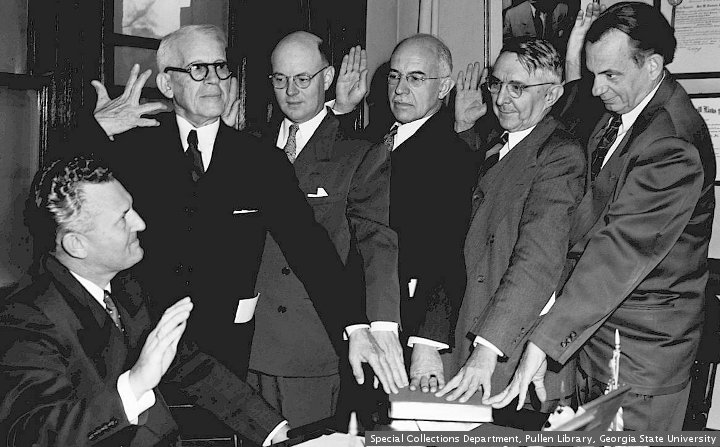
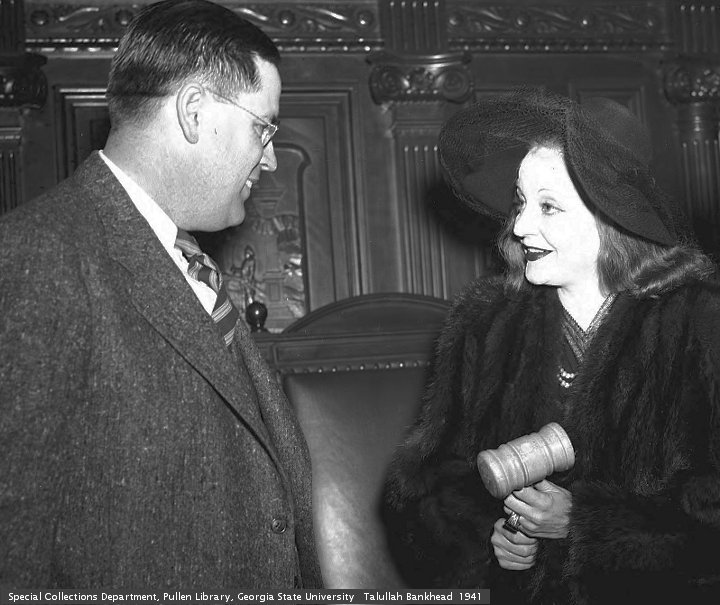

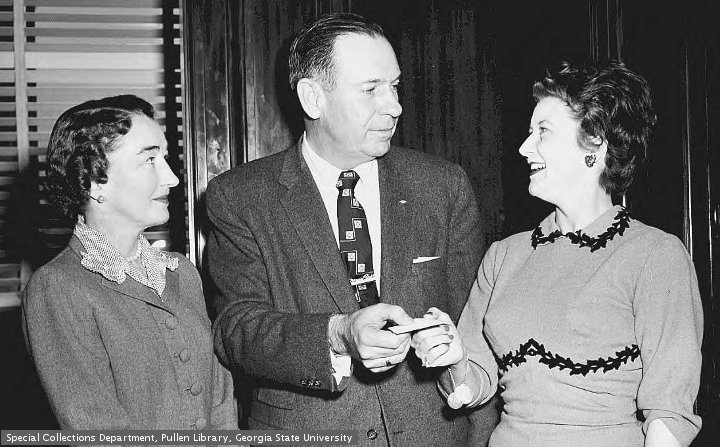
Happy Birthday Mr. Ginsberg

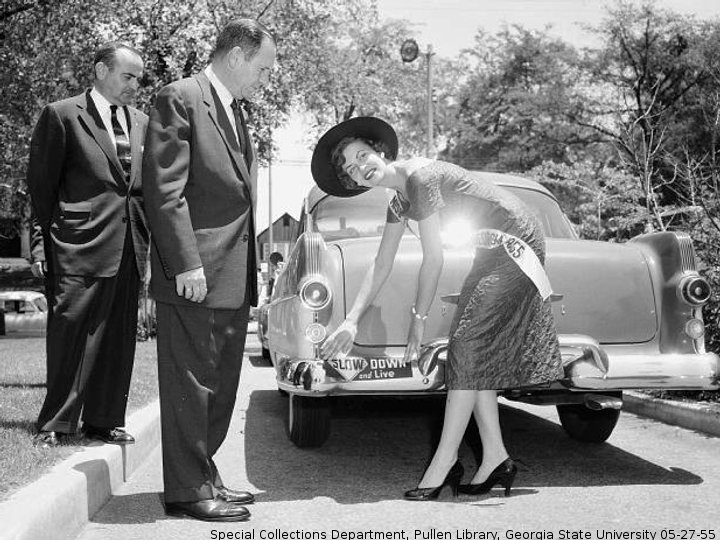
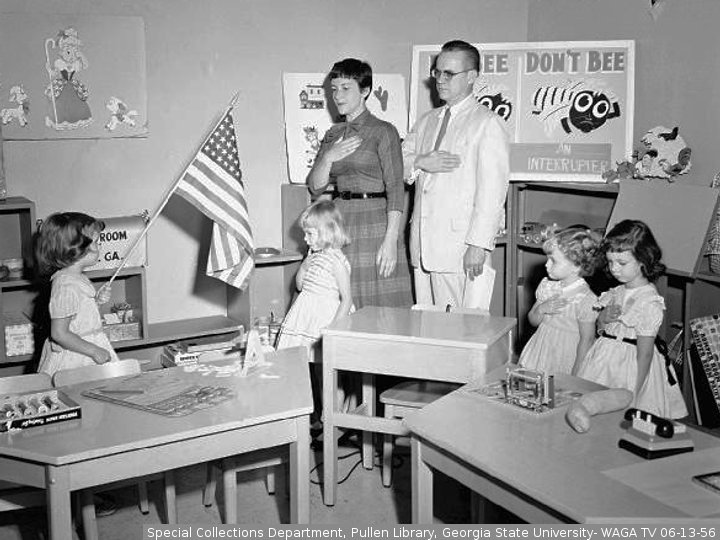
Allen Ginsberg would be 90 today, if nature had not made other plans in 1997. The son of Louis and Naomi Ginsberg arrived, in Newark NJ, June 3,1926.
Allen Ginsberg had a part in many new age dramas, with a few musicals and comedies thrown in for good measure. Hippie, beatnik, gay, artist, peace promoter, Buddhist convert…these are a few of the labels. He became famous for being famous, well known to people who never read a word of his poems. Two of the more famous were howl and kaddish.
Howl became scandalous in 1956 when it was busted for obscenity. It is mild by today’s standards, but almost landed Mr. Ginsberg in prison. PG heard about howl in the early nineties, and looked high and low for a copy. He could not find one. Today on the internet, not only is the text widely available, there are recordings of Mr. Ginsberg reading his work. (Here is an updated version, Howl 2011.)
The original plan was to listen to Mr. Ginsberg read while editing photos. PG was going to listen to the words, and think of something to say while listening to the bard. About the seventeenth time Mr. Ginsberg shouted “Moloch”, the plan began to fall apart.
The next poem was Kaddish. This is about Naomi Ginsberg, the mother of the poet, who evidently had some issues. This was tough for PG to listen to. The other night, PG had a disturbing dream about his own late mother. In this dream, a fearsome shouter came in wearing a black suit, which meant that he intended to do some scary shouting. PG went into another room, where his recently deceased mother was laying on a table.
1956 was the year of the obscenity trial for howl. This took place on the other side of america, from the Brookhaven where PG was two years old. This was the year when his brother was born, the year when the Georgia legislature voted in a new flag, for whatever reason. In 1955, President Eisenhower had a heart attack. Many wondered if it was a good idea to have Richard Nixon as the vice president.
Finally, PG could stand no more of that voice. The player was turned off, the files stored on an external hard drive, never to be heard again. PG just is not a poetry person. This is a repost, with pictures from “The Special Collections and Archives, Georgia State University Library”.


Does G-d Exist?


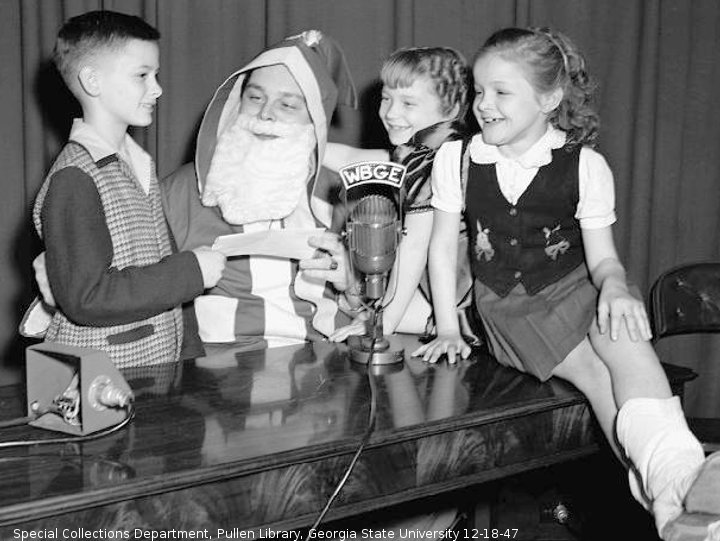
On Wednesday, July 21, 2010, there was a debate, with the topic being “Does G-d exist?”. The opponents were Christopher Hitchens vs. Dr. William Lane Craig. The host was Biola University, a Christian college in La Mirada, CA. Mr. Hichens died December 15, 2011. Dr. Craig is still with us.
Those who have endured religious debates will be intrigued by the lack of interruptions. With one exception, the two participants were allowed to finish their statements without interruption. The two did seem to have different ideas of what the topic of the debate was.
It is not known who won. There were numerous logical fallacies performed. Stray men were persecuted, and positions were misrepresented. The language was semanticized to the point of no return. This is to be expected, considering that it was beliefs that were being debated. There was self satisfaction at having “this most important of all discussions.”
PG has listened to the debate twice. The second time he followed the transcript, and took notes. His opinion did not change. PG suspects that G-d exists. The world might be a happier place if she did not exist, but we might be stuck with her. Where PG differs with conventional wisdom is on the matter of belief. Is belief the correct way to approach G-d? Is there a better way to “know” G-d?
One problem with Christianity is the emphasis on life after death. It is the only game in town. If you do not agree with the scheme for life after death, you have little reason to follow the Christian religion. The obsession with life after death is not discussed in this debate. In fact, Dr. Craig lists the resurrection of Jesus as being evidence of the existence of G-d.
In terms of tone, Mr. Hitchens is more pleasant to listen to. Dr. Craig speaks with the rhythms of a pulpit preacher. His message could be recycled as a sermon, including this part of his final statement: “And so, I want to invite Mr. Hitchens to think about becoming a Christian tonight.” Dr. Craig played the victim.”First, have we seen any good arguments tonight to think that God does not exist? No, I don’t think we have. We’ve heard attacks upon religion, Christianity impugned, God impugned, Mother Teresa impugned, but we haven’t heard any arguments that God does not exist.”
Mr. Hitchens, speaking before cancer and chemotherapy took it’s toll, was gracious, thanking his hosts repeatedly. His arguments were presented in the manner of a lecture, rather than a sermon. He piled facts on top of facts, and built his case in an entertaining style. What remains of his British tongue is employed to great effect. Whatever one thinks of Christopher Hitchens (and his appalling opinions about the war in Babylon), one cannot deny that he is a master user of the english language.
The debate began with both men giving twenty minute opening statements. Dr. Craig presented a five point argument. (the cosmological argument, the teleological argument, the moral argument, the resurrection of Jesus, the immediate experience of G-d) He likes to use big words. …
A foundation belief of Christianity is the idea that if you have the correct thoughts about Jesus you will live forever. The phrase “eternal life” is repeated, well, eternally. The thing about eternity that you never hear is, is something does not have an end, then it does not have a beginning. To hear about a human life, with a beginning and no end, this is only half of eternity. Getting back to Dr. Craig’s sermon, this does not add up. If life can be said to go on eternally in the future, should it not go on eternally in the past?
This is a repost, with pictures from “The Special Collections and Archives, Georgia State University Library”. The earlier version is much longer, and it had this disclaimer: It should be noted that this post is an attempt to condense a two hour discussion into a length that will not scare off readers. Many parts are being left out, some of which might be important. If the reader has the time, curiosity, and patience, here is the video and the transcript. Be sure to put fresh batteries in your BS detector. Use alcohol, drugs, or prayer at your own risk.


HBDBD



This is a repost. Pictures are from “The Special Collections and Archives, Georgia State University Library”. By the time this is posted, it will be Bob Dylan’s seventy fifth birthday. This chamblee 54 birthday tribute is composed primarily of three previously published pieces of work.
It was a late may morning in Atlanta GA, and a slack blogger was searching his archives. Yes, Issac Asinov never got writers block, and when he wasn’t going to the bathroom he was typing, but that is a lifestyle choice. Easy writing makes tough reading. So, anyway, in the may archive for 2011 there was a post about Bob Dylan’s seventieth birthday. People were taking bets on whether he would make it to thirty, and here he is at seventy five.
Hibbing MN is a cold place. At least it can claim to be the birthplace of Robert Allen Zimmerman. That’s Allen ,with an e, and double L, just like hell. The original initials were RAZ, which might be a good trivia question, or, with a silent W in front, radio station call letters. The problem is, he legally changed his name to Bob Dylan, with no known middle name. Those initial are BD.
On May 24, 1941, the curly haired wonder boi arrived. The world was a different place. Europe was in flames, and eyeing the young men of America as fresh cannon fodder. This was twelve years, eleven months, and eighteen days before PG graced the planet. A twelve year old in Hibbing MN would have no reason to think of a newborn baby in Atlanta GA.
These days, not everyone knows who Bob Dylan is. Auto tuned automated canned music is the next big thing. If auto tune had been around in 1963, we would never had known how badly Mr. Dylan sings. In an age where rappers pay ghost writers to compose their tweets, being able to write songs is not valued. There is just no telling. And so it goes.
A.J. Weberman has made a life out of going through Bob Dylan’s garbage. He wrote a book, “The Devil and Bob Dylan”. “THIS BOOK CHALLENGES ALL PREVIOUS CONVENTIONAL THINKING ABOUT BOB DYLAN. DYLAN IS JUST THE OPPOSITE OF WHAT YOU BELIEVE HIM TO BE. BUT WHAT PURPOSE DOES IT SERVE EXPOSING HIM AS A RACIST, HIV POSITIVE EX-JUNKIE AND HOLOCAUST DENIER? NONE EXCEPT THAT OF TRUTH, AND THE TRUTH WILL SET YOU FREE. $17 INCLUDING POSTAGE! THE BOOK IS 500 PAGES AND FULLY ILLUSTRATED.
There was a comment on the Bob Dylan webpage… Everybody knows by now that there’s a gazillion books on me either out or coming out in the near future. So I’m encouraging anybody who’s ever met me, heard me or even seen me, to get in on the action and scribble their own book. You never know, somebody might have a great book in them. PG doesn’t write books. He did grow up in America, and has a few opinions about Bob Dylan. It ought to be good for a few hundred words here. (HT to dangerous minds ) (Chamblee54 has posted about Mr. Dylan before.)
The first time PG heard of Bob Dylan was probably at the record rack of Zippy’s dime store in Cherokee Plaza. There was an album of his greatest hits, and it came with a poster. The poster had a drawing of the man, with psychedelic waves of hair cascading in multi colored glory to the edges. PG never did buy the LP.
The former Mr. Zimmerman was never big on top 40 am radio. Somebody somewhere was getting a headache over those lyrics, but Atlanta GA was not somewhere in those days. By this time, Mr. Dylan had crashed his motorcycle, and gone into hiding. As the counter culture exploded (if only someone had disinfected that counter) the curly haired poet was in hiding, the subject of much speculation. At one point, people were stealing his garbage, and claiming to find evidence of investment in munitions firms. The neoscience of Dylanology continues to this day.
As PG got older and stupider, he heard more and more Bob Dylan music. In the summer of 1972, there was a performance at the Concert for Bangladesh. A couple of albums released during this era sucked, and some people stopped caring about Bob Dylan.
At the start of 1974, a tour was announced. The Band was to be the backing group. The circus came to the Omni, and PG got some of the mail order tickets. He couldn’t find anyone to use the second ticket, and sold it to a stranger outside the arena.
The show was nothing special. Bob Dylan excels at writing, is ok in the studio, and blah on stage. Georgia Governor Jimmy Carter was at the show, and was said to look bored. Mr. Dylan was invited to the Governor’s mansion after the show, and talked to the Governor. A lot of people in Georgia were surprised that Jimmy would want to run for President.
As the Seventies went me me meing into sex and drugs oblivion, Bob Dylan regained both his writing touch, and love of the spotlight. The Rolling Thunder tour happened, he got back together with Joan Baez, divorced his wife, became born again, became more Jewish, counted money, and generally lived the life. PG did his own version of all that, without Joan Baez or being circumcised again.
In the winter of 1991, America was consumed by war fever. Saddam Hussein had been elevated to next Hitler status, and had to be taught a lesson. One night, Bob Dylan played on a music awards show, and performed “Masters of War”. He played a discordant version of that ditty, with the result that few understood what he had said. By this time, Mr. Dylan had assembled a band, and gone out on the “Never Ending Tour”. A Bob Dylan concert had gone from being a special event, to being another name on the festival roster. Overexposure will do that.
On the last night of the Olympics in 1996, Bob Dylan played the House of Blues downtown. PG won a pair of the $80 tickets in a radio station contest. It was his only trip downtown during the games, and had to wait in a security line to get into Centennial Olympic Park.
The only celebrity, other than Mr. Dylan, seen at the House of Blues that night was Bill Walton. The band was competent…they impressed PG as being like a bar band that did a lot of Dylan songs, with a strangely authentic lead vocalist. The sound in the room was not good, at least in the spot where PG stood. The only song he recognized was “All along the Watchtower”, the Jimi Hendrix classic. Mr. Dylan got a cheer when he put his harmonica appliance on.



The aptly named dangerousminds has a link to a story about the recording of Blonde on Blonde, by Bob Dylan. It only happened once.
Bob Dylan was 24 years old, newly married, and had “sold out” i.e. started to play electric guitar. A bunch of Canadians known as The Hawks (later The Band) was touring with him. Barely a month after the release of “Highway 61 Revisited”, sessions started at a New York studio.
The New York sessions did not work, so a decision was made to go to Nashville. Al Kooper played organ, and served as a music director. A crew of Nashville players was recruited. A bass player named Joseph Souter, Jr. would become famous a few years later using the name Joe South. Kris Kristofferson was the janitor at the studio.
Most studios have bafflers, or sound proof room dividers, splitting the studio into cubicles. For these sessions, the bafflers were taken down, and the band played together as a unit.
The second session in Nashville started at 6pm and lasted until 530 the next morning. Mr. Dylan was working on the lyrics to “Sad eyed lady of the lowlands”, and the recording could not start until he was ready. The musicians played ping pong and waited. At 4am, the song was ready, and the record was finished in two takes.
PG had marginal encounters with two of the players on this album. He met a lady once, who worked in an insurance office. One of the customers was Joe South. His driving record file was an inch thick.
Al Kooper had a prosperous career after his association with Bob Dylan. The former Alan Peter Kuperschmidt produced the first three Lynyrd Skynyrd albums, sold that contract for a nice piece of change, and lived happily ever after.
One night, Mr. Kooper was playing a show at the Great Southeast Music Hall, and PG sat in front of the stage. During a break between songs, PG asked his friend “what time is it?”. Mr. Kooper heard him on stage, and said it was 11:30.




If it ever quits raining, PG is going to walk to the Chamblee library and return a book, and a cd. The cd is by Bob Dylan, and is a work of genius. The book is about the former Mr. Zimmerman, and is a piece of garbage. (BTW, Dylan is not the only Zimmerman to hit the big time. Ethel Merman was born Ethel Agnes Zimmerman.The Zimmerman telegram got us into World War I. The less said about George Zimmerman, the better)
When returning cd’s to a library, you need to get a check in receipt. Once, PG returned a stack of cd’s to the Brookhaven library. When checking them in, one was missed by the scanner. A few days later, there was a note in the mail about an overdue cd.
The good news was, the cd was on the shelf when PG went back to investigate, and the matter was quickly settled. It did not help that the cd was a collection of disco music called “Shake your booty”.
“The freewheelin’ Bob Dylan” was released in the early sixties, when the man was barely old enough to buy a drink. There is not a bad song on it, and several are classic rock staples. At a time when mindless pop dominated pop music, here were thoughtful, moving lyrics.
In 1991, with America in a war frenzy, Mr. Dylan appeared on a music awards show. He performed “Masters of War”, at a time when the majority would be appalled if they could understand what he was singing. Mr. Dylan has been reinvented many times, and often the lyrics get gargled.
Five years later, PG won tickets to a Bob Dylan concert. It was the last night of the Olympics, and the man was appearing at the House of Blues. (Tickets were $80, so the radio contest is the only reason PG went). It was like hearing a good bar band, that did nothing but Dylan songs, with the man as the vocalist. Due to the mix of the sound, PG could not recognize many of the songs.
The book is Bob Dylan: Prophet, Mystic, Poet by Seth Rogovoy. It tells the Dylan tale as a story of Jewish prophecy. PG got to page 16, where the author claims that “Like a Rolling Stone” “almost single handedly revolutionized rock’n roll music”. Huh?
PG was eating dinner, and did not have anything else to read. He got to page 38. Nothing in the next 22 pages changed his mind away from ditching the book. How does nonsense like this get published?



Controversy
Number five on the yahoo home page news items is “David Bowie Controversy”. The old boi has some product for sale, and it must not be moving fast enough. The video has some religious imagery, including a scantily glad lady with a gushing stigmata. In the end, there is a tableau, with Ziggy ascending into the ceiling. The bathrobe he wears is more appropriate for a senior citizen than his thin white duke getup. This is a repost. Mr. Bowie has left the building.
When PG was in high school, he took Spanish. The teacher was a fundamentalist Catholic named Mrs. DiPaola. Religion and politics were more fun than verbs and nouns, and she was easy to distract. One day she was talking about an uncle of hers, a truly righteous man. When he died, these bloody spots appeared on his hands. It was the stigmata, the wounds of Jesus.
When the Romans put someone on a cross, the spike went through the wrists. There is a space between bones, and the giant nail went through without breaking one. If the nail was in the hand, the weight of the body would tear it off. The Romans were pros. Pictures are from “The Special Collections and Archives, Georgia State University Library”.


Gene Talmadge
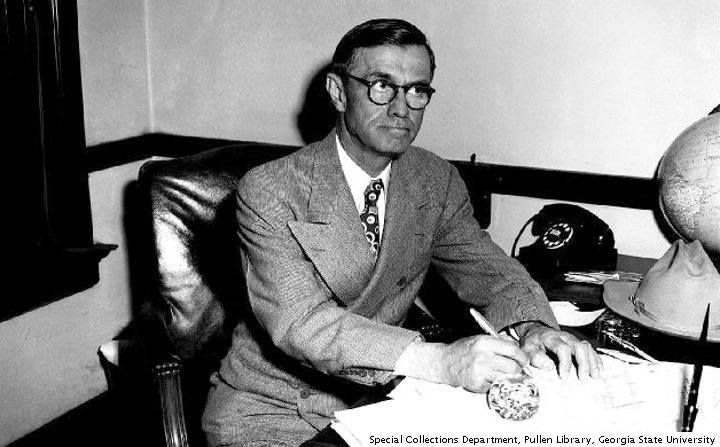


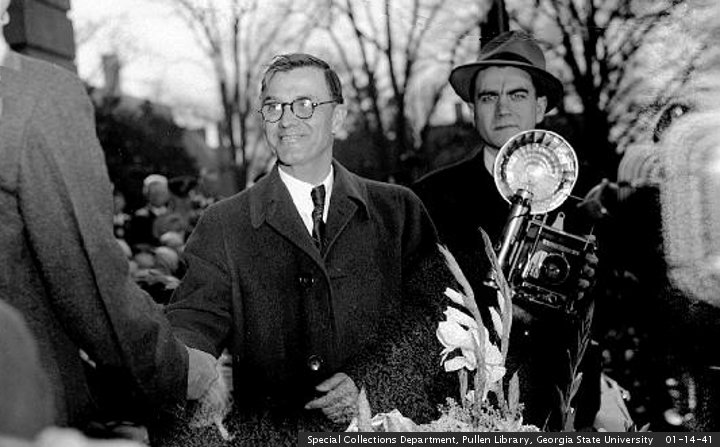

There is a quote making the rounds from Jack Murtha. It seems like some of his nephews have been profiting from the family ties. The verbatim is “If I’m corrupt, it’s because I take care of my district.” This appearance of impropriety is a gift to supporters of military adventure in Babylon. Mr. Murtha…a decorated Vietnam Vet…has been a vocal critic of the wars. His apparent ethical issues give war fans a convenient diversion.
This comment brings to mind a former Governor of Georgia, Eugene Talmadge. He was famous for saying, to cheering crowds, “Sure I stole, but I stole for you”. PG suspected an urban legend, and decided to see what Mr. Google had to say.
Eugene Talmadge was Agriculture Commissioner before he was Governor. He had some relatives on the state payroll. There was something funky going on with fertilizer. He bought a bunch of hogs, and sent them to Chicago, where he thought he could make more money. After a while, some people started to ask questions. His answer was “If I stole, it was for farmers like yourselves”. (This is on page 59 of “The Wild Man from Sugar Creek”.)
This was in 1931. The depression hit Georgia hard. The wool hat boys were in a world of fertilizer. Mr. Talmadge set himself up as the champion of the dirt farmers, and the enemy of the lyin’ Atlanta newspapers. In 1932 he was elected Governor. He was re elected three times, but died in 1946, before he could serve again. He was replaced by two Governors.
Mr. Talmadge was elected because of the county unit system. Each of Georgia’s 159 counties got a certain number of votes. Three rural counties were the equivalent of winning Fulton County. Mr. Talmadge boasted that he never won a county with street cars.
Mr. Talmadge’s campaigns were legendary. He would speak at the county courthouse, and plants in the crowd would scream questions, like “what about those lyin Atlanta newspapers?”. One of his favorite lines was “Yeah, it’s true. I stole, but I stole for you, the dirt farmer”.
PG’s aunt went to work at the Trust Company of Georgia in the early fifties. There was a story that the new employees were told. It seems as though Governor Talmadge was in the lobby of the Trust Company, after having a happy lunch. He had to use the restroom, and went to the corner of the lobby to relieve himself.
There is a statue of Gene Talmadge in front of the State Capitol. The plate at the base reads “I may surprise you, but I shall not deceive you”. It remains to be seen what will be carved underneath a statue of Jack Murtha.
This is a repost, with pictures from “The Special Collections and Archives, Georgia State University Library”. Jack Murtha died February 8, 2010.



The Great Southeast Music Hall


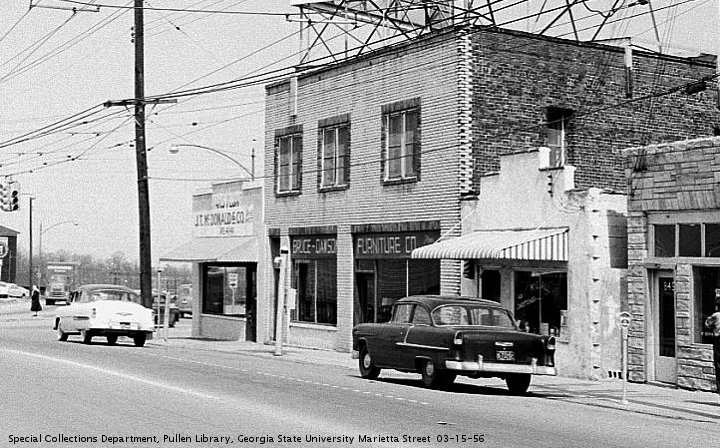
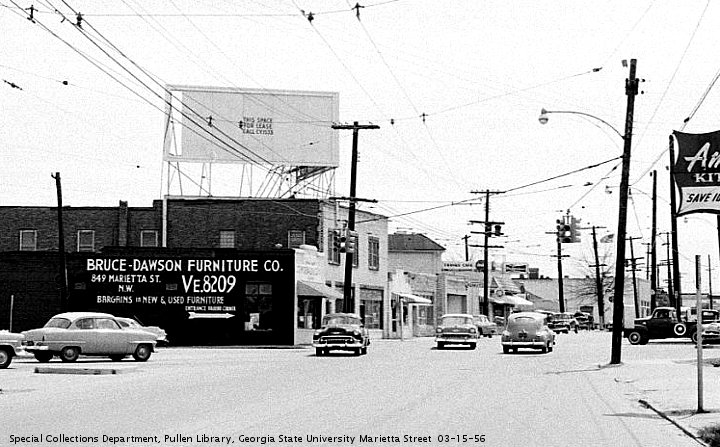
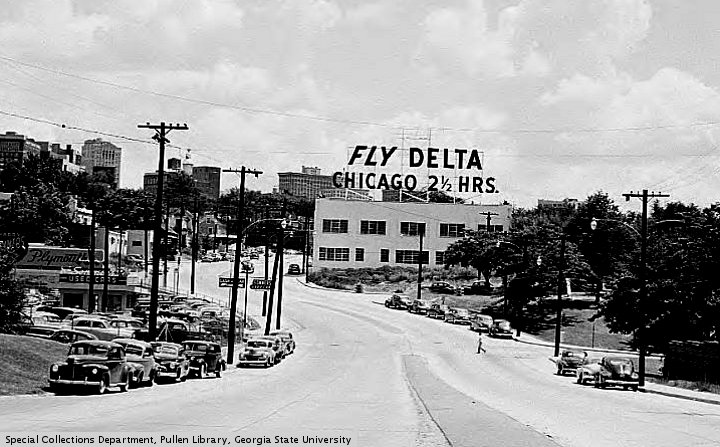
The Great Southeast Music Hall was an important part of life in Atlanta during the seventies. It was located in the elbow of a shopping center, Broadview Plaza. A bowling alley was downstairs, a two level K mart next door, and Atlanta’s first hispanic neighborhood across the street. Like almost everything else here, Broadview Plaza was torn down, and replaced by a more uppity set of stores.
When you went into the lobby of the Music Hall, you noticed the walls. Performers were given a magic marker, and encouraged to leave a message. John Mayall found the ladies room, and said he likes to be near the ladies. The late Phil Ochs said “Impeach Nixon and Agnew”. What happened to those boards is a good question.
The auditorium held about 500 people. The stage was only three feet or so above the floor. There was an empty space in front of the stage, and a few rows of bench backs behind that. When the place opened, there were lots of pillows on this floor, with the Music Hall logo. The carpet in this front area was fresh when the place opened, and got progressively grosser as the years went by. Beer was served in aluminum buckets, and inevitably some wound up on the carpet.
The show the Music Hall is most famous for is the US debut of the Sex Pistols. PG didn’t make it that night, but has heard from a few who did. The performance was said to be horrible. There are stories of Sid Vicious wandering through the apartments around Broadview trying to find heroin. Years later, PG was reading about that night in Please Kill Me, when the train he was riding pulled into the Lindberg Marta station. This is across the street from the Broadview Plaza, still standing at the time.
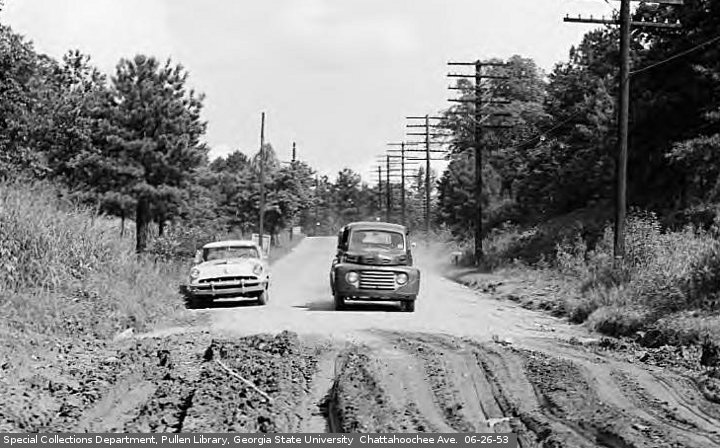
These days, the intersection of Lindbergh Drive and Piedmont Road (about a mile north of the park) is next to Hiway 400. When the Music Hall was in it’s prime, the land for the Highway was owned by the State of Georgia, which was fighting legal battles over the highway. The land had a network of dirt roads, one of which connected Buford Hiway to Lindbergh Drive. When you went from Chamblee to the Music Hall, the most direct route was over this dirt road. This dirt road is where Sidney Marcus Boulevard is today. Broadview Plaza was torn down, and replaced by a Home Depot.
Eventually, the business model for the Music Hall did not work, and the facility moved to Cherokee Plaza. This Music Hall was in a movie theater. The Cherokee Plaza Theater was the scene for the world premiere of Son of Dracula . This move did not work, for a number of reasons. The parking lot was too small, and people who wanted a loaf of bread from the A&P were blocked out during shows. Cherokee Plaza is just outside the city limits, on Peachtree Road. In the late seventies, DeKalb county was aggressively fighting drunk driving, and had roadblocks. Many of these roadblocks were outside the Music Hall, which kept many people from attending. Before long, this Music Hall closed.
Many years later, PG bought a second hand typewriter, and needed a ribbon. (Younger readers should ask an older person about this.) He went into an office supply store in Broadview Plaza, and soon realized that he was standing on the site of the Music Hall. He asked the clerk if he could have a bucket of beer, and got a very strange look in return.
 One industrious afternoon during this era, PG made a list of shows he saw at the Music Hall. The memory cells are already protesting, but we are going to try and remember as much as possible about these shows. A big thank you to Wikipedia for help with spelling and names.
New York Rock Ensemble – PG walked into the auditorium during the last part of the first show, as the band played “A whiter shade of pale”. The bass player wore lace up boots, with the pants legs tucked into them. Before long, the second show came on stage. Keyboard player Michael Kamen was the central focus, acting out the lyrics to “Anaconda”.
Silverman Deborah McColl fronted this drummerless band
Al Kooper PG has written about an unfortunate incident involving Al Kooper during this show. This would have never happened in “The Catcher in the Rye”…the kids always knew what time it was in that story. Mr. Kooper did a solo show, including “Sam Stone” by John Prine.
Ellen McIlwaine/ James Cotton Blues Band Ms. McIlwaine was pregnant, and played slide guitar. Mr. Cotton played harmonica. One of his players started to fan him with a towel, because he was hot.
Breakfast Special/ Doc and Merle Watson Breakfast Special was a local bluegrass crew, who did “The coming down song”. The Watsons did ” Deep River Blues” and “Thats All”, among other things. PG had a copy of their latest LP, and asked Merle to autograph it. He wrote his name on one side, turned it over, and signed Doc’s name on the other side.
Mason/Atlanta Rythym Section This show was the night Led Zeppelin played Atlanta Stadium.
New Riders of the Purple Sage When the Music Hall opened, a performer would typically play from Tuesday to Sunday. NRPS was a one night show. They worked well in the packed hall, and shined on “Glenville Train”. The next year, they did a tour with Commander Cody and The Lost Planet Airmen. Commander Cody opened, and raised hell. NRPS followed with a mellow rock show, and before long people were getting bored and leaving.
David Buskin / Loudon Wainwright III Chamblee 54 has written about this show before. Mr. Buskin talked about doing a show at Max’s Kansas City, the person sitting next to PG said “Gross”.
Steve Martin / Nitty Gritty Dirt Band Chamblee54 has written about the show by Mr. Martin . This was his last tour as an opening act. Nitty Gritty was a sight to behold. John McEuen played fiddle, and recited a poem about life.
Martin Mull / Melissa Manchester PG went to see Mr. Mull, who opened the show with a three piece band. (After the show, Mr. Mull said the name of the band was the (your name) (draws a blank with his fingers) orchestra.) The headliner was Ms. Manchester, little known at the time. She was a knockout. While standup comedy has it’s place, for emotional impact there is nothing like a singer.
Texas Gary Bennett / Weather Report Mr. Bennett played acoustic guitar, and sang, as an opener for a packed house of jazz rockers. It did not go well. At one point, trying to get some rapport with the crowd, he said ” has anyone here been busted at the Omni?” (The authorities had begun arresting people for smoking pot at the major concerts.)
Weather Report was amazing. Josef Zawinul had the loud keyboard sound, Wayne Shorter played his leads on soprano sax, and there was a drummer and percussion player. There was tons of rythym, to go with the electronic jazz sounds. When it was over, PG went up to Mr. Zawinul, shook his hand and, and said thank you. He was pouring a glass of beer from a pitcher, and looked a bit startled.
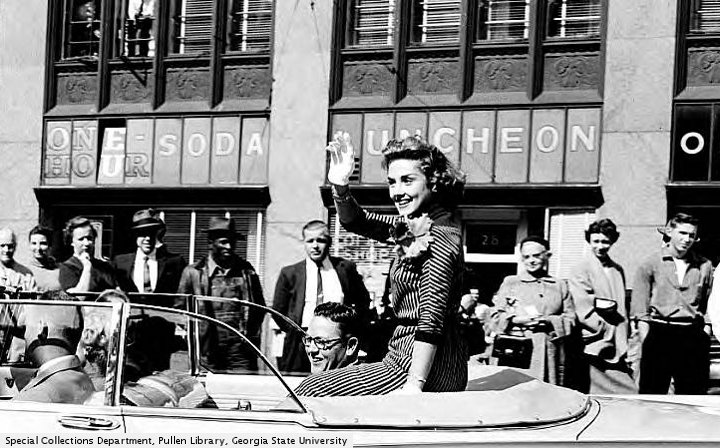
David Pomerance / Rahsaan Roland Kirk Chamblee54 has written about this show before. Mr. Kirk was a force of nature, the modern miracle of the tenor saxophone. He did not suffer from false modesty. This was the night Richard Nixon resigned, which pleased Mr. Kirk no end. The blind Rahsaan said that he did not want to see his audience, because we were too ugly. At one point, his band had been jamming for about ten minutes, when PG realized that Mr. Kirk had been holding a single note the entire time. The three saxophones at one time thing was a visual shocker, but he got sounds that way that you cannot get from a single instrument. At one point, Mr. Kirk pulled his sunglasses off, and made a face at the crowd. It was an amazing evening.
Chic Corea / Return to Forever This was a disappointment. Tickets were $4.50, which may be the most PG ever paid at the Music Hall. The band only played about an hour. It was all electric, ignoring the acoustic instruments set up on stage. RTF was a four piece, all star band. They had Chic Corea on keyboards, Stanley Clarke on bass, Al Demeola on guitar, and Lenny White on drums. That sounds like a great show, but it turned out to be four solo artists jamming. There was no cohesion, and the overall sound was less than the sum of the individual parts. Corea leaned over his keyboard, twisted knobs, and made faces, as if to say “look at how intense this is”. It wasn’t.
Mccoy Tyner The former Coltrane sideman played a very nice show. He had a percussion man, with several tables covered in exotic instruments. PG took a break after to first show to hang out at a neighborhood disco. When he got back, there was no doorman checking tickets, and anyone could walk in for free. PG took advantage of this discovery many times over the next few years.
Bill Crystal / Jean Luc Ponty Former Frank Zappa player Jean Luc Ponty played at the Music Hall, with a bass player who was a fellow Zappa alumni. The surprise of the evening was then-unknown Bill Crystal. A few weeks after this show, “Soap” would premiere, and make him a star. Mr. Crystal did a killer impersonation of a gila monster.
Between shows, Mr. Crystal had been entertained by a local musician. During the second show, he held his finger to his nose, made a snorting sound, and said thank you. PG heard this, and yelled “Locker Room”, the name of a “deooderizer” that some liked to get a buzz sniffing. Mr. Crystal said “Locker room. Jeez, I need to get the hecklers rosetta stone to know what he means”. Good times.
Keith Jarrett This is another show that might have been better than PG’s enjoyment. At one point early in the show, PG moved over to the front of the stage, to look at Mr. Jarrett’s hands. After the show, people told PG that the player had been giving him dirty looks when he did that. PG asked Mr. Jarrett about it, and he said that PG had interfered with his concentration.
This show featured a quartet, instead of a solo piano. The bass player was Charley Haden, who seemed a bit puffy faced. PG later learned that he had been addicted to heroin at the time.
Melissa Manchester Ms. Manchester came back for another week at the Music Hall, about a year after her first appearance. At one point, she asked the band if they were ready to do a new song, and then performed “I got eyes” for the first time in public. This was later the b side to “Midnight Blue”. One of the players in her band was a man named James Newton Howard. Part of the deal for touring with her was that he could play a solo number on piano, called “Newton’s Ego”. He later played with Elton John, and became wealthy writing film scores.
Flora Purim /Airto Moreira On PG’s 23rd birthday, Flora Purim played at the Music Hall. At the time, PG had a profound appreciation of her albums. The band had a nice sound, and was the equal of her records. The Chic Corea tune “Light as a Feather” was a standout. Her husband, Airto Moreira (eye, ear, toe) fronted the band on some of the numbers, and had some funny routines. Ms. Purim held two microphones throughout the show, with one connected to some audio filters. PG found holding two microphones to be visually distracting. PG had known of the Jewish ancestry of Ms. Purim, but had not thought much about it. Then he saw her live, and realized that she does, indeed, look Jewish.
Hot Tuna Hot Tuna is a dependable, though not spectacular, band. On a previous show in Atlanta, they went on stage at 10:55, and played without a break until 2:50. This night, a fried of a friend was working at the Music Hall, and PG got in before the crowds, to get a prime spot, in the first row of benchbacks. At one point, PG was rocking back and forth against the benchback, and a neighbor asked him to quit. Those buckets of beer were influential.
Shakti This was an acoustic, Hindu oriented band fronted by guitar superman John McLaughlin. The numbers seemed to go on forever.
David Manion / Mark Almond This was a long awaited Atlanta performance by Mark Almond. (This is a jazz/blues band, totally different from the Soft Cell vocalist with a similar name.) They played two sets, which were only an hour or so long. This was disappointing to the people who could not wait for the second show. In the second show, they “took the shackles off” saxophone player Johnny Almond, and he played a wild solo during “The city”.
The incident we are about to describe may or may not have involved David Manion. What happened was, a small portable radio was playing on the edge of the stage. The spotlight was on the radio, which sounded like gibberish to most of the audience. Gradually, the chattering audience got quiet, and tried to listen to the radio. After a few minutes, a man came out, and stood in darkness behind the radio. The PA speaker announced “The new force of rock in Atlanta”. The man then dropped a large piece of granite on the radio, smashing it into bits.
Laurie Chapman / Stomu Yamashta Laurie Chapman was a singer/piano player, with some good stories. She told of a trucker, driving beside her and talking to her on a cb radio. ” You better get that drink out from between your legs before it gets too hot to handle”.
Stomu Yamashta is somewhat of a star in Japan. The show here was filmed for showing on TV there. His band, Go, was an all star collection, including Ava Cherry. She was a backup vocalist, and girlfriend, with David Bowie. After the show, PG was introduced to Spencer Davis in the lobby.
The next few shows were at Cherokee Plaza.
Martin Mull Mr. Mull was a solo star this time. He did a song about doing nothing, adding that dead people can do it too. The parking lot was packed, which was a major problem at the new location.
The week before the Super Bowl in 1994, Mr. Mull filmed a Comedy Central show in Woodruff Park. The Dallas Cowboys cheerleaders were kicking field goals. After the filming PG stood a few feet away from Mr. Mull, but could not think of anything to say.
Sun Ra PG went to a wedding, and a bunch of people from there went to see Sun Ra. This was an entertaining spectacle, with a big band and dancers. After the show, PG asked Sun Ra how he could afford to take a band like that on the road. He said he was doing it for beauty.
David Bromberg This was another big band production. PG showed within a few minutes of the gateman leaving his post, and saw about 45 minutes without buying a ticket.
Lester Flatt/John Hartford One boring Saturday night, PG walked up to the Music Hall, and saw the two fiddle players jamming. A few weeks later, Lester Flatt passed away. This is a repost. Pictures today are from “The Special Collections and Archives, Georgia State University Library”. As a bonus to the reader(s) here, we are reposting Great Southeast Music Hall Stories. It is a collection of comments from an earlier posting of this feature.
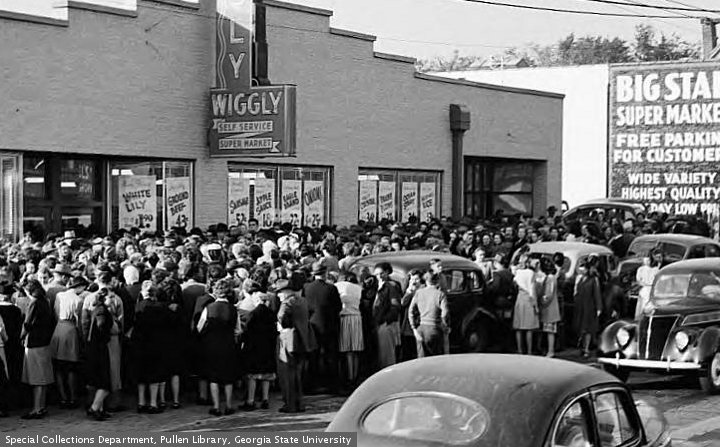
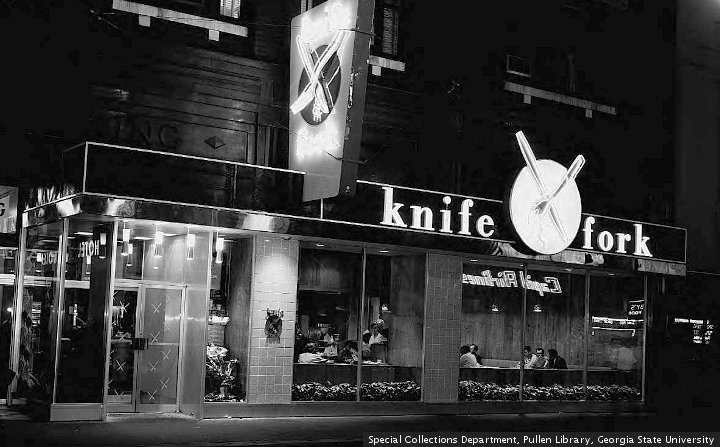
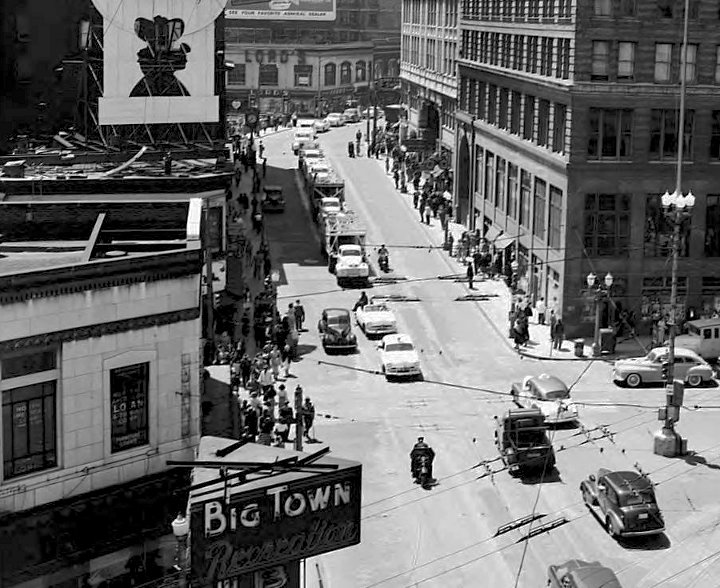

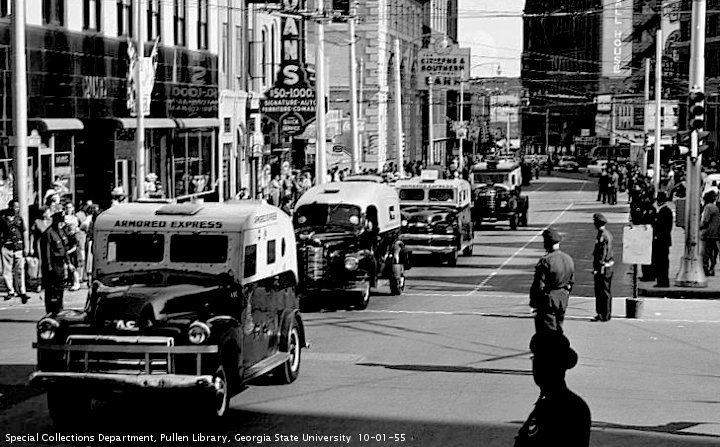
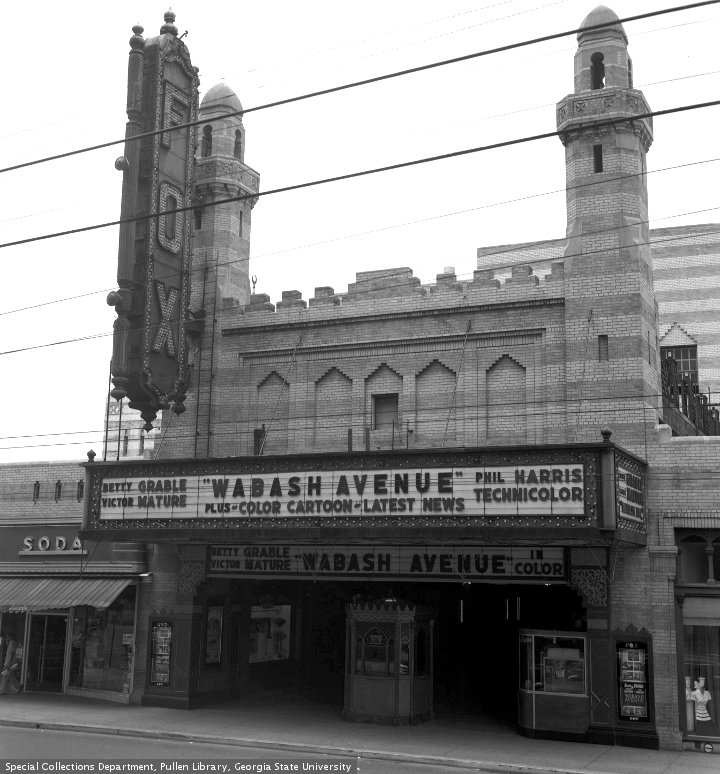

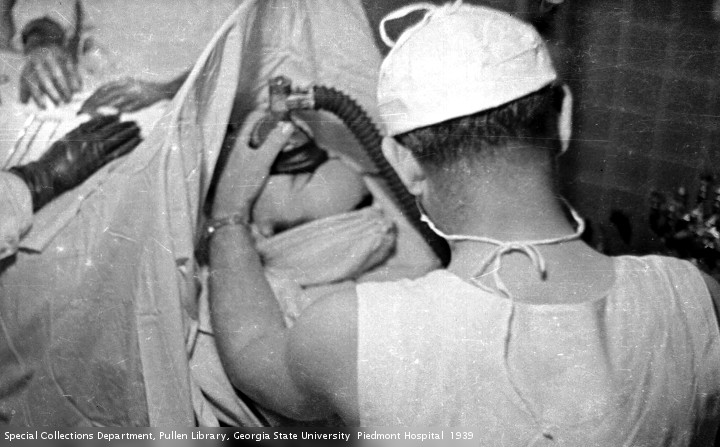


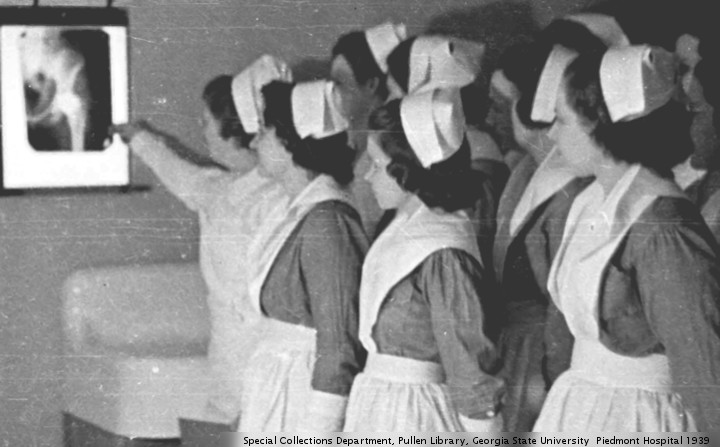
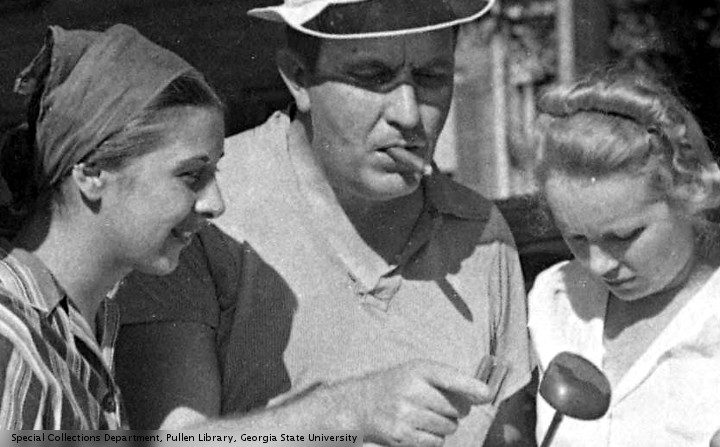
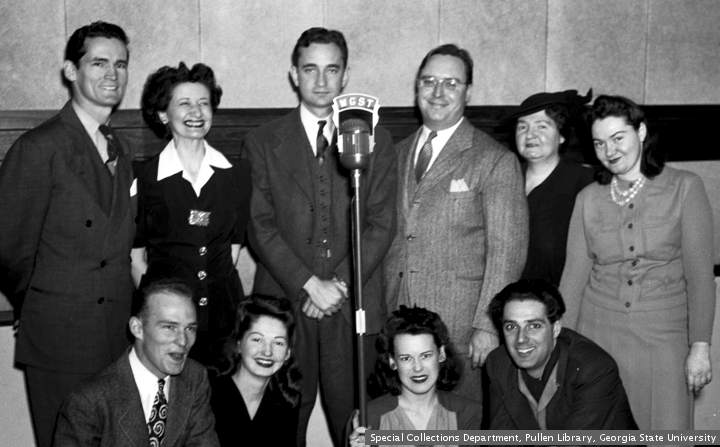
Chamblee54 posted a tribute to The Great Southeast Music Hall a few years ago. This was a concert venue, with no hard liquor and a 500 person capacity, next door to a bowling alley on Piedmont Road. It was about a mile north of Piedmont Park, and in front of the dirt road that became Sidney Marcus Boulevard. GSEMH hosted some great shows. This was when record companies would invest in new bands by putting them on promotional tours, and Atlanta was a popular stop.
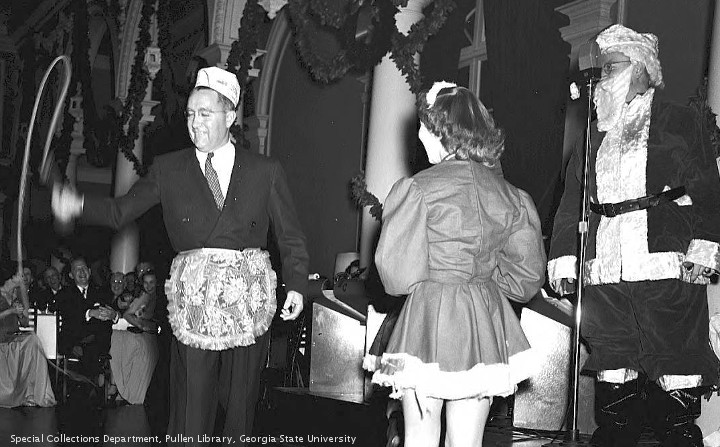
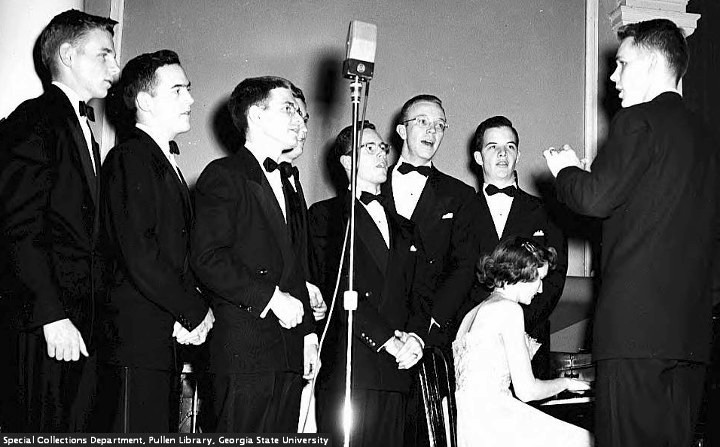
The chamblee54 post attracted 85 comments. This is a slow day for Matt Walsh, but is a record for chamblee54. Most of the comments were boring … great place to play, I saw Steve Martin there and drank too many buckets of beer. A few of these comments tell stories. This post puts the best of the GSEMH comments in one place. Pictures are from “The Special Collections and Archives, Georgia State University Library”. See if you can guess which one was taken at GSEMH.
Neal B. – Som Records June 10, 2012 at 5:18 pm Great reading! Brought back some memories. I saw three shows at the Music Hall – The Dixie Dregs, Elvin Bishop and David Allan Coe. I saw Coe the night before my SATs in 1978 or ’79 and it was (and still is) the most bikers I’ve ever seen in once place. Elvin Bishop just tore it up, really good.
jake lamb May 17, 2011 at 11:34 am Great stories of our past. I can’t remember the shows I went to, but after reading your post it certainly helps clear the fog. As I went thru the list I noted, “Yep I was with CG at that show, that one too, oh yeah, I remember Al saying to you what time it was but didn’t you delete the expletives? Odetta blasting the audience for not showing her the proper respect…what a crybaby! The autographed Marc Almond Album, meeting them backstage to learn how the finger was ripped from Jon’s hand after a tree limb caught on his ring finger when he jumped out of a tree during a photo shoot, resulting in having to learn how to play the saxaphone with one less digit ala Jerry Garcia, and the Hot Tuna Show with Papa John Screech. Flora and Eye Ear Toes logo on his equipment. Was it there that we went on Halloween, me dressed as a bagman for Nixon (A paper sack over my head) and you going as a Bee-keeper (a vegetable strainer over your head)? God we were hilarious! It’s all beginning to come back, but what never went away was remembering the great friend I went with.
Eugene Gray June 24, 2012 at 11:30 am I grew up in Atlanta so thanks for the memories about the shows at The Great Southeast Music Hall. I attended numerous shows between the years 1974 and 1977. From what I can remember (I do have “70s Memory” after all), here’s some highlights: Kinky Friedman — Smoked a huge cigar throughout the show and tipped his ashes in an ash tray attached to his microphone stand. Brought the house down with ‘Sold American.’ David Allan Coe — Played the first half of the show in his “Country Crooner” persona wearing a white suit and white cowboy hat; then played the second half as The Mysterious Rhinestone Cowboy complete with rhinestone jacket and black mask. Played a hard-rockin’ version of ‘Bossier City’ to close out the show. Best memory: New Riders of the Purple Sage Show opened late with only John Dawson (acoustic guitar) and Buddy Cage (pedal steel) taking the stage. Seems their limo made the right exit off of 285 but the other limo kept going. After Dawson telling us that, he said, “Well, you might not have all of us but you do have two.” He and Cage then played a short set together including a beautiful version of ‘Gypsy Cowboy.’ The other members trickled in and started playing, all having a good time with the audience about their site-seeing tour of Atlanta via 285. Fantastic show and my best memory of The Hall. Weirdest experience: For lack of something to do, went to see the New Zealand group Split Enz. A fun but bizarre show with a group outside my typical taste. Sort of a cross between Devo and Bowie and the Bay City Rollers. Truly a strange show. Worst experience: Pure Prairie League — I was always, always let in and served beer before I turned 18 in ’76. Except for one time. Missed Pure Prairie League because we were all carded; the only time I was ever asked for my ID here. Always regretted missing them since the original band broke up right after this tour. Damn. Thanks again for a spot to remember one of the best concert venues (ever) in Atlanta.
Anonymous July 11, 2012 at 3:03 pm Saw many great shows at the Music Hall; Leon Redbone, Don McLean, Bruce Cogburn, but the funniest thing was at Darryl Rhoads show. My girlfriend (now wife of 30 years) went missing when she left to go make the parent check-in phone call. I found her coming around the corner in the hallway, mad at some guy who wouldn’t get off the phone in the lobby. The “guy” was Darryl and he made a few comments to her from the stage during the show just to keep her pissed. It’s funny now, but I could have died then…
Pharmacist Jim April 28, 2013 at 12:01 pm How about when Jimmy Buffett opened for Billy Joel there in 1974. I was a Pharmacist at Eckerd Drugs in the plaza at the time when Jimmy called me and asked me to call his physician in Key West for a prescription–a musician who wanted to get a legitimate prescription, unheard of!!! I was already a Buffett fan, but this just made me respect him that much more and I’ve been a “Parrot Head” since, now so more than ever since I live in Florida.
Anonymous October 23, 2013 at 8:29 am My best friend and I moved to Atlanta (on purpose) for just the summer of ’73 and attended MANY MANY great shows at the Music Hall. It was SO awesome. Saw Billy Joel right around the Captain Jack release time and he asked me out after the show. Of course, I answered with a resounding “NO! Thank You!!” (you see, I was ABSOLUTELY too cute for him…hehe — not to mention, I thought his nose was entirely too big.) Also, saw Jimmy Buffett who talked to us from the stage because we were from Hattiesburg, MS and he had gone to school there at the University of Southern Mississippi. SOOO COOL!!!
Rod Pearman May 28, 2015 at 10:00 am Couldn’t help but have a smile on my face as I read all these comments. THE Great Southeast Music Hall and Emporium………man, the memories. Sometimes I think I could write a book. My roommate and I lived at Bordeaux Apts. on Buford Hwy, which was just a hop skip and jump over to The Hall via the dirt road which is now Sidney Marcus……..we lived there from 1972 to early 1980, which might be a record for two dudes that were party animals to have survived that long in one apartment complex. Anyhow, we frequented GSEMH about once a month when an act we wanted to see was to play there. A couple of my fondest memories now that I’m in my mid 60’s is, it had to be sometime in ’75. We went to see The Dirt Band (one my favorites of all time) The opening act was this guy named Steve Martin, who at that time, no one on the planet had ever heard of him. Well he comes out, and within 30 seconds he has us so cracked up we’re shooting beer out our noses from his comedy. Really funny stuff, and had no idea it was coming. Well, he does his gig, then the Dirt Band comes out. They play a great set, take a little break, and when they came back out on stage, here comes Steve Martin with a banjo over his shoulder. So we’re all thinking this will be something funny, this guy with a banjo. This guy took off on his “ban-jer” and everybody’s jaw hit the floor. He really tore it up. Then the Dirt Band joined in and he played a few tunes with the band. The guy was incredible on the banjo. Then a few months later, Saturday Night Live did their first show, and there’s Steve Martin on TV. I look over at my roommate as he’s looking at me, and we’re both saying in unison, hey, that’s the guy from The Great Southeast Music Hall. Pretty neat that we got to see him when nobody had a clue of his talent. … I got home later that night, and my roommate (yeah, the same guy I mentioned in earlier chapters of this book….) said he saw something on TV that I wouldn’t believe. Turns out, one of the local TV stations (2, 5, or 11) had sent a reporter over to cover the final show of The Great Southeast Music Hall, and while reporting out front of the establishment, there were about a dozen folks standing there sorta behind the reporter. Well, this one fair lady decided to nonchalantly pull a boob out of her tank top and display it for all the world to see, right there on live TV. My roommate said it was something he’d never forget, and we tell the story often. (I wonder who that young lady was sometimes……) but I digress……..
alun v September 23, 2014 at 11:54 am As the Audio Engineer and last guy to walk out the door @ the Lindbergh (and Cherokee Plaza) locations, the walls, painted and autographed by many of the acts, were destroyed; (legal issues I guess). I still have the door to the tech room, signed by Cowboy, a personal favorite. BTW, I saw the concrete sidewalk @ Peaches, with hand / foot prints and signatures, also destroyed and hauled off………lawyers.
julia guthrie November 26, 2015 at 10:38 pm I just caught the 50th anniversary! of Alice’s restaurant masacree on pbs. Brought back the memory of seeing Arlo at the Great Southeast Music Hall. I was drunk(and maybe other) and it was my birthday, so my bf said I should try to talk to Arlo because my name is Guthrie! I was just drunk and young enough to do just that. I finagled my way to the tourbus door(was pretty good at talking my way into things back then), announced that I was a cousin, and ended up sitting at the little bus table, smoking and talking with Arlo and fam. Pretty sure all I added to the conversation was a shit-eating grin, but it was one of the highlights of my youthful escapades. Loved going to the Music Hall! Ah…youth and happy times. I also lived at Bordeaux apts for a while! Peace:)
Rod November 27, 2015 at 11:06 am You can’t beat Alice’s Restaurant on Thanksgiving Day. I used to have an annual tradition of listening to that song on my Technic’s turntable for probably 30+ years, but somehow that tradition faded out a few years ago. (Maybe because my turntable is sitting on a shelf in my closet Definitely great memories at the Hall. Hard to believe it’s been 40 years ago, give or take. I lived at Bordeaux for 7 years through the ’70’s, which might be a record. We were in G building, and had some of the best parties in NE Atlanta. It was standing room only, kegs on the deck, music crankin’ just below distortion level. Those were the days!
BRIAN HOLCOMB June 19, 2015 at 6:00 pm I was a freshman student a GSU in 74 After one of the shows( can’t remember who) I was standing outside in the corridor waiting on some friends. When out the door came my General Chemistry Professor Dr Sears arm in arm with the best looking girl in my class. They turned beet red turned and got away from me as quick as they could. I often wonder if I could have went and bribed an A out of him. LOL
SideShow Bennie December 1, 2015 at 5:24 pm I just stumbled across this article when I Googled GSMH. I lived in Atlanta in 1972-73 and attended a lot of shows at the Broadview Plaza location. I was at one of the Howdy Doody Revival shows that is on the poster pictured in the article. I remember Bob Smith hitting a bad note on the piano, reaching inside and pulling out a pack of ZigZag rolling papers saying, “Clarabelle leaves these things everywhere.” Other shows I remember seeing were Johnny Nash with Sons of The Jungle (The first actual Jamacian Reggae band I ever saw) John Hartford, The Earl Scruggs Revue, Joe Walsh with Barnstorm, Jim Croce, Harry Chapin, Doc Watson, The Hahavishnu Orchestra, Martin Mull, Doug Kershaw. I am pretty sure I was at the Ellen McIllwain and the Breakfast Special shows you mentioned but there were show where a lot of beer buckets were emptied so a lot of those shows are a little hazy. I still have a bucket or two around the house here somewhere. Thanks for the memories!!


Changing The Flag
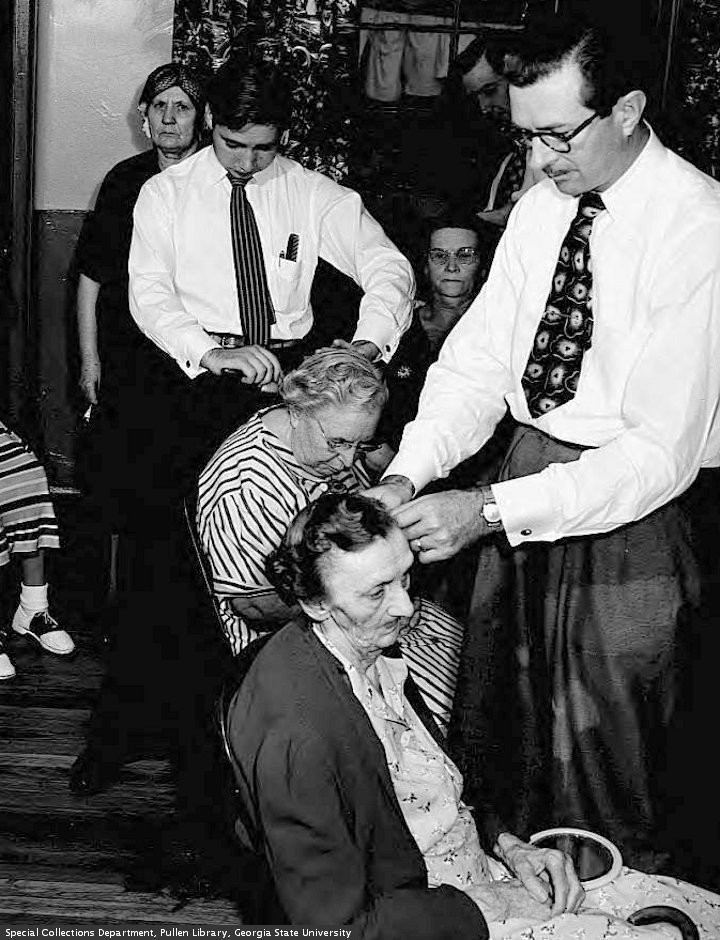
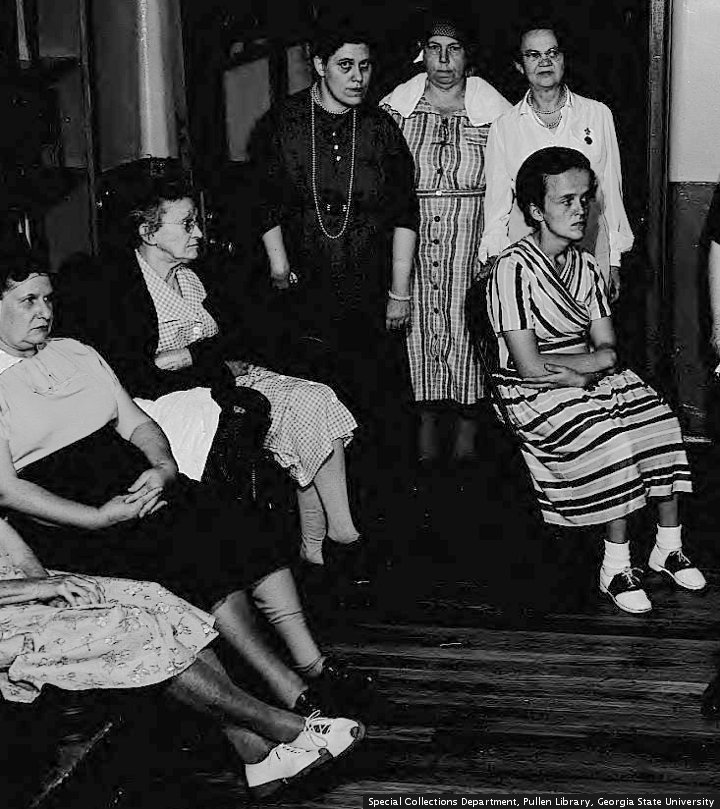
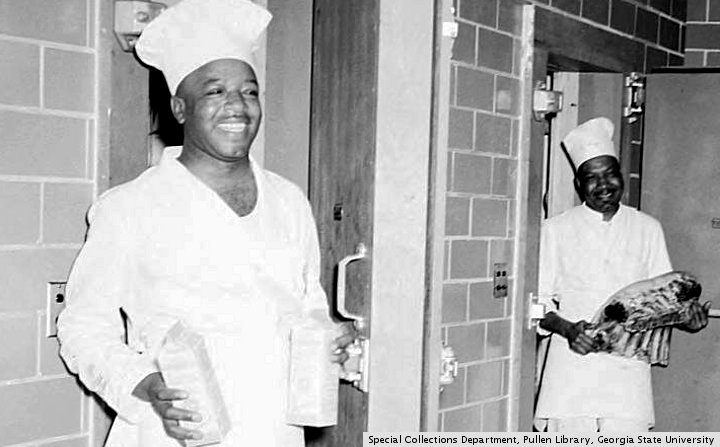

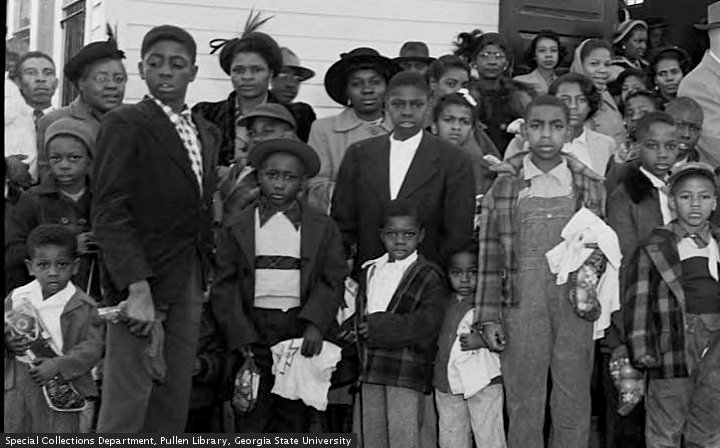
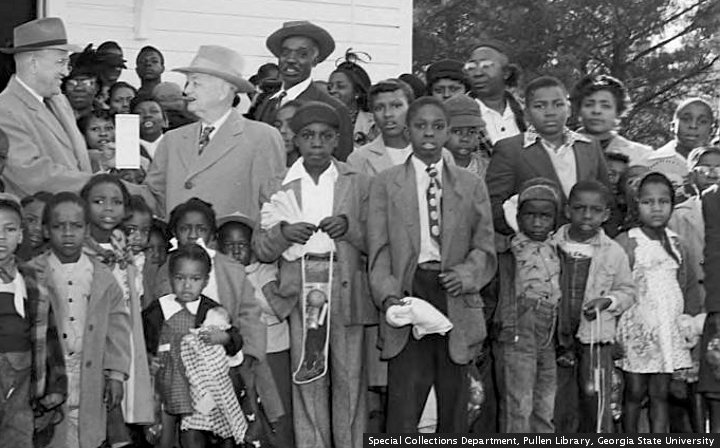
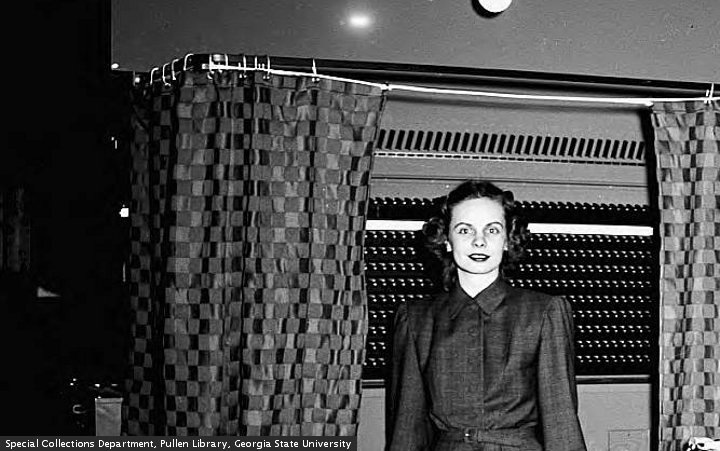
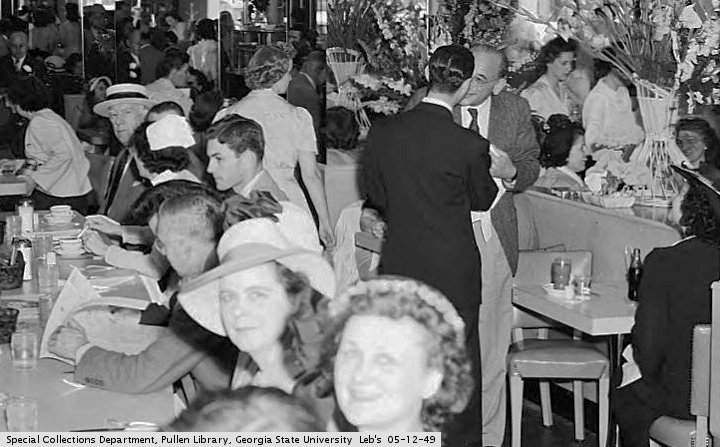
This is a repost, with pictures from “The Special Collections and Archives, Georgia State University Library”. It was written in first person. The issue discussed has mostly faded away, except for a few hardcore cranks. Politicians have found new issues to distract voters when they want to make crooked deals. These things too shall pass away.
In 1994 I was working in downtown Atlanta. I represented my company in a customer’s office, and there was often time with nothing to do. At the very least, there was no time clock. Lunch could slip into overtime with few consequences.
There was an issue in the news in 1994, along with some claims that I did not believe. This issue was whether, or not, to change the state flag. One day, I went to the library, and sat down with the microfilms of the Atlanta Constitution (Covers Dixie Like the Dew) for the Winter of 1956.
One of the fun things about doing research is the things you were not looking for. Elvis Presley made a personal appearance at the Fox Theater. Atlanta Blue opened a facility on West Peachtree Street. There was speculation about whether Dwight Eisenhower would have a different Vice President in the next election. Mr. President had a heart attack in 1955. Many did not want Richard Nixon to be Vice President. 1994 was 20 years after Mr. Nixon resigned the Presidency in disgrace. You wonder how things might have been different if Mr. Eisenhower found a new Vice President.
1956 was two years after Brown vs. The Board of Education, and many were concerned about school desegregation. A bill was proposed in the legislature to make it a felony to advocate integration.
The Governor at the time was Marvin Griffin. Georgia Tech played Pittsburgh in the Sugar Bowl that year, in spite of the fact that Pittsburgh had a black player. The Governor strongly objected, but was overruled. The game was played without incident.
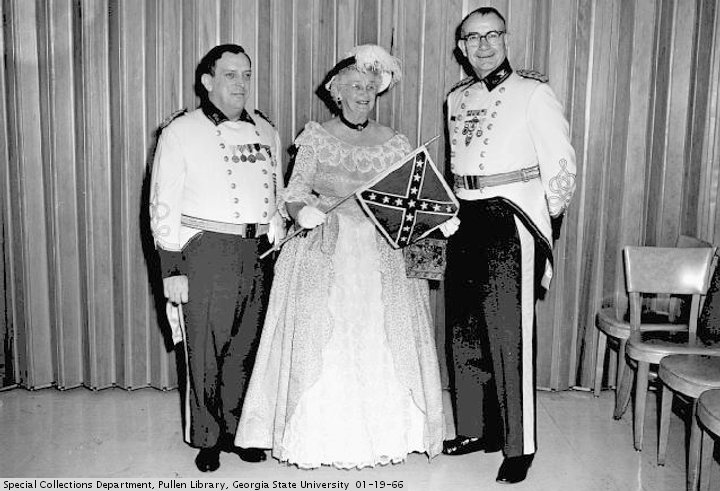
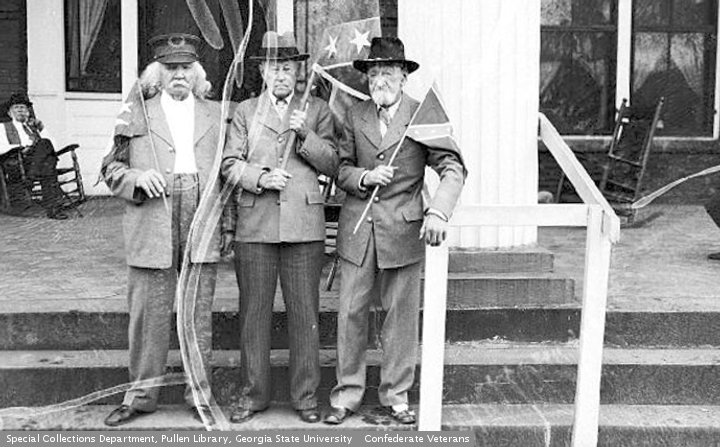
The State of Georgia changed the state flag that year. The new flag had the state seal on a blue stripe next to the St. Andrews Cross, the battle flag of the Confederate States of America.
In 1994 many wanted to change that flag. Some said that it was a symbol of slavery and oppression; others said it was a reminder of battlefield valor. A native southerner, I could appreciate both points of view. I was neutral regarding a change of the flag.
One thing that I did not understand was an argument made for changing the flag. The line in those days…first expressed by Governor Zell Miller and endlessly repeated by the local fishwrapper media … was that the flag had been changed as a protest against desegregation.
I did not believe that for a minute. The legislature in 1956 was not that smart. They were a bunch of white males who were, with a few exceptions, racist, alcoholic crooks. If someone had suggested a flag change as a stand of defiance against desegregation, they might have thought it a good idea, but I somehow doubt that anyone thought like that. This was 1956. The sixties, where protest became the new national pastime, were a few years away.
After a few minutes of searching through the department store ads and sports pages, I found what I was looking for…. the article announcing the flag change. There was no mention of a protest against desegregation. They announced it as a way of honoring the Confederacy. This is in keeping with the times. Georgia in 1956 was still recovering from the War, and the Cult of Honoring the Confederacy was strong. Fergit Hell!
The flag was eventually changed during the administration of Governor Roy Barnes. The new flag was even uglier than the old one, which I did not think was possible. Sonny Perdue defeated Mr. Barnes in his bid for reelection, in no small part because he proposed a referendum on the flag. He forgot this promise as soon as he got into office, but the flag was changed once again.





Another Roadside Attraction Part Two
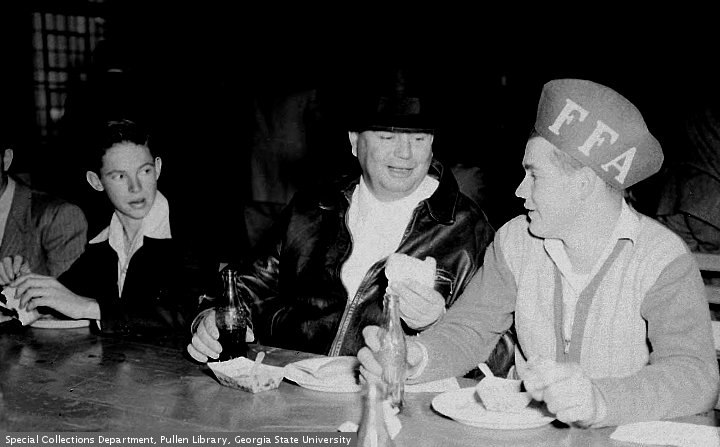
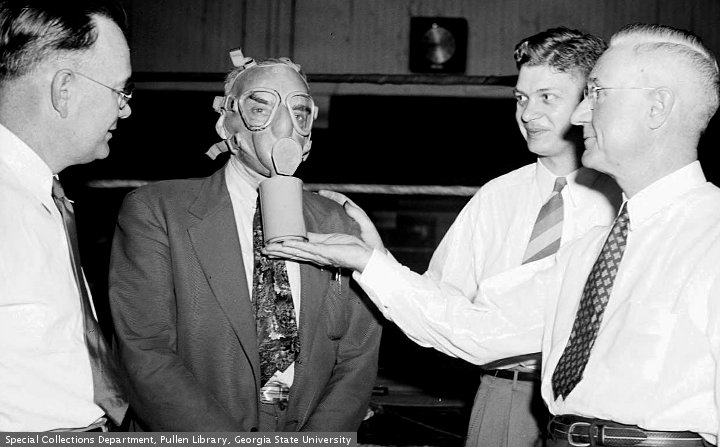
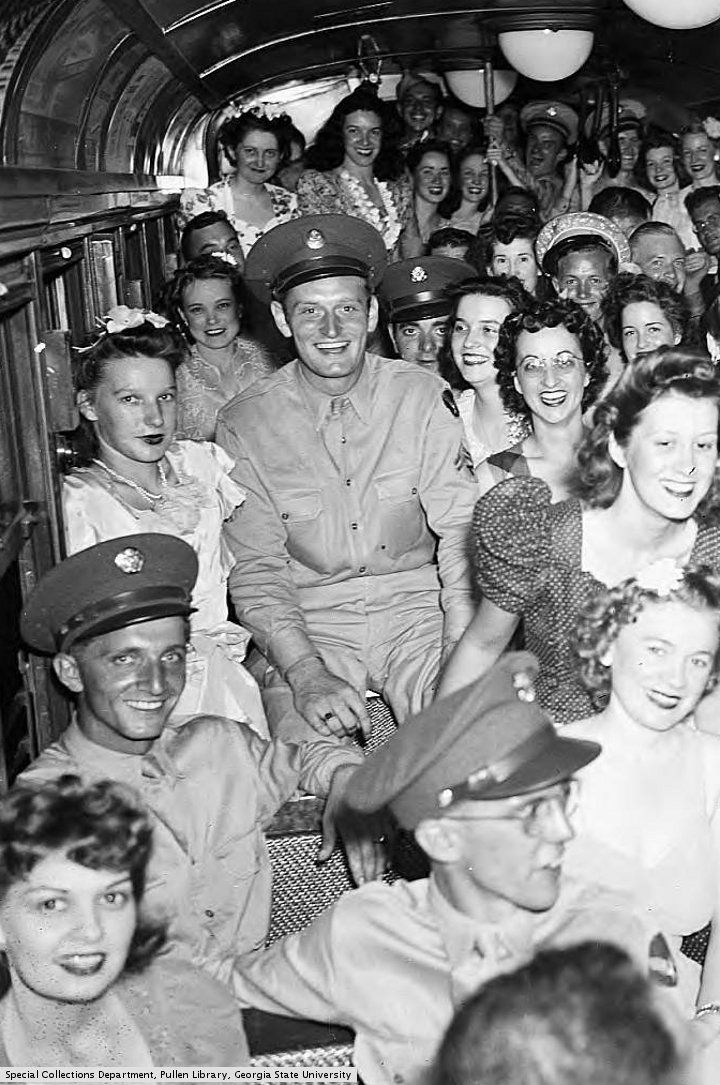


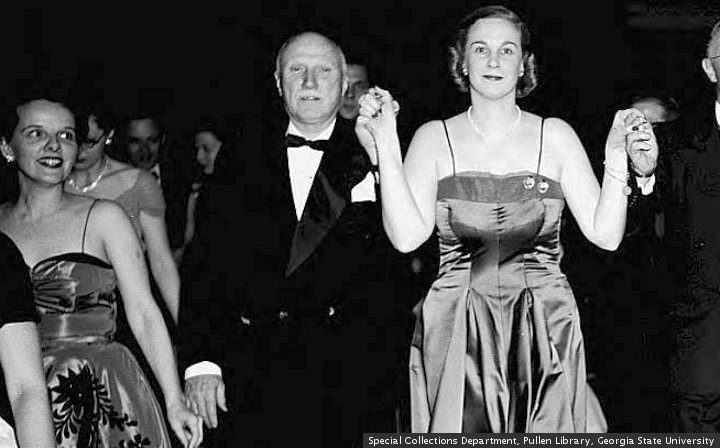
This is the second, and final, part of a chamblee54 book report on Another Roadside Attraction, by Thomas Eugene Robbins. The book is due back at the chamblee library today. There are two possible reasons to hurry up, and finish reading the book. A overdue fine from the local library is less of a burden than a failing grade. The effect can be the same… not stopping to smell the verbal roses, but shovelling the animal product that facilitates growth. FWIW, part one is available for your perusal. Pictures today are from “The Special Collections and Archives, Georgia State University Library”.
The first note is page 177. John Paul Ziller, and his wife Amanda, decline to get drunk. They consider alcohol to be an imperfect drug. This is a line that PG remembers from the 1978 reading of ARA. What was forgotten was Marx Marvelous, the narrator of the tale. He proceeds to get sloshed, and quotes Bertrand Russell: there is little difference between a man who eats too little and sees heaven, and a man who drinks too much and sees snakes.
Amanda replies that one of the men sees snakes. She says a lot of things in ARA. It is probably quite charming in person, especially when one is warm for her form. In the text, forty five years later, it can be rather annoying. On page 336, Marx Marvelous learns two things about Amanda: she loves him deeply, and it totally indifferent as to whether, or not, she sees him again. The concept of sexist condescention, germinating when ARA was written, has come to politically correct fruition in the age of Obama. If one is of the mind to do so, they could judge ARA harshly for this.
There is an order of renegade monks down the road from the Zillers. An associate, Plucky Purcell (more formally known as L. Westminister Purcell III) is a visitor at this facility. This residency is a marvel of totally unbelievable fiction, and is essential to the plot of ARA. The monks are a Vatican hit squad, and Purcell fits right in. In a stroke of impossible to forsee synchronicity, two *good* nuns stop by for a visit. They are Sister Elizabeth and Sister Hillary. They make two appearances… on page 183 and page 283. Amanda decides it is nun of her business.
The Zillers have a roadside zoo, and hot dog stand. It does not sell coffee, which is disappointing to many road warriors. “they stop for coffee, and feel cheated when they learn the meaning of meaning.” PG first heard the phrase “meaning of meaning” in an eleventh grade history class. It was presided over by a basketball coach, who was not interested in the dribbles and shoots of wars and civilizations. For the first test, “Dudley Doo Right” asked the class to write three pages on the meaning of meaning.
As second time readers know, the essential character in ARA is the body of Jesus. It was in the Vatican, until Plucky Purcell found it, and brought it to the Ziller’s hot dog stand. In this edition of ARA, the mummified savior appears on page 222. This is one third of the anti christ. There is something cosmic about a dead Jesus having a numeric value equal to one third of beelzebub. Or maybe it is merely comic, and the author had an extra s that he had to use before the expiration date.
One of the joys of google era reading is easy access to fact checking. (The proposed french word for google was a palindrome, googelegoog.) On page 280, TER reports that Carmen Miranda wore size one shoes. The page wikiFeet for Maria do Carmo Miranda da Cunha has pictures, which appear to be larger than size one. The Celebrity Shoe Size List has Carmen Electra (size 7) and Carmen Kass (size 8.5,) but no Carmen Miranda. PG thinks the diva detail to be an apparition of overactive imagination.
As ARA rambles on to the uplifting conclusion, a council of war is convened in the hot dog stand. The Zillers, Plucky Purcell, Marx Marvelous, and Mon Cul (John Paul Ziller’s pet baboon) try to decide what to do with the holy remains, known by now as “the corpse.” On page 290, there is a typo, unless “insited” is a scrabble approved word. On page 288, someone is called “utopianist.” This may reefer refer to utopia. A more whimsical vision sees a keyboard musician working for the United Thank Offering. Those Episcopals think of everything.
There are several sides in this debate. Amanda takes the historic approach, and washes her pretty hands of the corpse. Pontius Pilate hands her a bar of soap. Plucky Purcell wants to publicly display the corpse, with the idea of destrying the Catholic church. Marx Marvelous says that lots of Catholics are good people, and telling them that Jesus is dead would hurt their fee fees. Sister Elizabeth, and Sister Hillary, are used as examples.
In truth, the fictional debate has been rendered moot in the post Nixon, but not post racial, world. The Catholic church soldiers on. The revelation that *some* priests like to forcibly sodomize pre adolescent boys has barely mattered to the masses. The church has taken a (catho) licking, and kept on ticking. Co-dependent Protestantism does even better.
Page 290 was where PG had to throw down the book in disgust. Plucky Purcell, backing down from his plan to destroy the church, admits that *Jesus* was a pretty good guy after all. Never mind that the story he quotes is from the Bible… written by hundreds of anonymous authors, hand copied by anonymous scribes, compiled and edited by the Romanized church, translated by a queer English king. How can you trust a book like that? And yet, the PR of Jesus persists. Even the most vicious critics of the modern Jesus worship church have a soft spot for the old boy.
One *page 69,* John Paul Ziller warns against anthromorphizing, or assigning human emotions to non-human animals. And yet, 222 pages later, the text anthromorphizes the cult of Jesus. It must work, because the conclusion of ARA leaves the Roman Pedophile Church intact.




 Chamblee54
leave a comment