The 1956 Legislature And The Flag



What Stacey Abrams said about burning the Georgia flag in 1992 The New York Times decided to show a picture of a younger, slimmer Stacey Abrams burning the Georgia state flag. The year was 1992. The state flag had the Confederate battle flag embedded. People were asking the legislature to change that. Miss Abrams was a student activist. This is an edited repost.
The NYT article sparked a twitter dogpile, about the motives of the Georgia legislature in 1956. PG remembers 1993, when the initial proposal to change the flag was made. Changing The Flag is an account of those years. If you have a minute, you should read that post before going any further. The people who wanted to change the flag introduced an argument. They said that the legislature changed the flag, in 1956, as a protest against integration. PG never believed that. One afternoon in 1994, PG found a newspaper article that supported his point of view. After that, PG did not think much about the issue. The flag was changed in 2000 and 2003.
The issue has a few shades of gray. The reason given in 1956 was honoring the Confederacy. In 1993, the 1956 legislature was said to be protesting integration. The emotions of honoring the Confederacy, and denouncing integration, are not entirely separate. Many of the same people, who are proud of the Confederacy, are white supremacists. To an outsider, they can seem like the same thing. PG can understand how someone not familiar with Georgia could mistake the two.
The debate, over the motive of the 1956 legislature, was never necessary. The flag, featuring the Confederate battle flag, was seen as a symbol of racism. Many people were offended by this flag. Why not just say we should change the flag for this reason, and not worry what the legislature was thinking? However, this was not good enough. People needed some more ammunition for their fight. The notion that the flag was changed as a protest against desegregation was born. PG never heard, before 1993, that the flag was changed as a protest against integration. People believed this notion without any evidence, just because somebody said so. 1994 was 38 years after 1956. Very few people in 1994 were active in 1956. The argument in favor of the changed-to-protest-integration notion had two parts: (1) Because I said so, (2) if you disagree you are a racist idiot.
@KevinMKruse “No, she burned the old *Georgia* flag, which had been designed specifically by white supremacists as a show of defiance to desegregation in 1956. Let’s dig in.” @chamblee54 “The Flag was not changed as a protest against desegregation. Changing The Flag” @KevinMKruse “I literally wrote a book on this, but congratulations on finding a blog post.” @chamblee54 “I wrote the blog post. If you read the post, you will see I did research. Did anyone say at the time that the new flag was a protest? Do you have a link to this?”
@JoshCStephenso “You found a single article? Maybe you would trust a paper written by the Deputy Director of the Georgia Senate Research Office – a chamber that is majority R?” This tweet was helpful. The report was written in 2000, before the a new flag was driven through the legislature. If you have the time to read the complete report, it is worth your time. If not, a few quotes will be posted here, along with a few helpful comments.
The first Confederate flag looked a great deal like the Union flag. In early battles of the war, the two flags were often confused. “The commanding Confederate officer at the Battle of Bull Run, General P.T.G. Beauregard, determined that a single distinct battle flag was needed for the entire Confederate army. Confederate Congressman William Porcher Miles recommended a design incorporating St. Andrew’s Cross.”… “Other flags such as State regimental colors were used by the Confederacy on the battlefield, but the battle flag, although it was never officially recognized by the Confederate government, came to represent the Confederate army.”
At first, use of the battle flag was restricted to historic events. It wasn’t until the fifties that the flag began to be used by those who fought integration. In 1954, Brown vs. Board of Education was handed down by the Supreme Court, ordering the integration of schools. The Georgia legislature went into resistance mode, and spent a lot of time denouncing integration. The senate research office devotes page after page to these efforts. Finally, “In early 1955, John Sammons Bell, chairman of the State Democratic Party … suggested a new state flag for Georgia that would incorporate the Confederate Battle Flag. At the 1956 session of the General Assembly, state senators Jefferson Lee Davis and Willis Harden introduced Senate Bill 98 to change the state flag. Signed into law on February 13, 1956, the bill became effective the following July 1.”
“Little information exists as to why the flag was changed, there is no written record of what was said on the Senate and House floors or in committee and Georgia does not include a statement of legislative intent when a bill is introduced – SB 98 simply makes reference to the “Battle Flag of the Confederacy.” … “Many defenders of the flag, including former governor Ernest Vandiver, who served as the Lieutenant Governor in 1956, have attempted to refute the belief that the battle flag was added in defiance of the Supreme Court rulings. Vandiver, in a letter to the Atlanta Constitution, insisted that the discussion on the bill centered around the coming centennial of the Civil War and that the flag was meant to be a memorial to the bravery, fortitude and courage of the men who fought and died on the battlefield for the Confederacy.”
This is where it gets murky. It is apparent that the legislature was obsessed with integration. The circumstantial evidence, of the flag being changed as a protest of integration, is there. However, there is no smoking gun. There are no apparent statements, from 1956, saying that this change was made to protest integration. This detail seems to have sprung up in 1993, without having been widely mentioned in the 37 years since 1956. The newspaper article PG found does not mention a protest against integration, and does mention a desire to honor the Confederacy.
“The argument that the flag was changed in 1956 in preparation for the approaching Civil War centennial appears to be a retrospective or after-the-fact argument. In other words, no one in 1956, including the flag’s sponsors, claimed that the change was in anticipation of the coming anniversary. Those who subscribe to this argument have adopted it long after the flag had been changed.” This is contradicted by the newspaper article, and statements by “Governor Griffin’s floor leader, Representative Denmark Groover … “anything we in Georgia can do to preserve the memory of the Confederacy is a step forward.” As for the after-the-fact argument, you could say the same thing about the notion that the flag was changed as a protest against integration.
John Sammons Bell is a name that keeps coming up. From 1954 to 1960, Mr. Bell was Chairman of the State’s Democratic Party. He was, by all accounts, an enthusiastic segregationist. One of the jaw dropping moments in the senate report was this: “Bell, a one-time supporter of Governor Ellis Arnall, once had the reputation of being a “liberal” on race issues.”
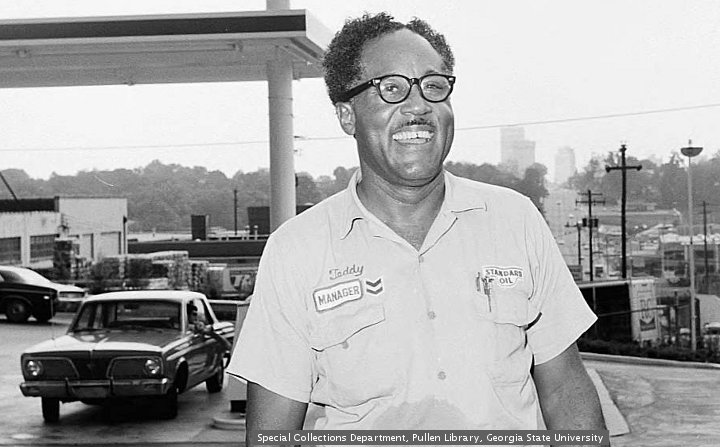
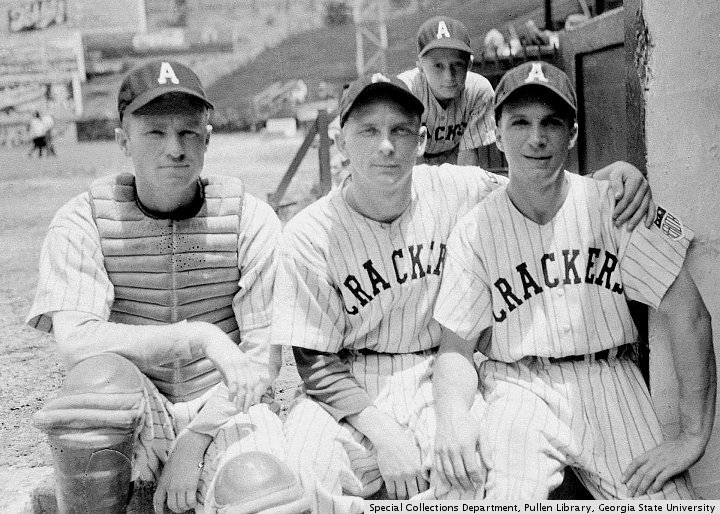
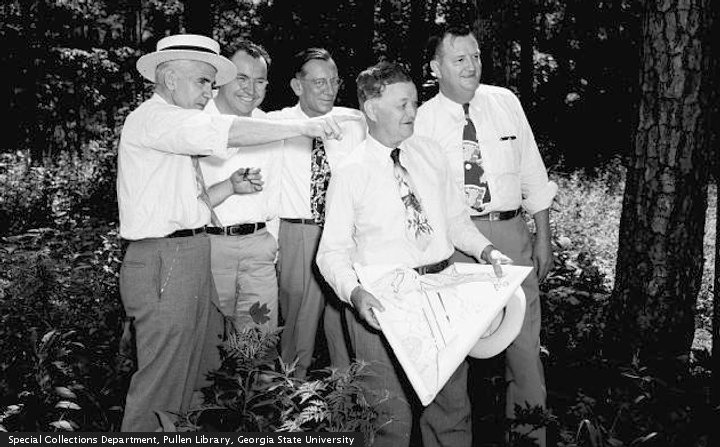
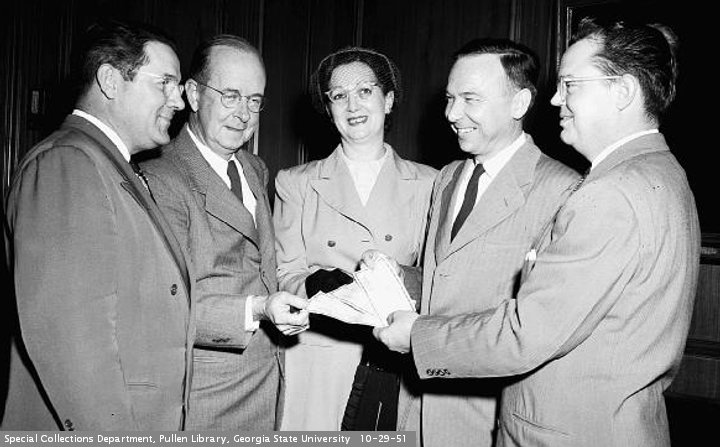
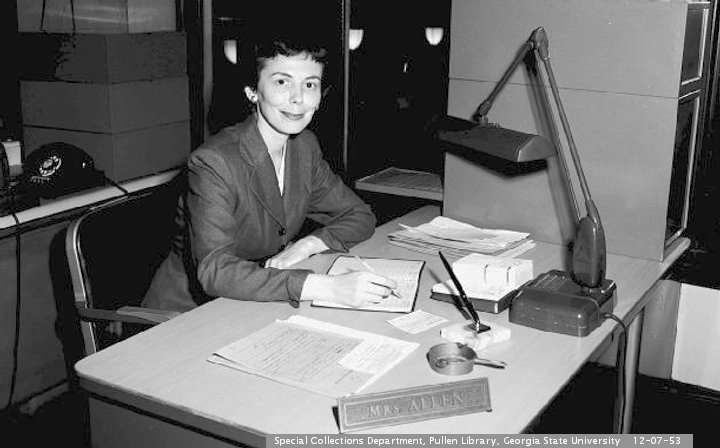
To sum up, the Georgia state flag was changed in 1956. The new flag contained the Confederate battle flag. Many people were offended by the 1956 flag. PG thought it was ugly. Many others saw it, with some justification, as a symbol of racism. For some reason, speculation about the motives of the 1956 legislature arose. 18 years after the passage of a new flag, people are still arguing over the motives of the 1956 legislature. Pictures today are from “The Special Collections and Archives, Georgia State University Library”. Previous postings of this feature include many details omitted today.




We’re All God’s Children


It was September, 1976, in Athens, Georgia. Someone decided to open a disco downtown. On opening night, there was a crowd. People wanted to know, would men be able to dance with men?
The owner was said to be a redneck, who would not allow such things. Finally, the party got started. At some point, same sex couples started to dance together. The owner shut down the music, and stood in front of the crowd with a microphone. He said a few words that did not please anyone, and there was an uneasy silence. Then, out of the back, came one voice.
We’re all God’s children.
45 years later, we are still struggling. People try to solve problems, big and small, with name calling. If you don’t have the correct opinion about this or that, then you are a terrible person. We seem to forget the one basic truth: We’re all God’s children.
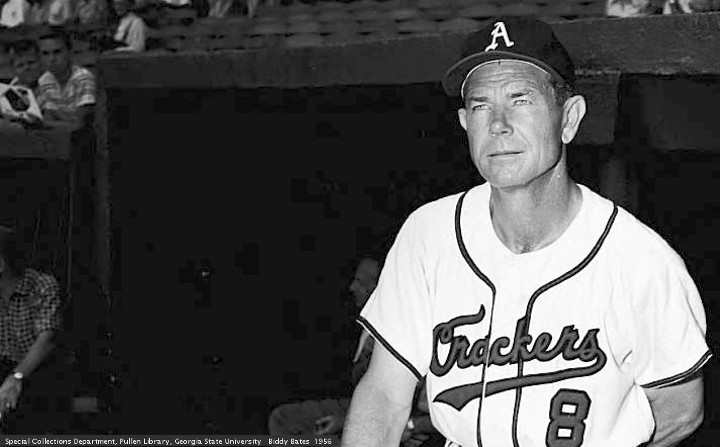
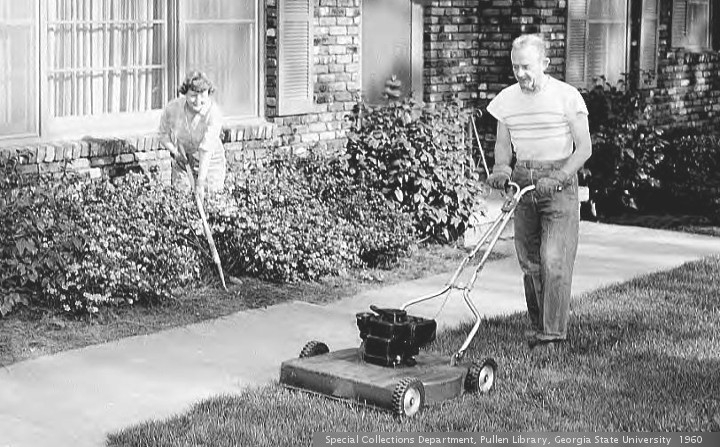
We don’t know who cried out WAGC that night, 45 years ago. If I had to guess, I would say that it was an African-American. Much of the name-calling today is about skin color. If you are not heard repeating the platitudes of the day, you will get called racist. You are deemed worthy of hatred and abuse. Your humanity is taken away from you. You are no longer one of God’s children. Pictures today are from “The Special Collections and Archives, Georgia State University Library.”




Doing “Satanic Rituals”




The display of a link on this page does not indicate approval of content.
Why all the fuss about Ivermectin, that became in many countries a ‘dirty word’?
India’s Ivermectin Blackout: Part II Justus R. Hope, MD Aug 13, 2021
India’s Ivermectin Blackout – Part IV: Kerala’s Vaccinated Surge By Justus R. Hope, MD
The Black Friend: On Being a Better White Person.
We Talked to the Host Accused of Doing “Satanic Rituals” In His Airbnb
Sixty Facebook groups focused on ivermectin discussion
PC outrage might finally tip the scale against cancel culture
Emma Sarley: ‘I Was Filled With Some Panic’ Over Being Followed
“Critical Race Theory” Hysteria Why anti-CRT legislation is anti-American.
My Weight-loss Explained Mental Health, Sobriety, Substance Abuse Awareness
Wisconsin Assembly passes ban on teaching critical race theory
CIVIL DOCKET FOR CASE #: 1:15-cv-02594-MHC Appellate Docket: 17-11589
I Love Whataburger, I Just Wish Its Cups Were Biodegradable
Why is CNN doing PR for a Middle Eastern dictatorship?
Rock Hudson sings “Baby its cold outside” with Mae West.
Self-Described Member of “Boogaloo Bois” Pleads Guilty to Riot
Dorothy Parker Stories Read By Shirley Booth Caedmon Records
Prominent Indian Physician Talks Impact Of Ivermectin In Home Medicine Kits in India
Nurse Iris Adams Dead due to COVID19 after Vaccination
SEPT 2021 Woman fired after staged “gotcha” racism video.
The Past and Future of Black Political Leadership | Glenn Loury & John McWhorter
The Ivermectin Miracle in India’s 240m Populated Largest State, Uttar Pradesh
United States Spends More on Top-Selling Drugs Than Rest of World *Combined*
Tale of Two States: Kerala, Uttar Pradesh Paint A Contrasting Picture of Covid-19
Toward Dismantling Family Privilege and White Supremacy in Family Science
NATO military chief urges alliance to boost cyberwarfare capabilities
Man robbed and shot at by thieves in parking lot of Lenox Square
it’s kind of hard to speak your mind when you don’t necessarily have a mind
Announcing the Winner of Restless Books 2021 Prize for New Immigrant Writing
The Biden Agenda On the Line | Bill Scher & Matt K. Lewis | The DMZ
Indian Bar Association vs WHO | Adv. Dipali Ojha with Rajiv Malhotra
doesn’t feel right ~ frederick joseph ~ sean astin ~ an american sunrise ~ an american sunrise
bierce librivox ~ neologism ~ gods of the dead ~ trash pandas ~ francis ~ paint the park
johnny mercer ~ ala ~ zack bs ~ @hendrixroadie ~ your hood ~ AlexJProd ~ @hendrixroadie
Yasiel Puig Valdés ~ phoenix ~ psychopolitica ~ tw ~ india ivm
ivm ~ napoleon ~ wesley yang ~ [ __ ] ~ frederick joseph
glurge ~ till, til, until ~ fauci/kramer ~ shelby foote ~ zola
Francis Poulenc ~ its showtime, folks ~ crime numbers ~ seven ~ repost
@chamblee54 Replying to @hendrixroadie I think that it boils down to everyone has an individual approach to gender. Racial attitudes are similar. When I was a young man, non-binary was not seen as an option. I finally saw myself as a man, with a healthy dose of woman thrown in. “We’re all God’s children.” ~ @chamblee54 .@kittypurrzog I was scrolling through an episode to find segment about .@FredTJoseph you were commenting on .@jessesingal … you said that black people don’t wear cargo shorts #ArmaudArbery wore cargo shorts when he went jogging for the last time ~ @FredTJoseph So @annamerlan decided to write about my recent experience with Airbnb for @VICE She didn’t interview me, get my perspective, or lived experience as a Black person. She decided only speaking to the white guy was fine. Let’s talk about how racism shows up in journalism.(THREAD) ~ I have written 3 posts about ivermectin As is always the case with my blog, if you don’t like the text, you can look at the pictures. IVM may be the big scandal of COVID. I compare it to marijuana. After 420 was declared a dangerous drug with no medical benefits, little research was done into those benefits. The government issued the results before they did the research. I had a facebook conversation about the Maddow post. I wound up being unfriended. The last thing he said was “I trust the FDA, and I don’t care how they treat things in India and Africa. ~ one two three ~ An Old Farmer’s Advice is commodity wisdom for the ages. Pictures are from the Georgia State University Library. ~ Ivermectin for Prevention and Treatment of COVID-19 Infection: A Systematic Review, Meta-analysis, and Trial Sequential Analysis to Inform Clinical Guidelines ~ Viral Video of White Woman Allegedly Telling Black Couple To ‘Stay in Your Hood’ Was Recorded by a Known Fabulist ~ “i think he has beliefs sincerely held beliefs but then once he stakes out that ground he will backward engineer all sorts of random arguments that are not intellectually honest to hold that position that’s his real position” ~ i like to make the coffee, my brother does not like the way i make coffee, i don’t like the way my brother makes coffee, pour water in the glass thingie, up to the ten mark, careful not to spill any water on my feet, put the paper filter in the basket, my bored fingers getting no jollies, take down the can, take the lid off, hold the can over the basket, so nothing will spill on the counter, my fingers will still be bored if i have to clean up, but my arms and thighs, will be exasperated by my clumsy hands, when you put the coffee can up, it is important to remember to turn the machine on, any one of these steps has been forgotten at one time or another, finally, when the legal drugs have finished manufactoring themselves, i take a cup off the shelf, pour an appropriate amount of coffee in the cup, and take the rag and clean up the wasted drugs on the countertop, take the cup, and splash around the drugs until they are not so hot, as to burn the inside of my mouth, which will take my fingers mind off morning boredom, while holding onto the cup in, any situation, the warm drugs flow past the gag reflex mechanism, if the years of enthusiastic fellatio has not driven a stake through the gag reflex ~ pictures today are from “The Special Collections and Archives, Georgia State University Library.” ~ selah
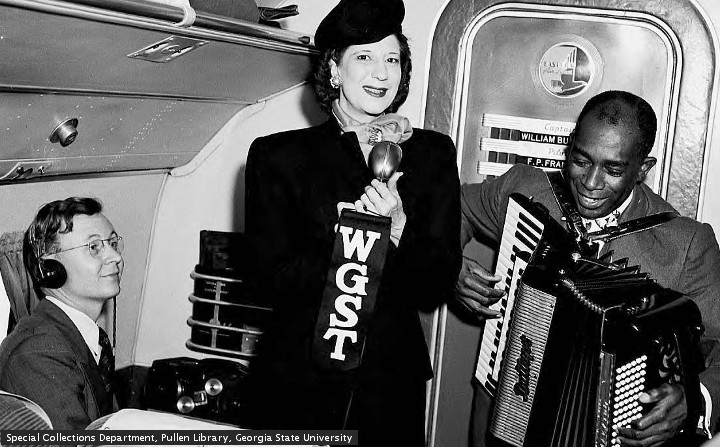

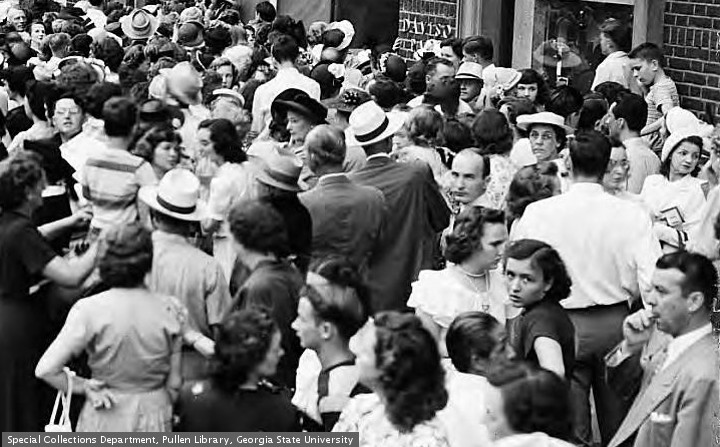
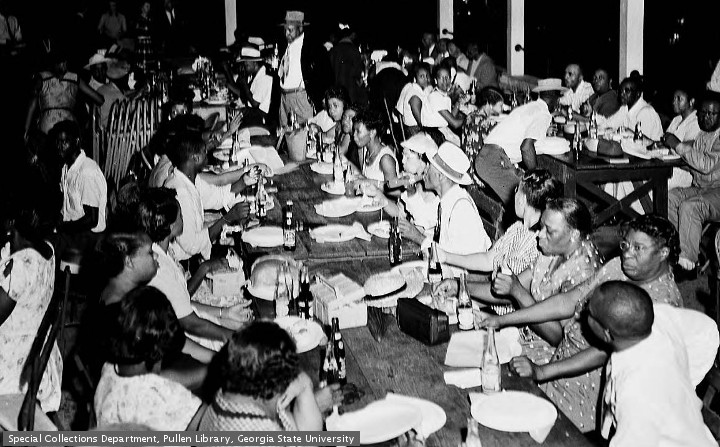
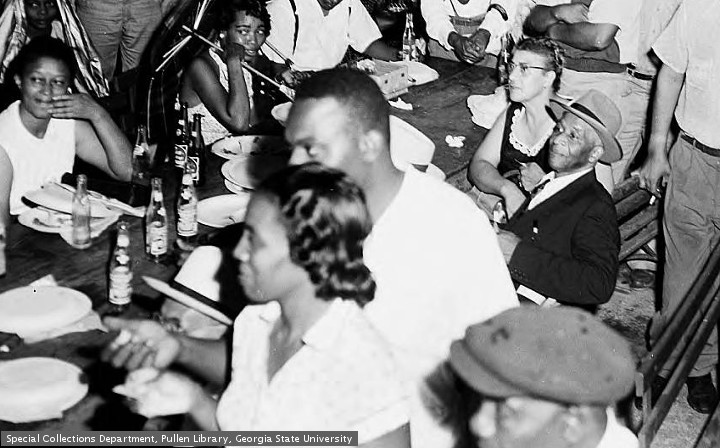


An Old Farmer’s Advice


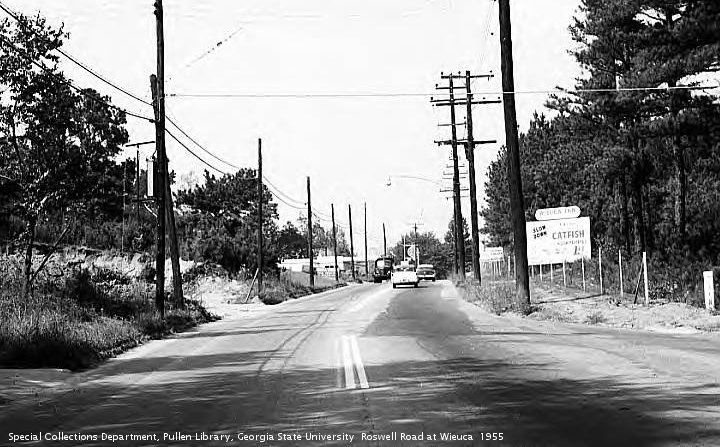

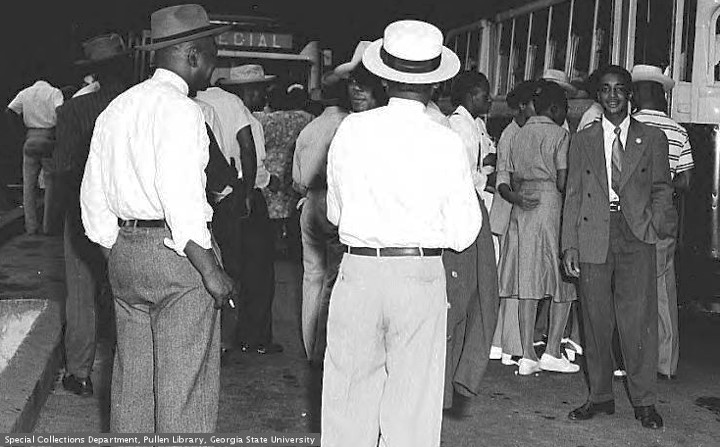
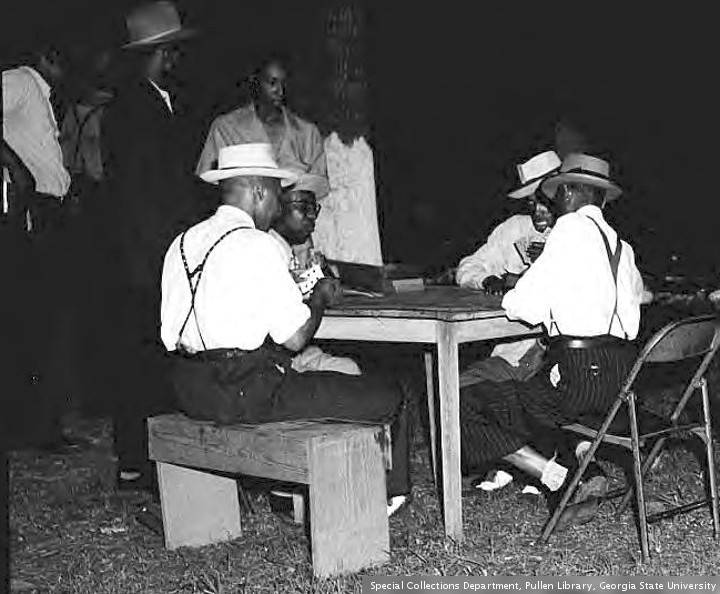
Many of you have heard “An Old Farmer’s Advice”. This is a repost. Pictures are from “The Special Collections and Archives, Georgia State University Library”.
“Your fences need to be horse-high, pig-tight and bull-strong. Keep skunks and bankers and lawyers at a distance. Life is simpler when you plow around the stump. A bumble bee is considerably faster than a John Deere tractor. Words that soak into your ears are whispered…not yelled. Meanness don’t jes’ happen overnight. Forgive your enemies. It messes up their heads. Do not corner something that you know is meaner than you. It don’t take a very big person to carry a grudge. You cannot unsay a cruel word. Every path has a few puddles. When you wallow with pigs, expect to get dirty. The best sermons are lived, not preached. Most of the stuff people worry about ain’t never gonna happen anyway. Don’t judge folks by their relatives. Remember that silence is sometimes the best answer. Live a good, honorable life. Then when you get older and think back, you’ll enjoy it a second time. Don’t interfere with somethin’ that ain’t botherin’ you none. Timing has a lot to do with the outcome of a rain dance. If you find yourself in a hole, the first thing to do is stop diggin’. The biggest troublemaker you’ll probably ever have to deal with, watches you from the mirror every mornin’. Always drink upstream from the herd. Good judgment comes from experience, and a lotta that comes from bad judgment. Lettin’ the cat outta the bag is a whole lot easier than puttin’ it back in. If you get to thinkin’ you’re a person of some influence, try orderin’ somebody else’s dog around. Live simply. Love generously. Care deeply. Speak kindly. Leave the rest to G-d!”
No one knows who the old farmer is, or what he grew. Some say he really worked in an office writing ads for Massey Ferguson. Some say he had a bull farm, and believed in the product. In this age of industrial strength commodity wisdom, the first reaction of some is to look to google. In this case, you can go to a forum at Snopes. No one claims to be the grandson of the old farmer.
“My father in law is an old farmer. He’s given me some advice. It was more like: Don’t try to fix a broken porchlight in a rainstorm. corollary: Disconnect power to the sprinkler system before fiddling with the wiring. If you wear longer socks, the chiggers won’t bite you. Cool Whip makes everything taste better. Do whatever your mother in law says.”
quote: “A bumble bee is considerably faster than a John Deere tractor.” ~ “Yeah, but you try getting a bumble bee to plow your fields. With the tiny little plows attached to their wings, it could take days.”
quote: “Live simply. Love generously. Care deeply. Speak kindly…” ~ “And above all else, verb adverbly … There’s my problem, I’ve been living deeply, loving simply and speaking generously.”
quote: “Life is simpler when you plow around the stump.” ~ “I’m not sure of the lesson here…you should leave a bunch of tree stumps in your farm fields? But then you lose valuable real estate, the crops have to compete with the tree roots, and combine harvesting is significantly more dangerous. Maybe, if you take just a little time to remove the stump properly, it pays dividends and saves you time and energy in the long run. … But life is a lot cooler, and more productive if you go down to the general store, buy a few blasting caps, and blow that mother to kingdom come.”
“The sentiments aren’t too bad, but they missed “Now get orf moy laaand!” from the end…”
quote: “Most of the stuff people worry about ain’t never gonna happen anyway.” ~ “Oh, so I shouldn’t worry about not being able outrun a bumble bee on my John Deere tractor? Thanks.”
quote: Always drink upstream from the herd. ~ “But, unless your at the absolute source of the river, there’s always another herd further upstream.”
quote: The biggest troublemaker you’ll probably ever have to deal with, watches you from the mirror every mornin’. ~ “I knew it. I knew that SOB had a camera in there. I’m going to the police.”




Measuring Racism
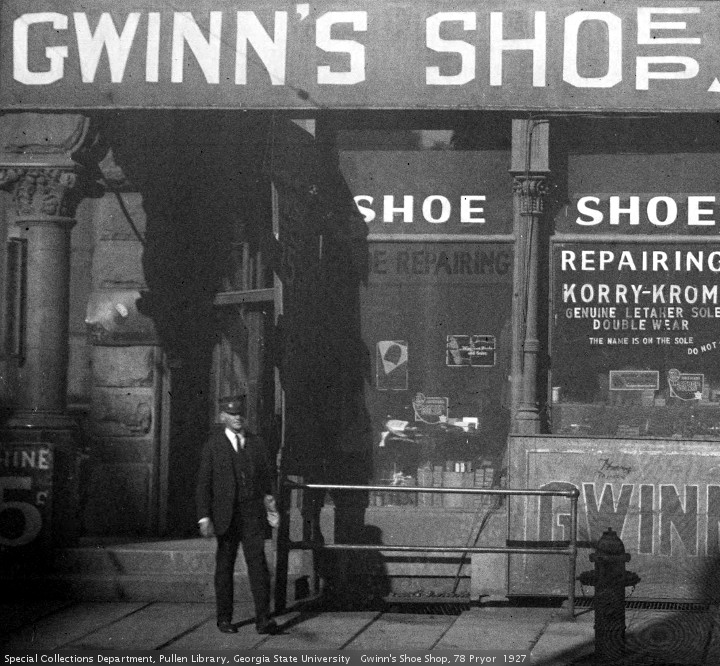




PG hears the word “racist” tossed casually so much, he suspects it has lost it’s meaning. Dictionary definitions are of little use. The meaning of the word depends on who is saying it.
The modest suggestion here is for a seven point scale to measure racism. Zero would be totally colorblind, and six would be metaphysical hate. For the sake of simplicity, this scale, in the beginning, will only apply to white-black relations in the United States.
The model for this is the Kinsey scale. In his books on human sexuality, Dr. Kinsey described a seven point scale. Zero was totally heterosexual, and six was totally homosexual.
PG does not have a clue how to write a test for this scale, or how to score this test. White people see racism differently than black people. White people are affected by racism in different ways than black people. Different cultures view racism in different ways.
How would PG score on this scale? He has black friends and black enemies. Certain parts of black culture are enjoyable, and certain parts make him want to turn the radio off.
PG does not like people that do not like PG. When it is us against them, you need to remember which one you are. How does this register on this racism scale? It depends on who does the judging.
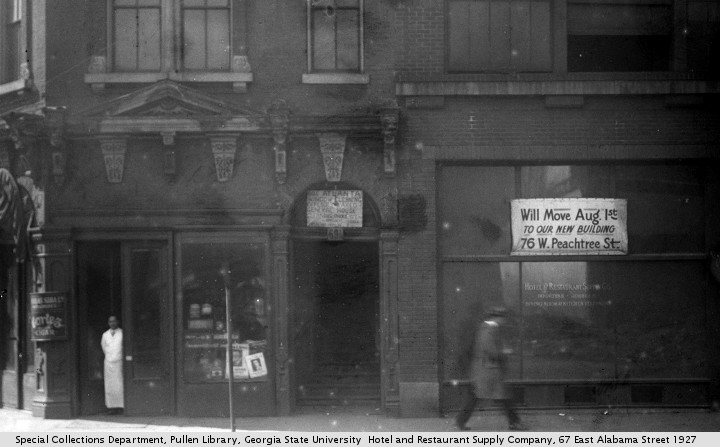
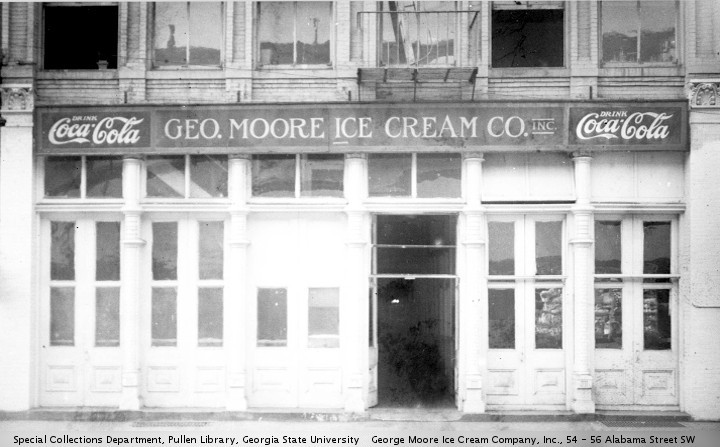
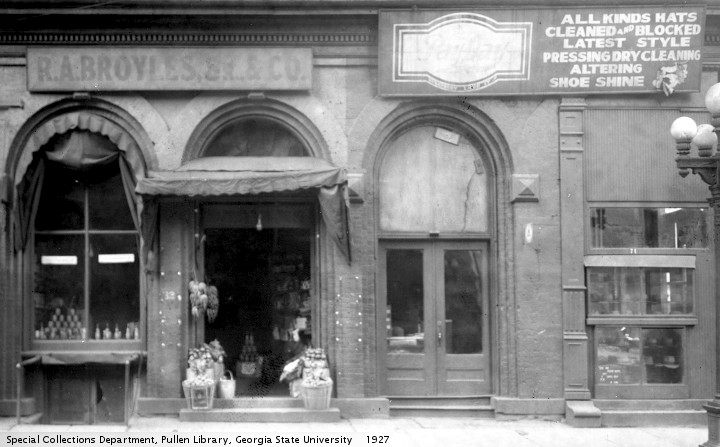
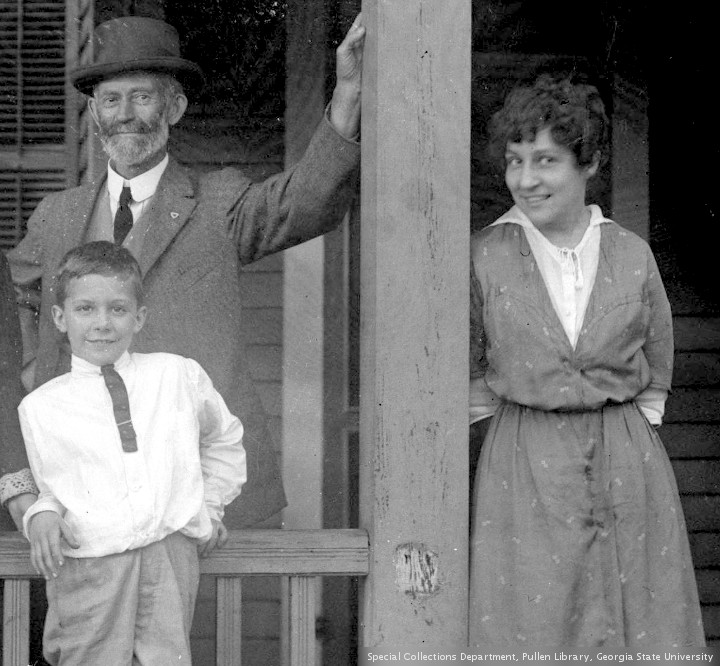
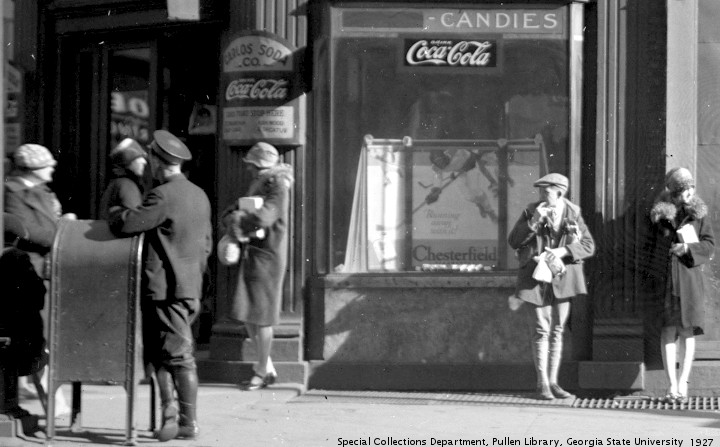
This is a repost. Pictures today are from “The Special Collections and Archives, Georgia State University Library”. These images are from “… a collection of images of downtown Atlanta streets that were taken before the viaduct construction of 1927 – 1929. Later, some of the covered streets became part of Underground Atlanta.” The renovation at Underground never stops.



Mary Ann in Autumn


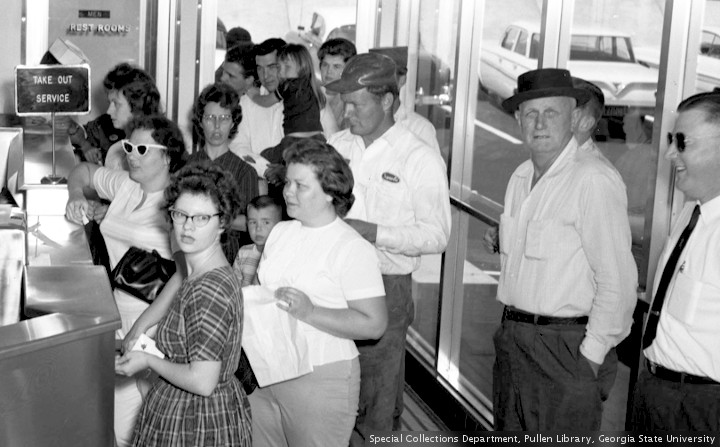
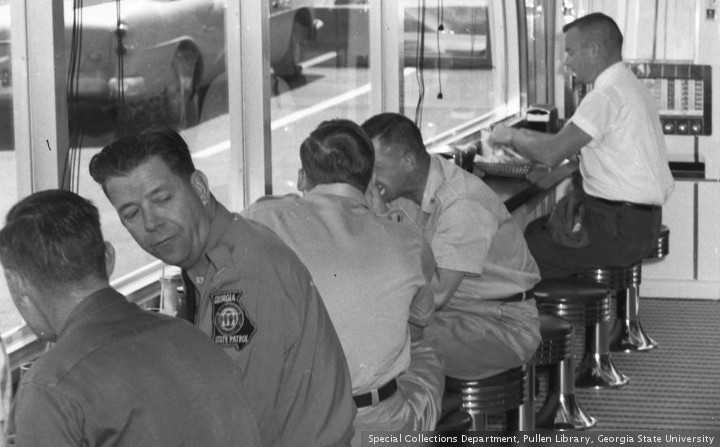

There is a moment near the end of Mary Ann in Autumn: A Tales of the City Novel. Michael is talking to his much-younger husband, Ben. Tangerines are involved. Michael says something about a song “from the sixties.” Claudine Longet sings “Would you like some of my tangerine? I know I’ll never treat you mean.” Claudine Georgette Longet is alive in 2021.
Flashback to the summer of 1973. Sopwith Camel is opening for Rory Gallagher at Richards. They play the closest thing they had to a hit, “Hello Hello.” “Would you like some of my tangerine? I know I’ll never treat you mean.” Somebody in the audience liked that song, and offered them a great deal of money to play it again. “Would you like some of my tangerine? I know I’ll never treat you mean.” SC wound up playing “Hello Hello” five times that night.
TOTC books are known for their unlikely plot twists. They are fun books, but not to be taken literaly. MAIA is no different. Mary Ann has unterine cancer, and just caught the husband screwing the life coach. She flies to San Francisco, and stays with Michael and Ben. A couple of long time lady-friends hook her up with an amazing gynecologist, who gets her to surgery in under two weeks. There are a few more subplots, which come together in a *bangup* finale. Check your critical thinking at the door, and you will be just fine.
Armistead Maupin writes about San Francisco, with a sharp eye for detail. One character is a dog park. Another is the homeless population. A third is the lifestyle blogger, which is obsolete just a dozen years later. (MAIA is set in 2008, which already seems like another century.) Somehow, these scenes marinate one another, producing a head-exploding finish. Pictures today are from “The Special Collections and Archives, Georgia State University Library.”



091121




This is my 911 story. I repeat it every year at this time. Every year I say this will be the last time. This year is a mess. We are destroying the village to save it. The action part of 091101 was over by 11 am. This quagmire drags on and on. Nobody knows how things will turn out.
I was at work, and someone called out that someone had run a plane into the World Trade Center. I didn’t think much of it, until I heard that the second tower had been hit, then the Pentagon, then the towers collapsed, then a plane crashed in Pennsylvania.
I focused on my job most of the day. There was always drama at that facility, and concentrating on my production duties helped to keep me saner. This was roughly the halfway point of my seven year tenure at this place.
One of the other workers was a bully for Jesus. He was a hateful loudmouth. After the extent of the damage became known, he shouted “They are doing this for Allah,” and prayed at his desk. The spectacle of the BFJ praying made me want to puke.
I became alienated from Jesus during these years. Once, I had once been tolerant of Christians and Jesus, as one would be with an eccentric relative. I began to loath the entire affair. I hear of others who found comfort in religion during this difficult time. That option simply was not available for me.
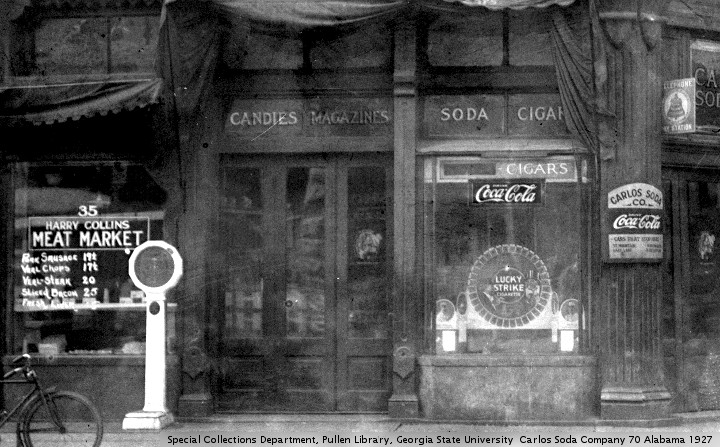
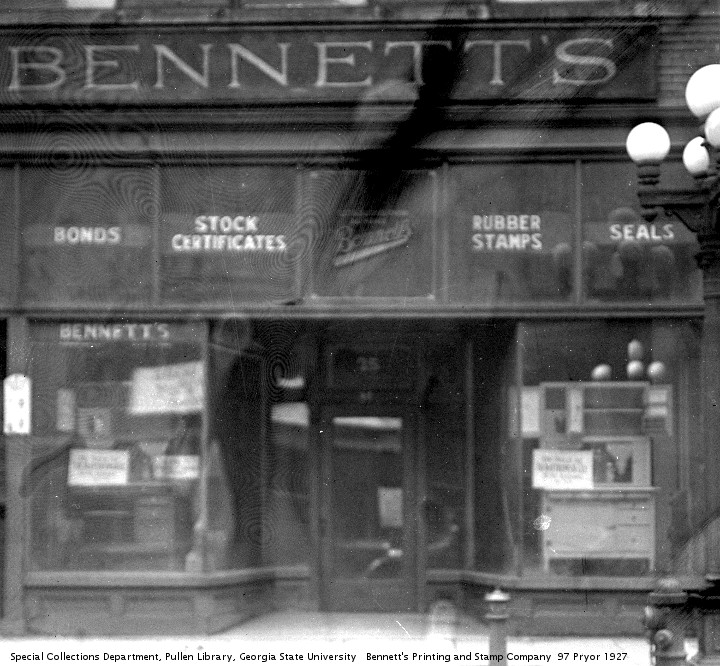
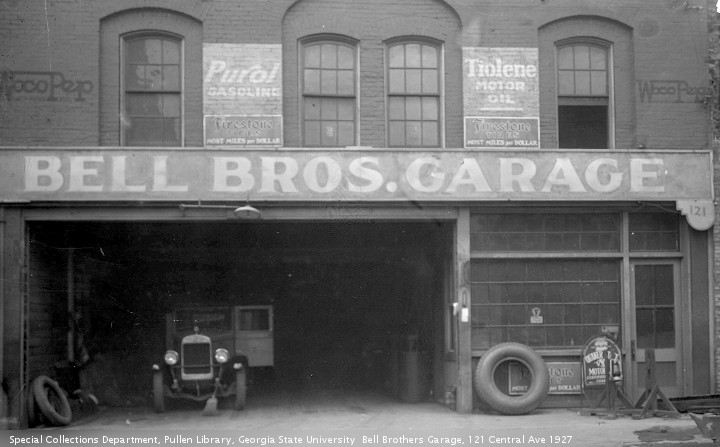
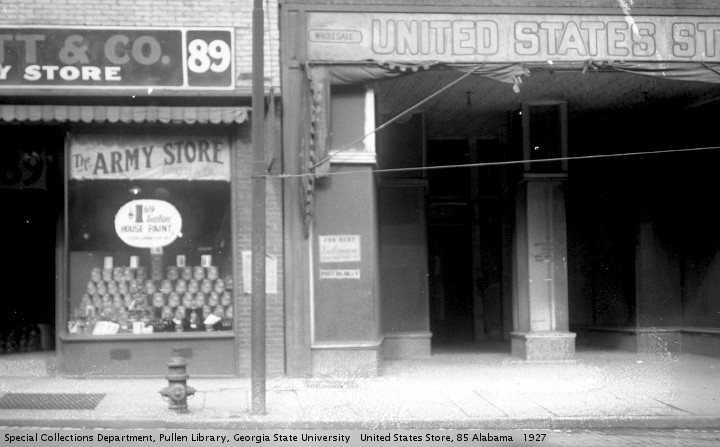
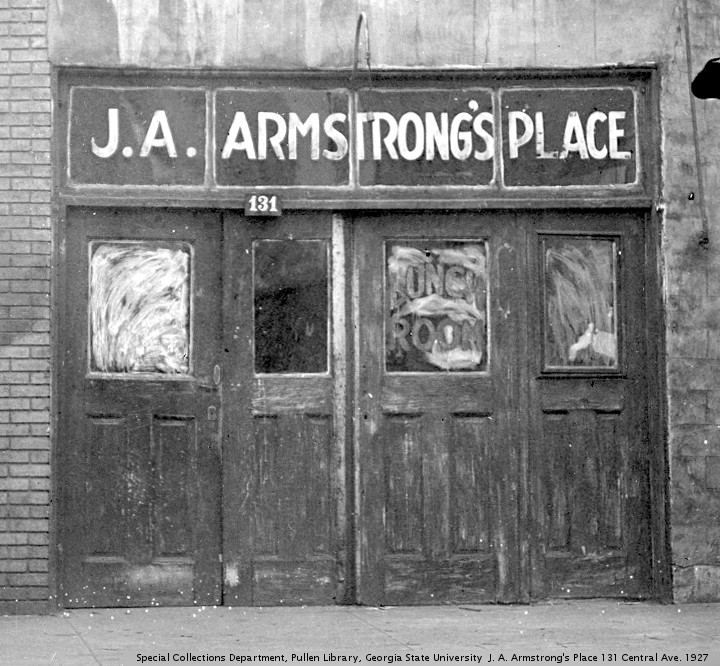
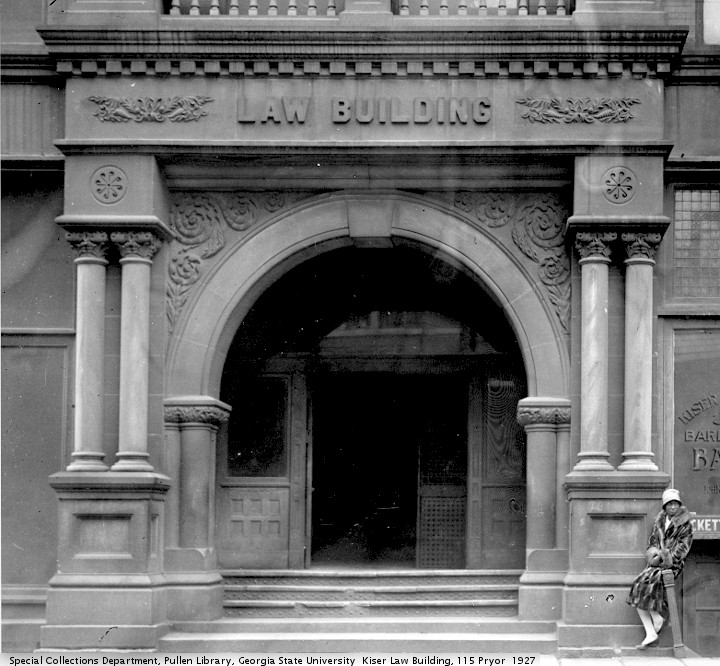
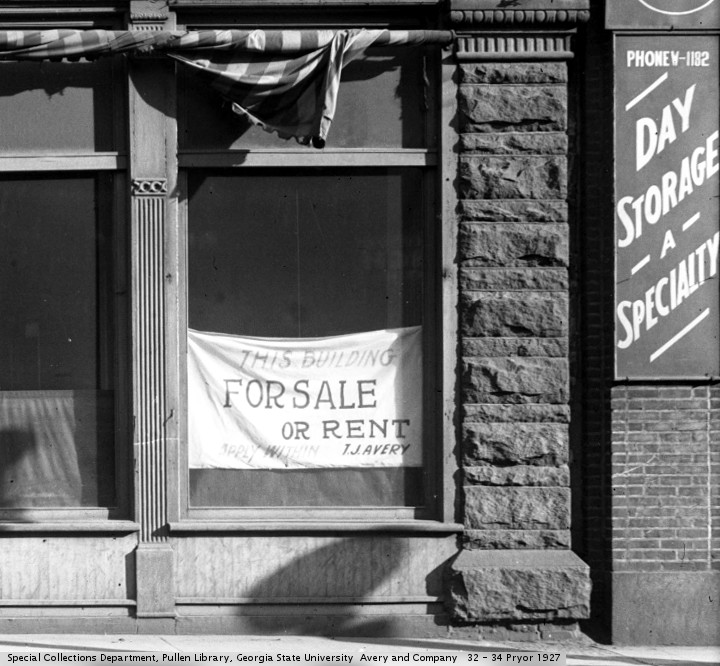
Pictures from “The Special Collections and Archives, Georgia State University Library”. “This item is part of a collection of images of downtown Atlanta streets that were taken before the viaduct construction of 1927 – 1929. Some of the covered streets became part of Underground Atlanta.”




Was Mae West A Man?
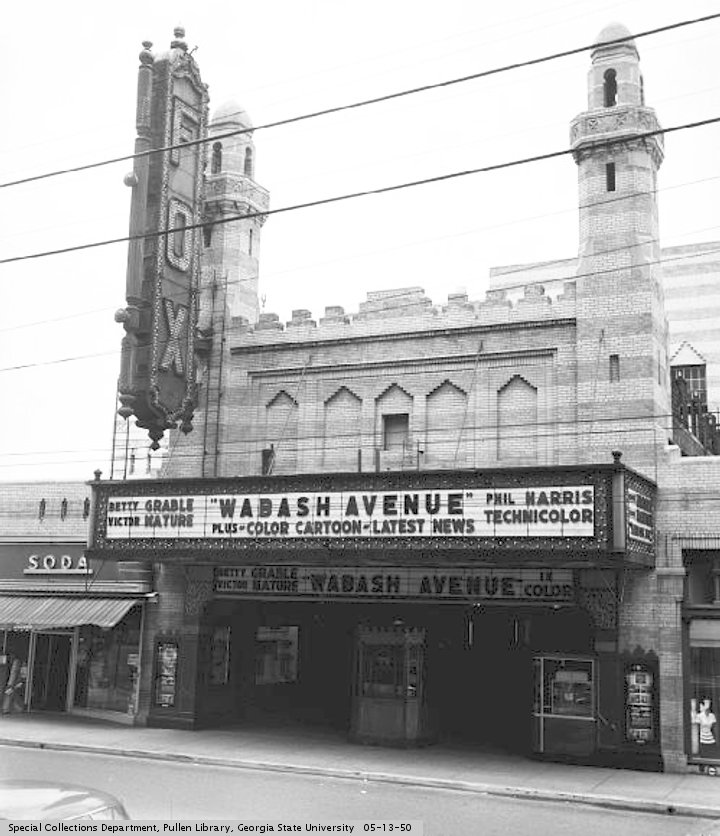
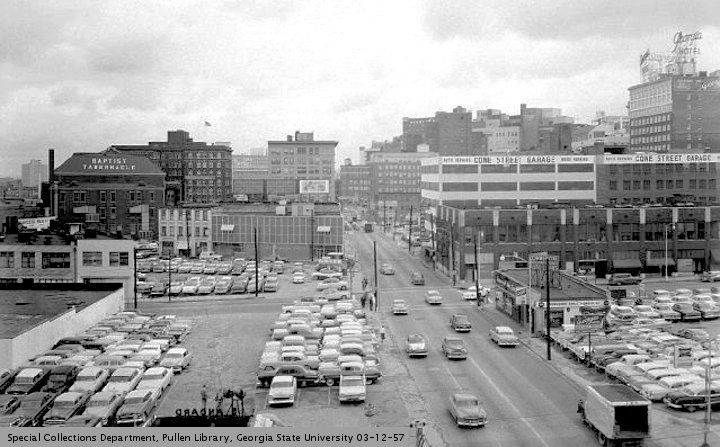
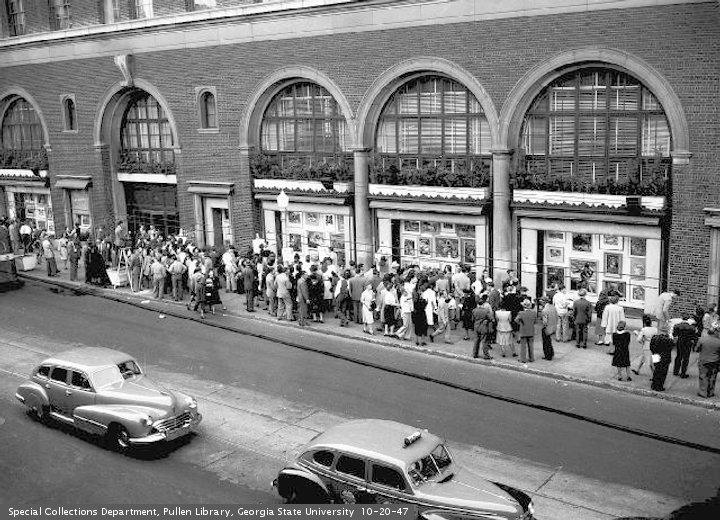
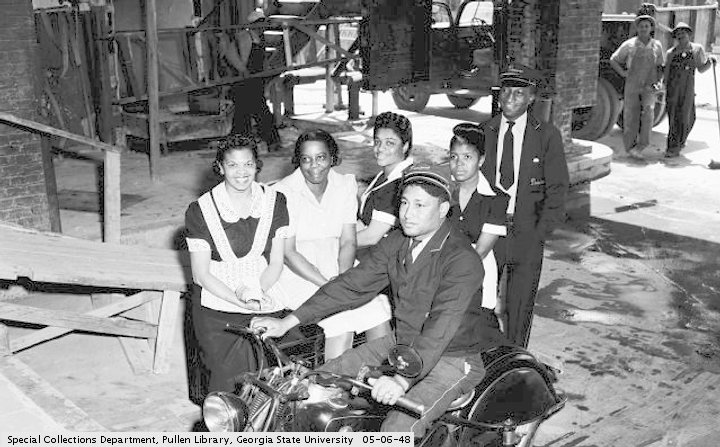
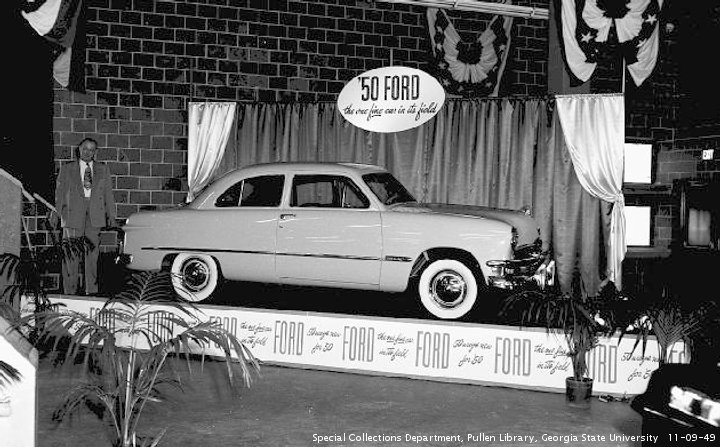


August 17 is birthday 128 for Mary Jane “Mae” West. Of course, she died in 1980, so the party is off. PG saw a note on facebook, and made the comment “She was rumored to be a man.” One right click google search later, this post started to take shape. This is a repost.
There is a blogspot site, maewest.blogspot.com. It is still published. Five years ago there was a post, Mae West: Penis Rumors. It seems as though Miss West liked to say, to the press, “When I die, you are going to be very surprised!”
A hollywood gossipmonger had a story, Was Mae West…A Man?! Much of her information comes from the tasteful findadeath site. The story here is that Mae West died in 1950, and the death was kept quiet. Her brother made appearances in her place, until the final death in 1980. This would have been quite a feat, considering that John Edwin West died in 1964. That doesn’t stop people from talking.
“…the real Mae West died somewhere around 1950, give or take a couple years, and rather than let the show stop, it was announced that not Mae, but her brother, died. Of course, the brother then became Mae West and carried on until November 1980. If you look carefully at photos from around 1950 on it definitely looks like a different person not to mention the big hands and masculine features, bone structure, etc. I may not have all the details 100% correct but I would almost put money on the fact that the ‘Mae West’ ‘who died in 1980 had a weenie!!”
The hands were mentioned by Raquel Welch. The two were in Myra Breckinridge, the first movie Miss West had made in 27 years. (Miss West appeared on Mr. Ed in 1964.) Miss Welch appeared at a film festival in 2012, and had stories to tell.
“When I went over to say hello to her (one day) I said, ‘Hi, it’s Raquel, remember?’ She sort of extended her hand to me and I went to kiss the ring and one false fingernail painted silver fell to the floor. I looked at the hand and I thought, ‘Oh, I’m getting a vibe.’ I really think she’s a man! At this point in her life all bets are off and you’re not going to be able to doll it up that much. I would say it’s pretty accurate that she resembled a dock worker in drag.” …
“I had this beautiful dress and it was black with a big white ruffle around the neck and a black velvet hat … Apparently Mae got wind of the fact that I was wearing this exquisite dress and I went to the studio that day for our scene together. I got coiffed, got my hair done and went to the closet to get the dress and it wasn’t there. I asked my dresser what happened to the dress and she said, ‘It’s been confiscated. Mae does not want you to wear that dress. You can wear the red dress that you wore in the last scene!’ … Welch was so outraged that she stormed off the set and refused to return until the dress was back in her closet. … “For the scene, we never appeared in a two-shot together. She left after she did her lines and I had someone off-camera reading her lines and I had to pretend she was there.”
Pictures from “The Special Collections and Archives, Georgia State University Library”.



Cross Keys




Mr. Bear “Speaking of obscure, do you remember the location of a restaurant downtown called the “Crosskeys”. There’s a photo of it in the Georgia State Library archives, but no notation of its location other than it appears to be near a big Gulf Oil lighted sign.” chamblee54 “I have seen that picture. There is a historic brass marker near Ashford Dunwoody and Johnson Ferry. Apparently there was some kind of trail crossing there called Cross Keys. Full disclosure: I went to Cross Keys High School. Nobody ever talked about what Cross Keys was. Google is not much help, except for an 1862 Battle of Cross Keys in Virginia.” This is a repost.
Some helpful person sent a couple of links, and soon PG was learning about Cross Keys… the militia district, not the school. Apparently, Cross Keys was centered around the intersection of Ashford Dunwoody and Johnson Ferry. The crossroads is a doozy… the two major thoroughfare are combined into a hundred yard stretch of asphalt, only to be separated again at an overworked red light. Both roads run between Peachtree and I285. One goes through pill hill, and the other leads to Perimeter Mall. None of this was going on when the Post Office was built in 1846.
“Historical records provide that the militia district of “Cross Keys” was established in 1827 and continued to be referenced as such at least as late as 1951. Prior to 1827 the only Federal post in the region was known as “Cross Keys,” and subsequently, “Old Cross Keys,” when the post moved to near current City of Chamblee just prior to Sherman’s March. … The area was increasingly settled by farming families during the first quarter of the 19th century. As land concessions were signed with the Creek (Muscogee) Nation between 1818 and 1821 more land was made available via grants to European settlers. While the mascots and symbols of “Indians” at Cross Keys High School are culturally inaccurate and reflect garb and headdresses of nomadic tribes of the mid and far west, it is a fitting and ironic tribute to the Muscogee Native Americans who long thrived on the same land…. The area remained primarily an agricultural community until the acquisition by the United States Army of a large tract of land in heart of the district in July of 1917. This tract became Camp Gordon, an infantry training and artillery cantonment. Part of that original 2,400 acres later became a Naval Air Station at the current site of Peachtree-DeKalb Airport.”
“There was a Cross Keys post office as early as 1846, when the postmaster was James A. Reeve.” A marker at Johnson Ferry and Ashford Dunwoody Road in Brookhaven gives this history for Old Cross Keys: “Ante-bellum crossroads settlement & post office, James Reeve (1792-1852) Post Master & merchant. Prior to 1864 the Post Office was removed to a point between Chamblee and Doraville where, name unchanged it was known as Cross Keys Post Office. To distinguish the one from the other, this place was called Old Cross Keys & was cited in Federal dispatches, maps & reports of military operations here in 1864. At this point, a brief contact was made between the marching columns of Dodge’s 16th and Schofield’s 23rd A.C. July 18, both enroute to Decatur from Chattahoochee River crossings.”
“Samuel House was one of the early settlers of this area, arriving in 1830. In 1850, he built a brick home that is now part of the Peachtree Golf Club. General Sherman spent the night at the home on July 18, 1864 and described it as “a brick house well known and near old Cross Keys.” … The name Cross Keys is referenced in Civil War records. Special orders from General James McPherson on July 16, 1864 instructs “The fifteenth Army Corps, Major General John A. Logan commanding, will move out from its present position at 5:30 a.m. tomorrow on the road leading to Cross Keys, following this road to a point near Providence Church, where he will take a left hand road (sometimes called the upper Decatur road, and proceed on this until he reaches Nancy’s creek, where he will take up a good position on each side of the road and go into bivouac.”
Major General William T. Sherman also issued orders on July 18. At the 15:00 mark of this lecture, the speaker quotes a dispatch to Gen. James Birdseye McPherson. “I am at Sam House’s, a brick house well known, and near old Cross Keys … a sick negro is the only human being left on the premises … we are eleven miles from Atlanta, five from Buckhead, and the signboard says ten miles to McCaffrey’s bridge and eleven to Roswell.” Four days later, Gen. McPherson was killed, in what is now East Atlanta Village.
There is little indication about why this area was called Cross Keys. In 1827, this was the middle on nowhere. “The symbol of the “crossed keys” itself traces to early Christian representations of the “keys to the Kingdom of Heaven and Earth” famously offered by Jesus to Peter according to Matthew 16:19.” The phrase Cross Keys does not appear in the verse.
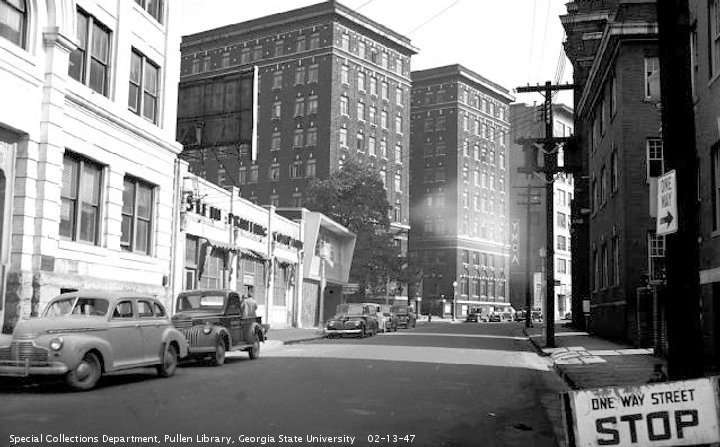
No one seems to know much about the Cross Keys restaurant. The GSU picture is dated November 8, 1951. A postcard gives the address as 237 Peachtree Street, and has the address of a CKR in Nashville. The Nashville restaurant is mentioned in a WSB-TV film from May 13, 1963. “… African American students protest segregation at two restaurants in town. … a white doorman outside the Cross Keys Restaurant. African American students march on the sidewalk … where police forcefully push the demonstrators away and let white people through the crowds.”
Pictures today are from The Library of Congress. Two articles were quoted in this post: Going way back to Cross Keys. Every few years I tell story of name, ‘Cross Keys,’ so our community doesn’t forget. The second story has a comment by Mr. Bear. Several links in this story no longer work.




Intellectual Bulimia


One of the touted TED talks in the weekly email is Color blind or color brave? It is by Mellody Hobson, a POC in the investment business. It is the standard call to talk more about race. Talk, talk, talk, and talk some more. The word listen is not used.
At the 3:13 mark, Mrs. Hobson makes a remarkable statement. “Now I know there are people out there who will say that the election of Barack Obama meant that it was the end of racial discrimination for all eternity, right?” (Yes, this is a TED talk.) It is possible that someone has said that. There are also people who say the earth is flat.
PG asked Mr. Google about this. The top two results are about the TED talk. The third result is an article in Forbes magazine, Racism In America Is Over. It is written by John McWhorter, one of the “black guys at Bloggingheads.tv.” Dr. McWhorter does say racism is over, sort of. The problems that remain are a lot worse. Too much food for thought, for a population with intellectual bulimia.
There is a quote in the Forbes article that is pure gold. “When decrying racism opens no door and teaches no skill, it becomes a schoolroom tattletale affair. It is unworthy of all of us: “He’s just a racist” intoned like “nyah nyah nyah nyah nyah!””
There are a lot more results. PG is getting tired of looking. If you want to see for yourself, google “the election of Barack Obama meant that it was the end of racial discrimination for all eternity.” Except for a rogue title editor at Forbes, almost nobody has said that. This is a repost. Pictures today are from “The Special Collections and Archives, Georgia State University Library”.




She Always Carries Jonquils

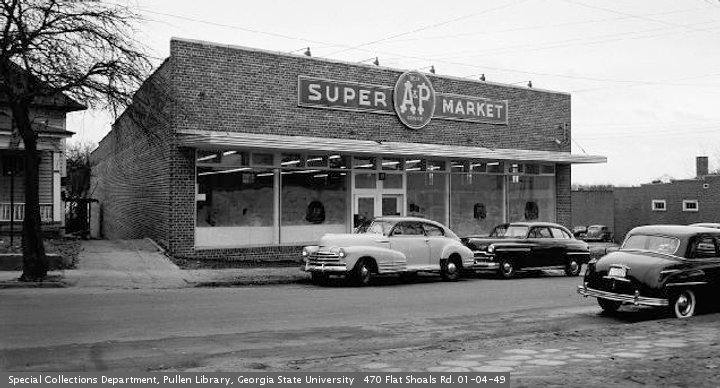

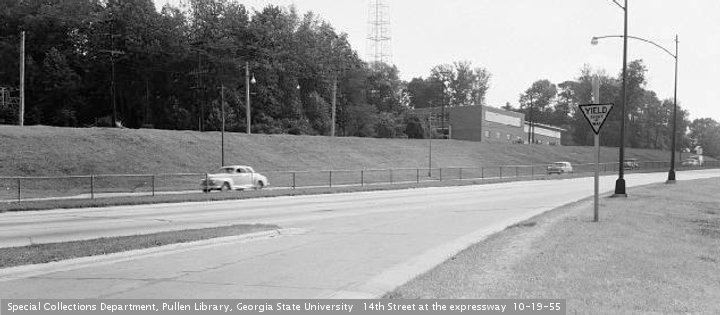
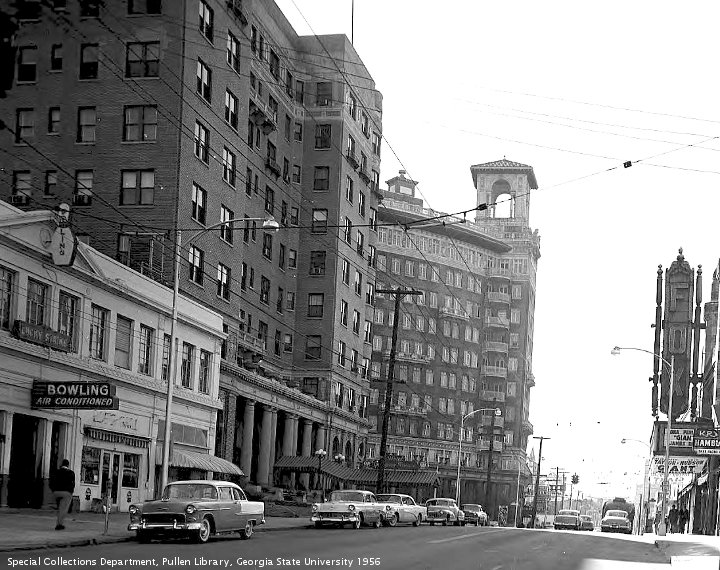
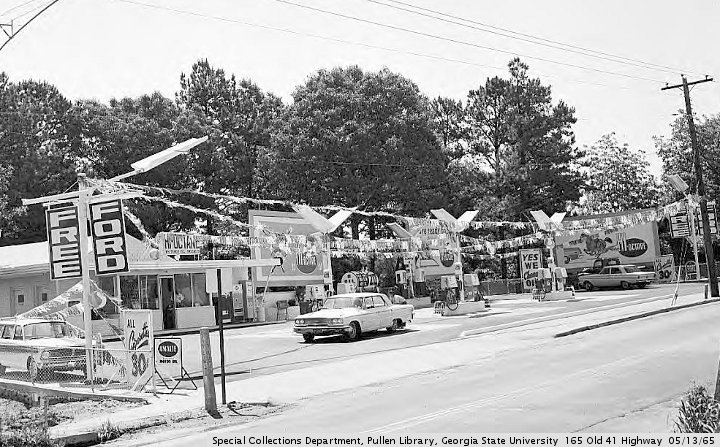
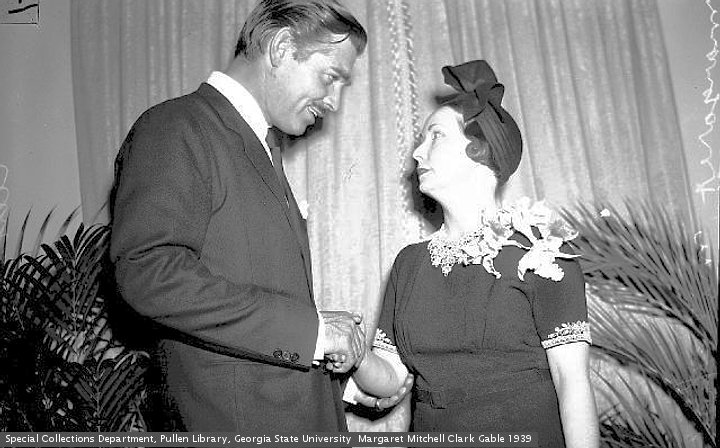
PG found Archival Atlanta: Electric Street Dummies, the Great Stonehenge Explosion, Nerve Tonics, and Bovine Laws : Forgotten Facts and Well-Kept Secrets from Our City’s Past at the Chamblee library. There are always more stories to be heard. This repost has pictures from “The Special Collections and Archives, Georgia State University Library”. It is written like Margaret Mitchell.
In the 1840s, the Western and Atlantic railroad wanted to hook up with the Central of Georgia railroad. The spot for the meeting was called Terminus. One idea was to name the town for William Lumpkin, a former Georgia Governor and a railroad executive. Lumpkinville sounded bad in the mouth, and the new town was named “Marthasville”, after the daughter of the Governor. (Martha is buried in Oakland Cemetery.) Few people liked this name, and someone decided that the feminine form of Atlantic was Atlanta. Unlike the state flag, this is unlikely to change.
The new town prospered, and recovered from the unpleasantness of 1864. In 1875, there was a problem with stray cows. The answer was the “1875 Cow Ordinance”. The law required that cows be kept in a pen at night. A fine of two dollars was assessed for every stray cow that was caught.
About this time, there were a few very busy railroad tracks going through downtown. People were getting tired of waiting for the trains to go through. One by one, viaducts were built over the tracks, creating a forgotten ground floor. This was built up into Underground Atlanta in the sixties, which was red hot for a while, then cooled off, and is now so so.
In 1897, J.W. Alexander was the first person in town to own a “horseless carriage”. One day, he decided to take a ride to East Point. A mule objected, and kicked man and machine into a ditch.
It is a rule that all history books about Atlanta have to discuss Coca Cola and Gone With The Wind. There are only so many stories to go around. This book tells of an Alpharetta farmer who bought the Tara set from MGM. He stored in a barn, the location of which was a secret. Betty Talmadge wanted to buy it, and the price went from $375k to $5k. After a while, the sale was finalized. There was only one problem…the farmer died, and never told anyone where the barn was. Mrs. Talmadge got the money from her husband’s overcoat, went to Alpharetta, and found the barn. The set was moved into another secret location, where it was in 1996, when Archival Atlanta was published, at an undisclosed local location.
Sam and William Venable owned Stone Mountain, and had a quarry there. (The Ku Klux Klan held meetings on the mountain.) (The spell check suggestion for Ku Klux is Kook Klutz.) Sam built a large granite house at 1410 Ponce de Leon Avenue, and stocked it with ammunition. He thought a race war was on the way, and wanted to be prepared. One night, a chimney overheated. The roof caught on fire. The explosives in the attic exploded, and took the roof off. The house was repaired, Mr. Venable died, and the house became part of a Lutheran church.
One of the few ante bellum houses in Atlanta is near Grant Park. It was once owned by Lemuel Grant, who donated the land for the park. He stays in a large marble house in Oakland Cemetery now. The Grant Park house was purchased by Mr. and Mrs. John Marsh, in partnership with Boyd Eugene Taylor. After the death of Mrs. Marsh (also known as Margaret Mitchell), she was known to visit the house. “Margaret just wanders through the house, looking things over. She never talks, and she always carries jonquils. The first night she came I was very shocked. I went out to her grave at Oakland Cemetery the next day. I’d never been to the house before. But I was almost certain of what I’d find. The plot is covered by a bed of jonquils.”


A Sad Event



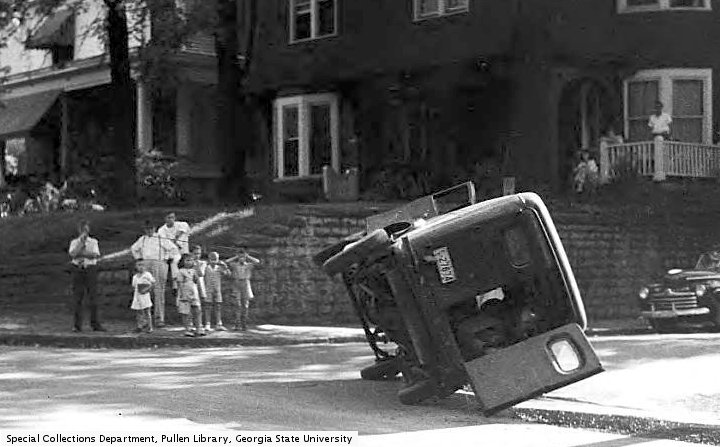
It is with the saddest heart that I must pass on the following news. Please join me in remembering a great icon of the entertainment community. The Pillsbury Doughboy died yesterday of a yeast infection, and trauma complications from repeated pokes in the belly. He was 71. Doughboy was buried in a lightly greased coffin. The funeral was held at 3:50 for about 20 minutes.
Dozens of celebrities turned out to pay their respects, including Mrs.Butterworth, Hungry Jack, the California Raisins, Betty Crocker, the Hostess Twinkies, and Captain Crunch. The grave site was piled high with flours. Aunt Jemima delivered the eulogy and lovingly described Doughboy as a man who never knew how much he was kneaded.
Doughboy rose quickly in show business, but his later life was filled with turnovers. He was not considered a very smart cookie, wasting much of his dough on half-baked schemes. Despite being a little flaky at times, he was still a crusty old man and was considered a roll model for millions.
Doughboy is survived by his wife, Play Dough, two children, John Dough and Jane Dough, plus they had one in the oven. He is also survived by his elderly dad, Pop Tart.
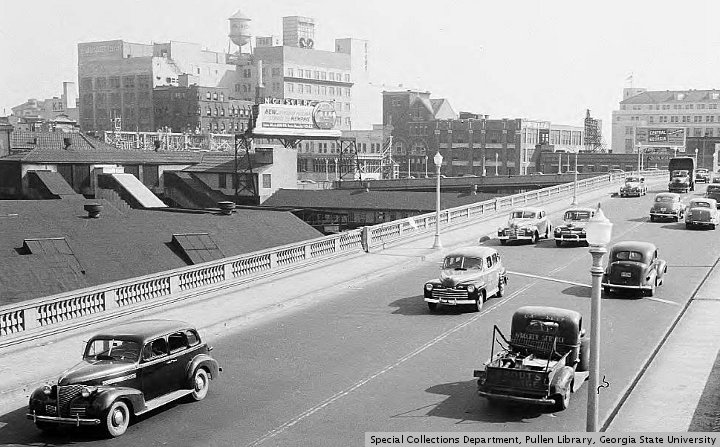
I am not clever enough to compose the above piece. Credit is hereby given to whoever wrote it. This is a repost. Pictures are from “The Special Collections and Archives, Georgia State University Library”. The spell check suggestion for Doughboy is Doughnut.





leave a comment