One History Of Religion

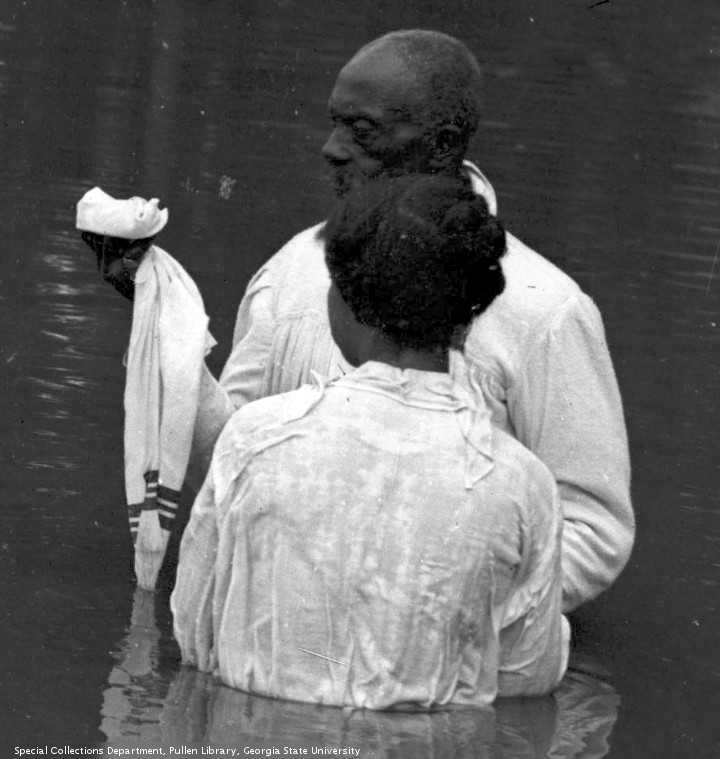


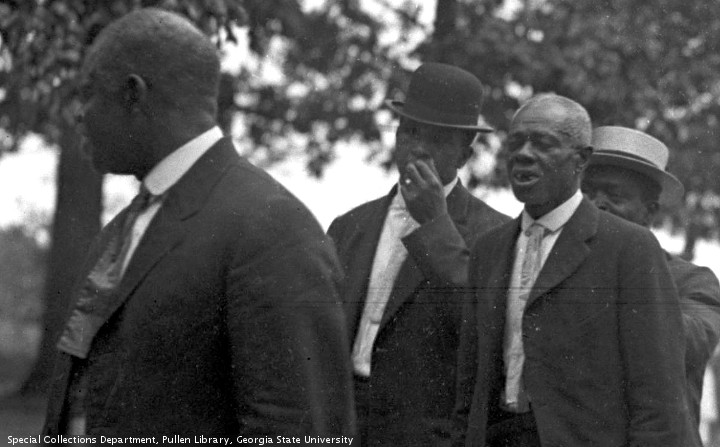
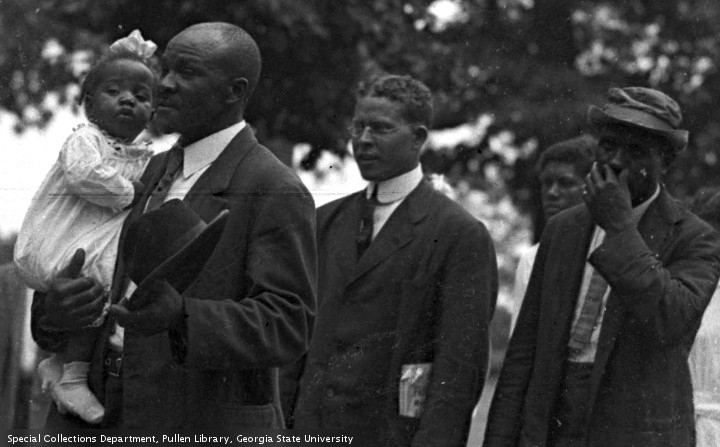
I was a southern baptist all my life. Arguably, I became a baptist when my mother converted in 1938, but really didn’t get with the program until I was born in 1954. The story is that Daddy called the choir director at six in the morning to sign me up.
First Baptist in Atlanta was a big church on Peachtree street, about a mile north of downtown. (A few years ago, they sold the land to a developer, and moved to the suburbs. I was working a block away when they tore down the building, and got some chips of brick as a souvenir.) I sang in the “cherub” choir. This was quite an experience when we performed in front of a full house. I have good memories of Sunday school, vacation bible school, and the choir program.
One thing I did not like, even at that young age, was the preacher. He was a greasy haired man who shouted a lot, and had a mean streak. Years later, I heard persistent rumors that he was gay. (I should note that this is not Charles Stanley. It is the man who preceded him.) One Sunday, we were watching him preach, and he shouted, “this is the word of G-d”. He then waved a Bible in the air, and slammed it into the pulpit. I thought, if that is the word of G-d, maybe he shouldn’t slam it down like that.
In 1962, mom and dad decided to move to a church closer to home. I liked Briarcliff Baptist. About this time, I first heard about being “saved from sin”, and thought it was a pretty cool idea. I also was in the cub scouts, and since their meetings were the same day as choir practice, I quit the choir. I attended church regularly the next few years, but never did join the church, and get baptized. The custom of pressuring children to make a “commitment of faith”, and get baptized, reflects poorly on Jesus. There are some other family issues that came up about this time. They are too personal to get into here, but they affected my attitude towards the church.
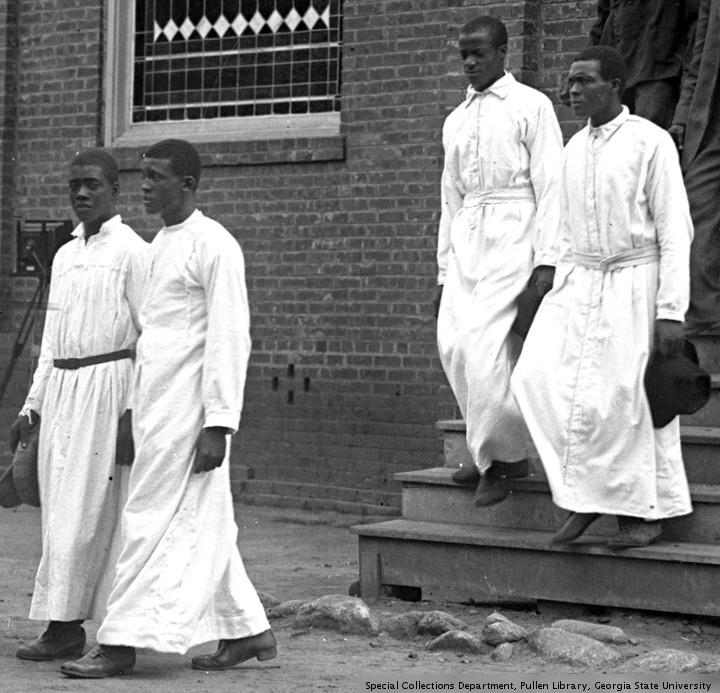
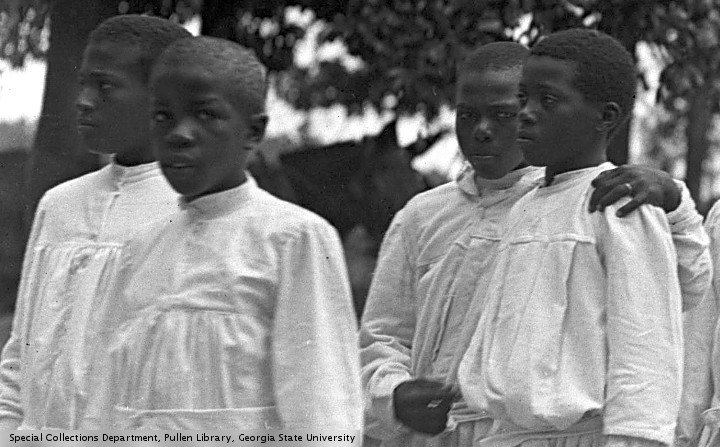
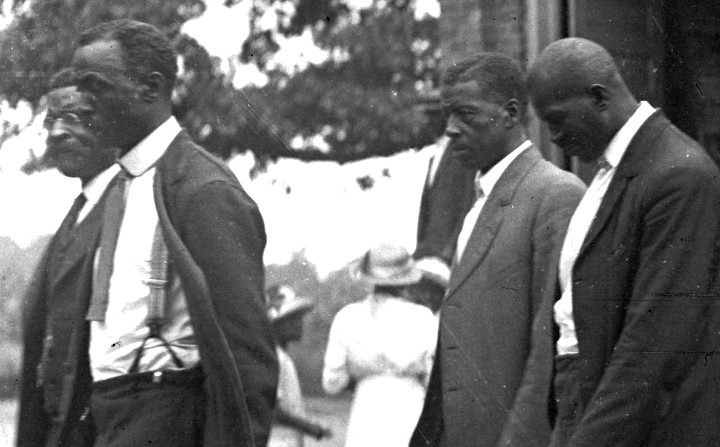
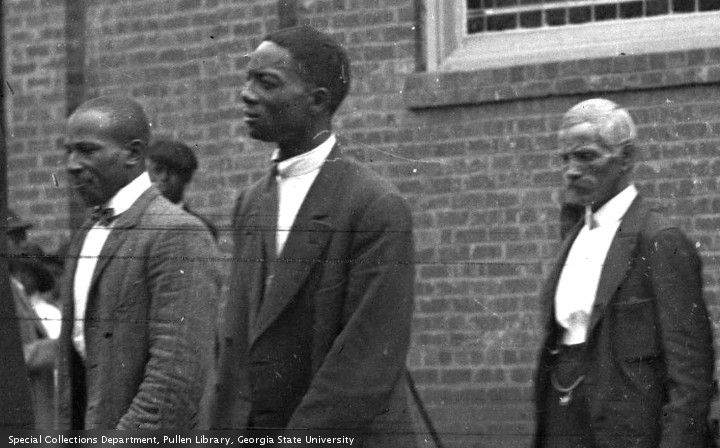
After a while, I was 17 years old, and working in a restaurant that was open until 1am on Saturday night. I decided one Sunday that I didn’t want to get up for church. I have only been back to that building once in the intervening 50 years. This is a repost, with pictures from “The Special Collections and Archives, Georgia State University Library”.




688








There was a comment at Chamblee54. “Steve Loehrer – So tell me what you know about Rose’s Cantina. I booked the music there from 1978-80 – Thorogood, Delbert, The Thunderbirds, The Fans, The Razor Boys and on and on. I was the one that did it. And I probably know you.” This blog has previously published features about the Great Southeast Music Hall, Richards, and the Georgian Terrace Ballroom. One more music venue post is not going to hurt anyone, and will be a good excuse to post some more pictures, from “The Special Collections and Archives, Georgia State University Library”. This is a repost.
688 Spring Street is a nondescript building, located down the hill from the Varsity. At one time, a company called Southern Tailors made wine jackets there. It is currently a Concentra Urgent Care Center. In between, it was the site of two rock and roll nightclubs, Roses Cantina and 688. One block over, at 688 West Peachtree, is a Catholic Construction management office.
House manager Rose Lynn Scott is quoted as saying “You know, we really aren’t sure exactly when it all started and ended,” Scott said. “Honest to God, we weren’t paying that close attention.”PG first knew about it around 1977, and really didn’t go very often. There is a running list for this post, and whenever a new band sinks into the mush, it is duly noted. Some band did “Love Gun,” which sounds remarkably similar to “Amphetamine Annie” by Canned Heat.
The punk rock revolution did not completely pass Atlanta by. A band called the Fans said they were making the pop music of the eighties. PG saw them twice at Roses, and they might be the only time he ever paid to get in. They were an impressive outfit, doing Velvet Underground and Telstar. Later, they opened for Talking Heads at the Agora, and were pretty awful. Much, much later, PG shared an apartment with the brother, of the drummer, for the Fans. Also living there was the brothers wife, a cable guy, seven snakes, a ferret, and a cat.
Back to the words of Rose Lynn, “It was a dive bar supreme and proud of it.” The stage was in the middle of the house, with a game room behind the stage. If you liked to shoot pool and listen to bands, this was the place. As for drinking, PG might get a beer or two, but mostly got bombed at other spots.
In those days, PG would go rambling from club to club, often accompanied by his friend Dinkson. One night, they stumbled in on a three piece band. They did a song called “Madison Blues”, with the guitar playing slinging riffs, and the bass playing playing the same notes over and over, never changing the look on his face. This was George Thorogood and the Destroyers.
One other night, PG stumbled in on the last few minutes of a show by the Brains. They wrote a song called “Money Changes Everything” that Cyndi Lauper did well with. This is another great local band that never seemed to get a national audience. Another night, some old black man, possibly John Lee Hooker, was playing guitar.
Around about this time, PG decided to either grow up, or take his childhood seriously. He wound up in Seattle WA. That wore off after a while. On the greyhound bus going home, PG talked to a young lady, who said something about a punk rock club in the Roses Cantina space. This was the 688.
A few weeks later, Iggy Pop did a week at 688. Here, through the miracle of copy paste, is the story. It isn’t plagiarism when you wrote it yourself.
At any rate, by the time PG got back from Seattle, some brave investors decided to have a punk rock club at 688 Spring Street. Soon, Iggy Pop would be playing a week there. In the seventies, the bands would play for five days at the great southeast music hall or the electric ballroom, two shows a night, and if you were really cool you would go on a weeknight before it got too crowded. Soon after that, it was one night in town only, and you either saw it or you didn’t.
PG had a friend at the Martinique apartments on Buford Hiway. There was someone living in the complex known as ZenDen, who sold acid. You would go to his place, wade through the living room full of grown men listening to Suzi Quatro, and purchase the commodity.
On to the the 23 Oglethorpe bus, and downtown to 688 Spring Street. Before anyone knew it, the band was on the stage. A veteran of the Patti Smith Group, named Ivan Kral, was playing bass. Mr. Kral sneezed, and a huge cocaine booger fell across his face. He was not playing when the show ended.
There was a white wall next to the stage, and someone wrote the song list on that wall. That list of songs stayed on the wall as long as 688 was open. “I want to be your dog” was on the list, as well as the number where Iggy pulled his pants off and performed in his underwear. Supposedly, in New York the drawers came off, but the TMI police were off duty that night.
The show was loud and long, and had the feel of an endurance event…either you go or the band does. Finally, the show was over, and PG got on the 23 Oglethorpe bus. You got the northbound bus on West Peachtree Street. You could look down, from Fourth street, and see the Coca Cola sign downtown. Freeway expansion sent that section of West Peachtree to old road hell.
Twenty years after that, PG worked in a building at that corner of Fourth and West Peachtree. If he had known about the future of working for Redo Blue, PG might have jumped under the 23 Oglethorpe bus, instead of getting on it. The Coca Cola sign was long gone by then.
There was band called Human Sexual Response in those days. PG caught their act at 688. They had three vocalists, wearing matching outfits, and sang a lot of lyric happy songs with really cool harmonies. The problem was, PG was not familiar with those oh so witty lyrics, and did not know what it was all about. At least he got out of the house.
Kevin Dunn played guitar for the Fans. (He had an ad for guitar lessons on the bulletin board at Wax and Facts. It said that raising racing turtles was more profitable than playing guitar.) One night at 688, he performed with his band The regiment of women. They opened for someone, possibly the Plastics, who we will get to in a minute. So, this guy plays guitar and sings, and a woman plays a drum machine. No skin pounding drummer, but a lady who twisted the knobs on a machine.
The Plastics were from Japan, and did a killer version of “Last Train to Clarksville”. It was about this time that PG got a job, and decided that he liked sleeping better than hanging out downtown.
One night, about 1983 or so, PG made an exception. The band that night was Modern English. Before the show, PG ate three z burgers from the Zestos on Ponce de Leon. During the show, the singer rubbed his stomach, and said to feel the music. About this time, the z burgers were making their presence known, and PG could feel something, but it wasn’t the music.
The last show PG saw at 688 was Hüsker Dü. The best guess is February 14, 1986. There was a totem pole, made of old TV sets, in the front part of the club in 1986. Here is the story.
Hüsker Dü means “do you remember” in Danish and Norwegian. PG saw them sometime in the eighties. It might have been the metroplex, but it might have been the 688. There is a list of shows they played, and the metroplex is not on there.
PG saw a show at the Metroplex the next night. The band is forgotten. The metroplex was a dark spooky building on Marietta street near the omni. The balcony was very dark, with everything painted black. PG tripped over a bench.
688 was a different story. PG saw a bunch of shows there, both as 688 and Rose’s Cantina. HD may have been the last show PG saw before they closed. PG was well into the work/sleep lifestyle that preoccupied his life after a certain point, and just didn’t make it out much anymore. A friend won tickets to the show or he wouldn’t have made it.
PG didn’t get into the show very much. HD was a trio, with the later-outed Bob Mould as the guitar g-d. For all of his musical skills, Mould is not much for onstage charisma. PG felt that if he had been more familiar with their music, he would have enjoyed it more. Some bands you can see without hearing their records and get into it right away, where others need a bit of familiarity.






35 Broad Street
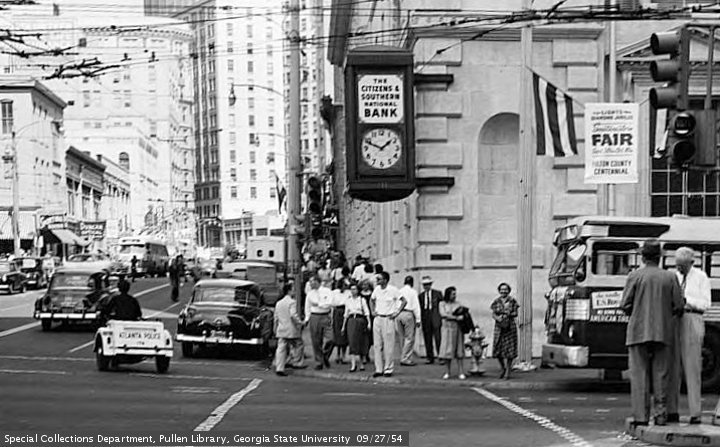
PG was having a delightfully slack afternoon, The one productive activity was editing pictures from “The Special Collections and Archives, Georgia State University Library”. In box seventy two of “corporate bodies”, in the Lane Brothers archive, there was a picture commissioned by King Road Marker Company. It displayed a brand new crosswalk, over Marietta Street at the intersection of Broad Street. The picture was taken at 1:51 p.m. September 27, 1954. This is a repost.
The time caught PG’s eye. 1:51 is one of the times used to display clocks and watches in advertising. Most ads use 10:09. This arrangement of the hour and minute hands makes a welcoming gesture. This allows the logo of the watch to be visible, and is thought to encourage the viewer to purchase the timepiece. The shadows on the buildings indicate that the picture was shot in early afternoon.
The clock with the magic time advertised the C&S national bank. The building behind the clock was the headquarters of that bank. In 1954, Citizens and Southern bank was a prime player in the Atlanta market. (PG’s dad said that C&S stood for choke’m and squeez’m.) At some point, C&S merged with NCNB to become Nationsbank, which was later absorbed by Bank Of America.
C&S kept it’s headquarters at 35 Broad Street for many years after competitors built trophy buildings. Their were constant rumors about where the C&S highrise was going to go. Finally, C&S Plaza was built at Peachtree and North Avenue, a mile north of five points. The building was to become the tallest building in America outside of New York and Chicago. During the construction of this building, C&S became part of Nationsbank, and later Bank of America.
The picture is featured in Atlanta Time Machine. The building is now owned by Georgia State University, with a BOA branch on the first floor. The banking hall is spectacular. It was designed by Philip Shutze, before the great depression. Here is more information.
Nations Bank Building (Citizens and Southern National Bank Building, Empire Building)
35 Broad Street, NW 1901: Bruce and Morgan, Architects, NR.
Remodeling of Lower Floors and Interiors 1929:
Hentz, Adler and Shutze, Architects; Philip Shutze, Designer
Fourteen stories high, the Nations Bank Building was the first steel-frame structure to be built in Atlanta. Its clear-cut silhouette, simple fenestration, and heavily decorated terra-cotta top bear the influence of the Chicago School. In 1929 the building became the headquarters of the Citizens and Southern National Bank, which asked Philip Shutze to redesign its three lower floors. Because the impression of load-bearing masonry was regarded as better suited for a banking establishment than large glass panes were, the original display windows were replaces by classical motifs apparently “carved out” of Indiana limestone.
Philip Shutze was inspired by Italian Mannerism, and especially by the city gates of Verona by Michele Sanmichelo (1484-1559) … Reached from Marietta and Walton streets through lofty arcaded entryways and a more intimate elevator lobby in the early Renaissance style on Broad Street, the banking hall is a long nave articulated by colossal Corinthian pilasters. While its walls and floors feature several kinds of Georgia, Tennessee, and European marbles in a warm gold-brown color scheme, the ceiling, from which hang gigantic chandeliers, is left bare. The Pantheon, which Shutze had measured during his internship at the American Academy in Rome, served as direct source for the pedimented niches, and for the floors with alternate square and circular patterns. Also, of Roman inspiration are the bronze desks and the eagle motif found throughout the design.
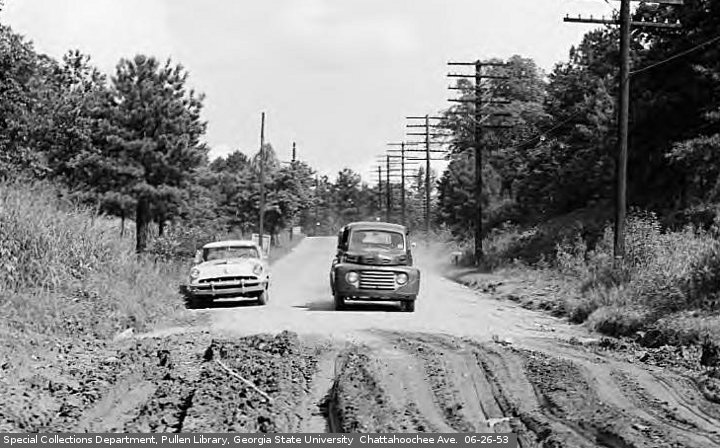
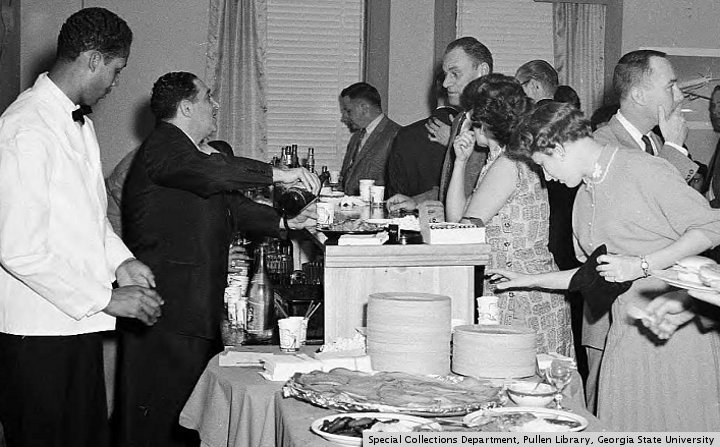
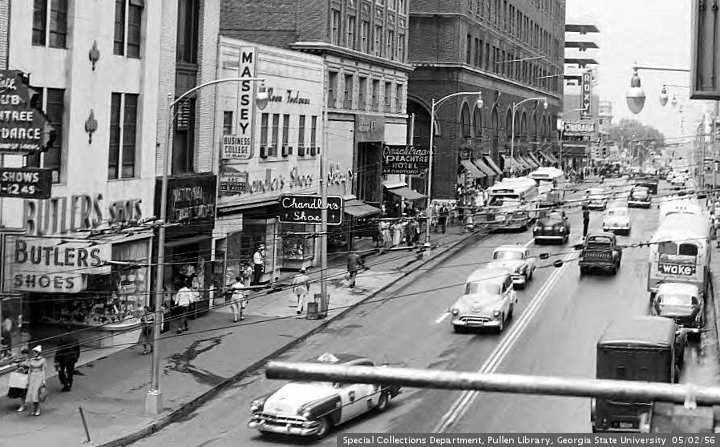
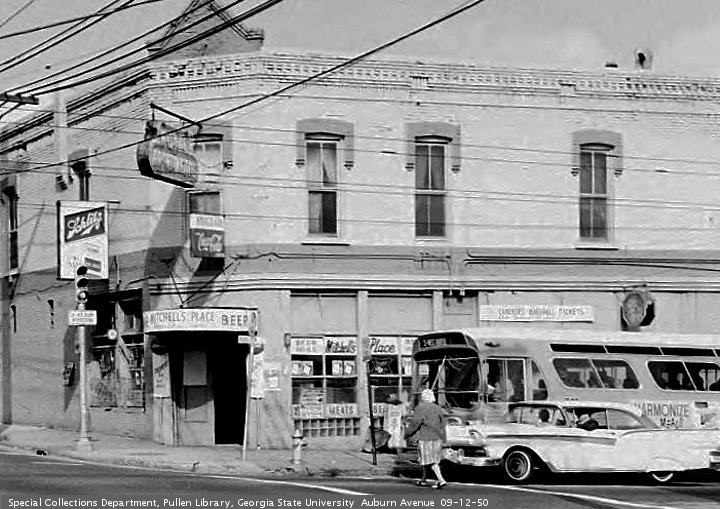


Call Out Culture

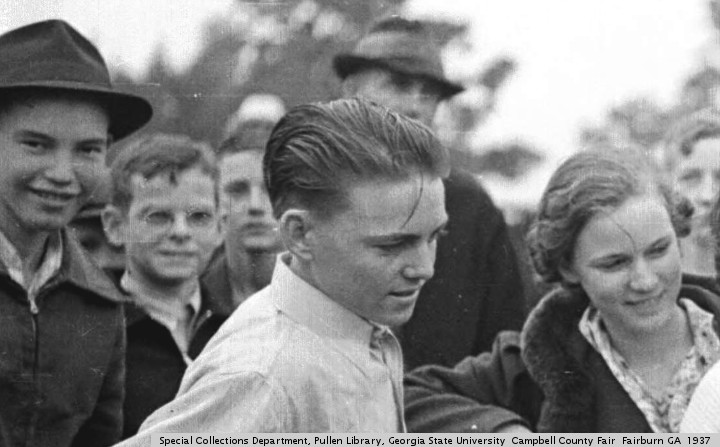
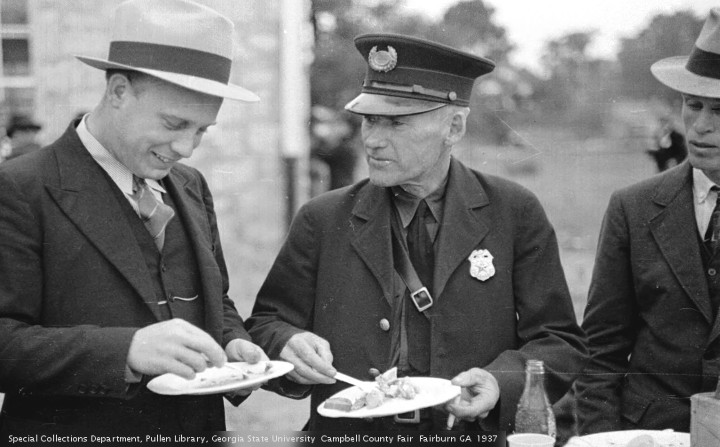


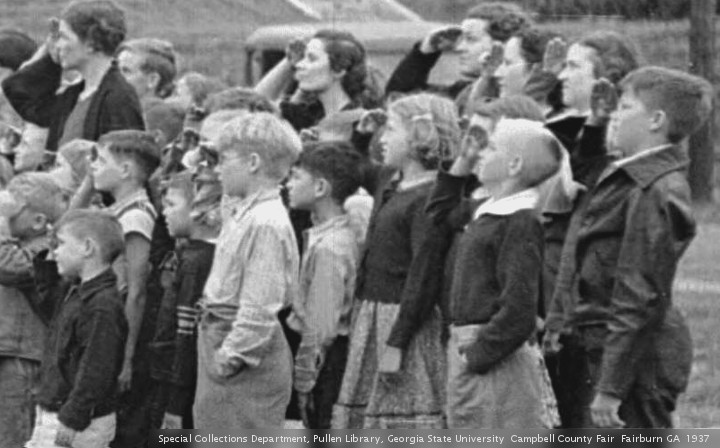
Some people just like to argue. The topic of discussion is irrelevant…they just enjoy the thrill of verbal combat. There is little to be gained by engaging these people. You should never argue with an idiot. They will drag you down to their level, and win by experience. If you wrestle with a hog, you get dirty, and the pig enjoys it. This is a repost
The idea that you should speak up, and call out, is popular these days. A popular quote, credited by some to Thomas Jefferson, says ” “If you are neutral in situations of injustice, you have chosen the side of the oppressor.” Unfortunately, many people take sides without understanding the conflict. When you are goaded into foolish action, by irresponsible rhetoric, you choose the side of the oppressor. Often, the one claiming to be the victim is, in fact, the oppressor.
There are a lot of logical fallacies today. Two wrongs making a right. False equivalence. Whining about media coverage. Opinions are like elbows… everyone has two. Don’t talk about religion or politics. Don’t talk with your mouth full. If you can’t say anything good, don’t say anything at all. If everybody shouts, then nobody is heard.
Are you trying to create change, or are you like a dog that wants to bark? If you are going to influence a person, you have to earn that person’s trust. If this person hears you repeating things that are not true, then they are not going to trust you. Once lost, trust is very difficult to regain.
You should think about things like cognitive dissonance, confirmation bias, and mythos over logos. People are hit over the head with a lot of rhetoric and polemic these days. Sorting out the conflicting claims can be tough. You can get into narcotizing dysfunction. This is where you hear so much about something that you tune out new information. When you call out someone, are you pouring water into a barrel that is already overflowing?
This text between the pictures (“The Special Collections and Archives, Georgia State University Library”) has focused on foolish talk. The word listen has not been used. We don’t need to talk more. We need to listen more. You have two ears, and one mouth, for a reason.
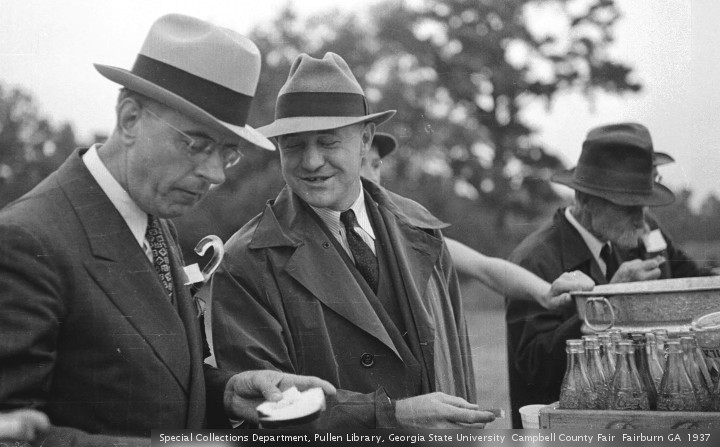
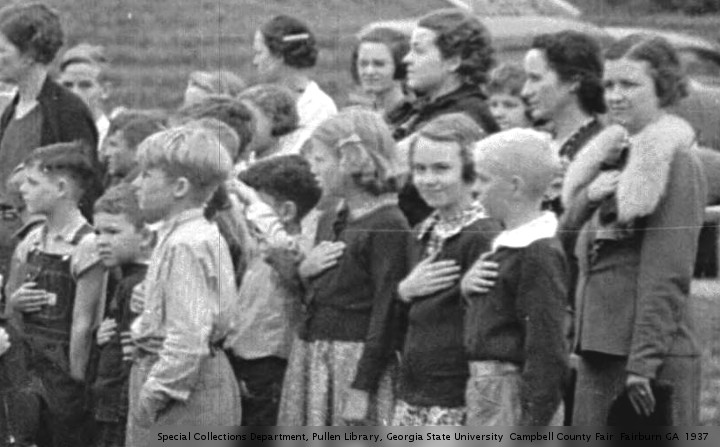
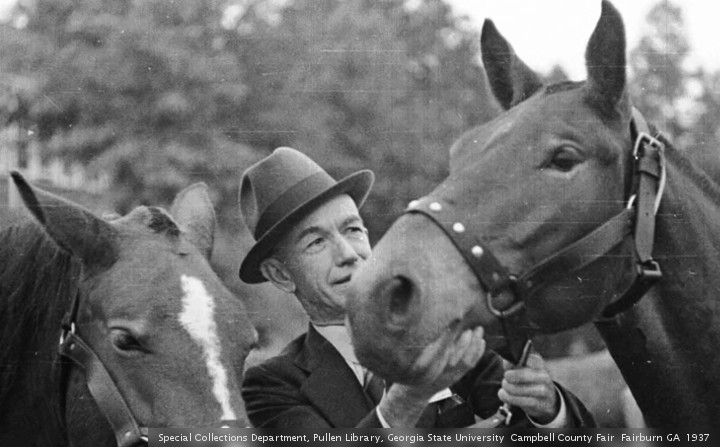
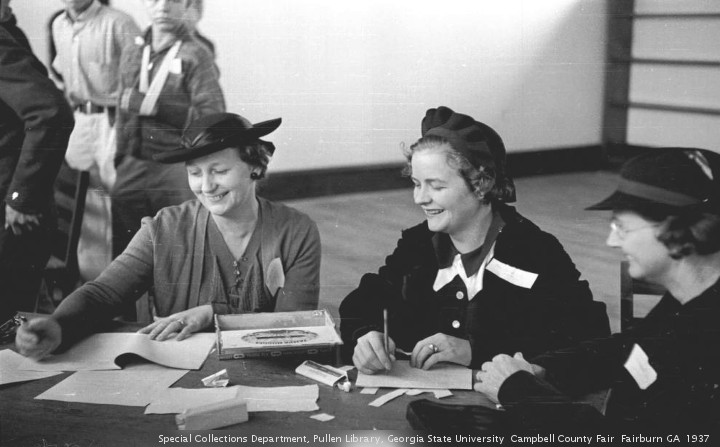
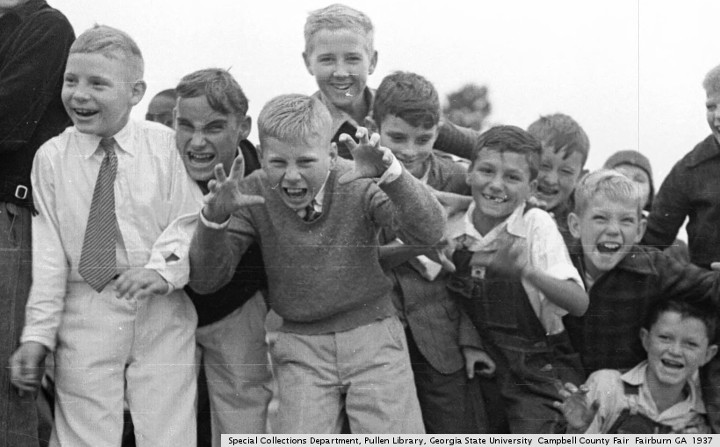
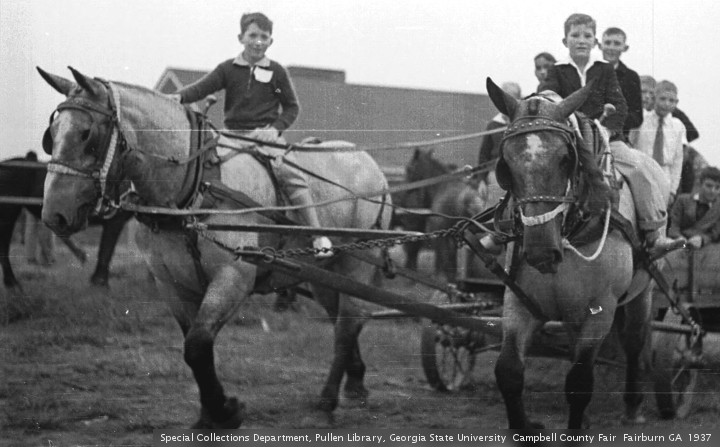
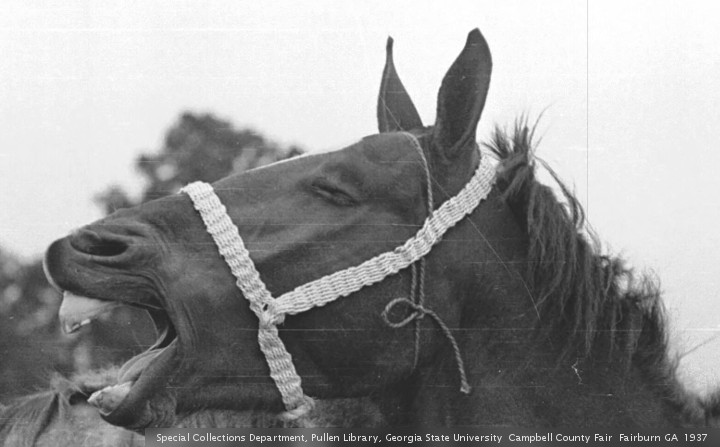

The G-d Of Word


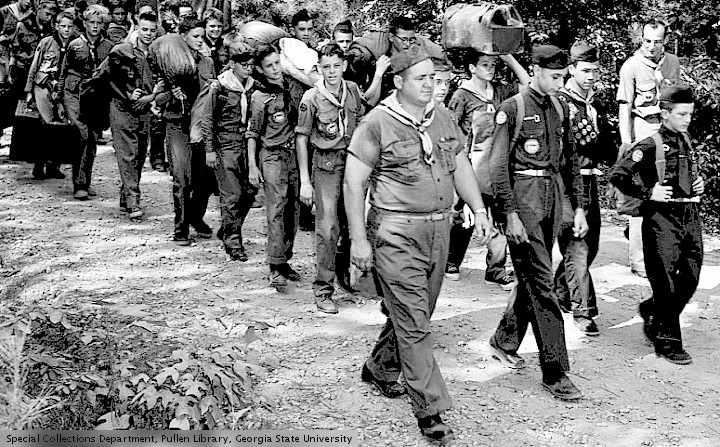
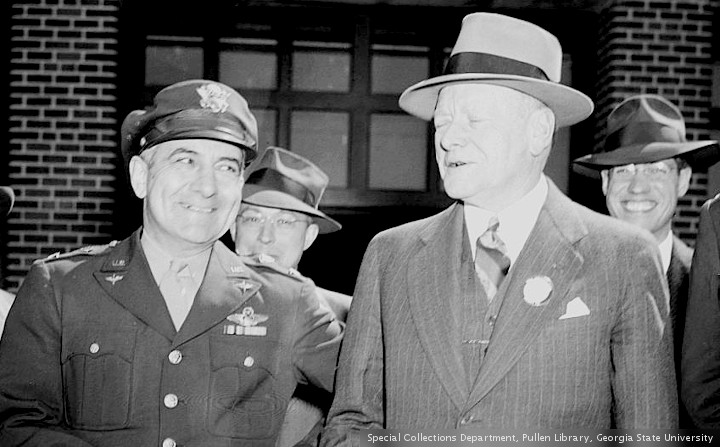
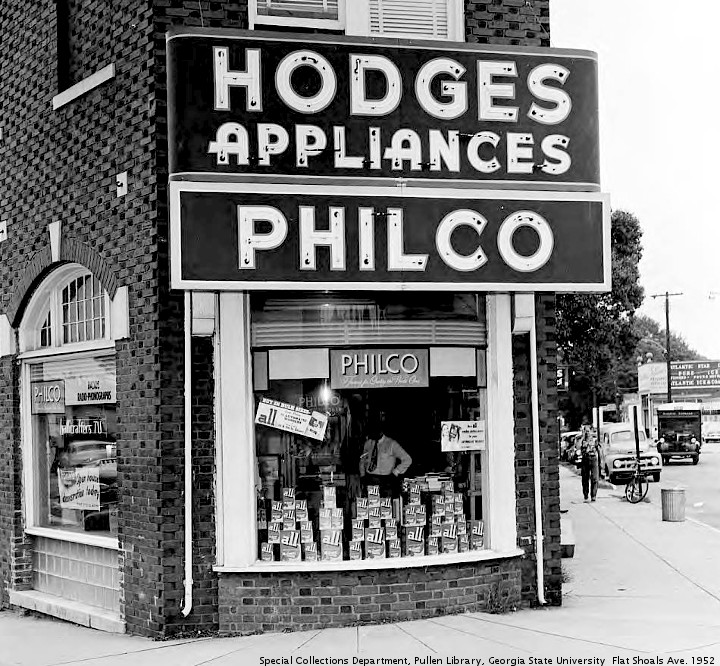
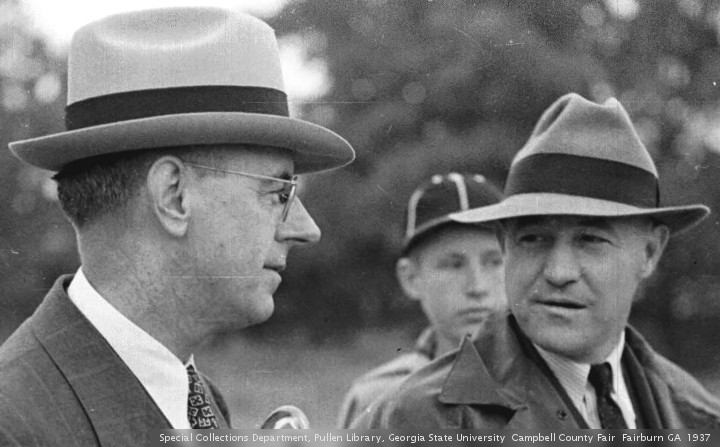
The facebook comment started with “Christ had so little regard for … ” I gave into the temptation to comment. “Are you talking about Jesus? Not everyone agrees that he was the Christ.” The internet showed mercy, and only one stranger replied. “I think the bigger picture is being overlooked for semantics here… ” Talking, in or out of vain, is a big deal here. This is a repost.
People like to express opinions about the teaching of Jesus. The source of 99% of these thoughts is the bible. It is a fundamental belief that “the bible is the word of G-d.” PG has disagreed with this notion for a long time. This is not the same as not believing in the existence of G-d.
PG started to type a facebook reply, and then thought better of it. Sunday afternoons are a gift, even if they are uncomfortably hot. It is too fine a day to argue religion on the internet. Before he stopped, one thought did occur to him. If the bible is the word of G-d, then maybe Jehovah is the G-d of word. If you saw a mushroom cloud rising over Brookhaven …
Christianism is a religion of beliefs, rather than practices. The idea of getting people to agree with these beliefs is key to the Jesus experience. Many of these beliefs are noted in the bible. It is as if people make a G-d out of a book. When these high powered thoughts are expressed, then the semantics can get overwhelming.
As for the teaching of Jesus, all we know is what the Council of Nicea chose to tell us. We don’t have very much. What we do have is conveniently selected to fit the agenda of the speaker. What someone says about Jesus tells us more about that person than it does about Jesus. Pictures today are from “The Special Collections and Archives, Georgia State University Library”.

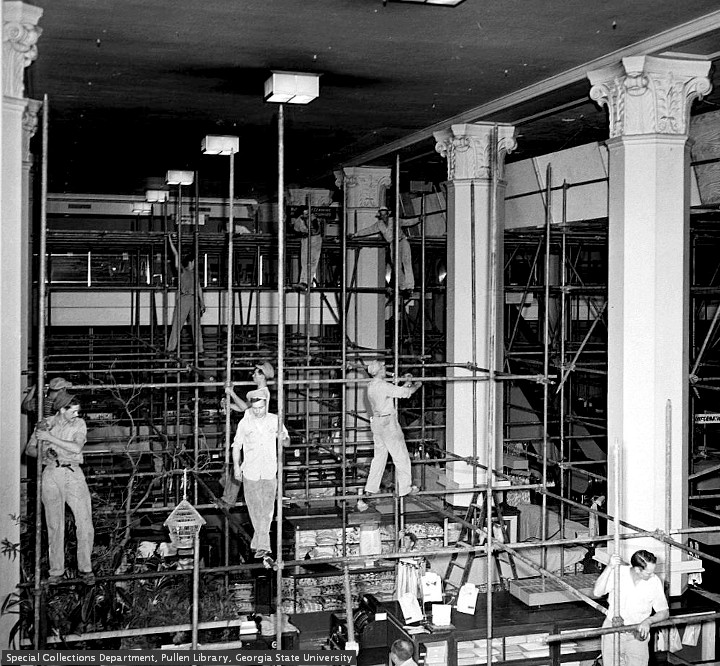


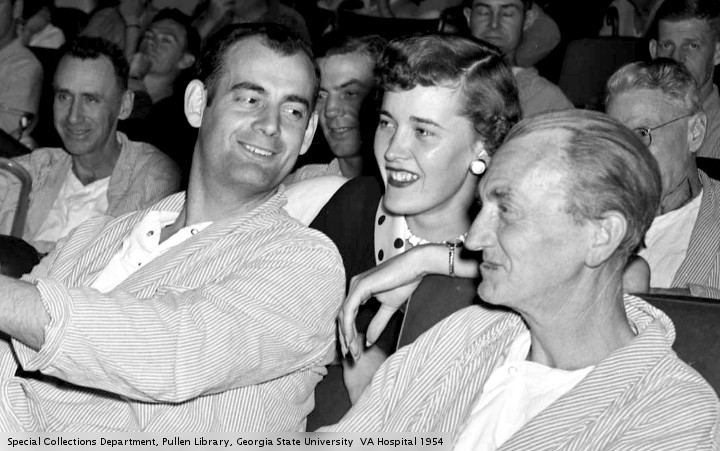
Monroe Drive Or Boulevard


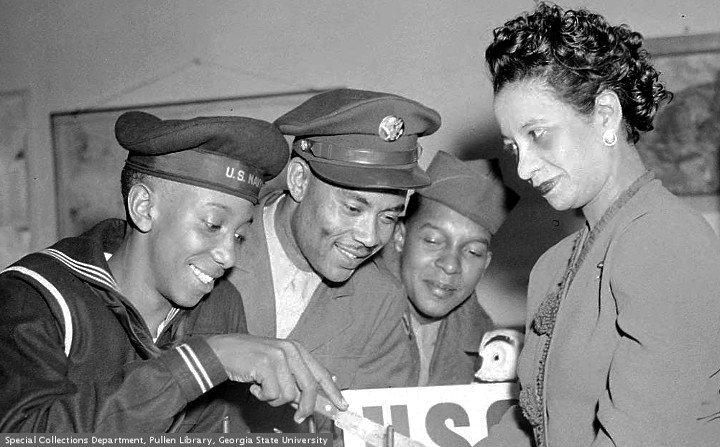
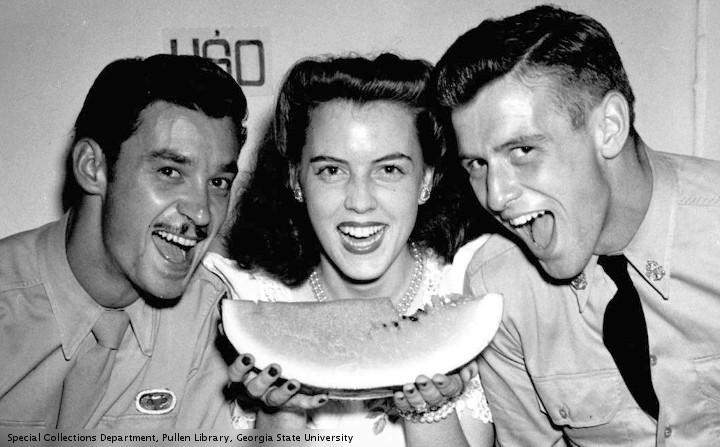
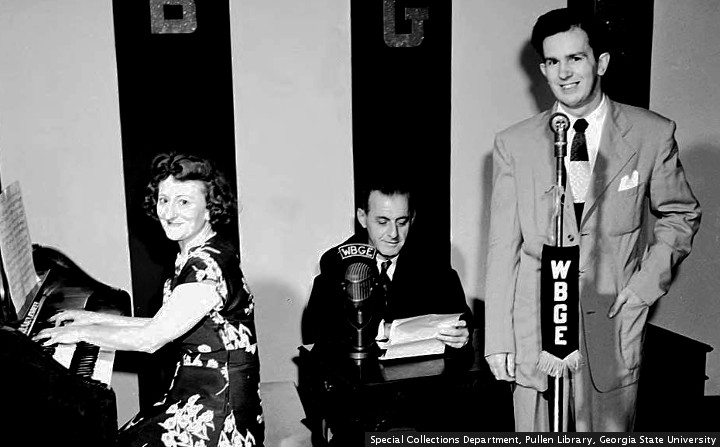


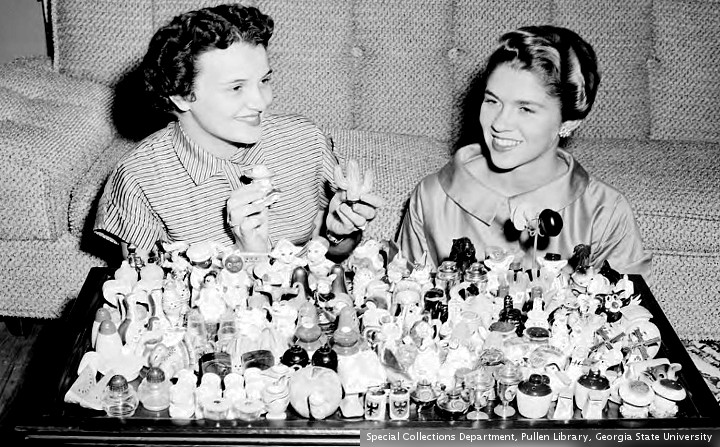
It is an Atlanta cliche. Boulevard turns into Monroe Drive because one was black, and the other white. The white people did not want to live on a street with the same name as the black neighborhood. You hear this all the time, with very little explanation. It is plausible. At one time, Ponce de Leon Avenue was a dividing line between the white, and black, neighborhoods. There are, however, a few questions about this name change business. This is a repost.
In the space between I-85 and Dekalb County, there are four streets that change names when they cross Ponce De Leon Avenue. These are Juniper/Courtland, Charles Allen/Parkway, Monroe/Boulevard, and Briarcliff/Moreland. Several streets cross Ponce without changing names, including Spring Street, Peachtree Street, Piedmont Avenue, and North Highland Avenue.
Four thoroughfares are affected by the Ponce rebranding. Juniper/Courtland is mostly commercial, at least south of Ponce. Briarcliff/Moreland is mostly white until you get to the railroad tracks south of Little Five Points. When Moreland Avenue goes under the MARTA line, the neighborhood is Reynoldstown….which was not named for Burt Reynolds.
Charles Allen/Parkway does change from white to black at Ponce. The street name then changes to Jackson Street, the original name, at Highland Avenue. Monroe/Boulevard, one block east of Charles Allen/Parkway, also goes from white to black at Ponce. However, when you cross the railroad tracks, Boulevard goes through Cabbagetown, a white neighborhood. Boulevard residents change color several times before the road dead ends at the Federal Prison. Oakland Cemetery, and Zoo Atlanta, do not play a role in this drama.
If this litany of street names is boring, it is all right to skip over the text. The pictures today are from “The Special Collections and Archives, Georgia State University Library”.
Roads change names all over the metro area, for a variety of reasons. In the area between Ponce De Leon Avenue and I 20, there are roads that change at railroad tracks (North Highland/Highland, Krog/Estoria.) Others change at Highland Avenue (Parkway/Jackson, Glen Iris/Randolph) or Decatur Street (Hilliard/Grant, Bell/Hill.) Some of these changes are racially motivated, while others are not. Some make sense, while most do not.
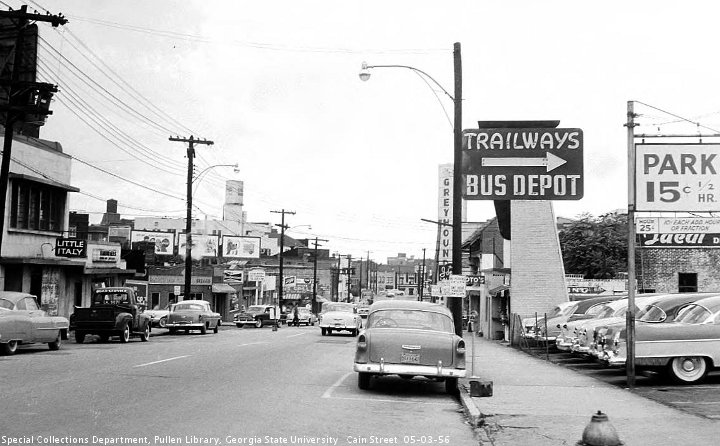
No one seems to know when this Monroe/Boulevard thing happened. An 1892 “Bird’s eye view” shows Boulevard sailing off into the horizon, past a racetrack in today’s Piedmont Park. A 1911 map shows Boulevard starting near “L.P. Grant Park,” and sailing past Ponce up to Piedmont Park. 1940 and 1952 maps show Boulevard going past Park Drive, only to turn into Monroe Drive at Montgomery Ferry Road. Finally, a 1969 map of “Negro Residential Areas” shows Monroe Drive changing into Boulevard at Ponce De Leon Avenue. Boulevard is a stand alone street name at all times.
If anyone knows about this name change business, please leave a comment. It would be interesting to know when these changes were made, and what government agency made them. Google has not been helpful, except for pointing the way to several map collections. UPDATE After the last publication of this post, a comment was made about the namesake of Monroe Drive. A post inspired by this comment is reposted below. UPDATE 99% Invisible produced a story about Collier Heights, a pioneering suburb built for Black people. Included in the documentation was a “residential security map” from 1938. The map color-coded the city’s neighborhoods: A, green,”The Best,” B, blue,”Still Desirable,” C, yellow,”Definitely Declining,” D, red, “Hazardous.” The implication was that the D neighborhoods were where Black people lived. If you look at Boulevard on this map, you see that it is still called Boulevard north of Ponce De Leon Avenue. The neighborhood is C. Boulevard does not become a D neighborhood until Wabash Av., a few blocks south of Ponce De Leon.


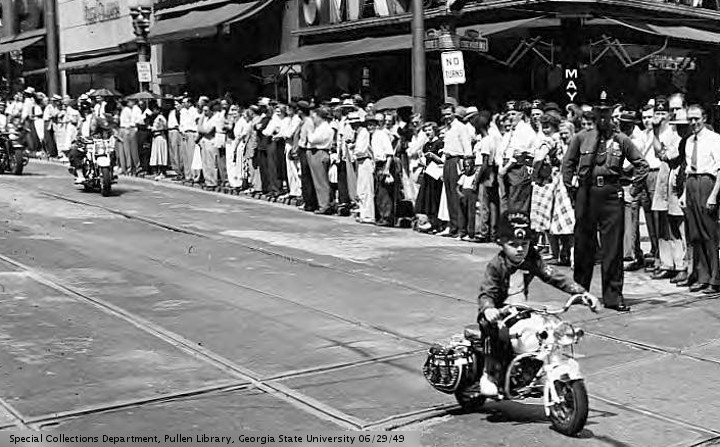
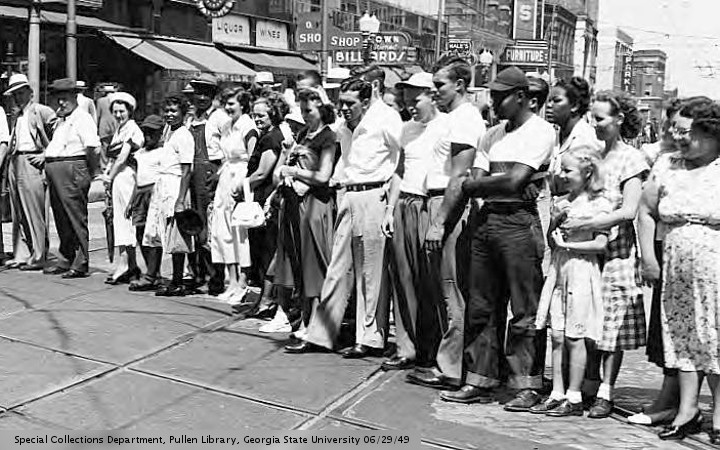
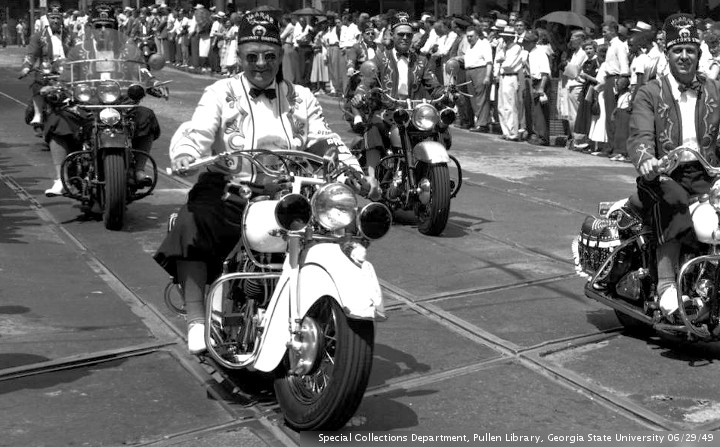


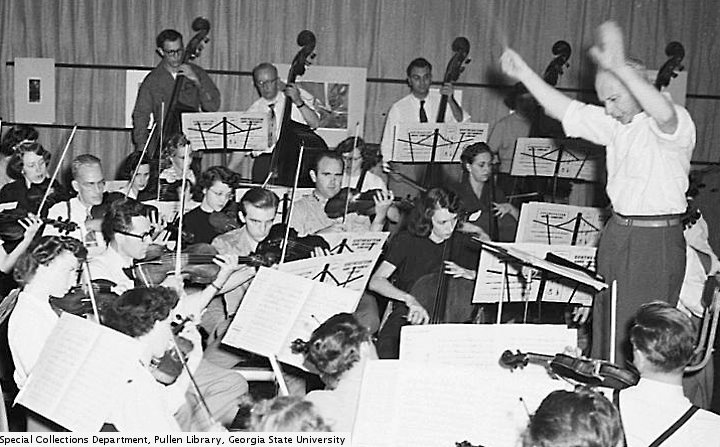


“North Boulevard was renamed Monroe Drive in 1937 to honor noted Landscape Architect W.L. Monroe who built his house and a plant nursery on the road and was noted for his many landscape projects and public parks in Atlanta.” Faset (Bill) Seay, February 4, 2020, 3:48 pm This comment was made to Monroe Drive or Boulevard. MDOB looks at Atlanta roads that change names, and the reputed racial motivations for these changes. The Monroe story takes place in Piedmont Heights.
“In 1823 Benjamin Plaster was granted 3,000 acres of land along Peachtree Creek and Clear Creek in recognition of his military service during the War of 1812. This was two years before Archibald Holland acquired a similar tract several miles to the east where another village called Terminus was founded in 1837, later renamed Marthasville and eventually Atlanta. … Plaster built a bridge across Peachtree Creek and the trail to it became known as Plaster’s Bridge Road. The bridge’s stone abutments still remain on the creek banks and a short section of the old road, running along the northern boundary of today’s Piedmont Heights, is now called Plasters Avenue. As other settlers followed a township called Easton grew up around Walker’s Grist Mill on Clear Creek near the site of today’s Ansley Mall at Piedmont Road and Monroe Drive.”
“Around 1850 Captain Hezekiah Cheshire arrived from South Carolina. His sons, Napoleon and Jerome, settled on opposite sides of the south fork of Peachtree Creek. They built a bridge across the creek near to connect their farms and the road to it became Cheshire Bridge Road. … In 1864 General Sherman’s Union soldiers swept through Atlanta. General T. J. Wood’s troops built entrenchments along the eastern edge of Easton on the property of Benjamin Plaster’s son Edwin, putting the little community in the battle of Atlanta. These entrenchments remained until the 1950s when they were destroyed by the construction of a Holiday Inn. Today a few crumbling stone steps and historic marker on the site honor the Edwin Cheshire family’s handyman “Gold Tooth John” whose ghost is rumored to still wander the halls of the old hotel at night.
“In 1871 the Atlanta and Richmond Air Line Railway opened a line between Atlanta and Toccoa, Georgia with a depot at Easton. Its “Air Line Belle” train, said to be the finest on the line, allowed Easton residents to commute to Atlanta without having to ford Clear Creek which still had no bridge. Train service spurred growth of the township to 100 residents by 1888 but the surrounding area remained rural and mostly devoted to farming and dairying. The rail line serving Easton was called the “Southern Railway Belt Line” and in 1883 the “Georgia Pacific Belt Line Railroad” connected with it just north of Easton at Belt Junction, an area which later became known as … Armour/Ottley. … In 1895 North Boulevard was built, running through Easton parallel to the railroad, as a main route into Atlanta. … In 1912 Fulton County annexed Easton and renamed it Piedmont Heights. Plaster’s Bridge Road was paved in 1917 and its name changed to Piedmont Road.” (According to this narrative, the Boulevard-Monroe thoroughfare was originally called North Boulevard. This is not the same road as North Avenue. Confusing road names is not limited to multiple Peachtrees.)
“In 1925 Landscape Architect W. L. Monroe bought 15 acres on North Boulevard at Wimbledon Road where he operated a popular nursery and landscaping business for many years, … Remnants of two small stone structures that Monroe built … remain on the grounds of today’s Ansley-Monroe Villas Condominiums. In 1927 a portion of North Boulevard was renamed Monroe Drive in honor of Monroe’s many landscape projects in the city.” … “In 1928 the City of Atlanta began annexing Piedmont Heights by taking in the lots along North Boulevard. In the 1930s a new home could be bought for $4,700 on North Boulevard or Wimbledon Road.”
There is a bit of confusion here. One source says the Monroe renaming was in 1927, while another source says 1937. Then there is the story told by maps, found in the original post.
An 1892 “Bird’s eye view” shows Boulevard sailing off into the horizon, past a racetrack in today’s Piedmont Park. A 1911 map shows Boulevard starting near “L.P. Grant Park,” and sailing past Ponce up to Piedmont Park. A 1940 map shows Boulevard going past Park Drive, only to turn into Monroe Drive at Montgomery Ferry Road. Finally, a 1969 map of “Negro Residential Areas” shows Monroe Drive changing into Boulevard at Ponce De Leon Avenue, like it is today.
Two things are worth noting. None of these maps have a “North Boulevard.” The street name is a stand-alone Boulevard. Second, the 1940 map shows the street as Boulevard at Eighth Street, and Elmwood Drive. The first mention of Monroe is at Montgomery Ferry, near the Monroe Nursery. This might contradict the racial narrative.
The information about Mr. Monroe neither proves, nor disproves, the story that black Boulevard was changed to white Monroe. City on the Verge: Atlanta and the Fight for America’s Urban Future states “In 1925 landscape architect W. L. Monroe bought fifteen acres on what was then called North Boulevard, establishing a plant nursery that thrived for many years. In 1937, the street north of Ponce de Leon was renamed Monroe Drive in his honor (and to distinguish it as a white area as opposed to Boulevard to the south of Ponce).” The book offers no evidence for this, and its “woke” tone is cause for skepticism. While there is circumstantial evidence to support the legend, verifiable facts are hard to come by. A similar story might be the 1956 change of the state flag.
“William Lott Monroe, Sr. (1891-1965), landscape designer and nurseryman, is recognized in newspaper articles as the “landscape artist” during the development of North Fulton Park (later renamed Chastain Memorial Park) in the late 1930s and early 1940s. This work was financed partially through WPA (Works Progress Administration) funds and supported with local prison labor. … There are three main areas in Chastain Park with Monroe’s signature style as a landscape designer: (1) the master grill area; (2) the picnic grounds area; and (3) the amphitheater. … Monroe’s Landscape & Nursery Co. is removed from Fulton County’s payroll: “… Drawn more than $17,000 from the county in the last year and one-half… The company was drawing $500 a month for supervising landscaping of county parks, which was in addition to flowers, shrubs and blueprints sold by it to the county.” (“Nursery Company Is Cut Off Pay Roll.” Atlanta Constitution, Jan. 25, 1941)” … “1941 Amphitheater still under construction, originally planned as an outdoor venue for the Atlanta Symphony Orchestra.” … “It is unknown if Monroe oversaw the completion of construction at the amphitheater.” … “October 22, 1965 William Lott Monroe, Sr. dies in Atlanta.” Pictures are from “The Special Collections and Archives, Georgia State University Library”.




July 3, 1981


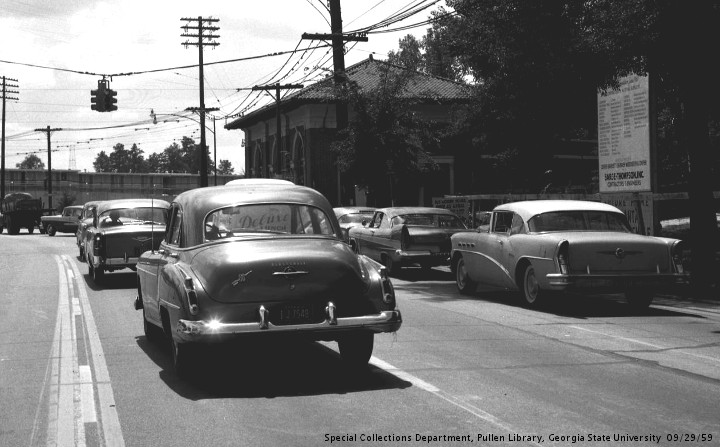

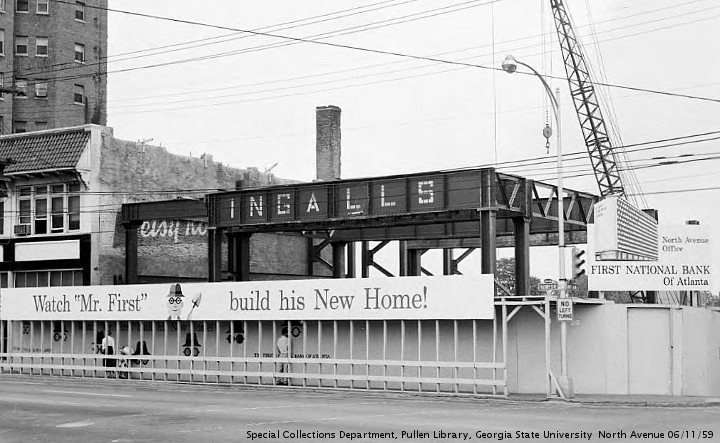

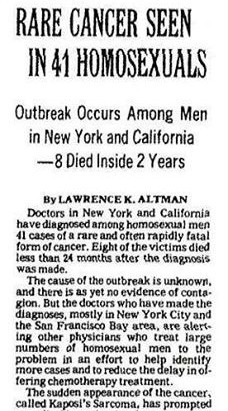
July 3, 1981, was another day before a holiday. The new President, Ronald Reagan, was recovering from gunshot wounds. There was talk of an era of conservatism, with possibly severe repression.
There was an article in the New York Times. RARE CANCER SEEN IN 41 HOMOSEXUALS. “Doctors in New York and California have diagnosed among homosexual men 41 cases of a rare and often rapidly fatal form of cancer. Eight of the victims died less than 24 months after the diagnosis…”
This was the media debut of AIDS. It would not have that name for a while. Almost nobody thought, on that summer day, just how bad AIDS would be. In five years it was obvious how serious AIDS was.
 PG was on another trip to the west coast. It was becoming obvious that this would be a vacation, rather than a relocation. He was riding a bicycle, with a milk carton overloaded with camping gear. Some kids told him to get saddle bags, and carry the weight lower. If you have the weight on top, you would lose control coming down a big hill. PG did not listen to the kids.
On July 4, PG left Patrick’s Point state park, about 300 miles north of San Francisco. Coming down the first hill on highway 101, the bike shook, shook harder, and flipped on its side. PG was thrown off. The front wheel was bent beyond repair. PG gathered his gear, left the bike behind, and got a ride into the nearest town.
PG got a bus ticket to Seattle. That city was in an economic downturn, with less than half a page of help wanted ads. PG found a auto delivery service, and got a VW bug going to Oak Ridge, TN. In a few days he was in Atlanta. A few days later, a temp agency came up with a job as a driver for a blueprint company. PG worked for that company, in one form or another, for the next 24 years.
As for the gay men with Kaposi’s Sarcoma … in all probability, the patients mentioned in that article were all dead within a year. AIDS has become a dominating story in our time. At its worst, it was claiming 50,000 lives a year. With the advent of wonder drugs, the death toll has been greatly reduced. The impact of AIDS on American life cannot be adequately described. This is a repost.
Pictures today are from “The Special Collections and Archives, Georgia State University Library”. Lawrence K. Altman, M.D. is still writing articles for the New York Times.


PU Is Short For Pun



1. The roundest knight at King Arthur’s round table was Sir Cumference.
He acquired his size from too much pi.
2. I thought I saw an eye doctor on an Alaskan island, but it turned out to be an optical Aleutian.
3. She was only a whiskey maker, but he loved her still.
4. A rubber band pistol was confiscated from the algebra class. It was a weapon of math disruption.
5. The butcher backed into the meat grinder and got a little behind in his work.
6.. No matter how much you push the envelope, it’ll still be stationery.
7. A dog gave birth to puppies near the road and was cited for littering..
8. A grenade thrown into a kitchen in France would result in Linoleum Blownapart.
9. Two silk worms had a race. They ended up in a tie..
10. Time flies like an arrow. Fruit flies like a banana.
11. A hole has been found in the nudist camp wall. The police are looking into it.
12. Atheism is a non-prophet organization.
14. Two hats were hanging on a hat rack in the hallway.
One hat said to the other, ‘You stay here; I’ll go on a head..’
15. I wondered why the baseball kept getting bigger. Then it hit me.
16. A sign on the lawn at a drug rehab center said: ‘Keep off the Grass.’
17. A small boy swallowed some coins and was taken to a hospital.
When his grandmother telephoned to ask how he was, a nurse said, ‘No change yet.’
18. A chicken crossing the road is poultry in motion.
19. The short fortune-teller who escaped from prison was a small medium at large.
20. The man who survived mustard gas and pepper spray is now a seasoned veteran.
21. A backward poet writes inverse.
22. In democracy it’s your vote that counts. In feudalism it’s your count that votes.
23. When cannibals ate a missionary, they got a taste of religion.
24. Don’t join dangerous cults: Practice safe sects.
25. Pictures are from “The Special Collections and Archives, Georgia State University Library”.
26. Stories are in the public duh-main. This is a repost.



Midtown


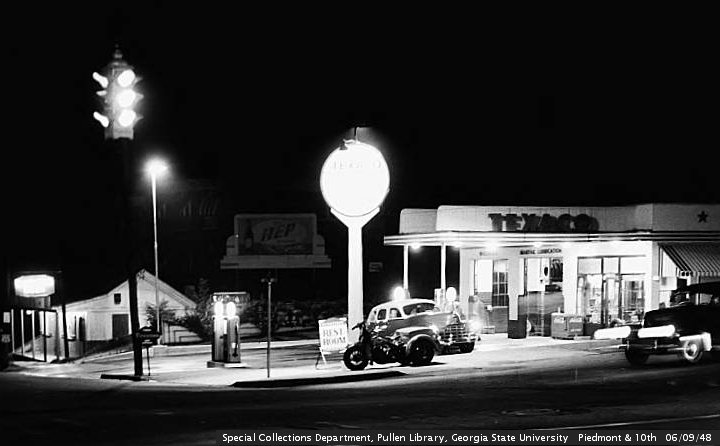


The neighborhood along Peachtree Road has always been a great place to be a freak. For a long time it didn’t have a name. It is north of downtown, between Piedmont Park and Georgia Tech. Sometime in the early eighties, people started to call it Midtown, and the name stuck.
In the time after the War Between the States, this area was a shantytown called “Tight Squeeze”. It evolved into a pleasant middle class area. In the sixties, hippies took over. The area was known as the strip, or tight squeeze. Many stories could be told.
After the flower children moved on, the area went into decline. Gays started to move in, with the battle cry “Give us our rights or we will remodel your house.” Developers, worshiping the triune G-d of location, location, location, began to smell money. The neighborhood became trendy, then expensive, then more expensive. The freaks with money remain. This is a repost. Pictures are from “The Special Collections and Archives, Georgia State University Library”.
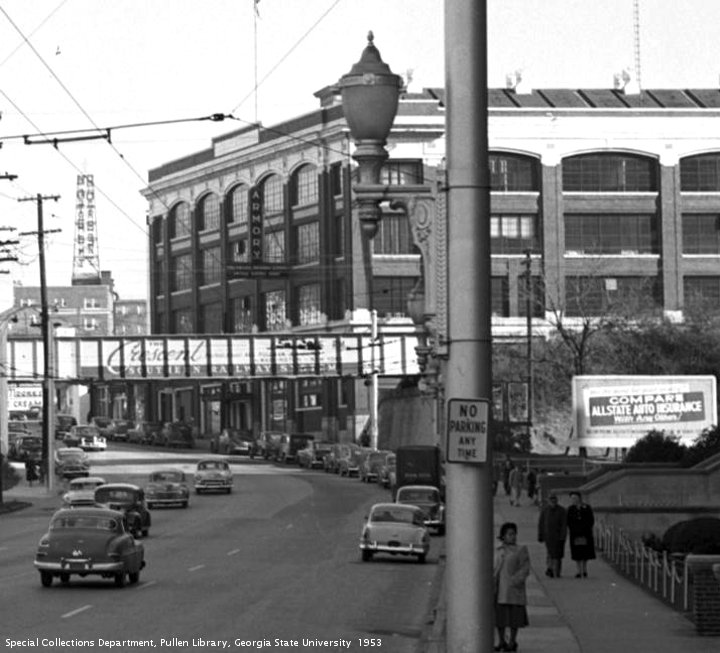

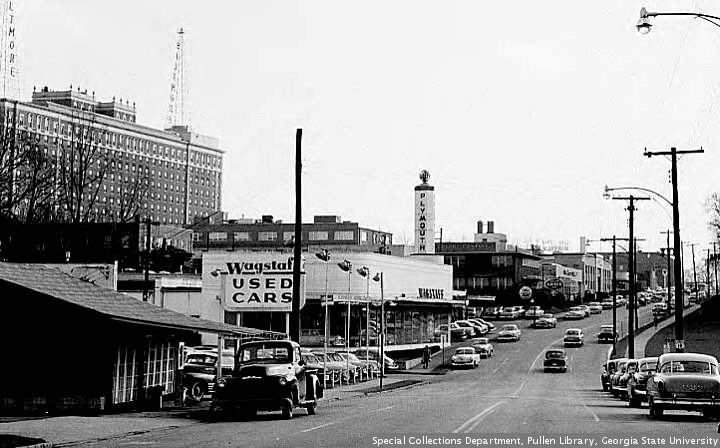

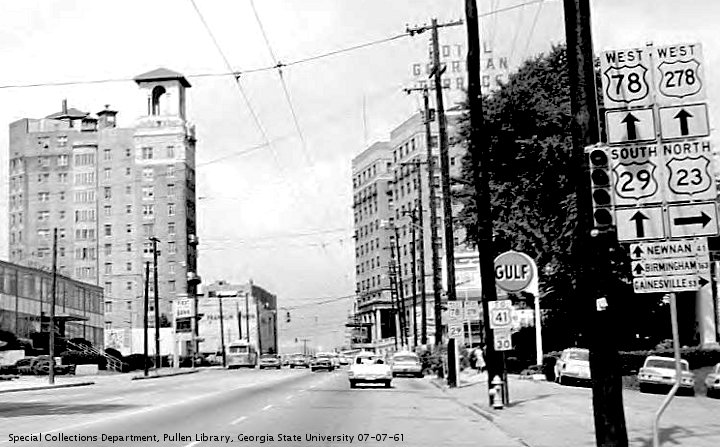


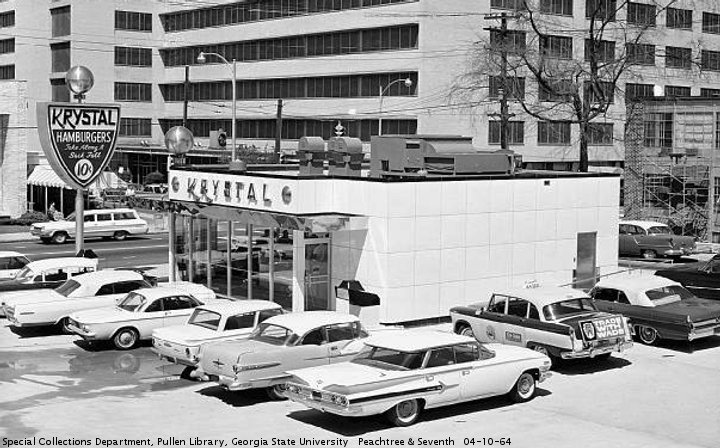
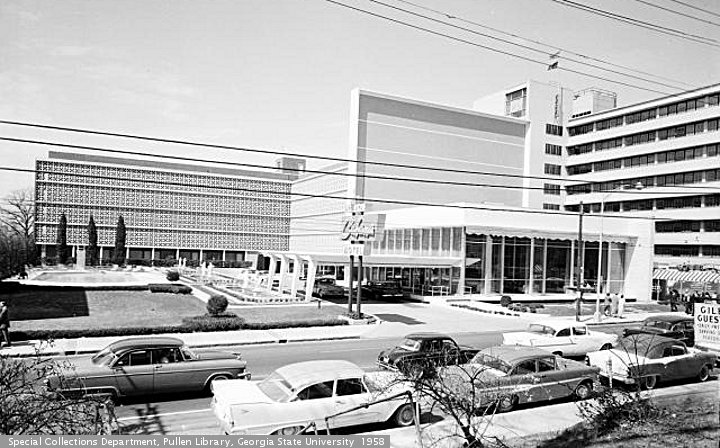
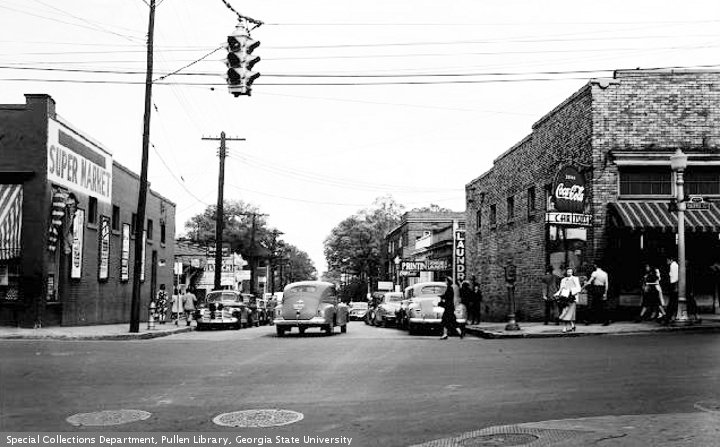

There was a nifty webcam up when this feature was written. It shows the progress of a high rise going up now at 12th and Peachtree in midtown. The location of the camera itself is not certain. The most likely location is 999 Peachtree, on Tenth Street, two blocks south of the project.
A glance at the image reveals a curve in the road, between the two glass boxes under construction. Atlanta does not have wide, straight boulevards extending to the horizon. It is said that Atlanta did not build roads, but paved the cow paths.
People of a certain age will remember this area as the strip. The tenth street district was a neighborhood shopping area, up until the mid sixties. At some point, the old businesses started to move out and the hippies moved in. For a while, it was a festive party. Soon enough reality returned, and the area went into a crime filled decline.
The 999 complex is the neighborhood story in a nutshell. Before 1985, it was a block of small businesses. There was a hardware store, with the peace symbol set in tiles in the sidewalk. On Juniper Street stood the Langdon Court Apartments. They were named for PG’s great uncle Langdon Quin. Ru Paul used to stay there. He would sit out on a balcony, and wave to the traffic going by.
Across the street was a chinese restaurant, the House of Eng. A staircase on the side led to the Suzy Wong Lounge. Behind the building was an apartment building. It was one of the residences of Margaret Mitchell, while she wrote “Gone With The Wind”. She called it “the dump”, which was fairly accurate. The museum on that site would have amazed her.
PG went to the House of Eng for lunch one day in 1985. He noticed that he was the only customer in the house, at 12:30 pm on a weekday. After finishing his lunch, PG knew why.
At some point, it was decided to build a high rise there. Heery was one of the equity partners, along with a law firm and an ad agency. The building was designed by Heery (duh).The ad agency folded before the building opened, followed within a couple of years by the law firm. Heery was sold to a British company. PG does not know who owns 999 Peachtree now.
This is a repost, with pictures from “The Special Collections and Archives, Georgia State University Library”. The building, at 12th and Peachtree, is finished.



Why We Call Football Soccer

The world cup is scheduled for 2022. It is by far the largest sporting event in the world. And, despite what you hear in this country, they play football (futbol), not soccer.
In the 19th century, the english wrote the rules for something called association football. This was different from rugby football. Somehow, soccer, a nickname for association, became the name of this new sport. When the pastime spread from the upper crust schools to the working class, it became known as football. It made sense, being a sport where you kick the ball with your feet.
In the USA, there was another sport called football. It involves beer and steroids. The ball only gets kicked when it is time for a commercial. For some reason, when association football became popular here, the name soccer stuck.
PG thinks soccer is a terrible word, for a pretty good sport. All those guttural noises sound bad in the mouth, like something is caught in your throat. Maybe, if the sport had another name north of the Rio Grande, it would be more popular.



A young man named Jordan Griner was the designated driver June 19, 2010. After dropping the last passenger off, he was crossing West Peachtree Street at 17th. A lady was driving north on West Peachtree, ran a red light, and smashed into Mr. Griner. . The lady had a blood alcohol content of .229, well above the legal limit of .08. The lady is in a world of trouble, and the man is dead. Mr. Griner worked in the Governor’s office, so the case got some attention.
There is a lot of talk about drinking and driving, as there should be. People should not drive when they are intoxicated. As long as alcohol and automobiles are used, this is going to be a problem.
When you enter an intersection, you should look to see who is coming. If you see a car driving too fast, heading in your direction, wait for it to go through. Especially in midtown Atlanta, at 4 am Saturday.
There used to be a yellow brick apartment building at 17th and West Peachtree. This was the residence of Margaret Mitchell (Mrs. John Marsh). One afternoon, Mrs. Marsh met a friend at the Atlanta Woman’s Club, on Peachtree Street. After a few cocktails, Mr. and Mrs. Marsh left the Woman’s Club, intending to go across the street to a movie. Mrs. Marsh stepped in front of a taxi, and into eternity. Tomorrow is another day.
A developer had plans for the triangle of land between West Peachtree, Peachtree, and 17th. He tore down all the apartment buildings on that block, including the one Margaret Mitchell called home. The deal fell through for the developer, and the corner of 17th and West Peachtree is a vacant lot. The developer should have looked to see what was coming.
This is a double repost. Pictures are from “The Special Collections and Archives, Georgia State University Library”, and the chamblee54 collection.


The Kinks


Dangerousminds brings the sad news that Pete Quaife, the original bass player for The Kinks , passed away yesterday. He was 66, and had been in dialysis for several years. Maybe it is time for Chamblee54 to do a post about The Kinks. This is a repost.
Battling brothers Ray and Dave Davies are the core of The Kinks. (The name is pronounced like the american Davis, as though the e did not exist). Ray was the vocalist, writer, and rhythm guitar player. Dave was the lead guitarist, and sparring partner for his brother. The fisticuffs were not restricted to the brothers. This led to the band being barred from performing in the United States between 1965 and 1969. The sixties happened anyway.
There were several hits in the early days, most notably “You really got me”. (This later became a signature tune for Van Halen). The band had numerous adventures, but never became the superstars that other British bands of that era did. Ray Davies developed as a songwriter, with many witty tunes, full of social commentary and britishness.(spell check suggestion:brutishness)
In the seventies The Kinks kept trooping on. They did an album called Preservation Act, which became the basis of a theatrical presentation. The next album was called Soap Opera, with a theater like production. This is where PG got to see The Kinks.


It was sometime in the spring of 1975, at the Atlanta Municipal Auditorium. Elvin Bishop was the opening act. The Kinks had started when PG arrived, buying a $4.00 balcony seat. Alex Cooley was in the box office counting money, and broke open a roll of quarters to make change for a five.
The band was playing “Celluloid Heroes” when PG walked into the auditorium. There was no one on the door checking tickets, so PG walked onto the floor and found an empty seat on the 13th row. The next number was “Lola”.
Ray Davies introduced the song by saying ” If you are a man, sing LO. If you are a woman, sing LA. If you are not sure, clap your hands”. The next number was about demon alcohol. There were lights shining on the crowd during this number, as Ray Davies asked if there were any sinners in the audience. The band did several more songs, ending the first half of the evening with “You really got me”. Dave Davies got some spotlight time with a rave up intro to this number.
The second part of the show was a theatrical presentation of “Soap Opera”. The band wore rainbow colored wigs, and stood at the back of the stage while Ray Davies told the tale. “Soap Opera” was about a rock star who traded places with Norman, who lived a boring life. The flat Norman lived in has pictures of ducks on the wall, which drove Ray/Norman to scream “I can’t stand those f*****g ducks”. This led into a rocking ditty called, predictably, “Ducks on the Wall”.
As the show dragged on, Ray/Norman was embarrassed by the mess he was in. “You can’t say that in front of The Kinks, they are my band, and that is my audience.” The audience lights were turned on again, and the band played a medley of hits from 1964.
Finally, the real Norman came back to reclaim his wife, put the ducks back on the wall, and kick out The Kinks. The band gave up on theater before much longer, and were popular for the rest of the concert happy seventies. Ray Davies was the babydaddy for Chrissie Hynde . Eventually, the band quit performing, and continued to cash royalty checks.
Pictures are from the “The Special Collections and Archives, Georgia State University Library”.

The Wisdom Of William S. Burroughs







The word advice, for all the condescencion implied, does have a neat composition. Ad is short for advertisement, and vice is a forbidden pleasure. Unless you are talking about Vice President, who should be forbidden.forgotten, and fornicated, with his wife in the room. For some unknown reason, the subject of discourse today is advice from William Seward Burroughs. No, the TV station on Peachtree Street was not named for him.
Before we reprint this tasteful consultation, (Chamblee54 did not write the advice) we should ponder the concept of William S. Burroughs, and wonder why anyone would ask this man for advice.
Mr. Burroughs is the namesake grandson of the man who invented the adding machine. He left his heirs a bunch of money. The young Burroughs wound up in New York, and became friends with Jack Kerouac and Allen Ginsberg.
Mr. Burroughs was married twice (to women). The first was a platonic relationship with Ilse von Klapper, a Jew who wanted to get out of Europe. In 1936, this counted as a good deed.
The second wife, Joan Vollmer, helped make his life interesting. She is the mother of William S. Burroughs III, and was fond of speed. Mr. and Mrs. Burroughs were living in Mexico in 1951, when they decided to play William Tell. Mr. Burroughs missed the apple, and Mrs. Burroughs died.
Mr. Burroughs went on to write a few novels, including Naked Lunch. He was famous in hipster circles, and gave lie to the saying “there are no old junkies”. Mr. Burroughs settled in Lawrence KS, and lived to be 83. This leaves out a few inedible details.
Today’s entertainment is a repost, with pictures from “The Special Collections and Archives, Georgia State University Library”. If you want to read more about Mr. Burroughs, there is always more.
People often ask me if I have any words of advice for young people. Well here are a few simple admonitions for young and old. Never interfere in a boy-and-girl fight.Beware of whores who say they don’t want money.The hell they don’t.What they mean is they want more money. Much more. If you’re doing business with a religious son-of-a-bitch,Get it in writing.His word isn’t worth shit. Not with the good lord telling him how to fuck you on the deal.
Avoid fuck-ups. We all know the type. Anything they have anything to do with, No matter how good it sounds, Turns into a disaster.Do not offer sympathy to the mentally ill. Tell them firmly: I am not paid to listen to this drivel. You are a terminal boob.
Now some of you may encounter the Devil’s Bargain, If you get that far. Any old soul is worth saving, At least to a priest, But not every soul is worth buying. So you can take the offer as a compliment. He tries the easy ones first. You know like money, All the money there is. But who wants to be the richest guy in some cemetery? Money won’t buy. Not much left to spend it on, eh gramps?
Well time hits the hardest blows. Especially below the belt. How’s a young body grab you? Like three card monte, like pea under the shell, Now you see it, now you don’t. Haven’t you forgotten something, gramps? In order to feel something, You’ve got to be there. You have to be eighteen. You’re not eighteen. You are seventy-eight. Old fool sold his soul for a strap-on.
Well they always try the easiest ones first. How about an honorable bargain? You always wanted to be a doctor, Well now’s your chance. Why don’t you become a great healer And benefit humanity? What’s wrong with that? Just about everything. Just about everything. There are no honorable bargains Involving exchange Of qualitative merchandise Like souls For quantitative merchandise Like time and money. So piss off Satan And don’t take me for dumber than I look.
An old junk pusher told me – Watch whose money you pick up.






 Chamblee54
leave a comment