Where Is That Place



This blog has an email address listed. It is seldom used. The host is a faded internet company that rhymes with booboo. Once proud email has become a spam magnet. The email address there is checked every once in a great while. Yesterday was one of those times. There was a surprise.
Friday, June 5, 2015, 2:52 PM
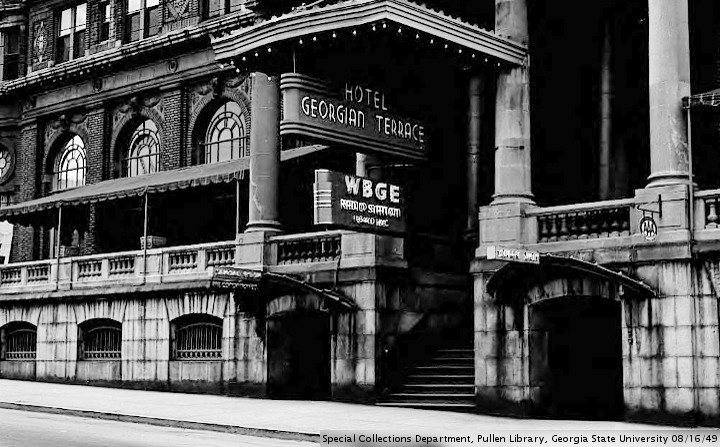
Do you know exactly where the Agora Ballroom was in the Georgia Terrace Hotel Also I am trying to locate photos of the following locations – Does you any that we can use? Please let me know ASAP – I am on an extremely tight deadline need photos by Monday morning if possible. Exteriors or interiors are great. Please let me know if you have any.
12th Gate Coffee House (located on 10th street in Midtown,) Club 112 (located at Lavista and Cheshire Bridge,) Lenny’s (either or both of their two locations in the Old Fourth Ward,) Great Southeast Music Hall (either or both of their two locations Lindberg Plaza or Cherokee Plaza,) Echo Lounge (located in East Atlanta,) Hedgens (located in Buckhead,) Agora Ballroom (located in Georgia Terrace hotel,) Muelenbrink’s Salon (located at the Underground.) Joeff Davis Photo Editor Creative Loafing
Thursday, July 9, 2015 11:12 PM
Hey I apologize for the tardy answer. I don’t use this email very often
The Agora was at the end of an alley off Peachtree. It was next door to the Ga Terrace Hotel, though not in the Hotel building itself. The ballroom was in a fire in the early eighties, and was torn down. I don’t have any of the pictures that you needed a month ago.
Friday, July 10, 2015, 11:49 AM
Thanks here is the piece we did: That was then, this is now.
Friday, July 10, 2015, 1:21 PM
Hey thanks for getting back to me. The article was cool, even without my contribution. This seems like a good excuse for a blog post. I have a some comments about some of the locations listed. For instance, my mother bought groceries at the Cherokee Plaza A&P every thursday for 37 years.. I would like to use your letters, and link to your article, in my post.
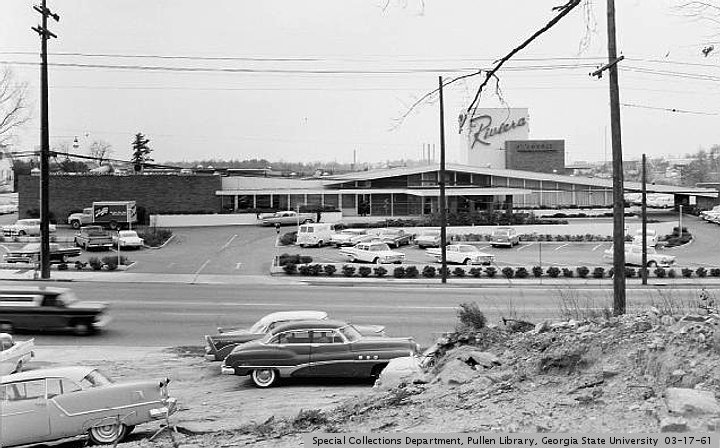
Chamblee54 has had posts about four notable Atlanta performance venues: 688 Spring Street, Georgian Terrace Ballroom, The Great Southeast Music Hall, and Richards. Two were on the list of requests. As for the other two, 688 Spring Street, home of Rose’s Cantina and 688, is now a doc-in-a-box facility, Concentra Urgent Care. The site of Richards, across from Grady stadium on Monroe Drive, is now the meat department at Trader Joe’s.
The CL article, That was then, this is now, is fun to look at. There are some good pictures. There are a couple of mistakes in the piece, which this post will try correct.
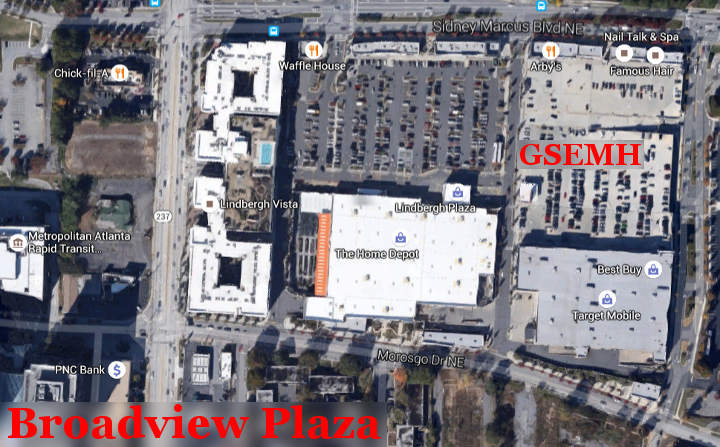
The Great Southeast Music Hall is the scene of many cherished memories for those of a certain age. The post linked here has more comments than any other Chamblee54 post. There are two google earth images, one for Broadview Plaza, and one for Cherokee Plaza.
In Broadview, (now known as Lindbergh something or another,) the Music Hall was in the corner of an L shaped building. The space is currently a part of the parking deck for Target. According to google earth, the Home Depot takes up almost the entire parking lot of the old shopping center.
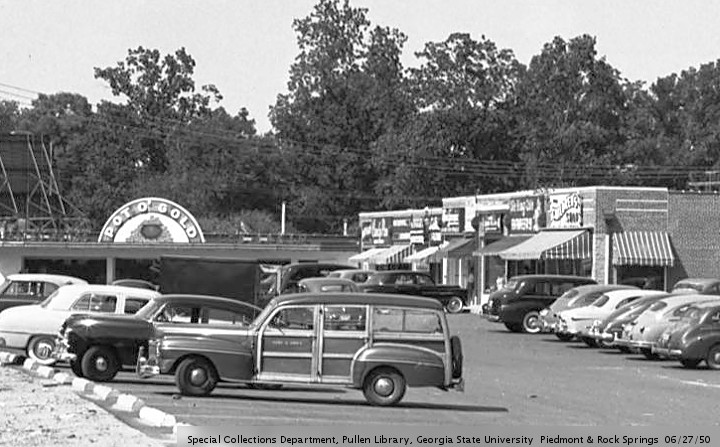
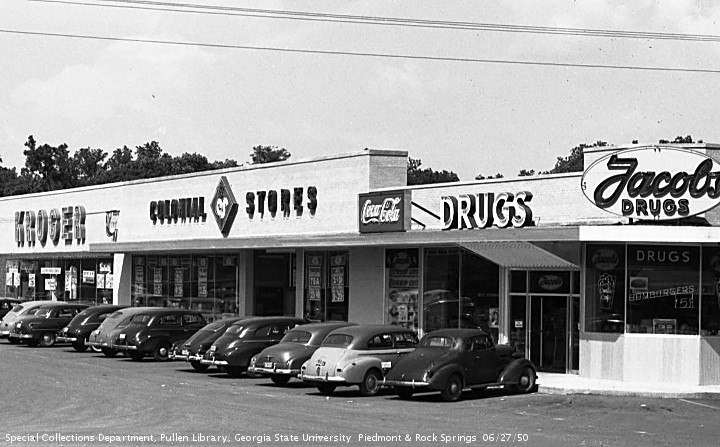
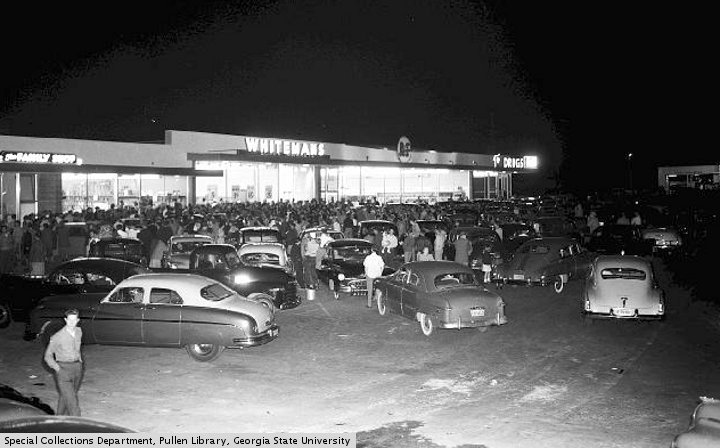
In Cherokee Plaza, the space where the Music Hall was is the south part of a Kroger. CL says it was in the parking lot, which simply is not so. This parking lot is too small, which is one reason the Music Hall failed there. In the nineties, the A&P expanded, and took over the space occupied by the theater. In 1998, A&P closed their Atlanta operations. The stores were taken over by Kroger.
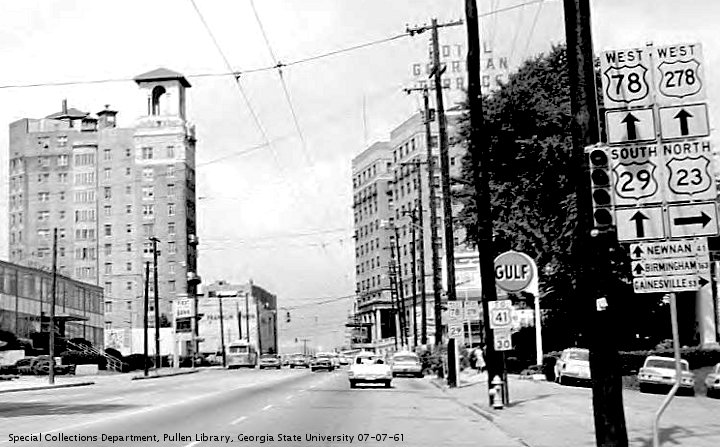
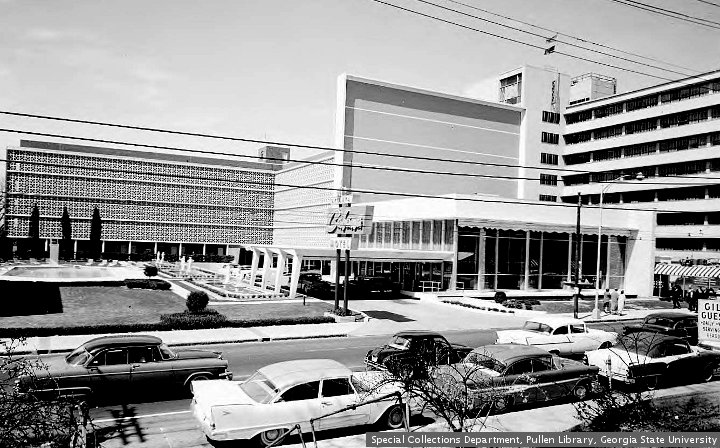
The third google earth image is for the intersection of Peachtree Street and Ponce De Leon Avenue. This is the location of the Georgian Terrace Ballroom. This was the setting of Alex Cooley’s Electric Ballroom and The Agora Ballroom. This facility was in a fire, and torn down. An annex to the Georgian Terrace Hotel was built. This annex is roughly where the Ballroom was.
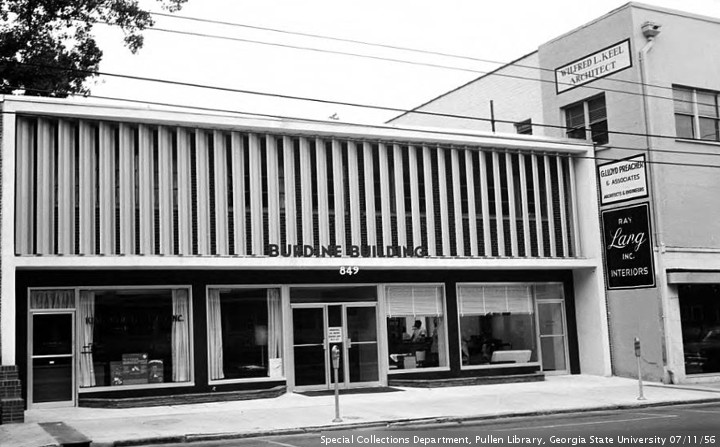
One of the places CL mentions was Backstreet. A picture of Lang Interiors, on Peachtree Street at Sixth Street, is included today.This is the building that became Backstreet. This building was a series of nightclubs in the early seventies. Backstreet opened in late 1974. It was the premier chacha palace in Atlanta for many years. When the property became valuable enough to attract the money of developers, the city discovered enough violations to shut down the party. (1974 was somewhat of a golden age for Atlanta nightlife. The Great Southeast Music Hall, Richards, and Alex Cooley’s Electric Ballroom were all in operation in 1974.)
Club 112 catered to an African American clientele. The space had been many businesses over the years, with a Fred Astaire dance studio next door. Around the time Backstreet was getting started, the space was called the Locker Room. A drag show, featuring the Hollywood Hots, performed there. The Locker Room was a “private club,” and was able to stay open on Sunday night. It was the only place open on Sunday, and was packed. The Locker Room was owned by Robert E. Llewellyn, who was later convicted of having a business rival murdered.
The 12th gate was in the middle of the block, somewhere on tenth street. It was not on the corner of Spring Street. A seedy Jim Wallace gas station was nearby. This place was mostly before I went out much. There is a hazy memory of seeing the Hampton Grease Band there. After the show, Mr. Hampton walked up to me, holding a thumb and finger making a circle in front of one eye. Mr. Hampton asked me what sign I was.
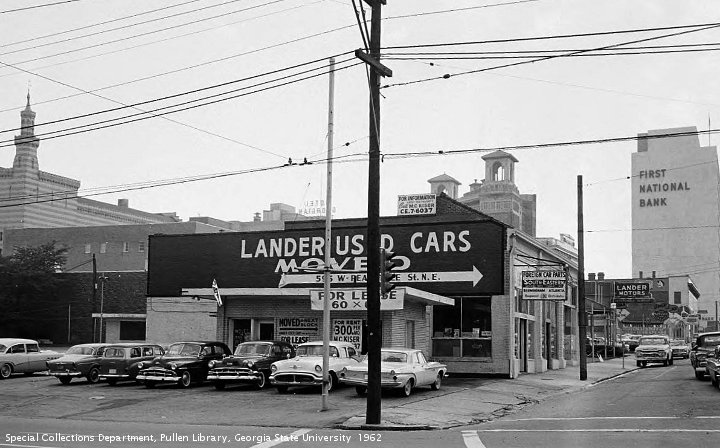
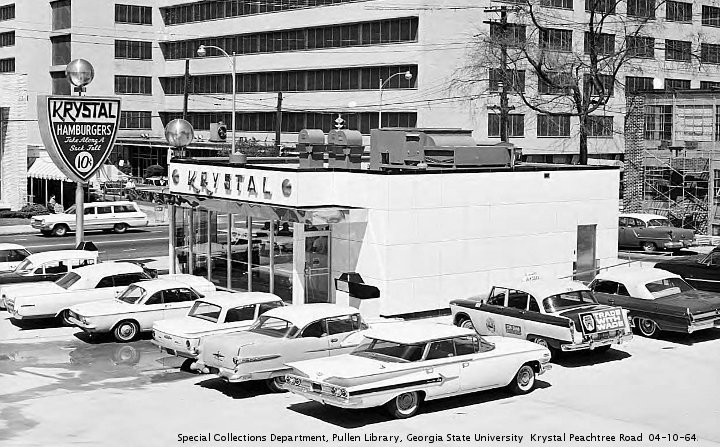
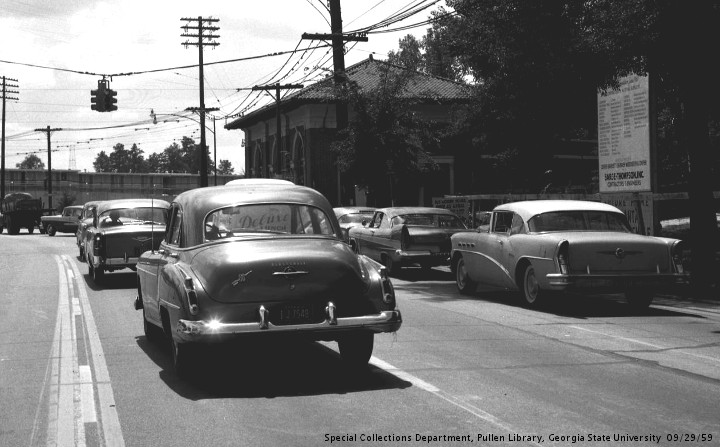
By the time Lenny’s was in business, I was a retired drunk. I seldom went downtown after dark. Somehow, the party went on without me. Pictures today are from “The Special Collections and Archives, Georgia State University Library”. This is a repost.



July 3, 1981





July 3, 1981, was another day before a holiday. The new President, Ronald Reagan, was recovering from gunshot wounds. There was talk of an era of conservatism, with possibly severe repression.
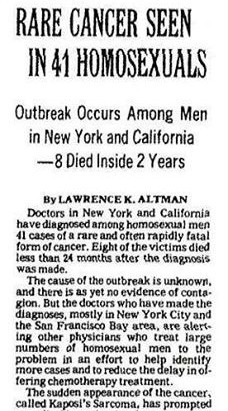
There was an article in the New York Times. RARE CANCER SEEN IN 41 HOMOSEXUALS. “Doctors in New York and California have diagnosed among homosexual men 41 cases of a rare and often rapidly fatal form of cancer. Eight of the victims died less than 24 months after the diagnosis…”
This was the media debut of AIDS. It would not have that name for a while. Almost nobody thought, on that summer day, just how bad AIDS would be. In five years it was obvious how serious AIDS was.
 I was on another trip to the west coast. It was becoming obvious that this would be a vacation, rather than a relocation. He was riding a bicycle, with a milk carton overloaded with camping gear. Some kids told him to get saddle bags, and carry the weight lower. If you have the weight on top, you would lose control coming down a big hill. I did not listen to the kids.
On July 4, I left Patrick’s Point state park, about 300 miles north of San Francisco. Coming down the first hill on highway 101, the bike shook, shook harder, and flipped on its side. I was thrown off. The front wheel was bent beyond repair. I gathered my gear, left the bike behind, and got a ride into the nearest town.
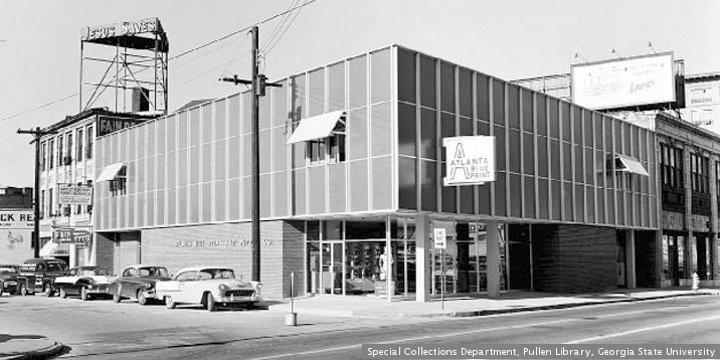
I got a bus ticket to Seattle. That city was in an economic downturn, with less than half a page of help wanted ads. I found a auto delivery service, and got a VW bug going to Oak Ridge, TN. In a few days he was in Atlanta. A few days later, a temp agency came up with a job as a driver for a blueprint company. I worked for that company, in one form or another, for the next 24 years.
As for the gay men with Kaposi’s Sarcoma … in all probability, the patients mentioned in that article were all dead within a year. AIDS has become a dominating story in our time. At its worst, it was claiming 50,000 lives a year. With the advent of wonder drugs, the death toll has been greatly reduced. The impact of AIDS on American life cannot be adequately described. This is a repost.
Pictures today are from “The Special Collections and Archives, Georgia State University Library”. Lawrence K. Altman, M.D. had an NYT byline on Feb. 16, 2023.


The Nightclub


A picture turned up on facebook the other day. It was a flyer for a rock club at 2581 Piedmont Road called The Nightclub. The facebooker said “Found on the Strip Project’s page! I THINK the year is 1975…but…T Wesley Dean, can you help with this? Thermos played there”
Broadview Plaza had a strange design. It was at the corner of Piedmont Road and Lindbergh Drive, about a mile north of the park. BP was one of the first shopping centers built in Atlanta. BP was built on the site of Mooney’s Lake … “a summer swimming hole off of Morosgo Drive in Buckhead that was in business from 1920-58.” The design was unusual, having a row of stores facing Morosgo Drive, connected to a larger group of stores by an escalator. The downstairs portion was home to the Great Southeast Music Hall. The Nightclub was in the upstairs part, next to the escalator.
Peaches Records and Tapes was just getting going in 1975. PRT was a huge facility at the base of heartbreak hill on Peachtree. Rock stars put hand prints in cement in front of the store. One of the hand prints proclaimed DARRYL RHOADES IS GOD. Mr. Rhoades, backed by the Hahavishnu Orchestra, performed at PRT Halloween 1975. Mr. Rhoades had a big time playing his shit hits. (fecal dyslexia is rough) Shoplifters had a productive evening.
What does this have to do with The Nightclub? One afternoon, Peaches had a flyer on the checkout counter. The handbill had a coupon for free admission to the Roger McGuinn show. I went to this show. Jim McGuinn was the front man for the Byrds, before he changed his name to Roger. The show was fun to watch, with “Chestnut Mare” and “Lover of the Bayou” remembered 44 years later. Before doing “Eight Miles High,” Mr. McGuinn strapped on a guitar with christmas tree lights in the body. The lights flashed when the corresponding string was picked.
A few days later, Miles Davis was scheduled to play. Someone was going to take his parents to see the show. When they heard that Miles had gone electric, they decided not to go. I wound up with one of the extra tickets. Then Miles Davis decided not to perform that night. The substitute was Thermos Greenwood and the Colored People. Yes, that was the name of the band. The players, all white men, painted their faces different colors. The guitar player was green, the drummer was silver, and the bass player was red. TGATCP played what they called “cigar music.”
The Nightclub soldiered on for a while, and went out of business. This is what bars do. I did see one more show upstairs. Spirit played there Halloween 1977. One celebrant wore a Richard Nixon mask, with prison stripes. I improvised a beekeeper costume. A drunken young lady asked me what my costume was. “Are you going to catch bees in the men’s room, you freak? Before Spirit came on stage, someone sitting near me, said that the band was demanding their money before they went onstage. Spirit put on a rousing show. They’ve got a line on you. Pictures for today are from “The Special Collections and Archives, Georgia State University Library”. This is a repost.



Gene Talmadge
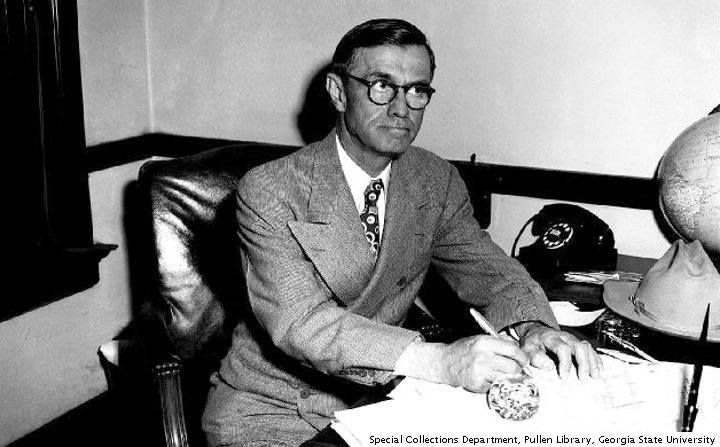


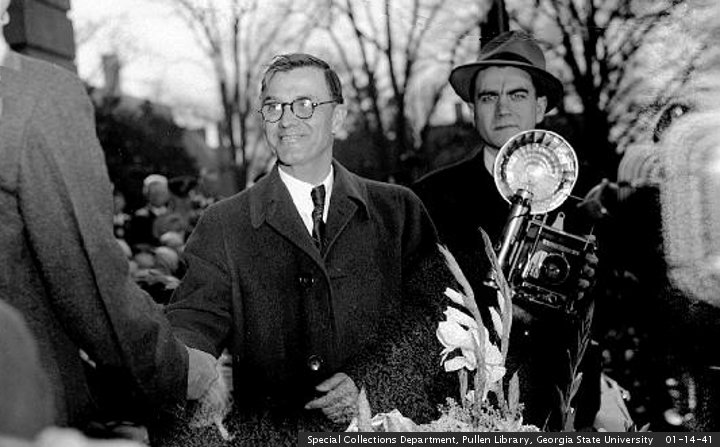

Former Georgia Governor Eugene Talmadge was famous for saying, to cheering crowds, “Sure I stole, but I stole for you”. I suspected an urban legend, and decided to see what Mr. Google had to say.
Eugene Talmadge was Agriculture Commissioner before he was Governor. He had some relatives on the state payroll. There was something funky going on with fertilizer. He bought a bunch of hogs, and sent them to Chicago, where he thought he could make more money. After a while, some people started to ask questions. His answer was “If I stole, it was for farmers like yourselves”. (This is on page 59 of “The Wild Man from Sugar Creek.”)
This was in 1931. The depression hit Georgia hard. The wool hat boys were in a world of fertilizer. Mr. Talmadge set himself up as the champion of the dirt farmers, and the enemy of the lyin’ Atlanta newspapers. In 1932 he was elected Governor. He was re-elected three times, but died in 1946, before he could serve again. He was replaced by two Governors.
The county unit system was one reason Mr. Talmadge kept getting elected. Each of Georgia’s 159 counties got a certain number of votes. Three rural counties were the equivalent of winning Fulton County. Mr. Talmadge boasted that he never won a county with street cars.
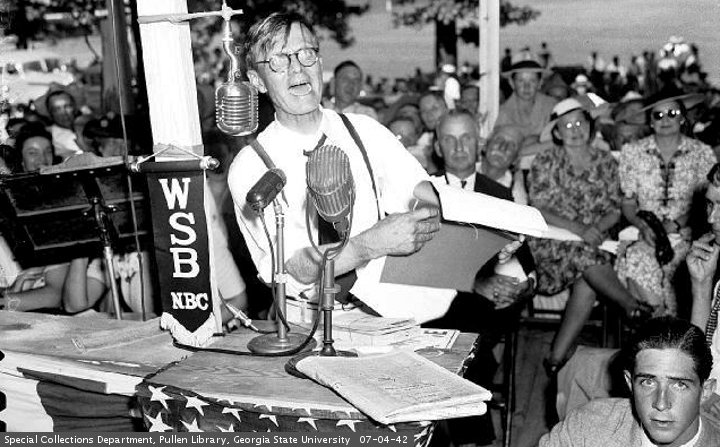
Mr. Talmadge’s campaigns were legendary. He would speak at the county courthouse, and plants in the crowd would scream questions, like “what about those lyin Atlanta newspapers?”. One of his favorite lines was “Yeah, it’s true. I stole, but I stole for you, the dirt farmer”.
My aunt went to work for the Trust Company of Georgia in the early fifties. There was a story told to new employees. It seems as though Governor Talmadge was in the lobby, after having a happy lunch. He had to use the restroom, and went to the corner of the lobby to relieve himself.
There is a statue of Gene Talmadge in front of the State Capitol. The plate at the base reads “I may surprise you, but I shall not deceive you.” This is a repost, with pictures from “The Special Collections and Archives, Georgia State University Library.”



He Lied


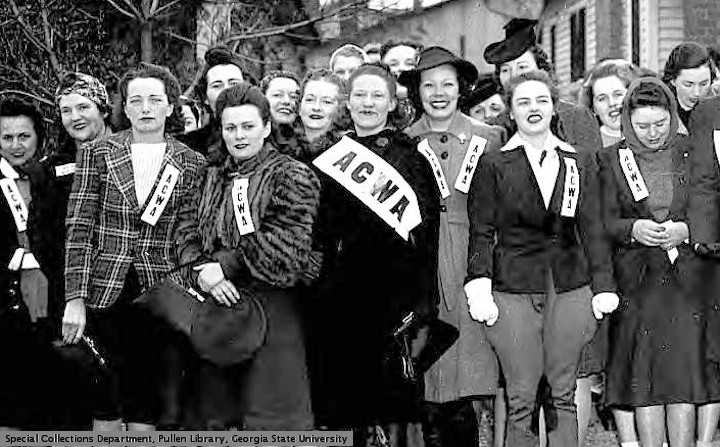
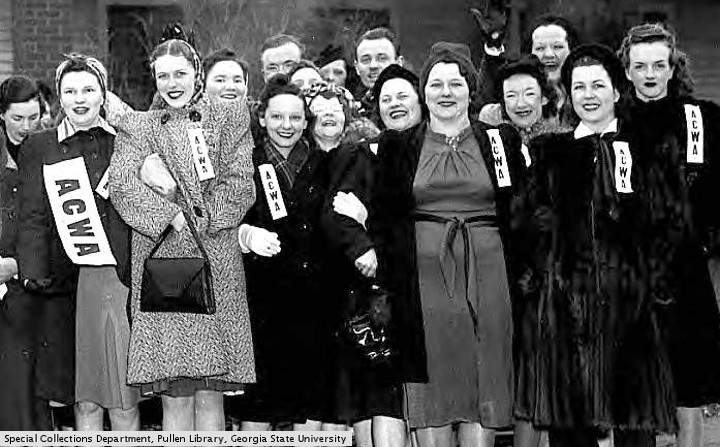

There is a discussion at Bloggingheadstv about the recent events in Baltimore MD. The featured speakers, Glenn Loury and John McWhorter, have been heard from before. This is a thought provoking discussion. If you are multi tasking, you might not get much done. The temptation to stop and take notes will be great. This is a repost.
At BHTV, you can create a sound bite, known as a dinglelink, when something gets your attention. This chat produced three dinglelinks. These serve to illustrate the points that are going to be made. There are other things that could be said, but most people have a limited attention span.
At 23:19, the men are discussing one of the witnesses to the Micheal Brown shooting. Dr. Loury starts to talk loud, and says “he lied.” This is a problem.
During the Ferguson fiasco, America was hit over the head with a lot of talk, often at top volume. There was the spectacle of a crowd of people walking into a funeral with their hands in the air. A great deal of the shouting was based on lies. If you question these lies, you can expect to be called a racist. The little boy said he saw a wolf.
If you think Dr. Loury gets worked up in the first clip, wait until he talks about the #Baltimoreuprising. Dr. Loury does not like the expression. He might have a point. The disturbance was a reaction from a population in pain. It was not the first step in a revolution.
One of the popular memes of this “conversation about race” is complaining about “media double standards.” Complaints about profit motivated media are popular with both liberals and conservatives. In the Baltimore banter, videos of white people misbehaving after sporting events are shown, and the stern voiced commenter wonders why the media does not treat these people as harshly as the Baltimore crowd.
With the #Baltimoreuprising hashtag, this media commentary goes up a notch. When drunken white sports fans act out, it is a riot. When poor urban people loot stores, it is the #Baltimoreuprising. There is no telling where this will end up.
The last clip shows Dr. McWhorter asking if poor people are going to demand, of their neighborhoods, “no more thugs.” It is apparent that Dr. McWhorter does not read the same people on facebook that others do. The word “thug” is now considered a racist slur. Instead of attacking the problem, twitter nation is attacking the word that describes the problem. Pictures today are from “The Special Collections and Archives, Georgia State University Library”.
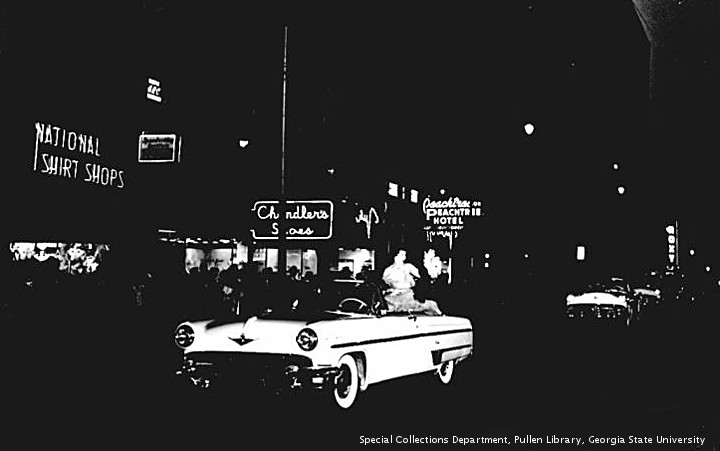


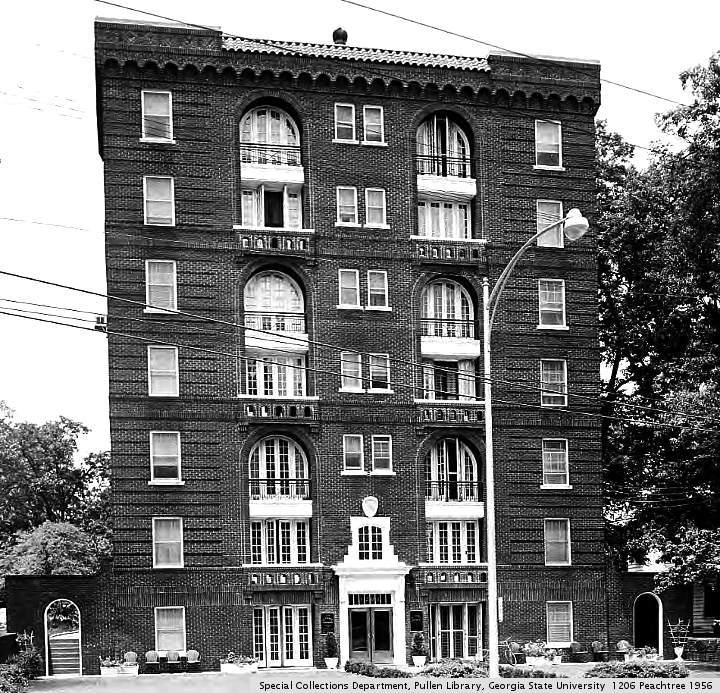



Bob Dylan Is 83




Today is Bob Dylan’s eighty third birthday. This tribute is composed primarily of two previously published pieces of work. Some people think Bob Dylan is a piece of work. Pictures are from Special Collections and Archives, Georgia State University Library
Hibbing MN is a cold place. At least it can claim to be the birthplace of Robert Allen Zimmerman. That’s Allen, with an e, and double L, just like hell. The original initials were RAZ, which might be a good trivia question, or, with a silent W in front, radio station call letters. The problem is, he legally changed his name to Bob Dylan, with no known middle name. Those initial are BD.
On May 24, 1941, the curly haired wonder boi arrived. The world was a different place. Europe was in flames, and eyeing the young men of America as fresh cannon fodder. This was twelve years, eleven months, and eighteen days before I graced the planet. A twelve year old in Hibbing MN would have no reason to think of a newborn baby in Atlanta GA.
The first time I heard of Bob Dylan was probably at the record rack of Zippy’s dime store in Cherokee Plaza. There was an album of his greatest hits, and it came with a poster. The poster had a drawing of the man, with psychedelic waves of hair cascading in multi colored glory to the edges.
As I got older and stupider, I heard more and more Bob Dylan music. At the start of 1974, a tour was announced. The Band was to be the backing group. The circus came to the Omni, and was nothing special. Bob Dylan excels at writing, is ok in the studio, and blah on stage. Georgia Governor Jimmy Carter was at the show, and was said to look bored. Mr. Dylan was invited to the Governor’s mansion after the show, and talked to the Governor. A lot of people in Georgia were surprised that Jimmy would want to run for President.
As the Seventies went me-me-me-ing into sex and drugs oblivion, Bob Dylan regained both his writing touch, and love of the spotlight. The Rolling Thunder tour happened, he got back together with Joan Baez, divorced his wife, became born again, became more Jewish, counted money, and generally lived the life. I did my version of all that, without Joan Baez.
In the winter of 1991, America was consumed by war fever. Saddam Hussein had been elevated to next Hitler status, and had to be taught a lesson. One night, Bob Dylan played on a music awards show, and performed “Masters of War”. He played a discordant version of that ditty, with the result that few understood what he had said. By this time, Mr. Dylan had assembled a band, and gone out on the “Never Ending Tour”. A Bob Dylan concert had gone from being a special event, to being another name on the festival roster. Overexposure will do that.
On the last night of the Olympics in 1996, Bob Dylan played the House of Blues downtown. I won a pair of tickets in a radio station contest. The show was competent…they impressed me as being like a bar band that did a lot of Dylan songs, with a strangely authentic lead vocalist. The only song I recognized was “All along the Watchtower”, the Jimi Hendrix classic. Mr. Dylan got a cheer when he put his harmonica appliance on.
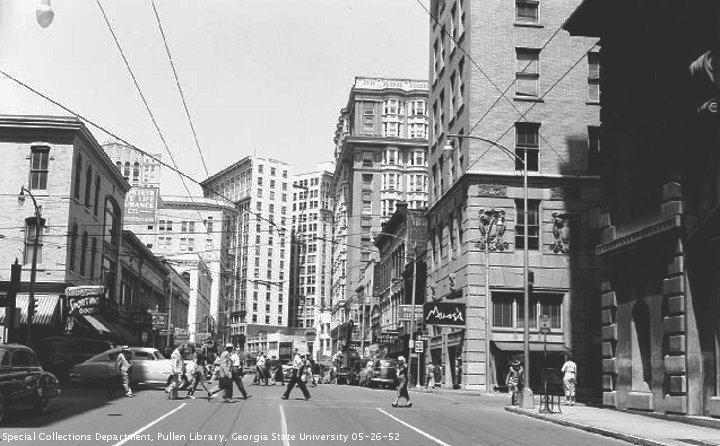

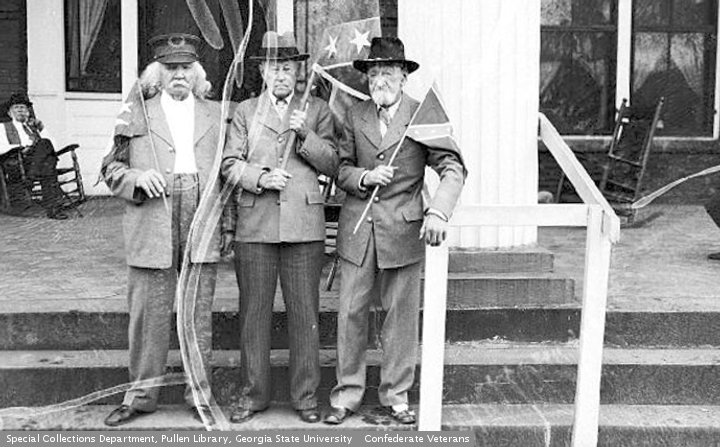


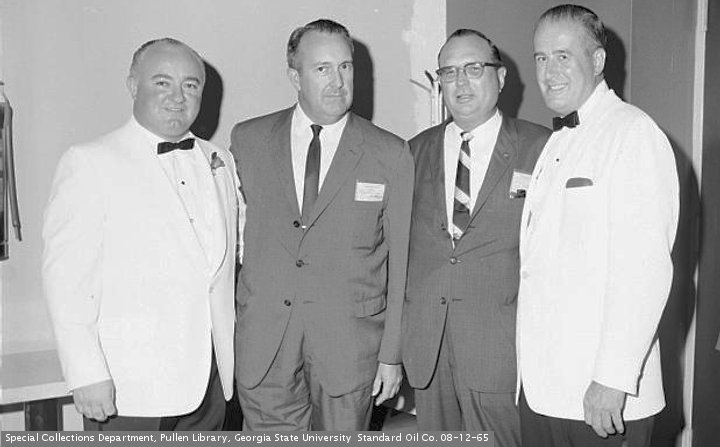


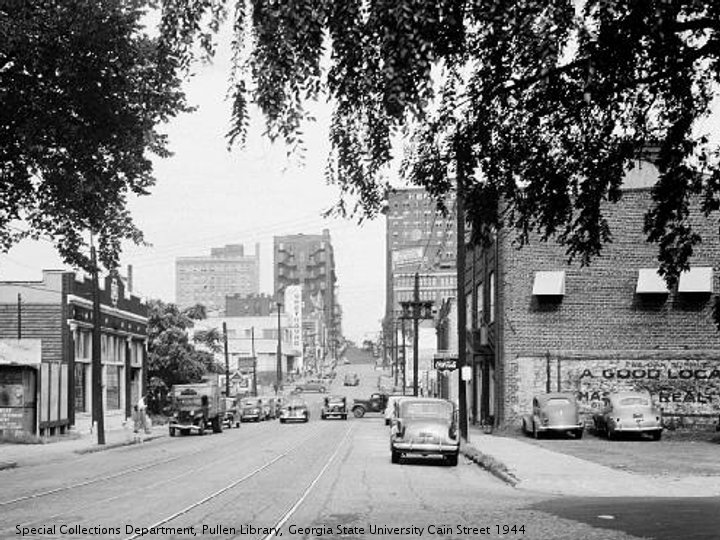


The aptly named dangerousminds has a link to a story about the recording of Blonde on Blonde. Bob Dylan was 24 years old, newly married, and had “sold out” i.e. started to play electric guitar. A bunch of Canadians known as The Hawks (later The Band) was touring with him. Barely a month after the release of “Highway 61 Revisited”, sessions started at a New York studio.
The New York sessions did not work, so a decision was made to go to Nashville. Al Kooper played organ, and served as a music director. A crew of Nashville players was recruited. A bass player named Joseph Souter, Jr. would become famous a few years later using the name Joe South. Kris Kristofferson was the janitor at the studio.
Most studios have bafflers, or sound proof room dividers, splitting the studio into cubicles. For these sessions, the bafflers were taken down, and the band played together as a unit.
The second session in Nashville started at 6pm and lasted until 530 the next morning. Mr. Dylan was working on the lyrics to “Sad eyed lady of the lowlands”, and the recording could not start until he was ready. The musicians played ping pong and waited. At 4am, the song was ready, and the record was finished in two takes.
I had marginal encounters with two of the players on this album. He met a lady once, who worked in an insurance office. One of the customers was Joe South. His driving record file was an inch thick.
Al Kooper had a prosperous career after his association with Bob Dylan. The former Alan Peter Kuperschmidt produced the first three Lynyrd Skynyrd albums, sold that contract for a nice piece of change, and lived happily ever after.
One night, Mr. Kooper was playing a show at the Great Southeast Music Hall, and PG sat in front of the stage. During a break between songs, PG asked his friend “what time is it?”. Mr. Kooper heard him on stage, and said it was 11:30.



There Is No I In Denial




There’s no I in denial. ~ What does a house wear? A dress.
What did the buffalo say to his son as he left for college? Bison.
I asked a Frenchman if he played video games. He said “wii”.
I ate a clock yesterday, it was so time consuming.
Why was Santa’s little helper feeling depressed? Because he has low Elf esteem
How many optometrists does it take to change a light bulb?… 1 or 2? 1… or 2?
Just read a few facts about frogs. They were ribbiting.
Want to hear a word I just made up? Plagiarism.
What did the hungry clock do? Went back four seconds!
Becoming a vegetarian is a huge missed steak.
Have you seen that new movie about trees in love? …Yeah, it’s pretty sappy…
I don’t like atoms, they’re liars. They make up everything.
I was thinking about moving to Moscow but there is no point Russian into things.
First rule of Thesaurus Club: You don’t talk, converse, discuss, speak, chat,
deliberate, confer, gab, gossip or natter about Thesaurus Club.
There is a new disease found in margarine… Apparently it spreading very easily.
People are making apocalypse jokes like there’s no tomorrow.
Need an ark to save two of every animal? I Noah guy.
What’s the advantage of living in Switzerland? Well, the flag is a big plus.
“I saw a documentary on how ships are kept together. Riveting!”
It’s so hard to think of another chemistry joke… All the good ones Argon.
Breaking news! Energizer Bunny arrested – charged with battery.
I’m off to Nairobi in the Summer. Kenya believe it?
A baker was caught bonking his bread loaves. They say he was inbread.
I enjoy using the comedy technique of self-deprecation – but I’m not very good at it.
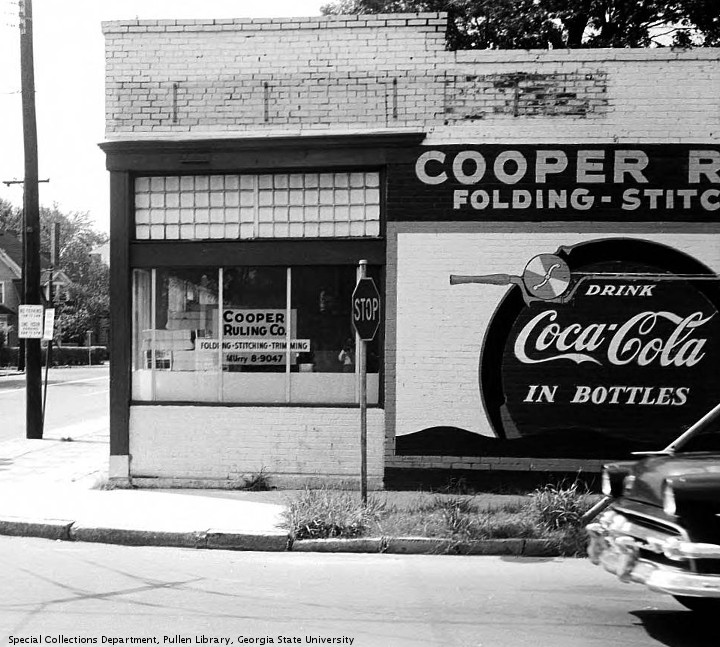
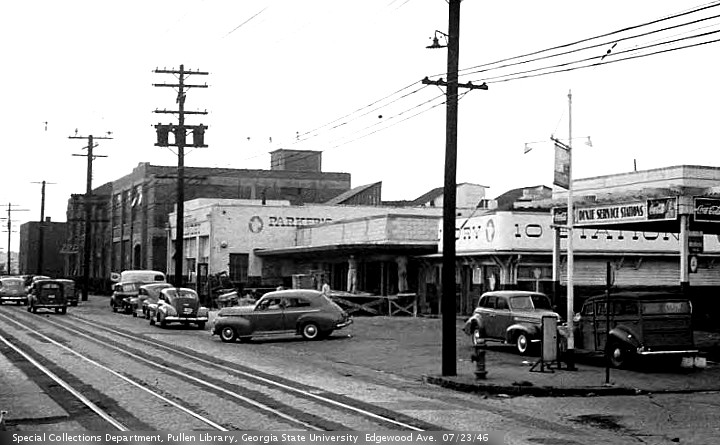
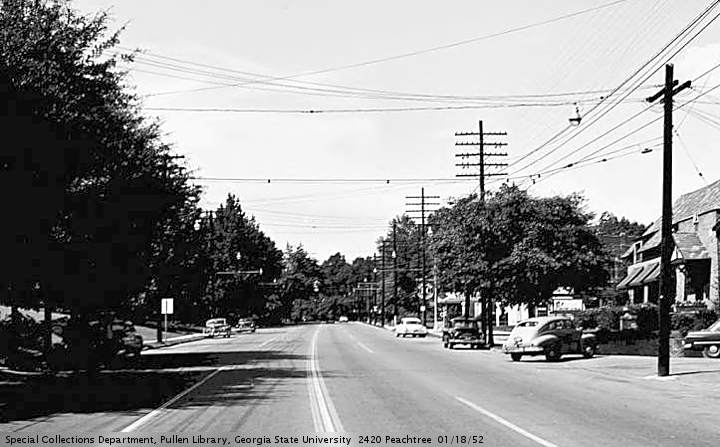
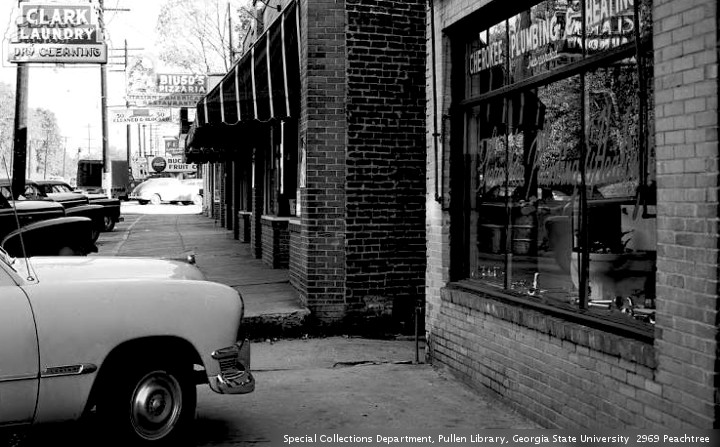
This is a repost. Pictures are from “Special Collections, Georgia State University Library.”



Witch

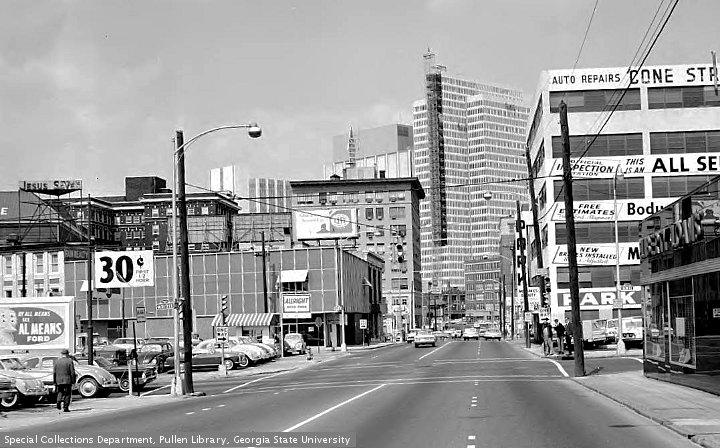


This is a repost from 2015. … A podcast, read poetry and eventually die, featured a poet named John Mortara. I became interested when the poet was a queer witch, or was it witchy queer. Never mind that the poet writes more about prozac than black magic. Just because poets take prozac, that doesn’t mean that prose writers take poetryzac.
It turns out there was an Atlanta stop on a tour. I drove through Dickhater, past the Donald Trimble Mortuary, until a string of red brick houses appeared. I looked at the mailbox of the first one. The mailbox fell off the pole. That was not the correct house.
I got there twenty minutes early, and drove around the neighborhood until nine pm. In a few minutes, the hostess announced that the event was taking place in the basement. There was a half hour before the event started. Not all poetry events are created equal.
The basement had atmosphere. Literally. At one point, the host announced that cigarette smoking was acceptable inside. Holy 1958. It had been years since people smoked indoors, and here was a crowd of young, young people… one poet read a piece about the one hair on his chest, which he names after either republicans, or democrats, depending on how bad it smells. He read the poem from his phone.
The host and hostess did double duty as the master, and mistress, of ceremonies. They wore bathrobes, that were supposed to be lab coats. They were auditioning people to take on a trip to Mars. There must be a shortage of poets, comedians, and tweeters on the red planet.
For a while they alternated poets and comedians. A lady said she could choose from playing fake blackjack with geriatric queers at the Hideaway, or going to Lithonia to have sex for ten minutes. A man made murder Kroger jokes. I crouched on a wooden shelf thing in the corner of the basement, with an exposed light bulb shining in my face.
After a few performers, there was an intermission. I went back to my vehicle, which was not broken into. I got a baseball cap, to block the light bulb.. At this point the hostess made the glorious announcement that smoking was not allowed in the basement. The air conditioning brought the aroma upstairs. The back yard kudzu approved.
During the intermission, the sound system was tweaked to allow two ladies to perform. The tweaking did not take, and they shouted “stay off my snapchat you piece of shit homie” over the recorded music. For faux microphones, the ladies used a mountain dew bottle, and a comb.
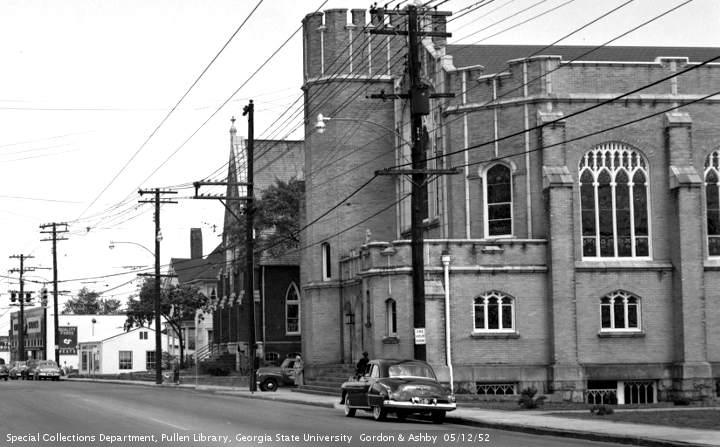
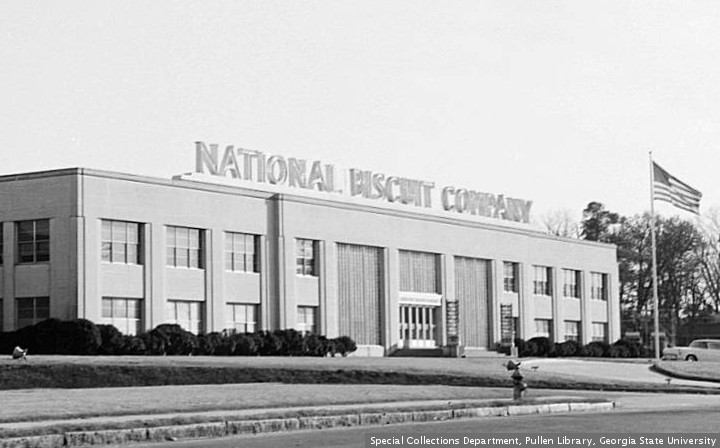
The final performer was John Mortara. (spell check suggestions: Mortal, Mortar) The poet had purple hair, a wool hat, and a sleeveless shirt saying “I am a unicorn.” The first piece was recited from memory, with no need for a microphone. There was a piece about tweets written on prozac … all that twitters is not gold. Soon the show was over. The last line: “Told my dad I’m a fricken witch.” Pictures are from Special Collections and Archives, Georgia State University Library.
UPDATE This comment appeared on facebook. John Mortara “i am frequently misgendered throughout this article and it makes me angry.” An attempt at correcting this has been made. UPDATE TWO Here is the story of what happened later. UPDATE THREE Read Poetry and Eventually Die was hacked by by Mr.dexter.305. This attack from Saudi Arabia. UPDATE 2024 Jamie Mortara, formerly John, is a Data Services Associate at Earthjustice, Oakland CA. The host of the event, Michael Hessel-Mail, is an English Instructor at Southeast Community College, Lincoln NE. On May 6, I was the feature at the Little 5 Poetry Bash.


I Used To Be Charming Part Three
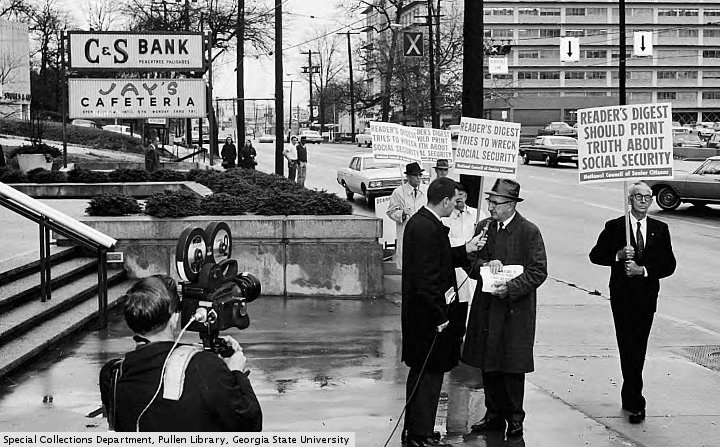
This is the latest edition of the chamblee54 book report on I Used to Be Charming, by Eve Babitz. This feature is a bit different. Instead of focusing on IUTBC, we will look at some of the key players in the story. A catalyst for today is a 2019 episode of the Bret Easton Ellis Podcast. The guest is Lili Anolik, promoting a book, Hollywood’s Eve: Eve Babitz and the Secret History of L.A. This is a repost.
One important name is Earl McGrath. Bret had never heard of him. A friend of many influential people, McGrath had many careers. Apparently, his main skill was a talent for being fabulous. As David Bowie said, “It’s not really work, it’s just the power to charm.”
“McGrath’s story began in Superior WI. The son of an itinerant short-order cook, it wasn’t long before the teenage Earl began to display a wanderlust of his own, dropping out of high school and leaving home, ‘hanging out with Aldous Huxley in Los Angeles and going to see Henry Miller in Big Sur’, according to Vanity Fair. In the late 1950s he served with the Merchant Marine in Africa and the Middle East, and in Italy, in 1958, he met the woman he would later marry, Camilla Pecci-Blunt — a glamorous countess, and a descendant of Pope Leo XIII … McGrath was working for 20th Century Fox in the early 1960s when he met perhaps the other most influential person in his life, the legendary co-founder and president of Atlantic Records, Ahmet Ertegun.”
“Maybe that’s why Eve fell in “friend love” with a gay man, the cattiest breed of all, if we want to be cuntily honest as well. Specifically, Earl McGrath … As any gay man not fully out would be, McGrath was married to an Italian countess. He never had an official title, per se, though, in death, he would be credited as a “writer, music executive, art collector, and gallery owner.” In short, a jack-of-no-trades. Other than knowing how to be at the right place at the right time, and network with the right people. This is how he came into Eve’s orbit in the late 60s. The two grew Siamese twin close until McGrath’s venom reared its ugly head with the line … “Is that the blue you’re using?” As Anolik interprets the phrase, it’s an easy way to make an artist (of any kind) doubt themselves and their vision.”
Eve met Earl McGrath when Eve, and possibly McGrath, was dating Peter Pilafian, the electric violin player with The Mamas and The Papas. Peter Pilafian is one of those players that is unknown today. He does not have a wikipedia page, and we do not know if he is alive. Apparently, Eve would spend the night with Pilafian, and McGrath would show up at 7am the next day.
Somehow, Eve and McGrath connected. McGrath makes a spectacle of himself in Slow Days Fast Company. McGrath also gets credit/blame for the line you always seem to hear about Eve. “In every young man’s life, there is an Eve Babitz. It is usually Eve Babitz.”
lilianolikwriter has a tasteful picture, with this caption: “Eve Babitz with frenemy, Earl McGrath, at the opening of the Black Rabbit restaurant on Melrose, at the tail-end of the 60s. Earl is in the cowboy mustache, Eve in the glasses, which she was normally too vain to wear in photographs. The brunette with the pixie hair is Diane Gardiner, Doors publicist and long-time squeeze of Chuck Berry. (Says Eve, “Diane was a mean monster but everything she said was funny so I forgave her.”) … The woman in the floppy hat and sunglasses, says Eve, doesn’t ring a bell, not even a faint one.”
Allegedly, the Eve-McGrath falling out came when Eve was dating Harrison Ford, who also caught McGrath’s eye. A posthumous article about McGrath mentions “His great friend Harrison Ford — three of whose children were among McGrath’s two-dozen godchildren — saluted him as, ‘The last of a breed, one of the last great gentlemen and bohemians.’”
Lili Anolik tells an amusing story about Mr. Ford. “I remember one of our first conversations Eve told me about Harrison Ford dealing dope out of a bass fiddle at Barney’s Beanery”…. Michelle Phillips talks about seeing Star Wars when it first came out. When Harrison Ford appeared on the screen, Michelle said “whats he doing there, that’s my dope dealer.” A less reliable source chimes in: “Harrison Ford was her weed dealer, and, briefly, her lover: “The thing about Harrison was, Harrison could fuck. Nine people a day. It’s a talent, loving nine different people in one day. Warren [Beatty] could only do six.”
Part of the Eve legend is the photograph of Eve playing chess with Marcel Duchamp. “What happened was, my boyfriend at the time, Walter Hopps [director of the Pasadena Art Museum, 31, married], had scored this great coup. He’d convinced Duchamp, who’d given up art for chess back in the 1920s, to do a retrospective with him. He threw a party for the private opening, and L.A. had never seen anything like it. Everyone, everyone, was there—Duchamp, naturally, and Andy Warhol and Claes Oldenburg and Dennis Hopper and, oh, just everyone. I wasn’t, though, because I wasn’t invited. I guess Walter was afraid I’d make a scene in front of his wife. I was mad, which is why when Julian asked me at the public opening to take off my clothes and pose for him, I said sure. I mean, my breasts were normally something to behold, but birth control had made them even bigger, so they were really something to behold at that particular moment. …”
The photographer, Julian Wasser, was dating Eve’s sister Mirandi. Wasser had an exhibit in 2019, so apparently he was alive 3 years ago. Wasser took his most famous picture a few years later.“One August day in 1969, I was listening to a police radio when I heard all this strange talk about something going on in this residential area next to Beverly Hills. It was the kind of neighbourhood where people would … put pillows over their heads if murders were going on.”
“That was how I first heard that Roman Polanski’s wife, Sharon Tate, had been killed, along with four others. When I went up there shortly afterwards for Life magazine, Roman asked me to take Polaroid shots of the scene as well – and give them to a psychic who could study them and find out who the killers were. You can see my Polaroid on the chair beside Roman. …”
“When I was 14, I used to steal my dad’s car and drive all over Washington listening to police radio. There was segregation then and all the best murders, robberies and bloody events were in the black part of town. I’d photograph them and give the shots to the Washington Post. I was so naïve. Of course they wouldn’t run them – it was black people. … It’s a rough world now. I think Manson started it and 9/11 finished it. Reality has fallen on us like a ton of bricks.”
Ed Ruscha and brother Paul Ruscha were longtime *friends* of Eve. After Eve died, they had a paywall protected chat. Ed Ruscha: “Oh, it was the early ’60s, but she was a great part of my growing up. I know I was with her when Jack Ruby shot Lee Harvey Oswald. I was in bed with Eve and we were watching this on live TV, a little black-and-white set. … she lived in this house behind her parents’ house. She kept a sloppy quarters because she had a lot of cats who had their way. Her parents lived up at the front house on Bronson near Franklin. And I knew her parents well. Mae was a beautiful, sweet Texan who was an artist, and she drew pictures of the gingerbread houses on Bunker Hill. And Sol was the musician, violinist. They were very sweet people.”
Paul Ruscha: “I came to L.A. in 1973. We met at Jack’s Catch All; it was this great thrift store. I was a veteran thrift shopper and so was Danna [Ed Ruscha’s wife]. She introduced me to Eve, who said, “I’d like to have you over for dinner.” Danna said, “I think she likes you.” Eve knew that Ed and I were friends with [fashion model] Leon Bing. So she called Leon, who told Eve, “Well, no matter what you make for him, be sure that it’s loaded with cilantro because he’s just crazy about cilantro.” Eve put it in the salad and the soup, and I hate cilantro and I couldn’t eat it. All I could do is laugh. … If I spent the night with her, she’d wake up before I did and then want me to leave. So she’d throw coffee into a pot of boiling water and bang on it to make the grounds go down and to wake me up and say, “OK, here’s your coffee. Now get out of here.” And I’d laugh and then she’d say, “I think I’ve got something I’d like you to read.” Then I’d read whatever she’d written the day before. I gave her my critique, and if she liked it, she let me stay, and if she didn’t, she’d throw me out. … She just couldn’t go anywhere without ruining something. She’d knock something over or break something, and the same thing at her house. I remember a couple of fur coats I gave her, and one of them she threw over this little space heater that she had. It caught on fire and it burned up her garage.”
Since this is Hollywood, a certain amount of skepticism is appropriate. Lili says in the BEE appearance “the modern way of being objective is a kind of hyper objectivity, it’s a reconstituted objectivity, is objectivity that acknowledges the inevitability of subjectivity.” Pictures today are from “The Special Collections and Archives, Georgia State University Library.” More episodes of this series are available. one two four five


I Used to Be Charming Part Five

This is the fifth, and final, installment in the chamblee54 serial book report on I Used to Be Charming, by Eve Babitz. The pictures today are from “The Special Collections and Archives, Georgia State University Library.” The other four parts of this series are available: one two three four
It’s an old cliche about drug abuse … life becomes boring when you quit using. That might be true with Miss Eve. She got scared because of AIDS, and got cleaned up from her druggie ways. She started taking dance lessons, and got into ballroom dancing. When she tried to commit suicide by Tiparillo, the physical activity of dancing aided her recovery.
Hippie Heaven (Vogue October 1992) was the first story that made me want to take notes. “Especially the red rayon forties dress, cut on the bias, that I’d worn the nights I waited in the Troubadour bar in West Hollywood, looking for trouble like Jim Morrison.” Lord, whatever happened to Eve? Writing for Vogue about a dress “cut on the bias.” This is the Dowager Groupie, talking about clothes. Even Eve’s sister Mirandi … who started out as Miriam … made leather suits for Jimbo.
Eve says something about Leicester Square, in London. The Rolling Stones did a song, Cocksucker Blues. They owed a pesky record label one more song, so they decided to give them something they would never play on WQXI. So Mick says something about hanging out in Lester Square, but it turns out to be Leicester Square.
Scent of a Woman (Vogue March 1997) is where Eve finally gets her mojo back. Vogue published SOAW a few weeks before Eve’s catastrophic fire.
Some say that smell is the most animal of our senses. Aromas get directly from the nose to the brain, without the mental filters navigated by sound and sight. In SOAW, Eve discusses the various perfumes of her life. When she was young, the only perfume she felt comfortable with was Here’s My Heart, by Avon. True, it did not make her smell like old stationary, as Chanel N°5 did, but you don’t get more uncool than Avon.
“My great aunt sold Avon when I was a kid, and she and my conservative-about-fragrances mother (the one who flushed my Evening in Paris down the toilet) approved this for me. It was OK, girly, kind of little girly and nowhere near as exciting as Evening in Paris, but I liked it all right. It made me think I was missing something in fragrances, but it was enjoyable to wear.” Avon introduced Here’s My Heart in 1957. Nobody is sure when it was discontinued.
One afternoon in the sixties, Eve went swimming at the house of a Hollywood somebody. In the bathroom, there was a bottle of Le De by Givenchy “Le De came about when Hubert (Givenchy) chose decided to gift his friend (Audrey Hepburn) with a perfume; actually he commissioned two, the other being L’interdit (created in 1957 and commercialized in 1964) and they were hers alone for a whole year. In 1958 the idea of launching perfume under the aegis of his house saw Le De being introduced to the market while L’Interdit was immortalised in … Breakfast at Tiffany’s.”
“And then the unthinkable happened. They took Le De Givenchy off the market — or at least they cut back its distribution to the point where it became impossible to find. This is something Andy Warhol would have picketed Givenchy with me for. (Andy Warhol had an extremely funny section in his autobiography The Philosophy of Andy Warhol (From A to B and Back Again,) in which he says that whenever a product is “improved,” the manufacturer should leave the original, unimproved product on sale, too, because a lot of people don’t want what they already like pulled from the shelves.”
Amazon has a terrific one star review of the Warhol book. “I bought this due to a need for additional references. It’s written by warhols assistant and is filled by drivel, pompousism and things you may say on acid trips while your in a room wrapped in tin foil. Save your money and if you a want book about Andy warhol use one of the autobiographies written by an author after Andy died and has no connection to him or his factory friends.”
The last fun chapter is I Used To Be Charming. IUTBC is about the fire, on April 13, 1997. “I had just finished brunch with my mother; my aunt Tiby; my sister Mirandi; and my cousin Laurie. Mirandi would be driving my mother back to her place, where I was also living at the time, and I looked forward to smoking the Tiparillo I’ve been saving for the ride in peace and quiet. The cigar was one of those fashionable but hideous cherry-flavored ones I loved because smoking them made me feel like Clint Eastwood; everyone else hated them. I grabbed one of the wooden matches, struck it against the sandpaper side of the box, when all of a sudden the match fell from my hand. The gauzy skirt I’d put on to go out dancing later went up in flames; my panty hose melted to my legs. Thank God for sheepskin Uggs, which protected my lower legs from burns.”
When Eve struck that match, in a 68 VW bug, her life changed. There were a lot of rude comments about cigars. Tiparillos in particular have a curious market niche. One ad campaign had a picturesque young lady working the crowd, with her pitch “Cigars, cigarettes, Tiparillo’s?” “The modern smoke, found in all the right places, with all the right people.”
Another ad campaign asked the oh-so-modern question ”Should a gentleman offer a Tipparillo to a lady?” A later campaign produced a TV classic. “In 1970 the Federal Trade Commission banned cigarette commercials from American airwaves. However, cigars did not fall under the FTC ban, and so we have these two commercials from 1973 for Tiparillo cigars, which — if you believe the ads — must be offered to a lady, which will be appreciated more than “candlelight and small talk.”
Fiorucci, the book takes up the last 48 pages of IUTBC. Eve wrote text for a collection of graphics from the Fiorucci fashion emporium. Fiorucci closed its retail stores in the eighties, and is mostly known today because it rhymes with Gucci. “Zeigt und erklärt, wie und warum Fiorucci in den 70ern und 80ern bigger than life war. Das Buch ist Kunst, Marketinghandbuch und Poesiealbum in einem.”


May 6, 2024




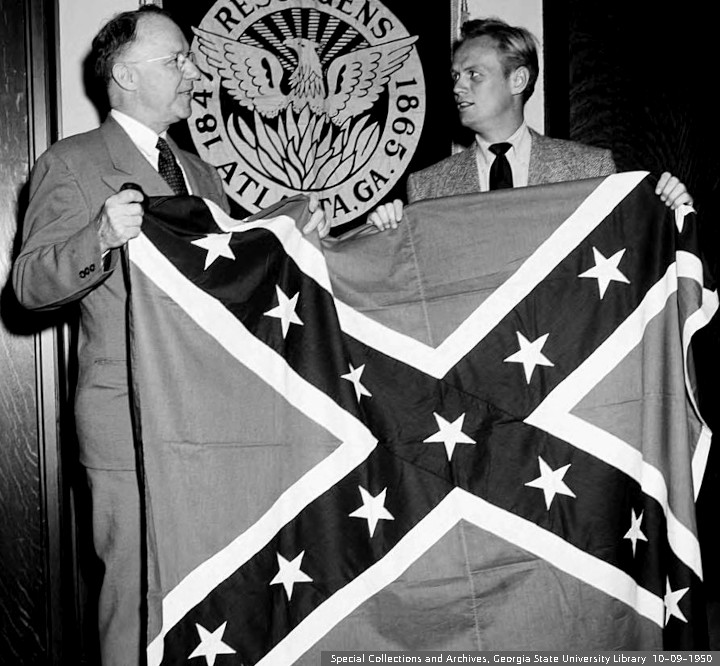
May 6 is a day in spring, with 35% of the year gone by. It has it’s fair share of history, some of which did not turn out well. In 1861, the Confederate Congress declared war on the United States. In 1937, a German zeppelin named “Hindenburg” exploded while trying to land in New Jersey. In 1940, Bob Hope did his first show for the USO, somewhere in California.
Roger Bannister ran the first sub four minute mile, on May 6, 1954. The current record is 3:43.13 by Hicham El Guerrouj on July 7, 1999, with a party with Prince to celebrate. Since most track meets now use 1500 meters, the mile record is obsolete.
On this day, Georgia executed two notable prisoners. In 2003, Carl Isaacs was put to death. Mr. Isaacs was the ringleader in the 1973 Alday family killing, in Donalsonville GA. Five years later, in 2008, William Earl Lynd was poisoned by the state. This was the first condemned man to die after the U.S. Supreme Court ruled that execution by poisoning was constitutional.
Taurus is the sign for those whose blood starts to pump May 6. Included are:
Maximilien Robespierre (1758) Sigmund Freud (1856) Rudolph Valentino (1895)
Orson Welles (1915) Willie Mays (1931) Rubin Carter (1937)
Bob Seger (1945) Tony Blair (1953) Luther Mckinnon (1954) George Clooney (1961)
To make room for these folks, someone has to die. For May 6 this would mean:
Henry David Thoreau (1862) L. Frank Baum (1919) Marlene Dietrich (1992)
This repost, written like H.P. Lovecraft, has pictures from “The Special Collections and Archives, Georgia State University Library”.



#NationalDayofPrayer


Good Morning God. Please give me the slack I need to make it through this life. I have a birthday soon, and am getting older. Please give me less pain, both above and below the neck. Thank you for letting me get this far. Thank you for the gift of sobriety, and the memory of inebrience. The gift of moderation would have been helpful. Help me to overcome body chemistry telling me to be unhappy. If this doesn’t work, help me hide it better.
Please tell Christians to make less noise, joyful or otherwise. Please help me forgive Christians for their good intentions. Please give Christians the gift of humility. Let us know that a real man keeps control of his temper. Please tell those praying today that it is better to listen than to talk.
Please find a happy medium for Atlanta water. Let us have neither drought nor flood. It would help if the developers would move to North Carolina, and the politicians would develop a conscience.
God, please try to get along better with Allah. Please help White people and Black people to show kindness and respect for one another. Please be good to the people who have already lived, and are now deceased. Please understand that I am not in a hurry to join them.
Please help Mr. Biden with the mess this country is in. Please help Israel get along with her neighbors, and live within her borders. Please help the world resolve the carbon dioxide problem.
Thank you for the birds that sing. Thank you for dogs, and dog owners who clean up. Thank you for earth, air, fire, and water. Thank you for people who enjoy this prayer. Please help those who are offended to get over it. Namaste, amen, all my relations, Good Bye.
Today is the #NationalDayofPrayer. This is a repost. Pictures are from “The Special Collections and Archives, Georgia State University Library”.





 Chamblee54
leave a comment