Witch


A podcast, read poetry and eventually die, featured a poet named John Mortara. PG became interested when the poet was a queer witch, or was it witchy queer. Never mind that the poet writes more about prozac than black magic. Just because poets take prozac, that doesn’t mean that prose writers take poetryzac.
It turns out there was an Atlanta stop on a tour. PG drove through Dickhater, past the Donald Trimble Mortuary, until a string of red brick houses appeared. PG looked at the mailbox of the first one. The mailbox fell off the pole. That was not the correct house.
PG got there twenty minutes early, and drove around the neighborhood until nine pm. In a few minutes, the hostess announced that the event was taking place in the basement. There was a half hour before the event started.
The basement had atmosphere. Literally. At one point, the host announced that cigarette smoking was acceptable inside. Holy 1958. It had been years since people smoked indoors, and here was a crowd of young, young people… one poet read a piece about the one hair on his chest, which he names after either republicans, or democrats, depending on how bad it smells. He read the poem from his phone.
The host and hostess did double duty as the master, and mistress, of ceremonies. They wore bathrobes, that were supposed to be lab coats. They were auditioning people to take on a trip to Mars. There must be a shortage of poets, comedians, and tweeters on the red planet.
For a while they alternated poets and comedians. A lady said she could choose from playing fake blackjack with geriatric queers at the Hideaway, or going to Lithonia to have sex for ten minutes. A man made murder Kroger jokes. PG crouched on a wooden shelf thing in the corner of the basement, with an exposed light bulb shining in his face.
After a few performers, there was an intermission. PG went back to his vehicle, which was not broken into. He got a baseball cap, to block the light bulb.. At this point the hostess made the glorious announcement that smoking was not allowed in the basement. The air conditioning brought the aroma upstairs. The back yard kudzu approved.
During the intermission, the sound system was tweaked to allow two ladies to perform. The tweaking did not take, and they shouted “stay off my snapchat you piece of shit homie” over the recorded music. For faux microphones, the ladies used a mountain dew bottle, and a comb.
The final performer was John Mortara. (spell check suggestions: Mortal, Mortar) The poet had purple hair, a wool hat, and a sleeveless shirt saying “I am a unicorn.” The first piece was recited from memory, with no need for a microphone. There was a piece about tweets written on prozac… all that twitters is not gold. Soon the show was over. The last line: “Told my dad I’m a fricken witch.” Pictures for today are from “The Special Collections and Archives, Georgia State University Library”. UPDATE This comment appeared on facebook. John Mortara “i am frequently misgendered throughout this article and it makes me angry.” An attempt at correcting this has been made. UPDATE TWO Here is the story of what happened later.UPDATE THREE Read Poetry and Eventually Die was hacked by by Mr.dexter.305. This attack from Saudi Arabia.

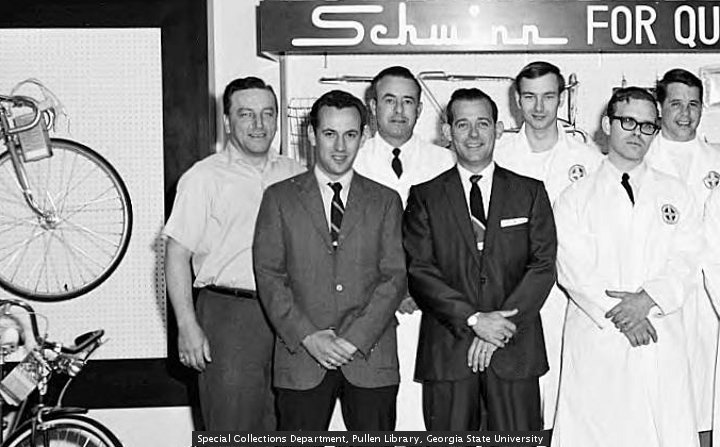
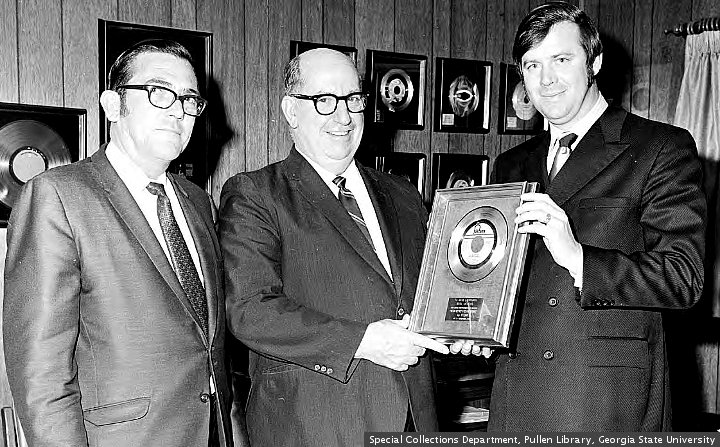
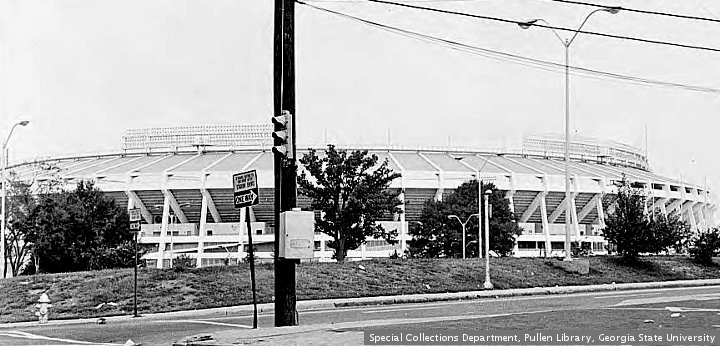

The Great Southeast Music Hall


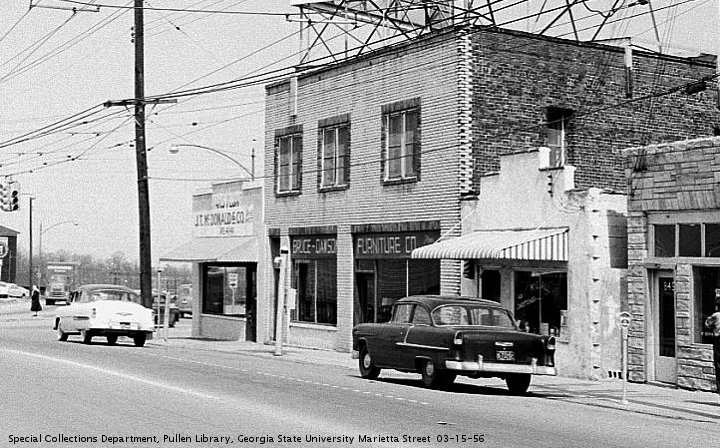
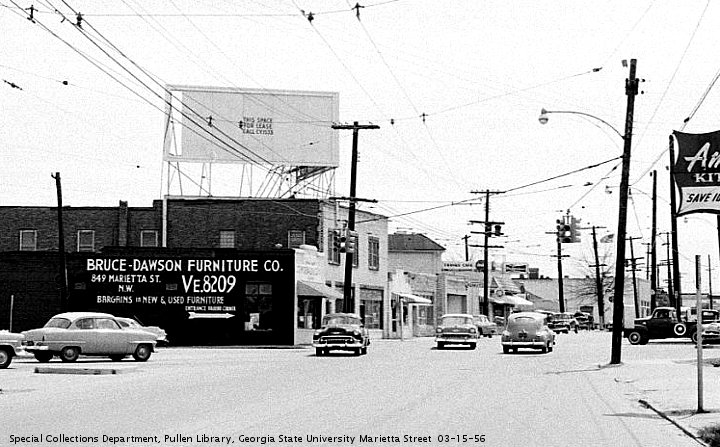
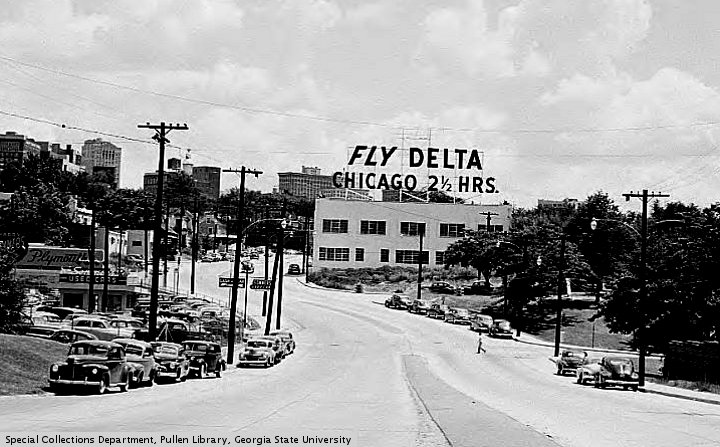
The Great Southeast Music Hall was an important part of life in Atlanta during the seventies. It was located in the elbow of a shopping center, Broadview Plaza. A bowling alley was downstairs, a two level K mart next door, and Atlanta’s first hispanic neighborhood across the street. Like almost everything else here, Broadview Plaza was torn down, and replaced by a more uppity set of stores.
When you went into the lobby of the Music Hall, you noticed the walls. Performers were given a magic marker, and encouraged to leave a message. John Mayall found the ladies room, and said he likes to be near the ladies. The late Phil Ochs said “Impeach Nixon and Agnew”. What happened to those boards is a good question.
The auditorium held about 500 people. The stage was only three feet or so above the floor. There was an empty space in front of the stage, and a few rows of bench backs behind that. When the place opened, there were lots of pillows on this floor, with the Music Hall logo. The carpet in this front area was fresh when the place opened, and got progressively grosser as the years went by. Beer was served in aluminum buckets, and inevitably some wound up on the carpet.
The show the Music Hall is most famous for is the US debut of the Sex Pistols. PG didn’t make it that night, but has heard from a few who did. The performance was said to be horrible. There are stories of Sid Vicious wandering through the apartments around Broadview trying to find heroin. Years later, PG was reading about that night in Please Kill Me, when the train he was riding pulled into the Lindberg Marta station. This is across the street from the Broadview Plaza, still standing at the time.
These days, the intersection of Lindbergh Drive and Piedmont Road (about a mile north of the park) is next to Hiway 400. When the Music Hall was in it’s prime, the land for the Highway was owned by the State of Georgia, which was fighting legal battles over the highway. The land had a network of dirt roads, one of which connected Buford Hiway to Lindbergh Drive. When you went from Chamblee to the Music Hall, the most direct route was over this dirt road. This dirt road is where Sidney Marcus Boulevard is today. Broadview Plaza was torn down, and replaced by a Home Depot.
Eventually, the business model for the Music Hall did not work, and the facility moved to Cherokee Plaza. This Music Hall was in a movie theater. The Cherokee Plaza Theater was the scene for the world premiere of Son of Dracula . This move did not work, for a number of reasons. The parking lot was too small, and people who wanted a loaf of bread from the A&P were blocked out during shows. Cherokee Plaza is just outside the city limits, on Peachtree Road. In the late seventies, DeKalb county was aggressively fighting drunk driving, and had roadblocks. Many of these roadblocks were outside the Music Hall, which kept many people from attending. Before long, this Music Hall closed.
Many years later, PG bought a second hand typewriter, and needed a ribbon. (Younger readers should ask an older person about this.) He went into an office supply store in Broadview Plaza, and soon realized that he was standing on the site of the Music Hall. He asked the clerk if he could have a bucket of beer, and got a very strange look in return.
 One industrious afternoon during this era, PG made a list of shows he saw at the Music Hall. The memory cells are already protesting, but we are going to try and remember as much as possible about these shows. A big thank you to Wikipedia for help with spelling and names.
New York Rock Ensemble – PG walked into the auditorium during the last part of the first show, as the band played “A whiter shade of pale”. The bass player wore lace up boots, with the pants legs tucked into them. Before long, the second show came on stage. Keyboard player Michael Kamen was the central focus, acting out the lyrics to “Anaconda”.
Silverman Deborah McColl fronted this drummerless band
Al Kooper PG has written about an unfortunate incident involving Al Kooper during this show. This would have never happened in “The Catcher in the Rye”…the kids always knew what time it was in that story. Mr. Kooper did a solo show, including “Sam Stone” by John Prine.
Ellen McIlwaine/ James Cotton Blues Band Ms. McIlwaine was pregnant, and played slide guitar. Mr. Cotton played harmonica. One of his players started to fan him with a towel, because he was hot.
Breakfast Special/ Doc and Merle Watson Breakfast Special was a local bluegrass crew, who did “The coming down song”. The Watsons did ” Deep River Blues” and “Thats All”, among other things. PG had a copy of their latest LP, and asked Merle to autograph it. He wrote his name on one side, turned it over, and signed Doc’s name on the other side.
Mason/Atlanta Rythym Section This show was the night Led Zeppelin played Atlanta Stadium.
New Riders of the Purple Sage When the Music Hall opened, a performer would typically play from Tuesday to Sunday. NRPS was a one night show. They worked well in the packed hall, and shined on “Glenville Train”. The next year, they did a tour with Commander Cody and The Lost Planet Airmen. Commander Cody opened, and raised hell. NRPS followed with a mellow rock show, and before long people were getting bored and leaving.
David Buskin / Loudon Wainwright III Chamblee 54 has written about this show before. Mr. Buskin talked about doing a show at Max’s Kansas City, the person sitting next to PG said “Gross”.
Steve Martin / Nitty Gritty Dirt Band Chamblee54 has written about the show by Mr. Martin . This was his last tour as an opening act. Nitty Gritty was a sight to behold. John McEuen played fiddle, and recited a poem about life.
Martin Mull / Melissa Manchester PG went to see Mr. Mull, who opened the show with a three piece band. (After the show, Mr. Mull said the name of the band was the (your name) (draws a blank with his fingers) orchestra.) The headliner was Ms. Manchester, little known at the time. She was a knockout. While standup comedy has it’s place, for emotional impact there is nothing like a singer.
Texas Gary Bennett / Weather Report Mr. Bennett played acoustic guitar, and sang, as an opener for a packed house of jazz rockers. It did not go well. At one point, trying to get some rapport with the crowd, he said ” has anyone here been busted at the Omni?” (The authorities had begun arresting people for smoking pot at the major concerts.)
Weather Report was amazing. Josef Zawinul had the loud keyboard sound, Wayne Shorter played his leads on soprano sax, and there was a drummer and percussion player. There was tons of rythym, to go with the electronic jazz sounds. When it was over, PG went up to Mr. Zawinul, shook his hand and, and said thank you. He was pouring a glass of beer from a pitcher, and looked a bit startled.
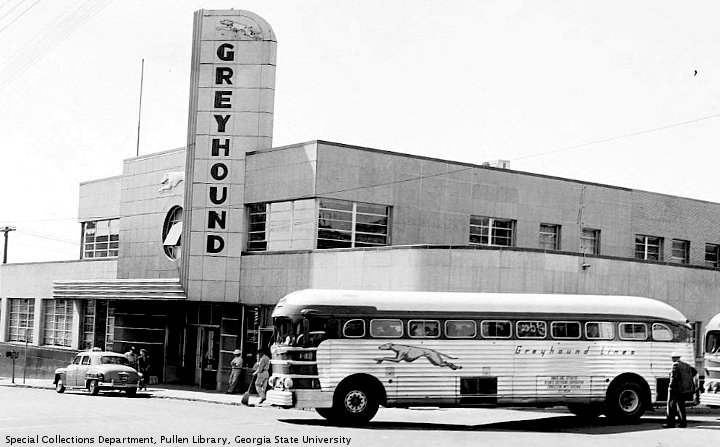
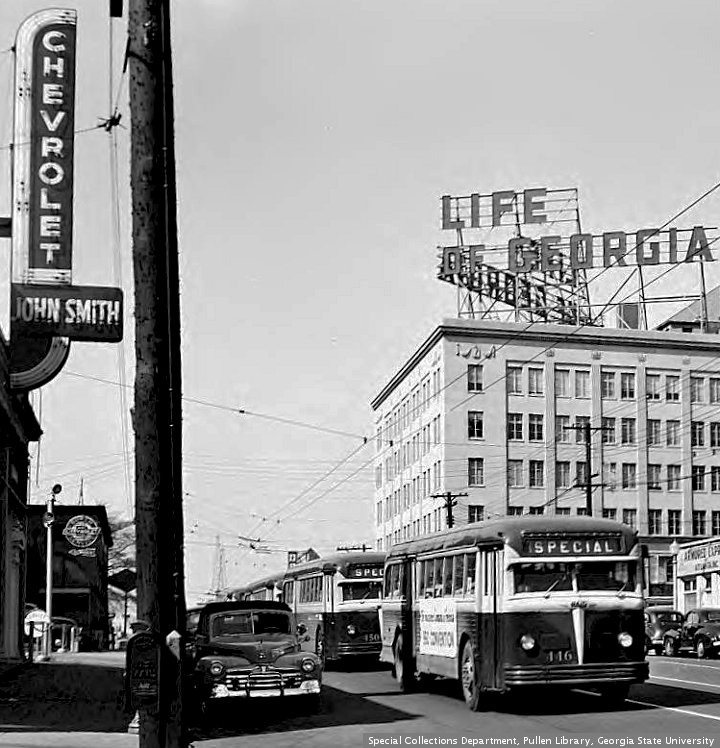
David Pomerance / Rahsaan Roland Kirk Chamblee54 has written about this show before. Mr. Kirk was a force of nature, the modern miracle of the tenor saxophone. He did not suffer from false modesty. This was the night Richard Nixon resigned, which pleased Mr. Kirk no end. The blind Rahsaan said that he did not want to see his audience, because we were too ugly. At one point, his band had been jamming for about ten minutes, when PG realized that Mr. Kirk had been holding a single note the entire time. The three saxophones at one time thing was a visual shocker, but he got sounds that way that you cannot get from a single instrument. At one point, Mr. Kirk pulled his sunglasses off, and made a face at the crowd. It was an amazing evening.
Chic Corea / Return to Forever This was a disappointment. Tickets were $4.50, which may be the most PG ever paid at the Music Hall. The band only played about an hour. It was all electric, ignoring the acoustic instruments set up on stage. RTF was a four piece, all star band. They had Chic Corea on keyboards, Stanley Clarke on bass, Al Demeola on guitar, and Lenny White on drums. That sounds like a great show, but it turned out to be four solo artists jamming. There was no cohesion, and the overall sound was less than the sum of the individual parts. Corea leaned over his keyboard, twisted knobs, and made faces, as if to say “look at how intense this is”. It wasn’t.
Mccoy Tyner The former Coltrane sideman played a very nice show. He had a percussion man, with several tables covered in exotic instruments. PG took a break after to first show to hang out at a neighborhood disco. When he got back, there was no doorman checking tickets, and anyone could walk in for free. PG took advantage of this discovery many times over the next few years.
Bill Crystal / Jean Luc Ponty Former Frank Zappa player Jean Luc Ponty played at the Music Hall, with a bass player who was a fellow Zappa alumni. The surprise of the evening was then-unknown Bill Crystal. A few weeks after this show, “Soap” would premiere, and make him a star. Mr. Crystal did a killer impersonation of a gila monster.
Between shows, Mr. Crystal had been entertained by a local musician. During the second show, he held his finger to his nose, made a snorting sound, and said thank you. PG heard this, and yelled “Locker Room”, the name of a “deooderizer” that some liked to get a buzz sniffing. Mr. Crystal said “Locker room. Jeez, I need to get the hecklers rosetta stone to know what he means”. Good times.
Keith Jarrett This is another show that might have been better than PG’s enjoyment. At one point early in the show, PG moved over to the front of the stage, to look at Mr. Jarrett’s hands. After the show, people told PG that the player had been giving him dirty looks when he did that. PG asked Mr. Jarrett about it, and he said that PG had interfered with his concentration.
This show featured a quartet, instead of a solo piano. The bass player was Charley Haden, who seemed a bit puffy faced. PG later learned that he had been addicted to heroin at the time.
Melissa Manchester Ms. Manchester came back for another week at the Music Hall, about a year after her first appearance. At one point, she asked the band if they were ready to do a new song, and then performed “I got eyes” for the first time in public. This was later the b side to “Midnight Blue”. One of the players in her band was a man named James Newton Howard. Part of the deal for touring with her was that he could play a solo number on piano, called “Newton’s Ego”. He later played with Elton John, and became wealthy writing film scores.
Flora Purim /Airto Moreira On PG’s 23rd birthday, Flora Purim played at the Music Hall. At the time, PG had a profound appreciation of her albums. The band had a nice sound, and was the equal of her records. The Chic Corea tune “Light as a Feather” was a standout. Her husband, Airto Moreira ( eye, ear, toe) fronted the band on some of the numbers, and had some funny routines. Ms. Purim held two microphones throughout the show, with one connected to some audio filters. PG found holding two microphones to be visually distracting. PG had known of the Jewish ancestry of Ms. Purim, but had not thought much about it. Then he saw her live, and realized that she does, indeed, look Jewish.
Hot Tuna Hot Tuna is a dependable, though not spectacular, band. On a previous show in Atlanta, they went on stage at 10:55, and played without a break until 2:50. This night, a fried of a friend was working at the Music Hall, and PG got in before the crowds, to get a prime spot, in the first row of benchbacks. At one point, PG was rocking back and forth against the benchback, and a neighbor asked him to quit. Those buckets of beer were influential.
Shakti This was an acoustic, Hindu oriented band fronted by guitar superman John McLaughlin. The numbers seemed to go on forever.
David Manion / Mark Almond This was a long awaited Atlanta performance by Mark Almond. (This is a jazz/blues band, totally different from the Soft Cell vocalist with a similar name.) They played two sets, which were only an hour or so long. This was disappointing to the people who could not wait for the second show. In the second show, they “took the shackles off” saxophone player Johnny Almond, and he played a wild solo during “The city”.
The incident we are about to describe may or may not have involved David Manion. What happened was, a small portable radio was playing on the edge of the stage. The spotlight was on the radio, which sounded like gibberish to most of the audience. Gradually, the chattering audience got quiet, and tried to listen to the radio. After a few minutes, a man came out, and stood in darkness behind the radio. The PA speaker announced “The new force of rock in Atlanta”. The man then dropped a large piece of granite on the radio, smashing it into bits.
Laurie Chapman / Stomu Yamashta Laurie Chapman was a singer/piano player, with some good stories. She told of a trucker, driving beside her and talking to her on a cb radio. ” You better get that drink out from between your legs before it gets too hot to handle”.
Stomu Yamashta is somewhat of a star in Japan. The show here was filmed for showing on TV there. His band, Go, was an all star collection, including Ava Cherry. She was a backup vocalist, and girlfriend, with David Bowie. After the show, PG was introduced to Spencer Davis in the lobby.
The next few shows were at Cherokee Plaza.
Martin Mull Mr. Mull was a solo star this time. He did a song about doing nothing, adding that dead people can do it too. The parking lot was packed, which was a major problem at the new location.
The week before the Super Bowl in 1994, Mr. Mull filmed a Comedy Central show in Woodruff Park. The Dallas Cowboys cheerleaders were kicking field goals. After the filming PG stood a few feet away from Mr. Mull, but could not think of anything to say.
Sun Ra PG went to a wedding, and a bunch of people from there went to see Sun Ra. This was an entertaining spectacle, with a big band and dancers. After the show, PG asked Sun Ra how he could afford to take a band like that on the road. He said he was doing it for beauty.
David Bromberg This was another big band production. PG showed within a few minutes of the gateman leaving his post, and saw about 45 minutes without buying a ticket.
Lester Flatt/John Hartford One boring Saturday night, PG walked up to the Music Hall, and saw the two fiddle players jamming. A few weeks later, Lester Flatt passed away. This is a repost. Pictures today are from “The Special Collections and Archives, Georgia State University Library”.
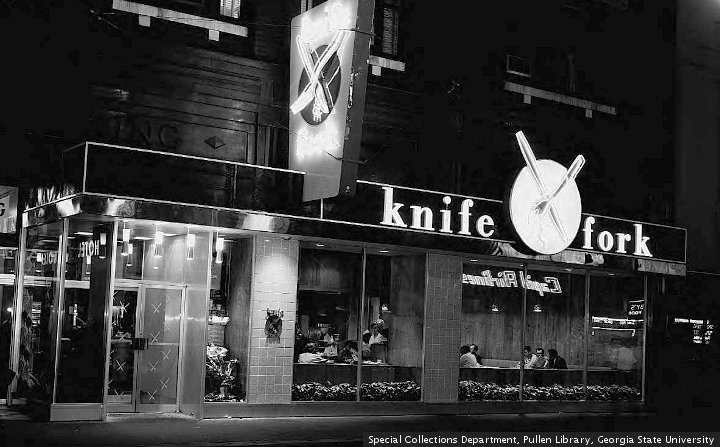
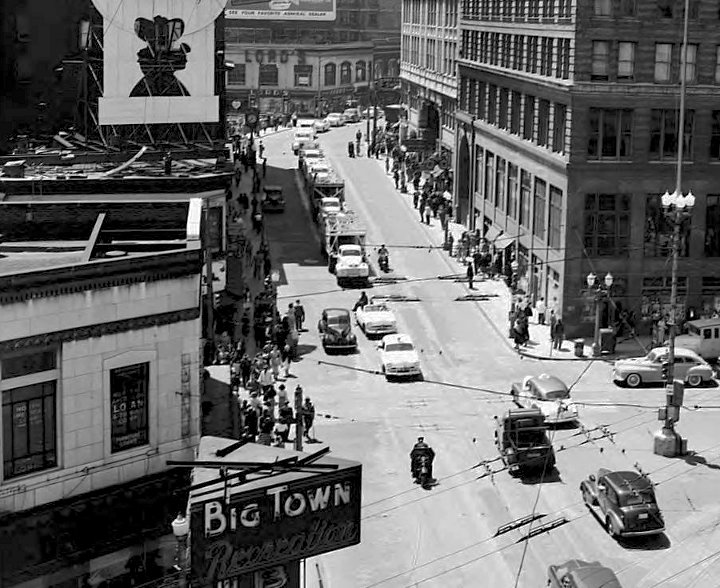

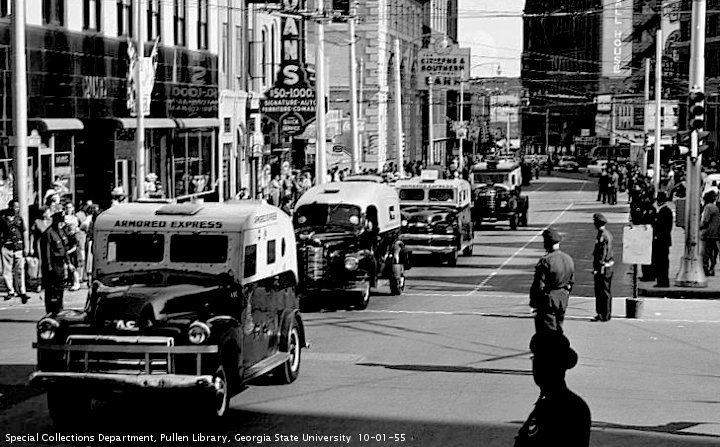
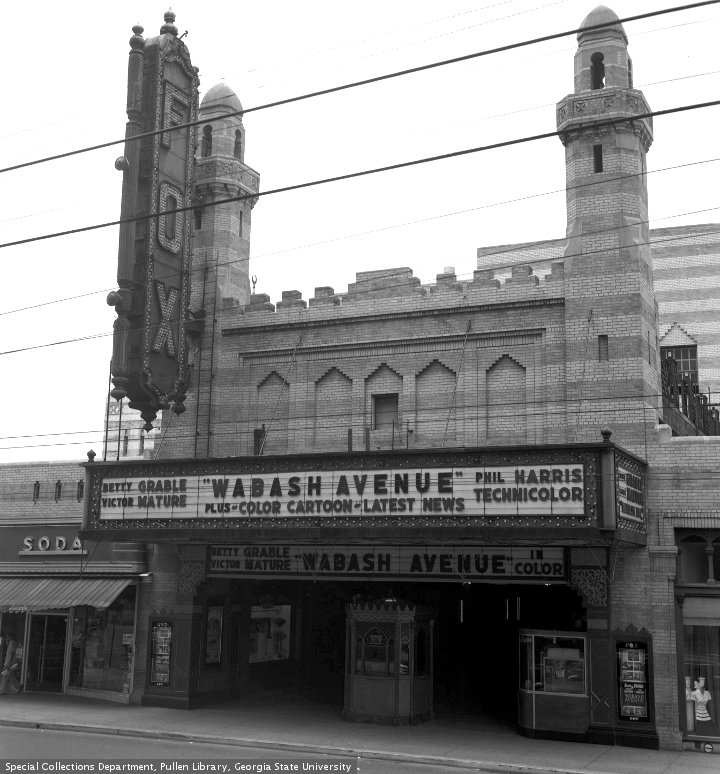
City Flags
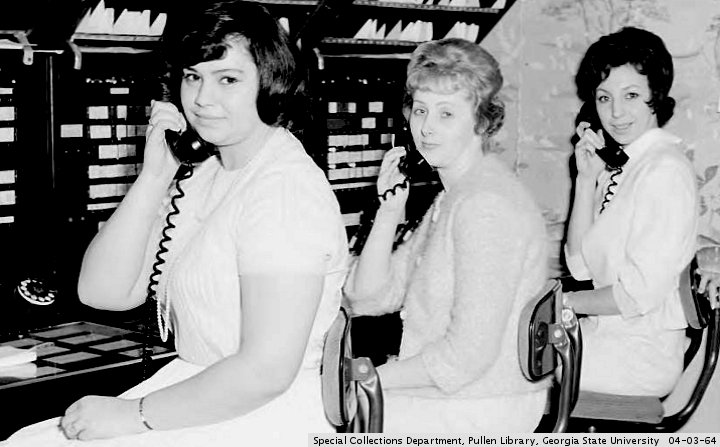
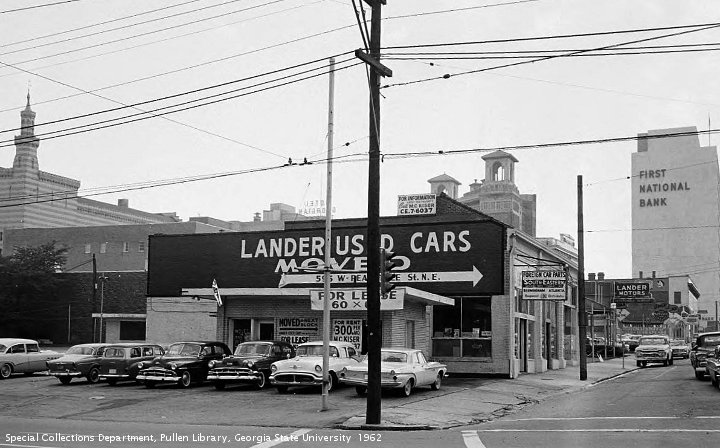
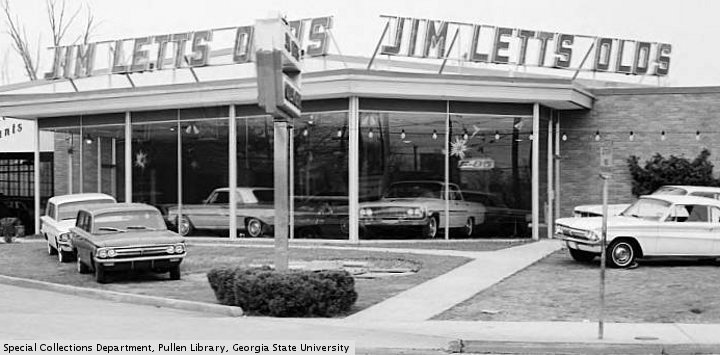

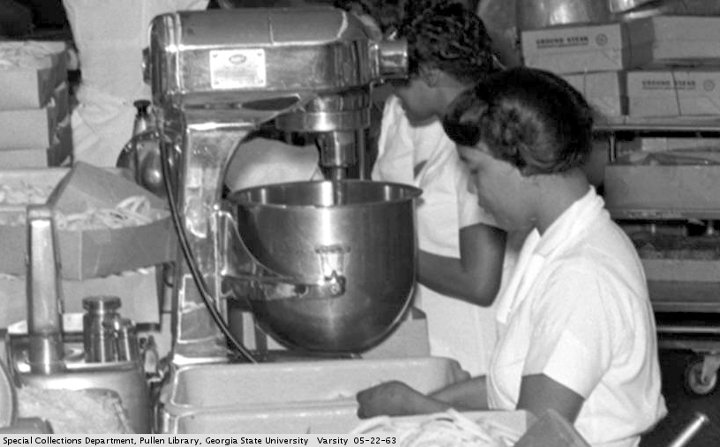
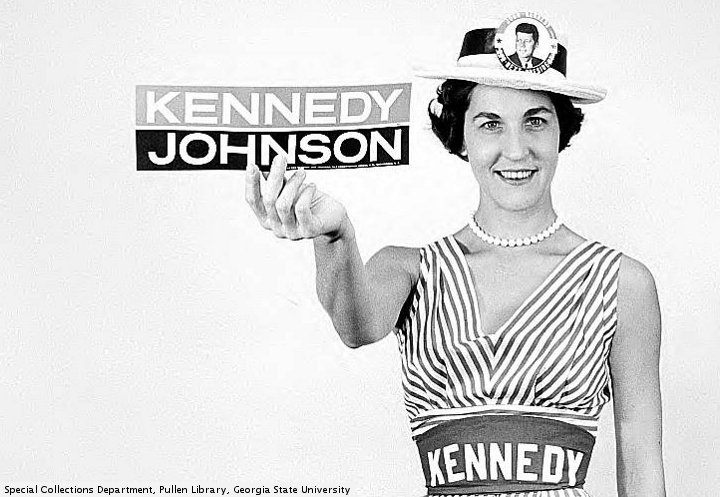

Roman Mars recently gave a TED talk, Why city flags may be the worst-designed thing you’ve never noticed. Mr. Mars is the voice behind 99 percent invisible, a podcast about design. It is a magic moment when you see the face saying “This is 99% Invisible. I’m Roman Mars.”
You might wonder why a city would have a flag. It is a handy symbol for countries, especially during a war. States seem to all have them. Many cities do have flags, although they are not always displayed. In the case of Pocatello ID, this is an act of mercy.
The North American Vexillological Association has five principles of flag design. 1. Keep it simple 2. Use meaningful symbolism 3. Use two to three basic colors 4. No lettering or seals of any kind. 5. Be distinctive. Chicago, Denver, and Portland follow these guidelines and succeed.
One of the bad examples cited in the talk is San Francisco. They have a poorly drawn phoenix, over a ribbon. The ribbon has a saying in a language other than english. The words SAN FRANCISCO are displayed in big, ugly letters at the bottom. Most San Francisco residents instinctively understand why those letters are bottoms.
Another city with a phoenix flag is Atlanta. This unfortunate item is what “Vexillologists call … SOBs: seals on a bedsheet.” The seal of the city is installed in the middle of a blue bedsheet. The Atlanta city flag is seldom displayed. Many residents are unaware of its existence.
“Made from durable nylon, our authentic Atlanta flags are constructed to official specifications and available in assorted popular sizes. Each flag has two heavy duty grommets for easy display, though we also offer an optional pole sleeve and gold fringe for indoor display. These flags are “made-to-order” right here in America, so please allow about 10 days for your order to ship.”
The subject of government flags is controversial in Georgia. Up until a few years ago, the state flag had the St. Andrews Cross. To the right was a blue strip, impaled upon the state seal. This flag was an aesthetic disaster, with the state seal Frankenstein stitched onto the stars and bars. This flag violated what might be rule six of flag design: Do not offend a significant portion of the state population with a symbol. The good news is that the Georgia flag has been changed. The state seal remains.
Pictures today are from “The Special Collections and Archives, Georgia State University Library”.
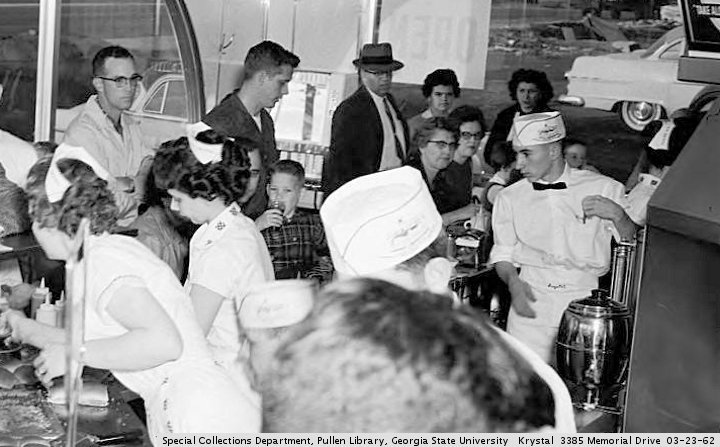
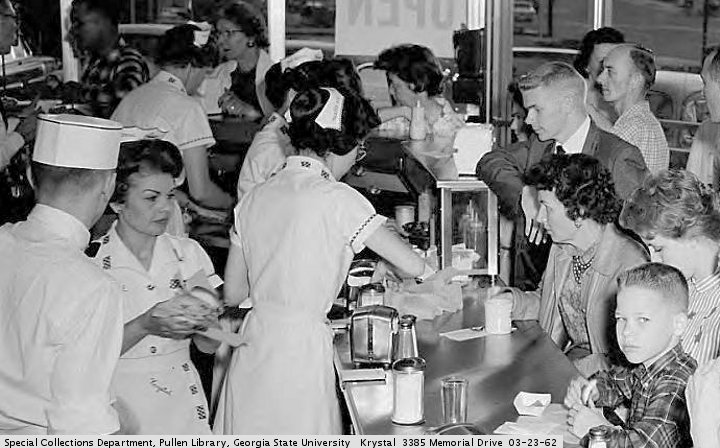
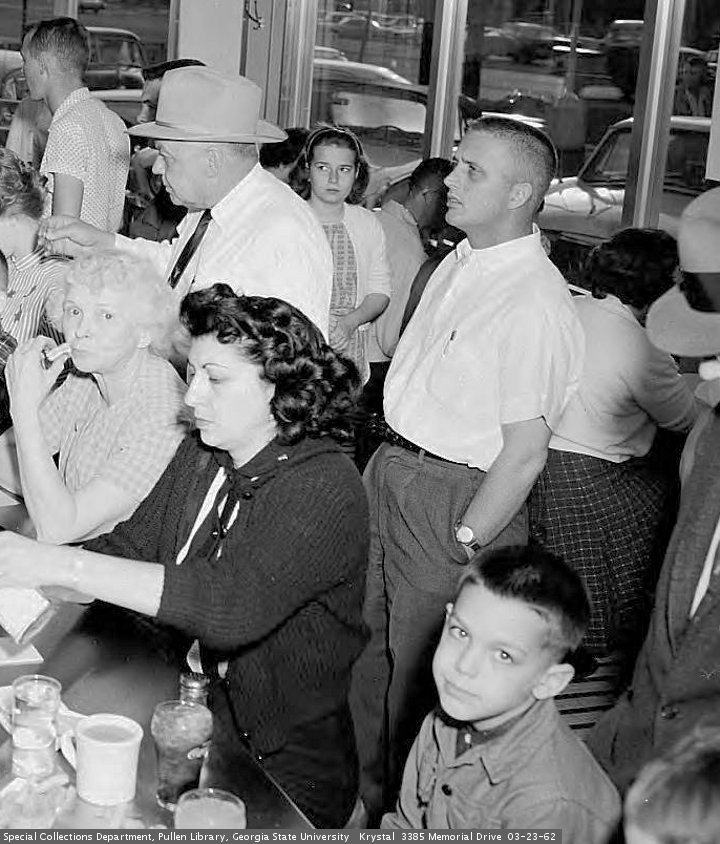
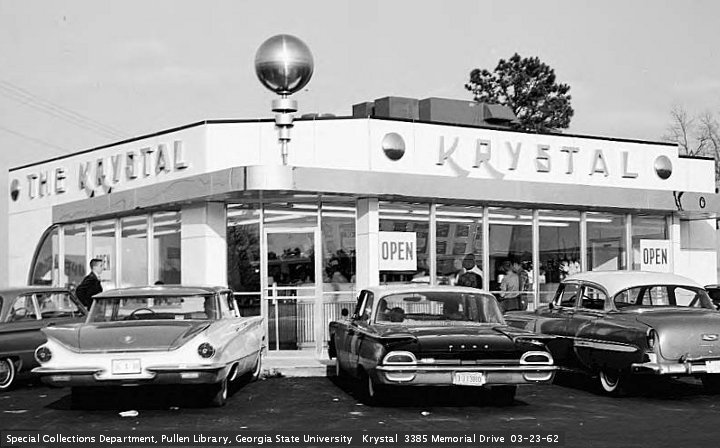
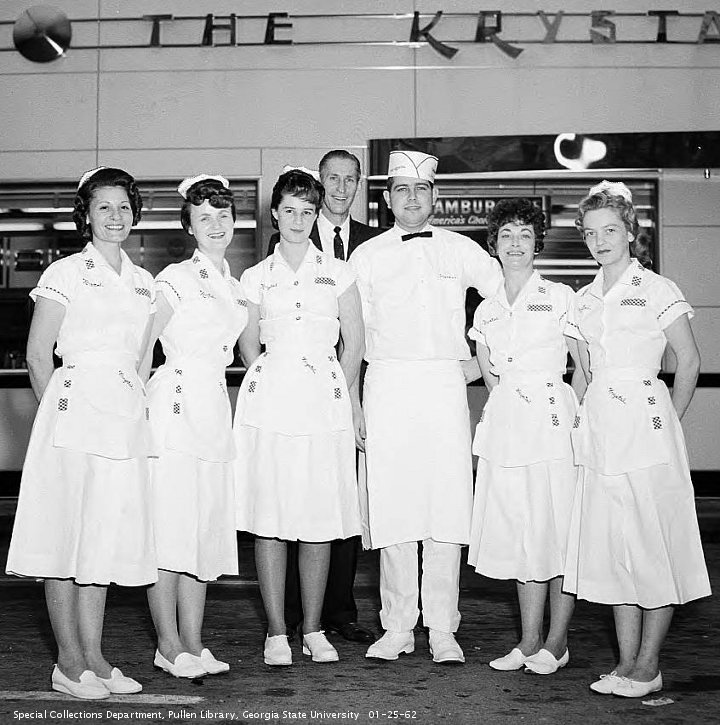
Watering Hole Story
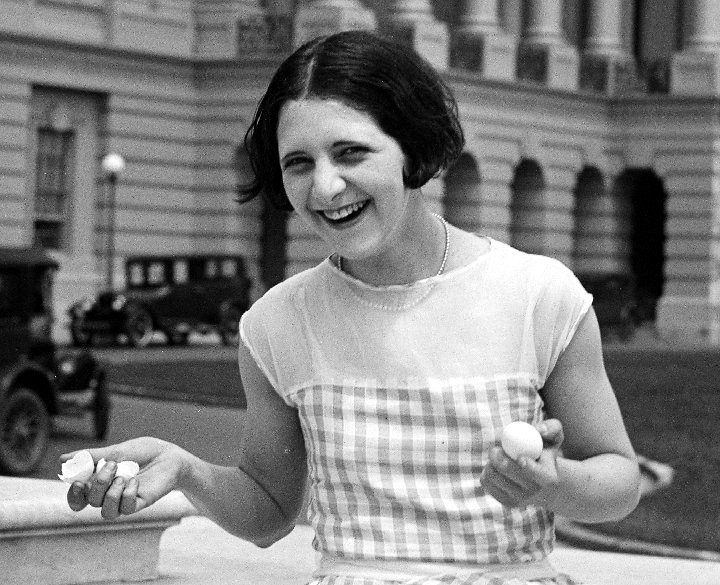



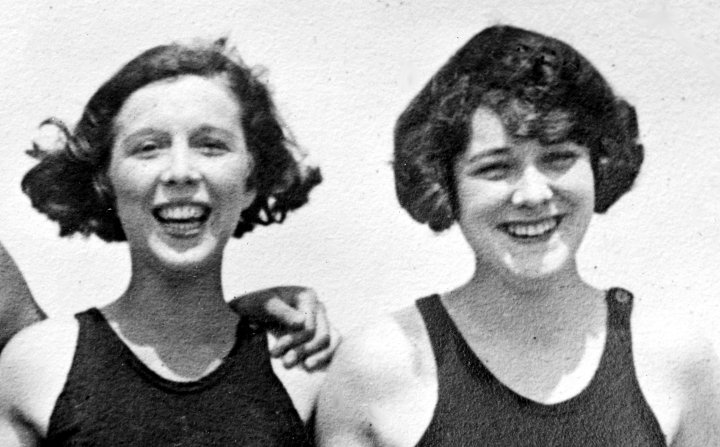
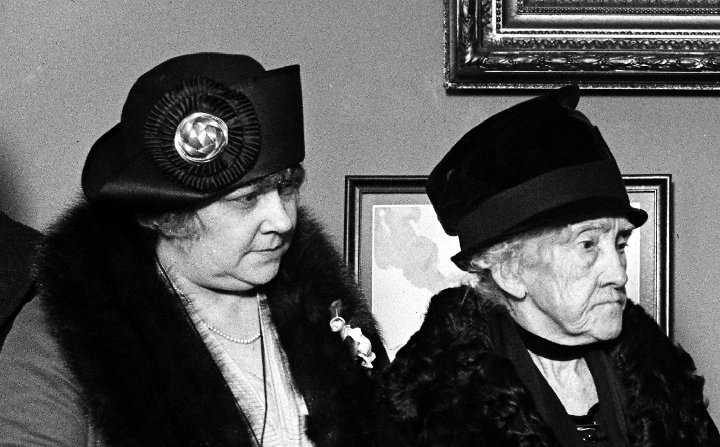
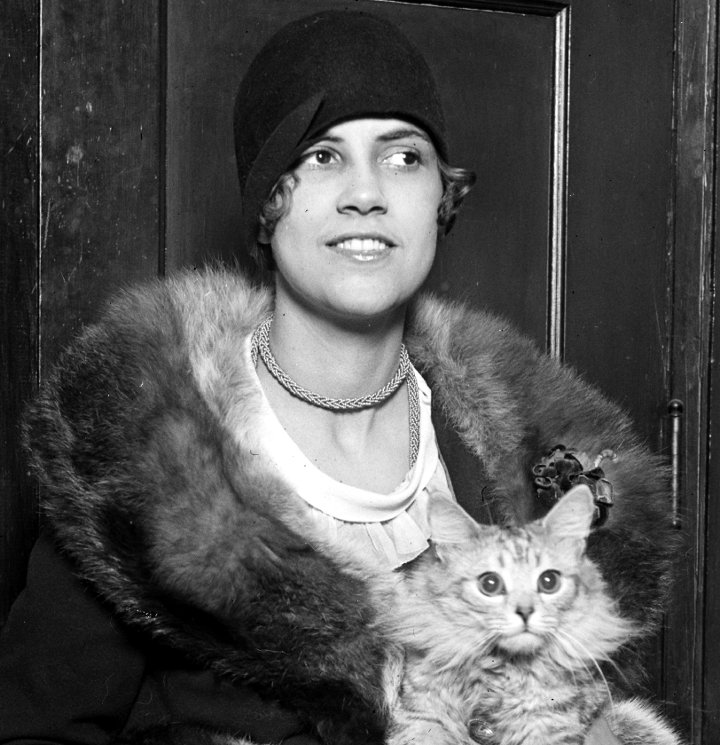
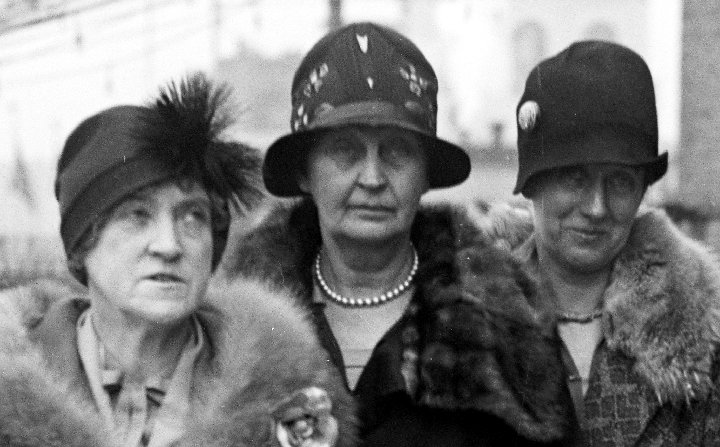
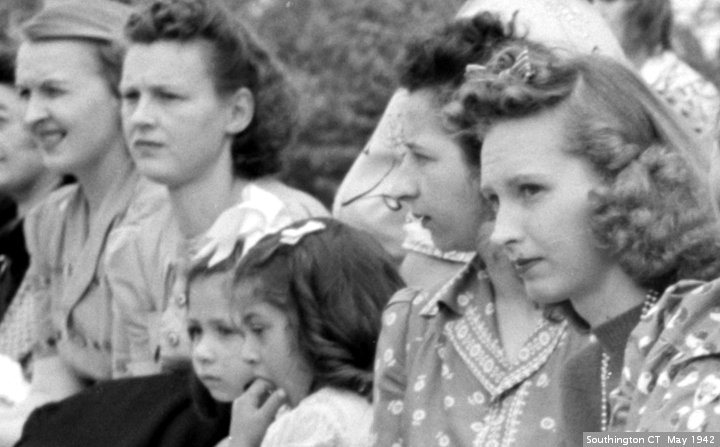
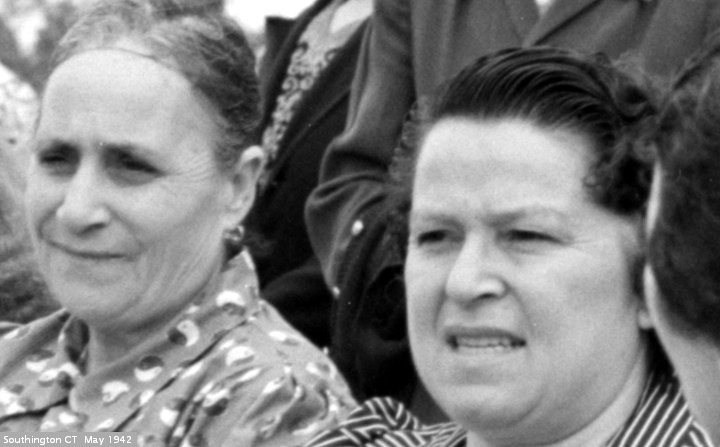
PG and his neighbor DA went out to drink beer and shoot pool. The destination was a place called the Watering Hole. The Watering Hole used to be a VFW. There was a TV repair store next door. When the county legalized bars, the VFW went somewhere else. The TV repair store became the game room. You could see on the floor where the counter used to be.
This was a weeknight. The other customer was past his limit. The drunk was fussing at the bartender when PG and DA walked in.
PG got lucky and hit a good shot on the pool table. He got a bit cocky, and said “and now for my next trick”. The drunk staggered into the game room, and lay down on an empty pool table. DA replied, “Is that your next trick?”
Before long, it was time to go home. As PG and DA were leaving, the drunk was arguing with the bartender. He wanted to buy a twelve pack to take home. The drunk won the argument, and started walking up Clairmont Road with his prize.
PG got a block or so away from the Watering Hole. He saw the drunk sitting in front of a seven eleven store. The drunk was sitting on the curb, drinking a beer. PG drove in front of him, and stopped the car. DA got out, and walked over to the curb. She picked up the eleven pack, and walked over to the car. Her pace was deliberate. The drunk stood up and yelled obscenities. The car drove away. off. This is a repost. Pictures are from The Library of Congress.


Cost Of The Death Penalty
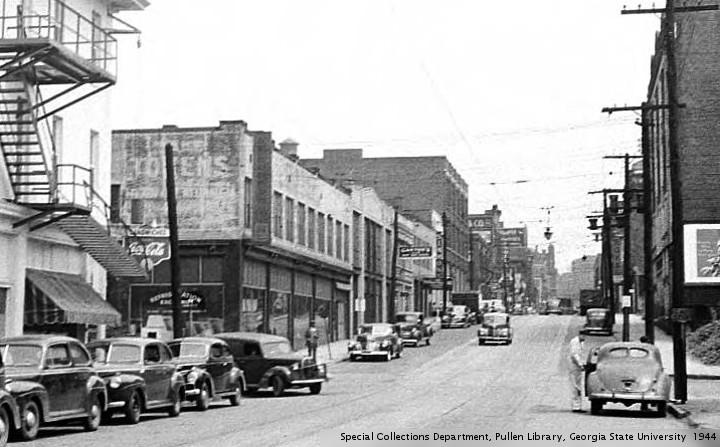
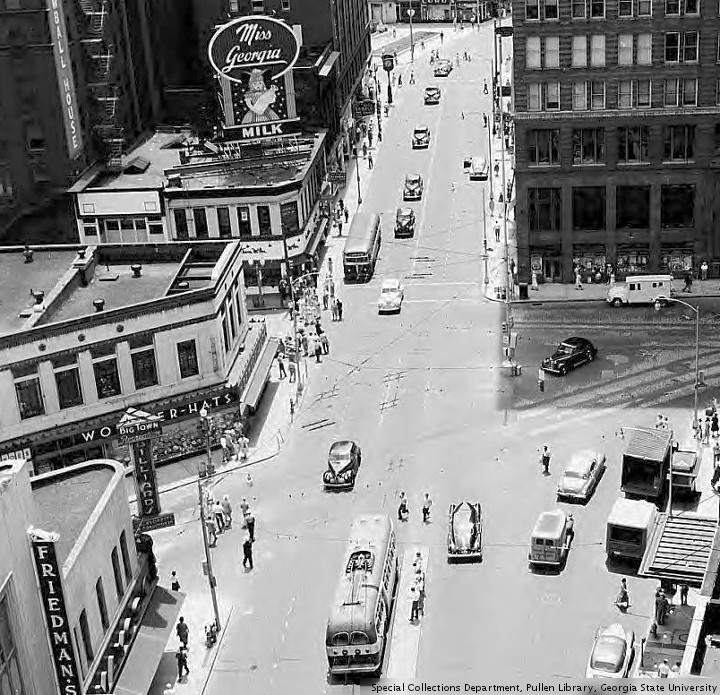
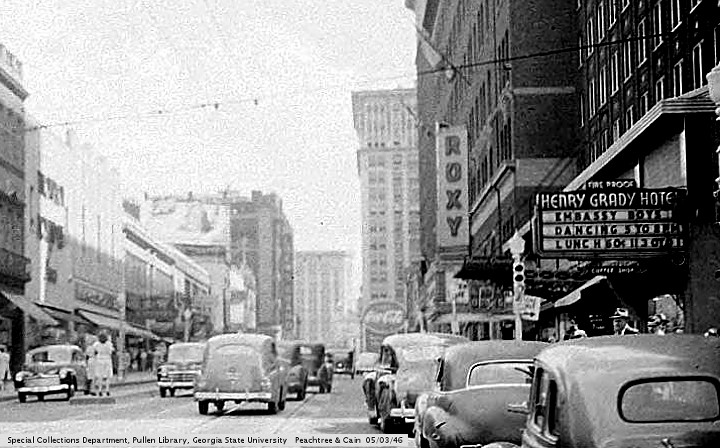
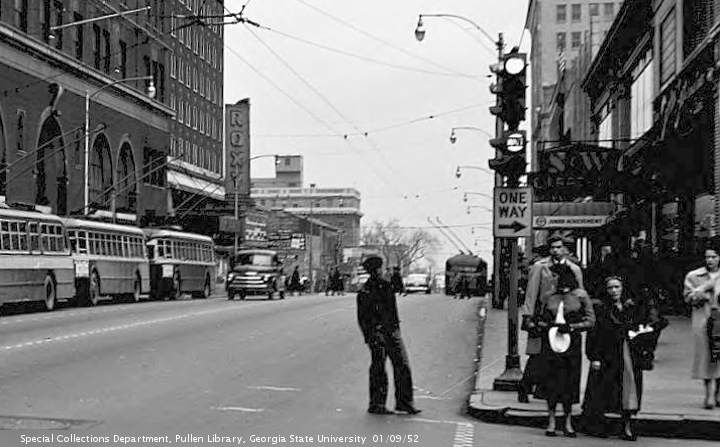
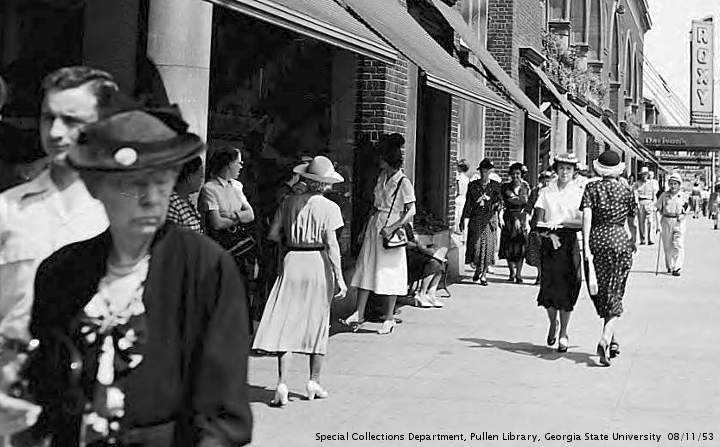
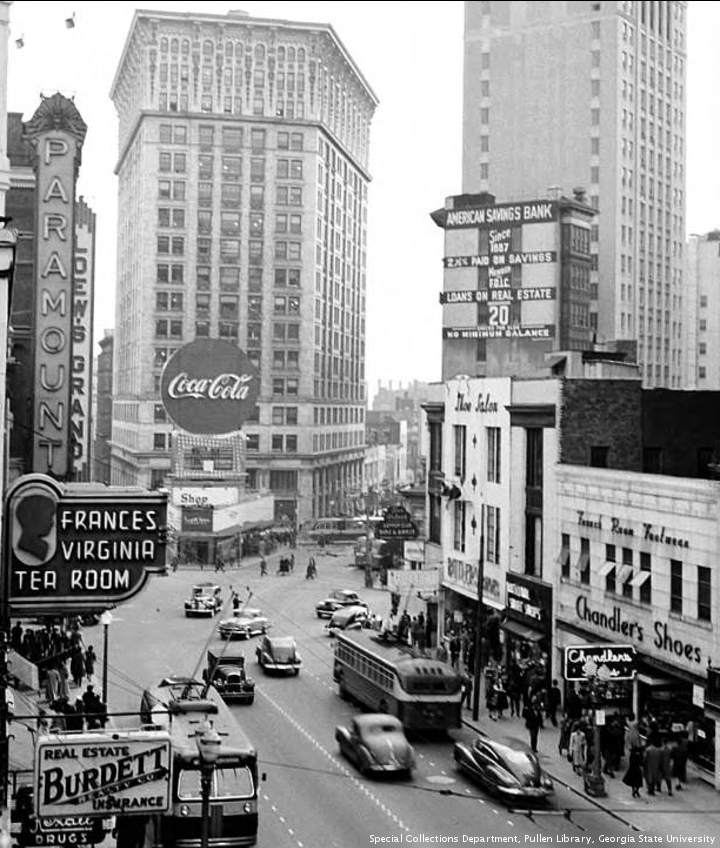
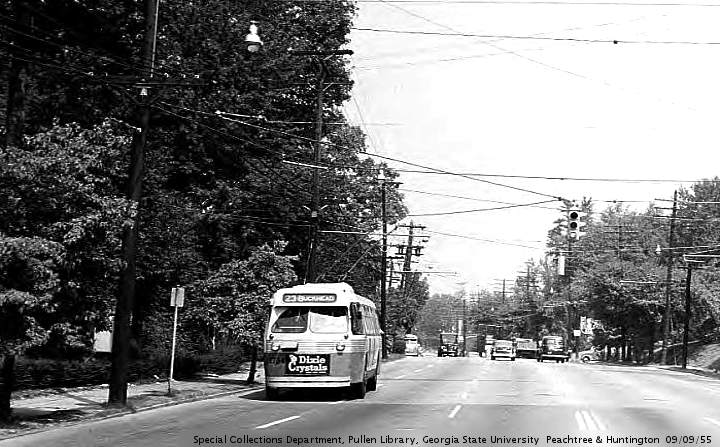
A little while ago, Georgia was fixin’ to waste Kelly Gissendaner. It turns out the mystery drugs were “cloudy.” Using an “abundance of caution,” the execution was postponed indefinitely.
The drug involved is pentobarbital. This reporter does not know if the state planned on a deliberate overdose of pentobarbital, or whether the drug was to be used as a sedative in a multi drug process.
The manufacturer of pentobarbital does not want their product to be used in executions. The state uses a “compounding pharmacy” to make the pentobarbital used for executions. The name of the “compounding pharmacy” is kept secret, per state law.
At the time of what Mrs. Gissendaner’s attorneys call the “botched execution,” the state had an explanation for the cloudy apperance of the drug. “The most likely cause of this precipitation was that the drugs were shipped and stored at a temperature which was too low,” Corrections spokesperson Gwendolyn Hogan said in announcing the state’s findings. This gave the state an easy fix: don’t store the drug at as cold a temperature in the future.”
A new report has emerged: Georgia Says “Cloudy” Execution Drug Was Just Too Cold, But Expert Gave A Second Possible Cause. ““An additional possible cause could be if the pharmaceutical solvent used to dissolve the pentobarbital sodium had absorbed some amount of water or evaporated during the preparation process,” Dr. Jason Zastre, a professor at the University of Georgia said in his affidavit. “This may result in a lower concentration of solvent, ultimately impacting the solubility of the drug, which increases the possibility of precipitation.”
Others say there was a problem with the pH balance. “I think I would have characterized the drug differently than ‘cloudy,’” Dr. Larry Sasich told BuzzFeed News. … “It looked more like clumps of cottage cheese floating in the solution. … The first thing that came into my mind when I saw the pictures was the acidity of the product. And when I read through the testing lab results, I noticed that they didn’t report the pH of the solution.” … it’s difficult to say what the drug would do to a person if its pH level was dramatically off, because “nobody tests substandard drugs on human beings.”
Another issue here is the money Georgia is spending in the effort to poison Kelly Gissendaner. The identity of the compounding pharmacy is secret, as is the budget for the mystery drugs. Dr. Jason Zastre probably pulled down a healthy fee for his affidavit. This is in addition to the $18,000 that Georgia pays Rainbow Medical Associates to supervise an execution. All RMA does is supervise… a prison employee sticks the needle in.
Pictures from “The Special Collections and Archives, Georgia State University Library”.

Jean D. McKinnon

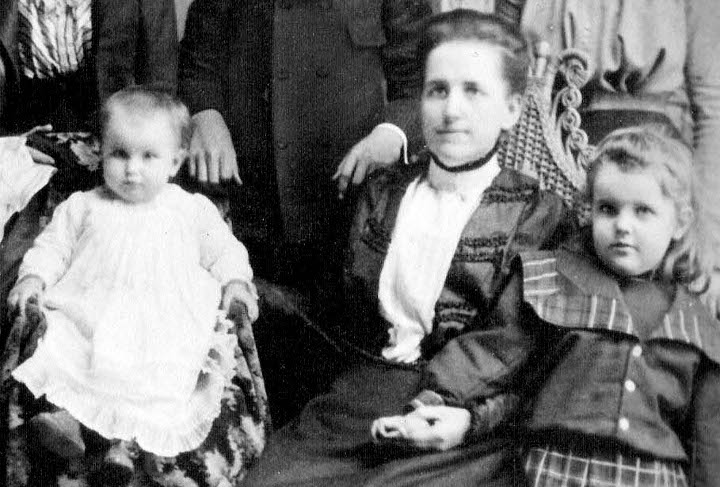


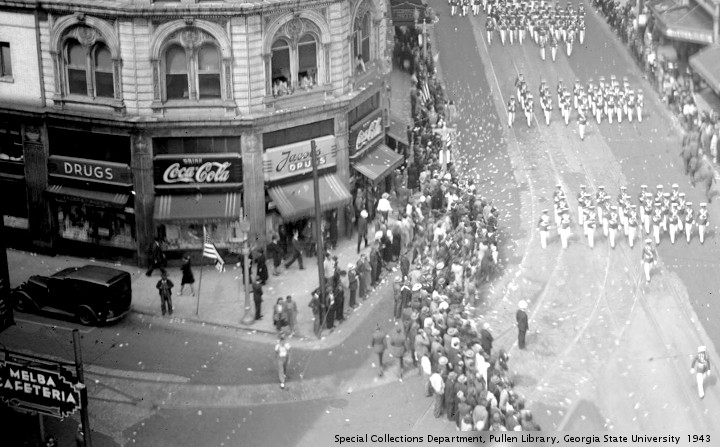
The first picture in this episode is a family portrait of the Quin family in Washington Georgia. The nine surviving children of Hugh Pharr Quin are sitting for the camera. Mr. Quin had joined the Georgia State Troops of the Army of the Confederacy at the age of 16, and after the war went to Washington to live with his sister. Mr. Quin was in the church choir of the First Methodist Church when he met the organist, Betty Lou DuBose. They were married January 22, 1879.
The original name of Mrs. Quin was Louisa Toombs DuBose. She was the daughter of James Rembert DuBose. His brother in law was Robert Toombs, the Secretary of State of the Confederacy, and a man of whom many stories are told.
In this picture, Mrs. Quin is holding the hand of her second youngest daughter so she will not run away. This is Mattie Vance Quin. She is my grandmother.
After the Great War, Mattie Vance Quin was living in Memphis Tennessee, where she met Arthur Dunaway. Mr. Dunaway was a veteran of the war, and was from Paragould, Arkansas. On July 23, 1922 her first Daughter, Jean, was born. This is my mother.
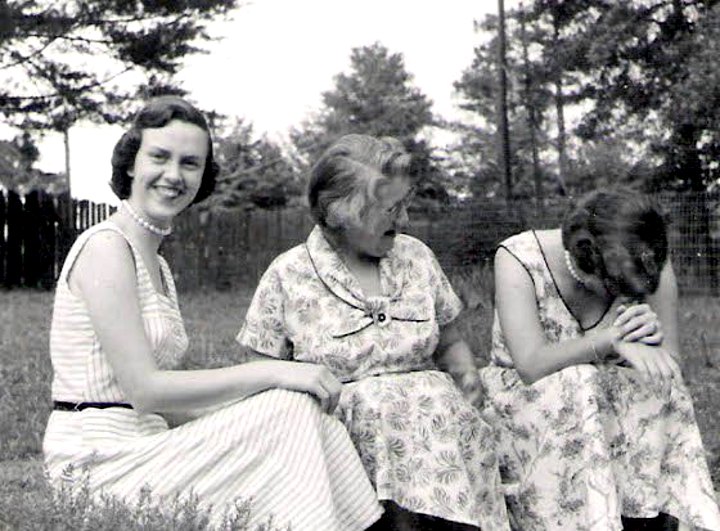
Mr. Dunaway died in 1930, shortly after the birth of his son Arthur. There were hard times and upheaval after this, with the family settling in Atlanta. There her third child Helen Ann Moffat was born on December 12, 1933. This is my Aunt Helen and my mother’s best friend.
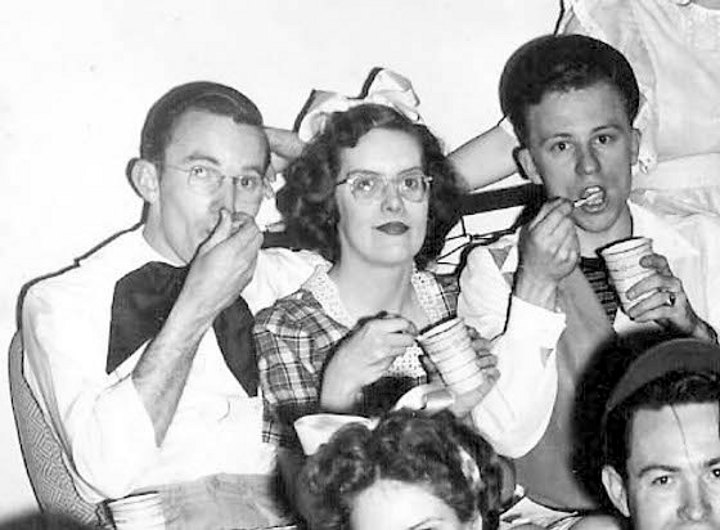
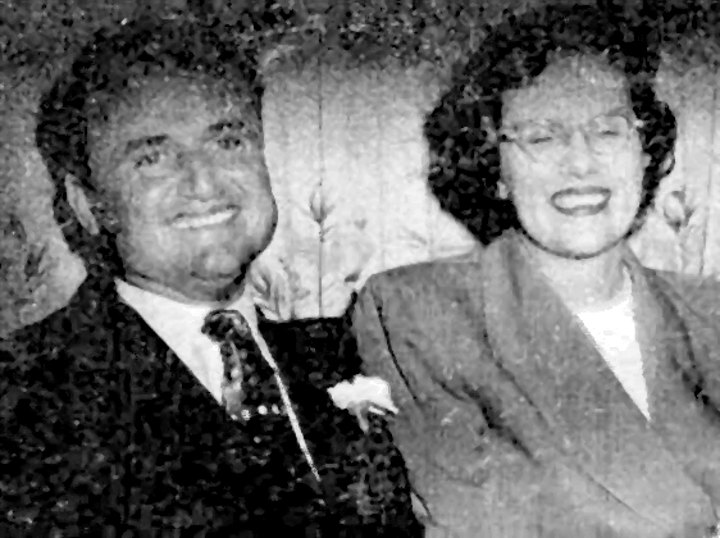


Jean lived for many years with her mother and sister at 939 Piedmont, among other locations. She joined the First Baptist Church and sang in the choir. She got a job with the C&S bank, and was working at the Tenth Street Branch when she met Luther McKinnon. He was a native of Rowland, North Carolina. They were married October 6, 1951.
They moved into the Skyland Apartments, which in those days was out in the country. Mom told a story about Dad taking her home from Choir practice, and going home on the two lane Buford Hiway. There was a man who went to the restaurants to get scraps to feed his pigs, and his truck was always in front of them. This was a serious matter in the summer without air conditioning.
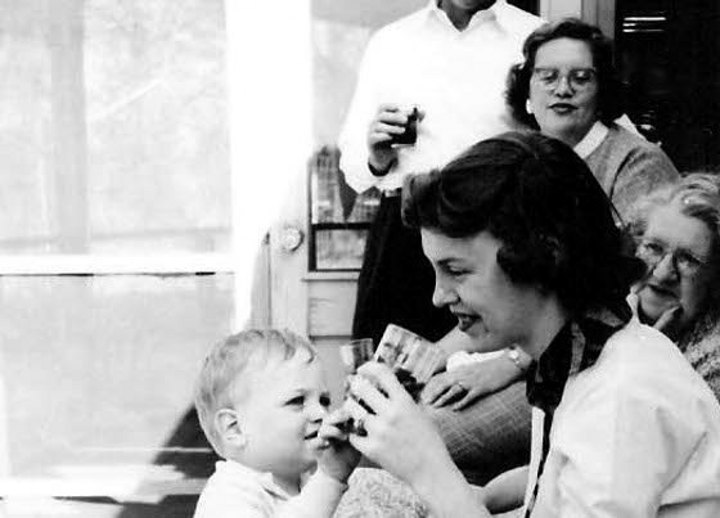
Soon, they moved into a house, and Luther junior was born on May 6, 1954. This is me. Malcolm was born May 10, 1956, which did it for the children.
The fifties were spent on Wimberly Road, a street of always pregnant women just outside Brookhaven. It was a great place to be a little kid.
In 1960, we moved to Parkridge Drive, to the house where my brother and I stay today. The note payment was $88 a month. Ashford Park School is a short walk away…the lady who sold us the house said ” you slap you kid on the fanny and he is at school”.
In 1962, our family followed the choir director from First Baptist to Briarcliff Baptist, which is where my parents remained.
In 1964, Mom went back to work. She ran the drive in window at Lenox Square for the Trust Company of Georgia until it was time to retire. She became a talk radio fan when RING radio started, and was a friend of her customer Ludlow Porch. She gave dog biscuits to customers with dogs.
During this era of change, Mom taught me that all people were good people, be they black or white. This was rare in the south. She later became disgusted with the War in Vietnam, and liked to quote a man she heard on the radio. “How will we get out of Vietnam?”” By ship and by plane”.
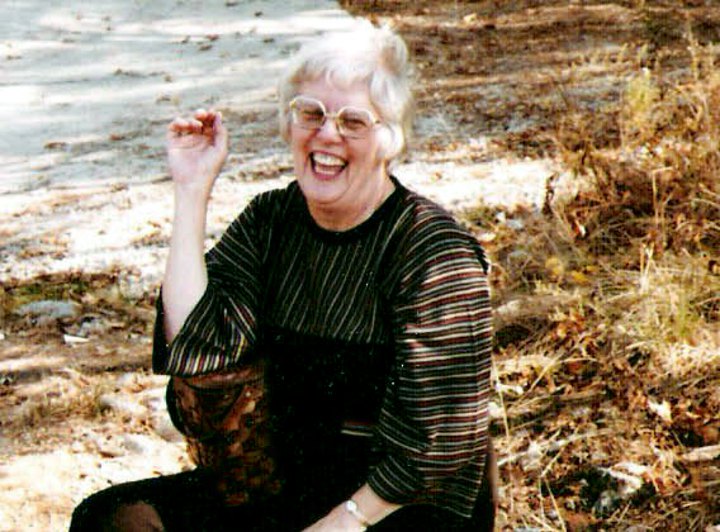
Eventually, it was time to retire. Her and Dad did the requisite traveling, until Dad got sick and passed away February 7,1992. Mom stuck around for a few more years, until her time came December 18, 1998. This is a repost.

Changing The Flag
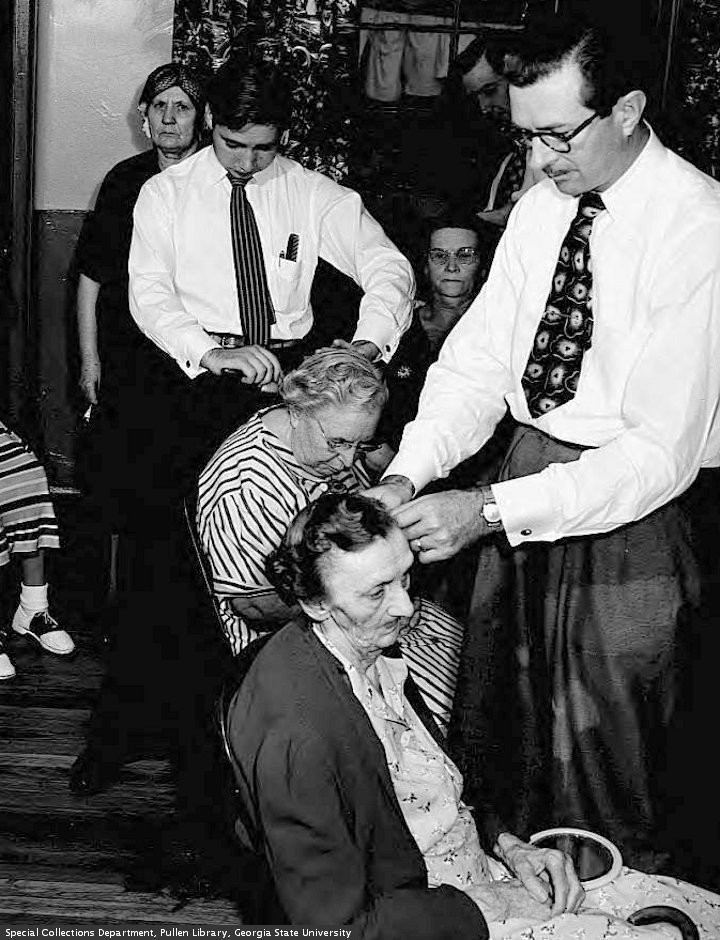
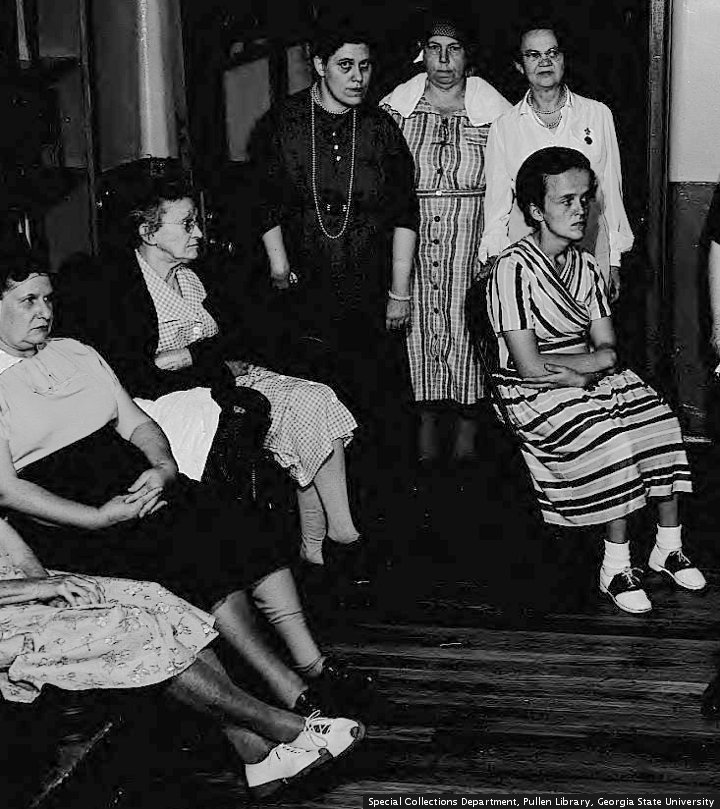
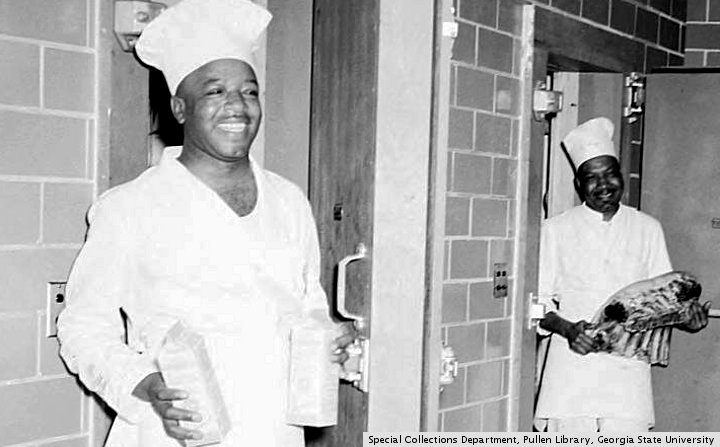

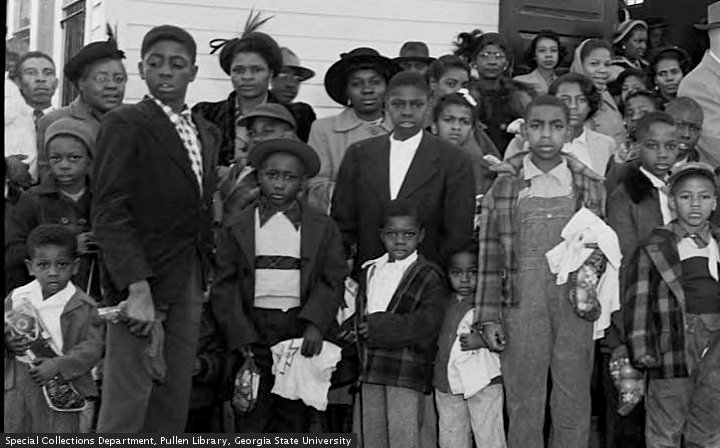
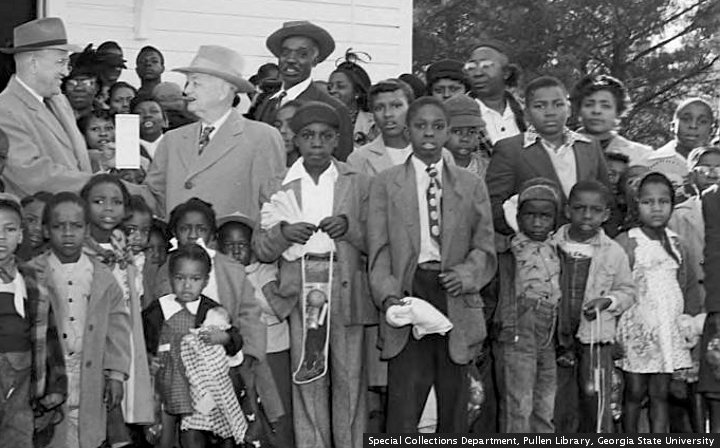
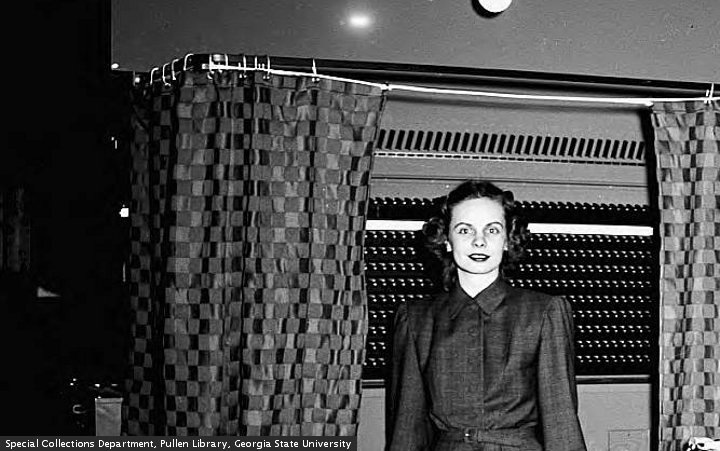
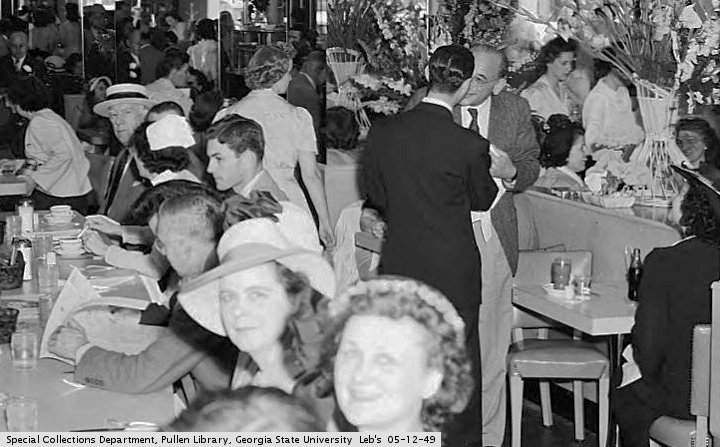
This is a recycled post from 2008. It was written in first person. The issue discussed has mostly faded away, except for a few hardcore cranks. Politicians have found new issues to distract voters when they want to make crooked deals, especially when the Governor is a crooked Deal. Pictures are from “The Special Collections and Archives, Georgia State University Library”.
In 1994 I was working in downtown Atlanta. I represented my company in a customer’s office, and there was often time with nothing to do. At the very least, there was no time clock and an hour lunch could slip into overtime with few consequences.
There was an issue in the news in 1994, along with some claims that I did not believe. This issue was whether, or not, to change the state flag. One day, I went to the library, and sat down with the microfilms of the Atlanta Constitution (Covers Dixie Like the Dew) for the Winter of 1956.
One of the fun things about doing research is the things you were not looking for. Elvis Presley made a personal appearance at the Fox Theater. Atlanta Blue opened a facility on West Peachtree Street. There was speculation about whether Dwight Eisenhower would have a different Vice President in the next election. Mr. President had a heart attack in 1955. Many did not want Richard Nixon to be President. 1994 was 20 years after Mr. Nixon resigned the Presidency in disgrace. You wonder how things might have been different if Mr. Eisenhower found a new Vice President.
1956 was two years after Brown vs. The Board of Education, and many were concerned about school desegregation. A bill was proposed in the legislature to make it a felony to advocate integration.
The Governor at the time was Marvin Griffin. Georgia Tech played Pittsburgh in the Sugar Bowl that year, in spite of the fact that Pittsburgh had a black player. The Governor strongly objected, but was overruled. The game was played without incident.
The State of Georgia changed the state flag that year. The new flag had the state seal on a blue stripe next to the St. Andrews Cross, the battle flag of the Confederate States of America.
In 1994 many wanted to change that flag. Some said that it was a symbol of slavery and oppression; others said it was a reminder of battlefield valor. A native southerner, I could appreciate both points of view. I was neutral regarding a change of the flag.
One thing that I did not understand was an argument made for changing the flag. The line in those days…first expressed by Governor Zell Miller and endlessly repeated by the local fishwrapper media … was that the flag had been changed as a protest against desegregation.
I did not believe that for a minute. The legislature in 1956 was not that smart. They were a bunch of white males who were, with a few exceptions, racist, alcoholic crooks. If someone had suggested a flag change as a stand of defiance against desegregation, they might have thought it a good idea, but I somehow doubt that anyone thought like that. This was 1956. The sixties, where protest became the new national pastime, were a few years away.
After a few minutes of searching through the department store ads and sports pages, I found what I was looking for…. the article announcing the flag change. There was no mention of a protest against desegregation. They announced it as a way of honoring the Confederacy. This is in keeping with the times. Georgia in 1956 was still recovering from the War, and the Cult of Honoring the Confederacy was strong. Fergit Hell!
The flag was eventually changed during the administration of Governor Roy Barnes. The new flag was even uglier than the old one, which I did not think was possible. Sonny Perdue defeated Mr. Barnes in his bid for reelection, in no small part because he proposed a referendum on the flag. He forgot this promise as soon as he got into office, but the flag was changed once again.


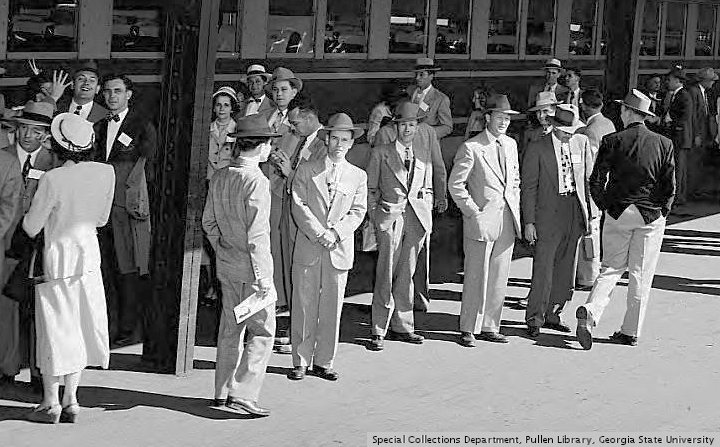



04-30-92
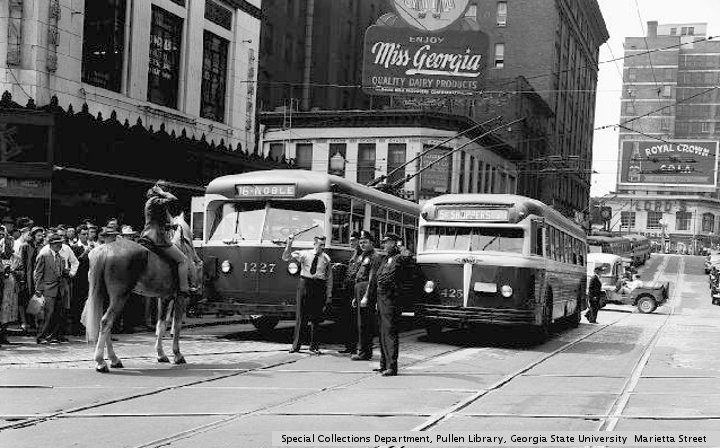

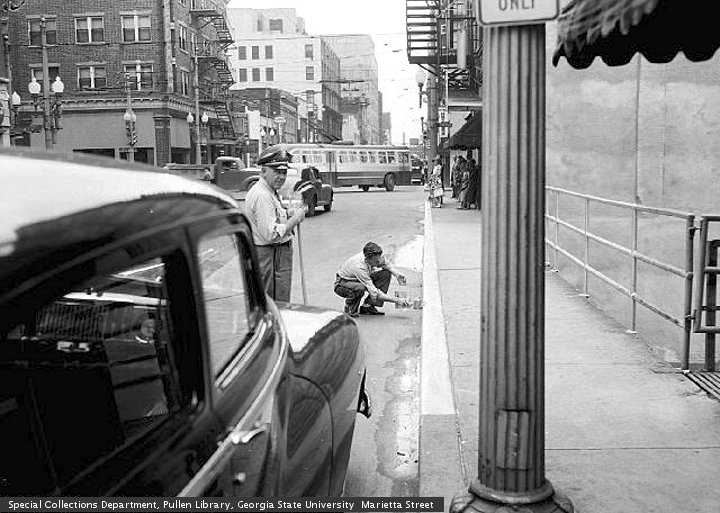

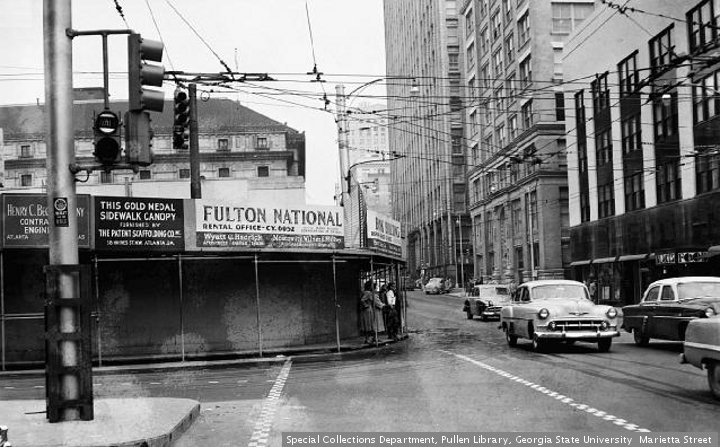

Doug Richards is an Atlanta tv news reporter. He writes a blog, live apartment fire. He was on the scene twenty three years ago. There was a riot downtown. Mr. Richards had a bad night.
PG was working in the Healey building that day. He ran an RMS, or reprographic management service, in an architects office. He had a blueline machine, ran jobs for the customer, and had free time. PG did a lot of exploring, and enjoyed the various events downtown. On April 30, 1992, there was an event he did not enjoy.
The day before, a jury in California issued a verdict. Four policemen were acquitted of wrongdoing in an incident involving Rodney King. The incident had been videotaped, and received widespread attention. The verdict of the jury was not popular. The dissatisfaction spread to Atlanta.
Sometimes, PG thinks he has a guardian angel looking over him. If so, then this thursday afternoon was one of those times. PG went walking out into the gathering storm. He was a block south of the train station at five points, when he saw someone throw a rock into a store front. The sheet metal drapes were rolled down on the outside of the store. PG realized that he was not in a good place, and quickly made his way back to the Healey building.
A group of policeman were lined up in the lobby of the building, wearing flack jackets. One of the police was a white man, who was familiar to workers in the neighborhood. A few weeks before the incident, he had been walking around the neighborhood showing off his newborn baby.
There was very little work done that afternoon in the architect’s office. Someone said not to stand close to the windows, which seemed like a good idea. Fourteen floors below, on Broad Street, the window at Rosa’s Pizza had a brick thrown threw it. There were helicopters hovering over downtown, making an ominous noise.
There was a lot of soul searching about race relations that day. The Olympics were coming to town in four years, and the potential for international disaster was apparent. As it turned out, the disturbance was limited to a few hundred people. It could have been much, much worse. If one percent of the anger in Atlanta had been unleashed that day, instead of .001 percent, the Olympics would have been looking for a new host.
After a while, the people in the office were called into the lobby. The Principal of the firm, the partner in charge of production, walked out to his vehicle with PG and a lady in operations. The principal drove an inconspicuous vehicle, which made PG feel a bit better. PG took his pocketknife, opened the blade, and put it in his back pocket. It probably would not have done him much good.
PG usually took the train downtown. As fate would have it, there was a big project at the main office of redo blue on West Peachtree Street. That is where PG’s vehicle was, in anticipation of working overtime that night. The principal drove PG to this building. PG called his mother, to let her know that he was ok. The Atlanta manager of Redo Blue talked to him, to make sure that he was not hurt.
If PG had not gone back downtown the next day, he might not have ever gone back. He was back at the West Peachtree Street office, and was assured that it was safe to ride the train into town. The Macy’s at 180 Peachtree had plywood nailed over the display windows. A gift shop in the Healey building had a sign in the window, “Black owned business”. Friday May 1, 1992, was a quiet day.
This is a repost. The events of twenty three years ago are mostly forgotten in Atlanta. Pictures are from “The Special Collections and Archives, Georgia State University Library”.





Ru Paul


Years ago, PG worked with someone who liked to say “and a ru hu hu.” This was shortened to ru, and was usually said very loud. Ru became a greeting.
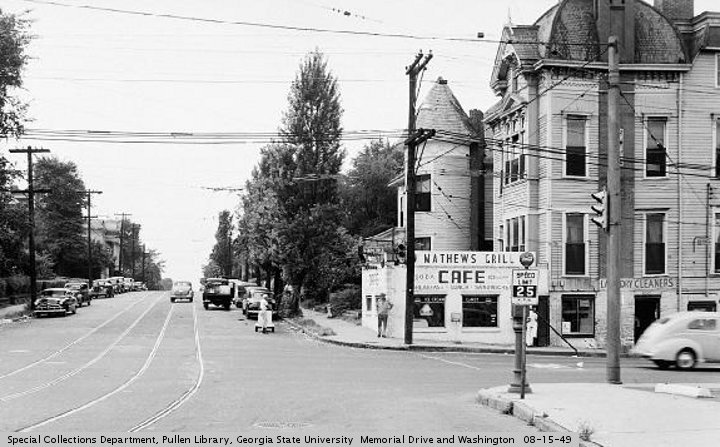
About this time, Ru Paul was living in Atlanta. Many people remember her (“RuPaul Andre Charles, best known mononymously as RuPaul”) as a spectacular self promoter. Ru Paul would sit in an apartment balcony, and wave at cars passing by. Posters for her band, Wee Wee Pole, were on telephone poles up and down Ponce de Leon Avenue.
One night, Ru Paul was working as a gogo dancer in a club called Weekends. During a break, PG went over to talk to her. The use of ru as a greeting was mentioned. Soon, some people came over, and PG started to leave. Before PG could get away, Ru Paul turned to PG, lifted her index finger, and said “Keep on saying my name.”
Ru Paul went on to become famous. Weekends was torn down, and is the site of the Federal Reserve Bank. PG is PG, with occasional excursions into R and NC17. PG does not watch much TV, and has never seen an episode of “Ru Paul’s Drag Race.” This is a TV show about a TV.
There is a recent controversy about RPDR. It seems that the phrase shemale has been used. Some people are offended by this. The expression is no longer used on the show.
PG has only one trans person friend. Sashia is the first person that PG heard use the expression shemale. PG does not know if Sashia still uses this expression. It has been a while since PG learned this expression, and ideas about language do change. Spell check suggestion for Sashia: Hashish.
The use of offensive language is to be avoided. If you know something is going to hurt people, then you should avoid saying it. There is a good possibility that Ru Paul knew what she was doing, and just didn’t care. The problem comes when you haven’t received the latest update from the language authorities. Keeping up with with is cool to say can be a full time job. Is it still ok to say ru?
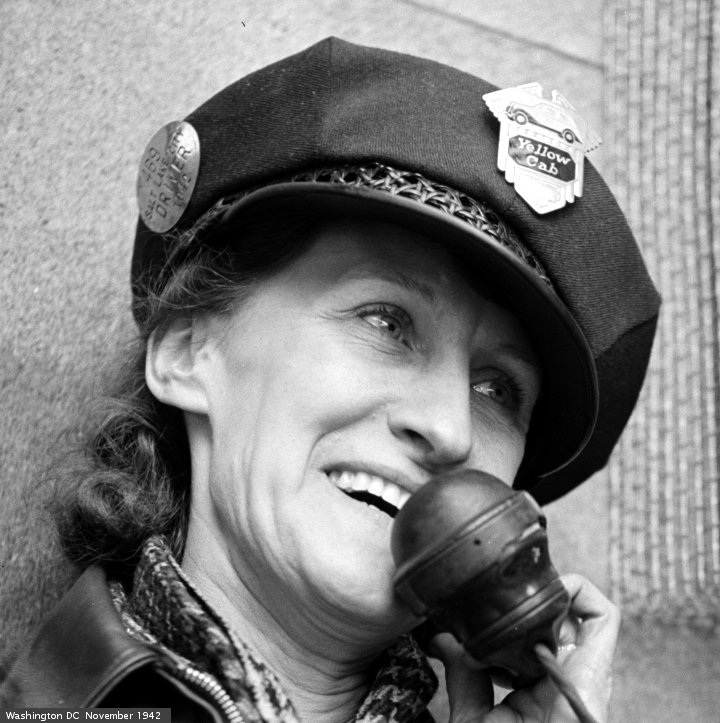
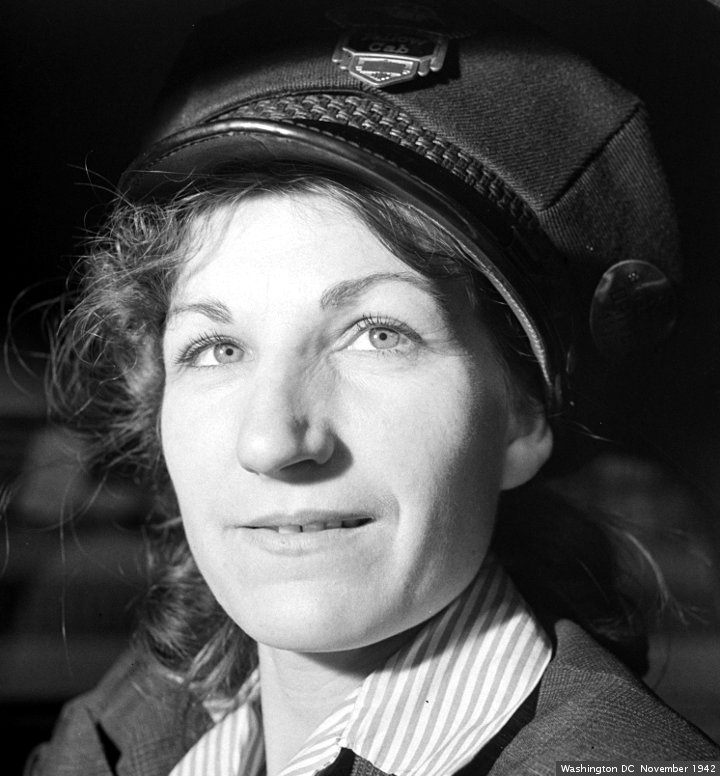
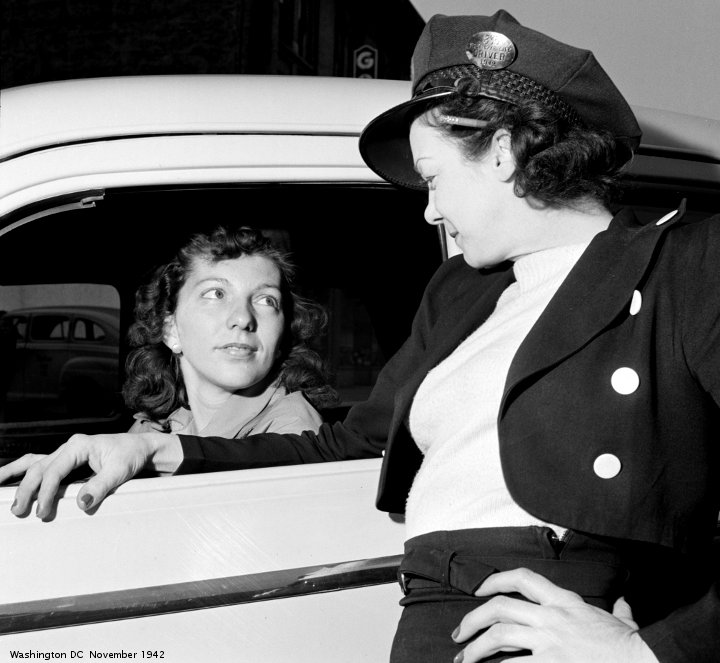
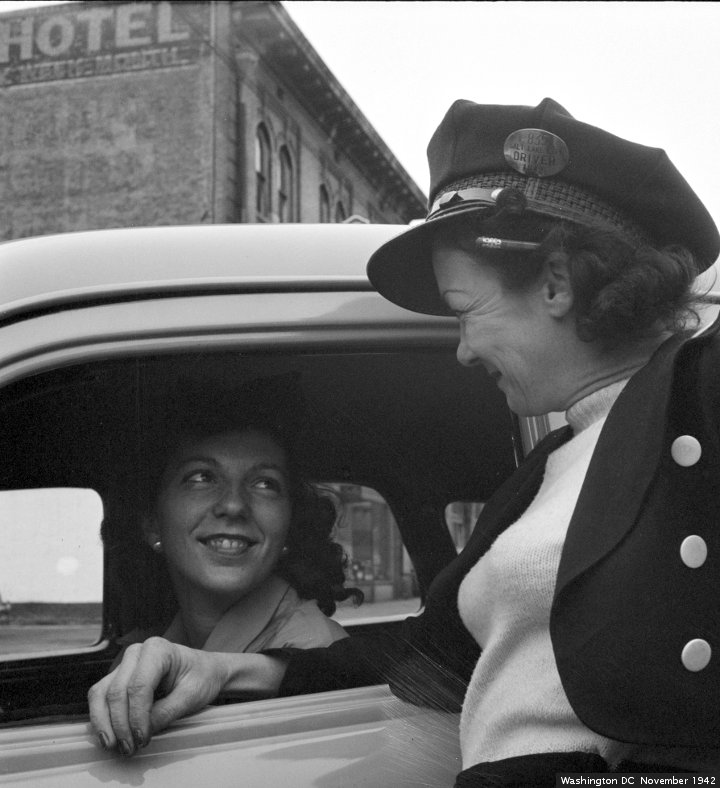
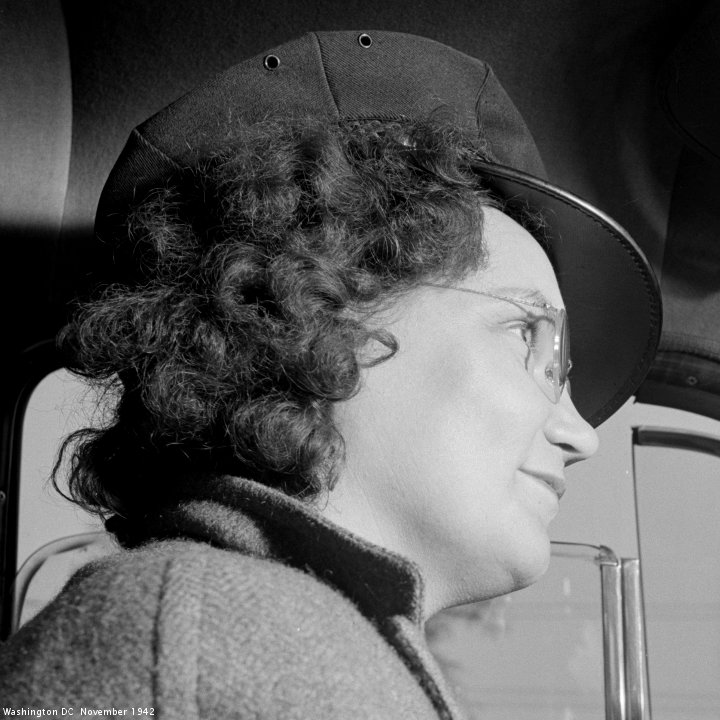
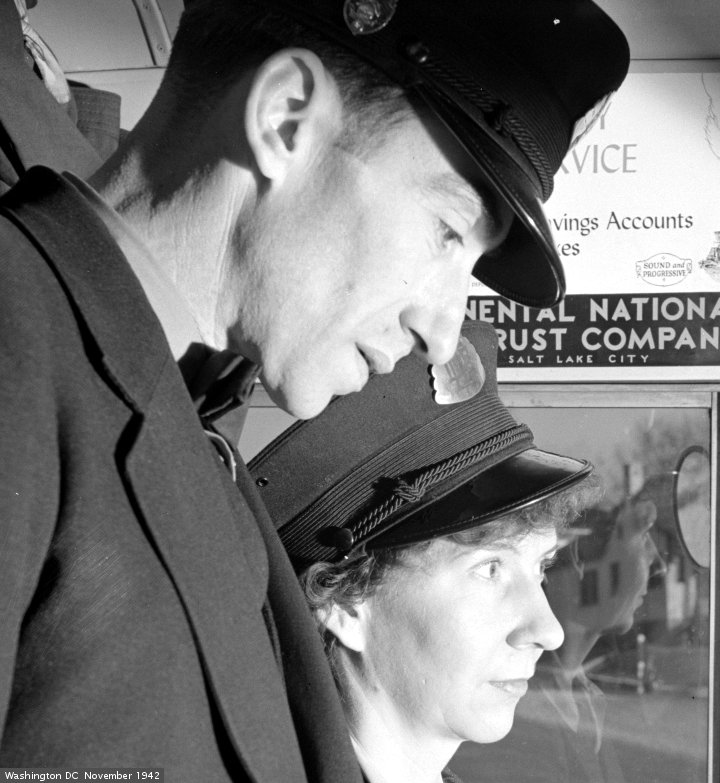
This is a double repost. Pictures from The Library of Congress. The images are of women, training to be bus drivers and taxi drivers. This was in Washington DC, November 1942. The photographer was Andreas Feininger, working for the Office of War Information. The picture of a dipstick demonstration is #8d36666.

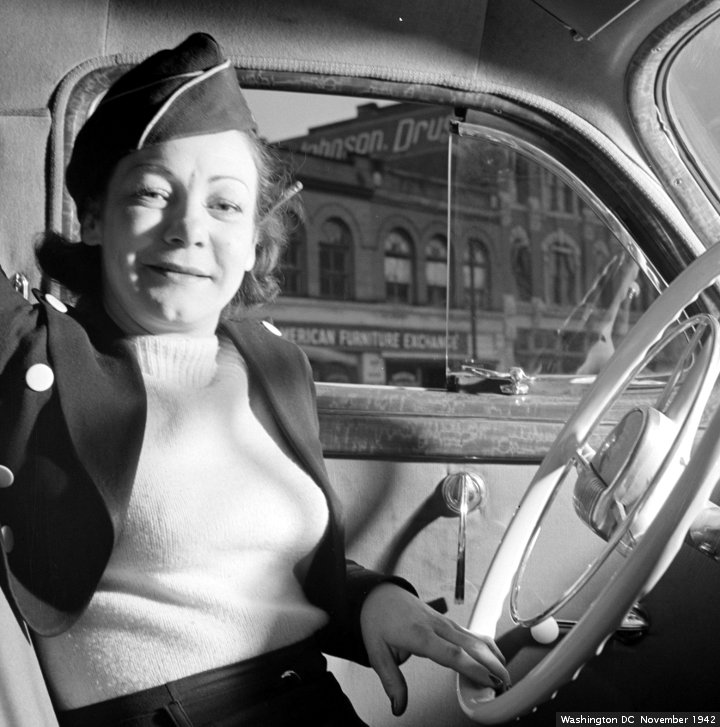


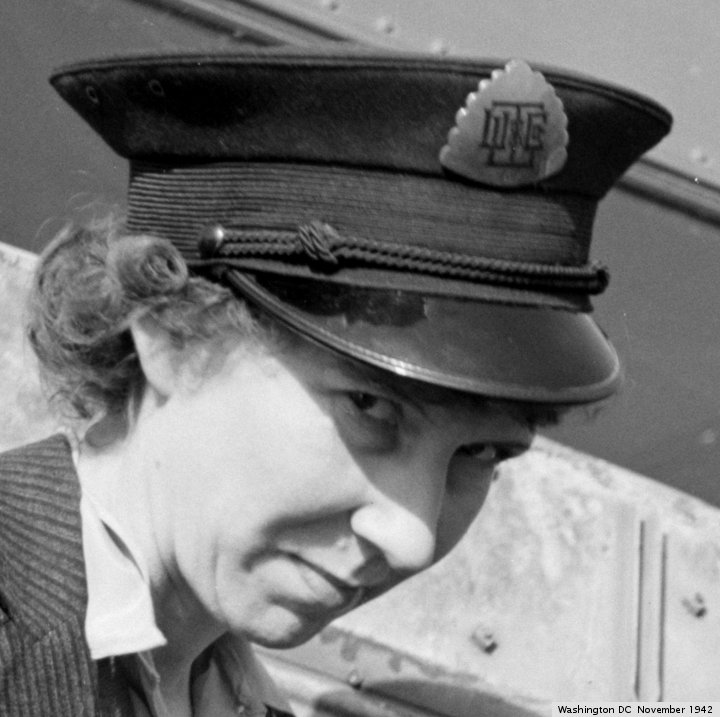

RuPaul is no stranger to attention being thought strange. The latest bit of publicity… there is no bad publicity, and they spell the name right … is an article in the eyeball grabbing HuffPo, RuPaul Responds To Controversy Over The Word ‘Tranny’. (Spell check suggestion: Granny) PG gave into temptation, and clicked on the link. It seems as though there was an appearance on the WTF podcast. Why settle for a sensational sample, when you can hear the entire show?
If you have an hour and twenty four minutes to spare, listen to this show. If you like, you can skip the first thirteen minutes, which is host Mark Maron talking about himself. The show is highly entertaining. A theme is that the world is the matrix, a fake construction. Some people look behind the curtain and see the wizard. Some people believe the matrix is reality. You should already know which side RuPaul takes. He was not born blonde.
The quote about the T-word comes toward the end of the show. PG has mixed feelings about the whole affair, and does not completely agree with RuPaul. However, this human being is entitled to an opinion. Even if he wasn’t, he is going to share it anyway. RuPaul does not suffer from false modesty.
For a show that gets attention about language, it is a bit strange at times. While describing his career trajectory, RuPaul says he went through a phase of “gender f-word.” The show is called WTF. Twice a week, the host says fuck a dozen times in the first sixty seconds. And RuPaul said “gender f-word.”
Even more amazingly, RuPaul said that things were “n-word rigged”. RuPaul did break down and say the ultimate dirty word. When his mother saw his act on television, she said “N****** you crazy.”
RuPaul has had quite a career. He mentions that he has been sober for fifteen years, and had some therapy to get there. This was not the case when he lived in Atlanta. Many stories from those days are in the show. The bs detector went off a couple of times. PG saw the Now Explosion, and did not remember seeing a tall black guy.
This is a rich seventy five minutes. Like saying that Madonna is a curator, that most fashion designers don’t know how to sew. The part that is getting the attention is towards the end of the show, and is just a small part. It is all part of the matrix.



Lewis Grizzard
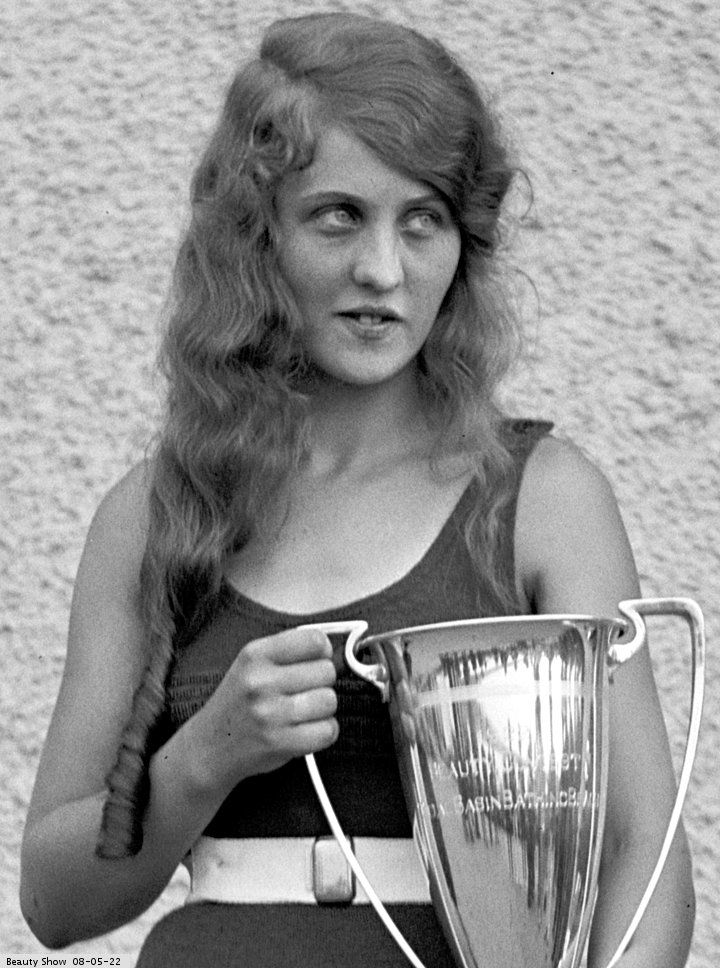
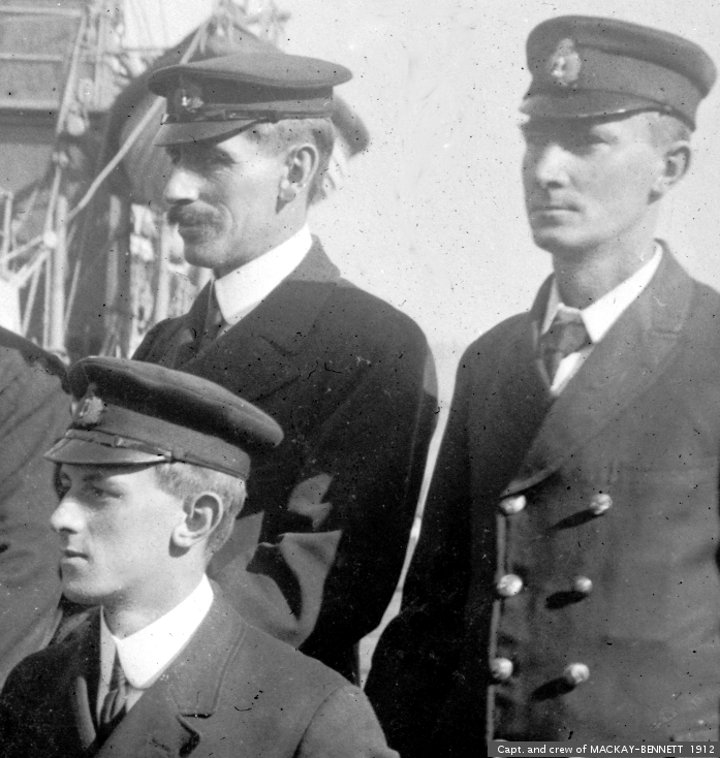


In the time between 1980 and 1994, if you lived in Atlanta you heard about Lewis Grizzard. Some people loved him. Some did not. He told good old boy stories about growing up in rural Georgia. Many of them were enjoyable. He also made social and political commentaries, which upset a few people. This is a repost.
PG had mixed feelings about Lewis. The stories about Kathy Sue Loudermilk and Catfish were funny. His opinions about gays, feminists, and anything non redneck could get on your nerves. His column for the fishwrapper upset PG at least twice a week.
In 1982, Lewis (he reached the level of celebrity where he was known by his first name only) wrote a column about John Lennon. Lewis did not understand why Mr. Ono was such a big deal. PG cut the column out of the fishwrapper, and put it in a box. Every few years, PG would be looking for something, find that column, and get mad all over again.
The New Georgia Encyclopedia has a page about Lewis, which expresses some of these contradictions. If Grizzard’s humor revealed the ambivalence amid affluence of the Sunbelt South, it reflected its conservative and increasingly angry politics as well. He was fond of reminding fault-finding Yankee immigrants that “Delta is ready when you are,” and, tired of assaults on the Confederate flag, he suggested sarcastically that white southerners should destroy every relic and reminder of the Civil War (1861-65), swear off molasses and grits, drop all references to the South, and begin instead to refer to their region as the “Lower East.” Grizzard also wore his homophobia and hatred for feminists on his sleeve, and one of the last of his books summed up his reaction to contemporary trends in its title, Haven’t Understood Anything since 1962 and Other Nekkid Truths (1992).
In the end, which came in 1994, when he was only forty-seven, the lonely, insecure, oft-divorced, hard-drinking Grizzard proved to be the archetypal comic who could make everyone laugh but himself. He chronicled this decline and his various heart surgeries in I Took a Lickin’ and Kept on Tickin’, and Now I Believe in Miracles (1993), published just before his final, fatal heart failure.
As you may have discerned, Lewis McDonald Grizzard Jr. met his maker on March 20, 1994. He was 47. There was a valve in his heart that wasn’t right. The good news is that he stayed out of the army. At the time, Vietnam was the destination for most enlistees. The bad news is that his heart problems got worse and worse, until it finally killed him.
Sixteen years later, PG found a website, Wired for Books. It is a collection of author interviews by Don Swaim, who ran many of them on a CBS radio show called Book Beat. There are two interviews with Lewis Grizzard. The first one was done to promote My Daddy Was a Pistol and I’m a Son of A Gun. This was the story of Lewis Grizzard Senior, who was another mixed bag.
PG found himself listening to this chat, and wondered what he had been missing all those years. The stories and one liners came flowing out like the Chattahoochee going under the perimeter highway. Daddy Grizzard was a soldier, who went to war in Europe and Korea. The second one did something to his mind, and he took to drinking. He was never quite right the rest of his life. His son from adored him anyway. When you put yourself in those loafers for a while, you began to taste the ingredients in that stew we called Lewis Grizzard.
PG still remembers the anger that those columns caused … he has his own story, and knows when his toes are stepped on. The thing is, after listening to this show, PG has an idea of why Lewis Grizzard wrote the things that he did. Maybe PG and Lewis aren’t all that different after all.
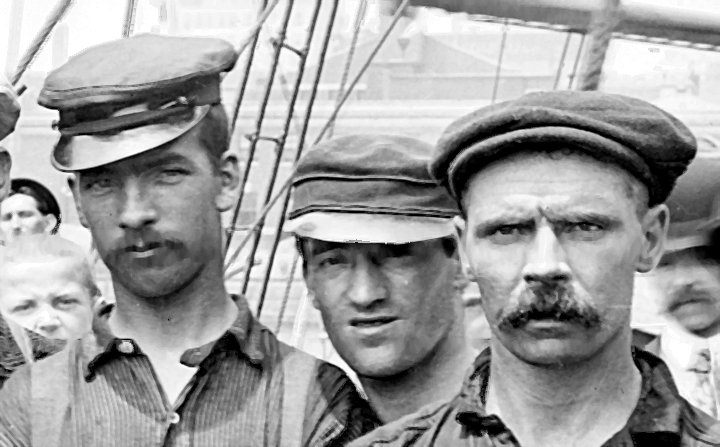
The pictures for this feature are from The Library of Congress. While picking out the pictures, PG listened to the other Lewis Grizzard show with Don Swaim. They both have last names that are often mispronounced. When Lewis wondered where Klansmen get those pointy hats… at the KKK mart, perhaps… PG had to stop the broadcast and write a postscript. This is a repost.


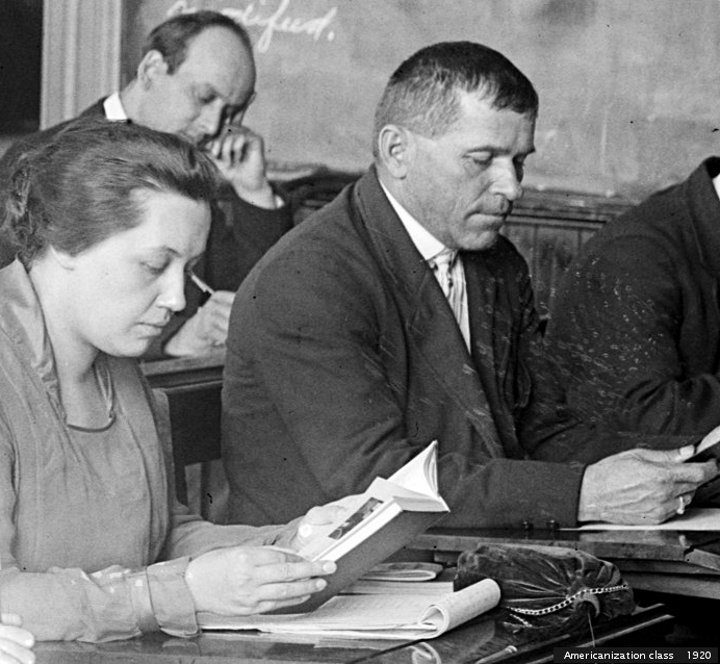


The Funeral Of Franklin D. Roosevelt
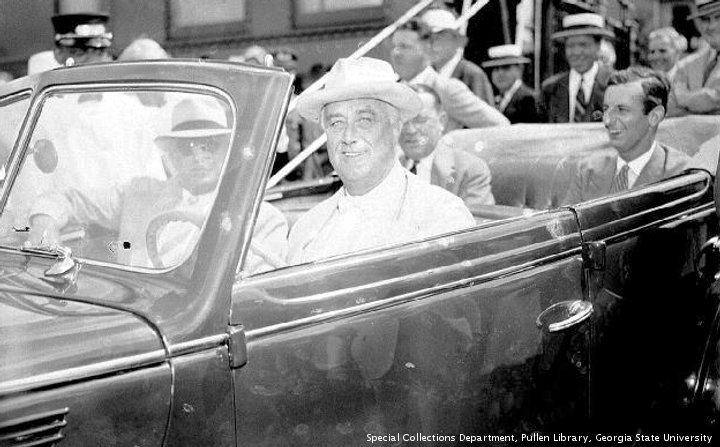
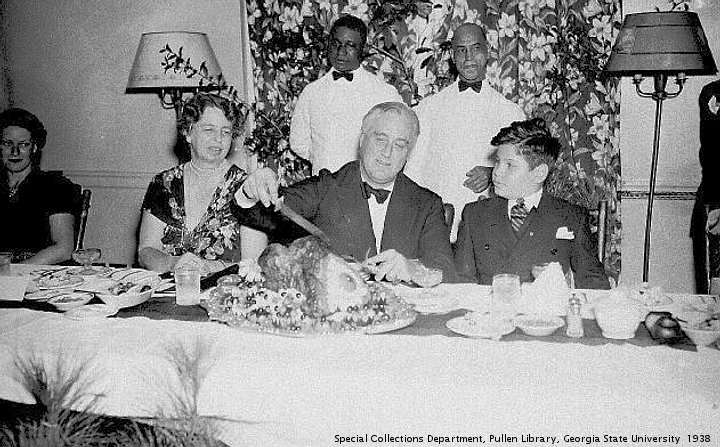
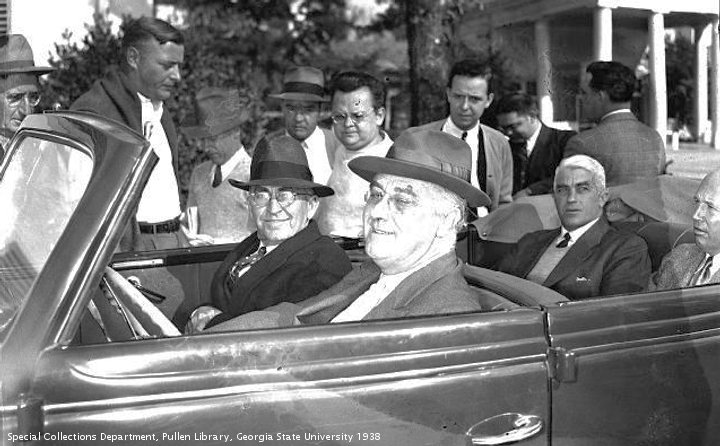
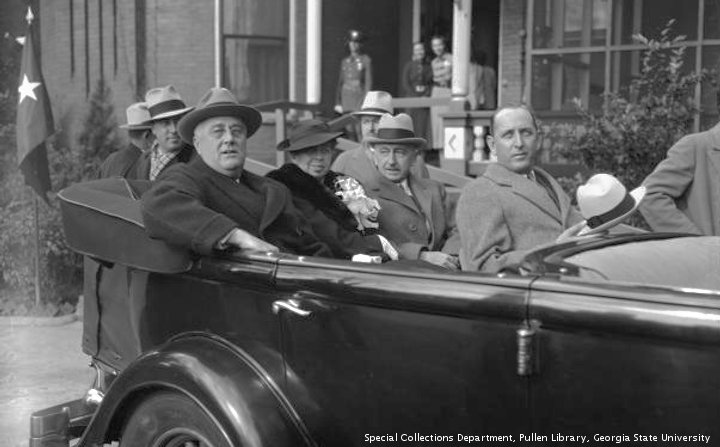
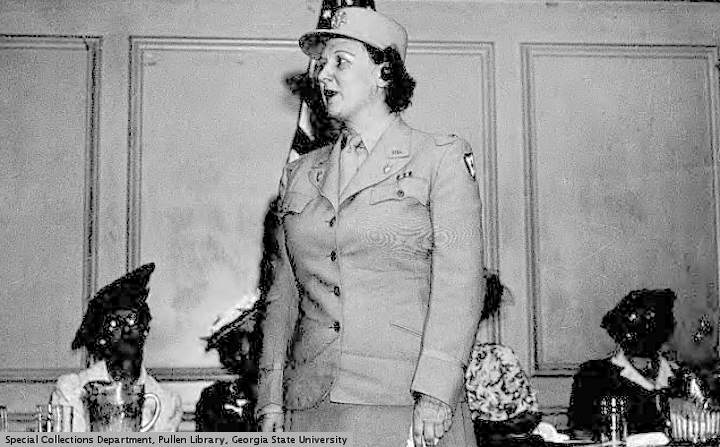
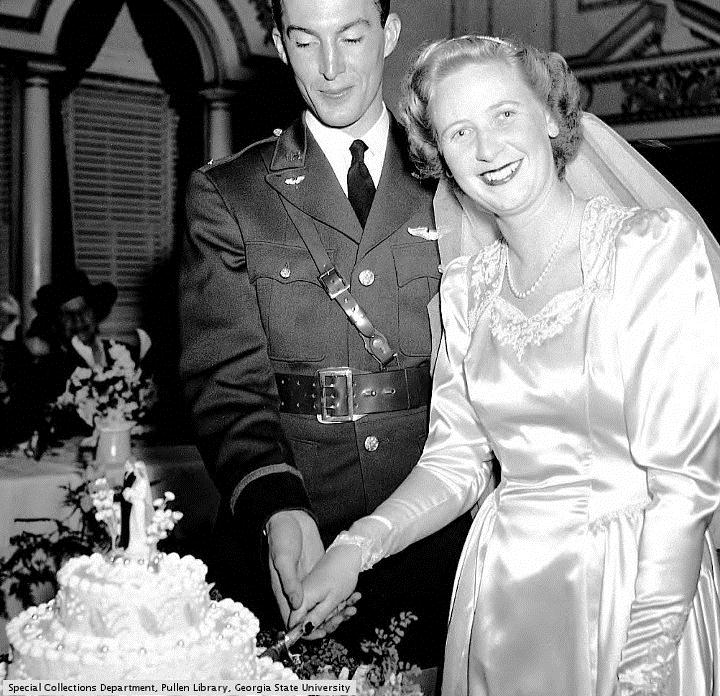

On February 29,1945, a train left a secret platform beneath the Bureau of Engraving and Printing in Washington, DC. The most important car in the train was the Ferdinand Magellan, the private ride of President Franklin Delano Roosevelt. The train took “the Boss” to Warm Springs, GA.
On April 12, 1945 (the day before Friday 13), the President was posing for a painting. The artist, Elizabeth Shoumatoff, was a friend of Lucy Mercer Rutherford, who was also in “The Little White House” that afternoon. Mrs. Rutherford was the long time mistress of the President. At roughly 1:00 pm, The President rubbed his brow, and said ” I have a terrific pain in the back of my head”. His head slumped onto his chest, and he died.
What happened in the next few days is the subject of FDR’s Funeral Train. PG found this book at the Chamblee library, and found it enjoyable, and thought provoking. For a story with a well known outcome, there were a lot of subplots, and food for speculation. Pictures for this book report repost are from “The Special Collections and Archives, Georgia State University Library”.
When it became obvious what was happening, the first chore was to get Lucy Rutherford off the premises. She left quickly, along with Ms. Shoumatoff, and an assistant. Somehow, Eleanor Roosevelt learned the Mrs. Rutherford had been with her husband, and was not pleased.
Fred Patterson was called at this Atlanta funeral home, and told to come to Warm Springs to prepare the body for burial. Unfortunately, the cerebral hemorrage had clouded the President’s face beyond repair. This, and the President’s expressed dislike of open coffin funerals, led to a closed coffin at the ceremonies. The closed coffin led to speculation that the President had been dead for some time, and that an impostor had been playing the role of President.
Mr. Patterson brought a copper lined coffin with him, weighing over 600 pounds. The setup of the Ferdinand Magellan made it impossible to bring the coffin onto that car. Another car, the Conneaut, was found to carry the remains to the funeral. A passenger window was removed, and the coffin was passed in through the window. A wooden bier was built for the coffin, and covered with a Marine Corps blanket. The bier was built high enough to enable the coffin to be visable through the window.
When the coffin was about to be placed on the train, it was learned that no one had brought a flag. A flag was borrowed from a flagpole in Warm Springs to put over the coffin.
The Ferdinand Magellan was armor plated, and had bulletproof glass. It weighed 142 tons. An engine powerful enough to carry this car had to be found. When the train was leaving Washington, en route to burial in Hyde Park, NY, three couplings broke, from the strain of this car. Finally, a coupling was made to work, and the train proceeded to Hyde Park.
The part of the journey from Washington to Hyde Park had two trains, with every important official in Washington on board. Among them was the new President, Harry Truman. Truman had been a compromise choice as Vice President, and was not told very much. He was quickly educated, and produced a speech to give to Congress the following Monday.
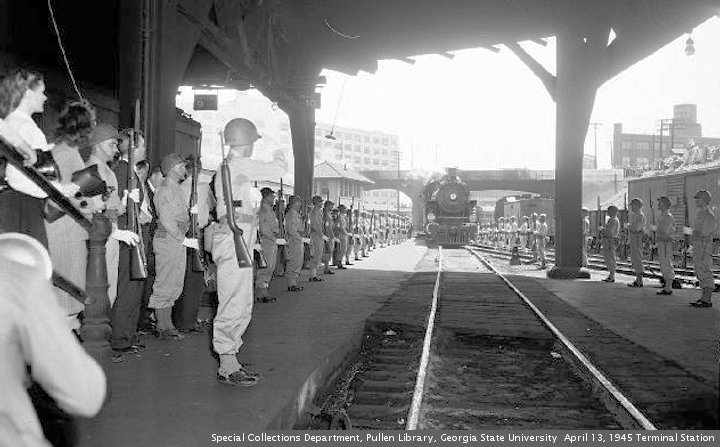
On this Friday the thirteenth, no one foresaw an early end to the War. While Germany was in bad shape, no one knew how much longer they would hold out. As for Japan, it was assumed that a gruesome land invasion would be needed to end the conflict. Only a select few knew about the atomic bomb, which had still not been tested. Some felt it would not work.
One of the lesser known passengers on the Washington-Hyde Park train was an economics advisor to the President named Laughlin Currie. In addition to his duties for the American government. Mr. Currie was widely believed to be on the payroll of the Soviet Union. He gave regular reports to the KGB. Which leads to one of the questions …did the Soviet Union know about the atom bomb?
The answer may not be knowable. What is known is this. On August 6, the US dropped the atom bomb on Hiroshima. On August 8, the Soviet Union entered the war against Japan, invading Manchuria. On August 9, the US dropped the atom bomb on Nagasaki. This may be a coincidence.
Another point to ponder involves Dr. Howard G. Bruenn, a cardiologist at Bethesda Naval Hospital. Dr. Bruenn had been treating the President, and is given credit for adding a year to the President’s life. The question today is, what if the President had died in 1944? Henry Wallace would have become President, and probably would have been elected to a term of office in the fall elections. (Or maybe not. Mr. Wallace had offended enough people to cause him to be kicked off the ticket.) How this would have played out, especially with regard to the war effort and the Yalta conference, is anybody’s guess. That extra year of life for Mr. Roosevelt may have been a very good thing for the United States.

Mike Pence And Lester Maddox
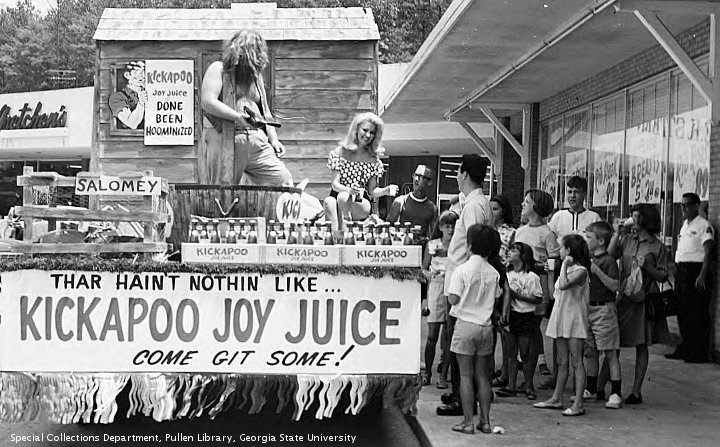
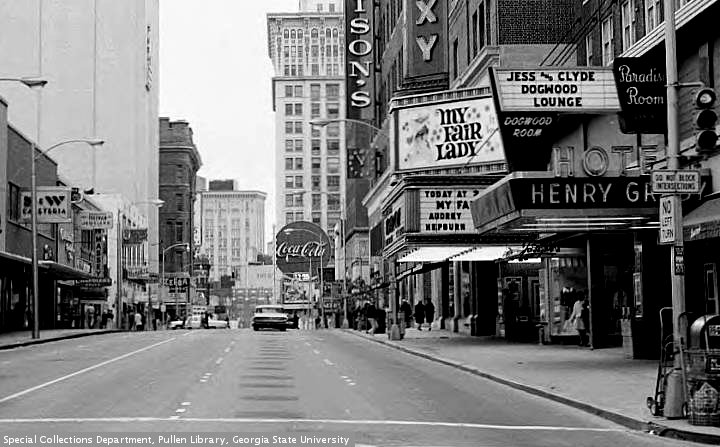

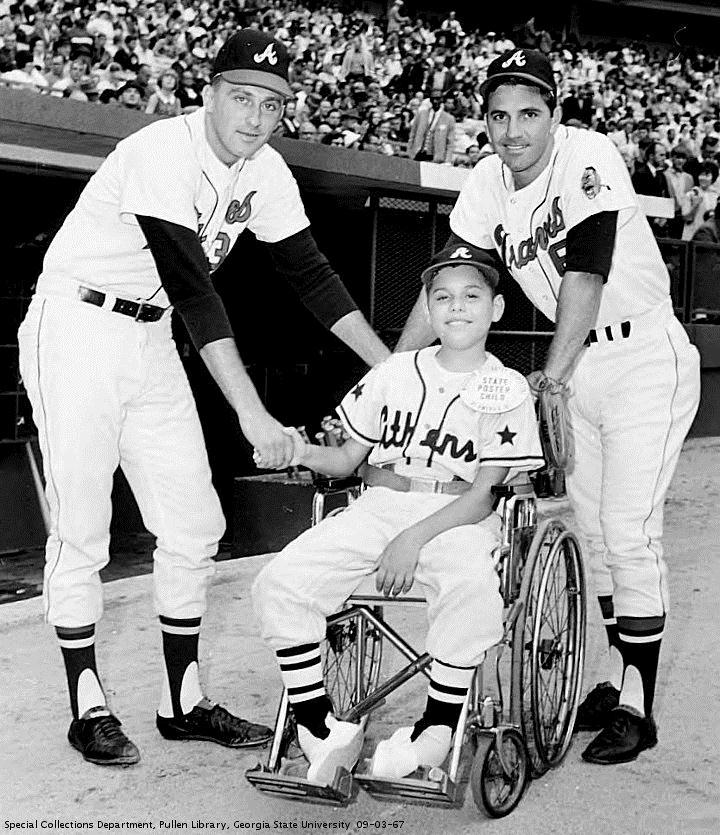

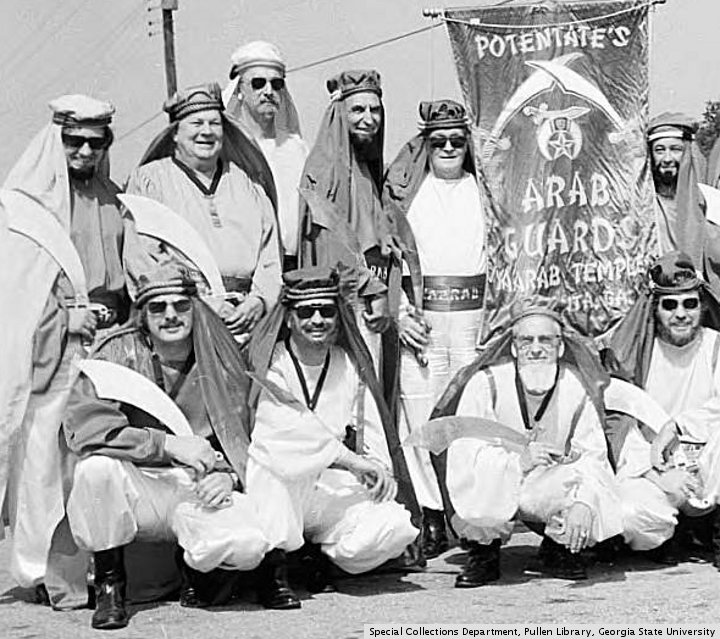
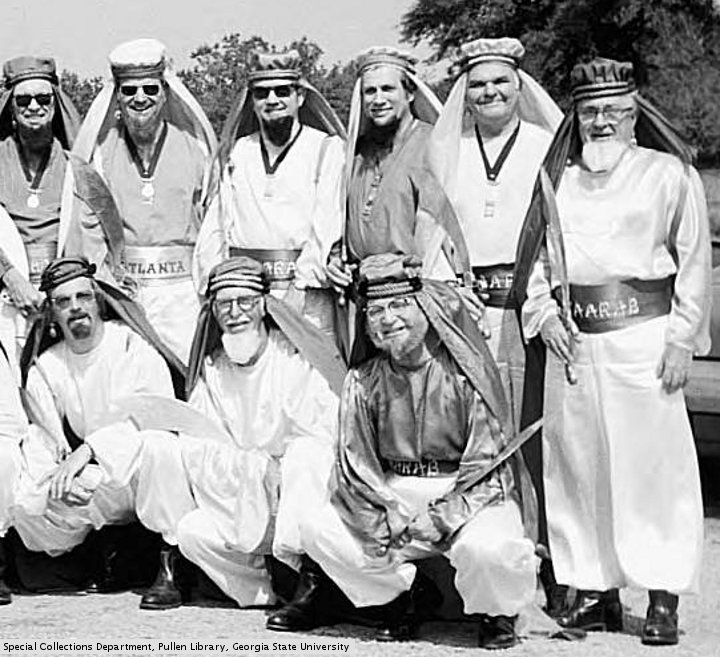
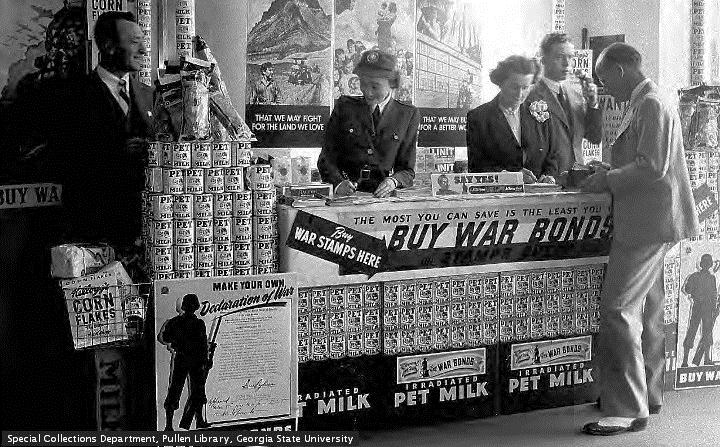
Salon posted a festive piece the other day. The headline: “Indiana’s Mike Pence is starting to look like Lester Maddox — without the spine.” What about the Governor’s breast, thigh, and wing?
Mr. Pence is the media punching bag of the moment. In a few days, someone else will screw up, and the nabbering classes can pick on someone else. The riffraff law will be lawyered out in the courts.
The question here is the connection to the former Georgia Governor. It turns out to be a rhetorical gimmick. In the first paragraph, author Joan Walsh essentially repeats the headline. “… even before Pence began to look like a 21st century Lester Maddox — without the spine.” This is the last time Lester is mentioned. He is used as a bald headed Honey Boo Boo.
We have gotten to the place where prejudice against perceived racists is enthusiastically accepted. It is the new McCarthyism, with guilt by association, and shadowy accusers. In an ironic touch, this new crusade is connected with homophobia. Here is a thought about that from a previous post.
Homophobia is compared to anti-racism. In both cases, the accuser has a set of standards. If the accused does not meet those standards, then the accused is considered fair game for abuse. The accused and the accuser may not agree on these standards. That does not matter. If someone wants to make the accusation, then they will, and will feel righteous about doing so.
It is frequently speculated that the homophobe is secretly gay. The need to be heard badmouthing gays stems from a perceived need to prove heterosexuality. Could this be the case with the anti racist? Maybe the anti-racist is secretly afraid that he/she might be a racist. The “calling out” of others, for perceived racism, is an effort to overcompensate for his/her own shortcomings.
Getting back to Lester, it is ironic that he is this famous forty four years after his term in office ended. There is no shortage of bad things to say about Mr. Maddox. However, Georgia survived having both him, and smiling Jimmy, as Governor. It is highly unlikely that anyone will know who this Pence person is in forty four years.
The second part of this feature is a previously published piece about Lester Maddox. PG was twelve when Lester was elected, and has many memories of the four years that followed. The post goes into some of the mixed feelings, and tells a couple of stories. Pictures are from “The Special Collections and Archives, Georgia State University Library”.
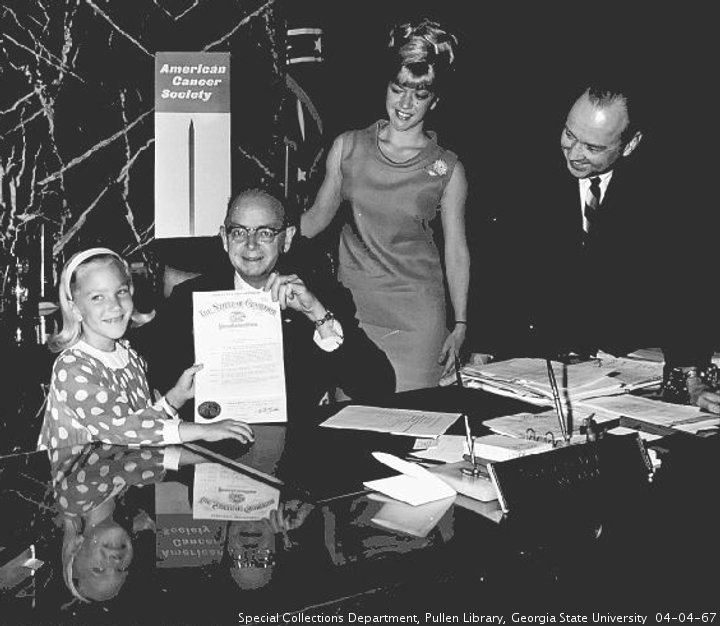
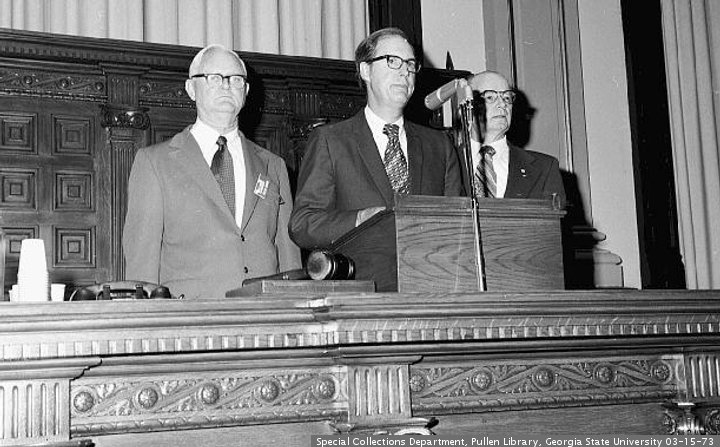


There has never been a politician like Lester Garfield Maddox. He was elected Governor of Georgia (with help of a quirk in the state constitution) in 1966. PG was 12 at the time, and saw the spectacle of the next four years with amazement.
Before we get started on this, we should remember a couple of things. Lester Maddox became notorious when he shut down his restaurant, The Pickrick, rather than serve a black customer. He was a segregationist, which means he did not want black people to have the same rights as white people. Looking back for 2010, it seems incredible that civil rights legislation was needed 46 years ago, so that 30% of Georgia could eat in a restaurant. PG does not condone the actions and attitudes of Lester Maddox, or the people who supported him.
There is style, and there is substance. While the substance of Lester may have been horrible, the style was a sight to behold. He could ride a bicycle backwards, and did so whenever a crowd was there to watch. (PG saw this at halftime of the Peach Bowl.) He was on The Joe Pyne Show and The Dick Cavett Show, and walked off of both.
This section from a previous post tells a bit of the story.The Governor was speaking to a group of reporters. He was announcing the appointment of a Black man to a Selective Service Board.. The reporter said it was the first Black man to serve on a draft board since reconstruction. What did the Governor think about this?The Governor said “Gee”
The screen returned to the Channel Five newsroom. The men at the desks were all laughing. The weatherman looked up at the camera and said “That’s a tough act to follow”
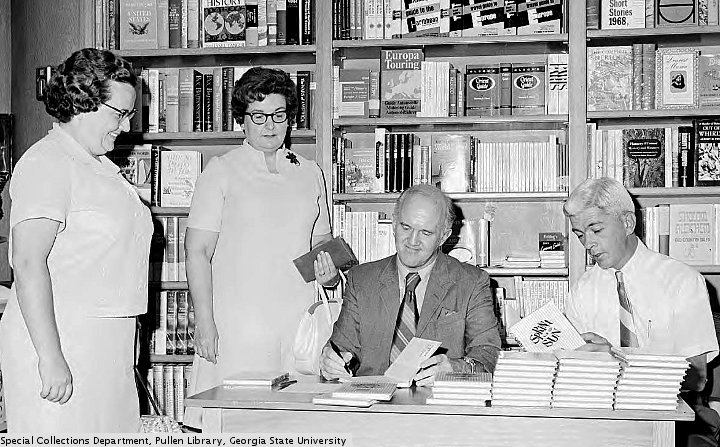
Whatever you might say about Lester Maddox…and there is no shortage of bad things to say…there has never been a public official that entertaining. As for being a tough act to follow, the next Governor was Jimmy Carter. As for the weatherman, PG saw him in a parking lot once. It was raining heavily. The “Gray Ghost” looked at PG with an ironic smile, as if to say “I am sorry”. The weatherman, Guy Sharpe, is on the right in the picture below this post. He is signing a book.
In 1970, the Governor of Georgia could not succeed himself. Lester ran for Lt. Governor, and spent the next four years feuding with Governor Jimmy Carter. Lester ran for a second term in 1974, and was trounced by George Busbee. (The slogan : “Elect a work horse, not a show horse.”) When Jimmy ran for President in 1976, Lester made a point of badmouthing Jimmy. In his own way, Lester Maddox helped Jimmy Carter get elected President.
There is a youtube video of the appearance of Lester on the Joe Pyne show. (Another guest that night was Culius Jeezer, who claimed to be 2000 years old). A video of the time Lester was on the Dick Cavett show has not emerged. Another guest that night was Truman Capote. After Lester walked off the show, Mr. Capote said, in his own inimitable way, ” I ate at his restaurant one time, and all I have to say is, it was not finger licking good”.



 Chamblee54
2 comments