The Dharma Bums Part Three



As the title suggests, this is part three of a breakdown on The Dharma Bums, by Jack Kerouac. Parts one and two are already online.
Chapter Thirteen Ray Smith (Jack Kerouac) is back in Berkeley now, staying with Alvah Goldbook (Allen Ginsberg.) One night, Japhy Ryder (Gary Snyder) and Warren Coughlin (Phil Whalen) come by. A jug of wine appears, and is consumed. Many things are said. “Every thing was fine with the Zen Lunatics, the nut wagon was too far away to hear us.
Evidently, AG was not a Buddhist in those days. For that matter, PG does not know if he ever really was. Mr. Google supplies a link to a feature, Iconic poet and Buddhist Allen Ginsberg remembered… There is a picture of a naked AG, with an asian picture making the picture safe for family viewing. In this chapter, however, AG says “balls on the old tired Dharma.”
Chapter Fourteen RS is getting ready to hit the road. Here, he goes shopping with AG and JR. They go to Goodwill and an Army Navy store. In 1955, Army Navy stores were good places to shop.
Chapter Fifteen This is a dramatic chapter. A character named Cody appears. He is based on Neal Cassady, Kerouac’s travel companion in “On The Road.” Mr. Cassady is a legendary wildman. In this episode, he has a gf named Rosie, who is not feeling well. Cody asks RS to look out for Rosie one night. “All right, but I was planning on having fun tonight,” “Fun isn’t everything. You’ve got some responsibilities sometimes, you know.”
So Rosie is not feeling well. She is talking a lot of paranoid nonsense. RS tries to calm Rosie down with talk about Dharma. Finally, she seems to be better, and RS goes to sleep. Rosie goes up an the roof of the building, breaks the skylights, cuts her wrists with the broken glass, and jumps. Six stories later, she lands on the sidewalk.It was not a gentle landing.
When PG first read this, he was working graveyard shift in a midtown document center. At seven am, he would walk to the train station. The first few times he went, the first train to come was the Doraville line. On the Marta system, there is the Doraville line, and the North Springs line. If you get on the wrong one, you will feel very foolish.
The morning he read chapter fifteen, PG got on the train without looking at the sign. When it went past Lenox Square, he wondered why the stores were on the right side of the train, instead of the left side. Before long, he was in the tunnel that goes under Peachtree Road. This was the North Springs line. PG got off at the first station, and waited for a train to take him to a place where he could transfer to the proper line. While waiting on the southbound train, he read the story of Rosie.
Chapter Sixteen RS finally gets on the road. He is going back to North Carolina to spend the winter with his family. Before leaving California, he wanders through San Francisco. There is a “Negro preacher,” “a big fat woman like Ma Rainey,” who is preaching up a storm. Every now and then she “spits about ten foot away a great sploosh of spit.” This is one reason why she is preaching indoors.
Cody is very sad about Rosie. He is praying hard, trying to get her into purgatory. Before RS leaves for North Carolina, Cody tells hime “Don’t drink so much of that old wine.” Finally, RS gets on a freight train. He rides it to Los Angeles. A bum tells him to cure his ailments by standing on his head.
Chapter Seventeen Nothing much happens in this chapter. RS is in Riverside CA. He is warned not to camp outdoors, but does so anyway. He gets away with it.
Chapter Eighteen The hit song when this took place was “Everybody’s got a home but me,” by Roy Hamilton. Mr. Hamilton is a black man from Leesburg GA, who is mostly forgotten today. If you look for “Everybody’s…” on youtube, you will find a “cover” version by Eddie Fisher. Mr. Fisher is best known as the father of Princess Leia, and one of Elizabeth Taylor’s husbands.
RS starts to hitchhike here. He meets a truckdriver named Beaudry, who takes him to Ohio. He gets a bus ticket there for Rocky Mount, NC. RS arrives home on Christmas Eve.
Beaudry Ford was the largest Ford Dealer in the United States. It was located in Downtown Atlanta. They did a lot of fleet sales, which is why they were the largest dealer. They did not do a lot of retail. They shut down several years ago.
Chapter Nineteen RS spends the winter at the family home. Most of his time is spent meditating in the woods. He thinks he is receiving profound insights during these sessions. Rocky Mount is the childhood home of Allen Gurganus, who would have been seven years old during this winter. It is unlikely that he was involved in the story.
Chapter Twenty The winter of meditation gets colder and colder. RS is not getting along with his family. They do not understand that RS is a special person.
Chapter Twenty One The winter in North Carolina is coming to an end. RS writes off, and lines up a job as a fire lookout in Washington state. Meanwhile, RS is “as nutty as a fruitcake and happier.” He composes the prayer of emptiness. “My pride is hurt, that is emptiness, my business is with the Dharma, that is emptiness, I’m proud of my kindness to animals, that is emptiness, my conception of the chain, that is emptiness, Ananda’s pity, even that is emptiness.”
Ultimately, the whole matter goes to the dogs. “I petted the dogs who don’t argue with me ever. All dogs love G-d. They’re wiser than their masters. I told that to the dogs, too, they listened to me perking up their ears and licking my face.” Soon after this, the brother in law of RS blows up about his deadbeat in law who lets the dog off the chain. Soon, RS is on the road again, going back to California. This is the end of part three. Pictures are from The Library of Congress.




The Dharma Bums Part Two





This is part two of a breakdown on The Dharma Bums. Part one was published a few days ago. Part two is where Ray Smith, Japhy Ryder, and Henry Morley go mountain climbing.
Chapter Six This is where the trip begins. The plan is to go out of town, camp near the trail head, hike to a good place, and then climb to the top of Matterhorn. Henry Morley owns a car, and is recruited to drive. HM is Philip Whalen in real life. He is a bit of a motormouth, with just the barest connection from one sentence to the next. Some have speculated that his rants in tdb are an excuse for Mr. Kerouac to let loose with his typing-not-writing style.
The three stop in a restaurant full of hunters, who are amazed at the concept of hiking without killing animals. The campsite is finally reached in the middle of the night. HM did not bring a sleeping bag.
Chapter Seven This chapter is a return to straightforward prose. The men wake up, go to a diner, and drive to Bridgeport. They will go on to the trail head from there.
This is the second time that PG has read tdb. The first time was in fits and starts. He would read a bit, put it back in his bag, and forget it for a few months. Then came six weeks of working graveyard shift in a midtown office tower. The was a book of short stories by Charles Bukowski in the bag, as a companion to tdb. PG would read a few stories by Mr. Bukowski, and alternate with a chapter or so in tdb. There was one incident during this period, which coincides with chapter fifteen.
Chapter Eight HM is becoming a nuisance. He goes around Bridgeport trying to round up a sleeping bag, and winds up borrowing some blankets from a lodge. The three men get a few miles down the road, and HM realizes that he had not drained his crankcase. He was afraid of the engine freezing over and exploding. This must be before the invention of anti freeze. HM leaves JR and RS, and goes back to drain his crankcase. He will catch up with the other two later.
On page 55, RS says that being in the sunshine infested woods was much better than being in the city. JR replies “Comparisons are odious, Smith”. They have a pleasant afternoon talking to each other, without the constant rattle of HM.
Chapter Nine When Chapter One was published, a commenter mentioned a picture of Jackie Kennedy reading “The Dharma Bums” on an airplane. It turns out that PG had a copy of the picture.
On page 62, RS and JR have a moment that is familiar to many hikers. They are in the woods, surrounded by beauty, and feel the need to be quiet. “This is the way I like it, when you get going there’s no need to talk, as if we were animals and just communicated by silent telepathy.”
On page 67, it is time to cook dinner, and wait for HM. The five steps are tea drinking are discussed. The first sip is joy, the second gladness, the third serenity, the fourth madness, and the fifth ecstasy. PG read this in a workplace breakroom. The tea comes from a machine. You push a button twice, and insert this foil package into the machine. You place a styrofoam cup in a slot, and something called green tea comes out of the machine. It is not cool enough to drink before the break is over. You go directly to the fourth step of tea drinking, madness, when you use this machine.
RS tells JR about a prayer that he knows. He thinks of a person, friend or foe, and says “Joe Blow, equally empty, equally to be loved, equally a coming Buddha. The focus is on the person’s eyes, which are said to be the window to the soul.
This is where PG jumps off the bus. His worst enemy for a few years was the bully for Jesus. This person would lose his temper, and shower PG with verbal poison. While BFJ was distributing this toxin, his eyes were on fire. There was hate in the eyes, and Jesus in the mouth.
Chapter Ten HM finally catches up with JR and RS. This is after RS decides to buy a rucksack, and become a dharma bum. Whether he succeeded is a good question.
Chapter Eleven There is a Zen saying, when you get to the top, keep climbing. This is where the three men leave their gear at camp, and make the push for the Matterhorn peak. HM is the first to sit down and rest. RS almost makes it, but can go no further a few hundred yards from the peak. Only JR makes it to the top, and comes bounding down in twenty yard steps. RS learns, too late, that you cannot fall off the side of a mountain.
Chapter Twelve The three men come down from the mountain. It is soon after dark, and the way is lit by moonlight. RS wishes he had a tape recording of JR shouting on top of the mountain, JR replies that the sound was not meant to be heard by the people below.
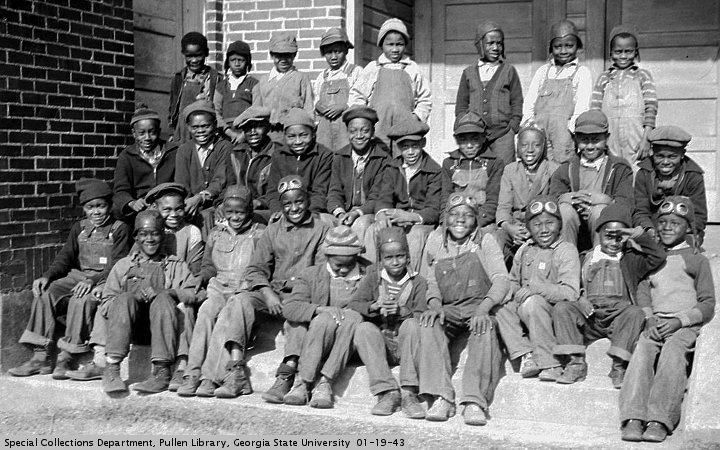
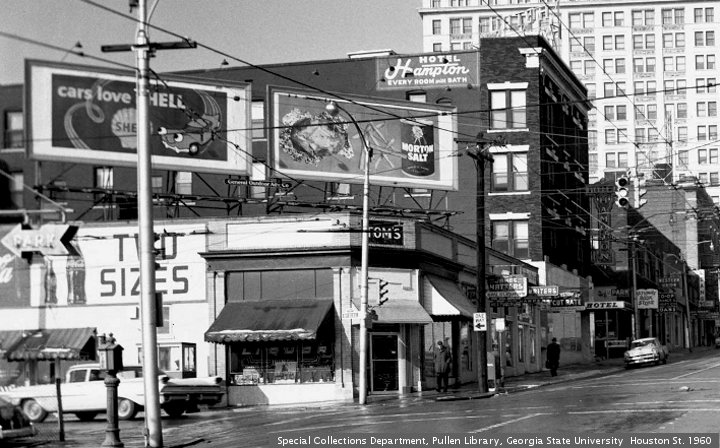
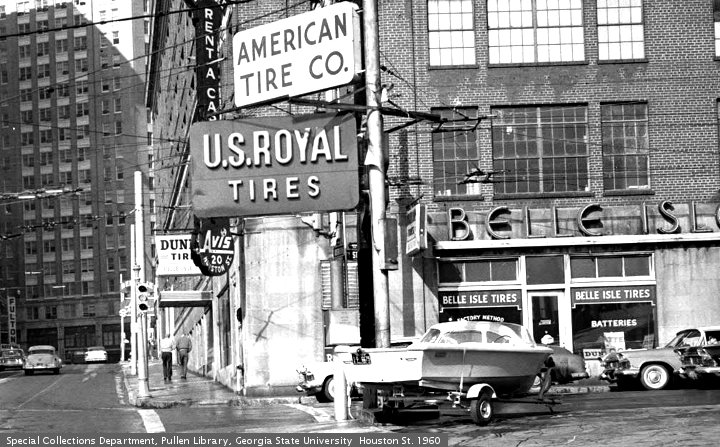
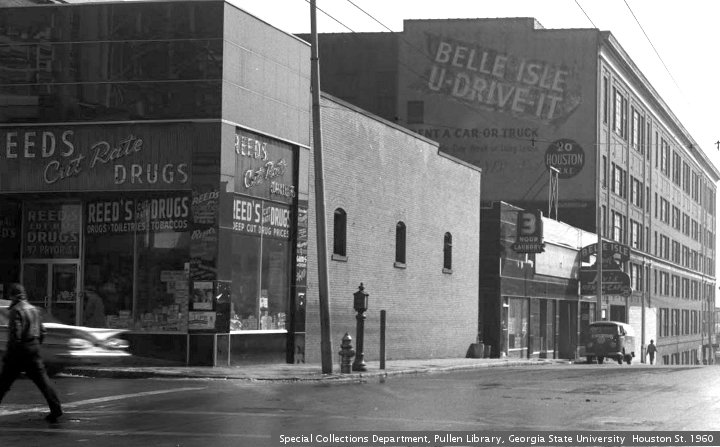
On page 93, RS discovers the weak spot of JR. They get into town, and are hungry. JR is afraid to go into one restaurant, because it is too nice. He is finally persuaded to go to the nice restaurant, and it does not kill him. This is the end of part two. Photographs today are from “The Special Collections and Archives, Georgia State University Library”.




The Dharma Bums Part One



When discussing The Dharma Bums, it is helpful to know how to pronounce the central word of the title. Some say to pronounce the r, while others say the r is silent. The dharmic duality extends to the definition. The number one phrases are “the principle or law that orders the universe” and “the body of teachings expounded by the Buddha.”
Chapter One: Tdb begins in Los Angeles, sometime in 1955. Ray Smith is riding in a freight train. He is going to Berkeley, where he will hang out with Japhy Ryder. These are the central characters of tdb. Ray Smith is Jack Kerouac. Japhy Ryder is Gary Snyder. Mr. Kerouac is long gone. Mr. Snyder is still on the planet. There are several youtube videos of his available. He seems like a wise, gentle man. You can see the younger version of this man in Japhy Ryder.
In chapter one, RS meets a bum on the train. The fellow passenger has a poem by St. Theresa in his pocket, where she promises to return to earth, showering roses on all living things.
On the weekend when part one was produced, PG received a facebook challenge. Someone had written a brief post about a band. When you like the post, you are given a band. The band assigned to PG was The White Stripes. This was the first time PG heard of The White Stripes. He found a video of a live performance. This is the response.
Band I was given: The White Stripes Do I like them: no Seen them?: no Favorite song: Jolene I had never heard of the White Stripes before receiving this challenge. I found a you tube video of a live performance. I did not enjoy it. After fifty minutes, I turned it off, and put Joni Mitchell on.
Chapter Two: Asian schools of thought are a theme of tdb. A number of confusing terms are used. One of these is bodhisattva. The spelling can be a challenge. When you break it down, you get bod his att va. A complimentary shorthand for body, third person male pronoun, the phone company, and a government agency. One dictionary says “a being that compassionately refrains from entering nirvana in order to save others and is worshiped as a deity in Mahayana Buddhism.”
In chapter two, RS meets JR. They go to a poetry reading at a gallery. Many of the other characters are at this reading. The most famous is Alvah Goldbook, who read his poem “Wail”. (Spell check suggestion: Allah Goldbrick) You can probably figure this one out by yourself.
The preliminary notes for this post were written during a slow period at work. When it was time to type them, page three was not there. We will assume that nothing important was said.
Chapter Three: RS is staying with AG somewhere in Berkeley. In this book unit, RS goes to visit JR, who lives in a very small house behind a larger house. There is no sitting furniture in this house. You sit on a floor mat.
JR is into asian studies, which is called oriental here. This is the pre-politically correct fifties. At some point in tdb he goes to Japan. In the video, JR mentions living in Japan for twelve years. This is probably connected to the trip in this book.
Tdb is dedicated to Han Shan. On page eighteen, we learn about him. Han Shan was a Chinese poet. He lived over a thousand years ago. JR is translating a poem when RS comes to visit. The verbatim rendering has a zen feel to it. Unfortunately, JR is working for a university. They want a translation that sounds like english speech.
There are a lot of page references in this text. These might not work for all editions of tdb. This is a penguin book. The list price is $11.95 USA, or $15.95 Canada. Tdb was copyrighted by Jack Kerouac in 1958, with a 1986 renewal by Stella Kerouac and Jan Kerouac. The last date, and the probably printing date of this edition, is 1976. The book has three pictures of mountains on the cover. The background is black.There is a green slash, with the title rendered in black letters. The name of the author is in smaller green letters. A quote from Ann Charters, in white text, is at the bottom.
The copy of tdb was owned by a friend of a friend. This person will be called Lenny, and while alive was as much of a character as anyone in tdb. When Lenny died, Uzi took possession of many books.
One day, PG was pulling boxes out of Uzi’s van. The idea was to put a chair in the van. One of the boxes had Lenny’s books. Being a dumpster diving cheapskate, PG was required to look through the box, and take what he liked. And thus PG came to own a copy of tdb.
Chapter Four: On page twenty five, AG says, of JR, “Gee he’s strange.” In this chapter, RS, AG, and Warren Coughlin buy a jug of wine. They proceed to JR’s residence. There is much merriment that evening. This takes place in Berkeley CA, 1955. RS says the school is a conformity factory. This is nine years before the Free Speech Movement, which started the sixties tradition of campus unrest.
In 1973, PG was in Athens, GA. Many of his friends considered Athens to be a modern, hip environment. Some famous person… William F. Buckley, Norman Mailer, or someone else … said that Athens in 1973 reminded him of Berkeley in 1952.
Chapter Five: RS is staying with AG during this part of the story. One night, JR comes by with a gf named Princess. They are going to show RS how to play yabyum. As we learn on page 22, “it’s only thorugh form that we can realize emptiness”. During the yabyum ritual, AG, JR, and Princess sit down cross legged and naked. They stare at each other and chant Om Mane Padme Om. This means Amen the thunderbolt in the dark void. This is the end of the Berkeley part of tdb. Photographs are from “The Special Collections and Archives, Georgia State University Library”.




East Is East





PG read East is East by T. Coraghessan Boyle. This is a 1990 copyright, and the author is now known as T.C. Boyle. Most people that know him say Tom. There are videos of him speaking, and some say how to pronounce his middle name.
EIS is a great story. A Japanese man is working on a boat, gets in trouble, and jumps off the boat. He swims to shore, and lands on a Georgia island. He has a series of adventures on the island, until he is captured by the authorities. Hiro, the Japanese man, escapes from confinement, and turns up in the Okefenokee Swamp. There is another improbable rescue, until he runs out of luck. He winds up in a hospital, with a lot of charges against him.
Numerous sub plots ensue. Some of the other people on the island are weirdos. The island is called Tupelo, and is apparently modeled on Sapelo. Hiro turns out to be a Japanese-American mix, with a baggage compartment full of issues. There are stereotypes galore, from the bungling federal agents, ditzy artists, angry blacks, and hungry insects.
Some english major has probably written a term paper criticizing the shortcomings of this book. That does not matter to PG. All he wants is a good story. EIE is a page turner. You want to get back to see what happens next. The improbable twists in the plot don’t matter after a while. EIE is a fun book. Pictures today are from “The Special Collections and Archives, Georgia State University Library”.


Read It Four Times






In 1956, William Faulkner gave an interview, William Faulkner, The Art of Fiction No. 12. If you have the time, the entire interview is worth reading. The story of his experience as a Hollywood screenwriter is worth the price of admission. Here are a few quotes to go between the pictures.
PR: Then what would be the best environment for a writer?
FAULKNER: Art is not concerned with environment either; it doesn’t care where it is. If you mean me, the best job that was ever offered to me was to become a landlord in a brothel. In my opinion it’s the perfect milieu for an artist to work in. It gives him perfect economic freedom; he’s free of fear and hunger; he has a roof over his head and nothing whatever to do except keep a few simple accounts and to go once every month and pay off the local police. The place is quiet during the morning hours, which is the best time of the day to work. There’s enough social life in the evening, if he wishes to participate, to keep him from being bored; it gives him a certain standing in his society; he has nothing to do because the madam keeps the books; all the inmates of the house are females and would defer to him and call him “sir.” All the bootleggers in the neighborhood would call him “sir.” And he could call the police by their first names.
So the only environment the artist needs is whatever peace, whatever solitude, and whatever pleasure he can get at not too high a cost. All the wrong environment will do is run his blood pressure up; he will spend more time being frustrated or outraged. My own experience has been that the tools I need for my trade are paper, tobacco, food, and a little whiskey…
PR: Some people say they can’t understand your writing, even after they read it two or three times. What approach would you suggest for them?
FAULKNER: Read it four times.
PR: You mentioned experience, observation, and imagination as being important for the writer. Would you include inspiration?
FAULKNER: I don’t know anything about inspiration because I don’t know what inspiration is—I’ve heard about it, but I never saw it.
PR: As a writer you are said to be obsessed with violence.
FAULKNER: That’s like saying the carpenter is obsessed with his hammer. Violence is simply one of the carpenter’s tools. The writer can no more build with one tool than the carpenter can…
PR: What about the European writers of that period?
FAULKNER: The two great men in my time were Mann and Joyce. You should approach Joyce’s Ulysses as the illiterate Baptist preacher approaches the Old Testament: with faith…
PR: Would you comment on the future of the novel?
FAULKNER: I imagine as long as people will continue to read novels, people will continue to write them, unless of course the pictorial magazines and comic strips finally atrophy man’s capacity to read, and literature really is on its way back to the picture writing in the Neanderthal cave…
PR: You gave a statement to the papers at the time of the Emmett Till killing. Have you anything to add to it here?
FAULKNER: No, only to repeat what I said before: that if we Americans are to survive it will have to be because we choose and elect and defend to be first of all Americans; to present to the world one homogeneous and unbroken front, whether of white Americans or black ones or purple or blue or green. Maybe the purpose of this sorry and tragic error committed in my native Mississippi by two white adults on an afflicted Negro child is to prove to us whether or not we deserve to survive. Because if we in America have reached that point in our desperate culture when we must murder children, no matter for what reason or what color, we don’t deserve to survive, and probably won’t.







Mr. Korda And Mr. Reagan


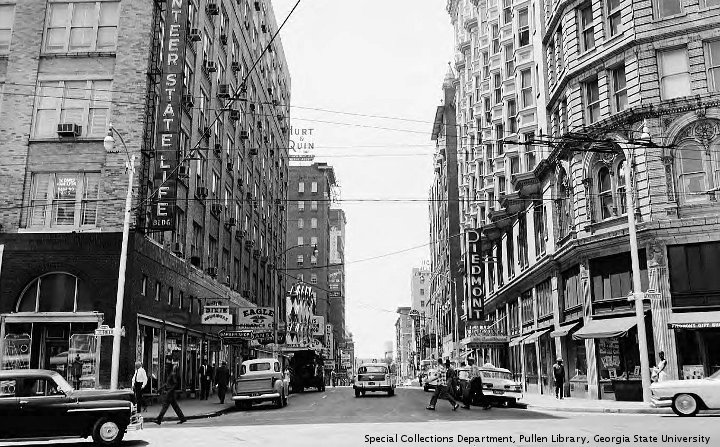


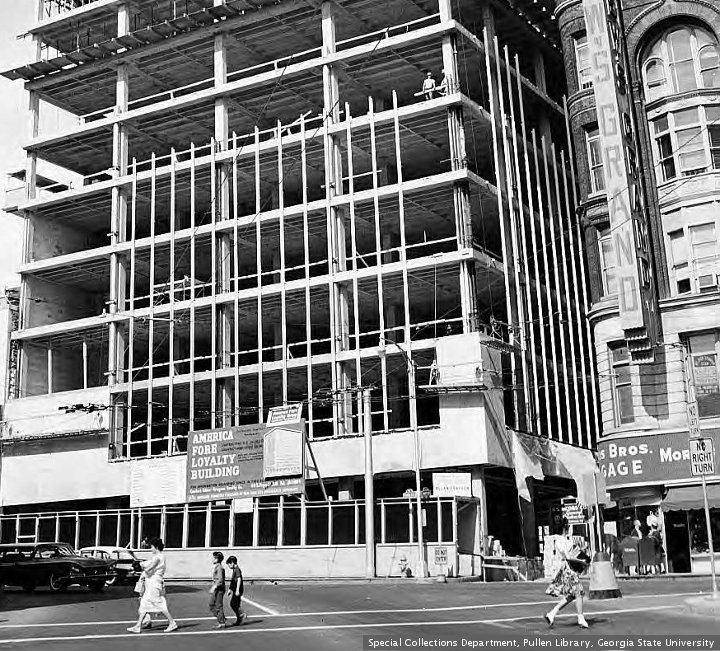
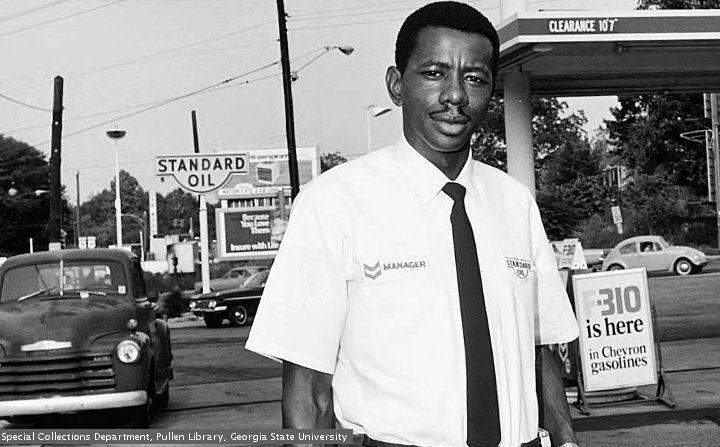
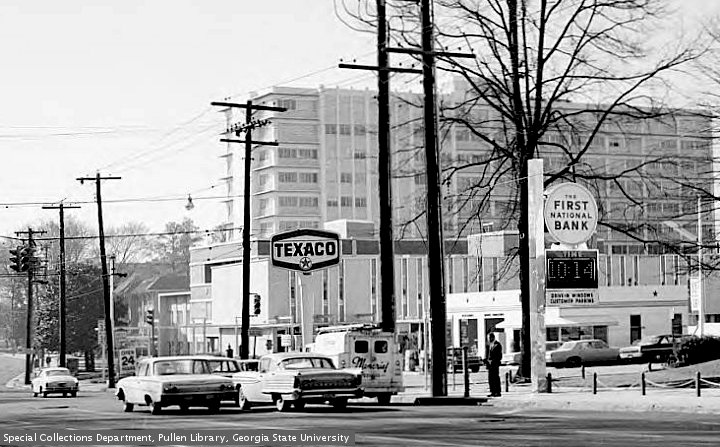
PG was listening to an internet show, while editing the last of some pictures from “The Special Collections and Archives, Georgia State University Library”. Typically, he works on a rotation. For a few weeks, it is GSU. Then, for a few weeks, it is The Library of Congress. The third part of the cycle is color pictures taken by himself. When the end of a batch is in sight, it is a time of happiness. As much fun as the pictures are, after a while PG gets tired of what he is working on, and is ready for a change. The pictures that go with this feature are the last ones of this GSU cycle.
The background entertainment was Booknotes, a C-Span show that ran a few years ago. It is hosted by Brian Lamb, the founder and CEO of C-Span. Mr. Lamb does not appear to have much of a personality. This means the show keeps the focus on the authors. Booknotes presents a transcript for the talks. Lazy bloggers enjoy this feature.
The author talking tonight is Michael Korda. When the show aired July 9, 1999, Mr. Korda was the Editor in Chief at Simon & Schuster. The house scored the Presidential memoirs of Ronald Reagan. Mr. Korda worked on the book. There were some good stories.
Mr. KORDA: … I then took on editing Ronald Reagan, which was sort of strange, because the president, of course, did not write his books. There was a ghostwriter, Bob Lindsey, whom we picked, and rather famously, at the end of the whole procedure, we had a press conference at which Ronald Reagan and I were photographed ostensibly editing his book. We were each–sat in front of the television cameras and given two sheafs of perfectly blank white paper, and a–and a ballpoint pen, and we sat there, the two of us together at this table, busily pretending to scribble editorial notes and things, and hand them back–on totally blank pieces of paper. I mean, not for nothing did the president come from the movies–and he was wonderful at it. Anybody watching this would–you know, the concentration, the firmness of his handwriting, his total immersion in what he was doing. But I mean, it was–it was the movies.
Anyway, I after this had taken place and this scene had been recorded for all the television shows, the president stood up, and he walked to the door and turned around–the cameras were still on him, of course, and still on–and turned around and waved, and he said, `I’m sure the book is great. I’m looking forward to reading it when I have the time.’ And it’s true. He had only the most tangential connection to this book. …
But he was always, when I–whenever I worked with him–the kindest and the nicest. He always brought his little bag of home-baked cookies to have with coffee in a paper bag in the morning, and he would put them on a plate and pass them around. … He said, `These are homemade chocolate chip cookies, made by Esmerelda, our maid, and I brought them in for us to have with our coffee.’ And we’d put them on a–but these weird look–because they looked like she was–I think she was Ecuadorian or In–Inc–South or Latin American–and they looked like, in fact, like chocolate chip cookies that had been made by somebody who’s never seen a chocolate chip cookie. You know, they were kind of too thick and too burned at the edges. Anyway–but he loved them, so we put them on the plate, and as we were having our coff–we’d pass them around the table. There were about six or seven of us around the table, all of us working on these proofs except for Ronald Reagan, who was kind of looking out the window, and wishing he were doing something else. And everybody has one of these chocolate chip cookies, and when the plate gets ’round to the end of the table, it’s put back in front of the president, and there’s one cookie left on the plate.
And about 15 or 20 minutes I realized that the president is paying no attention whatsoever to what we are saying, and that his mind is fixed on something else. And what it’s fixed on is this one remaining chocolate chip cookie, and it’s perfectly clear to me that he wants that second chocolate chocolate chip cookie with his coffee, but having been brought up in Dixon, Illinois, properly, he has been taught, as a maxim that cannot possibly be broken, that you do not take the last cookie on plate, particularly when you’re the host, so he can’t take it. So to break the spell, I said, `Mr. President, those chocolate chip cookies were delicious.’ And he holds up the plate and he said, `Oh, yes. Yeah, they–they’re good, weren’t they? They’re homemade,’ and he goes through the whole thing. He said, `Would anybody like the cookie?’ And he then passes the plate around the table, and it goes ’round everybody, gets to me, and I pass it on to Bob Lindsey, who’s sitting next to me and between me and the president, and you could see the relief on the president’s face, as this plate comes around with this one–and nobody’s touched this cookie. And just as it reaches Bob Lindsey, without even looking at it, Lindsey takes the cookie up and swallows it. And I looked, and Ronald Reagan’s face was such a picture of sadness that I–my heart went out to him, even though I don’t agree with him politically–I just felt for him. He could–you know, he almost had it, you know, he had that cookie in his hand. He was counting on it, and he didn’t get it.




Too Much Money



PG found Too Much Money, by Dominick Dunne, at the Chamblee library. It has many of the characters from People Like Us. This was the first novel by Mr. Dunne that PG read, and the twenty year old memory only worked in fits and spells. Just like the people who populate these stories.
Towards the end of TMM, Gus Bailey-Dominick Dunne learns that he has cancer. This sent Mr. Dunne off to another world in 2009. TMM was in an editing stage when Mr. Dunne quit working on it. It is not nearly as polished as the other novels by Mr. Dunne. This doesn’t stop the book from being fun, but one wonders if it might have been a bit better with more work.
The story is set in New York. The players are the very wealthy, and those who cater to them. Many of these people with too much money have very little class. This is always reassuring to the peasants who read these tawdry tales. As always with Mr. Dunne, you can guess what famous person is represented by what cad in this story. Perhaps the initials of the book should be TMI instead of TMM.
One theme of this story is a lawsuit against the author. It seems like the author said something about a notorious congressman that was not true. If only the author had waited a week or two. The notorious congressman was a big story on September 10, 2001. The next day, the congressman was forgotten.
There is a sentence on page 246. It tells a bit about the story, and shows the value of using a comma. The wealthy lady was telling the story of how her walker decided to become an undertaker. “When he was thirteen years old, he waited five hours in line outside the Grant P. Trumbull Funeral Home to see Judy Garland, who had overdosed, in her casket.”
An amazon one star reviewer says “I am so disappointed in this book I have loved Mr Dunne’s work for years but this book has so many sex scenes that it is disgusting and not what I expected!!” Actually, the sex scenes are some of the best ones in TMM. Perhaps they had priority editing, before the grim reaper came to call. There is a scene where the Baroness, known to many as Uncle Charley, seduces the wife of the convict billionaire. It makes you wonder how Mr. Dunne knew so much about such things.
This is not a book to spend money on, unless you just enjoy throwing dollars around. If the local library has a copy, then it is worth your time. You might not respect yourself later, but you will have a good time. Pictures today are from Gwinnett County.






My Horizontal Life
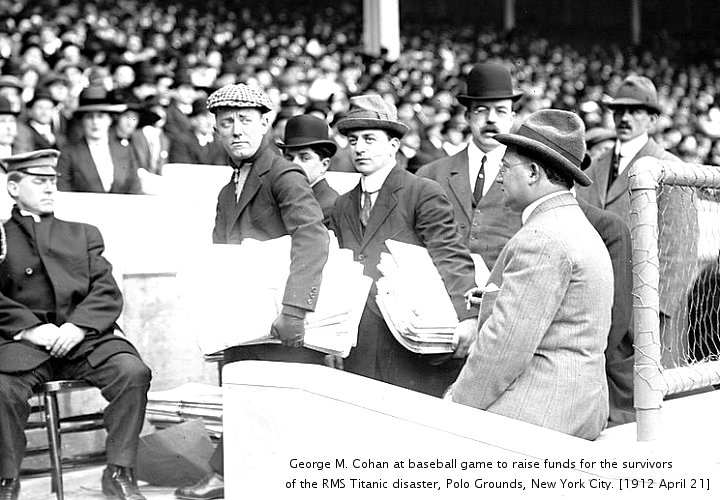
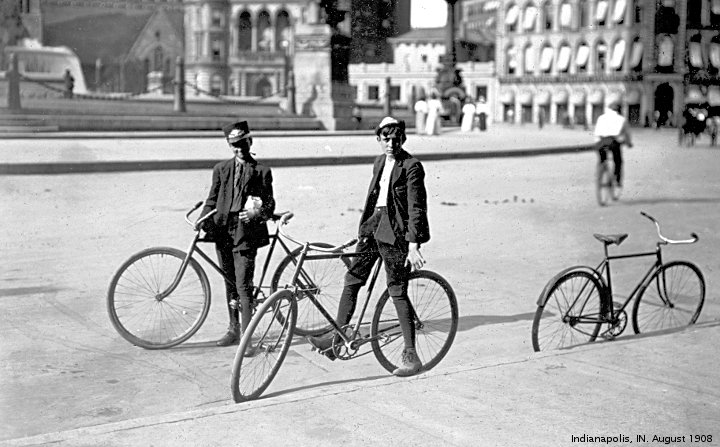
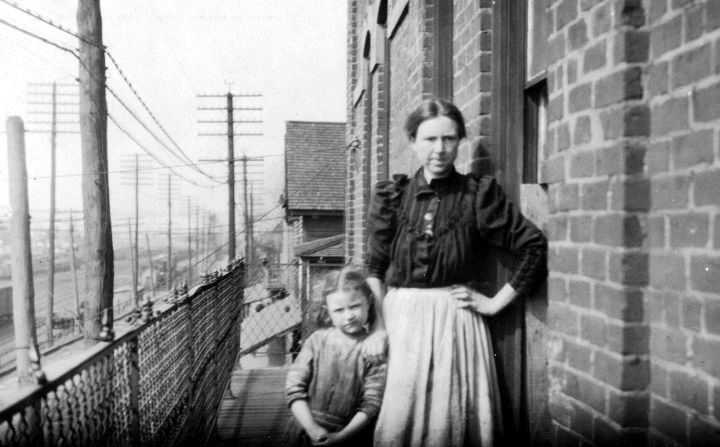
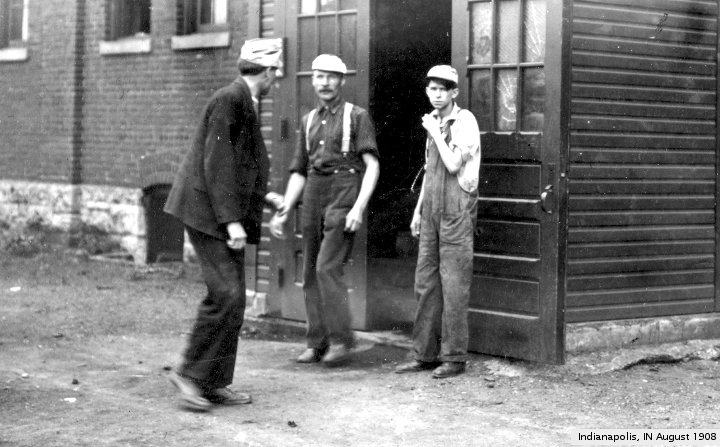

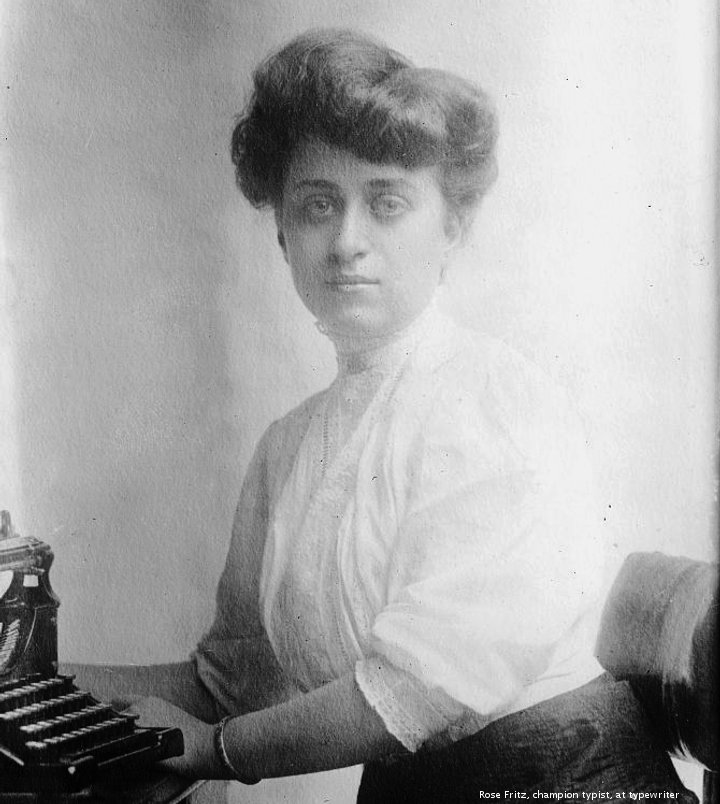
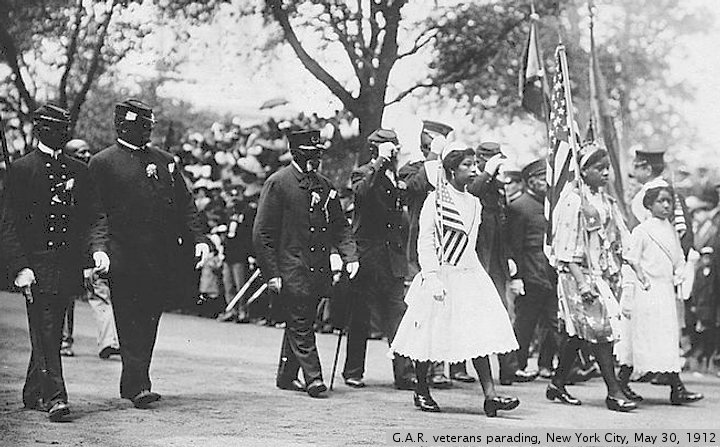
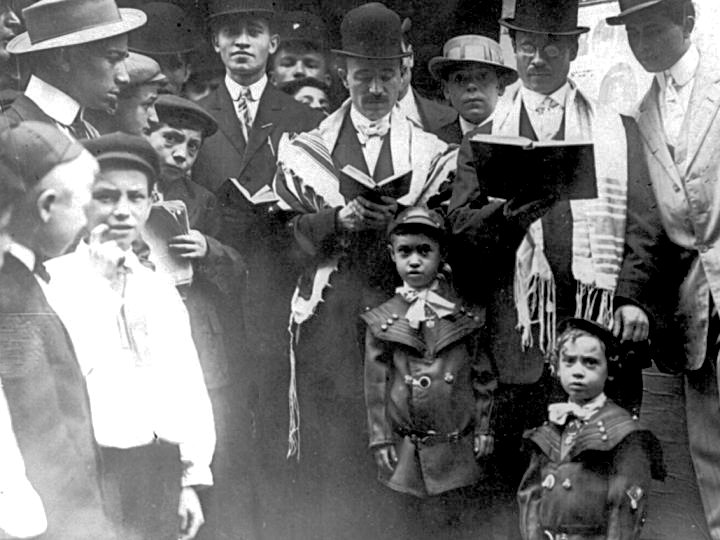
PG found a copy of My Horizontal Life: A Collection of One Night Stands, the Chelsea Handler book, at a yard sale. The asking price was fifty cents, which was talked down to a quarter. For the comedian daughter of a Jewish used car salesman dealer, this was an outstanding value.
The book is a hoot. The action starts with seven year old Chelsea going in her parents room to photograph them having fun. Miss Handler goes on to adventures with a midget, a black law student, assorted other ethnic types, and a gay gynecologist. The action is served up with one liners, which keep the reader in stitches. Maybe the lady is two pom poms short of a pep rally, but you are having fun.
The supporting cast is almost as funny as Miss Handler. Ketel One is a featured player, as is a roommate called Dumb Dumb. Her gay friend Nathan makes a spectacle at a wedding. Her African friend Shoniqua is loud and clear. Various family members make appearances. Would you buy a used daughter from Daddy? There are well practiced one liners for all the players and scenes.
After a while, the laughs get old, and the story is just a wee bit sad. Miss Handler seems to be chasing a rainbow, instead of looking for another hot man. The one last himbo stud turns out to be a cokehead wet noodle. Maybe, one day, the little girl will grow up. Pictures are from The Library of Congress.

Significant Others




When PG took Spring Fever back to the Chamblee library, the facility was getting ready to close. Make your final selections, and bring them to the front desk.
PG took a stroll through the fiction section. He saw that no unread books by Mary Kay Andrews, or Raymond Chandler, were available. PG decided to check the Armistead Maupin section. (Spell check suggestion: Farmstead Maudlin) Significant Others did not ring any bells. PG decided to take it home.
It became obvious before long that PG had already read this book. The old copy on the book shelf was a clue. The Tales of the City series is great fun, and reading one a second time is worth the effort. Besides, you can compare the two editions. The already owned copy was printed in 1994. The list price is $12.00. It had a picture of a younger Armistead Maupin. “He lives in San Francisco with his lover and partner, Terry Anderson.” (PG heard once that Mr. Anderson is from Marietta GA. Mr. Maupin met Mr. Anderson in Atlanta, while on a book tour. There is no link for that story.)
The library copy has text identical to the shelf copy. It was printed in 2007, and has a list price of $13.95. The picture of the author is smaller, and has much more gray hair. “Maupin lives in San Francisco with his husband, Christopher Turner”.
There are a few quotes which were remembered from the first reading. These quotes each say something about the story. For those who are new, the Tales of the City books are collections of a newspaper column that Mr. Maupin wrote. It is the story of a collection of people who live by the bay. One of the prime players is Michael Tolliver, who lives in a house at 28 Barbary Lane. The house is owned by Anna Madrigal. She does not have a large role in S.O.
“Michael looked out to sea. “That was nineteen eighty one … the last time I went” “Four years,” said Thack. (A tourist that Michael befriends.) “It seems like forty,” said Michael. He turned and looked at Thack. “Does it bother you that I am positive?”
AIDS hit San Francisco earlier, and harder, than it hit Atlanta. In 1985 it was mostly a rumor in Georgia. This would change in 1986, as the bug made up for lost time. Meanwhile, in California, men were dying left and right. There were few treatments, and even less support from the general public.
“Michael regarded him for a moment, then said: “My mother gave me a new address book last Christmas. I haven’t written in it yet, because I can’t make myself leave out the people who are dead. I can’t even cross out their names”.
Some of the women in the story go to a music festival called Wimminwood.(Spell check suggestion: Satinwood) One of the ladies is just a bit rowdy. “She gets like this,” offered the woman with the ice chest. “She was with the post office for thirty seven years.”
This was a clue to the time PG read S.O. In the years at Redo Blue, the lady who ran specs was married to a retired mailman. PG repeated the quote for this lady, who appreciated the truth of it. This means that PG read S.O. roughly eleven years ago.
Maybe now would be a good time to mention the principal at Cross Keys the first year PG was there, His name was William Armistead. PG never had to talk to him. PG’s Aunt had a man who worked in her garden named Armistead. He would get locked up, and Uncle Ralph would bail him out.
Pictures today are from “The Special Collections and Archives,Georgia State University Library”.




Zealot

Most of you have heard about the Fox News interview with Reza Aslan. It is helpfully embedded above. Dr. Aslan is promoting a book, Zealot: The Life and Times of Jesus of Nazareth.
The interview created a fuss. It was a win/win situation. Fox News is seen as defenders of the Christian faith. Dr. Aslan sells books. The New York Times has a quote. ““I’ll be perfectly honest — I’m thrilled at the response that people have had to the interview. You can’t buy this kind of publicity.”
In the Fox/henhouse matchup, Dr. Aslan emphasizes his multiple degrees. It is true that he is well educated. It is also true that his day job, at the University of California, Riverside, is an Associate Professor of Creative Writing. (Appalling visual warning) Dr. Aslan has “a Master of Fine Arts from the University of Iowa, where he was named the Truman Capote Fellow in Fiction.“
There is a more civilized interview with NPR. It turns out that Dr. Aslan left Iran as a child. This was during the Khomeini revolution.The departure was a hectic affair. When Dr. Aslan was fifteen, he was “born again”. He spent a few years as an aggressive Jesus worshiper. At some point the Christian thing faded away, and Dr. Aslan went back to Islam. Whatever.
Many say that the book has few original ideas about Jesus. In other words, the book is old ideas, with a new marketing twist. Since Christianity may be the most successful marketing effort in history, this is somehow fitting. It is also beside the point. Jesus worshipers are more interested in the death of Jesus, than in his life. Zealot should have little impact on marketing the scheme for life after death.
There is a certain synchronicity in the current conflict. PG has wondered lately, why was someone so mad at Jesus that an execution was necessary? In other words, instead of What Would Jesus Do, the question should be What Did Jesus Do? According to Dr. Aslan, Jesus made trouble for the Roman rulers of Palestine. When it came time to compile the Bible, it was convenient to blame the execution on the Jews. There is also the possibility Jesus committed a more devious crime, which was dutifully covered up by the Bible committee.
The myth vs. history angle gets worked over. Many feel that the nativity story is not completely accurate. However, for many years, people were concerned about the birth of the Messiah, not the details about where the delivery occurred. As stated on NPR, “the truth of that story was more important than the facts of it.” This kind of talk makes PG dizzy. Pictures are from “The Special Collections and Archives,Georgia State University Library”.



Spring Fever


When PG was a kid, his North Carolina neighbors always brought back Cheerwine with them. In those days, the top forty station in Atlanta was WQXI, 790 on the dial, Quixie in Dixie. The word dysfunctional had not been invented, even if the concept was everywhere.
Forty seven years later, 790 am is a sports talk station. The house with Cheerwine has been replaced by a McMansion. In a book by Mary Kay Andrews, Spring Fever, Cheerwine is called Quixie. It is made by in Pascoe NC. The company is owned by a dysfunctional family.
Spring Fever is another entertaining use of time from Mary Kay Andrews. The plot is catchy, and the characters are people you care about, even if you want to see them dead. Some of the plot turns are a bit tough to believe. When Annajane tells her fiancee that she cheated on him, it turns into a line in a country song. When Mason is about to get married to a horrible woman, his “daughter” saves the day twice. If you can stifle your cynicism, you will have a good time.
Most of the familiar details of a Kathy Trocheck book are here. The gay couple waits until page 254 to renovate the town’s only hotel. Annajane stays there for a while, and sees a few things she could have done without. The florist convention went on without anyone the wiser.
There was one MKA touch missing here. Most of her books have recipes at the end. In Spring Fever, the reader is left wondering how to cook Quixie marinated ham. As one lady said to another, “Tacky is in the eye of the beholder. It’s a word some people use for something they think is in poor taste.” Pictures today are from “The Special Collections and Archives,Georgia State University Library”.

Ozzy Osbourne



PG read I Am Ozzy, the autobiography of Ozzy Osbourne. (The copyright is given to “Ozzy Osbourne”.) The ghostwriter is Chris Ayers, who PG suspects did the majority of the writing. John Michael Osbourne is dyslexic, among other things. Honestly doctor, I thought the bottle said six pills every hour, and now you say it was one pill every six hours.
This is quite a story. John grew up poor in Aston, England. When he was through with school at 15, he faced a life of manual labor, or prison. The first few jobs he had were horrible, and a stretch behind bars made an impression on him. He put an ad up, saying he wanted to be a vocalist, and was about to give up when Tony Iommi (spell check suggestions:Mommie, Commie) came knocking on his door.
Mr. Iommi was well known in Aston as a musician, but he had to keep a day job. Before he left the factory to become a star, an accident cut off the ends of some of his fingers. He had to change his style, and developed his own, unique way of playing guitar.
The original name of the band was the Polka Tulk Blues Band. They were named after a brand of cheap talcum powder Mrs. Osbourne used. They would load their gear into a vehicle, and hang out by arenas where famous bands played, in case the headliner didn’t show up. One night, Jethro Tull’s truck broke down, and Earth (as the band was then known) played the gig.
Soon, the band…Osbourne, Iommi, Geezer Butler and Bill Ward… settled into the business of playing heavy music, with satanic themes. They never took the black magic business seriously, but the combination of a good gimmick and ….their music….clicked, and they began to make buckets of money.
Or rather, somebody was making buckets of money. There was the management, which were typical rock and roll crooks. A few cocaine merchants got some of the revenue, as well as liquor merchants. Ozzy was off on a forty year bender, taking every substance in sight. Supposedly he is clean today.
So Black Sabbath fired Ozzy, and he started a solo career. Ozzy divorced his first wife, and married the daughter of a management heavyweight, Sharon. The alcoholic escapades got more and more bizarre. One night, someone handed him something that looked like a plastic bird. Ozzy bit the head off, and went into rock and roll infamy. (Leviticus 11:13 And these ye shall have in detestation among the fowls; they shall not be eaten, they are a detestable thing: … 19 and the stork, and the heron after its kinds, and the hoopoe, and the bat,)
The stories come one right after another. After a while your bs detector sends out a warning, but the stories are so much fun to read. Besides, many of these stories were headlines, and can be easily verified. How many people would claim to be arrested for pissing on the Alamo, while wearing his wife’s nightgown? Before long, he is starring in his own reality TV show.
A lot of the credit for this book goes to Chris Ayers, and whoever helped him. Mr. Ayers has a keen ear for British slang, and keeps the action zipping along. Once you get started with these stories, they are tough to put down.
When PG was young enough, he didn’t think it was cool to like Black Sabbath. He was able to ignore them for a while, until that night in 1980 when PG stood outside a stadium in Seattle WA, and listened to Sabbath (with Ronnie James Dio) play inside. Two years later, he pulled up to the triangle building in Century Center. 96 rock was in this building, and a man was standing outside giving away something. By the time PG got to him, he had run out of free tickets to the Black Sabbath concert, at the Omni. The next encounter with the band was at a job. There was an eight track tape player, and a copy of Paranoid. PG played the tape , and a salesman immediately left the building. This is a repost.




 Chamblee54
3 comments