Rainbows




Lately, I have been walking to the gym. It is about 1.4 miles one way. I go there, do my workout, and walk home. One consequence is not riding the stationary bike, and listening to podcasts. When it is a good story, this can be transformative. It is an magical escape from one place, into another.
Today, I chose to listen to a story while walking home. The story was Rainbows, by @JosephONeillx. It was one of the good ones. By the time I went through the railroad underpass off Peachtree Road, my pace had grown even more glacial than normal. I did not want to miss a single detail. It did help that I was off the busy main road, whose loud traffic drowned out the action.
Listening to a story, as opposed to reading it, is a different path for the information. The author’s voice telling the tale is a more intimate connection that reading dead tree text. In this story, the reading author is a man. I assumed the lead character, Clodagh, was also male. When a Aoife, the daughter, appeared, and a husband named Ian, I just thought this was just the trendy New Yorker. It wasn’t until much later in the story, that it dawned on me that Clodagh might be female. The gender is never confirmed one way, or the other.
The story is rather disturbing. (Spoiler to follow) Aoife is being sexually harassed at school, and files a complaint. The boy who gets metooed is the son of a laundry owner. Clodagh Nolastname is a VIP customer. (This all happens in New York. Clodagh is not poor.) The Chinese laundry lady tells Clodagh to take her business elsewhere. Clodagh is mortified that it was not handled family-to-family, but through the authorities.
I continue to walk through a glorious October afternoon. The leaves are still mostly green. The election is in two weeks, and we will see what becomes of the anti-christ POTUS. The story ends when I get into the house, and I listen to the credits. Theme music is by North American Plastics, which somehow sounds as New Yorkeresque as not knowing whether mom is a man, or a woman.





Pauline Kael, Gina James, And James Broughton


Pauline Kael was the rockstar film critic. James Broughton was the radical faerie poet laureate. They were lovers, and had a daughter, Gina James. Pauline and James were not married, contrary to what some naysayers would tell you. This is a repost.
Much of the information in this feature is taken from online reviews of Pauline Kael: A Life in the Dark, a 2012 biography written by Brian Kellow. Gina James, also known as Gina Broughton, was not interviewed for the book. Neither did she participate in the making of Big Joy, a movie about James Broughton. (A wig store, Gina Beauty Supply is located at 25 W Broughton St, Savannah, GA 31401.)
Pauline Kael was born June 19, 1919, Petaluma, CA, died September 3, 2001, Great Barrington, MA, and stood 4 feet 9 inches tall. James Broughton was born November 10, 1913, Modesto, CA, and died May 17, 1999, Port Townsend, WA. Neither one had a middle name. Both used their birth name throughout life. Both had lives, before meeting in the late forties.
When she met James Broughton, Miss Kael was living what would later be called the bohemian life. After moving to New York, and being dumped for composer Samuel Barber, Miss Kael moved back to California. “Returning to the Bay Area with her tail between her legs in 1945, Pauline became involved with the incredibly effeminate avant-garde filmmaker James Broughton. He managed to impregnate Pauline but threw her out as soon as she told him, whereupon she moved to Santa Barbara to give birth to her daughter, Gina, in 1948″
“Like her early career, Kael’s personal life was also fraught with failures. Kellow says “she had a habit of falling for gay men” earlier in her life because “they tended to share her passions and enthusiasms.” She had a daughter … with one of them, experimental filmmaker James Broughton.”
“For a time, during the 1940s, he lived with future film critic Pauline Kael. She encouraged his filmmaking endeavors but their relationship ended after she got pregnant. … Pauline Kael thought that Broughton made the biggest mistake of his life when he turned down a studio film after winning the prize at Cannes.” (Apparently Mr. Broughton was from a wealthy family, and could afford this attitude. Regarding his movie The Bed, Mr. Broughton said “It was the only film I created that ever made any money.”)
“Which brings us to the strange tale of Pauline’s only child, Gina James. … In 1948, at age 29, Kael got pregnant after she “talked her way into moving in” with James Broughton, a bisexual poet living in Sausalito. By Kellow’s account, Broughton was furious at the news of Kael’s pregnancy; he felt trapped and tricked by her. One of Broughton’s friends reported that he kicked Kael out of his house. She moved to Santa Barbara to have the baby. The birth certificate listed the father as “Lionel James, a writer”. It is one of the disappointments of the book that Kellow shines little light on Kael’s passion — or whatever it was — for Broughton, on how she processed that cruel rejection and on whether Broughton ever recognized Gina as his daughter.”
James Broughton moved on with his life. He made experimental films, got married, and fathered two more children. At some point he met Joel Singer, and began the romance that would last the rest of his life. It is tough to say whether he was genuinely bisexual, or whether he was playing the role society expected of him.
This review of Big Joy continues: “But interviews with Singer, waxing poetic about his years with the artist, are balanced by reminiscences from Broughton’s ex-wife and his abandoned son. Rather than only celebrating silliness, I found it admirable that the directors didn’t gloss over the pain he caused his wife and children. After all, when you think about it, he spent all of his life unable to decide if he was gay or straight; leaving a lot of broken hearts in his wake.
We learn from Kael that he flirted with everyone he met. “He rode off into the sunset with some guy,” his wife, Suzanna Hart tells us. “That was very sad for me, but not for him, which was…very irritating.” In her segments, Hart keeps her emotions in check but you can clearly read the sadness and anger in her face. The son doesn’t have much good to say about his absent father and the two daughters (the first by Kael and the second by Hart) both refused to be interviewed for the film. Singer has a lot to say about their blissful decades together, but he also comes off a bit heartless when he shows no guilt over breaking up what he calls Broughton’s “loveless” marriage.”
The baby daddy leaves, and the struggling writer becomes a single mom. “… Kael’s relationship with her actual daughter was something out of a Tennessee Williams play, and not in a good way. Kael home-schooled Gina and, as the girl grew up, kept her close, as a typist, projectionist, driver and right-hand man, and she banished any friend who actively encouraged the young woman to break out on her own. Though she was in many ways a loving and committed mother, helping to raise Gina’s son and always living nearby, one senses a Gothic selfishness in her mothering.”
Gina James declined to talk with Kellow for his book, but the author says Kael and her daughter had a sort of symbiotic relationship. “Pauline did not type, Pauline did not drive — Gina performed both those functions for her. And Gina was a very good critic of Pauline. She got to see Pauline’s copy before anyone else did and she often had very, very important and influential things to say. But Pauline really wasn’t wild about the idea of Gina breaking away and having her own life apart from her, and she didn’t do anything really to encourage her in that direction as far as I can see.”
Amazon one star comment: And her poor daughter – what a fate – TYPING all that. Poor Gina, — I can see her – Kellow described sitting silently in some coffee shop while her mother raved on and ON with her pet directors.
An affair with the experimental filmmaker James Broughton produced a child, Gina, whom Kael raised by herself, Mildred Pierce–like, heroically supporting them with a number of odd jobs, including running a laundry. Gina’s heart condition required expensive surgery, and Kael ended up enticing Edward Landberg, the owner of a local art-house theater, Berkeley Cinema Guild. They had begun as co-programmers. As Landberg tells it: “One day, when I was over at her place, I happened to graze her breast with my hand, and she kind of looked up and said, ‘What have you got to lose?’” Their marriage proved a fiasco, but Landberg agreed to pay for Gina’s operation, which Kellow suspects had been Kael’s motive all along…. Kellow shows more independence in assessing Kael’s treatment of her daughter Gina, whose ambitions to become a dancer or a painter she did little to encourage, preferring to keep her on “a silver cord . . . she had also grown accustomed to the steady, dependable role that Gina played—as secretary, driver, reader, sounding board—and she was loath to give her up.” Gina, for her part, was mistrustful of the dynamic she witnessed between Kael and her acolytes.“
“The closest and longest-lasting partnership of her life was with her daughter, Gina James … James considered speaking to Kellow, but finally declined, leaving a blank space at the center of this otherwise vividly detailed biography. Gina lived with her mother till she was over 30, typed up her reviews after Pauline stayed up all night writing them in longhand, and gave up both college and a shot at a dance career to serve as her mother’s caretaker, companion, and driver….
Kellow cites the text of the breathtakingly passive-aggressive eulogy that Gina delivered at her mother’s funeral in 2001: “My mother had tremendous empathy and compassion, though how to comfort, soothe or console was a mystery that eluded her … . Pauline’s greatest weakness, her failure as a person, became her great strength, her liberation as a writer and critic . … she turned her lack of self-awareness into a triumph.”
One more chapter remains. “Gina lived with Kael well into her thirties … That she married and had a child, Will, seemed to catch Kael by surprise, though she ended up adoring her only grandchild, someone with whom she could watch action movies with.
Kael died in 2001, when Will was about 19. Unfortunately, and Kellow made no mention of this in his book whatsoever, there’s a horrible postscript, one that may well have been the reason for why Gina declined to be interviewed for the book. On October 6, 2007, Will, then 25, went hiking in the East Mountain State Forest in the Berkshires. He was an avid hiker, not to mention a devoted martial artist. He had a girlfriend. He never came back. Gina reported him missing, but his body wasn’t found for more than week, on October 15. … “authorities found camping equipment nearby and while cause of death has not been determined, foul play is not suspected.”
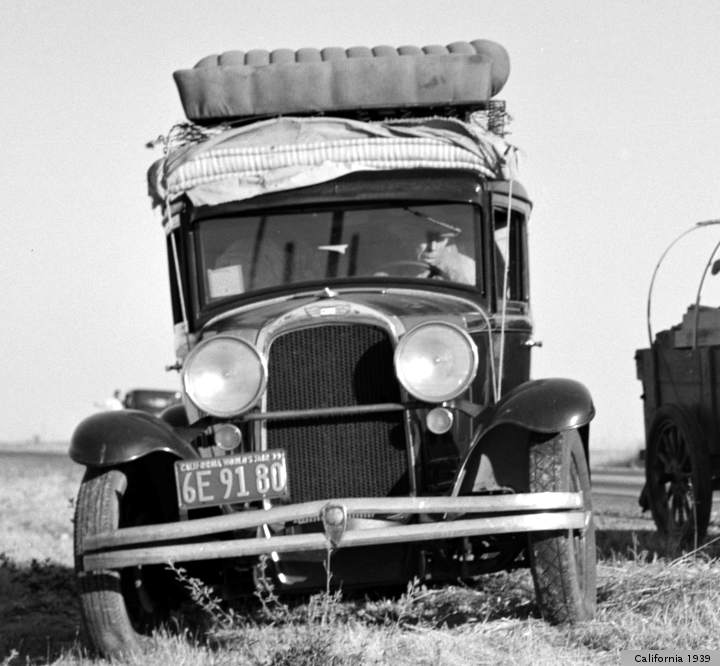
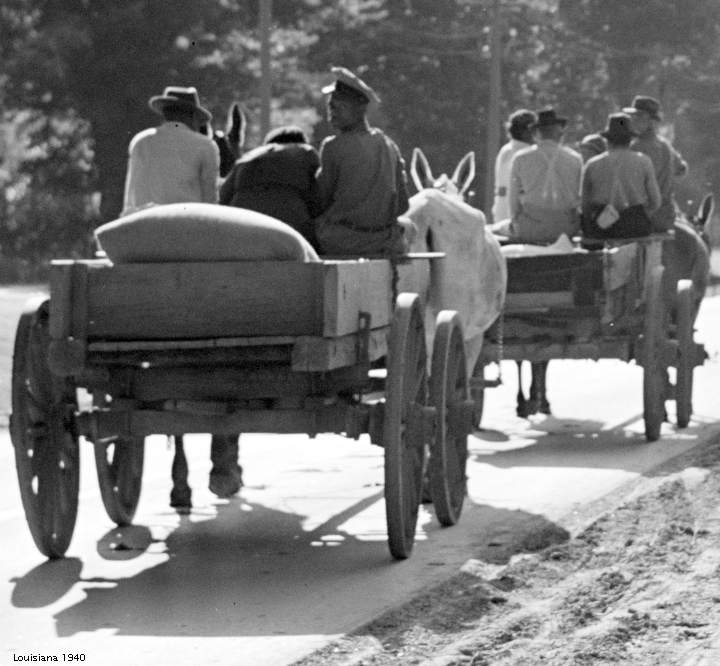
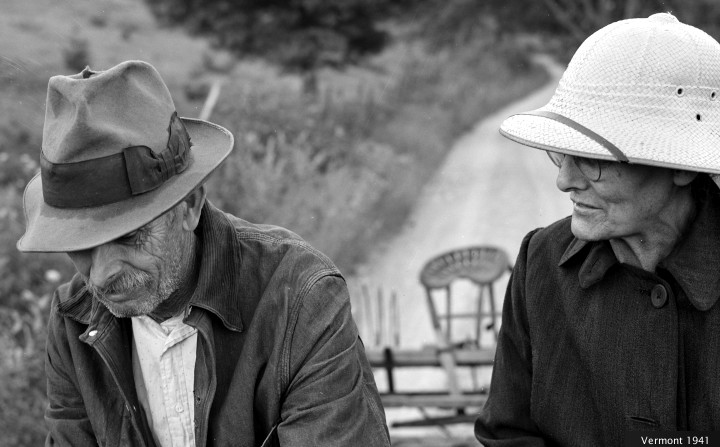
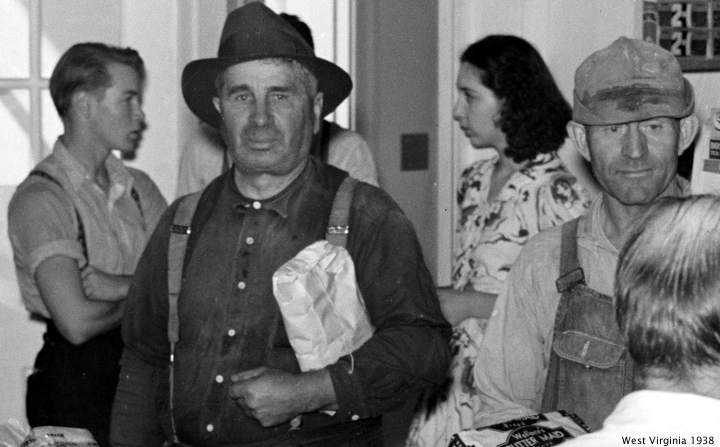
Pictures today are from The Library of Congress. UPDATE These two comments were made to the original post. Anonymous said, on June 16, 2017 at 9:18 pm Your piece on Kael and Broughton is rife with misinformation and judgements galore and unbelievably badly written. Get a life and stop spreading falsehoods. And next time you put your fingers to a keyboard do your due diligence! James’ son was NOT ABANDONED! He lived happily with the two of us after the divorce. You fail to recognize that James’ ex-wife was a classic fag hag who had been married to another gay man before her relationship with James. She had been in psychotherapy for years before they got together and for many years after they split up. James certainly did not spend the rest of his life uncertain about his sexuality. Read his autobiography COMING UNBUTTONED and you’ll discover how misinformed your take on him is. You have done a great disservice to your readers by publishing such homophobic nonsense. Joel Singer ~ Sterling Wilson said, on August 19, 2017 at 1:40 pm Curious about this autobiography, I found the following from a Publishers Weekly review “Broughton forsakes introspection for literary gossip and name-dropping: Kenneth Rexroth, Pauline Kael, Dylan Thomas, Anais Nin. The birth of a daughter is dispensed with in two sentences. Broughton’s insistence on making himself the center of attention increasingly intrudes.”
UPDATE A journey down an internet rabbit hole uncovered this item. It is from “Remembering Harry and John”, by Mark Thompson on the occasion of Harry’s 100th anniversary “I remember the night we were socializing at the San Francisco Art Institute at a gala tribute for James Broughton. Harry (Hay) and James had sparked briefly as Stanford University undergraduates, but didn’t meet again until fifty years later at a faerie gathering. Few people knew that James had fathered a daughter with esteemed film critic Pauline Kael during their bohemian Berkeley days, but Harry was alert to the fact. Kael and Broughton were having their own reunion at the moment when, with typical impudence, Harry interrupted the conversation by loudly asking, “So, who was the mother and who was the father?” The stunned silence was punctured only by the whoosh of Kael’s furious departure.”





The Return Of The Spoon




PG finally finished Skinny Legs and All. Part one of the chamblee54 book report was published July 7, when PG read page 207 at 2:07 pm. Part two followed 11 days later.
It is now October 1. It took PG this long to read the remaining 272 pages. Reading while you are warming up the vehicle only goes so far. Slack is real. Slack is important, even when it’s impolite to say slack lives matter. Slack death is going too far.
SLAA winds up in Jerusalem. Boomer Petway built a statue of a multi-phorodite donkey. The heavy metal hulk drew both hipster praise, and righteous indignation. Ellen Cherry Charles is living with Boomer, having overcome divorce to go back to her man.
The last action of SLAA takes place in a Jerusalem garden. A recently fucked Ellen Cherry is eating breakfast, when Boomer bounters in. He found a spoon resting near the non-binary donkey. It looks “exactly like the one we lost in the cave that day.” It probably is that silver spoon.
Tom Robbins writes fantasy tales, set in modern america. SLAA takes the concept a bit further. A dessert spoon, a purple sock, and a can o’ beans are left behind in a cave, after a conch shell hears a Petway scream jezebel in a moment of passion. After the Petways go to New York, the spoon follows, along with the other objects. The reader is not exactly sure how this happens, but it does. The spoon winds up in a New York apartment, where it finds a painting Ellen Cherry made of it. Somehow, the spoon goes out a window, and lands on the head of a detective. After a few more plot twists, the spoon winds up in Jerusalem. This is all in the book. If you read it, you might be able to keep up with it.
The action in SLAA culminates on super bowl sunday. In the story, a New York team … the Jets/Giants binary is left to the imagination … wins the game. When PG was reading SLAA for the first time, in wintertime 1991, the New York Giants won the Super Bowl. Meanwhile, a few hundred thousand American troops were in Saudi Arabia, anticipating the start of a mid-east war. This war had something to do with Jerusalem, among other things. Did Tom Robbins anticipate a smidgen of synchronicity? Pictures today are from The Library of Congress.


The Jezebel Revival





“Don’t trust anybody who’d rather be grammatically correct than have a good time.” When perusing lists of salient quotes from Skinny Legs and All, this one will be there. Like many quotes separated from context, it is much more fun to find in the text. Quotes are like perfume. A tasteful drop behind the ear can liven things up. Too many quotes, applied without proper care, can leave the reader running away, gasping for air.
” an old sedan rattled up to the crosswalk, full of music, smoke, and rust. When the light changed, it pooted and tooted in the direction of New Jersey, but not before the objects noted a sticker on its bumper that announced “I’d rather be partying.” Can o’ Beans imagined it to be an infraction of taste, if not of grammar, declaring, “You should never trust anyone who uses ‘party’ as a verb. He/she felt appropriately chastised, when Dirty Sock growled and shot back, “Uh-huh, and don’t trust anybody who’d rather be grammatically correct than have a good time.”
Perspicacious readers might note that this exchange was between a Can o’ Beans, and a Dirty Sock. Since the o’ in Co’B is lower case, it is probable that this is an abbreviation for of, and not an Irish surname. “He’s not Irish” is an old-fashioned way of saying that a person is Jewish. Since the Co’B presumably contained pork, it is unlikely that it was Jewish. The national identity of Co’B must remain a mystery, along with the idea that it was talking to DS.
Tom Robbins novels are, generally, both grammatically correct and purveyors of good times. This does not mean that they always make sense. Co’B and DS are in the basement of St. Patrick’s Cathedral. They are watching a performance artist named Turn Around Norman, who stands on Fifth Avenue and slowly, slowly, slowly does a 270 degree turn. This appeals to Co’B and DS, as well as their departed associate Spoon.
The inanimate threesome was left behind in an Idaho cave. Former, and future, owner Ellen Cherry Charles Petway took them into the cave, intending to have Co’B as lunch. This after husband Boomer Petway intended to have Ellen Cherry for dessert, before eating the more solid food. Boomer wore Dirty Sock into the cave. All was going well, until Ellen Cherry demanded that her hubby call her Jezebel. This woke up Painted Stick and Conch Shell. PS/CS woke up after a millennium long slumber, after hearing the name of a Goddess admirer. If this is getting confusing, maybe you should just go ahead to the pictures. They are from The Library of Congress.
PS/CS were worship objects from ancient Phoenicia. This is a neighbor of Israel, later known as Lebanon. At the time SLAA was set, Lebanon was a hell hole, not least because of its proximity to Israel. After Ellen Cherry cried Jezebel, PS/CS decided that it was time to go to Jerusalem, where grammatically incorrect good times are always abloom. The fact that they were inantimate objects did not stop them from traveling. This is one part of the SLAA fantasy that is not adequately explained, and it probably just attributable to some good mushrooms turning up in the Robbins household.
Jezebel is a historic nickname, for a painted good time woman. Her biblical infamy is probably not deserved, which doesn’t stop the fun. Back before Buckhead became gussified beyond recognition, an apartment building on East Paces Ferry Road featured the Jezebel lounge on the ground floor.
SLAA was written sometime in the late eighties, and published in 1990. At that time, the concept of Singular They had not, mercifully, emerged. The one advantage of ST is referring to objects of uncertain gender. They works much better than he/she. Fwiw, Dirty Sock and Painted Stick are male, while Conch Shell and Spoon are Robbinesque celebrations of femininity. One ponders the chauvinism of he/she. Good manners say that ladies should go first.
PG took a facebook break, and stumbled onto a video. The poet wrote this when he was fifteen +/-, and starred in a performance as an adult. It is about “toxic masculinity” and is filmed on an in-town sidewalk. PG did a screen capture of the money shot. A no-parking sign is growing out of his head. Part one of this commentary was published twelve days ago.





2:07 P.M.


PG started to feel the familiar stiffness in his big toe. While it was not painful, it could get worse. PG decided to take the offensive, and get treated before the stiffness turns to pain. This means going to the herbal emporium of Dr. Xu. You go to the office , and sign in. He sees you when he sees you.
When facing quality time in a waiting room, it is best to bring a book. The reading material for PG these days is Skinny Legs and All, by Tom Robbins. PG read SLAA in the early 90’s, when he was working in an office downtown. Like all Robbins stories, a re-do reading will uncover noisy nuggets of knowledge, and forgotten figments of imagination.
While warming up the vehicle, PG saw the word “orchidaceous” on page 197. If something like the o-word gets PG’s attention, his response is to note the page number, and put an inkpen dot on both sides of it. As it so happens, on this day PG was looking at page 198, and saw “then allowed” with a ball point bump on both sides. This was referring to a New York art dealer.
The full sentence was “It was as if Gropius had created her, then allowed Gaudi to add the boobs.” The art-monger in question had an unremarkable face, but a generous mammary allowance. The bosomy business lady was discussing the art of Ellen Cherry Petway. At the same time, a vehicle, crafted by Boomer Petway, was eliciting exclamations of magnifque. The automobile was crafted to look like a giant turkey. It had been delivered to Ellen Cherry Charles as a love offering before the wedding. Now, the sheet metal bird was stealing the thunder of Ellen Cherry, who considers herself to be the artiste. This was not a good development for the recently consummated marriage.
The Petways are soon going to trendy New York parties. Ellen Cherry has this country-girl notion of what an art party should be like, and finds the real thing to be lacking. Boomer has another reaction. “I guess that’s what I like about ’em. … They’re just as petty as everybody else.”
Petty is one of those eye-of-the-beholder concepts. Certainly, the current social justice discourse in America explores new levels of petty every day. The five letters p-e-t-t-y can be retrofitted with all five vowels, with y left to ask why. Patty, petty, pitty, potty, putty. All five work. Even pitty does double duty as an “obsolete spelling of pity,” as well as the stage name of a Brazilian rock and roll lady.
PG stumbled onto the art party comment at 1:24 pm, soon after he got down to some serious waiting. A half hour later, Ellen Cherry tore up an invitation to Boomer’s one man show. The arty paper turned into mutually destructive snowflakes and sparks. Could Tom Robbins have foreseen the contemporary disrespect for snowflakes in 1989, when SLAA was written?
Snowflakes and sparks made their appearance on page 207, and were duly noted. At 2:07 pm, PG was in the middle of his consultation with Dr. Xu. Pictures today are from The Library of Congress.
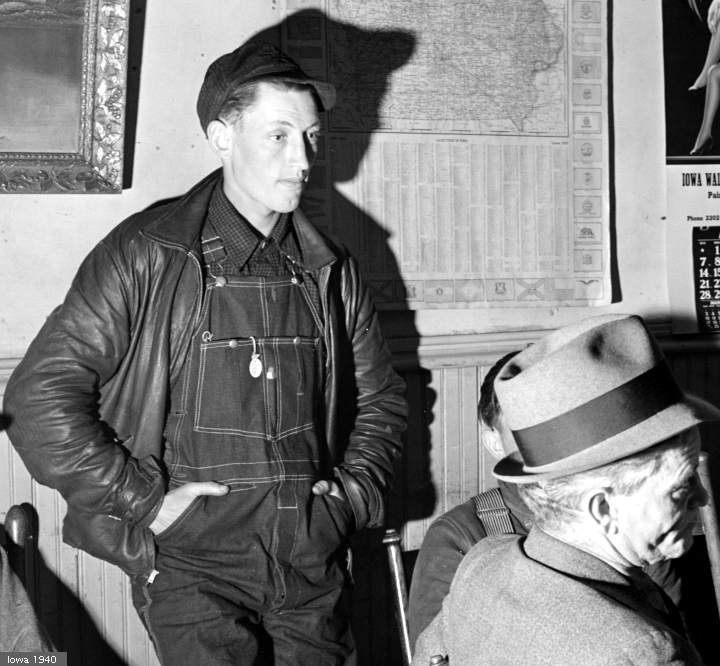

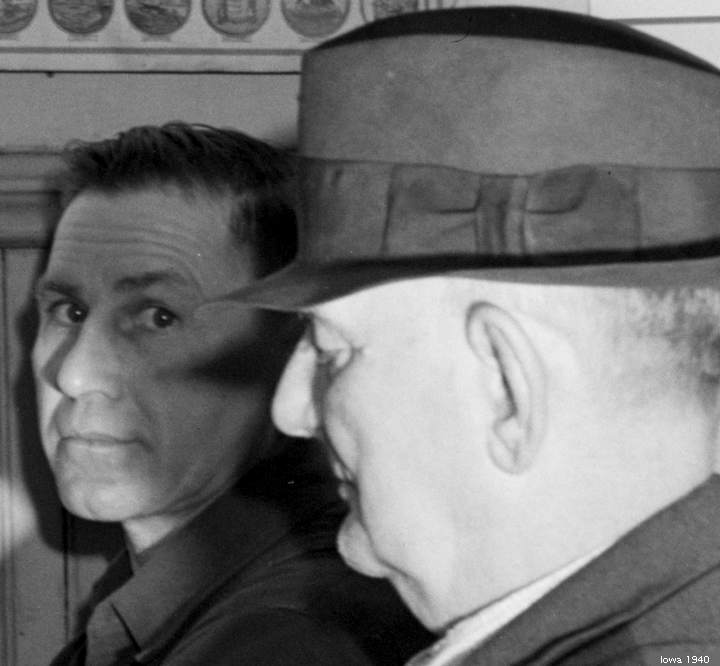
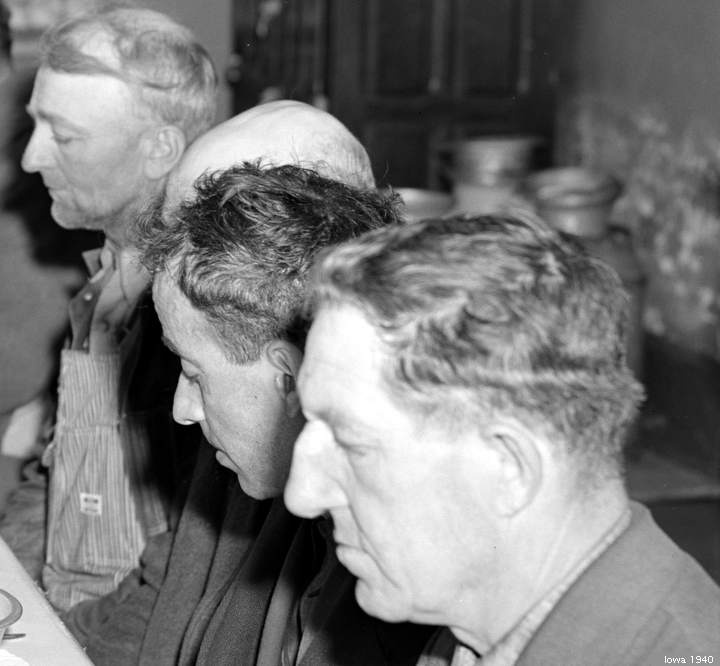
Judy & Liza & RFDS & Me









Judy & Liza & Robert & Freddie & David & Sue & Me…: A Memoir is a book written by Stevie Phillips, the Me in the title. One way to introduce the book is to catalog the six famous names on the cover. Judy and Liza are obvious. Stevie was the road manager/babysitter to Judy Garland. Stevie later managed Judy’s daughter, Liza Minelli, during her glory years. Stevie’s business associations with both Judy, and Liza, ended badly.
Robert is Robert Redford, who Stevie also managed. Freddie Fields and David Begelman founded Creative Management Associates (CMA), with Stevie as an original employee. David was a terrible person, who had destructive affairs with both Judy Garland and Stevie Phillips. Sue was uber-agent Sue Mengers. Stevie and Sue were good buddies for a while, until they were not.
The book is a fun read, but should be taken with a grain of salt. While not as self-serving as other show biz autobiographies, JLRFDS&M definitenly tells the story from Me’s point of view. You don’t get to be a successfull talent peddler without a fierce layer of ego, so this should be no surprise.
Chapter Eight, “Boston”, is one of the most dramatic Judy stories. The star was dressing in her hotel room before a show. Judy looked at Stevie, smiling, and cut her wrist with a razor. Stevie made a tourniquet out of a towel, and a hairbrush. She then called David Begelman. He was having an affair with Judy at this time, and was the possible motivation for the wrist-cutting. David gave Stevie a hundred dollar bill, and told her to go buy enough bracelets to cover the bandges. Stevie soon returned with a bag full of bracelets, and Judy made it to her show.
An Amazon one star review has a different take on the October 28, 1961. “I read the excerpt in VANITY FAIR and Phillips describes how before Garland’s 1961 Boston concert, Garland “slit her left wrist with a razor, cutting deeply into an artery” and that Phillips was subsequently dispatched to “buy enough bracelets to cover the bandages.” OK–except I saw a photo of Garland at this concert: where no bandages (or bracelets) are visible.
Towards the end of the story, Stevie starts going to Al-Anon meetings. On page 268: “Sometimes I imaginined Judy sitting next to me in those rooms. Of course, that would have been impossible because of her celebrity…”
I took a road trip once, with a man who used to manage a local AA meeting hall. Liza was in town, and decided that she needed to go to a meeting. The Triangle club hosted her. My traveling companion had lunch with Liza the next day.
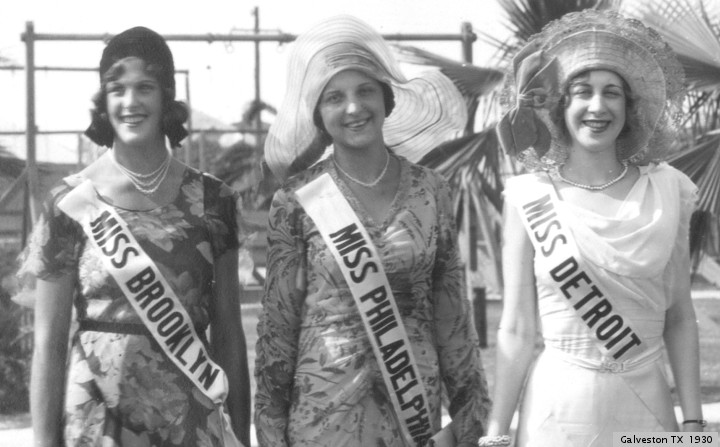
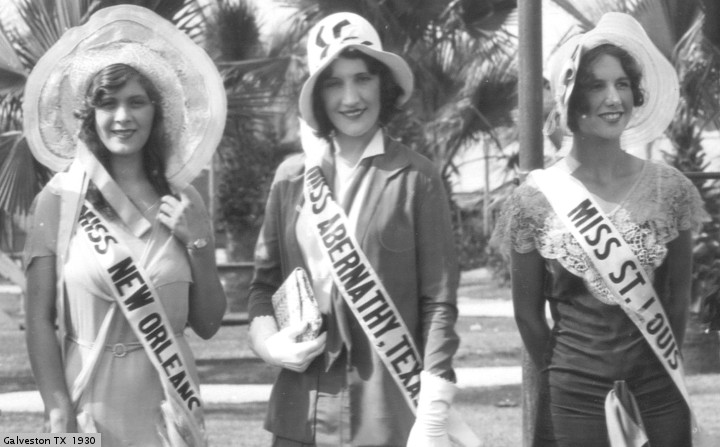
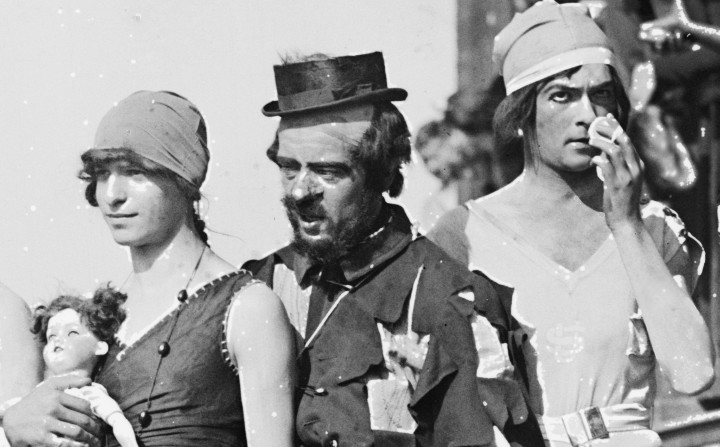
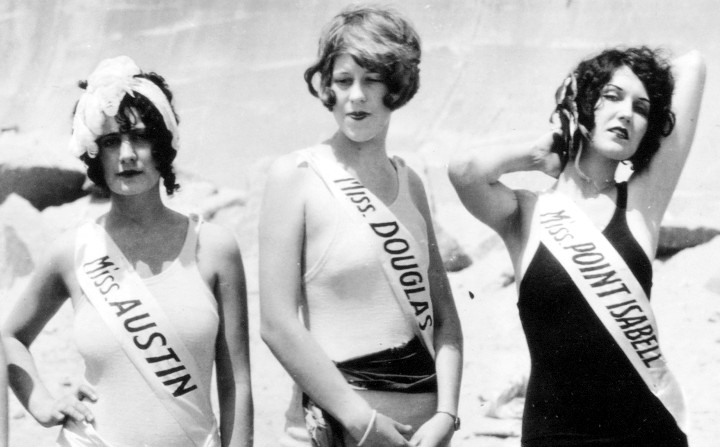
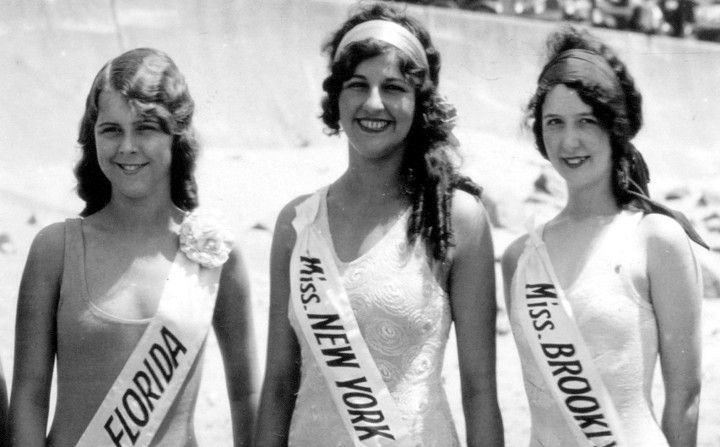
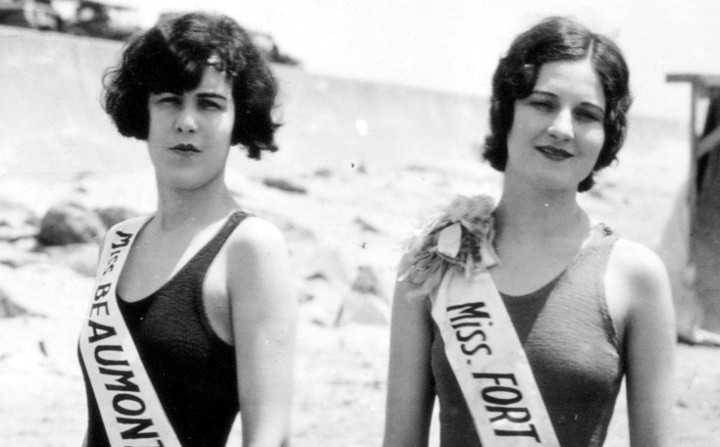
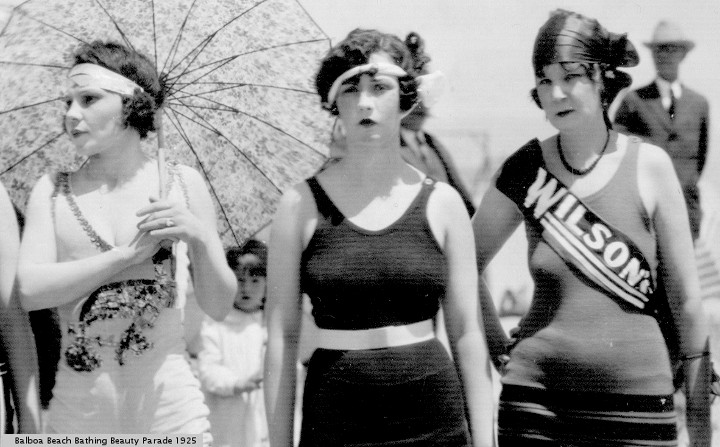
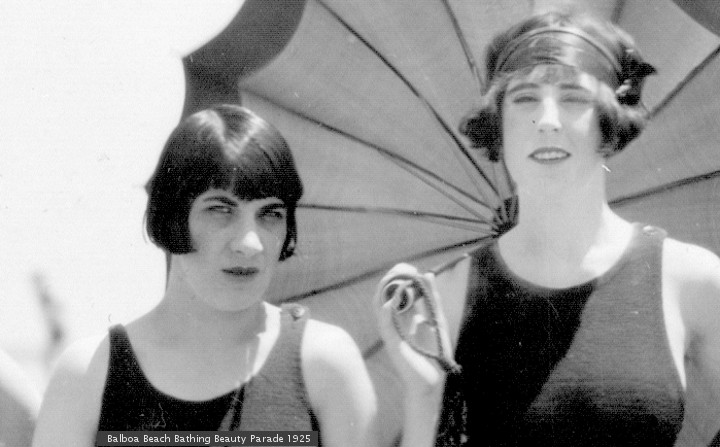
Pictures today are from The Library of Congress. Balboa Beach Bathing Beauty Parade, 1925 “” Picture #06662 is from “Second International Pageant of Pulchritude and Eighth Annual Bathing Girl Revue, May 21, 22, 23, 1927, Galveston TX.”
















Lewis Grizzard


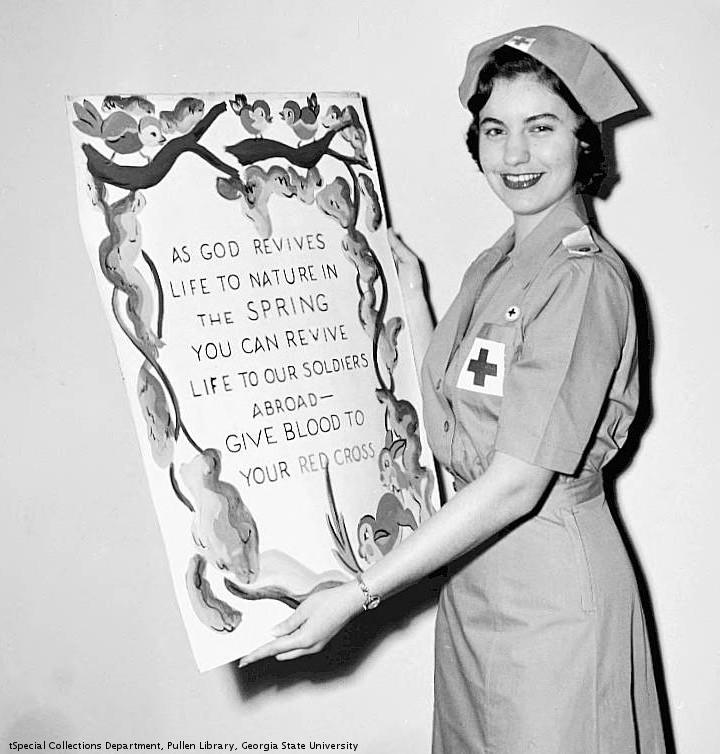









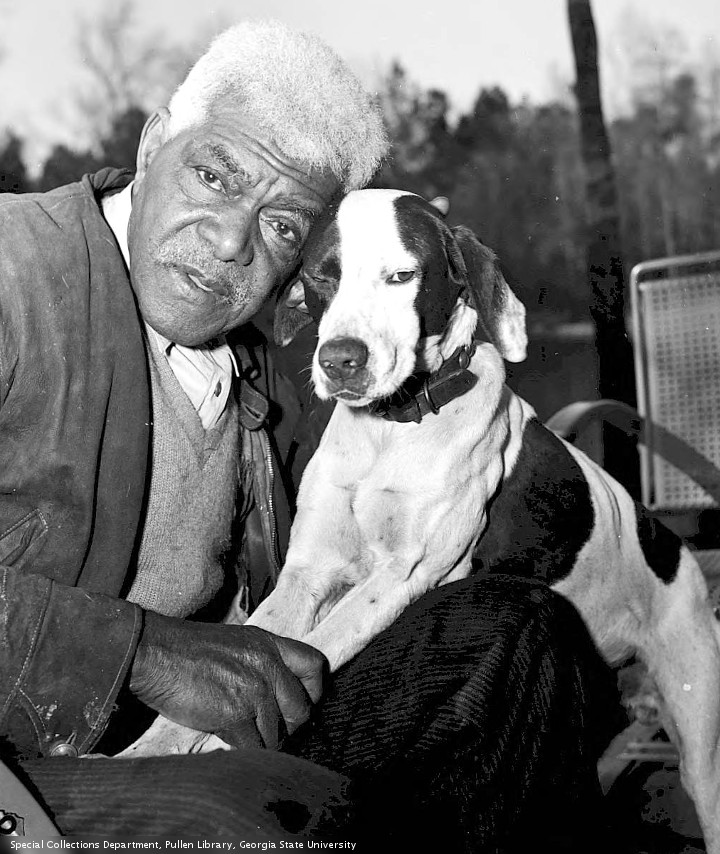
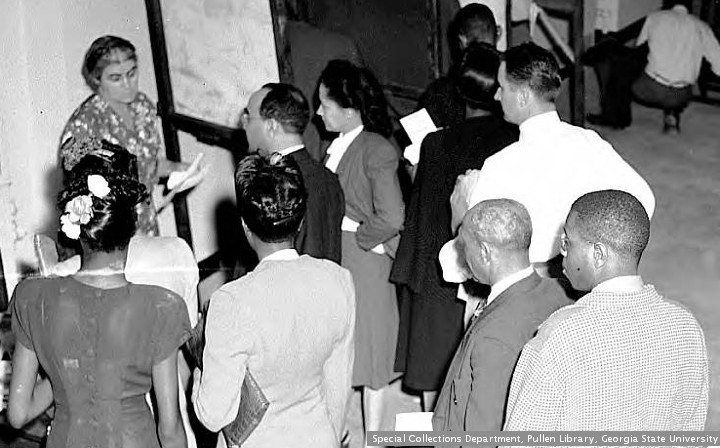
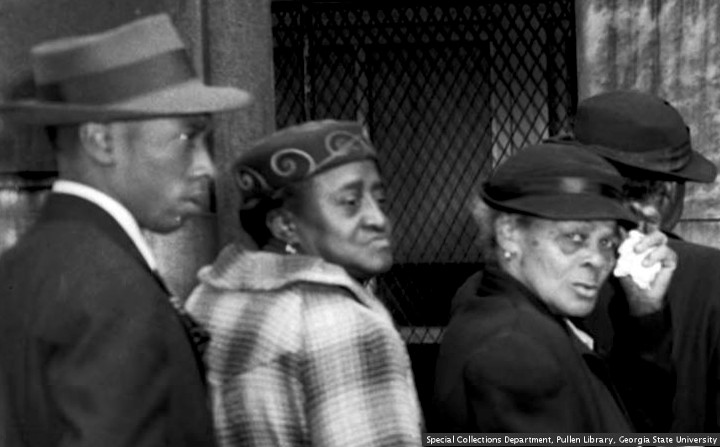
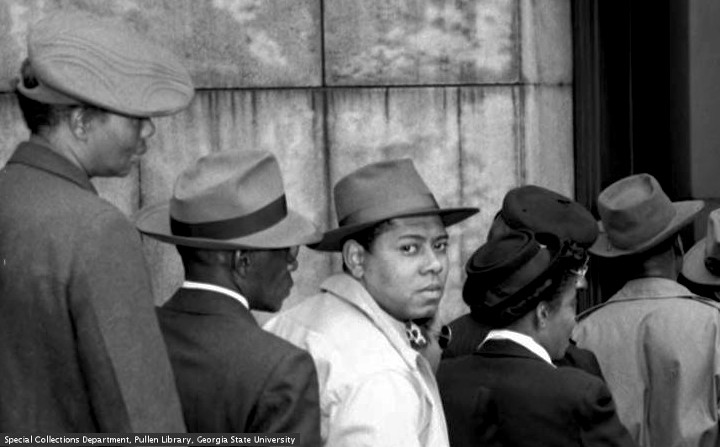
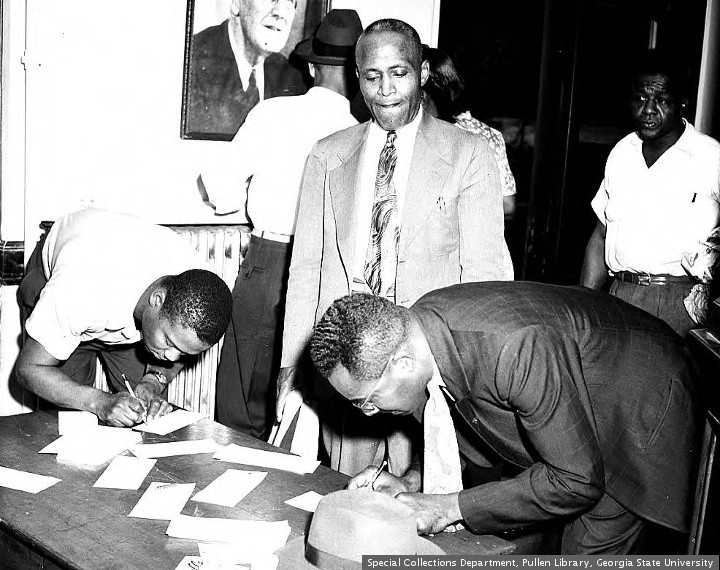
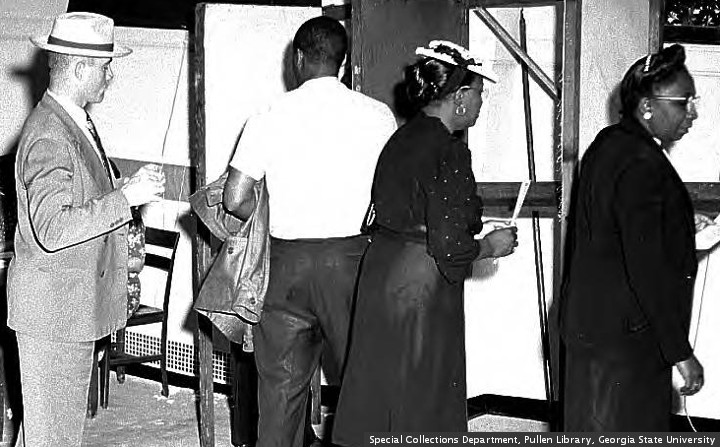
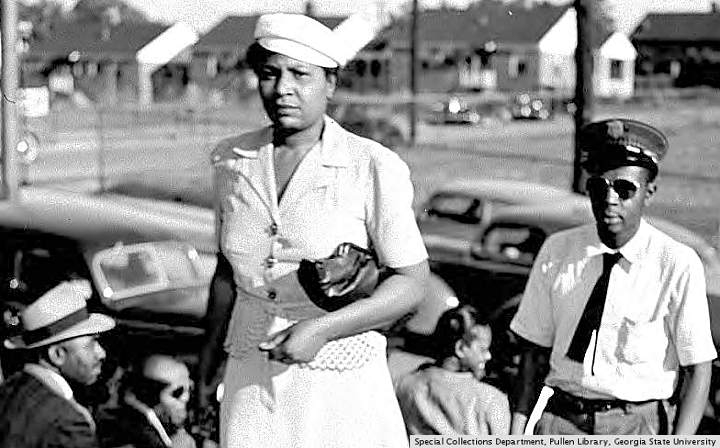
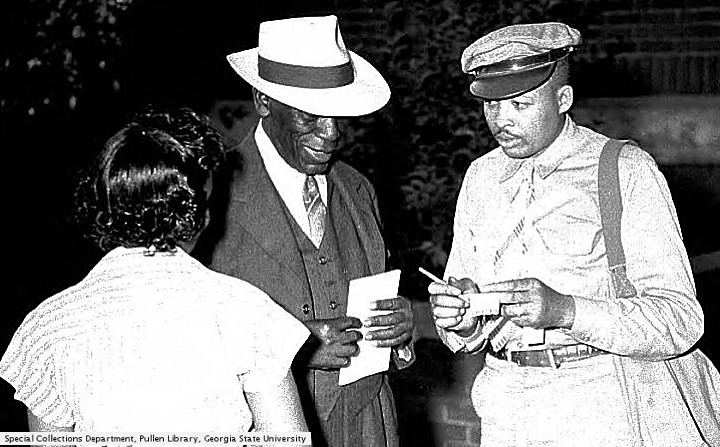
In the time between 1980 and 1994, if you lived in Atlanta you heard about Lewis Grizzard. Some people loved him. Some did not. He told good old boy stories about growing up in rural Georgia. Many of them were enjoyable. He also made social and political commentaries, which upset a few people. This is a chilly tuesday morning repost, with historic pictures from “The Special Collections and Archives, Georgia State University Library”.
PG had mixed feelings about Lewis. The stories about Kathy Sue Loudermilk and Catfish were funny. His opinions about gays, feminists, and anything non redneck could get on your nerves. His column for the fishwrapper upset PG at least twice a week.
In 1982, Lewis (he reached the level of celebrity where he was known by his first name only) wrote a column about John Lennon. Lewis did not understand why Mr. Ono was such a big deal. PG cut the column out of the fishwrapper, and put it in a box. Every few years, PG would be looking for something, find that column, and get mad all over again.
The New Georgia Encyclopedia has a page about Lewis, which expresses some of these contradictions. “If Grizzard’s humor revealed the ambivalence amid affluence of the Sunbelt South, it reflected its conservative and increasingly angry politics as well. He was fond of reminding fault-finding Yankee immigrants that “Delta is ready when you are,” and, tired of assaults on the Confederate flag, he suggested sarcastically that white southerners should destroy every relic and reminder of the Civil War (1861-65), swear off molasses and grits, drop all references to the South, and begin instead to refer to their region as the “Lower East.” Grizzard also wore his homophobia and hatred for feminists on his sleeve, and one of the last of his books summed up his reaction to contemporary trends in its title, Haven’t Understood Anything since 1962 and Other Nekkid Truths (1992).
In the end, which came in 1994, when he was only forty-seven, the lonely, insecure, oft-divorced, hard-drinking Grizzard proved to be the archetypal comic who could make everyone laugh but himself. He chronicled this decline and his various heart surgeries in I Took a Lickin’ and Kept on Tickin’, and Now I Believe in Miracles (1993), published just before his final, fatal heart failure.”
As you may have discerned, Lewis McDonald Grizzard Jr. met his maker on March 20, 1994. He was 47. There was a valve in his heart that wasn’t right. The good news is that he stayed out of the army. At the time, Vietnam was the destination for most enlistees. The bad news is that his heart problems got worse and worse, until it finally killed him.
Sixteen years later, PG found a website, Wired For Books It is a collection of author interviews by Don Swaim, who ran many of them on a CBS radio show called Book Beat. There are two interviews with Lewis Grizzard One was done to promote My Daddy Was a Pistol and I’m a Son of A Gun. This was the story of Lewis Grizzard Senior, who was another mixed bag.
PG found himself listening to this chat, and wondered what he had been missing all those years. The stories and one liners came flowing out, like the Chattahoochee going under the traffic slogged perimeter highway. Daddy Grizzard was a soldier, who went to war in Europe and Korea. The second one did something to his mind, and he took to drinking. He was never quite right the rest of his life. His son adored him anyway. When you put yourself in those loafers for a while, you began to taste the ingredients, in that stew we called Lewis Grizzard.
PG still remembers the anger that those columns caused … PG has his own story, and knows when his toes are stepped on. The thing is, after listening to this show, PG has an idea of why Lewis Grizzard wrote the things that he did. Maybe PG and Lewis aren’t all that different after all.


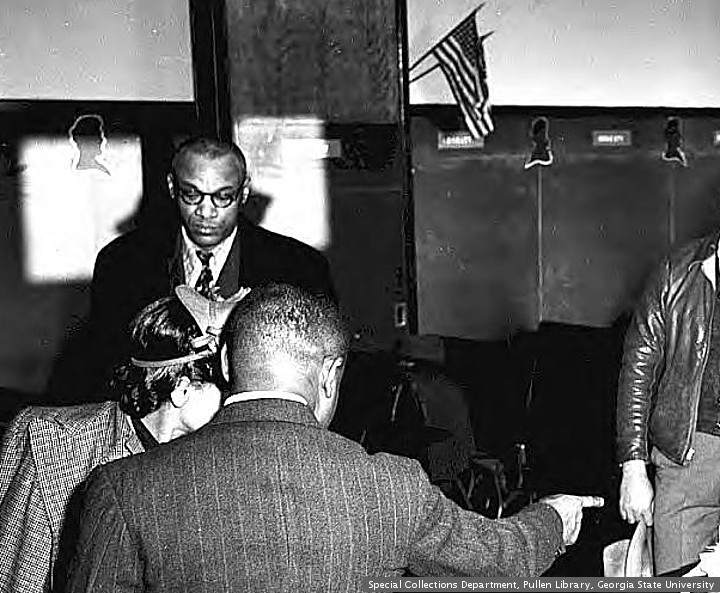

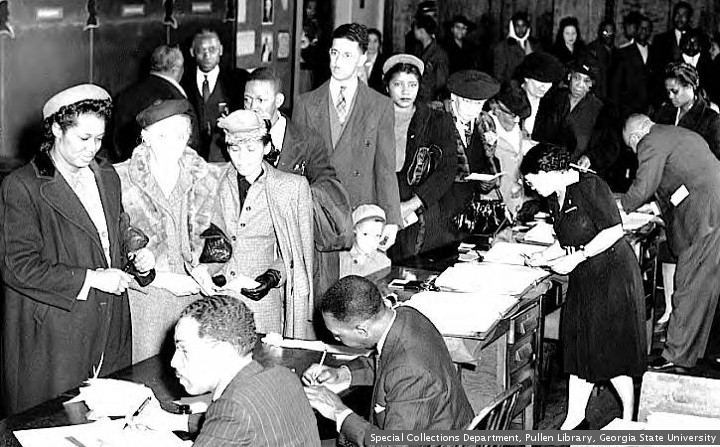


Pretty Monsters Part Five

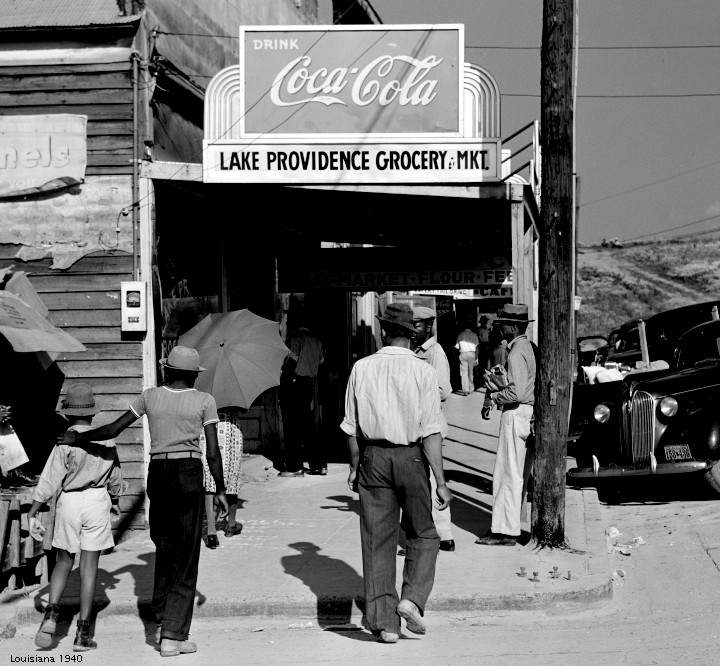






This is the last installment in this series. The focus is Pretty Monsters, by Kelly Link. The first four episodes are out. (Part one part two part three part four) The Big Read artistic response will get there, somehow. So far, this review has produced little creativity at this blog. The only thing to do is slog through part five, and see if any sparks fly. If nothing else, the reader can look at the pictures. These fine images are from The Library of Congress.
Pretty Monsters is the title story, as well as the longest. It is two stories, told in alternating sections. In one, Clementine Cleary is a dippy little girl, who is saved from drowning by Cabell Meadows. Mr. Meadows later has reasons to regret extending her life. In the other story, a gang of teenage girls kidnap a classmate, and proceed to treat her to an “ordeal.” There are also werewolves. This story is spoiler free, because it doesn’t have a conclusion. Maybe the artistic response could be a poem, detailing the ending to Pretty Monsters.
Meanwhile, COVID-19 marches on. Today’s story from the far side involves Baltimore mayor Jack Young. “We’re dealing with the COVID virus and those of you who want to continue to shoot and kill people in this city we’re not going to tolerate it. We’re going to come after you and we’re going to get you … We can not clog up our hospitals and their beds with people who are being shot senselessly because we’re going to need those for people who might be infected with the coronavirus. It could be your mother, your grandmother, one of your relatives so … put down the guns.”
What is an ordeal? “It’s just this tradition,” Lee says. “Girls’ schools have all kinds of weird traditions. Normally you have your Ordeal when you’re a freshman—you know, a rite of passage or something. But we think Czigany is great, and so a couple of weeks ago we asked her if she wanted one because otherwise. … “This isn’t a road trip,” says Bad, who has known Maureen just as long as Lee has. Bad never tries to be reasonable when she can be perverse. “It’s a kidnapping. And it’s already all messed up. Just like in the movies. It will end up with Lee shooting all of us and then having to dispose of the bodies in a wood chipper.”
During the ordeal, the girls took the ordealee to the farm of someone’s aunt. “Dodo is Lee’s mother’s older sister. She’s a former anarchist who served nine years in a high-security women’s prison. Now she makes cheese instead of bombs. When she set up her herd at Peaceable Kingdom, she invested in six Toggenburgs. Over time she’s swapped, bartered, adopted, and bought increasingly more esoteric breeds. The current herd numbers somewhere around thirty goats, including Booted Goats, Nubian Blacks, Pygmy Goats, and four Tennessee Fainting Goats. Dodo spent her years in prison doing coursework in animal husbandry. Goats, she likes to say, are the ultimate anarchists.”
Dodo gives the reader important information. “Just keep an eye on your friends. Caught Bad trying to sneak up on my Tennessee girls and make them faint. What kind of name is that anyway?” “Her real name is Patricia. And I used to do that, too,” Lee reminds her. “When you were eight. Glad you’re not eight anymore. You were a real punk.” Dodo says this without a drop of fondness. “So what am I now?” Lee says, teasing. Dodo sighs. Gives Lee a hard look. “A monster. You and your friends, all of you. Pretty monsters. It’s a stage all girls go through. If you’re lucky you get through it without doing any permanent damage to yourself or anyone else.”
Meanwhile, back at the beach, Clementine has decided that Cabell is the man for her. Clementine’s girlfriends are not so sure. “Cabell Meadows doesn’t wear deodorant,” Madeline said. … Grace took over, as if she and Madeline were training for the Olympics in the freestyle unsolicited advice relay. … But you’ve grown up, Clementine, and he hasn’t, okay? At a certain age, for guys, it comes down to robots or girls. … The point is that this guy has already made the choice, Clementine. If you were all hairy and ran around in the forest maybe you’d have a chance, but you’re not and you don’t. … If Cabell Meadows is the big secret crush you’ve been hiding all of these years, God help you. Because I sure can’t.” Madeline said, “I agree with everything she just said.”
Clementine’s no-good uncle gets Cabell’s not-much-better sister pregnant. “The wedding was a disaster from the beginning. … An hour before the ceremony was supposed to begin, Mrs. Meadows had sent her off to dig through the trunk of the maid of honor’s car for tit tape. … Beach weddings rapidly became less romantic once the sand fleas found you.”
“She found a can of Coke and poured half of it out. Poured vodka in. It was almost as not-bad as everyone had said. … Things went downhill after that. … When she found Cabell, he was dancing with slutty Lizzy York, the maid of honor. It didn’t matter. Not even the hideous, antiquated music mattered. “Hey, Cabell,” Clementine yelled. “Hey, Clementine,” Cabell yelled back. He executed a dance move. “Your mom was looking for you. What’s up?” “Sorry, Lizzy,” Clementine said. “I need to show Cabell something. We’ll be right back. Promise.” …
“It’s romantic here, isn’t it?” Clementine said. “If you wanted to kiss me, I’d understand.” … “Don’t think I don’t appreciate the offer, Clementine,” Cabell said, “but hell, no.” “Oh shit,” Clementine said. “You’re gay?” “No!” Cabell said. “And stop taking off your clothes, okay? I’m not gay, I’m just not interested. Not to be an asshole, but you’re not my type.” “I’m not taking off my clothes,” Clementine said. “Just my shoes. And my pantyhose. And what do you care? Dancy said you sleep in the nude. Do you still sleep in the nude? There’s sand in my pantyhose. And what do you mean I’m not your type? What type am I?” “Underage,” Cabell said. “Unlike your uncle, I don’t go for babies.”
Everyone gets on with life, until the werewolves get involved. Cabell gets kicked out of grad school for “liberating” lab test animals. While out on bail, Cabell moves to Romania, and gets married. Clementine has a wealthy bf, who takes her to Romania. Thinds are a bit uncertain on Aunt Dodo’s farm as well. The story wears out at this point.
The book has a bonus story, The Cinderella Story. It is not on the .pdf, so there are no snappy quotes. The Cinderella Story is the tale of step-siblings who are mean to each other. This is the end of the Pretty Monsters regurgitation at this blog. You may now return to your regularly scheduled COVID-19 speculation and misinformation.






Pretty Monsters Part Four


Pretty Monsters is a work of speculative fiction. You visit a world created by the author’s imagination. If you make enough predictions, some are going to come true. This happens in The Surfer.
Adorno, aka Dorn, is a soccer goalie. He thinks he is pretty good. His father is a Philadelphia doctor, who brought Dorn to Costa Rica on a moments notice. “Dorn is here with his father because of Hans Bliss and the aliens. Because, you know, Hans Bliss said that the aliens are going to show up again real soon and this time he knows what he’s talking about. Not like all those other times when he said the aliens were coming back.”
Hans Bliss is some kind of hippie utopia-grifter dude. Before the end of the story, Mr. Bliss is dead. There is some kind of virus going around, killing a bunch of people. In Costa Rica, all the visitors are quarantined in a gym. They spend their days playing soccer, looking at “googlies,” and getting in arguments. Meanwhile, the virus is busy in the outside world.
“It was the hardest thing I ever had to do, telling my father when he finally came home. And we haven’t talked about it much since then. I don’t know why it’s easier for some people to talk about aliens than to talk about death. Aliens only happen to some people. Death happens to everyone.”
The quarantine continues. Dorn has a soccer match. A guard makes a fool out of Dorn. It turns out the guard was a professional player. Dorn decides to quit playing, or maybe not. Dorn doesn’t quite know what he wants to do.
The aliens really do arrive. Dorn is out of quarantine, so he can see them. “Dad,” I said. “Dad! Everyone! The aliens! They’re here. They’re just outside! Lots of them!” But I stood there feeling empty and lost and ashamed and alone until I heard my father’s voice. He was saying, “Dorn! Adorno, where are you? Adorno, get out here! They’re beautiful, they’re even more beautiful than that idiot said. Come on out, come and see!”
Is a visit from aliens going to coincide with COVID-19? Or maybe a gang of murderous con-women, like Zilla and Ozma in The Constable of Abal. “Zilla was not greedy. She was a scrupulous blackmailer. She did not bleed her clients dry; she milked them. You could even say she did it out of kindness. What good is a secret without someone to know it? When one cannot afford a scandal, a blackmailer is an excellent bargain. Ozma and Zilla assembled the evidence of love affairs, ill-considered attachments, stillbirths, stolen inheritances, and murders. They were as vigilant as any biographer, solicitous as any confidante. Zilla fed gobbets of tragedy, romance, comedy to the ghosts who dangled so hungrily at the end of their ribbons. One has to feed a ghost something delicious, and there is only so much blood a grown woman and a smallish girl have to spare.”
“the ghosts who dangled so hungrily at the end of their ribbons.” The titular Constable was one of these ghosts. When Zilla was not looking, the Constable and Ozma got to be pals. Ozma was developing into a young women, which was not convenient to Zilla. “It isn’t your fault, Ozma. My magic can only do so much. Everyone gets older, no matter how much magic their mothers have. A young woman is trouble, though, and we have no time for trouble. Perhaps you should be a boy. I’ll cut your hair.” Ozma backed away. She was proud of her hair. “Come here, Ozma,” Zilla said. She had a knife in her hand. “It will grow back, I promise.”
“I took a position in service,” Zilla said. “You are my son, and your name is Eren. Your father is dead, and we have come here from Nablos. We are respectable people. I’m to cook and keep house.” “I thought we were going home,” Ozma said. “This isn’t home.” “Leave your ghosts here,” Zilla said. “Decent people like we are going to be have nothing to do with ghosts. … This did not sound at all like Zilla. Ozma was beginning to grow tired of this new Zilla. It was one thing to pretend to be respectable; it was another entirely to be respectable.”
The new employer, Lady Fralix, is not with the program. Or maybe she is, and Zilla is out to lunch, with Ozma caught is trans-respectability purgatory. “The pink dressing gown,” Lady Fralix said. “If you let me keep your ghost in my pocket today, I’ll give you one of my dresses. Any dress you like.” “Zilla would take it away and give it to the poor,” Ozma said. Then: “How did you know I’m a girl?” “I’m old but I’m not blind,” Lady Fralix said. “I see all sorts of things. … You shouldn’t keep dressing as a boy, my dear. Someone as shifty as you needs some truth now and then.”
“It’s a good thing,” Lady Fralix said, “that most people can’t see or talk to ghosts. Watching them scurry around, it makes you dread the thought of death, and yet what else is there to do when you die? Will some careless child carry me around in her pocket? … Your mother is a goddess,” Lady Fralix said. “My mother is a liar and a thief and a murderer,” Ozma said. “Yes,” Lady Fralix said. “She was all of those things and worse. Gods don’t make very good people. They get bored too easily. And they’re cruel when they’re bored.”
There is more action, but in an effort to maintain a spoiler free blog, you will have to read the story. Pictures today are from The Library of Congress. Quotes are from the .pdf. Previous episodes of this series are available. (part one part two part three part five)




Billie Holiday Stories




How ‘Strange Fruit’ Killed Billie Holiday turned up in a facebook feed yesterday. The article states that Harry Jacob Anslinger “the first commissioner of the U.S. Treasury Department’s Federal Bureau of Narcotics,” ordered Billie Holiday to quit performing “Strange Fruit.” When the chanteuse declined, Mr. Anslinger had her arrested for heroin possession. Later, Mr. Anslinger was allegedly responsible for busting Miss Holiday on her deathbed.
The Hunting of Billie Holiday was the source given for the claim about Mr. Anslinger and “Strange Fruit.” The Politico article does not say that Mr. Anslinger ordered Miss Holiday to quit singing “Strange Fruit.” It does say that Louis McKay, one of the many no-good men in Miss Holiday’s life, narked her out. The bust was in 1947, after she had been performing “Strange Fruit” for several years. (Lady Sings The Blues says that Louis McKay was not in Miss Holiday’s life in 1947.)
Politico had one comment that set off the bs detector. “One day, Harry Anslinger was told that there were also white women, just as famous as Billie, who had drug problems—but he responded to them rather differently. He called Judy Garland, another heroin addict, in to see him.” Frances Gumm was well known for having substance abuse issues. The heroin business was news to a lot of people.
Johann Hari was the author of the politico article. At the time, he was promoting a book, Chasing the Scream, about the war on drugs. Johann Hari has a spotted reputation. “The author used to be the Independent’s star columnist, a prolific polemicist and darling of the left, until his career imploded in disgrace when it emerged in 2011 that many of his articles contained quotes apparently said to him but in fact lifted from his interviewees’ books, or from previous interviews by other journalists.”
The final bust, as Miss Holiday lay dying in the hospital, is part of the legend. A google search does not show what agency was responsible. Harry Anslinger may have been involved, and it may have been someone else. By this time, Elanora Fagan was in bad, bad shape. Years of drinking, and hard drugs, had worn her out. While the hospital bust may have hastened her demise, it is a bit of a stretch to say the Harry Anslinger killed Billie Holiday, because she sang “Strange Fruit.”
This is a repost. Pictures today are from The Library of Congress.







Lady Sings The Blues is the autobiography of Billie Holiday. PG read it in 1978, and pulled it off the shelf recently. The copy he has is was a 1972 paperback, issued in conjunction with the movie. A picture of Diana Ross is on the cover, as well as a price sticker from Woolco. The book sold for $1.25. Pictures today are from The Library of Congress. The spell check suggestion for Woolco is Cool.
William Dufty was the ghost writer. His prose is easy to read, with the story flowing out like a Lester Young solo. The 1956 copyright is assigned to “Eleanora Fagan and William Dufty,” using the birth name of the singer. Mr. Dufty was a newspaper writer. “Dufty had one son, Bevan Dufty, with first wife Maely Bartholomew, who had arrived in New York City during World War II after losing most of her family in the Nazi concentration camps. She settled near Harlem where she met her best friend and Bevan’s godmother, Billie Holiday.”
“Bevan Dufty would agree. He’s one of the childless singer’s two godchildren. … “Holiday said motherf — all the time, in her gravelly elegant way,” recalled Dufty, sitting in his City Hall office. His mother, Maely, a Czech Jewish immigrant who loved jazz, was close to many musicians and even managed the unmanageable Charlie Parker for a spell, learned to curse from Holiday. But with a European accent. Much of what Dufty knows of Holiday comes from his late mother, who was married to actor Freddie Bartholomew before her brief marriage to William Dufty, one of her seven husbands. Maely, who took her infant son by train to Philadelphia every day to attend yet another of Holiday’s drug trials, was so distraught by the singer’s death that she dedicated herself to helping recovering addicts. A number of musicians lived at the Duftys’ place while kicking the habit (William and Maely Dufty divorced not long after Holiday’s death, and he later married actress Gloria Swanson, who inspired him to write the book “Sugar Blues” about the dangers of processed sugar).”
Billie Holiday’s bio, ‘Lady Sings the Blues,’ may be full of lies, but it gets at jazz great’s core Autobiographies are, by their nature, self serving. This one has a great opening line… ” “Mom and Pop were just a couple of kids when they got married. He was eighteen, she was sixteen, and I was three.” (“Her parents were never married. When she was born, her mother was 19, her father was 17 and they never lived under the same roof.”) Another source adds: “Some of the material in the book, however, must be taken with a grain of salt. Holiday was in rough shape when she worked with Dufty on the project, and she claimed to have never read the book after it was finished. Around this time, Holiday became involved with Louis McKay. The two were arrested for narcotics in 1956, and they married in Mexico the following year. (March 28, 1957) Like many other men in her life, McKay used Holiday’s name and money to advance himself.”
Louis McKay is at the center of another misunderstanding of facts. The Hunting of Billie Holiday claimed that Mr. McKay narked out Miss Holiday in 1947, and set up her first drug bust. LSTB tells a different story. Here, Miss Holiday meets Mr. McKay very briefly in 1931. Someone was trying to rob Mr. McKay. Miss Holiday said “He’s my old man,” and chased off the robber.
Fast forward twenty five years, and Miss Holiday connects with Mr. McKay. “I hadn’t seen him since I was sixteen and he wasn’t much older and I was singing at the Hotcha in Harlem.” The two were married in 1957. They got busted as LSTB ends. Either Politico is wrong about the 1947 bust, or Miss Holiday did not tell the whole story. Either way, Harry Anslinger is not mentioned in LSTB.
Tallulah Bankhead is another missing piece of the puzzle. Reportedly, Miss Bankhead and Miss Holiday were close friends, and possibly lovers. That was over by the time LSTB was written. “When “Lady Sings the Blues” was being prepared, Miss Bankhead got an advance copy, and was horrified by what she saw. A fierce note was sent to the book’s publisher, and scenes were edited out. Miss Holiday was outraged. The letter that resulted is a poison pen classic. “My maid who was with me at the Strand isn’t dead either. There are plenty of others around who remember how you carried on so you almost got me fired out of the place. And if you want to get shitty, we can make it a big shitty party. We can all get funky together!”
Miss Bankhead does make an appearance in LSTB. On page 117, Miss Holiday is describing playing a maid, in a movie. She was not pleased at the typecasting. “Don’t get me wrong. I’ve got nothing against maids – or whores – whether they’re black or white. My mother was a maid, a good one, one of the greatest. My stepmother is Tallulah Bankhead’s maid right now, and that’s a part I’d even consider when they do her life story.” (Miss Bankhead had her own domestic help problems. In 1951, Evyleen Cronin, Tallulah’s maid and secretary, was accused of stealing $10,000-30,000 from Tallulah during her employment. … The case went to trial (much to Tallulah’s embarrassment) and Cronin was convicted.” Many embarrassing details about Miss Bankhead’s life came to light during this trial. Fanny Holiday, the stepmother, is probably a different person than Evyleen Cronin.)
Whatever it’s factual challenges, Lady Sings the Blues is a powerful book. Miss Holiday had a tough life, to say the least. As the singer for Artie Shaw’s big band, Miss Holiday was an integration pioneer, and every two bit cracker wanted to make trouble. Later, she was addicted to heroin, got busted, served time in prison, only to get out and suffer some more.
Three years after LSTB came out, things went from bad to horrible. “In early 1959 she found out that she had cirrhosis of the liver. The doctor told her to stop drinking, which she did for a short time, but soon returned to heavy drinking. … On May 31, 1959, Holiday was taken to Metropolitan Hospital in New York suffering from liver and heart disease. She was arrested for drug possession as she lay dying, and her hospital room was raided by authorities. Police officers were stationed at the door to her room. Holiday remained under police guard at the hospital until she died from pulmonary edema and heart failure caused by cirrhosis of the liver on July 17, 1959.” This is a repost.




Pretty Monsters Part Three
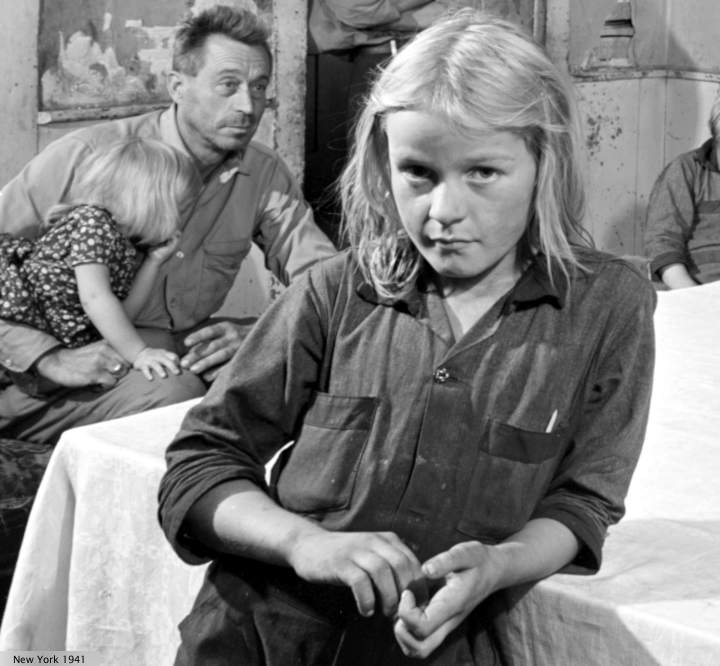
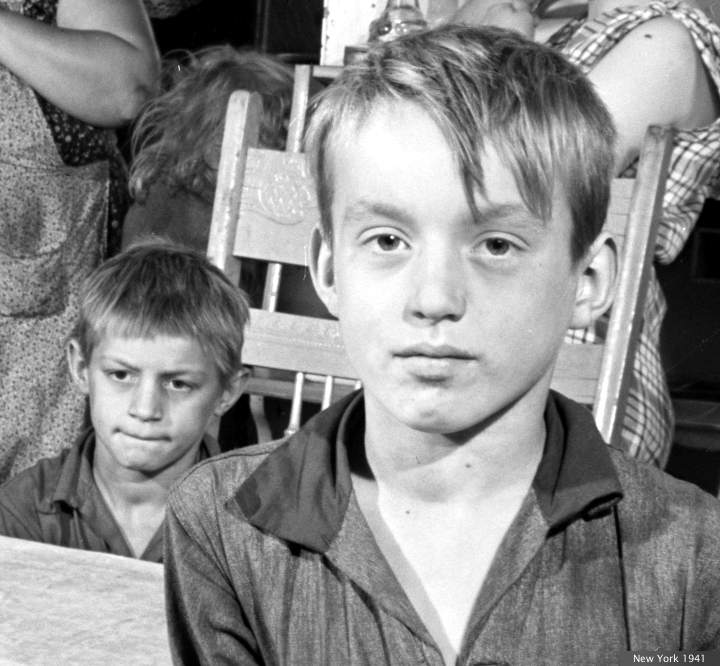

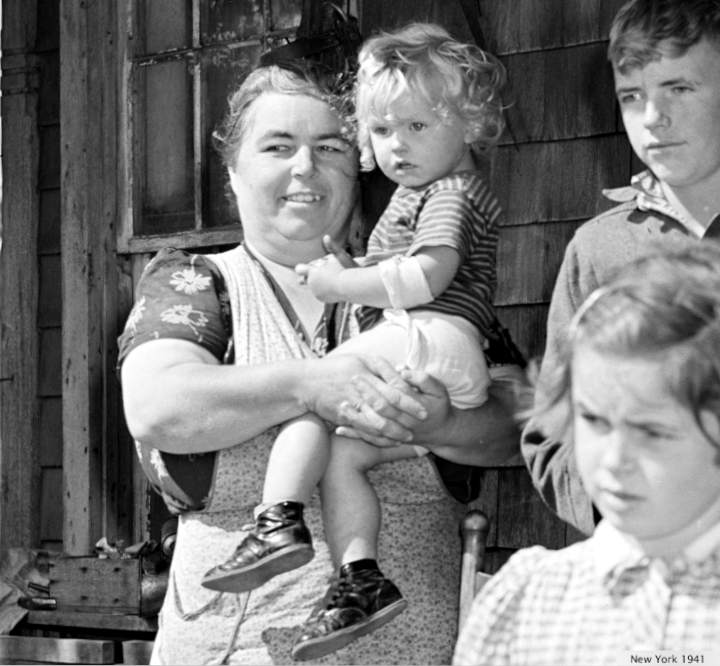
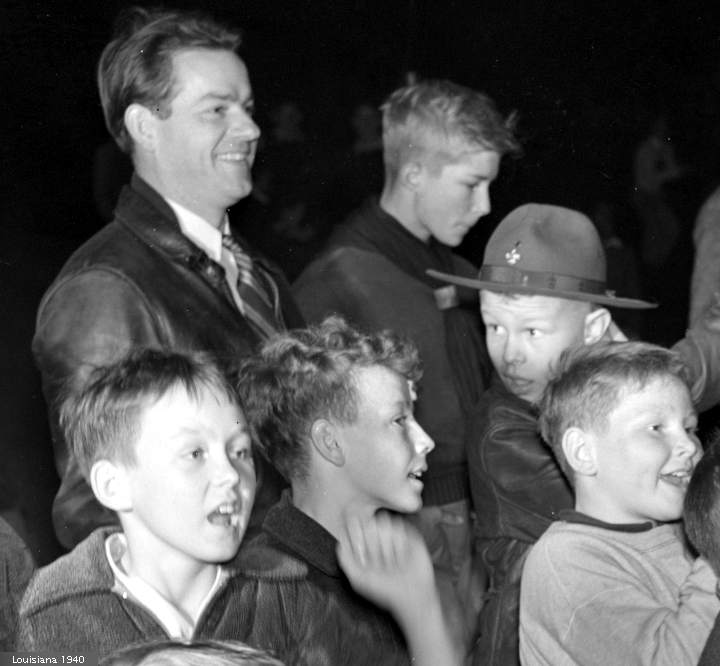

“Claire and Samantha are identical twins. Their combined age is twenty years, four months, and six days. Claire is better at being Dead than Samantha. … “When you’re dead,” the babysitter snaps, “it’s always very cold and damp, and you have to be very, very quiet or else the Specialist will get you.” It is important to note the difference between Dead and dead. One is a game that obnoxious little girls play. The other is a state of being, peculiar to plants and animals, where the functions of a living organism no longer operate.
C&S are spending the summer with their father in a haunted mansion. This fulfills two of the themes of Pretty Monsters We don’t know where the mansion is. Travelers can find it to take tours, but the reader does not have to know. New England is a likely suspect.
The second PM theme is the weirdo parent. This one has a good excuse. His wife is recently deceased. The girls talk about it all the time. In a bit of synchronicity, PG is reading The Specialist’s Hat on the anniversary of his own mother’s transition. This stood out with passages like this: “Last year they were learning fractions in school, when her mother died. Fractions remind Samantha of herds of wild horses, piebalds and pintos and palominos. There are so many of them, and they are, well, fractious and unruly.” It should be noted that a ten year old boy would probably not say anything like that. Wild horses are more of a girl thing.
One day, C&S … the girls, not the bank … were riding horses, in the magic attic of the haunted house. Or maybe it is a bicycle. That is another thing about Pretty Monsters, the details get confused. The difference between a horse, and a bicycle, is huge. You don’t shoot a bicycle if you get a flat tire.
“If you ride fast enough, the Specialist can’t catch you.” “What’s the Specialist?” Samantha says. Bicycles are okay, but horses can go faster. “The Specialist wears a hat,” says the babysitter. “The hat makes noises.”She doesn’t say anything else. … Hanging from a nail on the nursery chimney is a long black object. It looks lumpy and heavy, as if it were full of things. The babysitter takes it down, twirls it on her finger. There are holes in the black thing and it whistles mournfully as she spins it. “The Specialist’s hat,” she says.” …
“Claire weaves in and out between the chimneys, chasing Samantha and the babysitter. Samantha is slow, turning to look behind. As Claire approaches, she keeps one hand on the handlebars and stretches the other hand out towards Samantha. Just as she is about to grab Samantha, the babysitter turns back and plucks the hat off Claire’s head.” …
“Shit!” the babysitter says, and drops it. There is a drop of blood forming on the fleshy part of the babysitter’s hand, black in the moonlight, where the Specialist’s hat has bitten her. Claire dismounts, giggling. Samantha watches as the Specialist’s hat rolls away. It picks up speed, veering across the attic floor, and disappears, thumping down the stairs. “Go get it,” Claire says. “You can be the Specialist this time.” “No,” the babysitter says, sucking at her palm. “It’s time for bed.”
Monster, the next story, is about boys. The only girl is the camp counselor’s gf, and all she does is make phone calls. It is hinted that the counselor is the titular monster, since he disappears when the monster, who does not have a name, appears.
A bunch of ten year olds are at a summer camp. It is the traditional assortment of misfits and misterfits. “Yeah, James Lorbick should always wear dresses. He’s so hot.” “James Lorbick, I think you are so hot. Not.” “Leave James alone,” Bryan Jones said.”
The boys in bungalow 6 are going on an overnight expedition. It is going to rain. The boys in bungalow 4 have already been on this trip, and they saw a monster. The bungalow 4 boys are mean, and nobody likes them. This is the reason the monster left them alone.
They go on this trip. The counselor disappears to talk to his gf on the phone. While he is gone, the monster appears. Even though it is summer, it starts to snow. James Lorbick, who nobody likes, becomes the sort-of hero. We know more about the way the monster smelled, than we do about the way the monster looked.
“The snow kept falling. They did little dances in the snow to keep warm. The fire got thinner and thinner and started to go out. But before it went out, the monster came up the muddy, snowy path. It smiled at them and it came up the path and Danny Anderson shone his flashlight at it and they could all see it was a monster and not Terence pretending to be a monster. … “
“The monster had one Simpson twin under each arm. The twins were screaming. The monster threw them down the path. Then it bent over Bryan Jones, who was lying half inside one of the tents, half in the snow. There were slurping noises. After a minute it stood up again. It looked back and saw James Lorbick. It waved.”
“James Lorbick shut his eyes. When he opened them again, the monster was standing over him. It had red eyes. It smelled like rotting fish and kerosene. It wasn’t actually all that tall, the way you’d expect a monster to be tall. Except for that, it was even worse than Bungalow 4 had said. …”
“I’m sorry about the rest of your bungalow. Your friends. Your friends who made you wear a dress.” “Are you going to eat me?” James said. “I don’t know,” the monster said. “Probably not. There were a lot of you. I’m not actually that hungry anymore. Besides, I would feel silly eating a boy who’s wearing a dress. And you’re really filthy.”
This is part three of the chamblee54 exploration of Pretty Monsters, by Kelly Link. The quotes are from the .pdf. Part one, part two, part four, and part five, are available, at an internet near you. Pictures for are from the The Library of Congress. They are with the government, and here to help.




Pretty Monsters Part Two

PG knew he would need to write this. It was raining cats and dogs outside. The world was stumbling into war. The excuses were wearing out. Four more stories had been read in Pretty Monsters. It was time to sit down and write.
Magic For Beginners is the story of Jeremy Mars. He lives with his weirdo parents in Plantagenet VT. If you google Plantagenet VT, you learn that no such place exists. The story begins with the news that Jeremy’s mom has inherited a phone booth, and a wedding chapel, in Las Vegas NV.
First, they have to get away from Gordon Strangle Mars, Jeremy’s dad. He writes fantasy stories about giant spiders. “Jeremy … settles down with the remote control on one of his father’s pet couches: oversized and reupholstered in an orange-juice-colored corduroy that makes it appear as if the couch has just escaped from a maximum security prison for criminally insane furniture. This couch looks as if its hobby is devouring interior decorators. Jeremy’s father is a horror writer, so no one should be surprised if some of the couches he reupholsters are hideous and eldritch.”
Eldritch “strange or unnatural especially in a way that inspires fear : weird, eerie” Most people don’t use the word eldritch. Nor do they know the difference between golem,“an artificial human being in Hebrew folklore endowed with life,” and gollum, “a stoorish hobbit in tolkien stories.”
Golem and gollum turn up in plot twists from The Library, a tv show. Jeremy, and his friends, watch it fanatically. “In the previous episode of The Library, masked piratemagicians said they would sell Prince Wing a cure for the spell which infested Faithful Margaret’s hair with miniature, wicked, fire-breathing golems.”
“The George Washington statue stepped down off his plinth and fought her tooth and nail. … The statue of George Washington bit Fox’s pinky finger right off, just like Gollum biting Frodo’s finger off on the top of Mount Doom. But of course, once the statue tasted Fox’s magical blood, it fell in love with Fox. It would be her ally from now on.” Fox is a Library character, who may, or may not be dead. Likewise, Fox may be one of Jeremy’s pals, living in a Nevada phone booth. Magic for Beginners, like the rest of Pretty Monsters, can be confusing.
Mr. and Mrs. Mars need to take a break from each other. Mrs. Mars, and Jeremy, go to Nevada to take over the wedding chapel. “He never sees anyone who looks like a Forbidden Book, although he sees a transvestite go into the women’s restroom at a rest stop in Indiana.”
“Left,” he tells his mother. “Go left here. Look out for the vampires on the crosswalk.” … Four times his mother let him drive the van: once in Utah, twice in South Dakota, once in Pennsylvania. The van smells like old burger wrappers and fake fur, and it doesn’t help that Jeremy’s gotten used to the smell.” Eventually, they get to the wedding chapel, “HELL’S BELLS.”
“Good evening, Madam. Young man,” a man says and Jeremy looks up and up and up. The man at the door has to lower his head to look out. His hands are large as toaster ovens. He looks like he’s wearing Chihuahua coffins on his feet. Two realistic-looking bolts stick out on either side of his head. He wears green pancake makeup and glittery green eye shadow, and his lashes are as long and thick and green as AstroTurf.”
“We weren’t expecting you so soon.” “We should have called ahead,” Jeremy’s mother says. “I’m so sorry.” “Great costume,” Jeremy says. The Frankenstein curls his lip in a somber way. “Thank you,” he says. “Call me Miss Thing, please.”
Meanwhile, back in Georgia, PG is in the waiting room of an eye clinic. His friend “P” is having cataract surgery, and this is the follow up visit. “P” was having blurry vision, and PG was worried. The follow up appointment usually takes one hour. “P” has been behind the double doors for one hour and forty five minutes. Finally, “P” emerges. He has been in the billing department, disputing a charge.
The first three stories took a while to read. PG normally reads while warming up the vehicle, or eating dinner. It takes a while to finish anything. This changed on December 18. The computer crashed, and had to go in the shop. Suddenly, reading a dead tree book became an important diversion. PG quickly finished three stories.
The Faery Handbag begins in a Boston thrift store. Genevieve is with her pals Natasha and Natalie, and her boyfriend Jake. Genevieve is looking for the Faery handbag. “The faery handbag: It’s huge and black and kind of hairy. … Faeries live inside it. I know what that sounds like, but it’s true.”
The handbag belonged to Zofia Swink, Genevieve’s grandmother. “At the funeral, my mother said, half laughing and half crying, that her mother was the world’s best liar. … Zofia never looked like a grandmother. She had long black hair which she wore in little braided spiky towers and plaits. She had large blue eyes. She was taller than my father. She looked like a spy or ballerina or a lady pirate or a rock star. … Zofia and I played Scrabble all the time. Zofia always won, even though her English wasn’t all that great, because we’d decided that she was allowed to use Baldeziwurleki vocabulary. Baldeziwurlekistan is where Zofia was born, over two hundred years ago. That’s what Zofia said.”
“I called it the faery handbag because I put “faery” down on the Scrabble board once. Zofia said that you spelled it with an i not an e. She looked it up in the dictionary, and lost a turn. … “Your purse is made out of dog skin?” I said. “That’s disgusting!” “Little dear pet,” Zofia said, looking wistful, “dog is delicious. To Baldeziwurlekistanians, dog is a delicacy.” … “Zofia would fold up the Scrabble board and shrug at me and Jake. “I’m a wonderful liar,” she’d say. “I’m the best liar in the world. Promise me you won’t believe a single word.”
The handbag contained villages. If people went in, they came out twenty years later, and not aged one minute. One day, Zofia let the handbag out of her sight, and Jake went inside. That was the last time anyone saw Jake.
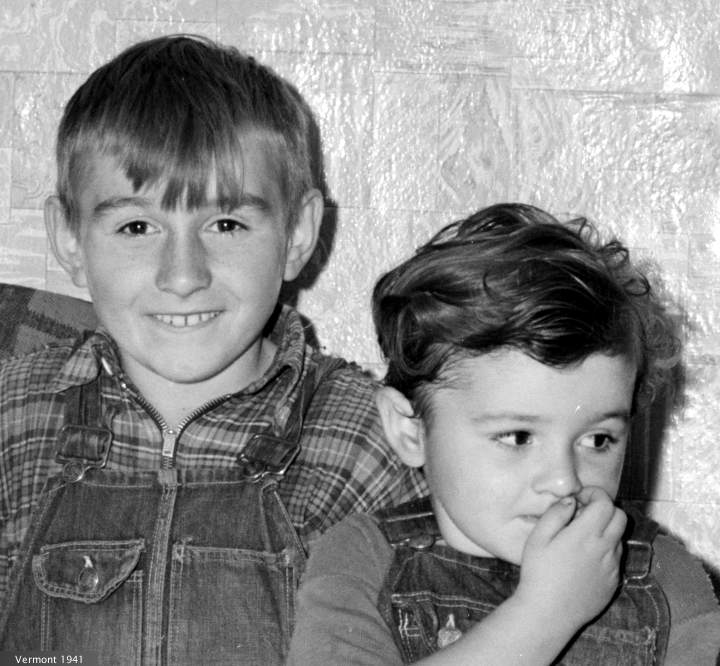
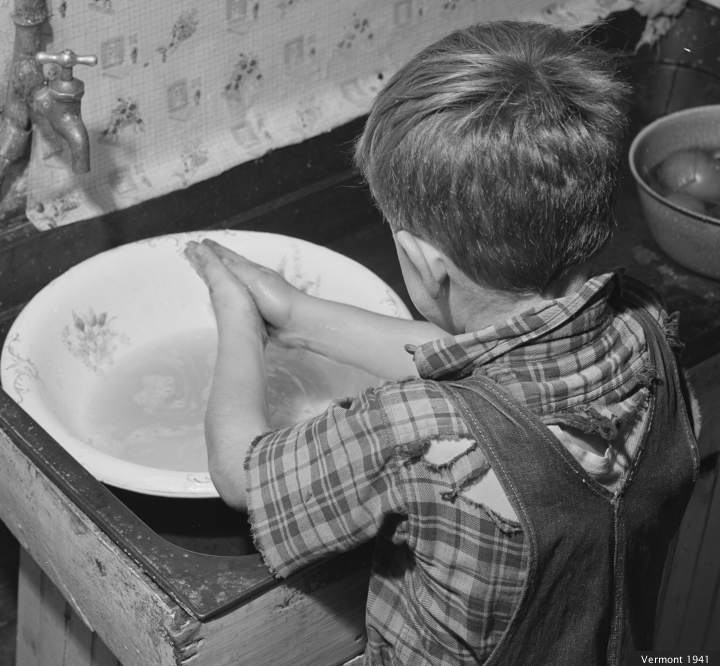
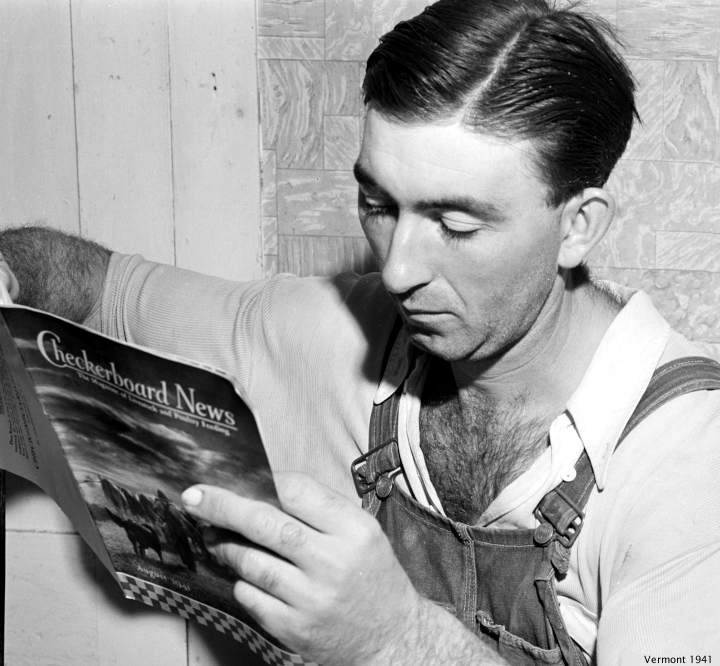
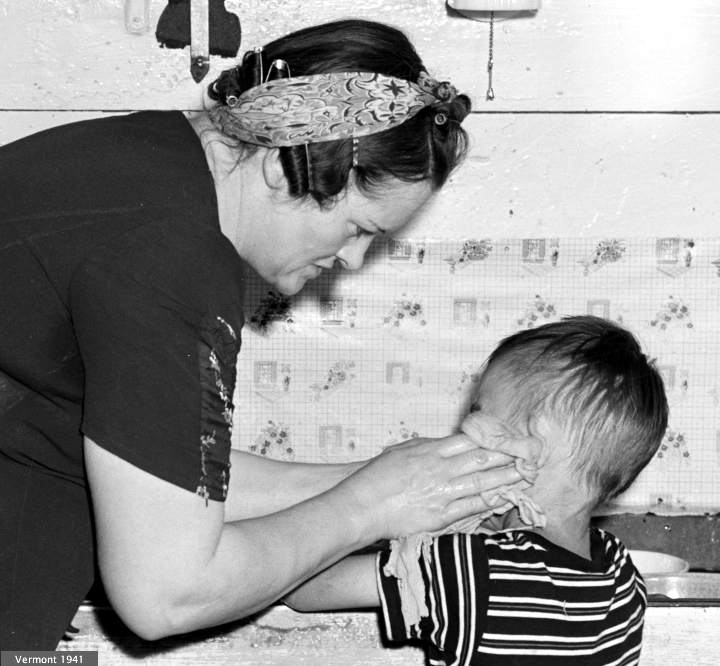
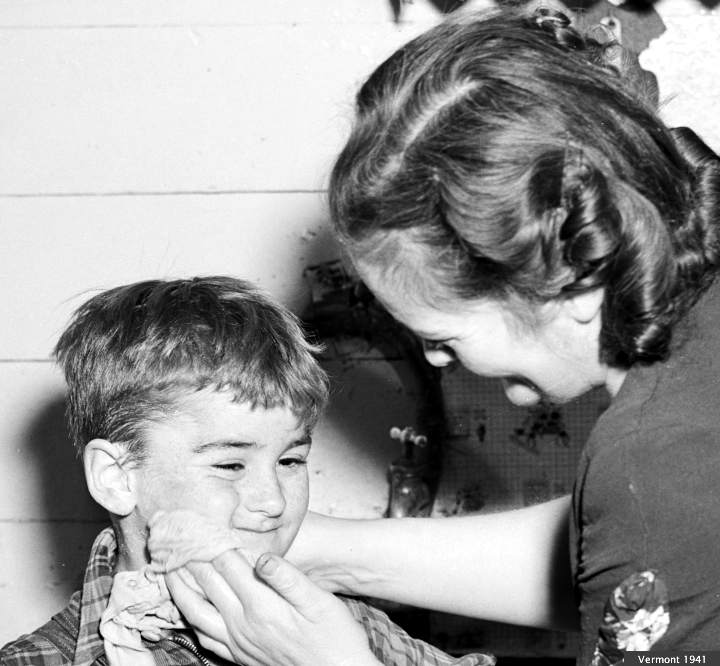
Part One, part three, part four, and part five of this series are now available. Quotes are from the .pdf. Pictures today are from The Library of Congress. Jack Delano took the pictures in September 1941. The Gaynor family at dinner on their farm. Fairfield, Vermont


 Chamblee54
leave a comment