The Death Of Jimi Hendrix


The current episode of WTF podcast features Marshall Crenshaw, who is a Jimi Hendrix fan. He discusses reports that Mr. Hendrix was murdered by Michael Jeffrey, his manager.
“The rock legend Jimi Hendrix was murdered by his manager, who stood to collect millions of dollars on the star’s life insurance policy, a former roadie has claimed in a new book. James “Tappy” Wright says that Hendrix’s manager, Michael Jeffrey, drunkenly confessed to killing him by stuffing pills into his mouth and washing them down with several bottles of red wine because he feared Hendrix intended to dump him for a new manager, according to a report in the Mail on Sunday. In his book, Rock Roadie, Mr Wright says Jeffrey told him in 1971 that Hendrix had been “worth more to him dead than alive” as he had taken out a life insurance policy on the musician worth $2m (about £1.2m at the time), with himself as the beneficiary. Two years later, Jeffrey was killed in a plane crash.
These rumors have been around for years. Whenever someone famous dies under mysterious circumstances, people wonder why. If you google the phrase “was Jimi Hendrix…” the suggested searches are left handed, a hippie, black, and murdered.
Mr. Wright’s story is denied by Bob Levine, the United States manager of Mr. Hendrix. He says Mr. Wright waited until 2009 to tell this tale, and he did it to increase book sales. Mr. Levine is legally blind after suffering a stroke. There seems to be a bit of conflict between Bob Levine and Tappy Wright.
“The Orlando-based Wright says the ex-manager (Levine) “wanted me to baby-sit him” because Levine’s alienated his family and staff. “Levine used to say, ‘If you don’t come through, I’m going to slag your book,'” claims Wright, who adds that he has a “signed and notarized” statement from Levine saying that “it’s about time somebody wrote the truth about Jimi’s death. He also did a video interview.” Levine denies Wright’s claims. Levine says he is legally blind from his stroke but has “people taking care of me.” Levine adds that he didn’t discuss Hendrix’s death in the video and has no recollection of signing the notarized statement. Asked why he chose to speak out about the book now, Levine says: “Tappy dared me. He said, ‘There’s no one left to challenge me.'” Adds Wright, “I’m just correcting the story.”
There is a story from an physician who was at the hospital when Jimi Hendrix was brought in.
“John Bannister the on-call registrar at the now closed St Mary Abbots Hospital in Kensington, said in an interview that the patient seemed to have “drowned” in a large amount of red wine.” The last paragraph of the Telegraph story is an amusing post script. “Bannister now lives in Sydney and worked as a doctor until 1992 when he was deregistered for fraudulent conduct.”
Everyone in this story is either dead or sketchy. Michael Jeffrey seems to have been a nasty piece of work. He was a former intelligence agent for Britain’s MI6 agency. There are reports of stolen money, numbered bank accounts, and gangster business tactics. Reportedly, Mr. Hendrix was busy getting new management. The last paragraph of the blog critics story is perhaps the most intriguing.
“Michael Jeffery reportedly perished in a plane crash over France in 1973. But his remains were never found. Eric Burdon, Noel Redding, and others believe he may have checked luggage but slipped away during the boarding process. Jeffery was due in London court the very next day to defend himself in several huge lawsuits relating to his embezzlement, money laundering, and fraud.”


Luther C. McKinnon
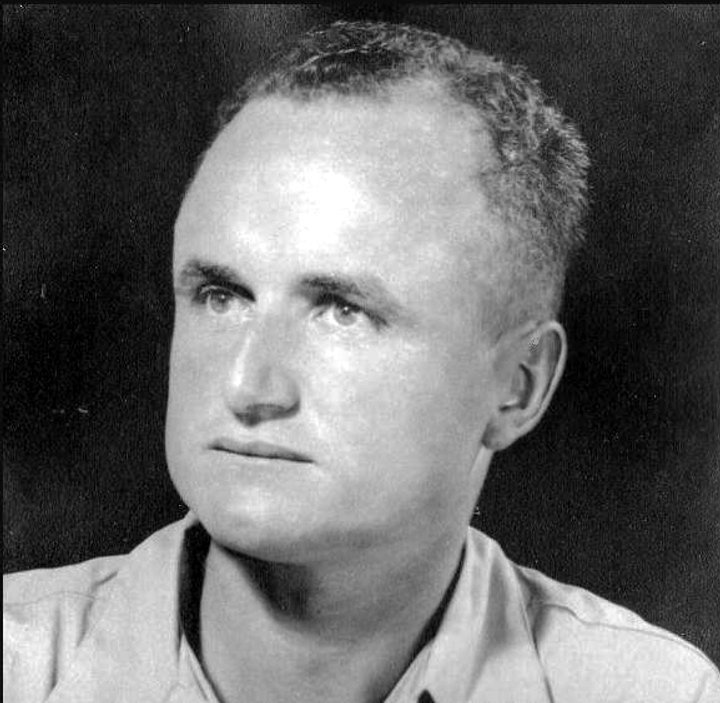


Luther Campbell McKinnon Sr. was born February 22, 1916, on a farm in Rowland, North Carolina. Europe was stuck in a war that would change the world, and not until The United States got involved. This didn’t happen for another year.
Luke was the youngest of four children. After life as a farm boy, he went to Wake Forest University, and then came back when his Daddy died. He ran a family dairy for a few years, and went to live in New Jersey. He lived near a prison, and saw the lights dim when the electric chair was used.
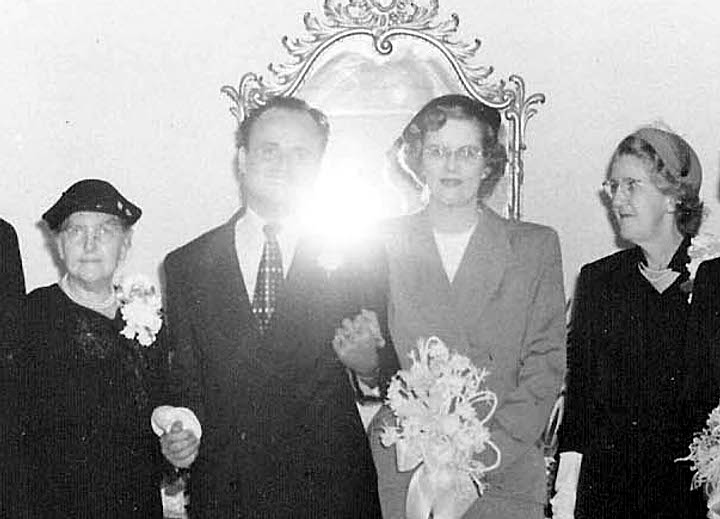
In the early fifties, he came to Atlanta to live. This was where his sister Sarah stayed, with her husband and two daughters. One day he went into the C&S bank on 10th street, and took notice of one of the tellers. On October 6, 1951, he married her. Jean Dunaway was his devoted wife for the rest of his life.
At some point in this era he started selling shoes. He would go to warehouses, gas stations, and wherever barefoot men needed shoes. He was “The Shoe Man” .
Before long there were two boys, and he bought a house, then another. The second house is the current residence of my brother and myself, and is probably worth 15 times what he paid for it. He had the good fortune to not buy in an area that was “blockbusted”, as many neighborhoods were.
And this was his life. He tended a garden, went to the gym, and was in the Lions Club for many years. When he met Mom, she let him know that going to church with her was part of the deal. They found a church that was good for their needs, and made many friends there. The Pastor at Briarcliff Baptist, Glen Waldrop, was his friend.
When I think of the character of this man, there is one night, which stands out. My brother was away at the time. The day before, Mom had discovered she had a detached retina, and was in the hospital awaiting surgery. Her job had arranged a “leaf tour” by train in North Georgia, and she got one of her friends at work to take me. There was some mechanical trouble on the train, and it did not get back into town until 3am Monday morning. And yet, Daddy stayed at home, did not panic, and had faith that all of us would be back soon, which we were.
Through all the struggles of his life, Dad was cheerful, laughed a lot, and was good company. He left me with a rich repertoire of country sayings, and had many stories to tell. He was surprising mellow about black people, if a bit old fashioned. (In the south when I grew up, this was highly unusual).
Dad was always in good, vigorous health, and I thought he would be with us for a long time. Well, that is not how things work. A cancer developed in his liver, and spread to his lungs (he did not smoke). After a mercifully brief illness, we lost him on February 7, 1992. This is a repost.



______ Telling _____ What Is Racist





Womanist Musings recently republished the internet classic 10 Conversations On Racism I’m Sick Of Having With White People. PG turned off his BS detector, and read. In addition to the ten convos of the title, there are five chats that the author would like to have. Apparently, the author likes to talk. Listening might be something else.
PG learned a long time ago that conversations about race are dangerous. If you say the wrong thing, you might wind up in the hospital. It is much easier to hold your piece, and live another day. The bottom line is, PG cannot remember ever discussing any of these matters, especially with a person of color (POC). He decided to leave a comment, and the fun started.
chamblee54 I am a person of non color. I have never had any of these fifteen conversations.
womanistmusings Do you want a cookie?
RVCBard Here’s a cookie you can make at home!
Siah WTF is a person of non-color? Transparent are ya?
miga Perhaps why ze’s never had that conversation before? No one notices hir?
PG felt it was important to make his ethnicity known. The image illustrating the comment has a brown paper bag over a head. You cannot tell if it is a person without color (PWOC), or POC. When talking about race, this is an important distinction.
Person of non-color might be a silly label. But then, what about POC? It is a mystery why “colored people” is offensive, but POC is PC. The skin on PG’s neck might be red, but red is a color.
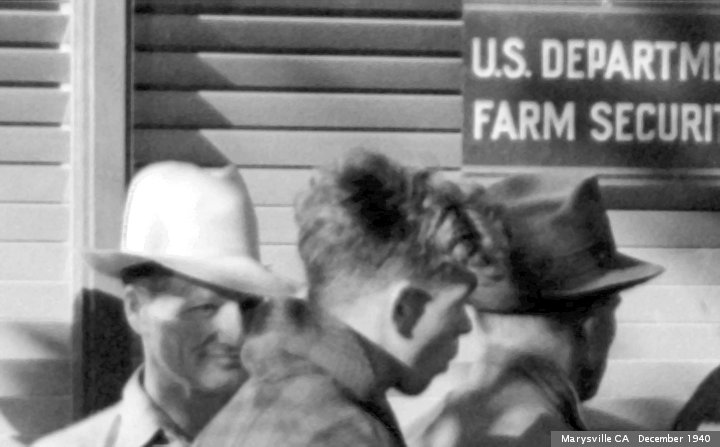
And so it goes. People love to talk about race in America. The problem is finding someone who will listen. Before ending the text, and moving on to the pictures (courtesy of The Library of Congress), we are going to share something from facebook. This message has been edited. PWOC and POC have been replaced by blank spaces. This is a repost.
This is what I have seen a lot of recently: _____ telling _____ what is racist and what is not. Trust me, _____ of the world, _____ have been thinking about this for a LONG time, and it would be a good idea to LISTEN to what they say — I think that, most of the time, they’re probably right and you’re probably wrong about racism.
Maybe even do some reading and research, so the _____ don’t bear the burden of actively taking the time to educate you about racism in only face-to-face interactions and only when they’re calling you out for saying or doing something racist.
Can we just start with the assumption that you, _______ , are racist? That your actions, most likely, perpetuate or benefit from racism? Maybe that’s not true — I’m sure you’re a good person, but maybe you’re also racist. I don’t want you to feel guilty about it, but just live with it for a little bit as if it were true. Accept, for a moment, that, unless you are actively engaged in something that is ANTI-racist, you’re being racist. Now there’s nowhere to go but up! Now you can feel EXCELLENT about every anti-racist thing you do!
And you’ve been doing a lot of those anti-racist things recently, right?






35 Broad Street
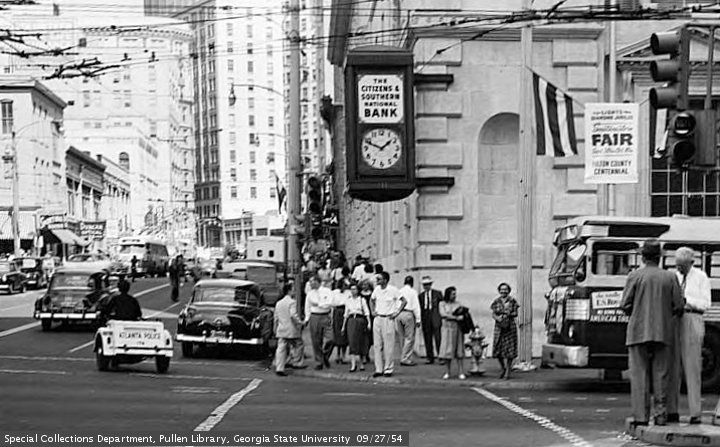


PG was having a delightfully slack afternoon, The one productive activity was editing pictures from “The Special Collections and Archives,Georgia State University Library”. In box seventy two of “corporate bodies”, in the Lane Brothers archive, there was a picture commissioned by King Road Marker Company. It displayed a brand new crosswalk, over Marietta Street at the intersection of Broad Street. The picture was taken at 1:51 p.m. September 27, 1954. This is a repost.
The time caught PG’s eye. 1:51 is one of the times used to display clocks and watches in advertising. Most ads use 10:09. This arrangement of the hour and minute hands makes a welcoming gesture. This allows the logo of the watch to be visible, and is thought to encourage the viewer to purchase the timepiece. The shadows on the buildings indicate that the picture was shot in early afternoon.
The clock with the magic time advertised the C&S national bank. The building behind the clock was the headquarters of that bank. In 1954, Citizens and Southern bank was a prime player in the Atlanta market. (PG’s dad said that C&S stood for choke’m and squeez’m.) At some point, C&S merged with NCNB to become Nationsbank, which was later absorbed by Bank Of America.
C&S kept it’s headquarters at 35 Broad Street for many years after competitors built trophy buildings. Their were constant rumors about where the C&S highrise was going to go. Finally, C&S Plaza was built at Peachtree and North Avenue, a mile north of five points. The building was to become the tallest building in America outside of New York and Chicago. During the construction of this building, C&S became part of Nationsbank.
The picture is featured in Atlanta Time Machine. The building is now owned by Georgia State University, with a BOA branch on the first floor. The banking hall is spectacular. It was designed by Philip Shutze, before the great depression. Here is more information.
Nations Bank Building (Citizens and Southern National Bank Building, Empire Building)
35 Broad Street, NW 1901: Bruce and Morgan, Architects, NR.
Remodeling of Lower Floors and Interiors 1929:
Hentz, Adler and Shutze, Architects; Philip Shutze, Designer
Fourteen stories high, the Nations Bank Building was the first steel-frame structure to be built in Atlanta. Its clear-cut silhouette, simple fenestration, and heavily decorated terra-cotta top bear the influence of the Chicago School. In 1929 the building became the headquarters of the Citizens and Southern National Bank, which asked Philip Shutze to redesign its three lower floors. Because the impression of load-bearing masonry was regarded as better suited for a banking establishment than large glass panes were, the original display windows were replaces by classical motifs apparently “carved out” of Indiana limestone.
Philip Shutze was inspired by Italian Mannerism, and especially by the city gates of Verona by Michele Sanmichelo (1484-1559) … Reached from Marietta and Walton streets through lofty arcaded entryways and a more intimate elevator lobby in the early Renaissance style on Broad Street, the banking hall is a long nave articulated by colossal Corinthian pilasters. While its walls and floors feature several kinds of Georgia, Tennessee, and European marbles in a warm gold-brown color scheme, the ceiling, from which hang gigantic chandeliers, is left bare. The Pantheon, which Shutze had measured during his internship at the American Academy in Rome, served as direct source for the pedimented niches, and for the floors with alternate square and circular patterns. Also, of Roman inspiration are the bronze desks and the eagle motif found throughout the design.






A Summer Memory







It is 3:15 am in a midtown office building. PG is spending his dinner break in an unused cubicle, almost out of speaker range for the break room tv. A flourescent light fixture is hard at work, playing an essential role in the drama to follow.
Thirty seven years ago, Truman Capote spoke in Athens GA. Before taking questions, he read “A Christmas Memory.” There was a line, with the words oh, and carnage, that got a big laugh.
Wednesday afternoon had been the first time to turn on the window AC unit. Outside, it was over ninety, with the Georgia humidity doubling the effect. The next two months will be miserable.
During this early morning dinner, after the first day of summer megaheat, PG is reading “A Christmas Memory”. An old lady, and the seven year old cousin she calls Buddy, are going to make fruitcakes. They need to buy supplies.
The previous summer, someone gave Buddy a penny for every 25 flies he killed. “Oh, the carnage of August: the flies that flew to heaven”. It is now 3:28. In two minutes, it will be time to go back to work. Pictures today are from The Library of Congress. The fruitcake lady was the aunt of Truman Capote.





Breakfast at Tiffany’s



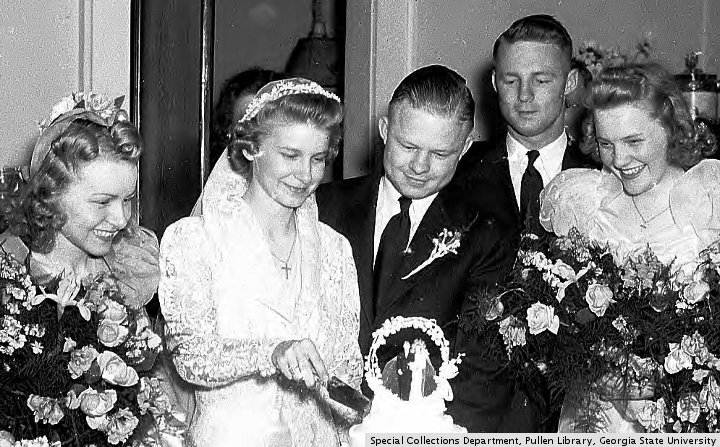
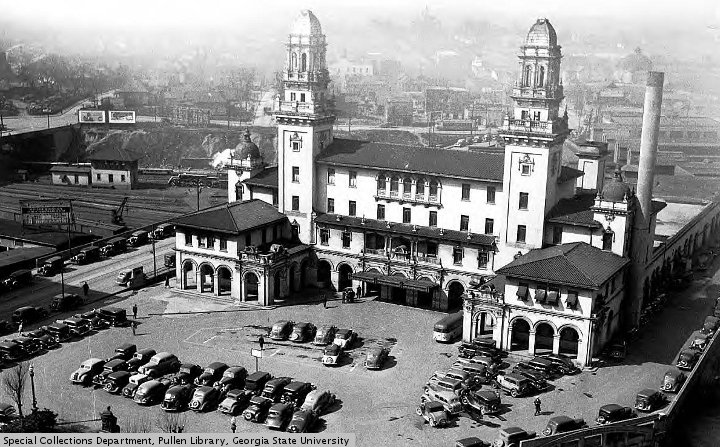


Breakfast at Tiffany’s (the book, not the movie) was on the shelf at the Chamblee library. It is a short little thing, just like the author, Truman Capote. It is a 55 year old book, with the action taking place 70 years ago. It is a fun way to kill time waiting on the train.
The action takes place in New York City, in 1943. This is wartime. A telegram arrives, informing Holly Golightly that her beloved brother has died in action. The narrator, probably based on Truman Capote, is having problems with his draft board. A google search for the military record of Mr. Capote proved, pardon the expression, fruitless. Apparently, Mr. Capote escaped military duty during that conflict. In a war with major need for combat troops, being queer is not a good excuse.
The book is fun to read, even if it does have some issues. The central figure is Holly Golightly, a “cafe society celebrity.” Her zaniness makes for good story telling, but can seem a bit forced. There is an old saying, “Sooner or later you would have to kill her”. None of the men supporting her lifestyle seem to get close enough for that to be an issue.
Mr. Capote is at the peak of his creative powers here. The story is a page turner, with zingy quotes throughout. At some point after finishing this story, Mr. Capote became famous for being famous. A life of TV appearances, society lunch, and substance abuse followed. Were more stories like BAT drowned by the Justerini & Brooks downpour? We will never know.
There is one jaw dropping moment. A side character in BAT is Mag Wildwood, a model who stutters. She elopes with an heir, who many thought was going to marry Miss Golightly. When the marriage is announced, the full name of Mag Wildwood is in the story. Miss Margaret Thatcher Fitzhue Wildwood. This was twenty plus years before the iron lady took over England.
PG has never seen the movie. It seems a bit different from the book. The Capote charactar is given a name, and played by George Peppard. Doc Golightly, the husband of young Holly, is played by Buddy Ebsen. This was in 1961, just before the Beverly Hillbillies. Mickey Rooney plays a Japanese photographer, who lived in the same building as Truman and Holly.
Pictures from “The Special Collections and Archives,Georgia State University Library”.






Metadata Only



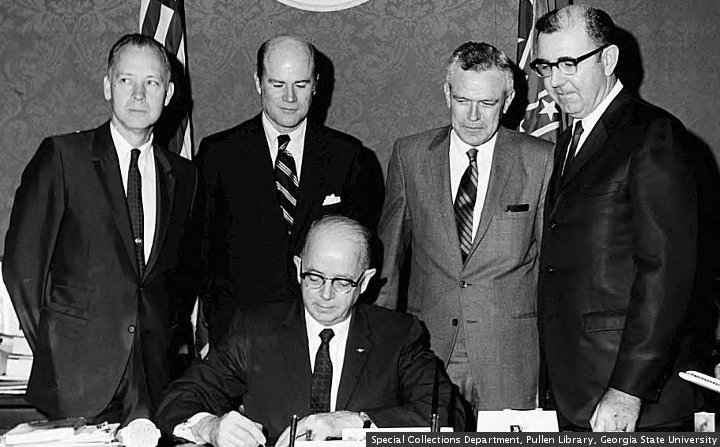
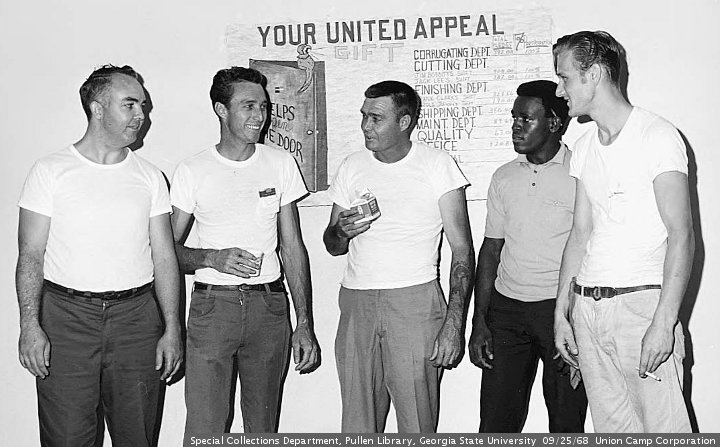
During the discussion about the US government collecting “metadata only”, a quote has come up. The facebook comment read “The only comment I have on government spying on its own citizens is from Ben Franklin: “Those who can give up essential liberties to obtain a little temporary safety deserve neither liberty or safety.” Apparently metadata only does not include checking on the veracity of eighteenth century quotes. Fortunately, the internet can be helpful.
Before we move onto that, lets check the more current record. These days, when a public figure says anything, it is quoted verbatim. This does not stop mistakes, but it helps. The Washington Post printed a transcript of a press conference from those bouncing bipartisans Dianne Feinstein and Saxby Chambliss. The following two comments are from the Georgia lame duck.
“That’s been very clear all along through the years of this program. It is proved meritorious, because we have gathered significant information on bad guys, but only on bad guys, over the years. … The information that they’re really looking for is on the other end of the call. It’s: Are they in contact, is somebody in contact with somebody that we know to be a known terrorist? And that’s why it’s metadata only and it’s what we call minimized. All these numbers are basically ferreted out by computer, but if there’s a number that matches a terrorist number that has been dialed by a U.S. number or dialed from a terrorist to a U.S. number, then that may be flagged. And they may or may not seek a court order to go further on that particular instance. But that’s the only time that this information is ever used in any kind of substantive way.”
It should be noted that this is not a surprise to many of us. PG gave up during the Reagan administration. On the one hand, the government was conducting a war on drugs, with rights of citizens taken away to reduce demand for substances less dangerous than alcohol. On the other hand, drug importers were used to transport weapons to terrorists in Central America. It was really strange on the other side of the looking glass. It has only gotten worse in the last twenty six years.
Getting back to Ben Franklin, it seems that the quote may be, sort of, legitimate. This is more than can be said for some of Mr. Franklin’s children. Wikiquotes says: They who can give up essential liberty to obtain a little temporary safety, deserve neither liberty nor safety. This was written by Franklin, within quotation marks but is generally accepted as his original thought, sometime shortly before February 17, 1775 as part of his notes for a proposition at the Pennsylvania Assembly, as published in Memoirs of the Life and Writings of Benjamin Franklin.
The quote is on page 270 of the memoirs. There was a discussion in the Pennsylvania Assembly on ways to solve the problems with England without a war. The quote is, indeed, a quote. While it is possible that Mr. Franklin said it, it does not appear to be in his writings. The line before the famous quote: “The Massachusetts must suffer all the hazards and mischiefs of war, rather than admit the alteration of their charters and laws by parliament”.
Pictures are from “The Special Collections and Archives,Georgia State University Library”.




Steve Martin


There is a form letter floating through the intercourse now. It is a letter that Steve Martin used to send to his fans. (The letter was recently immortalized at Letters of Note.)
He …that is Stephen Glenn “Steve” Martin (born August 14, 1945) … has moved up in correspondence with his adoring fans. Mr. Martin now gives out business cards, with the message “This card certifies that the holder had met Steve Martin and found him genuinely friendly”. What a wild and crazy guy!
 This is becoming one of those really really modern days here. Listening to a djmix with a Lady Gaga song, drinking coffee out of a Mcdonalds plastic cup, and writing a tribute to Steve Martin. What a day! Oh, before we forget, there is the story about the drive in theater on I85 that was showing “Father of the Bride”. One day, the h fell off the marquee, and the title of the movie became “Fater of the Bride”. Good times.
The story of Steve Martin and PG began one night at the Great Southeast Music Hall. PG got tired of hearing how great the Nitty Gritty Dirt Band was, and decided to see a show. The show started when some guy in a white suit came out with a banjo. John McEuen stood next to him, and kept falling into the microphone stand and saying “this guy cracks me up”.
Steve Martin, the white suit guy, said that he paid somebody five thousand dollars for a joke. He then took this arrow, with a coat hanger wire attached to it, with a shape for his head to fit in, and put it on. That got a laugh, but not worth five thousand dollars. There was another gag…”do you mind if i smoke, no do you mind if i fart”. That got a slightly bigger laugh.
In those days, you could not sell alcohol in public on sunday night in Georgia. To compensate, the Music Hall sold children’s tickets for the sunday night shows. Mr. Martin was not used to having children in the audience. “Hey kid I gotta joke for you. There were these two lesbians…”
The show went over well with the Nitty Gritty crowd. However, it is doubtful that anyone thought, this is the beloved entertainer of our generation.
Mr. Martin was not through for the night. At one point, the NGDB moved to the back of the stage, and a smarmy lounge lizard, in a white suit, came on stage. While the band played “The girl from Ipanema”, Mr. Martin sang about the girl with diarrhea.
 This was one of the last shows that Steve Martin did as an opening act. (He did return to the Great Southeast Music Hall. Once, he did a week with Martin Mull, called the Steve Martin Mull Revue.) Within two years, he was a guest host on Saturday Night Live, and a certified wild and crazy guy. A couple of years later, he was famous again as “The Jerk”. Steve Martin had arrived.
The pictures today are from Gwinnett County. The animated dentures are from chattering teeth. The check is in the mail. This is a repost.


Author Insults







These author insults were borrowed from flavorwire. HT to Andrew Sullivan The pictures are from The Library of Congress This is a repost.
25. Gertrude Stein on Ezra Pound “A village explainer. Excellent if you were a village, but if you were not, not.”
24. Virginia Woolf on Aldous Huxley “All raw, uncooked, protesting.”
23. H. G. Wells on George Bernard Shaw “An idiot child screaming in a hospital.”
22. Joseph Conrad on D.H. Lawrence “Filth. Nothing but obscenities.”
21. Lord Byron on John Keats (1820) “Here are Johnny Keats’ piss-a-bed poetry, and three novels by God knows whom… No more Keats, I entreat: flay him alive; if some of you don’t I must skin him myself: there is no bearing the drivelling idiotism of the Mankin.”
20. Vladimir Nabokov on Joseph Conrad “I cannot abide Conrad’s souvenir shop style and bottled ships and shell necklaces of romanticist cliches.”
19. Dylan Thomas on Rudyard Kipling “Mr Kipling … stands for everything in this cankered world which I would wish were otherwise.”
18. Ralph Waldo Emerson on Jane Austen “Miss Austen’s novels . . . seem to me vulgar in tone, sterile in artistic invention, imprisoned in the wretched conventions of English society, without genius, wit, or knowledge of the world. Never was life so pinched and narrow. The one problem in the mind of the writer . . . is marriageableness.”
17. Martin Amis on Miguel Cervantes “Reading Don Quixote can be compared to an indefinite visit from your most impossible senior relative, with all his pranks, dirty habits, unstoppable reminiscences, and terrible cronies. When the experience is over, and the old boy checks out at last (on page 846 — the prose wedged tight, with no breaks for dialogue), you will shed tears all right; not tears of relief or regret but tears of pride. You made it, despite all that ‘Don Quixote’ could do.”
16. Charles Baudelaire on Voltaire (1864) “I grow bored in France — and the main reason is that everybody here resembles Voltaire…the king of nincompoops, the prince of the superficial, the anti-artist, the spokesman of janitresses, the Father Gigone of the editors of Siecle.”
15. William Faulkner on Ernest Hemingway “He has never been known to use a word that might send a reader to the dictionary.”
14. Ernest Hemingway on William Faulkner “Poor Faulkner. Does he really think big emotions come from big words?”
13. Gore Vidal on Truman Capote “He’s a full-fledged housewife from Kansas with all the prejudices.”
12. Oscar Wilde on Alexander Pope “There are two ways of disliking poetry; one way is to dislike it, the other is to read Pope.”
11. Vladimir Nabokov on Ernest Hemingway (1972) “As to Hemingway, I read him for the first time in the early ‘forties, something about bells, balls and bulls, and loathed it.”
10. Henry James on Edgar Allan Poe (1876) “An enthusiasm for Poe is the mark of a decidedly primitive stage of reflection.”
09. Truman Capote on Jack Kerouac “That’s not writing, that’s typing.”
08. Elizabeth Bishop on J.D. Salinger “I HATED [Catcher in the Rye]. It took me days to go through it, gingerly, a page at a time, and blushing with embarrassment for him every ridiculous sentence of the way. How can they let him do it?”
07. D.H. Lawrence on Herman Melville (1923) “Nobody can be more clownish, more clumsy and sententiously in bad taste, than Herman Melville, even in a great book like ‘Moby Dick’…. One wearies of the grand serieux. There’s something false about it. And that’s Melville. Oh dear, when the solemn ass brays! brays! brays!”
06. W. H. Auden on Robert Browning “I don’t think Robert Browning was very good in bed. His wife probably didn’t care for him very much. He snored and had fantasies about twelve-year-old girls.”
05. Evelyn Waugh on Marcel Proust (1948) “I am reading Proust for the first time. Very poor stuff. I think he was mentally defective.”
04. Mark Twain on Jane Austen (1898) “I haven’t any right to criticize books, and I don’t do it except when I hate them. I often want to criticize Jane Austen, but her books madden me so that I can’t conceal my frenzy from the reader; and therefore I have to stop every time I begin. Every time I read ‘Pride and Prejudice,’ I want to dig her up and hit her over the skull with her own shin-bone.”
03. Virginia Woolf on James Joyce “the work of a queasy undergraduate scratching his pimples.”
02. William Faulkner on Mark Twain (1922) “A hack writer who would not have been considered fourth rate in Europe, who tricked out a few of the old proven sure fire literary skeletons with sufficient local color to intrigue the superficial and the lazy.”
01. D.H. Lawrence on James Joyce (1928) “My God, what a clumsy olla putrida James Joyce is! Nothing but old fags and cabbage stumps of quotations from the Bible and the rest stewed in the juice of deliberate, journalistic dirty-mindedness.”
Bonus. Mary McCarthy on Lillian Hellman “Every word she writes is a lie, including and and the.”
Bonus two, a comment to the original post.: RomanHans Re “The Cardinal’s Mistress” by Benito Mussolini, Dorothy Parker wrote one of my favorite bon mots: “This is not a book to be tossed aside lightly. It should be thrown with great force.”








Red Shirt




The man was talking when PG got on the train.
The man was talking through the three stations that PG quietly rode through.
The man was talking when PG got off the train.




The Eleven Rules







You have probably heard about “The speech Bill Gates gave at a High School”. PG saw an image on facebook, and the BS detector went off. When did he make the speech? What high school, in what location? Was this the same speech we heard about a few years ago, when Microsoft was being sued for antitrust violations? Are these questions fair? Rule 1: Life is not fair – get used to it!
These days, the answer is easy to find. Snopes is a friend of Mr. Google. The authoritative word is “misappropriated”. Bill Gates did not make a speech to a high school. Nor did Kurt Vonnegut. The eleven rules came from a newspaper column written by Charles J. Sykes. The column was published in the San Diego Union Tribune on September 19, 1996. The fourteen rules in that column were taken from a book, 50 Rules Kids Won’t Learn in School: Real-World Antidotes to Feel-Good Education.
“Charles J. Sykes is senior fellow at the Wisconsin Policy Research Institute and a talk show host at WTMJ radio in Milwaukee, Wisconsin.” “The Institute is guided by a belief that competitive free markets, limited government, private initiative, and personal responsibility are essential to our democratic way of life.” Mr. Sykes is probably not a liberal.
The eleven rules have been floating from one email address to another since the Clinton administration. Ann Landers has printed them several times. They have been the rest of the story for Paul Harvey. “The prize for misattribution, however, has to go to the Atlanta Journal and Constitution, which published the list twice in the space of three weeks in mid-2000, the first time crediting it to “Duluth state Rep. Brooks Coleman of Duluth,” and the second time to Bill Gates.” The footnotes say “Brack, Elliott. “Legislator Offers Teens No-Nonsense Advice.” The Atlanta Journal and Constitution. 14 June 2000 (p. J3).” and ” “Advice from the Experts.” The Atlanta Journal and Constitution. 2 July 2000 (p. R1).”
The book has fifty rules. The column has fourteen. These are the three rules left out of the emails.
Rule No. 12: Smoking does not make you look cool. It makes you look moronic. Next time you’re out cruising, watch an 11-year-old with a butt in his mouth. That’s what you look like to anyone over 20. Ditto for “expressing yourself” with purple hair and/or pierced body parts.
Rule No. 13: You are not immortal. (See Rule No. 12.) If you are under the impression that living fast, dying young and leaving a beautiful corpse is romantic, you obviously haven’t seen one of your peers at room temperature lately.
Rule No. 14: Enjoy this while you can. Sure parents are a pain, school’s a bother, and life is depressing. But someday you’ll realize how wonderful it was to be a kid. Maybe you should start now.
Maybe someone should take a critical look at these rules. If you get tired, and think this is negative, then you are free to skip ahead and look at the pictures, from The Library of Congress. The LOC is part of the big government in Washington. It is an very valuable resource. 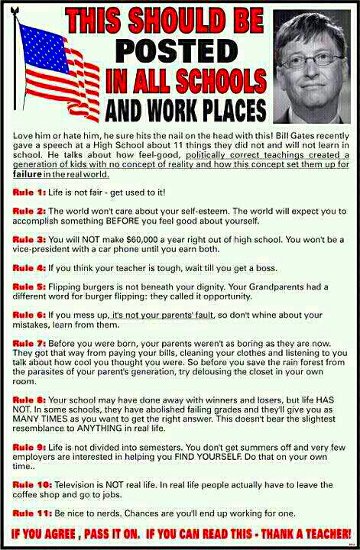
Rule No. 1: Life is not fair. Get used to it. The average teen-ager uses the phrase “It’s not fair” 8.6 times a day. You got it from your parents, who said it so often you decided they must be the most idealistic generation ever.
No argument here. This is a catch 22 whenever you find a contradiction in the rest of the rules.
Rule No. 2: The real world won’t care as much about your self-esteem as much as your school does. It’ll expect you to accomplish something before you feel good about yourself. This may come as a shock. Usually, when inflated self-esteem meets reality, kids complain that it’s not fair. (See Rule No. 1)
If you start to feel good about yourself, don’t worry. Between the church, radio talk shows, and back stabbing co workers, someone is sure to bring you down.
Rule No. 3: Sorry, you won’t make $40,000 a year right out of high school. And you won’t be a vice president or have a car phone either. You may even have to wear a uniform that doesn’t have a Gap label.
Conservative rules for living do not age well. Today, everybody eating solid food has a cell phone.
Rule No. 4: If you think your teacher is tough, wait ’til you get a boss. He doesn’t have tenure, so he tends to be a bit edgier. When you screw up, he’s not going to ask you how you feel about it.
This is the rule that set off the BS detector. In the “real world”, it is not what you produce that counts. It is how well you kiss ass. If the boss is impressed by you, you can screw up from now until bankruptcy. Ditto if you are a minority, and the company is recovering from a lawsuit. LINF
Rule No. 5: Flipping burgers is not beneath your dignity. Your grandparents had a different word for burger flipping. They called it opportunity. They weren’t embarrassed making minimum wage either. They would have been embarrassed to sit around talking about Kurt Cobain all weekend.
Your grandparents had a different word for your dark skinned co worker.
Rule No. 6: It’s not your parents’ fault. If you screw up, you are responsible. This is the flip side of “It’s my life,” and “You’re not the boss of me,” and other eloquent proclamations of your generation. When you turn 18, it’s on your dime. Don’t whine about it, or you’ll sound like a baby boomer.
Fifty years ago, the parents of baby boomers said things like this. The younger generation is always going to hell, and somehow they manage to get it together. The baby boomers are the generation who was ordered to go to Vietnam and kill Asians. They said “hell no we won’t go”.
Rule No. 7: Before you were born your parents weren’t as boring as they are now. They got that way paying your bills, cleaning up your room and listening to you tell them how idealistic you are. And by the way, before you save the rain forest from the blood-sucking parasites of your parents’ generation, try delousing the closet in your bedroom.
Your parents got to be boring by listening to motivational speeches.
Rule No. 8: Your school may have done away with winners and losers. Life hasn’t. In some schools, they’ll give you as many times as you want to get the right answer. Failing grades have been abolished and class valedictorians scrapped, lest anyone’s feelings be hurt. Effort is as important as results. This, of course, bears not the slightest resemblance to anything in real life. (See Rules 1, 2 and 4.)
Teachers have a tough job. They are an easy target for criticism. Some of this whining is fair, even if life isn’t. Mr. Sykes has written several books lambasting the education system. There is a saying, those who can, do. Those who can’t, teach. Maybe this could be amended to say: those who can’t teach, whine about education.
Rule No. 9: Life is not divided into semesters, and you don’t get summers off. Not even Easter break. They expect you to show up every day. For eight hours. And you don’t get a new life every 10 weeks. It just goes on and on. While we’re at it, very few jobs are interested in fostering your self-expression or helping you find yourself. Fewer still lead to self-realization. (See Rule No. 1 and Rule No. 2.)
If you are the buddy of management, you sometimes take the afternoon off to play golf with a client. You go to conventions, while someone else works to produce. LINF
Rule No. 10: Television is not real life. Your life is not a sitcom. Your problems will not all be solved in 30 minutes, minus time for commercials. In real life, people actually have to leave the coffee shop to go to jobs. Your friends will not be as perky or pliable as Jennifer Aniston.
Life is not a motivational speech. Those after dinner platitudes are entertaining, and make you feel good about yourself. They have little to do with real life.
Rule No. 11: Be nice to nerds. You may end up working for them. We all could.
One more time, LINF. Regarding Rule No. 14:, this sounds like privilege speaking. If parents are human, they are possibly doing some very dirty things to their kids. This includes abusive religion, alcoholism, drug abuse, and conservative politics. The other kids can be pretty rough. Your preacher says you are going to hell. Since the real world does not care about your self esteem, you may be tempted to end your life. A smarmy list of rules is probably not going to help. This is a repost.








3 comments