This Is Your Life
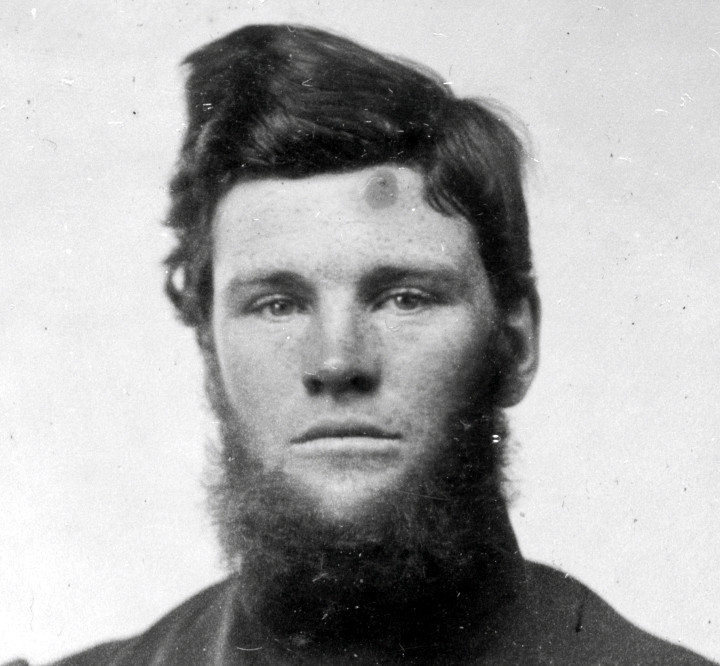
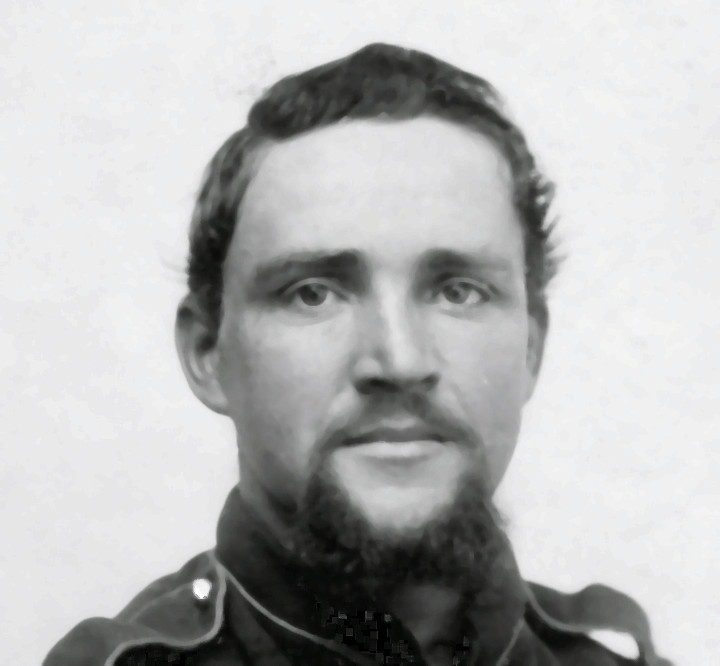

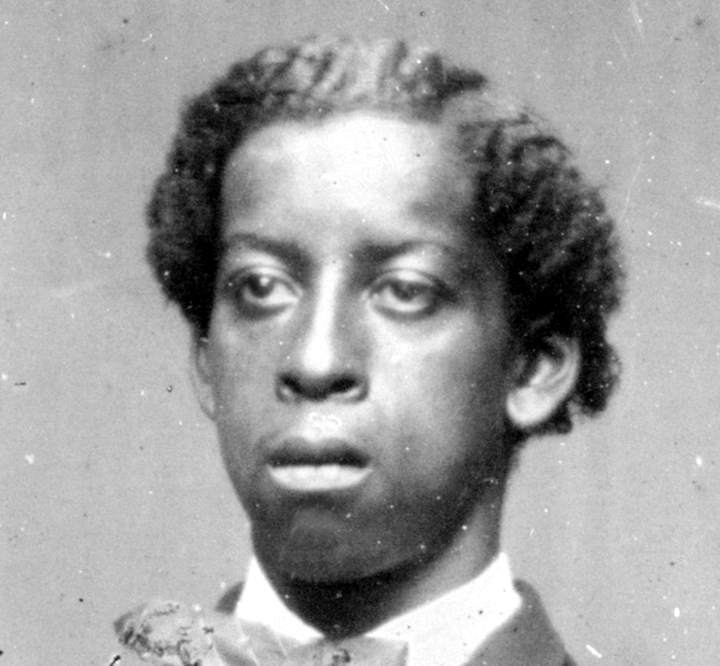
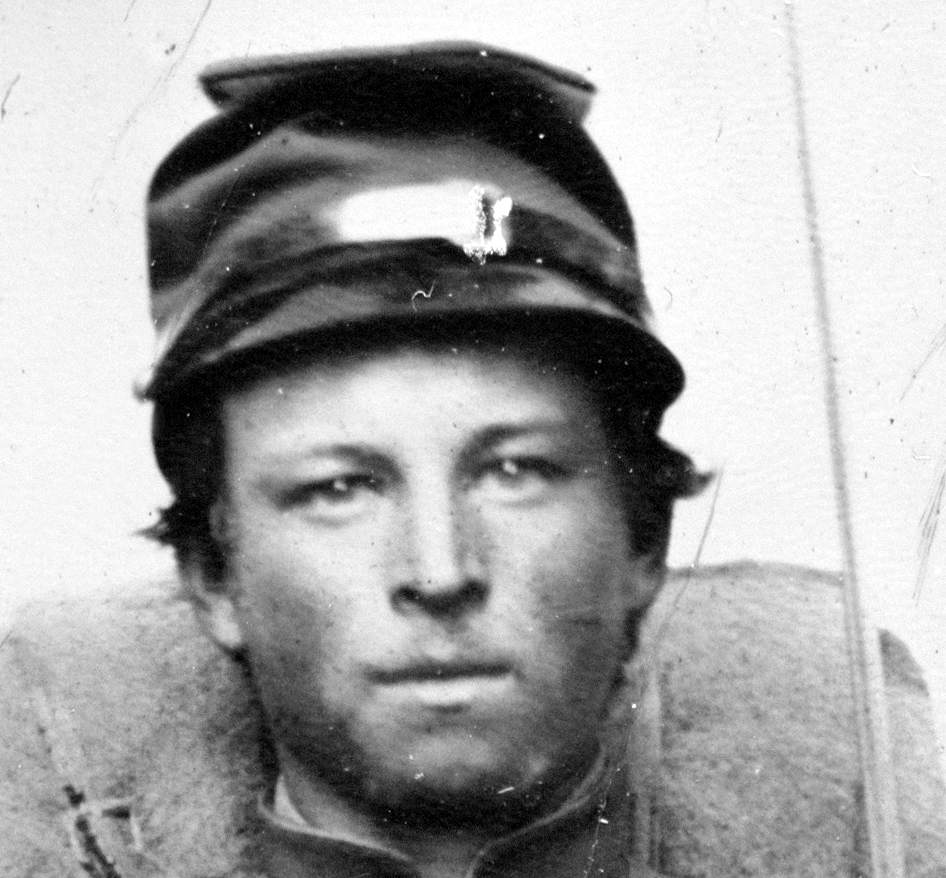
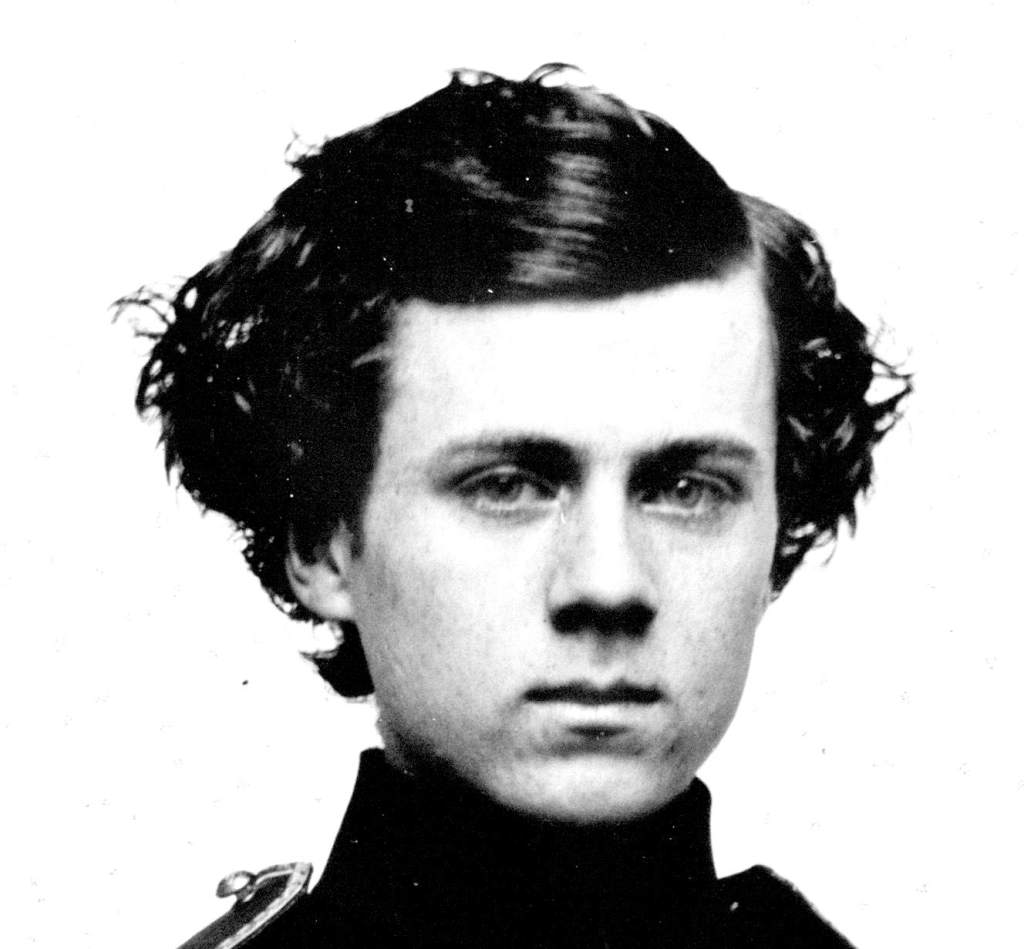
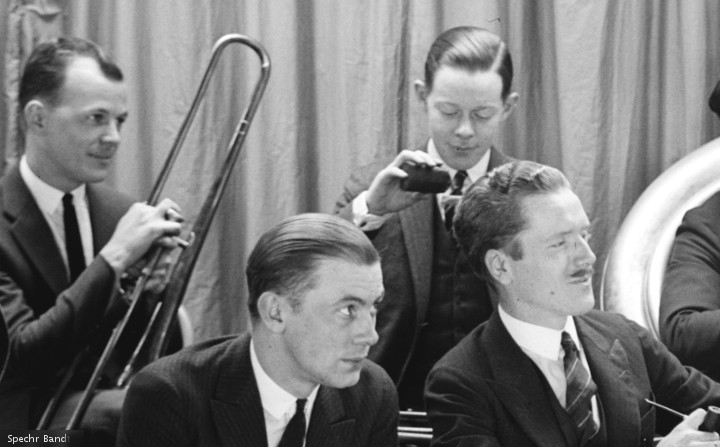
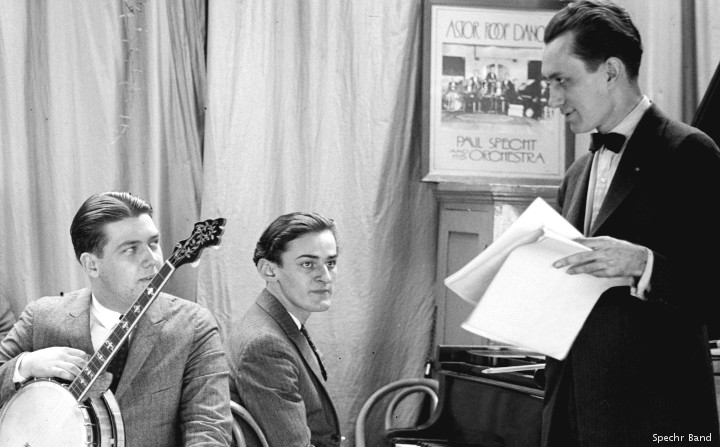
Am all caps graphic washes up on the digital shores from time to time. The author, and copyright status, are not known. It was not written here. Reading it can be a chore, even though it looks cool. It is also selfish… the only opinion that matters is the individual reading it. It doesn’t have a good beat, but you can dance to it. Pictures are from The Library of Congress.
This is your life.
Do what you love, and do it often.
If you don’t like something, change it.
If you don’t like your job, quit.
If you don’t have enough time, stop watching TV.
If you are looking for the love of your life, stop:
They will be waiting for you when you start doing things you love.
Stop over analyzing, life is simple
All emotions are beautiful.
When you eat, appreciate every last bite.
Open your mind, arms, and heart to new things and people,
We are united in our differences.
Ask the next person you see what their passion is,
And share your inspiring dream with them.
Travel often, getting lost will help you find yourself.
Some opportunities only come once, seize them.
Life is about the people you meet, and the things you create with them
So go out and start creating.
Life is short. Live your dream, and wear your passion.
“Do you have to be a poet? If you don’t have to be a poet, be a prose writer. You’ll get further faster. Poetry — there’s probably more poetry published today than any time in the history of the world. Nevertheless, there is this — people think they have this blindness when they see a line in the typography of poetry, and it just blocks them. So if you can say the same thing in prose, you’ll probably be better off” Lawrence Ferlinghetti

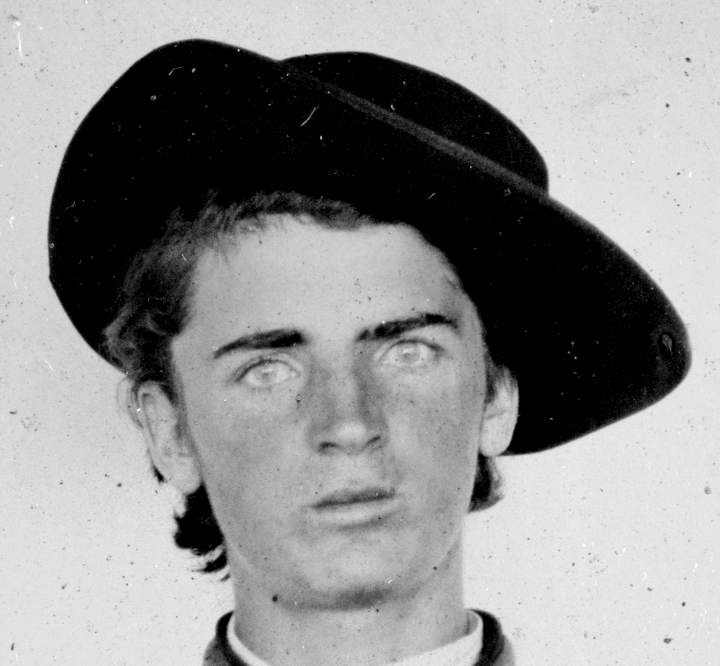
Fifteen Minutes



Andy Warhol is quoted as saying that “in the future, everyone will be famous for fifteen minutes.” This has become a popular saying. If a celebrity is getting tiresome, people will wonder when their fifteen minutes will be up. After hearing about fifteen minutes his entire life, PG began to wonder if Drella really said that. If you can’t be cynical about Andy Warhol… This is a repost.
Wikipedia is a good place to start. “In the future, everyone will be world-famous for 15 minutes” … appeared in the program for a 1968 exhibition of his work at the Moderna Museet in Stockholm, Sweden. Photographer Nat Finkelstein claimed credit for the expression, stating that he was photographing Warhol in 1966 for a proposed book. A crowd gathered trying to get into the pictures and Warhol supposedly remarked that everyone wants to be famous, to which Finkelstein replied, “Yeah, for about fifteen minutes, Andy.” Nat Finkelstein was a sketchy character, in the Warhol tradition. His version is suspect. The Swedish museum part is real.
“Andy Warhol’s first European museum solo show took place at the Moderna Museet in Stockholm from February through March 1968. Pontus Hultén curated the exhibition together with Olle Granath. The exhibition came with a catalogue that was, like the show, named ‘Andy Warhol’. Kasper König, who worked for the Moderna Museet as an intern of sorts in New York, developed a basic concept for the book. … After Warhol had given his approval to this first proposal, König proceeded to create a dummy. … When König returned his dummy to the Factory, Warhol scrutinized it carefully but made only a small number of changes. Contrary to what Warhol wanted to be popular belief, those who produced input at the Factory were carefully monitored. … The final edits on the dummy were made in Stockholm by Olle Granath. He compiled a small selection of Warhol quotes and aphorisms from a stack of books and clippings collected by Hultén and placed them in the book as an introduction before the image sections.”
“Sometime in the autumn of 1967, Pontus Hultén called and asked me if I (Olle Granath) could help him and the Moderna Museet to organize an Andy Warhol exhibition that was due to open in February…. An important part of the exhibition was the production of a book. It was not supposed to be an analytical catalog of Warhol’s work, but a book that conveyed his aesthetics without heavy texts. … One day, Pontus brought me a box, almost the size of a Brillo box, and told me that it contained everything written by and about Andy Warhol (today the equivalent would probably be two truck loads). My job was to read it all and present a proposal for a manuscript with Swedish translations. After a couple of nights of reading and taking notes I delivered a script to Pontus and awaited his reaction with great anticipation. ‘Excellent,’ Pontus said when he called me, ‘but there is a quotation missing.’ ‘Which one?’ I said. ‘In the future, everyone will be world-famous for 15 minutes,’ Pontus replied. ‘If it is in the material I would have spotted it,’ I told him. The line went quiet for a moment, and then I heard Pontus say, ‘If he didn’t say it, he could very well have said it. Let’s put it in.’ So we did, and thus Warhol’s perhaps most famous quotation became a fact.”
“The exhibition in Stockholm attracted a relatively small number of visitors, due to the extremely cold winter, but also to the fact that leftist radicalization increasingly drove the Museets public to mistrust anything American or consumerist. There was no space yet for a more complex reading of Warhol’s relation to consumption. The book, however, became very popular: its enormous edition allowed it to be distributed in nightclubs and record stores, not only museums. A timeless update on the latest from New York, it first became a cult object, then a collectors item.”
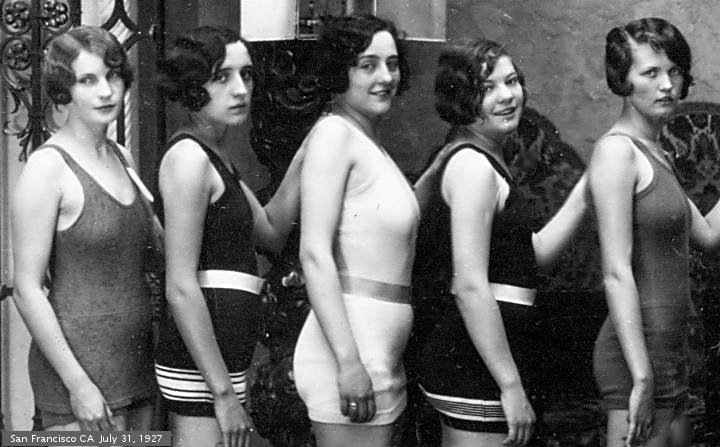
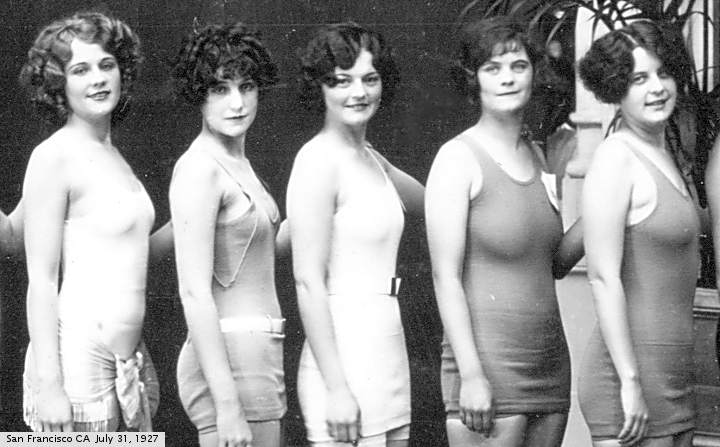
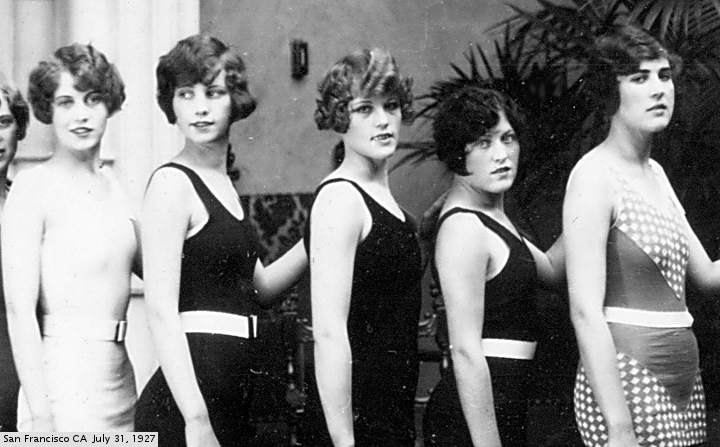
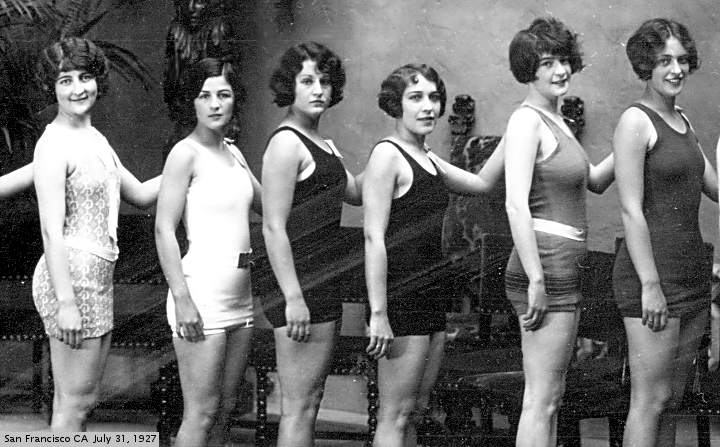
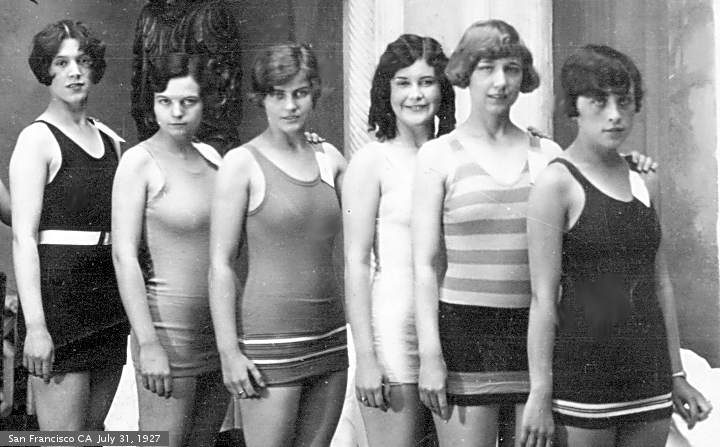
Did Andy say that? Probably, but not definitely. Andy was shot by Valerie Jean Solanas on June 3, 1968, a few months after the show in Sweden. Andy survived, and had fifteen more minutes. Pictures today are from Pictures are from The Library of Congress. The 1927 pictures were taken at “California Beauty Week, Mark Hopkins Hotel, July 28 to Aug. 2, auspices of San Francisco Chronicle.”


What Is A Cynic?



“A cynic is a man who knows the price of everything, and the value of nothing.” ― Oscar Wilde. This quote is one of Oscar’s greatest hits. If you think about it for a minute, it is not totally accurate. You are not supposed to think. Quoting Oscar Fingal O’Flahertie Wills Wilde is about sounding clever, not making sense. Did he really create that definition of a cynic? This is a repost.
Oscar Wilde is a quote magnet. This is more than something you put on your refrigerator. When people hear something clever, odds are good that Oscar will get the blame. As Dorothy Parker wrote: “If, with the literate, I am, Impelled to try an epigram, I never seek to take the credit; We all assume that Oscar said it. [Life Magazine, June 2, 1927]”
Wikiquote says this line is from Act III of Lady Windermere’s Fan. It was spoken by Lord Darlington. Did the play write intend for the line to be taken seriously, or was he making the character look foolish by saying it? With Oscar Wilde, it could be both of these things at the same time.
Principle Four, of the four principles of quotations, reads “Only quote from works that you have read.” In the case of Lady Windemere’s Fan, this would mean a youtube video of the play. There is a posh BBC production available. You don’t have to watch the cell phone recording of high school players.
Lady Windemere’s Fan is a production where upper class Brits say clever things in glorious costumes. Nobody ever goes to the bathroom, or looks less than perfect. Lady Windemere’s six month old child is neither seen, nor heard. Lady Windemere finds out her husband, Lord Windemere, is having an affair with a Mrs. Erlynne. The Lord proceeds to invite the floozy to Lady Windemere’s birthday party.
After the party, the men go to their club, then to Lord Darlington’s room. There are five men in the conversation, beginning with Lord Windemere. Lord Darlington has just told Lady Windemere that he loves her, and wants her to run off with him. Lady Windemere said no. Lord Augustus is a suitor of Mrs. Erlynne, and is begging her to marry him. Cecil Graham, and Mr. Dumby, wear their splendid costumes with conviction.
The scene starts with the men saying clever things, most of them insulting to someone. Lord Augustus, or Tuppy, is the butt of many jokes. Before long, we get this exchange:
Dumby. I don’t think we are bad. I think we are all good, except Tuppy.
Lord Darlington. No, we are all in the gutter, but some of us are looking at the stars.
Dumby. We are all in the gutter, but some of us are looking at the stars? Upon my word, you are very romantic to-night, Darlington.
Cecil Graham. Too romantic! You must be in love. Who is the girl?
Lord Darlington. The woman I love is not free, or thinks she isn’t. [Glances instinctively at Lord Windermere while he speaks.]
A few minutes later, we hear another famous Oscarism.
Lord Darlington. What cynics you fellows are!
Cecil Graham. What is a cynic? [Sitting on the back of the sofa.]
Lord Darlington. A man who knows the price of everything and the value of nothing.
Cecil Graham. And a sentimentalist, my dear Darlington, is a man who sees an absurd value in everything, and doesn’t know the market price of any single thing.
Pictures today are from The Library of Congress.




Did Socrates Read And Write?


This story starts with a facebook meme. A fbf posted a picture of a thoughtful statue. The text read ‘When the debate is lost, slander becomes the tool of the loser.’ -Socrates. PG thought that Socrates never wrote anything that survived. All of what we attribute to Socrates was written by Plato. People reading this blog should know what happened next. This is a repost
Did Socrates Say Slander Is ‘The Tool of the Losers”? is one of several results. They all said the same thing … the quote is bogus. A tweet from Eric Trump is not evidence of authenticity.
PG began to think, which is never a good sign. Was Socrates able to read and write? was on the screen a few minutes later. The speculation is mixed. Some say that that Socrates was stone illiterate.
Thomas Musselman “Socrates served in the government on juries. Historians now know that legal proceedings were common over business matters of great sophistication and the the juries were well-educated concerning such matters. General literacy existed by the late 400s BC for the general pubic in primary school. Upper class males even in Socrates’ day would have been literate and there was an active book-seller market. To function in the world that Socrates functioned in required literacy.”
Google turned up a curious document. It is a passage written by Plato,“Phaedrus.” Pp. 551-552 in Compete Works. An Egyptian G-d is talking to a King, about an invention … writing.
“In fact, it (writing) will introduce forgetfulness into the soul of those who learn it: they will not practice using their memory because they will put their trust in writing, which is external and depends on signs that belong to others, instead of trying to remember from the inside, completely on their own. You have not discovered a potion for remembering, but for reminding; you provide your students with the appearance of wisdom, not with its reality. Your invention will enable them to hear many things without being properly taught, and they will imagine that they have come to know much while for the most part they will know nothing. And they will be difficult to get along with, since they will merely appear to be wise instead of really being so.”
SOCRATES: “But, my friend, the priests of the temple of Zeus at Dodona say that the first prophecies were the words of an oak. Everyone who lived at that time, not being as wise as you young ones are today, found it rewarding enough in their simplicity to listen to an oak or even a stone, so long as it was telling the truth, while it seems to make a difference to you, Phaedrus, who is speaking and where he comes from. Why, though, don’t you just consider whether what he says is right or wrong?”
Pictures today are from The Library of Congress. Part two is after the break.



A facebook friend posted a meme. It had an picture of Bertrand Russell, quoted as saying “If fifty million people say a foolish thing, it is still a foolish thing.” PG consulted with Mr. Google, and had his answer in seconds.
“From the wikiquotes page of Anatole France “Si 50 millions de personnes disent une bêtise, c’est quand même une bêtise. If fifty million people say a foolish thing, it is still a foolish thing. As quoted in Listening and Speaking : A Guide to Effective Oral Communication (1954) by Ralph G. Nichols and Thomas R. Lewis, p. 74. Misattributed to Bertrand Russell, by Laurence J. Peter, in The Peter Prescription : How To Make Things Go Right (1976), but he subsequently attributed to France in Peter’s Quotations: Ideas for Our Time (1977).”
“As I’ve said on many occasions, I don’t care who a quote is (mis)attributed to. I share a meme because its message resonates for me.” PG “If a million facebook users post a misattributed quote, it is still a misattributed quote … I have this vague sense that it does make a difference, but I can’t find the words to say why. Maybe google will have a snappy quote, preferably in English, that will give me a reason why correct attribution matters.”
“With google available, it is so, so easy to verify a quote before you post it. Often, the context of the quote puts a different shade on the meaning. Like the quote above. I have no idea why Mr. France said that, or what he meant. Sometimes, the words come from a foolish character in a story, and the author is making fun of them. Since I do not read French, I do not know how accurate the translation is.” (Google translate says “If 50 million people say stupidity, it’s still a stupidity.”)
“There is a famous quote from Ben Franklin about security and liberty. The quote is totally legitimate. It is taken from an Editorial Mr. Franklin was paid to write. The editorial supported the colonial government, in their efforts to levy a tax on farmers.”
The Ben Franklin post linked above has a useful link. “‘Contextomy’ refers to the selective excerpting of words from their original linguistic context in a way that distorts the source’s intended meaning, also known as ‘quoting out of context’. Contextomy is employed in contemporary mass media to promote products, defame public figures and misappropriate rhetoric. A contextomized quotation not only prompts audiences to form a false impression of the source’s intentions, but can contaminate subsequent interpretation of the quote when it is restored to its original context.”
Another chamblee54 post, about a dubious quote, refers to the Four Principles of Quotation. Principle 1 Whenever you see a quotation given with an author but no source assume that it is probably bogus. Principle 2 Whenever you see a quotation given with a full source assume that it is probably being misused, unless you find good evidence that the quoter has read it in the source. Principle 3 Whenever you make a quotation, give the exact source. Principle 4 Only quote from works that you have read.
This does not answer the question… is it WRONG to put the incorrect name at the bottom of a quote? Sharing a meme on facebook is not the same as putting a goofy quote in a term paper. While this is something that PG is loath to do, is it really that bad for someone else? Certainly there are concerns about context. Memes often do not use the quote as the author would have intended.
After a few frustrating search terms, PG decided to google “I don’t care who a quote is (mis)attributed to. I share a meme because its message resonates for me.” Google replied “Did you mean: I don’t care who a quote is (mis)attributed to. I share a meme because it’s message resonates for me” Apparently, Google does not know that the possesive form of its does not have an apostrophe. It’s is short for it is.
There were some lively results, though few answered the key question. “Furthermore, and this does bear mentioning, Andy Rooney did not write this. He died in 2011 so the words in the post, “let’s make 2019/2020 the year the silent majority is heard,” is ridiculous.” “Ever since the quote’s real author emerged, there’s been a lively discussion on Facebook about whether it even matters who said it – as long as someone said it.”
One result typifies the entire commodity wisdom catalog. Best Inspirational Quotes For Killer Social Media Posts There is a pop-up ad that will not go away. “149 Inspirational Quotes: Free PDF! Want to inspire your friends and followers with uplifting words? Grab my collection of 149 short quotes that are just the right length for social media posts, PLUS tips on how to make and post them! Sign up now and you’ll have the free PDF in a flash” Pictures today are from The Library of Congress.


Seven Brilliant Quotes







There is a little graphic floating around, Seven Brilliant Quotes. Some find these sayings to be inspirational. PG smells a rat. Here are the seven quotes:
William Shakespeare – Never play with the feelings of others because you may win the game but the risk is that you will surely lose the person for a life time.
Napoleon Bonaparte – The world suffers a lot. Not because of the violence of bad people, but because of the silence of good people.
Albert Einstein – I am thankful to all those who said NO to me. Its because of them I did it myself.
Abraham Lincoln – If friendship is your weakest point then you are the strongest person in the world.
Martin Luther King Jr. – We must learn to live together as brothers or we will perish together as fools.
Mahatma Gandhi – The weak can never forgive. Forgiveness is the attribute of the strong.
Abdul Kalaam – It is very easy to defeat someone, but it is very hard to win someone.
If nothing else, research into the veracity of these quotes should provide some amusing text to go between the pictures. When you go looking in the land of google, there is no telling what you will find. During this expedition, the first page rule will be in effect. Only results on the first google page will be considered. The NB quote has 1.7 million results, which is too much work.
Lets begin with Willie the shake. Did he really say “Never play with the feelings of others because you may win the game but the risk is that you will surely lose the person for a life time.”? Or, as they say in the Yahoo village, Does anyone know where this Shakespeare quote comes from?
hugeshantz Does anyone know where this Shakespeare quote comes from? I’ve seen this quote all over the internet, always attributed to Shakespeare, but I can’t find a legitimate source of where it comes from (i.e. a specific sonnet, play, speech, etc.): “Never play….” Can anyone help me out here?
Dude the Obscure This is 20th/21st century psychobabble. Shakespeare never wrote anything remotely resembling that. Please never trust any of these idiotic “internet quote sites.” They are all, all, all crap. I can’t believe that any intelligent person could think for a minute that this was written by Shakespeare. Really. Get some critical-thinking skills, child.
The next quote is by Napoleon Bonaparte, not Napoleon Dynamite. “The world suffers a lot. Not because of the violence of bad people, but because of the silence of good people.”
Before we consider the veracity of this quote, lets consider two things. NB did not speak english, so there is likely to be translation confusion. Second, the wars NB started caused widepread suffering. Little of this suffering was caused by the silence of good people.
The sources on page one do little except show the quote, usually with the credit going to NB. No one shows when or where he said it, or in what context. Brainyquotes doea not show it on the NB pages.
Number three is from Albert Einstein.” I am thankful to all those who said NO to me. Its because of them I did it myself.” According to Shelly Winters, Marilyn Monroe did not say no to Dr. Einstein. Google has a doozy of a forum, Misquoting Einstein?.
Jimmy Snyder says the quote has been attributed to Dorothy Parker, Yogi Berra, William Shakespeare, The Bible, Benjamin Franklin, and Groucho Marx. This is a clue that the quote is bogus.
zoobyshoe’s I just found this an another wiki page discussing the quote page: “I am thankful …” This is being attributed to Einstein on the Internet, but it appears to come from Wayne W. Dyer’s book You’ll See It When You Believe It, page 54, according to Google Books. Dyer does not attribute it to Einstein, but mentions Einstein in the same paragraph. “In my office I have two framed posters. One is a picture of Albert Einstein, beneath which are the words “Great spirits have always encountered violent opposition from mediocre minds.” The other poster is made up solely of words: “I am grateful to all those people who said no. It is because of them I did it myself.” Great thoughts!”
Ryan_m_b’s “Never believe quotes you read on the internet” – Winston Churchill zoobyshoe’s His actual words were: “The internet has nothing to offer, but blood, tears, toil, and misquotes.”
It should not be surprising that Winston Churchill finds his way into this discussion. He has a taste for the spotlight, even 47 years after his demise. He is an example of how truthiness is sometimes all you need. His most famous speech was a radio address during a bad part of World War Two. The speech was read by an actor. England was inspired, and went on to win the war. Why should anyone worry if an actor gave his speech for him?
This is enough fun for one day. There will be a part two soon, and it will probably be full of number two. Pictures today are from The Library of Congress.




Welcome to part two of the Chamblee54 due diligence report on the Seven Brilliant Quotes. In part one, we checked out the first three. At no time was a source for the quote found. All three are suspect, with “misunderstanding” indicated in the Albert Einstein quote. It is amazing how quickly accepted these sayings are by the inspiration hungry public.
Getting back to business, did Abraham Lincoln say “If friendship is your weakest point then you are the strongest person in the world.” There are lots of links to this quote, in a variety of fonts and colors. Some have spectacular photography in the background. However, none of these links has a source for this quote, or any indication of the context.
Wikiquotes has 43,444 words about Abraham Lincoln. PG copied these words, and did a search for the word “friendship”. The quote from the poster was not found. The meme is missing. This wikiquotes test has been very useful for checking out quotes. It is not authoritative, but is a good place to start.
This type of research can be frustrating. Being inspired by beautiful words can give you strength and purpose. It can also make you feel foolish, when the lovely words are revealed to be lies. Being a cynic gets lonely. Children of all ages don’t like to be told that there is no Santa Claus.
The good news is that number five is for real. Martin Luther King gave a speech at Western Michigan University in 1963. There is a probably his standard speech, given many times. The second section of the speech is “Call for action.”
“The world in which we live is geographically one. Now we are challenged to make it one in terms of brotherhood. Now through our ethical and moral commitment, we must make of it a brotherhood. We must all learn to live together as brothers or we will perish together as fools. This is the great challenge of the hour. This is true of individuals. It is true of nations. No individual can live alone. No nation can live alone.”
“I can never be what I ought to be until you are what you ought to be. You can never be what you ought to be until I am what I ought to be. This is the interrelated structure of reality. [W]e’re challenged after working in the realm of ideas, to move out into the arena of social action and to work passionately and unrelentingly to make racial justice a reality.”
“[W]e must never substitute a doctrine of Black supremacy for white supremacy. For the doctrine of Black supremacy is as dangerous as white supremacy. God is not interested merely in the freedom of black men and brown men and yellow men but God is interested in the freedom of the whole human race, the creation of a society where all men will live together as brothers.”
PG has written about the problem of quoting Mohandas Gandhi before. Supposedly he said “I love your Christ, but I dislike your Christianity.” PG thinks this is a fabrication.
The quote on the poster is “The weak can never forgive. Forgiveness is the attribute of the strong.” Wikiquotes has a link to Collected Works of Mahatma Gandhi Online. The next stop is page 302 of this section. Mr. Gandhi gave an “Interview to the press” in Karachi, on March 26, 1931. A freedom fighter named Bhagat Singh had been executed by the British three days earlier.
Do you not think it impolitic to forgive a government which has been guilty of a thousand murders?
I do not know a single instance where forgiveness has been found so wanting as to be impolitic.
But no country has ever shown such forgiveness as India is showing to Britain?
That does not affect my reply. What is true of individuals is true of nations. One cannot forgive too much. The weak can never forgive. Forgiveness is the attribute of the strong.
The bottom line is from Dr. Abdul Kalam. (The name is misspelled on the poster.) The phrase is “It is very easy to defeat someone, but it is very hard to win someone.” Many viewers have no idea who this person is. Once again, Wikiquotes comes to the rescue. “Dr. Avul Pakir Jainulabdeen Abdul Kalam (born 15 October 1931) Indian scientist and engineer; 11th President of India; generally referred to as Dr. A.P.J. Abdul Kalam.” The quotes are from Wings of Fire: An Autobiography of APJ Abdul Kalam.
A search for the word “defeat” did not show results. A search for “win” shows a few, but not the poster child. The phrase on the poster is also credited to John Keats. There is also the story of the student who argues with an atheist professor, and ultimately wins. The student is sometimes said to be Albert Einstein. In this version, Argumnent : What, Who is GOD?, the coda is “This seems to be a true story, and the student was none other than APJ Abdul Kalam, the former President of India “.
The research for part one consisted of entering the quote into a search engine. It was not until the Lincoln investigation that the method of copying wikiquote, and searching for a key word, was discovered. Out of a sense of fairness, the first three quotes will be investigated using this method.
For William Shakespeare, the search word was risk. There were no results. For Napoleon Bonaparte, the search word was violence. There was one result. “There is no such thing as an absolute despotism; it is only relative. A man cannot wholly free himself from obligation to his fellows, and not the one on the poster. For Albert Einstein, the search word was thankful. There were no results.
So, there are seven quotes in the motivational poster. Only two of the seven have a apparent source. Pictures today are from The Library of Congress. This is a repost. This version is edited, out of concern for the attention span of the audience.






The Ten Suggestions






Someone had an idea for a book. The result is Atheist Mind, Humanist Heart: Rewriting the Ten Commandments for the Twenty-first Century. The method was modern. Instead of waiting for a grumpy deity to send down tablets of stone, some academics sent a box of suggestions to a committee. committee. Here are the chosen “non-commandments.”
01– Be open-minded and be willing to alter your beliefs with new evidence.
02– Strive to understand what is most likely to be true, not to believe what you wish to be true.
03– The scientific method is the most reliable way of understanding the natural world.
04– Every person has the right to control over their body.
05– God is not necessary to be a good person or to live a full and meaningful life.
06– Be mindful of the consequences of all your actions,
and recognize that you must take responsibility for them.
07– Treat others as you would want them to treat you,
and can reasonably expect them to want to be treated. Think about their perspective.
08– We have the responsibility to consider others, including future generations.
09– There is no one right way to live.
10– Leave the world a better place than you found it.
You have to give credit for trying. It might sell a few books. The non-commandments don’t have the benefit of translation by a poetry minded Englishmen. They have a stodgy feel. It is not likely that anyone will file a lawsuit over a stone rendering of these thoughts.
The popular commandments are found in Exodus 20: 3 – 17. They are considered core beliefs of a religion that values belief over practice. In other words, just believe something, and don’t worry about what you do. There is also Exodus 20: 23. Ye shall not make with me G-ds of silver, neither shall ye make unto you G-ds of gold. This would seem to be worthy of inclusion in the big time ten. It might interfere with the capitalist free market economy, but you can always say you believe it.
When your religion is claimed by a majority of your neighbors, you enjoy #ChristianPrivilege. You can even whine about #WhitePrivilege, while enjoying the benefits of #ChristianPrivilege. One day, the pound sign will go back to meaning number, and the #hashtag will be mercifully forgotten, along with the Ten Non-Commandments.
If you get past the religious whoopeedo, the Ten Commandments hold up as good rules for living. The fact that the self anointed religious people routinely violate many of these fine rules should not be taken into consideration. They believe in the commandments, and can, loudly, explain why their actions are not a problem. After a while, PG just wants freedom from religion.
Part two is a repost. After Exodus 20, there are ten thoughts about the Ten Commandments.



1 And G-d spake all these words, saying,
2 I [am] the LORD thy G-d, which have brought thee out of the land of Egypt,
out of the house of bondage.
3 Thou shalt have no other G-ds before me.
4 Thou shalt not make unto thee any graven image, or any likeness [of any thing] that [is] in heaven above, or that [is] in the earth beneath, or that [is] in the water under the earth:
5 Thou shalt not bow down thyself to them, nor serve them: for I the LORD thy G-d [am] a jealous G-d, visiting the iniquity of the fathers upon the children
unto the third and fourth [generation] of them that hate me;
6 And shewing mercy unto thousands of them that love me, and keep my commandments. 7 Thou shalt not take the name of the LORD thy G-d in vain;
for the LORD will not hold him guiltless that taketh his name in vain.
8 Remember the sabbath day, to keep it holy.
9 Six days shalt thou labour, and do all thy work:
10 But the seventh day [is] the sabbath of the LORD thy G-d: [in it] thou shalt not do any work, thou, nor thy son, nor thy daughter, thy manservant, nor thy maidservant, nor thy cattle, nor thy stranger that [is] within thy gates:
11 For [in] six days the LORD made heaven and earth, the sea, and all that in them [is], and rested the seventh day: wherefore the LORD blessed the sabbath day, and hallowed it.
12 Honour thy father and thy mother:
that thy days may be long upon the land which the LORD thy G-d giveth thee.
13 Thou shalt not kill.
14 Thou shalt not commit adultery.
15 Thou shalt not steal.
16 Thou shalt not bear false witness against thy neighbour.
17 Thou shalt not covet thy neighbour’s house, thou shalt not covet thy neighbour’s wife, nor his manservant, nor his maidservant, nor his ox, nor his ass, nor any thing that [is] thy neighbour’s.
A The ten commandos are not meant to be believed. They are meant to be practiced.
B If you take away the religious whoopdeedoo,
the ten commandos hold up as common sense rules for living.
C If you ever meet someone who claims to practice all of the commandos,
then you are dealing with a liar.
D We are all G-d’s children. She gave you a heart and a mind. When in doubt, trust your heart. E The first commando is powerful and under appreciated.
It does not include books about G-d, or the so called son of G-d.
F There is an ongoing controversy about the public display of the ten commandos. Some say such displays violate the second commando.
PG wonders if having a sign forbidding lying and stealing is going to work in a courthouse.
G The third commando is more than G-d’s last name. It is about the proper use of a sacred name. In a perfect world, the word G-d would only be used for worship and respectful discussion. A “pledge of allegiance” to a nationalist symbol is not an appropriate use of a sacred name.
H Sunday is too fine of a day to spend inside a church house.
I When you are discussing religion, it is normal to be a hypocrite.
If you disagree with someone, the easiest argument to scream hypocrisy.
J Whenever possible, show kindness to your neighbor.
K The text for Exodus 20 is courtesy of King James Bible Online. Pictures are from The Library of Congress. This is a repost.






Nappy Hair Where?




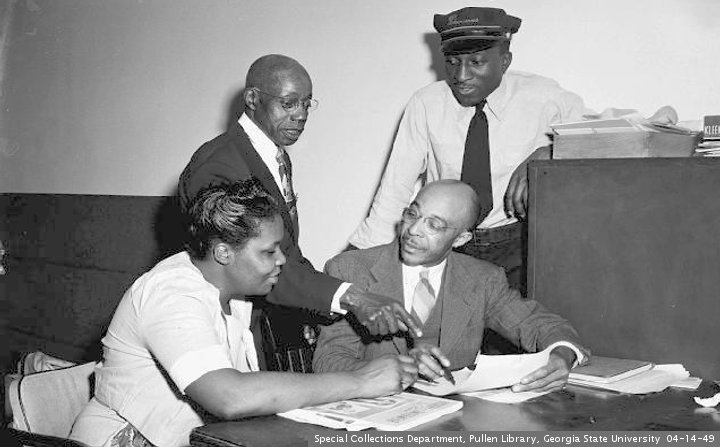
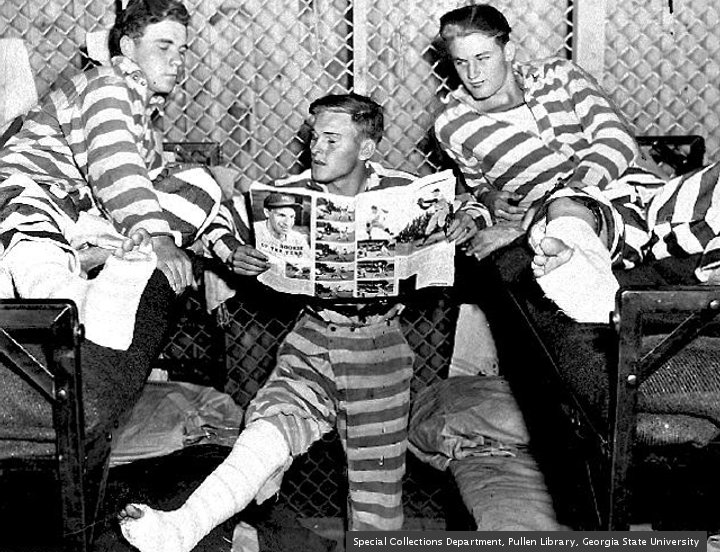
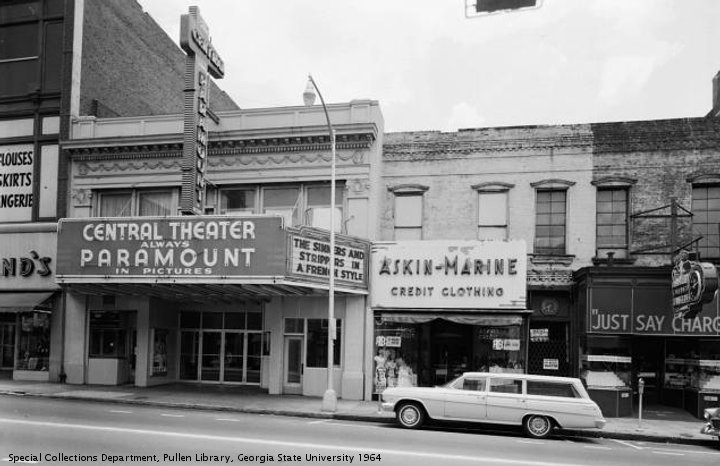
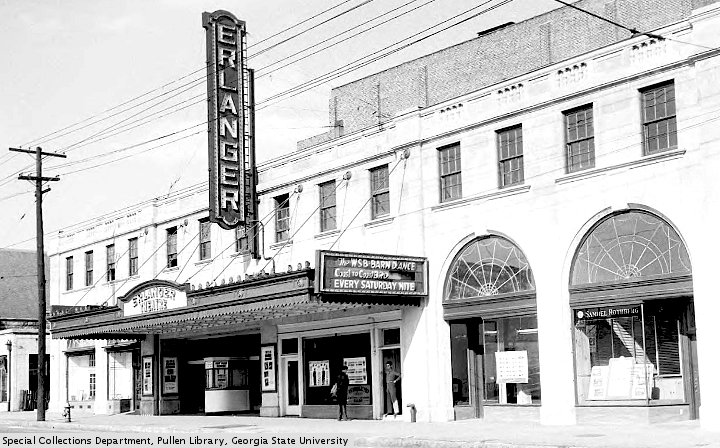
This is a repost from 2011. A link about white privilege now directs to The Story Behind ‘Alice’s Restaurant’ – the 50-Year-Old Song that Is Forever Young. Pictures are from “The Special Collections and Archives, Georgia State University Library”.
PG was reading facebook, minding his own business, when he saw something that made his head explode. It started with a post with the splashy title White Liberals Have White Privilege Too! . There is something about online discussions about white privilege that make well meaning people want to type a lot of words into little boxes on the monitor. PG usually avoids such a conversation, as if it were an amway pitch, but made an exception this fateful afternoon.
The seminal article was written in 2007, and mentioned the media controversy of the day. It seemed as though Joe Biden said “I mean, you got the first mainstream African-American who is articulate and bright and clean and a nice-looking guy … I mean, that’s a storybook, man.” Mr. Biden is currently the Vice President, serving under the FMAA.
There was a link to a bit of archaic html called ” Black People Love Us!, which tells the story of Sally and Johnny… “We are well-liked by Black people so we’re psyched (since lots of Black people don’t like lots of White people)!! We thought it’d be cool to honor our exceptional status with a ROCKIN’ domain name and a killer website!!” The fun starts when a facebook paster quoted a letter to BPLU.
“I swear, if one more white person says that they want to touch my hair, I am gonna puck a f*ckin mousetrap in it so their f*ckin hand gets caught in it. anyways… GET WITH THE PROGRAM! Have any of you ever heard of sarcasm? Irony? Satires? Canterbury Tales? Shakespeare’s “As You Like it” and “Much Ado About Nothing?” If some of you would actually get your heads out of your asses for one second and read a f*cking book or get educated, you will see that this website is NOT trying to break down PEOPLE, but break down BARRIERS and erase STEREOTYPES…With much love for Sally and Johnny… A Black University of Michigan Student with nappy-ass hair”.
The resulting visual ruined the day for PG. BUMS should keep their pants on, and not burden the world with the sight of nappy hair on their posterior. The same thing goes for any asian, latino, caucasian, native american, or zorlack with this problem.

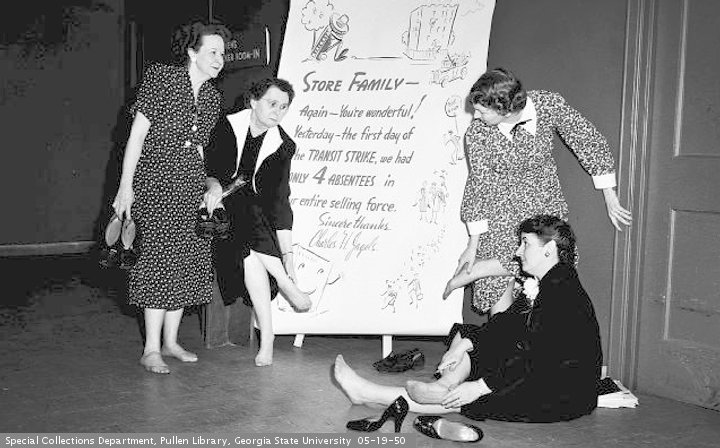



PG was recently reading a list of rules for writing. He began to think of a few. A wordpad was opened, and before long 18 suggestions appeared. Many are only marginally about writing.
When you publish a list like this, you are placing a target on your back, with the word hypocrite written above. PG does not claim to take all these suggestions all the time. What follows is a goal to work for, not a script for a situation comedy.
When in doubt, shut up.
A halo is best worn over one ear.
If you want to be forgiven, forgive. If you want to be understood, understand.
There are few situations that cannot be made worse with anger and loud talk.
You have two ears and one mouth. Listen twice as much as you talk.
A douche is a hygiene appliance. The verb form refers to using this device, for cleaning purposes. Neither the noun nor the verb is appropriate for use as an insult.
A sentence has one period, placed at the end. Do not place a period after every word to make a point. You should find another way to show emphasis.
Not everyone enjoys the sound of your voice as much as you do.
Do not place “ass” between and adjective and the object. “Ass” is a noun that refers to either a donkey or a butt. An adverb is used to modify an adjective, and is placed before the adjective. Using “ass” as a misplaced adverb is improper. This applies to “a$$”as well.
Before you “call out” somebody for “racism”, drape a towel over your mirror.
The third commandment says to not use the word G-d “in vain”. The G word should only be used for worship and respectful discussion. Improper uses include expressing anger, swearing to, selling life insurance, and pledging allegiance to a nationalist symbol.



James Baldwin And The Six Letter Word


In the spring of 1963, KQED filmed a show, “Take this hammer”, about James Baldwin. The snippet in the video above seems to have been the last three minutes of the show. Here is a transcript. Mr. Baldwin discusses a six letter insult. The n-word is more about the speaker, than the spoken of. A 2010 blogger had this to say.
“I’ve often felt that people’s projections of me are oftentimes just that – their projections. However, Baldwin’s ending sums up a solution to this perfectly: “But you still think, I gather, that the n****r is necessary. Well he’s unnecessary to me – he must be necessary to you. Well, I’m going to give your problem back to you…you’re the n****r, baby…not me.”
It is now 2020. (All discussions of race must mention the year.) The TV show was fifty seven years ago. A few things have changed. To many white people, overt expressions of racism are seen as bad manners. The n-word is taboo in polite company. The overall attitudes may not have changed, but most white people are careful how they say things.
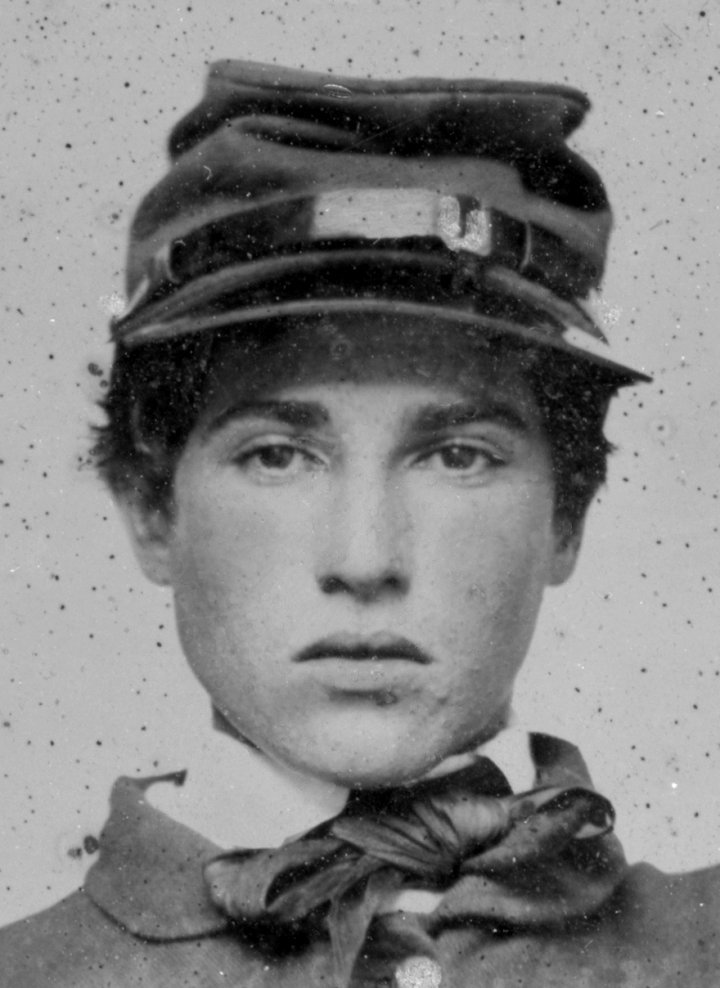
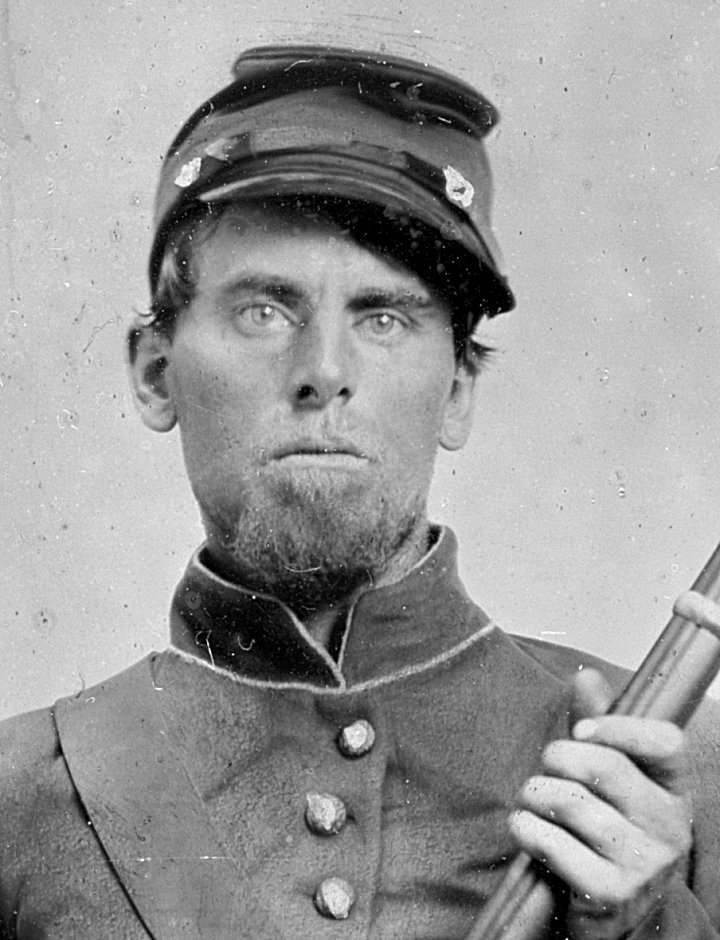
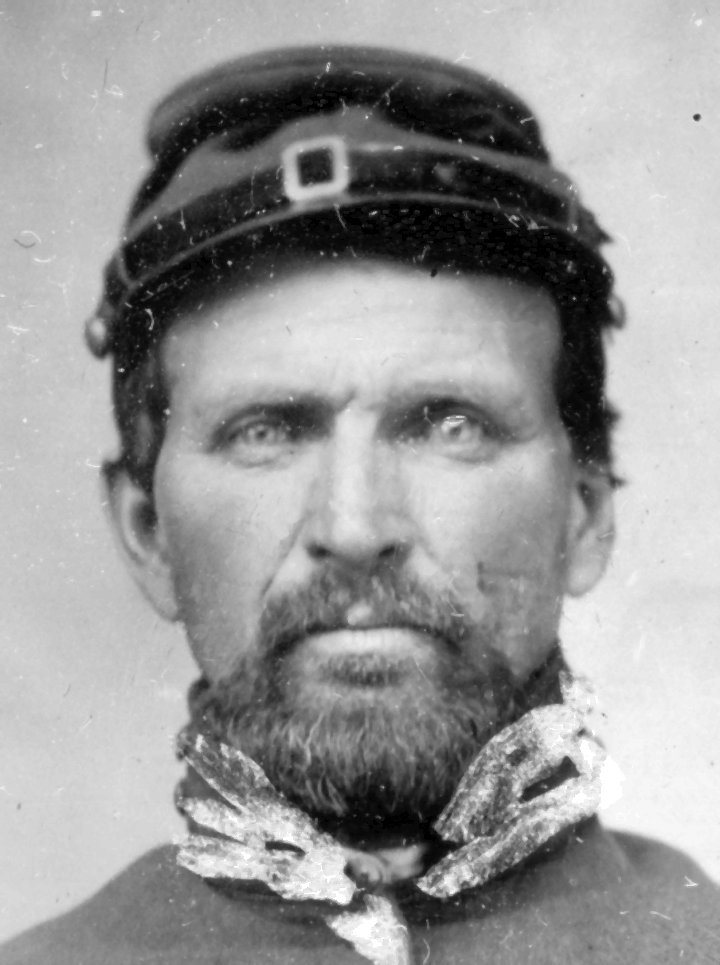
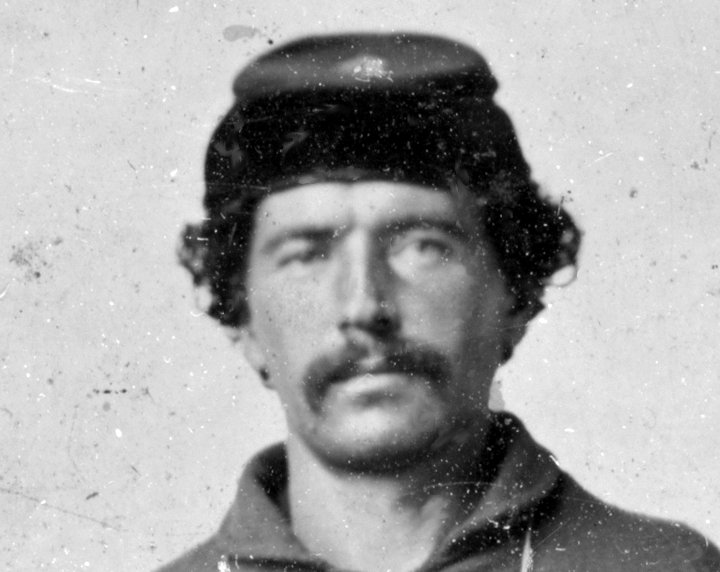
This is a repost. Pictures are from The Library of Congress. These men are Union soldiers, from the War Between the States.



A few weeks ago, this blog published a feature, James Baldwin And The Six Letter Word. At the center was selection of James Baldwin talking about the n word. There was a transcript available, which makes today’s exercise a lot easier.
Mr. Baldwin was discussing this nasty word, and offered an insight into who the user of this nasty word was really talking about. Now, there is another nasty word being casually tossed about these days. This other nasty word is racist. What would happen if you took Mr. Baldwin’s talk, and substituted racist for nasty? It is an interesting way to look at things. What follows is not a perfect fit, and may be offensive to some. A few times, it is very close to the truth.
Who is the racist? Well i know this…and anybody who has tried to live knows this. What you say about somebody else (you know) anybody else, reveals you. What I think of you as being is dictated by my own necessities, my own psychology, my own uhm fears…and desires. I’m not describing you when I talk about you…I’m describing me.
Now, here in this country we got somebody called a racist. It doesn’t in such terms, I beg you to remark, exist in any other country in the world. We have invented the racist. I didn’t invent him, white people invented him. I’ve always known, I had to know by the time I was seventeen years old, what you were describing was not me and what you were afraid of was not me. It had to be something else. You had invented it so it had to be something you were afraid of and you invested me with it.
Now if that’s so, no matter what you’ve done to me I can say to you this, and I mean it…I know you can’t do any more and I’ve got nothing to lose…and I know and I have always known you know and really always..…I have always known that I am not a racist…but if I am not the racist…and if it is true that your invention reveals you…then who is the racist?
I am not the victim here. I know one thing from another. I know that I was born, am gonna suffer and gonna die. And the only way that you can get through life is to know the worst things about it. I know that a person is more important than anything else. Anything else.
I’ve learned this because I’ve had to learn it. But you still think, I gather, that the racist is necessary. Well he’s not necessary to me, so he must be necessary to you. So I give you your problem back. You’re the racist baby, it isn’t me.


Lose The Ability To Remember




PG heard a nifty quote once. “When we begin to write, we will lost the ability to remember.” It was credited to Homer, the Greek poet. The only problem is, PG could never find a source.
Katherine Mangu-Ward is a lady writer. She appeared on a podcast recently, and talked about the symbiotic relationship between conservative trolling, and liberal smugness. PG stumbled onto her twitter account, @kmanguward, and found this: 370 BC: Is Writing Making Us Stupid?
Plato, Phaedrus was the link attached to the tweet. Here is what it said: “Now the king of all Egypt at that time was the god Thamus, who lived in the great city of the upper region, which the Greeks call the Egyptian Thebes, and they call the god himself Ammon. To him came Theuth to show his inventions, saying that they ought to be imparted to the other Egyptians. But Thamus asked what use there was in each, and as Theuth enumerated their uses, expressed praise or blame, according as he approved or disapproved. The story goes that Thamus said many things to Theuth in praise or blame of the various arts, which it would take too long to repeat; but when they came to the letters, “This invention, O king,” said Theuth, “will make the Egyptians wiser and will improve their memories; for it is an elixir of memory and wisdom that I have discovered.”
But Thamus replied, “Most ingenious Theuth, one man has the ability to beget arts, but the ability to judge of their usefulness or harmfulness to their users belongs to another; and now you, who are the father of letters, have been led by your affection to ascribe to them a power the opposite of that which they really possess. For this invention will produce forgetfulness in the minds of those who learn to use it, because they will not practice their memory. Their trust in writing, produced by external characters which are no part of themselves, will discourage the use of their own memory within them. You have invented an elixir not of memory, but of reminding; and you offer your pupils the appearance of wisdom, not true wisdom, for they will read many things without instruction and will therefore seem to know many things, when they are for the most part ignorant and hard to get along with, since they are not wise, but only appear wise.”
Don’t be afraid of a block of text. We will break this down in a minute. The text is from Phaedrus, by Plato. As the ierrant wikipedia says, “The Phaedrus (/ˈfiːdrəs/; Ancient Greek: Φαῖδρος, lit. ‘Phaidros’), written by Plato, is a dialogue between Plato’s protagonist, Socrates, and Phaedrus, an interlocutor in several dialogues. The Phaedrus was presumably composed around 370 BC. “According to this timeline, 370 B.C. is 3200 years after man started to write, and 400 years after the invention of the Greek alphabet. So much for Homer’s word of caution.
We don’t know how widespread writing was in Plato’s time. Presumably, many of the old tales were transmitted by word of mouth, from one generation to the next. This involves memory. “For this invention will produce forgetfulness in the minds of those who learn to use it, because they will not practice their memory.”
There is one more quote worth musing over. Since the invention of the first mediums, new methods have been denounced by traditionalists. Today, we live in an era of constant change. This feature will appear in a blog… state of the art in 2004, and considered obsolete in 2018. Every new medium is greeted with hand wringing over the bad effects it will have on society. Some of these misgivings have been proven false. This *text* goes into more detail about this.
Homer may, or may not, have existed. Since this was 2800 years ago, we may never know. The stories of “The Iliad” and “The Odyssey” may have been told from one generation, to the next. Maybe Homer really did say that, and was merely afraid of competition.
“You have invented an elixir not of memory, but of reminding; and you offer your pupils the appearance of wisdom, not true wisdom, for they will read many things without instruction and will therefore seem to know many things, when they are for the most part ignorant and hard to get along with, since they are not wise, but only appear wise.” . In todays culture, the display of apparent wisdom is more impressive than actual knowledge. These things too shall pass away. Pictures are from The Library of Congress. This is a repost.

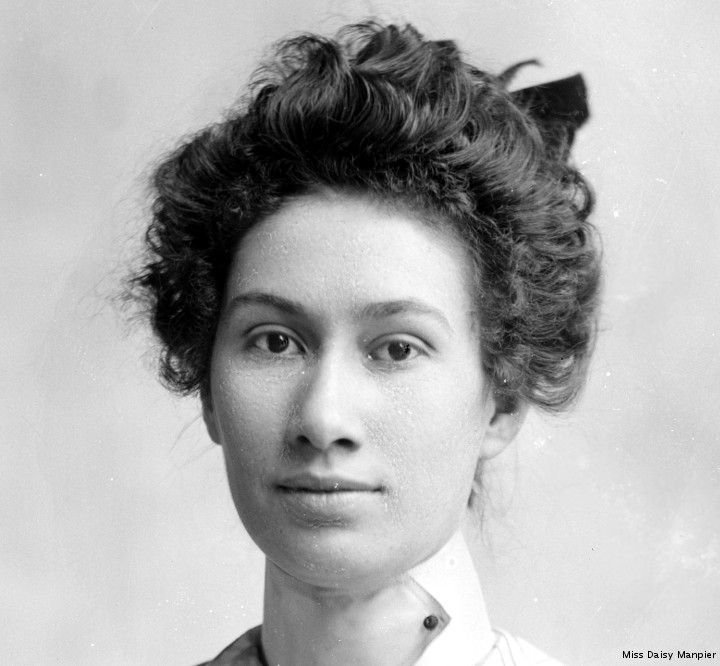




Dorothy Parker




PG first heard of Dorothy Parker in tenth grade. His friend Bob Gibson cut the poem Resume out of the literature text book, and carried it in his wallet. Mrs. Parker had been dead for two years at the time, with her ashes resting in her attorney’s filing cabinet. As the years rolled on, there were stories about the round table at the Algonquin hotel, and a poem about W.R. Hearst … “Upon my honor, I saw the madonna, by the door, in a niche, of a well known whore, and a prominent son of a bitch.” There was another famous comment: Re “The Cardinal’s Mistress” by Benito Mussolini, Dorothy Parker wrote one of my favorite bon mots: “This is not a book to be tossed aside lightly. It should be thrown with great force.” Wikiquotes lists both of these items as “misattributed.”
It is now 2019, several years after the first DP post. Born Dorothy Rothschild, on August 22, 1893, Miss Parker did nicely without a middle name. Chamblee54 has featured Miss Parker several times (one, two, three, four.) Today, these four posts will be combined into one. Pictures are from “The Special Collections and Archives, Georgia State University Library” and The Library of Congress. If you want a list of clever sayings, google is your friend. The quote investigator has five pages of the alleged sayings of Miss Parker.




It was 5:25 pm. PG had not heard from either person who was supposed to be at his house at 5:30. While muttering things about unreliable people, he started to look at a writing contest. The idea was to write 100 words or less. The challenge was to produce a “a quick, honest and heartfelt response” to an image. The meme is seen below the fold.
The image has a quote. “I hate writing. I love having written. Dorothy Parker.” When PG sees words of wisdom, with a famous name at the end, his impulse is to check it out. When you search the wikiquote page on Miss Parker, and look for hate, love, and writing, you will not see the quote. 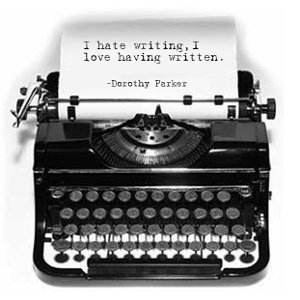
There was one item in wikiquotes that made PG laugh. It was in the “Misattributed” section. “Upon my honor, I saw a Madonna. Standing in a niche, Over the door, Of the glamorous whore, Of a prominent son of a bitch.” Said to have been written in the guest-book of Hearst Castle, referring to the room occupied by Hearst’s mistress, Marion Davies. Parker always denied it, pointing out that she would never have rhymed “honor” with “Madonna”.” Nor would the entertainer.
When PG saw that quote, he knew that this piece would be longer than 100 words. Inserting quotes into a piece will bloat the word count every time. About this time the phone rang. His friends were in the front yard, being eaten by mosquitoes. PG put on a white shirt, and left.
Later that night, 99 sick well chosen words fell out of the fingers, and into the ether.
The quote is suspect. Wikiquotes does not show it, after a search for love, hate, and written. The image is probably manufactured. The image is a piece of paper, coming out of a vintage manual typewriter. The main text is one size. The author credit is another size. Vintage manual typewriters only produced one size of product. This one size is considerably smaller than either size in this image. The text in this image was produced elsewhere. This rendering of a bogus quote is then pasted onto a blank sheet of paper, seen merging from a vintage manual typewriter.






The other day there was a post here on the dotty subject of Dorothy Parker quotes. The departed dipsomaniac would seem to be a quote magnet.
One quote, that appears to be genuine, is about another quote magnet, Oscar Wilde. “A Pig’s-Eye View of Literature: Oscar Wilde If with the literate I am, Impelled to try an epigram, I never seek to take the credit, We all assume that Oscar said it.” (First printed in Life, (2 June 1927) p. 13 When you can give a source for a quote, the chances of it’s legitimacy go up tremendously.)
The original plan for this post was to do a wikiquotes search of the quotes in this post. This concept very quickly turned out to be too much work. The first paragraph of the original post has a clue.
PG first heard of Dorothy Parker in tenth grade. His friend, Bob Gibson, cut the poem Resume out of the literature text book, and carried it in his wallet. Mrs. Parker had been dead for two years at the time, with the ashes resting in her attorney’s filing cabinet. … there was another comment : Re “The Cardinal’s Mistress” by Benito Mussolini, Dorothy Parker wrote one of my favorite bon mots: “This is not a book to be tossed aside lightly. It should be thrown with great force.”
In the post the other day, it was discovered that the poem about W.R. Hearst was written by someone else. Which brings us to “The Cardinal”s Mistress”. Yes, that was written by Hitler’s BFF, Benito Mussolini. When he wasn’t making the trains run on time, he wrote a sappy novel. And the comment by Miss Parker is great. But did she really say it?
A blogspot facility called Heavens to Mergatroyd has the text from a New Yorker review of TCM. It is a delightful read. However, the landmark quote is not there. The spell check suggestion for mergatroyd is derogatory.
Wikiquotes calls the comment “misattributed”. “Quoted in The Algonquin Wits (1968) edited by Robert E. Drennan, and Try and Stop Me. As noted at Snopes, Drennan’s source seems to be a Parker review which does not seem to contain this quote. If Parker wrote this statement anywhere the primary source seems to have gone missing.”
Try and Stop Me is a newspaper column by Bennett Cerf. The link is to The Dispatch, Lexington N.C., October 12, 1962. Next to the column is The Dispatch Religious Activities, Directory of Churches. The pastor of First Baptist is David Hoke Coon, Jr.
While preparing this commentary, an effort was made to find the text for “Resume”. It is a bona fide quote, first printed in New York World August 16, 1925. While looking for the text, Google suggested a search for “resume dorothy parker analysis.” One result was sponsored by a politician, Michelle Nunn. Another had this to say. “We know that we’re being a bit obvious here. But check it out: almost every single line in this poem offers an idea for a different way to die. When it comes to wordplay, Parker’s not messi…” Maybe she meant to say messy.









BigO is a site with mp3 downloads. Most of them are concerts. PG found one exception. It was a 1960 interview, STUDS TERKEL WITH DOROTHY PARKER/BOB NEWHART – CHICAGO 1959/1960. Pictures today are from The Library of Congress. This is a repost.
Dorothy Parker is somewhat of a legend. There were the funny sayings, a few poems and stories, and her life. Mrs. Parker was well known as a witty person during the twenties. She drank, a lot, and talked often of suicide. It was surprising to find a 1960 interview.
In fact, Dorothy Parker died in 1967, at the age of 73. By 1960, she was in decline, living at the Manhattan’s Volney Hotel. “Edmund Wilson … paid occasional painful visits to her at the Volney. (“She lives with a small and nervous bad-smelling poodle bitch, drinks a lot, and does not care to go out.”) … She was still revered, a legend, but she had also become a pathetic relic. Yes, “you might as well live,” but for what? And on what? Not only was she running out of old friends, she was running out of money, though uncashed checks, some quite large, were strewn around her apartment (along with the empty bottles), not helping with unpaid bills.”
There were some zesty quotes in the interview with Mr. Terkel. “I can’t call myself a critic. Honestly. I can only put down what I think and pray there isn’t a libel suit.” “I’m not a poet, you know, I just write verse” “The beat boys aren’t saying anything except look at us aren’t we great … I don’t think the beat generation is much worth worrying about. Very soon, in the very near future, they will be as forgotten as mah jongg.”
Towards the end of the interview, Mr. Terkel said “i know some people would want me to ask, did she really say all those things that she was quoted as saying” “… no, no, and it was a curse on me, it was simply awful the things that were attributed to me. I wouldn’t have minded if they had been good. I was, in effect, the shaggy dog of my time.”
Another quote magnet for the meme generation is Thomas Jefferson. PG saw yet another inspiring quote on facebook today. Mr. Google was consulted. It turns out the quote is real.
Thomas Jefferson to William Hamilton, 22 April 1800 is the source. Vice President Jefferson was going to be elected President later that year. It is not known what effect that had on the quote in the meme. “I never considered a difference of opinion in politics, in religion, in philosophy, as cause for withdrawing from a friend.” It is not known whether a twenty first century Jefferson would unfriends anyone who says anything unappealing.



Hank Chinaski Lives Part Two


An internet facility (IF) called Mind Openerz recently posted a feature, Charles Bukowski’s Top 10 Tips for Living a Kick-Ass Life. Hank writes enjoyable stories and poems. This does not make him a role model. Even if the tales of degenerate lifestyle were exageratted for public consumption, as many suspect, the butt ugly drunkard is nothing to aspire to.
One thing to admire about Hank (a publisher thought that Charles would be a better selling pen name) was the volume of product. He would write dozens of poems, with the lines popping out “like hot turds the morning after a good beer drunk.” Keep the quantity up, quality takes care of itself.
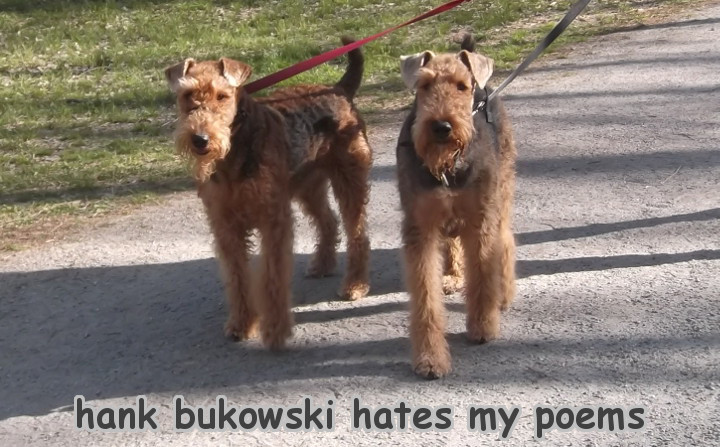
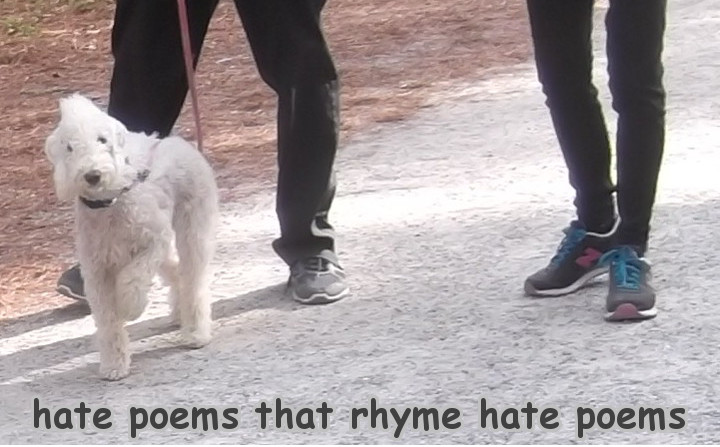
Many of the rules for living were taken from his short stories. PG recently stumbled through Tales of Ordinary Madness, and recognized a few. Hank would toss words of wisdom into stories about being arrested. One time, it was for threatening to rape a lady with a codfish. You can’t beat fun at the old ballpark. Of course, Hank hated baseball, and hated poetry that rhymes. PG writes rhyming poems, with pictures of dogs in the background. Hank is dead, and his opinion doesn’t count.
The fun starts with rule number eight. “8. Have confidence in yourself. “The problem with the world is that the intelligent people are full of doubts.” You are awesome, and all you have to do to let your true talents shine is believe that fact. Have complete confidence in yourself and you might be surprised with all you can achieve.”
Several of the stories of ordinary madness involve people who think they are poets, show work to Hank, and are insulted for the lousy ouput. The line in number eight was familiar, but PG was too slack to go looking through ordinary madness to find it. This is where you ask Mr. Google for help. The full quote: “The problem with the world is that the intelligent people are full of doubts, while the stupid ones are full of confidence.”














PG sat in the workplace cafeteria and read the last line of Tales of Ordinary Madness. TOOM is a book of short stories and underground press columns, allegedly written by Charles Bukowski. This collection was published by City Lights Books, the facility of Lawrence Ferlinghetti. The poet-businessman was not admired by Mr. Bukowski.
The author was born Heinrich Karl Bukowski, on August 16, 1920, in Andernach, Rhineland-Palatinate, Germany. His Catholic parents moved to America in 1923. The name was americanized to Henry Charles Bukowski. Friends called him Hank, and his literary alter ego was Hank Chinaski. Somebody decided that Charles would look better in print.
Hank Chinaski was a hard boiled character, or so he would have you believe. He was not a teetotaler. In spite of his many excesses, Hank lived to be 74, when leukemia sent him to the likkastow in the sky. This was March 9, 1994. Eleven days later, Lewis Grizzard met his maker. Lewis was 47, the same age as Hank in much of TOOM.
You should always separate the creator from the creation. Enjoy the product, and don’t worry about the ingredients. That is the case with TOOM. The stories are reputed to be little autobiographies. (An Amazon one star commenter thinks the stories are the result of “some kind of posthumous ghost writer, and not a very good one.”)
Hank, if nothing else, was productive. He wrote thousands of poems. It is not known if they have all been published, or if anyone is drunk enough to read them. Here is a quote from a previous Chamblee54 feature, The On Time Charles Bukowski.
The writer/drunk had always been a bit of a fascination to PG. Out of the millions of useless drunks feeding the urinals of planet earth, at least one will turn out to have had literary merit… this leads to a newyorker piece about the gentleman. After nine paragraphs, and two poems, there is the phrase that set off PG…graphomaniacal fecundity. (spell check suggestion:nymphomaniac)
As best as we can figure, g.f. means that Hank wrote a lot of stuff. This is a good thing. PG operates on the notion that if you keep your quantity up, the quality will take care of itself. Hank seems to agree, spitting out product “like hot turds the morning after a good beer drunk.” He seemed to take pride in doing what Truman Capote said about Jack Kerouac…he doesn’t write, he types.
Holy drunken author synchronicity. Last summer, PG was working third shift in a midtown sweatshop. He would read a couple of stories of TOOM, then shift gears and read a bit of The Dharma Bums. At some point in the procedure, there was a collection of output from Truman Capote.
Hank Chinaski might not like PG. There is the rhyming poetry. There is buying a book of repackaged prose at a yard sale. There is the twenty five year retirement from alcohol use. This is beside the point. You have to live for what is important to you, not what a deceased barfly might think.
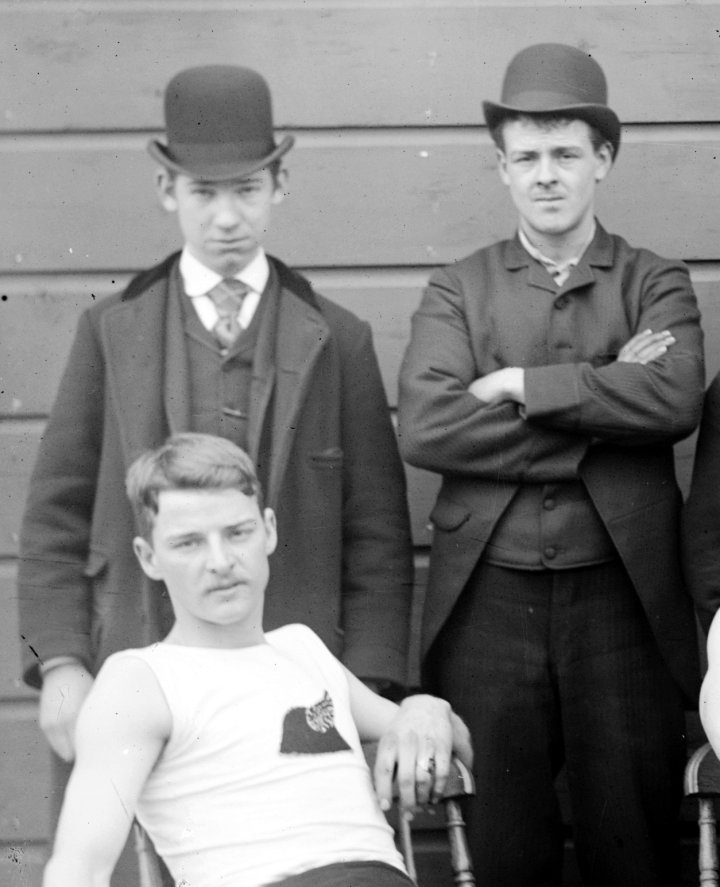
Pictures for the last part are from The Library of Congress. After publishing Hank Chinaski Lives on Tuesday, PG decided to repost two other pieces about Hank Bukowski.




Destroy The Village To Save It





“It became necessary to destroy the town to save it.” This is one of the most familiar lines about the Vietnam War. It is often cited today, when discussing the response to COVID-19. Who said this?
It was “originally reported by Peter Arnett of the Associated Press, who quoted an unidentified American officer on why the village of Ben Tre was leveled during the Tet Offensive in early 1968. … A two-paragraph version of the AP dispatch was buried on page 14 of The New York Times, with no byline,” on Feb. 8, 1968. … “BENTRE, Feb. 7 (AP)― It became necessary to destroy the town to save it,” a United States major said today. He was talking about the decision by allied commanders to bomb and shell the town regardless of civilian casualties, to rout the Vietcong.”
“Almost instantly, however, the line was being misquoted everywhere. On Feb. 10, an Oregon newspaper rendered it “We had to destroy the village in order to save it.” Two weeks later the St. Louis Post-Dispatch reported on a group of protesters carrying a banner that read, “It Was Necessary to Destroy the Village in Order to Save It.” In whatever form, the words had become a mantra of the anti-war movement, a … summary of what was wrong with the entire Vietnam adventure.”
“The day before Arnett’s story ran, the Times’s James Reston had asked in his column, “How do we win by military force without destroying what we are trying to save?” … Associated Press itself had used a similar phrase almost exactly a year before Arnett’s dispatch. In late Jan. 1967, the AP distributed a wire photo of a different village with a caption that read in part: “The Americans meantime had started to destroy the village to deny it to the Viet Cong.” The photograph was published across the country. One wonders whether the officer Arnett was quoting had come across the caption the previous year.”
“But the actual father of the metaphor — the man who put it into roughly the form we know today — seems to have been Justice Edward White of the U.S. Supreme Court. In a 1908 decision known as the Employers’ Liability Cases, the justices were asked to give a narrow reading to a congressional enactment concerning common carriers in the District of Columbia. The court refused. The requested reading, according to White’s opinion for the majority, would in effect add a new clause to the statute. He then explained why doing so would be wrong: “To write into the act the qualifying words therefore would be but adding to its provisions in order to save it in one aspect, and thereby to destroy it in another — that is, to destroy in order to save, and to save in order to destroy.””
The fighting in Ben Tre took place during the Tet Offensive. This is widely seen as a turning point in America’s involvement in that conflict. “On January 30 1968 … the North Vietnamese and the Vietcong launched a massive military offensive that proved the battle raging in Southeast Asia was far from over, and that President Lyndon B. Johnson’s administration had grossly oversold American progress to the public. Although U.S. troops ultimately ended the offensive successfully, and the North Vietnamese and the Vietcong suffered brutal loses, these bloody weeks triggered a series of events that continue to undermine Americans’ confidence in their government.”
(CBS news anchor Walter) “Cronkite was so shocked at the devastation of the communists’ Tet offensive that he went over to see for himself what was really going on.” On February 27, 1968, “he concluded the war was a stalemate, probably unwinnable. … Lyndon Johnson was said to have watched the broadcast and exclaimed to his press secretary, George Christian, “If I have lost Walter Cronkite, I’ve lost Middle America.” Pictures today are from The Library of Congress.




 Chamblee54
leave a comment