Cynic


This content was published December 17, 2023. … “A cynic is a man who knows the price of everything, and the value of nothing.” ― Oscar Wilde. This quote is one of Oscar’s greatest hits. If you think about it for a minute, it is not totally accurate. You are not supposed to think. Quoting Oscar Fingal O’Flahertie Wills Wilde is about sounding clever, not making sense.
Oscar Wilde is a quote magnet. This is more than something you put on your refrigerator. When people hear something clever, odds are good that Oscar will get the blame. As Dorothy Parker wrote: “If, with the literate, I am, Impelled to try an epigram, I never seek to take the credit; We all assume that Oscar said it. [Life Magazine, June 2, 1927]”
Wikiquote says this line is from Act III of Lady Windermere’s Fan. It was spoken by Lord Darlington. Did the playwright intend for the line to be taken seriously, or was he making the character look foolish by saying it? With Oscar, it could be both of these things at the same time.
Principle Four, of the four principles of quotations, reads “Only quote from works that you have read.” In the case of Lady Windemere’s Fan, this would mean a youtube video of the play. There is an indy movie available. You don’t have to watch the cell phone recording of high school players.
Lady Windemere’s Fan is a production where upper class Brits say clever things in glorious costumes. Nobody ever goes to the bathroom, or looks less than perfect. Lady Windemere’s six month old child is neither seen, nor heard. Lady Windemere finds out her husband, Lord Windemere, is having an affair with Mrs. Erlynne. The Lord proceeds to invite the floozy to Lady Windemere’s birthday party.
After the party, the men go to their club, then to Lord Darlington’s room. There are five men in the conversation, beginning with Lord Windemere. Lord Darlington has just told Lady Windemere that he loves her, and wants her to run off with him. Lady Windemere said no. Lord Augustus is a suitor of Mrs. Erlynne, and is begging her to marry him. Mr. Dumby and Cecil Graham wear their splendid costumes with conviction.
The scene starts with the men saying clever things, most of them insulting to someone. Lord Augustus, or Tuppy, is the butt of many jokes. Before long, we get this exchange:
Mr. Dumby I don’t think we are bad. I think we are all good, except Tuppy.
Lord Darlington No, we are all in the gutter, but some of us are looking at the stars.
Mr. Dumby We are all in the gutter, but some of us are looking at the stars? Upon my word, you are very romantic to-night, Darlington.
Cecil Graham Too romantic! You must be in love. Who is the girl?
Lord Darlington The woman I love is not free, or thinks she isn’t. [Glances instinctively at Lord Windermere while he speaks.]
A few minutes later, we hear another famous Oscarism.
Lord Darlington What cynics you fellows are!
Cecil Graham What is a cynic? [Sitting on the back of the sofa.]
Lord Darlington A man who knows the price of everything and the value of nothing.
Cecil Graham And a sentimentalist, my dear Darlington, is a man who sees an absurd value in everything, and doesn’t know the market price of any single thing. … Pictures today are from The Library of Congress. Arthur Rothstein took the social media picture in February 1942. “Brownsville, Texas. Charro Days fiesta. Dance for enlisted men” ©Luther Mckinnon 2025 · selah


Climategate




This content was published November 27, 2009. … By now, many of you have heard about “climategate”. It seems like someone hacked into a computer at an English research institute, and found some emails. A few of the emails have been released. With years of correspondence to go through, only a part of which has been released, there is lots of room for mischief. If the hackers are smart enough to steal those emails, they are also smart enough to fake a few.
I am not a scientist, and all this makes my head spin. There is the suspicion that a lot of the people making noise don’t understand the science, but are making noise to support already held views. There are big money interests who would like to see talk about global warming go away, so they can work without interference. These interests have lots of money to buy off journalists, who then produce prose like this: “AGW (anthropogenic global warming) is about raising taxes; … about a few canny hucksters who’ve leapt on the bandwagon fleecing us rotten with their taxpayer subsidised windfarms and their carbon-trading; about the sour, anti-capitalist impulses of sandal-wearing vegans and lapsed Communists who loathe the idea of freedom and a functioning market economy.”
The discussion has leaped out of the frying pan of science, and into the fire of politics. There is an international conference in Copenhagen soon, and the timing of “climategate” is curious. … Two words stand out in this discussion, believe and prove. I wonder if they are appropriate. AGW is not really a matter of believe or not believe. Since the industrial revolution, man has made an enormous change in the atmosphere. This ecosystem has evolved over billions of years, either by accident or intelligent design. Man has made profound changes in the last two hundred years.
Chamblee54 crunched the numbers last July: “The atmosphere on planet earth is a marvel, quite possibly unique in the universe. It supports a wide range of life forms, from amoebas to Bruno. This blanket of gas evolved over a period of billions of years. Man has possibly changed it more in the last two hundred years than nature did in four billion before that. … Those numbers don’t mean too much like that, so let’s put them into another form. Comparing 200 years to four billion years just takes a calculator. That is like comparing one minute to 38 years. What God created (or nature evolved, or however you explain it), in 38 years, industrial man has nearly ruined in one minute.
Here is the breakdown. Divide 4 billion by 200 and you get 20 million. Divide 20 million by 1440 (the number of minutes in a day) gives us 13888 days. Dividing 13888 days by 365 gives us 38 years. Even if the earth is less than four billion years old, the fact remains that industrial man has destroyed in almost no time what took a long time to create. … The second weasel word in the current blabberfest is prove. There is a difference between prove and indicate. If the emails are genuine, they would indicate that some scientists in England cooked the books on their research. As to the larger issue of what industrial man is doing to planet earth, they prove nothing.
This content was published November 18, 2008. … Yesterday, after exploring east Atlanta, PG and Uzi went to dinner. They alternate between Piccadilly and S&S , and this was a Piccadilly week. PG always thinks of the antique store called Pick a Dilly. That might explain some of the clientele. … Lenny was a friend of Uzi, who had checked out of the hotel a few years ago. Lenny was inclined towards a philosophical viewpoint. He tried to write these nuggets down. One of the problems was that Lenny never did understand the concept of the tab key.
He would type the quote, the source, and any other information into one cell of a database. PG had time on his hands, and offered to try and straighten out the mess. … Now, one problem is Microsoft Works. The database that Lenny used was in works. The only operating system to employ works was Millennium Edition … the Edsel of the Microsoft showroom. When you tried to take something in works, and move it to another system, you were liable to get a screen full of jibberish. (According to spell check, this is properly spelled gibberish)
So, the email arrived. PG tried to open the file using an open office database, and the thing closed immediately. PG thought he heard the computer laughing at him. Next was a bootleg copy of microsoft windows 97 office suite. Funny how suite is pronounced like sweet, but is anything but. The database was not amused, and word showed a screen full of gibberish. … Next, PG tried notepad. This did show some text in between the acres of code. PG copied this into a trusty wordpad file, and started to edit. After a while, there were a few quotes in legible form.
PG then sent this email to Uzi: excellent i haven’t had a family turkey day since i had parents. as for the files, they are not opening smoothly. i might could work around some of the issues, but it might be easier if i had a copy of works when i had my first computer, i used works, and then tried to take the files to my job to use the word based computers there. word computers do not like works (even if it is at work, as in job. this can get confusing)
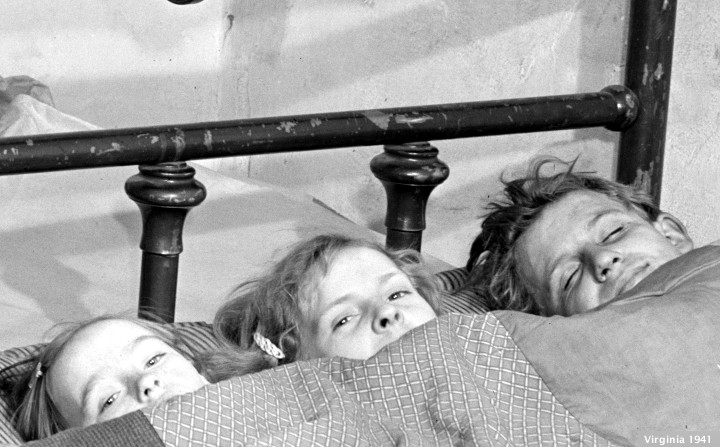
If you could find a copy of the works database file and send it to me, that might make this project easier I opened one file with notepad, and was able to cull these from the mass of jibberish: The best things and best people rise out of their separateness ; I’m against a homogenized society because I want the cream to rise. Robert Frost · How many a dispute could have been deflated into a single paragraph if the disputants had dared to define their terms. Aristotle · The government of the United States is not in any sense founded upon thty . Clarence Darrow … Is this the sort of thing i can expect to find? a quote, and then a source for the quote? PG … Pictures today are from The Library of Congress. John Vachon took the social media picture in March 1941. “Schoolchildren getting ready to go home. Norfolk, Virginia ©Luther Mckinnon 2025 · selah



Mark Twain And Profanity



This content was originally published July 9, 2010. … There is a proposal in San Francisco to ban the sale of pets. The proposal has little chance of passing. There is even less chance of this measure being enacted in Georgia. But maybe it should. According to a California source “The real problem, staff said, is hamsters. People buy the high-strung, nocturnal rodents because they’re under the temporary impression that hamsters are cute and cuddly. But the new owners quickly learn that hamsters are, in fact, prone to biting, and gnawing through expensive wiring. …
… So the animals end up at the shelter. Just about every species has its own rescue group in San Francisco, but no one seems to want hamsters. Hamsters are the No. 1 animal euthanized at the city’s shelter, said San Francisco Animal Care and Control director Rebecca Katz.”(Katz?) Here is an animal euthanasia provider who supports the ban. “”the concept is something I think positively of. A lot of these animals, I get the feeling people buy them on impulse and they’re sold as somewhat disposable”. … People get pets as an impulse, or as gifts. When they get tired of them, the pet is often murdered. There is also the issue to the excess reproductive capacity of many animals. …
… When I took speech and drama in high school, one of the cheerleaders started a speech by saying “you are going to think I am a monster”. Her proposal was to outlaw pets. The amount of food used to feed companion animals could be used to feed humans. Ditto the medical resources used to treat sick animals. People sometimes are so in love with their pets, that they do not see the harm they do to others. A dog that will not stop barking is an infringement on the rights of others. A pit bull that gets loose can ruin the life of someone who gets in the way. …
… I lived for 23 years in a duplex, and had a wide variety of neighbors. I was fussed at for closing the gate to the back yard by one household. Another neighbor threatened a lawsuit for leaving the gate open.A Florida import dumped his catbox eighteen inches from where I opened my car door. There was the little black dog that I became friends with, only to be poisoned by enemies of the owner. … It is well known that the pampered pets of the wealthy live much better than many human children. Maybe this money needs to be spent on people.
This content was originally published July 17, 2010. … The WordPress homepage linked to a post on the benefits of “swearing“. Since Chamblee54 had a post about *donkeys* the other day, maybe this is a good subject to continue on. As before, this is a profanity light blog, and this discussion on cussing will not have any examples. If you do not know any of the words, then you need to get out more. …
… It seems like a grant monger at a university did a study. The subjects were asked to hold their hands in freezing water. Half of the subjects were allowed to say a swearword of their choice, the other half said a non expletive control word. The cussers felt less pain. I don’t know how this was measured, or whether I believe this. … Mark Twain had a similar thought. “Under certain circumstances, urgent circumstances, desperate circumstances, profanity provides a relief denied even to prayer.” …
… The reference to prayer is another twist in this tale. Much of the objection to profanity is from Christians. These are people who consider the Bible to be “the word of God”. And yet, if you go to the Greek and Hebrew original texts, you will find every body part and reproductive act mentioned. The ban on cussing is more of a social issue than a moral one. … Christians have the same anger management issues as non believers. Some have a lot more. Often Xtians will use words like Jesus and God as a device for expressing displeasure. …
… This does not speak well for either Jesus or God, and violates the Third Commandment. Perhaps these believers would be better off to use words for body parts as insults, instead of a reference to God. … The subject of profanity is fertile ground for bloggers, and I will return to it before long. Before we go today, there are a few more comments from the post that started this, in addition to some zingers from the Mark Twain quotes page about profanity. That archive supplies a source, unlike many facebook quotemongers. …
… “The idea that no gentleman ever swears is all wrong. He can swear and still be a gentleman if he does it in a nice and benevolent and affectionate way.” Mark Twain – Private and Public Morals speech, 1906. · “There ought to be a room in every house to swear in. It’s dangerous to have to repress an emotion like that.” Mark Twain – Mark Twain A Biography · “When angry count four; when very angry, swear.” Mark Twain – Pudd’nhead Wilson’s Calendar · “swearing is like perfume. used intelligently in small doses – it can enhance the meaning of a phrase. if it’s cheap and overwhelmingly applied – it can make you leave the room! Kaiamaeve …
… I must confess, I quite like swearing. But, like everything, try to do it in moderation. A good oath blurted out at the right time can really emphasize a message. I don’t think I know any adults who never swear, but I know many who rarely let out a good curse-word and, when they do, you know they really mean it. They make it count. Andrew Berthoff · I had my days at military school where I cussed like, well, a soldier, and I’ve also had my church-going days where I promised myself that I didn’t swear at all. Those days are both behind me now, and I really try to not swear very much because I think it makes me sound like an moron. Nathan …
… There is a Mark Twain quote used today. The source is Mark Twain A Biography, not his writing. If you look in MTAB, this is what you see: “Steve was a merciless joker, and never as long as they were together could he “resist the temptation of making Sam swear,” claiming that his profanity was grander than any music.” … Mark Twain’s profanity. For it was rarely misplaced; hence it did not often offend. It seemed, in fact, the safety-valve of his high-pressure intellectual engine. When he had blown off he was always calm, gentle; forgiving, and even tender. Once following an outburst he said, placidly: “In certain trying circumstances, urgent circumstances, desperate circumstances, profanity furnishes a relief denied even to prayer.” …
… There is another Twain quote attributed to MTAB: “He usually had a number of clippings or slips among the many books on the bed beside him from which he proposed to dictate each day, but he seldom could find the one most needed. Once, after a feverishly impatient search for a few moments, he invited Miss Hobby to leave the room temporarily, so, as he said, that he might swear. He got up and we began to explore the bed, his profanity increasing amazingly with each moment. It was an enormously large bed, and he began to disparage the size of it. “One could lose a dog in this bed,” he declared. Finally I suggested that he turn over the clipping which he had in his hand. He did so, and it proved to be the one he wanted. Its discovery was followed by a period of explosions, only half suppressed as to volume. Then he said: “There ought to be a room in this house to swear in. It’s dangerous to have to repress an emotion like that.” … Pictures today are from Special Collections and Archives, Georgia State University Library. The social media picture was taken October 31, 1956. “Wrecked police automobile” · ©Luther Mckinnon 2025 · selah
Ben Franklin Said What?





There is a meme floating around. “THE U.S. CONSTITUTION DOESN’T GUARANTEE HAPPINESS, ONLY THE PURSUIT OF IT. YOU HAVE TO CATCH UP WITH IT YOURSELF. – BENJAMIN FRANKLIN – PLEASE SHARE Freedom Works”
Luther Mckinnon Do you have a source for that quote? It is not shown in wikiquotes. *Meme Poster* Luther. If you Google: Benjamin Franklin quote “the Constitution doesn’t guarantee hapiness”. You’ll find a bunch of websites devoted to famous quotes. Personally I don’t like Wikipedia. They leave out a lot of information Luther Mckinnon The problem is that many quote websites do not provide a source. Many of the quotes are erroneous. Yes, wikiquotes is not an authoritative source. However, if they do not list the quote, that is an indication that perhaps the quote is not genuine. Luther Mckinnon After I made the post above, I highlighted the phrase “Benjamin Franklin quote “the Constitution doesn’t guarantee hapiness” (BTW, happiness is spelled with two p’s. You need a pp to have happiness.) Anyway, I right clicked, and went to google search. I found this link. The money quote: “The quote is a fake. Benjamin Franklin never said this.”
“The pursuit of happiness” is in the Declaration of Independence, not the Constitution. Was the phrase “catch up” used in the eighteenth century? Maybe Mr. Franklin meant mustard.
Ben Franklin was present at both the Continental Congress, and the Constitutional Convention. He signed both documents. The Declaration of Independence was written by Thomas Jefferson. He was the United States Ambssador to France when the Constitutional Convention was held. During this time, Mr. Jefferson was engaged in the pursuit of Sally Hemmings.
Another indication that the meme is phony is the connection to Freedom Works. In the meme comments, even Freedom Watchers seemed to know the difference between the Declaration of Independence, and the Constitution. … On May 7, 2024, FreedomWorks was dissolved by a unanimous vote of its Board of Directors.
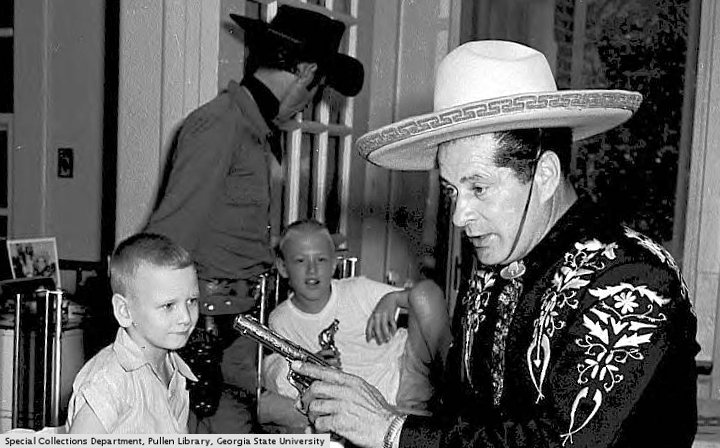
*Meme Poster* Luther Mckinnon, thank you for taking something that was meant to be inspirational and stomping on it. *Meme Poster* unfriended Luther Mckinnon. Pictures today are from Special Collections and Archives, Georgia State University Library. The social media picture was taken June 18, 1957. “Shriners Horse Show, visit to Scottish Rite Hospital” This is a repost from 2014.








Wasted




This is a repost from 2013. Over the last few years, quote debunking has become a hobby of mine. This particular item is cited by Quote Investigator®. … There is a tasteful graphic going around. It features a quote, “Time you enjoy wasting was not wasted.” John Lennon is blamed for this thought. Wikiquotes does not have this quote, at least by Mr. Ono.
An obvious comment is that being wasted is something Mr. Lennon knew. Keith Richards says this is not quite the case. On pages 261-262 of “Life”, Mr. Richards describes how Mr. Lennon would try to keep up on the drug intake, but wound up in the loo, studying the porcelain.
There was a facebook exchange about this quote. “Wikiquotes does not show this quote. I searched using wasted, wasting, and time.” ~ “Luther,the way I look at these quotes is : I like the idea they express, rather than being overly concerned with the veracity of the attribution.” … This is one of the kinder things a quote debunker will hear. People do not like to be told that Santa Claus does not exist.
If the idea is so cool, why do the quotemongers need to attribute them to a famous person? You can find some pastoral image for the background, throw the quote up, and be inspired. Is it an authoritarian impulse to find a wise man to give credit for the cleverness? Can’t it stand on it’s on?
John Lennon spoke about being more popular than Jesus, and caught some flack as a result. Would John really want to be used as justification for someone else’s clever thought? The sense here is that all he wanted to do was play rock and roll. Let someone else be the spokesman for a generation.
Pictures are from The Library of Congress. Russell Lee took the featured photograph in October 1938. “Princesses at the National Rice Festival, Crowley, Louisiana. There were thirty of these chosen from different communities throughout the rice section, the Queen being chosen from them.”



Those Who Cannot Remember …


“Those who cannot remember the past are condemned to repeat it.” Unless you live under a rock, you have heard that quote. Credit/blame for this item goes to George Santayana. (b. Jorge Agustín Nicolás Ruiz de Santayana y Borrás, December 16, 1863 – September 26, 1952.) This quote is the only reason anyone has heard of GS. As it turns out, GS also can be credited with the phrase “Only the dead are safe; only the dead have seen the end of war.” Details on these two crowd pleasers to follow.
“Those who cannot remember …” (TWCR) appears in The Life Of Reason. “During the years of 1905 and 1906, he published a five-volume work titled The Life of Reason; or, The Phases of Human Progress … Santayana investigates the birth and development of human reason, which he views as an evolutionary system within the scope of physical reality. He traces the growth of the human mind towards a state of rationality, exploring the details of existence and evaluating human life in general.” TLOR was written while GS was teaching philosophy at Harvard.
TWCR is in CHAPTER XII—FLUX AND CONSTANCY IN HUMAN NATURE of volume one. Here is the abbreviated paragraph: “Progress, far from consisting in change, depends on retentiveness. When change is absolute there remains no being to improve and no direction is set for possible improvement: and when experience is not retained, as among savages, infancy is perpetual. Those who cannot remember the past are condemned to repeat it. In the first stage of life the mind is frivolous and easily distracted; it misses progress by failing in consecutiveness and persistence. This is the condition of children and barbarians … Thus old age is as forgetful as youth, and more incorrigible; it displays the same inattentiveness to conditions; its memory becomes self-repeating and degenerates into an instinctive reaction, like a bird’s chirp.”
TLOR is a heavy duty piece of work, not a glib collection of uplifting quotes. Chapter XII is about mankind’s progress in becoming a thinking being. TWCR appears to be an incidental line, not the main thrust of his thesis. The last sentence … “memory becomes self-repeating and degenerates into an instinctive reaction, like a bird’s chirp” … would seem to contradict the more famous TWCR.
How did TWCR go from being an incidental line, to being the coffee mug classic that we know today? We don’t know. Quote Investigator® traces known citations through the years. There does not seem to be any one moment when the quote became famous.
“Santayana sometimes repudiated his earlier work, in part for its having the taint of academic life. He especially spoke down at times about the Life of Reason series for its association with the progressivism of the day, and it was later edited by Santayana and his late-life personal assistant and secretary, Daniel Cory, with the intent of removing some of its more humanistic overtones.” I do not know whether TWCR is one of the “humanistic overtones.”
In contrast to TWCR, few people know about the GS connection to “Only the dead have seen the end of war.” OTDH appeared in Soliloquies in England (1922) “remarkably written amidst the uncertain, violent times of World War I.” OTDH appears in soliloquy 25, _TIPPERARY_ … “Only the dead are safe; only the dead have seen the end of war. Not that non-existence deserves to be called peace; it is only by an illusion of contrast and a pathetic fallacy that we are tempted to call it so. The church has a poetical and melancholy prayer, that the souls of the faithful departed may rest in peace.”
“Some scholars conclude that Santayana was an active homosexual based on allusions in Santayana’s early poetry (McCormick, 49–52) and Santayana’s association with known homosexual and bisexual friends. Santayana provides no clear indication of his sexual preferences, and he never married. Attraction to both women and men seems apparent in his undergraduate and graduate correspondence. The one documented comment about his homosexuality occurs when he was sixty-five. After a discussion of A. E. Housman’s poetry and homosexuality, Santayana remarked, “I think I must have been that way in my Harvard days — although I was unconscious of it at the time” (Cory, Santayana: The Later Years, 40). Because of Santayana’s well-known frankness, many scholars consider Santayana a latent homosexual based on this evidence.”
This text does not discuss the misuse of history, or of quotes. We seek to discuss the context of TWCR, and speculate about why this item is so popular. One of the lessons of history is that people will interpret history to suit their purposes, often to the detriment of mankind. It is ironic that TWCR (written in 1905) is often cited as a justification for war … and only the dead have seen the end of war. (OTDH was written in 1922, after another great war.)
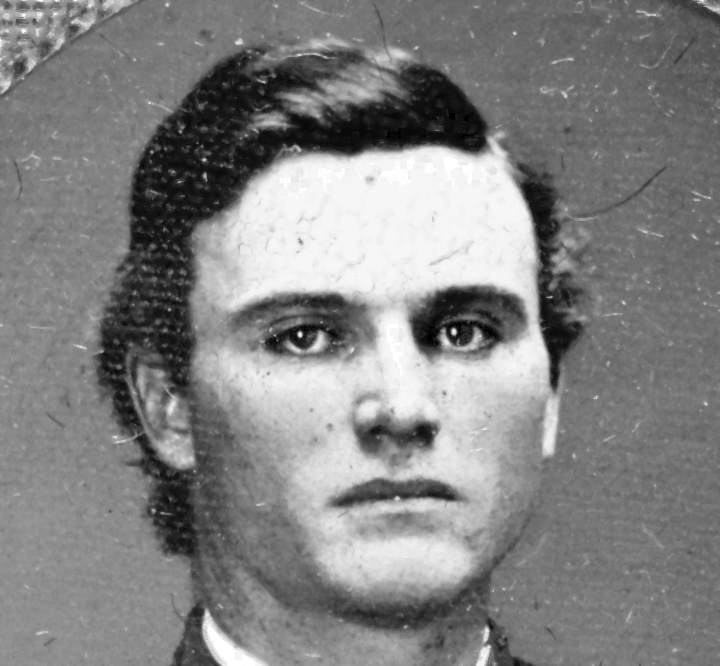
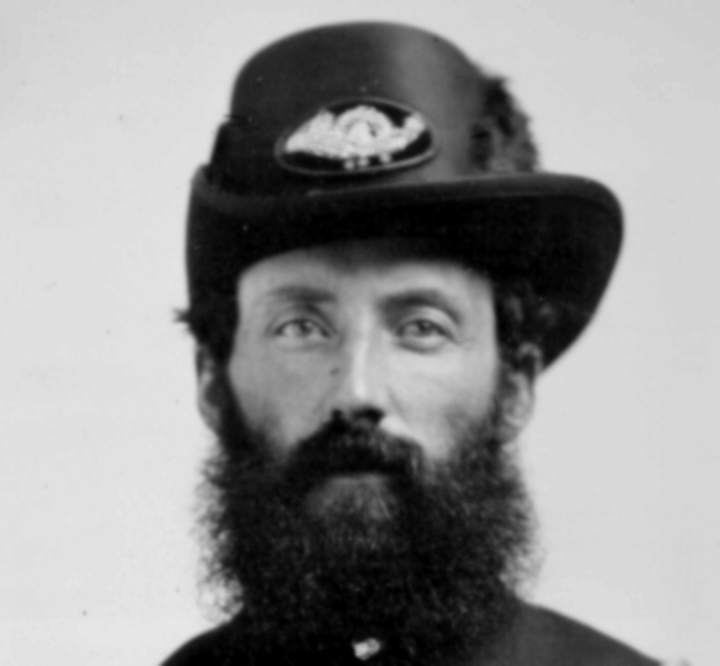
Photographs today are from The Library of Congress. The featured photograph: “Two unidentified soldiers in Confederate uniforms”


The Henry Ford Meme







There is a meme going around. It has a quote, “Any man who thinks he can be happy and prosperous by letting the government take care of him, better take a closer look at the American Indian.” The credit/blame for the quote is given to Henry Ford. There are so many things to say.
You might ask if the quote is genuine. A bit of research leads to a foundation that studies the life of Henry Ford. They have a spreadsheet of his quotes. A search for the words happy, Indian, and prosperous do not show this quote.
The second comment is about what might be termed political correctness. The term American Indian is now considered offensive. If you consider the historic relationship between Native Americans, and the European conquerers, you see a history of land theft, treaty violation, and genocide. That this could be considered “letting the government take care of him” is a sick joke.
Ad hominem comments are just too easy to make. Henry Ford had a reputation for extreme anti-semitism. Mr. Ford was no fan of labor unions, and fought them fiercely. There are many other stories about what a horrible man Henry Ford was.
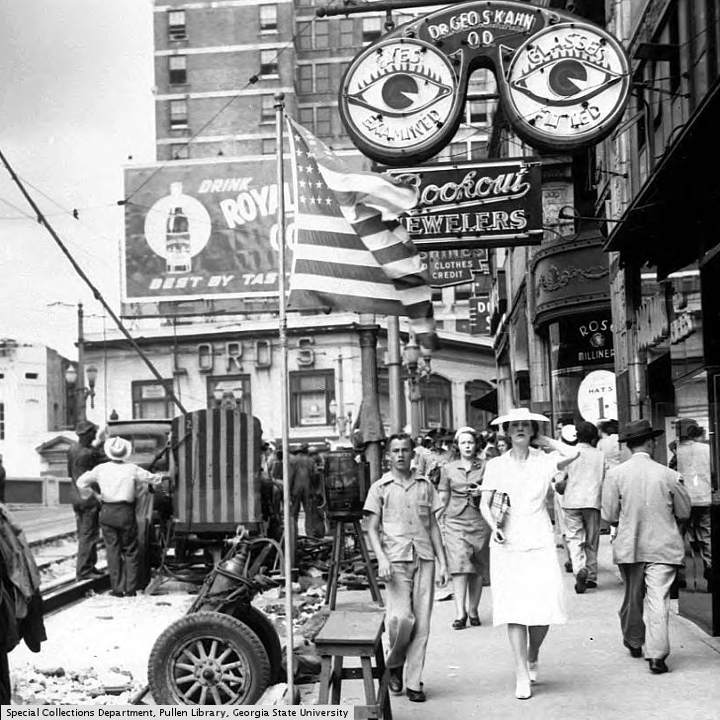
This is a repost from 2016. Pictures today are from “Special Collections and Archives, Georgia State University Library.” This featured picture shows 826 Peachtree St.







Question Authority Part Two


This is a repost from 2023. … The facebook thread that produced the meme discussed yesterday had a tasteful photo comment. “Blind belief in authority is the greatest enemy of truth.” Albert Einstein The sans serif text was illustrated with a photograph of an thoughtful Dr. Einstein. Since I was already on a debunking rampage, google was the logical next stop.
The short version is that young Albert said something similar in a letter, which was possibly mistranslated in the meme. “It comes from a letter he wrote to Jost Winteler, with whom he had boarded while at school in Aarau, Switzerland. In the letter, written on July 8th, 1901 (when he was aged 22), Einstein complained about German physicist Paul Drude, editor of Annelen der Physik, who had dismissed EInstein’s criticism of his electron theory of metals (now known as the Drude Model).”
“Was Sie über die deutschen Professoren gesagt haben, ist gar nicht über-trieben. Ich habe wieder ein trauriges Subjekt dieser Art kennen gelernt – einen derersten Physiker Deutschlands. Auf zwei sachliche Einwände, welche ich ihm gegen eine seiner Theorien anführte, und die einen direkten Defekt seiner Schlüsse darthun, antwortet er mir mit dem Hinweis, daß ein anderer (unfehlbarer) Kollege von ihm der selben Meinung sei. Ich werde dem Mann demnächst mit einer tüchtigen Veröffentlichung ein heizen. Autoritätsdusel ist der größte Feind der Wahrheit.”
“What you have said about German professors is not exaggerated. I have got to know another sad specimen of this kind – one of the foremost physicists of Germany. To two pertinent objections which I raised against one of his theories and which demonstrate a direct defect in his conclusions, he responds by pointing out that another (infallible) colleague of his shares his opinion. I’ll soon make it hot for the man with a masterly publication. Autoritätsdusel is the greatest enemy of truth.”
“I’ve left the word “autoritätsdusel” untranslated, since this is the key to the quote. Princeton translates it as “authority gone to one’s head”, and in a paper published in Science and Engineering Ethics, it is translated as “the stupor of authority” (“dusel” meaning “stupor or daze”).”
The Science and Engineering Ethics document promises more cheap thrills. Suppression of Scientific Research:Bahramdipity and Nulltiple Scientific Discoveries “Just as Horace Walpole coined serendipity, so can the term bahramdipity be … defined as the cruel suppression of a serendipitous discovery. Suppressed, unpublished discoveries are designated nulltiples. Several examples are presented to make the case that bahramdipity is an existent aspect of scientific discovery.” A recent example might be the suppression of ivermectin, in favor of more profitable vaccines.
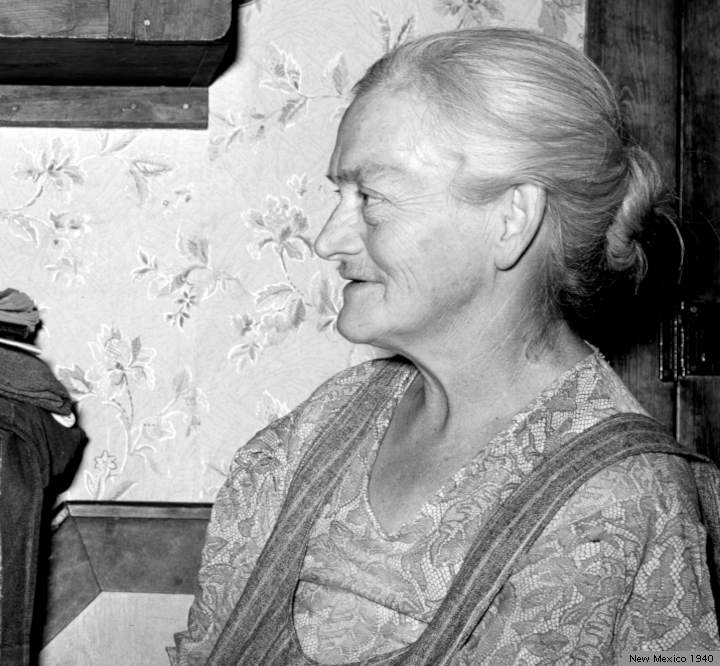
Pictures today are from The Library of Congress. Russell Lee took the featured picture in June 1940. “Building a new house for Mr. Craig, first citizen. Pie Town, New Mexico.”




Civil Disobedience


One morning, while shaking the cobwebs out of my head, I stumbled onto a meme. “CIVIL DISOBEDIENCE BECOMES A SACRED DUTY WHEN THE STATE HAS BECOME LAWLESS OR CORRUPT. Mahatma Gandhi” Shouting is not civil.
I was in an ornery mood, and decided to investigate. When I searched wikiquotes for “civil,” a festive item turned up right away. “It is alarming and also nauseating to see Mr. Gandhi, a seditious middle temple lawyer, now posing as a fakir of a type well known in the east, striding half-naked up the steps of the viceregal palace, while he is still organizing and conducting a defiant campaign of civil disobedience, to parley on equal terms with the representative of the king-emperor.” Winston Churchill addressing the Council of the West Essex Unionist Association (23 February 1931); as quoted in “Mr Churchill on India” in The Times (24 February 1931)
Chamblee54 has written about MK Gandhi before. 050415 020521 042222 010723 There is a large archive of his words. If a quote is genuine there should be a source available. Unfortunately, if you read the context, Mr. Gandhi will often contradict, and counter-contradict, himself. MK Gandhi was a lawyer, and could crank out a word count. Those words often do not fit your agenda.
The search for “civil” yielded three quotes by Mr. Gandhi. While none of them match the meme verbatim, they send much the same message. The genuine quotes place an emphasis on civility, which is often decried today as “tone policing.” These items are found in Young India … “an English weekly journal, started by Mahatma Gandhi. It was in circulation from 1919-1931.”
“I hold the opinion firmly that Civil Disobedience is the purest type of constitutional agitation. Of course, it becomes degrading and despicable if its civil, i.e. non-violent character is a mere camouflage.” (15 December 1921) · “Disobedience without civility, discipline, discrimination, non-violence, is certain destruction. Disobedience combined with love is the living water of life. Civil disobedience is a beautiful variant to signify growth, it is not discordance which spells death.” (1 May 1922) · “Disobedience is a right that belongs to every human being, and it becomes a sacred duty when it springs from civility.” (4 January 1926)
There is one more quote to ponder today. On the surface, it might raise eyebrows. … “Kaffirs are as a rule uncivilised—the convicts even more so. They are troublesome, very dirty and live almost like animals.” “My Experience in Gaol”, Indian Opinion (7 March 1908). Also: Collected Works of Mahatma Gandhi, op cit., Vol. 8, p. 199.
There is a bit more to the story. “In jail in South Africa in January 1908, Mahatma Gandhi was served a South African breakfast staple known as mealie pap. Gandhi associated mealie pap with black South Africans and rejected it as unsuitable for Indians. One year later, however, he revised his opinion and actively encouraged Indians to eat mealie pap. Tracing Gandhi’s evolving approach to mealie pap reveals a profound shift in Gandhi’s views on race and diet.”
A google search for “My Experience in Gaol” yielded an AI overview. “My Experience in Gaol” is an article written by Mahatma Gandhi and published in the South African newspaper “Indian Opinion” on March 7, 1908, detailing his personal experiences while imprisoned in a South African jail, where he was incarcerated due to his activism against racial segregation during the Apartheid era.”
Pictures today are from The Library of Congress Arthur Rothstein took the featured photograph in September 1939. “Farmers on main street, Saturday night. Iowa Falls, Iowa”



What Ben Franklin Really Said





It is a popular line. “They who can give up essential liberty to obtain a little temporary safety deserve neither liberty nor safety.” The credit, or blame, for this gem is assigned to Ben Franklin. Did he really say it? What was he talking about?
The good news is that Mr. Franklin did say these words. (Here is the text.) What follows was written by a lawyer. Prepare to be confused.
“The words appear originally in a 1755 letter that Franklin is presumed to have written on behalf of the Pennsylvania Assembly to the colonial governor during the French and Indian War. The letter was a salvo in a power struggle between the governor and the Assembly over funding for security on the frontier, one in which the Assembly wished to tax the lands of the Penn family, which ruled Pennsylvania from afar, to raise money for defense against French and Indian attacks. The governor kept vetoing the Assembly’s efforts at the behest of the family, which had appointed him. So to start matters, Franklin was writing not as a subject being asked to cede his liberty to government, but in his capacity as a legislator being asked to renounce his power to tax lands notionally under his jurisdiction. In other words, the “essential liberty” to which Franklin referred was thus not what we would think of today as civil liberties but, rather, the right of self-governance of a legislature in the interests of collective security.”
Mr. Franklin was writing on behalf of legislators who wanted to assess a tax. The quote is used by tax hating conservatives. The modern conservative wants to send a hundred thousand troops to a conflict eight time zones away, and pay for it with tax cuts.
Another article tells much the same story, but with a couple of twists. There is a google gimmick that shows how often a quote is used. The BF quote was little known until the twentieth century.
The techcrunch article introduces a dandy word for the rampant misuse of quotes. The word is contextomy. This explanation is from Matthew McGlone of the University of Texas at Austin.
“‘Contextomy’ refers to the selective excerpting of words from their original linguistic context in a way that distorts the source’s intended meaning, a practice commonly referred to as ‘quoting out of context’. Contextomy is employed in contemporary mass media to promote products, defame public figures and misappropriate rhetoric. A contextomized quotation not only prompts audiences to form a false impression of the source’s intentions, but can contaminate subsequent interpretation of the quote when it is restored to its original context.”
The spell check suggestion for contextomy is contentment. This is a repost. Pictures today are from “The Special Collections and Archives, Georgia State University Library.”






Poetry Saves Time



This is a repost from 2015. Very little of what follows is true. … There is another Marilyn Monroe story floating around. “Someone told me that Marilyn Monroe once remarked that she enjoyed reading poetry “because it saves time.” I like this quotation so much that I’ve never dared to confirm it; I’d feel disenchanted to learn it was bogus.”
Poetry Daily seems to think the quote is legitimate. “That great aesthete and reader Marilyn Monroe once said: “I read poetry because it saves time.” In the age of Twitter, and other tweet-like utterances from all sorts of birdies, not to mention attention deficit disorder on an epidemic national scale, it’s refreshing to find poetry that both saves time and enlarges it. “
Marilyn’s wikiquotes page had a quote about time: Miss Monroe said in Look Magazine, March 5, 1957, “I’ve been on a calendar, but never on time.” Many people who worked with her agree.
Wikiquotes also has a telegram, sent to Bobby and Ethel Kennedy. Marilyn was widely rumored to be seeing Bobby. This was a few weeks before her untimely death. “”I am involved in a freedom ride protesting the loss of the minority rights belonging to the few remaining earthbound stars. All we demanded was our right to twinkle.” (Telegram from Marilyn Monroe declining a party invitation from Bobby and Ethel Kennedy. June 13, 1962.)
A google investigation into the poetry quote led to Did Marilyn Monroe really say all those philosophical quotes? This is in DataLounge, where you “… get your fix of gay gossip, news and pointless bitchery.” The question on top of the thread was “I notice that the must fucked up of my female friends absolutely worship Marilyn Monroe, and are forever quoting her. What’s up with that, and are all those quotes real?? by: Mrs. Johnstone”
There are 148 comments in the thread. Some say Marilyn was an airhead, and some say she was bright. There are some quotes, many of which are probably made up. There is a letter, supposedly written to Albert Einstein. Shelly Winters says the two might have had a special relationship.
“Were I to pursue physics instead of my first love, acting, I would attempt to solve these problems by understanding the reason for these discrete energy states, which are probably due to the fact that standing waves only exist at discrete frequencies. My theory would predict that energy exchanges will be discrete, as observed;… But as I said, I want to be an actress.”
“Once, on the set of Gentlemen Prefer Blondes, Marilyn Monroe and Jane Russell discussed embryological parallelism. Marilyn Monroe: Ontogeny recapitulates phylogeny. Jane Russell: I was about to say the same thing.”
One of the comments had a link to a fun story. “Film legend Marilyn Monroe went to bed with fellow actress Joan Crawford – but the lesbian sexual experience only reaffirmed her attraction to men. Monroe left Joan gasping for more liaisons, much to Marilyn’s chagrin. Monroe described the encounter herself in conversations taped by her psychiatrist Dr. Ralph Greeson, recordings which were obtained by the Los Angeles Times newspaper from former prosecutor John Miner, who helped investigate her death. Monroe said, “We went to Joan’s bedroom… Crawford had a gigantic orgasm and shrieked like a maniac. “Next time I saw Crawford she wanted another round. I told her straight I didn’t much enjoy doing it with a woman.” Pictures are from The Library of Congress.




Quoting James Baldwin


James Arthur Baldwin has become a star on facebook, thirty five years after his death. People love to quote him, and post artsy pictures of his face. Over the past year I have seen three Baldwin memes that required action. Once you start to research, there is no telling what you are going to find.
“I can’t believe what you say because I see what you do.” This item is from a 1966 article that Mr. Baldwin wrote for The Nation. “One is in the impossible position of being unable to believe a word one’s countrymen say. “I can’t believe what you say,” the song goes, “because I see what you do”—and one is also under the necessity of escaping the jungle …”
“The song goes” is what the memes leave out. Ike Turner wrote the song. The Ikettes sing “I can’t believe…”, while Tina goes “agh, agh, agh, agh, agh, agh, agh, agh, agh.” Ike knew about being a no-good man. Tina looks a lot better in a short skirt than Mr. Baldwin did.
“I’d like to leave you with one more short quote from James Baldwin, “Whoever debases others is debasing himself.” This is from a June, 2020 video about racism. This quote is from Letter from a Region in My Mind, a 1962 essay in The New Yorker. “Letter…” clocks in at 22,114 words. Mr. Baldwin could crank out the word count.
“Letter…” covers a lot of ground. The “debase” quote comes in after Mr. Baldwin describes a visit to Elijah Muhammad, leader of the Nation of Islam. Soon, Mr. Baldwin starts talking about race in the United States. One quote stood out: “But white Americans do not believe in death, and this is why the darkness of my skin so intimidates them.”
“By this time, I was in a high school that was predominantly Jewish. This meant that I was surrounded by people who were, by definition, beyond any hope of salvation, who laughed at the tracts and leaflets I brought to school, and who pointed out that the Gospels had been written long after the death of Christ. … My best friend in high school was a Jew. He came to our house once, and afterward my father asked, as he asked about everyone, “Is he a Christian?”—by which he meant “Is he saved?” I really do not know whether my answer came out of innocence or venom, but I said, coldly, “No. He’s Jewish.” My father slammed me across the face with his great palm, and in that moment everything flooded back—all the hatred and all the fear, and the depth of a merciless resolve to kill my father rather than allow my father to kill me—and I knew that all those sermons and tears and all that repentance and rejoicing had changed nothing.”
“The place in which I’ll fit will not exist until I make it.” This quote proved more difficult to chase down. It does not appear in any of Mr. Baldwin’s work. The earliest mention appears to be behind The New Yorker paywall. “During his wanderings, Baldwin warned a friend who had urged him to settle down that “the place in which I’ll fit will not exist until I make it.” There is no link to a source.
The New Yorker article is cited by Lithub, which is then cited by New Transcendentalist. “These Timely James Baldwin Quotes … ,” from Bustle, credits the quote to “a 1957 letter to Sol Stein.”
Sol Stein “attended DeWitt Clinton High School, where he served on the Magpie literary magazine with Richard Avedon and James Baldwin.” We don’t know if Mr. Stein was the one who made David Baldwin slap his step-son. A paywalled article, about the correspondence between Mr. Stein and “Jimmy,” does not mention the “place in which I’ll fit” quote.
The WaPo article did have a mind-blowing quote. “In the introduction to the book, Baldwin would ponder his influences: “When one begins looking for influences, one finds them by the score. … the King James Bible, the rhetoric of the store-front church, something ironic and violent and perpetually understated in Negro speech…” I saw this quote in 1976, in a college textbook. At the time, I thought this was an amazing quote. It stayed in my mind until the next life changing detail came along, not to be thought of again for forty six years.
Chamblee54 has written about Mr. Baldwin before. Pictures today are from “The Special Collections and Archives, Georgia State University Library.” UPDATE: @QuoteResearch Replying to @chamblee54 @HilalIsler @lithub “It appeared in a 1957 letter from James Baldwin and Sol Stein reprinted in “Native Sons” (2004) edited by Sol Stein. I am planning to create a QI article on this topic” @QuoteResearch “Please get over the notion, Sol, that there’s some place I’ll fit when I’ve made some ‘real peace’ with myself : the place in which I’ll fit will not exist until I make it. You know and I know that the ‘peace’ of most people is nothing but torpor.” … James Baldwin to Sol Stein UPDATE: I was writing a story about Flannery O’Connor. I wanted to quote this post, but could not find the link. Neither google nor duckduckgo would show me this post. I had to go to the chamblee54 archive, and scroll through October 2022 until I found the post. This is a repost from 2022.




 Chamblee54
1 comment