Podcasts Part Three
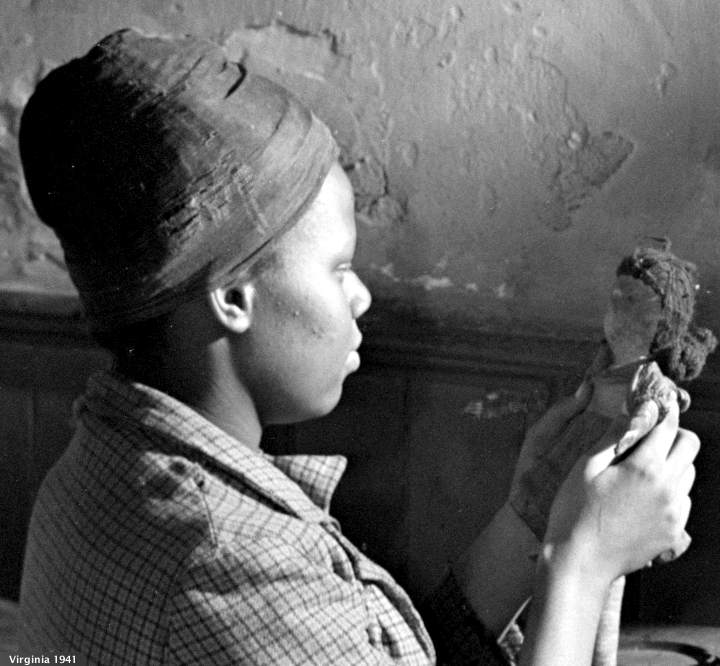
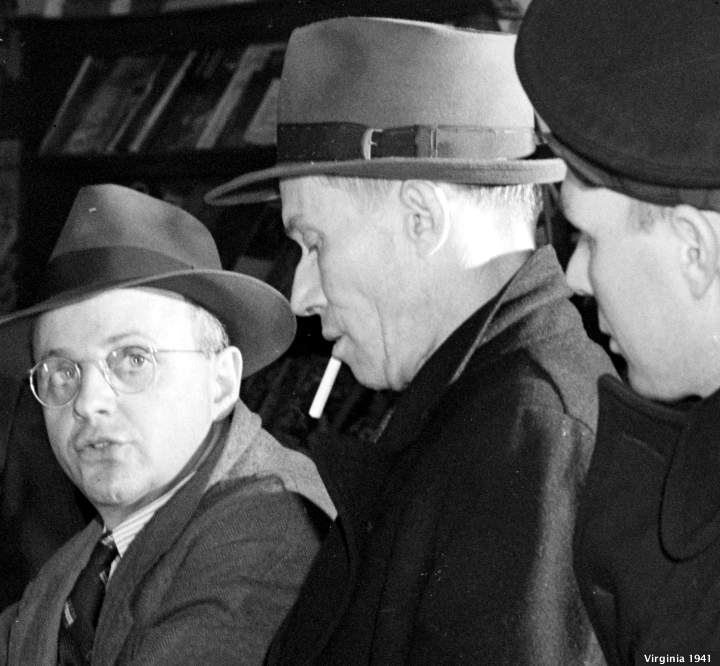

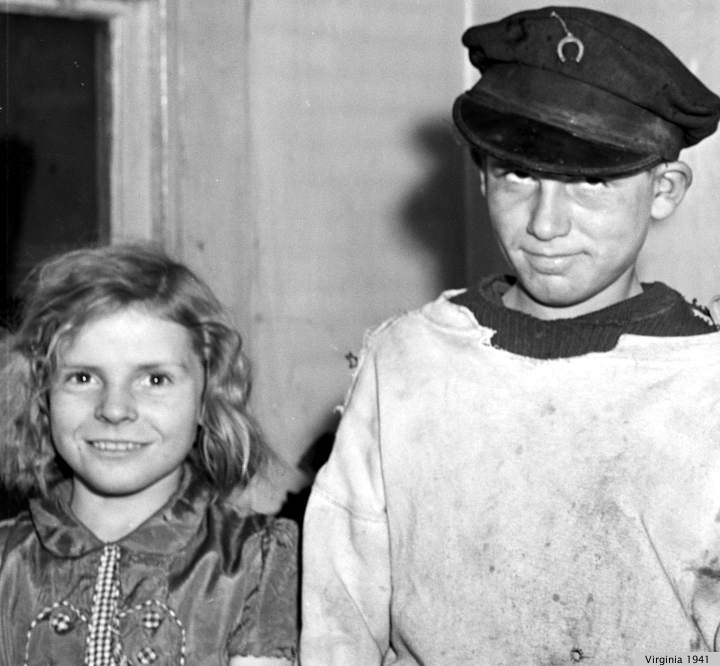
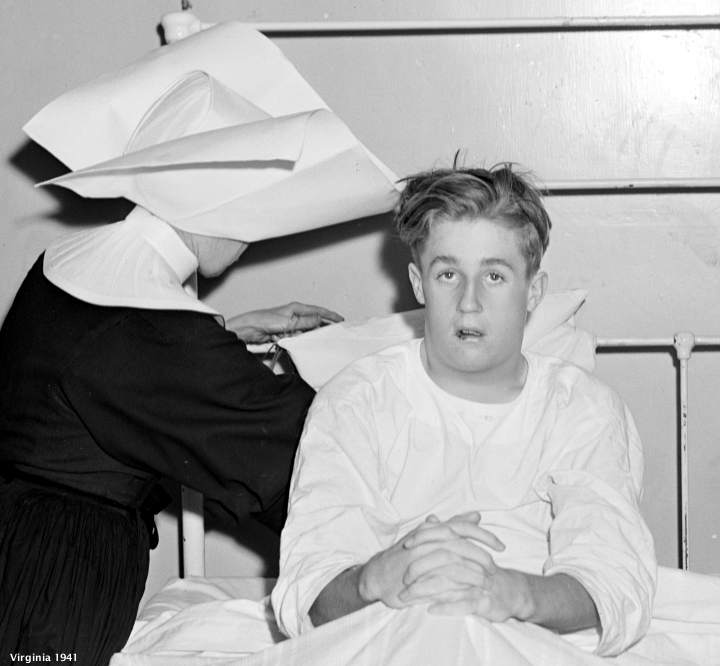
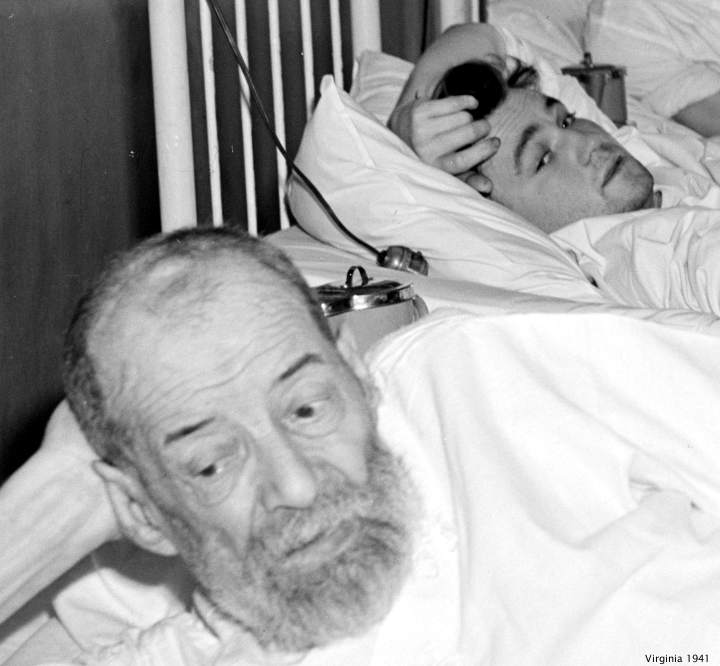
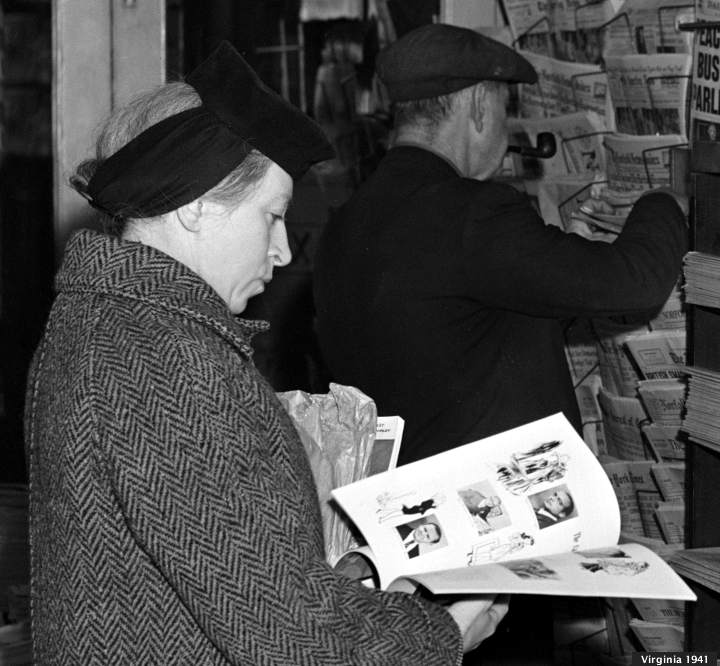
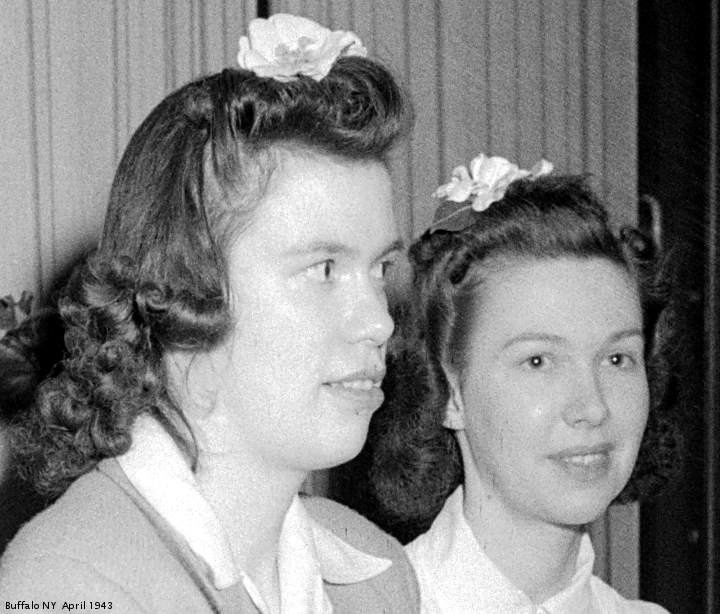
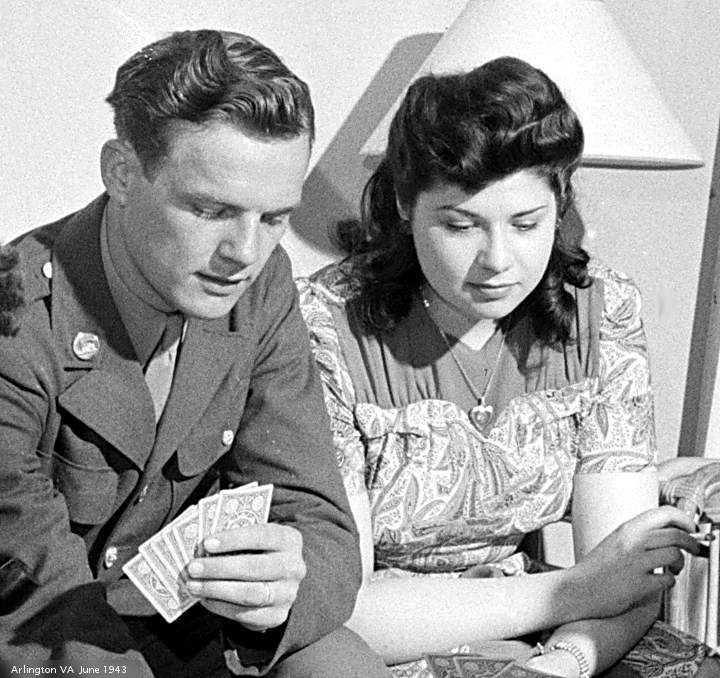
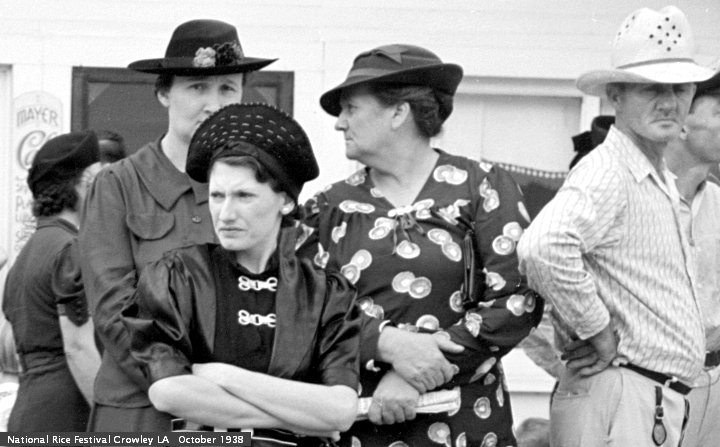
Chamblee54 listens to podcasts. Today’s feature will focus on series shows. Many of these shows have either finished a limited run, or are on hiatus. As before, this feature will provide links to download sites. Click in the proper place, right click, choose “Save Link As.” If you prefer to use a podcast app, someone else knows how. Pictures today are from The Library of Congress. Part one and part two of this series are already out there.
The Paris Review is produced by a highbrow literary magazine. It is slightly overproduced, with announcers, theme music, and several segments in each episode. It is usually fun to listen. Episode 3 features an interview with James Baldwin, with Levar Burton pinch-hitting for the author.
Radio Rental is produced by Atlanta based Tenderfoot TV. @TerryCarnation is the host, working in the back of a video rental store. RR has tales of the para-normal, and is a lot of fun.
Dolly Parton’s America is a gem. It is hosted by @JadAbumrad, and produced by radiolab. DPA occasionally sounds like a big city broadcaster, assigned to report on country folks. Dolly has deservedly become an american hero. DPA moves fast, and tells a great deal of the story.
Freak Flag Flying was a short series, featuring David Crosby. The C in CSNY has a lot of talent. If you don’t believe it, just ask him. Mr. Crosby has some stories to tell, and ranks with Keith Richards for somehow surviving rock and roll. When researching FFF, PG found an interview with Willie Nelson.
The Catch and Kill Podcast with Ronan Farrow deals with Harvey Weinstein. Mr. Farrow, the son of Mia Farrow, is a smart cookie. While some can find fault with his methods, the overall story smells like the truth. Mr. Farrow’s struggles to tell the HW story are almost as amazing as the #metoo antics of Mr. Weinstein. Mr. Farrow is a good story-teller, and does justice to a powerful tale.
PG almost fell off the stationary bike while listening to one episode. Mr. Farrow is talking about the early days of The National Enquirer. In 1964, the front page advertised exclusive pictures of Lee Harvey Oswald’s bullet hole. Ten year old PG saw that issue, in a drug store on Clairmont Road.
“Over the Road is an eight-part series that gives voice to the trials and triumphs of America’s long haul truckers. Host “Long Haul Paul” Marhoefer, a musician, storyteller and trucker for nearly 40 years, takes you behind the wheel to explore a devoted community and a world that’s changing amidst new technologies and regulations.”
To Live and Die in LA is the output of Tenderfoot TV and Cadence13. Adea Shabani was a young lady trying to make it in Hollywood. She made the fatal mistake of dating Chris Spotz. TLADILA looks into the story, and uncovers a bunch of horrible people. PG binge listened to TLADILA, and is in recovery.
Once Upon a Time… In the Valley is another show from @Cadence13_ . Nora Kuzma moved from Ohio to California with her wacky family. Before long, she became Traci Lords, teenage porn goddess. Somehow, word leaked out that she was underage, causing problems for a lot of people. OUATITV takes a look at growing up in Southern California, and the video entertainment industry. As you might expect, there are some terrible, terrible people involved, and many of their stories don’t add up. OUATITV is a compulsive guilty pleasure. PG found it while it was pumping out fresh content every Thursday, and was spared from binge-listening brain damage.
The Anthropocene Reviewed is a gem. Once a month, John Green reviewed aspects of the human condition, and gave it a rating. Very few got five stars. John is a youtube asset, author, and all around good guy, nerdy quirks notwithstanding. Unfortunately, TAR was taking a toll of John’s already shaky mental health, and the show is now on hiatus. Maybe some day it will return. If you like, all the back episodes are available for download. You should ration them out, and make the listening experience last as long as possible. It will go fast.
Appearances is dangerous. Created by Sharon Mashihi, the ten episodes take you into the twisted reality of Melanie Barzadeh. . The lady wants to have a baby while she can. The listener eavesdrops on tortured conversations inside Melanie’s head. The show is labeled fiction, probably at the advice of an attorney. Appearances should only be taken one episode at a time.
Dead and Gone is produced by Tenderfoot TV, Cadence13, and Double Elvis Productions. In 1985, the bodies of two “Dead Heads” were found in San Francisco Bay. DAG looks into the case, and the Grateful Dead culture that surrounds it. As is often the case with crime stories, there are a lot of gnarly characters. Stories are told, and details conflict. DAG is a powerful story, but ultimately you realize that the 1985 case is permanently closed. PG has doubts regarding the conclusions drawn by this show. The final episode comes out tomorrow.
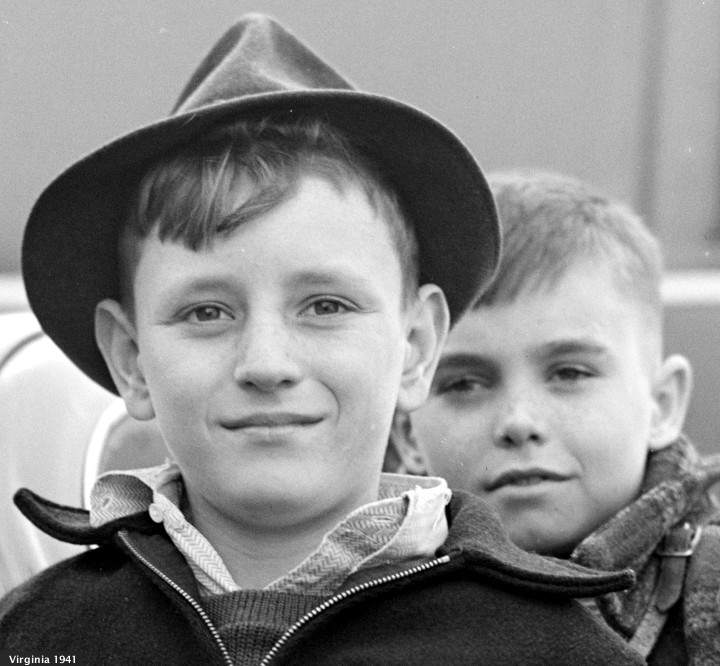
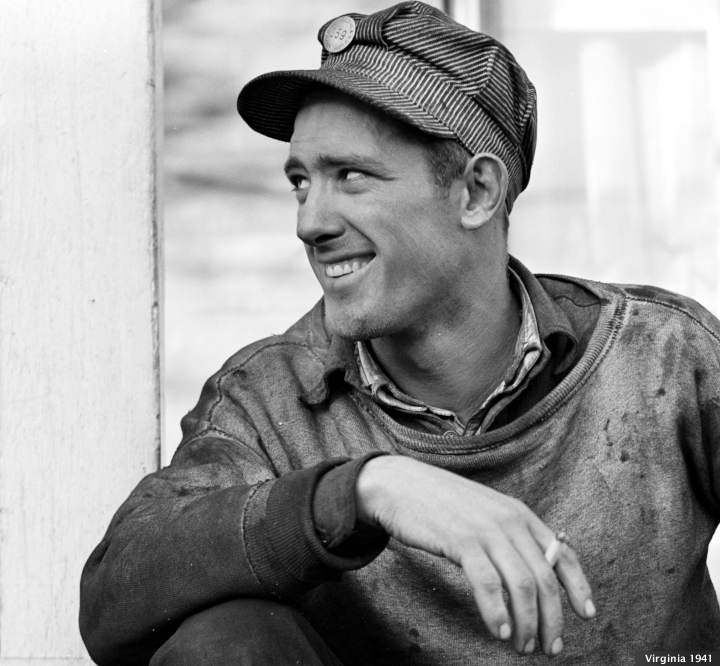
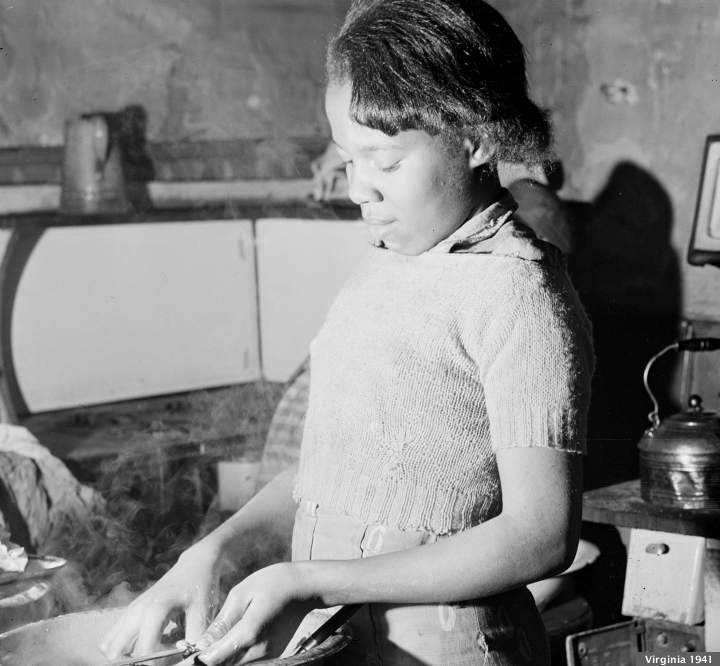
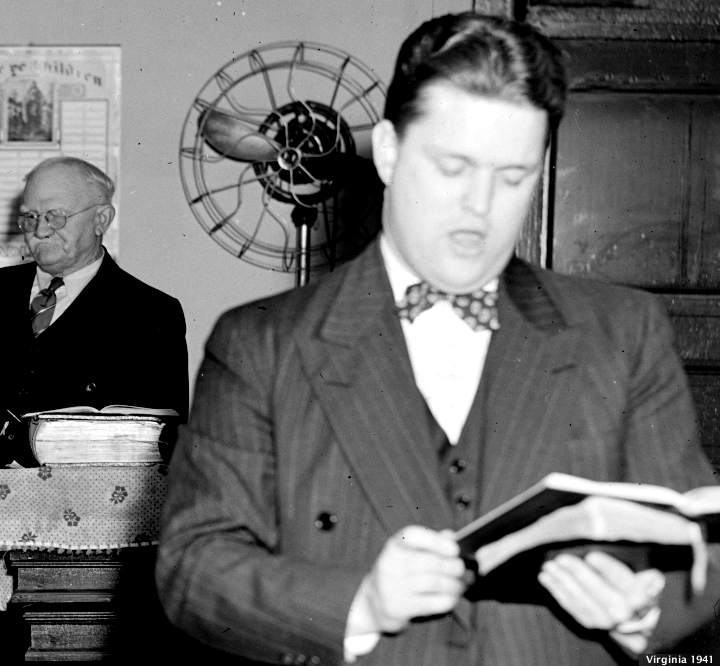
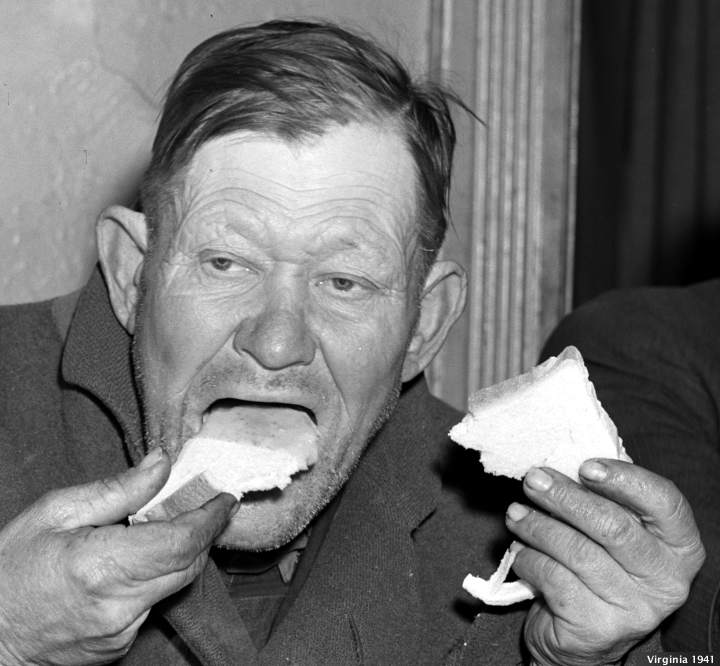
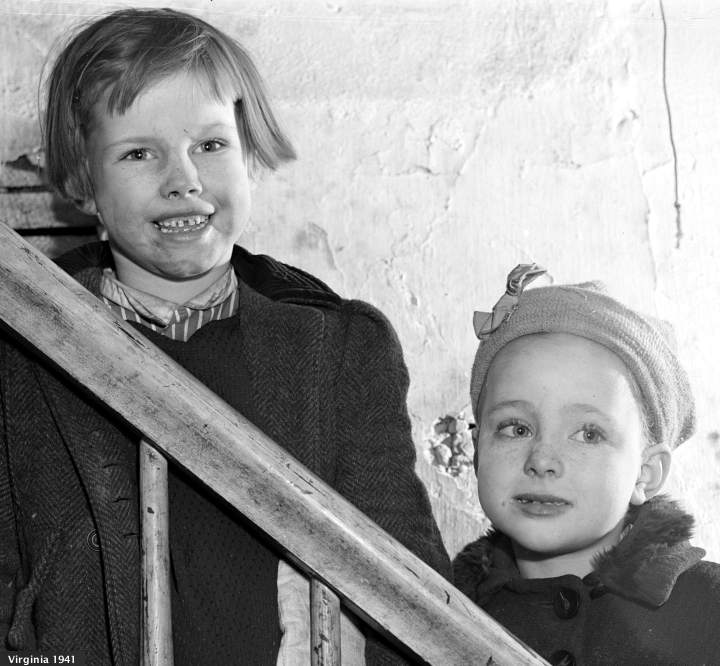

Happy Birthday Joni Mitchell
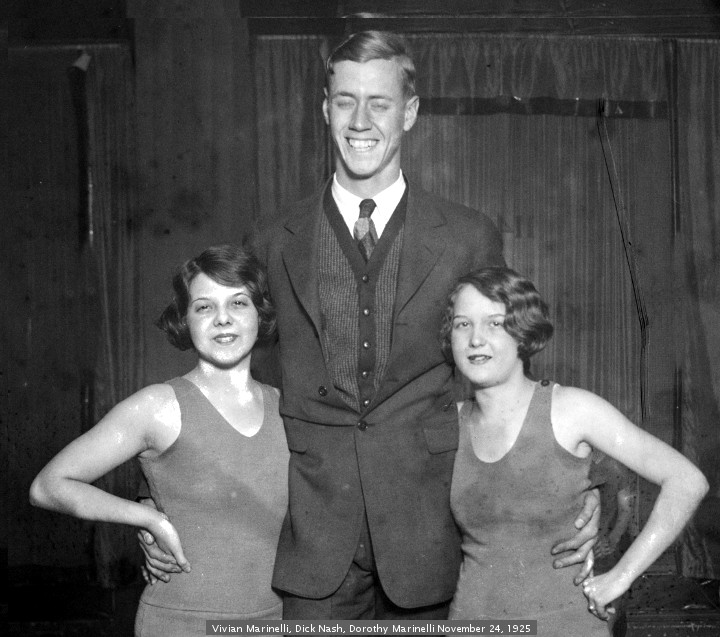
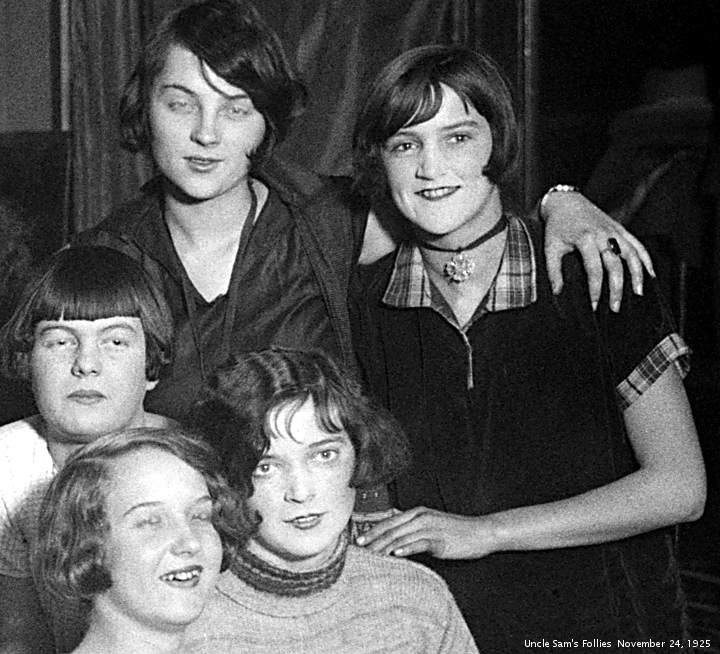
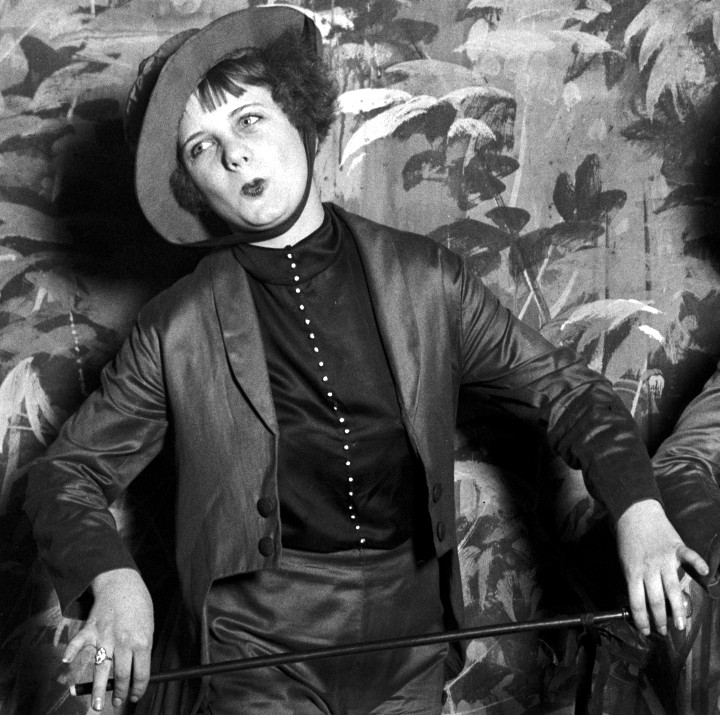

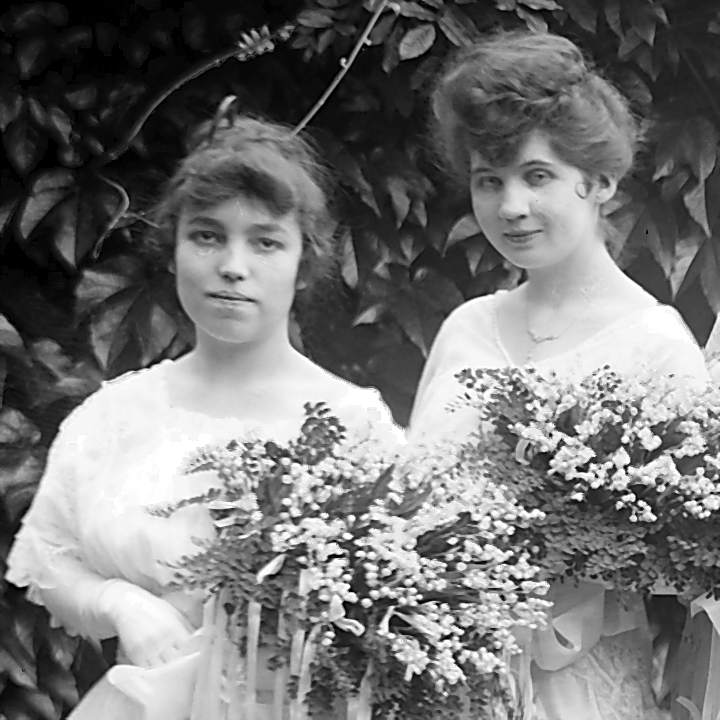
Yesterday was Joni Mitchell’s 77th birthday. Roberta Joan Anderson was born November 7, 1943, in Fort Macleod, Alberta. For this birthday tribute we will revisit four previous posts. one two three four Pictures are from The Library of Congress. … A facebook friend went on a Joni Mitchell kick. First it was a link to an interview. Then it was a quote from The Last Time I Saw Richard. A lady said Blue was her favorite album all all time, and a man enthusiastically agreed.
Given the apples and oranges quality of her catalog, it would be tough to pick one album as a favorite. PG then realized that fbf was going to be thirty soon. PG is sixty. These are two different perspectives on the craft of Joni Mitchell. One has driven through the storm, not knowing what was next. The other is presented with an almost complete body of recorded work.
PG has known about Joni since high school, and been a devoted fan since 1976. Joni’s most popular album, Court And Spark, came out in 1974, eleven years before fbf was born. Who would be the equivalent female musical force from 1943, when PG was minus eleven? The answer is nobody. (Coincidentally Roberta Joan Anderson was born on November 7, 1943.)
 After the comment about Blue, PG listened to For The Roses. Joni’s craft is like a cluster bomb… there are lines that you never fully felt, bomblets waiting to explode in your gut. Let The Wind Carry Me has one of those hidden threats. Mama thinks she spoilt me, Papa knows somehow he set me free, Mama thinks she spoilt me rotten, She blames herself, But papa he blesses me.
The first thing PG heard by Joni was Big Yellow Taxi. It was on The Big Ball, a 1970 mail order sampler from Warner Brothers. This was when Joni shacked up with Graham Nash. The next year saw Blue, followed by For The Roses, and Court And Spark. PG always thought Joni was someone he should like, but somehow didn’t. It wasn’t until 1976 that PG broke through the barrier, and became a Joni Mitchell fan. Seeing her in concert did not hurt.
On February 3, 1976, PG took a study break. (He scored 100 on the test the next day) Joni Mitchell was playing at the UGA coliseum a few blocks away, and the door was not watched after the show started. PG found a place to stand, on the first level of the stands. The LA express was her band that night, and created a tight, jazzy sound, even in the UGA coliseum. Tom Scott pointed at Joni, said she was crazy, and drew circles around his left ear. The one line PG remembers is “chicken scratching my way to immortality” from Hejira.
The Hissing of Summer Lawns might not be her best album, but it is certainly her bravest. Court And Spark was a commercial success. Instead of producing a bestselling followup, Joni took a ninety degree turn. Summer Lawns, for all its eccentric sparkle, confused the record buying public. The gravy train took off in another direction.
In those days, 96rock played a new album at midnight, which people were known to tape. On the night of the Lynyrd Skynyrd plane crash, the album was Hejira. This was followed by Mingus, another curve ball. Finally, Don Juan’s Reckless Daughter appeared, and did not make a good impression.
The eighties, nineties, and aughts appeared. PG, and Joni, lived their lives. 1996 saw a frightening interview in Details magazine. It was startling to see that for all her granola glory, Joni Mitchell might not be a very nice person. In a pot and kettle moment, David Crosby said “Joni’s about as humble as Mussolini.” Music is a tough way to make easy money.
More recently, there was a long interview on Canadian television. She is not mellowing with age. The cigarettes have not killed her, even if her voice is not what it once was. The recent albums that PG heard are strong. There seem to be more on the way. Maybe the facebook friend will have have the “what is she going to do next” experience after all.

A few weeks ago, PG was at the library. He had a story to take home, before going over to the biography section. There he found Reckless Daughter: A Portrait of Joni Mitchell. At least with fiction, you know you are dealing with a made up story. With biography, you have to use judgment.
It is a familiar story. Joni was born in the frozen north, was a rebellious girl, and got pregnant. She gave up the daughter for adoption, only to be reunited many years later. Joan Anderson gets married to, and divorces, Chuck Mitchell. Joni sings, writes, tunes her guitar funny, becomes a star, gets too weird to be popular, makes and loses money, smokes millions of cigarettes, and becomes an angry old lady. There is a bit more to the story than that. Reckless Daughter fills in a few of the blank spots.
Millions of cigarettes might be an exaggeration. Joni started smoking when she was nine. When she was a star, she was almost as well known for her constant puffing as her pretty songs. When Joni was in a Reagan era slump, she was going through four packs a day. Just for the sake of statistics, lets call it two packs, or forty fags, a day. Multiply forty by 365 and you get 14,600. If she started at 9, and had her aneurysm at 72, that gives you 63 years of nicotine abuse. If you assume that there were forty fags a day for 63 years, that gives you 919,800 smokes. IOW, while seven figures is not out of reach, it is rather unlikely that Joni smoked more than 2,000,000 cancer sticks.
The author of Reckless Daughter, David Yaffe, is a problem. He talks about the mood of America in 1969, four years before he was born. Mr. Yaffe goes to great lengths to show us that he knows about making music. Some readers will be impressed. There are mini-essays on Joni songs from her golden years, the time between “Ladies of the Canyon” and “Hejira.” And gossip, gossip, and more gossip. Joni is well known for her celebrity lovers.
We should make the point that PG enjoyed Reckless Daughter. The inside stories are fun, and pages turn over without too much head scratching. Maybe this is a statement about the career of Joni Mitchell. You enjoy the music for many years, and then complain about the details. Reckless Daughter follows the trajectory of other celebrity biographies. The star is born, takes up a craft, gets a break, becomes successful, goes over the mountaintop into a long decline. With Joni, nothing after “Mingus” was well received. The chanteuse was broker, and angrier, by the minute.
On page 13, Joni hears Rhapsody on a Theme of Paganini by Sergei Rachmaninoff. This is the piece that makes her want to be a musician. One page 129, we learn the story of A&M studios in Hollywood. At one time, The Carpenters were in studio A, while Carole King was recording “Tapestry” in studio B. Joni was recording “Blue” in studio C, which had a magic piano. One time, Carole King learned of a break in the studio C booking, and ran in. Three hours later, “I feel the earth move” was recorded.
A few years later, Joni was on the Rolling Thunder tour with Bob Dylan. One of the concepts was support for Rubin “Hurricane” Carter, whose story can be found elsewhere. Joni became disillusioned with Mr. Carter. When Joan Baez asked Joni to speak at a benefit concert, Joni said she would say that Mr. Carter was a jive ass N-person, who never would have been champion of the world. Joni later got in SJW trouble for posing in blackface, for the cover to “Don Juan’s Reckless Daughter.”
On page 251, we learn that Bob Dylan does not dance. Other items include “Free man in Paris” being written about David Geffen, and Jackson Browne writing “Fountain of Sorrow” about Joni. Mr. Brown is a not-well-thought-of ex of Joni. As for Mr. Geffen…. Joni stayed at his house for a while, at a time when Mr. Geffen was in, and out, of the closet. Did they make sweet music together?
So this book report comes to an end. Joni is recovering from a brain aneurysm, and will probably not produce anything else. The book is going back to the library, and PG will move on.
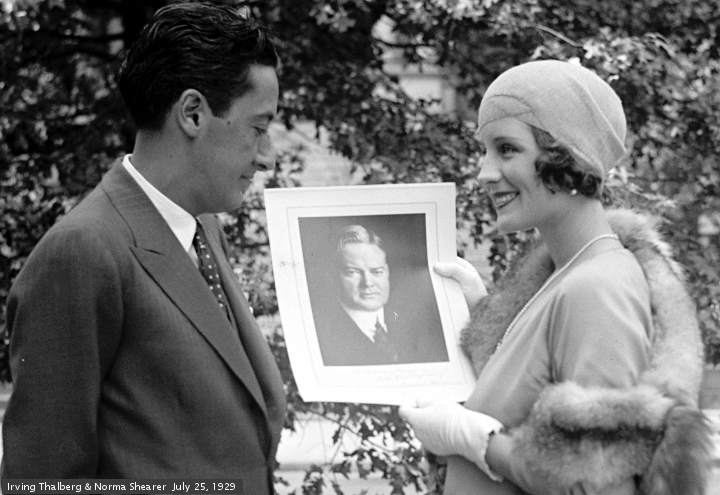
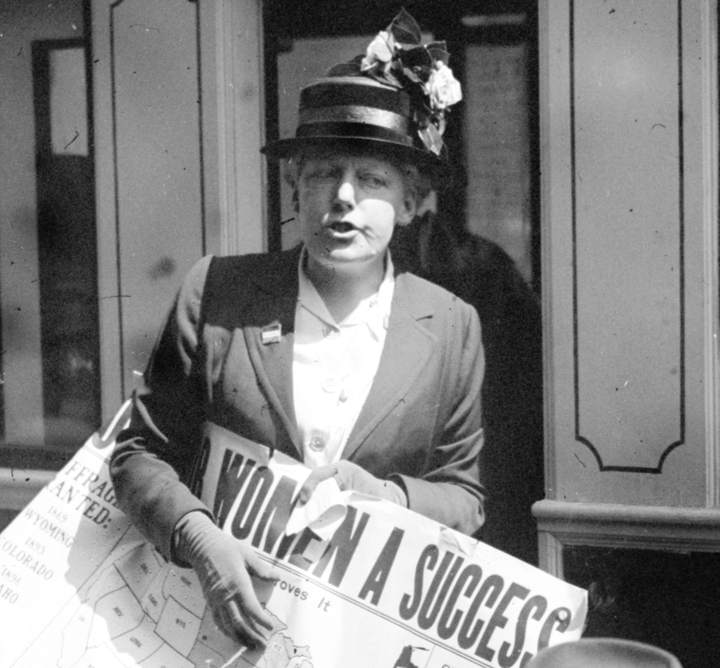
Joni Mitchell has product to promote. She gave an interview to New York magazine, where she smoked a few cigarettes and expressed a few opinions. There were enough attention getting comments to make the news.
“When I see black men sitting, I have a tendency to go — like I nod like I’m a brother. I really feel an affinity because I have experienced being a black guy on several occasions.” She proceeds to tell a story about dressing like a down and out black man as a way of dealing with an obnoxious photographer. “I just stood there till they noticed me. I walked really showily, going, Heh heh heh. It was a great revenge. That was all to get his ass. To freak him out. I had to keep him on the defensive.”
Gay-mafia-made-man David Geffen was a target. “I ask her about a painting, visible in a vestibule, on the way to her laundry room, of a curly-haired man with a banana lodged vertically in his mouth; turns out it’s Geffen, and she painted it. “Before he came out. He’s never seen it,” she says, before explaining: “He was using me as a beard. We were living together, and he’d go cruising at night. He was very ambitious to be big and powerful, and he didn’t think he would be [if he was openly gay].” By 1994, the two had fallen out over her insistence that he didn’t pay her enough in royalties.”
The product is a four cd boxed set, Love Has Many Faces: A Quartet, A Ballet, Waiting To Be Danced. There was a single one star comment about the joniproduct. Al Norman Seems like a collection of Joni’s forgettable tunes February 3, 2015 ~ “My wife loves Joni Mitchell, and never listens to this set. Seems like a collection of Joni’s forgettable tunes.” This comment was sponsored by Head and Shoulders. “100% flake free hair & A GREAT SCENT”
You just can’t get away from capitalism. Ms. Mitchell heard “… on the radio, a record executive “saying quite confidently, ‘We’re no longer looking for talent. We’re looking for a look and a willingness to cooperate.” As interviewer Carl Swanson notes, “For now, she’s hoping that people buy her boxed set, with her self-portrait on the cover. To that end, she gives me a Joni Mitchell tote bag with one of her paintings on it to carry my things home in. Get the word out.”


Joni Mitchell gave am interview recently to a Canadian Broadcaster. She is famously Canadian. The chat was in her California living room, which is littered with her paintings. Many of the paintings are things like Saskatchewan at forty below. Mrs. Mitchell alternates between painting and music, which tend to balance her cigarette fueled mind.
The CBC interview is paired with a more formal chat in Toronto. She could not smoke during the Toronto interview. The Toronto interviewer is just a bit smarter than Jian Ghomeshi, who endured the second hand smoke in California. Mr. Ghomeshi said things like “The song “Woodstock” defined a generation.” Mrs. Mitchell was in a New York City hotel room that famous weekend.(Spell check suggestion for Jian Ghomeshi: Joan Shoeshine)
There are some juicy quotes. Art is short for artificial. When listening to Joni songs, you should look at yourself, and not at her. Free love was just a gimmick for the men to get laid. False modesty is pointless. Sylvia Plath was a liar, or maybe it was Anne Sexton. (James Dickey said that Sylvia Plath was the Judy Garland of American letters.)
A fearsome foursome gets in the game. Someone screamed, on a live album. “Joni, you have more flash than Mick Jagger, Richard Nixon, or Gomer Pyle combined!.” Years later, the fan introduced himself to Mrs. Mitchell.
The conversation mentioned Bob Dylan. He is from Northern Minnesota, and not quite Canadian. Apparently, Mrs. Mitchell kicked up a fuss with some comments in 2010. ” Bob is not authentic at all. He’s a plagiarist, and his name and voice are fake. Everything about Bob is a deception. We are like night and day, he and I. … Grace [Slick] and Janis Joplin were [sleeping with] their whole bands and falling down drunk, and nobody came after them!”
Did Bob Dylan and Joni Mitchell ever tune up together? Joan Baez, a similarly named contemporary, is well known for dating Mr. Zimmerman. Ms. Baez did sing at Woodstock.
Mrs. Mitchell doesn’t exactly take back her comments about Bob Dylan. ““I like a lot of Bob’s songs, though musically he’s not very gifted. He’s borrowed his voice from old hillbillies. He’s got a lot of borrowed things. He’s not a great guitar player. He’s invented a character to deliver his songs. Sometimes I wish that I could have that character — because you can do things with that character. It’s a mask of sorts.”
In a kill the messenger moment, Mrs. Mitchell lashed out at the interviewer from the 2010 piece. It is odd, since he didn’t ask any trick questions. Black and white transcripts are tough to deny. “The interviewer was an asshole.” (The body part is bleeped.) “I hate doing interviews with stupid people, and this guy’s a moron” “His IQ is somewhere between his shoe size and (unintelligible)”.
The troublesome 2010 interview was conducted with John Kelly, a Joni Mitchell tribute artist. “JK: Drag does have a power, though — that netherworld of a thing you can’t quite know, which makes people nervous. JM: Drag wasn’t always counterculture. In his memoirs, Nixon talked about the Harvard and Yale men in power who would put on these plays where they dress like women, and Milton Berle did a kind of “hairy drag.” Becoming a gay thing made drag go underground.” Did Mick Jagger and Gomer Pyle ever do drag with Richard Nixon?
Andy Warhol And Frank Zappa



Andy Warhol Hosts Frank Zappa on His Cable TV Show, and Later Recalls, “I Hated Him More Than Ever” After the Show” Andy had a public access cable tv show in New York. One of his guests was Frank Zappa. FZ talked a lot, while Andy was silently uncomfortable. A friend of Andy’s, Richard Berlin, did the interview. Mr. Berlin is possibly the brother of Warhol film actress Brigid Berlin.
The Andy Warhol Diaries has a few comments about the show. “… I hated Zappa even more than when it started. I remember when he was so mean to us when the Mothers of Invention played with the Velvet Underground—I think both at the trip, in L.A., and at the Fillmore in San Francisco. I hated him then and I still don’t like him.”
Jimmy Carl Black (The “Indian of the group” for the Mothers of Invention): “I don’t remember Zappa actually putting them down on stage, but he might have. He really disliked the band. For what reasons I really don’t know, except that they were junkies and Frank just couldn’t tolerate any kind of drugs. I know that I didn’t feel that way and neither did the rest of the Mothers. I thought that they were very good, especially Nico (whom I secretly fell in love with or was it lust?). I especially thought that Moe was a very good drummer, because in those days I don’t recall there being any other female drummers on the scene. The thinking of the audiences was completely different than those from New York City. They were lukewarmly received.”
“In 1965 The Trip opened at 8572 Sunset Boulevard right next to the towering Playboy Club building. The Trip was located in the former popular 60s jazz club called the Crescendo. There was a comedy club upstairs called the Interlude. … The Velvet Underground and Nico are the musical guests at a series of shows at The Trip nightclub on Sunset Strip in 1966, but it is their manager, Andy Warhol, who is the headliner with his outrageous, multi-media Exploding Plastic Inevitable Show.” …
“On May 3, 1966 I was serving drinks in the celebrity section at The Trip. Jane Fonda is seated and she orders a drink and I asked her for ID. She removes her sunglasses and says, Do you know who I am? … Frank Zappa and The Mothers of Invention are the opening act the first night. At the end of the set they receive a standing ovation and cheers from the audience.”
“The Exploding Plastic Inevitable Show started after The Velvet Underground played a couple of songs. … When your eyes adjusted to the manipulation of the light what you saw was an interaction between Nico and two men, one who carried a whip, the other chains. It was an illusion, I think, of sadism, not at all acceptable to peace loving hippies. … The EPI featured a mixed media orgy that included film loops, music by the Velvets, sadomasochistic dancing and an epileptic lightshow.”
“Before the first set was over people stared to walk out of the club. Cher said “It depressed me. It will replace nothing – except maybe suicide.” People were standing up at their tables, booing as they waited their turn to leave the club. The line for the second show circled the block but the customers leaving started warning people not to go in. They said the show was vulgar and violent. The line got smaller and smaller until only a handful of people remained.”
“The Buffalo Springfield is playing the Whisky A Go Go as the opening act and is free to leave at 12:45 am. They walk to The Trip in time to see the feature act. … The musicians are equally offended by the appearance of sexual violence and what they assumed was part of the Velvet Underground’s act. It was later that we realized that Andy is the creator of the act of violence. … There is more then one story about why on the third day of the New Yorker’s show, L.A. Sheriff’s officers closed The Trip.”
“The show was cancelled before the advertised end date of its run. According to Callie Angell “On May 12, the club was temporarily closed when Virgina Greenhouse, wife of one of the operators, sued to collect a $21,000 over-due promissory note, and a representative of the sheriff’s office delivered a writ of attachment to the club. Warhol and the Velvet Underground filed a claim for their fee with the local musicians’ union, and were forced to wait in Los Angeles for payment to arrive.” According to Bockris, the club was “closed down by the Sheriff’s office on their third day. The troupe stay in LA, hoping the club would re-open, and the musicians’ union said if they stayed in town for the (union rules) duration of their engagement they would have to be paid the complete fee. They used the time to continue recording the first album.”
The Trip, engagement was supposed to be May 3 -18, 1966 , at least for EPI. The Mothers (not yet of Invention) headed north after the show. … “May 6-26, 1966 Frenchy’s House of BBQ, Hayward, CA (on the 21st they backed Neil Diamond who played a one night stand) … May 27-29, 1966 Fillmore Auditorium , San Francisco, CA (The Exploding Plastic Inevitable, Supporting Velvet Underground & Nico) … June 3-4, 1966 Fillmore Auditorium, San Francisco, CA (supporting Quicksilver Messenger Service & The Grateful Dead) … June 24-25, 1966 Fillmore Auditorium, San Francisco, CA (supporting Lenny Bruce).” Lenny Bruce died August 3, 1966.
“The Exploding Plastic Inevitable arrived in San Francisco to play for two nights at BILL GRAHAM’s Fillmore Ball Room with the MOTHERS OF INVENTION and the early JEFFERSON AIRPLANE. The Warhol crowd hated the hippie culture of San Francisco. Bill Graham pulled the plug on the Velvets the second night when the band left the stage after leaning their instruments against the amplifiers creating a “barrage of sonic feedback”.
“John Cale: “In San Francisco, we played the Fillmore and no one liked us much. We put the guitars against the amps, turned up, played percussion and then split. Bill Graham came into the dressing room and said, “You owe me 20 more minutes.” I’d dropped a cymbal on Lou’s head and he was bleeding. “Is he hurt?” Graham said. “We’re not insured.””
“After the second night in San Francisco Gerard Malanga was arrested in an all night cafeteria in North Beach for carrying an offensive weapon (his whip) and spent the night in jail. … While In San Francisco, Lou Reed shot up some bad speed causing his joints to seize up and he was incorrectly diagnosed as having a terminal case of lupus. Upon their return to New York, Lou Reed checked into Beth Israel hospital with a serious case of hepatitis and had a six week course of treatment. Nico left for Ibiza while the rest of the Velvets started rehearsing for an upcoming June booking in Chicago – a one week stint at Poor Richard’s. ANGUS MACLISE returned as drummer and MAUREEN TUCKER switched to playing bass.”
The VU and The Mothers of Invention both recorded on the MGM/Verve label. According to some, this caused problems. “The band believed that Zappa used his clout to hold back their release in favor of his own album with the Mothers of Invention, Freak Out. “The problem [was] Frank Zappa and his manager, Herb Cohen,” said (Sterling) Morrison. “They sabotaged us in a number of ways, because they wanted to be the first with a freak release. And we were totally naive. We didn’t have a manager who would go to the record company every day and just drag the whole thing through production.” (John) Cale claimed that the band’s wealthy patron affected the label’s judgment. “Verve’s promotional department [took] the attitude, ‘Zero bucks for VU, because they’ve got Andy Warhol; let’s give all the bucks to Zappa.’”
“On October 23, 1967, in New York, singer Nico sang with The Velvet Underground. (This list of VU performances does not mention a show on that date) … Nico’s delivery of her material was very flat, deadpan, and expressionless, and she played as though all of her songs were dirges. She seemed as though she was trying to resurrect the ennui and decadence of Weimar, pre-Hitler Germany. Her icy, Nordic image also added to the detachment of her delivery. … In between sets, Frank Zappa got up from his seat and walked up on the stage and sat behind the keyboard of Nico’s B-3 organ. He proceeded to place his hands indiscriminately on the keyboard in a total, atonal fashion and screamed at the top of his lungs, doing a caricature of Nico’s set, the one he had just seen. The words to his impromptu song were the names of vegetables like broccolli, cabbage, asparagus… This “song” kept going for about a minute or so and then suddenly stopped. He walked off the stage and the show moved on. It was one of the greatest pieces of rock ‘n roll theater that I have ever seen.”
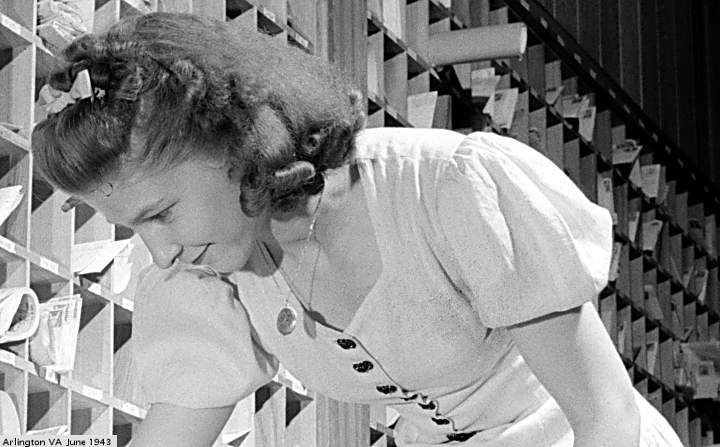
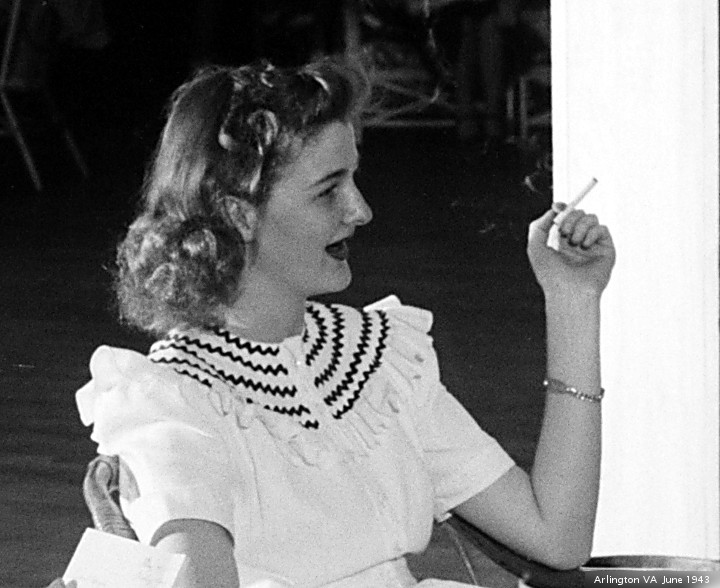
The Library of Congress furnished the pictures for this feature.




Fleetwood Mac






PG has read the autobiography of Mick Fleetwood. If this had been a made up tale of fiction, no one would believe it. Mick is not the manufacturer of enemas, nor the namesake of a Cadillac Model. The possibility does exist that he has used those two products.
John Mayall gave his guitar player, Peter Green, some studio time as a birthday present. “The Green God” used a rhythm section from the Bluesbreakers, Mick Fleetwood (drums) and John McVie (bass). At the end of the day, Mr. Green wrote “Fleetwood Mac” on the can holding the tapes.
Before long, Mr. Green started his own band, and named it after the rhythm section. (Does anyone know the bass player and drummer of the Atlanta Rhythm Section?) Fleetwood Mac started as a blues band, and became popular in England. Mr. Fleetwood celebrated by getting together with Jenny Boyd, who became his wife. Miss Boyd is the sister of Patti Boyd, the wife of George Harrison, aka Layla.
The first Fleetwood Mac album in the USA was “Then Play On”. The first show in Atlanta was at the Oglethorpe University gym, and by all accounts was a wild night. PG saw the sign advertising the event, but did not attend.
About the time of “Then Play On”, Peter Green started to get a bit weird. He dropped out of the band, but Jeremy Spencer and Danny Kirwan were still playing guitars. For a little while. Jeremy Spencer took a walk outside a Los Angeles hotel, and got recruited by the Children of G-d. Danny Kirwan had some issues, and decided to leave the band. Bob Welch stopped by for a few years, joined by Christine McVie, the wife of John.
The band was managed at this time by Clifford Davies, who by all accounts was a nasty piece of work. A man named Bob Weston had joined the band, and lasted until he had an affair with Jenny Fleetwood. Mr. Weston was fired, and a tour canceled. Clifford Davies decided that he owned the name Fleetwood Mac, and hired a group of players to go out and do shows. Fleetwood and the Mcvies were not amused, and Mick Fleetwood took over as the manager of the band.
By 1974, the band was pushing along, and selling about 300,000 copies of each album. On Halloween night 1974, Fleetwood Mac played at the Omni with Jefferson Starship. PG was at the Municipal Auditorium that night, seeing Jackson Browne and Bonnie Raitt.
In late 1974 Mick was looking for a studio. He came to a place, and an album came on the speakers, Mick was impressed by the guitar player. Soon after, Bob Welch felt the need to leave the band, and Mick thought the guitar player he heard at the studio was a good fit. (The band never did auditions, just asked people they liked to join). The guitar player was Lindsay Buckingham, and his girlfriend/musical partner was Stevie Nicks. This was the band that set sales records.
The first album with Buckingham/Nicks, simply titled “Fleetwood Mac”, became a phenomenon. The band was soon headlining in stadiums, and was on every fm radio station in the land. The band went into the studio to record a follow up. The second album took over a year to produce, and saw the McVies and the Fleetwoods get divorced. Buckingham and Nicks split their common law arrangement. Out of the turmoil came “Rumours”, which has sold roughly thirty million copies.
On August 29, 1978, PG got to see Fleetwood Mac at the Omni. Mick Fleetwood was on top of his game, pounding the skins with a glee that could be seen from the cheap seats. Fleetwood was a highlight, standing two meters tall and creating havoc on the drum stand.
Reading the book tells the rest of the story. Fleetwood’s father had died earlier that summer, and Mick was devastated. The band was straining under the pressures of super duper stardom. Mick had attempted a reconciliation with his wife, which was a painful failure. There was an affair between Mick and Stevie Nicks at this time. The idea that Mick Fleetwood could perform like he did that night tells you what a trooper he was.
The story continues. The book was written in 1991. There might be a volume two. This is a repost.







Arlo Guthrie
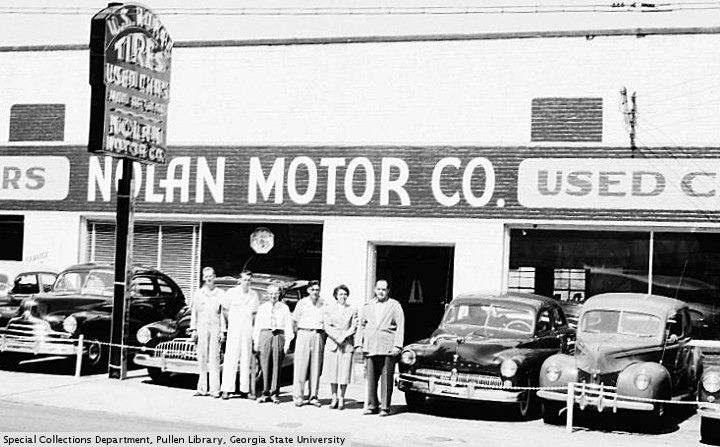



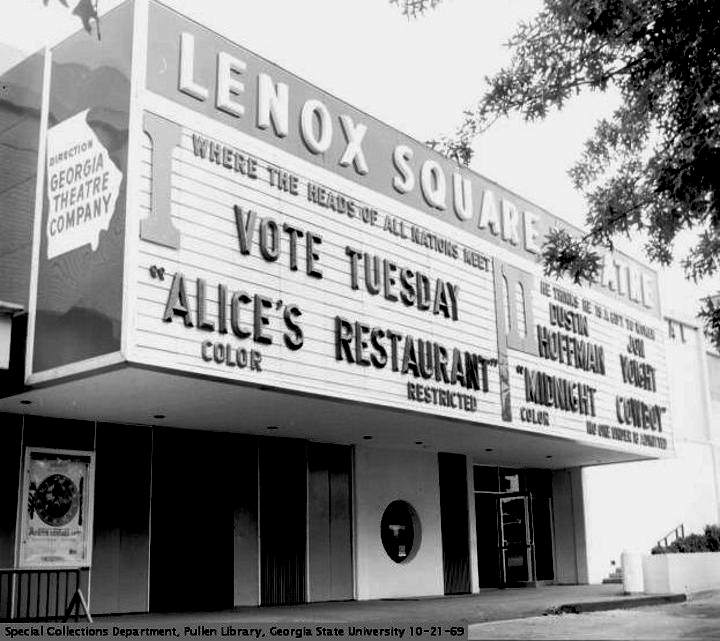
This is a rerun post, with pictures from “The Special Collections and Archives, Georgia State University Library”. The original post was half about Arlo Guthrie, and half about Ralph Reed. Today, only the part about Arlo Guthrie will be shown. If you absolutely must read about Ralph Reed, you can follow the link above, or read Lisa Baron And Ralph Reed TMI.
The entertainment today is about Arlo Guthrie . Thanksgiving is intimately connected to Mr. Guthrie. Unlike the turkey, Mr. Guthrie has gone on to have a flourishing career. He probably will not come down with Huntington’s Disease, which killed his father Woody Guthrie.
The video that goes with this text was the first time PG saw Arlo Guthrie. This was broadcast January 21, 1970. PG was an unhip fifteen year old, who had not heard Alice’s Restaurant, seen the movie, or been to Woodstock. He did see the Johnny Cash show this night, or at least the part where Arlo Guthrie did the motorcycle song.
To quote the digital facility PG is borrowing from: ” Born Arlo Davy Guthrie on July 10, 1947, in New York, NY; son of Woody (a folksinger) and Marjorie Mazia (a dancer; maiden name, Greenblatt) Guthrie; married Jacklyn Hyde, October 9, 1969; children: Abraham, Cathyalicia, Annie Hays, Sarah Lee.” Abraham and Sarah Lee play in Arlo’s touring band.
The Alice’s Restaurant Masacree is a part of Americana now. There are two bits of knowledge, that are as true as anything told to a Persian king. When trying to dispose of some garbage, and finding the city dump closed, Arlo found some litter by the roadside, and made a value judgment…One big pile of garbage is better than two little piles.
The second is about the draft, and the business of choosing people to fight our wars. There is a regulation today that says that Gays and Lesbians are not supposed to be soldiers and sailors. In the tale of the thanksgiving dinner, it was litterbugs. (There was also a draft, and a different war. Lots of Americans were coming home in boxes.) The bottom line: Mr. Guthrie is confused about not being considered moral enough to kill people, because he was a litterbug.
A few years into his career, Arlo Guthrie had a hit record called “City of New Orleans”. It was about a train, and said “Good Morning America”. “City of New Orleans” was written by Steve Goodman, who is no longer with us. Mr. Goodman also wrote the perfect country and western song .
PG heard a story about Steve Goodman. “The songwriter is Steve Goodman. He gave a show at the Last Resort in Athens GA, that a friend of PG attended. Mr. Goodman tells a story about performing on a train, during a series of concerts supporting Hubert Humphrey. It seems like Mr. Goodman had to use the restroom on the train. Now, in those days, the trains did not use holding tanks, but just ejected the matter by the tracks as they rode by. Mr. Goodman was told, do not flush the commode while the train is in the station. Mr. Goodman forgot the instructions. Mr. Humphrey said ”I am going to give the people of this country what they deserve”, Mr. Goodman flushed the commode, and sprayed the crowd. PG is not sure if he believes this, but it is a good story.” ( A biographer of Mr. Goodman said said that the candidate was Edmund Muskie. He also says that David Allen Coe had nothing to do with the last verse of the perfect country and western song.)
As previously noted, this is a repost from a few years ago. In that time, the policy against gay people serving in the military has been dismantled. The Ralph Reeds of the world are more upset about the concept of gay marriage, than by gay people killing Muslims. Vietnam is a peaceful country, and is enjoying economic good times. The draft is something old fogies remember. The current fashion is to support war by demanding a tax cut.
Arlo Guthrie continues to make music. USA Today had a feature recently, Arlo Guthrie celebrates 50 years at ‘Alice’s Restaurant’. Arlo Davy Guthrie has a twitter account, @folkslinger, and a full head of white hair. His wife of 43 years, Jackie Guthrie, died Oct. 14, 2012. The Lenox Square theater was torn down to make way for a food court many years ago.


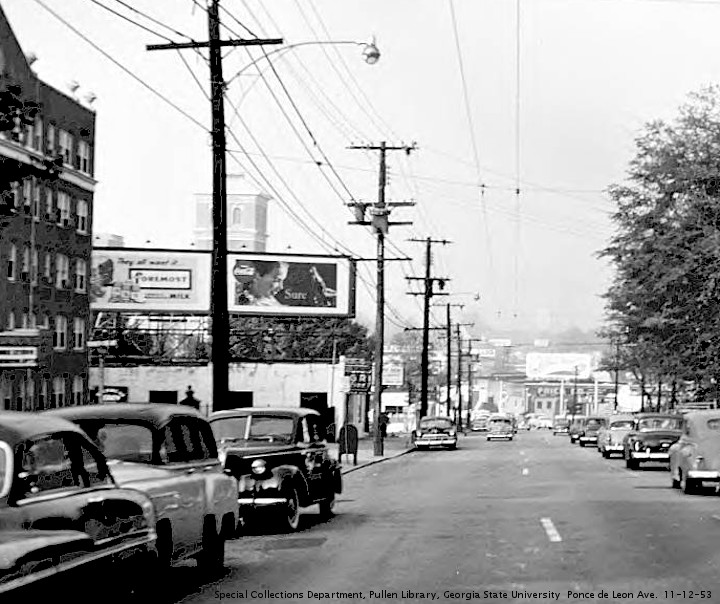



Where Is That Place


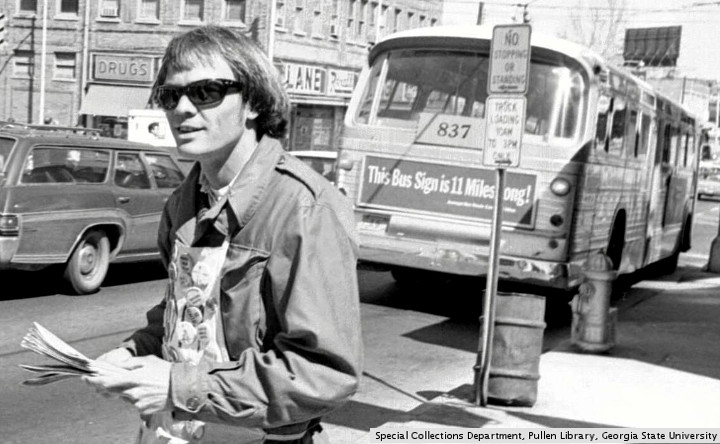
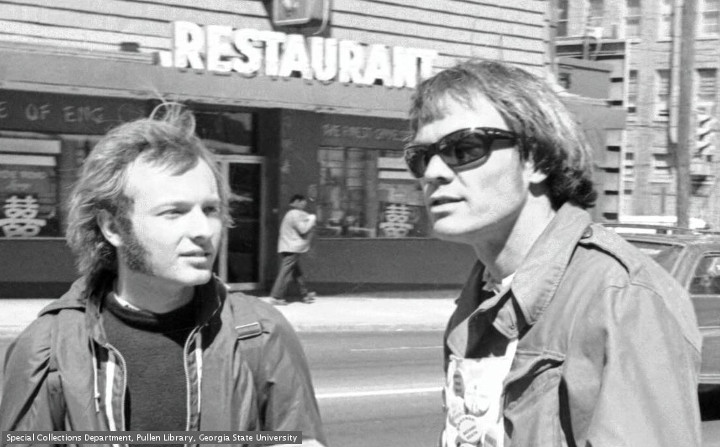
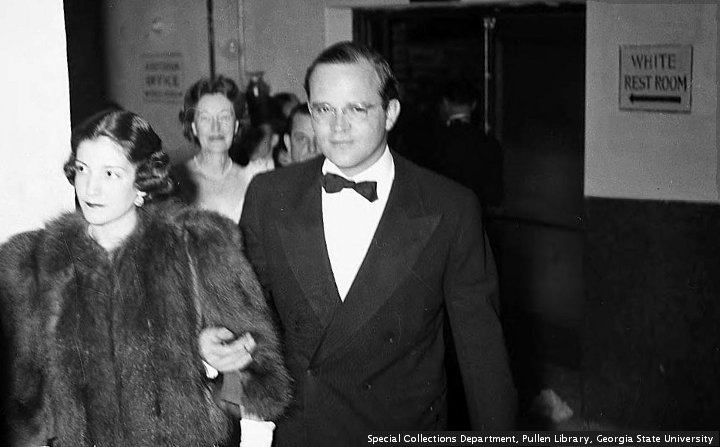
This blog has an email address listed. It is seldom used. The host is a faded internet company that rhymes with booboo. Once proud email has become a spam magnet. The email address there is checked every once in a great while. Yesterday was one of those times. There was a surprise.
Friday, June 5, 2015, 2:52 PM
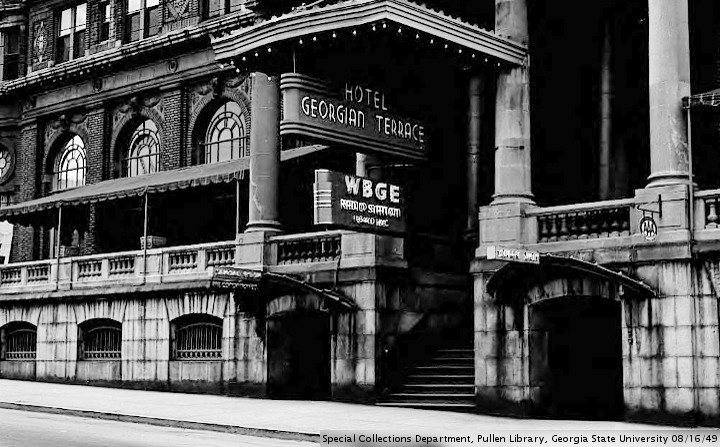
Do you know exactly where the Agora Ballroom was in the Georgia Terrace Hotel Also I am trying to locate photos of the following locations – Does you any that we can use? Please let me know ASAP – I am on an extremely tight deadline need photos by Monday morning if possible. Exteriors or interiors are great. Please let me know if you have any.
12th Gate Coffee House (located on 10th street in Midtown,) Club 112 (located at Lavista and Cheshire Bridge,) Lenny’s (either or both of their two locations in the Old Fourth Ward,) Great Southeast Music Hall (either or both of their two locations Lindberg Plaza or Cherokee Plaza,) Echo Lounge (located in East Atlanta,) Hedgens (located in Buckhead,) Agora Ballroom (located in Georgia Terrace hotel,) Muelenbrink’s Salon (located at the Underground.) Joeff Davis Photo Editor Creative Loafing
Thursday, July 9, 2015 11:12 PM
Hey I apologize for the tardy answer. I don’t use this email very often
The Agora was at the end of an alley off Peachtree. It was next door to the Ga Terrace Hotel, though not in the Hotel building itself. The ballroom was in a fire in the early eighties, and was torn down. I don’t have any of the pictures that you needed a month ago.
Friday, July 10, 2015, 11:49 AM
Thanks here is the piece we did: That was then, this is now.
Friday, July 10, 2015, 1:21 PM
Hey thanks for getting back to me. The article was cool, even without my contribution. This seems like a good excuse for a blog post. I have a some comments about some of the locations listed. For instance, my mother bought groceries at the Cherokee Plaza A&P every thursday for 37 years.. I would like to use your letters, and link to your article, in my post.
Chamblee54 has had posts about four notable Atlanta performance venues: 688 Spring Street, Georgian Terrace Ballroom, The Great Southeast Music Hall, and Richards. Two were on the list of requests. As for the other two, 688 Spring Street, home of Rose’s Cantina and 688, is now a doc-in-a-box facility, Concentra Urgent Care. The site of Richards, across from Grady stadium on Monroe Drive, is now the meat department at Trader Joe’s.
The CL article, That was then, this is now, is fun to look at. There are some good pictures. There are a couple of mistakes in the piece, which this post will try correct.
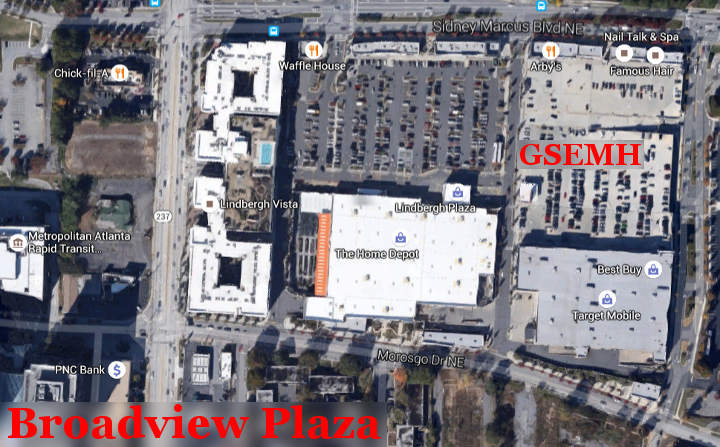
The Great Southeast Music Hall is the scene of many cherished memories for those of a certain age. The post linked here has more comments than any other Chamblee54 post. There are two google earth images, one for Broadview Plaza, and one for Cherokee Plaza.
In Broadview, (now known as Lindbergh something or another,) the Music Hall was in the corner of an L shaped building. The space is currently a part of the parking deck for Target. According to google earth, the Home Depot takes up almost the entire parking lot of the old shopping center.
In Cherokee Plaza, the space where the Music Hall was is the south part of a Kroger. CL says it was in the parking lot, which simply is not so. This parking lot is too small, which is one reason the Music Hall failed there. In the nineties, the A&P expanded, and took over the space occupied by the theater. In 1998, A&P closed their Atlanta operations. The stores were taken over by Kroger.
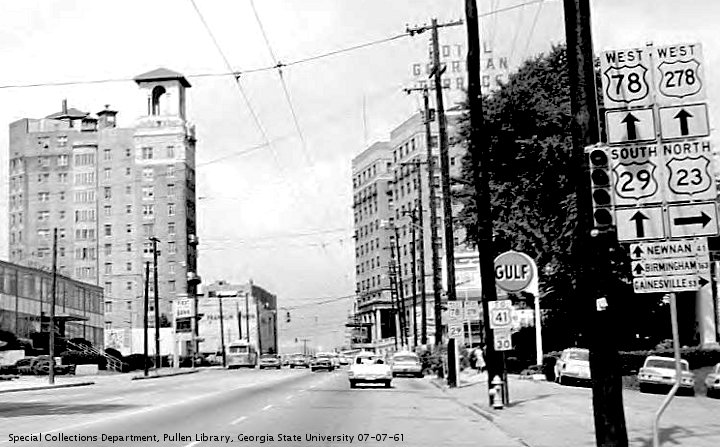
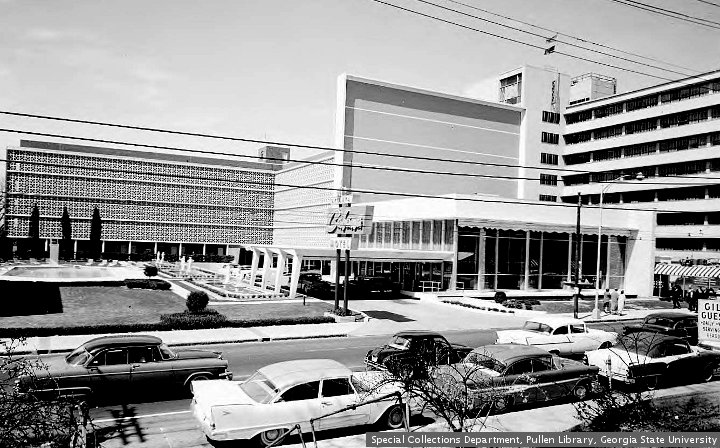
The third google earth image is for the intersection of Peachtree Street and Ponce De Leon Avenue. This is the location of the Georgian Terrace Ballroom. This was the setting of Alex Cooley’s Electric Ballroom and The Agora Ballroom. This facility was in a fire, and torn down. An annex to the Georgian Terrace Hotel was built. This annex is roughly where the Ballroom was.
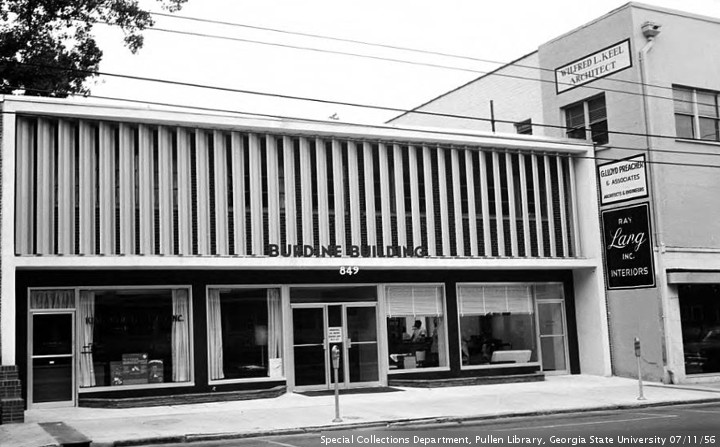
One of the places CL mentions was Backstreet. A picture of Lang Interiors, on Peachtree Street at Sixth Street, is included today.This is the building that became Backstreet. This building was a series of nightclubs in the early seventies. Backstreet opened in late 1974. It was the premier chacha palace in Atlanta for many years. When the property became valuable enough to attract the money of developers, the city discovered enough violations to shut down the party. (1974 was somewhat of a golden age for Atlanta nightlife. The Great Southeast Music Hall, Richards, and Alex Cooley’s Electric Ballroom were all in operation in 1974.)
Club 112 catered to an African American clientele. The space had been many businesses over the years, with a Fred Astaire dance studio next door. Around the time Backstreet was getting started, the space was called the Locker Room. A drag show, featuring the Hollywood Hots, performed there. The Locker Room was a “private club,” and was able to stay open on Sunday night. It was the only place open on Sunday, and was packed. The Locker Room was owned by Robert E. Llewellyn, who was later convicted of having a business rival murdered.
The 12th gate was in the middle of the block, somewhere on tenth street. It was not on the corner of Spring Street. A seedy Jim Wallace gas station was nearby. This place was mostly before PG went out much. There is a hazy memory of seeing the Hampton Grease Band there. After the show, Mr. Hampton walked up to PG, holding a thumb and finger making a circle in front of one eye. Mr. Hampton asked PG what sign he was.
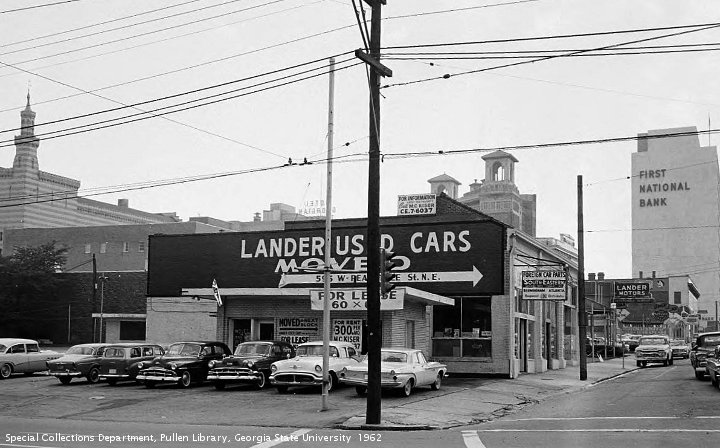
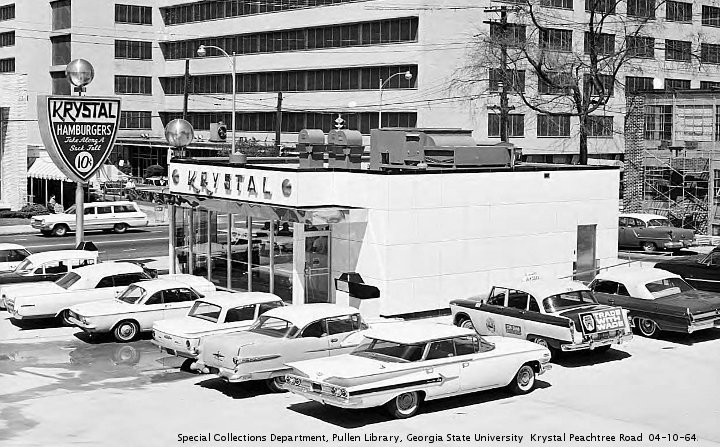
By the time Lenny’s was in business, PG was a retired drunk. He seldom went downtown after dark. Somehow, the party went on without him. Pictures today are from “The Special Collections and Archives, Georgia State University Library”. This is a repost.



DG-GD



PG was listening to disgraceland episode#64, about the grateful dead. He was at a stopping point with multi tasking, and decided to look something up. The show mentioned the first show by the warlocks, later known as the grateful dead. This was 50 years before “dead name” was a dirty word.
“On May 5, 1965 ‘The Warlocks’ … played their first show, at Magoo’s Pizza Parlor in Menlo Park, California” This was the day before PG turned 11. Lyndon Johnson was settling in for his elected term as President. The Braves were playing their lame duck season in Milwaukee. Combat troops had been in Vietnam for a little over two months. This was the start of the escalation. “By the end of 1965, more than 184,000 American troops were in Vietnam.”
Multi tasking is full of pitfalls. Whenever there is a break, you are tempted by facebook and twitter. Like this tweet: “The audio excerpt in this article is incredible: Part of a multi-movement work called “PASSOVER” by Rick Burkhardt. Musicians speak while playing, seated around a dinner table. From the collective @ensemblethingNY” The answer is to make a note of the link. Maybe you go back later and listen. Maybe you don’t. The focus should be on the first entertainment/chore. The dg-gd episode has a half hour to go. UPDATE The audio excerpt is pretty good. It is under seven minutes long. People of a certain age may feel old while listening to it.
At 27:44, dg-gd dropped an item that could not be ignored. The warlocks had to find a new name. Someone else was called the warlocks, and there were complications. It seems as though the warlocks … a pretty obvious name … was also an early name of the velvet underground. Other early vu names included the primitives and the falling spikes.
“When they (vu) finally did come across a name which stuck, it was thanks to a contemporary paperback novel about the secret sexual underworld of the 1960s that Tony Conrad, a friend of John Cale, happened across and showed to the group. The novel, written by Michael Leigh, remains in print most likely thanks to the band which appropriated its title.”… “Had Lou Reed and John Cale not seen a copy of this book in a New York City gutter (fittingly) and decided to use its name for their group, this little volume would have been justly forgotten. Written in a style which titilates while decrying the scene it describes, it’s a piece of blue-nosed junk.”
The rest of the show rolled on. Jerry stuck his finger in a dictionary at random, and found grateful dead. It was the name of a story. The band played at the acid tests, which mostly went well, until they did not. Pigpen drank rotgut to excess, until it killed him.
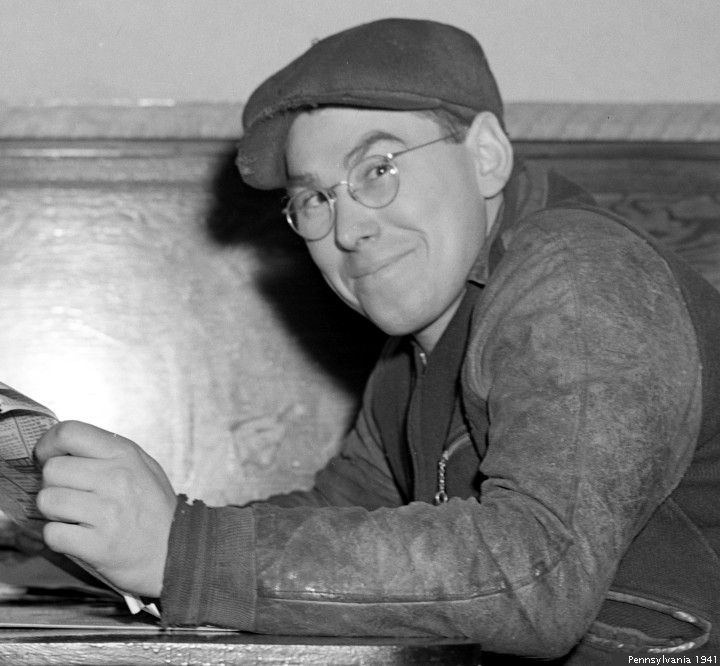
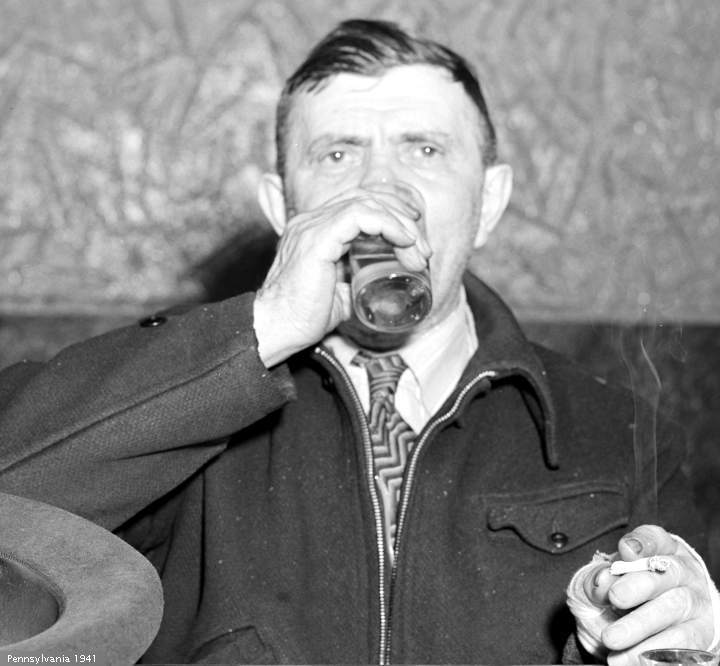
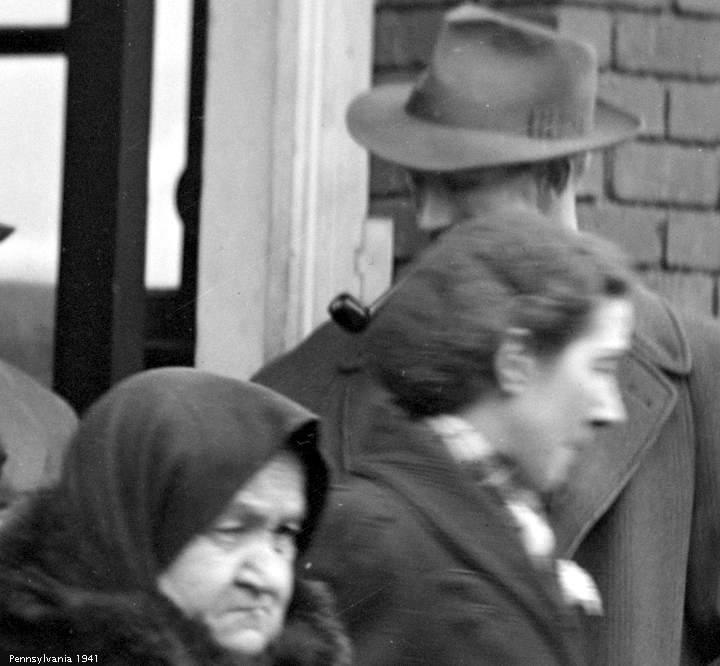
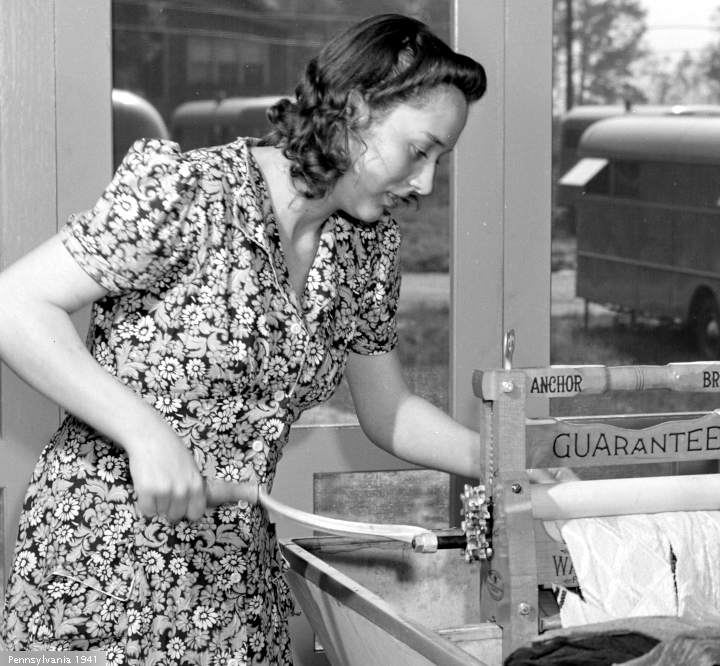
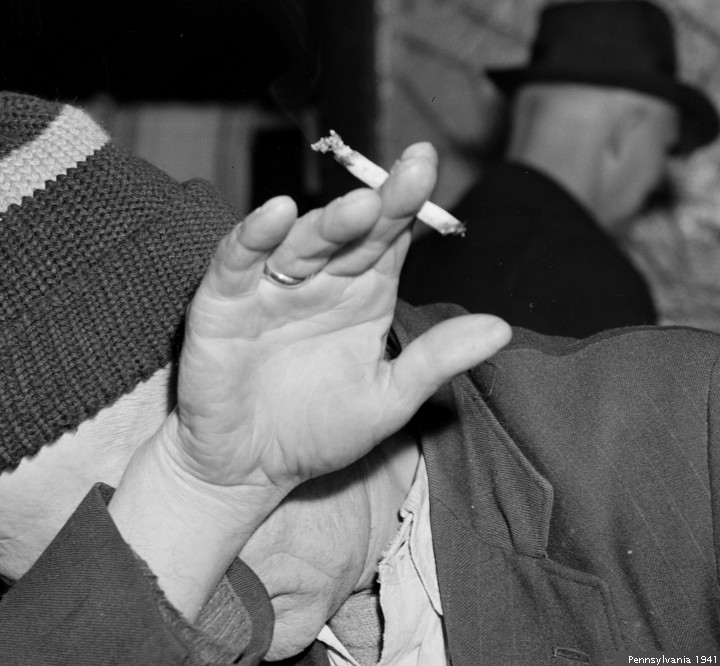
PG was editing pictures out of a folder labeled pa41. The images were shot by John Vachon,in June 1941. The last picture, while the 27 club end of Pigpen played over the speakers, was Women washing clothes in utility building at FSA (Farm Security Administration) trailer camp. Erie, Pennsylvania. Another picture, from January 1941, is Pinochle game in Czecho-Slovak Dramatic Club. Ambridge, Pennsylvania. Both pictures are included in this feature.






Coat Of Many Colors


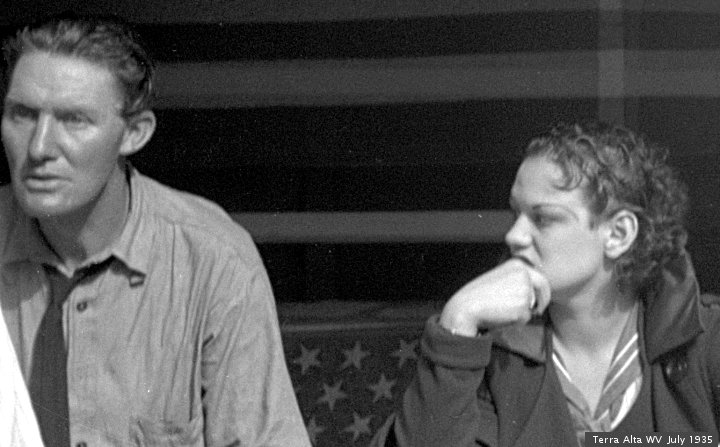

PG saw a story, and thought about the song, “Coat of many colors”. The b side was by Porter Wagoner, “Coat of many sequins”. COMC is about a woman who is too poor to buy her little girl a coat at the store, so she makes a quilt. The other kids make fun of her, but little Dolly knows that the coat is really made of love.
The song talks about a story in the Bible. PG had heard about the story, but didn’t remember the details. He must have been daydreaming in Sunday School when that story was taught. With the help of google, Genesis 37 appears, as if by magic. Pass the popcorn.
2 These are the generations of Jacob. Joseph, being seventeen years old, was feeding the flock with his brethren; and the lad was with the sons of Bilhah, and with the sons of Zilpah, his father’s wives: and Joseph brought unto his father their evil report.
3 Now Israel loved Joseph more than all his children, because he was the son of his old age:
and he made him a coat of many colours.
4 And when his brethren saw that their father loved him more than all his brethren, they hated him, and could not speak peaceably unto him.
Ok, hold on for a minute. Israel had at least two wives. The Biblical definition of marriage must be between a man and two women.
The story gets a bit weird here. Joseph has this dream, where he becomes the boss hog brother. The other brothers decide something needs to be done, that Joseph needs to die. Reuben tries to help Joseph, and has a plan to save him. Joseph is stripped of the coat of many colors, and placed in a pit, with no water. Before Reuben can sneak Joseph out of the pit, a camel caravan comes by. Twenty pieces of silver change hands, and Joseph is sold into slavery. The brothers decide to pull a cover up, and make it look like Joseph was dead. Reuben made another sandwich.
31 And they took Joseph’s coat, and killed a kid of the goats, and dipped the coat in the blood;
32 And they sent the coat of many colours, and they brought it to their father; and said,
This have we found: know now whether it be thy son’s coat or no.
33 And he knew it, and said, It is my son’s coat; an evil beast hath devoured him;
Joseph is without doubt rent in pieces.
34 And Jacob rent his clothes, and put sackcloth upon his loins, and mourned for his son many days.
35 And all his sons and all his daughters rose up to comfort him; but he refused to be comforted;
and he said, For I will go down into the grave unto my son mourning. Thus his father wept for him.
This feature was originally posted in 2012. The pictures are from The Library of Congress.
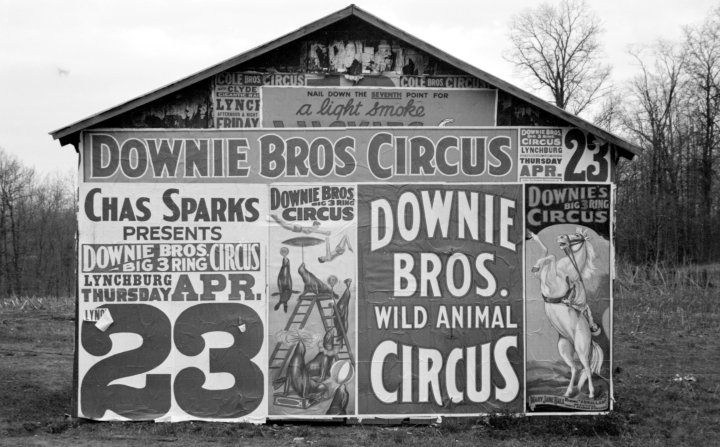
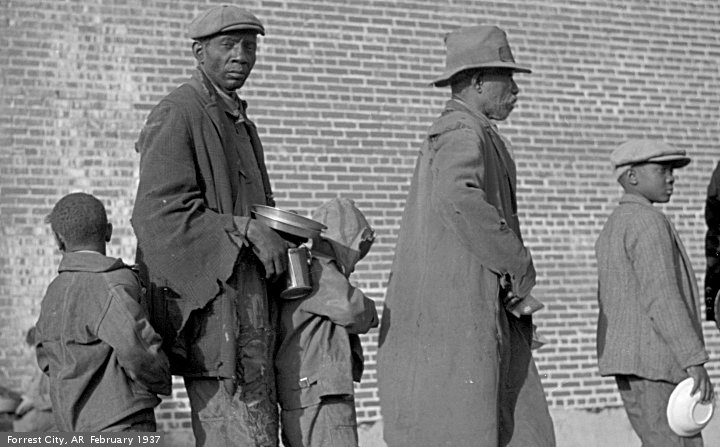
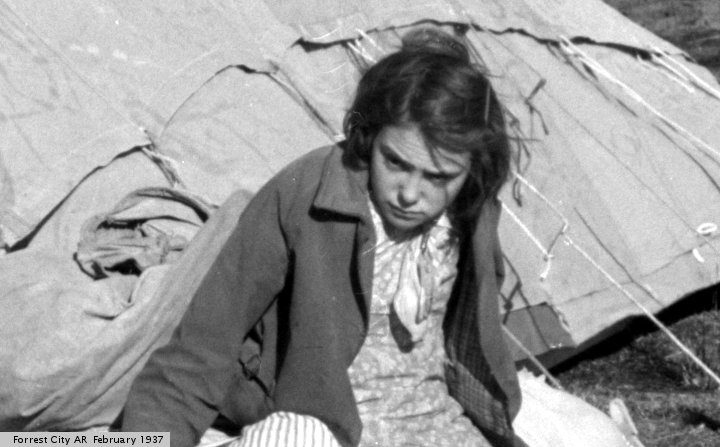


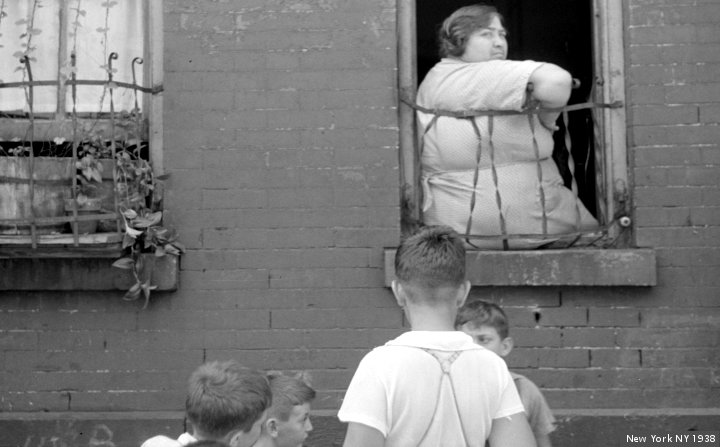
Tiny Tim



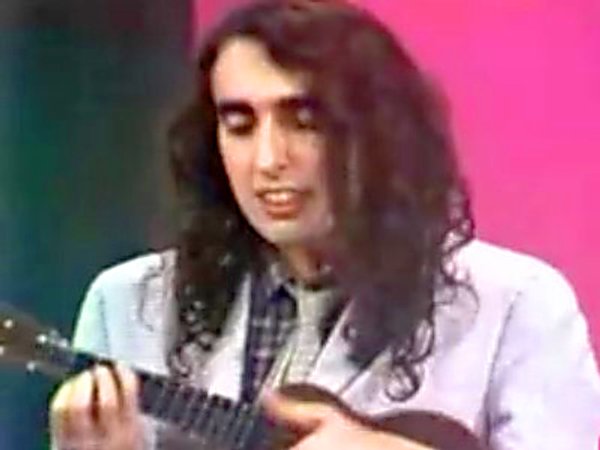
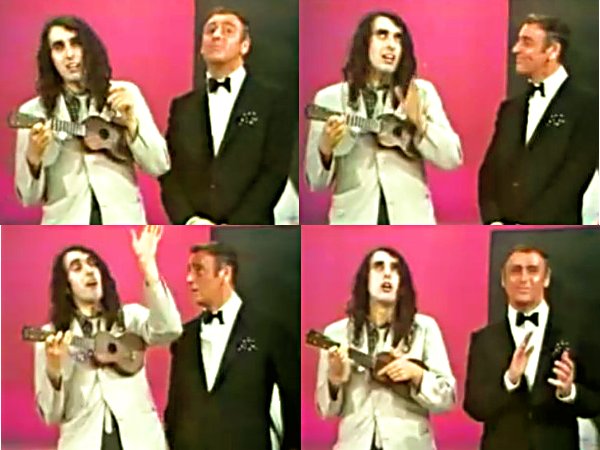
There has never been a performer quite like Tiny Tim.
Herbert Khaury was born April 12 1932, to a Lebanese father and a Polish Jew mother. At an early age, he developed a love of vaudeville style music. He learned to play a ukelele, and began performing in his natural baritone voice.
One night, Mr. Khaury discovered falsetto singing. After trying numerous stage names, he settled on Tiny Tim. He got the attention of Rowan and Martin’s Laugh In, and appeared on that show. Laugh In made Tiny Tim an overnight sensation. He performed “Tip Toe Through The Tulips”.
On December 17, 1969, Tiny Tim married Miss Vickie (Victoria Mae Budinger) on The Tonight Show starring Johnny Carson. The show attracted an estimated 40 million viewers. Ed McMahon laughed. The couple had a daughter, Tulip Victoria, and divorced after 8 years of marriage.
Tiny Tim continued to perform up until his death November 30, 1996. He had diabetes, and heart problems. As wikipedia tells the tale: “He continued to play concerts despite the warnings that, due to the fragile state of his heart, he could die at any moment. While playing “Tiptoe Through the Tulips” at a Gala Benefit at The Woman’s Club of Minneapolis on 30 November of that year, he suffered another heart attack on stage. He was led out by his third wife, Susan Marie Gardner (“Miss Sue”, whom he had married on 18 August 1995), who asked him if he was okay. Tim responded, “No, I’m not!”, his final words…He is interred in the mausoleum of Lakewood Cemetery in Minneapolis.
There is a live website, Remembering Tiny Tim. Under Tiny Trivia, the following items are listed.: 01. Tiny Tim was a devout Christian. 02. Tiny Tim had diabetes. 03. Tiny Tim was 6′ 1′ tall!! 04. One time, when Tiny Tim was staying at Ceasar’s Palace, he decided to have a little fun and order ONE OF EVERYTHING on the menu! 05. Tiny Tim used Eterna 27 by Revlon.06. He also used Jergen’s Body Shampoo.07 He used Vaseline Intensive Care: the yellow bottle for his upper torso and the green bottle for his lower half. 08. Tiny Tim also used Oil of Olay – eight times a day.09. Tiny Tim never ate cheese or meat. 10. Tiny Tim liked to use Viva papertowels after showering in hotels because he didn’t trust the cleanliness of hotel towels. .11. Tiny constantly washed his hands and “creamed” his hands with lotion afterwards. 12. Tiny Tim loved, in this order, #1 pizza, #2 chinese food, #3 popcorn.
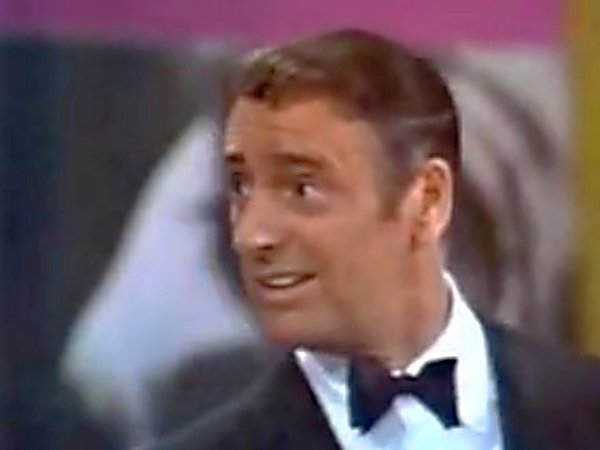
This is a repost. Some of the websites quoted in this piece are now “frozen.” Some of the details quoted cannot be verified. Maybe popcorn was number one. Historic pictures for today’s event are from “The Special Collections and Archives, Georgia State University Library”.



688


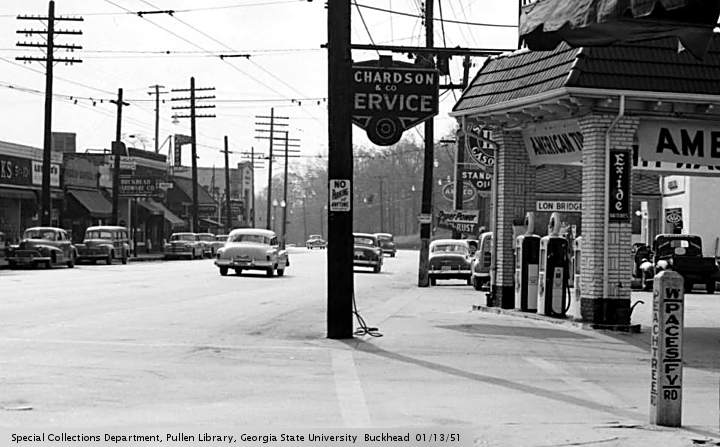

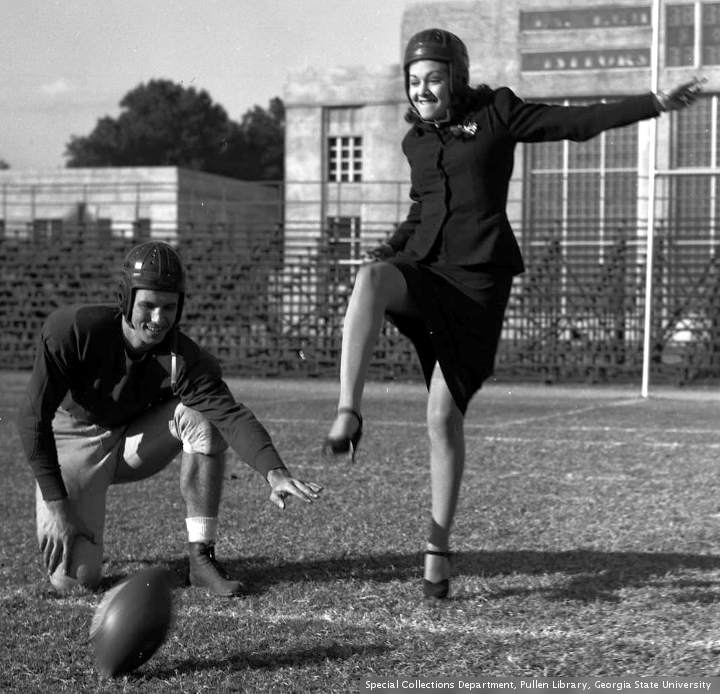
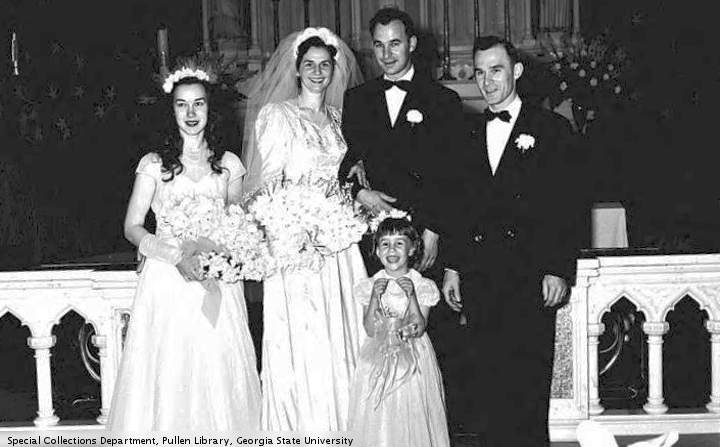
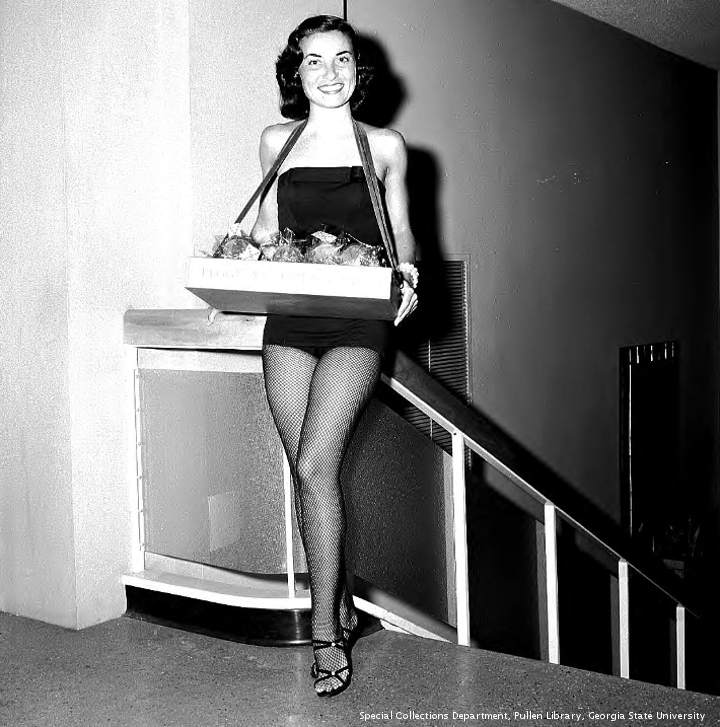


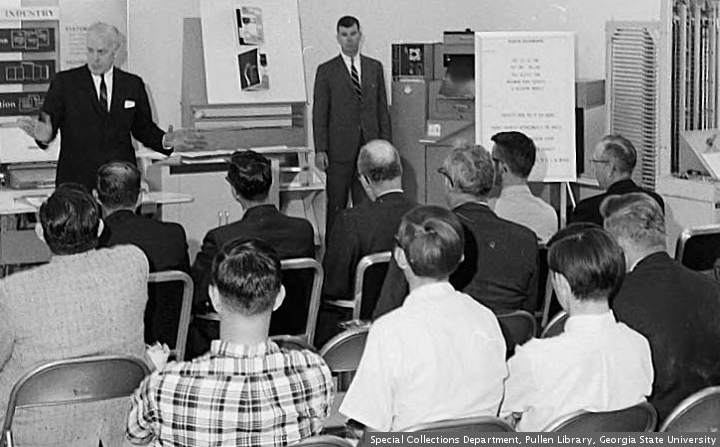
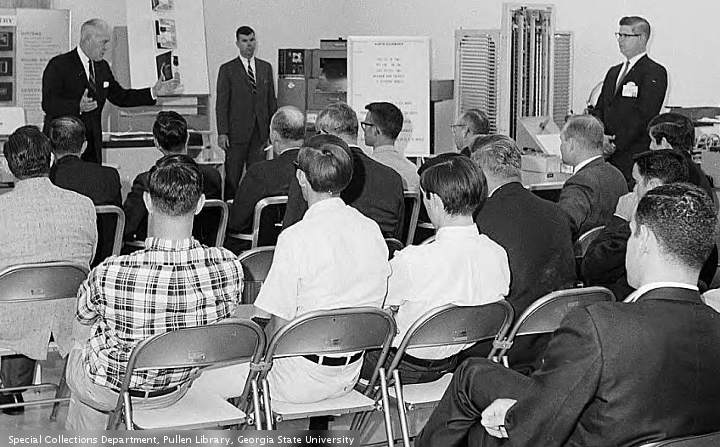


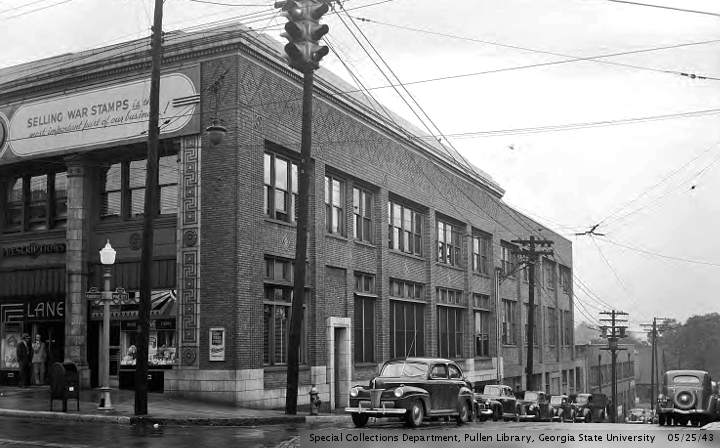

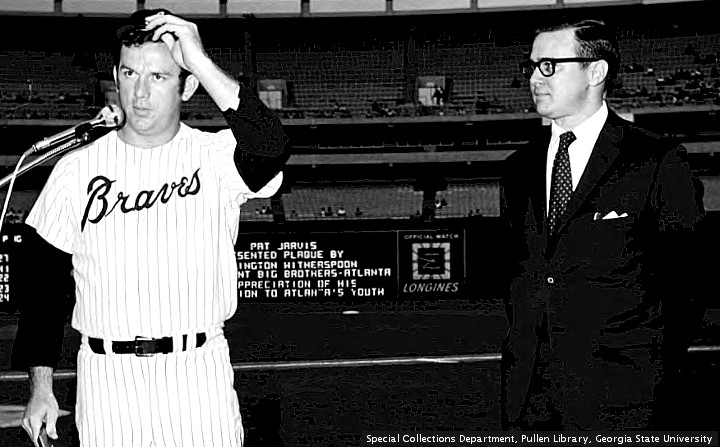
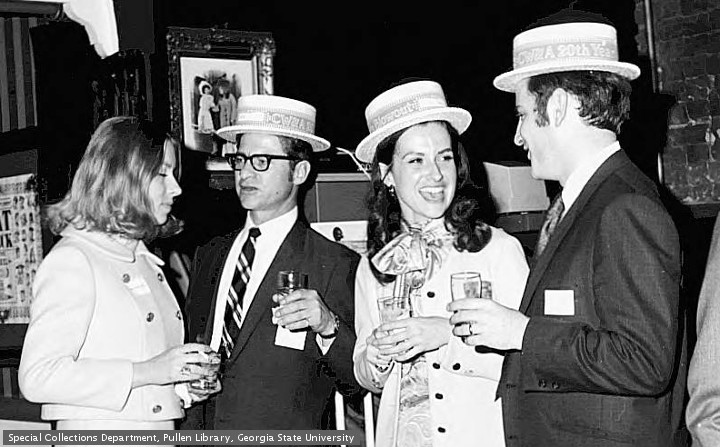
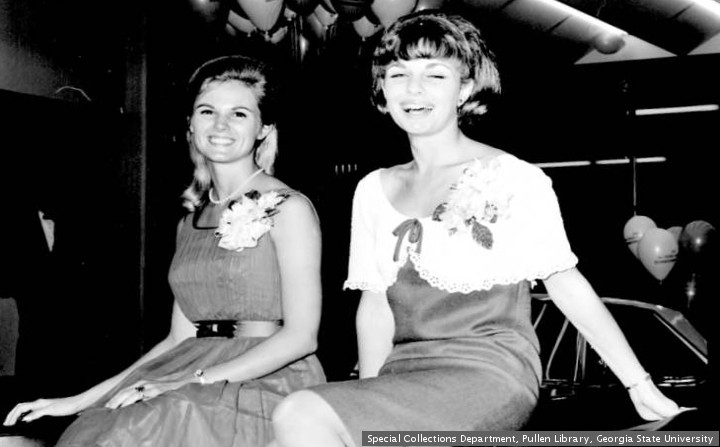
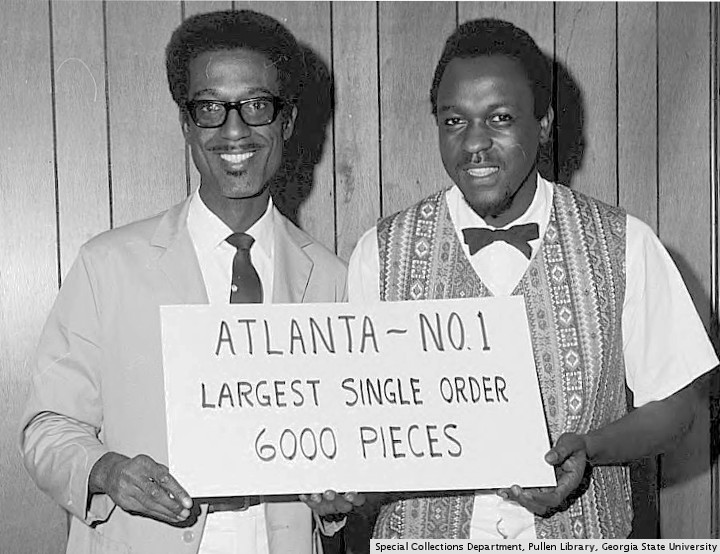
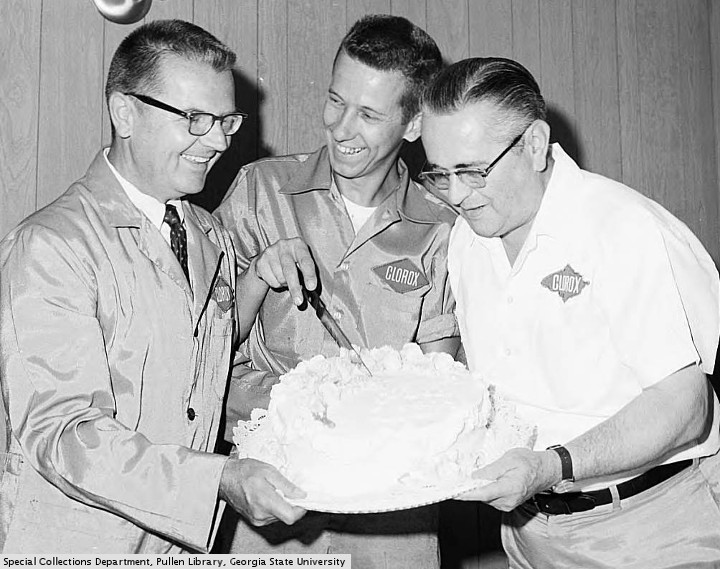
There was a comment at Chamblee54. “Steve Loehrer – So tell me what you know about Rose’s Cantina. I booked the music there from 1978-80 – Thorogood, Delbert, The Thunderbirds, The Fans, The Razor Boys and on and on. I was the one that did it. And I probably know you.” This blog has previously published features about the Great Southeast Music Hall, Richards, and the Georgian Terrace Ballroom. One more music venue post is not going to hurt anyone, and will be a good excuse to post some more pictures, from “The Special Collections and Archives, Georgia State University Library”. This is a repost.
688 Spring Street is a nondescript building, located down the hill from the Varsity. At one time, a company called Southern Tailors made wine jackets there. It is currently a Concentra Urgent Care Center. In between, it was the site of two rock and roll nightclubs, Roses Cantina and 688. One block over, at 688 West Peachtree, is a Catholic Construction management office.
House manager Rose Lynn Scott is quoted as saying “You know, we really aren’t sure exactly when it all started and ended,” Scott said. “Honest to God, we weren’t paying that close attention.”PG first knew about it around 1977, and really didn’t go very often. There is a running list for this post, and whenever a new band sinks into the mush, it is duly noted. Some band did “Love Gun,” which sounds remarkably similar to “Amphetamine Annie” by Canned Heat.
The punk rock revolution did not completely pass Atlanta by. A band called the Fans said they were making the pop music of the eighties. PG saw them twice at Roses, and they might be the only time he ever paid to get in. They were an impressive outfit, doing Velvet Underground and Telstar. Later, they opened for Talking Heads at the Agora, and were pretty awful. Much, much later, PG shared an apartment with the brother, of the drummer, for the Fans. Also living there was the brothers wife, a cable guy, seven snakes, a ferret, and a cat.
Back to the words of Rose Lynn, “It was a dive bar supreme and proud of it.” The stage was in the middle of the house, with a game room behind the stage. If you liked to shoot pool and listen to bands, this was the place. As for drinking, PG might get a beer or two, but mostly got bombed at other spots.
In those days, PG would go rambling from club to club, often accompanied by his friend Dinkson. One night, they stumbled in on a three piece band. They did a song called “Madison Blues”, with the guitar playing slinging riffs, and the bass playing playing the same notes over and over, never changing the look on his face. This was George Thorogood and the Destroyers.
One other night, PG stumbled in on the last few minutes of a show by the Brains. They wrote a song called “Money Changes Everything” that Cyndi Lauper did well with. This is another great local band that never seemed to get a national audience. Another night, some old black man, possibly John Lee Hooker, was playing guitar.
Around about this time, PG decided to either grow up, or take his childhood seriously. He wound up in Seattle WA. That wore off after a while. On the greyhound bus going home, PG talked to a young lady, who said something about a punk rock club in the Roses Cantina space. This was the 688.
A few weeks later, Iggy Pop did a week at 688. Here, through the miracle of copy paste, is the story. It isn’t plagiarism when you wrote it yourself.
At any rate, by the time PG got back from Seattle, some brave investors decided to have a punk rock club at 688 Spring Street. Soon, Iggy Pop would be playing a week there. In the seventies, the bands would play for five days at the great southeast music hall or the electric ballroom, two shows a night, and if you were really cool you would go on a weeknight before it got too crowded. Soon after that, it was one night in town only, and you either saw it or you didn’t.
PG had a friend at the Martinique apartments on Buford Hiway. There was someone living in the complex known as ZenDen, who sold acid. You would go to his place, wade through the living room full of grown men listening to Suzi Quatro, and purchase the commodity.
On to the the 23 Oglethorpe bus, and downtown to 688 Spring Street. Before anyone knew it, the band was on the stage. A veteran of the Patti Smith Group, named Ivan Kral, was playing bass. Mr. Kral sneezed, and a huge cocaine booger fell across his face. He was not playing when the show ended.
There was a white wall next to the stage, and someone wrote the song list on that wall. That list of songs stayed on the wall as long as 688 was open. “I want to be your dog” was on the list, as well as the number where Iggy pulled his pants off and performed in his underwear. Supposedly, in New York the drawers came off, but the TMI police were off duty that night.
The show was loud and long, and had the feel of an endurance event…either you go or the band does. Finally, the show was over, and PG got on the 23 Oglethorpe bus. You got the northbound bus on West Peachtree Street. You could look down, from Fourth street, and see the Coca Cola sign downtown. Freeway expansion sent that section of West Peachtree to old road hell.
Twenty years after that, PG worked in a building at that corner of Fourth and West Peachtree. If he had known about the future of working for Redo Blue, PG might have jumped under the 23 Oglethorpe bus, instead of getting on it. The Coca Cola sign was long gone by then.
There was band called Human Sexual Response in those days. PG caught their act at 688. They had three vocalists, wearing matching outfits, and sang a lot of lyric happy songs with really cool harmonies. The problem was, PG was not familiar with those oh so witty lyrics, and did not know what it was all about. At least he got out of the house.
Kevin Dunn played guitar for the Fans. (He had an ad for guitar lessons on the bulletin board at Wax and Facts. It said that raising racing turtles was more profitable than playing guitar.) One night at 688, he performed with his band The regiment of women. They opened for someone, possibly the Plastics, who we will get to in a minute. So, this guy plays guitar and sings, and a woman plays a drum machine. No skin pounding drummer, but a lady who twisted the knobs on a machine.
The Plastics were from Japan, and did a killer version of “Last Train to Clarksville”. It was about this time that PG got a job, and decided that he liked sleeping better than hanging out downtown.
One night, about 1983 or so, PG made an exception. The band that night was Modern English. Before the show, PG ate three z burgers from the Zestos on Ponce de Leon. During the show, the singer rubbed his stomach, and said to feel the music. About this time, the z burgers were making their presence known, and PG could feel something, but it wasn’t the music.
The last show PG saw at 688 was Hüsker Dü. The best guess is February 14, 1986. There was a totem pole, made of old TV sets, in the front part of the club in 1986. Here is the story.
Hüsker Dü means “do you remember” in Danish and Norwegian. PG saw them sometime in the eighties. It might have been the metroplex, but it might have been the 688. There is a list of shows they played, and the metroplex is not on there.
PG saw a show at the Metroplex the next night. The band is forgotten. The metroplex was a dark spooky building on Marietta street near the omni. The balcony was very dark, with everything painted black. PG tripped over a bench.
688 was a different story. PG saw a bunch of shows there, both as 688 and Rose’s Cantina. HD may have been the last show PG saw before they closed. PG was well into the work/sleep lifestyle that preoccupied his life after a certain point, and just didn’t make it out much anymore. A friend won tickets to the show or he wouldn’t have made it.
PG didn’t get into the show very much. HD was a trio, with the later-outed Bob Mould as the guitar g-d. For all of his musical skills, Mould is not much for onstage charisma. PG felt that if he had been more familiar with their music, he would have enjoyed it more. Some bands you can see without hearing their records and get into it right away, where others need a bit of familiarity.


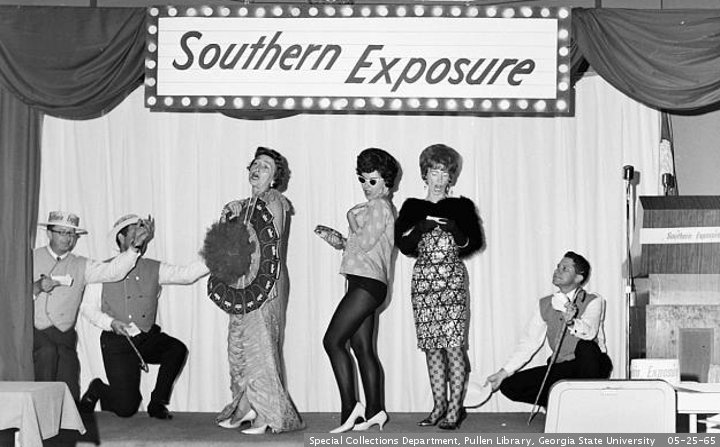
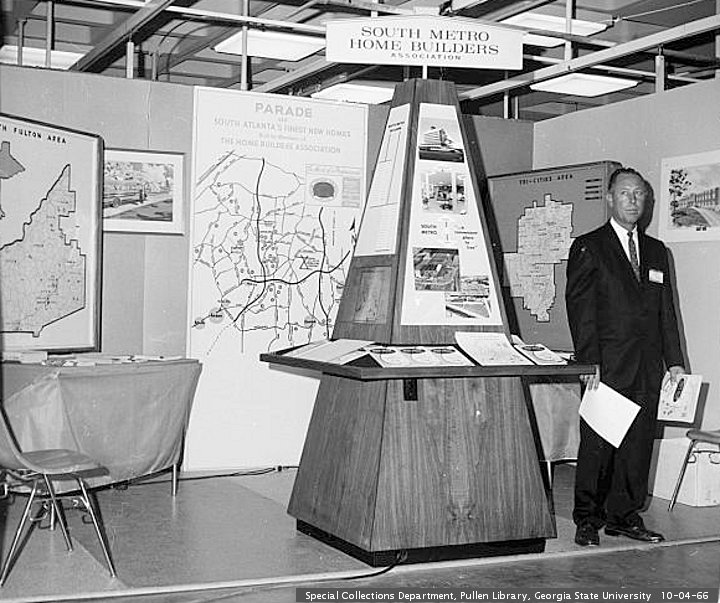




Blue Tail Fly




Q: What does “Jimmy crack corn” mean, and why does he not care?—Matt, Columbus, Ohio
PG was trolling stupidquestion.net when there was a convergence of stupidity. (The site does not exist in 2012.) All his life he had heard “Blue Tail Fly”, and been embarrassed. And there, in (pardon the expression) black and white, was someone who wondered the same thing.
It seems as though “Blue Tail Fly” started out as a minstrel song. For those who don’t know, minstrel shows were white people putting on black makeup, and imitating African Americans. Minstrel shows are not well thought of these days.
The story of BTF involves a man named Jimmy. A fly bit the pony the old massa was riding, the pony was offended, and threw the old massa off. He was hurt landing, and died. Jimmy still has to crack corn, but he doesn’t care, because old massa has gone away.
Dave Barry took a poll once to find out the stupidest song of all time. The overwhelming winner/loser was “MacArthur Park”. The combination of over the top show stopping, while singing about a cake left out in the rain, makes this ditty a duh classic.
In the spirit of corny convergence, the video is a karaoke version featuring Donna Summer. Miss Summer is a talented singer, who happened to connect with Giorgio Moroder. Lots of singers could have hit the big time by fronting those records. Donna Summer hit the jackpot.
For a proper post, there needs to be a third stupid song. This is not about stupid bands, singing about being D U M B. Even though they totally don’t belong, there is a video of the Ramones included. PG saw the Ramones at the Agora Ballroom in 1983. This was after their prime, and before a homeless man caught the Ballroom on fire.
We still need a third stupid song, and PG wants to get this posted with as little research as possible. Just like some writer was once given twenty minutes to write a song, and he decided to do the worst song he could think of. The result was “Wild Thing”. PG used to have a 45 of someone who sounded like Bobby Kennedy singing “Wild Thing”. Let the good times roll.
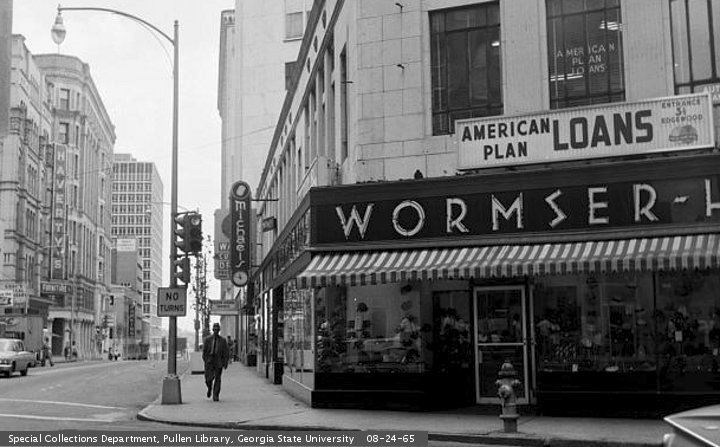
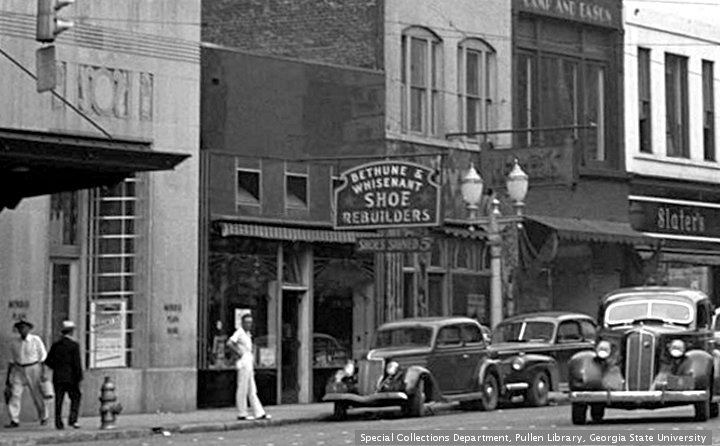
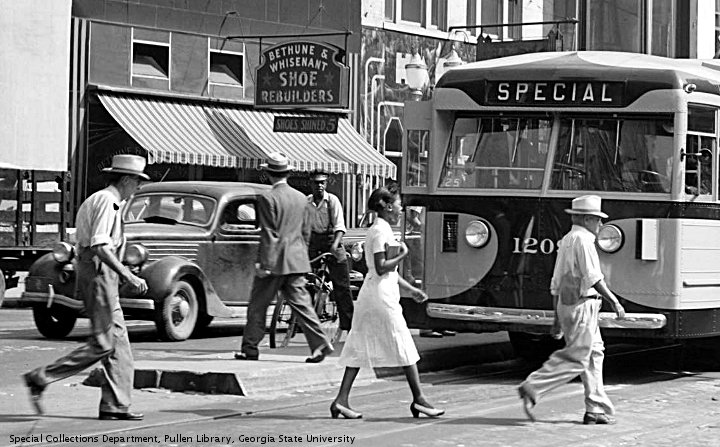
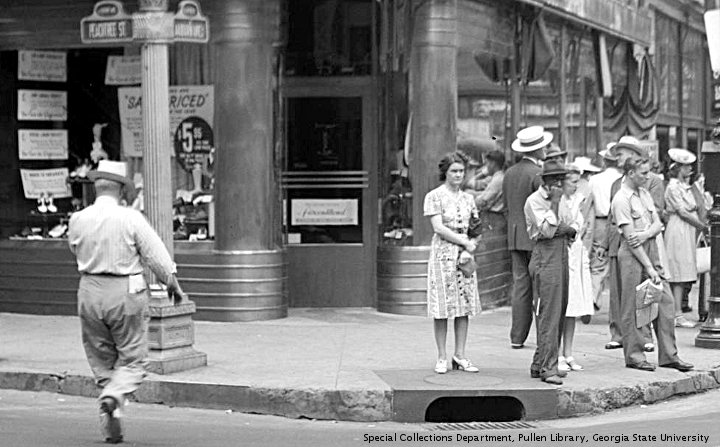
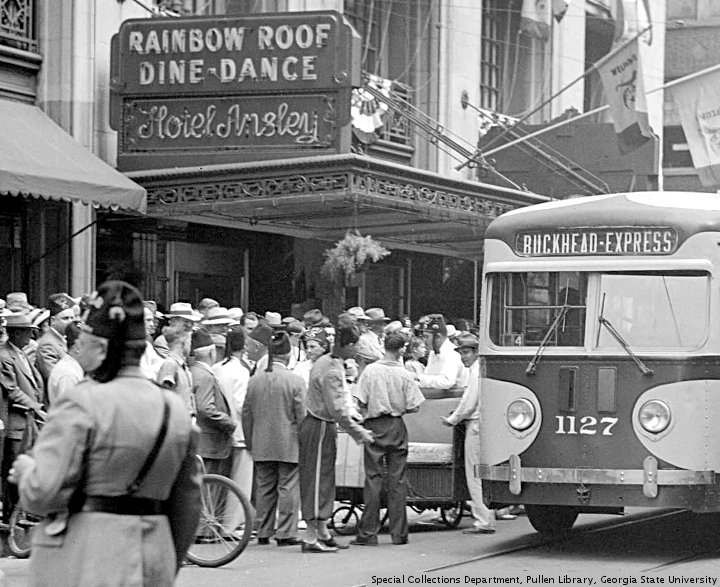
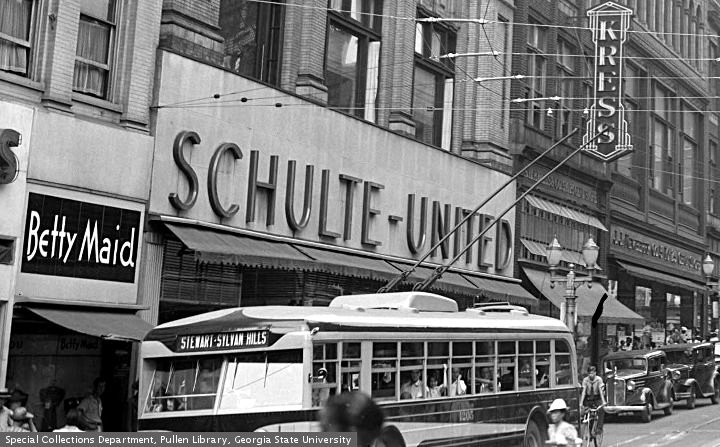
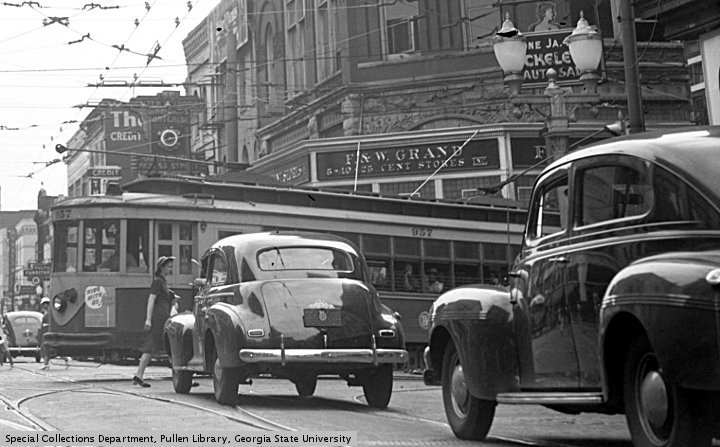
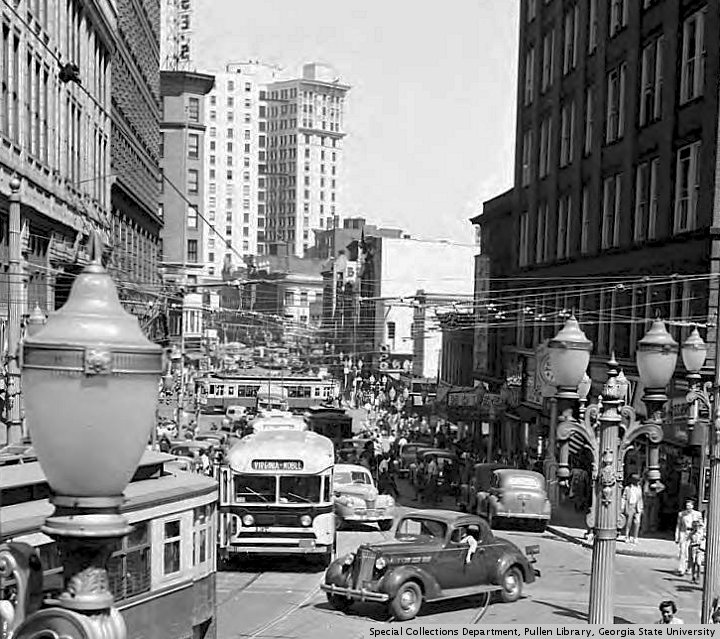
These four hundred and twenty hastily chosen words are a repost. Pictures are from “The Special Collections and Archives, Georgia State University Library”. This was downtown Atlanta in 1941.



The B-52s




There used to be a chinese restaurant, on the Atlanta Highway, called Hunan House. One night, a few people shared a flaming volcano, and formed a band. The b52s played their first show at a valentines day party in 1977. They were named for a bouffant hairstyle.
The b52’s were Ricky Wilson, his sister Cindy, Kate Pierson, Fred Schneider III, and Keith Strickland. The Wilsons and Mr. Strickland were from Athens. Miss Pierson and Mr. Schneider were from New Jersey. Planet Claire was the ancestral home.
Fred had lived in Atlanta before he moved to Athens. He stayed in an apartment on Monroe Drive, across from S&M clutch and brake company. PG knew some of his neighbors, and once rested his feet on a rug, formerly owned by Fred Schneider.
Somebody had connections, and The b52’s were playing shows in New York before long. They released a 45 on db records, “Rock Lobster” and “52 girls”. The first of the girls mentioned…there are only 23 named…is Effie. There was a famous whorehouse in Athens named Effies.
One night, they played a show at the Big Dipper, on Ponce de Leon Avenue. The Big Dipper was a former Maryland Fried Chicken, and is now something else. After the show, either Kate or Cindy was in the parking lot, talking to a local character named Beulah. As was his way, Beulah was talking about Mick Jagger this, Mick Jagger that. Finally, Kate had enough. “Fuck Mick Jagger. One day Mick Jagger will come see me, me, me.”
The b52’s were a fun band. Ricky had an unusual style on guitar, and Kate played a farfisa organ. The girls always wore big hair wigs. Fred was somewhere up front singing.
On Labor Day, 1978, PG saw the b52’s in Piedmont Park. There was a third girl that day, Wendy, who wore an inflatable beach float, and danced. The only songs PG is sure they did were “Downtown” and “Rock Lobster”. A few months later, PG saw the b52’s at the Agora ballroom. The Brains opened.
Sometime in late 1979, the eponymous first album came out. It became a hit, with dance clubs all over playing “Planet Claire”, “Dance this mess around”, and “6060-842”. In the summer of 1980, PG talked with a former Athenian in a hostel in Cannon Beach, Oregon. He mentioned that Cindy was the only heterosexual in the band.
The years went by, and more albums were released. On October 12, 1985, Ricky Wilson died of AIDS. He is buried in Oconee Hill Cemetery, behind Sanford Stadium in Athens. He sold bus tickets at the Greyhound station in downtown Athens before he hit the bigtime.
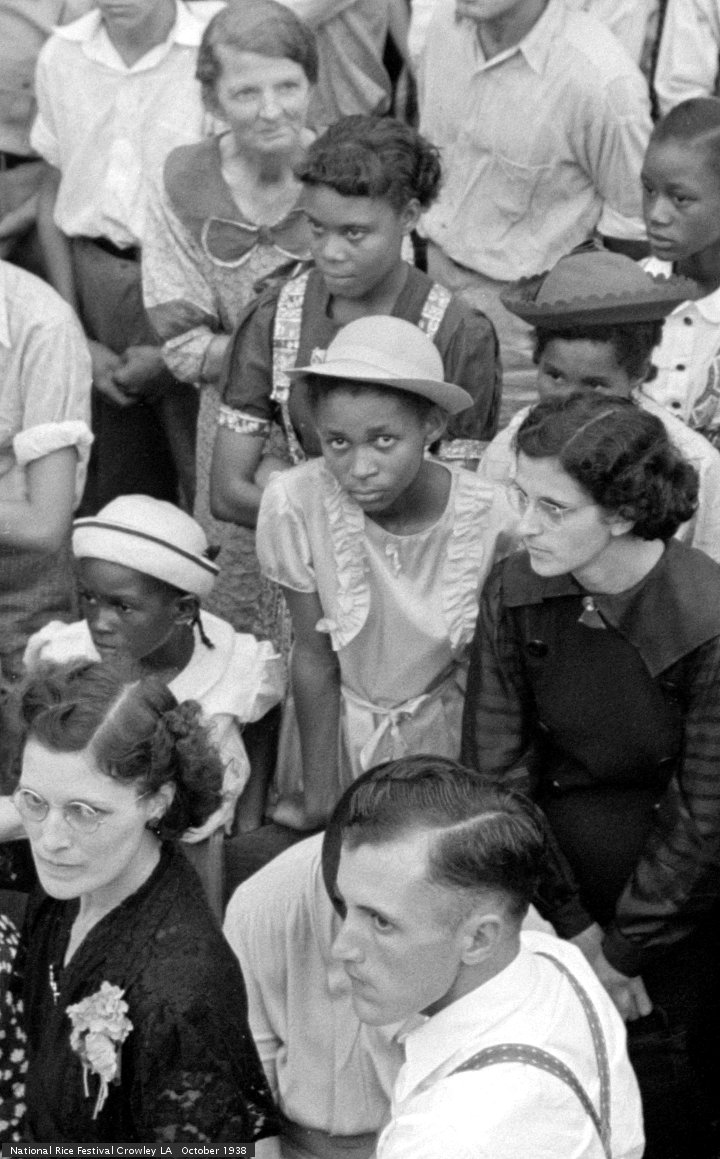
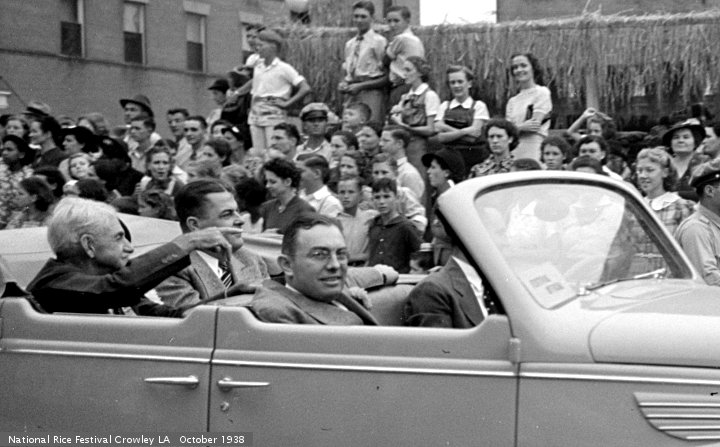
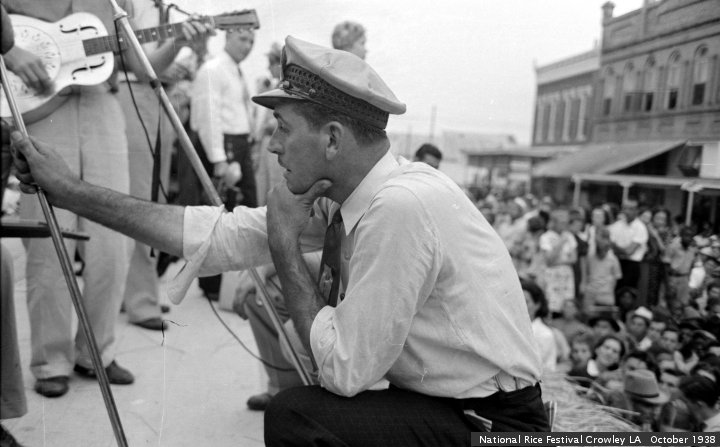
The band continues to this day. At some point, “Love Shack” was released, and became a hit. It is probably the best known b52’s song today. This is a repost. Pictures are from The Library of Congress.




 Chamblee54
2 comments