Tourette’s At Baftas



The display of a link on this page does not indicate approval of content.
BBC sorry for airing racial slur shouted by guest with Tourette’s at Baftas
Former David Pakman producer reveals that he, Brian Tyler Cohen, and Meidastouch …
Team USA’s gold medal MAGA celebration was everything NHL has been trying to avoid
Turn Off This Parasite on Every Phone! Developers Don’t Want You to Know This
How often should I restart my phone? I know it should be at least once a week, but …
Delete this HIDDEN FOLDER To Free UP a Lot of PHONE MEMORY
Did Dems set up ‘Trump Dump Detector’ ahead of Trump’s State of the Union address?
What Does Tucker Carlson Want From the Jews? A haunting glimpse into …
He Wrote Icon’s Biggest Hit…How She REPAID him Was REVOLTING!
Colorado River rift abides States’ stalemate persists as Lake Powell races toward …
The Massive Questions Surrounding A Major American Air War Against Iran
The Doom and Glory of Knowing Who You Are: James Baldwin on the Empathic …
Dave Smith & Joe Rogan And Douglas Murray Full Interview
‘Bigger ramifications than Venezuela’: Markets brace for impact after U.S. strikes Iran
What are “Nihilistic Violent Extremists”? Meet the new internal enemy
“Epstein LIES!” CIA John Kiriakou ERUPTS on Satanic Elite, Mossad & Most …
10 ’60s “Flop” Songs That Shockingly Became Worldwide Hits
Sewage Problems and Sailors Who Want Out: Aircraft Carrier USS Gerald R. Ford Is …
White House officials believe ‘the politics are a lot better’ if Israel strikes Iran first
Viral satellite imagery of U.S. military assets around Iran NOT taken by Chinese satellites
Timing of US-Israel attack on Iran bears symbolic meaning in Judaism as Netanyahu …
mizarvision · iran · fetlife · varsity · one star
murray · gr ford · windows 11 · divineisll · divineisll
divineisll · china · leb’s · leb’s · pickrick project
Leb’s · baldwin · one star restaurants · faeries of palestine · mystical messenger
rumi · smith hughes · kink machine · bryan tyler cohen · only thing worse
@nihilist_arbys Just as the eternal ribbon of cows trudge ever forward even as they watch their brothers and sisters slaughtered just before them only to bleed out and sluice through the industrial machines .so do weI. we must and thus we live. Only to die. Alone. Please continue to eat arbys … @belize042 If the cows ever saw curly fries they’d know the sacrifice was worthwhile. · Nice to meet you Luther, how is your search going and what are you looking for? · you talk like a bot · and you understood a robot talks? lmao · then you are one also · · There are rumors that the plumbing problems on the USS Gerald Ford are no accident. I googled “sailors aboard the USS Gerald Ford have sabotaged the plumbing”. I found this: “A 2020 Government Accountability Office report pointed out that the sewage pipes woven throughout the ship were too narrow to properly serve the flushes of the 4,000-plus crew members onboard. To unclog the toilets, the Navy has been forced to spend $400,000 per flush of a unique acidic chemical designed to flush out and unburden the strained pipes.” · A company dedicated to achieving geographic business intelligence analysis through artificial intelligence technology, building a God perspective that no one can reject. · @Protestia Pastor Scott Thomas accidentally sends as wooden dowel/ skewer through his hand for a sermon illustration, writing: “Cindy and I spoke on “Building A Marriage” and used a wedding cake for our illustration. To close the teaching, we stressed that if we build our marriages outside of God’s order… the whole cake (marriage) crashed! · All went well… until I slammed the cake upside down and SURPRISINGLY DISCOVERED that the cake company had implanted a dowel inside to hold the cake layers together. 😳 When I slammed the cake upside-down the dowel pierced through the bottom of the cake and traveled completely through my hand! When I looked down… the dowel was sticking 5 inches out the back of my hand! I immediately pulled the stick out of my hand and tried to wrap my head around what just happened! 🤢 Cindy immediately slid me a towel… I wrapped my hand, finished the message and prayed to close out the session in the next 5 minutes. 😬” (video in tweet) · This is your weekly reader for another cold monday. We still have not started a war with Iran, that I know of. We may look back at this time one day, and wonder why we didn’t appreciate how good life was right now. · Yet another hypocrisy hunt meme appeared on Facebook recently. This one involved uncredited content. Maybe people have the “right” to post this type of material, but we are not required to pay attention. · @RaniaKhalek I 💯 understand why the dominant argument in the U.S. against a war on Iran centers on how it could harm US assets, interests and whether goals are even achievable. But it’s still wild to me that the blatant criminality of a war and the damage it would do to the lives of 90 million Iranians, not to mention the 100s of millions across the region, does not register at all. That’s how dehumanized we are, the impact on our lives in this area of the world isn’t worthy of even a tiny consideration. This deep-seated genocidal barbarism across the U.S. ruling class political spectrum is terrifying when you consider its capacity for destruction. · Closed now · The title of today’s product is Diarization. This is the act of making a RT diary. Unfortunately, diarization sounds a lot like diarrhea. The spell check suggestions for Diarization: Notarization, Digitization, Deodorization, Polarization · In 2015, Craig Hicks killed three of his neighbors. Some say it was because they were Muslims. Others say they had a disagreement over a parking spot · This quote is from a profile in LIFE magazine, published May 24, 1963. “extensive profile of him by journalist Jane Howard, where under the dated title “Telling Talk from a Negro Writer” Baldwin’s timeless wisdom on life and art unfolds · you think your pain and your heartbreak are unprecedented in the history of the world, but then you read · On May 17, 1963, Baldwin appeared on the cover of TIME magazine as part of a major story titled “Nation: The Root of the Negro Problem,” whose lead sentence read: “At the root of the Negro problem is the necessity of the white man to find a way of living with the Negro in order to live with himself.” Although Baldwin’s civil rights advocacy was the focus, the piece shone a sidewise gleam on Baldwin the artist and raised the broader question of the writer’s role in society. The following week, the May 24 issue of LIFE magazine — which was owned by the same company — built on that cultural momentum with an extensive profile of him by journalist Jane Howard, where under the dated title “Telling Talk from a Negro Writer” Baldwin’s timeless wisdom on life and art unfolds. · One of the one-star restaurants reviewed in a recent video was the Landmark Diner on Luckie Street. This is the location of Leb’s Restaurant, the scene of a sit-in that turned violent in 1964 · Apparently, the KKK got their pointy hat outfit from “La Hermandad de los Negritos (English: The Brotherhood of the Blacks), a Catholic brotherhood. Founded in 1393 by Cardinal Gonzalo de Mena y Roelas to care for the Blacks of Seville, the Brotherhood has a remarkable story. They were wearing the pointed hood of their uniform before there was a United States of America · “But you still think, I gather, that the racist is necessary. Well he’s not necessary to me, so he must be necessary to you. So I give you your problem back. You’re the racist baby, it isn’t me.” · Did Andy Warhol say “In the future, everyone will be famous for fifteen minutes”? He probably did. However, there is no definitive source · In my lifetime, I have used zoom. It is always something that does not work. tonight, it was the earbud sound, which i use because it has a microphone. there is a series of options on the settings page, and you have to click options until you stumble onto the one that works, which is not guaranteed to work the next time · In my lifetime, i have woke up, looked at twitter, and seen that our idiot president has got us into a war that we will lose, at great cost, both in human life and the economy. my mental health has suffered since israel participated in the october 7 attack. this latest tragedy may well prove to be the worst one yet, with the straights of hormuz closed. I hope the next generation knows that our addiction to fossil fuels has come at a steep price, both in the damage to the enviornment and in the ownership of these resources going to regimes in west asia that are under attack , and fight back. Iran was taking control of their oil when the cia and the mi6 ousted their government and installed the shah, who was so hated that he was ousted by the shia revolution, which was not pleasing to the west, who has tried to destroy the islamic republic ever since. in my lifetime i have watched the arab oil embargo after the very convenient war of 1973, and of the newly empowered arab states telling us the shah of iran was going to be trouble … at least until he was ousted by the islamic republic · Pictures today are from The Library of Congress Jack Delano took the social media picture in March 1942. “Chicago, Illinois. Provident Hospital. Laboratory technician” ©Luther Mckinnon 2026 · selah

Operation Epstein Fury



On August 1, 1914, war was breaking out in Europe. The British foreign secretary said to a friend, “The lamps are going out all over Europe, we shall not see them lit again in our life-time”. That is what yesterday morning felt like, waking up to the news that the war had started.
It is an old truism that in war, the first casualty is the truth. Propaganda has long been a major player in the West Asian conflicts. X is full of thesis, antithesis, and synthesis. Below is a very small sample of the news and opinions available. It should be noted that these opinions belong to the tweeters. I am personally taking in as much as I can stand, and trying to make sense of it all.
@dccommonsense “In general the problem the U.S. has in its Middle Eastern interventions is always underestimating the complexity and powder keg-like conditions in these countries. Instead of empowering a side we favor we usually open up a Pandora’s Box of violent Murphy’s Law outcomes instead.” … Dan Carlin has been relatively quiet since October 7. The other prominent history podcaster, Darryl Cooper, has been outspoken about the various wars, and has caught hell for it.
@RaniaKhalek “Trump unleashed Hell. Bombs are falling on the entire Middle East. The Strait of Hormuz is almost closed. All sides are digging in. It’s all about who cries mercy first. The U.S. and Israel murdered the restrained Iranian leadership that was invested in endless negotiation. What comes next will probably understandably be more hawkish bc strategic patience doesn’t work. · Even before these decapitations they decided to go all out. This is for survival so escalation against a rogue empire is the only option. They’re even hitting Oman, the one gulf country to condemn the U.S.-Israel attack while playing a constructive and mediating role. · There’s no going back now, the strategy is to regionalize the conflict in hopes the GCC demands an end. It’s a huge gamble but the Iranians were cornered into it by the U.S. and Israel. And if this draws out global shipping and oil markets will be impacted. Meanwhile, Team Trump is dumb and insane. They don’t understand Iran, they suck at geopolitical maneuvering and think they can do regime change with overwhelming air power alone. · This was all unnecessary but here we are, tens of millions of people afraid and unable to leave their homes. The end game is unclear. There are no good options. This is what people warned about. More reckless idiocy from the nuclear armed pedophilic class in Washington.”
@_ZachFoster “”You do not need to close the strait. You just need to make it uninsurable.” This is called Iranian “economic statecraft,” as U.S. Secretary of state Scott Bessent would say.”
@DanMKervick I don’t think the absence of protest in the US is due to Americans being pacified. I suspect it’s actually because they have an increasingly accurate undertanding of the way the world works and know that protests have rarely proven to be an effective form of resistance. /1 The right to petition the government or demonstrate one’s opinion doesn’t mean much if the government doesn’t care what most people think. It’s just a way of expressing the desire for resistance without actually resisting. //2 @DrBrianReid Give Xanax credit too.
Armchair Warlord @ArmchairW Well. War with Iran it is. I had hoped it would not come to this juncture, but here we are. Some thoughts after the day’s fighting. · 1. As an initial matter, the Trump Administration’s actions here are aggression and perfidy. This attack on Iran was unprovoked and occurred during negotiations in which the Iranians were by all indications willing to make significant and lasting concessions to assuage American and Israeli concerns about the peaceful nature of their nuclear program. Soon enough we will regret setting this precedent. · 2. US and Israeli forces appear to have achieved tactical surprise by launching a limited decapitation strike first against senior figures in the Iranian regime. The measure of performance of the strike – did they hit what and whom they intended to hit – is currently the subject of… significant debate. The measure of effectiveness of the strike – did it dislocate the Iranian defensive response or cause panic and infighting in the regime – was negative. The Iranian military deliberately cleared what was at the time an airspace crowded with civilian traffic, brought air defenses online, and began launching retaliatory strikes about an hour later. · 2A. The Iranians only brought their air defenses online after their airspace was clear of civilian traffic, suggesting they felt confident in their ability to absorb a limited first strike and also indicating that they very much wanted to avoid repeating Ukraine International Airlines Flight 752 with wild defensive fire. · 3. Iran has thus far had some success penetrating US and Israeli missile defenses on the far side of the Middle East and considerable success smashing up US bases (and local critical infrastructure) in the Gulf and Iraq with their plentiful arsenal of short-range missiles and cruise drones. There’s nothing really new and game-changing here from the Twelve Day War, as I pointed out earlier. They have a lot of missiles and drones and seem more than happy to contest with us on throw-weight. · 4. As I pointed out earlier, the considerable standoff that US and Israeli aircraft are operating from has wrecked sortie generation. Coalition strikes on Iran throughout the day have been remarkably modest following the initial wave of attacks, likely due to a combination of delay from forced refueling, disruption to remote bases due to Iranian missile attacks, forced use of standoff weapons due to Iranian AD coverage, and Iranian AD attriting incoming salvos. Effects have not been particularly impressive either – I’ve seen a grand total of two strikes with noticeable secondaries. · 4A. As long as the Iranian IADS network remains intact enough to deter Coalition forces from flying “downtown” into Iranian airspace proper, there’s very hard limits on the amount of coercive power that can actually be applied to Iran. We only have so many standoff missiles and don’t have a Russo-Chinese missile printer to call upon. And I remind the reader that our bigger and stronger adversaries (Russia and China) are very invested in ensuring that IADS network remains intact so as to preserve their ally. · 5. There has been no noticeable regime fracture or civil insurrection in Iran. Everyone in the regime seems to have fallen in line immediately and all the demonstrations in Iran through the day have been pro-government. This is to be expected – the Iranians have not only rehearsed this, they’ve had multiple repetitions of executing it over the past year. · 6. Mossad’s attack network in Iran seems to be well and truly dismembered – as I suggested it had been earlier. There have been no reports of commando or insurgent activity in Iran over the course of the day. The Iranian internet is shut down at the moment and nobody seems to be posting online via Starlink. · 7. Oil shock is a real prospect here. The Strait of Hormuz is closed. The Bab al-Mandeb is likely going to be interdicted soon by the Houthis. Iran has already begun limited strikes on oil and gas infrastructure in the region. Air and missile campaigns are inherently indecisive, and Americans are not going to tolerate a weeks or monthslong campaign that spikes oil to $150+/barrel. · 8. Claims are floating around – out of Israel, of course – that this entire affair was a scheme cooked up by Trump and Netanyahu and that the negotiations were always a sham. I suspect that isn’t the case, and that Trump was herded into action by Netanyahu threatening to attack unilaterally after the US “coercive task force” was finally fully assembled in the Gulf. · So how does this end? Well, Trump has been quite explicit that he’s aiming for a short war (probably trying to beat the markets), so I wouldn’t be surprised if this is over relatively quickly. On whose terms… well, that’s another matter altogether.
Pictures today are from The Library of Congress. Jack Delano took the social media picture in October 1940. “The foremen and tractor operators of the Woodman Potato Company at lunch. Near Caribou, Maine” ©Luther Mckinnon 2026 · selah


Fifteen Minutes




This content was posted February 22, 2025. … Andy Warhol is quoted as saying that “in the future, everyone will be famous for fifteen minutes.” If a celebrity is getting tiresome, people will wonder when their fifteen minutes will be up. After hearing about fifteen minutes my entire life, I began to wonder if Drella really said that. If you can’t be cynical about Andy Warhol …
Wikipedia is a good place to start. “In the future, everyone will be world-famous for 15 minutes” … appeared in the program for a 1968 exhibition of his work at the Moderna Museet in Stockholm, Sweden. Photographer Nat Finkelstein claimed credit for the expression, stating that he was photographing Warhol in 1966 for a proposed book. A crowd gathered trying to get into the pictures and Warhol supposedly remarked that everyone wants to be famous, to which Finkelstein replied, “Yeah, for about fifteen minutes, Andy.” Nat Finkelstein was a sketchy character, in the Warhol tradition. His version is suspect. The Swedish museum part is real.
“Andy Warhol’s first European museum solo show took place at the Moderna Museet in Stockholm from February through March 1968. Pontus Hultén curated the exhibition together with Olle Granath. The exhibition came with a catalogue that was, like the show, named ‘Andy Warhol’. Kasper König, who worked for the Moderna Museet as an intern of sorts in New York, developed a basic concept for the book. … After Warhol had given his approval to this first proposal, König proceeded to create a dummy. … When König returned his dummy to the Factory, Warhol scrutinized it carefully but made only a small number of changes. Contrary to what Warhol wanted to be popular belief, those who produced input at the Factory were carefully monitored. … The final edits on the dummy were made in Stockholm by Olle Granath. He compiled a small selection of Warhol quotes and aphorisms from a stack of books and clippings collected by Hultén and placed them in the book as an introduction before the image sections.”
““Sometime in the autumn of 1967, Pontus Hultén called and asked me if I (Olle Granath) could help him and the Moderna Museet to organize an Andy Warhol exhibition that was due to open in February…. An important part of the exhibition was the production of a book. It was not supposed to be an analytical catalog of Warhol’s work, but a book that conveyed his aesthetics without heavy texts. … One day, Pontus brought me a box, almost the size of a Brillo box, and told me that it contained everything written by and about Andy Warhol (today the equivalent would probably be two truck loads). My job was to read it all and present a proposal for a manuscript with Swedish translations. After a couple of nights of reading and taking notes I delivered a script to Pontus and awaited his reaction with great anticipation. ‘Excellent,’ Pontus said when he called me, ‘but there is a quotation missing.’ ‘Which one?’ I said. ‘In the future, everyone will be world-famous for 15 minutes,’ Pontus replied. ‘If it is in the material I would have spotted it,’ I told him. The line went quiet for a moment, and then I heard Pontus say, ‘If he didn’t say it, he could very well have said it. Let’s put it in.’ So we did, and thus Warhol’s perhaps most famous quotation became a fact.”
“The exhibition in Stockholm attracted a relatively small number of visitors, due to the extremely cold winter, but also to the fact that leftist radicalization increasingly drove the Museets public to mistrust anything American or consumerist. There was no space yet for a more complex reading of Warhol’s relation to consumption. The book, however, became very popular: its enormous edition allowed it to be distributed in nightclubs and record stores, not only museums. A timeless update on the latest from New York, it first became a cult object, then a collectors item.”
Did Andy say that? Probably, but not definitely. Andy was shot by Valerie Jean Solanas on June 3, 1968, a few months after the show in Sweden. Andy survived, and had fifteen more minutes. Pictures today are from Pictures are from The Library of Congress. The 1927 pictures were taken at “California Beauty Week, Mark Hopkins Hotel, July 28 to Aug. 2, auspices of San Francisco Chronicle.”





James Baldwin And The Magic Word




This content was originally published September 10. 2013. … In the spring of 1963, KQED filmed a show, “Take this hammer, featuring James Arthur Baldwin. The snippet in the video seems to have been the last three minutes of the show. Here is a transcript. Mr. Baldwin discusses a six letter insult. The n-word is more about the speaker, than the spoken of. A 2010 blogger had this to say:
“I’ve often felt that people’s projections of me are oftentimes just that – their projections. However, Baldwin’s ending sums up a solution to this perfectly: “But you still think, I gather, that the n****r is necessary. Well he’s unnecessary to me – he must be necessary to you. Well, I’m going to give your problem back to you…you’re the n****r, baby…not me.”
It is now 2026. (All discussions of race must mention the year.) The TV show was sixty three years ago. A few things have changed. To many white people, overt expressions of racism are seen as bad manners. The n-word is taboo in polite company. The overall attitudes may not have changed, but most white people are careful how they say things.
Mr. Baldwin offered an insight into who the user of this nasty word was really talking about. Now, there is another six letter word being casually tossed about these days. It starts with R, where the other ends with R. What would happen if you took Mr. Baldwin’s talk, and substituted racist for the other six letter word? It is an interesting way to look at things. What follows is not a perfect fit, and may be offensive to some. A few times, it is very close to the truth.
“Who is the racist? Well I know this … and anybody who has tried to live knows this. What you say about somebody else, anybody else, reveals you. What I think of you as being is dictated by my own necessities, my own psychology, my own fears … and desires. I’m not describing you when I talk about you … I’m describing me.
Now, here in this country, we got somebody called a racist. It doesn’t in such terms, I beg you to remark, exist in any other country in the world. We have invented the racist. I didn’t invent him, white people invented him. I’ve always known, I had to know by the time I was seventeen years old, what you were describing was not me and what you were afraid of was not me. It had to be something else. You had invented it so it had to be something you were afraid of, and you invested me with it. … I have always known that I am not a racist … but if I am not the racist … and if it is true that your invention reveals you … then who is the racist?
I am not the victim here. I know one thing from another. I know that I was born, am gonna suffer and gonna die. And the only way that you can get through life is to know the worst things about it. I know that a person is more important than anything else. Anything else. I’ve learned this because I’ve had to learn it. But you still think, I gather, that the racist is necessary. Well he’s not necessary to me, so he must be necessary to you. So I give you your problem back. You’re the racist baby, it isn’t me.”
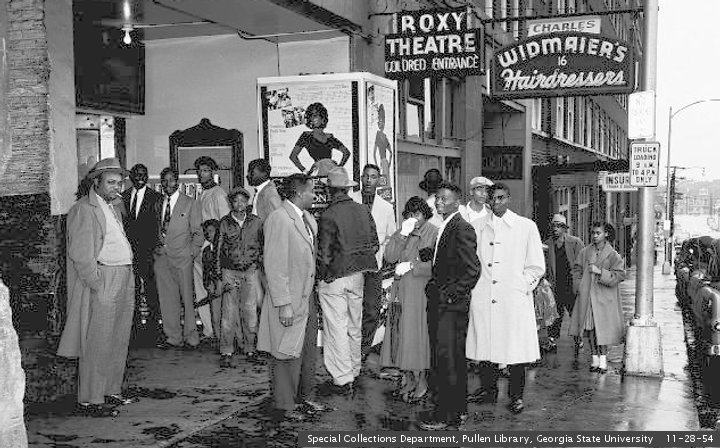
Chamblee54 has discussed Mr. Baldwin before. 071222 100722 032623 Pictures today are from Georgia State University Library. The social media picture was taken November 11, 1954. “Roxy Theatre, Atlanta, African American entrance ©Luther Mckinnon 2026 · selah



Tiny American Faith Groups




This content was published February 11, 2015. … As you may have heard, a man killed three of his neighbors in North Carolina. The victims were Muslim, and the alleged perp is white. Since America is now a nation of media critics, the way this incident is covered is getting as much chatter as anything else. The usual comments about lack of media coverage, and the different ways the race of the perp affects what the media calls the person, are being made.
Some stories report that a dispute over parking spots was behind the slayings. While this may seem trivial to some, parking disputes can be heated. Did the condo community have enough parking spaces? Is killing over a parking spot any sillier than killing because of differing opinions about God?
The Washington Post has a story about the killing, “Chapel Hill killings shine light on particular tensions between Islam and atheism”. “The alleged assassination by an outspoken North Carolina atheist of three of his Muslim neighbors is shining a light on particular, deep tensions between two tiny American faith groups: Muslims and atheists.”
Is that tiny America, tiny faith, or tiny groups? How can atheists be called a “faith group?” Maybe we should go back to saying religion, instead using faith as a semantic substitute. Or maybe, just maybe, we should quit labeling people based on their opinions about God. Is it really any of your business?
The WP story has a link to the facebook page of alleged killer Craig Stephen Hicks . There are numerous comments criticizing the Abrahamic religions. There is also a puzzle, a video about New Zealand, and a link to a story about what occupations the 50 states have. The Hicks page is not different from most facebook pages.
Perhaps the facebook page has a clue to the real motive for the killing. Mr. Hicks is a Pittsburgh Steeler fan. Mr. Hicks is married, and went to Disneyworld two months ago. Mr. Hicks is in two facebook groups: Atheism on Youtube, and LET’S REACH 1 MILLION PEOPLE CAMPAIGN…It’s a start! LGBT EQUALITY. Mr. Hicks likes the movie “12 Years a Slave.”
This incident is tough to wrap your head around. Mr. Hicks probably did not need to own a firearm. Since he is white, the media guide says he is a troubled individual, which does not seem to be in question. If he had been black or brown, Mr. Hicks would be labelled thug or terrorist. Those two labels also seem to fit, regardless of whether or not this was a hate crime.
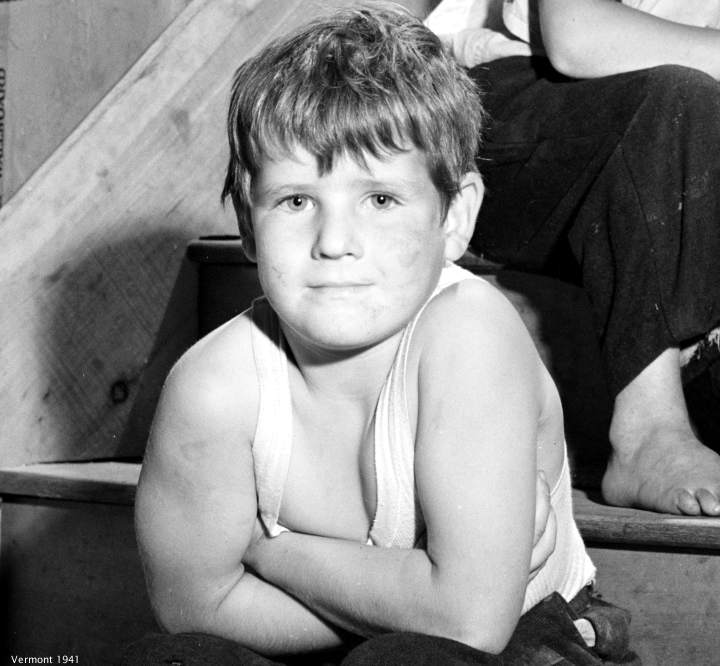
On June 12, 2019, Craig Stephen Hicks was convicted of first degree murder, and sentenced to life in prison. 1456389 is currently held at Central Prison, Raliegh NC. … Pictures today are from The Library of Congress. Jack Delano took the social media pictures in August 1941. “Children of Albert Lynch, FSA client of Dummerston, Vermont” ©Luther Mckinnon 2026 · selah




Whose Christianity?



“If our Christianity causes kids to go hungry, the sick to go without healthcare, the stranger to be unwelcome, and the needy to be treated as “parasites,” all while billionaires get richer, we’ve ignored the most basic elements of Jesus’ teachings.” A meme based on this quote appeared on my facebook feed. Strange things to turn up when you take a closer look. God/Satan is in the details.
Where the original says “our Christianity”, the facebook version says “your”. The original says “we’ve”, while facebook says “you have”. “The needy” becomes “the elderly on social security”. The original is on the instagram of Benjamin R. Cremer. BRC “is a Wesleyan pastor, theologian, and writer based in Idaho. He currently serves as the Amity campus pastor at the Cathedral of the Rockies.”
The meme has the logo of Brian Tyler Cohen, and is on his facebook page. Rev. Cremer is not mentioned. As you might surmise, BTC is Jewish. Some would question the propriety of a Jew lecturing people on how to be Christian. Maybe that is why BTC changed “our” to “your”.
BTC is a curious character. He is the co-founder of Chorus Creator Incubator Program, a “dark money” effort to promote progressive influencers. “(Stuart) Perelmuter cofounded Chorus with Democratic influencer Brian Tyler Cohen, who has over 4.6 million subscribers on YouTube and leads messaging check-ins for the creator cohort on “rapid response days.”
There is also this: “Former David Pakman producer reveals that he, Brian Tyler Cohen, and Meidastouch decided to suppress coverage of Gaza because it was “too divisive” at White House meeting with Kamala Harris … I actually have an email from him after he visited the White House last year on the day of Joe Biden’s State of the Union address. … And he told me in an email that they talked amongst themselves and came to the conclusion that the topic is too divisive, it might drag down their channels, that it’s a poison pill, and that it’s better if they just don’t talk about it at all.” The colossal tragedy of Israel’s war of annihilation in Gaza was too divisive for Democrats to talk about. (FWIW, David Pakman is a Chorus content creator.)
BTC may have the “right” to tell us how to be good Christians. A better question might be why we should care. All we know about the “teachings of Jesus” is what the Bible says. Not that this matters to “some” Christians. The church mostly talks about “Salvation,” not what Jesus said when he was alive. Logical consistency doesn’t matter when you are trashing MAGA.
Pointing out examples of hypocrisy is very boring. Pictures today are from The Library of Congress. Jack Delano took the social media picture in August 1941. “Having dinner at the home of Ray Lyman, FSA client near Castleton, Vermont” ©Luther Mckinnon 2026 · selah



Debugging BAD Arguments


The display of a link on this page does not indicate approval of content..
Caravaggio: Murderous Artist Who Died In Mystery (Waldemar Januszczak Documentary)
A Lecture on Logical Fallacies: Debugging BAD Arguments | Atheist Debates
Violent and non-violent death tolls for the Gaza conflict: new primary evidence from …
Maybe It’s Bad That Recent Progressive Ideas On Race Are So Compatible With White …
Ram Dass leads a 28-minute Vipassana meditation on bringing our mind to …
The Book Jackets Were Ready. Then Charlie Kirk Was Shot.
Shell-shocked, haunted photo of Andrew will be part of how arrest is remembered
‘Wired’ cover on tech’s ‘gay mafia’ ignites controversy Hilarious or homophobic?
Inside the Gay Tech Mafia Gay men have long been rumored to run Silicon Valley. …
Tucker Carlson Debate Mike Huckabee | HasanAbi Reacts to Tucker Carlson
This Sixties Musician Died Mysteriously. Was He the Victim of a Serial Killer?
queer bars · cumtown · the pew pew jew · frannie · rubens
iran · fuentes · ramadan · liberace · bookmarks
oscar · nixon grand jury · caravaggio · caravaggio · solange
gay tech mafia · listen to your skin · times v sullivan · chatham house · eric dane
nixon grand jury · jesus is my friend · toasters n’ moose · only thing worse · rubens prado
shut up · sophia script · priv 10 · privatzilla · spy blocker
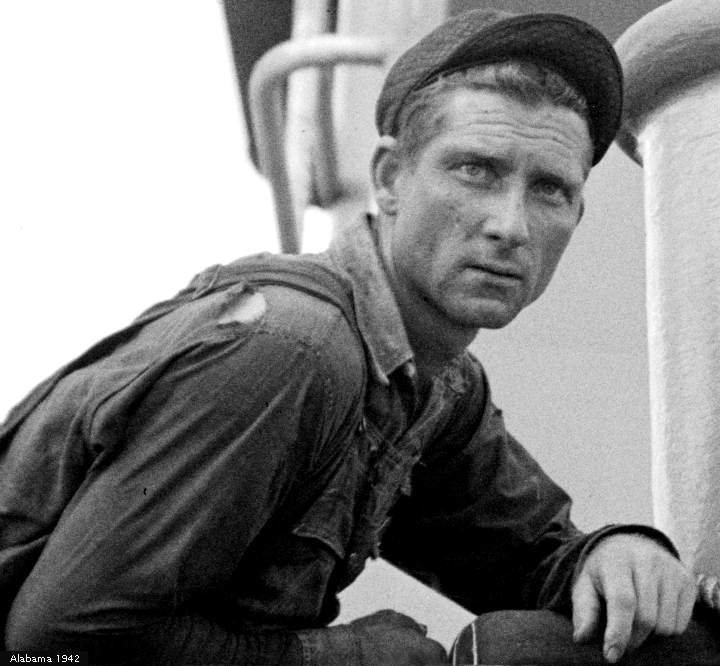
“For too long, historians have accepted the claim that the conversion of the Emperor Constantine caused the triumph of Christianity. To the contrary, he destroyed its most attractive and dynamic aspects, turning a high-intensity, grassroots movement into an arrogant institution controlled by an elite who often managed to be both brutal and lax.” – Rodney Stark in “For the Glory of God.” · 1 – I think I have not been drinking enough water. While this is good for sodium, I suspect that this is one reason why my blood pressure has been elevated. I have gone back to drinking more water. 2 – The eye procedure was postponed because of the ice storm, and finally performed February 11. I have been holding off on taking bp readings, because of that stress. 3 – The arm based blood pressure monitor I got did not work. For the time being, I am using the wrist device. 4 – My reading a few minutes ago was 137 – 082 · Chamblee54 posted part two of this series yesterday. Once you read part one, posted today, you probably will not understand why. When you are talking about seventies California, you are not supposed to understand · @Codi_Vore Okay ready for the ACTUAL 5 biggest lies of porn? Here’s how it works, tricks and all 🧵⬇️ · There was a popular video created in 2013. It shows an Iowa minister delivering a hip hop message about Jesus. It includes the line “Jesus Christ is my N****” The entertainment has 97m views · @grok This is a screenshot from a recent debate between streamer Hasan Piker (HasanAbi) and political commentator Adam Mockler, discussing the future of the Democratic Party and figures like Gavin Newsom. It’s frustrating for some viewers due to the back-and-forth. Watch it on YouTube or search “Hasan Debates Adam Mockler” for clips. · PSA: ShutUp10++ lets you control every single setting where Windows 10 + 11 can accesss and share your private data, easy for free and without any installation. · It’s very nice to meet you. I’m 20 years old now, I live with my grandmother, I work as a welder, and I’m not from your country. I live in Rivne, Ukraine. I don’t know how you’ll feel about this, but I’d really like to continue our conversation. Please let me know if you’d be willing to get to know me better. Can we continue this conversation? Do you mind, Luther? · have a nice day go kill some russians · Haha, that’s a funny joke. You didn’t tell me if you wanted to talk to me? · Pictures today are from The Library of Congress Jack Delano took the social media picture in July 1942. “Ingalls Shipbuilding Company, Decatur, Alabama. Workmen at the launching of an Army barge” ©Luther Mckinnon 2026 · selah




Jesus Gets A New Nickname



This content was originally published February 13, 2013 … There is a video making the rounds now. The title involves Jesus, and a certain racial slur. When you go to many links, you get this message. “Jesus is my N…” This video is no longer available due to a copyright claim by Brian Spinney, LLC.” You should not worry about missing out. Just go to youtube, and search for the phrase that pays. Someone else will have posted the video, and you can feel the magic for yourself.
Here is a story about the song, with the edgy language bleeped. “One pastor is trying to spread the word of God with an edgy rap song. The rapping pastor and his wife claim they have “Christian swag” while tossing around the n-word. “Jesus is my ni**a!” Proclaims the pastor in one verse. The video of the rapping pastor was recently uploaded to YouTube but it’s not clear when it was filmed. It was taken at a church in Iowa which closed in 2004.” Another helpful interneter has the lyrics.
In case you didn’t know, Pastor Jim Colerick, and Mrs Mary-Sue Colerick, are melanin deficient. They are, as Bette Midler once said about Karen Carpenter, so white they are invisible. It is not considered good manners for Caucasians to use this word, with or without salvation.
There is another angle to this equation. Many Jesus worshipers see not using cusswords as a sign of righteousness. As a result, many Jesus worshipers use the words God, and Jesus Christ, as tools of their anger. This violates the third commandment. Now, this use of a sacred name, as profanity, is being extended to using a sacred name as a racial slur.
When you call a book “the word of God”, you give certain words too much power. When you decide that the lazy way of saying black is a super duper naughty word, you give those five/six letters way too much power. Now, we see the convergence of these two taboos. Let the party begin.
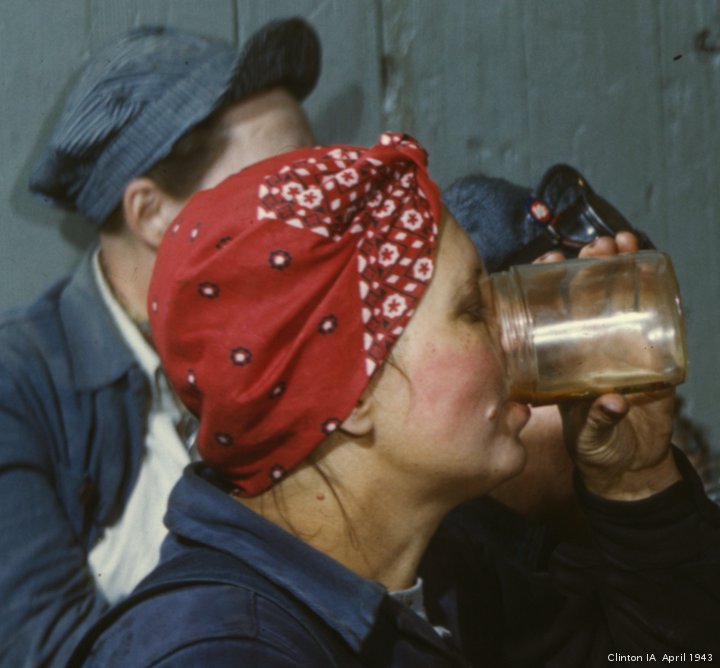
AI update: Gain of Fauci recently tweeted this golden oldie. @DschlopesIsBack Easily one of the best videos in the history of the internet 😂 · There was a reply: @grok is this real? · @grok The video appears to be an edited compilation of old televangelist footage (likely from Jim Bakker’s shows in the 1980s), with added cartoon effects, speech bubbles, and humorous animations for comedic effect. The base clips are real, but the final product is satirical, not unedited reality. … Pictures today are from The Library of Congress. Jack Delano took the social media picture in April 1943. “Women workers employed as wipers in the roundhouse having lunch in their rest room, C. & N.W. R.R., Clinton, Iowa ©Luther Mckinnon 2026 · selah
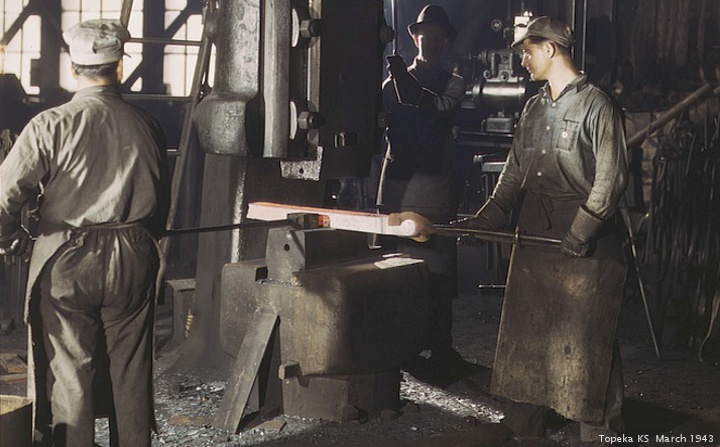
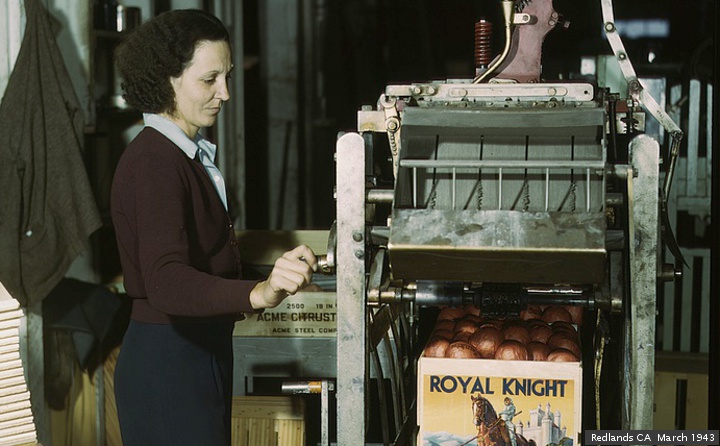


Didion & Babitz Part One



This content was published February 12, 2025. … Didion & Babitz has hit the streets, as anyone who reads instagram knows. Lilianne O’Lick knows how to sell the soap, as well as a dirty story that leaves many readers wanting a bath. This is not my first time with either Eve Babitz or LOL. D&B is the story of Eve Babitz and Joan Didion. … Neither lady had a middle name. Chamblee 54 has written about EB on several occasions. 123021 032622 010523 This is not the case with JD. I once had a paperback copy of The White Album … I never got past the abandoned gas station being the authentic west.
“Finishing Didion and Babitz has become a Herculean effort on my part. Lili Anolik clearly hates Joan Didion and continually criticizes and condemns her. This book should be called Loving Eve Babitz, Wench, Whore and Failed “Artist”. Anolik seems to fashion herself as a therapist, making some drastic, others ridiculous, excuses for Babit’s tawdry behavior. … This seemed to be an exercise in “look at my big word vocabulary. I’m going to repeat what I just said using big words that no one ever uses just to impress you. “ From an Amazon one-star review, “Loving Eve Loathing Joan,” by NFox.
(“The seventies in LA weren’t a decade under themselves but an extension of the previous decade: the Sixties the flower child, the seventies the juvenile delinquent that the flower child—a Bad Seed all along—grew into.” p. 124) The sixties were special, too beautiful to live, too profitable to die. Being a kid in Georgia was just one way to see it all. I had little notion of what was going on then in California, and by the time I started to get hip, California had Mansoned its way into a permanent Altamont. EB was playing the game, and the players.
Carrie White was a celebrity hairburner, who wrote a book Upper Cut: Highlights of My Hollywood Life. She is probably not the same Carrie White as the telekinetic teenager at the center of “Carrie” but one cannot be too certain. The CW in D&B went to Hollywood High with EB, and was in the glamour sorority that EB missed out on. CW remained close to Rosalind Frank, who was the fairest of them all in High School. Alas, life after graduation did not work out, and Miss Frank died an early, drug related death. This untimely demise got EB busy writing.
Page 168 sees the first appearance of Bret Easton Ellis, who simply had to be in this book. The first time I heard of EB was on the BEE podcast, which later had an appearance by LOL promoting her first book about EB. BEE idolized JD, and was a close friend of JD’s daughter Quintana Roo Dunne. It is rather poignant that BEE enters this narrative as part of a discussion about JG Dunn’s apparent taste for male company. John Gregory Dunne is the husband of JD, and the younger brother of Dominick John Dunne, … another bicoastal fudge packer.
I was trolling google, looking for dirt on JD … there is a small mountain of dirt on EB … and I stumbled onto a bit of clickbait, “It’s Time To Retire Joan Didion’s Most Famous Line.” The line is “We tell ourselves stories in order to live.” I had probably heard it before. I process a lot of commodity wisdom these days. It goes in one eye and out the other … assuming that useless knowledge leaves the head the same way it gets in. Which brings us to page 211, where LOL ends a chapter with JDMFL.
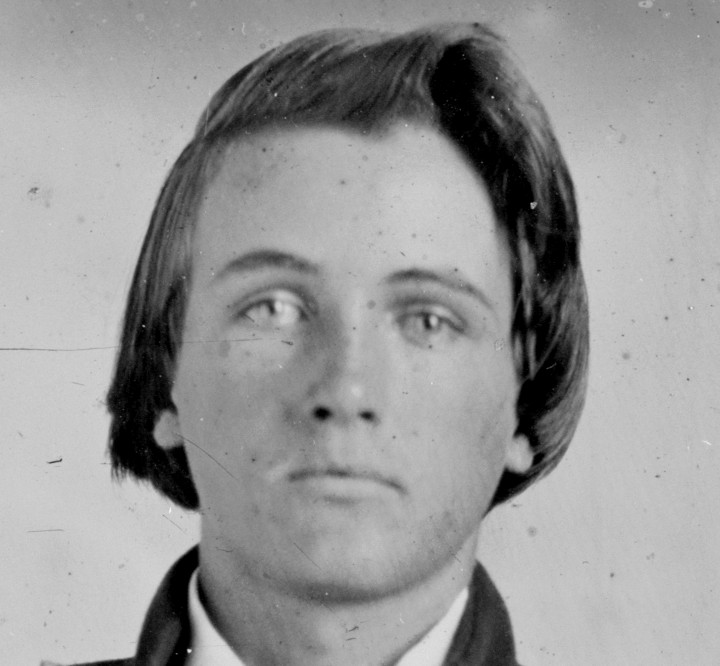
There is a line about EB, whose inclusion in this feature is required by law: “In every young man’s life there is an Eve Babitz. It’s usually Eve Babitz.” Credit/blame for this tidbit is usually given to Earl McGrath. When “Eve’s Hollywood” came out, the line was on the blurb page, written by “anonymous.” EH “came out” in March 1974, with a glamor girl cover photo by Eve’s number one lady lover, Annie Leibovitz. D&B does not have any hint that EB and JD were cleaning carpets together. … Part two of D&B is available. Pictures today are from The Library of Congress. “The social media picture: Unidentified soldier in Company H, Vermont uniform” ©Luther Mckinnon 2026 · selah



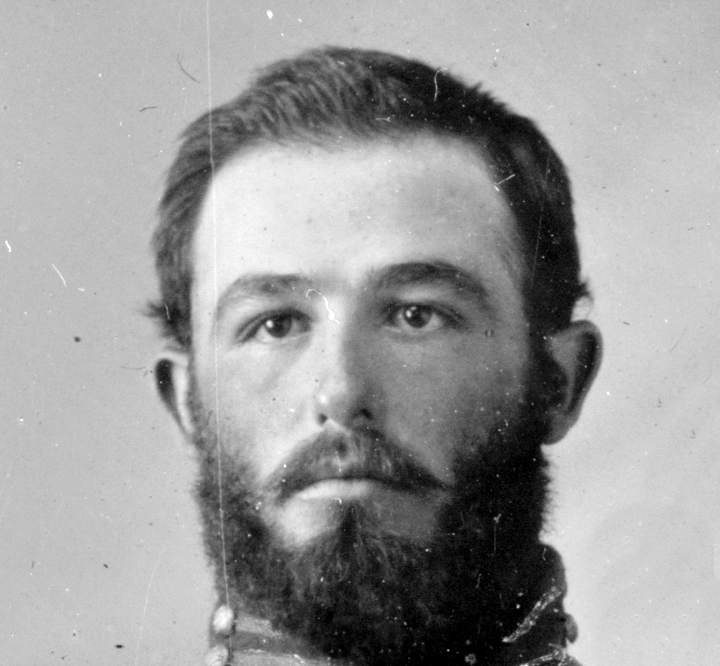
Didion & Babitz Part Two



This content was published February 21, 2025. … At 1838, February 19th 2025, I shut the cover on Didion & Babitz. Say what you will about author Lilliane O’Lick, she is one helluva storyteller. D&B was easy and fun to read. The book ends with a description of Joan Didion’s memorial, a star-studded celebrity event. Page 339 had one final bit of tackiness: “On the day Joan’s obituary appeared in the New York Times, journalist and podcaster Maris Kreizman took to Twitter. “I want to believe that Joan Didion lived an extra week out of spite so that she could officially outlive Eve Babitz.” p.339
The dedication page to Eve’s Hollywood mentions Steve Martin (the car.) The car is a 1965 VW, which Mr. Martin gave to EB. She later said “Linda Ronstadt was his girlfriend and I was his girlfriend and we were both doing him wrong.” EH was released in March 1974, about the same time I saw Mr. Martin open for Nitty Gritty Dirt Band at the Great Southeast Music Hall. Nobody in the Nitty Gritty crowd had any clue who this white suit wearing banjo player was. John McEuen kept stumbling into the microphone, saying “this guy cracks me up.” p. 215
”Huntington’s disease (HD) is named after George Huntington, who described it among residents of East Hampton, Long Island in 1872. It is a hereditary neurodegenerative disease.” HD claimed both EB, and her father, Sol Babitz. EB was aware of her fate for many years. The most famous victim of HD was Woody Guthrie. Many speculated that son Arlo would get HD, but he never did. “Woody’s most productive time artistically was in the 5 years immediately preceding the onset of overt symptoms of HD. I hypothesize that subclinical HD may have been an important driving force behind Woody Guthrie’s creativity.” p. 244
We know little about LOL. She was 32 in 2010, and went to Princeton, after doing high school somewhere else. LOL has the same last name as her Manhattan Doctor husband, but leaves no clues about her maiden name. We do have “A note my older boy, Ike, left on my pillow Valentine’s Day 2020” “DEAR MOM YOU AR WORM AND COTULY AND YOU HAD SEX WITH BREAT ESTIN ELIS BUT DONT TRY TO HIDE IT FROM ME NAW LETS GET DOWN TO BUSINESS I WANT TO GO TO THE NATURAL HISTORY MUSEUM THIS WEEKEND AND I WANT NO ARGUING ABOUT IT”
Page 290 marks the return of Bret Easton Ellis. EB tuned in to “Less Than Zero,” which made BEE a star before he was old enough to (legally) drink. EB compared BEE to Jim Morrison, … another way that People Are Strange. BEE met EB for dinner about this time. There is no word on whether BEE was EB’s dessert. This was about the time AIDS was becoming obnoxious, and EB decided to tone down the whore-of-babylon act. The bi-leaning-gay Paul Ruscha had been a long playing EB boyfriend, which probably has nothing to do with any of this.
On May 7, 2000, JD appeared on In Depth, a PBS talk show. After a polite discussion, and a chance to promote here most recent book, the show was opened up to callers. One of the callers was EB, who introduced herself as “a friend of Joan’s from Hollywood.” JD dropped her stone face once, when EB said that JD’s house “was the first time I ever saw Spode china.” JD did not show much pizazz in that brief clip. I don’t know about the rest of the show, because I am not bored enough to watch it. JD was never known as a vibrant personality. p.306
There may be one defining difference between author and subject. EB wrote a piece about her near-fatal fire titled “I used to be charming.” Recently, LOL did an interview promoting D&B. “I always think of the last line of a Salinger short story, “Uncle Wiggily in Connecticut.” … “I was a nice girl once, wasn’t I? Wasn’t I?” I think about that all the time, because I used to be so polite. And now I’m just used to getting yelled at and told I’m a jerk or to go away. I just don’t mind at this point.”
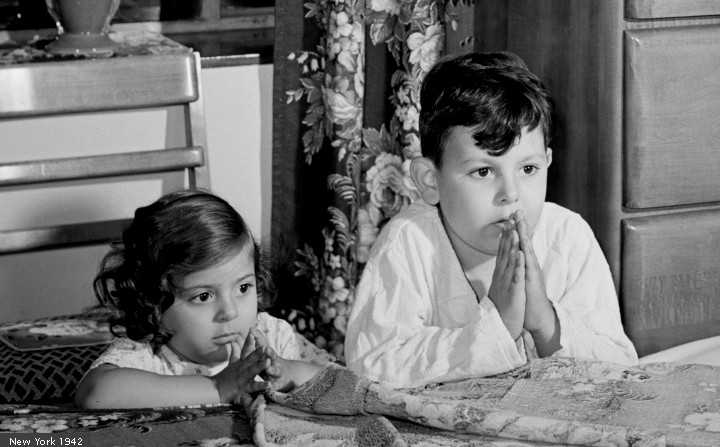
Page 332 has EB in her final years. In 1997 EB was badly burned, and never fully recovered. That story is available elsewhere. By the time Donald J. Trump was President, EB had become a talk radio consuming conservative, to go with HD. LOL went to California frequently to have lunch with EB, and talked to her on the phone. In one of these conversations, EB asked “Where can I find a blouse the same shade of blue as Melania Trump’s eyes?” When I asked AI that. I found a description of the Ralph Lauren dress FLOTUS wore to her first inauguration. ““She looked simply flawless.” … This is the final installment of D&B. Part one is available. Pictures are from The Library of Congress. Arthur Rothstein took the featured photograph in June 1940. “Brooklyn NY. Red Hook housing development. Jimmy Caputo, seven years old, and Annette, three years old, at their nightly prayers.”
©Luther Mckinnon 2025 · selah



Such A Society


This content was published February 24, 2022. … The writing workshop announcement appeared before the event. I went to the signup, and was checked in at 7:27. Tonight’s prompt is to write a “golden shovel.” The gs poem is going to be 25 lines long. Every word in the original piece will appear at the end of a line. The seminal poem is by Dr. Doris Derby. … Pale green husks, Of corn grow, Tall and proud, As the young kernels, Of each one, Emerge from darkness, With bright faces, Bathed in Sunlight. … I finish the first draft at 7:55. I will now edit, until the workshop says to stop.
Seeking the beauty beyond the Pale, blue shimmering waves of green, another shucker looking for husks, recovering from the harvest Of, telepathic aromatic corn, after the earth is done with grow, yesterday’s yellow Tall, and wide and fragrant and, retro rainbow standing proud, wearing polyester of the nines As, whimsical overtures of the, quasi legal sticky ripe young, wallowing in the southern kernels, escaping from the yankee sludge Of, teach one reach one each, five four three two one, fighting and kicking to Emerge, out of the twilight from, the placebo darkness, driving out the donald With, fibonaccian synchronistic bright, well scrubbed faces, dark golden moonlight Bathed, over toes and behind ears in, radiant convulsive Sunlight, just, a suggestion she tells me now.
The day started with breakfast, and medications. I looked on Twitter and I saw this: @robstiles1 “All tyrannies rule through fraud and force. Once the fraud is exposed they must then rely solely on force.” – George Orwell” There are a lot of flaky Orwell quotes. The Orwell wikiquote does have a similar quote, and a source. I did a search of the TLDR document, and found the quote that uses “fraud.”
“Totalitarianism, however, does not so much promise an age of faith as an age of schizophrenia. A society becomes totalitarian when its structure becomes flagrantly artificial: that is, when its ruling class has lost its function but succeeds in clinging to power by force or fraud. Such a society, no matter how long it persists, can never afford to become either tolerant or intellectually stable. … The mere prevalence of certain ideas can spread a kind of poison that makes one subject after another impossible for literary purposes. Wherever there is an enforced orthodoxy … good writing stops. …”
The second quotable is more relevant today. “The mere prevalence of certain ideas can spread a kind of poison that makes one subject after another impossible for literary purposes. Wherever there is an enforced orthodoxy … good writing stops.” The free flow of information, and entertainment, is currently under fire from many sources. The government, working in tandem with big data, has one agenda. Social Justice Jihad has a powerful ideology, upon which one trespasses at one’s own peril. With all these regulators of information, it is a miracle we hear anything other than football scores.
A poem was well on its way to completion. The soundtrack was a new episode of the Bret Easton Ellis podcast. The poem is a series of nine images, with text added at the bottom. When you finish a picture, the first reaction is to go look at facebook and twitter.
Grab the book nearest to you, turn to page 18, and find line 4. The book is the Holy Bible, with Jean D. Mckinnon in gold letters. Page 18/line 4: Genesis 18:15 “Then Sarah denied, saying, I laughed not; for she was afraid. And he said, Nay; but thou didst laugh.” Line 4 is underlined.
18:15 is just another verse from Genesis, and did not do much for me. What made me cry was the presentation page. “Presented to Jean, by Luke, 7-23-56” This was in my father’s challenging handwriting, on my mother’s birthday. 7-23-56 was a few weeks after my brother was born.
The guest on the BEE podcast was another writer, Jarett Kobek. The desperate state of modern publishing was lamented. The chat picked up when Mr. Kobek asked BEE if he heard about the amateur American Psycho porn. The video features two women having fun, while reading, out loud, a murder scene from American Psycho. It is moments like this, when you want to see the BEE reaction, that podcasting shows a weakness. Bret recovered fast enough, and said “I hope they were hot.” Soon another image was finished, and it was back to twitter. … 2026 update: The show is currently behind the impenetrable BEE paywall.
Kyle Rittenhouse Reveals He Intends On Suing LeBron James. Announcing intention to sue online might not be a good legal strategy. Of course, we are talking deep pockets, and a deep throat. After the televised testimony of Mr. Rittenhouse, this tweet appeared: @KingJames What tears????? I didn’t see one. Man knock it off! That boy ate some lemon heads before walking into court. 🤣🤣
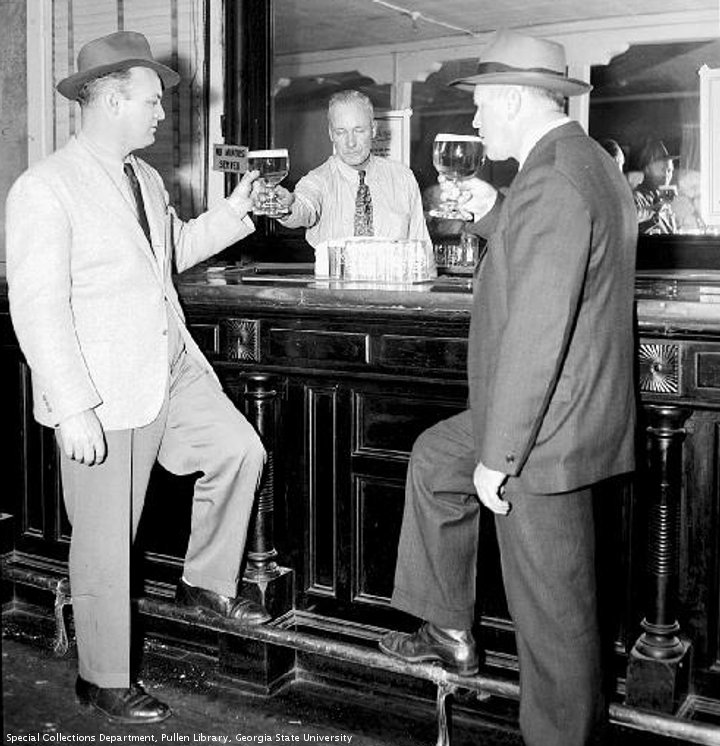
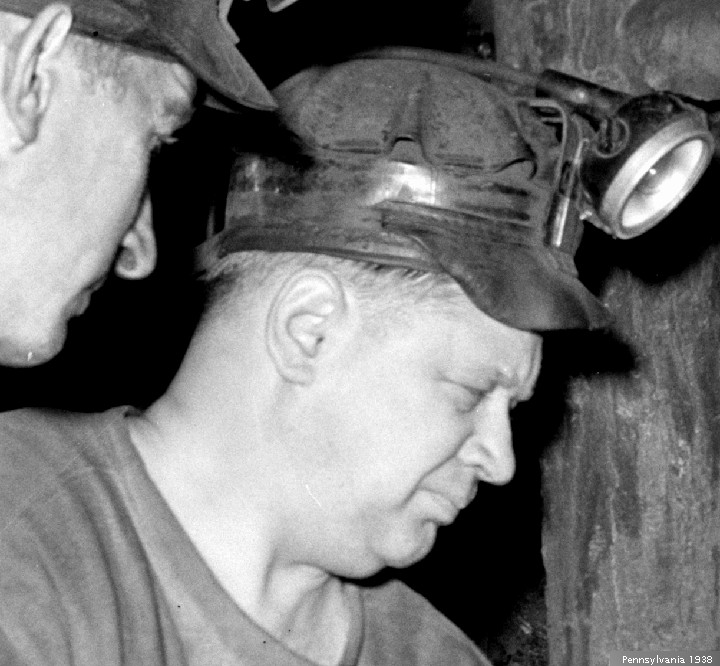
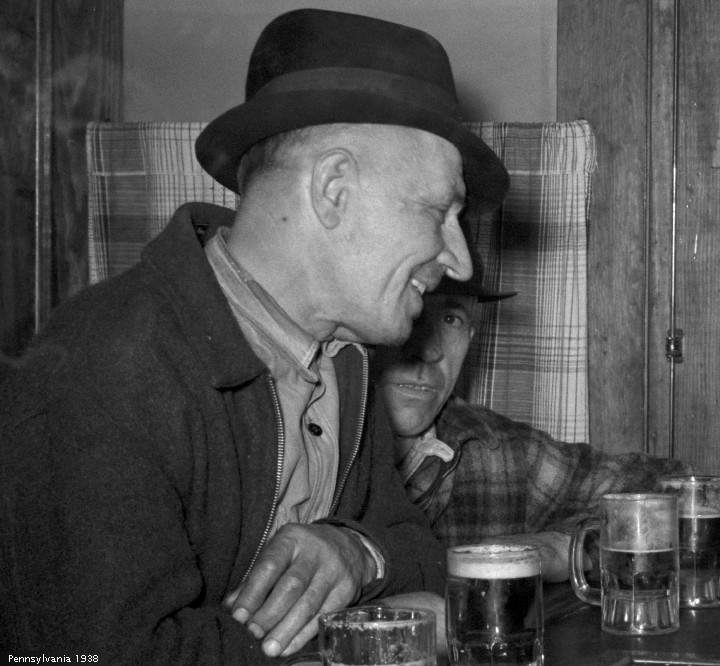
Mr. James likes to express his opinions. “James also made waves back in April for suggesting … that an officer was racially motivated for fatally shooting 16-year-old Ma’Khia Bryant, who was, at the time, attempting to stab another girl. … I am so desperate for more ACCOUNTABILITY.” You should be careful what you wish for. Pictures today are from The Library of Congress. Sheldon Dick took the social media picture in 1938. “Shenandoah, Pennsylvania. Some men having beer at Filipek’s bar” ©Luther Mckinnon 2025 · selah



Influencer Encouraging


The display of a link on this page does not indicate approval of content..
psalm 141:3 Set a watch, O Lord, before my mouth; keep the door of my lips.
Believers See Jesus’s Face in the Shroud of Turin. A Study Now Says It’s Something Else
Michelle Phillips “It Was Very Unfair That I Was Fired From The Mamas & The Papas”
Everything You Need to Know About Clavicular, 20-Year-Old Influencer Encouraging …
Court rules that large Confederate flag be taken down along interstate highway
Andrew Wilson vs Dave Smith: Is Libertarianism better than Christian Populism?
Ram Dass – Scotland Interview @FindhornFoundation 90s | [Black Screen / No Music …
Dave Smith Interview Tucker Carlson | Russia, Israel, and the Joe Rogan Controversy
Atlanta’s first famous baseball park was also home to a giant magnolia tree in center field
maurice hilliard · dillahunty wilson · top 20 talk · superbowl · eric pline
0208i · 0208ii · take me thriftin · take the biscuit · oddities museum
breathe · om mani padme hum · ram dass · dekalb schools · atheist slogans · chinese doom scroll
trent horn · shambhala · IDF · shermer · jesse · “perpetual glitter”
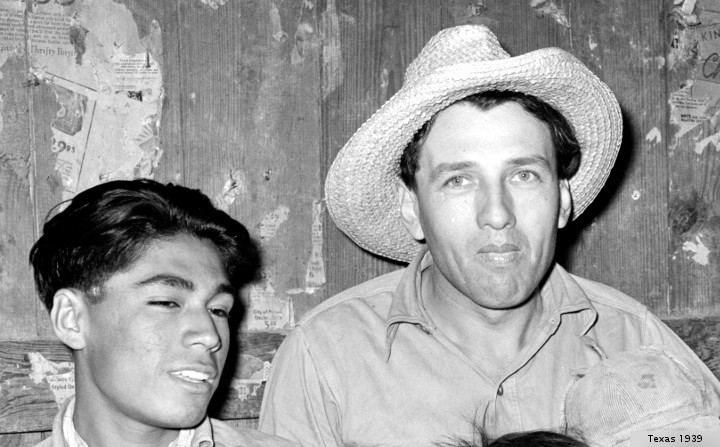
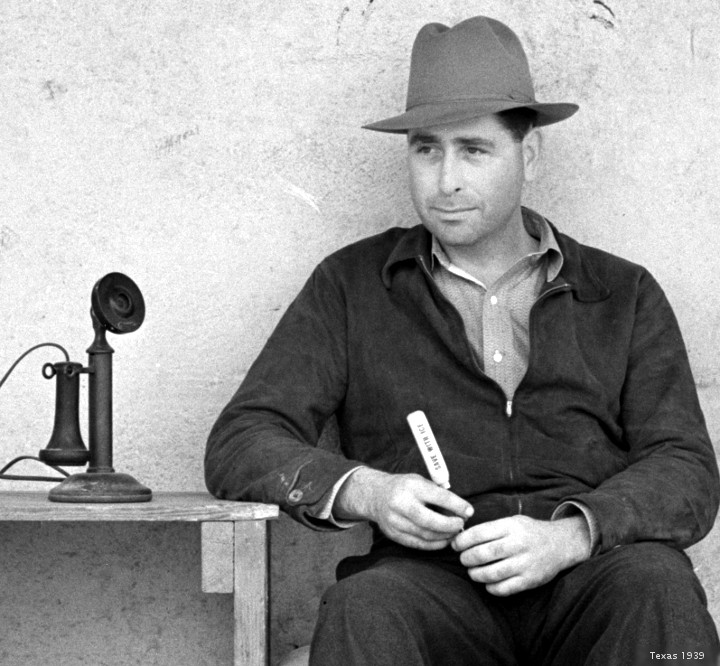
I was in a zoom poetry event during the Kid Rock-Bad Bunny smackdown. My webcam finally functioned, after a few tense moments. I didn’t know whether to thank Yahweh or Satan. Those two are tough to tell apart · These smiles make the perpetual glitter mess that will plague my studio until the end of time worth it · “Those who cannot remember the past are condemned to repeat it.” Credit/blame for this item goes to George Santayana, who can also be blamed for “Only the dead are safe; only the dead have seen the end of war.” · This is the story of what happens when a non participant makes a joke about a beloved Christian cliche · @simeonthefool.bsky.social ….what happens is he stays mad about it for SEVEN YEARS and then puts it in his own newspaper that he got mad? 😭 · @simeonthefool.bsky.social Man. It was Twitter in 2019. You can just accept you once got dragged for saying the Council of Nicaea wrote the Bible and get on with your life. At least you kindly linked to the original posts so those of us who forgot about it can see what I said. It was a fun conversation! (screenshots attached) · @simeonthefool.bsky.social Sadly the ex-site has broken the link that was the punchline of my original tweet But it’s even funnier when you realize that my dude was going off about all this in response to…. a gif from Jesus Christ Superstar · @simeonthefool.bsky.social ME: “Remember that story when Jesus flipped tables? And… possibly invented clothes hangers? While singing a rock opera?” HIM: “I am going to stay mad at you for SEVEN YEARS because you don’t take me seriously when I reply that the Council of Nicea made up everything the Bible about Jesus!!!” · @chamblee54.bsky.social actually, I forgot about this, and only remembered when I found the link in my archive. I had a bit of trouble finding your x account, since I am not an approved follower. the pictures are better than the text · @simeonthefool.bsky.social There was absolutely nothing stopping you from just leaving it in the archives, my dude Feel free to use the pictures if you like them, I moved on from X long long ago · @RonanFarrow (1/10 🧵) If you live in NY, you may see a new warning: “THIS PRICE WAS SET BY AN ALGORITHM USING YOUR PERSONAL DATA.” This mandatory disclosure went into effect late last year, and it’s the first attempt by a US state to grapple with a new generation of surveillance pricing · Michelangelo Merisi da Caravaggio · The text is about Hollywood talent arguing with a trans activist in a New York bookstore. The pictures are about Texas people in 1939 · The people celebrating the conversion of Joe Rogan might want to calm down. “I’ve been reading the Bible a lot. And one of the problems that I find is it’s clearly got the hand of man on it.” · Jesus is my … @grok is this real?@grok The video appears to be an edited compilation of old televangelist footage (likely from Jim Bakker’s shows in the 1980s), with added cartoon effects, speech bubbles, and humorous animations for comedic effect. The base clips are real, but the final product is satirical, not unedited reality. · Pictures today are from The Library of Congress Russell Lee took the social media picture in February 1939. “Mexican men and children who live in corral. Robstown, Texas” ©Luther Mckinnon 2025 · selah




 Chamblee54
1 comment