Your Racism



This is a repost from 2014, and the Mike Brown case. … Last night, in anticipation of the Grand Jury presentation, chamblee54 published Freedom Lies Bleeding. “grand jury renders opinion ~ national hissy fit begin again ~ when justice is popularity contest ~ freedom lies bleeding in street”
There was a comment. Anonymous said, on November 25, 2014 at 2:28 pm (Edit) “Thanks Luthor… you’re racism never disappoints!” The name was misspelled.
There is both style, and substance, to consider here. Is Freedom Lies Bleeding racist? Who knows? The definition of racism is growing, in carcinogenic fashion, as we speak. Some say it is systemic institutions of oppression. Some say it is jokes about toothpaste flavor. Maybe the best definition is that racism is anything that you do not like.
The poem was directed at the concept of mob rule. As President Obama said, “We are a nation built on the rule of law, so we have to accept this decision was the grand jury’s to make.”
A few years ago, O.J. Simpson was accused of murder. Many people thought he was guilty. After a long trial, he was found innocent. Should popular opinion have overruled the jury? No, it should not. The jury saw the evidence, and heard the arguments. The people can protest and debate, but they cannot take the place of a jury.
Is a dependence on a system of law and order racism? Anonymous seems to think so. Is they qualified to make this judgment? If racism is anything that you don’t like, then Anonymous is qualified to make the call. Maybe they knows something we don’t.
There is the style of the comment to consider. While Anonymous did not give their name, there was an I.P. address. The IPA is connected to a .edu server. Apparently, this is a workplace computer. Leaving insulting comments from your employer’s computer does not reflect well on the institution.
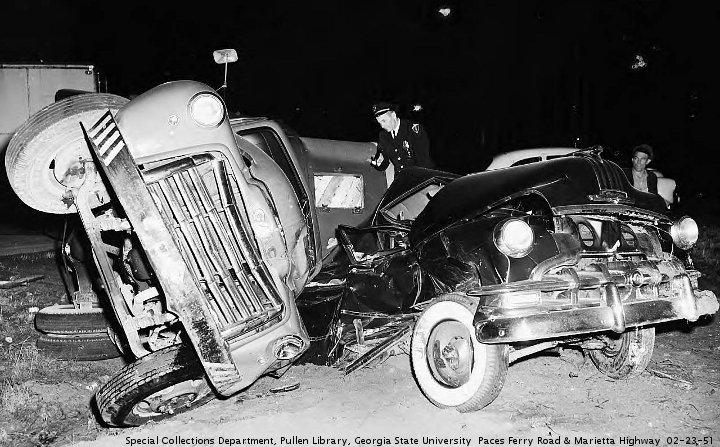
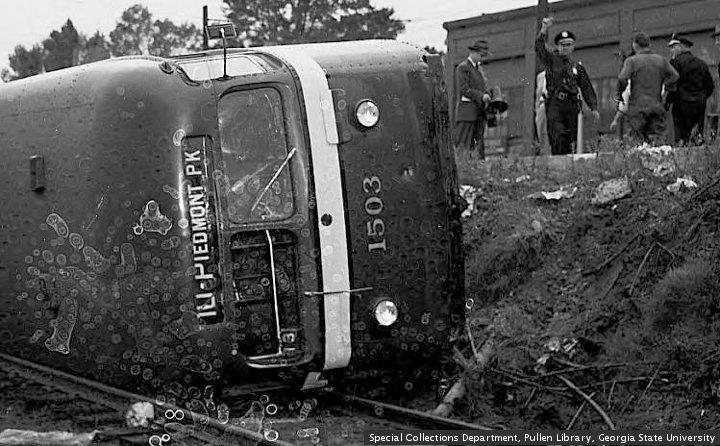
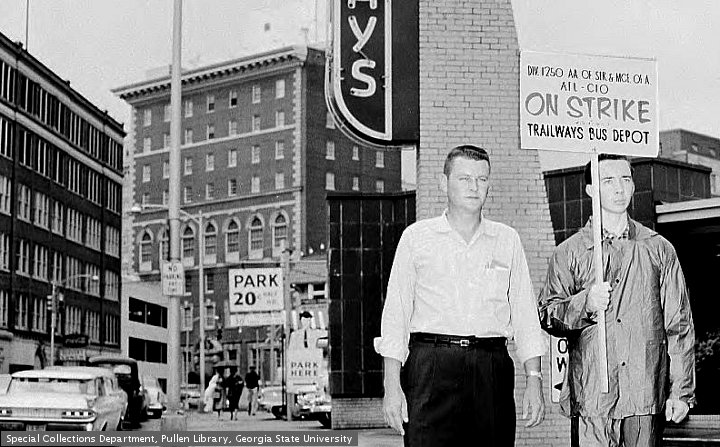
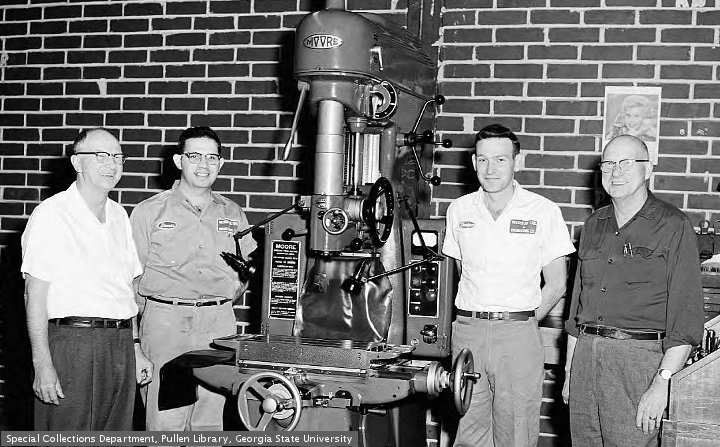
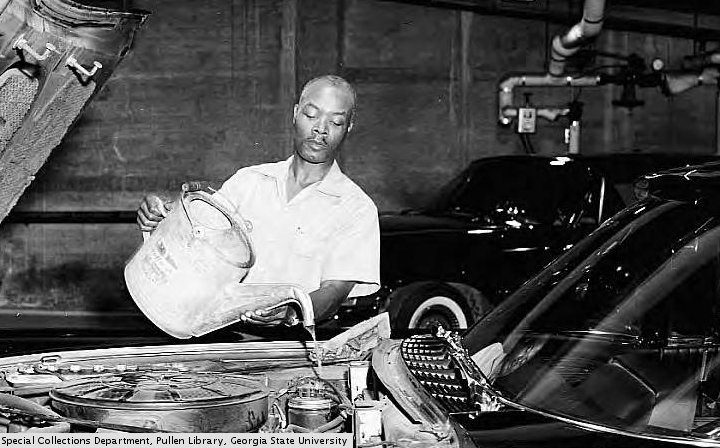
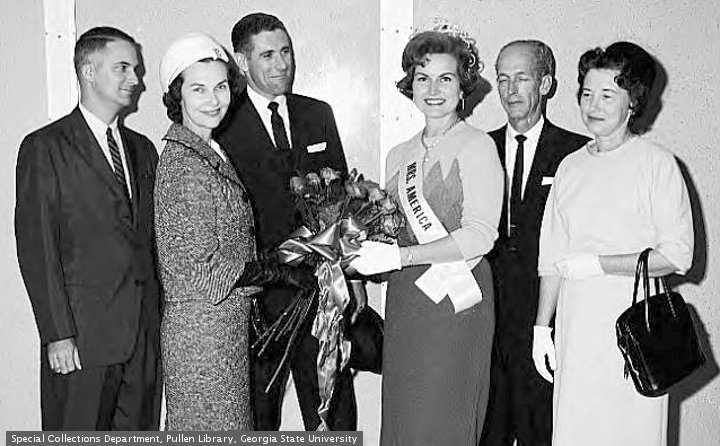
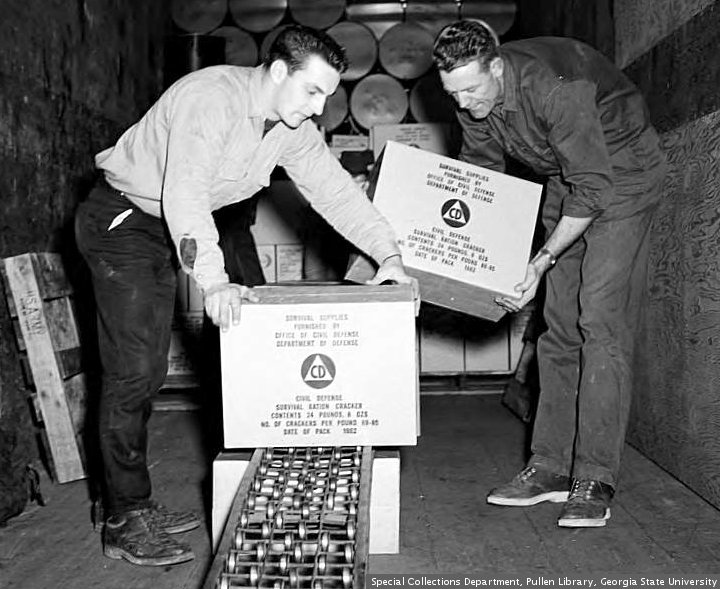
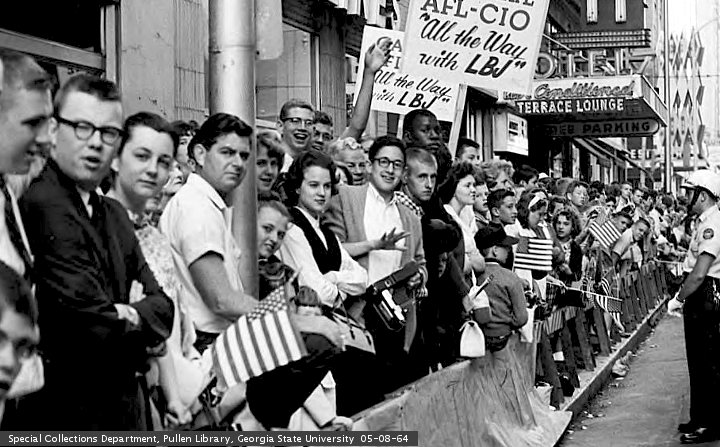
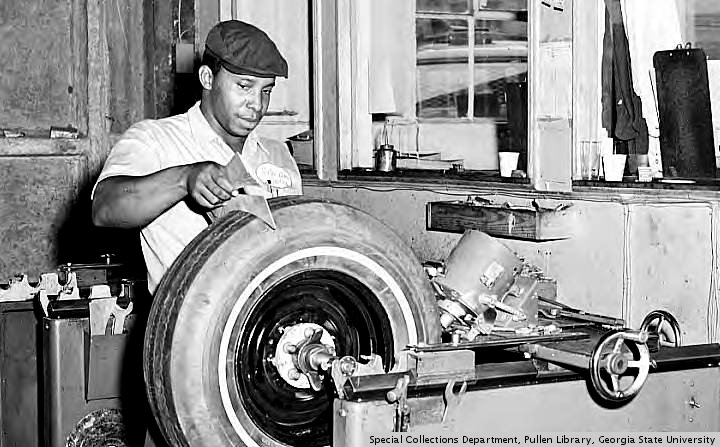
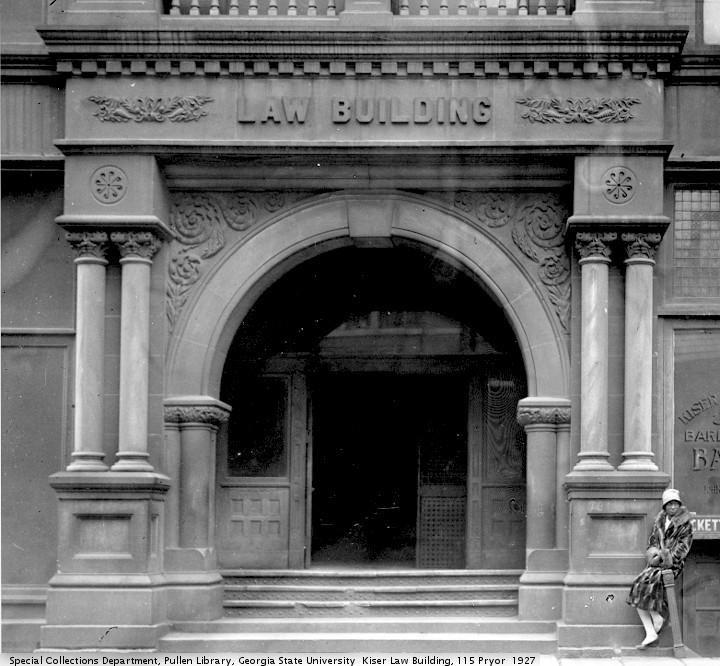
Anonymous is entitled to an opinion. However, leaving a name calling comment does not speak well for this individual. The six words say more about Anonymous than they do chamblee54. Pictures today are from “The Special Collections and Archives, Georgia State University Library”.



The Velvet Warlocks



PG was listening to disgraceland episode#64, about the grateful dead. He was at a stopping point with multi tasking, and decided to look something up. The show mentioned the first show by the Warlocks, later known as the grateful dead. This was 50 years before “dead name” was a dirty word.
“On May 5, 1965 ‘The Warlocks’ … played their first show, at Magoo’s Pizza Parlor in Menlo Park, California.” This was the day before I turned 11. Lyndon Johnson was settling in for his elected term as President. The Braves were playing their lame duck season in Milwaukee. Combat troops had been in Vietnam for a little over two months. This was the start of the escalation. “By the end of 1965, more than 184,000 American troops were in Vietnam.”
At 27:44, dg-gd dropped an item that could not be ignored. The Warlocks had to find a new name. Someone else was called the Warlocks, and there were complications. It seems as though the warlocks … a pretty obvious name … was also an early name of the Velvet Underground. Other early vu names included the primitives and the falling spikes.
“When they (vu) finally did come across a name which stuck, it was thanks to a contemporary paperback novel about the secret sexual underworld of the 1960s that Tony Conrad, a friend of John Cale, happened across and showed to the group. The novel, written by Michael Leigh, remains in print most likely thanks to the band which appropriated its title.”… “Had Lou Reed and John Cale not seen a copy of this book in a New York City gutter (fittingly) and decided to use its name for their group, this little volume would have been justly forgotten. Written in a style which titilates while decrying the scene it describes, it’s a piece of blue-nosed junk.”
The rest of the show rolled on. Jerry stuck his finger in a dictionary at random, and found Grateful Dead. It was the name of a story. The band played at the acid tests, which mostly went well, until they did not. Pigpen drank rotgut to excess, until it killed him.
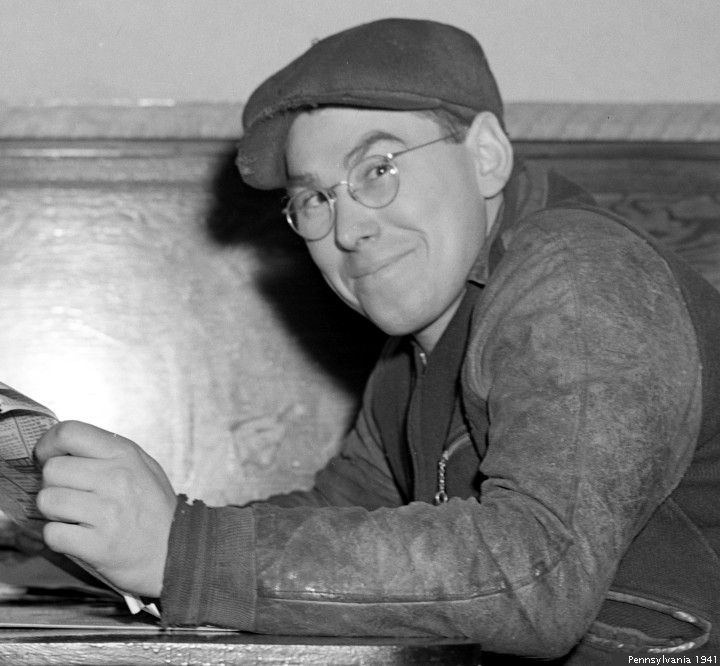
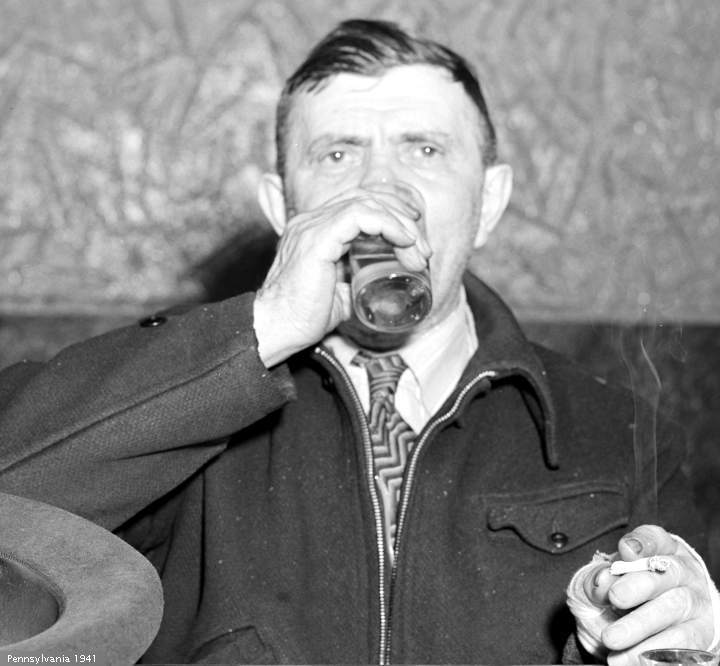
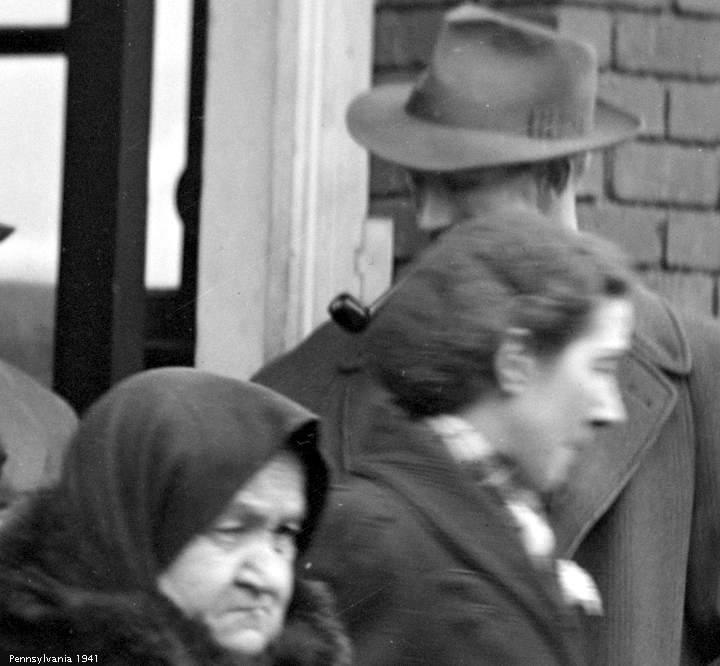
PG was editing pictures out of a folder labeled pa41. The images were shot by John Vachon,in June 1941. The last picture, while the 27 club end of Pigpen played over the speakers, was Women washing clothes in utility building at FSA (Farm Security Administration) trailer camp. Erie, Pennsylvania. Another picture, from January 1941, is Pinochle game in Czecho-Slovak Dramatic Club. Ambridge, Pennsylvania. Both pictures are included in this feature. This is a repost from 2020.







Dick Nixon TV Critic
The text below is a conversation between Mr. Nixon, John D. Ehrlichman, and H. R. Haldeman. The tape was made May 13, 1971. This is a repost. Pictures are from The Library of Congress.
NIXON: … CBS … glorifying homosexuality.
EHRLICHMAN: A panel show?
H. R. HALDEMAN: No, it’s a regular show. It’s on every week. It’s usually just done in the guy’s home. It’s usually just that guy, who’s a hard hat.
NIXON: That’s right; he’s a hard hat.
EHRLICHMAN: He always looks like a slob.
NIXON: Looks like Jackie Gleason.
HALDEMAN: He has this hippie son-in-law, and usually the general trend is to downgrade him and upgrade the son-in-law–make the square hard hat out to be bad. But a few weeks ago, they had one in which the guy, the son-in-law, wrote a letter to you, President Nixon, to raise hell about something. And the guy said, “You will not write that letter from my home!” Then said, “I’m going to write President Nixon,” took off all those sloppy clothes, shaved, and went to his desk and got ready to write his letter to President Nixon. And apparently it was a good episode.
EHRLICHMAN: What’s it called?
NIXON: “Archie’s Guys.” Archie is sitting here with his hippie son-in-law, married to the screwball daughter. The son-in-law apparently goes both ways. This guy. He’s obviously queer–wears an ascot–but not offensively so. Very clever. Uses nice language. Shows pictures of his parents. And so Arch goes down to the bar. Sees his best friend, who used to play professional football. Virile, strong, this and that. Then the fairy comes into the bar. I don’t mind the homosexuality. I understand it. Nevertheless, goddamn, I don’t think you glorify it on public television, homosexuality, even more than you glorify whores. We all know we have weaknesses. But, goddammit, what do you think that does to kids? You know what happened to the Greeks! Homosexuality destroyed them. Sure, Aristotle was a homo. We all know that. So was Socrates.
EHRLICHMAN: But he never had the influence television had.
NIXON: You know what happened to the Romans? The last six Roman emperors were fags. Neither in a public way. You know what happened to the popes? They were layin’ the nuns; that’s been goin’ on for years, centuries. But the Catholic Church went to hell three or four centuries ago. It was homosexual, and it had to be cleaned out. That’s what’s happened to Britain. It happened earlier to France. Let’s look at the strong societies. The Russians. Goddamn, they root ’em out. They don’t let ’em around at all. I don’t know what they do with them. Look at this country. You think the Russians allow dope? Homosexuality, dope, immorality, are the enemies of strong societies. That’s why the Communists and left-wingers are clinging to one another. They’re trying to destroy us. I know Moynihan will disagree with this, and Mitchell will. But, goddamn, we have to stand up to this.
EHRLICHMAN: It’s fatal liberality.
NIXON: Huh?
EHRLICHMAN: It’s fatal liberality. And with its use on television, it has such leverage.
NIXON: You know what’s happened [in northern California]?
EHRLICHMAN: San Francisco has just gone clear over.
NIXON: But it’s not just the ratty part of town. The upper class in San Francisco is that way. The Bohemian Grove, which I attend from time to time–it is the most faggy goddamned thing you could ever imagine, with that San Francisco crowd. I can’t shake hands with anybody from San Francisco. … Decorators. They got to do something. But we don’t have to glorify it. You know one of the reasons fashions have made women look so terrible is because the designers hate women. Designers taking it out on the women. Now they’re trying to get some more sexy things coming on again.
EHRLICHMAN: Hot pants.
NIXON: Jesus Christ.
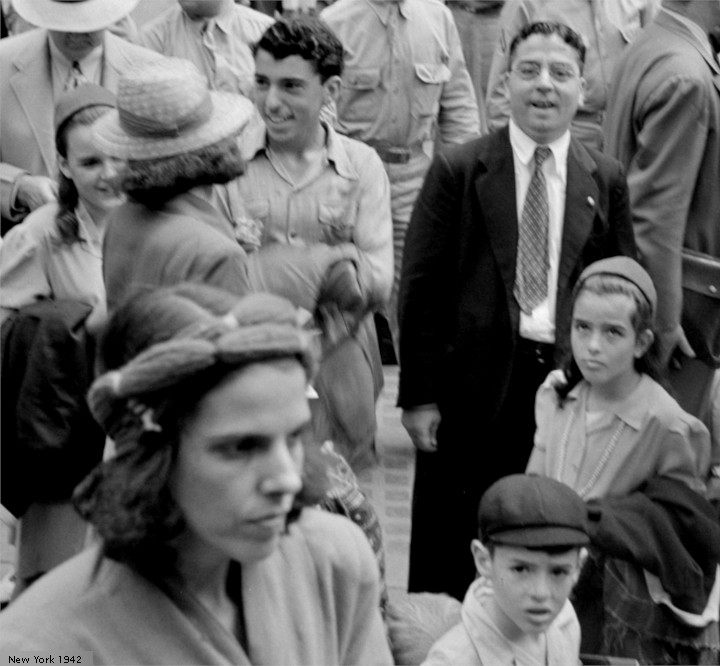


Ta-Nehisi Coates Again




The Message is a new book by Ta-Nehisi Paul Coates. The publishing game requires TPC to promote his book, which he is doing with gusto. It turns out this literary product is critical of Israel. Some things you are not allowed to say out loud.
One noteworthy appearance was on CBS Mornings. Tony Dokoupil gave TPC a rude greeting: “I have to say when I when I read the book I imagine if I took your name out of it took away the awards and the Acclaim took the cover off the book … the content of that section would not be out of place in the backpack of an extremist.” Later, Mr. Dokoupil inadvertently says something many of Israel’s neighbors might agree with: “Why does any of Israel exist? What a horrific place, committing horrific acts on a daily basis.”
Part of the problem is the high profile TPC has enjoyed as an anti-racist celebrity. Over the last few years, many “woke” people have heaped praise on the man. At the same time, more than a few people were annoyed with TPC. Saagar Enjeti had some strong comments about TPC on Breaking Points recently. What the star-making machine builds up, the star-making machine tears down.
Chamblee54 has written about TPC several times. one two three In a video about the six-letter word, TPC asserts “When you’re white in this country, you’re taught that everything belongs to you. You think you have a right to everything.”
The progressive movement in America has fought against racism, inequality, injustice, etc, for a long time. If you can look past the hypocrisy and vulgar noise, you can see some value in these efforts. Unfortunately, Israel violates many of these values in it’s dealings with Palestinians. This contradiction is difficult for the left to deal with.
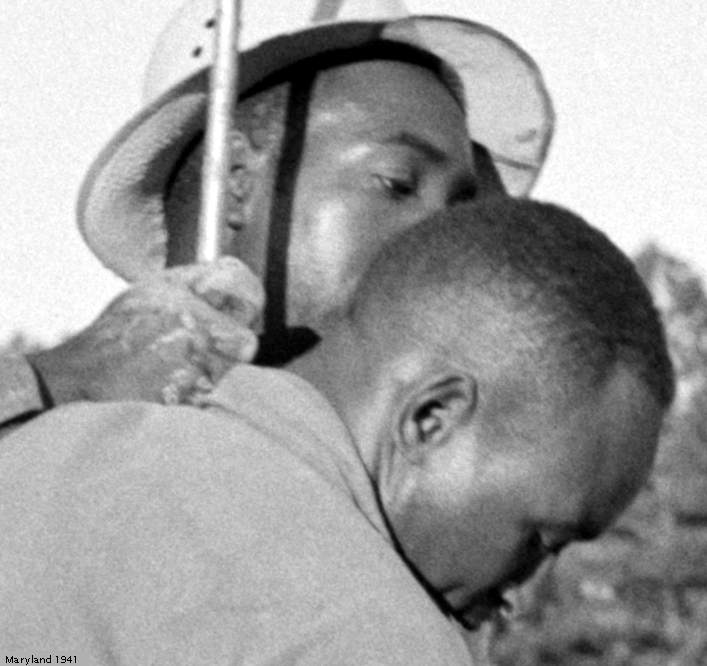
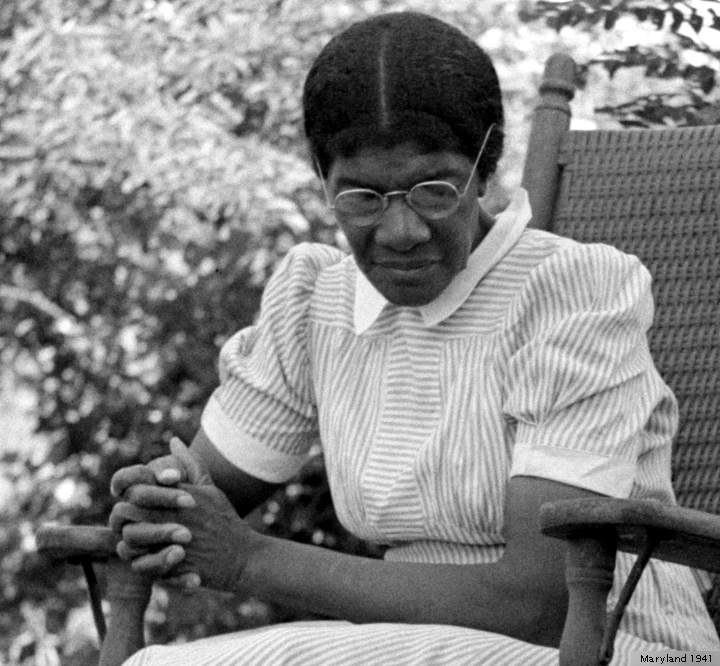
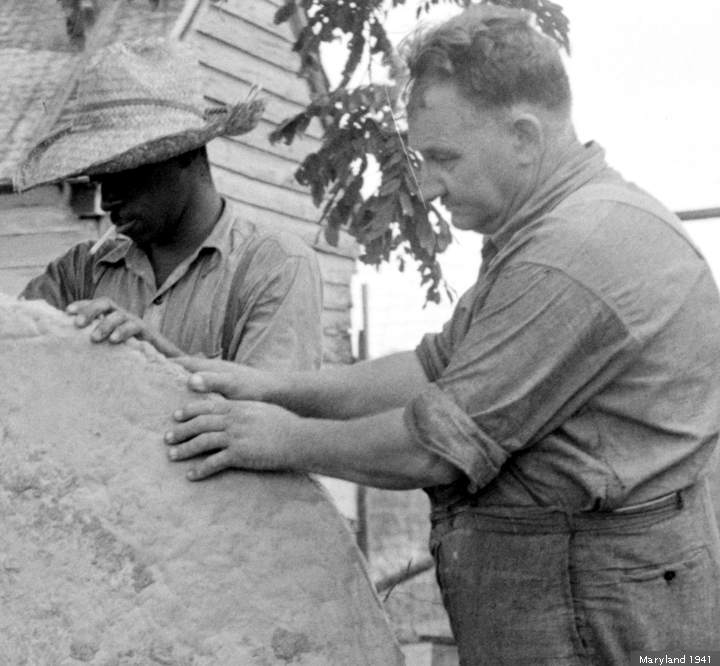
TPC is saying things that make progressives nervous. Israel treats Palestinians horribly. The hypocrisy of the platitude spouting left is on display. Shooting the messenger is always a popular option. Pictures today are from The Library of Congress. Here is part two of this story.

9-11 Part Two

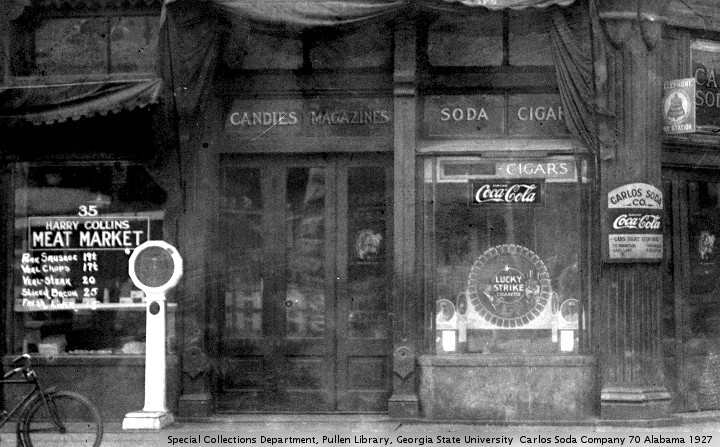
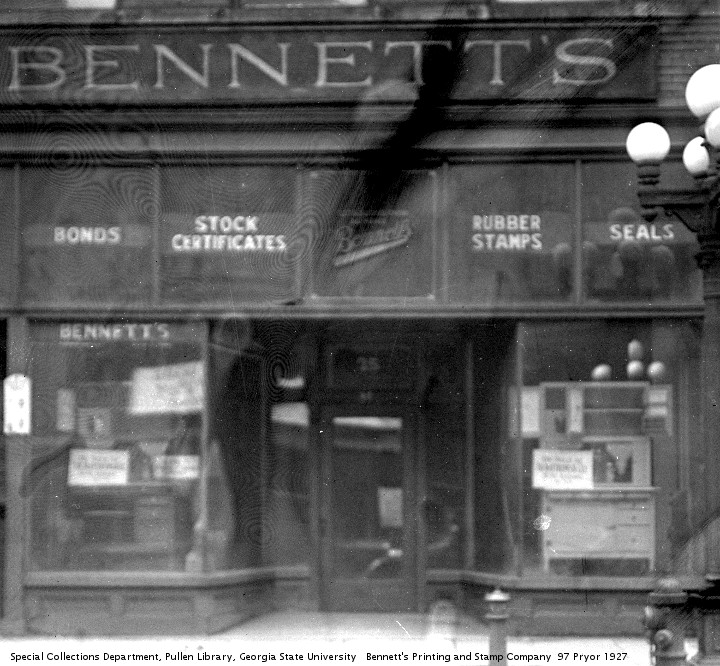




For a long time, I posted my 9-11 story every year, on September 11. This year, the Presidential debate was on September 10, and it dominated “the conversation” on September 11. Maybe we are moving on, and giving 9-11 its proper place in history.
2001: A Space Odyssey came out in 1968. 2ASO presented a vision of the future. It turns out the reality of 2001 was “terrorists” using our space age technology against us, with devastating results. HAL, the murderous computer, may have been the one prophecy that did come true.
9-11 was a watershed moment. 9-11 was caused by what came before, and affected what came after. We will never know the full story. 2001 was neck deep in the digital revolution, giving the conspiracy talkers a handy forum for their wonderful opinions. Unfortunately, not everyone has integrity, or good intentions. Whether 9-11 was an inside job, or a terrorist attack, the US government gained a great deal of power. Most of the things they did with it did not work out very well. This has also powered the conspiracy industrial complex.
In the last five years,Whe we have had four watershed events: COVID 19, George Floyd, the Russian invasion of Ukraine, and October 7. Each component of this grand slam has similarities and differences to each other, and to 9-11. All five events have had a fruit basket turnover effect. Liberals have become conseratives, conservatives have become liberals, and many have wondered why we need those labels anyway. Hypocrisy has become the national pastime.
This is the first paragraph, faithfully pasted in every year: “This is my 911 story. I repeat it every year at this time. Every year I say this will be the last time. This year is a mess. We are destroying the village to save it. The action part of 091101 was over by 11 am. This quagmire drags on and on. Nobody knows how things will turn out.”
One more paragraph is worth repeating: “I became alienated from Jesus during these years. Once, I had once been tolerant of Christians and Jesus, as one would be with an eccentric relative. I began to loath the entire affair. I hear of others who found comfort in religion during this difficult time. That option simply was not available for me.” After September 11/October 7, this fear and loathing has extended to most popular versions of Yahweh worship.
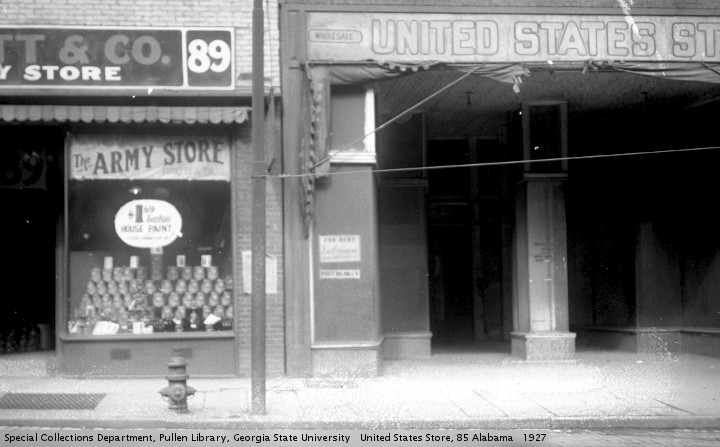
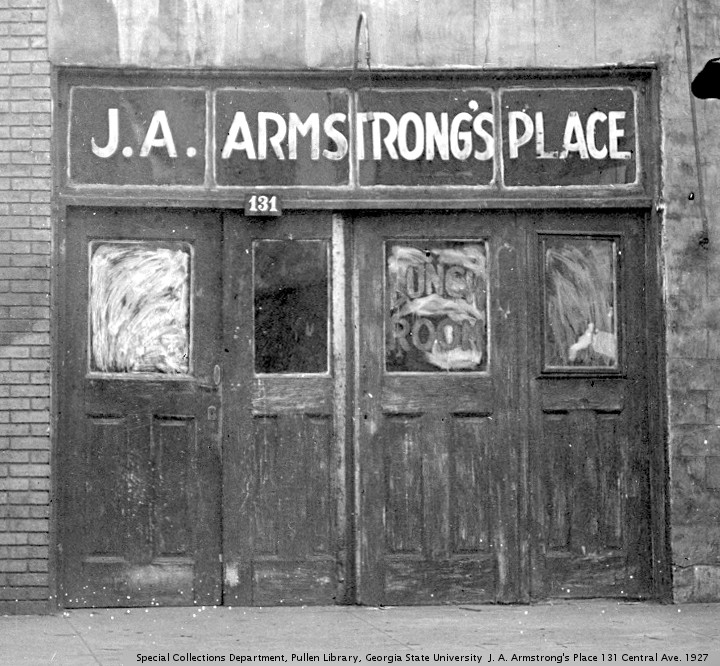
Pictures from Special Collections and Archives, Georgia State University Library. “This item is part of a collection of images of downtown Atlanta streets that were taken before the viaduct construction of 1927 – 1929. Some of the covered streets became part of Underground Atlanta.”





William McKinley


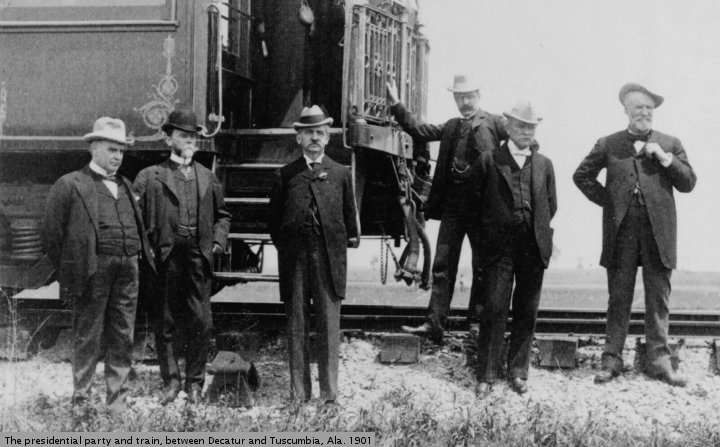
One hundred years before nine eleven, President William McKinley was near death. He had been shot September 6, 1901. Medicine at this time was primitive compared to today. During surgery after the shooting, the bullet was not removed. The University of Buffalo makes this comment: “Dr. Mann and the others were neither trained trauma surgeons nor did they bother with disinfection, not even wearing gloves. The first bullet had done little harm; the second entered McKinley’s abdomen. The physicians used improperly sanitized probes and when Mann could not find the bullet, he closed the incision without draining the wound. It was a fateful decision.”
After surgery, the President was taken to the home of John Milburn. He seemed to be recovering, but took a turn for the worse and died September 14, 2001.
President McKinley had been shaking hands at a reception. The meet and greet was at the Academy of Music, as part of the Pan American Expostion in Buffalo, New York. A letter to “The Nation” has this viewpoint. “Whatever other results may flow from the assassination of President McKinley, let us hope that that object-lesson may be sufficient to put an end to our national habit of promiscuous handshaking in public. It is hard to conceive of a spectacle more fatuous and less edifying than that of a horde of country bumpkins, criminals, cranks, idlers, and curiosity-mongers standing in line waiting for a chance to grab and squeeze the hand of the unhappy Chief Executive of this country.”
 There were anarchists in 1901, who had murdered several European leaders. Several of McKinley’s advisors did not think the reception was a good idea, and forced him to have extra security. A writer in the Buffalo Courier observed on September 5 “The surrounding of President McKinley by a body-guard of detectives when he appears in public, is probably as distasteful to himself as it is to abstract American sentiment, but as long as the earth is infested by malevolent cranks and unreasoning Anarchists, the precaution is entirely proper.”
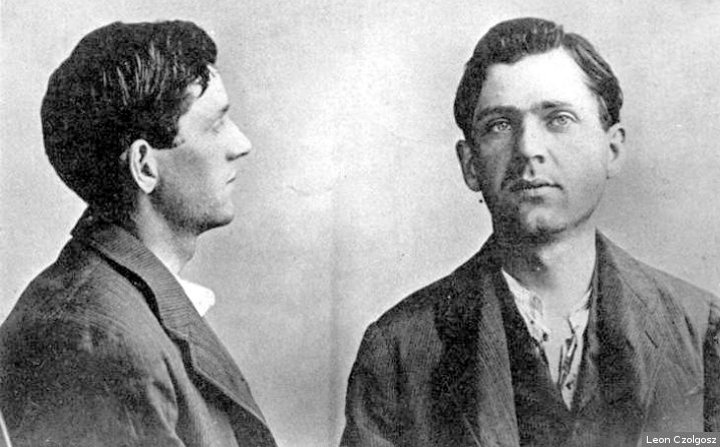
A young man named Leon Czolgosz (pronounced CHOL gosh) managed to wait in line with a concealed weapon. He was seen to shoot President McKinley. He was immediately captured, and executed October 29, 1901.
Lew Rockwell speaks of a rivalry between John Rockefeller and J.P. Morgan. Rockefeller man McKinley was replaced by Morgan supporter Roosevelt, who promptly began to break up the trusts. Another historian, connected to Lyndon LaRouche , speaks of British interests, and the rise of Confederate power. McKinley was a target of media superstar William Randolph Hearst. An editorial printed in the April 10, 1901 Journal asserted that “If bad institutions and bad men can be got rid of only by killing, then the killing must be done.”
Some say that a murder one hundred twenty three years ago does not affect us today. However, an argument could be made that the death of McKinley set in motion events that led to the establishment of the Federal Reserve System, and American participation in World War I. Both of those events have had effects lasting until today.
It is curious how President McKinley is mostly forgotten today. Some say he was most popular President since Lincoln . McKinley had been a wartime President, who won. His successor, Teddy Roosevelt, is on Mount Rushmore, and is a superstar President. Mr. Roosevelt also ran as a third party candidate in 1912, and helped to elect Woodrow Wilson. (Mr. Wilson was alleged to be a member of the “Omega Group,”rumored to be behind a McKinley conspiracy.) Mr. Roosevelt’s popularity is very different from the other three Vice Presidents who were promoted by the murder of the President. He was good at dealing with the press.
Pictures today are from The Library of Congress. This is a repost.




Notes on the State of Virginia
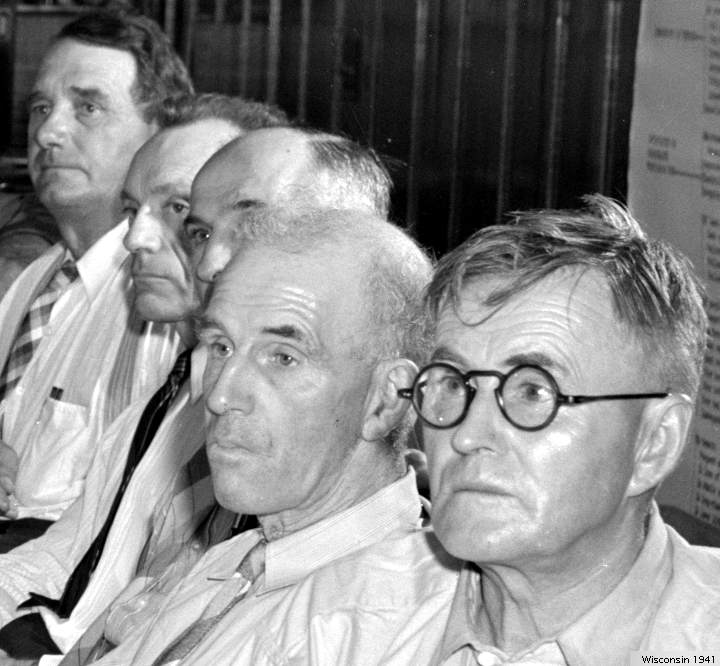



Notes on the State of Virginia is the only full length book written by Thomas Jefferson. Written while the Revolutionary War was still being fought, NOTSIV was not originally intended for publication. The following passage is on page 147.
“It will probably be asked, Why not retain and incorporate the blacks into the state, and thus save the expence of supplying, by importation of white settlers, the vacancies they will leave? Deep rooted prejudices entertained by the whites; ten thousand recollections, by the blacks, of the injuries they have sustained; new provocations; the real distinctions which nature has made; and many other circumstances, will divide us into parties, and produce convulsions which will probably never end but in the extermination of the one or the other race.”
“… Besides those of colour, figure, and hair, there are other physical distinctions proving a difference of race. They have less hair on the face and body. They secrete less by the kidnies, and more by the glands of the skin, which gives them a very strong and disagreeable odour. This greater degree of transpiration renders them more tolerant of heat, and less so of cold … They seem to require less sleep. A black after hard labour through the day, will be induced by the slightest amusemements to sit up till midnight, or later, though knowing he must be out with the first dawn of the morning.”
“They are at least as brave, and more adventuresome. But this may perhaps proceed from a want of fore-thought, which prevents their seeing a danger till it be present. When present, they do not go through it with more coolness or steadiness than the whites. They are more ardent after their female: but love seems with them to be more an eager desire, than a tender delicate mixture of sentiment and sensation. Their griefs are transient. Those numberless afflictions, which render it doubtful whether heaven has given life to us in mercy or in wrath, are less felt, and sooner forgotten with them. …”
Pictures are from The Library of Congress



Was Jesus Really A Carpenter?



Has anyone seen a painting of Jesus holding a saw? The idea the Jesus was a carpenter is seldom questioned. People are taught this, and accept it in sheep-like fashion. Even though the gospels were written many years after the cucifixion, they are accepted as “inerrant” historic documents. Here is what US Catholic says: “Was Joseph of Nazareth really a carpenter? … Only twice is the word carpenter used in the Christian scriptures: when Jesus is identified as “the carpenter’s son” (Matthew 13:55) and “the carpenter” (Mark 6:3.)…”
The passages that say “carpenter” are not complimentary to Jesus. This man appears out of nowhere, and starts to teach at the synagogue. Who is he? Why is a mere carpenter telling educated men how to live? Who does he think he is?
The two texts are similar. Here is Mark 6:2-4
2 And when the sabbath day was come, he began to teach in the synagogue: and many hearing him were astonished, saying, From whence hath this man these things? and what wisdom is this which is given unto him, that even such mighty works are wrought by his hands?
3 Is not this the carpenter, the son of Mary, the brother of James, and Joses, and of Juda, and Simon? and are not his sisters here with us? And they were offended at him.
4 But Jesus, said unto them, A prophet is not without honour, but in his own country, and among his own kin, and in his own house.
Matthew 13: 54-57 54 And when he was come into his own country, he taught them in their synagogue, insomuch that they were astonished, and said, Whence hath this man this wisdom, and these mighty works?
55 Is not this the carpenter’s son? is not his mother called Mary? and his brethren, James, and Joses, and Simon, and Judas?
56 And his sisters, are they not all with us? Whence then hath this man all these things?
57 And they were offended in him. But Jesus said unto them, A prophet is not without honour, save in his own country, and in his own house.
“In the Hebrew scriptures, the word carpenters appears 11 times, mostly in tandem with the words masons or stonecutters. The Hebrew word used means “carver,” so when building projects were underway, both carvers of wood and of stone were needed. … In the references from the Christian scriptures to Jesus as a carpenter or the son of one, the Greek word used both times is more correctly translated as “craftsman” or “artisan.” Such a person might carve stone or wood as the job required. … What’s evident to scholars of biblical lands is that trees were always in short supply around Nazareth, whereas stone quarries were plentiful. Most structures dating back to the time of Jesus around Galilee are composed of stone—those that survive, anyway. Chances are both Joseph and Jesus did more masonry than carpentry, that is, if they didn’t work exclusively in stone.”
Mark 6:4 is a favorite Jesusism for many people. It is more true today than ever. You do not want to be correct before everyone else. In the McCarthy era, the term “premature anti-fascist” … a person that was opposed to Nazi Germany before 1941 … meant you were a communist. The little boy who criticized the emperor’s fashion statement was severely punished.
“Was Jesus really a carpenter” is an example of asking too many questions. The way “carpenter” is used in Mark and Matthew seems like a generic insult for a common working man. Who is this peasant, who has the audacity to “teach” exalted church elders? We don’t know why the Council of Nicea chose these texts to tell the Jesus story, and why these words were translated as “carpenter.” There is also the attitude of just-shut-up-and-believe-your-elders.
US Catholic says: “Did Jesus have a real job? This is the question behind the question, which sounds a bit dismissive: as if teaching, preaching, and healing—not to mention redeeming the world—weren’t occupation enough!” In either scenario, it boils down to faith and belief … in an ancient text of uncertain origin, which has been translated many times. “God says it, I believe it, and that settles it.”
Pictures today are from The Library of Congress.


Shade


Sunday was the freebie-friendly Summer Shade Festival in Grant Park. Monday was for pulling merchandise out of my bag, a process known as de-swagging. There were 2 tote bags, 2 pair of sunglasses, 1 inkpen, 1 bottle opener, 1 baseball hat, 1 portable shader, and 1 serving of CHAMPAGNE TOAST hand sanitizer. Next weekend is labor day, when you do not venture into town.
Later, it was time to go take pictures of painted utility boxes. These make great backgrounds for graphic poems, and there are a couple nearby. Decatur, a PUB wonderland, was briefly considered. Common sense prevailed. Doraville and Dunwoody will have to be enough D for today.
Lunch time was approaching. A Whopper® has been begging for me to have it my way. There are a couple in Dunwoody, one of which was down the road.
The barely OTP intersection never seems to complete its roadwork, with no sign of a BK. Finally, there is a uber-modern BK on the right, with a sign “GRAND OPENING.” Life is good.
Since this is Monday, a new episode of Blocked and Reported is available. The theme of BAR is internet bullshit. Today Jesse is talking about Candace Owens, who is about as fecal as you can get.
Candace Amber Owens Farmer is what passes for a 2024 celebrity. Reward ignorance with apathy, and don’t pay her any mind. Jesse had a clip of her recent musings. recent musings. CAOF said that Leo Frank killed Mary Phagan on passover. It was time to turn the noise off.
Mary Phagan died on April 26, 1913. “Pesach for Hebrew Year 5673 began in the Diaspora on Monday, 21 April 1913 and ended on Tuesday, 29 April 1913.” A broken clock is right two times a day. April 26, 1913</a< was also Confederate Memorial Day.
The prevailing story was that Leo Frank was falsely accused of the murder, with strong antisemitic/racist overtones. There was little reason to doubt that story. Then, one afternoon, I stumbled onto the Leo Frank Archive. If you google “Leo Frank guilty,” you will find people who feel that way. It is 111 years later. Pictures today are from The Library of Congress


Revolution



REVOLUTION, n. “In politics, an abrupt change in the form of misgovernment. Specifically, in American history, the substitution of the rule of an Administration for that of a Ministry, whereby the welfare and happiness of the people were advanced a full half-inch. Revolutions are usually accompanied by a considerable effusion of blood, but are accounted worth it—this appraisement being made by beneficiaries whose blood had not the mischance to be shed. The French revolution is of incalculable value to the Socialist of to-day; when he pulls the string actuating its bones its gestures are inexpressibly terrifying to gory tyrants suspected of fomenting law and order.”
Ambrose Gwinnett Bierce published The Devil’s Dictionary in 1906, when revolutions were evolving into what can only be termed good, clean fun. AGB served in the Union Army during the War Between the States. The Confederacy, among other things, was a revolution that did not work out very well. As with all conflicts, vast sums of money changed hands. The men who collected these sums are usually far away from the bloodshed.
Walt Whitman once said “That whole damned war business is about 999 parts diarrhea to one part glory.” The same mathematics can be applied to revolutions as well. Maybe we should just stop with this revolting discourse, and move on to other R-words in TDD. The next four … RHADOMANCER, RIBALDRY, RIBROASTER, RICE-WATER … hold little interest for today’s conversation.
RICH, adj. “Holding in trust and subject to an accounting the property of the indolent, the incompetent, the unthrifty, the envious and the luckless. That is the view that prevails in the underworld, where the Brotherhood of Man finds its most logical development and candid advocacy. To denizens of the midworld the word means good and wise.”
RICHES, n. “A gift from Heaven signifying, “This is my beloved son, in whom I am well pleased.” John D. Rockefeller · “The reward of toil and virtue.” J.P. Morgan · “The savings of many in the hands of one.” Eugene Debs · To these excellent definitions the inspired lexicographer feels that he can add nothing of value.” Pictures today are from The Library of Congress · selah


Hiroshima 78 Years Later





At 8:15 am, August 6, 1945, Hiroshima got nuked. It was the start of a new era. Since Japan is 13 hours ahead of Georgia, and standard time was used, the literal anniversary is 8:15 pm, August 5.
Tsutomu Yamaguchi was working in Hiroshima when the bomb hit. He survived, and found a train to take hime to his home town, Nagasaki.
The device dropped on Hiroshima, the Little Boy, had an estimated force of 13 kilotons of Trinitrotoluene, or TNT. A kiloton of TNT is roughly a cube whose sides are ten meters. This device is fairly tiny compared to many of the warheads developed since. Many of the modern appliances are measured in megatons, or millions of tons of TNT. The Soviet Union had a bomb with a capacity of 50 megatons, or 4,000 times the size of the Little Boy.
The largest weapon tested by The United States is the Castle Bravo. This device destroyed Bikini Atoll in the Pacific. The two piece swimsuit was named for this island. The Castle Bravo device had a yield of 15 megatons of TNT. This is roughly 1,000 times the power of the Little Boy.
The decision to drop the bomb has long been controversial. There are a lot of factors and gray areas, and the issue does not lend itself to sound bite solutions. The conventional wisdom is that Japan surrendered because of the nuclear attack. This meant the war was shortened by at least a year, there was no invasion of Japan, and many lives were saved. I am scared by the moral calculus involved in a decision like this….do 100,000 civilian deaths prevent the deaths of 500,000 soldiers? I suspect that even God herself would lose sleep over that one.
There is also evidence that the bomb was not needed. Japan was whipped in August 1945. The air raids were conducted in daylight with little resistance. A debate was going on in the Japanese government on whether to continue the fight.
An event happened the day between Hiroshima, and Nagasaki, which influenced the Japanese decision to surrender. The Soviet Union had agreed to help the United States with the war against Japan. On August 8, The Soviet Union invaded Japanese occupied Manchuria. There are indications that Japan knew the fight was hopeless at this point, and would rather surrender to The United States than The Soviet Union. This is one of the gray areas that never seems to be mentioned.
The United States wanted the war to end quickly for obvious reasons, and a few subtle ones. America did not want to share the spoils of Japanese war with The Soviet Union. There were already tensions between the two allies, and the cold war was not far off. Many felt The United States used the Little Boy as a warning to The Soviet Union.
When you get your moral software out, you might want to figure in the effect of opening the nuclear Pandora’s box. Would the nuclear bomb have been developed by other countries if America had not led the way? The science is not that complicated…after all, America hit paydirt with the Manhattan Project fairly quickly. Nonetheless, there is karma involved in using a terrible new device on a civilian population. The United States started the wind of the arms race, and has yet to feel the whirlwind.
This is a repost. The pictures are from The Library of Congress. Ansel Adams took pictures of Japanese Americans, in a World War Two internment camp. The ladies in the bridge game are Aiko Hamaguchi, Chiye Yamanaki, Catherine Yamaguchi, and Kazoko Nagahama.



The Funeral Of Elvis


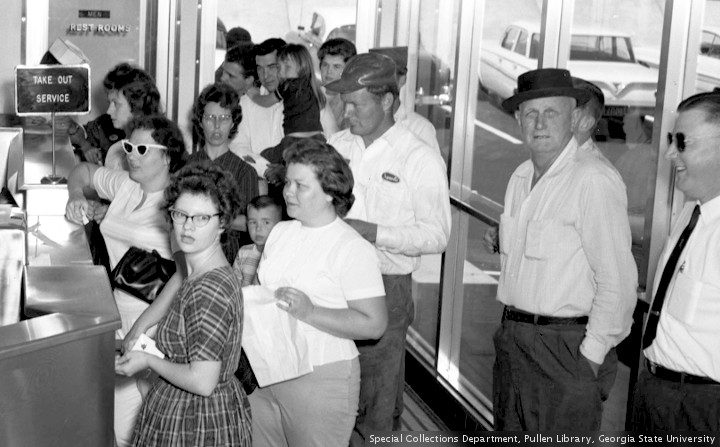
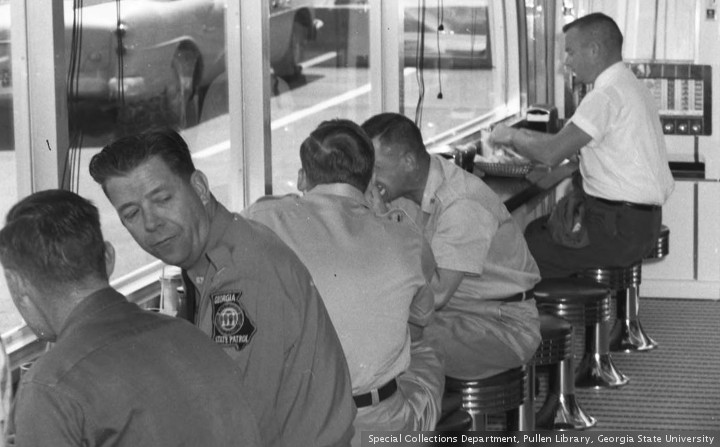
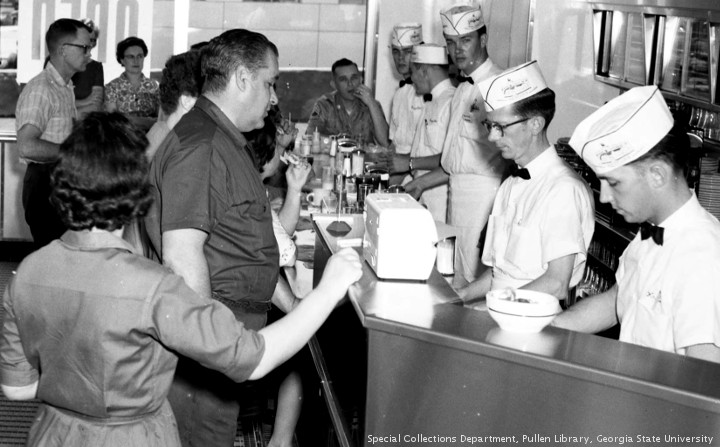
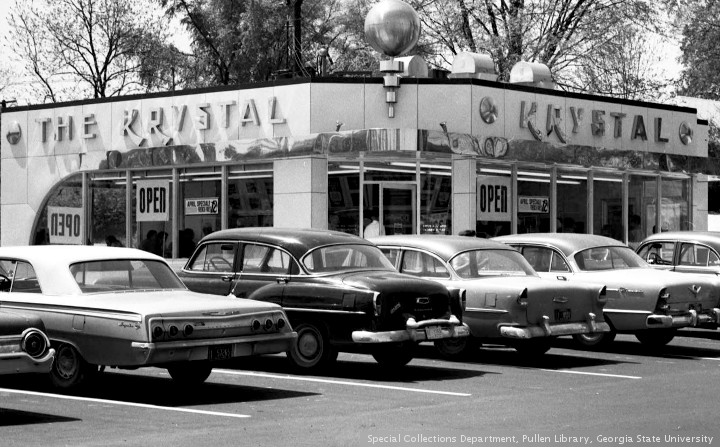
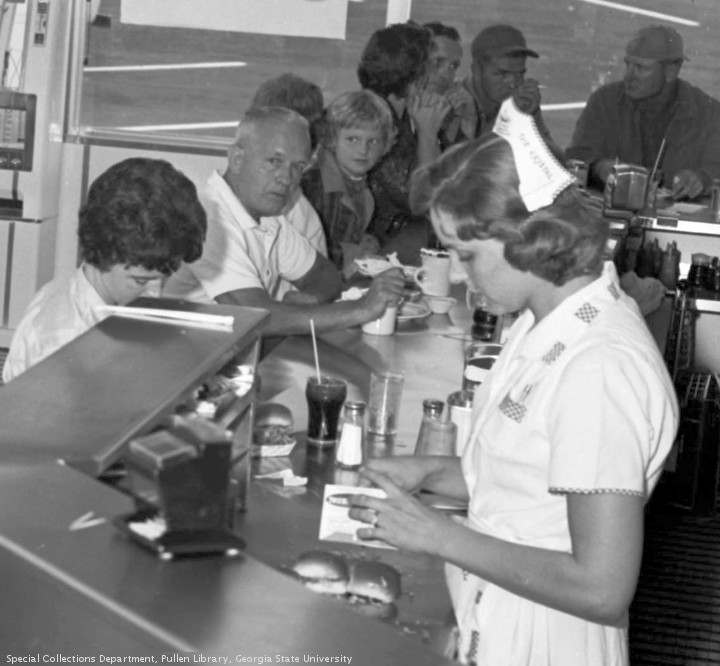
This is a repost. I was going to write about some depressing subject. People that are not kind to each other. People in Israel and people in Gaza just don’t seem to get along. Either Donald John Trump or Kamala Devi Harris is going to be our next President. Pictures are from “The Special Collections and Archives, Georgia State University Library”.
There is a saying, “if a story seems too bad to be true, it probably isn’t”. I tried to google that phrase, and got confused. Then he seemed to remember reading it in a column by Molly Ivins. Another google adventure, and there was this video. Miss Ivins, who met her maker January 31, 2007, was promoting a book. She sat down with a bald headed man to talk about it. I could only listen to 24:30 of this video before being seized with the urge to write a story. There is a transcript, which makes “borrowing” so much easier. This film has 34 minutes to go, which just might yield another story.
Molly Ivins was a Texas woman. These days there is a lot of talk about Texas, with Governor Big Hair aiming to be the next POTUS under indictment. Mr. Perry claims that his record as Texas Governor qualifies him to have his finger on the nuclear trigger. Miss Ivins repeats something that I had heard before… “in our state we have the weak governor system, so that really not a great deal is required of the governor, not necessarily to know much or do much. And we’ve had a lot of governors who did neither. “ It makes you wonder how much of that “economic miracle” is because of hair spray.
Texas politics makes about as much sense as Georgia politics. For a lady, with a way with words, it is a gold mine. “the need you have for descriptive terms for stupid when you write about Texas politics is practically infinite. Now I’m not claiming that our state Legislature is dumber than the average state Legislature, but it tends to be dumb in such an outstanding way. It’s, again, that Texas quality of exaggeration and being slightly larger than life. And there are a fair number of people in the Texas Legislature of whom it could fairly be said, `If dumb was dirt, they would cover about an acre.’ And I’m not necessarily opposed to that. I’m–agree with an old state senator who always said that, `If you took all the fools out of the Legislature, it would not be a representative body anymore.'”
We could go through this conversation for a long time, but you probably want to skip ahead and look at pictures. There is one story in this transcript that is too good not to borrow. For some reason, Molly Ivins went to work for The New York Times, aka the gray lady. In August of 1977, she was in the right place at the right time.




Mr. LAMB: And how long did you spend with The New York Times as a reporter?
Ms. IVINS: Six years with The New York Times. Some of it in New York as a political reporter at City Hall in Albany and then later as bureau chief out in the Rocky Mountains.
Mr. LAMB: Would you take a little time and tell us about reporting on the funeral of Elvis Presley?
Ms. IVINS: Oh, now there is something that when I’ve been standing in the checkout line at the grocery store and if I really need to impress people, I just let fall that I covered Elvis’ funeral. And, boy, people just practically draw back with awe. It may yet turn out to be my greatest claim to fame.
I was sitting in The New York City Times one day when I noticed a whole no–knot of editors up around the desk having a–a great scrum of concern, you could tell. It looked sort of like an anthill that had just been stepped on. And it turns out–The New York Times has a large obituary desk, and they prepare obituaries for anybody of prominence who might croak. But it turns out–you may recall that Elvis Presley died untimely and they were completely unprepared.
Now this is an enormous news organization. They have rock music critics and classical music critics and opera critics, but they didn’t have anybody who knew about Elvis Presley’s kind of music. So they’re lookin’ across a whole acre of reporters, and you could see them decide, `Ah-ha, Ivins. She talks funny. She’ll know about Mr. Presley.’
So I wound up writing Elvis’ obituary for The New York Times. I had to refer to him throughout as Mr. Presley. It was agonizing. That’s the style at The New York Times–Mr. Presley. Give me a break. And the next day they sold more newspapers than they did after John Kennedy was assassinated, so that even the editors of The New York Times, who had not quite, you know, been culturally aton–tuned to Elvis, decided that we should send someone to report on the funeral. And I drew that assignment. What a scene it was.
Mr. LAMB: You–you say in the book that you got in the cab and you said, `Take me to Graceland.’ The cabbie peels out of the airport doing 80 and then turns full around to the backseat and drawls, `Ain’t it a shame Elvis had to die while the Shriners are in town?’
Ms. IVINS: That’s exactly what he said. `Shame Elvis had to die while the Shriners are in town.’ And I kind of raised by eyebrows. And sure enough, I realized what he–what he meant after I had been there for awhile because, you know, Shriners in convention–I don’t know if you’ve ever seen a whole lot of Shriners in convention, but they were having a huge national convention that very week in Memphis. And they tend to wear their little red fezzes, and sometimes they drink too much and they march around the hotel hallways tooting on New Year’s Eve horns and riding those funny little tricycles and generally cutting up and having a good time. That’s your Shriners in convention, always something very edifying and enjoyable to watch. But they–every–every hotel room in Memphis was occupied with celebrating Shriners, and then Elvis dies and all these tens of thousands of grieving, hysterical Elvis Presley fans descend on the town.
So you got a whole bunch of sobbing, hysterical Elvis fans, you got a whole bunch of cavorting Shriners. And on top of that they were holding a cheerleading camp. And the cheerleading camp–I don’t know if your memory–with the ethos of the cheerleading camp, but the deal is that every school sends its team–team of cheerleaders to cheerleading camp.
And your effort there at the camp is to win the spirit stick, which looks, to the uninitiated eye, a whole lot like a broom handle painted red, white and blue. But it is the spirit stick. And should your team win it for three days running, you get to keep it. But that has never happened. And the way you earn the spirit stick is you show most spirit. You cheer for breakfast, lunch and dinner. You cheer when the pizza man brings the pizza. You do handsprings end over end down the hallway to the bathroom. I tell you, those young people will throw–show an amount of spirit that would just astonish you in an effort to win that stick.
So here I was for an entire week, dealing with these three groups of people: the young cheerleaders trying to win the spirit stick, the cavorting Shriners and the grieving, hysterical Elvis fans. And I want to assure you that The New York Times is not the kind of newspaper that will let you write about that kind of rich human comedy.
Mr. LAMB: Why?
Ms. IVINS: Because The New York Times, at least in my day, was a very stuffy, pompous newspaper.
Mr. LAMB: What about today?
Ms. IVINS: A little bit better, little bit better than it was.
Mr. LAMB: And…
Ms. IVINS: Has–has–it has a tendency, recidivist tendencies, though. You–you will notice if you read The Times, it–it collapses into pomposity and stuffiness with some regularity.
Mr. LAMB: Why did you leave it?
Ms. IVINS: Well, I–I actually got into trouble at The New York City Times for describing a community chu–chicken killing out West as a gang pluck. Abe Rosenthal was then the editor of the Times and he was not amused.
Mr. LAMB: Did–but did they let it go? Did they let it…
Ms. IVINS: Oh, no. It never made it in the paper. Good heavens, no. Such a thing would never get in The Times in my day.
POSTSCRIPT I found some pictures, marked up the text, and was ready to post the story. He decided to listen to a bit more of the discussion between Molly Ivins and the bald headed man. When he got to this point, it became apparent that he could listen to Molly Ivins talk, or he could post his story, but he could not do both at the same time.
Ms. IVINS: Oh, well, of course, I’m gonna make fun of it. I mean, Berkeley, California, if you are from Texas, is just hilarious.
Mr. LAMB: Why?
Ms. IVINS: Well, of course, it is just the absolute center of liberalism and political correctness. And it is a veritable hotbed of people, of–bless their hearts, who all think alike, in a liberal way. And, of course, I’m sometimes called a liberal myself, and you would think I would have felt right at home there. But I just am so used to–I’m so used to Texas that I found the culture at Berkeley hysterical.


 Chamblee54
leave a comment