Fun With Commodes
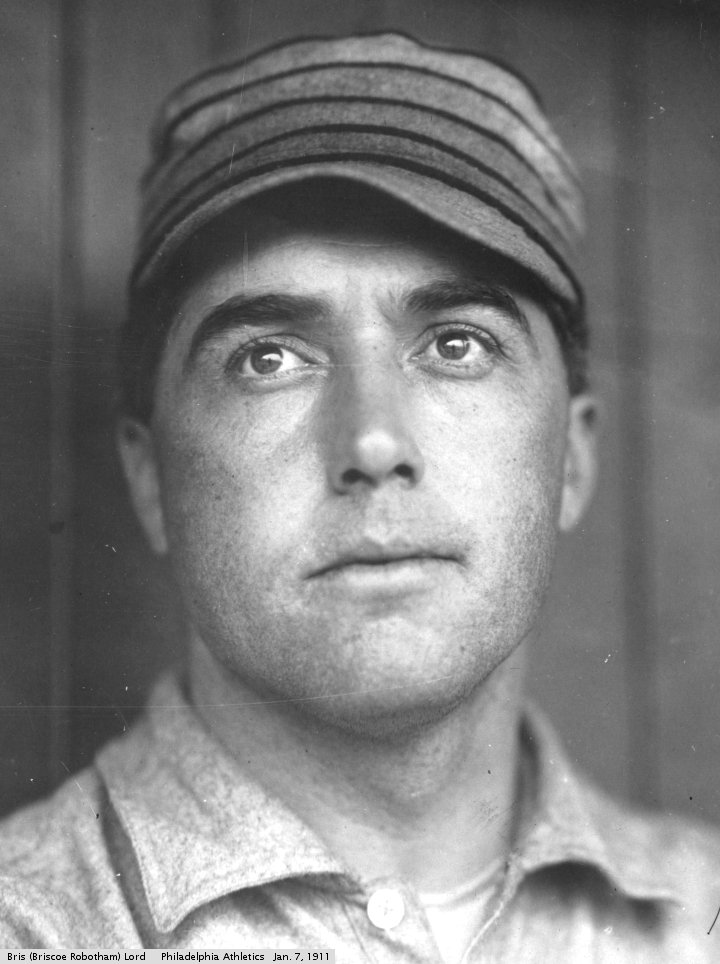
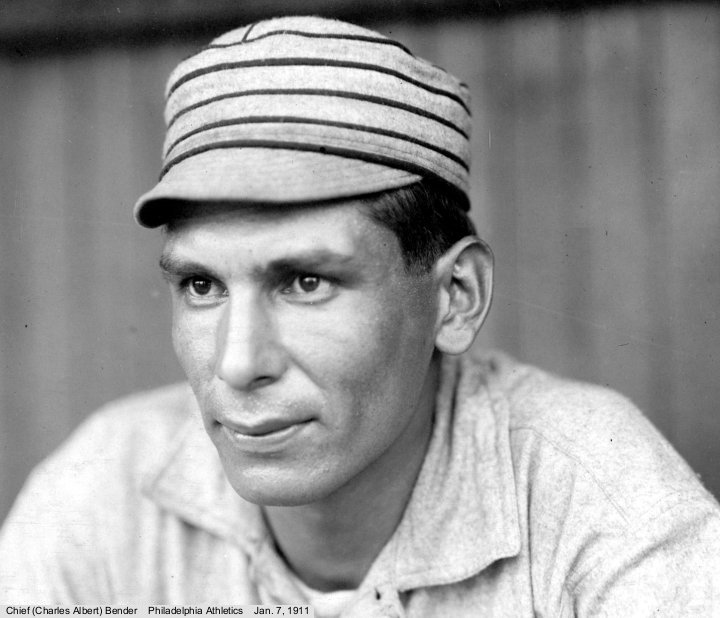

01. The film “Psycho” was the first movie to show a toilet flushing – the scene caused an inpouring of complaints about indecency.
02. Pomegranates studded with cloves were used as the first attempt at making toilet air-freshner.
03. In a 1992 survey, British public toilets were voted the worst in the world. Following quickly behind were Thailand, Greece, and France.
04. Hermann Goering refused to use regulation toilet paper – instead he bought soft white handkerchiefs in bulk and used them.
05. Over $100,000 US dollars was spent on a study to determine whether most people put their toilet paper on the holder with the flap in front or behind. 3 out of 4 people have the flap in the front.
06. King George II of Great Britain died falling off a toilet on the 25th of October 1760.
07. The average person spends three whole years of their life sitting on the toilet.
08. The first toilet cubicle in a row is the least used. (and consequently cleanest)
09. An estimated 2.6 billion people worldwide do not have access to proper toilet facilities, particularly in rural areas of China and India.
10. The Roman army didn’t have toilet paper. They used a water soaked sponge on the end of a stick.
11. The toilet is flushed more times during the super bowl halftime than at any time during the year.
12. 90% of pharmaceuticals taken by people are eliminated through urination. Therefore our sewer systems contain heavy doses of drugs. A recent study by the EPA has found fish containing trace amounts of estrogen, cholesterol-lowering drugs, pain relievers, antibiotics, caffeine and even anti-depressants. Modern urine is expensive.
13. Lack of suitable toilets and sanitation kills approximately 1.8 million people a year.
14. The toilet handle in a public restroom can have up to 40,000 germs per square inch.
15. While he didn’t invent the toilet, Thomas Crapper perfected the siphon flush system we use today. He was born in the village of Thorne – which is an anagram of throne.
Add.1-An amusing feature of the water closet is the tendency of people to die there. Elvis comes to mind immediately. There is some debate about this, as some say he was stricken on the throne, fell off, and perished on the floor. Judy Garland is also known to have met her maker while doing number two. Add.2- It seems that this is a real problem with older people that have constipation issues. When you are in delivery mode, and you push too hard, you can cause something called Valsalva’s maneuver. To make a long story short, all that squeezing can pinch the arteries going into the heart. This is not good for you. According to a commenter here, it is .06% of all deaths.
This is a repost from 2009, based on a Listserve article, 15 Fascinating Facts About Toilets. LS continues to produce fresh content in 2025. Pictures today are from The Library of Congress. The social media picture was taken January 7, 1911. “Bris (Briscoe Robotham) Lord, outfielder for the Philadelphia Athletics”. … Selah


Halabja



This material was originally published June 21, 2008. … “On March 13, 1988, Iraq used poison gas to kill thousands of people in Halabja (ha lahb jah). A largely Kurdish town near the Iranian border, Halabja was the scene of much resistance to the War that Iraq and Iran were waging. The United States was “tilting” towards Iraq in this conflict. When Iraq invaded Iran (probably with the encouragement of the United States), Iran was holding Americans hostage in Tehran. This was a source of much anger towards Iran, and would be one reason for America to support Iraq.” …
This material was originally published June 21, 2008. … “The support for Iraq took the form of financial aid, shared intelligence, and a blind eye to Iraqi use of weapons of mass destruction. After the massacre in Halabja, The United States blamed Iran. There is also the question of where Iraq got the poison gas. Saddam was executed before he could go to trial on charges related to Halabja. There is also evidence that Iran was involved. According to Libcom.org, “On 13 March 1988 chemical bombs were dropped on Halabja. No Pasdaran nor Peshmargan were killed.” …
This material was originally published June 21, 2008. … “The New York Times has an excellent piece on the massacre. A key quote: “Some of those who engineered the tilt today are back in power in the Bush administration. They have yet to account for their judgment that it was Iran, not Iraq, that posed the primary threat to the Gulf; for building up Iraq so that it thought it could invade Kuwait and get away with it; for encouraging Iraq’s weapons of mass destruction programs by giving the regime a de facto green light on chemical weapons use” …
This material was originally published September 11, 2006. … “On March 13, 1988, the city of Halabja in Iraqi Kurdistan was almost completely destroyed by the Iraqi armed forces using chemical weapons, supplied by the West. Around 5,000 people were killed at the time and many more more died from their injuries over the next few weeks. Halabja was not chosen arbitrarily as the site for such a massacre. It had been a major site of proletarian struggle against the Iran-Iraq war There was at least one deserter in every house, and sometimes four or five.” …
This material was originally published September 11, 2006. … “During 1987 the Iraqi government destroyed 45 villages around Halabja, using explosives to completely demolish all the houses. The inhabitants poured into Halabja, swelling the population to around 110,000. Almost all the young men in these villages had been deserters from the army. They were not just dropping out of the war but were always discussing ways of doing something against it. The influx of people led to a severe housing shortage and there were no jobs for most people. All the time there was talk amongst the unemployed about what to do about the war.” …
This material was originally published September 11, 2006. … “In 1987, three types of army existed in Halabja, in addition to the Iraqi army: a) Clan Armies … b) The Home Guard – This was by far the largest army. It was not uniformed and had very few weapons. It was the army that deserters joined … c) The Bounty Hunters – This was a small force which acted with extreme viciousness on behalf of the state. Their main function was to force deserters to join the Home Guard. After the massacre most of these scum went to Iran to do the same job for the Iranian state.” …
This material was originally published September 11, 2006. … “All the talk about stopping the government from destroying Halabja turned to action on 13 May 1987, when militants occupied the mosques and used the loudspeakers to call for the organisation of an uprising. Mosques were used because they were the most suitable buildings in which to hold mass meetings. This was ironic because for weeks before the priests had been giving a special talk after each Friday prayer meeting on… the evils of communist subversion! Almost the whole working clan population of Halabja was awake that night discussing and organising.” …
This material was originally published January 17, 2003 … This was at a time when Iraq was launching what proved to be the final battles of the war against Iran. Its wholesale use of poison gas against Iranian troops and Iranian Kurdish towns, and its threat to place chemical warheads on the missiles it was lobbing at Tehran, brought Iran to its knees. Iraq had also just embarked on a counterinsurgency campaign, called the Anfal, against its rebellious Kurds. In this effort, too, the regime’s resort to chemical weapons gave it a decisive edge, enabling the systematic killing of an estimated 100,000 men, women, and children.” …
This material was originally published January 17, 2003 … “The deliberate American prevarication on Halabja was the logical outcome of a pronounced six-year tilt toward Iraq, seen as a bulwark against the perceived threat posed by Iran. The United States began the tilt after Iraq, the aggressor in the war, was expelled from Iranian territory by Iran, which then decided to pursue regime change in Baghdad. Sensing correctly that it had carte blanche, Saddam’s regime escalated its resort to gas warfare, graduating to ever more lethal agents. Because of the strong Western animus against Iran, few paid heed. Then came Halabja.” …
This material was originally published January 17, 2003 … “The United States launched the “Iran too” gambit. … A State Department document demonstrates that U.S. diplomats received instructions to press this line with U.S. allies, and to decline to discuss the details. It took seven weeks for the UN Security Council to censure the Halabja attack. Even then, its choice of neutral language diffused the effect of its belated move. Iraq proceeded to step up its use of gas until the end of the war and even afterward, during the final stage of the Anfal campaign, to devastating effect.” … Pictures today are from Special Collections and Archives, Georgia State University Library. The social media picture was taken September 23, 1968. “Buck Owens promotional visit, Riviera Motel”




First They Came


In an early morning discourse, I said that Martin Niemöller was rolling in his grave looking for the royalties from his poem, “First they came…“.. For those of you with very short memories, here it is.
When the Nazis came for the communists, I remained silent; I was not a communist.
When they locked up the social democrats, I remained silent; I was not a social democrat.
When they came for the trade unionists, I did not speak out; I was not a trade unionist.
When they came for the Jews, I remained silent; I wasn’t a Jew.
When they came for me, there was no one left to speak out.
Friedrich Gustav Emil Martin Niemöller was the son of a Lutheran minister. In World War 1, he served on a U boat crew. Harold Marcuse tells this story: “Niemöller was a commander of a German U-boat in World War I. A seminal incident in his moral outlook, … occurred when he commanded his submarine crew not to rescue the sailors of a boat he torpedoed, but let them drown instead. “
After the war Mr. Niemöller became a Lutheran Minister. Mr. Niemöller was originally a supporter of Mr. Hitler, but became an opponent. Mr. Niemöller was imprisoned in Sachsenhausen and Dachau concentration camps from 1937 to 1945. After the war, Mr. Niemöller began to speak out. The famous poem was derived from these speeches. It was never written down in typical poet fashion. There are several versions of it from him, and many more as the years rolled by.
In addition to the four groups mentioned above, the Nazis also came for mentally ill, incurably ill, or people in occupied countries. The legend is that when asked if he included Catholics, Mr. Niemöller said “I never said it. They can take care of themselves.” When the McCarthy fever hit America, he declined to mention Communists. Maybe Mr. Niemöller was a pre-mature anti-facist. … If you have a few minutes to spare, the page that quote came from is worth looking at. It is still working in 2025.
With regard to the royalties, I could not see that it was ever copyrighted. I do not know who “owns the rights”. Some have even speculated that the poem was not composed by Mr. Niemöller.
There is the Rebel looking for a cause syndrome. Many people just want to fight about something, and the cause is secondary to the lust for battle. When a poem like this is used to fire up people for a shaky cause, it brings discredit to the poem. Elie Wiesel’s Always take sides is another example.
Then there is the matter of the “Next Hitler” argument. During the run up to the first war against Iraq, Saddam Hussein was routinely called the next Hitler. While this may be a valid argument at times, it often sounds like the boy who cried wolf. The “Next Hitler” argument is covered by Godwin’s Law. On August 13, 2017, Mike Godwin updated his law. @sfmnemonic “By all means, compare these shitheads to Nazis. Again and again. I’m with you.” Whatever dude.
In 2016, I published a poem, Then They Came. … first they came for the rich, i clicked like on facebook, then they came for #racists, i tweeted a #woke #hashtag, then they came for truth tellers, i gave my #thoughts&prayers, then they came for me. A person complained that I made this about “racists”. Which was my point.
Maybe a general moratorium is needed on the use of “First they Came…”. This is a repost from 2018. Pictures today are from The Library of Congress Russell Lee took the social media picture in August 1937. “Resident of Ericsburg, Minnesota”


Carolyn Bryant Donham

On August 24, 1955, Emmett Louis Till (ELT) went into Bryant’s Grocery & Meat Market, in Money MS. Later, the cashier, Carolyn Bryant Donham (CBD), falsely accused ELT of making improper advances. Four days later, fourteen year old ELT was brutally murdered by Roy Bryant, the husband of CBD, and JW Milam. This is the story I had always heard, and routinely accepted as the truth.
Recently, I saw a video that told a different story. In this version, a third party told Roy Bryant about the incident. More importantly, CBD never recanted her story. When The Blood of Emmett Till came out, news that CBD had recanted her story caused a sensation. The video had a screen shot of a newspaper article, with details about the non-confession.
“Timothy Tyson’s book on Emmett Till became a bestseller thanks to the bombshell quote he attributed to Carolyn Bryant Donham — that she lied when she testified about Till accosting her. Donham’s daughter-in-law, Marsha Bryant, who was present for the two tape-recorded interviews Tyson did with Donham, said her mother-in-law “never recanted. Adding to the intrigue is the fact the quote Tyson attributed to Donham isn’t on the recordings. … “It is true that that part is not on tape because I was setting up the tape recorder,” Tyson said.”
“Davis Houck, co-author of Emmett Till and the Mississippi Press, said if Donham is saying she didn’t recant in her interview with Tyson, “we’re left with a familiar story: a predatory black ‘man’ threatened to rape her on the evening of Aug. 24. “He sees two problems with that: Her court testimony differs greatly from her initial statement, where she said Till grabbed her hand, asked for a date, said goodbye and whistled. When Till’s killers arrived at Mose Wright’s house, (where Till was abducted) they asked for “the boy who did the talking at Money.” They didn’t ask for the one who touched Donham. If she indeed recanted, he said, “we are, at long last, asked to see her as a pawn in the defense attorneys’ strategy.”
A Justice Department investigation found no proof that CBD recanted her initial accusation. “Donham denied to federal investigators that she lied in her testimony, a source with knowledge of the case said, and there were inconsistencies with statements made by Tyson. … Tyson stood by his reporting, describing Donham as unreliable in an emailed statement.” It is possible that Timothy Tyson invented the story to sell books.
So what did happen at the store in Money, MS? “Emmett was left alone in the store for a minute or so with Carolyn Bryant, the white woman working the store’s cash register. … As Carolyn Bryant would later tell the story in a Tallahatchie County courthouse, Till asked her for some candy inside a candy counter. When Bryant placed the candy on top of the counter, Till grabbed her right hand tightly and asked, “How about a date, baby?” When Bryant pulled her hand free and started to walk away, Till grabbed her by the waist near the cash register and told her, “You needn’t be afraid of me, baby I’ve [slept] with white women before.”
“Till’s cousin, Simeon Wright, writing about the incident decades later, questioned Carolyn Bryant’s account. Entering the store “less than a minute” after Till was left inside alone with Bryant, Wright saw no inappropriate behavior and heard “no lecherous conversation.” Wright said Till “paid for his items and we left the store together.”
“There is, however, general agreement about what happened next outside the store. As Carolyn Bryant left the store and headed towards a car … Emmett whistled at her. Till’s cousin described it as “a loud wolf whistle, a big city ‘whee wheeeee!'” Till’s Mississippi cousins instantly knew that Till had broken a longstanding taboo relating to social conduct between blacks and whites, and that they were in grave danger. They quickly ran to their car and sped out of Money.”
The story about the *kid* from Chicago loudly whistling at CBD was a hot item in local conversations. Three days later,”Roy Bryant, Carolyn’s husband, returns to Mississippi after working on a shrimping boat in Texas. That afternoon, at the store, an African-American teenager tells Roy about the August 24 incident at the store involving Till and his wife. When he asks Carolyn about the incident, she urges her husband to forget about it. But he doesn’t. … To do nothing after hearing the story involving his wife, Bryant later told an interviewer, would have shown himself to be “a coward and a fool.”
“Sometime on Saturday August 27, plans fell into place to kidnap the offending black teenager and “teach him a lesson.” Bryant’s half-brother, John W. Milam, readily agreed to help. … According to historian Hugh Whitaker, who interviewed dozens of Mississippians who knew Bryant and Milam, the two “were invariably referred to as ‘peckerwoods,’ ‘white trash,’ and other terms of disappropriation.”
“Within the next few hours, Bryant and Milam somehow learned that the wolf-whistler was staying at the home of “Preacher” Moses Wright. At 2:30 a.m., a vehicle with headlights off pulled up in front of Wright’s home east of Money. … When Wright went to the door, the man identified himself as Roy Bryant and said that he wanted to talk to “a fat boy” from Chicago. Standing on the porch with Bryant were Milam and a black man, hiding his face, who (according to his own later admission) was Otha Johnson, Milam’s odd-job man. The men searched the occupied beds looking for Till. Coming to Till’s bed, Milam shined a flashlight in the boy’s face and asked, “You the niggah that did the talking down at Money?” When Till answered, “Yeah,” Milam said, “Don’t say ‘yeah’ to me, niggah. I’ll blow your head off. Get your clothes on.” Warning the Wrights they’d be killed if they told anyone they had come by, Milam and Wright ushered Till out of the house and to their parked vehicle. Standing on the porch looking out into the dark, Moses Wright heard a woman’s voice–possibly Carolyn Bryant’s–from inside the vehicle tell the abductors they had found the right boy. What happened over the next three or four hours is not known for certain.”
An FBI document has conflicting details. “After deciding to kill Till, they traveled to a cotton gin at Boyle MS and picked up a discarded gin fan there. Milam is quoted as saying “When we got to that gin, it was daylight, and I was worried for the first time. Someone might see us and accuse us of stealing the fan.” … “They took Till’s body to a bridge in a secluded area, affixed the gin fan to Till and threw him off the bridge, into the Tallahatchie River” … “Two blacks, who worked for the Milams, were part of the group that beat and killed Till. One of the blacks discovered Till wasn’t dead so the two blacks killed him and helped in the disposal of his body.” At any rate, ELT was murdered, the gin fan was tied to his body, and the body was dumped in the Tallahatchie River.
One surprising detail is the participation of Black men in the crime. “Two potential key witnesses, both blacks who allegedly assisted with the abduction and murder of Till, were unavailable to the prosecution. Both Leroy “Too Tight” Collins and Henry Loggins, who prosecutors assumed only to be missing, were actually being held under false identities in a jail in Charleston, Mississippi under orders of Sheriff H. C. Strider, who had thrown the full weight of his office behind the defense efforts.”
Today is the third of June. Did Billy Joe McCallister jump into the Tallahatchie River? “Ode to Billy Joe” is a made up story. Choctaw Ridge is nowhere near the Tallahatchie River. Wikipedia does have an interesting comment about the Tallahatchie Bridge. “The wooden bridge collapsed in 1972 after being set alight by vandals. It crossed the Tallahatchie River at Money, about ten miles north of Greenwood.” Money is where Bryant’s Grocery Store is. The name changed soon after the murder, and the store is now in dilapidated shape.
“To say that Bryant “made it all up” implies that she lied about the wolf-whistle, also. It is important to point out, however, that Till’s cousins — Maurice Wright, Simeon Wright, and Wheeler Parker — who witnessed the incident, were the ones who told the press about the whistle just days after it occurred. Bryant herself said nothing about the whistle publicly until the murder trial. Thus all news reports about the whistle up to the trial came directly from Till’s cousins.”
“But it was at the trial where Bryant added some sensational details that seemed to come out of nowhere, and this is where she lied. … Just five days after the murder, with her husband and brother-in-law sitting in jail, she told defense attorney Sidney Carlton a different story than the one she would tell in court three weeks later. Carlton’s hand-written notes make no mention of the more salacious parts. “Wednesday Aug. 24 about 7:30 or 8 P.M. (dark) boy came to candy counter & I waited on him & when I went to take money he grabbed my hand & said ‘how about a date’ and I walked away from him and he said ‘what’s the matter Baby can’t you take it?’ He went out door and said ‘goodbye’ and I went out to car & got pistol and when I came back he whistled at me—this whistle while I was going after pistol—didn’t do anything further after he saw pistol.’”
“Because Bryant’s story developed after Till’s death, it is clear the lies she told on the stand did not lead to murder but came later for the benefit of the jury in order to guarantee an acquittal. Also, Carolyn Bryant is not the one who told her husband about the store incident in the first place. He was out of town at the time but heard it three days after the fact from one of the young teens who was present at the store the night of the incident. … Carolyn only confirmed the incident to Roy after he confronted her. … Tyson told another detail about Bryant’s false story in a paper leaked online in 2014, saying it was concocted for her to use by defense attorneys and Bryant family members. For whatever reason, Tyson did not include this detail in his book. It is not on the notepad and presumably, is not on tape either.”
@GavinNewsom “His physical mannerisms are aggressive…I feel threatened by him.”-Marjorie Taylor Greene describing Rep. Bowman This is the kind of dangerous rhetoric that led to Emmett Till’s death. Everyone should call this out for what it is: blatant racism.” This type of overheated rhetoric is becoming common. It is based on a cynical version of a tragic history. It does not honor the memory of Emmett Till. “Everyone should call this out for what it is: blatant racism.”
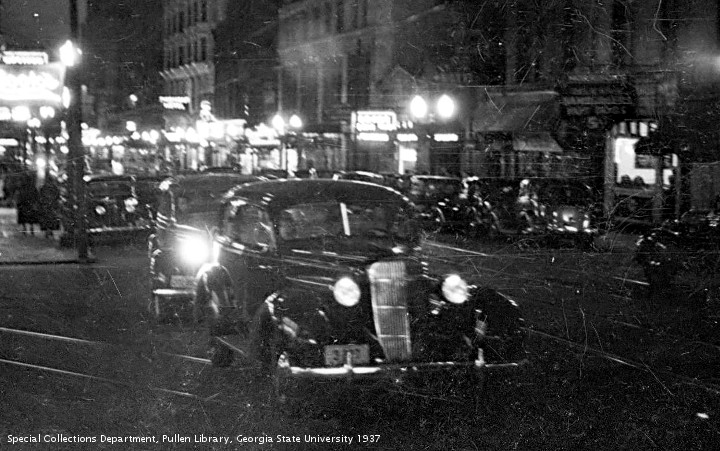
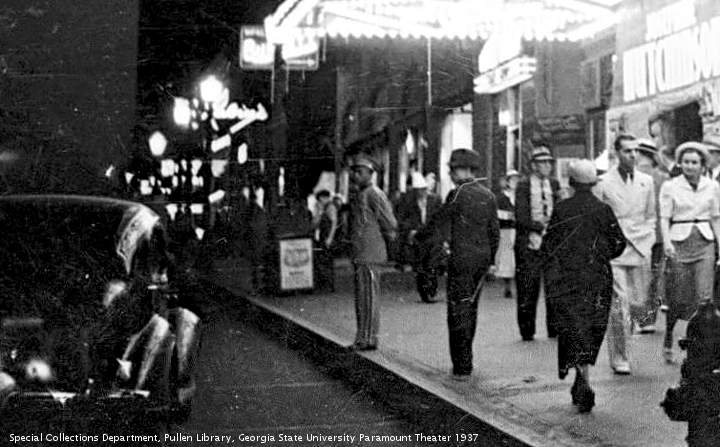
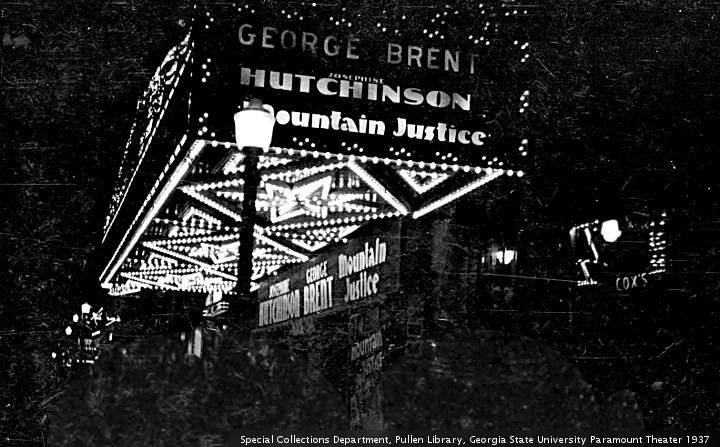
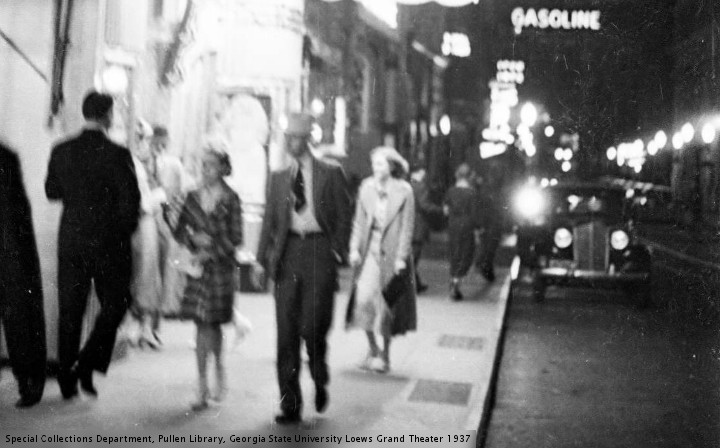
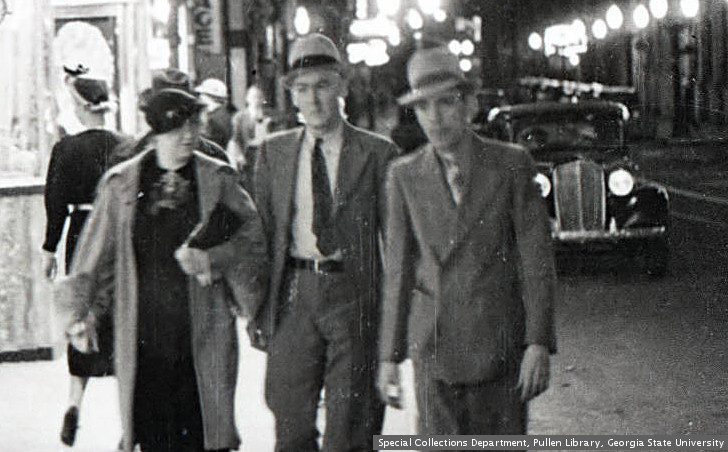
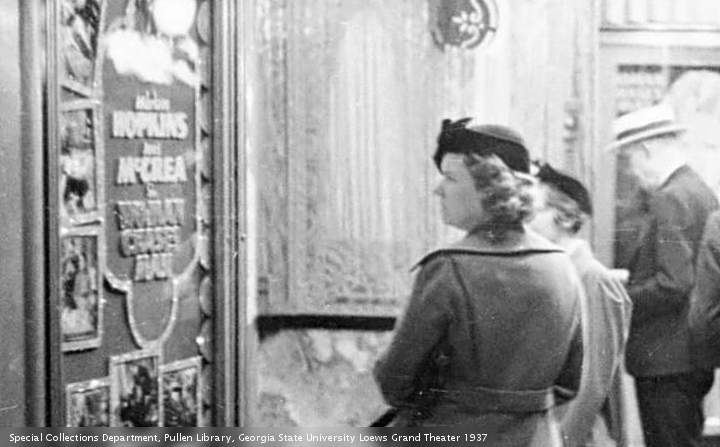
Pictures today are from Special Collections and Archives, GSU Library. The social media picture: “Peachtree Street at night, downtown Atlanta, Georgia, 1937.” This is a repost from 2023.


The Mess In Iraq


Content below was previously posted May 17, 2009. … Patrick Charles Eugene Boone will celebrate his 91st birthday June 1 … Pat Boone has had a long, profitable career. He is 75 years old. It might be time for him to retire. Or maybe he can do “cover” versions of gangsta rap. There is an article on WorldNetDaily, signed by Mr. Boone. … If you go to WND, you will get a full-screen popup warning of a computer virus … He makes three suggestions to President BHO. Mr. Boone observes that BHO did not serve in the military. According to wikipedia, neither did Pat Boone.
Content below was previously posted May 17, 2009. … There was a draft when Mr. Boone was 19, and the Korean War had just ended. If he had volunteered at 18, he might have seen some action. The first suggestion regards the pictures of torture. Mr. Boone uses a lot of buzz words, like “liberal media” and “Dan Rather and CBS”. Mr. Boone claims that the torture ended at Abu Ghraib. Documents recently released indicate otherwise. Mr. Boone claims that the corporal punishment his mother gave him was worse than what was done to prisoners at Guantanamo Bay. He also raises the red herring …
Content below was previously posted May 17, 2009. … Suggestion 3 is where Mr. Boone shows signs of dementia. He discusses the reluctance of BHO to publicly participate in the National Day of Prayer. This is compared with a proclamation issued by Abraham Lincoln in 1863. Before he gets to that, he drops this in: “But, scarcely into your presidency, you seem hell-bent to marginalize Christianity and this country’s Judeo-Christian foundation, allowing military chaplains to be harshly disciplined for praying in Jesus’ name and promoting a so-called “fairness doctrine” that is designed to squelch conservative and Christian radio hosts and to equate Holy Scripture with “hate speech.”
Content below was previously posted May 22, 2009. … Nibras Kazimi is a visiting scholar at the Hudson Institute in New York. He writes a blog, Talismangate. It is mostly about Iraq, and the mess it is in. He recently wrote about President Obama. It seems like BHO is going to make a speech to the Muslim world in June. He has chosen Cairo as the site. Mr. Kazimi does not think this is a good choice. The reasoning behind this teaches me a few things.
Content below was previously posted May 22, 2009. … The line in the west is that Cairo is a leading city in the Muslim world. According to Mr. Kazimi, this is not quite the case. The importance of Cairo is largely a product of British propaganda, during the time that Egypt was part of the British Empire. Another black eye for Egypt is the peace treaty with Israel, which was evident during the siege of Gaza last year. To many, Egypt is an ally of Israel. Damascus was suggested as another site for this speech. There are problems. The regime in Syria is brutal …
Content below was previously posted May 22, 2009. … Syria is the sworn enemy of Israel, which would not play well with BHO’s supporters back home. The good news is, Syria has taken in many refugees from the war in Iraq … many more than the United States. Mecca would be a good site for this speech, if BHO was not an infidel. President O is viewed with disdain in the Muslim world, with the escalation of the war in AfPak. Meanwhile, many in America believe BHO is a Muslim.
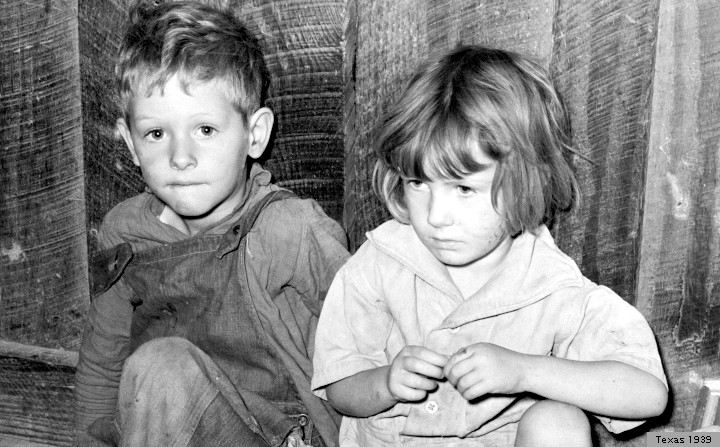
Content below was previously posted May 22, 2009. … Talismangate is an excellent source of information and confusion. You will read things that are not even hinted in the American corporate media. The English speaking reader will find many of the names difficult to fathom. (Nibras Kazimi is one of the easier ones) Every time I read an Iraqi Blog, I is a bit more confused. America has started something that will be very difficult to finish. … Talismangate is no longer published. Nibras Kazimi currently is known on X as @ImaraWaTijara. … Pictures today are from The Library of Congress. Russell Lee took the social media picture in March 1939. “Two children of family living on relief near Jefferson, Texas. These children did not attend school because of lack of warm clothes and indifference of mother who was sick with pellagra.”


Bob Dylan Drabble Birthday
Content below was previously posted May 24, 2024. … Hibbing MN is a cold place. At least it’s the birthplace of Robert Allen Zimmerman. That’s Allen, with an e, and double L, just like hell. He legally changed that to Bob Dylan, with no known middle name. The initials are BD. On May 24, 1941, the curly haired wonder boi arrived. Europe was in flames, and eyeing America as fresh cannon fodder. This was twelve years, eleven months, and eighteen days before I graced the planet. A twelve year old in Hibbing MN would have no reason to think of me.
Content below was previously posted May 24, 2024. … a decision was made to go to Nashville. Al Kooper played organ, and served as a music director. A bass player named Joseph Souter, Jr. would become famous a few years later as Joe South. Kris Kristofferson was the janitor. The second session started at 6pm and lasted until 530 the next morning. Mr. Dylan was working on the lyrics to “Sad eyed lady of the lowlands,” and the recording could not start until he was ready. The musicians played ping pong and waited. At 4am, the song was ready. …
Content below was previously posted May 24, 2024. … I met a lady once, who worked in an insurance office. One of the customers was Joe South. His driving record file was an inch thick. … Al Kooper had a life. The former Alan Peter Kuperschmidt produced the first three Lynyrd Skynyrd albums, sold that contract for a nice piece of change, and lived happily ever after. Mr. Kooper was playing a show. I sat in front of the stage. During a break between songs, I asked his friend “what time is it?”. Mr. Kooper heard me, and said it was 11:30.
Content below was originally posted May 28, 2010. … The first BD record that I got was “Blind Boy Grunt”. BBG was a bootleg, recorded in a New York hotel around 1961. … I saw BD with The Band at the omni in 1974, and was not impressed. I won tickets to see BD at the house of blues during the 1996 olympics, and could barely hear what he said, the sound was so bad. … Zimmerman is the birth surname of Ethel Merman. May 24 gave us Queen Victoria and Patti Labelle. On May 24, 1844, Samuel Morse sent the message ”What hath God wrought”
Content below was previously posted July 30, 2024. … “I think everybody’s mind should be bent once in a while. Not by LSD, though. LSD is medicine – a different kind of medicine. It makes you aware of the universe, so to speak; you realize how foolish objects are. But LSD is not for groovy people; it’s for mad, hateful orange haired people who want banana revenge. It’s for people who usually have heart attacks. They ought to use it at the Geneva Convention.” PLAYBOY: “Did you ever have the standard boyhood dream of growing up to be President?” DYLAN: “No. When I was a boy, Harry Truman was President; who’d want to be Harry Truman?”
Content below was previously posted July 30, 2024. … “The only thing I can tell you about Joan Baez is that she’s not Belle Starr.” … PLAYBOY: “Writing about “beard-wearing draft-card burners and pacifist income-tax evaders,” one columnist called such protesters “no less outside society than the junkie, the homosexual or the mass murderer.” What’s your reaction?” DYLAN: “I don’t believe in those terms. They’re too hysterical. They don’t describe anything. Most people think that homosexual, gay, queer, queen, faggot are all the same words. Everybody thinks that a junkie is a dope freak. As far as I’m concerned, I don’t consider myself outside of anything. I just consider myself not around.” …
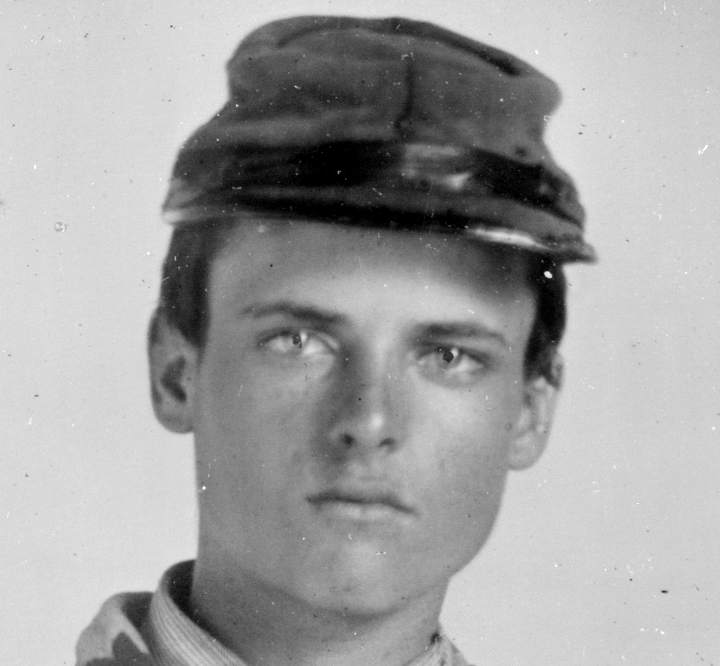
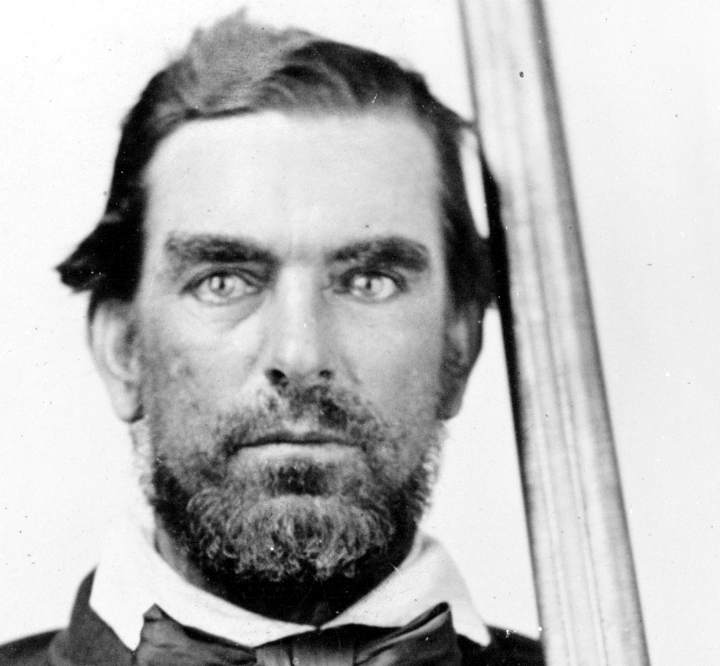
Content below was previously posted July 30, 2024. … “I go down to Dallas. I get a job as a “before” in a Charles Atlas “before and after” ad. I move in with a delivery boy who can cook fantastic chili and hot dogs. Then this 13-year-old girl from Phoenix comes and burns the house down. The delivery boy – he ain’t so mild. The next thing I know I’m in Omaha. It’s so cold there, by this time I’m robbing my own bicycles and frying my own fish. I stumble onto some luck and get a job as a carburetor out at the hot-rod races every Thursday night.” … Pictures today are from The Library of Congress. The social media picture: “Unidentified soldier in Confederate uniform with bouquet of flowers”


Why The War Between The States Was Fought


This was a repost from 2017. … Recently, Mr. Trump said something stupid about the War Between the States. After his comments began to filter into the marketplace of ideas, people began to react. There was a good bit of self righteous talk about how bad the Confederacy was. Maybe it is time for another point of view. This feature will have minimal research. Mistakes will be made. The reader is encouraged to do their own research.
When the colonies declared independence in 1776, nobody knew how things would turn out. First, Great Britain needed to be defeated. After that, the Articles of Confederation went into effect. “Under these articles, the states remained sovereign and independent, with Congress serving as the last resort on appeal of disputes. Congress was also given the authority to make treaties and alliances, maintain armed forces and coin money. However, the central government lacked the ability to levy taxes and regulate commerce …”
This arrangement was not working, and the Constitutional Convention was called. Originally, the CC was going to revise the Articles of Confederation, but wound up throwing the whole thing out, and creating the Constitution. This document called for greater federal authority. The issue of what powers to give to the states, and what powers to give to the central government, was contentious. It remains controversial to this day.
Had any group of autonomous states formed a federal union before? Usually, such a union is the result of a conquest, with one of the states ruling the others. It is unclear whether such a union had been attempted before, or how successful it was. When the “founding fathers” created the constitution, they probably did not foresee how it would play out. The current system, with a massive central government cat-herding the 50 states, would have been laughed off as a dangerous fantasy.
So the states start to have disagreements. One of the things they disagreed over was slavery. Yes, this was an important factor in the unpleasantness to come. Slavery influenced a lot of the economic conflicts. The North wanted high tariffs to protect industry. The South wanted low tariffs, so they could sell cotton to Europe. There were many other ways for the states to not get along.
Finally, in 1861, the disagreements became too big to ignore. The south seceded, and the War Between The States began. The Confederate States of America was a looser union than the United States. The thought was that the states were more important than the federal union. Mr. Lincoln disagreed. (One popular name for the conflict was Mr. Lincoln’s war.) Many people say that Mr. Lincoln was not especially concerned about the slaves, but wanted to keep the union together.
How does slavery enter into this? Imagine the conflict over states rights vs federalism to be an open tank of gasoline. The lit match that was thrown into that tank was slavery. When the winners wrote the war history, it sounded better to say that the war was fought to free the slaves.
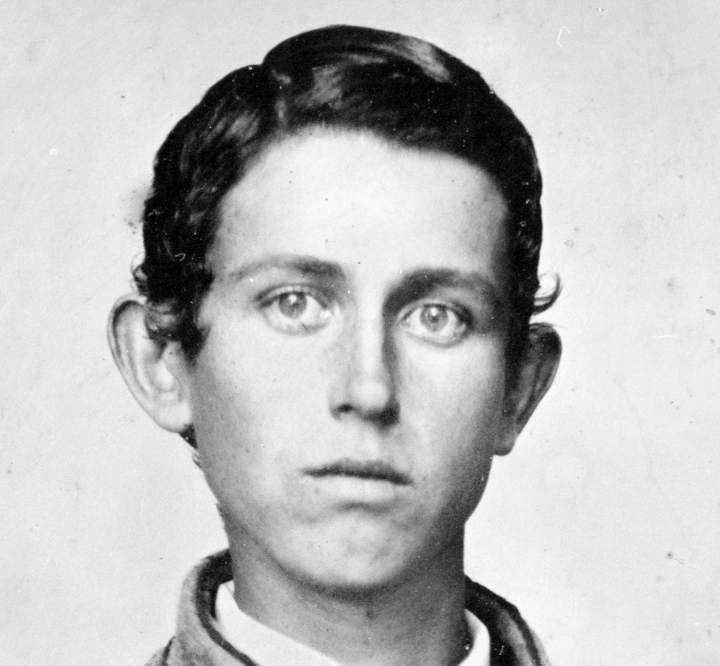
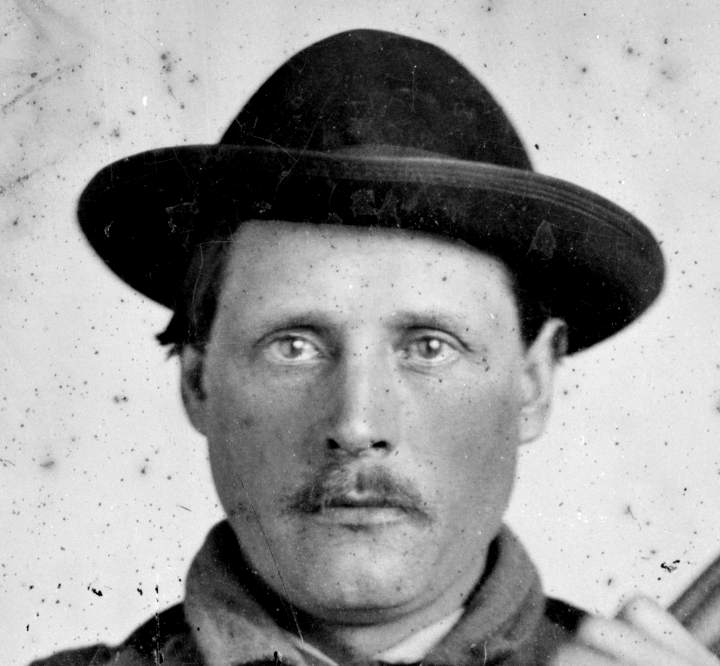
Pictures today are from The Library of Congress. The social media picture: “Unidentified young soldier in Confederate infantry uniform” … In 1865, the national debt was $2.6 billion.


Winston Churchill Said What



Another ghastly meme has surfaced on facebook. “When Winston Churchill was asked to cut arts funding in favour of the war effort, he simply replied, “then what are we fighting for?” The quote is not in the Churchill archive, which is either fifteen million documents, or fifteen million words. The authorities use the figures interchangeably.
The Telegraph has an article debunking the meme. It has a splendid sentence: “But that anecdote does not so easily play into the screeching rhetoric of today’s 140-character political ding-dongs.” There are also some lovely quotes from Mr. Churchill. 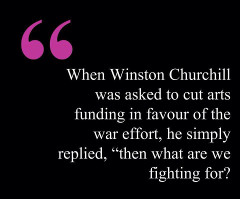 In 1937, Mr. Churchill spoke before the Peel Commission. It was discussing “partitioning British mandated Palestine into Arab and Jewish states.” At the time, Mr. Churchill was a minor figure in British politics, disgraced by his blundering in the Great War. The quote: “I do not agree that the dog in a manger has the final right to the manger even though he may have lain there for a very long time. I do not admit that right. I do not admit for instance, that a great wrong has been done to the Red Indians of America or the black people of Australia. I do not admit that a wrong has been done to these people by the fact that a stronger race, a higher-grade race, a more worldly wise race to put it that way, has come in and taken their place.”
Winston Churchill is quite the quote magnet. This is somehow fitting for a man whose most famous speech was read, on the radio, by an actor. There is a page on the internet devoted to times when he was falsely accused of saying something inspiring.
One of these stories is notable. “The only traditions of the Royal Navy are rum, sodomy and the lash… Churchill’s assistant, Anthony Montague-Browne said that although Churchill had not uttered these words, he wished he had.”
UPDATE: Sir Anthony Montague-Browne KCMG CBE DFC appears to have been a piece of work. He is acknowledged to be the illegitimate father of The Most Reverend Justin Welby Archbishop of Canterbury. Sir Montague Brown was the private secretary of Winston Churchill from 1953 until Churchill’s death in 1965. “As well as his duties as a chief of staff, Montague-Browne lunched and dined with Churchill and provided an opponent for his favourite card game, rubicon. He also accompanied Churchill on his trips abroad.” While it is possible that Monatague-Brown did ask Churchill about the quote, there is no solid documentation. It is also possible that Churchill was in decline, or drunk, and could not remember something he said in 1911.
“Montague-Browne confirmed this to Richard Langworth, one of the most respected Churchill biographers. In his great book about Churchill quotations and misquotes, Churchill by Himself: The Definitive Collection of Quotations, Richard Langworth says that Montague-Browne personally told him that he had asked Churchill about the quote. According to Montague-Browne, Churchill responded: “I never said it. I wish I had.” Langworth notes that “rum, sodomy and the lash” is similar to “rum, bum and bacca” — a catchphrase from an old saying about the, er, pastimes of British sailors, dating back to the 1800s.”
This is a repost, with pictures from The Library of Congress. The facebook picture: Captain William W. Cosby of H Company, 2nd Virginia Light Artillery Regiment.


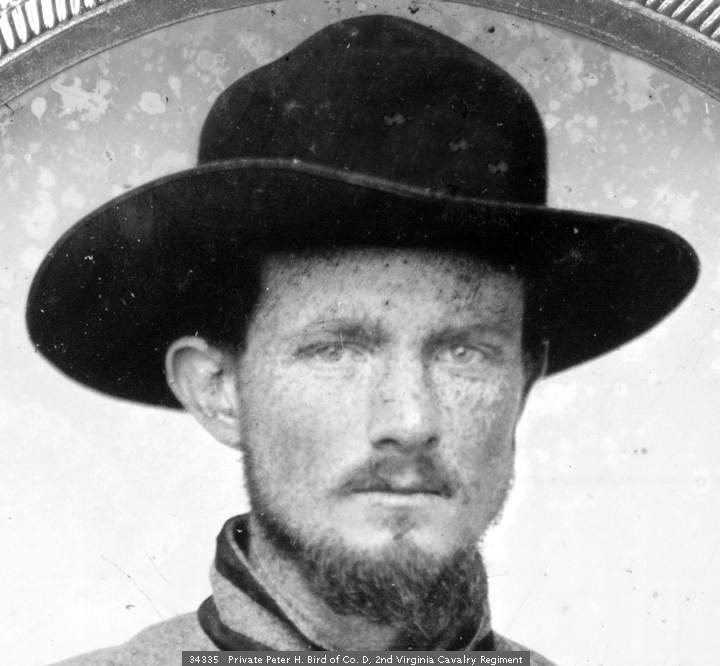

Always Take Sides
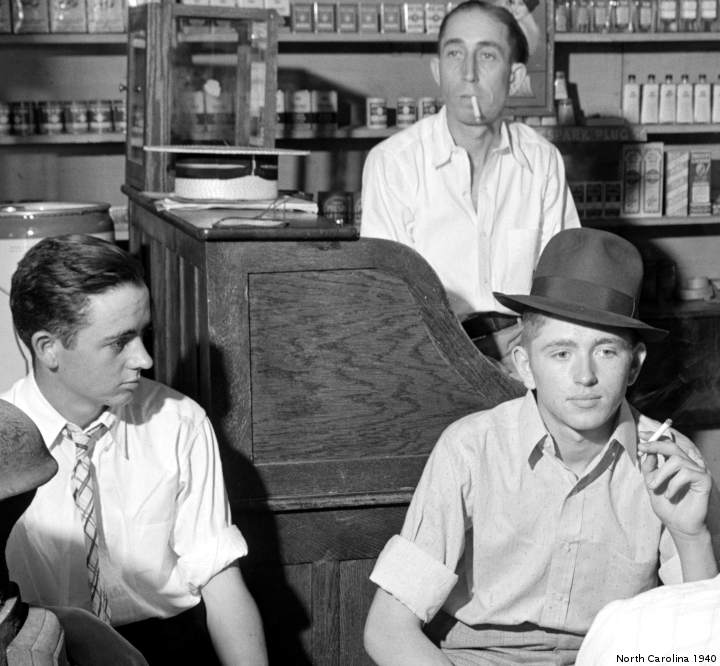
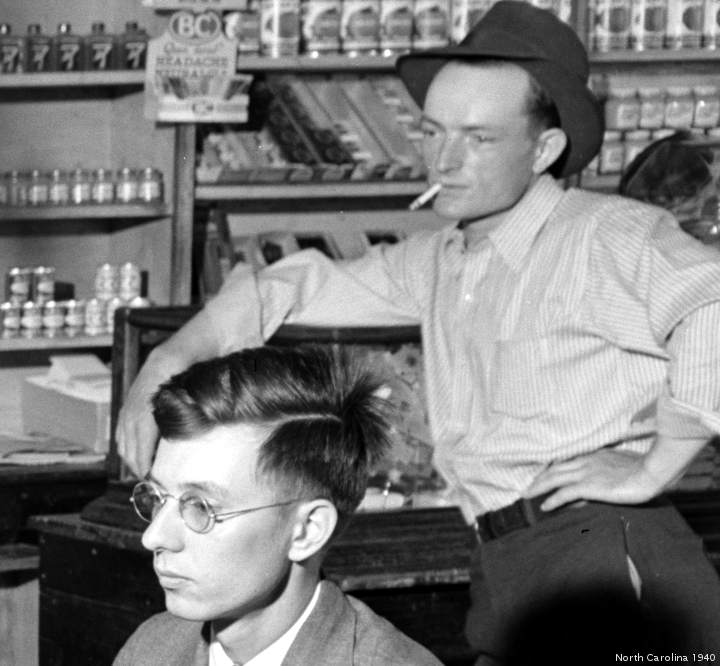

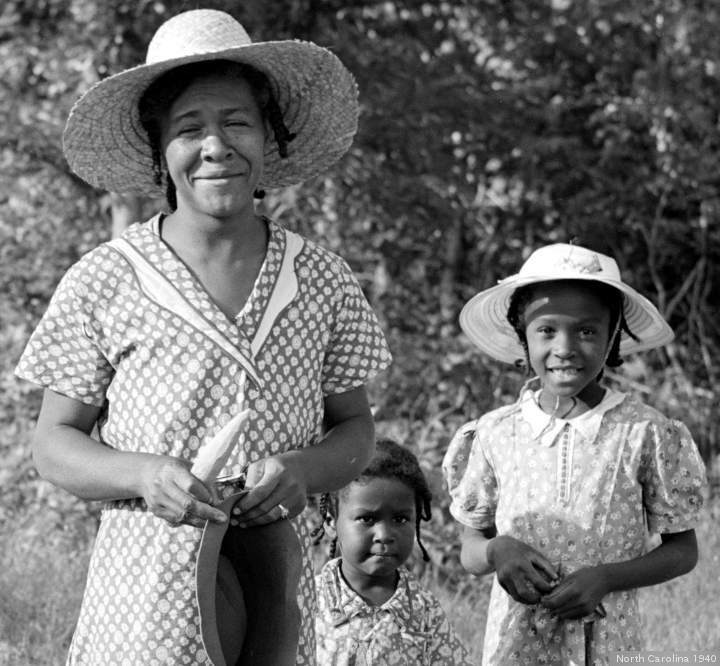
“Always take sides. Neutrality helps the oppressor, never the victim.” This meme, illustrated by the gnomic face of Elie Wiesel, turns up on facebook a lot. (Elie Wiesel is pronounced like Elly Mae Clampett) Some find it inspiring. Others think it is simplistic and manipulative.
There are two questions. Did Mr. Wiesel say that? What was the context? The quote appears in the acceptance speech for the 1986 Nobel Peace Prize. The next sentence is “Sometimes we must interfere.” We immediately go from the absolute always, to the conditional sometimes. That is progress, even if it does not fit on a bumper sticker.
“Elie Wiesel was born in Sighet, Romania, in 1928. … In May 1944, Wiesel was deported to the Auschwitz concentration camp along with his parents and his sisters. Wiesel and his father were slave laborers at Auschwitz. His father died in January 1945 during a forced march to another camp, Buchenwald, and his mother and younger sister were murdered as well. After the war, Wiesel moved to France, where he worked as a journalist.”
The Israel-Palestine problem was just as vexing in 1986 as today. Here is what Mr. Wiesel said in his speech. “More people are oppressed than free. And then, too, there are the Palestinians to whose plight I am sensitive but whose methods I deplore. Violence and terrorism are not the answer. Something must be done about their suffering, and soon. I trust Israel, for I have faith in the Jewish people. Let Israel be given a chance, let hatred and danger be removed from her horizons, and there will be peace in and around the Holy Land.”
Who is the oppressor in the Middle East, and who is the victim? Many sides can make a case for their cause. Who is the better at persuasion? Who is better at playing the shady game of influence, and money. Often, more noise encourages the tormentor. The answer to age old conflicts is seldom found in bumper stickers, or facebook memes.
“…to whose plight I am sensitive but whose methods I deplore.” “Always take sides” means that you pick one side in a conflict, and use the tools of rhetoric to promote that cause. It can be tough to tell the good guys from the bad guys. Human suffering is human suffering. Simplistic rhetoric is *never* the answer.
In 1986, the Iran-Iraq war was raging. Hundreds of thousands of men died. Many said the war was allowed to go on intentionally. Allegedly, if Iran and Iraq were not fighting each other, they would be fighting Israel. The United States was allied with Iraq, while making arms deals with Iran. Israeli dealers participated in the United States-Iran arms trading. The profits from those deals went to supply terrorists in Central America. “Sometimes we must interfere.”
Pictures today are from The Library of Congress. This is a repost.


Ira Hayes


This is a repost from 2010. … The post before this is about Arizona SB1070, a controversial measure dealing with illegal immigration. One of the men quoted is the Sheriff of Pima County, which lies on the border. The sheriff works 115 miles north of the border.
Pima County is named for the Pima Tribe, whose land was in Arizona and Sonora, Mexico. Their name for the “river people” is Akimel O’odham. According to Wikipedia, “The short name, “Pima” is believed to have come from the phrase pi ‘añi mac or pi mac, meaning “I don’t know,” used repeatedly in their initial meeting with Europeans.”
Many of the Mexicans crossing the border are Native Americans. They did not agree to the Gadsden Purchase, or the Treaty of Guadalupe Hidalgo. In other words, they were here first, and the white man (and black associates) are the uninvited guests.
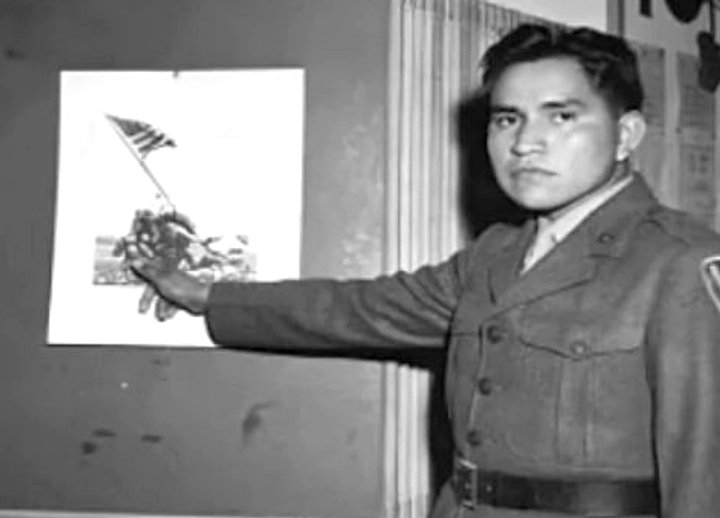
The second part of this feature is a repost from 2009. One of the best known Pimas was Ira Hayes. He was one of the Marines who raised the flag on Iwo Jima.
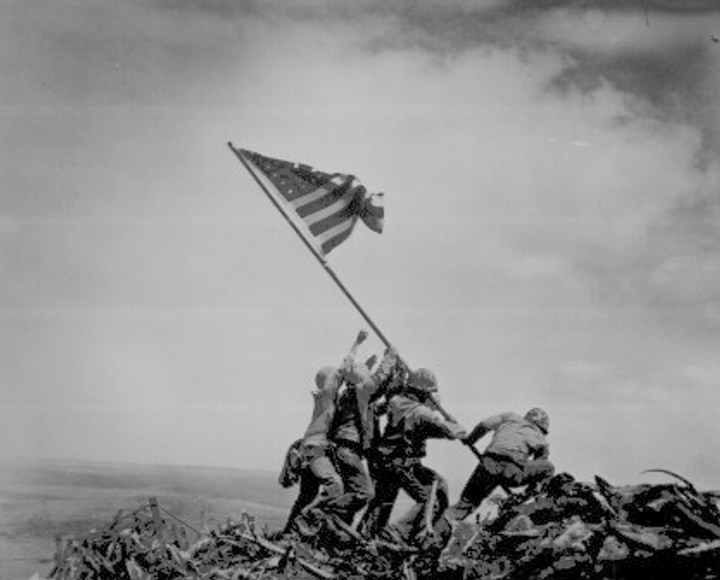
One of the enduring images of World War II was raising the flag on Iwo Jima. Three of the six men raising the flag died on the island. A fourth, Ira Hayes, became a casualty after the war.
The story of Ira Hayes is well known, but needs to be told again. A member of the Akimel O’odham (Pima) nation, his people had not been treated well by the conquerors. Nonetheless, when the War against Japan started, men were needed for the struggle, and Ira Hayes joined the Marines.
Iwo Jima was a steppingstone to the main island of Japan. After Iwo Jima and Okinawa were in Yankee hands, preparations could be made for the invasion of the main island. However, the stepping stone islands proved to be incredibly tough to secure. There were more American casualties on Iwo Jima than on D Day.
On the fourth day of the battle, a picture was made of six marines raising the flag on top of Mount Suribachi. A month of sticky, treacherous fighting was ahead for the fighting men. Of 21,000 Japanese soldiers, 20,000 died.
The flag was raised on February 23, 1945. Germany was all but defeated. The “explosive lens” for the atom bomb had been successfully tested. It seemed inevitable that the costly island hopping needed to continue, to be followed by an invasion of the Japanese mainland.
Two of the twelve hands holding the flagpole belonged to Ira Hayes. Ira Hayes did not adjust to peacetime well. He became a drunkard. On January 24, 1955, he passed away.
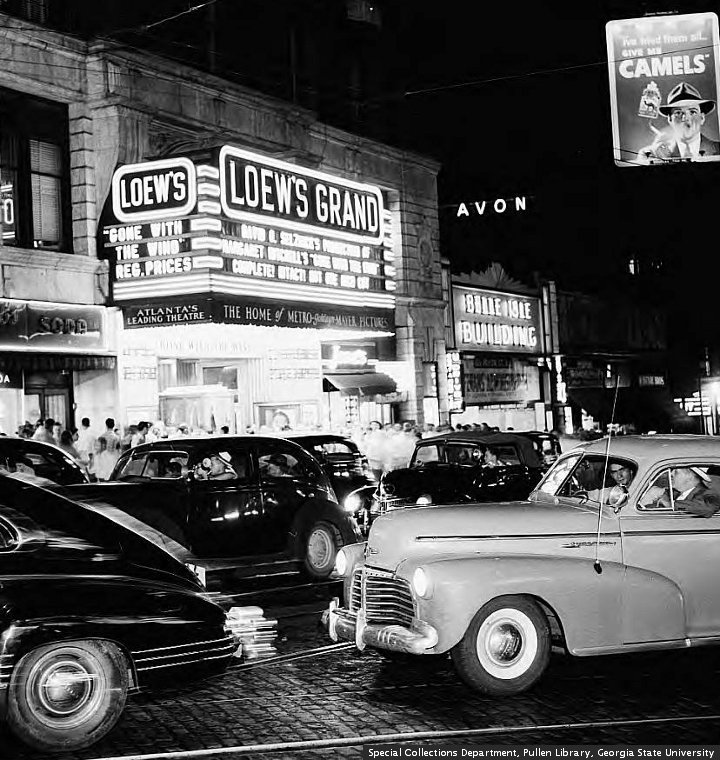
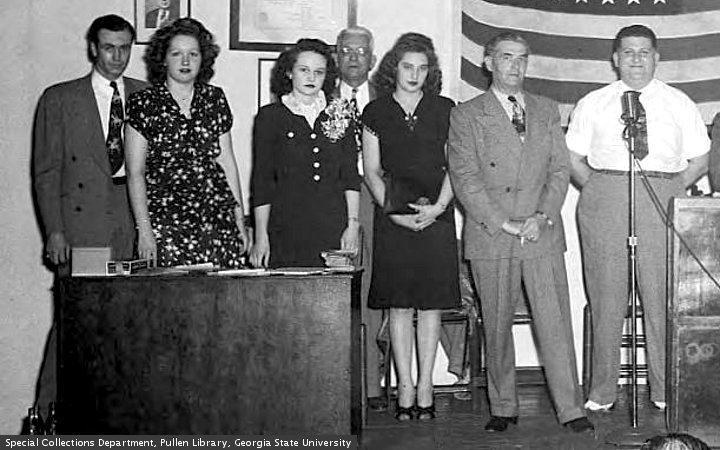
Thousands of Americans have returned from foreign wars, to be treated poorly. On Memorial Day, we should struggle to ensure that all future veterans are treated with respect, all year long. Pictures today are from Special Collections and Archives, Georgia State University Library. The picture on facebook was taken June 24, 1949. “Gone with the Wind” tenth anniversary”

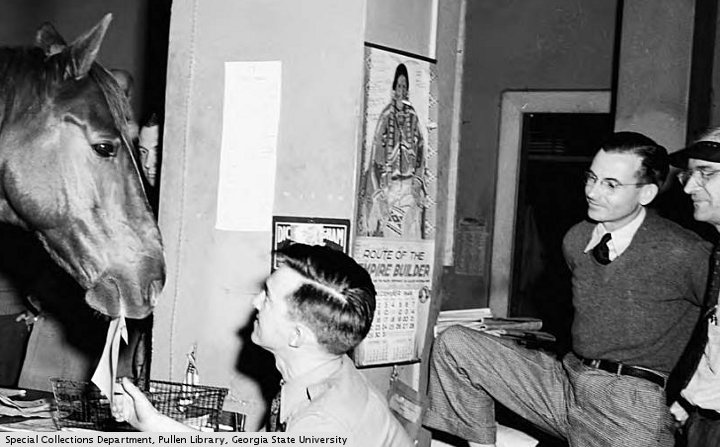
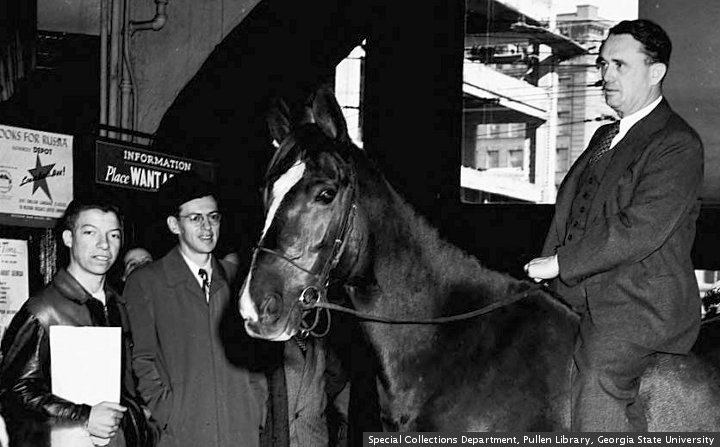
Truth About Opinions




Chamblee54 is normally a profanity free blog. However, for this piece, certain cuss words are essential to the free flow of information. In other words, IF YOU DON’T LIKE CUSS WORDS, YOU DO NOT NEED TO READ THE TEXT.
Once, when his blog was active, a radio whiner referred to a study, that said that one third of all people were not qualified to have opinions. This was said before a commercial break, without saying why this percentage should be without opinions. Possible reasons would be lack of education, inability to think critically, or a disturbing tendency to disagree with the person doing the study.
Opinion is derived from “opīniōn- (stem of opīniō), derivative of opīnārī to opine.” Opinion rhymes with rack and pinion, dominion, and virginian. The anagram of opinion is onion pi. The Power Thesaurus has 1,326 synonyms for opinion. Many are notoriously anal, like assumption. Or the sister of suppository, supposition.
“Opinions are like assholes, everybody’s got theirs.” The truth is, opinions have more in common with the waste that comes out of the anal sphincter, than the port of exit. Feces (thesis) is the product of food fed into the digestive system. Opinions are the result of information (and misinformation) fed into the thought system. Doodoo is influenced by the digestive system, like opinions are influenced by the attitudes, and thought patterns, of the individual. They all stink.
“Four Jews, Five opinions” is another crowd pleaser, like “You are entitled to your opinion.” The latter is usually said when you disagree with what you have just heard. When a Court of Law issues a ruling, it is called an opinion. Sometimes, a justice will write a dissenting opinion. When getting a provider to pay for a procedure, you often need to get a second opinion.
Opinions are frequently more valued by the giver than by the receiver. Some opinions are best kept to the owner. You should be wary of someone who feels that his shit does not stink, because he will usually feel the same about his opinions. You don’t have to have an opinion about everything. Many things are beyond or control, or do not interest you. Also, you should be wary of those who try to “fire up” your opinions. Often these people do not have the best of motives.
Opinions are seldom humble, no matter what the owner of the opinion might say. In fact, the act of holding an opinion is often self aggrandizing, and contrary to humility. Opinions are seen as a way of asserting ones individuality. Many people have lives of quiet desperation, full of struggle and turmoil. There are many situations where what the individual thinks is simply useless to the powers that be. In times like this, having opinions can restore a sense of self worth to the individual. I am somebody. I have my opinion. This does not mean that anyone is listening.
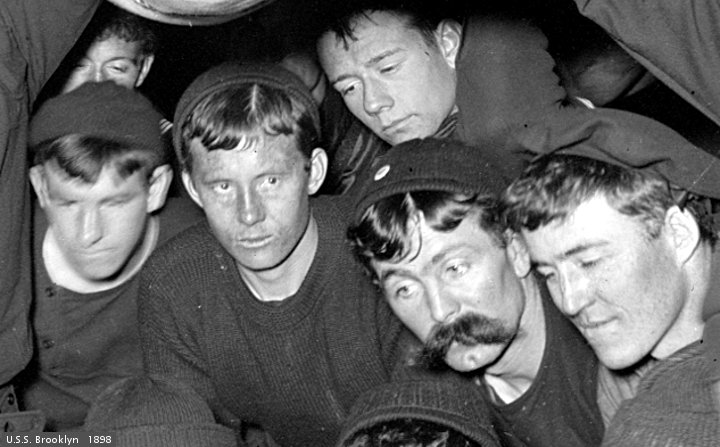
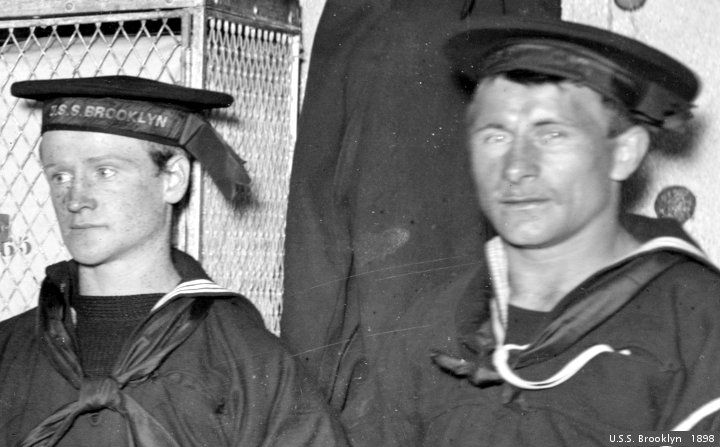
This is a repost with pictures from The Library of Congress. Edward H. Hart was the photographer, working for Detroit Publishing Co. “U.S.S. Brooklyn, after supper” The pictures, taken between 1896 and 1899, are more reliable than the text.


Letter To Darryl Cooper


Darryl I recently finished listening to Fear & Loathing in the New Jerusalem parts 1-6. I listened to part 7 shortly after October 7. I only listened to 1-6 after the Douglas Murray went on JRE to promote his new book. I have a few thoughts about this intense experience. If you could find the time to read this, I would be honored. I also plan to post this letter on my blog, chamblee54.WordPress.com, and at r/martyrmade. I have made 4 blog posts about listening to FLNJ. 041525 041825 042325 042625
We have never met in person. However, after listening to 22:54:47 of FLNJ, I do feel a connection. Listening to FLNJ is intense. I appreciate Douglas Murray’s reluctance to take this journey. This is the same person who said “So what. 30 plus hours of podcasting, you do that in a week”
The most obvious comment is about the insanity of forming opinions about Darryl Cooper based on a few comments on the Tucker Carlson show. FWIW, I disagree with the idea that Winston Churchill was the true villian of WWII. This was not the first time I had heard these ideas. For some bizarre reason, I read Pat Buchanan’s book a few years ago. I generally prefer fiction, and honestly don’t know what drew me to that book.
Winston Churchill is an actor in FLNJ. He was an enthusiastic supporter of Zionism, for whatever reason. I did do some digging into Mr. Churchill, and found a copy of his editorial Zionism Vs Bolshevism. I also found a quote: “As prime minister, in 1941, he proclaimed that “I was one of the authors” of Zionist policy. Indeed, among the lengthy catalogue of criticisms of Churchill was that “He was too fond of Jews.” My irony meter went crazy while listening to FLNJ.
There are many whatifs in the FLNJ story. One is the Ottoman Empire. What if OE had allied with the Allies, rather than the Central Powers? Or better yet, remained neutral. From my Wikipedia level view of history, it seems as though Germany simply made a better offer than France. That would have changed a lot of things.
Another missing link is the history of communism and Judaism. At one time, communism was seen as being a Jewish movement. Over the years, this evolved to the point where Israel is seen as being the enemy of communism. In the eighties, we heard a lot about the need to rescue Jews from anti-semitic persecution in the Soviet Union. How/when did this change take place?
On a related note, here is a quote from part two part two of the chamblee54 commentary. “While driving back, I heard the last few minutes of FLNJ-4. Darryl mentions something I had never heard before. At some point in this era, the United States and Great Britain restricted Jewish immigration. Darryl says the fear was about communist revolutionaries coming into the country. At this time, most of the Bolsheviks were Jewish, and the Russian revolution was seen by many as a Jewish revolution. When I try to find out more about this, the only google results are to sources concerned with anti-semitism or the holocaust. Any information about communism being a motivation for restricted emmigration is are very difficult to find.”
FLNJ-5 and FLNJ-6 are difficult to listen to. There are a lot of things I had never heard about that era. The Arab rebellion, the Zionist terrorism against the British mandate, the dirty business of getting the UN to approve the partition were all new to me. While I had knew that the Nakba existed (contrary to what some propagandists tell you today) I had no idea about the details. There is a saying about making laws and making sausages … you don’t want to be there when either one takes place. The same thing could be said about “nation building.” God is in the details, or maybe it is the Devil.
It is obvious that a 2016 show about Israel/Palestine is going to sound very different in 2025. It is a fitting irony that one of the last things you mentioned in FLNJ-6 was the quote from Refaat Alareer. “Sometimes a homeland becomes a tale, We love the story because it is about our homeland, and we love our homeland even more because of the story.”
On December 7, 2023, Dr. Alareer “was killed by a strike in Shajaiya, in northern Gaza … He was staying with his brother, his sister, and her four children, who were also killed.” Shortly before his death, Dr. Alareer had been in a twitter squabble with Bari Weiss. The IDF saw this as sufficient reason for a targeted assassination.
Anyway, thank you for the hard work you put into FLNJ. It took me 13 days to listen to it. If listening causes this much brain damage, I can only imagine how tough it would be to create those 23 hours. Thank you. … Pictures today are from The Library of Congress. Jack Delano took the facebook picture in December 1942. “Chicago IL An unusually heavy fog in the early afternoon”


 Chamblee54
leave a comment