White Privilege Is






This content was published March 13, 2015. … As with so many blogging misadventures, it started with a tweet. @BougieBlackGurl “White privilege is when White people like Joe Scarborough, Mika Brzezinski & Bill Kristol blame Black people for Whites being racist.”
Let us break this down. Since I do not watch tv, this is going to be tough. This has something to do with a handful of OU fratbois. They had the bad judgement to be video recorded singing the n-word, among other delicacies, on a train. Some “White people” went on a tv show, and made a connection between rap music and the fratboi video. When BBG gets her hands on it, we have “…blame Black people for Whites being racist.”
Since when do three talking air heads speak for 254m white people? Ok, so someone with pale skin said something dumb on tv. Now, you have the latest definition of “White privilege.” At what point do the concepts of privilege and racism cease to mean anything?
The seminal tweet was sent out two days ago. By now, it is probably obsolete. In those two days, the national debt increased by an estimated $2.6b. An estimated 13 metric tons of Global Carbon Emissions joined the atmosphere. There are many other issues more important than the singing of idiot fratbois, but not as much fun to talk about.
The figure on the national debt is based on an article at Forbes magazine. The title: Stop And Smell The Roses: Final 2014 Federal Deficit Fell … Big Time. The figure quoted above is based on the lower of the two numbers in this quote. “As the report shows, the actual 2014 deficit was $483 billion, $3 billion less than what the Congressional Budget Office estimated a week ago. For the record, $483 billion is $197 billion below the almost $680 billion deficit recorded in 2013. It’s also $930 billion, that is, close to $1 trillion, less than the largely recession-caused $1.4 trillion deficit in 2009.” As Malcolm X said “”If you stick a knife nine inches into my back and pull it out three inches, that is not progress.” Malcolm X will make another appearance in this post.
Bougie Black Girl does not promote herself as a statistician or scientist. “I’m a African American woman who loves to empower Black women” Her twitter product today is mostly concerned with Creflo Dollar, who is certainly a worthy target.
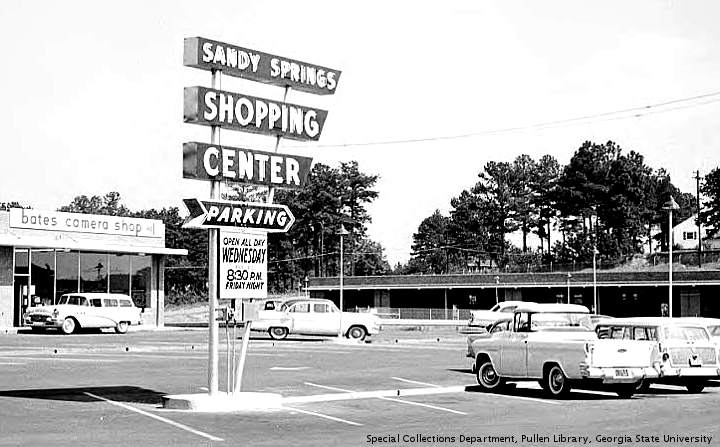
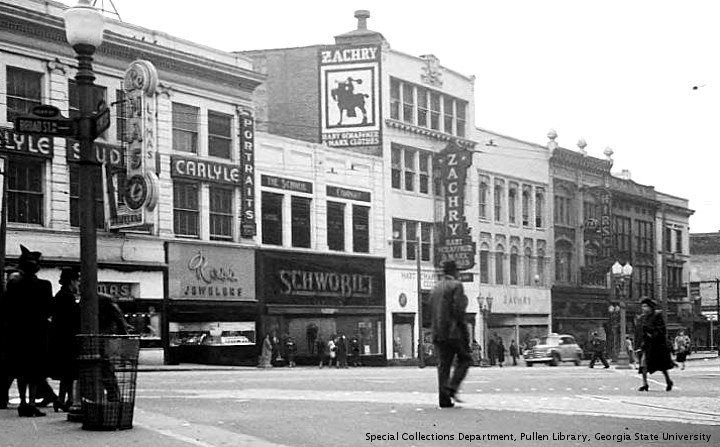
The fun starts at her website. Get Your Malcolm X with a cameo appearance from Martin Luther King Jr. prepaid Mastercard/Visa cards · 30 Light skin Privileges Light Skin Blacks have that Dark Skin Blacks Don’t · UPDATE!!! Two White QVC hosts mock a Black Woman’s natural hair and humiliate her on TV. (Video) … Pictures today are from Special Collections and Archives, Georgia State University Library The social media picture was taken January 11, 1956. “Peachtree Street”
©Luther Mckinnon 2026 · selah





Slavery And Global Warming




This content was originally posted March 11, 2012. … Have you ever wondered why your ancestors owned other human beings? How can you justify something this cruel? In an NPR interview to promote 1861: The Civil War Awakening, author Adam Goodheart has an answer.
“But I think we think of it differently when we realize that the value of slave property, some $4 billion, enormous amount of money in 1861, represented actually more money than the value of all of the industry and all of the railroads in the entire United States combined. So for Southern planters to simply one day liberate all of that property would have been like asking people today to simply overnight give up their stock portfolios, give up their IRAs.”
Mr. Goodheart compares it to the situation today with fossil fuels. “Many of us recognize that in burning fossil fuels we’re doing something terrible for the planet, we’re doing something terrible for future generations. And yet in order to give this up would mean sort of unraveling so much of the fabric of our daily lives, sacrificing so much, becoming these sort of radical eccentrics riding bicycles everywhere, that we continue somewhat guiltily to participate in the system. And that’s something that I use as a comparison to slavery, that many Americans in the North, and even I believe sort of secretly in the South, felt a sense of guilt, felt a sense of shame, that knew that the slave system was wrong but were simply addicted to slavery and couldn’t give it up. “
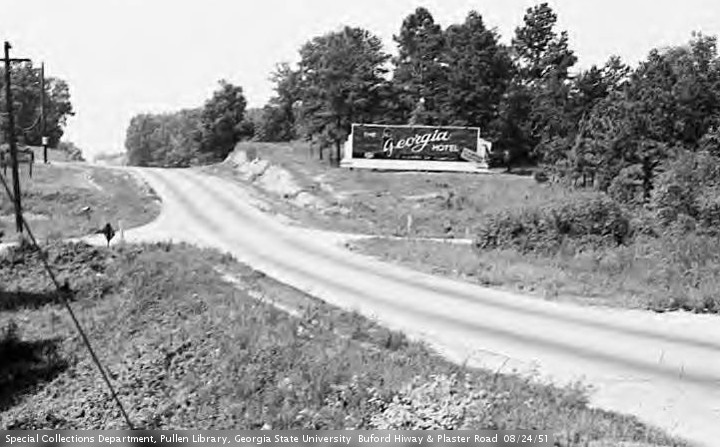
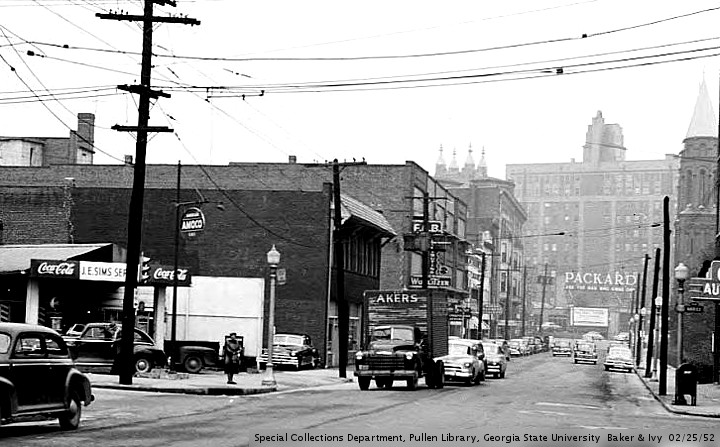
When the economic pressure is there, people will find a way to justify their actions. Slavery was justified in a number of ways. Today, there are people who deny the ill effects of using fossil fuels, and they have an eager audience. The payback for the environmental horror is in the future. This is similar to the way people today are paying … with racial turmoil … for slavery. Pictures today are from Special Collections and Archives, Georgia State University Library. The social media picture was taken August 24, 1951. ©Luther Mckinnon 2026 · selah
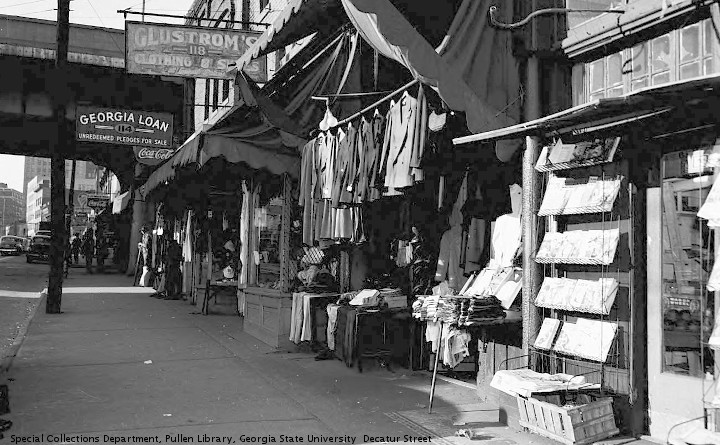

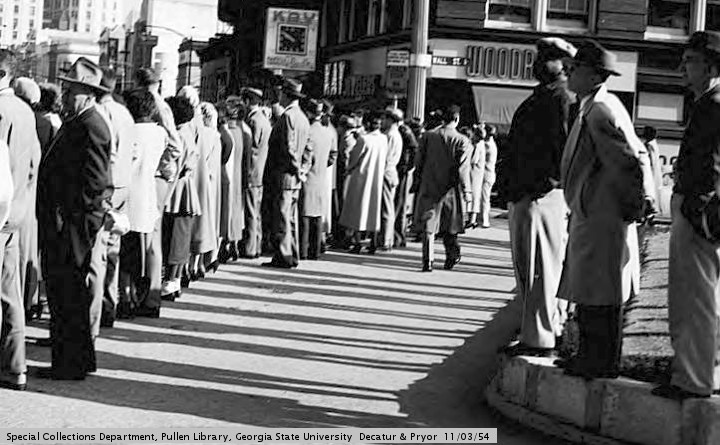



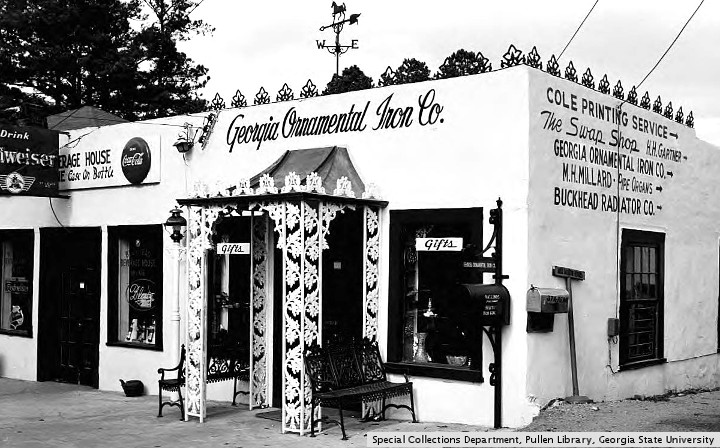
Why Did The Cow Cross The Road?






Why did the cow cross the road? The chicken was on vacation.
Knock knock. who’s there? boo. boo who?. Don’t cry it’s only a joke…
It’s six of one, half a dozen of the other.
A man walks up to a horse and says, “Why the long face?”
Two pretzels were walking down the street. one was a salted.
“He who laughs last thinks slowest.”
“Raise your hand if you’re here.”
Two nuns walk into a bar; the third one ducks.
Q: What did the radio say when it was dropped? A: “Ow. That hertz.”
What did the ranch say to the refrigerator door? “Close the door, I’m dressing”
Why don’t blind people skydive? It scares the heck out of their dogs…
What did the fish say when it ran into a wall? dam.
“I see.” said the blind man as he peed into the wind… “It’s all coming back to me now.”
What’s the last thing to go through a bug’s mind when it hits the windshield? Its butt.
You can tuna guitar, but you can’t tuna fish.
What do a duck and a bicycle have in common? They both have wheels… except the duck.
What’s brown and sounds like a bell? DUNGGGGG.
What’s brown and sticky? A stick
When people ask the mortician what he does for a living, he says he is a “boxer”.
What did the shy pebble say?… I wish I was a little boulder! .
What do you call an arrogant criminal falling out of a tower? Condescending.
Two guys walk into a bar… you would think the second guy woulda ducked.
A woman walks into a bar holding a duck. Bartender says, “What’s with the pig?”
Woman says, “It’s a duck.” Bartender says, “I was talking to the duck.”
Why do flamingos always lift one leg when they’re standing?
Cause if they lifted both, they’d fall over!
Q: How many Surrealists does it take to change a lightbulb? A: To get to the other side.
Did you get a haircut? Actually, I got them all cut.
One mushroom said to another mushroom, “Hey – you’re one Fungi!”
What do you call an arrogant criminal falling out of a tower? Condescending.
A dyslexic man walked into a bra …
Q: What do you call a midget, psychic, prison escapee? A: A small medium at-large.
A mule walks into a bar. The bartender says, “Hey, buddy, why the long face?”
“Because my dad is a jackass.”
I have one about the roof but its over your head.
Shall I tell you the one about the skunk? Never mind, it stinks!
There’s nothing like a good joke… and that was nothing like a good joke.
A rabbi, nun, lawyer, mime, and horse all walk into a bar.
The bartender says, “What is this, some kind of joke?”
When’s the best time to eat reindeer meat? …. When you’re hungry.
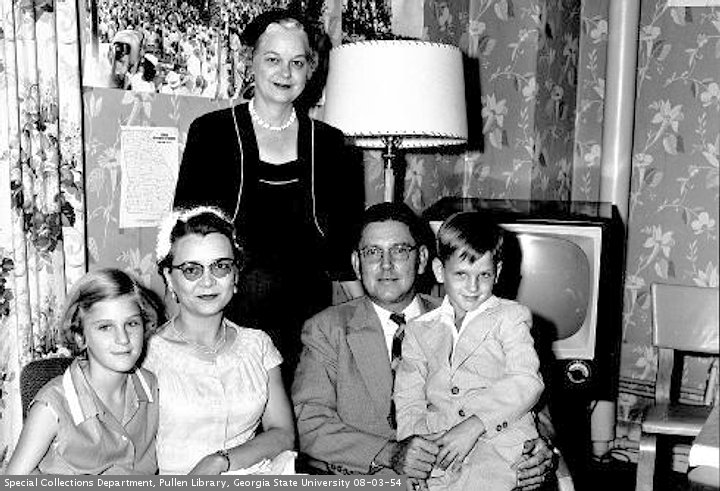
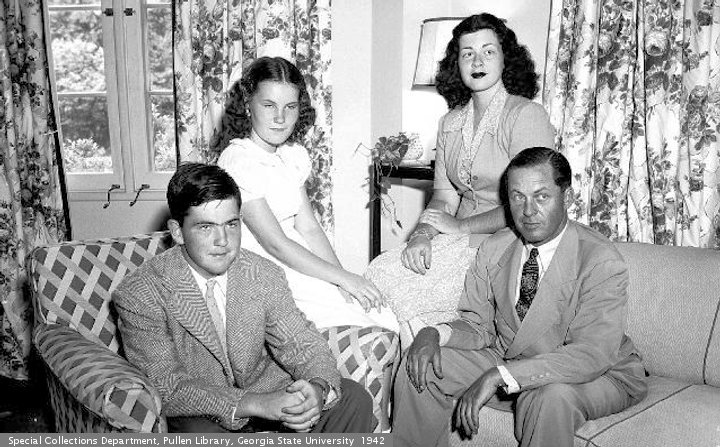
These stories are borrowed from 22 WORDS. Visit @22Words at your own risk. Pictures are from Special Collections and Archives, Georgia State University Library. The featured photograph was taken August 3, 1954. “Fred Hand family” This is a repost.


BVD


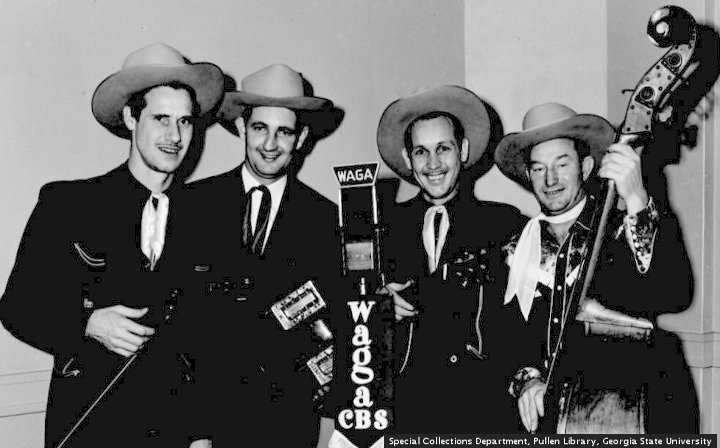
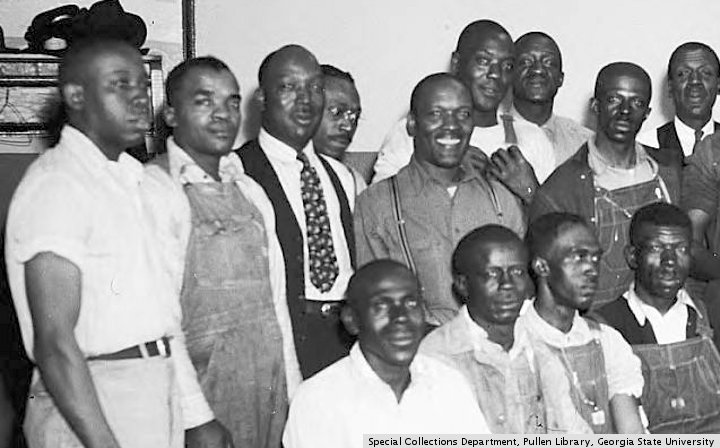
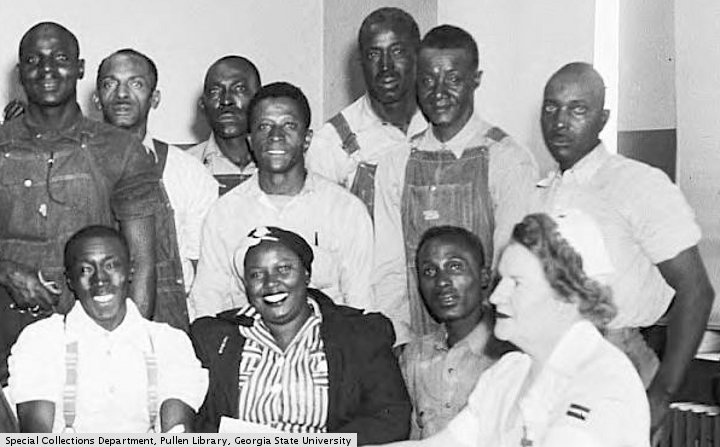
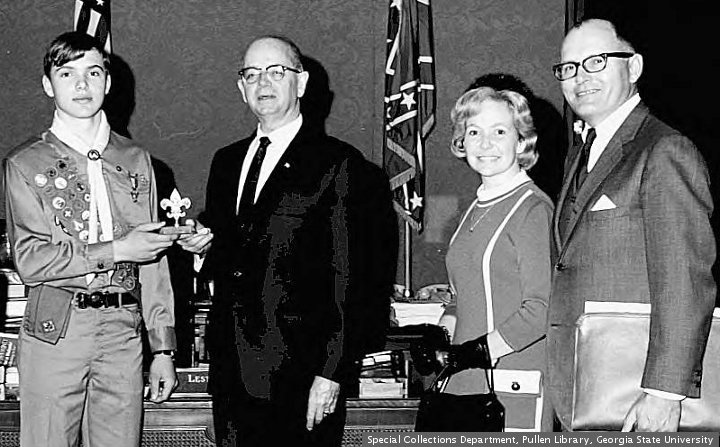
This content was originally posted March 22, 2013. … Spencer Tracy’s second rule for acting is to not trip over the props. This might be a problem for Jon Hamm. In a bit of slow news day genius, his show leaked the information that the actor has been requested to wear underwear on the set. A rep for Mr. Hamm said: “It is ridiculous and not really funny at all. I’d appreciate you taking the high road and not resorting to something childish like this that’s been blogged about 1,000 times.”
This was an issue when Tallulah Bankhead was making “Lifeboat”. Other performers complained about the thespian not wearing panties. Director Alfred Hitchcock wondered if this was a matter for wardrobe, or a matter for hairdressing.
This concern about foundation garments, conveniently arising during the pre-easter shopping season, made me wonder when men started to wear drawers. Could this be the result of manufacturers inventing demand for a product? Wikipedia says the loincloth is thousands of years old. A footnote, about the invention of the jockstrap, led to an English article, A brief history of pants: Why men’s smalls have always been a subject of concern.
“In 1935, the first Jockey briefs went on sale in Chicago. Designed by an “apparel engineer” called Arthur Kneibler (working at the time for Coopers Inc), the arrival of the first underpants denuded of any legs and featuring a Y-shaped opening has been compared with the 1913 invention of the bra, or the 1959 debut of tights. … Coopers, now known as Jockey International, sent its “Mascul-line” plane to make special deliveries of “masculine support” briefs to retailers across the United States. When the Jockeys arrived in Britain in 1938, they sold at the rate of 3,000 per week.”
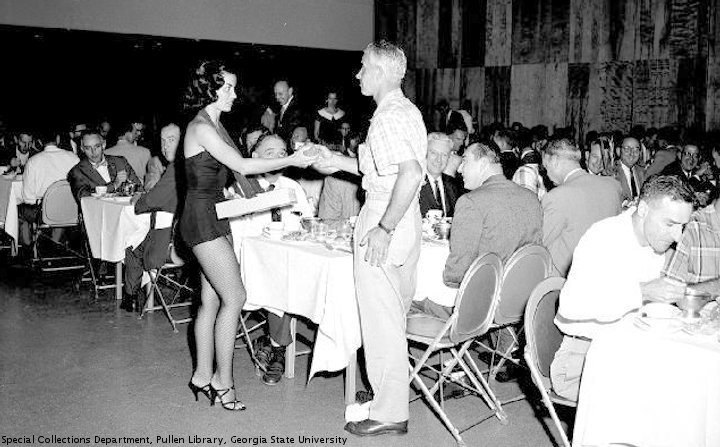
One popular brand of underwear is the BVD. This was originally made by Bradley, Voorhees & Day, hence the name. BVDs are not named for Bovine Viral Diarrhea. Pictures today are from Special Collections and Archives, Georgia State University Library. The social media picture was taken April 30, 1951. “War Bond luncheon” ©Luther Mckinnon 2026 · selah




Fifteen Minutes



This content was posted February 22, 2025. … Andy Warhol is quoted as saying that “in the future, everyone will be famous for fifteen minutes.” If a celebrity is getting tiresome, people will wonder when their fifteen minutes will be up. After hearing about fifteen minutes my entire life, I began to wonder if Drella really said that. If you can’t be cynical about Andy Warhol …
Wikipedia is a good place to start. “In the future, everyone will be world-famous for 15 minutes” … appeared in the program for a 1968 exhibition of his work at the Moderna Museet in Stockholm, Sweden. Photographer Nat Finkelstein claimed credit for the expression, stating that he was photographing Warhol in 1966 for a proposed book. A crowd gathered trying to get into the pictures and Warhol supposedly remarked that everyone wants to be famous, to which Finkelstein replied, “Yeah, for about fifteen minutes, Andy.” Nat Finkelstein was a sketchy character, in the Warhol tradition. His version is suspect. The Swedish museum part is real.
“Andy Warhol’s first European museum solo show took place at the Moderna Museet in Stockholm from February through March 1968. Pontus Hultén curated the exhibition together with Olle Granath. The exhibition came with a catalogue that was, like the show, named ‘Andy Warhol’. Kasper König, who worked for the Moderna Museet as an intern of sorts in New York, developed a basic concept for the book. … After Warhol had given his approval to this first proposal, König proceeded to create a dummy. … When König returned his dummy to the Factory, Warhol scrutinized it carefully but made only a small number of changes. Contrary to what Warhol wanted to be popular belief, those who produced input at the Factory were carefully monitored. … The final edits on the dummy were made in Stockholm by Olle Granath. He compiled a small selection of Warhol quotes and aphorisms from a stack of books and clippings collected by Hultén and placed them in the book as an introduction before the image sections.”
““Sometime in the autumn of 1967, Pontus Hultén called and asked me if I (Olle Granath) could help him and the Moderna Museet to organize an Andy Warhol exhibition that was due to open in February…. An important part of the exhibition was the production of a book. It was not supposed to be an analytical catalog of Warhol’s work, but a book that conveyed his aesthetics without heavy texts. … One day, Pontus brought me a box, almost the size of a Brillo box, and told me that it contained everything written by and about Andy Warhol (today the equivalent would probably be two truck loads). My job was to read it all and present a proposal for a manuscript with Swedish translations. After a couple of nights of reading and taking notes I delivered a script to Pontus and awaited his reaction with great anticipation. ‘Excellent,’ Pontus said when he called me, ‘but there is a quotation missing.’ ‘Which one?’ I said. ‘In the future, everyone will be world-famous for 15 minutes,’ Pontus replied. ‘If it is in the material I would have spotted it,’ I told him. The line went quiet for a moment, and then I heard Pontus say, ‘If he didn’t say it, he could very well have said it. Let’s put it in.’ So we did, and thus Warhol’s perhaps most famous quotation became a fact.”
“The exhibition in Stockholm attracted a relatively small number of visitors, due to the extremely cold winter, but also to the fact that leftist radicalization increasingly drove the Museets public to mistrust anything American or consumerist. There was no space yet for a more complex reading of Warhol’s relation to consumption. The book, however, became very popular: its enormous edition allowed it to be distributed in nightclubs and record stores, not only museums. A timeless update on the latest from New York, it first became a cult object, then a collectors item.”
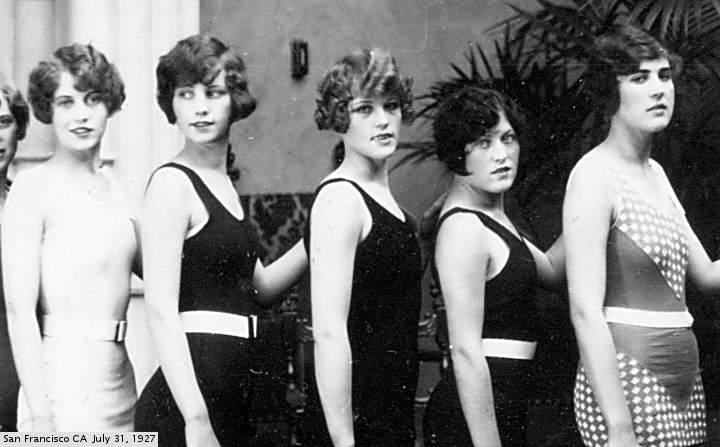
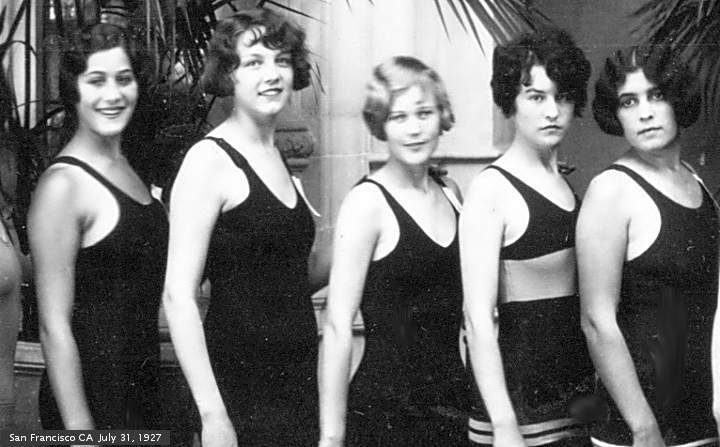
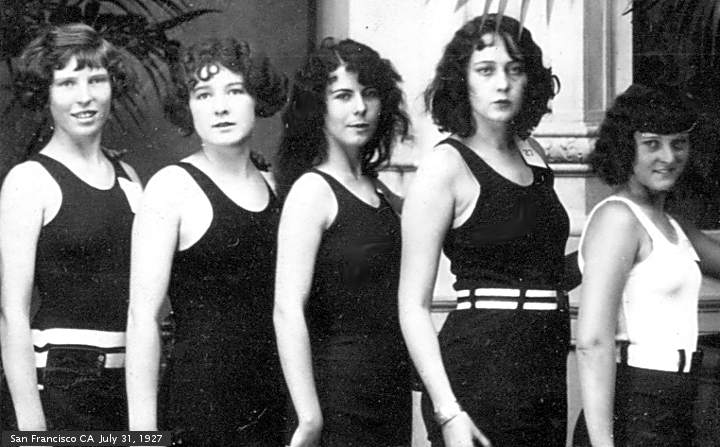
Did Andy say that? Probably, but not definitely. Andy was shot by Valerie Jean Solanas on June 3, 1968, a few months after the show in Sweden. Andy survived, and had fifteen more minutes. Pictures today are from Pictures are from The Library of Congress. The 1927 pictures were taken at “California Beauty Week, Mark Hopkins Hotel, July 28 to Aug. 2, auspices of San Francisco Chronicle.”



Didion & Babitz Part One


This content was published February 12, 2025. … Didion & Babitz has hit the streets, as anyone who reads instagram knows. Lilianne O’Lick knows how to sell the soap, as well as a dirty story that leaves many readers wanting a bath. This is not my first time with either Eve Babitz or LOL. D&B is the story of Eve Babitz and Joan Didion. … Neither lady had a middle name. Chamblee 54 has written about EB on several occasions. 123021 032622 010523 This is not the case with JD. I once had a paperback copy of The White Album … I never got past the abandoned gas station being the authentic west.
“Finishing Didion and Babitz has become a Herculean effort on my part. Lili Anolik clearly hates Joan Didion and continually criticizes and condemns her. This book should be called Loving Eve Babitz, Wench, Whore and Failed “Artist”. Anolik seems to fashion herself as a therapist, making some drastic, others ridiculous, excuses for Babit’s tawdry behavior. … This seemed to be an exercise in “look at my big word vocabulary. I’m going to repeat what I just said using big words that no one ever uses just to impress you. “ From an Amazon one-star review, “Loving Eve Loathing Joan,” by NFox.
(“The seventies in LA weren’t a decade under themselves but an extension of the previous decade: the Sixties the flower child, the seventies the juvenile delinquent that the flower child—a Bad Seed all along—grew into.” p. 124) The sixties were special, too beautiful to live, too profitable to die. Being a kid in Georgia was just one way to see it all. I had little notion of what was going on then in California, and by the time I started to get hip, California had Mansoned its way into a permanent Altamont. EB was playing the game, and the players.
Carrie White was a celebrity hairburner, who wrote a book Upper Cut: Highlights of My Hollywood Life. She is probably not the same Carrie White as the telekinetic teenager at the center of “Carrie” but one cannot be too certain. The CW in D&B went to Hollywood High with EB, and was in the glamour sorority that EB missed out on. CW remained close to Rosalind Frank, who was the fairest of them all in High School. Alas, life after graduation did not work out, and Miss Frank died an early, drug related death. This untimely demise got EB busy writing.
Page 168 sees the first appearance of Bret Easton Ellis, who simply had to be in this book. The first time I heard of EB was on the BEE podcast, which later had an appearance by LOL promoting her first book about EB. BEE idolized JD, and was a close friend of JD’s daughter Quintana Roo Dunne. It is rather poignant that BEE enters this narrative as part of a discussion about JG Dunn’s apparent taste for male company. John Gregory Dunne is the husband of JD, and the younger brother of Dominick John Dunne, … another bicoastal fudge packer.
I was trolling google, looking for dirt on JD … there is a small mountain of dirt on EB … and I stumbled onto a bit of clickbait, “It’s Time To Retire Joan Didion’s Most Famous Line.” The line is “We tell ourselves stories in order to live.” I had probably heard it before. I process a lot of commodity wisdom these days. It goes in one eye and out the other … assuming that useless knowledge leaves the head the same way it gets in. Which brings us to page 211, where LOL ends a chapter with JDMFL.
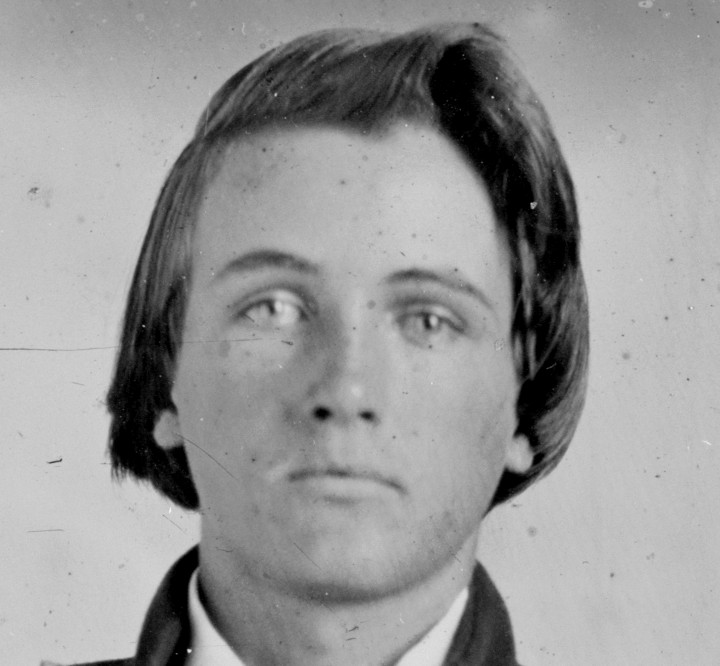
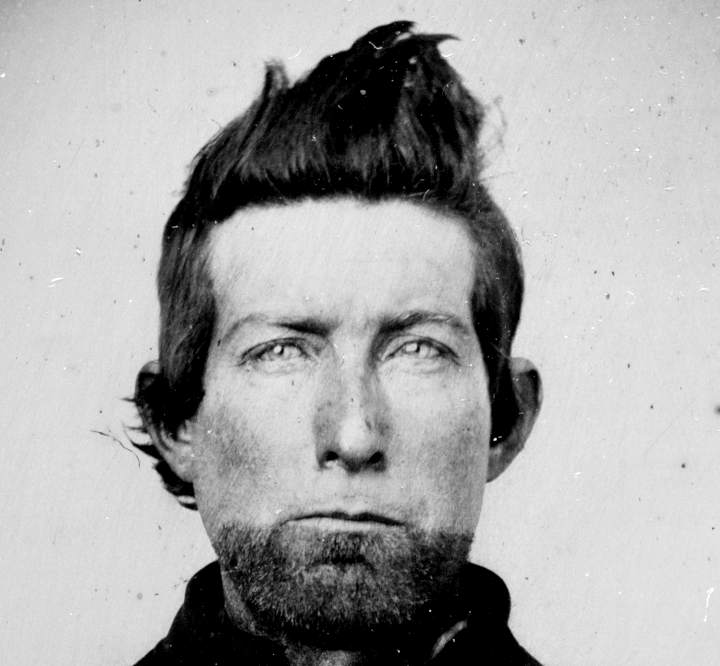
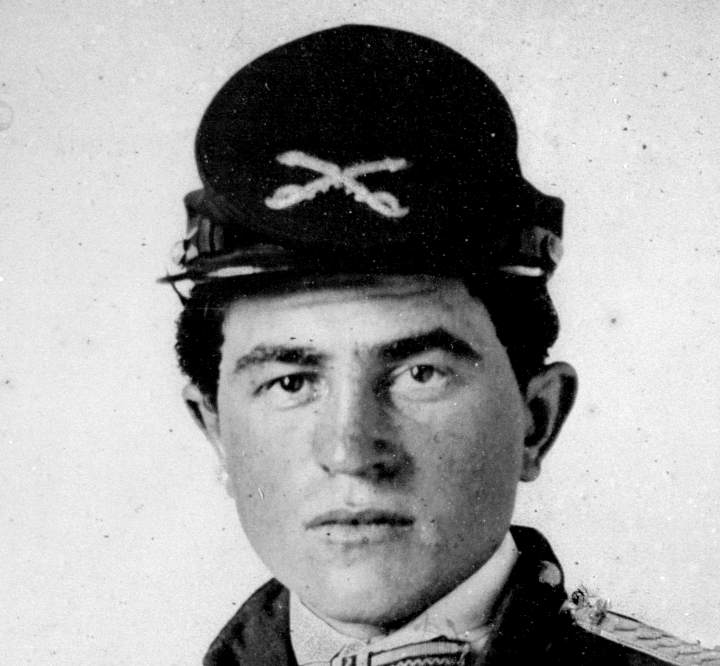
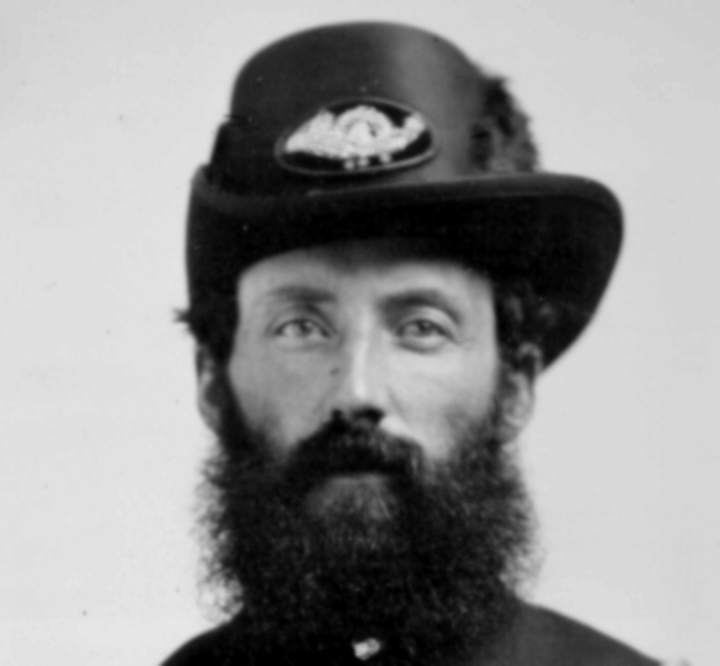
There is a line about EB, whose inclusion in this feature is required by law: “In every young man’s life there is an Eve Babitz. It’s usually Eve Babitz.” Credit/blame for this tidbit is usually given to Earl McGrath. When “Eve’s Hollywood” came out, the line was on the blurb page, written by “anonymous.” EH “came out” in March 1974, with a glamor girl cover photo by Eve’s number one lady lover, Annie Leibovitz. D&B does not have any hint that EB and JD were cleaning carpets together. … Part two of D&B is available. Pictures today are from The Library of Congress. “The social media picture: Unidentified soldier in Company H, Vermont uniform” ©Luther Mckinnon 2026 · selah


Those Who Cannot Remember …


This content was published February 15, 2025. … “Those who cannot remember the past are condemned to repeat it.” Unless you live under a rock, you have heard that quote. Credit/blame for this item goes to George Santayana. (b. Jorge Agustín Nicolás Ruiz de Santayana y Borrás, December 16, 1863 – September 26, 1952.) This quote is the only reason anyone has heard of GS. As it turns out, GS also can be credited with the phrase “Only the dead are safe; only the dead have seen the end of war.” Details on these two crowd pleasers to follow.
“Those who cannot remember …” (TWCR) appears in The Life Of Reason. “During the years of 1905 and 1906, he published a five-volume work titled The Life of Reason; or, The Phases of Human Progress … Santayana investigates the birth and development of human reason, which he views as an evolutionary system within the scope of physical reality. He traces the growth of the human mind towards a state of rationality, exploring the details of existence and evaluating human life in general.” TLOR was written while GS was teaching philosophy at Harvard.
TWCR is in CHAPTER XII—FLUX AND CONSTANCY IN HUMAN NATURE of volume one. Here is the abbreviated paragraph: “Progress, far from consisting in change, depends on retentiveness. When change is absolute there remains no being to improve and no direction is set for possible improvement: and when experience is not retained, as among savages, infancy is perpetual. Those who cannot remember the past are condemned to repeat it. In the first stage of life the mind is frivolous and easily distracted; it misses progress by failing in consecutiveness and persistence. This is the condition of children and barbarians … Thus old age is as forgetful as youth, and more incorrigible; it displays the same inattentiveness to conditions; its memory becomes self-repeating and degenerates into an instinctive reaction, like a bird’s chirp.”
TLOR is a heavy duty piece of work, not a glib collection of uplifting quotes. Chapter XII is about mankind’s progress in becoming a thinking being. TWCR appears to be an incidental line, not the main thrust of his thesis. The last sentence … “memory becomes self-repeating and degenerates into an instinctive reaction, like a bird’s chirp” … would seem to contradict the more famous TWCR.
How did TWCR go from being an incidental line, to being the coffee mug classic that we know today? We don’t know. Quote Investigator® traces known citations through the years. There does not seem to be any one moment when the quote became famous.
”Santayana sometimes repudiated his earlier work, in part for its having the taint of academic life. He especially spoke down at times about the Life of Reason series for its association with the progressivism of the day, and it was later edited by Santayana and his late-life personal assistant and secretary, Daniel Cory, with the intent of removing some of its more humanistic overtones.” I do not know whether TWCR is one of the “humanistic overtones.”
In contrast to TWCR, few people know about the GS connection to “Only the dead have seen the end of war.” OTDH appeared in Soliloquies in England (1922) “remarkably written amidst the uncertain, violent times of World War I.” OTDH appears in soliloquy 25, _TIPPERARY_ … “Only the dead are safe; only the dead have seen the end of war. Not that non-existence deserves to be called peace; it is only by an illusion of contrast and a pathetic fallacy that we are tempted to call it so. The church has a poetical and melancholy prayer, that the souls of the faithful departed may rest in peace.”
”Some scholars conclude that Santayana was an active homosexual based on allusions in Santayana’s early poetry (McCormick, 49–52) and Santayana’s association with known homosexual and bisexual friends. Santayana provides no clear indication of his sexual preferences, and he never married. Attraction to both women and men seems apparent in his undergraduate and graduate correspondence. The one documented comment about his homosexuality occurs when he was sixty-five. After a discussion of A. E. Housman’s poetry and homosexuality, Santayana remarked, “I think I must have been that way in my Harvard days — although I was unconscious of it at the time” (Cory, Santayana: The Later Years, 40). Because of Santayana’s well-known frankness, many scholars consider Santayana a latent homosexual based on this evidence.”
This text does not discuss the misuse of history, or of quotes. We seek to discuss the context of TWCR, and speculate about why this item is so popular. One of the lessons of history is that people will interpret history to suit their purposes, often to the detriment of mankind. It is ironic that TWCR (written in 1905) is often cited as a justification for war … and only the dead have seen the end of war. (OTDH was written in 1922, after another great war.)
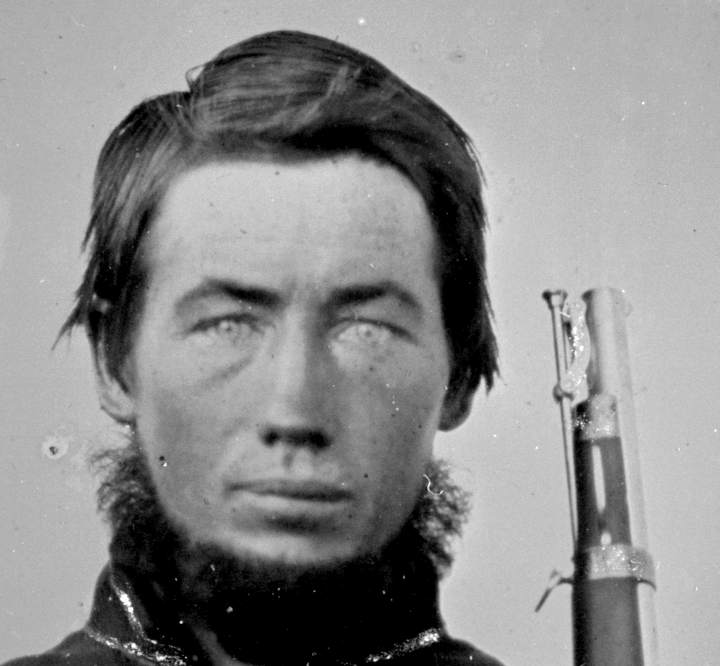
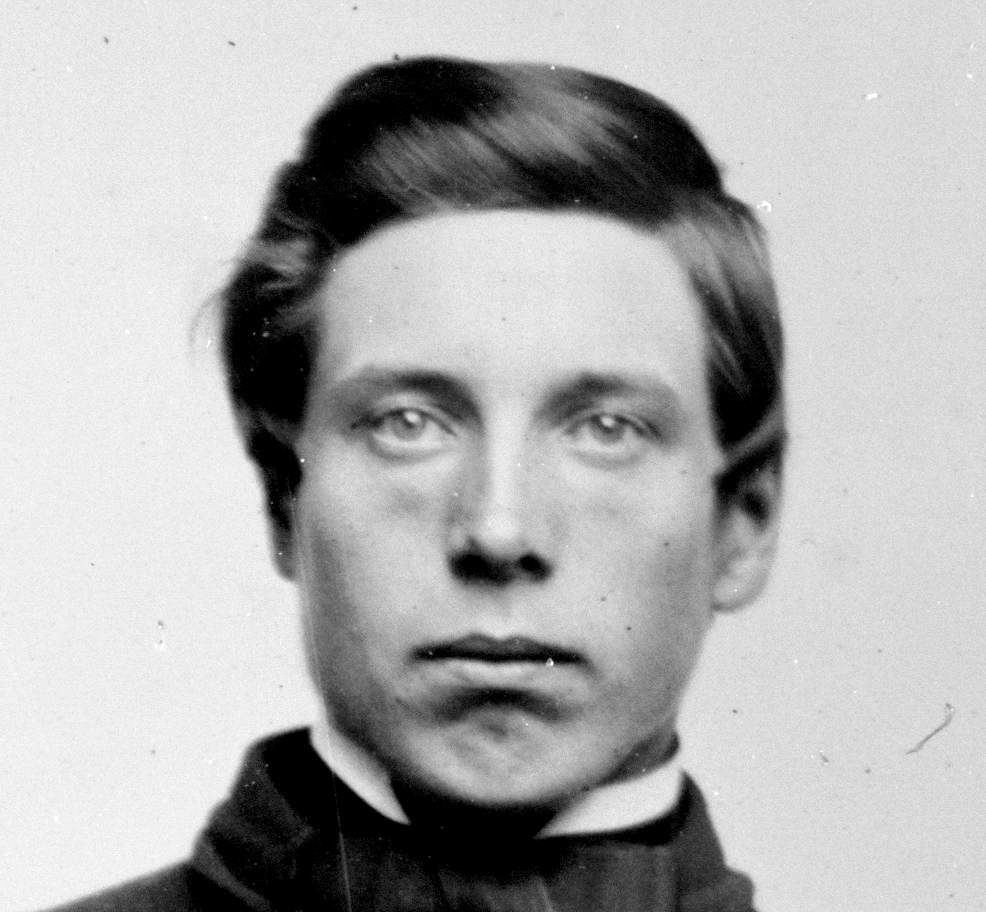
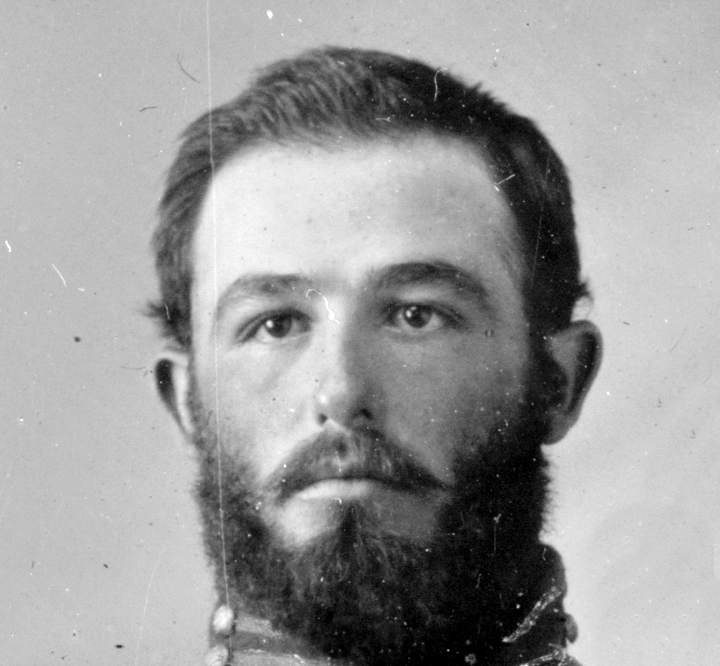
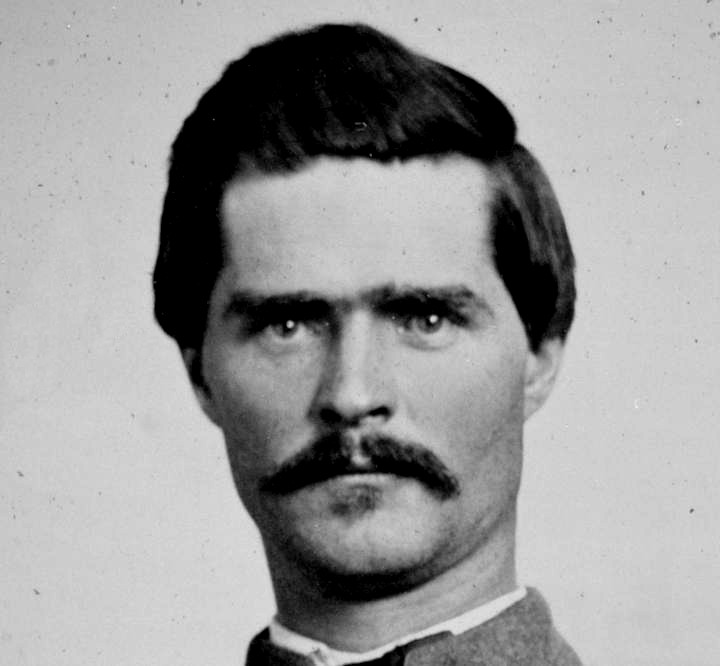
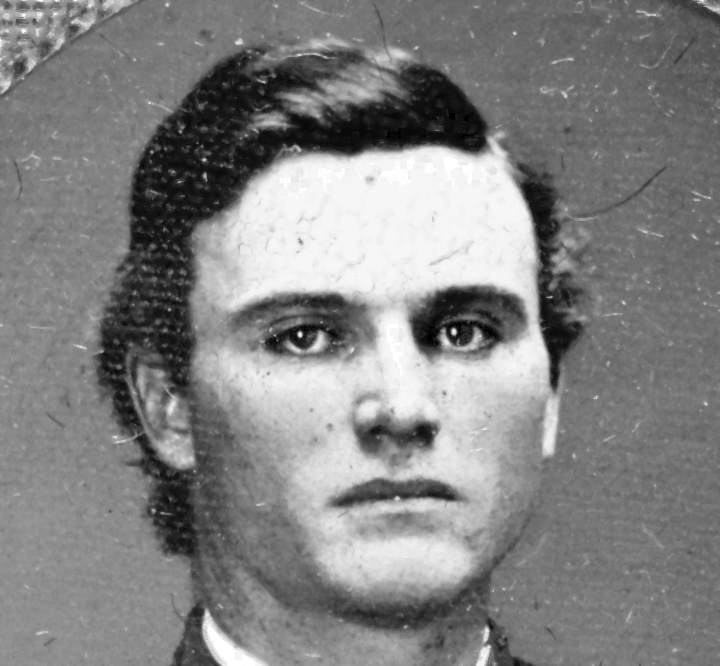
Photographs today are from The Library of Congress. The featured photograph: “Two unidentified soldiers in Confederate uniforms” ©Luther Mckinnon 2025 · selah

M.K. Gandhi And Truth




This content was posted January 14, 2025. … I identify as human @pixfiber “Truth never damages a cause that is just.” · Mohandas K. Gandhi. This item appeared in my twitter feed on January 6. Being an unreconstructed pedant, I went to the Gandhi Wikiquote. “Truth” had too many search results, so I went to “just.” I found a doozy: “I have always held that social justice, even to the least and lowliest, is impossible of attainment by force.” Harijan (20 April 1940) p. 97
Harijan was another word for the untouchable caste in India. “… Gandhi conducted an intensive crusade against untouchability …” Harijan was also a newspaper that started on 11 February 1933, brought out by Gandhi from Yerwada Jail during the British rule in India. Gandhi popularized the term Harijan across the states of India but he was not the first person to use it.”
Archive.org has much of Harijan available online, including the quote above. The quote is in a tsunami of text. Gandhiji was trained as a lawyer, and could crank out a word count. His positions are well thought out and complicated. This material is more complicated than the motivational Mahatma we are familiar with.
If you don’t mind wading through a pile of results, a search for “truth” on the Gandhi Wikiquotes will yield some good thoughts. Bear in mind that these quotes are without context. If you are willing to do the work, and google the source, you might find that the meaning of these thoughts is different from what you might think. The first three quotes in this list are from An Autobiography Or The Story of My Experiments With Truth By: M. K. Gandhi.
“A man of truth must also be a man of care.” Part I, Chapter 5, At the High School
“But all my life though, the very insistence on truth has taught me to appreciate the beauty of compromise. I saw in later life that this spirit was an essential part of Satyagraha. It has often meant endangering my life and incurring the displeasure of friends. But truth is hard as adamant and tender as a blossom.” Part II, Chapter 18, Colour Bar
“My uniform experience has convinced me that there is no other God than Truth.” p. 453
“An error does not become truth by reason of multiplied propagation, nor does truth become error because nobody sees it.” Young India 1924-1926 (1927), p. 1285 (context below)
“A seeker after Truth cannot afford to indulge in generalisation.”
“Generalisation”, Harijan (6 July 1940).
“If you want to give a message again to the West, it must be a message of ‘Love’, it must be a message of ‘Truth’. There must be a conquest — [audience claps] — please, please, please. That will interfere with my speech, and that will interfere with your understanding also. I want to capture your hearts and don’t want to receive your claps. Let your hearts clap in unison with what I’m saying, and I think, I shall have finished my work.”
Speech in New Delhi to the Inter-Asian Relations Conference (2 April 1947)
“Impure means result in an impure end… One cannot reach truth by untruthfulness. Truthful conduct alone can reach Truth.” Harijan (13 July 1947) p. 232
“[Government] control gives rise to fraud, suppression of truth, intensification of the black market and artificial scarcity. Above all, it unmans the people and deprives them of initiative, it undoes the teaching of self-help…It makes them spoon-fed.” Delhi Diary (3 November 1947 entry)
“It is no use trying to fight these forces [of materialism] without giving up the idea of conversion, which I assure you is the deadliest poison which ever sapped the fountain of truth.”
Mahatma Gandhi The Collected Works Vol 46, p. 203
Wikiquotes has a lively section devoted to quotes that are Disputed and Misattributed. One Disputed entry is especially festive: “Whatever you do will be insignificant, but it is very important that you do it.” “The earliest attribution of this to Gandhi … is in a T-shirt advertisement in Mother Jones, Vol. 8, No. 5 (June 1983), p. 46”
Several much loved Gandhisms have a shaky history. “First they ignore you, then they laugh at you, then they fight you, then you win.” “An eye for an eye will make the whole world blind.” “God has no religion.” “We need to be the change we wish to see in the world.”
Young India supplied one of the quotes above. Here is page 1285. “Some Posers: — ‘A well wisher’ sends these lines for my meditation: ‘The Bible can be read in 566 languages. In how many can the Upanishads and the Gita? How many leper asylums and institutions for the depressed and the distressed have the missionaries? How many have you?’ It is usual for me to receive such posers. ‘A well wisher’ deserves an answer, I have great regard for the missionaries for their zeal and self-sacrifice. But I have not hesitated to point out to them that both are often misplaced. What though the Bible were translated in every tongue in the world? Is a patent medicine better than the Upanishads for being advertised in more languages than the Upanishads? An error does not become truth by reason of multiplied propagation, nor does truth become error because nobody will see it. The Bible was a greater power when the early fathers preached it than it is today. ‘A well wisher’ has little conception of the way truth works, if he thinks that the translation of the Bible in more languages than the Upanishads is any test of its superiority. Truth has to be lived if it is to fructify. But if it is any satisfaction to ‘A well wisher’ to have my answer I may gladly tell him that the Upanishads and the Gita have been translated into far fewer languages than the Bible. I have never been curious enough to know in how many languages they are translated.”
“As for the second question, too, I must own that the missionaries have founded many leper asylums and the like. I have founded none. But I stand unmoved. I am not competing with the missionaries or any body else in such matters. I am trying humbly to serve humanity as God leads me. The founding of leper asylums etc. is only one of the ways, and perhaps not the best, of serving humanity. But even such noble service loses much of its nobility when conversion is the motive behind it. That service is the noblest which is rendered for its own sake. But let me not be misunderstood. The missionaries that selflessly work away in such asylums command my respect. I am ashamed to have to confess that Hindus have become so callous as to care little for the waifs and strays of India, let alone the world.”
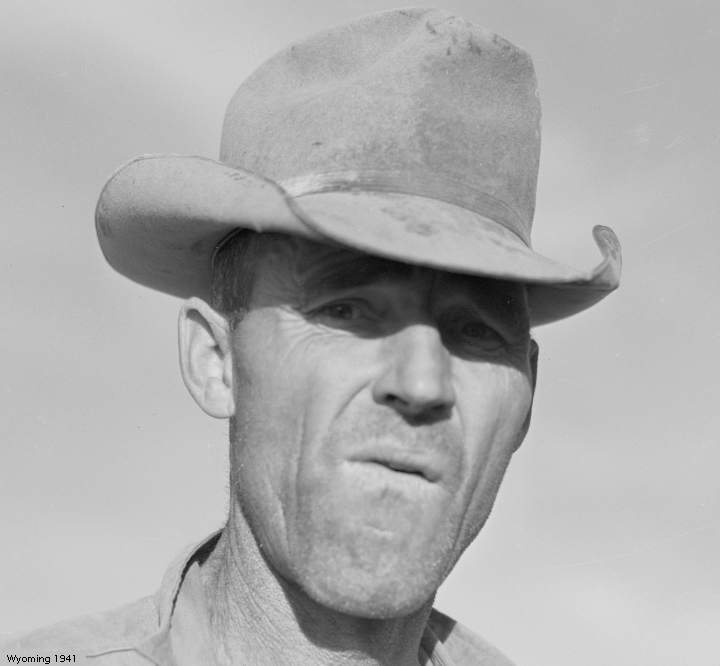
Chamblee54 has written about M.K. Gandhi. 040515 020521 042222 Pictures today are from The Library of Congress. John Vachon took the social media picture in May 1938. “Farmer
Farmer outside the cooperative store. Irwinville, Georgia.”©Luther Mckinnon 2025 · selah


The Sausage Vat Murder
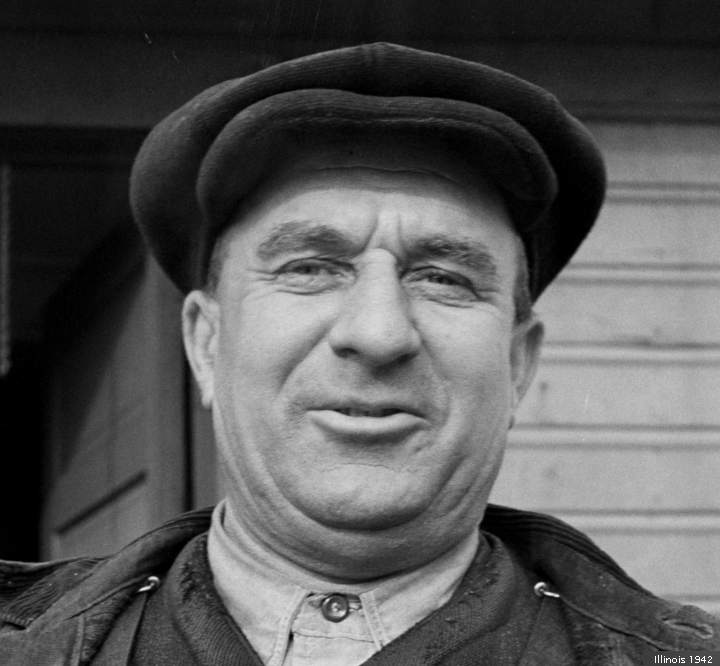
This content was published January 16, 2024. … The case of Adolph Luetgert is mostly forgotten today. In its day, the story was a sensation. “Adolph Louis Luetgert (December 27, 1845-July 7, 1899) was a German-American charged with murdering his wife and dissolving her body in acid in one of his sausage vats at the A.L. Luetgert Sausage & Packing Company in 1897. … After the news of the trial became public, rumors spread that Luetgert had actually turned his wife into sausage and sold the “sausage” to unknowing consumers.”
Is it possible to explain what is in sausages without making it erotic? A twitter thread got me thinking about a sausage story I read in 1989. The Fairy was in Gaily, Gaily by Ben Hecht. The story originally appeared in Playboy. “In a 1962 article for Playboy collected in his rollicking 1963 memoir Gaily, Gaily — the legendary Chicago reporter Ben Hecht recalls a murder case that sounds suspiciously similar to the Adolph Luetgert case. Hecht describes an story that apparently occurred sometime during the five years after he began working as a reporter in Chicago in 1910. He writes: “Fred Ludwig, a popular North Shore butcher, went on trial before Judge Sabath for the murder of his wife. The wedding band with its romantic inscription had turned up in one of the sausages manufactured by Ludwig and sold to one of his customers, Claude Charlus, a well-known financier and epicure.” In the Hecht story, Mr. Charlus was the bf of Mr. Ludwig. When it was time to execute Mr. Ludwig, young Mr. Hecht went to a whorehouse, to borrow a makeup kit. Mr. Ludwig painted his face before he went to the gallows.
“Adolph Luetgert (originally Adolph Ludwig Lütgert) came to New York in around 1865 or 1866 when he was about twenty years old.” … “He married his first wife, Caroline Roepke, sometime between 1870 and 1872. She died on November 17, 1877. He married his second wife Louise Bicknese, two months after Caroline’s death, on January 18, 1878. Luetgert had six children—two with Caroline and four with Louise. Only three of his children survived past the age of 2.”
“Louisa Bicknese was an attractive young woman who was ten years younger than her husband. She was a former servant from the Fox River Valley who met her new husband by chance. He was immediately taken with her, entranced by her diminutive stature and tiny frame. She was less than five feet tall and looked almost child-like next to her burly husband. … As a wedding gift, he gave her a unique, heavy gold ring. Inside of it, he had gotten her new initials inscribed, reading “L.L.”. Little did he know at the time that this ring would prove to be his undoing.”
After a while, the couple started to bicker. “Despite his coarse appearance, (one writer vividly describes him as a Falstaffian figure with “a face of suet, pig eyes, and a large untidy moustache that was a perfect host for beer foam”) Adolph was something of a womanizer. … Claiming that he needed to keep a round-the-clock eye on his factory, he had taken to spending his nights in a little room beside his office, equipped with a bed that he frequently shared with his twenty-two-year-old housemaid, Mary Siemering, Louisa’s own cousin. … He was also conducting a surreptitious courtship of a wealthy widow, Mrs. Christina Feld, sending her amorous letters in which he rhapsodized about their rosy future.” (During the murder trial, “Mrs. Christina Feldt, … testified that Luetgert often expressed his hatred for his wife and intimated that he would get rid of her.”)
“At around 10:15 on the evening of Saturday, May 1, Louisa was seated in the kitchen, chatting with her twelve-year-old son Louis, who had attended the circus that evening. The boy was excitedly describing some of the wonders he had seen—a giant named “Monsieur Goliath” and a strongman who juggled cannon balls—when Luetgert appeared and told his son to go bed. Precisely what happened between the two adults after Louis retired to his room is unclear. Only one fact is beyond dispute. After the boy bid goodnight to his mother at about 10:30 P.M., she was left alone in the company of her husband.” … “Mrs. Luetgert wore only a light house wrapper and slippers, although the night was cold and rainy. It never was shown that she had taken with her any of her belongings.”
“When questioned by his sons, Luetgert told them that their mother had gone out the previous evening to visit her sister. After several days though, she did not come back. Finally, Diedrich Bicknese, Louisa’s brother, went to the police. The investigation fell on Captain Herman Schuettler, … “an honest but occasionally brutal detective”.
“Frank Bialk, a night watchman at the plant … saw both Luetgert and Louisa at the plant together. Apparently, Luetgert sent him out on an errand that evening and gave him the rest of the night off.” There is another version of the Bialk story. “Frank Bialk … testified … Luetgert instructed him to bring down two barrels of caustic potash and place them in the boiler room, and that Luetgert then poured the contents of both barrels in one of the vats. The watchman was instructed to keep up steam all night and at 10 p. m. he was sent by Luetgert to the drug store after some nerve medicine.”
“The police also made a shocking discovery; they came across bills that stated that Luetgert bought arsenic and potash the day before the murder. … the detective was convinced that Luetgert had killed his wife, boiled her in acid and then disposed of her in a factory furnace.”
“Luetgert’s night watchman, Frank Bialk, approached the police and told them that, on the night Mrs. Luetgert disappeared, his boss had been acting suspiciously, busying himself with one of the large steam-vats down in the factory basement. Following up on this tip, investigators checked out the vat, which—despite having been cleaned two weeks earlier—still contained a residue of a thick, greasy fluid, reddish-brown in color and giving off a nauseous stink. When the fetid slime was drained from the vat, the detectives discovered tiny pieces of bone along with two gold rings, one of them a wedding band engraved with the initials “L. L.” More bone fragments, as well as a false tooth, a hairpin, a charred corset stay, and various scraps of cloth turned up in a nearby ash heap.”
Luetgert was arrested, and charged with the crime. “On October 18, the case was submitted to the jury and after deliberating for sixty-six hours they failed to agree, nine favoring a conviction and three voting in favor of an acquittal. On November 29, 1897, the second trial began. … The trial resulted in a conviction and on May 5 Luetgert was sent to the Joliet State prison for life.”
“July 27, 1899, Luetgert left his cell and returned shortly afterward with his breakfast in a pail, but just as he was about to eat it, he dropped dead from heart disease.”
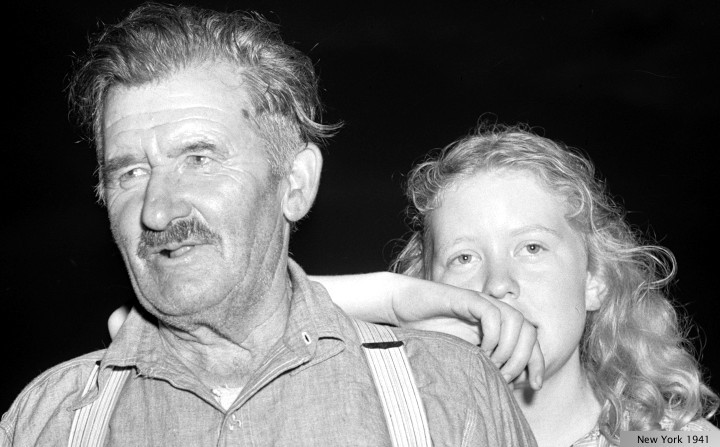
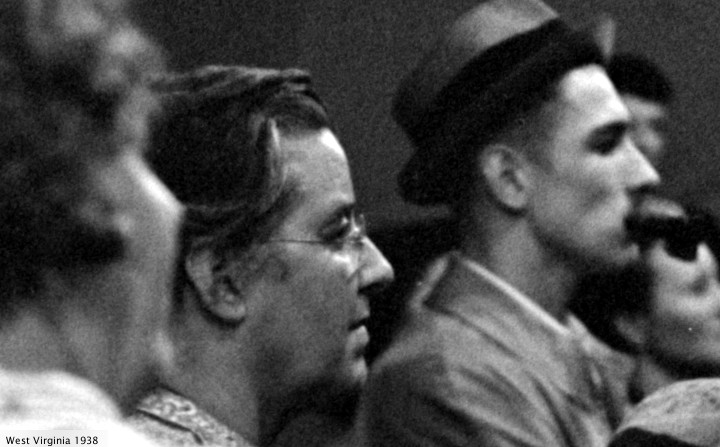
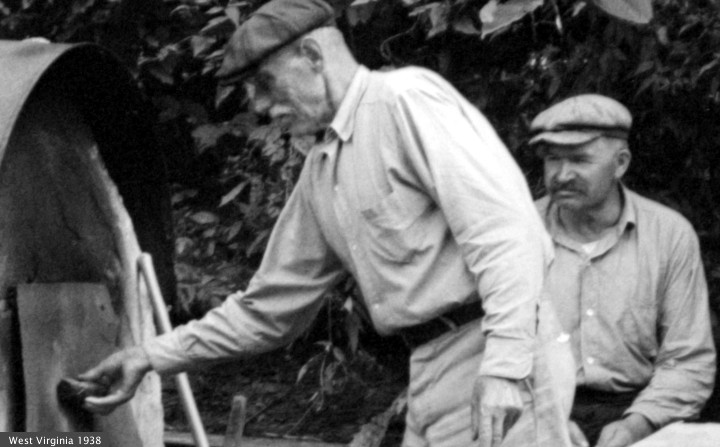
“Frank Pratt … asked Luetgert if he wanted his “hand read.” The latter consented and Pratt told Luetgert that he possessed a violent temper and at times was not responsible for his actions. Pratt stated that Luetgert then virtually admitted that he killed his wife when he was possessed of the devil. … It is said that Luetgert also made similar admissions to a fellow prisoner.” Pictures for this true crime story are from The Library of Congress. Jack Delano took the social media picture in October 1941. “ Mr. Albert Brissant and his niece, who are still living in the Pine Camp relocation area near Evans Mills, New York. They have an antique shop here which they have sold out and are now looking for a new farm” ©Luther Mckinnon 2025 · selah

Ansel Adams And Dorothea Lange






This content was published December 10, 2022. … The facebook feed has recently had links to a story, Dorothea Lange’s Censored Photographs of FDR’s Japanese Concentration Camps. Miss Lange was the photographer of the iconic Migrant Mother. After Pearl Harbor, Miss Lange took a job with the War Relocation Authority, documenting the “relocation” of Japanese-Americans to interment camps. The photographs did not please the authorities. They were censored, and only appeared recently.
Ansel Adams also took photographs at the Manzanar, California, camp. In the current stories, he is literally a footnote: quotes were used from a book about his photography. Why is Dorothea Lange receiving attention, while Ansel Adams is ignored?
One answer is that Miss Lange was hired early on, and shows the harsh reality of relocation. “On July 30, 1942, the WRA laid her off “without prejudice,” adding that the cause was “completion of work. … the WRA impounded the majority of her photographs of Manzanar and the forced detentions, and later deposited 800 image from the series in the National Archives without announcement.”
“After Lange’s departure, Manzanar’s director Ralph Merritt visited renowned environmentalist and landscape photographer Ansel Adams and suggested he document the camp — Merritt and Adams were friends from the Sierra Club. Lange, also friends with Adams, encouraged him to take the job. (Coincidentally Adams printed “Migrant Mother” for her) … Ansel Adams made several trips to Manzanar between October 1943 and July 1944 for this new personal project, and, as Alinder writes, he was primed to try the kind of documentary photography regularly practiced by Dorothea Lange and the Farm Security Administration that he had earlier shunned. Unlike Lange, a white woman who had been viewed with suspicion by her subjects, Adams was welcomed by the incarcerees, even greeted as a celebrity in a cultural community that had a deep appreciation of nature — many incarcerees at Manzanar literally opened their doors to him dressed in their finest clothes. … By 1943, Manzanar’s incarcerees had had time to settle in and enjoy the fruits of their collective work. In less than ideal surroundings, they had collectively built their own post office, town hall, library, auditorium, co-op store system, police station, jail, cemetery with memorial, published their own newspaper (the ironically named the Manzanar Free Press, which was regularly censored by the military), and even their own YMCA.”
“As for Lange, looking at the historical record, it appears that she was treated differently from the other WRA photographers. She was discouraged from talking to the incarcerees, was constantly followed by a censor, and faced harassment. She was refused access to areas after being given clearance, and she was often hounded over phone charges and receipts. … After being discharged, Lange expressed in letters her dismay that her work was ineffective in helping the people she documented. Her assistant Christina Clausen later noted the ferocity of this body of work also marked the beginning of the photographer’s bleeding gastric ulcers. Lange was unable to work for a number of years after her harrowing experience at Manzanar. She died from esophageal cancer in 1965.”
“In 1944, Adams’s photographs were published as a book, “Born Free and Equal: The Story of Loyal Japanese Americans,” and shown at New York’s Museum of Modern Art. Nativists took offense. They saw Adams’s work as a slur on the war effort. He was a “Jap lover.” This quote is from a 2016 article, Let’s be honest, Ansel Adams’s images of a WWII internment camp are propaganda.
“Adams visited Manzanar to take photos in 1943 at the request of camp director Ralph Merritt, who was a personal friend. “They don’t look quite as dusty and quite as forbidding as Dorothea Lange’s photos … Indeed, the place that looks barren and depressing in Lange’s pictures manages to look beautiful in Adams’. You get little sense that it was even a detention center, in part because Adams, like other photographers, was not allowed to shoot the guard towers or barbed wire …
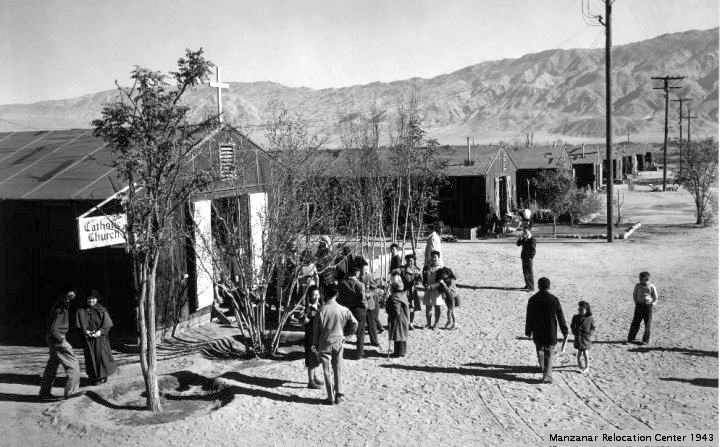
There are scenes from a baseball game, kids walking to school, a gathering outside a chapel. Lots of smiles, too, and portraits of camp residents cropped so close, you can see every blemish and stray hair. In Adams’ vision, Manzanar comes off as a place where Japanese-Americans, dignified, resilient and optimistic in spite of their circumstances, built a temporary community in the desert.
(Skirball Cultural Center director Robert) Kirschner said that if Adams’ photos appear to sugarcoat the indignities of life in an internment camp, it is because he did not see himself as a social activist the way Lange did. Still, Kirscher says, Adams was challenging internment in his own way, by depicting its victims as patriotic, law-abiding Americans. Unlike Lange, Adams was given permission to publish his photos. Before the war ended, he did so in a book called “Born Free and Equal: The Story of Loyal Japanese Americans,” in which he warned about the dangers of letting wartime hysteria justify depriving U.S. citizens of their freedom.”
The NPR article mentions a third Manzanar photographer. “Before World War II, Toyo Miyatake had a photo studio in Los Angeles’ Little Tokyo. When he learned he would be interned at Manzanar, he asked a carpenter to build him a wooden box with a hole carved out at one end to accommodate a lens. He turned this box into a makeshift camera that he snuck around the camp, as his grandson Alan Miyatake explains in the video below, which is featured in the exhibit.
Fearful of being discovered, Miyatake at first only took pictures at dusk or dawn, usually without people in them. Camp director Merritt eventually caught Miyatake, but instead of punishing him, allowed him to take pictures openly. Miyatake later became the camp’s official photographer.” … Pictures today are from The Library of Congress. Ansel Adams took the photograph in 1943. “People standing outside Catholic church at Manzanar Relocation Center, California.” … The ladies in the bridge game are Aiko Hamaguchi, Chiye Yamanaki, Catherine Yamaguchi, and Kazoko Nagahama. ©Luther Mckinnon 2025 · selah







Listening To Shirley Q. Liquor


This content was published December 23, 2008. … I am almost ready to take back everything I ever said about auto playing music devices. Almost. They are on a lot of blogs now, where the music starts to play when you open the site, whether you want to hear it or not. … I left a comment for Jasmine Cannick. Ms. Cannick has a series, A White Gay’s Guide for Dealing with the Black Community for Dummies. I thoughtfully left a comment, saying that I had learned a lot about “…the black community for dummies”. … I went to the site to see if there was any reaction, and the auto start music player had a monolog by Shirley Q. Liquor. I let the thing play, and got myself an earful. I was starting to get tired of the whole thing after the fifth monolog, but soon the free show was over. Miss Cannick was so thoughtful to play all those comedy things.
This must just be the day for goofy women. Earlier, I found a piece by Ann Coulter. She said that Sarah Palin was the Conservative of the Year. “I assume Palin was chosen because McCain had heard that she was a real conservative and he had always wanted to meet one — no, actually because he needed a conservative on the ticket, but that he had no idea that picking her would send the left into a tailspin of wanton despair.”
Ms. Coulter had another tasteful comment: “Pre-Palin it had been one race — boring old “You kids get off my lawn!” John McCain versus the exciting, new politician Barack Obama, who threw caution to the wind and bravely ran as the Pro-Hope candidate. And then our heroic Sarah bounded out of the Alaska tundra and it became a completely different race. This left the press completely discombobulated and upset. They didn’t know whether to attack Sarah for not having an abortion or go after her husband for not being a sissy.”
This content was published December 31, 2008. … Every year, Lake Superior State University issues a list of words they would like to see eliminated. This year, in one paragraph, they not only described the process, but used a lot of the forbidden phrases. … “It’s that time of year again!” LSSU “maverick” word-watchers, fresh from the holiday “staycation” but without an economic “bailout” even after a “desperate search,” have issued their 34th annual List of Words to Be Banished from the Queen’s English for Mis-use, Over-use and General Uselessness. This year’s list may be more “green” than any of the previous lists and includes words and phrases that people from “Wall Street to Main Street” say they love “not so much” and wish to have erased from their “carbon footprint.”
This list is also a good excuse for slack bloggers to put up yet another post. Last year, this reporter posted this list. The very next post to come up at APWBWGTTD was our social chair displaying her engagement ring. … So, here we are again. Below is the list from Michigan. If you want more commentary, go here. … Maverick, first dude, Wallstreet-mainstreet,bailout, ____monkey, <3, icon-iconic, Green, carbon footprint/carbon offsetting, game changer, staycation, desperate search, not so much, winner of five nominations, it’s that time of year again.
This content was published December 26, 2008. … Now that the election is over, we can take another look at the war in Babylon. While our media seems to think we are winning, the truth is a tad more complicated. … Abbas Shawazin has a feature about the size ten salute given to our President recently. He offers this * ::||:: * as an emoticon for shoe. Be sure to leave spaces before and after, or you may wind up with a smiley face. Then you will have happy feet!
Mr. Shawazin talks about men with strange sounding names. This is normal for reports coming out of Babylon. There is a video showing a man beating a picture of Saddam Hussein with a shoe. Saddam liked to say “‘I am the one who made the barefoot Iraqis wear shoes.” It is noted that the shoechunker, Muntazer al-Zaidi, was a communist from Sadr City. The residents of Sadr City are known as being tough ghetto guys. Many of them are the core of the Shiite Sadr militia, which is going to be a force to deal with in the future Iraq.
Layla Anwar is an angry young lady. Here is a sample of her prose: ” Get ganged raped and tortured by your “liberators”, have acid thrown at you, be forced to shut up, lose your home, lose your kids, lose your parents, lose your husband, lose your brothers and sisters…But hey, be a lady now ! ” Ms. Anwar does not like “ALL THOSE WHO FAILED TO STAND BY ANTI-ZIONIST, ANTI-IMPERIALIST, IRAQ AND HER PRESIDENT THE MARTYR, HERO SADDAM HUSSEIN, WHO WAS LYNCHED BY NONE OTHER THAN THE AMERICAN IMPERIALISTS AND THEIR SECTARIAN IRANIAN SHIITE DOGS.” … Pictures today are from The Library of Congress. John Vachon took the social media photograph in March 1941. “Boy from North Carolina farm who now works at National Tent and Awning Company. Norfolk, Virginia” ©Luther Mckinnon 2025 · selah




Divine Intervention



A strange thing happened on my walk this morning. I was listening to this show about David Foster Wallace. It was a dystopian commentary, about a lot of different things. One of the chief problems is the general f***** up nature of the medical industrial complex.
I was about to turn around, and do another lap, when the phone rang. I decided to take a chance, and answer the call. The call was a lady calling from the sleep disorder clinic. Some of the Medicare claims had been rejected. I went back into the house, got my reading glasses, and woke up the computer. I got a new Medicare card last December, and apparently the sleep disorder clinic never got the new Medicare number. It was synchronistic that I would answer this call, and that it would be an illustration of the story I was listening to.
I had a similar experience a while back. I was riding on the exercise bike at the gym, while watching Female Trouble by John Samuel Waters. FT was just so strange. I was being pulled into this narcatonic vortex that JSW induces in people. He will render them mentally incompetent by the facilitation of “Divine intervention.” In this scene, Divine chopped a ladies arm off, and held her prisoner in a giant birdcage. At this point in the procedure, I get a spam risk phone call. I decided what the hell, life is so much fun right now, what’s another spam phone call?
So I answer the call. It’s from Piedmont Care Connect. PCC was this program that my primary doctor wanted to sign me up for. You would pay to have a PCC blood pressure monitor installed in your house. The device would transmit the BP readings to Piedmont heathcare. I was very skeptical of the whole thing. I got even more skeptical when I talked to the people from the program, because they didn’t know what they were doing. I had already told them not to call me again. After I hung up the phone, I learned that Divine was going to prison, for her crimes against hairstyling.
So yesterday went on and on and finally ended. I listened to the last of the story about Dave Wallace. I was pleased to get to the part about gnosticism. I wanted to listen to it again because I thought I might have missed something the last time. Later, I read a piece about Yahweh. (I did not copy the link). It seems that Yahweh was a minor Israeli God, until there was a hostile takeover of the whole system. Yahweh then issued the Ten Commandments, saying that I am the only God. It is very curious that I never heard this. All Christians ever talk about is life after death.
Meanwhile, the gnostics were saying that Yahweh was the demiurge, or the anti-god. If you go by the Old Testament, there may be a grain of truth to this. You don’t really hear much about God in the New Testament, which is mostly about Jesus, the illegitimate son of Yahweh. … The second thing that I find really bizarre about Yahweh is that two of the nicknames for Yahweh are Allah and God. You heard that right … Allah and God are the same thing.
It is now 121225. When I get up and moving … slowly … I turn on the noise machine, to provide background sounds. Inevitably, I will need to turn it off, so I can hear something else. Today, the first turnoff of the day was a 23 second video about how to pronounce bhagavad gita. To pronounce BG, remember that the h should be after the a, instead of before. BAH ga vahd GE tuh. It is similar to saying Bah Humbug. … Pictures today are from The Library of Congress. Jack Delano took the social media picture in August 1942. “Nashville, Tennessee. Welding parts for fuel pumps. Vultee Aircraft Corporation plant” ©Luther Mckinnon 2025 · selah


 Chamblee54
1 comment