City Of Brookhaven


There is a proposal to create a city of Brookhaven. On July 31, the matter will go before the voters. The proposed city is between Atlanta, Chamblee, I 285, and I 85.
There has been a fad for creating new cities in the North metro area. North Fulton has been divided between John’s Creek, Milton, and Sandy Springs. DeKalb county has the proposed Brookhaven, and Dunwoody. Brookhaven is the first of the new cities to be completely located inside I 285 (ITP).
PG has gotten mailings from those who say yes, and from those who say no. Neither mailer was printed at a Union shop. Both sides quote a feasibility study from the Carl Vinson Institute.
According to the yes website, “The 5 services the city will take over from DeKalb are : Police, Parks, Roads, Zoning and Code Enforcement. Fire, Water and Sewer, Sanitation, Schools etc., will remain with DeKalb county”.
According to Wikipedia, the new city would have 40, 456 people. The racial breakdown is 61.52% White, Hispanic 27.41%, 17.56% Black, and 4.88% Asian. The numbers for the registered voters are probably different, with many of the Hispanic people transient. DeKalb county is 54.3% Black, and county politics are dominated by the Black community.
The yes mailer has racial undertones. It has a picture of Dekalb CEO Burrell Ellis, who is African American. The headline read “What’s CEO Burrell Ellis doing with Your Tax Dollars? There is a quote from an “Email from lobbyist to DeKalb County”, with a line about fighting the proposed new city.
PG attended a meet and greet with Mr. Ellis recently, and the subject of the new city came up. Mr. Ellis thinks the finances of the new city would be precarious. The figures used in the feasibility study are from real estate values that have been declining. The new city will not have a much money as many think it will. This point is made by the no crowd. Mr. Ellis said that he thinks people are wanting a new city for the wrong reasons.
The issue of the new city having enough money to operate is key. The no people say it won’t, the yes people say it will. Brookhaven has more poverty than the other new cities, and less commercial areas. There are height restrictions in much of the area, because of Peachtree DeKalb Airport.
An important issue is taxes. The yes crowd say they will be lower. The no crowd says they will be higher. The millage rate will be set at 3.35, and an increase would require voter approval.
Franchise fees will be a factor in the money. According to the no website, “Franchise Fees are the taxes charged to utility companies for the use of the public right of way for utility poles, pipes, and cabling. We already pay 1.2% on our GA Power bill now, but do not on landline phone bills. Incorporated cities such as what Brookhaven could possibly become, are allowed to charge the utility companies higher percentages than counties. As a result the utility companies pass that extra charge along to the consumer. Georgia Power and landline phone bills will be where we see the increases.”
Another big issue is police. The yes people say “DeKalb county assigns 3 to 6 patrol officers to the entire area of Brookhaven. The city of Brookhaven will increase this number to a minimum fo 8 to 9 officers at all times.” The no people say that the new city should have 83 police officers, and that the budget calls for 53.
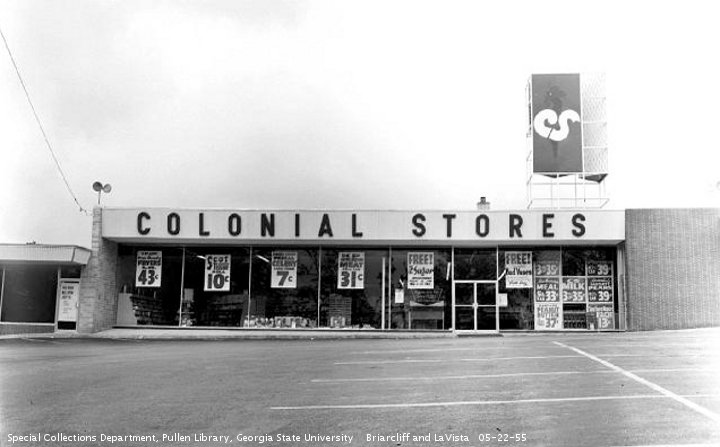
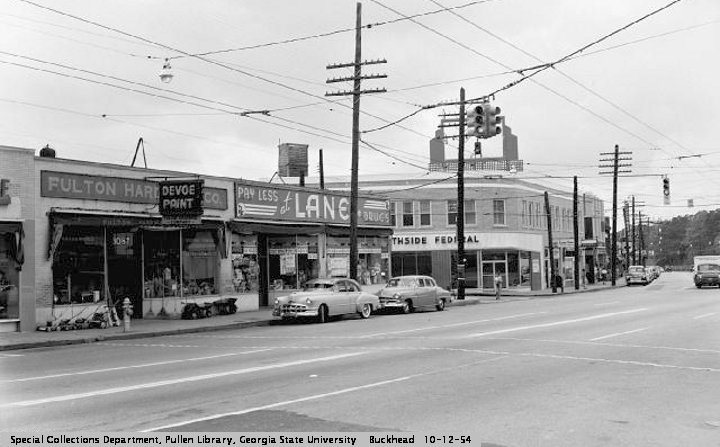
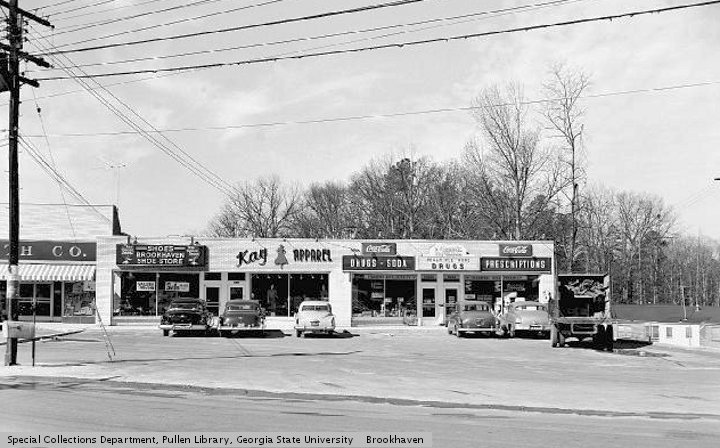
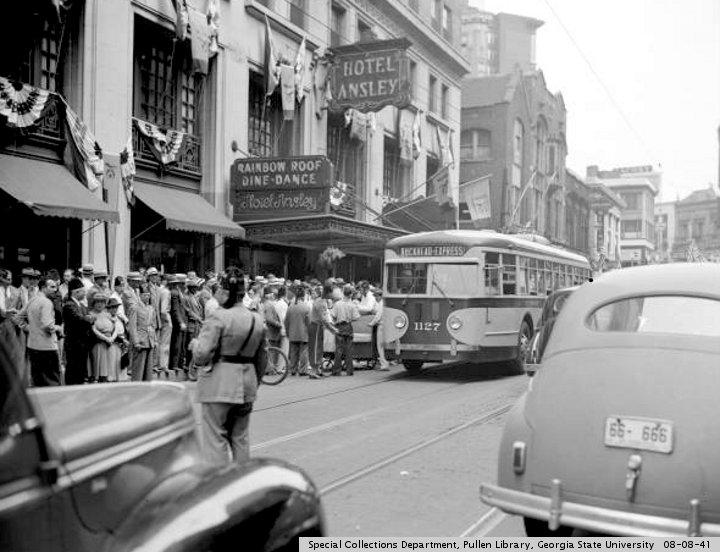
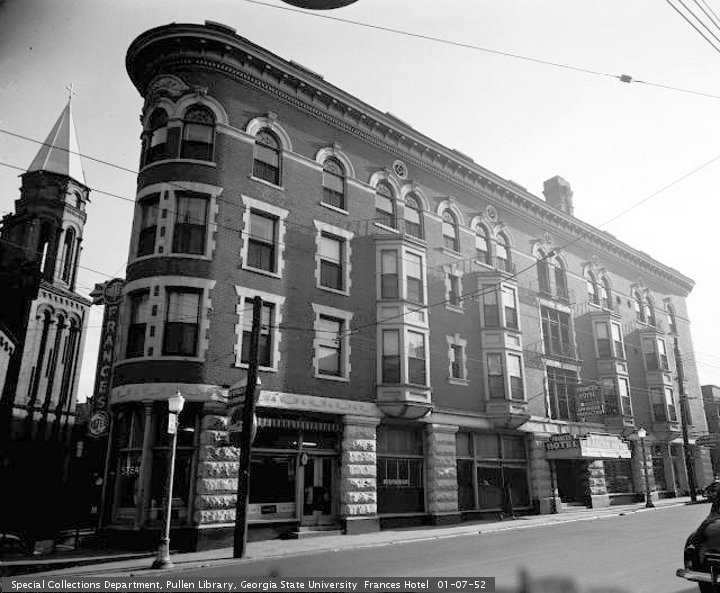
Chamblee54, despite the name, is west of Chamblee, and is part of the proposed new city. There have been features about Brookhaven recently, including vintage pictures. The election on the new city will be July 31. All affected voters are encouraged to study the issues, and make your opinion known. The spell check suggestion for Brookhaven is Brokenhearted. Pictures today are from ” The Special Collections and Archives,Georgia State University Library”


Is T-SPLOST Toast?
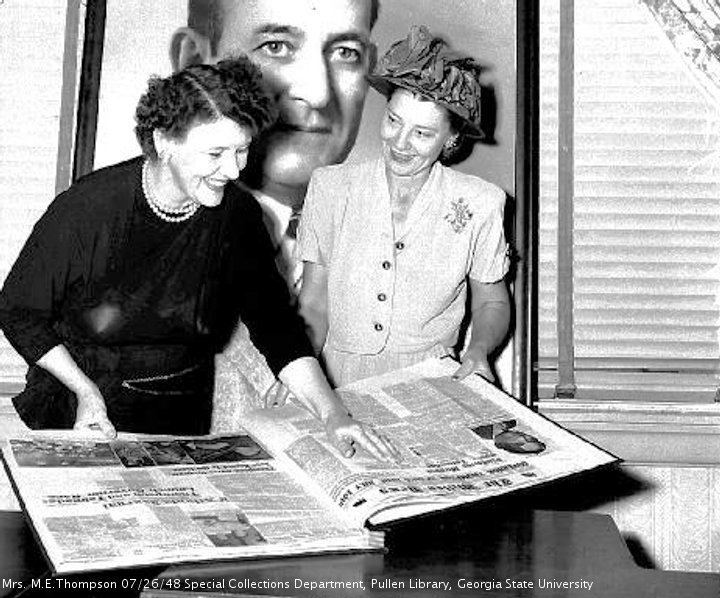

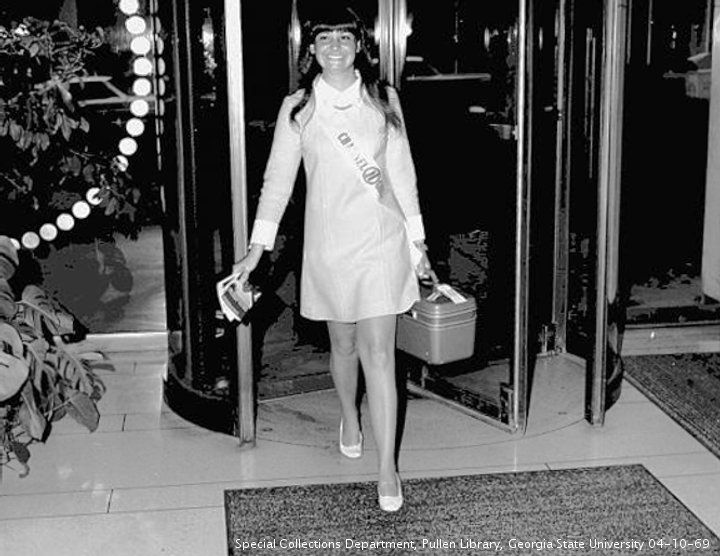
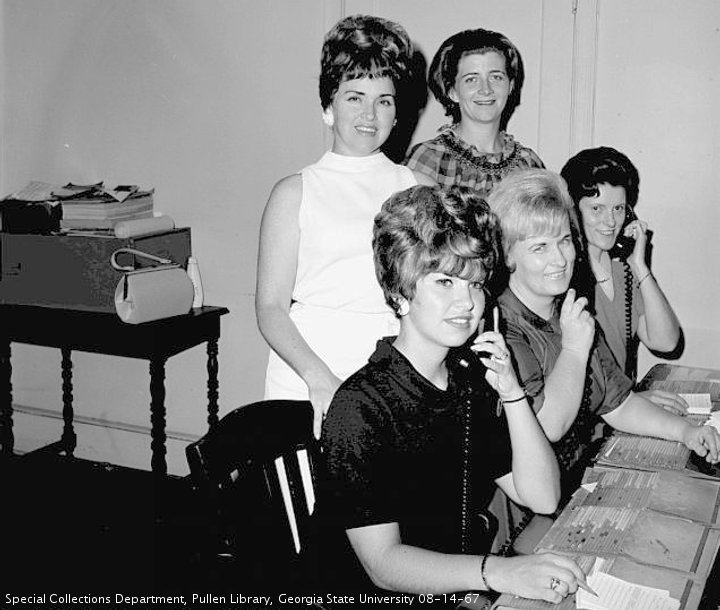
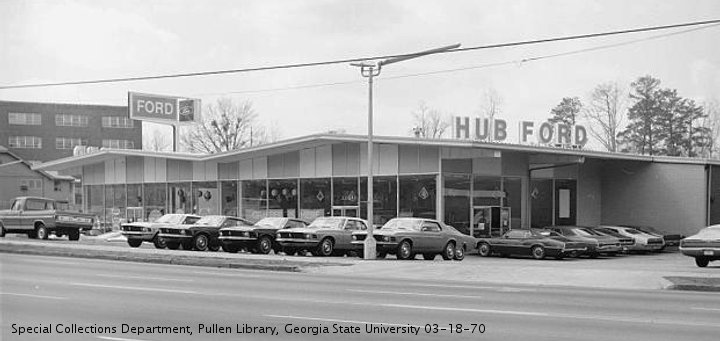

On July 31, voters will consider a proposal with the clumsy acronym T-SPLOST. . This stands for Transportation Special Purpose Local Option Sales Tax. It was a name given by a committee, just like the project list was created by a committee. Some say a camel is a horse designed by a committee. Perhaps the “regional roundtable” wants to have camel trails. Atlanta did not build roads, they paved the cow paths.
The Georgia Sierra Club is opposed to T-SPLOST. Their presentation will form the basis for this post. Not enough goodies are going to South Dekalb county, so the Dekalb NAACP is opposed. Chamblee54 has mixed feelings.
The project list was assembled by a “regional roundtable”. The ten counties of the region are Clayton, Cherokee, Cobb, DeKalb, Douglas, Fayette, Fulton, Gwinnett, Henry, and Rockdale. Sierra describes the sausage factory: “The Atlanta T-SPLOST project list was developed by a “regional roundtable,” a 21-member panel consisting of one mayor and one county commissioner from each of the region’s ten counties, plus the mayor of Atlanta. There was no attempt to apportion representation by population. As a result, the panel was dominated by smaller, more rural counties that do not prioritize transit. Twelve of the 21 panel members came from the six smallest counties, representing just 25% of the region’s population. Only nine of the panel members represented the region’s four biggest counties (Cobb, DeKalb, Fulton and Gwinnett) even though those counties account for 75% of the region’s population and 79% of the anticipated T-SPLOST tax revenue. The result of this disproportionate representation was an overemphasis on road projects that (unlike transit) have alternate sources of potential funding, and a series of political turf battles focusing on local demands rather than regional needs.”
It is like the old county unit system. Gwinnett county, with 805,321 people, had as much say so as Fayette county does with 106, 567. (Source of numbers.) Another problem is the way Local Assistance Road Program (LARP) money is distributed. 15% of T-SPLOST bucks will go to local governments. The problem is that several OTP counties will take in more money than they will generate. Fulton county is estimated to take in $88 mil less than it generates.
The Georgia Sierra Club has seven main objections to T-SPLOST. On their website, they go into luxurious detail. Here are the sloppy seven.
1 The Project List Does Not Present a Cohesive Transportation Vision, offering a hodgepodge of conflicting priorities when what is needed is a bold and consistent vision for a sustainable transportation future.
2 The Necessary Institutional Context is Not in Place, with the 2012 legislative session having failed to address serious questions about equitable regional transit governance and the ongoing second-class treatment of MARTA.
3 It Likely Kills Commuter Rail For Another Decade, taking off the table one of the most promising strategies for providing commute alternatives and promoting sustainable development.
4 It Does Too Little to Address the Current Road-Heavy Funding Imbalance, instead reinforcing a funding framework that already heavily favors highway expansion over commute alternatives.
5 The Road Funding Neglects Maintenance Needs to Focus on New Capacity, with five times as much funding going to expanded capacity than to maintenance and operations, further compounding an already serious backlog of asset management needs.
6 It Locks the Region into a Dysfunctional, Undemocratic Decision-Making Process, both through the highly politicized “roundtable” process and the blatantly anti-urban method for distributing local set-aside funds. (Fulton County alone would forfeit $88 million due to this inequity.)
7 The Transit Component Has Too Many Flaws, including vaguely defined project descriptions, underfunded capital expansions, and uncertainty about long-term operational support.
PG has a few things to add. The treatment of MARTA by the rest of the state is shameful. MARTA recieves no funding from the state. The same legislature passes laws telling MARTA how to spend it’s revenue. Fulton and Dekalb counties have had a one percent sales tax for forty years to support MARTA. While the system has it’s problems, it needs more support from the OTP crowd.
The Clifton Road Corridor is a big ticket item. This is a light rail system between the Lindbergh MARTA station and the Emory campus. GSC has concerns about whether this project can support itself after it is built. This is an ambitious project, and the demand for it is far from certain. It is currently planned to go in a railroad corridor, which will reduce disruption during construction.
There is a ton of information available about this referendum. Voters are encouraged to learn as much as possible before the vote. At this time, there is no Plan B.
Pictures today are from ” Special Collections and Archives,Georgia State University Library”


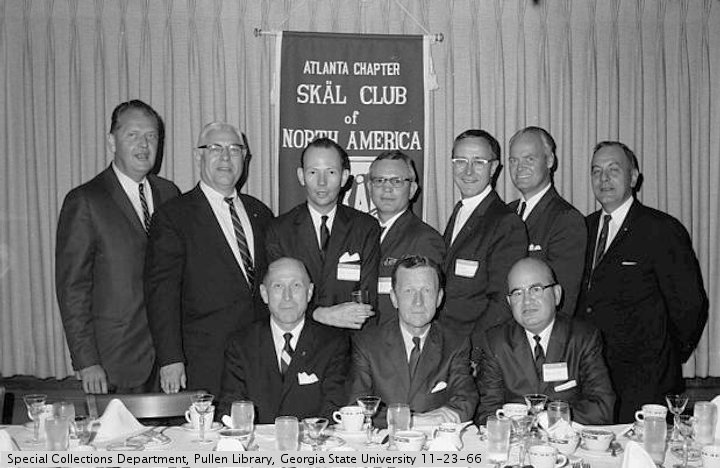
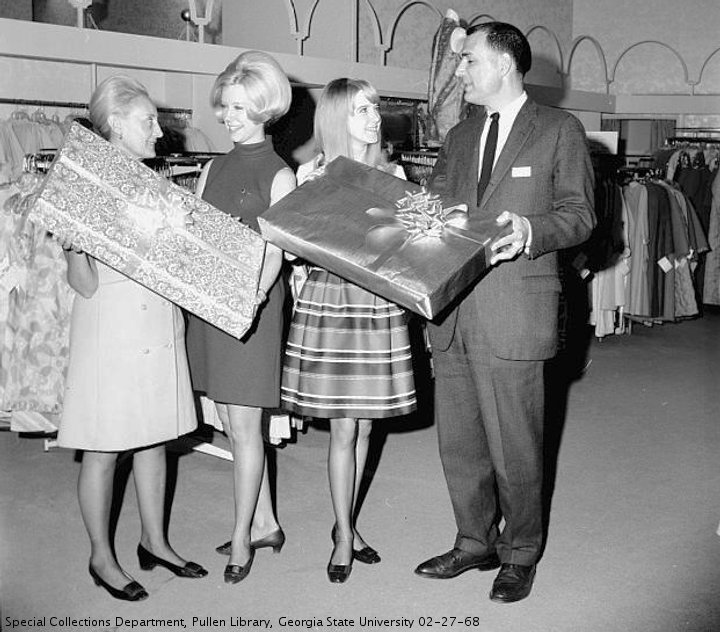
Brookhaven Pie


There is an amusing discussion now at Peach Pundit about a proposed City of Brookhaven. The metro area has gone new city crazy recently. Unicorporated Fulton and Dekalb county land has been used to create Sandy Springs, Milton, John’s Creek, and Dunwoody. The latest proposal (the boundaries have not been drawn yet) would use land between Atlanta, Dunwoody, Chamblee, and the unincorporated Dekalb territory to the south. It would probably include the Ashford Park area that PG lives in.
Brookhaven is called the first planned golf course community in Georgia. The Capital City Club anchors a spectacular neighborhood, with a loop road that is popular with joggers, bikers, dogwalkers, and somnambulists. There used to be a city called North Atlanta which was discorporated in the sixties.
With it’s location on Peachtree Road, just outside the City of Atlanta, Brookhaven has been a favored site for McMansions. In the “Indian Village” neighborhood, very few of the original shacks remain. Lynwood Park, the oldest Black community in Dekalb county, is another scene of gentrification.
The story in Peach Pundit is a lively affair. People with reservations about this new city are given links calling them liberal crackpots . The author tells the tale of seeing a young man walking away with his lawn mower. He was not happy with the police response, and feels that an new city police force would do a better job.
The story spawned a festive comment thread. Instead of discussing the merits of a new city, the commenters discuss the pros and cons of confronting the lawn mower thief personally, as opposed to calling the police. There is one comment that begs to be quoted. I agree, creating government is not conservative. It is a conservative reaction to liberalism gone awry.
In other neighborhood news, fishwrapper scribe Jim Galloway talks about the continuing saga of Jill Chambers. The former State Representative is being sued for some debts, and creditors covet her campaign contributions.
In a comment to the Galloway piece, Ms. Chambers writes “The interesting thing is all of this is on the hands of the Feds now – state law does not apply and this cannot be fixed during a special legislative session. That is why the Judge will not consider that the funds were seized illegally BEFORE the bankruptcy.” Two comments down from Ms. Chambers, her creditor’s attorney says “Call me if politicians owe you money. 404.262.1425”
Mr. Galloway reports that Ms. Chambers is currently working for a private investigation firm, in hopes of getting her own P.I. license. Pictures are from ” The Special Collections and Archives,Georgia State University Library”. This is a repost. The vote on the proposed new city is July 31.


Water Worries


Some people think that the drought is over, and we can go back to wasting water. They are wrong.
From a water supply point of view, Atlanta is a terrible place for a city. 4 million people depend on the Chattahoochee River, an overgrown trout stream. If you look at a map of Georgia watersheds , you see what a small area is covered by the Chattahoochee.
As if that isn’t bad enough, the water is also claimed by Alabama and Florida. A nuclear power plant in Alabama uses enormous amounts of river water. The three states have been arguing in the courts over the water rights for years, and the courts have ruled against Georgia.
For decayeds decades, the developers in Metro Atlanta have built as though having a water supply was not an issue. With dozens of governments to choose from, if the developers are turned down in one jurisdiction, they merely go to another…or make another bribe campaign contribution, and another forest bites the dust.
 In an era of tea parties and calls for small government, few have a plan for the water crisis. There are going to be no cheap solutions. Even if we were to have access to the Tennessee River (a very big if), a pipeline to carry the water through the mountains to Lake Lanier is going to be very expensive. We will not get this money by cutting taxes to stimulate the economy.
Even without a water sharing agreement, we almost ran out in 2007. A severe drought cannot be predicted, and another one may start today. The nuclear plant in Alabama requires tremendous amounts of water, and was close to having to shut down.
Much of the rain in Georgia comes from the Gulf of Mexico. This Gulf is currently becoming an open air reservoir for crude oil. What will happen when the remaining sea water evaporates, and becomes rain? Will the water have a helping of crude oil derivatives? At least this water can be used in a nuclear power plant.
Rain water is held in a reservoir until it is needed. For metro Atlanta, this is Lake Lanier. A water reservoir is not like a bank account, where the money earns interest. Water in a reservoir shrinks over time…water on the surface evaporates. When there is a drought in August, with 100 degree temperatures every day, water usage increases, evaporation increases, and there is no fresh rainwater going into the lake. This is how a water problem becomes a crisis.
There are a few, common sense, ways to save water now. Just because we are not in a drought does not mean we need to start wasting water. The water we save now will (mostly) be waiting for us when ( not if) another drought starts.
When you brush your teeth, fill a cup of water up first. Use part of this to rinse your mouth, and use the rest to clean your brush.
If it’s yellow let it mellow, if it’s brown flush it down.
Get a stopper for the bathroom sink. If you shave, save water in the sink to clean your razor.
Keep a jug of water in the fridge if you like cold water. Don’t let the water run until it gets cold.
Take a “navy shower”. Get wet, turn the water off , lather up, turn the water back on, rinse.
Only run dishwashers and washing machines when they are full.
There are many, many more ways to save water. The less we use now, the longer our reserves will last. The water shortage will never be over in Atlanta.
Pictures from The Library of Congress. This is a repost.


Traffic Disaster


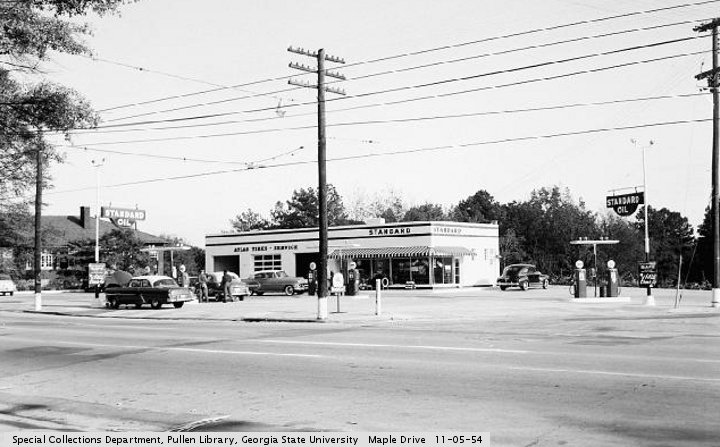
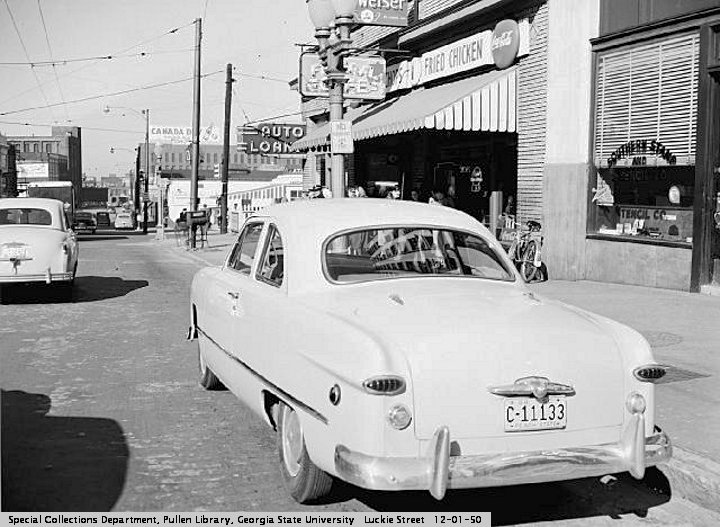
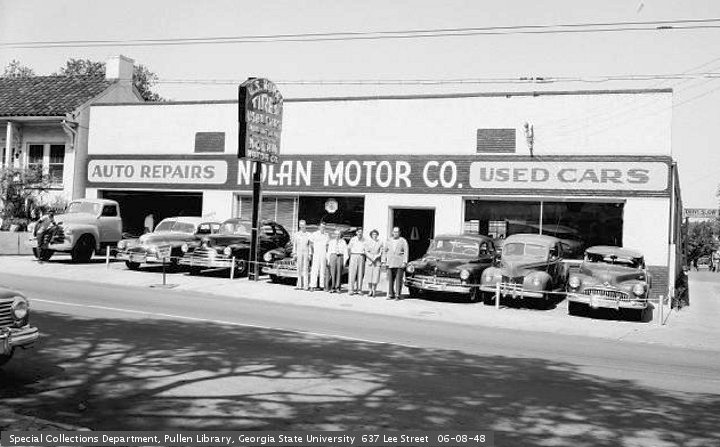
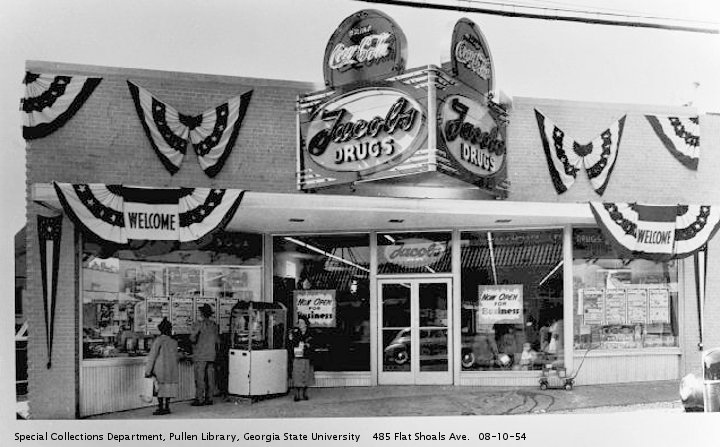
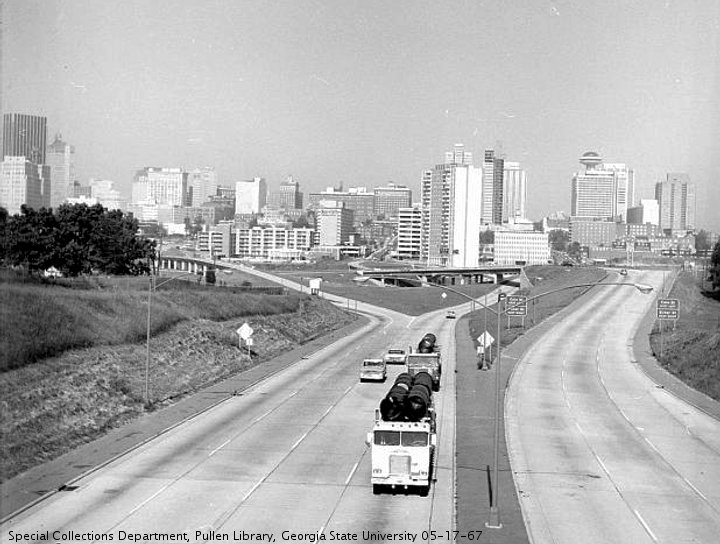
On July 31, voters will weigh in on a traffic initiative. The idea is to raise the sales tax one percent, and use the money on a variety of transportation projects. Few will disagree that transportation in Atlanta is a disaster. In a perfect world, voting for this proposal would be a no brainer.
The first hint that something was amiss was the robocalls. A ringing telephone is an intrusive device that takes you away from what you are doing, at a time selected by the caller. When PG gets an automated sales pitch, his instinct is to hang up, and to never support the product being advertised in such a distasteful fashion. So far, PG has received two robocalls supporting the initiative.
The second wave of phone calls uses live callers. (The fact that PG has an unlisted number makes these calls more annoying.) The live callers say they are taking a survey. There are only two questions to the survey, with none of the demographic questions that legitimate market research uses. After the questions, the first lady went into a sales pitch for the transportation initiative. There was a claim made, with no supporting data offered, that the new transportation projects would add 20,000 jobs to the metro area. PG did not believe that claim. The lady followed up by asking if there were any questions about the initiative.
That was the first live caller. When the second live caller hit, PG told her that she was turning him against the initiative. She said have a nice day and hung up.
PG considers himself a progressive, and would ordinarily support a proposal like this. The traffic in the metro area is nightmarish. For years, developers, enabled by corrupt governments, have built as if there was no tomorrow. The roads to service these new residents will be built later. This does not even consider the lack of a dependable source of water .
There is also the suspicion that the transportation program was as poorly planned as the efforts to get the initiative passed. This is perhaps unfair, since production and sales are usually two separate divisions. Still, these robocalls and “surveys” are an indication of the amount of respect that the planners have for the people. If this is how they sell the program, you can assume that the program will be operated with the same degree of arrogant disregard for the people.
This may be the last chance for the Atlanta area to improve the transportation quagmire, until the next time. While PG is not impressed by the proposed programs (and notes that almost nothing will happen in a three mile radius from his home), he wants to support this program. If he doesn’t get any more phone calls, it is possible that PG will vote yes.
Pictures are from “The Special Collections and Archives,Georgia State University Library”.

Karen Handel At Patrick Henry University


Karen Handel made an appearance recently at Patrick Henry College. The show is embedded above, or you can read part of it here. There were few surprises, except maybe towards the end where Mrs. Handel said something that PG agreed with… “Not every aspect of a moral society can be legislated. You have to create a moral society.”
The Komen foundation appears to be naive. They were surprised by the reaction to the decision to curtail funding to Planned Parenthood. The events of last February were a textbook study in bad damage control. It also appears that the SGK foundation had made a few enemies over the years, and they were happy to get revenge. Meanwhile, Mrs. Handel whines “Komen was simply a breast cancer organization facing Mafia-style shakedown tactics by Planned Parenthood holding Komen hostage. Komen did not have the bandwidth to fight that. “
The issue of abortion, for better or worse, is heavily politicized. Whether this political activity saves the lives of babies is a good question. Mrs. Handel said that the reaction to the SGK foundation “was political, and it was about their pro abortion agenda, and thats a fact.”
It is reasonable to say that the anti abortion crowd chose political activism as a tactic in their struggle. For them to politicize an issue, and then complain about the other side playing politics, is laughable. When you sow the wind, you reap the whirlwind.
One thing that Mrs. Handel says is that SGK had one person to work on social media. “Komen has one person who does social media. One. We are a breast cancer organization, not a social media organization.” SGK does have a lobbying department. This is one of the things that leaked out during the February firestorm. As Chamblee54 wrote at the time:
There have been unflattering things about the SGK foundation coming to the public’s attention. Many of the people who have donated money to the pink cause are surprised to find out what their money is going for. Rawstory has a feature, Komen Foundation ousted their Democratic lobbyist just before hiring Karen Handel , that is just downright fascinating.
“It wasn’t until 2008 that the Susan G. Komen Breast Cancer Foundation, a 501(c)3, founded the Susan G. Komen For The Cure Advocacy Alliance, a 501(c)4 non-profit that, under IRS rules, can spend unlimited donor funds on lobbying. It’s that arm of the Komen Foundation that former Secretary of State and failed gubernatorial candidate Karen Handel (R-GA) was hired to run in April 2011, … She’d been serving “as a consultant” to the organization since January 2011… Finally, in 2009, Komen hired Jennifer Luray to run it’s advocacy shop directly and be their top lobbyist in Washington…. When picked to head Komen’s political arm, she was working as a lobbyist for Abbott Pharmaceuticals, a drug and device company that, among its many products, offers a breast cancer screening protocol. … But, according to lobbying disclosure records filed with the House of Representatives, Luray ended her tenure as a lobbyist with Komen in the third quarter of 2010, joining pharmaceutical device manufacturers Becton, Dickinson & Co. instead. IRS filings by Komen indicate she was given a $134,000 severance package upon her departure, which was almost a full year’s salary. “
So, while SGK has one person doing social media, they have a lobbyist getting a $134,000 severance package. Maybe they are a lobbying organization, not a breast cancer organization.
Mrs. Handel discussed her run for Governor of Georgia. She said that someone went on TV and said that she “was a barren, desperate woman. The $93,000 visit from Sarah Palin is not mentioned. Mrs. Handel got a personal endorsement from the most popular politician in America, and lost.
Pictures are from “The Special Collections and Archives,Georgia State University Library”.
HT to Peach Pundit.


The N Word





The good thing about not having a big audience is the freedom to discuss touchy subjects. I can say more or less anything I want, and since very few are reading, there is no problem.
With that in mind, I approach the subject for today’s lesson…the “N word”. It doesn’t get much touchier. We all know what that word is. It has six letters, rhymes with trigger, and makes the brains of some people turn into jello. It is a derogatory phrase for people of African origin.
I try to avoid using this term. There are four main reasons for this. If I ever get paid for doing this I will come up with a top ten list.
1- The “N word” hurts people’s feelings. I have known many fine Black people, and my life is much richer as a result. I do not want to say anything that will hurt these people. As for the not so fine Black People that I have known, they are G-d’s children, just like me. My fellow human beings do not deserve to be insulted just for who they are.
2- Being heard saying the “N word” can cause all sorts of problems. This can include physical retribution, loss of employment, lawsuits, and having to listen to enough loud angry words to make you wish you had never learned how to talk.
3- It is not a fair fight. There is no equivalent phrase for a Black Person to say to a white person. I do not wish to give that power to another group of people… to turn me into a mass of incoherent rage, just for hearing a six letter word.
The closest thing to this is “Cracker”, which I only recently found out was an insult. This is odd, because when I was a boy, we had a minor league baseball team called the Atlanta Crackers.
4- The use of the “N word” demeans the user. When you say an insulting word about another human being, you make yourself look bad. When you hate someone, you hurt yourself worse than the person you hate. And frankly, a lot of these people are not worth it.
This feature was originally posted at my original blog, and copied three years ago. I wrote in first person shamelessly. Pictures are from The Library of Congress
Since I originally posted this, a Kansas/Kenya man, with dark skin, has been elected President. The playing field is having a fruit basket turnover. No one is really certain what is what anymore, except things are different. Or maybe they are the same. It is 2012.
I would like to further comment on is the reality of black people using the “N word”. It is a word that degrades the person who uses it. For a person of color, it degrades them as the object, as well as the speaker. I cannot help but wonder why a person would want to do that to them self, their family and their community. I realize that, as a white person, this is none of my business.
It is like smoking cigarettes. Yes, it is legal, and you have the right to pull toxic chemicals into your body. But why on earth would you want to?




2 comments