Horse Hight Pig Tight Bull Strong


There was a link at Peach Pundit yesterday, Lee Anderson Website Issue Quiz! It is supposed to be off the website of Lee Anderson, who is running for Congress in the redneck triangle. PG couldn’t find it, but is confident that it is somewhere.
The quiz has four questions. There is a saying, and the idea is to find a current issue to go with the phrase. This ought to be a good excuse to spin out some text to go between the pictures. These images are from The Library of Congress. The answers are below the questions, and looking ahead is considered cheating. Anyone cheating on a meaningless internet quiz has got problems.
Question 1. There is an old saying, “G-d gives every bird a worm, but he doesn’t throw it in the nest.”
Tax Policy ~ Abortion ~ Wildlife Management ~ Job Creators ~ I’ve never heard anyone say this.
This is sort of a strange quote. Rumors of a pundit named Jerome Old turn out to not be true. If you ask Mr. Google, he says it is a Swedish folk saying, or that P.D. James said it. There is also a quote by Ogden Nash. “I am a conscientious man, when I throw rocks at seabirds I leave no tern unstoned.” If marijuana regulation were on the Georgia ballot, then this might be germane.
That site says the Question 1 phrase is a “Swedish Saying”. It has a quote by Anonymous: “Test-tube babies shouldn’t throw stones.” There is a quote from Brink Lindsey: “But in the terrible, simplifying clarity of war, it is apparent who is on one side and who is on the other. In the struggle between civilization and barbarism, those who throw rocks through McDonald’s and those who ram airplanes into buildings are expending their destructive energies in a common cause.”
Question 2. On the farm, keeping what you want in and what you don’t want out is important. Your fences need to be horse-high, pig-tight and bull-strong in order to do their job.
Birth Control ~ Wildlife Management ~ Illegal Immigration ~ Job Creators ~ Illegal Aliens are essentially livestock, no wait, the aliens are to like vermin or something, so our citizens are the livestock, and they shouldn’t be able to leave. Right? No?
Did someone say horse high? They might be talking about Latawnya, the Naughty Horse, Learns to Say “No” to Drugs. “This is the tale of three African American horses (Latawnya, Latoya and Daisy), who leave the stable and get drugs from four white horses (Connie, Chrystal, Jackie and Angie). It is a timely and poignant tale that will leave you laughing, crying, and making scary noises. It starkly and accurately presents the real dangers horses in black neighborhoods face from Caucasian equine drug pushers; when one of the horses died of a drug overdose, this reviewer wept openly. This is a lesson all children, foals, calves, chicks and cubs must learn before it is too late. A classic of our time. “
Question 3.Mark Twain once said that politicians are like diapers: they must be changed often and for the same reason. [Hint, he goes on to say: “In my view, 8-12 years is enough for anyone, and I will work to make term limits in Congress a reality.”]
Birth Control ~ Term Limits ~ Tax Policy ~ Diapers should probably be changed more often than politicians ~ We should vote out Barrow in Four Years?
Term limits is one of those things. When the Contract on America was foisted upon the Clintonized landscape of America, term limits was part of the deal. The fact that Newt Gingrich had been in Congress for sixteen years was not considered important.
Question 4. A teacher once told me that as long as the federal government is involved in education, it will always be mediocre for the same reason that in large kitchens, the cooking is usually bad.
Immigration Policy ~ Tax Policy ~ Federal Education Policy ~ Support of the Federal Cafeteria Awareness Act ~ Lee Anderson hates restaurants.
This does not indicate what subject the teacher taught. If he/she was a science teacher, this might be worth listening to. If he/she was a math teacher, then this doesn’t add up. If he/she taught English as a Second Language, then most Chinese restaurants have small kitchens.
1. Either Tax Policy or Job Creators would be correct. Lee Anderson thinks there is too much regulation and that’s like weeds in a garden. He then trumpets his rating from the National Federation of Independent Businesses, which endorsed John Barrow, so maybe he got a higher rating?
2. Illegal Immigration. Great line here: “Somehow the greatest country on earth, who put a man on the moon, can’t build a fence along the border with Mexico?”
3. Term Limits. And Mark Twain didn’t say this.
4. This is part of what appears to be a long diatribe about Emeril Legasse not accepting American culture, but if you said Federal Education Policy, I suppose you can count it as correct. But seriously, what is so bad about restaurants? Are they not job creators? If you eat at home, aren’t you costing American jobs?


A Jolly Good Question
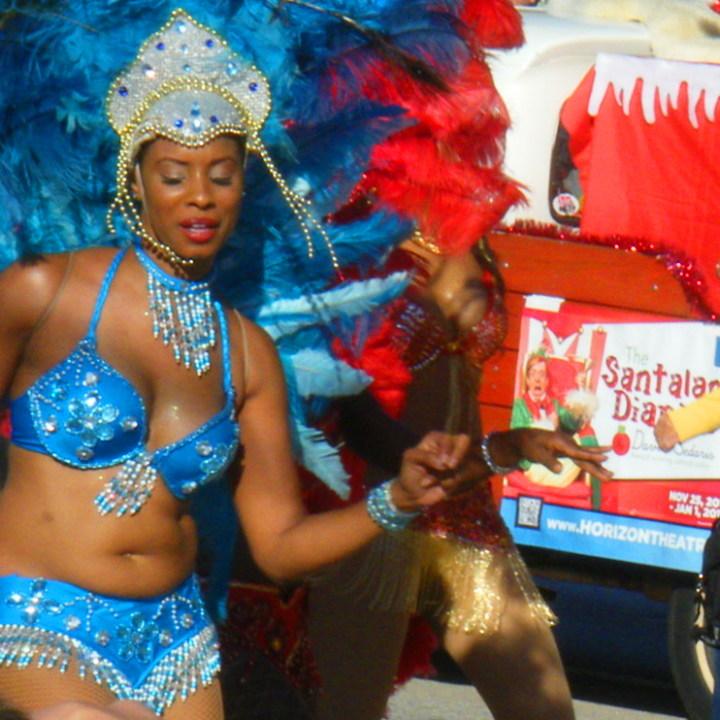
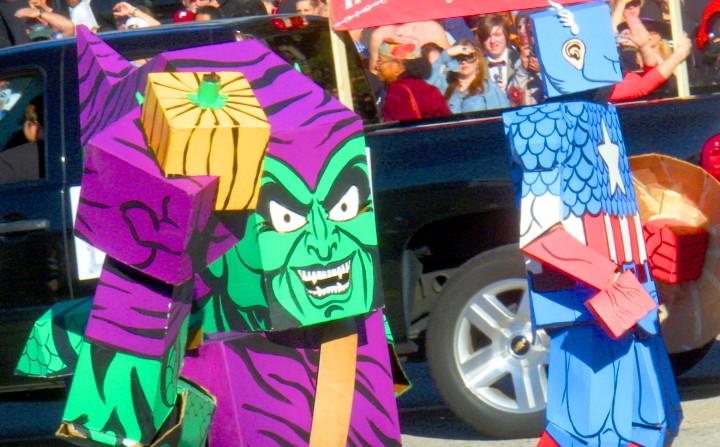

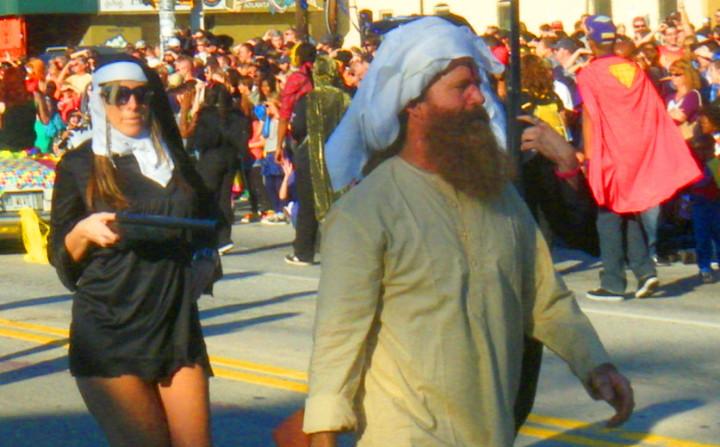

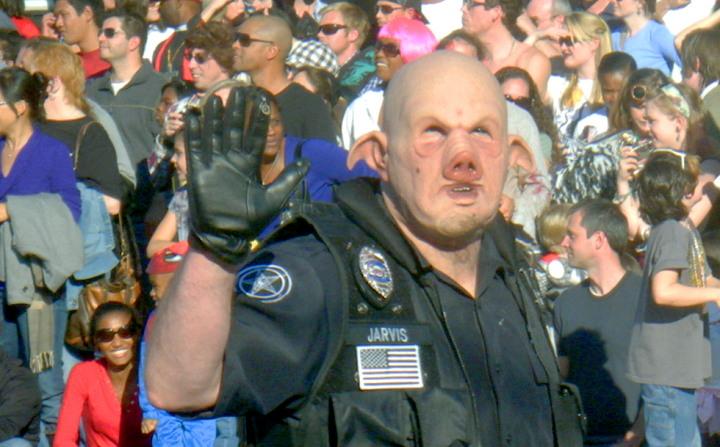
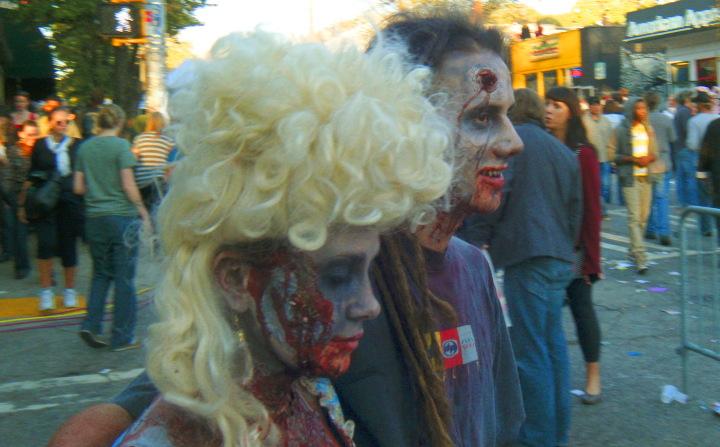
It has been said that PG has too much time on his hands. This is not always meant as a compliment. Yesterday was the last day of a campaign to clean out the camera shots folder. 566 pictures from the Little Five Points Halloween Parade stood in the way. After a while, the last picture was processed. In the background was a series of podcasts. In the spirit of the holiday, PG was dressed as a human.
The ear tickling was found at Booknotes. Authors promoting new product came to a show, on C-Span, between April 1989 and December 2004. The show was hosted by Brian Lamb. When you click on the links, they will start to play automatically. The sound usually needs to be turned up. A transcript is supplied, which makes a blogger’s life much easier. The authors are twenty years younger than today, which is usually a good thing.
Michael Howard had a book, “The First World War”. This conflict has always fascinated PG. It is little thought of today, in the United States, even though it created the conditions for many of today’s problems. It was incredibly bloody. Germany lost 1.8 million men, France lost 1.4 million men (out of a population of 30 million), England lost .74 million men, and the USA lost .11 million men. (“Then in the summer of 1918, in late sort of May and June, the Germans were attacking so strongly, so successfully, that it looked as if the whole line was going to break. And the Americans then did start putting in their troops. (UNINTELLIGIBLE) was the great — the — the great battle of the Big One, your 1st Division. And then increasing number of troops until when the war ended in November, 1918, there were then two full American divisions, with a lot coming up behind. And that was when they had their casualties. It doesn`t look as if they had very many, but if you consider that those casualties they suffered were all suffered within about six weeks, you realize how much they were actually not only involved in the fighting but … getting mown down by German machine guns.”)
Almost no one today knows why this gruesome war was fought. Mr. Howard has a short version. “LAMB: Well, go back to the very beginning. And you point out Archduke Franz Ferdinand. HOWARD: Yes. LAMB: Who was he, and why is he always the object of where the war started? HOWARD: Well, he was the heir to the throne of the Habsburg empire — Austria-Hungary — which was one of the great powers. And he was assassinated by a terrorist. It was a nationalist terrorist from — basically, from Serbia. And he was backed by — covertly by the Serbian army and possibly by the Serbian government. LAMB: You say he was 19 years old, the assassin? HOWARD: About that. I think he was 17, actually. I don`t quite know. But he was a typical young, idealistic terrorist who wanted to see Serbia free from the dominance of the Austrian empire. The Austrian empire was multi-national. It prided itself on having about 12 different nationalities under the imperial rule. Just — some of them were Serbs. Just outside the Austrian empire, there was an aggressive, ambitious Serbia that wanted to sort of have all the Serbs under its command in Belgrade. And it`s — including a number of them who were in Austria. Now, when this terrorist assassinated the heir to the throne, this created a shock comparable, in its way, to 9/11 here. It was regarded as something so outrageous, so abominable, that some kind of revenge had got to be taken. And for the Austrians, this seemed the moment to crush the Serbs for good. There was a general feeling throughout the Austrian empire that We`ve got to finish with these people. They`re bad guys. And they knew, however, that if they did declare war on — on Serbia, Serbia had a patron, who was Russia, and Russia would try to deter the Austrians from attacking Serbia. And if they went through with it, then the Russians were likely to declare war on Austria. The Austrians would have been deterred from attacking Serbia because of this if they did not have the Germans behind them. And they therefore turned to the Germans and said, If we get involved with a war in Russia, will you back us? And the Germans said, Yes, we will. And then one thing led to another. The Austrians did declare war on Serbia. The Russians then did declare war on Austria. The Germans then did declare war on Russia. And Russia`s ally, France, declared war on Germany. It was one of these awful (UNINTELLIGIBLE) escalation. Something which looked sort of fairly small and fairly local escalated into a — not simply a European war but because the British came in, it then became a world war fought all over the globe.”
After the millions of men died, what had been accomplished? LAMB: Who got what they wanted out of all of this? HOWARD: That`s a jolly good question, nobody really.
Charles Fecher edited “The Diary of H.L. Mencken”. Henry Louis Mencken was a writer and editor, who was much beloved by the smart people of his day. He is little known today.
The diary is rather controversial. Mr. Mencken is shown to be an anti semite and a racist. “It is impossible to talk about anything resembling discretion or judgment in a colored woman. They are all essentially childlike, and even hard experience does not teach them anything.” Mr. Mencken was a bitter opponent of Franklin D. Roosevelt, maintaining that the New Deal violated every aspect of the Constitution exept for the prohibition of quartering troops in private residences.






At the bottom of the page, the viewer is directed to other shows “YOU MIGHT BE INTERESTED IN:” This led PG to a chat with Murry Kempton. Mr. Kempton was, before his death in 1997, a New York journalist. He was much loved by the people who write New Yorker magazine, and inform people west of the Hudson River about such things. Mr. Kempton tells about Paul Robeson, Malcolm X (Mr. Malcolm), Richard Nixon, and a few others.
Eric Rauchway wrote “Murdering McKinley: The Making of Theodore Roosevelt’s America.” This incident has been discussed at Chamblee54. The shooting of William McKinley has been largely forgotten, but propelled Theodore Roosevelt into the White House. Mr. Roosevelt ran as a third party candidate in 1912. (This made certain the victory of Woodrow Wilson. Within a year, the Federal Reserve Bank was established. A few years later, America entered World War One.)
Before a speech, Mr. Roosevelt was shot in the chest. The text of his speech deflected the bullet, and he made the speech anyway. “Well, the bullet went through his speech, as I say, which is in his breast pocket and hit him in the fleshy part of the chest, it appears, and he kind of looked down at himself, and he didn’t think that there was any arterial blood coming out, and he coughed, which he said, you know, he remembered from being a soldier that was one way to tell if there was internal bleeding. He didn’t cough up any blood, and so he said to himself, well, I can go on and do this. Now, this was a considerable risk. I mean, whatever precautions he took, to go walking around with a bullet in your chest is never a good idea. But he thought it was worth the risk to achieve this political end of giving this important speech.”
After McKinley died, there was a controversy about the competence of the Doctor’s who treated him. There was one more matter. “LAMB: Didn`t you say there was a dispute over what happened to his stomach? RAUCHWAY: Yes. When I was looking into the book, I talked to a Buffalo doctor, a pathologist, who said, Well, you know, when I was doing my residency here, there was a story going around that his stomach was on display and that you could see the bullet hole in the back of the stomach, but I never saw it, he said. And apparently, nobody has, either. But it`s part of Buffalo lore.
Martin Marty wrote a book about Martin Luther. This is the one interview that PG found boring, and did not finish. There is one good quote about Mr. Luther in his older years. “But the Reformation didn`t go the way he wanted it to. He really was sour on Wittenberg. He didn`t even like to go back to it. He thought that Germany would have moral reform that it didn`t have. He thought that everybody would come flocking to his catechism, and he had to have the police, I guess you`d say, enforce that. So he was a very disappointed person, frustrated that the Jews didn`t convert. He thought they`re all going to convert when you get — he read the Hebrew scriptures as the Christian Bible. And so when Jesus comes along, that`s just fulfilling that. So why wouldn`t the Jews all come running? And well, it must be the rabbis who are holding (ph) them. So he spewed out terribly anti-Semitic things … The empire is breaking up. You`re facing the issue of the Turk, the Muslim. He calls them Mohammaten (ph). Somebody said they — the Turk is Luther`s luck. He wouldn`t have been alive if it weren`t for the threat of the Turk along the way. He read the Quran — bad paraphrase, but he at least knew what was there. And sometimes he sounded friendlier to the Turk than he did to the pope. In his last years, too, the pope had become for him the anti-Christ. And the language that people then used — there`s a whole volume of exchange between Luther and Thomas More, whom we think of as a cool humanist, “The Man for All Seasons. The language they use is — we couldn`t use it on this program or anywhere else. That`s just how it was. And that shows up mainly in his late years.”
Winston Groom became famous as the author of Forrest Gump. He is also a military historian, and wrote a book about the Battle of Ypres (pronounced EEP), A Storm In Flanders. The book is about one of the battles in World War One. There is a military cemetery at Ypres, and a monument to 80,000 British soldiers who died, but did not have enough matter left to bury. Of course, the conversation gets back to Forrest Gump before long. “LAMB: And what did it do to change your life? GROOM: Well, I — I’ve been able to upgrade my brand of toilet paper”.
James Tobin wrote Ernie Pyle’s War: America’s Eyewitness to World War II. (Ernie Pyle and Gomer Pyle are not related.) Ernie Pyle was a war correspondent in World War II. Mr. Pyle wrote about what the war was like for the men in the trenches. As the European war wound down, Mr. Pyle was burned out, and returned to the United States. He was persuaded to go cover the war in the Pacific. On April 18, 1945, on Okinawa, this proved fatal.
The last chat that PG listened to was with David Crosby , who usually has something to say.(Chamblee54 has discussed Mr. Crosby.) This interview was produced May 28,2000. Mr. Crosby talks about the need for campaign financing reform, and how tough it is to make people think that their vote counts. In a few months, PG would have a similar conversation with a friend, who thought it was important to vote for Al Gore. PG was unimpressed with Mr. Gore, and not scared by Mr. Bush. I doubt that PG, or Mr. Crosby, could have foreseen the way that election was going to turn out, or the disastrous consequences for humanity. This is a repost.


Mick Jagger

There was a book at the Chamblee Library, Mick: The Wild Life and Mad Genius of Jagger. The work is credited to a man named Christopher Anderson, who has a slew of best sellers to his credit. The copyright was issued to “Anderson Productions.”
When you write about Mickie, you have to post a few videos. One of the first to come up is “Waiting on a friend.” This was the first video that PG saw on MTV. One night in early 1982, PG rode his bike to an apartment on Buford Hiway to buy MDA. While he was there, a young companion of the salesman said hey watch this, music television. The video was a favorite that first winter of MTV, even though it wasn’t really that good.
Mick Jagger has been a part of many lives the last fifty years. The stones were conceded to be number two to the beatles, but stayed together longer. The era of rock concert as megaevent coincided with the reinvention of the stones, after the demise of Brian Jones. He did after all start the band. Mr. Jones had become too much of a druggie to be relied on, and was fired. The book says that Mr. Jones was drowned, by a construction worker.
Ok, we are three paragraphs in, and we have not discussed Mr. Jagger’s pecker. Most of the book is about this instrument of undetermined size. The book says Mick stuffed a sock in his pants before shows. Mick has screwed thousands of women, and more than a few men. Whether Mick is a top, or a bottom, is left to the imagination.
The phrase “fuck Mick Jagger” is seminal. One night, the B52s were playing at a toilet on Ponce De Leon Avenue called the Big Dipper. The venue was later torn down, the ground decontaminated, and an animal clinic built on it’s site. After the show, one of the girls (either Kate or Cindy, or maybe neither, since this story is possibly an urban legend) was hanging out in the parking lot. “Beulah” was running his mouth, as he liked to do, talking about his hero Mick Jagger. Finally, the B52girl had heard enough. “Fuck Mick Jagger, one day Mick Jagger will come see me.”
The book goes into excruciating detail about the stones story. Mick grew up middle class, and was close to his parents. He bit the end of his lip playing basketball, and sounded different. While going to the London School of Economics, he connected with Keith Richard, and found that they both liked Chuck Berry. The Glimmer Twins started to hang out together, and played a few gigs at a nightclub owned by Alexis Korner. (Mr. Korner opened for Humble Pie and Edgar Winter at the Atlanta Municipal Auditorium. He was ignored by the festive pot smoking crowd.)
At this time, Mick had been introduced to sex by the other boys at his school. The first time with a woman was when Mick was an orderly at Bexley Mental Hospital. A nurse “yanked him into the linen closet where, surrounded by sheets, mops, and bedpans, Mick lost his virginity standing up”.
At some point Brian Jones came into the picture. Mick moved into a flat with Brian and Keith, and lived in picturesque squalor. At some point Mick and Brian bumped gooberheads, which left Mick confused. It is not known whether the lads could afford drugs at this point.
The story goes on and on. There are ugly moments, pretty moments, good songs written, lots of drugs, lots of sex. As Mick said in “Shattered,” “sex and sex and sex and sex and sex and sex and sex.” A few begin to wonder if he is capable of a one on one relationship, but their opinions don’t count.
One afternoon in 1978, PG was driving a truck in Decatur. He worked for a lady who did sampling projects, which means giving out samples to consumers. The product this time was Playtex Plus deodorant tampons. The truck was the rag wagon. There was an announcement on the last am rock and roll station in Atlanta. The stones were going to play the Fox Theater, and tickets were on sale now. The signal of the am station faded out at this point, with a gospel station preacher blocking out the rock and roll announcement. PG did not hear the location of the ticket sales. It turns out the tickets went on sale at the box office of the Municipal Auditorium, which was two blocks away from the rental facility the rag wagon was being returned to that afternoon. Such is life.
In 1991, PG was walking to work and noticed an army of movie trucks. Mr. Jagger was appearing in a film, “Free Jack.” PG saw a scene filmed from his perch in the Healey Building, and stood behind a chair with the name “Mick Jagger” stenciled on. There were reports of a van rocking in Cabbagetown. On January 12, 1992, Georgia May Ayeesha Jagger was born.
Mick: The Wild Life and Mad Genius of Jagger is not a bad book. It is easy to read, and does not skimp on slime. The phrase “cringe inducing” is used several times, which may be the result of a focus group. It is not worth $27.00, or $29.99 Canadian. The publisher is Simon&Schuster. The dalliance between Mr. Jagger and Carly Simon is dutifully noted. The spell check suggestions for Schuster are Schumpeter, Custer, and Chester.
Pictures are from The Library of Congress. This was written like David Foster Wallace.



Atlanta Pride 2012


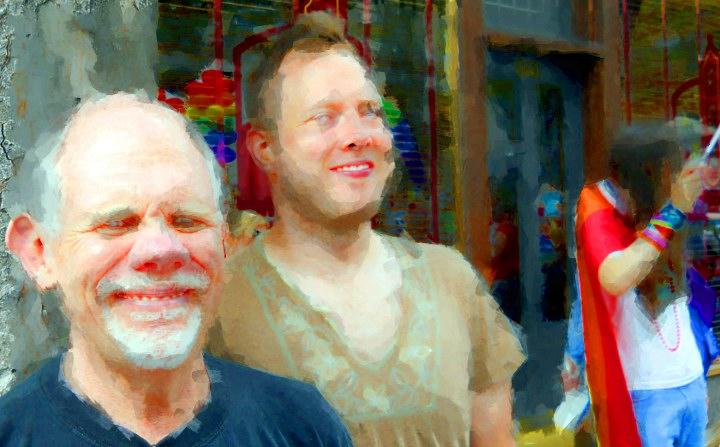


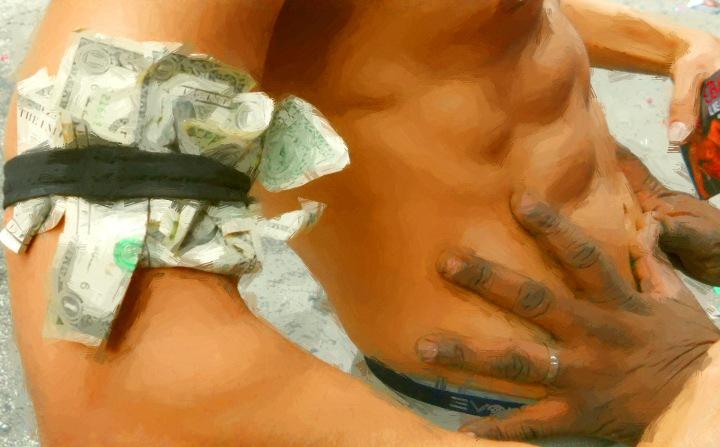


The original plan was to just copy the JoeMyG-d pride rant, gussy it up in a tasteful rainbow font, add a few pictures, and call it a day. The pictures are here to stay, and a few quotes from the JMGPR may find their way here. The thing is, the rant was written in 2005, and this is seven and a half years later, and 800 miles south of New York. A lot can happen in that time, and somehow pride keeps changing.
As if PG would know. This was the first parade he saw since 2007, the first time he stood on the sidewalk since 1996, so someone doesn’t know what he is talking about. Not that it ever stops him. He even saw the end of the parade, where the street sweepers followed the last half naked gogoboi. Or was it he last pickup truck, dragging under the weight of a drag queen coven. There were some damn good trucks on Peachtree Street this afternoon.
Gay Pride quit being a protest about the time it dropped the first name. It is a party, a celebration, an ethnic holiday. It is an elderly congressman walking down Peachtree Street working the crowd. It is Coca Cola Delta Home Depot UPS marketing to a community. It is more freebies thrown from trucks than your pockets can hold. If you want to wring your hands about our image, then feel free to do so. As JMG put it:
“Because even if Pride doesn’t change many minds in the outside world, it’s our PARTY, darlings. It’s our Christmas, our New Year’s, our Carnival. It’s the one day of the year that all the crazy contingents of the gay world actually come face to face on the street and blow each other air kisses. And wish each other “Happy Pride!” Saying “Happy Pride!” is really just a shorter, easier way of saying “Congratulations on not being driven completely batshit insane! Way to go for not taking a rifle into a tower and taking out half the town! Well done, being YOURSELF!”
I’m not worried what the outside world thinks about the drag queens, the topless bulldaggers, (spell check suggestion: bulldozer) or the nearly naked leatherfolk. It’s OUR party, bitches. If you think that straight America would finally pull its homokinder to its star-spangled bosom once we put down that glitter gun, then you are seriously deluding yourself. Next year, if one of the Christian camera crews that show up to film our “debauched” celebrations happen to train their cameras on you, stop dancing. And start PRANCING….
A co-worker of mine heard me discussing my Pride plans last weekend and said, “I really don’t understand what it is you are proud about. I mean, you all say that you are born that way, so it’s not like you accomplished anything.” She wasn’t being mean, just genuinely curious, and I think that a lot of gay people probably feel the same way. On this subject, I can only speak for myself.
I’m proud because I’m a middle-aged gay man who has more dead friends than living ones and yet I’m not completely insane. I’ve lived through a personal Holocaust (here we go again) in which my friends and lovers have been mowed down as thoroughly and randomly as the S.S guards moved down the line of Jews. You, dead. You, to the factory. And you, you, you, and you, dead. I am inexplicably alive and I am proud that I keep the memories of my friends alive. I am proud of my people, the ACT-UPers, the Quilt makers, the Larry Kramers, the Harvey Fiersteins. I’m proud that I’m not constantly curled up into a ball on my bed, clutching photo albums and sobbing. And that happens sometimes, believe it.”
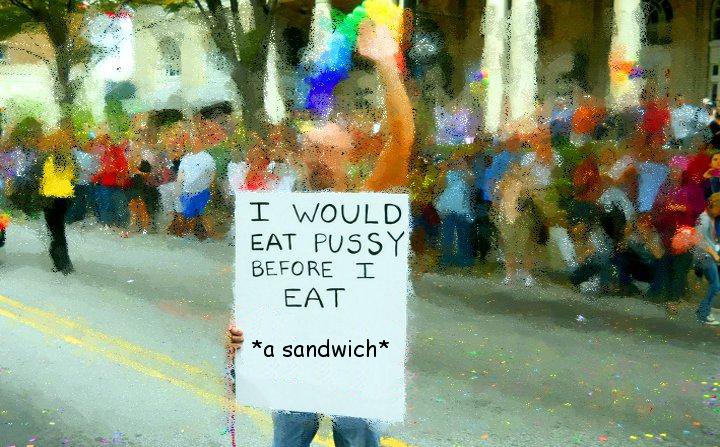
There is a gentleman who annually seems to have the best sign of the parade. There was another winner today, as the picture browsers might notice. The creator of these signs has a sharp tongue. PG has been on the business end of this verbal weapon, and does not appreciate the owner. Still, this went on in the late eighties, and the man is still going strong. It is always a happy moment to see a gay man from twenty years ago still alive.
When people want to make trouble in Georgia, they talk about racism. While no one is saying that everything is perfect, this year has a lot more people of color than have been seen before. Everyone seemed to be having a gay ole time together today. While the real world will be here monday, on this sunday people got along together.
A single person can find it tough to get downtown on pride sunday. This year, PG posted on facebook about this, and got an invitation to breakfast. This turned out to be a lovely affair. PG who had to good fortune to arrive after the battle over how to cook the eggs had subsided. The plan was to take the train to town, and meet others at the Fox Theater. At first, this was horrible. A radio station had a loud party in the Georgian Terrace hotel, which mercifully went quiet when the parade started.
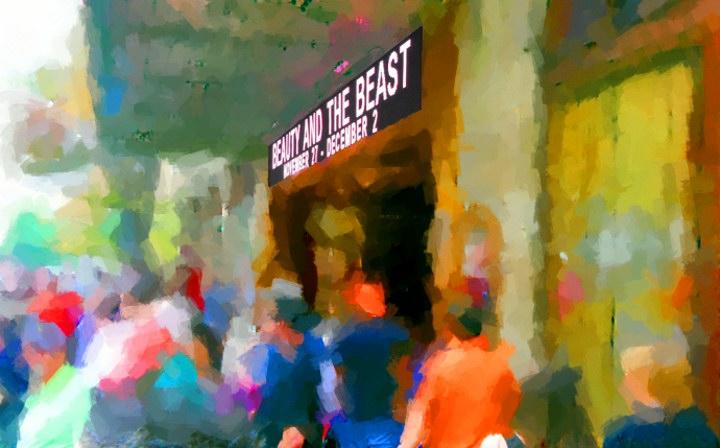
There was a sense of wonder listening to Dykes on Bikes. It was so amazing to be there, to be a part of this spectacle, to have survived life this far. The rainbow colored goodies came down Peachtree as far as the eye could see. The marquee of the Fox advertised a production of “The Beauty and the Beast”, and the sidewalks looked like one massive audition.
There was a policeman whose job was to keep people on the sidewalks, so that the parade could go by. When it was over, PG thanked the man for his patience. “Its all I got”.







Privilege


PG had heard the phrase “white privilege” a few times, and decided to ask Mr.Google about it. The top choice was White Privilege: Unpacking the Invisible Knapsack “This article is now considered a ‘classic’ by anti-racist educators.” It is four pages long, which might not break the attention span.
A document like this is almost impossible to read with an open mind. You are a member of a group, such as a white male like PG. There are a lot of things here which PG agrees with, a few his disagrees with, and a few that are dependent on the reader’s point of view. The sentence that PG felt obliged to copy was ” I was taught to think that racism could end if white individuals changed their attitudes”. It is as if the attitudes of black people did not matter.
There are more headshakers in this article. In a list of privileges white folks take for granted, number 18 was ” I can be pretty sure that if I ask to talk to “the person in charge,” I will be facing a person of my race.”. That might have true once, but is not today.
Getting back to White Privilege (and ignoring the White Privilege Conference results), there are lots of people thinking about this subject. The University of Dayton contributes Defining “White Privilege”. In the text, the author mentions starting a site, Whiteprivilege.com. This site is currently under construction. It does give you the opportunity to buy “Privilege Car Insurance”.
A feature, What is white privilege?, compares every person with pale skin to the Palin family. “White privilege is when you can get pregnant at seventeen like Bristol Palin and everyone is quick to insist that your life and that of your family is a personal matter, and that no one has a right to judge you or your parents, because “every family has challenges,” even as black and Latino families with similar “challenges” are regularly typified as irresponsible, pathological and arbiters of social decay.” This runs counter to line 21 of the Invisible Knapsack list, ” I am never asked to speak for all the people of my racial group. “
PG went looking for answers, and got more questions. He does not deny that being caucasian has advantages in our society. These advantages do not mean that one should lay down quietly and let black people get their revenge. We are all G-d’s children. You should be proud of who you are, without taking advantage of your neighbor.



After publishing a feature about white privilege , PG thought it would be fair to look into black privilege. When you visit Mr. Google, some of his suggestions are black privilege checklist, black privilege furniture, and black privilege fact or fiction. The top result is a feature in American Thinker. “Personally, I have never had a moment of white guilt in my life. Now this is a significant statement given that I am Jewish and from New York. I feel guilty about pretty much everything!”.
NPR has an audio file called Black Male Privilege? . It is downright fascinating.
Prof. LEWIS: I think youve unfortunately identified one of the central issues of black male privilege. So often, black men are used to being under attacked that when it comes to being accountable for the actions we may have, we quickly say, well, I couldnt possibly be doing anything wrong. Look at all the ways in which Im oppressed. Look at all the ways in which Im at the bottom of the barrel. What that does is rob us of an opportunity to actually build stronger community and it robs black men of a chance to actually take hold of the actions that they have so that we can empower the community.
MARTIN: What reaction do you get when you talk to people about this?
Prof. LEWIS: Among black women, in particular, I get a lot of amens and saying, thank for actually exposing this. Among black men, one of the most common ones I get is, well, this seems ridiculous. Its an oxymoron. How could black men be privileged? Its like jumbo shrimp. It doesnt add up. … And they say, you know, what did my black male privilege get me? Im unemployed. … : Initially, my first exposure was actually around the Million Man March. I felt that I was transformed by the Million Man March, and I thought it was one of the most powerful events ever. And I was having a conversation in class with a professor, Dr. Beverly Guy Sheftall, and she said that she couldnt support the Million Man March because it was very patriarchal and it put black men at the center. And I said, well, it doesnt always have to patriarchal. You dont always have to put black men at the center. And if she said, isnt it an amazing privilege to tell someone else what they dont have to take seriously? And that paused me for a moment. And I said, wow. What is it in my past that makes me say I can define what someone else would think of as important? (Here are more thoughts on this subject by Dr. L’Heureux Dumi Lewis )
Times are tough in the US of A. To an unemployed white person it is easy to say, what good has this privilege done me? And isn’t it a form of privilege to label anything you don’t like about someone as being due to privilege? Has privilege become a catch22 for anything you don’t like about a person?
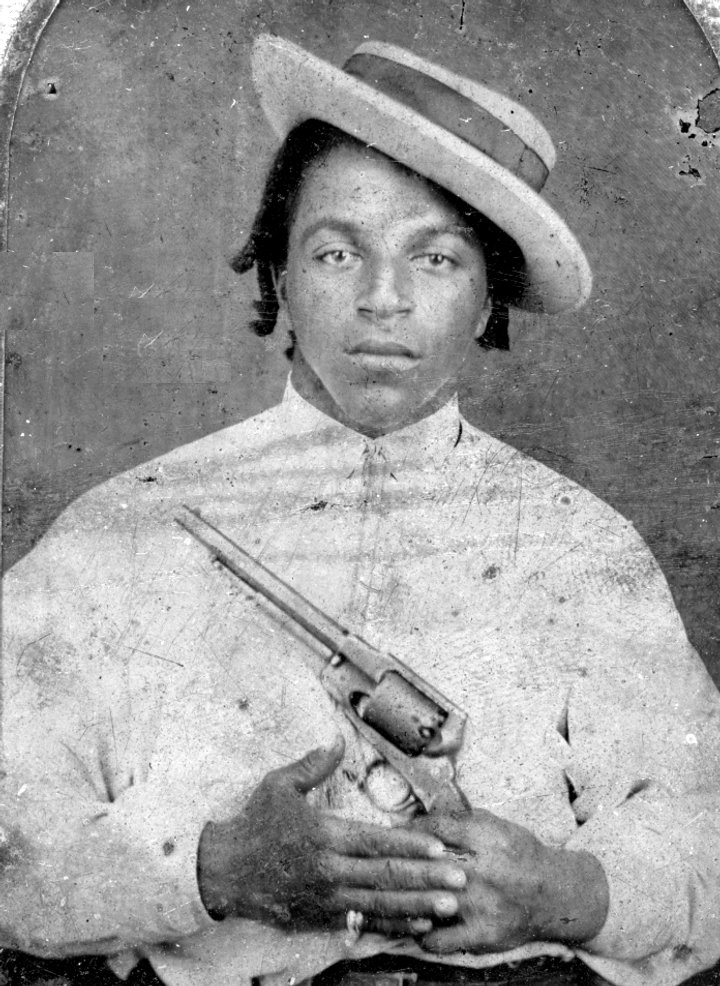
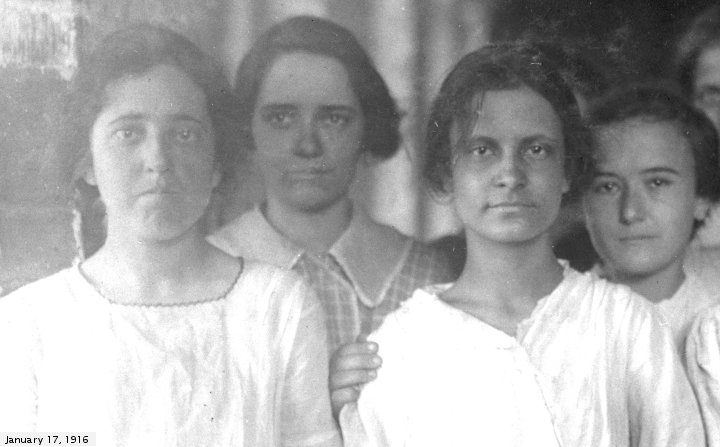
This feature is not a complete recap of the google results for black privilege. There were a couple of white racist sites that are best ignored. Two wrongs do not make a right. This is a double repost. Pictures are from The Library of Congress. This is written like H. P. Lovecraft.

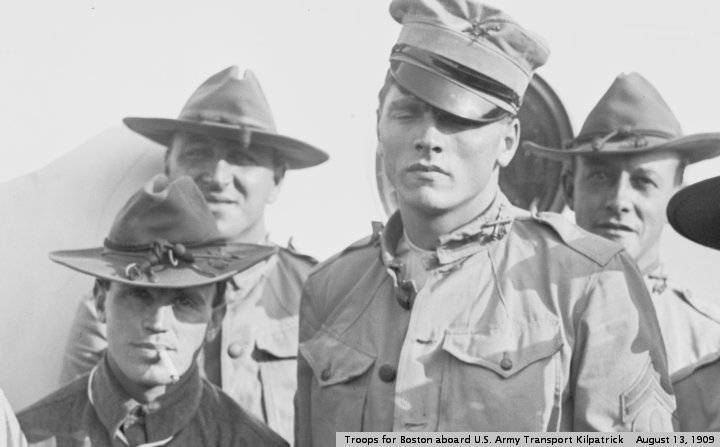


Cemetery Blues
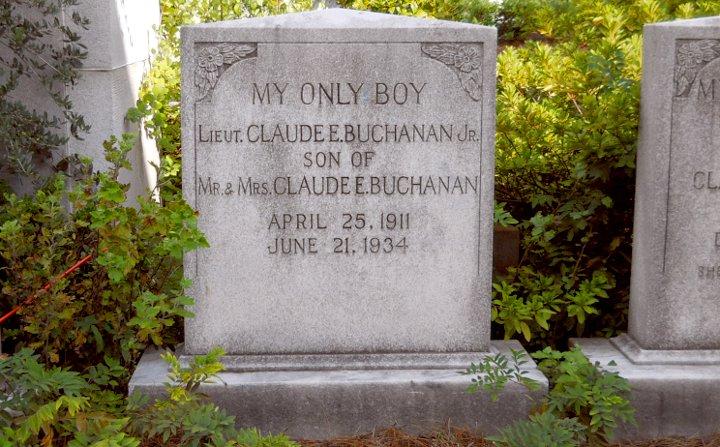
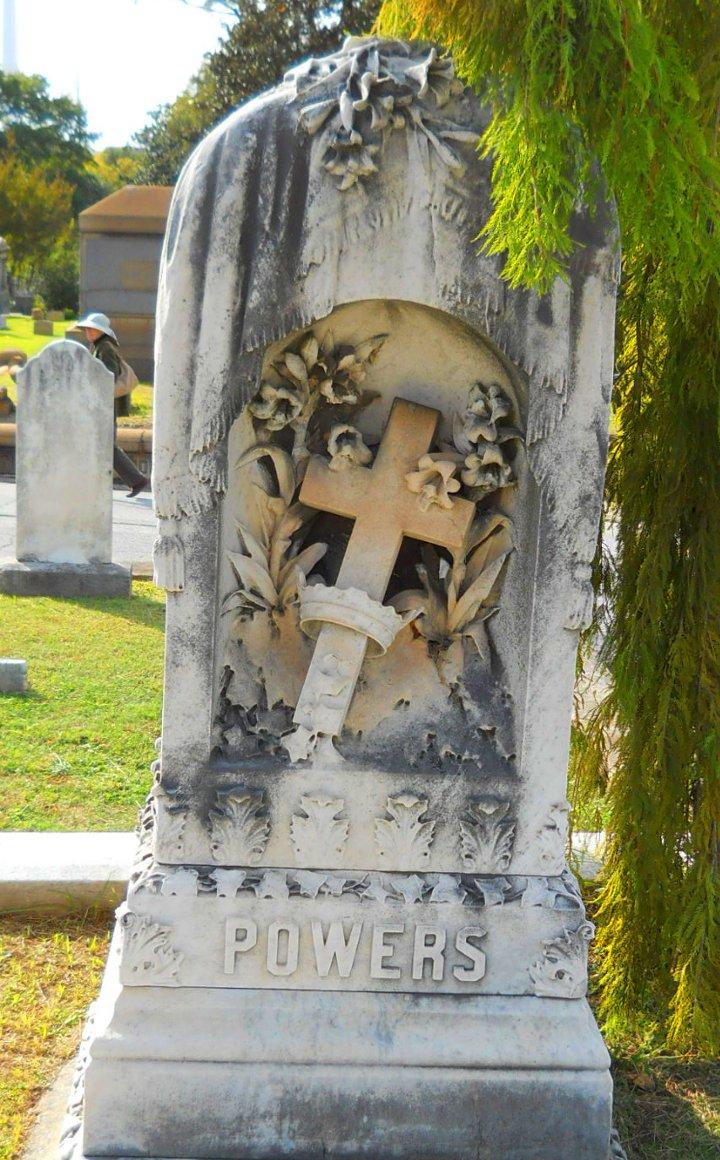


PG and Uzi had their usual Sunday phone call, and agreed to go to “Sunday in the Park”. It is a festival in Oakland Cemetery, with live music, people in costumes, open mausoleums, and lots of good clean fun. It wasn’t until that evening that PG learned that today is Dead Poets Remembrance Day. Edgar Allan Poe met his maker on this day in 1849.
There was a Chamblee54 post about DPRD two years ago. The idea is to go to a cemetery and read a poem. An effort will be made to do that tonight, although promises about dead poets are notoriously unreliable. The 2010 post is included as part two of this feature.
The first poem read that afternoon was “Looking for the Buckhead Boys” by James Dickey. In the intervening two years, PG listened to a podcast with Christopher Dickey, the son of the writer. Sometimes bard is short for bastard.
So PG, Uzi, and Hazmat went to a festival in Oakland Cemetery. Like everything else, it is more popular and expensive. You had to pay to park, which Uzi generously took care of. The brick walls around the boneyard have been repaired, and no longer look like they are going to fall down. Those walls are important, because people are dying to get inside. This is the second time that PG and Uzi have attended the October festival in Oakland Cemetery.
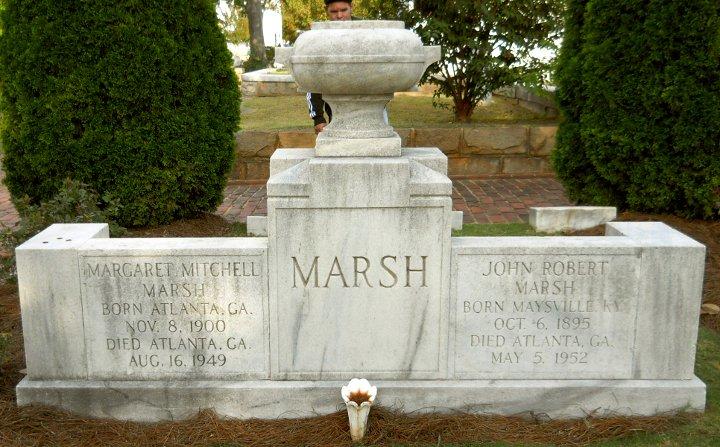
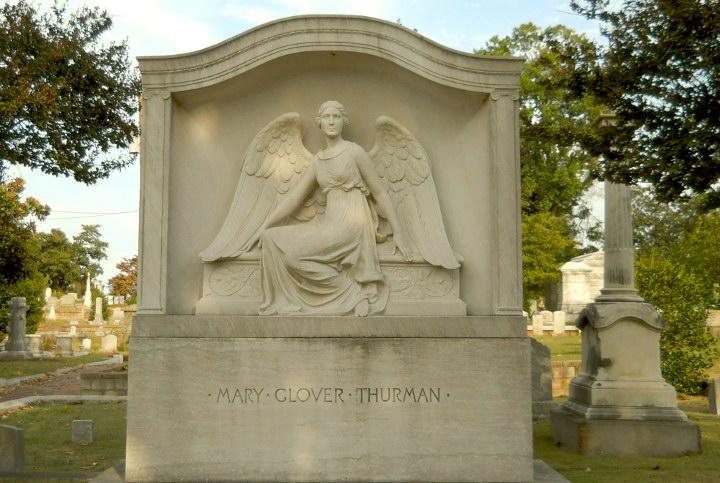
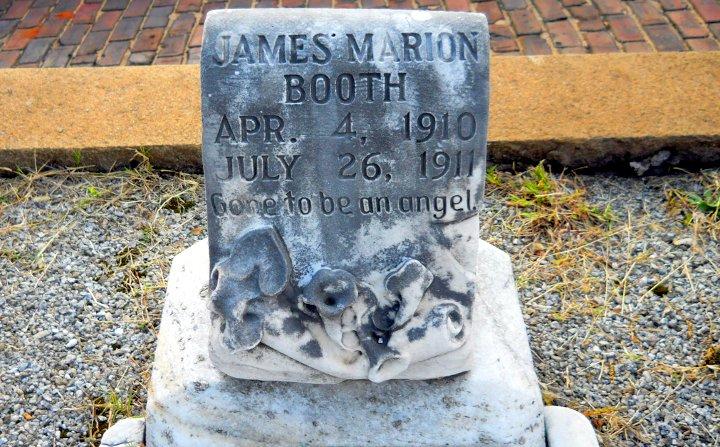
There are always things that you need to see at Oakland. Margaret Mitchell, the Lion Statue, and the mausoleums are important stops. PG followed the signs to the grave of Bobby Jones. It had golf balls and a putter, which was not necessary.
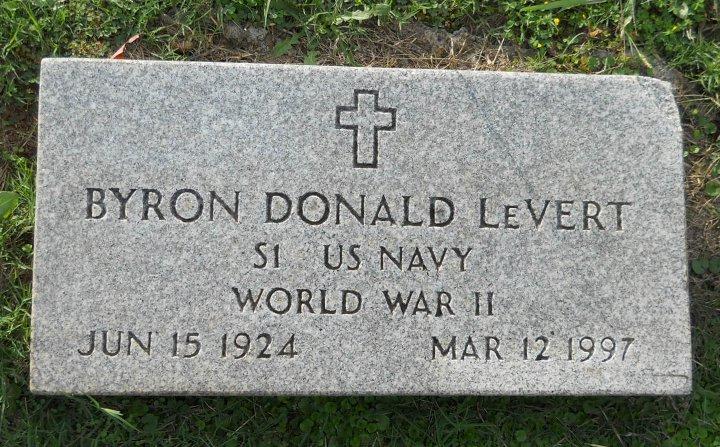
Don LeVert was a member of the Atlanta Sky Hi Club for many, many years before his departure in 1997. PG and Uzi always seek him out, and it is usually a bit of an adventure finding him.
After visiting Don, PG found the marker for “Brother John Wade”. His time on earth was September 23, 1865 to January 15, 1916. This was from the autumn just after the War Between the States until 37 days before PG’s father was born in Rowland, North Carolina. There was a renewed sense of connection to the stone monuments.
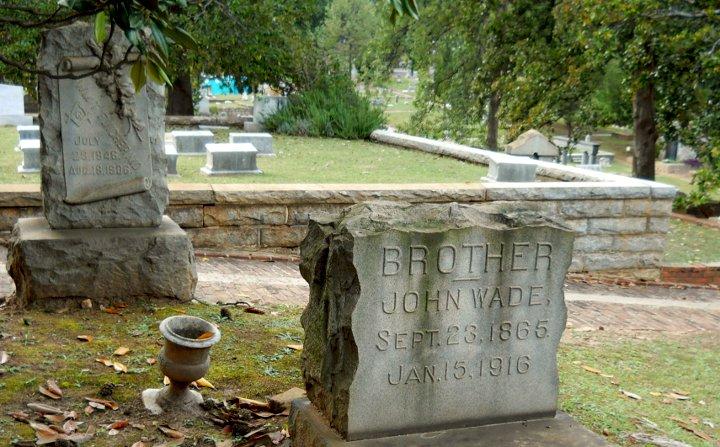


The facebook friend said “Today is Dead Poets Remembrance Day, Oct. 7th, the day Edgar Allan Poe died. Be sure to visit a graveyard and read some poetry today”. PG didn’t have anything better to do.
The first obstacle was finding a book of poetry. PG is not a poetry person. A look at the shelf turned up a paperback, “125 years of Atlantic “. Poetry was to be found between those covers.
The book had two stickers, both saying 69 cents. At the old Book Nook, this meant that the book was half the price on the sticker. With tax, that would be 38 cents.
125YOA had stayed in PG’s car for a few years. Whenever he was stuck somewhere with time to kill, this book was waiting. One afternoon in 1998, there was a slow day at work. PG read a remembrance by Gertrude Stein, about life in France at the start of World War II.
The cemetery of choice was connected to the Nancy Creek Primitive Baptist Church. PG has driven by this facility thousands of times. He walked past the graves until he found a fallen tree to sit down on.
The first poem was “Looking for the Buckhead Boys” by James Dickey. PG began to read out loud, and soon could smell the drug store air of Wender and Roberts. The author bought fifty cents worth of gas at a Gulf station. Today, fifty cents might buy a tablespoon of gas, and Gulf was long ago bought out by BP. Wender and Roberts became a bar, which was torn down, to make way for a shopping destination.
Buckhead is not what it used to be. When Mr. Dickey was the bravest man in Buckhead ( he took a shit in the toilet at Tyree’s pool hall), PG was not even thought of. The traffic jams on Peachtree Street are still there, as the blue haired ladies follow poets into the ground.
When PG finished reading Mr. Dickey, he put a teal postit in the book, where the poem stood. PG looked up, and the graveyard seemed different. Maybe the sun had sank a bit in the sky, and maybe the poem had changed PG in a way he could not put into words. Maybe another poem was the answer. Take the glasses off, open the book at random, and turn the pages until a poem shows up.
On page 404…the historic Atlanta area code…was “The Wartime Journey” by Jan Struther. The 1944 work was unknown territory. A group of people are traveling on a train. The wounded vet, the untried recruit, the salesmen shared the space with a lady, taking a baby for her soldier husband to meet. The theme of the rhymes was that America was totally at war, and that war is different from peacetime. Today’s war in Babylon is not like that.
Halfway through the reading, a freight train pulled by. Today, passenger trains are a novelty, and freight rules the rails. The shipment today was double decked containers, ready to pull off and slap on an eighteen wheeler.
Deaths are said to come in threes, and reading poetry in a graveyard should be the same. PG went on a random search for a Moe, to go with the Curley and Larry already digested. A page of poems by Emily Dickinson was the result. These pages left PG unmoved. It was as if he was back in the sixth grade, with a horrible English teacher forcing him to memorize Hiawatha. It was time to go home.


The Peanut Butter Dilemma
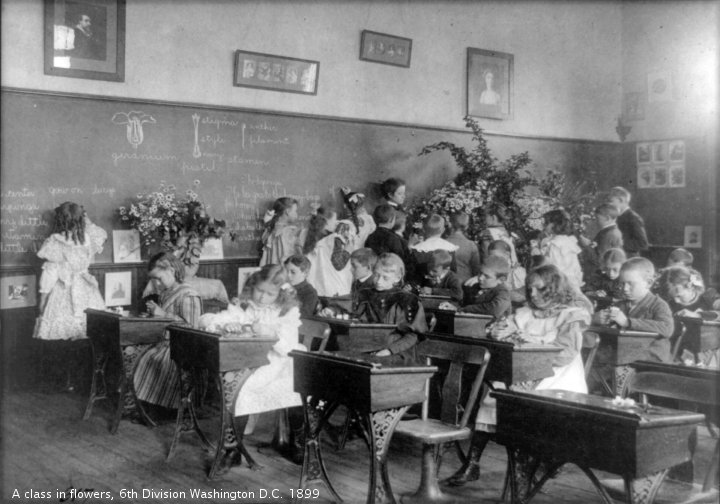
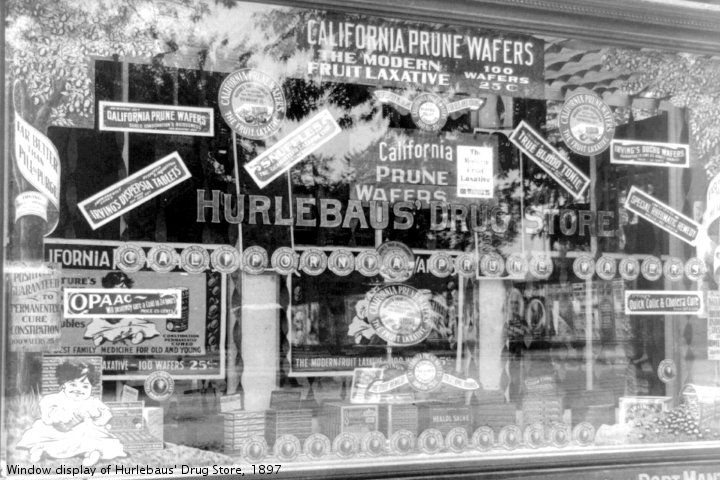


PG got an email from Uzi, with a list of home remedies, and alternate product uses. Peanut butter has three alternative uses, which is one more than preparation H. No one ever made a preparation H and jelly sandwich.
To remove labels off glassware, rub with peanut butter. To remove ink from the face of dolls, use peanut butter. To get the scratches out of CD’s, use peanut butter, and wipe off with a coffee filter.
Peanuts were used by the Incas in 950b.c. It probably didn’t take much imagination to grind the beans into a paste. To claim inventing peanut butter is like claiming to invent the knot.
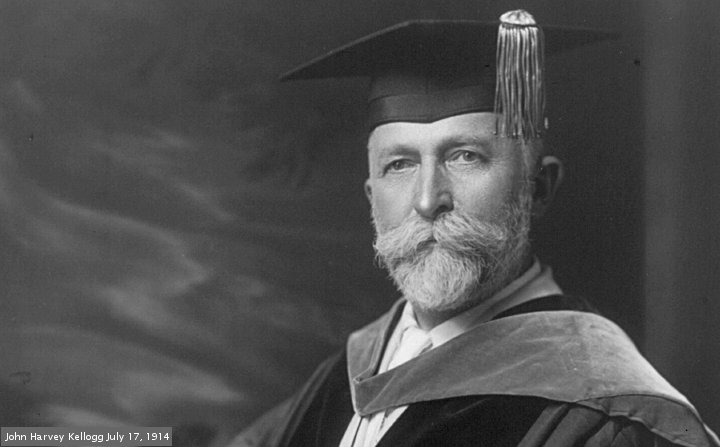
In recent times, Dr. Ambrose Straub of St. Louis patented a peanut butter-making machine in 1903. Dr. John Harvey Kellogg patented a “Process of Preparing Nut Meal” in 1895. Kellogg served the patients at his Battle Creek Sanitarium peanut butter.
Joseph L. Rosenfield invented a churning process that made smooth peanut butter smooth. In 1928, Rosenfield licensed his invention to the Pond Company, the makers of Peter Pan peanut butter. In 1932, Rosenfield began making his own brand of peanut butter called Skippy.
Did someone say George Washington Carver? Dr. Carver discovered hundreds of uses for the peanut. However, Dr. Carver did not patent peanut butter, as he believed food products were all gifts from God. The Incas beat all of these men by 2800 years.
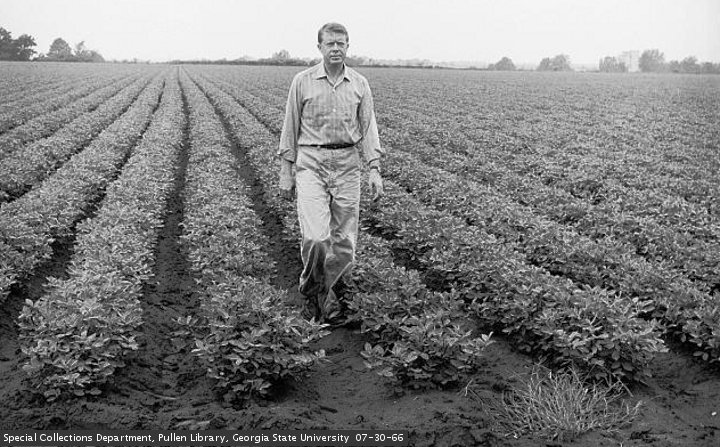
In 1976, a peanut farmer from Plains, Georgia was elected President. It is also known the his brother Billy ran the family business, while Jimmy got mixed up in politics. While President, Mr. Carter was revealed to be a major user of Preparation H.
Now that we are confused about who invented peanut butter, the next question is, why butter? In The Netherlands, the product is called Pinda Kaas, or peanut cheese. It could as easily be mud, goo, or cream, as butter.
A google search on “why is peanut paste called peanut butter?” yielded an article about salmonella issues. Wikipedia sheds no light on the subject, but does mention that peanut butter is an effective bait for mouse traps. This is a repost. The picture of Jimmy Carter is from ” The Special Collections and Archives,Georgia State University Library” . Other pictures are from The Library of Congress. Inventors.about.com has a page about “The history of peanut butter”. Portions of the text were copied into this post. This is a repost.


Seven Years Of Chamblee 54


Seven years ago, Chamblee54 published the first post. Originally, PG wanted to argue with some Jesus worshipers, and had to set up an account to make comments. Once the account was set up, it was easy to start writing posts.
The posts came about once a week. Step by step, things were added to the mix. The posts were done with color fonts, and suddenly black fonts were obsolete. PG began to do dangerous things with photoshop, and the pics began to be added. Soon, there were pictures everyday, and there was no connection between the pictures and the text.
The slogan at first was a quote by Hunter S. Thompson…“When the going gets weird, the weird get going.” One day, there was a comment, to the effect that weird was being misspelled. Picky, picky, picky. Just remember, it takes we to be weird.
A few things happened in late 2007. PG got a dsl connection, and added a bunch of memory to the machine. GIMP was introduced as a photo program, and soon replaced photoshop.
In the winter of 2008, there was a snowstorm. When the ice melted, google didn’t want to connect PG to his blog. Many desperate hours were spent with broken english speaking tech reps, but nothing helped. Finally, Chamblee54 went to WordPress, where it has been ever since. After a while, a new theme was installed, with 720 pixel wide columns and pictures.
In november 2008, there was the nana twins, nanowrimo, and nablopomo. The first produced 58k words of gibberish. Stream of consciousness is more fun to write than it is to read. Nablopomo, which is not connected to Nambla (that anyone knows about), is a gimmick. You agree to post something on your blog everyday. Even without the annoying emails, PG manages to put up content almost everyday. The pictures are always there. The current motto is “Pretty Pictures and Ugly Opinions”.
2010 saw historic pictures added to the mix. During the summer, the codes for rainbow font were finalized, and tow sided justification gave a smooth block look to the text. There were a few more improvements, and probably some changes that made things worse.
Today is the autumn equinox of 2012. The counter went over 100k a few months ago, which is probably what Huffington does in fifteen minutes. Still, it is fun to be an actor, instead of warming a seat in the balcony. If you wonder about something, you have an excuse to look it up. If you should have an original (to you) thought, you can share it with a billion potential readers.
Part two today is a celebration of the number seven. If you get mad at this, remember to forgive seven times seventy. Another popular number this week is 47. Something about a statistic from Moneybooboo. And yes, 47 plus 7 is 54. Pictures are from The Library of Congress.


This is a double repost. It is about things that come in groups of seven. Thanks and praises go to Wikipedia. The other sources are cited where appropriate.
Seven Samurai -Kambei Shimada , Gorōbei Katayama , Shichirōji , Heihachi Hayashida ,. Katsushirō Okamoto , Kyūzō ,
The Magnificent Seven – Chris Adams, Harry Luck, Vin, Bernardo O’Reilly, Britt, Lee, Chico
Seven Wonders of the Ancient World-Great Pyramid of Giza, Hanging Gardens of Babylon, Statue of Zeus at Olympia ,Temple of Artemis at Ephesus, Mausoleum of Maussollos at Halicarnassus ,Colossus of Rhodes, Lighthouse of Alexandria
Rome is built on Seven hills – Palatine, Capitoline, Quirinal, Viminal, Esquiline, Caelian, and Aventine. Thank you SevenMagazine.
The Seven Sisters – Barnard College, Bryn Mawr College, Mount Holyoke College, Radcliffe College, Smith College, Vassar College, and Wellesley College
“All human actions have one or more of these seven causes: chance, nature, compulsions, habit, reason, passion and desire.” Aristotle 384 BC-322 BC Thank you Thinkexist.
The Magnificent Seven are seven cemeteries used by the citizens of nineteenth century London.:Kensal Green Cemetery , West Norwood Cemetery ,Highgate Cemetery , Abney Park Cemetery ,Nunhead Cemetery ,Brompton Cemetery , Tower Hamlets Cemetery
Seven deadly sins – lust, gluttony, greed, sloth, wrath, envy, pride
Seven holy virtues – chastity, abstinence, temperance, diligence, patience, kindness
Seven goddesses – isis, astarte, hecate, demeter, kali, iana, diana
Seven dwarfs – bashful, doc, dopey, grumpy, happy, sleepy, sneezy
Seven brides – Alice, Dorcas, Liza, Martha, Millie, Sarah, Ruth
Seven brothers – Adam, Benjamin, Caleb, Daniel, Ephraim, Frank, Gideon
Seven husbands of Elizabeth Taylor – Nicky Hilton, Micheal Wilding, Micheal Todd, Eddie Fisher, Richard Burton (twice), John Warner, Larry Fortensky (The American Film Institute named Taylor seventh among the Greatest Female Stars of All Time.)
Matthew 18:21-22 – 21 Then came Peter to him, and said, Lord, how oft shall my brother sin against me, and I forgive him? till seven times? 22 Jesus saith unto him, I say not unto thee, Until seven times: but, Until seventy times seven.


Page Fifty Two


As citizens of facebook nation know, it is International Book Week. There is a ritual for observation of this event. “It’s international book week. The rules: grab the closest book to you, turn to page 52, post the 5th sentence as your status. Don’t mention the title. Copy the rules as part of your status.”
PG had been resisting. For one thing, text from dead tree books cannot be copypasted. Posting the fifth sentence would involve typing the words by hand, which is too much work.
And so it is thursday morning of IBW, and 144 fbf have posted the meme. PG looks to his right, and sees no books in the first glance. A turn to the left shows a map book. The meme doesn’t say what kind of book, or how you can determine the fifth sentence of a diagram of residential roads, interstate highways, railroads, and industrial areas. Still, the post for today is on. Most people skip ahead to the pictures anyway. These pictures were not altered. L5P is on page 59.
One thing about map books is a refusal to use conventional page numbering. This is not a romance novel, nor is it going to change your life. The goal of a map book is to help you find your destination, and make money for the map book printer. (There are stories of map publishers inventing roads as a way of protecting their copyright.) This book is the 6th edition of Metro Atlanta, Georgia. It is printed by ADC maps. Their slogan is “The map people”. That inspires appalling visuals involving halloween parties, and the dragon con parade.
Some say that map books are obsolete. To hear these digital fascists, GPS and google have rendered dead tree street guides useless. Such words are heresy to those who have found their way with maps for years. There is a page to page flow with a book that is not available on the tiny backlit screen. You don’t have to plug in a book. If you are stuck in a car with nothing else to read, you can peruse a map, and always make a discovery.
To determine page 52, PG counted the pages by hand. The odds are on top, the evens on the bottom, just like in real life. The magic sheet is page 788. By amazing coincidence, PG lives on sheet 787. He is abundantly familiar with the contents of page 787. What is even more fun is the top of pp. 787-788 being roughly 144 yards north of where PG is typing this feature. While it is not sitting on top of the world, the top of the page can be a lively place.
The NW corner of page 788 is 33°52′30″N 84°18′45″W. This is a wooded area, owned by DeKalb County. The map shows it to be part of Peachtree DeKalb Airport. The woods used to be a part of the airport. There are abandoned light poles, and a section of red clay bulldozed into flatland submission.
This area is fun to look at on maps, because there usually a mistake. Edition 6 is no different. There is a small park, with a former little league ballpark, on Georgian Drive. The map shows this park going all the way to Tobey Road. In reality there is a strip of condos on Tobey, at the Clairmont conjunction. Before the condos were there, a used car lot was on the corner. Next to the used car lot was a house, with a goat in the back yard. The goat would chew kudzu leaves, and leave green stained vines behind.
The SE corner of page 788 is 33°48′45″N 84°15′00″W This is just a whit outside I285, a bit south of the Stone Mountain Freeway. There is a fine view of the highrises downtown on that part of the perimeter. Yes, this is OTP. The NE corner is somebody’s back yard on Henderson Mill Road, just next to I285.
The SW corner is Toco Hill shopping center. This was built in the black and white television era. It is the home of the Department of Labor. Many people have done time in that space. Here is the story of the name. “. It seems like a man was in Brazil, doing construction projects during World War Two. He had a housekeeper, who was a Brazilian Indian. Whenever he would put in a bid on a job, the housekeeper would say “toco”. It seems that toco is a Brazilian Indian word for “more luck than you can imagine.”
The 52 page bit was a bit of work, but easy to figure out. How do you determine the fifth sentence of a page from a map book? The page has letters on the top, and numbers running down the side. The idea is that you look up something in the index, and it gives you a pair of coordinates. An example is “Hardee Ave. W 788 A1 DC. That translates into page 788, coordinates A1, in Dekalb County. This is a lovely little road, with no side streets, that goes up a hill behind the airport. On the north side is the County Health Department. On the south side lie the remains of a neighborhood. It was bought out, and eliminated, due to airport noise.
The best way to determine the fifth sentence is to look for the E5 section of page 788. Technically that is fifth squared. In a biography of W.C. Fields, the fifth sentence of any page is likely to involve a fifth of whiskey. It will probably be empty.
The E5 section of page 788 is the setting of Lakeside HS. PG had a curious relationship with this facility, having gone to neighboring Cross Keys. At the time, Lakeside had the best football team in the state, and Cross Keys one of the worst. It didn’t help that the PG family went to Briarcliff Baptist Church, which was a hotbed of Lakeside attendees. In another bit of mapbook synchronicity, it seems that Briarcliff Baptist is on the right edge of page 787, which makes it due south of the house of PG.
Page 788 is a splendid little chunk of America. Between A1, and K10, dwell two interstate highways, Peachtree DeKalb Airport, Northlake Mall, and the Cecil B. Day campus of Mercer University. The latter facility is located on Mercer University Drive, which yields a terrific set of initials. Across from the mall is the transmitter tower for a 50,000 watt clear channel radio station, whose signal used to seep into neighborhood pay phones. When Simon and Garfunkel went looking for America, they could have gone to the fifty second page, the fifth sentence, of the sixth edition, of ADC (The map people) and their guide to Metro Atlanta Georgia.
Pictures today are by Chamblee54. This was written like David Foster Wallace


Known Unknown Or Unknown Known



The last thing PG needs is another podcast website. Yesterday, Back Story Radio walked through the door. BSR is a history project, facilitated by academics in Virginia. They have three talkers, the 18th century guy, the 19th century guy, and the 20th century guy. The 21st century guy is in the second grade, and will join them in a few years.
In January of 2011, BSR had a three part series, The Civil War, 150 Years Later. We are currently in the 150th anniversary of the War Between the States. Yesterday it was the Battle of Antietam, aka the bloodiest day in American history.
There is going to be relatively little original writing today. Instead, there is going to be a quote from the transcript. PO, EA, and BB (Peter Onuf, Ed Ayers, Brian Balogh) are the three announcers, and Blake called in a question. We will try to think of a phrase for EA to stand for.
The subject is religion in the south. It is often said that the Bible was used to justify slavery. PG has not seen this, but will take peoples word. If you ask Mr. Google, he will tell you about it. According to this quote, the preachers in the south thought that the north was a secular place. When you fought for the south, you were fighting for righteousness.
There was also the idea that having a society where one race dominated the other was morally superior to equality. The Vice President of the Confederacy, Alexander H. Stephens, once gave a speech.
“Our new government is founded upon exactly the opposite idea; its foundations are laid, its corner- stone rests, upon the great truth that the negro is not equal to the white man; that slavery subordination to the superior race is his natural and normal condition. This, our new government, is the first, in the history of the world, based upon this great physical, philosophical, and moral truth.”
Another side of this discussion is the role of the Jesus Worship church in the African American society. This church is a powerful, and loud, part of America. It is highly ironic that this European religion has been so fervently embraced by African America. It is even stranger when you consider that this religion was forced on this population as a part of being enslaved. It is even stranger when you consider that some white people considered this shotgun marriage… of an enslaved people to the religion of a Jew … as a moral justification for horrific war.
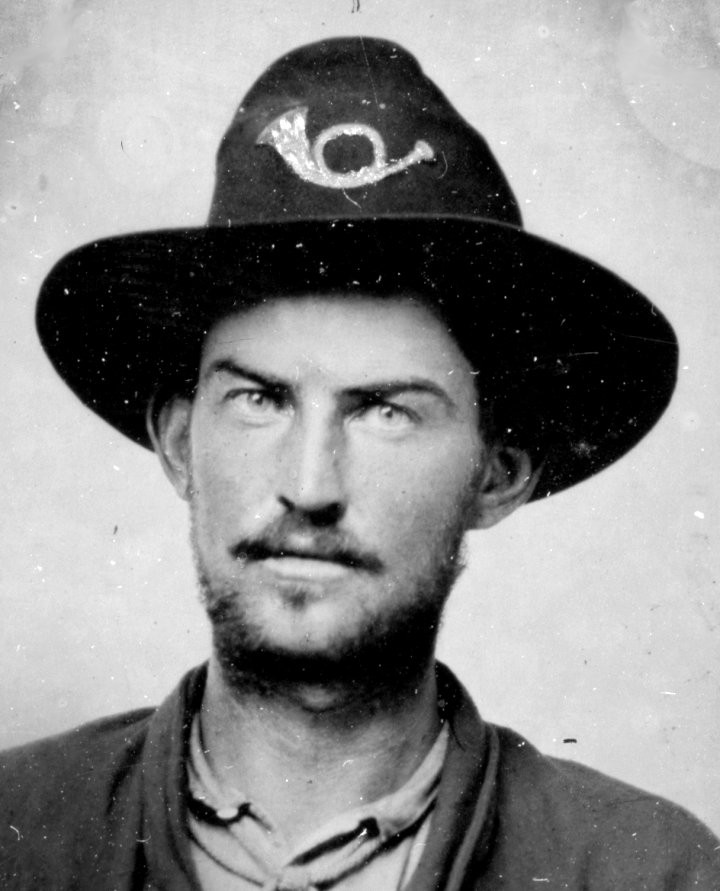
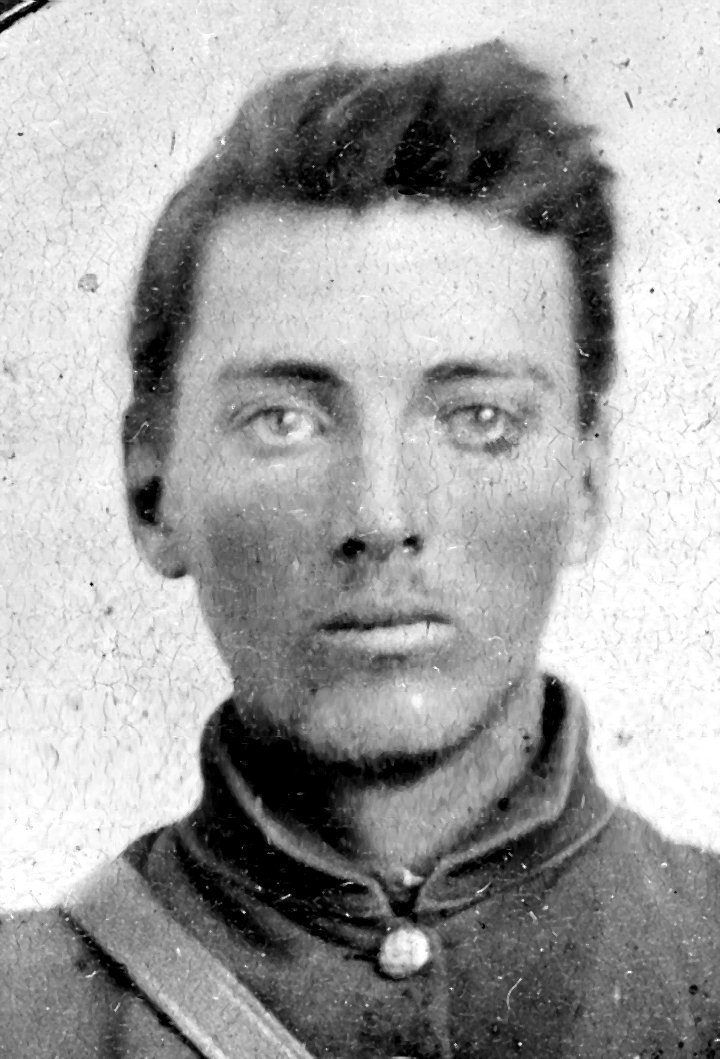
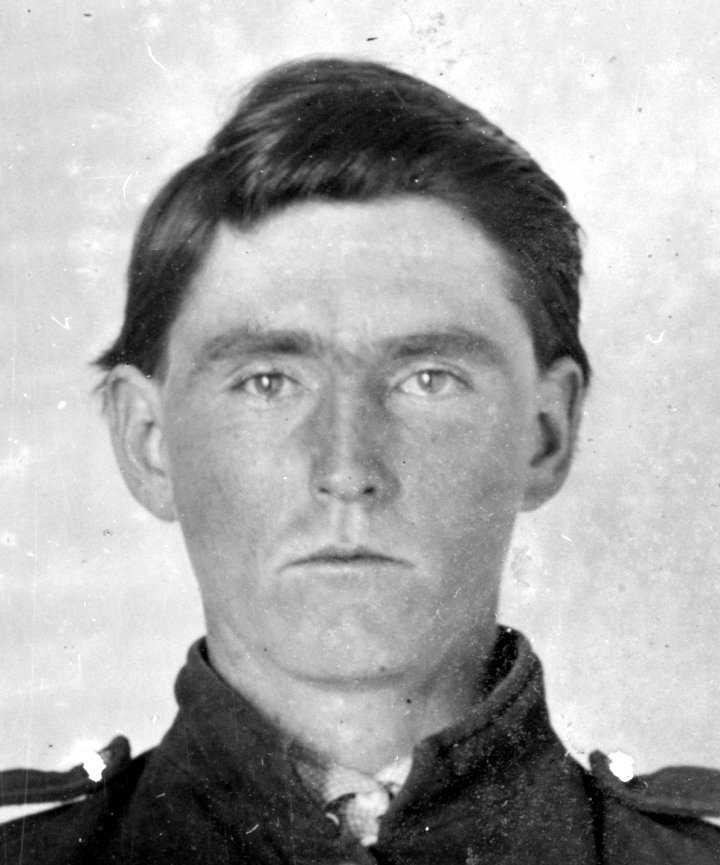
If you find yourself thinking too hard, just skip ahead to the pictures. They are from The Library of Congress. The men in these images are Union soldiers from the War Between The States. This was written like William Shakespeare.
PO: We’ve got another call and it’s a local call from right here in Charlottesville, Virginia. Blake— welcome to the show.
Caller (Blake): Hello.
PO: So, what’s on your mind?
Caller (Blake): Well, you know, I was brought up in Virginia and have lived I guess with the Civil War for my whole life and remember very vividly the Centennial in Richmond, but recently I have been trying to learn a little bit about the, for lack of a better word, the causes and have been reading particularly about the influence of the church, in this case, mostly Methodist and Presbyterian churches in the South and was wondering how you guys viewed that. Do you feel the preachers from their pulpits and their writings led the South to the Civil War and to secession?
PO: Well, Blake, that’s a great question. Blake wants to know whether the preachers are responsible for the Civil War. That’s the short version of it. Obviously, they didn’t do it all by themselves. I’d say this is a point of departure. Many Southerners believe there was a piety deficit between North and South, that the South was a more Christian place and the North was riven by heresy and socialism and secularism and so Southern preachers did a couple of important things, I think, and that is, on one hand, to tell Southerners that they had God on their side, that they were good Christians, and second, preachers played an absolutely crucial role in the emerging pro-slavery argument.
EA: That’s really well put, Peter. I think the preachers make a real point of saying, hey, hey, hey, the pulpit is no place to talk about politics.
PO: Right.
EA: All that we say is that slavery has God’s divine sanction. Other than that, we have no political position at all to make.
PO: That’s all.
EA: That’s right. So, Southern preachers do not lead the South into secession but as Peter says, as soon as providence seems to dictate that that’s the way to go, the ministers are some of the most vocal advocates of the Confederacy.
PO: But, Ed, it’s my impression from historians who’ve written on this subject that in fact Southerners had ample ground in scriptural reference for the support of slavery and they might even have had the edge over their Northerner counterparts, at least if you’re looking for literal readings of the Bible and what it tells us.
EA:Well, that’s the crucial point, Peter. The literal historic injunctions, especially in the Old Testament do accept slavery as a reality. Increasingly, what happens in the North is that people look at the spirit of the New Testament instead. It said how can you possibly love someone as your brother and hold them in perpetual bondage so there’s plenty of energy in the Bible—
PO: Yeah, yeah.
EA: For both pro- and anti-slavery.
PO: No question, but what is also going on and what’s important for white Southerners is that they believe that they have been successful in a great missionary campaign to Christianize the quarters and it’s one of the reasons why they’re comfortable with slavery is that they have taken an instrumental role in spreading Christianity in the slave population so the idea that the slaves were an internal enemy or dangerous subversives who would rise up and revolt, that had been mitigated if not altogether eliminated for many Southerners because they thought of Christianity as a profound bond of union between black and white, even if they worshipped separately.
Caller (Blake): But would that be a true belief, do you think, or more or less just an apology for the burdens that they’d put on African American through slavery.
PO: Hey, Blake, what is a true belief?
Caller (Blake): [laughter]
PO: It’s a known unknown or unknown known. Do they believe it? I think absolutely. One of the things that we learn as historians is to take our subject seriously. They may be by our standards deluded and self-serving, but that Southerners believe they were good Christians, I believe that’s absolutely true.
EA: As a matter of fact, the South says we are in the process of creating the most Christian nation on the face of the earth, but your question, I think, Blake is right. It doesn’t take long for the end of the war for white Southerners to begin to worry, hmmm, were we fooling ourselves?
PO: Yeah.
EA: Yeah, do they really love us? [laughter] The fact that they’re moving away at the very first moment of freedom really is a confrontation with a kind of truth that the white South is really not ready to embrace.
BB: Hey, Blake, may I add an addendum to your good question?
Caller (Blake): Yes, please.
BB: Guys, I’d like to know— I do know, actually, that the church played such a crucial role in the lives of African Americans after the Civil War. Can you tell me something about religion and slaves during the Civil War?
EA: Well, one of the first thing that happens is the churches which had been the really only inter-racial space in the slave South begins separating. At the very first moment, African Americans seize the opportunity to have their own churches. You know, they’ve always gone off on their private worship ceremonies out in the woods or whatever, but in the Civil War itself, as things begin to fall apart, you find that black ministers step forward and begin leading the African American church, so you find that there’s a kind of freedom that comes maybe first in the religious realm and African Americans are quick to seize it.
PO: Well, Blake, thank you for calling “BackStory.”
Caller (Blake): Thank you very much


Nine Eleven Story


This is my 911 story. I repeat it every year at this time. Pictures today are from ” The Special Collections and Archives,Georgia State University Library”.
I was at work, and someone called out that someone had run a plane into the World Trade Center. I didn’t think much of it, until I heard that the second tower had been hit, then the Pentagon, then the towers collapsed, then a plane crashed in Pennsylvania.
I focused on my job most of the day. There was always a lot of melodrama at that facility, and concentrating on my production duties helped to keep me saner. This was roughly the halfway point of my seven year tenure at this place.
One of the other workers was a bully for Jesus. He was a hateful loudmouth. After the extent of the damage became known, he shouted “They are doing this for Allah,” and prayed at his desk. The spectacle of the BFJ praying made me want to puke.
I became alienated from Jesus during these years. Once, I had once been tolerant of Christians and Jesus, as one would be with an eccentric relative. I began to loath the entire affair. I hear of others who found comfort in religion during this difficult time. That option simply was not available for me.


Keep It Safe And Simple





There is a formula for simplicity. Keep it simple, stupid. This saying is an acronym for kiss, which is a popular human activity. The saying is good for things where complications can cause problems.
PG first encountered this expression in Sports Illustrated. Some old quarterback, maybe Yelberton Abraham Tittle, was talking about how to score touchdowns. One illustration of the concept was when Mr. Tittle became known by his initials, Y.A.
The saying has a few flaws. Some people think stupid is a bad word. Others take the saying personally, and think they are being called stupid. It can get complicated, which defeats the purpose.
Yesterday, PG sat in on a “heart weaving workshop”. The idea was to create gimmicks to bring people closer. One of the things say was the intimacy breaks down into “into you I see”. At some point, someone started to write down stuff on a message board.
The words safe and simple were written down. Safety is a big deal these days. The idea of not being in harm’s way is very appealing.
At this point, the idea lightbulb went off in PG’s head. People in the room started to blink, and shield their eyes. Maybe KISS stands forKeep It Safe and Simple.
The KISS epiphany was on a saturday. The next day was the type of glorious sunday morning that was meant to be spent outdoors. In the outdoor office, the coffee ran out at the same time as the pictures to be processed.
But not before PG found one of the 10th Street Art Theater. This was on the strip, next door to the A&P. It was on Peachtree, between 11th and 12th. Or maybe it was between 10th and 11th. It was tough to tell the difference sometimes.
The 10th Street Art Theater showed dirty movies. In the sixties, pornography was gentler, and more innocent. This was the age of Russ Meyer. His flicks graced the screen at TSAT. When “Vixen” played, you could call a phone number and get a personal invitation to come down and see the film.
This is the part of the strip that is conveniently forgotten. There was an urban grunge factor. It was a transitional downtown area, with a lot of sleazy characters. As the summer of love faded into the winter of methedrine, it got worse. The strip became dangerous and complicated.
Pictures are from “The Special Collections and Archives,Georgia State University Library”.
This was written like William Shakespeare.




leave a comment