Mental Illness



This content was originally published July 31, 2008. … I knew we were in for the strangest election ever when I saw this video. The Demos have a clear lead in the follies. The repubs still think it is 1952. This video is typical of the Gross Old Perverts. … On a more serious note, another disturbing trend has been spotted. Three Presidents in recent memory have had two daughters, one wife, and no sons. This is the combination achieved by BHO. It is one wife fewer than JSM. The other recent Presidents with two daughters were Lyndon Johnson, Richard Nixon, and George W. Bush.
This content was originally published July 26, 2008. … There is a fine mp3 site called The Aquarium Drunkard. Today he put up some selections from a man I saw once, Roy Buchanan. His name had the dread phrase “the late” in front of it. This is news to me, twenty years after the fact. It seems like August 14, 1988, his substance abuse issues got him locked up. A few hours later, he was found hanging by his shirt. … Mr. Buchanan opened for the Jefferson Starship at the Omni in 1976. He was a technical virtuoso, making sounds …
… I would look at New Yorker magazine at newstands. There is a list of cartoonists who had cartoons in that issue, in the order of appearance. I would look for Charles Addams, who drew the cartoons that were the basis for the Addams Family. He liked to say that he modeled Uncle Fester on himself. Sometime in the late eighties, I noticed that he no longer had cartoons in the magazine. I continued to look until about 1991, when I found a book about him. The reason I didn’t see cartoons anymore was that Mr. Addams died September 29, 1988.
This content was originally published July 24, 2008. … Cynthia McKinney … is running for president as the Green Party candidate. She is following in the footsteps of Zell “Zig Zag” Miller, who abandoned the Democratic Party to shill for Republicans. Miss McKinney has a reputation as a loose cannon. Her strong stand against the War in Babylon is most appealing. She is probably no more capable of dealing with the mess there than BHO or JSM. If you want to make a protest vote against the killing, she is your lady. Her vice presidential candidate is Rosa Clemente, a “hip hop activist”. …
… When questioned about the seamier aspects of hip hop culture, Miss McKinney replied that he was thinking about corporate hip hop. Cynthia Ann McKinney does not have a snowball’s chance in hell of getting elected. The most she can hope to do is siphon votes away from one of the two corporate candidates. To her credit, she seems to have a new hairdo. Gone is the Alfalfa looks, replaced by a more conservative appearance. As far as the hair issue goes, she is a clear winner over BHO and JSM. If you want to help Miss McKinney …
This content was originally published July 22, 2008. … Todays adventure in digitilogy started a couple of weeks ago. Word came in that Rush Limbaugh had signed a contract for $400 million. That kind of money will buy a lot of painkillers. I question whether Rush was a good investment for that sort of coinage. His popularity seems to have peaked about the time of the Gingrich revolution. At fourteen minutes and counting, someone thinks the last thirty seconds of his fame is worth nine digits of loot. … A technorati looksee yielded a few stories about Micheal Savage. …
… Mr. Savage is not from the south. His former last name is Wiener. And he is like a kid who shouts cuss words at dinner, and loves the attention that he gets. He outdid himself lately, talking about autism. ”I’ll tell you what autism is. In 99 percent of the cases, it’s a brat who hasn’t been told to cut the act out. That’s what autism is. What do you mean they scream and they’re silent? They don’t have a father around to tell them, ‘Don’t act like a moron. You’ll get nowhere in life.” …
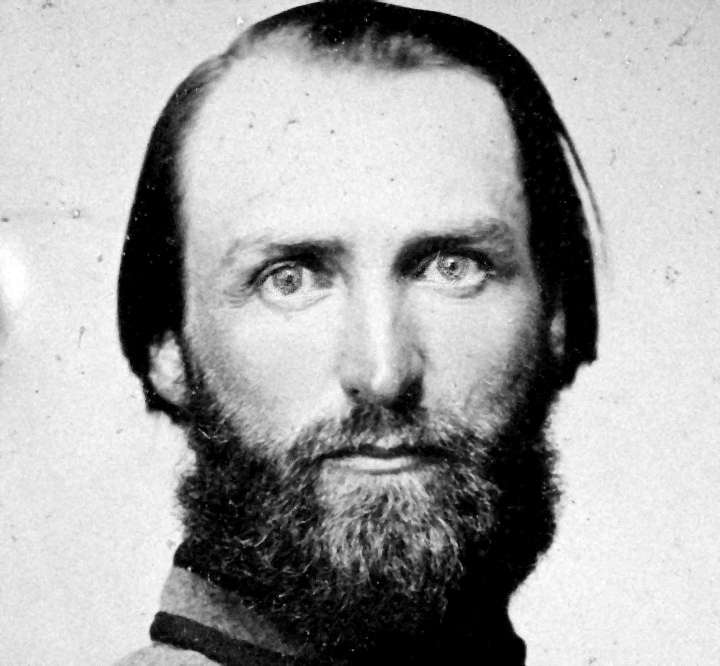
… I can’t spill too many details, but I know a bit about mental illness. I have sat in on many “what can we do”conversations. There are a lot of unknowns, and perhaps some things could be handled better. But that does not excuse a man, who should know better, for trashing a lot of decent families. A blog posted a piece called ” “This is why Michael Savage is the most hated conservative in America.” And someone left this in the comment thread: ” cant believe no one believes in free speech anymore… all of you so called conservatives.” … Pictures today are from The Library of Congress. The social media picture: First Lieutenant Robert Charles Finley of Co. E, 74th Ohio Infantry Regiment


Gaza 2010




This content was originally published June 1, 2010. … There is a lot of talk now about the flotilla to Gaza. Here is more. · A lot of the pro Israel talkers use the terms Hamas and Gaza interchangeably. This is not accurate. The territory and people are Gaza. There is a political party called Hamas, that is currently in control of the territory. Food and construction supplies for the people are not the same as weapons for Hamas. · Hamas won an election in Gaza. When you have elections, your neighbors might not like who won. Your neighbor might impose an embargo …
… control access to your territory, or attack you with depleted uranium and white phosphorus. · This quote catches the eye. “The Israeli (and I am hesitant to say “IDF” here–it lets too many politicians off the hook) media spin machine was ready to go. When you see a detailed multi-page report ready to go within an hour or two of an insanely chaotic military action (of any kind), it is bull shit, plain and clear. Just try reading reports about the Normandy invasion in history books in 2010. Now imagine trying to read the same level of detail, etc. a few hours after the first wave hit the beaches. …
… You get my point. The ‘tragic tale’ was ready to go well before the first commando slid down the rope…” · This is in the comments of another post. “I mean, so far as I understand it, “Hamas” isn’t a country. So Israel is not “at war” with Hamas. In any case, what’s being blockaded is not “Hamas,” but an area of Gaza. Is Israel at war with Gaza? All of it? Part of it? “You are quite correct. For Israel to legally blockade Hamas, it would have to recognize …
… Gaza as a belligerent, which would be a de facto recognition of its independence and entitle Gaza to the rights of belligerents under the Hague Convention of 1899, including, among other things, the responsibility to treat Palestinian prisoners from Gaza as prisoners of war, which Israel does not do.” · Here are the weapons found on the boat where the fighting took place. Is this what armed terrorists use when they take on the mighty IDF? BTW, Lawrenceofcyberia is the blog name of the week. · Is it a coincidence that this happened during the Memorial Day weekend? Many Americans were at the beach, and not watching the news. …
This content was originally published June 1, 2010. … Tipper and Al Gore have separated after 40 years of marriage. Mr. Gore was Vice President under Bill Clinton, and won the popular vote for President in the 2000 election. If the Gore’s had moved into the White House, then Tipper would probably continued the unfortunate tradition of celebrity First Lady. I once saw an appearance by the Gores and Hillary Clinton. It was at a downtown rally during the 1992 election. Tipper Gore said (not an exact quote) that Hillary is just as warm and friendly in person as she is in public.
This content was originally published June 2, 2010. … Writerspot has a selected author of the month. Today, it is Allen Ginsberg. When going to the inevitable website, I learned that Peter Orlovsky died May 30, 2010. Mr. Orlovsky was the longtime lover of Mr. Ginsberg. The poet had a part in many new age dramas, with a few musicals and comedies thrown in for good measure. Hippie, beatnik, gay, artist, peace promoter, Buddhist convert…these are a few of the labels. He became famous for being famous, well known to people who never read a word of his poems. …
… Two of the more famous poems were Howl and Kaddish. Howl became scandalous in 1956 when it was busted for obscenity. It is mild by today’s standards, but almost landed Mr. Ginsberg in prison. I heard about howl in the early nineties, and looked high and low for a copy. I could not find one. Today, not only is the text widely available, there are recordings of Mr. Ginsberg reading his work. The plan was to listen to Howl, while editing photos. About the seventeenth time Mr. Ginsberg shouted Moloch, the plan began to fall apart. The next poem was Kaddish. …
… This is about Naomi Ginsberg, the mother of the poet, who evidently had some issues. This was tough to listen to, so I focused on the pictures. Many of those images were Atlanta in 1956, the year of the Howl obscenity trial. I was two years old. My brother was born in 1956. The Georgia legislature voted in a new flag, for whatever reason. The year before, President Eisenhower had a heart attack. Many wondered if it was a good idea to have Richard Nixon as vice president. Finally, I could stand no more of that voice. I am just not a poetry person. … Pictures today are from Special Collections and Archives, Georgia State University Library. The social media picture was taken in September 1955. “Roswell Road at Wieuca, for Adams-Cates Company”. This is what it looks like today.



Obama Kill Switch







This content was originally published June 17, 2010. … There is a scary headline, “New Bill Gives Obama ‘Kill Switch’ To Shut Down The Internet. When you get to the text of the story, you see a link to the source article. When you click on this link, you see that Prison Planet is facilitated by Alex Jones. Further down in the Aimlow text, he says that the internet is not shut downable, even by the evil Kenyan. It turns out that the bill to allow this internet regulation was sponsored by Joe Lieberman, which brings us to the gist of this story. …
… I have had doubts about the good intentions of Mr. Lieberman for a while. A few months ago, he spoke at a press conference in Israel, where he said, in effect, don’t listen to the President, the congress is never going to do anything Israel does not like. I suspect that Israel needs a bit of “tough love” these days, and Mr. Lieberman is not likely to help. The scary thing is, Joe Lieberman ran for Vice President in 2000, and received a majority of the popular vote. Because of a technicality, Mr. Lieberman was not allowed to serve. …
… While it is generally agreed that the Presidency of George W. Bush was a disaster, the concept of Joe Lieberman as Vice President is possibly worse. VPOTUS is “one heartbeat away” from the big show. In addition to this, the Vice office is a stepping stone to oval office election. If Mr. Lieberman had served as VPOTUS, he would have had four/eight years in the spotlight. It is assumed that he would run for POTUS after Mr. Gore stepped down. The party nomination would be a given. Given the klutzoid nature of the Republican party …
This content was originally published June 16, 2010. … It started with a facebook comment. Someone said she would rather light a candle than curse the darkness. Some incorrigible replied, what if you curse the darkness at both ends? Burning the candle at both ends can cause spectacular light, but it is inefficient. You have to devise a way to hold it, and have something underneath it to catch the river of melted wax that will follow. A candle held perpendicular to earth will have a pool of melted wax below the wick. This wax will vaporize, and burn, and produce light.
… This pool of wax will last a long time, and not spill to the side. This is why a tea candle lasts so long … it is an efficient wax burning device. It has a metal cup at the bottom, which inhibits lighting at both ends. Which brings us to cursing the darkness, a condition caused by the lack of light. Darkness does not have top, bottom, nor sides. The room that is dark might, but the darkness itself is without boundaries. To curse the darkness at both ends would require you to know what those ends are. …
This content was originally published June 15, 2022. … 01- Fair is when a baseball is hit between first and third base. Sometimes it is a tough call. 02- Sunday morning is too sweet to waste on religion. 03- Only argue when it is worthwhile. Don’t argue just to have fun. Better yet, don’t argue. 04- Cry because you are happy. 05- Getting angry with God is like getting angry with standard time. 06- You don’t have to spend all your money at once. Save a bit now and then, and think of a reason later. 07- The sugar and chemicals in commercial chocolate covers up most of the taste. …
… 08- Make pizza with your pasta so it won’t screw up your salad. 09- If you turn your back on God, she will still be looking you in the eyes. 10- Politicians, like diapers, should be changed frequently. 11- Some sayings should be retired. They have been used too much, and no longer mean anything. 12- Does your neighbor’s pain make your pleasure worthwhile? 13- If you have to ask permission, you probably don’t need to. 14- If you charge your happiness, pay the bill at the end of the month. 15- Your reaction to a disaster cannot wait. Act now, using the best judgment you have. …
… 16- The more people talk about forgiveness, the less they practice it. 17- If you don’t want someone to hear what you say, keep your voice down. 18- Time wounds all heels. This is especially true in North Carolina. 19- The middle three letters of the word believe is lie. 20- God is a neutral. She loves and hates in equal measure. 21- Show up, Stay awake, and don’t kill anybody. 22- Youth is wasted on the young. Maturity is wasted on the mature. 23- When you make a list like this, don’t worry about contradicting yourself, or being a hypocrite. …
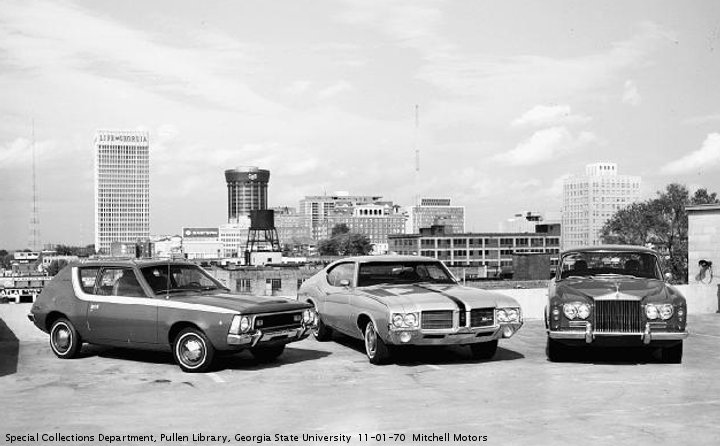
… 24- Never wrestle with an pig. You will get dirty, and the pig will enjoy it. 25- Be careful when you ask for something, you might get it. 26- The pest is yet to come. He will go away later. 27- Smile, and people will wonder what you are up to. 28- Use spell check, and correct grammar. You will sound smarter than you are. Some of those are worthwhile thoughts. Some are just plain stupid. The commodity wisdom racket is tougher than ever. When this list was published in 2018, there were 45 rules. This production was inspired by a chain e-mail, featuring Regina Brett. … Pictures today are from Special Collections and Archives, Georgia State University Library. The social media picture was taken March 23, 1962. “Krystal Restaurant 3385 Memorial Drive.”







Prophet Not Without Honor


This content was originally published June 28, 2010. … This diavlog was between two proponents of the Catholic path. As a recovering Baptist living in the south, this is not the viewpoint I am familiar with. The type of Jesus that gets shoved in your face in Georgia, on a daily basis, is more emotional, less intellectual, and with even less appreciation of silence. The modern church is in dire need of silence. Many of these people are afraid of silence. They keep shouting, as if they were afraid of what will happen when they no longer have the floor.
This content was originally published June 25, 2010. … Those thoughtful patriots at townhalldotcom have compiled a list of 100 Americans that “the left hates”. I am not sure if I am a leftie or not, but find hating someone I have never heard of to be a bit silly. Seeing Amboy Duke (72) and Joe Buck (71) on the list was bizarre. Then again, there was the pride is seeing Macon’s Erick Erickson (96) making good. I once drove a delivery truck, and listened to talk radio. The announcers I knew then did not do well. Neal Boortz did not make the list. …
… Laura Ingraham was 17, which is a shock to anyone who has listened to her. Michael Medved, the rudest person this side of Bibi Netanyahu, was 73, and Mike Gallagher was 90. Anyway, as a public service to any leftist who has forgotten who to hate, here is the list. 01 GLENN BECK 02 SARAH PALIN 03 RUSH LIMBAUGH 04 GEORGE W. BUSH 05 ANN COULTER 06 MICHELLE MALKIN 07 THE TEA PARTY PATRIOT 08 DICK CHENEY 09 BILL O’REILLY 10 MICHELE BACHMANN 11 KARL ROVE 12 SEAN HANNITY 13 MATT DRUDGE 14 NEWT GINGRICH 15 ANDREW BREITBART 16 MARK LEVIN 17 LAURA INGRAHAM 18 ROGER AILES …
This content was originally published June 28, 2010. … Numbers two and three of the worst conservatives in america have recently made public statements about the alliterative custom of dumpster diving. This custom of recycling from a green box has enriched the lives of millions, and Oxy Contin abuser Rush Limbaugh thinks there should be more. “There’s another place if none of these options work to find food; there’s always the neighborhood dumpster. Now, you might find competition with homeless people there, but there are videos that have been produced to show you how to healthfully dine and how to dumpster dive” …
… Sarah Palin does not share this enthusiasm for green box recycling. Mrs. Palin was hired to speak at a California college recently, and some were offended by the honorarium. Students found the contract for the Palin show in a trash can, and publicized the details. In her speech, Mrs. Palin said “Students who spent their valuable, precious time diving through dumpsters before this event in order to silence someone … what a wasted resource,” She did not express her opinion of students looking for twinkies and ding dongs in the refuse facility. …
This content was originally published June 25, 2010. … In 2006, a blogger brought Juanita Bynum to my attention. The blogger said “she’s a nice lady with a nice husband who is promoting good social values under the umbrella of Christian living.” Billboards appeared downtown, advertising a show at the Georgia Dome, “The Thrashing Floor,” starring Ms Bynum. … Ms Bynum calls herself a prophet and a psalmist. I made a comment, at the post linked above: “A prophet is not without honor, except in his own land. What about a psalmist?” The blogger replied “The only people without honor around here are hit-and-run posters,chamblee..” …
… “If that woman is a prophet, then I am Ronald Reagan. Of course, I may be a psalmist myself, and just not know it.” … Miss Bynum is now selling music cds, candles, bath products, and makeup. Many people are not aware of this X-tian subculture. It thrives on anger, shouting, and verbal abuse. The audience appears to enjoy this, and seems to be “blessed”. Considering the violence of the crucifixion, and the egomania of Jesus, the hysterical shouting of Juanita Bynum might be what Jesus is all about. … Pictures today are from the The Library of Congress. Marion Wolcott Post took the social media post in February 1941. “Juke joint and bar in the Belle Glade area, vegetable section of south central Florida” · selah ©Luther Mckinnon 2025


Mick Jagger Fag Dancing

This content was originally published June 30, 2010. … There is a common surgical procedure called rhinoplasty, or nose job. When nature gives too much of a good thing, the plastic impulse is to reshape and reduce. This is the opposite of the boob job, where the general concept is the add on. What nature has forgotten, stuff with cotton. Rhinoplasty sounds like RINO, or republican in name only. While purists might want those with inconvenient opinions surgically stricken, this only sounds the same. There is an H in the mix … where rinoplasty would get the h out, the nose job has the h left in. …
… Both expressions have the same origin as Rhinoceros. As Erica Jong once noted, if you place the bobbed noses in Los Angeles end to end, it might go all the way back to Poland. Going in reverse order, a botched nose job played a key role in Skin Tight, a Carl Hiassen story. (All his books tell the same story, with different weirdos and ecological outrages). A doctor was performing a “routine” r-plasty, while listening to a Miami Dolphins game on the radio. At the point of the procedure when he breaks the patients nose with a hammer, someone scored a touchdown. …
… The doctor celebrated by slamming the hammer down a bit too hard, the chisel went into the persons brain, and killed him. The body was disposed of, by a landscaper with a grinder. Which brings us back to “Even Cowgirls Get The Blues”. While Tom Robbins has similar books, only one has Sissy Hankshaw Gitche, the girl with the huge thumbs. When Sissy was a girl, her parents took her to a plastic surgeon, with the hopes of making her normal. A normal person in a Tom Robbins novel ? After many adventures, Sissy returned to her hometown, and looked for the plastic surgeon. …
This content was originally published June 30, 2010. … “The Rolling Stone Interviews” is a slick collection of interviews from the magazine, published in 2007. As Jann Wenner tells the story, The Who played a show in San Francisco, and Pete Townsend did not smash his guitar. Wenner went backstage to ask him why. The result was the first Rolling Stone Interview. Modeled after the Playboy Interview, this became a feature of the magazine. I bought my first copy of Rolling Stone in 1971. It had the interview with John Lennon. This became a part of the Lennon legend, with its comments about Mick Jagger and his fag dancing. …
… Rolling Stone was different in the early days. It was printed on cheap newsprint, and had a lot more to read than today. It was The Great Speckled Bird on steroids. Thirty eight years later, a slick compilation of interviews turns up at the library. The book has a few highlights. RS hired Truman Capote to cover a tour of the Rolling Stones. For whatever reason, TC never produced any product. Andy Warhol comes to visit, and brings a tape recorder. They go to Central Park. Mr. Capote does not think Mick Jagger can sing. Later, they go for drinks. …
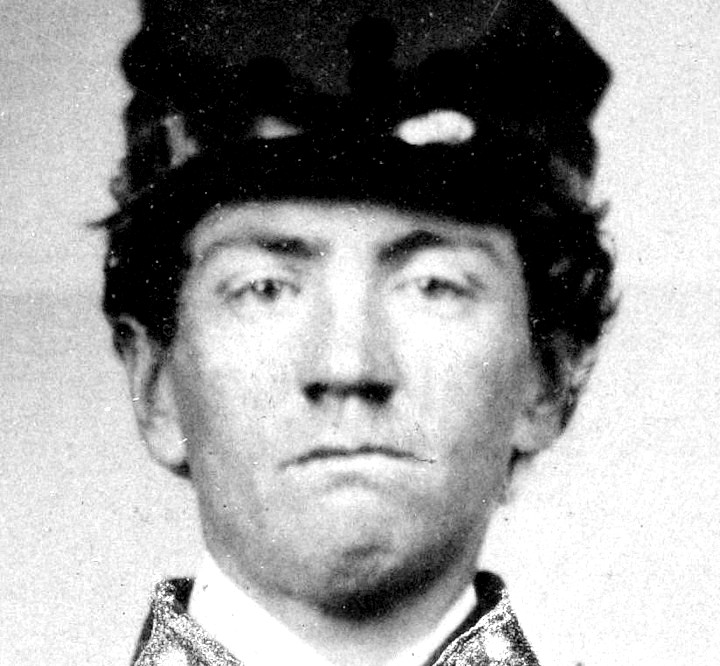
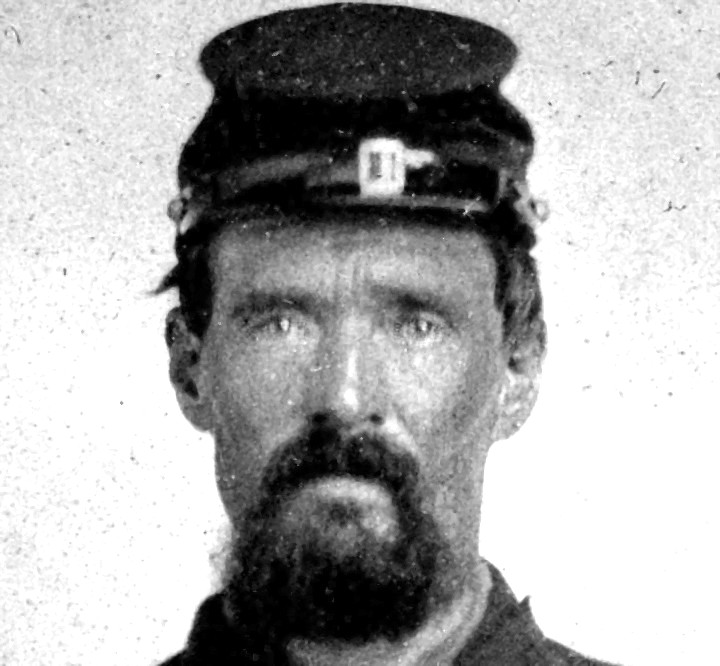
… Neil Young was drunk when he made “Tonights the Night”. Oriana Fallaci would ask Jesus if he slept with Mary Magdalene. Miss Fallaci would like to find the grave of Jesus, and see if it is occupied. Joni Mitchell played Bob Dylan a tape of “Court and Spark” and he fell asleep. David Letterman is asked what he is like in a relationship, and he says “moody drunk”. Bill Clinton talked to Richard Nixon a great deal. Nixon admired the way Clinton dealt with the press. And on and on. The library wants the book back tomorrow. It is not worth an overdue fine. Pictures today are from The Library of Congress These men were soldiers in the War Between the States · selah ©Luther Mckinnon 2025



Minimal Degree Of Creativity




What Not To Say To A Friend With A Mental Health Problem
I Always Knew You Had A Problem There, Need To Get Out More Its All In Your Mind
You’re Not Pushing Yourself Enough To Care, You Don’t Ever Know What You’re Going To Find
Things Aren’t That Bad Could Be So Much Worse, But You Have Nothing To Worry About
Your Own Damn Fault You Don’t Have To Curse, Nothing Wrong With You Chill The Fuck Out
You Just Have A Negative Attitude, Sounds Like You Are Going Crazy Dude
Complaining All The Time Just Grow A Pair, Nobody Ever Said That Life Was Fair
Go Snap Out Of It I Never Get Bored, Get Over Yourself Do You Know The Lord – 2018
Bucket List
Step Out Of My Comfort Zone For A Spell, Mark Another One Off The Bucket List
Memorize Piece About Living In Hell, Get Out In The World To See What I Missed
Don’t Take A Skateboard To A Gunfight Ma’am, Don’t Hail Satan At A Catholic Mass
Don’t Read Your Sonnet At A Poetry Slam, Judges Will Totally Hand You Your Ass
Another Caucasian With Attitude, Get That Rhyming Shit Out Of Here Dude
It’s Not Gonna Work Just Grow A Pair, Nobody Ever Said That Life Was Fair
You Gotta Go Out There And Take Your Shot, Some People Like It But Others Will Not – 2024
Sausage Jockey
Brothers Of The Fudge Big Boy Combo Play, Microwave Popcorn Hot Dog Engineer
Bowling In The Basement Hershey Highway, Liquor In The Front Poker In The Rear
Anal Chainsaw Massacre Backstage Pass, Kamikaze Big Chicken Rodeo
Intestinal Tourist Private First Class, Backdoor Barbeque Curly Larry Moe
Hunker Down Brown Town Slammer Jammer, Take It All The Way In Lower Alabama
Ride The Sausage Jockey Creeper Peeper, Stick It In Stick It In Deeper Deeper
Dance The Chocolate Chacha Elton John, Driving On On On On The Autobahn – 2016
Cha Cha
Many Opinions ’bout White Folks Who Dance, Some Look Down Their Nose At The Spectacle
We Are Having Fun So We Take The Chance, So What If Its Not Quite Respectable
Some People Don’t Like Caucasian Cha Cha, No Matter What We Do Or Don’t Wear
Giggle And Point And Call Our Moves Caca, We Will Have Too Much Fun To Care
Call It Cultural Appropriation, Ecclesiastical Abomination
Disco Wonder Blunder Panacea, Or Terpsichorean Diarrhea
An Opinion Is Often Compared To A Hole, Lay Down The Beat And Light Up Your Soul – 2023
Wonder Weasel
Its Got A Beat And You Can Dance To It, Shake Hands With A Salami Cluster Bomb
Spray Wonder Whipped Cream Banana Split, Whitewashing The Fence With Huck And Tom
Triggering Therapeutic Trouser Snake, Satin-Headed Serpent Carnal Knowledge
Tenderize Happy Lumberjack Tube Steak, Putting Mr. Kleenex’s Kids Through College
Pulling Your Own Baloney Pony Weight, Playing Tag With Your Pink Torpedo Freight
Put Relish On Your Hot Dog Spaghetti, Wax A One-Eyed Wonder Weasel Chevy
Calibrate Satanic Surge Protector, Tip Off The Crazy Hand Jive Inspector – 2017
Blanche Debris
They Come From The City Floating On Glee, Seeking Perpetual Indiscretion
From Gentrified Hollows In Tennessee, Sinners Reborn By Glorious Fashion
Dance Till You Drop By The Flickering Fire, Fanning The Flames With Fabulicity
Drums On The Land Go Higher And Higher, Slobbering Consensual Ecstasy
Come For The Spirit And Stay For The Bash, When It Is Over Who Takes Out The Trash?
Technicolor Piles Of Yesterday’s Drag, Goddess Worship In A Walmart Bag
Twisted Knickers From Guilty White Savior, Blanche Debris Does Radical Behavior – 2019
Wanted To Sleep
Been To The Mountaintop Been To The Sea, Your Body Part Insults And Boring Jive
Heard Happy Talk About Being Free, It’s A Fabulous Time To Be Alive
Laughed With Morticia Lusted For Lurch, Got Tested For Drugs And A Pesky Disease
Wanted To Sleep So I Dropped Out Of Church, Back Skull Feet Eyes Blood Pressure Knees
Blow Twenty Five Points In The Super Bowl, Jesus And Satan Fight Over My Soul
I Gave Up The Reefer And Gave Up The Beer, One Thing I Will Never Give Up Is The Queer
It’s Taken This Long To Find My Voice, Every Breath Is A Time To Rejoice – 2025
Blessed Be
When You’re Alienated From Jesus, God Of The Bible Or Bible Word Of God
Shameless Hustle For Something To Please Us, Authority Doctrine From Men Who Are Flawed
Bad Faith Babble About Life After Death, Loudmouth Bullies Who Think Its The Way
We Often Forget To Cherish Each Breath, Finding It So So Difficult To Pray
Thank You For Letting Me Be Here Now, For All The Times That We Get To Say Wow
Please See That The Living Are Loved And Fed, Help Us Trust You To Take Care Of The Dead
Thank You For The Life You Have Given Me, We Are All God’s Children Blessed Be – 2024
“Copyright is a form of protection provided by the laws of the United States to the authors of “original works of authorship” that are fixed in a tangible form of expression. An original work of authorship is a work that is independently created by a human author and possesses at least some minimal degree of creativity. A work is “fixed” when it is captured (either by or under the authority of an author) in a sufficiently permanent medium such that the work can be perceived, reproduced, or communicated for more than a short time. Copyright protection in the United States exists automatically from the moment the original work of authorship is fixed.” From Copyright Basics.
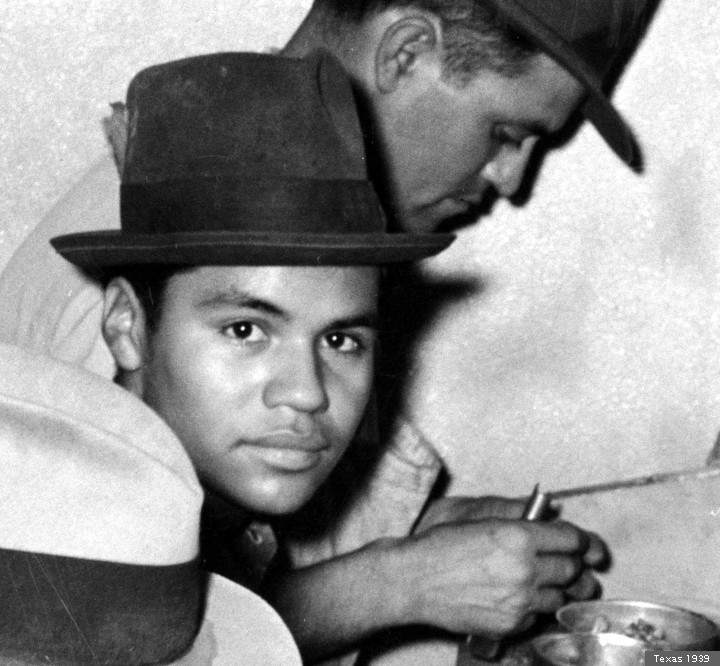
These poems are the copyrighted property of Luther Mckinnon. Pictures today are from The Library of Congress. Russell Lee took the social media picture in November 1939. “Untitled photo, possibly related to: Turkey pickers waiting for work to start. Cooperative poutry plant, Brownwood, Texas”. These pictures are in the public domain. ©Luther Mckinnon 2025



The Poems



This content was originally published June 22, 2018 … As the reader(s) of this blog may have noticed, chamblee54 features poetry. Lately, I have been wondering exactly what I have, and how to access this archive. Yesterday, I started to create a numbered spreadsheet of the 674 graphic poems that have been published in the last five years. … On June 22, 2025, 1266 poems are registered. … Item C001 was published 10-04-2013. A lot of these are terrible. Many of the early works were the result of Trifecta, a writing contest which is no longer in operation. …
… A prompt would be for 33 words, including a certain word, phrase, or concept. Trifecta is no longer in business. Another writing contest, YeahWrite, kicked me out for this poem. Those are the breaks. The party goes on. · Labelism Is Privilege racist liberal conservative, confusing labels function, distract media happy people, use of these words as insults, says more about the talker, than the object of derision · Cracker cracker not the paleface version of the n word, many crackers don’t care what y’all think or say, why give others the power to turn you into sputtering rage, because the wrong person said a bad word. …
This content was originally published June 23, 2018. … One problem with the internet is distractions. While you are there, inevitably you will look at facebook, thus putting your peace of mind at risk. Like when two white facebook friends shared a vile screed, White People Are Cowards. What is the proper response to this? Say something, and get into a quagmire argument? Or just ignore it, and lose respect for the two white men who liked this, as well as a bit of self respect. I don’t want to be someone who hates others because of their opinions. …
… The good news is, the next poem I found in the archive addresses this issue. · Emotional Experience it is is not about justice, it is having an emotional experience, that validates your privilege, the person judging you, is just as messed up as you are, it is is not about salvation, it is having an emotional experience, that validates your privilege. · There is an irony here. The article at the root makes the point that white people have done terrible things, and other white people did not speak out about it. This is a fair enough point. The article is titled …
… “White People Are Cowards,” and the cowardice stems from this lack of speaking up. There is a quote from Thomas Jefferson, which nobody has a source for. Now, should I speak up about the fbf posting this obnoxious article where I can see it? If I had confronted the two fbf about this article, it would have gotten nasty. Nothing good ever comes out of a discussion like that. While you might feel like a coward from walking away, sometimes that is the best thing to do. The second best thing to do is substitute “black” for “white,” in the title and concept, and wonder what would happen. …
… Which brings us to the poem that got me banned from YeahWrite, Whitehall Street. The pictures were taken at a mural on Whitehall Street. Getting the background colors to match was a chore. A few days after publication, there was an email. “Based on the nature of your post this week, your entries will no longer be welcome at yeah write.” Rowan Grigsby submissions editor rowan@yeahwrite.me | yeahwrite.me” After a few emails, I got this: “What you said, essentially, is that a trans woman is a fake woman. Frankly, we have never felt the need …
… to specifically articulate that hate speech is unwelcome in our community. It seemed obvious to us and, indeed, to nearly everyone who submits posts.” Here is the test of the “hate speech.” pearl told peter she is pregnant, baby daddy peter wants to marry, pearl do big man thing what peter, does not know pearl was formerly, known as paul gender reassignment, can grow pretty boobs paint happy,
face but cannot create productive womb …
… Freedom Lies Bleeding grand jury renders opinion, national hissy fit begin again, when justice is popularity contest, freedom lies bleeding in street · On November 24, 2014, I was waiting on a grand jury to make an announcement. There was little doubt that Darren Wilson fired the shots that killed Mike Brown. The question was whether, or not, to indict Mr. Wilson. The grand jury decided not to indict Mr. Wilson. This decision was confirmed by a later DOJ investigation. While waiting on the announcement, I was concerned about mob justice. I feel that the justice system should …
… decide the case based on the evidence and arguments presented , rather than by public opinion. This is a fundamental concept in a nation governed by laws, rather than brute force. Many people disagreed with the decision of the grand jury. … There was a comment. Anonymous said, on November 25, 2014 at 2:28 pm (Edit) Thanks Luthor… you’re racism never disappoints! The name was misspelled. … Is a dependence on a system of law and order racism? Anonymous seems to think so. Is they qualified to make this judgment? If racism is anything that you don’t like, …
… then Anonymous is qualified to make the call. There is the style of the comment to consider. While Anonymous did not give their name, there was an I.P. address. The IPA is connected to a .edu server. Apparently, this is a workplace computer. Leaving insulting comments from your employer’s computer does not reflect well on the institution. · Perfect Country Western Poem remember mama in the rain, kobir made me miss the train, pick up truck needs oil, radiator fixin’ to boil, drunk down at the prison gate, mama you don’t need to hate · selah


Luther C Mckinnon



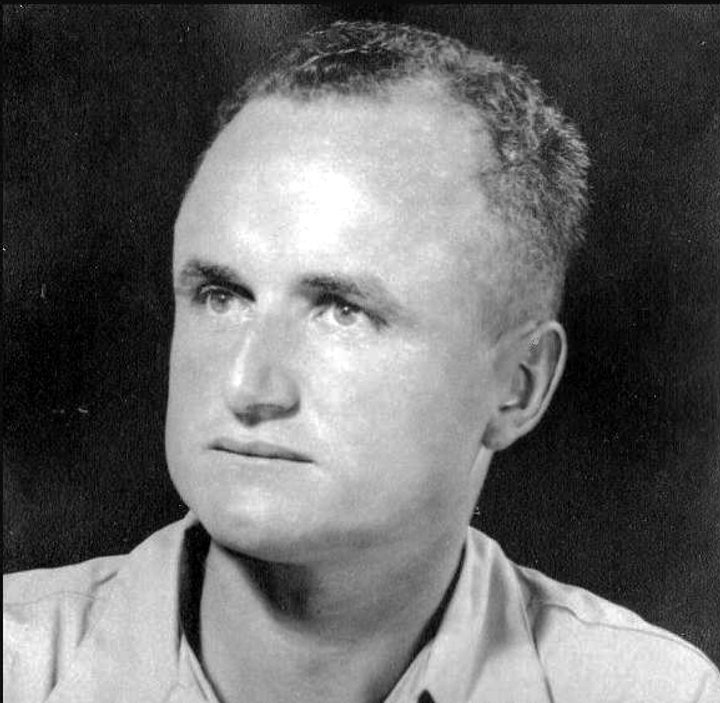
Luther Campbell McKinnon Sr. was born February 22, 1916, on a farm in Rowland, North Carolina. Europe was stuck in a war that would change the world, and not until The United States got involved. This didn’t happen for another year.
Luke was the youngest of four children. After life as a farm boy, he went to Wake Forest University, and then came back when his Daddy died. He ran a family dairy for a few years, and went to live in New Jersey. He lived near a prison, and saw the lights dim when the electric chair was used.
In the early fifties, he came to Atlanta to live. This was where his sister Sarah stayed, with her husband and two daughters. One day he went into the C&S bank on 10th street, and took notice of one of the tellers. On October 6, 1951, he married Jean Dunaway. She was with him the rest of his life.
At some point in this era he started selling shoes. He would go to warehouses, gas stations, and wherever barefoot men needed shoes. He was “The Shoe Man” .
Before long there were two boys, and he bought a house, then another. The second house is the current residence of my brother and myself, and is probably worth 15 times what he paid for it. He had the good fortune to not buy in an area that was “blockbusted,’ as many neighborhoods were.
And this was his life. He tended a garden, went to the gym, and was in the Lions Club for many years. When he met Mom, she let him know that going to church with her was part of the deal. They found a church that was good for their needs, and made many friends there. The Pastor at Briarcliff Baptist, Glen Waldrop, was his friend.
When I think of the character of this man, there is one night, which stands out. My brother was away at the time. The day before, Mom had discovered she had a detached retina, and was in the hospital awaiting surgery. Her job had arranged a “leaf tour” by train in North Georgia, and she got one of her friends at work to take me. There was some mechanical trouble on the train, and it did not get back into town until 3am Monday morning. And yet, Daddy stayed at home, did not panic, and had faith that all of us would be back soon, which we were.
Through all the struggles of his life, Dad was cheerful, laughed a lot, and was good company. He left me with a rich repertoire of country sayings, and had many stories to tell. He was surprising mellow about black people, if a bit old fashioned. (In the south when I grew up, this was highly unusual).
Dad was always in good, vigorous health, and I thought he would be with us for a long time. Well, that is not how things work. A cancer developed in his liver, and spread to his lungs (he did not smoke). After a mercifully brief illness, we lost him on February 7, 1992. This is a repost.




Which Poet Are You?




This content was originally published June 19, 2014. … This is true for people with, or without, privilege. (Almost everyone in America has some sort of privilege.) People are skeptical for a lot of reasons. They have been lied to many times. They are told things to manipulate their emotions. If you want to encourage understanding, then you should listen to what they have to say. Quit talking, and start listening. Quit using labels, and consider that it is a human being you are dealing with. …
… chamblee54 Georgia is going to poison Marcus Wellons tonight. The source of the drugs is a state secret. Noway Please tell me, chamblee, how “poisoning” a murdering animal is a bad thing? chamblee54 1- I don’t like the politically correct expression “lethal injection.” 2- Mr. Wellons is a nasty piece of work, who committed a horrible crime. He probably deserves to die. However, this is not always the case in a state sponsored, premeditated, killing. 3- The whole business of using secret drugs, from a secret source, is appalling. Three Jack Just shoot em, no chemicals needed. …
… chamblee54 Today is the 75th anniversary of the last public execution in France. On June 17, 1939, Eugen Weidmann was dispatched. The guillotine was used. The guillotine may be the most efficient, and least painful, method for executions. Unfortunately, it is rather messy. We have to pretend that we are a civilized society. There are endless appeals, and the humane seeming “lethal injection.” gcp “We like to pretend that we are a civilized society.” We have some members of our society who are quite uncivilized and have shown they can’t exist in this society which is why we have prisons …
This content was originally published June 21, 2014. … There is some talk about what the media tastefully calls drone strikes. Unmanned airplanes are piloted by remote control. The focus on a target, and fire a AGM-114 Hellfire II Missile. Often, a second strike is made, after rescuers come to the scene. When the dead are buried, there is sometimes a strike on the funeral. The Hellfire II Missile costs $40,000. The drones use lots of fuel, and require maintenance. Meanwhile, the moving lips in Washington say that no civilians are killed by these attacks. …
… “More recently, on February 8, the Times reported the BIJ’s findings that the CIA’s drone attacks in Pakistan “have repeatedly targeted rescuers who responded to the scene of a strike, as well as mourners at subsequent funerals.” But after highlighting BIJ’s report, the article then allowed a “senior American counterterrorism official, speaking on the condition of anonymity” to not just question the report’s findings, but to state: “One must wonder why an effort that has so carefully gone after terrorists who plot to kill civilians has been subjected to so much misinformation.” …
This content was originally published June 27, 2014. … I rode my bike to walmart. A bottle of liquid soap was purchased. On the way home, I noticed the bike making a strange noise when braking. When I got home, I saw a liquid puddle under the bike. The top had come off the bottle of soap, and cleaning product was everywhere. After cleaning up, and a car trip to walmart, the internet chipped in. A friend had taken a quiz, Which Poet Are You? The friend got Charles Bukowski. The friend is better looking than Mr. Bukowski. That is setting the bar low. …
… The first question is “Where do you like to write?” The third question is “What muse speaks to you?” There is a picture of a bronze Buddha, wearing a Prussian army helmet. This is a hard hat with a rhino spear rising out of the top. It is most phallic, and totally impractical in the nuclear age. The rest of the questions were stupid. You got: Edgar Allen Poe. “Your dark side is your best side. You excel at noticing the weird, the macabre, and the eerie. While others are frightened by darkness and strange, you feel … Pictures today are from Special Collections and Archives, Georgia State University Library. The social media picture was taken May 7, 1951. Glenn Iris Supper Club · selah





EarthtoDavid






This content was originally published June 18, 2008. … “Oil shale is the fuel of the future, and always will be,” goes a popular saying in Western Colorado. There is a lot of talk these days about oil. Many blame the cost of oil on the reluctance of The United States to drill in certain parts of our territory. This view is especially popular on talk radio. Many suspect radio talkers of being on the oil industry payroll. One of the sources of energy considered today is oil shale. This mineral is found in large quantities in Colorado, Utah, and Wyoming. …
… Extraction of petroleum from the shale is a mess. Essentially, you heat the rock until the oil comes out. The process uses a lot of water, and leaves a great deal of nasty cooked rock behind. There are some proposals to sink heating towers into the earth and cook the oil out in the ground. That sounds awfully complicated, expensive, and dangerous to this reporter. The extraction of oil from the earth is a messy matter. When you dig a hole several miles into the ground, lots of mud will come up and need to be disposed of. …
This content was originally published June 14, 2008. … One of the regular stops on this computer is EarthtoDavid. ETD is a country man living in Opelika, Alabama. Recently, he started a “fitness journal”. Now, there are two ways to see this sort of blogging. You can say it is narcissistic and ignore it. Or you can read and enjoy it. Both answers are correct. Part of this journal is the songs on his mp3 player while he walks. … As I commented: “I like to walk and bicycle. However, I do not own an mp3 player. I like to listen to …
… ETD was a big enough man not to be offended by that, and the next day : ” that is what I did. It was really nice to hear the raindrops falling on my umbrella as well as the tree frogs, birds chirping, fish jumping in the water out on the lake, some swimmers out in the water throwing frisbee and enjoying a light rainy evening and seeing the sun settle down behind a thick blanket of rain clouds.” Part of this journal is a picture of ETD, at the top of the post. I began to notice to telltale wire of the mp3 player. …
… I have a bit of history/baggage here. I worked for a long time across the room from an earplug listener. His desk was in front of my work station, so when I was doing my job, I was looking at him. He looked like an idiot with that reverse colostomy bag hooked up to him. There is a lot more to this story…he was an vocally abusive Christian …but seeing hundreds of hours of him listening to his preaching tapes was the icing on the cake.” Life is a matter of personal connections. You connect things to people in your life.
This content was originally published June 11, 2008. … I had assumed that JSM was assured of Georgia’s electoral votes. But looking at these stats from CL, I begin to wonder: Amount Sen. John McCain’s presidential campaign has raised in Georgia: $1,305,275, Amount Sen. Barack Obama’s presidential campaign has raised in Georgia: $2,458,219, Number of votes Obama received in 2008 Democratic Presidential Primary: 704,247, Number of votes McCain received in 2008 Georgia Republican Presidential Primary: 304,751, Number of votes Sen. John Kerry received in 2004 Georgia Democratic Presidential Primary: 293,265
… There is also the BHO charisma. The dude is a rock star. He has people fired up in a way that JSM can only dream about. … Black voters are a big part of the electorate in Georgia. This block should go overwhelmingly to BHO. Lets assume that a million votes are cast in Georgia. If 30% are black, and they all go for BHO (this is not reality, just pre summer speculation), then that leaves 70% of the population. BHO would only need 200K votes, or 28%, of the non black community. …
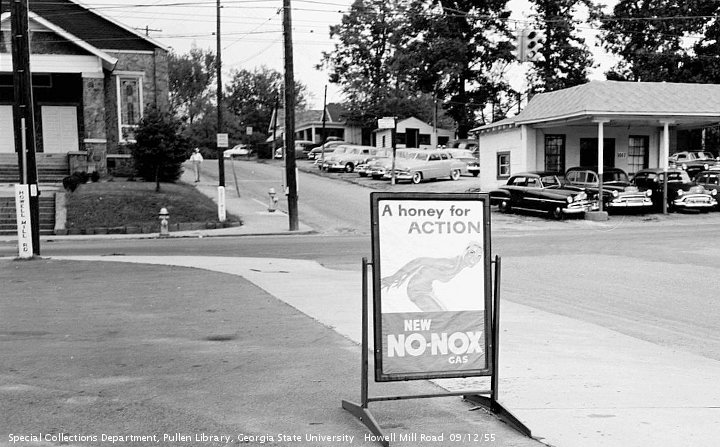
… JSM appeared on the Today show this morning. He said we need to be concerned about greenhouse gases, which causes apoplexy in Red America. There was talk about Nuclear Power, which is expensive, and requires intense Government Regulation. There was talk about high gas prices, but no one connects the dots to the weak dollar and deficit spending in Babylon. Oh, and the surge is working. Happy talk in the press is part of the surge strategy. JSM has a more likable personality that BHO. JSM appeared on the Glenn Beck show a few weeks ago, and the first thing he did was call Beck a jerk. … Pictures today are from Special Collections and Archives, Georgia State University Library. The social media picture was taken August 17, 1955. “Phillips 66, Bankhead and Hightower” This is what 2656 Donald Lee Hollowell Pkwy looks like today. · selah






Tough Act To Follow


This content was originally published June 8, 2008. … So Barack H. Obama is going to run for President. The long suffering former first lady threw in the towel, and now it is BHO against that other guy. Lord, this is going to be a long election. The right wing has shown their love of slander and dirty politics for the sheer fun of it. While I think it is cool that a dark skinned man is running, unless common sense is shown by some this could get ugly. Being threatened with urban riots if BHO loses is one sure way to turn people to JSM. …
… Georgia is so red that it glows. Her electoral votes are almost certain to go to JSM. This being America, you can always make your voice heard by donating money. Our local monopoly ad-rag has printed a selection of positions taken by BHO. A word of thanks to Neo Prodigy for steering me to these. I seldom buy or read the fishwrapper these days, and would have missed this otherwise. Likewise, if a similar position rundown is printed on JSM, I would like to see and comment. … The war in Babylon is empowering Iran, bleeding our economy white, …
This content was originally published June 17, 2008. … The Governor was speaking to a group of reporters. He was announcing the appointment of a Black man to a Selective Service Board. The reporter said it was the first Black man to serve on a draft board since reconstruction. The Governor said “Gee” The screen returned to the Channel Five newsroom. The weatherman looked up at the camera and said ” Thats a tough act to follow” Whatever you might say about Lester Maddox … and there is no shortage of bad things to say … there has never been a public official that entertaining. As for being a tough act to follow, the next Governor was Jimmy Carter.
This content was originally published June 5, 2005. … A radio whiner got talking about certain phrases. When you heard these expressions, you know the person who said them was an idiot. The suggestions were about what you could expect: neo cons, social justice, global warming etc. … Me, whenever I hear the phrase “main stream media” or “msm”, the light goes off in my head. Do not pay any more attention to this moron. The radio whiner in question works for Cox Enterprises. Cox owns the local monopoly fishwrapper, a network affiliate tv station, and lots of other things. That sounds pretty mainstream to me.
This content was originally published June 5, 2005. … Tom Waits has a swear jar in his house, where you have to put a dollar in if you cuss. He would put a ten in and not ask for change. … I saw Tom Waits at a concert once. Tim Curry was playing at the Agora Ballroom, and I was wandering through the balcony. Mr. Waits was playing the next night, but I was too slack to attend. I saw Mr. Waits and some people sitting at a table. I asked this guy who looked like a guard if that was Tom Waits. “No, it just looks like him”.
This content was originally published June 13, 2008. … I recently decided to use initials to refer to the Presidential Candidates. Here is why: 01.Initials use fewer keystrokes than names. 06. Mrs. O is a lawyer, accused of being a communist. Mrs. M is an heiress, accused of being a drug addict. 07. BHO supported a loudmouth preacher. JSM dropped napalm on Vietnamese children. 09. BHO and JSM have shady friends. 10. Even if we drill in wilderness Alaska, we will still run out of oil. We need to develop other sources of energy.
11. A radio whiner asked whether BHO’s supporters should support him, just because he is the same color. I ask the same thing about JSM and me. 12. BHO smokes cigarettes. JSM has had skin cancer. 15. Nuclear Energy is big government. It is dangerous, requires constant supervision, and the fuel can be used to make weapons. None of this is true about Solar. 17. BHO used marijuana and cocaine when he was young. JSM liked to party before he went to Vietnam. 18. BHO is married to his first wife. There is controversy about JSM and his first wife. 19. BHO sounds better than BO. There is no equivalent for JSM, and we should be fair. … Pictures today are from The Library of Congress. Russell Lee took the pictures in October 1940. The social media picture: “Jack Whinery, homesteader, and his family, Pie Town, New Mexico” … selah



Rebelling Against God



This is a repost from 2014. … Matt Walsh put up a post, We can’t end ‘rape culture’ if we don’t end hook-up culture. (Internet archive does not have a copy.) Now, RC/HUC are dodgy concepts. Just last week, I saw a post about RC, that started “If you are a man, you are part of rape culture.”
OTOH, the “blogger, writer, and professional sayer of truths” has a wide audience. Any trickle down to this slack blog would be appreciated. The BWPST also answers comments, using a psuedonym. He is easily provoked. If you don’t want trolls to start trouble, then you should not answer them. Some people are easily amused.
The fun started when BWPST said “Just like every other problem in the culture, it’s ALL about rebellion against God.” When a Christian talks about God, he usually means something very different from what I think. One of the few things that I believe is God does not write books. I made a comment, and the fun began. Entertainment is not what it used to be.
chamblee54 “Just like every other problem in the culture, it’s ALL about rebellion against God.” The first commandment says to hold no other God before you. This does not mean a book. When you declare a book, compiled by a Catholic committee, to be the word of God, then you are violating this common sense rule. Violating this rule causes problems. Mo, are you Matt? · Mo @ chamblee54 “The first commandment says to hold no other G-d before you. This does not mean a book.”What on EARTH are you talking about? “When you declare a book, compiled by a Catholic committee, to be the word of G-d, then you are violating this common sense rule.” I haven’t declared anything, especially anything regarding Catholicism, as I am not Catholic. Show me where I mentioned anything about Catholicism? Nor did Catholics compile the Word of God. Take your nonsense elsewhere. I have zero time or patience for it. · chamblee54 Mo, are you Matt? · Mo @ chamblee54 “Mo, are you Matt?” How about addressing the POINTS I made to you and the questions I asked? Another troll, capable of nothing but repeating the same nonsense over and over.
chamblee54 Ok, I don’t know where, or if, you said anything about the Roman Catholic Church. My point was about the Bible. The canon of the Christian church was compiled by a group of men. I might be mistaken on this point, but I believe they were Catholics. Whether of not the compilers of the bible were, or were not, Catholic is beside the point I want to make. That point is that the bible is not the word of God. God does not write books. When you confuse a book for God, you violate the first commandment. “How about addressing the POINTS I made to you and the questions I asked?” “Take your nonsense elsewhere. I have zero time or patience for it.” This is a contradiction. · Mo @ chamblee54 “Ok, I don’t know where, or if, you said anything about the Roman Catholic Church.” Okay, then your comment has no point since that’s what’s your crabbing about. Go troll someone else. Do not waste my time.
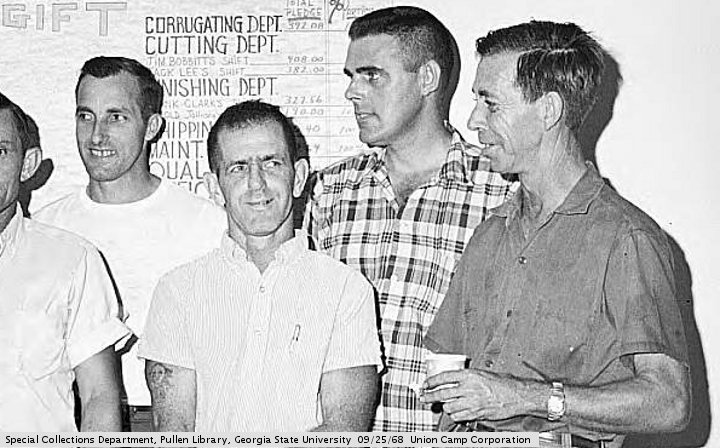
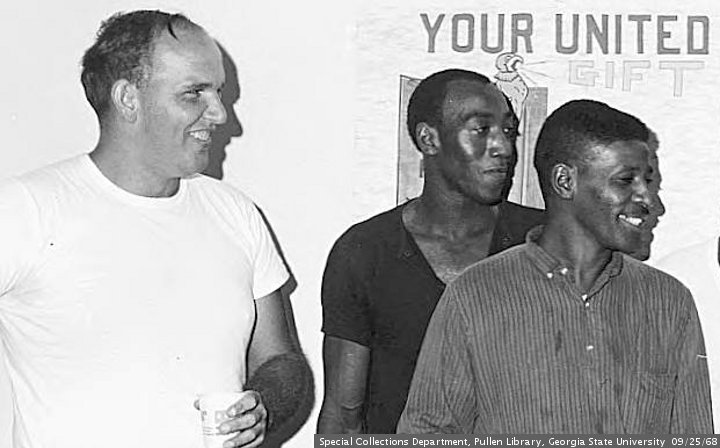
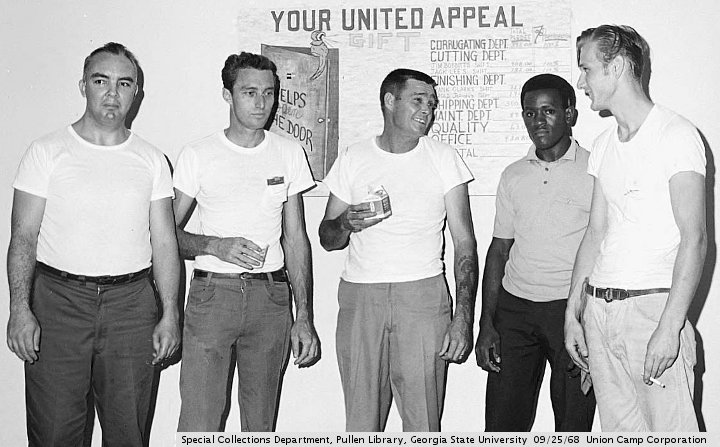
That is the end of the Matt Walsh/chamblee54 showdown. …We should take a look at the idea of “rebellion against God.” When you assume that a book contains the “word of God,” and use that assumption as a weapon to attack other people, that would seem to be “rebellion against God.” When you believe that a soveriegn deity is interested in your petty quarells, that might be “rebellion against God.” When you spend your time arguing with “trolls,” that might not be “rebellion against God,” but it looks foolish to those who don’t share your beliefs. · Pictures today are from Special Collections and Archives, Georgia State University Library The social media picture was taken September 25, 1968. Union Camp Corporation United Appeal campaign.



 Chamblee54
leave a comment