Rhetoric Over History

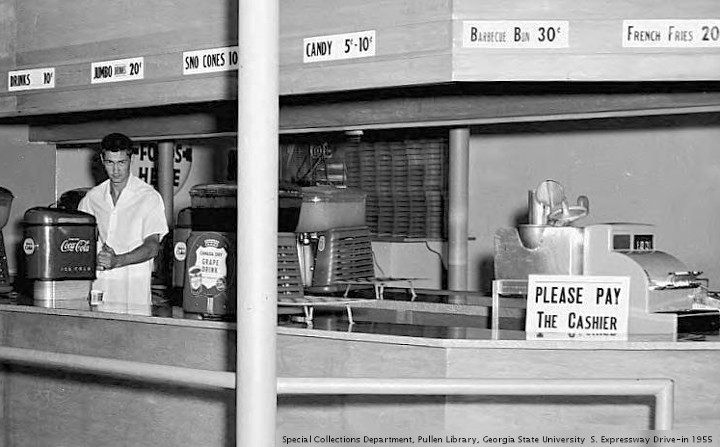


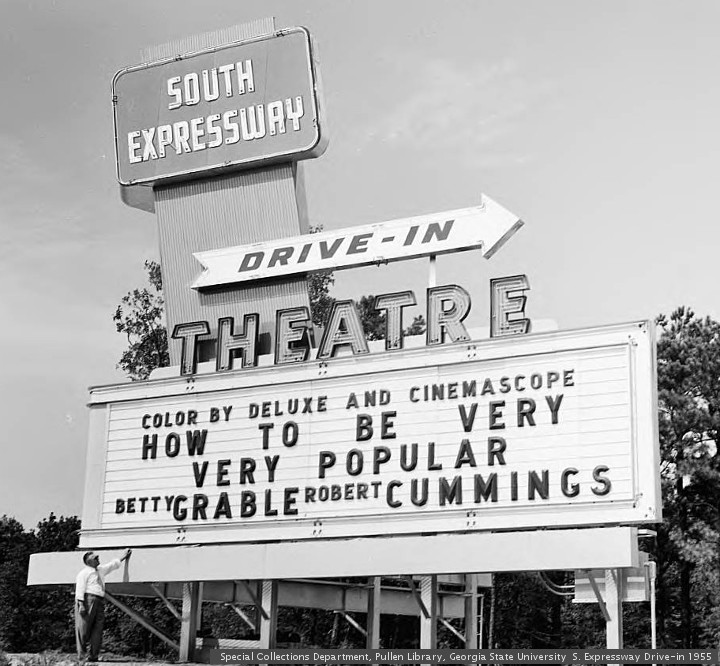

The symbolic fight today is over Confederate monuments. The high octane rhetoric is heard loud and clear. There is even historic revisionism. “…the real motivation was: to physically symbolize white terror against blacks.” PG finds this reasoning tough to believe. It sounds like another argument, from another symbolic battle. History likes to repeat herself.
In 1993, a movement emerged to change the Georgia state flag. At the time, the Saint Andrews cross, aka the Confederate flag, was on one side of the flag. Many people were offended by this flag, Many people liked this flag, and wanted to keep it. The argument went on for a few years.
In 2001, a new flag was adopted. The 2001 flag was even uglier than the old flag. The 2001 flag was rammed through the legislature. Part of this change was a law, protecting state monuments. “When Georgia took the Confederate battle symbol off the state flag in 2001, part of the compromise lawmakers struck was a new state law that protected Confederate memorials and monuments from being removed, relocated or even altered.” This law did not apply to the state flag, which was changed again in 2003. The current flag is similar to another Confederate flag.
When the flag change movement got started, a bit of historic revision was introduced. The story was that the legislature changed the state flag as a protest against desegregation. The first page of google does not have any of the 1993 rhetoric. This article sums up some of these arguments. The talk was louder, and angrier, in 1993.
PG never did believe the argument that the flag was changed as a protest. PG accepted that the flag was offensive to many, and did not object to changing it. However, he does not like to be lied to. If the flag was offensive to a large part of the state, why would you need to rewrite history? The 1956 legislature was a gnarly bunch… crooked, alcoholic, racist, and overwhelmingly Democratic. If anything else, they were not smart enough to change the flag as a protest. In 1956, protest was not the national pastime. Not everything had a hidden meaning.
Microfilm may wear out, but it does not lie. PG found an article announcing the change in the Atlanta Constitution. There was no mention of protesting integration. The fishwrapper, and the politicians, spoke about honoring the Confederacy.
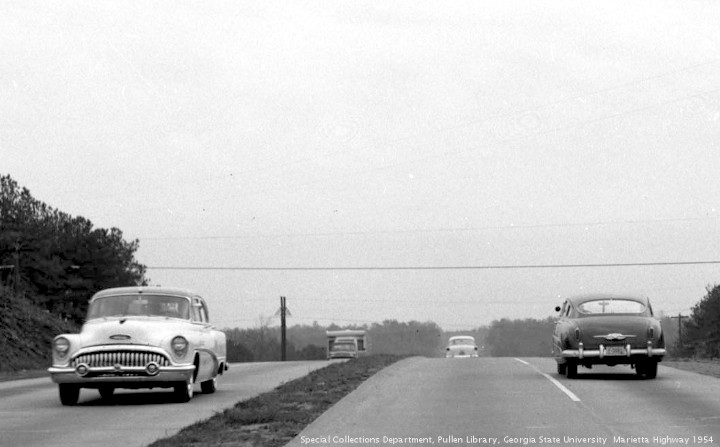
The argument over changing the state flag was totally symbolic. The issues that affect communities of color, and communities without color, were not affected. Economic opportunity, equitable justice, access to housing and education… none of these life or death issues were affected by having the Saint Andrews cross on the state flag. The squabbling over the state flag was a proxy fight over black vs white. Pictures today are from “The Special Collections and Archives, Georgia State University Library”. Most of today’s photos are from 1954 – 1956.




She Always Carries Jonquils

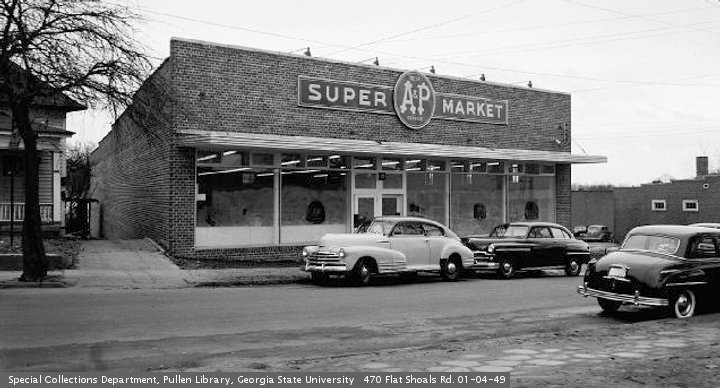

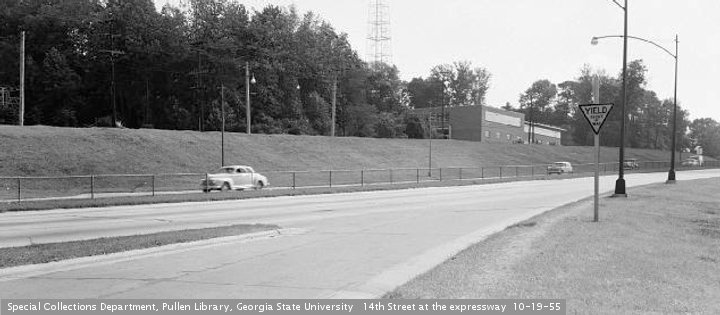
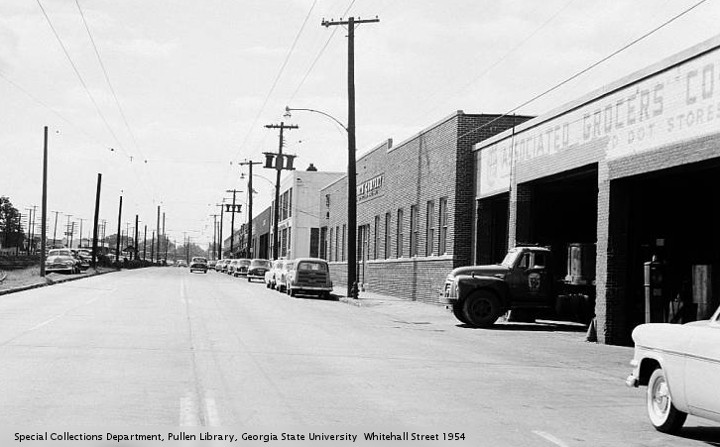
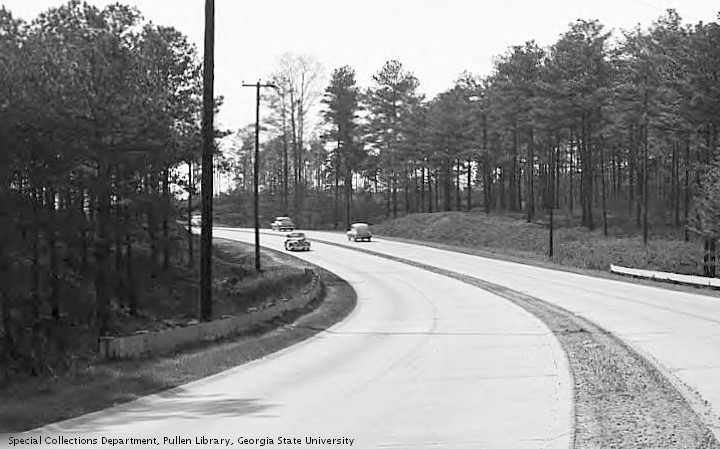
PG found Archival Atlanta: Electric Street Dummies, the Great Stonehenge Explosion, Nerve Tonics, and Bovine Laws : Forgotten Facts and Well-Kept Secrets from Our City’s Past at the Chamblee library. There are always more stories to be heard. This repost has pictures from “The Special Collections and Archives, Georgia State University Library”. It is written like Margaret Mitchell.
In the 1840s, the Western and Atlantic railroad wanted to hook up with the Central of Georgia railroad. The spot for the meeting was called Terminus. One idea was to name the town for William Lumpkin, a former Georgia Governor and a railroad executive. Lumpkinville sounded bad in the mouth, and the new town was named “Marthasville”, after the daughter of the Governor. (Martha is buried in Oakland Cemetery.) Few people liked this name, and someone decided that the feminine form of Atlantic was Atlanta. Unlike the state flag, this is unlikely to change.
The new town prospered, and recovered from the unpleasantness of 1864. In 1875, there was a problem with stray cows. The answer was the “1875 Cow Ordinance”. The law required that cows be kept in a pen at night. A fine of two dollars was assessed for every stray cow that was caught.
About this time, there were a few very busy railroad tracks going through downtown. People were getting tired of waiting for the trains to go through. One by one, viaducts were built over the tracks, creating a forgotten ground floor. This was built up into Underground Atlanta in the sixties, which was red hot for a while, then cooled off, and is now so so.
In 1897, J.W. Alexander was the first person in town to own a “horseless carriage”. One day, he decided to take a ride to East Point. A mule objected, and kicked man and machine into a ditch.
It is a rule that all history books about Atlanta have to discuss Coca Cola and Gone With The Wind. There are only so many stories to go around. This book tells of an Alpharetta farmer who bought the Tara set from MGM. He stored in a barn, the location of which was a secret. Betty Talmadge wanted to buy it, and the price went from $375k to $5k. After a while, the sale was finalized. There was only one problem…the farmer died, and never told anyone where the barn was. Mrs. Talmadge got the money from her husband’s overcoat, went to Alpharetta, and found the barn. The set was moved into another secret location, where it was in 1996, when Archival Atlanta was published, at an undisclosed local location.
Sam and William Venable owned Stone Mountain, and had a quarry there. (The Ku Klux Klan held meetings on the mountain.) (The spell check suggestion for Ku Klux is Kook Klutz.) Sam built a large granite house at 1410 Ponce de Leon Avenue, and stocked it with ammunition. He thought a race war was on the way, and wanted to be prepared. One night, a chimney overheated. The roof caught on fire. The explosives in the attic exploded, and took the roof off. The house was repaired, Mr. Venable died, and the house became part of a Lutheran church.
One of the few ante bellum houses in Atlanta is near Grant Park. It was once owned by Lemuel Grant, who donated the land for the park. He stays in a large marble house in Oakland Cemetery now. The Grant Park house was purchased by Mr. and Mrs. John Marsh, in partnership with Boyd Eugene Taylor. After the death of Mrs. Marsh (also known as Margaret Mitchell), she was known to visit the house. “Margaret just wanders through the house, looking things over. She never talks, and she always carries jonquils. The first night she came I was very shocked. I went out to her grave at Oakland Cemetery the next day. I’d never been to the house before. But I was almost certain of what I’d find. The plot is covered by a bed of jonquils.”


Why Was The War Fought?



Last week, this slack blogger found a tweet. The tweet said that Abraham Lincoln and John Kennedy fought the Federal Reserve, and both were killed. I did a little research, and found something that questions the conventional wisdom about the War Between the States.
Before getting to the quote, a disclaimer is in order. 100777.com is a sketchy website. What is says cannot be taken as literal truth. However, the statement about WBTS does raise some questions.
“One point should be made here: The Rothschild bank financed the North and the Paris branch of the same bank financed the South, which is the real reason the Civil War was ignited and allowed to follow its long, and bloody course.”
Maybe it was not the Rothschild Bank that financed WBTS. Somebody did. War is a profitable enterprise. People are going to egg on the combatants, knowing that there is money to be made. Someone encouraged the southern states to secede. Others encouraged the north to take a hard line on slavery, knowing that it would lead to a profitable war. Was slavery the reason for this war, or the excuse? Follow the money.
Rhett Butler was a central character in Gone With The Wind. He was a blockade runner, bringing in supplies to the south. He said this: “I told you once before that there were two times for making big money, one in the up-building of a country and the other in its destruction. Slow money on the up-building, fast money in the crack-up. Remember my words.”
It should be noted that slavery was a big money operation. “But I think we think of it differently when we realize that the value of slave property, some $4 billion, enormous amount of money in 1861, represented actually more money than the value of all of the industry and all of the railroads in the entire United States combined. So for Southern planters to simply one day liberate all of that property would have been like asking people today to simply overnight give up their stock portfolios.”
When the thirteen colonies declared independence, they were not creating a union. The idea was to kick out the British. The concept of a federal union, made up of more-or-less independent states, was fairly new. States had conquered other states, and formed empires, for a long time. A federal union of states was a new, and controversial, idea. Many European states wanted to see this federal union fail. These states encouraged the south to secede. Some people say the War Between the States began the day the British left.
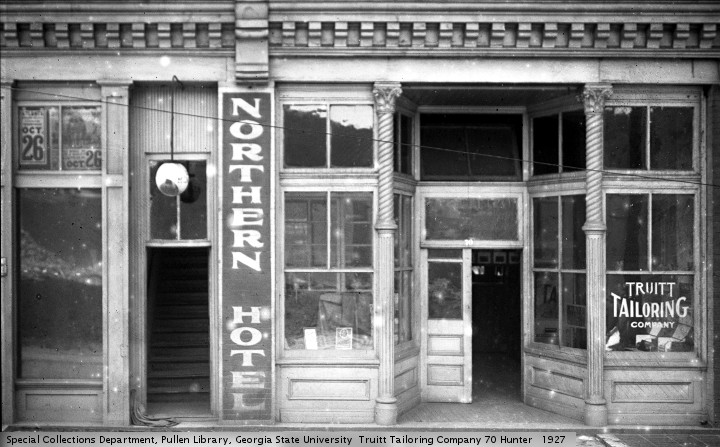
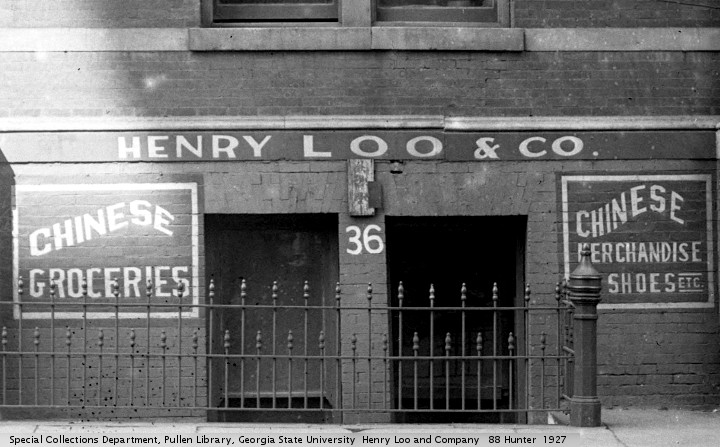
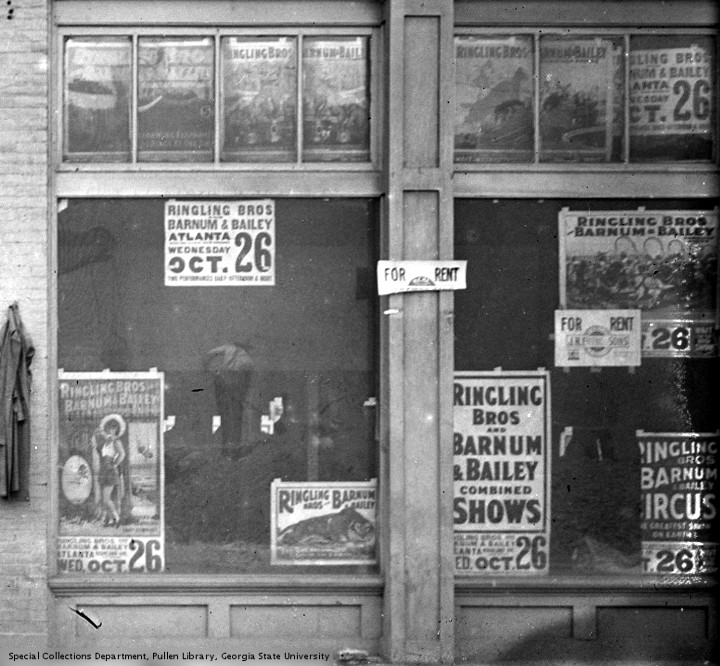
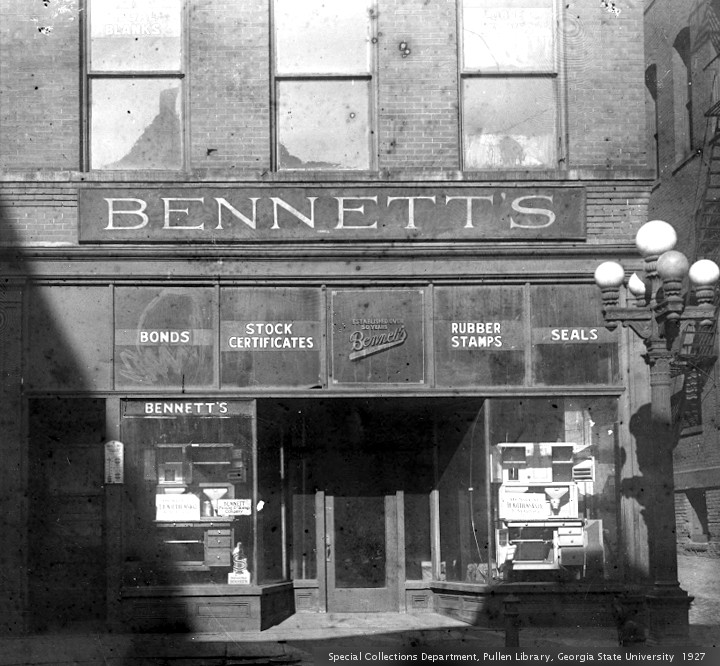
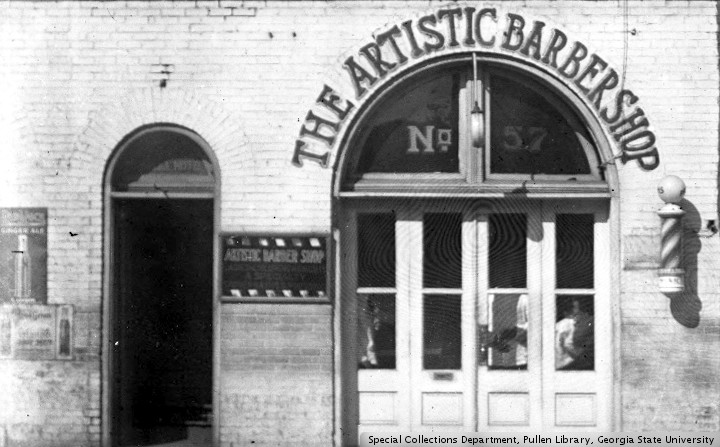
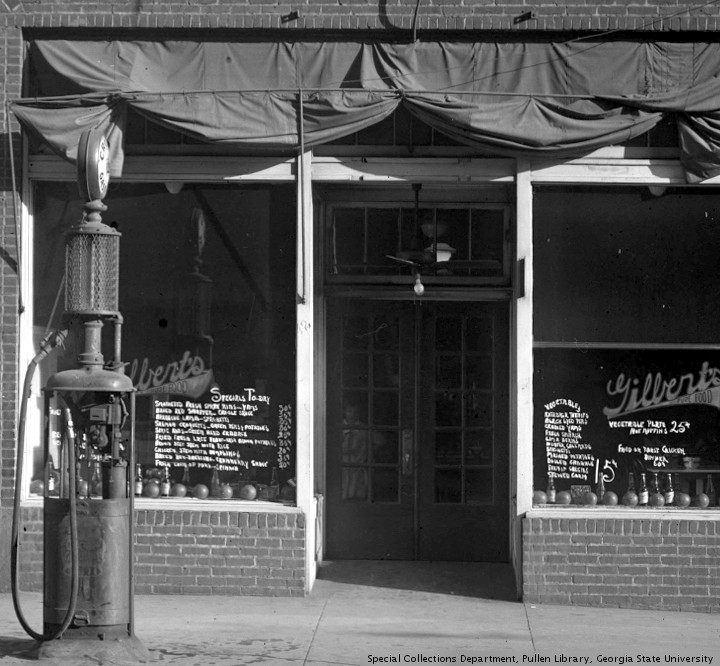
Pictures from “The Special Collections and Archives, Georgia State University Library”. “… a collection of images of downtown Atlanta streets that were taken before the viaduct construction of 1927 – 1929. Later, some of the covered streets became part of Underground Atlanta.”



Bulwer-Lytton Fiction Contest 2017



*Results* of the 2017 Bulwer-Lytton Fiction Contest have been announced. The XXXIVth Lyttoniad is a bad writing contest, named for Edward George Earl Bulwer-Lytton. Every year, thousands of writers-who-shouldn’t submit a first sentence, to a terrible novel. Chamblee54 wrote about BLFC in 2012, 2013, 2014, 2015, and 2016. Part two of 2017 is forthcoming.
As a value added service to the BLFC community, every year chamblee54 compiles a list of noteworthy names from the contest. This distinction is purely nominal, and is not related to the quality, or lack thereof, of their entry. Nine names made the cut in 2017: Beth Armogida, Sierra Madre, California, Clark Snodgrass, Huntington Beach California, Jackie Fuchs, Los Angeles, California, Michael Leshnower, Encinitas, California, Myra Vanderpool Gormley, University Place, Washington, R. D. Fish, Jr., Versailles, Missouri, Richard Bos, Emmeloord, The Netherlands, Samantha Bates, Columbia, Tennessee, and Tyson Canale, Rochester, Minnesota.
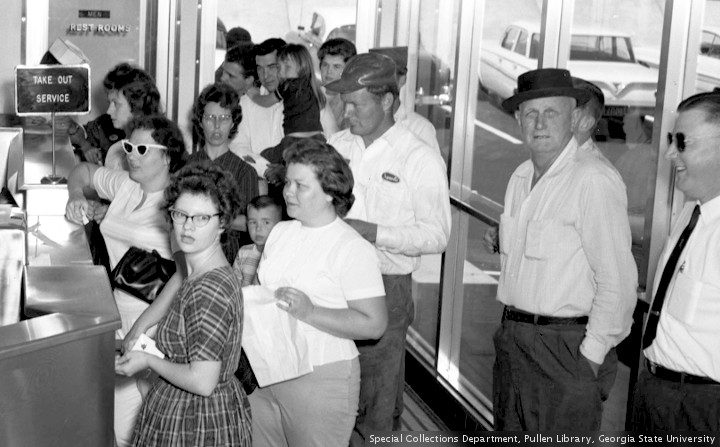
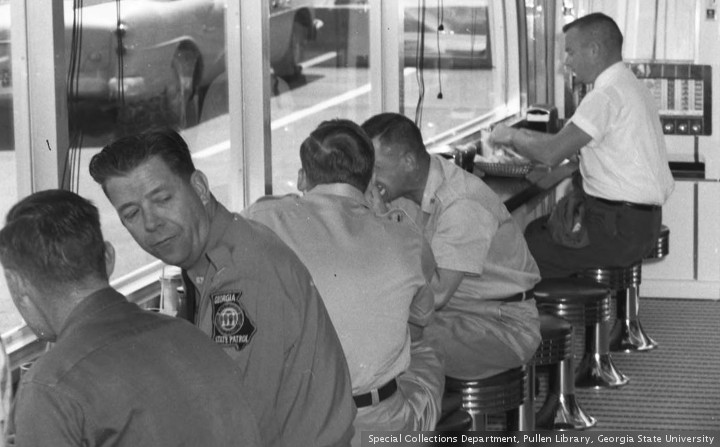
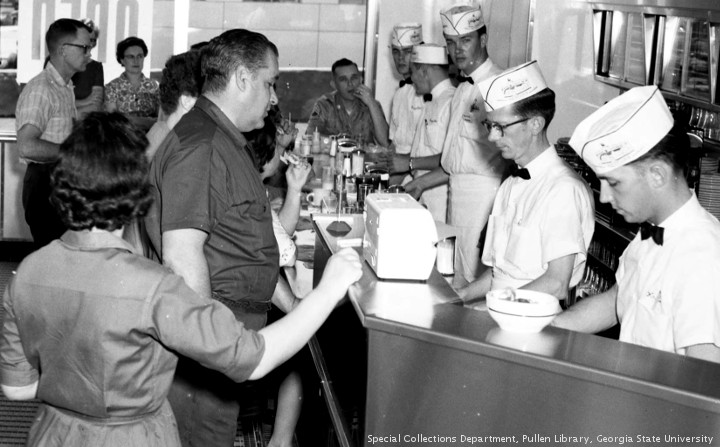
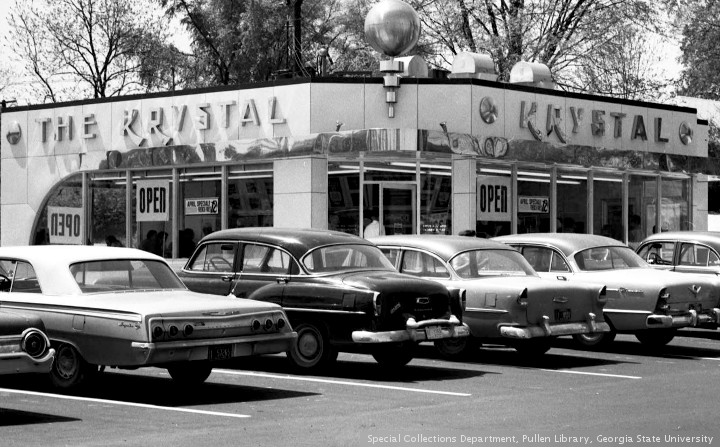
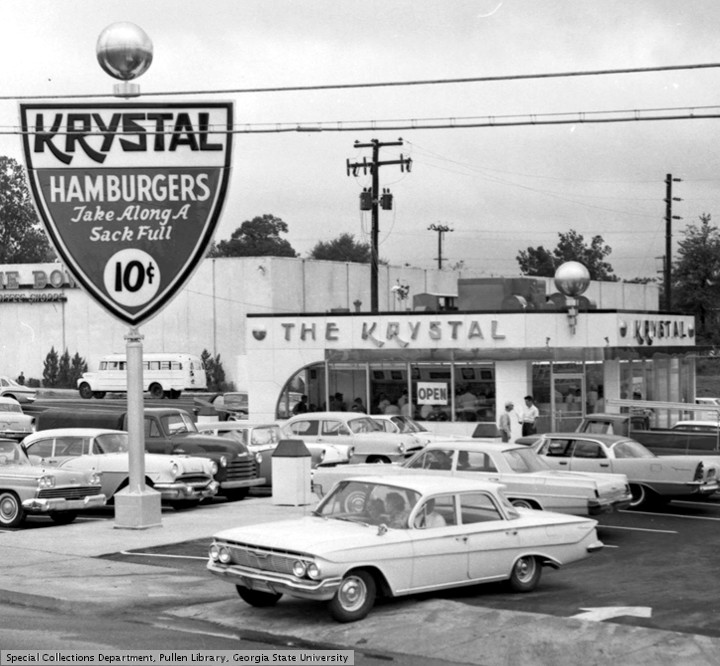
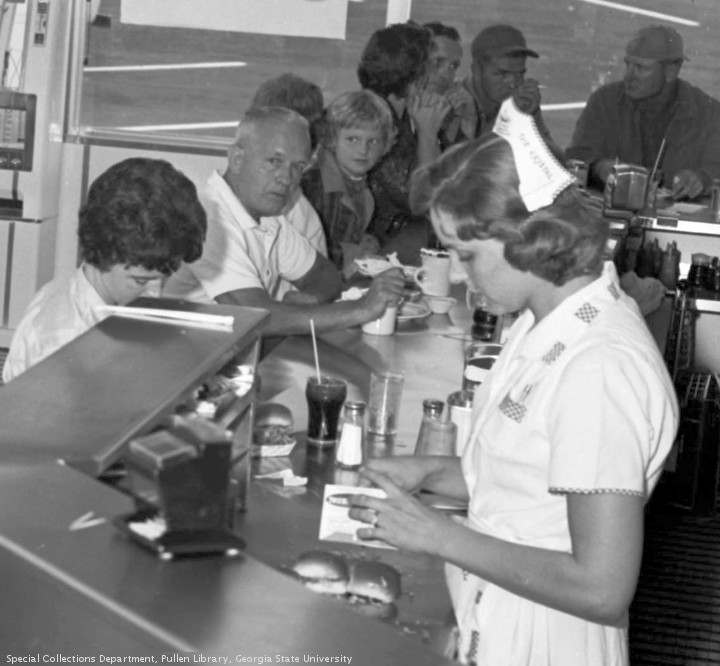
Pictures for this feature are from “The Special Collections and Archives, Georgia State University Library”. These photographs were taken at the Krystal. What the BLFC is to english composition, Krystal is to nutrition. The onion anointed Krystalburger has been a staple of southern life for generations. White Castle rumors are yankee misinformation.
She was the most desired object in the room, not unlike the last deviled egg at an Easter Day potluck.— Christine Hamilton, Atlanta, Georgia
Detective Sam Steel stood at the crime scene staring puzzled at the chalk outline of Ms. Mulgrave’s body which was really just a stick figure with a dress, curly hair, boobs, and a smiley face because the police chalk guy had the day off. — Doug Self, Brunswick, Maine
As hard-boiled detective Max Baxter ate his soft-boiled egg, he thought about the gorgeous dame he’d found last night lying in a pool of her own blood—it being inconvenient to lie in a pool of someone else’s blood—and wondered how she liked her eggs.— Pam Tallman, Huntington Beach, California
Detective Robertson knew he had Joyce Winters dead to rights for the murder—at the crime scene he had found Winters’ fingerprints, shell casings matching the gun registered to her, and, most damning of all, a Starbucks cup with the name “Josie” scrawled on it.— Doug Purdy, Roseville, California
Nobody messed with Rocky “The Anvil’ Roselli, the toughest, badass mob enforcer that ever walked the mean streets of downtown LA, but for some time now he had been considering an alternative career in interior design, a secret kept well hidden from his felonious contemporaries; like a strawberry jam sandwich lying buried at the bottom of a sack of brussels sprouts.
Ted Downes, Cardiff, Wales
So many questions raced through the heiress’s mind: Who had killed the maid and which guests were lying to her and who the hell was going to clean up all this goddamned blood because it sure as hell wasn’t going to be her, she could tell you that much.— Samantha Bates, Columbia, Tennessee
The horizontal array of rectangular golden sunshafts that filtered through my shutters was interrupted by a statuesque silhouette appearing at my office door, her widow’s pillbox with netted veil only slightly obscuring her opalescent eyes, her alabaster décolletage accented by a sizeable amethyst pendant, and a silky floor-length ebony gown that revealed a muffin-top that clearly lacked of any kind of abdominal exercise regimen. — Peter S. Bjorkman, Rocklin, California
Replacing the Human Torch’s fireproof colostomy bag, teaching Iron Man how to use the TV remote, listening to Iceman complain that it’s too cold, searching in vain for the Invisible Woman after she’s wandered away yet again—life isn’t comical as a Marvel Universe hospice nurse.
Dan White, Clarendon Hills, Illinois
Vadblad the Bad had known for centuries that impaling his victims before draining their blood was extremely wasteful but somehow he could not stop himself reaching for his spear as he rose from his coffin; bad habits never die. — Ann Wood, Corrales, New Mexico
I looked up at her breathless “hello,” and knew I could never unsee her Bride of Frankenstein makeup, or the way she filled her clothes; which must have looked good form-fitting a younger, svelter her, but now resembled a sausage skin strained to its limits by a failure of the emergency stop on the filling machine; perhaps a developing grub, whose skin failed to molt, or a Michelin Woman, as imagined by Salvador Dali on acid. — Michael Newton, Vancouver, Washington
Meeting his fiancé’s parents for the first time, Damon felt no fear because she had accepted his marriage proposal, but he still hoped for the parents’ approval, so it felt good that Mr. Dracula shook hands with one hand while his other hand squeezed Damon’s neck and then Mrs. Dracula proceeded to place a gentle kiss on his neck that intensified so much that it probably left a hickey.
Randy Blanton, Murfreesboro, Tennessee
A sweaty Hector threw off his shirt, passion burning, skin glistening, his deodorant congealed to little chunks ensnared among the matted jungle of his armpits like so many crumbles of pungent blue cheese over a bed of sprouts, moistened with a dressing of perspiration, and lustily asked, “Are you as hungry as I am?” to the confused busboy. — Tyson Canale, Rochester, Minnesota
Like the smoke from a cheap corn cob pipe, the tragic events of the past week descended into Lloyd Mounser’s brain and stubbornly clung to his memory the way those little white styrofoam peanuts get stuck to your hands you when you’re opening a box of soft-white light bulbs that you got online with free shipping.— William Keegan, Pine Bush, New York



One History Of Religion

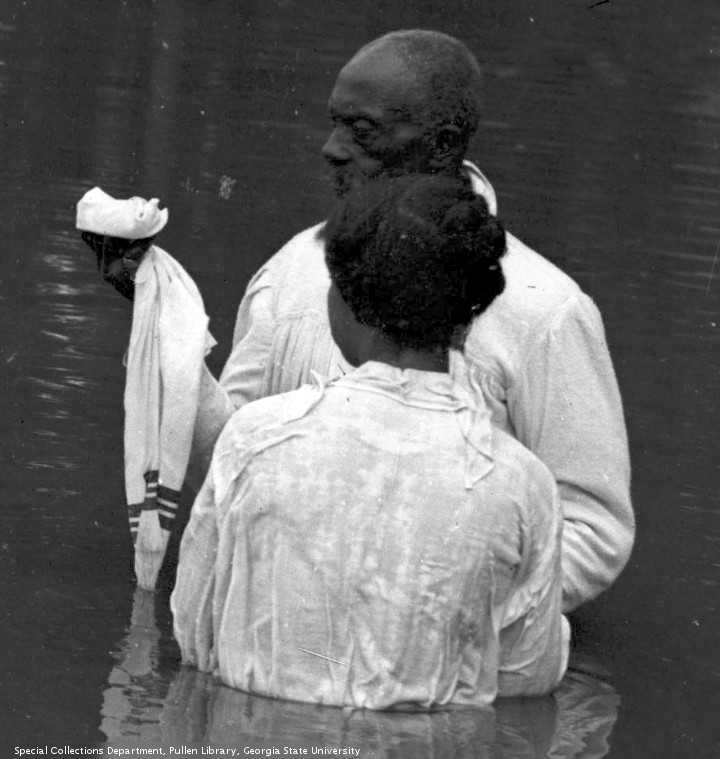


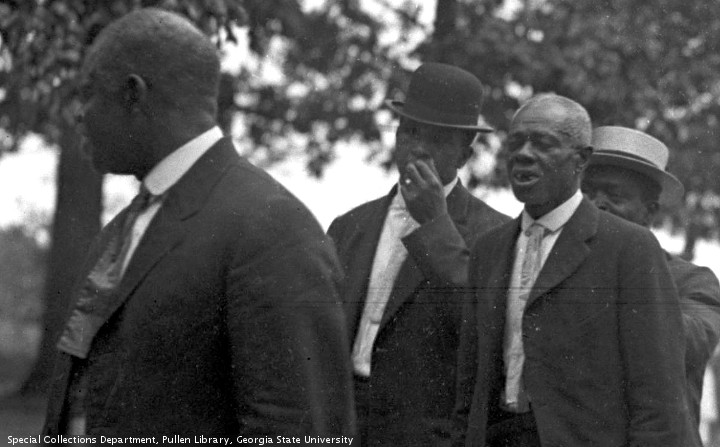
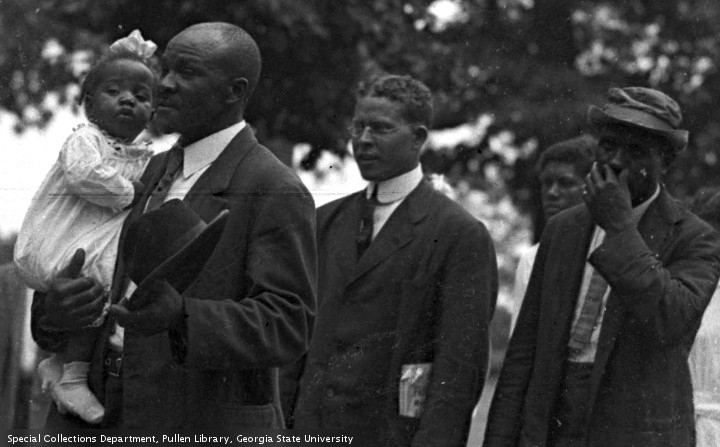
I was a southern baptist all my life. Arguably, I became a baptist when my mother converted in 1938, but really didn’t get with the program until I was born in 1954. The story is that Daddy called the choir director at six in the morning to sign me up.
First Baptist in Atlanta was a big church on Peachtree street, about a mile north of downtown. (A few years ago, they sold the land to a developer, and moved to the suburbs. I was working a block away when they tore down the building, and got some chips of brick as a souvenir.) I sang in the “cherub” choir. This was quite an experience when we performed in front of a full house. I have good memories of Sunday school, vacation bible school, and the choir program.
One thing I did not like, even at that young age, was the preacher. He was a greasy haired man who shouted a lot, and had a mean streak. Years later, I heard persistent rumors that he was gay. (I should note that this is not Charles Stanley. It is the man who preceded him.) One Sunday, we were watching him preach, and he shouted, “this is the word of G-d”. He then waved a Bible in the air, and slammed it into the pulpit. I thought, if that is the word of G-d, maybe he shouldn’t slam it down like that.
In 1962, mom and dad decided to move to a church closer to home. I liked Briarcliff Baptist. About this time, I first heard about being “saved from sin”, and thought it was a pretty cool idea. I also was in the cub scouts, and since their meetings were the same day as choir practice, I quit the choir. I attended church regularly the next few years, but never did join the church, and get baptized. The custom of pressuring children to make a “commitment of faith”, and get baptized, reflects poorly on Jesus.There are some other family issues that came up about this time. They are too personal to get into here, but they affected my attitude towards the church.
After a while, I was 17 years old, and working in a restaurant that was open until 1am on Saturday night. I decided one Sunday that I didn’t want to get up for church. I have only been back to that building once in the intervening 36 years. This is a repost, with pictures from “The Special Collections and Archives, Georgia State University Library”.




The B-52s



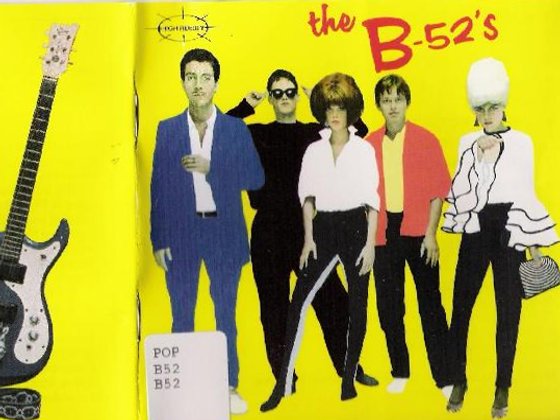
There used to be a chinese restaurant, on the Atlanta Highway, called Hunan House. One night, a few people shared a flaming volcano, and formed a band. The b52s played their first show at a valentines day party in 1977. They were named for a bouffant hairstyle.
The b52’s were Ricky Wilson, his sister Cindy, Kate Pierson, Fred Schneider III, and Keith Strickland. The Wilsons and Mr. Strickland were from Athens. Miss Pierson and Mr. Schneider were from New Jersey. Planet Claire was the ancestral home.
Fred had lived in Atlanta before he moved to Athens. He stayed in an apartment on Monroe Drive, across from S&M clutch and brake company. PG knew some of his neighbors, and once rested his feet on a rug, formerly owned by Fred Schneider.
Somebody had connections, and The b52’s were playing shows in New York before long. They released a 45 on db records, “Rock Lobster” and “52 girls”. The first of the girls mentioned…there are only 23 named…is Effie. There was a famous whorehouse in Athens named Effies.
One night, they played a show at the Big Dipper, on Ponce de Leon Avenue. The Big Dipper was a former Maryland Fried Chicken, and is now something else. After the show, either Kate or Cindy was in the parking lot, talking to a local character named Beulah. As was his way, Beulah was talking about Mick Jagger this, Mick Jagger that. Finally, Kate had enough. “Fuck Mick Jagger. One day Mick Jagger will come see me, me, me.”
The b52’s were a fun band. Ricky had an unusual style on guitar, and Kate played a farfisa organ. The girls always wore big hair wigs. Fred was somewhere up front singing.
On Labor Day, 1978, PG saw the b52’s in Piedmont Park. There was a third girl that day, Wendy, who wore an inflatable beach float, and danced. The only songs PG is sure they did were “Downtown” and “Rock Lobster”. A few months later, PG saw the b52’s at the Agora ballroom. The Brains opened.
Sometime in late 1979, the eponymous first album came out. It became a hit, with dance clubs all over playing “Planet Claire”, “Dance this mess around”, and “6060-842”. In the summer of 1980, PG talked with a former Athenian in a hostel in Cannon Beach, Oregon. He mentioned that Cindy was the only heterosexual in the band.
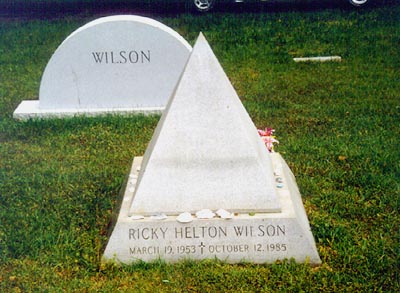
The years went by, and more albums were released. On October 12, 1985, Ricky Wilson died of AIDS. He is buried in Oconee Hill Cemetery, behind Sanford Stadium in Athens. He sold bus tickets at the Greyhound station in downtown Athens before he hit the bigtime.
The band continues to this day. At some point, “Love Shack” was released, and became a hit. It is probably the best known b52’s song today. This is a repost. Pictures are from The Library of Congress.



Monroe Drive Or Boulevard



It is an Atlanta cliche. Boulevard turns into Monroe Drive because one was black, and the other white. The white people did not want to live on a street with the same name as the black neighborhood. You hear this all the time, with very little explanation. It is plausible. At one time, Ponce de Leon Avenue was a dividing line between the white, and black, neighborhoods. There are, however, a few questions about this name change business. This is a repost.
In the space between I-85 and Dekalb County, there are four streets that change names when they cross Ponce De Leon Avenue. These are Juniper/Courtland, Charles Allen/Parkway, Monroe/Boulevard, and Briarcliff/Moreland. Several streets cross Ponce without changing names, including Spring Street, Peachtree Street, Piedmont Avenue, and North Highland Avenue.
Four thoroughfares are affected by the Ponce rebranding. Juniper/Courtland is mostly commercial, at least south of Ponce. Briarcliff/Moreland is mostly white until you get to the railroad tracks south of Little Five Points. When Moreland Avenue goes under the MARTA line, the neighborhood is Reynoldstown….which was not named for Burt Reynolds.
Charles Allen/Parkway does change from white to black at Ponce. The street name then changes to Jackson Street, the original name, at Highland Avenue. Monroe/Boulevard also goes from white to black at Ponce. However, when you cross the railroad tracks, Boulevard goes through Cabbagetown, a white neighborhood. Boulevard residents change color several times before the road dead ends at the Federal Prison. Oakland Cemetery, and Zoo Atlanta, do not play a role in this drama.
If this litany of street names is boring, it is all right to skip over the text. The pictures today are from “The Special Collections and Archives, Georgia State University Library”.
Roads change names all over the metro area, for a variety of reasons. In the area between Ponce De Leon Avenue and I 20, there are roads that change at railroad tracks (North Highland/Highland, Krog/Estoria.) Others change at Highland Avenue (Parkway/Jackson, Glen Iris/Randolph) or Decatur Street (Hilliard/Grant, Bell/Hill.) Some of these changes are racially motivated, while others are not. Some make sense, while most do not.
No one seems to know when this Monroe/Boulevard thing happened. An 1892 “Bird’s eye view” shows Boulevard sailing off into the horizon, past a racetrack in today’s Piedmont Park. A 1911 map shows Boulevard starting near “L.P. Grant Park,” and sailing past Ponce up to Piedmont Park. A 1940 map shows Boulevard going past Park Drive, only to turn into Monroe Drive at Montgomery Ferry Road. Finally, a 1969 map of “Negro Residential Areas” shows Monroe Drive changing into Boulevard at Ponce De Leon Avenue, like it is today. Boulevard is a stand alone street name at all times.
If anyone knows about this name change business, please leave a comment. It would be interesting to know when these changes were made, and what government agency made them. Google has not been helpful, except for pointing the way to several map collections.




The Biggest Shill in Georgia Part Two
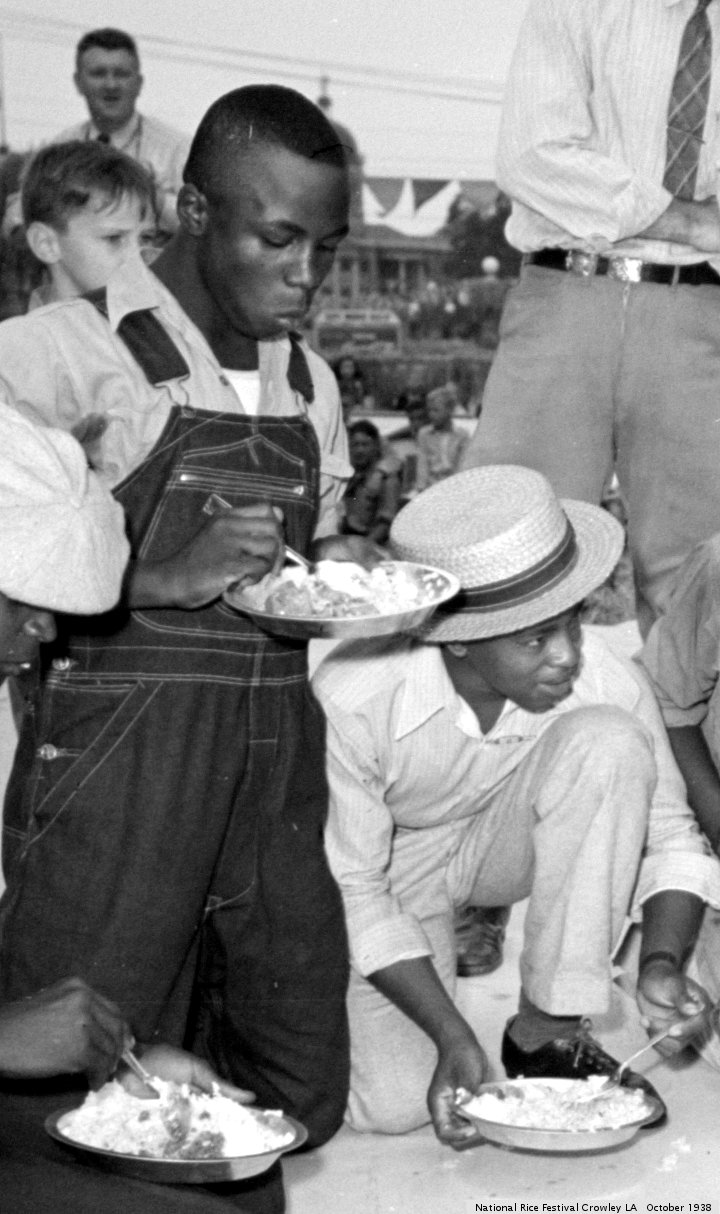
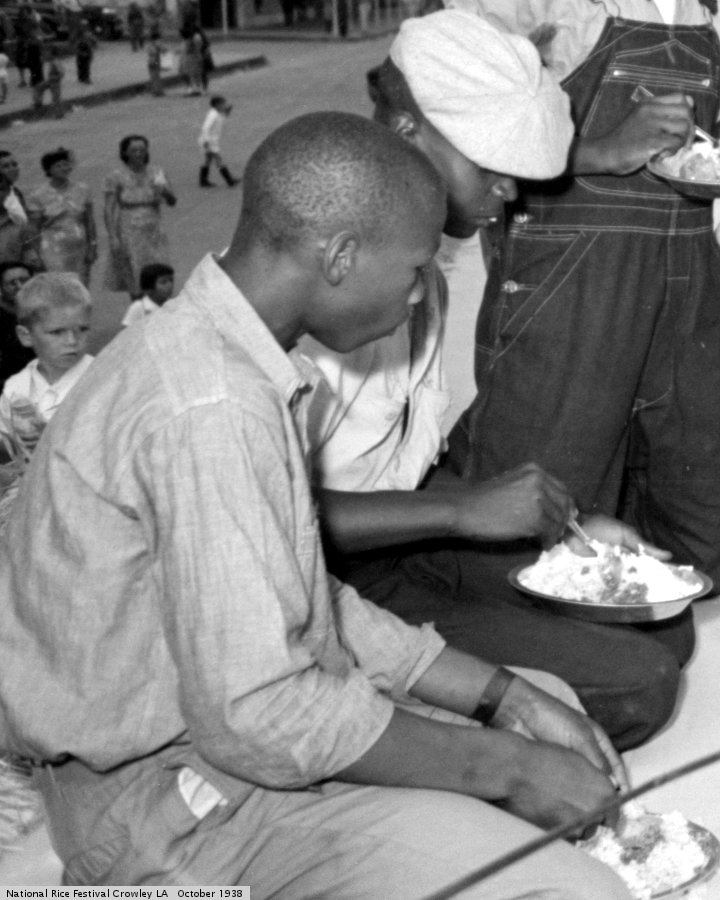


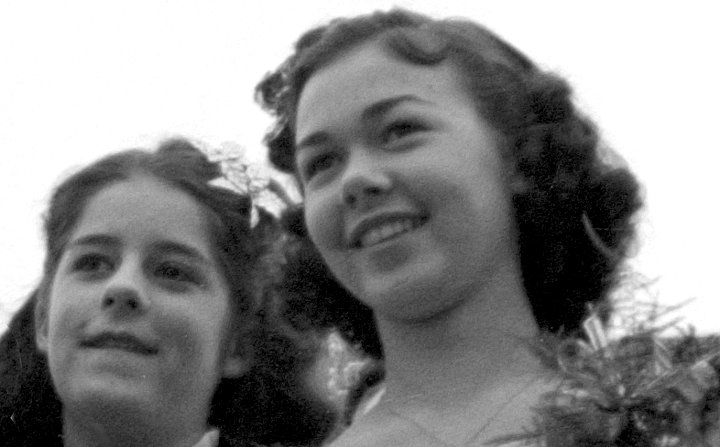


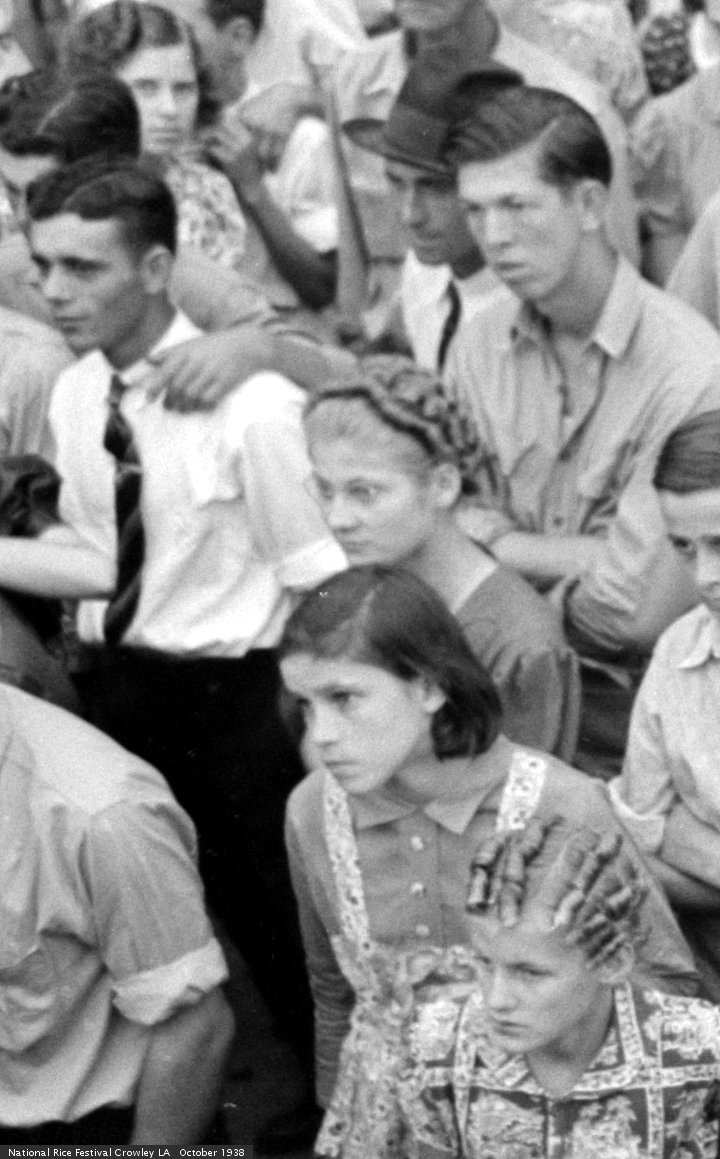
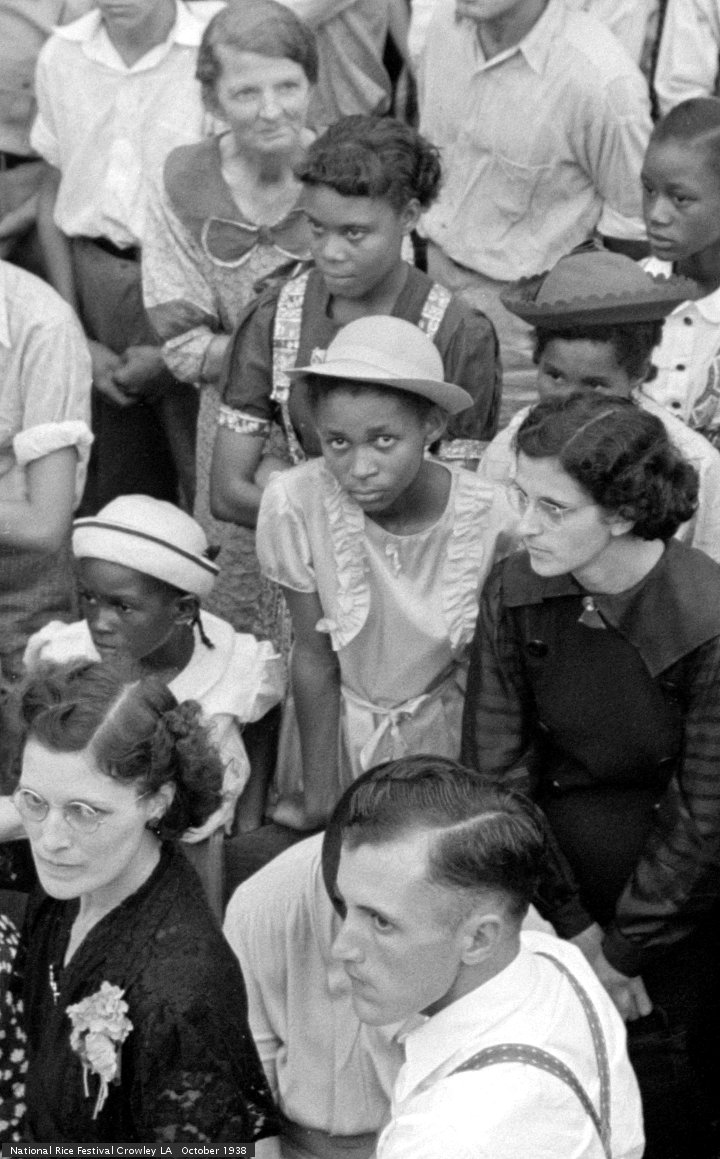
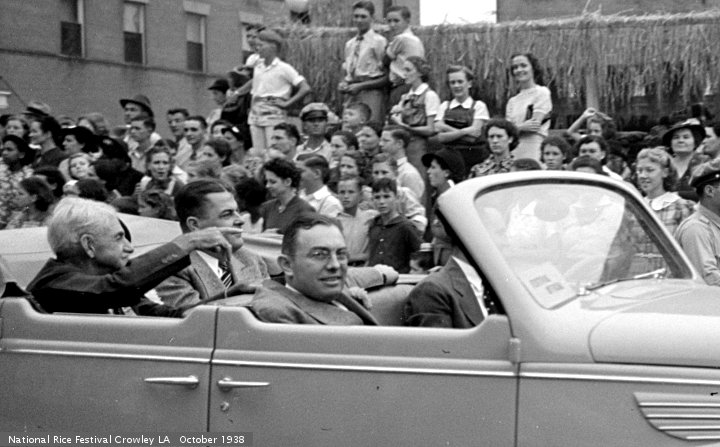
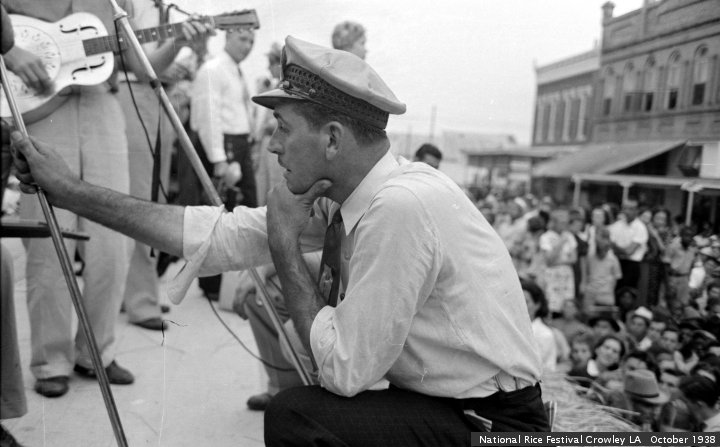
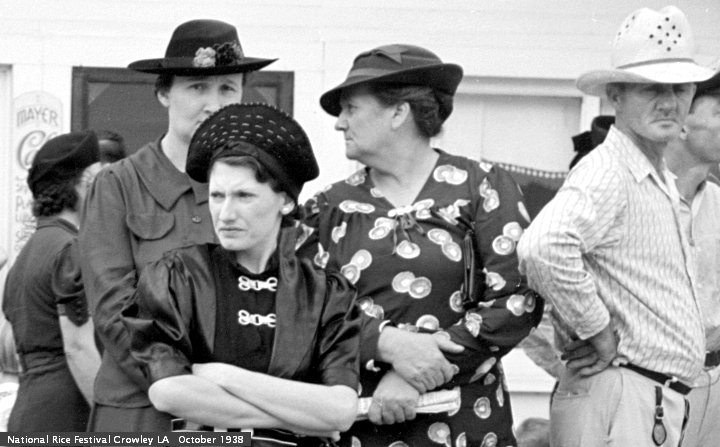
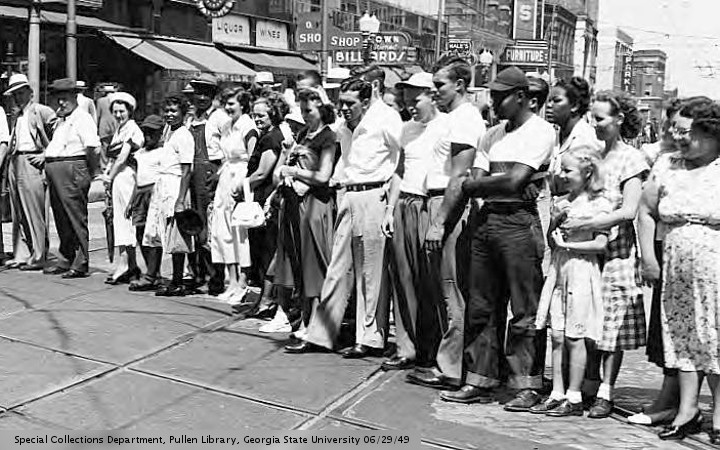
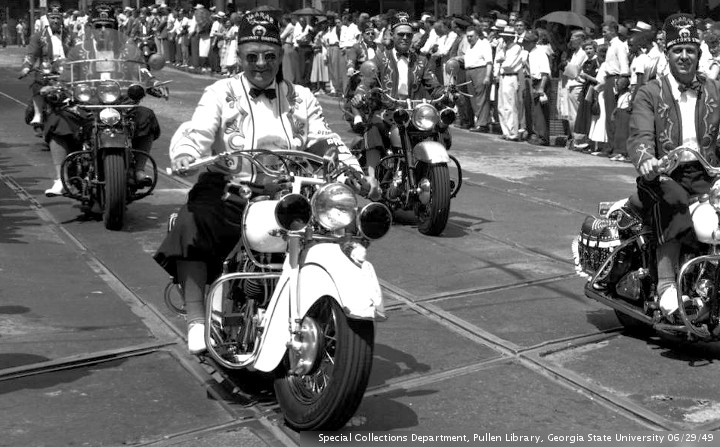
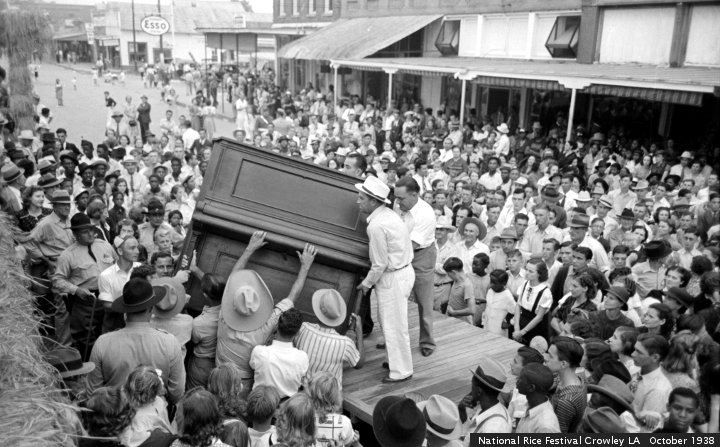
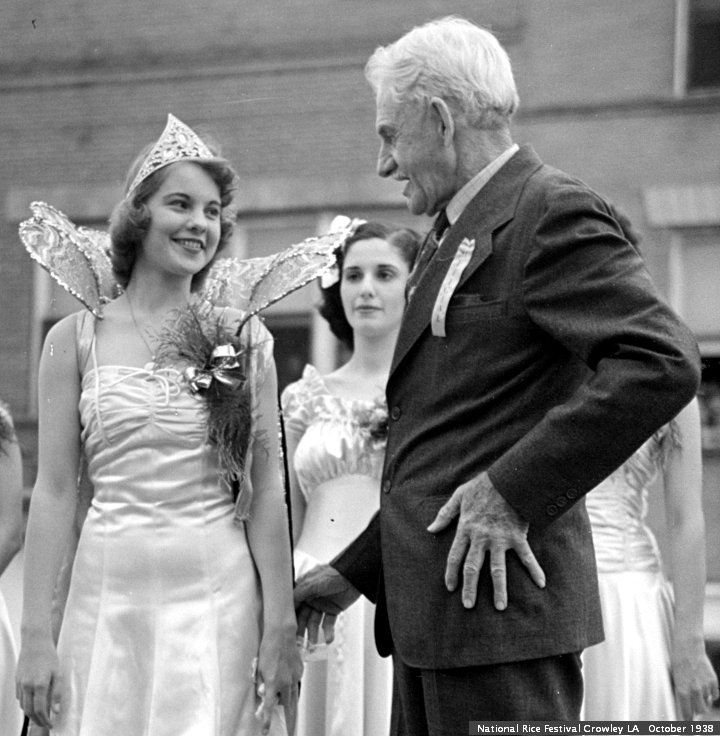
This is an update to a chamblee54 feature, The Biggest Shill In Georgia. It is about politcal website inside baseball. Or maybe it is republican on republican snowflake abuse. If you don’t want to bother with the text, you can always skip ahead to the pictures. The pictures, from The Library of Congress. , are usually more entertaining than the text. Russell Lee took the pictures in October, 1938. “Crowd, listening to the Cajun band at National Rice Festival, Crowley, Louisiana.”
After the chamblee54 feature hit the innertubes, a comment/link/self promotion device was posted at the seminal post, The Biggest Shill in Georgia. Here are the comments that followed: ScottNAtlanta If it isnt Sen David Perdue…I’m not sure who is, but then again…he is in DC TheDeepDark Anyone want to explain this to our friend Chamblee54? Ellynn Not really. It took me under 2 mins. reading through facebook comments to figure it out. If i can do it… any one can.
Facebook can be frustrating to bloggers. You would prefer to have comments go to your blog. However, facebook is more convenient to some people. Unfortunately, if you are trying to follow the action, and look at the blog comments only, you might miss out on some of the buzz.
GeorgiaPol had a facebook comment thread about the post that started it all, Williams: “Casey Cagle Likes Nickelback!” Someone made a multi-paragraph comment. The commenter appears to be a supporter of Michael Williams, and criticized the GeorgiaPol coverage.
Chamblee54 agrees with GeorgiaPol on this. Michael Williams made a fool of himself. It is tough to take sides in this one. Casey Cagle is a career Gold Domer, who has trouble keeping his shoes tied. Michael Williams brags about being “the first Georgia elected official to endorse Donald Trump for President.” In a perfect world they would both lose. Given the republican bullpen, those two might be the best we have to choose from. It is not like the Democrats are going to help.
The commenter finished his message with a flourish. “In the meantime, I advise the owners of this website to consider changing its name to Georgiashill.com. Doing so would offer the public much more substance as to its real purposes.” Thirteen minutes later, there was a reply: GeorgiaPol.com “That was a great suggestion about the website… so we bought it… We think you might like it.”
This was amusing, but did not quite explain everything. It seems there was more than one facebook thread. The post was shared, on facebook and twitter, by @MikeHassinger “Who’s the biggest shill in Georgia? Find out with just one click.” Scott Jackson Redirects me to Mike Hassinger’s page, that isn’t very nice of GeorgiaPol I think. Thomas Wheatley It redirected me to my own page!
GeorgiaPol was just playing a little joke on the people who drop in. Compared to the way RedState deals with inconvenient comments, being directed to your facebook page by georgiashill.com is pretty mild. As for inside baseball, it is almost time for football.




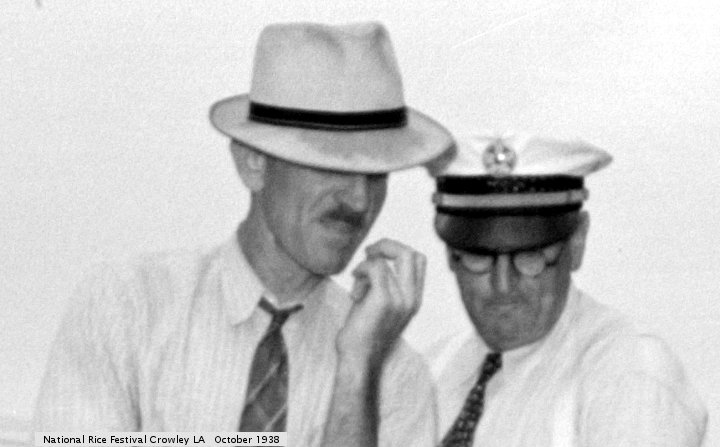
The Biggest Shill in Georgia



Georgia is electing a new Governor next year. These no-incumbent elections can get weird. There is usually an “its my turn” journeyman, a couple of ambitious performers, and the nut jobs. Yesterday, a man named Michael Williams held a meeting in front of a staircase at the state capitol. This event was slammed by a political website, GeorgiaPol
PG observed these events, and chuckled. He went to the Michael Williams website, and found a hilarious paragraph in the bio. “His first experience with his own business was selling candy on the school bus. Unfortunately, this was also his first experience with over-reaching government regulations. The school shut down his school bus candy sales. Michael was devastated but learned a lesson about government control that he would never forget.” This is like the punchline, to the joke about the *free market* pervert… “Hey kid, you want to buy some candy?”
GeorgiaPol has a regular post, Morning Reads. It is usually a collection of links, and news tidbits. PG wanted to share the Williams timeline feature somewhere, and posted it in the Morning Reads comments. He thought one, or two, people might enjoy it.
The Biggest Shill in Georgia turned up at July 14, 2017 9:58 AM. By TheDeepDark “noun 1. an accomplice of a hawker, gambler, or swindler who acts as an enthusiastic customer to entice or encourage others. verb 1. act or work as a shill. Since we see this word used a lot in comments, on Facebook, and just about everywhere we thought it would be a good idea to internally vote and come up with the one person that we believe embodies this word the best… we present you with http://www.georgiashill.com Enjoy your day.”
When you click on http://www.georgiashill.com , you go the the facebook page of Luther Mckinnon. As some of you know, Luther Mckinnon is the owner of chamblee54, and the man behind PG. This has never been a secret. Chamblee54 is a psuedonym. If you look in the “About Me” page, you will see pictures, and a few biographical clues. All posts on chamblee54 are advertised on facebook and twitter, on accounts using the Luther Mckinnon identity.
If you click on the gravatar for “TheDeepDark,” you see this: TheDeepDark We’re sorry, that profile has been deleted. Perhaps you’d like to log in or sign up for an account? Perhaps the five comments will provide a clue. John Pezold Got me. Is this 2017’s version of Rick Rolling? Lawton Sack GeorgiaPolling chamblee54 I resemble that remark Ellynn I don’t even comment on the Facebook page… What did I miss? blakeage80 Nice. Only TheDeepDark could pull that off.
It is tough what to make of this. Did TDD think chamblee54 was working for Michael Williams? Was this an inside joke for GeorgiaPol? Nobody said anything on facebook, so maybe it didn’t really happen. Pictures for your friday afternoon entertainment are from “The Special Collections and Archives, Georgia State University Library”. UPDATE: Here is Part Two.




688

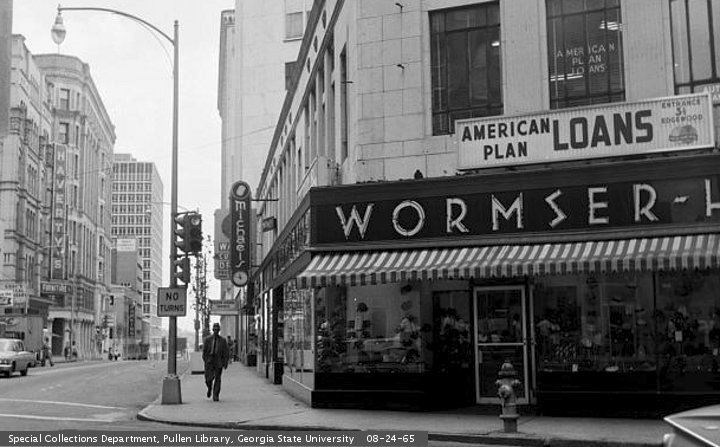

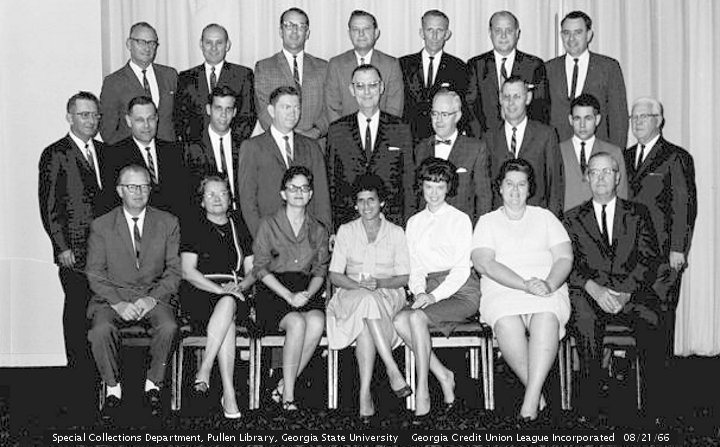
There was a comment at Chamblee54. “Steve Loehrer – So tell me what you know about Rose’s Cantina. I booked the music there from 1978-80 – Thorogood, Delbert, The Thunderbirds, The Fans, The Razor Boys and on and on. I was the one that did it. And I probably know you.” This blog has previously published features about the Great Southeast Music Hall, Richards, and the Georgian Terrace Ballroom. One more music venue post is not going to hurt anyone, and will be a good excuse to post some more pictures, from “The Special Collections and Archives, Georgia State University Library”. This is a repost.
688 Spring Street is a nondescript building, located down the hill from the Varsity. At one time, a company called Southern Tailors made wine jackets there. It is currently a Concentra Urgent Care Center. In between, it was the site of two rock and roll nightclubs, Roses Cantina and 688. One block over, at 688 West Peachtree, is a Catholic Construction management office.
House manager Rose Lynn Scott is quoted as saying “You know, we really aren’t sure exactly when it all started and ended,” Scott said. “Honest to God, we weren’t paying that close attention.”PG first knew about it around 1977, and really didn’t go very often. There is a running list for this post, and whenever a new band sinks into the mush, it is duly noted. Some band did “Love Gun,” which sounds remarkably similar to “Amphetamine Annie” by Canned Heat.
The punk rock revolution did not completely pass Atlanta by. A band called the Fans said they were making the pop music of the eighties. PG saw them twice and Roses, and they might be the only time he ever paid to get in. They were an impressive outfit, doing Velvet Underground and Telstar. Later, they opened for Talking Heads at the Agora, and were pretty awful. Much, much later, PG shared an apartment with the brother, of the drummer, for the Fans. Also living there was the brothers wife, a cable guy, seven snakes, a ferret, and a cat.
Back to the words of Rose Lynn, “It was a dive bar supreme and proud of it.” The stage was in the middle of the house, with a game room behind the stage. If you liked to shoot pool and listen to bands, this was the place. As for drinking, PG might get a beer or two, but mostly got bombed at other spots.
In those days, PG would go rambling from club to club, often accompanied by his friend Dinkson. One night, they stumbled in on a three piece band. They did a song called “Madison Blues”, with the guitar playing slinging riffs, and the bass playing playing the same notes over and over, never changing the look on his face. This was George Thorogood and the Destroyers.
One other night, PG stumbled in on the last few minutes of a show by the Brains. They wrote a song called “Money Changes Everything” that Cyndi Lauper did well with. This is another great local band that never seemed to get a national audience. Another night, some old black man, possibly John Lee Hooker, was playing guitar.
Around about this time, PG decided to either grow up, or take his childhood seriously. He wound up in Seattle WA. That wore off after a while. On the greyhound bus going home, PG talked to a young lady, who said something about a punk rock club in the Roses Cantina space. This was the 688.
A few weeks later, Iggy Pop did a week at 688. Here, through the miracle of copy paste, is the story. It isn’t plagiarism when you wrote it yourself.
At any rate, by the time PG got back from Seattle, some brave investors decided to have a punk rock club at 688 Spring Street. Soon, Iggy Pop would be playing a week there. In the seventies, the bands would play for five days at the great southeast music hall or the electric ballroom, two shows a night, and if you were really cool you would go on a weeknight before it got too crowded. Soon after that, it was one night in town only, and you either saw it or you didn’t.
PG had a friend at the Martinique apartments on Buford Hiway. There was someone living in the complex known as ZenDen, who sold acid. You would go to his place, wade through the living room full of grown men listening to Suzi Quatro, and purchase the commodity.
On to the the 23 Oglethorpe bus, and downtown to 688 Spring Street. Before anyone knew it, the band was on the stage. A veteran of the Patti Smith Group, named Ivan Kral, was playing bass. Mr. Kral sneezed, and a huge cocaine booger fell across his face. He was not playing when the show ended.
There was a white wall next to the stage, and someone wrote the song list on that wall. That list of songs stayed on the wall as long as 688 was open. “I want to be your dog” was on the list, as well as the number where Iggy pulled his pants off and performed in his underwear. Supposedly, in New York the drawers came off, but the TMI police were off duty that night.
The show was loud and long, and had the feel of an endurance event…either you go or the band does. Finally, the show was over, and PG got on the 23 Oglethorpe bus. You got the northbound bus on West Peachtree Street. You could look down, from Fourth street, and see the Coca Cola sign downtown. Freeway expansion sent that section of West Peachtree to old road hell.
Twenty years after that, PG worked in a building at that corner of Fourth and West Peachtree. If he had known about the future of working for Redo Blue, PG might have jumped under the 23 Oglethorpe bus, instead of getting on it. The Coca Cola sign was long gone by then.
There was band called Human Sexual Response in those days. PG caught their act at 688. They had three vocalists, wearing matching outfits, and sang a lot of lyric happy songs with really cool harmonies. The problem was, PG was not familiar with those oh so witty lyrics, and did not know what it was all about. At least he got out of the house.
Kevin Dunn played guitar for the Fans. (He had an ad for guitar lessons on the bulletin board at Wax and Facts. It said that raising racing turtles was more profitable than playing guitar.) One night at 688, he performed with his band The regiment of women. They opened for someone, possibly the Plastics, who we will get to in a minute. So, this guy plays guitar and sings, and a woman plays a drum machine. No skin pounding drummer, but a lady who twisted the knobs on a machine.
The Plastics were from Japan, and did a killer version of “Last Train to Clarksville”. It was about this time that PG got a job, and decided that he liked sleeping better than hanging out downtown.
One night, about 1983 or so, PG made an exception. The band that night was Modern English. Before the show, PG ate three z burgers from the Zestos on Ponce de Leon. During the show, the singer rubbed his stomach, and said to feel the music. About this time, the z burgers were making their presence known, and PG could feel something, but it wasn’t the music.
The last show PG saw at 688 was Hüsker Dü. The best guess is February 14, 1986. There was a totem pole, made of old TV sets, in the front part of the club in 1986. Here is the story.
Hüsker Dü means “do you remember” in Danish and Norwegian. PG saw them sometime in the eighties. It might have been the metroplex, but it might have been the 688. There is a list of shows they played, and the metroplex is not on there.
PG saw a show at the Metroplex the next night. The band is forgotten. The metroplex was a dark spooky building on Marietta street near the omni. The balcony was very dark, with everything painted black. PG tripped over a bench.
688 was a different story. PG saw a bunch of shows there, both as 688 and Rose’s Cantina. HD may have been the last show PG saw before they closed. PG was well into the work/sleep lifestyle that preoccupied his life after a certain point, and just didn’t make it out much anymore. A friend won tickets to the show or he wouldn’t have made it.
PG didn’t get into the show very much. HD was a trio, with the later-outed Bob Mould as the guitar g-d. For all of his musical skills, Mould is not much for onstage charisma. PG felt that if he had been more familiar with their music, he would have enjoyed it more. Some bands you can see without hearing their records and get into it right away, where others need a bit of familiarity.




Midtown



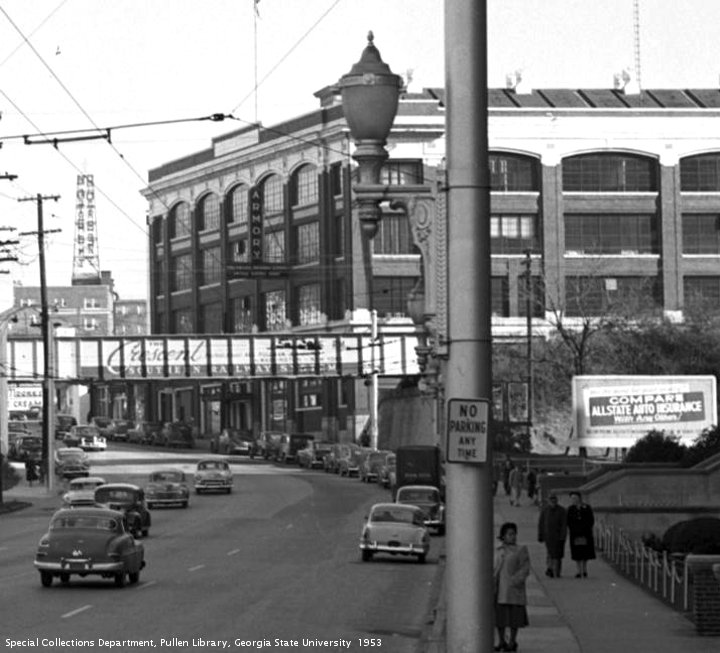
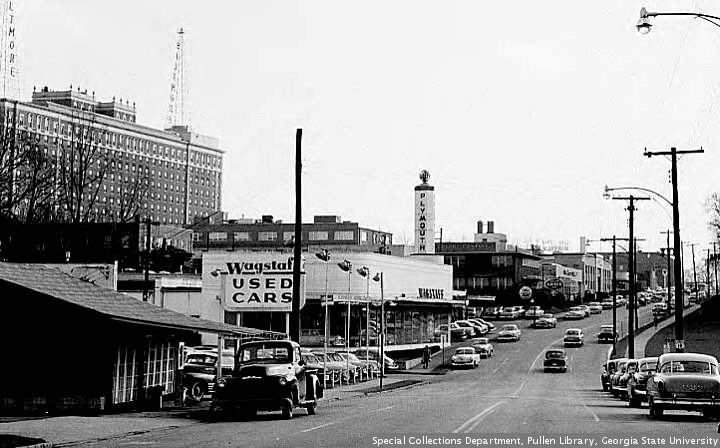
The neighborhood along Peachtree Road has always been a great place to be a freak. For a long time it didn’t have a name. It is north of downtown, between Piedmont Park and Georgia Tech. Sometime in the early eighties, people started to call it Midtown, and the name stuck.
In the time after the War Between the States, this area was a shantytown called “Tight Squeeze”. It evolved into a pleasant middle class area. In the sixties, hippies took over. The area was known as the strip, or tight squeeze. Many stories could be told.
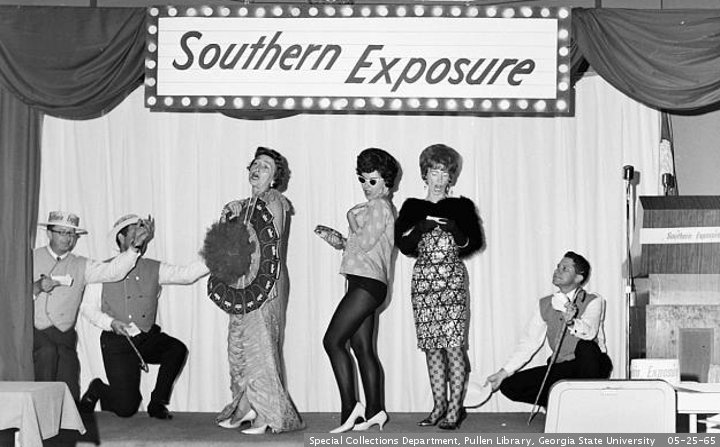
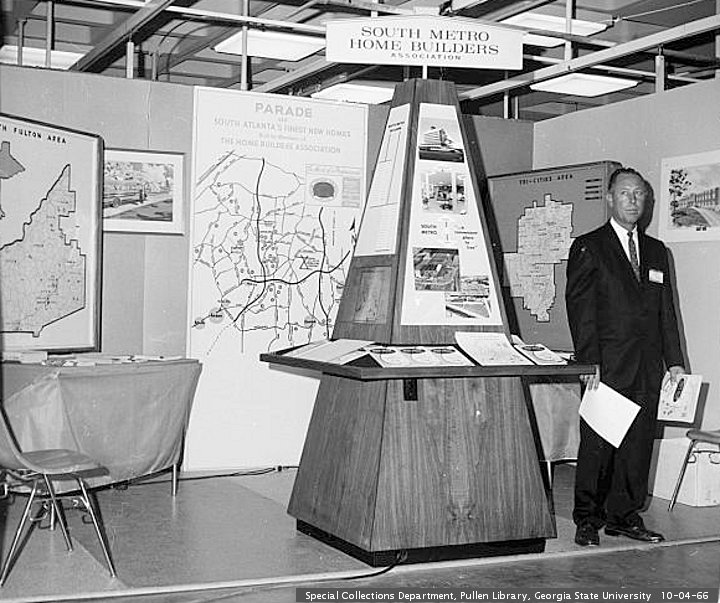
After the flower children moved on, the area went into decline. Gays started to move in, with the battle cry “Give us our rights or we will remodel your house.” Developers, worshiping the triune G-d of location, location, location, began to smell money. The neighborhood became trendy, then expensive, then more expensive. The freaks with money remain. This is a repost. Pictures are from “The Special Collections and Archives, Georgia State University Library”.


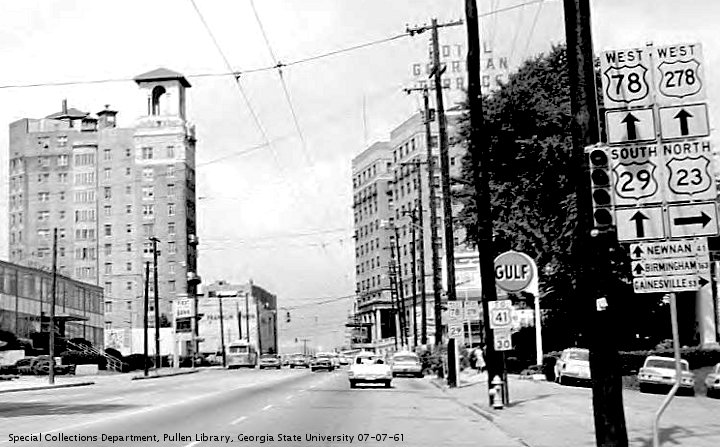


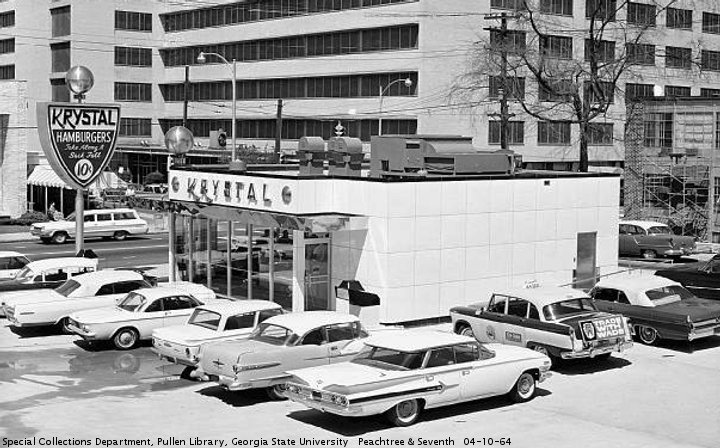
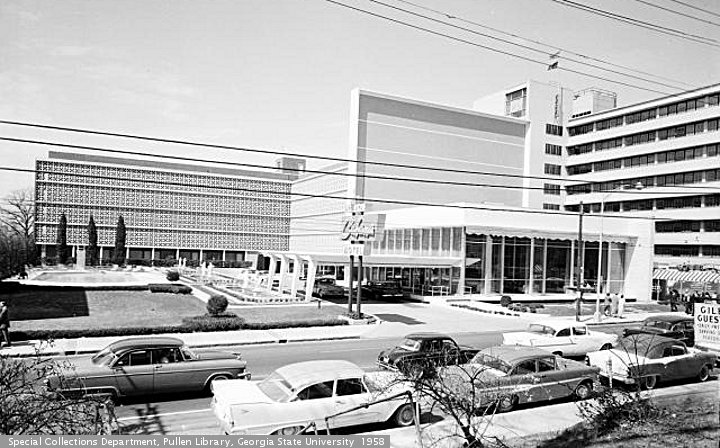
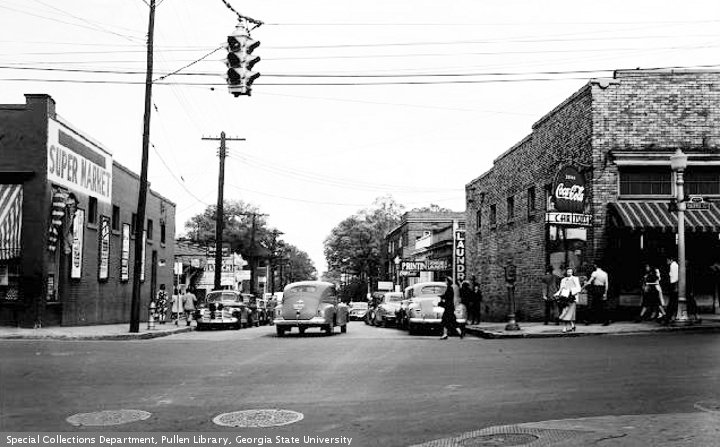

There is a nifty webcam up now. It shows the progress of a high rise going up now at 12th and Peachtree in midtown. The location of the camera itself is not certain, with the speculation centering on 999 Peachtree, two blocks south on Tenth Street.
A glance at the image reveals a curve in the road, between the two glass boxes under construction. Atlanta does not have wide, straight boulevards extending to the horizon. It is said that Atlanta did not build roads, but paved the cow paths.
People of a certain age will remember this area as the strip. The tenth street district was a neighborhood shopping area, up until the mid sixties. At some point, the old businesses started to move out and the hippies moved in. For a while, it was a festive party. Soon enough reality returned, and the area went into a crime filled decline.
The 999 complex is the neighborhood story in a nutshell. Before 1985, it was a block of small businesses. There was a hardware store, with the peace symbol set in tiles in the sidewalk. On Juniper Street stood the Langdon Court Apartments. They were named for PG’s great uncle Langdon Quin. Ru Paul used to stay there. He would sit out on a balcony, and wave to the traffic going by.
Across the street was a chinese restaurant, the House of Eng. A staircase on the side led to the Suzy Wong Lounge. Behind the building was an apartment building. It was one of the residences of Margaret Mitchell, while she wrote “Gone With The Wind”. She called it “the dump”, which was fairly accurate. The museum on that site would have amazed her.
PG went to the House of Eng for lunch one day in 1985. He noticed that he was the only customer in the house, at 12:30 pm on a weekday. After finishing his lunch, PG knew why.
At some point, it was decided to build a high rise there. Heery was one of the equity partners, along with a law firm and an ad agency. The building was designed by Heery (duh).The ad agency folded before the building opened, followed within a couple of years by the law firm. Heery was sold to a British company. PG does not know who owns 999 Peachtree now.
This is a repost, with pictures from “The Special Collections and Archives, Georgia State University Library”. The building, at 12th and Peachtree, is finished.



Luther C. McKinnon
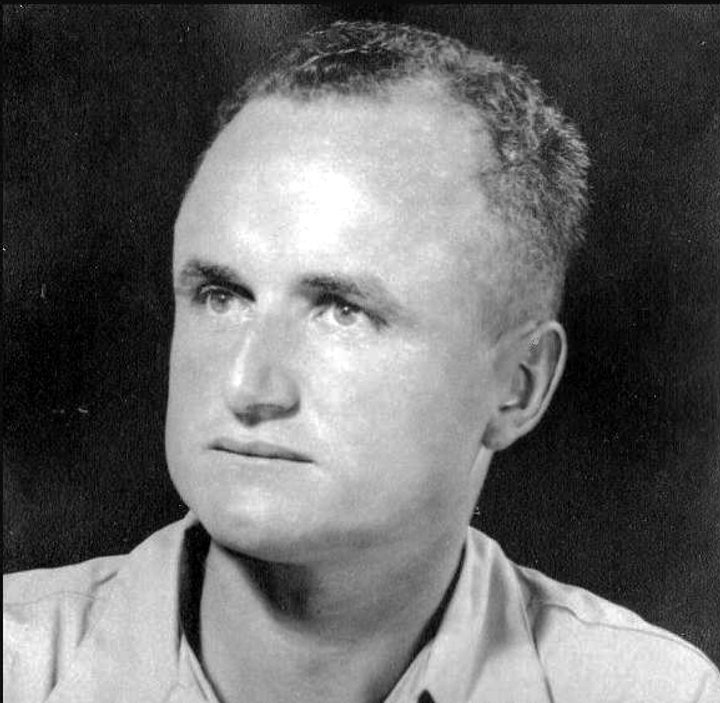

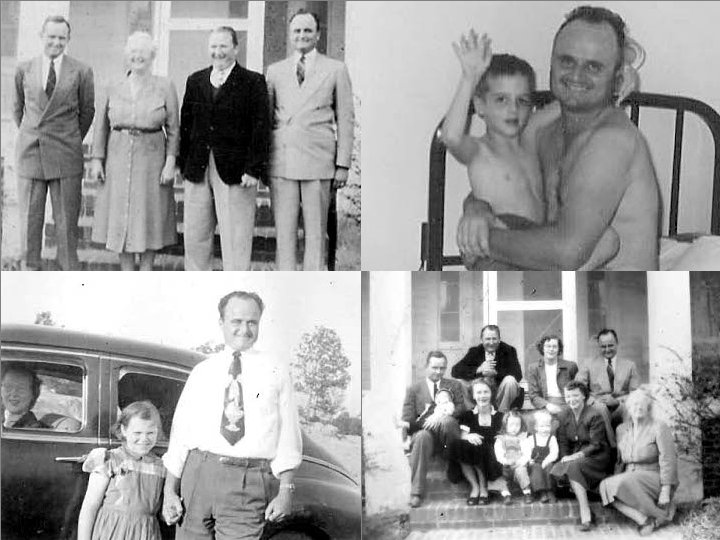
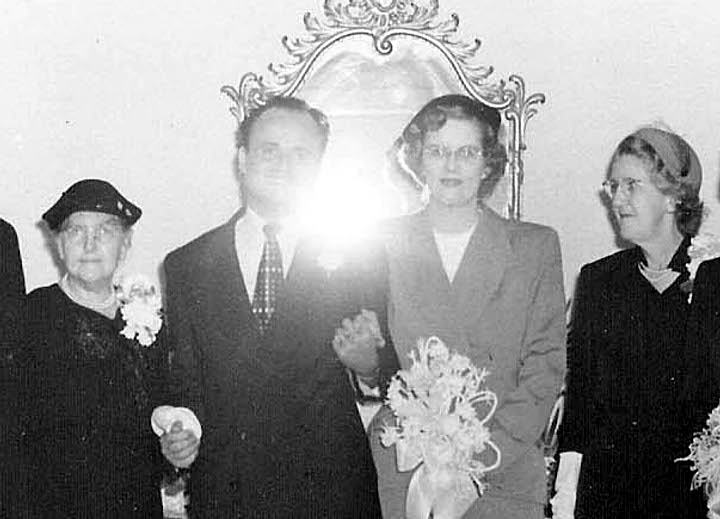
Luther Campbell McKinnon Sr. was born February 22, 1916, on a farm in Rowland, North Carolina. Europe was stuck in a war that would change the world, and not until The United States got involved. This didn’t happen for another year.
Luke was the youngest of four children. After life as a farm boy, he went to Wake Forest University, and then came back when his Daddy died. He ran a family dairy for a few years, and went to live in New Jersey. He lived near a prison, and saw the lights dim when the electric chair was used.
In the early fifties, he came to Atlanta to live. This was where his sister Sarah stayed, with her husband and two daughters. One day he went into the C&S bank on 10th street, and took notice of one of the tellers. On October 6, 1951, he married Jean Dunaway. She was with him the rest of his life.
At some point in this era he started selling shoes. He would go to warehouses, gas stations, and wherever barefoot men needed shoes. He was “The Shoe Man” .
Before long there were two boys, and he bought a house, then another. The second house is the current residence of my brother and myself, and is probably worth 15 times what he paid for it. He had the good fortune to not buy in an area that was “blockbusted,’ as many neighborhoods were.
And this was his life. He tended a garden, went to the gym, and was in the Lions Club for many years. When he met Mom, she let him know that going to church with her was part of the deal. They found a church that was good for their needs, and made many friends there. The Pastor at Briarcliff Baptist, Glen Waldrop, was his friend.
When I think of the character of this man, there is one night, which stands out. My brother was away at the time. The day before, Mom had discovered she had a detached retina, and was in the hospital awaiting surgery. Her job had arranged a “leaf tour” by train in North Georgia, and she got one of her friends at work to take me. There was some mechanical trouble on the train, and it did not get back into town until 3am Monday morning. And yet, Daddy stayed at home, did not panic, and had faith that all of us would be back soon, which we were.
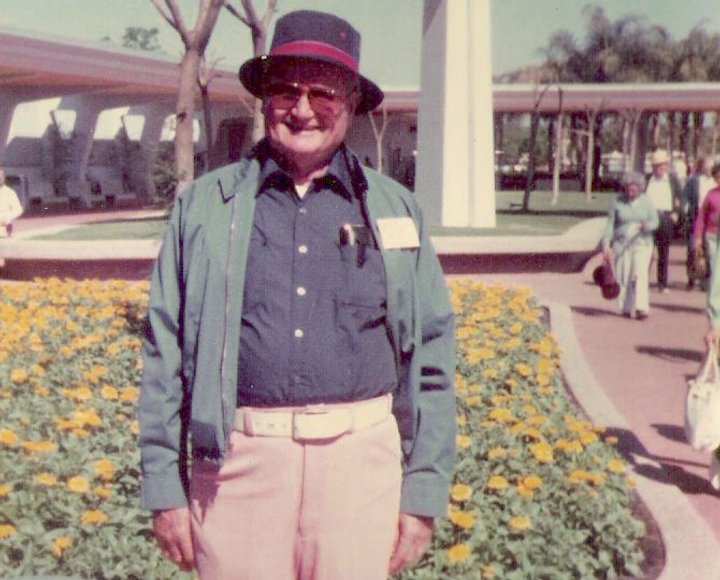
Through all the struggles of his life, Dad was cheerful, laughed a lot, and was good company. He left me with a rich repertoire of country sayings, and had many stories to tell. He was surprising mellow about black people, if a bit old fashioned. (In the south when I grew up, this was highly unusual).
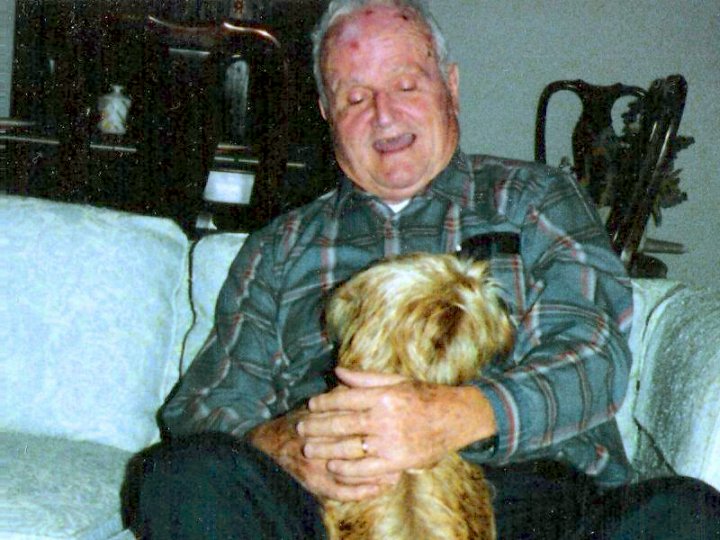
Dad was always in good, vigorous health, and I thought he would be with us for a long time. Well, that is not how things work. A cancer developed in his liver, and spread to his lungs (he did not smoke). After a mercifully brief illness, we lost him on February 7, 1992. This is a repost.


 Chamblee54
1 comment