Lewis Grizzard


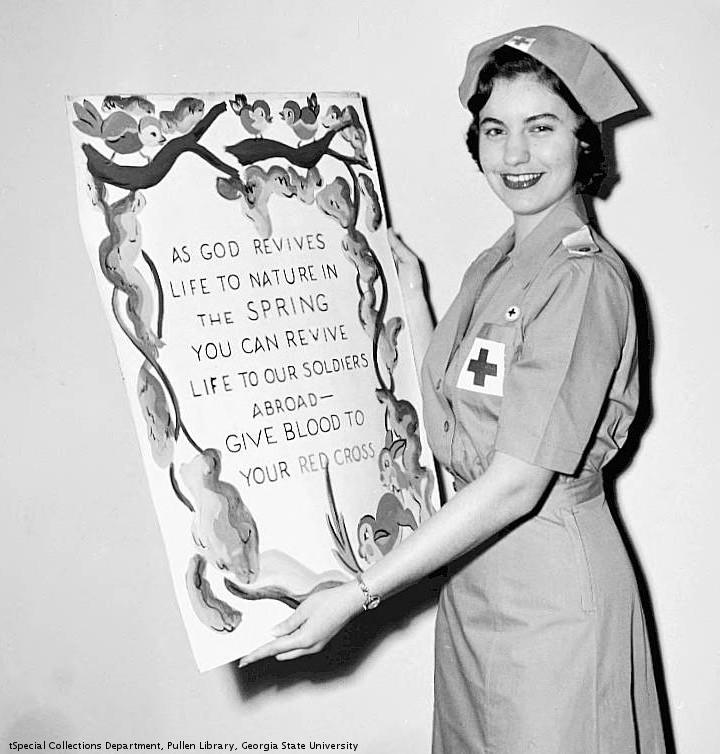


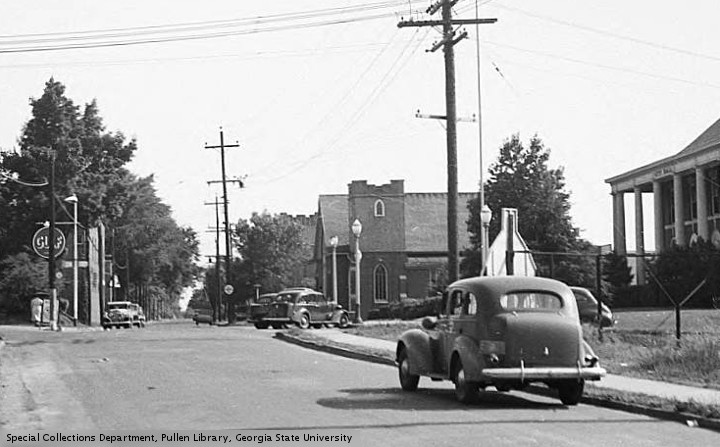


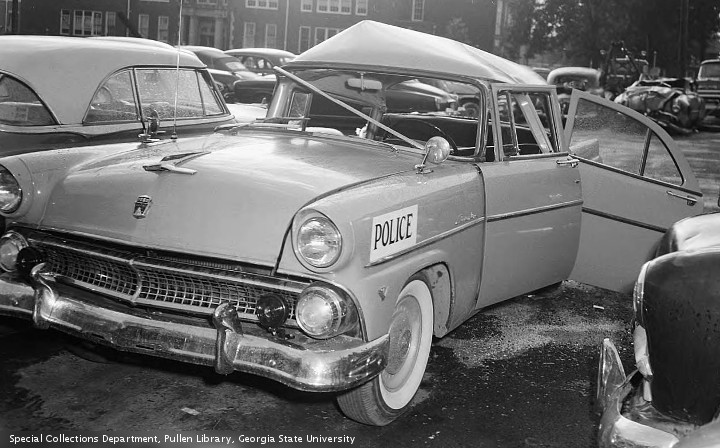


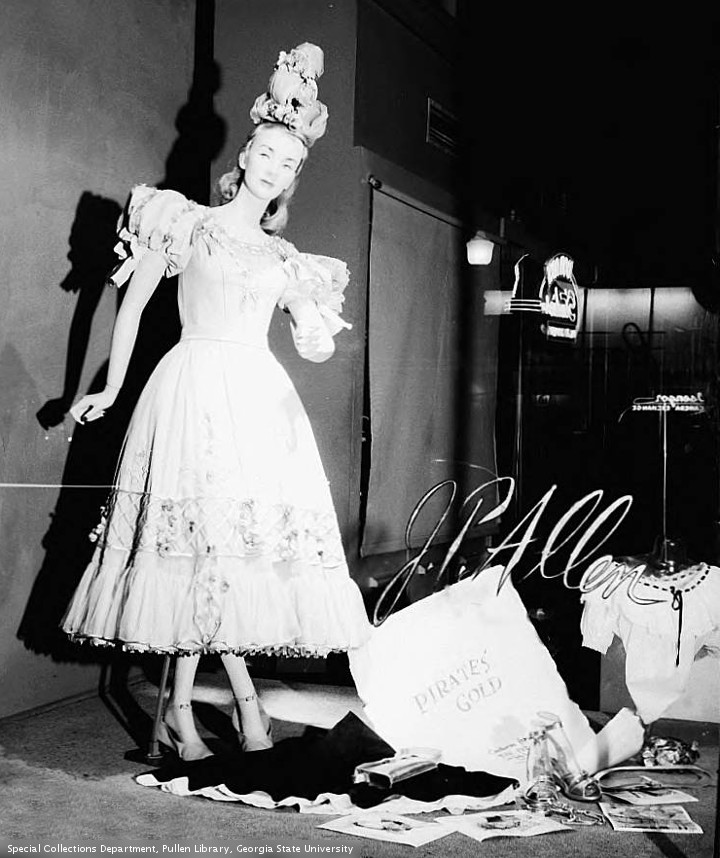
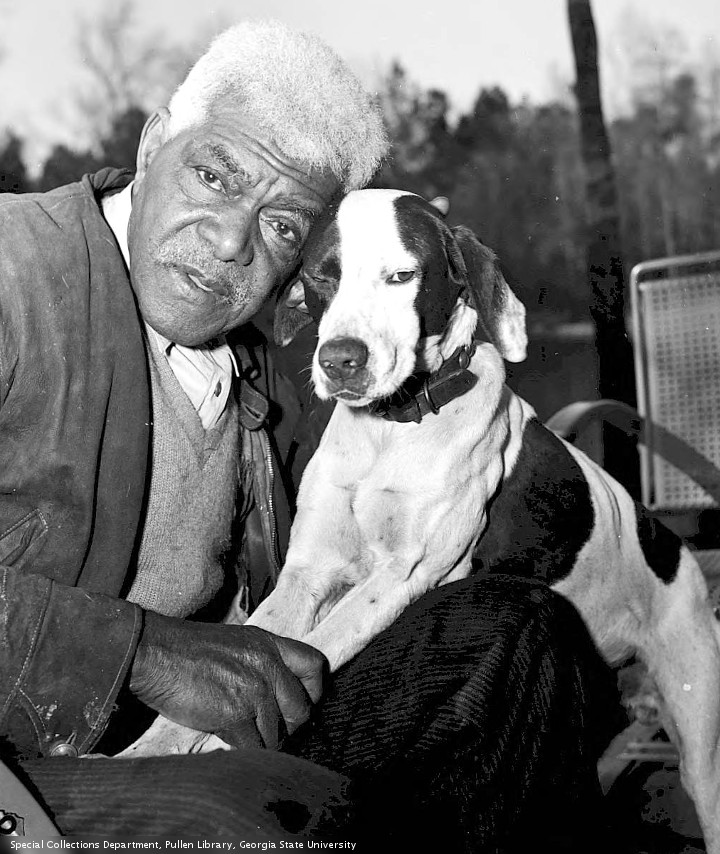
In the time between 1980 and 1994, if you lived in Atlanta you heard about Lewis Grizzard. Some people loved him. Some did not. He told good old boy stories about growing up in rural Georgia. Many of them were enjoyable. He also made social and political commentaries, which upset a few people. This is a chilly tuesday morning repost, with historic pictures from “The Special Collections and Archives, Georgia State University Library”.
PG had mixed feelings about Lewis. The stories about Kathy Sue Loudermilk and Catfish were funny. His opinions about gays, feminists, and anything non redneck could get on your nerves. His column for the fishwrapper upset PG at least twice a week.
In 1982, Lewis (he reached the level of celebrity where he was known by his first name only) wrote a column about John Lennon. Lewis did not understand why Mr. Ono was such a big deal. PG cut the column out of the fishwrapper, and put it in a box. Every few years, PG would be looking for something, find that column, and get mad all over again.
The New Georgia Encyclopedia has a page about Lewis, which expresses some of these contradictions. “If Grizzard’s humor revealed the ambivalence amid affluence of the Sunbelt South, it reflected its conservative and increasingly angry politics as well. He was fond of reminding fault-finding Yankee immigrants that “Delta is ready when you are,” and, tired of assaults on the Confederate flag, he suggested sarcastically that white southerners should destroy every relic and reminder of the Civil War (1861-65), swear off molasses and grits, drop all references to the South, and begin instead to refer to their region as the “Lower East.” Grizzard also wore his homophobia and hatred for feminists on his sleeve, and one of the last of his books summed up his reaction to contemporary trends in its title, Haven’t Understood Anything since 1962 and Other Nekkid Truths (1992).
In the end, which came in 1994, when he was only forty-seven, the lonely, insecure, oft-divorced, hard-drinking Grizzard proved to be the archetypal comic who could make everyone laugh but himself. He chronicled this decline and his various heart surgeries in I Took a Lickin’ and Kept on Tickin’, and Now I Believe in Miracles (1993), published just before his final, fatal heart failure.”
As you may have discerned, Lewis McDonald Grizzard Jr. met his maker on March 20, 1994. He was 47. There was a valve in his heart that wasn’t right. The good news is that he stayed out of the army. At the time, Vietnam was the destination for most enlistees. The bad news is that his heart problems got worse and worse, until it finally killed him.
Sixteen years later, PG found a website, Wired For Books It is a collection of author interviews by Don Swaim, who ran many of them on a CBS radio show called Book Beat. There are two interviews with Lewis Grizzard One was done to promote My Daddy Was a Pistol and I’m a Son of A Gun. This was the story of Lewis Grizzard Senior, who was another mixed bag.
PG found himself listening to this chat, and wondered what he had been missing all those years. The stories and one liners came flowing out, like the Chattahoochee going under the traffic slogged perimeter highway. Daddy Grizzard was a soldier, who went to war in Europe and Korea. The second one did something to his mind, and he took to drinking. He was never quite right the rest of his life. His son adored him anyway. When you put yourself in those loafers for a while, you began to taste the ingredients, in that stew we called Lewis Grizzard.
PG still remembers the anger that those columns caused … PG has his own story, and knows when his toes are stepped on. The thing is, after listening to this show, PG has an idea of why Lewis Grizzard wrote the things that he did. Maybe PG and Lewis aren’t all that different after all.





Mike Pence And Lester Maddox

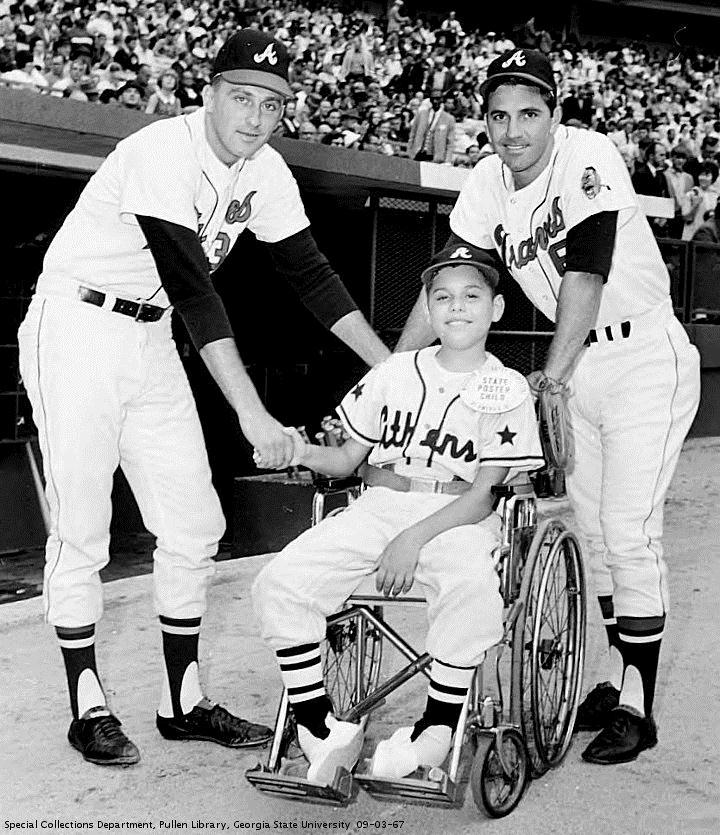

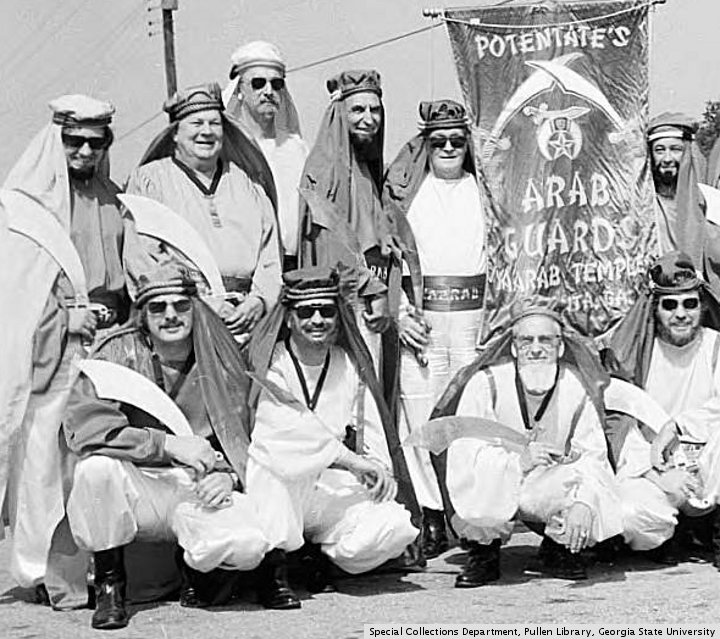
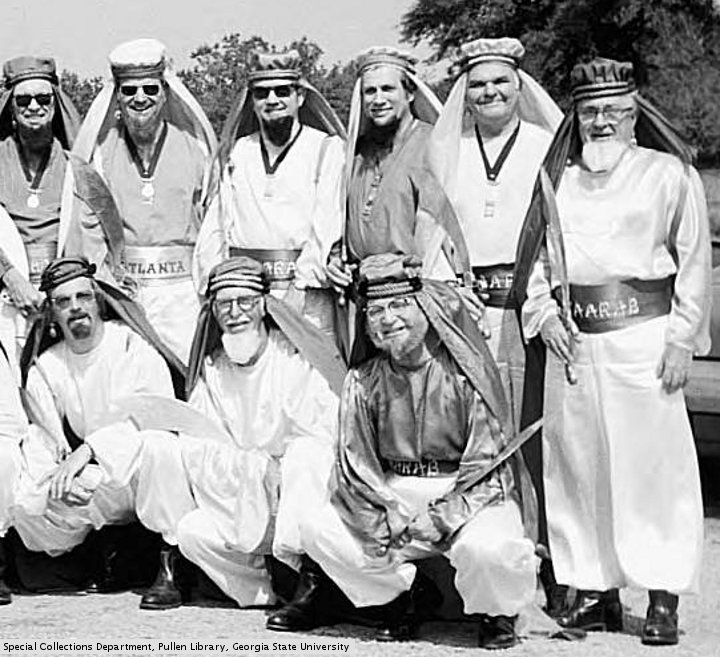
This is a repost from 2015. In the five years after, Mike Pence has served as Vice President of the United States. In the post was this sentence: “It is highly unlikely that anyone will know who this Pence person is in forty four years.” Political predictions are risky.
Salon posted a festive piece the other day. The headline: “Indiana’s Mike Pence is starting to look like Lester Maddox — without the spine.” What about the Governor’s breast, thigh, and wing?
Mr. Pence is the media punching bag of the moment. In a few days, someone else will screw up, and the nabbering classes can pick on someone else. The riffraff law will be lawyered out in the courts.
The question here is the connection to the former Georgia Governor. It turns out to be a rhetorical gimmick. In the first paragraph, author Joan Walsh essentially repeats the headline. “… even before Pence began to look like a 21st century Lester Maddox — without the spine.” This is the last time Lester is mentioned. He is used as a bald headed Honey Boo Boo.
It is ironic that Lester is this famous, forty four years after his term in office ended. There are many bad things you can say about Mr. Maddox. However, Georgia survived both him, and smiling Jimmy, as Governor. It is highly unlikely that anyone will know who this Pence person is in forty four years.
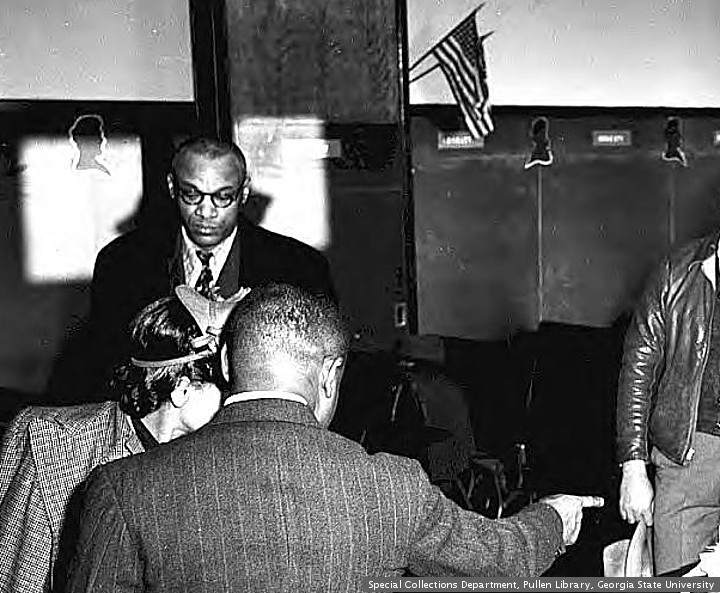
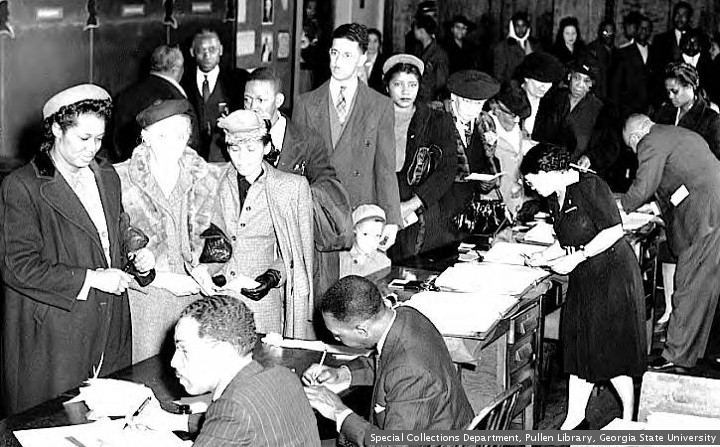
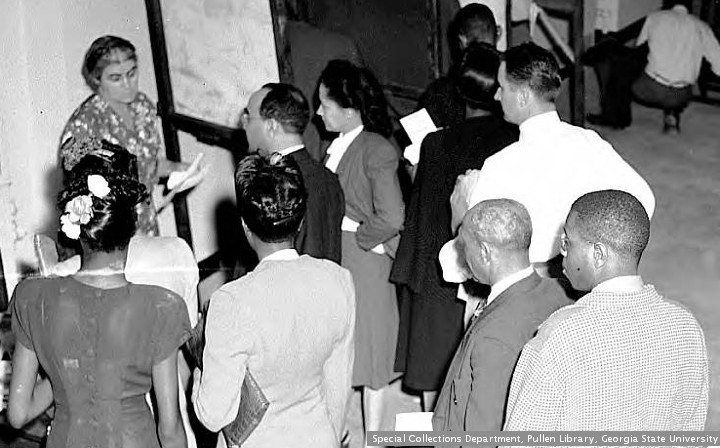
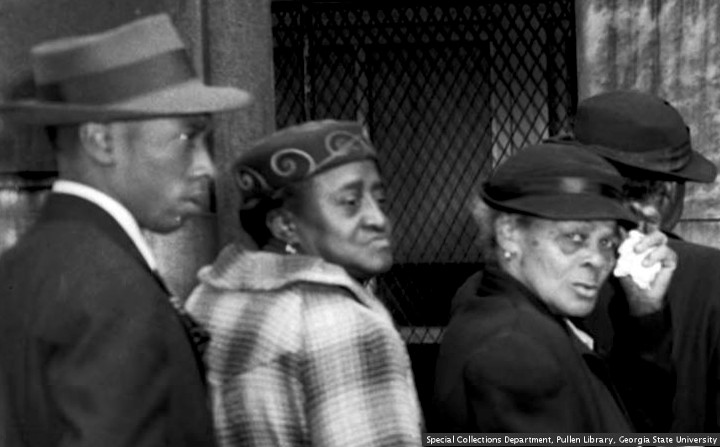
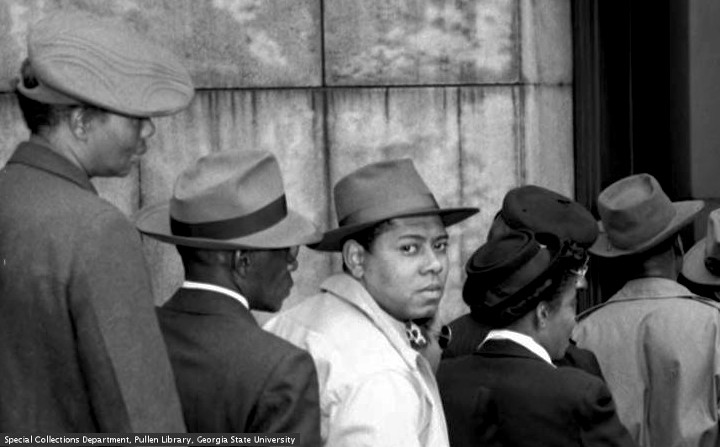
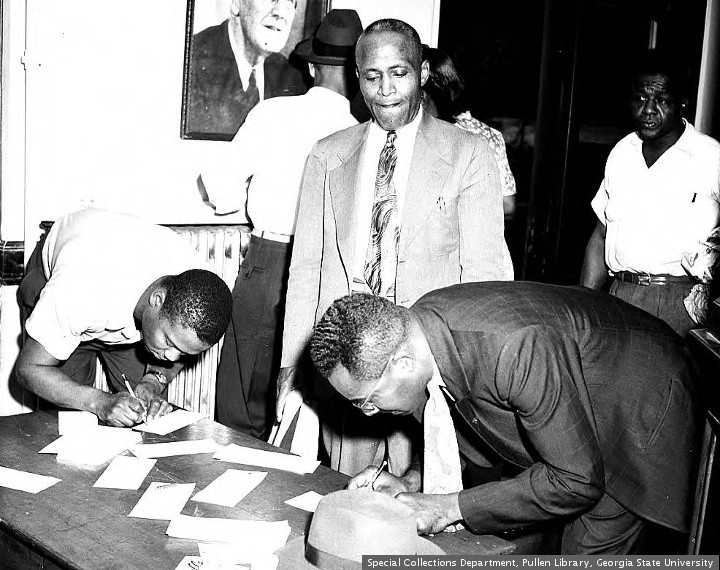
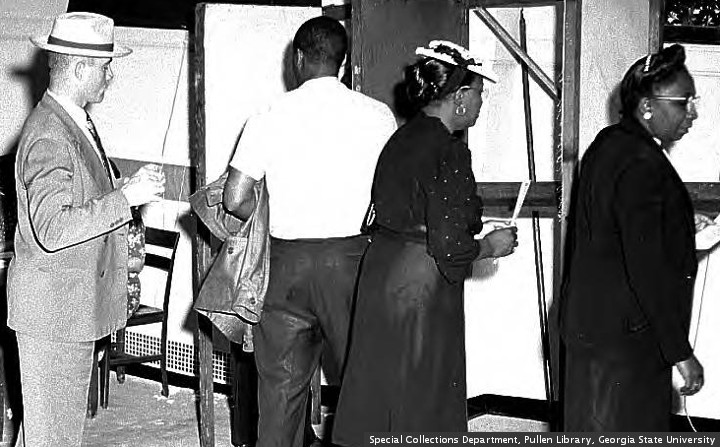
The second part of this feature is a previously published piece about Lester Maddox. PG was twelve when Lester was elected, and has many memories of the four years that followed. The post goes into some of the mixed feelings, and tells a couple of stories. Pictures are from “The Special Collections and Archives, Georgia State University Library”.
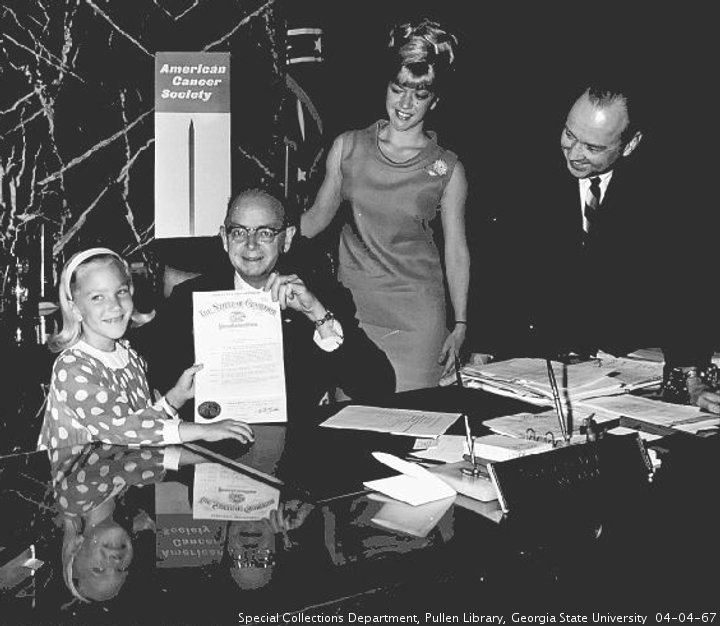
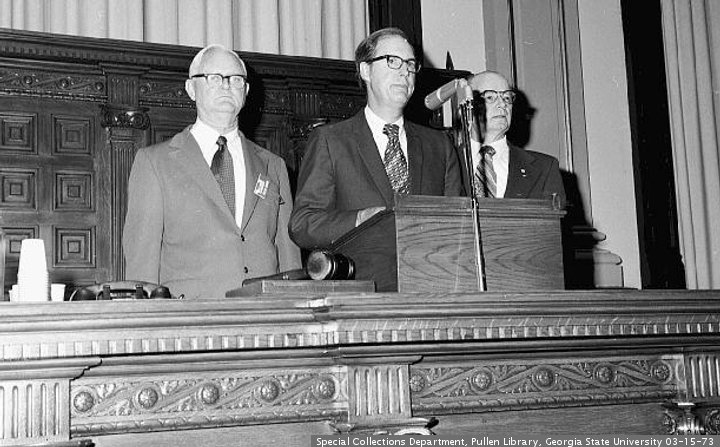


There has never been a politician like Lester Garfield Maddox. He was elected Governor of Georgia (with help of a quirk in the state constitution) in 1966. PG was 12 at the time, and saw the spectacle of the next four years with amazement.
Before we get started on this, we should remember a couple of things. Lester Maddox became notorious when he shut down his restaurant, The Pickrick, rather than serve a black customer. He was a segregationist, which means he did not want black people to have the same rights as white people. Looking back from 2020, it seems incredible that civil rights legislation was needed, 56 years ago, so that 30% of Georgia could eat in a restaurant. PG does not condone the actions, and attitudes, of Lester Maddox, or the people who supported him.
There is style, and there is substance. While the substance of Lester may have been horrible, the style was a sight to behold. He could ride a bicycle backwards, and did so whenever a crowd was there to watch. (PG saw this at halftime of the Peach Bowl.) Lester was on The Joe Pyne Show and The Dick Cavett Show, and walked off of both.
This section from a previous post tells one story. The Governor was speaking to a group of reporters. He was announcing the appointment of a Black man to a Selective Service Board.. The reporter said it was the first Black man to serve on a draft board since reconstruction. What did the Governor think about this? The Governor said “Gee”
The screen returned to the Channel Five newsroom. The men at the desks were all laughing. The weatherman looked up at the camera and said “That’s a tough act to follow”
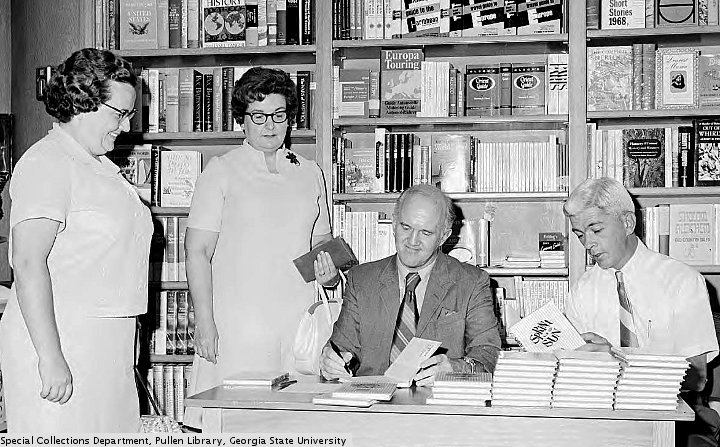
Whatever you might say about Lester Maddox…and there is no shortage of bad things to say…there has never been a public official that entertaining. As for being a tough act to follow, the next Governor was Jimmy Carter. As for the weatherman, PG saw him in a parking lot once. It was raining heavily. The “Gray Ghost” looked at PG with an ironic smile, as if to say “I am sorry”. The weatherman, Guy Sharpe, is on the right in the picture below this post. He is signing a book.
In 1970, the Governor of Georgia could not succeed himself. Lester ran for Lt. Governor, and spent the next four years feuding with Governor Jimmy Carter. Lester ran for a second term in 1974, and was trounced by George Busbee. (The slogan: “Elect a work horse, not a show horse.”) When Jimmy ran for President in 1976, Lester made a point of badmouthing Jimmy. In his own way, Lester Maddox helped Jimmy Carter get elected President.
Lester appeared on the Joe Pyne show. Lester was later on the Dick Cavett show. Another Cavett guest was Truman Capote. After Lester walked off the show, Mr. Capote said, in his own inimitable way, “I ate at his restaurant one time, and all I have to say is, it was not finger licking good”.



Sin
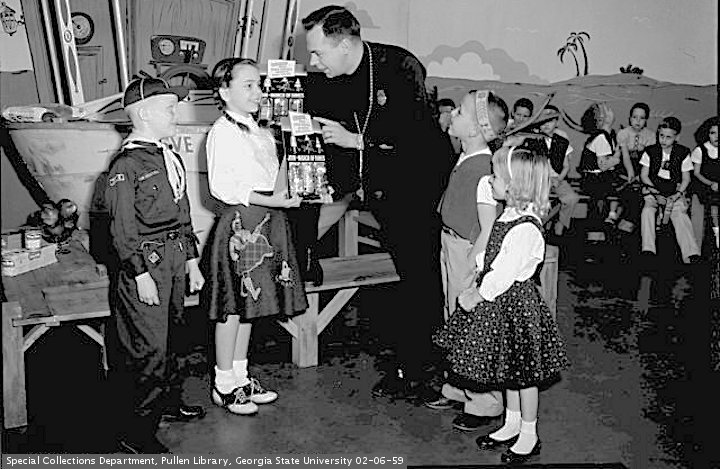
The post below went up seven years ago. It deals with a publicity stunt from the Catholic church, an updated seven deadly sins. The statute of limitations may have run out on this message. The traditional “seven deadly sins” were anger, greed, sloth, pride, lust, envy, and gluttony.
The site linked above has a page, the seven deadly sins of Mohandas Karamachand Gandhi. The subcontinental fashion icon lists Wealth without Work, Pleasure without Conscience, Science without Humanity, Knowledge without Character, Politics without Principle, Commerce without Morality, and Worship without Sacrifice.
After 1,500 years the Vatican has brought the seven deadly sins up to date by adding seven new ones for the age of globalization. The list, published yesterday in L’Osservatore Romano, the Vatican newspaper, came as the Pope deplored the “decreasing sense of sin” in today’s “secularized world” and the falling numbers of Roman Catholics going to confession. The new deadly sins include polluting, genetic engineering, being obscenely rich, drug dealing, abortion, pedophilia and causing social injustice. HT to Fox News .( aka the eighth deadly sin.)
One reaction is to wonder, what language was used for the list? Phrases like “obscenely rich” and “causing social injustice” can mean different things, and one wonders about the nuance behind the original expression. Now, Just about all of these “sins” can merit comments. Maybe the Catholic church is thinking of moving its headquarters to hell.
polluting We can talk about something where all have sinned, or who should throw the first stone. If you ride in a car, wear synthetic fibers, through away anything, use a less than perfect sewer system (or a functioning one on a rainy day with overflows), then you have polluted.
genetic engineering Here again, there are semantics galore. Much of the food we eat is tweaked by genetic breeding. This is something Euros get twitchy about, that doesn’t concern most Americans.
being obscenely rich This is one to wonder what the original Italian said. Compared to much of the world, a 900sf house is a palace. However, compared to many of the neighbors, it is lower middle class. Perhaps the emphasis should be on greed, selfishness, and how you gain this wealth. The tenth commandment says something about coveting. It is the forgotten commandment.
drug dealing Is there a distinction between legal and illegal drugs here? If you go by the damage that substances cause, then this rule will speak to bartenders and the clerk who sells cigarettes. Not to mention the media outlets who advertise cigarettes and beer, the legislators who condone these substances while prosecuting potheads, and a whole host of others. The legally based war on drugs is a disaster in this country. Do we really need to drag the Catholic church into it?
abortion. If Mary had gotten an abortion, would Christians worship a vacuum cleaner? Seriously, the Catholic Corporation has flogged this donkey, to great profit, for years. If you don’t want abortions, promote contraception and adoption. Catholics should find another gimmick.
pedophilia When you up pedophile in the dictionary, you see a picture of a Catholic priest.
causing social injustice Can we have a better translation of this?
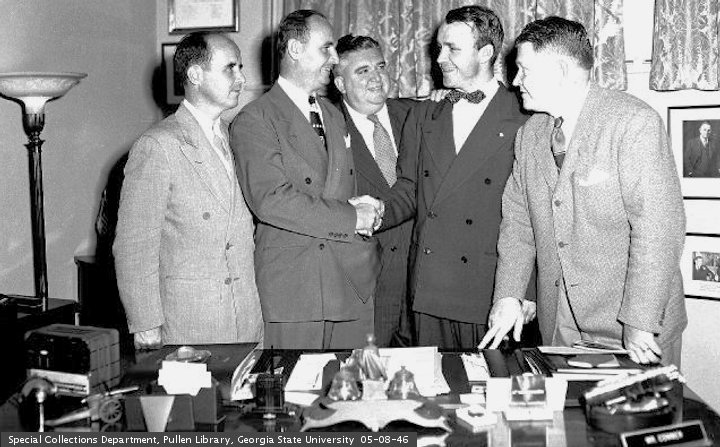
This bonus repost is also from early march 2008. BHO was winning the race for the Democratic Presidential nomination, and the skeletons were coming out of the closet. As the struggle went on, BHO threw Jeremiah Wright under the bus, and got elected.
YouTube is an impediment to work. I was going to write some clever words to go with these pictures, but I looked at some videos first. All I wanted was the embed gibberish so I could show them to you, but YouTube has more videos. The only way to get rid of temptation is to give into it.
I am glad I got to see the videos of Jeremiah Wright. Friday I was hearing the tapes of him on the radio, and it was most discouraging. When I saw the video, I realized that he was just a loudmouth.
I worked for 6 years with a professional Jesus Worshiper. He was selfish, hateful, vulgar and loud. He frequently directed this anger at me. He used Jesus to hurt me, often over trivial matters. His voice sounded a lot like Mr. Wright’s.
Once, this Professional Jesus Worshiper shouted me down, and humiliated me, in the name of Jesus. When he was through, he picked up the telephone and told his friend ” I never felt better in my life”. People like that, and Jeremiah Wright, bring shame to Jesus.
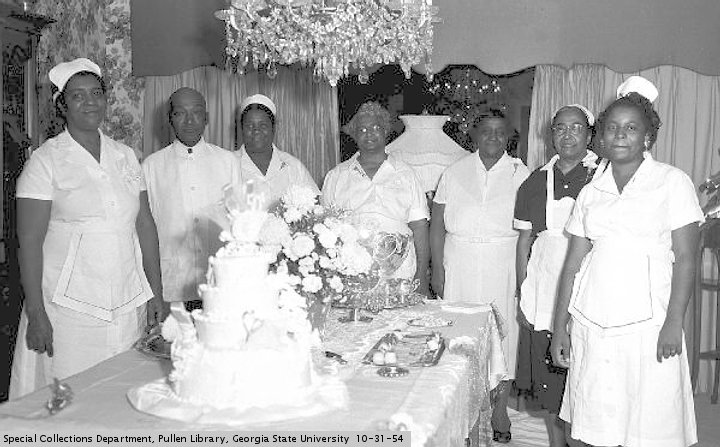
One thing I learned while working with the Professional Jesus Worshiper was the importance of the audience. These hatemongers do not just talk to themselves. They need an audience. These audiences enable these poison spewers. To pray with a loudmouth who shames Jesus is morally equivalent to buying whiskey for an alcoholic. Barack Obama is that audience. Pictures today are from “The Special Collections and Archives, Georgia State University Library”.


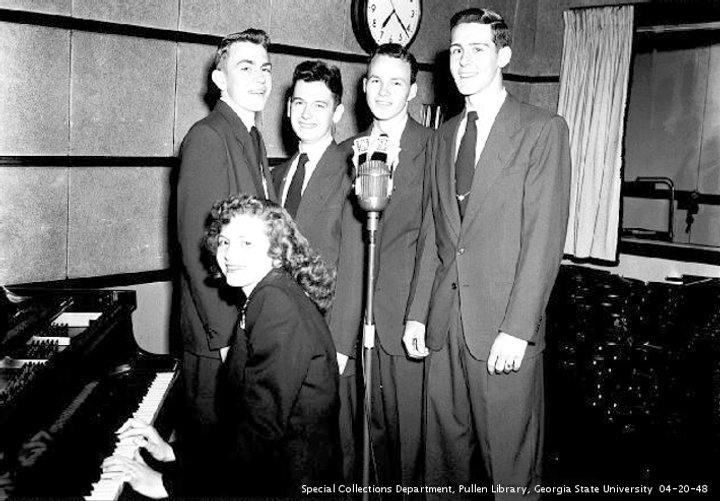
World Premieres In Atlanta

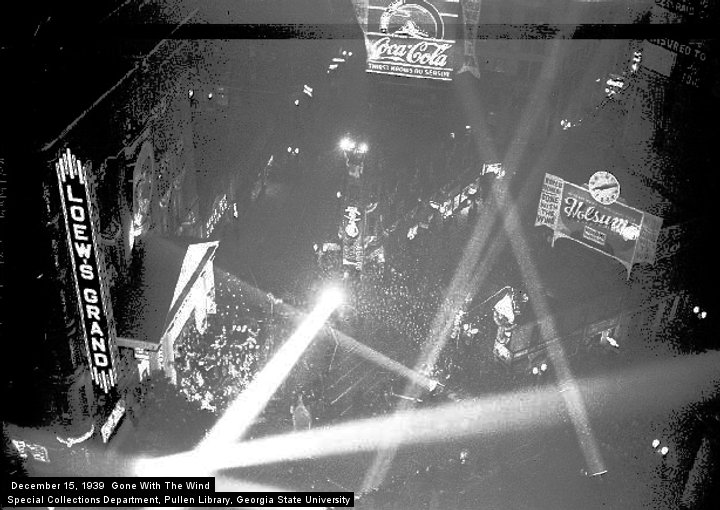
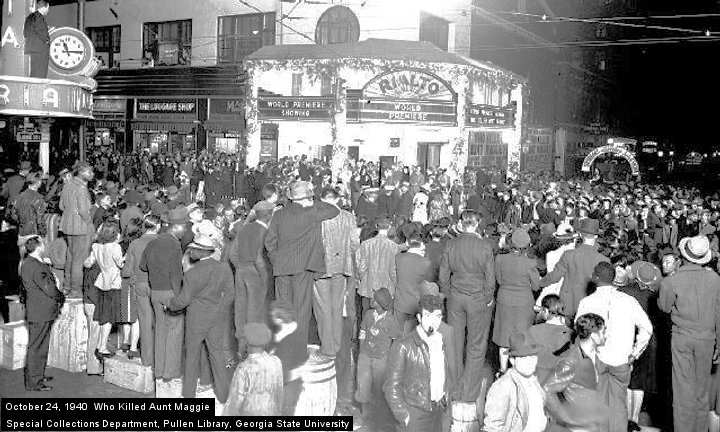

Several movies have had a world premiere in Atlanta. We will take a look today. Pictures are from “The Special Collections and Archives, Georgia State University Library”. Information about the films is from the Internet Movie Database. This is a repost.
As some of you may know, Gone With The Wind had it’s world premiere at the Lowes Grand Theater on December 15, 1939. The Lowes Grand site is the current location of the Georgia Pacific building. There is a vacant lot next door, on top of some MARTA paraphernalia. This lot was the site of the Paramount Theater, another movie palace that did not survive.
The GWTW premiere was a big deal. Ten year old Martin Luther King Jr. sang with his church choir. Clark Gable requested a private meeting with Margaret Mitchell, who became the envy of every woman in America. When Mr. Gable checked out of his hotel, a lady was going to be given his room. The clerk asked for a minute to change the sheets on the bed, and the lady said, no, I want to sleep on the same sheets as him.
It was the golden age of movies, and the next year Atlanta hosted the first showing of Who Killed Aunt Maggie. The premiere was at the Rialto, on October 24, 1940. The review at IMDB said it was an enjoyable mystery, even if it was a cliche fest. It is not often seen today.
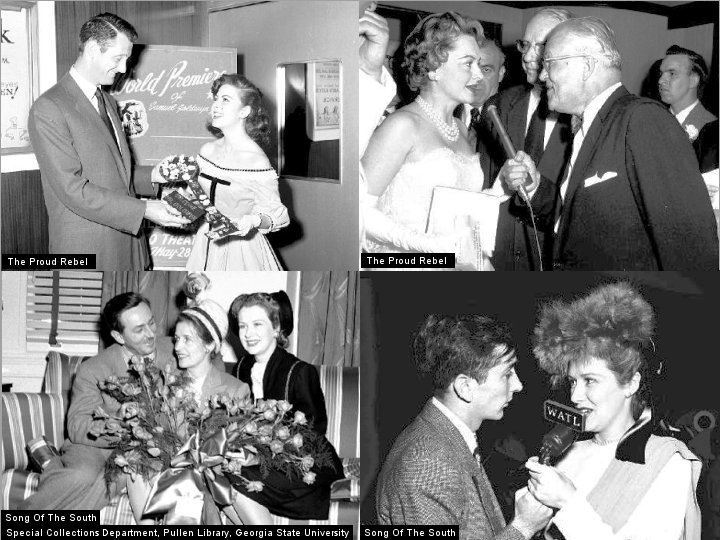
In 1946, Song Of The South had it’s premiere at the Fox Theater. SOTS is a controversial item. It was based on the Uncle Remus stories. These stories were told by rural black people that Joel Chandler Harris knew, while growing up near Eatonton GA. As Wikipedia recounts: “Controversy surrounding his southern plantation themes, narrative structure, collection of African-American folklore, use of dialect, and Uncle Remus character, however, has denigrated the significance of Harris’ work”. You Must Remember This devoted six episodes to Song of the South. (one two three four five six)
The female lead in SOTS was Ruth Warrick. Miss Warrick was a versatile talent. Her first movie role was in Citizen Kane, as Kane’s first wife. She was in many movies, before moving to television. She was perhaps best known as Phoebe Tyler, in the soap opera All My Children. Wikipedia tells a story about her, that is ironic for the female lead of Song Of The South.
“In July 2000, she refused to accept a lifetime achievement award from the South Carolina Arts Commission because she was offended by legislators’ decision to move the Confederate flag from the state Capitol dome to another spot on the grounds in response to a boycott of the state by flag opponents. A lifelong supporter of African-American rights, she felt the flag should be removed completely, and commented, “In my view, this was no compromise. It was a deliberate affront to the African-Americans, who see it as a sign of oppression and hate.”
In 1949, the Paramount had the first screening of The Gal Who Took The West. The female lead was Yvonne De Carlo, who later achieved immortality as Lily Munster. In November 1951, the spotlights returned to Lowes Grand for Quo Vadis
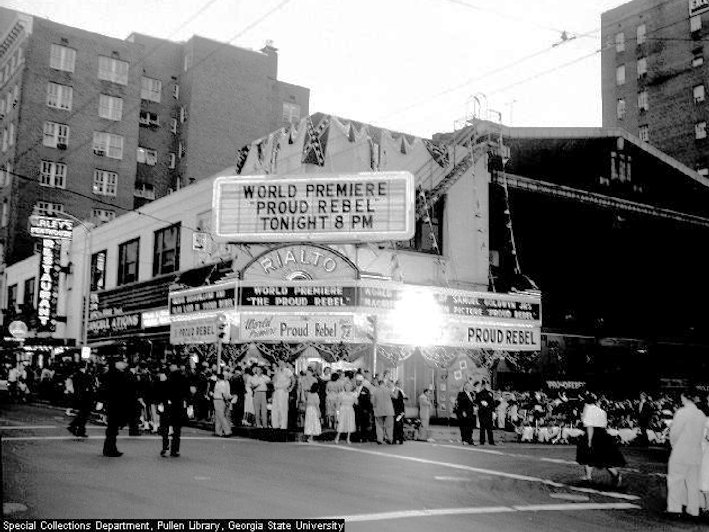
The last film in the GSU picture collection is The Last Rebel. This western had it’s premiere at the Rialto, May 27, 1958. The movie was a return to Atlanta glory for Olivia De Havilland. The film is the story of a man, whose wife dies in a fire during the war between the states. PG questions the use of the Stars and Bars on the marquee.
In 1974, Ringo Starr produced and acted in Son of Dracula. The movie had it’s world premiere at the Cherokee Plaza Theater. Cherokee Plaza is a shopping center on Peachtree Road, just east of the Atlanta city limits. The theater was torn down during a renovation, and the space is currently the produce department at Krogers.
A local radio station hired a band to play in the parking lot at the premiere. At some point, a long limousine pulled up to a stage, and Ringo Starr and Harry Nilsson got out. Both were wearing sunglasses, even though it was after dark. Ringo got on the stage, waved a wand at the crowd, and said “I am turning you into frogs”. He went inside to see the movie, the crowd went home, and the movie was mercifully forgotten.
In 1981, PG went to a supper in an apartment building (now a vacant lot) across Peachtree from First Baptist Church. There was a commotion down the street at the Fox, and PG went to see what it was. Sharkey’s Machine had it’s World Premiere that night.


Who Invented The Word Racism?


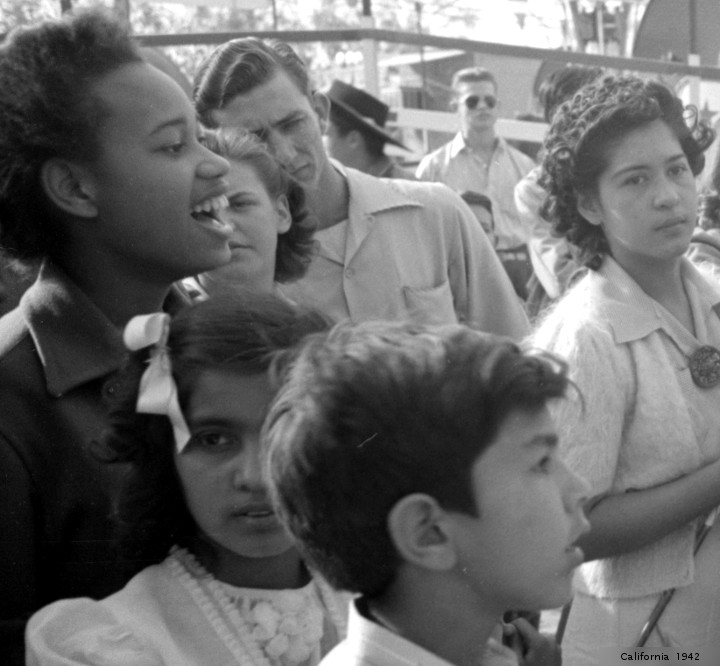



Writers tackle was rampaging through Brookhaven. PG looked in a list of old product, and found a feature built on the output of Teju Cole. He has a dandy article, at the New Yorker, about what is antiseptically called drone warfare. It is the twitter feed that gets attention. This is a repost.
@tejucole George Carlin’s original seven dirty words can all be said freely now. The one word you can’t say, and must never print, is “racist.”
The quote marks lend mystery to the tweet. Does he mean the dreaded “n word”? Or does he mean that other six letter slur? There is no shortage of people screaming racist in Georgia, often at the slightest provocation. There is an attitude that racism is the worst thing you can be accused of. Once accused, you are guilty until proven innocent. If you do a bit of research into racism, the word, you will see some interesting things.
The concept of groups of people not liking each other is as old as mankind. The word racism apparently did not exist before 1933 (merriam webster), or 1936 (dictionary dot com). (In 2020, both of these sources have updated their notes, on the original use of the word “racism.”)
Something called the Vanguard News Network had a forum once, What is the true origin of the term racism? This forum is problematic, as VNN seems to be a white supremacist affair. One of the reputed coiners of the R word was Leon Trotsky, also referred to as Jew Communist. Another Non English speaker who is given “credit” for originating the phrase is Magnus Hirschfeld. As for English, the word here is: “American author Lawrence Dennis was the first to use the word, in English, in his 1936 book “The coming American fascism”.”
The terms racist and racism seem to be used interchangeably in these discussions. This is in keeping with the modern discussion. As Jesus worshipers like to say, hate the sin, love the sinner.
The Online Etymology Dictionary has this to add: “racist 1932 as a noun, 1938 as an adjective, from race (n.2); racism is first attested 1936 (from French racisme, 1935), originally in the context of Nazi theories. But they replaced earlier words, racialism (1871) and racialist (1917), both often used early 20c. in a British or South African context. In the U.S., race hatred, race prejudice had been used, and, especially in 19c. political contexts, negrophobia.”
Pictures are from The Library of Congress.



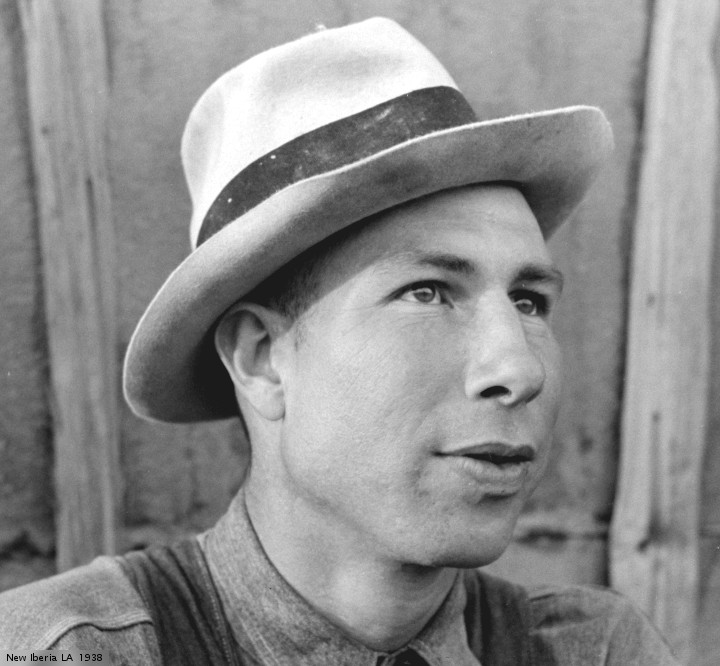



Frank Zappa



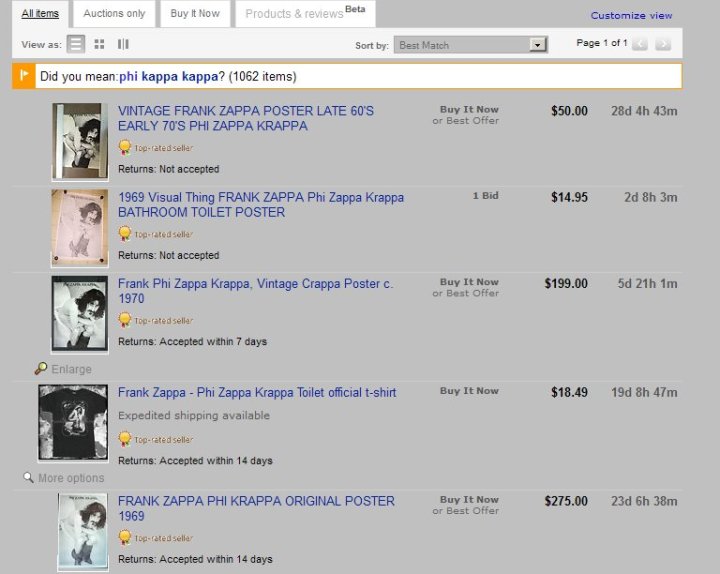
The first time PG saw the word Zappa, it was on an item at the Poster Hut. It showed a man sitting on a commode, with the words Phi Zappa Krappa rendered above. The poser, Frank Zappa, later said “I’m probably more famous for sitting on the toilet than for anything else that I do.”
It was 1969, give or take a bit. FZ was already well known in some hip circles. His band, the Mothers of Invention, played at something called the Cosmic Carnival at Atlanta Stadium, where the music lovers were actually allowed onto the field. PG paid $1.98 for a copy of We’re Only in It for the Money at the Woolco on Buford Hiway. Years later, he would pay $16.00 for a CD of this piece of work.
The records started to come out like clockwork, with or without the Mothers. FZ started to become a star, with an appeal to druggies who fancied themselves intellectual. It should be noted that FZ was notoriously anti drug. His music made fun of the establishment and counterculture with equal glee. FZ was also a capitalist, known to be tight fisted when it came to paying hired hands. He stayed with his second wife, Gail, until his death, and produced four children… Moon Unit, Dweezil, Ahmet Emuukha Rodan and Diva Thin Muffin Pigeen.
The concerts came to town every year or so, and people liked them. A show at the Fox Theater in 1974 may have caught FZ at his peak. PG heard the raves about this show until he bought a ticket for his next show. This was in 1975, at the Municipal Auditorium. PG brought a half pint in with him, and didn’t remember a lot later, except some song about the Illinois Eneman Bandit.
Life goes on. Nine years later, FZ was in legal hell with a former manager, and could only make money by touring. One night, a friend had an extra ticket to a show. PG arrived after the band had started, and FZ was playing a fine guitar solo. This was going to be good.
Only it wasn’t. The rest of the show was social commentary. The man had opinions on everything, and was generous with them. At one point, the band started to sing “He’s so gay”, while a double headed dildo was lowered from the ceiling. PG thinks he heard FZ sing “one day you might be gay too”, but by then it really didn’t matter.
Frank Zappa was many things to many people. He had lots of opinions, which were dutifully recorded by the press. Here are a few .
Rock journalism is people who can’t write, interviewing people who can’t talk, in order to provide articles for people who can’t read.
I think that if a person doesn’t feel cynical then they’re out of phase with the 20th century. Being cynical is the only way to deal with modern civilization, you can’t just swallow it whole.
When God created Republicans, he gave up on everything else.
Let’s not be too rough on our own ignorance; it’s what makes America great!
The U.S. is a mere pup tent of a civilization. We’ve got two hundred years of stupidity behind us. We think we’re right up there with everyone else who’s been doing it for thousands of years.
Beauty is a pair of shoes that makes you wanna die.
He wrote this book here, and in the book it says he made us all to be just like him! So if we’re dumb, then God is dumb — and maybe even a little ugly on the side.
Remember there’s a big difference between kneeling down and bending over.
Do you think you are protecting somebody by taking away seven words?
For the record, folks; I never took a shit on stage and the closest I ever came to eating shit anywhere was at a Holiday Inn buffet in Fayetteville, North Carolina, in 1973.
There is no hell. There is only France.
The United States is a nation of laws: badly written and randomly enforced.
This is a repost. one, two, three, four posts are used. Your archive is your friend.
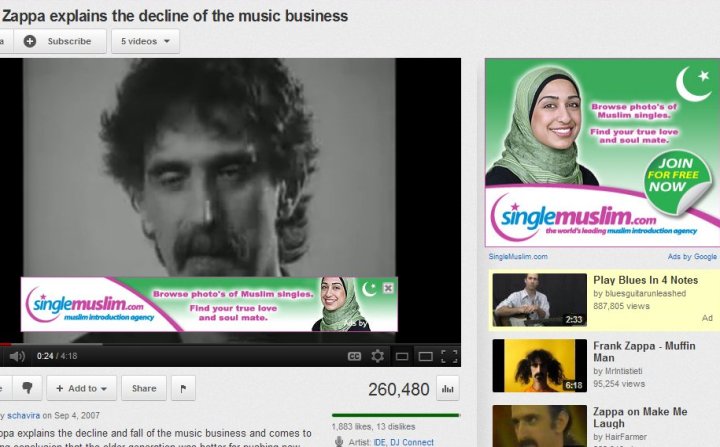




Former Dunwoody resident Aquarium Drunkard weighs in today with a nifty video. It is Frank Zappa, appearing on a TV show discussing censorship. FZ more than holds his own, and makes many good points about the nature of language and censorship. His contention is that censorship is about words, and that words in and of themselves are powerless. Wikipedia contributes this quote: “What do you make of a society that is so primitive that it clings to the belief that certain words in its language are so powerful that they could corrupt you the moment you hear them?”
I was in high school when I first heard about Frank Zappa. It was in the original Poster Hut, a ramshackle building on Cheshire Bridge Road that is vacant 50 years later. (The building serves in 2020 as a Hookah Hookup. There was a poster, with the words PHI ZAPPA KRAPPA Below the saying was a picture of Frank Zappa on a commode.
I did not get that poster of PZK, but I did get a dayglo poster of Janis Joplin. I didn’t notice the exposed nipple on the drawing. When Mom saw it, she was horrified. ” I trusted you!” In my shame, I took a magic marker and covered over the fluorescent fuchsia mammary.
Back to FZ on CNN. The guitar picker made a lot of sense. One of the pundits threw the founding fathers at FZ, who replied that the FF were slave owners and that Ben Franklin was a wildman. FZ said we were heading to a fascist theocracy. Are we there yet? One whiner mentioned that his band was called the Mothers of Invention. FZ did not mention that the original name had been the mothers, and a record label made them add “of invention”.Finally, the four man part of the show was over. The two primary whiners agreed that rock music had some gnarly words, but did we really trust the government to intervene.
We have time for one more story. Al Capp, born Alfred Gerald Caplin, was a piece of work. At the age of nine, a trolly accident cost Mr. troll Capp his left leg. Years later, an urban legend arose. “in a televised face-off, either Capp (on the Dick Cavett Show) or (more commonly) conservative talk show host Joe Pyne (on his own show) is supposed to have taunted iconoclastic musician Frank Zappa about his long hair, asking Zappa if he thought he was a girl. Zappa is said to have replied, “You have a wooden leg; does that make you a table?” (Both Capp and Pyne had wooden legs.)


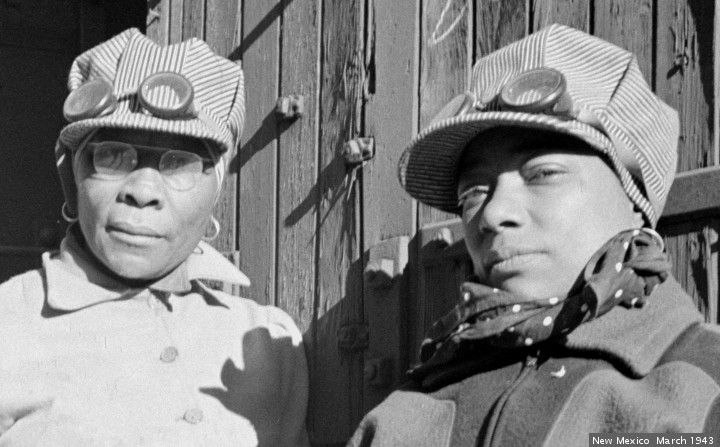
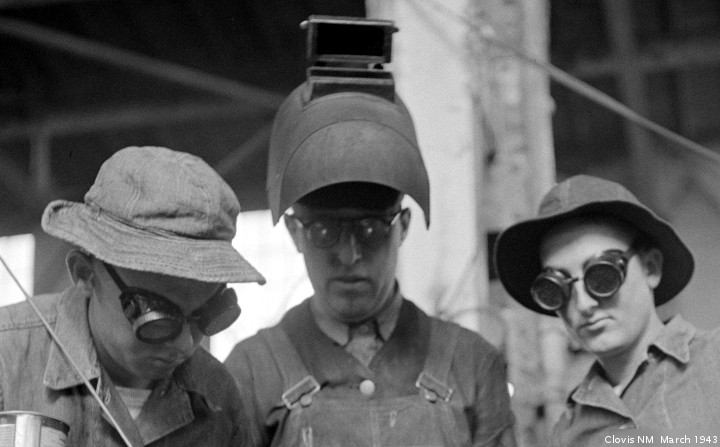


Recently, the world of flaky internet quotes has discovered Frank Zappa. The “sexually incontinent rock innovator” died December 4, 1993. (His wife Gail passed away October 7, 2025.) Recently, some alleged quotes have hit the ether. Some people need to get out more. This is a repost.
This item was recently featured in chamblee54. @SlavojTweezek “”Communism doesn’t work,” Frank Zappa said, “because people like to own stuff.” Idiot. What do people’s likes have to do with communism?” This quote is plausible. Frank Zappa was a capitalist. He liked owning stuff, especially his own music. It should be easy to find a source. However, the best google can come up with is a compilation, “Quotes of Zappa,” in W. C. Privy’s Original Bathroom Companion.”
This morning, facebook had a meme. It had a picture of FZ, with the quote “Politics is the entertainment division of the military-industrial complex.” In the time that it takes to say Camarillo Brillo, Mr. Google turned up a reddit commentary.
“While the quote is frequently listed as, ““Government is the entertainment division of the military-industrial complex,” I could find no primary source. It appears to contradict the actual quote from a 1987 interview with Keyboard magazine where he is decidedly pro-government but anti-bullshit politics.” (FZ did say “art in the service of politics usually makes for boring art.” Why do people make up quotes for memes, when the real thing is better?)
Speculating what a dead man would say is a tricky business. FZ was known for strong opinions, and a finely tuned BS detector. (That is bovine excrement, not Bernie Sanders.) FZ died while the internet was just getting started, and years before some of today’s permutations and perversions. It is easy to imagine FZ making rude comments about people misquoting dead guitar heroes.
Speaking of politics and cynical guitar cadavers, the current poster boi for trendy privilege is Bernie Sanders. If you “feel the Bern,” you might want to skip over the rest of this post, and look at the pictures. (These pictures are from The Library of Congress.) While BS is arguably less evil than Hitlery, he still leaves a great deal to be desired. BS is making extravagant promises that he will be totally unable to keep. BS is taking the concept of telling people what they want to hear to new depths. Yes, this is part of what FZ meant when saying rude things about politicians.
Today, PG saw a fundraising appeal for BS. Against his better judgment, PG made the comment “Bernie $anders.” The fun started almost immediately.
This campaign is for monthly recurring contributions. And Luther, campaigning requires money. The alternative to grassroots support is a country run by wealthy interests. Which would you prefer? ~ I realize that campaigning for political office requires money. My comment was a bit of recreational $nark. B$ can take a joke. … “The alternative to grassroots support is a country run by wealthy interests.” I am not sure about that comparison. Hitlery can make more in one corporate blowjob than BS can in a month of grass roots support. BHO did not get a billion dollars for his reelection from five dollar contributions. While the concept of grassroots support is uplifting, the sordid reality is that we live in a bribe-ocracy. ~ Your cynicism is less than accurate and certainly less than appealing. ~ Luther, just don’t vote and stay out of discussions about voting. OK?


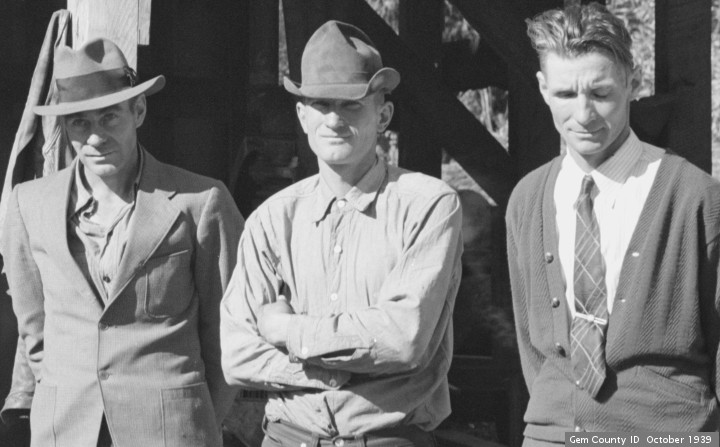



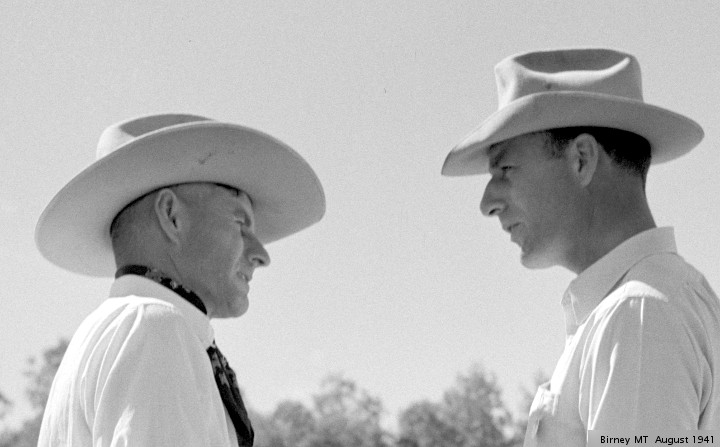




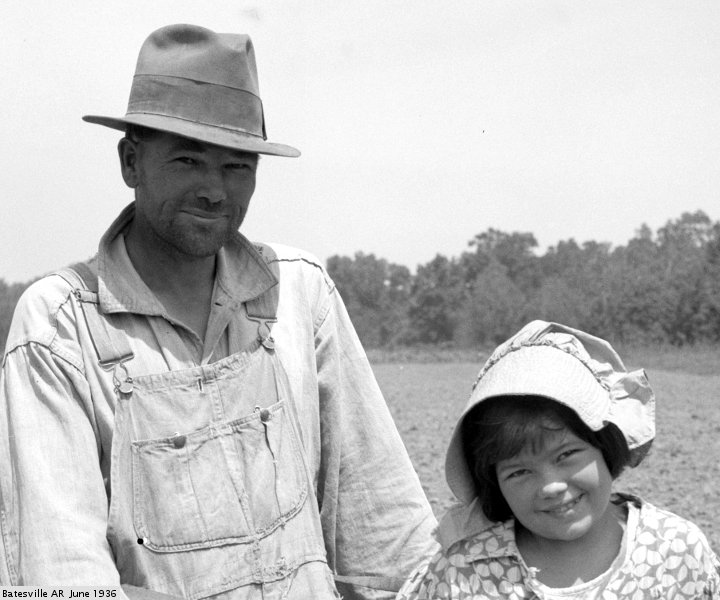

The current WTF Podcast features Moon Zappa. At no time does she say grody, gag me with a spoon, or boofoos. Today, she is the divorced mother of an eight year old, and buys quality apple butter.
Moon is the daughter of the late Frank Zappa. FZ did not do drugs, smoked Winston cigarettes, and spent all his time working on music. The four children, Moon Unit, Dweezil, Ahmet and Diva, called the parents Frank and Gail. Mrs. Zappa stays busy these days selling her husbands music.
Once, Moon broke a finger in school. She called Gail, and waited. Eventually, the family Rolls Royce pulled up. Gail was driving, with Frank in the passenger seat. Frank quit driving when his first drivers license expired. Before taking Moon to the ER, they stopped to get Frank a burrito.
Gail and Moon were walking to the store one day, when Moon was very little. A car stopped, and tried to pick up Gail. Moon screamed “Fuck off pervert.”
Captain Beefheart was at the Zappa house one time. He had made a hole in the side of his nose with a pencil. When a finger was put over the other nostril, the nose became a whistle.
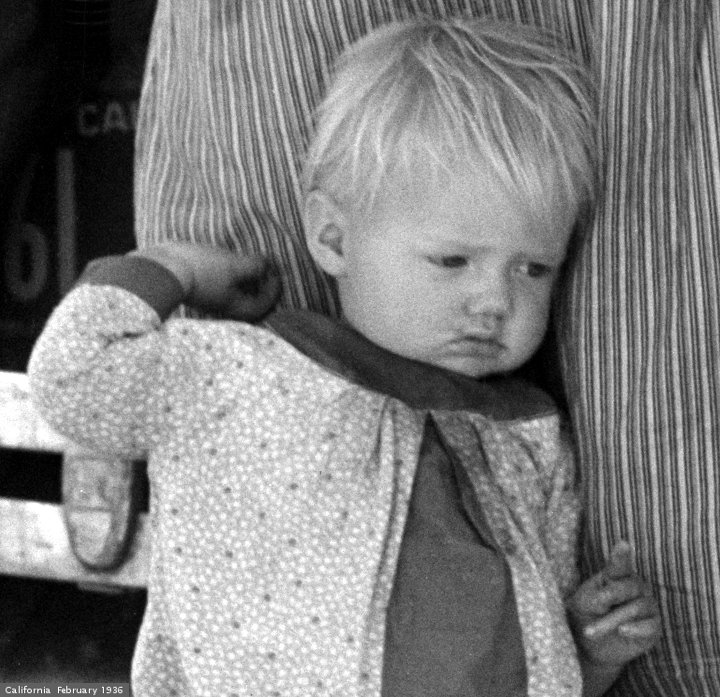
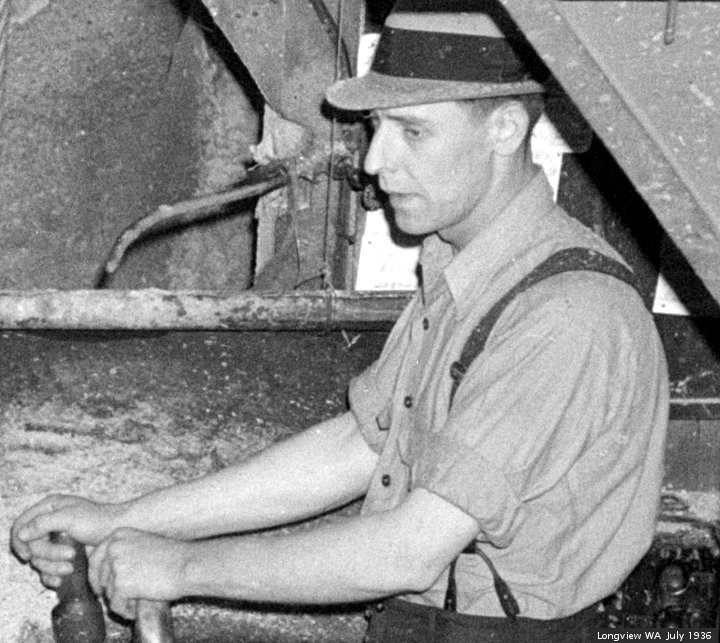
While listening to this show, PG was editing pictures from The Library of Congress. Some of these images appear with this feature.


Peachtree Street


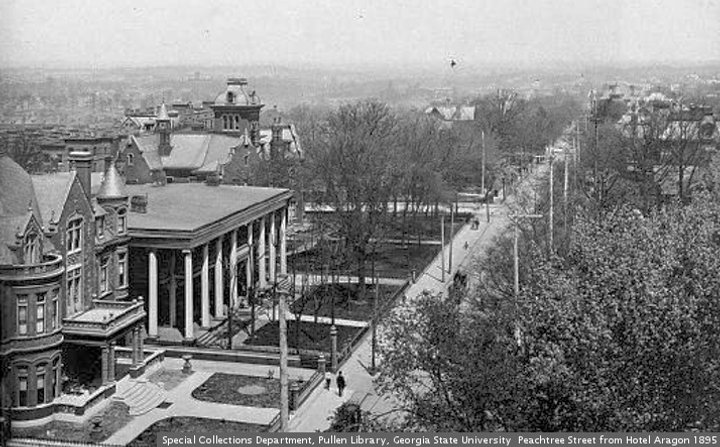

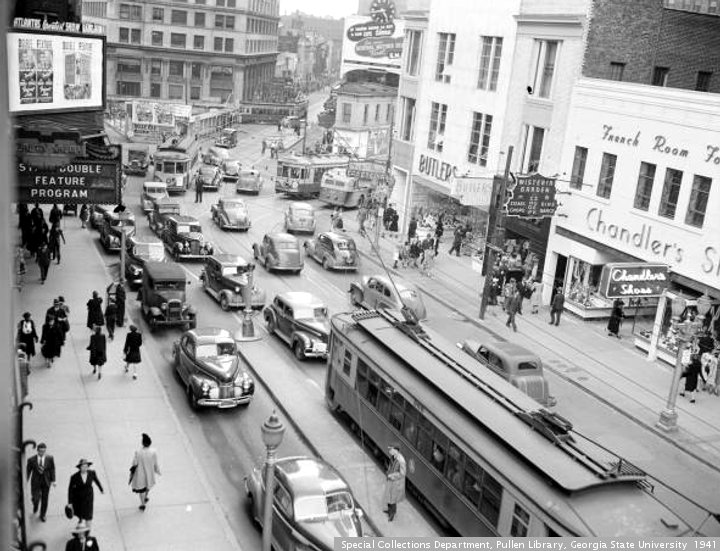
PG finished a book, Peachtree Street-Atlanta. The author is William Bailey Williford, and it was published by the University of Georgia Press in 1962. PG found this at the Chamblee library, and this is probably the best way to find this book today. (Reissued by UGA Press.)
How this road got the name Peachtree is a good question. Most peaches grow south of the fall line. The story goes that there was a Creek Indian village called Standing Peachtree, located where Peachtree Creek runs into the Chattahoochee. During the war of 1812 Fort Peachtree stood there.
There was a trail that ran from Buckhead to an intersection with the Sandtown Trail, at what is now Five Points. A short distance south of this intersection was a settlement known as White Hall. For many years, Peachtree Street south of Five Points was known as Whitehall Road. At some point in the last thirty years, a decision was made to change Whitehall to Peachtree. It did not help the rundown condition of Whitehall Street.
In 1835 Governor Wilson Lumpkin decided that a railroad that would be centered near the junction of Peachtree Trail and Sandtown Trail. The new town was named “Marthasville”, after the daughter of the Governor. Martha Lumpkin resides in Oakland Cemetery today.
The village was soon renamed Atlanta, which was a feminine form of Atlantic. Houses, churches, and businesses were soon built on Peachtree Road. In 1856, Richard Peters built a flour mill. To insure a steady supply of firewood, he bought four hundred acres of land, for five dollars an acre. The land was between Eighth Street, North Avenue, Argonne Avenue, and Atlantic Drive.
Another pioneer citizen with a large landholding was George Washington (Wash) Collier. Mr. Collier bought 202 acres for $150 in 1847. The land was between West Peachtree, Fourteenth Street, Piedmont Road, Montgomery Ferry Road, and the Rhodes Center. Much of the land was used for the development of Ansley Park.
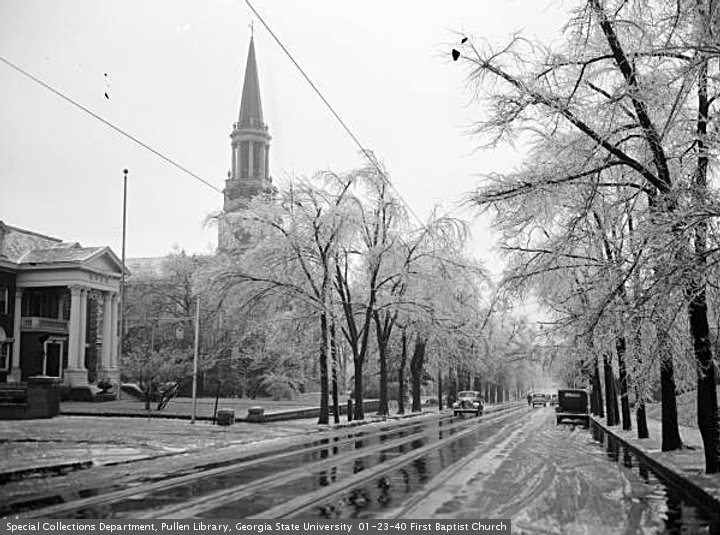

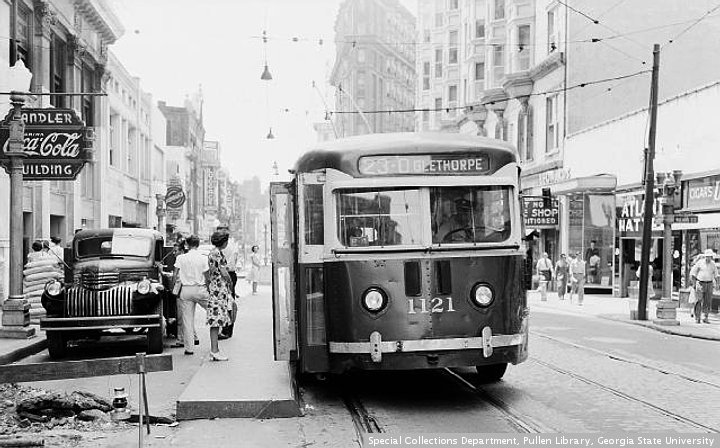
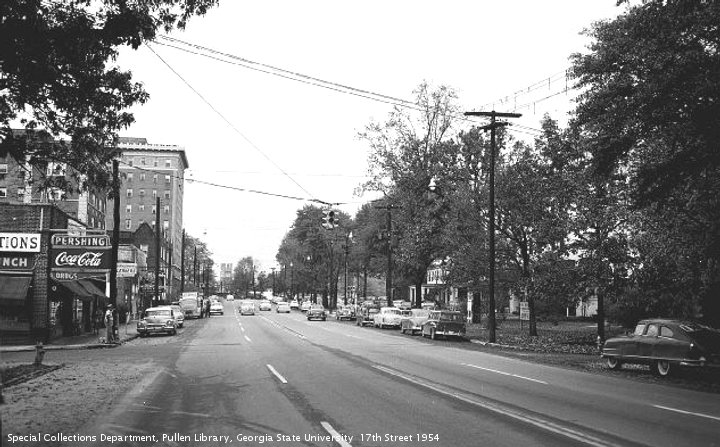
In 1854, Atlanta entertained, for the first time, a man who had been President. On May 2, Millard Fillmore arrived from Augusta on a private rail car.
There was some unpleasantness in 1864, which we will not concern ourselves with.
In 1866, there was a shocking murder. John Plaster was found dead, in an area known as “tight squeeze”. This was an area of shanties, at the present location of Crescent Avenue and Tenth Street. A hundred years later, this was near “the strip”, Atlanta’s hippie district, also called “Tight Squeeze”.
As the nineteenth century rolled along, many mansions were built on Peachtree Street. The road was paved, and streetcars ran up and down. Automobiles came, and came, and came. An expressway was built in the 1950’s, and quickly became obsolete. One by one, the mansions were torn down and replaced with businesses and churches.
The book was written in 1962, when the party was just getting started. The High Museum was known then as the Atlanta Art Association. In June of 1962, a plane full of prominent Atlanta residents crashed in Paris, killing all on board. As a memorial to those people, the Memorial Arts Center on Peachtree, at Fifteenth Street, was built.
Another phenomenon which is not explained by the book is the custom of naming everything here Peachtree. There are countless streets and institutions named for a fruit tree that likes warmer climates. Atlanta has a one street skyline, that stretches from Five Points to Peachtree Dunwoody Road, almost at the city limits. PG lives a quarter mile off Peachtree, in Dekalb County, and has no idea why Peachtree is a magic word.
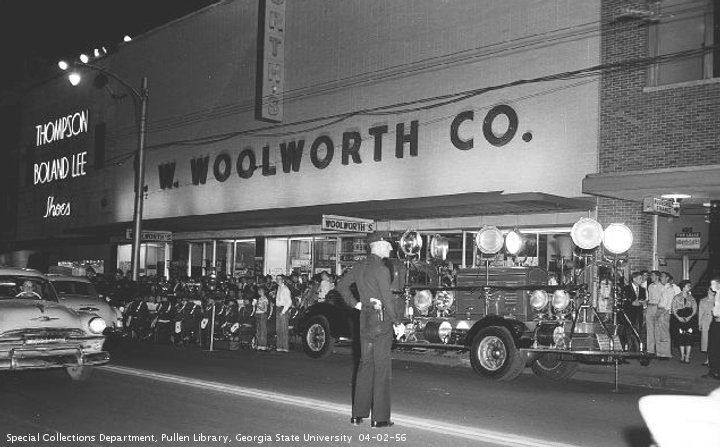
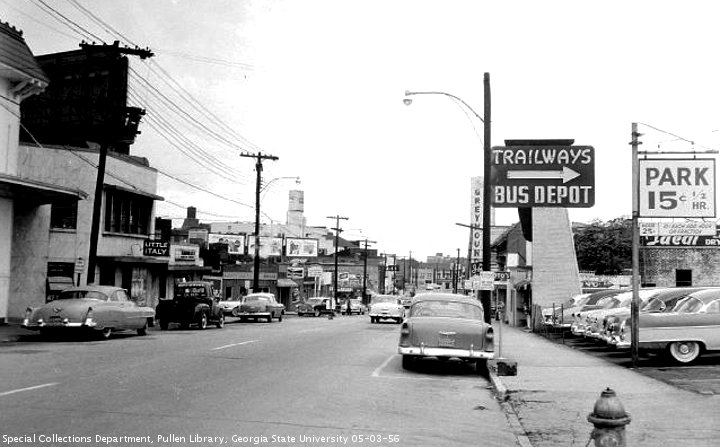
Pictures are from “The Special Collections and Archives, Georgia State University Library”. and The Library of Congress. This is the annual repost.


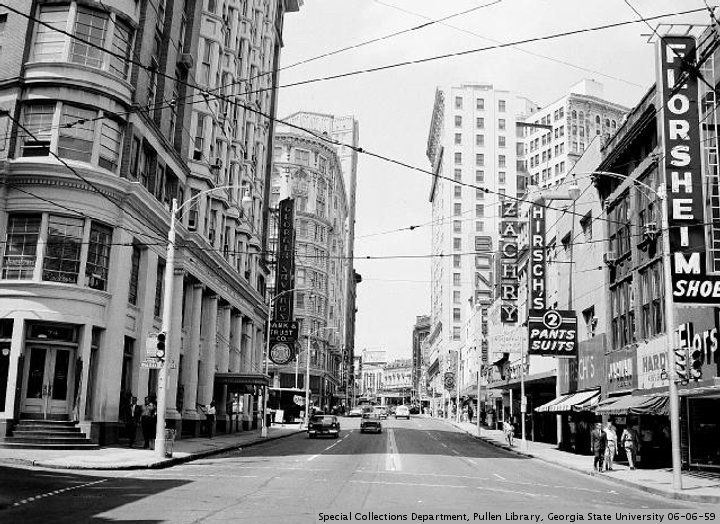

Post Racial America





It is a cliche among certain pundits that this is not “Post Racial America.” No one seems to know what PRA would look like. PRA might be less noisy, with fewer odors, than the current model. The opinion that we do not live in PRA seems unanimous. After PG heard the denial of PRA one too many times, he began to wonder something. Who said America is Post Racial?
Mr. Google has 119 million answers to the question “who said america is post racial?” The short answer is nobody. The closest thing on the front Google page is an NPR commentary from January 2008. This was the early stages of the BHO run for the White House. The commenter said that the election of a dark skinned POTUS might usher in a post racial era in America.
This piece will not have any fresh opinions about race relations in America. That subject has been worn out elsewhere. If someone finds it to their advantage to denounce “racism,” there will be an audience. The truth is, very few people have ever said that America is Post Racial.
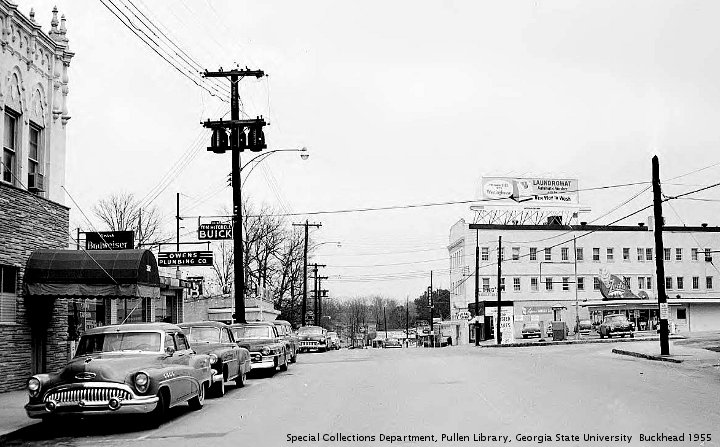
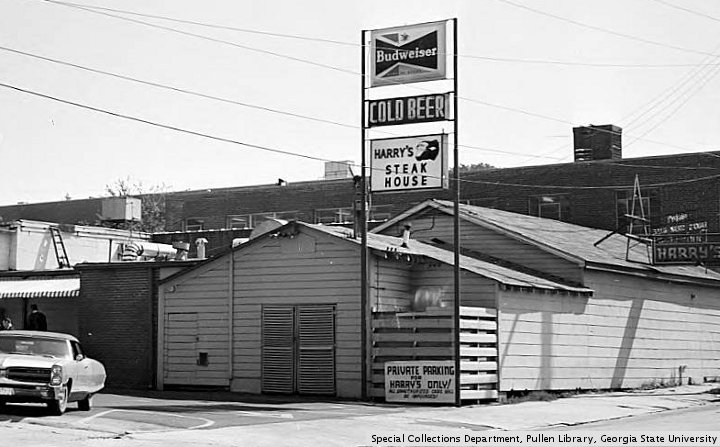
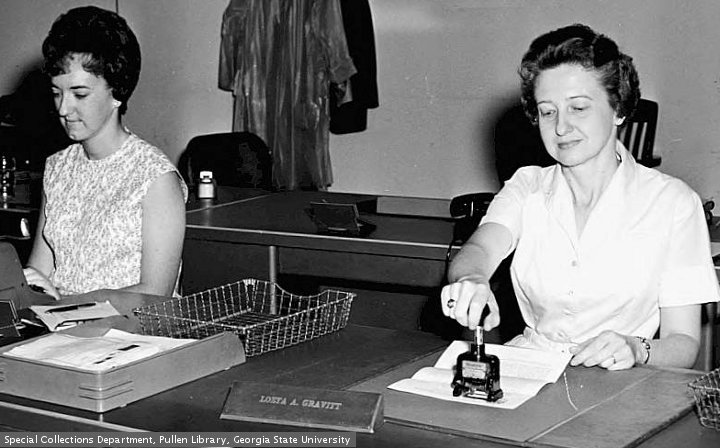
This is a double repost, on the subject that people can’t get enough of. If you can’t say anything good, you can always talk about racism. Pictures for this friday morning are from “The Special Collections and Archives, Georgia State University Library”.

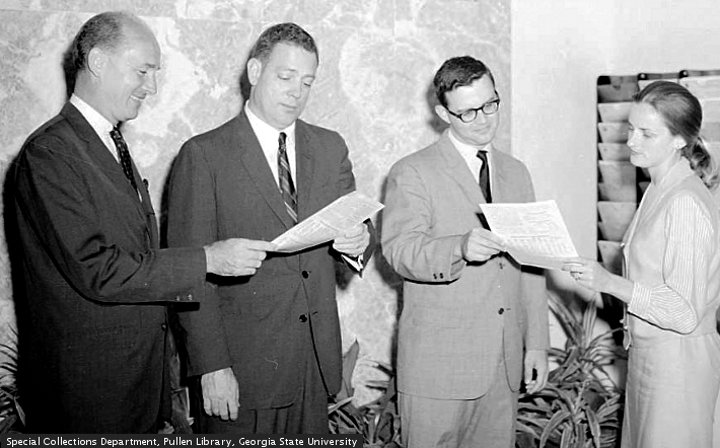

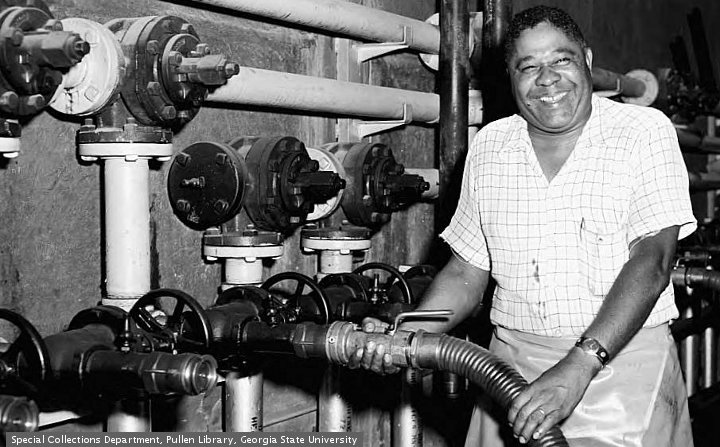
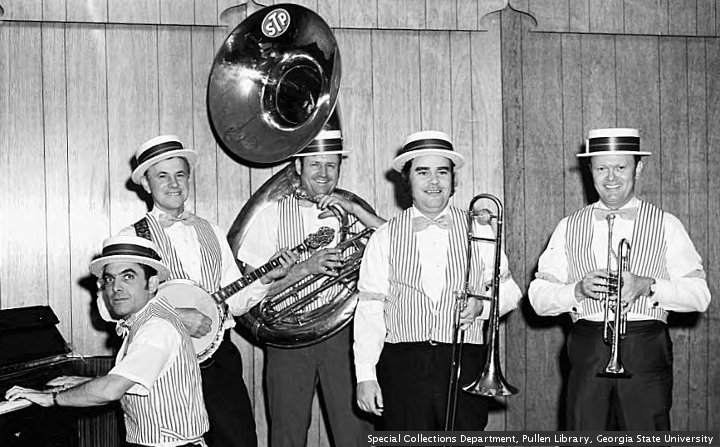


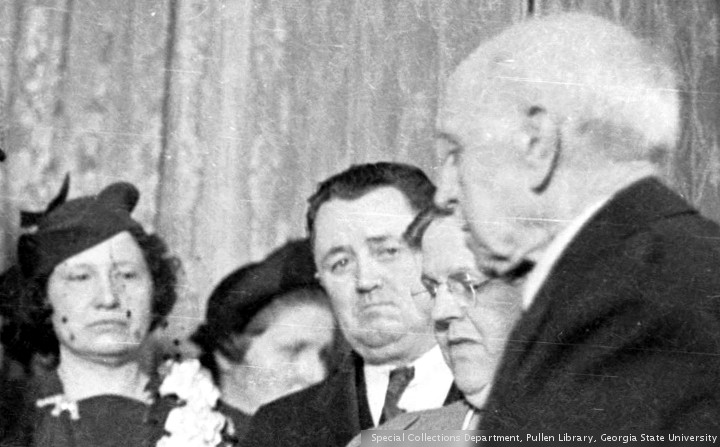


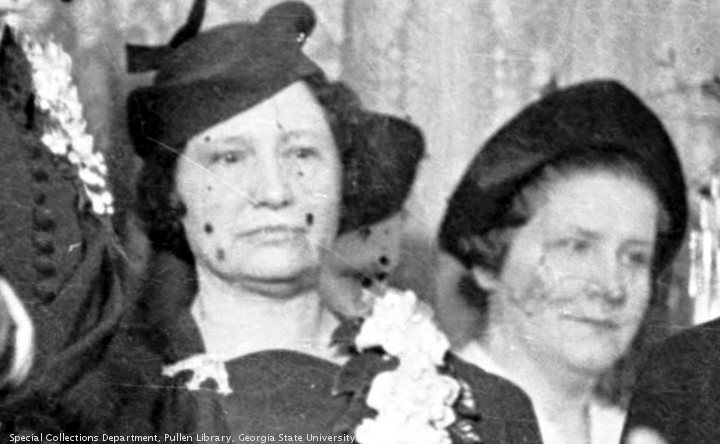
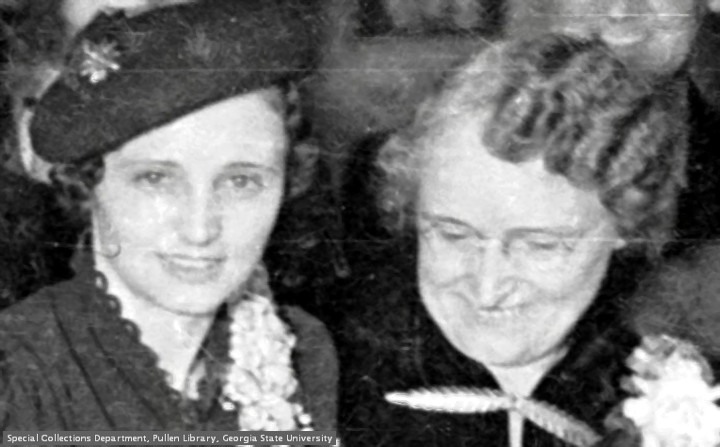
Some times you see something, and realize that you are being pushed over a line. Today’s straw, landing on the camel’s back, was a meme. It has pictures of a statesman-like BHO, and a goat smiling BS. The text was white comic sans letters, on a black background. “Regarding those who call Obama an illegitimate president because his father was born in Kenya, Bernie Sanders replied: “No one asked me if I was a citizen or not, and my dad came from Poland. Gee, what’s the difference? Maybe the color of my skin.” The comment was from a Las Vegas town hall meeting. Some things that are said in Vegas need to stay in Vegas.
No one denies that white people and black people often do not get along. Few deny that there is systemic inequality. The connection of “birther” speculation to systemic inequality is tough to see. Of course, the definition of racism is elastic, and can fit whatever situation the observer wants to critique.
Are we helping the cause of racial tranquility by making comments like that? Yes, it is foolish for “birthers” to whine about a birth certificate. But entertaining followers in a town hall debate does not mean you are going to be able to govern. Maybe BS should focus on his economic fantasies, and quit scoring cheap shots about racism.
The Color Of My Skin was originally published in February, 2016, when BS was taken seriously. As we all know, HRC eventually got the Democratic nomination, only to lose to DJT in November.
Mr. Trump was one of the original “birthers,” or people disputing the Hawaiian birth of BHO. In the general election campaign, Democrats liked to say that DJT was a racist, with birtherism frequently given as an example. The many other unappealing parts of DJT, like crookedness and mental instability, were brushed aside, in the mad rush to scream racist. Some even went so far as to say that anyone voting for DJT was a racist. When the electoral votes were counted, DJT won.


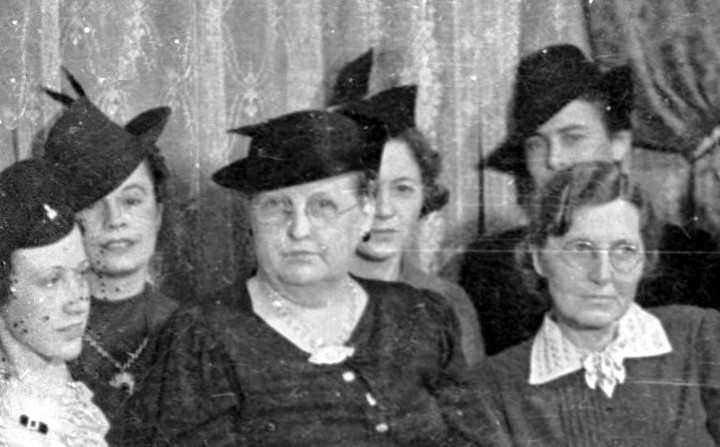
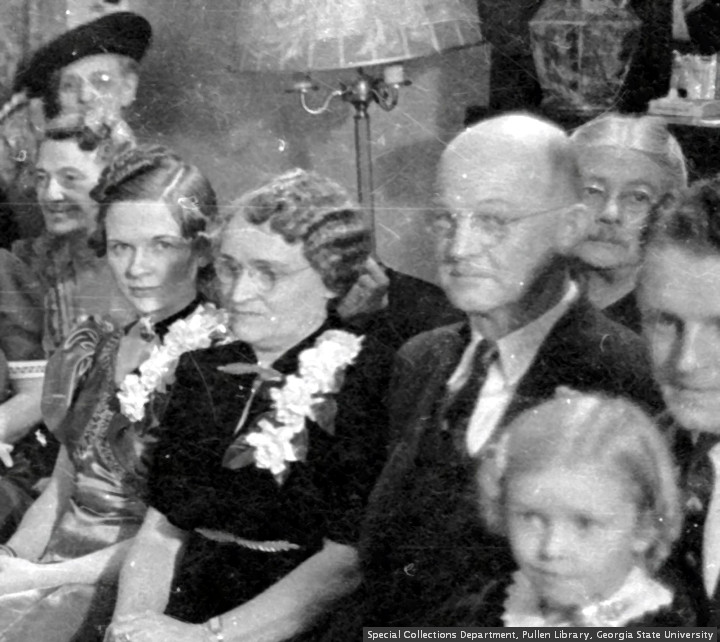
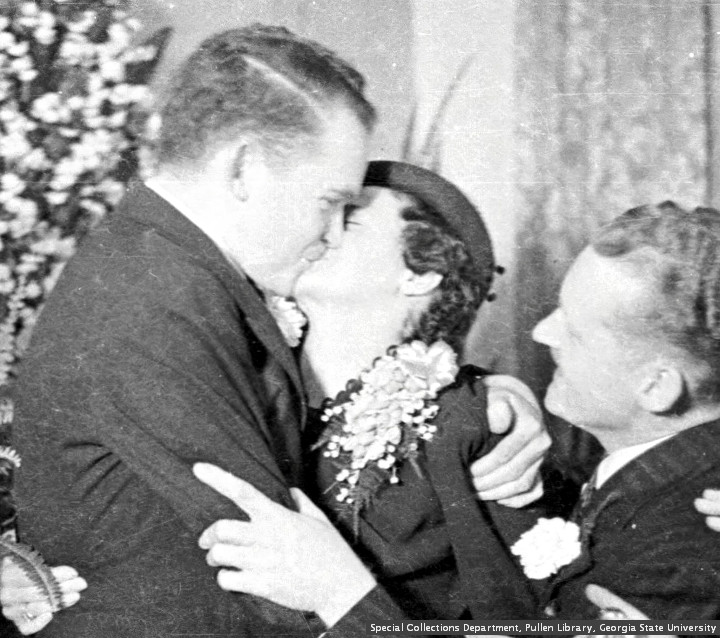
William Lott Monroe, Sr.


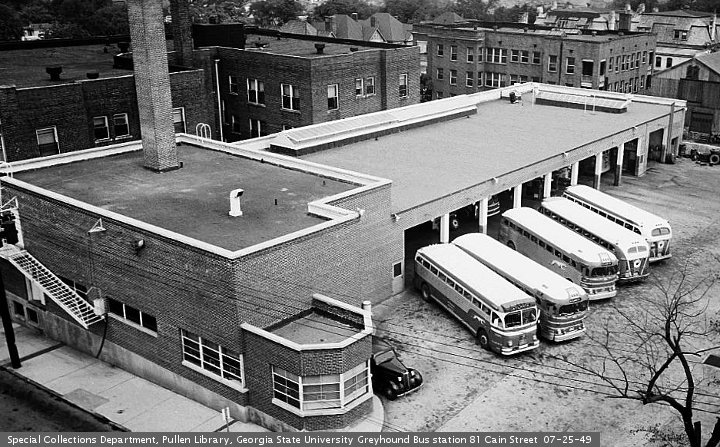

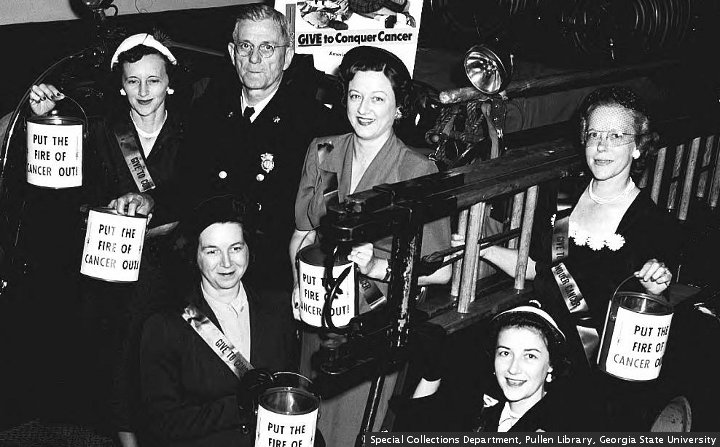

“North Boulevard was renamed Monroe Drive in 1937 to honor noted Landscape Architect W.L. Monroe who built his house and a plant nursery on the road and was noted for his many landscape projects and public parks in Atlanta.” Faset (Bill) Seay, February 4, 2020, 3:48 pm This comment was made to Monroe Drive or Boulevard. MDOB looks at Atlanta roads that change names, and the reputed racial motivations for these changes. The Monroe story takes place in Piedmont Heights.
“In 1823 Benjamin Plaster was granted 3,000 acres of land along Peachtree Creek and Clear Creek in recognition of his military service during the War of 1812. This was two years before Archibald Holland acquired a similar tract several miles to the east where another village called Terminus was founded in 1837, later renamed Marthasville and eventually Atlanta. … Plaster built a bridge across Peachtree Creek and the trail to it became known as Plaster’s Bridge Road. The bridge’s stone abutments still remain on the creek banks and a short section of the old road, running along the northern boundary of today’s Piedmont Heights, is now called Plasters Avenue. As other settlers followed a township called Easton grew up around Walker’s Grist Mill on Clear Creek near the site of today’s Ansley Mall at Piedmont Road and Monroe Drive.”
“Around 1850 Captain Hezekiah Cheshire arrived from South Carolina. His sons, Napoleon and Jerome, settled on opposite sides of the south fork of Peachtree Creek. They built a bridge across the creek near to connect their farms and the road to it became Cheshire Bridge Road. … In 1864 General Sherman’s Union soldiers swept through Atlanta. General T. J. Wood’s troops built entrenchments along the eastern edge of Easton on the property of Benjamin Plaster’s son Edwin, putting the little community in the battle of Atlanta. These entrenchments remained until the 1950s when they were destroyed by the construction of a Holiday Inn. Today a few crumbling stone steps and historic marker on the site honor the Edwin Cheshire family’s handyman “Gold Tooth John” whose ghost is rumored to still wander the halls of the old hotel at night.
“In 1871 the Atlanta and Richmond Air Line Railway opened a line between Atlanta and Toccoa, Georgia with a depot at Easton. Its “Air Line Belle” train, said to be the finest on the line, allowed Easton residents to commute to Atlanta without having to ford Clear Creek which still had no bridge. Train service spurred growth of the township to 100 residents by 1888 but the surrounding area remained rural and mostly devoted to farming and dairying. The rail line serving Easton was called the “Southern Railway Belt Line” and in 1883 the “Georgia Pacific Belt Line Railroad” connected with it just north of Easton at Belt Junction, an area which later became known as … Armour/Ottley. … In 1895 North Boulevard was built, running through Easton parallel to the railroad, as a main route into Atlanta. … In 1912 Fulton County annexed Easton and renamed it Piedmont Heights. Plaster’s Bridge Road was paved in 1917 and its name changed to Piedmont Road.” (According to this narrative, the Boulevard-Monroe thoroughfare was originally called North Boulevard. This is not the same road as North Avenue. Confusing road names is not limited to multiple Peachtrees.)
“In 1925 Landscape Architect W. L. Monroe bought 15 acres on North Boulevard at Wimbledon Road where he operated a popular nursery and landscaping business for many years, … Remnants of two small stone structures that Monroe built … remain on the grounds of today’s Ansley-Monroe Villas Condominiums. In 1927 a portion of North Boulevard was renamed Monroe Drive in honor of Monroe’s many landscape projects in the city.” … “In 1928 the City of Atlanta began annexing Piedmont Heights by taking in the lots along North Boulevard. In the 1930s a new home could be bought for $4,700 on North Boulevard or Wimbledon Road.”
There is a bit of confusion here. One source says the Monroe renaming was in 1927, while another source says 1937. Then there is the story told by maps, found in the original post.
An 1892 “Bird’s eye view” shows Boulevard sailing off into the horizon, past a racetrack in today’s Piedmont Park. A 1911 map shows Boulevard starting near “L.P. Grant Park,” and sailing past Ponce up to Piedmont Park. A 1940 map shows Boulevard going past Park Drive, only to turn into Monroe Drive at Montgomery Ferry Road. Finally, a 1969 map of “Negro Residential Areas” shows Monroe Drive changing into Boulevard at Ponce De Leon Avenue, like it is today.
Two things are worth noting. None of these maps have a “North Boulevard.” The street name is a stand-alone Boulevard. Second, the 1940 map shows the street as Boulevard at Eighth Street, and Elmwood Drive. The first mention of Monroe is at Montgomery Fairy, near the Monroe Nursery. This might contradict the racial narrative.
The information about Mr. Monroe neither proves, nor disproves, the story that black Boulevard was changed to white Monroe. City on the Verge: Atlanta and the Fight for America’s Urban Future states “In 1925 landscape architect W. L. Monroe bought fifteen acres on what was then called North Boulevard, establishing a plant nursery that thrived for many years. In 1937, the street north of Ponce de Leon was renamed Monroe Drive in his honor (and to distinguish it as a white area as opposed to Boulevard to the south of Ponce).” The book offers no evidence for this, and its “woke” tone is cause for skepticism. While there is circumstantial evidence to support the legend, verifiable facts are hard to come by. A similar story might be the 1956 change of the state flag.
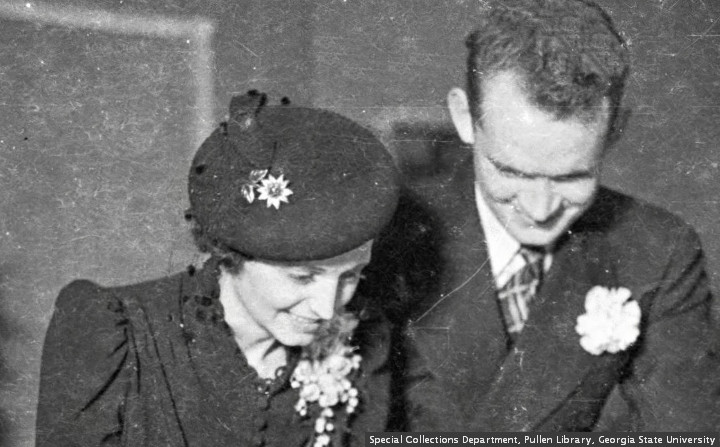
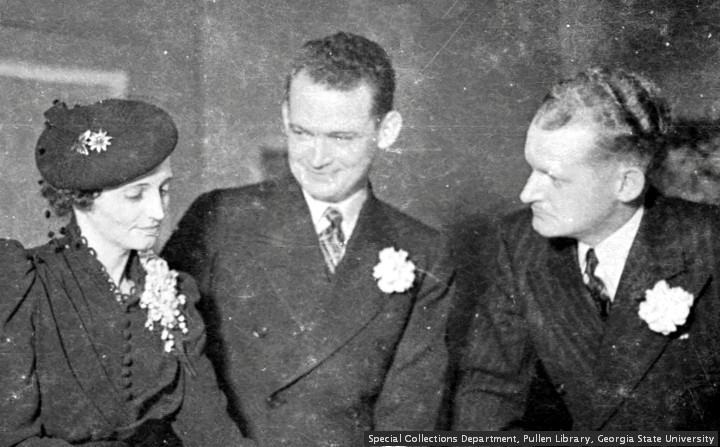
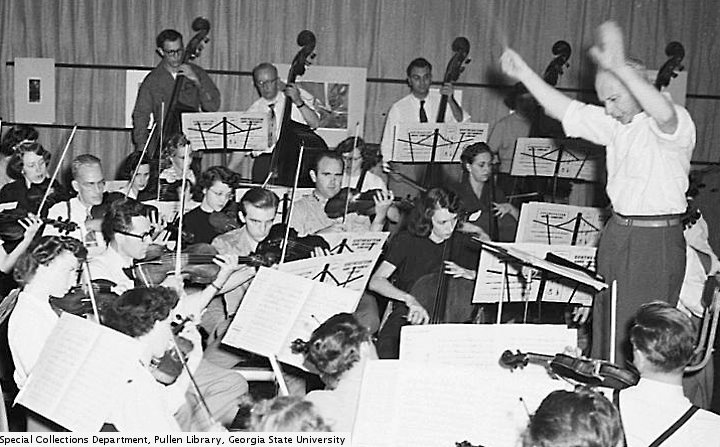
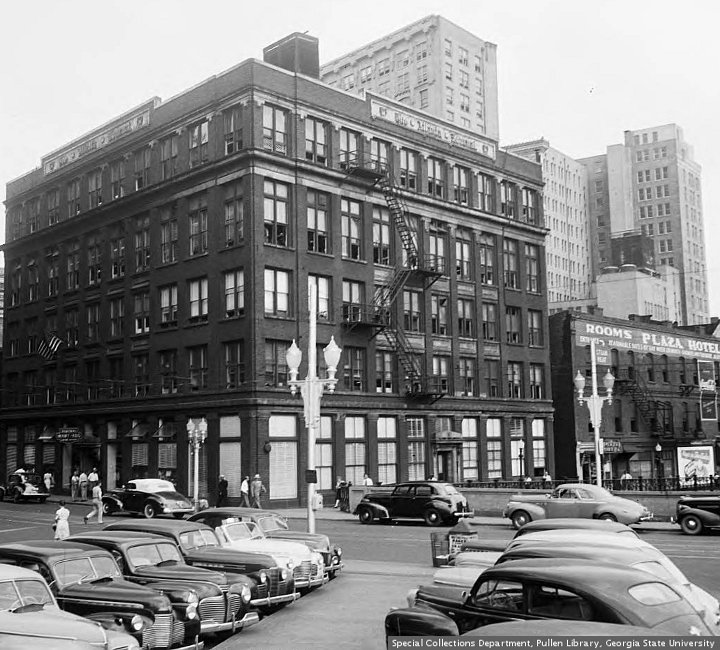
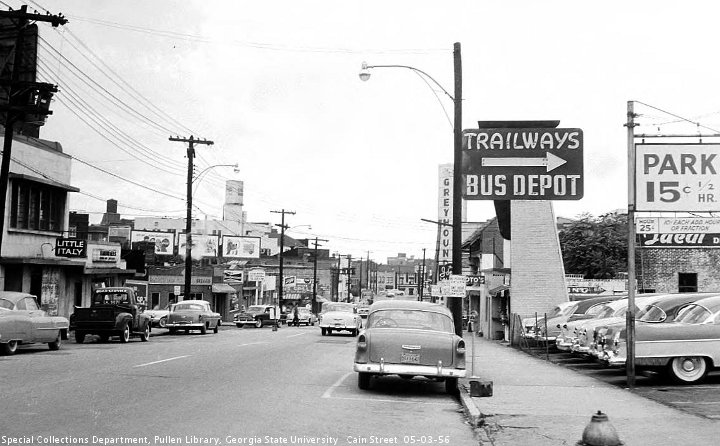
“William Lott Monroe, Sr. (1891-1965), landscape designer and nurseryman, is recognized in newspaper articles as the “landscape artist” during the development of North Fulton Park (later renamed Chastain Memorial Park) in the late 1930s and early 1940s. This work was financed partially through WPA (Works Progress Administration) funds and supported with local prison labor. … There are three main areas in Chastain Park with Monroe’s signature style as a landscape designer: (1) the master grill area; (2) the picnic grounds area; and (3) the amphitheater. … Monroe’s Landscape & Nursery Co. is removed from Fulton County’s payroll: “… Drawn more than $17,000 from the county in the last year and one-half… The company was drawing $500 a month for supervising landscaping of county parks, which was in addition to flowers, shrubs and blueprints sold by it to the county.” (“Nursery Company Is Cut Off Pay Roll.” Atlanta Constitution, Jan. 25, 1941)” … “1941 Amphitheater still under construction, originally planned as an outdoor venue for the Atlanta Symphony Orchestra.” … “It is unknown if Monroe oversaw the completion of construction at the amphitheater.” … “October 22, 1965 William Lott Monroe, Sr. dies in Atlanta.” Pictures are from “The Special Collections and Archives, Georgia State University Library”.




Keith Tharpe Dies



Inmate who appealed death sentence over juror’s racist views dies “Keith “Bo” Tharpe … died late Friday at the Georgia Diagnostic and Classification Prison in Butts County. His death likely was due to complications from cancer, according to a news release from the Georgia Resource Center, which represented him in recent years as he attempted to appeal his death sentence. He was 61.”
Keith Tharpe was convicted of killing Jaquelin Freeman. There was little doubt of his guilt. A death sentence was handed down, and came close to being carried out. There were complications, and the sentence was postponed.
A few years after the trial, an attorney interviewed one of the jurors, Barnie Gattie. Unfortunate things were allegedly said, including the magic word. A transcript can be found here.
A media outcry ensued. Typical was this headline: The Stench of Prejudice in Keith Tharpe’s Death Sentence. Corporate media does not miss opportunities to say Georgia is racist.
A few things were not mentioned. “Gattie testified … that he had been drinking alcohol on the Saturday he first spoke with representatives from the Georgia Resource Center. When they returned on Memorial Day with the affidavit for him to sign, he had again been drinking. He testified that he had consumed a twelve pack of beer and a few drinks of whiskey before signing the affidavit. Gattie stated he was not told what the affidavit was going to be used for, he did not read the affidavit, and when the affidavit was read to him, he did not pay attention. … In addition to Gattie, the other ten jurors” (“two of whom were black”) “who were deposed testified that Tharpe’s race was not discussed during deliberations, race played no part in their deliberations, no one used racial slurs during deliberations, and racial animus or bias was not a part of the deliberations.”
During the appeals after a death sentence, attorneys try to find any reason they can to stop the execution. This is what happened when that attorney interviewed Bernie Gattie. “Why would the attorney’s continue with the interview if they knew Mr. Gattie was intoxicated? Did the attorneys lead on Mr. Gattie, and put words in his mouth? How was the affadavit presented to Mr. Gattie for his approval? Mr. Gattie later claimed he “… didn’t pay much attention when the affidavit was read to him. … He signed the defense affidavit because he “just wanted to get rid of them.” Were these attorneys looking for the truth, or trying to get a drunken old man to say something inappropriate, so they could get Mr. Tharpe’s sentence commuted?”
The Tharpe/Gattie appeals led chamblee54 to the uncomfortable experience of agreeing with Justice Clarence Thomas. “SCOTUS sent the death penalty case of Keith Tharpe back to the lower courts today. This is the Pontius Pilate approach, which might not save Mr. Tharpe from eventual execution. Here is the opinion, and the dissent by Justice Clarence Thomas.” … “Justice Thomas goes full Scalia in this closing paragraph. “Today’s decision can be explained only by the “unusual fact” of Gattie’s first affidavit. The Court must be disturbed by the racist rhetoric in that affidavit, and must want to do something about it. But the Court’s decision is no profile in moral courage. By remanding this case to the Court of Appeals for a useless do-over, the Court is not doing Tharpe any favors. And its unusual disposition of his case callously delays justice for Jaquelin Freeman, the black woman who was brutally murdered by Tharpe 27 years ago. Because this Court should not be in the business of ceremonial handwringing, I respectfully dissent.”
“The ethics of interviewing an intoxicated man, to try to save your client from execution, are questionable. One might also ask what this says about the death penalty process. The state bends over backwards to give the illusion of fairness, and due process. An attorney goes out, interviewing jurors seven years after the trial, trying to find dirt. Getting a criminal off on a technicality is a regrettable consequence of our judicial system. Maybe in this case justice would have been served with a life sentence, without fishing trip juror interviews.”
The efforts of the defense attorneys paid off. Keith Tharpe died in prison, of natural causes. There had been speculation in death penalty forums that the execution of Mr. Tharpe was going to happen soon. Does this mean that Jaquelin Freeman did not receive justice? Does death from cancer … which probably was more painful than an overdose of pentobarbital … not serve justice? These are issues for people who like to argue about the law. Pictures today are from The Library of Congress.





Shopping Centers And Abortions


Back to empathy for a minute. The word always takes PG back to an auditorium in Clarkston GA in 1971. PG was in his first quarter at Dekalb College. Today, the institution is known as Georgia Perimeter College. One of the selling points of college has always been the outside speakers that were brought to campus. This day, the subject was abortion.
A note on set and setting is appropriate. In 1971, New York state had legalized the abortion procedure. Roe vs. Wade was in the pipeline that would lead to the Supreme Court. That ruling would not be issued for another fifteen months. In the meantime, abortion was illegal in 49 states, including Georgia. The debate about abortions was not as politicized as today. The nomenclature of pro-choice, and pro-life, had not entered the vocabulary.
The Vietnam war was still being fought, although with fewer Americans in combat. The withdrawal of US forces took most of the steam out of the anti war movement. The modern spectacle of a person supporting a war, while claiming to be pro life, did not happen.
PG walked into the auditorium and found a seat. The lady began her presentation. After a few minutes of talk, she said something about a woman who was artificially inseminated, with masturbated semen. The house lights were dimmed. A black and white film of an abortion was shown. It was noted when the fetus went into the vacuum cleaner attachment. The house lights were brought back up. They should have remained dim, as the woman was not kind on the eyes.
The closing part of her presentation was a song she wrote. She sang acapella. The song was written out of empathy with the not to be born baby. The song was titled “My mother My grave”.
PG left the auditorium, and went to world history class.
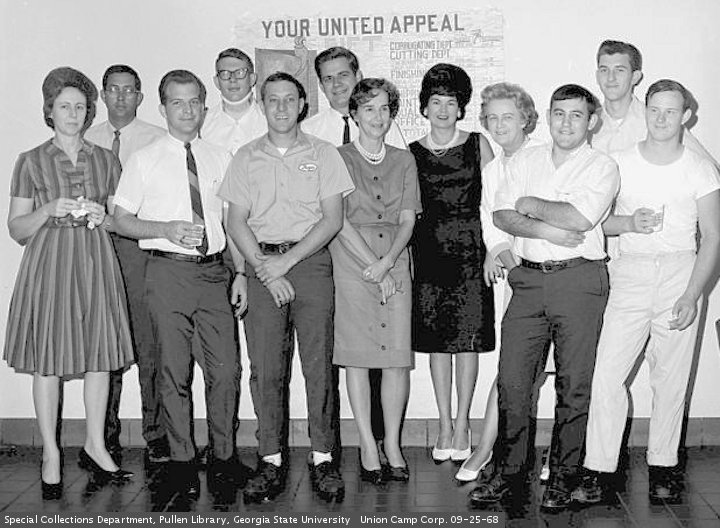

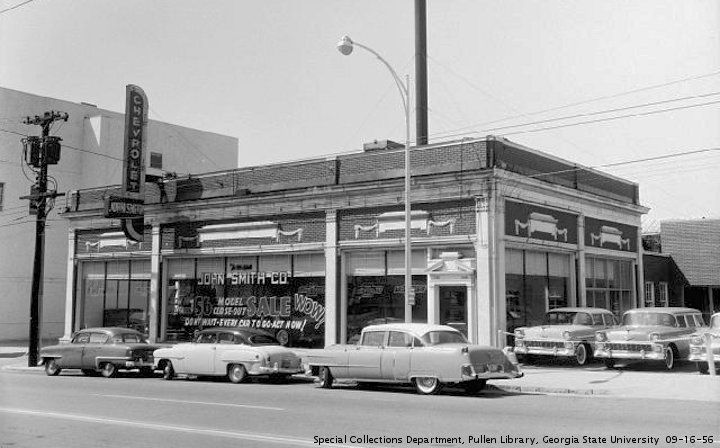
It started when PG found a picture of Toco Hill shopping center in 1961. He sent a copy to a friend who lives near there, and she replied “Amazing photo. North Druid Hills Rd. looks like the outer reaches of suburbia. Times sure have changed.”
PG (who has too much free time) re-replied “Toco Hills was suburbia, though maybe not the outer reaches. Mom and Dad got married in 1951. They got an apartment on Skyland Drive, near Buford hiway and Clairmont road. At the time, Buford hiway was a two lane road. (The widening took place in the early seventies, after I got my license and got to suffer.) Mom had choir practice at her church on Peachtree and Fourth. (The phrase Midtown was not heard until the eighties.) Dad would go get her, and bring her home. Their was a farmer who would go to the restaurants, and pick up leftovers to feed to his pigs. Dad’s car was usually stuck behind him. In the summer this was not pleasant.”
This got PG to wondering about Toco Hills, specifically, why do they call that area “Toco Hills”. (The shopping center uses the singular.) A visit to Google City showed something called Toco Hills NORC . It says, regarding the area, “Toco Hills is what we call a NORC, an acronym for Naturally Occurring Retirement Community. Toco Hills is a community where the majority of older adults have decided to remain in their homes as long as possible”. The link has retired.
PG then found a neighborhood organization called the Toco Hills Alliance , located in a church. He made a phone call, and talked to a lady working there. She did not know the origin of the name Toco Hills. She did know that her children had gone to elementary school across the street from shopping center. The neighbors had fought the plans to build a shopping center across the street from a school.
The lady at the THA recommended a construction company, and PG gave them a call. It turns out an old timer at the company knew the story. It seems like a man was in Brazil, doing construction projects during World War Two. He had a housekeeper, who was a Brazilian Indian. Whenever he would put in a bid on a job, the housekeeper would say “toco”. It seems that toco is a Brazilian Indian word for “more luck than you can imagine.”
This is a repost
Pictures are from ” The Special Collections and Archives,Georgia State University Library”.

Tallulah Bankhead And Billie Holiday


Tallulah Bankhead was born January 31, 1902 in Huntsville AL. She had a year-older sister, Eugenia. Their mother died February 23, 1902. Legend has it her last words were “Take care of baby Eugenia. Tallulah can take care of herself.” This is a repost.
The father of the actress was Will Bankhead. He was a prominent politician, who served as Speaker of the House of Representatives in Washington. Mr. Bankhead was on the short list of Vice Presidential candidates for Franklin Roosevelt, but was passed over. The Bankhead national forest and the Bankhead Highway are both named for Will Bankhead.
Tallulah Bankhead was an actress, radio show hostess, and personality. She went to London in the early twenties and became a stage sensation. Returning home, she became a Broadway star with “The Little Foxes.” She made movies, but saved her best public performances for the stage.
Miss Bankhead was known for being sexually active, with both men and women. Hattie McDaniel, who played Mammie in Gone With The Wind, was rumored to be one of her “friends”. Her introduction to Chico Marx went like this “Miss Bankhead.” “Mr. Marx.” “You know, I really want to fuck you.”. “And so you shall, you old-fashioned boy.”
One legend has Miss Bankhead at a dinner party with Dorothy Parker and Montgomery Clift. As might have been expected, the cocktail hour went on most of the evening. At one point, Mister Clift had his head in Miss Parker’s lap. “oh you sweet man, it’s too bad that you’re a cocksucker. He is a cocksucker, isn’t he?” Miss Bankhead replied “I don’t know, he never sucked my cock.”
Her most famous movie role was in “Lifeboat”, directed by Alfred Hitchcock. Her co stars complained that she was not wearing panties under her dress. Mr. Hitchcock posed the question, is this a matter for wardrobe or for hairdressing?
In the fading days of radio, Tallulah was the host of “The Big Show”. She became known for her deep voice, and for saying “Dah-ling”. More than one guest got big laughs by calling her Mister Bankhead. After “The Big Show” ended, Miss Bankhead remained active on stage and television. She died December 12, 1968.
Miss Bankhead was a staunch Democrat, as is fitting for the political family she was raised in. During the McCarthy era, an actress friend of hers was accused of being a communist. Miss Bankhead made a statement of support for the actress on the radio, and then asked her, are you a communist? The actress said that her daddy was a republican, and so she guessed that was what she was. Miss Bankhead was horrified. “A republican! That’s worse than being a goddamn communist.”


One of Miss Bankhead’s more explosive friendships was with Billie Holliday. “The truth of the matter is that the evidence strongly suggests they probably first met in the early 1930’s during Bankhead’s Harlem rent party and nightclub-slumming days, well before Holiday ever became famous. What is known is that by 1948 they were bosom buddies. A year earlier, Holiday entered the Alderson Federal Reformatory for Women to serve her famous “one day and a year” sentence after being found guilty on dope charges. Four months after her release in 1948, Holiday was appearing at New York’s Strand Theater with Count Basie on the first leg of a cross-country tour. At the same time, Tallulah Bankhead was nearby on Broadway starring in her hit play, Private Lives. Bankhead caused quite a commotion every night thundering late down the ailse during Billie’s show to sit in her special seat to stare in amazement at the gifted & stunningly beautiful Lady Day. Because Holiday’s license to perform in nightclubs where liquor was being served had been revoked (and not renewed) she was forced to earn her living in gruelling tours on the road. For months after the Strand performance, Bankhead traveled with her whenever she could. Also on the tour was dancer/comedian James “Stump Daddy” Cross – nicknamed after his wooden leg, who joined the two famous ladies to make a treacherous threesome.”
“…it appears that during the late 1940s she and Holiday were also lovers. Perhaps they had been all along. Holiday later told William Dufty, who ghostwrote her autobiography, that when Tallulah visited backstage at the Strand Theatre, the thrill she took in exhibitionistic sex made her insist on keeping Holiday’s dressing room door open. Holiday later claimed that Tallulah’s brazen show of affection almost cost her her job at the Strand.”
Before long, Miss Holiday got busted again. Apparently, Miss Bankhead made a phone call to FBI director J. Edgar Hoover, asking for leniency. There is a remarkable thank you – you’re welcome correspondence between Miss Bankhead and Mr. Hoover. “As my Negro Mammy used to say ‘When you pray, you pray to God don’t you……I had only met Billie Holiday twice in my life….and feel the most profound compassion for her…she is essentially a child at heart whose troubles have made her psychologically unable to cope with the world in which she finds herself…poor thing, you know I did everything within the law to lighten her burden”. “A giddy and twitterpated Hoover wrote back , “Your comments are greatly appreciated, and I trust that you will no hesitate to call on me at any time you think I might be of assistance to you.”
At some point, the two became less intimate. Miss Bankhead had her own legal headaches, and put some distance between her and Miss Holiday. (Eleanora Fagan was the birth name of the chanteuse. Tallulah Brockman Bankhead was the real name of the thespian.) When “Lady Sings the Blues” was being prepared, Miss Bankhead got an advance copy, and was horrified by what she saw. A fierce note was sent to the book’s publisher, and scenes were edited out. Miss Holiday was outraged. The letter that resulted is a poison pen classic. “My maid who was with me at the Strand isn’t dead either. There are plenty of others around who remember how you carried on so you almost got me fired out of the place. And if you want to get shitty, we can make it a big shitty party. We can all get funky together!”
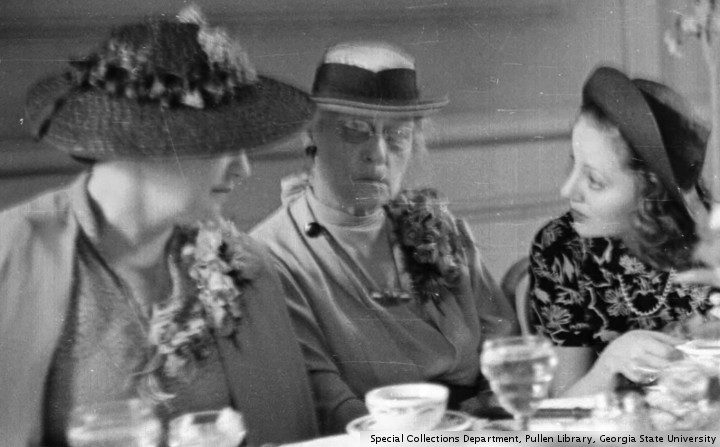
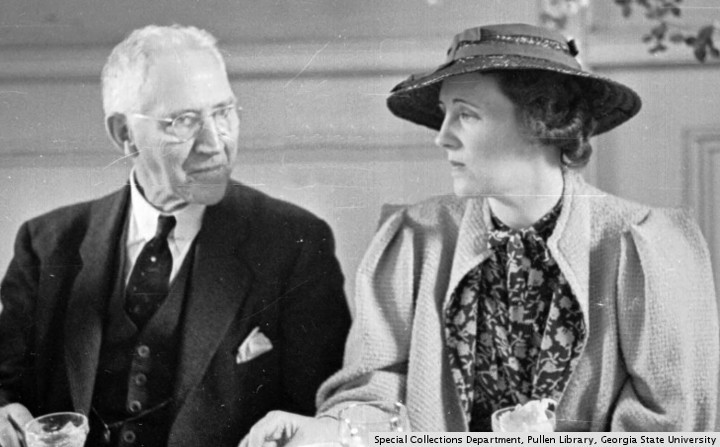
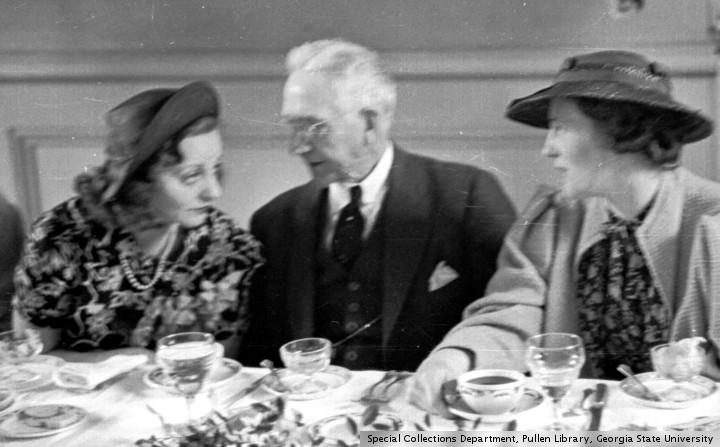
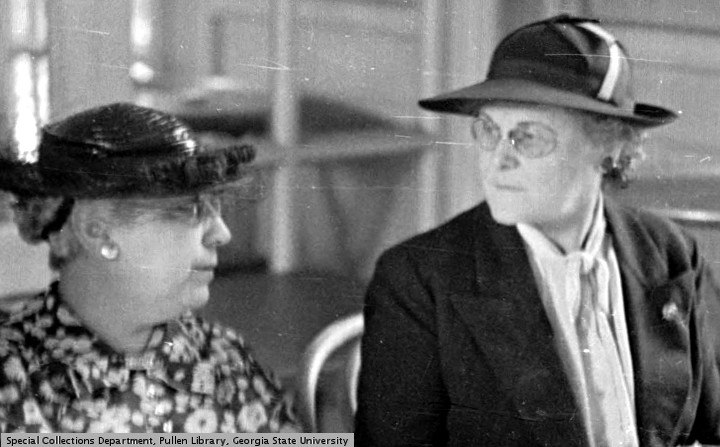
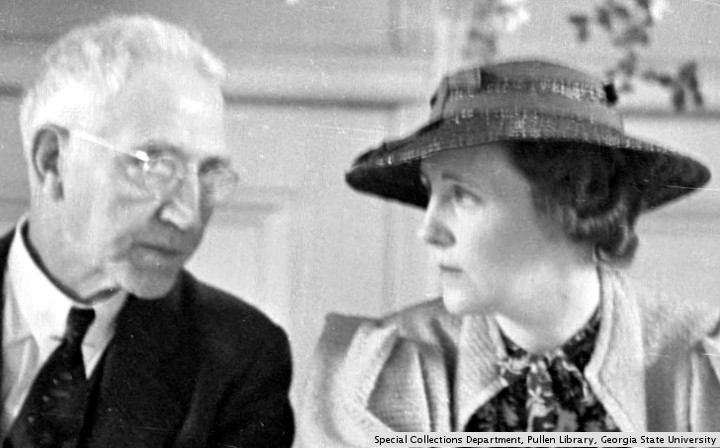
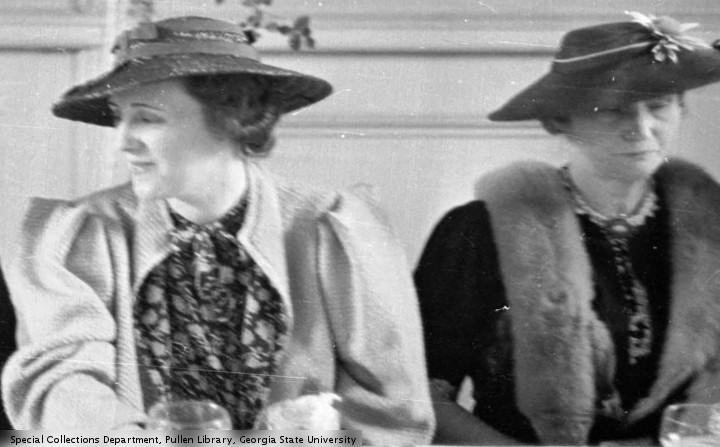
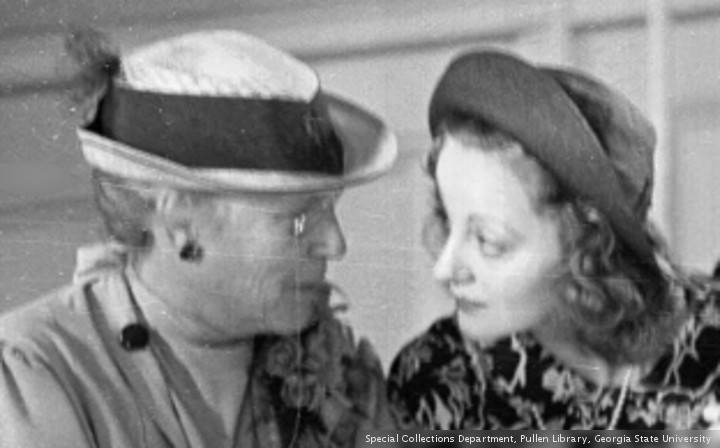
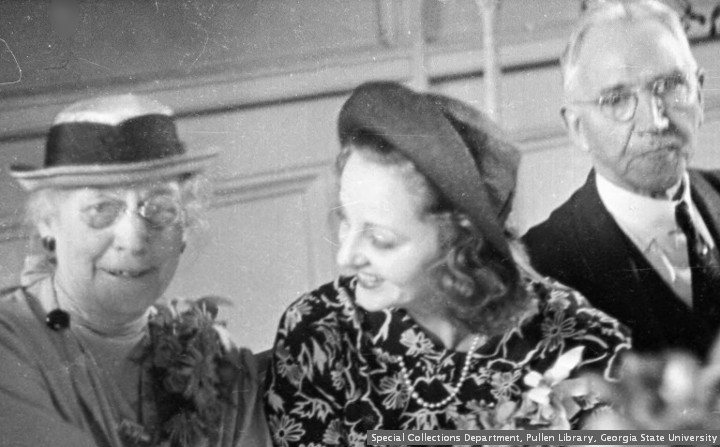
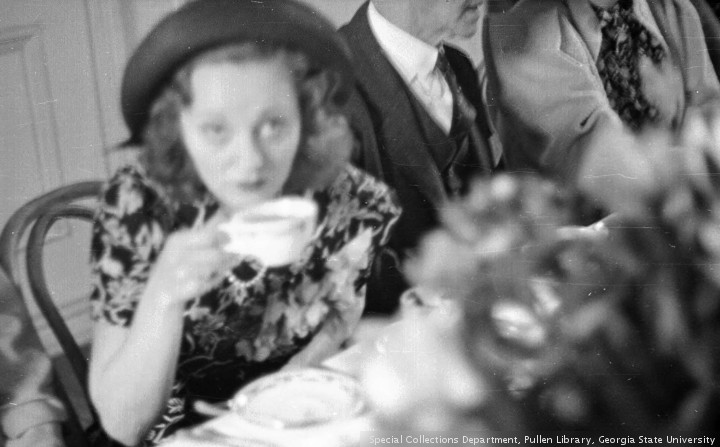
The first part of this story is a repost. Pictures today are from “The Special Collections and Archives, Georgia State University Library”. “Members of the Atlanta Woman’s Club, during a luncheon for retiring president W.F. Milton, in the AWC banquet hall, in Atlanta, Georgia, March 5, 1937.” Picture of Billie Holiday from The Library of Congress.



 Chamblee54
leave a comment