M.K. Gandhi And Truth




I identify as human @pixfiber “Truth never damages a cause that is just.” · Mohandas K. Gandhi. This item appeared in my twitter feed on January 6. Being an unreconstructed pedant, I went to the Gandhi Wikiquote. “Truth” had too many search results, so I went to “just.” I found a doozy: “I have always held that social justice, even to the least and lowliest, is impossible of attainment by force.” Harijan (20 April 1940) p. 97 This is a repost.
Harijan was another word for the untouchable caste in India. “… Gandhi conducted an intensive crusade against untouchability …” “Harijan was also a newspaper that started on 11 February 1933, brought out by Gandhi from Yerwada Jail during the British rule in India. Gandhi popularized the term Harijan across the states of India but he was not the first person to use it.”
Archive.org has much of Harijan available online, including the quote above. The quote is in a tsunami of text. Gandhiji was trained as a lawyer, and could crank out a word count. His positions are well thought out and complicated. This material is more complicated than the motivational Mahatma we are familiar with.
If don’t mind wading through a pile of results, a search for “truth” on the Gandhi Wikiquotes will yield some good thoughts. Bear in mind that these quotes are without context. If you are willing to do the work, and google the source, you might find that the meaning of these thoughts is different from what you might think. The first three quotes in this list are from An Autobiography Or The Story of My Experiments With Truth By: M. K. Gandhi.
“A man of truth must also be a man of care.” Part I, Chapter 5, At the High School
“But all my life though, the very insistence on truth has taught me to appreciate the beauty of compromise. I saw in later life that this spirit was an essential part of Satyagraha. It has often meant endangering my life and incurring the displeasure of friends. But truth is hard as adamant and tender as a blossom.” Part II, Chapter 18, Colour Bar
“My uniform experience has convinced me that there is no other God than Truth.” p. 453
“An error does not become truth by reason of multiplied propagation, nor does truth become error because nobody sees it.” Young India 1924-1926 (1927), p. 1285 (context below)
“A seeker after Truth cannot afford to indulge in generalisation.”
“Generalisation”, Harijan (6 July 1940).
“If you want to give a message again to the West, it must be a message of ‘Love’, it must be a message of ‘Truth’. There must be a conquest — [audience claps] — please, please, please. That will interfere with my speech, and that will interfere with your understanding also. I want to capture your hearts and don’t want to receive your claps. Let your hearts clap in unison with what I’m saying, and I think, I shall have finished my work.”
Speech in New Delhi to the Inter-Asian Relations Conference (2 April 1947)
“Impure means result in an impure end… One cannot reach truth by untruthfulness. Truthful conduct alone can reach Truth.” Harijan (13 July 1947) p. 232
“[Government] control gives rise to fraud, suppression of truth, intensification of the black market and artificial scarcity. Above all, it unmans the people and deprives them of initiative, it undoes the teaching of self-help…It makes them spoon-fed.” Delhi Diary (3 November 1947 entry)
“It is no use trying to fight these forces [of materialism] without giving up the idea of conversion, which I assure you is the deadliest poison which ever sapped the fountain of truth.”
Mahatma Gandhi The Collected Works Vol 46, p. 203
Wikiquotes has a lively section devoted to quotes that are Disputed and Misattributed. One Disputed entry is especially festive: “Whatever you do will be insignificant, but it is very important that you do it.” “The earliest attribution of this to Gandhi … is in a T-shirt advertisement in Mother Jones, Vol. 8, No. 5 (June 1983), p. 46”
Several much loved Gandhisms have a shaky history. “First they ignore you, then they laugh at you, then they fight you, then you win.” “An eye for an eye will make the whole world blind.” “God has no religion.” “We need to be the change we wish to see in the world.”
Young India supplied one of the quotes above. Here is page 1285. “Some Posers: — ‘A well wisher’ sends these lines for my meditation: ‘The Bible can be read in 566 languages. In how many can the Upanishads and the Gita? How many leper asylums and institutions for the depressed and the distressed have the missionaries? How many have you?’ It is usual for me to receive such posers. ‘A well wisher’ deserves an answer, I have great regard for the missionaries for their zeal and self-sacrifice. But I have not hesitated to point out to them that both are often misplaced. What though the Bible were translated in every tongue in the world? Is a patent medicine better than the Upanishads for being advertised in more languages than the Upanishads? An error does not become truth by reason of multiplied propagation, nor does truth become error because nobody will see it. The Bible was a greater power when the early fathers preached it than it is today. ‘A well wisher’ has little conception of the way truth works, if he thinks that the translation of the Bible in more languages than the Upanishads is any test of its superiority. Truth has to be lived if it is to fructify. But if it is any satisfaction to ‘A well wisher’ to have my answer I may gladly tell him that the Upanishads and the Gita have been translated into far fewer languages than the Bible. I have never been curious enough to know in how many languages they are translated.”
“As for the second question, too, I must own that the missionaries have founded many leper asylums and the like. I have founded none. But I stand unmoved. I am not competing with the missionaries or any body else in such matters. I am trying humbly to serve humanity as God leads me. The founding of leper asylums etc. is only one of the ways, and perhaps not the best, of serving humanity. But even such noble service loses much of its nobility when conversion is the motive behind it. That service is the noblest which is rendered for its own sake. But let me not be misunderstood. The missionaries that selflessly work away in such asylums command my respect. I am ashamed to have to confess that Hindus have become so callous as to care little for the waifs and strays of India, let alone the world.”
Chamblee54 has written about M.K. Gandhi. one two three Pictures are from Library of Congress.


Thou Art That


It started out as a joke comment. Thank God for secular humanism. · You’re welcome. I got to thinking, and wondered what the punch line was. Is there a difference between God and man?
Zen and the art of motorcycle repair says that the division of God and man, subject and object, is the dirty work of Aristotle. I am not philosophically grounded enough to know, but suspect that unity is better than division. Is the earth a unified whole, “thou art that”?
Now, the truth just might be that God is separate from man. While unity may sound appealing, it might not be the way things operate. Just because a belief makes you happy does not mean that it is true. Let no man bring together what God has rent asunder.
If there is a division between God and man, then where does the boundary lie? Pictures are from Special Collections and Archives, Georgia State University Library. The featured image:The Krystal, Lee Street, SW, 1958. This is a repost. Is it art?


The Four Agreements


The Four Agreements memed into life on Facebook. TFA is a familiar text. A pinch of truth, to offset inevitable performative hypocrisy. The graphic had a pink background, and a serif-enabled font. I saw a haiku reduction yearning to be free.
1 – integrity peak/ Be Impeccable With Your Word
2 – projection/ Don’t Take Anything Personally
3 – sadness drama/ Don’t Make Assumptions
4 – rent healthy regret/ Always Do Your Best
#4 comes closest to truth, with #2 close behind. #1 is truth telling as performance-art. As for #3, I prefer “when you assume, you make an ass of you and me.”


The Playboy Interview Bob Dylan


The Notorious 1966 Playboy Interview -Bob Dylan turned up in the youtubeque the other day. The speaker bought a copy of the magazine online … “I’m one of the few people who can say I bought it for the article and be honest.” A quick google search turned up PLAYBOY INTERVIEW: BOB DYLAN February 1966. Pictures today are from The Library of Congress. This is a repost.
The winter of 1966 was a different time. Mr. Dylan released Bringing It All Back Home and Highway 61 Revisited in 1965, with Blonde on Blonde to follow in 1966. He shot a screen test for Andy Warhol, and met Edie Sedgwick. Winter of 1966 saw America one year into the escalation of the War in Vietnam. The times they were a changin’.
The interview is not a linear Q&A. The entertainer takes a question from Nat Hentoff, and then says whatever feels right to say. This video, Bob Dylan San Francisco Press Conference 1965, is more of the same. Maybe the best way to approach this is with a few quotes.
PLAYBOY: In recent years, according to some critics, jazz has lost much of its appeal to the younger generation. Do you agree? DYLAN: I don’t think jazz has ever appealed to the younger generation. Anyway, I don’t really know who this younger generation is. I don’t think they could get into a jazz club anyway. But jazz is hard to follow; I mean you actually have to like jazz to follow it: and my motto is, never follow anything. I don’t know what the motto of the younger generation is, but I would think they’d have to follow their parents. I mean, what would some parent say to his kid if the kid came home with a glass eye, a Charlie Mingus record and a pocketful of feathers? He’d say, “Who are you following?” And the poor kid would have to stand there with water in his shoes, a bow tie on his ear and soot pouring out of his belly button and say, “Jazz, Father, I’ve been following jazz.” And his father would probably say, “Get a broom and clean up all that soot before you go to sleep.” Then the kid’s mother would tell her friends, “Oh yes, our little Donald, he’s part of the younger generation, you know.” … As far as folk and folk-rock are concerned, it doesn’t matter what kind of nasty names people invent for the music. It could be called arsenic music, or perhaps Phaedra music. I don’t think that such a word as folk-rock has anything to do with it. And folk music is a word I can’t use. Folk music is a bunch of fat people. I have to think of all this as traditional music. Traditional music is based on hexagrams. It comes about from legends, Bibles, plagues, and it revolves around vegetables and death. There’s nobody that’s going to kill traditional music. All these songs about roses growing out of people’s brains and lovers who are really geese and swans that turn into angels – they’re not going to die. It’s all those paranoid people who think that someone’s going to come and take away their toilet paper – they’re going to die. …
PLAYBOY: Mistake or not, what made you decide to go the rock-‘n’-roll route? DYLAN: Carelessness. I lost my one true love. I started drinking. The first thing I know, I’m in a card game. Then I’m in a crap game. I wake up in a pool hall. Then this big Mexican lady drags me off the table, takes me to Philadelphia. She leaves me alone in her house, and it burns down. I wind up in Phoenix. I get a job as a Chinaman. I start working in a dime store, and move in with a 13-year-old girl. Then this big Mexican lady from Philadelphia comes in and burns the house down. I go down to Dallas. I get a job as a “before” in a Charles Atlas “before and after” ad. I move in with a delivery boy who can cook fantastic chili and hot dogs. Then this 13-year-old girl from Phoenix comes and burns the house down. The delivery boy – he ain’t so mild: He gives her the knife, and the next thing I know I’m in Omaha. It’s so cold there, by this time I’m robbing my own bicycles and frying my own fish. I stumble onto some luck and get a job as a carburetor out at the hot-rod races every Thursday night. I move in with a high school teacher who also does a little plumbing on the side, who ain’t much to look at, but who’s built a special kind of refrigerator that can turn newspaper into lettuce. Everything’s going good until that delivery boy shows up … he burned the house down, and I hit the road. The first guy that picked me up asked me if I wanted to be a star. What could I say? PLAYBOY: And that’s how you became a rock-‘n’-roll singer? DYLAN: No, that’s how I got tuberculosis. …
PLAYBOY: How do you feel about those who have risked imprisonment by burning their draft cards to signify their opposition to U. S. involvement in Vietnam, and by refusing – as your friend Joan Baez has done – to pay their income taxes as a protest against the Covernment’s expenditures on war and weaponry? Do you think they’re wasting their time? DYLAN: Burning draft cards isn’t going to end any war. It’s not even going to save any lives. If someone can &el more honest with himself by burning his draft card, then that’s great; but if he’s just going to feel more important because he does it, then that’s a drag. I really don’t know too much about Joan Baez and her income-tax problems. The only thing I can tell you about Joan Baez is that she’s not Belle Starr. …
PLAYBOY: Writing about “beard-wearing draft-card burners and pacifist income-tax evaders,” one columnist called such protesters “no less outside society than the junkie, the homosexual or the mass murderer.” What’s your reaction? DYLAN: I don’t believe in those terms. They’re too hysterical. They don’t describe anything. Most people think that homosexual, gay, queer, queen, faggot are all the same words. Everybody thinks that a junkie is a dope freak. As far as I’m concerned, I don’t consider myself outside of anything. I just consider myself not around. …
PLAYBOY: Paranoia is said to be one of the mental states sometimes induced by such hallucinogenic drugs as peyote and LSD. Considering the risks involved, do you think that experimentation with such drugs should be part of the growing up experience for a young person? DYLAN: I wouldn’t advise anybody to use drugs – certainly not the hard drugs; drugs are medicine. But opium and hash and pot – now, those things aren’t drugs; they just bend your mind a little. I think everybody’s mind should be bent once in a while. Not by LSD, though. LSD is medicine – a different kind of medicine. It makes you aware of the universe, so to speak; you realize how foolish objects are. But LSD is not for groovy people; it’s for mad, hateful people who want revenge. It’s for people who usually have heart attacks. They ought to use it at the Geneva Convention. …
PLAYBOY: Did you ever have the standard boyhood dream of growing up to be President? DYLAN: No. When I was a boy, Harry Truman was President; who’d want to be Harry Truman?





Made Myself Stupid


“So many times I’ve made myself stupid with the fear of being outsmarted.” James Richardson (b. 1950) “Vectors: 56 Aphorisms and Ten-second Essays” Michigan Quarterly Review, #17 (Spring 1999) Wish I’d Said That put this up on twitter. I made a copy of the 56AATSE. … This is a repost from 2021. Per Wikipedia, James Richardson is still alive.
It sat ignored on my desktop. until this morning. I was looking for something to work with, and started to pick out aphorisms that spoke to me. The first two to make the cut were #3 and #5, which are key players in the fibonacci sequence. Why not just eliminate all the players, except for the f-numbers? Then use those actors as a writing prompt.
First, we need to look into James Richardson. Turns out he is a recently retired English Professor at Princeton. A princeton.edu document has stories about Dr. Richardson: “Some of his colleagues in English will remember how, as department secretary, he recorded the minutes of meetings in rhyming couplets. … Jim is a philosopher-poet in the tradition of … his fellow baseball fan, Walt Whitman.” Apparently, Jim is a Yankees fan, which we can forgive.
1 “No matter how fast you travel, life walks.” Dr. Richardson is fond of semantics.
2 “Desire’s most seductive promise is not pleasure but change, not that you might possess your object but that you might become the one who belongs with it.” Ditto.
3 “There are silences harder to take back than words.” This is the first one that was noteworthy. This does not mean that I agree. Sometimes, the best thing to say is nothing at all. This goes against a commodity wisdom crowd-pleaser. “The Only Thing Necessary for the Triumph of Evil is that Good Men Say Nothing.” As Mike Hunt once said, “Don’t just do something, stand there.”
Kyle Rittenhouse might have a few things to say about this. He heard stories of angry mobs ransacking businesses, and decided to do something. Mr. Rittenhouse was severely punished for his decision to help out. Many of the people who spoke out, about the trial, should have kept their thoughts to themself. Justice is not a popularity contest.
5 “If it can be used again, it is not wisdom but theory.” 90% of the time, when people say theory, they really should say hypothesis. It is not known how this relates to reuseable wisdom.
8 “Everyone loves the Revolution. We only disagree on whether it has occurred.” There is a activist recipe. “To make an omelette, you have to break eggs.” Whenever I hear this, I feel like an egg.
13 “Like late afternoon, a pale cirrus crosses the nearly transparent moon. They are so alike, meeting, that I feel, suddenly and childishly, They like each other. Somehow I can’t help liking them for that. Somehow I can’t help feeling that they like me liking them.” Like Joni Mitchell, Dr. Richardson really doesn’t know clouds at all. We are talking about an atmospheric mass of water droplets, and a big rock traveling 403,000 kilometers away from earth.
21 “Birds are amazing, newspapers, stoves, friends. All that happens is amazing, if you think about it. All that doesn’t happen is even more amazing, because there’s so much more of it. Only habit keeps us from seeing all this. Habit is really amazing.” Is Dr. Richardson talking to newspapers, stoves, or friends? Maybe he is talking to all three. Of course, this was back when print media was much more popular than today, so maybe a newspaper was his friend. This does not account for the stove.
34 “I seem to need a larger vocabulary to talk to you than to talk to myself.” There are things that you know, that you never have to describe. When you talk to another person, you need to explain.
55 “Happiness is gratitude in search of something to be owed to.” Dr. Jim is probably grateful to the University of Michigan, for publishing his 56 Bright Ideas. When you are a high level academic, you need to publish things. UM is playing Georgia on New Years Eve. Many people in Alabama would be grateful if Georgia wins. Pictures today are from The Library of Congress. Selah.


Einstein, Facebook, God



“I love this … When Einstein gave lectures at U.S. universities, the recurring question that students asked him most was: Do you believe in God? And he always answered: I believe in the God of Spinoza. Baruch de Spinoza was a Dutch philosopher considered one of the great rationalists of 17th century philosophy, along with Descartes.
(Spinoza) : God would say: Stop praying. What I want you to do …” Today’s commodity wisdom goes on for 687 words. The bs detecter was buzzing. It was time to consult with Mr. Google.
“At home in Berlin in April 1929, Albert Einstein received an urgent telegram from Rabbi Herbert S. Goldstein of New York: “Do you believe in God? Stop. Answer paid 50 words.” Boston Archbishop William Henry Cardinal O’Connell had derided Einstein’s famous relativity theories as “befogged speculation” conjuring “the ghastly apparition of Atheism.” An alarmed Goldstein sought to douse these rhetorical flames with reassurance from the great man himself.
“Einstein wired back “I believe in Spinoza’s God, Who reveals Himself in the lawful harmony of the world, not in a God Who concerns Himself with the fate and the doings of mankind.” (“Ich glaube an Spinozas Gott der sich in gesetzlicher Harmonie des Seienden offenbart, nicht an Gott der Sich mit Schicksalen und Handlungen der Menschen abgibt.”) The rabbi might have saved himself a little money; in the end, Einstein’s reply in the original German used only 25 words.”
“Einstein often saved ink by referring this way—a sort of philisophical shorthand—to Benedict (Baruch) de Spinoza, the 17th-century philosopher and scientist excommunicated from Amsterdam’s Sephardic Jewish community for his beliefs. … Spinoza did in fact “remain alone” for most of his life. Raised in an Amsterdam enclave of Marranos—Jews converted under the inquisitions of Spain and Portugal who had returned to Hebrew tradition in the Netherlands—Spinoza was considered a stellar pupil by his rabbis. When he began questioning the idea of a biblical God, however, they expelled him from the sect. Rather than convert to Christianity, he defied convention by living without organized religion. He never married and supported his life of scientific and philosophical inquiry through solitary work in a “high-tech” industry of his day, lens grinding.”
The key word in the question, “do you believe in God”, is believe. Whether you say G0d, Allah, Nature, or Football, there seems to be a consensus that something exists. Is belief the best way to approach this issue? What are the middle three letters of believe?
FWIW, Dr. Einstein pondered the God question from time to time. While video of Dr. Einstein does exist, there is little way of knowing whether students asked him about God, at every lecture.
The facebook wisdom-fest does not offer a source, for Spinoza’s ideas about Mary’s babydaddy. PG is not a Spinoza scholar, and quit reading the facebook post after a few sentences. He did look at a wikipedia page, and a document from Stanford University. A search was done for the phrase “God would say: Stop praying.” The terms “stop” and “pray” do not appear in either source.
God is in the details. Instead of “do you believe in God”, the question could be “do you believe in a facebook meme?” Pictures are from The Library of Congress. This is a repost.
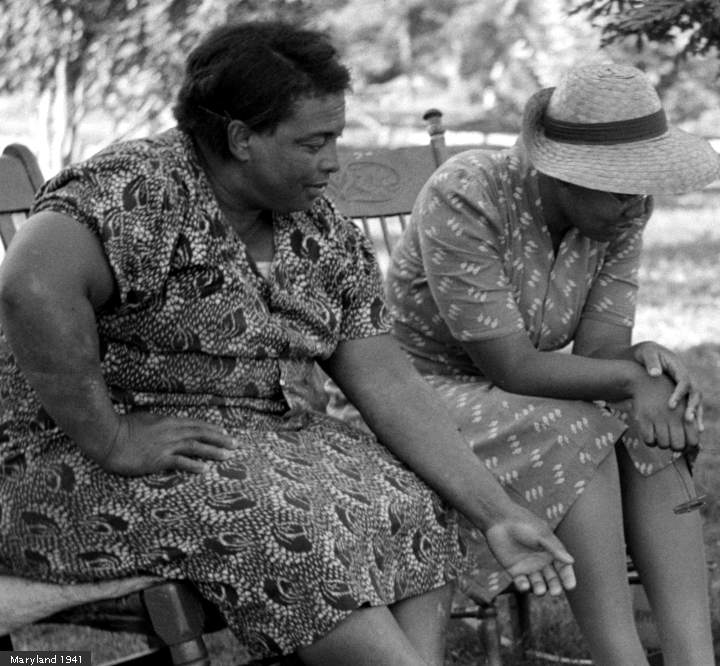


Truth About Opinions



Chamblee54 is normally a profanity free blog. However, for this piece, certain cuss words are essential to the free flow of information. In other words IF YOU DON’T LIKE CUSS WORDS, YOU DO NOT NEED TO READ THE TEXT.
Once, when his blog was active, a radio whiner referred to a study, that said that one third of all people were not qualified to have opinions. This was said before a commercial break, without saying why this percentage should be without opinions. Possible reasons would be lack of education, inability to think critically, or a disturbing tendency to disagree with the person doing the study.
Opinion is derived from “1250-1300; Middle English < Old French < Latin opīniōn- (stem of opīniō), derivative of opīnārī to opine.” In other words, the verb for sharing these thoughts is the namesake of the idea. The anagram of opinion is onion pi. The Power Thesaurus has 1,326 synonyms for opinion. Many are notoriously anal, like assumption. Or the sister of suppository, supposition.
“Opinions are like assholes, everybody’s got theirs .” The truth is, opinions have more in common with the waste that comes out of the anal sphincter, than the port of exit. Feces (thesis) is the product of food fed into the digestive system. Opinions are the result of information (and misinformation) fed into the thought system. Doodoo is influenced by the digestive system, like opinions are influenced by the attitudes, and thought patterns, of the individual. They all stink.
“Four Jews, Five opinions” is another crowd pleaser, like “You are entitled to your opinion.” The latter is usually said when you disagree with what you have just heard. When a Court of Law issues a ruling, it is called an opinion. Sometimes, a justice will write a dissenting opinion. When getting a provider to pay for a procedure, you often need to get a second opinion.
Opinions are frequently more valued by the giver than by the receiver . Some opinions are best kept to the owner. You should be wary of someone who feels that his shit does not stink, because he will usually feel the same about his opinions. You don’t have to have an opinion about everything. Many things are beyond or control, or do not interest you. Also, you should be wary of those who try to “fire up” your opinions. Often these people do not have the best of motives.
Opinions are seldom humble, no matter what the owner of the opinion might say. In fact, the act of holding an opinion is often self aggrandizing, and contrary to humility. Opinions are seen as a way of asserting ones individuality. Many people have lives of quiet desperation, full of struggle and turmoil. There are many situations where what the individual thinks is simply useless to the powers that be. In times like this, having opinions can restore a sense of self worth to the individual. I am somebody. I have my opinion. This does not mean that anyone is listening.
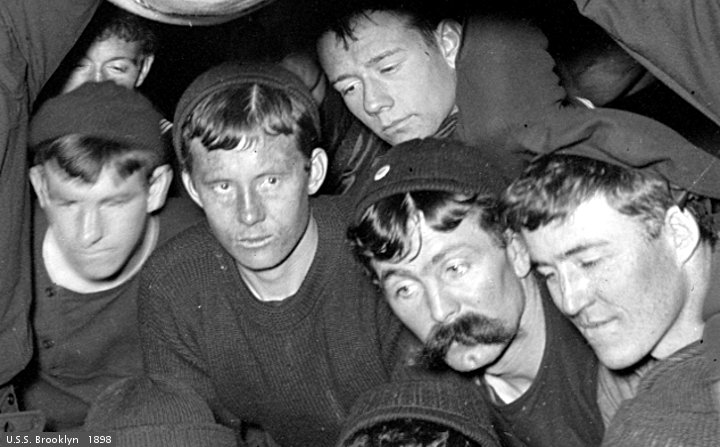
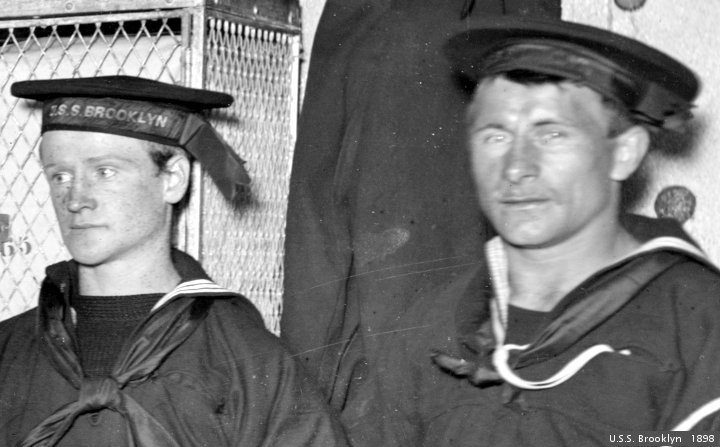
This is a repost with pictures from The Library of Congress. U.S.S. Brooklyn, after supper Edward H. Hart was the photographer, working for Detroit Publishing Co. The picture was taken between 1896 and 1899. The pictures are more reliable than the text.


A David Bowie Book


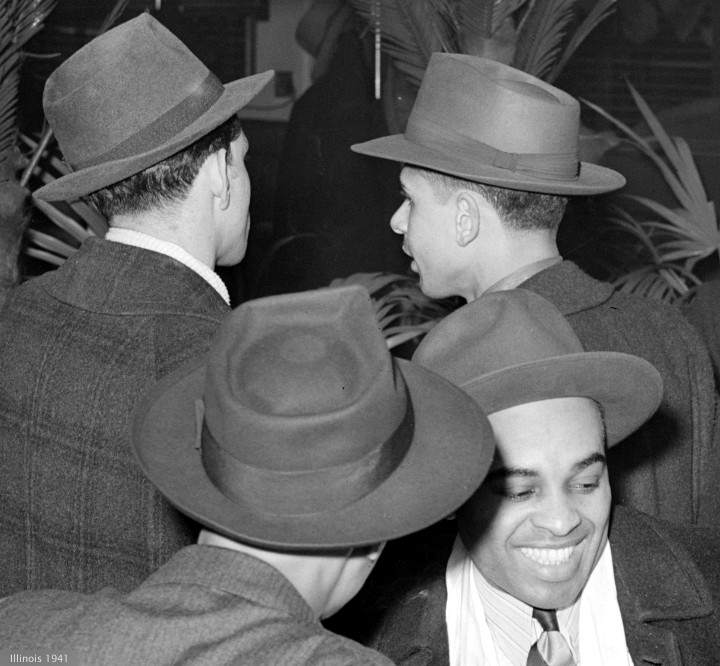

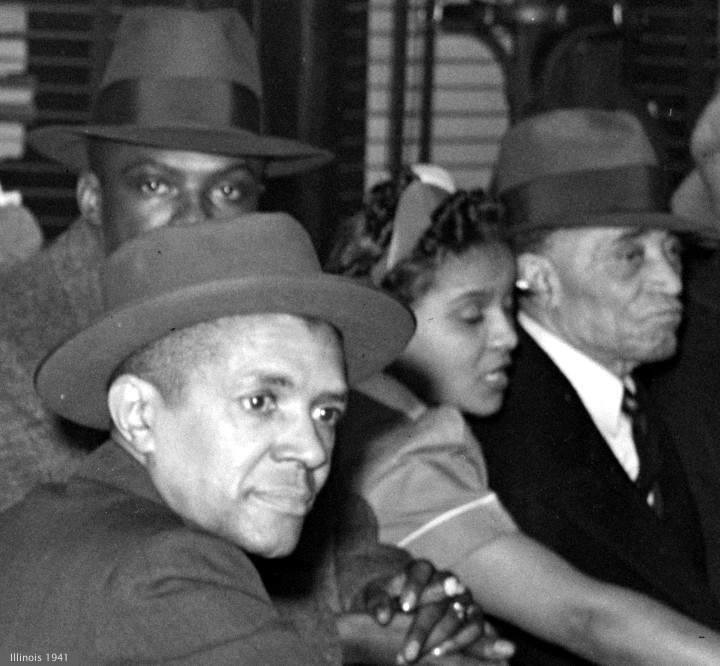
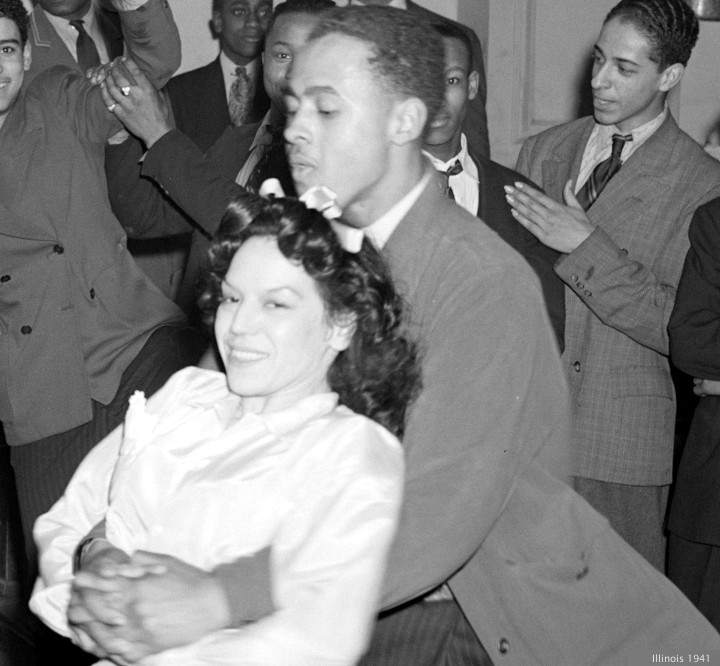
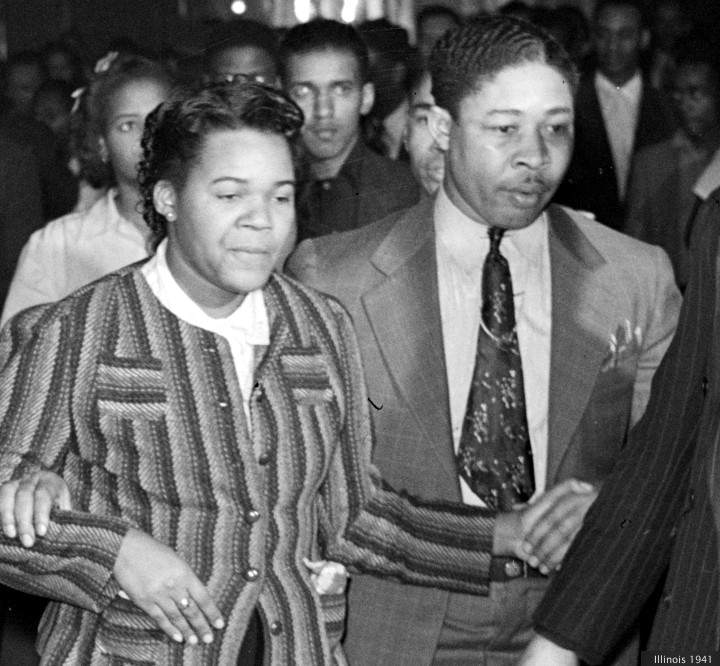
David Bowie: A Life was sitting on the biography shelf at the Chamblee library. It is an “oral biography.” Dylan Jones gets the blame, and the copyright. He took a bunch of interviews, and curated salient passages into a narrative. It is a fun book to read, full of sex, drugs, and rock and roll.
The Amazon one star reviews beg to differ. Guitar Gregg “I thought this would be biography not assorted comments. Very few comments from David Bowie. Who cares what Debora Harry or hundreds of “Joe blows” have to say? No pictures? 500 pages? Too much too little. Buy his cd’s instead.” worst read ever “Belongs in the fire … worst read ever!”
PG enjoyed DBAL. At some point, the lurid tales of depravity got too quotable, and PG started keeping a list. In this book report, we will use this list, until the list, or the reader’s attention span, is exhausted. There may be another installment. Part one was published last week.
“There’s one instance — probably included just so it would be cited — about someone calling Bowie’s room in New York with an offer of a still-warm corpse. “The town had never seen anything like David before,” says onetime groupie Josette Caruso. “And he obviously looked like such a freak that some sick people thought he might be into necrophilia.” (He wasn’t.) (Page 142)
Page 146 “He (Lou Reed) had an auteur complex, and Bowie didn’t fit into that. Lou was also a prime member of the awkward squad. He could lose a charm competition with Van Morrison.” In 1972 David had gone through years of struggle, and was starting to make it. After the Ziggy Stardust tour, he was hot. At this time, David wound up helping two struggling artists, Lou Reed and Iggy Pop
The Elton John/Rolling Stone article was published during one Iggy phase. “May 1975 — It’s four in the morning, Hollywood time, and David Bowie is twitching with energy. … Bowie clutches his heart and beams like a proud father watching his kid in the school play. His whisper is full of wonder. “They just don’t appreciate Iggy.” he is saying. “He’s Lenny fucking Bruce and James Dean. When that adlib flow starts, there’s nobody like him. It’s verbal jazz, man!” … Bowie and Iggy never did make it back into the studio. Pop slept past the booked time, called up drunk several nights later and when Bowie told him to “go away” — meaning “hang up” — Iggy did just that. Now he’s disappeared. “I hope he’s not dead,” says Bowie, “he’s not a good act.” Iggy will show up later in this story.
Page 151 has stories from the Ziggy tour. In Seattle, the entourage went to a gay bar, and someone invited David to a party. When the next day came, and the tour needed to go to the next city, David was nowhere to be found. When he finally called the hotel, all he knew was that he was in a house, with a lot of trees around it. A hotel employee talked to David on the phone, and they managed to figure out where he was.
Page 155 Lori Mattox was a fifteen year old rock fan in 1972. “We got to the Beverly Hilton, and all went up to Bowie’s enormous suite. … We were getting stoned when, all of a sudden, the bedroom door opens and there is Bowie in this beautiful red and orange and yellow kimono … “Lori, darling, can you come with me? … Of course I did. Then he escorted me into the bedroom, gently took off my clothes, and de-virginized me.”
There is a lot of text about David’s sex life. The boy got around, in spite of, or because of, his open marriage with Angela. Apparently, nature was generous with David. While performatively gay during this era, David made plenty of exceptions with ladies. DBAL is an entertaining book.
Page 176 Ava Cherry was a girlfriend who stuck around. “… and yes, we did have some fun together. We were staying at the Sherry-Netherland one night in New York, where David had given a party for Rudolph Nureyev. At the end of the party, everyone was gone apart from me and David and Mick, (Jagger) so it just ended up with the three of us sleeping together.”
Page 263 87 pages later, David has burned out on American rock stardom, and is living on top of an auto parts store in Berlin. This is the phase which produced Low and Heroes, two creative, though non commercial, efforts. Iggy Pop is back in the picture. Longtime assistant Coco Schwab never left. Iggy Pop : “There’s sevent days in a week: two for bingeing, two for recovery, and three more for any other activity.” Coco Schwab “I remember one elevated subway ride where you ride into East Berlin with no checkpoints and then back out with Absinthe into the west. Trust Jim (Iggy) to find that one.”
Page 277 David meets Adrian Bellew, who is in Frank Zappa’s band. David is talking to Adrian about doing a tour with David. At some point, the two go to a restaurant, where they run into Frank Zappa. “…David tried to strike up a conversation with Frank, saying “This is quite a guitar player you have here” And Frank said, “Fuck you, Captain Tom.” David persisted, and said “Oh come on now, Frank, surely we can be gentleman about this?” And Frank said, “Fuck you, Captain Tom.” … so David said, “So you really have nothing to say?” To which Frank said, “Fuck you, Captain Tom.”
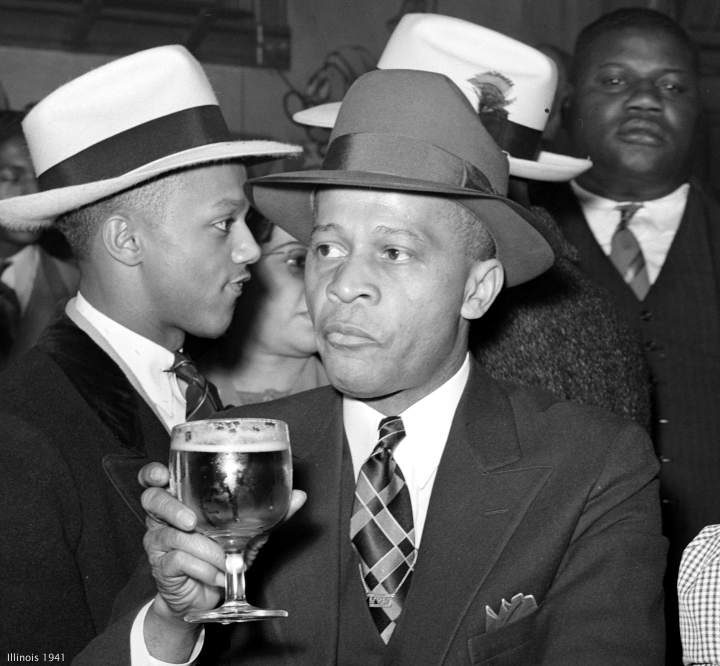
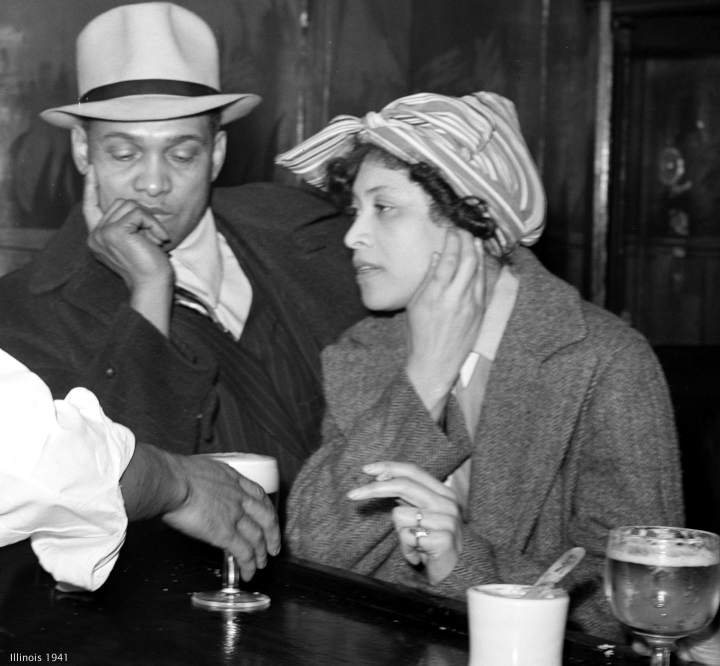
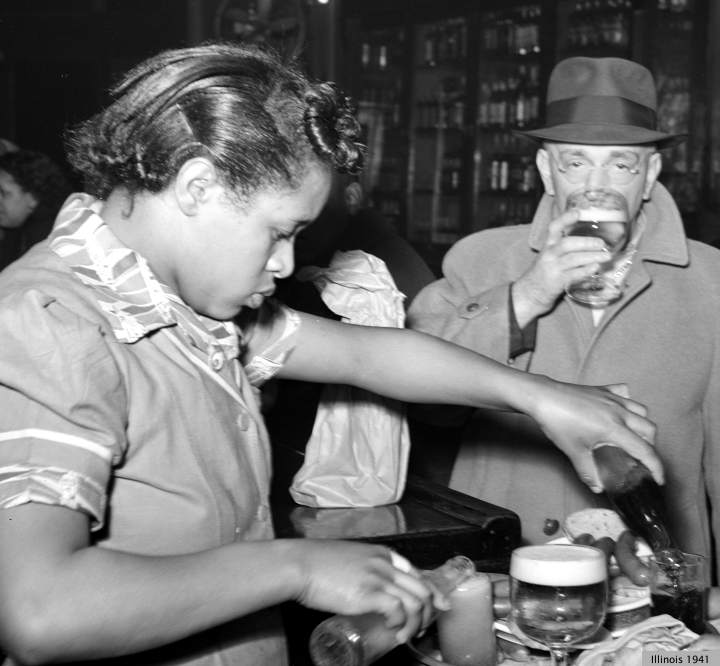
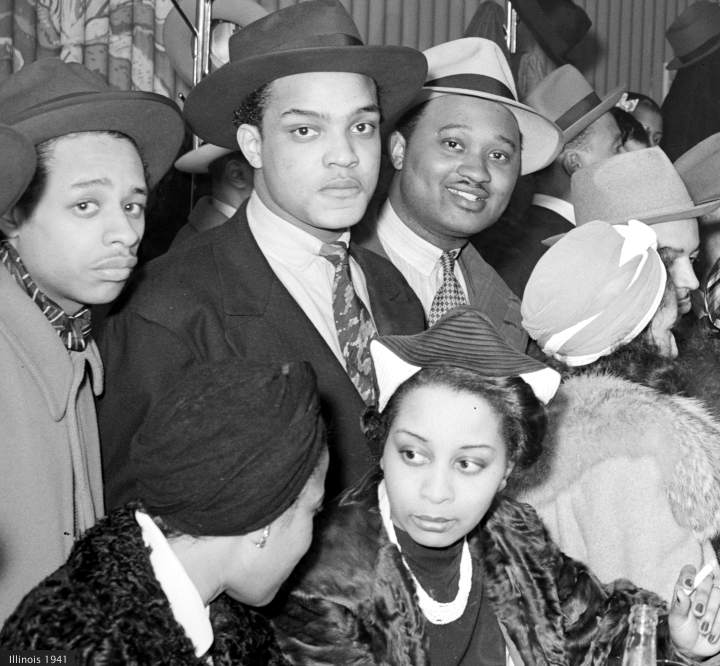
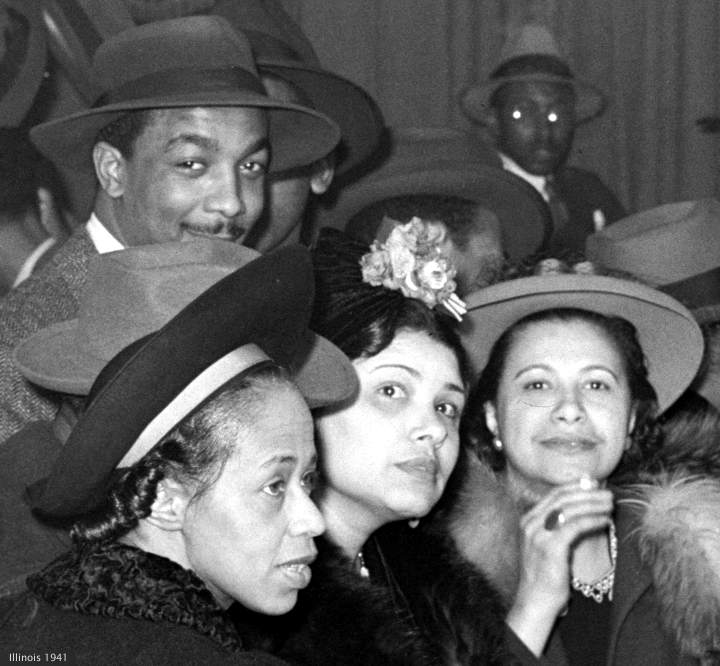
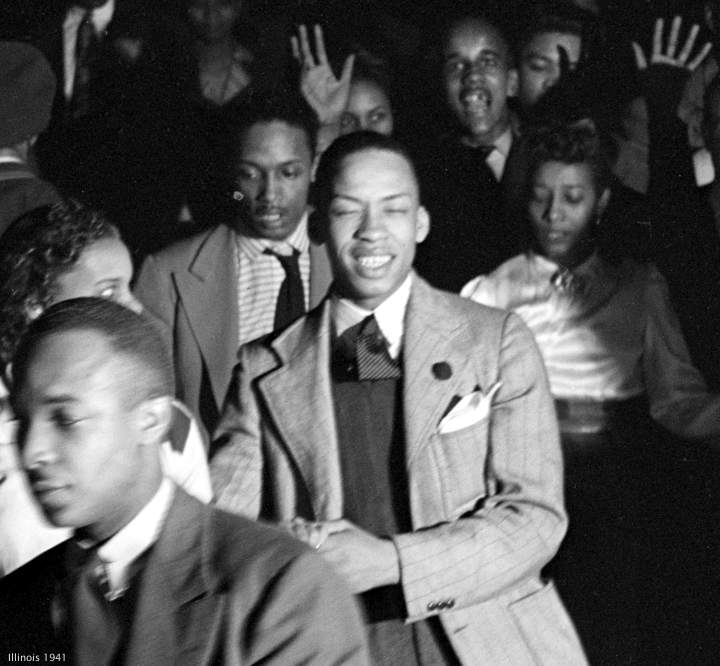
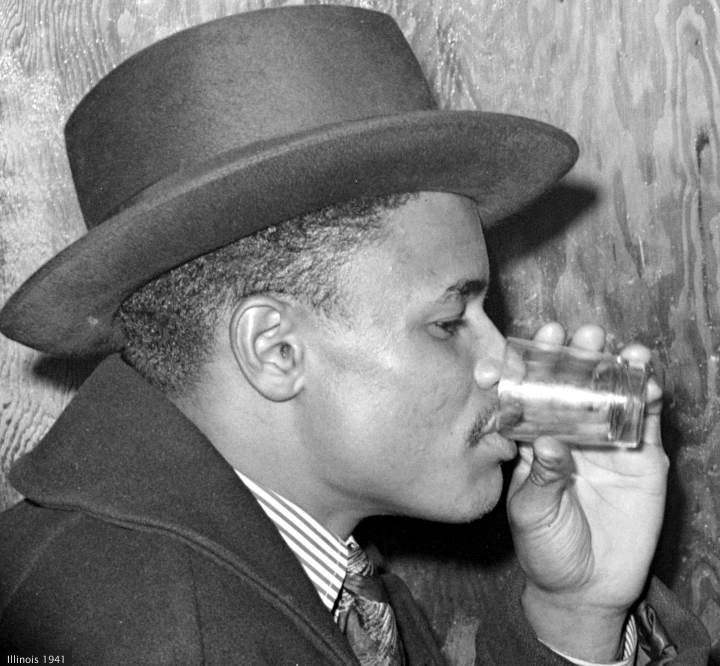
Picture are from The Library of Congress. Russell Lee took the photographs in April, 1941. The setting was Chicago, IL. The bar at Palm Tavern, Negro restaurant on 47th Street. Chicago IL Having fun at roller skating party at Savoy Ballroom. Chicago IL This is a repost.




Six Letter Word



This is a repost from 2013. There is yet another blog post about Shirley Q. Liquor, I’m Tired of Explaining Why I’m Offended by a Racist Drag Queen. SQL is a comic character, a black woman played by Charles Knipp, a white man. The concept is not pleasing to many people.
There is a sentence in the post which needs to be broken down. “Here’s my question: When people like me say that something is potentially racist, why do we have to defend ourselves to White people who act as the final jurist of the opinion?”
To begin, people very seldom say anything as restrained as potentially racist. The judgment is made with great force and certainty. The accuser appoints herself judge, jury, and hangwoman. There is a rush to be seen denouncing the so called racist, usually at top volume.
Racist is a six letter words. It is a word that gets attention. Racist is casually tossed around, and is filtered out by many people. Maybe, just maybe, there are better ways to deal with situations without using this six letter epithet.
Last summer, PG received a mailer that had some questionable content. It discussed the creation of a city of Brookhaven. The mailer was displayed, and the racially obnoxious aspects of it were discussed.
On election day, the voters chose to create a new city. Protest did not do any good. Would using a six letter label have made any difference? Probably not. This blog does not have that large of a readership. Also, some people who were troubled by the mailer felt that a new city was the correct thing to do. PG just wanted to let people know he was not pleased.
PG is white, and can only speak for himself. When he hears the word racist, his BS detector kicks into action. These arguments are rather one sided, with white people usually the bad guys. If you want to influence behavior, you might think twice before tossing a six letter expression into your speech.
There is a logical fallacy in that sentence. You make a statement, go past considering whether or not it is true, and go directly to asking “why.” When is a person made to feel that “we have to defend ourselves to White people who act as the final jurist of the opinion?” Do these PWOC (People With Out Color) use a weapon to force this explanation? Why would you have to explain yourself anyway?
It is *racially specific* that she says white people in this sentence. Would it be better if a POC (Person of Color) didn’t automatically believe everything the author says? PWOC PG has observed POC acting as “the final jurist” on racial matters.
When you hyperdefine a concept like racism, you run the risk of defining racism so narrowly that offensive entertainers do not fit the definition. Shirley Q. Liquor talking about her nineteen babydaddies does not affect the larger issues of white privilege. Or maybe racism is anything that annoys a POC. At some point, the six letter word does not mean very much.
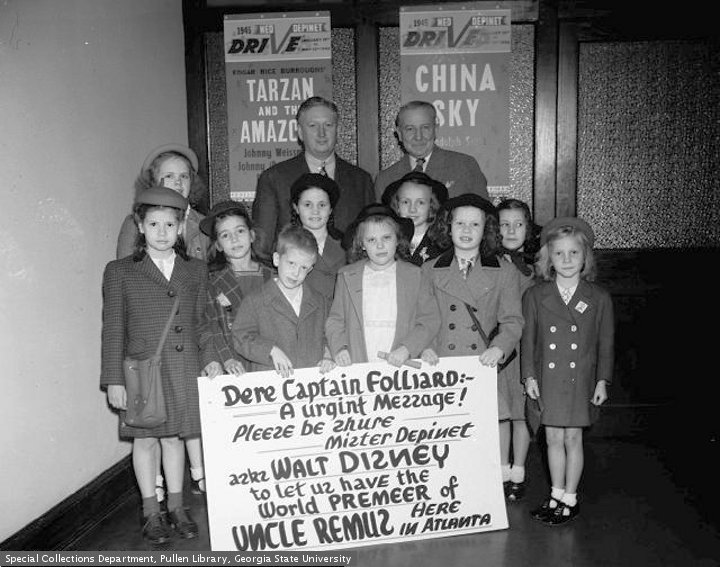
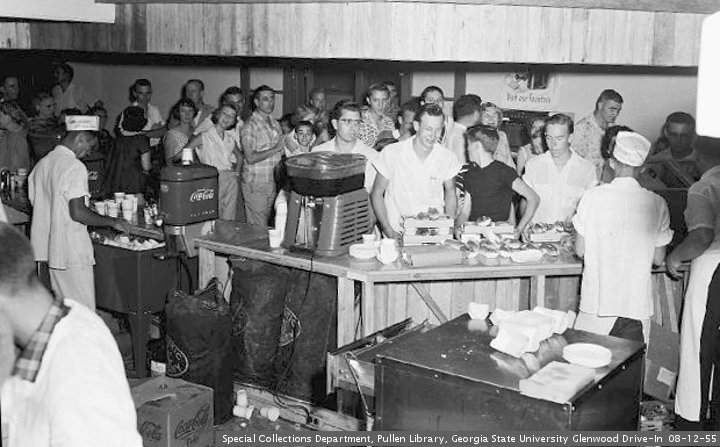
Pictures are from “The Special Collections and Archives,Georgia State University Library”.




In This McMansion


A popular yard sign begins with “IN THIS HOUSE WE BELIEVE:” (That is the last time we will use all-caps.) There are some opinions expressed in this piece. It should be noted that what follows is merely one person’s opinions. You are free to agree, or disagree, as you see fit.
The ITH yard sign (ITHYS) states: “in this house, we believe: black lives matter, women’s rights are human rights, no human is illegal, science is real, love is love, kindness is everything” The sign is an aesthetic nightmare. You have seven lines of all-caps text. Every sans-serif line is a different size and color. There appear to be multiple fonts used.
ITHYS is annoying. People are too proud of their opinions, and too eager to share them. It does not matter whether you agree or not. Somebody is confronting you with their beliefs. Sometimes, it is worse when you do agree, or partially agree. ITHYS presents bumper sticker arguments, not a respectful discussion of complex issues.
ITHYS is a reminder that we live in a Christian society. This is more than just the widespread acceptance of the Christian doctrines. Christianity is a religion of beliefs and persuation, not practices and contemplation. Even if you move away from the specific doctrines of Christianism, you still accept the primacy of beliefs. It is important to persuade others to accept your beliefs. You see others as a collection of beliefs, rather than a person.
ITHYS begs for satire. Sacred cows need to be ground into hamburgers. I started to write down ideas. Soon, I had In This House Poem. (ITHP) It is embedded above. “In this house we are all God’s children, It is not what you say but how you say it, Don’t need to talk more need to listen more, Clever arguments are not always the truth, Science is the questioning not the trust, Beliefs are your thoughts with an attitude, Hate wins when you fight hate with hate, You are entitled to your opinion.”
The first four words are the same. ITHYS starts off “In this house we believe:”, followed by six beliefs. ITHP says “In this house we are all God’s children.” One is rhetoric, one is acceptance. It doesn’t matter how you read the fine print, you are still one of us. The ITHYS beliefs are presented in all-caps. (One of the rejected lines for ITHP was “Writing in all-caps is shouting.”) In ITHP, the doctrine is less important than your basic humanity. “Beliefs are your thoughts with an attitude.”
On May 1, 1992, Rodney King had seen the policeman who beat him acquitted. Cities coast to coast were in violent upheaval. Despite this, at 7:01 pm, Mr. King stood in front of a camera. “People, I just want to say, you know, can we all get along? Can we get along? Can we stop making it, making it horrible for the older people and the kids? . . . Please, we can get along here. We all can get along. I mean, we’re all stuck here for a while. Let’s try to work it out. Let’s try to beat it. Let’s try to beat it.”
Part of the religion of beliefs is persuading other people to agree with you. You get into semantics, rhetoric, and using logic as a weapon. People confuse presenting a clever argument with speaking the truth. Ideas become more important than people. Not everyone feels this is the best way to live. “You are entitled to your opinion.”
ITHP is just eight ideas. We do not mention many important issues. Black lives matter. People disagree about the existence of God. And much, much more. Many of those issues are complicated. An alternative yard sign says: “simplistic platitudes, trite tautologies, and semantically overloaded aphorisms are poor substitutes for respectful and rational discussions about complex issues”
An amazon review has the final word today. juleskywalker “Don’t buy! So CHEAP it didn’t last 3 weeks! This sign is so cheap, that after only 3 weeks outside, one side has almost entirely peeled off, and the other side isn’t much better. It’s not from the sun either, since it’s the north facing side that is pictured. For comparison, we’ve had a BLM sign next to it for the same time period, and that one looks brand new.” Pictures today are from The Library of Congress.


≠


@WokeTemple “words = words, violence = violence, words ≠ violence, silence = silence, silence ≠ violence Any questions?” @WokeTemple “Salvation from Whiteness via the the Spirit of The Holy Greta. #CRT, Critical Race Theory & White Fragility. Join our Holy Woke Crusade.”
PG saw this, and decided to make a snappy tweet using ≠. It took a bit of looking, with one person saying to find ≠ somewhere, and copy it. Finally, a video emerged: type 2260 followed by alt x.
Before seeing the video, PG resorted to googling ≠. The first result was surprising. “Some white supremacists have adopted the mathematical sign “≠” (Not Equal or Not Equal To) as a white supremacist symbol. The use of this symbol is an attempt to claim that different races are not equal to each other (and to imply that the white race is superior).”
A google search, “use of ≠ as white supremacist symbol”, was not very helpful. The first two results were the Anti-Defamation League. There was an NPR story about the OK sign, and a few websites that are no longer in business. The first page of google did not have any white supremacists using ≠. Neither did Know Your Meme.
Hate on Display™ Hate Symbols Database documents 214 such symbols. No date is shown, and the list is possibly out of date. Many prison gangs are covered. The only non-white symbol, seen during a superficial perusal of the list, is the New Black Panther Party. Some of the entries are head scratchers.
“5 Words is a reference to a white supremacist slogan: “I have nothing to say.” In the late 1990s, white supremacists Tom Metzger and Alex Curtis popularized this phrase, which they claim should be the only words white supremacists should ever speak to the police.”
“ACAB stands for “All Cops Are Bastards” and is a slogan … in the skinhead subculture. Because non-racist skinheads (including “traditional” skinheads and anti-racist skinheads) may use this acronym as well as racist skinheads, it should be carefully judged in the context in which it appears.”
“The “Bowlcut” is an image of a bowl-shaped haircut resembling the one sported by white supremacist mass killer Dylan Roof. People who use the “bowlcut” image or other “bowl” references admire Roof and call for others to emulate his racist murders.”
“Pit bulls are the favorite dogs of many white supremacists, because they are perceived as savage fighters. One particular pit bull graphic has become a common white supremacist symbol.” Pictures today are from The Library of Congress. This is a repost.


leave a comment