Atlanta Rising
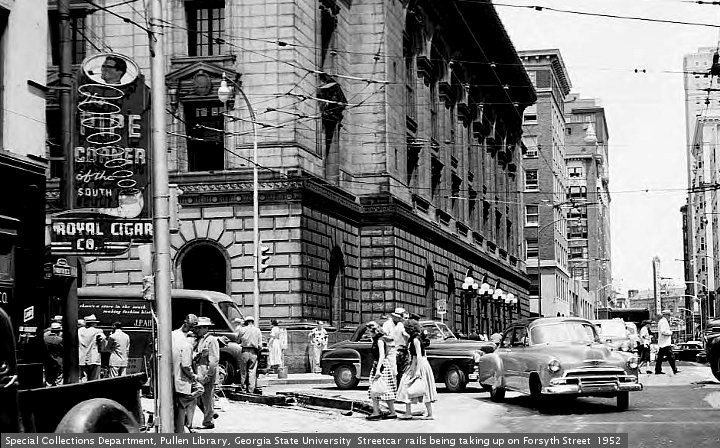


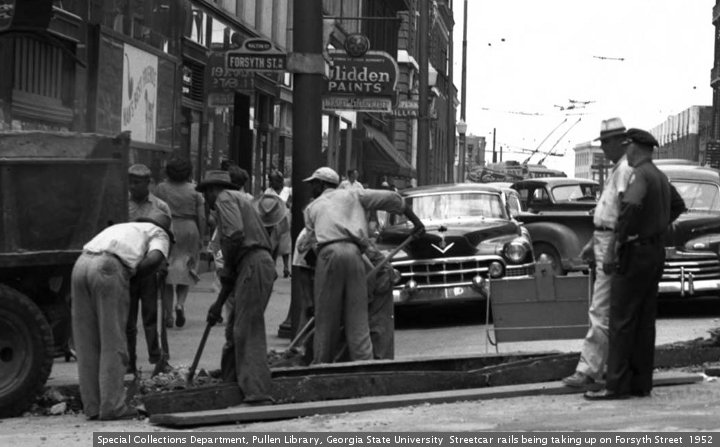
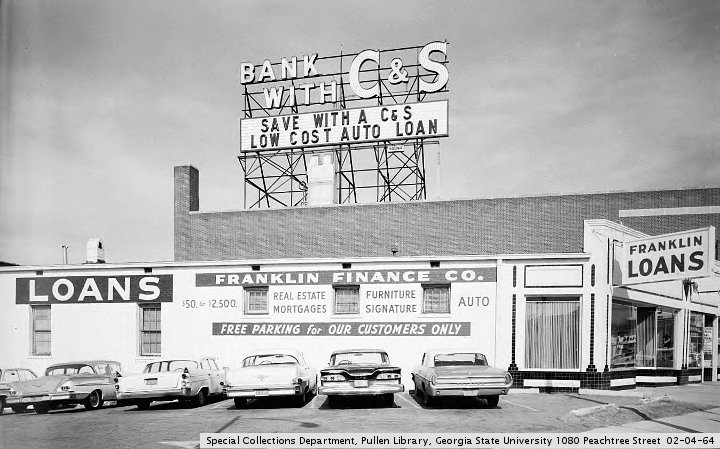
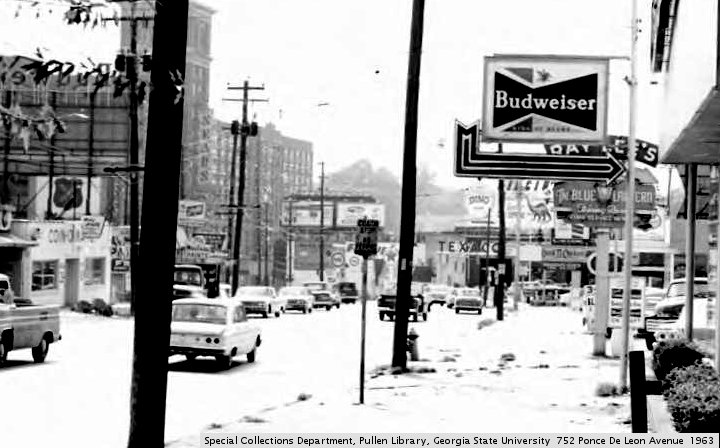
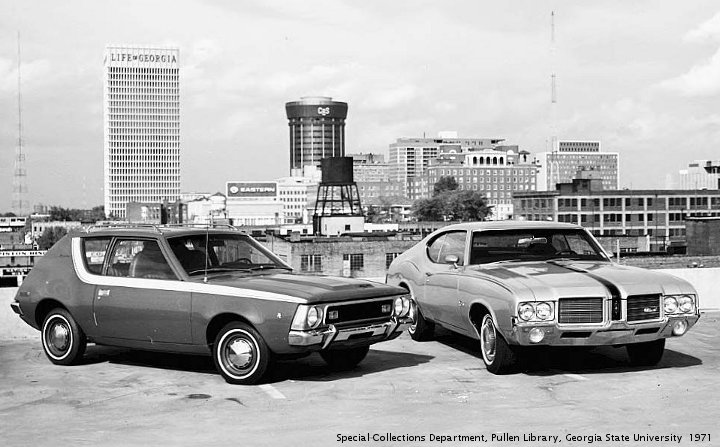
Atlanta Rising: The Invention of an International City 1946-1996 is on the shelf at the Chamblee library. This book is a history of Atlanta in the modern era, written by former fishwrapper scribe Frederick Allen. This is a repost from 2014. Pictures are from “The Special Collections and Archives, Georgia State University Library”.
The story begins in 1948. AR is weighted more to the older part of the story. The main text is 248 pages. On page 124, Ivan Allen has just built a controversial roadblock on Peyton Road, which would be in 1962. The further along in the story, the fewer details are included. The first big story is when Georgia had two governors. This is one of the best descriptions of the two Governors controversy around, and does not mention Ben Fortson’s wheelchair cushion.
The mayor at the start of the story is William B. Hartsfield. “Willie B” was a leader in creating the Atlanta Airport, and in building it into the powerhouse it is today. He was mayor until 1961, when Ivan Allen Jr. moved into the office.
AR has many moments of unintentional irony. When you read a book 18 years after it was written, and fifty years after the events in the book, you see things that could not have been imagined before. In 1960, many of the political-business elite thought it was time for Mr. Hartsfield to retire. Among his shortcomings was an indifference to sports. Mr. Hartsfield thought that a new stadium would be too great a drain on the city’s taxpayers. Fifty four years, and three stadiums, later, the power elite is going to build another stadium. Atlanta Stadium cost eighteen million dollars. The Blank bowl will cost over a billion. (In the past year, a plan to move the Braves to Smyrna was announced.)
One of the big stories here is civil rights. Atlanta came out of that struggle looking pretty good. It was a combination of image conscious businessmen, enlightened black leadership, and a huge helping of dumb luck. In 1961, the city was under federal pressure to integrate the schools. The state was firm in opposition, and the city wasn’t crazy about the idea anyway. Then, another federal court ordered the integration of the University of Georgia. Since the people would not stand for messing with their beloved University, the state laws forbidding integration were quietly repealed. The city schools were integrated with a minimum of fuss. (The book tells this story much better than a slack blogger.)
The controversy about the 1956 model state flag was going full steam when AR was written. The book has some legislative records, which for some reason never made it into the fishwrapper. There is no clear cut answer as to why the legislature changed the state flag. It was mentioned that at the national political conventions, you could not have a written sign, but you could wave a state flag. This controversy provided a diversion from gold dome crookedness, and hopefully has been laid to rest.
A man named Lester Maddox sold fried chicken, and ran for public office. AR describes Lester as looking a bit like an angry chicken. Through a series of constitutional convulsions, Lester was elected Governor in 1966. The state survived his tenure. In the seventies, when Jimmy Carter was running for President, Lester said a lot of rude things about Jimmy, helping the smiling peanut farmer get elected. In another turn of fate, Lester Maddox died June 25, 2003. This was two days after the eternal departure of Maynard Jackson, the first black Mayor of Atlanta.
The book ends with the 1996 Olympics looming over the city. Billy Payne led a smart campaign to secure the games for Atlanta. One of his moves was to keep Jimmy Carter and Ted Turner out of the action. After the 1980 boycott, and the Goodwill Games, neither person was popular with the I.O.C. The book was published before 1996. The Olympics were a blast.
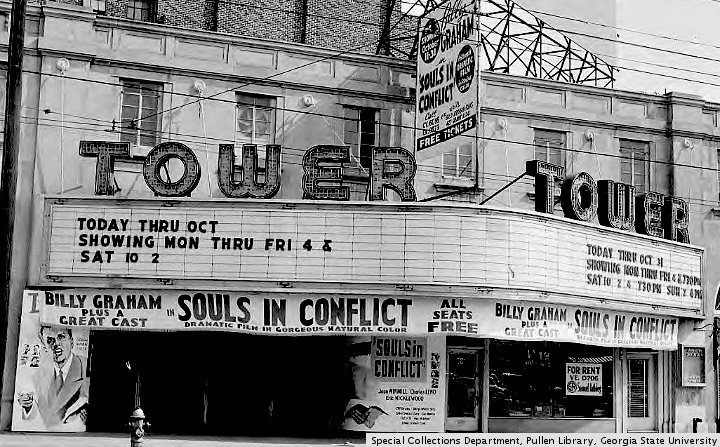




I Used to Be Charming Part One

My current book is I Used to Be Charming, by Eve Babitz. The plan is to have a multi-part dialogue. IUTBC is a collection of magazine pieces. Sometimes the magazine is as much fun as the story. This is especially true for No Onions, a story about Archie, Veronica, and people who don’t to eat onions. The story was in Wet: The Magazine of Gourmet Bathing.
All This And The Godfather Too kicks off the book. Eve gets hired to go to Lake Tahoe, and write about the production. There are magic moments. Eve gets booked into a San Francisco hotel, along with a spy gathering. The phrase employed here is “buggers convention.” When you consider the British meaning of “bugger,” you realize that San Francisco is always a buggers convention.
On page 27, Eve is writing a story for some magazine. She types on single-sided pieces of paper, and writes a number at the top of each page. Eve is an alcoholic space kitten, and forgets page 29. The manuscript goes to Europe. Someone spends $34 to call Eve, and find out there is no page 29. This happens on page 28 of IUTBC.
Mr. Coppola made of ton of money on the first Godfather, and goes around San Francisco buying things. He’s got this office building, which is now a boutique hotel. Mr. Coppola also bought City Magazine, which became a financial quagmire. City Magazine shut down in 1976. Eve said it was not saving the magazine, as much as keeping the Titanic afloat.
Cindy Williams appears at a dinner. She had starred in a couple of movies, and was starting to make a name for herself. The dinner was before Laverne & Shirley. It is fun to read something 47 years after publication, when you know what the author did not know.
I read a 1980 Playboy in the mid-eighties. The article was about the 1980 elections. A press secretary was asked about the zero factor … the way Presidents, elected in years ending in zero, seem to die in office. The man said, this was interesting, but we really are not worried about it. The PS is question was James Brady, who was severely wounded in an assassination attempt on President Reagan.
ATATGT is written for something called Coast magazine. You can buy a copy on eBay for $99. It’s a beautiful magazine, with a drawing of Mr. Coppola on the cover. Eve Babitz is above the masthead.
My God, Eve, How Can You Live Here? appears in City Magazine, “Vol. 8 No. 64 Apr. 30- May 13, 1975 “Inside Los Angeles” Edition.” Eve wrote a survival guide to LA, intended for visitors from San Francisco. “Rent A Car: That’s Rule One.” She calls one road the Raymond Chandler Memorial Parkway. Chandler wrote fun books, about an LA that no longer exists.
My Life In A 36DD Bra appeared in the April, 1976 edition of Ms. Magazine. How this got on the cover of a feminist magazine is anyone’s guess. Eve’s mammaries are part of her aesthetic. “When she graduated from Hollywood High in 1961, Babitz wrote to Joseph Heller: ‘Dear Joseph Heller, I am a stacked 18-year-old blonde on Sunset Boulevard. I am also a writer. Eve Babitz.’ … Babitz wrote a Daisy Miller-inspired novel, which Heller sent to his publisher: it was turned down.”
Her booby broadside has a feminine slant. The men who hit on Eve routinely say that they are really leg man, even when drooling over her chest. Despite sporting enormous breasts, Eve rattles on about how she does not like her ass. This type of anti-feminism can be dangerous. Another article in the April Ms. was TRASHING: The Dark Side of Sisterhood. If you substitute “cancel culture” for “TRASHING,” that article could have been written today.
Eve had her ups and downs, before taking the ultimate downer December 17, 2021. Someone managed to snag an interview in 2019.
LA Mag You went from sex, drugs, and rock and roll to what The New York Times described as a political conservative and supposed MAGA hat owner.
What brought this change about, and where do you stand now?
Eve I never talk about politics. … Although I was so happy [when] my friend Linda [Ronstadt] was going out with Jerry Brown. …
LA Mag All of your writings contain what the press calls “unabashed hedonism.” We’re living in an antihedonist moment now: political correctness and Twitter quash humor/sarcasm/sexual jokes. Sobriety’s rampant. If your books debuted now, how do think they’d go over?
Eve I can’t imagine, and luckily I don’t have to! Also if I were writing now, I doubt the books would be the same. After all, my sobriety is rampant, too!
LA Mag What are you currently doing with your time?
Eve I see my friends; go to [AA] meetings. I am gratefully sober.
I read all the time: books, magazines, everything.
Losing Weight Made Me A New Person—A Novelist appeared in the September, 1977 edition of Vogue. Traditionally, September is the most important issue of the year for fashion magazines.
The story is as much about alcoholism recovery as losing weight. Eve was quite a lush in her day.
Of course, when you knock off the sauce, you eat/sleep/exercise/fuck better, and become a healthier person. And, as we learned in the 36DD story, Eve was already a healthy girl. Never mind that the early alcohol recovery did not last. Eventually, Eve became a cocaine aficionado.
“Her friend Paul Ruscha was once quoted saying, “She’d blown her book advance on coke, fucked up her nose. She called me, begged me to come over. I couldn’t believe what I saw. There wasn’t an inch of floor not covered in bloody Kleenex. The cats were running around high.” … She stopped using in May of 1982. “Everyone has their own reasons for stopping an addiction. It’s hard to say what it is, except you know in your bones that if you don’t stop at the moment you decide, you never will.”
It is traditional for drunken writers … redundancy alert … to talk about the many authors who were raging drunks. Eve even coins a verb … Mailered … to describe this. Stormin’ Norman was as famous for his drunken brawling as his prose. His place in the slobberin’ scribe hall of fame is assured.
When people noticed that Eve was losing weight, and not being drunk all the time, they started pestering her to write a novel. She started pasting notes together. “I thought it was a little greedy of her. After all, I was the one who’d gotten the corpse from the guy in the alley at midnight; now she wanted me to dissect it all by herself, and I hadn’t even finished drinking the blood.”
I was reading the chapter about losing weight in the Walmart parking lot. At one point, I looked up from the text, to see a 300 pound women and her equally porcine husband. Pictures today are from The Library of Congress. More “Charming” episodes are available. two three four five


Common Sense Quote


0312 – We’re going to conduct a facebook experiment. I posted a video from Dr. John Campbell. He discussed some reputed side effects of the Pfizer vaccine. Soon, Facebook sent me an admonition. “… The post includes information that independent fact-checkers said was partly false. …” The suspicion here is that Facebook has a problem with Dr. Campbell.
On to today’s experiment. I’m listening to another video from Dr. Campbell. He admits that he made some errors in his interpretation of the Pfizer data. He goes on to say “you can’t put solid footsteps into fresh air you need solid ground.” This is just a common sense quote. My plan for today is to make a video segment of the CSQ, and post it on Facebook. Lets see if the fact-checkers have a problem with it. As of March 19, Facebook has been silent.
0314 – I was through with Blocked and Reported, and making great progress on my picture. It was time to go out. I had two destinations. One was the gym. The other was the library. I had a book, The Santa Suit, to return. Think — inside the work — outside the work.
TSS is not a great book. Perhaps that was what was needed. With the book I am starting, quotables lie on every page. The desire to go in depth may prove irresistible. However, I read to have fun. Sometimes a trifle like TSS is what I need. Just read a story, without provoking great thought. The fact that TSS is easy to read indicates that the author worked like hell. Easy writing makes tough reading.
0318 – I’ve stumbled onto this podcast series about the shooting of Martin Luther King, The MLK Tapes. The shooting was quickly blamed on James Earl Ray. He was supposed to be a racist/white supremacist, and most people believed he was guilty. It turns out that there were serious problems with the government’s case. The podcast series is downright fascinating. It’s not something I’ve really thought about a whole lot. I just accepted the conventional wisdom, and went on with my life.
In episode 3, the case was going to trial. Mr. Ray’s lawyers were confident of an acquital. The government was not going to have that. For some reason, Mr. Ray fired his first lawyer. A gentleman named Percy Foreman took over. Soon Mr. Ray entered a guilty plea.
In the show, people talk about how worthless Percy Foreman was. I was curious if Mr. Foreman was still alive, so I googled him. A legal document turned up. JB Stoner was lawyer number three. Mr. Stoner was an extreme racist, even by Georgia standards. He ran for Governor in 1970, and made a spectacle of himself. At one point, Mr. Stoner sued a TV station, to allow an ad with the n-word.
There are many stories that could be told about JB Stoner. The candidates were speaking at the Governor’s Honors program. Mr. Stoner was going through his routine, when three students starting walking up the aisle. A young black man, with a blonde on each arm, walked up the aisle to the front of the hall. The man who won the Governor’s race, Jimmy Carter, was laughing so hard that tears came out of his eyes. Pictures today are from The Library of Congress.



Mr. Eno And Mr. Isherwood
I was listening to a conversation between Brian Eno and Rick Rubin. Mr. Eno made a comment that sent me down a google rabbit hole, looking for a digital holy grail. When I did not find what I was looking for, I returned to the conversation. Before long, Mr. Eno said something very similar.
“I’d heard something on NPR. It was a poet, a black poet from somewhere in America, reading this poem called Cadillac. I spent years trying to find this thing. I never found it. I wrote to NPR, and I phoned them up, and everything. It was called Pink Cadillac … this amazing, very rhythmic poem, about how he wanted a Pink Cadillac.” This quote got me thinking about another detail.
There are bits of knowledge that want to remain hidden. One is from Christopher Isherwood. It was in a magazine, sometime before 1994. The author died in 1986. The comment was about when you choose a religion. It is not the doctrine that attracts you to a religion, it is the people who introduce you to this observance. If the right person had told Mr. Isherwood about Catholicism, he would have become a Catholic. Instead, in 1938, Aldous Huxley and Gerald Heard introduced Mr. Isherwood to Swami Prabhavananda, and the Vedanta Society of Southern California.
“He (Isherwood) published an account of his spiritual journey at the end of his life, called My Guru and His Disciple.… It’s interesting because it’s so frank and unromantic about the spiritual life. Where Alan Watts basically bullshitted his way to guru status while secretly being an alcoholic and treating his wives like crap, Isherwood is totally upfront about his boredom, his frustration, his vanity, his sexual escapades … he gave us a wonderfully unvarnished account of spiritual mediocrity. As Pema Chodron says, we spend most of our spiritual lives in the middle – not completely lost, yet not completely saved. Just muddling through.”
I did not find the quote I was looking for, but I did find another piece to the puzzle. I went back to Mr. Eno and Mr. Rubin. Then, out of nowhere, came this: “I think that’s the that’s the power of religion as well. The power of religion is not the connection with God, but the connection with the rest of the congregation. The connection with all of the people who also believe in that particular story. I’m not really religious myself but i really respond to that idea.”
Before we return to The Library of Congress for more pictures, there is a quote about God. While responding to a question about spiritual discipline, Mr. Eno said: “I don’t want to be a believer. I want to be somebody who, as far as possible, understands and knows things. Believing things leaves me a little bit unsatisfied. If I find myself believing something, I want to test the belief. I want to say how do I find out how valid this is.” If you want more, you can listen to the complete interview.


C.S. Lewis


There was a facebook link to a feature, Ayn Rand Really, Really Hated C.S. Lewis. It turns out to be verbatim droppings from Ayn Rand’s Marginalia : Her Critical Comments on the Writings of over Twenty Authors. If you are interested in details, there are the links. 55% of the comments were one-star. This is a repost, with pictures from The Library of Congress.
Miss Rand has read more C.S. Lewis than PG. There was a copy of a CSL work at a yard sale once, which PG invested a quarter in. He read as far as the appearance of a pig named trufflehunter. Maybe it was a bad day for books, but PG put CSL down, never to make another attempt.
There was a sixth grade english teacher at Ashford Park named Mrs. Ruff. Lots of people talked about how sweet she was, but PG was not impressed. One day, between handing out mimeographed copies of poems to be memorized, Mrs. Ruff started to talk about Narnia. It was a fantastic and amazing story. With a hint of primness, she told the class that Narnia was really about Jesus.


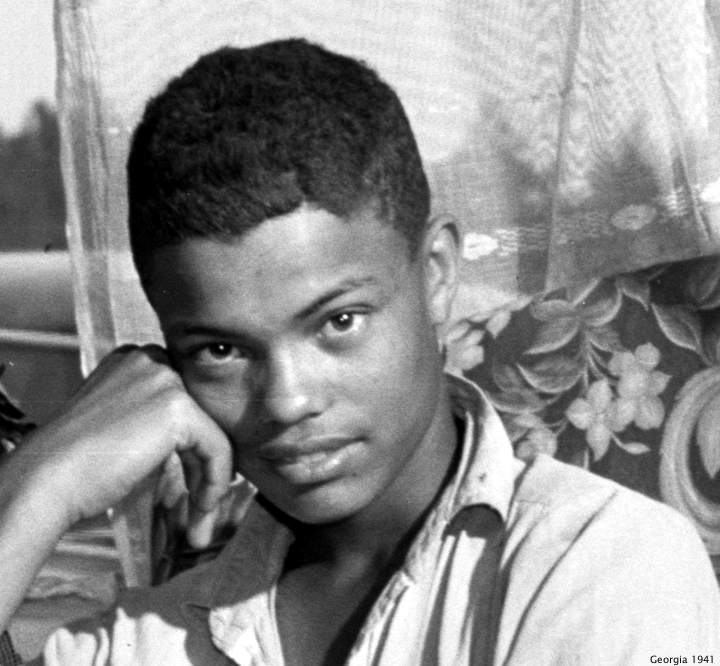
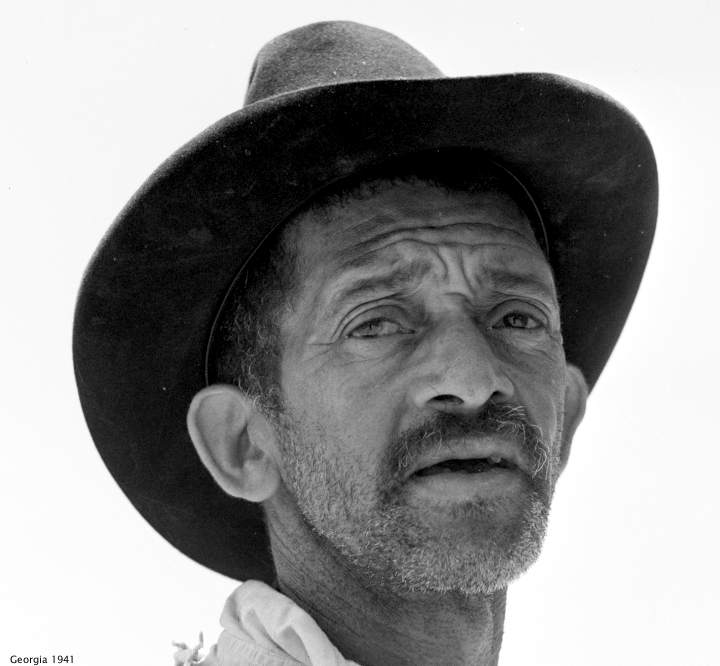


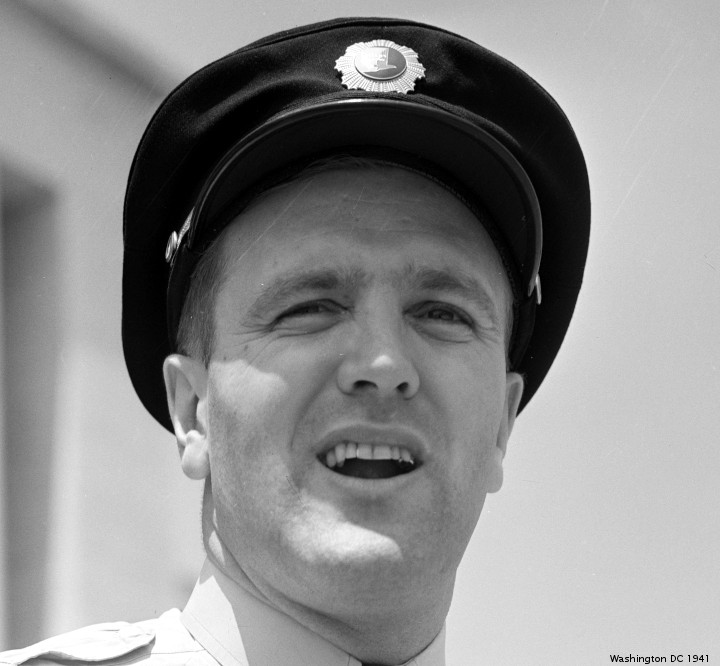

Hollywood Part Five
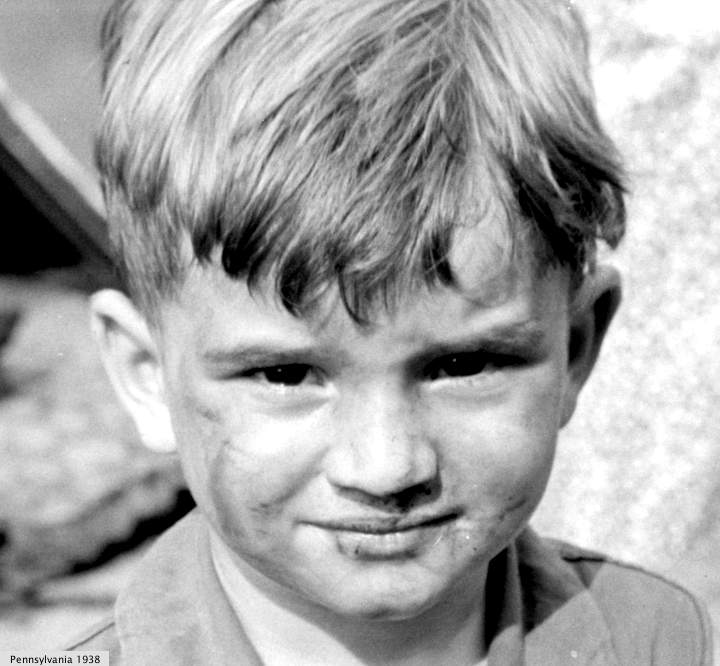



This is the fifth, and final, installment of chamblee54’s revenge fantasy against Hollywood, by Charles Bukowski/Hank Chinaski. The book is an account of making the movie Barfly. Other chapters in this series are available. one two three four Pictures today are from The Library of Congress.
37 – Some photographer comes by. He wants to take photographs of Hank, and Francine Bowers/Faye Dunaway. Jack Bledsoe/Mickey Rourke also posed, but refused to sign a release. I went looking for the pictures online. I found a picture that Francine and Hank did after the movie has been released. I don’t know what happened to the glamor shots.
38 – The action starts at a party, after shooting for Barfly wrapped up. It’s at a club somewhere, rented only until midnight. Hank orders a drink after midnight. The bartender says she has to charge him. Tonight, because, she’s a fan, Hank won’t have to pay. The evening is a mixed blessing for Hank. Some guy comes up to him, and swears he got drunk with Hank at Barney’s Beanery. The fan is offended that Hank does not remember.
The Super Bowl turned into a disaster. I was at my online poetry reading, watching the game with the sound cut off. Channel 11 was not doing very good. It kept going into this video catastrophe. It was tolerable as long as the picture came back, and I could see most of the action. But then, just as the game was starting to get good, the video just completely went out. I’m probably not going to watch too much TV until football season starts again, so it might not be a problem.
I’m trying to pay attention to the game, and feeling terrible because I can’t. I get a phone call, pick up the phone, and push this button. It is supposed to turn on speaker phone, but, if the call is not fully connected, will decline the call. IOW, I hung up. The call was from “J,” who lives in Mexico. He can call me, but I cannot call him. After some facebook messaging buzzouts, we get to talk on the phone. “J” was carrying on about how he does not care about the super bowl, and I just zoned out and said yeah, yeah, yeah. Tomorrow is another day.
39 – Hank goes to the editing room, and asks John Pinchot about the producers. “They are like children, they have heart. Even when they are trying to cut your throat, there is a certain warmth about them. I’d much rather deal with them than with the corporate lawyers who run most of the business in Hollywood.”
There’s a tasty quote on page 200. Hank notices a shot in the movie where his alter ego is meeting a girl. He takes a beer that he’s halfway through, pushes it aside, and doesn’t finish it. Hank points out that no alcoholic would ever do that. “That’s what happens you have a director who isn’t an alcoholic, an actor who hated to drink, and an alcoholic writer who preferred to be at the racetrack.”
40 – Hank and Sarah go to a screening of the movie. They get to the screening place, and it’s been moved to another location. They have to drive over there, and Hank needs a bottle.
There is a rhetorical tactic called the Motte and Bailey. As I understand it, this strategy involves making a claim that no one could disagree. Later, you learn that the plan is for something treacherous. An example would be CRT in K-12 schools. Who could disagree with learning about racism in school? It seems reasonable enough. It is only when you bring in Robin DiAngelo that you learn the truth. “Its always something. If its not one thing its another.”
Motte and Bailey is based on a medieval castle. The motte is a ground in front, where people live their everyday lives. The Bailey is a fortified stone house behind a moat. When there is trouble, this is where people go to wait out the trouble.
41 – Well Hank is going good, now that he’s made it to the premiere. This chapter is pretty boring, except when Hank tells about the time he lived with Tully and Nadine. This is not the same Nadine that Chuck Berry wrote a song about. Nor is it about the facebook friend who lives in Florida with three cats, one of whom is named Nadine.
Hank was living with this lady named Tully, some sort of entertainment industry suit. Tully thought Hank was in a bad way, and needed to be cared for. Hank responded by staying drunk, insulting all her friends, and fornicating with Tully whenever appropriate. Tully had a housemate named Nadine, who was keeping a musician named Rich. One night Hank and Rich got drunk, and decided that this business of being a kept fuckboy was not working too good, even if Nadine was a nymphomaniac. Nadine was going around the house naked one time, when Tully was out. Hank was not amused, and said he didn’t want to see her p**** flapping around. Nadine replied that she wouldn’t screw him if he was the last man on Earth.
42 – Hank is hanging out at the house in Los Angeles, and takes a phone call from Jon Pinchot at the Cannes Film Festival. Mickey never showed up, and Francine is making a spectacle of herself. She’s the last great movie star. Meanwhile Hank is reading James Thurber, who he thought was pretty funny. It was a shame that Thurbur had such a upper-middle-class view point. “He would have made one hell of a badass coal miner.”
It’s time for another interlude from real life. I was at the gym, and Neil Young’s “Rockin in the free world” came over the noise box. It was so ironic to hear that old geezer sing about freedom, when he is made taken it upon himself to censor Joe Rogan. I agree with Lynyrd Skynyrd about Neil Young.
I will give Neil Young credit for one thing. One afternoon in 1978 I went over to see someone. He told me that 96 Rock was giving away tickets to see Neil Young. 96 Rock was in that triangle building on Clairmont Road. There was a man out in front, with a shoebox full of tickets for Neil Young at the Omni. You could have taken you could have asked him for 15 tickets, and he would have happily given them to you. The seats were in the upper level, at the back of the hall. The band was so loud you could hear them clear as day. Even though I think Neil Young is a pretentious, half-crazy fuquad, he puts on a damn good show. He was doing the Rust Never Sleeps show. The roadies were dressed up like Star Wars characters. Neil tore the place up, so you have to give a man credit, even if he has way too many opinions for his own good, and is ugly is boiled over sin.
The only Neil that’s uglier than Neil Young is Neal Boortz. I would hate to be the judge of that beauty contest. I saw Mr. Boortz give a show, at the CNN Center, one time. They had an on camera talk show, with Neal as the host. It is a cliche that Neal has a face for radio, but there is another reason he never made it on tv. When he talked that day, you could see the disdain for the audience in his face. You can just look at him, and tell that he’s a lying a*******. He thinks you’re an idiot for paying attention to him, which many of his followers are … this robo secretary rant is being edited on the day after Russia invaded Ukraine. It is amazing how last week’s concerns are now obsolete.
43 – At first, there was not going to be a premiere for Barfly. Then Hank insisted that he wanted one. He wanted to have a white limousine take him to this premiere. On the night of the premiere, this gentleman named Frank picks him up. Frank was sort of an a******, but then very few people got along with Hank. They made it to the premiere without breaking down in Hollywood traffic.
There used to be a dirt road in Chamblee, where a bunch of limousines were parked. I just rode my bike by there, and I saw them. There’s another place down on Whitehall Street, just south of downtown. They kept horses that used to pull buggies for the tourists . I don’t go downtown anymore, so I don’t know if it is still there.
44 – So the premiere happened. Hank and Sarah showed up, and had to have some wine brought in for them. They sat on the front row, where all he could see was these huge figures towering above. He realized that one day he was going to watch it all on videocassette, so he could actually see it.
After the premiere Hank is in the men’s room. There’s this drunk at the urinal next to him. He says “hey you’re hanging trying to ski.” Hank says “no, I’m his brother Danny.” “why don’t you talk to him” “because I used to beat him up every time I could and that’s why we don’t get along. I don’t know why I came to this premiere, I hate his guts, but that’s how life goes”
There were a bunch of hippies at Cross Keys who thought forty four was a magic number. It was Hank Aaron’s jersey number. Forty four has a certain synchronicity, with the multiplication of two times two times eleven. Eleven is two ones to that, so there is a sequence of two ones multiplied by two twos. There’s a certain fibonaccian synchronicity afoot. Two is a fibonacci number, as is thirteen, which is two plus eleven. Thirteen is also considered unlucky.
45 – I am starting to run out of things to say. The story is over, but Hank might be getting paid by the word. I did enjoy this adventure. The next book is The Santa Suit, by Mary Kay Andrews. TSS is off to a slow start, and seems a touch boring, after the antics of Hank Chinaski. An Amazon one-star review gets to the inner truth: “The book is ripped and dirty. I can’t give this to a patient for christmas! If I could give it zero stars I would”
The one-star review did not have a period at the end. When you write stuff, you notice details like that. God is in the details. I always think I am going to have a red-pencil happy english teacher going over my text. Like my butch tenth grade teacher. She was married at the time, to a greasy haired man with two packs of cigarettes in his shirt pocket.
46 – This is the last chapter. This has been a fun series. It was my first production written, in part, by the google robo secretary. While it requires a lot of editing after the fact, it does have its applications. It is good for reading text from a book, like this cable tv movie show review of The Dance of Jim Beam, which is what Hank calls Barfly. The next paragraph was borrowed, and not written by me.
“Selby shook his head, and limp-wristed the movie away. Awful, terrible. This has to be the worst movie of the year. Here we have this bum, with his pants down around his ankles. He’s filthy, uncaring, obnoxious. All he wants to do is beat up the bartender. From time to time he writes poems on torn pieces of paper, but mostly we see this scumbag sucking on bottles of wine, or begging for drinks at the bar. In one bar scene, we see two ladies fighting to their very death over him. Impossible. Nobody nobody would ever care for this man. Who could care for him. We rate movies from 1 to 10 here. Is there anyway I can give this a -1?”
From what I remember of my bar-room days, there’s a lot of characters like that. I’ve always felt that Hank Chinaski is the one person who actually created something, instead of just feeding a urinal. Drunks are generally useless people.
One morning, a friend and I had been up all night tripping. We wound up in the blue room, a beer joint across the street from the bus station. There was this guy in there named Hawaiian Eddie. He was insisting that we stay, and let him buy us another beer. We had to lie to him, and tell him we had to go to work, so we could leave without drinking more beer. Life was fun in those days.

The Portrait Of Mr. W. H.


“A thing is not necessarily true because a man dies for it.” The gem, blamed on Oscar Wide, turned up on a data mining site. A quick search indicates that the quote in genuine, and is found in The Portrait of Mr. W. H. (1889.) Searching for context in a Wilde story can yield more than you bargained for.
PMWH is a tacky short story, with an eyeroll-inducing ending. SPOILER ALERT: This ending will be discussed today. PMWH is the story of an unnamed correspondent (UC), who is having a conversation with Erkskine. The players are Englishmen of a certain class, who all seem to have servants. The conversation gets onto forgery in the arts. UC felt that “to censure an artist for a forgery was to confuse an ethical with an aesthetical problem.” To which Erkskine replied, ‘What would you say about a young man who had a strange theory about a certain work of art, believed in his theory, and committed a forgery in order to prove it?’
Erkskine’s friend was Cyril Graham. “He was very fascinating, and very foolish, and very heartless.” Cyril developed some theories about the identity of Mr. W.H. … “A person known only by his initials, to whom the first edition of William Shakespeare’s sonnets (1609) was dedicated”… “To the onlie begetter of, These insuing sonnets, Mr. W.H. all happinesse … ” Cyril thought that W.H. was Willie Hughes, an androgynous young man of great beauty. “He felt, as indeed I think we all must feel, that the Sonnets are addressed to an individual, – to a particular young man whose personality for some reason seems to have filled the soul of Shakespeare with terrible joy and no less terrible despair.”
Erkskine thought that these ideas were foolish, and said so to Cyril. Soon after, Cyril produced a painting, that he found under strange circumstances. Allegedly, it was a portrait of Willie Hughes. Erkskine thought this a bit odd, but played along … until he stumbled onto evidence that the painting was a forgery. “I went off at once to Cyril’s chambers, waited there for three hours before he came in, with that horrid lie staring me in the face, and told him I had discovered his forgery. He grew very pale and said – “I did it purely for your sake. You would not be convinced in any other way. It does not affect the truth of the theory.
“The truth of the theory!” I exclaimed; “the less we talk about that the better. You never even believed in it yourself. If you had, you would not have committed a forgery to prove it.” High words passed between us; we had a fearful quarrel. I daresay I was unjust. The next morning he was dead.'”
“… he shot himself with a revolver. … By the time I arrived – his servant lad sent for me at once – the police were already there. He had left a letter for me, evidently written in the greatest agitation and distress of mind. … he believed absolutely in Willie Hughes; that the forgery of the picture had been done simply as a concession to me, and did not in the slightest degree invalidate the truth of the theory; and that in order to show me how firm and flawless his faith in the whole thing was, he was going to offer his life as a sacrifice to the secret of the Sonnets. It was a foolish, mad letter. I remember he ended by saying that he entrusted to me the Willie Hughes theory, and that it was for me to present it to the world, and to unlock the secret of Shakespeare’s heart.’ “
UC is convinced that the Willie Hughes story is real. “Erskine looked at me in amazement. ‘You are carried away by the sentiment of the whole story,’ he said. ‘You forget that a thing is not necessarily true because a man dies for it. ” UC leaves, and tries to prove the Willie Hughes hypothesis to be true. This goes on for a while, until UC talks himself out of it. By this time, however, Erkskine has changed his mind, and is a Willie Hughes true believer. If this is getting complicated and confusing, you can read the story. Oscar’s prose is entertaining, if a bit archaic to the modern reader.
Erkskine is dismayed by UC’s lack of belief. He sent UC a letter. “The concluding words of the letter were these: ‘I still believe in Willie Hughes; and by the time you receive this, I shall have died by my own hand for Willie Hughes’s sake: for his sake, and for the sake of Cyril Graham, whom I drove to his death by my shallow skepticism and ignorant lack of faith. The truth was once revealed to you, and you rejected it. It comes to you now stained with the blood of two lives, – do not turn away from it.'”
“It was a horrible moment. I felt sick with misery. … To die for one’s theological beliefs is the worst use a man can make of his life, but to die for a literary theory! It seemed impossible.”
SPOILER ALERT: Fret not, gentle reader. When UC caught up with the Erkskine’s family, he heard a different story. “I turned to the doctor and said, ‘What a dreadful shock it must have been to Lady Erskine! I wonder that she bears it as well as she does.’ ‘Oh, she knew for months past that it was coming,’ … if a mother knows that her son is going to commit suicide’ … ‘Suicide! Poor Erskine did not commit suicide. He died of consumption. He came here to die. The moment I saw him I knew that there was no hope. … At that moment Lady Erskine entered the room with the fatal picture of Willie Hughes in her hand. ‘When George was dying he begged me to give you this,’ she said. As I took it from her, her tears fell on my hand.”


“It is always a silly thing to give advice, but to give good advice is absolutely fatal.” The Portrait of Mr. W. H., by Oscar Wilde, has many zesty quotes not included above. The one about advice stands out. It is similar to well known Oscarism. “A little sincerity is a dangerous thing, and a great deal of it is absolutely fatal. ” The line about sincerity is found in The Critic as Artist. In this episode, Gilbert and Ernest are exchanging clever thoughts.
Gilbert: Ernest, you are quite delightful, but your views are terribly unsound. I am afraid that you have been listening to the conversation of some one older than yourself. That is always a dangerous thing to do, and if you allow it to degenerate into a habit you will find it absolutely fatal to any intellectual development. As for modern journalism, it is not my business to defend it. It justifies its own existence by the great Darwinian principle of the survival of the vulgarest. …
Ernest: But what is the difference between literature and journalism?
Gilbert: Oh! journalism is unreadable, and literature is not read. … How appalling is that ignorance which is the inevitable result of the fatal habit of imparting opinions! …
Ernest: The true critic will be rational, at any rate, will he not?
Gilbert: There are two ways of disliking art. One is to dislike it. The other, to like it rationally. …
Ernest: Well, at least, the critic will be sincere.
Gilbert: A little sincerity is a dangerous thing, and a great deal of it is absolutely fatal.
Gilbert also says “Anybody can make history. Only a great man can write it.” This is a rather sexist counterpoint to that bumper sticker classic, “Well behaved women rarely make history.” The latter was penned by Laurel Thatcher Ulrich, in a scholarly article. “1976 Spring, American Quarterly, Volume 28, Number 1, “Vertuous Women Found: New England Ministerial Literature, 1668-1735” by Laurel Thatcher Ulrich, The Johns Hopkins University Press” The seminal quote said seldom, rather than rarely. Pictures today are from The Library of Congress.
Hollywood Part Four


What follows is part four in the chamblee54 celebration of Hollywood, by Charles Bukowski/Hank Chinaski. The book details making the movie Barfly. Other installments of this series are available. one two three five Pictures today are from The Library of Congress.
29 – The movie is shooting. Press people are starting to descend, in search of interesting copy. People have this notion that Hank is gonna be interesting. “The phone rang every day. People wanted to interview the writer. I never realized that there were so many movie magazines, or magazines interested in the movies. It was a sickness, this great interest in a medium that relentlessly and consistently failed, time after time after time, to produce anything at all. People became so used to seeing **** on film that they no longer realized it was ****.”
Hank Chinaski has to have a pro-active editor. This book is too smooth, and too easy to read. There is no way that a broken broken down urinal-feeder like pink China’s key can write a page turner like this. (Sometimes it is best to not correct the robo secretary.) Easy riding makes hard reading. Stream of consciousness is more fun to write, than it is to read.
Barbet Schroeder/Jon Pinchot did a series of interviews with Hank for French TV. I’m gonna find them on YouTube, and listen to as much as I can stand. (I did not make it through two minutes.) I thought I could use them as background noise for a graphic poem. The text was written by Ambrose Bierce, yet another drunken journalist. I’m gonna to use pictures of dogs for the background. This is gonna be the first time that I’ve married images to text in a while.
30 – Hank and Sarah go to a party. They meet a lawyer representing somebody. The client owes Hank money. The lawyer says the check is in the mail. Hank, Sarah, and the lawyer, continue to drink heavily. The lawyer’s wife, Helga, is a retired drunk. Hank says that there is absolutely nothing worse then being sober around drunks.
I was brought up in a Southern Baptist house. Father would drink a beer or two, but mom was a teetotaler. As a result, I really never learned how to drink. A social outcast in high school, I didn’t learn there either. I may be the only person alive that never drank, before he was legal. By this time, I was a dedicated pothead. It went from enjoying an occaisonal beer, to the point where the drinking was more than I was comfortable with. I never got a DUI, and I never progressed to hard liquor dependency. When I was 34, I quit, and never looked back.
I quit drinking on December 31st 1988 … The windows robo-secretary quit, for the last time. I am moving over to google docs, which is much better. … I’m not as willing to put up with alcoholic nonsense as I was before. I try not to be obnoxious about it. Alcohol serves as a social lubricant, that helps you get to know people. I spend a lot more time by myself now. It got even worse when I quit smoking pot. Now I’m an anti-social mess. It would be best if I could figure out *moderation,* but that is not happening for me.
31 – The checks did arrive. They promptly bounced. … I’ve always liked the phrase, returned for insufficient funds. The last time I got a reality check, it was returned for insufficient funds.
There’s a campaign ad, from a lady named Kay Ivey. She’s some sort of politician in Alabama, and she has nothing good to say about President Brandon. I’ve condensed this video down to the best 5 seconds. This lady looks at the camera all sweet and squishy and says “poor Joe bless his heart.”
32 – So they’re shooting the scene in a bathtub. Francine is concerned that her tits are going to show. Mickey is not loosening up. They’re on their 19th to take. The camera man wants a drink … he’s a brilliant camera man, and a drunk. They don’t want him to drink. However, people do want Francine to have a drink, so she can loosen up. Finally, Sarah comes out of the kitchen, with of coffeecup of whiskey, gin, and cat piss. Francine drinks the concoction, and the scene is shot.
Being a retired drunk is nothing to be proud of. If I was really doing it right, I would have learned the gift of … what’s that word, not sobriety, not temperance … anyways that that word that means that you can drink enough to enjoy yourself, or to loosen up when you need to, but not become a basket case. Now I can’t remember the word. I never could do it when I was drinking, and now I can’t remember the word for it. I’m sure I’ll remember it later.
33 – They’re shooting a scene. The building they’re using used to be a ballroom. It was full on Saturday night. The drunks outside hated the bougie dancing people. Now the building is a rehabilitation center for alcoholics, full of “reformed drunks who read the Bible, smoke too many cigarettes, and play bingo.”
This German lady, and this Italian lady, want to interview Mr. Chinaski. Italian lady goes first, all she wants to do is talk about drinking. Hank wants to talk about being pickling up the ass of death. By the time he got to German lady, Hank ran out of things to say. … There’s an old joke, about this Polish starlet. She thought she could get a part by fucking the screenwriter.
I am happy with the google robo secretary. It is time to take this further, and try editing in gd. as this program is affectionately initialized. I have to have background music. This would be The fastest guitar in the world. A man named Lloyd Ellis created the album in 1958. A bunch of studio musicians record instrumentals, destined for the $1.98 bin at K-mart. Meanwhile, the timer on the phone goes off. Breakfast is ready. Life is good.
34 – Jon Pinchot calls Hank. The movie has been cancelled, again. That seems to happen a lot. Hank is sympathetic, and invites Jon over for a few drinks. Pinchot says no thank you, I have a date with two lesbians. Hank was going to go to the racetrack anyway.
The racetrack system is all based on the concept that the public must lose. You decide what the public is going to do, and bet against it. Hank has a good system, but doesn’t always follow it. One of the problems that you have to defeat is human weakness.
Cary Grant was a star of LA racing. He would go to Hollywood Park, place a $2 bet, and go into hysterics when losting. The former Archie Leach was so well known at the track, they named a race The Cary Grant Stakes. Randolph Scott was a drink served in the clubhouse.
Hollywood Park eventually became obsolete. It was torn down, and SoFi stadium was built on the site. The Super Bowl is playing in this venue as we speak. I have a digital converter powering a huge tv that weighs 66.6 pounds. It was given to me. The game is on Channel 11, where over-the-air broadcasting is not a priority. The picture is on for a while, then breaks down into pixelated goulash.
35 – Hank and Sarah go to see a scene shot. They go to the bar. It is somehow connected to a flop house hotel. They go in, and a famous film critic there. .. Siskel and Ebert or Airhead or one of those guys .. Soon, Francine Bowers/Faye Dunaway comes in with her little notebook.
She is playing Jane, Hank’s gf, and wants to know about her. The Barfly cheat sheet says that Jane is “real,” but I suspect that her name is really Betty. In one of his books, Hank talks about his shack job Betty. Neither one was a member of the Junior League.
This man, Illiantovitch, comes in, and orders a double vodka. I had that I had to Google that name because it’s not in the Wikipedia summary. I found this Bukowski Forum. They had a text document, with every character in Hollywood, and the real life counterpart. There is no information about Illiantovitch, which is too bad. He is a sloppy drunk, but a neat character. Illiantovitch keeps drinking double vodkas, cussing out everybody when they go to watch the movie.
Francine is a great name. On dead Saturday, 1973, I went to a Stadium concert in Charlotte NC. One of the bands was ZZ Top. This was back when their beards were only about three fingers long. ZZ Top was the only band that to play an encore. One of their star songs was Francine.
36 – They need to shoot the bar fight. They’ve got doubles, to do the real fighting. Mickey Rourke is just going to pretend, in a couple of close-ups. Let the doubles do all the dirty work. Hank is nostalgic for his days as a barroom drunk. Later, Francine asks Hank how Jane died. She was the maid in this hotel, and everybody gave her a bottle of wine for Christmas. Hank went over to see her, and saw all these bottles in her room. “Babe you can’t drink all of that you’re going to die.” He came back a few days later, all the bottles were empty, and she was laying on the bed unconscious. Jane came to long enough to say “I knew it was you going to be you.” She died an hour later.


Hollywood Part Three
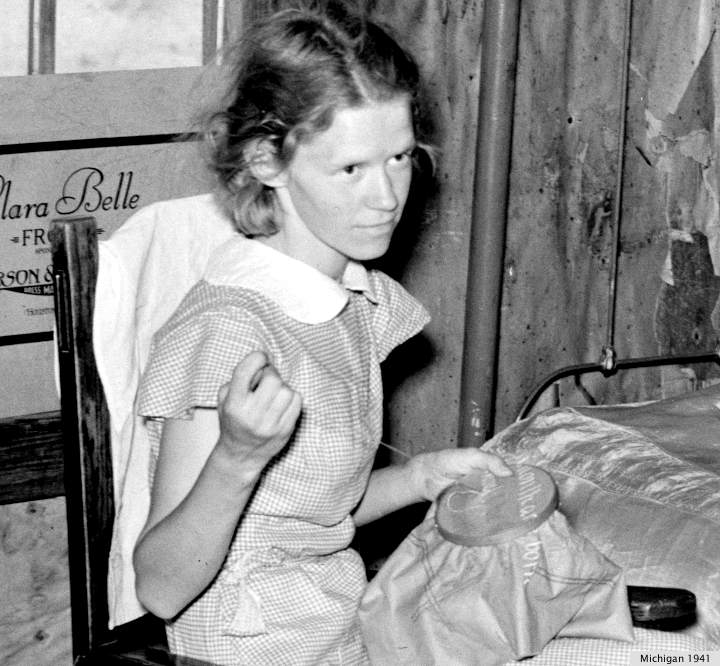
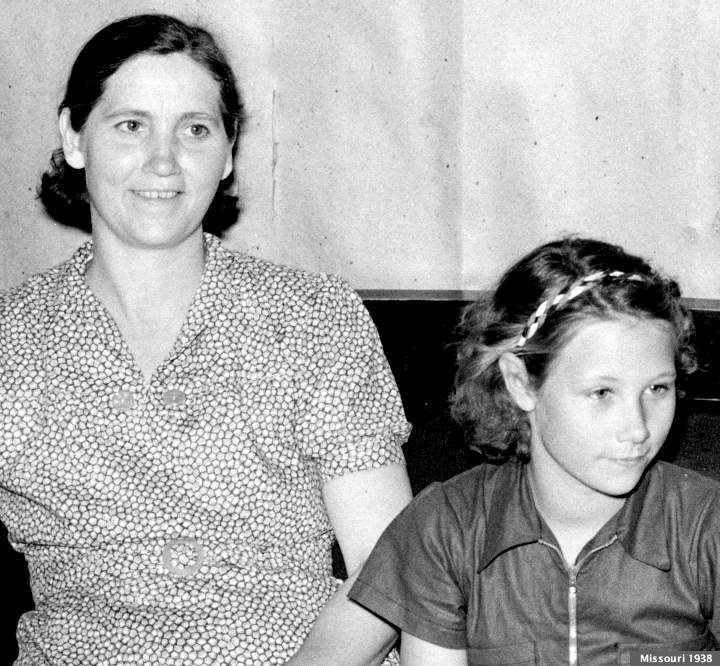


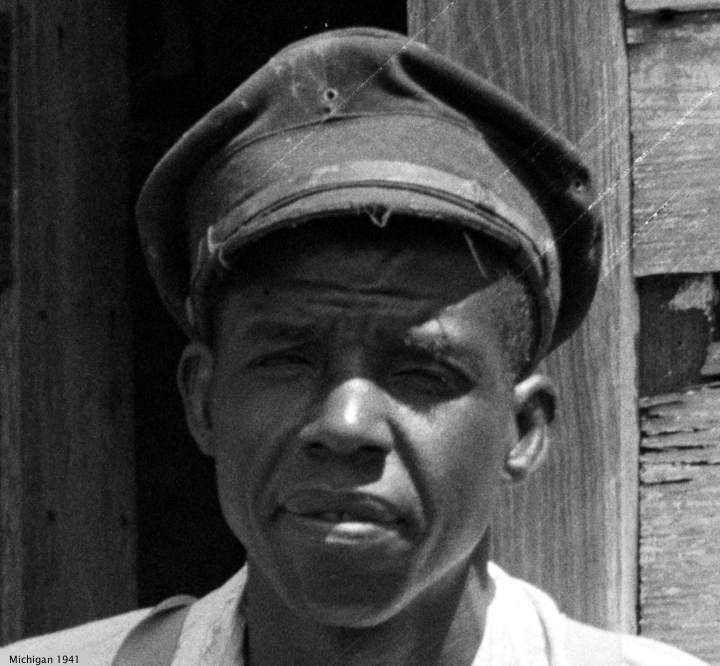
What follows is Part Three of a book report series. The topical text is Hollywood, by Charles Bukowski/Hank Chinaski. The book is a semi-fictional account of making Barfly. Other parts of this series are available. one two four five Pictures are from The Library of Congress.
22 – I finally broke down, and cheated. The Hollywood (Bukowski novel) wikipedia page is the decoder ring, to see who the fictional names are. The technical name is Roman-à-Clef, even when nom de guerre is more accurate. It turns out that the producers are not Harvey Weinstein/Orion. BF was produced by the Cannon Group. Cannon/Firepower seems to be as crooked and devious as Orion … an occupational hazard of show business.
23 – Hank and Sarah go back to the ghetto, to visit Jon and François. Life is lots of fun. People sneak into the crawl space. They will knock on the floor, and let the residents know they’re there. After a live demonstration for Hank and Sarah, François started cussing out the crawlers. François is a French actor named Steve Baës. He’s one of the best characters in the story, yet does not have a Wikipedia page. At the end of chapter 23, Jon Pinchot gets a phone call from the crooks. The picture has been cancelled again. All’s fair in hate and Hollywood.
24 – Pinchot decided on a plan. He’s gonna go see the producers. He will threaten to cut off his little finger if he doesn’t get his way. Hank doesn’t think this is a very good plan. You need your little finger for typing a. Pinchot says that he never types a. He may be a type a, but he never types a.
This reminds me of a story. Paul was on the payroll, allegedly as a salesman. Most of the time he was in the office, looking at the accountants. One day, our store manager wrote a message on the white board. “Clean the head, Jim.” Jim was a driver. I went to the white board, erased Jim, and wrote in Paul. When he saw this, Paul got mad. “I shouldn’t have to clean the bathroom, I never use it.”
I am moving this production into the living room. There’s a nice comfy chair here. Take the mouse, book, and pink glasses to the living room. Since cataract surgery, I’ve been dependent on reading glasses. Every time I go to the dollar store, I pick up another pair. Every pair that I get is a little bit tackier than the one before. The latest one is flamingo pink. It is going to be tough to get something tackier than flamingo pink. All things are possible in a world without God.
There was a twitter notification. I made a comment about the instability of calling human ivermectin “horse dewormer.” There was a reply. This is what you expect from the kool aid drinkers who believe everything that Rachel Maddow says. @chamblee54 What about corporate media labeling a safe drug like ivermectin as horse dewormer? ~ “safe drug” 1) with a common side effect of causing you to shed your intestines? 2) that is known to cause kidney failure? 3) that available data does not show is effective against COVID-19? They’re labeling it horse dewormer because that’s what too many idiots are ingesting ~ “context needed” ~ Context: If someone eats a product sold to deworm horses, calling it horse dewormer is accurate. If someone refuses to take a proven safe/effective vaccine, but willingly shits their intestines out after eating horse dewormer, they are in fact an idiot. Context supplied.
25 – Hank and Pinchot have a meeting with a lawyer named Zach Nick. Pinchot brought his Black and Decker saw, and he repeatedly threatens to cut his little finger off. The lawyer gives him the contract, then deletes one of the chapters. Pinchot says it has too many ambiguities. Hank asks Zach Nick if he’s read anything of his. His daughter read Cesspool Dreams. Surely that’s a fake name, even if Cesspool Dreams is tasteful by Hank Chinaski standards. The meeting finally ends. Zach Nick says the practice of law gets stranger all the time.
26 – Hank is in movie production hell, again. He’s going to work on “the poem” now. There isn’t much money in the poem, but it sure was a big playground to flounder around in. It seems like Hank signed a contract years ago. It gives somebody else the rights to the character of Hank Chinaski. Now, they can’t make this movie. Hank gets on the phone with his old buddy, who’s somehow connected to the guy that owns the rights to Hank. He gives Hank a release, and the movie is on again
27 – The movie is back with the Canon Group. Now they’re having problems with actors. Francine Bowers got sick, and it’s gonna have to be out for a couple of weeks. Mickey Rourke has to have a Rolls Royce limousine. Some of his buddies are gonna get up on the hood of the Rolls, and do shots, and pound all kinds of insecurities into the hood. They’re gonna be moving into a hotel, with a bunch of real barflies … is barf short for barflies? I always thought that barf was short for bar food, especially after eating some. Of course, some of the barflies are nasty to eat, so maybe barf does mean barflies. The Bay Area Radical Faeries should be ashamed.
I really do need to see this movie. I did a multi-part book report for Catch 22 a while back. I had seen the movie Catch 22, when it first came out. C22, a so-so flick, did not turn out to be a hit. I saw C22 in this old theater that smelled like a popcorn machine. Margaret Mitchell was trying to cross Peachtree Street, to get to this theater, when she was run over by a taxicab.
A facebook friend posted an item. ‘Let’s Go Brandon’ merchandise at Alaska exchange crossed AAFES’ line on vulgarity “In the days leading up to Christmas, a temporary vendor at the exchange … sold wooden bear figurines fashioned to resemble former President Donald Trump and holding signs reading, “Let’s Go Brandon.” … The foot-tall bears sported long red ties and slicked-back blond hair in Trump fashion. … “Let’s Go Brandon” serves as code for some who oppose Joe Biden’s presidency. Pro-Trump crowds routinely chant the phrase during rallies, and it now adorns T-shirts, hats, coffee mugs and a host of other merchandise popular with conservatives.”
28 – They’re starting on the movie. Filming is in this old beat up hotel in Los Angeles. One of the rooms they’re using, in the movie, is a room that Hank lived in. They’ve hired some of the degenerates living in the hotel, to work as extras on the movie. The hotel is gonna be torn down for some commercial venture. The residents don’t know where they will go.



Hollywood Part Two
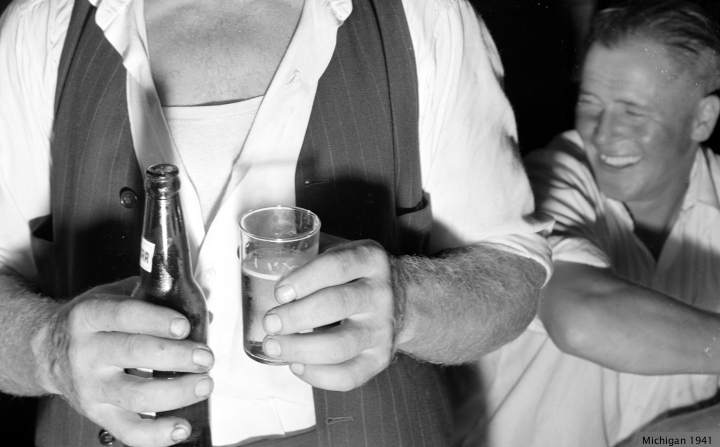


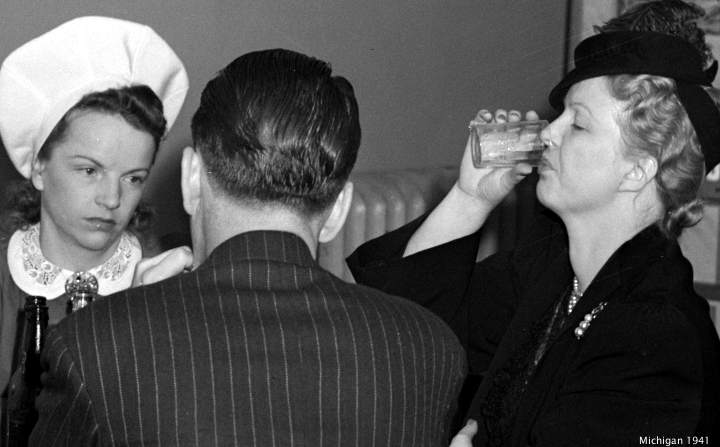
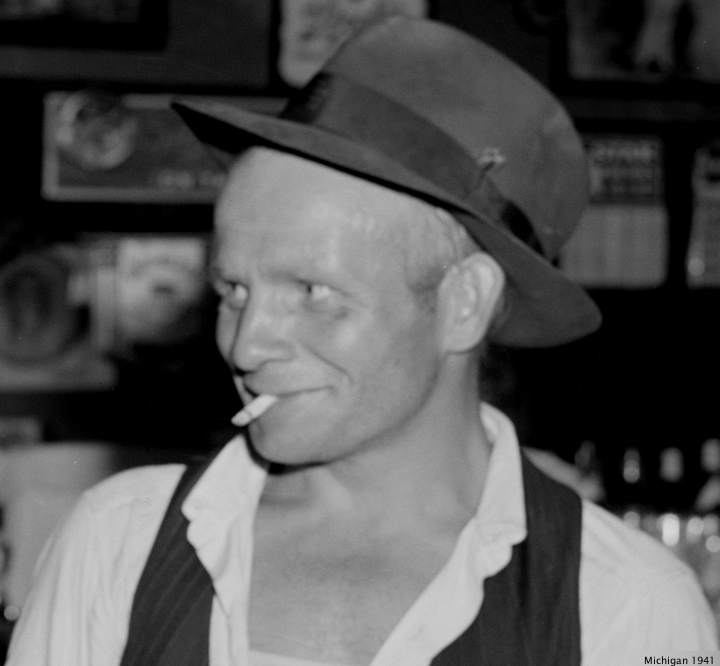
This is part two of a book report on “Hollywood,” by Charles Bukowski/Hank Chinaski.
13 – Jon Pinchot needs to move out of his house, and lands with Hank and Sarah. They get to drinking and hanging out, and Jon tells a movie financing war story. This wealthy lady in Russia wanted to work with him, but only after Jon goes to church with her, and fucks her. “please understand I have nothing against the old the aged but it was like kissing a sewer hole.”
This afternoon, I took the book with me to the Kroger parking lot. The idea was to read, while waiting for my brother to finish shopping. When I went in for my groceries, i got in the checkout line behind a lady with WIC coupons. By the time I got through, and returned by shopping cart, the checkout line was cleared up, and Mac was almost ready to go. I did not get to read, and peruse the cosmic comic insights of alkies in movieland.
I did get to drive home. The Kroger parking lot is a nightmare on the best day, but I got out, and on to Clairmont going north. I am going to be turning left in a couple of blocks, and there is no point in being in the right lane. This is a problem for some drivers. People on Clairmont road drive as though they were still on I85, and are very annoyed when someone does the speed limit in front of them.
14 – Hank and Sarah see a movie about skid row degenerates. It turns out to have clean cut, well dressed actors playing broken down drunks. Inevitably one of them gets Jesus, which may have been the point of the movie all along.
These facebook fuddy-duddies were talking about Joe Rogan. I had enough of the negativity, and decided to find some of the content, that makes Mr. Rogan the most entertaining man on the internet. I found this: “black people didn’t know what plastic surgery was, so the deal was you take that government butter and you rub it on your titties on your ass and they said it’ll make it grow yeah … that’s what we used to do back in the day.”
This is the person Nikole-Hannah Jones was talking about when she said, in response to a tweet form: @AllMattNYT “Joe Rogan is what he is. We in the media might want to spend more time thinking about why so many people trust him instead of us.” @nhannajones ” With respect, I don’t get this. We need to understand why millions of Americans don’t mind the open racism? It’s not a mystery. Been reporting on it for years. So what do we do with that?” IOW, giving a comedian the opportunity to tell us about using government butter, to make your titties bigger, is open racism. TBH, to say that government butter will make your titties bigger probably does qualify as misinformation.
15 – “Something went wrong. Try again in a little while.” I am trying to find the motivation to write about a boring chapter. Hank is trying to force a screenplay out of his typer, and it is not happening. There is a letter about how to play the horses. There is a trip downstairs to plead for mercy from Jon Pinchot, who responds by saying that François is coming back from France, and they are going to move out to somewhere.
The fifth letter of François is c-cedilla. Ç “is a Latin script letter, used in the Albanian, Azerbaijani, Manx, Tatar, Turkish, Turkmen, Kurdish, Zazaki, and Romance alphabets. Romance languages that use this letter include Catalan, French, Friulian, Ligurian, Occitan, and Portuguese as a variant of the letter C.” To make Ç, you hold down the alt key and type the numbers 0199. Or you just find someone else who typed it, and copy that. If you want a ç, the code is alt+0231.
16 – Jon and François have moved into a ghetto, and they think it is the coolest thing ever. Hank is not so sure, but he gets his knife, puts his money in his shoe, and drives down there. I have known lots of people who lived in “those” neighborhoods. They are usually happy to get out, even if they don’t say so out loud. You have to wonder how long it will take the romance to wear off with these two Frenchman-living-among-the-natives.
17 – Let’s see if the electronic section robo secretary is working hey it’s working too bad I’m not. So I boot the computer now the robo secretary is working. Chapter 17 is kind of boring. Hank and Sarah go to a party at John and François’s place in the ghetto. They’re having a cookout in the backyard and cooking chicken. François doesn’t know how to cook chicken. It turns out hard as a rock. Hank can’t eat it. Someone steals the wheels off of François’s vehicle, and sells them to him for $38. The robo-secretary hears “ghetto life” and gives me “get a life.”
18 – There are these two characters. Wikipedia tells me that it’s Sean Penn and Dennis Hopper. The story is that Sean Penn wants to be in Barfly, but insists that Dennis Hopper direct. Barbet Schroeder ( robo secretary: Barbie show drunk Schroeder) hates Dennis Hopper. He hates him so much, he calls Paris and talks to his lawyer. A clause is written in his will. If Mr. Schroeder dies in the production of Barfly, Dennis Hopper cannot direct this movie.
The story took place when Sean Penn was married to Madonna. The fake name in Hollywood is Ramona. “All’s fair in hate and Hollywood.”
19 – Hank and Sarah go to meet an actor who wants to play the part. Mickey Rourke eventually played the role, so it is probably him. He lives in this broken down bachelor pad. “there were springs sticking out of the sofa, and there were pillows on the floor, used magazines, paper bags. “This is a real male hangout” Sarah laughed.
They mentioned that Francine Bowers was the female they were trying to get to play some role in this drama. Francine Bowers is a great name for Faye Dunaway. There was a person at Cross Keys named Mr Bowers, aka officer dibble. He was this guy that went around in the halls, before school, making trouble for everybody. Later, I had a friend that thought he was a musician. One of his stage names was Harry Bowers. Francine Bowers is a good name for the ultimate diva actress.
20 – Hank is going to a party for some sleazy Hollywood type and he goes by the Chateau Marmont to pick up Norman Mailer. Hank asks Norman if he has anything to drink. Mormon … calling Norman Mailer Mormon…. Norman has the bottle of wine, but no Corkscrew. Hank says that he was an amateur drunk. Hank is not a purist, and drinks the wine.
21 – Hank goes to this party for a producer who may or may not be Harvey Weinstein. IMDb doesn’t say that Weinstein produced BF, but the character at this party was certainly acting like you would expect Harvey Weinstein to act. At the end of the night, Hank has decided that he likes Mr. Weinstein. John Pinchot says that he’s the nicest person he’s ever met, including Idi Amin. Other parts of this series are available. one three four five Pictures are from The Library of Congress.


Hollywood Part One


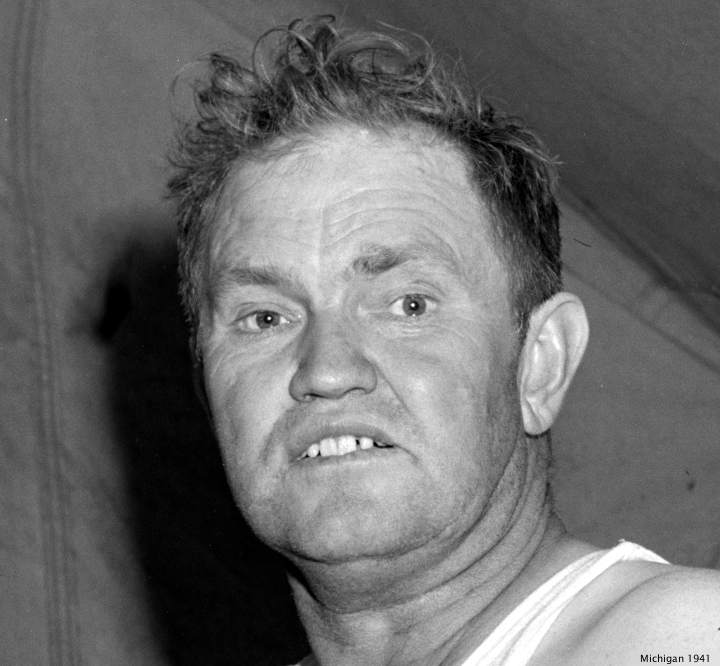
I had this bright idea. I was going to do a chapter by chapter commentary of Hollywood, by Charles Bukowski. Hollywood has 48 chapters most of them are only a few pages long. This is my kind of book. Jack Keruoac made a single sentence last five pages. Per this source, Keruoac is the only beat that CB never met. “… Neal Cassidy and Ginsberg ( i think ) coaxing Buk out for a joy ride in Hollywood. … Cassidy was a wild man and drove like a racer in death race 2000. He spun the car out near Ivar and Buk went to floor. Apparently he wet his pants. …”
1 – The story starts with Hank Chinaski (Charles Bukowski,) and Sarah, on a mission. (Sarah is Linda Lee Beighle, his wife.) They go to a meeting in a wealthy part of Los Angeles. Hank does not feel comfortable. “We have just landed upon the outpost of death. My soul is puking.” Sarah replied, “Will you stop worrying about your soul.” This sets the tone for what is to follow.
2 – Hank and Sarah meet an obnoxious, drunken Frenchman. Some people are trying to get Hank to write a screenplay for a movie. Barfly eventually did get made. I’ve never seen it, which is not unusual. I don’t see a lot of movies. There is a scene on youtube, where Mickey Roarke picks a fight with a bartender. It is not pleasant to watch, either on video or in real life. I have known degenerates that can’t control their impulses, and they are no fun at all. Fortunately, the dead tree version of Hank Chinaski can be put down whenever necessary, and then revived again when it is convenient.
3 – Chapter 3 is what I read the other day, when I went to Walgreens for my booster shot. It gets quite juicy. Hank is attending a screening of a documentary, about an African tyrant. Barbet Schroeder, whom Hollywood is dedicated to, once directed a movie about Idi Amin. The dictator would kill his opponents, and then dump them in a swamp, where the crocidiles would become impossibly fat. It is not good for the swamp’s ecological balance.
4 – Two of the obnoxious frenchmen are François Racine and Jon Pinchot. It is uncertain who they are stand ins for. François and Jon go to a Las Vegas show starring Tom Jones. François hates it, and rants on and on about how much he hates Tom Jones. I remember Mr. Jones, aka Sir Thomas John Woodward OBE, fondly. Mr. Woodward was on the WTF podcast last year, but that show is now behind a paywall. I wasn’t going to listen to it anyway, just to remember a few good stories.
Tom Jones: “Fast-forward to 1965. My own singing career had taken off, with three hit records and a big-selling album, and I was on my first trip to America. I went to Paramount Studios to talk about recording a song for a movie and someone told me that Elvis was filming on the neighboring sound stage and wanted to say hello.”
“‘Oh, my God! Surely Elvis Presley doesn’t know who I am’. But I walked on the set, where he was sitting in a helicopter, and he sort of waved in my direction. I couldn’t believe he was waving at me, but I waved back, just in case. Then he came over and said he knew every track on my album and he sang one of my songs, With These Hands, all the way through. He said to me, ‘How the hell do you sing like you do?’ And I said, ‘Well, you are to blame because I listened to all your records in the 1950s.” He told me that when he heard me singing What’s New Pussycat? on record, he thought I was black. I thought that was a bit ironic, as I’d thought he was black when I first heard him singing.”
5 – Hank is in a bar, hating it. A man comes up, and says he wants to finance his screenplay. The man just finished a film about Jack Keruoac called Heart Beat. (Those are not the names Hank uses, but it easy to figure out what he means.) The movie-dude tells Hank the title of the Keruoac-flick. Hank hates the title, and won’t talk to the movie-dude after that.
6 – This chapter is a meeting in a hotel room, full of Frenchmen who talk too much. It is much better when Hank tells the story. I have never known anyone named Hank. When I was a kid, the Braves had a player named Hank, who you have heard too much about. One night, during their lame duck season in Milwaukee, the Braves played an exhibition game at the toilet-bowl stadium. After the game, my long suffering dad took me to the bowels of the stadium. You could stand outside the clubhouse, and get autographs as the players left. A couple of times, the door would open, and you could see a naked player. So, Hank Aaron came out, patiently signed a bunch of autographs. He was smoking a cigarette. Joe Torre came out, saw the crowd of people, ducked behind a truck, and took off away from the autograph seekers. Good times.
7 – Hank finally gets to work on the screenplay, when he is interrupted by a phone call. This is counter-productive to the business of writing. The caller is a hip-talking German, who Hank asks for money. Hank tells him a joke. “Whats the difference between a chicken’s asshole and a rabbit’s asshole?” “I don’t know. What’s the difference?” “Ask little dick.” I don’t get it. I think this one is funnier. “Why did the pervert cross the road? He couldn’t get his dick out of the chicken.”
8 – Some slick talking tax finagler calls on Hank, who is very leery of the whole thing.
9 – Hank goes into this real estate office, and is treated as though he were a degenerate. The only appropriate thing to do is go into a bar. The ale house is full of biker types, who recognize Hank and call out to him. Hank is a wino rock star, and insanely uncomfortable. He gets out of APES HAVEN before you can say rehabilitation.
10 – One of the bits of money advice Hank gets is to buy a house. He goes, with Sarah, to this rundown place in the sticks. It is a scene out of a bad movie. Someone spray painted over the bath tub, IF TIM LEARY AIN’T GOD, THEN GOD IS DEAD. Finally, Sarah gets this notion that this is the house where Charles Manson killed somebody. This is too much, even for Hank Chinaski. They leave before they get too drunk to drive home.
When typing the existential exhortation about Tim Leary, I decided not to use the cap lock, but typed it one letter at a time. If I had it to do over again, I would have used cap lock, even though typing in cap lock is the facebook equivalent of saying LOOK AT ME I AM AN IDIOT. I had a co-worker once who typed with one finger. I think it was the index finger on his right hand. When Kyle wanted to type a capital letter, he would turn cap lock on, type the letter, and, turn cap lock off.
11 – Hank brings in the mail. There are two items. One is a fan letter. Someone writes this letter full of vile insults, and then wants Hank to read his poems. Hank reads one and a half, and decides that he has better things to do with his time. The second letter is from a lawyer. It is incorporation papers, the intention being the incorporation, for tax purposes, of Henry Charles Chinaski. Hank reads through the papers, and crosses out the parts he does not like. The corporation can have Hank declared insane, and take all his money away. Eventually, Hank and Sarah open a bottle of wine.
12 – The neighborhood that Hank lives in is going downhill, even to a point where it is worse off than Hank. People from somewhere in Central America are flooding in, and bringing fourth world conditions to third world LA. Finally, Hank gets busy with the house hunting, and finds something to his liking. The note is going to be $789.81. This is where I was in the book, when I had the inspiration to write this falling-off-a-cliff-notes version of H-wood. This is a good place to stop, edit what I have already written, and decide what to do next.
Pictures today are from The Library of Congress. More is available. two three four five


The Days of Anna Madrigal

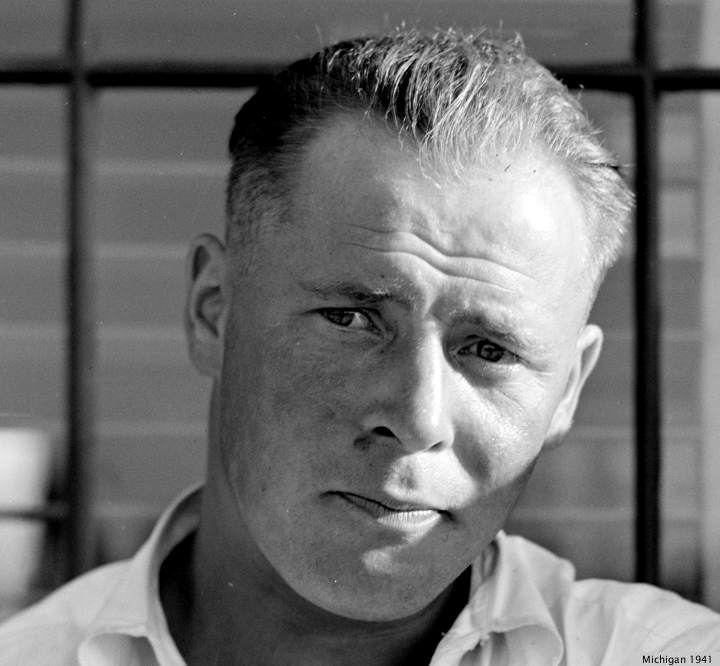
If I don’t start dictating this thing now I never will. This is a book report about the The Days of Anna Madrigal, the last book in the Tales of the City cycle. DOAM was written by Armistead Jones Maupin, Jr. There might be a spoiler alert in this book report; that’s what book reports are for. DOAM is a wonderful book. However, like all of AJM books, you have to have a suspension of disbelief, because some of these things are just too weird to be true..
One way to prepare for a book report is to listen to videos of the author. I saw an AJM event, at the Decatur First Baptist Church in pre-pandemic 2018. Finally, I found a lovely quote.
The DOAM characters all go to Burning Man. I’ve never been to BM, and probably never will. I’ve been to many faerie gatherings, so I have a slight taste for intentional community. From all indications BM is much much, much, more intense. The BM aura is a bit off-putting. I could probably get into it but I’d have to I’d have to be prepared, and that probably is not going to happen. Fortunately, AJM had a younger husband, that dragged him there kicking and screaming.
When you make YouTube clips, you have to guess when it starts, and when it finishes. This entertainment does not have a transcript, or a cis-script. After consultation with the law firm of Trial and Error, I made this clip. It starts at 1970 seconds, and it ends at 2100 seconds. There’s a synchronicity to 1970 – 2100. These 130 seconds start with the acknowledgement that it was autobiographical. We’ve always suspected that Michael was really AJM. So he goes to BM. The last words of this clip are there would be rules.
DOAM ended much too soon for my taste. It goes into a bit of the back story for Anna Madrigal. For those who are new here, AM is the landlady at the house where the TOTC players lived. It seems like AM was raised in a cathouse in Winnemucca, NV. There was a real family named Madrigal. Part of the DOAM story is how Anna goes back to Winnemucca, and meets a player in this narrative. It’s a of a tearjerker, but most AJM stories are from time to time.
As for the fantasy of being raised in a brothel … when I was a young man I had this friend going by the name of Raven (not Wolfdancer.) He later went through several other names in the time that I knew him, and I never did find out his real name. This makes looking for him on facebook difficult. I first met Raven, his story was that he was raised in a brothel at the end of Bourbon Street in New Orleans. Being the naive young idiot that I was, I believed him. Once, we went to a house on McLendon Avenue, where this old lady was introduced as being his grandmother. I said something about the business you were in, which went over her head. Anyway, Raven … then known as Harry Bowers … moved to New York in 1983, and was never heard from again.
There will be no more TOTC books, and probably little more of the characters. DOAM was set in 2012, when AM is 92. The “boomer” characters are starting to draw social security. Since Mouse is a stand in for AJM, it is safe to assume that he is alive. It is tempting to re-read some of the TOTC books, but there are so many other books to read. The current selection is Hollywood by Charles Bukowski. It will be fun, until it is done. Pictures today are from The Library of Congress.


 Chamblee54
leave a comment