Remington SL3




In 1978, Tom Robbins had a problem. Another Roadside Attraction and Even Cowgirls Get the Blues had gone commercial, and the unwashed public demanded product. It is not known what was on his mind, but there was a need for another Tom Robbins novel. The result, Still Life With Woodpecker, has a gee whiz typewriter as a character.
The device is the Remington SL3. It is possibly the love child of the Remington Rand. That name was borrowed by Alisa Zinov’yevna Rosenbaum, more profitably known as Ayn Rand. This is the last gasp of the typewriter, before the species qwertioped into word processed obsolescence. Today, writing devices are a computer staple. Gimmicks like cut/copy/paste are assumed to have been around forever, but were startling innovations when SLWW was being whipped into shape.
So Tom claims that the Remington SL3 was the progenitor, or maybe the janitor, of SLWW. A blogspot writer, there is a girl in new york city, says I WANT A REMINGTON SL3. …aka, the greatest prologue ever, written by Tom Robbins for “Still Life with Woodpecker”: “If this typewriter can’t do it, then fuck it, it can’t be done.
This is the all-new Remington SL3, the machine that answers the question, “Which is harder, trying to read The Brothers Karamazov while listening to Stevie Wonder records or hunting easter eggs on a typewriter keyboard?” This is the cherry on top of the cowgirl. The burger served by the genius waitress. The Empress card.
I sense that the novel of my dreams is in the Remington SL3–although it writes much faster than I can spell. And no matter that my typing finger was pinched last week by a giant land crab. This baby speaks electric Shakespeare at the slightest provocation and will rap out a page and a half if you just look at it hard.” Seriously. Early Christmas present? Marriage proposal? Just wanna get me on your good side in case you ever need me down the line? Remington SL3. Circa 1980.
PG is getting the unsettling thought that the Remington SL3 is the product of an overactive imagination. There is a tumblrblog, a youtube channel, and a soundcloud song all named Remington SL3. The name is not taken yet for twitter, although that can change at any instant. Did REM write a song, “ington SL3”? Is this a carrot topped put on?
This was written like David Foster Wallace. Pictures are from The Library of Congress.





Flannery O’Connor





With one day before it was due, PG finished reading Flannery: A Life of Flannery O’Connor , by Brad Gooch. The author is a professor of English at William Patterson University in New Jersey. He spares no citations, to show where he gets his information.
Chamblee54 has written before about Miss O’Connor , and repeated the post a year later. There is a radio broadcast of a Flannery O’Connor lecture. (The Georgia accent of Miss O’Connor is much commented on in the book. To PG, it is just another lady speaking.)
Mary Flannery O’Connor was born March 25, 1925 in Savannah GA. The local legend is that she was conceived in the shadow of St. John the Baptist Cathedral, a massive facility on Lafayette Square. Her family did leave nearby, and her first school was just a few steps away. This is also a metaphor for the role of the Catholic Church in her life. Mary Flannery was intensely Catholic, and immersed in the scholarship of the church. This learning was a large part of her life. How she got from daily mass, to writing stories about Southern Grotesque, is one mystery at the heart of Flannery O’Connor.
Ed O’Connor doted on his daughter, but had to take a job in Atlanta to earn a living. His wife Regina and daughter Mary Flannery moved with him, to a house behind Christ The King Cathedral. Mr. O’Connor’s health was already fading, and Mother and Daughter moved in with family in Milledgeville. Ed O’Connor died, of Lupus Erythematosus, on February 1, 1941.
Mary Flannery went to college in Milledgeville, and on to the Iowa Writer’s Workshop. She dealt with cold weather, went to Mass every day, and wrote. She was invited to live at an artists colony called Yaddo, in upstate New York. She lived for a while with Robert and Sally Fitzgerald in Connecticut, all while working on her first novel, “Wise Blood”. In 1950, she was going home to Milledgeville for Christmas, and had been feeling poorly. She went to the hometown doctor, who thought at first that the problem was rheumatoid arthritis. The illness of Flannery O’Connor was Lupus Erythematosus.
Miss O’Connor spent much of that winter in hospitals, until drugs were found that could help. She moved, with her mother, to a family farm outside Milledgeville, which she renamed Andalusia. She entered a phase of her life, with the Lupus in relative remission, and the drugs firing her creative fires, where she wrote the short stories that made her famous.
Another thing happened when she was recuperating. Flannery was reading the Florida “Market Bulletin”, and saw an ad for “peafowl”, at sixty five dollars a pair. She ordered a pair, and they soon arrived via Railway Express. This was the start of the peacocks at Andalusia, a part of the legend.
During this period of farm life and writing, Flannery had several friends and correspondents. There was the “Bible Salesmen”, Erik Langkjaer, who was probably the closest thing Flannery had to a boyfriend. Another was Betty Hester, who exchanged hundreds of letters with Miss O’Connor. This took place under the stern eye of Regina O’Connor, the no nonsense mother-caregiver of Flannery. (Mr. Gooch says that Betty Hester committed suicide in 1998. That would be consistent with PG stumbling onto an estate sale of Miss Hester in that time frame.)
The book of short stories came out, and Flannery O’Connor became famous. She was also dependent on crutches, and living with a stern mother. There were lectures out of town, and a few diverse personalities who became her friend. She went to Mass every day, and collected books by Catholic scholars. Flannery was excited by the changes in the church started by Pope John XXIII, and in some ways could be considered a liberal. (She supported Civil Rights, in severe contrast to her mother.)
In 1958, Flannery O’Connor went to Europe, including a trip to the Springs at Lourdes. Her cousin Katie Semmes (the daughter of Captain John Flannery, CSA) pushed Flannery hard to go to the springs, to see if it would help the Lupus. Flannery was reluctant…” I am one of those people who could die for his religion sooner than take a bath for it“. When the day for the visit came, Flannery took a token dip in the waters. Her condition did improve, briefly. (It is worth speculating here about the nature of Flannery’s belief, which was apparently more intellectual than emotional. Could it be that, if she was more persuaded by the mystical, emotional side of the church, and taken the healing waters more seriously, that she might have been cured?)
At some point in this story, her second novel came out, and the illness blossomed. Much of 1964 was spent in hospitals, and she got worse and worse. On August 3, 1964, Mary Flannery O’Connor died,




PG remembers the first time the name Flannery O’Connor sank in. He was visiting some friends, in a little house across from the federal prison.
Rick(?) was the buddy of a character known as Harry Bowers. PG was never sure what Harry’s real name was. One night, Rick was talking about Southern Gothic writers, and he said that Flannery O’Connor was just plain weird ” Who else would have a bible salesman show up at a farm, take the girl up into a hayloft, unscrew her wooden leg and leave her there? Weird”
Flannery O’Connor was recently the subject of a biography written by Brad Gooch. The book is getting a bit of publicity. Apparently, the Milledgeville resident was a piece of work.
PG read some reviews of this biography, and found a collection of short stories at the library. The book included ” Good Country People”, the tale about the bible salesman. Apparently, this story was inspired by a real life incident. (Miss O’Connor had lupus the last fifteen years of her life. She used crutches.) And yes, it is weird. Not like hollywood , but in the way of rural, post world war two Georgia.
Some of the reviews try to deal with her attitudes about Black people. On a certain level, she is a racist. She uses the n word freely, and her black characters are not inspiring people. The thing is, the white characters are hardly any better, and in some cases much worse.
The stories are well crafted, with vivid descriptions of people and places. The reader floats along with the flow of the story, until he realizes that Grandma has made a mistake on a road trip. The house she got her son to look for is in Tennessee, not Georgia. She makes him drive the family car into a ditch. Some drifting killers come by. Grandma asks one if he prays, while his partner is shooting her grandchildren. Weird.
In another story, a drifter happens upon a pair of women in the country. The daughter is thirty years old, is deaf, and has never spoken a word. The drifter teaches her to say bird and sugarpie. The mother gives him fifteen dollars for a honeymoon, if he will marry her. He takes the fifteen dollars and leaves her asleep in a roadside diner.
There was a yard sale one Saturday afternoon. It was in a house off Lavista Road, between Briarcliff and Cheshire Bridge. The house had apparently not been painted in the last forty years. Thousands and thousands of paperback books were on the shelves. The lady taking the money said that the lady who lived there was the friend, and correspondent of, the “Milledgeville writer” Flannery O’Connor. This is apparently Betty Hester, who is mentioned in many of the biography reviews.
PG told the estate sale lady that she should be careful how she said that. There used to be a large mental hospital in Milledgeville, and the name is synonymous in Georgia with mental illness. The estate sale lady had never heard that.
This double repost was written like James Joyce.





A Rumor Of War



PG was in a break room in Smyrna GA, reading A Rumor of War. On page 196, a sentence made him put the book down. “There were three corpses, but only five boots”.
There was a newspaper insert for J.C. Penney on the table. PG picked it up, began to study the picture on the front page. A woman was pushing a man back, with her finger over her mouth saying shhh. The man pushed back, with five boxes wrapped in red paper. The woman wore a man’s watch, which page had displayed for sale. Every element of every picture was gauged to sell merchandise.
Before long, PG was back to AROW. Lieutenant Caputo was working in an office. One of his jobs was the write reports on the casualties, American and Vietnamese. If there were more of their guys than our guys, we were winning.
Lieutenant Philip Caputo lived, and later wrote, A Rumor of War. He signed up to join the Marines when he was in college, when Vietnam was a trivia question. On March 8, 1965, he arrived in South Vietnam, near DaNang. Originally, his unit was supposed to guard the air base from a rumored Viet Cong attack. After a while, he was sent into action.
The second part of his Vietnam experience was when he was sent to work in a base office, away from the fighting. This ceased to be enjoyable when he knew one of the dead soldiers he wrote a report for. He requested a transfer back into the fighting, and got it. There were scenes of fighting the enemy, the jungle, and the weather. Caputo broke under pressure, and ordered a raid into a village. When some people in the village were killed, there was trouble, and Caputo was facing murder charges. That was cleared up, and Caputo was sent home.
War looks different to the men who are fighting. Vietnam was controversial while it was going on, and only slightly less so today. It is likely that all wars are as full of misunderstanding as this one.
Musings on Iraq has a quote about war. “Saddam Hussein looked down upon the United States’ military might, seeing it as a paper tiger. He saw the American defeat in Vietnam as a sign of its weakness. Saddam pointed out that the U.S. lost 58,000 soldiers in that war, and then gave up, while Iraq lost 51,000 in just one battle for the Fao Peninsula in the Iran-Iraq War.” This is from a country with 27 million people, fighting a land war with a next door neighbor.
Pictures are from The Library of Congress.



Someday Soon







When a blogger can’t get a song out of his head, he should write about it. Find a youtube video of the song, both lipsynced in 1969, and repeated on later tv shows. When you have more media than message, you recycle the past. The singer probably has a book , which means interviews to sell the book. The song is Someday Soon, and the artist is Judy Collins.
PG first heard “Someday Soon” on WPLO-FM. There was a little black radio, which had AM, FM, and a few short wave bands. It ran on D size batteries, and was the first FM radio that PG owned. WPLO-FM was the hippie station, the first FM station to play rock music in Atlanta. “Someday Soon” was a shocker, with it’s lyric “damned old rodeo”. 1969 was a more innocent time.
Judith Marjorie Collins was the gf of Stephen Stills around that time. He wrote Suite Judy Blue Eyes about her. Mr. Stills was helping Ms. Collins with and album, and they heard “Someday Soon” on the radio. The song was written by Ian Tyson. The song was included on the album, and was somewhat of a hit. (Here are TV performances with Ian Tyson, Stephen Stills and Graham Nash.)
The Daily Beast article, written to promote the book, is Judy Collins’s New Book: Suicide, Alcoholism, Nude Photos, and More. Judy Collins has had an interesting life, sometimes in the sense of the Chinese curse. The eldest daughter of an abusive alcoholic, she became a severe drunk herself. Somehow, she came out of everything ok.
Along with alcoholism, suicide has been a problem. The son of Judy Collins, Chuck Taylor, took his life in 1992. He had struggled with depression and substance abuse. Judy attempted suicide when she was 14. This is roughly the same age as PG, when he heard that song where the lady says damned. Ms. Collins has worked to help others avoid taking their life.
One Judy Collins hit is “Chelsea Morning”, written by Joni Mitchell. Bill Clinton was inspired to name his daughter Chelsea. Unfortunately, Judy Collins and Joni Mitchell are not friends. Both women are known to have attitudes, so there is no telling what the problem is.
As for another famous sixties singer, with a J name, the DB article has this postscript. Editor’s Note: This interview incorrectly stated that Judy Collins had a “love affair” with singer Joan Baez. Today Judy Collins wrote the following in an email to correct the record: “Joan and I both agree that we wouldn’t mind it if people thought so—she has been very open about her sexuality too, and that’s where the lines might have crossed—but I wanted to get the facts straight anyway.”





Treatment




Dangerousminds , which is seldom at a loss for words, posted the video of Bob Dylan seen above. The young Mr. Zimmerman is in angry young man mode, and discusses the concept of an all picture Time magazine. All pictures, no words. This may be where this blog is headed.
Writers block is real. You have all of modern media at your beck and call, and yet you don’t have a message. TwentyTwoWords posts the story of a medical study into writers block. The study wastes no words in it a pithy treatment of this issue. It is an unspoken masterpiece, the treatment that dare not speak it’s name. The research was financed by a block grant.
The findings of this study were replicated in 2007. The report is included here, in it’s entirety. The editor noted ” I did not change one word, and this is a first in my tenure as editor.” There is no word on whether the report was submitted before the deadline.
Ben Hecht tells a story in his autobiography “Child of the Century”. As a young, underpaid newspaper writer in Chicago, Mr. Hecht was hired to participate in literary debates. In the era before movies and radio, these were considered after dinner entertainment. One night, Mr. Hecht got together with his opponent, and hatched a plan. The topic of the debate was ” People who attend literary debates are idiots.” The first speaker did not say a word, but gestured towards the crowd. The second speaker said, you win.
“Child of the Century” is now out of print. In 1994, PG thought he was going to have to move, and the first step was to throw away things. His copy of “Child of the Century” was one thing he pitched.
The idea that less is more has spread. Fun loving Jesus Worshiper Frank Turk had a post titled: “I got nothin” The text elaborated on this theme: “Not even a “best of”. He got 114 comments..
The sound that you hear is one hand clapping. Those reading with one hand can join in with the other one. Appreciation is always welcome. Vintage pictures are from “The Special Collections and Archives,Georgia State University Library” .
This is a repost. PG thinks writer’s block should be called writer’s tackle, but few agree. The owner of this blog has stumbled into a session of contract employment, and does not have as much free time as before. The internet will survive.



A Million Little Pieces


Daily Prompt: Connect the Dots: “Open your nearest book to page 82. Take the third full sentence on the page, and work it into a post somehow.” The nearest book to the desk is A Million Little Pieces. This is a good excuse to finally write the book report on AMLP.
“I wish I could sit next to her, or call her, or pass her a note.” James Frey is talking about “Michelle”. In the story, she is the only person in a small town who is not repulsed by James. She becomes his friend. One night, she has a date with an older boy, and tells her parents she is going to a movie with James. During the date, “Michelle” is killed by a freight train. The parents blame James, who becomes a drunken pariah.
As you may know, AMLP is a controversial book. It became an Oprah fueled sensation. Next, The Smoking Gun published an expose, A Million Little Lies. The story about “Michelle” was one of many instances where TSG called BS on James Frey.
The first time PG heard of TSG was about their collection of Celebrity Mug Shots.
This was also the link between TSG and AMLP. “It was after the Oprah show aired that TSG first took a look at Frey. We had simply planned to track down one of his many mug shots, and add it to our site’s large collection. While Frey offers no specific details about when and where he was collared, the book does mention three states where he ran into trouble: Ohio, Michigan, and North Carolina. While nine of Frey’s 14 reported arrests would have occurred when he was a minor, there still remained five cases for which a booking photo (not to mention police and court records) should have existed. When we asked Frey if his reporting of the laundry list of juvenile crimes and arrests was accurate, he answered, “Yeah, some of ’em are, some of ’em aren’t. I mean I just sorta tried to play off memory for that stuff.”
By the time PG found A Million Little Pieces at a yard sale, the controversy had become a trivia question. It had to be worth twenty cents. The question might be, is this book worth the time out of your life?
There are a lot of angles to AMLP, though probably not a million. There are some interviews with Mr. Frey on youtube. He seems to have a healthy ego. In AMLP, James comes across as being a very unlikeable person. For some mysterious reason, some people take a special interest in James, and he is rescued from his chemical addictions. Or so he says.
The story starts out strong. James is on an airplane. He has been beaten up, and does not know where he is going. It seems like he is going to rehab, specifically Hazelden in Minnesota. (This facility is never named in the book.) James is in bad, bad shape. If he doesn’t quit drinking and using, he is going to die. One thing he has going for him is wealthy parents. His father is a businessman working in Toyko. Apparently, this is where the bills will go.
James needs dental work, and has a root canal done without pain medication. Next, he wants to leave the program, but is talked out of it. The dude is a total jerk at this point, and the reader wonders why anyone would care about him. Also, there is little in his background that would lead him to being a horrific druggie. These are a few of the pieces that don’t fit into the puzzle.
PG was about a third through AMLP when he read the Smoking Gun hit piece. There were also a few video interviews to listen to. The picture of James Frey as an egomaniac jerk starts to come out, in addition to the numerous lies in the book.
James has some interesting ideas about addiction and recovery. He disagrees with the concept of addiction as a disease. James does not buy the idea of 12 step programs being the ultimate recovery device. PG is a retired drunk, and has never been to an AA meeting. From what PG has heard about the program, it would incline the 12 stepper to start drinking again. While AA does help some people, it is not the only game in town.
AMLP is well written, and fun to read. Maybe fun is not the correct word for having root canal without Novocaine, but AMLP does keep your attention. If you can suspend your critical thinking long enough, you can easily get through this book. James Frey has a book about religion, The Final Testament of the Holy Bible. He is quoted as saying that people accept the Bible as inerrant truth, despite many who dispute this claim. He says that one day AMLP will be seen as the truth. (This last statement was in one of the video interviews. It may not be totally accurate. Listening to all those interviews again, to confirm or disprove this memory, is too much work for this book report.)
Pictures are from The Library of Congress.


Types Of Intelligence





There is a book, Frames of Mind: The Theory of Multiple Intelligences. The concept is that people are smart in different ways. This is not news to someone who can see the world outside. The book describes seven types of intelligence, which was expanded to nine.
1. Naturalist Intelligence (“Nature Smart”)
2. Musical Intelligence (“Musical Smart”)
3. Logical-Mathematical Intelligence (Number/Reasoning Smart)
4. Existential Intelligence
5. Interpersonal Intelligence (People Smart”)
6. Bodily-Kinesthetic Intelligence (“Body Smart”)
7. Linguistic Intelligence (Word Smart)
8. Intra-personal Intelligence (Self Smart”)
9. Spatial Intelligence (“Picture Smart”)
Not everyone is impressed by the book. Lemas Mitchell notes “This book is just ENTIRELY too wordy. 412 pages of text could have been cut down to 103. (This is about the same waffle-to-information ratio as an Ayn Rand book.) ” This comment was in the second paragraph of a lengthy review, where it is easily noted by the casual reader.
Another way to divvy up the mind is left side of the brain vs. the right side. The left is logical, linear, and factual, where the right side is emotional, intuitive, and random. There is possibly a connection here to the yin-yang divide in Taoist thinking.
Most of the results on the first page of google are repeats of the text above. There are two tests for the different types of smarts. PG is too slack to work on this feature, so he is going to see what the tests say.
The Learning Disabilities Resource Community has the Multiple Intelligence Inventory. There are 80 statements, like ” I can hear words in my head before I read, speak, or write them down. ~ I enjoy playing games or solving brain teasers that require logical thinking. ~ I enjoy fishing, hunting, gardening, growing plants, or cooking. ~ I sometimes think in clear, abstract, wordless, imageless concepts.” There are five possible answers: 1. very little like me, 2. a little like me, 3. somewhat like me, 4. like me, 5. a lot like me. PG scored Linguistic=32, Mathematics=32, Visual/Spatial=30, Body/Kinesthetic=33, Naturalistic=25, Music=23, Interpersonal=22, Intrapersonal=24.
The Quizilla 7 Types of Intelligence – Which is yours? test is a lot less work. It is one page of multiple choice questions. It said PG was “Linguistic”.
This is written like David Foster Wallace.
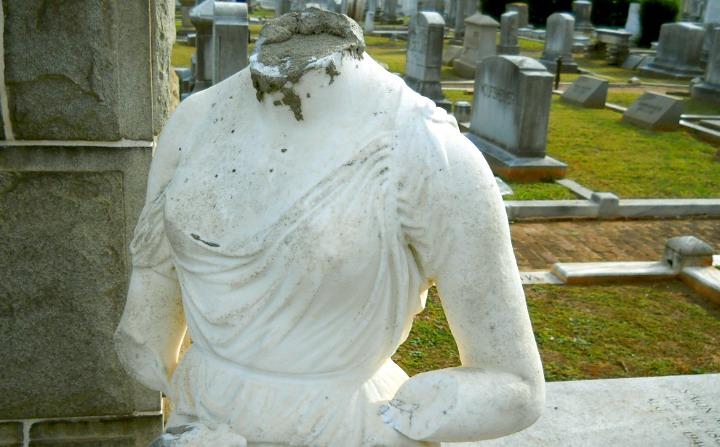
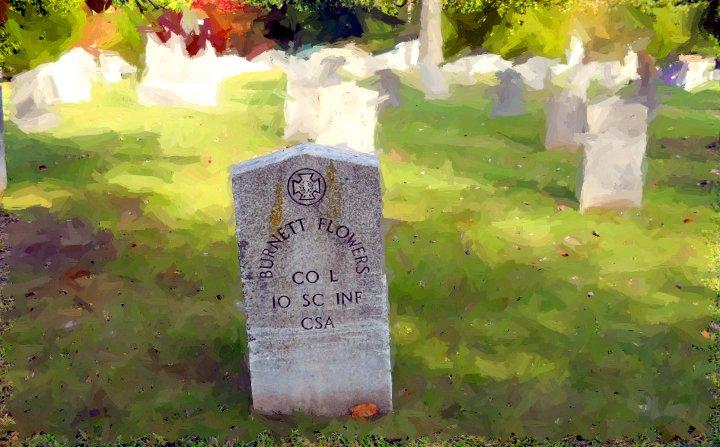
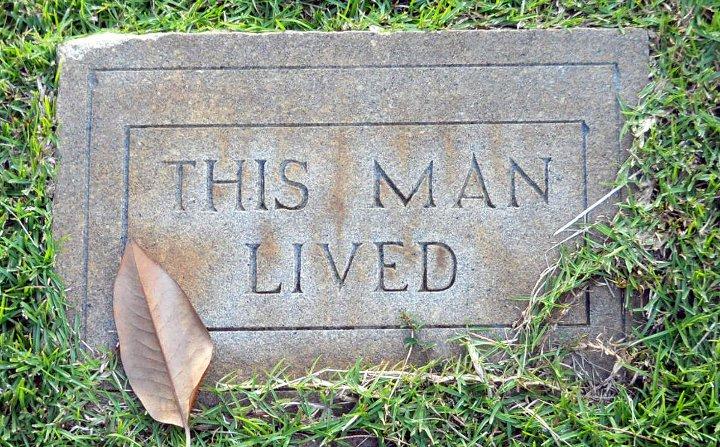
Pictures are by Chamblee54. They were taken October 7, 2012, in Oakland Cemetery.


So It Goes

A facebook friend announced that Kurt Vonnegut Jr. was born ninety years ago today. This would be four years after the end of the war to end all wars. Many of you know the rest of that story.
When you mention Kurt Vonnegut, someone will say “and so it goes”. Lately, PG has gotten into debunking famous sayings. There is a simple test involving wikiquote. You copy a persons entry into a word document, and do a search.
When you do this search for “and so it goes”, the little window says “search key not found”. When you narrow the search to “goes”, you get several results. “If I’d been born in Germany, I suppose I would have been a Nazi, bopping Jews and gypsies and Poles around, leaving boots sticking out of snowbanks, warming myself with my secretly virtuous insides. So it goes.”
“When a Tralfamadorian sees a corpse, all he thinks is that the dead person is in bad condition in the particular moment, but that the same person is just fine in plenty of other moments. Now, when I myself hear that somebody is dead, I simply shrug and say what the Tralfamadorians say about dead people, which is “So it goes.”
“Robert Kennedy, whose summer home is eight miles away from the home I live in all year round, was shot two nights ago. He died last night. So it goes.Martin Luther King was shot a month ago. He died, too. So it goes. And everyday my government gives me a count of corpses created by the military service in Vietnam. So it goes. My father died many years ago now–of natural causes. So it goes. He was a sweet man. He was a gun nut, too. He left me his guns. They rust.”
And is a coordinating conjunction. It joins things in a sentence, whether they want to be joined or not. Tralfamadorians do not see the need to waste and on a dead person.
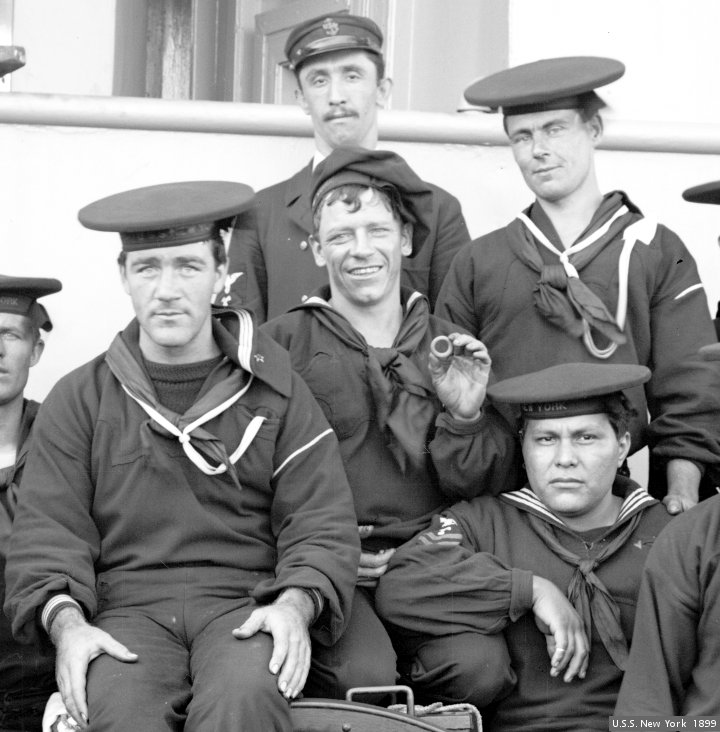
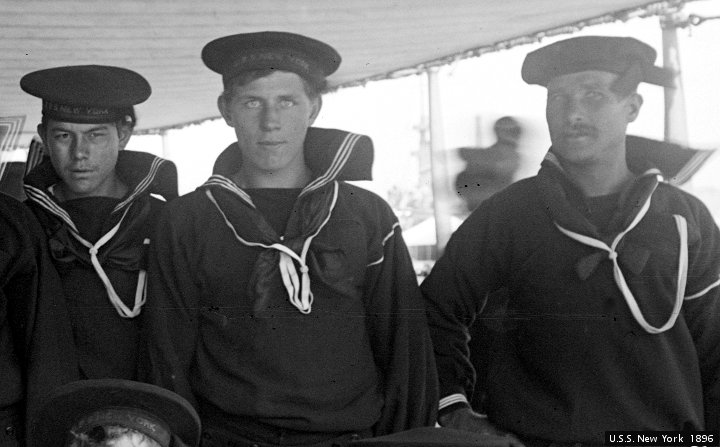
I Write Like says that this text is written like Kurt Vonnegut. This is not surprising, considering that half of it is quotes from Mr. Vonnegut. Pictures are from The Library of Congress.

The AP Race Study


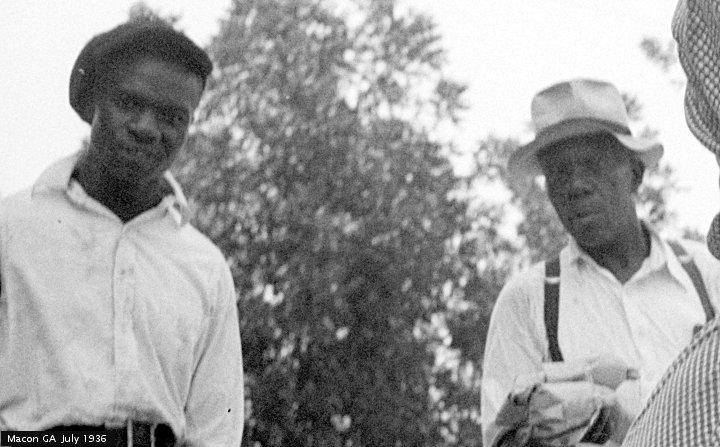
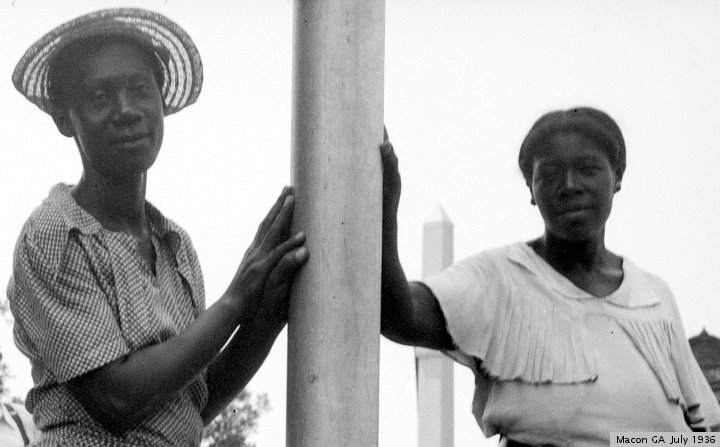
The first link was from the Washington Post. The AP story is coming to a media outlet near you. The headline is AP poll: A slight majority of Americans are now expressing negative view of Blacks.
There are so many windows in that glass house. This is a 3-S problem: sampling, semantics, statistics. It is said that people will believe anything you say, if you can trot out a study that agrees with you. This *matter* requires a bit of examination.
AP reports “The explicit racism measures asked respondents whether they agreed or disagreed with a series of statements about Black and Hispanic people. In addition, the surveys asked how well respondents thought certain words, such as “friendly,” ‘’hardworking,” ‘’violent” and “lazy,” described Blacks, whites and Hispanics.
The same respondents were also administered a survey designed to measure implicit racism, in which a photo of a Black, Hispanic or white male flashed on the screen before a neutral image of a Chinese character. The respondents were then asked to rate their feelings toward the Chinese character. Previous research has shown that people transfer their feelings about the photo onto the character, allowing researchers to measure racist feelings even if a respondent does not acknowledge them.”
The AP article has a link to a 34 page report about the study. The “implicit” questions using Chinese characters were not discussed in this report. The first 12 pages are mostly about the November election.
Page 13 has a bizarre bit of data. The 2010 answers will be on the left, followed by a dash, with the 2012 percentage on the right. For Mitt Romney, only 2012 results are available. This is weird, and it calls the overall accuracy of the study into question.
IMG4. Do you happen to know the religion of each of the following people? If you don’t know, you can mark that too. Barack Obama Protestant 26-28, Catholic 4-5, Mormon 0-0, Jewish 0-18, Muslim 17-10, Some other religion 8-2, No religion 2-35, Don’t Know 41-2, Refused/not answered 1-28 Mitt Romney Protestant 2, Catholic 2, Mormon 67, Jewish 0, Muslim 0, Some other religion 1, No religion 0, Don’t Know 26, Refused/not answered 2.
There are two more pages of questions about the election, and then the race questions start. RAC7. How much do you like or dislike each of the following groups? The possible answers are Like a great deal, Like a moderate amount, Like a little, Neither like nor dislike, Dislike a little, Dislike a moderate amount, Dislike a great deal, Refused/Not answered. Whites went first, followed by Blacks and Hispanics. (The term African Americans was not seen by this reporter.)
After some more election questions, we get another race question. RAC8. When it comes to politics, would you say that each of the groups listed below has too much influence, just about the right amount of influence, or to little influence? The question was repeated for, in this order, Whites, Blacks, Elderly people, Wealthy people, Hispanics, and Immigrants.
The next question is RAC11, one of the “explicit” questions. It was asked first about Blacks, then Whites, then Hispanics. How well does each of these words describe most _____? The words were friendly, determined to succeed, law abiding, hard working, intelligent at school, smart at everyday things, good neighbors, dependable, keep up their property, violent, boastful, complaining, lazy, irresponsible.
Lets take a time out, and say a couple of things. This is a long article, and may get your blood pressure upset. If you want to skip the rest of the text, and look at the pictures, that is all right. If you want to see the results for these questions, look at this report. If you have read this far, you might agree with the author that this survey was not exactly fair, and should not be taken very seriously. Take another look at how many people think Barack Obama is a Jew.
RAC12. Please indicate how much you agree or disagree with the following statements. The choices are: Strongly disagree, Somewhat disagree, Neither agree nor disagree, Somewhat agree, Strongly agree, Refused/Not answered. The statements are:
* Irish, Italians, Jewish, and other minorities overcame prejudice and worked their way up.
* Blacks should do the same without special favors
* It’s really a matter of some people just not trying hard enough; if Blacks would only try harder, they could just be as well off as whites
* Generations of slavery have created conditions that make it difficult for Blacks to work their way out of the lower class
* Blacks are demanding too much from the rest of society
* Over the past few years, Blacks have gotten LESS than they deserve
* Most Blacks who receive money from welfare programs could get along without it if they tried
Government officials usually pay less attention to a request or complaint from a Black person than from a white person
* Over the past few years, Blacks have gotten more ECONOMICALLY than they deserve
RAC13. Some people say that Black leaders have been trying to push too fast. Others feel that they haven’t pushed fast enough. What do you think?
RAC14. How much of the racial tension that exists in the United States today do you think ______ are responsible for creating? This was asked first about Blacks, then Whites, then Hispanics.
RAC15. How much discrimination against ______ do you feel there is in the United States today, limiting their chances to get ahead? The possible answers were A lot, Some, Just a little, None at all, Refused/Not answered. This was asked about, in this order, Blacks, Whites, Hispanics, Asians, Men, Women, Evangelical Christians, and Immigrants.
The questions shift back to Barack Obama at this point. BKS1. How similar do you think Barack Obama is to most Black Americans? BTH1. Where was Barack Obama born, as far as you know? On page 29, the demographic information section starts. Special emphasis is given to the religion of the respondent. On page 33, the traditional demographics are covered: age, gender, education, race, census region, and marital status. The respondents were not asked about income.
The poll was taken by GFK. 1,071 adults were interviewed, August 30 – September 11, 2012. The survey was conducted online. “METHODOLOGY The survey was conducted using the web-enabled KnowledgePanel®, a probability-based panel designed to be representative of the U.S. population. Initially, participants are chosen scientifically by a random selection of telephone numbers and residential addresses. Persons in selected households are then invited by telephone or by mail to participate in the web-enabled KnowledgePanel®. For those who agree to participate, but do not already have Internet access, GfK provides at no cost a laptop and ISP connection. People who already have computers and Internet service are permitted to participate using their own equipment. Panelists then receive unique log-in information for accessing surveys online, and then are sent emails throughout each month inviting them to participate in research.”
People have been linking to the WP story on facebook, with a variety of comments. These comments probably say more about the commenter, than it does about race relations in America. Pictures today are from The Library of Congress.
UPDATE Page thirteen of the report has been updated. Apparently, the correct results show that 18% of respondents think BHO is a Muslim, with 0% thinking he is Jewish. HT to xdog.






Mick Jagger



There was a book at the Chamblee Library, Mick: The Wild Life and Mad Genius of Jagger. The work is credited to a man named Christopher Anderson, who has a slew of best sellers to his credit. The copyright was issued to “Anderson Productions.”
When you write about Mickie, you have to post a few videos. One of the first to come up is “Waiting on a friend.” This was the first video that PG saw on MTV. One night in early 1982, PG rode his bike to an apartment on Buford Hiway to buy MDA. While he was there, a young companion of the salesman said hey watch this, music television. The video was a favorite that first winter of MTV, even though it wasn’t really that good.
Mick Jagger has been a part of many lives the last fifty years. The stones were conceded to be number two to the beatles, but stayed together longer. The era of rock concert as megaevent coincided with the reinvention of the stones, after the demise of Brian Jones. He did after all start the band. Mr. Jones had become too much of a druggie to be relied on, and was fired. The book says that Mr. Jones was drowned, by a construction worker.
Ok, we are three paragraphs in, and we have not discussed Mr. Jagger’s pecker. Most of the book is about this instrument of undetermined size. The book says Mick stuffed a sock in his pants before shows. Mick has screwed thousands of women, and more than a few men. Whether Mick is a top, or a bottom, is left to the imagination.
The phrase “fuck Mick Jagger” is seminal. One night, the B52s were playing at a toilet on Ponce De Leon Avenue called the Big Dipper. The venue was later torn down, the ground decontaminated, and an animal clinic built on it’s site. After the show, one of the girls (either Kate or Cindy, or maybe neither, since this story is possibly an urban legend) was hanging out in the parking lot. “Beulah” was running his mouth, as he liked to do, talking about his hero Mick Jagger. Finally, the B52girl had heard enough. “Fuck Mick Jagger, one day Mick Jagger will come see me.”
The book goes into excruciating detail about the stones story. Mick grew up middle class, and was close to his parents. He bit the end of his lip playing basketball, and sounded different. While going to the London School of Economics, he connected with Keith Richard, and found that they both liked Chuck Berry. The Glimmer Twins started to hang out together, and played a few gigs at a nightclub owned by Alexis Korner. (Mr. Korner opened for Humble Pie and Edgar Winter at the Atlanta Municipal Auditorium. He was ignored by the festive pot smoking crowd.)
At this time, Mick had been introduced to sex by the other boys at his school. The first time with a woman was when Mick was an orderly at Bexley Mental Hospital. A nurse “yanked him into the linen closet where, surrounded by sheets, mops, and bedpans, Mick lost his virginity standing up”.
At some point Brian Jones came into the picture. Mick moved into a flat with Brian and Keith, and lived in picturesque squalor. At some point Mick and Brian bumped gooberheads, which left Mick confused. It is not known whether the lads could afford drugs at this point.
The story goes on and on. There are ugly moments, pretty moments, good songs written, lots of drugs, lots of sex. As Mick said in “Shattered,” “sex and sex and sex and sex and sex and sex and sex.” A few begin to wonder if he is capable of a one on one relationship, but their opinions don’t count.
One afternoon in 1978, PG was driving a truck in Decatur. He worked for a lady who did sampling projects, which means giving out samples to consumers. The product this time was Playtex Plus deodorant tampons. The truck was the rag wagon. There was an announcement on the last am rock and roll station in Atlanta. The stones were going to play the Fox Theater, and tickets were on sale now. The signal of the am station faded out at this point, with a gospel station preacher blocking out the rock and roll announcement. PG did not hear the location of the ticket sales. It turns out the tickets went on sale at the box office of the Municipal Auditorium, which was two blocks away from the rental facility the rag wagon was being returned to that afternoon. Such is life.
In 1991, PG was walking to work and noticed an army of movie trucks. Mr. Jagger was appearing in a film, “Free Jack.” PG saw a scene filmed from his perch in the Healey Building, and stood behind a chair with the name “Mick Jagger” stenciled on. There were reports of a van rocking in Cabbagetown. On January 12, 1992, Georgia May Ayeesha Jagger was born.
Mick: The Wild Life and Mad Genius of Jagger is not a bad book. It is easy to read, and does not skimp on slime. The phrase “cringe inducing” is used several times, which may be the result of a focus group. It is not worth $27.00, or $29.99 Canadian. The publisher is Simon&Schuster. The dalliance between Mr. Jagger and Carly Simon is dutifully noted. The spell check suggestions for Schuster are Schumpeter, Custer, and Chester.
Pictures are from The Library of Congress. This was written like David Foster Wallace.



O Sun Of Real Peace




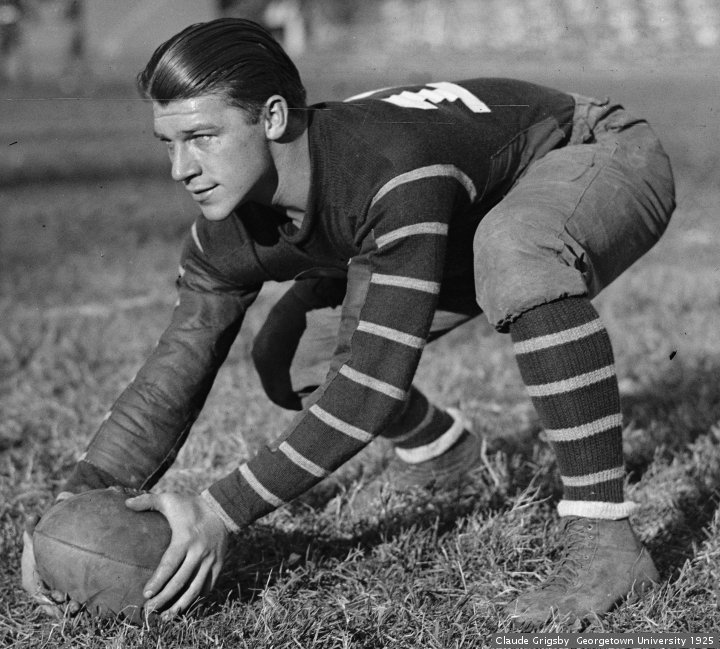
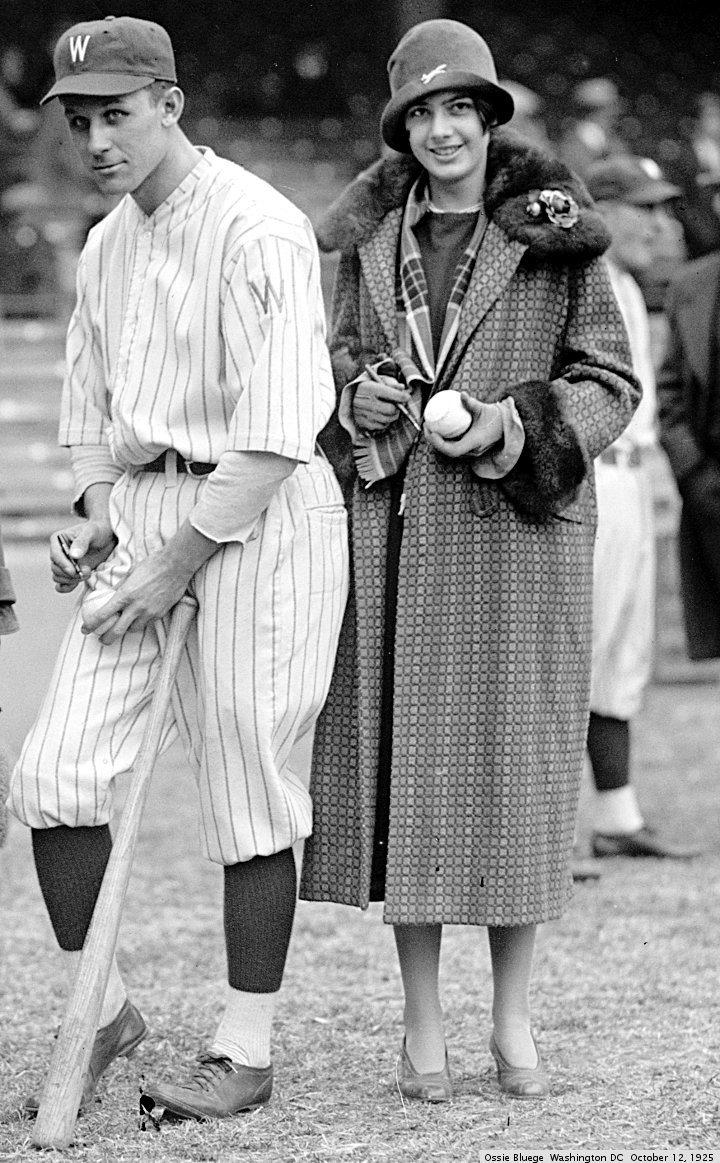
PG was threatening to listen to a radio interview with Richard Nixon. Tricky Dick was promoting a book, Real Peace. Supposedly, the 107 page tome was self published, then issued as a trade book. It deals with issues of world peace in the nuclear age.
At the eighteen minute mark, Mr. Nixon said something. In Real Peace, the phrases in my opinion, of course, and I believe do not appear. “Its obvious when you state something that you believe it.”
Oh, if only. When a politician’s lips are moving, then whatever comes out of the mouth is suspect. POTUS 37 was a bit closer to the truth later… “every politician should be somewhat of a poet.”
The thrust of the book is to maintain the strength of your armed forces, so that the bad guys will think twice before doing something stupid. The interview was conducted January 20, 1984. At the time, the number one enemy of the United States was the Soviet Union. Both superpowers had nuclear weapons, and neither was foolish enough to use them. In a few years, the Soviet Union would collapse.
“No sane national leader is going to make a decision, I’m going to declare war to gain this territory or gain this advantage.” In 1984, two bloody conflicts were being fought in Central Asia. Both were provoked, to some degree, by the United States. The after effects of these conflicts would have an impact on the USA. These two wars were the Soviet Invasion of Afghanistan, and the Iran-Iraq war. This is not the only time the sanity of Saddam Hussein has been questioned.
While trying to find more information about Mr. Nixon’s book, PG found a link to a poem by Walt Whitman, O Sun of Real Peace. Mr. Whitman was a nurse during the War Between the States, and saw men suffer. Should every poet be somewhat of a politician?
O SUN of real peace! O hastening light!
O free and extatic! O what I here, preparing, warble for!
O the sun of the world will ascend, dazzling, and take his height—
and you too, O my Ideal, will surely ascend!
O so amazing and broad—up there resplendent, darting and burning!
O vision prophetic, stagger’d with weight of light! with pouring glories!
O lips of my soul, already becoming powerless!
O ample and grand Presidentiads! Now the war, the war is over!
New history! new heroes! I project you!
Visions of poets! only you really last! sweep on! sweep on!
O heights too swift and dizzy yet!
O purged and luminous! you threaten me more than I can stand!
(I must not venture—the ground under my feet menaces me—it will not support me:
O future too immense,)—O present, I return, while yet I may, to you.
Pictures today are from The Library of Congress. This is written like H. P. Lovecraft.
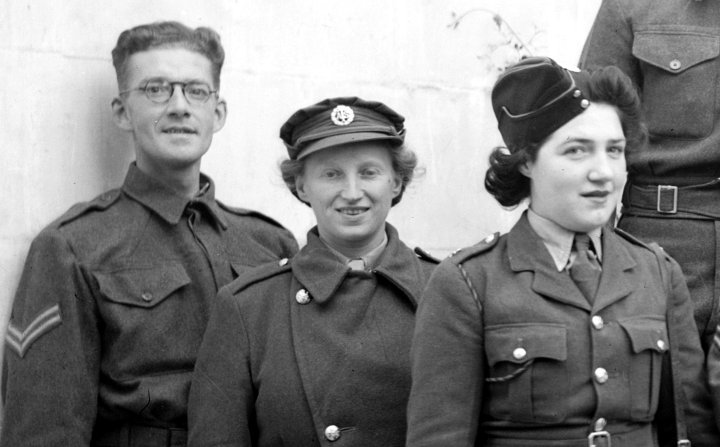

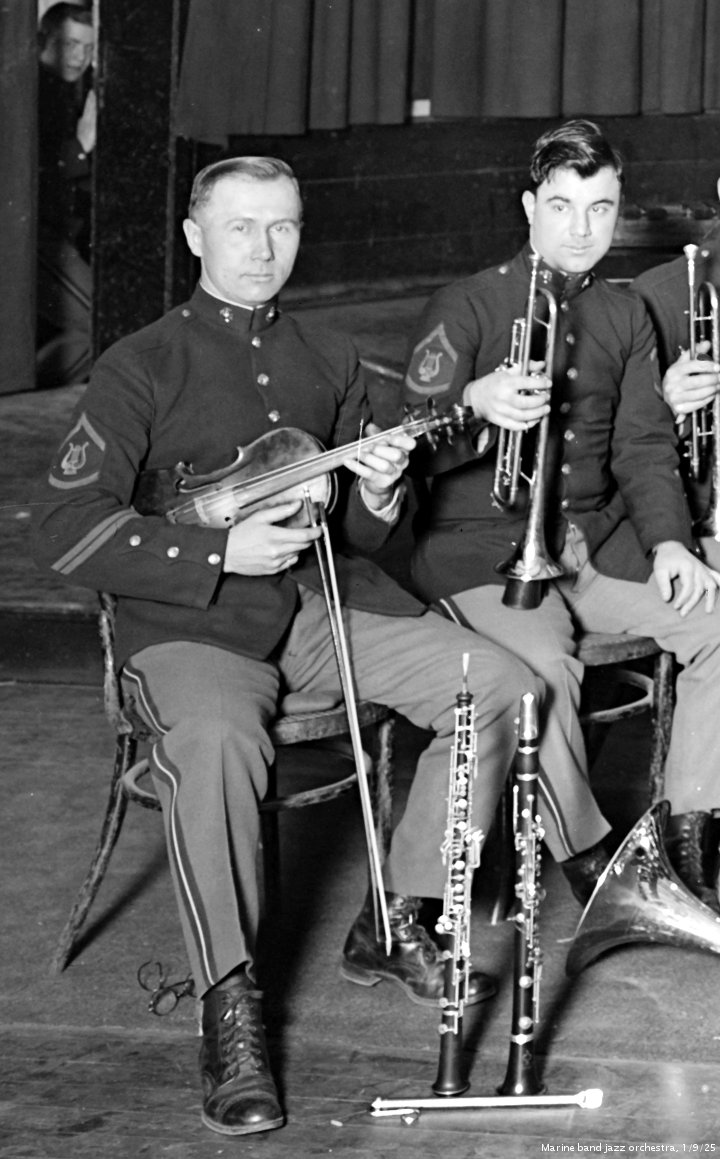

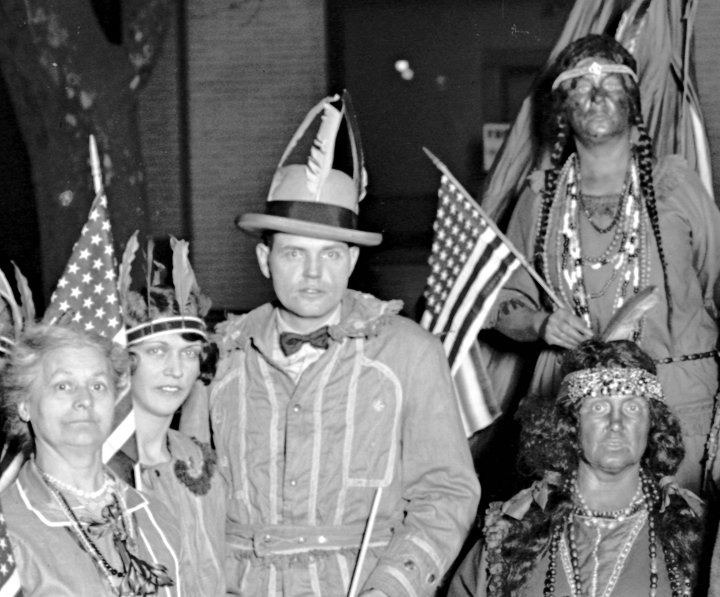


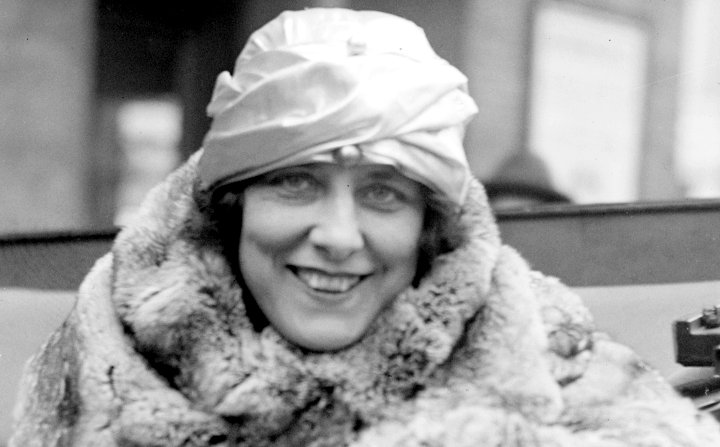
Whimsical Nostalgic And Down Home
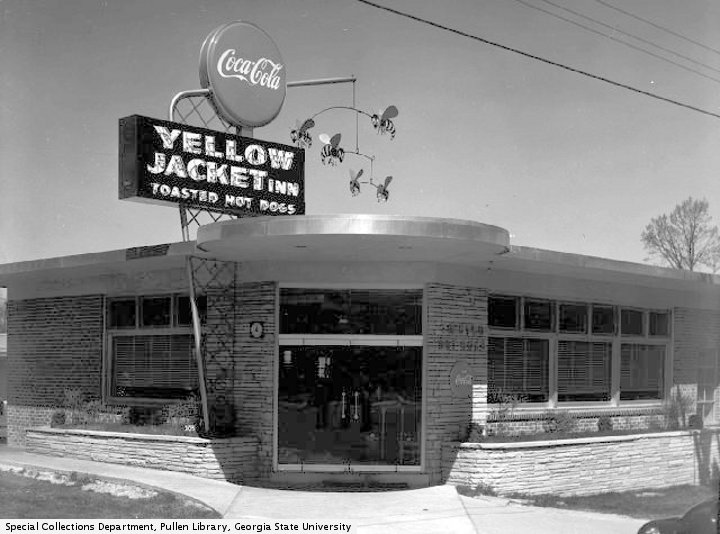






PG was spending a slack morning. He was editing pictures from the GSU Library. This occupies the fingers and the eyes, which leaves the ears looking for amusement. To satisfy the aural urges, an author interview from Wired For Books was imported. Meanwhile, the brain wonders when the next dose of coffee would arrive.
Wired For Books is a treasure of the digital age. Don Swaim had a radio show for the CBS network. He would interview authors selling a new book. The interview tapes were empeethreed, and put on a website facilitated by Ohio University. PG began at the top of the list, and is working his way through the alphabet. He made it to the M section.
In the interview with Toni Morrison, Mr. Swaim mentioned having a chat with Garrison Keillor. It seems as though Mr. Keillor was not fun to interview. The reflex action for PG was to download the files.
PG has never been on the bus for Garrison Keillor. His formula is a bit too NPR precious for PG. Maybe Mr. Keillor secretly agrees, but continues to do it for the money. “Keillor also talks about his writing. He writes about his radio program mainly as a way to defend himself. Many reporters have described his show, A Prairie Home Companion, as down-home, whimsical and nostalgic, all adjectives that Keillor would never use to describe his own program. He wanted to write what it really was about.”
The radio show was interrupted to write the first four paragraphs of this post. The remaining thirteen minutes did not have many good quotes. Mr. Keillor talked about his Minnesotality, or maybe that is Minestrone. Like people from the rest of the world, Minnesotites come to Georgia.
The next show at Wired for Books is a repeat of the Richard Nixon interview. For those of a certain age, it is a visit to another age. Mr. Nixon has the deep rolling voice, and can drag you under his spell, until you wake up and realize that everything he says is a lie.
While looking for the link to the interview above, a conversation between Mr. Nixon, John D. Ehrlichman, and H. R. Haldeman came up. The tape was made May 13, 1971.
NIXON: … CBS … glorifying homosexuality.
EHRLICHMAN: A panel show?
H. R. HALDEMAN: No, it’s a regular show. It’s on every week. It’s usually just done in the guy’s home. It’s usually just that guy, who’s a hard hat.
NIXON: That’s right; he’s a hard hat.
EHRLICHMAN: He always looks like a slob.
NIXON: Looks like Jackie Gleason.
HALDEMAN: He has this hippie son-in-law, and usually the general trend is to downgrade him and upgrade the son-in-law–make the square hard hat out to be bad. But a few weeks ago, they had one in which the guy, the son-in-law, wrote a letter to you, President Nixon, to raise hell about something. And the guy said, “You will not write that letter from my home!” Then said, “I’m going to write President Nixon,” took off all those sloppy clothes, shaved, and went to his desk and got ready to write his letter to President Nixon. And apparently it was a good episode.
EHRLICHMAN: What’s it called?
NIXON: “Archie’s Guys.” Archie is sitting here with his hippie son-in-law, married to the screwball daughter. The son-in-law apparently goes both ways. This guy. He’s obviously queer–wears an ascot–but not offensively so. Very clever. Uses nice language. Shows pictures of his parents. And so Arch goes down to the bar. Sees his best friend, who used to play professional football. Virile, strong, this and that. Then the fairy comes into the bar. I don’t mind the homosexuality. I understand it. Nevertheless, goddamn, I don’t think you glorify it on public television, homosexuality, even more than you glorify whores. We all know we have weaknesses. But, goddammit, what do you think that does to kids? You know what happened to the Greeks! Homosexuality destroyed them. Sure, Aristotle was a homo. We all know that. So was Socrates.
EHRLICHMAN: But he never had the influence television had.
NIXON: You know what happened to the Romans? The last six Roman emperors were fags. Neither in a public way. You know what happened to the popes? They were layin’ the nuns; that’s been goin’ on for years, centuries. But the Catholic Church went to hell three or four centuries ago. It was homosexual, and it had to be cleaned out. That’s what’s happened to Britain. It happened earlier to France. Let’s look at the strong societies. The Russians. Goddamn, they root ’em out. They don’t let ’em around at all. I don’t know what they do with them. Look at this country. You think the Russians allow dope? Homosexuality, dope, immorality, are the enemies of strong societies. That’s why the Communists and left-wingers are clinging to one another. They’re trying to destroy us. I know Moynihan will disagree with this, Mitchell will, and Garment will. But, goddamn, we have to stand up to this.
EHRLICHMAN: It’s fatal liberality.
NIXON: Huh?
EHRLICHMAN: It’s fatal liberality. And with its use on television, it has such leverage.
NIXON: You know what’s happened [in northern California]?
EHRLICHMAN: San Francisco has just gone clear over.
NIXON: But it’s not just the ratty part of town. The upper class in San Francisco is that way. The Bohemian Grove, which I attend from time to time–it is the most faggy goddamned thing you could ever imagine, with that San Francisco crowd. I can’t shake hands with anybody from San Francisco. … Decorators. They got to do something. But we don’t have to glorify it. You know one of the reasons fashions have made women look so terrible is because the goddamned designers hate women. Designers taking it out on the women. Now they’re trying to get some more sexy things coming on again.
EHRLICHMAN: Hot pants.
NIXON: Jesus Christ.
Pictures are from “The Special Collections and Archives,Georgia State University Library”.








 Chamblee54
1 comment