Yossarian Part Five


This content was published August 31, 2012. … This is part five of an appreciation of Catch 22. Parts one, two, three, four, six, and seven are available. … XXV The Chaplain This is another existential quandary chapter. There is not a lot of action. The saving grace is that it makes fun of religion. … Chaplain Tappman is seen as a pathetic source of ridicule. The other men do not think he is wonderful, which always makes professional Jesus worshipers uncomfortable. Chaplain T is also having weird ideas. He sees a naked Yossarian in a tree during the memorial service for Snowdon, and thinks it is a vision. This is sort of like that lady in Rockdale county who kept having the Virgin Mary visit her. However, no one is under the impression that Yossarian is a virgin, or that he is the mother of Jesus. … So the Chaplain mopes about his uselessness, and decides to go see Major Major, who never sees anyone. The Chaplain takes a sneaky route back to his tent. He finds a man living in the woods. Flume is there because he thinks his tentmate is going to kill him.
After another humiliating encounter with tentmate Whitcomb, whose rank keeps changing, the Chaplain goes to see Colonel Cathcart. The Colonel is in no mood to talk to the Chaplain, and says the flyers are going to go to Avignon again so they can get some casualties. … One of the online cheat sheets has a good quote. “Complex questions of ontology perplex him, but “they never [seem] nearly as crucial to him as the question of kindness and good manners.” I had never encountered “ontology” before. It seems to have something to do with existential questions about the nature of God and man. If you change the t to a c, you get oncology. This is the branch of medicine dealing with the treatment of cancer. As one practitioner said, it is the branch of medicine that no one makes jokes about.
With c, you get oncology. This is the war against runaway cell growth, where the treatment is often treacherous and debilitating. The treatment is often as bad as the disease, which is saying something for a fatal malady. With t, you get ontology. This is where you ask questions that no one really knows the answer to, although many make the claim. Instead of runaway cell growth, you have runaway rhetoric. One chemotherapeutic protocol for ontology is substantial applications of alcohol, which can make the disease worse, can make you puke, but will usually not make your hair fall out.
XXVI Aarfy Aarfy is really named aardvark, although it is unlikely that is on his driver’s license. He should be first on any list of characters, except that the online cheat sheets don’t list the characters alphabetically. In a story like this, there are a lot of characters. It is tough for a simple minded southerner to keep up, and tools are needed. … In this chapter, Dunbar plays a key role. I seem to remember good things about him, but could not be sure. The first list of characters does not mention him. This is frustrating, since it is not alphabetized, and you have to go through the entire thing to see that Dunbar is not there.
Another character list does show something: Dunbar – A friend of Yossarian and the only other person who seems to understand that there is a war going on. Dunbar has decided to live as long as possible by making time pass as slowly as possible, so he treasures boredom and discomfort.” … There is some action in this chapter, and Aarfy is a key player. In the first part, Aarfy, Nately, and Yossarian are in a building in Rome. Nately confesses his love for a whore, and is ridiculed by Aarfy. Later, there is a mission, where Aarfy’s incompetence leads the plane into enemy fire. Yossarian is hit in the leg by flak, and winds up in the hospital. … When Yossarian tries to get out of bed, Nurse Cramer asks if he wants to lose his leg. “It’s my leg” ”It’s certainly not your leg. That leg belongs to the U.S. Government. It’s no different than a gear or a bedpan. The army has invested a lot of money to make you an airplane pilot, and you’ve no right to disobey the doctor’s orders.”
XXVII Nurse Duckett Sometimes you have to stop dilly dallying and finish the job at hand. This series on Catch 22 has gone on since June, and has three more parts to go. … When I decided to do a series on Yossarian, it was using two good eyes. A couple of weeks into July, there was an extra sensitivity to bright white light. When the right eye was covered, the left eye was a mass of blurred vision. Action needed to be taken. Research was done about ophthalmologists, insurance coverage was secured, and an appointment was made with a nearby eye doctor. …
The first appointment revealed a broken blood vessel in the eye. The fancy name is branch retinal vein occlusion. The doctor lectured me on the need for a medical exam, to determine the cause of this spillage. On the way home, I made an appointment for a physical. … When the nurse takes your blood pressure, makes a face, and decides to take a reading from your other arm, that is not a good sign. Yes, the blood work came out fine, and hypertension is a less severe problem than diabetes or hiv. Clearly, some lifestyle changes were in order.
The second visit to the eye clinic was horrible. The nurse said that the dilation drops were going to be strong, and that his eyes would be dilated the next day when he woke up. Then, the retina specialist had to deal with an emergency, and I had to wait, with compromised eyes, for what seemed like forever. … When I got to see the retina specialist, there was a new name for the condition. Cystoid Macular Edema is not an improvement. The doctor said that she could not start treatment with the blood pressure as high as it was. The treatment she proposed was an intraocular injection of a cancer drug. An appointment was made for four weeks in the future.
On the way home from the eye clinic, I stopped at the office of the other primary care dude. He was out of the office for two more days. I sent an email explaining his situation, and the primary called in a prescription for amlodipine. … I had started to decipher the proposed diet, and made an effort to follow it. When you are skinny growing up, you get into the habit of trying to gain weight. Then you get older, and develop a pot belly. The concept of thinking about what to eat is new to me.
The blood pressure readings began to improve. Better yet, the blurring in the left eye is improving. The next appointment at the eye clinic is the day after labor day. I am hoping that an intraocular injection of a cancer drug will not be needed. … Ok, back to Yossarian. This chapter starts out with him in the hospital, taking liberties with a nurse. There is trouble, and a shrink is called in. The head doctor is crazier than Yossarian. … There is a tradition on english tests. You are given a quote, and you have to explain it. There are two wiki worthy quotes for chapter XXVII.
“Hasn’t it ever occurred to you that in your promiscuous pursuit of women you are merely trying to assuage your subconscious fears of sexual impotence?” “Yes, sir, it has.” “Then why do you do it?” “To assuage my fears of sexual impotence.” This is an exchange between the shrink and Yossarian. … BTW, not all therapists, or other rapists, appreciate being called shrink. One such person said “I am not a shrinker, I am a grower”. He did not charge for that. … The last paragraph has a fun bit of wordplay. It has long been known that if you put a space three letters into therapist that you get the rapist. I tried to make a joke about this, and said or other rapist. When he saw those letters on the screen, he realized that “the” and “or” is an anagram for other.
Therapist spelled backwards is tsipareht. This will inhibit palindromic applications of this word. … “You have no respect for excessive authority or obsolete traditions. You’re dangerous and depraved, and you ought to be taken outside and shot!” Major Sanderson, the shrink, says this to Yossarian. This is another example of the satire in this book. It is not as heavy handed here as elsewhere, and consequently is more enjoyable. Satire can tire is applied without fire.
XXVIII Dobbs When PG was in sixth grade, a popular insult was Dob. Since it was a verbal insult, no one knew whether it had one bee or two. … It turns out the special education teacher at Cross Keys was named Beatrice Dobbins. She was morbidly obese. The special ed students were called dobs. This tidbit of knowledge made its way to the sixth grade at Ashford Park. … The character Dobbs wants Yossarian to help him kill Colonel Cathcart. In this chapter, Yossarian agrees to help. Dobbs is now unwilling to kill the Colonel. Opportunity is a funny thing, as are most things with tuna in the middle. This chapter is really about Orr, who is Yossarian’s tentmate. Orr is a tinkerer, which upsets Yossarian while it is going on. In later chapters, Yossarian will reap the benefits of Orr’s tinkering.
This is the last chapter that Orr appears in. He is flying a mission, and his plane goes into water. All the other men are in one lifeboat, and it is rescued. Somehow, the boat with Orr is never rescued. … There is a curious bit of cultural anthropology here. The life jackets the men carried were called Mae Wests. There was a movie star at that time who used that name. She had big boobs, which were probably real. There were rumors that Mae West was was a man in drag. Miss West made a movie with W.C. Fields, where he was drunk all the time, and they had to shoot the movie around him. … There was a plane crash, and when the men tried to use the Mae Wests, they did not work. The MWs had a CO2 canister, which made them inflate. Milo Minderbinder borrowed these canisters to make whipped cream. There were no other comments about the syndicate in this chapter.
The Orr who perishes in this chapter had a double r last name. There was a football player named Jimmy Orr. He caught passes from Johnny Unitas. Mr. Orr, with a double r, had a nightclub in the Peachtree Battle shopping center called “Jimmy Orr’s End Zone”. In Super Bowl III, the Baltimore Colts tried a trick play called a flea flicker, The quarterback gives the ball to a running back, who tosses it back to the quarterback. Jimmy Orr was by himself in the end zone, and the quarterback threw an interception. This was the year Joe Namath, and the New York Jets, won the Super Bowl. They had no business winning, but they did. People who suspect that the Super Bowl is rigged point to this game as the first obvious example.
XXIX Peckum There is not much action in this chapter. Just of bunch of self important officers trying to impress each other. They all think they are succeeding, and that the others are failing. There is a synchronicity of stupidity. … When I was at Redo Blue, I heard someone, named George, say “Frank thinks Phil is a fuckup”. The names have been changed to protect the guilty and the sensitive, even though it is unlikely that any of the three men involved will ever read this. It is not even certain that all three can read. So, I got to thinking. You could take that statement, and insert blanks where the names are. _____ said that ____ thinks that ____ is a fuckup. You could take any of those three names, and insert it into any spot in the formula. All combinations of names would be true.
XXX Dunbar This chapter was made for the movies. There is a pilot named McWatt. He likes to fly low over people and scare them. At first, it is a harmless little habit. Then it annoys Yossarian so much that murder is contemplated. … Yossarian, it turns out, would rather make love than war. He starts to spend afternoons on the beach with Nurse Duckett. They both enjoy the company of the other. While Yossarian and Nurse Duckett are making whoopee, the other men are swimming. One afternoon, McWatt decides to buzz the swimmers. Kid Sampson waves at him. For some reason, this distracts McWatt just enough to dip the plane a bit lower. Kid Sampson is cut in half. After McWatt sees what he has done, McWatt flies into a mountain. … <a href=”” target=”_blank”>Bookrags has an interesting take: McWatt dips his wings in one final salute and flies into … (paywall).
Another facebooker contributes a bit of commodity wisdom: “Work isn’t to make money; you work to justify life.” Marc Chagall “I think Chagall’s words speak to those who find passion in their work–or that their work sustains their passion. I am privileged to be in that class of folks, but on this labor day I am mindful of those who work to survive and in doing so often find themselves endangered by the exploitation and greed of others.” …
There is a little bit of sophistry/commodity wisdom that usually annoys me. It sounds so good, is a clever turn of words, but is totally without meaning when you think about it. The platitude is “I work to live, I don’t live to work.” Does your heart stop beating when you go to work? We all know people whose brain ceases to function on the clock, but they continue to breathe. Often, when they exhale, these people make obnoxious noise, which is also part of being alive.
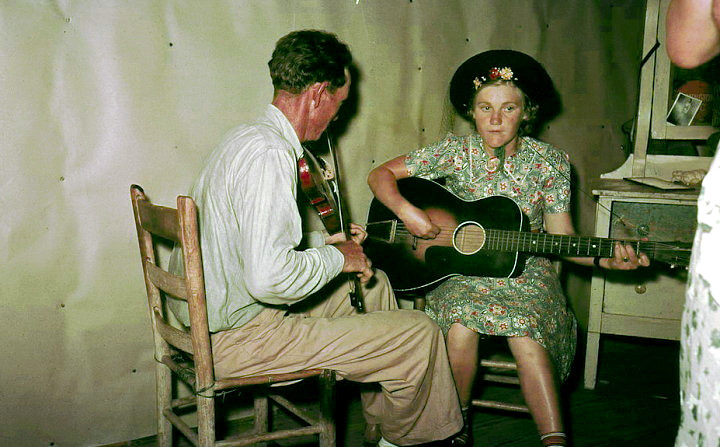
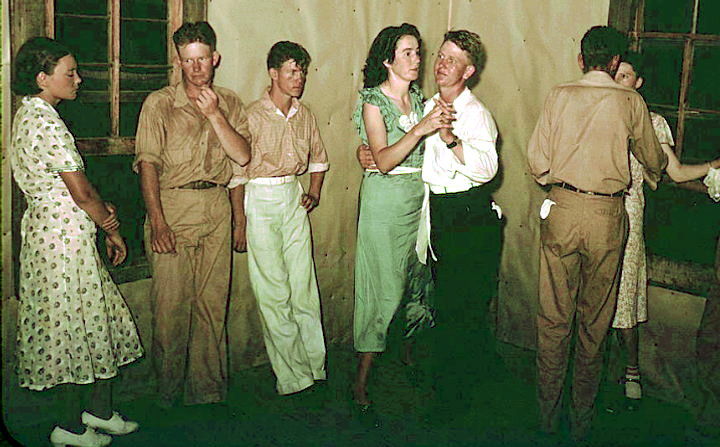
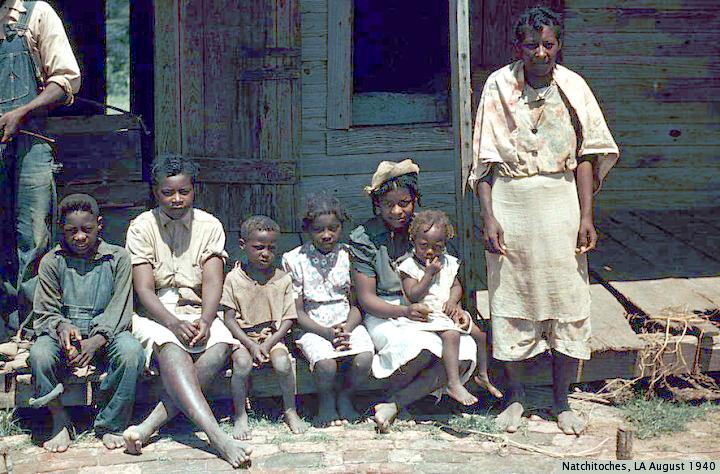
Work is a part of life. When you are a living human critter, you are going to do things that you don’t enjoy. But you do them because you have to. When I am editing this, I will try to think of a good analogy for this silly saying. But don’t bet on it. This has gone on too long, and part five is finally, mercifully, finished. … Pictures today are from The Library of Congress. Russell Lee took the social media picture in September 1940. “Jack Whinery and his family, homesteaders, Pie Town, New Mexico” ©Luther Mckinnon 2025 · selah


Chuck Palahniuk And Joe Rogan
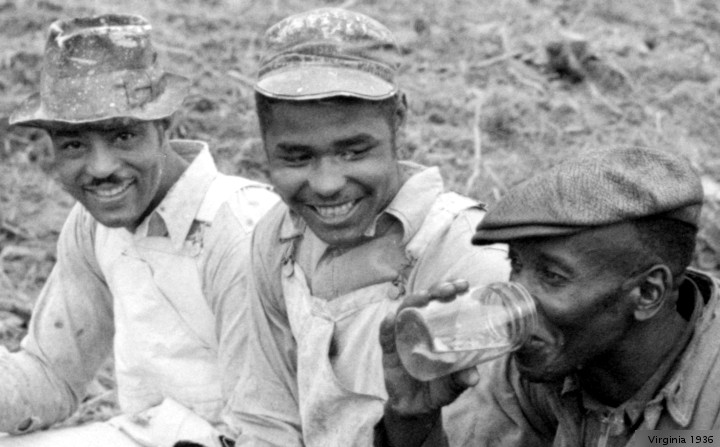
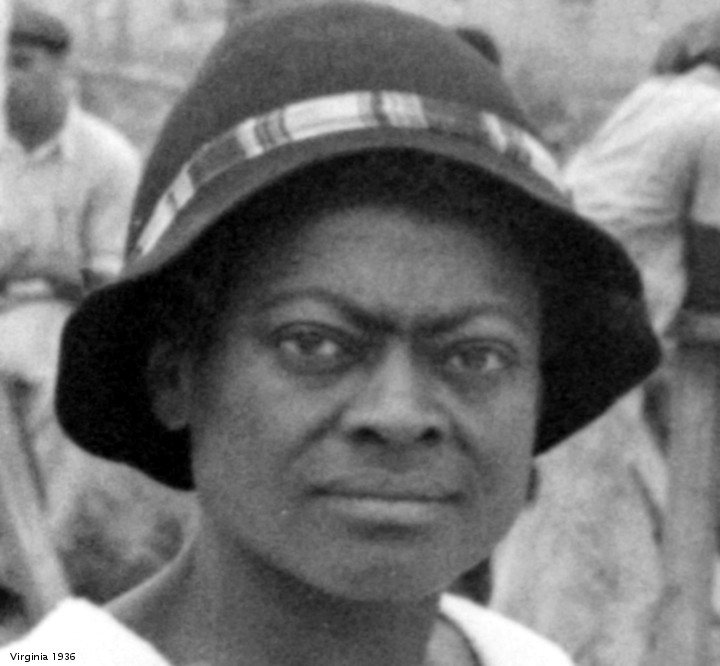

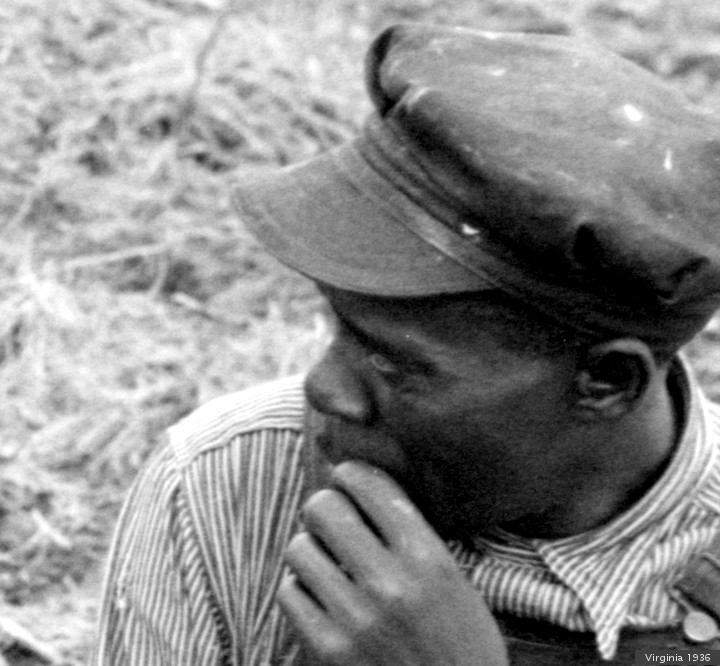
Joe Rogan Experience #1158 – Chuck Palahniuk hit the internet recently. Mr. Palahniuk (Paula Nick) writes trendy books, most famously Fight Club. Mr. Palahniuk is pleased to hear people say “the first rule of…” It makes him think he has had an impact on the culture. This is a repost.
Inevitably, authors talk about their writing habits. Mr. Palahniuk fills up notebooks in longhand. When he gets bored, or is killing time in an airport, he begins to type these notes. To quote Truman Capote, this is not writing, this is typing.
One of the themes of this conversation is what offends people. The author of Guts knows about giving offense. Often, people are not especially offended themselves, but are offended on behalf of other people. Mr. Palahniuk uses the phrase “white knighting,” to describe this protective umbrage taking. Per urban dictionary: “White knighting Defending someone who does not wish to be defended.” White knighting is woke whitesplaining.
Two especially tasteful stories were told. If you are inclined to get offended, for any reason at all, you probably should skip over these two stories. The pictures, by The Library of Congress, are safe. Both of these stories are by well known authors, who are named in the interview. If you want to know who they are, you will have to listen to the interview. Once again, these stories are hard core, and you should take great caution in reading them. If you like these stories, there are more in the podcast.
Upon further consideration, it has been determined that one of the stories is too much. If you want to hear it, you can listen to the podcast. … The break room at a hospital was next to the room where autopsies were performed, with a glass window looking in. A twelve year old boy was on the slab, having died in a bicycle accident. The Pathologist cut away the boy’s face, and peeled it back, so that it hung over his jaw. This exposed a dark red layer of muscle, covering the face. The man looked at this, and said “that’s the color I want to paint my den.”
Mr. Palahniuk has had a lively career. A crooked business manager stole a great deal of money from him. Since he is no longer filthy rich, but merely filthy minded, he continues to produce books. Fight Club 3 is in the pipeline. It will probably be accompanied by a promotional tour, with more grossout stories for the clamoring public.
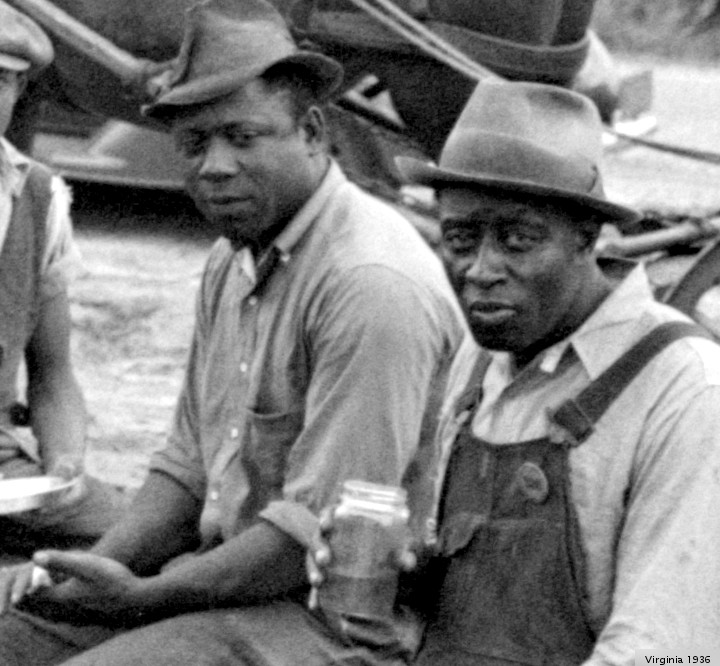
Pictures today are from The Library of Congress. Paul Carter took the social media picture in September 1936. “Lunch hour Newport News Homesteads, Virginia” ©Luther Mckinnon 2025



Manley Pointer



Good Country People is a Flannery O’Connor story. Manley Pointer is a Bible salesman in rural Georgia. He calls on the Hopewell family. Manley doesn’t sell any Bibles, but he does get a date with Hulga Hopewell. This is a repost.
“O’Connor portrays a one-legged, unemployed female with a Ph.D. in philosophy, who has nothing to do but stay at home and irritate her mother. When a Bible salesman, Manley Pointer, … arrives at the Hopewell house, Joy, who has changed her name to Hulga, much to the annoyance of her mother, joins her new friend in an excursion to a nearby barn, complete with a romantic hayloft.” source
The first few minutes of the Hulga-Manley date are special. “Smiling, he lifted his hat which was new and wide-brimmed. He had not worn it yesterday and she wondered if he had bought it for the occasion. It was toast-colored with a red and white band around it and was slightly too large for him. He stepped from behind the bush still carrying the black valise. He had on the same suit and the same yellow socks sucked down in his shoes from walking.”
“He crossed the highway and said, “I knew you’d come!” The girl wondered acidly how he had known this. She pointed to the valise and asked, “Why did you bring your Bibles?” He took her elbow, smiling down on her as if he could not stop. “You can never tell when you’ll need the word of God, Hulga,” he said. She had a moment in which she doubted that this was actually happening and then they began to climb the embankment. They went down into the pasture toward the woods. …”
“Wait,” he said. He leaned the other way and pulled the valise toward him and opened it. It had a pale blue spotted lining and there were only two Bibles in it. He took one of these out and opened the cover of it. It was hollow and contained a pocket flask of whiskey, a pack of cards, and a small blue box with printing on it. He laid these out in front of her one at a time in an evenly-spaced row, like one presenting offerings at the shrine of a goddess. He put the blue box in her hand. THIS PRODUCT TO BE USED ONLY FOR THE PREVENTION OF DISEASE, she read, and dropped it. The boy was unscrewing the top of the flask. He stopped and pointed, with a smile, to the deck of cards. It was not an ordinary deck but one with an obscene picture on the back of each card. “Take a swig,” he said, offering her the bottle first. He held it in front of her, but like one mesmerized, she did not move.” …
“Mrs. Hopewell and Mrs. Freeman, who were in the back pasture, digging up onions, saw him emerge a little later from the woods and head across the meadow toward the highway. “Why, that looks like that nice dull young man that tried to sell me a Bible yesterday,” Mrs. Hopewell said, squinting. “He must have been selling them to the Negroes back in there. He was so simple,” she said, “but I guess the world would be better off if we were all that simple.” source
Erik Langkjær is the possible inspiration for Manley Pointer. A Russian-Danish young man, Mr. Langkjær worked as a textbook salesman. “Klaus Rothstein, a literary critic and commentator for the national Danish newspaper Weekendavisen” got Mr. Langkjær to tell his story.
“I searched for a job in publishing, in the hope that I would be hired as an editor. I did get a job, but it was as a sales representative in the South. During these travels, I met a professor at the University of Georgia. She suggested that I pay a visit to a local woman who had had her first book published by Harcourt, Brace & Company, where I was now a sales agent in the education branch. The professor believed that this author would enjoy meeting me because of her affiliation with the publishing firm. Weakened as she was by her disease, lupus, she wasn’t in contact with many people, so it would be nice to receive a visit from outside. A few years back, her father had died from the same disease, but the doctors had told her not to worry. …”
“Flannery and I quickly became friends. I made an effort to plan my sales route in a way that made it possible for me to visit her every two or three weeks. I would arrive in my own car, and then suggest going for a ride in the surrounding countryside. She was always up for it. We talked about our family backgrounds, and she was excited to hear about my mother’s Russian heritage and my father’s career as a consul general … Flannery herself was a devout Catholic, highly conscious of living in the Protestant South. She considered it a great challenge to be surrounded by Protestants, and to belong to a minority. She had a church to go to on Sundays, but she was aware of the growing secularism, which she considered a threat.”
“I was not really in love; I simply enjoyed the company of women during my lonely travels in the South. Although Flannery was both conventional and religious, we eventually became so close that she, while the car was parked, allowed me to kiss her. At that moment, her disease revealed itself in a new way: there was no strength in her lips. I hit her teeth with my kiss, and since then I’ve thought of it as a kiss of death. …
“I visited her twelve to fourteen times, and later we started exchanging letters. As I returned to Denmark to settle down, she wrote that she would like to hear more from me, and her first letter from June 1954 ends with a reference to our drives around Milledgeville: . . . I haven’t seen any dirt roads since you left and I miss you. I think Flannery was hoping for it to be the two of us. Between April 1953 and June 1954, when my visits were frequent, there was indeed enough contact between us for her to envisage something more. Her letters might also contain a certain disappointment in the fact that the contact wasn’t as strong on my part. …”
“When I later read one of Flannery’s short stories, ‘Good Country People,’ I noticed that the main character was a travelling Bible salesman. I didn’t sell bibles, but I used to call my binder with the records of the publishing firm ‘my bible.’ Also, the salesman in the story is named Manley Pointer, which has an obvious erotic connotation.”source
Miss O’Connor wrote Mr. Langkjær many times. 13 June 54 “My mother has just attended a dairy festival in Eatonton. The governor attended and Miss America. All the cows were in rope stalls around the Courthouse and Miss America, very sunburned, my mother said and in a white strapless evening dress (11 A. M.) had to pick her way among them and admire each one while she kept the tail of the dress out of the little piles of manure. She also had to kiss a calf. Universal suffering.” 18 July 54 “Everything here is busy electing the Governor. There are 9 candidates and the ones I have heard over the radio all sound like hound dogs that have learned to declaim. They are all but one running on keep-segregation platforms and everything is geared to the boys who sit in front of the wooden stores and tell you not to run into a street car down there. (On acct. of the rotten borough system their vote is worth three or four of a city vote.”) source
“Flannery first met Erik in April 1953, she was clearly taken with him and relished their time together, especially their drives through Baldwin County in his car. When he decided to break off their friendship and return to Europe a little over a year later, O’Connor, then using a cane, felt betrayed, as revealed in their short-lived correspondence. In early 1955, O’Connor took only four days to write this story; her intense feelings about Langkjær quickly found their outlet.”source
“Unfortunately, while she may have had romantic feelings towards him, they were not reciprocated. This was especially noticeable after he returned to Denmark in 1954. Flannery would write to him, and it would be weeks before she would hear back. … Eventually, she received a letter from him stating that he had met another woman and they were intending to get married. Flannery was devastated. However, instead of wallowing in her grief she threw herself into her art, writing one of her best short stories, “Good Country People.” Shortly after this story came out, Langkjær wrote Flannery and said that he recognized himself in the character of the salesman, Manley Pointer. Flannery responded with the epistolary equivalent of Carly Simon’s You’re So Vain, telling him in essence not to flatter himself so.” source
29 April 56 “I am highly taken with the thought of your seeing yourself as the Bible salesman. Dear boy, remove this delusion from your head at once. And if you think the story is also my spiritual autobiography, remove that one too. As a matter of fact, I wrote that one not too long after your departure and wanted to send you a copy but decided that the better part of tact would be to desist. Your contribution to it was largely in the matter of properties. Never let it be said that I don’t make the most of experience and information, no matter how meager. But as to the main pattern of that story, it is one of deceit which is something I certainly never connect with you. In my modest way, I think it’s a wonderful story. I read it over and over and nobody enjoys it as much as I do—which is more or less the case with all my productions.”source
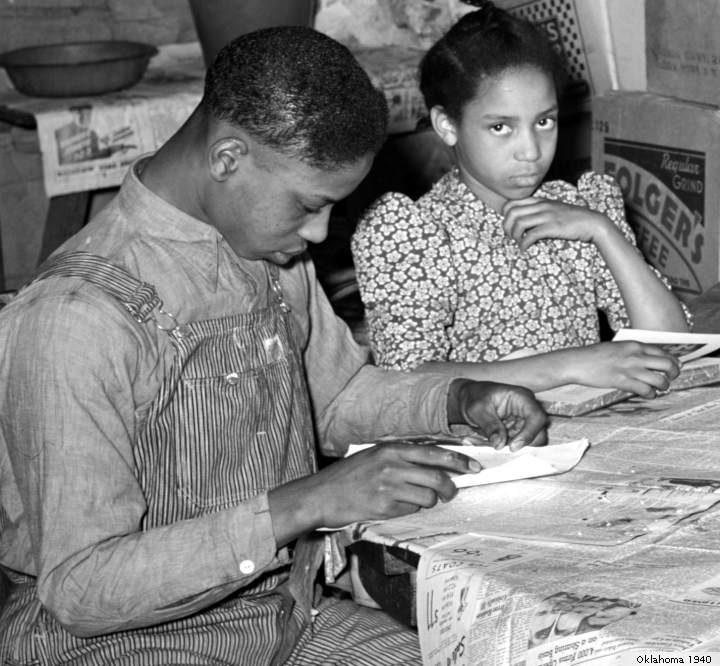
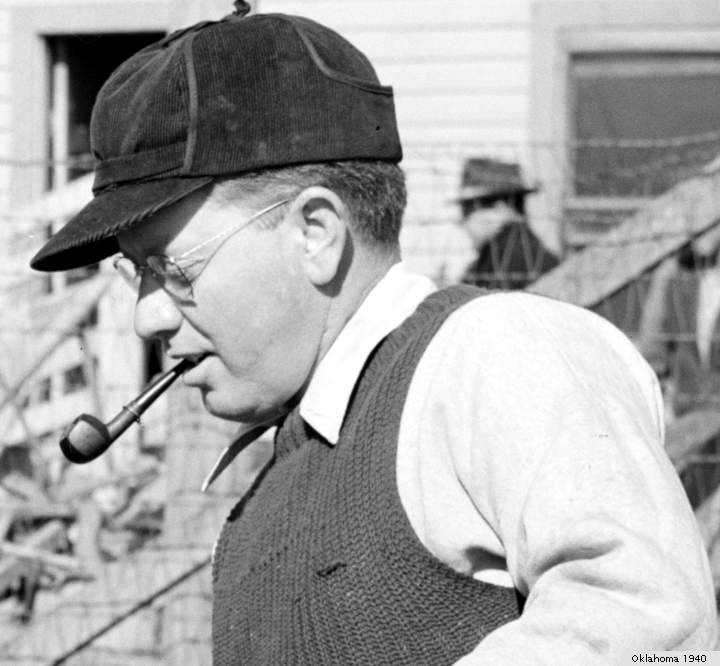
Pictures today are from The Library of Congress. Russell Lee took the social media picture in February 1940. “Wife of Pomp Hall, right, talking with another woman at UCAPAWA (United Cannery, Agricultural, Packing, and Allied Workers of America) meeting at Bristow, Oklahoma.”

One Star Jeffy
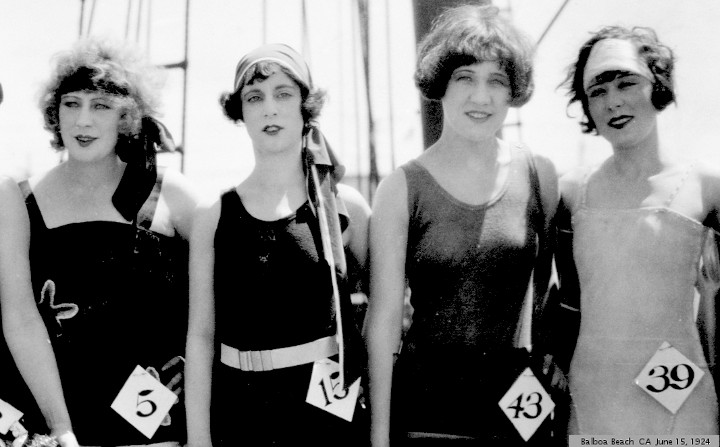


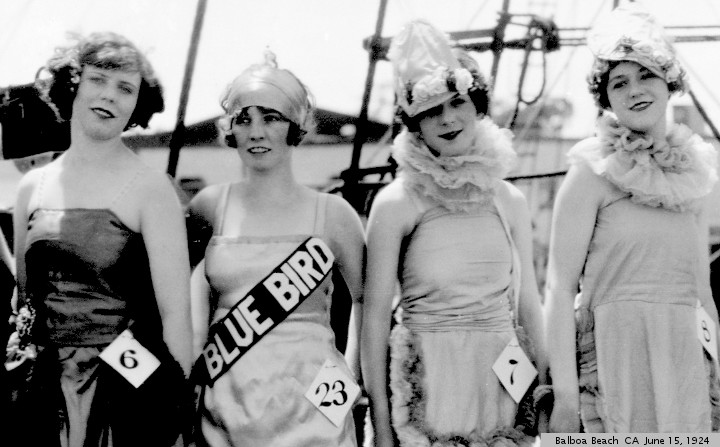
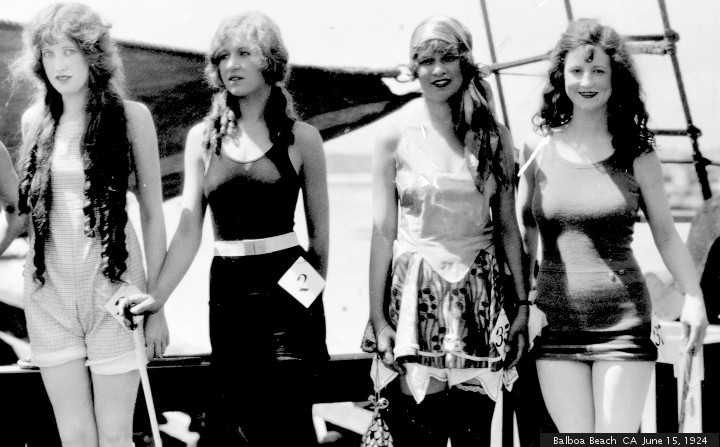

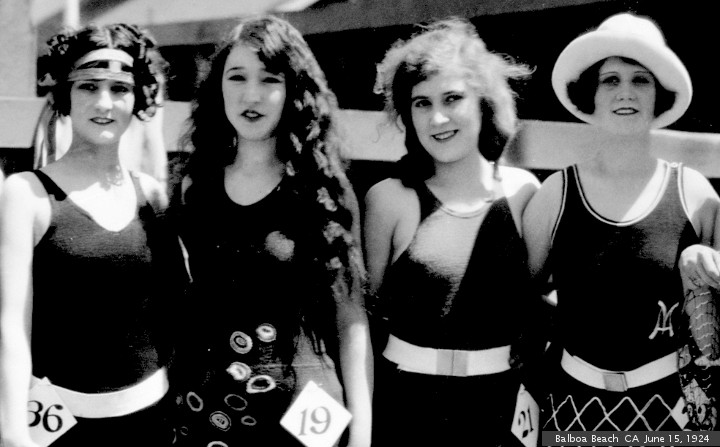
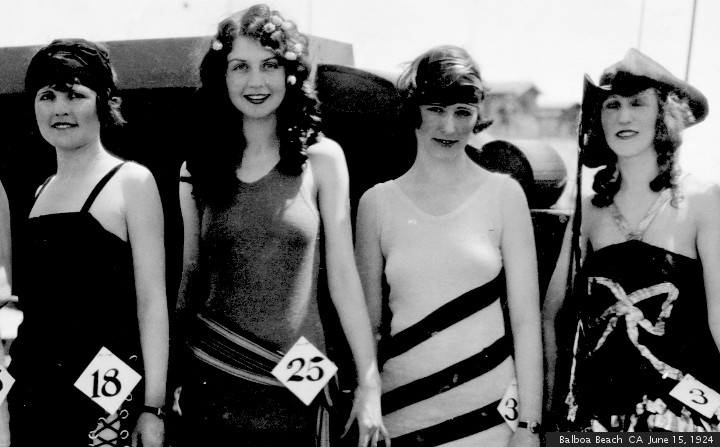
Two stories appeared here in 2011. 052811 052911 They were both based on a facebook quote … “I think we’re having a misunderstanding about what I mean by emotional truth aka “your truth.” It’s a new concept for me too.” The concept today is to assemble a collection of drabbles … 100 words stories … on the murky concept of “your truth”. The only rule is not to spend too much time, or effort, writing this thing. Pictures today are from The Library of Congress. “Jewell Pathe’s Bathing Beauty Pirates capture Vitagraph Ships for “Captain Blood”, Balboa Beach, California, June 15, 1924”
Dog Jail, a substack organ, ran a story about the coming obsolescence of clickbait. Before you start cheering, what AI has planned is much worse. … “Last week, an AI-generated image of an explosion near the Pentagon went viral on social media, briefly spooking the stock market. … The AI technology that really made stocks flutter was the social media algorithms that showed the image to so many, so fast.” … Content consumers “have become vigilant against clickbait. Most now know that the link promising “One Weird Trick to Prevent Colon Cancer” is unlikely to save your life. The designers …”
“Government Official Who Makes Perfectly Valid, Well-Reasoned Point Against Israel Forced To Resign” The Onion 052011 “State Department diplomat Nelson Milstrand, who appeared on CNN last week and offered an analysis implying that Israel could perhaps exercise more restraint toward Palestinian moderates in disputed territories, was asked to resign Tuesday. … “The United States deeply regrets any harm Mr. Milstrand’s remarks may have caused our democratic partner in the Middle East,” Secretary of State Hillary Clinton said in an unequivocal condemnation of the veteran foreign-service officer’s statements. “U.S. policy toward Israel continues to be one of unconditional support and fawning sycophancy.”…
The seminal blog post appeared in 2011. Most of the links are no longer operative. Currently existing sites will have priority today. … Reality Sandwich is for people who cannot afford a nothing burger. One of the most commented on stories is “Lady Gaga: The Visionary Rebirth of the Divine Mother Monster”. The linked feature deals with flying saucers. “ … Naked Hunger talks about a woman who wants to lose weight. “Nobody said that “my truth” was going to interest anyone except me! … We enter into a war we will never, I repeat never, win: woman against her appetite.”
The me me me meme gets a further workout in Saying “Yes” to Me … I felt as if the very foundations of my life had shifted” … Some guy named Jeffy is promoting a book called Get Laid or Die Trying. There is a quote from Tupak Shakur about players and bitches. At the end, the book gets one more plug… “Hate to be such an annoying ass (not really), but if you haven’t got a copy of the book yet, get it today. It’s really good! I swear! Excellent coffee table book and perfect for the bathroom.”
The one star reviews of Jeffy’s book are a hoot. … “ this person is a sleazy airhead … His approach, style, attitudes etc. have all the charm and sex appeal of an overflowing toilet.” … I got the audiobook, narrated by the author. It’s a complete pain to listen to, because he insists on screaming regularly. If I turn the volume down, I can’t hear the regular speaking at all, and if I turn it up to a normal volume, suddenly he’s screaming again and I have to turn it down.”
More one star Jeffy: May Karma Visit Upon Jeff Allen “This guy is a narcissitic player without emotion … A really sad, selfish character who is all about himself to the bitter end. Guys, if you want to be like that, please find your own planet!” … How about you just die trying? “This is the last guy in the world that you should be getting dating advice from: […] Honestly, you’d probably get more romantic or at least creative approaches for free by driving to your local state penitentiary and interviewing a serial pedophile.”




Fear & Loathing Part Two


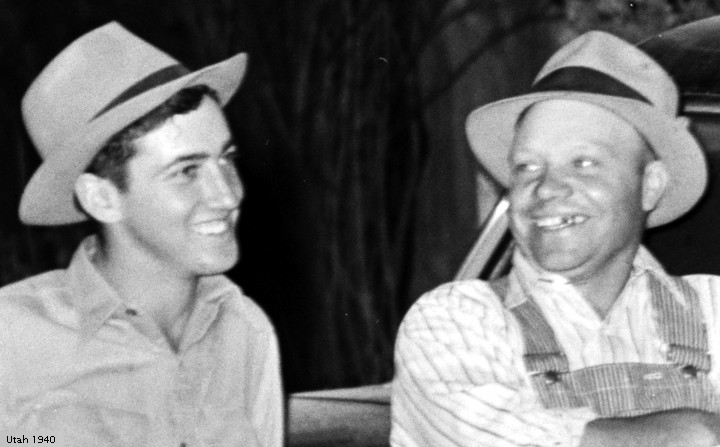

This is Part Two of my journey with Fear & Loathing in the New Jerusalem, a podcast series by Darryl Cooper aka @MartyrMade. Other episodes of this effort are available. 041525 042325 042625 Disclaimer This is a greatly simplified view of what happened. For more information, you can listen to FLNJ, or google one of the many histories of this era. … At the end of this post, we will see that googling for more information can have its limits.
April 15, 2025 My morning walk today was a trip to the county office to buy next year’s auto tag. It is 1.54 miles from my house to the office. When I got there, I had to go through a metal detector wielding security guard. He looked in my bag, and would not let me take my bottle of tea into the office. As soon as I got in the office, I was waited on, and got my tag business done quickly.
I am finished with FLNJ-2. The last part was about the time between roughly 1922 and 1925. More Zionist settlers are coming into Palestine. There is a debate about whether settlers should take over, or whether they should get along with their neighbors. Unfortunately the Jaffa riots took place.
According to this narrative, the trouble began when a groups of settlers were having a march somewhere, and one Zionist group attacked the other. The British police got involved, and the Arabs started to hear that the settlers were causing trouble. The Arabs got involved, and it was a great big mess. After that after that there was little talk of getting along with your neighbors. This development had unfortunate consequences for the whole Zionist project.
After posting FLNJ Part One, u/chamblee54 made a comment at r/martyrmade announcing the publication of Fear & Loathing Part One. There was a festive comment thread. HughNormousPeanus “I made this list during my last listen hope it helps” (This list was the actors in the F&L drama. It may prove helpful in the production of the series.) Chamblee54 “Thank you. I may want to borrow from this in my series. I hope your co-worker wasn’t listening at work. He might not get anything else done. Always remember, Douglas Murray could have done this in one week.” HughNormousPeanus ‘Douglas Murray is a three letter word I can’t say on Reddit starting with F ending in G with an A in the middle” Chamblee54 “Oh my. I am a gay man. I do not appreciate that. His sexual honeydew list is about the only good thing I can say about that idiot.” HughNormousPeanus “I’d tell you to appreciate these nuts but you probably would I can’t think of anything more derogatory to call Douglas Murray you’ll have to get over it.”
Later in the day. … I took a different route back from the county office, making the round trip 2.87 miles. I downloaded FLNJ-3, and listened to the whole thing on a trip to a pizza buffet on Pleasant Hill Road. FLNJ-3 is only 1:44:03, and is not a narrative history. Instead, MartyrMade discusses the honor culture among the Arab people in West Asia. Societies are not governed by institutions as much as families and tribes. This is how mankind has operated until recently. There was one quote that made me pull into a parking lot and make a note. 33:18 “what civilization does is relieve us of the burden of needing to be honest all the time.”
April 16, 2025 I started to listen to FLNJ-4 on my morning walk. Immediately after the opening montage, FLNJ-4 got very interesting. “Late one Friday afternoon in 1924, the Orthodox Jewish rabbi Yaakov Yisroel Dehan was walking back from his synagogue to his home in Jerusalem …”
Jacob de Haan a Dutchman, was a Gay Poet, an Orthodox Jew, and an all around piece of work. In 1919, he left The Netherlands for Palestine. “On the day of his departure, thousands of fans crowded Amsterdam’s train station, waving frantically and singing “Hatikvah.” At least one chronicler of the occasion joked that many present just wanted to make sure that he’d really gone.”
Rabbi de Haan soon became disillusioned by the reality of Palestine, after hearing about the high minded vision of a Jewish homeland. He began to display his talent for pissing people often. One quote seems to sum up his attitude. “Ever the polyglot, he quickly studied Arabic, and took great pleasure in upsetting the Zionists he’d meet by demanding that they speak to him in Arabic, an official language according to the British bylaws.” Eventually, he got enough people mad at him.
When the Zionists killed Yaakov Yisroel Dehan on July 1, 1924 I found an article written about YYD shortly after his death. It was republished in 2002, by a contemporary group with similar ideas about Israel. “NKI is the voice of Religious Jews world wide in their Torah-based opposition to the State of Israel” … “At a time when the first followers of the Zionist movement began streaming into the Holy Land in large numbers, defiling the holiness of the land, and by virtue of their idiotic ideas began to work to expel the Arabs who had been living there for centuries in order to establish a Zionist state.”
April 17, 2025 The process of listenting to FLNJ is turning into a war of attrition. The gee whiz phase is over. I am 69 minutes into FLNJ-4. The saga is sometime in the 1920’s, and is being overwhelmed by problems. The Arabs are not going anywhere, and have plenty of issues with the British and the settlers. The settlers are quarelling with each other about the direction of the Zionist project. There is a lot more action to come.
My life continues. Every morning in April, I repost an old picture poem for national poetry month. Today, it was something from Psalm 46. I got unwound talking about that on facebook, and decided on a possible definition for God … something that we cannot fully know or understand, but just might be real. … It is too nice a day to worry about this.
At 1:24:00, Darryl gets onto a source of support for the Zionists. They have the backing of several Western European nations, most notably Great Britain. Some cynical people said these nations just wanted to get rid of the Jews. Whatever. Another source of support is the Rothschild family.
Illuminati talk often involves the Rothschilds, and can get antisemitic quickly. Darryl mentioned the wars that were financed by the Rothschilds. There have always been rumors of the Rothschilds financing both sides of a war, and of egging on the warring parties, so as to make money from the ensuing carnage. There are rumors about the War Between the States … the London branch financing the Union, with the Paris branch financing the Confederacy. This is difficult to confirm or deny, and inevitably leads to Illuminati talk.
The Zionists had unity, and access to resources, not enjoyed by the Arabs in Palestine. It is interesting to speculate how the Zionist project would have gone, had it waited until after the influx of oil revenues into the Arab world. At this point, we might note the presence of Iran, which is Persian rather than Arab. The saga of Iran over the last 80 years is consequential … the 1953 coup, the 1979 revolution, the Iran-Iraq war, the ongoing conflict with Israel and the United States. The story of Iran is just as consequential as the story of Israel.
April 18, 2025 I finished my morning walk without incident. The stock market is closed for good friday. The last report: −527.16 (1.33%) Apr 17, 4:55PM EDT. In a few minutes, I will drive over to Drew Valley, for their community yard sale.
I am now at 4:04:09 of FLNJ-4. It is 1929 in the New Jerusalem. Radical Zionists are forcing matters, into faster action. The Arab population does not like it. The British don’t know what to do. The situation gets very, very ugly. See Disclaimer at top of post.
The yard sale will be celebrated on Saturday. While driving back, I heard the last few minutes of FLNJ-4. Darryl mentions something I had never heard before. At some point in this era, the United States and Great Britain restricted Jewish immigration. Darryl says the fear was about communist revolutionaries coming into the country. At this time, most of the Bolsheviks were Jewish, and the Russian revolution was seen by many as a Jewish revolution. When I try to find out more about this, the only google results are to sources concerned with anti-semitism. Any information about communism being a motivation are very difficult to find.
Pictures today are from The Library of Congress. Russell Lee took the facebook photograph in July, 1941. “Lunch at carnival stand, Fourth of July, Vale, Oregon”



Fear & Loathing Part One



April 13, 2025 – I am beginning Fear & Loathing in the New Jerusalem (FLNJ), a six part series by Darryl Cooper (middle name unavailable), aka @MartyrMade. This might prove to be a bit of a challenge. The podcast itself is easy to find as a free download. However, a transcript (the lazy blogger’s ally) might prove challenging. After googling several paywalled sources, I found a youtube edition. This will provide a transcript.
I begin this journey a few days after the infamous JRE featuring Douglas Kear Murray and Dave-no middle name-Smith. I am on team Dave, and found DKM to be an obnoxious purveyor of bad faith rhetoric. At one point, Rogan was trying to say that DC has done 30 plus hours of podcasting about Israel/Palestine. DKM interrupted him, to say “So what. 30 plus hours of podcasting, you do that in a week” I am just starting to listen to that 30 hours. I doubt that I will finish in a week.
There are so many ironies in FLNJ-1. DKM stridently said, in effect, that DS should not talk about Israel if he had not been there. At 59:54, DC mentions that “Herzl (Theodor Herzl, the founder of Zionism) had never even been to Palestine when he published his pamphlet calling for the Jews to move there.” In another head scratcher, at 24:44 we learn: “Zionism was competing for recruits with Bolshevism, and these other radical movements. It’s a competition which Winston Churchill … would later call quote little less than a struggle for the soul of the jewish people.” DC opened a can of worms when he said the Mr. Churchill was the real villain of World War II.
Eventually, though a series of World War I related events, Britain issued The Balfour Declaration. This document promised a “national home” for the Jewish people. Unfortunately, Britain had already promised the Arabs their own independent state. Britain also promised France that Palestine would be under international rule. These conflicting promises would lead to problems.
April 14, 2025 Today’s visit with FLNJ is with Episode 2, on my morning walk. FLNJ-2 begins by talking about the effect of World War I on the Arab populations of West Asia. The colonial powers … The English, The French, The Ottoman Empire … were conscripting Arabs to go fight in their war. These men did not understand why they had to go kill each other. This is not surprising, since the European conscripts did not understand the war either.
The first two hours of FLNJ-2 concern the events in Palestine after World War I ended. As could have been predicted, Britain broke its promise to the Arabs. The Balfour Declaration stood, and a portion of Palestine was “given” to the Zionists, under British administration. Meanwhile, Syria became a French governed territory. The Zionists began to build things, including militias. The Arabs were not happy, and the British managed to upset everybody. Before long, people began killing each other, and the whole thing devolved into a quagmire. … This is a greatly simplified view of what happened. For more information, you can listen to FLNJ, or google one of the many histories of this era. … I am going to copy that disclaimer for later use.
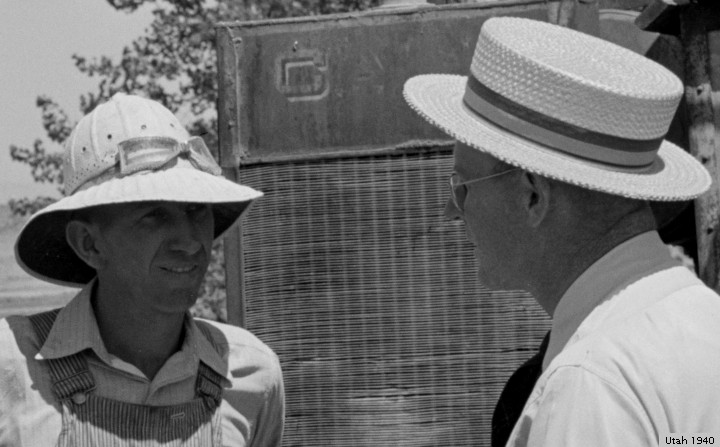
Pictures today are from The Library of Congress. Russell Lee took the facebook picture in May 1938, Southeast Missouri Farms. Farmers talking together in cooperative store. La Forge project, Missouri. There are more episodes of the Fear & Loathing series available. 041825 042325 042625

Conspiracist Part Two


Contrapoints, aka Natalie Wynn, is a dangerous content creator. When you consume her product, you can start to think like her. This can cause problems, both with your overall mental health, and when you try to condense these thoughts into coherent content. Take Conspiracy, Natalie’s latest video product. Trying to collate the thoughts, inspired by those 160 minutes, is like herding cats. I have already tried twice. 032625 032625 Today, I am taking a numerological approach. When you click on a youtube link, the entertainment starts at a second count. We will plug in fun numbers.
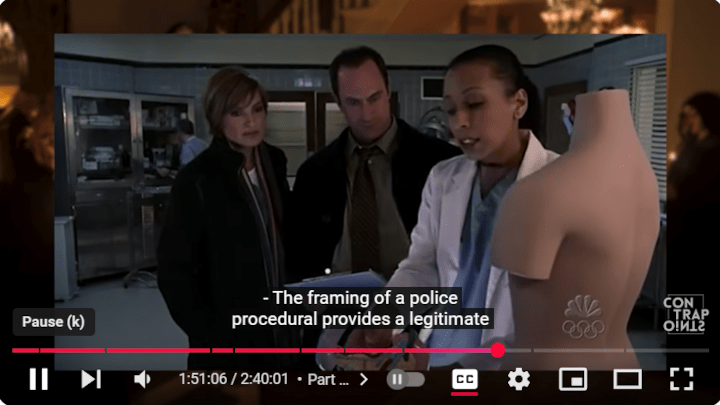
Here is how this happened. I copied the link, and the seconds count in the code said 6383s. The entertainment had been going on for 6386 seconds, or 1:46:23. I thought it would be fun to set the counter to 6666s, or 1:51:06. This will be followed by 6 seconds of action, from a tv crime show. Four people … three of whom are alive … are in a medical setting. The nurse shows a model of a human body part. Natalie comments “The framing of a police procedural provides a legitimate context that gives us permission to indulge”
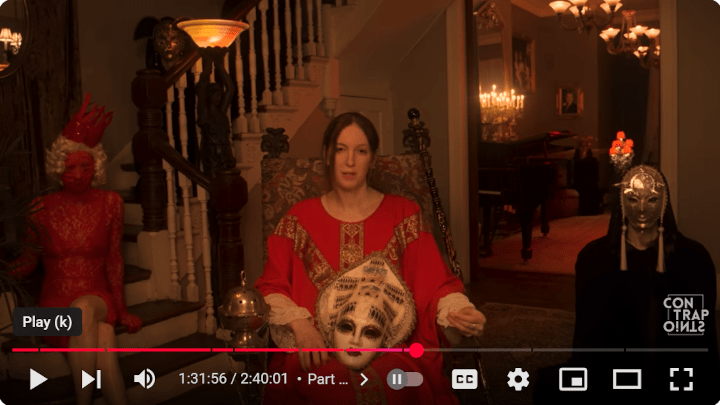
6383s/1:46:23 is also a lively moment. Natalie is drinking a red liquid out of a teapot. Seated beside Natalie, sharing the beverage, is a crude mannequin with a cardboard face that resembles Hillary Clinton. Natalie’s monolog is especially festive: “I love the smell of adrenochrome in the morning. … So at a certain point, and we have reached that point, “conspiracy theory” becomes too dignified a term for what is essentially a perverted form of morbid entertainment. I have a good eye for perversion, because I am a pervert. I know how perverts think, so you can trust me when I say … “
2222s/37:02 is somewhat of a dull moment text-wise … as if talking about conspiracies can ever be called wise. The set is decorative, and probably full of hidden meaning if you were to dive into it. The tv set on the right, with a continuous psychedelic mantrawave, is especially festive. The babble here is about how most conspiracy talk is easily debunked, but that the fact you take it seriously enough to make the effort is proof of its truth. This is similar to Robin DeAngelo, with her catch 22 about white fragility. Can you have a conspiracy without tautology?
4444s/1:14:04 is at the tail end of a rap about MK-ULTRA, “a covert CIA mind-control and chemical interrogation research program … it supposedly used United States citizens as unwitting test subjects.” The phase of MKU discussed at 4444s involved CIA agents giving LSD to unwitting customers at a brothel. The agents would watch the action from behind a one-way mirror. The script says, at 4444s, “He would write of his work, ‘It was fun, fun, fun.'” … MKU is a curious item, which happens to be semi-verified. There are reports MKU getting Charles Manson out of prison early.
8888/2:28:08 is a screen shot of a tweet. @thymetikon “Everyone listen to Naomi Wolf realize on live radio that the historical thesis of the book she’s there to promote is based on her misunderstanding a legal term” Natalie was talking about how many conspiracy mongers get into the lifestyle after being publicly humiliated. Like Naomi Rebekah Wolf, who Wikipedia categorizes as “American feminist author, journalist, and conspiracy theorist.” … “It was like she was taking her revenge on the concept of factuality itself.” The next conspiracist to be debunked in this round was Candace Owens.
“Now it has to be said that a lot of these people are using Israel’s crimes against Palestine as a pretext and those crimes are real. And the Trump administration really is citing Antisemitism to justify crackdowns on protests in universities. But it certainly doesn’t help that Conspiracists are exploiting the situation to promote Hitler and Jew hatred.” … At 7795/2:09:55 into “Conspiracy,” Natalie finally mentions the Palestinian Holocaust. She admits that Israel is committing crimes against humanity, and that Donnie is using Antisemiticism concern to stifle dissent. Not to worry, “conspiracists” are using this tragedy to promote hatred of Jews.
Right now Israel is committing the worst war crimes of the 21st century. Gaza, the West Bank, and Lebanon have all been hit hard. These crimes are sponsored by the American government. This government is run by criminals who receive massive campaign donations from AIPAC, and other actors, in what is tastefully known as the Israeli lobby. There are persistent rumors of Mossad using blackmail against these government players. When you mention this corruption, you are said to be Antisemitic. Talk of AIPAC and Mossad blackmail are dismissed as conspiracies. Natalie is doing her part in this effort to dismiss criticism of war crimes as Antisemitic conspiracy

I Used To Be Charming Part Four



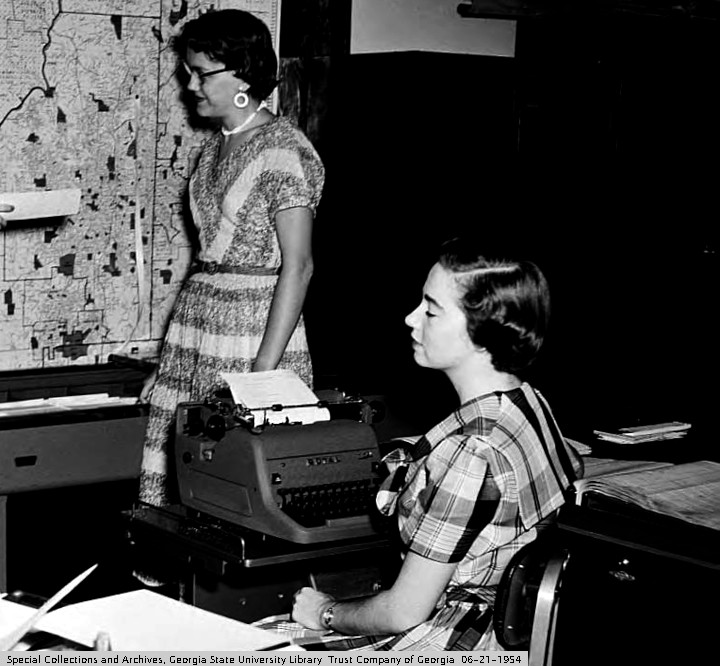

What follows is the fourth installment of the chamblee54 deconstruction of I Used to Be Charming, by Eve Babitz. IUTBC is a collection of magazine articles that Miss Babitz wrote. Pictures today are by “The Special Collections and Archives, Georgia State University Library.” The facebook photograph: “Clown with two children, Atlanta, Georgia, June 11, 1953.” Other features in this cycle are available. one two three five This is a repost.
Sober Virgins of the Eighties (Smart Fall 1988) was published in late 1988, at about the time I quit drinking. IUTBC is in chronological order. The pieces covered today are from Eve’s overboogie recovery days. Many are written for Esquire. “Every product was carefully curated by an Esquire editor. We may earn a commission from these links.” Eve may be counterculture, but by 1990 she was writing for the emperors tailor.
By 1988, aids was hitting like a ton of bricks. While some still partied, many started to clean up their act. SVOTE is about this. “Of course, now that it’s the eighties, most desirable members of the opposite sex give rise to dark wanderings like “If they’re so cute, why aren’t they dead?”—which for me really put a damper on sex and made me actually take up chastity for almost two years. … The great thing about the eighties is that if you’re still alive, there’s hope. That, anyway, has changed.”
SVOTE was in the first edition of Smart, in the “Love and Science” column. “One smart reader is worth a thousand boneheads” HL Mencken “Terry McDonell, the now legendary magazine editor, was starting his own magazine, Smart, in 1989. When he said he wanted to evoke The Smart Set, the stylish, literary monthly edited by H. L. Mencken and George Jean Nathan in the Roaring Twenties, I thought of Lucian Bernhard’s Bauer typeface from 1929, Lucian. That resulted in another early Font Bureau digitzation of a vintage foundry type, Belucian. At that point David Berlow was thinking of a adding a “Be-” to the names of all his revivals (cf. Belizio), but we talked him out of that later.”
Ronstadt For President (Smart May-June 1989) returns to Eve’s friendship with Linda Ronstadt. Eve is sometimes credited with designing the album ocver for “Heart Like a Wheel.” Other sources say that Eve was the photographer on the inner sleeve. Very little is said about Eve as a photographer. Mostly, artist Eve paints, and assembles collages.
RFP is about Linda’s struggles to make it as a singer. Her looks got in the way. “… men like Hugh Hefner would be propositioning her with “Let’s just shoot you with no clothes on, why don’t we?” and casting directors were trying to interest her in movies. “That’s not what I am, Eve,” she said, laughing and laughing. “Me with no clothes, imagine!” …
“I mean, Linda is just your normal good-time overeater type of person, whereas Jane Fonda, as she mentions in her book, was a bulimic—one of those sneaky people who eat and eat and then throw up. And bulimia is not what I want in a politician at all. I want things to stay down. And I want Linda to sing a slow, sexy double-entendre version of “You’re Just Too Marvelous” to Gorbachev.”
Rapture of the Shallows (Smart July-August 1989) was about Walter Hopps. He created an art gallery called Ferus, despite the NY notion that LA was a wasteland for art. Mr. Hopps was also Eve’s extramarital bf, and the motivation for the chess photograph with Marcel Duchamp.
“Ephemera mattered at Ferus. Founded by curator Walter Hopps and artist Ed Kienholz in March 1957, the “Ferus” honorific was designed to commemorate an unknown artist named James Farris who shot himself; the peculiar variant spelling of the gallery’s name got transposed, however, when Robert Alexander (a.k.a. “Baza”), the collage artist and poet who executed the gallery’s earliest typography, proposed “F-e-r-u-s” instead. Why? “Because it has more strength typographically,” Hopps remembers. Hopps’ response? “Let’s do it.” And thus, the gallery’s founding identity was composed with an ephemeral sensibility and by a typographic twist of fate.”
Eve: “I’m going to write a piece about John Goode and maybe Ed Ruscha and Laddie Dill and …” I told my friend Aaron, a New York collector who lives here but hates it. “Those phony-baloney bulshit artists … they all suck. They’re just for restaurant openings, tea at Trumps.”
In the Bret-Lili podcast, Trumps came up. It seems to have been quite the trendy place. In The Shards, Bret meets at Trumps with this semi-closeted producer, (and father of Bret’s gf.) He pretends to be interested in Bret’s script, but is really after Bret. If you like, you can buy a matchbook, and a small plate, from Trumps.
The Sexual Politics of Fashion (The Washington Post Book World July 30, 1989) is about books, (one two) that people wrote about fashion. Eve was not impressed with either. “But the Luscious photographs and illustrations are given a continuous cold shower by the prose: Every time you get a romance or fantasy going in your head … you are smacked into rectitude by phrases like “gender-specific” or just the very word “gender” itself which is enough to keep me from wanting to hear more, no matter how cute the people in the pictures are.” Eve had an eye, however badly focused, on the future. In 1989, gender meant boy and girl. Today, gender is the new civils rights movement, more third-railish than even race or football.
Gotta Dance (Playboy October 1989) was written for Playboy magazine. It’s mind blowing to think of Eve working in concert with Hugh Hefner. Apparently, when sex/drugs/rock/roll not longer did it, Eve started to dance.
“My only recommendation to a man who is even remotely thinking about ballroom dancing is to be careful. Unless you have a very large trust fund or a very strong character, don’t begin at Arthur Murray. Once they hook you, they have you for life. … “Me?” you say. “Hooked? On ballroom dancing? Come on!” … “I know. The only reason you’d take ballroom dancing at all would be as a joke. So that’s why I’m telling you: Don’t. Like a newborn duck, you’ll get imprinted on your teacher and your classmates, and then they’ll sign you up for lifetime lessons. Later, when you ask around, you’ll discover that you could get the same lessons for less from someone who used to teach at Arthur Murray and now gives lessons himself.”
I got a email before writing this. A young lady we knew, back in the day, passed away. For purposes of this story, we are going to call her Aspen. She drank the kool aid, and signed a mega-bucks contract with Fred Astaire dance studio. One time Aspen got me to go to a party, with “champagne ladies” trying to sell you dance lessons. I declined the kool aid.
The Soup Can as Big as the Ritz (Movieline November 1989) is about Andy Warhol. Walter Hopps brought the soup can paintings to California in 1962. Andy made it to the infamous Duchamp opening in 1963, which promted the photo of a naked Eve playing chess with Mr. Duchamp.
Walter Hopps: “… we may have also seen, in Warhol’s studio, work in progress that included one of his first Campbell’s Soup cans. … I said to Warhol, ‘Absolutely, I want to take some of this work for a show in Los Angeles.’ Warhol, who had never been to California, answered with some excitement, ‘Oh, that’s where Hollywood is!’ In the sea of magazines and fanzines scattered on the floor, so deep it was hard to walk around, were all those Photoplay and old-fashioned glamour magazines out of the Hollywood publicity mill. So a show in L.A. sounded great to Warhol. He agreed, and thus the multiple-image soup can show came to Ferus in 1962. Warhol missed that first exhibition of his Pop images, but he finally made it to California in September 1963 for the opening of the Marcel Duchamp retrospective at the Pasadena Art Museum and his own second Ferus show.”
Andy Warhol: “Marcel Duchamp was having a retrospective at the Pasadena Museum and we were invited to that opening … They served pink champagne at the party, which tasted so good that I made the mistake of drinking a lot of it, and on the way home we had to pull over to the side of the road so I could throw up on the flora and fauna. In California, in the cool night air, you even felt healthy when you puked – it was so different from New York.”
Eve gets talking about Edie Sedgwick here. “The next time I saw Edie she was sitting at the bar at Max’s Kansas City with Bob Neuwirth, the famous hippest coolest art type guy of his generation, and again she was crying this time into a gin and tonic. … Suddenly my ambition was to look gorgeous and miserable, but I’m always so thrilled to be anything and do anything in those days. … If you weren’t on speed you weren’t in New York City in the sixties. I was certainly on it. In fact, if you took the speed out of New York in the sixties, it would have been Des Moines. …”
“The world’s most fabulous people were dancing everywhere, and on stage was Nico, the girl lead singer of the Velvets looking down at the audience with eyes that’s all nothing but apolcalyptic collapse and the voice that did nothing but omit a bagpipe like drone.”
“On October 23, 1967, in New York, singer Nico sang with The Velvet Underground. … Nico’s delivery of her material was very flat, deadpan, and expressionless, and she played as though all of her songs were dirges. She seemed as though she was trying to resurrect the ennui and decadence of Weimar, pre-Hitler Germany. Her icy, Nordic image also added to the detachment of her delivery. … In between sets, Frank Zappa got up from his seat and walked up on the stage and sat behind the keyboard of Nico’s B-3 organ. He proceeded to place his hands indiscriminately on the keyboard in a total, atonal fashion and screamed at the top of his lungs, doing a caricature of Nico’s set, the one he had just seen. The words to his impromptu song were the names of vegetables like broccolli, cabbage, asparagus… This “song” kept going for about a minute or so and then suddenly stopped. He walked off the stage and the show moved on.”
Blame it on the VCRs (Smart June 1990) “In the meantime, the gay men and the feminists were in the background, girding their loins against the Farrah Fawcett spun-gold hair of the seventies, trying to ruin everything. And they succeeded. Yes, men were pigs, women were exploited—yet gay men were, well, out of the closet and staying out and up till three in the morning, having more fun than anyone else ever did in the history of mankind. They made straight people jealous.”
Jim Morrison is Dead and Living in Hollywood (Esquire March 1991) Part of the Eve Legend was that she was Jim Morrison’s girlfriend for a while. Nobody is sure how much of that is real. Eve doesn’t really seem to be too terribly impressed with Mr Morrison, who she calls the Bing Crosby from hell. Jimbo was basically a fat drunken asshole. Pamela, the heroin Juliet to Jimbo’s whiskey Romeo, does not seem to be a very nice person.
No matter how chummy Eve was to Jimbo, she did not design any of the Door’s album covers. Eve did do the cover for the Elektra reissue, The Best of Lord Buckley, who may have been the strangest neo-celebrity that ever lived.
I was a Naked Pawn for Art (Esquire September 1991) returns to the infamous picture of naked Eve playing chess with Henri-Robert-Marcel Duchamp. “The trouble was, I had been taking birth control pills for the first and only time in my life, and not only had I puffed up like a blimp but my breasts had swollen to look like two pink footballs. Plus they hurt. On the other hand it would be a great contrast — this large too-LA surfer girl with an extremely tiny old man in a French suit. Playing chess.”
On page 243, there is a typo. This is something that you see in hard copy. I treasure the moments when I catch a typo. and there he was it was just that they were changing suddenly the had eyes to see.
Life at Chateau Marmont (Esquire January 1992) Then she has a story about Chateau Marmont. of which many stories could be told and hopefully they spray Down the Walls of that hotel and they were doing a renovation of it. “In L.A., the impulse to tear down anything good but old and rebuild it crummy and different is so rampant that the only things anyone tries to restore are women’s faces.”
They Might be Giants Esquire May 1992 (Esquire May 1992) features a photo shoot of four hot, photogenic young actors. Thirty years later, none is a superstar. Being called the next James Dean is somewhat of a curse.
“James Dean was rock and roll before anyone knew it wasn’t a fad, and he was rock and roll before it was Disneyized and turned into role-model material. He was the role model for people who hated role models, and what we still want is more James Dean’s and no one will ever be James Dean enough.”
The trouble with James Byron Dean was that he lived the image, and it f****** killed him. When I was a kid, the one person that “they” held up as a bad example was Joe Namath. When you’re a kid growing up in Georgia, you need bad examples. Today, Broadway Joe is on cable tv, on commercials for medicare insurance. The kids he was a bad example to are buying medicare insurance.



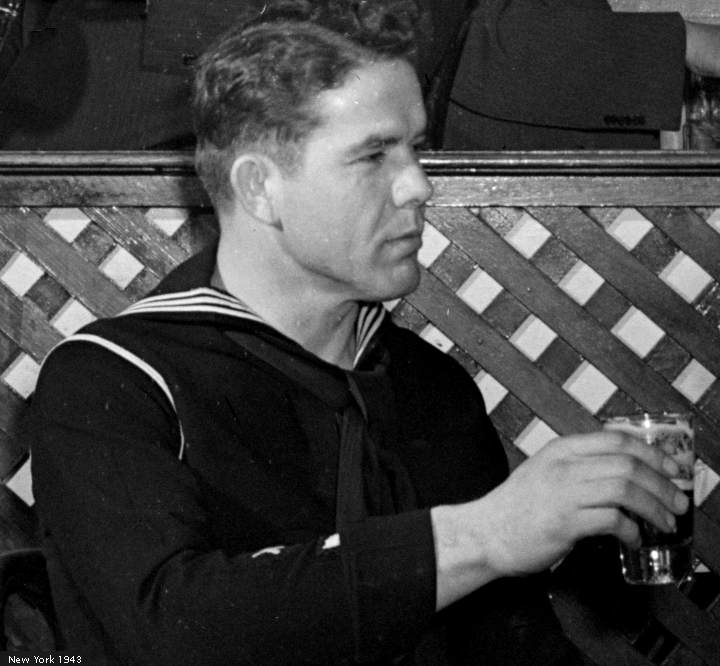
Jean-Louis Lebris de Kérouac

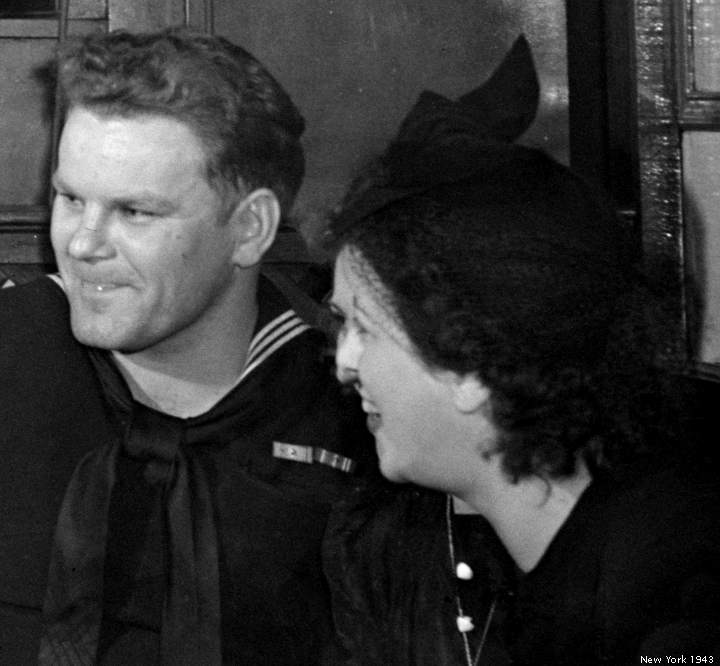
This is a repost from 2008, inspired by Jack Kerouac: An Appreciation. JKAA appeared in KIKO’S HOUSE, a blog I read in 2008. Kiko’s was the retirement project of Shaun Mullen, an journalist who was “born to blog.” People said things like that when W was president. Kikos published its last post 12/11/2019, the day before Shaun Mullen died. Chamblee54 is still going, which makes writing about Jean-Louis Lebris de Kérouac much easier.
Over the years, I keep lists of posts. While writing this feature, I learned that I never compiled one for JLLK. I knew there was an extended book report covering “On The Road,” and vaguely remembered doing one for “The Dharma Bums.” The next step was to use Google Advanced Search, which does not work for “Dharma site: chamblee54.wordpress.com.” If you substitute bums for dharma, you are referred to something about Charles Bukowski. I did a GAS search for Kerouac, and found a series about “Satori in Paris” which I had totally forgotten. I also found a story about starting work on “The Dharma Bums” and used it to track down the posts.
From “The Dharma Bums Part Four” … This chapter by chapter thing is not working. The idea is to use this as a springboard for improvisation, to say whatever comes up. This does not seem to be happening. Tdb is a worthwhile read, the first time. Reading it twice, while taking notes, is not a good idea. … While in Corte Madera, there are a lot of wild parties. It is the sort of boho thing the rest of America tittered about…. Dwight Eisenhower got reelected. He is not mentioned in tdb, but his buddy Richard Nixon is. We know how that story turned out.
JLLK published BELIEF & TECHNIQUE FOR MODERN PROSE in the Summer 1958 edition of Evergreen Review. … 6. Be crazy dumbsaint of the mind 7. Blow as deep as you want to blow 8. Write what you want bottomless from bottom of the mind 9. The unspeakable visions of the individual 10. No time for poetry but exactly what is 11. Visionary tics shivering in the chest 12. In tranced fixation dreaming upon object before you 13. Remove literary, grammatical and syntactical inhibition 14. Like Proust be an old teahead of time 15. Telling the true story of the world in interior monolog
From Kerouac … I read OTR, and found it entertaining but not life changing. I get the sense that Kerouac and Cassidy could be real jerks. … OTR was published in 1957, when I was three years old and living on a street of always pregnant stay at home moms. … I suspect that if Jack Kerouac had not written his books that someone else would have, and maybe survived fame in better shape. … At one time, Kerouac was staying with Neal Cassidy (his uncredited co author) and his family. Mr. Cassidy thought that Mr. Keruac was smoking too much marijuana.
I saw Allan Gurganus (no middle name) at the Dickhater Book Festival in 2014. I knew AG was from Rocky Mount NC, and that JLLK once spent a winter there. This was described in “The Dharma Bums.” AG would have been about seven years old. I wanted to ask AG about it in the Q&A, but I did not get called on. After the talk was over, I managed to talk to AG in a hallway. “Yes, it really did happen. The place where he used to go meditate was my grandfather’s property.”
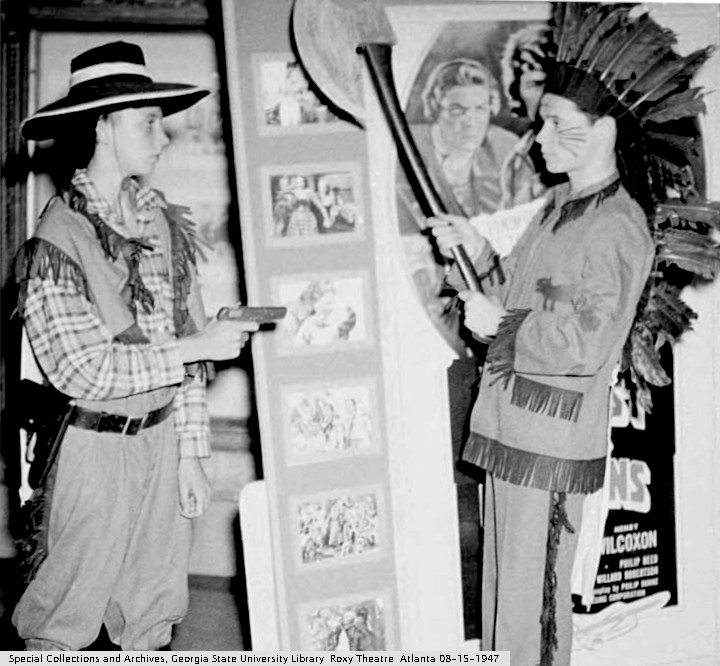
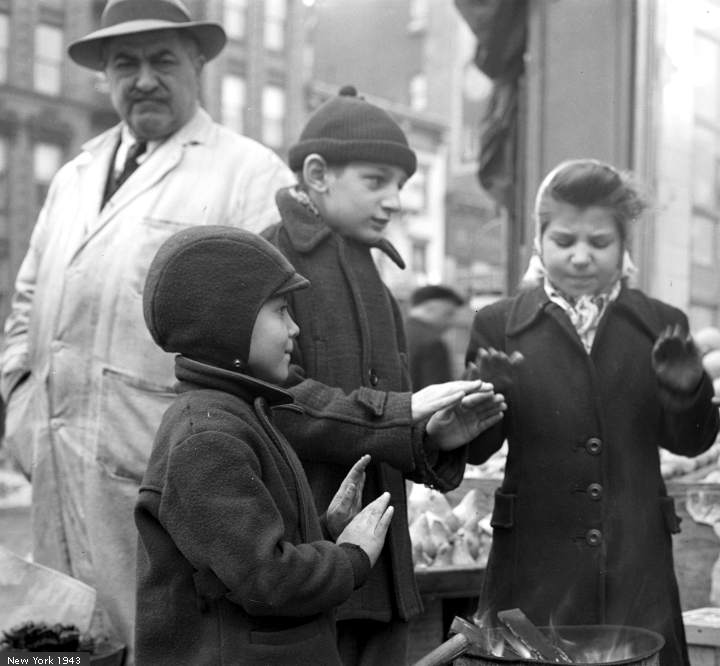
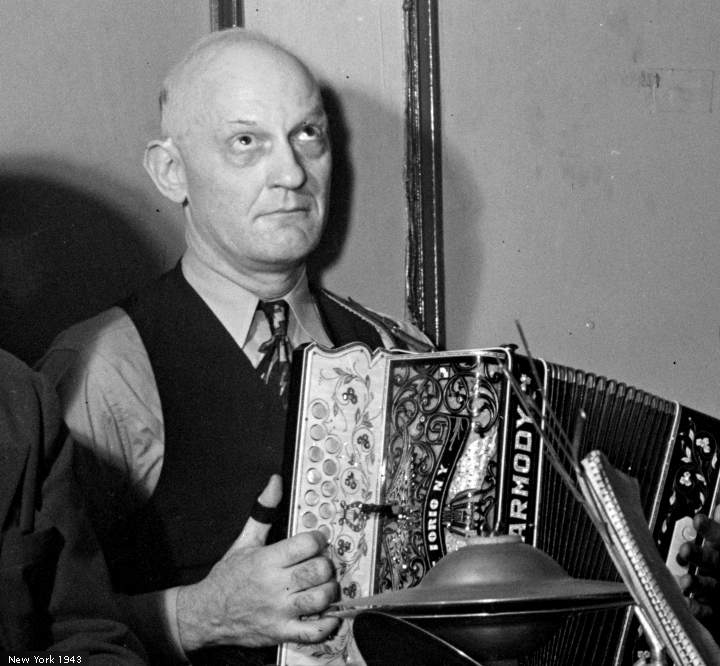
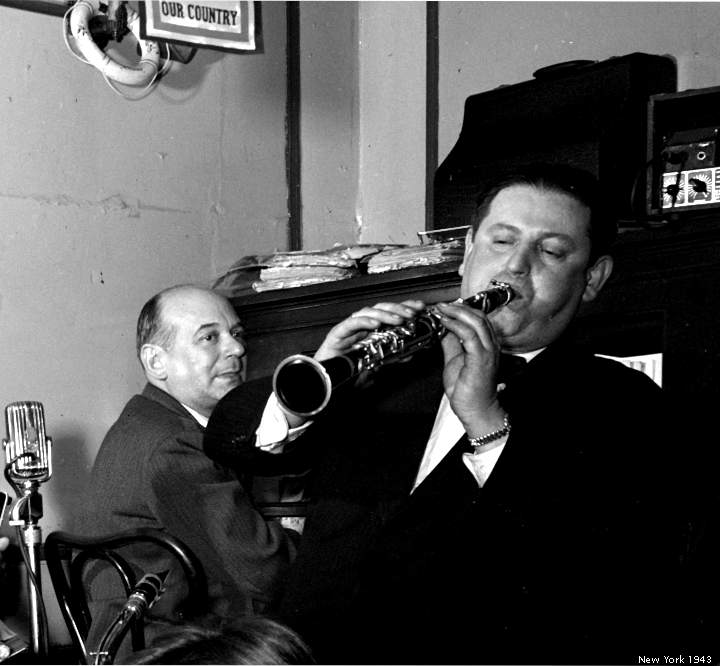
The pictures today are from The Library of Congress Marjory Collins took the featured photograph in February 1943. “New York, New York. Band in an Irish-American restaurant O’Reilly’s at Third Avenue and Fifty-Fourth Street, on Saturday night.” Chamblee54 has published expanded book reports about “Satori in Paris” 031211 032211 032911 040711 · “The Dharma Bums” 111713 113013 122213 011314 · “On The Road” 060119 061119 062519 062719 071019 071419 073019 · selah
Was Flannery O’Connor Racist?


How Racist Was Flannery O’Connor? appeared in The New Yorker on June 22, 2020. (Note the date) I had long been a fan of Mary Flannery O’Connor, and knew I could not un-read those stories. While researching a book report about a story collection, Everything That Rises Must Converge, I took another look at the cancellation.
The article begins by telling the Flannery story. Soon, a description of a movie, Flannery, yields a false note: “Erik Langkjær, a publishing sales rep O’Connor fell in love with, describes their drives in the country.” According to Flannery: A Life of Flannery O’Connor by Brad Gooch, Mr. Langkjær was far from a boyfriend. It is another piece of the puzzle.
“I was not really in love; I simply enjoyed the company of women during my lonely travels in the South. Although Flannery was both conventional and religious, we eventually became so close that she, while the car was parked, allowed me to kiss her. At that moment, her disease revealed itself in a new way: there was no strength in her lips. I hit her teeth with my kiss, and since then I’ve thought of it as a kiss of death. … When I later read one of Flannery’s short stories, ‘Good Country People,’ I noticed that the main character was a travelling Bible salesman. I didn’t sell bibles, but I used to call my binder with the records of the publishing firm ‘my bible.’ Also, the salesman in the story is named Manley Pointer, which has an obvious erotic connotation.”
Right after this paragraph, there is a break. “FEATURED VIDEO Protests of George Floyd’s Killing Transform Into a Global Movement” The article soon gets down with cancellation.
“Everything That Rises Must Converge was published in “Best American Short Stories” … O’Connor declared that it was all she had to say on “That Issue.” It wasn’t. In May, 1964, she wrote to her friend Maryat Lee, a playwright who … was ardent for civil rights.”
“About the Negroes, the kind I don’t like is the philosophizing prophesying pontificating kind, the James Baldwin kind. Very ignorant but never silent. Baldwin can tell us what it feels like to be a Negro in Harlem but he tries to tell us everything else too. M. L. King I dont think is the ages great saint but he’s at least doing what he can do & has to do. Don’t know anything about Ossie Davis except that you like him but you probably like them all. My question is usually would this person be endurable if white. If Baldwin were white nobody would stand him a minute. I prefer Cassius Clay. “If a tiger move into the room with you,” says Cassius, “and you leave, that dont mean you hate the tiger. Just means you know you and him can’t make out. Too much talk about hate.” Cassius is too good for the Moslems.” (James Baldwin probably agreed with MFO about “the Moslems.”)
“That passage, published in “The Habit of Being,” echoed a remark in a 1959 letter, also to Maryat Lee, who had suggested that Baldwin … could pay O’Connor a visit while on a subsequent reporting trip. O’Connor demurred: “No I can’t see James Baldwin in Georgia. It would cause the greatest trouble and disturbance and disunion. In New York it would be nice to meet him; here it would not. I observe the traditions of the society I feed on—it’s only fair. Might as well expect a mule to fly as me to see James Baldwin in Georgia. I have read one of his stories and it was a good one.” …
“After revising “Revelation” in early 1964, O’Connor wrote several letters to Maryat Lee. Many scholars maintain that their letters (often signed with nicknames) are a comic performance, with Lee playing the over-the-top liberal and O’Connor the dug-in gradualist, but O’Connor’s most significant remarks on race in her letters to Lee are plainly sincere. … May 3, 1964: “You know, I’m an integrationist by principle & a segregationist by taste anyway. I don’t like negroes. They all give me a pain and the more of them I see, the less and less I like them. Particularly the new kind.” Two weeks after that, she told Lee of her aversion to the “philosophizing prophesying pontificating kind.” Ravaged by lupus, she wrote Lee a note to say that she was checking in to the hospital, signing it “Mrs. Turpin.” She died at home ten weeks later.”
“Fordham University hosted a symposium on O’Connor and race, supported with a grant from the author’s estate.” (The panel discussion included Karin Coonrod.) “The organizer, Angela Alaimo O’Donnell” … (who wrote) “Radical Ambivalence: Race in Flannery O’Connor.” … takes up Flannery and That Issue. Proposing that O’Connor’s work is “race-haunted,” she applies techniques from whiteness studies and critical race theory …” In other words, The Flannery O’Connor Trust gave money to Fordham University, so they could examine MFO, using “techniques from whiteness studies and critical race theory.” There is something deeply rotten about this.
Perhaps this cancellation business is what MFO foresaw in a 1963 letter to Betty Hester. MFO mentions her disdain for Eudora Welty’s “Where is the Voice Coming From?” … “What I hate most is its being in the New Yorker and all of the stupid Yankee liberals smacking their lips over typical life in the dear old dirty Southland.”
Eudora Welty is not the only author MFO did not like. MFO wrote to Maryat Lee on 31 May 60. “I hope you don’t have friends who recommend Ayn Rand to you. The fiction of Ayn Rand is as low as you can get re fiction. I hope you picked it up off the floor of the subway and threw it in the nearest garbage pail. She makes Mickey Spillane look like Dostoyevsky.”
“On July 28, 1964, Flannery wrote her last letter. This note to Maryat Lee, written in a “shaky, nearly illegible hand” … is in response to an anonymous crank call Lee received and reveals O’Connor’s deep concern for her friend’s well being: “Cowards can be just as vicious as those who declare themselves – more so. Dont take any romantic attitude toward that call. Be properly scared and go on doing what you have to do, but take the necessary precautions. And call the police. That might be a lead for them. Dont know when I’ll send those stories. I’ve felt too bad to type them. Cheers, Tarfunk” MFO died August 3, 1964 at Baldwin County Hospital.
We don’t know what MFO read by James Baldwin. It might include a 1962 piece in The New Yorker, Letter from a Region in My Mind. Included in those 22,147 words is this gem: “But white Americans do not believe in death, and this is why the darkness of my skin so intimidates them.” This might be a good time to remember the words of Alice Walker: “Take what you can use and let the rest rot.”
Ms. Walker is included in Flannery. “Alice Walker tells of living “across the way” from the farmhouse during her teens, not knowing that a writer lived there: “It was one of my brothers who took milk from her place to the creamery in town. When we drove into Milledgeville, the cows that we saw on the hillside going into town would have been the cows of the O’Connors.” Ms. Walker, who was well aware of MFO’s racial attitudes, adds “She also cast spells and worked magic with the written word. The magic, the wit, and the mystery of Flannery O’Connor I know I will always love.”
A lot of what is said here is taking MFO seriously, in spite of her racial attitudes. This is where I differ with The New Yorker. I am a cracker who likes to enjoy stories, not take them seriously. As a Georgia native, I am well aware of the many “shades of gray” produced by a black and white society. Racism is not a yes/no binary. MFO wrote great stories, in spite of, or maybe because of, her racial attitudes. To paraphrase Alice Walker, take what you need, and let whiteness studies and critical race theory rot.
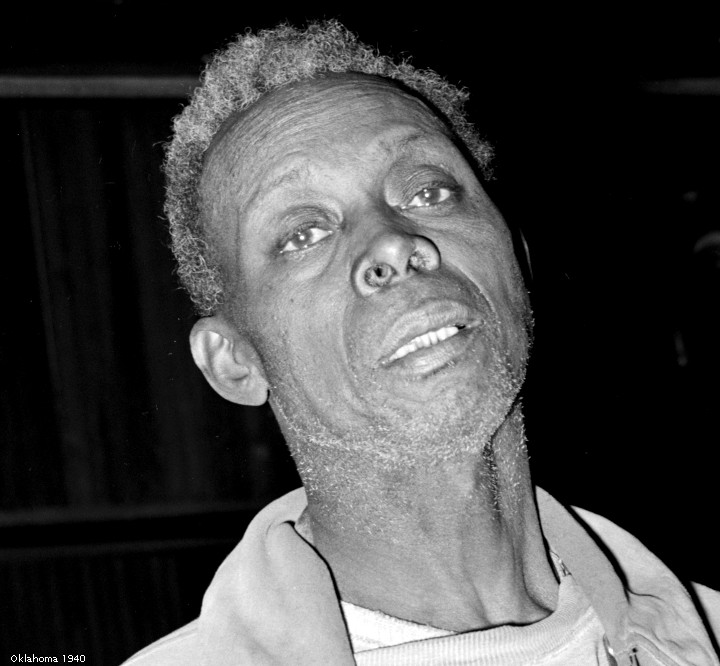
Pictures today are from The Library of Congress. Russell Lee took the featured photograph in February 1940. “Pomp Hall, Negro tenant farmer. Creek County, Oklahoma.”


A David Bowie Book


David Bowie: A Life was sitting on the biography shelf at the Chamblee library. It is an “oral biography.” Dylan Jones gets the blame, and the copyright. He took a bunch of interviews, and curated salient passages into a narrative. It is a fun book to read, full of sex, drugs, and rock and roll.
The Amazon one star reviews beg to differ. Guitar Gregg “I thought this would be biography not assorted comments. Very few comments from David Bowie. Who cares what Debora Harry or hundreds of “Joe blows” have to say? No pictures? 500 pages? Too much too little. Buy his cd’s instead.” worst read ever “Belongs in the fire … worst read ever!”
I enjoyed DBAL. At some point, the lurid tales of depravity got too quotable. I started keeping a list. In this book report, we will use this list, until the list, or the reader’s attention span, is exhausted. There may be another installment. Part one was published last week.
“There’s one instance — probably included just so it would be cited — about someone calling Bowie’s room in New York with an offer of a still-warm corpse. “The town had never seen anything like David before,” says onetime groupie Josette Caruso. “And he obviously looked like such a freak that some sick people thought he might be into necrophilia.” (He wasn’t.) (Page 142)
Page 146 “He (Lou Reed) had an auteur complex, and Bowie didn’t fit into that. Lou was also a prime member of the awkward squad. He could lose a charm competition with Van Morrison.” In 1972 David had gone through years of struggle, and was starting to make it. After the Ziggy Stardust tour, he was hot. At this time, David wound up helping two struggling artists, Lou Reed and Iggy Pop
The Elton John/Rolling Stone article was published during one Iggy phase. “May 1975 — It’s four in the morning, Hollywood time, and David Bowie is twitching with energy. … Bowie clutches his heart and beams like a proud father watching his kid in the school play. His whisper is full of wonder. “They just don’t appreciate Iggy.” he is saying. “He’s Lenny fucking Bruce and James Dean. When that adlib flow starts, there’s nobody like him. It’s verbal jazz, man!” … Bowie and Iggy never did make it back into the studio. Pop slept past the booked time, called up drunk several nights later and when Bowie told him to “go away” — meaning “hang up” — Iggy did just that. Now he’s disappeared. “I hope he’s not dead,” says Bowie, “he’s not a good act.” Iggy will show up later in this story.
Page 151 has stories from the Ziggy tour. In Seattle, the entourage went to a gay bar, and someone invited David to a party. When the next day came, and the tour needed to go to the next city, David was nowhere to be found. When he finally called the hotel, all he knew was that he was in a house, with a lot of trees around it. A hotel employee talked to David on the phone, and they managed to figure out where he was.
Page 155 Lori Mattox was a fifteen year old rock fan in 1972. “We got to the Beverly Hilton, and all went up to Bowie’s enormous suite. … We were getting stoned when, all of a sudden, the bedroom door opens and there is Bowie in this beautiful red and orange and yellow kimono … “Lori, darling, can you come with me? … Of course I did. Then he escorted me into the bedroom, gently took off my clothes, and de-virginized me.”
There is a lot of text about David’s sex life. The boy got around, in spite of, or because of, his open marriage with Angela. Apparently, nature was generous with David. While performatively gay during this era, David made plenty of exceptions with ladies. DBAL is an entertaining book.
Page 176 Ava Cherry was a girlfriend who stuck around. “… and yes, we did have some fun together. We were staying at the Sherry-Netherland one night in New York, where David had given a party for Rudolph Nureyev. At the end of the party, everyone was gone apart from me and David and Mick, (Jagger) so it just ended up with the three of us sleeping together.”
Page 263 87 pages later, David has burned out on American rock stardom, and is living on top of an auto parts store in Berlin. This is the phase which produced Low and Heroes, two creative, though non commercial, efforts. Iggy Pop is back in the picture. Longtime assistant Coco Schwab never left. Iggy Pop : “There’s sevent days in a week: two for bingeing, two for recovery, and three more for any other activity.” Coco Schwab “I remember one elevated subway ride where you ride into East Berlin with no checkpoints and then back out with Absinthe into the west. Trust Jim (Iggy) to find that one.”
Page 277 David meets Adrian Bellew, who is in Frank Zappa’s band. David is talking to Adrian about doing a tour with David. At some point, the two go to a restaurant, where they run into Frank Zappa. “…David tried to strike up a conversation with Frank, saying “This is quite a guitar player you have here” And Frank said, “Fuck you, Captain Tom.” David persisted, and said “Oh come on now, Frank, surely we can be gentleman about this?” And Frank said, “Fuck you, Captain Tom.” … so David said, “So you really have nothing to say?” To which Frank said, “Fuck you, Captain Tom.”
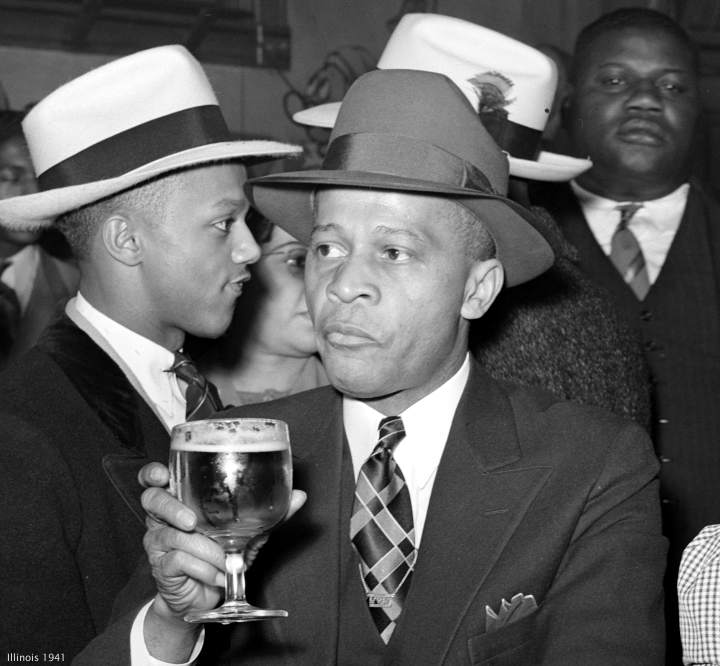
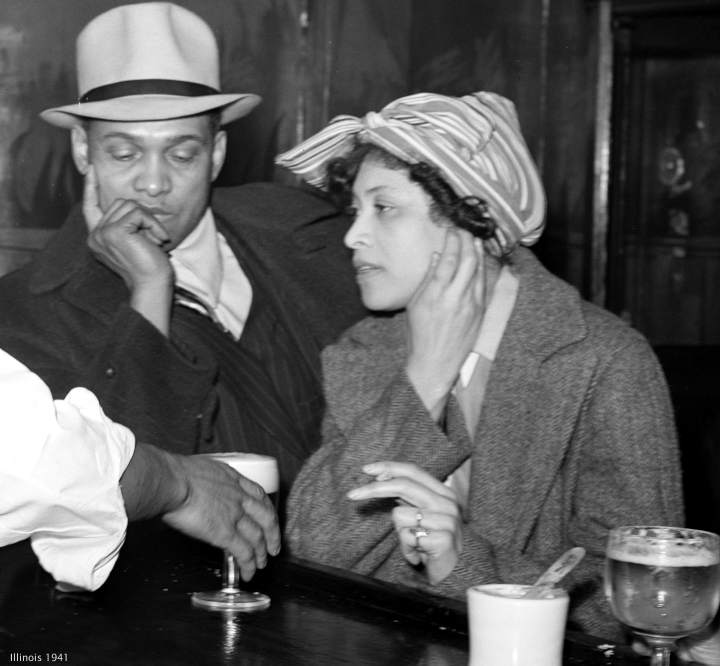
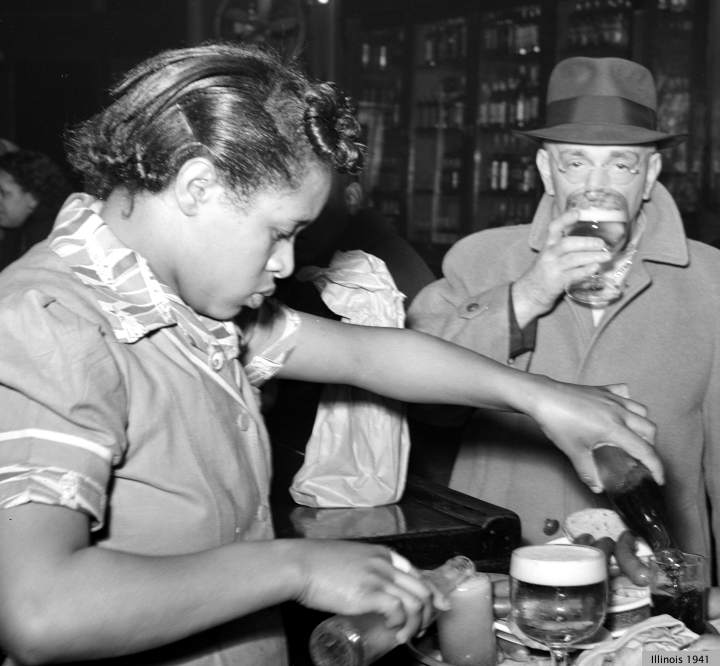
This is a repost from 2019. Pictures are from The Library of Congress. Russell Lee took the featured photograph in April 1941. “Scene at bar. Southside of Chicago IL.”


Hollywood Part One


This is a repost from 2022. … I had this bright idea. I was going to do a chapter by chapter commentary of Hollywood, by Charles Bukowski. Hollywood has 48 chapters most of them are only a few pages long. This is my kind of book. Jack Keruoac made a single sentence last five pages. Per this source, Keruoac is the only beat that CB never met. “… Neal Cassidy and Ginsberg ( i think ) coaxing Buk out for a joy ride in Hollywood. … Cassidy was a wild man and drove like a racer in death race 2000. He spun the car out near Ivar and Buk went to floor. Apparently he wet his pants. …”
1 – The story starts with Hank Chinaski (Charles Bukowski,) and Sarah, on a mission. (Sarah is Linda Lee Beighle, his wife.) They go to a meeting in a wealthy part of Los Angeles. Hank does not feel comfortable. “We have just landed upon the outpost of death. My soul is puking.” Sarah replied, “Will you stop worrying about your soul.” This sets the tone for what is to follow.
2 – Hank and Sarah meet an obnoxious, drunken Frenchman. Some people are trying to get Hank to write a screenplay for a movie. Barfly eventually did get made. I’ve never seen it, which is not unusual. I don’t see a lot of movies. There is a scene on youtube, where Mickey Roarke picks a fight with a bartender. It is not pleasant to watch, either on video or in real life. I have known degenerates that can’t control their impulses, and they are no fun at all. Fortunately, the dead tree version of Hank Chinaski can be put down whenever necessary, and then revived again when it is convenient.
3 – Chapter 3 is what I read the other day, when I went to Walgreens for my booster shot. It gets quite juicy. Hank is attending a screening of a documentary, about an African tyrant. Barbet Schroeder, whom Hollywood is dedicated to, once directed a movie about Idi Amin. The dictator would kill his opponents, and then dump them in a swamp, where the crocidiles would become impossibly fat. It is not good for the swamp’s ecological balance.
4 – Two of the obnoxious frenchmen are François Racine and Jon Pinchot. It is uncertain who they are stand ins for. François and Jon go to a Las Vegas show starring Tom Jones. François hates it, and rants on and on about how much he hates Tom Jones. I remember Mr. Jones, aka Sir Thomas John Woodward OBE, fondly. Mr. Woodward was on the WTF podcast last year, but that show is now behind a paywall. I wasn’t going to listen to it anyway, just to remember a few good stories.
Tom Jones: “Fast-forward to 1965. My own singing career had taken off, with three hit records and a big-selling album, and I was on my first trip to America. I went to Paramount Studios to talk about recording a song for a movie and someone told me that Elvis was filming on the neighboring sound stage and wanted to say hello.”
“‘Oh, my God! Surely Elvis Presley doesn’t know who I am’. But I walked on the set, where he was sitting in a helicopter, and he sort of waved in my direction. I couldn’t believe he was waving at me, but I waved back, just in case. Then he came over and said he knew every track on my album and he sang one of my songs, With These Hands, all the way through. He said to me, ‘How the hell do you sing like you do?’ And I said, ‘Well, you are to blame because I listened to all your records in the 1950s.” He told me that when he heard me singing What’s New Pussycat? on record, he thought I was black. I thought that was a bit ironic, as I’d thought he was black when I first heard him singing.”
5 – Hank is in a bar, hating it. A man comes up, and says he wants to finance his screenplay. The man just finished a film about Jack Keruoac called Heart Beat. (Those are not the names Hank uses, but it easy to figure out what he means.) The movie-dude tells Hank the title of the Keruoac-flick. Hank hates the title, and won’t talk to the movie-dude after that.
6 – This chapter is a meeting in a hotel room, full of Frenchmen who talk too much. It is much better when Hank tells the story. I have never known anyone named Hank. When I was a kid, the Braves had a player named Hank, who you have heard too much about. One night, during their lame duck season in Milwaukee, the Braves played an exhibition game at the toilet-bowl stadium. After the game, my long suffering dad took me to the bowels of the stadium. You could stand outside the clubhouse, and get autographs as the players left. A couple of times, the door would open, and you could see a naked player. So, Hank Aaron came out, patiently signed a bunch of autographs. He was smoking a cigarette. Joe Torre came out, saw the crowd of people, ducked behind a truck, and took off away from the autograph seekers. Good times.
7 – Hank finally gets to work on the screenplay, when he is interrupted by a phone call. This is counter-productive to the business of writing. The caller is a hip-talking German, who Hank asks for money. Hank tells him a joke. “Whats the difference between a chicken’s asshole and a rabbit’s asshole?” “I don’t know. What’s the difference?” “Ask little dick.” I don’t get it. I think this one is funnier. “Why did the pervert cross the road? He couldn’t get his dick out of the chicken.”
8 – Some slick talking tax finagler calls on Hank, who is very leery of the whole thing.
9 – Hank goes into this real estate office, and is treated as though he were a degenerate. The only appropriate thing to do is go into a bar. The ale house is full of biker types, who recognize Hank and call out to him. Hank is a wino rock star, and insanely uncomfortable. He gets out of APES HAVEN before you can say rehabilitation.
10 – One of the bits of money advice Hank gets is to buy a house. He goes, with Sarah, to this rundown place in the sticks. It is a scene out of a bad movie. Someone spray painted over the bath tub, IF TIM LEARY AIN’T GOD, THEN GOD IS DEAD. Finally, Sarah gets this notion that this is the house where Charles Manson killed somebody. This is too much, even for Hank Chinaski. They leave before they get too drunk to drive home.
When typing the existential exhortation about Tim Leary, I decided not to use the cap lock, but typed it one letter at a time. If I had it to do over again, I would have used cap lock, even though typing in cap lock is the facebook equivalent of saying LOOK AT ME I AM AN IDIOT. I had a co-worker once who typed with one finger. I think it was the index finger on his right hand. When Kyle wanted to type a capital letter, he would turn cap lock on, type the letter, and, turn cap lock off.
11 – Hank brings in the mail. There are two items. One is a fan letter. Someone writes this letter full of vile insults, and then wants Hank to read his poems. Hank reads one and a half, and decides that he has better things to do with his time. The second letter is from a lawyer. It is incorporation papers, the intention being the incorporation, for tax purposes, of Henry Charles Chinaski. Hank reads through the papers, and crosses out the parts he does not like. The corporation can have Hank declared insane, and take all his money away. Eventually, Hank and Sarah open a bottle of wine.
12 – The neighborhood that Hank lives in is going downhill, even to a point where it is worse off than Hank. People from somewhere in Central America are flooding in, and bringing fourth world conditions to third world LA. Finally, Hank gets busy with the house hunting, and finds something to his liking. The note is going to be $789.81. This is where I was in the book, when I had the inspiration to write this falling-off-a-cliff-notes version of H-wood. This is a good place to stop, edit what I have already written, and decide what to do next.
Other episodes of the “Hollywood” series are available. two three four five Pictures today are from The Library of Congress. John Vachon took the featured photograph in August 1941. “Mr. Akers, construction worker from Flint, Michigan now working at Ford bomber plant near Ypsilanti. He lives in a tent with two other men at Edgewater Park. Edgewater Park normally closes on Labor Day. This year it will remain open through the winter.”


 Chamblee54
1 comment