Page 123
This content was published March 7, 2008. … A blogger named Amber Rhea posted something called a meme the other day. Ms. Rhea got this meme from “After Hours” by Texasgoldengirl. The subtext at AH is “random discourse from a retired escort … virtue is insufficient temptation”
“123 meme” got my attention. I decided to use this to generate text to put between the pictures. “The rules: look up page 123 in the book that is nearest to you at this very minute · look for the fifth sentence · then post the three sentences that follow that fifth sentence on page 123.” … The book closest to me is “Webster’s Seventh New Collegiate Dictionary”. This volume has been a valuable ally since I got it in 1971. Nonetheless, it was a poor choice for this exercise.
The next book was “The Penguin Book of Gay Short Stories”. Page 123 was part of an excerpt from “My Father and Myself” by J.R. Ackerley. Here is the passage: “This was a thing I had never done before, reluctantly since and out of politeness if requested. It is a form of pleasure I myself have seldom enjoyed, passively or actively, preferring the kiss upon the lips, nor have I ever been good at it. Some technical skill seems required and a retraction of the teeth, which, perhaps because mine are too large or unsuitably arranged, seem always to get in the way.”
This content was published March 22, 2015. … It was a gray sunday afternoon. The sky drizzles onto the bright green baby weeds. Basketball dudes are dribbling before they shoot. If there was only a subject for a blog post, then all would be lovely. One answer is to look in the archive. There was a post in 2008 about page 123. “Look up page 123 in the book that is nearest to you at this very minute. Look for the fifth sentence. Then post the three sentences that follow that fifth sentence on page 123.”
The book nearest to the work station is an outlet store edition of “Leaves of Grass,” by Walt Whitman. There are two problems here. The book only has 109 pages. It is also full of poems, which do not contain sentences. LOG is digitally available, easy to copy/paste, but does not qualify.
The book under LOG, and technically closer to the work station, is Quiet Days in Clichy, by Henry Miller. (The last word, KLEE she, is a neighborhood in Paris.) The book was purchased at a yard sale in 1978, read with little enjoyment, pulled off the shelf in 2014, and rediscovered.
Mr. Miller apparently thought about the story in French, and then transcribed it in English. It is a great story. Two men live in Paris, scrounging meals where they can, and screwing a lot of ladies. One has a name similar to Anaïs Nin, who was an extramarital pal of Mr. Miller in those days.
The copy of QDIC here is an Evergreen Black Cat paperback, which sold for $.75. It is the classic back pocket paperback, measuring 4″x7″x 3/8″. The bookmark is one page 79, where the authorities came to visit the two men. There is a problem about screwing an underage girl. The authorities are impressed by the fact that the men write books, although not in French. The authorities leave. The men talk about the beauty of the under aged girl’s mother.
The one star reviews for QDIC are festive. Ivan Searcy I am a street photographer and have been living, 4 to 6 months a year in Paris, for the past 35 years. I was hoping that this book would reflect on the café and street life in Clichy during the 1930s, but all it did was to show that Miller is a psychopath that likes to abuse women. Even when he writes about sex, he is an amateur writer. I think that his claim to fame was that his books where ban in the US. Stewart D. Isbell “photostew” I purchased this book for the new Kindle for iPhone app and the book is not formatted properly. There are an endless amount of pages that only have one sentence, sometimes only one word! To read this book you have to flip through a huge amount of pages. Great book, and yes, it was only .80 cents but still… pretty much useless. Jamie E. Skelly get over yourself.
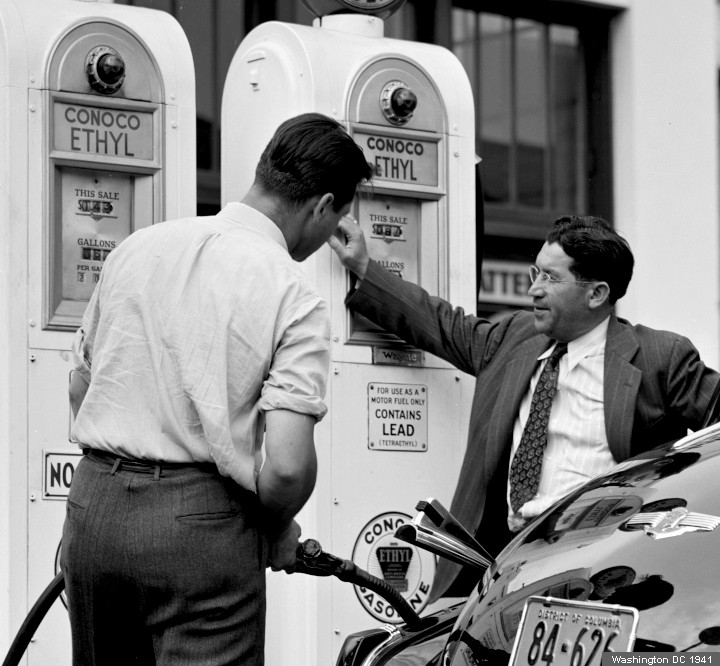
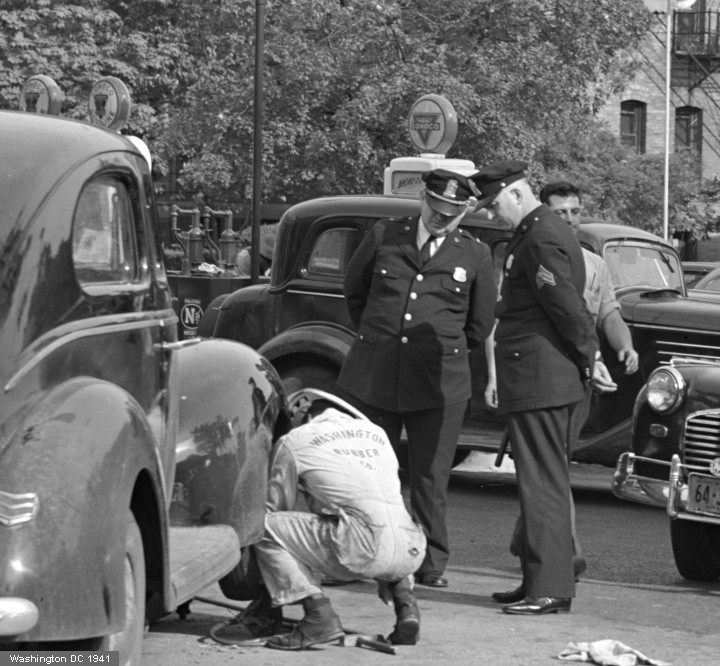
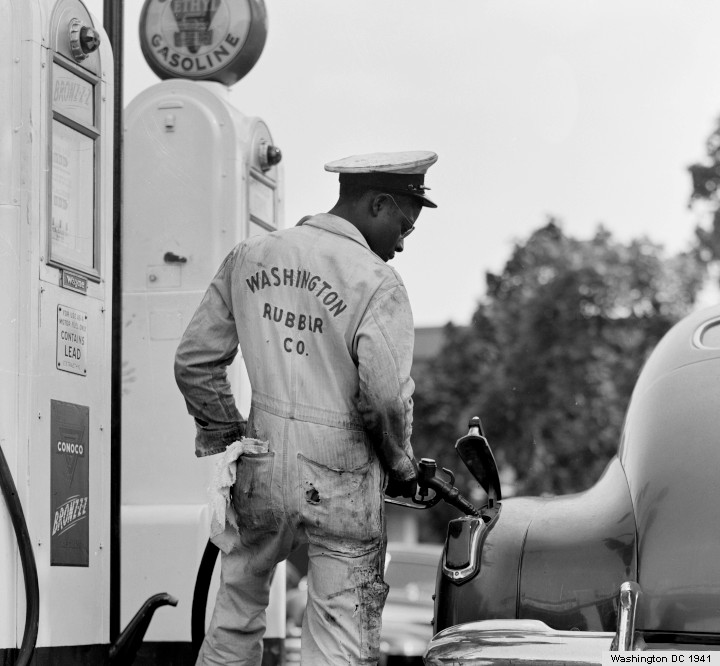
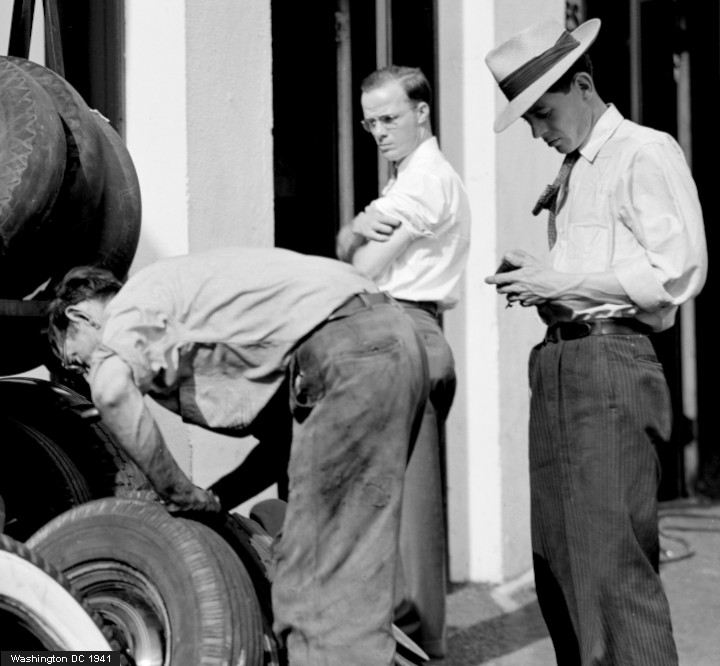
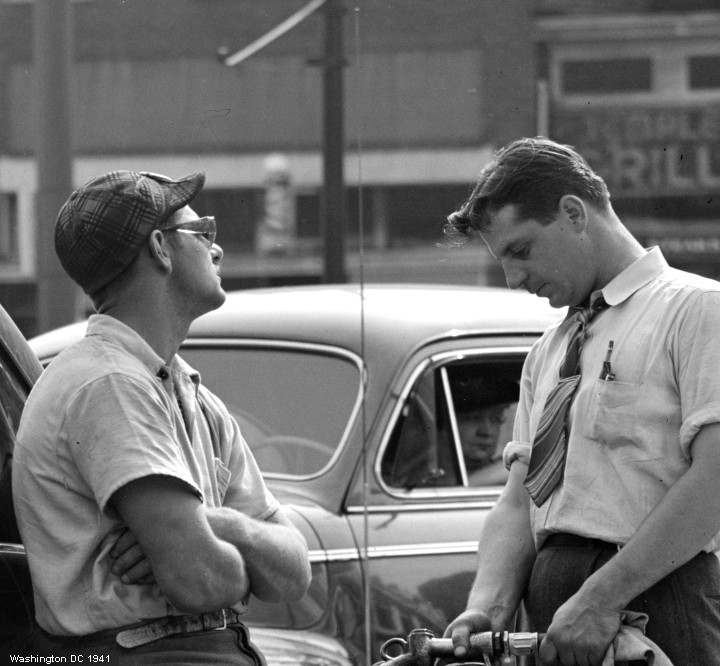
Maybe we should share what comes after the fifth sentence. “Tahe your time and get what you can out of the old buzzard. I have nothing to do,” I added. “I’ll sit here and wait. You’re going to have dinner with me, remember that.” Pictures today are from The Library of Congress. John Collier Jr. took the social media picture May 14, 1942. “Washington D.C. Filling up with gas on the day before rationing” ©Luther Mckinnon 2026 · selah
David And Elton

This content was published March 24, 2023. … On page 327 of David Bowie: A Life, the Live Aid show goes down. One backstage reunion did not go well. “There wasn’t much love lost between David and Elton–perhaps they’d fallen out at some point …”
Elton John says he fell out with David Bowie over ‘token queen’ remark “David and I were not the best of friends towards the end. We started out being really good friends. We used to hang out together with Marc Bolan, going to gay clubs, but I think we just drifted apart…. He once called me “rock’n’roll’s token queen” in an interview with Rolling Stone, which I thought was a bit snooty. He wasn’t my cup of tea. No; I wasn’t his cup of tea”.
1975 was a different time. David Bowie was moving out of Ziggy Stardust, and became the Thin White Duke. At some point he starting doing lots of cocaine. On page 196 of DBAL, Jayne County has stories. “It was pretty obvious the David was taking coke. He became very skeletal in his appearance and began rattling off speeches that sounded meaningless to the rest of us–strange things about witchcraft, demons, and sexual prostitution in ancient times … weird things that made everyone nervous. He began to get paranoid and accusing people of ripping him off and stealing his drugs. … He had to have cartilage removed from one part of his body and put in his nose because the coke had eaten his nose cartilage away.”
While David was popular in 1975, and had a certain aesthetic aroma, Elton John was a phenomenon. Everything Elton touched went to Number One. Elton was one of the most popular solo acts the market ever sold. Maybe David was jealous of Elton’s success.
By all accounts, Elton did his share of “hooverizing.” In 1975, Elton was officially in the closet, although a lot of people knew otherwise. In one impossible to confirm story, a friend was working in an Atlanta club called Encore, later known as Backstreet. One busy night, he was in a hurry to get somewhere, and bumped into someone. The person he knocked over was Elton John.
The infamous Rolling Stone interview was part of the damage. “Rock & roll has been really bringing me down lately. It’s in great danger of becoming an immobile, sterile fascist that constantly spews its propaganda on every arm of the media. …. I mean, disco music is great. I used disco to get my first Number One single [“Fame”] but it’s an escapist’s way out. It’s musical soma. Rock & roll too — it will occupy and destroy you that way. It lets in lower elements and shadows that I don’t think are necessary. Rock has always been the devil’s music. You can’t convince me that it isn’t.”
Cameron Crowe How about specifics? Is Mick Jagger evil? David Bowie “Mick himself? Oh Lord no. He’s not unlike Elton John, who represents the token queen — like Liberace used to. No, I don’t think Mick is evil at all. He represents the sort of harmless, bourgeois kind of evil that one can accept with a shrug…. Actually, I wonder … I think I might have been a bloody good Hitler. I’d be an excellent dictator. Very eccentric and quite mad.”
Playboy Magazine gave David another chance to talk about Hitler. “I’d love to enter politics. I will one day. I’d adore to be Prime Minister. And, yes, I believe very strongly in fascism.” “Rock stars are fascists, too. Adolf Hitler was one of the first rock stars.” “PLAYBOY: How so?” BOWIE: “Think about it. Look at some of his films and see how he moved. I think he was quite as good as Jagger. It’s astounding. And, boy, when he hit that stage, he worked an audience. Good God! He was no politician. He was a media artist himself. He used politics and theatrics and created this thing that governed and controlled the show for those 12 years. The world will never see his like.”
PLAYBOY: “Last question. Do you believe and stand by everything you’ve said?” BOWIE: “Everything but the inflammatory remarks.” We don’t know whether a jab at Elton was inflammatory. “I consider myself responsible for a whole new school of pretensions–they know who they are. Don’t you, Elton? Just kidding. No, I’m not.”
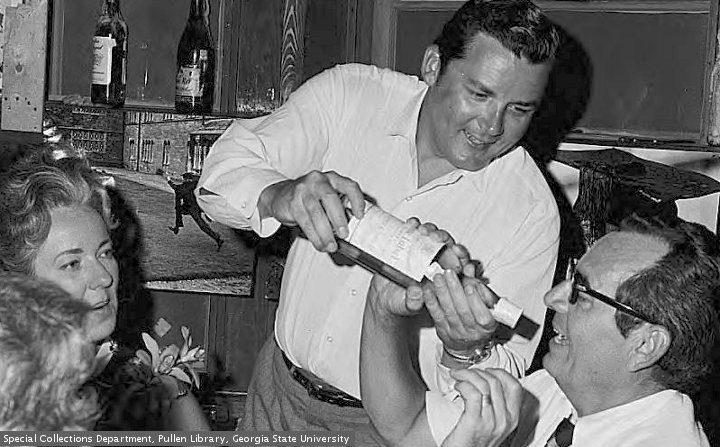
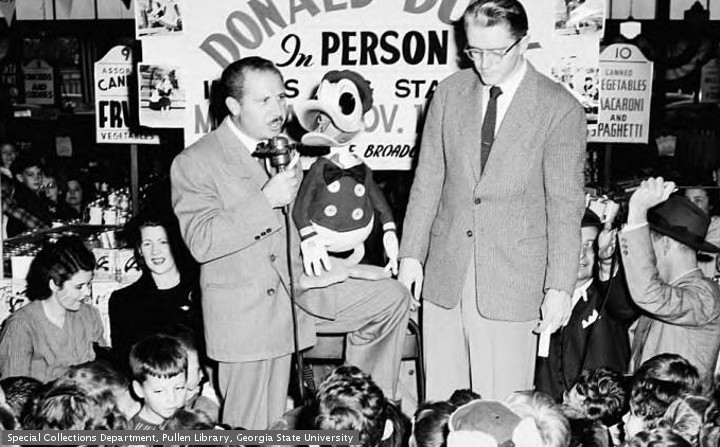
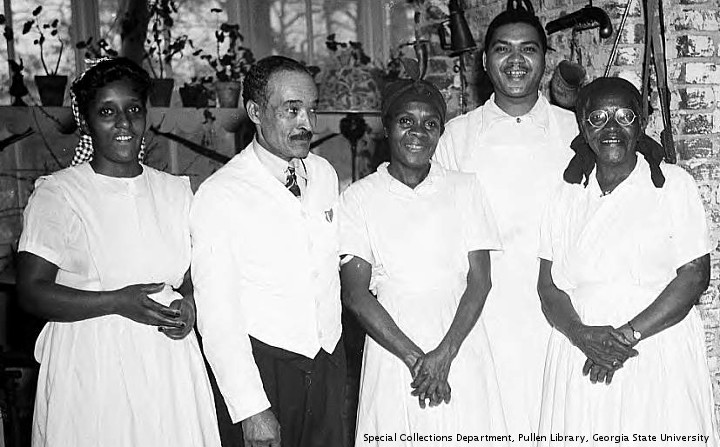
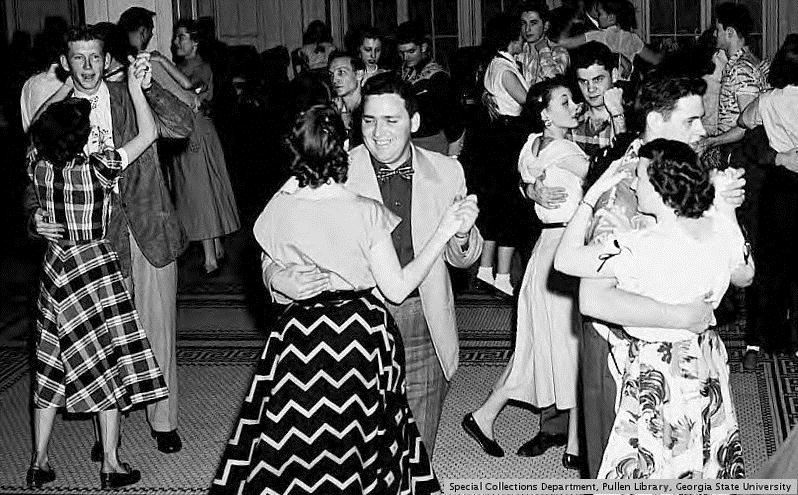
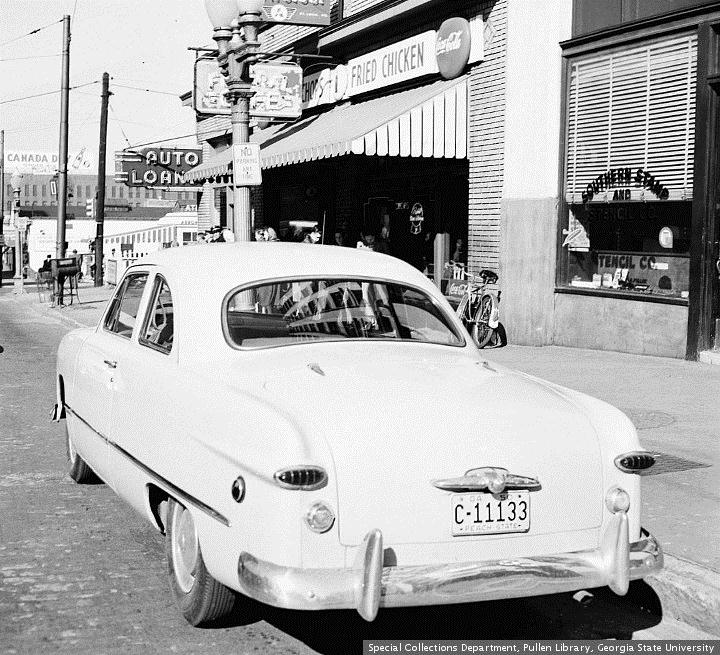
Seven daily grams of coke (DBAL p.223) did not kill David Bowie. He soon moved on to make The Man Who Fell to Earth. People magazine helped out with the publicity. “No role could have suited David Bowie better in his first major movie than that of an inscrutable interplanetary traveler outfitted with human skin, sex organs, Ronald Reagan hair and humanoid pupils to slip in over his horizontal, mismatched feline slits.” Forty years before Donald Trump made the tangerine toupee cool, Ronald Reagan was prematurely orange. Pictures today are from Special Collections and Archives, Georgia State University Library. The social media picture was taken August 11, 1965. “MGM party for Judson Moses at Aunt Fanny’s Cabin restaurant” ©Luther Mckinnon 2026 · selah
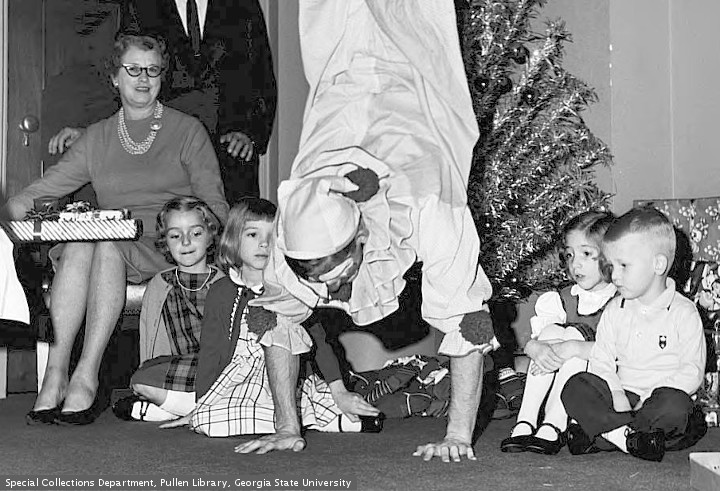
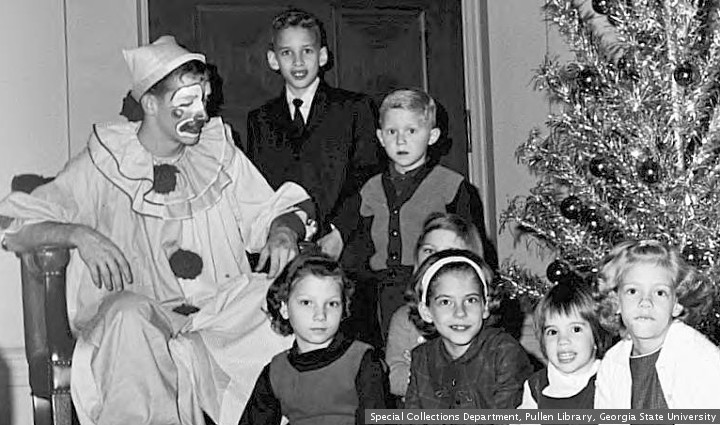
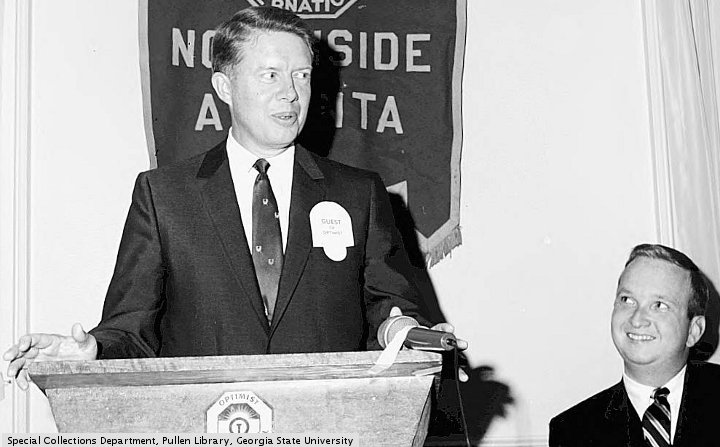
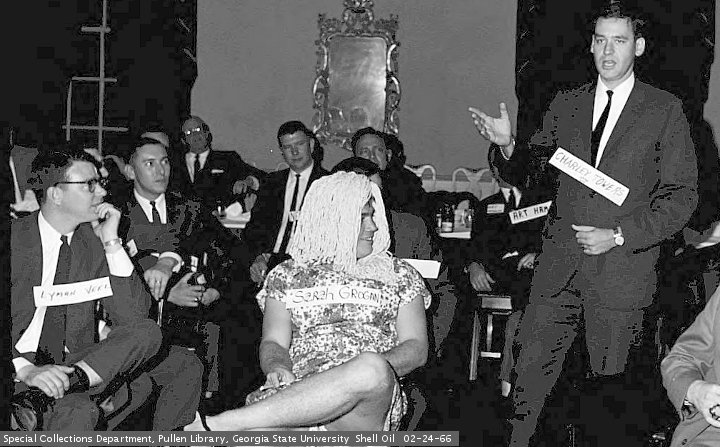
Didion & Babitz Part One
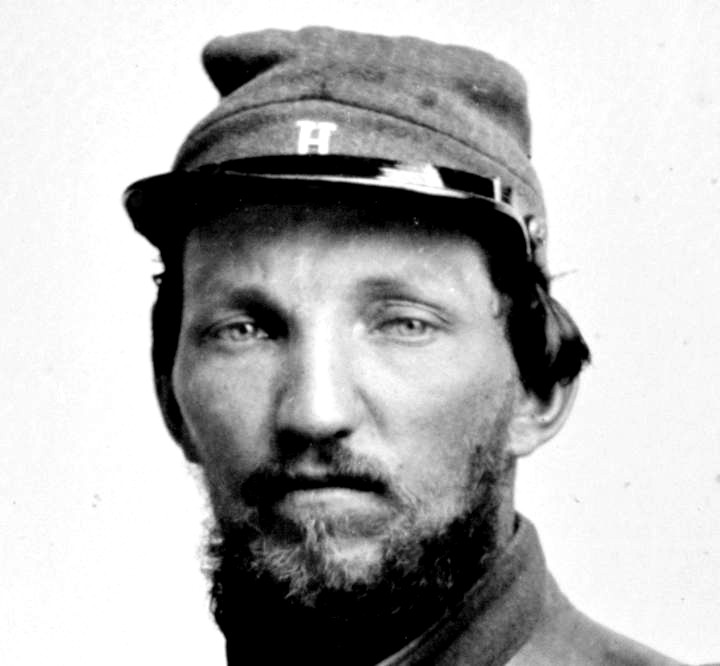
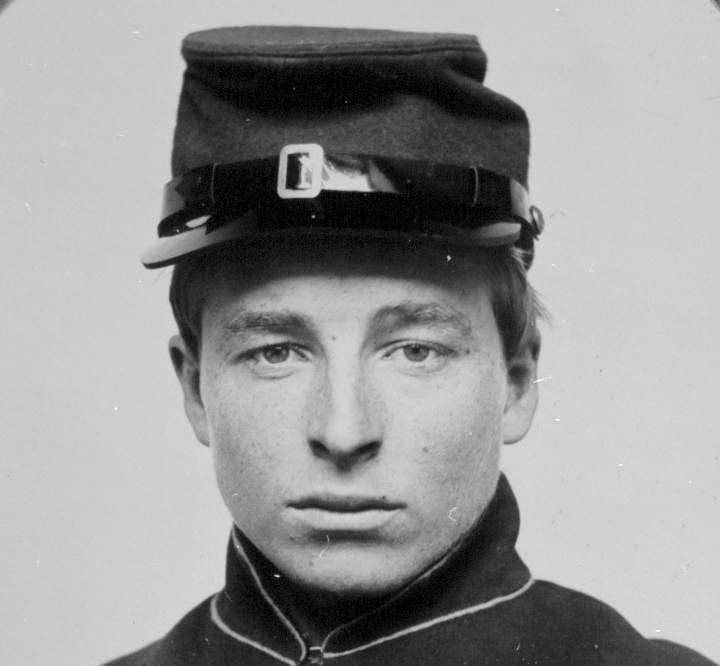
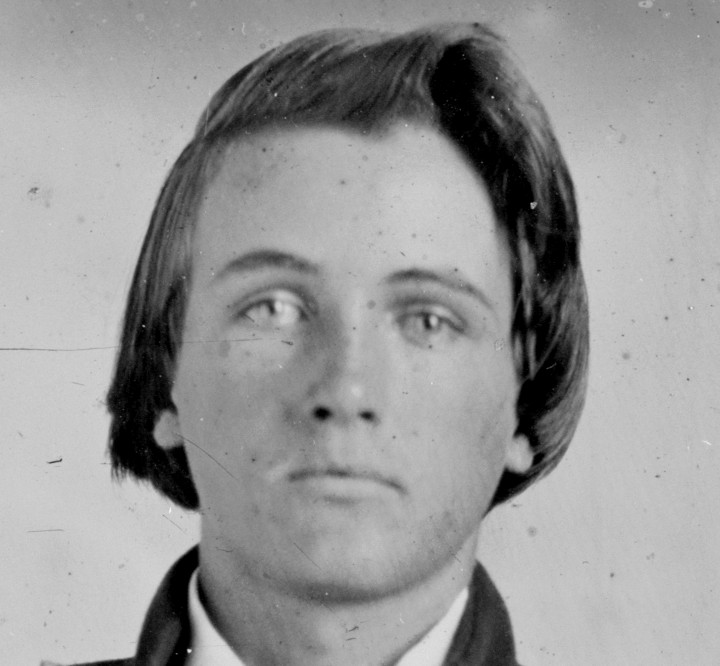
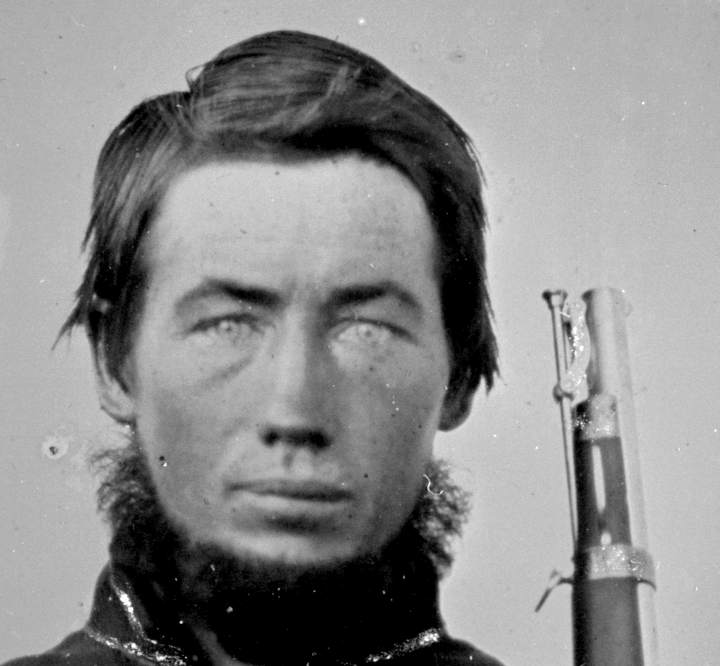
This content was published February 12, 2025. … Didion & Babitz has hit the streets, as anyone who reads instagram knows. Lilianne O’Lick knows how to sell the soap, as well as a dirty story that leaves many readers wanting a bath. This is not my first time with either Eve Babitz or LOL. D&B is the story of Eve Babitz and Joan Didion. … Neither lady had a middle name. Chamblee 54 has written about EB on several occasions. 123021 032622 010523 This is not the case with JD. I once had a paperback copy of The White Album … I never got past the abandoned gas station being the authentic west.
“Finishing Didion and Babitz has become a Herculean effort on my part. Lili Anolik clearly hates Joan Didion and continually criticizes and condemns her. This book should be called Loving Eve Babitz, Wench, Whore and Failed “Artist”. Anolik seems to fashion herself as a therapist, making some drastic, others ridiculous, excuses for Babit’s tawdry behavior. … This seemed to be an exercise in “look at my big word vocabulary. I’m going to repeat what I just said using big words that no one ever uses just to impress you. “ From an Amazon one-star review, “Loving Eve Loathing Joan,” by NFox.
(“The seventies in LA weren’t a decade under themselves but an extension of the previous decade: the Sixties the flower child, the seventies the juvenile delinquent that the flower child—a Bad Seed all along—grew into.” p. 124) The sixties were special, too beautiful to live, too profitable to die. Being a kid in Georgia was just one way to see it all. I had little notion of what was going on then in California, and by the time I started to get hip, California had Mansoned its way into a permanent Altamont. EB was playing the game, and the players.
Carrie White was a celebrity hairburner, who wrote a book Upper Cut: Highlights of My Hollywood Life. She is probably not the same Carrie White as the telekinetic teenager at the center of “Carrie” but one cannot be too certain. The CW in D&B went to Hollywood High with EB, and was in the glamour sorority that EB missed out on. CW remained close to Rosalind Frank, who was the fairest of them all in High School. Alas, life after graduation did not work out, and Miss Frank died an early, drug related death. This untimely demise got EB busy writing.
Page 168 sees the first appearance of Bret Easton Ellis, who simply had to be in this book. The first time I heard of EB was on the BEE podcast, which later had an appearance by LOL promoting her first book about EB. BEE idolized JD, and was a close friend of JD’s daughter Quintana Roo Dunne. It is rather poignant that BEE enters this narrative as part of a discussion about JG Dunn’s apparent taste for male company. John Gregory Dunne is the husband of JD, and the younger brother of Dominick John Dunne, … another bicoastal fudge packer.
I was trolling google, looking for dirt on JD … there is a small mountain of dirt on EB … and I stumbled onto a bit of clickbait, “It’s Time To Retire Joan Didion’s Most Famous Line.” The line is “We tell ourselves stories in order to live.” I had probably heard it before. I process a lot of commodity wisdom these days. It goes in one eye and out the other … assuming that useless knowledge leaves the head the same way it gets in. Which brings us to page 211, where LOL ends a chapter with JDMFL.
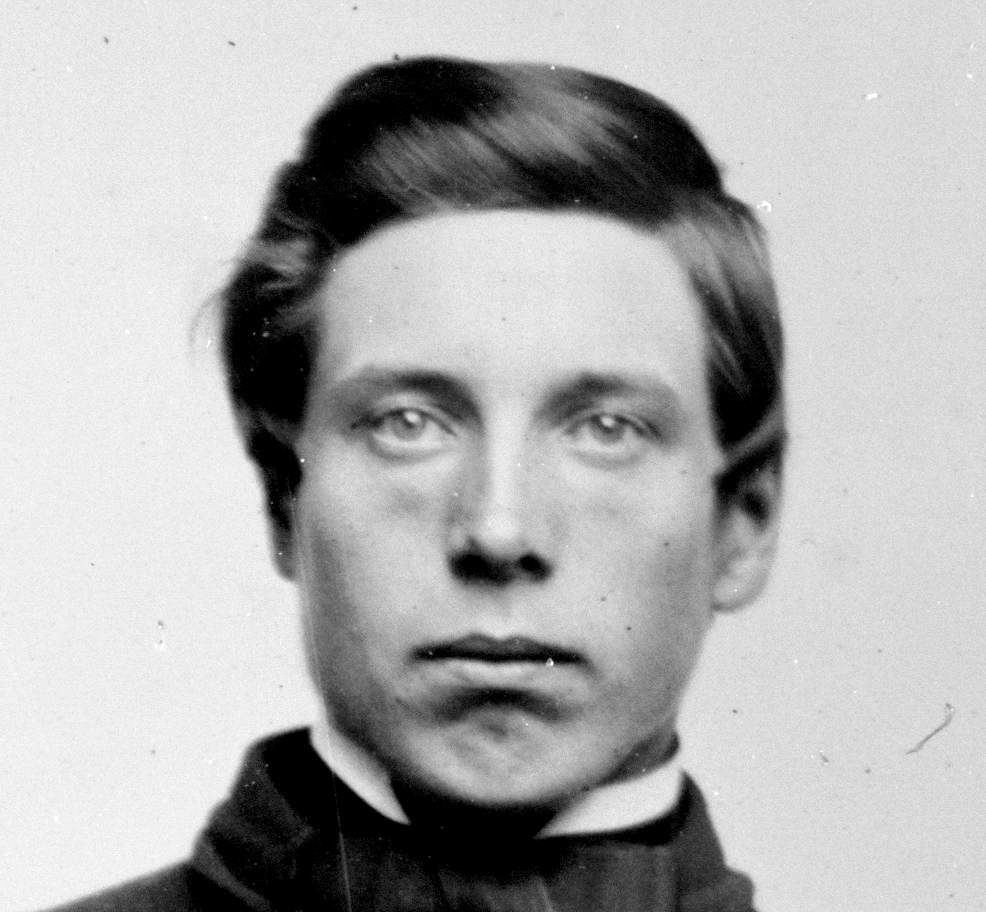
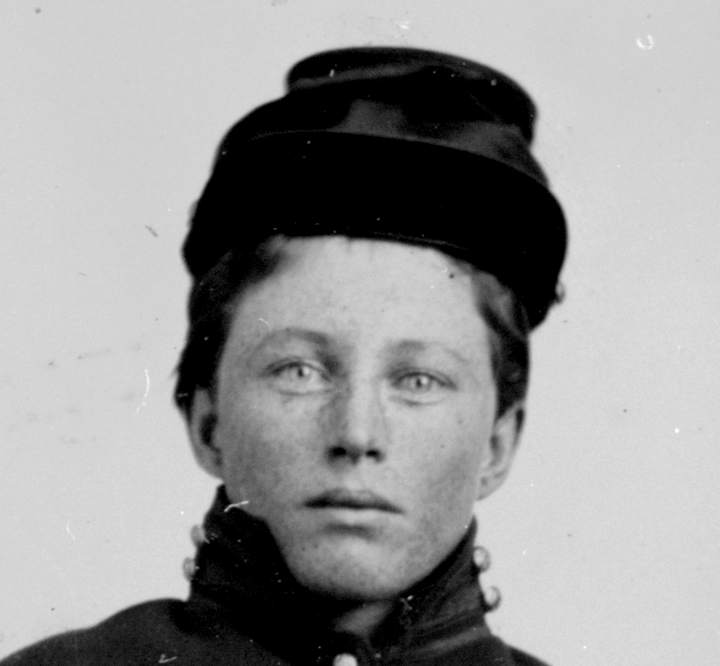
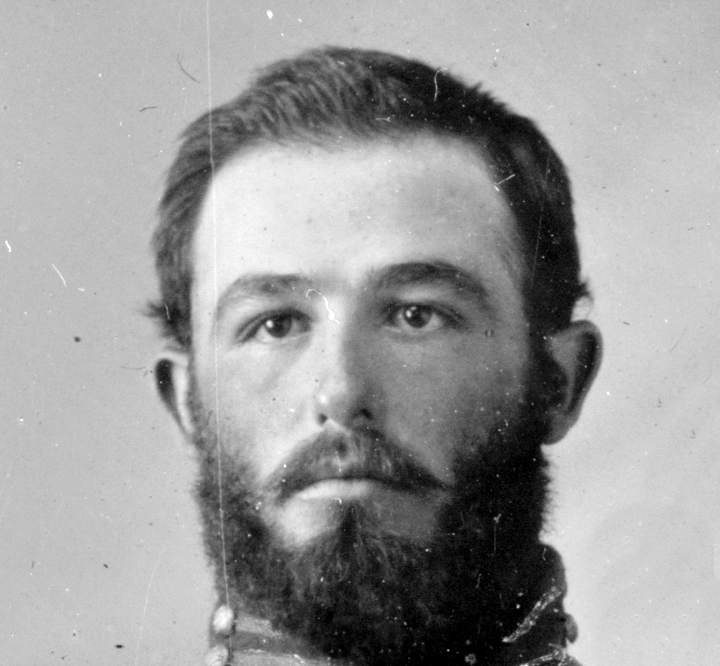
There is a line about EB, whose inclusion in this feature is required by law: “In every young man’s life there is an Eve Babitz. It’s usually Eve Babitz.” Credit/blame for this tidbit is usually given to Earl McGrath. When “Eve’s Hollywood” came out, the line was on the blurb page, written by “anonymous.” EH “came out” in March 1974, with a glamor girl cover photo by Eve’s number one lady lover, Annie Leibovitz. D&B does not have any hint that EB and JD were cleaning carpets together. … Part two of D&B is available. Pictures today are from The Library of Congress. “The social media picture: Unidentified soldier in Company H, Vermont uniform” ©Luther Mckinnon 2026 · selah

Didion & Babitz Part Two




This content was published February 21, 2025. … At 1838, February 19th 2025, I shut the cover on Didion & Babitz. Say what you will about author Lilliane O’Lick, she is one helluva storyteller. D&B was easy and fun to read. The book ends with a description of Joan Didion’s memorial, a star-studded celebrity event. Page 339 had one final bit of tackiness: “On the day Joan’s obituary appeared in the New York Times, journalist and podcaster Maris Kreizman took to Twitter. “I want to believe that Joan Didion lived an extra week out of spite so that she could officially outlive Eve Babitz.” p.339
The dedication page to Eve’s Hollywood mentions Steve Martin (the car.) The car is a 1965 VW, which Mr. Martin gave to EB. She later said “Linda Ronstadt was his girlfriend and I was his girlfriend and we were both doing him wrong.” EH was released in March 1974, about the same time I saw Mr. Martin open for Nitty Gritty Dirt Band at the Great Southeast Music Hall. Nobody in the Nitty Gritty crowd had any clue who this white suit wearing banjo player was. John McEuen kept stumbling into the microphone, saying “this guy cracks me up.” p. 215
”Huntington’s disease (HD) is named after George Huntington, who described it among residents of East Hampton, Long Island in 1872. It is a hereditary neurodegenerative disease.” HD claimed both EB, and her father, Sol Babitz. EB was aware of her fate for many years. The most famous victim of HD was Woody Guthrie. Many speculated that son Arlo would get HD, but he never did. “Woody’s most productive time artistically was in the 5 years immediately preceding the onset of overt symptoms of HD. I hypothesize that subclinical HD may have been an important driving force behind Woody Guthrie’s creativity.” p. 244
We know little about LOL. She was 32 in 2010, and went to Princeton, after doing high school somewhere else. LOL has the same last name as her Manhattan Doctor husband, but leaves no clues about her maiden name. We do have “A note my older boy, Ike, left on my pillow Valentine’s Day 2020” “DEAR MOM YOU AR WORM AND COTULY AND YOU HAD SEX WITH BREAT ESTIN ELIS BUT DONT TRY TO HIDE IT FROM ME NAW LETS GET DOWN TO BUSINESS I WANT TO GO TO THE NATURAL HISTORY MUSEUM THIS WEEKEND AND I WANT NO ARGUING ABOUT IT”
Page 290 marks the return of Bret Easton Ellis. EB tuned in to “Less Than Zero,” which made BEE a star before he was old enough to (legally) drink. EB compared BEE to Jim Morrison, … another way that People Are Strange. BEE met EB for dinner about this time. There is no word on whether BEE was EB’s dessert. This was about the time AIDS was becoming obnoxious, and EB decided to tone down the whore-of-babylon act. The bi-leaning-gay Paul Ruscha had been a long playing EB boyfriend, which probably has nothing to do with any of this.
On May 7, 2000, JD appeared on In Depth, a PBS talk show. After a polite discussion, and a chance to promote here most recent book, the show was opened up to callers. One of the callers was EB, who introduced herself as “a friend of Joan’s from Hollywood.” JD dropped her stone face once, when EB said that JD’s house “was the first time I ever saw Spode china.” JD did not show much pizazz in that brief clip. I don’t know about the rest of the show, because I am not bored enough to watch it. JD was never known as a vibrant personality. p.306
There may be one defining difference between author and subject. EB wrote a piece about her near-fatal fire titled “I used to be charming.” Recently, LOL did an interview promoting D&B. “I always think of the last line of a Salinger short story, “Uncle Wiggily in Connecticut.” … “I was a nice girl once, wasn’t I? Wasn’t I?” I think about that all the time, because I used to be so polite. And now I’m just used to getting yelled at and told I’m a jerk or to go away. I just don’t mind at this point.”
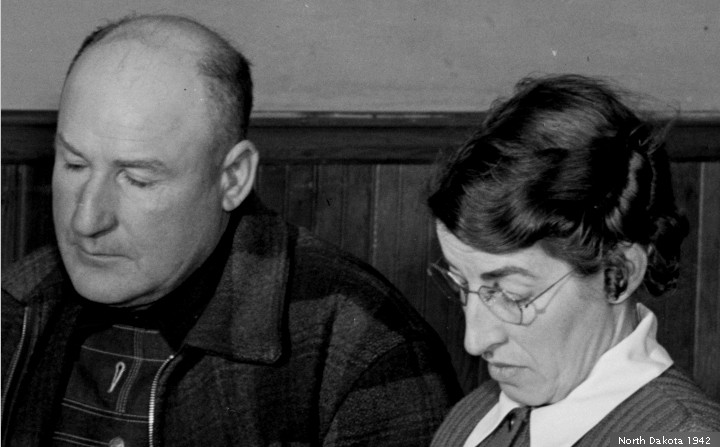
Page 332 has EB in her final years. In 1997 EB was badly burned, and never fully recovered. That story is available elsewhere. By the time Donald J. Trump was President, EB had become a talk radio consuming conservative, to go with HD. LOL went to California frequently to have lunch with EB, and talked to her on the phone. In one of these conversations, EB asked “Where can I find a blouse the same shade of blue as Melania Trump’s eyes?” When I asked AI that. I found a description of the Ralph Lauren dress FLOTUS wore to her first inauguration. ““She looked simply flawless.” … This is the final installment of D&B. Part one is available. Pictures are from The Library of Congress. Arthur Rothstein took the featured photograph in June 1940. “Brooklyn NY. Red Hook housing development. Jimmy Caputo, seven years old, and Annette, three years old, at their nightly prayers.”
©Luther Mckinnon 2025 · selah

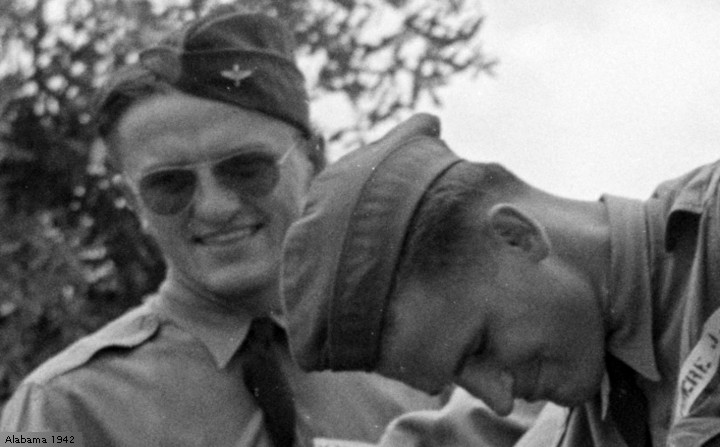
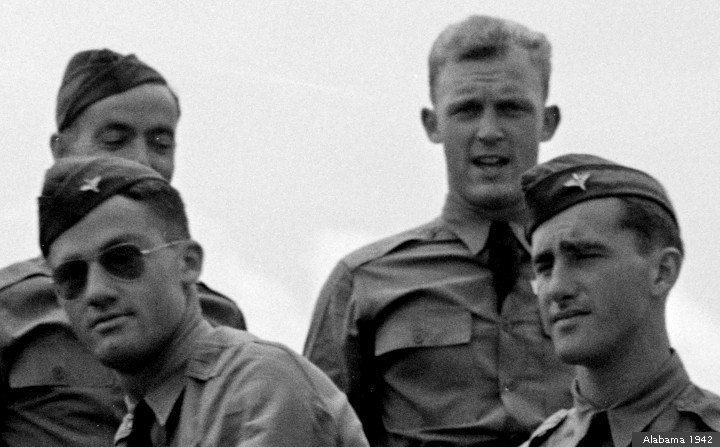
Ham On Rye
This content was published January 29, 2019. … Ham On Rye is due back at the library today. I could not renew it, because someone else had made a request. This was going to be a snow jam day, but it did not even deliver a good drizzle. Going bonkers over an inch of snow is an Atlanta tradition, and I would not have it any other way. Which does not write this book report.
HOR is about the childhood of Hank Chinaski, who is really Charles Bukowski. It seems like a dreary affair. Hank Sr. is a sadistic asshole. He gets off on beating his son. Mother sits back and does nothing. The story is set in depression Los Angeles, which adds to the morbid ambience of the tale.
A discerning reader can see the roots of the acorn that grew into Charles Bukowski. One of his few childhood friends had a basement full of home made wine. Charles went down there, and made a life long friend. Before long, daddy put a padlock on the basement.
Someone who will write Notes of a Dirty Old Man needs to get out of grammar school first. At some point, a near fatal case of acne hit. Hank was going to the hospital, and receiving acne cures that made daddy seem warm and fuzzy. Eventually, Hank went on to getting drunk whenever possible, and then fighting the person who supplied the hootch.
For all the horny talk, there is little sex in HOR. Hank goes to get drunk with some kid who had a hot mother. The kid passed out, and mama came home. Hank hits on mama. She pulls her skirt up. Her pussy hair is half gray, and not pretty like her head hair. Hank decides to go home instead.
Hank graduates from High School, gets a job in a department store, and gets fired within a week. Hank bounces around, wins a pile of money in a drinking contest, gets kicked out of the family house, and gets kicked out of a Filipino boarding house. Hank starts talking the pre-Pearl Harbor pro German talk, only to discover that the Nazis he meets are idiots. The story ends with the announcement of Pearl Harbor. Hank does not enlist.
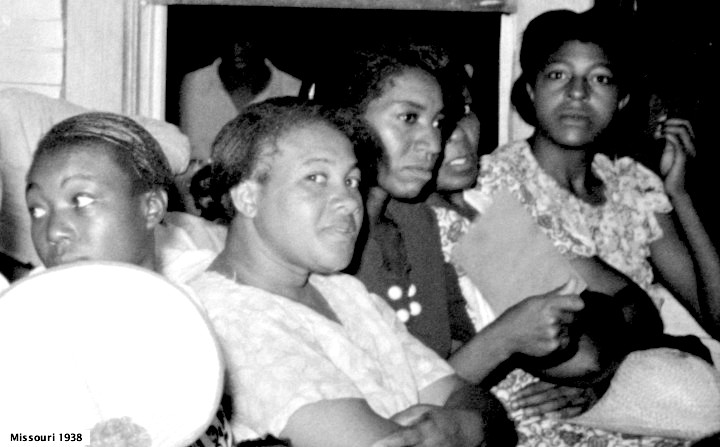
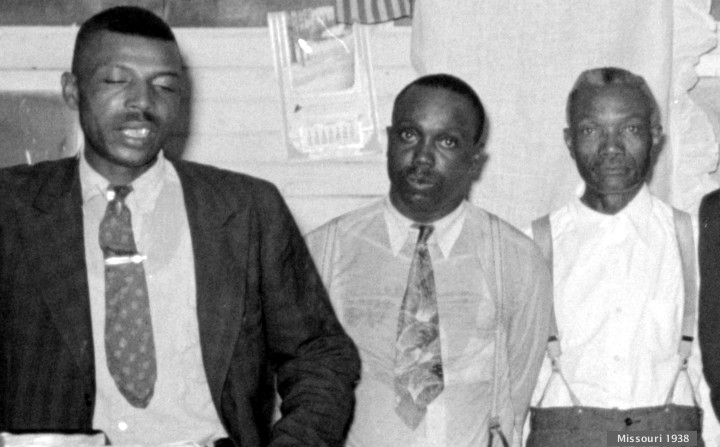
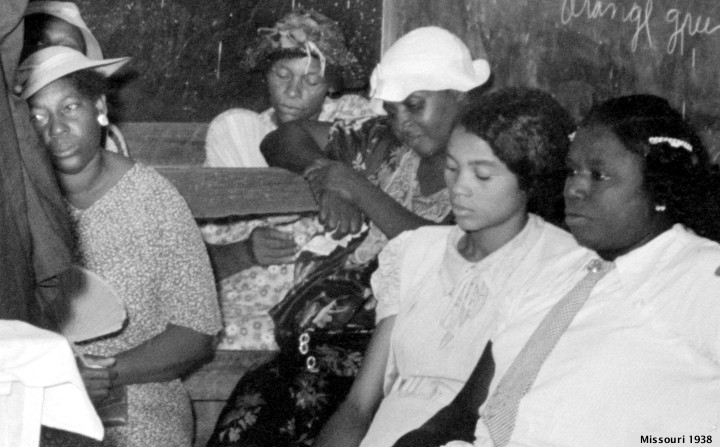
A story like this needs a one star review. “I can handle depressing books. I actually steer away from anything too frothy. This one, I am afraid, would depress a circus clown after his best stage performance. Dark. Sad. No uplifting moments. I finished it, hoping it would have some redemption at the end. Wrong. Went from depressing to clinically depressing.” … Pictures today are from The Library of Congress. Russell Lee took the social media picture in August 1938.“Group of Negro women at revival meeting, La Forge, Missouri ©Luther Mckinnon 2025 · selah
Tommy Rotten





In 1977, Rolling Stone did a piece about a “counterculture writer” named Thomas Eugene Robbins. This should not be confused for Harold Robbins, a mainstream wordchunker who died in 1997. “Tommy Rotten is known for colorful phrasing. It is as if Vladimir Nabokov caught butterflies with psychedelic juice in their wings, and made a lepidopterist stew that allowed him behind the looking glass.” As it is, we have, a stylistic seraphim from the time of the Carter administration. “You can tell people that my goal is to write novels that are like a basket of cherry tomatoes—when you bite into a paragraph, you don’t know which way the juice is going to squirt.”
Part one of the chamblee54 regurgitation of Tibetan Peach Pie: A True Account of an Imaginative Life hit the ether nine days ago. Since then, I have taken to writing down the page number of phrases that catch my eye, tickle my ears, pull my leg, and punch me in the gut. Since a Tom Robbins book is an anarchic army of swinging sentences, only nominally regulated by the discipline of plot, this may be the best way to approach this subject.
On page 25, TER was on an asian honeymoon. A Sing snake crossed their path, and was invited to dinner. The reptile was prepared with enough red chili paste to give heartburn to the human blowtorch. TER felt as though he had gargled napalm. On page 145, TER would describe “many a hot, sticky summer night, when a restless Richmond felt like the interior of a napalmed watermelon.”
Page 63 sees TER at thirteen years old. He has not joined the church, given his soul to Jesus, and been assured of salvation. These are important items on the Southern Baptist bucket list. I went through sunday after painful sunday, every time the congregation sang “Just as I am” as an invitation to eternal life with Jesus. I never did take that walk down the aisle, and have come to see the Baptist ritual of pressuring pre pubescent youth as being just a little bit weird. Yes, this is better than what the Roman Pedophile Church likes to do with little boys, but that’s a technicality.
The man assigned to win the soul of TER was Dr. Peters. “tall, gaunt, and pale, with a weak damp smile and cold damp palms: shaking hands with him was like being forced to grasp the flaccid penis of a hypothermic zombie….more creepy than refrigerated possum slobber.”
By page 125, TER is out of school, married, and has a son. This is the early fifties, and I will not appear on planet earth for a little while. In those days, there was a war going on in Korea. TER decided that the Air Force would be more pleasant than the army. If he had waited much longer Uncle Sam would have made the choice for him.
TER at some point is on a ship, and editing a newspaper. “… the paper’s adviser, a Roman Catholic chaplain who possessed the purplish physiognomy and perpetually petulant pucker of the overly zealous censor.” Soon TER is in Nebraska, and buys his first automobile, a “1947 Kaiser … looked like the illegitimate child of a sperm whale and a pizza oven.” The gender is not specified.
Six pages later, TER is out of the service, about the divorce wife number one, and living in a hood called the Fan. This was the hippie district of Richmond VA, although the 1954 version was considerably tamer than the summer of love variety. (This is roughly the time when I burst onto the landscape of Atlanta GA) TER was reading books about zen. Learning zen, by reading a book, was similar to learning how to swim by reading a magazine. Or telling time by reading a newspaper. As Ben Hecht put it, “Trying to determine what is going on in the world by reading newspapers is like trying to tell the time by watching the second hand of a clock.”
The convergence of zen, swimming, and reading material made TER think of a poem by William Blake. Mr. Blake was a hallucinatory inspiration on Allen Ginsberg, who would later be the only man to ever kiss TER on the lips. (I have doubts about that one, but will have to take the his word.) Anyway, the poem has the Southern Baptist approved title of “Eternity.” “He who binds to himself a joy, Does the winged life destroy; But he who kisses the joy as it flies, Lives in eternity’s sun rise.”
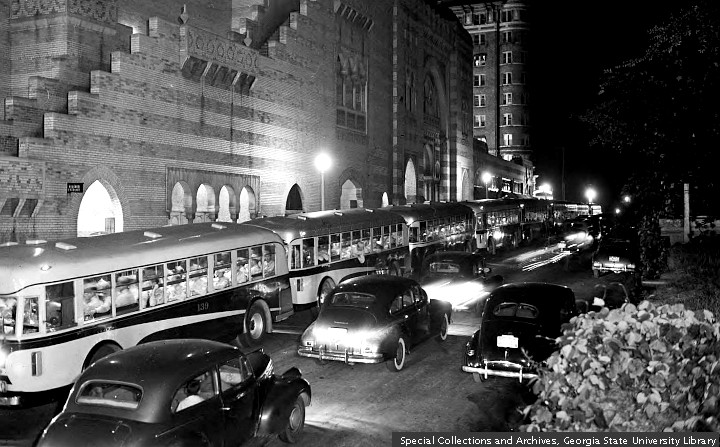
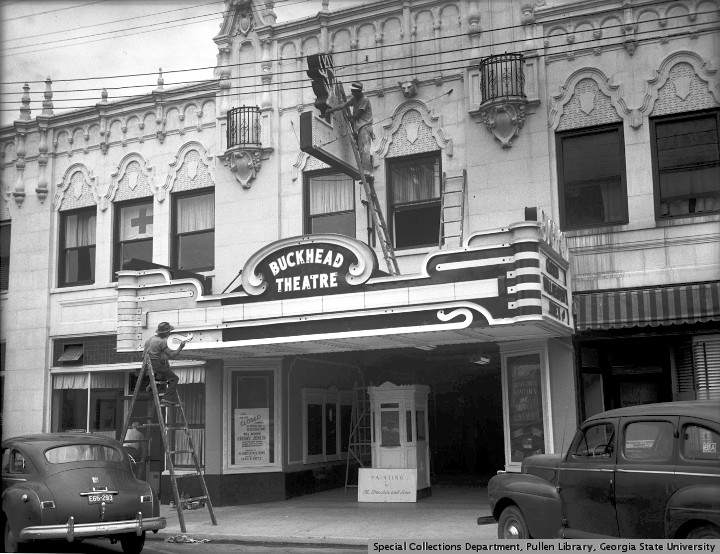
Maybe this is a good time to edit this, and go forth into the world. Or go second, or third, but not in a Southern Baptist lifetime should I go fifth. As TER said in High Times, “I’d better shut up now before the woo-woo alarms go off.” … Tom’s lifetime subscription to High Times ran out February 9, 2025. Pictures today are from Special Collections and Archives, Georgia State University Library. The social media picture was taken in the 1940s. “Buses full of soldiers outside Fox Theater (“colored entrance” sign visible)” ©Luther Mckinnon 2025 · selah




Our Bohemian Lifestyle



This content was published October 31, 2008. … Ten Clues you are too old to Trick or Treat: 1 – You get winded from knocking on the door. 2 – You have to have another kid chew the candy for you. 3 – You ask for high fiber candy only. 4 – You keep having to go home to pee. 5 – People say: “Great Boris Karloff Mask,”And you’re not wearing a mask. 6 – When the door opens you yell, “Trick or…”And can’t remember the rest. 7 – By the end of the night,you have a bag full of restraining orders. 8 – You have to carefully choose a costume that won’t dislodge your hairpiece. 9 – You’re the only Power Ranger in the neighborhood with a walker. 10 – When someone drops a candy bar in your bag,you lose your balance and fall over.
This content was published October 19, 2008. … The answering machine was flashing when I got out of the shower. Even though the internal caller id told me it was Uzi, I listened to the messages before calling. The scheduled entertainment for the afternoon was a walk through little five points. … After a while, the honda was parked behind Manuel’s, and the walk to ElfivePee began. Is the Halloween Festival over, and could we tell the difference? Coming down Seminole Avenue, into the closed off street by the pizza places, the thought came to go to the Vortex. No, that is a bad idea, they may be enforcing the no idiot policy.
The artist was urging the sunday visitors to Buy Art, and help support our bohemian lifestyle. I needed to use a restroom, and thought the Euclid Avenue Yacht Club would be atmospheric enough. Past that was the former Bass High School, now a loft community. When WRFG went on the air, their transmitter was so weak that they could not be heard north of the high school. … Crossing Euclid Avenue required waiting for the cars to pass by. The former Sevananda/A&P/Piggly Wiggly of Miss Daisy fame is now a Rag store. They have stenciled parking spots, across from the mural infested wall of the Variety Playhouse. Uzi was once going to pay to park for a concert there. The parking attendant recognized his friend and gave them a prime spot for free. He does not remember who was playing.
The parade of the hairstyle enhanced trendoids continued down the well trod sidewalks. Uzi was in the mood for a chocolate ice cream from Zestos. I waited outside, and took pictures of ivy falling down in front of a brick wall. We crossed Moreland, and found a bench to sit on. It was across from the former fountain, which now has cactus growing inside. A dog got loose, and scampered down Moreland Avenue, while the traffic screeched to a halt. The pet went down Euclid into oblivion, as Uzi finished his ice cream. Deciding that they had enough hipness for the day, we went back to Manuels, and to the S&S cafeteria in the relative safety of Embry Hills.
This content was published October 28, 2009. … I finished part two of the David Crosby autobiography, “Since Then“. This book is evidence that truth is stranger than fiction. For those who just tuned in, David Crosby was one of the Byrds, and is the Crosby of Crosby, Stills, Nash and (sometimes) Young. … David Crosby (no relation to Bing Crosby) is a part of the counterculture. The hair, the fringe jacket, the drugs, the sex, these are the surface parts of the puzzle. The man has been described as a complex bottle of red wine, taking a long time to mature. The hair is still there, he is in love with his wife (and probably would be dead without her), and smokes the occasional doobie. With any luck at all, the fringe jacket is in a landfill, and not reproducing.
The book has three fonts. The primary one is the voice of Crosby. Comments from third parties are indented, and the co author, Carl Gottlieb, speaks in italics. The story moves in more or less chronological fashion, although there is a bit of cutting back and forth between scenes. … At the start of the book, LA is hit by a major earthquake. This destroys a house Crosby has. If the earthquake doesn’t get the house, the IRS will. An accountant has not done his job, and Crosby owes major bucks to Uncle Sam. If its not one thing, its another.
Moving along, a son given up for adoption finds Crosby, and winds up playing guitar in a band called CPR. Crosby wrecks his motorcycle and nearly croaks. Crosby’s liver goes haywire, and he almost croaks. Ditto heart attack, and arrest for felony gun possession. … One of the last visitors before the liver transplant was Graham Nash. As he is leaving, Nash tells Crosby ”If you leave me alone with Stills, I’ll f***ing kill you”. For all the pretty music in CSN, there are some strong personalities. Stephen Stills is renowned for his attitude. David Crosby is known to have an opinion or two.
Getting back to the David Crosby story…there is just too much to sum up here. At the end of the story, Crosby is still going. He stopped at two artificially inseminated babies, to go with four (at least) kids produced the old fashioned way. The opinions have not stopped coming out. Crosby likes World War W as much as I do. Crosby has always held doomsday views about the American experiment. … David Van Cortlandt Crosby met his maker January 18, 2023. Pictures today are from The Library of Congress. John Vachon took the social media picture in February 1942. “Meeker County, Minnesota. Farmers’ dance in crossroads store” ©Luther Mckinnon 2025 · selah



The Four Agreements



This post was published October 8, 2023. … The Four Agreements were put into words by Don Miguel Ruiz, aka Miguel Ángel Ruiz Macías. I do not claim to practice these ideas. Number two is especially tough for me. The main thing is to try, and to always do your best. This is not about what you believe or think, it is about what you do. This is about you. If you fall short in some way, work on improving yourself, instead of looking at someone else. This is about you.
Agreement 1–Be impeccable with your word – Speak with integrity. Say only what you mean. Avoid using the word to speak against yourself or to gossip about others. Use the power of your word in the direction of truth and love.
Agreement 2–Don’t take anything personally – Nothing others do is because of you. What others say and do is a projection of their own reality, their own dream. When you are immune to the opinions and actions of others, you won’t be the victim of needless suffering.
Agreement 3–Don’t make assumptions – Find the courage to ask questions and to express what you really want. Communicate with others as clearly as you can to avoid misunderstandings, sadness and drama. With just this one agreement, you can completely transform your life.
Agreement 4–Always do your best – Your best is going to change from moment to moment; it will be different when you are healthy as opposed to sick. Under any circumstance, simply do your best, and you will avoid self-judgment, self-abuse and regret.
These ideas are presented as agreements, rather than beliefs. According to the AI Overview: “The Four Agreements are presented as a path to personal freedom, not beliefs, because they are intended to be active choices rather than passive convictions. The key distinction lies in the nature of beliefs versus agreements: Beliefs are passively accepted; agreements are actively chosen. … Beliefs are convictions you hold as true, often without ever questioning or examining them. … Agreements, in Ruiz’s usage, are active choices you make with yourself. The Four Agreements are a conscious decision to operate differently, liberating you from the unconscious beliefs that cause suffering. … The shift from living by unconsciously inherited beliefs to consciously chosen agreements is the central transformative process of Ruiz’s book. The agreements are not just concepts to be mentally accepted; they are practical tools that require daily effort and action to reshape your life.”
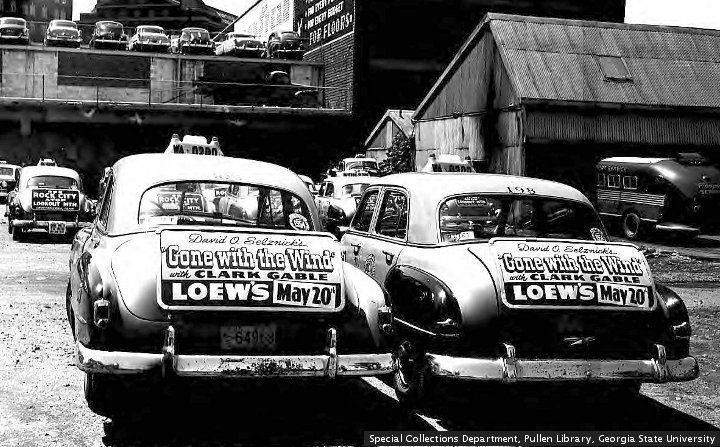
This feature was written like David Foster Wallace. Pictures today are from Special Collections and Archives, Georgia State University Library. The social media picture was taken in 1954. “Loew’s Grand Theatre marquee and ticket line for the fifteenth anniversary rerelease of “Gone With The Wind.” ©Luther Mckinnon 2025 · selah



Post Office


This content was published September 15, 2018. … Post Office, a novel by Charles Bukowski, was on sale at a “Friends of the Chamblee Library” book sale. The author would not like this. You cannot complain when you died 24 years ago. I paid a dollar, and read the story. Hank Chinaski, the stand in for the author, got a lousy job at the post office in Los Angeles. For 196 pages, Hank drinks, works, screws, admires women’s bodies, drinks, bets on horses, fights with supervisors, has hangovers, and drinks more. The story is easy to read, suggesting the helping hand of an editor.
PO stands for both post office and pissed off. The two concepts are not mutually exclusive. To hear Hank tell the story, life at the PO was an endless cycle of sadistic bosses, and brain damaged co-workers. Administrative wanks rule over everyone. Somehow Hank made it through 11 years as a clerk. The institution survived. Mr. Bukowski perished in 1994. The headstone reads “Don’t Try.”
‘I Never Saw Him Drunk’: An Interview with Bukowski’s Longtime Publisher is an interview with John Martin, the owner of Black Sparrow press. Mr. Martin thought Hank was the next Whitman, and started Black Sparrow (initials are not always convenient) to distribute Hank’s product. When Hank quit the post office in 1969, Mr. Martin agreed to give him $100 a month. This later became $10,000 every two weeks, with more at the end of the year.
“How did his first novel, Post Office, come about? This is a good story. So we made that deal in December for $100 a month—early December, as I recall—and so he gave notice to the post office, and his last day there was going to be December 31. He said, “OK, I’m going to work for you on January 2, because January 1 is New Year’s Day and I’m going to take that as a holiday. We thought that was really funny. About three or four weeks went by, I think it was still in January, or at worst the first week in February, and he called me—oh, and I had told him earlier, “If you ever think of writing a novel, that’s easier to sell than poetry; it would help if you could write a novel”—so he called me up at the very end of January or the first week of February, out of the blue, and said, “I got it; come and get it.” I said, “What?” And he said, “My novel.” I said, “You’ve written a novel since I saw you last?” And he said, “Yes.” I asked how that was possible, and he said, “Fear can accomplish a lot.” And that novel was Post Office.” The novel includes a near fatal party in that month.
Mr. Martin has a take on Hank which differs from his image. “Hank was not comfortable among people, in a crowd, even at a small gathering; he was a real loner. He wanted to get up in the morning, have a quick breakfast with his wife, read the paper, leave the house about noon, go to the track, come home at 6:00, have dinner about 7:00, go upstairs at 8:00, and write until two in the morning, and he wanted nothing to interfere with that routine. … he was the most polite man I’ve ever known, and the most honest man I’ve ever known. He was so deferential and polite and so concerned for your comfort, and whether you were happy or not, when you were with him.”
“I went to the bathroom and threw some water on my face, combed my hair. If I could only comb that face, I thought, but I can’t.” This may be the best line in PO. There are a lot to choose from. PO is a guilty pleasure. It is sexist and misogynistic to the max. The writing is basic, and easy to consume. It is tough to believe that Hank wrote this in a month by himself, but it is also tough to believe that someone that ugly got laid all the time. If only Hank could have combed that face.
I have written about Hank one, two, three, four, five, six, seven, eight times, with some reruns thrown in for efficient blogging. I have written two poems about Hank. (A B) B is basically A in sonnet form. Never mind that Hank hated rhyming poems, to say nothing of posting the lines over pictures of dogs. Hank was a cat person, as if rhyme scheme blasphemy was not enough.
@bukowski_quote is a twitter facility dedicated to distributing 240 character bits of Buk. These tweets/quotes (twoats) have been packaged as two more sonnets, published in two parts each. (C D E F) Sometimes, I see this is a bit of post mortem cultural appropriation. The Hank of Tales of Ordinary Madness would have hated seeing his work used this way. How the millionaire, wine sipping Hank felt is a good question. Then, I found a quote that made me feel better.
“I got into Bukowski about five years ago on a trip to New York from North Carolina. I swallowed Ham on Rye in a single sitting while riding in the back of some clunker-type Honda thing racing north on I-95 in what I think was June of 2005. Since then I’ve read all of his novels and much of his poetry (which is a lot, do you know how much poetry he wrote?) and don’t give a shit about the literary ball bags at the Vice office who say he’s a boring, repetitive, pompous, fake-macho, southern-California-weather-system-addled boozehole, partly because I agree, and partly because I don’t read him for some sort of illumination on the haggard life of the proletariat. I just see his writing as a quick source of thrills, spills, and funny things to call women that you’re angry at but also still want to fuck.”
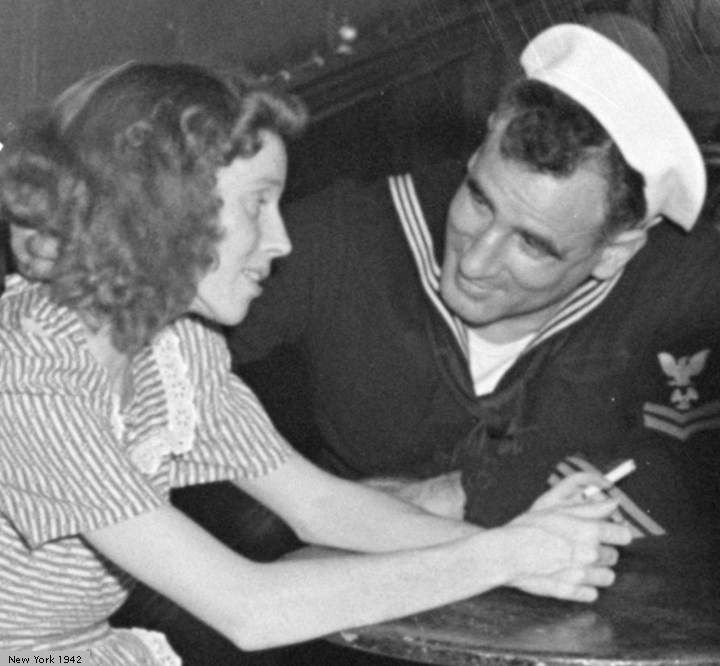
A book report about Post Office would not be complete without one star reviews. patricia neumannon August 8, 2014 “One star for the fact that this was even published. I was offended by Mr. Bukowski’s low regard for women. Pehaps his target audience is adolescent boys, who might twitter at Bukkowski’s vulger attempt at humor.” Auntie Mon September 1, 2014 “A book about a pathetic, selfish White man? No thanks.” gammyrayeon February 8, 2013 ” … The narrator Henry Chenaski is a low-life alcoholic who spends his life getting drunk, having sex with girlfriends and chance acquaintances, and betting at the race track, all while working at the post office. Finally he resigns from the post office. End of story. All this is written in an arrogant tone, as if the narrator feels himself to be superior to all the other characters, especially to his fellow workers. Bukowski has stated that the novel is autobiographical, and he seemed to take pride in the tumble-down life that he led. I have known guys like this–he is every drunk or drug addict who ever excused his addiction as an indication that he is too intelligent and sensitive to deal with the angst of living among the clods and drudges. Alcoholism is not hilarious and entertaining, even to the alcoholic, eventually. And it is not hilarious and entertaining to read about.” … Pictures today are from The Library of Congress. Marjory Collins took the social media picture in August 1942. “New York, New York O’Reilly’s bar on Third Avenue in the “Fifties”” ©Luther Mckinnon 2025 · selah


How To Choose A Guru
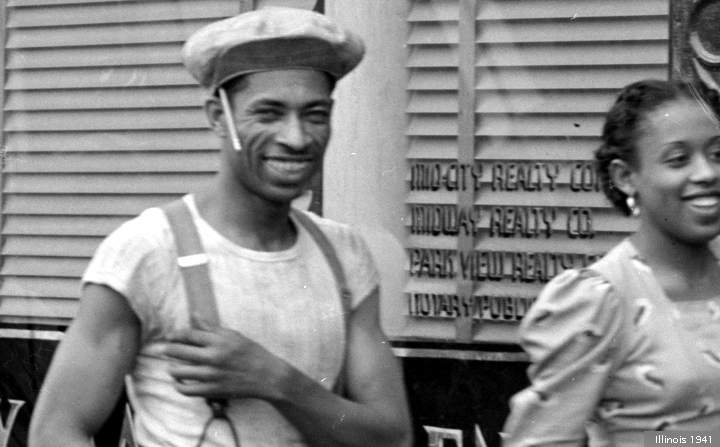


I found How To Choose A Guru, by Rick Chapman at a yard sale in 1978. HTCAG is a look at spirituality of all sorts. A special emphasis is placed on Meher Baba. HTCAG was republished as Introduction to Reality.
HTCAG can be a frustrating book. The main focus is on finding a “perfect master”, and the path to enlightenment under his guidance. If one is not inclined to this level of dedication, you can be left feeling inferior. This is similar to the despair people feel when they think they are going to go to hell, because they don’t have the correct ideas about Jesus.
HTCAG takes a look at spirit from the perspective of all religions. A central concept is the avatar, the idea of God become man. (This was long before the movie with a similar title.) The avatars of recorded history include Zoroaster, Rama, Krishna, Buddha, Jesus, and Mohammad. Some say Meher Baba is the modern avatar.
Mr. Chapman has a knack for phrasing. There are expressions that I remember from reading HTCAG in 1978. They are still there, 47 years later.
Creation “First, there was God. Then, there’s you. Then, there is God.”
Speculation “The average person’s speculation about consciousness …
has “the stink but not the weight of his turd”
Evangelism “An authentic Master will encourage you to let your life itself be his message.”
Good Thoughts, Good Words, Good Deeds “Don’t be sidetracked by elaborate creeds and doctrines- the truth is as simple as it is profound. From the ancient teachings of Zoroaster to today, these three principles have been the heart of the message of every God realized Master.”
Books “Excellent guides until you find the Way.” Abu Sa’id
Books Part Two “… the scriptures of the past compare to the writings of a present-day Perfect Master just about the way that dust compares to honey.”
Satan Worship “If you have been toying with the thought that any form of Satan worship can lead you to higher consciousness, sober up by reading the story of Dr. Faustus. There are many paths to enlightenment, but this back alley isn’t one of them.”
Sex “A real guru never has any form of sexual relations with his followers. If a person posing as a guru tries to seduce you in the physical sense, then you can have no clearer indication that he is a phony, a pathetic and hypocritical collection of unresolved desires.”
Truth, Old and New “One time the Buddha was approached by a young man who was skeptical about Gautama’s renowned divine status. “Does the Blessed One teach a path that is new and original?” One of the Buddha’s close disciples, Sariputta, turned his gaze from the Master to the skeptic and replied, “If the Blessed One taught a path that was new and original, He would not be the Blessed One!”
Several of these quotes were available in copy/paste form at Meher Baba Information. These quotes may be difficult to find at the “improved” website. This site says that Rick Chapman is a follower of Meher Baba, and met him in 1966. This relationship is never made explicit in HTCAG. A glowing chapter is devoted to Meher Baba, and this information is not surprising. Still, HTCAG would be more upfront if this connection was clearly spelled out.
Meher Baba was born February 25, 1894 with the name Merwan Sheriar Irani. The name Meher Baba means “compassionate father”. From July 10, 1925 until his death January 31, 1969, he maintained silence, and communicated by gestures that were interpreted by his followers. Meher Baba believed that he was the avatar of our age.
With all of it’s human imperfections, HTCAG is a valuable book. It is easy to read, will expose you to ideas about spirit, and get you to think. When you grow up in the Christian tradition, one can be aware of a spirit within. At the same time, you get tired of the obsession with life after death. HTCAG teaches that there is more to God than scheming to live after you die.
This is a repost. It is written like Vladimir Nabokov. Pictures today are from The Library of Congress. John Vachon took the social media picture in June 1941. “Commission merchant examining produce at fruit warehouse. Chicago, Illinois” ©Luther Mckinnon 2025 · selah

Brian Eno Rick Rubin




I had ran out of podcasts, and went into the archive. I found an interview Rick Rubin did with Brian Peter George Eno, released June 8, 2021. I had heard it before, but might enjoy a repeat listening. … I found a youtube copy, which had a transcript, the lazy bloggers friend. Later, while trying to find the release date, I stumbled onto an Extended Cut, with an extra half hour of content . I am going to listen to the longer version, take notes, write about it, and then absolutely never listen to this again. …
“Yes, and incidentally, I think that’s the power of religion as well. The power of religion is not the connection with God, but the connection with the rest of the congregation. I think the connection with all of the people who also believe in that particular story. I’m not really religious myself, but I really respond to that idea.”
A few years ago, Christopher Isherwood gave an interview with a magazine. (I have never found the source online.) Mr. Isherwood said that it was not the content of the religion that converted a person, but the person who introduces you to that religion. Mr. Isherwood said that if a Catholic had been the right person at the right time, then he might have become a Catholic.
In 1939, after living as an exuberant skeptic, Mr. Isherwood was converted. “Forty-five years ago, on a sultry July afternoon, 35-year old Christopher Isherwood met and embraced Ramakrishna Vedanta in downtown Hollywood, California. Aldous Huxley, writer extraordinaire and ardent explorer of Hindu interior consciousness, had just introduced Isherwood to his guru, Swami Prabhavananda, founder of the Hollywood Ramakrishna Mission Vedanta Society.” … The linked article is worth reading. …
There was a quote that I remembered. “I like being in unfamiliar surroundings. I always used to say that artists are either cowboys or farmers, and they’re both both ways of being an artist are fine. The farmer wants to find a piece of territory and fully explore it and exploit it.” … A talk like this can inspire you to further thinking. You can go paddling up the river, and spend all day exploring the tributary creeks. This is the cowboy side … to follow the thought wherever it goes. OTOH, you can stick to the quotes that capture your attention, let them speak for themselves, and FINISH WRITING YOUR PIECE. This is the farmer side, and is mostly what is going to happen here. …
BPGE was absolutely devastated by hearing It’s Gonna Rain, by Steve Reich. By amazing coincidence, I heard IGR twice on WREK, the Georgia Tech student station. This was many years ago. Both times I heard IGR, large amounts of rain fell the next day. …
I listened to the Extended Cut, and did not suffer any epiphanies. There was one quote. “During the war, when lots of GIs were coming over to England, somebody interviewed an old farmer from Devon and said, so, how do you feel about the Americans coming over here? And the farmer said, well, they’re all right, aren’t they, except for the white ones.” …
One day in the Köln airport, ambient music was born. It was a beautiful day and the airport was nearly empty, and I was sitting there bathing in light, and it was one of those cases like we were talking about earlier, where you think I wish there was another kind of music for this situation, and I started thinking, so what would that be? Like? You know, it’s an airport, so you can’t be too loud. Obviously, people have to hear announcements. It has to be interruptible for the same reason it shouldn’t dominate the vocal register, because people need to communicate. So I just was sort of thinking this out, and quite soon I thought, right, I think I know what I could make that music. I know how I could do that. And that’s how that first ambient record came about. I mean, it wasn’t unprecedented. I had been working on music a little bit like that before, but I suddenly realized what its role in life could be. If you like, what the place of this music could be. I knew it wasn’t dance music. I knew it wasn’t radio music. It was functional, but I hadn’t yet discovered the function. It was then that I thought, I know what this music could be for.” …
BPGE worked with Harold Budd, and created some of the prettiest music ever recorded. This fits in with the ambient music concept. … “I didn’t want drama. I just wanted something like nature, subtle variations. Subtle variations, yes, and variations that stay within a kind of range of possibilities and explore that range rather randomly. I just wanted the thing to be what Harold Budd used to call eternally pretty. That was his way of putting it. Dear Harold. He died about two months ago from COVID, very sad. So I dedicate this thought to Harold. So. Yes, So when Harold and I met, we were both pretty much on this groove of thinking, what about making music that isn’t designed to upset anybody? Now, of course that sounds pretty uncontroversial now, but in the mid to late seventies that was considered to be the biggest sell out of all time. You know, music was supposed to shake the world and create revolutions and upset your parents and all sorts of things like that. And we thought, what about making music that is just really comfortable? Comfortable was probably the most controversial word you could use.” …
I have one last question to ask, just because I’m really curious, what’s your relationship to spirituality? … Well, as you can tell from the way I talk too much, I think about this kind of thing quite a lot. What I always want to do is to cut away as much of the shit as possible and see what’s left. So I don’t want to be a believer. I want to be somebody who, as far as possible, understands and knows things. Believing things leaves me a little bit unsatisfied. If I find myself believing something, I want to test the belief. I want to say, how do I find out how valid this is? How true this is? How? In real belief, in proper faith, you’re not supposed to do that. Faith is supposed to be, by definition, the acceptance of something that you cannot find evidence for. If you can find evidence for, it’s not faith anymore. It’s called knowledge. Then. So this is a long way round of saying that I’m not anti spiritual, I’m not anti religion. Actually, in fact, I can see how religion really cements some communities together and really helps people in their lives. But I’m not by nature a believer, So it’s difficult for me to use that kind of cement. My cement has to come from trying to understand things and to see how they work, and to share those ideas with other people. Yeah so, I think one one of the other things that surrendering prepares you for is the experience of uncertainty, the experience of not knowing the answer but still having to do something. You know, the fact that you don’t know the answer can’t cripple you. And of course a lot of people are crippled by not knowing the answer, and so they just choose an inappropriate answer just for the want of an answer.”
Pictures today are from The Library of Congress. Jack Delano took the social media picture in August 1942. “Nashville, Tennessee. Welding parts for fuel pumps. Vultee Aircraft Corporation plant” ©Luther Mckinnon 2025 · selah


Junky


This content was published September 21, 2015. … It started out slowly. I saw a tweet. It was a promotion for a blog post, featuring William Seward Burroughs reading The Masque of the Red Death, by Edgar Allan Poe. WSB has a great voice. The wealthy Missouri background, filtered through years of high class schooling, and low class abuse, comes through whenever WSB spoke. In the helpful links, there was an opportunity to hear an audiobook of WSB reading Junky. As with other addictions, you begin slowly, and do not realize you have a problem until you are helpless to deal with it.
Junky is the first book that WSB published, using the pseudonym William Lee. It is reputed to be semi autobiographical. In Junky, WSB wallows in the gutters of New York, New Orleans, and Mexico City. For this armchair degenerate, whose worst vice is peanut butter sandwiches, Junky is a glimpse into a picturesque alternate reality. With the aid of a copy friendly peedeeoueff edition, we can enjoy samples of the nightmare.
One review of Junky is this Amazon One Star Comment. Dissapointing Tanya N. Miller March 22, 2014 “This is a book that goes nowhere. It ends up right where it started. Every line in the book is about getting drugs and doing drugs then getting off drugs and back on drugs again with some sex thrown in. The only reason why I finished this book is because of my compulsion to finish books that I start and the only reason why I picked it up in the first place is because I wanted to know just who William S. Borroughs was. What a dissapointment and what a total waste of talent.”
The story begins with a semi normal childhood. It gets interesting in New York, during the war. A person named Norton (“a hard-working thief … did not feel right unless he stole something every day from the shipyard where he worked) has a tommy gun he wants Bill to sell. When Norton arrives, he has “a flat yellow box with five one-half grain syrettes of morphine tartrate.” Bill tries one of the syrettes, then another, then another. Then there is an episode which is in the book, but not the video.
“Ronnie’s was a spot near 52nd and Sixth where musicians came for fried chicken and coffee after one p.m. We sat down in a booth and ordered coffee. Mary cracked a benzedrine tube expertly, extracting the folded paper, and handed me three strips. “Roll it up into a pill and wash it down with coffee.” The paper gave off a sickening odor of menthol. Several people sitting nearby sniffed and smiled. I nearly gagged on the wad of paper…. Mary selected some gone numbers and beat on the table with the expression of a masturbating idiot.”
The video picks up with Bill trying to sell marijuana. “Pushing weed looks good on paper, like fur fanning or raising frogs.” Tea heads turn out to be too much trouble. Bill swears to never sell pot again, but not before ranting about the drug laws. … Bill has a habit now, working mostly with prescribed medication. Doctors are known as croakers. Soon the croakers quit writing scripts, and Bill gets busted. Some technicality about giving the wrong address. The case drew a four month suspended sentence. Bill starts to sell junk.
His partner is a piece of work. “One of Bill’s most distasteful conversation routines consisted of detailed bulletins on the state of his bowels. “Sometimes it gets so I have to reach my fingers in and pull it out. Hard as porcelain, you understand. The pain is terrible.” This might be a by product of opiate consumption. … Before long, Bill thinks he is about to get busted, and leaves for Texas. By the time he gets near Lexington, he has junk sickness. He checks into an institution to receive the cure. We learn a new word… shmecker is a user of heroin.
Bill leaves the Lexington facility without completing the cure. The next stop is New Orleans . … “New Orleans was a strange town to me and I had no way of making a junk connection. Walking around the city, I spotted several junk neighborhoods: St. Charles and Poydras, the area around and above Lee Circle, Canal and Exchange Place. I don’t spot junk neighborhoods by the way they look, but by the feel, somewhat the same process by which a dowser locates hidden water. I am walking along and suddenly the junk in my cells moves and twitches like the dowser’s wand: “Junk here!”
WSB co wrote a musical, “The Black Rider.” The performer is Tom Waits, whose voice sounds like WSB. There is a song, Crossroads. This is probably not about Robert Johnson. In this song, we learn about a gun with magic bullets. In the moment of aiming, the gun turns into a dowser’s wand. The bullet goes where the bullet wants to go. Some say the magic bullet is a stand in for junk. When Junky was written, junk was not used as slang for peckers.
It has been noted that WSB is as queer as a crochet bathtub. This circumstance is not noted in Junky. But then, WSB does not speak well of drug addicts either. “In the French Quarter there are several queer bars so full every night the fags spill out on to the sidewalk. A room full of fags gives me the horrors. They jerk around like puppets on invisible strings, galvanized into hideous activity that is the negation of everything living and spontaneous. The live human being has moved out of these bodies long ago. But something moved in when the original tenant moved out. Fags are ventriloquists’ dummies who have moved in and taken over the ventriloquist. …
… The dummy sits in a queer bar nursing his beer, and uncontrollably yapping out of a rigid doll face. Occasionally, you find intact personalities in a queer bar, but fags set the tone of these joints, and it always brings me down to go into a queer bar. The bring-down piles up. After my first week in a new town I have had about all I can take of these joints, so my bar business goes somewhere else, generally to a bar in or near Skid Row.” … Before long, Bill goes into a queer bar, and gets in trouble.
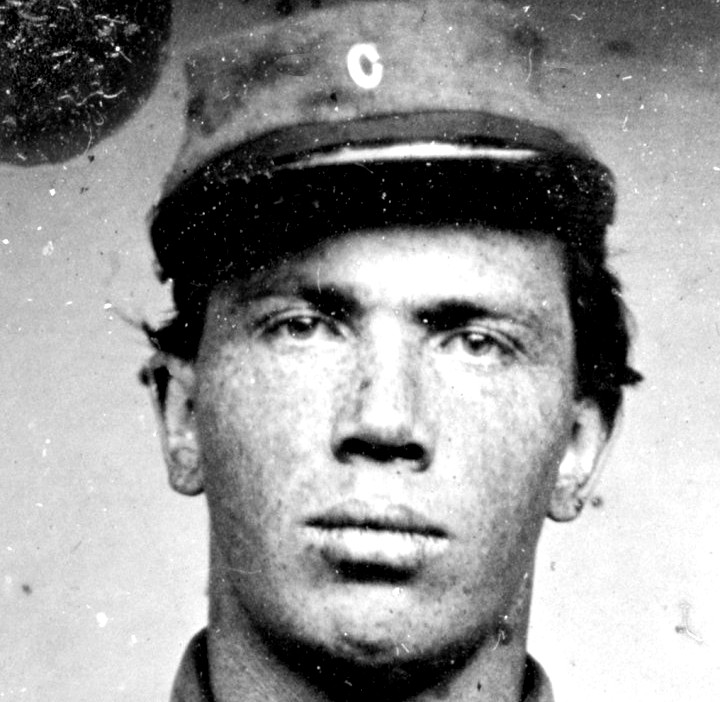
It seems to be a way of life, for someone who says that junk is a way of life. Maybe the magic bullet was aimed at him all along. … We are roughly half way through Junky. The attention span is maxxing out. In case we get druggie withdrawal, a podcast with Keith Richards is freshly downloaded. Pictures today are from The Library of Congress. These pictures are Union soldiers from The War Between The States. Much of the action in Junky takes place in wartime.



 Chamblee54
leave a comment