Eight Score And One Year Ago


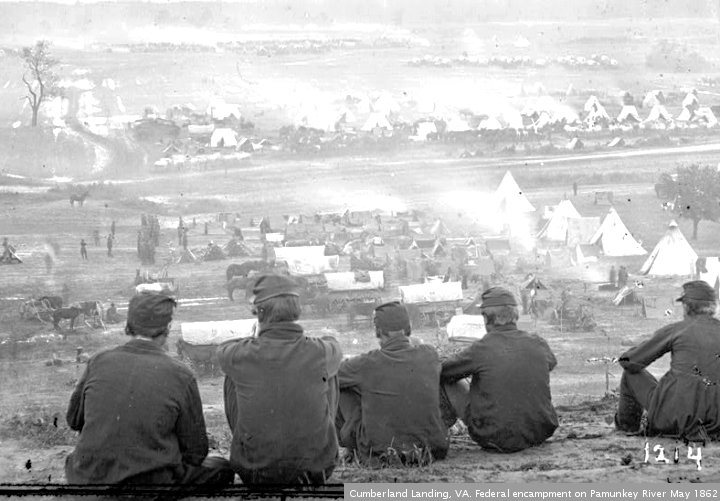
A vicious battle had been fought near Gettysburg, PA. It is widely considered the turning point of “Mr. Lincoln”s War,” the moment when the Union took the upper hand. It came at a horrible price, and a cemetery was built to hold this price. This is a repost.
The ceremony to dedicate the cemetery was held November 19, 1863. The headline speaker was Senator Edward Everett. The President was an afterthought. After it was over, Mr. Everett reportedly told the President that he said more in two minutes than he did in two hours.
The speech by Mr. Lincoln is an American classic. Schoolchildren are forced to memorize it. There are a few legends, many of which are not true. According to The Lincoln Museum, the speech was written on White House stationary, not the back of an envelope. The train ride would have been too bumpy to write. There is also confusion about what happened to the original text.
Four score and seven years ago our fathers brought forth on this continent a new nation, conceived in liberty, and dedicated to the proposition that all men are created equal. Now we are engaged in a great civil war, testing whether that nation, or any nation, so conceived and so dedicated, can long endure. We are met on a great battle-field of that war. We have come to dedicate a portion of that field, as a final resting place for those who here gave their lives that that nation might live. It is altogether fitting and proper that we should do this.
But, in a larger sense, we can not dedicate, we can not consecrate, we can not hallow this ground. The brave men, living and dead, who struggled here, have consecrated it, far above our poor power to add or detract. The world will little note, nor long remember what we say here, but it can never forget what they did here. It is for us the living, rather, to be dedicated here to the unfinished work which they who fought here have thus far so nobly advanced. It is rather for us to be here dedicated to the great task remaining before us—that from these honored dead we take increased devotion to that cause for which they gave the last full measure of devotion—that we here highly resolve that these dead shall not have died in vain—that this nation, under God, shall have a new birth of freedom—and that government of the people, by the people, for the people, shall not perish from the earth.


The Burning Of Atlanta


Around this time 160 years ago, Atlanta was on fire. General Sherman was preparing for his March to the sea, and wanted to destroy anything of value in the city. The fire is reported as being between 11-15 of November 1864, depending on what source you use.
The November fire was the second great fire in Atlanta that year. On September 2, the city was conquered by the Union Army. The fleeing Confederates blew up a munitions depot, and set a large part of the city on fire. This is the fire Scarlet O’Hara flees, in “Gone With The Wind”.
After a series of bloody battles, the city was shelled by Yankee forces for forty days. There were many civilian casualties. General Sherman was tired of the war, angry at Atlanta, and ready for action. This is despite the fact that many in Atlanta were opposed to secession.
Click here to hear a lecture by Marc Wortman at the Atlanta History Center. Mr Wortman is the author of “The Bonfire: The Siege and Burning of Atlanta”. The hour of talk is fascinating. This is a repost. The pictures are from The Library of Congress
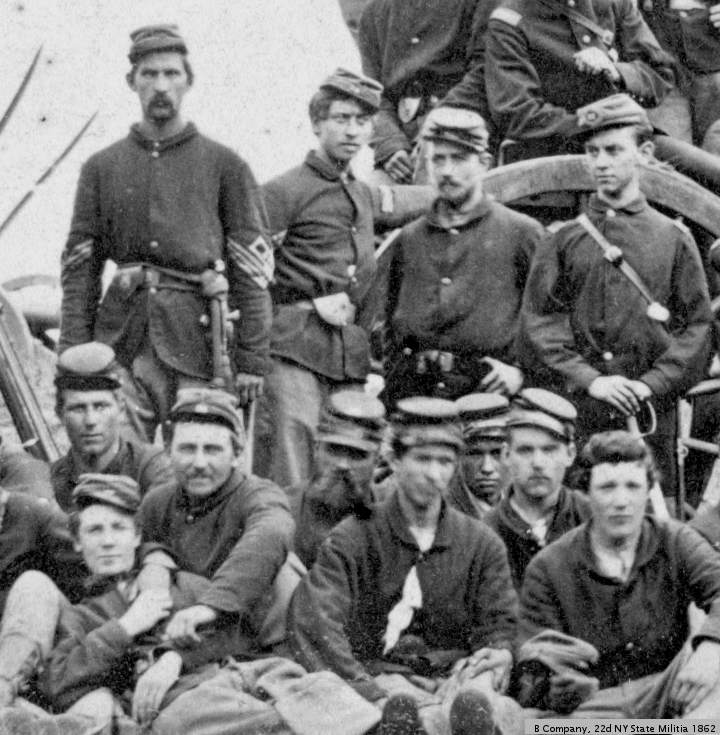


About this time every year, there is a post about the burning of Atlanta. One of the sources is a lecture by Marc Wortman. If you have an hour to spare, this talk is worth your time. One of the stories told is the tale of Mr. Luckie.
“According to folklore, two stories abound as to how Luckie Street was named. The first is that its moniker came from one of Atlanta’s oldest families. The other, probably closer to the truth, regales the life of Solomon “Sam” Luckie. Luckie, as it turns out, wasn’t so lucky after all. When General William Tecumseh Sherman first came marching through Atlanta in 1864, Luckie, a free Black man who made his living as a barber, was leaning against a gas lamp post in downtown talking to a group of businessmen. A burst from a cannon shell wounded him; he survived, but later died from his injuries. Folklore suggests that he may have been one of the first casualties of the assault on Atlanta. Luckie Street, an extension of Auburn Avenue, was later named in his memory.”
Marc Wortman wrote a book, The Bonfire: The Siege and Burning of Atlanta. The one star review, and comments to that review, are unusually detailed. Here is a selection.
“…People forget – or were never taught in school – that most Confederate soldiers descended from Revolutionary War patriots or were up-country poor sons of farmers. Many Confederate soldiers were relatively recent new arrivals to the U.S., semi-literate dirt poor immigrants from Ireland and Scotland who’d never had the chance to own even an acre of their own land in Europe. In the mix were well-educated, elite merchant business owning French Huguenot refugees of the Catholic Bourbon genocide of Protestants. These immigrants had nowhere else to go, 9 times out of 10 never owned a slave, and fought for the CSA to keep what little they’d hardscrabble carved out over a decade of arrival into the U.S.”
The War Between The States continues to be a source of controversy. There are ritual denunciations of slavery, assumed to be the sole cause of the conflict. There seems to be more quarreling about the war now, than just a few years ago.
The notion of autonomous states in a federal union was novel when the United States Constitution was written. The debate over federalism versus states rights continues to this day. Many in the CSA saw the Union as being a conquering army, and fought to defend their homes. While slavery was certainly a factor in the creation of the CSA, it was not the only Casus belli. Pictures today are from The Library of Congress.

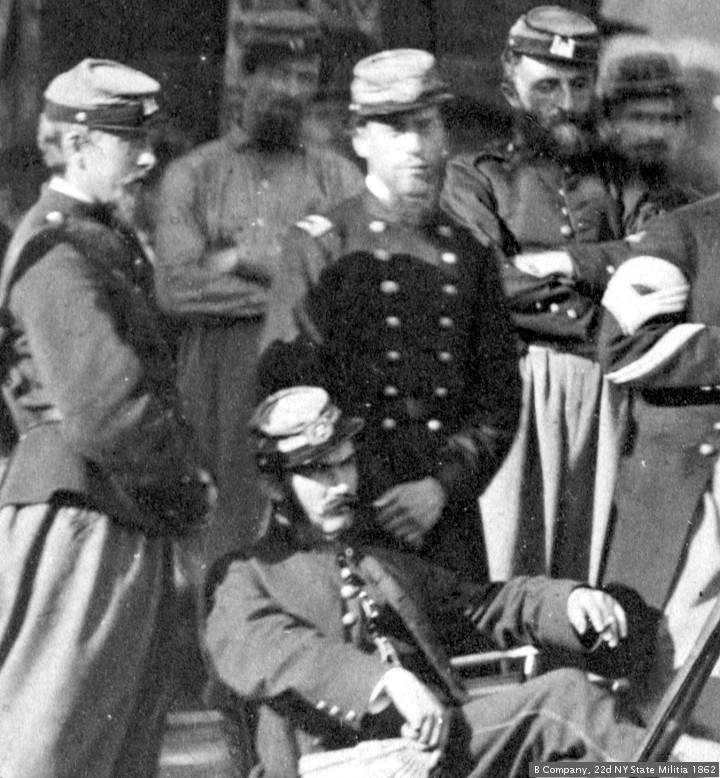


The Ta-Nehisi Coates Distraction
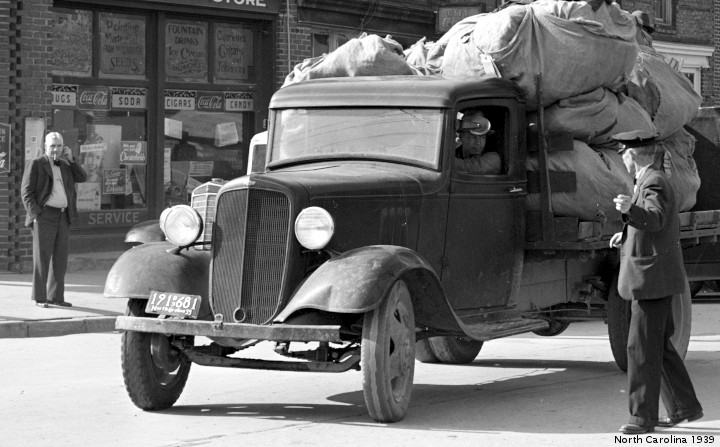



Today is October 12, 2024, 371 days after October 7, 2023. This week, the major point of discussion is The Message, (TM) a book by Ta-Nehisi Paul Coates. Why is a book more important than the hostages, the Palestinian/Lebanese suffering, etc, etc? TM bashing is an excellent distraction from the life/death issues here, and #Hasbara is going to make the most of it.
There are three quotes in my weekly notes. The concept here is a Saturday morning brain drop, centered around these quotes. If you want to know more, Google is there. Sometimes. Many internet gateways appear to have a pro-Israel bias. Google, for example, has an office in Tel Aviv. “Being in Israel, for lunch the Googlers can choose from three amazing restaurants, for non-kosher, kosher dairy and kosher meat.”
“Why does any of Israel exist? What a horrific place, committing horrific acts on a daily basis.” This out-of-context quote says what many people are feeling now. @tonydokoupil was interrogating TPC, on a book tour visit to CBS Mornings. Author interviews are usually boring events, and get little notice. Mr. Dokoupil, for some reason, decided to make a stink about TM, which was critical of Israel’s conduct in the West Bank.
I don’t know how major publishing works. A book is written. The process of getting from the author to the public takes time. It is not uncommon for something to have been written for a year before the book tour. It is highly probable that TM was written well before 10/7. The Israel portion of TM is about the West Bank, not Gaza. Now, the haters are making an issue about TM not mentioning 10/7. You should never let a good talking point go to waste, even if it is basically irrelevant. TM was not intended as a comprehensive history of the Arab-Israeli conflict.
Full Disclosure. I have not read TM, despite the best efforts of CBS Mornings. What I say here is based on what I have heard. I imagine that many more people will read TM as a result of this media event, and the twitterstorm that followed. If TM had come out, and received polite comments on tv shows, it would be forgotten by now. #Hasbara has given TM truckloads of attention. Of course, when you talk about TM, you don’t talk about the starving human shields children in Gaza, or the murdered human shields children in Lebanon. It is more fun to talk about how TPC is not giving context, about Gaza, when he writes about the suffering human shields population of the West Bank.
“Exactly a year ago, when thousands of Hamas militants crossed Israel’s border … I knew little about Israel and had no opinion about the long running conflict there.” Konstantin Vadimovich Kisin/Константин Вадимович Кисин is a youtuber. He put out a video last week, Why I’m Off the Fence About Israel’s War. The quote above is the first thing he said. I have had many arguments over Israel over the last 45 years. It must be nice to only hear #Hasbara now.
The KVK video is an exercise in logic abuse. He tries to explain apples by talking about bananas. KVK compares 10/7 to a Mexican attack on America’s southern border. Now, if terroristas were planning to storm El Paso … looking for Kinky Friedman’s anal sphinctor … American forces would know all about it, and kill everybody before they got their feet wet. Many people wonder why Israel allowed Hamas to get past their wall, but that is another subject.
“I believe the logic of this is impenetrable.” KVK inserts this bizarre comment, before going on a strawman safari. KVK offers four “justifications” for 10/7, and “debunks” them. You will have to watch the video to see what I mean. Never mind that not everyone uses these arguments. Never mind that they are not intended to “justify” 10/7, but rather to denounce the wholesale slaughter of Palestinians/Lebanese women and children. Never mind that many of the 10/7 casualties were killed by @IDF. The “Hannibal Directive” was not mentioned in any of last week’s noise.
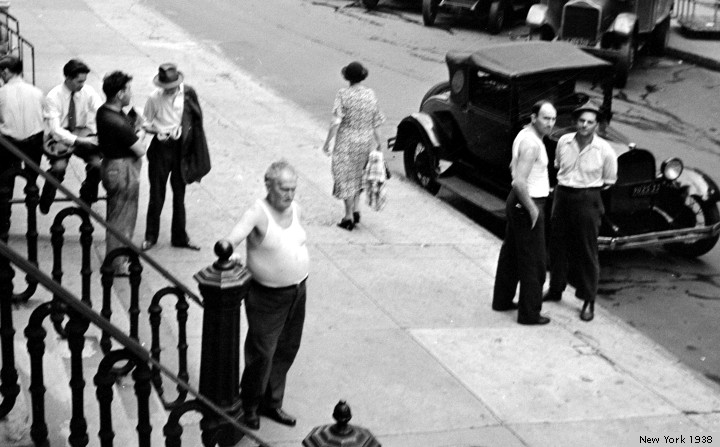
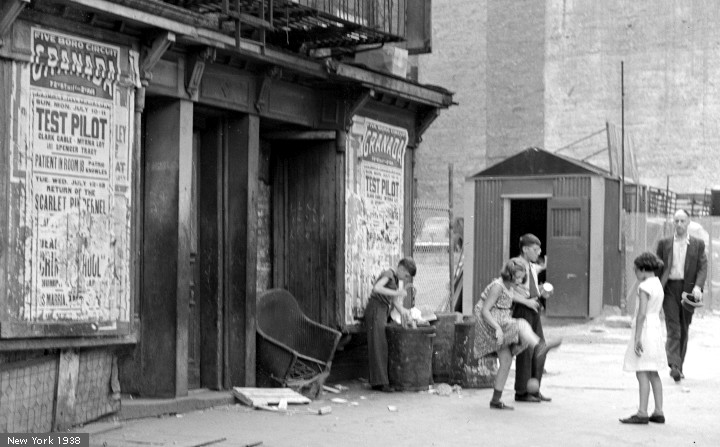
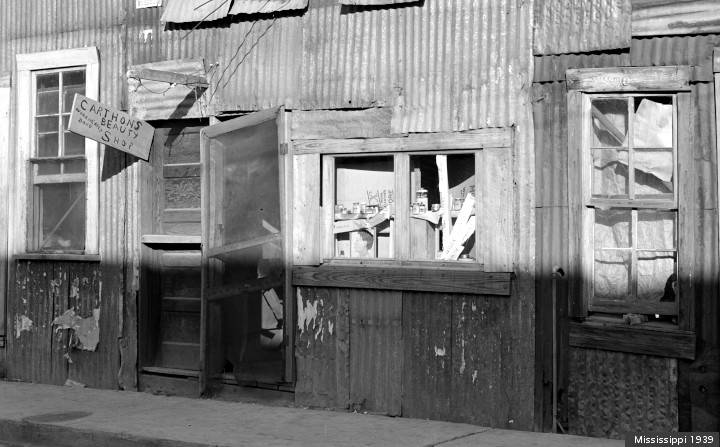
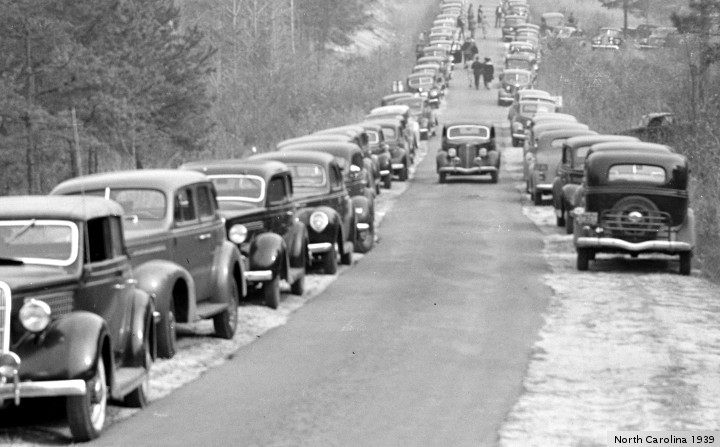
Thats enough for one post. Like TM, this is one man’s perspective, not an context encyclopedia. If you want to hear more, you know where to look. Pictures today are from The Library of Congress.



Ta-Nehisi Coates Again

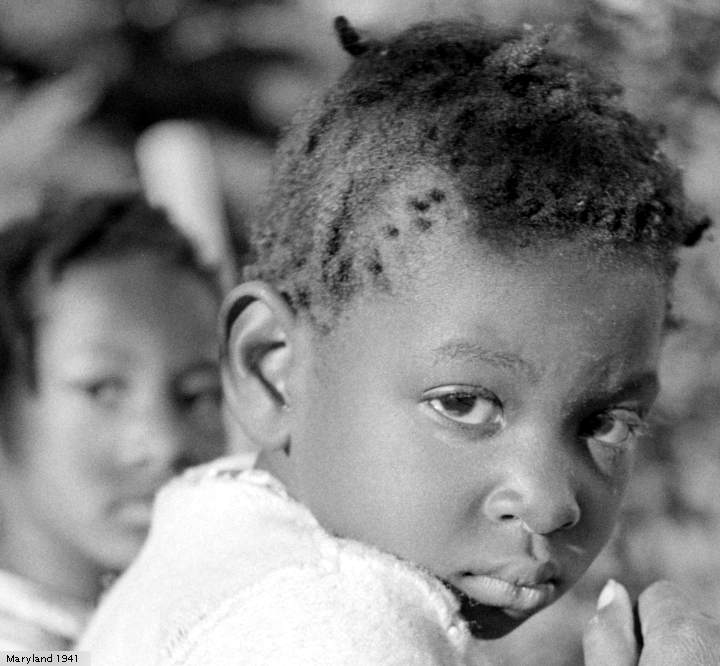


The Message is a new book by Ta-Nehisi Paul Coates. The publishing game requires TPC to promote his book, which he is doing with gusto. It turns out this literary product is critical of Israel. Some things you are not allowed to say out loud.
One noteworthy appearance was on CBS Mornings. Tony Dokoupil gave TPC a rude greeting: “I have to say when I when I read the book I imagine if I took your name out of it took away the awards and the Acclaim took the cover off the book … the content of that section would not be out of place in the backpack of an extremist.” Later, Mr. Dokoupil inadvertently says something many of Israel’s neighbors might agree with: “Why does any of Israel exist? What a horrific place, committing horrific acts on a daily basis.”
Part of the problem is the high profile TPC has enjoyed as an anti-racist celebrity. Over the last few years, many “woke” people have heaped praise on the man. At the same time, more than a few people were annoyed with TPC. Saagar Enjeti had some strong comments about TPC on Breaking Points recently. What the star-making machine builds up, the star-making machine tears down.
Chamblee54 has written about TPC several times. one two three In a video about the six-letter word, TPC asserts “When you’re white in this country, you’re taught that everything belongs to you. You think you have a right to everything.”
The progressive movement in America has fought against racism, inequality, injustice, etc, for a long time. If you can look past the hypocrisy and vulgar noise, you can see some value in these efforts. Unfortunately, Israel violates many of these values in it’s dealings with Palestinians. This contradiction is difficult for the left to deal with.
TPC is saying things that make progressives nervous. Israel treats Palestinians horribly. The hypocrisy of the platitude spouting left is on display. Shooting the messenger is always a popular option. Pictures today are from The Library of Congress. Here is part two of this story.

9-11 Part Two





For a long time, I posted my 9-11 story every year, on September 11. This year, the Presidential debate was on September 10, and it dominated “the conversation” on September 11. Maybe we are moving on, and giving 9-11 its proper place in history.
2001: A Space Odyssey came out in 1968. 2ASO presented a vision of the future. It turns out the reality of 2001 was “terrorists” using our space age technology against us, with devastating results. HAL, the murderous computer, may have been the one prophecy that did come true.
9-11 was a watershed moment. 9-11 was caused by what came before, and affected what came after. We will never know the full story. 2001 was neck deep in the digital revolution, giving the conspiracy talkers a handy forum for their wonderful opinions. Unfortunately, not everyone has integrity, or good intentions. Whether 9-11 was an inside job, or a terrorist attack, the US government gained a great deal of power. Most of the things they did with it did not work out very well. This has also powered the conspiracy industrial complex.
In the last five years,Whe we have had four watershed events: COVID 19, George Floyd, the Russian invasion of Ukraine, and October 7. Each component of this grand slam has similarities and differences to each other, and to 9-11. All five events have had a fruit basket turnover effect. Liberals have become conseratives, conservatives have become liberals, and many have wondered why we need those labels anyway. Hypocrisy has become the national pastime.
This is the first paragraph, faithfully pasted in every year: “This is my 911 story. I repeat it every year at this time. Every year I say this will be the last time. This year is a mess. We are destroying the village to save it. The action part of 091101 was over by 11 am. This quagmire drags on and on. Nobody knows how things will turn out.”
One more paragraph is worth repeating: “I became alienated from Jesus during these years. Once, I had once been tolerant of Christians and Jesus, as one would be with an eccentric relative. I began to loath the entire affair. I hear of others who found comfort in religion during this difficult time. That option simply was not available for me.” After September 11/October 7, this fear and loathing has extended to most popular versions of Yahweh worship.
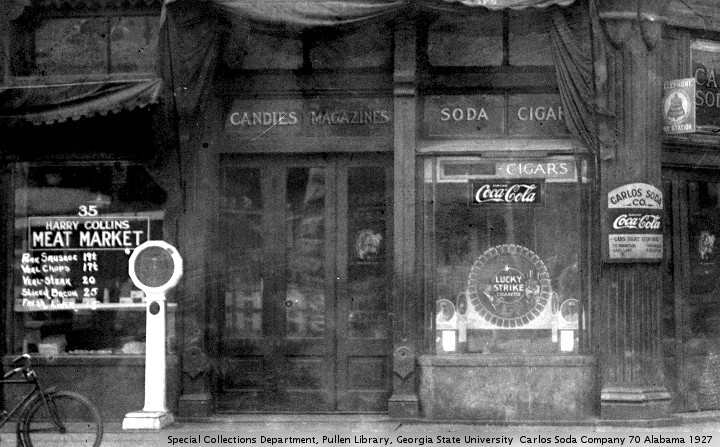
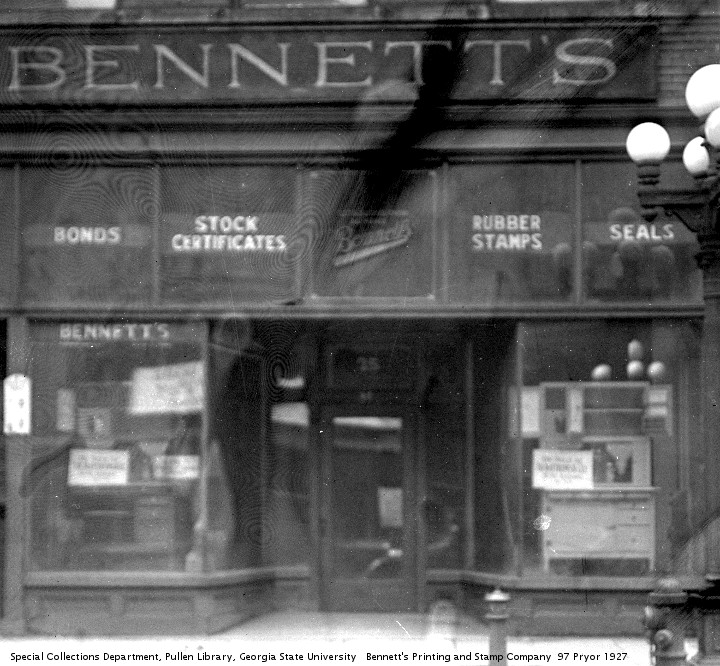
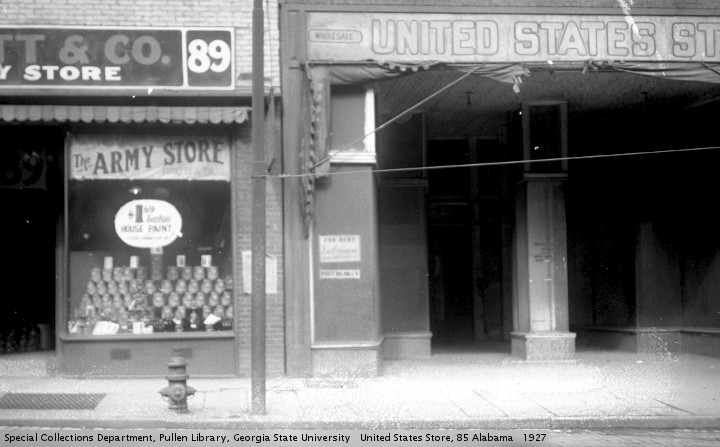
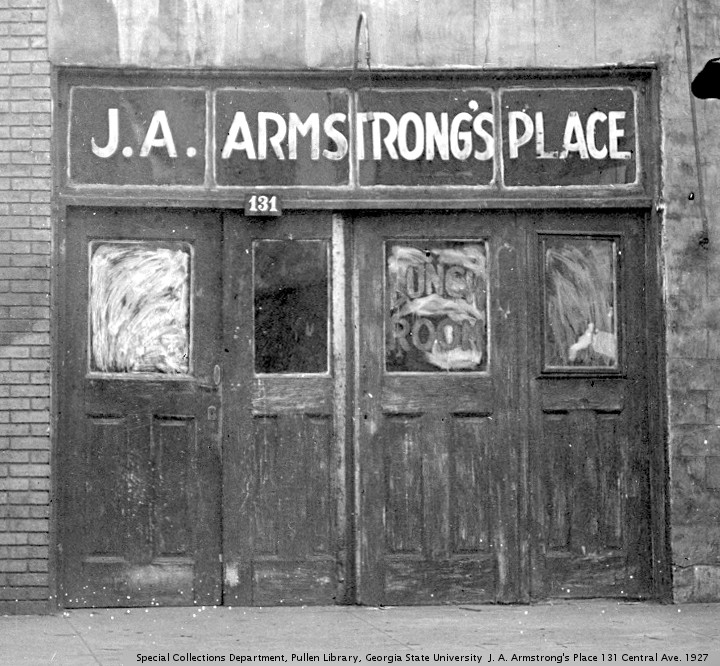
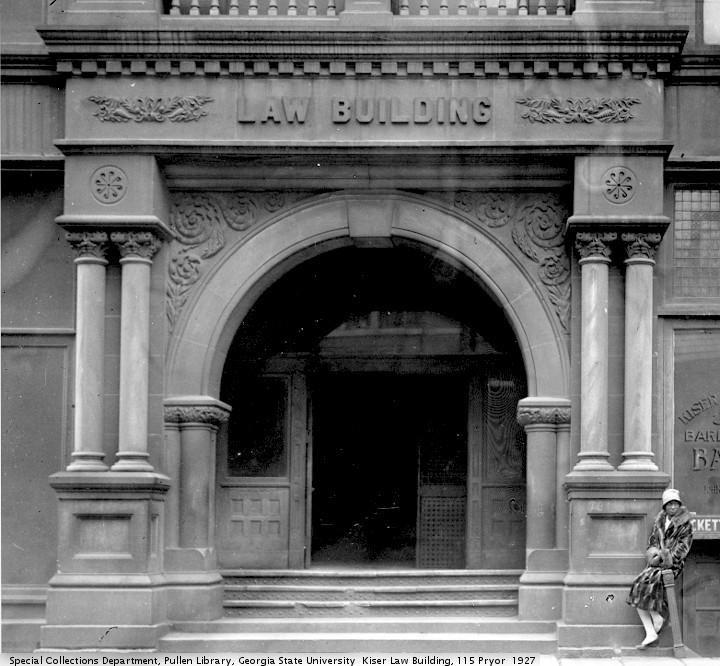
Pictures from Special Collections and Archives, Georgia State University Library. “This item is part of a collection of images of downtown Atlanta streets that were taken before the viaduct construction of 1927 – 1929. Some of the covered streets became part of Underground Atlanta.”





Hiroshima 78 Years Later





At 8:15 am, August 6, 1945, Hiroshima got nuked. It was the start of a new era. Since Japan is 13 hours ahead of Georgia, and standard time was used, the literal anniversary is 8:15 pm, August 5.
Tsutomu Yamaguchi was working in Hiroshima when the bomb hit. He survived, and found a train to take hime to his home town, Nagasaki.
The device dropped on Hiroshima, the Little Boy, had an estimated force of 13 kilotons of Trinitrotoluene, or TNT. A kiloton of TNT is roughly a cube whose sides are ten meters. This device is fairly tiny compared to many of the warheads developed since. Many of the modern appliances are measured in megatons, or millions of tons of TNT. The Soviet Union had a bomb with a capacity of 50 megatons, or 4,000 times the size of the Little Boy.
The largest weapon tested by The United States is the Castle Bravo. This device destroyed Bikini Atoll in the Pacific. The two piece swimsuit was named for this island. The Castle Bravo device had a yield of 15 megatons of TNT. This is roughly 1,000 times the power of the Little Boy.
The decision to drop the bomb has long been controversial. There are a lot of factors and gray areas, and the issue does not lend itself to sound bite solutions. The conventional wisdom is that Japan surrendered because of the nuclear attack. This meant the war was shortened by at least a year, there was no invasion of Japan, and many lives were saved. I am scared by the moral calculus involved in a decision like this….do 100,000 civilian deaths prevent the deaths of 500,000 soldiers? I suspect that even God herself would lose sleep over that one.
There is also evidence that the bomb was not needed. Japan was whipped in August 1945. The air raids were conducted in daylight with little resistance. A debate was going on in the Japanese government on whether to continue the fight.
An event happened the day between Hiroshima, and Nagasaki, which influenced the Japanese decision to surrender. The Soviet Union had agreed to help the United States with the war against Japan. On August 8, The Soviet Union invaded Japanese occupied Manchuria. There are indications that Japan knew the fight was hopeless at this point, and would rather surrender to The United States than The Soviet Union. This is one of the gray areas that never seems to be mentioned.
The United States wanted the war to end quickly for obvious reasons, and a few subtle ones. America did not want to share the spoils of Japanese war with The Soviet Union. There were already tensions between the two allies, and the cold war was not far off. Many felt The United States used the Little Boy as a warning to The Soviet Union.
When you get your moral software out, you might want to figure in the effect of opening the nuclear Pandora’s box. Would the nuclear bomb have been developed by other countries if America had not led the way? The science is not that complicated…after all, America hit paydirt with the Manhattan Project fairly quickly. Nonetheless, there is karma involved in using a terrible new device on a civilian population. The United States started the wind of the arms race, and has yet to feel the whirlwind.
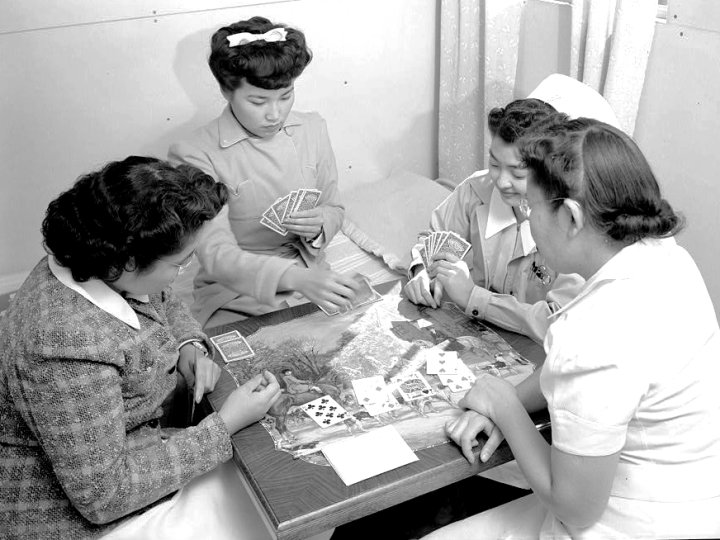
This is a repost. The pictures are from The Library of Congress. Ansel Adams took pictures of Japanese Americans, in a World War Two internment camp. The ladies in the bridge game are Aiko Hamaguchi, Chiye Yamanaki, Catherine Yamaguchi, and Kazoko Nagahama.


Where Was Sen. Warnock?


Israeli Prime Minister Benjamin Netanyahu recently spoke before a joint session of Congress. Many people, myself included, did not approve. I became curious about my representatives.
On July 26, 2024, at 12:20, I called the Atlanta offices of Sen. Jon Ossoff (470-786-7800) and Sen. Rafael Warnock (770-694-7828.) “I have a question for _____ . Did you attend the address before Congress by Benjamin Netanyahu? If the answer is yes, then I am deeply ashamed of you.”
At 12:40, I called the Decatur office of Rep. Hank Johnson (770-987-2291.) A person answered the phone. I asked the same question. Rep. Johnson did not attend the address.
As it turns out, I am in GA05, which is represented by Nikema Williams. Hank Johnson represents GA04. My neighborhood is in a different district every time the boundaries are redrawn. Mistakes are easy to make. At 13:20, I called the Atlanta office of Rep. Nikema Williams (404-659-0116.) I left a message on the machine.
At 16:10, Jon Ossoff’s office returned my call. Sen. Ossoff did attend the address by PM Netanyahu. At the time this post was written, I have not heard from Sen. Warnock or Rep. Williams.
Neither @ossoff nor @ReverendWarnock has made a comment on X about the address. At 14:48 on Jul 24, @RepNikema sent a tweet that began “I met with the families of Israeli hostages …” The tweet made an anodyne statement about freeing hostages, and ending “the violence in Gaza.” It did not refer to the appearance of PM Netanyahu before Congress.
@RepHankJohnson “I will be boycotting Netanyahu’s speech today. Rather than working on @POTUS’ ceasefire deal that would halt the indiscriminate killing & starvation in Gaza, Netanyahu is here, again interfering in U.S. electoral politics with his support for ex-president Trump & MAGA.”
In 2003, I was concerned about the impending invasion of Iraq. I sent letters to Sen. Saxby Chambliss, Sen. Zell Miller, and Rep. Denise Majette. I wanted to be on record as being opposed to the invasion. War Letters describes the experience, and has copies of the replies that I received. Pictures today are from The Library of Congress.

JD Vance


@JDVance1 “Praying for our friends in Israel this morning. Just an awful situation.” 5:57 AM · Oct 7, 2023. This tweet is how I found out about the attack on Israel. The war that followed is a historic tragedy, no matter which team you are on.
John David Vance is going to be the Republican nominee for Vice President. The odds are very good that he will be elected. Since he is 39 years old, he should have a long career.
@JDVance1 “As we watch this horrible situation in Israel unfold, Americans must face a stark truth: our tax dollars funded this. Money is fungible, and many of the dollars we sent to Iran are being used to now kill innocent people. This must stop. Israel has every right to defend itself. I wish our friends well, but most of all I wish they weren’t fighting against weapons bought with our money.” 6:44 AM · @JDVance1 “We didn’t give them money we just unfroze their money.” “They promised they’d only spend it on humanitarian supplies. I’m sure they’re very trustworthy.” “I’ll ignore the $400m pallet of cash delivered by the last Democrat administration.” Complete idiocy.” 1:31 PM
The initial reactions of people to historic landmarks can be revealing. It is noteworthy that Sen. Vance chose to talk about Iran. The money was earned by selling Iranian oil. It was frozen in western banks because of sanctions against the Iranian regime. It was Iran’s money. We did not give them anything.
As a private citizen, I am not obligated to comment on current events. When Al-Aqsa Flood started, I knew two things. Israel would exponentially retaliate, and lose most the world. The supporters of Israel would fight, using every trick of shady propaganda known to man. This was going to result in bitter, toxic arguments. I did not yet know the terms “hasbara” and “hannibal directive.”
Al-Aqsa Flood has already had a devastating impact on Palestine. There is a potential for greater conflict in the region, including war with Iran. A war with Iran could close the Strait of Hormuz, and shut down the world economy. It is telling that the reaction of Sen. Vance, on October 7, was to denounce Iran. Pictures are from The Library of Congress.


Walt Whitman And The War
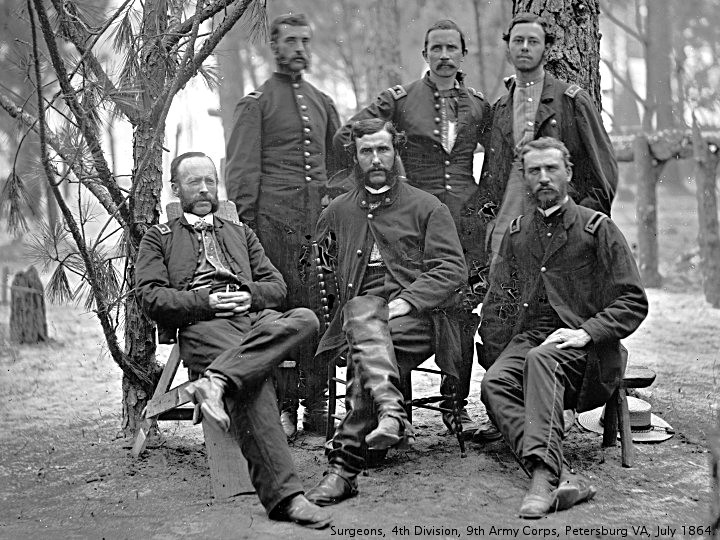



Every night for a thousand years is a story about Walt Whitman’s time as a caregiver during the War Between the States. It appears this month on The New Yorker fiction podcast. ENFATY was written in the voice of Mr. Whitman by Chris Adrian, and read for the podcast by @NathanEnglander.
After looking for his wounded brother, Mr. Whitman was struck by the plight of wounded soldiers. He started to visit the soldiers, giving them candy and food, writing letters for them, and giving what comfort he could. ENFATY focuses on one soldier, Hank Smith. Doctors wanted to amputate his leg. Hank had a pistol, and would not let them. By the time Hank was tricked into allowing an amputation, it was too late.
Not everyone approved of Mr. Whitman. “One disapproving commissioner, Harriet Hawley, complained to her husband: “Here comes that odious Walt Whitman to talk evil and unbelief to my boys. I think I would rather see the evil one himself—at least if he had horns and hooves.”
Others saw things differently. “Union Colonel Richard Hinton met Whitman at Armory Square Hospital while recovering from a bullet wound suffered at Antietam … “When this old heathen came and gave me a pipe and tobacco, it was about the most joyous moment of my life. Walt Whitman’s funny stories, and his pipes and tobacco were worth more than all the preachers and tracts in Christendom. A wounded soldier don’t like to be reminded of his God more than twenty times a day. Walt Whitman didn’t bring any tracts or bibles; he didn’t ask if you loved the Lord, and didn’t seem to care whether you did nor not.”
Conditions conditions in the hospitals were beyond horrible. This was an era when many people said “I do not need to wash my hands every day!” One nurse asked Mr. Whitman if he had a Bible. She wanted to cheer up, by reading the Book of Job.
“These hospitals, ranging in size from converted private mansions to filthy, mud-encrusted tents in contraband camps, were places to be feared by any thinking person. The great European medical advances in bacteriology and antisepsis were still tragically a few years in the future … the overworked and understaffed physicians continued to ascribe the soldiers’ ills to such fantastical causes as “malarial miasms, mephitic effluvia, … sewer emanations, and poisonous fungi in the atmosphere.” …
The predictable result of such hurried and horrific operations was postoperative infection. Pyemia, septicemia, erysipelas, osteomyelitis, tetanus, and gangrene were grouped together as “surgical fevers.” Pyemia, literally “pus in the blood,” was the most dreaded of all, with a mortality rate of 97.4 percent, but the other surgical fevers also claimed their deadly share of victims. Not without reason did Civil War soldiers fear doctors much more intensely than they feared the enemy. They had a greater chance of dying in the hospital than in the field.
“That whole damned war business is about 999 parts diarrhea to one part glory.” The quote is on page 187 of Intimate with Walt – Selections from Whitman’s Conversations with Horace Traubel, 1882-1892. Pictures today are from The Library of Congress


Al-Aqsa Flood

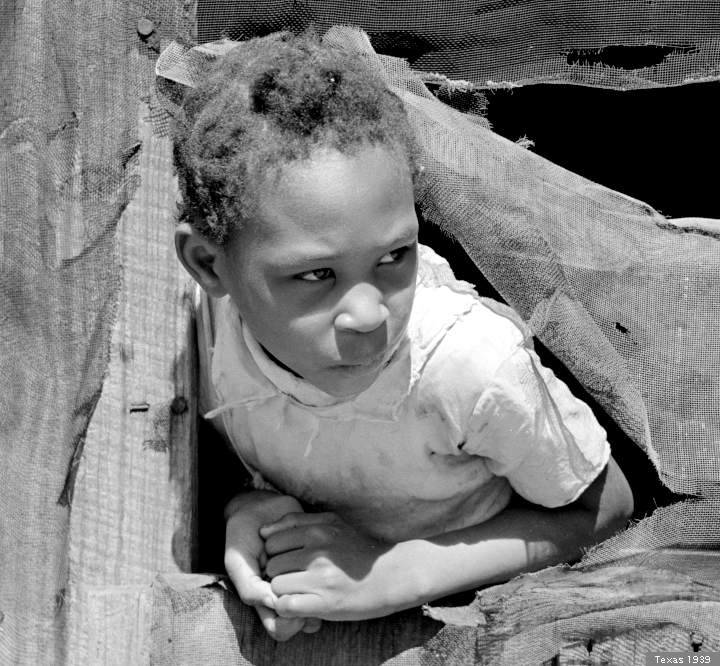


I knew two things after Al-Aqsa Flood. One, Israel would exponentially retaliate, and alienate much of the world. Two, there were going to some some incredibly toxic discussions about the matter. This feature is going to focus on number two.
If you listen to the conversations about the war, you will hear a lot of misused logic. Distraction, derailment, false equivalence, two-wrongs-that-make-a-right, forgotten details, and outright lies. You are either on one side or another, and proceed accordingly. FWIW, I am on team Palestine.
There is an easy test. Do they say Hamas, or do they say Palestinian? Hamas is the boogeyman of today’s rhetoric, and anything less than total demonization is considered support. The fact that thousands of unarmed Palestinians have died is a pesky detail.
One thing I did not know on October 7 was the role the IDF played. Many of the Israelis who died were killed by their own army. This fact is often overlooked in angry sermons about AAF.
I also did not know that Israel created, and supported Hamas. Before AAF, Hamas was seen as a way to degrade the Palestinian Authority, and keep Palestinians divided. The ultimate goal was to prevent the creation of a Palestinian state. This is part of Israel’s longtime strategy of interfering in the internal affairs of her neighbors, for Israel’s benefit.
In 1987, I had a workplace frenemy. Steve was the son of Holocaust survivors, and a staunch supporter of Israel. I mentioned that the Iran-Iraq war was being kept going, to distract the combatants from fighting Israel. Steve got very angry. “Yes, and it’s for your benefit. We need to fight terrorism.” This policy was also seen in the Syrian civil war.
This feature will be brief. There will be few links. If the reader wants to know more, Google is at your service. A question could be raised about how neutral Google is in this conflict. There are numerous other commentaries. Let the buyer beware. Pictures today are from The Library of Congress.




Mark Twain Double Feature

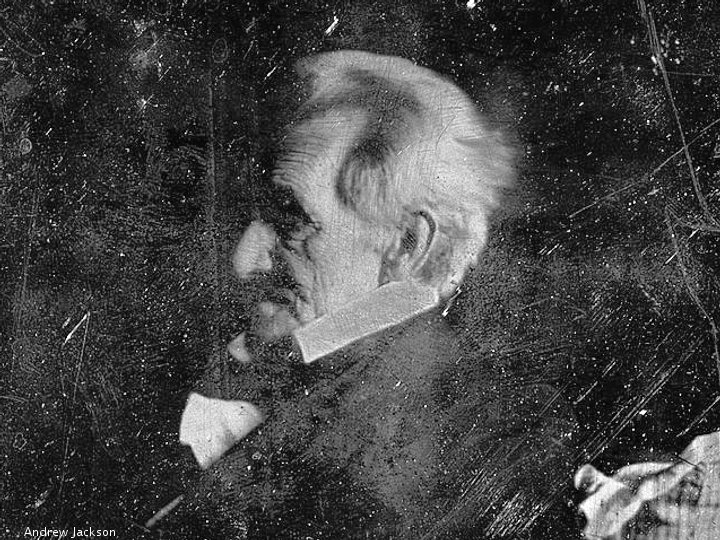

One hundred and twenty five years ago, the United States was involved in a war, that did not want to end. This conflict was in the Philippines. Although there had been an official end to the war, guerrillas continued to fight the Americans. The war was a nasty affair, with many atrocities.
The War against the Philippine people was a souvenir of the Spanish American War. There had been a rebellion against Spanish rule in the islands. After the American forces routed the Spanish, the rebellion shifted to the American occupiers. It was a war stumbled into, and difficult to end.
Mark Twain was horrified. He wrote a story, The War Prayer. As Lew Rockwell tells the tale: “Twain wrote The War Prayer during the US war on the Philippines. It was submitted for publication, but on March 22, 1905, Harper’s Bazaar rejected it as “not quite suited to a woman’s magazine.” Eight days later, Twain wrote to his friend Dan Beard, to whom he had read the story, “I don’t think the prayer will be published in my time. None but the dead are permitted to tell the truth.” Because he had an exclusive contract with Harper & Brothers, Mark Twain could not publish “The War Prayer” elsewhere and it remained unpublished until 1923.”
The story starts in a church. A war has started, and is popular. The troops leave for glory the next day. The preacher has an emotional prayer to send them on their way. Unknown to the minister, there is a visitor. “An aged stranger entered and moved with slow and noiseless step up the main aisle, his eyes fixed upon the minister, his long body clothed in a robe that reached to his feet, his head bare, his white hair descending in a frothy cataract to his shoulders, his seamy face unnaturally pale, pale even to ghastliness. With all eyes following him and wondering, he made his silent way; without pausing, he ascended to the preacher’s side and stood there, waiting.
With shut lids the preacher, unconscious of his presence, continued his moving prayer, and at last finished it with the words, uttered in fervent appeal,” Bless our arms, grant us the victory, O Lord our God, Father and Protector of our land and flag!”
The stranger motioned to the preacher to step aside. The stranger stepped into the pulpit, and claimed to have a message for the worshipers, sent directly from God. The preacher’s message was for support in time of war, and implied that God and the preacher support the same side in this conflict. There is an unspoken part to a prayer like this. This unspoken part was what the stranger was going to put into words.
“”O Lord our Father, our young patriots, idols of our hearts, go forth to battle – be Thou near them! With them, in spirit, we also go forth from the sweet peace of our beloved firesides to smite the foe.
O Lord our God, help us to tear their soldiers to bloody shreds with our shells; help us to cover their smiling fields with the pale forms of their patriot dead; help us to drown the thunder of the guns with the shrieks of their wounded, writhing in pain; help us to lay waste their humble homes with a hurricane of fire; help us to wring the hearts of their unoffending widows with unavailing grief; help us to turn them out roofless with their little children to wander unfriended the wastes of their desolated land in rags and hunger and thirst, sports of the sun flames of summer and the icy winds of winter, broken in spirit, worn with travail, imploring Thee for the refuge of the grave and denied it-
for our sakes who adore Thee, Lord, blast their hopes, blight their lives, protract their bitter pilgrimage, make heavy their steps, water their way with their tears, stain the white snow with the blood of their wounded feet!
We ask it, in the spirit of love, of Him Who is the Source of Love, and Who is ever-faithful refuge and friend of all that are sore beset and seek His aid with humble and contrite hearts. Amen.”
This is a double repost. Pictures are from The Library of Congress.
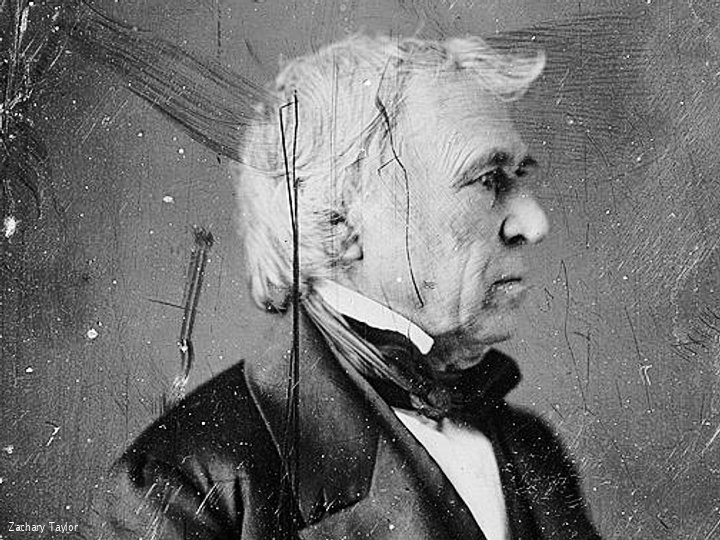

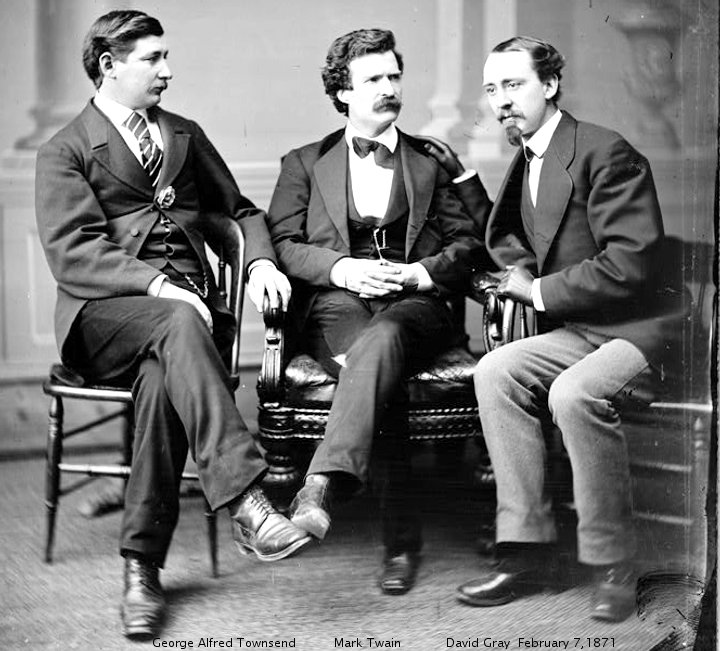
Mark Twain wrote a lot during the American Genocide in the Philippines. Many of his words could apply today. War has gotten more high tech…for our side…, but the bottom line is the same. No matter how fancy the weapons get, the casualties are just as dead. And the investors make money.
Mine eyes have seen the orgy of the launching of the Sword;
He is searching out the hoardings where the stranger’s wealth is stored;
He hath loosed his fateful lightnings, and with woe and death has scored;
His lust is marching on.
I have seen him in the watch-fires of a hundred circling camps;
They have builded him an altar in the Eastern dews and damps;
I have read his doomful mission by the dim and flaring lamps —
His night is marching on.
I have read his bandit gospel writ in burnished rows of steel:
“As ye deal with my pretensions, so with you my wrath shall deal;
Let the faithless son of Freedom crush the patriot with his heel;
Lo, Greed is marching on!”
We have legalized the strumpet and are guarding her retreat;
Greed is seeking out commercial souls before his judgement seat;
O, be swift, ye clods, to answer him! be jubilant my feet!
Our g-d is marching on!
In a sordid slime harmonious Greed was born in yonder ditch,
With a longing in his bosom — and for others’ goods an itch.
As Christ died to make men holy, let men die to make us rich —
Our g-d is marching on.

Anglo Persian Oil Company



This is a repost from 2010. People are saying more and more about the oil disaster in the Gulf of Mexico. TomDispatch has a fascinating paragraph about one of the key players, British Petroleum (BP): “Originally known as the Anglo-Persian Oil Company (later the Anglo-Iranian Oil Company, still later British Petroleum), BP got its start in southwestern Iran, where it once enjoyed a monopoly on the production of crude petroleum. In 1951, its Iranian holdings were nationalized by the government of Mohammed Mossadeq. The company returned to Iran in 1953, following a coup that put the Shah in power. It was finally expelled again in 1979, following the Islamic Revolution.”
If you look at the problems of the world in the last forty years, so many are affected by Iran. The 1953 revolution left great resentment, which became manifest in the 1979 revolution. Soon Iraq…whose border with Iran was clumsily drawn by the British…decides to attack Iran. A gruesome eight year war is the result, with the USA supporting both sides (as well as possibly encouraging Iraq to attack Iran). The idea was, if they are fighting each other, they will leave Israel alone.
After this war is over, Iraq has a problem with Kuwait over it’s war debt. Another war is the result, with the USA involved. Iraq is vanquished, but some in the USA are not satisfied, and after a few years the USA invades Iraq again. That war is still raging.
The biggest winner of the US-Iraq war (aka World War W) is Iran. This new influence in Persia is very troubling to Israel, which is loudly rattling it’s nuclear saber. When Israel makes noise about Iran, it takes attention away from the Palestinian tragedy.
Pictures are from The Library of Congress. Remarkably, Tom Dispatch is still publishing content. The situation with the countries-that-start-with-I is worse than ever.


 Chamblee54
leave a comment