Shock And Awe 2008 Edition



This content was published March 18, 2008. … This is turning into a dandy holiday week. Yesterday was Saint Patrick’s Day. Tomorrow is Shock and Awe Day (SAD) … the anniversary of the invasion of Babylon. Today, we had a presidential candidate, standing in front of four U.S. flags, saying that his preacher is a racist nutcase, which is why he wants to be president of our racist nutcase country, which he loves. And this weekend we have a grand slam…Good Friday, Dead Saturday, Easter Sunday and the Spring Equinox. This time, let’s put two boulders in front of the cave.
The best place to focus now is Shock and Awe Day. SAD is the initials. The war is over. We achieved regime change, at least in Babylon. The occupation is what is going on now, and it just might be the death of this country. Yes, there is less sectarian violence now. Al Queda is not as prevalent as it once was. Of course, it is still more active than when Saddam was in power. Turkey has invaded Kurdistan, but just a little bit. Iran has not invaded Babylon, yet. The Saudi regime has not fallen, and they have a lot more money to finance terrorism.
The US economy is in trouble. Maybe we would be in this mess without a few trillion more in debt, and the healthcare bills for thousands of wounded soldiers coming due. Maybe we could build more levees if we weren’t paying the concerned local citizens of Iraq to help us fight Al Queda. We will never know. It should be noted the presidential candidate mentioned above has long stated his opposition to “Operation Iraqi Freedom”. Just what he will do about it, should he get elected, is another good question. … 2026 POV The candidate got elected, and sort-of ended the war in Babylon. Meanwhile, Syria devolved into chaos, and is currently ruled by a “former member” of Al Queda.
This content was published March 19, 2008. … So I was coming in on I-75, and listening to Glenn Beck. He was talking about the economy, and it was not pretty. I don’t believe everything he said, but to hear him tell it, the dollar is about to become a worthless piece of green paper. The world economy is tied to this dollar, and this would make the world economy go into convulsions.
This is shock and awe day (SAD)…the fifth anniversary of the invasion of Babylon. The war ended quickly, but putting humpty dumpty together has proved to be a challenge. One of the effects of this war is vast amounts of capital leaving the country into the desert sands. Much has been lost to corruption, and more is being paid to “concerned local citizens” to fight Al Queda. The latter effort is paying some benefits, and Al Queda is almost down to the level of pre-war Iraq. Getting back to the dollar, and the connection to our economy. One of the more bizarre features of this enterprise is having a tax cut before an expensive government program is going to start. This has created vast budget deficits, and huge interest payments that will continue for a long time.
Now, with the money to armor troops and buy smart bombs, there is a lot less money available for day to day life here. And when there is an emergency here, like a cajun hurricane or a New York broker banker gone bust, the government has to crank up the printing press and make more green paper. And the more this happens, the less the green paper is worth. … Maybe green is not such a great color anymore. Those environmental wackos have totally spoiled it.
So, Mr. Beck was crying about the dollar, while ignoring the effect of the enterprise in Babylon. After all, he is a conservative, who wants both a smaller government and 160k troops stationed eight time zones away. And, if we didn’t go into Babylon, then Al Queda wouldn’t be there for us to fight, and we have to fight them there rather than here. … Meanwhile, I looked up at the traffic. An 18 wheeler decided that the car in front was not driving fast enough. The big truck swerved into the next lane, and missed the little car by a couple of feet. Happy SAD y’all!!
This content was published March 24, 2008. … Please, no betray us jokes this time. That gave the warmongers a good distraction last fall. General David Petraeus spoke to the press recently. He said victory in Babylon would occur when there is: “an Iraq that is at peace with itself, at peace with its neighbors, that has a government that is representative of — and responsive to — its citizenry and is a contributing member of the global community.”
There are a lot of differences between the United States and Iraq. The USA has 160k troops in Iraq. Iraq recently won a major soccer tournament. One has to wonder, though, how the USA does at meeting the standards it sets for Iraq. · “an Iraq that is at peace with itself” Last week, the major news story was an important minority bashing America from the pulpits of it’s churches. It’s just the way it is in the black church, you don’t understand. · “at peace with its neighbors” Despite all the political noise the rightwing can produce, the border with Mexico is wide open. The effects of a poor country on the border of a “wealthy” country do not stop. · “a government that is representative of — and responsive to — its citizenry” This depends on who you talk to. It seems like everyone has a gripe, from the right wing ( social issues, immigration) to the left wing ( the war, the environment, the rich-poor gap, health care). There are plenty in the middle who are tired of the whining, but essentially agree with both sides of the spectrum. · “is a contributing member of the global community” In all fairness, we are contributing to the global community. We contribute carbon emissions to the atmosphere. We contribute interest to the Asians who are financing our debt. We contribute cluster bombs and depleted uranium to Babylon.
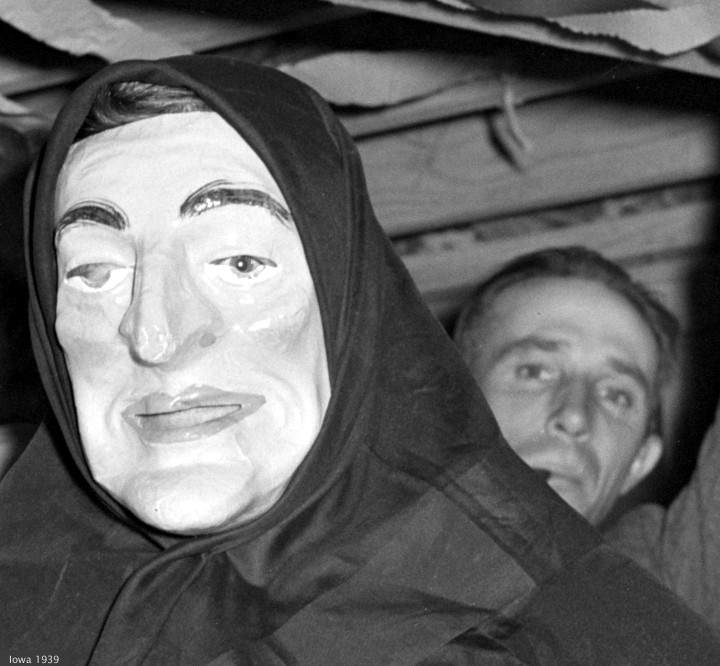
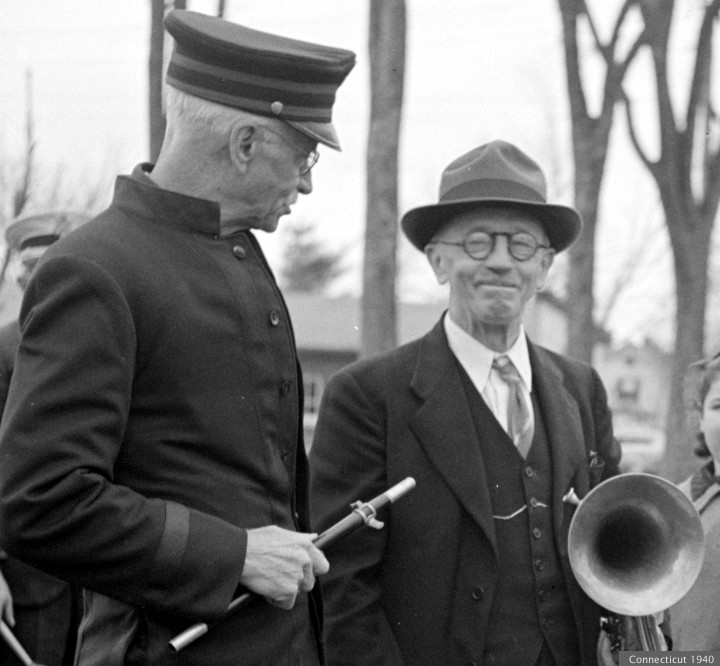
One of our presidential hopefuls was quoted recently as saying we might be in Iraq for 100 more years. Somehow, I don’t think the problems in our own country will be solved by then. Pictures today are from The Library of Congress. Arthur Rothstein took the social media picture in October 1939. “Winner of masquerade at Halloween party. Hillview cooperative, Osage Farms, Missouri.”
©Luther Mckinnon 2026 · selah




Operation Epstein Fury




On August 1, 1914, war was breaking out in Europe. The British foreign secretary said to a friend, “The lamps are going out all over Europe, we shall not see them lit again in our life-time”. That is what yesterday morning felt like, waking up to the news that the war had started.
It is an old truism that in war, the first casualty is the truth. Propaganda has long been a major player in the West Asian conflicts. X is full of thesis, antithesis, and synthesis. Below is a very small sample of the news and opinions available. It should be noted that these opinions belong to the tweeters. I am personally taking in as much as I can stand, and trying to make sense of it all.
@dccommonsense “In general the problem the U.S. has in its Middle Eastern interventions is always underestimating the complexity and powder keg-like conditions in these countries. Instead of empowering a side we favor we usually open up a Pandora’s Box of violent Murphy’s Law outcomes instead.” … Dan Carlin has been relatively quiet since October 7. The other prominent history podcaster, Darryl Cooper, has been outspoken about the various wars, and has caught hell for it.
@RaniaKhalek “Trump unleashed Hell. Bombs are falling on the entire Middle East. The Strait of Hormuz is almost closed. All sides are digging in. It’s all about who cries mercy first. The U.S. and Israel murdered the restrained Iranian leadership that was invested in endless negotiation. What comes next will probably understandably be more hawkish bc strategic patience doesn’t work. · Even before these decapitations they decided to go all out. This is for survival so escalation against a rogue empire is the only option. They’re even hitting Oman, the one gulf country to condemn the U.S.-Israel attack while playing a constructive and mediating role. · There’s no going back now, the strategy is to regionalize the conflict in hopes the GCC demands an end. It’s a huge gamble but the Iranians were cornered into it by the U.S. and Israel. And if this draws out global shipping and oil markets will be impacted. Meanwhile, Team Trump is dumb and insane. They don’t understand Iran, they suck at geopolitical maneuvering and think they can do regime change with overwhelming air power alone. · This was all unnecessary but here we are, tens of millions of people afraid and unable to leave their homes. The end game is unclear. There are no good options. This is what people warned about. More reckless idiocy from the nuclear armed pedophilic class in Washington.”
@_ZachFoster “”You do not need to close the strait. You just need to make it uninsurable.” This is called Iranian “economic statecraft,” as U.S. Secretary of state Scott Bessent would say.”
@DanMKervick I don’t think the absence of protest in the US is due to Americans being pacified. I suspect it’s actually because they have an increasingly accurate undertanding of the way the world works and know that protests have rarely proven to be an effective form of resistance. /1 The right to petition the government or demonstrate one’s opinion doesn’t mean much if the government doesn’t care what most people think. It’s just a way of expressing the desire for resistance without actually resisting. //2 @DrBrianReid Give Xanax credit too.
Armchair Warlord @ArmchairW Well. War with Iran it is. I had hoped it would not come to this juncture, but here we are. Some thoughts after the day’s fighting. · 1. As an initial matter, the Trump Administration’s actions here are aggression and perfidy. This attack on Iran was unprovoked and occurred during negotiations in which the Iranians were by all indications willing to make significant and lasting concessions to assuage American and Israeli concerns about the peaceful nature of their nuclear program. Soon enough we will regret setting this precedent. · 2. US and Israeli forces appear to have achieved tactical surprise by launching a limited decapitation strike first against senior figures in the Iranian regime. The measure of performance of the strike – did they hit what and whom they intended to hit – is currently the subject of… significant debate. The measure of effectiveness of the strike – did it dislocate the Iranian defensive response or cause panic and infighting in the regime – was negative. The Iranian military deliberately cleared what was at the time an airspace crowded with civilian traffic, brought air defenses online, and began launching retaliatory strikes about an hour later. · 2A. The Iranians only brought their air defenses online after their airspace was clear of civilian traffic, suggesting they felt confident in their ability to absorb a limited first strike and also indicating that they very much wanted to avoid repeating Ukraine International Airlines Flight 752 with wild defensive fire. · 3. Iran has thus far had some success penetrating US and Israeli missile defenses on the far side of the Middle East and considerable success smashing up US bases (and local critical infrastructure) in the Gulf and Iraq with their plentiful arsenal of short-range missiles and cruise drones. There’s nothing really new and game-changing here from the Twelve Day War, as I pointed out earlier. They have a lot of missiles and drones and seem more than happy to contest with us on throw-weight. · 4. As I pointed out earlier, the considerable standoff that US and Israeli aircraft are operating from has wrecked sortie generation. Coalition strikes on Iran throughout the day have been remarkably modest following the initial wave of attacks, likely due to a combination of delay from forced refueling, disruption to remote bases due to Iranian missile attacks, forced use of standoff weapons due to Iranian AD coverage, and Iranian AD attriting incoming salvos. Effects have not been particularly impressive either – I’ve seen a grand total of two strikes with noticeable secondaries. · 4A. As long as the Iranian IADS network remains intact enough to deter Coalition forces from flying “downtown” into Iranian airspace proper, there’s very hard limits on the amount of coercive power that can actually be applied to Iran. We only have so many standoff missiles and don’t have a Russo-Chinese missile printer to call upon. And I remind the reader that our bigger and stronger adversaries (Russia and China) are very invested in ensuring that IADS network remains intact so as to preserve their ally. · 5. There has been no noticeable regime fracture or civil insurrection in Iran. Everyone in the regime seems to have fallen in line immediately and all the demonstrations in Iran through the day have been pro-government. This is to be expected – the Iranians have not only rehearsed this, they’ve had multiple repetitions of executing it over the past year. · 6. Mossad’s attack network in Iran seems to be well and truly dismembered – as I suggested it had been earlier. There have been no reports of commando or insurgent activity in Iran over the course of the day. The Iranian internet is shut down at the moment and nobody seems to be posting online via Starlink. · 7. Oil shock is a real prospect here. The Strait of Hormuz is closed. The Bab al-Mandeb is likely going to be interdicted soon by the Houthis. Iran has already begun limited strikes on oil and gas infrastructure in the region. Air and missile campaigns are inherently indecisive, and Americans are not going to tolerate a weeks or monthslong campaign that spikes oil to $150+/barrel. · 8. Claims are floating around – out of Israel, of course – that this entire affair was a scheme cooked up by Trump and Netanyahu and that the negotiations were always a sham. I suspect that isn’t the case, and that Trump was herded into action by Netanyahu threatening to attack unilaterally after the US “coercive task force” was finally fully assembled in the Gulf. · So how does this end? Well, Trump has been quite explicit that he’s aiming for a short war (probably trying to beat the markets), so I wouldn’t be surprised if this is over relatively quickly. On whose terms… well, that’s another matter altogether.
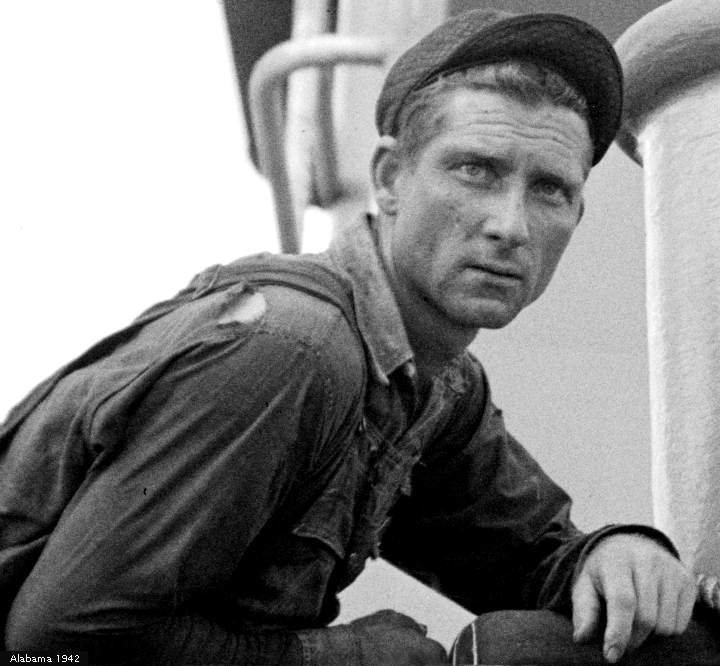
Pictures today are from The Library of Congress. Jack Delano took the social media picture in October 1940. “The foremen and tractor operators of the Woodman Potato Company at lunch. Near Caribou, Maine” ©Luther Mckinnon 2026 · selah



Cluster Bombs



This content was published February 26, 2008. … This item was in kikoshouse today: “Barack Obama wants to ban the use of cluster bombs while Hillary Clinton and John McCain don’t. What makes the use of these submunitions, which are miniature bombs nested inside a mother bomb, so insidious is that they drop beneath tissue parachutes and are magnets for unsuspecting Iraqi children. Some 82 countries have signed the Wellington Declaration to ban cluster bombs, but don’t expect the U.S. to join them anytime soon.”
Cluster bombs are air-dropped or ground-launched munitions that eject a number of smaller submunitions (“bomblets”).When they are dropped on enemy territory, many of the bomblets fail to explode, and form a land mine like hazard. They are often dropped with tissue like parachutes.
They have been called “Lethal Pinatas.” They are often a bright yellow. This is similar to food packages, and can confuse someone who does not speak english.
They remain on the ground, waiting to explode, when civilian populations return home after the war. According to Handicap International: “Ninety-eight percent of cluster submunitions casualties are civilians killed and injured while returning home in the aftermath of conflict or while going about their daily tasks to survive.”
ADDENDUM – A 2008 article takes a familiar rhetorical turn. “But isn’t the campaign against cluster bombs just a cover for those opposed to Israel? While we’re at it, why does Israel always get singled out for using them against Lebanon? … Heidemarie Wieczorek-Zeul, a minister in Angela Merkel’s German government, was one who felt the sting of being labeled an anti-Semite. After referring to the cluster bomb as “a sort of lethal piñata,” she asked the United Nations to investigate its use by Israel in civilian areas of Lebanon.”
“On June 7, 2023, the US Department of Defense announced that President Joe Biden had signed a “determination” that the transfer of cluster munitions to Ukraine was necessary for the national security interests of the United States. He authorized the transfer of an unspecified number of cluster munitions that have a greater than 1% unexploded ordnance rate to the Ukrainian Armed Forces.”
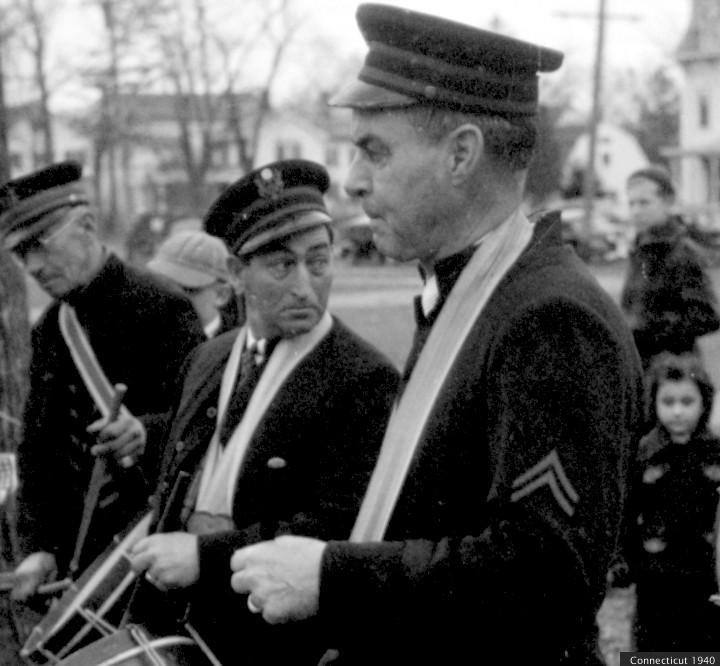
“The Ukrainian conflict has recorded the highest confirmed death and injury toll from cluster munitions for the third year running, UN-backed researchers said on Monday. According to the latest Cluster Munitions Monitor, more than 1,200 people are known to have been killed or maimed in Ukraine since Russia’s full-scale invasion in February 2022. The true figure is likely much higher, but it could be years before an accurate number is known, said Loren Persi, team lead for the Cluster Munition Monitor report.” … Pictures today are from The Library of Congress. Jack Delano took the social media picture in November 1940. “ Having a beer in “Art’s Sportsman’s Tavern” on a rainy day in Colchester, Connecticut” ©Luther Mckinnon 2025 · selah


Funeral Murder From The Air
This content was published February 6, 2012. … BHO set a new standard for public statements from the oval office. He was talking about economic recovery. “So I want to send a clear message to Congress: Do not slow down the recovery that we’re on. . Keep it moving in the right direction.” Thank you Democracy Now for that transcript, and for the rest of the quotes in this story.
Kansas/Kenya lips were moving on another subject recently. During a “virtual interview” with youtubers last week, BHO was talking about drone strikes in Pakistan. “I want to make sure that people understand, actually, drones have not caused a huge number of civilian casualties. For the most part, they have been very precise precision strikes against al-Qaeda and their affiliates. ” A report from The Bureau of Investigative Journalism paints a different picture .
“We’ve been looking at this since August of last year. When we were putting together our massive database on CIA drone strikes in Pakistan, we noted that there were repeated reports at the time, contemporaneous reports in publications like New York Times, news agencies like Reuters, by CNN, that there were these strikes on rescuers, that there were reports that there had been an initial strike and then, some minutes later, as people had come forward to help and pull out the dead and injured, that drones had returned to the scene and had attacked rescuers. Now, we didn’t take that at face value when we began a major investigation, that’s been ongoing for many months now, that we just published in conjunction with the London Sunday Times, where we looked at those 18 original reports, and we’ve been able to confirm, through our researchers on the ground in Waziristan, that a dozen of those attacks on rescuers, and also two attacks on funerals, have taken place in Waziristan. And we’ve been able to name just over 50 civilians that we understand have been killed in those attacks. In total, we think that more than 75 civilians have been killed, specifically in these attacks on rescuers and on mourners, on funeral-goers.”
The US government had a witty response. “A senior American counterterrorism official, speaking on the condition of anonymity, questioned the report’s findings, saying ‘targeting decisions are the product of intensive intelligence collection and observation.’ The official added: ‘One must wonder why an effort that has so carefully gone after terrorists who plot to kill civilians has been subjected to so much misinformation. Let’s be under no illusions—there are a number of elements who would like nothing more than to malign these efforts and help Al Qaeda succeed.”
A few years ago, in Sandy Springs, an abortion clinic was bombed. About fifteen minutes later, a second bomb went off at the site, designed to hit those who had come to aid the victims of the initial blast. Apparently, our armed forces were impressed by this tactic, and have used it in Pakistan. It is not known whether abortion clinic bombers set off bombs at victim funerals.
There were indications that the situation may be improving. “And just to be clear, the attacks on rescuers and mourners that we note, they’ve all occurred under the Obama administration between 2009 and July 2011. I think that date is quite interesting, because that’s also when Leon Panetta stepped down as head of CIA. You have an interim CIA leader, and then David Petraeus comes in. We haven’t had any reports from Pakistan since July of last year of attacks on rescuers. So there’s an indication of a policy change, and there’s also an indication of a targeting change on the ground. So, things may be changing at the moment.”
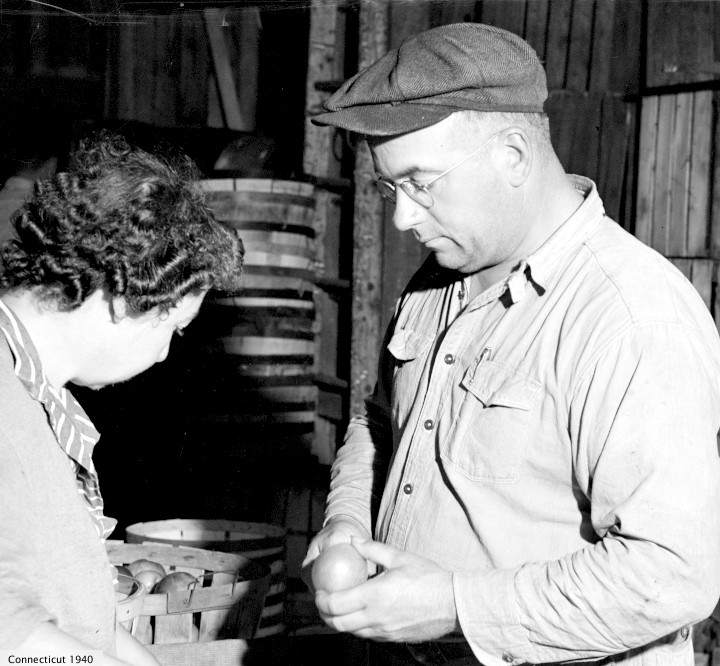
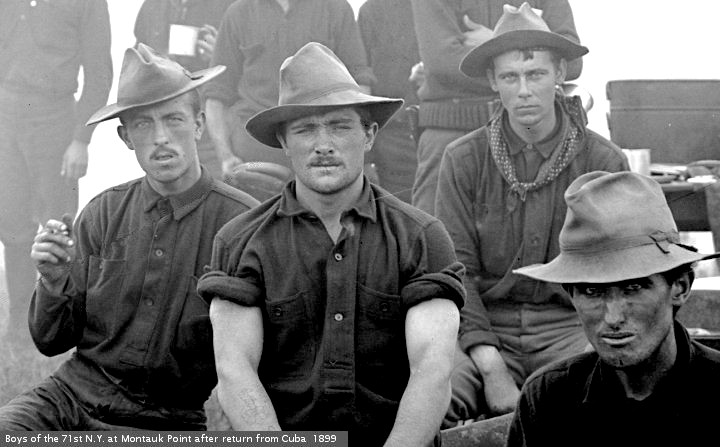
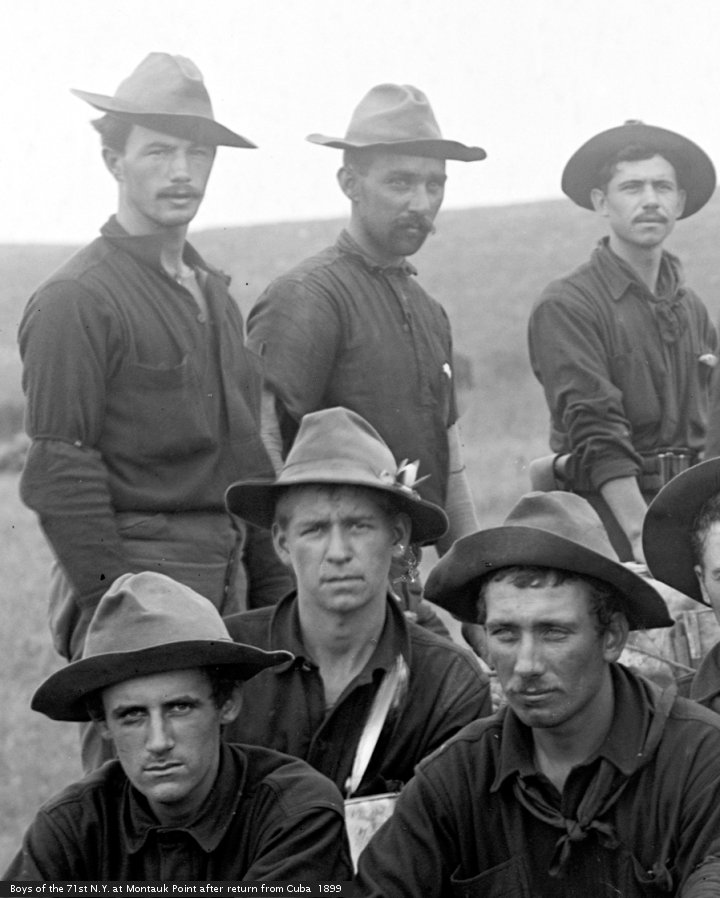
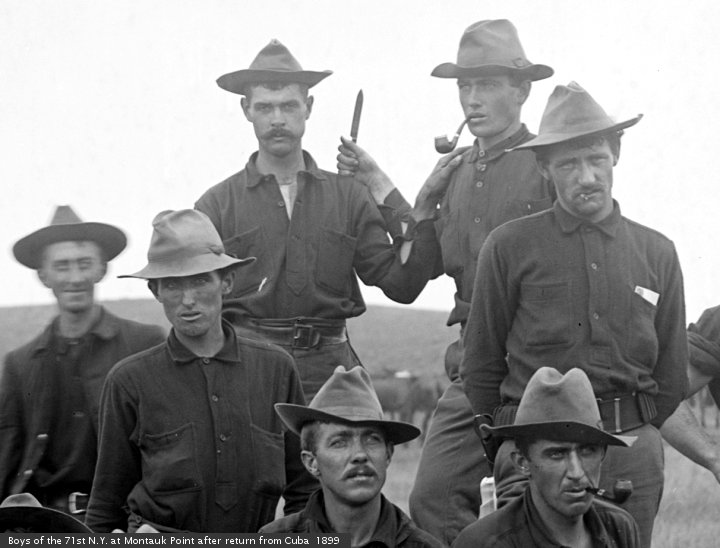
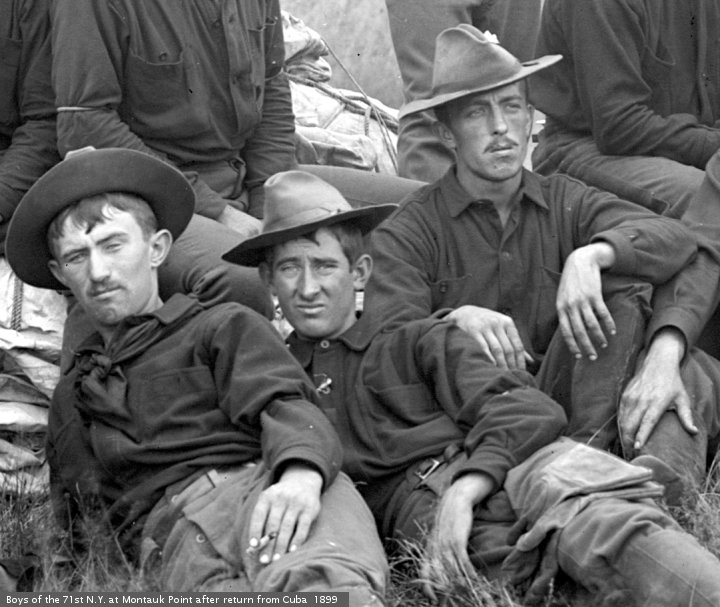
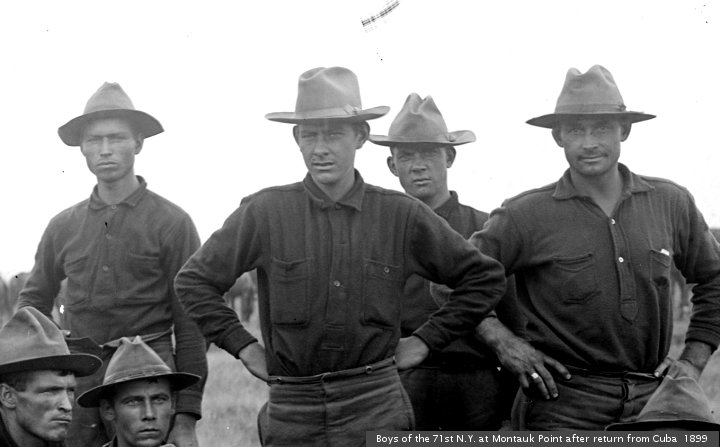
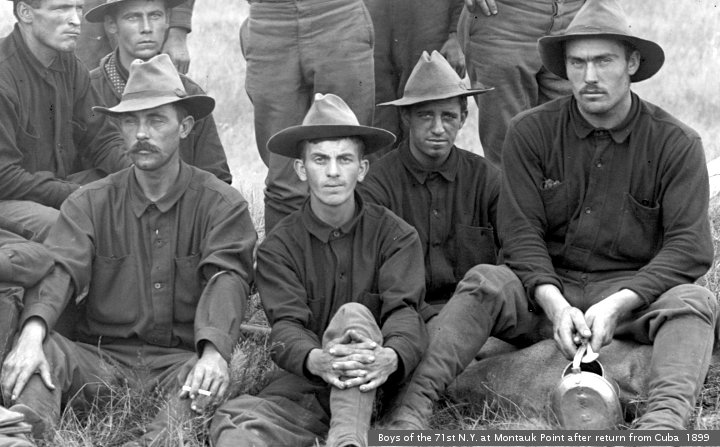
Pictures today are from The Library of Congress. The social media picture was taken in 1898. “Boys of the 71st N.Y. at Montauk Point, after returning from Cuba” ©Luther Mckinnon 2025 · selah

Ansel Adams And Dorothea Lange
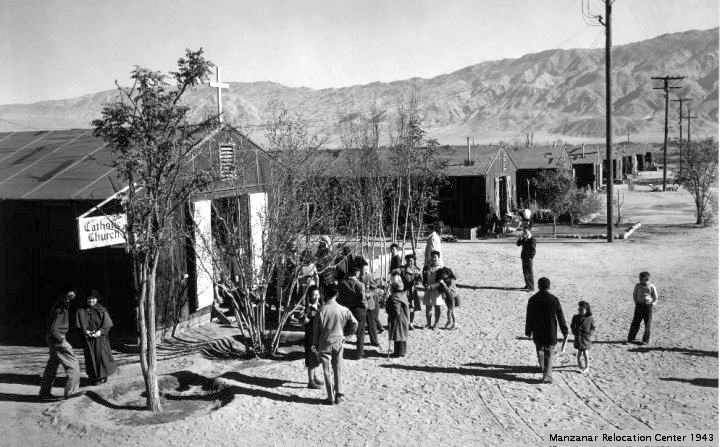






This content was published December 10, 2022. … The facebook feed has recently had links to a story, Dorothea Lange’s Censored Photographs of FDR’s Japanese Concentration Camps. Miss Lange was the photographer of the iconic Migrant Mother. After Pearl Harbor, Miss Lange took a job with the War Relocation Authority, documenting the “relocation” of Japanese-Americans to interment camps. The photographs did not please the authorities. They were censored, and only appeared recently.
Ansel Adams also took photographs at the Manzanar, California, camp. In the current stories, he is literally a footnote: quotes were used from a book about his photography. Why is Dorothea Lange receiving attention, while Ansel Adams is ignored?
One answer is that Miss Lange was hired early on, and shows the harsh reality of relocation. “On July 30, 1942, the WRA laid her off “without prejudice,” adding that the cause was “completion of work. … the WRA impounded the majority of her photographs of Manzanar and the forced detentions, and later deposited 800 image from the series in the National Archives without announcement.”
“After Lange’s departure, Manzanar’s director Ralph Merritt visited renowned environmentalist and landscape photographer Ansel Adams and suggested he document the camp — Merritt and Adams were friends from the Sierra Club. Lange, also friends with Adams, encouraged him to take the job. (Coincidentally Adams printed “Migrant Mother” for her) … Ansel Adams made several trips to Manzanar between October 1943 and July 1944 for this new personal project, and, as Alinder writes, he was primed to try the kind of documentary photography regularly practiced by Dorothea Lange and the Farm Security Administration that he had earlier shunned. Unlike Lange, a white woman who had been viewed with suspicion by her subjects, Adams was welcomed by the incarcerees, even greeted as a celebrity in a cultural community that had a deep appreciation of nature — many incarcerees at Manzanar literally opened their doors to him dressed in their finest clothes. … By 1943, Manzanar’s incarcerees had had time to settle in and enjoy the fruits of their collective work. In less than ideal surroundings, they had collectively built their own post office, town hall, library, auditorium, co-op store system, police station, jail, cemetery with memorial, published their own newspaper (the ironically named the Manzanar Free Press, which was regularly censored by the military), and even their own YMCA.”
“As for Lange, looking at the historical record, it appears that she was treated differently from the other WRA photographers. She was discouraged from talking to the incarcerees, was constantly followed by a censor, and faced harassment. She was refused access to areas after being given clearance, and she was often hounded over phone charges and receipts. … After being discharged, Lange expressed in letters her dismay that her work was ineffective in helping the people she documented. Her assistant Christina Clausen later noted the ferocity of this body of work also marked the beginning of the photographer’s bleeding gastric ulcers. Lange was unable to work for a number of years after her harrowing experience at Manzanar. She died from esophageal cancer in 1965.”
“In 1944, Adams’s photographs were published as a book, “Born Free and Equal: The Story of Loyal Japanese Americans,” and shown at New York’s Museum of Modern Art. Nativists took offense. They saw Adams’s work as a slur on the war effort. He was a “Jap lover.” This quote is from a 2016 article, Let’s be honest, Ansel Adams’s images of a WWII internment camp are propaganda.
“Adams visited Manzanar to take photos in 1943 at the request of camp director Ralph Merritt, who was a personal friend. “They don’t look quite as dusty and quite as forbidding as Dorothea Lange’s photos … Indeed, the place that looks barren and depressing in Lange’s pictures manages to look beautiful in Adams’. You get little sense that it was even a detention center, in part because Adams, like other photographers, was not allowed to shoot the guard towers or barbed wire …
There are scenes from a baseball game, kids walking to school, a gathering outside a chapel. Lots of smiles, too, and portraits of camp residents cropped so close, you can see every blemish and stray hair. In Adams’ vision, Manzanar comes off as a place where Japanese-Americans, dignified, resilient and optimistic in spite of their circumstances, built a temporary community in the desert.
(Skirball Cultural Center director Robert) Kirschner said that if Adams’ photos appear to sugarcoat the indignities of life in an internment camp, it is because he did not see himself as a social activist the way Lange did. Still, Kirscher says, Adams was challenging internment in his own way, by depicting its victims as patriotic, law-abiding Americans. Unlike Lange, Adams was given permission to publish his photos. Before the war ended, he did so in a book called “Born Free and Equal: The Story of Loyal Japanese Americans,” in which he warned about the dangers of letting wartime hysteria justify depriving U.S. citizens of their freedom.”
The NPR article mentions a third Manzanar photographer. “Before World War II, Toyo Miyatake had a photo studio in Los Angeles’ Little Tokyo. When he learned he would be interned at Manzanar, he asked a carpenter to build him a wooden box with a hole carved out at one end to accommodate a lens. He turned this box into a makeshift camera that he snuck around the camp, as his grandson Alan Miyatake explains in the video below, which is featured in the exhibit.
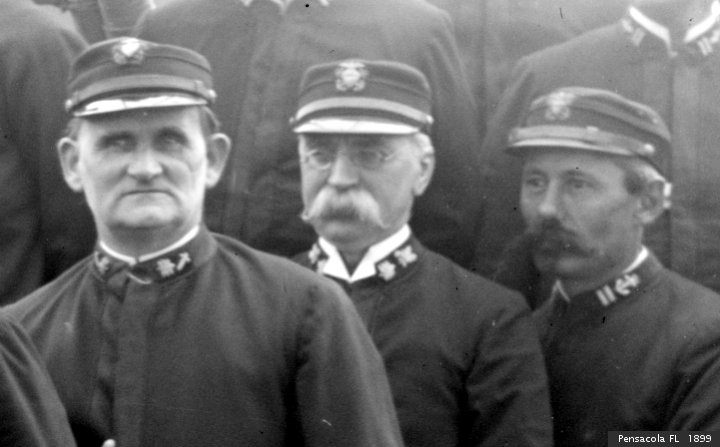
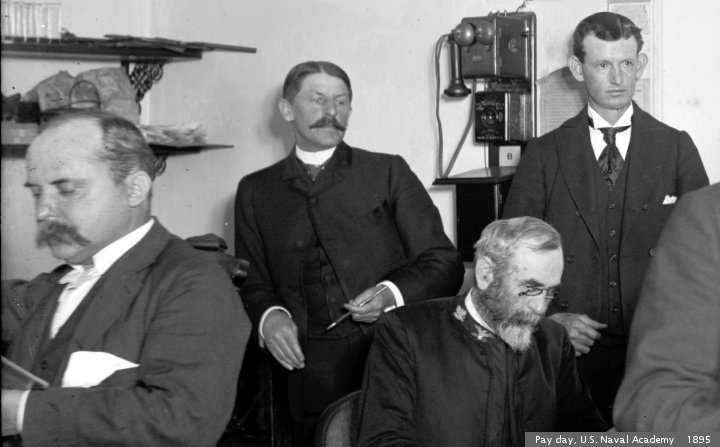
Fearful of being discovered, Miyatake at first only took pictures at dusk or dawn, usually without people in them. Camp director Merritt eventually caught Miyatake, but instead of punishing him, allowed him to take pictures openly. Miyatake later became the camp’s official photographer.” … Pictures today are from The Library of Congress. Ansel Adams took the photograph in 1943. “People standing outside Catholic church at Manzanar Relocation Center, California.” … The ladies in the bridge game are Aiko Hamaguchi, Chiye Yamanaki, Catherine Yamaguchi, and Kazoko Nagahama. ©Luther Mckinnon 2025 · selah







Bari Weiss And Refaat Alareer

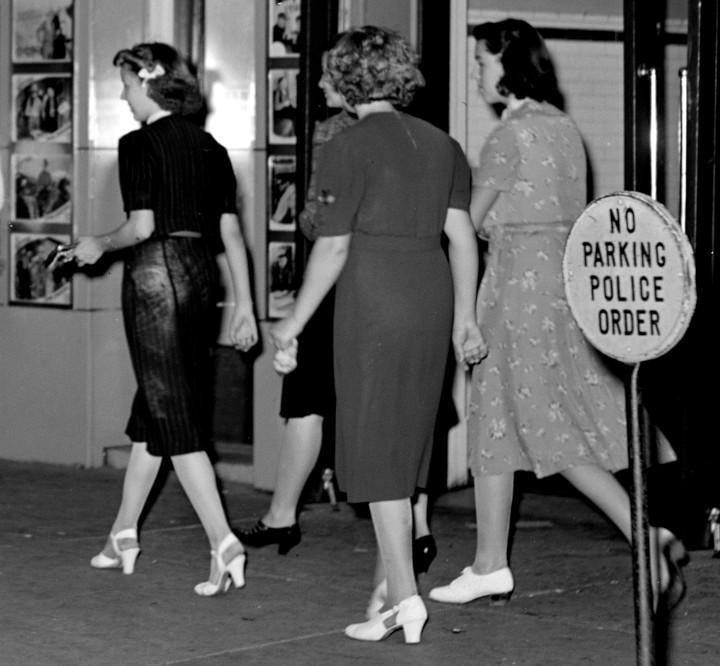


This content was published December 20, 2023. Bovine Bari continues to be a source of amusement. … I am listening to blocked and reported #195, while trying to finish a poem. Certified poopyhead @bariweiss is one of the main topics today. The thought enters my pointed little head to take notes. Nothing good is going to come out of this.
Something happens at 8:33. Jesse … or is it Katie … is talking about a notorious twitter account, @zei_squirrel. I pause the show, and look in the show notes for the url to zs. “You’re blocked You can’t follow or see @zei_squirrel’s posts.” There is nothing like going to an x account for the first time, and learning you have been blocked.
The main story boils down to the question: did Bari Weiss order the IDF targeted assassination of Refaat Alareer? IMO, Bari does not have a buddy in the IDF that can arrange a targeted killing. When the IDF mows the lawn, they do not target a specific blade of grass.
Bari does not get out of this unblemished. She has spewed out high octane rhetoric against Gaza for a long, long time. Take this quote from 2021.
“I am writing to you from the waiting room of my fertility clinic. Getting pregnant when you are gay is not so romantic, so we try to do little things to make it nice. Last night I took a bath. We watched “Mare of Easttown.” Nellie opened a bottle of red. Then she grabbed my stomach and gave me a shot to trigger ovulation.” Does Bari Weiss have a certain amount of privilege?
“I planned to take the morning off. The doctor says that stress is not good for baby-making. But sitting here, scrolling through my phone, looking at the tsunami of lies — lies that have permeated every Instagram story and every viral meme and every TikTok video and every popular Twitter account — I am weeping. … It appears that standing up for the right of innocent people to protect themselves from a genocidal terrorist organization has become extremely risky to one’s “brand.” And so lies have replaced truth. Memes have replaced morality. Hashtags have replaced history. I’m speaking, of course, about Israel.” … Bari’s wife Nellie Bowles gave birth to a daughter in 2022.
When the killing was over in 2021, there were a lot more Gazans killed than Israelis. There is no way to tell how many of them were women and children, or how many were Hamas. Bari probably did not call her connection at the IDF to order Operation Wall Guardian. Her purple prose did help justify it. When you start a fire, you don’t get to say where it stops. … Wall Guardian is an ironic name for the 2021 operation. An alert wall guardian would have been helpful on October 7. … Pictures today are from The Library of Congress. Russell Lee took the social media picture in October 1939.
“ Wife of FSA (Farm Security Administration) client fixing her daughter’s hair. Farm near Bradford, Vermont, Orange County” ©Luther Mckinnon 2025 · selah
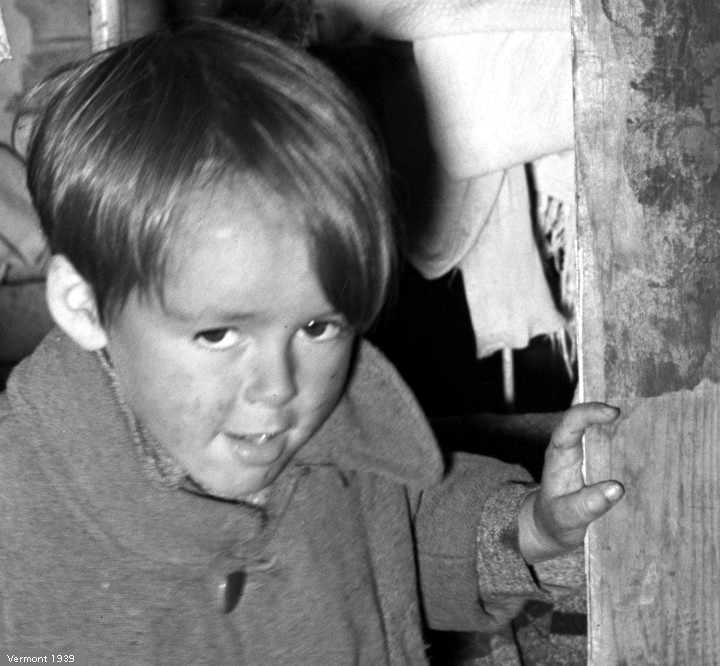



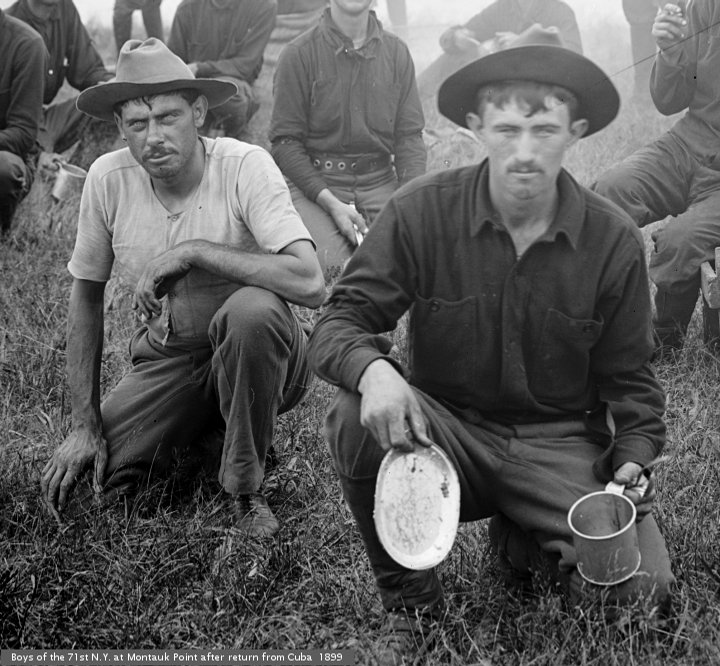
Listening To Shirley Q. Liquor


This content was published December 23, 2008. … I am almost ready to take back everything I ever said about auto playing music devices. Almost. They are on a lot of blogs now, where the music starts to play when you open the site, whether you want to hear it or not. … I left a comment for Jasmine Cannick. Ms. Cannick has a series, A White Gay’s Guide for Dealing with the Black Community for Dummies. I thoughtfully left a comment, saying that I had learned a lot about “…the black community for dummies”. … I went to the site to see if there was any reaction, and the auto start music player had a monolog by Shirley Q. Liquor. I let the thing play, and got myself an earful. I was starting to get tired of the whole thing after the fifth monolog, but soon the free show was over. Miss Cannick was so thoughtful to play all those comedy things.
This must just be the day for goofy women. Earlier, I found a piece by Ann Coulter. She said that Sarah Palin was the Conservative of the Year. “I assume Palin was chosen because McCain had heard that she was a real conservative and he had always wanted to meet one — no, actually because he needed a conservative on the ticket, but that he had no idea that picking her would send the left into a tailspin of wanton despair.”
Ms. Coulter had another tasteful comment: “Pre-Palin it had been one race — boring old “You kids get off my lawn!” John McCain versus the exciting, new politician Barack Obama, who threw caution to the wind and bravely ran as the Pro-Hope candidate. And then our heroic Sarah bounded out of the Alaska tundra and it became a completely different race. This left the press completely discombobulated and upset. They didn’t know whether to attack Sarah for not having an abortion or go after her husband for not being a sissy.”
This content was published December 31, 2008. … Every year, Lake Superior State University issues a list of words they would like to see eliminated. This year, in one paragraph, they not only described the process, but used a lot of the forbidden phrases. … “It’s that time of year again!” LSSU “maverick” word-watchers, fresh from the holiday “staycation” but without an economic “bailout” even after a “desperate search,” have issued their 34th annual List of Words to Be Banished from the Queen’s English for Mis-use, Over-use and General Uselessness. This year’s list may be more “green” than any of the previous lists and includes words and phrases that people from “Wall Street to Main Street” say they love “not so much” and wish to have erased from their “carbon footprint.”
This list is also a good excuse for slack bloggers to put up yet another post. Last year, this reporter posted this list. The very next post to come up at APWBWGTTD was our social chair displaying her engagement ring. … So, here we are again. Below is the list from Michigan. If you want more commentary, go here. … Maverick, first dude, Wallstreet-mainstreet,bailout, ____monkey, <3, icon-iconic, Green, carbon footprint/carbon offsetting, game changer, staycation, desperate search, not so much, winner of five nominations, it’s that time of year again.
This content was published December 26, 2008. … Now that the election is over, we can take another look at the war in Babylon. While our media seems to think we are winning, the truth is a tad more complicated. … Abbas Shawazin has a feature about the size ten salute given to our President recently. He offers this * ::||:: * as an emoticon for shoe. Be sure to leave spaces before and after, or you may wind up with a smiley face. Then you will have happy feet!
Mr. Shawazin talks about men with strange sounding names. This is normal for reports coming out of Babylon. There is a video showing a man beating a picture of Saddam Hussein with a shoe. Saddam liked to say “‘I am the one who made the barefoot Iraqis wear shoes.” It is noted that the shoechunker, Muntazer al-Zaidi, was a communist from Sadr City. The residents of Sadr City are known as being tough ghetto guys. Many of them are the core of the Shiite Sadr militia, which is going to be a force to deal with in the future Iraq.
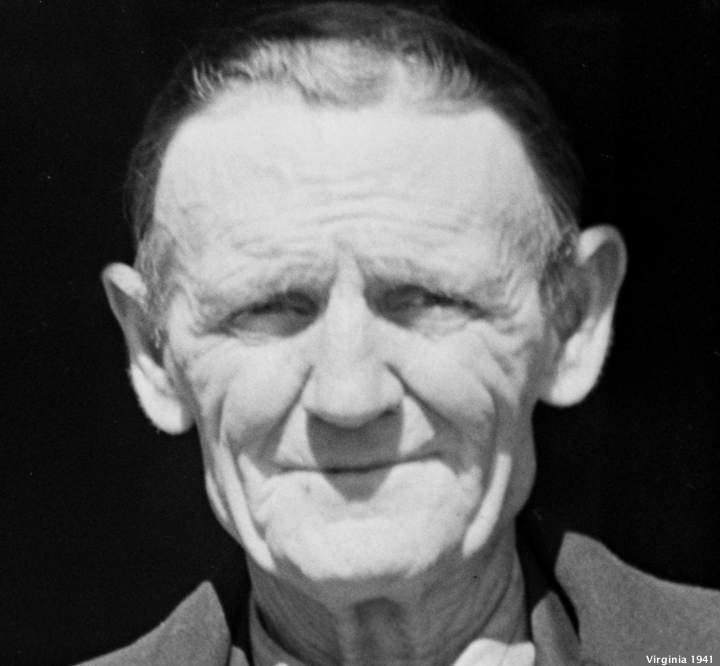
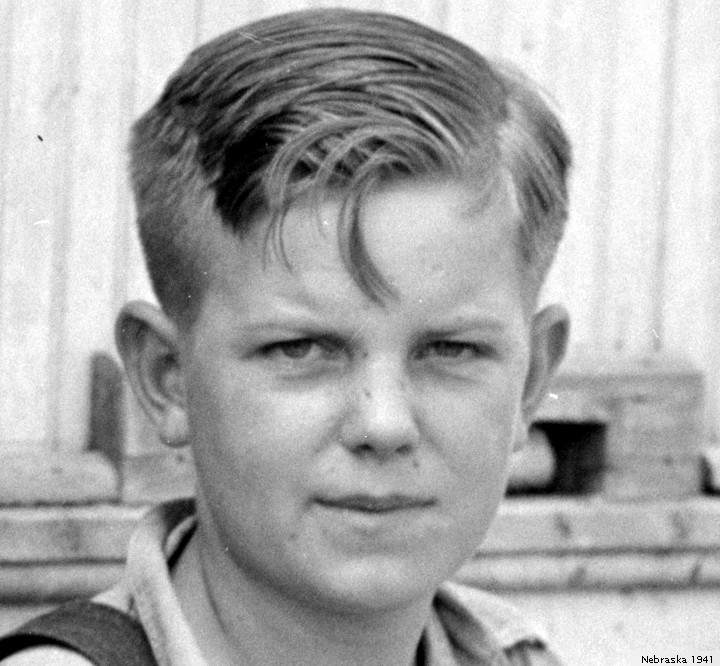
Layla Anwar is an angry young lady. Here is a sample of her prose: ” Get ganged raped and tortured by your “liberators”, have acid thrown at you, be forced to shut up, lose your home, lose your kids, lose your parents, lose your husband, lose your brothers and sisters…But hey, be a lady now ! ” Ms. Anwar does not like “ALL THOSE WHO FAILED TO STAND BY ANTI-ZIONIST, ANTI-IMPERIALIST, IRAQ AND HER PRESIDENT THE MARTYR, HERO SADDAM HUSSEIN, WHO WAS LYNCHED BY NONE OTHER THAN THE AMERICAN IMPERIALISTS AND THEIR SECTARIAN IRANIAN SHIITE DOGS.” … Pictures today are from The Library of Congress. John Vachon took the social media photograph in March 1941. “Boy from North Carolina farm who now works at National Tent and Awning Company. Norfolk, Virginia” ©Luther Mckinnon 2025 · selah




Drones Are Like Abortions



This content was published October 22, 2009. … The New American Foundation has a report on the drone attacks in Pakistan. These attacks have increased dramatically under BHO, who recently won the Nobel Peace Prize. … Drones are unmanned aircraft operated by remote control. There is no human at risk (to us) in these operations. These reports do not mention how many drones have been shot down. These attacks are going on in Pakistan (which theoretically is not at war with the United States), and in secret operations around the world.
Drone attacks are like abortions. In a typical procedure, the doctor and mother are at little risk, and the baby dies. Abortion is safer than childbirth, just like drones are safer than aircraft with human crews. Safer, that is, for the human crew. Drones are just as deadly for the women and children on the ground as manned aircraft. … Speculation about civilian casualties continues. Estimates range from 6% to 85% of the deaths are civilians. This is going to be impossible to verify, with militants exaggerating and Americans denying. The lowest estimates are from The Long War Journal.
It should be noted that if these operations were happening in America, and white citizens were being killed, a 6% rate of civilian death would be an outrage. However, when you are talking about dark skinned Muslims eight time zones away, a human life is worth less, compared to the military advantage gained. … One thing from the NAF report caught the eye here. “As a result of the unprecedented 41 drone strikes into Pakistan …about a half-dozen leaders of militant organizations have been killed–including two heads of Uzbek terrorist groups allied with al Qaeda.” What are Uzbek terrorist groups doing in Pakistan? Are we making attacks in Uzbekistan now?
Another eye popper is in the appendix. This is from a list of drone attacks. … Location: Makeen, South Waziristan (funeral of militants killed in earlier strike), Al Qaeda/Taliban leaders killed: Unknown, Al Qaeda/Taliban killed: At least 45, Others killed: 45-83 (including militants). … We are attacking funerals. This is what gets POTUS the Nobel Peace Prize. … In addition to the moral disaster of killing women and children with unmanned aircraft, there are some strategic issues. The fighters have been staying in the mountainous frontier of Pakistan and Afghanistan. This is the area being attacked.
There are indications that the fighters are moving into more populated areas of Pakistan. They will be more difficult to fight there, and can radicalize the population. … When you drop a bomb on an outpost, you destroy cell phones, computers, and paperwork. These items can be of value for determining the future plans of the fighters. Also, dead men tell no tales. Remember the ticking time bomb in the torture debates? What if someone knows where that ticking bomb is, but we kill him? He is not going to be able to tell us where that bomb is, torture or no torture.
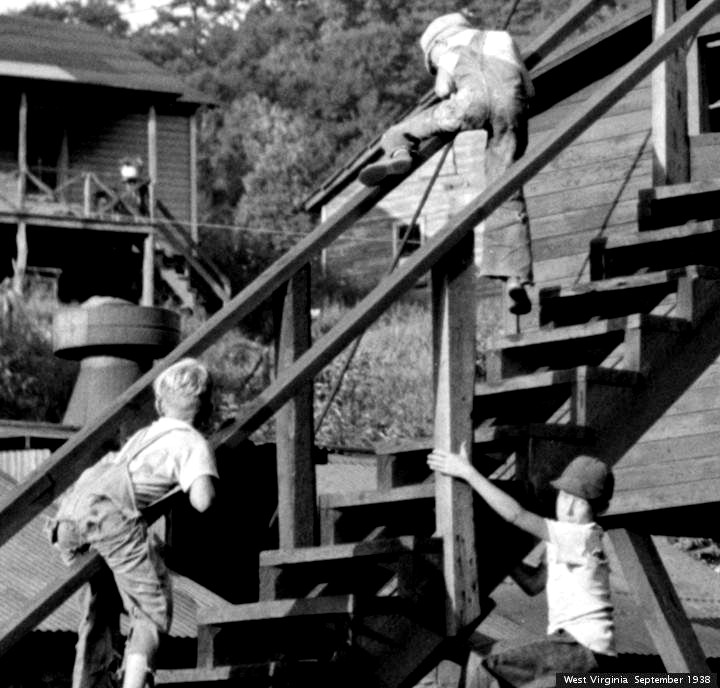
If the goal of the war in Stan Land is to destroy the terrorists, then we should question whether killing leaders is going to do the trick. The anger that fuels these terrorists is not going to go away, and the leaders that are killed are going to be replaced. These attacks may slow down the resistance, but they will not destroy it. … Pictures today are from The Library of Congress. Marion Post Wolcott took the social media picture in September 1938. “Some of coal miner’s family on front porch. “The Patch,” Cassville, West Virginia” ©Luther Mckinnon 2025 · selah



The Pursuit Of Truth



This content was published October 4, 2014. … There is a Radiolab episode called The Fact of the Matter. It is about a man who likes to separate fact from fiction. “The pursuit of truth properly considered shouldn’t stop short of insanity.” After an hour or so plumbing the digital depths, I began to appreciate the truth of that comment. Does anyone have a recipe that uses a can of worms?
The show is about a photograph from the Crimean War. “The valley of the shadow of death” was taken by Roger Fenton. on April 23, 1855. TVOTSOD was taken near a place called Balaclava. (Балаклавский) Today, this is in Ukraine. (Update below) Balaclava was the site of a nasty battle in the Crimean War. Today, a Balaclava is a colorful ski mask. It is the fashion statement of Pussy Riot.
I cannot understand why this picture is a big deal. The Library of Congress has a collection of the Fenton Crimean War Photographs. The Fenton pictures were one of the first collections in the LOC that I worked with. The picture of a road, with cannonballs, did not catch my eye.
The podcast is a detective story. It seems that there are two versions of the photograph. One has the cannonballs in the road, the other doesn’t. Were the cannonballs tossed on the road to make the picture more dramatic, or were they removed? They could have been removed to clear the road for wagon traffic, or to recycle the balls. In 1855, people picked up used cannonballs.
A very good question is why anyone would care? A man named Erroll Morris cares. The link is to a very long article at the New York Times about the picture. Mr. Morris went to Ukraine to investigate the pictures. It is possible that his pursuit of truth did not stop at the boundary of insanity.
The podcast mentions this famous picture, with a second shot that casts doubts. I went to the LOC, and found the famous picture right away. The second shot proved elusive. I viewed all 263 pictures in the Fenton collection in a slide show, and could not find the second picture. I began to think that maybe the second picture was the fake. The New York Times article by Erroll Morris has a copy of the second picture. The possibility remains that the second picture is a fabrication.
The podcast says that the location of some rocks changes in the two pictures. In the picture without the cannonballs on the road, the rocks are higher up on a hill, than they are in the famous picture. To Mr. Morris, this is evidence that the famous picture is a fake. I have examined the two images. Perhaps this search for truth will be called off before the onset of dementia.
The show has an amusing exchange between producer Jad Abumrad (جاد نيكولاس أبومراد) and Errol Morris. JAD: Hi. Is this Errol Morris? EM: I think it’s me. JAD: Hello, this is Jad from—from Radiolab. EM: Hi. Thank you for your very, very nice but somewhat disturbing email. JAD: What disturbed you in the email? EM: The term “truth fascist.”
Controversies about famous images are not new. Many people think the flag raising on Iwo Jima was posed. Just today on facebook, there was a link to a feature, The Kissing Sailor, or “The Selective Blindness of Rape Culture”. The idea is that the nurse did not want the sailor to kiss her on VJ day.
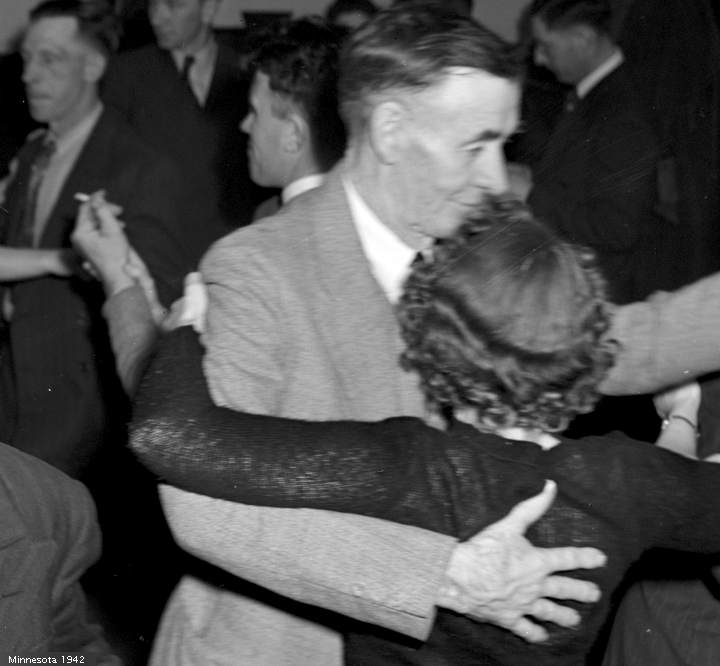
This feature was originally published in 2012, with LOC photographs of the Crimean War. In 2014, Russia annexed Crimea, including Balaklava. … Pictures today are from The Library of Congress. John Vachon took the social media picture in February 1942. “Meeker County, Minnesota. Farmers’ dance in crossroads store” ©Luther Mckinnon 2025 · selah




Strategy Of Causing Atrocities




This content was published October 27, 2023. … As you may have heard, there is a very nasty conflict between Israel and Gaza. What follows are a few thoughts on this dreadful affair. I possibly do not know what I am talking about. If you like, you can skip over the text, and look at the pictures.
Around 1987, I was working with Steve. He was the son of holocaust survivors, and an ardent supporter of Israel. We were discussing the war between Iran and Iraq. The I-I war was a long bloody affair. The United States supported Iraq, led by Saddam Hussein. The United States, with help from Israel, was also selling weapons to Iran. It was a confusing time.
I mentioned to Steve the notion that the US wanted to keep the I-I war going, because it would keep those two countries from fighting Israel. Steve started to get angry. “Yes, and it’s for your benefit. We have to fight terrorism.”
The I-I war continued for a while. In 1990, Iraq invaded Kuwait, partially in a dispute over war debt from the I-I war. Saddam Hussein went from being an American ally to the next Hitler.
Today is October 8, 2025, 38 years after my conversation with Steve. The world is a different place. The last 38 years have been full of wars, and rumors of war. The Internet is a routine part of life. Unfortunately, Steve is not with us. Cancer claimed him in 2001, 9 days after 9-11.
A few days ago, Bob Wright had a conversation with Eli Lake. Mr. Lake is an ardent supporter of Israel. After 69 minutes, Mr. Lake said this: “because the Palestinians continue to think that a strategy of causing atrocities will eventually convince Jews to leave a country.”
Lets focus on this comment. It is unique, in part because it dispenses with the niceties that one normally sees. Most Israel supporters say “Hamas,” when they probably mean “Palestinians” (or Muslims.) Likewise, others say “Israel,” when they mean “Jews.” If you were to put blanks in the statement … “because the ______ continue to think that a strategy of causing atrocities will eventually convince _____ to leave a country” … you could create a statement said by either side. On a certain level, both sides would be telling the truth.
There are reports that Israel created, and supported, Hamas. The idea was to create divisions among her enemies, in the same way that a bloody war between Iran and Iraq was facilitated 38 years ago. When Hamas is fighting Fatah/PLO, neither side is fighting Israel. Some say this strategy motivated Israel’s involvement in Syria. Thousands of unarmed women and children die as a result.
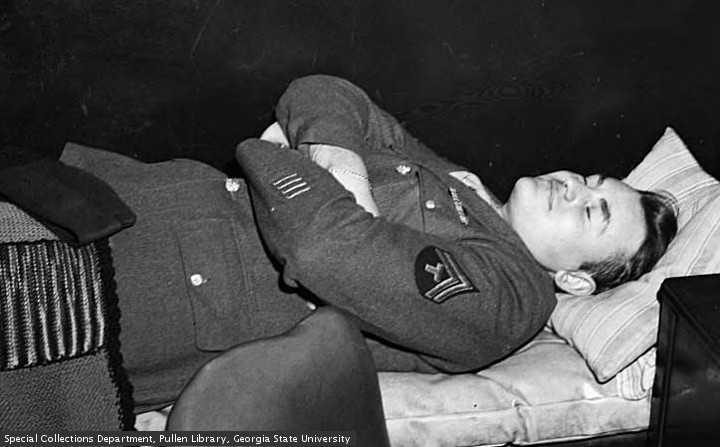
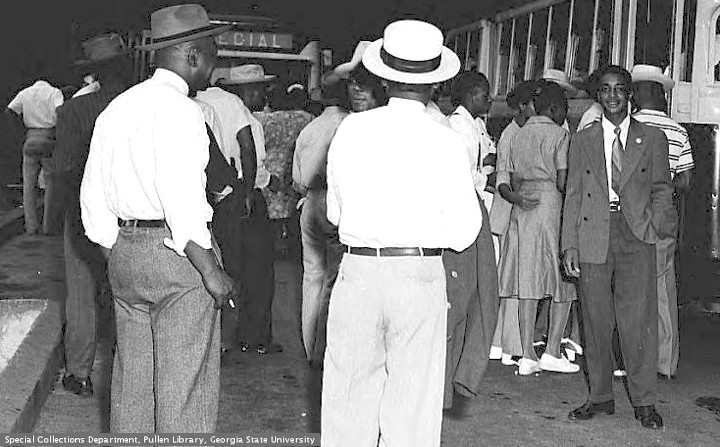
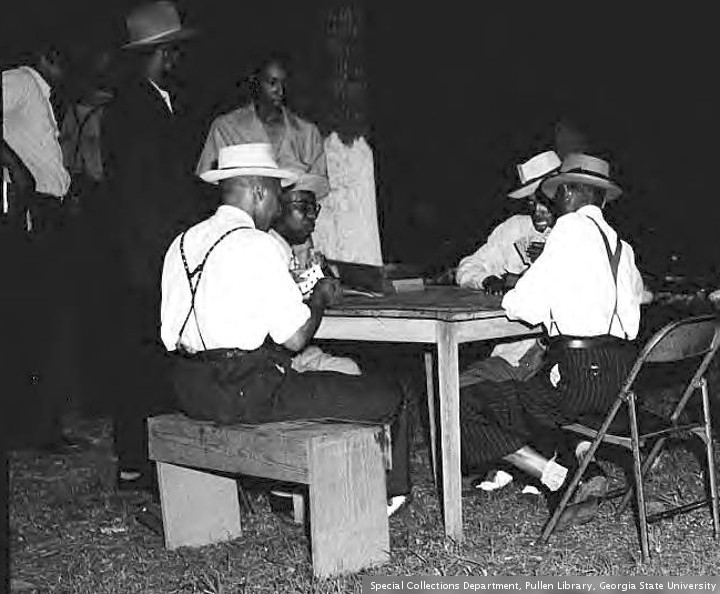
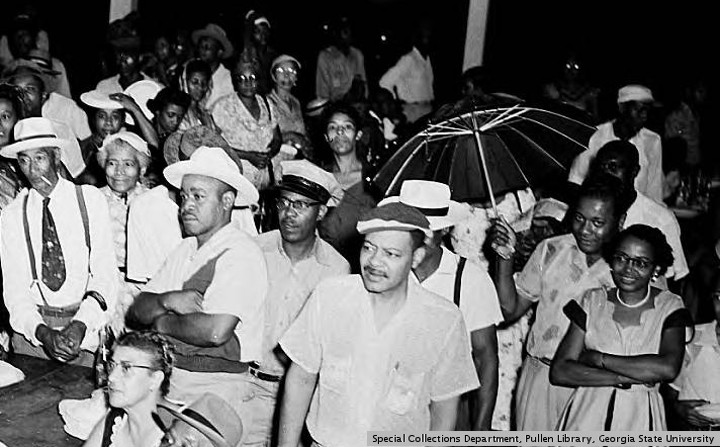
Pictures today are from Special Collections and Archives, Georgia State University Library. The social media picture was taken July 18, 1947. “African-American couples playing cards outdoors, at the new Lincoln Club (Atlanta, Georgia), at a July 18th party sponsored by the Davison-Paxon Company, 1947.” ©Luther Mckinnon 2025 · selah




October 7, 2025







Today is the two year anniversary. I learned about the tragedy from a @JDVance1 tweet: “Praying for our friends in Israel this morning. Just an awful situation.”
As the scope of the tragedy became apparent, I knew two things. One, Israel would exponentially over-retaliate, killing thousands of Palestinians for every Israeli that died. (In my wildest conspiratorial imagination, I would not have thought that Israel would kill hundreds of its own citizens.) Two, there was going to be a tsunami of toxic rhetoric. Israel has known how to play to American public opinion for a long time. This second aspect of this calamity is what today’s post will focus on. Specifically, “Dave Smith vs. Coleman Hughes Debate: Israel and U.S. Foreign Policy.”
Coleman Cruz Hughes supports Israel. Dave No-Middle-Name Smith supports the Palestinians. CCH has been critiqued at chamblee54 before. 010224 030324 In case you have any doubts, I should state upfront that I am on team Dave here. There will be no attempt at being fair. If you want to see pro CCH commentary, look to any x discussion of this event.
The concept of these discussions being a smackdown sport is “part of the problem.” Gotcha mongering takes the place of thoughtful discussion. People make points that appeal to their buddies, and do not address the concerns of those on the “other side.” The rhetoric from CCH displays many of the bad faith tactics that Hasbara is known for. This post will focus on two examples.
I did not listen to very much of the CCH-DS smackdown. My phone was acting up, and switching to other shows without warning. When I returned to CCH-DS, I would skip over large parts of the show. Finally, after the second incident, I grew weary of the entire affair.
The first incident took place early in the show. CCH was discussing the reasons for the 9/11 attack, specifically the fact that Arabs were offended at American troops in the Islamic holy land of Saudi Arabia. CCH mentioned that South Korea was not offended at the presence of US troops in their country … an apples to oranges comparison. This is a tactic of bad faith argument: to make any possible argument you can, never mind that it usually is not relevant to the discussion.
Somehow, this led to a discussion of terrorism. ”DS – There were Irish terrorists. There were Jewish terrorists. Uh, of course, as you know, in the leadup to the creation of the state of Israel. … CCH – Those were local ethnic disputes between the Irish and the British, between the Jewish and the Palestinians. What justifies going abroad, flying planes into buildings thousands of miles away … “
There was Zionist terrorism after the end of World War II, and the creation of the State of Israel. The British governed Palestine at the time. The Zionist terrorism was directed at the British authorities governing Palestine, as well as the Arab population. This was the same time as the Nakba, which was a “local ethnic dispute”. Maybe that is what CCH meant.
This is a bad faith tactic. Flood the playing field with dozens of details. Some of them are going to be either misleading, or outright lies. It is impossible to respond to all the details being raised.
The other incident concerned the role of “the Israel lobby” in the decision to invade Iraq in 2003. CCH brought up a book by John J. Mearsheimer. CCH claims to have read the book, and was not persuaded. We have to take CCH’s word on having read the book.
CCH went into a monolog about how much money TIL had actually spent. “During the entire George W. Bush administration, the Israel lobby spent $17 million lobbying Congress. Now, that might sound like a lot to me or you. It is absolute chump change on the scale of uh domestic lobbying. To put it in perspective, the tobacco lobby spent $200 million, so more than 10 times that amount over the same time period. And they couldn’t even stop Congress from passing a federal tax hike on cigarettes in 2009. Now during the Obama era, the Israel lobby spent 30 million and they were outspent by the dentists. The dentist lobby spent 32 million. This is all according to OpenSecrets.org which is usually the standard source people go to for such figures.”
My gut sense is that this is a distraction. There may be other ways to measure the influence of TIL than the amount of money they spend on lobbying congress. Or maybe not. If you google “How much did the Israel lobby spend lobbying congress in 2003?”, you are directed to a chart from OpenSecrets. “$1,500,000 Total Spent on Pro-Israel, 2003” Is this the total, or there is more that we don’t know? I honestly don’t know, but don’t trust the way CCH is throwing this out.
When I heard CCH say that Dentists spent more on lobbyists than Israel, I decided I had heard enough. Technically, on some level CCH may be correct on some of his points. However, I just don’t trust him. I wonder how many minds are going to be changed by this discussion. The initial reaction on x was that CCH “won”. However, in the last day or so I am seeing more people who agree with DS. It will probably boil down to people agreeing with who they agreed with going into the debate.
There was a controversial discussion of the “clean break” strategy, which I missed entirely. DS has released an episode of his own show, Part Of The Problem, that deals with this. I have not listened to this episode of POTP.
Pictures today are from The Library of Congress. John Vachon took the social media picture in January 1941. “Steelworker at grievance committee meeting. Steelworkers organizing committee office. Aliquippa, Pennsylvania” ©Luther Mckinnon 2025 · selah







Greeted As Liberators Part Two



This content was published September 1, 2009. … Paul Wolfowitz has been a government player for years. After finishing his education, he got a job in the Nixon Administration, and worked with Ford and Reagan. He became a star under GHWB and GWB. Under George W. Bush, Mr. Wolfowitz (who never served in the military) was Deputy Secretary of Defense. After 911, he became a forceful advocate of War in Iraq. Mr. Wolfowitz is regarded by some as the “Architect of the War in Iraq”.
On February 27, 2003, Mr. Wolfowitz testified before congress. “There has been a good deal of comment—some of it quite outlandish—about what our postwar requirements might be in Iraq. Some of the higher end predictions we have been hearing recently, such as the notion that it will take several hundred thousand U.S. troops to provide stability in post-Saddam Iraq, are wildly off the mark. It is hard to conceive that it would take more forces to provide stability in post-Saddam Iraq than it would take … to secure the surrender of Saddam’s security forces and his army.”
The conquest was the easy part. The occupation, the act of putting humpty dumpty back together … this has been the tough part. More than a few people saw this in 2003. … Mr. Wolfowitz gave an interview to Vanity Fair magazine May 9, 2009. The interview had a quote about WMD. “The truth is that for reasons that have a lot to do with the U.S. government bureaucracy we settled on the one issue that everyone could agree on which was weapons of mass destruction as the core reason.”
The possession of WMD by “next Hitler” Saddam Hussein was one of the leading reasons for the invasion. Iraq was known to have used poison gas against the Kurds (while they were allies of the United States). The WMD were never found. … In 1941, The United States was attacked by Japan at Pearl Harbor. A declaration of war was issued within a week. There was no settling on an issue for bureaucratic reasons. … I found a transcript of the complete interview. HT to TomDispatch. … Gaza’s Looming Cancer Epidemic is the latest post at TomDispatch. It was published September 4, 2025.
Apparently, Mr. Wolfowitz likes to talk. One interesting segment concerns the Cruise missile, and other “smart” weapons. It seems as though the research on these weapons was almost suspended. The United States was negotiating arms control with The Soviet Union. The Cruise missile was almost abandoned as a concession to the Soviets. The Navy supported this, as they felt that the torpedoes on submarines were taking up too much room already. … This is a repost. Here is part one.
This content was published September 4, 2009. … There is a controversy about a picture from Afghanistan. A soldier is being treated, after being hit by a grenade. Lance Cpl. Joshua Bernard later died. … Few graphic images from the “War on Terror” have been seen on this side of the Atlantic. The burden of the war is on the volunteer soldiers, and the families who support them. Many people in America have no contact with anyone fighting eight time zones away.
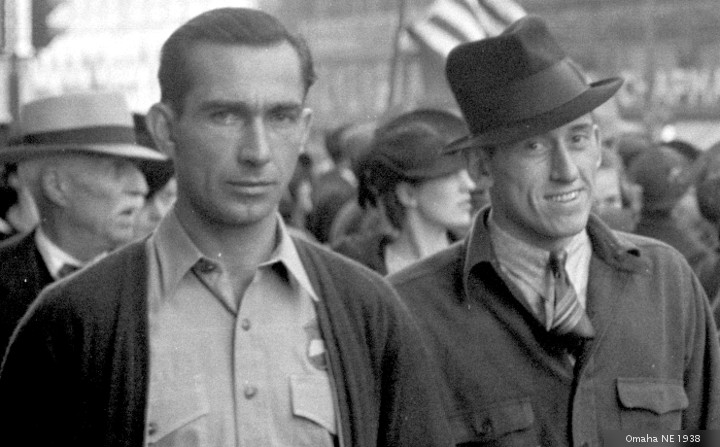
Even less is said about why we fight. The revenge for 911 has long ago been taken. Any fantasies about establishing a democracy in Afghanistan are foolish. The war has spilled into Pakistan with even less debate or public concern than was focused on Afghanistan or Iraq. Nuclear armed Pakistan is an unstable country, with a nervous border with India. The United States is killing women and children in Pakistan from unmanned airplanes. … Pictures today are from The Library of Congress. John Vachon took the social media picture in November 1938. Men in front of pool hall, Omaha, Nebraska ©Luther Mckinnon 2025 · selah


 Chamblee54
1 comment