









Philosophy Of 2Girls1Cup










A few years ago, the video “2girls1cup” was the rage of the day. A trailer for a trash Brazilian movie, the featurette shows two buxom young ladies sharing a plastic cup. The contents of the cup are supposed to be human waste … many suspect it is chocolate ice cream. Later, one of the players shares a technicolor yawn with the other. A plastic supply tube may be a prop.
The video is not in wide circulation today. If you go to the original site, you see 2girls1cup.com nothing but porn, another opportunity to buy smut. It is just as well. Before posting a live address, it is time for the DISCLAIMER.
It is not suggested that you watch this. If you are sensitive, have a heart condition, or have just eaten (like, in the last month), you may want to look at something else. It is gross, disgusting, and without redeeming social value. It is not safe for work, and has great danger for play.
The original film is available at a .ca web address. This commentary goes with it: What is Two Girls One Cup ? Two girls one cup (aka 2 girls 1 cup & cup video) is a trailer that was released in 2007 for the artistic film “Hungry Bitches” made by MFX Media. The daring work of art is an allegory for the concept of spiritual awakening. It examines the prevalent ideologies that are internalized in our culture, and in true post-modern form; the thematic piece tends to raise more questions than answers. The philosophical film has varying interpretations, which is why the 2 girls 1 cup film is still analysed and debated about to this date.
Chamblee54 has weighed in on this “matter” before. If you google “2girls1cup snopes,” Philosophy Of 2Girls1Cup is result number five. The dreaded “number two” result was from the Urban Dictionary, 2 girls 1 cup scam. “It’s probably a mixture of coffee cream cake filling and crunchy peanut butter”.
PG doubts that the creators of this epic had a message. They just wanted to make a bit of cheesy scat porn. Just because the creators of a work don’t intend for it to be a myth, that doesn’t stop the determined believer. Did the Council of Nicea intend their church canon to be taken as the inerrant Word of G-d? The texts in that canon were often allegorical stories, not literal truth.
Is there a deeper truth inherent in a tawdry vignette of snacking sisters? Maybe the cup is the Christ figure. The deposit in the cup represents the sin of mankind, forgiven through the sacrifice of Jesus on the cross. Jesus took the sins of man on his shoulders, and paid the price for these sins, just as the cup received the product of a young lady’s digestive system.
The trouble is, the girls then ate the forbidden flop. This compares to the way the church of Jesus Worship recycles sin. The poisonous anger and rudeness that Jesus paid for on the cross are fed back to the eager believers every Sunday.
After the excremental dessert, the actress hurled onto the breast of her willing dining companion. This stands in for the verbal abuse showered on worshipers every Sunday. Professional Jesus Worshipers project a vile output on the pew warmers. They think they are going to heaven as a result. Was this the message the producers of this video intended? The best course of action might be refusing to partake of the product. Pictures today are from The Library of Congress.





A Cynic




“A cynic is a man who knows the price of everything, and the value of nothing.” ― Oscar Wilde. This quote is one of Oscar’s greatest hits. If you think about it for a minute, it is not totally accurate. You are not supposed to think. Quoting Oscar Fingal O’Flahertie Wills Wilde is about sounding clever, not making sense. Did he really create that definition of a cynic? This is a repost.
Oscar Wilde is a quote magnet. This is more than something you put on your refrigerator. When people hear something clever, odds are good that Oscar will get the blame. As Dorothy Parker wrote: “If, with the literate, I am, Impelled to try an epigram, I never seek to take the credit; We all assume that Oscar said it. [Life Magazine, June 2, 1927]”
Wikiquote says this line is from Act III of Lady Windermere’s Fan. It was spoken by Lord Darlington. Did the play write intend for the line to be taken seriously, or was he making the character look foolish by saying it? With Oscar Wilde, it could be both of these things at the same time.
Principle Four, of the four principles of quotations, reads “Only quote from works that you have read.” In the case of Lady Windemere’s Fan, this would mean a youtube video of the play. There is a posh BBC production available. You don’t have to watch the cell phone recording of high school players.
Lady Windemere’s Fan is a production where upper class Brits say clever things in glorious costumes. Nobody ever goes to the bathroom, or looks less than perfect. Lady Windemere’s six month old child is neither seen, nor heard. Lady Windemere finds out her husband, Lord Windemere, is having an affair with a Mrs. Erlynne. The Lord proceeds to invite the floozy to Lady Windemere’s birthday party.
After the party, the men go to their club, then to Lord Darlington’s room. There are five men in the conversation, beginning with Lord Windemere. Lord Darlington has just told Lady Windemere that he loves her, and wants her to run off with him. Lady Windemere said no. Lord Augustus is a suitor of Mrs. Erlynne, and is begging her to marry him. Cecil Graham, and Mr. Dumby, wear their splendid costumes with conviction.
The scene starts with the men saying clever things, most of them insulting to someone. Lord Augustus, or Tuppy, is the butt of many jokes. Before long, we get this exchange:
Dumby. I don’t think we are bad. I think we are all good, except Tuppy.
Lord Darlington. No, we are all in the gutter, but some of us are looking at the stars.
Dumby. We are all in the gutter, but some of us are looking at the stars? Upon my word, you are very romantic to-night, Darlington.
Cecil Graham. Too romantic! You must be in love. Who is the girl?
Lord Darlington. The woman I love is not free, or thinks she isn’t. [Glances instinctively at Lord Windermere while he speaks.]
A few minutes later, we hear another famous Oscarism.
Lord Darlington. What cynics you fellows are!
Cecil Graham. What is a cynic? [Sitting on the back of the sofa.]
Lord Darlington. A man who knows the price of everything and the value of nothing.
Cecil Graham. And a sentimentalist, my dear Darlington, is a man who sees an absurd value in everything, and doesn’t know the market price of any single thing.
Pictures today are from The Library of Congress.




Democrats Do Not Respect The Law






Georgia Democrats do not believe in the orderly rule of law. Three high profile incidents demonstrate this lack of orderly governance. While none of these incidents are on the same level as the January 6 riot at the U.S. Capitol, they all show the same contempt for basic law and order.
In August 2017, progressives held a convention in Atlanta. Democratic candidates for Governor spoke. While Stacey Evans spoke, actors in the crowd disrupted her speech, chanting “trust Black women.” As “author and zen priest” Angel Kyodo Williams says, “This is what democracy looks like.”
Later, the candidate who was allowed to speak, Stacey Abrams, defended shouting down her opponent. “I do not believe that you silence those who feel they are voiceless, because the minute we do that we are no better than those who tell people they can’t kneel in protest.” The DSA, who staged the disruption, is far from voiceless.
As many of you know, Ms. Abrams won the Democratic primary, and came very close to winning the general election. The central issue of the Abrams campaign was voter suppression. While the votes were being counted, some actors decided to have a rally inside the state capitol. State law clearly prohibits disruptive protest inside the capitol. (O.C.G.A. 16-11-34.1 (g)) Like a church, or a court of law, some activity is not acceptable inside the state capitol.
State Sen. Nikema Williams chose to violate this law, and was arrested. She was widely praised for this action, and later elected to the U.S. Congress. Almost no Democrats condemned this illegal protest by Sen. Williams. Many of these same actors routinely call on Republicans to disavow support from anyone deemed unworthy.
Two years later, the legislature passed SB 202. This law regards voting access, and is loudly denounced by Democrats. Many observers see SB 202 as being a mild bill. One provision calls for voters to write their drivers license/state id number on absentee ballot applications. SB 202 has turned into a political disaster, with the racism-happy POTUS calling SB 202 “Jim Crow on steroids.”
The March 25, 2021, bill signing, for SB 202, was a bi-partisan embarrassment. Governor Brian Kemp held the signing at the Capitol, immediately after the bill was passed. This was possibly done to provoke Democrats, who seldom need a reason to behave badly.
State Representative Park Elizabeth Cannon took the bait, and got arrested. She made a scene outside the bill-signing. Rep. Cannon tried to get arrested February 26, but the State Patrol did not comply. Once again, this disruption was widely praised by state Democrats.
Democrats have made great gains in Georgia, and may possibly win the Governor’s office next November. They will face many problems, not least of which is declining respect for law and order. When you look at the lack of respect that Democrats show for Georgia law, you wonder how they are going create respect-for-order in the general population. Pictures today are from “The Special Collections and Archives, Georgia State University Library.”








When You Can’t Say Anything Good






Writers block is real. You have all of modern media at your beck and call, and yet you don’t have a message. TwentyTwoWords posts the story of a medical study into writers block. The study wastes no words in it a pithy treatment of this issue. It is an unspoken masterpiece, the treatment that dare not speak it’s name. The research was financed by a block grant.
The findings of this study were replicated in 2007. The report is included here, in it’s entirety. The editor noted “I did not change one word, and this is a first in my tenure as editor.” There is no word on whether the report was submitted before the deadline.
Ben Hecht tells a story in his autobiography “Child of the Century”. As a young, underpaid newspaper writer in Chicago, Mr. Hecht was hired to participate in literary debates. In the era before movies and radio, these were considered after dinner entertainment. One night, Mr. Hecht got together with his opponent, and hatched a plan. The topic of the debate was “People who attend literary debates are idiots”. The first speaker did not say a word, but gestured towards the crowd. The second speaker said, “you win.”
“Child of the Century” is now out of print. In 1994, PG thought he was going to have to move, and the first step was to throw away things. His copy of “Child of the Century” was one thing he pitched.
The sound that you hear is one hand clapping. Those reading with one hand can join in with the other one. Appreciation is always welcome. Vintage pictures are from “The Special Collections and Archives, Georgia State University Library”.
This is a repost. PG thinks writer’s block should be called writer’s tackle, but few agree.



CK7 Hot Dog








Hot Dog “3 – verb to perform in a conspicuous or often ostentatious manner especially : to perform fancy stunts and maneuvers (as while surfing or skiing).” A hot dog is more than a sandwich. Show offs have been called hot dog for a long time. This is a repost. Pictures today are from “The Special Collections and Archives, Georgia State University Library”.
Which brings us to Colin Kaepernick. PG has thought there was something fishy about #7 since his protest began in 2016. What would happen if you google “Colin Kaepernick Hot Dog”?
In 2013, after the Niners beat the Falcons in the NFC championship game, a restaurant in Turlock, CA, held a contest to name a hot dog in honor of the Niners young quarterback. “Kaepernick Special: Hot dog wins competition in Turlock Colin Kaepernick is a hot dog. That’s not a critique of the quarterback’s playing style; that’s a fact. The Kaepernick Special made its first appearance on the menu at Main Street Footers Thursday. The restaurant, a mainstay in downtown Turlock for decades, held a contest to come up with a hot dog named for the former Pitman High football standout. … Football and hot dog aficionados submitted a variety of ideas … One suggestion: a hot dog topped with crab, shrimp and cocktail sauce. … Jim Yettman, 76, said he entered the contest “on a whim” … Yettman’s concoction: A hot dog with chili, cabbage, red and yellow bell peppers, jalapeños and a secret sauce consisting of mustard, horseradish, thousand island dressing, and cayenne pepper. … He beat out a pulled pork-topped hot dog and a pizza-themed version with pepperoni and olives.”
As you may have heard, Mr. Kaepernick sat down during the National Anthem, before a 2016 pre-season game. One of the first casualties, in the uproar that followed, was the CK7 hot dog. “A hot dog named in honor of Colin Kaepernick at a restaurant in his hometown of Turlock, Calif., no longer is available. The hot dog called CK7 — Kaepernick’s initials followed by his jersey number — has been pulled off the menu at Main Street Footers after the San Francisco 49ers quarterback refused to stand for the national anthem before a preseason game against the Green Bay Packers on Friday. The hot dog that was topped with chili, coleslaw, jalapenos and “Kaep Sauce’’ was a hot item for $6.05 when Kaepernick helped lead the 49ers to the Super Bowl after the 2012 season but had become a “political football,’’ restaurant co-owner Glenn Newsum said.”
In 2016, the Carolina Panthers were coming off an NFC championship. Their star quarterback, Cam Newton, gave an interview with GQ, and said some controversial things. After the Niners played the Panthers, Mr. Kapernick and Mr. Newton were photographed together. Some twitter wits speculated about what was said. @TribalThrasher “Kaep: A hot dog isn’t a sandwhich.. Cam: SQUARE UP”
Don’t be surprised if a google search for “dog” yields a story featuring Mike Vick. “Colin Kaepernick tweets Stockholm Syndrome definition after Michael Vick advises him to get a haircut Recently retired NFL quarterback Michael Vick has some advice for Colin Kaepernick, who is still looking for a job after opting out of his contract with the San Francisco 49ers in March. “First thing we gotta get Colin to do is cut his hair,” Vick said Monday. … (photo comment) Kaepernick had short, neatly cut hair when he led the 49ers to the Super Bowl following the 2012 season. But before last season, he grew it all out, often sporting a large Afro or sometimes cornrows. … “Just go clean cut, you know? Why not?” said Vick, who sometimes wore his own hair in an Afro or cornrows in his younger days. … “The most important thing that he needs to do is just try to be presentable.” … it’s not the Colin Kaepernick that we’ve known since he entered the NFL. … I love the guy to death and I want him also to succeed on and off the field. … “He is a great kid and the reason he’s not playing has nothing to do with the national anthem, I think it’s more solely on his play.” … In what some are interpreting as a response to Vick’s comments, Kaepernick took to Twitter and Instagram on Tuesday morning and posted the definition of Stockhom Syndrome.”










The Curious Score

The display of a link on this page does not indicate approval of content.
The Curious Score for John Cage’s “Silent” Zen Composition 4’33”
Joe Rogan asks Ted Nugent which hand he uses.
Zangeres Ari Lennox maakt excuses aan KLM voor gedrag op Schiphol
The Poisonous Left-Liberal Mentality on Dialogue and Race Glenn Greenwald
Some people’s idea of free speech is that they are free to say what they like, but …
On Tim Pool And Ideological Capture And Online Cruelty
The Push for Equity in Education Hurts Vulnerable Children the Most
Expelled from my university course for holding gender critical views
MLB owners lock out players for 1st work stoppage since 1995
Did Catholic church oppose street lights? Some notes on Papal States in 1830s
The Emotions Recognized in Vocal Bursts Within this interactive map …
Anger, Shame, Sadness, and Race in America | Glenn Loury & John McWhorter
law enforcement agency’s arrest record of juvenile arrested for felony may be released.
specialized healthcare for transgender adolescents is a relatively new field
Stephen Glass, the most notorious fraud in journalism, decided he would live by one …
Ashford Dunwoody Road/Peachtree Road Intersection Improvement
Ben Roethlisberger expects this to be his last season with Pittsburgh Steelers
Waukesha Killer Feels “Demonized” After Murdering 6 In Cold Blood
Forced choices reveal a trade-off between cognitive effort and physical pain
James Crumbley’s ex says he left them strapped for cash, calls Jennifer a ‘monster’
russia avant garde ~ bob dole ~ s-town ~ James and Jennifer Crumbley ~ adam and andy
pussy tourette ~ artimus pyle ~ kamala ~ repost ~ don rickles
ethan crumbly ~ n-word ~ n-word ~ i’m not gonna rant here ~ pearl harbor
host/hostess ~ 741741 ~ @ShinigamiEyesT ~ Shinigami Eyes ~ maria callas
baby name wizard ~ repost ~ richard richards ~ delve immersive ~ baldwin
garbo ~ truist data breach ~ mathboifly ~ alvin lucier ~ hyphen
repost ~ ted nugent ~ 4’33” ~ swer ~ ari lennox
fauci ~ ari lennox ~ georgia vs alabama ~ Madeleine Albright
In May of 1996, 60 Minutes aired an interview with Madeleine Albright, who at the time was Clinton’s U.N. ambassador. Correspondent Leslie Stahl said to Albright, “We have heard that a half-million children have died. I mean, that’s more children than died in Hiroshima. And — and, you know, is the price worth it?” ~ Fact Check: Japan Did NOT Endorse Ivermectin As COVID-19 Treatment — Cases Plummeted For Another Reason ~ False Information Found in Your Post Independent fact-checkers at Lead Stories say information in your post is partly false. To stop the spread of false news, we’ve added a notice to your post. People who repeatedly share false information might have their posts moved lower in News Feed so other people are less likely to see them. Did Japan endorse the use of ivermectin as a treatment for COVID-19, sending cases plummeting in late August 2021? No,… All fact-checkers who partner with Facebook must be signatories of the International Fact-Checking Network and follow their Code of Principles. Learn more about how Facebook works with independent fact-checkers to stop the spread of false information. ~ @chamblee54 Replying to @GlennLoury and @JohnHMcWhorter “I’m not gonna rant here” Later in the show, Glenn says what the transcript calls [ __ ] . It was probably the magic word. one two @UNCHussman was going to pay @nhannahjones $180k for her services ~ @chamblee54 @GlennLoury @JohnHMcWhorter Increasingly, I find race to be boring Narcotizing disfunction is real. I hear sooo much about race, and the penalties for expressing an unpopular opinion are sooo severe Life is too short ~ pictures today are from The Library of Congress. ~ selah





Teachable Moment

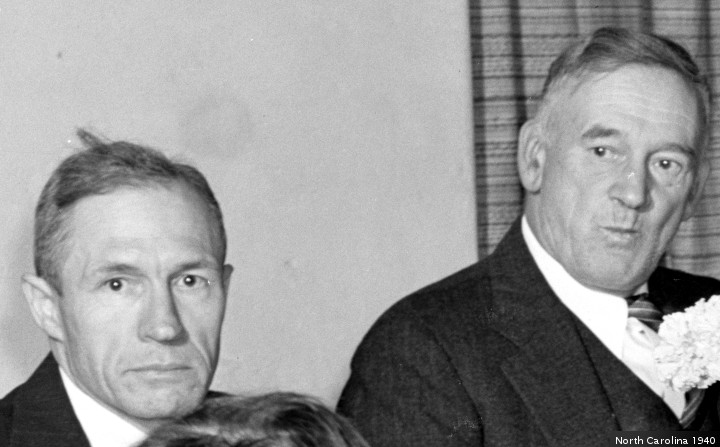


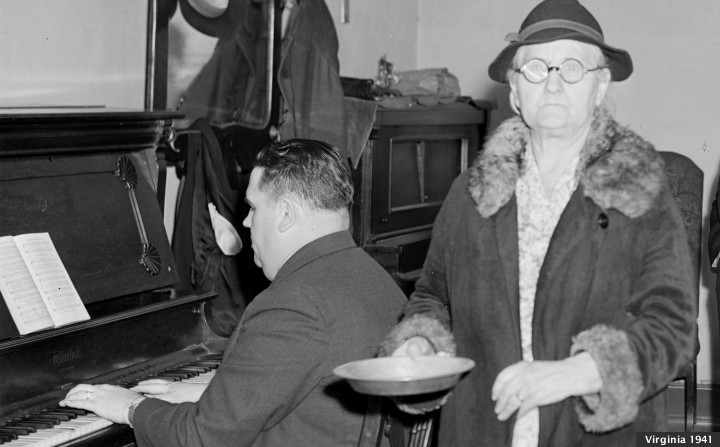
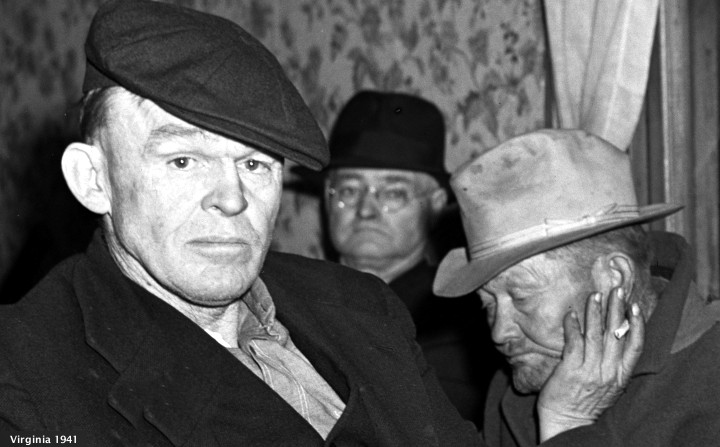

PG was invited to view a zoom reading. A group of people submitted poems for an anthology. Some of the poems were selected for publication. Wednesday night, some of these poets read their work.
Before the linked video, a man spoke. He said that racism would not be tolerated. If you said anything racist, you would be kicked out of the presentation. PG found this a bit odd. Poets tend to be painfully woke. Telling poets not to say anything racist is like telling preachers not to worship Satan.
The poets spoke. There was one Latino, no African Americans, and White People. Anything they read had been chosen for publication. Did the editors include a racist poem in the anthology?
Facebook had another well intended meme. It was about a teacher, telling her class about the Salem witch trials. PG does not know the full story of the SWT. He suspects the legend does not accurately describe the real event. However, the SWT story provides a “teachable moment.” It is easy to substitute “racist” for “witch”.
“One of my friends told me about a powerful lesson in her daughter’s high school class this winter. They’re learning about the Salem Witch Trials, and their teacher told them they were going to play a game. “I’m going to come around and whisper to each of you whether you’re a racist or a normal person. Your goal is to build the largest group possible that does NOT have a racist in it. At the end, any group found to include a racist gets a failing grade.”
The teens dove into grilling each other. One fairly large group formed, but most of the students broke into small, exclusive groups, turning away anyone they thought gave off even a hint of guilt.
“Okay,” the teacher said. “You’ve got your groups. Time to find out which ones fail. All racists, please raise your hands.” No one raised a hand. The kids said the teacher had messed up the game.
“Did I? Was anyone in Salem an actual racist? Or did everyone just believe what they’d been told?” And that is how you teach kids how easy it is to divide a community. Keep being welcoming, beautiful people. Shunning, scapegoating and dividing destroy far more than they protect. We’re all in this together.” Pictures today are from The Library of Congress. This is a repost.





Podcasts 2021




People who like to share opinions have been posting “Best podcasts of 2021” pieces. PG is a podcast consumer, and has written on the subject before. (one two three) This is a good time to catch up on 2021. Pictures today are from The Library of Congress.
The sport of downloading podcast files continues to evolve. If a show is no longer available, there will be a dozen more. Sometimes, you are not smart enough to find a link, and must listen to the show at a website. Another option is the megaphone feed. This is a page, with many lines of code. You scroll down the page, and see title, and the name of the episode. You scroll a bit further down the page, and see an .mp3, usually in blue letters. Highlight this file, left click, select Save Link As, and click ok. These shows depend on support from listeners. If you want to help, all these shows will offer you a way. If you support a show, you are a wonderful human being.
Blocked and Reported comes out at 10 am, EST, on Monday. It is a star podcast for 2021. Perpetrated by Katie Herzog and Jesse Singal, BAR tracks various instances of internet wierdness. K&J have a good natured antagonism which borders on obnoxious, but does not go over the line (yet.) K&J cover many social justice embarrassments, with quotable results.
Once Upon a Time… at Bennington College is a sequel to OUAT … In the Valley, which chamblee54 discussed here. The current show is about the college adventures of Bret Easton Ellis, Jonathan Lethem, and Donna Tartt. Host Lili Anolik has a slightly tacky style, which works well for a slightly tacky story. Bret Easton Ellis is heard from, unlike Donna Tartt. She has sent lawyer letters, telling the players to take down the show.
Bret Easton Ellis has his own podcast, which has long been a PG favorite. That is, when BEEP is available for free. Bret plays the paywall game, which is tons of fun. BEEP was available on stitcher earlier this year, then it wasn’t. PG got into the habit of googling BEEP rss, hoping to find the show. A few weeks ago it turned up on Stitcher again. Who knows how long it will last.
PG was delighted to see BEEP return because of The Shards. This was a 27 part serial about the high school days (daze) of young Bret. TS has sex, drugs, high school drama, murder, more sex, much more drugs, conspicuous consumption, money, more sex, and more drugs. One BEEP disappearance was 13 episodes in, so when BEEP returned, there were 14 episodes to binge on. Mental health is overrated.
Blog pioneer Andrew Sullivan has a show. A few of the episodes were great. The Glenn Greenwald episode had two aging queens taking potshots at each other. Michael Wolff goes on about the mental illness fueling Donald Trump, and never bothers to mention his racial attitudes. The Democrats did America a disservice by making “the resistance” all about racism.
Bari Weiss has a dandy show. The first edition that PG heard was about Amy Cooper, the “Central Park Karen.” That story has a lot of details that never got widespread circulation. Ms. Weiss is someone that PG takes a cafeteria approach to. Many of her podcast episodes are excellent. OTOH, some of her opinions about Israel are beyond horrible. Another opinion comes from The Root: “Bari Weiss, a fellow white woman who is in the running for Kareniest Karen who ever Karened in the history of Klanned Karenhood.”
Cocaine & Rhinestones returned for season two, and it is a doozy. Many shows last over an hour, and open with a discussion of topics ranging from bullfighting to refrigeration. This season focuses on George Jones, and Tammy Wynette. There is so much to wade through here.
Love is a Crime tells the story of Joan Bennett and Walter Wanger. The latter was known to say “Everyone talks about agents, but I’m the one who did something.” LIAC was co-hosted by @KarinaLongworth. She is the host of You Must Remember This, and perhaps the ad reader in podcast land. YMRT is continuing to crank out shows, with Sammy and Dino telling the story of Dean Martin, and Sammy Davis Jr. YMRT is well crafted, and fun to listen to.
No Place Like Home tells about the disappearance of the Ruby Red slippers, worn by Dorothy in “The Wizard of Oz.” To Live and Die in LA returns for a second season, full of slimy characters doing awful things. This is another show that PG stumbled onto after a few episodes, and spent a few lost days binge listening to all the criminality. There are lots of other shows out there … and out there is the appropriate phrase to use. Just remember to eat, and get enough sleep. You will be ok.




Racist Romance Writer Smackdown







In twitterland, there is a list of trending topics. The other day, the top trend was #IStandWithCourtney The trend topping #ISWC tweet: Jingle Elle Maruska (they/them) @ellle_em “#IStandWithCourtney Calling out racism is not being racist Pointing out someone’s unethical behavior is not being unethical I stand with Courtney because white feelings are in no way more important than fighting for marginalized people’s right to exist in any & all spaces” If you think you know where this is headed, you are probably correct. This is a repost from 2019.
Perez Hilton puts it all in a nutshell. “What’s it all about? It’s about racism, injustice, and of course erotic tales of ribald fantasy. Yep, it’s drama in the world of romance novelists! This month the Romance Writers of America suspended author Courtney Milan (presumably asking her to turn in her badge and her quill) over what they called a violation of their code of ethics.”
“So what had Milan, the author of such historical Harlequins as A Kiss For Midwinter … done to deserve this literary excommunication? Apparently fellow novelists Suzan Tisdale (Secrets of the Heart) and Kathryn Lynn Davis (Too Deep For Tears) filed a formal complaint over a twitter thread … in which Milan — a Chinese American author — called out one of Davis’ books for being racist.”
Smart Bitches Trashy Books, LLC has more on this bodice-ripping badass, with documentation galore. (Davis complaint, Tisdale complaint I, Tisdale complaint II) “… whether it’s a publishing house deciding that a contract with a white supremacist is a good idea, or a writer’s organization deciding that white supremacy is the right decision ethically … “
The twitter thread is can’t-miss reading. @courtneymilan read a sample of Somewhere lies the moon. There was a twitter reaction, that will live in infamy. @courtneymilan “And we’ve been talking about Sue Grimshaw? Someone sent me a link to a book written by the other editor, Kathryn Lynn Davis, and is a fucking racist mess.”
The Davis complaint notes that the Milan opinion is based on reading a sample of SLTM. By her own admission, @courtneymilan did not finish the sample, much less read the book. @courtneymilan “Here’s the book. I didn’t finish the sample. I didn’t need to.”
Racism smackdown fans are probably asking, what was so fucking racist messy about SLTM? The accuser is Chinese-American, as is the racially besmirched character. No forbidden words, beginning with N, were used. It is not that type of racism.
The damning nanoagressions are documented in a series of tweets. Here are a few. The part following a link is by @courtneymilan. Transcribed screen shots are identified as (SS). If you click on the link, you can see the entire screen shot. This might help you understand the situation better.
@courtneymilan “This book is like a bingo card of OH GOD DID YOU REALLY. Start out with the heroine, who is the obligatory blue-eyed half-Chinese woman.” (SS) “Lian was twenty-five, tall and lithe, with the thick black hair and bronze skin of the Chinese”@courtneymilan “I mean…. that doesn’t really happen. (Genevra is half-Indian and also blue-eyed.) But also… like. Of course. This is like such a standard racist trope. WHY.”
@courtneymilan “Here is our half-Chinese woman remembering her past, where she is explicitly told that the future is the West, and that for Chinese women, compliance is the rule. SIGH.” (SS)”I am a captive of my own history, but I have raised you to be free, to move forward toward the future – and the future is the West.” “I was no’ askin’ what your parents wanted, but what ye want for yourself” “It is not important. It is not a question I ask myself. In China Shun, compliance, is the rule for women”
@courtneymilan “Here she is, meeting another Chinese family in London. I’m gonna be honest: I don’t know how I feel about “bronze” as the “standard” for Chinese skin (prior tweets), but I *do* know how I feel about “yellow.” And about almond eyes.” (SS) “…their thick blue-black hair and bronze faces, turned slightly yellow by the London climate, were unmistakably Chinese, as were their slanted almond eyes” @courtneymilan “Note that this in Lian’s point of view. She was raised in China. She only describes the Chinese people by skin color/eye slant, not the white people. She’s literally describing absolutely normal people to her as if she were a white woman talking about a foreigner.”
@courtneymilan “Oh, I was searching for something else and found this: In China, women didn’t learn anything.” (SS) “In China, no woman was taught much more than cooking and sewing and the graceful art of pleasing her husband.”
Pictures today are from The Library of Congress.







Harold Bloom





On September 3, 2000, Harold Bloom appeared on Booknotes to promote How to Read and Why. Other C-SPAN news that day involved Vice President Al Gore and Republican Presidential candidate George W. Bush. Mr. Bloom is a professor at Yale University. He has written many books, despite not knowing how to type. There is no false modesty on display.
A teacher is an entertainer, knowing the value of a good line. Over the years, platitudes pile up. Mr. Bloom has collects both books, and clever lines about books. “Oh, I read everything and anything. I’m a desperate reader. If I can’t find anything else, my wife is likely to find me obsessively re-reading cereal box tops in the morning. … I now call myself at times, partly in self-deprication, but partly, I suppose, with a certain fury Bloom brontosaurus bardolater; that is to say, not only a worshiper of Shakespeare, but a brontosaurus, a dinosaur. I’ve never learned how to type”
Fourteen years ago, the internet was still called the “World Wide Web.” It was very much a work in progress. Mr. Bloom viewed the information superhighway with horror. “But the Internet, which I acknowledge is an economic and commercial necessity–the Internet–and many people disagree with me on this, I know–the Internet, I think, is a terrible danger to the life of the mind. It’s a terrible danger to real reading because it’s a kind of great, gray ocean in which everything merges with everything else. And extremely difficult–it is extremely difficult for a young person to establish standards of reading or to find again what could be called intellectual and aesthetic standards of judgment in relation to what is available on it. There is no guidance.”
PG listened to the conversation with Mr. Bloom in the background. In the foreground, pictures were being edited.This is something you cannot do with a dead tree book. This went on happily until the shockwave player crashed, and the machine needed a reboot. This is something else that does not happen with traditional publishing.
“He got rather offended and explained to me, in rather hurt tones, that Sir So-and-so was the leading British authority on information retrieval. I told him honestly, and it’s still true, I did not know what information retrieval was, and I did not wish to find out, and I still don’t know what it is. I said, `Who is the other gentleman?’ And then he said, quite coldly, `He is our leading authority on software.’ I said, `I’ve never learned to type. I’m not at all sure what software is.’ He said, `It doesn’t matter.’ He said, `In any case, Professor Bloom, you ought to come. You will represent the book.’ I said, `This is ridiculous.’ I said, `You’re going to ask me to have a discussion with an authority on something called information retrieval and an authority on software, and I, wretched creature, am supposed to represent the book? I am highly inadequate to represent the book. Anybody would be. And I will not come. Goodbye, sir.’ But that is the British Library.”
Mr. Bloom tells of a visit to Stanford University. The only pleasant time he had was a conversation with the Provost, Condoleezza Rice. (spell check suggestion: Condolence) The rest of the time he decries the custom of teaching literature based on the ethnicity of the author. He tells the story of a desk, with the legs falling off. From clumsy carpentry, he moves onto brain surgery. “If you were being wheeled in for a brain operation, and you were told that the brain surgeon had been chosen on the basis of fairness, on the basis of universalism, on the basis of multiculturalism, you would jump right off the operating table. We do not enforce these things in the medical schools.”
This sounds nice in theory. In real life, the brain surgeon was determined by the willingness of a health insurance bully to pay. Reality is more frightening than fictitious furniture.
The Booknotes conversation took place during election season. The discussion of politicians was indicated. “Leon Trotsky, who was a great, though murderous, human being, but a remarkable writer. And in his own way, a remarkable literary critic.” “I find it powerfully offensive that one of the two major presidential candidates is perhaps the least distinguished graduate of the entire history of Yale University, and I’ve taught there for 46 years, though I never taught this gentleman. But he has boasted to the press, at least until his people told him to talk differently about it, but he began by boasting to the press that he had never read a book through since he left Yale. And indeed, he laughed, he hadn’t read many through there. And, of course, I believe him”
No discussion about Harold Bloom is complete without Naomi Wolf. “In the late fall of 1983, professor Harold Bloom did something banal, human, and destructive: He put his hand on a student’s inner thigh—a student whom he was tasked with teaching and grading. The student was me, a 20-year-old senior at Yale.” Is Bill Cosby going to be teaching at Yale?
The one star comments are festive. “His prose is at times crisp, yet his reasoning wanders about like somnambulist on a treadmill.” “Instead I found myself dragged into a solipsistic rant of Mr. Bloom’s favorite books.” “Please do not waste your money on this book. Each section is devoted ostensibly to a “critique” of a work that Mr. Bloom recommends to his unwashed readers.”
This is a repost. Harold Bloom went to the great library in the sky October 14, 2019. Pictures are from “The Special Collections and Archives, Georgia State University Library.”





The Cynic’s Word Book H – I



What follows are selections from The Devil’s Dictionary, by Ambrose Bierce. TDD began as a newspaper column, and was later published as The Cynic’s Word Book. TDD is in the public domain. TDD is a dictionary, going from A to Z. Today’s selection covers H to I. More selections are available. (A – D E – G ) Pictures today are from The Library of Congress.
HABIT A shackle for the free.
HAND A singular instrument worn at the end of the human arm,
and commonly thrust into somebody’s pocket.
HANDKERCHIEF A small square of silk or linen, used in various ignoble offices about the face and especially serviceable at funerals to conceal the lack of tears. The handkerchief is of recent invention; our ancestors knew nothing of it and intrusted its duties to the sleeve.
HAPPINESS An agreeable sensation arising from contemplating the misery of another.
HARANGUE A speech by an opponent, who is known as an harangue-outang.
HASH There is no definition for this word—nobody knows what hash is.
HATCHET A young axe, known among Indians as a Thomashawk.
“O bury the hatchet, irascible Red, For peace is a blessing,” the White Man said.
The Savage concurred, and that weapon interred, With imposing rites, in the White Man’s head.
HEART An automatic, muscular blood-pump. Figuratively, this useful organ is said to be the seat of emotions and sentiments—a very pretty fancy which, however, is nothing but a survival of a once universal belief. It is now known that the sentiments and emotions reside in the stomach, being evolved from food by chemical action of the gastric fluid.
HEATHEN A benighted creature who has the folly to worship something that he can see and feel. According to Professor Howison, of the California State University, Hebrews are heathens.
HEAVEN A place where the wicked cease from troubling you with talk of their personal affairs, and the good listen with attention while you expound your own.
HEBREW A male Jew, as distinguished from the Shebrew, an altogether superior creation.
HEMP A plant from whose fibrous bark is made an article of neckwear which is frequently put on after public speaking in the open air and prevents the wearer from taking cold.
HERMIT A person whose vices and follies are not sociable.
HOMICIDE The slaying of one human being by another. There are four kinds of homocide: felonious, excusable, justifiable, and praiseworthy, but it makes no great difference to the person slain whether he fell by one or another—the classification is for advantage of lawyers.
HOSPITALITY The virtue which induces us to feed and lodge
certain persons who are not in need of food and lodging.
HOUSE A hollow edifice erected for the habitation of man, rat, mouse, beetle, cockroach, fly, mosquito, flea, bacillus and microbe. House of Correction, a place of reward for political and personal service, and for the detention of offenders and appropriations. House of God, a building with a steeple and a mortgage on it. House-dog, a pestilent beast kept on domestic premises to insult persons passing by and appal the hardy visitor.
HUSBAND One who, having dined, is charged with the care of the plate.
HYPOCHONDRIASIS Depression of one’s own spirits.
Some heaps of trash upon a vacant lot Where long the village rubbish had been shot
Displayed a sign among the stuff and stumps— “Hypochondriasis.”It meant The Dumps.
IGNORAMUS A person unacquainted with certain kinds of knowledge familiar to yourself, and having certain other kinds that you know nothing about.
Dumble was an ignoramus, Mumble was for learning famous.
Mumble said one day to Dumble: “Ignorance should be more humble.
Not a spark have you of knowledge That was got in any college.”
Dumble said to Mumble:”Truly You’re self-satisfied unduly.
Of things in college I’m denied A knowledge—you of all beside.”
IMAGINATION A warehouse of facts, with poet and liar in joint ownership.
IMBECILITY A kind of divine inspiration,
or sacred fire affecting censorious critics of this dictionary.
IMMODEST Having a strong sense of one’s own merit,
coupled with a feeble conception of worth in others.
IMPARTIAL Unable to perceive any promise of personal advantage from
espousing either side of a controversy or adopting either of two conflicting opinions.
IMPIETY Your irreverence toward my deity.
IMPOSTOR A rival aspirant to public honors.
IMPROVIDENCE Provision for the needs of to-day from the revenues of to-morrow.
INCUMBENT A person of the liveliest interest to the outcumbents.
INDIFFERENT Imperfectly sensible to distinctions among things.
“You tiresome man!” cried Indolentio’s wife, “You’ve grown indifferent to all in life.”
“Indifferent?” he drawled with a slow smile; “I would be, dear, but it is not worth while.”
INDISCRETION The guilt of woman.
INEXPEDIENT Not calculated to advance one’s interests.
INFIDEL In New York, one who does not believe in the Christian religion;
in Constantinople, one who does.
INFLUENCE In politics, a visionary quo given in exchange for a substantial quid.
INGRATE One who receives a benefit from another, or is otherwise an object of charity.
“All men are ingrates,” sneered the cynic.”Nay,” The good philanthropist replied;
“I did great service to a man one day Who never since has cursed me to repay, Nor vilified.”
“Ho!” cried the cynic, “lead me to him straight—With veneration I am overcome,
And fain would have his blessing.””Sad your fate—
He cannot bless you, for I grieve to state This man is dumb.”
INJURY An offense next in degree of enormity to a slight.
INK A villainous compound of tannogallate of iron, gum-arabic and water, chiefly used to facilitate the infection of idiocy and promote intellectual crime.
INTIMACY A relation into which fools are providentially drawn for their mutual destruction.
ITCH The patriotism of a Scotchman.






leave a comment