Podcasts 2021



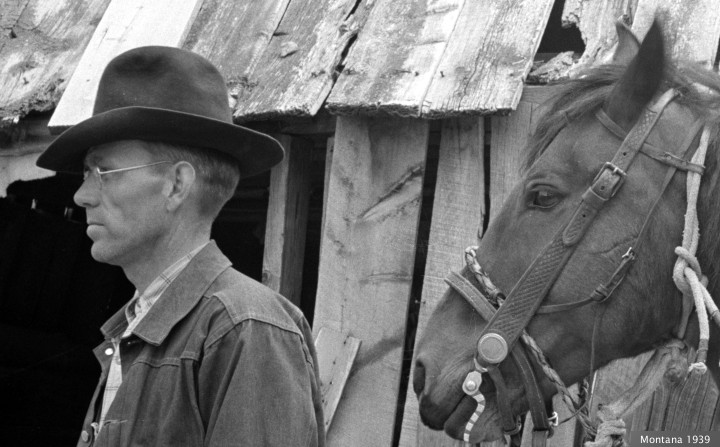
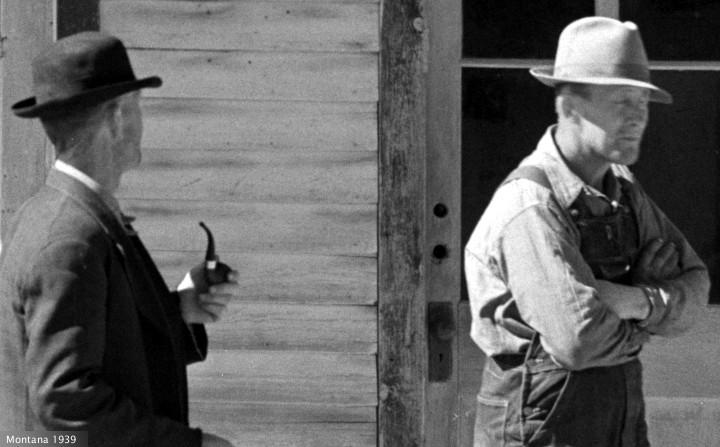
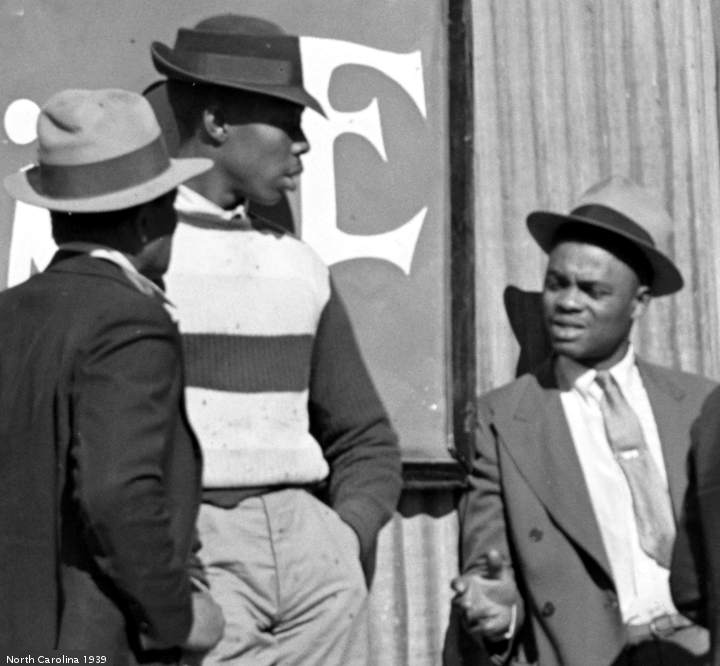
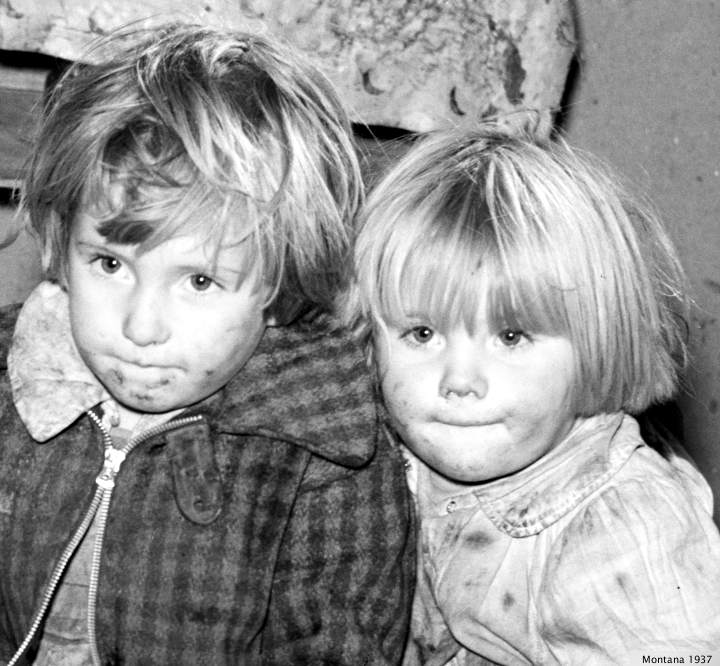
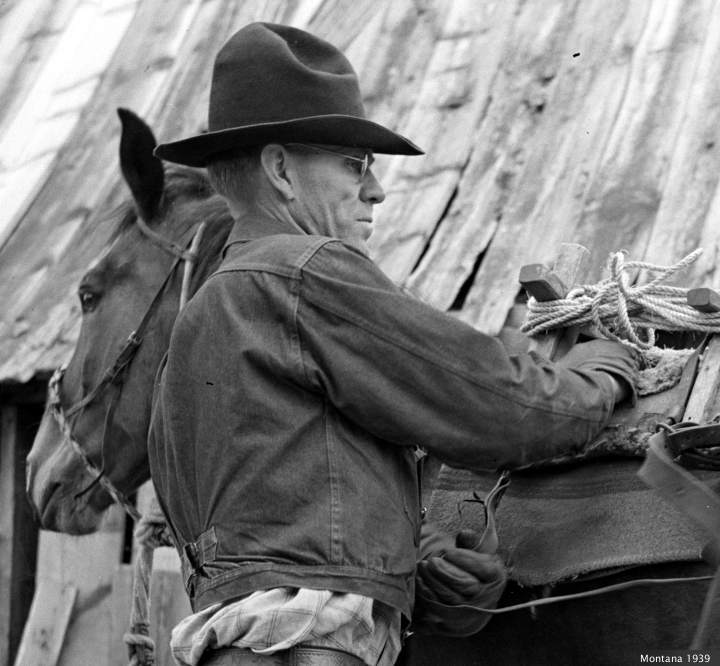
People who like to share opinions have been posting “Best podcasts of 2021” pieces. PG is a podcast consumer, and has written on the subject before. (one two three) This is a good time to catch up on 2021. Pictures today are from The Library of Congress.
The sport of downloading podcast files continues to evolve. If a show is no longer available, there will be a dozen more. Sometimes, you are not smart enough to find a link, and must listen to the show at a website. Another option is the megaphone feed. This is a page, with many lines of code. You scroll down the page, and see title, and the name of the episode. You scroll a bit further down the page, and see an .mp3, usually in blue letters. Highlight this file, left click, select Save Link As, and click ok. These shows depend on support from listeners. If you want to help, all these shows will offer you a way. If you support a show, you are a wonderful human being.
Blocked and Reported comes out at 10 am, EST, on Monday. It is a star podcast for 2021. Perpetrated by Katie Herzog and Jesse Singal, BAR tracks various instances of internet wierdness. K&J have a good natured antagonism which borders on obnoxious, but does not go over the line (yet.) K&J cover many social justice embarrassments, with quotable results.
Once Upon a Time… at Bennington College is a sequel to OUAT … In the Valley, which chamblee54 discussed here. The current show is about the college adventures of Bret Easton Ellis, Jonathan Lethem, and Donna Tartt. Host Lili Anolik has a slightly tacky style, which works well for a slightly tacky story. Bret Easton Ellis is heard from, unlike Donna Tartt. She has sent lawyer letters, telling the players to take down the show.
Bret Easton Ellis has his own podcast, which has long been a PG favorite. That is, when BEEP is available for free. Bret plays the paywall game, which is tons of fun. BEEP was available on stitcher earlier this year, then it wasn’t. PG got into the habit of googling BEEP rss, hoping to find the show. A few weeks ago it turned up on Stitcher again. Who knows how long it will last.
PG was delighted to see BEEP return because of The Shards. This was a 27 part serial about the high school days (daze) of young Bret. TS has sex, drugs, high school drama, murder, more sex, much more drugs, conspicuous consumption, money, more sex, and more drugs. One BEEP disappearance was 13 episodes in, so when BEEP returned, there were 14 episodes to binge on. Mental health is overrated.
Blog pioneer Andrew Sullivan has a show. A few of the episodes were great. The Glenn Greenwald episode had two aging queens taking potshots at each other. Michael Wolff goes on about the mental illness fueling Donald Trump, and never bothers to mention his racial attitudes. The Democrats did America a disservice by making “the resistance” all about racism.
Bari Weiss has a dandy show. The first edition that PG heard was about Amy Cooper, the “Central Park Karen.” That story has a lot of details that never got widespread circulation. Ms. Weiss is someone that PG takes a cafeteria approach to. Many of her podcast episodes are excellent. OTOH, some of her opinions about Israel are beyond horrible. Another opinion comes from The Root: “Bari Weiss, a fellow white woman who is in the running for Kareniest Karen who ever Karened in the history of Klanned Karenhood.”
Cocaine & Rhinestones returned for season two, and it is a doozy. Many shows last over an hour, and open with a discussion of topics ranging from bullfighting to refrigeration. This season focuses on George Jones, and Tammy Wynette. There is so much to wade through here.
Love is a Crime tells the story of Joan Bennett and Walter Wanger. The latter was known to say “Everyone talks about agents, but I’m the one who did something.” LIAC was co-hosted by @KarinaLongworth. She is the host of You Must Remember This, and perhaps the ad reader in podcast land. YMRT is continuing to crank out shows, with Sammy and Dino telling the story of Dean Martin, and Sammy Davis Jr. YMRT is well crafted, and fun to listen to.
No Place Like Home tells about the disappearance of the Ruby Red slippers, worn by Dorothy in “The Wizard of Oz.” To Live and Die in LA returns for a second season, full of slimy characters doing awful things. This is another show that PG stumbled onto after a few episodes, and spent a few lost days binge listening to all the criminality. There are lots of other shows out there … and out there is the appropriate phrase to use. Just remember to eat, and get enough sleep. You will be ok.




Racist Romance Writer Smackdown







In twitterland, there is a list of trending topics. The other day, the top trend was #IStandWithCourtney The trend topping #ISWC tweet: Jingle Elle Maruska (they/them) @ellle_em “#IStandWithCourtney Calling out racism is not being racist Pointing out someone’s unethical behavior is not being unethical I stand with Courtney because white feelings are in no way more important than fighting for marginalized people’s right to exist in any & all spaces” If you think you know where this is headed, you are probably correct. This is a repost from 2019.
Perez Hilton puts it all in a nutshell. “What’s it all about? It’s about racism, injustice, and of course erotic tales of ribald fantasy. Yep, it’s drama in the world of romance novelists! This month the Romance Writers of America suspended author Courtney Milan (presumably asking her to turn in her badge and her quill) over what they called a violation of their code of ethics.”
“So what had Milan, the author of such historical Harlequins as A Kiss For Midwinter … done to deserve this literary excommunication? Apparently fellow novelists Suzan Tisdale (Secrets of the Heart) and Kathryn Lynn Davis (Too Deep For Tears) filed a formal complaint over a twitter thread … in which Milan — a Chinese American author — called out one of Davis’ books for being racist.”
Smart Bitches Trashy Books, LLC has more on this bodice-ripping badass, with documentation galore. (Davis complaint, Tisdale complaint I, Tisdale complaint II) “… whether it’s a publishing house deciding that a contract with a white supremacist is a good idea, or a writer’s organization deciding that white supremacy is the right decision ethically … “
The twitter thread is can’t-miss reading. @courtneymilan read a sample of Somewhere lies the moon. There was a twitter reaction, that will live in infamy. @courtneymilan “And we’ve been talking about Sue Grimshaw? Someone sent me a link to a book written by the other editor, Kathryn Lynn Davis, and is a fucking racist mess.”
The Davis complaint notes that the Milan opinion is based on reading a sample of SLTM. By her own admission, @courtneymilan did not finish the sample, much less read the book. @courtneymilan “Here’s the book. I didn’t finish the sample. I didn’t need to.”
Racism smackdown fans are probably asking, what was so fucking racist messy about SLTM? The accuser is Chinese-American, as is the racially besmirched character. No forbidden words, beginning with N, were used. It is not that type of racism.
The damning nanoagressions are documented in a series of tweets. Here are a few. The part following a link is by @courtneymilan. Transcribed screen shots are identified as (SS). If you click on the link, you can see the entire screen shot. This might help you understand the situation better.
@courtneymilan “This book is like a bingo card of OH GOD DID YOU REALLY. Start out with the heroine, who is the obligatory blue-eyed half-Chinese woman.” (SS) “Lian was twenty-five, tall and lithe, with the thick black hair and bronze skin of the Chinese”@courtneymilan “I mean…. that doesn’t really happen. (Genevra is half-Indian and also blue-eyed.) But also… like. Of course. This is like such a standard racist trope. WHY.”
@courtneymilan “Here is our half-Chinese woman remembering her past, where she is explicitly told that the future is the West, and that for Chinese women, compliance is the rule. SIGH.” (SS)”I am a captive of my own history, but I have raised you to be free, to move forward toward the future – and the future is the West.” “I was no’ askin’ what your parents wanted, but what ye want for yourself” “It is not important. It is not a question I ask myself. In China Shun, compliance, is the rule for women”
@courtneymilan “Here she is, meeting another Chinese family in London. I’m gonna be honest: I don’t know how I feel about “bronze” as the “standard” for Chinese skin (prior tweets), but I *do* know how I feel about “yellow.” And about almond eyes.” (SS) “…their thick blue-black hair and bronze faces, turned slightly yellow by the London climate, were unmistakably Chinese, as were their slanted almond eyes” @courtneymilan “Note that this in Lian’s point of view. She was raised in China. She only describes the Chinese people by skin color/eye slant, not the white people. She’s literally describing absolutely normal people to her as if she were a white woman talking about a foreigner.”
@courtneymilan “Oh, I was searching for something else and found this: In China, women didn’t learn anything.” (SS) “In China, no woman was taught much more than cooking and sewing and the graceful art of pleasing her husband.”
Pictures today are from The Library of Congress.







Harold Bloom





On September 3, 2000, Harold Bloom appeared on Booknotes to promote How to Read and Why. Other C-SPAN news that day involved Vice President Al Gore and Republican Presidential candidate George W. Bush. Mr. Bloom is a professor at Yale University. He has written many books, despite not knowing how to type. There is no false modesty on display.
A teacher is an entertainer, knowing the value of a good line. Over the years, platitudes pile up. Mr. Bloom has collects both books, and clever lines about books. “Oh, I read everything and anything. I’m a desperate reader. If I can’t find anything else, my wife is likely to find me obsessively re-reading cereal box tops in the morning. … I now call myself at times, partly in self-deprication, but partly, I suppose, with a certain fury Bloom brontosaurus bardolater; that is to say, not only a worshiper of Shakespeare, but a brontosaurus, a dinosaur. I’ve never learned how to type”
Fourteen years ago, the internet was still called the “World Wide Web.” It was very much a work in progress. Mr. Bloom viewed the information superhighway with horror. “But the Internet, which I acknowledge is an economic and commercial necessity–the Internet–and many people disagree with me on this, I know–the Internet, I think, is a terrible danger to the life of the mind. It’s a terrible danger to real reading because it’s a kind of great, gray ocean in which everything merges with everything else. And extremely difficult–it is extremely difficult for a young person to establish standards of reading or to find again what could be called intellectual and aesthetic standards of judgment in relation to what is available on it. There is no guidance.”
PG listened to the conversation with Mr. Bloom in the background. In the foreground, pictures were being edited.This is something you cannot do with a dead tree book. This went on happily until the shockwave player crashed, and the machine needed a reboot. This is something else that does not happen with traditional publishing.
“He got rather offended and explained to me, in rather hurt tones, that Sir So-and-so was the leading British authority on information retrieval. I told him honestly, and it’s still true, I did not know what information retrieval was, and I did not wish to find out, and I still don’t know what it is. I said, `Who is the other gentleman?’ And then he said, quite coldly, `He is our leading authority on software.’ I said, `I’ve never learned to type. I’m not at all sure what software is.’ He said, `It doesn’t matter.’ He said, `In any case, Professor Bloom, you ought to come. You will represent the book.’ I said, `This is ridiculous.’ I said, `You’re going to ask me to have a discussion with an authority on something called information retrieval and an authority on software, and I, wretched creature, am supposed to represent the book? I am highly inadequate to represent the book. Anybody would be. And I will not come. Goodbye, sir.’ But that is the British Library.”
Mr. Bloom tells of a visit to Stanford University. The only pleasant time he had was a conversation with the Provost, Condoleezza Rice. (spell check suggestion: Condolence) The rest of the time he decries the custom of teaching literature based on the ethnicity of the author. He tells the story of a desk, with the legs falling off. From clumsy carpentry, he moves onto brain surgery. “If you were being wheeled in for a brain operation, and you were told that the brain surgeon had been chosen on the basis of fairness, on the basis of universalism, on the basis of multiculturalism, you would jump right off the operating table. We do not enforce these things in the medical schools.”
This sounds nice in theory. In real life, the brain surgeon was determined by the willingness of a health insurance bully to pay. Reality is more frightening than fictitious furniture.
The Booknotes conversation took place during election season. The discussion of politicians was indicated. “Leon Trotsky, who was a great, though murderous, human being, but a remarkable writer. And in his own way, a remarkable literary critic.” “I find it powerfully offensive that one of the two major presidential candidates is perhaps the least distinguished graduate of the entire history of Yale University, and I’ve taught there for 46 years, though I never taught this gentleman. But he has boasted to the press, at least until his people told him to talk differently about it, but he began by boasting to the press that he had never read a book through since he left Yale. And indeed, he laughed, he hadn’t read many through there. And, of course, I believe him”
No discussion about Harold Bloom is complete without Naomi Wolf. “In the late fall of 1983, professor Harold Bloom did something banal, human, and destructive: He put his hand on a student’s inner thigh—a student whom he was tasked with teaching and grading. The student was me, a 20-year-old senior at Yale.” Is Bill Cosby going to be teaching at Yale?
The one star comments are festive. “His prose is at times crisp, yet his reasoning wanders about like somnambulist on a treadmill.” “Instead I found myself dragged into a solipsistic rant of Mr. Bloom’s favorite books.” “Please do not waste your money on this book. Each section is devoted ostensibly to a “critique” of a work that Mr. Bloom recommends to his unwashed readers.”
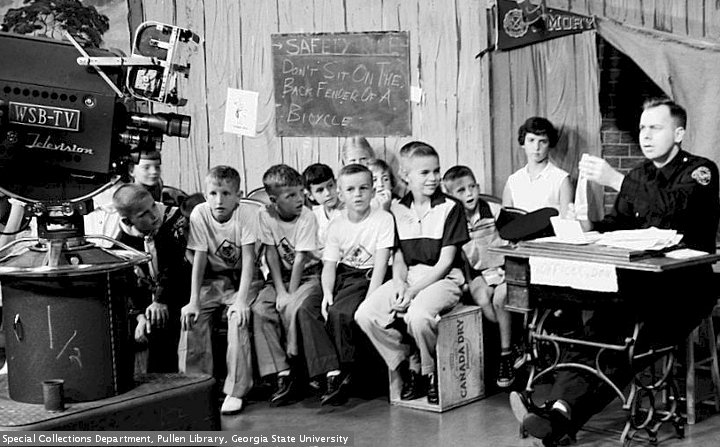
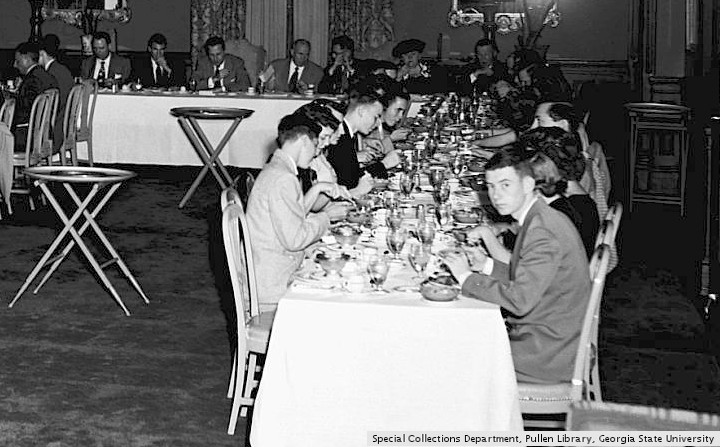
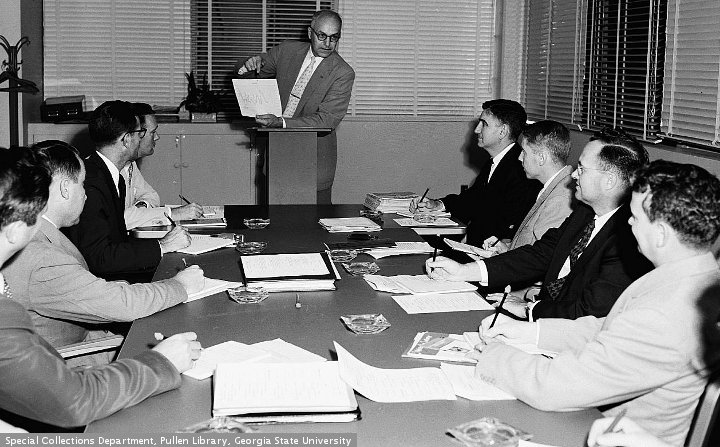
This is a repost. Harold Bloom went to the great library in the sky October 14, 2019. Pictures are from “The Special Collections and Archives, Georgia State University Library.”





The Cynic’s Word Book H – I
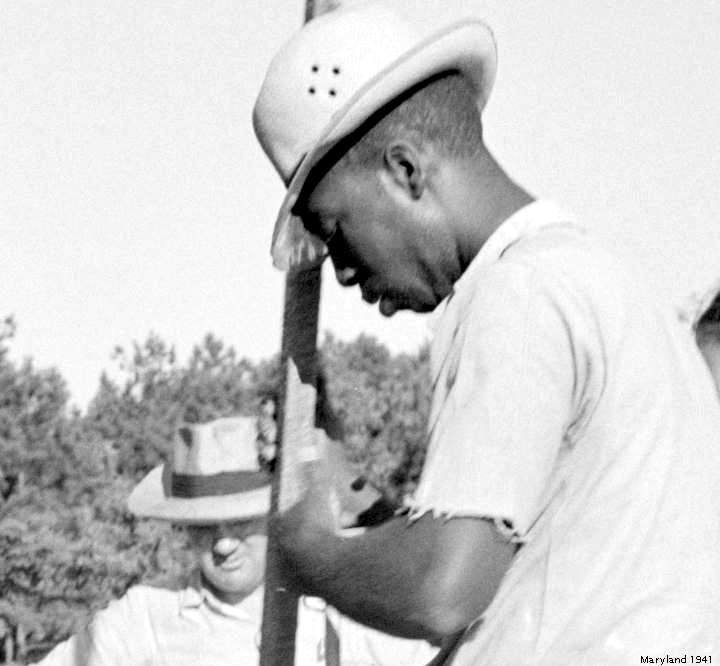

What follows are selections from The Devil’s Dictionary, by Ambrose Bierce. TDD began as a newspaper column, and was later published as The Cynic’s Word Book. TDD is in the public domain. TDD is a dictionary, going from A to Z. Today’s selection covers H to I. More selections are available. (A – D E – G ) Pictures today are from The Library of Congress.
HABIT A shackle for the free.
HAND A singular instrument worn at the end of the human arm,
and commonly thrust into somebody’s pocket.
HANDKERCHIEF A small square of silk or linen, used in various ignoble offices about the face and especially serviceable at funerals to conceal the lack of tears. The handkerchief is of recent invention; our ancestors knew nothing of it and intrusted its duties to the sleeve.
HAPPINESS An agreeable sensation arising from contemplating the misery of another.
HARANGUE A speech by an opponent, who is known as an harangue-outang.
HASH There is no definition for this word—nobody knows what hash is.
HATCHET A young axe, known among Indians as a Thomashawk.
“O bury the hatchet, irascible Red, For peace is a blessing,” the White Man said.
The Savage concurred, and that weapon interred, With imposing rites, in the White Man’s head.
HEART An automatic, muscular blood-pump. Figuratively, this useful organ is said to be the seat of emotions and sentiments—a very pretty fancy which, however, is nothing but a survival of a once universal belief. It is now known that the sentiments and emotions reside in the stomach, being evolved from food by chemical action of the gastric fluid.
HEATHEN A benighted creature who has the folly to worship something that he can see and feel. According to Professor Howison, of the California State University, Hebrews are heathens.
HEAVEN A place where the wicked cease from troubling you with talk of their personal affairs, and the good listen with attention while you expound your own.
HEBREW A male Jew, as distinguished from the Shebrew, an altogether superior creation.
HEMP A plant from whose fibrous bark is made an article of neckwear which is frequently put on after public speaking in the open air and prevents the wearer from taking cold.
HERMIT A person whose vices and follies are not sociable.
HOMICIDE The slaying of one human being by another. There are four kinds of homocide: felonious, excusable, justifiable, and praiseworthy, but it makes no great difference to the person slain whether he fell by one or another—the classification is for advantage of lawyers.
HOSPITALITY The virtue which induces us to feed and lodge
certain persons who are not in need of food and lodging.
HOUSE A hollow edifice erected for the habitation of man, rat, mouse, beetle, cockroach, fly, mosquito, flea, bacillus and microbe. House of Correction, a place of reward for political and personal service, and for the detention of offenders and appropriations. House of God, a building with a steeple and a mortgage on it. House-dog, a pestilent beast kept on domestic premises to insult persons passing by and appal the hardy visitor.
HUSBAND One who, having dined, is charged with the care of the plate.
HYPOCHONDRIASIS Depression of one’s own spirits.
Some heaps of trash upon a vacant lot Where long the village rubbish had been shot
Displayed a sign among the stuff and stumps— “Hypochondriasis.”It meant The Dumps.
IGNORAMUS A person unacquainted with certain kinds of knowledge familiar to yourself, and having certain other kinds that you know nothing about.
Dumble was an ignoramus, Mumble was for learning famous.
Mumble said one day to Dumble: “Ignorance should be more humble.
Not a spark have you of knowledge That was got in any college.”
Dumble said to Mumble:”Truly You’re self-satisfied unduly.
Of things in college I’m denied A knowledge—you of all beside.”
IMAGINATION A warehouse of facts, with poet and liar in joint ownership.
IMBECILITY A kind of divine inspiration,
or sacred fire affecting censorious critics of this dictionary.
IMMODEST Having a strong sense of one’s own merit,
coupled with a feeble conception of worth in others.
IMPARTIAL Unable to perceive any promise of personal advantage from
espousing either side of a controversy or adopting either of two conflicting opinions.
IMPIETY Your irreverence toward my deity.
IMPOSTOR A rival aspirant to public honors.
IMPROVIDENCE Provision for the needs of to-day from the revenues of to-morrow.
INCUMBENT A person of the liveliest interest to the outcumbents.
INDIFFERENT Imperfectly sensible to distinctions among things.
“You tiresome man!” cried Indolentio’s wife, “You’ve grown indifferent to all in life.”
“Indifferent?” he drawled with a slow smile; “I would be, dear, but it is not worth while.”
INDISCRETION The guilt of woman.
INEXPEDIENT Not calculated to advance one’s interests.
INFIDEL In New York, one who does not believe in the Christian religion;
in Constantinople, one who does.
INFLUENCE In politics, a visionary quo given in exchange for a substantial quid.
INGRATE One who receives a benefit from another, or is otherwise an object of charity.
“All men are ingrates,” sneered the cynic.”Nay,” The good philanthropist replied;
“I did great service to a man one day Who never since has cursed me to repay, Nor vilified.”
“Ho!” cried the cynic, “lead me to him straight—With veneration I am overcome,
And fain would have his blessing.””Sad your fate—
He cannot bless you, for I grieve to state This man is dumb.”
INJURY An offense next in degree of enormity to a slight.
INK A villainous compound of tannogallate of iron, gum-arabic and water, chiefly used to facilitate the infection of idiocy and promote intellectual crime.
INTIMACY A relation into which fools are providentially drawn for their mutual destruction.
ITCH The patriotism of a Scotchman.



Did Socrates Read And Write?


This story starts with a facebook meme. A fbf posted a picture of a thoughtful statue. The text read ‘When the debate is lost, slander becomes the tool of the loser.’ -Socrates. PG thought that Socrates never wrote anything that survived. All of what we attribute to Socrates was written by Plato. People reading this blog should know what happened next. This is a repost
Did Socrates Say Slander Is ‘The Tool of the Losers”? is one of several results. They all said the same thing … the quote is bogus. A tweet from Eric Trump is not evidence of authenticity.
PG began to think, which is never a good sign. Was Socrates able to read and write? was on the screen a few minutes later. The speculation is mixed. Some say that that Socrates was stone illiterate.
Thomas Musselman “Socrates served in the government on juries. Historians now know that legal proceedings were common over business matters of great sophistication and the the juries were well-educated concerning such matters. General literacy existed by the late 400s BC for the general pubic in primary school. Upper class males even in Socrates’ day would have been literate and there was an active book-seller market. To function in the world that Socrates functioned in required literacy.”
Google turned up a curious document. It is a passage written by Plato,“Phaedrus.” Pp. 551-552 in Compete Works. An Egyptian G-d is talking to a King, about an invention … writing.
“In fact, it (writing) will introduce forgetfulness into the soul of those who learn it: they will not practice using their memory because they will put their trust in writing, which is external and depends on signs that belong to others, instead of trying to remember from the inside, completely on their own. You have not discovered a potion for remembering, but for reminding; you provide your students with the appearance of wisdom, not with its reality. Your invention will enable them to hear many things without being properly taught, and they will imagine that they have come to know much while for the most part they will know nothing. And they will be difficult to get along with, since they will merely appear to be wise instead of really being so.”
SOCRATES: “But, my friend, the priests of the temple of Zeus at Dodona say that the first prophecies were the words of an oak. Everyone who lived at that time, not being as wise as you young ones are today, found it rewarding enough in their simplicity to listen to an oak or even a stone, so long as it was telling the truth, while it seems to make a difference to you, Phaedrus, who is speaking and where he comes from. Why, though, don’t you just consider whether what he says is right or wrong?”
Pictures today are from The Library of Congress. Part two is after the break.



A facebook friend posted a meme. It had an picture of Bertrand Russell, quoted as saying “If fifty million people say a foolish thing, it is still a foolish thing.” PG consulted with Mr. Google, and had his answer in seconds.
“From the wikiquotes page of Anatole France “Si 50 millions de personnes disent une bêtise, c’est quand même une bêtise. If fifty million people say a foolish thing, it is still a foolish thing. As quoted in Listening and Speaking : A Guide to Effective Oral Communication (1954) by Ralph G. Nichols and Thomas R. Lewis, p. 74. Misattributed to Bertrand Russell, by Laurence J. Peter, in The Peter Prescription : How To Make Things Go Right (1976), but he subsequently attributed to France in Peter’s Quotations: Ideas for Our Time (1977).”
“As I’ve said on many occasions, I don’t care who a quote is (mis)attributed to. I share a meme because its message resonates for me.” PG “If a million facebook users post a misattributed quote, it is still a misattributed quote … I have this vague sense that it does make a difference, but I can’t find the words to say why. Maybe google will have a snappy quote, preferably in English, that will give me a reason why correct attribution matters.”
“With google available, it is so, so easy to verify a quote before you post it. Often, the context of the quote puts a different shade on the meaning. Like the quote above. I have no idea why Mr. France said that, or what he meant. Sometimes, the words come from a foolish character in a story, and the author is making fun of them. Since I do not read French, I do not know how accurate the translation is.” (Google translate says “If 50 million people say stupidity, it’s still a stupidity.”)
“There is a famous quote from Ben Franklin about security and liberty. The quote is totally legitimate. It is taken from an Editorial Mr. Franklin was paid to write. The editorial supported the colonial government, in their efforts to levy a tax on farmers.”
The Ben Franklin post linked above has a useful link. “‘Contextomy’ refers to the selective excerpting of words from their original linguistic context in a way that distorts the source’s intended meaning, also known as ‘quoting out of context’. Contextomy is employed in contemporary mass media to promote products, defame public figures and misappropriate rhetoric. A contextomized quotation not only prompts audiences to form a false impression of the source’s intentions, but can contaminate subsequent interpretation of the quote when it is restored to its original context.”
Another chamblee54 post, about a dubious quote, refers to the Four Principles of Quotation. Principle 1 Whenever you see a quotation given with an author but no source assume that it is probably bogus. Principle 2 Whenever you see a quotation given with a full source assume that it is probably being misused, unless you find good evidence that the quoter has read it in the source. Principle 3 Whenever you make a quotation, give the exact source. Principle 4 Only quote from works that you have read.
This does not answer the question… is it WRONG to put the incorrect name at the bottom of a quote? Sharing a meme on facebook is not the same as putting a goofy quote in a term paper. While this is something that PG is loath to do, is it really that bad for someone else? Certainly there are concerns about context. Memes often do not use the quote as the author would have intended.
After a few frustrating search terms, PG decided to google “I don’t care who a quote is (mis)attributed to. I share a meme because its message resonates for me.” Google replied “Did you mean: I don’t care who a quote is (mis)attributed to. I share a meme because it’s message resonates for me” Apparently, Google does not know that the possesive form of its does not have an apostrophe. It’s is short for it is.
There were some lively results, though few answered the key question. “Furthermore, and this does bear mentioning, Andy Rooney did not write this. He died in 2011 so the words in the post, “let’s make 2019/2020 the year the silent majority is heard,” is ridiculous.” “Ever since the quote’s real author emerged, there’s been a lively discussion on Facebook about whether it even matters who said it – as long as someone said it.”
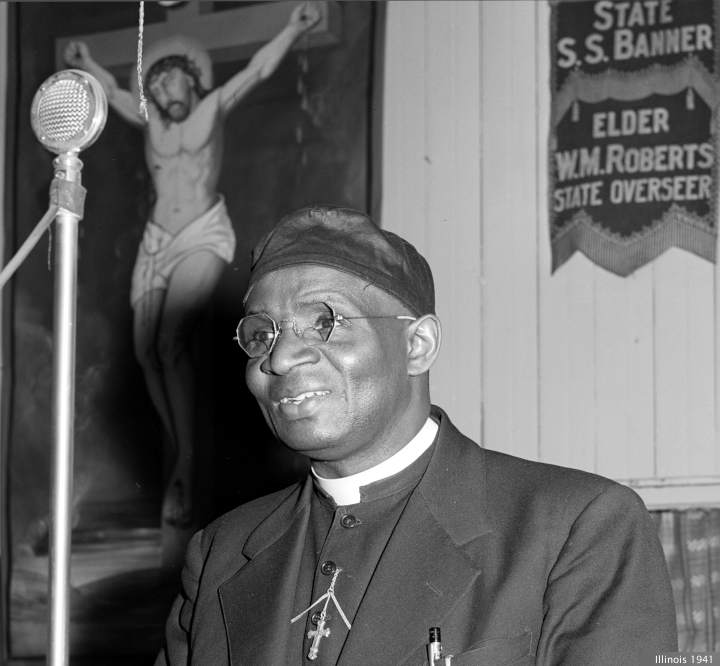
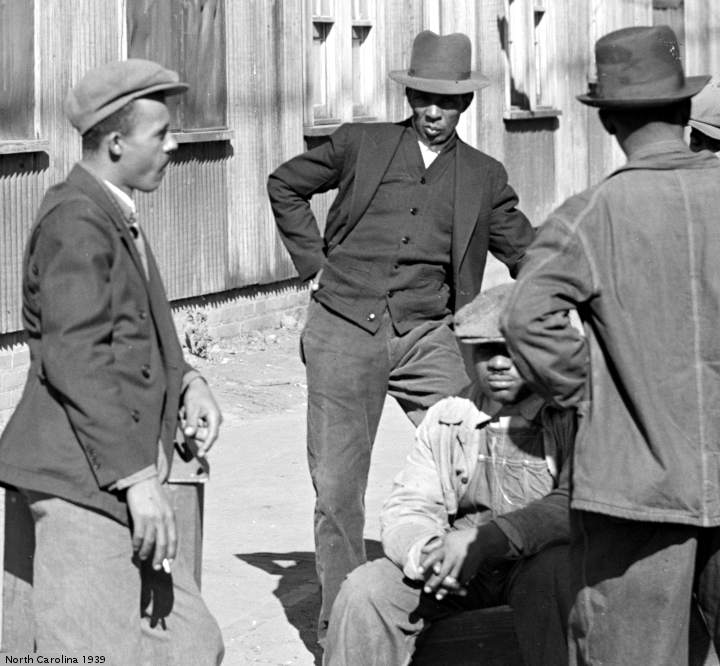
One result typifies the entire commodity wisdom catalog. Best Inspirational Quotes For Killer Social Media Posts There is a pop-up ad that will not go away. “149 Inspirational Quotes: Free PDF! Want to inspire your friends and followers with uplifting words? Grab my collection of 149 short quotes that are just the right length for social media posts, PLUS tips on how to make and post them! Sign up now and you’ll have the free PDF in a flash” Pictures today are from The Library of Congress.

Thanksgiving Letter





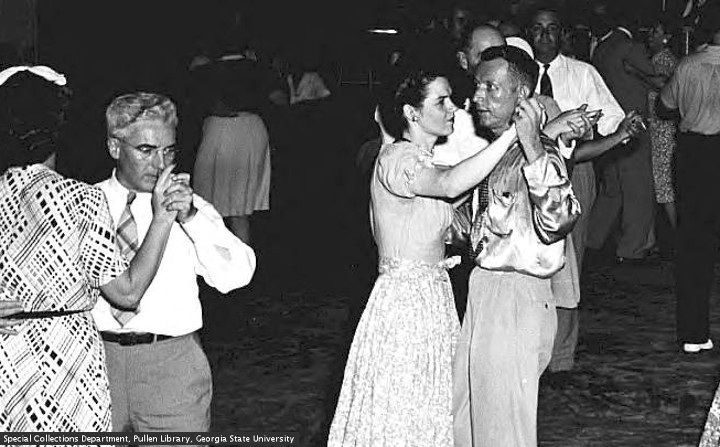


This is the 2011 Thanksgiving letter from Margaret and Helen. Pictures are from “The Special Collections and Archives, Georgia State University Library”.
Thanksgiving Letter to the Family 2011
Dear Family,
We lost your Grandpa this year and suddenly everyone wants to be together for the holidays. Well isn’t that just the shit. I hope you all learned your lesson. Treasure your family while they are still here – not after they are gone. Life is a series of lessons. Pay attention.
Now about Thanksgiving… Your Aunt Trudy thinks that just because Thanksgiving dinner is at her house this year, I am not in charge. Well bless her heart. Here are the rules:
01- This year Cloe’s jello crap is fine by me. Trudy’s gravy is always a little thin for my taste. A little jello might thicken it up a bit.
02- I respect the cook, but 99% of us respect good food even more. I reserve the right to occupy the kitchen and add an extra stick or two of butter to any dish that doesn’t meet with my satisfaction. And for the record, pepper spray belongs in the kitchen not on college campuses.
03- I respect the debate, but I reserve the right to grab a bar of soap if I hear Bill O’Reilly nonsense coming out of your mouth.
04- You can never have enough paprika in the kitchen.
05- Mary and Rhonda, feel free to bring the children and the pets. Harvey hasn’t let Trudy buy new furniture since 1978. No one will notice an extra stain or two.
06- Trudy – if I have told you once, I have told you a hundred times – add the bacon and the grease. Everything tastes better cooked in bacon grease.
07- Jonathan. Your Republicans have made fools enough of themselves already. Don’t add to the idiot parade by claiming you have liked Newt all along. You liked Michele until Perry came along. You liked Perry until he said oops. And you liked Cain until he groped your wife. It’s just a matter of time until Newt steps in it too. For goodness sakes, his shoes still stink from the last time he ran. Like it or not honey, Romney is taking you to the Prom.
08- Nobody does deviled eggs correctly. You have to use vinegar.
09- Nobody does Republican presidential debates correctly. You have to use your brain.
10- Marshall. Your children can’t sing. There I said it and I am not taking it back.
11- Bacon. Trudy, you just have to trust me on this. Bacon.
Your Grandpa Harold knew you loved him. Let’s just be thankful we had him as long as we did. Happy Thanksgiving. I mean it. Really.






Inspiration Is For Amateurs






It is a T shirt treasure, and a coffee cup classic. “Eighty percent of success is showing up.” This gem is blamed on Allan Stewart Konigsberg, better known as Woody Allen. The percentage goes up and down, and life is sometimes substituted for success.
The quote was recently featured at WIST, or Wish I’d Said That. This quote site is known for giving a source, unlike the sites featuring purring platitudes in front of a cultural kitten. The current top offering is “Bach almost persuades me to be a Christian.” Virginia Woolf attributes the baroque comment to Roger Fry who was not afraid of the author.
Getting back to Mr. Allen and success statistics. He accepts full responsibility for the remark. In 1989, notorious conservative columnist William Safire asked Mr. Allen about whether he said life or success. The answer was rather surprising.
“The quote you refer to is a quote of mine which occurred during an interview while we were discussing advice to young writers, and more specifically young playwrights. My observation was that once a person actually completed a play or a novel he was well on his way to getting it produced or published, as opposed to a vast majority of people who tell me their ambition is to write, but who strike out on the very first level and indeed never write the play or book.”
In other words, you don’t just show up empty handed. If you have an idea, you have to employ the writing formula, ass + chair. You have to turn the tv off, leave the beer in the refrigerator, sit down, and push buttons on the keyboard.
The second part of today’s entertainment is an encore presentation, Inspiration Is For Amateurs. Pictures are from The Library of Congress.






PG was listening to an interview with a fiction writer. Someone said “Inspiration is for amateurs.” PG has always been more impressed by action than beliefs, and this phrase made sense. This repost is a good excuse to post some more pictures from The Library of Congress.
The phrase is from a painter named Chuck Close. His output is expensive, and widely enjoyed. A spinal injury left him paralyzed, but did not stop him from producing. Here is the full quote:
“The advice I like to give young artists, or really anybody who’ll listen to me, is not to wait around for inspiration. Inspiration is for amateurs; the rest of us just show up and get to work. If you wait around for the clouds to part and a bolt of lightning to strike you in the brain, you are not going to make an awful lot of work. All the best ideas come out of the process; they come out of the work itself. Things occur to you. If you’re sitting around trying to dream up a great art idea, you can sit there a long time before anything happens. But if you just get to work, something will occur to you and something else will occur to you and something else that you reject will push you in another direction. Inspiration is absolutely unnecessary and somehow deceptive. You feel like you need this great idea before you can get down to work, and I find that’s almost never the case.”
A man once made pottery. It was said that the man only worked with passion, and that if he didn’t feel this passion he did not work. When PG heard that, his thought was that if PG worked that way, he would never finish anything. Most of the sticker pictures take a while to finish. PG always gets tired of the picture before it is through. The idea is to go to the studio, start to do stuff, and before long the enthusiasm will return. Any image requires a certain amount of time with the belly pressed against the work table, or the digital equivalent.
The formula for writing is ass plus chair. A teacher once said to not stare at the blank page, waiting for a bolt of lightening. Start to write something, and the ideas will start to sputter out of the pipeline.
It is not enough to have a bright idea. You have to work the problems out. Sometimes, you spend more time finding out what does not work, than what does. You have to do it wrong before you can do it right. Genius is ninety nine percent perspiration and one percent inspiration. If any cliches have been overlooked, please add them to the comments.
One thing that is helpful is to be focused. The internet can be a problem. When you should be thinking about your product, it is very tempting to see the latest on Facebook or Twitter.





Tony Hovater


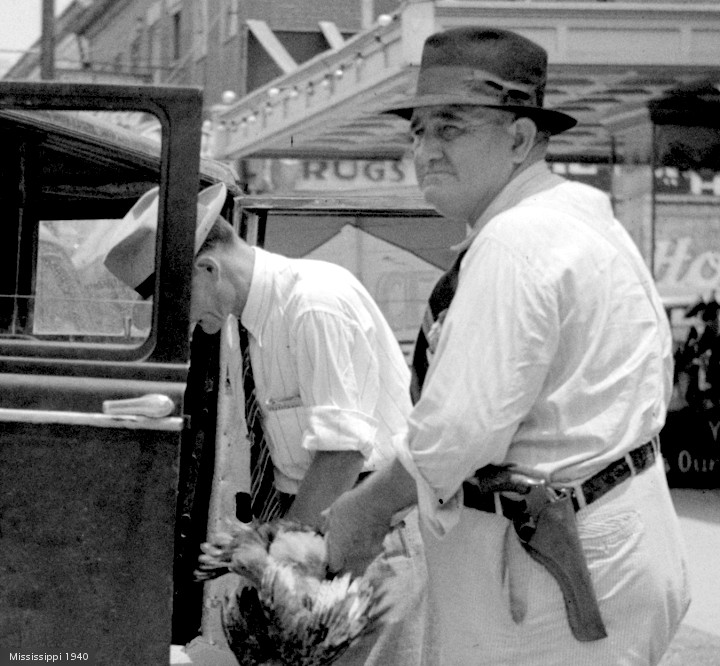




A Voice of Hate in America’s Heartland is a controversial bit of product placement for Panera Bread. New York Times reporter Richard Fausset goes to smalltown Ohio to meet Tony Hovater. “In 2015, he helped start the Traditionalist Worker Party, one of the extreme right-wing groups that marched in Charlottesville, Va., in August, and again at a “White Lives Matter” rally last month in Tennessee. The mission is to “fight for the interests of White Americans.’’ This is a double repost.
Virtual America is not pleased. Twitter screeds by @magi_jay and @bessbell have been widely shared. This facebook comment speaks for many: “The article serves to humanize and normalize him/far-right extremism/Nazism — which was one of Tony Havater’s stated desires/goals re: his present involvement in the white nationalist/Nazi movement. By normalizing them, they are given a seat at the table of political discourse which is absolutely a back-asswards step.”
When PG sees a tweetstorm like this, his first instinct is to find the original material. Read the article, not what @ShaunKing says about it. When you read the original, you wonder if it is the same article. The original is full of snide references, and logical fallacies. Maybe what the masses want is a ritual denunciation of the anointed poopyhead. As one online publication put it, “ensure that white supremacists and Nazis are thought of and treated the same way you might treat a roach scurrying across a kitchen counter.” Lets look at some quotes from the NYT article.
“Mr. Hovater’s face is narrow and punctuated with sharply peaked eyebrows, like a pair of air quotes, and he tends to deliver his favorite adjective, “edgy,” with a flat affect and maximum sarcastic intent. It is a sort of implicit running assertion that the edges of acceptable American political discourse — edges set by previous generations, like the one that fought the Nazis — are laughable.”
The previous generations of America are a mixed bag. Yes, they fought the Germans in WW2. They also fought Native Americans, and said “the only good Indian is a dead Indian.” “The edges of acceptable American political discourse” once included Jim Crow laws. American political discourse is an ever-changing work in progress.
“After he attended the Charlottesville rally, in which a white nationalist plowed his car into a group of left-wing protesters, killing one of them, Mr. Hovater wrote that he was proud of the comrades who joined him there: “We made history. Hail victory.” In German, “Hail victory” is “Sieg heil.””
James Alex Fields is accused of killing Heather Meyer with a Dodge Challenger. We don’t know if he was acting on orders, where those orders came from, or if he is a loose cannon, acting on his own. While the march organizers certainly bear some responsibility for that tragedy, we do not know the entire story. In any event, that has nothing to do with the German translation of “Hail Victory.” That interjection is a red herring.
I Interviewed a White Nationalist and Fascist. What Was I Left With? was published after the backlash hit. It is a commentary by the author, in which he laments not finding the “rosebud” to this story. There is a revealing quote near the end. “…I saw, on his bookshelf, two volumes of Helena Blavatsky’s “The Secret Doctrine,” 19th-century work of esoteric spiritualism whose anti-Semitism influenced Nazi thinking. But even if I had called Mr. Hovater yet again — even if we had discussed Blavatsky at length, the way we did his ideas about the Federal Reserve Bank — I’m not sure it would have answered the question. What makes a man start fires?”
Helena Petrovna Blavatsky (Еле́на Петро́вна Блава́тская) is a 19th century Russian that few people know about. This obscurity allows Mr. Fausset to fill in the blanks with a gratuitous comment about anti-Semitism. This inclusion also assumes that Mr. Hovater has read the books.
The reference to the Federal Reserve Bank is more telling. If you listen to this podcast, you learn that Mr. Hovater is more concerned with economics than white nationalism. You will also learn that many of his ideas are not well thought out. Mr. Hovater, a former drummer in a heavy metal band, is similar to that libertarian in the break room … the one who will not shut up, and go back to work.
Tony Hovater is a walking, talking illustration of the Dunning-Kruger effect. (The spell check suggestion for Hovater is Overate.) He simply does not know what he is talking about. People who call him a Nazi are missing the point. The Nazis were smart, and tough. Mr. Hovater has his good points, much to the disappointment of sjw-twitter. Unfortunately, he simply is not that smart. The NYT obscures this proud ignorance with snarky comments about Charlottesville, and swastikas.
Saying Tony Hovater is stupid will not satisfy the keyboard warrior. Talking about economics is not as much fun as denouncing the third reich … as if the LARP-tikitorch crowd is the same as the Schutzstaffel. SJW twitter does not like subtlety. This is what they want to hear: “Of course, profiles on the people directly harmed by this hate speech and violence would be much more compelling. But that would require whiteness—white maleness, specifically—to be uncentered. And uncentering whiteness is harder than eating just one Lay’s potato chip, apparently.”
Pictures are from The Library of Congress.





The NYT article about Tony Hovater got a lot of attention. As other stories become the fascination of the day, Mr. Hovater is fading into unemployed obscurity. This followup feature (here is part one) will look at some of the stupid things that have said about the NYT article. Pictures are from The Library of Congress. If you want to skip over the text, and look at the pictures, you will be forgiven.
Here Are Some Facts and Questions About That Nazi the New York Times Failed to Note takes the prize. “He’s not really named “Tony Hovater.” Like many neo-Nazis and white supremacists, Hovater uses a modified version of his legal name in his racist activities. His real name is William Anthony Hovater, which is the name he’s registered to vote under and which appears on other public records associated with him. It’s unusual for any newspaper, let alone the Times, not to say when their subject isn’t using their real name. A paper that insists on noting Snoop Dogg’s legal name can probably do the same for a Nazi, no?”
What the New York Times’ Nazi Story Left Out Apparently Mr. Hovater is motivated by economics, as much as race. However, Slate never misses a chance to stir the racial stew. Author Jamelle Bouie is especially fond of the word *virulent*, using it six times, always in front of racism/racist. Another Slate feature, The Urgent Reality of Online Extremism, says the NYT article was “deeply fact checked.” The link is to the splinter article referenced above … the one that said Tony Hovater was not the real name of William Anthony Hovater.
@panerabread featured prominently in the NYT. While researching his commentary, PG wondered if Panera had distanced itself from the controversy. The turkey sandwich was no longer available for comment. A google search turned up this exchange. @nytimes The Chemicals in Your Mac and Cheese @panerabread “With us, you can have your mac and feel good about it too.”
@magi_jay twittered a timely tweetstorm about the NYT article. Their comments focused on other things the NYT could have said. “@magi_jay 16/ What are some other things the Times could done? Well they could have interviewed a behavioral scientist on the psychological traits of white supremacists. How they justify their hatred, etc. . . . As well as the tendencies of their white neighbors to look the other way.” @magi_jay does not consider that the NYT article contained 2373 words. This is roughly ten times the length of the typical reader’s patience. If the NYT has done all the things @magi_jay suggested, the article would have become a doorstop novel.
@bessbell “I don’t mean to sound intolerant or coarse, but fuck this Nazi and fuck the gentle, inquisitive tone of this Nazi normalizing barf journalism, and fuck the photographer for not just throwing the camera at this Nazi’s head and laughing.” This is the beginning of another popular twitfest. It was mentioned in the sorry we offended you article, in which the *liberal media* NYT apologizes for allowing Mr. Hovater to live. @bessbell seems to confuse white boy cosplay for the Schutzstaffel. *Nazi* is being trivialized by promiscuous overuse, and will soon mean as much as *racist*, *christian*, or *poopyhead*.
The NYT article about Tony Hovater is past its fifteen minutes. SJW twitter can get their woke jollies listening to I’m Not Racist. #MeToo warriors can sharpen their pitchforks, and wait for the next celebrity to fall from grace. As Roseanne Roseannadanna used to say, It’s Always Something.



Four Rules




This is a double repost. Historic pictures today are from “The Special Collections and Archives, Georgia State University Library”. This was written like David Foster Wallace
When PG was a kid, his grandmother lived in a side apartment, in a house on Virginia Avenue. The owner of the house was Mrs. Stuckey. (PG never learned her “real” name, and assumed that checks were made out to Mrs.) There was a framed piece of paper in Mrs. Stuckey’s hall. The top said “The Four-Way Test of the things we think, say or do” , and featured the logo of the Rotary Club. The four rules were simple, on the surface. Is it the TRUTH? Is it FAIR to all Concerned? Will it build GOODWILL and BETTER FRIENDSHIPS? Will it be BENEFICIAL to all concerned?
The Four Way Test was written by Herbert J. Taylor. In 1932, Mr.Taylor took over the bankrupt Club Aluminum Company of Chicago. Trying to revive the company during the depression, Mr. Taylor wrote a code of ethics, that would be the basis for the company’s actions.
Many said that the four way test was not practical for the business world. The balancing of integrity and ambition can be daunting. It was said that “This emphasis on truth, fairness and consideration provide a moral diet so rich that it gives some people “ethical indigestion.”
PG maintains that fair is a baseball hit between first and third base. Sometimes, the umpire makes the wrong call. In the “real world”, the different points of view in a dispute make rendering a fair judgment a difficult task, if not an impossible one.
There is a story about the revival of Club Aluminum. ” One day, the sales manager announced a possible order for 50,000 utensils. Sales were low and the company was still struggling at the bankruptcy level. The senior managers certainly needed and wanted that sale, but there was a hitch. The sales manager learned that the potential customer intended to sell the products at cut-rate prices. “That wouldn’t be fair to our regular dealers who have been advertising and promoting our product consistently,” he said. In one of the toughest decisions the company made that year, the order was turned down. There was no question this transaction would have made a mockery out of The Four-Way Test the company professed to live by.”
How did the sales manager learn of the intentions of this buyer? Was he tipped off by one of the “regular customers” who feared competition? Was this “regular customer” lying? Many inspirational stories leave out crucial details.
As it turns out, Club Aluminum did sell enough product to emerge from bankruptcy. “By 1937, Club Aluminum’s indebtedness was paid off and during the next 15 years, the firm distributed more than $1 million in dividends to its stockholders. Its net worth climbed to more than $2 million.”
Club Aluminum cookware was cast, not spun. It is heavy, and is a prized collectors item today. As for the Club Aluminum company “Standard International Corporation bought it in 1968. Regalware made and marketed Club Aluminum for a while, but went out of business in the mid-1980s. The brand name was eventually obtained by the Mirro Company.”
This is a repost. Philosophy and rules for living is always a crowd pleaser. Whether or not you practice what you preach is beside the point.
There is a story above. A company, facing bankruptcy, turned down a huge order because of concerns about how the product would be resold. Today, this seems quaint. Today, the moral thing to do would be to take the order, keep your factory busy, and not worry how it was going to be resold. While some pretend that moral rules are unchanging, the truth is that they do change with the times.
This reminds PG of a story from his days as a blueprinter. With ammonia developed prints, every print is fed by hand, and you have the option to adjust the speed of the machine. Slower prints mean less background, which to some is a higher quality print. (This is not an issue with digital printing. Some change is indeed progress.)
The company PG worked for was affiliated with a small, family run company in a neighboring city. This company was run by an old fashioned lady, who insisted on adjusting every print to get the perfect background. This was different from the company PG worked for, which ran large jobs for the big city market. To his customers, quality meant getting an acceptable print, DELIVERED ON TIME. Who had the higher standards? Maybe that is a question for the customer to judge.




These thoughts are for you to use. They were articulated by a man named Don Miguel Ruiz. They are called the The Four Agreements .
PG does not claim to live up to these ideals. Number two is especially tough for him. The main thing is to try, and to always do your best. This is not about what you believe or think, it is about what you do. This is about you. If you fall short in some way, work on improving yourself, instead of looking at someone else. This is about you.
agreement 1–Be impeccable with your word – Speak with integrity. Say only what you mean. Avoid using the word to speak against yourself or to gossip about others. Use the power of your word in the direction of truth and love.
agreement 2–Don’t take anything personally – Nothing others do is because of you. What others say and do is a projection of their own reality, their own dream. When you are immune to the opinions and actions of others, you won’t be the victim of needless suffering.
agreement 3–Don’t make assumptions – Find the courage to ask questions and to express what you really want. Communicate with others as clearly as you can to avoid misunderstandings, sadness and drama. With just this one agreement, you can completely transform your life.
agreement 4–Always do your best – Your best is going to change from moment to moment; it will be different when you are healthy as opposed to sick. Under any circumstance, simply do your best, and you will avoid self-judgment, self-abuse and regret.


The Cynic’s Word Book E – G




What follows are selections from The Devil’s Dictionary, by Ambrose Bierce. Many things could be said about Mr. Bierce. TDD began as a newspaper column, and was later published as The Cynic’s Word Book. TDD is in the public domain. TDD is a dictionary, going from A to Z. Today’s selection covers E – G. More selections are available. A – D Pictures today are from The Library of Congress.
EAT, v.i. To perform successively (and successfully)
the functions of mastication, humectation, and deglutition.
ECONOMY, n.
Purchasing barrel of whiskey that you do not need for price of cow that you cannot afford.
EDIBLE, adj. Good to eat, and wholesome to digest, as a worm to a toad,
a toad to a snake, a snake to a pig, a pig to a man, and a man to a worm.
EGOTIST, n. A person of low taste, more interested in himself than in me.
ELOQUENCE, n. The art of orally persuading fools that white is the color that it appears to be.
It includes the gift of making any color appear white.
EMOTION, n. A prostrating disease caused by a determination of the heart to the head.
It is sometimes accompanied by a copious discharge of hydrated chloride of sodium from the eyes.
EPICURE, n. An opponent of Epicurus, an abstemious philosopher who, holding that pleasure should be the chief aim of man, wasted no time in gratification from the senses.
EPITAPH, n. An inscription on a tomb, showing that virtues acquired by death
have a retroactive effect. Following is a touching example:
Here lie the bones of Parson Platt, Wise, pious, humble and all that,
Who showed us life as all should live it; Let that be said—and God forgive it!
ERUDITION, n. Dust shaken out of a book into an empty skull.
ETHNOLOGY, n. The science that treats of the various tribes of Man,
as robbers, thieves, swindlers, dunces, lunatics, idiots and ethnologists.
EULOGY, n. Praise of a person who has either the advantages of wealth and power,
or the consideration to be dead.
EVANGELIST, n. A bearer of good tidings, particularly (in a religious sense) such as assure us of our own salvation and the damnation of our neighbors.
EXCOMMUNICATION, n.
This “excommunication” is a word In speech ecclesiastical oft heard,
And means the damning, with bell, book and candle,
Some sinner whose opinions are a scandal—
A rite permitting Satan to enslave him Forever, and forbidding Christ to save him.
EXHORT, v.t. In religious affairs, to put the conscience of another upon the spit
and roast it to a nut-brown discomfort.
EXISTENCE, n.
A transient, horrible, fantastic dream, Wherein is nothing yet all things do seem:
From which we’re wakened by a friendly nudge Of our bedfellow Death, and cry:”O fudge!”
FASHION, n. A despot whom the wise ridicule and obey.
FEAST, n. A festival. A religious celebration usually signalized by gluttony and drunkenness, frequently in honor of some holy person distinguished for abstemiousness.
FIDDLE, n. An instrument to tickle human ears by friction of a horse’s tail on entrails of a cat.
FLOP, v. Suddenly to change one’s opinions and go over to another party.
The most notable flop on record was that of Saul of Tarsus,
who has been severely criticised as a turn-coat by some of our partisan journals.
FORK, n. An instrument used chiefly for the purpose of putting dead animals into the mouth. Formerly the knife was employed for this purpose, and by many worthy persons is still thought to have many advantages over the other tool, which, however, they do not altogether reject, but use to assist in charging the knife. The immunity of these persons from swift and awful death is one of the most striking proofs of God’s mercy to those that hate Him.
FRIENDLESS, adj. Having no favors to bestow. Destitute of fortune.
Addicted to utterance of truth and common sense.
FUNERAL, n.
A pageant whereby we attest our respect for the dead by enriching the undertaker,
and strengthen our grief by an expenditure that deepens our groans and doubles our tears.
GALLOWS, n. Whether on the gallows high Or where blood flows the reddest,
The noblest place for man to die— Is where he died the deadest.
GENTEEL, adj. Refined, after the fashion of a gent.
Observe with care, my son, the distinction I reveal: A gentleman is gentle and a gent genteel.
Heed not the definitions your “Unabridged” presents, For dictionary makers are generally gents.
GHOUL, n. A demon addicted to the reprehensible habit of devouring the dead. The existence of ghouls has been disputed by that class of controversialists who are more concerned to deprive the world of comforting beliefs than to give it anything good in their place.
GLUTTON, n. A person who escapes the evils of moderation by committing dyspepsia.
GOUT, n. A physician’s name for the rheumatism of a rich patient.
GRAVE, n. A place in which the dead are laid to await the coming of the medical student.
GUILLOTINE, n. A machine which makes a Frenchman shrug his shoulders with good reason.
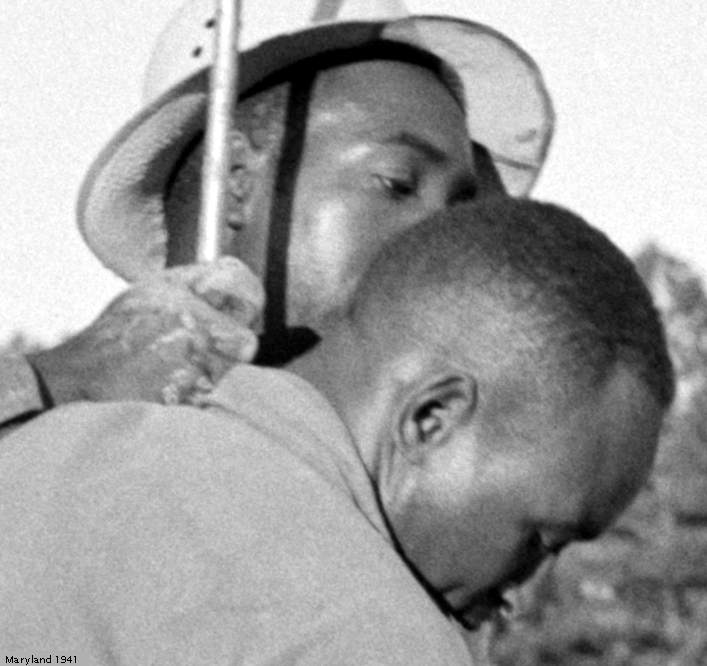
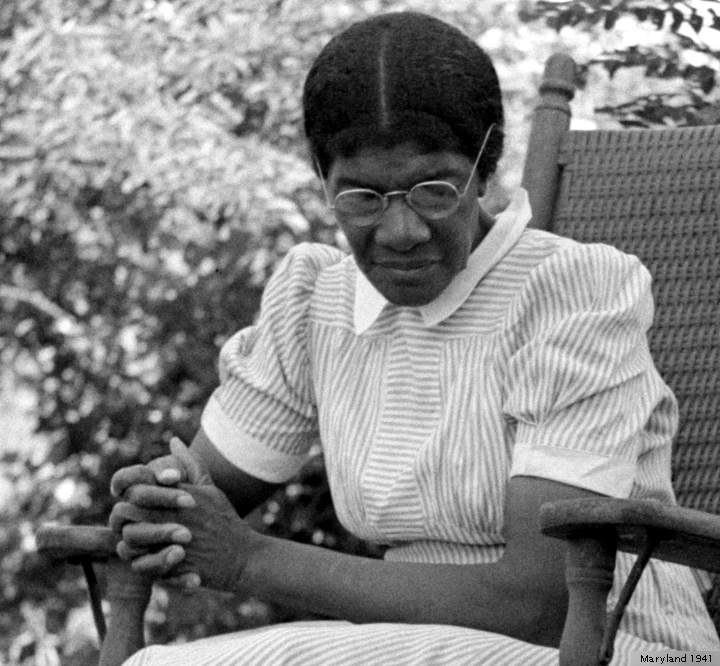


Migrant Mother





It is perhaps the most famous photograph from the depression. The semi official title is Migrant Mother. The Library of Congress says “Destitute pea pickers in California. Mother of seven children. Age thirty-two. Nipomo, California.” The exact date is unknown, and was either February or March of 1936. The photographer was Dorothea Lange (pronounced dore-THEE-ah lang). The model was Florence Owens Thompson .
Ms. Lange was born Dorothea Margaretta Nutzhorn May 26, 1895 in Hoboken, N.J. When she was seven she had polio, and when she was twelve her father left. Both events affected her deeply. (Lange is her mother’s maiden name, chosen for use after the father left.) She became a photographer, and had a successful studio in San Francisco. By 1936 she was with her second husband, her sons were in boarding school, and she went to work for the Farm Security Administration.
The Farm Security Administration hired a number of photographers to document the lives of Americans between 1934 and 1944. (During part of this time, it was connected to the Office of War Information, and the Resettlement Administration.) Since they were working for the government, the photographers were not entitled to copyright protection. The majority of these pictures are in the public domain, including the famous pictures of Florence Thompson.
This feature started with a google search for the correct way to pronounce Dorothea Lange. (Readers of this blog have seen the fondness for Library of Congress historic pictures. Ms. Lange is one of their stars.) This search led to a teacher’s guide from Yale University. This guide is about Dorothea Lange and the Migrant Mother. It tells the story as well as PG could. Bless his pea picking heart.
The day that Dorothea Lange photographed what would become her most famous photograph, Migrant Mother, has been retold by Lange in numerous sources. She was on her way home from a trip documenting the living and working conditions of the migrants to California. She followed their schedules, getting up at sunup and working until sundown, which made for long, sixteen-hour days. She was tired, and she was ready to see her family.
With about seven hours of driving left ahead of her, she passed a homemade sign that said Pea Pickers’ Camp. She knew that a late frost had ruined the pea crop, and was concerned about the people who might be at the camp. It nagged at her to turn around, to go back and visit the camp, another opportunity to document. About 15 minutes (20 miles) later, Lange did turn around.
Right away she saw the woman who would be the subject of Migrant Mother. Some sources say she took 5 shots, but she really took 6; in any case each shot focuses in on the woman a little more, and the final shot is the one that would become the “timeless and universal symbol of suffering in the face of adversity “ (The Library of Congress only has five of the shots.)
Early the morning after she got home, instead of spending time with her family Lange rushed to develop the photographs and submit them to the FSA and The San Francisco News. She thought that these photographs could help bring attention to the plight of these American migrant farmers. She was right; the story was printed in newspapers around the country, and the federal government immediately sent 20,000 pounds of food…. (The Thompson family had left for Watsonville by the time the food arrived)
The Dust Bowl refugees were of European descent, and were migrating to California because they were displaced from their farmland by drought. Florence Owens Thompson, though from Oklahoma, was a full-blooded Native American, and her family had been displaced from tribal lands by the U.S. government. (By 1930, Native Americans had lost more than 80% of their lands this way).
The day Lange photographed Thompson, she and her family were driving towards Watsonville, hoping to pick lettuce in the Pajaro Valley. The timing chain on their car broke just outside Nipomo, and so they pulled into the pea -pickers camp to fix it. While fixing the chain, the radiator was punctured; Thompson’s two boys (and likely her male companion) (Wikipedia says it was husband Jim Hill) brought the radiator into town to be fixed. While they were gone, Lange arrived…
The choices Lange made in terms of shooting the scene are very telling in light of our discussion about documentary photography. Most strikingly, the woman’s teenaged daughter is purposefully excluded from the photograph. She appears in the first two photographs of the series, but Lange thought that including her would cause the viewer to speculate about how old the mother was when she began having children (Curtis p. 55). At the time, the ideal family contained no more than three children; this woman’s family of seven could have detracted from the matter at hand, and maybe caused people to feel less sympathetic towards her (Curtis p. 52).
In the third shot, all you see is the mother nursing her youngest child. Migrant Mother is often referred to as Migrant Madonna… Lange thought that her subject looked too anxious and uncomfortable with the camera, as Lange seemed to have triggered in her what she called “that self-protective thing” (Curtis p. 57). So, despite being uncomfortable with how unpredictable children were to photograph, to calm the mother she added one of the children back into the frame for the fourth shot. She had the child rest her chin on her mother’s shoulder, which, though somewhat unnatural, served the purpose of anchoring the child still. She was also asked to remove her hat, which would have obscured her facial features. This resulted in a good photograph. Lange “thought she could do better.”
The fifth shot was the same, but from a different angle, which illuminates an empty pie tin, heavily symbolic of the hunger the family was facing. It also highlighted a warm and loving relationship between mother and child, as the child is leaning lovingly on the mother’s shoulder, which is comforting to the child.
For the sixth and final shot, (the one which became famous) Lange brought another child in, but she had both children face away from the camera, so that her shot would not be jeopardized by their unpredictability, and they would serve as a loving frame for the mother. Lange asked the mother to bring her right hand up to her face, and that resulted in exactly what Lange wanted and knew was there (Curtis p. 65). It softened her anxiety about the camera into a mother’s concern for the welfare of her family. The mother was worried about letting her sleeping child slip, so in the original sixth shot you could see her thumb grasped around the pole for support. In her excitement Lange did not see it. She eventually altered the original photonegative because she “did not want a small detail to mar the accomplishment (of overcoming her subject’s defensiveness) (Curtis p. 67).”
In this feature, the second image from the session is missing. The pictures in this feature are as follows. 1- The famous picture, cropped. 2- The first shot from the session. 3- A detail from the first shot. 4- The Migrant Madonna. 5- Child on the shoulder. 6- Child on the shoulder #2. 7. The full length famous picture. 8- A portrait of Dorothea Lange. 9- Another photograph by Ms. Lange, taken on the California-Arizona border in the summer of 1936. 10- The information from the famous picture. 11- The famous picture with the thumb included.
2012 Repost Notes This was on a list of posts that could be repeated. Of course, there are usually improvements to be made. Youtube was searched, and some videos were found. One of them mispronounces Dorothea. A search for the correct pronunciation of that first name was how this post got started in 2010.
Looking at the pictures reveals a glitch in the famous picture. If you look in the part of her hair, you will see a gray stripe. This is a bit of damage to the negative, and is common to old photographs. Ordinarily, PG would paste over a spot like that, but this is a sacred photograph.
The files of the LOC were consulted, and a 115mg original was downloaded. The grey stripe was still in the part, which is where it will stay. The original has the thumb, which was taken out of the famous prints. It is included in this post, along with the information typed into the side.
A look at some of the other pictures taken that day show a grey spot in the part. Maybe it wasn’t a photo glitch. Raising seven children can give any woman a few gray hairs.
Another question is about Florence Thompson, the “Migrant Mother”. It was noted that she was a Native American. PG has decided that the expression “Native American” is the invention of European Import Americans, and is only marginally less offensive than Indian. There are hundreds of tribes in the Americas. A person is a member of a tribal nation. What tribe was Florence Thompson?
Mr. Google points us to this answer. “Thompson, a “full-blooded” Cherokee, was born Florence Leona Christie on September 1, 1903, on the Cherokee Nation in Oklahoma. Her father, Jackson Christie, was an ex-convict who had abandoned the family before her birth. Her mother, Mary Jane Cobb, married Charles Akman, a Choctaw, in 1905, with whom she raised Thompson near Tahlequah OK”
At the start of World War II, Dorothea Lange went to a Japanese internment camp, . The experience nearly destroyed her. This is a repost. Pictures are from The Library of Congress.





Outside Looking In




Outside Looking In is a 2019 novel by T.Coraghessan Boyle, usually known as TC. It is the story of Fitz Loney, a grad student at Harvard in 1962. He, and his wife Joanie, start attending “sessions” conducted by Tim Leary. The psycho-experimentation always has ups and downs. Soon, the Loneys, and their son Corey, spend an idyllic summer in Mexico, before moving back to cold Boston. Around this time, Dr. Leary finagles an estate in upstate New York. The Loneys move in.
In all Boyle novels about, the whole thing turns to shit. At the end of OLI, the Loneys are essentially separated, and Fitz has made a mess of his life. Since Fitz is a fictional character, we have no way of knowing what happened.
The story is fun to read. Boyle is a master storyteller. Detail is pinned onto de-donkey. After about 250 pages, all you want to do is read more … even knowing that it would be over all too soon. If you apply your logical mind, you might find a few plot inconsistencies. That is for scholars and critics. If you just want to be entertained, OLI more than fills the bill.
OLI was the transition book for me during cataract surgery. When I got it from the library, I had scheduled the procedure. The first part, I read with the old eyes and glasses. Then, the right eye was de-cataracted. For an agonizing week, there was one renovated eye, with various levels of reading glasses. First, the left eye lens was covered with tape, then just ignored. It was with relief that the left eye was re-done, to match the right.
Finding the best reading glasses is a work in progress. Usually, 1.5x is a good fit, except for sitting at a table, where 2.5x seem to be best. There is work to be done here. You can make a lot of mistakes at the dollar store. The arrival of two matching eyes came at about the time when OLI started to catch fire.
Towards the end of OLI, Ken Kesey and the Merry Pranksters came to call on Tim. In The Electric Kool-Aid Acid Test, the bus goes to Millbrook, and finds out that Tim is on an important trip, and cannot be disturbed. That is more or less what happens in OLI, except some of the other players enjoy the Pranksters. A few pages before this, someone is talking about a new novel by Ken Kesey. Very few other novelists are mentioned in OLI. It seems a bit odd that the Leary devotees would be talking about Ken Kesey. This is one of the head scratchers in the plot.
The Library of Congress supplied the historic pictures that illustrate today’s book report.



 Chamblee54
leave a comment