Singular They




This is a repost from 2015. In the last nine years, Trans Awareness has mushroomed. Maybe the mushroom paradigm is the best way to view this discussion. The public is kept in the dark, and fed sh**. While Pronoun Consciousness (PC) has grown and festered, Singular They has not totally caught on as an alternative to the his/her nomenclature. The next nine years will no doubt see many changes in public gender awareness. Unscrupulous influence peddlers can be expected to exploit gender issues, with little regard for the collective mental health of the community.
A post from “Mental Floss” was making the facebook rounds. The Washington Post Style Guide Now Accepts Singular ‘They.’ The MF post recycles content from The Washington Post, The Post drops the ‘mike’ — and the hyphen in ‘e-mail’. WAPO has a way with words. “But there comes a point when atoms of language change start to form molecules.”
With increasing visibility of trans identified people, pronouns are getting attention. Many people do not like being referred to by the gender of their birth. One popular method is to use retrofit the plural “they” for use as a singular pronoun for he and she. Not everyone thinks this is a good idea.
A pronoun refers to a noun. The antecedent issue inspired a delightful comment in the WAPO. The author was an English 101 teacher, Puget Sounder. “While I may be able to catch the gist of the student commentary, the precise meaning is not always so evident, and I usually end up drawing lines from pronoun to preceding pronoun, desperately seeking the antecedent noun. Like Captain Ahab, I find a lot of candidates, but the “white whale” is often deeply submerged under the jetsam and flotsam of garbled verbiage.”
The seminal WAPO article had another noteworthy comment. This is from Doctor Dirt. “The singular “they” is far from a no-brainer. It creates more opportunity for confusion, as described below by Puget Sounder, and in other ways. They takes their chances. Bad grammar, colloquialism, or nongender-specific pronouns for a single person? How about “person” instead? Person takes person’s chances. I could get used to that faster than I could get used to “They is sitting in their chair,” and trying to figure out how many people and how many chairs are involved.”
Singular they can cause verb agreement confusion. ST can make you wonder how many butts are sitting in the chair. ST (already used as an abbreviation for Saint) can suggest that the person involved is schizophrenic, or has multiple personality disorder. Employing ST, a plural pronoun, for singular use, is opening a can of linguistic worms.
A gender neutral pronoun for third person use would be an advancement for the English language. In most cases, there is no need to specify gender. Perhaps a contraction of she and it could be used, especially with a southern accent. The sir/ma’am issue will have to wait for another day. There are other complications. … This exchange was on facebook while this feature was being posted: I’m still waiting for Singular Y’all to be approved. ~ I thought y’all was the plural of you. ~ If They can be singular, then Y’all can be singular. ~ That may be the best argument yet against Singular They.
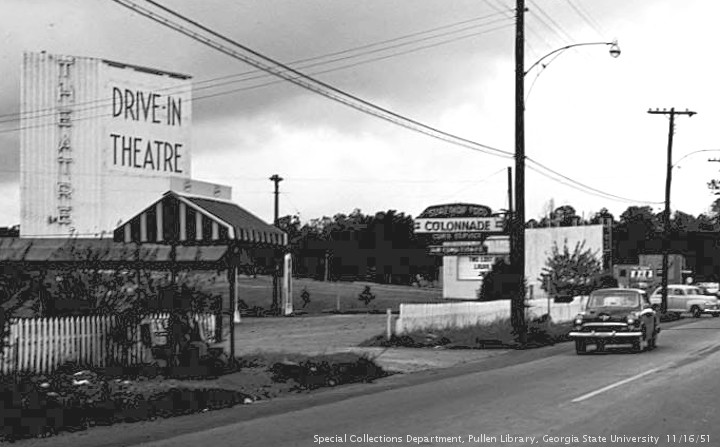
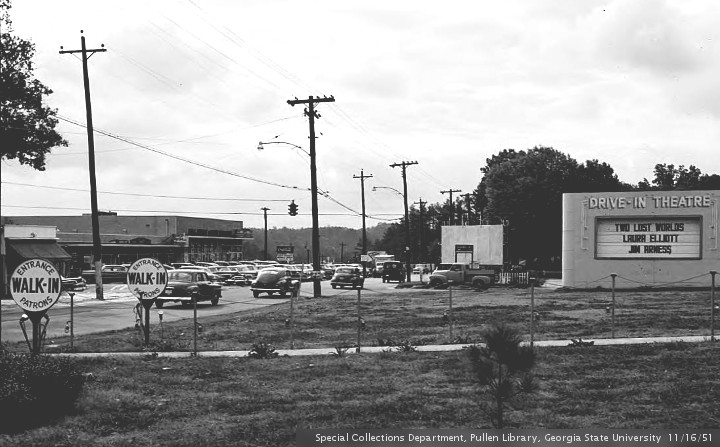
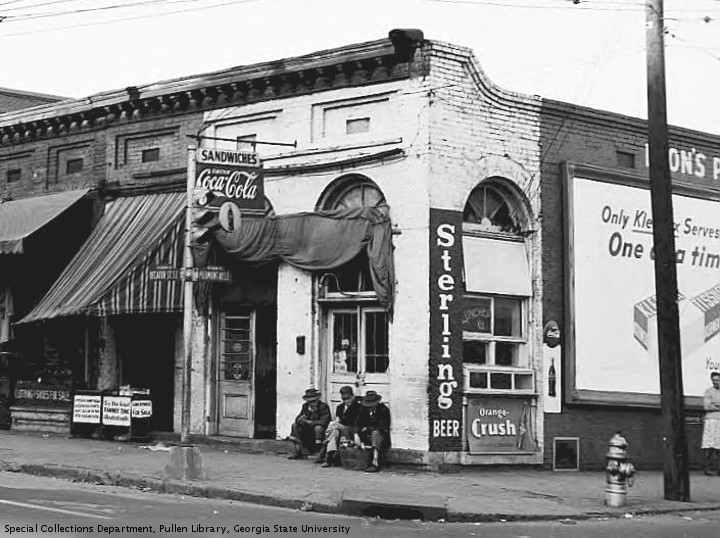
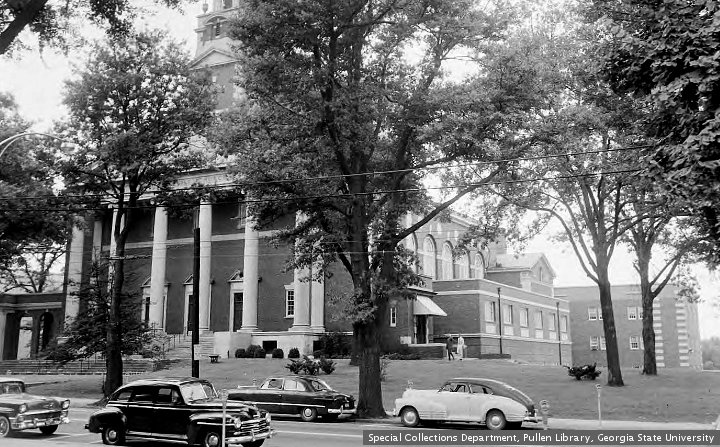
Pictures today are from Special Collections and Archives, Georgia State University Library. The image displayed on social media is from November 16, 1951. Sidewalk outside the Piedmont Drive-In Theatre and screen. The Big Apple building is now occupied by Fader’s Barbershop, and others.


Grammar Oppression




An MF writer (Melissa A. Fabello) at Everyday Feminism chimes in today with Why Grammar Snobbery Has No Place in the Movement. She means a social justice movement, not a bowel movement. The two movements have a similar aroma. This is a repost.
With more and more people using written english, there are more grammar mistakes. Some people enjoy pointing these out. The EF post says that such behavior is elitist, privileged, and yes, racist. The distinction between written, and spoken, is not made.
“So, if a person wrote a Facebook comment that said “That their was an example of cissexism,” a prescriptive grammarian might comment back, “I think you mean ‘there,’” and a descriptive grammarian might respond, “You understood what they meant.” And while both schools are accepted forms of linguistic thought, it’s important to note that any time we create a hierarchy by positioning one thing as “better” than another, we’re being oppressive.” (“That there” sounds clumsy and ignorant, even using the correct “there.”)
“Ghanaian blogger Delalorm Semabia, in a conversation about the eradication of “the Queen’s English” in Ghana, explained, “The idea that intelligence is linked to English pronunciation is a legacy from colonial thinking.” And this is precisely where we need to start this conversation. As educated (and – okay – snarky) activists, we’re quick to respond to “According to the dictionary” arguments with “Who wrote the dictionary, though?” We understand that a reference guide created by a white supremacist, heteropatriarchal system does nothing but uphold that status quo. Similarly, we have to use that line of thinking when talking about the English language: Who created the rules? And who benefits from them? As per usual, what this comes down to is an issue of privilege (of course!). In fact, grammar snobbery comes down to an intersection of multiple privileges.
…You’ve probably never given much thought to this, aside perhaps from believing that you speak “correctly” and that everyone else who speaks a different type of English than you do speaks the language “wrong.” And perhaps you’ve noticed how often “those people” are people of color. And we (as a society) denounce any form of the language that isn’t “white” enough. Umm, that’s racist.”
English is a living, evolving language. Spoken english changes faster than written english. The written form, devoid of vocal inflection and facial expressions, is more dependent on rules of grammar to communicate.
As different people use english, they develop different ways of speaking. Many of the phrases that are common today began as slang in ethnic populations. As time goes on, these phrases become accepted as standard english. (Some see this use of “other culture’s expressions” as cultural appropriation. PG is neutral in that debate.)
The rules for written english are slower to change. At what point do we criticize the grammar of others? It can be a useful rhetorical tactic, along with ___splaining what the person really meant. Or do we just accept that some people are not privileged enough to use good grammar? (There is a certain condescension in excusing the bad grammar of others because of their background. “Oh, they can’t help not knowing that, because they is a poor oppressed POC.”)
In the list of grammar nazi privileges, MF quotes Kurt Vonnegut. PG likes to research quotes, and found a reddit page about the passage. The full quote (MF only used one sentence.) “First rule: Do not use semicolons. They are transvestite hermaphrodites representing absolutely nothing. All they do is show you’ve been to college. And I realize some of you may be having trouble deciding whether I am kidding or not. So from now on I will tell you when I’m kidding.” And yes, Kurt Vonnegut does use semicolons in his work.
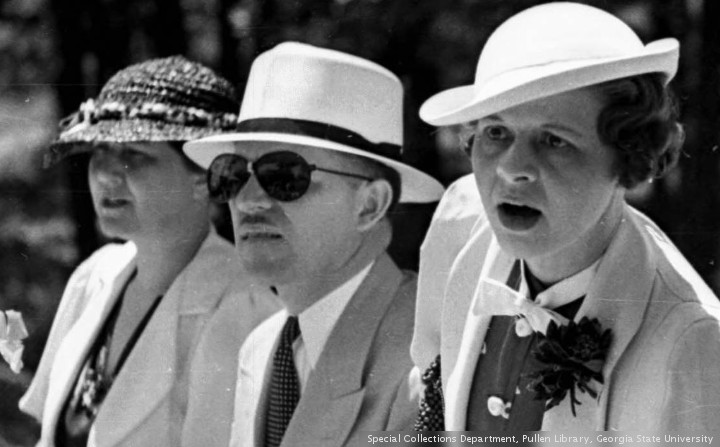
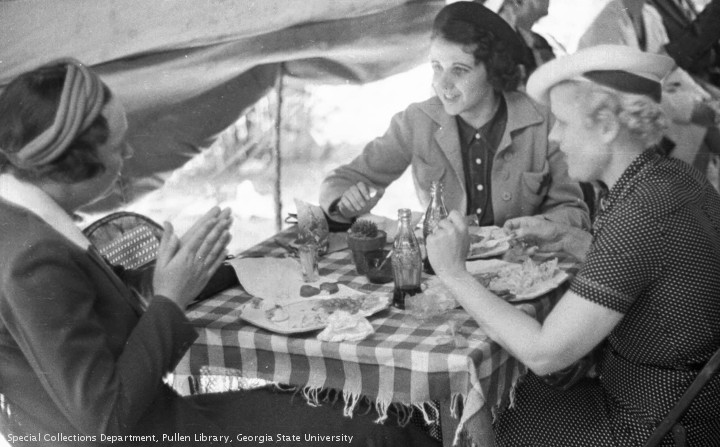
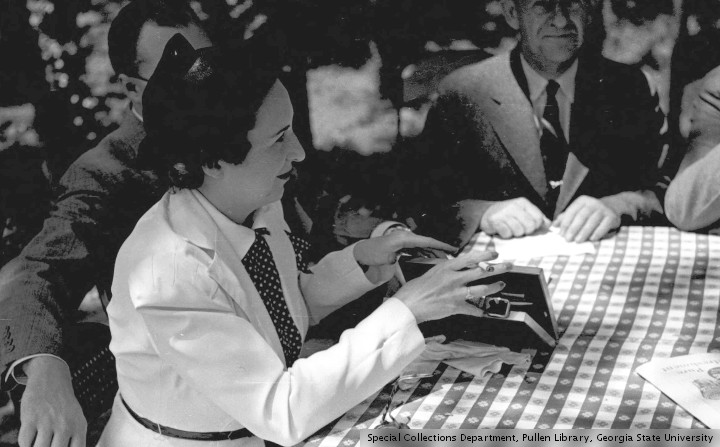
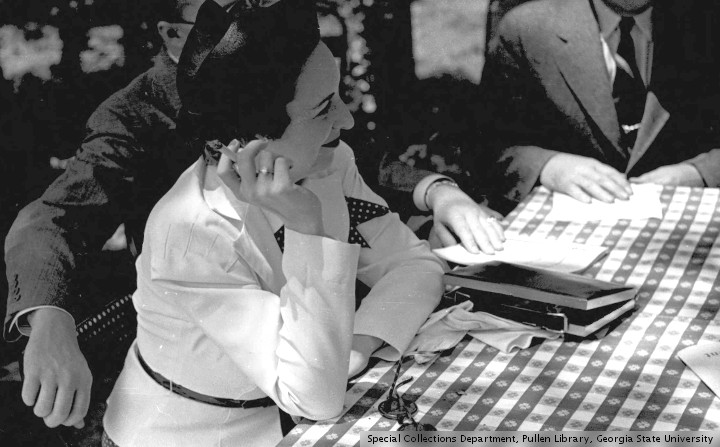
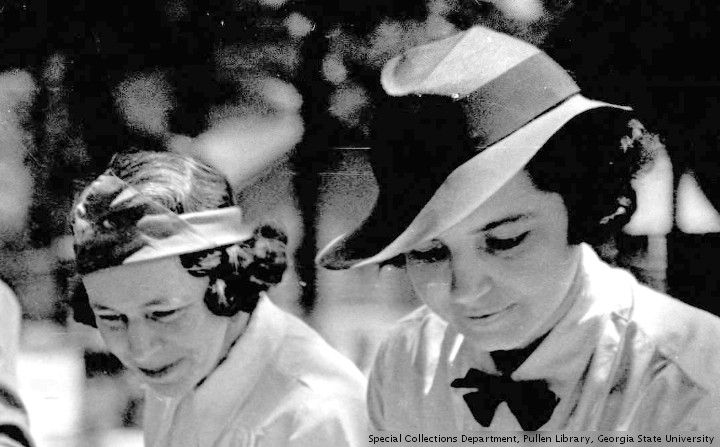
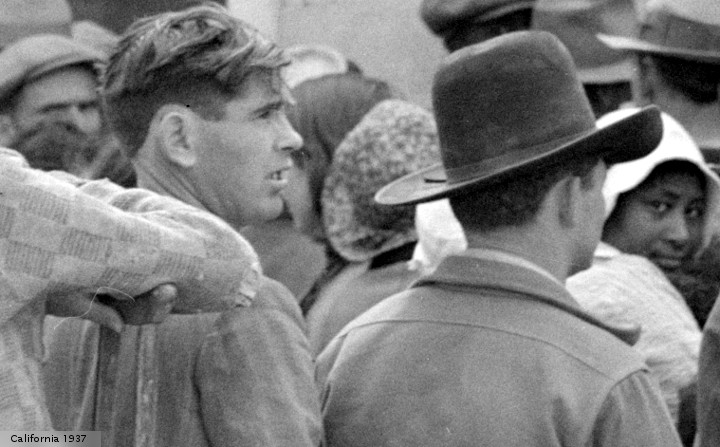
Pictures are from “The Special Collections and Archives, Georgia State University Library”. “Photographs taken at a horse show in Atlanta, Georgia, 1937.” UPDATE: There was an twitter exchange with the person who tweeted about the article: Knowing the difference between there and their is not oppression. ~ Not everyone has the luxury.




Stanford Bad Words List

Elimination of Harmful Language Initiative arrived on a slow news day this week. Produced by a committee at Stanford University, the document lists some language that we should not be using. The screed got an unkind reaction, and was hidden from the general population. Fortunately, some thoughtful archivists saved a copy. Pictures are from The Library of Congress.
EHLI comes in a three part format. First is the contraindicated phrase. Second is a suggested alternative, and third is a commentary. The replacement is usually longer, and clumsier, than the original. Is “died by suicide” really any better than “committed suicide”?
abusive relationship … relationship with an abusive person … The relationship doesn’t commit abuse. A person does, so it is important to make that fact clear.
African-American … Black … Black people who were born in the United States can interpret hyphenating their identity as “othering.” As with many of the terms we’re highlighting, some people do prefer to use/be addressed by this term, so it’s best to ask a person which term they prefer to have used when addressing them. When used to refer to a person, the “b” should always be capitalized.
American … US Citizen … This term often refers to people from the US only, thereby insinuating that the US is the most important country in the Americas (which is actually made up of 42 countries).
brown bag … lunch and learn, tech talk … Historically associated with the “brown paper bag test” that certain Black sororities and fraternities used to judge skin color. Those whose skin color was darker than the brown bag were not allowed to join.
gangbusters … very successful … Unnecessarily invokes the notion of police action against “gangs” in a positive light, which may have racial undertones.
Hispanic … Latinx, use country of origin … Although widely used to describe people from Spanish-speaking countries outside of Spain, its roots lie in Spain’s colonization of South American countries. Instead of referring to someone as Hispanic because of their name or appearance, ask them how they identify themselves first.
Karen … demanding or entitled White woman … This term is used to ridicule or demean a certain group of people based on their behaviors.
people of color (used generically) … BIPOC (Black, Indigenous, and People of Color) … If speaking about a specific group, name that group.
“preferred” pronouns … pronouns … The word “preferred” suggests that non-binary gender identity is a choice and a preference.
shemale … transgender woman, trans woman … This slur is often used disparagingly to refer to people who don’t conform to gender expectations. Some in the community do identify with and self-describe as the term, though.
straight … heterosexual … Implies that anyone who is not heterosexual is bent or not “normal.”
stupid … boring, uncool … Once used to describe a person who could not speak and implied the person was incapable of expressing themselves.
tranny, trannie … transgender person, trans or non-gendering conforming folk … This slur is often used disparagingly to refer to people who don’t conform to gender expectations. Some in the community do identify with and self-describe as the term, though.
uppity … arrogant, stuck up … Although the term originated in the Black community to describe another Black person who didn’t know their socioeconomic place, it was quickly adopted by White Supremacists to describe any Black person who didn’t act as “expected.”
In several of the categories, you are invited to ask the person how they wish to be identified. This reinforces the “otherness” of people in these categories. English speaking White people are assumed to be the norm, and in no need of categorization. This is precisely the privilege that initiatives like the EHLI purport to be fighting, when in reality they do the opposite.
“Karen … demanding or entitled White woman …” Many of the banned words claim to be fighting the white=good trope. In the case of Karen, EHLI goes in the other direction, suggesting “entitled White woman” as an alternative. At least EHLI capitalized White. EHLI also capitalized “Latinx,” while leaving “country of origin” in lower case.
EHLI is clearly … all commentaries on social justice issues must say clearly … the work of a committee. They … assuming that is the correct pronoun here … have good intentions. Unfortunately, as we all know in 2022, it is outcome that is important, and not intentions. Maybe someone should just yell bingo, and go cash in their card.

The Ta-Nehisi Coates Video



There is a video, Ta-Nehisi Coates on words that don’t belong to everyone It is being praised to high heaven. PG has some issues with this entertainment. The transcript is from vox, Ta-Nehisi Coates has an incredibly clear explanation for why white people shouldn’t use the n-word. This is a repost, with pictures from The Library of Congress.
Ta-Nehisi Paul Coates gave an interview once, The Playboy Interview with Ta-Nehisi Coates. “The n$$$$$ thing? I understand if you’re black and you say, “Man, I had white people call me this shit all my life. … But that ain’t everybody’s experience. I’ve never had a white person call me a n$$$$$. I had somebody call me le négre here in France, but I was 38 years old and I couldn’t have cared less. It didn’t mean anything. So not all of us come out of that experience.”
The monolog starts off with a discussion about how some words are appropriate for some people to use, but others should not say them. “My wife, with her girl friend, will use the word bitch. I do not join in. You know what I’m saying? I don’t do that. I don’t do that. And perhaps more importantly, I don’t have a desire to do it.” The question arises: is his wife a four legged dog? Unless she is, then the b-word does not apply to her.
“Coates pointed to another example — of a white friend who used to have a cabin in upstate New York that he called “the white trash cabin.” “I would never refer to that cabin” in that way. I would never tell him, ‘I’m coming to your white trash cabin.’” Of course, a person with an upstate cabin is likely to be far removed from the trailer park. He is using *white trash* with irony, and would not be the least offended if TPC called it “the white trash cabin.”
“The question one must ask is why so many white people have difficulty extending things that are basic laws of how human beings interact to black people.” (Is TPC saying that black people are not human beings?) … “When you’re white in this country, you’re taught that everything belongs to you. You think you have a right to everything. … You’re conditioned this way. … the laws and the culture tell you this. You have a right to go where you want to go, do what you want to do, be however — and people just got to accommodate themselves to you.”
At this point, PG turned off the video in anger. He has never been taught that everything belongs to him. Nobody that PG knows has been taught that. PG does not know anyone who teaches that message. This is a lie. It makes PG not want to believe anything else that TPC says. Maybe there is some privilege/culture mumbo-jumbo that explains this concept.
Lets go back a minute to the white trash cabin. TPC does not want to use this phrase. And yet, he feels entitled to make a sweeping generalization like “When you’re white in this country, you’re taught that everything belongs to you.” It is wrong to say white trash, but ok to slander white people.
“So here comes this word that you feel like you invented, And now somebody will tell you how to use the word that you invented. ‘Why can’t I use it? Everyone else gets to use it. You know what? That’s racism that I don’t get to use it. You know, that’s racist against me. You know, I have to inconvenience myself and hear this song and I can’t sing along. How come I can’t sing along?’”
“The experience of being a hip-hop fan and not being able to use the word ‘n$$$$$’ is actually very, very insightful.” To begin with, why do you assume that PG is a hip hop fan? Many people think hip hop is garbage. If you are forced to listen to music that you do not enjoy, why would that make you want to use a forbidden word? The logic of TPC is falling apart, faster than the Falcons pass defense in the Super Bowl.
“It will give you just a little peek into the world of what it means to be black. Because to be black is to walk through the world and watch people doing things that you cannot do, that you can’t join in and do. So I think there’s actually a lot to be learned from refraining.”
If you are in the mood to get yelled at for a half hour, you can ask someone about “things that you cannot do, that you can’t join in and do.” There might be some. If you go along with the rhetoric so far, you will probably believe what you hear. You might even understand why not using a nasty word will give you “a little peek into the world of what it means to be black.” As for PG, he seriously doubts this. He is not someone who says that this video is “an incredibly clear explanation for why white people shouldn’t use the n-word.”


Once upon a time, cigarettes were advertised on television. One new brand was a cigarette for women, Virginia Slims. The ability to kill yourself with tobacco was presented as being a privilege. Some wondered why women would want to take up this filthy habit. Today, African Americans have the privilege of using the n-word. What a deal. A nasty word, which degrades both the speaker, and the spoken of. Why would anyone want to use that word?
If you don’t have anything good to say, you can talk about the n-word. This *trigger* word is an aphrodisiac for the american body politic. Recently Ta-Nehisi Coates performed in a video, Ta-Nehisi Coates on words that don’t belong to everyone There is much praise for this entertainment, like this: @SneakerWonk “#TaNehisiCoates has an incredibly clear #explanation for why #whitepeople shouldnt use the #nword.” PG has a few paragraphs, about this video, in the text above.
PG has written about racism, anti-racism, and racial attitudes on many occasions. People get angry, and call PG rude names. He must be doing something right. Later, there was a double feature about James Baldwin. In the first half, Mr. Baldwin expresses a few opinions about that word. In the second half, PG substituted racist for the magic word, with interesting results.
One item that keeps coming up is speculation about who invented the n-word. Negro means black in Spanish, and is derived from a latin word. The Oxford English Dictionary has some usages going back to 1577. “1577 E. Hellowes tr. A. de Guevara Familiar Epist. (new ed.) 389 The Massagetes bordering vpon the Indians, and the Nigers of Aethiop [Sp. los negros en Ethiopia], bearing witnesse. ~ 1584 R. Scot Discouerie Witchcraft vii. xv. 153 A skin like a Niger. ~ 1608 A. Marlowe Let. 22 June in E. India Co. Factory Rec. (1896) I. 10 The King and People [of ‘Serro Leona’] N$$$$$$, simple and harmless.
The TPC video is based on the concept that white people want to use the magic word, but should not. This assumes a great deal. Chamblee54 published a piece about the n-word, that spelled out why he does not like to use this noun/verb/adjective/adverb/interjection. Here are four reasons for a white person to refrain from saying america’s favorite dirty word.
1- The n-word hurts people’s feelings. PG has known many fine Black people. He does not want to say anything that will hurt these people.
2- Being heard saying the n-word can cause all sorts of problems. This can include physical retribution, loss of employment, lawsuits, and having to listen to enough loud angry words to make you wish you had never learned how to talk.
3- It is not a fair fight. There is no equivalent phrase for a Black Person to say to a White person. Why give that power to another group of people … to turn you into a mass of incoherent rage, just for hearing a six letter word. The closest thing is “Cracker”, which PG only recently found out was an insult. There used to be a minor league baseball team, the Atlanta Crackers.
4- The use of the n-word demeans the user. When you say an insulting word about another human being, you make yourself look bad. For a Black person, using the n-word degrades them as the object, as well as the speaker. Why would a person would want to do that?


Poetry Saves Time


There is another Marilyn Monroe story floating around. “Someone told me that Marilyn Monroe once remarked that she enjoyed reading poetry “because it saves time.” I like this quotation so much that I’ve never dared to confirm it; I’d feel disenchanted to learn it was bogus.”
Poetry Daily seems to think the quote is legitimate. “That great aesthete and reader Marilyn Monroe once said: “I read poetry because it saves time.” In the age of Twitter, and other tweet-like utterances from all sorts of birdies, not to mention attention deficit disorder on an epidemic national scale, it’s refreshing to find poetry that both saves time and enlarges it. “
PG applied the wikiquotes test. Miss Monroe said in Look Magazine, March 5, 1957, “I’ve been on a calendar, but never on time.” Many people who worked with her agree.
Wikiquots also has a telegram, sent to Bobby and Ethel Kennedy. Marilyn was widely rumored to be seeing Bobby. This was a few weeks before her untimely death. “”I am involved in a freedom ride protesting the loss of the minority rights belonging to the few remaining earthbound stars. All we demanded was our right to twinkle.” (Telegram from Marilyn Monroe declining a party invitation from Bobby and Ethel Kennedy. June 13, 1962.)
A google investigation into the poetry quote led to Did Marilyn Monroe really say all those philosophical quotes? This is in DataLounge, where you “… get your fix of gay gossip, news and pointless bitchery.” The question on top of the thread was “I notice that the must fucked up of my female friends absolutely worship Marilyn Monroe, and are forever quoting her. What’s up with that, and are all those quotes real?? by: Mrs. Johnstone”
There are 148 comments in the thread. Some say Marilyn was an airhead, and some say she was bright. There are some quotes, many of which are probably made up. There is a letter, supposedly written to Albert Einstein. Shelly Winters says the two might have had a special relationship.
“Were I to pursue physics instead of my first love, acting, I would attempt to solve these problems by understanding the reason for these discrete energy states, which are probably due to the fact that standing waves only exist at discrete frequencies. My theory would predict that energy exchanges will be discrete, as observed;… But as I said, I want to be an actress.”
Once, on the set of Gentlemen Prefer Blondes, Marilyn Monroe and Jane Russell discussed embryological parallelism. Marilyn Monroe: Ontogeny recapitulates phylogeny. Jane Russell: I was about to say the same thing.
One of the comments had a link to a fun story. Film legend Marilyn Monroe went to bed with fellow actress Joan Crawford – but the lesbian sexual experience only reaffirmed her attraction to men. Monroe left Joan gasping for more liaisons, much to Marilyn’s chagrin. Monroe described the encounter herself in conversations taped by her psychiatrist Dr. Ralph Greeson, recordings which were obtained by the Los Angeles Times newspaper from former prosecutor John Miner, who helped investigate her death. Monroe said, “We went to Joan’s bedroom… Crawford had a gigantic orgasm and shrieked like a maniac. “Next time I saw Crawford she wanted another round. I told her straight I didn’t much enjoy doing it with a woman.”
This is a repost. Pictures are from The Library of Congress. HT to Andrew Sullivan.



The Cynic’s Word Book M – O
What follows are selections from The Devil’s Dictionary, by Ambrose Bierce. A good many things could be said about Mr. Bierce. TDD began as a newspaper column, and was later published as The Cynic’s Word Book. TDD is in the public domain. TDD is a dictionary, going from A to Z. Today’s selection covers M to O. More selections are available. (A – D E – G H – I J – L) Pictures today are from The Library of Congress.
MACHINATION The method employed by one’s opponents,
in baffling one’s open and honorable efforts to do the right thing.
MAD It is noteworthy that persons are pronounced mad by officials,
destitute of evidence that themselves are sane.
MAGIC An art of converting superstition into coin. There are other arts serving the same high purpose, but the discreet lexicographer does not name them.
MAGPIE A bird whose thievish disposition suggested to someone that it might be taught to talk.
MAN An animal so lost in rapturous contemplation of what he thinks he is as to overlook what he indubitably ought to be. His chief occupation is extermination of other animals and his own species, which, multiplies with such insistent rapidity as to infest the whole habitable earth and Canada.
MANICHEISM The ancient Persian doctrine of an incessant warfare between Good and Evil. When Good gave up the fight the Persians joined the victorious Opposition.
MANNA A food miraculously given to the Israelites in the wilderness.
When it was no longer supplied to them they settled down and tilled the soil,
fertilizing it, as a rule, with the bodies of the original occupants.
MARTYR One who moves along the line of least reluctance to a desired death.
MAUSOLEUM The final and funniest folly of the rich.
MAYONNAISE One of the sauces which serve the French in place of a state religion.
MENDACIOUS Addicted to rhetoric.
MERCY An attribute beloved of detected offenders.
MINE Belonging to me if I can hold or seize it.
MISFORTUNE The kind of fortune that never misses.
MONDAY In Christian countries, the day after the baseball game.
NON-COMBATANT A dead Quaker.
NONSENSE The objections that are urged against this excellent dictionary.
OATH In law, a solemn appeal to the Deity,
made binding upon the conscience by a penalty for perjury.
OCCIDENT The part of the world lying west (or east) of the Orient. It is largely inhabited by Christians, a powerful subtribe of the Hypocrites, whose principal industries are murder and cheating, which they are pleased to call “war” and “commerce.”
These, also, are the principal industries of the Orient.
OFFENSIVE Generating disagreeable emotions or sensations,
as the advance of an army against its enemy.
OMEN A sign that something will happen if nothing happens.
ONCE Enough.
OPERA A play representing life in another world, whose inhabitants have no speech but song, no motions but gestures and no postures but attitudes. All acting is simulation, and the word simulation is from simia, an ape; but in opera the actor takes for his model Simia audibilis (or Pithecanthropos stentor)—the ape that howls.
OPPORTUNITY A favorable occasion for grasping a disappointment.
OPTIMIST A proponent of the doctrine that black is white.
ORTHODOX An ox wearing the popular religious yoke.
OVEREAT To dine.
Hail, Gastronome, Apostle of Excess, Well skilled to overeat without distress!
Thy great invention, the unfatal feast, Shows Man’s superiority to Beast. John Boop
OVERWORK A dangerous disorder affecting high public functionaries who want to go fishing.

Bulwer-Lytton Fiction Contest 2022

The Bulwer-Lytton Fiction Contest has announced the results of the 2022 competition. Every year, B-LFC solicits opening sentences for bad novels. The “winners” of this competition receive heartfelt condolences from all concerned. Chamblee54 uses B-LFC as an excuse for text to go between pictures every year. Parts two and three are available. Pictures today are from The Library of Congress.
As a “value added service,” chamblee54 compiles a list of noteworthy author names and locations. None of the participants are from Georgia. This years notables: Brent Guernsey, Springfield, VA, Joe Tussey, Daniels, WV, Vivien Doyle, Buxton, Derbyshire, UK, Neil Prowd, Ballarat, Victoria, Australia, Emily Ho, Los Angeles, CA, Jim Anderson, Flushing, MI, Jordan Peace, Mountlake Terrace, WA, Nicole Postorino, Toronto, Ontario, Canada, Mark Meiches, Dallas, TX, Andrea Dumas, West Fargo, ND, Joanne Morcom, Calgary, Alberta, Canada, Sharon Durken, Port Wing, WI, Leah Dagenbach, Loveland, OH.
“Hoist the mainsail ye accursed swine” shouted the Captain over the roar of the waves as the ship was tossed like a cork dropped from a wine bottle into a jacuzzi when the faucet is wide open and the jets are running full blast and one has just settled into the water with a glass of red wine to ease the aches and pains after a day of hard labor raking leaves from the front yard.
Joe Tussey, Daniels, WV
It was only when the booming voice of the Sergeant-at-Arms rang out declaiming the surprising order for each and every member of the firing squad to shoot the Sergeant-at-Arms himself and then turn their rifles on each other, an order assiduously followed by the well-trained soldiers, that the cigarette-smoking, blindfolded Gerry Corker truly appreciated the seemingly endless hours his mother had denied him on the baseball field during his lonely childhood, instead sending him every afternoon to Crazy Barney’s School of Mimicry and Ventriloquism.
John Shafer, Tonbridge, Kent, UK
Three bears arrived at their den to discover a yellow haired girl sleeping, and as she was neither too hot nor too cold, neither too soft nor too hard, but just right, they ate her.
Neil Prowd, Ballarat, Victoria, Australia
The Director of Child Protective Services was aghast, and needed clarification, “Let me get this straight—You were rocking your baby on the tree top, and when the wind blew, the cradle rocked and the bough broke, the cradle fell, and down came baby, cradle and all?” John Tracy, Palm Desert, CA
The detectives wore booties, body suits, hair nets, masks and gloves and longed for the good old days when they could poke a corpse with the toes of their wingtips if they damn well felt like it.
Jim Anderson, Flushing, MI
They called Rock Mahon the original hard-boiled detective, and it wasn’t because of his gravelly voice, or his crusty manner, or his chiseled jaw, or his cement-like abs, or his feldspar fists, or his iron incorruptibility, or his calcite cynicism, or his uzonite unsentimentality, but because of his goddamned, geezly, infuriating habit of polluting every crime scene with shells dropped from the hard-boiled eggs he munched without surcease. Barbara Stevenson, Ottawa, Ontario, Canada
The heat blanketed the small village in much the same way a body bag blankets a murder victim, except that a body bag is usually black, which the heat wasn’t, as heat is colorless, and the village wasn’t dead, which a murder victim usually is. Eric Rice, Madison, WI
It was a Dark ‘n Stormy night: Dark n’ Stormy cocktails were half-off at Tata’s, the breast-themed barbeque chicken restaurant. Ross Ozarka, Auckland, New Zealand
It was a dark and stormy night; the rain fell mainly in the plain —except for occasional intervals when it was checked by Andalusian fields full of grain (for it is in Spain that our story takes place)—and the heroine of our story, Pam Plona, was in the middle of giving birth to a minotaur after running with the bulls. Joe McKenna, Iowa City, IA


Who Invented The Word Racism?




Writers tackle was rampaging through Brookhaven. PG looked in a list of old product, and found a feature built on the output of Teju Cole. He has a dandy article, at the New Yorker, about what is antiseptically called drone warfare. It is the twitter feed that gets attention. This is a repost.
@tejucole George Carlin’s original seven dirty words can all be said freely now. The one word you can’t say, and must never print, is “racist.”
The quote marks lend mystery to the tweet. Does he mean the dreaded “n word”? Or does he mean that other six letter slur? There is no shortage of people screaming racist in Georgia, often at the slightest provocation. There is an attitude that racism is the worst thing you can be accused of. Once accused, you are guilty until proven innocent. If you do a bit of research into racism, the word, you will see some interesting things.
The concept of populations not getting along is as old as mankind. The word racism apparently did not exist before 1933 (merriam webster), or 1936 (dictionary dot com). (In 2020, both of these sources have updated their notes, on the original use of the word “racism.”)
Something called the Vanguard News Network had a forum once, What is the true origin of the term racism? This forum is problematic, as VNN seems to be a white supremacist affair. One of the reputed coiners of the R word was Leon Trotsky, also referred to as Jew Communist. Another Non English speaker who is given “credit” for originating the phrase is Magnus Hirschfeld. As for English, the word here is: “American author Lawrence Dennis was the first to use the word, in English, in his 1936 book “The coming American fascism”.”
The terms racist and racism seem to be used interchangeably in these discussions. This is in keeping with the modern discussion. As Jesus worshipers like to say, hate the sin, love the sinner.
The Online Etymology Dictionary has this to add: “racist 1932 as a noun, 1938 as an adjective, from race (n.2); racism is first attested 1936 (from French racisme, 1935), originally in the context of Nazi theories. But they replaced earlier words, racialism (1871) and racialist (1917), both often used early 20c. in a British or South African context. In the U.S., race hatred, race prejudice had been used, and, especially in 19c. political contexts, negrophobia.”
Pictures are from The Library of Congress. Part two is now available.



Last week this blog ran a story about the word racism. The story stated that the earliest use of the r-word was 1932. A comment led to The Ugly, Fascinating History Of The Word ‘Racism.’ Apparently, Col. Richard Henry Pratt used the word in 1902.
“The Oxford English Dictionary’s first recorded utterance of the word racism was by a man named Richard Henry Pratt in 1902. “Segregating any class or race of people apart from the rest of the people kills the progress of the segregated people or makes their growth very slow. Association of races and classes is necessary to destroy racism and classism.” Col. Pratt was speaking at the Lake Mohonk Conference of Friends of the American Indian.
It is always good to check out the context. Col. Pratt spoke at the Fourth session, Thursday Night, October 23, 1902. The event was well documented. There are some other noteworthy quotes.
“We have brought into our national life nearly forty times as many negroes as there are Indians in the United States. They are not all together citizen and equal yet, but they are with us and of us; distributed among us, coming in contact with us constantly, they have lost their many languages and their old life, and have accepted our language and our life and become a valuable part of our industrial forces.” The text capitalizes Indian, and presents Negro in lower case.
“It is the greatest possible wrong to prolong their Indianism, whether we do it for humanitarian or so-called scientific reasons. … The ethnologists prefer the Indian kept in his original paint and feathers, and as part and parcel of every exposition on that line. … It will be a happy day for the Indians when their ethnological value is of no greater importance than that of the negro and other races which go to make up our population.”
Col. Pratt “is best known as the founder and longtime superintendent of the Carlisle Indian Industrial School at Carlisle, PA.” While progressive for the times, many of the school’s policies were harsh.
“He pushed for the total erasure of Native cultures among his students. … The students’ native tongues were strictly forbidden — a rule that was enforced through beating. Since they were rounded up from different tribes, the only way they could communicate with each other at the schools was in English. … “In Indian civilization I am a Baptist,” Pratt once told a convention of Baptist ministers, “because I believe in immersing the Indians in our civilization and when we get them under, holding them there until they are thoroughly soaked.” … Pratt also saw to it that his charges were Christianized. Carlisle students had to attend church each Sunday, although he allowed each student to choose the denomination to which she would belong.” Carlisle closed in 1918.
“In 1875, Captain Richard Pratt escorted 72 Indian warriors suspected of murdering white settlers to Fort Marion in St. Augustine, FL. Once there, Pratt began an ambitious experiment which involved teaching the Indians to read and write English, putting them in uniforms and drilling them like soldiers. … News of Pratt’s experiment spread. With the blessing of Congress, Pratt expanded his program by establishing the Carlisle School for Indian Students to continue his “civilizing” mission. Although liberal policy for the times, Pratt’s school was a form of cultural genocide. The schools continued into the ’30s until administrators saw that the promised opportunities for Indian students would not materialize, theat they would not become “imitation white men.”
“Beginning in 1887, the federal government attempted to “Americanize” Native Americans, largely through the education of Native youth. By 1900 thousands of Native Americans were studying at almost 150 boarding schools around the United States. The U.S. Training and Industrial School, founded in 1879 at Carlisle Barracks, was the model for most of these schools. Boarding schools like Carlisle provided vocational and manual training and sought to systematically strip away tribal culture. They insisted that students drop their Indian names, forbade the speaking of native languages, and cut off their long hair.” As Col. Pratt said at the LMCFAI, “I also endorse the Commissioner’s short hair order. It is good because it disturbs old savage conditions.”
Col. Pratt was known for saying “Kill the Indian, and Save the Man” He probably meant that you should destroy the native culture, so the man inside could flourish. It is easy to misunderstand this type of rhetoric. The source of this phrase: “Official Report of the Nineteenth Annual Conference of Charities and Correction (1892), 46–59. Reprinted in Richard H. Pratt, “The Advantages of Mingling Indians with Whites,” Americanizing the American Indians: Writings by the “Friends of the Indian” 1880–1900 (Harvard University Press, 1973), 260–271.” There are some tasteful quotes.
“Inscrutable are the ways of Providence. Horrible as were the experiences of its introduction, and of slavery itself, there was concealed in them the greatest blessing that ever came to the Negro race—seven millions of blacks from cannibalism in darkest Africa to citizenship in free and enlightened America; not full, not complete citizenship, but possible—probable—citizenship.” Col. Pratt used African Americans as an example of how to assimilate Native Americans.
“The five civilized tribes of the Indian Territory—Cherokees, Choctaws, Chickasaws, Creeks, and Seminoles—have had tribal schools until it is asserted that they are civilized; yet they have no notion of joining us and becoming a part of the United States. Their whole disposition is to prey upon and hatch up claims against the government, and have the same lands purchased and repurchased and purchased again, to meet the recurring wants growing out of their neglect and inability to make use of their large and rich estate.”
The best known student at the Carlisle School was Jim Thorpe, coached by Pop Warner. Wa-thohuck was born May 28, 1888, near Prague OK, into the Sauk and Fox Nation. He won gold medals in the pentathlon, and decathlon, at the 1912 Olympic Games in Stockholm, Sweden. It later came out that he had been paid to play semi-pro baseball, and was not an amateur. The gold medals had to be forfeited. Pictures today are from The Library of Congress.


The Cynic’s Word Book J – L



What follows are selections from The Devil’s Dictionary, by Ambrose Bierce. TDD began as a newspaper column, and was later published as The Cynic’s Word Book. TDD is in the public domain. TDD is a dictionary, going from A to Z. Today’s selection covers J to L. More selections are available. (A – D E – G H – I) Pictures today are from The Library of Congress.
JEALOUS Unduly concerned about preservation of what can be lost only if not worth keeping.
JUSTICE A commodity which is a more or less adulterated condition the State sells to the citizen as a reward for his allegiance, taxes and personal service.
KEEP He willed away his whole estate, And then in death he fell asleep,
Murmuring:”Well, at any rate, My name unblemished I shall keep.”
But when upon the tomb ’twas wrought Whose was it?—for the dead keep naught.
KILL To create a vacancy without nominating a successor.
KILT A costume sometimes worn by Scotchmen in America and Americans in Scotland.
KING A male person commonly known in America as a “crowned head,”
although he never wears a crown and has usually no head to speak of.
KLEPTOMANIAC A rich thief.
KORAN A book Mohammedans foolishly believe to have been written by divine inspiration,
but which Christians know to be a wicked imposture, contradictory to the Holy Scriptures.
LABOR One of the processes by which A acquires property for B.
LANGUAGE The music with which we charm the serpents guarding another’s treasure.
LAP One of the most important organs of the female system—an admirable provision of nature for the repose of infancy, but chiefly useful in rural festivities to support plates of cold chicken and heads of adult males. The male of our species has a rudimentary lap, imperfectly developed and in no way contributing to the animal’s substantial welfare.
LAW Once Law was sitting on the bench, And Mercy knelt a-weeping.
“Clear out!” he cried, “disordered wench! Nor come before me creeping.
Upon your knees if you appear, ‘Tis plain your have no standing here.”
Then Justice came.His Honor cried: “Your status?—devil seize you!”
“Amica curiae,” she replied— “Friend of the court, so please you.”
“Begone!” he shouted—”there’s the door— I never saw your face before!”
LAWFUL Compatible with the will of a judge having jurisdiction.
LAWYER One skilled in circumvention of the law.
LAZINESS Unwarranted repose of manner in a person of low degree.
LEAD A heavy blue-gray metal much used in giving stability to light lovers—particularly to those who love not wisely but other men’s wives. Lead is also of great service as a counterpoise to an argument of such weight that it turns the scale of debate the wrong way. An fact in the chemistry of international controversy is that at the point of contact of two patriotisms lead is precipitated in great quantities.
LECTURER One with hand in your pocket, tongue in your ear and faith in your patience.
LIAR A lawyer with a roving commission.
LIBERTY One of Imagination’s most precious possessions.
The rising People, hot and out of breath,
Roared around the palace:”Liberty or death!”
“If death will do,” the King said, “let me reign;
You’ll have, I’m sure, no reason to complain.”
LIFE “Life’s not worth living, and that’s the truth,” Carelessly caroled the golden youth.
In manhood still he maintained that view And held it more strongly the older he grew.
When kicked by a jackass at eighty-three, “Go fetch me a surgeon at once!” cried he.
LITIGANT A person about to give up his skin for the hope of retaining his bones.
LITIGATION A machine which you go into as a pig and come out of as a sausage.
LOGIC The art of thinking and reasoning in strict accordance with the limitations and incapacities of the human misunderstanding. The basic of logic is the syllogism, consisting of a major and a minor premise and a conclusion—thus:
Major Premise: Sixty men can do a piece of work sixty times as quickly as one man.
Minor Premise: One man can dig a posthole in sixty seconds; therefore—
Conclusion: Sixty men can dig a posthole in one second.
This may be called the syllogism arithmetical, in which, by combining logic and mathematics, we obtain a double certainty and are twice blessed.
LOGOMACHY ‘Tis said by divers of scholar-men, Poor Salmasius died of Milton’s pen.
Alas! we cannot know if this is true, For reading Milton’s wit we perish too.
LOQUACITY Disorder which renders sufferer unable to curb his tongue when you wish to talk.
LORD In American society, an English tourist above the state of a costermonger, as, lord ‘Aberdasher, Lord Hartisan and so forth. The traveling Briton of lesser degree is addressed as “Sir,” as, Sir ‘Arry Donkiboi, or ‘Amstead ‘Eath. The word “Lord” is sometimes used, also, as a title of the Supreme Being; but this is thought to be rather flattery than true reverence.
LOSS Here Huntington’s ashes long have lain, Whose loss is our eternal gain,
For while he exercised all his powers, Whatever he gained, the loss was ours.


Ta-Nehisi Coates On WTF Podcast




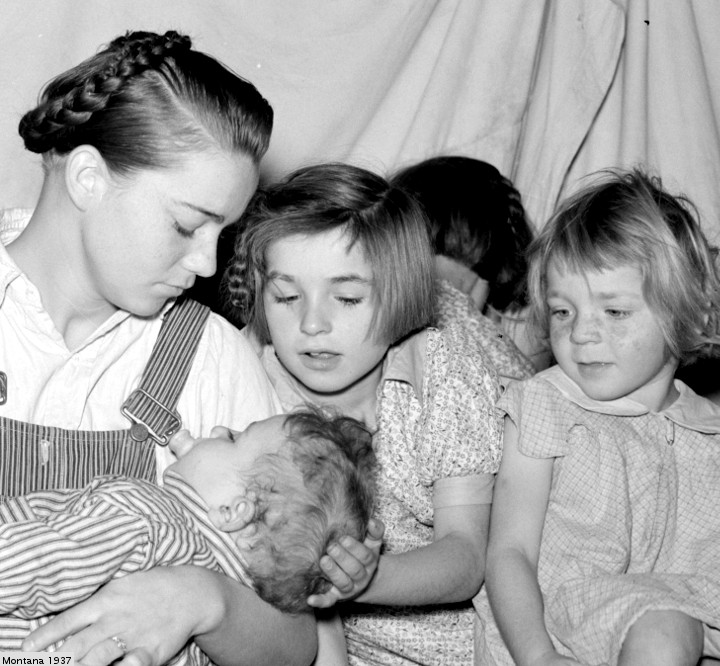
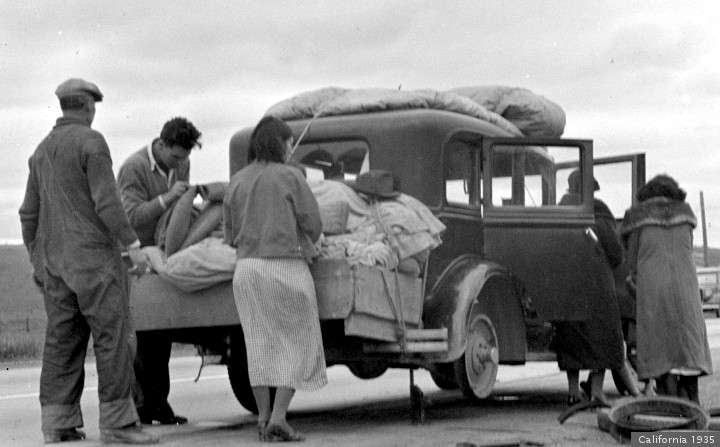


Episode 878 of Marc David Maron’s WTF podcast features Ta-Nehisi Paul Coates. Chamblee54 once wrote about a video featuring Mr. Coates. This seems like a good day to listen to the show, and take notes. This is a repost from 2018.
The show starts with TPC and MDM (Is Ta-Nehisi two words?) discussing the business of writing books. The word black is not heard until 28:33 of the show. At 31 minutes in TPC is talking about when he moved to New York, and struggled. He mentions that when you lie to other people, you begin to accept yourself as a liar.
At 53 minutes, TPC is talking about sexual harassment, and how he… a man … could never know what a woman experiences. MDM says that he … a white man … could never know what a black man feels, and how books by TPC made MDM realize this. You get the sense that this is what MDM wanted to talk about all along, and that TPC is tired of talking about race. MDM had the prominent black intellectual on the show, and MDM was going to talk about race, whether PBI wanted to, or not.
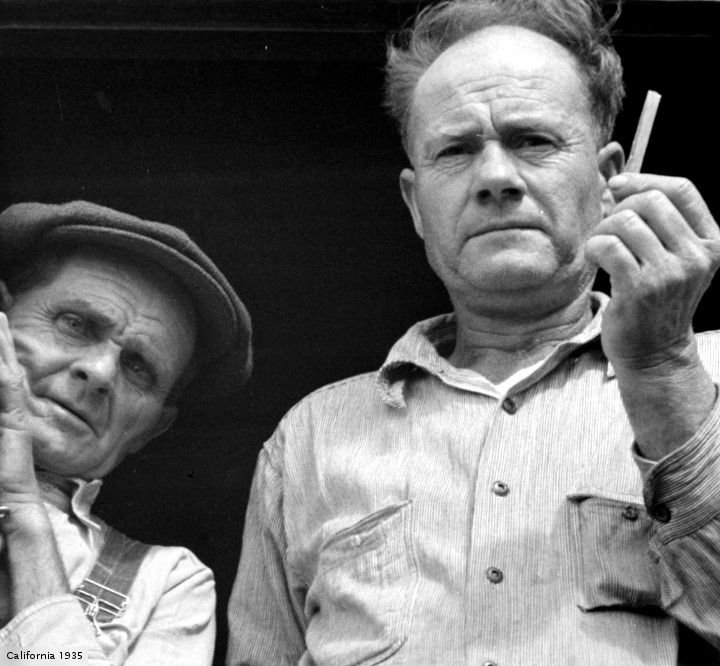
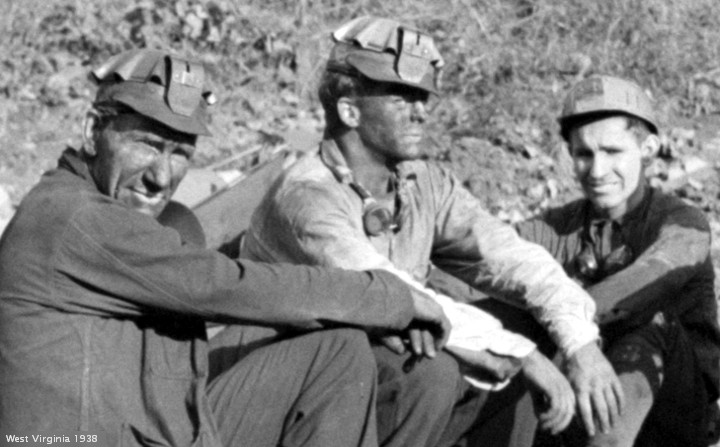
At 1:02 pm est, the show is over. PG has more respect for TPC now. Most of the show was about fatherhood, writing, and the struggle to succeed. The expressions whiteness, and white supremacy, were not heard. Pictures today are from The Library of Congress. Many of them were edited while listening to this show. The depression was a different era.
Flannery O’Connor


With one day before it was due, PG finished reading Flannery: A Life of Flannery O’Connor , by Brad Gooch. The author is a professor of English at William Patterson University in New Jersey. He spares no citations. You can see where he gets his information. This is a repost.
Chamblee54 has written before about Miss O’Connor , and repeated the post a year later. There is a radio broadcast of a Flannery O’Connor lecture. (The Georgia accent of Miss O’Connor is much commented on in the book. To PG, it is just another lady speaking.)
Mary Flannery O’Connor was born March 25, 1925 in Savannah GA. The local legend is that she was conceived in the shadow of St. John the Baptist Cathedral, a massive facility on Lafayette Square. Her family did leave nearby, and her first school was just a few steps away. This is also a metaphor for the role of the Catholic Church in her life. Mary Flannery was intensely Catholic, and immersed in the scholarship of the church. This learning was a large part of her life. How she got from daily mass, to writing stories about Southern Grotesque, is one mystery at the heart of Flannery O’Connor.
Ed O’Connor doted on his daughter, but had to take a job in Atlanta to earn a living. His wife Regina and daughter Mary Flannery moved with him, to a house behind Christ The King Cathedral. Mr. O’Connor’s health was already fading, and Mother and Daughter moved in with family in Milledgeville. Ed O’Connor died, of Lupus Erythematosus, on February 1, 1941.
Mary Flannery went to college in Milledgeville, and on to the Iowa Writer’s Workshop. She dealt with cold weather, went to Mass every day, and wrote. She was invited to live at an artists colony called Yaddo, in upstate New York. She lived for a while with Robert and Sally Fitzgerald in Connecticut, all while working on her first novel, “Wise Blood”. In 1950, she was going home to Milledgeville for Christmas, and had been feeling poorly. She went to the hometown doctor, who thought at first that the problem was rheumatoid arthritis. The illness of Flannery O’Connor was Lupus Erythematosus.
Miss O’Connor spent much of that winter in hospitals, until drugs were found that could help. She moved, with her mother, to a family farm outside Milledgeville, which she renamed Andalusia. She entered a phase of her life, with the Lupus in relative remission, and the drugs firing her creative fires, where she wrote the short stories that made her famous.
Another thing happened when she was recuperating. Flannery was reading the Florida “Market Bulletin”, and saw an ad for “peafowl”, at sixty five dollars a pair. She ordered a pair, and they soon arrived via Railway Express. This was the start of the peacocks at Andalusia, a part of the legend.
During this period of farm life and writing, Flannery had several friends and correspondents. There was the “Bible Salesmen”, Erik Langkjaer, who was probably the closest thing Flannery had to a boyfriend. Another was Betty Hester, who exchanged hundreds of letters with Miss O’Connor. This took place under the stern eye of Regina O’Connor, the no nonsense mother-caregiver of Flannery. (Mr. Gooch says that Betty Hester committed suicide in 1998. That would be consistent with PG stumbling onto an estate sale of Miss Hester in that time frame.)
The book of short stories came out, and Flannery O’Connor became famous. She was also dependent on crutches, and living with a stern mother. There were lectures out of town, and a few diverse personalities who became her friends. She went to Mass every day, and collected books by Catholic scholars. Flannery was excited by the changes in the church started by Pope John XXIII, and in some ways could be considered a liberal. (She supported Civil Rights, in severe contrast to her mother.)
In 1958, Flannery O’Connor went to Europe, including a trip to the Springs at Lourdes. Her cousin Katie Semmes (the daughter of Captain John Flannery, CSA) pushed Flannery hard to go to the springs, to see if it would help the Lupus. Flannery was reluctant…” I am one of those people who could die for his religion sooner than take a bath for it“. When the day for the visit came, Flannery took a token dip in the waters. Her condition did improve, briefly. (It is worth speculating here about the nature of Flannery’s belief, which was apparently more intellectual than emotional. Could it be that, if she was more persuaded by the mystical, emotional side of the church, and taken the healing waters more seriously, that she might have been cured?)
At some point in this story, her second novel came out, and the illness blossomed. Much of 1964 was spent in hospitals, and she got worse and worse. On August 3, 1964, Mary Flannery O’Connor died.

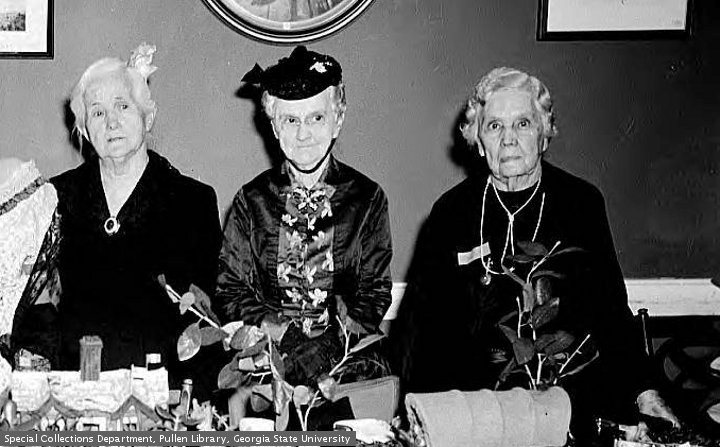


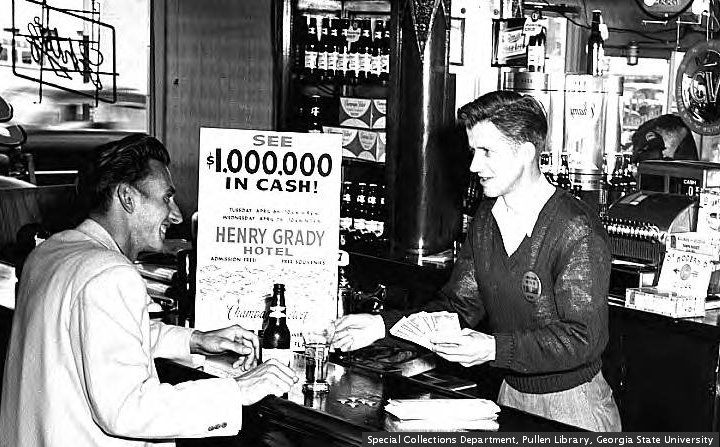
PG remembers the first time the name Flannery O’Connor sank in. He was visiting some friends, in a little house across from the federal prison.
Rick(?) was the buddy of a character known as Harry Bowers. PG was never sure what Harry’s real name was. One night, Rick was talking about Southern Gothic writers, and he said that Flannery O’Connor was just plain weird. ”Who else would have a bible salesman show up at a farm, take the girl up into a hayloft, unscrew her wooden leg and leave her there? Weird.”
Flannery O’Connor was recently the subject of a biography written by Brad Gooch. The book is getting a bit of publicity. Apparently, the Milledgeville resident was a piece of work.
PG read some reviews of this biography, and found a collection of short stories at the library. The book included ” Good Country People”, the tale about the bible salesman. Apparently, this story was inspired by a real life incident. (Miss O’Connor had lupus the last fifteen years of her life. She used crutches.) And yes, it is weird. Not like hollywood , but in the way of rural Georgia.
Some of the reviews try to deal with her attitudes about Black people. On a certain level, she is a racist. She uses the n word freely, and her black characters are not inspiring people. The thing is, the white characters are hardly any better, and in some cases much worse. In one story, “Everything That Rises Must Converge,” a black lady is the hero.
The stories are well crafted, with vivid descriptions of people and places. The reader floats along with the flow of the story, until he realizes that Grandma has made a mistake on a road trip. The house she got her son to look for is in Tennessee, not Georgia. She makes him drive the family car into a ditch. Some drifting killers come by. Grandma asks one if he prays, while his partner is shooting her grandchildren. Weird.
In another story, a drifter happens upon a pair of women in the country. The daughter is thirty years old, is deaf, and has never spoken a word. The drifter teaches her to say bird and sugarpie. The mother gives him fifteen dollars for a honeymoon, if he will marry her. He takes the fifteen dollars and leaves her asleep in a roadside diner.
There was a yard sale one Saturday afternoon. It was in a house off Lavista Road, between Briarcliff and Cheshire Bridge. The house had apparently not been painted in the last forty years. Thousands and thousands of paperback books were on the shelves. The lady taking the money said that the lady who lived there was the friend, and correspondent of, the “Milledgeville writer” Flannery O’Connor. This is apparently Betty Hester, who is mentioned in many of the biography reviews.
PG told the estate sale lady that she should be careful how she said that. There used to be a large mental hospital in Milledgeville, and the name is synonymous in Georgia with mental illness. The estate sale lady had never heard that.
UPDATE: PG sometimes reads poems at an open mic event. His stage name is Manly Pointer. This is the bible salesman in “Good Country People.” This is a repost. Pictures are from “The Special Collections and Archives, Georgia State University Library.” It was written like James Joyce. An earlier edition of this post had comments.
Fr. J. December 10, 2009 at 3:00 pm I am glad you take an interest in Flannery, but to say baldly that she is a racist is to very much misunderstand her. For another view on Flannery and race, you might want to read her short story, “Everything that Rises Must Converge.”
chamblee54 December 10, 2009 at 3:17 pm “On a certain level, she is a racist.” That is not the same as “baldly” labeling her a racist. (And I have a full head of hair, thank you). As a native Georgian, I am aware of the many layers of nuance in race relations. I feel that the paragraph on race in the above feature is accurate.

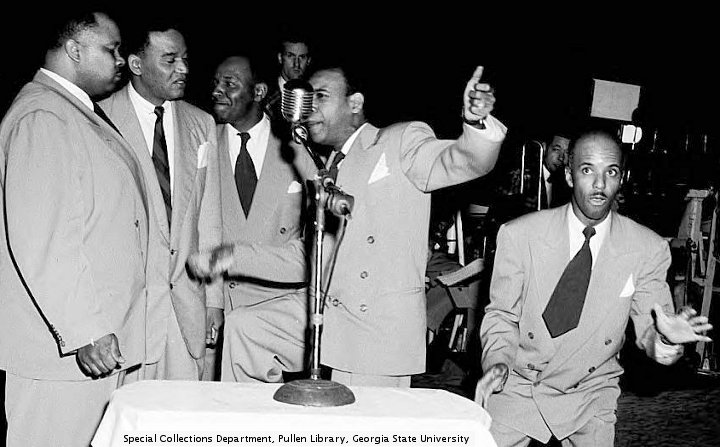


A Cynic


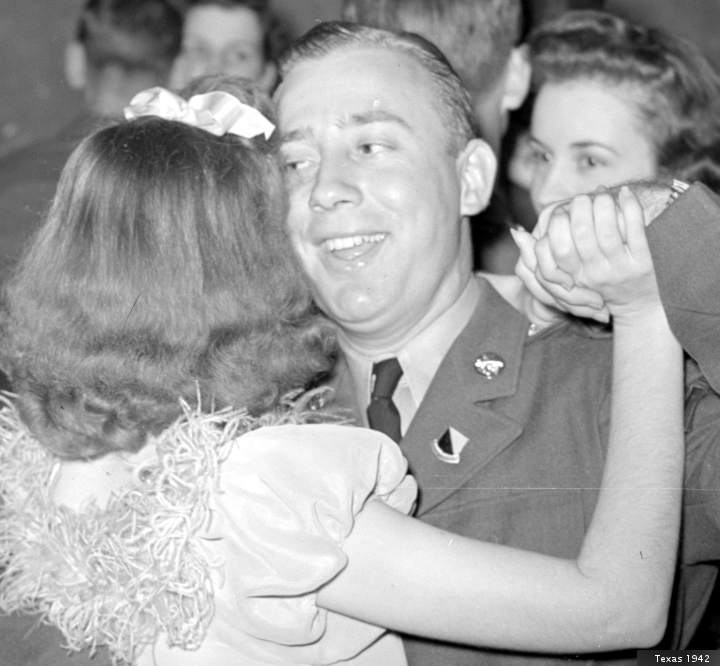

“A cynic is a man who knows the price of everything, and the value of nothing.” ― Oscar Wilde. This quote is one of Oscar’s greatest hits. If you think about it for a minute, it is not totally accurate. You are not supposed to think. Quoting Oscar Fingal O’Flahertie Wills Wilde is about sounding clever, not making sense. Did he really create that definition of a cynic? This is a repost.
Oscar Wilde is a quote magnet. This is more than something you put on your refrigerator. When people hear something clever, odds are good that Oscar will get the blame. As Dorothy Parker wrote: “If, with the literate, I am, Impelled to try an epigram, I never seek to take the credit; We all assume that Oscar said it. [Life Magazine, June 2, 1927]”
Wikiquote says this line is from Act III of Lady Windermere’s Fan. It was spoken by Lord Darlington. Did the play write intend for the line to be taken seriously, or was he making the character look foolish by saying it? With Oscar Wilde, it could be both of these things at the same time.
Principle Four, of the four principles of quotations, reads “Only quote from works that you have read.” In the case of Lady Windemere’s Fan, this would mean a youtube video of the play. There is a posh BBC production available. You don’t have to watch the cell phone recording of high school players.
Lady Windemere’s Fan is a production where upper class Brits say clever things in glorious costumes. Nobody ever goes to the bathroom, or looks less than perfect. Lady Windemere’s six month old child is neither seen, nor heard. Lady Windemere finds out her husband, Lord Windemere, is having an affair with a Mrs. Erlynne. The Lord proceeds to invite the floozy to Lady Windemere’s birthday party.
After the party, the men go to their club, then to Lord Darlington’s room. There are five men in the conversation, beginning with Lord Windemere. Lord Darlington has just told Lady Windemere that he loves her, and wants her to run off with him. Lady Windemere said no. Lord Augustus is a suitor of Mrs. Erlynne, and is begging her to marry him. Cecil Graham, and Mr. Dumby, wear their splendid costumes with conviction.
The scene starts with the men saying clever things, most of them insulting to someone. Lord Augustus, or Tuppy, is the butt of many jokes. Before long, we get this exchange:
Dumby. I don’t think we are bad. I think we are all good, except Tuppy.
Lord Darlington. No, we are all in the gutter, but some of us are looking at the stars.
Dumby. We are all in the gutter, but some of us are looking at the stars? Upon my word, you are very romantic to-night, Darlington.
Cecil Graham. Too romantic! You must be in love. Who is the girl?
Lord Darlington. The woman I love is not free, or thinks she isn’t. [Glances instinctively at Lord Windermere while he speaks.]
A few minutes later, we hear another famous Oscarism.
Lord Darlington. What cynics you fellows are!
Cecil Graham. What is a cynic? [Sitting on the back of the sofa.]
Lord Darlington. A man who knows the price of everything and the value of nothing.
Cecil Graham. And a sentimentalist, my dear Darlington, is a man who sees an absurd value in everything, and doesn’t know the market price of any single thing.
Pictures today are from The Library of Congress.




 Chamblee54
leave a comment